
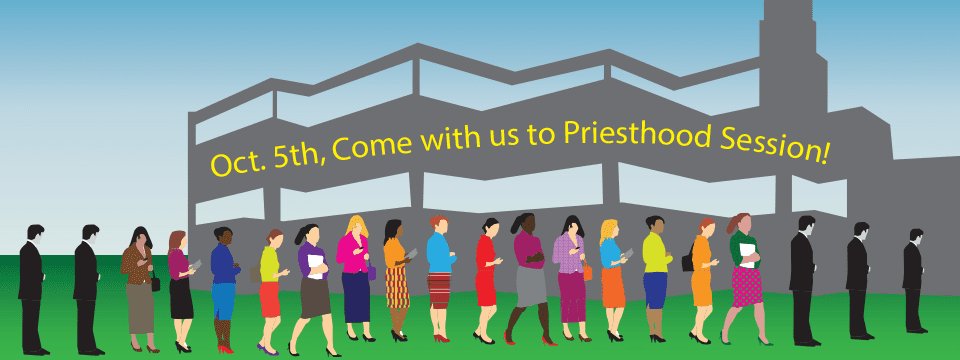
 On this inaugural episode of Mormon News Review we have:
- Kate Kelly (founder of Ordain Women) discussing the LDS church’s recent response to OW’s attempts to attend the upcoming priesthood session of LDS general conference.
- Panel: Ralph Hancock (Right), Tom Grover (Middle), and Heather Olson Beal (Left) discussing:
- Ordain Women, including the LDS church’s decision today to publicly broadcast the priesthood session of general conference.
- Steve and Barb Young‘s recent presentations at the LDS/Affirmation conference
- The LDS church’s response to upcoming same-sex marriage legislation in Hawaii
- The LDS church’s new “Religious Freedom” initiative
Please give us feedback and let us know if you like this format!
Episode Transcript
Host: John Dehlin · Guests: Heather Olson Beal, Kate Kelly, Ralph Hancock, Tom Grover
This transcript is machine-generated and lightly edited for readability. The audio is authoritative. Please excuse occasional errors in names and spelling.
Welcome and Introduction to Mormon News Review
Ralph Hancock [00:00:00] You say either, I say either. You say neither and I say neither. Either, either and either or neither unless. Call the whole thing off. Yes, you like what?
John Dehlin [00:00:16] Hello and welcome to our pilot episode of a new program sponsored by Mormon Stories podcast called Mormon News Review. I'm your host for today, John Dehlin. And today we'll be covering several interesting news stories within Mormonism. And we hope for this to be at least a monthly feature of Mormon Stories, but potentially a weekly feature that could spin off into its own podcast again called the Mormon News Review. We are going to be modeled after a podcast that I used to listen to quite a bit called Left, Right and Center, which is a political podcast, but it features people from various places in the political spectrum. So obviously liberals, moderates and conservatives. And I kind of wanted to apply that to a discussion of Mormon news. So we haven't fully defined what it means to be left, right and center on this program, Earth and Mormonism. And there are various ways to interpret that. But today, without fully describing what it means to be left, right and center, we have on the right, Dr. Ralph Hancock, who is the president of the John Adams center for the Study of Faith, Philosophy and Public Affairs. He is also a professor at a political science professor at byu and he is actually one of my professors when I was at BYU a couple years ago. So welcome, Dr. Hancock.
Ralph Hancock [00:01:43] Thanks.
John Dehlin [00:01:43] Good to be with you joining us.
Ralph Hancock [00:01:46] And we were basketball teammates.
John Dehlin [00:01:48] Yes, that's even more important. Yes. Also interviewed on Mormon Stories in an epic three or four or five hour interview. So check that out if you have a have a few hours in holding down the middle is Tom Grover, a close friend of mine. He describes himself as a full time attorney, full time dad and part time poker player, which clearly helps support his moderate bona fides within Mormonism. And Tom and I also used to spend a little bit of time together on a local talk show here in Logan. That's right, called for the People. Right, Tom?
Tom Grover [00:02:27] Yeah. And when we were together working on things at kbnu, we had Mormon stories broadcast every Sunday right after music and the spoken word, which still brings a smile to my face.
John Dehlin [00:02:38] Yeah, Tom put Mormon Stories on the radio in Utah. And finally. So welcome, Tom. And finally holding down the left, whatever that means, is Heather Olson Beal. Heather has been a friend of mine since high school. She is a professor of education at Stephen F. Austin State University. Is that Nacogdoches?
Heather Olson Beal [00:02:58] That is in Nacogdoches.
John Dehlin [00:03:00] Nacogdoches, Texas. She is the proud mother of three brilliant children and she is the host of Mormon Stories Book Club and just a witty, awesome person. So, Heather, thanks for joining us.
Heather Olson Beal [00:03:14] Thanks.
Ordain Women Movement and the Priesthood Session
John Dehlin [00:03:15] All right, so we've got a lot to cover today. We're going to try and cover some new developments on the LGBT same sex marriage front with the church. We're going to try and talk about the James Taylor performance with the Mormon Tabernacle Choir in the Utah Symphony. We may even get to the Pope if we have time. But we're going to first start with a breaking story today. And just to bring us up on the story, we have brought in Kate Kelly. And Kate Kelly is a human rights attorney in Washington, D.C. she is an active member of the LDS Church. She is a proud Relief Society chorister in her ward, and she's also the founder of Ordain Women. And Ordain Women has made the news in the past month or so because they are seeking. What, Kate, what are you guys trying to do this October 5th?
Kate Kelly [00:04:14] Well, what we're seeking is ordination to the priesthood. What we're doing on October 5th is we are meeting as a group of women and male allies and we are requesting that we be admitted to the priesthood session of General Conference at the Conference center in Salt Lake.
John Dehlin [00:04:34] All right. And how's been the uptake so far? Do you have a decent group of people who have committed?
Kate Kelly [00:04:42] Yeah, both combined with Facebook and private RSVPs, we have over 200 people who are committed to come. And based on what happened today, we may even have more than that.
John Dehlin [00:04:58] Yeah. So why don't you go ahead and bring us up on what happened today, because it kind of took me off guard a little bit.
Kate Kelly [00:05:05] So the Ruth Todd, who is a spokesperson for the church, replied to a letter that we had sent requesting 150 tickets be given to women to attend the priesthood session. We delivered that letter in person and by email. And she responded to us today over email saying essentially that the session, because the session was going to be broadcast for the first time ever live on TV and streamed on the Internet, that we should watch it online and that we would not be given tickets or permitted to attend.
John Dehlin [00:05:52] Okay. And we got to break that down just a little bit because, you know, one thing that seems encouraging to me is that you got a response. And I don't mean that in a negative or cynical way, but, you know, I'm not aware of people reaching out for some sort of, I'll just say, activist endeavor initiative and actually receiving a direct response back from the church. Now, I may be totally off base here, but were you Surprised to receive a direct response?
Kate Kelly [00:06:19] I wasn't surprised. I am also very encouraged that we received a response from the church. And I'm also encouraged that the Church is now putting forward a female spokesperson to speak on behalf of the Church. So both of those things are really encouraging to me. I was obviously disappointed that we didn't get the tickets, but I think it is encouraging to know that at least the public affairs department is listening.
John Dehlin [00:06:48] Yeah, yeah. And, boy, the announcement, you know, the announcement that for the first time they're going to be publicly broadcasting the priesthood session to the world without restriction coming. So, you know, coming on the heels of the ordained women announcement that they're going to be waiting in line to attend the priesthood session. It actually reminds me of the Spring 2013 General Conference sort of events, wherein leading up to the conference, you know, several people were sort of agitating to allow at least a few women to pray during General Conference. And lo and behold, women prayed in the April 2013 conference. And this seems like a second time where either two amazing coincidences both happened, or the church might even be responding to, you know, pleas or suggestions or agitation of this type. So do you. Do you think that there's a connection? It's always possible they'd plan this all along. What do you think, Kate? Do you have any reason to believe that there's a connection here between your efforts and the decision?
Kate Kelly [00:08:01] The main reason that I would give to why this is a response to us is that I think this is an answer to our prayers, that our leaders consider expanding the inclusivity of the priesthood session. And I really think this change demonstrates that the Church can indeed change, that it can indeed be more inclusive. And I really think this is a step towards the future where men and women participate equally in all different aspects of church and in Mormon life. However, it's really. It's just kind of impossible to say A led to B in some ways. And I think, you know, as Mormons, we know that the Lord works in mysterious ways and we may never know what, you know, what was the causation of different things. But honestly, I see this as an answer to prayer. We're still persisting and we're still going to be there knocking at the door. So to spe, I guess it's less, so to speak, it's more literally that we're going to be knocking at the door, both figuratively and literally on October 5th. But I see this as a really encouraging positive development.
John Dehlin [00:09:27] So the event will still take place.
Kate Kelly [00:09:29] We are still meeting at City Creek park at 4pm on Saturday, October 5th. And all of the women that I've talked to who are planning on attending are still going to attend. I think in some ways, this is really energized to people. You know, some people were a little apathetic, like, are they going to listen? Do they even know this is happening? So I think this demonstrates also that, you know, beforehand, some people thought, well, maybe women can go. We don't know. You know, we heard a lot of anecdotal evidence of women being allowed in. So this clearly, this is a clear answer from the church that women have not been permitted to attend the priesthood session in person. And now that we're in allowed to watch it simultaneously online, really the only thing keeping us from being able to attend is that we're female. And so I think it's even more clear. Our ask is even more clear, and it's more obvious why we should be let in. In addition to that, some people don't know this, that Mormon, you don't actually have to be Mormon to go to the priesthood session. Male investigators can go. So really, the only thing that's keeping us from being let in is that we are women.
John Dehlin [00:10:45] Right. Okay. Do you think there's a place and I'll just ask you one question kind of before we wrap up with you. Kate, I appreciate you coming on kind of last minute. Do you think there's a place for men and women to meet men and boys and women and girls to meet in separate groups, you know, for separate purposes? Do you feel like there's ever a place for that in the church?
Kate Kelly [00:11:12] Yeah, I love Relief Society, and I think Relief Society is my favorite meeting of the entire Sunday block. And there's something really special and unique about being able to meet together as women and men. And I don't think that that would necessarily have to change. The reason that we want to attend the priesthood session is not to barge in and, you know, ruin everybody's time or their bonding or anything like that. The reason that the priesthood session is so important, among other things, is that very important announcements are made in the priesthood session. It's one of the general sessions of conference. And we, you know, our end goal is not to get into the priesthood session. Our end goal is to be ordained to the priesthood. So I think a lot of things will have to change, but that doesn't necessarily mean we can't have meetings as brothers or as sisters in the gospel.
John Dehlin [00:12:11] And the fact that the church has sort of said, please don't come, do you do you worry, you know, it might be disruptive or, you know, kind of disobedient? A little bit.
Kate Kelly [00:12:21] I think that the letter from Ruth Todd, first of all, was a letter from a spokesperson. It wasn't a letter directly from any of our leaders, and it wasn't a letter from one of the members of the 12 or from the Prophet. And so we really don't see what we're doing as incompatible with anything that we've been directed to do by. By the Brethren. And in addition, we're just simply waiting in the standby line. So if we are not permitted to attend, we will leave. We're not gonna, you know, we're not gonna do some sort of sit in. We're not gonna chain ourselves to the door. We're going to go to the door, we're gonna ask, we're gonna knock. We are seeking to be let in, and we want to show them that we have faith and that we continue to have faith that we'll be let in, and then we'll leave if we're asked to leave. So I think a lot of people are imagining this is going to be like Armageddon ish. And I think it's going to be kind of anticlimactic for those people. We are literally just women patiently waiting politely in a line.
John Dehlin [00:13:29] And do you plan on holding a press conference after.
Kate Kelly [00:13:33] After we either get in or we are turned away. We're going to go back to the park, City Creek park, which is about a block, and so that we can regroup, we can reflect on our experiences together, and then we can also talk to press if they're there, but we're not going to have a formal press conference.
John Dehlin [00:13:51] Got it. Well, Kate, Kelly, it must be an exciting day for you, but we just really appreciate you coming on Mormon News Review to share with us the latest updates. So thank you so much.
Kate Kelly [00:14:03] Thank you so much, John.
John Dehlin [00:14:04] All right, take care, Kate.
Kate Kelly [00:14:05] Bye.
John Dehlin [00:14:06] All right, so that's. That's probably a bit of an exception to the format of this podcast, but we're grateful to Kate for coming on. Now we're going to bring on the main purpose of the show, which is to have these wonderful three panelists provide some commentary and some analysis on this week's news. So just because we gave Kate a chance to talk, why don't we go ahead and start with you, Ralph, and do you have any thoughts or reactions to what you heard from Kate?
Ralph Hancock [00:14:38] Well, where to begin? I mean, nothing very surprising there, and I'm glad to hear that they're not going to chain themselves to the door or be more disruptive than they already are. But I must say I found your question amusing. Don't you think it's maybe kind of disobedient a little bit? Well, I think it's. I mean, the whole point is that it's flagrantly disobedient. I mean, I think we can be pretty sure that Ruth Todd is conveying a message, an authoritative message from the church that the ordained women group is very, very visibly choosing to flout. Anyway, I just think, and let me add that in unsolicited comments from female acquaintances of mine, younger and older, there are many women who agree with me that this is silly, petty and a little dispiriting. I mean, it distracts from the urgently needed messages and spiritual reinforcement and edification that we await from General Conference. So I think it is an unhappy distraction from what should be our main focus. I haven't addressed the underlying question of whether women should be ordained to the priesthood, but I've already talked a while, so I'll let it go at that.
John Dehlin [00:16:16] Okay, let me just ask you real quick as a follow up, is there any part of you that can sympathize or empathize with what many of these women and men are feeling just in terms of hopes for equal standing in the church or ability to help carry the burden of leadership? Is there a part of you that can kind of empathize with that?
Ralph Hancock [00:16:37] John, my soul is so capacious that I. And my imaginative capacity so vast that I can. The things I can empathize with are. It's just extraordinary. But you know, it's. It's interesting that. I mean that the argument tends to take this turn. I mean, can they empathize with me? I mean, anyone can empathize with anyone.
John Dehlin [00:17:01] Sure, sure.
Ralph Hancock [00:17:02] But if you see what I mean. But I mean, if I were counseling with an individual person having one problem or another, say a daughter of mine who might struggle with some feelings related to not being ordained in the priesthood, then of course I'm capable of all kinds of empathy. But I think our business is to consider the arguments as they bear on the public good of the church. And there I think I'll just say that. I mean, it seems to me that the Ordain women movement clearly follows a logic from the doctrine of the equality of men and women to sameness. I'm sure Kate would deny it immediately, but the logic is always this, that we, we, we are equal. Therefore any difference in function or role is somehow offensive. But of course that doesn't follow. And I, I just, I. I resist this logical slippage from equality to sameness and, and function and role.
John Dehlin [00:18:35] Right, right. Okay, very good. Well, thanks, Ralph. Tom, you know, we're bringing you on to hold down the center, which means you have to do the delicate job of trying to. Of trying maybe to represent, you know, the type of member that is, you know, still going to church and active,
Ralph Hancock [00:18:53] but
John Dehlin [00:18:56] maybe, you know, sees things in a little bit non traditional way, but still, you know, has a regard for the church and wants to see it. Well, how are you seeing all this?
Tom Grover [00:19:07] I'm pretty excited about it, John. I look at the way the sisters have handled their approach, their request, and it is, in my opinion, very respectful and uplifting in a lot of ways. I've heard the arguments made by Brother Hancock and certainly articulate. And I guess my response to the sameness issue is we don't have to be different in order to be equal. In other words, I guess it cuts both ways. The fact that there are different roles, that's not what makes the inequality. The fact that the substance of those roles is different. That's where the inequality comes from, where we have all the decision making over the entire church made by men to the exclusion of women. And so I'm hopeful that there'll be some progress made. I think that especially among people that are younger, that are my age, there's an openness to seeing women hold the priesthood. And I'm hopeful that someday that will happen in the same way we saw an expansion of the priesthood in 1978.
John Dehlin [00:20:13] Tom, have you been able to talk to just the average member of your ward or guys in your elders quorum? And just to see. I know that you're kind of plugged in to the Mormon groups on Facebook and Mormon News. Do you have any sense for whether this is even on the roadmap or the register of the average member who attends church in Clark County?
Tom Grover [00:20:40] Yes and no. I had a friend from college send me a message today, and she was pretty distressed about the whole thing.
John Dehlin [00:20:48] Distressed in what way?
Tom Grover [00:20:50] She was distressed about the fact that the church went to such great lengths to exclude women from attending. And she's someone who I would, who I would characterize as a more literal, orthodox believer. So I was kind of surprised when she sent me a message today expressing that concern. But, you know, it just depends. It depends. A lot of people who would support women getting the priesthood or hopeful to about it or are open to it tend to be a little bit more Quiet sometimes because they fear some of the stigma that comes with being a loud mouth dissident. So it depends. I think the younger a person is, the more likely they are to be open to the idea of women receiving the priesthood. And then beyond that, it's just a mix, I would say. I think overwhelmingly though, most active members clearly think it's a frivolous campaign and probably is not something they would support. But there's still a substantial number of people that are open to the idea.
John Dehlin [00:21:50] Okay, so if you polled your elders quorum, you'd probably get a majority saying they weren't keen on this idea.
Tom Grover [00:21:58] Do you think a certain majority with a substantial minority is the way? I would guess.
John Dehlin [00:22:04] All right, great. Well, Heather, let's bring you in. I know you have an interest in this ordained women's movement, although we won't put you in the position of feeling like you need to represent them in any official capacity. But tell us, you know, any thoughts or reactions you have after listening to Kate and Ralph and Tom.
Heather Olson Beal [00:22:24] Well, my first comment just would be to say that, you know, regardless of the outcome, you know, next Saturday or next year, you know, years from now, I think this is just great because we're having a conversation about it. So, you know, I've obviously, I've been reading a ton about this. I have a profile up on ordained women. So it's definitely a cause that I support. I'm coming from backwoods East Texas next Saturday to participate. But, you know, I know that it feels very contentious to people. It usually does when people are trying to say, I want to participate in this power structure. And I also know that the priesthood isn't only about that. We in the church have conflated priesthood power, meaning the power to act in God's name with institutional governance structures. And I don't think it necessarily has to be that way, but that's the way it is now. So I think there's really two issues. One is having voice and representation in, in church governance. And from my perspective, women. It's not even arguable that women did not have equal status in the church. No woman is in charge of, is independently in charge of any decision in the church. Everything is under the direction of. That's the language that we use. So for me, while ordaining women wouldn't resolve all of those problems, and to me they are there, they are problems. It's a step in the right direction. So there's that. So I think the conversation is great. And I know that also Mormons are conditioned to not like to disagree, that's considered really bad. And, you know, I had someone from my ward tell me, you know, I just. You just like contention too much, which I thought was really funny. I was like, I don't like contention. Like, who likes contention? Like, that's. That's not fun, you know, to be contending with people. But I'm happy to have discussions with people that don't agree with me. So if that's what she means by it, then that's probably true. I did kind of want to respond to Brother Hancock's comment about the public.
Ralph Hancock [00:24:40] If we call everyone by first names, you can call me Ralph, too. I mean, am I the ancient of days? I walk without a cane.
John Dehlin [00:24:50] It's a deference out of respect. Ralph.
Heather Olson Beal [00:24:53] I was trying to follow Tom's lead. I would say Tom and John. Ralph. I know those guys. I don't. I don't know you.
John Dehlin [00:25:04] Let's do Ralph. Let's do Ralph.
Heather Olson Beal [00:25:05] Okay, Ralph. Just the whole publicness of it and whether it's disruptive or not, I get that. Although I think that Kate spoke to that we're not feeling like we're not intending to be disruptive. We have rules about how we're not going to be, you know, talking loudly. People aren't to wear strange clothes, but there aren't going to be any signs, all of that. But for me, I find this whole story to be totally in line with the Mormon story in Mormonism. I mean, the founder of our religion had questions and doubts and asked. And that's like what Kate was saying. We're at the door. We're knocking. I've been raised and have learned in the Mormon Church my whole life that faith is an action. I read earlier today when I was thinking about this, that on Mormon.org it says, faith in God is more than a theoretical belief in Him. To have faith in God is to trust him, to have confidence in him, and to be willing to act on your belief in Him. It is a principle of action and power. And that's what I feel like. This is. This is people saying this is, I guess, approximately 200 and actually lots more that are supportive, you know, from afar, people saying, we want this. We believe in this. It's not because we're trying to take something away from someone else. It's because we want to participate more fully in the church. So that doesn't feel disruptive or subtractive at all to me. It feels additive, and it pains me, and it makes me feel resentful to hear People framing it in that way. But I know different people see it in different ways, but that's how I see it. I see it as. This is what we do. We ask hard questions, we tussle with things. Joseph Smith was just this visionary, literally visionary man who really kind of butted up against the traditional order of things. He wanted people to be able to have their own special experience with God. And he. I mean, obviously he did some very unconventional things. So to me, this isn't a break away from Mormonism. This is like. No, this is what we do in Mormonism. So I feel like I'm participating in like a primary theme of Mormonism. By participating in this.
John Dehlin [00:27:26] Excellent. Okay, we're reaching the point where we should probably transition to a new topic. But before we do, Ralph, did you have a. Ralph or Tom, did either of you have kind of a final thought or comment you wanted to make on this topic? Ralph, do you want to respond to
Ralph Hancock [00:27:42] Heather's comment or naturally, I could unfold a whole different worldview from Heather just based upon the points that I've heard there. But let me try to be as brief as possible. I mean, Joseph Smith, like the essence of Joseph Smith's mission and message being anti traditional, unconventional, that would seem to open up the field to anything that is considered anti traditional or unconventional. Somehow, in good Mormon tradition, that's a fairly wide category. But more importantly, I notice in both Tom's and Heather's language, decision making power structures, I mean, the question who's in charge of decisions? I just see a great tendency to translate the question of whether God loves men and women equally into a sameness of function with respect to public policy related power. First of all, I mean, one would have to. Who is making the decision? Do we not believe in the Lord's guidance of the decision making process? But in any case, I just see this as an unwholesome concentration on political power, as the. As the validation, as some kind of a spiritual validation, which seems to me to be an unfortunate distortion.
John Dehlin [00:29:29] Okay, Tom, why don't you make a final comment if you can, and bridge. Why don't you go ahead and create the bridge between Ralph and Heather so that we can transition to a new topic. All holding hands and singing together.
Tom Grover [00:29:44] I love holding hands together. That's always a lot of fun. So I listened to this and my mind has been kind of drawn back to one of my very favorite passages of scripture. And that's the 121st section of the Doctrine and Covenants. And of course, the story behind that section is beautiful. And towards the end of that section, the real core of what the priesthood is is mentioned. And that is the revelation mentions that men, when they, humans generally when they obtain power, it's our natural tendency to abuse it. But what makes our priesthood operative is when we live our lives in harmony with certain principles like persuasion, long suffering, gentleness and meekness and love, unfeigned kindness, pure knowledge, soul without hypocrisy and without guile. And I look at those attributes and I have to ask myself, is there anything about being a woman that precludes a person from having the attributes that make the priesthood operative? And on top of that, just as one last kind of thought we were asking ourselves, should women receive the priesthood? And I think maybe the better question is when will women receive the priesthood? Because the promises made in the temple to me are very clear that eventually women do receive the priesthood. And there are certain instances in this life when women operate with the priesthood, certain ordinances in the temple, and when women receive a second anointing, they arguably receive the priesthood. And so if women receive the priesthood eventually and they possess the attributes that make the priesthood operative once we've been ordained, then the question is why shouldn't they be ordained to the priesthood now? And I think that's a really fair, legitimate question from a purely doctrinal standpoint.
John Dehlin [00:31:36] Excellent, Ralph. I'm just curious. I read something that Dan Peterson wrote earlier this week where he said he would be delighted if women eventually received the priesthood, if indeed the revelation came through God to the prophet. Is that something you'd feel, feel good about?
Ralph Hancock [00:31:55] Yeah, well, I, of course, I'm not sure that I read Dan Peterson too. I'm not sure what that would mean. And I mean, Tom's envisioning of the ultimate prospect of becoming kings and queens, priests and priestesses, of course, is something that stirs my soul that I find very beautiful. But it seems unhelpful to me to insist upon the policy management of the church as somehow a vindication of one's eternal status. I do think there are other kinds of influences, other kinds of validation,
John Dehlin [00:32:39] other
Ralph Hancock [00:32:39] important functions in life. And it's not obvious to me why there shouldn't be a male female differentiation in the distribution of those functions and responsibilities. Right, right.
John Dehlin [00:32:54] Okay, so I'm going to give you guys a quick question and then we'll move on to the next topic. Do you, it's a two part question. Do you envision, just like, you know, the blacks, you know, polygamy was sort of phased out in this life and blacks ultimately received the priesthood. Question. Part one is, do you see women at some point receiving, you know, greater institutional responsibility, maybe even including the priesthood? Part one, Part two, how soon or far away? So I'll start with Heather and then go to Tom and then go to Ralph. Heather, what do you think?
Heather Olson Beal [00:33:33] Well, I should say yes. I could be like Facebook and be aspirational and say the things the way I wish that they were. But I want to be honest too, actually. I'm just going to sort of sell one of my daughters out and share a story.
John Dehlin [00:33:48] Okay.
Heather Olson Beal [00:33:48] And this is a Mormon themed podcast, so it would be okay if I cried, but I'm gonna try really hard not to. So I have two daughters that are 13 and 16 and I'll try to be quick, don't get nervous. After the One of the sisters, I'm sorry, I don't remember their names, said a prayer in general conference. I asked my daughter, who had just turned 13, what she thought about that. Because I said, you know, that's never happened. That's never been allowed to happen. And it happened. Now, don't you think that's cool? And part of me thought it was cool and part of me thought it was really lame because it's 2013 and it's like, yeah, it's not really that cool, but okay. And she said, no, no, it's not a thing. And I said, well, it is a thing. And she said, it's really not a thing, mom. It's someone giving a prayer. And I said, well, it's kind of big. And she said, no, it's not. And she said, well, I'm not gonna feel equal in my church until a woman could be the prophet. And she said, and that won't happen until probably after I'm dead. And so at least from the perspective of my daughter, that's something that is going to happen and should happen and will happen because like, sort of, you know, the arc of history in her mind has leaned towards that. But it was sad. And I guess I could say this because I'm supposed to be representing the left. Very sad for me to hear my. Oh, I'm doing it. To hear my 13 year old daughter who lives in a world and in a society and luckily we live in the US where she feels like equality is open and available to her in every other place except for in her church. That is a painful reality for me to bear. And it's very difficult for me as a parent to square my mind with sort of burdening my daughter with that. So it's painful to me in a way that I really, really can't abide and don't really know what to do with. So I don't know if it will happen, but my 13 year old thinks it will happen after she's dead. So maybe for one of my grandchildren or great grandchildren, that will be something that they will see.
John Dehlin [00:35:51] Thank you, Heather. Tom, what do you think?
Tom Grover [00:35:55] 15 to 20 years? It'll happen in about 15 to 20 years. And I believe that I look at this through the lens of that great Armand Moss book, the angel and the Beehive, where there's that tension between society and the church. And as it becomes too great, the church tends to make concessions or doctrinal policy changes. And I think that tension is going to be exacerbated fairly quickly. And for that reason, not that we're changing the policy to capitulate to the world, but maybe that we'd be willing to reconsider as an institution this policy. And maybe this policy was clouded and tainted in the same way that the blacks in the priesthood was. In other words, it's a reflection of the norms of the society that we're born into, more than necessarily the will of God. And maybe we'll become open to listening to what God has to say on that. I think that again, 15 to 20 years, but I think I'll live to see it happen.
John Dehlin [00:36:56] Okay. All right, well, make sure and tell your daughter that Heather, that Tom's a little more optimistic.
Heather Olson Beal [00:37:02] You gotta ask Ralph.
John Dehlin [00:37:04] I am. Ralph, you're next. Bring us home, Ralph.
Ralph Hancock [00:37:07] Well, John, neither my daughters nor my daughters in law who are quite competent, intelligent, thoughtful people, none of the four of them feels slighted or disvalued in any way. None of them would have a response like Heather's daughter. So it's not something that girls are born with to perceive the role differentiation as a. As a slight. But let me. But on the more general question or the specific question you put to us, let me say that I was charmed that it took a whole half an hour before you brought up the blacks and the priesthood that showed restraint on my. Well, why I say that is that. I mean, that is such a, a paradigm for progressive Mormons that everything must fit onto the grid of the blacks and the priesthood. It's like 1978 is the meridian of time. I celebrated that moment. It was a huge relief to me, it was a blessed moment. But I don't see it as the turning point that fixes our whole structure of thought regarding the church. And so this whole framework in which we talk about being patient and waiting, I mean, presupposes that we know what is best and the way that the church should go and that somehow that is supposed to correspond to the way that the world would have us go. Gee, that's kind of easy, isn't it? Rather than thinking critic using the church to think critically about the way the direction the world is going in, we say, let's jump on the world side and help the church get there as fast as possible and congratulate ourselves because we're willing to wait, willing to wait 10 or 20 years. So I just don't make that assumption. I don't equate progress with the way things are going in the world or with the drift of equality ever more towards sameness.
John Dehlin [00:39:25] Are you saying we're not getting a prediction out of you? Is that what you're saying?
Ralph Hancock [00:39:31] I'm not preoccupied with it. I don't see it coming. I don't. I don't wish for it.
John Dehlin [00:39:40] So that's good.
Ralph Hancock [00:39:42] It doesn't concern me.
John Dehlin [00:39:43] Okay. Okay, that's good.
Heather Olson Beal [00:39:45] John? Yeah, totally interrupting. I would ask, but I'm not going to ask because I just. I have to respond to that, number one, just to say in as nice a way as I can, that I resent the implication that because my daughter said that, that somehow she's sort of fundamentally flawed as a person and that she's seeing something that simply isn't there.
John Dehlin [00:40:07] Okay, pause, pause. Ralph, I'm guessing you're gonna say you didn't see her as flawed as a person. True.
Ralph Hancock [00:40:13] A brilliant guess, John.
John Dehlin [00:40:14] Okay.
Ralph Hancock [00:40:15] Okay, good.
John Dehlin [00:40:15] Okay.
Heather Olson Beal [00:40:15] Yeah.
Ralph Hancock [00:40:16] Okay.
Heather Olson Beal [00:40:17] Let me just finish, though. And the fact that, Ralph, that, you know people that don't feel this way is great. I do, too. I know a ton. Most of the people I love in the world are Mormon and don't feel this way. But just because not all Mormon feel this way doesn't mean that not any Mormon women feel this way. And another thing that I learned from Mormonism is that we covenant when we are baptized to mourn with those who mourn and to comfort those who stand in comfort. And I will say again, as the person from the left, I mourn over this. And so I very much appreciate people who don't agree with me on this, who are willing to listen and who are willing to sort of leave the 99 and seek out the 1. Because there's many other people who feel like they're just really content to stick with the 99 and send, and send the 1 packing. And I've been made to feel that way by many people. I'm not saying that you're doing that, but I'm just saying that we need to be careful to remember that. Yeah, I don't represent everyone. And I know, I, believe me, I know that not all Mormon women want this and feel this way. I've, I've been told that many times. But that doesn't mean that not any of us do, because actually there are plenty, plenty who do. And I think that our experiences are worth listening to as people who love and promise and covenant at baptism to care for each other. I feel like that's something that I deserve.
John Dehlin [00:41:44] Wonderful. Ralph, quick response.
Ralph Hancock [00:41:46] Heather, are you aware that there are women on the other side of the issue who feel hurt, burdened by the agitation of women on your side for these positions, for these powers, for this decision making role? Women who are attached to and take pride in the roles they already have, who feel slighted by the suggestion that they need to have their consciousness raised by women who somehow think they're more sensitive, more enlightened?
Heather Olson Beal [00:42:34] Yeah, I definitely don't think I'm more enlightened than anyone else. I know better than that. And I want to try also to listen to those women. I'm fine that they're satisfied with their roles. I'm not. So, and like I said, I'm appreciative of those people who have extended that hand to me and I hope to do it. I hope to do it to others. I have no interest in trying to sort of divide Mormon women. I hope that we could rally around each other the way, the way we've promised to do. So this is, if it's a point of disagreement, that it's something that we need to work through in our wards and in our, you know, stakes and, you know, that's part of building Zion.
John Dehlin [00:43:13] And I'll just jump in to kind of wrap this up and just say, I'm really grateful. Heather, you're representing a really important point of view for many people and you did it in a very heartfelt way. And I know you work super hard to be super respectful. And Ralph, you're representing a point of view that at least to some audiences, is going to be unpopular. And I'm just grateful you'd be willing to come on and have this conversation. And I see that at least in some way as trying to listen and to understand and have dialogue. So if you guys don't mind, I'm going to pull a Kumbaya. And thank you all for being willing to have a respectful conversation on a very difficult issue. Is that all right?
Kate Kelly [00:43:58] Yeah, sure.
Ralph Hancock [00:43:58] That's fine.
John Dehlin [00:44:00] Okay. All right, so let's transition to maybe a slightly similar topic. On September 14, affirmation, the annual conference for LGBT Mormons, was held in Salt Lake City and made a bit of a splash of news because Steve Young, the famous San Francisco 49ers quarterback, former BYU quarterback and descendant of Brigham Young, he and his wife Barbara actually keynoted the Affirmation conference. I was actually there. How many of the three of you actually were able to listen to the speech in some way? Just so that I know who to ask. What, Ralph, have you listened to it?
Steve and Barb Young's Support for LGBT Members
Ralph Hancock [00:44:46] No, I've just read reports of it, so I'm eager to hear more of an actual account of what was said.
John Dehlin [00:44:53] Okay. Tom or Heather, do either of you get a chance to listen?
Tom Grover [00:44:57] I've listened to Steve's, but not Barbara's yet. I. I'm hoping to get to that tonight.
John Dehlin [00:45:02] Okay.
Heather Olson Beal [00:45:03] And Heather, I've also only read about it.
John Dehlin [00:45:06] Okay.
Heather Olson Beal [00:45:07] Read the articles.
John Dehlin [00:45:08] Okay, well, I'll just give my two cents. It was a really exciting evening. It was a Saturday evening on the University of Utah campus. I think about 400 people were there. I think it's the most well attended Affirmation conference in its history, although I don't know that for a fact. That's the impression I got. Several people were there, you know, Carolyn Pearson and many other people that have been, you know, Bob Reese, who have been talking about these issues and trying to work constructively on them. Kendall Wilcox was there, and Erica Munson from Mormons Building Bridges were there, and many of the people. And, you know, Steve Young has this star quality, and it was just. It was really energizing to see. See him there with his. With his beautiful wife. And he's also extremely diplomatic and well spoken and sensitive, and you could tell for sure from his speech, and we'll put a link up to it on the podcast page. You could totally tell from his speech that he's thought a lot about this issue, that he cared about it. But the truth is, in his actual speech, he didn't really talk about LGBT issues at all until the very end. He told, you know, an interesting, somewhat touching story about how, you know, once he. Once he won a Super bowl, he had got some hubris and. But then realized quickly that as a. As a shorter professional quarterback, he had a hard time seeing over the offensive line, and that one of the key things that he needed to learn in his professional football career was to throw the football with faith, meaning that he had to learn how to throw the ball to a receiver without actually seeing the receiver. And so that was the main message that he had, that sometimes we have to operate on faith. And it wasn't until the very last minute or two of his testimony where he bore what was a very traditional LDS testimony, you know, Heavenly Father, Jesus as Savior and the atonement, etc. Where he just sort of mentioned that, you know, he hoped to build bridges between LGBT people and, you know, the church. And then he sat down and so that, you know, to me, that was interesting that he actually didn't speak much about sort of the main topic at hand, except through some.
Ralph Hancock [00:47:37] Some.
John Dehlin [00:47:37] Some sort of sports stories. And there was a part of me that was just a little bit disappointed by that, just because I wanted to hear more about what he had to say. His wife Barbara, was just dynamite. She hit, you know, all the major notes that. That people might expect someone who's an ally for LGBT issues would hit. She. She mentioned she has a gay brother, she loves him to death. She, you know, didn't support Proposition 8, and she talked about all the different reasons why LGBT individuals need more love and support and why they should be able to be married in the United States and elsewhere. Afterwards, just one more thing. Afterwards, I spoke with some people who are a little bit closer to the situation, and one of the things they did reference was how Steve Young has very close relationships with many, many top leaders of the church and how he has to kind of be careful, you know, and he kind of takes that responsibility seriously, and he feels the need to be very respectful and conservative in the things that he says. And so while I was a little bit wishing that he would have said more, their comment to me was just his presence at the event sort of spoke volumes. So I've spoken way longer than I normally would, but I just happened to be there. Tom, why don't we give you the first chance at responding this time?
Tom Grover [00:49:00] Sure. You know, I think Steve Young holds a really unique place in Mormonism. And until the ascent of Mitt Romney, he was arguably the most famous Mormon in the world. And that's a calling that he probably didn't ask for, but as you mentioned, comes with a lot of responsibilities, and I think that's why it's so significant that he participated. And. And like you, John, when I watched it, I kept thinking, well, eventually he's going to get to some LGBT issues. And he didn't but then I got thinking about that, John, and I thought, you know, these talks that Steve Young gives are just awesome. And I've had the chance to go and see him speak in firesides and I think a lot of people have, and he's a really gifted speaker. You know, I think it's great that Affirmation had this conference and they just got just the regular, and by regular, I mean great Steve Young fireside experience because he's funny and he's self deprecating and insightful and you end up watching this and you end up just feeling better about yourself. It was a great talk that he gave. And I think that it does build a bridge. And the thing that it does is it signals to a lot of rank and file members of the church, hey, you know, it's okay to reach out and befriend and support and fellowship our LGBT friends and neighbors. And there's nothing but good that can come from that, John. So I really admire what he did. And that way he's a leader and really has again taken the mantle of being the most famous Mormon in the world and done a lot of good with it.
John Dehlin [00:50:42] Excellent, Tom. Ralph, what was your reaction when you heard that Steve Young was going to be speaking at this conference, assuming you did?
Ralph Hancock [00:50:51] I did hear and I read the reports and some which touched on some of the high points that you just touched on. Let me approach it this way. I mean, an interesting question does arise as to, to the, you know, the difference in tone and content, less tone than content between Steve and Barb, let's say. And John, you interpret that as, you know, Steve is responsible and well connected in the church and moderate of disposition, and therefore he's not going to do any ideological flame throwing, assuming that he is all on board on some full out LGBT agenda along with his wife, but he's just not going to talk that way. You could look at it the other way. I mean, you could say there's obviously some space here between Steve and Barb, and maybe it's because he's married to Barbara that he is going as far as he goes to befriend the cause that is dear to her heart. In other words, I don't think we can simply assume that we know what Steve Young's deepest feelings are that he would share with us if he weren't in kind of a tight spot institutionally or, or something like that. But in any case, the building bridges, I'm not sure, I mean that we can be friends, support, fellowship, people who struggle or choose not to struggle with same sex attraction. I mean, is that really news? It's certainly not a doctrinal innovation. I mean, there are always clods and dolts who need to be reminded to be nice to people. But, you know, that's in no way an innovation with respect to the oldest Christian and Mormon teachings. Be kind and reach out to everyone. But of course, Barb goes much further than that. And in the language of faith and patience, she basically asserts, I would say, with a little implicit arrogance, that she knows what it means to be evolved. She's implicitly the evolved ones, and the rest of us more traditional members and the general authorities need to evolve in her direction, and she can be patient with that. That's a strange form of humility, in my view.
John Dehlin [00:53:36] Okay, so you weren't as enamored with what you heard about Barb's speech as with. As was Steve's.
Ralph Hancock [00:53:45] Well, I trust the reporting. Yeah, I trust the reporting, and I trust. Excuse me here, I trust Tom's observations about Steve being a great fireside style speaker and all that. But no, I'm not. I'm not buying into the evolving cause that Barb spoke for. And I think it's notable that Steve doesn't exactly clearly sign on to it either.
John Dehlin [00:54:23] Yeah. And just to be more clear, I totally concede that there may be a part of me emotionally was projecting what I might hope that Steve would have said onto him. That then reflected in, you know, the tiny bit of disappointment that I may have felt. And you make a really good point that may be that to some extent, Steve was there just because Barb asked him to, but that he's less of a quote ally than Barb is on this issue. So I totally concede that.
Ralph Hancock [00:54:55] Let me. I have to add one little point that it's always mentioned, and appropriately, that Barb's concern stems in part at least from her having a gay brother. But the implication is always that anybody who loves anyone who is homosexual must believe in the kind of evolving that she believes in. But that's really a pretty arrogant assumption. As if those of us who hold fast to the teachings as we understand them don't know and love. And we may not have people very close to us who have similar struggles. So I would be very careful of that assumption.
John Dehlin [00:55:34] Yeah. So you can love LGBT people, but not necessarily be in support of gay marriage, for example.
Ralph Hancock [00:55:40] Exactly.
John Dehlin [00:55:40] Okay, Heather, why don't you make a few final observations on this topic and then we'll move to the developments in Hawaii.
Heather Olson Beal [00:55:49] Well, I don't care at all about football or Steve Young, Although, of course, wish him well, like I would anyone. So the fact that he spoke or what he said or whatever wasn't really meaningful to me. I have. I have gay friends who reacted to it, you know, as you would expect, I guess, with any group. Some that were really happy, that saw it as, like, you know, great, now we have this, you know, or, wow, Mormons are really going to pay attention to Steve Young. Which, of course, as not as a non football fan, I thought was, like, ridiculous.
Kate Kelly [00:56:20] Why.
Heather Olson Beal [00:56:20] Why would they be super excited to hear from Steve Young? But I also had other gay friends who were really pissed off that he was there and kind of felt like he threw them under the bus. I had a friend that said, you know, where was he when it mattered during Prop 8. So I guess I would just say that it's important to acknowledge that there's a diversity of. And I'm not. I don't want to say I'm speaking for anyone, any LGBT person. I'm just saying I've known some people that have felt, you know, kind of, or have had diverse reactions to it. So I don't want to speculate about how much or how little, you know, of an ally either one of them is. But I guess again, anytime I feel like we're talking about these issues, it seems like. It seems like it's a good thing. It seems like acknowledging, you know, acknowledging that this is an issue. I feel like the church has made definitely some positive steps. I would disagree with Ralph. I mean, I'm sure that people can love friends or relatives, whatever, that are gay, but I feel like a lot of times, the way it's framed, it's a very conditional love. It's saying, you know, I'll love you, but I won't love this whole huge thing about you. And that, to me, is a kind of conditional love that isn't good enough for me, basically, and wouldn't be if I were gay. And I would feel like I was failing my friends and relatives who are gay if I communicated that kind of love to them. But that's just me personally.
John Dehlin [00:58:01] I know, Ralph. I know you could probably respond to that. And just for the sake of time. Tom, were you trying to jump in?
Tom Grover [00:58:09] Yeah, and I apologize for butting in. I think this concept of building bridges is an important one to discuss. If we assume that 3% of the world's population is gay, and I think that's a fairly accurate number, and correct me if I'm wrong on that, then in My ward, which has an attendance of about 250 to 300 every week. I live in a huge ward. In terms of attendance. There should be seven or eight openly gay people. And there are zero. None. Which says to me that for whatever reason, in spite of all of the great qualities in my ward, which I think is pretty typical of the church, my ward on Sunday is not a safe place for gay people, at least openly gay people. There certainly might be active members of my ward who are gay, but they're not open about it. And as long as that's the case, then bridges do need to be built. And we are falling far short of our commandment and our covenant to mourn with those that mourn and befriend those. So I think building bridges is something that clearly needs to happen, as evidenced by the fact that in virtually every ward in the church there are no active openly gay members.
Tom's Research on LGBT Mormons and Building Bridges
John Dehlin [00:59:24] There are some in my study of 1,612 LGBT Mormons, turns out about a third are active. Now, the vast majority of those are in the closet, according to our data, but there are a small percentage, let's just say 5%, that are active and out in their churches. So it happens. But I would agree, Tom, it's quite rare. Ralph, did you have a real quick response before we move on?
Ralph Hancock [00:59:55] Well, I have lots of responses, but what does it mean to be openly gay? Now, my understanding is that homosexual conduct is a sin, pornography is a sin. Do we want people to be openly pornographic, open about being involved with pornography? Do we want to wear it on our sleeves? I just, I guess I would refer you to. I think it was Elder Bednar in the last conference, General Conference, who said very pointedly that we do not identify ourselves, we do not associate our deepest identity with some sexual challenges that we face or with other ideological categories. But we are sons and daughters of God.
John Dehlin [01:00:54] Right? Yeah. And this is definitely a big, big, big topic that we could discuss. So be it noted that we gave you the last word on that one, Ralph. And we'll maybe come back to this topic another time, but thank you all for talking about that interesting development in Hawaii, the state of Hawaii, which I believe was the first one of the first states in the US to try and pass same sex marriage many, many years ago. That effort was thwarted in part, as record has it, due to some of the efforts of the church, as I understand it. Fast forward to 2013. What I've heard is that the state of Hawaii is looking to call a special legislative session to consider legalizing same sex marriage in around 2013. And so in response, something that we hadn't seen in the past few years, whether it was in, I think, New York or Washington state or Maryland or other places where same sex marriage was on the ballot. I don't recall the church or even stake presidencies sending letters to their congregations regarding the pending vote, you know, post Prop 8 in California. Now, you guys may be able to correct me on that, but that's what my memory serves me. But it turns out a week or two ago a letter surfaced from a stake presidency, I believe, in Honolulu that took a little bit of a different approach. Tom or Ralph, have either of you read the letter and want to speak? Because you both are a little more versed in public policy and maybe law than I am. Either of you want to take a stab at what that letter said?
Hawaii Stake President's Letter on Same-Sex Marriage
Tom Grover [01:02:36] Why don't you go ahead and do that? Ralph?
Ralph Hancock [01:02:38] Oh, well, let's see. I think what's notable in the letter is that it encourages people to be involved in the public question, to be actively engaged and worthy causes. It points out that in acting as citizens, they should keep in mind. Well, it says specifically you may want to review the Family, a proclamation to the world, but it does not say in so many words a position that should be taken on the issue. But here's what's really interesting. It does say whether or not you favor the proposed change. So leaving that open, we hope that you will urge your elected representatives to include strong exemptions protecting religious freedom, I will say to shorten. So it does seem to be a tactically a significant difference in approach, and I'm not sure what importance to attach to that exactly. It does seem to be a step back certainly from the California Proposition 8 stance. And I think we can understand that the church's involvement in political issues has to vary prudentially according to the situations, the possibilities, you know, the kind of calculus of advantages and disadvantages on one hand and on the other. So it's definitely a different calibration of the church's efforts.
John Dehlin [01:04:31] Heather, what'd you think?
Heather Olson Beal [01:04:33] Oh, I just, it made me tired. I felt, I felt the way I did and do when there's all this talk of military action against Syria, just kind of weary like, oh, no, please, not again. Just so much actual damage and so much collateral damage. I think that happened after Prop 8 that I have been really gratified to see the church not participate or speak really in other initiatives that have, you know, that have taken place in other states and then disappointed to see to See this taking place in Hawaii?
John Dehlin [01:05:13] Yeah. I was surprised because I had just assumed that because of so many states had sort of not seen that type of letter from the church, I had just kind of assumed that the church was maybe getting out of that business of writing letters around same sex marriage to their congregations. Tom, were you surprised?
Tom Grover [01:05:33] I think this is a really significant shift, as mentioned by Ralph, because the church, instead of taking the position that we're going to actively campaign against marriage equality, has now shifted its focus towards the public accommodation issue. And I think that's very interesting. At the same time, not the exact same time, but just a few weeks ago, remember the church came out with the new website about religious freedom. And I think that's part of the signal here. The church is expressing concern that as marriage equality spreads across the land, that people will be able to exercise their religious freedom. And by that I think they mean that if you, for example, run a business and you don't want to provide services to gay couples, that your religious freedom should allow you to do that. And of course, that opens up a very interesting discussion about whether the government should intervene to make two private citizens do the right thing. When we've done this with race before, we have forced private citizens to do that and we've made it illegal to ban, to discriminate in public accommodation. The one area that I'm a little bit concerned about though is this idea that keeps getting advanced that as marriage equality spreads, there's a risk that the church could be forced to recognize or perform gay marriages, which is at best a preposterous argument legally and at worst very dishonest. And I'm very troubled by that when I see that obviously the church has rights under the First Amendment to exclude anyone that it wants, for any reason that it wants for, from membership, from ordinances. And there's nothing about marriage equality that would ever force the church ever to perform or recognize gay marriages. Now, that said, there is a possibility, and I think this will happen, that at some point in the future, the church's tax exempt status could come into play and that could be questioned and even possibly revoked. But of course, tax exempt status is not a constitutional right. And so from a, from a purely legal perspective, I guess I'm a little bit troubled by these claims that I keep seeing of people saying, I don't want to see, Fine, if the gay people want to marry each other, that's fine, but I don't want them cramming it down our throats and making the church recognize gay marriage. That's never, ever going to happen, at least as long as we have the Constitution that we have and live in the country that we live in. So that's, I guess that's my concern as we go forward. I do think that eventually, if the church holds its position, that we're going to see the church's tax exempt status challenged. But other than that, I think a lot of this is a concern about nothing, to be honest with you.
John Dehlin [01:08:18] Ralph, I'm going to follow up and just say, do you see that the church's religious freedom is being impinged upon? I don't quite see it. In fact, my reaction was, well, it seemed like the church was trying to impose, impose in some ways its doctrinal view on the citizens of California, sort of impinging upon what might be their religious or moral or civil sort of rights. And so it just felt odd for me to the church, for the church to now claim a bit more of a defensive position, like they're being attacked,
Ralph Hancock [01:08:54] impose their religious views. Well, there were a majority of voters who agreed with them for religious or other reasons. It doesn't sound to me like an imposition of religious views. You seem to be saying that. I mean, the kinds of reasons that no publicly admissible reasons can be given. I guess this is. You're taking Justice Kennedy's position that the only reason that one might oppose gay marriage would be because of some rank superstition, if not outright hatred or just meanness.
John Dehlin [01:09:33] Not quite. I guess what I mean is, as I understand it, you know, armies of BYU students were recruited to man call centers, to call citizens of California to try and get out the vote from a different state to influence the election there. Lots of money was, I believe even the church was found guilty of misrepresenting the amount of money that it invested in trying to influence the vote in California. And I do believe that it was motivated by the Church's religious positions and doctrinal positions. And I don't mean that in any negative way. I'm not calling it superstitious or evil or bad. I'm just saying, do you really think the church. Do you see the Church's religious freedom as truly being under attack? Because I just don't. I don't see that. But I'm open to hearing.
Ralph Hancock [01:10:23] Well, I think I seem to disagree with Tom here because I think, I mean, there are numerous straws in the wind that do not portend well for the situation of the church. I mean, the tax exempt status is not a small matter, by the way, that would be a very momentous loss. But what about a little thing like the existence of a thing called byu? Brigham Young University depends upon, I mean, its mission and identity as we understand it now depends upon the prerogative to hire and fire according to religiously based criteria. Certainly no practicing, openly practicing homosexual is going to be on the faculty at byu. I just, I think the trends going the way they are will make that position out more and more to be one of so called bigotry. And the very definition of a bigot is someone who does not deserve rights. So I think our, you know, our institutional freedoms are at risk, at risk in various ways, as Elder Oaks particularly and others have argued on more than one occasion.
John Dehlin [01:11:56] So you do see real significant threats to religious freedom towards the church on the horizon?
Ralph Hancock [01:12:02] Yes, I do, but I mean, there's a fairly subtle political philosophical discussion that we would have to have to explain all this. But I mean, I do see the emphasis upon religious freedom as a kind of exemption as a fallback position. And I think it's a respectable strategy or tactic on the part of the church. Whether it will, you know, whether it is a sign of consistent determinate change in strategy is another question. But it is a fallback position because as soon as you, as soon as you accept that your position is wonderful, is a kind of exception carved out and like the moral center of your community has moved to another place. That's a precarious position to be in and it may be the best we can do for now. But ultimately the, I mean, the safety of our religious freedom has depended upon a public consensus that sees religion as good and that is at least, and has a favorable view broadly towards religiously based morality. If that is lost, our situation is tenuous.
John Dehlin [01:13:33] Yeah. Do you agree with Tom that the scenario of the church being forced to marry gay people is kind of a red herring? Do you agree with that?
Religious Liberty and the Church's Legal Concerns
Ralph Hancock [01:13:42] Yeah, I don't. I don't understand that itself being a danger. I mean, I can see what is very easy to envision would be that our temple ceilings would not be counted as legal marriages. And then we'd be in the situation as saints are in other countries, as having a civil and a temple ceiling. But that's not the, that's not the same thing, I guess, is what Tom was talking about. Right.
John Dehlin [01:14:12] Heather, I know this topic makes you tired. Any responses to Tom or Ralph?
Heather Olson Beal [01:14:18] No, I mean, for me, I just, I think obviously freedom of religious expression is huge. I mean, that's a founding principle of our religion. I don't think that that means, I mean, I think that from my understanding or my interpretation of that is that then we want to keep, keep the public sphere as a religiously neutral space. So I don't want. And part of my really strong feelings about this come from growing up in East Texas where it was very not okay to be Mormon. There were all sorts of rules that were broken in terms of public religious expression in schools and everything. And we had prayer every time we turned around in school, which is illegal. And no Mormon was ever allowed to participate in that. So it's one of those things where the rights of the majority oftentimes are protected by virtue of being the majority. So for me, I'm all like, yeah, let's protect religious expression by keeping it out of our public spaces. Because if we're not going to accept everybody, which we're clearly not, I mean, two weeks ago they distributed Bibles at my kids public public school. They clearly would not allow for Book of Mormons or Korans to be distributed. So I mean, it's illegal what they did. I don't want other religions to be able to codify in law their religious beliefs. In the same vein, I don't think I should be able to have my religious beliefs in terms of behaviors and expectations and norms codified by law so that other people have to obey them because not everyone's Mormon. So for me it's just clear that we, I mean, it's pretty black and white. We don't want that done to us, so we shouldn't be doing it to other people.
John Dehlin [01:16:03] And you think we are? Maybe a little bit, yeah.
Heather Olson Beal [01:16:06] I think when we stick our nose in and try to say, you know, what should happen in terms of same sex marriage, I think we're sticking it, we're sticking our nose in other people because that's a religious belief. More Mormons believe that homosexuality is wrong. I very much object to homosexuality being compared to pornography. That was a few minutes ago. But I'm still, I'm still sort of swirling around about that. But because for me, homosexuality is like being left handed or it's like having brown eyes. It's a thing, it's a part of a person. So I can't object to it any more than I can object to someone, you know, having black hair. It would be ridiculous. But yeah, I do feel like we're doing that and I don't like it because I don't want it done to
John Dehlin [01:16:48] me, I'm hearing Ralph in my brain want to ask the question, but you do Think it's okay for a religious group to vote in ways that align with their values? Right?
Heather Olson Beal [01:16:59] Yeah, sure, everyone is able to vote. I mean, but I don't think that a tax exempt organization like a church should be able to spend its money. It's tax exempt money lobbying for laws to be made. And I had a friend during Prop 8 that is very politically active that asked me whether the church was doing that and I tried to kind of do my homework and I told her no. I told her from what I could tell, the church wasn't doing that. And then it came out afterwards that it was and I felt very ashamed. And I had to go back to her and say I wasn't intentionally misleading you. I was, you know, because I had defended the church. So that was an embarrassing situation for me. But I mean that tax exempt status to me means that those institutions shouldn't
Kate Kelly [01:17:46] be
Heather Olson Beal [01:17:48] lobbying and paying to have laws codified that favor their positions.
Ralph Hancock [01:17:53] Well, do you feel the same about all kinds of churches, black congregations and other that have, that have been and were very decisively active in civil rights movement, for example, civil rights legislation. That's a codification.
John Dehlin [01:18:13] That's a good question.
Heather Olson Beal [01:18:14] Yeah, I mean, I just, I don't think it should happen. I just don't. I mean when I was a teacher, I found out that I was a member of a teachers union and found out that the teachers union was spending money for some sort of pro choice legislation which I at that time was against. I wouldn't be, I wouldn't be now, but I was then and I was really mad about that because I just wasn't, I was naive, I wasn't aware and I kind of felt like, wait a minute, that's not what I thought. You know, that's not what I thought we were doing.
Ralph Hancock [01:18:45] John. I think, I mean the underlying question here, again it would be, it would take some, you know, some longer examination, but I just don't. By the assumption that there can be such a thing as a neutral public square and it's really against the benchmark of this neutrality that we then say that religious arguments are somehow in a special category that are disqualified and shouldn't impose themselves. There is no neutrality. There's no reason why that religious arguments are, are necessarily less rational, reasonable, publicly accessible than other people's arguments. Say somebody who believes that the meaning of life is self expression is. That's a quasi religious, really a secular, that's really the viewpoint of a secular religion. And why should they have a standing in the public square that Traditional religious views do not have. I just don't buy that.
John Dehlin [01:19:48] All right, Tom, you get the last word on this topic.
Tom Grover [01:19:51] All right, I've got just a couple of thoughts. I think the really interesting issue here is the one that Ralph brought up, and Heather and I have actually debated this on Facebook, and that is we have this really interesting intersection, and this is a legitimate issue between public accommodation laws and religious freedom laws. And the example that Ralph gave is actually a pretty good one. So BYU is a university. It's private, but it's open to the public to come in and use it. So you could argue that it's. They're providing a public accommodation. So if we recognize, and I think we should, members of the LGBT community as a protected class, what does that mean when a gay person goes to BYU and they're openly gay and sexually active? And that is an interesting, and that is a legitimate question that needs to be decided. Now, me personally, I believe if BYU wants to be a private organization that provides an education that's free from exposure to sexually active homosexuals, then as a private organization, they can do it in the same way that I am just fine with the FLDS church excluding services for the motels they own from black people. I think it's abhorrent behavior, but if they want to do it, that's fine. And I believe that people should have the choice to make about whether or not they're going to patronize those institutions. And if people want that BYU experience that's free from sexually active homosexuals, I think they should have it. Now, I would tell my kids, I think it's a really bad idea to go to a place like that because of the reasons, the core values that I have. But then a couple other things that Ralph brought up that were really crucial. He talked about a public consensus protecting religious liberty, and I don't know that that's actually true. Our religious liberty is protected obviously by constitutional rights, and those are made unconditional to the will of the public. So even if the public turned against religions discriminating in membership or ordinances against homosexuals, the church has a, an absolute right under the First Amendment to continue that practice, at least in terms of non public accommodation issues. And then finally, on the tax exempt status, I think this is really crucial. There is no constitutional right to a tax exempt status. And the criteria I believe that's used for that is whether or not the public good is being advanced. And of course, that's really amorphous, subjective standard that obviously is going to change over time. And that's why I believe eventually, if the church does not change its position, it's going to put itself in jeopardy. But that's not really just discrimination. That's the government coming in saying, we're not going to subsidize or endorse this behavior that a majority of citizens no longer agrees with. So, anyway, I do think Ralph brought up a really great example in terms of BYU and the public accommodation. That is a legitimate, very thorny issue, and that is one that's going to have to be wrestled with.
Ralph Hancock [01:22:55] Tom makes a good and important distinction between the religious freedom issues and the tax exempt issue that I issues that I kind of fused together rather hastily. So I appreciate that clarification. On the other hand, Tom has a much more confidence in what the founders called parchment barriers, the founders of the Constitution called parchment barriers, than the founders themselves. The fact that something seems to be absolutely written in the Constitution is notoriously subject to interpretation. And as I said before, if deeply held religious beliefs of Latter Day Saints turn out to be held to be to have no content but bigotry, they will not be safe no matter what absolute protection Tom thinks is in the Constitution.
Closing Thoughts and Uplifting Moments
John Dehlin [01:23:55] All right, well, I think that we're reaching the close of today's episode. We. We had the goal of trying to stay within an hour. We're about 20 minutes over that, so shame on me, I guess, and shame on us for going over. But that's mostly my responsibility, so I'll apologize for that and take responsibility. But I also just want to just say I've really enjoyed everyone's participation in this inaugural episode of Mormon News Review. Dr. Hancock, I feel like maybe the deck was stacked a little bit against you in terms of people's positions, but I really appreciate you being willing to come on and hold down the right. I really appreciate that.
Ralph Hancock [01:24:43] I didn't feel at all persecuted and it was a reasonable discussion.
John Dehlin [01:24:48] Good. And Heather and Tom, I also just think you guys are always brilliant and charming and interesting and. And I think you guys showed a lot of courage, but also diplomacy and how you handled it. So I want to thank you guys as well. Before we totally close, there are a couple topics we wanted to talk about. I think I'm going to save mine for the close. I don't know if you guys remember, but I tried to ask each of you today to prepare some type of happy news or commentary to close the podcast with. And if you guys haven't prepared something, you have a minute to do that while I. While I share mine. I was able, fortunately, to go to the James Taylor concert, where he performed with the Mormon Tabernacle Choir in the Utah Symphony. Had just went with my family. I was really delighted to see that Craig Jessup, the former director of the Mormon Tabernacle Choir, was asked to give the opening prayer. It had been my understanding that there might have been some estrangement between him and the Motab Choir, and I just loved singing there. James Taylor was brilliant. He sang, you know, many of my favorites, including Carolina In My Mind and Secret of Life and Shower of the People. He did two encores. He was just brilliant and charming. He even sang a Broadway song from the King and I. And I was just struck, you know, just wondering if in the 19th century or 80s, if James Taylor would have ever been invited to sing with the Mormon Tabernacle Choir. And I just don't think that would have been possible. So to see him in 2013 invited and so warmly received again, just makes me feel like the church is, I don't know, I want to say just maturing, but able to welcome even more diversity. And it was just a delightful evening. So I'm going to share that as my positive sort of item to close with. Let's see. Tom, do you have an item you want to share with us to close, and then maybe we'll go to Ralph and then end with Heather.
Tom Grover [01:26:54] John, I'm going to piggyback on your Mormon Tabernacle Choir observations. What a great ambassador the Mormon Tabernacle Choir is for our faith. Music transcends so many of the barriers that we otherwise experience in life, and it has the ability to do that and bring people together and touch people and what a great institution it is. And I hope to see more of these types of collaborations for that reason. Plus, it's just great music. I mean, we're bringing together two great musical institutions, James Taylor and the Mormon Tabernacle Choir. What a treat.
John Dehlin [01:27:31] It was great. All right, Ralph, you got a positive news nugget for us or outsource?
Ralph Hancock [01:27:35] Yeah. Well, I wish I'd been there for the James Taylor. I envy you. And I would just add, I think it could have something to do with his maturation as well as with the churches.
John Dehlin [01:27:46] Absolutely.
Ralph Hancock [01:27:46] But I was always looking for uplifting conclusions. I happen to have my notes from the last conference, and I will share elder Bruce D. Porter's lovely message of hope. A couple of sentences. We live today in an era of turbulence and uncertainty, a time the Lord prophesied would be marked by days of wickedness and vengeance. Tribulation and difficult times may lie ahead. Yet we too have cause for good cheer and rejoicing. For we live in the last dispensation when God has restored his church and kingdom to the earth in preparation for the return of his son. And then he quotes the Broadway musical. As we rise up each morning, may we look to heaven in faith and say, oh, what a beautiful morning. I found that touching.
John Dehlin [01:28:38] Thanks, Ralph. Is he a political science by Political Science alum? Do I have that right?
Ralph Hancock [01:28:42] Well, Bruce. Excuse me. Elder Porter and I were students together at BYU and then at Harvard, and he was a colleague of mine in political science for a brief time before he got called to duty in Salt Lake City.
John Dehlin [01:28:59] I remember that. So I remembered. Right. All right, well, that's fitting that you would quote from a fellow department alum.
Ralph Hancock [01:29:04] Right?
John Dehlin [01:29:06] All right, Heather, you have the job of ending with the most uplifting and inspiring nugget of all. Wow.
Heather Olson Beal [01:29:14] I didn't see the message that we were supposed to do.
John Dehlin [01:29:17] This put you on the spot.
Heather Olson Beal [01:29:20] Okay. I'm gonna say this because I'll just be totally honest, because that's what I. That's what I do. What you see is what you get. My relationship with Mormonism as of the last number of years has been actually a great source of pain for me. So it's not easy for me to say, oh, this is a great little thing that I just saw or heard, but I'm gonna say this. Today I received in the mail an autographed copy of Craig Harleen's book. And Craig Harleen is the author of a book called Conversions that we did on one of the podcasts and the Mormon Stories Book club podcast. And it actually, getting that book was fun for me, but it's an amazing book that talks about. So this is just a plug for people to get that book, a plea for me that talks about people converting to and deconverting from the religious traditions of their. Of their families. It's such a beautiful book. If you haven't read it, I cannot even do it justice. But if you know anyone who is struggling with either with their Mormonism or with any other faith, or if you are personally, it's such a bridge builder. So much wisdom in there about how to negotiate that and how to do it with kindness and charity. I feel like it's something that I'm going to go back to. And so I'll just recommend that to other people and say, go out and read it, because it's really good, really good food for your soul.
John Dehlin [01:30:40] So he's also BYU faculty, right?
Heather Olson Beal [01:30:43] He is. And it's. It's just amazing. All right, so does that count as a good counter?
John Dehlin [01:30:48] And your wit just always uplifts. So do I get points?
Heather Olson Beal [01:30:53] Do I get points for saying good news minute? That's Mormon street cred. That's really exciting talk. Good news minute.
John Dehlin [01:30:59] Just saying y' all is put you. Put you over the top. So.
Heather Olson Beal [01:31:03] All right, Great.
John Dehlin [01:31:04] All right, so, Ralph, Tom, and Heather, again, thank you so much for joining us today on the inaugural episode of Mormon News Review. We are going to have a website up@mormonnewsreview.com or.org where you can post your comments. I'll also double post this on the Mormon Stories blog as well, but we encourage your comments. If you like this, please go up to the websites and let us know. And please give us your ideas of topics you'd like us to cover in future episodes. And. And if you're really interested in being a panel participant on this show, we would welcome you as well. So, again, thanks to all our panelists. I thought it was a great discussion, and we look forward to doing this again soon. You guys take care.
Ralph Hancock [01:31:53] Good night. I say either, you say neither. And I say neither. Neither, either, neither, neither. Let's call the whole thing off? Yes, you like potato and I like potato? You like tomato, I like tomato? Potato, potato, tomato, tomato?
Heather Olson Beal [01:32:19] Let's call the whole thing off? But, oh, if we call the whole
Ralph Hancock [01:32:27] thing off, then we must part.
Transcript © 2026 John P. Dehlin. All rights reserved. Brief quotations are welcome with attribution and a link to mormonstories.org; all other use requires written permission.
63 Responses
Thank you for doing this interview, John. My only criticism would be the moderate/middle choice (and to be clear, this is *not* a personal criticism of Mr. Grover) — I think that your middle selection here really falls more on the left. This question probably merits a discussion: who could be considered a moderate in the church these days? Jim Faulconer? Terryl Givens? Richard Bushman? What are the criteria for being a moderate? Otherwise, well done.
One, and only one, reason exists for why women will receive the LDS priesthood. The priesthood of the LDS church is man made and not from God, as fashioned by early 19th century fables. The LDS 15 (first presidency and quorum of 12) know the priesthood is man made and not from God. Knowing this, they will have no problem extending it to women.
If the priesthood is never extended to women it is because the LDS 15 know the LDS priesthood is man made and not from God and they need to preserve their priesthood fables in order to exercise the element of ecclesiactical control over the membership. Keep in mind that Ralph’s description of his female relatives and their view of priesthood represents the majority of female LDS believers. As we move into the future, as long as true believers accept the teachings of the church as it relates to exclusive male priesthood, the church has no reason to change their position.
Sound is very soft????! Mine is. Just me???
Hard to listen to when it is soft even at 100% volume.
Interesting discussion.
I don’t want to be able to hold the priesthood.
I think the men will sit back thankfully – many of them – and leave it to us.
Once long ago when my husband was called as Ward Clerk I was asked what I thought of his new calling.
I replied that I was dismayed – I had enough to do without helping him with his calling.
I was told it was HIS calling, and I was not expected to help him at all.
Relief.
In actuality – there was a thing to sort out and neither the issuer of the call nor my husband had time to devote to it – I forget the details – very long ago. I was asked as a special one-time dispensation whether I would review the material and find the errors, and make recommendations. I did. I have not been asked to help since then – many years.
I appreciate most of the conversations being held on Mormon Stories. Thank you.
I totally agree with Judy. Hell, lets take back voting from women. They don’t need that pressure either. I see that they were making Judy’s argument back in the nineteenth century. If it was true then, it is true now.:
“This whole movement for female suffrage is, at least in its motive and beginning, a rebellion against the divinely ordained position and duties of woman, and an ambition for independence and the honors of a more public life; as if any greater and diviner honor could be given to woman than those which God has assigned her; as if the sanctities of home and the sacred duties of wife and mother, with all their sacrifices, were not a higher sphere and a truer glory—a glory she shares with the world’s Redeemer—than the vulgar publicity of the polls and hustings, or even the Senate and the bar.”
“The practical tendency of women’s suffrage, as all must see, is to impair the unity of the family as a social organism, being itself a denial of it, and to create discord and rivalries between husband and wife, who by the divine ordinance are “no more twain but one flesh,” but by this act are legally declared to be not one but two. Besides, such suffrage is a tacit declaration that the husband and father cannot be trusted to protect the interests of wife and daughter in political as in domestic affairs, which is a sure method of relaxing his sense of responsibility and loosening the ties of family affection. Where there is true affection, the wife, if she vote at all, will vote with her husband, even against her own interest; and where there is not, the multiplying of causes of discord will not remedy but only aggravate the evil.”
“Not the least disastrous result would be the intolerable burden thrust upon women’s shoulders by imposing political questions and duties in addition to those already borne. Domestic and social duties, never so onerous and distracting as now, the care and nurture of children, with the high and sacred responsibilities involved in these, are enough, and more than enough for most women in this age. To add to these the cares of public life and the turbulent excitements of politics, would be indeed to break the bruised reed.”
–Rev. Prof. H. M. Goodwin, 1884
I’m with Judy. I don’t want to be able to hold the priesthood either. The problem is I’m a guy, and as a 12 year old boy I didn’t have a choice. I was told by my leaders that I wouldn’t be allowed to stay in Primary, and the only place where I could go during the second and third hours of the block were with the YM. I was also told that the other YM would start resenting me if they had to do things like collect fast offerings and I wasn’t willing or able to help.
One thing I think is being ignored in this discussion about women and priesthood is the fact that 12 year old boys are basically stuck if they aren’t leaders and want to serve in other ways.
Probably better to change my name if you are able…
Make it “South African Saintess”
The Mormon Church standing for marriage and advocating living a fully thriving, flourishing life, rather than a lifestyle, is uplifting but so much more could be done. With all of the resources at their disposal, LDS members could be a stronger source and guide toward a healthier marriage culture in the United States. One thing I cannot understand is why every Mormon has not signed the Manhattan Declaration. Is it not in line with Mormon teaching?
If women want to attend a meeting where they’ll be shamed for not doing enough home teaching and looking at naughty pictures on the internet, I say let them. They’ll also be treated to sports stories in an attempt to relate to the young people. I can’t remember the last time an important announcement was made in any meeting, let alone general priesthood, but let them be there in person the next time the missionary age is changed or another quorum of seventy is formed. Let them be ordained so that they can compile monthly home teaching statistics (always about 25%), tithing receipts, and fast offerings. But remember, before they get to participate in all those glamorous higher duties of the priesthood, they need to be ordained as elders and function as the ward’s moving service. Awesome patriarchal power! You know you want it, ladies. Forward, sisters!
It seems to me that Ralph was the moderate in the conversation on the priesthood – certainly the overwhelming majority of members; the center – are more in line with his position than Tom’s etc… So much about these issues is how it is “framed” unfortunately I don’t think we are always that good at understanding how the Lord frames issues. Stick with the prophets…
My main observation was that Tom was probably left of center, but admittedly that is probably a difficult position to fill.
My other observation is that Heather really didn’t seem like she wanted to be there. She came off, in my opinion, as full of negativity and boredom.
Honestly, I entered the episode in passive support of Ordain Women, but really left with a bad feeling about it due to some of the comments and dispositions of Kate Kelly and Heather Olsen Beal. I didn’t ever expect such a quick change like that, but that was my response.
Ralph seriously is very closed minded. Does he not remember that it was Emma Smith who was the impetus for the Word of Wisdom? He is clearly conservative and not up for changes.
I see your point, and I agree. It does not bring anything to the debate to have a too predictable right-winger on the panel…
Progresiv left can bring up crazy new ideas on the table. (Enough said!)
Moderate center build bridges and mediate through humble and analytical intelligence – a person who gets both sides but always represents common-sence.
But, a right-winger who just regurgitate church stances (who we all ready know) or dream back to the “good-old-days” (which will never come back) would not add to the debate.
Moderator – JOHN IS PERFECT – push the panelists to deepen their arguments, gives smart and sharp questions, and moves the show forward.
This is really a great idea!!! Keep up the good work!
I suggest joining the Community of Christ and get all the priesthood you want. Then when the “revelation” comes to LDS you can return. But I see no need to stay part of something you disagree with and try to reform it. It is a club, not a government taking rights, therefore clubs can be joined and un-joined at your leisure.
You know what this means, if women get the priesthood, don’t you? They will have to put away their own dam chairs after RS. In my ward the RS always would announce “the Priesthood will be here to put away the chairs”. I later told the bishop that “The Priesthood” was an office, a calling, an intangible, and that only people could move chairs. So please say “brethren” or “priesthood holders”. Or men. But still they say “the Priesthood”. We’re screwed, sisters; we will have to put away our own chairs.
Lol
Thanks for the laugh Kay!
It has been interesting reading the comments on Deseret News article about the “Ordain Women” group. It certainly touched a nerve with many LDS men. If women were given the priesthood, I don’t see them taking over men’s role in the church as much as I see women being given a tool to administer to each other and use within their families.
I appreciated Heather’s input. I found her thoughtful responses of value. I do think we have much to learn from each other, especially when we’ve had different life experiences–such as Heather’s experience being a Mormon minority (and the only woman on the panel).
Thanks again John. I think this will be an interesting series.
“For the time will come when they will not endure sound doctrine; but after their own lusts shall they heap to themselves teachers, having itching ears; And they shall turn away their ears from the truth, and shall be turned unto fables.” (2 Tim. 4:3-4)
In the fast approaching October 2013 General Conference we will have the opportunity to receive more sound doctrine, truth spoken in love and clarity, and counsel from on high. We are free to choose whether we will give heed to that truth or be turned to fables.
AMEN!
John,
I enjoyed the format. Perhaps for a future discussion…
I am wondering how many people are stirred frankly to tears to see Pope Francis speaking and living so in harmony with the fundamental teachings of Christ. We Mormons seems to so heavily emphasize restorationist doctrine, at times to the exclusion of the basic doctrines of really loving God and our fellow man. I would love to hear some panel comments about this. I have to say that I wish I saw more of this advocacy and discipleship coming from SLC. I don’t want to be disrespectful of the Church leaders but sometimes they come across more as corporate administrators with a side calling as disciples of Christ. Any thoughts?
I agree with you Missouri. How come the 12 and 1st presidency aren’t among the people? How come they’re rarely seen in public? I struggle with this. Christ was among the people visiting them. I understand that this is something that we all need to be doing, but it starts at the top.
Yes, I am stirred to tears by Pope Francis being willing to be introspective in public and living in such a beautiful way. What an inspiration for all of us.
Thanks John, for this great format! You did a fabulous job moderating. I’m wondering if you have a link to what you mentioned Daniel Peterson said about women and the priesthood
We had hoped to talk about Pope Francis, but we just had too much to talk about.
Hopefully in the future. And yes, I agree with several of you here who mentioned how moved you are by the Pope and his visibility and humility. I’m with you.
I guess I wish I saw more discipleship and less administration of the Church of Jesus Christ of Latter-day Saints per se. Honestly, other than Church functions, meetings, dedications etc, I don’t really see the leaders of the Church seeking a global voice (general conference doesn’t count) that would really stir the masses to follow Christ (whether or not they join the LDS Church). This is what is see in the Pope and it is touching…and yet troubling to a lifelong LDS Church member (+mission and temple sealing) with a fragile faith in the restoration/organized religion.
Loved the idea!
Would be great if you could get Mike Tannehill, former on Mormon Expression, as the Right-wing debater. (I think he was kicked of ME for beeing too far bluntly to the right…) He seems very intelligent, and up to par with the latest news.
Would be great to have a young right-winger, who understand how the left-wingers reason, rather than some old conservative TBM who will just quote the church-manual – too predictable.
I hope I did not offend anyone…
I really enjoyed the whole concept of the show. I liked hearing from the different panelist and their ideas on the issues discussed. I didn’t feel that Tom was to far to the left, he was left of center but I felt he did a good job being in the middle.
On a side note, I find Mormon Stories to be the best and most balanced LDS themed website on the internet. John, you do an excellent job addressing the issues through other’s experiences. I struggle with my Mormonism, but Mormon Stories has shown me that I am not alone in this. I love the church and what it has done for me, but I doubt many aspects of Mormonism. Your podcast give me hope that things will get better. Thanks.
I think Jesus said it well:
“And no man putteth new wine into old bottles: else the new wine doth burst the bottles, and the wine is spilled, and the bottles will be marred: but new wine must be put into new bottles.”
Current Mormon Church = old bottle
new bottle = ?
unless what you want is a broken bottle, and spilt wine. Wine is to drunk and not spilt. ;-)
I am sure some will take this sincere question to be less-than-compassionate (*not* my goal), but did anyone else out there hear the “I hurt, therefore I’m right” argument from Heather? To accuse Ralph of failing to mourn with those who mourn simply because he disagrees with her stance seems holier-than-thou (ironically, exactly what Ralph gets accused of frequently… and probably will some more after I post this). We can all assume we know what others are going through (whether their views are right, center, or left), but we just don’t. Period. It’s not because someone is white/male/living in Utah that his life experience is less challenging or less diverse than someone else’s. So let’s all increase our compassion while at the same time accepting that compassion does not equate to carte blanche endorsement of all the ideas/decisions of the object of our love and concern. I am beginning to think more and more that the way we understand charity (loving someone deeply while refusing to call evil acts good, or loving someone by telling them that whatever they want to do in life is like having brown eyes) greatly contributes to our right/left/center leanings.
I think they both used that argument. “Can’t you empathize with me?” Which is an important point. Which is why this podcast is brilliant. Hopefully bringing people face to face will help us see and hear ourselves more honestly and within the context of a community. Hopefully it wil help us all be less afraid and more hopeful and desirous to take new roads like pope Francis. I hope we will all be more hopeful and optimistic as we start to talk to one another. Less afraid and less prone to attack and accuse. More able to thoughtfully consider and show deep respect one for another. Understanding like pope Francis that we are all first sinners. We are all imperfect. We are all striving for the good.
John. Please don’t feel like these need to be limited to one hour. Give it 2 hours. That way people won’t be able to make the excuse that “of course” they could go into more subtle and deeper philosophical points but they can’t due to time. I want to hear the deep and the subtle. I want to hold people accountable to their supposed brilliant positions. Lets lay it all out on the table so we can all see how silly a lot of it is on both sides. Then our walls will come down and we will be able to see perhaps a little better and with more kindness
Thanks for the feedback, Dp!!!
No, European Saint, Heather’s argument was not “I hurt, therefore I’m right.” It was “I hurt, therefore if you care about mourning with those who mourn, you should listen to me and take my concerns seriously.” And throughout the podcast, there was little evidence that Ralph was taking her seriously. He said that he had lots of empathy for the OW women, but a few minutes before he called their entire movement “silly, petty, and dispiriting.” That’s not empathetic, that’s dismissive and condescending. The whole issue is that he kept trying to claim he understood their concerns and just disagreed while everything he said showed he didn’t understand them at all.
And regarding gay people, you show through your words that you don’t understand their issues either. Being gay is not just choosing “whatever [you] want to do in life.” The reason Heather said it’s like having brown eyes is because it’s not something you can choose about yourself. Even church leaders are coming around on this point, but you apparently haven’t gotten that memo.
One last thing. “It’s not because someone is white/male/living in Utah that his life experience is less challenging or less diverse than someone else’s.” Less challenging? Maybe not. Less diverse? Almost certainly. If you are a white Mormon living in Utah, you are much more likely to be surrounded by people like you in those respects than, say, a black Mormon living in New York. That doesn’t mean that you are automatically wrong about everything, but it does mean you might have a few more blind spots about others’ experiences because you haven’t come across the experiences of those who differ from you in certain specific ways. Being aware of those blind spots is very valuable in helping us have more compassion.
Are you saying that because you have a tendency towards same sex attraction that that gives you a pass to act on those desires? By that logic those who are attracted to children should have a pass to act on those desires, or a married individual who has desires to have sexual relations outside the bonds of marriage should be given a pass to commit adultery, or those who desire what belongs to another should be given a pass to steal. Look we all have tendencies to want things that are not in harmony with the commandments of God. We must all fight the urge to be “natural men”. That is the reason we are here. To take up our cross and endure to the end. You cant simply say I desire, therefore I should be entitled to have. What exactly do you expect the church to do? Do you think that the church should reverse its standing on homosexual relations because it is difficult for some to overcome the desire to act on those tendencies? Perhaps you would like the church to do away with the ten commandments while they are at it. Or do you really believe that just because you have homosexual tendencies and you did not choose to be homosexual that this is evidence that God made you this way and therefore he condones it?
Craig, I disagree with basically everything you wrote, but I appreciate your response all the same. Perhaps someday I will evolve to the point where I see that, were I to have homosexual tendencies, I would have no other choice but to act on them. But for the time being, folks like Josh Weed and Ty Mansfield show me that there is more to the issue than you claim to think. Also, I have met plenty of folks in my many years in Europe and on the East Coast who — so far as I can tell, albeit in my un-evolved state– are far less versed in diversity than others who just happen to live in Provo right now. Food for thought.
You are putting words in my mouth that I did not say, and I’d appreciate it if you’d stop. I never said that gay people had no choices about their actions. I said they didn’t have a choice about being gay, ie, they don’t choose to be attracted to members of their own sex any more than you choose to be attracted to the opposite sex. That’s why the comparison with the color of your eyes was appropriate. Also, I’m not completely sure what your motive is in bringing up Josh Weed and Ty Mansfield. I will say that I am well aware of them and I have absolutely no interest in putting all gay people in a particular kind of box and saying “you’re gay, therefore you must act this way.” They have come to a solution that works for them and I say great. I’m very happy for them. But if you are implying that the fact that they have worked out a solution means that all gay people can and should use that same solution (I’m not sure if you are implying that, but if so), then Josh Weed has this to say about that. “If you ever hear my story being used in a derogatory and disrespectful way, feel free to say “I heard Josh Weed out of his own mouth say not to try to use his story to pressure others to make the choices he has made. Doing that is the opposite of unconditional love.”” https://circlingthewagons.org/josh-weed-SLC-2012.php
I don’t know what your point is regarding the people you know in Europe on the East Coast. I also don’t know what definition of diversity you’re using. Provo is one of the most homogeneous cities in the U.S. 85% of the people who live there are white, and 88% are Mormon. Compared to a lot of other places, that’s not very diverse. It’s not a value judgment on residents of Provo, it’s just a recognition of reality.
For the life of me I can’t understand why women would want to hold the priesthood. Do they see it as something glamorous, instead of a calling from God to serve?? Do they see it as domething to aspire to and llust after?? What blessings do they think will be theirs as priesthood holders that they do not currently enjoy?? Or is it that they simply feel they are so superior to men that they could do a vastly better job as priesthood holders than us evil, power hungry men?? There have always been those who felt they knew more, knew better, where more enlightened and wanted to dictate how things should be done. And they always have what they feel are justifiable reasons for their argument. These arguments are almost always selfish. They almost always include language like “I want, I should be allowed, I am entitled” etc. Satan felt he knew better than God and Jehova. He couldn’t accept the plan as it was presented. He faught and railed against it. His motives were not just, they were selfish. And in the end it destroyed him and those who listened to him. God did not change because a third of the hosts of heaven did not agree with him, and the church will not change and start ordaining women to the priesthood because a group of self centered, self righteous, men hating women believe that they should be entitled to the priesthood as well. Instead they will rail, and struggle against the church and find in the end that the only ones damaged by their actions are themselves and their families.
Seriously, Chris? Women wanting their voices heard in the administration of the Church are prideful? Why are men not prideful for hanging on so tightly to it and so doggedly defending their right to exclude women?
The OW women *want* to serve. That’s why they want the priesthood. You can jump to all your conclusions about how they’re after glamor and power, but they only want to be able to do more good. Do you not think men can do more good with the priesthood than without? If so, wouldn’t the same be true for women?
Please provide me a scriptural reference where the Lord through revelation has declared that the priesthood should be given to women. You can’t do it. So what exactly is OW trying to accomplish? Do you believe this is a church governed by the Lord or popular opinion. I believe it is the Lord’s church and governed by the Lord. What he commands, we do. I am not against women being ordained to the priesthood because I hate women or want to exclude them. I am married and have three beautiful daughters that i love more than life itself. If I felt that men were dictating the discrimination of my wife and daughters then I would come to their aid. I do not believe the church discriminates against women because they aren’t asked to have the priesthood. They serve in other capacities that are equally important. They are not second class members in the eyes of the church because they don’t hold the priesthood. They are only second class members in the eyes of OW. You do not help women see their true value as daughters of God, instead you make them feel less worthy because they are not the same as men in every regard. And to say that women’s voices are not heard in the direction of the church is just rediculous and an insult to all the good women of the church who serve with dignity. My take on OW is that they are a group who has no testimony of this church. They do not believe it is the church of Christ nor do they believe the church is guided by a prophet and modern revelation. Instead they think that the first presidency and the quarum of the twelve are just a bunch of old fashioned, out of touch men in a good old boys club who hate women and want to exclude them. So if that is what they believe then why would they want to be members of this church? They are free to leave and start their own if that is how they think it should be done. Do as the mormon fundamentalists did when they could not accept the declaration of the prophet that polygamy would no longer be practiced in the church. They left. And look at them now. Has the Lord’s hand blessed them? No it hasn’t. And He does not bless the efforts of OW to embarass the church and force it to do things the way they think it should be done instead of the Lord’s way.
“I do not believe the church discriminates against women because they aren’t asked to have the priesthood. They serve in other capacities that are equally important.”
It’s okay that you don’t believe it, because it exists whether you believe it or not. You might not have noticed, but calling them “equally important” does not actually *make* them equally important. Only actually *treating* women as equally important (i.e., opening up all positions in the Church to women) will actually *make* them equally important. Talk is cheap.
Also, your black-and-white “leave and start your own church” approach is foolish. If you really want to encourage *anyone* who’s unhappy with *any* part of the Church to leave, I think you’ll find yourself in a pretty small church pretty quickly.
How do people as rediculous as you Ziff actually make it in life???
Having individuals like you leave the church would not be such a bad thing, nor do I believe that there are many like you. Sure, every ward has a few non conformists such as you who do not believe the rules apply to them, but you are the exception not the rule. The majority of the members of this great church are good, faithful people who try to do the will of the Lord not their own. Let me give you a little heads- up …….the kingdom of God is not all inclusive. Only those who abide His law will dwell with Him in His kingdom. And if you think that you can get there by complaining and protesting until God changes his way of thinking to meet yours then you are going to be very disappointed on judgement day.
Chris, your comment is just so unkind. I know there are plenty of Mormons who don’t agree with Ordain Women, but I am grateful for the Mormons who still show as communicate love and respect to those of us who do.
And you never did give me a scriptural reference where the Lord has declaired that women should be ordained to the priesthood. Without that you are just kicking against the pricks. This is the church of Christ not the church of Ziff.
“For the time will come when they will not endure sound doctrine; but after their own lusts shall they heap to themselves teachers, having itching ears; And they shall turn away their ears from the truth, and shall be turned unto fables.” (2 Tim. 4:3-4)
I would be interested to see a reference in the scriptures that says *only* men should be ordained to the priesthood. I think it’s pretty clear that male leaders have assumed that of course women shouldn’t be ordained, without actually ever asking God.
Also, thanks for the invitation to leave the Church. That’s totally in line with President Monson’s focus on purging the Church of anyone who you don’t agree with. I hear tons of Conference talks about that.
Chris, first of all “ridiculous” is spelled r-I-d-I-c-u-l-o-u-s. You might be taken more seriously if you learned to communicate in standard English. Second, you asserted that there is no scriptural reference where the Lord through revelation has declared that the priesthood should be given to women. Do you consider Joseph Smith a prophet? Do you believe he received revelation? What do you make of the fact that he ordained women to the priesthood? What do you make of the fact that the Bible speaks of female priestesses? Does that count, or should we just pretend those things didn’t happen? Third, I’m curious what your thoughts are about the fact that in today’s institutional church women are given leadership positions exclusively in auxiliary capacities and are excluded from virtually all positions of authoritative decision-making in church doctrine and policy. How would you classify that status? As first class? If you as a man were a member of an organization in which every official decision and all rules were established by a woman with men as auxiliary “counselors,” how would you characterize the status of men in that organization? Be honest. It would feel humiliating. It would feel unnatural. We’re so accustomed to the paradigm of man as leader and woman as counselor and helpmeet that anything else just seems abnormal. Fourth, you clearly have a lot of anger. It might be worth while asking yourself what your hostility is really about.
Liked the format of this podcast. Keep it up!
I appreciated that Heather responded to Ralph, after he discussed how his daughters and daughters-in-law (who are intelligent, capable women) do not feel any of the feelings that Heather and Kate expressed. Hence, these feelings of OW or other MoFems are automatically not valid, because they are not the “norm”.
To me, this logic turns the conversation into another “Mommy War” battle. If I were to have these type of conversations with my ward sisters or Mormon friends who are perfectly content with their current church role, I believe we would be able to have a very empathetic and understanding conversation. I abhor this perceived pull between these groups of women in the church. We see the tension lots on FB posts and blog posts, but in reality, when we have face-to-face, heart-to-heart conversations, I feel there is much more understanding among Mormon women despite their different view points.
I strongly disagreed with Ralph when he said, “It is not something that girls are born with–to perceive the role differentiation as a slight.” I believe we are born with it, but unfortunately, it is socialized out of us Mormon girls so quickly.
I agree with Heather that those of us who aren’t on board with OW should nonetheless convey love and respect to those who do.
Chris, here is the scriptural reference you were asking for:
“We believe all that God has revealed, all that He does now reveal, and we believe that He will yet reveal many great and important things pertaining to the Kingdom of God.” 9th Article of Faith
You’re sounding like a fundamentalist; maybe you’re the one in the wrong church.
LOL….you people are laughable. That doesn’t say that the priesthood should be given to women. When the prophet says it, then I will believe it. But your group of apostates and there attempts to make a scene at conference, like the thugs they are, will not make it so. Only the Lord if it be his will.
My guess..a majority of the people who post on this site in support of this drivel are not active members of the church, have had some form of disciplinary action taken against them, and do not hold a current recommend or a calling in the church. I’m right arent I??You are bitter because you couldn’t hack living the gospel. This is a forum for all the malcontent apostates to get together and cry about how picked on they are and how terrible the church is. Pathetic!
The church is changin brother, you dont like it, but if its to remain relevant it will change, albeit slowly. Personally, Im undecided on the issue but my wife dosent want the priesthood, says, why do I want all that extra grief. Im prob not for ordaining women but do think they should have more leadership responsibilities at corporate and local levels. As far as your comment that most who post on this site are not active members… is just ignorant. Your pushback is fine, but why do you have to be so obtuse in doing it.
First of all KC don’t call me brother. We don’t sound like brothers to me. Secondly man does not change the church to make it “more relevant”. More relevant to whom?? The world that becomes more wicked with each passing year. Why would the church want to be “more relevant” in the eyes of the world. This is the Lord’s church and he is the the same yesterday, today, and tomorrow. Here is a litmus test KC to see what sort of member you really are. Do you think that homosexuals should be allowed to marry, and should they be allowed to marry in the temple? Give me an honest answer and I am certain you and I will be on opposite sides of the spectrum. The church is not something that can be altered by political action committees “brother”.
Chris. We are all brothers. What your pedaling sounds evil. I’m having a hard time taking you seriously. Your acting like a revers troll.
Your guess would be wrong, Chris. In church every Sunday standing in front of my ward leading Sacrament Meeting music and getting praised by members for my “inspired” choices week after week. I’ve tried resigning from my calling, they won’t let me! My husband was the previous bishop.
The 9th Article of Faith says we’re open to new revelation from God which is all the Ordain Women movement is asking for. And you show your ignorance of the way revelation has come to the church in the past with your comments. Not to mention your ignorance of the Gospel of Jesus Christ by calling others names and telling them to leave, which, of course, you have no authority to do. You should go have a chat with President Uchtdorf; he could teach you a thing or two about “living the Gospel.” I’m sure he’d be thrilled to hear your views of your fellow members.
And if you are truely an active member who carries a temple recommend then you lied during your temple recommend interview when you were asked if you associate with any apostate groups. Dont lecture me. Any member who thinks they direct revelation through political action groups has no idea how revelation works in the church. I think you have been playing on your cell phone too much during gospel doctrine class. True…I get a little hot under the collar when speaking with subversives such as yourself. But in comparison to the apostate doctrine you people peddle here….. well it is a small thing. You people are all the same. You speak lies and trash the church then call the members un-Christ like if they don’t agree with you. Get a new argument … that one is pretty lame. Bottom line, the Lord directs this church. He decides the doctrine of the church and reveals it is hrough his prophet. He doesn’t take direction from groups like OW. He doesn’t change to make himself more relevant. He has given the priesthood to the men of the church. I don’t know why he chose the men…he just did. But pissing and moaning about it won’t change it. Talk about not being relevant..this whole topic is non- relevant. You can’t dectate what the Lord does any more than you can change the color of your eyes. I am done talking about it. It will never happen so it doesn’t matter anyway. But if it makes you feel better you can discuss it with your apostate friends until your faces turn blue. And just because you lead the music in church each work doesn’t mean you are not an apostate.
Chris, if you truly believe that this is an apostate group, then you better get out of here, or you risk losing your temple recommend. You are associating with us, after all.
As a clinical psychologist (who works for LDS Services),it saddens me to see the underlining anger from members like Chris when it comes to “change” in the church. Having worked repeatedly with LDS closeted homosexuals, one thing I’ve noticed over the last decade of study and practice is how angry many become just before coming out of the closet. I have a feeling Chris may be struggling with these feelings. Brother Chris, the healing begins once you confront who you are. Let the healing begin brother, let it begin.
OOOOOOO not cool Leslie Wilson. If you truly are a clinical psychologist that works for LDS family services you could be in alot of hot water for that comment should Chris decide to make an issue out of it. As a health care professional you can’t make accusations like that. I am an attorney, and know.
I feel sorry for Chris. He is hurting because no one wants to see something held dear under attack (or just changing). We can all appreciate this. It is difficult to adapt to change. As many have said, the Church IS changing and HAS changed. Unfortunately, many members have very dogmatic views of “doctrine” when there is much debate among church leaders themselves. They (church leaders) ultimately present a unified front (like good parents). This helps to understand why sometimes it can take a long time for official change to happen (e.g blacks and the priesthood). But it does. How it will ultimately change relative to homosexuality…who knows? But it already has changed to being more accepting and loving of all of our brothers and sisters.
Leslie Wilson, from a physician’s perspective, how can you so quickly make a diagnosis of Chris with such limited history? The differential diagnosis is very broad.
Although I must say I chuckled when reading Leslie’s comment, it indeed must be a joke. I’m actually surprised it made it past the moderator’s review.
To Ralph, I, like Kate Kelly, believe that there is not male/female equality in the Church. I am doubtful that a plea to ordination will result in a removal of that inequality, but I wholeheartedly commend Kate in the way she is approaching this, her respectful demeanor and her honorable desires. To me the underlying unhappiness and dissatisfaction with the status quo is not “petty and silly” to use your words. When you use those words, I am greatly saddened. Women (and men) like me need our voices to be heard. We need a respectful dialog on these issues to ensue. History has shown that it is easy to silence women’s issues by calling them “petty and silly.” Would you be willing to look into these things again and consider that there might be a basis for the dissatisfaction that a growing number of women are feeling? I am likewise educated and thoughtful as you describe your female family members, and yet I do not have the perspective that they have relative to male priesthood administration. My perspective is worthy of consideration too.
As a male, I agree fully with Joy–great comment. I thought Ralph came across as completely out of touch the way he was so dismissive about the Ordain Women movement. And, frankly, it seemed like whenever any tough issue came up on this episode and next, Ralph has to flip through some large binder of “ammunition” before he can respond. It appears that he has picked up the mantle of Dan Peterson as chief apologist for the Church.
Interesting discussion…audio needs to be improved.
I just wanted to comment about Ralph’s comment about girls not being born with views like your female panelist shared. Indeed some children seem to develop views such as those of their own accord. I am a mother of 5 year old twin girls and one of my girls regularly of her own accord expresses a desire to serve as the boys/men do at church…passing the sacrament, being bishop, etc. Just last week she told my husband and I that she wanted me, her mom, to baptize her. Our other daughter – same house, same gene pool, same associates, same ward, same friends, has yet to express any such opinion…
So, I disagree. My twin children came with profoundly different personalities. I see more and more each day that they came who they are. Their spirits having a history that I can’t see, reveal themselves more and more to me each day. I can say for sure, that we haven’t parented them differently! They came as distinctly unique individuals. I love this aspect of life. That we are each unique and that we grow as we come to know and strive to understand each other.
John, Thanks for providing these podcasts. It is nice to hear diverse voices that so often are quiet or silent in the wards & Mormon groups I’ve been part of.
Good concept to have a panel of speakers on hard topics. I suggest to be very careful who you ask to speak, however, or you drive more wedges than you create bridges. This country is torn enough by strong opinions.
On the LGB issue – THIS RESEARCH NEEDS TO BE SEEN!!! (https://www.fairlds.org/fair-conferences/2012-fair-conference/2012-navigating-the-labyrinth-surrounding-homosexual-desire)
We talk about “openly gay” without saying if “open” means out of the closet or if “open” means living in homosexual sin. We say “gay” without specifying if it is an orientation or a life-style. That’s where all the misunderstanding lies!! According to the research only 1/3 of individuals in the US who identify as same sex attracted have acted on it. Most live in heterosexual marriages! We must be more careful to encourage love and understanding of individuals without encouraging sin. Doctrine and love can go hand in hand!
Read the research and see where listening to the prophet meets up with love and with same sex attraction.
In regards to the first question posed by European Saint who asked,
“who could be considered a moderate in the church these days?” I think maybe many of the young scholars some might not yet know of fall into this group. Ben Park, Joseph Spencer, Kirk Caudle, another persons like them. I only know them from the blogs and articles but they all seem extremely bright and not to extreme on either side.