
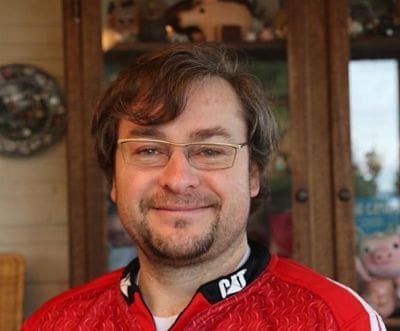
 Join us as we interview New Zealander Dr. Nathan McCluskey. Among the topics we discuss will include Nathan’s upbringing as a Mormon in New Zealand, how his Mormon faith has changed/progressed over his lifetime, how he and Dr. Gina Colvin manage their mixed-faith marriage, and his reactions to Gina’s recent disciplinary council, which resulted in a “No Action” decision.
Dr. Gina Colvin’s pre-disciplinary council interview may be found here.
Episode Transcript
Host: John Dehlin · Guests: Gina Colvin, Nathan McCluskey
This transcript is machine-generated and lightly edited for readability. The audio is authoritative. Please excuse occasional errors in names and spelling.
Introducing Nathan McCluskey and Gina Colvin
Part 1 of 4 · Ep. 1033
John Dehlin [00:00:31] Hello, everyone, and welcome to another edition of Mormon Stories podcast. I'm your host, John Dehlin. It's December 21, 2018, and we could not be more excited today for our interview. Today we are interviewing Dr. Nathan McCluskey. That name may not be familiar to some of you. It may be familiar to others. If it's okay, Nathan, I will follow a matriarchal sort of order and say that you are the husband of Dr. Gina Colvin.
Nathan McCluskey [00:01:07] I'm kind of used to that.
John Dehlin [00:01:08] What's that?
Nathan McCluskey [00:01:09] I'm used to that.
John Dehlin [00:01:13] Mormon Stories listeners will recognize the name Gina Colvin because she is the host of a thoughtful faith podcast. She's appeared on Mormon Stories many times. And last week, Gina was the subject of a disciplinary council or something to that effect in New Zealand, which we were all shocked and joy filled and a little bit concerned to learn had the outcome of no action. But apologies to Nathan for talking about Gina more than him in the beginning, at least in the initial part of his introduction. I've been wanting to interview Nathan McCluskey for a long time, and there are a lot of things that are interesting about Nathan. Nathan was born and raised in New Zealand, so he brings a perspective about Mormonism in New Zealand to the table, which is interesting. Nathan has a PhD. What's your PhD in, Nathan?
Nathan McCluskey [00:02:16] Political science.
John Dehlin [00:02:17] Political science. He does interesting things job wise, so that's cool. Have you served in a bishopric before, Nathan?
Nathan McCluskey [00:02:26] Thrice.
John Dehlin [00:02:27] Three times. Have you ever been bishop?
Nathan McCluskey [00:02:30] Never.
John Dehlin [00:02:31] Okay, so he served in lots of bishoprics. And, you know, Nathan has been exposed to a lot of the historical and doctrinal issues that confound many modern Mormons. And yet he remains quite orthodox and orthoprax. So that's interesting to learn how someone might do that in 2018. That's why modern faith was included in the title of this episode. And then finally, Nathan and Gina have, I would say, by my observation, successfully navigated a mixed faith marriage, at least up until this point. And we are always interested in Mormon stories on modeling mixed faith marriages because that's something that many people want help with and struggle with.
John Dehlin [00:03:24] So we're going to talk to Nathan and possibly Gina about how they've navigated their mixed faith marriage. And then we'll end by telling the story of Gina's disciplinary council. Hopefully Gina will be available for that as well. Gina and Nathan will talk about their perspectives and their recollections on the disciplinary council and kind of where they land with the LDS Church, with the Mormon Church, with the church that shall not be named in 2018.
John Dehlin [00:03:55] So that's what today's episode is about. We are live streaming this on Facebook. We don't know how many people on a Friday afternoon right before Christmas, the Friday before Christmas. We don't know how many people are going to be joining us. But we do love to live stream these things because we love to get viewer and listener feedback and questions and comments, etc. So we invite anyone who joins us not only to share this interview on their walls or with their friends and family, or on Facebook, but also to join in on the comments on the discussion through the chat box on Facebook Live. Now, Nathan, is there anything I botched or omitted or should have included in our introduction?
Nathan McCluskey [00:04:41] No, I think that was a fantastic introduction, actually. You did a great job. Maybe the only thing, perhaps I could add. You asked if I'd ever been a bishop, and I said, no, I hadn't. But when my current bishop was called, I wrote a letter to the state because he doesn't live in our ward. He was called from outside of our ward, and I wrote the state president, and I said, why wasn't I the bishop?
Nathan McCluskey [00:05:06] And I said, this is a question that any man in the ward could have asked. Why did you have to go outside the ward to get a bishop? What's wrong with the men in the ward? And Gina said to me, why are you writing him that letter? You know what the problem is? I said, what's the problem? And she said, it's me. But I didn't see it. I still don't, actually, because I think she's amazing.
Nathan McCluskey [00:05:29] But sure enough, he took the time to write me back a letter because. And I made it clear there's nothing against the new bishop. I love the guy. And it's not that I want to be a bishop. I don't. But it was the principle of why was no one and no man in the ward good enough, basically, and why wasn't I good enough for my quorum president?
Nathan McCluskey [00:05:48] And he wrote back and he said, you're good. Gina's the problem. So. See, I told you. Yeah, but. So, yeah, the reason I haven't been a bishop, apparently, is because of Gina. So I just. I just thought I'd add that to
John Dehlin [00:06:06] the mix, you know, and something.
Nathan McCluskey [00:06:10] Sorry. I thought it was the perfect position to be in because I was seen as worthy by my priesthood leader, but I never had to worry about being a bishop. So it's kind of the perfect situation to be in. Sorry, you gone.
John Dehlin [00:06:23] I love it. And I guess I should, I guess. You remind me of one other reason. I'm glad I'm interviewing Nathan. Nathan tells it like it is. He's a straight shooter. So in some sense, that might alone qualify you as an unorthodox Mormon. But we're gonna stick with the title of orthodox. And I don't mean that as any affront or insult to Mormons, but, you know, I think you bring a level of candor that is refreshing. Maybe that's the New Zealander in you. I don't know.
Nathan McCluskey [00:06:54] Maybe it is.
John Dehlin [00:06:55] Maybe.
Nathan McCluskey [00:06:55] We'll see. I think. I think we do have kind of a just tell it like it is attitude. So, yeah, I apologize if I offend anyone in this interview. I don't intend to.
John Dehlin [00:07:09] And Gina's asking.
Nathan McCluskey [00:07:10] Misunderstanding.
John Dehlin [00:07:11] Absolutely. Yeah, absolutely. All right.
Nathan McCluskey [00:07:15] Just on that orthodox thing, you know, Gina sees me as orthodox, and I think, you know, I would survive an orthodoxy test, but in fact, you did.
John Dehlin [00:07:28] I gave. I administered an orthodoxy test.
Nathan McCluskey [00:07:31] That's right. But when I was sitting on the stand last time, I was on the bishopric with a stake president next to me, Gina was coming up to offer the opening prayer. I said to him. I leaned over and I said to him, this morning, Gina told me she thought I was too orthodox. And he. He laughed and he said, you're definitely something, but I wouldn't call it orthodox. I'd call you an enigma. So I was happy with that. But I can see why I'm seen as orthodox.
John Dehlin [00:07:54] Well, we'll get into that as we go. How's that?
Nathan McCluskey [00:07:57] Sounds good.
Mormon Heritage and Ancestors in New Zealand
John Dehlin [00:07:58] All right, Nathan, so let's begin. To what extent, sort of, do your ancestors kind of have a Mormon heritage? Let's always start there. As we always start.
Nathan McCluskey [00:08:11] Yeah. No handcarts. That I've been able to dig up in my family history. But my grandmother joined the church. He was a member of the church, and my father and mother were members of the church. And so I'm third generation in that regard.
Nathan McCluskey [00:08:28] My grandmother had missionaries knock on her door back in the late 1950s, and she invited. Well, she was Lutheran, but she said, look, in those days, they said, can we come and offer a blessing on your home? And she said, I'm not interested in your message. I'm happy with my faith. But sure, you can come in and say a prayer. And so they came in, and as they knelt down in the living room, she noticed that one of the missionaries had a hole in his shoe right on the ball of his foot. And he'd put newspaper in there.
Nathan McCluskey [00:09:07] And she was quite moved. By that, she thought if they would come all the way over the other side of the world to share a message and clearly not have much substance, she would be willing to listen to what they had to say. So after that prayer, she said, I'm happy for you to share a message with me. And that was the first discussion. And, yeah, it kind of went from there.
John Dehlin [00:09:29] How well did you know her or did you know her?
Nathan McCluskey [00:09:32] No, she died when I was one year old, so I don't recall her at all.
John Dehlin [00:09:36] So you wouldn't know what the particular doctrinal or theological or historical or emotional things were that brought her into the church, other than what you just said, which was being moved by the sacrifice of the missionary.
Nathan McCluskey [00:09:54] Right. But there was more to it than that. I talked to my father about it, and he said that his response was when she heard about a range of principles of the Gospel, she felt the spirit. Things like, she liked the idea of the eternal nature of families.
Nathan McCluskey [00:10:17] She liked the idea of there being. She responded to the idea of God being like the idea of dismantling the Trinity. So they were separate beings that appealed to her. And what other things may have been important to her, I'm not sure. But he said she felt the spirit. Actually, my father joined the church before she did, but that was because her husband wouldn't allow her to join the church. So she had to wait till he died before she joined. But she believed before that.
Nathan McCluskey [00:10:48] My father's story is an interesting one because he had had dreams for some time before the missionaries came about two books, and one was clearly. One was clearly the Bible, and there was this other golden book. And he did not. He'd not had any interaction with the church. He didn't know what this meant. And in those days, they didn't introduce the Book of Mormon in the first discussion. And so it was the. I think, the second discussion, they introduced it, and his mother was having the second discussion. He walked in from work right at the time that they pulled out, and I don't know if you remember the copy of the Book of Mormon that they used to have, which was gold.
John Dehlin [00:11:26] Yeah, I remember that. And it had, like, reformed Egyptian characters all over the COVID Yeah, yeah.
Nathan McCluskey [00:11:33] So they pulled that out, and just as he was walking in, the timing couldn't have been better. And he saw it and he recognized it from his dream, and he immediately asked what it was, and they told him and he was sold. So he was baptized very quickly as a result of that.
John Dehlin [00:11:49] Wow. So there were some kind of even spiritual or even Miraculous. You know, pillars to the. To the introduction of the faith to your ancestors.
Nathan McCluskey [00:12:04] Yes. Yeah.
John Dehlin [00:12:05] That makes it. That must make it kind of a sacred family story for you. Is that true?
Nathan McCluskey [00:12:10] Oh, it's really important for me. Yeah, yeah, yeah.
John Dehlin [00:12:14] Beautiful. I'll just quick shout out to people who have joined us, to Brandon, to Sid, to Patricia. We have someone joining us from Liverpool, England. I don't know how to pronounce their name. Makai, maybe, but they're saying hello.
Nathan McCluskey [00:12:33] Hello.
John Dehlin [00:12:34] Elizabeth's joining us from Bangor, Northern Ireland, and Linda de Azevedo. Welcome, all. Yeah, just wanted to give a shout out to our early listeners. Okay, so the church came into your family a couple generations before you. What did the church mean to your grandparents and parents to the extent that they were in the church?
Nathan McCluskey [00:13:02] It was obviously important to my grandmother. She did the pilgrimage to Utah back in the 60s, and that was really important for her to make that connection. And whereas I don't think my father never went to the United States in his entire life. And I only first went. I think four years ago was my first visit. But for her, it was really important to make that connection.
John Dehlin [00:13:34] Okay, so did you feel like the church changed the trajectory of their lives? In other words, if. No. Like if they kind of end up living the same life they would have. That's a simple answer. If yes, how did you see their lives going and then how did you see the church changing that trajectory?
Nathan McCluskey [00:13:55] Yeah, that's a really good question. I don't. For my parents and for my. I think, well, for my father and for my grandmother. My grandmother died. She didn't live that long after she joined the church, so it changed her behaviors. But I don't really know what that meant for her. And it's not something I ever talked to her about. And I don't have a. She didn't keep a diary, so I have those.
Nathan McCluskey [00:14:31] My father's interaction with the church's relationship with the church was a fraught one. So after he joined the church, he started smoking again, which he had done before he joined the church. When he met my mother, he wasn't actively attending the church at that point. He was smoking and drinking. And she said to him, you know, because, you know, the missionaries would visit. And she said to him, why don't you attend this church that you're a member of?
Nathan McCluskey [00:15:04] And she started to take more of an active interest. I don't know whether he ever resented her for dragging him back into it. But they. As a result, she got baptized and they started attending my Father was. Back in the day that they had 70s at the.
Nathan McCluskey [00:15:23] the local level. He was. Yeah, so he was ordained a 70. But his, his interaction with the church was fraught. He was. He was somewhat dysfunctional and his. So his, his. He wasn't. His sexual behavior was somewhat deviant.
Nathan McCluskey [00:15:47] He. So he kind of. He had this interaction with the church where he believed it was true. There was no question in my discussions with him. And he would defend it quite furiously. I remember growing up and any religious canvasser who came to the door, he would invite in and he collected all the anti Mormon literature, which we called anti Mormon literature then turns out to be true, most of it.
Nathan McCluskey [00:16:14] He would collect as much as he could, and I had access to that. So I read that as I was growing up as well. And he would encourage me to be involved in these discussions that we'd have predominantly with Jehovah's Witnesses who knocked on the door.
Nathan McCluskey [00:16:29] And I found all of that really fascinating. So he was very defensive of the church, but in terms of his personal conduct and behavior, it was a struggle. So he was kind of in and out of the church. My growing up, there were periods of activity, periods of inactivity.
Nathan McCluskey [00:16:52] So I got sealed to my family in 1977 when I was six years old. And I still remember it quite vividly. It was quite pivotal for me. But that was like, I think, a rare period of time when my father was living worthily and active in the church. My mother was a lot, I think, a lot more willing to live the principles than dad ever was, interestingly enough. Yeah.
The New Zealand Context for Joining the Church
John Dehlin [00:17:23] Can I ask. Can I ask you a question about kind of the context, the New Zealand context? What would it be like in the 70s or 80s for a new Zealander to join the Church of Jesus Christ of Latter Day Saints? How would it be perceived? How would the church have been perceived back then? In what ways? Would there have been cultural or historical dynamics that would have made that less likely? Because I'm sure it was a rare choice for someone like your dad to make. And even if one were to join, what would be the cultural forces that might be unique or similar to making it? Maybe a challenge to preserve faith, Mormon faith in a New Zealand context? Or is it the same as everywhere? I'm hoping that there's something to this question.
Nathan McCluskey [00:18:24] It's an interesting question because New Zealand's an interesting place in this regard because from the 19th century, early when the church did missionary work in New Zealand, from the later 18th century. Sorry, later 19th century, the missionary efforts were focused on what we call pkeh, or white people.
Nathan McCluskey [00:18:49] And those who joined migrated to the United States. So we have some. So Christchurch, where I live, had some of the very early members we had. The first Relief Society in New Zealand, for example, was in a place called Papa Nui in Christchurch. I think the second branch in New Zealand was here in my province in Canterbury, and so on. So there were early church membership, but they migrated. In fact, Isrataf Benson's ancestry can be traced to. To Christchurch, I think, through his wife, the Amundsen family, who were Danish. And so we had those early members, but they went to Utah. And the missionary work kind of shifted its focus to the Mori.
Nathan McCluskey [00:19:33] And Mori couldn't. Well, partially didn't want to migrate because they felt a greater connection to New Zealand. Most of the people, the pkehu, excuse me, who joined the church in New Zealand, were migrants themselves from the UK or Europe, other parts of Europe.
Nathan McCluskey [00:19:55] And so they were kind of. They seemed happy to pick up sticks again and move to Zion and they migrated to Utah. But Mori were much more connected. And I understand also that a US Immigration policy didn't allow Mori to migrate to the United States anywhere near as easily. The policy was racist effectively. And so they couldn't even if they wanted to as easily migrate to the United States. So they became the strength of the church in New Zealand. Now, in terms of the population dynamic of New Zealand, the North Islanders is much more densely populated with Mori than the South Islanders. The south island has far fewer Mori.
Nathan McCluskey [00:20:39] And so as a result of that, even now in New Zealand, we've got about 30 stakes. Only two of them are in the South island and about 28 in the North Island. And New Zealand's membership of the church is still over 50% Mori high in activity because as so in the early days, the church really engaged with Mori culture, but it's moved away from that now. And I think that's contributed to higher levels of inactivity amongst Mori in New Zealand. But so for a park. So for a PKEH family like mine to join the church, it was weird. For Mori, it was. It was much more.
John Dehlin [00:21:19] What word did you just use for a. What family like yours?
Nathan McCluskey [00:21:22] Pkeh.
John Dehlin [00:21:23] What is that?
Nathan McCluskey [00:21:26] That's, I guess, what you would call. I don't know, I think Hawaiians call them haoles.
John Dehlin [00:21:31] Okay.
Nathan McCluskey [00:21:31] It's like you and I, John. White people, Europeans.
John Dehlin [00:21:34] It's like Gringo. Gringo. Whitey.
Nathan McCluskey [00:21:36] Yeah.
John Dehlin [00:21:37] So the word again, spell it for me.
Nathan McCluskey [00:21:41] P A, K, E, H, A Pakeha.
John Dehlin [00:21:45] Pakeha. That's what Maori called white New Zealanders.
Nathan McCluskey [00:21:50] That's right, yes.
John Dehlin [00:21:51] Pakeha.
Nathan McCluskey [00:21:52] Yes.
John Dehlin [00:21:53] Okay, can I ask you two or three questions before we move on? What is the. You know, I can think of like, South Africa with apartheid. Right. I can think of, you know, that's a. You know, that's one example that comes to mind of, you know, native people and then colonizers that come in and then how they interact. That's obviously a really extreme example. I could come up with others. But what has been the cultural history? Just if you could summarize. I know it's asking you to summarize the civilization of an entire nation in a short amount of time, but is it intermixed? Is it segregated? Is it interwoven? Is it friendly? Was there slavery? Give us a sense for racial and cultural harmony versus tension in New Zealand. Just understand that interplay. And then I'm going to ask it in the context of Mormonism as well.
Nathan McCluskey [00:22:54] So first I'd say that on one level, New Zealand's. The story of colonization in New Zealand is no different from any other country in which Europeans have colonized indigenous peoples in the sense that there has been a removal of resources, in many cases illegitimately, and there was treatment, differential treatment, and negative, disadvantageous treatment of the indigenous people.
Nathan McCluskey [00:23:31] I'm always reluctant to make comparisons, but I suppose some things that are a little bit different about New Zealand in terms of colonization that we didn't have, some of those really rough edges of racism exist to the same extent that they have in countries like South Africa, I would argue, in the United States as well, and certainly in Australia.
Nathan McCluskey [00:23:54] So Mori were. And if you look at the early documents, and Gina's written her PhD thesis on early settler discourse in the media, and it's quite revealing in terms of the way Mori is seen. But Mori were seen as. They were seen as people, as native people, opposed to, for example, in Australia, where that was declared terra nullius, aboriginals effectively weren't seen as human beings.
John Dehlin [00:24:19] Oh, my gosh.
Nathan McCluskey [00:24:20] Yeah. And so up until reasonably recently, you know, they could be killed. And that wasn't a crime. You know, it was like Mormons in Missouri, basically. So we didn't have that. Mori were recognized. And maybe, you know, a lot of commentators have suggested that's because the colonizers, the British in particular, could recognize in Mori social structures, resemblances of their own. They had a hierarchy, you know, with a chief, and they had. And they were.
John Dehlin [00:24:53] If you. Patriarchy. If you have a patriarchy, you're a Friend. Right. You're human.
Nathan McCluskey [00:24:58] Exactly, exactly. And they were also warlike in the sense that they were a warrior.
John Dehlin [00:25:03] If you're patriarchal and aggressive with war, then you're a friend.
Nathan McCluskey [00:25:10] Exactly right. So it was recognized that, ah, in many ways they're like us, so they must be human. Yeah, yeah. And so they were given. So. So a treaty was made with Mori. It wasn't just, we're coming in here, we've got our flag and we're going to take it over. Thank you very much. So there was. There was. It did ultimately get taken over by the British, but it was done more surreptitiously with the use of legal means rather than, well, illegal means. But. But they used the law to do it. But it was done in a way that wasn't simply conquest in the way that it had been in many other countries.
Māori Attraction to Mormonism and Colonization
John Dehlin [00:25:44] Quick, quick, quick side question. This is gonna display a lot of ignorance on my part. The. The main reputation of Australia that I grew up with, other than, like, you know, what was the movie with Crocodile's md, Right. Or Men at Work, the musical group. The main reputation of Australia was that it was a penal colony that was set up by the United Kingdom to send all the prisoners, which gave it sort of this kind of macho, ruffian kind of reputation. In how I was taught about Australia. Is there anything to that? And does any of that bleed over into New Zealand, or is it totally irrelevant to the history of New Zealand, what I just said?
Nathan McCluskey [00:26:30] Yeah. So our histories in that regard are certainly similarities to our history, but there are some real differences. And you've talked about one of them being that it was a penal colony. It absolutely was. New Zealand wasn't used in that way because Australia now has shifted their kind of penal colony to the island nation of Nauru, who they pay to hold on to the people they don't want, but they've outsourced.
Nathan McCluskey [00:26:54] But definitely that. And they're proud of their convict ancestry roots. But I can't argue that that potentially meant there's a. They've got a very different base to their colonizer society, which, yeah, they are. You know, I mean, I'm going to get a lot of flack for this, but I serve my mission in Australia, so I can speak from personal experience.
Nathan McCluskey [00:27:19] In fact, the first door I knocked on in Australia, my mission in Melbourne, walking up the drive, it was a shingle drive, and this man was working on the engine of his car. He had the bonnet up, you guys call it a hood. And he heard us coming up the shingle drive. And he put his head around, you know, the side of the bonnet, saw that we were Mormons, and he said, yeah, piss off. I hate Americans. And I thought, this is my opportunity. I said, hey, I'm not American. He goes, well, I hate you too. And that was my first experience tracting in Australia.
John Dehlin [00:27:58] So to be fair, I know there are lovely Australian people. So are you saying that's a typical Australian attitude and that that sort of attitude wouldn't be found as prevalently in New Zealand, or are you just saying that was a quirky experience you had?
Nathan McCluskey [00:28:18] No, no, I think that was commonplace. I had hoses and bricks and all kinds of things set on me as a missionary, but I served a mini mission in my. In New Zealand before I, you know, went into the MTC and went on my full mission. The mission was short of a missionary, and I was due to go, and mission president called me and said, hey, will you serve a mini mission? And I did. And the experience I had in New Zealand was very different. And there's an upside and a downside to it, because when I tracked it in New Zealand, you'd be stuck on doors for ages talking to people.
Nathan McCluskey [00:28:51] They weren't interested, but they were friendly. And so they would talk to you and talk to you and then say, oh, look, I'm not interested. No, thank you. But they were very friendly and polite in Australia. My experience was very different. They'd tell you straight away, hate you, bugger off. You know, saved a lot of time. Missionary work in Australia is a lot more efficient, but less pleasant.
John Dehlin [00:29:13] Got it.
Nathan McCluskey [00:29:14] Yeah.
John Dehlin [00:29:15] And I can't wait to feel the wrath of our Australian listeners. Simon Sotherton will be at my doorstep with an axe.
Nathan McCluskey [00:29:27] That's right. Yeah.
John Dehlin [00:29:29] Okay. Okay. Thank you for that. So there's pretty. Is there pretty strong animosity, then, between Australia and New Zealand? Kind of like India and Pakistan without the war. Is it pretty. Is rugby the field on which your two countries go to war?
Nathan McCluskey [00:29:46] It is, to be honest with you, any sports field. So it doesn't matter what the sport is. Rugby just is the most predominant sport in New Zealand. But, yes, you know, it's a huge embarrassment for us when we lose to Australia, which we very seldom do.
Nathan McCluskey [00:30:04] And it's a huge cause of pride for New Zealand because, you know, Australia and New Zealand is very much, I think, like U.S. and Canada. We're like Canada, right? We're the kind of. Not in terms of geographical size, because Canada is bigger than the United States, but in terms of I guess economic power and population and those kinds of things. We're like the little. You know, the little cousin.
Nathan McCluskey [00:30:30] So when we punch above our weight and we consistently beat them in rugby. And of course, our other very successful national sports team is our softball team. New Zealand men's softball team are the most successful in the world. And when we beat Australia, it's fantastic.
Nathan McCluskey [00:30:47] And more often than not, we do. So these are huge sources of pride for us. And whenever there have been some notable experiences over the years in which Australia have had to cheat to beat us, and we always pull those out as an example of their convict ancestry, their low class and low breeding, and that we're just that much better because we were set up as a slice of Anglican society from England who had some advantageous position in terms of status, but also we were smarter. So we like to think that and kind of rub their noses in it when we beat them, which in those sports, it's pretty common. Yeah.
John Dehlin [00:31:29] All right. A little national pride bordering on xenophobia here on Mormon Scotland.
Nathan McCluskey [00:31:36] But you see, it's the interesting thing because we can do it with Australians and it doesn't feel wrong. We did it with the Chinese or the Indians or Pakistanis or something. He just feels like that's just not right to do that. We.
John Dehlin [00:31:49] We'll see how it feels to the Australians. And I hope listeners will forgive this cultural context. I find this fascinating, and I find this as a really important setup to our discussion about Mormonism in New Zealand. I hope listeners agree. And if you don't bugger off. No, I'm sorry. I didn't mean to say that. I don't even know what that word means. What does that word mean? You know, don't tell me what that word means. I don't want to know. Okay, so, Nathan, another question. Do you know the stories of how the Mormon missionaries converted the Maori? And what was it about Mormonism that was appealing to the Maori? If you know, and I don't mean to put you in the position of speaking for another. For another cultural group. Having said that, you probably know a lot about that, or maybe you don't, but I thought I'd ask anyway.
Nathan McCluskey [00:32:44] Well, a lot of the information that I understand about that had come through Gina, who's actually sitting in the corner in the room. So I have to be careful what I say because she is actually the expert on this.
John Dehlin [00:32:53] She can come tell us this if she wants. It's up to you guys.
Nathan McCluskey [00:32:59] Yeah. If you think something hit my head, you'll know that. It's her turn to take over. Okay, so there are a lot of things about Mormonism that were appealing to Mori. So one of them was that it wasn't from England for a start off. So over the late 19th century, there was, in the 1860s, for example, we had the land wars in which the settler government had become.
Nathan McCluskey [00:33:32] They had taken over the balance of power effectively and. And they were using it to leverage land off Mori. And there was some resistance from various IWI or tribes in English. And that meant that a lot of animosity was growing amongst Mori and a real resistance to the incursion of the colonists.
Nathan McCluskey [00:33:59] And here came the church, which wasn't associated with them at all. In fact, in 1835, before the Treaty of Waitangi was signed in 1840, the Northern Tribes had put together something called the Declaration of Independence. And it was based very much on the US Constitution and the US Declaration of Independence. And they wanted something like that for New Zealand to protect themselves against what they saw as potential loss of resources. They could see it coming.
Nathan McCluskey [00:34:29] So the church came and it was not British. So that was appealing in the first, you know, from the get go that here these weren't people who had come. You know, the reality is that the Anglican Church and the Methodist Church and so on, but mainly the Anglicans had used their religious power and the conversion of Mori to Christianity as a way of assisting the transfer of these resources. And they weren't always, this is not in every case, but they weren't always practicing what they had preached. And Mori saw some of that hypocrisy and what they were losing as a result of that connection.
Nathan McCluskey [00:35:09] So the church comes along, it's American, it doesn't have any of that baggage. So that's appealing. The other thing that's appealing, and this is somewhat controversial, but just Gina suggested that the fact that the church was polygamous and polygamy existed in Mori society, when it was absolutely ruled out by the Anglican Church, made it line up to some degree culturally.
Nathan McCluskey [00:35:36] Also, the emphasis on family history and ancestor recognition and connection, huge. In Mori, it's called Whakapapa. And that connection to your ancestors and genealogy was also really appealing to Mori. There were also prophecies and there's a lot of argument around whether these prophecies pointed to the Church of Jesus Christ of Latter Day Saints or not. Various religions have kind of claimed them, but there were prophecies by various chiefs and what are known as tupuna or priests.
Nathan McCluskey [00:36:16] Tohunga, Sorry, not Tipuna. Yeah, Tohunga in Mori, the Mori cultural space, who talked about the raising of the hand to the square. They talked about people coming in twos and these were picked up by some as recognition and amongst Mori as well, they were certainly used as a way of identifying the church as connected with God and being right.
Nathan McCluskey [00:36:46] So, and certainly in some areas where these prophecies were made, people Mori joined the church in large numbers amongst like for example Ngti Kahungunu on the east coast of the north island. And so right up the from Wairarapa in the south of the east of the north island up to the east coast where Jina's ancestors are from Ngati Paro. There was a, a widespread acceptance of the gospel. And even now if you drive very remote areas, you'll see little LDS meeting houses in places like in the middle of nowhere.
Nathan McCluskey [00:37:21] Unfortunately, because of the church's move away from supporting the use of te reo Mori in church services, Mori language that is the drop off in adherence has been huge. So Mori as a part of the way we worshipped in New Zealand right up until the 1970s was completely acceptable. And I think it was. Lauren C. Dunn came out to New Zealand and said, we have no more of that. It's an English speaking church.
Nathan McCluskey [00:37:56] And that kind of turned the tide and no longer was Mori anywhere near as acceptable as it had been as part of our worship. And that was really, you know, a really sad episode in the history of the church in New Zealand.
John Dehlin [00:38:10] What year around what year was that again?
Nathan McCluskey [00:38:12] I have 76 in my head, but it was somewhere in the mid-70s.
John Dehlin [00:38:17] It was just we need to be as English speaking and as US Mormon, you know, simulating as possible.
Nathan McCluskey [00:38:25] Basically it's a bit like the church's shift, you know, in Utah when they were identified by outside media as being a bunch of hick farmers with beards who are unkempt and so on. And so they kind of brushed up their image with the white shirts and ties and you know, eventually IBMized. It was a bit like that. You know, our church is looking way too brown and Mori, let's make sure we respectable, you know, make it more respectable so that, you know, people like my PKEH family don't need to be weird joining the church because you're in that kind of brown church. And so that was the shift that seemed to occur. It wasn't said in those terms, but that's the feeling that you get.
Race, Segregation, and the Priesthood in New Zealand
John Dehlin [00:39:04] Okay, so how segregated and this will be. I think the last question I ask before we get into your story More now, how segregated has the Mormon Church in New Zealand been historically? Have there been very integrated wards? Has there sort of been more?
Nathan McCluskey [00:39:28] What is it?
John Dehlin [00:39:29] Pakeha? What is the word?
Nathan McCluskey [00:39:30] Yep. Pacquiao. You got it.
John Dehlin [00:39:33] Wards versus Maori wards, or are there wards where it's like west side Story where there's PKEH and Maori, but they kind of have their own cliques, you know? How well has the Mormon Church in New Zealand been culturally integrated?
Nathan McCluskey [00:39:51] Yeah, so there's a. There's a high degree of miscegenation in New Zealand. In fact, I did my master's degree.
John Dehlin [00:39:57] That word means the. The hatred of mixing. Right. Of mixing races.
Nathan McCluskey [00:40:03] No, I think it's intermarriage. Miscegenation, isn't it?
John Dehlin [00:40:06] Okay.
Nathan McCluskey [00:40:07] I think that's the thing. Miscegenation.
John Dehlin [00:40:08] Interracial marriage. You're saying there's been a high level of interracial marriage?
Nathan McCluskey [00:40:12] Interracial marriage. And in fact, so I did my master's in demography, and it was a. The head of the department used to often talk about the high level of integration. I mean, New Zealand has that anyway, because we don't. We haven't had those hard lines of segregation that you see in, like, South Africa or even that happened in the United States, right prior to the civil rights movement and so on, changing things to some extent. But we've never really had, you know, we never had slavery. We never had any kind of segregatory rules that were overt in society. They applied in regards to some things like being able to access a government benefit or something like that back in the 1930s, but we.
Nathan McCluskey [00:40:55] We didn't have hard lines. Mori and Pkeh have always been able to integrate to intermarry, and they always have right from the outset. And so in the church that we've not had, to the best of my knowledge, a Mori ward. There's no Mori ward that exists. Mori and PKE are sit shoulder to shoulder. You know, interestingly enough, you know, you earlier mentioned Gina's disciplinary council. She's a Mori woman. Her bishop's Mori, and our stake president is Mori.
Nathan McCluskey [00:41:27] You know, so culturally, having a man determine a Mori woman's kind of place in the church as maybe a topic that Gina wants to talk about, but that's an example of how that wouldn't happen in Mori culture, but it happens in the church, and there's a degree of friction there over the fact that that should even happen.
Nathan McCluskey [00:41:51] But the point I want to make is that in leadership positions in the church, it's not at all uncommon. We had our last temple presidency were all Mori. And you know, so it's not at all uncommon for at every level of the church in New Zealand, Mori to be featured and to be completely involved. And so yeah, there's no, there are some wards that have a more predominant Mori membership than others and as a result they have a more Mori flavor in their services and so on. But there's no, there's kind of no segregation that the church has put in place to say you have to go to that ward because you're Mori and if you're pkeh, don't associate with them kind of thing. I've never seen that happen.
John Dehlin [00:42:36] Okay.
Nathan McCluskey [00:42:37] Not my experience. Yeah.
John Dehlin [00:42:38] And then how. And we talked about this in my interview with Gina, when I interviewed Gina Colvin. And I do want to refer listeners to that as well, my sort of one on one lengthy interview with Gina a couple interviews ago. But just tell the listeners who haven't heard that to what extent the church's rhetoric around, you know, Lamanites, around darker skin, the curse, the curse of Cain and all of that pre existent stuff And Bruce R. McConkie stuff, you know, how was that perceived in New Zealand? Let's just say in the 50s, 60s, 70s and 80s.
Nathan McCluskey [00:43:16] Yeah. So in terms of the priesthood band, let's get that out of the way first, it didn't feature in New Zealand. Mori have had access to the priesthood every bit as much as PKEH have in New Zealand. So that's never been used. We were.
John Dehlin [00:43:31] Mori can be quite dark skinned, right?
Nathan McCluskey [00:43:34] Yeah. So certainly we have a friend whose brother migrated to Las Vegas, Nevada and was denied the priesthood because his skin was quite dark. And he said, I'm Mori, I'm not of African descent. And you. And had to have quite lengthy discussions to prove that he was entitled to the priesthood. So. Yeah, but I mean that brings that whole question up about what that was ever about. Right. Is it about skin color? Is it about lineage, is it about race, is it about ethnicity, Is it about. Yeah, who knows?
John Dehlin [00:44:05] Or was it a huge disaster, a huge mistake, abortion of a policy, one of those things.
Nathan McCluskey [00:44:13] Yep, agreed. So, yeah, but unfortunately in New Zealand it never featured. So to some extent, when the 1978 revelation came out, you know, it was, it was only a blip on the radar because it just had never really been employed in New Zealand at all. We saw that very much as an American issue. And that was another example for us. That's another example of Americans doing what they do, which is focusing on the wrong things. Yeah, sorry about that, John, but that's often the way that Americans.
John Dehlin [00:44:48] No offense to you. Yeah, yeah, yeah, I have lots of self hatred. So you're fine.
Nathan McCluskey [00:44:54] Good on you. That's healthy.
John Dehlin [00:44:55] Self loathing is our bread and butter. I'm kidding.
Nathan McCluskey [00:45:02] So that's there. In terms of the other dimension to your question, the Lamanite connection, that was used very healthily. So Mori were very much told that they were of the House of Israel, they were literal descendants of the House of Israel and that. And you know, we have a predominantly Mori church in New Zealand called the Ratana Church, which also made this claim that Mori were literally descendants of the House of Israel. And I think there were early connections between it and the Church of Jesus Christ Latter Day Saints in New Zealand. And that idea was shared.
The Lamanite Identity and Māori Members
Nathan McCluskey [00:45:45] So for many Mori, particularly older Mori in New Zealand, the idea that this is kind of being dismantled due to DNA evidence and so on is still resisted. They still very much see themselves as literal descendants of the House of Israel. And being Lamanites isn't necessarily a bad thing because there were points of time when the Lamanites were more righteous than the Nephites and I guess they would see themselves as a righteous branch of the House of Israel.
John Dehlin [00:46:13] Yeah, the pure blood of Israel.
Nathan McCluskey [00:46:16] So in that sense they're kind of. They have greater right of access to the priesthood than even PKEH do in New Zealand. It's a. For some, it's still a point of pride.
John Dehlin [00:46:30] Love it. Okay, well, let's get back to your story. So you were sealed to your family, did you say, at age seven?
Nathan McCluskey [00:46:38] Six.
John Dehlin [00:46:39] Six. And you, you. I guess that means you grew up in a mixed faith home, right? Kind of.
Nathan McCluskey [00:46:45] Well, no, because my father and mother were both members of the church, but
John Dehlin [00:46:49] he was kind of, he was in and out. Questionable in his faithfulness, let's just say.
Nathan McCluskey [00:46:54] Yes. Yep, that's right. So yeah, I guess you could say that. But there was never any question. You know, in most mixed faith households that I'm aware of, there are. There's a challenge to the beliefs. My father never really challenged the beliefs. His issues tended to be much more localized and with his own worthiness and feelings of inadequacy. For example, he didn't, he didn't baptize, he didn't bless me, he didn't baptize me, he didn't perform any of my ordinances because he didn't feel worthy to. He was self aware and self honest enough to at least admit that. And so yeah, there's no question about the truthfulness of the church. There were only questions about his willingness to live it. So I don't quite see that in the same basket as your traditional mixed faith home in which one, you know, one of the couples is going, you know that church is bollocks. Yeah, got it.
Nathan's Mormon Childhood in New Zealand
John Dehlin [00:47:55] So tell us what your Mormon childhood was like as a New Zealander.
Nathan McCluskey [00:48:01] It was, it was enjoyable. I mean, now we move into a two hour block. You know, I remember when we had the three separate hours and, and I really, I really enjoyed church. I felt, I've always felt really affirmed and accepted at church. In fact, I was on my stake assignment a couple of weeks ago. I was sitting in sacrament meeting and just before it started, or might have been just after it ended, actually, the woman who was sitting behind me said, you know, I remember you in primary singing your heart out.
Nathan McCluskey [00:48:35] And she said, I remember going carol singing. And you went carol singing. And you were so enthusiastic in your singing. I thought it was beautiful that for someone your age who's normally shy to sing in a situation like that, you're completely open to doing that. And she said that she was quite touched by that.
Nathan McCluskey [00:48:57] And that brought back recollections to me that I did. I loved it. The church has always been a safe place for me. It's always been a place in which I felt accepted and affirmed. And so I've got, you know, unlike some others, like Gina, whose experiences at times have been different, I've not really had to deal with that. I've only, I mean, I've really only. There's probably only one occasion that I recall really having personally been threatened in terms of my worthiness in the church. And that was a brief incident. A young American branch president who overstepped the mark, exercised some unrighteous dominion, but it was resolved pretty quickly and he was humble enough to say, my bad, I apologize for that.
Nathan McCluskey [00:49:44] And that was huge. You know, that earned a lot of respect for me. And that's not even, almost not worthy of mentioning because all my other experiences in the church have been largely positive. You know, there have been examples of poor priesthood leadership where they could have done things differently, but yeah, they're not scars for me.
John Dehlin [00:50:06] Yeah, but in terms of what, let's just say what an American Mormon would expect for a Mormon upbringing. Primary songs, you know, young men's, you know, following up the priesthood leadership, word of wisdom, law of chastity, of ultimately seminary. Did you have church? You know, church dances. Fill us in. Were there road shows? Were they Temple trips like fill us in on to what extent your New Zealand Mormon upbringing as a child and youth would mirror that of someone in the United States versus Diverge.
Nathan McCluskey [00:50:46] So I don't know what it's like growing up in the church in the United States, but I would say for all those things you've just said, yes, we had all those things. They're probably done on a smaller scale here than they were there.
John Dehlin [00:50:55] You had road shows?
Nathan McCluskey [00:50:58] Yeah, yeah, we had road shows, yep.
John Dehlin [00:51:00] Do you remember one you participated in?
Nathan McCluskey [00:51:03] Yeah, yeah, we, you know, I remember one that we kind of had at our Stake center and then we took it. We, you know, took it around. There's a park in the center of our city and we went around the park and we had a, we had like a, you know, a, an open trailer which we sat on and we advertised the church it was part of.
Nathan McCluskey [00:51:22] We had a kind of. It was before they had Santa parades here, but they kind of had. Something was called the Haze Parade and various, a range of different kind of organizations in the city could put floats in. And so, you know, we did that.
Nathan McCluskey [00:51:45] We also had performance road shows where the community was invited to see us perform various things at the Stake Center. So yeah, that was all part of. And I'm not sure if that's the same as what you call a roadshow or what you did in the United States, but yeah, that was part of my memory and my recollections growing up.
John Dehlin [00:52:11] Was there a temple in your youth or childhood in New Zealand?
Nathan McCluskey [00:52:16] Yeah, so we had a Temple since 1958. In fact, David McKay, Hamilton. Last general conference they just announced the building of a temple in Auckland.
John Dehlin [00:52:28] Okay.
Nathan McCluskey [00:52:29] But it hasn't been built yet. So. Hamilton, since 1958 we've had a temple. And so certainly all my lifetime and we would have. Our stake would have an annual temple trip where people would go up to the temple and spend a week. Temple accommodation there and so on. So yeah, it was a big pilgrimage and it was a big deal. It was expensive, you know. And so from a young age, I remember preparing for those by saving money. We were a poor family, we were working class. We didn't have much.
John Dehlin [00:53:04] And what was your dad's job and your mom's job if she had one?
Nathan McCluskey [00:53:08] No, she was largely a stay at home mom. She had every now and then through my growing up, she would have a job temporarily. She worked for the 1974 Commonwealth Games as a driver and she also was a taxi driver for some of the time that I was growing up. But for the most part, she was a stay at home mom and my dad was a Manchester salesman. I'm not sure if that's the term you use for it in the United States, but basically towels, sheets, blankets, he sold that at a department store. So we didn't have a big income and we grew up in what's known as a state house in New Zealand.
Nathan McCluskey [00:53:45] Like a government. We grew up in government housing. We never owned our home as a family, so kind of poor neighborhood. And. Yeah, so going to the temple was a big deal. It was expensive because we live in the south island, the temples in the north island, we can't just drive there. We need to either fly or catch the ferry. Drive and use the ferry. And they were very expensive options, you know, when I was growing up. The cost of flying has become cheaper now comparatively, with competition in the industry. But so, you know, what did that
John Dehlin [00:54:22] trip take by ferry?
Nathan McCluskey [00:54:24] You're driving it and going on the ferry, it would take about 14 hours all up.
John Dehlin [00:54:29] Wow.
Nathan McCluskey [00:54:31] So, yeah, I remember leaving early in the morning and then getting to the temple late at night and seeing the light of the temple sitting up there on a hill and being absolutely in awe of that vision. Truly a welcoming sight and, and quite emotional seeing the temple.
John Dehlin [00:54:55] What was it like doing baptisms for the dead the first time for you?
Nathan McCluskey [00:55:00] It was great. Really, really enjoyable. I really felt it was a privilege to do that and it was a service activity and that's how I saw it, that I was providing something for people that they couldn't provide for themselves, enabling them to have the blessings of the gospel. So, yeah, enjoyable. My memories of temple trips are that they were fun, that they balance this spiritual experience that was happening in the temple with the excitement of us all going away and having the sleepover for a week.
John Dehlin [00:55:43] What were award or stake dances like for you in New Zealand? Or did you have them?
Nathan McCluskey [00:55:49] Yep, totally had them. They were, you know, we had green and gold balls. We had youth dancers. They were, they were fun. They were. When I was growing up, they were pretty, pretty loose affairs. They weren't policed particularly tightly and we, yeah, they're a good, good chance for everybody to get together and dance and have some fun across, you know, the state. Balls. There were, you know, young people right through to adults and people dance with each other. It was a great, they were great community coming together.
John Dehlin [00:56:31] Was it pretty much men at work the whole time? Just men at work for three hours straight. Like, what else would you listen to?
Nathan McCluskey [00:56:37] Men at men at work. They're an Australian Band mate.
John Dehlin [00:56:41] Wait, ACDC and Men at Work. Wait, no. Acdc.
Nathan McCluskey [00:56:45] Australian.
John Dehlin [00:56:46] So you would have hated Men at Work?
Nathan McCluskey [00:56:48] No, no, I love Men at Work. How can we dance when. Yeah, it's great stuff.
John Dehlin [00:56:56] I don't think that's been at work.
Nathan McCluskey [00:56:58] Is it Midnight Oil? That's meant. Oh, Men at Work is all right. The Vegemite Sandwich song. Right.
John Dehlin [00:57:09] That's it. That's it.
Nathan McCluskey [00:57:11] Gave me a Vegemite Sandwich. Yeah. So, as you did love all that music, even though they're Australian, that didn't stop us loving it.
John Dehlin [00:57:17] Did you guys listen to a lot of, you know, American rock and roll pop music?
Nathan McCluskey [00:57:22] Yeah, absolutely. Yep. So, I mean, our musical tastes were quite varied, you know, from, you know, Queen, which is quite topical at the moment. You know, through, you know, in the 80s, there was, you know, Soft Sell and Devo and Kiss. I was a huge Kiss fan and.
Nathan McCluskey [00:57:47] Yeah, like. And of course, we had New Zealand. We had New Zealand bands and music as well. You know, Split Ends. Split Ends was really big in the 80s when I was growing up, and you probably even heard of them. You've heard of Crowded House, probably?
Nathan McCluskey [00:58:00] Sure, yeah. Yeah. So the main. The lead singers in Crowded House are Kiwis from a little town in the North Island. They had a band before that called Split Ends. So, yeah, and their songs. There's a Christchurch band called Dance Exponents. They were called Dance Exponents. They didn't change the name to the Exponents, but they're kind of. They've got kind of cult status in New Zealand. Their music still played, you know, from the 80s and 90s. Yeah.
John Dehlin [00:58:29] Okay. What. I like to ask this.
Nathan McCluskey [00:58:32] What.
John Dehlin [00:58:32] What were your favorite Primary songs? Did you have any?
Nathan McCluskey [00:58:36] Yeah, I loved Popcorn Popping on the Apricot Tree. And we sang this song. We used to sing this song. Waddlee Archer. I don't know if. Have you heard of that song before?
John Dehlin [00:58:47] No. Sing it for me.
Nathan McCluskey [00:58:49] Goes Waddly Archer Waddly Archer Doodly do you doodly doo Waddly Archer Waddly Archer Doodly do doodly yeah.
John Dehlin [00:58:59] What does that have to do with Mormonism?
Nathan McCluskey [00:59:01] Well, I never worked it out. I never worked out what that had to do, but we used to sing it. And there was an old sister in our ward called Ruby Archer who, you know, she. She really. She really loved me. And she would always, you know, give me lollies and stuff. And I used to sit with her. Sorry. Oh, Candy. You call it Candy.
Nathan McCluskey [00:59:20] And I would sit with her in church because she was quite frail. And old. But I made the connection between the song and this old sister in the ward. And I thought maybe it was about celebrating her because she was such a stalwart in the church. I mean, she used to walk or cycle to church sometimes when she was living as much as 20 miles away from church. She was incredibly devoted, and I thought this was kind of celebration, her exemplary diligence.
Nathan McCluskey [00:59:49] But, yeah, that was the only connection I could make. So I think that maybe that was a local song that somehow got introduced. We used to sing another one I liked is if you chance to meet a frown, do not let it stay. That one.
John Dehlin [01:00:07] Yeah.
Nathan McCluskey [01:00:07] So loved that. I loved the way In a Manger is a Christmas song. And I. Yeah, I really loved oh, oh, I love Book of Mormon stories. Love that one and all the actions. Yeah. So what.
Faith, Doubt, and Teenage Years in the Church
John Dehlin [01:00:29] So you're. I'm guessing you're around my age. What year were you born?
Nathan McCluskey [01:00:33] 71.
John Dehlin [01:00:34] So you're two years younger than me.
Nathan McCluskey [01:00:36] So I'm guessing that means you're from the 60s. I'm from the 70s, John. I don't want to dwell on that.
John Dehlin [01:00:43] I'm guessing. Bruce R. McConkie, you know, Joseph Fielding Smith. Mormonism was still permeating the church education system during your, let's just say, Sunday school and seminary and high school years. So to what extent did you get sort of that orthodox upbringing, doctrinally, theologically?
Nathan McCluskey [01:01:06] Yes. A Mormon doctrine was on everyone's shelf. You know, I don't know any members who didn't have a copy of Mormon doctrine on their shelves. You know, there might have been one or two members who saw particularly Mori members who saw him as racist who didn't have it. But most, most members had a copy of Mormon doctrine that was like a staple.
Nathan McCluskey [01:01:28] And doctrines of salvation that, you know, Joseph F. Smith. Joseph Fielding Smith. I should say that that was many members. Not as many as Mormon doctrine, but many members had that. And that would be a go to for explaining, you know, answers to questions or points of doctrine. So, yep, that was definitely a feature in my growing up. And they were seeing those men were seen very much as authoritative on, you know, questions of doctrine and belief.
Nathan McCluskey [01:02:03] Having said that, when it was convenient for us, we were always willing to say, I know that's American. So if we didn't like something and we didn't think it fit, we would explain that away as being American that's part of the American culture. That's not part of the Church of Jesus Christ.
John Dehlin [01:02:22] Would you happen to have an example of that?
Nathan McCluskey [01:02:24] Or maybe not well, definitely, you know, we talked about the priesthood ban. That was definitely one of them. So the attitudes towards race in that regard were certainly seen as an American issue. Not. Not really seen by most. I wouldn't say the majority saw that. There would be some who, you know, we still had our rednecks, but for most, they weren't seen as part of the gospel. And I think.
John Dehlin [01:02:53] Wait, so the priesthood ban would have been viewed in your teen years by most New Zealander Mormons as an. As an errant policy?
Nathan McCluskey [01:03:05] Yeah. I don't know for most, if it was seen that overtly that they would say that's wrong. I think what they would say is that they would just ignore it. That's more because it was too difficult to engage with, because we can't say that the prophet's wrong. But our reluctance to engage with it meant that we didn't see it as part of the gospel. If, you know, so it's kind of a passive. It was kind of a passive resistance rather than an active resistance would be what I would say. Would you agree, Gina? Yeah. Yeah.
John Dehlin [01:03:40] That's really interesting. And kind of progressive. It's almost like New Zealand was progressive as a culture
Nathan McCluskey [01:03:51] because we didn't see it as progressive because we've not had those same kind of race issues ever. So we would just see that as human, I guess.
John Dehlin [01:04:01] Yeah. I just mean by modern standards of social justice and, you know, multicultural sensibility.
Nathan McCluskey [01:04:09] Yep.
John Dehlin [01:04:10] Yeah. Okay.
Nathan McCluskey [01:04:13] The fact that you were going through the civil rights movement as late as you did in terms of, you know, rights of blacks, it was. It was seen as a joke by many New Zealanders, that civil rights movement.
John Dehlin [01:04:25] It's just like those crazy Americans, like,
Nathan McCluskey [01:04:27] how is it they still having this argument? Yeah, yeah, exactly. Yeah.
John Dehlin [01:04:33] Interesting. That's super cool. All right. But what did you do with the Book of Mormon utterances about God cursing people with dark skin?
Nathan McCluskey [01:04:47] Well, they were put in the context. In my experience, they were put in the context of just forming. It was about forming a difference. So, yeah, the curse was there because they were doing bad stuff and they needed to be seen as different. They needed to be separated because of the religious dimension, the righteous dimension, the keeping the Commandments dimension, the connection with God. And then ultimately it was a happy story. Right. Because they then became more righteous than those who thought they were better than them.
Nathan McCluskey [01:05:19] So that was the closing of the loop, effectively, that you have to read it in context. The context of this is not damning someone. This is creating a situation in which, yes, there was separation for the Safety of those who were the people of God. And then ultimately he never gave up on them and they came to be the people who ultimately were the example to those who were the people of God. It was seen as a cautionary tale. This is what happens if you allow pride and worldliness to be more important than your connection with God.
Nathan McCluskey [01:06:04] And anybody can fall into that trap. But don't think that you're better because you've done bad things in the past. You can change and you can actually be more worthy in the sight of God than those who were in the first place. It was kind of treated as a first shall be last and the last shall be first. So it's kind of a triumph. Yeah.
John Dehlin [01:06:28] And did you ever look up to the Maori as like, oh my gosh, they're the pure blood of Israel and I'm not, I'm grafted into the, into the, you know, blood of Israel. But they're actually descendants of Abraham, Isaac and Jacob. Did you ever have that kind of envy?
Nathan McCluskey [01:06:46] Actually, when I got my patriarchal blessing, I did because I thought, you know, man, like I'm adopted into the house of Israel. I'm not a literal descendant of the house of Israel, but I having friends who had had their patriarchal blessings and they, you know, and Gina sometimes, you know, would rub this into me that she's, you know, the blood of Israel flows richly in her veins and, you know, I should be grateful that I'm being allowed to participate in this, this grand covenant experience. So yeah, no, there have been times when I've kind of felt that, that I wish that I had that kind of connection, but I wouldn't dwell on it. It was never for me, something which made me feel excluded. It was never, I mean, in terms of anyone rubbing my nose in it other than Gina, it's never happened.
John Dehlin [01:07:46] Thanks for that. Gina, how were, what was your faith like as a teenager? Did you ever have, like me, like, okay, this all seems good, but I really need to know, I really need to have a witness. I need that moment of truth where I can know for a certainty it's true. Because even though it feels good, I don't know it's true. Did you ever have that sort of longing? And if so, did it get satiated?
Nathan McCluskey [01:08:20] Absolutely. So I think probably until my mid teens and maybe I'm a bit of a late developer, but I was quite happy going along to church, feeling like I was connected, happy to kind of thrive off my kind of parents beliefs.
Nathan McCluskey [01:08:43] And then I got to about my 16th year, it was my. And a whole bunch of things started to coincide. So one of them was I took a fancy to a girl who was not a member of the church who started asking me to do things on Sundays.
Nathan McCluskey [01:09:04] The kind of level at which I was then playing rugby meant that there were tournaments on Sundays sometimes. I mean, our regular games were on Saturdays, but there were trips sometimes that went over Sundays. And so I was kind of confronted with making decisions. And about the same time, my young men's president was asking me, you know, have you thought about serving a mission? My bishop, in one of his interviews with me, and this bishop is now in Area Authority 70, he said to me, do you have a testimony of the gospel? And I really had to think about that. And I said to him, people get up in fast and testimony meeting, and they say they know this and they know that.
Nathan McCluskey [01:09:54] They know the church is true. They know the Book of Mormon is true. And I said, I can't say that. I don't. You know, I wish I could say that, but I can't say that if it isn't true for me and it isn't true for me.
Nathan McCluskey [01:10:07] And he had. He had a very tender discussion with me about how I might come to that. And, you know, if it was a desire for me to know one way or the other, you know, how might that happen. And we talked about me asking God, because God's the only one who can answer that question.
Nathan McCluskey [01:10:24] And so those discussions were important kind of preparation. And then it was my final year of seminary, and I'd kind of at that point decided I didn't want to go to seminary anymore. I'd done three years and I didn't kind of like the thought of getting up early because we have early morning seminary for another year. And I just got my driver's license, and my dad said to me, if you go to seminary, can you can take the car? And that was enough of an incentive.
John Dehlin [01:10:56] So bribery, bribery for faith wasn't exclusively American of an experience.
Nathan McCluskey [01:11:03] No, no, it was big in my faith formation. Bribery. Yeah. So then I said, okay, well, if I can take the car. So having some independence and being able to drive the car, that was important for me. And it got me to go to seminary. So I went. And my seminary teacher, it was the Book of Mormon year. My last year was Book of Mormon year. And he said, I want everyone here to read the Book of Mormon this year. But I don't want you to just read it. I want you to pray before you read it for understanding. And after you Finish reading. I want you to pray and ask God if it's true.
Nathan McCluskey [01:11:34] And he said, and if you do that, at the end of each week, I'll give you a block of chocolate. And as I told you, I was from a poor family, and that was a huge kind of carrot that I get.
John Dehlin [01:11:48] A Willy Wonka.
Nathan McCluskey [01:11:50] Yeah, that's right.
John Dehlin [01:11:52] So I thought.
Nathan McCluskey [01:11:57] So I did it. And, you know, I read each day from the Book of Mormon, just the school days, so five days a week. And I prayed before. I was quite good like that. If I make a commitment, I stick to it. And always kind of been like that. My father always said to me that, you know, if you make a commitment, you keep the commitment. Which is ironic, given how he lived his life. But that was what he taught.
John Dehlin [01:12:23] It's called do as I say, not as I do. I have a little bit of experience in that regard, too.
Nathan McCluskey [01:12:28] We probably all do, but. Yeah. In fact, I remember standing in the lobby at the Stake center and we had a visiting general authority, and he talked to my dad and I, and he asked me this question. He said, you know, it's great, you know, to see you here and see you living, you know, young person like you living the gospel. You must have, you know, you must have a great example from your father. And I said, well, actually, my dad's more of a do as I say, not do as I do kind of a guy.
Nathan McCluskey [01:13:04] And the daggers that my dad looked at me, you know, being embarrassed in front of this general authority. Yeah, wrong thing to say. But I was, you know, I was honest then. I'm honest now, John. So I haven't changed in that regard. I just. Yeah, I probably. I don't filter very well, so. But it's exactly that. So.
Nathan McCluskey [01:13:23] So I did that. And, you know, I got to the end of this year and I read, you know, I came to Moroni chapter 10, and I kind of. Honestly kind of felt like this was the transition. It's interesting, you know, I've said to some people coming back to this, Gina's disciplinary council, that I've had to challenge my attachment to the church as a result of her being called into disciplinary council in a way that I have never since I was a teenager. And I was thinking of this experience because at that moment I was thinking, I didn't get a testimony. I expected to get a testimony, and I haven't got a testimony.
Nathan McCluskey [01:13:57] And so if after reading today and saying my final prayer I don't get that, then I'm looking at other options for what I do with my life. I don't feel like I'm obligated to stay with the church. I don't feel like I'm obligated to a life of discipleship to Christ even I can think about how else I might plan my life.
Nathan McCluskey [01:14:21] And I guess in the lead up to Jean as discipline, I was thinking, if one of the outcomes and the outcome that occurs is excommunication for Gina and somebody determines that they will end my eternal companionship with my wife, what will that mean for me in terms of my relationship with the church? And I started to ask those questions, like I say, in a way that I never had before.
Nathan McCluskey [01:14:47] Well, not since I was a 16 year old. So that was kind of scary for me to be put in that space in a way that I hadn't for so many years. But anyway, so back to me being a 16 year old. I've read. I said my final prayer and I waited for an answer. Probably for the first time that I had, actually, I always just said the prayer and that was it. But this time I waited. And I guess the Spirit speaks to you in the way that you can best understand. And I felt a voice say, are you stupid?
Nathan McCluskey [01:15:23] And at that moment I reflected on all of the times that I had read and felt the Spirit. And I knew that I had. I knew I had felt peace, I knew I had felt love. I knew I had felt touched, but I just hadn't recognized it. But those feelings came together at that moment and an awareness came over me and I was overwhelmed and I cried. You know, it's not something I did. I do it a lot more now than I did as a 16 year old, I can tell you. And I. I wept. And I knew that that was an answer to my prayer.
Nathan McCluskey [01:15:54] And I couldn't deny that I felt God in that moment. If I've ever felt God in my life, it was then. And if that wasn't God, then I don't know what God feels like. And so that for me changed everything in the sense that I was then determined that I would serve a mission, that I would serve in the church, that I would continue to read the scriptures and pray and, and that God would be a center, a center point of my life and a focus point, a focal point of my life. So, yeah, so, yes, I had that kind of pivotal conversion transformation event.
John Dehlin [01:16:30] You got the Witness?
Nathan McCluskey [01:16:31] I did get the witness, yeah.
John Dehlin [01:16:32] I kept his promise with you.
Nathan McCluskey [01:16:34] He totally did.
John Dehlin [01:16:37] Well, sweet. So that made, did that make the decision to go on a mission pretty easy?
Nathan McCluskey [01:16:44] Yeah, that was. It was made. At that point, did you have to
Mission Experience and Coming Home
John Dehlin [01:16:47] deal with any shame, you know, like word of wisdom, love, chastity, shame in high school or any other type of shame?
Nathan McCluskey [01:16:58] I've normally felt it really easy to live the word of wisdom. Never, never really been tempted to break it, except on one occasion. And I went on a rugby trip to another town on the south island. And, you know, at the end of the.
Nathan McCluskey [01:17:24] One of the days, you know, we played and then, you know, played a game against the team that we were touring against, and we're back in our. In our cabins where we were camping and staying. And then there was a drinking game.
Nathan McCluskey [01:17:47] The boys decided to do a drinking game. And the game was that you had. It was kind of word association, but if you said something that had been said before, you had to scull the pint that was sitting in the middle of the group.
Nathan McCluskey [01:18:07] And I said, well, you know, I don't drink, so if I'm gonna play this game, there's gonna have to be lemonade there or something. And so they put the lemonade there. And things were going well until I broke the rule. And so I had to skull. And everyone's going, skull, skull, skull. And, you know, between the peer pressure, you know, I grabbed the lemonade and then somebody said, you're not drinking the beer. It's not because of your religion. It's because you can't handle it.
Nathan McCluskey [01:18:36] And that hit my ego. Like, don't tell me I can't do something. And so I picked it up and I sculled the beer, which they all felt great about and I felt terrible about. But that's really the only time that I've kind of had a lapse, a deliberate lapse of breaking the word of wisdom. There's been another couple of occasions when I accidentally have done it because I thought something wasn't what it was.
Nathan McCluskey [01:19:04] But, yeah, that was only a deliberate time. And I just. I felt terrible. Like I'd let myself down. I'd let down my standards and the example that I'd been trying to set for all these, you know, other people and. Yeah, that's my. That's my sinful story.
John Dehlin [01:19:18] Did you repent with the bishop?
Nathan McCluskey [01:19:21] Yeah, I did.
John Dehlin [01:19:22] Did he. Did he. Did he ask you to not take the sacrament for a couple weeks?
Nathan McCluskey [01:19:26] No, none of that. Sorry.
John Dehlin [01:19:30] You got off scot free.
Nathan McCluskey [01:19:33] Yeah. Yeah. Well, you know, he was a rugby player as well, and I think he understood very clearly the pressures. And he said, you know, how do you feel about it? I said, I feel terrible about it. And he said, are you going to do it again? I said, no, I'm not. And then we had to talk about avoiding getting yourself into those situations so you're not presented with it. And that was really it.
John Dehlin [01:19:58] That sounds like a healthy exchange.
Nathan McCluskey [01:20:00] Yeah, it was. It was really positive.
John Dehlin [01:20:03] I love it. Okay. Anything about your mission? You said you were called to Australia. Were you disappointed about that or excited? And anything about your mission that you want to share?
Nathan McCluskey [01:20:18] I was disappointed. About the same time a bunch of my friends put in their papers and they were all called to Auckland. And I wanted to stay in New Zealand. I'm a real homeboy, John, and I really wanted to stay in New Zealand. And of course, of all places to go, Australia was the last I wanted to go because of this whole animosity between Australia and New Zealand. And the last place in Australia I wanted to go was Melbourne, because Melbourne has no rugby like they do now. But they didn't then, like it was all Aussie rules. And I thought, you know, I'm going to be separated from the game I love for two years and I'm amongst all these Aussies.
Nathan McCluskey [01:20:54] And, you know, I was just like, man, I really want to go there. But at the same time as that was me thinking about it, but at the same time I felt that the call was from God. And so those. That kind of sadness about going a place that I didn't want to go was dispelled by me feeling the rightness of it.
Nathan McCluskey [01:21:14] And I love my mission. It was an amazing experience. I look back on it with great fondness. There was certainly shadow enlightenment and I had my kind of moments of darkness. I wasn't the best rule keeper necessarily, but I was a hard worker.
Nathan McCluskey [01:21:36] And so I played hard, but I worked hard. It was a. Yeah, it was an eye opener, but a great experience. I certainly have no regrets having served a mission and I'm totally glad that I did. It was powerful experience for me. It was quite formational and foundational in terms of setting up my ability to work with a companion who may not see things the same way as me.
Nathan McCluskey [01:22:00] I attribute a lot of my ability to not give up on my marriage with Gina, despite our differences, to never giving up on a companionship, even though I had some really tough ones on my mission.
John Dehlin [01:22:14] Wait, are you saying the awful, the ability to endure pain and suffering on your mission prepared you for enduring a marriage with Gina? Is that what I heard you just say?
Nathan McCluskey [01:22:25] That's exactly what I said, John. You summed that up well. Of course, there are advantages to being married to Gina that I didn't share with my companions.
John Dehlin [01:22:34] Well, we're not supposed to talk about that, of course. Okay. All right. So. All right, so let's see. Come home now. It's gonna be weird that I'm gonna maybe talk about Gina's story. Is there anything about your story that comes to mind that's worth mentioning between your coming home from your mission and marrying Gina? Or would you jump naturally to that point? Because I have a question about that, if you do.
Meeting and Marrying Gina
Nathan McCluskey [01:23:06] Yeah. There wasn't a lot of time between me coming home and marrying Gina, to be honest. I got home in June and I was married to her in the September.
John Dehlin [01:23:15] Okay. So for those who heard my story, my interview with Gina, they'll know that Gina was married to a prior person. But I don't want to give that away. So why don't you talk about you come home, talk about your bishop, and talk about Gina and talk about how that all happened.
Nathan McCluskey [01:23:39] Okay. So, yes, my side of the story we go back to before I went on my mission. He was my bishop, so he was. The bishop who sent me on my mission, was her first husband. Gina's first husband sent me on my mission, and I was his executive secretary, so I was reasonably close to him. And so I had a lot of faith and trust in him. He was my bishop. I looked up to him. And he was young. He was called as a 22 year old. As a bishop.
John Dehlin [01:24:11] That is incredibly young.
Nathan McCluskey [01:24:13] Yeah, incredibly young. And he was a law graduate. And law was what I was thinking of doing when I came back off my mission as well. And so, yeah, I had a lot of respect for him, I guess, as Joseph Wirthlin did as well, because he was the one who called him as a bishop, he seemed pretty disinterested, if you hear Gina's story, until it was mentioned that he was a law graduate. And he said, I think we'll go with this one, but I'll let Gina tell that story. She was in the room.
Nathan McCluskey [01:24:44] So I went off on my mission. At that point, I'd known Gina for years, and I thought, you know, I remember looking at her as my bishop's wife, but thinking she was pretty sexy. And I remember seeing them together and thinking, man, if I was married to her, you know, I wouldn't be. I wouldn't be waiting around at church. I'd be taking her home, you know, that kind of thing. I remember thinking she was attractive.
Nathan McCluskey [01:25:11] Exactly. But in terms of her. Her attitude, I thought, you know, she could do with a bit of humbling. Like, you know, she would. She would come into our meetings and we're having bishopric meetings, and she would say, this is going on too long. We need to go. And she's always been outspoken like that. And I thought, man, how disrespectful. Like, seriously, you know, so I.
John Dehlin [01:25:33] Kind of hot, but disrespectful.
Nathan McCluskey [01:25:36] Exactly. Yeah, yeah. Doesn't she. She can't speak to her husband like he's a bishop, you know. That was kind of the way I felt. Anyway, I went on my mission and I heard that they had split up. And my immediate thought was, that'll be Gina's fault. You know, she's, you know, wouldn't be. Wouldn't be Richard's fault because he's such a nice guy. But she's got some hard edges, you know, I can. I can just totally see how that. That would ruin a marriage, you know.
Nathan McCluskey [01:26:08] And, you know, I came back off my mission. By that stage, Richard had been excommunicated for having an affair with a single sister in the ward. And the new bishop, the replacement bishop, called me as his executive secretary. So I left on my mission as an executive secretary. I came back and was called as executive secretary. And he said to me, the new bishop said to me, the first job you've got is I need you to organize all the paperwork for Gina's. Gina Colvin's ceiling of cancellation.
Nathan McCluskey [01:26:43] She was Gina Greenaway then, because that was her married name to Richard. And so I got all the paperwork and I started working through it to put in applications and so on, and to Richard Polman, who was dealing with it. And as soon as I read what had happened, my heart totally turned towards Gina.
Nathan McCluskey [01:27:05] And I realized that I had completely misjudged her with no information. You know, this was my own kind of attitude towards women who should be submissive and so on. But I really felt the power of
John Dehlin [01:27:21] her
Nathan McCluskey [01:27:24] innocence in terms of what had happened to her, that she was victim, not a perpetrator, in terms of the breakdown of this marriage, simplifying it, but, you know, and so, yeah, that was important for me to change my attitude towards her. But she was regularly having interviews with the. With the stake president. Sorry, with the bishop, kind of as a follow up to what had happened to her. And he was offering pastoral care to make sure she was okay.
Nathan McCluskey [01:27:55] And because some of these interviews were late at night, he would ask me to stay in the meeting house so he wasn't alone there with her. And after one of These interviews. He suggested that we go out and get pizza together. Him, me and her. And so we went out to get pizza, and as we were sitting around the table and eating, she made a comment, and she said, you know, the last time that I went out for pizza with my bishop, I went home and had sex with him afterwards.
Nathan McCluskey [01:28:28] And, you know, from my kind of young, naive mind, I was like, wow, she says interesting things. And it just really poked my interest. And I liked that she was different. I liked that she was willing to push boundaries and not be afraid of saying what she was thinking.
Nathan McCluskey [01:28:54] And I was kind of like that myself. But I saw in that something that was exciting, I guess, and that was kind of the start of. I don't know how much you want to hear the whole story, but that was the start of Gina and I. But, yeah, I mean, that happened pretty. Pretty quickly after I got back from my mission.
John Dehlin [01:29:21] And you were married within a few months? A matter of months.
Nathan McCluskey [01:29:25] We were, yeah. So what happened is I won't share all of the details because I'm not sure how interesting it'll be for people. But to cut the story down to some extent,
John Dehlin [01:29:41] she.
Nathan McCluskey [01:29:41] She said to me, she's. Because she's not afraid to ask questions, as you well know, which is why she does what she does now as a podcast. And she said to me, what do you, you know, who do you think you'll marry? And I said, oh, well, I think she needs to have a current temple recommend that's important to me, and she needs to have my mother's blessing. You know, I think my mother's a good judge of character.
Nathan McCluskey [01:30:05] And she said, well, what about, you know, what about me? Would I qualify? And I don't. She wasn't interested in me. She was. She's four years older than me, and she remembers me, you know, growing up as a child kind of thing. So she wasn't.
Nathan McCluskey [01:30:21] I don't think she was interested in me in that way, but I think for her, it was more a game. Like, oh, gosh, you know, I wonder if those are your criteria. That seems pretty. Pretty simple. Anybody could, you know, so how about me? And I said, oh, I don't know. We can always ask her. So we had this upcoming ward activity, which was called a Mexican Night of Frivolity. And my mother was in the kitchen doing dishes. And I said, mum, Gina and I want to run something by you. Can I have a minute? And so we took her outside, and I said, if I said to you that I wanted to marry Gina, what Would your response be my mother?
Nathan McCluskey [01:31:05] And fast. And it was just. It was a theoretical question. But my mother started crying and she said, I love Gina. I've always loved Gina. And I had a dream that you married Gina. And, you know, she talked about how beautiful the stream was and then off she went back to the kitchen.
Nathan McCluskey [01:31:25] Gina and I were left staring at each other like, what have we done? And for a couple of weeks, we had nothing to do with each other. We wouldn't talk to each other, we wouldn't sit together in church, we wouldn't. Because we were. For us, there was no plan for us to marry each other. It was just this theoretical question to test out this proposition that I had said.
Nathan McCluskey [01:31:51] But the experiment had backfired and now Mum had this kind of vested interest. And so we thought we'd just let it die a natural death. And so, yeah, like I say, we really didn't have anything to do with each other.
Nathan McCluskey [01:32:06] But a few weeks later, we were not sitting together, but we were in young, single, adult Sunday school class. And the teacher said, I'm going to the States for a month. I'm going to need someone to teach the class. Gina, will you do it? And this was in October of that year.
Nathan McCluskey [01:32:27] And Gina said, well, I can't do it because I won't be here. I've already got my ticket to go to Australia. I'm going to live in Sydney. She decided, you know, after all the drama with her marriage, breakup and so on, she wanted to start a new life for herself.
Nathan McCluskey [01:32:42] And at that moment, I had another one of those experiences that I had when I gained my testimony with the Book of Mormon and I felt the spirit say, stop her. And it was so vivid that I turned around to see who was speaking to me. It literally seemed like someone was speaking to me.
Nathan McCluskey [01:33:05] So after the class, I took her aside and I said, I need to talk to you about something. So we went out in the car park. I said, you can't go. And she said, why? Why not? I said, I don't know, I just feel to tell you not to go.
Nathan McCluskey [01:33:21] And she said, do you like me or something? Do you want to have like a fling before I go? In true Gina fashion? And I said, look, I really don't know what it is, but I just felt like I needed to tell you that. Well, that day happened to be her mother's birthday. She said, I'm going to. It's Mum's birthday. I'm making her dinner tonight.
John Dehlin [01:33:41] Why don't you.
Nathan McCluskey [01:33:42] Why don't you Come along. Do you want to come along? We can talk about this some more. I said that would be great. So church was in the morning that afternoon. I spent the whole afternoon on my knees praying to know what this was all about. And I had a vision of our life together. And I knew that she was the woman for me to marry. And it was unequivocal. And I know to many people this sounds creepy and kind of stalky and, you know, unrighteous. Dominion of man telling a woman what she needs to do. It may well be all those things, but it was pivotal and important for me. And so
John Dehlin [01:34:21] you know what it sounds. It sounds very classically Mormon.
Nathan McCluskey [01:34:25] Good. Yeah.
John Dehlin [01:34:26] And I don't say in a bad way. It's like the Mormon. It's like the New Zealand version of the Mormon dream, where God is speaking to people, the Holy Ghost is inspiring their lives, and good people are getting together to form families and do good things based on the Holy Spirit's guidance. That's what it sounds like to me.
Nathan McCluskey [01:34:46] I love the way you put that, John. Thank you. Unfortunately, he wasn't speaking to Gina in the same way. That's the problem that led to the upcoming trials.
John Dehlin [01:34:56] There is always that.
Nathan McCluskey [01:35:00] So, you know, we had a nice night together at her mother's, and I didn't find this out till a while after, but her sister said to her, you know, why is Nathan here? And she said, I don't know. I think he really likes me. And her sister said to her, you wish. I just always love her for that.
Nathan McCluskey [01:35:19] And so we had a nice night together. The next day was Gina's birthday, and she invited me to her birthday. I'd already made a previous commitment, so I said, okay, I can't. I can't come, but I'll come and bring you something, you know, later on in the evening.
Nathan McCluskey [01:35:33] So that next day, I thought, oh, look, I'll get. I'll get her some flowers and I'll take her some flowers. I went to the florist, and the florist started pouring her heart out to me. I don't know why, but about her recent breakup with her boyfriend.
Nathan McCluskey [01:35:47] And she was quite despondent about this. And I said to her, look, you think you've got problems. I've just discovered that the woman that I now know I need to marry, going to Australia to live. And she then. She then proceeded to give me a whole bunch of relationship advice.
Nathan McCluskey [01:36:04] And she said, you have to tell her. You have to tell her how you feel. You're always. If she goes you're going to regret never having told her. She said, you have to take your heart out, offer it to her with the risk that she might drop, kick it out the window or drop it on the floor and jump all over it. You have to take the risk.
Nathan McCluskey [01:36:23] And she convinced me that that's what I needed to do. So I said, okay, we're going to change everything. I want a single red rose, and I will tell her tonight. So that's what happened. I went to her place after the party was all over. Everyone had gone, and she was sitting watching the men's diving in the Barcelona 92 Olympics, which she seemed very intent on watching quite closely. And I had to go and switch the TV off because I wanted to talk to her about this. And I told her, look, this is what's happened. And, you know, I can't remember exactly what I said, but basically I poured out my heart to her, told her that I wanted to marry her, and, you know, and then she laughed at me, you know, and in what I think is a reasonably condescending way, she pretty much patted me on the head and said, you're a nice boy, but I'm not interested, and shuffled me out the door, sent me home, and I was back on my knees again, saying, I thought I was following your direction.
Nathan McCluskey [01:37:26] It was pretty clear to me, she's not playing ball. What do I do about this? And the answer I got was, don't give up. So that's when I started really stalking her. Seriously. And so every. Every day I was on the phone to her or I was at her house, and I just really spent time with her. And she didn't, you know, she didn't tell me to go away. She didn't say, I'm not interested, leave me alone, I'm going to take out a restraining order on you. None of those things. Which was good because that would have made it really tricky.
Nathan McCluskey [01:38:01] So over the. This happened. Her birthday is the 3rd of August, so for the next few weeks, that's. That's what I did. And we did things together and we talked and we talked and got close, but she still didn't have her answer.
Nathan McCluskey [01:38:20] So I had to ramp up my game, John, or I was going to lose her. So we came to the conclusion that we should go to the temple where that's where you really receive revelation, right in the temple. So we decided to do this temple trip together, and we went to the temple and spent a week at the temple. And after days at the temple, she was still coming back to me saying, sorry, mate, this almost sounds like Martin
John Dehlin [01:38:49] Harris with the three witnesses, where Joseph keeps trying to get him to have the spiritual experience and he keeps going, I'm getting nothing.
Nathan McCluskey [01:38:58] Yeah, yeah, yeah, that's right, yeah. She's very much like Martin Harris in many ways, actually. So then I said, okay, we have to take it up the next step, and that is we'll have to fast. So our final day at the temple, we need to fast and pray, right? Fast and pray. And so we spent the day in the temple, fasting and praying, and in the celestial room.
Nathan McCluskey [01:39:21] At the end of that day, she said she'd received her answer, that she should marry me. And so I then made a proper proposal on the steps of the Hamilton Temple, overlooking the night lights of Hamilton. And to this day, she will tell you, she never said yes. She said, of course, because by that stage, it was a foregone conclusion, much like most people thought her dysfunctionary council was. But there's always that risk that she'll turn back at the last minute and say, no, I don't think so. But she agreed to marry me. And so, you know, four weeks later, we were. We were sealed in the temple.
John Dehlin [01:39:59] I love it.
Pursuing PhDs and Life Together
Part 2 of 4 · Ep. 1034
John Dehlin [00:00:31] All right, so you and Gina get married. Tell us really quickly what led you both to get PhDs? You coming from a working class background. She didn't come from a elite, high socioeconomic status background either. How do two kind of working class New Zealanders end up pursuing PhDs together as a married couple within a very patriarchal kind of Mormon structure?
Nathan McCluskey [00:01:00] Yeah, good question. First thing I should probably say, because, you know, I get. You'll be viewing this from an American perspective, in which, first up, tertiary education is very expensive. And I suppose there's some elitism associated with that. In New Zealand, tertiary education up until the late 80s was free. Basically, you paid $100 for you for your fees. About 90% of that was your student union fee, and about $10 of that was for tuition.
Nathan McCluskey [00:01:35] And then there was restructuring. And, you know, about the same time that Reaganism was going on, we were experiencing something called rogernomics, which the same principle user pays, you know, and so then we started paying for our education, but it was still a minimal amount. Even now, students only pay 25% of their tuition. The government pays the rest.
Nathan McCluskey [00:02:01] And so really, it's accessible to anyone. I mean, I shouldn't overstate that because there are still sectors of society that don't engage with it. And it's mainly because of their cultural experiences, less to do with finances. For some people. There are still some financial barriers, but only right down at the very bottom of the socioeconomic spectrum.
Nathan McCluskey [00:02:25] So I guess Gina, when we got married, Gina already had a degree, so I suppose that was an important catalyst in terms of our tertiary education. Gina had already made the decision to be tertiary educated. I don't know if she's told a story about being expelled from a couple of high schools and then finally kind of coming when she. When she got into a school where there was less of a focus on her because it was a browner school and she wasn't targeted in the same way she had been previously.
Nathan McCluskey [00:03:04] She determined that she wanted to study. Her mother had done some university studies, so there was some precedent in terms of role modeling for her. I don't think she ever completed them, her mother. But she had always told Gina that she could do what she wanted to do. Would it be fair to say love?
Nathan McCluskey [00:03:23] Then in her later teens, because of her abusive stepfather, she left home. And she was taken in by a American English LDS family who were educated. And in that environment, it was like tertiary education was kind of like an expectation. And she, because her kind of foster father was a university professor, and her foster Mother also had a degree. She was American and was very outspoken about education and so on. So.
Nathan McCluskey [00:03:58] So that's kind of where she saw, I think, that the path to getting a tertiary education was pretty clear. I finished school and worked before my mission and I had a partial intention of going to university, but I wasn't really committed. And then I went on my mission and of course I served with companions who are most of them going home to college, which is our university equivalent. And some of them, to be honest, I didn't think were that clever, and this sounds a bit arrogant, but I thought that I was a good deal cleverer than some of them. And I thought, if you can go to university, then I can totally go to university.
Nathan McCluskey [00:04:39] Any doubts that I had about my ability to do that, that kind of helped to dispel. And then I came home and of course had this experience. I married Gina. And for Gina, there was no question. She said, you need to go to university.
Nathan McCluskey [00:04:56] I said, you know, I could just get a job. And she said, no, no, no, no, you need to go to university. And so. So, yeah, she. I can't say for sure that I would have gone without Gina, but there was no question once I married Gina, there was no question in her mind that was the path to a secure financial future.
Nathan McCluskey [00:05:16] And yeah, now in terms of going all the way with education, I mean, I can let Gina speak for herself, but generally what I would say is Gina's always been a really inquisitive, curious person with a desire to learn new things. And so formalizing that through education just seemed like a natural progression.
Nathan McCluskey [00:05:44] And for me, once I kind of. Once I went to university, I did two years, my bachelor's degree, and then I took a year off to be a house dad while Gina did her teaching diploma so she could be a schoolteacher in New Zealand.
Nathan McCluskey [00:06:00] And I looked after our 11 year old son, Isaac, and. And then I went back the next year and finished my degree and I didn't. At the end of that, I prayerfully considered whether I should do more or not.
Nathan McCluskey [00:06:16] And a friend of ours, a member of the church, she was doing this master's qualification at a university in the north island at Waikato University. And I felt really good about that qualification as being a really good. Having a lot of really good employment options, associated the Masters of Demography.
Nathan McCluskey [00:06:37] So we moved to Hamilton and I did that for a couple of years. And then after that, my patriarchal blessing says quite explicitly that I should continue my education. And it says that if I continue my Education that ultimately I'll become a leader in the world and in the church. And this was the plan that God had for me. And as I prayed about that, I felt that I should continue my education. And I.
Nathan McCluskey [00:07:04] And so I decided to do my PhD, and Gina, pretty much at the same time, had decided to do hers as well. And so we kind of did. We did them well. We commenced them concurrently. And then the opportunity for us to go to Taiwan and teach English came from a family that I had previously home taught who were Taiwanese. And they moved back and we got a bit. We'd be at that stage. We were a bit sick of being poor students.
Nathan McCluskey [00:07:31] And so we thought we'd go over there for a brief stint and make some money. So we did. So we went over there, and it ended up being a lot longer than we anticipated. So we were there for three and a half years until my niece called up and asked if we would adopt her son that she was having out of wedlock. And so we came back and adopted him. And we both recommenced our PhDs.
Nathan McCluskey [00:07:57] And yeah, so I guess that's the story of that. We loved actually being students. I mean, we didn't love the poverty bit, but it was amazing. I still look back at that and think, I don't know how we survived on how little money we had. Gina did a great job with organizing the finances. And of course, for me, that's a tithing blessing. Gina sees that differently. I think
John Dehlin [00:08:22] for Gina, blood, sweat and tears. For you, it's the Lord miraculous.
Nathan McCluskey [00:08:26] That's right. Yeah.
Living Abroad, 9/11, and Confronting Church Responses
John Dehlin [00:08:30] Talk about. Gina talked about this in her interview. But talk about your experience in Taiwan, you know, what happened with 9, 11, and kind of your confrontation with American politics and kind of Mormon culture. Oh, yeah.
Nathan McCluskey [00:08:49] Okay. So Taiwan was a fun experience. First time either of us had lived in a foreign speaking country. And so there was, you know, we had went through culture shock, you know, in those early months, very, very closely, and very nearly came back to New Zealand after about three months because we, you know, we didn't understand the. The way Taiwanese approach interpersonal relations.
Nathan McCluskey [00:09:19] So when we talk about honesty in our dealings, it's dealt with very differently in the Chinese and Taiwanese mindset, where everything's up for negotiation and constantly up for negotiation. So we got into experience where we. We had to hand over our passports to get authorized to work in Taiwan.
Nathan McCluskey [00:09:49] And we were told that that was because they had to be sent to the immigration police effectively. But we found out that actually they were being held by our employers and it was really to stop us leaving the country.
Nathan McCluskey [00:10:05] And so we had a real struggle with that. Fortunately, about the same time, a stake president in Taiwan who had his own English school found out about us and approached us and asked if we'd like to work for him. And so we switched our employer and he dealt with all that paperwork, and we felt much more comfortable staying.
Nathan McCluskey [00:10:24] But, yeah, there were two main groups of expat teachers there, the Americans and the Kiwis, and particularly because of our association with the church. So there were a lot of. In the city where we were living, there were a lot of BYU grads who were going over there and teaching, and they were there, a big group of them in our ward.
Nathan McCluskey [00:10:48] And there were a bunch of Kiwis, us and others who had gone over to teach as well. And so we didn't. Sometimes we didn't agree on politics. And this came to a head around 9 11, right? So on the night that 911 happened, there was like, this furious banging on our door because we were kind of, I guess, like the dorm parents, because these were all young single kids, you know, and they didn't have cable tv, and we had cable tv, and so they banged on our door. It must have been like 11 o' clock at night. And they said, turn on the TV. Turn on the TV.
Nathan McCluskey [00:11:30] The Twin Towers have been struck. And we're like, what? What? We turn on the tv and so there's like, the room's kind of half full of Kiwis and half full of Americans. And we're watching these events take place, you know, the shots that everybody's seen.
Nathan McCluskey [00:11:46] And the Americans were crying and saying things like, how? How could this happen? How could they do this to us? And the Kiwis were going, what did they expect?
John Dehlin [00:11:59] What do you mean by that?
Nathan McCluskey [00:12:01] Well, because, I mean, I had taught Middle Eastern politics at university. I was aware of US involvement going right back to the 1950s in countries like Iran, where Mohammad Mossadegh, who was democratically elected, was undermined by the CIA, who incited an internal revolution to remove him, to return the Pahlavi Shahs to power, who were not democratically elected. They were an aristocracy, right? A monarchy.
Nathan McCluskey [00:12:41] And the Americans didn't care about democracy. It was obvious. What they cared about was the supply of oil flowing freely, because when Mosaddegh took over, he nationalized Iranian oil. And so the Anglo Iranian Oil Company basically created an oil crisis in the uk and the Brits went to the Americans and said, can you help us out with this? And Americans were very kindly assisted the Brits by ensuring that Mosarec was undermined.
Nathan McCluskey [00:13:11] So I was familiar with those stories, I was familiar with the US's involvement and their relations with Saudi and what that meant for countries bordering Saudi and so on. And of course we were aware of the US having bombed Sudan, for example, and taken out an anti malarial factory and basically blocking any recourse that the Sudanese had to that because they were a permanent member of the Security Council in the un and you know, their involvement in Israel and so on and so forth. So we were kind of like, you can't take your terror to the rest of the world and then never expect that it will come home at some point.
Nathan McCluskey [00:14:04] That was where we were coming from. So I mean, our exposure to politics and the way that we're taught politics in New Zealand is not the way that it's taught in the United States, which is from a very, as you can imagine, in the United States are taught from a very American centric perspective. Whereas for us, our approach is, I would say, a lot more balanced. We kind of see both sides of these stories and that's the way that we get it delivered. So I guess you'd probably say we have a left wing kind of media compared to the US's right wing media. Maybe that's how it could be described.
Nathan McCluskey [00:14:38] But anyway, so for us, we were like, this is a tragedy, but it's no more tragic than the deaths that the US have been responsible for in other parts of the world. We could talk about just about the whole of south and Central America, we could talk about, you know, Southeast Asia, we can talk about the Middle east, we can, you know, so.
Nathan McCluskey [00:15:05] But at that moment there was this realization that, boy, you know, it's what. At a couple of general conferences later, Gordon B. Hinckley described as. We see ourselves on two sides of a great debate, he said, which seemed to be a bit of a mop up for him, saying we need to support the US President in the conference directly after, but left us very concerned about what that would mean for us who have no allegiance to the US President.
Nathan McCluskey [00:15:32] So but at that moment, that poignant moment, we kind of realize, wow, there's a wall between us in terms of how we perceive this. Not because anyone in the room agreed with what was happening, not because anyone in the room was celebrating the violence or that this was a way to solve these issues, but just for the Kiwis in the room, there was a realization that how could you not have expected this or seen it coming?
Nathan McCluskey [00:16:01] It had to happen at some point when you do what you have been doing for so many years to those other countries. And yeah, whereas for the Americans, that didn't even feature was like, no, we're the good guys and we've been attacked for no reason. They could see no reason why this would happen at all.
Nathan McCluskey [00:16:24] Yeah. And so subsequently that meant that created very interesting discussions, you know, because we were both, I guess, at times trying to make points. I remember being called into the bishop's office because I home taught an American couple. And I'd said to them, this was a little bit later after the invasion of Iraq, and I said, you know, anyone who supports the invasion of Iraq shouldn't take the sacrament.
Nathan McCluskey [00:16:51] And they reported this. Instead of talking to me about it, they reported it to the bishop. And the bishop called me in and said, you can't say things like that. And, you know, we would be in class and someone would talk about people have the freedom, you know, to make decisions about their religious worship, about, you know, who rules their country.
Nathan McCluskey [00:17:14] They have the freedom to have peace and security of their families and. And all these things that, you know, Moroni talks about in the Book of Mormon, Captain Moroni. And, you know, we would put up our hand and say, well, do the Iraqis deserve that as well?
Nathan McCluskey [00:17:30] You know, and they're being, you know, what should be an obvious response to us, which is, of course they do, because these rights should be available to all humans. But the response was, well, no, not necessarily because, you know, they've wronged us. I mean, there still hasn't been established how Iraq wronged the US of course, because that incursion was basically based on a lie. But for us, you know, we would. We would talk about these things. We would say, this is, you know, what you're. What you're being fed by your families at home and by the media is rubbish. There are no weapons of mass destruction.
Nathan McCluskey [00:18:11] You know, you don't invade countries with weapons of mass destruction because that's mutually assured destruction. If they had them and Saddam Hussein was a maniac, he would use them. That's what, you know, that's what the Cold War was all about. You don't attack people who have weapons of mass destruction. That would mean George W. Bush is pushing 100,000 soldiers in there basically as a suicide mission. You know, so just ask yourself some basic questions here.
Nathan McCluskey [00:18:38] So, yeah, so we had those discussions, and that meant that there was a polarization. You know, we really did. The Kiwis kind of hackered together, feeling like the Americans were A bit blind. And the Americans hacked together, feeling like the Kiwis were a bit insensitive.
John Dehlin [00:18:56] Yeah. And I'm guessing your Mormon faith was unfazed by that, right?
Nathan McCluskey [00:19:03] Well, unfazed by that difference. Although there was one event which shook both Gina and I, and that was Gordon Hinckley's direct response because they sent the missiles into Afghanistan during general conference and in 2001. Right. I think 911 was 2001, wasn't it? Yeah, yeah. And so the first missiles went in at that semiannual conference, October, and he was passed a note and he. And he was, I guess, caught on the hop and he said, I've just been told that the missiles are going into Afghanistan. And then he proceeded to talk about the Gadianton robbers, which were the Afghanis and the, you know, the righteous warriors for God, the Nephites, who were the Americans.
Nathan McCluskey [00:19:50] And he didn't put it quite that bluntly, but it was made pretty clear where he was going. And then he asked all the members of the church to support the US President. And Gina and I were like, did he just remove democracy?
Nathan McCluskey [00:20:07] So does that mean that American Saints have to vote for George W. Bush? Because he'd only had his first term at that point. Right. What does that mean? And then for those who aren't American, well, we're supposed to support the US President.
Nathan McCluskey [00:20:24] Where's his mandate from God? So for the first time for me, I was confronted with prophetic discourse that I had to consider might not be prophetic in my real time life. I'm setting aside historic statements of Adam, God theory and men on the moon with six, you know, six foot men with top hats, et cetera.
Nathan McCluskey [00:20:50] But that was quite concerning for both of us that we felt President Hinckley was reflecting his nationalistic culture and American exceptionalism. He wasn't speaking for the children of God on the planet. So we were relieved the following general conference when he shared a very different message, which is that basically it's okay for us as Latter Day Saints to be on. I'm sure he got some flack over his first statement and that's how this came about. But we find ourselves on two sides of a great debate and that's okay, but let's not bring it to church and hit each other over the head with it.
Nathan McCluskey [00:21:30] So yeah, that's how that kind of went down for us. But in terms of. I gave a talk talk at Sunstone about perceptions of war through our faith lenses as being different. And I've shared a number of examples from where I came into conflict with that. I had a companion on my mission who was.
Nathan McCluskey [00:21:49] We got into an argument over the invasion of. The Iraqi invasion of Kuwait and the U.S. expulsion of Hussein's forces under George Bush Sr. You know, in the early 90s. And I was in the position, knocking on a door where an Australian man, once again speaking his mind very clearly, said, Americans should get out of Kuwait, it's got nothing to do with them, etc, etc. And I agreed with him. And my companion was furious, went home, called the mission president, said that I was talking politics on my mission, which I shouldn't have been doing, and so on. And so that led to a discussion with the mission president.
Nathan McCluskey [00:22:29] Unfortunately, he was in a flat with three other Kiwis. So there was some pushback and that amped up his American patriotism, was met with our kind of Kiwi mockery of it. And I'm sure it wasn't a pleasant experience for him, but it was fun for me at the time. But just really making the point that this had nothing to do with the gospel of Jesus Christ supporting the invasion of other countries. That's not what Jesus does.
Nathan McCluskey [00:22:56] Yeah. He said, he who lives by the sword shall die by the sword. Peace is the answer to violence. It's not let's escalate the conflict. Yeah.
John Dehlin [00:23:06] And that's a real dilemma that kind of. In the United States, progressive Mormons face, because there's what the Book of Mormon and Jesus said, but then there's sort of the tight interwovenness or interconnectedness interaction in modern Mormonism between the Republican Party and faithful orthodox Mormonism,
Nathan McCluskey [00:23:29] which is unbelievable to us. We're like. We don't even get that. But carry on.
John Dehlin [00:23:34] Yeah. Meaning no disrespect to Mormons. You know, it's motherhood, apple pie, red, white and blue, and bomb Iran. And I don't mean to be cavalier about it, but that's. And that appalls me, but that's the Mormon sensibility that I am most familiar with. That once I went to college, all of a sudden disgusted me, but seemed very rational and healthy and patriotic before then.
Nathan McCluskey [00:24:04] Yeah. You know, and in my talk, I make reference to J. Reuben Clark, who, you know, when talking about the dropping of the atomic bombs on Japan in World War II, said, you know, he talked about the kind of triumphalism that United States was kind of claiming over this horrific event, which he described as an act of fiendish brutality. And he said that if we. If as Latter Day Saints, we don't. I'M paraphrasing here, but he basically said that as Latter Day Saints, we don't get ourselves out of a mindset which finds that, okay, then, we're following Satan, we're not following Jesus. It's a fantastic, fantastic talk that he gave. And I use an excerpt from that. But that's very much how. How we feel in New Zealand.
John Dehlin [00:24:51] Yeah, well, I like that better. You're making me and Margi want to move to New Zealand.
Nathan McCluskey [00:24:57] You'd be so welcome. We'd love that talk.
Family, Children, and Church Life
John Dehlin [00:25:03] You have a bit of an untrust. You and Gene have a bit of an untraditional family in terms of your children, and talk a bit about how you obtained, acquired, adopted the children that you have and what that was like to do that in graduate school.
Nathan McCluskey [00:25:22] Well, yeah, that was huge. So, yes. So I guess this story goes back to when Gina and I first got married. So, you know, Gina was married before, and her and her first husband, they didn't have any children, although I guess they'd made it clear enough to people that they wanted to have children.
Nathan McCluskey [00:25:45] And then how his excommunication came about was that he got someone else in the ward pregnant. So it seemed obvious that he could have children, but it looked like Gina couldn't. And so I even had people talk to me, you know, before we got married, saying, you know, oh, you know, if you marry Gina, you probably won't be able to have children because her and Richard weren't able to have children.
Nathan McCluskey [00:26:08] It just. For me, that seemed like a selling point rather than a. I was 21. Like, I was 21 when I got married. And for me, I wasn't in it for the kids. I can honestly tell you that at 21 years old, I wasn't in it for the kids, John.
Nathan McCluskey [00:26:24] I was in it for the sex. I kind of. Yeah, I'm like, man, you know, that. That's a great thing. That means for years and years, I can fully enjoy this woman without the worry of, you know, pregnancy and, you know, the physical burden of childbearing and screaming babies at night getting in the way of us, you know, being able to have an active and healthy sex life.
Nathan McCluskey [00:26:48] So, yeah, no concern for me. I didn't mind at all. And so we got married, and then six months later, we hadn't bothered with contraception. Why would we. And six months later, she got pregnant with Isaac, our oldest. And we kind of looked at each other and said, how did this happen? I mean, apart from the obvious, that wasn't supposed to happen, but it did So I guess he was named appropriately because he's the only biological child we've been able to have. So I kind of see us a little like Abraham and Sarah, but I've never had a concubine.
John Dehlin [00:27:23] For what it's worth, Tina has not let you. Her Maoriness hasn't kicked in and allowed you to have a concubine.
Nathan McCluskey [00:27:31] Exactly. Yeah, exactly. So. And now that we've got six, you
John Dehlin [00:27:35] need to remind her about her heritage, her roots.
Nathan McCluskey [00:27:38] She's denying them. That's right. I never pulled that out of the bag, John. I didn't think to say look, but I didn't really have, to be fair. I didn't really have time because, you know, six months, I'd never gotten to the point where I thought it's time to have children. You know, I was still enjoying the sex part. And so, you know, I never got to the bit where I wanted to. I wanted to explore other options. So we had Isaac and haven't been able to have any other children since. So I mentioned just before we're in Taiwan, that, by the way, listener Andrew
John Dehlin [00:28:19] says, too much information, Nathan.
Nathan McCluskey [00:28:21] Oh, right, sorry.
John Dehlin [00:28:22] Thanks to Andrew for checking.
Nathan McCluskey [00:28:26] Hey, Andy. He's a good friend of mine.
John Dehlin [00:28:29] Also, just. Just to incorporate a couple listeners, viewers, Camille writes. Terrible. How disturbing to have been asked to support the US President. One that in my mind was taking egregious actions regardless if the US president had been on the side of Right. The construct was discounting of a global membership. Thank you for that comment, Camille. And I wanna remind listeners that we don't take political positions on Mormon stories. Republicans and conservatives and hawks are as welcome as doves here, but we do like to have people feel free to share their perspectives. And so we're glad you did, Nathan.
Nathan McCluskey [00:29:08] Thank you. Yeah, and thanks. Totally on board with that.
John Dehlin [00:29:14] On with the sex. No, I'm just kidding.
Nathan McCluskey [00:29:16] I don't want to go to too much detail on the sex. I think Gina's, you know, she wants to save that for Natasha's interview. But, yeah, what I'd say is that there were no more children. We were in Taiwan and the sex was still good, but there were no more children.
Nathan McCluskey [00:29:34] And so we got a call from my niece who was teenage, had a teenage pregnancy. There was no kind of plan to marry the father and she had prayerfully considered what to do about it and felt that she should offer him to us for adoption.
Nathan McCluskey [00:29:54] And so that was really what initiated our return to New Zealand. And so we came back and we adopted Finn and he's since subsequently been sealed to us. And then in 2007, we'd been back from Taiwan three years at that stage. Fin was three.
Nathan McCluskey [00:30:19] And my nephew had had his children removed from him by what we call cifs, Children Young Persons in Their Family Service, I think you call it maybe Child Services in the US or basically is the government. Government arm, which.
John Dehlin [00:30:40] Dcfs.
Nathan McCluskey [00:30:41] Yep. Which tries to prevent, you know, harm coming to children. And so my nephew, who is the brother of the niece that we adopted, Fin off, had had those children taken off him. And at that point, we were approached to put our hand up to take them four boys. And.
Nathan McCluskey [00:31:08] Gina had said, I think we need to seriously consider this. But she said, I want you to make the decision because you're the priesthood holder. We fancy her saying that. It's hard to believe, isn't it? But she said it. But she does this sometimes because she wants me to take full responsibility for potential disasters.
Nathan McCluskey [00:31:27] This was certainly one of those situations. So I prayerfully considered it, and the answer I got was, yes, we should take them. So we agreed to take them. And although I knew it was the right thing to do for a couple of weeks, I still woke up with cold sweats in the middle of the night thinking I was having a nightmare. And I would get up out of bed and I would go into their room to see if they were really there or if it was just a bad dream.
Nathan McCluskey [00:31:59] Sounds like a terrible thing to say. There's no indictment on the boys. It was just that we had gone from. We doubled our family size and taken on, you know, these babies, so that now, you know, we had four children under five. In fact, we had four children under four.
Nathan McCluskey [00:32:20] And it was, you know, that was a huge adjustment. And yes, we were both doing our PhDs and working, and we worked as well to provide for our resource needs while we were studying. So we were busy. And then we'd taken on these children, and it was hard to adjust. I think I adjusted probably a lot more quickly than Gina did. Gina struggled with it for years, and to be fair, she may not yet be kind of out of the woods, but it's becoming easier as they get older. Right. Gina's great with teenagers. And it was tough, though, really tough. We were busy. It was full on, and it totally turned our life upside down.
John Dehlin [00:33:07] What was your engagement with the church like during these times in terms of callings and in your own practices as individuals in a couple, like scripture study, prayer, family, home, evening, all that stuff? Were you serving in the church and going full board, church Wise, too.
Nathan McCluskey [00:33:25] Yeah. So I pretty much always had responsible callings in the church. So at that stage, I was serving on the bishopric. At one point, I was ward mission leader. At one point, I was young men's president. At one point, I kind of hit. During that period, I had all three of those callings at different stages.
Nathan McCluskey [00:33:52] I've probably served in young men's presidencies more than anywhere else. I'm currently first counselor in our state young men's presidency, but always had responsible church callings. Gina was fully involved in serving in the church. She was a gospel doctrine teacher.
Nathan McCluskey [00:34:08] An amazing gospel doctrine teacher, actually. And as you might imagine. And so, yeah, we were fully involved and engaged. Family home evening is something we've always had our whole marriage, and we still have that every week. In terms of Scripture study and prayers, prayers have been a lot more regular than scripture study. That's been sporadic.
Nathan McCluskey [00:34:33] Gina and I have always argued over the Scriptures and interpretations of it. And so that's. We've kind of found that to be more of a point of contention than unity. And so it kind of defeats the purpose of what reading the Scriptures as a family is supposed to do, which is, I think, bring the spirit and build testimony. But I think it actually, for us, tends to crush it more.
Nathan McCluskey [00:35:01] So Gina still reads the scriptures, I still read the Scriptures. But we do that personally. We engage with it at family home evening, and that seems to be enough. Even that can be a point of contention sometimes. So. But we were doing so. Yeah, so we were doing that through those years as well. And. Yeah. Fully involved. Yeah.
John Dehlin [00:35:27] Okay.
Nathan McCluskey [00:35:28] Probably something else in relation that I should mention, which was a trial for us, was because. So these children are the grandchildren of my sister. And my sister had. When the children were initially uplifted from my nephew, they went to my sister, and then my sister was.
Nathan McCluskey [00:36:00] The children were then removed from her as well, is the short story. But because we had offered to take them, it kind of set us at odds with my sister, who wanted to try and get them back. And that meant that there were issues within our family over this and people taking sides. But that was also taken to church, where people were taking sides with either Nathan, because her and her family were in our ward as well, that some people were siding with us and some with her, and some were sitting on the fence that didn't want to take sides, you know. But it did create some real discomfort at church throughout that period.
Nathan McCluskey [00:36:48] And the bishop at the time felt that it was a family matter, shouldn't get involved. But it Made things quite uncomfortable at church during that period. In fact, on one occasion, a member of the bishopric met us in the car park and escorted us to sacrament because he was worried about arguments that might take place in the foyer on the way in. You know, so that was kind of the level that it was at.
John Dehlin [00:37:17] Anything else you want to share about, you know, your Mormon journey prior to the next section, which is going to be kind of Gina's, you giving your version of Gina's faith transformation over time, and the mixed faith marriage discussion, which we'd love Gina to be a part of, and that conversation that we want to have. Anything else you want to share about your story before we jump to that next part?
Nathan McCluskey [00:37:51] Gina's thinking that. No, there's nothing else I should share. Yeah. What am I thinking? I'm not sure if I'm allowed to think for myself. John, I'm not sure if you're familiar with Paulo Freire's pedagogy of the oppressed, but because Jean has been oppressed by the church, she's now taken on board many of the dynamics that they've taught her, and she's imposing them on me.
John Dehlin [00:38:18] Well, it serves you right for being part of the patriarchy.
Nathan McCluskey [00:38:21] Yeah, that's right. I deserve it. So is there anything else from my perspective? Probably not. I think we've covered the main things. Yeah.
John Dehlin [00:38:33] So for you, your faith, you know, putting aside for a second Gina's journey, which we're going to talk about, would you characterize your engagement with Mormonism just to be very faithful, committed, believing orthodox, without much drama or conflict in your own right, other than the cultural, political stuff that you mentioned, you know, in, you know, overseas?
Nathan McCluskey [00:39:03] Yeah. Yeah, I think that's fair to say. Yep.
John Dehlin [00:39:05] Okay.
Gina's Faith Transition Begins
Part 3 of 4 · Ep. 1035
Nathan McCluskey [00:00:00] Sa.
John Dehlin [00:00:31] All right, well, we want to thank our listeners who have. Who have stuck with us so far. We're about 2 hours and 20 minutes into this interview, and now we want to turn to a discussion about, you know, Nathan's perspective on Gina's faith transition. We want to invite or welcome Gina to join if she'd like. And we'll let Nathan kind of tell his story, but we'll let Gina fill in at any point that she wants to about her own faith journey. But the goal here is to model for others to whatever extent people can benefit. You know, how a couple can manage and survive major faith differences within a couple of. So does Gina want to join Vision? Okay.
Nathan McCluskey [00:01:24] There she is.
John Dehlin [00:01:24] Hey, Gina.
Gina Colvin [00:01:25] Hi. I'm a little traumatized.
John Dehlin [00:01:29] You have.
Nathan McCluskey [00:01:29] How she thinks I've overshared.
John Dehlin [00:01:33] Oh, we stayed away from any naughty bits, didn't we?
Nathan McCluskey [00:01:37] Totally.
Gina Colvin [00:01:37] Okay.
Nathan McCluskey [00:01:38] Like, you're allowed to use the word sex. You just can't talk about which positions you use.
Gina Colvin [00:01:41] Oh, shut up,
John Dehlin [00:01:45] Tina, welcome. Thanks for joining us again on Mormon Stories.
Gina Colvin [00:01:49] Oh,
John Dehlin [00:01:52] and congratulations on the verdict. We'll talk about that at the end.
Gina Colvin [00:01:56] Yes. Great.
John Dehlin [00:01:59] All right. So, Nathan, when did you first start? I get a sense that, you know, from her comment about going home and having sex with the bishop before you were even married. Of course, Gina wasn't your average member or average female member, but when do you first remember in your marriage being potentially alarmed or scared or troubled by her evolution of faith?
Nathan McCluskey [00:02:30] Yeah, that's a good question.
John Dehlin [00:02:32] Or did it ever happen? Have you never been alarmed or concerned?
Nathan McCluskey [00:02:38] No, I've definitely been concerned. I suppose the. Just a really good question. If there was one moment at which I thought. I thought to myself, oh, my goodness.
John Dehlin [00:02:56] Or was it a slow burn, like, over time, was it. Were there, like, milestones or moments where you started to notice things that were different or start to get a little bit. Yeah, even just notice, like, oh, my gosh, she doesn't respect my authority, or she's not reading your scriptures or she's not wearing her garments. You know, there are signs that a traditional faith crisis or evolution of faith, you know, might be typically or stereotypically alarming to an orthodox member. Do you remember any of those at any point?
Nathan McCluskey [00:03:29] So I'm not sure if I'm allowed to share them. That's the problem, John.
Gina Colvin [00:03:33] Well, I can help you there. Okay.
John Dehlin [00:03:35] Okay, go for it, Gina.
Gina Colvin [00:03:37] You can whisper. You know what I think, John? We've always argued about our faith. I think we just thought that we were having normal religious differences or normal Kind of like marriage differences. But I think right through our marriage has been kind of a strain of difference. A different posture towards faith, a different way of reading scripture, a different way of praying. I've always been much more interested and open about things, have been more theologically. Theological, Theological. He's been much more doctrinaire. He's found comfort in the rules. I'm happy to. Well, I'm not much of a rule breaker. I kind of just see them as having a practical effect as opposed to kind of a spiritual effect.
Gina Colvin [00:04:23] So, yeah, I mean, we can't pinpoint any one occasion. What I have realized in the last few years is that most of our differences and most of my frustrations in our marriage and the places in which I thought, I'm not sure that I can do this anymore, have really all been about our faith. A different faith. It's been about religion.
John Dehlin [00:04:45] Okay, so, Gina, when did. When did you start feeling your faith transition, really starting to wear or cause distress in the marriage?
Gina Colvin [00:04:57] Probably just after we were sealed.
John Dehlin [00:05:01] Okay, what happened?
Gina Colvin [00:05:03] Well, I think there was a point we just got married and he said, let's have companion study. And I thought, well, that's just weird and creepy. You're not a missionary anymore. You're moron. So he said, well, let's do couples scripture study. And it just really has fervor really bothered me. And so he was reading something from the Old Testament and he said something like it was just a pronunciation. I thought, well, I'm going to get him here. And so I started experimenting with other kind of accents and the word arphaxed, which is the name of some ancestor in the Old Testament. He was getting more and more irritated with me.
Gina Colvin [00:05:45] So I think that was kind of a seminal moment where we actually just couldn't even say a word together and agree on it. So, yeah, I think. And from then, it's just been pretty much. Pretty much that's the way it's been. And I mean, I had a huge faith crisis around my first marriage when I felt the whole patriarchy organizing themselves to support my first husband, who is the bishop. And I felt. And the institution, like, profoundly failed me. So I had to find a new way of being, of having faith and spirituality. But all of this I can say now, looking back, but not at that point.
John Dehlin [00:06:24] So some. I can't believe I missed this, but something that really does tie to your disciplinary council and to your blog posts that, in my view, led up to your disciplinary council was the fact that you were speaking about the way the church Handles victims of abuse. But I just realized I didn't make that tie. That was coming out of your own personal experiences probably of having had abuse against you in some form or another, being mishandled by church leaders. Is that true or not?
Gina Colvin [00:06:57] Absolutely. So I, yeah, so I mean, I can go back right back to my mother who was sexually harassed by the man who baptized me. And that really set her off on a really self defeating and damaging train behaviors and associations that kind of led me into a lot of treacherous territory as a young person.
Gina Colvin [00:07:20] So I always thought, well, you know, the church is really lovely on so many levels, but the way that it handles particularly women has always been profoundly problematic to me. So yeah, I mean, I'm not much of an institutional person. I think institutions are necessary, but it has to have a lot of self corrections. It needs to. Institutions need to be open to admitting they're wrong, to doing things differently. So that's a consistent message. And I can say that as a MORI person as well, you know, institutions privilege the most privileged and are largely indifferent to the underprivileged. So I think that's probably the consistent message that I've always had.
Gina Colvin [00:08:07] Do your practical theology much better than you have. Because if you're, only if you're sustaining an institution in which the status quo suits you, then really this institution is about, you know, your particular interests. And you know, the eldest church, it's sort of American, it's white, it's. And it's masculine, it's heterosexual. And I find that, you know, deeply, deeply disturbing.
John Dehlin [00:08:33] And in some sense it probably would have been natural for you to look at when you were feeling frustrated with the church and the patriarchy. I imagine it might have been natural for Nathan for you to feel like Nathan was the front or the symbol of that in your marriage. Is that true or not? I don't mean to project.
Gina Colvin [00:08:51] Oh, absolutely. He's always been like a. I mean he's an Aries, so he's quite blunt and he doesn't have very good filters or nuance in that respect. I mean, you know, he's dear, he's very dear to me. But. But he was. I think he saw my, my criticism or my desire to do things a little bit differently as quite, as quite offensive or like, like it was his duty to wrestle whatever was in me. I mean, he had learned his mission and his early socialization into the church had been really safe for him. And now he'd married somebody who didn't exercise the same kind of naive faith that he Did. And I think as a Mormon man, he felt that it was his duty to wrestle that in and manage it. And. Yeah.
John Dehlin [00:09:48] Now, Nathan, when I hear her say the word naive faith, I would imagine that that sort of word could strike you as insulting or demeaning. Did you feel, as Gina had issues with the patriarchy, embraced feminism, and really started engaging and wrestling with Mormonism on an intellectual level, did you feel like she looked or talked down to you or saw your intellectual faith commitment as inferior or. Or problematic or fraught?
Nathan McCluskey [00:10:26] Absolutely. He makes no secret about that. I mean, one of the things that we've discussed, and this is one of the issues that exists with Fowler's stages of faith, is because they're numbered stages, and you're looking for the highest number to be the most developed. If you're at a lower number, you're a lesser being. And that's certainly the way that it can be and has been conveyed. And so some contexts. And I've certainly, you know, had the, you know, pat on the head and. And being told, you know, one day you'll get the little fella, you know, it's not. It's not wrong, is it? So, yeah, no, absolutely.
Nathan McCluskey [00:11:06] There's this. There's an arrogance just. Just like there's an arrogance to hardline members of the church. You say, we've got all the truth, and, you know, you just need to get on board, and if you, you know, sustain the prophet, you might as well get out of the church kind of thing. I mean, that's just as. To me, that's just as arrogant and insensitive as people who go, you know, I've developed my faith well beyond where you're at. You're just kind of naive and a bit blind. But here's hoping that you see the light one day, Junior.
John Dehlin [00:11:39] So that sounds like a recipe for high conflict, frankly.
Gina Colvin [00:11:44] Yeah. You reckon?
John Dehlin [00:11:49] You guys have had a highly contentious marriage over religion for.
Gina Colvin [00:11:53] Oh, yeah.
John Dehlin [00:11:54] For how many years?
Nathan McCluskey [00:11:55] 26.
Gina Colvin [00:11:56] Yeah.
John Dehlin [00:11:57] Oh, my gosh. And you've been married 26 years?
Gina Colvin [00:11:59] Yeah.
John Dehlin [00:12:00] Okay, so what?
Nathan McCluskey [00:12:03] Didn't argue too much about it before we got married, but we still did a little bit.
Navigating a Mixed-Faith Marriage
John Dehlin [00:12:07] Okay, so the big. Let's just say you had to characterize the top three to five major battles you've had. And let's just draw a line between pre, A Thoughtful Faith podcast and post a thoughtful faith podcast. Pre A Thoughtful Faith podcast. What would the big battles have been? If you could even think of it?
Nathan McCluskey [00:12:32] Ones that I can think of would have been, so we're Talking. We started. Because we started probably 2000, I reckon we started listening to Thoughtful faith.
Gina Colvin [00:12:45] Right. Well, not listening, because I was taking it.
Nathan McCluskey [00:12:48] Sorry. No, sorry. Not thoughtful faith. I'm sorry. Are you saying Mormon stories? Are you saying Thoughtful Faith?
John Dehlin [00:12:55] Either one. Either one. Yeah. Before she started. Before she discovered. Before she discovered Mormon blogs and podcasts and the progressive Mormon community, what were your conflicts about?
Nathan McCluskey [00:13:09] Patriarchy. So the.
John Dehlin [00:13:12] Have you ever identified as a feminist, Nathan?
Nathan McCluskey [00:13:16] Do I identify as a feminist?
John Dehlin [00:13:17] Have you ever.
Nathan McCluskey [00:13:18] Ah. I don't know what that means. I'm not sure how to qualify as a feminist.
John Dehlin [00:13:25] Can you give me the lips? I'm sure you and Gina have had this conversation, and she's explained to you what the basic definition of feminism is.
Gina Colvin [00:13:32] I think it's situational. I think, like, if you're in the normal workaday world, you're professional, profoundly feminist. When you get into Mormon spaces, which is not conducive to that, you kind of, you know, you hedge a little. Okay, yeah, yeah.
Nathan McCluskey [00:13:47] So I'm a hedged feminist,
John Dehlin [00:13:52] but, you know, just the basic definition that the belief that men and women should be treated equally have equal rights, equal opportunity.
Nathan McCluskey [00:14:01] Yes.
Gina Colvin [00:14:01] I don't think he started that way in our marriage, do you know? No, no. I mean, when we first got married, we had to get out. Married outside of the temple first. So we had our wedding, and then we waited over. You know, we had a honeymoon over the week weekend, and then we flew to get sealed, because that's just the New Zealand law. Then we flew to get sealed a few days later, and he jumped into the car, ready to go. And I said, where is your. Where's your suitcase? And he said, I thought you would pack that. His mother didn't set him up well,
Nathan McCluskey [00:14:34] so. But I think that was less about equality and more about me thinking there are certain roles that men and women have. And I never thought about it, as. I suppose I didn't have to think about it in terms of equality, but. Yeah. So in terms of. So Gina's trained me to not treat her in a way that expects her to do things for me in the way that my mother did.
John Dehlin [00:15:00] Okay. And so in terms of how it presented doctrinally and theologically, In what ways? What were the major sources of conflict around feminism that you guys jousted about earlier?
Nathan McCluskey [00:15:19] Well, I think it was abuse of power in the church by men, because she'd had that experience, you know, with her first husband and felt that he was treated with deference when she was almost treated with disdain and as if she was superfluous to the. To the crisis that was occurring. And then, of course, probably one of the catalyzing events in terms of her getting involved in podcasts and so on, was an experience that we had in 2009 where she was denied a temple recommend.
Gina Colvin [00:16:01] I've talked about that, but I think we're talking about our kind of ongoing issues.
Nathan McCluskey [00:16:04] Yeah, but they became. Well, I mean, even though I was
Gina Colvin [00:16:08] in support of polygamy for me, I can tell you, polygamy for me.
Nathan McCluskey [00:16:10] Okay.
Gina Colvin [00:16:11] Your insistence on particular roles and responsibilities for males, between males and females, and having to kind of wrangle that all the time, and a lot of inflexibility. So as far as you was concerned, it was a done deal. If the church said it was a done deal, and I would be like, no, it's not a done deal. It's just an ongoing conversation. And then there were styles of things like, well, how do we pray? How do we read scripture? How do we have family home evening? I mean, our most meteoric battles have been at family home evening.
Nathan McCluskey [00:16:40] Family fight night.
Gina Colvin [00:16:41] Yeah.
John Dehlin [00:16:44] So that's something that crosses cultural boundaries.
Nathan McCluskey [00:16:47] Yeah, that's right. Well, you could argue, John, that family home evening is an American import, and that's why.
Gina Colvin [00:16:54] Yeah. And also your responsibilities. Those are the things that we really had. You know, we've had. You know, when we adopted all these boys, we had all of the. We had, like, five kids under five or six or whatever it was. Five under six. Like, it never stopped. Like, it seemed to be the church was indifferent to our changed family situation. So, Nathan, I think when we first got the first three, you were on the bishopric, and, you know, I had hoped that someone would come to say to us, wow, things have really changed for you. Let's review how things are going. Do you need some time out?
Gina Colvin [00:17:30] Do you need to be released? This is big. But nobody did. And it just. And it just kept going, and he kept going with it. And I'm standing there going, we need to just stop and breathe. Nobody gave us a chance to breathe. And Nathan just didn't think it was necessary to breathe.
John Dehlin [00:17:48] Yeah. And, you know, just hearing Nathan's story, you know, his parents had, you know, parents or grandparents had visions and revelations. He's had these direct witnesses. He had so many positive experiences in the church. Of course, he represents every aspect, every major aspect of privilege, you know, within Mormonism. And so my sense is your faith, Nathan was just very sincere and straightforward. And so you just. You go with whatever the church is presenting you kind of go with it. With the exception of American political rhetoric, you go with the leadership, right? You go with the standard line and you're feeling like, why, Gina? Why do you keep complicating things? Is that right?
Gina Colvin [00:18:36] That's the big issue.
John Dehlin [00:18:37] Absolutely.
Gina Colvin [00:18:37] But that isn't. The big issue is that when you're not compromised by the system, you rely on that system and you expect everybody to be equally blessed by that system without actually having to engage with the possibility that the system that privileges you, that doesn't privilege everybody else, you know.
John Dehlin [00:19:00] And so, Nathan, what was it like for you to feel really comfortable going with the flow, but having. Knowing that you're a person who cares and is empathetic to know that Gina represented people of color, represented women, represented people who had been abused, represented feminists, intellectuals, like, did you have this balance between your commitment to the church, but also empathy for all the ways in which she understandably was frustrated, or were you just. Were you just tuned out and zoned out to her complex suffering and difficulty?
Nathan McCluskey [00:19:40] I think, I think from my perspective, I've always accepted that there's an element of. What's the word I would use is Veracity. Yeah, an element of veracity to what she's saying. And I could see it, but. But there was always a counter. So, you know, when she talked about the, about cultural imperialism in the church, for example, I'd go, yeah, but, you know, I grew up with Mori and Samoan, you know, bishops and stake presidents. And these were people I looked up to.
Nathan McCluskey [00:20:22] For me, their different race, ethnicity, culture was never a reason for me to say I shouldn't take them seriously. So, you know that. So while I could, I could see issues, and for example, with her, what happened in her first marriage, totally, I could see issues with that. I can accept that leadership gets things wrong. I could see that. So I was. But.
Nathan McCluskey [00:20:46] So I was willing to see on a case by case basis that there were issues, that things hadn't been done right. But I was unwilling to engage with the issues occurring on a systematic basis, on a systemic basis.
Nathan McCluskey [00:21:00] Whereas Gina was trying very much to help me see that systemically there's an issue here. But I was, I think, much more reluctant to accept there's a systemic issue. They were isolated issues.
Gina Colvin [00:21:12] And I think also. Can I just say something, John? Why don't, you know, when couples like us of. Engage this, and particularly, you know, Mormon couples engage these questions, and I hear this a lot from women, is that often, often it's. It becomes a debate like, is, is this A valid thing for me to pay attention to.
Gina Colvin [00:21:34] And so there's the conflict. You know, we're having a conversation about who's right as opposed to you're right, I'm right. Okay, so where does that leave us? You know, we spend many years me saying, but can't you see? And he'd say, yes, I can see in that situation. But blah, blah, blah, blah, blah. And then, you know, for somebody like me who's fairly hot headed and passionate, you know, begins to be quite an emotional issue. And it's very easy for someone like Nathan, who's quite level headed, to just dismiss it as me being a little bit hysterical.
John Dehlin [00:22:07] Yeah. And Nathan, I'm just, I'm imagining this puts you in the role. What's that?
Nathan McCluskey [00:22:13] She's going, it's true.
John Dehlin [00:22:17] What I'm imagining is it puts you in the role of Apollo, like constant apologist. It's like, yeah, you got abused, but that's an exception. Yeah, there are issues with people of color, but there's also positive. And you're always sort of defending the church. It's like being married to an apologist. Gina.
Gina Colvin [00:22:35] Yes, yes, yes. And I tell you what, this dynamic, thank you for saying that. And this dynamic, he becomes this ultra apologist and I become this kind of ultra critic critic, you know, bordering on the apostate. Because that's the only direction that you get to go unless you're willing to kind of, you know, yield a bit of ground and say, okay, what's in between this? Yeah, So I mean, I think I cut my Mormon critique on the teeth of our marriage. I'm like, okay, buddy, you, you want to front up to this? Well, I'm going to be so armed by all, I'm going to have a bibliography. I'm going to just, you know, throw, throw everything I have at your apologies and your gaslighting. So, you know, I mean, yeah, it was being pretty hairy and fiery at times.
Nathan McCluskey [00:23:26] Oh yeah.
Gina Colvin [00:23:27] But you know, because we've got about argument, so we keep it in our heads. Right? It's all in our heads. But you know, in many respects it wasn't until, you know, we're missing the point because it really should be an argument, you know, should be spiritual, something that we attend to spiritually rather than just intellectually. We kind of fell into that Mormon trap.
John Dehlin [00:23:48] So Nathan, from your perspective, did you ever feel like you're married to this apostate, anti Mormon person or not?
Nathan McCluskey [00:23:59] I've never described Gina as an apostate. I don't think she's Apostate.
John Dehlin [00:24:02] That's what you felt, not what you said.
Nathan McCluskey [00:24:05] Okay. Cheeky. No, I've never felt that she's an apostate. I genuinely haven't, because I've seen the validity in much of what Gina has said in many of her arguments, and I know her heart as well, so. And that's why, you know, I fronted up the disciplinary council with a very lengthy defence for Gina, because I totally don't believe that she's apostate.
Nathan McCluskey [00:24:41] So did I think that she was out of line with some of the things she said? Yep. Did I agree with everything she said? No. But I didn't think that meant she was an apostate. And part of that, I guess, goes back to my upbringing and feeling as though nothing's off the table in terms of discussion. Everything's up for grabs. You can argue and debate about whatever you like, and I'm happy to debate till the cows come home on any topic.
Nathan McCluskey [00:25:14] And so. And I don't think that makes you apostate. I've never seen Gina, in fact, the opposite of this. I've never seen Gina deliberately trying to lead people out of the church. I've never seen her effectively be a missionary for opposition to the church, which is more in line with what I would interpret an apostate to be.
Nathan McCluskey [00:25:42] And you know my mission. And I don't know how the discussions were for you on your mission, John, but apostasy was described as acting knowingly against the will of God. And I've never felt that Gina has acted knowingly against the will of God.
Nathan McCluskey [00:25:57] Gina acts in accordance with what she feels God is telling her, and I genuinely believe that about Gina. So I've never seen her as apostate.
John Dehlin [00:26:06] Was there any point? And Gina, you and I have talked about this both privately and on our podcast where. Where at least recently, you've been very disinterested in the truth claim stuff, although you definitely spent significant time studying it until you had processed it. Was there ever a time where Gina was bringing up the classic truth claim stuff to you, Nathan? Like Book of Abraham, Book of Mormon, historicity, folk magic, treasure digging, you know, polygamy, polyandry. Was there ever a point where she was hitting you with that stuff?
Nathan McCluskey [00:26:47] Yeah, it's never been a real feature. Like, despite Gina having a history degree, the history has never been a big focus for her because she's much more interested. Correct me if I'm wrong, but I think she's much more interested in. In what it all means in terms of how it Affects people and.
Nathan McCluskey [00:27:12] And what value is there in it for people, rather than, did it really happen or didn't it? And in which way did it happen? And what was the, you know, what was the motivation for it happening that way, etc. Wasn't such a feature. And also, like, because of my exposure to. I mean, I read Shadow or Reality, the Tanner's book on my mission, when the missionaries around me were telling me that was spiritual pornography, etc. And so on. And, you know, I enjoyed it.
Nathan McCluskey [00:27:40] And, you know, I watched the God Makers before I went to the temple. That was my first real exposure to the endowment ceremony, was watching the God Makers at a Baptist church. So there really hasn't been much that. I mean, there's been some new stuff, you know, like, that I've been shocked by, like, the way the church handles sexual abuse cases and stuff like that, which I find appalling. But in terms of the historicity and the historical stuff, there wasn't too much that was new. I'd already, you know, read about the Kinderhook plates and about multiple versions of the first vision and so on. So, I mean, so none of that was really.
Nathan McCluskey [00:28:15] There's no point. I mean, we could have. We had some discussions about it, but the reality is I was comfortable with either my apologist, you know, perspective on that or just that I was open to the possibility that we don't know which way it was and which way it went down. And as long as there's the possibility that it went down in a way that actually is favorable from a faith perspective, means that that door's still open for me. So, yeah, that hasn't been a focus of our arguing over points of historical. Of historical events and so on, because, you know, I think Gina, as a historian, recognizes, I guess, what Richard Bushman says in the preface to Rough Stone Rolling, that there is no accurate history. It all comes to us through the lens of the person who's telling the story.
Gina Colvin [00:29:11] And so I would be more interested in the histories. Like, I'm really interested in those histories, and some of them look alarming, but I'd be more interested in the histories of, like. I mean, I love Lindsay's work where she's trying to surface the stories of women who are actually subject to the quick to these polygamous practices. What's their history? So, yeah, it's not really something that I've really been concerned about more. More than concerned about spirituality.
John Dehlin [00:29:39] Okay, not to derail the mixed faith marriage conversation, but I have to do three minutes worth of truth claim stuff, not for any other reason, but to provide you, Nathan, as a model for others who might still want to maintain an orthodox belief but are confronted with the CES letter or Mormon stories or whatever. So you believe in an anthropomorphic God, Right?
Nathan McCluskey [00:30:06] Correct.
John Dehlin [00:30:07] And the literal Jesus who, you know, died on the cross and was resurrected?
Nathan McCluskey [00:30:14] Yes.
John Dehlin [00:30:15] Okay. And you do believe in, you know, Joseph Smith first vision one, you know, the one true church thing, that the Church of Jesus Christ of Latter Day Saints is God's official church on the earth. True?
Nathan McCluskey [00:30:29] Yes.
Historical Challenges to Faith
John Dehlin [00:30:30] How do you, how do you, and how do you, just briefly, how do you reconcile like the multiple versions of the first vision thing?
Nathan McCluskey [00:30:41] Well, I think that it comes back to history. So if you look at the different versions, they're not all Joseph's versions. A number of the versions that we have, they weren't written by Joseph. They don't come from him, although they arguably came through stories that he shared with others.
Nathan McCluskey [00:31:00] And he was 14 when it happened. So what I would, I mean, I did this experiment when I was first counsellor a few years ago on a young men's presidency and we were talking about the first vision. I was talking about the first vision with my group of teachers.
Nathan McCluskey [00:31:15] And for most of the boys in that room, they were the sons of single mothers. And we talked about the first vision. I said to them, and they were asking that question of why there are multiple versions. And I said, well, let me ask you this, you guys are all teachers.
Nathan McCluskey [00:31:35] How many of you can tell me who ordained you a teacher? And the only boy in the room who could was the boy whose father performed all his ordinances. So he knew who had done his. The boys from single parent families, they couldn't remember, even though for some of them it happened that year. Who ordained them a teacher? I said, so Joseph was the same age as you when he had the first vision. And then years later he's recounting that and other people are recounting the stories that he told them. It doesn't surprise me that there are differences. There are differences in the Bible regarding Paul's encounters with or his vision with Christ.
Nathan McCluskey [00:32:12] Well, was it a vision or did he hear and not see? Because it's reported differently in different parts of the New Testament. So I guess I put it in. I don't know exactly how it happened or how it went down. I know we have an official version in Joseph Smith history. Was that the way that it happened? I don't know.
Nathan McCluskey [00:32:30] Did something spectacular happen to Joseph that he felt was important enough that it needed to be recorded? Yeah, I definitely think it did, but exactly how it went down, I don't know. So, yeah, that's where I was.
John Dehlin [00:32:41] What about the idea that Joseph's theology, that the story changes along with Joseph's theology, that when he first accounts it, it's just the Lord which matched his theology at the time, but by 1838 he's believing God and Jesus are separate and all of a sudden the story changes to match his evolving theology. And even the Book of Mormon reflected the, you know, the trinitarian God in 1830, which countered his, let's just say, Nauvoo theology later. None of that stuff gets to you?
Nathan McCluskey [00:33:18] It doesn't get to me, no. I mean, I think I had this discussion actually with a family that I home teach or minister to now because, you know, we were talking about the trinitarian doctrine, how well it's explained in the Book of Mormon and probably better than in the Bible.
Nathan McCluskey [00:33:38] And I think Joseph's was the development in Joseph's theology. Absolutely. There was the more interaction he had with the divine, the more that developed and the greater he understood it. I don't think it's, you know, and I think that that developed and progressed over time. It doesn't concern me that there have been changes in that. And in fact, for me, it's almost.
Nathan McCluskey [00:34:06] It's almost good that there has been because it allows me, when speaking to my Catholic friends to say, in a sense, I am a trinitarian and it's not a deal breaker for me what the nature of God is. It doesn't change my ability to believe in God and it doesn't negate any of the experiences that I've had with God. Because in none of those experiences did God make those experiences contingent on his having a physical body or not, or being one with Jesus as a physical being or not.
Nathan McCluskey [00:34:43] So those are belief structures. So I believe they're separate. I believe Joseph came to that over time as the beliefs he had in his upbringing were then molded and modified by his subsequent actual experiences over time.
John Dehlin [00:35:03] I love how thoughtful you are about this. And Gina, you're being very patient, so I just want to acknowledge that. Thank you. A couple other quick ones. Book of Abraham, translation, Papyrus. How do you reconcile that?
Nathan McCluskey [00:35:17] Yeah, so obviously the papyri that we have, we don't have it all, but what we have doesn't look like the Book of Abraham based on what we know of Egyptian language. So was it a talisman? I mean, Joseph was into talismans. Of course, died with the Jupiter talisman on him. And he used things as mediums or media for channeling and you know, whether it's a stone and a hat or whether it's an Egyptian papyri, then I think that he was able to use those things. The challenge obviously is claiming that it's a translation of what's actually there when that's. It doesn't seem to be the case.
Nathan McCluskey [00:36:04] Makes him look like a charlatan and he was making the whole thing up. But the power of what's in the Book of Abraham and extrinsic support for it in other documents that have been found since suggests that for him to be able to make all of that up and get aspects of it right that weren't extant or available to him at the time means that there's more to it than that then might look like that on the surface from a secular perspective. Okay, spiritual levels. Yeah.
John Dehlin [00:36:41] How about, you know, horses and steel in the Book of Mormon anachronisms, that sort of thing?
Nathan McCluskey [00:36:48] Well, you know, I think that's still up for grabs. Recently they have done some heat sensing work on sites.
Gina Colvin [00:36:59] Who has?
Nathan McCluskey [00:37:00] Oh, I don't know, but I was reading about in the New Scientist, so scientists. I don't know who it was, which institute exactly, but it's in the New Scientist. Peter Bleakley put a thing up about it.
Gina Colvin [00:37:17] Oh, Peter.
Nathan McCluskey [00:37:17] Yeah, yeah, yeah. With the reference and the link to it, but which shows that the, you know, cities in Mesoamerica are a lot bigger than they suspected they were and could have homed or been occupied by loads more people than they'd initially thought because they they hadn't been able to actually fully excavate some of those sites. So they're a lot bigger than they.
John Dehlin [00:37:42] That's the lidar. The lidar research, the laser,
Gina Colvin [00:37:47] see that
John Dehlin [00:37:48] the civilizations were much bigger. Yes, so we talked about that in my second Michael Koh interview. But keep going.
Gina Colvin [00:37:54] Do you want him to keep going? Because I've got a question for him.
John Dehlin [00:37:57] Yeah, go ahead, go ahead.
Gina Colvin [00:37:59] My question is, if one day the evidence appears that all of this is bollocks and that actually isn't historical, would that cause you, your faith in the Church of Jesus Christ of Latter Day Saints to change?
Nathan McCluskey [00:38:13] Well, I think it would cause my view on the historicity of the Book of Mormon to change. It would cause my view on whether, I guess whether a metaphorical as opposed to a literal interpretation is important and necessary. Would it mean that I don't believe in the truth claims of the church anymore. I think I'd be much more open to challenging those than I am now.
Gina Colvin [00:38:38] So it's a matter of perspective, because a lot of people are just not convinced by the historical arguments. And so that has complicated their faith in the church. So maybe you just haven't got there yet.
Nathan McCluskey [00:38:50] Oh, yeah. Well, you would probably say that in relation to so many things, but I mean, for that, for me, that's the tip of the iceberg. The reality is that there is an Aztec exhibition which came to New Zealand's National Museum a couple of years ago, and the ambassador for Mexico said, we have scratched the surface of about 40% of what we believe is there.
Nathan McCluskey [00:39:15] I just think, like, what we know about ancient history in the Americas is the tip of the iceberg. You want to talk about the horse? I mean, you mentioned horses, for example, pre Columbian horses. Right. So up until reasonably recently, it was thought that there weren't horses in North America or that they were, but they died out about between 12 and 13,000 years before the arrival of Columbus. Right.
Nathan McCluskey [00:39:45] And then a new discovery was made, and now they've adjusted that to 7 to 8,000 years before because they found one part of a skeletal remain. So I just think there's so much under the ground we haven't found yet. I can't rule out that the book. I can't say the Book of Mormon can't possibly be true because they talked about horses and we haven't found the remains yet. Have they found, I mean, popularly, the Hun empire was built on the back of horses. Right. But I don't think they found any skeletal remains of horses.
Gina Colvin [00:40:17] You know, you might be careful. You need to be careful about saying that sort of stuff. But I want to say, because somebody's going to come at you with a thread to say you haven't done your research.
Nathan McCluskey [00:40:26] Oh, that's okay. I'm happy to be challenged. I'm not afraid of that.
Gina Colvin [00:40:30] The point is, how important is all of this? And I think that Mormonism has, like, backed itself into a crisis. It's made all kinds of claims over the years which just simply aren't robust. And the question is, can Mormonism as it is, continue to survive trying to find historical reasons for the claims that it's made? So either you're in that dog fight or you're out of that dog fight. I'm out of the dog fight. You're obviously still in it.
Nathan McCluskey [00:40:55] Oh, it fascinates me.
John Dehlin [00:40:58] Yeah. Leon writes, it seems like Nathan is saying that his testimony is based on. On his own spiritual experiences and the faith much more than on and on faith much more than on historical happenings. And Gina, you teased that out. And I would just add, I'm sure you know about confirmation bias or Jonathan Haidt's Elephant in the Rider sort of model that we have emotional. We arrive at emotional conclusions and then cherry pick our evidence to justify where we've arrived at emotionally. Or are you able, Nathan, to just kind of admit that your grandma, your mom, you have had these emotional spiritual experiences and so you're probably going to be cherry picking the evidence or suspending or ignoring or putting aside or favoring whatever evidence can align with your conclusion, just like someone who's struggling with the church would from their perspective.
Nathan McCluskey [00:41:55] Maybe. I absolutely can accept that. I mean, I didn't quite finish that. What I was starting to say before about something that Richard Bushman talks about in his preface to Rough Stone Rolling, where he says, after saying that history is written from a range of perspectives, he then says, I accept that I'm writing this from a faithful perspective. So he's saying, I'm leaving stuff out of this. I'm not throwing you over the cliff because I have a faithful perspective. And I would totally agree. Like for me, the way I view things, the information that I pick up, I'm looking for those things that will support my faith rather than tear it down. I accept that.
Gina Colvin [00:42:36] But I think that's a problematic kind of bifurcation. Like what is faithfulness? I think I'm really faithful by confronting the issues and saying it's probably not useful to think about that at all. So faithfulness has always been associated with like toeing the line or just accepting the story, the dominant discourse. I don't see that as faithful. I see that just as loyal to the institution and to supporting the current discourse that is less disruptive. I don't think that's faithful.
Nathan McCluskey [00:43:09] Well, no, I think faith is the substance of things. Hopefully the evidence of things.
Gina Colvin [00:43:12] Well, then you would, because you got
Nathan McCluskey [00:43:13] from the book of Mohan in the Bible. But sorry, this is.
Gina Colvin [00:43:16] Now you wanted to get.
John Dehlin [00:43:18] This is really. This is healthy modeling of respectful discourse, honestly. So I love it.
Nathan McCluskey [00:43:25] So. So I just think that that makes the point that, you know, we're talking about the evidence of things not seen. So it is an act of faith for me because I haven't. I don't know. This, I don't know.
Gina Colvin [00:43:35] Yeah, that.
Nathan McCluskey [00:43:35] The gold plates for real, right. I haven't seen them. I've got a wee tie pin, you know, version of them. But I haven't seen the real ones. And so I don't know they really existed or not, but there's plenty of evidence that I could suggest that they really did.
Gina Colvin [00:43:51] But see, here's the issue, because, you know, people like yourselves, the apologists like yourself, they were like, let's look for evidence. I think that that one word in that particular scripture is so profoundly problematic. Evidence. What is that?
Nathan McCluskey [00:44:06] Evidence?
Gina Colvin [00:44:07] Yeah. And why are we looking for evidence? What usefulness is it? And I think about the millions and millions of dollars that has been used to look for evidence, all, you know, flushed away down the toilet of uselessness, and we're still using that damn word evidence. Like, you know, I don't, I don't agree with, with the, you know, the way that we understand these words. What is faithfulness? What do you mean by evidence?
Nathan McCluskey [00:44:30] You don't need evidence to support faith is what you're saying.
Gina Colvin [00:44:33] I mean, the whole idea of God is that God doesn't need evidence. God is God. God manifests God's self as I am.
Nathan McCluskey [00:44:41] Yes. But the reason that I believe in God is because of evidence in my life that God is not evidence.
Gina Colvin [00:44:46] Anyway. Anyway, relieve us, John.
John Dehlin [00:44:49] I love it.
Gina Colvin [00:44:50] Your intervention
John Dehlin [00:44:53] for you, Nathan, regarding polygamy and polyandry. Are you open to that being a mistake, or do you view God's will in polygamy and polyandry?
Nathan McCluskey [00:45:03] And I'm totally open to that being a mistake.
John Dehlin [00:45:05] Do you favor the conclusion that it probably was a mistake?
Nathan McCluskey [00:45:11] Yes, I do.
John Dehlin [00:45:12] So132, you'd be okay if that was removed?
Nathan McCluskey [00:45:14] Potentially, I'd be happy if it was
John Dehlin [00:45:16] removed from Doctrine and Covenants.
Nathan McCluskey [00:45:18] Yeah.
John Dehlin [00:45:19] And then the narrative in the Book of Mormon about dark skin resulting from a curse due to wickedness. Are you down with that?
Nathan McCluskey [00:45:28] Yeah, that's. That's trickier because it's part of a book of scripture that I accept as scripture and having come from God, whereas late additions to the Doctrine and Covenants, which support a regime in order to prove opposition to and, you know, and to undermine what is now called the community of Christ, something very different. So I guess, I think that
John Dehlin [00:46:02] the
Nathan McCluskey [00:46:03] Book of Mormon situation is, yes, that happened. I guess for me, it's the interpretation of how or why that happened. So would it mean that dark skin was associated with evil, or does it mean that that enabled a difference to occur? So there could be a differentiation between both of those groups in order to protect one. And I would see it more in the latter light than in the former.
John Dehlin [00:46:27] So you're. So you're. Saying it's more the perspectives of the people writing, not God literally cursing people for wickedness with dark skin.
Nathan McCluskey [00:46:38] No, I'm saying that may well have happened, but what I'm saying is that doesn't mean a lot of what has been attached to it as part of the racist doctrines purported by the church, you know, from the 19th century into the 20th century. So there needed to be a difference. What was that difference? Well, it happened to be a different skin color, but it could have been anything. It could have been a different hair color. It could have been.
John Dehlin [00:47:07] You're saying the change was arbitrary. But when. Okay, when God made that change so that the people had appeared loathsome, it kind of suggests that God is potentially favoring light over dark.
Nathan McCluskey [00:47:21] Well, the way it reads is the other people were already light, and so there needed to be a difference. And because that was the difference that was attributed to them, and it was because of what they were doing, and that was wicked that those two things get linked, but we don't need to see it in that way is what I'm saying.
John Dehlin [00:47:39] Got it. Okay. All right. I appreciate you willing to entertain a few of those questions, and I think it would be fascinating just to have more talks with you about that. But let's transition now to finishing up kind of your journey as a couple in a mixed faith. As Gina started blogging with Kiwi Mormon and took on a thoughtful faith podcast, became more of a public figure. What was that like for you, Nathan?
Nathan McCluskey [00:48:13] I've always been really supportive of her doing it, actually. And to some extent, she blames me because that was her outlet for dealing with me, and also a natural consequence of her exploring these things in order to, I guess, shut down some of my arguments. And I've. I've never. I don't think I've ever been unsupportive of you doing that, have I?
Gina Colvin [00:48:37] No, no, Never. Never.
John Dehlin [00:48:38] I think you were blogging to. You were blogging to. To him, Nathan. Gina.
Gina Colvin [00:48:44] Yeah, I mean, like. Like I said before, I cut my teeth on this stuff, just being married to him, I thought, well, I can either leave him or I can just, like, we can just battle this out, right?
Nathan McCluskey [00:48:56] Yeah. So, I mean, in the early days, I mean, she doesn't do this now so much, although she pretty much always runs her blogs by me. She used to do it before she published them. And I'd say, you know, I would correct some things. I'd say, I don't think. I don't think you can back that up. That's Very polemical, you know, or that's.
Nathan McCluskey [00:49:16] That may well be your perspective, but that'll be offensive to people like me. And so she would actually. She would modify the things that she was putting out based on that feedback along with basic additions. But more recently, she'll put stuff up and then she'll read it to me, and then sometimes she'll change it afterwards if I point something out. But I find. I mean, I've found. I've cried many times reading her blogs.
Nathan McCluskey [00:49:48] I find them very intuitive. I think the issues she talks about are really relevant, important, and I praise her for doing it. I think she's fantastic and I applaud her efforts because I know her motivation isn't. I'm angry and I'm bitter and I want to take a punch at the church. It's. I want. This is a part of my heritage too, and I want this to be a better place for everyone. And I love that. I. I think it's great.
John Dehlin [00:50:22] Gina might be the best writer in 21st century Mormonism.
Nathan McCluskey [00:50:28] I'd second that.
John Dehlin [00:50:30] Okay, so how in the world, like in so many mixed faith couples, the doubter or the questioner becomes angry, speaks angry, talks down to the believer, rages on and offline, and then that creates in the believer entrenchment and, you know, feelings of enmity and judgment and fear, and it just. And then they sort of retrench in polar opposite directions to the point where each sees the other as kind of sleeping with the enemy. You know, how have you avoided viewing Gina as the enemy and as evil? And how have you kept this from pushing you to the brink of wanting to end the marriage? Because you're married to somebody that, you know, the church is starting to declare an apostate, you know, prior to her disciplinary council.
Nathan McCluskey [00:51:38] Yeah, yeah. Well, I mean, there are probably five things that are really important, have been really important for me in terms of me not seeing her as an enemy and not wanting to see her as an enemy. First of all, I think, because I know her heart. I know her heart is good, and I know her motivation is good. I know she loves God and she wants to do the best. And I've always felt that that's something about Gina, which I can really respect. So I think that's been important because it means I can't just dismiss what she says. I can't. I can't.
Nathan McCluskey [00:52:18] I can't say she's being inspired by Satan and. And that can be my. Satan can be my scapegoat. Or you, you know, you need just need to be exercised. I need to exercise you. So I think that's important in terms of me being able to take what she says seriously.
Nathan McCluskey [00:52:36] Secondly, she has on a number of occasions asked me to give her priesthood blessings, which has been important, really important for me, because I've had to set my own thoughts aside and try and channel what God would say to her. And in those moments, there have been some quite pivotal blessings I've given her which make it very, very clear to me that what she is doing is not satanic, it's godly. And I can't deny that. I can't.
Nathan McCluskey [00:53:11] Those experiences are too sacred to me and too special. And, you know, you talked about confirmation bias. You know, I've gone into some of those blessings feeling pretty confident about what I needed to tell her and said very different things.
Nathan McCluskey [00:53:26] I don't know how that stacks up against confirmation bias. But, you know, for me, I would have thought that the natural response would have been for me to tell her what I'm thinking I should tell her. But it hasn't been the thing that I've told her.
Gina Colvin [00:53:39] Oh, that's like being disciplined, eh? That happened then too.
Nathan McCluskey [00:53:42] Yeah. Anyway, yeah, so for me, that is, my discourse got altered somehow. And I don't believe it was from me. I believe it was from God. And that's what I feel. And I believe. And so. And that message has been, Gina's not the devil. You know, Gina's channeling the divine and lucky. Yeah. So, yeah, I'm quite serious about that. And that's been important for me. But also get onto the third one. Oh, you want me to get the third one?
Gina Colvin [00:54:17] I don't know.
Nathan McCluskey [00:54:18] Yeah, the third one is we've always had a good sex life. Jean's quite keen for me to talk about this now, interestingly enough. And that's been an important way for us to resolve our disputes. And I don't want to lose that. That's really important to me. I want us to be able to maintain that. And that means I can't see her as an enemy. I have to see her as my lover.
Nathan McCluskey [00:54:41] And so I need to find a way to at least respect, even if I can't accept what she's saying, to enable us to maintain that aspect of our relationship. And our physical relationship is an important part of our marriage.
Nathan McCluskey [00:54:57] But I would also. It's. The fourth thing is that Gina's got good, solid, sound arguments. And as you know, someone with a PhD myself who has a high level university education, I can't just dismiss sound argument without giving it some credibility.
Nathan McCluskey [00:55:16] She has credibility, and much of what she says, it's well researched. I can't just dismiss it. So I've needed to consider that. I can't just say, I don't believe that. So you need to be quiet about it, like it's not good enough. That's not good enough for me.
Nathan McCluskey [00:55:33] And that takes me to the segues. And the final reason that I haven't been able to deem that is because from my youth, I've always believed that open, honest, rigorous debate is an important part of my religion. I've never felt shut down here in the way that I hear some people talking about, the way they're shut down in the United States in particular, that you believe a certain way or there's something wrong with you. And particularly in our stake in Christchurch, we've been a bit isolated, and we've had some leaders who have been willing to challenge and make that okay.
Nathan McCluskey [00:56:07] And my father was like that, and I was raised that way. And so having everything being up on the table for debate without using ad hominem and without identifying that the person is the problem rather than the principal or the policy or the thing you're discussing has been important in terms of my character and personality. And for me, being able to say, well, you've got every right to talk about those things and challenge those things, and I need to be up to listening to it, even if it challenges some of the fundamentals of my faith.
John Dehlin [00:56:39] How, if you, if you've been able to feel like the things that Gina, you know, is writing about are in fact divine, how have you avoided then looking at the church leadership that may not be providing such rich revelation and not saying, these guys aren't doing their job, Gina's doing it. This is a problem. The church is headless. You know, how have you avoided arriving at those sorts of conclusions?
Nathan McCluskey [00:57:10] I probably need to clarify something here. Because I believe that her work is divine, it doesn't mean that I think everything she says is right. So I don't want that misperception to be. To be understood. I don't think everything Gina says is necessarily right, but I do believe the work she's doing is godly work. So I want to create that distinction.
John Dehlin [00:57:32] What's gonna be about her work?
Nathan McCluskey [00:57:34] What's godly? I think it's godly. Well, one thing I would say is that. And this has become really, really evident, maybe I never really understood this until I went to the US for the first time, and people were coming up to her and asking for her autograph, and people were screaming and stuff like that. And I never understood just how loved she was as a result of the work she was doing.
Nathan McCluskey [00:58:01] She doesn't like me talking about this because she doesn't do it for the fame. She does it because. She has a deep love for God. And it hurts her that people leave the church and they leave God. And so what I think is really godly about her work is her attempt to help people remain connected to the divine rather than throw the baby out with the bath water. And I think that's beautiful.
Nathan McCluskey [00:58:41] And the letters and the messages that were sent as part in the lead up to Gina's disciplinary council, when you see. Sent a beautiful one yourself, John. I saw the impact they had on Bishop, and I've not read anywhere close to all of them. I've read some of them I've had the privilege to read. And it's reaffirmed to me that the work that Gina's involved in is truly Christlike and her motivation is pure and it is to help people to see God, even when sometimes the church is being crappy.
John Dehlin [00:59:17] So for you, the church can be crappy?
Nathan McCluskey [00:59:19] Totally. Absolutely. I've seen that.
John Dehlin [00:59:23] How have you. What are some of the things that she has done that you have? I don't want to paint the beautiful expression you just made for her, but I don't want to lose this thought that you also expressed that you don't agree with everything. What are some of the things that you don't agree with that she's said or done? The big ones.
Nathan McCluskey [00:59:51] Yeah, yeah, yeah. Well, Gina has, you know, you've made
John Dehlin [00:59:56] a covenant, and she's made a covenant not to speak ill of the Lord's anointed. And some would say the way she's blogged or podcasted are just targeting the brethren, and that's violating covenants. So how have you. What do you feel and think about all that?
Nathan McCluskey [01:00:16] I think that's for her to work out with God. And, I mean, you've touched on one point. I don't agree with everything she has said about church leaders. I don't agree. I don't think she knows some of the things she has claimed. I think that's her perspective. Her perspective or her opinion, but she can't back that up or prove that.
Nathan McCluskey [01:00:34] And so I don't necessarily agree with those. I'm open to the possibility she's right about them, but I certainly wouldn't say I believe that they're right, But I Wouldn't shut myself off to that possibility. I try not to shut myself off to any possibility, but I don't also agree with, you know, she's been open about the fact that she doesn't believe in the historicity of the Book of Mormon. I don't agree with her on that.
Nathan McCluskey [01:00:58] What else? I don't necessarily agree with her. Yeah, I mean, for example, a lot of this goes back to kind of a literal as opposed to a metaphorical perspective. So most of scripture she sees as more metaphorical than literal. I see it much more as literal. I mean, even so, atonement of Jesus Christ. We have a different perspective on the atonement of Jesus Christ.
Nathan McCluskey [01:01:37] Yeah. So there are lots of things that we don't agree on. I guess there wouldn't be an argument if we agreed on it all. I just respect her right to be able to say it.
John Dehlin [01:01:47] Do you see her as crossing the line of being sort of in violation of her temple covenants? Has there ever been a point where you were actually on the side of her bishop and saint president saying, I love you, honey, I think your heart is in the right place, but I think you are crossing the line?
Nathan McCluskey [01:02:06] No, I don't think I've ever said that because I believe she should be able to share her truth. I mean, I remember having an argument. I mean, in terms of temple covenants, she doesn't have the current temple recommend. So it's not, you know, and I don't think that her not honoring her temple covenants means that she therefore should be kicked out of the church. I don't think that should be contingent on membership. Her membership in the church was based on her, when she was eight years old, meeting the criteria that was set down for her baptismal interview. And interestingly, in those days, the question about whether you sustain the president of the church as a prophet, seer and revelator was optional.
Nathan McCluskey [01:02:48] It wasn't a required question. So therefore, it shouldn't be contingent upon her remaining a member of the church. And so, no, I haven't. I haven't. Interestingly enough, I was told by someone who was at the meeting house last night, a friend of ours who was supporting Gina, that her father had said to her that I supported Gina's church discipline. Well, that's purely for the record, fictitious and fabricated, because I've never said that. I don't. I didn't. I have never supported it.
Nathan McCluskey [01:03:24] And so has she crossed the line, I would argue, in terms of, if you want to use the handbook, every single kind of point that was brought against her in the letter to hold this church discipline, as far as I was concerned, was bogus. And, I mean, I had stayed up till 3 o' clock the morning of the discipline, yesterday morning, yesterday, two mornings ago, to make sure that I had put a strong defence together. And when I looked at it, there was nothing that held up. None of the things that she was accused of lined up with the wording in the handbook at all, and none of it was valid as far as I was concerned.
Nathan McCluskey [01:04:08] So I can emphatically state, no, I don't think she has crossed a line which makes her an apostate. And that, far as I'm concerned, is backed up by the letter of the law in the handbook. It was the whole thing, as far as I'm concerned, was illegitimate, and I would have ripped it to shreds had the council have gone a different way.
Gina's Disciplinary Council
Part 4 of 4 · Ep. 1036
John Dehlin [00:00:31] So what was that like, as you were seeing her come to loggerheads with her bishop and stake president leading up to the disciplinary council? What was that like for you, Nathan?
Nathan McCluskey [00:00:42] That was tough. It was. You know, I mentioned earlier that this has brought me to a point where I hadn't. I hadn't considered my engagement with the church in these terms since I was 16 years old. The two things that I love, my wife and my church, being brought into conflict. And I felt as though I was being asked to choose between the two. No one, of course, formally asked me to make that choice, but I felt like I was being put in that position.
Nathan McCluskey [00:01:21] And it was tough. It was tough. I was on emotional rollercoaster. I was. You know, I was angry. I was belligerent sometimes. I was calm. I was disappointed and exasperated. You know, like all of those things at different times every day, I was going through that. And, you know, you know, I had a lunch with bishop last week or two weeks ago where we kind of were talking about this, and I said to his face right now, I don't like you, and he's a likable guy.
Nathan McCluskey [00:02:00] But I said, you know, you're putting me in a very difficult position, and I don't appreciate that. We talked a lot about, you know, what it all meant and whether it was necessary or not. And, you know, he admitted to me that he could, you know, I said, this is subjective. You don't have to do this. And he admitted that, you know, he wasn't acting under a requirement, but rather that that was the conclusion he had come to.
Nathan McCluskey [00:02:26] And. And then, you know, on Thursday, the other council, the state president, called me and offered his. His thoughts, to say that he was praying for me and thinking for me, knowing that was a difficult time. And it was probably the most awkward conversation we've ever had because I said to him, you know, if you're genuine about that, then you can remove the approval for this council to go forward as the state president. Why don't you do that?
Nathan McCluskey [00:02:56] And he said that he wouldn't do that, but he said that, you know, maybe praying for me and thinking of me and giving me that call of support was the least he could do. And, you know, I agreed that was probably the least he could do.
Nathan McCluskey [00:03:10] But he said, you know, sometimes we go through these things in our lives which seem so wrong and terrible, but sometimes that's where God ultimately manifest himself. And I'm paraphrasing what he said, but, you know, maybe he had a heads up on where the council was going that night and that it would end up being a positive rather than a negative experience, which is what I was anticipating.
John Dehlin [00:03:43] You were anticipating negative experience?
Nathan McCluskey [00:03:45] I wasn't. I was anticipating any. I mean, I hoped and I prayed, you know, for that to be different. I had said, you know, to my ministering brother who was a counselor on the bishop rec when he came and visited on Monday night, and Gina took the boys out because she couldn't stand to be here when somebody was going to sit on her.
Gina Colvin [00:04:03] Disciplinary council was in the home making nice.
Nathan McCluskey [00:04:06] Yeah, yeah. But it was a good. It was good that she did that because it allowed me to speak very openly and frankly to him. And I said. I said, you know, because, you know, they always ask, is there anything, you know, we can do for you? And I said, if you want to do something for me, you will not sustain a decision to discipline Gina on the disciplinary council on Thursday night.
Nathan McCluskey [00:04:27] And, you know, so I was definitely torn between these two things. But to give him his credit, he then offered me a priesthood blessing. And it was a beautiful blessing. And, you know, I had been hoping and praying that the will of the Lord would be done, and it has been. And I think everybody who was there and was a part of that would agree that they felt the Lord's presence in ensuring that that outcome was there. And we can all agree that it's a rubbish process to haul people before a council because they've said something you don't like. But I also see the light in it and that this experience, some good, more good may come out of it as a result of what has happened than if it never happened.
Nathan McCluskey [00:05:18] And that's something that I couldn't have seen before. I guess it was a tear, though. It was a tear. And I was on the verge of having to ask some very serious questions regarding my ongoing. What that looked like.
John Dehlin [00:05:34] Is it misinterpreting you to say that if Gina had been excommunicated that you wonder whether that could have thrown you into a faith crisis, A full blown faith crisis?
Nathan McCluskey [00:05:44] Yes, I do wonder that. I do. I certainly. I certainly wouldn't say that it would have, but I'm open to the fact that it may well have.
John Dehlin [00:05:51] Sure, yeah. Yeah. Margi resigned the next day.
Nathan McCluskey [00:05:56] Right.
John Dehlin [00:05:56] And that was. She did it without my knowledge. I would never have wanted that. Yeah, that's how awful it was for her. She was. She resigned the next day. And Margi's not. She's a private person. She's not a dramatic person. She's not a person to care what other people think. And that was her reaction because it was so awful.
Nathan McCluskey [00:06:17] And I can totally understand that. I can totally understand where she's coming from, because I was asking myself that question, should I resign from the church? Not because I don't believe anymore, but at a protest for what had happened, and I would no longer be a member until Gina's bishop had repudiated that decision, overturned it, and apologized. You know, I considered that, and I hadn't come to a conclusion as to what I would do in response. But I certainly don't think that my association and relationship with the church would have remained unchanged if Gina had been disciplined.
John Dehlin [00:06:58] So, Gina, let's have you kind of lead this now. The last. When we had our interview, you weren't planning on attending, and, you know, we left it where it was just a foregone conclusion that you would be excommunicated. We all thought that that would happen because we're unaware of any disciplinary council being convened that didn't lead to that outcome in the modern era for apostasy. And so we all kind of expected that was going to happen. Talk to us about what led you to attend. And then if you guys want to co. Tell the story of the disciplinary council and share whatever you want to share about it, listeners would love to hear how that proceeded. The beauty of it and the surprising outcome,
Gina Colvin [00:07:49] I think, on the day of the discipline. It's an odd feeling. And you might know this, John, it's just a strange few days leading up to a discipline. There is the anticipation of that relief. I gotta be done with this outrage that you're even in that position when really you are always kindly motivated that it's got this far.
Gina Colvin [00:08:09] At the same time, quite weepy, like I was quite weepy being so for a few days. And yeah, so it's just sort of a strange still time. So I think it was about midday. And I mean, it's been reasonably. It's been reasonably well known who my bishop and my stake president are, because I've been receiving people's letters and they've been doing so very graciously.
Gina Colvin [00:08:34] I had a message from my bishop. There'd been a couple of things I can't talk about. I can't talk about those, can I? The day before, we had met with the bishop, but I won't. I can't go into that.
Nathan McCluskey [00:08:47] Why not?
Gina Colvin [00:08:48] Because I think the people involved. Okay, So, I mean, I should just say very vaguely that the day before somebody had come, flew into town and had set in process, kind of a kind of a neutral meeting space for Josh and Nathan and I to have a conversation. We took the whole church discipline thing off the table and we just talked where our deepest faith came. So I think that was really, really powerful. And I'm really grateful for that person who did that and set that up and met with Josh beforehand to say, I need you, in case you didn't know, to put you in the picture of actually what the repercussions are. And I was thrilled that Josh actually agreed to do it. That's setting aside a lot of ego, and I was. I was surprised that he did. So that had happened the day before on the Wednesday, and then Thursday.
John Dehlin [00:09:48] Right now you've just given us a Mormon Deep Throat of like, who is this person?
Gina Colvin [00:09:52] I can't tell you. That person can tell.
John Dehlin [00:09:56] I'm just saying, is it in my mind, it's like, is it a Gerald Fordy? Is it Greg Prince? Is it like, you know, is it Dan Witherspoon? Like, who could it be? You know?
Gina Colvin [00:10:06] Yeah, yeah.
John Dehlin [00:10:07] But it's okay, you know, I know you don't want to say it.
Nathan McCluskey [00:10:10] That's a minute work song. Who can.
Gina Colvin [00:10:15] So that was. That was on Wednesday.
John Dehlin [00:10:18] Can you say if it was a church leader or not?
Gina Colvin [00:10:22] Well, define what a leader is.
John Dehlin [00:10:24] General authority or area authority, that kind of thing.
Gina Colvin [00:10:27] But I'm aware of other things that have been happening in the background. Yeah. So, you know, I mean, there was a lovely kind of rhythm going and conversations that had been motivated at higher levels, which had motivated other people to say, we need to perhaps do the best that we possibly can to shape this in a way in which the, you know, that the bishop is fully aware and there need to be two parties in that, and Josh was willing to be a part of. Part of that. And I think that's. I think that's that, you know, it was brilliant. It was humble. It was surprising. I didn't really want to have a meeting with him, but we have quite a good relationship. So I, you know, it wasn't awkward, was it? I don't think it was awkward.
Nathan McCluskey [00:11:16] Well, no, it was for me. I felt it was a little bit awkward because, as I said to you, I'd say to him, I don't like you right now. And I was feeling a bit of animosity towards him for you to say so making nice and being pleasant, you know, had to be balanced with kind of with. With humor. So, you know, like, I'm giving a talk, for example, on Sunday, and he mentioned to me, you Know, if you don't feel up to doing that, given what's going on, you know, that's okay. And, you know, and I said, oh, no, I really want to give that talk on Sunday, but what that talk will be will depend very much on what happens tomorrow night.
Nathan McCluskey [00:11:58] Yeah, yeah. So, yeah. And I think he said something like, it's kind of a little bit like holding me to ransom. And we all kind of laughed about that, you know. So, yeah, I mean, humor was helpful, but, you know, it was a little bit awkward for me because I didn't, you know, I was feeling quite upset. And I knew that it was his fault, like he chose for this to happen.
Nathan McCluskey [00:12:23] He could have not. And unlike probably for you, John, and some other high profile church disciplines where I think higher ups were involved in, you know, perhaps helping them to happen or making them happen, I don't know, maybe you can tell that story, but I do kind of believe that this. He took. I asked him specifically that question. He took full responsibility for the fact that he had. It was his decision for this to happen. So there was no one else to blame. And he was then in my car as we went off to dinner, you know, sitting next to me, and I had to try and be nice about the fact that he had the power to end my eternal marriage the following day. And it was tough for me. I don't know how Gina felt about it, but there was some awkwardness there.
Gina Colvin [00:13:07] But, oh, it's all right. I think these men are company men, you know, and I've said that to my bishop. Oh, you're just a company man. Like, I quite like you, but, you know, think for yourself. So I've always find it very charming and anyway and funny. And I think we've got quite a good kind of rapport. We always have, notwithstanding this.
Gina Colvin [00:13:33] So then on the front, I had planned, I had friends over there was a roast dinner in the oven, and I'd gone shopping for our great celebration, which was going to be an intentional evening of spiritual non violence. My priest was ready to come to the house and offer Eucharist to everybody. We were going to pay no attention to what was happening. We're going to feed each other with our aspirations of hope, our reflections on joy, and we were just going to heal each other.
Gina Colvin [00:14:00] And then about lunchtime, I got a message from him. And I'm not going to say exactly what he said, but the tenor of it suggested a change and a very humble, would you please just come? And I took that. I had an Advent study group And I kind of sat with that dilemma an online advent study group and kind of. We pitched, you know, threw around this possibility and I. And I thought, well, I'm just gonna have to pray on this. And I spent, you know, 20 minutes and centering prayer just with this idea. And I don't know if, you know, I mean, yeah, I might be speaking to some people when I explain what happens when you feel this shift.
Gina Colvin [00:14:48] Like, it's very difficult to explain, but you kind of know that you should. There's some consolation in the idea that you should go in a particular direction and just fury at the same time. And I'm not talking about big. This sort of experiences when people see. Say they've been manipulated into plural marriage, it's just a consolation. And as you let go of ego, I just knew I should go. And so I'd had a call from my stake president, and he had said, you know, you can do what you like, but I know that you don't want to go, but I just need. I can't let the day go by by saying, it would be nice and good if you did so.
Gina Colvin [00:15:34] So I went. That's why we had a very nice exchange, actually, a fun exchange. And I felt the sincerity of what he was saying. I thought, okay, well, at this. And I. And at that point, I didn't feel that I was going to a disciplinary council.
Gina Colvin [00:15:50] I thought I was showing up for a conversation. And he took. He intentionally said, let's just put that aside and have a conversation about how we build bridges and not walls. And in the meantime, they had been, for the last couple of weeks, have been receiving emails and messages and beautiful, beautiful leaders and witnesses of support on my behalf. And I can't thank the people more for the effort and the love that they had poured into that, those letters. It was extraordinary.
John Dehlin [00:16:31] Yeah. So what was the actual meeting like?
Gina Colvin [00:16:35] It was. It was. Well, you know, I was. Yeah. What was the meeting like? It was. I don't know. It feels like a bit of a blur.
Nathan McCluskey [00:16:45] It was. It was beautiful, actually. Like, from my perspective, Jenny can speak for herself, but from my perspective, I don't want to speak for anyone else in the room, but it was. I was. I was blown away. You know, Bishop started with the right spirit, and that was with him basically apologizing very tearfully
Gina Colvin [00:17:18] for
Nathan McCluskey [00:17:21] us getting to this point. And he admitted and took some responsibility for not having handled the conflict in a way which he perhaps should have. And I thought that was very big of him to do. That showed amazing humility. And lack of pride and ego. And that led to, I think, certainly for me, a lot of that kind of feeling of anxiety and some antagonism just dissipated because I recognized that he wanted to find a solution that would work for everyone rather than lay down a law, you know, nail someone to a cross, which is the way I saw it. And so that was really. That was beautiful. It was huge, I think.
Gina Colvin [00:18:19] Yeah. And so he talked about all the letters that he'd had and what a profound influence that that had had on him and the state president. He said, you know, I didn't know. I didn't know. I didn't get it.
Gina Colvin [00:18:34] And then as the meeting gradually progressed, it was really just he and I talking and him sharing some of his hurts and me and accepting some of his hurts and his concerns and, you know, his fears and me doing the same. And there was just this lovely kind of rhythm of us going backwards and forwards. You know, everything else dropped away as we kind of talked with, I think, the intention to say, how can we do, you know, as you said in your letter, John, how can we do the least harm to ourselves and to this community that we both love?
Gina Colvin [00:19:07] So it was. And what was really nice, and I want to say this, I had a group of friends come, and they set up in the primary room, which was just across the hallway, and the door was open, and there was this sort of gentle hum of them having a chat. And most of them haven't been to the church for a long time, but they wanted to come and support.
Gina Colvin [00:19:26] And I, you know, heard the kind of gentle laughter, and I felt the sort of energy of all of those people who had been lighting candles. I mean, you know, I'm a person who loves prayer and blessing, but I just felt the tangible influence of that really, you know, kind of create a kind of a deep experience that took out what we were saying right into a different. A different level where we were. It was infused with a profound sense of love. And I want to say this wasn't about us wrestling whether or not the church was true. That was right off the table. It wasn't about him defending the church or defending my right to critique the church.
Gina Colvin [00:20:05] That wasn't even part of the conversation. We had to address some of those issues a little bit. But what really we were talking about is how do we reconcile? How do we make. How do we move forward together? If this is going to be in your life, Gina and Nathan's life. Gina. And I'm going to be your bishop, how do we move Forward together.
Gina Colvin [00:20:25] So it was. I think, I mean, maybe he's a little bit concerned that it might be a risky kind of process to talk about, but I think it's worth people talking about that and seeing how reconciliation is much more important than discipline. Discipline is a terrible word.
Gina Colvin [00:20:48] Yeah. So we talked for a couple of hours and were asked to leave. And I think by that stage, by the time we had talked, it would have been such a surprise. By the time we left so that they could confer, it would have been a surprise for me to have them being excommunicated.
Gina Colvin [00:21:04] It would have been really tough. I said, please don't ask. When I'd said to him originally, I said, I'm feeling really, really tender. I don't want you to invite me to this so that I can be brutalized. So I will come if I think that there is some hope. And I. And I said, is this a foregone conclusion? He said, absolutely not. Yeah.
John Dehlin [00:21:30] So sounds like a beautiful, miraculous, idyllic example of what Christ inspired dialogue should look like.
Gina Colvin [00:21:48] Absolutely. Yeah. Can I just say, I still don't think church disciplines are good. So that's when I say that I'm not endorsing church disciplines at all.
Nathan McCluskey [00:21:59] Yeah. But, you know, we. So somebody else who was there as a witness is our former bishop, who I. The first time I was on a bishopric, eyes counsellor too. He's a good friend of ours and he wanted to come along because he was very concerned about the impact that would have on his family and particularly his children if Gina was disciplined.
Nathan McCluskey [00:22:19] And also because he cares so much about Gina. And he's a leadership guru in New Zealand. And he was throughout the process affirming, you know, that what bishop was doing was extraordinary. And that's in his years. I mean, he's been on a state presidency, he's been a bishop, been involved in lots of Dyson councils.
Nathan McCluskey [00:22:44] You know, for him to see that happening in a way which was, you know, so above the letter of the law that he was moved. You know, we were all so moved in the meeting and. Yeah, but he.
Gina Colvin [00:23:01] Because he saw a change of heart. Right. Like, that's the thing, that everybody's hearts were changing.
John Dehlin [00:23:10] So. So I had to, you know, this is just me being vulnerable and personal for a second. I had to obviously wrestle with my emotions when I got that news. The morning I woke up from Eugenia telling about the outcome. And I guess I've done enough work to where the only prevailing sentiment I had was joy for your family. But of course, Those. And Nathan, you, I think you referenced this very elegantly in a message to me where you acknowledged that my outcome wasn't quite as good as yours. So on the one hand, I can see both of you just having this be a joyous, miraculous moment for your family. I mean, Nathan, you were on the brink of having your own faith crisis. And Gina, it's a terrible thing, what you were anticipating. And it was almost like a Jimmy Stewart It's a Wonderful Life miraculous ending to an otherwise harrowing that should be
Gina Colvin [00:24:15] a whole not Christmas kind of story.
John Dehlin [00:24:17] Yeah. So on the one hand, I join with you and so many others celebrating this Christmas miracle very sincerely because, man, if those of us who are going to criticize the church can't celebrate the good, then I don't think we're sincerely meaning good in our efforts. You know, if something good is going to happen and we can't celebrate a good thing, then it just means our hearts aren't in the right place. We're just trying to destroy. We're not trying to edify. So that's where my, that's where my heart is.
John Dehlin [00:24:59] And I think back to Fawn Brody and September 6th and Margaret Toscano and Brent Metcalf and, you know, Denver snuffer and Bill Real and Kate Kelly and me and all the people that, you know, that had also legitimate concerns and felt like we had our hearts in the right place and probably made mistakes, but also wanted good to happen and we didn't get that outcome. And our lives and our family's lives will never be the same.
John Dehlin [00:25:38] And I'm not putting the burden on you. I mean, I think you should just rejoice, rejoice in what happened to you. Do you have thoughts about those others who didn't have the luxury, the privilege of that outcome?
Gina Colvin [00:25:51] Yeah. We were driving home and I'm like, I need to tell John. I need to tell these people. I would rather, I know it was late and I knew that you guys would be asleep, but I, you know, I reached out and I said to people who'd been, you know, a few of my closer friends had been excommunicated to say, you need to hear this.
Gina Colvin [00:26:12] And I woke up the next morning and I, and I was just, I was really heavy hearted thinking about the arbitrary nature of it, that this all could go incredibly and differently for everybody. And I, you know, I, you know, I wonder about the role of ego. I mean, I really, I cannot in any way, shape or form, and I never have endorsed church discipline and the way that it's done by the LDS Church. I've long been talking about that. And just because I had a come to Jesus moment does not make this, nor will it ever make a court of love.
Gina Colvin [00:26:48] I think this was one bishop willing to be open and I just wish all of our church leaders were similarly disposed. If this can do anything, maybe it could, you know, be an instruction and better pastoral care. I mean we all agreed that night. I had been regularly supporting Nathan coming to church, participating in gospel doctrine classes and relief society is the minute I got a warning I can't go back.
Gina Colvin [00:27:25] And then the minute I got the summons I'm like, okay, well if this is going to be the case then I can, I've got stuff in my back pocket that I can say about all sorts of things, so let me just let me loose. And I anticipated being excommunicated and I thought, ah, great, I've just got the permission to say absolutely everything that you know, I can unleash.
Gina Colvin [00:27:48] I still may, but no, I won't. But that's the effect, isn't it? I mean it does nothing. What it does is it satisfies the mean spirited people who really prefer a gospel of punitive legalisms and disciplines. It does and it satisfies them and they're the last people this church should be trying to satisfy.
Gina Colvin [00:28:12] I mean it's a renegade church. It's a, you know, from its very beginning was always supposed to be renegade and radical. So you know, so I'm not necessarily fist pumping and saying wow, you know, lucky me think that there was a convolute, you know, there was a kind of a rhythm of goodness that was generated and I understand some of the privileges that I had. This is in my own stake. When you're a stranger, and this is the other issue in the LDS Church. When you're a stranger, you know, you're not often Mormons don't treat you with the same kind of grace that they might along.
Gina Colvin [00:28:48] You know, I've got lots of social currency in this area. I have a husband who's in the church. So I understand that. You know, I know how Mormons men work and it's like, well you know, we don't, we don't want to lose one of our own. So you know, Nathan's pretty pissed about this. We might lose him, we might lose all those children.
Gina Colvin [00:29:06] So there are, you know, those other considerations. So I know, you know, I'm clear sighted. I think about all of the issues that conspired to make this possible. But I Still can't go past the collective witness of people who took the time, because I think that was the linchpin. Yeah, yeah, yeah.
Nathan McCluskey [00:29:31] I don't think, you know, there's. He even read one of the letters out in the council and it was from Maxine Hanks. And I don't. I don't think it was an accident that he had chosen a letter from someone who had been similarly, probably illegitimately excommunicated as and a woman to give real weight to this change of heart that he had.
Nathan McCluskey [00:30:07] I think that spoke volumes. And the subtext, for me, I interpreted the subtext to mean I don't want to be in the position of making the mistake that was made in regards to Maxine. But he had a whole stack of them and he said, I've read every one of them and they moved me. They changed my perspective. It was very self honest and very powerful. And I respect his willingness to engage with all of those rather than kind of dismiss them.
Nathan McCluskey [00:30:47] But, yeah, they were powerful and they were critical in terms of shaping what happened. But I think this is what can happen when people are left to use the keys that they have to do the job that they have. And I feel that too often they're acting under direction to do these things. And that means there's no way they can act in a Christlike way, because what they're doing is they're responding to the voice of some higher authority who was a man who was telling them, you need to take care of, you know, John de Linn or Kate Kelly or whoever or whatever it is in this situation.
Nathan McCluskey [00:31:29] It was him, it was his decision. So he was open to make the decision that he felt inspired to make and that allowed that space. And I can't reiterate enough how important it is for the big church to keep out of.
Gina Colvin [00:31:44] Well, they shouldn't have those in the first place. I mean, that's a huge decision for a young man to make on his own. I mean, you know, you've got that differential. But I think church discipline, really, however well that went, the whole idea of church discipline absolutely needs to be revised because it has chilled community into one in which the way to be Mormon is to parrot and not to bring the full expression of yourself into that space because we're so worried and we've become, you know, I reflect on my ward and, you know, it's okay, but, you know, there's a sort of river of sort of hardness under there where it's made known what's acceptable and what's Not.
Gina Colvin [00:32:28] And what are people afraid of? If we take discipline off, then maybe people can actually breathe spiritual life into this community, can actually live into who we are. Mormons are deathly afraid of craziness and have, you know, the early Kirtland nut craziness that happened.
Gina Colvin [00:32:48] And this is. And church discipline isn't a way of managing the fact that in many religious contexts, you know, people do get sort of, you know, slightly unhinged. But there are a lot of practices that we can do to manage that. Just church discipline is a terrible, terrible blight on our organization.
John Dehlin [00:33:11] Yeah, it's almost like that sentiment. I don't know if you are familiar with the Leave it to Beaver sort of television show that happened in the 50s and 60s where everyone's hair was perfect and the. The dress was perfect and the suit was perfect and the kids said, golly gee. It's like somehow we got stuck in that mindset of everything's gotta be clean and perfect and positive and upbeat and we need to get more comfortable with messiness is what I hear you saying.
Gina Colvin [00:33:37] Absolutely. I mean, you know, Peter Cammack, who was in the church discipline, he talked about complexity theory. This is where leadership and organizational culture is going to. How do we manage complexity? We need to step into the 21st century as an organization and not look for what divides us, but what actually bridges us and, you know, learn to be open hearted.
Aftermath, Reflection, and Mixed-Faith Life Going Forward
John Dehlin [00:33:59] Yeah, so what? So what? One. One question is, what made the change? And the hard part about the question is we can't know, but people are going to think, well, maybe it's whoever swooped in the day before. Maybe it's all these letters. Maybe. Maybe they got a call from church headquarters. Maybe, you know, maybe there's this cynical thing where they got the message that it was going to do more harm than good, and so it got called off. Can we even point to what we think the factors were that changed, that turned the tide?
Gina Colvin [00:34:40] I think so, yeah. Well, I mean, we don't know. I mean, you can invite Josh for an interview, but all I can say is the person who is sitting there is the subject of this. I saw a man clearly under the influence of the spirit. I saw a man and felt a presence with him, a spiritual presence with him that clearly indicated that he was acting under love, compassion, struggling with his own, you know, because he's pretty doctrinaire,
Nathan McCluskey [00:35:19] but he was upfront about that.
Gina Colvin [00:35:20] Yeah, yeah, yeah, yeah. So he was struggling with his, you know, his movement. But I. I don't get a sense that people had their Fingers in the pie here. He. There was no sense of, I'm just doing what I'm supposed to do, and I'm just, you know, fronting up to this. I mean, we know that, you know, when you feel loved, and I think on this occasion I felt loved.
John Dehlin [00:35:45] One big difference, I think, between you and others, let's say me and Bill Real and Jeremy Runnels versus, let's say you, is that you weren't interested in truth claims. Me, Bill and Jeremy were all going right at the literal truth of the church. Do you think that was probably a factor? I guess in Kate Kelly's case, it wasn't so. Because she wasn't talking about the truth claims either. So I guess that's an argument for and against truth claims being a part of it.
Gina Colvin [00:36:17] Well, I think. I think. I mean, he and I had gone hammer and tongsa over whether or not Russell Nelson was a prophet. So we have very different understandings. So we've done our doctrinal kind of fights, hadn't we? I mean, that's really my own thing. I don't like autocracy. I don't like power posturing. And I had been very, very clear with him about that.
Nathan McCluskey [00:36:41] And you previously had an argument with the state president over the historicity of the Book of Mormon, which is really important to him, too. But, you know, Gina was saying it's not necessary. And, you know, and my argument was, you don't. There's no question in temporal recommended views even that you have to believe the Book of Mormon's historically accurate.
Gina Colvin [00:37:01] Yeah. So I hadn't come armed with, I'm going to have this fight with you because I wouldn't have shown up if this about me coming to a discipline to be disciplined. I would not have shown up. But the invitation was coming to a conversation. It is formally named discipline. But I knew the integrity of that. And he gave me the out. He said, look, if you feel that there's any unrighteous dominion or we've stopped talking about what we had, how I, you know, anticipating, then, you know, opt out. So, you know, I mean, I. I mean, obviously people have really important things that they need to say at these things. I didn't. I didn't.
Nathan McCluskey [00:37:43] It was. It was Section 121 of the Doctrine and Covenants in Practice as what is what I saw.
Gina Colvin [00:37:50] Yeah. And I think, you know, Nathan had prepared. I mean, he's up early hours in the morning preparing this argument and that argument. And we were driving there and I said, look, I'm coming to this because I accept that it's not going to be adversarial. I'm not going to participate in an adversarial council. I said, so if you're feeling adversarial, I think you need to, you know, and it's not the right time to do that. I need you to just back off.
Nathan McCluskey [00:38:16] Yeah. So I never used any of my stuff. I put that away. It wasn't necessary. It would have been completely out of place given the nature of what happened.
Gina Colvin [00:38:26] And when you. And when it came down to it, we were able to look, look at each other across the room and say, we both are profoundly Christian people. Yeah. We kind of differ in the way that is like your doctrinal, I'm theological. You're, you know, you love, you know, you love the system and I don't like the system, but let's peel all that away and say, why are we here? And I mean for me and for him, you know, he's a Mori man. So relationship, that sense of, that profound sense of our Mormon culture being part of a family, I think that won the day.
Nathan McCluskey [00:39:04] There was definitely something in Mori we use the term aroha, which is kind of like, you know, love. And that aroha, that spirit of aroha was there.
Gina Colvin [00:39:15] Yeah. And aroha just means more than just I love you. It's a case of empathy and let's, you know, let's sit with you and whatever's hurting you. And yeah, so I love it.
John Dehlin [00:39:28] I'm feeling bad for our listeners. We just passed the four hour mark, so they got.
Gina Colvin [00:39:32] Oh my gosh.
John Dehlin [00:39:34] But I reintroduced the stream so hopefully they'll know to just jump right back on. And the video still rolling, so we're good. If anybody's texting you, just let them know it's back up. Okay. There are some who want to know. Gina, did you capitulate? Did you promise you won't criticize the church anymore or a different flavor that is? Did you leave that feeling softened about the church and maybe less likely to criticize the church or talk about abuse or talk about children or sexual cover ups or whatever going forward?
Gina Colvin [00:40:16] No, there was no conditions. I mean, there were agreements, but they were mutual agreements that would try and be more understanding with each other. We try and be more respectful each other. So I didn't, I didn't, Yeah, I don't know that there were conditions. I said that I wouldn't stop, I wouldn't stop talking about sexual abuse. But then I understood that for some people, the Profit, you know, is the mouthpiece of God is really important. And maybe I could dial that back in terms of tone just to kind of make allowances for the fact that for some people, this is really, really precious. I've kind of said all I need to say about Russell Nelson, I think, and I agree.
John Dehlin [00:40:58] I'm feeling like you. You've made your point, and so now that you've had this moment of grace, how much more value do you add by beating that drum? Is that fair to say?
Gina Colvin [00:41:09] I feel that, but I was feeling that anyway before they, like, launched into this whole, you need to come to a discipline, you've been being naughty. I felt that anyway. I mean, I'm more interested in spirituality. I'm more. More interested in practical theology. Like, how do we do the business of church? So kind of going backwards and forwards, you know, I mean, this for several years. I've got lots. I think I've said what I need to say.
John Dehlin [00:41:32] Does this. Does this mean people can join other churches now and not get excommunicated? Is that one outcome?
Gina Colvin [00:41:41] I would hope so.
Nathan McCluskey [00:41:42] We've known that for a long time, John, because, you know, the former Episcopalian bishop of Salt Lake is still a member in good standing, right?
John Dehlin [00:41:50] That's Tanner. Irish.
Gina Colvin [00:41:56] She's still.
John Dehlin [00:41:58] She's still in good standing. I didn't realize that. I knew she was the principal bishop, but I didn't know she was still a member in good standing. That's kind of.
Nathan McCluskey [00:42:11] This shows how subjective the whole thing is, right? And that's one of the problematic things. And it doesn't even say in the handbook that if you join another church that you're apostate. It says that if you join another church and advocate its teaching. So those things have to be in tandem for you to be considered, even by the handbook, by definition, apostate. And, you know, you're pretty safe for something like the Anglican Church because the teachings are the New Testament, which we believe as well. So I don't even know how you
Gina Colvin [00:42:39] would, you know, and everybody's arguing over the Nicene Creed, you know, I mean, anything in the Anglican Church you talk about, there's an argument for or against, I don't know. What is the teaching of the Anglican Church? I don't know.
John Dehlin [00:42:53] Okay. And some want to say, well, is this a new dawn? Has this wave of excommunications that has swept the 2000 and tens, maybe, Is this the sign that the church is going to scale back and go the other way? My feedback is we don't have enough information to know, but any thoughts on that?
Gina Colvin [00:43:15] I think it's a drop in the bucket, right? I mean, this is an isolated bishop at the bottom of the world doing something gracious. And I think if anybody is on the verge of considering church discipline, they hear about this. I mean, that's a good thing. And they. And they're moved by it. I think that's a good thing. The reality is. And I can just say, you know, I don't know what my relationship with the LDS Church is going. My formal relationship will be going forward. This isn't. Suddenly I know the church is true because my bishop's great and I'm going to come back and, you know, look for a calling.
Gina Colvin [00:43:50] I don't know. I don't know. But I will be. What I can say is that I will be in church on Sunday supporting my husband who's about to speak on Luke. That's, that's, that's the net, you know, and I would not have done that otherwise. So who knows? I don't know. I mean, I will also be at my Anglican church because I got stuff to do and I love it.
Gina Colvin [00:44:11] And that's all I've really wanted to do. I don't want to be bound by membership. I want to be free, spiritually free to explore wherever God's taking me. And if a church isn't big enough to create those kinds of freedoms and they make your kind of spiritual activity a question of discipline, then, wow. I just, like, surely it's so immature.
John Dehlin [00:44:40] Yeah. So you'd like to see disciplinary councils for apostasy kind of cease?
Gina Colvin [00:44:45] Absolutely. At least put it at the highest levels of the church and only for those people. I mean, the issue is that we have a lay ministry. I mean, people that we have a lay ministry and, you know, everybody's empowered to do all sorts of things that should not be done by an unclaimed, untrained clergy. So this is not an indication at all. I keep emphasizing this, that this is not an endorsement for church discipline at all. Take it away. Take it away.
John Dehlin [00:45:12] Yeah. But Eugene are going to keep serving in the Anglican community, correct?
Gina Colvin [00:45:20] Yeah, Yeah. I love it. It's really nice. And I tell you for why, because the other day I went. On Wednesday, I went to midweek Eucharist, and the curate who was giving the homily, he played Tie Yellow Ribbon around the Old Oak Tree and he played it and everybody bobbed their heads and sang along, and there was no sense of, oh, should we be doing that? Does this measure up to the handbook. And I like that freedom. So what A relationship that I have with the LDS Church is really supplemented beautifully by my involvement in my Anglican community. I need the freedom. I think everybody does. They don't realise that they do it. They do. And the freer we become as a community, the more it can evolve and grow and grow up. Like, I mean, this is toddlerville.
John Dehlin [00:46:09] Does this make you more optimistic about the church, Gina?
Gina Colvin [00:46:12] Oh, no, I don't know, John. You know, you and I are old hex at this. One day we can feel.
John Dehlin [00:46:18] I've never seen this before. In my 25 to 30 years of paying attention, I've never seen this.
Gina Colvin [00:46:25] Yeah, yeah, but you know, I mean we have our Camelot days, don't we? I don't know. I mean Peggy said the same. Said the same thing. She goes, I think it's much better. Pretty much a done deal. This piggy Fletcher Stack. I've never seen any other outcome except excommunication.
John Dehlin [00:46:39] The only exception is when Thomas Murphy's was called off because of the media attention. That's the only one I can think of. And Buckley Jepsen, same thing.
Gina Colvin [00:46:49] Yeah, right.
John Dehlin [00:46:50] But it wasn't exoneration, right?
Gina Colvin [00:46:53] Yeah, yeah, yeah. Well, you know, it's hard. It's a hard thing. The reality is that the Church of Jesus Christ of Latter Day Saints has now made a friend, you know. Well, I mean, I've always been a critical friend of the church, but you know, maybe I can be a friend in my ward and. I don't know. I mean, you know, maybe I'll have my other come back to the church moment. I haven't had it yet, but I'm happy to continue to participate and serve as long as I can get to keep my Anglican community who I adore.
John Dehlin [00:47:22] This makes you more likely to attend church than before?
Gina Colvin [00:47:26] Absolutely.
John Dehlin [00:47:28] That's important for leaders to pay attention to, right?
Gina Colvin [00:47:32] Well, why wouldn't you? I mean like, you can like punish me. Like, look, I'm a, you know, almost middle aged woman. I can, I can take myself anywhere I like. Why would I want to show up to be treated like a, you know, toddler.
John Dehlin [00:47:45] Yeah. And you know, they would have faced Nathan leaving the church, the children, the children likely being more inclined to leave if they haven't already and, and thousands, if not tens of thousands of people resigning or going inactive. I mean, it was obviously a very stupid collision. They were on course for. It didn't take a rocket scientist to know what the outcome would be. It was a multiplier of Tens of thousands of losses to whatever win they thought that they would achieve by this. Right.
Gina Colvin [00:48:18] Yeah. And silly. And you don't know the spiritual wounds that would cause in my community. So even. Even, you know, I mean, I had that benefit of having a little bit of exposure in the Mormon world, but even those small excommunications that happen because somebody doubted or said something wrong, that leaves terrible spiritual scars on people and so difficult to heal those.
John Dehlin [00:48:40] Yeah. Yeah. Well, hooray. On pretty much every level. I'm just so thrilled for you guys, and I'm just super happy. And congratulations to your bishop and stake president for making, you know, making the right call and doing the right thing.
Gina Colvin [00:48:56] Yeah, they did good. Yeah. They should have done it in the first place.
John Dehlin [00:49:03] I think this is. I think we're better off now than if they hadn't have done it in the first place.
Gina Colvin [00:49:08] That's true.
Nathan McCluskey [00:49:09] Yeah. Yeah. I'm open to that possibility, that there's been more good done, ironically, by going down the road of having the council and then having this outcome than if it had never been on the table, which is a hard thing for me to accept, but it may well be the case.
John Dehlin [00:49:23] Yeah, it feels that way to me. I'm a little more hopeful.
Nathan McCluskey [00:49:28] Awesome.
Gina Colvin [00:49:29] I am, too. You can come to my ward. Come to New Zealand, and come to my ward and hang with Josh and Jared.
John Dehlin [00:49:36] I'm sure I would enjoy a pint with them of root beer.
Gina Colvin [00:49:40] Yes, absolutely.
Nathan McCluskey [00:49:44] You could invite them to come on for a podcast.
John Dehlin [00:49:47] I'll do that in 10 seconds. You'll send the email and copy me. I'll follow right up on that. I'm sure they're. I'm sure they'll do that. All right, well, any. What's that, Nathan?
Nathan McCluskey [00:50:03] I said, yeah, no doubt.
John Dehlin [00:50:06] Well, you're. I just have to say, you know, you're both brilliant. You're both intelligent, great writers, sensitive, lovely people. You're both inspirational individually. Nathan, it's been a real pleasure to be able to shine a spotlight on you, the other half of this beautiful couple.
John Dehlin [00:50:27] I was inspired, thrilled, amused, touched by your Sunstone presentation, however many years back that was. And you're a genius in your own right. So it's just not fair that two people of such a high caliber got each other. But I'm delighted that you did, and I'm so thrilled that we have leadership in our space that is outside of the United States, and that is so powerful, but yet from a totally different continent.
John Dehlin [00:51:00] And so I honor you guys. I'm inspired by you And I'm so inspired by your example as a mixed faith couple that has endured the pain and the difficulty and have come out, at least in 2018, December 21, very still committed and in love and supportive. I want more couples. I want less divorce over faith crisis stuff. I want more love and deeper relationships and even deeper spirituality, whatever that means to people coming out of faith differences. And so I hold you up against your will as role models for finding a way to gracefully and healthily and messily navigate faith differences in a mixed faith marriage.
Gina Colvin [00:51:53] I'm glad you said mess because it has been messy, but we've been willing
Nathan McCluskey [00:51:58] to put the gumboots on and wade through that mess, and that's makes a big difference.
Gina Colvin [00:52:02] I don't want people to think that this is all, you know, picnics.
Nathan McCluskey [00:52:05] And, you know, I don't think anybody who's heard our story would suggest that it's.
Gina Colvin [00:52:09] I'm just putting a proviso on there.
John Dehlin [00:52:12] I think people have gotten a sense from that, from the interview. So thank you for being willing to share your story. I believe it will help tens of thousands of people find hope and encouragement and mentoring to give their marriage the same level of effort and outcome.
Gina Colvin [00:52:35] Thanks, John.
Nathan McCluskey [00:52:36] Thank you so much, John. Really appreciate it.
John Dehlin [00:52:38] All right.
Gina Colvin [00:52:39] Merry Christmas.
John Dehlin [00:52:40] Nathan, you get the final word, and then Gina, you get the final, final word.
Gina Colvin [00:52:43] Okay?
Nathan McCluskey [00:52:44] Oh, okay. Well, I just want to say thank you so much, John. This has been. This has been really enjoyable, and I can't believe how much time it's taken as it's flown by.
Gina Colvin [00:52:54] It might mean nobody watching, but.
Nathan McCluskey [00:52:56] Yeah, I wouldn't blame them. Like heck. But it's just. It's felt like a few minutes talking to you. So thank you for allowing us to share our story. I didn't, you know, you've talked to me for some time about doing this interview, and I didn't know if it would ever happen. I didn't know what you would talk to me about that would be of interest to your listeners. So you. But you've certainly made it interesting to me, and I found it cathartic and helpful to talk to you. So thank you so much. Yeah, I really appreciate it. Thanks, John.
John Dehlin [00:53:28] My pleasure. Thank you, Nathan and Gina, you get the final, final word.
Gina Colvin [00:53:32] I just want to thank people, you know, in a bigger way. Thank you so much for everybody with your prayers were literally felt and I appreciate this gorgeous, messy, wild community of ours, John. I love them.
John Dehlin [00:53:47] Me too. Podcast continues.
Gina Colvin [00:53:52] Yeah, we might need to call it Reconstructing Faith, but I continue. I Continue.
John Dehlin [00:53:59] And you're writing a book?
Gina Colvin [00:54:00] Yes, yes. That's just about done. It's gonna be published, I think, by Crawford.
John Dehlin [00:54:05] Oh, great. Okay, great. We'll look. We'll look forward to that as well. That. That final chapter is gonna be a little bit different than we thought it was about.
Gina Colvin [00:54:13] I was sitting down on the floor, like, editing it, like, oh, I can't have that in now.
Nathan McCluskey [00:54:17] Yeah. I was talking to Bishop about that a couple of weeks ago, and I was talking about Gina's book, and I said, you know, the only good thing I can think about coming out of this, if you discipline Gina, is it's going to make for a very final chapter. And, you know, your name will be there in lights, but it'll be infamy. Yeah. So
John Dehlin [00:54:39] I tried to communicate that in my. In my letter as well.
Nathan McCluskey [00:54:43] You did a good job.
John Dehlin [00:54:44] You want to be known for. All right, well, I love you guys. Thank you. And in the end, I think. I think the difference, maybe, Gino, was that you were fighting for spiritual health and nourishment. At the end of the day, I think that's what you stand for. Maybe that's what prevailed in the end.
Gina Colvin [00:55:07] Yeah. Always. Always. It's the only thing that we have that's truly ours. Yeah.
John Dehlin [00:55:12] All right. Love you guys. Give us a.
Gina Colvin [00:55:14] Give us a New Zealand.
John Dehlin [00:55:16] Goodbye. What would you say?
Gina Colvin [00:55:18] Oh, Kakite.
Nathan McCluskey [00:55:19] Yeah. She'll see you again.
Gina Colvin [00:55:22] Yeah. Thank you.
John Dehlin [00:55:25] See you again. Merry Christmas, everybody. Thanks for joining us on Mormon Stories. Take care.
Transcript © 2026 John P. Dehlin. All rights reserved. Brief quotations are welcome with attribution and a link to mormonstories.org; all other use requires written permission.
Part 1 – Growing up as a Mormon in New Zealand:
Part 2 – The intersection of he and his wife’s differing experiences in Mormonism:
Part 3: How Gina’s faith transition impacted him:
Part 4: Nathan and Gina discuss her disciplinary council:
Part 1
Part 2
Part 3
Part 4

17 Responses
I’m pleased Gina refused to be spiritually beaten down by Mormon Church leaders and TBM husband Nathan. (Nathan’s courtship of Gina raised red flags about his nature.) I am amazed, with a one-year-old baby of her own, that Gina agreed to take Nathan’s niece’s baby into their home, and shortly after, four young abused children of Nathan’s nephew. I am surprised that Nathan chose to carry on giving the same amount of time and service to the church as he had before, rather than prioritizing Gina’s needs, and the needs of the five preschoolers from his family that he brought into their home .
New Zealand was colonised by the British and Nathan was correct to identify the Land Wars of the 1860’s as causing ill feeling among Maori against Pakeha and British based Xnty (Anglicanism in particular). In the late 19th century Mormonism was more acceptable to Maori because it came from America and not from Britain. Also Mormonism came among Maori at the right time (1881), after the Treaty of Waitangi (1814), after the musket wars of the 1820’s and post Land Wars of the 1860’s. In that late period Maori were seen as a dying race but Mormonism came to Maori with a message of hope informing us that we as Maori are of the House of Israel. As a result many Maori came into the Mormon Church. I thank Nathan for also mentioning how in modern times there has been since an exodus of Maori leaving the Mormon Church partly due to the decision made by Loren C. Dunn who ruled out Maori language from the Mormon Church in order to attract more Pakeha (white people) into the Church.
I knew nothing about this and find it fascinating. Thank you for setting it out. Equally appreciated is Gina and Nathan telling the “other side of the story” re 911 and other world situations they have a different experience of than the US spin. A wake-up call.
Nathan, Gina, and John,
A wonderful 4- hour workshop on “How to have healthy dialogue in a mixed-faith marriage.”
Thank you! It was worth every minute!
Fascinating discussion and so inspiring to others of us in mixed-faith marriages. Gina and Nathan brilliantly represented the often troublesome dance of the Divine Feminine and Divine Masculine. Their exchange on this podcast seems almost emblematic of the tension and beautiful potential in the greater, human female/male conversation.
My overwhelming response to this journey of Nathan and Gina’s is AROHANUI.
I personally have enjoyed much love from close associations my family has had over the last century with New Zealand. I was thrilled to hear the outcome of the ‘meeting’ and love the arohanui support from the podcast community in the spirit of helping people navigate their own faith journey.
Arohanui and Kia kaha i roto i to whakapono!
I learned Waddaly Atcha as a kid!
Wow, I really enjoyed listening to the four hour podcast between Gina, Nathan and John.
I cannot help but think about one psychological aspect of the situation. I am reminded about something my father-in-law use to say which is, “He who cares least, controls.” FIL was a master negotiator in his work and he used this advice in both his professional life and private life.
Wiki: “The Principle of least interest is the idea in sociology that the person or group that has the least amount of interest in continuing a relationship has the most power over it. In the context of relationship dynamics, it suggests towards which party the balance of power tilts. The principle applies to personal, business, and other types of relationships where more than one party is involved.”
Perhaps, the “s/he who cares least, controls” psychology behind Gina’s disciplinary hearing occurred at the point when she was decidedly not going to attend the “court.” We all know that mormons just hate to have their “authoritah” disrespected.
Gina’s determination to not attend the court tilted her position of control to power. It is not that she did not care, but that she cared least. Clearly, there were several intermediary pre-negotiation activities which played into the eventual “no action” decision. I find it very interesting that the LDS leaders were essentially begging Gina to attend the court which indicates that they were caring more than Gina, and according to the maxim above, the LDS men had less control at this point.
Many of us have followed the other podcaster’s disciplinary courts and were expecting similar outcome to what Jeremy, John, and most recently Bill experienced. It is impossible for me to measure or gauge each of these men’s degree of “caring” in their hearings, but they certainly put it all out there on the table and I would say that at the time they cared and valued their membership, which may have given the court more control. Jeremy shut down his court when he presented his letter of resignation which immediately shifted the power and control back to him. John and Bill were left to wait a few days for the final determination which kept the control and power in the LDS court.
Certainly, I think we can all agree that the archaic LDS excommunication process is draconian, harsh, and repressive.
I am pleased with the “no action” decision and send my congratulations to Gina and Nathan.
I like your analysis of this. (And loved, loved that Jeremy called a halt in his hearing involving 15 priesthood holders. He got exactly what and who he was dealing with after listening to them. I respect him immensely.) I’m also learning New Zealand is unique relative to North America and to falling down on their knees to Salt Lake in all things.
A further thought occurred to me, however, re Gina’s meeting with her bishop (and her not meriting a hearing of 15 priesthood holders, as she is not considered equal to even a 12 year old male in the Mormon Church and after she and Nathan die, she will be only one wife among Nathan’s many.) After listening to both before and after interviews and about Nathan’s priesthood standing in his congregation, this seemed more about Gina being his naughty wife, and the mother to six priesthood holders or potential holders, and her bishop giving her a bit of a talking to. I see her being given a talking to as being about protecting Nathan’s entitlement.
Gina was being Gina – who I admire immensely. (I believe, however, that the church has taken her for a ride in many ways, that her childhood set her up for this, and that Nathan has gotten the biggest piece of the chocolate bar from the very beginning of what he termed his “stalking of her” and dissuading her from what she wanted to do for herself.) As long as Gina agreed to certain conditions, which she did, keeping her in allows her to continue to provide a valuable earthly service as a wife and mother to priesthood holders. No more, no less in Mormondom.
Thank you Maggie for your additional insight. Yes, I was thinking similar thoughts but had not put words to the thinking yet.
I wholeheartedly agree that Gina’s excommunication equation was a complex calculation. Yes, a naughty wife plus a respected TBM husband multiplied by additional future priesthood sons, dare not divide these connected relationships or cut eternal bonds. Yes, a disciplinary court had the potential to exponentially shatter this family’s future and ruin relationships if excommunicated. Yes, sum total is probably patriarchy in action still. Yes, certainly a profound multifactorial combination of known and unknown elements at play. Yes, disciplinary courts can be compared to “the black hole” of mormondom and I am very pleased that Gina escaped its gravitational grasp and that she can continue to pursue the light that feeds and fills her soul.
Thank you Dr. Gina Colvin for taking a calculated risk and spreading a wide net of sincerity and love.
The episodes with Gina and Nathan were wonderful. I greatly admire this couple. I don’t agree with some of Nathan’s views concerning the church, but respect him for sticking to his guns and trying to believe in the face of overwhelming evidence to the contrary.
These interviews make me want to move to New Zealand. It sounds like a wonderful and welcoming place.
Thanks for the episodes. Thank you most of all to Gina and Nathan. They sound like folks I’d like to meet and become friends with. I really don’t like many humans, so, that is saying something. Perhaps it’s living in Utah that makes me a bit antisocial.
If I wasn’t working when most of the podcasts air, it would be great to watch them live. It might be interesting to participate in the discussions, although I’m not sure I would be able to add much.
I’m looking forward to the next episodes, especially since I now seem to be caught up.
Keep up the good work, John. Please get the Patreon going. It is much easier for me to donate there since I already am a member for several other folks on that platform
<3
I served a 2-year mission in NZ. My mission experience more closely resembled his description of Australia than his description of NZ. In fact his story about the Aussie comment on Americans happened to me hundreds of times in NZ. The people were plenty rude, especially the pakehas. I’m sure he’d like to think better of nz than Aus, but they are pretty similar.
The issue isn’t that there are rude people in this or that country. In any country, mormon missionaries bring out the worst in people and make people want to be rude because we are annoying!
(PS: loved nz, a truly fantastic and exceptional country, have been back since and will return).
Growing up I always thought that science would more and more prove the BOM and church were true. I’m sad to say, just the opposite is happening. DNA, Book of Abraham, archaeological evidence. All is proving more and more that it isn’t true.
Good to hear from someone who is active with their faith intact. I appreciate the mixed faith marriage angle as I am a stage 5 progressive married to a stage 3 TBM and this isn’t an easy path to navigate as a couple. Was, however, disappointed with the derogatory comments towards Australians. We are also a proud people who often punches above our weight on the world stage in many various endeavors.
Thank you Gina and Nathan. Appreciate the honesty. Well done. As students of history you will be well aware that the United States of America was built upon the genocide and land alienation of it’s indigenous people and forced settlement and slavery of Africans. This is reflected in the disciplinary structure of the Mormon ‘love’ courts. The ‘iron fist in a velvet glove’ brutality and implied celestial hostageship of your sealing by the ‘brethren’ is a repugnant, yet powerful lever. Membership is a choice and you have both thankfully moved the LDS red line for others. Good luck with the Church of England/Pihopatanga O Aotearoa and impending leadership of homeopathy proponent, Charlie Windsor. The pursuit of happiness is an inalienable right and you have obviously found a new pathway towards it. May your God(s) bless you both.
The bigger the sinner, the more Jesus would invite them to join, and the LDS church I think forgets this, and it looks like the bishop with the help of Pete Cammock, who should be the prophet one day of the LDS church and stake president they learned this with the help of the spirit.