
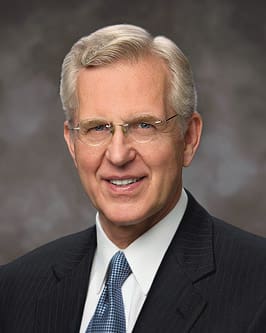
 On today’s episode of the “Mormon News Review,” we discuss:
- Pope Francis’ recent interview in “America: The National Catholic Review” — and possible implications for the LDS church.
- Two articles written by Peggy Fletcher Stack on the 20th anniversary of the September Six.
- Elder D. Todd Christofferson‘s devotional delivered on September 24th at BYU Idaho entitled “The Prophet Joseph Smith.” Video can be found here. Audio can be found here. Transcript can be found here.
Joining us are three panelists:
- Right: Ralph Hancock is the President of the John Adams Center for the Study of Faith, Philosophy and Public Affairs. He is also a professor of Political Science at Brigham Young University, and a former intramural basketball teammate.
- Center: Mark Phillips is an active member of the LDS church in Los Angeles, and a former bishop. He is a husband, a father, an attorney, a musician, and he promises not to agree with everyone.
- Left: Lindsay Hansen Park is a Mormon Feminist and a work-from-home mother of two in Stansbury Park. She works as Social Media director for Sunstone, hosts and founded the feministmormonhousewives podcast, and is engaged in women’s issues and global activism.
Episode Transcript
Host: John Dehlin · Guests: Lindsay Hansen Park, Mark Phillips, Ralph Hancock
This transcript is machine-generated and lightly edited for readability. The audio is authoritative. Please excuse occasional errors in names and spelling.
Introduction and Welcome
Guest [00:00:00] You say either, I say either. You say neither and I say neither. Either. Either or. Neither or neither unless. Call the whole thing off. Yes, you like potato.
John Dehlin [00:00:17] Hello and welcome to another episode of the Mormon News Review, sponsored by Mormon Stories podcast, available at mormonstories.org and maybe@mormonnewsreview.org as well. This is October 1, 2013. So it's a new month in 2013. It's an auspicious month and we are joined by a wonderful panel today. As you know, we're trying to do this new format where we have kind of somebody representing what we'll call the Rite of Mormon orthodoxy, the left of Mormon unorthodoxy and kind of the center. And holding down the right for us today, again appearing in two consecutive weeks is Dr. Ralph Hancock. He is the president of the John Adams center for the Study of Faith, Philosophy and Public Affairs. He's a BYU professor of political science and most importantly, a former intramural basketball teammate of mine. While. Welcome, Dr. Hancock.
Ralph Hancock [00:01:21] Thank you, John.
John Dehlin [00:01:22] It's good to have you with us.
Ralph Hancock [00:01:24] I guess that's a record two weeks in a row.
John Dehlin [00:01:25] That's two weeks. It's good. That's 100% so far. Holding down the middle is Mark Phillips. Mark is joining us for the first time on Mormon News Review. Mark is an active member of the LDS Church in Los Angeles and a former bishop. I added that he is also a husband, a father, an attorney, a musician of classic rock, I assume, and he promises not to agree with everyone. That's a good promise. Is it classic rock, Mark?
Mark Phillips [00:01:59] It's indie rock, electronica. Oh, all kinds of stuff. You name it.
Ralph Hancock [00:02:05] All right.
John Dehlin [00:02:05] And Mark emailed me a couple months ago and said, John, you have lots of crazy conservatives and lots of crazy liberals, but you don't have enough moderate sort of Mormons on Mormon stories. And so I said, mark, put up. I didn't say shut up, but I said put up.
Mark Phillips [00:02:25] Or, you know, you may have said shut up.
Ralph Hancock [00:02:27] I don't know.
John Dehlin [00:02:27] I may have said shut up. And so I said, mark, join us. And so we did. So Mark's holding down the middle and holding down the left, whatever that means, is the wonderful, amazing, brilliant, talented, busy Lindsay Hansen Park. She is a Mormon feminist and a work from home mom. She is a mother of two in Stansbury Park. That sounds like it's in New York. Is that in New York, Lindsay?
Lindsay Hansen Park [00:02:57] It's totally, totally in New York. It's totally exotic. It's like, it's like the New York of Tooele County.
John Dehlin [00:03:03] Sounds like a part of Brooklyn, but it's in Tooele. Okay. It's. Is that where all the fire was?
Lindsay Hansen Park [00:03:08] We have an occasional fire.
John Dehlin [00:03:10] All right, well, Lindsay also works as social media director for Sunstone. And as if that's not enough, she also hosts and founded the Feminist Mormon Housewives podcast, which makes her a competitor of mine. Makes me wonder why I brought you on, Lindsay.
Lindsay Hansen Park [00:03:32] Nobody could be a competitor of you, John.
John Dehlin [00:03:35] And she is engaged in women's issues and global activism. Man, that is a long introduction for you.
Lindsay Hansen Park [00:03:45] Well, I had to put down the cigar and the fair trade quinoa to write it.
John Dehlin [00:03:50] All right, distinguished panel. I'm super excited to have you guys on today. And we are going to have three main topics ending with. And I'm going to warn you guys now, we're going to end with either a happy thought or a rant within Mormonism. So if you guys, you know, as you're thinking about today, if you want to say something happy or positive or if you want to share, you know, complain, you know, shake your fist at the world about something, you can either do a rant or a happy thought at the end. But before we get to the rant and the happy thought, we're going to talk about three main topics. The first, we're going to talk about the Pope, El Papa, as they say in Latin America, and some news that he's been making lately. Then we're going to talk about the September 6th, because believe it or not, it is the last month was the 20th anniversary of the September 6th. And Peggy Fletcher Stack did some amazing journalism last week in the Salt Lake Tribune, writing about the September 6th and specifically about Michael Quinn and some of his experiences. And then finally, we're going talk about a recent devotional given by D. Todd Christofferson, LDS apostle, on the prophet Joseph Smith. And I found his talk fascinating. So let's begin talking about the Pope. So for those of you who haven't really been paying attention, the Pope granted an interview recently. Who wants to talk about the background of the interview? Anybody got that kind of handy?
Lindsay Hansen Park [00:05:29] I can say it if you.
John Dehlin [00:05:30] All right, go ahead, Lindsay. Tell us what the Pope's doing.
Lindsay Hansen Park [00:05:33] Okay, so the Pope's fairly new, and he's pretty bad. A. Can I say that on your show? Can I say he's batty?
John Dehlin [00:05:40] You can, you can.
Lindsay Hansen Park [00:05:41] Yeah. He's creating a lot of headlines because he's so different than what people are traditionally used to with the Pope. He's very down to earth. He's very accessible compared to, you know, past popes and that kind of thing. And he's really done a lot of things that are considering considered kind of shocking and controversial. He's washed the feet of the poor. He sat next to breastfeeding mothers while they're breastfeeding without batting an eye. He has famously said that, you know, we need to stop focusing on issues that divide us and focus more on the poor and that kind of thing.
John Dehlin [00:06:19] So he didn't even get a new car?
Mark Phillips [00:06:22] Like a car, Used car? Yeah, he got.
John Dehlin [00:06:24] Yeah, that's what I mean. Like a beater. He got himself a beater.
Mark Phillips [00:06:27] Yeah, 1984 Renault 4. It's fantastic.
Lindsay Hansen Park [00:06:31] He bought it from Tooele. He bought it out here? Yeah.
John Dehlin [00:06:34] In Stonesbury Park? Yeah.
Mark Phillips [00:06:38] Okay.
Lindsay Hansen Park [00:06:39] And he did an interview with this atheist Italian intellectual dude named Eugenio Scalfari. Did I say that wrong?
John Dehlin [00:06:49] That sounds good.
Lindsay Hansen Park [00:06:50] He's a founder of a newspaper called the La Republica. And so he does this interview that we're going to talk about, and it's fantastic. It's really interesting. And one of the interesting things about it is when he schedules this interview with this Pope, the pope does it on the phone himself. He says, when are you available? I'm not available Wednesday. Can you do Thursday or whatever? I mean, just super accessible.
John Dehlin [00:07:16] Yeah, yeah, yeah. So, Lindsay, I think you've shared, you know, you've given us kind of a preview. Why don't you just go ahead and tell us your thoughts about. You know, we'll start with your thoughts about this article and maybe a quote or two that you thought was interesting. I've got a ton here, but I'd rather lead with your guys insights and then jump in as necessary.
Lindsay Hansen Park [00:07:39] So you want to start with the hippie left Marxist first?
John Dehlin [00:07:44] Yeah, hippie Marxist interpretation. And then we'll contrast it with Ralph's reaction. And then we'll have Mark bring us home with the golden synthesis. He'll bridge Lindsay and Ralph.
Ralph Hancock [00:07:57] I can be the hippie, right? If necessary.
John Dehlin [00:08:00] That's true. I remember you played. Used to play Bring Me a Higher Love during American Heritage lectures. Right. So that's.
Guest [00:08:07] Who is that? Who is that?
Ralph Hancock [00:08:09] Steve Winwood.
John Dehlin [00:08:10] That's kind of hippie ish, right?
Ralph Hancock [00:08:12] Yeah, that's post hippie, but that's not bad. Steve Winwood used to be hippie ish.
Guest [00:08:18] Okay.
Pope Francis and His Surprising Interviews
John Dehlin [00:08:19] All right, all right, Lindsay, tell us what you got.
Lindsay Hansen Park [00:08:21] Well, I am really impressed with him. I, you know, I'm kind of on the Popemobile bandwagon, if you will. I. I have always been fascinated with the history of the Catholic Church and kind of the power structures and the power inequities that the Catholic Church has kind of imposed on people throughout history. And so it's fascinating to see this man be what we perceive to be so humble compared to other popes. I mean, all the other popes have had great pomp and what's the word? I want rituals attached to just even any sort of, like, benign thing with the Pope, like meeting with the Pope or talking to the Pope. And so to see a pope that's super accessible, I think is cool. And especially in society right now, when some of our biggest issues are wealth gaps and poverty and inequality and human rights issues, it's just really cool to see a Pope concerned about that and not concerned about the issues that have traditionally plagued Christianity, which I consider to be small distractions from the gospel. So this guy is, you know, very like, I think he said in this interview. So he's talking to this atheist guy, and he says, okay, like, I really want to know what you believe in. And it wasn't like a condescending sort of, you're an atheist. What do you believe in? It was like, I want you to tell me, like, all human beings have to grapple with this idea of where we come from. How do you, as an atheist, grapple with it? And the reporter says, I'm grateful for this question. The answer is, I believe in being, that is, in the tissue from which forms bodies arise. And the Pope says, and I believe in God, not in a Catholic God. There is no Catholic God. There is God, and I believe in Jesus Christ, his incarnation. Jesus is my teacher and my pastor, but God the father Abba is the light and the Creator. That is my being. Do you think? We're very far apart? And I love this because, you know, religion has been something that people have used for so long when we've been in a smaller society where communication has been more limited, travel has been more limited. And now that the Internet has opened things up and travel and communication and technology is speeding things up, we have a global world that we live in, and we have global issues that we grapple with. And we're realizing that what we do affects people all over the world. And it's just really, really cool to see a pope aware of that.
John Dehlin [00:10:52] All right, that was a great introduction, Lindsay, especially because I didn't ask you to prepare it. So thank you. Ralph, what were your reactions? What have been your reactions, sort of generally to Jorge Mario Bergoglio, otherwise known as the Pope? What have your reactions been?
Ralph Hancock [00:11:13] Well, Pope Francis is keeping us interested. He's a little unpredictable. He's making more orthodox or conservative Catholics a little nervous. A Catholic friend of mine, Rusty Reno, who is editor of First Things magazine and a more conservative Catholic has said, well, when Pope Francis was first elected, strap on your seatbelt. He thinks that typically of Jesuits, he tends to be rather plain, direct from the heart, shooting from the hip. Rusty wouldn't say a loose cannon, but he seems to be going a little bit in that direction. But I mean, I regard much of what we hear as very refreshing. I mean, the washing of feet, that's beautiful. Driving an older car, all that's wonderful. We ought to be asking ourselves, why, in what way is this Mormon news? And I think the, I mean, the analogy between one huge, very old worldwide church and our own is irresistible, but it also can be misleading. But there's certainly a tendency of, of progressives in both churches to jump on any possible statement that might suggest that one church or another is leaving behind some basic teachings concerning, well, what are we talking about? The family and sexual morality. And in fact, there's no evidence that either Mormon or Catholic authorities are doing that. So I wouldn't agree with Lindsay's formulation when she said that the. I think she said that the Pope was suggesting that we should not be concerned with the traditional moral questions and regard them merely as a distraction. But he certainly was suggesting different priorities in approaching a world that he regards as a field hospital after battle. And we have to keep that in mind. I mean, that's the scenario he's addressing. And when you're addressing that scenario, how do you, where do you start? How do you reach out to people? And I certainly have no quarrel with his suggesting to his Catholic fold that, you know, leading with questions of abortion, gay marriage, contraception is probably not the most promising message to lead with. On the other hand, there's no suggestion that Pope Francis means to undermine the traditional moral code of the Church. I would point out that immediately following his interview, he spoke to a medical group, observed that the unborn too had a face of Jesus. So that's a pretty strong anti abortion statement. And a few days later, he presided over the excommunication of a priest who had defied church teachings about gay marriage and female clergy. So there's a strategic suggestion concerning emphasis, and I don't find any reason to question the Pope's judgment on that. I should give credit to Mary Stadt, an important Catholic author, for some quotation I just used about the Pope's. Activities after that last speech.
John Dehlin [00:15:12] All right, all right. Thanks, Ralph. That's a helpful perspective. Mark, what do you think you want to bridge Lindsay and Ralph?
Mark Phillips [00:15:20] Sure. I mean, I think they both bring up really important and I think equally valid perspectives on it. I really enjoyed the interview. I think there are three different Catholicisms at play. When I read an interview with this Pope and I suppose if I were reading one of the things the other pope and one, the first is what the Pope says and the second is what the church as an organization does. And the third one, in the case of Catholic Church and probably in the case of the Mormon Church as well, is what the church as a global membership, sort of.
John Dehlin [00:16:01] That's great.
Ralph Hancock [00:16:02] I love that. I love that.
Mark Phillips [00:16:05] I don't see the Catholic Church as having. I think the Catholic Church as a people is a far bigger tent than its dogma might suggest. And the Catholic Church is, perhaps just because of bureaucratic difficulty generally, really very tolerant of people who don't really believe a whole lot of the stuff that most people might think is really important to Catholics so long as they regard themselves as Catholics and still are. I think in some ways, Mormonism is a big tent like that too. That's mostly because I think most of us and the church don't really pay very close attention to what the brethren teach. And so. And so our culture is very different from what I think the actual prophet taught doctrine is. But I look at what this Pope is talking about here, I think it's really encouraging to see a Pope who, at least in what he's saying, is giving a message that is extraordinarily Christlike in many respects. You know, he says the people of God want pastors, not clergy acting like bureaucrats or government officials. That's fantastic. I would love to hear that come from the highest voices in the Mormon Church. I do get a sense of that message from President Monson. He doesn't say it directly like that, but I've never got the sense that he was all that into bureaucracy and all that, or into dogma, for that matter. But one thing that jumps right out at me is where he's talking about the need to proclaim the gospel in every street corner preaching the good news of the kingdom. He talks about how he says, I used to receive letters from homosexual persons who are socially wounded because they tell me that they feel like the church has always condemned them, but the church does not want to do this. During their turn flight from Rio de Janeiro, I said that if a homosexual person is of Goodwill and In Search of God. I am no one to judge. The Pope is saying, I am no one to judge. Well, that's huge. Now, will it play out that way in terms of sort of the direction that the church as an organization goes? I guess we'll see. But having him come out and say that is a big deal. I think it signals not just a shift in who happens to have been chosen Pope, but in the general views that are starting to change in religious culture generally. How does that relate to the Mormon Church? I think we've had some interesting interactions with the Catholic Church as a church over the last decade or two on family law issues and things like that. And I think a more liberal Pope who is preaching a much more liberal message is going to affect the way that the Mormon Church interacts with the Catholic Church, hopefully in good ways. I would say. I hope that some of it rubs off on the church, but again, I think that. And feel free to disagree with me, but I think our membership in the Mormon Church tends to be way more conservative than most of the leadership. At least right now. I don't think that was the case 30, 40 years ago, but at least at this moment in time, I think the prevailing membership is more conservative than the leadership.
John Dehlin [00:20:07] Thanks, Mark. I love the way you split that out between what the Pope says, what the Church does, and what the members believe.
Ralph Hancock [00:20:13] I love that.
Mormon Reflections on Openness in Church Leadership
John Dehlin [00:20:15] Do any of you find yourself wishing that President Monson would conduct interviews, that he would actually sit down with people and have conversations and allow himself to be recorded and kind of go on the record speaking about his thoughts and feelings? Anybody feel that way besides me?
Lindsay Hansen Park [00:20:35] Can I say something to that, Lindsay?
John Dehlin [00:20:37] Go ahead, Lindsay.
Lindsay Hansen Park [00:20:38] Yeah. And feel free to push back on this. Anyone. But as I've seen the Pope talked about, when we're talking about how this relates to Mormon issues, I see a lot of Mormons that struggle with certain issues in the church. Their takeaway is, look, see, the Pope can do it. Why can't our church do it? And I do think that there is this feeling amongst a lot of, if you want to call them, disaffected members of the church that feel like the church is not accessible. They don't listen to me. They don't care about the small people. It's a bureaucracy, it's a corporation, whatever, you know, and so they. So they make that relation. And I found it interesting just to kind of watch people, because I think that sometimes when we. And even myself, I've been critical of things like the City Creek Project and Things like that. But it's hard to remember that in structures, in organizational structures where hierarchies are set up or whatever, it's really easy to kind of get caught in this no win scenario where you become in a position of power and then you no longer speak the language of someone not in a position of power. And so I think that it's really fascinating to see the Pope who has, you know, hundreds of years of tradition of being in this power dynamic that separates him from the masses, to really want to be accessible. And to me, that speaks to his struggle with the hierarchical structures. I mean, he talks about how he doesn't like to speak to large groups of people. He'd rather have a conversation. And I would, you know, caution Mormons to remember, you know, sometimes we want to say, oh, you know, the church, they're just this big corporation. And it's true. And there are a lot of things I'm not happy with, but it's a really hard dynamic to hash out. And I think that we're all kind of watching to see how the Pope does this because their membership is huge and their structure is huge compared to the Mormon Church. And so I don't know, my criticism might be more to the right than this. I do wish we would be more accessible. We're seeing it with the Ordain women movement. A lot of the criticism with that is, why are you going to conference? Why don't you just write a letter? Why don't you talk to your stake President? Why don't you do that? And I have to tell you, being in the Mormon feminist community, those things have been done for years and years and years with no fruition. We at Feminist Mormon Housewives have even been in talk with certain leadership, and it never pans out. And I don't think that there are any, like, nefarious motives at play. I just think that the structure really makes it difficult. And so, yeah, I absolutely believe that our leaders want the best, but I don't think that they're very accessible to the needs or the language of a lot of their members. And I think that that's a problem. And I also think that there's this idea of idolatry at play where we tend to worship our leaders as if they were God. And to me, that's blasphemy. You know, like, God is the only one that knows everything. And so I like this idea of a fallible Pope, that they ask who he is, and the first thing he says is, I'm a sinner. And I think if you were to ask our leadership, they would say the same thing, but it's not really reflected in the culture. I mean, we put pictures of them in our house. We talk of them as perfect and everything they say is perfect. And that kind of, I think, kind of inflates this power dynamic, this gap between us and the leadership. And Christ himself was a servant. He served the people. And so I just. I don't know, I feel like I'm rambling, but I really, like. I think we're going to sit back and watch and see how a huge hierarchical structure makes itself more accessible to the average member.
John Dehlin [00:24:25] Just real quick, then, Mark, I'll let you jump in. And then, Ralph. But I think about President Hinckley, when he would go on Larry King Live or be interviewed by Time magazine, even if he said things that stirred people in one direction or the other, you got the sense that he was somewhat thoughtful about the issues, that he was accessible, that is, willing to talk about him. And I have to say, I just really. I feel a little bit enamored with kind of the Catholic tradition of intellectuality and thoughtfulness. There's just something there that is attractive to me. But then I think about the fact that I'm not aware of President Monson ever conducting an interview with anyone. And then I think about Jeffrey Holland's interview with the BBC a year or two ago, where some kind of feel he was just, I don't know, bushwhacked, if that's the right word, but shell shocked. I wonder if that's made the church just a lot more hesitant. Plus, I'm imagining that President Monson's age is such to where there's a lot of risk involved with him being willing to entertain questions openly. But I sure wish that somehow our leaders could convey a similar sentiment of thoughtfulness and informality. I just think it would be so appealing. I'm kind of hungry for it. Mark, why don't you respond and then, Ralph, I'd love to hear your thoughts.
Mark Phillips [00:25:54] I think that an interview, the same tone as what we've got here in this interview with the Pope would be fantastic with President Monson. I don't think that's possible with Mormonism. I think any interviewer who would really be interested in interviewing President Monson would either be overly fawning or would be overly confrontational about, you know, the various controversies and stuff like that.
John Dehlin [00:26:23] Why would it be any different from the. From the Pope? I guess he handpicked this journalist, right?
Mark Phillips [00:26:30] Yeah, he handpicked the journalist but more importantly, I think. And this is going to maybe come out wrong, but I think. I think the Mormon Church hierarchy takes generally a more defensive stance than the Catholic Church hierarchy does when it comes to interviews about their personal views of theological matters. And that's, I think, largely because the Catholic Church has had, you know, couple millennia. Yeah, a couple millennia of fighting wars and things like that to. To get over the fact that people might get after him about something. Whereas. Whereas our church culture has developed differently and all that. I don't see a confrontational interview with President Monson going very well, largely because I don't get the sense he's been someone who I've looked up to since I was pretty young, largely because in his talks with. When I was growing up, I never got the sense that he was an ideologue or that he was very dogmatic or that he cared about the little picky doctrinal stuff, which was good for me, because I thought, and I continue to think, that a lot of the doctrinal stuff that a lot of people in the Church pick up, really latch onto is sort of irrelevant, and I probably don't believe a lot of it. And I feel like he's a kindred spirit in that sense. But I don't think that would go over very well in an interview, because I think you get somebody coming in and saying, you know, all right, do you literally speak face to face with God on a regular basis? That question isn't going to go very well because he's never alleged that he does, nor have most of his predecessors. But, yeah, you can see that question being asked.
John Dehlin [00:28:29] Yeah, it's gonna be, is the temple ceremony derived from masonry? Were the golden plates real? What about DNA? I mean, that's exactly what a journalist is gonna hit him with, right?
Mark Phillips [00:28:40] Yeah. And nobody asks. I mean, this interview with the Pope, nobody says, all right, listen, Pope, you got these Relics here in St. Peter's is that really Peter's body? I mean, come on. That's not the kind of question that. That someone asks the Pope. And I think if you could have a similarity with President Watts, it would be great.
Lindsay Hansen Park [00:28:58] The Pope and the Catholic Church, I mean, they're an old church. They've moved away from that. They're not asserting that. And I think that that's part of the problem. Our quorum of the 12 are quite cloistered, if you will, from the average concerns of a member. And I just feel like they wouldn't have those questions asked if we were having those discussions. More if they weren't such a cultural taboo. If we could talk about them, I think that the press wouldn't be so obsessed with them.
John Dehlin [00:29:27] All right, Ralph, you get to give us. Oh, Ralph, you get to give us a final word here.
Ralph Hancock [00:29:31] One word.
John Dehlin [00:29:32] No, no, no. No comment. Final question.
Ralph Hancock [00:29:37] This is a very far flung analogy comparison. I think it's rather tenuous in some respects. And there's, you know, I couldn't write fast enough to note all the things that I think need responding to. But I think. I mean, just the assumption that everyone but me seems to hold here, that our church leaders are out of touch or that the average member has concerns that our church authorities are not sensitive to because they're cloistered. I just don't agree with that.
John Dehlin [00:30:18] For the record. I don't believe that. For the record.
Mark Phillips [00:30:20] Yeah, I would put it differently as well. I see what you were saying, and I agree.
Lindsay Hansen Park [00:30:24] Can I just ask what evidence you guys would have to the contrary?
Mark Phillips [00:30:28] I would. Go ahead.
Ralph Hancock [00:30:31] Let me finish my story.
John Dehlin [00:30:32] Go ahead, Ralph, go ahead.
Ralph Hancock [00:30:34] I listen to our general authorities in conference. I find extremely valuable counsel. Heartfelt concerns, not infrequently the confession of personal weakness and frailty. I agree with Lindsay. Of course, there's a tendency to a little idolatry in terms of imagining that general authorities are perfect and so forth. So that's a tendency always to be resisted. Nonetheless, I think that we looking up to them and trusting them as authorities that speak for a church that is led by Christ, I think we're very blessed to have that. And I do not envy the. How shall I say, the far flung institutional organizational looseness of the Catholic Church. I think if we seem to some more defensive, it's because we have something more to defend, a clearer substance, a greater cohesiveness in terms of the main body of the membership. So I think we're fortunate to be. To be in that position. And I just have to register my disagreement with the, if I may say, the usual progressive assumptions that we know the way the church should be going and we show our faithfulness, such as it is, by being patient with the brethren in their learning to follow the lead of the progressive intellectuals. I mean, I simply don't buy the assumption that we would be better off if we didn't worry about the. What Mark called the picky doctrinal stuff. He could specify that, but I think it's pretty hazardous to assume that his definition would correspond to President Monson's concerning what the picky doctrinal stuff amounts to.
Mark Phillips [00:32:32] So.
Ralph Hancock [00:32:34] Well, anyway, I'M coming from a pretty different place, and I just don't accept some of the. Some of the upfront assumptions that are being made.
John Dehlin [00:32:44] Sure, sure, sure. That's really good.
Mark Phillips [00:32:47] Yeah. If I could clarify. When I say picky doctrinal stuff, I'm referring to stuff, and I'll just state it in the general categories. Stuff that I don't think is actually doctrine, and as far as I can tell, the brethren don't teach it. So I don't disagree with President Monson about anything that I've ever heard him.
Ralph Hancock [00:33:05] Okay, but the context. If our discussion is framed by the Pope's speech, then it would seem to have to do with issues surrounding marriage and family and sexuality, from which the Pope seemed to be, I would say, tactically distancing himself to some degree, but without in any way suggesting that the basic teaching of the Church is changing. I don't regard that teachings on family and sexuality as picky doctrinal stuff, for example, and I would not regard it as progress to leave behind very firm teachings that help to guide us in those areas.
John Dehlin [00:33:52] Hey, Ralph, I'll just push back a tiny bit, you know, tell me if you disagree. But it seems to me like the Church very much does sometimes trail social movements. If you look at the Church's former stance on birth control. If you look at the Church's former stance on. On women working. If you look at the Church's former stance. Again, let's see, is it 30 minutes yet? Can we talk about blacks in the priesthood, like civil rights movement? You know, I mean, I could beat your record. We'll make that the running gag in this. But, you know, but if you look at, you know, the denunciations of the civil rights movement in the 60s and of Martin Luther King Jr. And now, you know, the Church very much seems to have followed mainstream progressive society, isn't there some data to suggest that the Church tends to follow social trends and become more progressive over time?
Ralph Hancock [00:34:58] Well, there's certainly some dots that can be connected that way, John, and certainly, I mean, we would expect the Church to, I wouldn't say follow social trends, but to address society in its present condition with a view to leading it to the best possible place or making the best of the situation in which we. In which we live. So I guess I would. That's. We'd have to talk more about particulars there. But I guess if I were, I would come back to you with a question. Would you want a church that is defined by following social trends or a church that. Whose essential Teachings would be determined by, let's say, just being a generation behind the leading edge of what progressives think. I mean, what would be the use. Why do we need one?
Lindsay Hansen Park [00:36:08] I would want a church like that. Yes, I would.
Ralph Hancock [00:36:11] Well, Lindsay, why would you need one? What would be.
Lindsay Hansen Park [00:36:13] Why would I need one?
Ralph Hancock [00:36:15] Why not just follow the progressive social trends and let the church alone?
Lindsay Hansen Park [00:36:19] I believe that continuing revelation is set up for this exact thing because the world faces new challenges as new challenges arise. And I think that that's the beauty of our gospel and our tradition is that we have that mechanism in place, which. I know, same old progressive stuff, right. But if we look at the challenges that face people thousands of years ago, some of the challenges are the same. But I also think some of the challenges are different. And I just feel like that's God's will is working through the hearts of the people as a collective people, kind of by common consent. And I like that. I feel like that gets us away from the idolatry, but he prepares us for what we're ready for.
John Dehlin [00:37:03] Yeah. Ralph, I think you make a fair point. If the church is simply the social progressivist movement, plus 10 years, that's not very compelling. So there's no benefit to the church to ever allow itself to be cast that way. So I agree. At the same time, I do like the framing that the church is a continual refinement, that the dross, the gold, is purified by the heat of discourse, and that over time the dross gets filtered away. For me, that's an elegant way to sort of have both to have the firmness of prophetic guidance and the refining of what science and social movements can give us. What do you think?
Ralph Hancock [00:37:54] Well, I mean, there's always some judgment to be made between things that change and things that stay the same. If something doesn't stay the same, if there's not a core, then. I mean, if everything is subject to social movement, then we are just progressives and blind ones at that. I mean, how can you even say that you are progressive unless you can articulate a definite end towards which we want to progress? So, you know, the whole progressive rhetoric is kind of a dodge because it gets a free pass on actually saying what the content of progress is supposed to be. We need something besides progress, in other words. Right, right.
The September Six: Twenty Years Later
John Dehlin [00:38:44] All right. Well, this is a great discussion so far about the Pope and about progressive and traditional Mormonism. I imagine we're going to return to this theme. Let's for a minute transition to a couple articles that were published by Peggy Fletcher Stack, Just this past week on the September 6, for those of you who don't know, In September of 1993, six Mormon intellectuals, five were excommunicated, one was disfellowshipped. Five of them were sort of sunstone Mormons that were strong advocates for feminism and for the candid discussion of church history. Some of them were critical of the
Ralph Hancock [00:39:28] church,
John Dehlin [00:39:31] some of them were believing members and were quite surprised to have been excommunicated. And then one was on the other side was sort of more of a orthodox Denver snuffer type Mormon who was sort of excommunicated for going too far off the deep end on the other side. And so here we are 20 years later and we're still talking about the September 6th. So, Mark, I'm going to ask you as a Moderate, has the September 6 ever really been in your radar at all?
Mark Phillips [00:40:02] Yeah, it's been on my radar. Yeah. I was a BYU student shortly after that happened or right around the time. And so, you know, it was on my radar at the time. And. I know the children of actually, now that I look at the list of the people, I don't know the children of any of the people on the list, but I know the children of one person who's associated with the September six who I won't name. And it's something that I have a few friends who were sunstone people. And I always consider myself to be an intellectual Mormon, but not a Mormon intellectual, if that makes sense. So it was on my radar and it has been. I always, I don't know, I always think it's, I don't want to say unfortunate because I think that's minimizing. It's frustrating to see the church pushing people out really, no matter what the reason is. And as I kind of read about each of them and what is alleged and all that, I just think what is all that about? I mean, it looks and I don't want to ascribe any kind of motivations that I don't know whether there's evidence for, but I don't like it very much. I don't necessarily agree with all of the things that they were writing and saying, but I don't think that that's generally something that ought to be grounds for chasing someone out of the church.
John Dehlin [00:41:41] Yeah. Yeah. One of the stories I've been particularly just a little bit sad or heartbroken about is just the fact that Michael Quinn had such a promising career as a historian, Yale trained, studied under Leonard Arrington, and as Peggy wrote In her article, once he left BYU and was excommunicated, sort of feels as though he's been sort of blackballed or excluded from being able to land any position within Mormon studies because so many of the the chairs or the positions of Mormon studies are backed by devout Mormons, and naturally they don't want him there. But, Ralph, what do you make of the story of Michael Quinn? Did you get a chance to read through that? RALPH
Ralph Hancock [00:42:39] Yes, I did, and I agree it was good journalism by Peggy. It say Michaels is it's got to be among the most fascinating and wrenching stories. I'm not sure. I mean, certainly his excommunication had bad effects on his career. I'm not sure we can blame the church or BYU for that. But yeah, Michael's case is peculiar and compelling. He has this in common with, I believe, with Paul Toscano, that both seemed convinced early on they were destined for high places of leadership in the church, which isn't necessarily a promising mindset for service in the church, I suppose, I would say.
John Dehlin [00:43:40] But in Michael Quinn's case, he claims he was encouraged to think that way by Spence W. Kimball himself in the article Peggy writes, and Michael, Michael's told me just himself.
Ralph Hancock [00:43:51] Well, and I have no information one way or another on that story. So, no, I'm not inclined to hold that against him. I don't about Michael, I'll just say it's a wrenching story, I don't think. I wouldn't take Mark's rhetorical stance of blaming the church for pushing people away. I mean, I think we'd have to look on a case by case basis, and we don't and we can't know the particulars of the cases very well. The church doesn't publish reasons and grounds and considerations that came up in hearings and so forth. I have no reason to argue that cases were handled in an absolutely perfect way in every case. On the other hand, there are some who have more or less courted excommunication and pushed up against the boundaries pretty deliberately and flagrantly. And essentially, I see no reason why the church to be a church, the church must determine its own its own boundaries and act, you know, wisely and compassionately in doing so. But if people insist on taking actions that are not compatible with full fellowship in this church, then sometimes they will be excommunicated or disfellowshipped. I don't think we can say that an institution can exist without having any right to determine its own boundaries.
John Dehlin [00:45:36] Yeah. All right, Lindsay, what do you think about the story.
Lindsay Hansen Park [00:45:41] Peggy's fantastic, great story. I know and really respect many of the people involved in the September six. I know Margaret Toscano was not part of the september sixth. She came later. But I was just on the phone with her prior to this interview. And so, yeah, I. I like a lot of these people and respect a lot of their scholarship. When I'm talking about the power structures, I'm fascinated with the power structure of the church, if you can't tell. And I think that I would. Can I build the bridge between Mark and Ralph?
John Dehlin [00:46:14] Yeah. Awesome. Yeah.
Lindsay Hansen Park [00:46:16] I agree with Ralph that institutions need boundaries. And something that I've noticed about Mormons, especially online Mormons, is we really bucket any sort of authority, any sort of authority that looks like church authority. And I think it's because a lot of the time we don't know what healthy authority looks like. And that's not to say the LDS Church doesn't always have healthy authority. But to Mark's point, the idea of pushing people out is not a spiritual value. It's more of an institutional value. And I feel like with excommunication, it's difficult because when you have a lay leadership, it's really at the mercy of your leaders. And so you can have a leader. Ralph spoke to something being incompatible with the church that's really subjective. Especially in our church when, you know, we have this kind of fluid interpretation that really mixes up culture and doctrine and theology and creeds, and we kind of don't know where we're at and all of that. And so you can have a bishop that really thinks that masturbation and looking at porn is sinful. Like, you know, I have a neighbor that was really punished for watching hbo. And then you can have a bishop that doesn't think that's a big deal, but maybe he thinks advocating for women's ordination is a big deal. It's just really up to the interpretation. And that's where I think this practice can really become spiritual abuse and become harmful. And I agree with Ralph. I do think that sometimes people courted or maybe pushed the boundaries. But I also think that lights need to be shined on some of these practices. I think Margaret says it in her PBS documentary. Excommunication is not just like an institutional thing. It represents a spiritual thing. You cut someone off from their exaltation. And so I think it's way overused. We excommunicate and disfellowship people for sexual sins. I think that that's a shame. I don't think that that's how it was meant to. And I really like to look at excommunication in a historical context and how it's evolved from Joseph Smith's time until now. And I just feel like it's overused and abused way too much.
John Dehlin [00:48:27] Although the trend is away from using it, as I understand.
Ralph Hancock [00:48:32] I don't have any data, but my impression would be that it's hard to get excommunicated and it's harder and harder to get disfellowshipped and. Yeah, I think I agree with that.
Mark Phillips [00:48:45] That's my sense as well.
Lindsay Hansen Park [00:48:46] Yeah, I think it is. But, you know, I have to say that I think that the September 6, the impact, the press, the bad press that they got from that and the legacy they left definitely contributed to the idea of, like, maybe we need to rethink this.
Ralph Hancock [00:49:01] What bad. Who got bad press? The church got bad press, you mean?
Lindsay Hansen Park [00:49:04] Yeah, for the September 6th. I mean, you had the New York Times involved, you had the Washington Post. I'm trying to think of.
Ralph Hancock [00:49:11] Well, look, it fits into a progressive narrative that is irresistible. I mean, we wouldn't be. I mean, the fact that they're grouped together as of September 6th, and they're even including Avrohom Galeotti, who's the odd man out in more than one respect, is. I mean, that way of perceiving them as part of a cause in which, you know, there's intellectuals on the one side and the church on the other, and one side is progress and the other side is darkness and cruel authority. I mean, that. That's part of a narrative that the New York Times is going to love.
Mark Phillips [00:49:43] I agree wholeheartedly. It's interesting that the Church is so big and there's so much focus, and I hear people and read people commenting fairly often that the Mormon Church doesn't tolerate intellectuals. And they cite the September 6th, and I think, well, you know, I don't know all the facts there, but that's six people 20 years ago. And moreover, I generally take offense when people say the Mormon Church doesn't tolerate intellectuals because I consider myself to be an intellectual, and the church has tolerated me just fine.
Ralph Hancock [00:50:25] See, I don't get to be an intellectual because I'm not for progressive. So it doesn't matter what degrees, it doesn't matter how many things I publish, I don't get to be an intellectual.
Mark Phillips [00:50:36] I think that's problematic because, Ralph, I consider you to be extraordinarily intellectual. And so I have a problem with the word and I don't mean that as an offensive term. But, you know, it's impossible for us to say, oh, this person should not have been excommunicator. This person should have, because we don't know all the facts. But I'll tell you from my own personal view, and this comes from my experience sitting in church courts and my experience as a bishop, I personally just don't like church discipline at all. And I think the church has the right to do it. I think that that's an important right that it has. But from my personal view, I see very few circumstances in which I would ever be comfortable excommunicating anyone. And I'm not saying there are none, but very, very few like excommunication. That's a personal thing, though.
Ralph Hancock [00:51:37] It's very rare. Let me make one point that I made. I volunteered to be the heavy in one of Peggy's articles, as you may have noticed. But these are, it's, it's a cliche, but I stand by it. These councils are meant to be, and they largely succeed to be councils of love. I have been part of them on the authoritative end of things. And I am convinced that good was done in more than one case, that people were genuinely helped to get,
Mark Phillips [00:52:17] get
Ralph Hancock [00:52:17] their lives under control, to get back in touch with the spirit, to make a fresh start, to feel the sweet spirit of forgiveness. So I think they can do an immense amount of good. It would be. Who could ever claim that there were never any abuses? Coming back to Lindsay's point. But that's what you. I mean, we have the beauty and also some of the risks of a lay ministry. But I would say that means that, you know, in any given case, if you have issues with the. If you have issues that are pushing the boundaries of the church, your responsibility is to counsel with your stake president and receive his counsel and follow those guidelines. And I think on the whole, we're blessed with extremely dedicated and wise leadership.
Mark Phillips [00:53:13] That's been my experience as well.
John Dehlin [00:53:15] All right, Lindsay, you got the last word on this.
Lindsay Hansen Park [00:53:17] I just want to say something from the other end. First of all, Ralph, I just have to say that I disagree with your characteristics of progressive Mormonism. And here's why. Like, I would consider you an intellectual as well. And the thing that makes me progressive in my mind is that before I had these more liberal views, I was really self righteous and I did a lot of harm in God's name, for the name of God. It wasn't the church, it was the way that I enacted kind of my own religiosity and I want to be careful that I'm never a mirror of myself on the other end. And so I really try to stay away from those binaries. And I think a lot of people do. And so I don't want to do anything that perpetuates that. So I don't think that there's progressives on one side and righteous faithful member conservatives on the other side. I really just don't like those binaries and I reject them. But as far as excommunication goes, I just feel like you guys have talked about the cord of love, and that term makes me supremely uncomfortable. Just because of the power dynamic. I have no doubt that the intentions are good and well and set up to be in a way that brings people closer to God. Unfortunately, the structure where we have a lone person in a room of a bunch of men with no representative is dangerous. It's a bad recipe for disaster. And my life has been full to the brim of women who have been abused and damaged, some irreparably, from their disfellowships, from the shame that they've received being a woman, talking about their sexual sins to men that are also not just their leaders, but their neighbors and their friends and people they see in the grocery store. So I think that we can't say, we can't just give the structure of excommunication a pass because I think it does a lot of damage. You might have seen a lot of good, but I've also seen a lot of damage.
John Dehlin [00:55:12] Yep. Well, that's good. I think we've represented both sides of many sides of a difficult issue, and I appreciate everyone's perspective. Ralph, it sounds like you want to say something.
Ralph Hancock [00:55:25] Well, I just want to jump in and say, just to refer to Peggy Fletcher's article on the September 6 once more. She did. I thought Phil Barlow and or Matt Bowman, I may be mixing up the quotation, made good points about how both sides may have learned from the situation and how Mormon intellectuals on the progressive side may have learned some judgment and moderation from the experience of the 90s.
John Dehlin [00:55:57] Yeah, and maybe the church has learned a thing or two as well. Okay, the last thing we're going to talk about today is a talk that really got my attention. It was a talk given by Elder D. Todd, Christofferson, apostle in the LDS Church. It was given on September 24, so about exactly a week ago, 2013. The title of the talk was the Prophet Joseph Smith, and he gave it as a BYU Idaho devotional. And I think this is A really important talk because as I listened to it and as I read through it, it seems to be providing a blueprint for how the church is going to be dealing with many of the difficult issues that arose on the why mormonsquestion.org survey that we conducted for Hans Mattson as he presented it to church leaders about all the many mostly historical or scientific issues that are causing people reportedly to leave the church. And I'll just say a couple things about the talk as an overview. He sort of begins by framing it as, of course, people attack Joseph Smith. It's been prophesied since the very beginning of the church that he would be attacked. There's almost sort of a. Because it's the true church, because he's the true prophet, why would we expect anything else than for him to be attacked? So in some ways, it's interesting that he's framing the attacks on Joseph Smith as fulfillments of prophecy. But he goes on to talk about, you know, one of the major anachronisms in the Book of Mormon. He talks about the question of steel swords in the Book of Mormon, which I thought, you know, I think we should talk about his answer to that. But I thought it was very interesting that he was introducing the question of anachronisms in the Book of Mormon to an entire, you know, student body at byu. You know, he's byu, Idaho. Byu, Idaho. Yeah. Thanks, Ralph.
Elder Christofferson's Talk on Joseph Smith
Ralph Hancock [00:58:05] Which is a good byu, don't get me wrong.
John Dehlin [00:58:07] Absolutely. He quoted Rick Turley, who I believe was probably quoting Marlon Jensen, because I heard Marlon Jensen make this quote directly. You know, he said that it's impossible to study, you know, church history too much. In fact, he cautioned people not to study it too little. And he talked about drinking deeply from the water. So here he is encouraging people to read church history in depth. And he talked about the Joseph Smith Papers Project and how the church is as never before, being more and more open. He talked about people leaving the church over Mark Hoffman, only to find later that the documents that they left over were forgeries. And then he ends by saying that the foundation of the church isn't Joseph Smith, but it's Christ. And so he really covered the gamut. And I'm just curious, I guess I want to start with Lindsay this time and say, Lindsay, how'd you like the talk?
Lindsay Hansen Park [00:59:10] Well, I think you're going to get a lot of hate mail, because whenever I come on, a lot of people are like, she's not extreme enough. She's not representing the left. She's not left Enough. I liked the talk. I did for the most part. I mean, I'm going to tell you my criticisms in a minute. But I really thought it was refreshing and important the way that he framed that, you know, Joseph Smith. There are some problems with the history. There are some issues. And I felt like he was as straightforward as he possibly could have been without, you know, you know, getting into the issues themselves. So I thought that that was really good and encouraging. And I like that the part that I really started to struggle with was the way that he began to speak about how he said he kept using the word they. They, they. Their. These people, these people who are coming up with these antagonizing stories of Joseph Smith, these people are only looking for the flaws. These people are doing this to twist the words. They don't even care for nuance and that kind of thing. And while I suppose that there are people that have done that, I feel like that speaks to what we were talking about earlier with the Pope. That shows this inability to understand the real pain and the issues that come from this. And having gone through this sort of pain myself, I feel like that doesn't represent my experience at all. And what it does is creates a divide between me and my faithful family members who I need and want and desire to understand my pain. And for me, when I was looking for the flaws of Joseph Smith, it was not in a way to degrade the Church. It was not in a way to embarrass anyone. It was based solely out of pain and confusion and misunderstanding. And I just felt like he was so dismissive of the true heartbreak. And I'm talking about, like, heartbreaking agony that goes through when you figure out that the church narrative isn't as easy as you thought it was. Now, I've spoken to a lot of people who didn't have that sort of heartbreak, and they say, what's the big deal? Like, why didn't you always know that? For me, it was heartbreaking. It was life shattering. I lost a lot for it. I lost a lot of my community. I lost a lot of my family. And so I feel like the way that he framed it, it's not that he meant to do it. I just feel like it's a tired old narrative of us versus them, the world versus the church. And what he's failing to realize is these they that he's talking about are our own people. They're our people. They're me. They're someone sitting next to you in sacrament meeting. They're your spouse. They're your children, they're your parents. And I just want really resented the divisiveness in that sort of speech that he used. And I feel like that's inaccurate. And until I know the church is trying to address these historical issues, but until they can understand that this pain is not always based in bad motives, then we're not really going to get anywhere. Does that make sense?
John Dehlin [01:02:18] Yeah. And that's been how I felt about Farron Farms for a long time. Not that they're not good people, not that they don't mean well, not even that. Sometimes they come up with some good arguments, but they rarely have conveyed to me a sense that they really understand the heart and soul and journey of the disaffected Mormon. Because if they did, they would speak about them a lot differently than they do. Because these are, as the why Mormons Question survey kind of is shown, these are former bishops, former, former stake presidents, these are former mission presidents, you know, even one former area authority. These are people who deeply cared about the church, were deeply disturbed, did not want to find fault. And the price that they paid for their seeking of knowledge and for their being willing to ask hard questions is sometimes really severe. And I think they deserve all the compassion and love that we can muster instead of sort of claims about, you know, unwillingness to look at all sides or seeking to only pick the most negative types of things. I just don't know who these people are.
Ralph Hancock [01:03:29] John.
Lindsay Hansen Park [01:03:30] Look, can I just say other thing on that? Like, I really appreciated what he said about, you have to, like, he quoted, I can't remember who he was it Turley that he quoted, where you don't just stop, you have to go throughout all the history. And I agree 100%. I took three years and I'm still studying, but three years of intense study. Polygamy was an issue that really frustrated and struggled and set off, I guess, the catalyst for my faith change. But it was digging through it that gave me peace. But I will say that whenever I hear this divisive language of us versus them or anti Mormon versus Mormon, that only fuels my anger and my hurt and my pain, and it makes me want to shut off my study. That's why I feel like he, you know, almost naively doesn't realize that what he's saying is, you're with us or against us. And if he really wants to bring people that have to tackle these hard issues, the door needs to be a little bit more open for people to say, you know what, they're hard issues, and you can Be angry about it, and you can be confused, but we're still here. We're still here to sit and fellowship with you. And we're not going to tell you that you're an outcast now because of it.
John Dehlin [01:04:42] Go ahead, Ralph.
Ralph Hancock [01:04:43] Well, I just. I think I'm hearing a distorted reading or hearing of what Elder Christofferson said, because, look, he did. He made a very frank and clear distinction between two kinds of people who raise questions about the Church. There are the honest seekers, problems raised by honest scholars. I think those were his words. And then there are those who have an axe to grind, who have an agenda to undermine the character of Joseph Smith and the Church. So that distinction, I mean, do you doubt that there is such a distinction, that this distinction describes a reality? You would. Are Mormon authorities the only ones who are divisive? Is it not true that the Church has enemies? Now, you speak of your pain, both of you, John and Lindsay, but he's not talking to you or discrediting you. He's talking about the people who are apt to mislead you if you are not on your guard about their motives. So I think he makes a perfectly valid distinction between two ways in which problems can be raised. And then, I mean, there's a lot else to say about the talk, which I think is hard not to love, frankly. And I would pick out one very useful piece of advice that he gives us from Alexander Pope on the. On a little learning being a dangerous thing. If you're going to study, do so as Lindsay apparently has done. Do so patiently for the long term. Don't be superficial. But he confesses that when it comes right down to it, you're never going to be able to line up facts that settle the matter. You can't ignore the spirit. You can't ignore a faith as well as. As study. I mean, there's an irreducible spiritual element to the search for truth.
Lindsay Hansen Park [01:07:00] Can I. Can I respond to that?
John Dehlin [01:07:02] Yeah, sure.
Lindsay Hansen Park [01:07:02] You need to go. Okay. Yeah. What I mean is. I mean, you say, is there that narrative of people that want to destroy Joseph Smith, and are there people that want to build him up? Absolutely there are, but I don't think it's as simple as it's framed. And here is why. First of all, scholarship that only seeks to build Joseph Smith up into something he's not, I wouldn't trust, and scholarship that only seeks to tear him down into someone he's not, I wouldn't trust. I feel like when we put things in those binaries, we cannot possibly understand the motives or the experiences or the pain that make people do what they do. I know a lot of ex Mormons who have been called angry ex Mormons fighting against the church. Why don't they leave the church alone? And if you sit down and you hear their stories and you hear what they know and their experiences, how it resonated, how their church experience resonated for them, it's not as easy as saying they just want to destroy the character of Joseph Smith. You just can't have a conversation framed in that way. And when you're saying, he wasn't talking about me, he was absolutely talking about me. I blog for feminist Mormon housewives. I talk about these issues. I talk about these hard issues. I question the things that leadership does. And I've been called apostate for that. I've been called a heretic. People have told me I should leave the church. And it's very painful to have your faith community turn on you like that. And I think it's because they're holding to that binary of you're with us or against us. And I don't see it that way at all. I love my Mormon church. I love my Mormon people. And I'm trying to build up the kingdom in my own way. And just because my method and my personality and my experiences don't reflect others mean that I'm wicked or evil. But that is how the current church narrative is going. And I just feel like that's why we have such a divide between all of us. It's harmful.
John Dehlin [01:08:54] I just wanted to highlight two things. And Ralph, I think you brought up a good point about his emphasis on drinking deeply from the waters. There were at least two parts of the talk that I. I sort of took question with, partly because they didn't seem very reflective. They didn't seem to be coming from a very deeper, wise place. The first was when he talks about, you know, these people that he. He says, you know, if they are differing interpret. If there are differing interpretations possible, they will pick the most negative. They sometimes accuse the church of hiding something because they only recently found or heard about it. An interesting accusation for a church that's publishing 24 volumes of all it can find of Joseph Smith's papers. I took issue with that because, yes, they're doing that in 2012, you know, but for how many years? 40 years. You know, starting with Fawn McKay Brody and Juanita Brooks. All the way through the 60s, 70s, and 80s, the church was excommunicating people who asked hard questions and taking Their temple recommends away and certainly not being open about its history. And I just didn't feel like that was a very wise comment to make because. Just because we're doing it now doesn't mean we've always been doing it or that we're not late in doing it. The other thing that I had a problem with was his discussion about steel. Yes, it may be true that, you know, somewhere in Jerusalem, you know, around the time of Lehigh, they've uncovered a sword that's a steelish like sword that's. That was contemporary with the time of Lehi, you know. But I've interviewed a Yale, you know, archaeologist who specializes in Mesoamerica, and he says there has been no steel of any credible nature found in Mesoamerica during any of the times, reportedly of the Book of Mormon, especially not, you know, hundreds of thousands of swords from battles with people with helmets and shields. You know, there's a real archaeological problem with, I think, the way the Book of Mormon talks about some of these matters and him to sort of quote sort of an old world evidence of stele didn't feel like a very deep, you know, deep understanding of the issues and of archaeology. Mark, we haven't had you talk. Do you want to speak to any of that? And Ralph, I'd love to hear your perspective too.
Mark Phillips [01:11:23] Overall, I really thought it was a good talk. I appreciated hearing a much more frank way of addressing those issues than we have heard in a long time. I think the us versus them sort of issue. I don't get the impression that
Ralph Hancock [01:11:47] Elder
Mark Phillips [01:11:47] Christian Jefferson necessarily intends it to come across as harshly as. As it did to Lindsay. I. I think it's. I think it's good to know that it does come across that way because regardless of how it's intended and how. And how, you know, people at another side of this, of the church spectrum might interpret it, I think knowing that it does come across that way is something that I hope kind of makes its way into our church vernacular, because I think it's more vernacular than anything sinister or necessarily all that intentional. When I hear about people being made to feel like they don't belong in the church community or told that they should leave the church and things like that over that sort of thing, my first impression is just sort of shock because it's not anything that I've ever experienced and I've always been very outspoken about that sort of thing. And maybe the attitude with which I roll my eyes at stuff sends the people a message just to not engage. I don't know, but I've been very fortunate to live and serve in wards and stakes where at least I've not experienced that sort of thing. And it breaks my heart that anyone does. But the fact that the use of sort of what I think is very common vernacular in the church sends that message, I think is really heartbreaking. I did not love the thing about Steele either. I thought. That doesn't. That line of argument doesn't persuade me a whole lot. I have faith in the Book of Mormon of I guess a different kind and does. Not that I don't care about that issue. It's that the arguments on either side are sort of not all that appealing to me. But I really appreciated his exhortation to be patient and to be mindful of the Spirit and to dig deeper. You know, one of the aspects that I've tried to apply to my own study of church history and Joseph Smith and those things is sort of my lawyerly way of demanding not just evidence, but primary sources. And let me see what you're really talking about. And by thinking that way, I found that there's just very little there there a lot of the time. Most of what I read and hear about church criticisms just sort of bottom out before you get to primary sources. And it can be frustrating if you're looking for real answers because you don't find as many as you might like to find. But I really appreciate his quotation. Look, don't ignore the spirit, don't be superficial, don't be impatient. I don't think that advice is going to keep everybody in the church, but that's okay, that's good because people have to have their own individual sort of faith journey in their experience of seeking and finding whatever they're going to find. The central message of the church in my mind and throughout its history has been seek what you're seeking and God will give it to you. And you have to do that without any expectation of exactly what you're going to find. I think it's asking people to take a leap of faith and it's good that he's doing that. I didn't think it was a perfect talk necessarily, but then I'm not the one giving the talk, Right.
Ralph Hancock [01:15:55] John, could I respond to.
John Dehlin [01:15:56] Yeah, Ralph, why don't you close our thoughts on this?
Ralph Hancock [01:15:59] I think. Well, you have located a couple of the not as strong rhetorical points. I don't disagree with you on that. The steel matter was, you know, it's an example that has a certain usefulness, but there's clearly no claim there to make that the final word on the subject, especially since the whole point is that we're going to be left up in the air perpetually on some things. But yeah, I can see why you weren't satisfied fully with that discussion then the point about how the church is after all, very open and so the criticisms are unfair. John, you made a good point about whether that's always been so true over the last 40 years. You raised again the question of certain excommunications, which again, I would say you'd have to look at individual cases before getting indignant about injustice done. But I think I would say that the Church's relation to the sources of information out there is no doubt changing and it has to change. This sort of relates to the earlier theme that came out about the church and society, but certainly, I mean, the whole game is new with the, with the Internet and social media and the liquidity of information, of varying qualities and so forth. And there's never going to be a perfect solution because it's impossible to say even what full transparency would mean. After all, the Church will always prioritize certain teachings and certain facts, if you will the church. What would be the point of the church, like leading in its missionary effort by saying, you know, we want to teach you about Joseph Smith and Christ, but you may want to know there are these issues about polyandry and steel swords and so forth. No, it's never going to be like that. There's always going to be some things that are more available and more prominent and some things you have to look for. But certainly the whole regime has changed with the Internet. And I think Elder Christofferson's excellent talk is in part a reflection of that change. But John, I'm happy you mentioned that the closing crescendo really is about Jesus Christ and Joseph Smith as a witness for Jesus Christ. And I found that just very beautiful and uplifting. Joseph Smith as the. Joseph Smith's as the preeminent revelation of Jesus Christ for our time. It's because of Joseph Smith that I can be confident of the reality of Christ and his resurrection and atonement. And that would be a very big takeaway point, I think.
John Dehlin [01:19:07] Right. Well, excellent. Well, I think, I think we've had a really robust and thoughtful discussion today and I just want to thank all of you for, for joining in. Before we end though, I want to give everyone a chance to either either, you know, provide us with the uplifting tidbit or a rant. And I think I'm going to start with Mark. Mark, what do you got for us?
Final Thoughts and Closing Discussion
Mark Phillips [01:19:32] I don't have a rant which will be disappointing to anybody who really knows me well, because I usually do. But I think we've hit on some really interesting issues that show sort of the way that even people with very different views of the church can come together in seeing, for lack of a better word, sort of the good that's going on. You know, we've talked about the Pope and identified some really good things, a few things that we disagree on, but overall recognized some good things. We've talked about the September six, and I'm very encouraged that, that I think there's broad agreement, at least on the general question of how should church discipline sort of work and that what we hope we're seeing there is an aberration. And while we don't know the specifics, I think there's some real thoughtfulness there that, that you usually don't hear about when you read or hear things that are critical. And so that's encouraging. And then Elder Christofferson's talk, I think if we really pick at it, we can find things that we can complain about. Sure. But you can do that with anything. And it's very encouraging to me to hear, you know, Ralph and Lindsay, I hear, agreeing on some really important points and seeing something that's not good because it's progressive or good because it's not progressive, but good because it has real value that we see there, regardless of whatever our sort of angle might be. So that's a good thing.
John Dehlin [01:21:43] Thanks, Mark. All right, Ralph, you got a positive tidbit or a rant?
Ralph Hancock [01:21:46] Yeah, I'll briefly pile onto Mark's tidbit by Sanya. This is instructive and it's helpful to listen and understand how people can perceive things so differently from oneself. So I look forward to more of this, to learning. By this back and forth, my really cheerful, upbeat remark will be that, well, I have a brand new granddaughter, just a little over five pounds back in Maryland. She's our 11th. Her name is Hannah Claire. Is that a pretty name?
John Dehlin [01:22:25] Oh, wonderful.
Ralph Hancock [01:22:27] And, but, but Ted Cruz enters into this situation too because he has shown exquisite timing in getting my son furloughed from a job with the federal government just at the right time to stay home and help his wife with our granddaughter. Is that perfect or what?
John Dehlin [01:22:48] That's beautiful. Beautiful. That's the federal government caring about mothers, basically.
Ralph Hancock [01:22:52] There you go.
John Dehlin [01:22:53] And that's a bridge to. Lindsay, you there, Lindsay?
Lindsay Hansen Park [01:22:59] Yes. Sorry, my toddler woke up. First of all, congratulations, Ralph. As a side note, my mom always wanted me to name my daughter Hannah Claire because that is one of my pioneer ancestors names.
Ralph Hancock [01:23:13] Wow. What are the chances of that?
Guest [01:23:15] I know.
Lindsay Hansen Park [01:23:16] It's like fate has brought us together today, so that's awesome. Yeah. I just think I want to go ahead and say what everyone else is saying. Ralph was saying that he doesn't really know if there's a solution with talking about the historical issues because the history is always changing. And I agree. But I think that the solution is this is dialogue, is creating, fostering an environment where people can talk about these hard issues and share their perspectives without dividing each other and saying, you're on this side, and I'm on this side. And maybe kind of figuring out what makes us think the way that we do and how our spirituality is affected. I feel like that's what Zion is, sitting down and listening to each other. So thanks for the opportunity to do that, guys. I had a good time. Group hug.
John Dehlin [01:23:59] Amen. All right, well, I want to thank my. My panelists, Ralph Hancock, Lindsay Hansen park, and Mark Phillips. You guys are all wonderful. Thanks for joining us. I want to thank the listeners. Also, please check us out@mormonstories.org if you want to comment. We had some really great, robust comments from the last episode, and we hope we get more this time. Please be kind and respectful to all our guests. We'll put the links up on on MormonStories.org we'll also be putting this up on Mormon News Review as we try to figure out whether we want to launch this as its own podcast or not. Please send us your feedback. Please continue supporting Mormon Stories and the Open Stories Foundation. If you can also listen to Feminist Mormon Housewives and check out the John Adams Center. And, Mark, you're gonna have to start a nonprofit.
Mark Phillips [01:24:50] Yeah, I'm not sure that's gonna happen.
John Dehlin [01:24:51] I'm just kidding.
Mark Phillips [01:24:52] I do like talking to you.
John Dehlin [01:24:54] All right, so thanks for joining us, and please tune in again next week for another edition of the Mormon News Review. Thanks so much.
Guest [01:25:09] Neither. Neither. Let's call the whole thing off. Yes, you like potato and I like potatoes. Potato. You like tomato. I like tomato. Potato, potato, tomato, tomato. Let's call the whole thing off. But, oh, if we call the whole thing off, then we must part.
Transcript © 2026 John P. Dehlin. All rights reserved. Brief quotations are welcome with attribution and a link to mormonstories.org; all other use requires written permission.
41 Responses
“But the natural man receiveth not the things of the Spirit of God: for they are foolishness unto him: neither can he know them, because they are spiritually discerned.” (1 Cor. 2:14)
The Lord’s prophecies concerning The Prophet and Seer Joseph Smith continue to be fulfilled:
“The ends of the earth shall inquire after thy name, and fools shall have thee in derision, and hell shall rage against thee; / While the pure in heart, and the wise, and the noble, and the virtuous, shall seek counsel, and authority, and blessings constantly from under thy hand. / And thy people shall never be turned against thee by the testimony of traitors.” (D&C 122:1-3)
What a mature, impressive discussion all around. I really liked all three participants and enjoyed hearing their perspectives. I think it’s easy to discuss and even debate in the right spirit with folks like these. Bravo for your selections & connections, John.
Totally loved the comment that orthodox intellectuals are not intellectuals. I have heard orthodox scholars viewed as dogmatic and not scholarly. I have seen that come across in the blogosphere. Smart for Lindsay to try to distance from that. However, even if Lindsay rejects it, many progressives have that view of orthodox intellectuals = dogmatic.
Awesome dialogue all around. A great example of how verbal discourse can encourage so much love and respect (not to overlook the maturity and restraint of the participants). This is sometimes lost in written communication where it is easier to disrespect opposing viewpoints.
This type of dialogue is why members of the church want to have discussions about ideas and concerns…not just given edicts. Can’t we even be given a comment box in our meeting house to be boxed up and sent to…someone? I agree that the church leaders aren’t naive to what faces the most humble church member. But its a customer service no brainer that making people feel like their opinions matter is a good thing. I am not advocating changing church policies by popular vote.
I am puzzled that just about every organization in the world wants to know what the average Joe’s comments are and seeks out his opinion, but the Church already knows everything. Passing comments to an overworked Bishop or Stk President promotes just being quiet. Would a simple survey about…anything…be offensive to God’s government on earth? I have never seen one in the Church.
I loved the 3 discussants. Awesome job. Thank you for all of your perspectives on the podcast.
Jo (and others): you might enjoy Hancock’s article “What is a Mormon Intellectual?” at https://www.mormonmomma.com/mind/intell.html.
I was disappointing to have Lindsay dominate this podcast. Her continual input diminished her argument and she came off completely stifling. John, I feel you could do a better job in steering the discussion to provide a fair argument.
Funny. My impression was that Ralph dominated the podcast. He came across quite dogmatic. But that is probably because I can relate to Lindsay and not to Ralph. I thought John did an excellent job of letting both points of view come through.
PJ, I’m actually relieved to read that, since I felt like I spoke too much!
I have really enjoyed both episodes of these Mormon news reviews. I have been impressed with all of the panelists and the moderation. I hope this series continues.
I also appreciated that you discussed Pope Francis’ recent interview and its implications for Mormonism. I would like to add that I was really moved when Pope Francis was asked about the role of women in the Catholic church, and he said, “Women are asking deep questions that must be addressed.” I cannot tell you how much it would mean to me to just have General Authorities validate those in the LDS church who are questioning women’s roles in the church. (Maybe it’s happened, and I missed it.)
I loved the discussion around Pope Francis. As much as I admire many General Authorities and Prophets, I’ve long felt queasy about posting photos of the First Presidency and Apostles around our buildings, focusing on admiring them rather than the mission of the gospel.
I thought it was wonderful that the four of you could lead a discussion about Pope Francis and the simple humility we’d love to see of our leaders.
For some reason, this podcast left me feeling very frustrated. At the least I can pinpoint that I felt it was very shallow to blithely assent that the end of Brother Christofferson’s talk was a positive, including assenting to the assertion that Joseph Smith was a great revelation of Jesus Christ. The legacy of Joseph Smith’s teaching is a religion that is not significantly faithful to any of the core distinctive teachings of the gospels. No pacifism, no voluntary poverty, no non-resistance, none of those venerable traditions of the master teachings that Jesus expounded so well.
Good discussion John and I like the new format, or at least this type of format and panel on current mormon issues. Although I don’t necessarily always agree with Ralph’s side of things I think its absolutely essentially to have his viewpoints well elucidated and represented. Seems like a true middle ground rep is hard to get though…
I first listened to elder Todd’s talk. I then listened to the last 30 min of the discussion. Loved it all. I’m glad this discution is taking place.
Another good discussion, thanks John.
I want to stick up for Lindsey. I thought she was very gracious and looked for common ground along with voicing her own opinions. I appreciated Lindsey’s comments about the church discipline process. I know of incident where the incoming new bishop encouraged a recently excommunicated member to write a letter to SLC and file a complaint about what transpired–because he didn’t think it appropriate what happened. It was very damaging–resulting in not just the member cutting ties with the church but most of the children as well. I also appreciate Lindsey bringing out that too often people who struggle with controversial church history are framed as wanting to find fault/criticism or are being swayed by “anti’s.” I believe a large majority of people in the church know very little of the “real” history of the church. I certainly didn’t go out seeking controversy and specifically avoided anti-Mormon literature, but nonetheless have learned much. I hope the church moves toward making peace (not drawing battle lines) and reaching out to all–building bridges everywhere, not just with other religions/churches.
I appreciated all the participants comments.
Great discussion, I like Mormon Newsroom. I will have to go back and listen to all your prior episodes.
From my experience, I agree with Lindsay that it is toxic for leaders of the church to paint a black and white picture of the mormon experience. When I bring up historical facts I have learned about our history to my family and loved ones it makes them upset. They think that Satan is somehow deceiving me and has my soul. I was told by a ward member (outside of church) to either leave the church or be in it, but to not talk about those sorts of things. No joke, my wife wrote “What are your thoughts about the kinderhook plates” on her facebook wall and I was the one personally attacked and told that. It is very hard when you have family and friends pushing you away because you have questions about the historicity of what I was taught in church. Even if Elder Christofferson’s talk was subtle in its portrayal, I feel Lindsay’s aggravation because of the damage it has caused to my relationships. I can assure you I am not trying to bring the church down or that I am against the church. If anything I feel hurt, confused and lonely. I digress.
Can anyone tell me more about Mark Hoffman? I was under the impression that when he forged those documents (about Joseph the 3rd being called to lead the church) that the church tried to conceal it. But somehow they were forced to reveal it. I have a hard time knowing that the church is trying to hide its history, that really makes me feel like I am being lied to. I am grateful that they appear to be moving away from that, but I didn’t appreciate Elder Christofferson’s snide way of saying that they are hardly trying to hide anything with this 24 volume (or whatever it was) series of the Joseph Smith Papers available.
Once again thanks!
I have a couple points to make regarding Elder Todd’s talk.
Didn’t the church actually own one of Mark Hoffman’s forgeries? Elder Todd made it a point to say we should drink deeply from the history of the church, but his remarks regarding his mentioned topics where rather shallow and did not go into any depth.
He said that not having evidence is not proof of something. Like wise just because there is no evidence that there might be a teacup circling mars does not give evidence to believe such a thing ether. It would be ok with me if the church had maybe one or two blemishes they couldn’t answer. But there are so many that there are entire books covering contrary evidence. There begins to be formed a pattern. Arrays are things that can be measured.
Why does the church not have answers to the hard questions? Don’t they have a direct link to God? Are they not prophets, seers, and revelators? Why do they have to wait for science or archeology to dig up evidence? Cant one of the prophets go to central America or where ever and produce evidence for Iron in the book of Mormon? Is it the Lords plan to leave people with lingering doubts while the 15 prophets on the earth try to figure out how to side step the hard questions or to put members with questions to the side? Or even worse to suggest division?
If you where to be one of the members in my ward you would see me as your average faithful LDS member. You would see one who is active at church. Some one who holds leader ship roles. Some one who pays tithing and some one who does their home teaching. On a personal note, I feel the spirit and receive personal revelation. The spirit has whispered to me that some of the stuff me and average members of the church are fed is a bunch of bunk. There is also a lot of good things said in the church, so its not all bad. But its also not all true. I pray regularly and strive to use the Lords atonement in my life regularly. I’m doing my best to hold up my side of the deal. I wish there would be more compassion for those members like my self who do have questions. I wish there where more answers and frankly expect them when they make clams that they are prophets, seers and revelators.
Maybe I am expecting to much of them.
I feel the same way and don’t understand why more members don’t wake up. They live in Disneyland, the happiest place on earth!
My biggest gripe is aren’t we supposed to clothe the naked and feed the hungry. I want the church to give more instead of building bigger barns, expanding the corporation, to hold the money. Didn’t one of the general authorities say “you can’t give a crust of bread to The Lord without receiving a loaf in return? Well give them the whole loaf!
This really disappoints me.
The other thing is I was reading in the Old Testament about prophetesses. Even the wife is called a prophetess when she is married to the Prophet. Why don’t we call Sister Monson a Prophetess then? Oh that’s right we are a patriarchy and it would take a revelation to the whole church to change it. Just where is the revelation?
I took a bit more critical view of Christofferson’s talk. He made the point that if we are going to drink from the well of church history that we drink more rather than little sips. OK….his example of steel killed this point. As John pointed out the steel issue would gain no ground in the new world. Why make the point of drinking deeply from the tank of church history and then make such a weak argument? Anyone who has listened, studied and searched for answers will tell you that they continue to obfuscate and spin. I gave a little “hoorah” when he used the work anachronism. The talk should have expounded upon 10 of the key anachronisms that make the BOM a work of fiction. Yeah, little tiny baby steps.
“Wrought iron heated in contact with charcoal (carbon) at high temperature produces carbonized iron or steel, which is more malleable than cast iron. Steel can be hardened by quenching (practiced as early as the tenth century B.C.E.), that is, cooling off the red-hot steel by sudden immersion into a vat of cold liquid. . . . At Har Adir in Upper Galilee, a remarkably well-preserved “steel pick” with an oak handle within the socket was found in an eleventh-century B.C.E. fortress. It was made of carburized iron (steel) that had been quenched and then tempered. This extraodinary artifact, one of the earliest known examples of steel tools, is a tribute to the skill (or luck) of the artisans of ancient Palestine.”
Philip J. King and Lawerence E. Stager, Life in Biblical Israel (Louisville, Kentucky: Westminster John Knox Press, 2001), 169.
I just want to thank Professor Hancock for coming on the podcast again. Sometimes Mormon Stories becomes a progressive echo room and it’s nice to hear other perspectives. I wish more Mormons like him would come on. Really like this left, right center format as well.
Big time. I very much appreciated Professor Hancock’s interview with John on MS earlier this year, too. Thank you for your willingness to participate in such dialogue. Very much enjoyed your article “What is a Mormon Intellectual” as well.
My faith has been sinking for some time. As I recall, this started by simply reading the Brigham Young page on Wikipedia, asking more questions and seeking more answers. I understood the imperfection of men leading the Church previously and shelved certain concerns. Now the once beautiful tapestry seems too soiled. Most things I once held dear, I feel are improbable. I don’t feel like I can ask questions of my local leaders. As I have tested the water…I get confused looks. And, I am not out to hurt anyone else’s faith. These podcasts are a strength to me at a time when I feel inclined to leave religion all together. I am hanging on and trying to find balance. This feels especially urgent when I have young children to raise with my wife. We need more like you to help challenge the inclination to leave religion. Thank you Sir.
Missouri. Thanks for your post. Your not alone. Hang in there and keep taking it slowly. I am confident your kids will be ok what ever you decide. I personally think the church still has a lot to offer even if it is not all it claims to be. It has a lot to offer family’s and children. Take care.
I do not share the confidence that passing along fraud and mysticism to children and inveatigators is the equivalent of teaching critical thinking and integrity. They fruit of deception and fantasy is much different than integrity. Perhaps you still need to decide where these attributes are most readily found, within or without Mormonism. I’ll help–investigate LDS.org on Joseph Smith polyandry, translation or inspiration of the Book of Mormon and Book of Abraham, and the multiple, significantly different versions of the First Vision, priesthood restorations, and polygamy revelations.
A specific example of purposeful fraud.
Remember the art that has been made that shows Joseph Smith with his hand on golden plates dictating word for word in plain view to Oliver Cowdery, that never happened. The Church leaders put that work of art in our missionary discussions and teaching aids. No face in hat art. Deceivers, deceive. Stop the deception of children, by starting with your own children. Children deserve a shot at a life without the mystical baggage of Mormon pioneers and their happily deceived descendents. No toil nor labor fear, Choose the Right. Truth or tradition?
I do not think your kids will be okay whatever you decide. Choosing to deceive your children will make it very difficult for them to trust your integrity and judgement. There are also social consequences in believing as Truth, provably false beliefs. Unless your live in the Mormon corridor, perhaps move if you do. You can do MLM anywhere.
I do not share the confidence of J that passing along fraud and mysticism to children and inveatigators is the equivalent of teaching critical thinking and integrity. They fruit of deception and fantasy is much different than integrity. Perhaps you still need to decide where these attributes are most readily found, within or without Mormonism. I’ll help–investigate LDS.org on Joseph Smith polyandry, translation or inspiration of the Book of Mormon and Book of Abraham, and the multiple, significantly different versions of the First Vision, priesthood restorations, and polygamy revelations.
A specific example of purposeful fraud.
Remember the art that has been made that shows Joseph Smith with his hand on golden plates dictating word for word in plain view to Oliver Cowdery, that never happened. The Church leaders put that work of art in our missionary discussions and teaching aids. No face in hat art. Deceivers, deceive. Stop the deception of children, by starting with your own children. Children deserve a shot at a life without the mystical baggage of Mormon pioneers and their happily deceived descendents. No toil nor labor fear, Choose the Right. Truth or tradition?
It’s not unusual for religious bodies to have difficulty dealing with intellectuals that question the foundations of a faith. The Seventh Day Adventists had issues with Ronald Numbers with his biography of founding prophetess, Ellen G White. When I was a young man, I was a member of a Lutheran church associated with Lutheran Church – Missouri Synod. They had fired some seminary professors at Concordia Seminary in St Louise.
My leaving the LDS faith was partially though my connections with Presbyterian pastor Wesly P Walters who wrote some interesting and challenging papers in the First Vision and the 1826 trial. Walters attended meetings of the Mormon History Association. Robert Smith told me many participants avoided him like the plague. However its interesting that both Michael Quinn and Dan Vogel visited with him to access his research.
I once wrote Lowell Bennion years ago seeking his advice about the negro/priesthood issue. He responded that he did not accept it but was not going to agitate about it.He said don’t expect perfection of yourself or the church. Greg Prince in a lecture said the Joseph Fielding Smith wanted him excommunicated but David O’Mackay stopped him The same hostility was shown towards Sterling McMurrin and Jauntita Brooks. So much tolerance for any intellectuals who wanted to study the history objectively letting the chips fall where they may
I really appreciate this podcast format of “Mormon News Review” panel discussions. Please keep it up! The Dialogue/Patheos Roundtable of women is also a favorite of mine for the same reason. Last week’s news review got a little dicey at one point but I really appreciate the panelists’ willingness to share their thoughts and engage in respectful discussions and even disagreement. Thank you for showing there’s not just one way to be a thinking Mormon!
Love the podcast.
I think its a thankless and kind of hopeless task to find a balance in a discussion like this. I was classed as a liberal at BYU and later a conservative at U of Md. In both cases I was the same guy and found the real tolerance (though we didn’t use that word back then) at BYU.
I find it interesting that the Catholic Church is pointed to as a example. There are great examples of believers everywhere. I grew up in a Catholic community and thought then the Priests and Nuns were living examples of faith. There are many things to point out as different between us but their faith was/is undeniable.
The Sept 6, seemed to be asking for it. Though I liked the comment that both sides learned something from the event, I don’t think its right. Once you’ve made a covenant, breaking it has some real consequences that’s why Church courts are a very big deal.
Finally the talk? I didn’t hear it but the concepts seemed like same old stuff being talked about. When I was a student if I were to say anything about Church History there wasn’t very much there. Even now, there still isn’t very much there.
Thanks again John!
Speaking of covenents or in other words making a two way contract. If you buy a car and are told by the seller that it is a good car that will get you from point a to point b but upon getting it home the engine drops out, are you still under contract to keep that car?
Rufus thinks covenants are important. Tell us more about Mormonism and contracts–will we slip into discussions of fraud possibly? I would love to see Mormonism on trial for the way it teaches its doctrines to its children and investigators. Exhibit 1, the missionary flip charts–early 1980’s or are they still using the same stories today?
The bonds of childhood indoctrination are seen as covenants by Mormons. When an to a Mormon, accountable eight-year old believes the stories of its parents, primary teachers, grandparents, prophets, apostles, brothers, sisters, bishops, home teachers, friends, and neighbors and of their own free will choose to join Mormonism through the covenant of baptism–they are now obligated to the Mormon culture of doing things to live and pass along the deception for the rest of their life. A covenant requires mutual integrity, not enslavement. Are Mormon children born slaves?
Fresh courage take–stop passing along the deceptions to children and investigators. Tell the stories as they happened, re-writes, bigotry, denials of Truths, misogyny, dreams of Golden plates, multiple versions of seeing God and all. Maybe wait until the kids are 18 instead of eight for unbreakable covenants. If people still want to associate themselves with that hot mess of a belief system because their family has been doing it for so long, well then–you’ve got a keeper! Which version of the eternal endowment was the right one? I got the pre-1990 version, only time in my life I’ve been asked by an organization to do such gestures and make such horrible covenants. Fortunately for me, I figured out they didn’t honor their covenants of being truthful to me in their teachings, so I no longer am obligated to perform those horrible rituals anymore. Be an honest Church, the Church expects honesty of its membership, the least it can do is be honest about itself before allowing someone to become a covenanted member.
I’ve enjoyed the first two episodes of the Mormon News Review. Do continue.
For another view of excommunication as played out with the September Six and just recently with Denver Snuffer see Rock Waterman’s blog entry, “The Denver Snuffer Debacle.” https://puremormonism.blogspot.com/
Instead of questioning the ideas and beliefs of those who were forced out of the corporate church Waterman questions the justification of those doing the shoving. Excommunication as an act of love is a noble thing when it is carried out in the Savior’s way. Accounts of the September Six, however, paint a picture of coercion and bullying initiated by several of the Quorum of the Twelve and carried out, sometimes reluctantly, by the respective stake presidents. Waterman’s observation that this process is in definance of the guidelines set out by Jesus Christ himself in the D&C is to me much more troubling than folks thinking for themselves.
I’m drawn to the big-tent, inclusive example of President David O. McKay sticking up for Sterling McMurrin. In the early 1950s apostles Joseph Fielding Smith and Harold B. Lee mounted an attempt to have McMurrin excommunicated for his unorthodox gospel ideas. President McKay was astonished when he learned of the plan. In a private meeing with McMurrin, President McKay clapped McMurrin on the knee and exclaimed, “They cannot put you on trial!…Well, all I can say is, that if they put you on trial for exommunication, I will be there as the first witness in your behalf.”
To me, President McKay—who didn’t agree with McMurrin’s ideas—is an example of Christ’s love. Purging members of the church for daring to think on their own is a classic Calvinist fixation on making everything either black or white. It is remarkable that Jesus allows us all—starting with his leaders—to call it like we see it. May we choose love!
interesting discussion…although elder christofferson got a bit of an unfair belting here, I mean the dude only used steel as an example and response to named critics from 1880 odd and 1957 who claimed that the Israelites knew nothing of steel for hundreds of years after Jesus, not the nephites or any american people. That is why he mentions today’s discovery of the steel sword, one steel sword dating back to before Lehi’s days. And he mentioned this asking us to be patient. He also named Mark Hoffman and other critics so he wasn’t talking about some relatives you have who left the church over history. To them he says be patient, things will clear up eventually in the Lords time.
As for feedback, in my opinion these weekly podcast are better off here since otherwise the site won’t have new podcast every week, as happened during most of 2013. jmho…
Totally agree. I feel that John Dehlin’s and other’s treatment of the steel sword in the talk was totally off base. They didn’t see what he was really saying, that he was addressing certain attacks against the church about Israel and steel. His point totally addresses that. Further, it reinforces the idea of being patient, as the 1800s attack were dealt with, but that not every question about steel and swords have been answered, only some of them. What did John want, him to totally solve the issue forever, or to teach the underlining principle.
I love the podcast, I like listening both points of views on several topics , we all have an opinion on how things should be done at Church , I think that’s human nature and that’s the LDS member nature.
The Church has been a blessing in my life and I hope it is a blessing for everyone I know
It all comes down to Faith
Listened to elder christoffersons talk reaffirming that apostles are men with testimonies shaped by their own understanding. For example beyond the “steel” issue, he, like many in the church assert that the mob that killed Joseph did so over his testimony of the church. When he quotes Joseph’s testimony of God and Jesus Christ he fails to mention that the testimony he was quoting was from “one” of many versions. Finally I was not impressed with his opinion of those who may have left the church over mark Hoffman documents…many of those documents duped our highest leaders!
Love the new panel format John. Good luck to all of us with difficulties
As a Catholic and descendant of Mormon pioneers, I loved the discussion of Pope Francis. I suspect there will be a lot of surprised people five years from now when they realize he is indeed a Catholic, teaching the same faith as did Popes John Paul II and Benedict. Each pope brings different emphases and gifts, and Francis’ are certainly refreshing. Lindsay and others might be interested in reading John Paul’s (long) apostolic letter about women, https://bit.ly/1ccMIsN
Christopher’s talk didn’t do it for me. His analogy of drinking to sobriety is a poor one because… that doesn’t even happen in reality… Just like it doesn’t happen when learning church history. It. Just. Keeps. Getting. Worse.
*Christofferson.
Multi-tasking right now.
I can’t believe Christofferson even made it through law school with straw-man arguments like that.
Thank you is all I can say. I have been a very sheltered and traditional mormon all my life (which I very much enjoyed) until recently. In my sincere attempt to learn more I stumbled across Bushman, which led to Compton which led to Quinn. I recently melted down completely and approached my Stake President. I figured he had to understand since he is in CES and hoped he could guide me through the faith struggle. It was not helpful at all and I came away feeling worse. I have found Mormon Stories and am healing spiritually. Just hearing believing members admit that these issues are freaky as hell and that I am not a sinner or demon for thinking that is therapeutic. Maybe I am still a little on the angry side but I thought Christofferson didn’t make a good case. I would be more inclined to think the church was making progress if they portrayed historical events more accurately in the manuals as apposed to burying it in a 24 volume set that is only going to be read by those of us who already know the history. Thank you.
John,
Thank you for having such a great format with this interview. I LOVE the left, right, center approach all in the same podcast. It provides a healthier overall perspective and allows for valuable points to be heard (and understood) on all sides; something that is often missing when an interview is all left or all right. I thought all three of these participants gave valuable perspectives and kept the whole thing open and respectful. I loved Lindsay’s closing remarks where she said that (open-minded, respectful, empathy driven) dialogue from all sides is the solution we have to get through our historical and present issues of concern. I couldn’t agree more. This podcast did a great job of that. Please consider this format with even more of your interviews. Thanks.
As I watched the dialectic of this session, it would appear that the thesis/antithesis/synthesis construct and finding common ground was alive and well. It is good to be able to listen at the heart level to either a thesis or an antithesis. Only if BOTH parties are open minded and willing to accept the possibility that they could be wrong can truth be spread around. Religion inherently establishes a hard dialectic that is most difficult to overcome. You folks did a pretty good respectful job of this. Lest we forget, confirmation bias will keep us on a track regardless of what valid facts might be brought forth. That history changes…or our uncovering new facts that could alter our thinking is true. However when sufficient evidence or sufficient pieces of a puzzle are put together so that the reality of the issue becomes apparent and clear and is describing what is; then we can know. The truthseeker does not go on feelings alone. The idea that faith can be misplaced is proven by the fact that all faith based religions and their adherents do not agree in doctrine much less the nature of God. Faith must be reasoned. We must have reasons to believe. Consider this. There is a natural progression of or process to attaining and then acting out on truth. THOUGHTS—FEELINGS—ACTIONS. This sequence is critical to the logos of finding out what is. Our thoughts must inductively describe that which is as well as to be consistent among themselves deductively. Feelings should follow thought, not the other way around. Anybody can put together a syllogistic chain of if…then reasoning that will lead to a conclusion. But, the causes of those conclusions must be tested and critically considered…not just FELT about. Otherwise our actions will follow after the unreal and the illusion rather than the real and true. Pride is ego identifying with someone or something outside of the self, turning ourselves over to that outside construct and denying our true self in favor of that exterior construct. If this happens we end up working from a framework of IGNORANCE..APATHY….COWARDICE. Wordsmithing any issue by not addressing an issue really, minimizing it or obfuscating and begging the question can be a planned act or a defense mechanism of the apologist. We have sufficient historical fact to be able to individually understand the issues discussed in this episode. I love the comment that you made regarding the steel issue John. This is a real issue. It has merit. Unless and until any evidence is available to prove the point, it will remain problematic for people like me. Darwin stated that unless the palenteontilogical record confirmed his theory of human evolution, his theory would be invalid and not a scientifically proven concept. There has been no forthcoming missing links to prove his theory. So, what evidence is there of evolution. So the steel sword. Reason and facts when placed out of order to feelings is a recipe for accepting concepts that will lead to mind prisons. The dialectic does not have to attain a synthesis. It is more often the case that either the thesis or antithesis is the correct answer just like 2+2+4. Just one man’s view.