
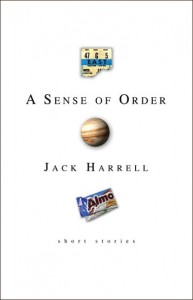
 As the 10th feature of our Mormon Stories Book Club series, we feature Jack Harrell and his short story collection, A Sense of Order and Other Stories.
Jack is currently a writing professor at BYU-Idaho. A Sense of Order and Other Stories contains two award-winning stories (“Calling and Election” and “A Prophet’s Story”); the collection won the award for best short fiction from the Association for Mormon Letters in 2010.
Some excerpts of the book are available here.
This podcast includes a discussion with author Jack Harrell, podcast host Heather Olson Beal, and (very enthusiastic and inquisitive) reader Brent Beal. Shout out to Braeden Jones and Katie Farr Harmer for their help!
Please support Mormon Stories by purchasing A Sense of Order and Other stories through this link. A small amount of the proceeds go to help support Mormon Stories.
Episode Transcript
Guests: Brent Beale, Heather Olson Beale, Jack Harrell
This transcript is machine-generated and lightly edited for readability. The audio is authoritative. Please excuse occasional errors in names and spelling.
Introduction and Jack Harrell's Background
Brent Beale [00:00:00] 1, 2, 3. Mormon Stories Podcast is a production of the Open Stories Foundation. All donations to Mormon Stories are fully tax deductible and go directly towards keeping the podcast alive and towards building a community of support for Mormons like you. To support the podcast or to join the community, please become a monthly subscriber today@mormonstories.org.
Heather Olson Beale [00:00:29] hello, everybody, and welcome to another edition of Mormon Stories Book Club. I'm Heather Olson Beale, and I'm here tonight with Brent Beale. Brent, say hi.
Brent Beale [00:00:40] Hi.
Heather Olson Beale [00:00:41] And Jack Harrell, who's our author. You want to say a quick hi, Jack?
Jack Harrell [00:00:46] Hello, everyone.
Heather Olson Beale [00:00:48] And Jack is the author of a collection of short stories, and this will be the first time that we've done a collection of short stories for this book club. So it's kind of cool. And the collection called A Sense of Order and Other Stories, is that right, Jack? Okay, yes, I just wrote down A Sense of Order, but I knew it was a little bit longer. And Jack is a professor at BYU Idaho of Creative Writing. Is that right, Jack?
Jack Harrell [00:01:15] Yep, that's right.
Heather Olson Beale [00:01:16] Well, so why don't you give us a little bit of background information about yourself, aside from the fact that you're a professor at BYU Idaho?
Jack Harrell [00:01:24] Well, let's see. I'm a convert to the church. I joined when I was 21, and I grew up in Southern Illinois. I had migrated sort of following my sister and brother who came out west with the oil field business and ended up in Vernal, Utah. And that's where I became a Mormon when I was 21. And let's see, after a mission, I went to BYU and then Illinois State University and got hired at ricks College in 1995 and did a PhD through the University of Idaho after that. So that's a little about me.
Heather Olson Beale [00:02:07] Okay. So were you another religion before you converted to Mormonism, or was that like an important part of your childhood at all or not?
Jack Harrell [00:02:16] Well, my mom worked on Sundays, so we never went to church very much. But I always believed in God, and I guess because my mom did, and we always had a Bible in the house. We had one of those really big Bibles that had the words of Jesus in red and that sort of thing. So there was never a time in my life that I didn't believe that there was a God. And especially I always believed that if there was something unfair or wrong in this life, somehow it would be balanced out in the next life and God would have something to do with that. In fact, I remember a phrase when I was a kid, this saying, it'll all come out in the wash. And I'm not exactly sure how I equated that with some sense of eternal justice, but in my mind, that's the way it was. So. And growing up in Southern Illinois, it's very much a part of the Bible Belt, so pretty much everybody there believed in God and believed in Jesus, even if they lied and cheated and never went to church. So when I first came to Utah and I first read out of the Book of Mormon and so on, it sounded like the Bible to me. And that made it feel. Feel comfortable. And so it wasn't difficult for me to take in some of the things the church had to offer because I kind of had those core beliefs.
Heather Olson Beale [00:03:54] You know, that's interesting for a couple reasons. One, because, you know, I grew up in the South. I spent most of my life in Texas or Louisiana. But it's a huge thing here where you go to church. So I mean, even if someone kind of, as you described, maybe not participating or being a member of a particular organization, but still believing in God, that's okay here, of course, but it's definitely like a big thing. Where do you go to church? Like, Brent's from Washington, and when we first moved. Well, when he first moved here, he said he just noticed that everyone, you know, within the first five minutes of meeting someone, they would say, you know, what church do you go to? And that was always surprising to him. Right, Brent?
Brent Beale [00:04:36] It's still surprising. It's just because I grew up where you just didn't ask that. I mean, that's like asking somebody, you know, how much money they make at their job. I mean, this is. Yeah, just kind of an odd. Still, still a little funny for me, but I'm getting used to it.
Heather Olson Beale [00:04:54] And then it's interesting too, what you said about being used to, I mean, the Book of Mormon feeling familiar because it's similar to the Bible. It's written in the same language. Because, I mean, for a lot of people, like, I grew up with people saying, you know, nothing can be added to the Bible. So you guys have added that to the Bible and that's, you know, against the rules. Or it's either it's in John or it's in Revelation somewhere. Here, here I show what. What a non scriptorian I am that it says you can't add to that. So it's just interesting that that was familiar to you. Whereas other people are like, you know, no, you can't. You're breaking the rules. You're not playing along with the Rules.
Jack Harrell [00:05:30] Right. Well, I think I was fortunate. I've been fortunate my life in a lot of things. In situations in which I didn't know the rules, and so I just went on my merry way, and things worked out fine. And it's. You know, it turned out it's a good thing I didn't know the rules, or I might not have tried this, or I might not have taken a certain path, because, you know, if I had known that people would say, oh, you can't do that, then maybe I wouldn't have.
Heather Olson Beale [00:05:58] Interesting. And you said you served a mission.
Jack Harrell [00:06:02] Yes, I did. North Carolina, Charlotte. And that was back in the day when the missions were 18 months. And somehow in my new convert mind, I thought two years would just be too much for me to handle, but I could do 18 months, and so it worked out for me.
Heather Olson Beale [00:06:25] Interesting. Cool.
Jack Harrell [00:06:26] Cool.
Brent Beale [00:06:27] Yeah, that's really interesting.
Heather Olson Beale [00:06:28] Hey, Brent. So I just realized that usually I ask people to introduce themselves, and I didn't. Do you feel shorted?
Brent Beale [00:06:35] I do not. No, I'm okay.
Heather Olson Beale [00:06:37] Okay. Hopefully everybody knows who you are.
Jack Harrell [00:06:40] Right.
Brent Beale [00:06:40] I'm married to you. That's probably enough.
Heather Olson Beale [00:06:43] That's all that needs saying. All right.
Brent Beale [00:06:46] I'm just riding your coattails.
Heather Olson Beale [00:06:48] Nice. Okay, well, let's dig into the book a little bit. I wanted to read a little summary from Signature's webpage about the book, just to kind of frame it and give people an introduction, although, of course, everyone needs to get it and read it themselves. And I also wanted to know, did it come out in 2010, is that right?
Writing Mormon Fiction and Magical Realism
Jack Harrell [00:07:10] Yeah, that's when it was published.
Heather Olson Beale [00:07:12] Okay, so this isn't exactly timely, but this is when I heard of the book. So maybe they'll have a revival. Right? 2013.
Jack Harrell [00:07:21] Love it.
Heather Olson Beale [00:07:22] So on the webpage, it says that it won an award for best short story anthology from the association for Mormon Letters. So that's cool. It says in this collection of short stories, the author asks a big question. Who is responsible? One person in need of this information is Lon, who wonders why his marriage is falling apart. Lon thought his wife would reinitiate intimacy at some point. She doesn't. And he sets out to find the man he thinks stands between them, but only finds an apparition. And he still can't fix his marriage. In another story, the LDS prophet is drawn to a simpler time when he could wander out unnoticed and buy a candy bar. Church security won't let him outside on his own, and public relations won't let him wear anything but a suit and a tie. Still, the impulse to be a regular guy for an afternoon is compelling. Can't he make his own decisions? He can, but what are the consequences? And then there's Jerry, who passes three men in suits who are talking and laughing at the loading dock behind an LDS temple. One of them looks up, drops a cigarette and crushes it, then slips into a nearby car. Another man, someone who has made Jerry's life miserable, taunts him, saying, jerry, your goodness is your enemy. And tell all your friends who is responsible. Maybe it's the author's reverie that's to blame, but his stories have a way of getting deep inside the psyche and haunting us. So that's kind of a cool introduction to, and mentions a couple of the stories. In the foreword of the book, Jack, you mention magical realism, and I kind of wanted to ask you just to explain that to us in layman's terms in case that's something that listeners aren't familiar with, because that's kind of a theme or an organizing principle, I guess. Is that fair to say?
Jack Harrell [00:09:03] Yes, it is, I think. And not that I was really conscious of it when writing these stories, but this has. People have brought this up, and I realized that, yeah, that's what's going on here, magical realism.
Heather Olson Beale [00:09:15] So what does that mean in case people aren't familiar with that?
Jack Harrell [00:09:19] Well, magical realism is a genre that seems to be more common with certain South American authors. It's a situation in which everything in the story is real in the sense that it's the world that we know, the world we all understand. But there's something that is not. Something that is not just normal and natural. And this is something that's taken for granted by the characters in the story. So one example, the best example I heard, I like to use to explain this. There's a short story in which a man is killed in a hotel, and his blood goes down the stairs and down the road several miles and then up the stairs to his mother's house. In his mother's house. And she sees the blood and immediately knows that this is her son who's been killed. And of course, you know, we know that this can't happen. Blood can't flow for miles like that. And no one in the story, it's not like the mother says, wow, that's odd that his blood has appeared from miles away. She just sees it and says, oh, my gosh, my son is dead. So it's something in the story that's accepted by the characters in the story, even though it couldn't really happen in the context of a story that otherwise is pretty realistic.
Heather Olson Beale [00:10:54] Okay, so then it's different from, say, a fantasy book or, like, Harry Potter, because much of Harry Potter couldn't happen, right?
Jack Harrell [00:11:04] Yeah.
Heather Olson Beale [00:11:04] I mean, is that it?
Jack Harrell [00:11:06] Yeah.
Heather Olson Beale [00:11:07] Okay. And. Because when. I mean, or. But Harry Potter is the first thing that came to mind when they meet all these weird creatures or whatever in Harry Potter. Right. So those couldn't really exist. And they. The other characters. Those creatures are weird to those characters also.
Jack Harrell [00:11:22] Right? Yeah.
Heather Olson Beale [00:11:23] Okay.
Jack Harrell [00:11:24] Okay. Yeah.
Brent Beale [00:11:25] They're not assumed to be real by the characters in the story.
Heather Olson Beale [00:11:29] Okay, interesting. Okay, so is it Borges that writes in this magical realism style?
Jack Harrell [00:11:34] Yeah, he's one. And I'm not, in fact, I'm not really that familiar with a lot of these authors, but I guess it's just been. As I've written, it's been just really natural for me. And I think it's kind of. I think it's very much just an outgrowth of my understanding of Mormonism that, you know, here I am, I'm a college professor. I'm a reasonable, rational guy, and, you know, I don't go to witch doctors when I'm sick. I go to the regular doctor. But at the same time, I believe in Joseph Smith and angels and patriarchal blessings and all kinds of things. So I think this really fits very well for the Mormon who kind of, especially contemporary Mormons who live in these two worlds all the time. We live in this very scientific paradigm in the 21st century, but at the same time, we believe in these other things like prayer and angels and the afterlife and so on.
Heather Olson Beale [00:12:43] Very cool. Okay, that's very interesting. Okay, well, tell us a little bit about kind of the seed or the genesis of the collection. And then Brent wants to pick your brain.
Brent Beale [00:12:59] I get to ask a question or two.
Heather Olson Beale [00:13:01] Yes. So can you kind of tell us. Yeah. Tell us how it came about.
Jack Harrell [00:13:04] Well, the title story. The title story was the first short story I ever wrote in a creative writing class at BYU and in 1990. And of course, I revised it a lot, and I kept writing stories, and I started getting them published in Irreantum and Dialogue and so forth. So when I had enough of a collection ready, Signature had published my novel Vernal Promises. And so I thought I would send them this collection and see if they wanted to do a collection of short stories. And so I thought, well, I'll just put a name on it that they're sure to dislike, and then we can pick something else. And I'm going To put the name of my first short story on there, just because I want to say, hey, wow, that's cool, you know. So I sent it down and they decided to publish it. And the editor, Ron Priddis, and I started going back and forth over titles. And then one day he said, you know, every time I try to think of a new title, I just go back to that first title that you had on it. And I wonder what you would think about just using that. And by that time I had thought about it enough and I had realized that this theme of order, or as Tom Kimball there signature put it, it's not order, it's a sense of order. Which means that maybe it's not there at all, but this theme kind of goes through a lot of the stories, like Jerome and the Ends of the Universe. He builds this scale model of the solar system because he wants this mechanized, perfect solar system that he can rely on all the time. And he doesn't want to play around with uncertainty, but that ends up being what he does in the end. But this idea of order and chaos kind of ended up being a theme throughout all of the stories. And so I was really glad when Ron said, let's just make that the title for the whole collection.
Heather Olson Beale [00:15:18] All right, cool. Okay. So A Sense of Order. That's interesting. Okay, Brent, you want to dive in?
Jack Harrell [00:15:28] Sure.
Brent Beale [00:15:29] I want to go back to something, if we can, that you said just a second ago, Jack, where you talked about how the word magical realism. Let's see, in the foreword, whoever that individual there was. I guess it's another professor with you there at BYU Idaho.
Jack Harrell [00:15:47] It's a friend of mine's literature here at BYU Idaho.
Brent Beale [00:15:52] He used the. The title of the foreword is Supernatural Presences, which I think is a good way to describe what shows up in some of these stories. You tied that into kind of Mormonism and your experience with Mormonism. And we do kind of have this duality where we perceive ourselves to be fairly rational people, but we talk about things like how the veil can be thinned and how we can sense people on the other side of the veil that have gone on or in the temple. We'll talk about having these experiences where we're able to communicate with ancestors, spiritual promptings in everyday kind of settings. Is that so for you? It wasn't really intentional? I mean, this is you kind of looking back on some of these stories, but you think like coming into Mormonism and converting to Mormonism, that that has kind of played out in some of these stories.
Jack Harrell [00:16:57] Definitely. I Think the fact that those elements are in these stories, it's just a product of living this life where on the one hand, like you said, this duality of thinking, okay, this is what's happening. This is what's going on. But there could be other things happening, too. There could be angels at work. God could be at work here, or the devil could be at work here.
Reading and Discussing Early Stories in the Collection
Brent Beale [00:17:31] Can I read in the opening story, which is called. Is that Traghan's Medal? Traghan's medal, yeah, Traghan's Medal.
Jack Harrell [00:17:44] There's.
Brent Beale [00:17:44] It's on page 28 of the book. And this is. Are you pronouncing it Tregan or Traghan?
Jack Harrell [00:17:51] I say Tragen.
Brent Beale [00:17:53] Tragen. He meets Jesus on the way to. What kind of concert is it?
Heather Olson Beale [00:17:58] Megadeth.
Jack Harrell [00:17:59] It's a heaven.
Brent Beale [00:18:00] Megadeth concert?
Jack Harrell [00:18:01] Yeah, Megadeth. A band I saw in Carmel, Illinois, by the way.
Brent Beale [00:18:06] That's great. Here's an element of kind of the supernatural presences or magical realism. I'll read just this little section here, starting on page 28. This is toward the end of the story, and it says, a few nights later, Traghan drove out to Yellowstone highway, just west of Rigby, to the spot where he dropped off the hitchhiker, which was earlier in the story, and that hitchhiker was Jesus. Continuing on here, it says Jesus was there, walking toward him down the middle of the road, wearing the same clothes. Jeans, a white T shirt, sandals. His hair was down, and he looked like he did in all the pictures. Standing there in the middle of the road. He waited in the headlights for the car to stop. The highway was deserted, the stars bright overhead. Jesus came to the window and squatted down, one hand on the car door. He smiled at Tregen before he spoke. How you holding up? I love that. It's just the most natural thing to find Jesus on the highway. And they have this conversation about what's gone on, and it's a really interesting exchange. And then here at the end, toward the bottom of page 29, Trigan thought about the. Jesus had just asked him whether or not he'd like to see him again. And Trigon says this. He said he thought about it for a long time. Somehow he knew Jesus wouldn't mind whether he answered yes or no. He understood either way. He'd understand either way. So he said, give me a little while and, yeah, that would be great. I do what I. I'll do what I can. Jesus said, who knows? I might need a friend sometime. That would be good. Traigan said, let me know, Jesus reached out to shake hands. Traigen took his hand and shook it, and a surge of feeling came over him, as big, as big and bittersweet as every Megadeth song combined. Even more. Is that a spiritual experience? Is that what Trigun has there at the end?
Jack Harrell [00:20:07] I think so, yeah. But it's also. I think it's also a very human experience, too,
Brent Beale [00:20:18] For me. I mean, this is just a great way to kind of talk about some of the supernatural presences that show up in some of these stories. It's more than that, though. I get the feeling that you're intentionally kind of playing with. And maybe playing isn't the right word, intentionally kind of holding up some of these conventions that we have, some of these Mormon beliefs that we have. And it's almost like you're holding them up in the light and kind of turning them in different ways and kind of forcing us to kind of see things from a different angle. You know, for example, I mean, we laughed. I mean, when you talk about the idea of someone meeting Jesus on the way to a Megadeth concert, we laugh at that. But why is that funny? Is it the juxtaposition? Is it that it's out of context for us, but yet we don't laugh when we talk about Joseph Smith seeing Jesus in the grove, in the sacred grove, that's different somehow. And so it's like you're bringing these. It's like you're crossing these wires in a way that can be kind of unsettling, but it also kind of makes us see things in a different way. I thought maybe you could just kind of comment on that. Is that something that just kind of has come to you as these stories have kind of unfolded, or is that intentional in the way you've kind of set these stories up?
Jack Harrell [00:21:43] Well, didn't you have a conversation not long ago with Terrell Gibbons?
Brent Beale [00:21:50] Oh, I wasn't in on that. Heather, you were in on that, right?
Heather Olson Beale [00:21:53] I was not.
Jack Harrell [00:21:55] Okay. I'm sorry. It must have been a different podcast I was listening to then. I thought it was you guys. Well, anyway, Terrell Givens, one of the things he says is that Joseph Smith. One of the big contributions Joseph Smith made was to close the gap between God and humanity. And for Joseph, these experiences of God are very much in the here and now, in the mundane, even. And this was one of his remarkable contributions. And I think that this is very true of Mormonism. And I guess one of the things I'm doing with a lot of these stories is I'M just taking the things that we say all the time to each other as Mormons and I'm saying, okay, let's play that out to its logical conclusion. You know, so for me, the story of Jesus going to this Megadeth concert in Idaho Falls, Idaho, and he's with this kid who is one of the few non members in the city of Rexburg, that's who he goes with. And he tells the kid not to tell anybody and the kid tells one friend and pretty soon the whole school is talking about this and they're kind of criticizing him, condemning him. And of course the irony here is this is like Joseph Smith who said he saw God and people were upset at him. So I wondered what would happen now if a 14 year old boy, or in this case a 17 year old boy said I saw Jesus. How would a community of predominantly Mormon people respond to that? And I'm afraid we might be like those folks we criticize. I'm afraid we might not be very nice to the person, you know.
Heather Olson Beale [00:24:05] Yeah. So it's interesting then to see how I guess, sort of a hierarchy of. I mean, I could see where someone would say, oh, well, that was Joseph Smith, like where someone kind of in that position would be almost expected to have kind of greater access. But you know, even as you say, that doesn't seem like, and I'm not a historian, but it seems like Joseph Smith, as you said, did want, he wanted everyone to have, or he wanted a lot of people to have really cool, amazing connections with the divine. So. So it's kind of interesting that we do that. I don't know where that comes from.
Jack Harrell [00:24:42] Well, I think part of it is a tendency somehow to, as the religion becomes more based on its tradition and we look back and we reverence those who came before, somehow there's this distancing process that happens where we think, okay, those people somehow were different than we are. But all you've got to do is read some church history, even read in the Doctrine and Covenants and realize that, you know, I mean, you got six people who are the official body of founding the church, you know, and these people were people like us, you know, they. But somehow we want to set them apart, making them different. And I think one of the reasons we want to do that is, you see, if they're different from us, then we're off the hook. We don't have to hold ourselves accountable and then we can say, well, we're not anything special and therefore we don't have to live up to that.
Brent Beale [00:25:55] Well, let's. Heather, if you can cut me off anytime if you want. But some of these stories are just. I mean, they're just fun. And I just wanted to kind of. Is it okay if we just bounce through a couple of them and talk about some of these characters?
Heather Olson Beale [00:26:08] Sure.
Lon Green, the Trestle, and Tragic Characters
Brent Beale [00:26:10] Let's talk about Lawn Green in the Trestle. What's up with Lawn Green? You know, I don't want to give
Heather Olson Beale [00:26:19] a little bit or one of you guys explain a little bit about what the setup is. I mean, I do want people to read the book, but I don't want them to listen and be like, oh, who's Lawn Green?
Brent Beale [00:26:28] Totally mystified.
Heather Olson Beale [00:26:29] Can you just tell what the setup is? One of you guys?
Jack Harrell [00:26:31] Sure.
Brent Beale [00:26:32] How about if I give a quick. I'll explain who Long Green is, and then. Jack, would you read that when I get done with that, if you don't mind. Would you read that on page 43? There's a pretty critical decision that Lon makes here. So who is Long Green? He's this guy. He's unsatisfied with his life. These notes start to appear. Notes that ask him things like, are you happy? Do you ever wish for something different? Things like that. Everything about the good old days. And this finally. This series of notes finally culminates in a meeting. At this trestle, this old wooden railroad bridge not far from his home. He meets this mysterious man. And this man says, look, your wife has breast cancer. And she doesn't know about it. So you have to decide. You can either decide to tell her about it because if you do, she'll get treated and she'll outlive you, or if you don't tell her about it, she's going to discover it a few months down the road. It will have spread by then. She'll die. And there's this other woman that's about to move to town that will fall in love with you, and you can. You can have a life with her instead. So he's got to kind of decide which way he's going. And on page 43, there's this real pivotal kind of decision point. Do you mind reading that, Jack? I think it'd be fun to hear you read it.
Jack Harrell [00:27:56] Yeah, I would like me to start.
Brent Beale [00:27:59] He woke up late the next morning. I think that seems like a good place.
Jack Harrell [00:28:01] Just that little section?
Brent Beale [00:28:04] Yeah. Yeah, I think so.
Jack Harrell [00:28:05] He woke up late the next morning. He put on some sweatpants and went out to the living room. Karen was standing there, car keys in hand. I'm going to do Some shopping. She said she looked like a woman at the end of a long, tired day. Walmart's having a sale on curtains. Lon could have told her about the man, about the cancer. He could have told her about the photograph of a woman named Donna hidden inside one of the wishing wells. Do you need anything in town? She asked. He shook his head. I'll be back by noon, she said, her voice almost sad.
Brent Beale [00:28:46] Now, if you've read the story, hopefully you go out and get the book and you'll read the story, because it's a great story. But what just happened there? Jack, you want to tell us?
Jack Harrell [00:28:56] Yeah. What just happened was he did nothing. He could have told her what he knew, what he had been told the night before by this mysterious man on the trestle, but he did nothing. And this means she's going to die. And it's his wife.
Brent Beale [00:29:17] And it's his wife. And the picture that he has, he builds wishing wells. They're out in the front of his house there. That picture of Donna is the woman that the man promised would move to town after his wife's death, you know, if he didn't tell his wife about the cancer. So he's got that woman's picture out in one of the wishing wells. And so Lon, at the end of the story is he's discovered that now Donna, he's now married to this woman. He discovers that Donna is receiving notes from, presumably this. The same mysterious man that he had met out on the trestle. And I don't want to spoil the ending, but I just wanted to ask you about Lon. Is Lon. Is he a good guy? Does he learn anything in this story?
Jack Harrell [00:30:07] No, I think he's a tragic figure because he doesn't learn. And he marries Donna and things aren't any better with her, even though Donna maybe has more of a capacity to love. In fact, there's a line where. I can't remember now which character. Oh, no, it's Lon himself. Yeah, he says on page 46, he says, maybe I don't know what love is. And so, yeah, it's a tragic story, I think, because it's these people who are kind of stuck in where they are, and even when they are shown the end of the road that they're on, they can't seem to get off of that.
Brent Beale [00:31:00] So what's the lesson? If you had to. Is there a lesson here?
Jack Harrell [00:31:05] Well, certainly this story is one of those stories that watch out what you pray for, because you might get it, that kind of story. So, yeah, I guess maybe. I know one lesson is don't be like this guy. Don't be stuck in something, stuck in some past thing that takes your whole life away, you know?
Brent Beale [00:31:33] Okay. Okay. I think that's. I think that's fair enough. Can we. Can we skip to another story? Sure.
Heather Olson Beale [00:31:43] Well, yeah, but Brent, did you think he was a good guy? I mean, reader response theory, right?
Brent Beale [00:31:51] Reader response theory. Well, he seems a little more self aware at the end, he Sundays. On page 46, he says. Well, it says here, Lon looked up into the cold starry sky for a moment. I could have helped Karen, he said. I could have loved her. So that's some self reflection, some regret, I think.
Jack Harrell [00:32:12] Yeah, it's not enough. But you're right, it's not enough. We're self aware at the end.
Brent Beale [00:32:22] And then he does make a very interesting decision at the end. We'll leave that as kind of a teaser for the people that are listening. But it's a very interesting, very interesting ending. Let's skip to. If you don't mind reading another paragraph or two. It'd be fun to have you read the introduction or just a few first few paragraphs of a prophet's story on page 27.
Jack Harrell [00:32:51] Page 27.
Brent Beale [00:32:54] Oh, I'm sorry. 127.
Jack Harrell [00:32:56] 127. Yeah, I could read. I could read. The. The first paragraph's kind of long. Second, third and fourth paragraph maybe? Or is that too long to read?
Brent Beale [00:33:08] Oh, no, please, please, go for it.
Jack Harrell [00:33:10] Okay.
Brent Beale [00:33:11] It's a great. It's a great opening.
Jack Harrell [00:33:13] Okay. The prophet was standing at the window at a six story apartment looking down at the people walking the plaza between the Joseph Smith Memorial Building and Temple Square when he had a thought that made him smile. He wanted to go to Walmart and buy a garden hose and Almond Joy. It was something other men his age could do. And it made him smile to think of the simple pleasure of it. To put on a short sleeve jumpsuit, get in a rusty pickup and shop unnoticed among the crowds. Of course, the prophet knew the idea was absurd. Such a thing would put church security into fits and probably create a mob scene. Someone might take his picture and put it up on the Internet. Besides that, he didn't have the time. He had work to do. And there wasn't room in the schedule for the prophet of the Lord to follow a whim and go shopping for something he didn't need. Seeing the smile on the prophet's face, Scott, the prophet's secretary, asked, what's so funny? Nothing. The prophet answered, I just had a funny thought. Known in the church as S. Travis Whittison, Scott was a competent secretary who had worked his way up the ranks of the public relations department. Now in his 50s, he was a seasoned aide who honored the Prophet almost as much as he honored the Prophet's priesthood office. I think I'll skip a little bit. What was your thought? He asked. It was nothing, the prophet said, turning back to the window. Just something funny. But of course, what happens in the story is that the Spirit tells the prophet, go to Walmart. And when the Spirit does tell him that, then he knows he has to go and the Spirit tells him to go alone. It is a problem.
Brent Beale [00:34:57] Yes. Yes. It becomes a problem. He ends up getting arrested, which is not the end of the story.
Heather Olson Beale [00:35:04] No.
Brent Beale [00:35:06] So why is that funny? Why is it funny to think about the Prophet going to Walmart and buying a garden hose in an Almond Joy? I don't know.
Jack Harrell [00:35:19] I want to say something too. At this point. A lot of these stories, like Jesus at the Megadeth concert or this, the prophet going to Walmart. Now, I know this in hindsight, having written these, that sometimes I come up with an idea that seems like an interesting little gimmick, and I work with that. And if it remains just a gimmick, then it's not good enough. I have to work on the story until it becomes more than just a gimmick. It becomes a story about real people in relationships with each other and trying to work out things that are meaningful to them. And that becomes more important than the quirky little premise I started with. And now I know from my own writing that this is an important kind of test that I need to put a story to. Because if it's just, hey, I got a crazy idea. And what I even fear is that someone would say, or would accuse me of saying, I have a crazy, irreverent idea. I don't mean to be irreverent, and I don't think the stories are irreverent. And I certainly wouldn't want to just say, hey, I've got a quirky idea. And I'm going to throw that out there because it'll make people a little bit uneasy. I think the stories have to be meaningful beyond that. And that's what happened with this story. One day, one summer, I was mowing the lawn and I thought, what if the prophet of the church just wanted to do what any man his age can do, Just go to Walmart and do something like buy a garden hose and An Almond Joy. And I thought, well, that's interesting, but I don't know what to do with it yet. And then, in fact, the next summer, I was mowing the lawn, and I thought, what if a Flannery o' Connor type of character ended up on Temple Square and started testifying of the same kinds of things that Mormons believe and talk about all the time? But what if he was testifying in a way that would make Mormons uncomfortable, like standing on the wall and shouting and that sort of thing, like a Flannery o' Connor backwoods prophet would do? And I thought, well, that's kind of interesting, but I don't know what to do with it. So then the next summer, I was mowing the lawn, and it came to me, what if the Flannery o' Connor character on Temple Square and the prophet buying the Almond Joy, what if they met? And that's when I thought, okay, now I'm ready to sit down with a yellow pad and write out a first draft of this, because this could be interesting now.
Flannery O'Connor Influences and Grandma Ruckman's Dream
Brent Beale [00:38:17] And that second character that you mentioned, the Flannery o' Connor character in the story, his name is Claude.
Jack Harrell [00:38:22] Yeah.
Brent Beale [00:38:25] And I do think it's pretty interesting the way you've set it up, because you have the prophet saying that he wants to do something that's trivial or it's kind of crazy, you know, the garden hose and the Almond Joy. But then you have a guy who is perceived in some ways as being crazy, but what he says is much more rational, in a sense, than what the prophet's talking about in terms of the garden hose and the Almond Joy. It's almost like their trajectories are just kind of crossing. There's some symmetry to them on page 146. Here's the example of what you were talking about when he's arrested, Right. He's behaving in a crazy kind of way.
Jack Harrell [00:39:01] Yeah.
Brent Beale [00:39:03] But what he's saying is something that we're familiar with. Right on the page there, see where it says, two Salt Lake City police officers emerged from their cruiser and put Claude in handcuffs. Claude called out to the people standing next to the horse and carriage, the people crossing the busy street, the people along the walls of Temple Square. A voice speaks from the dust. Claude shouted. The Mormon book speaks from the dust. He cried as the officers put him in the squad car. So, you know, depending on the context, you know, a voice speaks from the dust. That's familiar language for us. And we don't generally view that if it's said in the proper context as being at all crazy. I mean, we take it fairly literally, but in Claude's mouth, it's. It's interesting, you know, as you talked about different contexts.
Jack Harrell [00:39:48] Yeah, the different contexts. And, you know, this reminds me when I first moved to Vernal, Utah, and I wasn't a member. I remember being at a keg party up Dry Fork Canyon, and this guy who was so drunk he could hardly stand up said to me, I know that Joseph Smith is a prophet.
Brent Beale [00:40:07] That's great.
Jack Harrell [00:40:08] So maybe this context thing, just having that experience before I joined the church, of knowing people who were outside of the church, but they still had these beliefs, but somehow it doesn't fit together.
Brent Beale [00:40:24] I don't know. Well, I have. If we can keep bouncing. I wanted to bounce over to Grandma Ruckman's dreams and then maybe talk just briefly about the last story. Saving that one for last, you know,
Jack Harrell [00:40:40] I would love to tell you the origins of that story also.
Brent Beale [00:40:43] Grandma Ruckman's dream.
Jack Harrell [00:40:44] Yeah. Can I do that before?
Brent Beale [00:40:46] Yeah, yeah, please, please.
Jack Harrell [00:40:48] What page is that story on?
Brent Beale [00:40:49] It starts on page 99.
Jack Harrell [00:40:51] 99. Well, this is how that story started. My mom passed away at age 83 about. I guess about four years ago. So this was probably five years or so before she passed away. I'm not sure what possessed her one day to pick up the phone and call me and start to tell me all kinds of. What do you want to call this? Kind of some of the dirty laundry about our little hometown of Parkersburg, Illinois. She just started telling me all these stories about, like, there's this old man who lived across the street from us, and in my little town, that Jeff Foxworthy joke. If your outdoor furniture used to be your indoor furniture, you might be a redneck. Well, this was common where I grew up. And. And she said, yeah, old man. So. And so he would sit out in that chair and he would pee his pants, and he wouldn't even get up. He'd just sit in that chair all day long. And then she told me some more unsettling things. She told me about how one day my uncle, whose name was True, and I always thought that was ironic.
Heather Olson Beale [00:42:05] He.
Jack Harrell [00:42:06] And I was. I was born. My mom was 38 when I was born, so. So there's quite an age difference. So my dad had been in World War II. So one day, True told my mom that he could give her an abortion if she wanted it because my dad was away at the war and all that sort of thing. And he said that he had done it for her sister and for many other women in town. And my mom said, no, thank you. But, you know, she sort of. She just kind of unloaded a bunch of these stories on me. And when I hung up the phone, I was kind of shocked, you know, I didn't know how to handle all of this stuff. And so for me, the way to handle it, when I have questions and things I don't know what to do with, I start writing about it. So that story is dedicated. It says for Janelle in the front of it. And so that's my mom. And most of the kind of crazy things that are reported by Grandma Ruckman in there are versions of these things my mom told me over the years and during that phone conversation.
Brent Beale [00:43:20] Wow, okay, that's really interesting.
Heather Olson Beale [00:43:26] That's interesting to me. I feel that I could never write a piece of fiction, like if my children's lives depended on it. But I mean, I get the notion of like one of my co workers today was just telling me a really cool story about when he defended his dissertation and he had this horrible tooth surgery and it was this big story. And I said, you gotta write that down. And he said, I do. And I said, yeah, you need to write that down, like for posterity. So it's interesting to me to hear someone say that they're sort of processing their life experiences by writing fiction, because I can think, well, I would write that down or I could write like a essay about it in first person, but not to be. It seems difficult for me to imagine teasing that out through fiction. But cool.
Jack Harrell [00:44:11] And not all of these stories, but a lot of these. I find myself. I've got some question that I just do not know the answer to. And so I kind of need to see it through, I guess, in this experimental world, you know, to see what happens with these characters who are going through these things.
Brent Beale [00:44:35] I think that sets the story up pretty well. So, I mean, I'll summarize it real briefly. So you got. She is the. I think she's the wife's grandmother. Is that right? Comes to live with him.
Jack Harrell [00:44:46] Yeah. In the story it's the wife's grandmother and the narrator is the son in
Brent Beale [00:44:51] law, or I guess the grandson in law, would it be?
Jack Harrell [00:44:55] Yeah, yeah, grandson, however that works. Okay, so yeah, no, no, we got to get this right. It's the wife's mother. So it's a middle aged, or maybe in their 40s or 50s.
Brent Beale [00:45:07] Oh, okay, I'm wrong.
Jack Harrell [00:45:08] Grandma Rushman is the wife's mother. And so the story is Told by the son in law.
Brent Beale [00:45:14] You're right. You're right. Okay. So the grandma comes to live with them. She has to come live with them because she's unable to live on her own. She's elderly. Her daughter assumes that she's just kind of losing her mind a little bit. But it seems like it's the son in law that for whatever reason is around her or hears some of these stories and believes them for the most part. And I don't want to give all the story away, but I do want to go right to the end where I think the grandmother has passed away. I think at this point, it's after the service. And the narrator says, so this is. The son in law is talking to his wife. I believe they're in the car. And he says, I tried to tell her some of the things Grandma had said about True in the Navy, about Uncle Harvey, about Grandpa Bergener with the horsewhip. So these are some of the really kind of awful things that she relates. But it wasn't coming out the way I wanted it. I'd wanted it to. When we pulled into the driveway at the house, I shut off the engine. Joyce was still looking out the side window. I wanted to tell her about the last night Grandma spoke, when Grandma said she was free. I was leading up to that when Joyce said, no, those things happened a long time ago. They don't matter anymore. She looked at me, and I could see how hurt she was. Look at what it did to her, she said. And she started to cry again. I sat there, my hands limp on the steering wheel. I don't want to go like that, she said. I don't want to be out of my mind when I go. Nobody does, I said. We talked about it. We didn't talk about it anymore after that.
Jack Harrell [00:46:57] So what.
Brent Beale [00:46:58] What happened there? I mean, it's a very. It's a really interesting way to end this story. Does the wife not believe. Or the daughter. Does she not believe any of it? Or does she believe it but choose then to frame it as just somebody going out of their mind? Is it. I mean, what's. What's your take on that ending there?
Jack Harrell [00:47:18] Well, it could be two things that she's choosing not to believe it because it's just too horrible. Or the other thing is maybe she cannot allow herself to believe these things because they're too hurtful and she knows she can't handle it. And it's much easier to just say, my mother was crazy at the end. And the things that she talked about. They just weren't true. Because this daughter can't allow herself to believe that. So she's got a coping strategy, right? She's going to say, mom was crazy, I don't want to be like her. And so I'm not going to have this conversation. And then the husband realizes, okay, well, we're not going to have this conversation. Either she's not ready for it or she refuses to. And then, so I guess that this gives the reader, I guess, some dramatic irony because the reader knows what has happened and the narrator has been through this. But there's that character, the Grandma Ruckman's daughter, who is not going to come along with us on listening to these stories, believing them and maybe seeing what can be gained from them.
Brent Beale [00:48:42] Now that's where I was going to go with this. Because what the husband then doesn't relate is the good part of the story where all these awful things happen. And Grandma Ruckman, one of the last things she relates, she's having a nightmare. And the son in law comes in and says, well, what's wrong? And she says, well, I dreamed that everyone from this town, we were all together and it was awful because. Because we had done all these awful things to each other. And then this man came in a red robe. It's Christ. And there's this really beautiful kind of idea of redemption and forgiveness. And that's when she says, I'm free. I'm free. And that's the last thing that Grandma Ruckman says. But he chooses not to relate that to the wife. So he tells her about some of these troubling things that her mom said. And he's just getting ready to say, to tell her about that last night and about Grandma saying that she was free of all this. And that's when his wife Joyce says, no, those things happen a long time ago. They don't matter. That's really interesting to me. Why doesn't he tell her the good stuff, that beautiful kind of experience? He backs off and doesn't tell his wife about that.
Jack Harrell [00:49:58] Well, I don't know. It seems that this is something common in life, that maybe until a person is ready to face certain ugly things, until that happens, they can't face the next thing, which is moving through those and moving on to the next thing. So I'm not sure why she does, but it seems to me, and you know, this is interesting for me looking back, because I wrote this story several years ago now, but I haven't thought about it in these terms. But until she recognizes and accepts what's going on, she can't see through to what the next step is, which would be how do I process this, how do I move through it? How do I even gain something from it?
Brent Beale [00:50:52] So by refusing to see the negative, in a sense, by refusing to accept that reality, then she almost. Well, she does, in a literal sort of way, kind of rob herself of the experience of being set free from that in the same way that her husband was able to kind of experience that vicariously.
Jack Harrell [00:51:11] Yeah. That's really interesting, isn't it? By refusing to see the negative, she can't move on through then to what's positive. Yeah.
Brent Beale [00:51:22] Interesting, Interesting. Well, I know we wanted to keep this to about an hour, and I wanted to talk about just a couple big picture things, but I was saving the best for last in a way. I don't know if it's fair to call it that, but the calling an election just kind of fascinated me. I mean, the whole. The whole collection is great, but calling an election really kind of threw me for a loop. So can we talk about that, Steve,
Closing Stories and Themes of Moral Fiction
Jack Harrell [00:51:50] for a little bit? For a lot of the readers. And that's why I suggested to the editor that we put that story last, because to be the one that freaks out people,
Heather Olson Beale [00:52:03] I just was gonna say that's funny because Brent read it first and then I read it, and then like, we each came home from work, and then I think I was even brushing my teeth and I was like, hey, now, what happened in that story? I was like, I totally didn't get it. Or was it this? Or then we were kind of going back and forth and. Yeah, it was. Yeah. Kind of a mind job. Yeah.
Brent Beale [00:52:26] Yeah. So let's talk about Jerry Sand. Good. Now, the name sans, you know, like, sans serif, you know, kind of means without. So, Jerry without. Good. Did you do that on purpose?
Jack Harrell [00:52:39] Yeah. And, yeah. So I can't be accused of being overly subtle, can I?
Heather Olson Beale [00:52:45] I didn't even think of that. Maybe I'm not a very critical reader. When he it, I was like, whoa. What?
Brent Beale [00:52:53] Okay, so I don't know how much of this story to give away, but. Well, let's talk about it a little bit. It's such a fun story. So Jerry, he's a seminary teacher. He's got a brain tumor, and he gets this call, and he is instructed to go meet at the. I guess the local ward building because he's going to have his calling and election made sure. And that requires a visit with someone from church headquarters. Is that a fair way to kind of describe the opening, the setup.
Jack Harrell [00:53:28] Yeah, I think that's it.
Brent Beale [00:53:31] So he meets this. He goes to the ward building and he meets this gentleman, Brother Lucy, which is a really kind of enigmatic character. I don't know what to do with him. I don't know whether he's a good guy or a bad guy or what he is. And he's asked to sign some paperwork. And Brother Lucy is telling him. He says things like. On page 193, he says, the man put the letters on the desk before Jerry. Read them carefully. He said, before you sign. You know, that's a little odd, right? And so he ends up signing. And then he keeps asking Brother Lucy. This is. Jerry is asking Brother Lucy, well, what happens now? You know what's going to happen. And Brother Lucy just keeps it a couple times at least. Each case is different. This is on page 194. Each case is different. Brother Lucy answered, taking a pen from his coat pocket, handing it to Jerry. And then Jerry asks again, will there be an ordination? Will my wife be called? Each case is different, Brother Lucy says once again. And then he lowered his head for a moment, scowling like a man arguing with himself. And then. And then Jerry's life, how should we say it takes a turn for the worst.
Heather Olson Beale [00:54:49] Unravels.
Brent Beale [00:54:51] It unravels completely. He finds himself in jail. He finds his reputation destroyed. Pornography is involved. It's all, well, unraveled, I think, is
Jack Harrell [00:55:08] a good way to put it. He's lost his life savings. He's lost his job, his reputation, because
Brent Beale [00:55:16] people assume that he. Well, it's a bunch of pornography that shows up in the ward building right in front of his seminary class. It's all over the walls and everything. And they assume that he was responsible for it. And it does look like he was responsible for. Turns out to have been printed off of his printer, right? So he's in jail. Who is Brother Lucy? Let's talk about that. Is he from the church?
Jack Harrell [00:55:47] Yeah, that's a good question. I don't know if I know the answer to that, but I do have an answer for who Brother Lucy is. I'm not sure I can say this, but I'll give you also the genesis of this story. When I was an undergraduate,
Brent Beale [00:56:07] the first
Jack Harrell [00:56:08] paper that I ever presented as an undergraduate was at the National Undergraduate Literature Conference. And I did a paper on King Lear. And my thesis was that the play King Lear is not a tragedy. Because there's a line where Lear says he's going to give away everything he has. And he says and thus I will go unburdened into the next life. And I thought, okay, so he's unburdening himself of all kinds of worldly things so that he can be free to go into the next life. And then, of course, his whole life falls apart and so forth. So one day I was teaching just a literature class here at byu, Idaho, and my students with my students. I was reading the play King Learn, and I thought, so if there was a Mormon who was kind of at the top of the heap, and if you were to lose everything that mattered in a worldly sense, then how would that go? And I thought, well, a seminary teacher. And this is not an early morning seminary teacher. This is release time, church employee, you know, kind of seminary teacher. And so how would he lose everything? And I kind of worked all that out. So that was kind of the genesis of the story. But for me, Brother Lucy is. He's a force. And I don't know if this force is God or not, but it is a force in the universe that seems to be real, that is destructive and painful, but also necessary. In fact, one version of this is just what we get in the Garden of Eden, where the Devil is unwittingly doing everything that God will be able to use to bring forward the progression of humanity. So in one sense, the Devil is. Is destructive, but in another sense, everything he's doing works perfectly to make things happen the way they need to happen. And so I think Brother Lucy is kind of this type of character that he. Well, he's a trickster character, Right. He seems to be destructive, but at the same time, he is involved in Jerry moving to this next level of his calling an election, being made sure.
Brent Beale [00:58:56] And without giving away the ending, there's this really interesting exchange at the end where Brother Lucy says, think on this. He said, even your goodness is your enemy. It was the truth, and Jerry knew it. So, again, that kind of. I mean, that plays into exactly what you were just talking about. This idea that if you are going to lose everything, that may include this perception that you're good, it may include your reputation that really is losing everything.
Jack Harrell [00:59:31] Yeah. And this fascinates me, this whole thing that. On the one hand, I was just talking about a force that might be seen as evil, but this force ends up moving forward. Good things. But then that line is saying, okay, you've got a good reputation, people trust you. People like you, people hold you up, you think yourself to be a good person. And all of that is your enemy. Because the moment you put too Much stock in that is going to be the moment you fall. So I guess I'm just interested in how our goodness can be our enemy or how seemingly evil things or just like someone goes through a trial where they get something like cancer and then they pull through, and somehow this is the best thing that ever happened to them. Things fascinate me.
Brent Beale [01:00:36] It's just a fun story. And I love the next line that you threw in there. You know, it was the truth, and Jerry knew it. And then you have Brother Lucy calling after Jerry, saying, remember that? Brother Lucy said calling after them as they walked away. And tell all your friends. I just thought that was great, you know, and tell all your friends. Yeah, I think this story won an award, didn't it?
Jack Harrell [01:01:02] Yeah, it won the Irrientum Fiction Contest when I submitted it that year. And Angela Hallstrom, who was the director of the contest that year, when she called me on the phone to say, congratulations, you won. We're going to send you a check for 500 bucks. And she said, and I'm dying to ask you a question. Is Brother Lucy a good guy or not? And I said, I don't know.
Heather Olson Beale [01:01:28] Yeah, that's funny, because I thought he was just creepy, something. Something about it. And I guess I can't put my finger on it. So it's interesting for you to. I mean, that. That it seems uncertain, I guess, to you or to some people. Because to me, I'm just like, ooh, no, he was creepy. He felt like he just would sort of appear. And he was maybe not menacing, but I don't know. I. I got a real creepy, creepy feeling about him.
Jack Harrell [01:01:59] Menacing is used in the story, and he does try to drown our main character and his wife. So, yeah, yeah. It's also that he's trying to drown him. And at the same time, he's saying, let go. Let go of everything you're holding onto that is going to get in your way so that you can make this next step into this kind of higher level of being. And so, yeah, he tries to kill the main character, but then the main character does let go and he's able to move on.
Brent Beale [01:02:43] Yeah, I think you do actually use the word menacing. You describe a look on his face as menacing at one point.
Heather Olson Beale [01:02:50] Well, that's what I thought that then.
Brent Beale [01:02:56] But it's a great story. So it's a great reason for people to go out and get the book and read the other stories all the way through to this one and then read this one. I wanted to just ask one kind of overarching question, and then maybe we can finish up. However you want to finish up, Heather. But I'd like to ask about, and this is maybe just my kind of perception as I reflect back over on a lot of these stories. Is there some feedback?
Craft, Faith, and the Purpose of Mormon Literature
Jack Harrell [01:03:26] No, it was a motorcycle going by, and I couldn't reach the mute button.
Heather Olson Beale [01:03:31] That's very fitting, a motorcycle. We need to hear some music in the background or something. Megadeth. Okay. Go ahead, Brent. Bring us home.
Brent Beale [01:03:40] Okay. There's just a real sweetness at the core of a lot of these stories, and that may sound odd.
Jack Harrell [01:03:49] I'm so glad to hear you say that, because I'm curious, too. I think there's a lot of darkness in these stories, but I'm really glad you see it that way.
Brent Beale [01:03:59] Well, there's just so much like the ones we've talked about. For example, Grandma Ruckman's dreams. Sure. I mean, there's a lot going on here with the grandma relating all these truly awful things. But then you have this moment where she has kind of this redemptive sort of vision and says that she's free. And all the stories are like that. To a certain degree, there seems like there's something there, some lesson, some core kind of truth almost, that you manage to strip away a lot of what I would call kind of the cultural baggage or kind of the superficiality, sometimes of Mormon ness. But at the center, there's this real kind of sweet. I don't know what to describe it as, even other than just kind of something you kind of cordoned off and kind of almost a morality lesson or something that's kind of encouraging about almost all of these stories. Do you see it that way?
Jack Harrell [01:05:02] Oh, definitely. In fact, there's a book that I've read several times by the fiction writer John Gardner, who died when he crashed his motorcycle while he was drunk. So the motorcycle that went by just now was perfect. But John Gardner wrote this book called On Moral Fiction. And for the longest time, I thought I had gotten this statement from John Gardner about three kinds of fiction. And I told people for years, John Gardner says so and so. And then when I went back and looked at the book, I couldn't find this in there. So I don't know if I'm getting this from the book or if it's really in there, but the idea is this, that there are three kinds of stories, and two of them are a lie. The first kind of story says that life is easy, and that's a lie, and therefore that's an immoral story. Because it's lying. And I think that's too much of what we get in the commercial Mormon market, where we have these fairly easy stories with conflict that's not really conflict, and it's resolved way too easily. And it's immoral in the sense that it makes life out to be far easier than it really is, and therefore it's lying to us. So the second kind of story says that life is difficult and it's not worth the fight. And that story, Gardner says. Either Gardner says it, or I'm just making this up. But that story is a lie. Because while it's true that life is difficult life, it's not true that life isn't worth the fight. So any kind of nihilistic stuff story, or any kind of story that says life is difficult and we might as well just end it all, that story is a lie, too. So the only true story is the story that says life is difficult, but it is worth everything we have to do to fight for it. And that's what a true story and that's what a moral story is. And so maybe that's just at the core of my belief system. And so I'm hoping it comes out in these stories that, yeah, life is difficult, but it's worth the fight. And something good can come of fighting for life and fighting for some corner of goodness and peace and maybe even relationships and that sort of thing.
Heather Olson Beale [01:07:43] That's very cool.
Brent Beale [01:07:45] It is. And there's so many examples of that. I mean, you have. I don't know if I should just name them. I hesitate because I don't want to give too much of the book away, but you have a guy that's run over by a tractor trailer as he's changing a tire, but he has this incredible epiphany about reality and what's real and authentic. And it's almost a celebratory death in a way. Or you have another story where God sight where you have. I think it's an academic who's involved in some pretty nasty political maneuvering in a department and is treated pretty shabbily, but has this vision of people and at first is only able to see some really negative things about these individuals. But then as the vision expands and as that vision becomes more expansive, in a sense, is able to see that these individuals have incalculable worth in a way, even though they don't necessarily really repent of being bad people in that narrow context, the protagonist is able to see more. And so as I run down the stories, it just Seems like that theme shows up again and again about, you know, just the way you framed it. You know, there's. There's difficulty, but there is something at the core that is redemptive. And I just really enjoyed that. I really enjoyed that and kind of seeing that repeat in so many different ways.
Jack Harrell [01:09:19] Yeah. I think there are a couple of stories like the Trestle, where the character is tragic in the end, that he doesn't turn around or doesn't turn around much. But for me, I think most of the characters. And I know at heart I'm a romantic at heart, I want a happy ending. Maybe by Deseret book standards, these stories don't have happy endings, but to me, most of them do.
Brent Beale [01:09:50] Yeah. Yeah, I think so.
Heather Olson Beale [01:09:51] Yeah. I mean, the characters have a lot of grit, so. Yeah. In that regard, they're not like. Yeah. Some of what you might find kind of in movies and stuff that Mormons, you know, and the friend. Those kinds of things that we tend not to like. A lot of grit, but also just. Yeah. A lot of goodness. I think that's a word that you. That you just said to describe them. And a lot of really just, you know, simplicity or just. Yeah. Authenticity, I would say. You know, life isn't like. You know, life isn't like the movies, and there's lots of pain and there's lots of. Lots of heartache, but you see, you know, little flashes of goodness in the characters in the book in a way that I think is really, really, really positive and is uplifting without, you know, without saccharine, I guess.
Jack Harrell [01:10:38] Yeah. And isn't this true of our lives, where we interact with people, maybe even people in the church who are going through all kinds of things that are difficult, but there are still those little moments of communion or moments of spiritual, I don't know, elevation or whatever, where they say, hey, this little trek you're on, it's hard, but keep going because it's worth it, what you're doing.
Heather Olson Beale [01:11:14] Yeah. I just read somewhere on Facebook, in a discussion with someone, it was sort of a disgruntled or someone having issues or problems or whatever with the church or with their ward. I can't remember what the. What the scenario was, but someone commented and said, you know, I stick with it, though, because I believe in the idea of, you know, building a Zion community and because I've seen flashes of it in a few times in my life, and it's worth. Worth sticking with it for that. Something kind of like that. And I thought that was a neat idea.
Jack Harrell [01:11:45] Yeah. I can very much relate to that. In fact, I had an experience like that just a few weeks ago singing in ward choir. And while singing, looking out on the congregation and having one of those experiences that tells me I need to hang on. This is the place where I need to be. And it's all worth it for this moment. And I don't even know if I could describe what was happening at that moment. I mean, what was happening was I was singing in the bass section in my ward choir, you know, that's all that was really happening, but something was happening within me that was making it all worthwhile, you know?
Heather Olson Beale [01:12:25] Yeah. Yep.
Brent Beale [01:12:28] That sounds like it might be a short story.
Jack Harrell [01:12:30] Yeah.
Heather Olson Beale [01:12:33] Write another collection and then. And then we can regroup and you can say the genesis of that story was when I was doing this Mormon Stories podcast.
Brent Beale [01:12:40] Podcast. Well, thank you very much for the time and effort that went into getting this collection out there. I thoroughly enjoyed it.
Jack Harrell [01:12:52] Thank you.
Heather Olson Beale [01:12:53] Yeah, it's great. And thanks for doing the podcast with us. And so everybody needs to go on signature books. Is that where they can get it, Jack?
Jack Harrell [01:13:01] You can go to Amazon also there. But isn't there. Don't you guys have a. Go to your website. Right. And buy it through there?
Heather Olson Beale [01:13:10] We will. Oh, yeah.
Brent Beale [01:13:11] Oh, yeah.
Heather Olson Beale [01:13:12] Web page. And people. I think. I don't know what it is. It's a. It's a very small amount, probably, that goes to. Yeah. If people click on it through Mormon Stories. So, yeah, we'll do that. Once the podcast comes out, we'll put out the URL and tell everybody. Go. Go do some. Go do some short story reading.
Brent Beale [01:13:28] Exactly. Yeah, exactly.
Heather Olson Beale [01:13:30] All right, great. Well, thanks and good night.
Jack Harrell [01:13:34] Good night.
Brent Beale [01:13:35] Good night.
Jack Harrell [01:13:55] Come, come, you saints. No toil nor labor fear, but with joy.
Transcript © 2026 John P. Dehlin. All rights reserved. Brief quotations are welcome with attribution and a link to mormonstories.org; all other use requires written permission.

6 Responses
I enjoyed your podcast very much. It was intriguing to listen to my colleague’s perspective on the genesis of his short stories as prompted by the sensitive questions of Heather and Brent Beal. I agree that Jack’s stories are redemption or invoke one’s quest for redemption. It’s what makes them “sweet,” as Brent observed–moral and edifying.
I haven’t listened to the podcast just yet, but I wanted to tell Jack that I love the book. I read it when it came out in 2010. I had read “Calling and Election” in Dispensation and was so impressed that I bought A Sense of Order on the spot. It is my favorite book of short stories in the Mormon fiction universe.
I had Brother Harrell for a teacher when I returned to BYU-Idaho online to earn my bachelors degree. I have a minor in English. He’s a great teacher and even though we never met face to face, I enjoyed the class and what I learned from him.
Loved this. Faith in the absence of the authoritarian ‘Natural Man’ is what we all need to be striving for and this really captures that feeling.
Can I simply say whazt a comfort to find somebody who genuinely kows what they are talking about online.
You actually understand how to bring an issue tto light
and make it important. A lot more people must
read this and understand this side of the story. It’s surprising you’re not more populaar because you
certainly have the gift.