
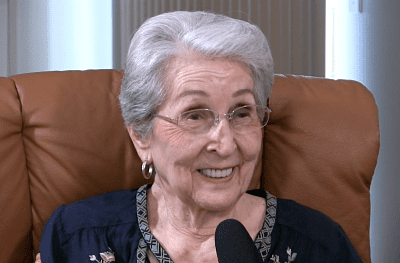
 After over 1,000 hours of interviews, it is fitting to finally feature the story of Nan Parkinson McCulloch—John’s Mom.
I am so super proud to release this Mormon Stories Podcast with my brilliant, wise, strong, courageous, still-believing, 84 year old mother. Other than the fact that I dearly love this amazing woman, perhaps my favorite aspects of this interview are how my dear Mom models:
1) Thoughtful, nuanced Mormon faith, including a willingness to either: a) believe differently than Mormon orthodoxy, b) say “I don’t know,” or candidly admit c) “That is not important to me,”
2) Unconditional love for her non-believing children (“Relationships are more important than beliefs.”), and
3) Direct, candid, respectful dialogue with a disbelieving family member (even when I push her a bit).
I hope you enjoy this interview, and I hope that you are as inspired by this brilliant, beautiful, amazing woman as I am.
In Part 1 of our time with Nan, we learn about her mother’s experience growing up as the daughter in a polygamous family, and we discover the Mormon Church of her youth and her life growing up in Preston and Franklin, Idaho. We also reminisce on her love of the culture and arts that her Mormon community brought into her life, including and especially road shows and plays that she wrote and directed for her local community.
In Parts 2 and 3 of this interview with Nan, John and Nan discuss her eventual divorce and remarriage, her faith evolution, her reflections on John’s podcast and on his excommunication, and on her beliefs about life after death.
Episode Transcript
Host: John Dehlin · Guest: Nan Parkinson McCulloch
This transcript is machine-generated and lightly edited for readability. The audio is authoritative. Please excuse occasional errors in names and spelling.
Welcome and Introduction to Nan McCulloch
Part 1 of 3 · Ep. 1079
John Dehlin [00:00:00] Sa. Hello, everyone, and welcome to another edition of Mormon Stories Podcast. I'm your host, John Dehlin. It is March 4, 2019. We are broadcasting to you live today from the Mormon Stories Podcast studios in downtown Salt Lake City, Utah. And today we have every episode I see we have a very special guest this time. I mean, it's. We really have a very special guest today. We are interviewing my mother.
John Dehlin [00:01:00] She was born as Nan Parkinson Parkinson. Eventually, when she married my dad, her name was changed to Nan Parkinson delin. And then 30, I don't know, 33ish years ago, when she married my stepfather, Don McCulloch, her name changed to Nan Parkinson McCulloch.
John Dehlin [00:01:22] But my mom and I were talking recently, and we realized that I've done over a thousand hours of interviews and never interviewed my mom or any immediate family member. So it's time to change that. So, because we're broadcasting live, we really do welcome any of you who are joining us live to feel free to join in with your questions or comments. I've already had people ask mom to think of some embarrassing stories she can tell about me. Many people want to know, you know, about her faith journey. Many people want to hear her observations about what I was like as a Mormon kid growing up.
John Dehlin [00:02:03] And of course, many of you want to know what it's been like for her to see my podcast, you know, emerge and thrive. And then, of course, many of you want to know what her reactions were to my excommunication and my ultimately not being a member of the church anymore.
John Dehlin [00:02:27] And so, yeah, there's a lot we could cover, but mostly I just think she's a fascinating and interesting person. So I'm really excited to have her on the podcast. So, without any further ado, nan Parkinson, Dylan McCulloch, welcome to Mormon Stories Podcast.
Nan Parkinson McCulloch [00:02:47] Thank you. John.
John Dehlin [00:02:48] How does it feel to be on my podcast?
Nan Parkinson McCulloch [00:02:51] Really, really fun.
John Dehlin [00:02:54] A couple things that are interesting about my mom. One is that she still is sort of a believer in a sense, and so we'll be talking about her beliefs, but I wouldn't say she's orthodox, so we could talk about that. She's 84 years old. Um, also, she's one of the very few members of my immediate family that have really listened to my podcast. She's probably been tuning in the longest of any family member and has probably listened to the most episodes over time, so that's kind of fun for me. Anyway, mom, it's good to have you here.
Nan Parkinson McCulloch [00:03:29] Well, it's just real fun to be here.
John Dehlin [00:03:31] Any corrections you want to make to my introduction?
Nan Parkinson McCulloch [00:03:34] I don't think so.
John Dehlin [00:03:35] Okay. A couple other things we'll talk about that are going to be interesting. Mom's, you know, her husband, Don McCulloch, he is sealed to his first wife, who passed away before he married my mom. So we'll be talking to mom about her reflections on, you know, technically being a plural wife in heaven. And also we'll talk about her faith journey and kind of how she views her faith in Mormonism in the modern day. So. All right, mom, let's just begin. What do you know? Just. And details aren't super necessary, but what do you know about your Mormon ancestors? What can you tell us just about to what extent you have pioneer ancestry that you remember?
Family Roots in a Polygamous Heritage
Nan Parkinson McCulloch [00:04:32] Well, I didn't ever get to meet my grandparents because they were dead before I was born. I had two sets of Parkinson's. Parkinson. My father was a Parkinson and my mother was a Parkinson.
John Dehlin [00:04:48] So is that like, cousin?
Nan Parkinson McCulloch [00:04:50] No, they weren't related.
John Dehlin [00:04:53] Okay.
Nan Parkinson McCulloch [00:04:54] In all the genealogy research that we've done, they never tied in. The two Parkinson's. Never tied in back in the old country where they came from.
John Dehlin [00:05:06] England.
Nan Parkinson McCulloch [00:05:06] Right, Right. My mother's father was a doctor and lived in Logan, so she was born and raised in Logan, and he had four wives. So how many people do you know who. And I didn't even know that was a big deal when I grew up. I didn't know that that was unique because I knew all about polygamy and all the wives, but I didn't know it was so close to. I was so close to that generation that my own mother lived with sister wives. And occasionally someone would come to the house, and I would say, who was that? And she would say, oh, that's one of my sisters. And, And I knew that to, you know, I knew what that meant.
John Dehlin [00:06:24] Okay, so. So your mother was the daughter of a second or third wife. Do you remember?
Nan Parkinson McCulloch [00:06:34] I think she was the first wife.
John Dehlin [00:06:36] Your mom's.
Nan Parkinson McCulloch [00:06:37] Oh, you know, I, I, I'm, I'm not sure about that.
John Dehlin [00:06:40] I'm pretty sure she was a third wife, but I'm not, I'm not totally sure.
Nan Parkinson McCulloch [00:06:42] Okay.
John Dehlin [00:06:43] Um. So your mom. So your mom was the daughter of a polygamous marriage. Your grandfather was in Logan, but you never knew him, so he passed away before you kind of.
Nan Parkinson McCulloch [00:06:58] Yes, yes, yes.
John Dehlin [00:06:59] Okay.
Nan Parkinson McCulloch [00:07:00] But, but I knew, I knew his name. He was the former apostle Ezra Taft Benson. The, the one where the name originated.
John Dehlin [00:07:11] Ezra T. Benson.
Nan Parkinson McCulloch [00:07:12] Ezra T. Benson.
John Dehlin [00:07:13] Okay, so what was your grandpa's name? Do you remember?
Nan Parkinson McCulloch [00:07:19] Well, it was Ezra Ever Ezra Taft Benson, but he was not the president of the church, and he was not the. He was the former Ezra T. Benson. He was in Brigham Young's generation, and he was a very strong leader. But we don't know anything much in history about him because he died young. I think he died in his 50s. And he didn't have a chance after coming West. He didn't have a chance to do too much because he didn't live that long. Otherwise. I think he was known as a potential to be a great leader in the church.
John Dehlin [00:08:06] Okay, so your mom was the daughter of a polygamous family. Do you remember her talking about what that was like for her at all?
Nan Parkinson McCulloch [00:08:18] It wasn't anything to talk about because she didn't think it was a problem. She got along well with all her cousins or sisters, whatever they were. And she did say that her father lived with her mother. Well, her name was. Her mother's. Her grandmother's name was Edith Benson, and she was the one that was married to Ezra Taft Benson.
John Dehlin [00:08:59] Right.
Nan Parkinson McCulloch [00:09:00] And my mother said that he lived there. And I got the idea it's because she was the best cook. She thought she was the best cook and that he liked her cooking. And I'm sure that that wasn't the main reason, but he did spend more time there.
John Dehlin [00:09:23] Your grandpa spent more time with my mother, your mother's mom, than with his other wives. That's right, according to your mom. Because. Because her mom, she was a better cook. Okay. Did she ever talk about what it was like, you know, animosity between the wives?
Nan Parkinson McCulloch [00:09:43] No. She never mentioned.
John Dehlin [00:09:44] Forbid any sexual kind of stuff?
Nan Parkinson McCulloch [00:09:46] Oh, no. Well, I know one of his wives lived in a hotel, and she was kind of a. She was kind of different. I don't know if they even had any children. They may have, but my mother's father was a doctor. And my mother was at the age that she could drive him to his patients, and she used to drive him when he was in a horse and buggy.
Nan Parkinson McCulloch [00:10:19] So she would drive the horse and buggy and take him to do his rounds in the morning. And then when they got the first car in Logan, I think it was one of the first cars in Logan. Then she got to drive him in a car. And she never drove, to my knowledge, in my lifetime. But as a young girl, she drove her father to make his rounds. And I used to laugh to myself thinking, I wonder if he went to see all those wives.
Nan Parkinson McCulloch [00:10:54] I wonder if that was part of the routine in the morning when he went to make his rounds. I'm sure that wasn't the case because he was a very dedicated doctor and very, very responsible. So I'm sure he wasn't just. But I. It used to make me kind of smile.
John Dehlin [00:11:15] Okay. So I just googled just to make sure we were getting the names right. So your. Your mother was named Karma Parkinson, right?
Nan Parkinson McCulloch [00:11:21] Karma Benson Parkinson.
John Dehlin [00:11:23] And her. It looks like her father was William Brigham Parkinson, and her mother was Edith Benson Parkinson. Okay, so the Ezra T. Must have come somewhere else.
Nan Parkinson McCulloch [00:11:35] Oh, okay.
John Dehlin [00:11:36] But anyway, that's. But that's. Who the physician was, was the William Brigham Park.
Nan Parkinson McCulloch [00:11:41] Okay.
John Dehlin [00:11:43] And I. I think I remember he studied at Tufts University a little bit.
Nan Parkinson McCulloch [00:11:47] He was. He even was in Chicago specializing in ear, nose, and throat.
John Dehlin [00:11:53] Right.
Nan Parkinson McCulloch [00:11:53] He went back and he was. He. He studied at the same place that my granddaughter graduated from medical school. It's kind of interesting.
John Dehlin [00:12:05] Yeah. Okay, so your mom would drive her father around to doctor's appointments, and you wonder whether he drove her around, drove him around to his various wives.
Nan Parkinson McCulloch [00:12:17] Well, it just occurred to me that he had a lot of business to take care of, and she was the one that drove him. And. And it just. It just. I thought it was funny, the thought of. Of him going to see some of his wives.
John Dehlin [00:12:35] Okay, but for you, Were you ever embarrassed that your mom was a doctor? Like, growing up. You grew up in Franklin, Idaho, right?
Nan Parkinson McCulloch [00:12:42] Uhhuh.
John Dehlin [00:12:43] You. You didn't grow up embarrassed that your mom was the daughter of a polygamist or even. That wasn't a challenge to your testimony at all?
Nan Parkinson McCulloch [00:12:50] No, it didn't. Didn't bother me any. In any way because it didn't bother her in any way. It was not a big deal at that time.
John Dehlin [00:13:00] Okay, and your. Your mom somehow is related to Ezra Taft Benson, the prophet, right?
Nan Parkinson McCulloch [00:13:09] Well, she. They're cousins. We. Mother was more closely related to the former Ezra Taft Benson.
John Dehlin [00:13:16] Ezra T. Benson.
Nan Parkinson McCulloch [00:13:17] Ezra T. Benson.
John Dehlin [00:13:18] But she was still cousins with Ezra Taft Benson?
Nan Parkinson McCulloch [00:13:20] Yes.
John Dehlin [00:13:21] So she would have known him.
Nan Parkinson McCulloch [00:13:22] She was more closely related to him than the. Than the. The one who had his name. Sake. The namesake.
John Dehlin [00:13:30] So would she have known Ezra Taft Benson, the ultimate Secretary of Agriculture?
Nan Parkinson McCulloch [00:13:36] He lived in Whitney, Idaho, I think, and that's just very close to Franklin.
John Dehlin [00:13:41] And would she have had any memories of Ezra Taft Benson when he was, like, growing up?
Nan Parkinson McCulloch [00:13:45] Yes. Huh.
John Dehlin [00:13:46] Was. What would she have said about him?
Nan Parkinson McCulloch [00:13:48] Well, she didn't say anything about him. She said something about his wife.
John Dehlin [00:13:53] What'd she say?
Nan Parkinson McCulloch [00:13:55] Well, I. It's kind of personal.
John Dehlin [00:13:58] Okay.
Nan Parkinson McCulloch [00:13:59] So. But she did have personal memories of. Of both.
John Dehlin [00:14:03] Okay.
Nan Parkinson McCulloch [00:14:03] Both of them.
John Dehlin [00:14:04] Okay. Anything about your. Your dad's ancestors you want to say we've talked about?
Nan Parkinson McCulloch [00:14:09] Well, they were from Franklin, and their name was also Parkinson.
John Dehlin [00:14:12] Okay.
Nan Parkinson McCulloch [00:14:13] And they had a large family and. They were land owners. They had farms. And my father grew up as a hard, hardworking man. And later when he first got married, he wanted to be an attorney. And so he was studying law by correspondence at the time of the Depression. And because of that, he had a large family and he had to stop. And he didn't get to finish his law degree, but he did go to the University of Utah, I think, for a year or so. And he was an athlete. He ran track, and he ran with Creed Heyman, who was a famous athlete in the church. A lot of these stories I don't know if I should tell.
John Dehlin [00:15:17] You should. You should tell every seedy or embarrassing or controversial story that comes to mind.
Nan Parkinson McCulloch [00:15:24] He told me personally that when he ran track for the University of Utah, he ran with Crete Heyman. And once he was in a race with him, and he raced up beside my father and he says, if you don't let me win this race, I'm going to cleat you. And that meant they would. He would get kicked in the. In the shin with the cleats.
John Dehlin [00:15:47] Okay, there's a listener, Heather Haymond Hartle, who says that that's her great grandfather.
Nan Parkinson McCulloch [00:15:53] I know, I know people who are related to him, and, you know, I can't say it's true. I just know I heard it from my father's mouth, and I. I think he was probably older and more proficient and that he didn't like this young man from Franklin, you know, competing with him, stealing his thunder. That's just a guess.
John Dehlin [00:16:18] Now, you. You've mentioned your dad is a gentleman farmer. What does that mean?
Nan Parkinson McCulloch [00:16:23] Well, his father was a gentleman farmer.
John Dehlin [00:16:25] Okay, what does that mean?
Nan Parkinson McCulloch [00:16:26] Because whenever he had a picture taken or any. Anything, he had on a suit with a vest and a hat, and he had on in his lapel was a flower like a carnation. And he was out in the barnyard standing there in his farm. So he had lots of sons who could do the farm. Farm work for him. And the boys all grew up working very, very hard.
John Dehlin [00:17:02] Okay, but I get the sense that your dad. Farming didn't become his full time profession.
Nan Parkinson McCulloch [00:17:09] No, he just worked as a young man, worked hard, and then when he went to college, he went to the University of Utah and he got a block. You. I don't know what that means. But he was an athlete, and he studied there for a year or so, and then the depression came, and he had to stop his law study of law that he was doing correspondence, which was very sad for him because he would have been a great lawyer. So he ended up selling insurance.
What Mormonism Meant to Her Parents
John Dehlin [00:17:41] Okay, so anything you want to tell us about your. Well, not only just your parents, but what did Mormonism mean to your grandparents, to your parents? This is, you know, Franklin Preston, Idaho. This is where Napoleon Dynamite ended up being filmed. This is sort of a little bit north of Logan in Cache Valley, southern Idaho border. This is clearly an area that the early church leaders would have colonized or established. So what did Mormonism mean to sort of your parents and ancestors and in the Franklin Preston area?
Nan Parkinson McCulloch [00:18:18] It was their life. That was the life. The life. I didn't know anyone who wasn't in the church. Everyone was a member of the church. And my father was very kind of a character. He wanted people to come out of Sunday school marching because he didn't like them to be visiting, making a noise. And so he would show them how to. He would get up and show them how to march out of Sacrament before they went to class so that they would be. They wouldn't make a noise, and that they would march like soldiers. Because he was in the First World War and wanted to be a great soldier, but he lost his trigger finger in a. In a farming accident, and so he couldn't be on the front lines of World War I.
John Dehlin [00:19:17] Is that right?
Nan Parkinson McCulloch [00:19:18] Yes, of World War I.
John Dehlin [00:19:19] So your dad didn't get to.
Nan Parkinson McCulloch [00:19:20] Did he got to go.
John Dehlin [00:19:22] Your dad fought in World War I.
Nan Parkinson McCulloch [00:19:24] He got to go, but he wasn't on the front lines because his. He lost his trigger finger.
John Dehlin [00:19:29] Okay.
Nan Parkinson McCulloch [00:19:29] And so that's a blessing.
John Dehlin [00:19:31] I just saw a movie about World War I, and it was.
Nan Parkinson McCulloch [00:19:34] It was natural, atrocious, and so he. He loved the thought that he was a soldier, and he had pictures taken with his uniform and everything, but he. He didn't, you know, that was. That was the extent of his military career.
John Dehlin [00:19:55] Did he ever talk about his war experiences? Did you ever feel like he was scarred by the war?
Nan Parkinson McCulloch [00:19:59] No. No, I didn't feel anything of the kind. I just feel like he was on the periphery because he wasn't able to be out there on the front lines.
John Dehlin [00:20:08] Okay. Did he serve a mission? Did your dad serve a mission for the church?
Nan Parkinson McCulloch [00:20:11] New York.
John Dehlin [00:20:12] New York, New York City. Okay. So if. If he's having people march out of Sunday school, that would give the impression. He was a really strict kind of Mormon.
Nan Parkinson McCulloch [00:20:22] He. He was, but he was funny. I mean, he was. He had a great sense of humor, but he was strict about certain things. You didn't talk in church, you didn't make a noise or a disturbance and you were polite and things like that. He was strict with. But he was very funny. He had a great sense of humor.
John Dehlin [00:20:44] Okay, so your parents met. Anything you want to talk about, the meeting or getting married, anything interesting?
Nan Parkinson McCulloch [00:20:51] Well, they met at a dance, a sorority dance in, in Logan.
John Dehlin [00:20:57] Now your karma, your mom, was she one of the first graduates of. Of Utah State University?
Nan Parkinson McCulloch [00:21:03] She was one of one of the first women graduates.
John Dehlin [00:21:06] That's a big deal, right?
Nan Parkinson McCulloch [00:21:07] It was a big deal. And, and there I had lots of friends from Franklin, but only one who's. Whose mother went to college. Only one that I can remember whose mother went to college. So it was unusual that she went to college. And she told me that after she had been two years at the ac.
John Dehlin [00:21:30] That's the agricultural college.
Nan Parkinson McCulloch [00:21:32] That's right.
John Dehlin [00:21:32] What Utah State was called before it changed its name to Utah State University.
Nan Parkinson McCulloch [00:21:36] After she went two years, her father said, that's enough. Girls only need two years, so you can't go anymore. And she was heartbroken. And, and so she begged and she used to beg through her mother. She didn't go directly to her father.
Nan Parkinson McCulloch [00:21:55] We didn't do that in those days. Even I didn't do that with my father. We went through the mother. The mother was our intermediary and she begged her father to let her continue and graduate from college. And so her mother was able to convince him that she could graduate from college. So she went two more years and graduated.
Nan Parkinson McCulloch [00:22:19] And it was fun because they went to a get together for all the graduates, the ancient graduates of the ac. And there was a man who got up and spoke and he said that he was telling about his life now, what he'd done since he'd been to college. And. And he said that he spent a lot of time with his wife and they did everything together.
Nan Parkinson McCulloch [00:22:51] He even mopped the floor with her. And so my mother was a quiet, ladylike person and she always gave my father the floor and laughed at his jokes and she never said anything funny. I don't remember anything, but I remember this.
John Dehlin [00:23:10] She.
Nan Parkinson McCulloch [00:23:10] She got up and she said, well, my husband and I do a lot of things together, but he would never let me wipe the floor with him. And so I thought that was, that was cute because she.
John Dehlin [00:23:28] So when she's fighting to get those Extra two years of college. Is it because she's a feminist? Is it because she's an intellectual?
Nan Parkinson McCulloch [00:23:34] No, no, no. She was.
John Dehlin [00:23:35] What would have been her drive to defy her father and get those four years of college instead of just two?
Nan Parkinson McCulloch [00:23:42] She treasured knowledge. She read a lot. She was well read. She treasured knowledge. All her brothers were doctors and so forth and well educated. And she kind of didn't think it was fair that she didn't get to graduate. And the boys did. All the boys did.
Nan Parkinson McCulloch [00:24:04] And her older sister was just a beautiful woman that played the piano most of the time. And her youngest sister, Edith was too young to enter into mothers growing up. She was quite a bit younger. So mother was the only. And mother did most of the work.
Nan Parkinson McCulloch [00:24:27] They had a bathroom downstairs in, on the first floor and the upstairs is where the, the boys all slept. They had all these boys in their family and they had to use the chamber pots at night because they didn't want to go downstairs to go to the bathroom. It was too much trouble. And so my mother's job was to empty the chamber pots. And that was rough. And I think she figured that she did enough work and worked hard enough that she earned a right to get an education and do like Laker Brothers.
Nan Parkinson McCulloch [00:25:13] I think she had a lot of self esteem. She was quiet and unassuming, but she had a sense of fairness and I think that was her thinking.
John Dehlin [00:25:24] Okay, so what can you tell us about your parents marriage?
Nan Parkinson McCulloch [00:25:31] Well, my father was a very strong personality and he was the leader and she was perfectly happy and he was fun to be with. And when relatives came to town, they wanted to stay at our house because my father was a lot of fun and told jokes all the time and it was really fun to be there and, and my mother just thoroughly enjoyed it. She was his best.
Nan Parkinson McCulloch [00:25:56] She was his best audience. She sat and laughed at his jokes and just got the biggest kick out of him. So they enjoyed each other's. And I think they were very, very, very much in love. But they had rough start because they had a lot of relatives living with them and, and they had a lot of.
Nan Parkinson McCulloch [00:26:21] Mother had a daddy's sister who had a smallpox and the medication left her somewhat mentally ill. And this sister didn't treat mother very good. And so it was. It was a hardship for her to have to have her living with them newlyweds and as they had their children, she said when they had their children, she was helpful because the babies could sit on her lap because all she could do was just sit There in a chair, but she could hold the babies, and so that was good. And then she had other.
Nan Parkinson McCulloch [00:27:10] Other relatives who came and lived with him, and that was hard in those days because she had to do the cooking and all and all the work.
Growing Up as a Mormon Girl in the 1940s
John Dehlin [00:27:24] How many children did your parents have?
Nan Parkinson McCulloch [00:27:28] Mother and daddy had six children, three girls and three boys.
John Dehlin [00:27:33] And where are you in the birth order?
Nan Parkinson McCulloch [00:27:36] I was second to youngest. I was the youngest girl, and I had a brother younger than I.
John Dehlin [00:27:41] Okay, what. What memories do you have of. Of the church growing up in your family? Kind of. What. Talk to us about what it's like to be a Mormon in the 1940s and 50s in Franklin, Preston, Idaho.
Nan Parkinson McCulloch [00:27:56] 30s and 40s.
John Dehlin [00:27:57] 30s and 40s, sorry.
Nan Parkinson McCulloch [00:27:59] 40s. 40s.
John Dehlin [00:28:01] You're born in 35, right?
Nan Parkinson McCulloch [00:28:03] Yeah. And so I was more in the 40s.
John Dehlin [00:28:06] Yeah.
Nan Parkinson McCulloch [00:28:07] Well, it was. It was just everyone was Mormon, and it was everyone's life, and everyone lived, ate, drank, and lived for their Mormon religion.
John Dehlin [00:28:21] Do you remember who the prophet was when you were a girl growing up?
Nan Parkinson McCulloch [00:28:27] David L. McKay was the prophet when I went to college. Seems like it was George Albert Smith or someone.
John Dehlin [00:28:38] Do you have any memory of the general authorities, like, visiting or did you know them or, you know, would they have ever come into town?
Nan Parkinson McCulloch [00:28:47] Not to Franklin.
John Dehlin [00:28:49] Okay.
Nan Parkinson McCulloch [00:28:49] Franklin was a really, really small, little hamlet.
John Dehlin [00:28:54] Okay.
Nan Parkinson McCulloch [00:28:54] Called. Do you.
John Dehlin [00:28:57] Do you have any. Well, before we talk about David. Okay. Would you have gone to primary and young men's. Young women? Yes.
Nan Parkinson McCulloch [00:29:03] Primary, yes. Primary was great. Primary was our social life. Primary was our. Our life.
John Dehlin [00:29:10] Do you remember any favorite. Did you have primary songs you'd sing as a kid growing up?
Nan Parkinson McCulloch [00:29:14] Yes.
John Dehlin [00:29:14] Did they have the same. That same sort of thing?
Nan Parkinson McCulloch [00:29:17] Yeah.
John Dehlin [00:29:17] Do you remember any favorite primary songs that you loved as a kid?
Nan Parkinson McCulloch [00:29:20] Little purple pansies.
John Dehlin [00:29:21] How'd that go?
Nan Parkinson McCulloch [00:29:24] Little purple pansies touched with yellow gold growing in the garden of the garden Old we are very tiny but we'll try, try, try just one spot to gladden you and I.
John Dehlin [00:29:39] All right. Any others?
Nan Parkinson McCulloch [00:29:41] No. That's enough singing.
John Dehlin [00:29:44] Okay.
Nan Parkinson McCulloch [00:29:45] Yeah.
John Dehlin [00:29:45] Yeah. Did you. Did your family have, like, family home evening or regular family prayer or scripture?
Nan Parkinson McCulloch [00:29:53] We didn't have family home evening until I got to be a teenager, and then I played the piano and. And we did a lot. It. It wasn't. It wasn't instigated, I don't think, till I. Till later on. So we didn't really have. So once I learned to play the piano and so forth, and we would have. We always had singing around the piano. My father loved to Sing. And he felt sad that my mother didn't know how to play the piano. Her sisters did, but she didn't. And so he felt sad that she couldn't play for him. So he was glad that I could play songs for him to sing because he liked to sing all the time. So we had a lot of music in our home.
John Dehlin [00:30:45] Okay. Did you, did your family do scripture study?
Nan Parkinson McCulloch [00:30:48] No, we never did.
John Dehlin [00:30:50] Why is that?
Nan Parkinson McCulloch [00:30:50] I don't know.
John Dehlin [00:30:51] Was that taught back then?
Nan Parkinson McCulloch [00:30:54] I don't know any of my friends who did scripture study. It just wasn't. Wasn't common.
John Dehlin [00:31:02] Did you study the scriptures growing up? Read the Book of Mormon? Read the Bible?
Nan Parkinson McCulloch [00:31:06] No, I didn't study the scriptures. I just went to church.
John Dehlin [00:31:11] Okay. And do you remember was church. 3 hour block or was it.
Nan Parkinson McCulloch [00:31:14] No. No.
John Dehlin [00:31:14] Okay. What was, what was the church?
Nan Parkinson McCulloch [00:31:16] It was. You went to church and then they let you out for class and that was, was. It was more like.
John Dehlin [00:31:25] Well, did you go twice or something in one day or is that.
Nan Parkinson McCulloch [00:31:28] Well, in the real olden days, we went, we went back in the. In the evening for sacrament meeting. In the evening?
John Dehlin [00:31:34] Okay. You'd go in the morning.
Nan Parkinson McCulloch [00:31:36] Sunday school.
John Dehlin [00:31:38] Take me on a Sunday. So you wake up.
Nan Parkinson McCulloch [00:31:40] Yeah.
John Dehlin [00:31:40] You go to church.
Nan Parkinson McCulloch [00:31:41] You go to Sunday school in the morning? In the morning.
John Dehlin [00:31:44] Okay. And would you meet with kids your age or.
Nan Parkinson McCulloch [00:31:47] No? Well, yeah.
John Dehlin [00:31:48] Okay.
Nan Parkinson McCulloch [00:31:48] And then the primary and the young men and young women was during the week.
John Dehlin [00:31:54] What was that called? Mutual or MIA or what was that called?
Nan Parkinson McCulloch [00:31:57] And then the primary was during the
John Dehlin [00:31:59] week, so we didn't know the primary was on Sunday. You're saying the mutual was during the week?
Nan Parkinson McCulloch [00:32:04] No, primary wasn't on Sunday.
John Dehlin [00:32:05] Primary and mutual were during the week. Yeah, but Sunday school was Sunday morning.
Nan Parkinson McCulloch [00:32:11] And then in, in sacramenting, we're in. In the. Was in afternoon or evening.
John Dehlin [00:32:16] And did you walk to church? Did you?
Nan Parkinson McCulloch [00:32:18] Yes, I, I walked. I. I was one of those people that walked to church.
John Dehlin [00:32:21] How long was that walk?
Nan Parkinson McCulloch [00:32:23] Well, seemed like a couple of miles, but maybe it was just one mile.
John Dehlin [00:32:30] Okay.
Nan Parkinson McCulloch [00:32:30] But it was, it seemed like a couple of miles to me.
Church Life, Beliefs, and Testimony as a Child
John Dehlin [00:32:33] And did you like church? Were you bored by church?
Nan Parkinson McCulloch [00:32:35] No, I liked it. What did I like about it? I did music.
John Dehlin [00:32:38] So what'd you do?
Nan Parkinson McCulloch [00:32:39] I. I played the piano as a teenage girl.
John Dehlin [00:32:44] Okay.
Nan Parkinson McCulloch [00:32:45] And I like.
John Dehlin [00:32:47] For soccer meeting or for.
Nan Parkinson McCulloch [00:32:48] Well, later on when I got older, I played.
John Dehlin [00:32:51] Well, when you played when you were younger, what were you playing for?
Nan Parkinson McCulloch [00:32:54] Oh, in church?
John Dehlin [00:32:56] Yeah. When you were younger? Well, did you play for Sunday school? Did you play For.
Nan Parkinson McCulloch [00:33:01] No, no. I didn't play in church till I got older.
John Dehlin [00:33:05] Okay.
Nan Parkinson McCulloch [00:33:05] Okay. Yeah.
John Dehlin [00:33:06] Okay. All right. So. But you like church as a teenager?
Nan Parkinson McCulloch [00:33:11] As a kid, yes, I like church. And I remember one time I had to give a talk, and I was sitting up on the stand and my mother came up and, and, and went like this and told me to come over, and so I went to see what was wrong, and she said, spit out your gum. She hated me to chew gum. I was a really bad gum chewer.
John Dehlin [00:33:42] Okay, so what else did you love about church?
Nan Parkinson McCulloch [00:33:49] I liked. I liked it. I just liked. I just always liked church.
John Dehlin [00:33:57] Was it social? Was it social? Cute boys? Was it friends, girlfriends? At church?
Nan Parkinson McCulloch [00:34:04] It was social. It was social. I didn't. I didn't. I'm sure there were other families that did things differently, but we. My parents lived the gospel principles. They didn't talk about them. You know, we didn't meet together and talk about gospel principles, but they lived it. My father was brutally honest. My mother couldn't tell a lie if her life depended on it. And so. They lived gospel principles.
John Dehlin [00:34:56] Okay. Did you have a sense growing up that this was like God's one true church with exclusive authority? Like, how important was these kind of truth claims to you? So did you believe it was God's one true church growing up?
Nan Parkinson McCulloch [00:35:13] Yeah, I thought it was the only church.
John Dehlin [00:35:15] The only church. Did you believe, like, what were your views of Joseph Smith growing up?
Nan Parkinson McCulloch [00:35:28] I don't. I don't remember. I don't remember having any particular views.
John Dehlin [00:35:33] Did you kind of like, Joseph Smith is my hero kind of thing?
Nan Parkinson McCulloch [00:35:37] Well, no, he was just. He was church. That part of church was compartmentalized for me.
John Dehlin [00:35:45] What do you mean?
Nan Parkinson McCulloch [00:35:46] The part of the doctrine and the.
John Dehlin [00:35:53] The doctrine, the theology, the history.
Nan Parkinson McCulloch [00:35:58] I didn't take it seriously.
John Dehlin [00:36:00] You didn't take the doctrine or the theology?
Nan Parkinson McCulloch [00:36:02] I mean, I. I just accepted it. I didn't take it serially. I didn't study it or ponder over it or anything like that.
John Dehlin [00:36:10] So as a teenage girl, what did you care about?
Nan Parkinson McCulloch [00:36:18] Just teenage things, Having friends.
John Dehlin [00:36:27] Okay.
Nan Parkinson McCulloch [00:36:28] And I had a lot of friends and they went to church, but I don't know that they took it very seriously. I didn't have any friends that studied the scriptures that I knew of, that sat there and read the scriptures, pondered or thought about.
John Dehlin [00:36:49] So what I'm hearing you say is church was the most important thing in everyone's lives, but people thought almost nothing about it because it was just like your framework. It was just church is true. Joseph Smith's a prophet. Scriptures are true. Why even really bother thinking about them or studying them? This is just. Now, let's just have a happy, healthy life.
Nan Parkinson McCulloch [00:37:11] Maybe I was a frivolous, carefree person, and maybe everyone else was different, but I don't know.
John Dehlin [00:37:19] Or maybe there wasn't the emphasis. I mean, something that I've noticed. For example, someone would think, I used to think that, oh, every successive generation becomes more immoral or becomes less moral and more liberal with dress or with speech. And then I realized that when I was walking down BYU and saw the strapless gowns that the. The BYU women in the 50s and 60s would wear as homecoming queens, I realized we've gotten more. More concerned about shoulders and modest dress than we were 40 or 50 years ago. In other words, things can get more conservative, not less. And I'm just wondering whether this whole emphasis on scripture study and doctrine and theology, whether that came about later in the 60s and 70s, whereas when you were growing up, Mormonism was the water you swam in, but you didn't spend a lot of time thinking about it.
Nan Parkinson McCulloch [00:38:20] I didn't. And it might be my personality.
John Dehlin [00:38:24] No. But I don't get the sense from your siblings that they did either. And I wouldn't guess that your family was different than a lot of other families.
Nan Parkinson McCulloch [00:38:31] Well, we had some devout people in our family. Blaine, my brother Blaine.
John Dehlin [00:38:36] So as a kid, Blaine would have been studying the scriptures all the time?
Nan Parkinson McCulloch [00:38:39] No, no. But he turned out to be devout later.
John Dehlin [00:38:44] That's my point, is that in the 60s and 70s.
Nan Parkinson McCulloch [00:38:47] And then my youngest brother, David, everyone idolized him because of his seriousness about the church and other things. He was serious and devoted to the church.
John Dehlin [00:39:06] Right. But again, that came later.
Nan Parkinson McCulloch [00:39:08] Right, that came later. There was quite a difference in our ages. My. A lot of my brothers and sisters were five. Five years apart.
John Dehlin [00:39:16] Yeah. Okay. I'm just. I. I'm just noticing that, you know, in my upbringing, and this wasn't even from you or dad, it was like seminary. And I was studying every morning before high school, and I was memorizing scriptures, and I had this intense seminary teacher that was, you know, Brother Leighton that was teaching me, Bruce R. McConkie, like, stuff. Well, Bruce Armaconki's first Mormon doctrine book didn't even come out to the late 50s, early 60s. Now, there was Joseph Fielding Smith or Joseph F. Smith before that. But I'm just wondering whether this sort of heavy emphasis on doctrine and theology and history came later and wasn't as prolific for your generation. I'm just wondering that. Is that possible?
Nan Parkinson McCulloch [00:40:02] I think so.
John Dehlin [00:40:03] Did you have seminary growing up? Did that even exist? Were you before high school or during high school?
Nan Parkinson McCulloch [00:40:08] Well, not in my early years, but in my later years we had. At seminary in high school.
John Dehlin [00:40:15] You attended seminary in high school? Okay.
Nan Parkinson McCulloch [00:40:18] But it wasn't an early morning thing. It was just a class. And even then we didn't take it serious. I was the piano player, and I played Praise to the man every morning because I like to play it, and it's the only song I memorized. And so we sang Praise to the man every morning. And it was just kind of a humorous thing that everybody knew that I'd be playing Praise to the man because that was. And that's what we would sing, the same song every time, every day.
John Dehlin [00:40:49] And nowadays, a lot of people who question and doubt the church or leave the church, that's the hymn they hate worst because. Because it's kind of. They feel like it's worshiping Joseph almost as a godlike figure. Would that thought have ever crossed any of your minds back then? This song is kind of putting Joseph on too much of a pedestal.
Nan Parkinson McCulloch [00:41:09] No, that didn't occur to me. But the one thing that did occur to me is that we didn't ever talk about Savior. And that always bothered me. And it was always evident to me that during my early growing up, the Savior was never discussed. And I never could figure it out. Why don't we ever talk about the Savior? And we didn't.
John Dehlin [00:41:39] So growing up, there wasn't an emphasis on Jesus.
Nan Parkinson McCulloch [00:41:42] No.
John Dehlin [00:41:42] Nadine McCombs Hansen, one of my favorite people in the world. She writes correlations started in the 1960s. 60s. That is when things started getting more strict. And I think that that's kind of what I was trying to say. Thank you, Nadine. Nadine's on our board. She's awesome. And so you're. Okay, let me ask you this. Would you have spent any time thinking about the historicity of the Book of Mormon? In other words, like, did the events in the Book of Mormon actually happen? Or was it just. Were Nephi and Moroni and Mormon and Brother of Jared? Were they real characters to you that were real historical figures?
Nan Parkinson McCulloch [00:42:18] I think so.
John Dehlin [00:42:19] Okay. But you didn't spend a lot of time reading the Book of Mormon growing up?
Nan Parkinson McCulloch [00:42:24] No, I. I read it when. When I was at church.
John Dehlin [00:42:27] Okay.
Nan Parkinson McCulloch [00:42:28] And. But I didn't. And it seemed to me that I. I later on in my teenage years that I did read the entire book, but it was on one of those programs where we Were kind of challenged to read. And I think I did actually read, but I don't know that I ever read the Bible.
John Dehlin [00:42:53] Okay, so would you have ever thought about whether the Book of Mormon actually happened, whether it was true or not?
Nan Parkinson McCulloch [00:43:04] I didn't think about it.
John Dehlin [00:43:05] Okay, what about whether the Book of Abraham was actually true, whether it was a translation or not?
Nan Parkinson McCulloch [00:43:10] I didn't think about that until I got older.
John Dehlin [00:43:13] Okay.
Nan Parkinson McCulloch [00:43:13] Those things I thought about later.
John Dehlin [00:43:15] Yeah, we'll get to that. What about Joseph? Did you grow up believing that Joseph Smith was a polygamist or did you just not know?
Nan Parkinson McCulloch [00:43:26] I think I might have known, but I didn't think about it because my own grandfather was a polygamist. And I just thought the way we
John Dehlin [00:43:35] did things like, would you have known any of Joseph's wives? Would you ever, ever. Would you have ever learned about polyandry, which was.
Nan Parkinson McCulloch [00:43:42] No, no, I didn't learn any of that. That kind of stuff until I was married.
John Dehlin [00:43:48] So you would have never, as a teen, had the thought, Whoa, Joseph married 14 year olds or. No, Joseph married other men's wives. And you wouldn't have known any of his wives. It would have just been. What?
Nan Parkinson McCulloch [00:43:57] Just. Just. Emma.
John Dehlin [00:43:59] But you would have still somehow associated him with polygamy?
Nan Parkinson McCulloch [00:44:04] Well, I. I didn't think about it.
John Dehlin [00:44:06] Okay. I knew.
Nan Parkinson McCulloch [00:44:07] I knew Brigham had a lot of wives.
John Dehlin [00:44:09] Okay, but you hadn't. You didn't think much about Joseph Smith, but maybe you would have thought vaguely that he had been a polygamist. But. But that's all.
Nan Parkinson McCulloch [00:44:19] Yeah, I don't. I don't remember what I thought. I don't. I don't remember thinking about him having any other wives.
John Dehlin [00:44:25] But, Emma, what would you have thought of as a high school kid about, you know, about black people, African Americans? So you would have been growing up prior to the priesthood ban was lifted, right?
Nan Parkinson McCulloch [00:44:37] Yeah, I can honestly say. And I'm a truth teller. I grew up without prejudice. And I don't know if it's because there were no black people in Franklin, Idaho, and I don't remember any black people in our school. Preston, there may have been black people. I didn't know any. I didn't know black people till I was married. And I was totally untouched by prejudice in that regard.
John Dehlin [00:45:10] Meaning you had positive regard for people of color?
Nan Parkinson McCulloch [00:45:14] Absolutely. And when I was first married, we lived in an integrated neighborhood, and it was the most natural thing in the world to have neighbors in the 50s, to have neighbors that were black. And friends, close friends, because my husband's boss in the federal government was. Was a black man, and they were. We. We loved those people, and we were very close. And sometimes their children would make jokes about themselves, and I was never really a party to that because it was a very respectful relationship, not just because he was my husband's boss, but because I respected them, especially so as a
John Dehlin [00:46:14] teen growing up, you're saying you wouldn't have, like, thought ill of people of color? You wouldn't have condoned racism? You wouldn't have been scared of them?
Nan Parkinson McCulloch [00:46:23] No. You.
John Dehlin [00:46:24] You just. And do you. Did your parents ever talk about that?
Nan Parkinson McCulloch [00:46:29] No. And it was so far from our lives because we didn't know any black people.
John Dehlin [00:46:34] So it's like, you couldn't be racist because they weren't around you and you never talked about them.
Nan Parkinson McCulloch [00:46:38] That's right. And then when we. We did know black people, it was unique. And I couldn't wait. I couldn't wait to tell my parents that I knew some black people after I was married and that they were friends.
John Dehlin [00:46:54] So what about the priesthood ban? As a teenager, do you remember, like, thinking, oh, that's too bad they can't have the priesthood or, you know, can't get it out in the temple that
Nan Parkinson McCulloch [00:47:04] I. I dealt with as a married
John Dehlin [00:47:06] person, but as a teenager, did you think about that at all? No, because they weren't around.
Nan Parkinson McCulloch [00:47:11] Didn't even occur.
John Dehlin [00:47:12] And the civil rights movement hadn't really happened yet, so didn't even occur to
Nan Parkinson McCulloch [00:47:16] me that it was a problem.
John Dehlin [00:47:18] What about Lamanites, you know, God turning their skin dark because of a curse? What did you think about that? Did you believe that the Native Americans were Lamanites and that they were descendants of Nephi and Lehi and that they had dark skin because of a curse?
Nan Parkinson McCulloch [00:47:35] I don't remember what I thought about that.
John Dehlin [00:47:38] Again, they weren't around. There probably weren't a lot of Native Americans in Franklin. Right.
Nan Parkinson McCulloch [00:47:47] Indians were people that. My grandfather raised an Indian boy as a result of the last Indian war. He raised a young boy that was left orphaned because of the war, and I knew that.
John Dehlin [00:48:12] Was that a war where Mormons killed Native Americans?
Nan Parkinson McCulloch [00:48:16] Basically. Right. But I didn't know anything. I didn't know what was the purpose of the war, why they had a war. I didn't know anything like that. I just know as a result of the last Indian war, my grandfather adopted a young Native American boy and raised him.
John Dehlin [00:48:41] Okay, so you didn't spend a lot of time thinking about the curse and Native Americans and.
Nan Parkinson McCulloch [00:48:46] I didn't. I was ignorant. I didn't search out knowledge. And I wasn't that curious about it.
John Dehlin [00:48:54] Talk about as a teenage girl, what acting and drama and roadshows and that sort of stuff meant to you there.
Nan Parkinson McCulloch [00:49:01] That was my religion right there.
John Dehlin [00:49:03] Okay.
Nan Parkinson McCulloch [00:49:03] Talk about that is I from the very, very early. I like to entertain and I like to dance and sing, play the piano, write plays, put on plays. I had a play going all the time with my childhood friends. We would meet and leave a message in a hollow log somewhere between the two houses.
Nan Parkinson McCulloch [00:49:33] And we had an ongoing. There were three of us, three friends and our stories. We made them up as we went along. As we went along. We called it plain shows and we would make up. And we had an ongoing show going all the time. And to further the plots of the show, we would leave messages to each other in this hollow log.
Nan Parkinson McCulloch [00:50:05] So we'd kind of get up to speed. And one of. There were two girls, and one girl pretended she was the boy. So we had cast of three and we just had an ongoing show going all the time. So I like to act. I like to sing, dance, write.
John Dehlin [00:50:33] And. So were there roadshows back when you were a teenager and would you have performed in them?
Social and Cultural Life in Preston, Idaho
Nan Parkinson McCulloch [00:50:38] Yes, absolutely.
John Dehlin [00:50:39] Tell our listeners what a road show was.
Nan Parkinson McCulloch [00:50:40] A roadshow was a short play that was. It had a beginning and an end and a punchline like any other production. And. But it was short and it was supposed to last about 20 minutes. And all the different wards had their own roadshow. They wrote it themselves. It had to be original. They wrote it, performed it. And the night of presenting the road shows came. And we would travel with our shows and put the show on, like at Whitney Fairview, Preston Franklin. There were several wards in Preston and Whitney. And we would. We had a travel schedule and we would travel and put on our show and take our scenery and wear our costumes, and we would travel and put on the shows at all the different meeting houses in the area.
John Dehlin [00:51:54] And how was Mormonism the center of cultural life growing up? Were there balls? Were there.
Nan Parkinson McCulloch [00:52:02] Yes, they had a Golden Green ball every year now. It was really.
John Dehlin [00:52:07] What was that?
Nan Parkinson McCulloch [00:52:08] Really wonderful. That was. That was a. A formal dance where that. Everyone looked forward to that because that's the only one we had the Golden Green ball, okay.
John Dehlin [00:52:19] It's like a fancy. Everyone dressed up. Was there live music?
Nan Parkinson McCulloch [00:52:24] There was a queen. Okay, A queen. And. And the two attendants. And
John Dehlin [00:52:32] was it a steak event or a ward event or what award? It was a ward event, okay.
Nan Parkinson McCulloch [00:52:37] Each ward had a golden, golden green, okay. And it was Great. It was wonderful.
John Dehlin [00:52:43] And was there live music or recorded music? Was there a band?
Nan Parkinson McCulloch [00:52:48] Live.
John Dehlin [00:52:49] Okay.
Nan Parkinson McCulloch [00:52:49] Some kind of a band.
John Dehlin [00:52:50] Like a swing band, like a Tommy Dorsey kind of thing, or.
Nan Parkinson McCulloch [00:52:53] No, it wasn't that advanced. It was. One guy played the violin and somebody played the piano and.
John Dehlin [00:53:04] But people would have danced and stuff?
Nan Parkinson McCulloch [00:53:05] Yeah.
John Dehlin [00:53:06] Okay.
Nan Parkinson McCulloch [00:53:07] Yeah, it was really, really special.
John Dehlin [00:53:11] What was the. Were there. Were there, like, picnics? Were there ward dances?
Nan Parkinson McCulloch [00:53:18] Yes, lots of ward activities, and they did have ward dances. Besides the Golden Green Ball, where, Where
John Dehlin [00:53:27] they danced, what were the morality standards, kind of the law of chastity standards for teenagers growing up in Preston?
Nan Parkinson McCulloch [00:53:36] It's pretty strict.
John Dehlin [00:53:38] So what, what, what. What messages would you have heard about petting or premarital sex or any of that? Was it ever talked about or masturbation even? Was that even.
Nan Parkinson McCulloch [00:53:48] Masturbation was never discussed.
John Dehlin [00:53:50] But was there a name for it? Was. Was there there an awareness that that was even happening?
Nan Parkinson McCulloch [00:53:55] No, I don't think there was a name for it at that time. I. I think when we got to be teenagers, then they talked about being morally clean.
John Dehlin [00:54:13] What did that mean?
Nan Parkinson McCulloch [00:54:14] And that meant you didn't pet or.
John Dehlin [00:54:16] Which meant what?
Nan Parkinson McCulloch [00:54:18] Touch.
John Dehlin [00:54:21] Touch each other? Yeah, don't do that. Okay. Did kids do it anyway?
Nan Parkinson McCulloch [00:54:27] I think some of them did.
John Dehlin [00:54:29] Mormon kids? Did they get in trouble? Did they have to not take the sacrament? Well, was there a punishment?
Nan Parkinson McCulloch [00:54:35] Nobody talked about those things. I mean, it wasn't public.
John Dehlin [00:54:39] Were there worthiness interviews where the bishop would be grilling you about.
Nan Parkinson McCulloch [00:54:43] No, no.
John Dehlin [00:54:44] About whether or not you live the law of chastity?
Nan Parkinson McCulloch [00:54:48] I didn't get any of that. I didn't get any of that until, you know, later on, like, teenage. Like up in. More in high school.
John Dehlin [00:55:05] And then what was it? Would your bishop interview you and ask you detailed questions?
Nan Parkinson McCulloch [00:55:12] Very. No, I was never asked those detailed questions until I was, like, old enough to be married or I was married.
John Dehlin [00:55:19] Okay, so in your teen years, there wasn't this obsession with no petting or immorality or premarital sex or masturbation? It just wasn't discussed.
Nan Parkinson McCulloch [00:55:30] It wasn't really discussed. Maybe.
John Dehlin [00:55:34] Was that word. Did that word even exist? Masturbation when you were in. In your teen years?
Nan Parkinson McCulloch [00:55:38] I don't think so.
John Dehlin [00:55:40] Okay. Did any kids get pregnant, like, teenage pregnancy? Was that a thing?
Nan Parkinson McCulloch [00:55:46] Not where I. Not where I, you know, lived?
John Dehlin [00:55:49] Not that you're aware, but I think
Nan Parkinson McCulloch [00:55:51] there might have been one person in my high school that was. That got pregnant, and it was a couple that dated for several years, and I. I Can only think of one. Okay. In the whole high school.
John Dehlin [00:56:13] Did they get married? Were they shamed?
Nan Parkinson McCulloch [00:56:17] It wasn't discussed.
John Dehlin [00:56:19] Okay.
Nan Parkinson McCulloch [00:56:19] I mean, we can see.
John Dehlin [00:56:21] Didn't exist.
Nan Parkinson McCulloch [00:56:22] We just didn't discuss it.
John Dehlin [00:56:24] Okay. Was there this idea of modesty that if you show your shoulders or your legs, that. That makes boys have dirty thoughts?
Nan Parkinson McCulloch [00:56:32] And then not. Not early on, because I remember June day, when was the most important day of the year in Idaho. And June day was when we had a carnival come to town and the governor came to town and had special meetings in the. You know, as far as it was celebrating the Idaho day. And I can't remember what I was.
John Dehlin [00:57:06] I was asking about modesty and dress and. Oh, shoulders.
Nan Parkinson McCulloch [00:57:09] So every year. Every year we had to have something special for June Day. And I. I remember when I was young, a young little girl, maybe preteen, I had a little ruffle thing that went down kind of on the shoulder a little bit. It would come down and it was kind of. Because it was kind of the style elastic that came like this, and it came down a little bit on the shoulders. No one thought anything about it.
John Dehlin [00:57:42] And I've seen photos taken of you before you were married and in evening gowns and your full shoulders, even some cleavage a little bit.
Nan Parkinson McCulloch [00:57:51] No.
John Dehlin [00:57:52] Well, definitely shoulders.
Nan Parkinson McCulloch [00:57:53] Yeah.
John Dehlin [00:57:54] And nowadays shoulders, you know, there's this huge obsession, like the whole, you know, prom or homecoming dress industry. You got to cover the shoulders.
Nan Parkinson McCulloch [00:58:03] Yeah.
John Dehlin [00:58:04] It seems like that wasn't a thing.
Nan Parkinson McCulloch [00:58:06] Well, in. In high school, the. The gowns were a little more fancy. And. And I. I talked about. In my history, I talked about being the sweetheart of Preston High. And that was a big deal because I wasn't ever the Golden Green ball queen or anything like that in Franklin. But when I went to Preston to school, I finally, my senior year, was the sweetheart of Preston High.
John Dehlin [00:58:41] And is that kind of like homecoming queen? Kind of, yeah. Okay.
Nan Parkinson McCulloch [00:58:46] There was a special sweetheart ball.
John Dehlin [00:58:48] So you were a looker, basically, is that what you're saying?
Nan Parkinson McCulloch [00:58:50] No, no. There were a lot of girls. There were queens, and that was the first time. And I was a senior in high school, and I had all these years where I wasn't a queen. So one time I was the sweetheart. And I remember my dress, my mother made it with a little jacket
John Dehlin [00:59:13] so
Nan Parkinson McCulloch [00:59:13] it could be more formal. And. And. And then I. It had straps. It's probably. You may have seen that in the
John Dehlin [00:59:21] yearbook, but it showed your shoulders.
Nan Parkinson McCulloch [00:59:24] Yeah.
John Dehlin [00:59:24] Okay.
Nan Parkinson McCulloch [00:59:25] Yeah.
John Dehlin [00:59:25] I'm just saying that we got more conservative with dress. We've Gotten more conservative with dress because. And morality. Right.
Nan Parkinson McCulloch [00:59:33] Than we used to, because Polly. Polly, my older sister. I remember she had Kiamaga pictures from when she went to college. And the girls were all in a drape, they called it. And it came down over the. On the shoulders, and it was just. That's what they wore.
Dating, High School, and Young Adulthood
John Dehlin [00:59:56] So did you date in high school?
Nan Parkinson McCulloch [00:59:58] Yes.
John Dehlin [00:59:58] How was that?
Nan Parkinson McCulloch [00:59:59] Good.
John Dehlin [01:00:00] What things would you do with your dates?
Nan Parkinson McCulloch [01:00:03] They'd come down to Franklin because no one lived in Franklin. Just I lived there. But they'd come down and sometimes they would eat dinner with me or lunch.
John Dehlin [01:00:17] And at the house, your mom would cook a meal. Okay.
Nan Parkinson McCulloch [01:00:22] And we would. Seems like on Sundays the cars would go by the house and we would sit somewhere and watch the cars go by the house to see who was driving by the house. Because I lived down on a country road. I didn't live right up in the town. I lived down on a country road. You went down the hill and you went down this country road, and that's where I lived.
John Dehlin [01:00:55] Okay.
Nan Parkinson McCulloch [01:00:55] So we watched the cars.
John Dehlin [01:00:59] Now, you lived on a farm, right? Did you farm? Did you. Were you involved in farming at all?
Nan Parkinson McCulloch [01:01:04] No, I didn't do farm work. My father, at that time wasn't doing farm work anymore.
John Dehlin [01:01:10] But I remember you talking about turnips or potatoes or something.
Nan Parkinson McCulloch [01:01:14] Well, we had a harvest. Harvest where they let us out of school to do farm work, to get the crops in, and we would pick up potatoes. But that was more over in Weston and Dayton and some of those places. We didn't have any potato farms in Preston necessarily, that I knew of. But they would let us out and we would go to Dayton or one of those places where they had a lot of potato farms, and we would do our work for the harvest, which was two weeks, but I did. There's one thing I did. I topped beets.
Nan Parkinson McCulloch [01:01:55] My father had sugar beets. And there was a knife about like that with a big hook on the end. And I would pick up the beets and put it on my knee and chop the tops off and then throw the beet in a pile and leave the tops.
Nan Parkinson McCulloch [01:02:17] And sometimes I would hit my. I still have scars on my leg where, with that big hook, would go into my leg through my clothes because the beads were heavy. They were large, and they were covered with mud heavy. And that was a big job. But usually, I know my father hired people who. Crews of people who came in to. To get work. They. They came in to find work. And usually they're American Indian, I think.
John Dehlin [01:02:54] Okay.
Nan Parkinson McCulloch [01:02:55] And they would come and. And do the farm, you know, the stuff like that.
John Dehlin [01:03:01] Okay.
Nan Parkinson McCulloch [01:03:01] Because I. I couldn't do that, all that myself.
John Dehlin [01:03:05] So you're saying a lot of the farm workers in Franklin Preston were Native Americans?
Nan Parkinson McCulloch [01:03:11] Yeah, there's some of the farm workers,
John Dehlin [01:03:13] kind of like, you know, Latin Americans would be today in many of the farms. Okay, right. It's fair to say kind of lower. Lower class, lower socioeconomic status. People were the workers on the farms.
Nan Parkinson McCulloch [01:03:26] Right. And I was told that one of the workers in one of my father's fields had a baby and then just went back to work.
John Dehlin [01:03:40] Just like work, have the baby, go right back to work.
Nan Parkinson McCulloch [01:03:42] She just went over to the side and had the baby.
John Dehlin [01:03:44] Oh, my gosh.
Nan Parkinson McCulloch [01:03:46] Put it on her back and kept working. Yeah.
John Dehlin [01:03:48] Oh, that's amazing.
Nan Parkinson McCulloch [01:03:49] Yeah.
John Dehlin [01:03:50] And awful.
Nan Parkinson McCulloch [01:03:51] Yeah.
John Dehlin [01:03:53] Okay. You would have been born right in the middle of The Great Depression. 35. Right. Do you remember anything about the Great Depression? I mean, by the time you were five, World War five or six, World War two would have broken out.
Nan Parkinson McCulloch [01:04:06] Right.
John Dehlin [01:04:07] So I'm not guessing. You would have a lot of memories of the Great Depression. Right.
Nan Parkinson McCulloch [01:04:10] Well, there were a lot of ration things that were rationed because of the war rationings. Sugar. Couldn't get. Sugar. We couldn't get a lot of things like that. And I remember the rule at my house was you could only use three squares of toilet paper. That came down from my father. Toilet paper was hard to get when you had a large family. So three squares. The three square rule.
John Dehlin [01:04:43] Okay.
Nan Parkinson McCulloch [01:04:43] Was firm.
John Dehlin [01:04:45] All right. And you would have. What year would you have graduated high school? One of our listeners is asking. This is Cheryl. Hey, Cheryl. Cheryl wants to know what year you graduated from high school. So let's see.
Nan Parkinson McCulloch [01:04:59] 53.
John Dehlin [01:05:00] What?
Nan Parkinson McCulloch [01:05:00] 53.
John Dehlin [01:05:01] 53. And it was the Preston Indians, right?
Nan Parkinson McCulloch [01:05:04] Mm. Yep.
John Dehlin [01:05:06] Yeah. Okay, so you were born in 35, so 53. You would have been 18. That makes sense. Okay. And you were a cheerleader at Preston High.
Nan Parkinson McCulloch [01:05:15] Yeah.
John Dehlin [01:05:15] That's. What did that mean, to be a cheerleader?
Nan Parkinson McCulloch [01:05:17] That's another thing I. I didn't get. I. I wanted to be a cheerleader more than anything. It was just a dream. And I tried out, like, when I was a sophomore, and I didn't make it, so I just thought, oh, And I tried out for the marching corps, and I didn't make that. And I was just heartbroken. And then later, my mother said she was glad I didn't make it because my dad didn't like the uniforms. He didn't like the scanty uniforms. The cheerleaders and flag twirlers wore scanty
John Dehlin [01:05:50] uniforms, but they were still all Mormon, right?
Nan Parkinson McCulloch [01:05:52] Yeah.
John Dehlin [01:05:53] Okay.
Nan Parkinson McCulloch [01:05:53] But they weren't. Their father wasn't as strict, but my father was more strict with what you wore.
John Dehlin [01:06:01] Any stories you want to tell about your dad being strict religiously?
Nan Parkinson McCulloch [01:06:05] Well, To finish this other story, when I got to be a senior, there was a girlfriend that I had who lived in a hotel up in Preston. She lived in Preston in a hotel. They ran the hotel and they lived in one of the apartments. And she asked me to try out with her to be a cheerleader. So when I was a senior, everything came together for me. When I was a senior, I was the sweetheart of Preston High, and I. I became a cheerleader. And it was fun because the. The. The person I dated, the boy I dated was the star of the basketball team.
John Dehlin [01:06:48] Okay, so this is Delilah Conde, right?
Nan Parkinson McCulloch [01:06:49] Yes.
John Dehlin [01:06:50] Okay, so you started dating Delisle your senior year?
Nan Parkinson McCulloch [01:06:54] No, I dated him before that.
John Dehlin [01:06:56] And what was he. What was his status and what was he like?
Nan Parkinson McCulloch [01:06:59] Wait a minute. I was. I was on another story and I wanted to hurry.
John Dehlin [01:07:02] Oh, go ahead. Okay, well, you said you, Delisle, you were dating the.
Nan Parkinson McCulloch [01:07:06] Yeah, but before that, I was finishing the. The story about the cheerleading.
John Dehlin [01:07:11] Okay.
Nan Parkinson McCulloch [01:07:11] Oh, that. That was just my heart's desire.
John Dehlin [01:07:14] Okay.
Nan Parkinson McCulloch [01:07:15] And so I made cheerleader. And at my senior year, I made cheerleader, and it was just so convenient because I was dating Di Lau, who was a star of the basketball team. And that was so much fun to be a cheerleader at that time. I love that. I love being a cheerleader. It was so much fun.
Nan Parkinson McCulloch [01:07:39] And yes, I dated Delisle. I dated a couple of other boys, little older boys, but then they would move on. They would graduate from high school and move on. And Dilal was always my age. We were always in the same age. But he didn't ask me to go out till I had another boyfriend when I was.
Nan Parkinson McCulloch [01:08:11] Well, I had one when I was a freshman and then he graduated. Then I had one when I was a sophomore and he graduated. And then I got serious about Dilau. We were always friends, but then we were kind of steady dating at that time.
John Dehlin [01:08:32] And he went on to become a star basketball player at the University of Utah.
Nan Parkinson McCulloch [01:08:35] He was a star basketball player in high school. He made. He made all. He was the all star. There were, like, three nationally known basketball players, and he was one of them.
John Dehlin [01:08:55] And he went on to play at the University of Utah. Right. Okay.
Nan Parkinson McCulloch [01:08:59] And I don't know Why I went to the byu and so we could never get together. We were, like, engaged. I was wearing a ring and everything. And we just never got together because I was at BYU and he was at the U.
Nan Parkinson McCulloch [01:09:18] And so I thought, well, that's stupid. I should go to the U. And so I had been to the U. I had been to byu, and then I went one year, I went to Utah State, and then I took the exams and everything to go to the University of Utah so that we could both be at the same school, which I should have done sooner. And I got accepted at the University of Utah, and I was really excited about that. And I was, you know, we was a wonderful person. He was a scholar, he was a.
Meeting and Choosing Her Husband
Nan Parkinson McCulloch [01:10:04] He had a family of attorneys and doctors, had a brother who was a doctor. His father was an attorney, his brother was an attorney, and he wanted to be an attorney. And so he just happened to play basketball.
John Dehlin [01:10:28] Okay, so it seems like by your senior year, you're gaining a lot of social status. You're popular, you're the cheerleader, you're dating the star of the basketball team. Your parents were kind of prominent in the area, or at least to some degree. And by then Ezra Taft Benson, who is your mother's cousin, was probably going to be serving in the Eisenhower administration. Right. So that's a lot going for you. How in the world did you end up with my dad?
Nan Parkinson McCulloch [01:11:10] Well, when you're not near the one you love, you love the one you're near.
John Dehlin [01:11:14] Love the one you're with. When you can't be with the one you love, love the one you're with. Right. Is that what you're saying? Okay, so what happened?
Nan Parkinson McCulloch [01:11:21] So, well, my sister was pregnant with and sick and threatening to lose the baby.
John Dehlin [01:11:30] This is Polly Beatty.
Nan Parkinson McCulloch [01:11:31] She had two children, but she couldn't have a third one. She just couldn't carry them because she was too sick. And so she was struggling to keep this baby. And so I was in school at the Utah State at the time, and I volunteered to go try to help her because my mother wasn't able to go. She was older at that time, and she wasn't able to go help her.
John Dehlin [01:12:05] How could you leave school, though, if you're in the middle of school?
Nan Parkinson McCulloch [01:12:08] That's what we did. Somebody needed to go, and my mother wasn't able to. So I left school in the middle of the, you know, in the middle of the year, I left school and went to California to help my sister. And I stayed there and eventually she lost the baby anyway. But I, I, I was there trying to help. I was cooking and taking care of the two children.
John Dehlin [01:12:40] And this would have been Kathy and Joan, Right. Little girls.
Nan Parkinson McCulloch [01:12:44] Right. And, and I was engaged all that
John Dehlin [01:12:48] time to Delisle Condi, Delilah Conde.
Nan Parkinson McCulloch [01:12:51] And so we had planned to get married as soon as I got home from California. So my mother went ahead. She planned a, I think, yeah. She planned what they called a trousseau tea. It's like a shower, only the parents give it to you. Trousseau tea is what they called it. And when I was taking care of my sister, they introduced me, the husband, Jim, my brother in law, introduced me to a young man in the ward and he asked him if he would take care of me because I was down there and show me a good time and take care of me because I was there working. And they wanted me to have some downtime where I would, I would have some fun. Yeah.
John Dehlin [01:14:01] And this is what city in California?
Nan Parkinson McCulloch [01:14:03] San Pedro.
John Dehlin [01:14:04] San Pedro, which is in the Bay Area, right? Is that right? Is it Northern California or Southern California?
Nan Parkinson McCulloch [01:14:11] It was closer to Long Beach.
John Dehlin [01:14:12] Okay, Southern California.
Nan Parkinson McCulloch [01:14:13] Yeah.
John Dehlin [01:14:14] Okay.
Nan Parkinson McCulloch [01:14:15] And so I was working my head off, and I was having a social life with a young man named Dave Delin.
John Dehlin [01:14:25] David Joel Delin. So that's who Uncle Jim introduced you to.
Nan Parkinson McCulloch [01:14:29] Yes, and asked him to take care of me and help me have a good time because I was working hard.
John Dehlin [01:14:36] And this would have been in the mid-50s, right? Mid 1950s.
Nan Parkinson McCulloch [01:14:41] Late late 50s.
John Dehlin [01:14:42] Late 50s. So this is Elvis. Elvis is popular. Poodle dresses. Right. Is that, is this Greece time? Like when, when we think of Greece?
Nan Parkinson McCulloch [01:14:53] No, that was, was, Greece came later.
John Dehlin [01:14:56] Oh, okay.
Nan Parkinson McCulloch [01:14:57] Yeah, this was early, early, early. And so I, I got to know Dave and he was a lot of fun. And he was, at the time was, was, was practicing Mormon. And I don't think he had always been, but at this particular time he was. And so he, someone had gotten him interested in going back to church. And he was in the Coast Guard, so he was in the Coast Guard. And on his days off and Sundays, he would be involved in church activities.
John Dehlin [01:15:44] Just as a quick side note, I'm hoping to interview my father later. So, Dad, I hope you're listening to this and I hope you'll. Come on, I'll just, you know a little bit about my dad. My understanding is he was born to Preston Alvaro Delin in Salt Lake City. My grandfather. Preston was not educated. I get the sense that he did a lot of menial labor. But my dad went to South High School which doesn't even exist now. There's a west and the east in Salt Lake City, but there was a south back then. And he didn't finish high school. He would have left home, I don't know. At age 15. Right. Would have had a very rough upbringing. And. Yeah, he ended up working in the Merchant Marines during the Korean War.
Nan Parkinson McCulloch [01:16:35] No, Jim. Dave was in the Coast Guard for the Korean War. Dave was in the Coast Guard when I met him.
John Dehlin [01:16:44] Right. I think he might have served in the Merchant Marines prior to the Coast Guard.
Nan Parkinson McCulloch [01:16:48] I don't think so. That was Jim.
John Dehlin [01:16:49] Okay. Well, anyway, he ends up in the Coast Guard, but he definitely had a rougher childhood. Is that fair to say? Didn't graduate from high school.
Nan Parkinson McCulloch [01:16:58] Yeah, because his.
John Dehlin [01:16:59] Didn't go to. Didn't.
Nan Parkinson McCulloch [01:17:00] His mother died as a child.
John Dehlin [01:17:02] His mother died when he was one years old.
Nan Parkinson McCulloch [01:17:04] Two years old.
John Dehlin [01:17:04] Yeah. Okay.
Nan Parkinson McCulloch [01:17:06] And his father remarried and she was a good woman. It was not a real happy life. He didn't have a real happy life, but she was a good woman, good cook, and took care of him.
John Dehlin [01:17:26] And so his time in the church would have been spotty during those teen years, but definitely probably wasn't refined and educated like Delisle. Is that fair to say?
Nan Parkinson McCulloch [01:17:38] Right. Delisle had every advantage.
John Dehlin [01:17:44] And so my dad was kind of scrappy. So how would you describe Dad a little more?
Nan Parkinson McCulloch [01:17:49] Well, actually, he was. He was kind of a schmoozer.
John Dehlin [01:17:53] A schmoozer?
Nan Parkinson McCulloch [01:17:54] Yeah.
John Dehlin [01:17:54] What do you mean?
Nan Parkinson McCulloch [01:17:55] Well, he just kind of fit in wherever he wanted to. He played the piano by ear, which was fun. He could play, and we liked to sing together, and he'd play the piano and we'd sing, and he was. And when I. The reason I say he was a smoother is because he was very friendly. And one of his best friends was an old lady in the ward there, and she's the one that got him to go back to church. But he was kind of nice to everybody and a lot of fun. And so I would say he. He was just fun to be with.
John Dehlin [01:18:56] And, you know, when you're on this sort of golden track of marrying a prominent, you know, basketball star college attendee guy Delisle Conde, your parents want you to marry this guy. It's almost like a social status thing. Was it just that you were far away from Delisle and. And so you were lonely, or was it that you sensed something special in my dad and Dave that you didn't have with Delisle, that he met a need that Delisle Didn't. Do you have a way to kind of describe what made you kind of fall for dad and cancel the engagement with Delisle?
Nan Parkinson McCulloch [01:19:39] Well, I think it was because it was new, the newness of it. And I had that with every boy I ever dated. There was a period when the newness was there and it was exciting and that sort of thing. And I think if I had.
Nan Parkinson McCulloch [01:20:03] I remember thinking, I wonder why my parents don't tell me to wait. Because I was very obedient, and I would have listened to them. When I met Dave, and when it was time for me to go home after being down there in San Pedro, he took me to the station and gave me his dog tags and told me he was in love with me.
Nan Parkinson McCulloch [01:20:41] I don't know if he told me he wanted to marry me at that time, but it seemed like it. But I was going home, and I already. My mother had already planned this trousseau tea where they come and, like, a shower for me.
Nan Parkinson McCulloch [01:20:54] And so when he, you know, he did that, then I started thinking, well, this is pretty exciting, you know. And so I went back and I had the newness of this relationship on my mind. And the excitement during this exciting period of knowing this young man that was very different than any anyone I'd ever dated. He was different, and he was a lot of fun, and he liked to dance and he liked to sing, and.
Nan Parkinson McCulloch [01:21:42] And we did a lot of things together, and it was fun. And so when I went home, I went right to this trousseau tea where they bring. Come and bring presents. And no one knew who I was marrying. I mean, they just assumed it was because of Delisle, which it was. But in the back of my mind. In the back of my mind, I had just had somebody say they loved me and wanted to marry me in San Pedro. And I still. I was confused.
John Dehlin [01:22:27] Okay. And how did. How did your parents feel when you told them you. You wanted to dump Delisle and marry Dad?
Nan Parkinson McCulloch [01:22:38] I don't think. I think they were worried, but they didn't tell me not to or they didn't warn me to. Why didn't I wait and go back to college another year?
John Dehlin [01:22:52] So they didn't object. I got the sense they were kind of annoyed or angry.
Nan Parkinson McCulloch [01:22:56] Well, they didn't show that they were worried. Let's say they were just worried, okay? Because I remember Dave realized that I was just about to get married. And so he called and said he was coming to Franklin. And I remember my father told him not to come, and he Came anyway.
John Dehlin [01:23:17] Okay. So my dad was charming, charismatic, and kind of like bold and determined.
Nan Parkinson McCulloch [01:23:24] Yeah.
John Dehlin [01:23:25] Right. So he came anyway. How did your parents receive my dad when he.
Nan Parkinson McCulloch [01:23:31] Well, they like. They liked him, but. They liked him. But they were a little worried.
John Dehlin [01:23:41] Yeah. Because delisle, again, came from a prestigious or, well, a higher society family.
Nan Parkinson McCulloch [01:23:50] Well, not higher than mine, but higher than my dad.
John Dehlin [01:23:54] Right. Yeah, right. It was comparable social station to your family, but certainly higher than my dad's family. Delilah was in college, dad wasn't. So I'm just, you know, it's kind of like I would just imagine your parents would like, who is this kid? Who are his parents? What's his background?
Nan Parkinson McCulloch [01:24:19] They were worried. Yeah, they were worried. And, like, when Dave called and said he was coming and my father said, don't come, and they came anyway.
John Dehlin [01:24:30] Okay. But dad kind of charmed him. They liked him.
Nan Parkinson McCulloch [01:24:33] They liked him. They always liked him.
John Dehlin [01:24:35] And so they gave. They gave him their blessing.
Nan Parkinson McCulloch [01:24:39] Well, not right. Right at first, but we spent a few days together. They were going on a trip to New Orleans, and they left me for one day. They left me alone. But, you know, we. You know, they explained they trusted us and it would. And they. They had to leave on the trip. And then I went down to Diane and Lee's.
John Dehlin [01:25:03] That's your sister, Diane and Logan. Okay.
Nan Parkinson McCulloch [01:25:08] And so then Dave had to get back. So he only had the weekend off from the Coast Guard. You usually don't get time off when you're in a full time active duty.
John Dehlin [01:25:23] Okay.
Nan Parkinson McCulloch [01:25:23] Yeah. So he went back and I had this dilemma that I had to choose. And it was a hard, hard, hard choice because delisle had stood the test of time. And we had dated for several years. Several years. We had dated steadily for about four years.
Nan Parkinson McCulloch [01:25:49] And I think we were well suited and we had a great relationship. But suddenly there was this other person that comes into the picture, and he said he loved me and wanted to marry me. And I just. I felt like I had to make a decision because it seemed like every summer I would go away to Zion and work Zion national park, and. And I would come back with a boyfriend.
Nan Parkinson McCulloch [01:26:25] And so he told my mother that was okay. He'd wait. Every year I would go and I would come back and I had a boyfriend each year that I went there and worked for the summer. And he said that was okay, that he would wait for me.
John Dehlin [01:26:42] Delisle or dad?
Nan Parkinson McCulloch [01:26:43] Delil.
John Dehlin [01:26:44] Okay,
Nan Parkinson McCulloch [01:26:46] so here this happens again. And it was kind of embarrassing to me that I would put him through that, you know, Because I felt like, well, that's just not right. I've got to make a decision. So I felt a great deal of pressure to make the decision.
John Dehlin [01:27:07] And how did you decide to go with that?
Nan Parkinson McCulloch [01:27:09] I did everything. I prayed, I did everything I could, but I didn't have any adults there to advise me. My parents had left for New Orleans, and I didn't have them. And I had my sister Diane, and Lee, and they didn't know what to tell me. So I made the most difficult decision of my lifetime, was I had two men that wanted to marry me, and I didn't know which one to choose. I really didn't.
John Dehlin [01:27:53] So how did dad win?
Nan Parkinson McCulloch [01:27:58] I don't know.
John Dehlin [01:28:01] Was it that dad came and Delisle stayed in Salt Lake? Did Delisle get. Get a sense that his status was being threatened, and so he came down, you know, up from Salt. You know, whatever, down from Salt Lake and tried to keep you as his girl? Was there any urgency on Delisle's part?
Nan Parkinson McCulloch [01:28:20] Well, Delisle came to Logan. That's what happened. He came to Logan, and we just kind of discussed the dilemma. We discussed the dilemma. And later on, when I saw Delilah after I had married Dave, he said that he should have punched Dave in the nose. He said he always regretted that he didn't punch Dave in the nose.
John Dehlin [01:28:49] Okay. So he ended up. It's kind of like you snooze, you lose. It seems like Delisle kind of snoozed a little bit.
Nan Parkinson McCulloch [01:28:56] Well, Delau kind of was confident that I'd done it before. I had other boyfriends. When I went away and I had to go through this stage of my life, I was just a young girl dating, and he was serious sooner than I was. And so he just figured, oh, well, is she worth waiting for? I think so. So I'll wait. And so that's what he told my mother. But. But when I talked to him after. After it all happened, he said he shouldn't have been so
John Dehlin [01:29:35] Delisle. You. You snoozed and you lost. I'm sorry. He's not alive anymore, but I think one of his grandsons listens to Mormon stories, so. All right.
Nan Parkinson McCulloch [01:29:45] But he. But he was. He was. He was a perfect. You know, he played the trumpet, he played basketball. He was good at everything. He was.
John Dehlin [01:29:55] He became an attorney.
Nan Parkinson McCulloch [01:29:56] Yeah, he was secure, very secure. And Dave had the ability to do all of that, but he just hadn't had the opportunity.
John Dehlin [01:30:08] Right.
Nan Parkinson McCulloch [01:30:09] So I figured. I was kind of like that. I felt like if he Married the right person, he would turn out to be a great man. So I kind of thought, well, maybe I could help him. So in a way, teenagers kind of think that they're important.
John Dehlin [01:30:31] How old were you when you married dad?
Nan Parkinson McCulloch [01:30:33] 20.
John Dehlin [01:30:34] Okay. And I remember you telling me that once, that if you had married Delisle, Delilah would have been great with or without you. But with dad, with your addition, you could have helped dad be great, and then you would have felt more like you were a part of something. Is that sort of.
Nan Parkinson McCulloch [01:30:51] Well, that. I felt that he would be great if he married somebody that was devoted to the church and could help him. I think that's a teenage way of thinking.
John Dehlin [01:31:15] Yeah.
Nan Parkinson McCulloch [01:31:15] Girls think. Because Don said when one of his daughters wanted to date this guy out of the prison because she thought she could help him, and it kind of reminded me, you know, you. You think that you have more power than you do.
John Dehlin [01:31:31] Right. So how'd you let Delisle know?
Nan Parkinson McCulloch [01:31:35] How did I let him know that he lost? I. I just. He came to the house, and I told him that it was really hard.
John Dehlin [01:31:43] What was that like?
Nan Parkinson McCulloch [01:31:44] Terrible. It was very painful.
John Dehlin [01:31:50] And did you wonder if you were making the wrong decision?
Nan Parkinson McCulloch [01:31:52] Oh, sure. And I wondered for quite a few years. I mean, it didn't go away. Something like that doesn't just go away. You struggle with it for a long time.
John Dehlin [01:32:07] So were you getting a little bit emotional when you were thinking about Delisle and telling him goodbye just now? Yeah.
Nan Parkinson McCulloch [01:32:14] No, but I am emphasizing that it was very difficult.
John Dehlin [01:32:21] Okay. But you still went with that because
Nan Parkinson McCulloch [01:32:23] we had a lot of history together. We had several years of dating.
John Dehlin [01:32:28] Right. Okay. So you chose dad. The courtship wasn't long, as I understand it.
Nan Parkinson McCulloch [01:32:34] No, I don't remember all the details about that, But Dave had to go back to the Coast Guard, and so I went ahead preparing to get married.
John Dehlin [01:32:54] And didn't you guys elope?
Nan Parkinson McCulloch [01:32:57] No. My parents drove me to St. George, and we were married in the St. George.
John Dehlin [01:33:09] Saint George Temple. Why St. George? Why not Logan Temple?
Nan Parkinson McCulloch [01:33:13] Because we met Dave, and then I went back with him.
John Dehlin [01:33:17] So he was coming from California. And so your parents drove you down to St. George. So who attended the wedding?
Nan Parkinson McCulloch [01:33:25] My parents.
John Dehlin [01:33:26] Who else?
Nan Parkinson McCulloch [01:33:26] That's it.
John Dehlin [01:33:27] Okay. That's kind of a small wedding, right?
Nan Parkinson McCulloch [01:33:30] Yeah.
John Dehlin [01:33:30] Like nowadays you have your siblings there, aunts and uncles and cousins.
Nan Parkinson McCulloch [01:33:36] Well, this was we. Since he was in the Coast Guard. And I felt like, you know, if I'm going to all this trauma of breaking up and everything, I don't want to go through this anymore. I don't want to go away and get another boyfriend and come back, and I don't want to do that anymore. I think it's time that I made some sort of a decision. And so what I should have done, if I'd have had parents there to advise me, was go back to school and think it over. But I didn't. I decided it was. I wanted to make it know you can't turn back. This is the decision I made. And that was the decision I came up with.
John Dehlin [01:34:27] Just to get married in St. George?
Nan Parkinson McCulloch [01:34:29] Yeah. I mean, it wasn't frivolous. I mean, I was serious about wasn't frivolous. It wasn't. I mean, it sounds like it the way I'm describing it, but it wasn't that way. It was more, you know, this is time that I. That I make this decision.
Marriage, the Temple, and Early Wedded Life
John Dehlin [01:34:50] Would you say you loved dad when you married him?
Nan Parkinson McCulloch [01:34:52] Yes, I think so.
John Dehlin [01:34:54] What did you love about him other than you said he was fun and entertaining and charming? You sang and played music together?
Nan Parkinson McCulloch [01:35:02] Yeah.
John Dehlin [01:35:03] What else did you love about.
Nan Parkinson McCulloch [01:35:04] He had a lot of potential.
John Dehlin [01:35:06] Meaning what?
Nan Parkinson McCulloch [01:35:07] Just. He had. He just had a lot of potential. He was articulate, very articulate. And I thought he would. I thought he. He would turn out really well.
John Dehlin [01:35:25] What'd you love about him? How did he make you feel?
Nan Parkinson McCulloch [01:35:37] Well, I don't know how to. What to say. I just. I don't remember all the details.
John Dehlin [01:35:52] Okay. But you love him.
Nan Parkinson McCulloch [01:35:54] But I thought. I thought I loved him. Yeah. And I thought that he had the potential to be a great man. I remember one of our friends said he prayed like an apostle.
John Dehlin [01:36:08] Yeah. How did you perceive him religiously?
Nan Parkinson McCulloch [01:36:11] I thought because this friend of ours said he prayed like an apostle, and I kind of could see him, that he could go far in the church because he was. He was kind of devoted to. Getting the work done, you know, that sort of thing. He was devoted, and he seemed to have. To have. Had found a testimony at that time
John Dehlin [01:36:42] and was that important to you?
Nan Parkinson McCulloch [01:36:43] Yeah.
John Dehlin [01:36:44] So he seemed to have a strong testimony to you?
Nan Parkinson McCulloch [01:36:47] Yeah. And I just thought he could turn out to be somebody really, you know, he hadn't had the opportunity. The opportunities that the people I grew up with had.
John Dehlin [01:37:02] Okay.
Nan Parkinson McCulloch [01:37:02] And it just seemed like he had all the potential in the world, and he just needed somebody to believe in him and help him.
John Dehlin [01:37:14] Okay. So you got married in the St. George Temple. What year?
Nan Parkinson McCulloch [01:37:21] I don't know.
John Dehlin [01:37:23] What year was Gino born?
Nan Parkinson McCulloch [01:37:26] I wonder if it was 55. When.
John Dehlin [01:37:31] When were you Gina would be 13 years older than me. I was born in 69, so Gina would have been born in 50.
Nan Parkinson McCulloch [01:37:42] 50. 55, I think we were married and Gina was born in 56. 56.
John Dehlin [01:37:48] Okay, so you were married in 55. Gina was born in 56, a year later. Okay, and. And now we're going to just cover a whole bunch of time in a very small amount of time. So really quickly, what do you think of the temple ceremony when you would have gone through the temple? Was there a movie when you first went through the temple, or would it have been actors, Your endowments for the first time? Would your mom have gone through with you?
Nan Parkinson McCulloch [01:38:16] Yeah.
John Dehlin [01:38:17] And would you. Would there have been a movie in the late 50s or would there have been actors?
Nan Parkinson McCulloch [01:38:21] I don't remember the ceremony at that time. I don't remember. But. But generally we had a movie and there were two different versions of it.
John Dehlin [01:38:33] And so the, you know, the stuff that they've taken out, like the penalties and the, you know, the, the violent Masonic stuff, did. Did that. And also the, the women's stuff or the women's veiling their faces when they're coveting to their husbands.
Nan Parkinson McCulloch [01:38:48] We had all that.
John Dehlin [01:38:49] And how did that strike you at the time?
Nan Parkinson McCulloch [01:38:52] Well, I thought it was kind of weird. I. Didn't. I wasn't real comfortable with it, but it was okay.
John Dehlin [01:39:10] So it was weird, but not enough to be troubling to you, is that right? Well, Mormon Stories listeners, we are interviewing nan Parkinson. Dylan McCulloch. For simplicity's sake, this is my mom. So far, we've covered her early years growing up in Preston and Franklin, her high school years, and her marrying my dad. We're gonna take a short break.
John Dehlin [01:39:36] We're gonna grab a quick bite to eat, and we're going to rebroadcast in about 15 minutes. And we're going to get into kind of her life and my upbringing and then talk about how her faith has evolved, her reactions to my. To Mormon stories, her faith evolution, my excommunication. We're going to cover all that. So thank you for joining us so far. Forgive us for the break and join us in about 15 or 20 minutes where we get into the good stuff, more of the good stuff with my mom, Nan Parkinson McCulloch. Thanks, everybody. See you soon.
Part Two Begins: Life as a Mormon Wife and Mother
Part 2 of 3 · Ep. 1080
John Dehlin [00:00:00] Sa. Hello, everyone, and welcome to another edition of Mormon Stories podcast. I'm your host. I'm John Dehlin. It is March 4, 2019, and we are in part two of my interview with my mom, Nan Parkinson. Dehlin McCulloch, we'll call her for the purposes of the interview. In part one of this interview, which we live streamed, we talked about her parents, her ancestors, briefly about her mom growing up as the daughter of a polygamous family. We talked about mom's upbringing in Preston and Franklin, Idaho. She attended Preston High School. She was a cheerleader there, her love of roadshows and her epic engagement to Delay Conde. That was ended by my father, David Delin, as he snuck in and stole my mom away from Delisle. And that's where we ended the last episode. We're grateful for everyone who joined us for part one. Mom, welcome back to part two.
Nan Parkinson McCulloch [00:01:31] Thank you.
John Dehlin [00:01:31] It's good to have you.
Nan Parkinson McCulloch [00:01:34] So.
John Dehlin [00:01:35] So last we left off, you got married. And we're not going to be sort of doing, you know, the purpose of. Of this interview isn't so much to tell your whole life story, but to talk about, you know, a combination of kind of your evolution in the church and your feelings about the church, and then kind of for my listeners who are interested in a bit about my life, kind of the church in my life and your reflections on me. So during this interview, during this segment, we'll be getting into her faith, my mom's faith journey, how the divorce impacted that. We'll be talking about my upbringing and her reflections on that as it related to the church.
John Dehlin [00:02:14] And we'll be getting into my mom's spiritual evolution, her reflections on my podcast, her reflections on my excommunication. Interestingly, my mom was a subscriber to Sunset and Dialogue long before I knew really about those publications. And we'll also talk about her beliefs now because she still is a believer of sorts, and her reflections on death. Recently, her husband passed away and my. My sister passed away. And so we'll be talking about that as well. So we've got a lot to cover.
John Dehlin [00:02:45] So, mom, when you married dad, back around, I think we established it was 1955, something like that. What was the role of the church in your early years in the marriage?
Nan Parkinson McCulloch [00:03:02] Same as it had always been.
John Dehlin [00:03:05] So just, you know, active in the church. Did you have goals? Did you want to be a Relief Society president?
Nan Parkinson McCulloch [00:03:11] No, I never had goals in the church.
John Dehlin [00:03:13] Why not?
Nan Parkinson McCulloch [00:03:14] I never coveted any jobs. I only wanted to do music, and that's what I did. I was lucky. I got to do music.
John Dehlin [00:03:22] So from those early years, what were your callings that you usually had?
Nan Parkinson McCulloch [00:03:27] Well, I taught Relief Society, and twice I was asked to be the president of the Release Society, but we moved. We moved frequently, like, every year. And so I was asked to be the president of Relief Society twice, but I moved and didn't actually get to do it.
John Dehlin [00:03:52] So you've never been a Relief Society president?
Nan Parkinson McCulloch [00:03:55] No.
John Dehlin [00:03:55] Do you feel bad about that?
Nan Parkinson McCulloch [00:03:56] No.
John Dehlin [00:03:58] Why weren't you ambitious in terms of, like, church callings and stuff?
Nan Parkinson McCulloch [00:04:01] I just wasn't. I liked. I. I taught Relieved Society. I thought that was. I enjoyed that.
Church Callings, Directing Musicals, and Community
John Dehlin [00:04:09] Okay, so what were the main callings you had over the years in the church?
Nan Parkinson McCulloch [00:04:15] Just music.
John Dehlin [00:04:16] And what are some of the music colleagues you had
Nan Parkinson McCulloch [00:04:22] leading the singing?
John Dehlin [00:04:24] Like. Like Courseter?
Nan Parkinson McCulloch [00:04:26] Yeah, one. One word. I. I established a music period where I. I did creative things regarding music that tied in with. With what, you know, what we. What we were doing, what the music was, and told about this, who wrote the songs and what, you know, that was in. In Sunday School. So it was kind of a. In one ward in California, it was kind of a big part of the opening exercises at Sunday School is this presentation that I would do on the
John Dehlin [00:05:08] history of the hymns and. And stuff. So you. I remember you being a ward choir director, the chorister play the organ, play the organization, piano and everything. Were those the major colleagues you had?
Nan Parkinson McCulloch [00:05:23] Yeah.
John Dehlin [00:05:25] Did you ever play piano in the primary?
Nan Parkinson McCulloch [00:05:29] Yes, because I remember that. Because I used to look down and you would be watching me and. And I remember. I. I shouldn't bring this up now, but. But I remember how bad I felt when. When the divorce happened.
John Dehlin [00:05:50] Let's get. Let's wait for that. I'll come back to that.
Nan Parkinson McCulloch [00:05:52] Yeah, Remind, remind.
John Dehlin [00:05:53] I will definitely do.
Nan Parkinson McCulloch [00:05:54] Yeah.
John Dehlin [00:05:54] Okay. I remember you directing roadshows and even directing musicals. What were some of the musicals? Well, in this. In the stakes that you would produce in the road shows.
Nan Parkinson McCulloch [00:06:09] Well, I just. I did. I just did talent shows that had a theme and, you know, what do you call it thing that tied it all together and various musical numbers and various, you know, dancing, singing. They were quite. They were like a roadshow, a glorified roadshow. The show. I was always putting on special musical programs in the ward and the Stake.
John Dehlin [00:06:45] Any. What are the musicals that you remember directing for the church or for your stakes?
Nan Parkinson McCulloch [00:06:51] Oh, in Boise. It was
John Dehlin [00:06:58] one of the ones. You do remember?
Nan Parkinson McCulloch [00:06:59] Well, I don't remember.
John Dehlin [00:07:00] I remember the Fantastics.
Nan Parkinson McCulloch [00:07:03] Yeah, but that was just something I Wanted to do. I started doing that as an assignment and release society to have a special program. Really special program for the Sisters. And so I did the Fantastics. So I. I kind of did more than I was asked to do.
John Dehlin [00:07:23] But the Fantastics is a legit Broadway musical.
Nan Parkinson McCulloch [00:07:25] Yeah, I know, but you produced it
John Dehlin [00:07:27] for the stake in Dallas, right?
Nan Parkinson McCulloch [00:07:29] Actually, I did it for the ward.
John Dehlin [00:07:31] Okay.
Nan Parkinson McCulloch [00:07:31] It was just the Ward Relief Society.
John Dehlin [00:07:33] But it was kind of a big deal, right?
Nan Parkinson McCulloch [00:07:35] It was a big deal. It turned out to be a big deal. We had tickets and everything. Yeah, it was. I. I kind of over did my callings.
John Dehlin [00:07:46] Yeah. When. When music was involved. I remember you also doing a road show called Acorns Oaks and Small Town Folks. Do you remember that one?
Nan Parkinson McCulloch [00:07:55] Yeah, that was written by one of Gina's. Julie's. Gina's boyfriends. And. And we worked it in one of our programs. And it was a play. It was a play. We put it to music and dance.
John Dehlin [00:08:11] I remember them singing Karen Carpenter's song. So it had to have had music in it.
Nan Parkinson McCulloch [00:08:16] Yeah.
John Dehlin [00:08:17] Not just a play. They were singing too.
Nan Parkinson McCulloch [00:08:20] But most everything that I took on was turned out to be a big like 10 Commandments. I started out doing a roadshow and it ended up being the Ten Commandments. You know, it was just like. I just overdid it kind of.
Dad's Career, Family Moves, and Home Life
John Dehlin [00:08:37] Okay, so. So you. You and dad had four children. Gina, Julie, Joel and me. I was the youngest. What were dad's professions or careers? And what main cities did you.
Nan Parkinson McCulloch [00:08:54] Yeah, he. He moved a lot. I mean, it was. Our life was just from one move to another.
John Dehlin [00:09:00] And what were his main career progressions?
Nan Parkinson McCulloch [00:09:03] They were in law enforcement.
John Dehlin [00:09:06] So he started out as what?
Nan Parkinson McCulloch [00:09:10] Well, California Highway Patrol.
John Dehlin [00:09:14] So he was on chips. California Highway Patrol.
Nan Parkinson McCulloch [00:09:17] Yeah. And.
John Dehlin [00:09:24] Then we moved from California. You guys moved to Salt Lake, Right? Ogden, Ogden.
Nan Parkinson McCulloch [00:09:29] And he was the chief of police in Ogden. South. South Ogden.
John Dehlin [00:09:34] Okay.
Nan Parkinson McCulloch [00:09:34] The Terrace.
John Dehlin [00:09:36] And then we moved eventually to Idaho. What was he there? That's where I was born.
Nan Parkinson McCulloch [00:09:40] He was with the. One of the grant in AIDS with
John Dehlin [00:09:45] the Department of Defense or Department of Safety In. In Idaho.
Nan Parkinson McCulloch [00:09:51] Yeah. Yeah.
John Dehlin [00:09:52] Around like seatbelt and driver safety and. Yeah, and car accidents. Trying to minimize.
Nan Parkinson McCulloch [00:09:57] Yeah, he was. He was in the. The SAF business. Automobile safety business.
John Dehlin [00:10:04] And then we moved to San. Like San Francisco Bay Area, Right.
Nan Parkinson McCulloch [00:10:07] Yeah, San Francisco.
John Dehlin [00:10:08] What was he doing there, do you remember?
Nan Parkinson McCulloch [00:10:10] Same thing. Le. Le. A. A
John Dehlin [00:10:15] safety kind of stuff. Car safety, highway safety.
Nan Parkinson McCulloch [00:10:19] Yeah.
John Dehlin [00:10:20] As a bureaucrat. Now. Right. Where he was going to D.C. a lot.
Nan Parkinson McCulloch [00:10:23] Yeah, he. I think he Went as far as he could go as a, as a bureaucrat type. And he would have had to have been an official, you know, if we had moved the last time that he planned to move would. Would have put us in with the politicians, you know.
John Dehlin [00:10:44] Right. And eventually we moved to Dallas and some. My five, you know, after those first two years in Boise, in California, five years of my life were in Dallas. And again, he was working with the federal government and like the Nixon and Ford administrations. Right. On a federal level. So he kind of went from a policeman to police officer to state level safety to then federal level safety.
Nan Parkinson McCulloch [00:11:10] Law enforcement, Law Enforcement Assistance Administration. He went doing the grant in AIDS where he was administering the money for the various agencies.
John Dehlin [00:11:21] So were you happy as a Mormon housewife? I never remember you working outside the home. You were pretty much a stay at home mom, is that fair to say?
Nan Parkinson McCulloch [00:11:29] Yeah.
John Dehlin [00:11:30] And did you enjoy that? Did you not enjoy?
Nan Parkinson McCulloch [00:11:33] Yeah, I do. I like being a mom and a wife. I did. I enjoyed it and. But I enjoyed it because I got to do my productions. I was at a production going.
John Dehlin [00:11:54] So you're saying your, your callings in the church around music.
Nan Parkinson McCulloch [00:11:59] Yeah.
John Dehlin [00:12:00] Helped you feel a sense of meaning and fulfillment and purpose.
Nan Parkinson McCulloch [00:12:03] Right. It. It put the icing on the cake because everyone knew that their main job in life was being a wife and mother. Everyone knew that. That was just obvious. And so I was content with that. But I was lucky because I got to put on shows all the time. I had a show going all the time, always had a show going. Every ward I ever went to, I put on plays, musicals, and I had stuff going entertaining, you know, I don't ever remember not doing that. That was my life.
John Dehlin [00:12:47] Really quickly. I have to ask you about some historical moments. So, like, what do you think of the Civil Rights movement with Martin Luther King and Malcolm X and Bobby Kennedy and all that stuff in the 60s?
Race, Civil Rights, and the Priesthood Ban
Nan Parkinson McCulloch [00:12:57] I didn't think anything about it until we got black friends. And then when we moved and that
John Dehlin [00:13:05] was Corny, Corny Cooper in, in San Francisco Bay Area. You were. We were in Foster City, right? Yeah, Foster City, California. And dad's boss was African American.
Nan Parkinson McCulloch [00:13:17] Right, Right.
John Dehlin [00:13:18] And that made you start thinking about the Civil Rights movement?
Nan Parkinson McCulloch [00:13:21] Yeah, it did because they talked about it. They marched with Martin Luther King. They were with him, personal friends. And it made me think about it strongly. And it was my first experience with black people and it made such a good impression on me. I just, I mean, they were our best friends when we were in Foster City. And I. And we also lived in an integrated neighborhood, which made it very good for the children. And it was. It was just a way of life for us that was. That was unlike any life it would have been if I had just done what most people do. But because of the business that Dave was in, suddenly I was thrust into a new environment. And I liked it. I felt comfortable, and I feel good about it.
John Dehlin [00:14:35] So dad was in the Republican, kind of Republican Party, Republican administrations because he worked for Nixon and Ford. What did you think about John F. Kennedy and LBJ as presidents, given that you and your husband were Republicans?
Nan Parkinson McCulloch [00:14:49] Well, I mean, I was political. I was conservative politically, so.
John Dehlin [00:14:56] So did you hate Kennedy and hate lbj?
Nan Parkinson McCulloch [00:14:58] I didn't hate him.
John Dehlin [00:14:59] Okay.
Nan Parkinson McCulloch [00:15:00] I didn't hate him. I liked him. And I, I was pretty open about programs and things that I liked. I wasn't so political that I was blinded to the obvious. And I, I, I always went with the conservative view on everything. That's just the way I was raised. And that's where I am now.
John Dehlin [00:15:27] Sure.
Nan Parkinson McCulloch [00:15:28] I still go.
John Dehlin [00:15:29] So when. What was it like to see your cousin, Ezra Tap Benson, chosen, as. We're going back in time a little bit as Secretary of Agriculture for. Yeah, for Eisenhower.
Nan Parkinson McCulloch [00:15:41] Yeah. I was proud of that.
John Dehlin [00:15:42] Was he like, the pride of President Franklin?
Nan Parkinson McCulloch [00:15:45] I think so. The church. I think the, the church was proud that he was the. You know, I think it made the church look good. I think he made the church look good.
John Dehlin [00:15:58] When he, in the 60s, started getting into the John Birch Society and becoming all that anti Communist rhetoric and even that anti Martin Luther King rhetoric. Did you hear any of that?
Nan Parkinson McCulloch [00:16:10] Yeah, and I didn't buy that. I didn't go for that.
John Dehlin [00:16:13] He's your cousin.
Nan Parkinson McCulloch [00:16:15] Well, doesn't mean I have to take his politics. No, I didn't go with the Birch Society. I, I didn't buy it.
John Dehlin [00:16:22] Were you, were you embarrassed by him when he was doing that stuff?
Nan Parkinson McCulloch [00:16:25] No, no. I just figured that's. That's him. That's him. That's what he wants to do. It's not for me, but. So I couldn't support that kind of stuff.
John Dehlin [00:16:36] But so. So both Ezra Taft Benson and others kind of were against the Civil Rights movement. They, you know, ESDET. Benson thought Martin Luther King Jr. Was a communist. He wrote books against the Civil Rights movement. And of course, the church had a lot of racist rhetoric. So once. I know you said in the last interview you didn't think much about black people or people of color. Cause in Idaho, there weren't any and you didn't meet any in college until you married my dad and you went to California, but once you met Corny Cooper and were sympathetic to the Civil Rights movement people, but then your own cousin, Ezra Taf Benson, was doing all this anti Martin Luther King rhetoric and the Church was keeping the priesthood from blacks, did you have any conflict about that?
Nan Parkinson McCulloch [00:17:22] No, I didn't. Because I didn't. I mean, I liked my cousin, but we weren't that close. And it didn't influence me in any way.
John Dehlin [00:17:30] No, but the church's stance on blacks by the 60s was a real sore thumb.
Nan Parkinson McCulloch [00:17:35] But I didn't buy it.
John Dehlin [00:17:36] What do you mean?
Nan Parkinson McCulloch [00:17:38] I didn't go along with it.
John Dehlin [00:17:39] With what church? But you still believed in the church.
Nan Parkinson McCulloch [00:17:43] I believed in the church, but I didn't believe in the political. That's as political as I've ever seen the Church.
John Dehlin [00:17:50] Okay.
Nan Parkinson McCulloch [00:17:51] I've never seen it political like that. And it was new to me. And so it wasn't like we had a history of it. Just suddenly it was just some. It was more like a local issue to me. The impact of it. I got the impact of it from our black friends, and I felt deeply about it because of them.
John Dehlin [00:18:16] Right.
Nan Parkinson McCulloch [00:18:17] But. I wasn't converted as far as to
John Dehlin [00:18:25] the Church's political views around the Civil Rights movement. But what about feeling conflicted about the ban on priesthood for African Americans?
Nan Parkinson McCulloch [00:18:34] Oh, I always felt sorrow. I, I.
John Dehlin [00:18:37] So Corny Cooper's your dad's your husband's best friend and, you know, the church denies the priesthood, and I always felt sorrowful. What do you mean?
Nan Parkinson McCulloch [00:18:44] I just felt bad. I just felt bad. It didn't seem right, but I. It hadn't been that long. It just had been a few years before the ban was lifted.
John Dehlin [00:18:56] Well, no, I mean, in the 60s, that's when you knew Corny. No, I guess you're right. I guess. Oh, you're right. We were in Foster city by the mid-70s, and so you wouldn't have had to really think about that for only a few years before 78.
Nan Parkinson McCulloch [00:19:14] It seemed like just a few years,
John Dehlin [00:19:15] maybe four or five years earlier.
Nan Parkinson McCulloch [00:19:17] But still, it was impactful because of our friends. And by that time, I was very. I was very sensitive.
John Dehlin [00:19:30] Did it ever make you doubt the Church's truthfulness?
Nan Parkinson McCulloch [00:19:33] No, no, I didn't. I just thought it was the times. It was. We're in this period of time, and this is the way it is right now historically. This is the way it's coming down, and I just accepted it as history.
John Dehlin [00:19:51] You didn't think, why is the church so racist? Anything like that?
Nan Parkinson McCulloch [00:19:54] No.
John Dehlin [00:19:55] Why not?
Nan Parkinson McCulloch [00:19:56] I don't know.
John Dehlin [00:19:59] But you. It made you sad?
Nan Parkinson McCulloch [00:20:01] Made me sad. And I didn't think it was right. But I didn't, you know, I didn't. I didn't. It was. I didn't make it my business to go against the church. Whatever they, they decided, I. I was able to accept, even though I didn't agree with it.
Feminism, the Equal Rights Amendment, and Church Tensions
John Dehlin [00:20:19] What did you think about the Equal Rights Amendment as it emerged in the 70s and feminism? I know you were a tennis player and Billie Jean King was an early hero of yours. Eventually she comes out as lesbian and fights for the Equal Rights movement or Equal Rights Amendment. What did you think about all that when you were a Mormon housewife in the 70s?
Nan Parkinson McCulloch [00:20:40] It didn't affect me.
John Dehlin [00:20:42] Did you think about it?
Nan Parkinson McCulloch [00:20:43] I thought about it, but I thought these are the times and this is what's going on right now, and I can deal with it.
John Dehlin [00:20:52] Did you support the era? Did you want the Equal Rights Amendment to pass? Did you even care about it?
Nan Parkinson McCulloch [00:20:59] Yes, I did. But there was some reason that I was out of the loop in that particular time, because I remember finding out from my friends in Dallas that they took a bus and they marched against the ERA
John Dehlin [00:21:19] because the church opposed it.
Nan Parkinson McCulloch [00:21:21] And I wasn't a part of it because of something that went on in my life. I don't know if I had a baby or something, but I was out of the loop.
John Dehlin [00:21:30] I think it would have been barter systems and dad and just. He was working a lot.
Nan Parkinson McCulloch [00:21:35] But I was out of the loop on that because I remember when I went to Dallas, hearing the. The sisters there, talking about. About going. Taking a bus and. And going to
John Dehlin [00:21:51] D.C. yeah. So. So do you don't remember whether you were for. Against the era, for. Against equal rights for women?
Nan Parkinson McCulloch [00:22:00] Well, I was. I was for equal rights, but it's just I didn't get into it politically.
John Dehlin [00:22:04] Okay.
Nan Parkinson McCulloch [00:22:04] I didn't march or carry placards or anything. I didn't do anything.
John Dehlin [00:22:12] What you think about feminism at the time?
Nan Parkinson McCulloch [00:22:17] Well, I never was a feminist. I'm still not a feminist.
John Dehlin [00:22:20] Okay. So now that's interesting because most people nowadays define feminism as just believing that men and women should have equal rights.
Nan Parkinson McCulloch [00:22:28] Oh. And I didn't think of it that way. I defined it as being radical.
John Dehlin [00:22:36] Meaning what?
Nan Parkinson McCulloch [00:22:40] Being kind of obnoxious about it.
John Dehlin [00:22:44] So you believed in equal rights, but associated feminism with being radical? So you'd never identified as a feminist?
Nan Parkinson McCulloch [00:22:52] Yeah, no, I haven't even to this
John Dehlin [00:22:54] day, you still don't. Okay. Okay. What did the church mean to our family? Let's just say up through before the divorce happened. Do you remember dad being devout in the church? Do you remember us?
Nan Parkinson McCulloch [00:23:09] Yes, he was.
John Dehlin [00:23:10] Dad was devout.
Nan Parkinson McCulloch [00:23:11] Yeah. But he got so he. Something that he was doing in some job was keeping him from doing as much as he'd done in the past.
John Dehlin [00:23:27] The reserve duty that he had to have, where he would go. Coast Guard reserve. He would. And he traveled a lot when he worked for the federal government. So I'm guessing between his travels to D.C. and his coast Guard reserve duties once a month probably didn't allow him to have some of the callings that he might have had.
Nan Parkinson McCulloch [00:23:46] Right.
John Dehlin [00:23:47] Is that fair to say?
Nan Parkinson McCulloch [00:23:48] Well, it might have made a small. In a small part.
John Dehlin [00:23:53] Do you remember us having family prayer?
Nan Parkinson McCulloch [00:23:59] Seemed like we pretty much always had family prayer.
John Dehlin [00:24:02] What about scripture study?
Nan Parkinson McCulloch [00:24:05] We would do it and we would have family home evening one time, and then we were going to do it every single week, but then we never did. And then we'd do it again after a long time would pass by and we kept the minutes. I've even caused minutes of some of our. Our family home evenings. You know, we had a program and we had this, and we had guests over and various things, but it was sporadic. It wasn't on a regular basis.
John Dehlin [00:24:41] I remember us buying those illustrated Book of Mormon and illustrated New Testament books that would tell all the stories of the scriptures and. And we would read that as a family, and that was a way that we would study the scriptures and we would pass the books around as everybody read from the pages of those illustrated. Do you remember? Do you remember that? And we'd probably fight and yell at each other and misbehave too, Right.
Nan Parkinson McCulloch [00:25:08] As kids, it seemed like my kids always wanted family home evening, though. They always, you know, if we didn't have it, why aren't we having it? Or when can we have it? Or they, they enjoyed it.
John Dehlin [00:25:25] Would you say we had an orthodox upbringing?
Nan Parkinson McCulloch [00:25:31] Sort of.
John Dehlin [00:25:33] How was it? Yes. And how was it?
Nan Parkinson McCulloch [00:25:34] No, we went to church all the time.
John Dehlin [00:25:37] Okay.
Nan Parkinson McCulloch [00:25:37] We went to. We were. We were 100 percenters with our attendance.
John Dehlin [00:25:41] Okay.
Nan Parkinson McCulloch [00:25:42] We didn't read our scriptures, but we went to church.
John Dehlin [00:25:45] Okay. What about, like, did you pay tithing?
Nan Parkinson McCulloch [00:25:49] Yeah.
John Dehlin [00:25:50] Did you and dad go to the temple regularly?
Nan Parkinson McCulloch [00:25:53] Not regularly, but we went.
John Dehlin [00:25:55] I mean, in Texas. The closest temple for most of my growing up was in Mesa, Arizona.
Nan Parkinson McCulloch [00:26:00] Yeah.
John Dehlin [00:26:01] So there's no way to go to the temple. Do you remember liking the Temple,
Nan Parkinson McCulloch [00:26:07] I didn't like it that much.
John Dehlin [00:26:09] Do you remember why?
Nan Parkinson McCulloch [00:26:11] Because I thought it was odd and I didn't get the. I got the symbolism, but I'm not a symbolic person. And when they made the changes recently, those were changes that I thought should have been made 20 years ago.
John Dehlin [00:26:32] So you didn't like the women being a second class citizens? Did that bother you?
Nan Parkinson McCulloch [00:26:38] Yes.
John Dehlin [00:26:39] And the blood oaths and all the Masonic stuff?
Nan Parkinson McCulloch [00:26:41] Yeah.
John Dehlin [00:26:42] Did that bother you?
Nan Parkinson McCulloch [00:26:43] Yeah. And, and I. 25 years ago or 20 years ago, I used to say that.
John Dehlin [00:26:55] You say what?
Nan Parkinson McCulloch [00:26:55] Expressed that. Those are things I didn't feel comfortable with.
John Dehlin [00:27:00] Yeah. I just never remember you liking the temple. I never remember you wanting to go. You didn't ever. It didn't ever occur to me that you would doubt it or not believe the church is true, but you just weren't a big fan. Were you a fan of wearing garments?
Nan Parkinson McCulloch [00:27:15] Not really.
John Dehlin [00:27:16] I mean, I remember you wearing garments for most of my upbringing. But why did you say you weren't a fan of them?
Nan Parkinson McCulloch [00:27:23] Well, it was inconvenient and, you know, limiting.
John Dehlin [00:27:29] Limiting? How did they limit you?
Nan Parkinson McCulloch [00:27:31] Well, it limits what you wear.
John Dehlin [00:27:33] Yeah. Right. So in those years prior to the divorce, was your, Was your testimony pretty traditional?
Personal Testimony and Questions About Doctrine
Nan Parkinson McCulloch [00:27:45] Yeah, I think so. I think I always had a really strong testimony. I. I think I could, I could say that without hesitation that I was. I had, I had a strong testimony, but it wasn't based on constant scripture reading. We prayed. I prayed every night, so I always prayed, even if we didn't pray together. But usually we had family prayer.
John Dehlin [00:28:11] You did personal, personal prayer?
Nan Parkinson McCulloch [00:28:13] Yeah, I prayed. I always prayed.
John Dehlin [00:28:16] And what was your relationship with your heavenly Father like?
Nan Parkinson McCulloch [00:28:21] I felt he was there for me.
John Dehlin [00:28:29] What are you feeling right now?
Nan Parkinson McCulloch [00:28:33] I think he still is.
John Dehlin [00:28:37] So you were able to talk to him? Did he give you direction? How was he there for you?
Nan Parkinson McCulloch [00:28:56] I felt like he loved me.
John Dehlin [00:29:07] You still do. How did you feel about Jesus and the Savior? What did Jesus mean to you?
Nan Parkinson McCulloch [00:29:21] I was always confused. Because they talked about Jesus, God and
John Dehlin [00:29:32] Holy Ghost?
Nan Parkinson McCulloch [00:29:33] Well, no, not that. That didn't bother me that much, but I. I didn't think of Jesus as God. I thought there was God and there was Jesus.
John Dehlin [00:29:46] Okay.
Nan Parkinson McCulloch [00:29:47] And I didn't think of it like,
John Dehlin [00:29:52] like a lot of people do, that Jesus wasn't divine? Is that what you mean?
Nan Parkinson McCulloch [00:29:59] No, I. I felt he was. He was the savior of the world, but I didn't feel he was God,
John Dehlin [00:30:07] like on the status of God. Okay. Okay. So prior to the divorce, did you have any knowledge about Problems with the church's truth claims. Did you have any doubts about the church's truthfulness? Was that something that even crossed your mind prior to the divorce?
Nan Parkinson McCulloch [00:30:29] I don't think I thought about it at that time.
John Dehlin [00:30:32] So you didn't have like an intellectual Mormon life early on?
Nan Parkinson McCulloch [00:30:36] No, but I, I tried to, to keep him stay informed and I read material coming out and, but I didn't feel like a, like, like, you know, I didn't feel strongly that I had to change anything or, or that I needed to march.
John Dehlin [00:31:00] Yeah. You know, when the, when the priesthood ban was lifted on, on African Americans, how'd you feel?
Nan Parkinson McCulloch [00:31:06] I was ecstatic.
John Dehlin [00:31:07] Do you remember where you were when you heard?
Nan Parkinson McCulloch [00:31:09] Yes, I was in Dallas, actually.
John Dehlin [00:31:12] We were in Houston in 78 or.
Nan Parkinson McCulloch [00:31:13] Houston.
John Dehlin [00:31:14] Yeah, yeah, yeah, yeah.
Nan Parkinson McCulloch [00:31:16] I was in Houston. I remember the house, but I couldn't remember where it was.
John Dehlin [00:31:19] Yeah.
Nan Parkinson McCulloch [00:31:20] And I was ecstatic and I was thankful and I was so, so happy. It meant a lot. It meant a lot.
John Dehlin [00:31:32] Did it ever bug you that it took the church so long? I mean, yeah, the Civil Rights movement was in 64, and this was 14 years after the Civil Rights movement. Did that bug you?
Nan Parkinson McCulloch [00:31:42] It seemed like it, yeah, it seemed like it took an awful long time.
John Dehlin [00:31:45] But it never caused you to doubt or question?
Nan Parkinson McCulloch [00:31:47] No, because I just thought the Lord's in charge and he'll. When the time comes, he'll. He'll see that it happens.
John Dehlin [00:32:00] Right. Okay. So I think what did your, what was your dream life for you and dad? What did, like you guys were married 25 years.
Nan Parkinson McCulloch [00:32:13] 27 years.
John Dehlin [00:32:14] 27 years. How did you see, how did you want your life with dad to play out?
Nan Parkinson McCulloch [00:32:20] Well, I didn't, I don't know. I come from a family that just, we do what, what needs to be done, and so that's what we do and when we do it. And so I would say that I'm a creature of habit in a way, and I try to do the right thing.
John Dehlin [00:33:00] Did you have gospel related goals for me and Joe and Julie and Gina were the things you want, you know, in the basic Mormon trajectory? What were your hopes for your kids,
Nan Parkinson McCulloch [00:33:13] church wise, I mean, for the boys, of course, to go on a mission.
John Dehlin [00:33:18] You want us to go on missions now? Dad didn't serve a mission.
Nan Parkinson McCulloch [00:33:21] I know.
John Dehlin [00:33:21] And your dad didn't. Well, he, your dad did serve a mission. Yeah, my dad didn't.
Nan Parkinson McCulloch [00:33:26] Yeah.
John Dehlin [00:33:26] Okay, you want to mean Joe to serve a mission. What about, you know, Julie and Gina?
Nan Parkinson McCulloch [00:33:32] Well, I, I, I, I wasn't, I, girl It wasn't that common for girls to go on a mission. It was uncommon.
John Dehlin [00:33:41] What about marriage?
Nan Parkinson McCulloch [00:33:43] Oh, well, I wanted him to marry in the church, of course.
John Dehlin [00:33:46] In the temple.
Nan Parkinson McCulloch [00:33:46] In the temple.
John Dehlin [00:33:47] All four of us?
Nan Parkinson McCulloch [00:33:48] Yeah. I wanted every. Yeah, you bet.
John Dehlin [00:33:50] I'll get temple married. Okay. And did you want Julian, Gina to graduate from college?
Nan Parkinson McCulloch [00:33:58] I was kind of torn because of my. My upbringing, my. I remember my father saying, two years is enough for girls. I remember him saying that. And so I think rubbed off on me a little bit. But I did want him to get to go to college. I didn't have any set years, amount of years for them to go, but I definitely wanted them to go to college.
John Dehlin [00:34:29] And that's interesting, because your mom did four years of college, and she was really proud about that. You only did two. And so you would wonder how you would teach, what you would teach your daughters. And I got the sense that Julie and Gina weren't really taught to get your degree. They were just. It sounds like what happened to you was passed on to Julie and Gina, which is just go to college long enough to find a man and then.
Nan Parkinson McCulloch [00:34:52] Yeah, get married. I think that was the Mormon. That was the Mormon way that women
John Dehlin [00:34:59] didn't need to get the four years.
Nan Parkinson McCulloch [00:35:00] Two years is enough for girls.
John Dehlin [00:35:02] Okay. Okay. So let's talk about the divorce, because that probably. That's not the Mormon way, and that's probably not what you were planning. So what do you want to say about that?
The Marriage Unravels: Shock, Divorce, and Its Impact
Nan Parkinson McCulloch [00:35:19] It was a shock, but even though it was a shock, I was. I felt like it was my fault because I just felt like. I just fell down, and I felt like I didn't show my husband enough affection and so forth, and it was my fault.
John Dehlin [00:35:40] So did you want the divorce? Did you request it?
Nan Parkinson McCulloch [00:35:43] No. No, I didn't. I would not have had a divorce under any circumstance.
John Dehlin [00:35:47] So what would you. How would you. Without going into too much detail, how would you describe what happened? Well, why'd you get a divorce?
Nan Parkinson McCulloch [00:35:54] Well, because Dave found somebody else.
John Dehlin [00:35:57] Okay.
Nan Parkinson McCulloch [00:35:58] I mean.
John Dehlin [00:35:59] Right.
Nan Parkinson McCulloch [00:36:00] That was.
John Dehlin [00:36:00] What was that like for you? You had given 27 years to him.
Nan Parkinson McCulloch [00:36:04] Well, to the kids. I felt guilty. I felt like it was my fault, and I.
John Dehlin [00:36:08] Do you still feel that way?
Nan Parkinson McCulloch [00:36:10] No, I. I feel like that I played a part in it, though.
John Dehlin [00:36:14] What would you say happened to the marriage? What happened to your relationship?
Nan Parkinson McCulloch [00:36:18] Well, I think work took Dave away, and he would stay and work long hours, and his life was his work. He put everything into his life trying
John Dehlin [00:36:35] to be a provider, right?
Nan Parkinson McCulloch [00:36:36] Yeah. But he never Felt he always criticized me that I didn't do. I wasn't as affectionate as he'd like and he would like me to do this and say this and do this, entertain socially.
John Dehlin [00:36:51] I think that was a part of it.
Nan Parkinson McCulloch [00:36:52] Well, that was. Yeah, that was. But that wasn't a critical point for the divorce. The, the divorce was just that I wasn't giving him the affection that, that he wanted.
John Dehlin [00:37:03] And how did that. Did you. How did that make you feel?
Nan Parkinson McCulloch [00:37:06] I felt bad.
John Dehlin [00:37:07] Did you believe that that was your fault then?
Nan Parkinson McCulloch [00:37:10] I. I guess so, because I felt guilty about it.
John Dehlin [00:37:16] I mean, how close were you as friends? How well did you get along?
Nan Parkinson McCulloch [00:37:25] I think that was the part of it we weren't closest friends.
John Dehlin [00:37:31] Why not?
Nan Parkinson McCulloch [00:37:32] I don't know. Personality. We didn't know each other. We got married because I thought it was time I get married and I don't think we knew each other.
John Dehlin [00:37:45] But in 27 years you think you'd get to know each other. But it sounds like you.
Nan Parkinson McCulloch [00:37:51] Yeah, but I'm just saying the initial,
John Dehlin [00:37:53] but I mean, over time that friendship didn't develop. Why not?
Nan Parkinson McCulloch [00:37:59] I don't know.
John Dehlin [00:38:00] Are you just saying you weren't a good fit personality wise for each other? How would you describe his personality versus yours as it entered into the marriage and caused conflict?
Nan Parkinson McCulloch [00:38:12] Well, I was more conservative.
John Dehlin [00:38:16] Not politically. What do you mean?
Nan Parkinson McCulloch [00:38:18] Just the way I operated. And he was more spontaneous.
John Dehlin [00:38:26] So you were kind of more cautious or planned or methodical.
Nan Parkinson McCulloch [00:38:32] Yeah. And he used to change jobs like every year.
John Dehlin [00:38:36] And what was that like for you?
Nan Parkinson McCulloch [00:38:37] That was very unnerving for me because I was always worried, well, is this going to work? The last job was the perfect job and it wasn't the perfect job. So it seemed like he was searching for the perfect job and, and kept trying new jobs. And it worried me.
John Dehlin [00:39:06] And it probably stressed you out. All those moves probably stressed you out.
Nan Parkinson McCulloch [00:39:09] I just felt insecure, very insecure. And I mean, I was able to deal with the moves because I always had friends and I always had a good time. But we enjoyed every place we lived. We had nice homes, we had. We had a good life, but I just felt insecure and a certain amount of anxiety because of the job changes, frequent job changes.
John Dehlin [00:39:47] What was your communication style with that? What was your communication style with each other?
Nan Parkinson McCulloch [00:39:53] Oh, I think, I think we saved it up. We didn't talk about things.
John Dehlin [00:39:58] You didn't talk openly?
Nan Parkinson McCulloch [00:40:00] No.
John Dehlin [00:40:00] Why not?
Nan Parkinson McCulloch [00:40:01] I don't know. I don't know why.
John Dehlin [00:40:03] So if you had concerns or problems,
Nan Parkinson McCulloch [00:40:07] he would come. Come Home from work, really tired and lie down on the couch and just go to sleep there.
John Dehlin [00:40:16] So there wasn't a lot of emotional intimacy between you. How was that after 10, 15, 20 years?
Nan Parkinson McCulloch [00:40:25] It was hard.
John Dehlin [00:40:26] Were you lonely?
Nan Parkinson McCulloch [00:40:28] I think we both were, yeah.
John Dehlin [00:40:32] What was your. How did you handle conflict, you and Dad?
Nan Parkinson McCulloch [00:40:42] I don't know.
John Dehlin [00:40:44] Did you guys fight?
Nan Parkinson McCulloch [00:40:48] I don't think we fought that much, but we. We did some, but I don't. I don't think we fought a lot. I think we just didn't. We just kept on keeping on kind of.
John Dehlin [00:41:03] It sounds like just this pioneer spirit where you stayed home and raised the kids and he earned the money. Very patriarchal. Not, you know, and that's probably the way it was back in the day. You just very duty oriented.
Nan Parkinson McCulloch [00:41:17] But we had, we had great experiences. We. We got to travel with his job, and so it was a good life. I. I did never have any complaints about my life.
John Dehlin [00:41:30] You didn't? Okay.
Nan Parkinson McCulloch [00:41:32] I was happy with my life.
John Dehlin [00:41:33] You were happy?
Nan Parkinson McCulloch [00:41:35] Well, yeah.
John Dehlin [00:41:38] You said well. So what was the. Well.
Nan Parkinson McCulloch [00:41:41] Well, I would have liked a steadier life. Not as impulsive, not as. But I had a good life.
John Dehlin [00:41:59] Right. And I just think of dad has not graduated from college. He tried to go to college several times. Once the kids came, you know, he thought about law school, he thought about dentistry, but he was just never able to kind of finish that degree. And he was always trying to provide for the family and serve in the church.
Nan Parkinson McCulloch [00:42:16] Yeah, yeah.
John Dehlin [00:42:16] And you were having kids quickly. And for a guy who. Kid whose dad literally was a ditch digger, like he starts out as a cop and he doesn't want to stay there. And he's ambitious. So he did really well for himself career wise.
Nan Parkinson McCulloch [00:42:31] He went as far as he could go in his field.
John Dehlin [00:42:33] Yeah.
Nan Parkinson McCulloch [00:42:34] His law enforcement.
John Dehlin [00:42:35] So he was ambitious. And I think that job hopping around was him always wanting to make it to the next level so that he could advance. And when you don't have a college degree and you don't have advanced degrees, you kind of just have to be scrappy. And he was scrappy, right?
Nan Parkinson McCulloch [00:42:51] Yeah.
John Dehlin [00:42:51] And he was successful and he was
Nan Parkinson McCulloch [00:42:53] a hard worker and he always did more than required of him.
John Dehlin [00:42:57] Yeah. Super hard worker, super successful. And I remember ultimately he's working for Ford and Nixon and he' hobnobbing with the presidents back in D.C. so I mean, he had a very successful career, given where he came from.
Nan Parkinson McCulloch [00:43:10] Yeah. And I wanted to continue. I wanted him to continue there. But he took a job, he started a business.
John Dehlin [00:43:18] Yeah. He Started Barter Systems.
Nan Parkinson McCulloch [00:43:19] Yeah. Which I thought was just a disaster.
John Dehlin [00:43:22] So it was like an entrepreneurial thing where he wanted to start a new company and he cashed out his retirement in Dallas and became an entrepreneur.
Nan Parkinson McCulloch [00:43:30] Used all of our savings to have the barter business. And I never did approve of it.
John Dehlin [00:43:37] And Barter Systems was a business based on a barter economy where he would sign up goods and services, and it became a million dollar business in Houston. He had a big showroom and lots of salespeople and lots of employees. It was kind of a biggish deal back in Houston in the day, we had no cash.
Nan Parkinson McCulloch [00:43:56] We couldn't go down and buy a sandwich.
John Dehlin [00:43:59] We were cash poorer.
Nan Parkinson McCulloch [00:43:59] Yeah, we were cash poor. We had all kinds of.
John Dehlin [00:44:02] We had a pinball machine, we had a pachinko machine and a Space Invaders tabletop game. We just didn't have.
Nan Parkinson McCulloch [00:44:11] We couldn't.
John Dehlin [00:44:11] Didn't always have groceries. So we were kind of middle class though. Right. How would you. By the time we're in Houston, what's our socioeconomic status? Middle class, but kind of cash poor. Okay. So the divorce, how did it hit you?
Nan Parkinson McCulloch [00:44:27] It was devastating because of the children.
John Dehlin [00:44:32] What about you?
Nan Parkinson McCulloch [00:44:34] Well, it was. I just think an adult. It's different for an adult than it is for a child adult is you do what you need to do and what happens to you happens. But for children, I remember. You saying to him one time, dad, some of my friends are getting a divorce. Our family is never going to get a divorce, are they? And he assured you, because I remember he assured you that that could never happen in our family.
John Dehlin [00:45:18] Right.
Nan Parkinson McCulloch [00:45:19] Yeah. And. And it was. It was devastating. The girls were like in college and. But you. But Joe was in high school and you were in junior high.
John Dehlin [00:45:35] Right. What did it do to the family?
Nan Parkinson McCulloch [00:45:38] It was devastating for all of us. It was just things were never the same. They're never the same when something like that happens.
John Dehlin [00:45:50] And this was in the early 80s, 27 years into your marriage.
Nan Parkinson McCulloch [00:45:55] Yeah.
John Dehlin [00:45:57] Again, Julie and Gina were in college. Joel and I were home. What was. And you said you blamed yourself. So that's. That feels like a double whammy, that not only are you losing and none of your siblings ever got divorced, so
Nan Parkinson McCulloch [00:46:10] it was just the worst thing that can happen in a marriage happens, and it's my fault.
John Dehlin [00:46:16] And so what was that like to your self esteem?
Nan Parkinson McCulloch [00:46:17] Yeah, it's hard.
John Dehlin [00:46:19] Yeah. So what were those years after the divorce like for you?
Nan Parkinson McCulloch [00:46:24] Hard, but it was a challenge. And we. And we met the challenge because during those times you speaking. You know, not necessarily speaking of all the others. Every child was different. But for you, you did some spectacular things during those difficult times.
John Dehlin [00:46:54] So what? How do you remember that affecting me?
Nan Parkinson McCulloch [00:46:58] Well, you really put your nose to the grindstone. You excelled in every way. Everything you tried to do, you excelled. And you. Let's get on the same page. Where do you want to.
John Dehlin [00:47:21] No, that's good.
Nan Parkinson McCulloch [00:47:23] Well, I'm thinking about your. Well, I'm thinking about the period of time when you were in high school.
John Dehlin [00:47:33] Right. Okay, let's go back. So you were going to tell that story about the primary program and families can be together forever and the divorce. Did you want to tell that story now?
Nan Parkinson McCulloch [00:47:42] Well, it's not a story. It's just that whenever I was playing the piano in primary, you were down there and you would watch me. And when the divorce happened, I hid my head so you couldn't see me. And I moved my head over and I was playing the piano like this. So you couldn't see me because I couldn't face your gaze.
John Dehlin [00:48:10] Why?
Nan Parkinson McCulloch [00:48:10] Because I felt so bad.
John Dehlin [00:48:15] You felt bad? In what way? Felt bad about what?
Nan Parkinson McCulloch [00:48:25] All the suffering.
John Dehlin [00:48:42] Right.
Nan Parkinson McCulloch [00:48:44] Now, where was I before we went back and we went.
John Dehlin [00:48:48] So you're saying that my response to the.
Nan Parkinson McCulloch [00:48:50] Oh, your. Your response was you excelled.
John Dehlin [00:48:55] So what things do you remember me doing or getting into?
Nan Parkinson McCulloch [00:48:59] Well, these aren't in order, but I remember you. You being the student body president, and you did. You went above and beyond. You. You had a program where at graduation time, you. You had activities going all night long so kids wouldn't go out and get in trouble and be on the freeway and doing stuff. And you organized something that had never been done there, the Katie Ward before and the Katy school, I mean, and you did positive things and you were well thought of and you won't.
John Dehlin [00:49:47] Teenager of the student of the year for the state of Texas.
Nan Parkinson McCulloch [00:49:51] Yeah. And you had lots of other awards and lots of other accomplishments at that time. And when you went, you carried it to college with you. And when you went to college, you excelled and you were on the dean's list for four years and you excelled in being a top student.
Nan Parkinson McCulloch [00:50:22] And I remember when you spoke at seminary graduation and you told the kids that seminary was good because it made you unique because there weren't very many members of the church when you were going to seminary. There are a few, but not very many.
Nan Parkinson McCulloch [00:50:47] And you said it makes you unique and makes people trust you more. And, you know, you'd figured it out from a student's point of view how valuable that was. And. You said it tested you. No, it was just really nice because you had really taken the positive. And during that period of time when our family was suffering so much, you did hard things and you did them well. And you were always a top student and a scholar, and as well as socially, you did well. You just excelled in every way. You did sports, played tennis, basketball.
John Dehlin [00:51:53] How did you perceive my church participation in high school?
Nan Parkinson McCulloch [00:52:00] How did I perceive it?
John Dehlin [00:52:02] Yeah. What was I like with the church?
Nan Parkinson McCulloch [00:52:08] I thought you were good. I thought you were devoted and you were there and you were participating and you were positive in a positive way. And you. You seem to be able to see down the line how it would help you, how it would be beneficial, the activity and the associations and the things that you learned. You seem to recognize that.
John Dehlin [00:52:48] How would you have described my testimony as a teenager?
Nan Parkinson McCulloch [00:52:52] Well, I think. I think you had a testimony. You know, there's a testimony of the gospel and a testimony of the church. I think you had a testimony of the church that it was a good organization. But I think you were searching for spirituality, because I remember you asking Don if he had ever had. You know, he was a bishop for 11 years, and I remember you asking him if he had ever had any spiritual experiences.
Nan Parkinson McCulloch [00:53:27] And Don was not your typical person in the church having spiritual experiences. He was just a worker and get the job done. He was kind of like you in that regard, and he said he hadn't had any. Any spiritual experiences. But I think at that time, you were searching for some of these because you had seminary teachers that were always telling you these stories about their spiritual experiences, and you liked that. I think that felt good to you. And so you wondered if anyone close to you had had things like that happen.
John Dehlin [00:54:16] Right.
Nan Parkinson McCulloch [00:54:17] And I don't think our family was
John Dehlin [00:54:18] spiritually inclined that way to, like, miracles or manifestations.
Nan Parkinson McCulloch [00:54:23] Yeah, that kind of stuff. That's what you were looking for. You were looking for that with someone you respected and loved and someone that was close to you.
John Dehlin [00:54:32] Yeah. Because I'd say you and dad were very practical in your Mormonism. You're very meat and potatoes. Get the work done. Serve, don't question. Heads down. Mormons. And then I'd have Lawrence Layton and others, you know, in seminary tell me about miracles and healings and spiritual manifestations. And that just wasn't a part of our family. So I wanted to have those types of experiences, but I couldn't have them. And so I was searching for that.
Nan Parkinson McCulloch [00:55:03] Exactly, exactly.
Part Three Begins: Watching John Question the Church
Part 3 of 3 · Ep. 1081
John Dehlin [00:00:00] Sam, I'm going to. I'm going to jump to a part. I remember when I was at byu, coming across Dialogue and even Sunstone, you know. So you guys eventually moved from Huntsville, Texas, to Draper, Utah. And at some point along the way after my mission, while I was in college. You're subscribing to Sunstone and Dialogue. How did that happen? Because this was long before my intellectual awakening with the church.
Nan Parkinson McCulloch [00:00:59] Yeah, I started. I even went to the, you know, the annual meetings of Dialogue and Sunstone.
John Dehlin [00:01:09] How did that start? Because you were just an orthodox Mormon woman. Right.
Nan Parkinson McCulloch [00:01:13] It started as. Yeah, it started as just a desire to learn interesting things. Something interesting, something different.
John Dehlin [00:01:25] Do you remember where you first heard of Sunstone and Dialogue? Because it wouldn't have been a part of our lives in Texas. Right.
Nan Parkinson McCulloch [00:01:32] In Houston or Dallas. Because you weren't able to go to the symposiums there. Because it wasn't till I came back to Utah that I was able to go. Stuff like that.
John Dehlin [00:01:47] Did your interest in Dialogue and Sunstone start with you having doubts about the church?
Nan Parkinson McCulloch [00:01:52] No, it was just to extend and to hear some other views on things. Just a lot of the people that wrote and contributed were people that I knew were friends. And a lot of it had to do with the association of Mormon Letters.
John Dehlin [00:02:14] Aml.
Nan Parkinson McCulloch [00:02:14] Yeah.
John Dehlin [00:02:15] You joined an email list, association of Mormon Letters.
Nan Parkinson McCulloch [00:02:19] And I knew the people that were contributing and who were active in those, and I think that had to do with it.
John Dehlin [00:02:28] What was aml? Tell people what that is. It still exists, by the way.
Nan Parkinson McCulloch [00:02:34] It was an organization of Mormon writers. Mormon writers and intellectuals. And I was active and I participated in the online. What do you call? Web.
John Dehlin [00:02:59] Yeah, like the email lists and web forums.
Nan Parkinson McCulloch [00:03:03] And I read much of the writings of. Of my associates and friends that I had made.
John Dehlin [00:03:14] So you would have been reading Carolyn Pearson, you know, Margaret Young and Darius Gray.
Nan Parkinson McCulloch [00:03:20] Yeah. And I got to know all those people.
John Dehlin [00:03:23] And who's the poet writer at byu? I'm trying to think of his name. The playwright from byu.
Nan Parkinson McCulloch [00:03:34] Oh, yeah.
John Dehlin [00:03:35] I'm spacing out his name for. Anyway, you were really into those writers and authors. And all of that would have overlap with Dialogue in Sunstone at the time, right?
Nan Parkinson McCulloch [00:03:45] Yeah. And I just can't remember anybody's name, but yeah, so that's how it evolved. And that was an important part of my life. And for, I would say, at least 10 years.
John Dehlin [00:04:00] Yeah, you were really into that. So once you started getting exposed and through that, you would learn about plays and books that talked about polygamy, that talked about blacks that talked about the temple, that talked about gay lesbian, Mormons? Did you see your faith changing at all at that point? Your testimony, your faith, your intellectual positions with the church?
Nan Parkinson McCulloch [00:04:26] When you're learning things, you're always changing. Yeah.
John Dehlin [00:04:30] So did you start.
Nan Parkinson McCulloch [00:04:31] You don't see yourself changing, but you just change when you get certain knowledge and certain. You have a different perspective.
John Dehlin [00:04:49] So did you see your. But did you see. Did you start questioning the church at all? Did you start having doubts? Did you start being troubled? Did you learn about the peep stone in the hat? Did you learn about, you know, masonry in the temple? Did you learn about Joseph's polygamy? And was there. Did you have to reconcile that intellectually?
Nan Parkinson McCulloch [00:05:10] You know, I.
John Dehlin [00:05:11] Because you were going through a lot of this before I was.
Nan Parkinson McCulloch [00:05:13] Right. Like everything else, I just. I. It made sense that. My culture was rich and varied and layered and that I was just learning about my people and my church and my friends and myself.
John Dehlin [00:05:45] So none of it led to a faith crisis for you?
Nan Parkinson McCulloch [00:05:47] No, I didn't ever have a faith crisis.
John Dehlin [00:05:49] Ever.
Nan Parkinson McCulloch [00:05:50] Ever?
John Dehlin [00:05:50] To this day, no. Okay. Okay. But you had an intellectual awakening with Mormonism and you became aware of all the major issues right before I was. Yeah, right.
Nan Parkinson McCulloch [00:06:01] But it didn't.
John Dehlin [00:06:03] But I don't remember you ever saying, hey, John, did you learn about this or that?
Nan Parkinson McCulloch [00:06:06] I. I didn't.
John Dehlin [00:06:07] You kind of kept it to yourself.
Nan Parkinson McCulloch [00:06:08] Well, yeah. It wasn't something you share with your. Your family. I didn't think it was. It was just something that I. It was a way of increasing my knowledge, and it was just. Just a personal thing.
John Dehlin [00:06:32] Yeah. Okay. So clearly from my mission to. Let's just say at my time at Microsoft, my church experience started becoming rocky. What do you remember seeing in me as I went from my mission to my time at Microsoft? Do you remember any evolution? Do you remember thinking about my relationship with the church? Do you remember worrying about my testimony?
Nan Parkinson McCulloch [00:06:59] You know, I always felt you were trying to do good, and I knew that you valued truth and that you were kind of searching for that. But I always felt that you were doing something helpful to somebody, even though it wasn't my choice of what way I would go, that that was your way of contributing. And whenever you were involved in any. Like you were. Of course, I'm skipping ahead now to all the activities and counseling and all that kind of stuff.
John Dehlin [00:07:53] Well, let's come back to that. Do you remember me sliding into a faith crisis? And do you remember worrying about that? Because it was at Microsoft where I had My faith crisis. Were you, did you remember that? I, I, Were you watching it?
Nan Parkinson McCulloch [00:08:07] But I didn't, I didn't take it as, as, as bad. I mean, I, I took it as just part of the learning process.
John Dehlin [00:08:16] You weren't worried, oh my gosh, John's going to lose his faith?
Nan Parkinson McCulloch [00:08:19] No.
John Dehlin [00:08:20] Why not?
Nan Parkinson McCulloch [00:08:21] I don't know. I just trusted you.
John Dehlin [00:08:23] Okay.
Nan Parkinson McCulloch [00:08:24] I felt like if, if you, I, I, I felt like that you would choose the right, you know, that you would, you would make good choices. And they might not be my choices, but that, that you would make wise choices for you. And that, and I don't agree, I don't believe that you should keep people from learning or growing or changing.
John Dehlin [00:09:00] So when I hit full faith crisis mode at Microsoft. Do you remember that time?
Nan Parkinson McCulloch [00:09:06] Yeah.
John Dehlin [00:09:07] Do you remember us being able to talk about it or not?
Nan Parkinson McCulloch [00:09:12] Well, I think you protected me a lot. I think you protected me a lot.
John Dehlin [00:09:17] What do you mean?
Nan Parkinson McCulloch [00:09:18] You know, I don't think you told me the depths of your, of your searching, in the depths of your suffering.
John Dehlin [00:09:32] What do you think about that?
Nan Parkinson McCulloch [00:09:34] Well, I don't, I don't know that I could have helped you.
John Dehlin [00:09:44] Right. Were you worried? I just always, once I kind of lost my faith and didn't believe the church was what it claimed to be.
Nan Parkinson McCulloch [00:09:53] Were you worried to me if. As long as you were honest with yourself and with me and I felt you were honest, that, that, that's, that was the criteria that I was, that was important to me. It wasn't that you believed exactly the way I did.
John Dehlin [00:10:15] That wasn't important to you. For you, integrity was the most important thing.
Nan Parkinson McCulloch [00:10:18] Yes.
John Dehlin [00:10:20] And you wanted me to be, to learn and to be true to myself. Okay, so when I left Microsoft and then eventually started Mormon stories, what do you think about that?
Reactions to Mormon Stories Podcast and Church Criticism
Nan Parkinson McCulloch [00:10:33] Well, I thought it seemed like a normal thing for you to do.
John Dehlin [00:10:37] What do you mean?
Nan Parkinson McCulloch [00:10:39] Well, it gave you a platform.
John Dehlin [00:10:46] Gave you, how is that normal?
Nan Parkinson McCulloch [00:10:48] Well, for you.
John Dehlin [00:10:49] What do you mean for me? I hadn't been a public figure before then.
Nan Parkinson McCulloch [00:10:58] Well, you were, you were kind of, you know, you were searching for people who, I think you were trying to help people. But as it turned out, I think a lot of times they helped you.
John Dehlin [00:11:18] So you weren't worried when I, I mean, it's one thing to have a private, personal faith crisis, it's another thing to kind of take that public. You had been a very heads down Mormon, a person of faith. Here I am starting a podcast and talking about racism and sexism and homophobia and, and Joseph Smith's polygamy on the Internet for everyone to hear. Your husband's a devout Mormon, former bishop of 11 years, temple worker for 20 years. Was that hard for you? Was it weird? Were you worried?
Nan Parkinson McCulloch [00:11:51] I wasn't worried because I. I just felt like you knew what you were doing. I didn't feel like you were taking on the. Some of the. I didn't feel like you were changing your personality and changing your. Personal habits. You know, if you were. If you had made a dramatic change in your personal habits and in your personality, I think I would have been worried. But I don't think you changed in your personal life. I didn't feel like you did.
John Dehlin [00:12:46] And you started listening to the podcast pretty early on, Right? Did it ever affect your testimony or your faith at all?
Nan Parkinson McCulloch [00:12:54] No, because I thought you were interviewing other people and you were talking about other people's writings and other people's feelings and other people's opinions, and I didn't take it personal. All that personal to you. You were a facilitator. You were facilitating their feelings, opinions, research. So that's the way I looked at it.
John Dehlin [00:13:32] A lot of people were concerned about, like, oh, you're taking away people's faith, you're criticizing the church. Did you ever have those concerns that I was either taking away people's faith or being critical of the church?
Nan Parkinson McCulloch [00:13:45] No, because I don't believe that. I believe a person. You aren't responsible for changing people's way of thinking and acting. I don't think. I think we do have an effect on other people, but I don't think we're responsible. And I didn't think you were responsible. I think some people might have made it look like you were responsible for the way they felt and thought because it was. It was trendy or something like that. But I think. I think most. I think people need to be responsible for themselves and even as maturing children and adults.
John Dehlin [00:14:42] Right. As you got exposed to, you know, Joseph's polygamy and polyandry, the, you know, the Book of Mormon historicity stuff, the Book of Abraham historicity, all the, you know, truth claim stuff, the masonry in the Temple, did it change your views about the truthfulness of the church from your, Your. Your listening to Mormon stories?
Nan Parkinson McCulloch [00:15:07] No, I. It was. To me, it was separate.
John Dehlin [00:15:10] What do you mean?
Nan Parkinson McCulloch [00:15:11] I mean, it was. I just. I just. It was the truth and the gospel, the church and the gospel.
John Dehlin [00:15:31] And so whatever truth or falseness I would talk about and discover, that's separate from the gospel. Well, for you,
Nan Parkinson McCulloch [00:15:43] yeah, it was Knowledge. You were seeking knowledge. You were seeking truth. You were seeking an education. And to me, it was part of your education.
John Dehlin [00:16:00] What about being critical of the church or its leaders? Did that ever bother you?
Nan Parkinson McCulloch [00:16:05] I felt like you had your reasons. I felt like in many cases, you pointed out things that I agreed, that I agreed with and other things I think weren't as critical. And I didn't feel like you were trying to destroy the church. I felt you were trying to improve the church and that some of the things that some of the ideas and some of the things that were important to you were useful.
John Dehlin [00:16:49] Right.
Nan Parkinson McCulloch [00:16:52] And it was up to the church. You know, they could think of you as pariah that was trying to destroy the church, or they could think of you. It's a pretty good idea. Let's. Let's try this, right?
John Dehlin [00:17:11] So I'm going to just take you through kind of the. The major truth claims of the church and I before we get to my excommunication. And I just want to get a pulse for where you are on these big things. Is that okay?
Nan Parkinson McCulloch [00:17:25] Yeah, but I don't know that it's going to be any different than what we've talked about.
John Dehlin [00:17:28] No, I think it will be. So God is for you. Is God an anthropomorphic God with a body and hands and feet and a beard and that sort of thing?
Nan Parkinson McCulloch [00:17:40] I don't know. I don't know the nature of God, but I believe in God, and I don't know that anybody knows for sure.
John Dehlin [00:17:51] So if the church teaches God's exalted man, your answer is what?
Nan Parkinson McCulloch [00:18:06] I don't know. I don't know. I don't know the answer.
Her Current Beliefs About God, Jesus, and Joseph Smith
John Dehlin [00:18:12] Okay, so Jesus as the son of God and resurrected and the Savior of the world, what do you think about all that? Do you consider yourself a Christian?
Nan Parkinson McCulloch [00:18:27] I do. Because I've thought about it. I've thought, well, why do we need, you know, why do we need a savior and that sort of thing? And I think we do. I think we need. We need a model. The way the Savior lived, the way he lived his life, the kind of person he was. That's what I think about. It's not as much, of course, you know, what could be more than sacrificing your life? But still, it's the way he lived, not the way he died that's important to me.
John Dehlin [00:19:07] So what about, like, all of us are sinners and we needed someone to be punished for our sins?
Nan Parkinson McCulloch [00:19:12] No, I don't believe in all that.
John Dehlin [00:19:14] All that atonement stuff to you it's just the example he set. And that he was willing to die for the example. What about resurrection?
Nan Parkinson McCulloch [00:19:23] Resurrection is important to me.
John Dehlin [00:19:26] So you believe Jesus was resurrected?
Nan Parkinson McCulloch [00:19:28] Yes.
John Dehlin [00:19:28] And that because of that we'll be resurrected. Okay, what about, you know, Joseph Smith? What are your thoughts on Joseph Smith?
Nan Parkinson McCulloch [00:19:44] I don't know if I believe half the stuff written about Joseph Smith.
John Dehlin [00:19:47] But even if you mean the good or the bad, well,
Nan Parkinson McCulloch [00:19:52] the bad. I don't know that I believe all of that. And if it is true, knowing the way, knowing what life is really like, I just think he was a man of his times. He was a great prophet. And I don't need to understand and take it all apart and I don't need to take it any further than that.
John Dehlin [00:20:28] So, like just a couple of things. Like his first vision, how the story changed over time. Does that bug you at all?
Nan Parkinson McCulloch [00:20:33] No.
John Dehlin [00:20:34] Why not?
Nan Parkinson McCulloch [00:20:36] I just think I'm bored with it.
John Dehlin [00:20:40] And what about the book of Abraham and him claiming it was a translation, but it probably wasn't?
Nan Parkinson McCulloch [00:20:47] I don't care about it.
John Dehlin [00:20:49] But if he lied and said it was a translation when it wasn't? What? No. And I'm not challenging you. I want you to help people understand why that doesn't matter to you. Why wouldn't it matter to you? If he's like everybody, I translated this papyrus into the book of Abraham and then Egyptologists say there's no connection between the two. Why wouldn't that make you go, oh my gosh, he was fooling people or he was a fraud or whatever? What keeps you from being concerned about that? I'm genuinely curious.
Nan Parkinson McCulloch [00:21:17] I really don't know. I don't have a concern about it. I'm familiar with it and I know what's. I know the story and I don't need to know.
John Dehlin [00:21:32] But what keeps you from saying, well, he was dishonest, what keeps you from going there?
Nan Parkinson McCulloch [00:21:36] Because I don't know that. Maybe he was and maybe he wasn't. I don't know for sure. There's just some things you don't know for sure and there's no way of figuring it out.
John Dehlin [00:21:46] Right. What about his polygamy? Lying to Emma about it, marrying 14 year old girls, sending men on missions and then marrying their wives, Marrying wives who are married to other men. Did that seem if he had sexual relations with 14, 15, 16 year olds as a 35, 36, 37, 38 year old? Does that bug you?
Nan Parkinson McCulloch [00:22:10] No.
John Dehlin [00:22:11] Why not? I mean, if I did that, you'd probably be embarrassed. You'd probably be shocked and disturbed. Why doesn't Joseph disturb you that way? I'm not saying it should. I'm just curious. Why doesn't it.
Nan Parkinson McCulloch [00:22:29] Because it's too removed from my life. What do you mean it's too removed? It's too.
John Dehlin [00:22:42] Just too long ago to matter.
Nan Parkinson McCulloch [00:22:45] Well, sure it matters, but I'm just. I just. I take from my religion the things, the good things, the things that are useful. And I don't struggle with all the periphery.
John Dehlin [00:23:09] So it's sort of a practical response. It's just like that's long ago. We don't know what really happened. It's not really real and meaningful to my life today. That's what you're saying?
Nan Parkinson McCulloch [00:23:22] I just think. We don't know for sure. We know what so and so said or he said or they said.
John Dehlin [00:23:30] But you believe he was a polygamist, right?
Nan Parkinson McCulloch [00:23:33] Joseph Smith?
John Dehlin [00:23:34] Yeah.
Nan Parkinson McCulloch [00:23:35] Yes, I do. But I didn't, I didn't know it, you know, years ago.
John Dehlin [00:23:40] But you do now?
Nan Parkinson McCulloch [00:23:41] We didn't. Yeah, I do now.
John Dehlin [00:23:44] So the fact that he married 14 year olds or other men's wives or whatever now doesn't bother you just because it was so long ago? I'm. I'm not. I'm just trying to restate. Is that what you're saying? It's just not. It doesn't impact your life today. And so a lot of people, just a lot of people share your view. And then there are others that are like, no, no, no, no. I was taught something different. And if he did all these seedy things and he lied to Emma, then it, then it maligns his character, which then maligns their commitment to the church. You don't go there. Why?
Nan Parkinson McCulloch [00:24:28] I just, I just, I just take. I just, I don't. I don't know how to answer it.
John Dehlin [00:24:43] It's just not important. It's not meaningful today. Is that fair?
Nan Parkinson McCulloch [00:24:55] I just don't have any response for that.
John Dehlin [00:24:58] What about the. Like some really care that the Book of Mormon either really happened or it didn't? Do you believe the Book of Mormon is a historical document? Do you believe Nephi and Moroni existed? Or did the. Joseph kind of made that book up?
Nan Parkinson McCulloch [00:25:14] I don't know.
John Dehlin [00:25:15] What do you think is likely? You know, the steels and the horses. The steel and the horses and all that? It's not important to me whether it's true or not.
Nan Parkinson McCulloch [00:25:30] No.
John Dehlin [00:25:31] What if you made it all up?
Nan Parkinson McCulloch [00:25:35] Well, what do you think about the Bible?
John Dehlin [00:25:37] What about it?
Nan Parkinson McCulloch [00:25:38] Well, it's the same thing.
John Dehlin [00:25:42] So for you, the Book of Mormon and the Bible could all be made up. Yeah, but that doesn't bug you? Why?
Nan Parkinson McCulloch [00:25:48] Because they're trying to put over a point.
John Dehlin [00:25:53] What is that?
Nan Parkinson McCulloch [00:25:54] The point is they're teaching a precept, a concept, or they're teaching a story. And whether or not it really happened or it's just a. A way of telling the story, I have no idea.
John Dehlin [00:26:17] But if Joseph made up the Book of Abraham and he made up the Book of Mormon and they weren't really from an angel and they didn't really happen, that means he made up the religion and it really wasn't from God. Right? Or not.
Nan Parkinson McCulloch [00:26:40] I think you're going to get letters on all this stuff.
John Dehlin [00:26:43] What do you mean?
Nan Parkinson McCulloch [00:26:44] Getting your mom in the corner? Would you ask those questions to anybody else but your mom, or is your mom the only one that you could get away with asking all those questions?
John Dehlin [00:27:01] I think I ask those questions to pretty much everyone I've ever interviewed, ever. But I'm pressing you probably a little bit harder than I do some of my listeners. But what. So again, this is. I'll just ask it one last time. If Joseph made it all up and if God didn't really command polygamy, then many people just say he was a charlatan. So the church is false. What keeps you from going there?
Nan Parkinson McCulloch [00:27:28] Because I don't care if it was made up or if it really happened.
John Dehlin [00:27:35] What are you talking about?
Nan Parkinson McCulloch [00:27:36] I don't.
John Dehlin [00:27:38] Why not?
Nan Parkinson McCulloch [00:27:39] Because.
John Dehlin [00:27:41] So why believe and be a part of a church that could be a fraud?
Nan Parkinson McCulloch [00:27:46] Because Scripture is writings. Spiritual writings, scriptural writings, religious writings for edifying people. Hopefully. Hopefully. It's for enhancing and making life better. And to me, it doesn't matter if it's true or if it's made up.
John Dehlin [00:28:24] If it makes people.
Nan Parkinson McCulloch [00:28:25] If there's a message and it's a positive, something you can use, even if it's negative. I mean, if it's. If it's. I don't know. I think I've explained it the best that I can.
John Dehlin [00:28:46] What I hear you saying is if it makes people better, then it's good.
Nan Parkinson McCulloch [00:28:52] Well, yeah, it wouldn't be. If it made him worse, it wouldn't be good, would it? So.
John Dehlin [00:29:00] So for you, if it makes people better, has positive messages, it's a good thing.
Nan Parkinson McCulloch [00:29:05] Yeah. Yeah. That's the way I feel about Scripture and the church. Yeah.
John Dehlin [00:29:10] It doesn't matter if the church is true. If it's good, it makes people better and it's positive. You're okay with it? Is that right? I don't mean to put words in your mouth. Is that an okay summary?
Nan Parkinson McCulloch [00:29:27] Yes.
John Dehlin [00:29:29] Do you believe this is the one true church and all the other churches are.
Nan Parkinson McCulloch [00:29:34] No, I think there's truth in every. Every. Every religious tradition. I think there's truth in every religious tradition. And I think that's why I feel the way I do is because there's truth coming down from anciently. Truth seems to survive.
John Dehlin [00:29:58] Right. Do you think our prophets talk to God in some way that's different or superior?
Nan Parkinson McCulloch [00:30:08] I don't doubt anybody who claims they talk to God. I really don't.
John Dehlin [00:30:13] So do you think of Russell M. Nelson as your prophet? Thomas S. Monson as your prophet? Gordon B. Hinckley as your prophet? Do you think of them as men who have a special relationship with God?
Nan Parkinson McCulloch [00:30:26] I think so.
John Dehlin [00:30:28] The church teaches. It's the one true church.
Nan Parkinson McCulloch [00:30:30] I know.
John Dehlin [00:30:31] But you just don't. That's not important to you, Right? That's something you don't believe. Are you losing. Are you getting frustrated with me? What about the church's stance on LGBT people? What do you think about that?
Nan Parkinson McCulloch [00:30:58] I think the church does what the church needs to do, what they think they need to do. But I think that. I think it's unnatural to require someone to. Go against their nature.
John Dehlin [00:31:38] So the church is saying to gay men shouldn't get married, you think what?
Nan Parkinson McCulloch [00:31:54] I don't. I don't intend. Because whatever I would say would, would be casting judgment on the churches. And I think that the church in many cases have knowledge that we don't have. The man on the street doesn't have.
John Dehlin [00:32:12] And so do you think it's wrong to be gay or lesbian or bisexual?
Nan Parkinson McCulloch [00:32:16] No, it's not wrong.
John Dehlin [00:32:17] Do you think it's immoral?
Nan Parkinson McCulloch [00:32:20] You mean to practice?
John Dehlin [00:32:21] Yeah. If two gay men fall in love and get married, is that wrong or immoral?
Nan Parkinson McCulloch [00:32:28] Well, no.
John Dehlin [00:32:30] What if two gay men get married and have sexual relations, Is that immoral or wrong?
Nan Parkinson McCulloch [00:32:37] That's a fair question.
John Dehlin [00:32:44] I would guess you would say, no, it's not wrong. But why are you pausing?
Nan Parkinson McCulloch [00:32:50] Because I've gone as far as I can go. I've gone as far as I can go as far as my knowledge and intelligence.
John Dehlin [00:33:05] So are you forced same sex marriage or against it? Do you have an opinion on it?
Nan Parkinson McCulloch [00:33:14] I have an opinion, but I don't want to pass judgment on the church's reason for why they do what they do.
John Dehlin [00:33:26] Okay, but your personal view, if someone were to give you a chance to vote for or against same sex marriage, would you Vote for it or against it? Leaving the church out of it. Your personal views,
Nan Parkinson McCulloch [00:33:48] I'd get. I'd vote for it.
John Dehlin [00:33:50] You vote for it. And if a grandson or granddaughter came to you and said, hey, Grandma, I'm gay, or I'm lesbian, I found the love of my life and I'm getting married, what would your response be?
Nan Parkinson McCulloch [00:34:05] Well, I just said I'm for it.
John Dehlin [00:34:07] What would your response to them be? Grandma, I'm in love. I'm getting married to a man. I'm a man. What would your response to them be?
Nan Parkinson McCulloch [00:34:18] Our response would be, am I invited?
John Dehlin [00:34:23] Would it be congratulations? Would it be, I'm glad you found love?
Nan Parkinson McCulloch [00:34:27] Well, that's unrealistic.
John Dehlin [00:34:32] What do you mean? To congratulate someone if they found love. That's unrealistic. What do you mean?
Nan Parkinson McCulloch [00:34:42] It's for them to come and tell me in that way. It just sounds fake.
John Dehlin [00:34:47] But are you happy? Would you be happy if a gay grandson or granddaughter found love and got married?
Nan Parkinson McCulloch [00:34:53] Yes.
John Dehlin [00:34:54] You'd be happy for them?
Nan Parkinson McCulloch [00:34:55] Sure.
John Dehlin [00:34:56] You wouldn't believe they were sinning or doing something wrong?
Nan Parkinson McCulloch [00:35:01] Well, I don't like to judge people.
John Dehlin [00:35:03] Okay. You just be happy for them?
Nan Parkinson McCulloch [00:35:06] Yes.
John Dehlin [00:35:06] Okay. But you personally don't believe it's a sin?
Nan Parkinson McCulloch [00:35:11] No, I don't put that in the sin category.
John Dehlin [00:35:14] Okay. Okay. All right. And so the church's November policy. What. How do you feel about Prop 8? The churches have all been in Proposition 8 trying to defeat same sex marriage in California. Politically.
Church Policies, John's Discipline, and Family Strain
Nan Parkinson McCulloch [00:35:29] I don't want to comment on that.
John Dehlin [00:35:30] Okay.
Nan Parkinson McCulloch [00:35:32] Too political. And I. I don't want to comment.
John Dehlin [00:35:34] And then the November policy where said that kids of gay couples couldn't get baptized and couldn't be blessed.
Nan Parkinson McCulloch [00:35:42] Well, I think there's a reason for that, but it is so extensive and layered that I've thought about that. I've thought. Well, I don't want to comment on that.
John Dehlin [00:35:57] Okay. So it sounds like kind of what you're saying is that you want to give the church the benefit of the doubt, that they may have their reasons for what they do. You may personally feel okay with same sex love, same sex marriage, but. But you don't want to stand in condemnation of the church for whatever decisions they make. You kind of want to give them the benefit of the doubt.
Nan Parkinson McCulloch [00:36:20] Yeah.
John Dehlin [00:36:21] Is that fair to say?
Nan Parkinson McCulloch [00:36:22] Yeah, because they know more than I do.
John Dehlin [00:36:26] Okay. Right. Okay. So what was it like for you when you found out that the church was going to hold a disciplinary court on me?
Nan Parkinson McCulloch [00:36:42] I was sad. I was sad.
John Dehlin [00:36:50] Why?
Nan Parkinson McCulloch [00:36:52] Because. Because you. You've always been. Had. You've always. Been honest. With what you were doing. And you. I just, I understand why they did it and. But it. Sure, I felt bad, but I understand. They can't be, you know, they ask you not to do it and you kept doing it. And they're running a church. They have more concerns than just one person, even though the one is important.
John Dehlin [00:38:12] Do you remember testifying at my disciplinary council? What was that like?
Nan Parkinson McCulloch [00:38:17] Well, I was really happy to be there. Yeah. Yeah. There seemed to be a lot of irony there because. Of your character and your, You know, who you are. And it's like. There just seems to be irony in the type of a person you've always been.
Nan Parkinson McCulloch [00:39:07] I don't think you've changed. You've always been a devout person in your. Especially in church, and you've always been. What I considered an ideal. Person. You were obedient. Not being obedient right now, but you were obedient. You were devoted, you were respectful, you were kind.
Nan Parkinson McCulloch [00:40:01] You were living an exemplary life in every way when, When you went on this quest to get some of your questions answered. And for me, I don't think you've changed. I don't think you've changed. I think you just.
Nan Parkinson McCulloch [00:40:35] You can't go against your integrity. You can't go against what you believe, and I wouldn't ask you to do that. And the church can't support you in going and doing and being involved in the things that you do. They can't support you.
Nan Parkinson McCulloch [00:41:03] They can't take you, John Dehlin, one person. And throw their support behind you because they're running a worldwide church. And although I think you're still important to them, It just, it wouldn't work. So they had to take a choice and they chose their stewardships.
Nan Parkinson McCulloch [00:41:35] And you had a choice. You had a choice. You were given a choice. And the choice you had was to follow your integrity and to follow the things that you thought were right. And that's what you chose to do. So you made your choice, and they made their choice.
John Dehlin [00:42:01] Were you disappointed in me?
Nan Parkinson McCulloch [00:42:03] No.
John Dehlin [00:42:03] Why not?
Nan Parkinson McCulloch [00:42:05] Because I knew you were going with your integrity, that you were. You had. You have certain guiding. You have a guiding influence in your life just like everybody else. And you're trying to be true to what you. What you believe in. You're trying your best to follow your. The guidance that you're getting from whatever you want to call it. You're still small voice or, or whatever you call.
John Dehlin [00:42:57] Do you feel like, were you disappointed in the church for excommunicating me?
Nan Parkinson McCulloch [00:43:04] I think they had to. I think that their back was to the wall, and I think they had to.
John Dehlin [00:43:12] Did that affect your testimony at all in the church, Even though it's your kid?
Nan Parkinson McCulloch [00:43:19] Yeah.
John Dehlin [00:43:22] Okay.
Nan Parkinson McCulloch [00:43:23] I mean, I don't. I don't know what to say. It's just. It's just. It's just what it is.
Families in the Afterlife and Final Reflections
John Dehlin [00:43:41] Do you think I'm going to be kept out of heaven or the celestial kingdom? How do you view families in the afterlife? Like, do you feel you'll be in the social kingdom with dawn, but I'll be in the telestial kingdom because I was excommunicated?
Nan Parkinson McCulloch [00:43:53] No, I don't believe it's going to be like that.
John Dehlin [00:43:55] How do you view heaven?
Nan Parkinson McCulloch [00:43:57] I just don't. I believe the honest in heart will be in whatever kingdom, And I think you're honest in heart.
John Dehlin [00:44:19] Do you think we'll be together in heaven?
Nan Parkinson McCulloch [00:44:21] Yes.
John Dehlin [00:44:22] What about this idea that only people with the right baptisms and the right temple marriages get to be together in heaven, in the social kingdom. Do you buy that?
Nan Parkinson McCulloch [00:44:31] No.
John Dehlin [00:44:33] So who gets. Is there three levels of heaven in your heaven?
Nan Parkinson McCulloch [00:44:37] No.
John Dehlin [00:44:38] What's heaven like for you?
Nan Parkinson McCulloch [00:44:41] Heaven is being with my family.
John Dehlin [00:44:44] And even if you have family that's no longer a member, you don't think God's going to keep families apart?
Nan Parkinson McCulloch [00:44:51] No.
John Dehlin [00:44:52] Have you always felt that way, or is that recent?
Nan Parkinson McCulloch [00:44:57] Well, I never. I haven't analyzed it.
John Dehlin [00:45:04] But for you, the celestial kingdom, Mormonism, where only devout. You know, Mormons make celestial kingdom kind of thing. You're not buying that? Or that God separates families in the afterlife?
Nan Parkinson McCulloch [00:45:19] No, I think honest in heart.
John Dehlin [00:45:22] Okay. You are married. You are sealed to a man who is also sealed to his first wife.
Nan Parkinson McCulloch [00:45:28] Right.
John Dehlin [00:45:30] How do you think that's going to play out in heaven?
Nan Parkinson McCulloch [00:45:32] I don't know. I'm concerned. I feel bad about it. I mean, I'd rather that I was the only one. That wouldn't be right.
John Dehlin [00:45:40] What do you mean?
Nan Parkinson McCulloch [00:45:40] Well, it just wouldn't be right because she was. She was, you know, she was the mother of his children. And it wouldn't be right to her. It wouldn't be right to anybody.
John Dehlin [00:45:58] You're talking about Denise McCulloch, who's married to Don McCulloch, your late husband, who recently passed away after 33 years.
Nan Parkinson McCulloch [00:46:07] And so things are hard, but. I wouldn't take that away from her or from him.
John Dehlin [00:46:23] So where does that leave you?
Nan Parkinson McCulloch [00:46:26] I don't know. I have faith.
John Dehlin [00:46:28] In what Faith?
Nan Parkinson McCulloch [00:46:29] Well, I just. I have faith that God will be equitable. Because I don't believe in a God that's gonna. I don't believe in a. You know, I believe that people that are honest in heart will receive their just rewards.
John Dehlin [00:46:53] Does that mean you'll get a new husband? Does that mean.
Nan Parkinson McCulloch [00:46:58] Well, maybe. Maybe it means that I'll have time to think about it and I'll be able to accept there's got to be worse things.
John Dehlin [00:47:11] Maybe you'll feel better about being married to someone who's married to someone else.
Nan Parkinson McCulloch [00:47:16] Yeah.
John Dehlin [00:47:17] So there may be polygamy in heaven for you.
Nan Parkinson McCulloch [00:47:19] Yeah. Yeah. Because there's. There's no other way with Don, with. With anybody. Any. Anybody who's been married before or anybody who, you know, who isn't the typical husband, wife, and four children, and that's it. There's too many connections and too many diversities and too many things that don't line up.
John Dehlin [00:48:00] Could you foresee a woman being married to multiple men in heaven?
Nan Parkinson McCulloch [00:48:13] Well, I've never thought about it, but I guess I've never thought about. Have to think about it.
John Dehlin [00:48:24] Okay. Okay. A lot of our listeners feel like I've been hard on you. They're kind of mad at me. Do you feel like I've been hard on you?
Nan Parkinson McCulloch [00:48:33] Yes.
John Dehlin [00:48:33] How? Huh?
Nan Parkinson McCulloch [00:48:34] I do.
John Dehlin [00:48:34] What are you most mad about?
Nan Parkinson McCulloch [00:48:36] I. Do you actually ask other people this stuff?
John Dehlin [00:48:39] All the time? Every single interview? Yeah. I'm surprised you haven't heard me do this with other people.
Nan Parkinson McCulloch [00:48:47] Maybe I turn it off at that point.
John Dehlin [00:48:50] They are kind of long. Right? Oh. So, yeah, people, people. I'm going to read you some of the compliments. Is that okay? All right, so here are some of the comments from our listeners. She is amazing. Mary writes, I love this mom. Lauren writes, oh, man, I love her. She reminds me of my mom. And her response to your faith crisis.
John Dehlin [00:49:17] Kathy says, feels like a visit with my own mom. Amazing. Yeah. Victoria said, she is amazing. Camille writes, how amazing your mother valued integrity and honesty more than you're staying within the church. What a foundation of strength you had, John.
John Dehlin [00:49:35] I agree with that. I couldn't have done what I did without parents that were loving and supportive and who taught me to value truth. I mean, I feel like so much of what I did was a reflection of what you taught me, to stand up for truth and that honesty matters above all else.
John Dehlin [00:49:52] So I think that coming out there's Julie Devereaux. Do you know who that is? She writes, does that name ring a bell to you? She told me about you the second day I met Her. Someone wrote in, who knows you?
John Dehlin [00:50:11] Let's see. Jeannie or Jean writes, isn't she absolutely delightful? I wish you were my mother instead of the stick wielding, uncompromising one that I had. No wonder you flourished, John. Oh. Christopher writes, I don't know is such a great and honest answer. So people love that you would say, I don't know.
John Dehlin [00:50:34] Several people write that. Yeah, I think that really is good. And then. And then people said that my grilling you on the church's truth claims was awkward. And Leslie writes, she is so cute. I love that she holds her ground.
John Dehlin [00:50:57] And then Lauren writes, this is rough questioning. Jacob writes, it's clear. This is a woman who has followed her heart her whole life. And with a heart like hers, she can never go wrong. Can she be my grandma, please? Are you taking applications for grandchildren? All right, Jacob, you can apply. What are you feeling right now?
Nan Parkinson McCulloch [00:51:21] That was very nice. Thank you.
John Dehlin [00:51:29] Thank you, Jacob. Heidi writes, she's really amazing. She's trying hard to be respectful while telling her views. And then Heidi. Heidi writes, oh, my goodness. I'm getting so frustrated with the direction of the questioning. And Judy writes, this is hard on her. I just want to hug her. Has this interview been hard on you, mom? What's. Whoa. Tell me why.
Nan Parkinson McCulloch [00:51:59] Because this is like putting it in stone.
John Dehlin [00:52:07] What do you mean? When a video gets made. Yeah, because you may feel differently about things or have.
Nan Parkinson McCulloch [00:52:15] No, I mean, but there's. There are things that I probably would have liked a little more time to think on. There are things I had thought through before, but other things I hadn't really thought about that, you know, I may have come up with a more logical or more truthful answer. I was truthful. It's just that they were hard questions.
John Dehlin [00:52:47] Yeah. Was it the LGBT questions specifically that were hardest for you?
Nan Parkinson McCulloch [00:52:53] No, most of them were hard.
John Dehlin [00:52:58] Most of them were hard. I'm sorry, Mom. Heidi writes, I miss my mom who died last year. She reminds me a bit of her. And I can't imagine talking to her like that. Sorry. Just being honest. She's so sweet.
Nan Parkinson McCulloch [00:53:11] Thank you.
John Dehlin [00:53:13] But don't we kind of talk about hard things really directly? Isn't that kind of our legacy?
Nan Parkinson McCulloch [00:53:18] Yeah, I guess so. But not on. Not on national tv.
John Dehlin [00:53:23] Okay. So this is. This is kind of. This is our family's legacy. We talk about hard things directly, but it's different when it's being filmed.
Nan Parkinson McCulloch [00:53:32] Yeah.
John Dehlin [00:53:33] Well, you're a really good sport for. For letting me talk to you. And I'm sorry you were caught off guard. But, but I, I treat, I treated you kind of like I do a lot of my guests. You're a really good sport. Mom's 84, almost 85. You make 84 look really good.
Nan Parkinson McCulloch [00:53:50] 84.
John Dehlin [00:53:52] You make 84 look good. What's your secret to living so long and healthy?
Nan Parkinson McCulloch [00:54:00] Jeans, I guess.
John Dehlin [00:54:01] Good genes. All right. All right. Well, it's probably time to wrap up again. You've been a really good sport. You're lovely. If you wanted to share with our listeners, sort of a closing, you know, what's your life philosophy? If you were, let's say your great grandkids are listening. They're trying to decide what type of life to live. They're trying to decide how to lead a healthy, happy life. What's some wisdom or advice you would give to listeners or your great grandchildren or grandchildren or whoever's listening if you had to give them some parting wisdom? What would you say?
Nan Parkinson McCulloch [00:54:38] That's the hardest question yet.
John Dehlin [00:54:47] What things are true for you?
Nan Parkinson McCulloch [00:54:59] There's something that I think about a lot, and that is the Mary and Martha. I think that we, that we all have Mary and Martha capabilities, and I think both are important. And
John Dehlin [00:55:31] what are those two, what are the two poles?
Nan Parkinson McCulloch [00:55:34] Well, the, the Martha is the one that gets the job done, does the work and gets the job done. And the Mary is the one that shows love, affection and compassion, is more personal. And so I think that is something that I've learned that both are important. You know, some would say, well, I want to be a Mary, I don't want to be a Martha, but still practical, wise. Martha is important and it's necessary. And so if I would, if I would say how to live your life, I would say that balance, that if you can create a balance, Mary and Martha in your life, that's what I would think would be, Would, would work for people and, and would they would be happy with themselves if they had a balance. And that's my goal.
Advice for Those Questioning the Church and Farewell
John Dehlin [00:57:11] What do you say to people who are thinking about leaving the church or not? What would you say?
Nan Parkinson McCulloch [00:57:22] I, I wouldn't want to say anything
John Dehlin [00:57:26] like don't leave the church, it's important, or leave the church, it's not true either. Anything.
Nan Parkinson McCulloch [00:57:32] Well, I, there, there's one opinion that I have, and that is that I relate to people who were raised in the church, not necessarily who are practicing members of the church, but I relate to those people in a strong way.
John Dehlin [00:57:56] I've heard you say some of your favorite people in the world are kind of liberal Mormons.
Nan Parkinson McCulloch [00:58:00] Yeah.
John Dehlin [00:58:01] Is that Right.
Nan Parkinson McCulloch [00:58:03] And I remember talking to Tyler Glenn about that, and he was saying he felt exactly the same way, that his favorite people are people who are raised in the church. And so it makes me think that it's a good way to raise your children, And what they decide to do with it is up to them, but that it's basically good.
John Dehlin [00:58:38] What if someone says, I don't believe it's true, so I can't raise my kids in it?
Nan Parkinson McCulloch [00:58:42] Well, yeah, sure. I'm not.
John Dehlin [00:58:45] Okay.
Nan Parkinson McCulloch [00:58:45] I'm not saying I'm talking about people who. That's relative.
John Dehlin [00:58:52] But it sounds like you're also saying that you don't have to worry about the truth claims. You can be a Mormon and just not care about what Joseph did or whether the scriptures are true. Be a Mormon because it encourages you to do and be good, and it tries to teach good principles. Is that kind of what you're saying? And that's kind of what you've done? Right? Yeah. What do you say to a spouse who's a believer whose spouse loses their faith or leaves the church, or to a parent whose kid leaves the church and they come to you and say, my kids left the church or my husband or my wife have stopped believing? Okay, what do I do?
Nan Parkinson McCulloch [00:59:35] I would say in every case, the relationship is the most important thing. The husband and wife relationship bond is more important than the membership in the church, in my way of thinking. And the same with your child. Your relationship with your child is more important.
John Dehlin [01:00:01] What if they say, no, the gospel is the most important thing and commitment to the church is the most important thing.
Nan Parkinson McCulloch [01:00:06] That can be their way of thinking.
John Dehlin [01:00:08] But for you, it's what my way is.
Nan Parkinson McCulloch [01:00:12] Thinking the relationship is more important.
John Dehlin [01:00:16] And you have shown that to me. And I've never questioned your love or commitment to me as my mom. And I've never felt for a second that you were disappointed in me or that your love was conditional on my commitment to the church or my membership. Thank you.
Nan Parkinson McCulloch [01:00:39] It's been a pleasure. John,
John Dehlin [01:00:43] thank you for coming on Mormon Stories and sitting in the hot seat. I may have been a little rougher with you than many of my guests. I wonder why that is. People are going to think I'm mean. I'm going to get a lot of hate mail for this episode. For the people who are really mad at me right now, what do you say to them. That they should be.
Nan Parkinson McCulloch [01:01:06] No comment.
John Dehlin [01:01:09] All right. Are you ready to be done?
Nan Parkinson McCulloch [01:01:11] Yeah.
John Dehlin [01:01:12] Are you wiped out?
Nan Parkinson McCulloch [01:01:13] I enjoyed it. Thank you, John.
John Dehlin [01:01:15] All right. I love you, Bonnie.
Nan Parkinson McCulloch [01:01:17] I Love you, son.
John Dehlin [01:01:18] I love you, too. Thanks for coming on Mormon Stories, Mom.
Nan Parkinson McCulloch [01:01:21] You're welcome.
John Dehlin [01:01:25] All right, everyone, thanks for joining us for this interview with nan Parkinson. Dehlin McCulloch. Hope you've enjoyed it. I'm gonna try and get my dad on. Maybe someday I'll get my sister and my brother on. But it's just been a pleasure to let you indulge us. For those who made it all the way through to learn about my wonderful mom and to see our family dynamics up close and personal, it's been great to have you. Thank you for joining us. Thanks to everyone who made comments. Mom, there's a lot of people saying how much they love you. They're saying you're brave. They're saying they're crying. You're inspiring to them. So you need to go back and read all the comments because you've inspired a lot of people. A lot of people are sending you their love.
Nan Parkinson McCulloch [01:02:14] Thank you.
John Dehlin [01:02:16] All right, thanks to everyone so much. You guys. Take care. Big thanks to Cody Layton for doing our audio and video production. Thanks to the Open Stories foundation board, Jeremy, Nadine, Kim and Steve for keeping the nonprofit alive. Thanks to everyone who donates to support us. Feel free to support us if you can@mormonstories.org we appreciate that. And we'll see you guys again soon on another episode of Mormon Stories podcast. Take care, everybody. Love you, Mom.
Nan Parkinson McCulloch [01:02:47] Love you,
Transcript © 2026 John P. Dehlin. All rights reserved. Brief quotations are welcome with attribution and a link to mormonstories.org; all other use requires written permission.
Part 1 – Nan recollects the Mormon Church she grew up with:
Part 2 – Nan reflects on her personal evolution in the Mormon Church:
Part 3 – Nan shares her thoughts on John’s faith journey:
Part 1
Part 2
Part 3

17 Responses
GOD BLESS NAN. SHE IS A CLONE OF MY OF MY BELOVED 91 YEAR OLD MOM. I AM A 70 YEAR OLD ATHEIST OF 36 YEARS. I KNOW I COULD NOT COULD NOT HAVE HELD UP TO THIS QUESTIONING. YOU ARE INDEED A GREAT AND LOVING MOM.
John I though your questions are just what I would have wanted to ask my Mom. I loved her responses
It was interesting to see how she had chosen to deal with truth in a pragmatic way . I personally was more of a black-and-white right and wrong thinker. In a world of deception and ugly reality that has not always served me well.
Enjoyed it! The questions were tough, and I occasionally cringed but those are the questions that need to be asked. I think a lot members of the church never go through the exercise of thinking about those questions and seeing how irrational and illogical their world view/beliefs are. Shocking to some of us that many are this way, but it is so incredibly common and widespread.
What a wonderful mother/lady. I too have parents with irrational beliefs, but have been super lucky that they have always loved me and their other “apostate” children more than their cherished beliefs. Its great to have parents that love unconditionally!
I’m sure there are many many people out there who feel exactly like Mom does. They prefer not to think too deeply about ‘issues’ and remain comfortably steeped in the traditions of their ancestors.
Thank you to Nan for answering according to her own very personal beliefs. This podcast has strengthened my own beliefs and doubts and given me comfort to know that I am not alone in my thoughts.
Great interview, John!
This was such a lovely interview. I enjoyed her reactions and honesty so much. Thanks to both of you.
Marvelous, wonderful lady. Her comments made enormous sense.
I had a lot to say about this but because I feel my deeper thoughts on this interview would be harsh on a wonderful mother so I will say just one thing. “I don’t know” is not an honest answer. It is a conditioned response for (1) when someone is embarrassed by their answer or for (2) when what someone really means is ‘my answer is contrary to your view so, in the interest of avoiding conflict, I will refuse to answer by saying “I don’t know”‘. I wish she would have been able to have given honest responses despite her incredible love for her son, John, who’s views she obviously knows are often diametrically opposed to her own. Sad. But on the other hand, beautiful. Great to see love for her son be more powerful. Reminds me of the way my mother responded to and about me; refusing to say anything that she thought might possibly offend me. Mothers’ love is more powerful than anything. Nothing non-imagined compares.
I loved this interview! As an agnostic-atheist, who believes that we will never know for certain what occurred in church history, or what awaits on the other side, I agree, it doesn’t really matter. I also agree with finding the right support system in this life, and it being different for everyone. I am so grateful for this interview. Thank-you!
This interview helped me in regards to understanding my wife. I’ve pressed my wife on many of these same questions and have gotten a similar response. My logical approach to questions shouldn’t supersede my wife’s altruistic approach to the same questions.
OMG I LOVE HER! My mom was born in 1929 and was raised in Midway, Utah. Nan is very much like her. I lost her 5 years ago, and listening to Nan reminds me of her. John, you are so very fortunate to have this recording of her voice and her face. I WISH I had my parents’ voice recorded. It is what I miss the most.
Love to you and you mom.
I wish that I had an interview as well with my parents. Nan is similar to how my mom would have answered, pretty sure. Especially the part of loving me no matter what. She is so darling and classy!
Wonderful interview made me cry! She was very smart and respectful in her answers. Great questions too John. I m being inspired to show parts of the interview in our Sunday school class next time I teach. Members need to see this. She is a prophetess no doubt! She spoke truth worth sharing in church thank you.
His mother is wonderful – I really respect her.
I thought John was unfair in his questions. Only asked mom, in the third interview, questions that fit his negative point of view. To be fair – he could have asked her the positive side of the word of wisdom, the bishops storehouse, the emphasis on education, focus on developing loving families…. why not ask 3 questions on race and the priesthood, difficult aspects of Joseph Smith, and troubling issues like MMM – and then 3 questions that portray the church in a positive light. When mom refused to agree with him – he merely restated the negative question again and again and again – boxing her in. He could have just said “thank you mom for your answer” when she didn’t take his bait. But he didn’T like her answers. Mom clearly felt strongly about many many positive aspects of the church but John only asked about the ones that fit his critical views. Even when mom answered his questions – he came back at the same negative slant again and again and again … in a way he belittled her strongly held beliefs.
Mom did great – John was defensive.
I just want to say how much I’ve appreciated these episodes. So nice to witness how a mother and son can communicate about difficult issues in a healthy way. It brought tears to my 65 year old eyes several times. Thanks to both of you!
I loved seeing Nan give John the “look of death” with some of his questions. He laughed at one point signaling he knew what he was doing. (I’m sure he’s been pulling her chain since he was able to talk.)
Nan and John, my grandfather was friends with Nan’s grandfather, Dr. William Parkinson. Wondering if there is a family history of his life that you could share. There is a book of my grandfather’s family history that I would like to share with you if you are interested. He was also a doctor and there are several references to his friend, Dr. Parkinson!
Nan, you are GREAT.
John, I enjoyed the full interview, even the “I don’t know” answers – I could see myself saying that too. My oldest son, age 60, died in Dec 2018 and I would LOVE to have had a recording of him talking to me just like this! When I converted to LDS, he was already grown and had his own ideas about God and religion. When we discussed religion we always respected each other’s viewpoints just as you and Nan do. I could see how much you enjoyed pushing Nan – just a little – but she didn’t give in if she didn’t agree. This interview was FUN to listen to. Thanks, John and Nan for sharing!