
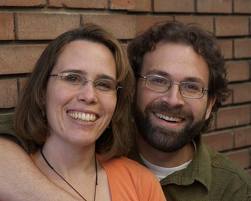
Part 1: Peter and Mary Danzig discuss their early years as faithful LDS church members, their mission experiences, their marriage, their joining as founding members of the Orchestra at Temple Square, and the origins of their interest in the topic of homosexuality. The music from this episode was played live during the interview. For more about the Danzig’s music, check out their web site here.
Part 2: Peter Danzig discusses how his experience as a social worker to (primarily) LDS Church members led to an increase in sympathy for LDS homosexuals, a loss of his traditional LDS testimony, and his decision to write a letter to the editor of the Salt Lake Tribune to protest the action taken against former BYU Professor Jeffrey Nielson, and the LDS Church’s urging of members to support a constitutional amendment banning gay marriage
Part 3: Peter and Mary Danzig discuss Peter’s removal from the Orchestra at Temple Square because of his letter to the editor opposing professor Jeffrey Nielson’s termination from BYU (over Dr. Nielson’s public support of gay marriage). They also discuss his local church leadership’s request for silence, the threats of church discipline, his and Mary’s ultimate decision to resign from the LDS Church, and Craig Jessop’s resignation as Director of the Mormon Tabernacle Choir.
Part 4: Peter and Mary Danzig discuss life after resigning from the LDS Church, including how they are raising their children as former members, reworking their relationships with extended family, and their new life/spiritual perspectives. They also discuss their recent work the Foundation for Reconciliation, which seeks reconciliation between the Church of Jesus Christ of Latter-day Saints and Gays and Lesbians
The music from these episode was played live during the interview. For more about the Danzig’s music, check out their web site here.
__________________________
Part 1
Episode Transcript
Host: John Dehlin · Guests: Mary Danzig, Peter Danzig
This transcript is machine-generated and lightly edited for readability. The audio is authoritative. Please excuse occasional errors in names and spelling.
Introducing Mary and Her Early Years in the Church
Part 1 of 4 · Ep. 119
John Dehlin [00:00:00] This is mormon stories. I'm John Dehlin. Let me begin, maybe, Mary, by having you tell us a bit about your early years in the church, your heritage, your, you know, whatever is formative in your LDS upbringing that you think would help inform this narrative that we're going to tell tonight.
Mary Danzig [00:01:07] Okay. Well, I am. I don't know how many generation Mormon on both sides of my family, everybody. They're pioneers on every side of my family. And I was raised in Salt Lake City in the stake that actually its boundaries encompass Temple Square. And so the church is like in my soul. It's in my body. It was in. I was. I mean, it was all around me. Growing up. I was the oldest of six kids, and I was the only girl. I was the oldest. I said that. And ever since I can remember, I wanted to go on a mission. Both of my parents are missionaries. I. The church was the center of my life for as long as I can remember. When I got to seminary, that was. I loved seminary. I was on seminary council, and my life just centered around seminary and the church. Maybe to kind of sum up where I was, I mean, on New Year's Eve, it fell on a Sunday, and my friends and I, we had a testimony meeting on New Year's Eve. I mean, that's how much the church was the center of my being. And for me, the central teaching was the two great commandments, to love God and to love your neighbor. And for me, the whole purpose of my life was to try to see everybody as a child of God. And for me, that was what resonated about the church. Being the only girl in my family, I think the side of the church that was difficult for me growing up was that there was all the emphasis on Boy Scouts and the young men. And if there was something that I. That I had trouble with in the church, it was that. That I felt like there was so much attention paid to my brothers and not very many programs for me. I went to byu, went on a mission, married Peter in the temple, served in Relief Society presidency, primary presidency, served in the Young Women's, kind of did it all.
John Dehlin [00:03:17] Where'd you serve your mission?
Mary Danzig [00:03:19] New York, New York South Mission. It took in Brooklyn, Queens, Long Island, Staten Island. I was right in the inner city, mostly in the hood.
John Dehlin [00:03:30] And any fond memories of your mission experience?
Mary Danzig [00:03:35] I loved my mission. I still have lots of really great memories of my mission. I was an incredible experience. To go from growing up in Salt Lake to all of a sudden living in the inner city of New York and this incredible Cultural diversity, meeting people from every continent, people and just people who had grown up in extreme poverty. All kinds of things I'd never seen. It opened my eyes to a whole big world that I didn't know existed.
John Dehlin [00:04:06] New York City.
Mary Danzig [00:04:07] Yeah, it was a great place.
John Dehlin [00:04:09] How was byu?
Mary Danzig [00:04:11] Byu. Well, I always wanted to go to byu. That was always my goal. And if anyone asked me when I was at byu, I always said, oh, it's so great. I love it there. And there were things that I loved. But if, as I look back, if I look at my journal and my memories, I got really, really depressed at byu, and I really kind of shut down in a lot of ways because I was always so worried that I wouldn't do something right, that I wouldn't be righteous enough, I wouldn't do anything right. That I became very shy mostly and kind of lost my outgoing personality in a lot of ways. I mean, with my roommates, I was outgoing. But I remember, like, in. In the music program, I felt pretty shy and. And pretty nervous because I was always afraid I would do the wrong thing or that I wouldn't be righteous and came home from my mission and hated byu. I had a semester left, and I thought, these people are worried about parking. They're worried about shorts to their knees. And I'm thinking, I've just been to a city where I've seen drug abuse and where people get shot every night on the corners that I walk on. And I just thought, this isn't reality. That was when I first actually could acknowledge that BYU wasn't a very good fit for me, was actually coming home from my mission. I didn't like it.
John Dehlin [00:05:30] Well, as I recall, the music program at BYU is pretty demanding.
Mary Danzig [00:05:36] Yeah, it is a very good program.
John Dehlin [00:05:39] Did you play in the concert choir, the concert orchestras?
Mary Danzig [00:05:42] I did. I played in the philharmonic in my senior year. I had the opportunity to be one of the concert masters. And I also played in the chamber orchestra, which was the orchestra that would get to go on tours, different places, which was a really good experience.
John Dehlin [00:05:58] Must have been wonderful.
Mary Danzig [00:06:00] Yeah.
John Dehlin [00:06:01] And your parents have always been true believers, strong in the gospel?
Mary Danzig [00:06:05] Oh, absolutely. They both went on missions, married in the temple, both graduated from byu to this day. To this day, very active, although very supportive of me. So it's been a conflict for them.
John Dehlin [00:06:20] I assume you felt like you had a testimony of the church when you were growing up.
Mary Danzig [00:06:26] Oh, yeah.
John Dehlin [00:06:27] What was that rooted in?
Mary Danzig [00:06:29] It was really rooted in, like I said a little bit ago, the two great commandments, the stories of Jesus and The gospels really resonated with me about this man who loved us all so much. And to have compassion on people like the story of the woman at the well and the story of the Good Samaritan, all those kinds of things were really what was at the core for me in high school. That's when I think I really gained my testimony. I believed in it before, but when I went to seminary, I just really got excited about the church. And I remember that really my moment of spiritual awakening was just kind of feeling like I had this revelation that we were really children of God. And then we were all really important. And for me, that was what the church was about, what the gospel was about.
John Dehlin [00:07:22] Do you remember spiritual. Strong spiritual experiences and stuff that sort of you look back as pillars of that testimony or.
Mary Danzig [00:07:32] Oh, yeah, absolutely. I remember one time. Well, I remember one time on my mission, we were trying to. To figure out what we should do. It was close to Christmas. It wasn't a very good time to go tracting. It was freezing cold, so it wasn't a very good time to street contact. And we decided we'd go Christmas caroling. And I remember we decided to say a prayer that we know where we should go. And I had the opportunity to be the voice for that prayer. And as I was praying, it was almost like a vision. I could imagine that there was this person, and it was a woman, and she was in extreme pain emotionally, and we needed to find her. And then I told the other sisters about this, and then we went out and went to this apartment building, felt like that was where we should go, and knocked on a couple doors and then knocked on this lady's door, and she answered it. And we were singing a Christmas carol. And she just started to sob and said, come in. And we went in and she said, you don't know how much I needed you to come right now. She and her boyfriend had been getting into an argument. When we came back later, she told us that those arguments often ended in violence and that we had saved her a beating. And so, I mean, that was a powerful experience to me where I felt like God had let me know that we had something important to accomplish.
John Dehlin [00:08:59] So through your marriage and even beyond, would you say the church was everything or almost everything, along with family?
Mary Danzig [00:09:06] Well, yeah, absolutely. I mean, everything came down to the gospel in my mind. I mean, my family, I love my family, but the only way to have my family forever was through the gospel. So the church always took the front seat to anything. Not because I didn't love my Husband or love my children. But in my mind, the only way to really love them was to love the church and to love the gospel. Because if I let go of that, I'd lose them.
John Dehlin [00:09:34] That makes sense. So, Peter, let's turn to you for a bit and why don't you kind of give us the same type of perspective with your history.
Peter's Background and Family Church History
Peter Danzig [00:09:45] Well, I think I had a somewhat more conflicted past with the church maybe than Mary. Although equally devout, my mother came from pioneer ancestry. My dad was a convert to the church as a teenager from Judaism. And his parents had both died. And he joined the church right before his father died at 15, I think, where he grew up in Manhattan. And it's a really intriguing story, I think, especially for Mormons. I think it's very different if you hear it as a Jew or as a Mormon. But he and his sister, their mother had died a few years before. Their father was dying of cancer. And his sister, who had obsessive compulsive disorder, had in her mind that he was going to become a serial killer if she didn't get him religion. And so off they traipsed to the synagogue and it turned out to be the high holy days. So they needed tickets to get in that day and they didn't have tickets because they're parents had been semi agnostic and hadn't really gone to synagogue very much. So they got turned away and she was furious. And it just so happened that they lived next door to the Manhattan ward of the LDS Church. And so the next Sunday she marched him over there and they walked in and announced they were looking for God and of course got a very warm welcome. And right before my grandfather died, they decided they wanted to get back. And I think he felt like they had some Mormon friends and he felt like they would probably take good care of his kids if his family fell through. There was a lot of mental illness in the family and so I'm sure he was worried about them. And indeed, not too long after he died, they found homes for both of them to live in in Utah. My dad moved to Spring City to finish high school.
Mary Danzig [00:11:52] Springville.
Peter Danzig [00:11:53] Springville. Yep, Spring City's wrong spot. Moved to Springville, which he said was incredible culture shock
John Dehlin [00:12:03] from New York.
Peter Danzig [00:12:04] He used to get up in the middle of the night and ride to the truck stop so he could know people were still awake in the world. Anyway, he went to BYU and met my mom there. They married. My dad sang in the tabernacle choir off and on really long, long time. I think it was 15 years total. But, you know, it was kind of when he wasn't too busy with other things. And so when I was young, he was head of maintenance at the church's, the records vault in Little Cottonwood Canyon. And my mom later on was manager of Mormon Handicraft. So Mary and I actually grew up. She didn't mention this, but we grew up in the same ward, and so same ward she talked about right in the center of things, really close to downtown. A lot of general authorities around in your ward. I'm trying to think.
Mary Danzig [00:13:09] Well, not usually.
Peter Danzig [00:13:10] They usually lived in, like, the Eagle Gate apartments or somewhere down. So they were in the stake, but we got lots of visitors.
Mary Danzig [00:13:18] And the prophet was in our stake.
Peter Danzig [00:13:21] Yeah. And his daughter's family lived in our
John Dehlin [00:13:24] Word for a while.
Mary Danzig [00:13:24] President Beth.
John Dehlin [00:13:25] Yeah.
Peter Danzig [00:13:26] So grew up right in the thick of things. But I think I had a little bit of. I didn't really realize this until I got a lot older and started studying dual cultures. I realized I had grown up with two cultures. One was, I think, what anyone in Utah would probably recognize as Mormon culture. And then the second was through my father, Very devout lds, but a very Jewish thinker, questioning things. And he always wanted to delve into all these intriguing mysteries and ask questions and play the devil's advocate and argue. And one of his favorite sayings was, where there are two Jews, there are three opinions. So that's what I grew up with. And When I was 7, my dad went through a period of really terrible experience of abuse working for the church. Some documents turned up at. Gosh, I'm trying to remember what book. Sam Weller's. They had, I guess, an agreement to any sensitive materials, they would let the church know. And they immediately just kind of without cause, decided my father must have done it because he was the one smart enough to get in. Not a lot of people had a combination, and he had access to all the areas. And it was proved pretty quickly that it couldn't have been him because it didn't even come from the vault. They could tell from the microfilm that they had recovered that it was like five generations down from the vault copy. But somebody obviously panicked.
John Dehlin [00:15:09] Do you know what the document, I
Peter Danzig [00:15:11] think it was John Taylor's journal or something like that. You know, I'd have to go look in my dad's journal to double check. I'm not even sure he knew. They came in one day, they cordoned off his office. They said, go home. Don't tell anybody why you're going home. Don't tell anybody what's going on, including your wife and your bishop. And then they wouldn't let him back in his office to collect any of his private belongings.
John Dehlin [00:15:40] Was he fired?
Peter Danzig [00:15:41] No. Don't say anything to anyone or you'll be immediately terminated and excommunicated. And unfortunately, they weren't. Maybe it's hard to keep quiet when you send someone home like that. But everybody knew something was going on. Rumors were all around that my dad was maybe an apostate and going to be excommunicated. And my mom, of course, was frantic because here he home from work and can't even explain why he's home. And eventually he did go. He did tell her, and he eventually went to the bishop for help, but they actually investigated him for seven months, I think, before they let him go back to work and had replaced him already at work.
John Dehlin [00:16:23] So he got paid to not work for seven months.
Peter Danzig [00:16:27] That is true. That's the only bright side.
John Dehlin [00:16:32] He was suffering. He wasn't partying.
Peter Danzig [00:16:34] Oh, I think it was a really devastating experience to my family. And he got interviewed frequently. I read his journal, and at one point he had written down that he kept a lot of private papers at work in his files and whatnot. And he had written a paper on the second anointing. And they wanted to know who this BYU professor was he had talked to that didn't want his name quoted. And they sat him down and told him his eternal salvation hinged on him answering these questions truthfully and then kind of wrung the name out of him. He was told repeatedly that the quorum of the 12 had authorized this and that he was to comply fully. So it was really horrible experience for him because he hadn't done anything. So he couldn't. He couldn't figure out how to get out of trouble. Finally, his bishop began advocating for him a little bit. And I got a hearing in front of Elder Tanner, I think, who.
Peter's Father and Doubts About the Church
John Dehlin [00:17:39] And Eldon Tanner?
Peter Danzig [00:17:40] Yes. And who's the 70s? Roydon Derrick, I think. Elder Roydon Derrick, who was head of the genealogical department at the time, and Elder Derek said, we're sorry. Obviously, we've been really horrible to you. What do you want us to do? Do you want us to apologize or. My dad, the whole time, had been very loyal. And he said, I would never want you to tell anybody what you did because it's embarrassing for the church. I wouldn't want anyone to know how you treated me. And so he said, do you want your job back? And Dad's a nice guy. He Said, you've had somebody else working my job for seven months. How am I supposed. Am I supposed to tell him, fire him? So he said, find me a job with equal pay. Discontinued that job eight months later. And when he tried to transfer, security wouldn't clear him. Even though he had had the combination to the vault previously, it wouldn't clear him for any jobs. And so he ended up not working for the church anymore, which is devastating to him because his life's dream was to work for God.
John Dehlin [00:18:51] How many years did he work for the church then?
Peter Danzig [00:18:53] You know, I think he worked there. I'm not sure. Seven years, something like that. So this all happened when I was 7, moving into 8. I remember that there was a lot of tension at home. Mom was really depressed, and the whole family was a little terrorized. Dad was telling us, well, I don't know if he told us then or later, but that his phone had been tapped and conversations he'd had with people had been recorded because they brought this stuff up in interviews with him, that that was where it had to have come from. So he was really paranoid about what had happened and about being watched. And so it was a really tough time. And then it was time for me to get baptized. And I do remember kind of having this tension around that about not really feeling ready to get baptized, not really feeling safe. Dad always used to joke with me that I was, at the time that I was 8, going on 40. He thought I was thinking way too much. But I do remember the baptismal interview. And I remember him asking me a question like, do you believe in the atonement of Christ? And can you tell me about that? And I remember thinking, well, I know the answer is yes, but that's a complex subject, and I have no idea where to even begin. You know, I was a kid and I thought, I sort of get it, but it's really complex. And I don't think I really understand that. I thought that in my head, but I knew you were supposed to say yes, so I said yes. So there was all this conflict as well. But dad managed to resolve it. Mom really never talked about it. And dad felt like whatever horrible things happened, that God was still in charge and there was some grand design and that he was suffering for a cause.
John Dehlin [00:21:04] So he maintained his faith in the church?
Peter Danzig [00:21:06] Absolutely. And he was under no illusions that what had happened was in any way kind or correct. But he did feel like somehow God had allowed it to happen for a greater purpose, that his suffering was for some divine purpose. And so that's kind of how he dealt with it. And he always held that hope of going back to work for the church, which, despite applying for lots of jobs, never happened.
John Dehlin [00:21:36] Is he still alive?
Peter Danzig [00:21:37] Huh? Still alive and still faithful. Still faithful in church. So all that was going on, but after.
John Dehlin [00:21:48] Did I register with you, like, in your junior high, high school years, were you thinking, the church did my dad
Peter Danzig [00:21:52] wrong, or, you know, how dad spun it to us? Was a church that security was evil? Church security was. There were evil people that worked for the church that thought they were protecting God and went around hurting people. That's how he spun it to us.
John Dehlin [00:22:05] So did that deflect it for you to the security?
Peter Danzig [00:22:08] Well, so when we played for the orchestra, Mary's always like, why do you hate these security guys so much? Because they're bad people. No offense, Matt, to anyone, anyone out there, but I really felt like, you know, these are people who did my family bad. And no, I mean, it repeatedly came up because his next job after working for the church, he worked for Honeywell. And he got called down to work on the system down at the church office building in the same room that the First Presidency's Walt was. And the first day he was on the job, he went back second day, and they said, what did you do to tick those people off? He said, what do you mean? He said, we got a call from them, and they said, if you ever send that person down here again, we will cancel our contract with you. So it was pretty. I mean, every time he tried to solve the problem, it seemed like it just got worse. When I was a teenager, he had talked to a friend who knew several general authorities and was a lawyer. And this friend said, let's resolve this. These are nice people. We can. So he helped him. Dad wrote out his experience. His friend helped him kind of parse it down to a two or three page letter and then hand delivered it to
Mary Danzig [00:23:22] Elder Faust.
Peter Danzig [00:23:23] Elder Faust, I think. And both of them were stunned when they got a letter back that said, if you want to sue the church, go ahead, but we will take you down. Pretty much. I'm paraphrasing. They were both stunned at this response because he didn't want to sue the church. What he wanted to say was, something really bad happened to me, and I'd really like to resolve it so that every time I apply for a job, I don't get turned away or the job criteria gets changed so that I don't qualify anymore or
John Dehlin [00:23:51] just have a status change. What was your church experience? What did the Church mean to you growing up, especially as a teen?
Peter Danzig [00:24:02] Well, I grew up with. I had a really bad anxiety disorder, which left me probably a little on the obsessive compulsive side. So I had kind of a perpetual sense that I was not living up to what I should be. And the church was really central in my family. Dad was what we talked about all the time. And because dad was so Jewish, we'd have these wild. I mean, that's what Sundays were for, were for wild gospel conversations. And what do you think about this? And, oh, let's think about this doctrine here. And how does this intersect with that? So I do remember being really bored at church because of that, because I would go to class and I'd be just bored stiff. We heard this story last year and the year before and I already know it and I want to let's hear a new story or let's go deeper. So I do remember that I was just a pretty normal Mormon kid, you know, nervous one, tried to be devout, always worried about that I didn't have a strong enough testimony and it was because I wasn't a good enough person.
Spiritual Experiences, Missions, and Pre-Marriage Faith
John Dehlin [00:25:27] Did you ever have positive spiritual experiences in the church or uplifting, I would say. So.
Peter Danzig [00:25:35] What I remember best in terms of positive was when I went on my mission and I thought, you know, it all makes sense to me. I understood the church thoroughly. Ironically, we got an anti Mormon book that talked about the difference between believing something and the difference between knowing it. And I read that and I thought, you know, I believe in the church, but I don't really know it's true. And that really struck me. And I felt like I had to have this spiritual conversion instead of just an intellectual understanding of how everything worked and believing it. So when I went on my mission, I was determined that before I got out of the mtc, I was going to have that experience or I was not going to go to Germany because there was no way. I just felt like I have to have that or I can't go out there and be honest about preaching this to people if I don't have that fire in my own heart that says this is it. So I was fervently reading the Book of Mormon in the mtc. So I had this idea, I'll read it all the way through. I'll do Moroni's Promise, but I'll have done it all together. And so on my mission, I had just wonderful spiritual experiences all the time, Really in some ways kind of similar to Mary. But I came out of The MTC with conviction and, you know, had, I guess, your typical kind of. I had a real feeling that because this was the truth, there would be a way to share it with everybody. And that my responsibility as a missionary was to be in tune enough with the spirit that I would understand the way to present it to them, that they could accept it. And so I was always very much, even at that point, kind of a Universalist, Unitarian sort of mindset that everybody is a child of God, so everybody must be great. And the problem we have is that we haven't learned how to be compassionate enough and kind enough to each other so that people can accept it. So I had lots of marvelous experiences just really connecting with people in a way that I hadn't before, finding people that just kind of what Mary was talking about, that I would know somebody was out there that needed us and we'd run into them. And I had a really marvelous experience one day I was really discouraged. I was with a companion that didn't want to work very much and I didn't want to work either. It was six o' clock and I thought we're going to go home and we're not going to come back out because neither of us wants to work. And so I was on the bus praying for something to happen so that I'd want to work. And I looked up and as I looked at each person, I would have a vision. I could see where they're at in life. And then it was like I could see sort of as an aura around them what their potential might be if they could reach their full potential. And I got really excited because I thought I'm here to help these people reach their full potential. And forced my companion to go do tracking until 9:30 that night or something. He was not pleased with my spiritual experience. I came back from my mission probably uber devout and my goal in life was to be a seminary teacher because I felt like I had a calling to share the way I understood the gospel with people. And I felt like, I think I'm a pretty okay teacher, so it fit well. So I did a music major in composition, which I was under no illusions. I was never going to earn any money. So my career path was I was going to be a seminary teacher. So I took institute and I think I took more than you needed to grad. Twice as much as you needed to graduate, probably. So I don't know. I've rambled on a long time.
John Dehlin [00:29:49] No, it's good. So did either of you experience any type of intellectual or cultural crisis of faith before your marriage where you considered leaving the church or had these debilitating doubts about its truthfulness or anything like that.
Peter Danzig [00:30:06] The closest I ever came was as a teenager, probably, gosh, 17, 18, not too long before my mission. And I remember looking at. I was worried about not having a strong enough testimony. And I remember thinking several times if this weren't true, it just has all the hallmarks of a fraud, but it's true. So I've just got to study harder. That was kind of how I thought about it.
John Dehlin [00:30:32] So you made it through?
Mary Danzig [00:30:33] Yeah, well, I never, it never occurred to me like to even really question it. I mean, there were things I had trouble with like my mom's a very strong personality and she taught me to never just listen to a man. So I had some trouble with the patriarchy, but it didn't mean it wasn't true in my mind.
John Dehlin [00:30:56] Right, so you got married. What happened between then and your decision to write that letter?
Peter Danzig [00:31:08] Well, I didn't become a seminary teacher and it's not for lack of trying either. No, I really desperately wanted to be a seminary teacher. And I was terribly disappointed because that wasn't too long after we got married.
Mary Danzig [00:31:22] It wasn't.
Peter Danzig [00:31:23] I did my student teaching. It wasn't a very good experience because the teacher they put me with was just completely burned out. It was the very end of the school year and I was supposed to teach a class of students who all year had been allowed to come in and do their homework during seminary. So I had this horrible problem of trying to be an engaging enough teacher that kids who hadn't had to pay attention for a whole year would suddenly want to get their scriptures out and actually follow along. Coupled with the fact that like two thirds of how they evaluated you was how the students liked you, but they would come watch you teach. So it was just a really no win situation. They offered me a part time job the next year and then at the last minute pulled it and really didn't say why. They said we reshuffled and we don't have enough spots. In the back of my mind, I had tried to get a. I worked for the church for a while as a teenager on their temporary pool. Then again when I came back from my mission and at one point I'd been offered a job up at the ball, which I loved because I'd gone up there a lot when my dad worked there and I thought, well, that would be nice. It was going to last, I don't know, eight months to a year. I think they told me. And so I applied. They said it was all set up. I just had to clear the security check and come back Monday. And they'd tell me when to show up to work. And I came back Monday, and they said, oh, we don't need that position anymore. And this kind of thing had happened to my dad a lot, and I have the same name. And I realized that, oh, maybe there's something there. And I think in the back of my mind when the seminary thing happened like that, it probably had nothing to do with it, but there was a little part of me from growing up that I thought, this is never going to happen. And I really felt like I'd been led by God's will to this path, and I had put more into it, because for somebody with a serious anxiety disorder to decide, I want to teach teenagers, this was crazy. It had taken everything I had to work on it. I remember spending five hours a night preparing my lessons, and I had kind of. It was really devastating. And he was nice. He said, you know, you can come back next year and try again. And I thought about it for a long time, but in the back of my mind, there was always that nagging thing, like I might. It was the first time I'd ever realized that I might know I'm following God's will and put everything into it and this might stop me. And I didn't think I could bear to do that all over again, especially if there was any chance that I wasn't gonna get this job because of my name. That was. That was kind of in the back. I didn't really even think it out loud or talk about it much, but there was that fear. That's why I didn't become a sonwriting teacher. I'd forgotten where we were going after that.
Careers at Temple Square and the Mormon Tabernacle Orchestra
Mary Danzig [00:34:42] So how you ended up writing a letter? What led up to that?
Peter Danzig [00:34:46] Oh, well.
John Dehlin [00:34:47] So.
Peter Danzig [00:34:50] Well, we were just a happy little Mormon couple. Anyway, we were getting by. We were musicians. And when the orchestra at Temple Square
John Dehlin [00:35:02] started,
Peter Danzig [00:35:05] Mary was shooing because she was an incredible violin player, and she was excited. And maybe you should tell about why you were excited about that.
Mary Danzig [00:35:15] Oh, I was really excited because.
John Dehlin [00:35:17] Was there some announcement like, we're going to start this thing?
Mary Danzig [00:35:19] Well, I actually was Barlow Bradford, who was the first director of the orchestra at Temple Square. I was his graduate assistant up at the U. And so he actually told me one day about the. I think it was right before they made the announcement that they were going to form this orchestra and wanted, you know, hoped I was interested in being in it. So I was thrilled because I was just finishing graduate school and. And then the way I was raised, my job now was to become a mom.
Peter Danzig [00:35:51] And it did. I tried to. I told her, you are the one who can have a career and your teacher wants you to apply for the symphony. And she wouldn't do it, darn it.
Mary Danzig [00:36:00] Well, I mean, I love music, and my dream was always to be a professional musician. But I always felt like I could only do that if I could accomplish it, for my kids are born. And once my kids are born, then I couldn't do it anymore until they were raised. And then maybe I could do it again because I felt like I would be a bad mom and I would put my family's eternal salvation in jeopardy. So when Barlow told me that the orchestra was for me, I was thrilled because it meant I could play in something that was really high caliber and I wouldn't be a bad person for being away from my kids, because it just wasn't in my mind, it wasn't even an option to have a job.
John Dehlin [00:36:40] And so is that a paid job?
Mary Danzig [00:36:42] No volunteers? It's a church calling.
John Dehlin [00:36:44] It's a calling.
Mary Danzig [00:36:45] It's a calling. It's a missionary calling from the First Presidency.
Peter Danzig [00:36:50] So you're called as a musical missionary and actually set apart. And actually, there was a lot of debate initially about pei, because Barlow Bradford was. He talked to them consistently about, you want professional caliber people, and this isn't the same as singers. You're asking these people to come during their work hours at night when they have gigs or students, and you need to find some way to make it so they can afford to play in it, or we can't get this caliber of people. So initially they were going to hire us for any paid. Hire the orchestra members for any paid recordings that they did, anything that the church was paying musicians for, they were supposed to hire the orchestra. But there was, I think, from the top, kind of an agenda that it wasn't sacred unless it was free, unless it was all volunteer labor. So they discontinued that pretty couple years in, I think.
John Dehlin [00:37:47] So were you guys members from the start?
Mary Danzig [00:37:48] We were, yeah.
Peter Danzig [00:37:49] Mary talked me into auditioning, like, at the last minute, like the very. I hadn't decided to do it until the very cutoff date. And then I thought, why not? It'd be cool to play in it to get.
John Dehlin [00:38:01] Now, Mary, you played the violin, right?
Mary Danzig [00:38:02] Yeah.
John Dehlin [00:38:02] What did you play, Peter?
Peter Danzig [00:38:03] I played viola.
John Dehlin [00:38:04] Okay. Was it tough to get in? Were you good enough or were you all you made
Mary Danzig [00:38:15] was pretty competitive. I know a lot of people who tried out that didn't make it.
Peter Danzig [00:38:18] It actually was competitive. Right. I think it got less competitive later on. Well, yeah, but I was pretty good, to be honest. I was a composition major, but I had done. It took me six years. And part of that was that I had done a major composition and viola performance in the last. The last year. My composition teacher said, you know, you need to graduate. You better quit performing and write your pieces and get done.
John Dehlin [00:38:44] So you played a lot of viola,
Peter Danzig [00:38:46] so that I did.
John Dehlin [00:38:47] So just for fun, what are some of the cool things about working in that orchestra? Like, were there perks? Did you get to hang with the prophet every once in a while? Did you feel special? Were there little special things they do, like, tell us some of the fun or cool things about working in that job?
Mary Danzig [00:39:04] Well, one of the fun things was just the celebrities that you got to perform with. Like, one of the last performances that we did with them was with the Oak Ridge Boys. It was just a real kick to get to be on the stage with the Oak Ridge Boys or like all the Christmas specials like Angela Lansbury and Walter Cronkite and just all these famous
Peter Danzig [00:39:24] people that Megan follows sticks out in my mind for some reason.
Mary Danzig [00:39:28] Oh, yeah, that was the first year. Anna Green Gables. Mika follows.
Peter Danzig [00:39:33] I'm a big fan, I guess.
Mary Danzig [00:39:34] Yeah. Frederica von Stade. So it was really exciting to get to perform with these incredible, incredible performers. That was a huge perk right there. And then once in a while, you would. Every year, they would have a Christmas party with the choir and orchestra and their spouses and President Hinckley would always come to the Christmas party and speak. And that was always a really special moment. So. So sometimes there'd be a general authority at a broadcast or something who might say something.
Peter Danzig [00:40:03] Yeah, well, and on a more serious note, I mean, my sense of spirituality as a musician was always very, very tied to music. And so the opportunity, really, I think for me, in some ways, this was a really good thing because I hadn't been able to pursue the path I had wanted to with spirituality in becoming a teacher. But I still had this calling to share the gospel in a way that I was hopefully uniquely qualified for, which was through music. And it was exciting. And I was carrying on the family tradition because dad had been in the Tabernacle Choir. There's a little. It's kind of. People are always, ooh, you're in the orchestra.
Mary Danzig [00:40:50] People say, I saw you on tv. That was kind of fun.
Peter Danzig [00:40:53] There are fun things. And then. And for me, a lot of my profoundly spiritual moments during those years were when I was performing, because we got to. I mean, we got to play the best arrangements of the hymns, and it was wonderful. It was a lot of work, too, especially because we were married and we had kids, and so we both had to go to rehearsals and find we pretty much. We're just now in the last few years, learning how to date as a married couple, because our dates were to go sit across the orchestra from each other for years. That was our dating. So
John Dehlin [00:41:34] I'm not even a musician, and I love our hymns and the Mormon Tabernacle Choir so much. I just think of that being as, like, the pinnacle. You're getting to play music which you love for the most notable choir in the world, for the one true church and all of its members and the rest of the world to hear. I mean.
Mary Danzig [00:42:00] Yeah, you summed it up exactly.
Peter Danzig [00:42:02] You said it better than me.
John Dehlin [00:42:03] Is that how it felt to do it?
Mary Danzig [00:42:05] Yeah, it was.
John Dehlin [00:42:06] I mean, did the luster wear off and it got, you know, to be a drag?
Mary Danzig [00:42:10] Well, there were things that happened, like politics that I saw that took some of the luster away from it. Things that were just not specifically to me, but to other members of the orchestra and that were just really not, in my mind, in keeping with the gospel. And that took some of the fun out of it.
John Dehlin [00:42:35] I want to ask about that because I actually got an inquiry from. From a listener, a question to ask you guys, but let me just ask. Those politics type stuff, did they happen after, Peter, you wrote the letter, or before you wrote the letter, or.
Peter Danzig [00:42:51] In fact, we were really upset for a while about a number of things that happened. Boy, that's a long time ago. Yeah, there were some not nice things that happened, but on the other hand, you know, we went. We finally were disturbed enough that we went and talked to them about it and said, this disturbs us, and they helped resolve some of our concerns. Not all of them, obviously, because some of it was how certain people had been treated. And so we felt like, okay, we were listened to and our concerns were respected and they were pretty nice about it and took some steps to fix what we were worried about.
Mary Danzig [00:43:34] So, yeah, so we felt. We felt pretty it.
John Dehlin [00:43:37] So overall, you know, human, political kind of things, but overall a wonderful experience.
Peter Danzig [00:43:42] Yeah, there was a lot of politics, too, around what I mentioned before, that initially, when they had started was with the idea that we'll hire the musicians from the orchestra for Pad Gates, and there was clearly some resistance from above to that idea. And some kind of backhanded things happened there that were really unfortunate. And then they ended up doing away with it. And they were asking a lot of us during the Olympics. We were. Every other night, I think we had
Mary Danzig [00:44:15] a rehearsal every night except for Monday night. Yeah, we had something every day during the Olympics for like four weeks.
Peter Danzig [00:44:24] And at that point they had to be here, be out sort of policy, which they changed after that when I think they had a lot of.
Mary Danzig [00:44:33] It kind of came to a head and a lot of people were really burned out and they, they resolved that.
John Dehlin [00:44:38] So this could be grueling at times.
Peter Danzig [00:44:40] Yeah, well, I mean, yeah, it was a. It was a. We loved it. And we actually loved it enough to lose money doing it because our income at the time, we taught 30 students between us. And then when we could, we took, you know, paid freelance gigs. And then I had a part time job working for a school. And so to go at night cut into. We had to cancel students. We had to give up other things to go do this calling.
Mary Danzig [00:45:14] It was worth it though. We really liked it.
Peter Danzig [00:45:16] It was, it was totally worth it. We wouldn't have done it if it wasn't. Probably.
What Led Peter to Write the Tribune Letter
John Dehlin [00:45:20] So tell me about what would lead you to consider writing the letter that you wrote to the Salvation Tribune. Like give some. Whatever history you think led up to the point where you'd even consider it.
Peter Danzig [00:45:34] Well, I wasn't a seminary teacher, which meant that we were trying to make a living at music. And the longer we did that, the more I realized that when our kids are school age, this isn't going to work because we'll both have to work at night and they'll be in school and this just really isn't going to work out for our family in some ways was kind of what I thought. And so I decided to go back to school. I had almost majored in psychology for my undergrad degree before I really settled on music. And I decided I wanted to be a therapist. And a friend of ours in the orchestra, I was telling him about this and that I think maybe I'll try to get into the psychology program or I've read about this licensed personal counselor program at the University of Phoenix. He said, why don't you be a social worker? I said, what's that? He said, well, you could be a therapist. And they have a great program at the U. And so I ran up there, got their information and read it and said, hey, I've never heard of this before, but it sounds awesome. The Next day was the deadline for application. So I ran home and wrote my two essays that they wanted and submitted it and miraculously got in the program. And school was a really wonderful experience. It was actually going to school we started. That's where I talked about studying about dual cultures. And I started to realize that some of my sense of having never fit in had to do with the fact that my identity was largely formed by my father, who, despite the fact that we were Mormon, instilled an incredibly strong sense of Jewish identity in me. And we'd make some attempts to celebrate the holidays. And I kind of grew up thinking, I'm Jewish, and you can do that as a Mormon, you can be more Jewish than the Jews. So I kind of had that sense. But also I was realizing that maybe the reason everyone always said I was so argumentative was that people didn't explore ideas in the same way. You couldn't say, that doesn't make sense to me, and challenge people on their logic or on their interpretation of things. In Mormon culture, that wasn't really the way things happened, because I'm not. I don't think I'm a terribly argumentative person. But all these people, why do you keep disagreeing with us? And I would think we were just talking. And it was a nice conversation until he got mad at me. I could never really figure that out. So that was nice. The second thing that happened to me up there, I started exploring that, and then I realized, really, a few months in, I thought, I'm going to be a therapist, and someday I'm going to sit across from someone and they're going to say, I think I'm gay. And I thought, what would I do? I know what the gospel teaches about this. And so I'm not sure it would be okay for me not to help them follow the gospel teachings. But then I realized that's not really very fair to them. I don't think I can do as I thought. I can't have my own crisis. When someone comes in and says, I think I'm gay, I can't panic and run out of the room screaming. So I thought, I have to know everything I can about this issue so that I can decide how to work this. Because I really love the social work ethic of you allow the client to go on their own journey. This really spoke to me deeply. And this was an area where I wasn't. I was thinking, maybe I just have to tell them, I can't be your therapist unless you want to do this. But that didn't seem right either here. We've had this. We've built this rapport and now I'm gonna abandon you.
Growing Concerns About LDS Treatment of Gay Members
John Dehlin [00:49:31] Was there anything about your upbringing that made you sensitive to the plight of the homosexual of homosexuals?
Peter Danzig [00:49:36] Honestly, probably not.
John Dehlin [00:49:38] So you didn't know anyone? No brother or sister?
Peter Danzig [00:49:40] I had a friend that was. That I knew was gay that didn't talk about it very much.
John Dehlin [00:49:47] Right.
Peter Danzig [00:49:47] So just in the music program, that was it.
John Dehlin [00:49:50] Okay. Okay. So it really was the master's in social work.
Peter Danzig [00:49:54] This was really why I was thinking about it.
John Dehlin [00:49:55] It got you thinking about it. Wow. Okay.
Peter Danzig [00:49:58] So I started reading everything I could and I happened across a book that happened to be co edited by a mother of a kid I grew up with Mary Beth Raine's Peculiar People. So I started reading that and I read everything I could find. And the more I read, the more disturbed I got because I realized really quickly, people do not choose their sexual orientation. They come with it, most of them. There may be a few people who said something different, but by and large I was reading the same thing in all these stories. And they really, as I read them, they rang true to me. They made sense. And I had kind of just grown up thinking, you know, people are gay because they want to be and they're wicked. Just what I was taught, really. And when I realized this, I was really horrified because I thought we're treating. I treated these people badly my whole life. And here I was just a few minutes ago thinking, you know, what am I going to say to them a few weeks ago thinking, what am I going to say to them when they come into counseling? And I'm realizing that I was completely uninformed. I would say the one thing for my upbringing is that I knew really bad things could happen to people in our church. I knew that people could be treated, could be abused, and that there was no way around that there was no way for the victim really to get that solved. So I think that was probably the one thing that I saw were making a big mistake. I read about the aversion shock therapy at byu. I was really disturbed. I remember I came home talking about it a lot and probably bothered Mary because at some point I finally said, the brethren are wrong about this issue. And I don't know what to do about that. But. They can't not know this stuff is what I thought because it's out there. And surely they must have looked research just like I'm doing, because surely they care. And I also knew an incredible amount about church history. I Mean, when I talk to people who've left the church over church history concerns, I kind of have to laugh because, you know, I knew most of this stuff long before I ever really questioned anything.
John Dehlin [00:52:37] But it never troubled you?
Peter Danzig [00:52:39] Well, you know, I just didn't really let it bother me too much. I did take Doctrine and Covenants twice, because the first time through in Institute, I had run into a lot of things that really bothered me, and I thought, there's got to be. My dad had taught me that religion had to be rational, there had to be a way to think things through. And I had run into all these things that I just couldn't fit into my worldview. And so I'd found another teacher that someone had recommended to me who taught me all the same things but had helped open the doors to a real way of resolving them within the gospel framework. He was an incredible teacher.
John Dehlin [00:53:25] What was his name?
Peter Danzig [00:53:27] Norman Put you on the spot? No, I called him President Norman because it was Mary's brother's mission president. And I think he's the one that told me, oh, you should take a class from my mission president while you're up there. He was an incredible teacher, you know. So where the first teacher had taught me about Fanny Alger and how Joseph Smith had whispered to her about, you know, why don't we start polygamy here and told her about the angel telling him he had to start it. This kind of bothered me how it was presented the first time. And he was able to talk about how this was such a burden on Joseph that he was terrified of it. And obviously it was hard to implement. So I had the best explanations, I think, that were available at my disposal. And some things I just didn't think about very much because I had. I really. Even before, it was a big emphasis, I think, in the correlated teachings. I really felt like the atonement, the idea of atonement was central to everything, and so I always wanted to pull everything back to that. And I think that kept me really centered and away from some of the scary questions. And I would think I'd found ways around enough of them that I thought, there's a way around all of them, and if I don't know it yet, it'll come to me. I'll just keep working on it.
Researching and Wrestling with the Homosexuality Question
Part 2 of 4 · Ep. 120
John Dehlin [00:00:00] This is mormon stories. I'm John Dehlin. So around what year were you really starting to dig into the homosexual question?
Mary Danzig [00:00:57] It was 2003, 2004.
John Dehlin [00:01:01] So a couple years before writing the letter. So this is percolating. Mary, how are you feeling as he's starting to deal with these issues and talk to you about them?
Mary Danzig [00:01:13] It was disturbing to me. I mean, the more he talked about it and I started to learn more about homosexuality, I became disturbed about the way the church was handling it, too. But I couldn't straight out say, oh, the brethren, they're wrong. I kept thinking my first thought was, I just don't understand something. There's some piece of this puzzle that I don't have that the brethren had. And if I knew what they know, then it would all make sense. So that was my first suspicion, was that they just knew a lot more than me. And the other thought was, well, maybe they're just wrong, but kind of like the blacks in the priesthood, but they'll figure it out and it'll be okay. And it's not my job to question this. And so it disturbed me, and it disturbed me, too, because it seemed like from there then Peter started questioning all kinds of things about the church, which I didn't really appreciate at all.
Peter Danzig [00:02:10] I do remember being very upset with me.
John Dehlin [00:02:13] So you were worried about him?
Mary Danzig [00:02:14] I was very worried about him because he. I mean, he was losing his testimony a piece at a time. Kind of. It seemed like he would bring up something and I'd be like, oh, I don't even. You know, I don't even want to go there. And did this go on for years?
Peter Danzig [00:02:30] During a couple years, it was really my second year practice. This was all. This was a very interesting thing. I went into therapy with the hope that I could possibly work at LDS Family Services because
John Dehlin [00:02:47] Dancex are gluttonous for.
Peter Danzig [00:02:51] But if I couldn't do that, I still felt like I had my Utah office. Lots of LDS people come, and I had a real sense of calling that I understood. The gospel had not been very healing for me as a youth. I had grown up with these images of, for instance, the scripture, every knee shall bend and every tongue confess that Jesus is the Christ. And I had grown up with this image of angels wandering around with whips bow down. That was kind of how I grew up with it. And after my mission experience, I had really come away with the understanding for me that the atonement was so meaningful and so powerful to people that everyone would experience it and that everyone would be so overcome with their experience of God that this was so. It was much more affirming. But I felt like I had a really unique understanding for people who had been wounded by their religion and that I could be really helpful for them to heal using the gospel. It was what I was good at, I think, because I got a lot of teaching callings in church. And that's what I was good at in church, too, was taking this and making it a healing thing, even if people hadn't experienced it that way. So I felt a real calling to do that. And I pushed really hard to get my second year practicum at LDS Family Services. And it was that year that just. I had a major crisis of faith right in the middle of the year. And I was.
John Dehlin [00:04:25] So did you get in?
Peter Danzig [00:04:26] I did.
John Dehlin [00:04:26] So you did your second year practicum at LDS Social Services, which in some
Peter Danzig [00:04:30] ways was wonderful, and in other ways was just a nightmare because I did have to watch how they dealt with what they would term same gender attraction and deeply disturbed me. There were a lot of things that happened, and I. There are wonderful therapists there, and there were some people who worked there because they could not function outside of that setting. So it was really troubling to me. And I ended up too. Like, we had all these clients with pornography addictions, but nobody knew how to treat addiction. And yet we were treating all these people. It didn't make any sense to me that we could treat pornography addiction if we couldn't treat drug addiction. It didn't make any sense. And that was the year, too, that I just started questioning a lot of things. And I realized, kind of in a major paradigm shift, one night while I was out walking the dog, I realized that the church was not true in the way that I had always thought it was true. And that kind of was a really unique experience because it was, on the one hand, incredibly liberating. I felt this tremendous relief and exhilaration and freedom that I had never experienced before. And at the same time, I was like, oh, no, Mary's going to kill me. And so it was a very mixed blessing. And I was working at LDS Family Services, which was another tremendous panicking moment. So I took what I. Oh, go ahead.
John Dehlin [00:06:19] Give me an example of a treatment that LDS Family Services or Social Services would offer to a struggling gay member that you feel was harmful. I mean, did specific stories or approaches come to mind? Or is that just a feeling you had?
Peter Danzig [00:06:41] When I was there, being gay was not an option. You had to try and change it. That was the sense I got from everyone there, the experience that really frightened me was that they hosted a family and friends group for Evergreen where once a month this group would meet there and they would. LDS Family Services loaned them the room and loaned them a therapist. It was a peer led group, but there was a therapist there to answer therapy questions. And our therapist couldn't go once and said, why don't you sit in? It'd be a good experience for you. So, and went into this room with people who had been meeting with this group for years about their children that were gay. And they still thought their children weren't safe to be around their grandchildren because they might molest them. And I was horrified because I thought there's been a therapist here every week that could have corrected that misunderstanding. These people are harming their children because they're being fed incorrect information. And so I said, you know what? Your next door heterosexual neighbor is more likely to molest your kids than if your gay kids aren't dating kids. Gay men like gay men, not little boys and girls. You don't have to worry. And I got called in by my supervisor the next day who said, where did you get that information? And I said, well, it's in a lot of my textbooks. Do you want me to go get them? And she said, no, but check with us before you say something like that. I was really horrified. I just quit talking about it while I was there because there wasn't much room. There were a lot of ways in which it was a wonderful experience for me there, but there was one in which it wasn't. And I mentioned too how they dealt with pornography addiction. Right before I left, they came up with a video presentation to show us to kind of give us some training on how to deal with it. And the last episode, the therapist is sitting in the room with the person who has a pornography addiction who says, I want to guide you through this meditation. Imagine you're looking at porn on your computer, and you're right in the middle of this being aroused, and all of a sudden you realize that standing behind you is your wife, Bob. Your wife is there watching you, and your little daughters are watching you. Well, so addiction is driven by shame. And this poor guy is going to go home and feel so completely overwhelmed by shame that he thinks. I mean, research would show that statistically if he's addicted to pornography, he'll be more likely to use after an intervention like that. So there were a lot of things that bothered me about some of that. So that's kind of what the environment was. I did just. I didn't feel it was kind of a bad fit for me. I realized even though I felt like I was really helpful. And when you saw somebody for. The other thing that was difficult was I would see somebody for pornography addiction. And at the time I worked there, they've changed this since. Thank heavens the bishop was your client and you were providing contracted services to him with this person. So you had to staff with the bishop. Except there were cases where maybe that wasn't going to happen. So the bishop would want me to get this kid ready to go on a mission. And I would say, you know, the pornography isn't the problem. This kid has a major anxiety disorder. He's not able to connect with other people in an appropriate way. He's not able to date. And we need to solve that. You don't want him to go on a mission with that. Let's solve that. But sometimes it was hard to redirect to the issue that really seemed to be the problem. Let me back up because there was some really wonderful therapists there and wonderful things went on and they provided a lot of. Especially at a time when Valley Mental Health was cutting back. They provided a lot of therapy to a lot of people who desperately needed it. So I don't want it to sound like I'm picking on them. I've articulated the things that I thought were a really bad fit for me and maybe harmful to people sometimes and
John Dehlin [00:11:16] that we're informing your concerns about homosexuality.
Peter Danzig [00:11:21] But at the same time, there was a lot of good that happened and I didn't want to come across too one sided there.
John Dehlin [00:11:28] So you walk the dog. You have that experience. Mary, did he break it to you at some point?
Guest [00:11:35] He did.
Mary Danzig [00:11:35] A couple days later he sits me down, he put the kids to bed and he says, I don't believe in the church anymore. And I remember basically crumpling to the ground, just sobbing. I mean, kind of first shock, but then I'm like, no, he really means this. He doesn't believe in the church. And just sobbing and sobbing. I feel like my whole world had fallen apart. And I couldn't sleep that night. And the next day I get up and I could not function. I'm just crying. I'm thinking my mind is going over and over, what has he done to lose his testimony? Because in my mind and everything, I felt like I'd been taught you don't just lose your testimony. That's connected to some sort of sin. And I couldn't figure out what he was Doing. Because if he wasn't with us, he was at work or at school. And I didn't think he had any time to be doing any horrible things. Exactly.
Peter Danzig [00:12:39] He didn't work at a school and had five callings.
Mary Danzig [00:12:44] He did. He had five callings, one of which
Peter Danzig [00:12:47] was the orchestra at Temple Square.
John Dehlin [00:12:51] No time for sin.
Mary Danzig [00:12:52] Not really. And I'm thinking, okay, he pays his tithing. He keeps the word of wisdom. And so that's kind of my first thought. And then I'm worried, well, what is he going to do now that he doesn't believe? He's probably going to start drinking. He's probably. He might be unfaithful to me because he has no anchor anymore. I mean, my mind is just thinking these wild things that now my husband is all of a sudden going to do all kinds of things. I mean, who knows what he's going to do without the gospel. I mean, the way I thought I was taught, without the gospel, you never know what you might do.
John Dehlin [00:13:25] So how about Temple?
Mary Danzig [00:13:27] Marriage in eternity? Our marriage is going to be dissolved. What's going to happen with our kids? And is he going to drive my kids down with him? How am I going to raise them strong in the gospel with this man who doesn't believe in the church? And so actually, that day I actually called Peter and said, I think maybe we need to separate. Because in my mind, I'm thinking, first of all, I'm thinking there's maybe something really bad going on I don't know about. He might not be a safe person. And second of all, I'm convinced that maybe he's going to start drinking. He might become an alcoholic bum, and he's going to beat my kids. And so I'm thinking maybe he just need. We need to separate while he figures out what in the world he's doing, and we'll take it from there. And Peter's just like, no, Mary. And he comes home from work, you know, trying to calm me down, and I'm inconsolable. And then the next day, I'm still just a mess. But I made a really good choice, and that was that. I thought, who can I talk to? Because I thought, I can't tell anybody, because if I tell someone, they'll know. Peter's a horrible person. I don't really think he's a horrible person. But once that cat's out of the bag, you know, maybe my mom is going to hate him or my dad, or maybe my brothers aren't going to ever look at him. The Same way. And I'm not sure that that's right. But I did think, you know, my. I do have this sister in law, Elizabeth, that is just the nicest person that ever lived. And I thought if I can tell anybody, it would be Elizabeth because she would still think Peter's a good person even if she knows he's lost his testimony. And so I called her and I'm crying and. And she just said. She just was kind of quiet for a little while and then she said, she said, I don't really know what to say except that I know Peter and he's a really good guy. He's a really good guy. And you need to remember that right now. You need to remember that you married a really good guy. And my sister in law maybe saved my marriage because I was so hysterical and so afraid that my whole world had fallen apart that I couldn't even think about that simple fact that I had married a really good guy. And I think what if I called somebody else who had gotten hysterical with me? I could have destroyed a really wonderful relationship. So I will always have a huge debt of gratitude for my sister in law for saying that. And then I kind of had my own experience where I was praying and. And just felt a really strong impression that Peter needed to be able to make his own choices and that it was going to be okay. And I didn't feel like I knew that he was ever going to regain his testimony, but that somehow it was going to be okay. But it was still. It created a lot of friction in our marriage for the next couple years.
Mary's Depression and Private Faith Struggles
John Dehlin [00:16:25] So you went through a couple years of being in a different place?
Mary Danzig [00:16:28] Yeah, because Peter graduated in 2004 and it was just right before his graduation that he really decided he didn't believe in the church but was still willing to do everything, but he just couldn't literally believe in it anymore.
John Dehlin [00:16:46] Was that hard to go through the motions, Peter?
Peter Danzig [00:16:53] Only some of them, really. I mean, I was very lds. The things that bothered me were that I had really had my eyes open and was starting to see how a lot of people got hurt in the church. And so things that I knew were harming people really bothered me. Attitudes about mental illness, one that was really prevalent and still is. They've done a good job working on this one. But it's still difficult is the idea that depression comes from sin, which I had grown up. I was really depressed a lot of my life and anxious to kind of go together. And I had always felt unworthy because I just couldn't seem to feel right, and I must be doing something wrong. That was one of the really healing things that happened to me with this paradigm shift was that I realized I just get depression, and I didn't have to add a whole level of shame onto that. And I think, actually I got, in mental health terms, I got a lot better. And I became a much more effective husband, more able to help out, more sensitive person, more available to Mary and the kids.
Mary Danzig [00:18:02] He really did. And that was really inexplicable to me because I'm thinking, he's lost the gospel, and yet he's more stable and he's like, I was doing the dishes. And it was really. I could. Didn't make any sense because that was not what was supposed to happen.
Peter Danzig [00:18:18] I did feel a little trapped because I told you I had been exploring this dual culture thing, and my whole life I had felt really drawn to Judaism. And I had wrestled for the two years before this about how could I be Jewish and be Mormon, too, without betraying my faith. I had wrestled with this a lot. And so all of a sudden I realized, you know, I could be as Jewish as I want, except that I still couldn't see a way to make it work and still be. Still be acting out as if I could work it out in my mind. Now all of a sudden, I could see how the two could fit together in a really great way, but I couldn't see how it wouldn't look to family or friends like I was betraying the church to get so involved in another faith that I didn't believe in either. Let me be honest. I didn't believe it literally either.
John Dehlin [00:19:15] Right, Right. So, Merritt, I got an email from a listener that said they heard a Sunstone presentation that you guys did this past year, maybe where they talked about some of the lessons you learned or some of the things, the ways that you reacted to Peter that maybe now you regret.
Mary Reflects on Peter's Decision to Go Public
Mary Danzig [00:19:33] Yeah.
John Dehlin [00:19:34] Let's just say that someday there are going to be some wives or husbands who are believers as they're listening to the podcast, still true believers, but they have a spouse who's disaffected. What are some lessons you would give them regardless of where they end up with the church? What are some lessons or some. Some perspectives you give them on maybe some things not to do?
Mary Danzig [00:19:59] Well, first I would just.
John Dehlin [00:20:00] Things you regretted.
Mary Danzig [00:20:01] Things I regret. I regret making assumptions about Peter's character, making assumptions that his lack of faith had anything to do with any sort of deficit in his moral fiber. That was a very painful thing for Him. I put him through a lot trying to figure out what was wrong with him. I also regret that I felt. I felt so much like I had to make this work out somehow, that I really pushed him. I really pushed him to accept callings he felt uncomfortable with. I pushed him. I would try to say. I try to get him not to say things that he felt or concerned about in front of other people, because I felt like that could cause us problems. And I really regret that I did that to him, that I didn't recognize that he was his own person and that who he is is who he is and just give him the space to be himself and to be comfortable that that isn't me. That's him. And I just. I really regret most of all that, honestly, the church was more important to me than my husband was. And, I mean, I don't mean that the church isn't an important thing. Of course your relationship with God is very important. But how are you actually really being a Christian when being a Christian in your mind means hurting the person that you've committed your life to and your eternities to? So I regret that I didn't put my relationship. Value my relationship with my husband more. I valued the church so much that when he didn't fit with what I thought the church wanted him to be, he was disposable. And I really regret that.
John Dehlin [00:22:04] What did it take for you to change those feelings?
Mary Danzig [00:22:10] Well, that's where Peter's letter is. Probably the best thing that ever happened to our marriage.
John Dehlin [00:22:16] You know,
Peter Danzig [00:22:18] one of the songs we were thinking about playing for you tonight actually really fits this theme. Do you want it now or do you want it? Let's hit it.
John Dehlin [00:22:25] Let's hit it.
Peter Danzig [00:22:25] Okay.
Guest [00:22:30] Sam. Sa. Well I must be gone and leave you for a while Wherever I go I will return if I go 10,000 miles if I go. If I go if I go 10,000 miles.
Mary Danzig [00:24:00] Oh, 10,000 miles it is so far to leave me here alone While I'm in. And you, you'll not hear my voice
Guest [00:24:28] Know you. No you Know you not hear. So black my love can change its color if ever I prove false to thee the day will turn to night the day. Melts with the sun I'll never prove false to know what I love Till all these things be done. Do all these things be done.
John Dehlin [00:27:22] Well, thank you for that. That was beautiful.
Mary Danzig [00:27:25] Welcome.
Peter Danzig [00:27:26] Yeah. That's a song that's been with me for a long time. I first heard Joan Baez play it, although hers isn't filled with Quite as much pain and angst, I think. But I love it when we play it together, because I think it really speaks to me about this particular dilemma of loving each other across this huge dividend where one person believes in the LDS Church and doctrine literally, and the other doesn't, and you're in such different places, and yet we were still deeply in love with each other. And I think you asked Mary about what she wished she had done or what might work well. And what I would say is, take a step back and remember what you love about each other. Take a step back and renew. What is it? Why did we get together in the first place? I've met people that they got together because they dated for two weeks and they got married because they want an eternal marriage, and they don't fit together very well. And that's a huge dilemma. Mary and I were very lucky that we fit really well together. Soulmates, I think.
Guest [00:28:58] And
Peter Danzig [00:29:00] it was worth loving each other across that divide. And I think when you can take a step back and look at it and it's worth it, because it's very possible.
Mary Danzig [00:29:13] Well, we had come a long way.
Peter Danzig [00:29:15] We kind of settled into an equilibrium before too long.
Mary Danzig [00:29:19] I mean, it did cause so stress and strain, but it had a lot. I mean, it was worth it. You know, it was a relationship that had some friction because of that issue, but it wasn't. I wasn't thinking anymore, oh, you know, we should separate. I mean, and we did find that our marriage brought us a lot of joy and our children brought us a lot of joy, and I'm glad we didn't.
Peter Danzig [00:29:41] And we moved to central Utah.
Mary Danzig [00:29:43] That's right.
Peter Danzig [00:29:45] Well, I really decided to go the route of, I guess a lot of people call it a New Order Mormon. And I thought, you know, so I don't believe in anything literally. But I had studied Judaism for several years, and I was particularly drawn to Reconstructionism, which is you take from the tradition that you come from and you reconstruct it for yourself and make it into a beautiful, vibrant, spiritual life. And I felt like I can do this with Mormonism. On the flip side, from what Mary talked about, the hardest pieces for me was that I could do that on my own privately, but I wasn't really supposed to talk about it to anybody. So Mormonism still meant a lot to me. And the orchestra at Temple Square was a calling I loved because I didn't have to say anything. I didn't have to believe in. I didn't have to proclaim the literal truth of anything. I could play music that made me feel the divine and I could help somebody else feel that. And that was a perfect spot, I thought, to be. If I was stuck having this pesky, not believing in things, literally problem. We went on for quite a while like that. And I really. Since I couldn't really talk to any family about it, I got onto. Back then, it was the first farms board. I think it's the Fair board. Huh?
Mary Danzig [00:31:18] Fair.
Peter Danzig [00:31:18] Fair. Fair board, yeah. Now it's what Mormon apologetics and discussion. And I thought, this is great. I can have all these conversations as like a loyal Mormon who doesn't really exactly believe it and is worried about some of these issues, like homosexuality. I can hash this out here with these people and I'll learn how to talk about it in a way that doesn't set people off. I'll learn how to express myself. So I spent a lot of time there for a couple years.
Mary Danzig [00:31:51] You didn't learn how to not set people off?
Peter Danzig [00:31:53] Well, that particular board, there wasn't really any way. I think it was actually really disturbing because I would. I'm pretty good when I want to be at being really moderate and really respectful. And I was just stunned how many people would come back with kind of the same accusations. You're not faithful enough, or you have something wrong with you, or you can't be a Mormon and think that. And since this was my testing ground to see how this was going to work in real life, it wasn't terribly reassuring.
John Dehlin [00:32:31] So you were trying to test your Reconstructionist Mormonism with the Fair Board.
Peter Danzig [00:32:38] It was a place where you could have these discussions anonymously. Anonymously. And I wanted to see how it worked because they were all people who knew about all these issues. And I had pretty reasoned views. I didn't think Joseph Smith was a bad person or anything. I didn't even really have a perfect explanation. What I had realized was that you didn't have to know everything. You can't know everything. I had a whole book full of unsolved mysteries. Well, of course you could have a book that you didn't know how it came to be. That doesn't mean anything except that you have a book that you're not quite sure how it got there. So, yeah, I had wonderful conversations, really. And I think I learned to express myself really well because people were really touchy. And so I careful. And I was feeling pretty good about it. But then the political activism of the church started to ramp up. There was Proposition 3 in Utah, which bothered me to start with. But then the church.
John Dehlin [00:33:46] What was that?
Peter Danzig [00:33:48] Utah's constitution was amended to make sure there was no gay marriage or civil unions. It bothered me to start with. And then the church released a statement in support of it. And then the drafters of the proposition rewrote the proposition to match the church's statement, which bothered me even more. But I just pretty much bit my tongue. Except for we did have one funny instance where someone called the house and I answered it. Vote no on three LEVANT HEADQUARTERS and it was the first councilman the bishopric who wanted to ask if we could give a talk on Sunday on building spirituality through families. Needless to say, there was stunned silence. But that was the extent of my activism really was that. So I kind of bit my tongue and just hoped it would. I didn't know what to do. And then they read this letter over the pulpit asking us to write in support of the federal marriage amendment. And Utah had been one thing. I was never under the illusion the church. I felt like inside the church church rules are how we function. And you can leave the church if you want. And so it's okay for even though I totally disagree with how we're handling homosexuality. The church can do that. That's their right. But all of a sudden I saw that my church was trying to insist on their standards for our whole country. And that really bothered me because I felt like that was really out of bounds to try and tell everybody in our country how they had to live their lives. Particularly when we were terribly uninformed. I thought on the issue was this 2007 2006.
John Dehlin [00:35:41] 2006.
Peter Danzig [00:35:42] So I was just. It was not a good day for Mary because I came out of church just hopping mad. And she knew it was going to be when she heard them read that. And then Jeffrey Nielsen wrote his op ed piece his BYU and was pretty immediately dismissed from byu. Yes. Now which was illegal. I mean he was a sort of contract part time professor. The thing that bothered me deeply was that he allowed to be published a letter that of dismissal. And it indicated that the brethren had requested his dismissal. And it was very clear to me that this was a punitive action towards him for writing what he did in his op ed piece. And that really bothered me deeply too because I had watched my dad lose his job or something he didn't even do. And I thought I'd working for the church. My dad wasn't the only person that things like that happened to. A lot of people had really bad experiences. So I had seen a lot of this in my life and I thought I served a mission in Germany as a kid that thought he was Jewish. And I had wondered ever since then. And during that time, I thought, you know, if somebody was doing something like them, rounding people up, harming people, what would I do? Because I met most of the Germans I met did nothing. They sat quietly in their houses and watched it happen and tried to ignore it. And I always wondered what I would do because I knew that the reason they did that was because their family would be the next to go and that it wasn't very safe. And I thought to myself, well, this is a good. Maybe I need this if I'm going to be a musical missionary for this church, maybe I need to be able to say what I think. I wasn't really sure what would happen, although I glanced at the questions you had, someone had asked, what did you think would happen? I didn't really know, but I thought, I have to be able to say what I think or I can't. In good. I can't pretend I think something else on this issue, because people are getting hurt, and it's not right. So I wrote several letters and got in immediate trouble.
John Dehlin [00:38:19] Several letters to the editor.
Peter Danzig [00:38:21] And I'd never written a letter to the editor before in my life. And in one month got every letter to the editor I wrote in every paper I sent it to. How weird is that?
John Dehlin [00:38:32] So, Mary, did you know he was going to write some letters? Did he tell you, or.
Mary Danzig [00:38:35] Oh, yeah.
John Dehlin [00:38:36] Were you nervous?
Mary Danzig [00:38:39] I was really naive. I really wasn't very nervous. I was a little bit nervous. I thought specifically the letter he wrote to the Tribune I thought was gonna ruffle some feathers. But in my mind, I thought, well, they have to understand that some people have different perspectives on this. And my thought was they might call him in and ask him what he meant, and he might have a chance to explain why he was concerned. And my biggest concern was that they might not appreciate that he said he was a member of the orchestra at Temple Square. And I thought they might say, please don't say that you're a member of the orchestra at Temple Square when you write letters about political things. And I really thought that would be the end of it. I thought, they know us. We played for a long time. They know he's a good guy. I didn't.
Reading and Discussing Peter's Published Letter
John Dehlin [00:39:24] For our listeners who weren't part of those wonderful times, I'm going to read the text of your letter. Is that okay?
Peter Danzig [00:39:33] That'd be fine.
John Dehlin [00:39:36] All right. This is Peter Danzig to the Salt Lake Tribune. Published June 14, 2006, as a member of the LDA. Why don't you read it? Starts. Starts right there.
Peter Danzig [00:39:51] This bring back memories?
John Dehlin [00:39:55] Can you see it? Okay.
Peter Danzig [00:39:57] As a member of the LDS Church, returned missionary and member of the orchestra at Temple Square, I'm appalled at the intellectual tyranny that our leadership has exercised through the summary dismissal of Jeffrey Nielsen from his teaching position at Brigham Young University for speaking his mind in an op ed published June 4 in the Tribune. I was troubled that my church requested that I violate my own conscience to write in support of an amendment marriage that I feel is contrary to the Constitution and to the gospel of Christ. I am even more discouraged to see how they deal with an honest difference of opinion. I wish to express to Jeffrey Nielsen that I admire his courage, that I stand with him. I hope that rank and file members of the church, as well as members of the lay clergy who also find this troubling, will have the courage to step forward and let themselves be known. To do anything else would be to hide in the shadow of an injustice.
John Dehlin [00:40:55] Strong words.
Peter Danzig [00:40:57] Well, they sound stronger now, even in my wall.
John Dehlin [00:41:01] So when you wrote that, Mary, you just thought he'd maybe get hand slapped, right? You didn't envision ecclesiastical consequences or your positions at the orchestra being.
Mary Danzig [00:41:18] I really didn't. And I look at it now, and I've heard more. And I don't know how I could have thought that. Except that. Except that I think it was because I was raised by the parents. I was raised by. And my parents are both very staunch, active members of the church, but also very open to other ideas and opinions. And I never felt like they taught me that there should be anything punitive because somebody had a different belief. And so, you know, they were my example of how the gospel was to be the other side. I think that's why I thought that.
John Dehlin [00:41:51] Peter, did you think something might happen?
Peter Danzig [00:41:54] Oh, my. I had no idea what would happen. It ranged from possibly nothing, probably at least. Don't do that. Maybe they'd throw me out of the orchestra and leave me alone. Or maybe I'd be in really big trouble. I really had no idea all of those were in my mind. And honestly, for me, I felt like this was a moment to find out what kind of church I was in and whether or not I could survive in it. Because I thought I have to be able to say what I think. And I felt like this was the place to say it. It was a public political issue. I had no criticism. I tried very hard never to criticize the church for Something that was inside. I just felt like once it went out into the political world, I thought I had a responsibility, a dual responsibility, both to my church and to my country. And that I, part of. I had always for a long time, felt that part of supporting leaders of the church, and it's not a very Mormon idea, but is to add to their perspective when it seems like they aren't seeing everything.
John Dehlin [00:43:06] Yeah, that's not Mormon. Now, the language you used, I mean, it's hard if you were just saying, I don't support this amendment or this political action. I think that my views about gay marriage or this or that, that's one thing. But you did use some strong language. You called it intellectual tyranny that our leadership has exercised. That's pretty strongly.
Mary Danzig [00:43:41] Yeah.
Peter Danzig [00:43:41] People were very upset. I tried explaining several times that I was talking about a specific act in which one specific instance in which it looked to me like they had used punishment to enforce orthodoxy or to punish someone's non orthodoxy. And I said, if you can give me other words besides intellectual tyranny, I. I would love to say it in a softer way. And no one ever offered any suggestions. I struggled with that particular phrase for a long time. And what I've realized since is that everyone felt like I was accusing them of being intellectual tyrants when I was saying this particular act.
John Dehlin [00:44:21] And you're referring to the one of Jeffrey Nielsen, not their request that things be read over the pulpit and support the piece there.
Peter Danzig [00:44:29] As I was saying, you've tried to silence people through punishing them. And that, I think is the definition of intellectual tyranny is when you try and stop ideas by punishing the people who have them. But I wasn't trying to accuse anyone of being such a thing. I was trying to say this particular act troubles me. And I realize in retrospect they are strong words. And that's not what a lot of people who read it caught out of it. And if there was anything I could have changed about it, I think I would have tried to have them. I would have tried to write it in a way where it had said more specifically what I intended them to understand from it.
Living as a Silent Non-Believer Inside the Church
John Dehlin [00:45:12] So there are a lot of people who I think are in this non stage that you were in where they're silent partial believers or partial non believers or complete non believers, but for the sake of their marriage or because they still love the church, or for whatever reason, they're staying active in the church, not making waves, but feeling inside like they're not being true to themselves, like they're somehow complicit and conveying beliefs or supportive things that they don't believe or support. And they're trying to decide how to deal with it. And even though you're bursting onto the scene with sort of large scale, they're contemplating what to do just in their little realm. Do they talk to their spouse? Do they talk to their bishop? Do they talk to their extended family? And I imagine that at least some of the anxiety that you felt in coming out in this grand way is something that they're feeling anxious about right now. Do they come out to their spouse? Are they candid with their bishop or their friends or family about their semi belief or even disbelief? Because I imagine that there's a lot that could potentially be at risk. You know, is it worth it? Like, is the pain worth the risk? And how did you come to make that decision, to raise your voice? Well, I mentioned, given the potential risk,
Peter Danzig [00:47:01] I mentioned a couple times, growing up with an anxiety disorder and being that way, you hide a lot of things from a lot of people. I still struggle with it. I get insanely nervous when I have to perform, even just here with you in the room. But what I had learned is that anxiety is about all these shadows and the way to confront it is to deal with reality and just deal with whatever it is you're frightened of. And so for me, it was worth it because I didn't feel. There were a lot of reasons I didn't feel comfortable with myself. One of the questions on the temple recommend interview is, are you honest in your dealings with your fellow beings? Well, how do you answer that if you're hiding all this stuff? I understand it's a survival thing, but I felt like I was dying by bits and pieces by not being honest about who I was. I just pretty much that way with Mary. I remember before I told her, I had searched online and I had found this New Order Mormon website. And where else? The foyer, I think, at the time. And I was one of those new people who wrote in and said, oh, I don't know what to do. I'm not sure I believe the church. How should I talk to my wife? And everyone said, don't go slow, go really slow. Maybe you want to go back and work through it with her and maybe you should get these books and read them together so she can kind of ease into it. And I thought about it for a couple days and I thought, I'm just not that sneaky. I can't do it. I have to tell her where I'M at. Because I had this whole. I hid some of the journey, but I was pretty honest. I mean, there were things that I knew I couldn't tell her that I was worried about, but I had tried to talk to her about some of it. She didn't know how much I'd been wrestling with a lot of issues. Then I felt like I just. I can't. How can I have a relationship if I'm not honest? And it was really, really painful. But it was not as painful, I think, as hiding things. Because one of the things that happens when you have to hide all of that is you lose your ability for intimacy. You can't even be intimate with yourself if you're hiding all of that stuff. How do you have true intimacy with someone when they don't even know what's going on in your mind or your heart? And I really wanted that. And so although it was painful, I think it was probably better. And Mary would have been furious with me if she'd ever found out that I had already arrived at some conclusion. And then I went back to try and bring her with me. Oh, that would have been a nightmare. You know, that would have been. And I felt dishonest about it because I felt like that would be bad. Now I have an agenda for her. I have an agenda to have her think what I think, think. And I'm going to do it by deception and stealth instead of just being honest. This is where I am. And it's kind of been scary for me. And I bet it's scary for you. I probably wasn't totally that skillful, but.
John Dehlin [00:50:10] Did you ever talk to bishops or family members or members of the ward about your testimony prior to writing the letter?
Peter Danzig [00:50:17] I did try and talk to my bishop in Levin.
John Dehlin [00:50:21] Bishop what?
Peter Danzig [00:50:21] My bishop in Levan.
John Dehlin [00:50:23] Okay. Is that a town?
Mary Danzig [00:50:25] Yeah. We lived in a little town in central Utah.
Peter Danzig [00:50:27] When Peter wrote, Nabal spilled backwards. It's central Utah. Yeah. Mary talked about pushing me to accept callings I didn't want. They called us as ward missionaries. When I got down there, which was not ouch, I thought at that point I had reconstructed missionary work, and it was, go out and be Christlike, Be kind. Show people what your faith and your religion does for you. And if they're interested, they'll ask you about it and you can share with them the best of it. But, like, this aggressive. I want to tell you about the gospel and you should pray. That really bothered me. So that was a hard calling. And at some point, I had finally decided to Talk to the bishop. And I went in to talk to him, and as soon as he kind of. He was a really nice guy, and he kind of got a glimpse of where I was headed, and he said, I really don't need to know why this, as long as you're living the commandments. The sense I got, and I could have misread him, but I'm usually pretty good at reading people, was that he felt like, if Peter keeps telling me about this, I'll have to do something, and I don't want to do anything. So I prefer he not tell me and we'll just let him be.
John Dehlin [00:51:42] That's actually quite common if you're not looking for a fight and if you're not looking to convince anybody, a bishop is fine to let you go as long as you're not causing trouble. That's my experience.
Peter Danzig [00:51:54] But the other disturbing side of it for me was that I was really struggling with how do I fit in? Because I was in at this point. There were a lot of callings that I felt uncomfortable with, or there was quite a bit that I was struggling with, how to reconcile, especially where I had. There was this political agenda going on. And the other really painful thing for me at the time was that I was a counselor. I was working. It was actually. It turned out to be the job I had wanted. I was working primarily with a lot of LDS people or people from an LDS background. A lot of them had been very deeply wounded in some way by their religious upbringing. And I was doing exactly what I had hoped to do when I thought I wanted to work at LDS Family Services. And I was totally open. You know, some people don't want to ever go back to church. That's great. If they want to go back to church, they can have a healing experience there, too. So I had this job that I loved. But the disturbing side of it was that I really was forced to open my eyes and see, especially as I went through my own experience being disciplined, to see how much abuse happens every day. And the examples are sometimes hard to see. But all the time, I was meeting with girls who had been told they had to repent because they'd been raped. Or it's your fault you got raped because you were drunk that night, or marital rape. Well, it's your job to have sex with your husband instead of protecting a victim of a violent crime. Or women who had been counseled to stay with abusive husbands. Things that happened through priesthood authority as the voice of God to individuals who had no individual power and they came for help and then were abused by that person. Not on purpose. I'm sure the bishops meant well, but they were completely untrained and they did not know how to deal with these issues. They were way over their heads and they did more harm than good for a lot of these individuals I was working with. And I knew that was happening all over the place. And lessons on morality became very difficult for me when I worked in the town. And I knew that the teenagers who were sleeping around had been abuse victims as children and that their statistical likelihood of promiscuous behavior as a teenager was way higher than someone who hadn't. And I thought, people here are believing that these people are bad people because they were abused. And what I saw was a thoroughgoing pattern of complete inability to deal with abuse in any way. A lot of it got covered up. A lot of mistakes were made that were well intentioned. I don't want to say bishops were on purpose abusive, but it happened because they didn't know what they were doing.
Guest [00:55:06] And
Peter Danzig [00:55:09] there was no way to fix it because they would go. If someone tried to. Even if someone did get abused by a priesthood leader and they tried to fix it, it just went to the next higher person who said, well, this person's called of God. And there was no way around any of this. And then we went through our own experience where they really we were. What was disturbing to me is that we both had master's degrees. We were articulate, talented people, and we had a lot more personal empowerment probably than a lot of the people I was worried about. And there was no way for us around it. We grew up in a neighborhood with a lot of powerful people. We had connections and there was no way for us to resolve. There was no way for us around things that were happening that seemed really inappropriate.
John Dehlin [00:56:05] Even less so for the disenfranchised.
Mary Danzig [00:56:09] Yes.
Peter Danzig [00:56:09] And so what I would say is as bad as our experience was someone who had no chance, very disenfranchised people, they have no way around. And I couldn't see that anyone was doing very much to address that. And I couldn't speak out because I was told to be silent.
John Dehlin [00:59:52] Sa.
Fallout from the Letter and Ecclesiastical Pressure
Part 3 of 4 · Ep. 121
John Dehlin [00:00:00] This is mormon stories. I'm John Dehlin.
Mary Danzig [00:00:52] So.
John Dehlin [00:00:52] So, Mary, you talked about the letter being one of the best things that could have ever happened in your marriage. Tell us what happened when the letter got sent out and published. From your perspective, what was the aftermath? Okay, from your perspective.
Mary Danzig [00:01:08] So the aftermath was that a couple weeks. Well, maybe a week after the letter was published, got a phone call from the manager of the orchestra at Temple Square saying that he and the orchestra president wanted to meet with Peter.
John Dehlin [00:01:23] And the president is Mack Christensen. Okay. He's Mr. Mack, right?
Mary Danzig [00:01:27] Yes.
John Dehlin [00:01:27] Okay.
Mary Danzig [00:01:28] And so Peter went to meet with them. Since we lived 100 miles away, they met in a Sizzler in Provo. Kind of a funny place to meet. But anyway, they had a meeting and told them that they had been asked to look into this by the Office of the First Presidency.
John Dehlin [00:01:45] And President Hinckley was prophet at the time, right?
Mary Danzig [00:01:47] Yes.
John Dehlin [00:01:48] Okay.
Mary Danzig [00:01:49] And we don't know. We know they would always talk about Brother Watson, who was the secretary.
John Dehlin [00:01:53] Michael Watson.
Mary Danzig [00:01:54] Michael Watson. So he was the one who gave them instructions. And. And, you know, we don't know beyond that who was involved or not involved. And they told Peter at that point that his membership was in question and that he was not allowed to play in the orchestra until this matter was resolved. And anyway, to make a long story short, Peter comes home, tells me that I'm hysterical because, oh, my gosh, my husband might get excommunicated. And so I wrote some letters to them saying, oh, you know, what's going on? And we didn't hear anything back. Couldn't really get any answers about what Peter was supposed to do to resolve this. And then we finally requested that we have a meeting. And I thought I would come, too, because I thought, well, maybe Peter's just getting too worked up or, I don't know, maybe he came across wrong. To them, I want to come see what's going on for myself. And they decided they wanted the bishop and the stake president there as well. So we met with the bishop, stake president, the orchestra manager, who was not any sort of ecclesiastical leader. He's a paid employee of the orchestra, which makes it kind of interesting that he was at this meeting and then the orchestra president, Matt Christensen. And in that meeting, that was really kind of the beginning of the end of my testimony, because we went in that meeting, and they started out by saying, we want you to know we love you. And from there, it was just. It just. They didn't say anything nice after that. They didn't say, we want to resolve this. They didn't say, we want Peter to be able to play in the orchestra. They didn't say anything. It was, it was, he was on the road to apostasy and that he wasn't, he was trying to bring down the church. And you wouldn't write a letter to that and a letter like that unless your intentions are really bad. And I kept trying to say, Peter's a good person and he has a real concern about this. And it was like talking to a wall. And after about a half hour, I just started to sob because I thought, these men can't see that he's a decent person. We knew these people, we thought they were our friends. And it was like by speaking out, Peter had done something unspeakable. And all of a sudden they didn't see him in the same light. They didn't see him as the same person they'd seen before. Now he was a threat. And I mean, I sat there and cried for an hour and a half and none of them even said, are you okay? And by the time we left, I thought, I don't think they think I should play in the orchestra. And I hadn't even expressed any political view. And my brother who sings in the choir said, well, I'm going to ask him if that's really true because I didn't even want to call him. And they said, well, we don't know if she should play because she seems to agree with her husband too much. And I asked my bishop if I was allowed to play and he said, well, he thought I should be able to. And he called them. And anyway, they, they, they were not welcoming and they eventually said I could play, but in kind of a really derogatory way. But it was just one thing after another where Peter would try, try to meet with the bishop and the bishop would say, well, if you can't see things right, going to have to call a disciplinary court. And all of a sudden I'm finding out you could be excommunicated just because you think that homosexuality isn't chosen and just because you think that people can't reverse it. Like on those two things the bishop said that made him unworthy of a temple recommend that he could not renew his temple recommend with, with those two opinions and, and having my little girl who was six years old say, mommy, why is daddy so sad? And telling her, well, some people disagreed with him and he's, and sometimes even grown ups have a hard time getting along. And there's some people at church and we're just trying to work it out. And she said, well, I don't think we should go to church if they're gonna make Daddy feel that sad. And so I'm really worried. I don't want her to stop going to church. And she says, well, I'll write him a letter, because you know what? Everyone thinks different stuff if I just explain that it'll be okay. So I. And I'm thinking, I'm not sure it's a good idea for her to write a letter. But I. Well, okay, she wants to write a letter. You know, want her to feel empowered. So she'. Just at the beginning of first grade, she can barely write, and she writes this letter. She took, like, an hour writing this letter that nobody thinks the same, and that's okay. Love, Eliza. And drew this nice picture. So I wrote a letter to go with it and just said, this is the conversation we had. I didn't try to make anyone into the bad guy. But could. Could you just talk to her and just reassure her that you love her and that you love her dad and that we're just trying to work things out? And I don't hear anything back for three weeks, so. And Eliza's checking the mail every day. And finally she's like, they can't even write me a letter back. I'm not going to church. They make Daddy sad, and they don't write me back. And so my eternal family was completely crumbling. And I make an appointment, and I talked to the Stake president, and he says, well, we can talk about your daughter once your husband repents. And I said, well, she's just a little girl, and no matter what you think of her, dad, you have a responsibility to her as your priesthood leader. And he kind of. He kind of backed down, but he still didn't talk to her for over two months. And about Christmas time, he decided that. I think he never said he thought he'd made a mistake, but I think he felt like he had and did have a nice conversation with her. But by that time, the damage was done with my daughter. I mean, she. And then it was done with me because, I mean, I would go in and I'd say, my husband feels completely valueless. He feels Peter was incredibly depressed. He would tell me it would be better if he were dead because I could find a priesthood holder that could make me happy and that our family could be happy, but he couldn't think right. So I was ruining. He was ruining the family. And so I was really worried about Peter. And he's so depressed. And I'm really distraught because I'm afraid Peter's going to get excommunicated. And he can't have a temple recommend because of his beliefs. So we can't go to the temple anymore and can't play in the orchestra, which we enjoyed. So it just went on and on. And I wrote to my area authority, and I pour out my heart, and I got to form letter back, which was kind of the nail in the coffin at that point, because I thought, you know, if I had given as much money to a charitable organization as I've given to the church, they would have thought I was worth something just because of all that money. And if I wrote them a letter, they would have called me or written me a personal letter back. But my church is supposed to care about me, doesn't care at all. They'll send me a form letter when I'm saying that my whole life is falling apart. And just over and over, it became very clear to me that my family was completely dispensable to the church. That my children didn't matter, I didn't matter, my husband didn't matter. Once you had crossed a line, you had no value anymore. So I guess in that sense that it was the best thing that ever happened for our marriage. Because I realized I have placed all my allegiance with the church. But it was my husband who would stand by me when I was sobbing on the floor thinking that he was an evil person. He was still there for me and he still cared about me, and he would never abandon me, even when we had trouble. And at the first sign of trouble, my church would leave me entirely. And so. Yeah.
John Dehlin [00:09:46] How are your meetings, Peter? With ecclesiastical leaders or the Sizzler?
Mary Danzig [00:09:51] Any.
John Dehlin [00:09:53] You know, we don't have to go into any of that if you don't want to or if there's anything interesting,
Peter Danzig [00:09:58] you know, let me speak to one thing. They were difficult. Barry Anderson, I thought of, and I still think of. Although we don't get to talk anymore, as a personal friend. No, he was the orchestra manager.
John Dehlin [00:10:16] Okay, Sorry.
Peter Danzig [00:10:18] And at that first meeting, he actually did most of the talking, which I thought was strange because he was the employee and the priesthood leader didn't talk very much. But at the end of the meeting, he said, peter, I know you. I know you didn't mean to bring down the church, and I can see that you're genuinely, deeply concerned about this issue. So I will let them know that I don't know what they'll say. And he promised to try and Find out who I could speak with. Because I said. Because that was one of the things I said. Why did you write to a newspaper? And I said, because I tried to talk to my bishop and he didn't want to hear what I had to say. And I would gladly have this conversation inside the church. I would love to know who to talk to about what I'm concerned about and hear what we're doing about it. But I had no idea how to do it.
John Dehlin [00:11:12] That was a question that some people wrote in and said, why didn't you go to your stake president, your area authority, write letters to the quorum of the 12? Why did you make it a private family matter, family being church, such a public issue. And you're saying you tried with your bishop?
Mary Danzig [00:11:30] You wrote a letter to the Brethren?
Peter Danzig [00:11:31] I wrote a letter to the Brethren. It was about the same time, to be fair. So they maybe would have written back had I not sent one to the newspaper as well. But. Well, no, they never really wrote me back until I sent a little earlier, a couple weeks earlier. But that's not really enough time for a big but. I mean, working where I work, too. I was really clear. Sure, I could talk to my bishop. What's he going to do if, you know, he'll try and tell me. I already knew what would happen. He would try and tell me, resolve my concerns that were a problem. And I wanted to talk to the people who were informing the church on this and see what they were telling the church. I was worried about, are they getting good information and honest, I would have gone that route if there had been anyone to write to. But I kind of tried to research it a little to see who does the research on this in the church. And I never really could figure out. So he promised to find out who I could talk to. When I talked to him later on the phone, he said, or maybe it was. Did I meet with him twice? No, just really once. When I talked to him on the phone, I asked him about it. He said, there are people handling this and they're aware of your concerns and they don't need your input. That was what I was told.
Mary Danzig [00:12:56] Well, that was the other thing. When Peter wrote his letter, I felt. I kind of felt like maybe he shouldn't make it public, But I felt like I had to let him do what he felt compelled to do. But my experience all the way through made me eventually decide that he'd done the right thing to write to the paper. Because I talked to my bishop, I talked to my stake president, I wrote to my area authority twice. I mean, I went, I think, through all the channels you're supposed to, and it was like talking to a brick wall. And there wasn't anything I had to say that affected anything. And it wasn't because they were. I mean, at least my stake president and my bishop, you know, they're good men. I mean, people always say, oh, well, you had really bad leaders. They weren't horrible people. Especially my bishop is actually somebody that I still really love and respect and stake president, I never knew him as well, but they're not bad people. They just. They felt like that was their job. And part of their job is not taking my concerns up higher and saying, well, Mary Danzig thinks that this is wrong. I mean, that wasn't even in their mind that if. That I would. That I would know anything they didn't know. I mean, that was never.
Peter Danzig [00:14:12] And to answer that specific question, I was very careful in how I phrased what I was talking about. It was a public concern because it was an outside of the family issue. It was something that if we think of the church as my parents were doing outside in the community and that I felt completely powerless to do anything about except to, as a child, say, I don't agree with my parent here, and I need you to know that because I'm part of this family and I represent this family, and I can't in good conscience agree with that. And that's really what this was about. It wasn't. It wasn't really something you could resolve inside. And number two, it was a public issue. I never advocated at that point that the church change their internal stance on anything because I knew that wasn't my right as a member of the church to advocate something like that. But I felt like it was my right and responsibility to say, I think I'm concerned because this is out in the public thing, and I don't think it's right.
John Dehlin [00:15:19] There must have been a citizenship sort of voter constitutional imperative that you were feeling.
Peter Danzig [00:15:25] Well, we didn't read the other letter to the editor, but I really. I felt like the pursuit of happiness includes deciding who's in your family. That just seemed pretty elemental to me, and I felt like we were trying to infringe on that right for a lot of people who had very different beliefs. And I had done enough work with religion to know that there were a lot of religions who believed in the sanctity of the same gender marriage and that we were infringing on people's religious beliefs by trying to create A law. And that really didn't sit right with me because what I still really loved about the church were some of those principles. We were taught that people worship according to the dictates of their own conscience, and we allow everyone that freedom. Those were things that still rang deeply true. It was part of why I could stay in the church without a literal belief were these things that I loved, that I felt were being trampled by this action. So as much as it was a civic concern, it was a deeply religious concern as well.
John Dehlin [00:16:30] That makes sense. So was there ever any action taken, ecclesiastical action taken?
Peter Danzig [00:16:38] Well, I mean, if you look in the church handbook, there's official and unofficial discipline. And I'm assuming I was unofficially disciplined. I was threatened repeatedly that I would be brought to a disciplinary council where I could be excommunicated. That happened fairly frequently. At the same time, the church was evolving. Mary said they were going to. The bishop told me I'd probably have to go through a disciplinary council if I refused to recant my belief that homosexuality was innate and for most people, not open to change sexuality in general, their orientation. So. But not too long after that, Elder Oaks and Elder Wickman did that interview with the PR department and clarified that the church no longer held that stance quite as strongly.
John Dehlin [00:17:32] Do you feel like that was related to your letter?
Peter Danzig [00:17:34] You know, I don't think that was. I think there was a lot close
Mary Danzig [00:17:38] to when he wrote that letter.
Peter Danzig [00:17:39] There was a lot of pressure just in general on the church at the time. And the most recent statement from Elder Oaks that everyone was pointing to was from 1995. And there was a lot of research since then. And so they desperately needed to kind of, I think, have an updated statement. But I pointed that out, and family wrote letters to the bishop and stake president saying, how come something's wrong here? Because the church seems to have changed this position that you're insisting Peter believe.
John Dehlin [00:18:12] I think you could argue that your mistake from the church perspective wasn't your stance on homosexuality. It was publicly criticizing their decisions. Is that fair?
Mary Danzig [00:18:24] Maybe it started that way, but honestly, once they got going, I mean, it was an issue. It was deeper than that because they were really concerned about what he thought, what he believed.
Peter Danzig [00:18:35] It was very interesting, actually. Initially, everyone thought I was gay. First off, nobody ever said, are you gay? But how are things with your wife? Are you all right? Are there any problems in your relationship? Which I. You could just. You could kind of. Maybe I'm wrong, but it did seem like everybody was kind of plumbing. It's maybe Peter Gay. And that's why he's. And then it was, you're an apostate. You oppose, you disagree with the Brethren on this issue and you're willing to say it, and that makes you an apostate. And then after the Church's stance changed and then the Church, as part of their response, it happened, gosh, a year in, all of a sudden the bishop said, you know, they didn't ever ask you to write in support of that. They just said, write your feelings. Which I did, incidentally. And Senator Hatch wrote me back and said, I'm so glad you support my legislation and I will continue to fight for it.
John Dehlin [00:19:37] So I didn't read your letter.
Mary Danzig [00:19:38] No.
Peter Danzig [00:19:40] Which I thought you had the same training as some church leaders. So all of a sudden at the end, they said, you hurt the Brethren's feelings and you have to apologize.
John Dehlin [00:19:57] They being who? Who said that?
Peter Danzig [00:19:59] The stake president.
John Dehlin [00:20:00] So you're having conversations with their bishop and stake president.
Peter Danzig [00:20:04] If I really push to have one.
Mary Danzig [00:20:06] In the whole year and a half between both of us, there were eight meetings.
John Dehlin [00:20:10] Okay.
Mary Danzig [00:20:10] Some with him or a total of eight meetings. And we made the majority of them. It really felt like once they saw that Peter thought these weird things, they really wished he would disappear, that that's
Peter Danzig [00:20:20] leave him alone and see if he shuts up. That's probably. I could understand that.
John Dehlin [00:20:24] So you. So you don't think now that some excommunication was looming?
Peter Danzig [00:20:29] It's so hard to know, but I was threatened repeatedly.
John Dehlin [00:20:32] But they let you. A year and a half.
Mary Danzig [00:20:33] No.
Peter Danzig [00:20:34] A year and a half in. No. They going to just let me be. I would not be able to get a temple recommend if I didn't write this apology letter. And I wrote one and the stake president said no, because I said, I'm really sorry. I probably used harsher language than I should have. Here's what I was trying to say in as nice a way as I can, and here's some of the background with why I would be upset about someone being fired. And I may have. You know, I tried to explain what was going on and it became very clear that I was to say I was wrong. I was a very bad boy. I'm so sorry. Please forgive me.
John Dehlin [00:21:13] So you did write an apology, but it wasn't.
Peter Danzig [00:21:15] I wrote three total and the first two were completely rejected. He said they would not do. And I finally wrote one that really biting my tongue. I said, okay.
John Dehlin [00:21:27] And why were you writing apologies?
Peter Danzig [00:21:29] To get out of trouble.
John Dehlin [00:21:30] So that you could. What?
Peter Danzig [00:21:31] So that I could Get a temple. Argument against.
John Dehlin [00:21:33] Why did you want that?
Peter Danzig [00:21:35] Well, because.
Mary Danzig [00:21:35] So I would stop sobbing so that.
John Dehlin [00:21:39] So you could go together. You were still going to the temple?
Mary Danzig [00:21:42] Yeah.
John Dehlin [00:21:42] Putting his name in the box.
Mary Danzig [00:21:43] I was in the primary presidency most of the time this was going on. And one. I mean, our families, very lds, all returned missionaries on both sides of our families. I mean, Peter can have a temple recommend. I mean, then he's not allowed to participate. Weddings, family, baby blessings and some wards, all kinds of things.
Informal Discipline, Exclusion, and the Stake President
John Dehlin [00:22:04] And it's just always Peter's on the aisle. Can't be in the circle.
Peter Danzig [00:22:08] Your children get a very subtle message.
Mary Danzig [00:22:11] Well, Peter and our oldest daughter is coming up on age 8. And I'm thinking, I can't tell her that her daddy's unworthy to baptize her. I mean, that was a huge realization to me when I realized that calling anyone unworthy is a really awful, awful thing to do. And it's a really terrible way to separate anybody, to determine that one person's behavior is unworthy and another person, well, they. They have different problems, so they can still be worthy. And just the fact that his mind made him unworthy, that his thoughts made him unworthy. So, I mean, it was a big issue. How could. He had to be active in the. I mean, he had to be fully worthy or.
John Dehlin [00:22:51] Well.
Peter Danzig [00:22:51] And ultimately, I mean, we did really love playing in the orchestra, and I was hoping to return to that at some point.
John Dehlin [00:22:57] You thought that there might be a chance they'd take you back?
Mary Danzig [00:23:00] Well, for a few months. I mean, well, before. A year and a half, we'd given up on that, but that's probably true.
Peter Danzig [00:23:07] But I did want to believe.
Mary Danzig [00:23:08] Yeah, well.
Peter Danzig [00:23:09] And it was just making a mess in our personal lives. And so I wrote the letter that the stake president finally said was okay. And I thought, all right, we're finished. And then he said, now I want you to make copies for all of the first presidency in the Quorum of the twelve. One for the bishop and one for me and one for the orchestra president, Matt Christensen, and one for Barry Anderson, and send them to everybody. And he did mention that by no means are you to ever send this to a newspaper.
Mary Danzig [00:23:48] So.
Peter Danzig [00:23:49] Which was kind of. It was a funny aside, but. And I went home, and then he read me. I can't remember what the scripture was, but he told me to go home and read a couple of scriptures. And it was about people who raged against authority and how they were like wild beasts and something about the mob. Another one was about the mobbers who Killed Joseph Smith. And I should read that and be glad. I don't remember exactly what it was, but it was just incredibly insulting. Like I had been this beast that had now been tamed. And we were going to. Now that you are bending down to us and you'll send all these letters off to everybody we tell you to. It had been. I mean, part of it for me was I thought about it a lot. I thought I could just write the letter they want and get out of trouble. But it really. I wanted to be honest because I said. I said what I thought. And I don't want to lie in some letter about this because I thought I did. Honestly, I thought I could have been nicer and I could have been more careful with what I said. Probably true. I was extremely upset that month. And I recognized some of my own experiences with my father had. There was a lot of my own stuff that went into that that made me upset. But I didn't disagree with what I said. I didn't even disagree with how I said it. I just understood that it had been painful for them, more painful than I had intended. But that wasn't an acceptable apology. And so finally I thought, I just. This isn't going to work. Just send this to everybody and to pretend that I agree with it. And so I went back to him and said, people are. I had written down what happened because we had wanted to send it to a general authority. We did actually. Well, maybe we didn't actually send it to nobody, but I had sent it to Matt Christensen and Barry Anderson. Just saying, this is how I saw what happened. And correct me if I misunderstood anything or if it happened differently. And then I took it to the bishop and stake president, too, and I said, people are asking me why they don't see us in broadcast. They're asking us why we aren't in the orchestra. I'm never going to have a temple recommend. And I have to. I cannot spend four hours on the phone with everybody I know explaining this.
Mary Danzig [00:26:25] Well, we don't want to go every wedding reception or something and you haven't seen everyone. And they say, hey, we haven't seen the orchestra lately. And that sends me into tears. And that totally ruins this lovely moment. You know, there's Peter's crazy wife. And so we just wanted everyone to know and if they wanted to talk to us, then we can. But it's not going to be at some horrible moment where it's completely inappropriate.
Peter Danzig [00:26:45] So I said, this is for me to share with people. And I said, it's long troubled me that the church can't articulate their point of view because you only get a one sided thing. And I understand that you aren't allowed to talk about this because you have a confidentiality agreement. And I have the same dilemma as a therapist. People can say whatever they want about me and I don't get to respond. I said, so I can't really fix that. But what I promised to do is, whatever you tell me is incorrect here, I will either correct it or I will write at the end what you said and I will show it to you and you'll see what I'm sending out. And the bishop said, peter, I don't think you should send this out to anybody. I said, well, do you have corrections? Because I think that's what I need to do. And he said the only correction he gave me was that the church hadn't asked me to write my senator in support of that. They had just asked me to express my views. And so I politely said, I think it was kind of implied, but I'll put that in at the end that you said that. And he said, I think you're going to have to go through a disciplinary council if this gets outside your family.
Mary Danzig [00:28:03] Immediate family, yeah.
Peter Danzig [00:28:06] So then I took it to the stake president who read it and he told me, this is wonderful family history and it better not get to anyone outside your immediate family or we'll hold a disciplinary council.
John Dehlin [00:28:19] For what?
Peter Danzig [00:28:19] Because the church looked really bad in it because it wasn't a faith promoting story. And he was upset with me. He said, where's all the nice stuff that happened in the church? And I said, the last year and a half have not been nice. I said, my life has been a testament to the nice stuff that happened in my church. We just helped compose a musical about handcart pioneers. But this is what happened. This is why I'm not playing in the orchestra. This is what I need to tell people when they ask. And so he said, well then if you share that outside of your family, we'll have to call a disciplinary council and you'll probably be excommunicated.
Mary Danzig [00:28:57] Well, he said that Peter would be like Saul of Tarsus if he, if he did this. So I mean, he would, I guess, be like someone who would watch Stephen be stoned.
Peter Danzig [00:29:09] But now if it had just. I had thought about this for a long time. Would I go through an excommunication if it had just been me? I thought maybe I would because I felt like the problem that I was worried about in the church was that people were not free to talk about the abuses that happened to them and that this would be something people would hear about. But it was pretty clear to me and talking to Mary, that she wasn't ready to go through an experience like that. And the other piece of it that was very disturbing was that I wasn't really sure I wanted to go through. I'd already been through a meeting like this with people sitting in judgment over me. And it was not a loving, kind experience. It was an abusive experience. I wasn't really sure that I should force my family to go through my kid's best friend, dad, sitting in judgment on their father and throwing him out of their church. And I thought about it, and I had already thought about it, and I thought maybe the best path would be that if I'm not wanted in the church, there is an exit route that I can take. And I thought people have asked why I chose this. I personally think it's very empowering to say, you know, I'm going to leave one way or another. Some people want the experience, and they find it empowering to go through the disciplinary council. I personally find it empowering to say, I will not submit to unrighteous dominion, and I will not submit to a council that's being held to be abusive to me. And that was actually, I think it was a good choice for me personally, as part of my journey was to say, there's no reason for me to be abused or judged or harmed by you in any way unless it serves some greater good. And we really aren't ready for that. It's a small community, and we know all the people are deeply involved in our lives that will be sitting in this council. And I don't know that this. I mean, there were a lot of issues mixed up in this because I don't know that the state president meant to threaten my employment. But he had talked earlier on about, what if I told everybody you were a dangerous counselor? And this was not a good thing, you know, particularly because I worked very hard to be a safe counselor for people who believed in the church. But I didn't need people having family press. Don't go to that scary apostate county
Mary Danzig [00:31:46] when you live in a county where there are two states in the whole county. I mean, it's social suicide to go through an excommunication or have the stake president say things about you. And just the things some of our kids had experienced just as we were going through this kind of seemed like a foreshadowing of bigger things that could happen.
Peter Danzig [00:32:10] And I knew what happened to social outcasts in the small town because I was seeing a lot of them in my office and I didn't want to see that in my kids future. So we eventually decided we have to move and we'll resign when we move. And then the real issue for me was I was told you cannot stay here and talk about what happened to you. And you can't talk about what's happening to other people if you stay here. So I decided and I will go. And it was my choice to go so that I would be free to speak about what happened and free to speak about the problems I saw. So it was my choice to resign because it wasn't them throwing me out, it was me saying I have to speak. And it was either shut up or get out.
John Dehlin [00:32:59] And so I woke up and you both resigned together.
Mary Danzig [00:33:04] We did. Well, Peter had decided in 2007, about September, October, we both decided that we really had to move. And I had decided I just couldn't go to church anymore at that point. Peter had stopped going a few minutes
Peter Danzig [00:33:20] before and Mary would go to church and just sob.
Mary Danzig [00:33:24] I did. I spent a lot of time in the bathroom crying. It was really not pretty. So I hadn't decided to resign. I felt like that would really hurt my mom. And I felt like these are my people. Even if I don't ever go back to church, these are my people. I'm a Mormon. It's just who I am. And Peter, he was going to resign. I wasn't. But I went to the meeting with the Stake president, I guess it was in August where he had said to Peter that if he shared this outside of his immediate family, he'd be disciplined. And I thought, well, I kept going through my mind that I'm sure that applies to me too. And I felt like I can't live the rest of my life knowing that if I talk about this, two men will come to my door and call me to a church court. And having lived in a small town where, I mean, there are 800 people in the town and you didn't know who was related to who. And I'm going through this awful experience and I'm trying not to talk to very many people about it because you don't know who it's going to get back to. And honestly, I mean, my bishop and stake president were decent people, so I didn't really want to ruin their reputation if that was possible. I mean, I didn't think I really would win out if it was me against them, you know, they were going to win. But I didn't really want to do that.
Peter Danzig [00:34:44] Yeah, neither, in fact. They were both great guys. They're just doing their job.
Mary Danzig [00:34:51] Yeah, they both were just trying to do what they felt that they were supposed to do. And so I finally just thought. And then the whole time this was happening, when I would tell somebody some of what was going on, they would usually respond to me by telling me something horrible that had happened to them or to a family member in the church. And a lot of the stories were a lot worse than what had happened to me. And I thought, this is rampant. This is because there's no way to resolve it. There's no way to make it public in some way or some place, you know, some place to go and, you know, your grievances or whatever. There's nothing like that. And I realized these things are happening to a lot of people. And so I just thought, I really can't be quiet. I know what it feels like to be so deeply hurt, and I can't in good conscience be quiet, think that I'm making any change. And also, I become really evident that I would never make any change in the church because I'm. I mean, my sense was I'm a woman. And that means that any man who disagrees with me will know that I just don't know anything because he has the priesthood. And, I mean, that was really something that I got out of this experience that I hadn't really thought before, but. And so in the end, about December, as we were getting ready to move, I finally thought, I'm just resigning. I don't want to. To worry that someday someone's going to come to my door and I'm going to have to go into a room with 15 men staring me down. I mean, it seems so incredibly intimidating and humiliating. And I couldn't live that.
John Dehlin [00:36:25] Was it kind of like living with an axe over your head?
Mary Danzig [00:36:28] Yeah, it was knowing that. Yeah. If I said something or say, well, we're still down in this little town, say that I talked to someone, you know, in confidence. Someone finds me in the bathroom crying. I mean, everyone in the ward knew something was terribly wrong. Like, I'm totally falling apart all the time.
Peter Danzig [00:36:47] And of course, they all have to guess.
Mary Danzig [00:36:49] Well, their guess is that I'm probably. Peter's probably cheated on me. Cause eventually he stops. And there were some people I talked to, but not a whole lot. And my fear is I'm gonna end up talking to someone that's gonna be the second cousin of the stake president. And the next thing I know, I'm gonna be in a disciplinary council with the piano teacher's husband and one of my best friend's husbands and. And my dentist.
John Dehlin [00:37:22] So, real quick, I don't mean to interrupt, but there's a question that I got from a listener that just kind of blew me away. It caught me in left field. I had no idea what they were talking about, but they sounded like they had some inside information. And so I thought I sneak this in in between the wonderful story you guys are telling so far. So here's the question I feel the listener writes in. I feel very strongly that the way Craig Jessup was let go, Craig Jessup, being the former lead what?
Mary Danzig [00:38:00] Director of the Mormon Tyler, the Mormon Tide.
John Dehlin [00:38:03] I feel the way Craig Jessup was let go without really being honored in any way, after doing such a great job with the choir, says that he was being let go as punishment for not going along with the witch hunt in the choir for gay sympathizers. I'd never heard any of this. I think this had to come directly from the top. I would love to hear the Danzig take this on. So the questions that I would ask are, gay witch hunt, what, first of all, secondly, Was Craig Jessup let go, do you think? Or did he just resign? And what's behind this question? It just is totally out of left field for me.
Mary Danzig [00:38:50] Well, some facts. We do know the last broadcast that Craig Jessup ever conducted was the morning that our story came out in the Tribune. And we also know that President Monson was at that broadcast. Beyond that, we know that Craig didn't show up to the next rehearsal or the next broadcast. Right. And then the Tuesday morning, Tuesday night rehearsal where he resigned. He came in, read his letter of resignation, and left. We also know that Craig Jessup was not involved in what happened with us in any way, but he was the one person who showed us compassion through this. So my brother sings in the Tabernacle Choir, and more than once, Craig asked my brother how we were and asked him to convey his love for us through my brother. And when I decided I needed to just resign from the orchestra, that that was never going to work out. He wrote me a very kind letter, just telling, you know, wishing me well. So those are things we know.
John Dehlin [00:40:01] He never reached out to you guys personally, though.
Mary Danzig [00:40:03] Well, except the letter that he just sent. But my experience with Craig Jessup was very positive. My impression of him has always been that he's a very kind man. Who was really good to everybody he dealt with and very fair, and heard the rumors about the gay witch hunt, which make a lot of sense to me.
Peter Danzig [00:40:27] I will say it's a rumor, and it's probably the most persistent one I've heard. What I would say.
John Dehlin [00:40:33] So is it a witch hunt for gays in the choir or for gay sympathizers?
Peter Danzig [00:40:38] Probably both. Here's the choir. When I first talked to them, there was this panic that an enemy had infiltrated. This is how they said the first presidency is worried that an enemy has infiltrated the orchestra. So what I would say is the idea of a witch hunt coming out of that makes sense to me. If you look at this panic that there are people with agendas in our institution that may just pop out of the woodworks, like those Danzig. Now, there's no organized. Good heavens, I don't know. Anyway, we're all silent. Of course there are gays in the choir, and of course there are sympathizers in the choir and the orchestra, because there are everywhere. And we don't know who each other are because we're all too scared to tell anybody. So that's. But what I would say, too, if you are a student of church history, you'll notice that people who protest are discarded and erased, if possible. In fact, this particular instance puts me in mind of Jesse Gause, one of the original 12 apostles. Very recent discovery that there had been a different person in the first quorum of the 12 apostles. And you kind of see the same thing with previous directors of the choir who have resigned for one reason or another from the church, resigned from the choir.
John Dehlin [00:42:06] So former directors have resigned.
Peter Danzig [00:42:09] Derpens, Barlow Bradford, who was tasked with creating the orchestra, resigned after three years, I think, and Craig Jessup resigned. There's been one other farther back that I can't remember who it was, but if you quit, and my guess is that probably there's some kind of disagreement, you get erased. That seemed to be. Craig Jessup was an incredibly brilliant and inspirational leader for 15 years, and then he was gone one.
Mary Danzig [00:42:47] And it's just. He had a. There was an Easter concert coming up in, like, a month, and a conductor just doesn't.
John Dehlin [00:42:55] And hadn't President Monson just become prophet?
Mary Danzig [00:42:57] He had just become prophet. It's just not something that you. When a conductor is leaving. I mean, take the Utah Symphony. You know, they announce Keith Lockhart will be resigning, and then they spend a year looking for a conductor while he's still conducting before they. Before he moves on. Conductors don't just walk up off, you know, like that. And for Craig to not be at a rehearsal, that's not Craig. And to just read a statement and leave, that's not Craig. He's a very personable person. So I don't know what happened but that is not, that is not a normal scenario in the music world that a renowned conductor is just going to disappear like that. That's just if he'd said, you know, I have a very sick family member or something like that. But there doesn't seem to be any indication that there was some family emergency. You just don't leave a job like that so quickly. Because the conductor is such an essential part of the organization. They need time to figure out what they're going to do. You know, that's something that you would do over a course of months and you would have some sort of going away party or something.
Peter Danzig [00:44:14] I mean, honestly, pretty much all of this is conjecture and rumor.
Mary Danzig [00:44:20] The fact that the last time he was at anything was the morning that our story came out just seems, I mean I don't know that it had anything specifically to do with us exactly, but it just. To me I think it means it had to have something to do with the issue of homosexuality or the way that something. I mean it's just really strange timing.
Peter Danzig [00:44:43] Obviously our view is a little bit colored by our own experience which is that if you have dissented in some way, even if it's one issue, if you suddenly become seen as part of a big problem, then they're done with you. And I suspect that in some way that happened with Craig for whatever reason but. And Craig, if you're listening, we love you, miss you and hope to see you again.
Mary Danzig [00:45:09] Very good man.
John Dehlin [00:45:11] So we don't know if he was fired or if he quit.
Peter Danzig [00:45:15] Oh well, he quit.
Mary Danzig [00:45:16] I would guess he quit.
John Dehlin [00:45:18] And we have no idea whether he was quit because something because of you guys or because of how you were treated or it was totally unrelated.
Mary Danzig [00:45:27] Well, I don't know, I don't think that like Craig would have said, oh this happened to the dancing and therefore I'm gonna distraught the whole choir. I mean I think that would be kind of self centered of me. You know, I don't think that he quit because of me. I don't think that at all.
Peter Danzig [00:45:41] No, I'm sure there were other issues
Mary Danzig [00:45:43] but I think that there were issues around, you know, that we were probably a piece of, if that makes sense. And I would guess that homosexuality was that issue because if you look at. Well if you look at music in general, there are a lot of gay musicians, and the church is no different. And if you look around, if you look carefully, you're going to find that there are a lot of gay musician Mormons in the church. And if you go to other churches in Salt Lake and you see who the organists are and who the choir directors are, you'll mostly find that they're gay ex Mormons who got kicked out of the church. So, I mean, there are definitely gay people in the Mormon Tabernacle Choir. And because of other things that have happened there, I'm sure that the gay issue is a real hot topic.
Peter Danzig [00:46:34] That's all we know.
Resigning from the Church and Family Reactions
Part 4 of 4 · Ep. 122
John Dehlin [00:00:00] This is mormon stories. I'm John Dehlin. So I'm imagining that for my listeners who are in the church and contemplating options, the thought of resigning their membership is terrifying, and their projection of what they might feel after they've resigned is horrifying. What was it like for you guys?
Mary Danzig [00:01:15] Well, for me, it was actually a huge relief because all of a sudden I felt like I. Like you said, having the axe over my head, it was gone. I knew that they couldn't do anything to me anymore. I mean, it was terrifying. It was horrible to go and tell my parents that I was resigning from the church. It was such a painful, painful thing to tell them.
John Dehlin [00:01:38] How'd they take it?
Mary Danzig [00:01:40] Well, I think they took it really well. I mean, it was really painful. My mom was crying, and she was wondering what she'd done wrong, that this had happened and everything. But ultimately, they love me, you know, and my dad, his belief system's a lot looser than my mom's in some ways. And I think he feels like. I mean, he's told me that he doesn't think that I have to be a member of the church in order to be with our family again. And I'm not sure that my mom is quite at that point, but in her mind, I think she resolves it by feeling like my daughter was terribly hurt and she had to leave because she didn't feel safe, and so someone else will pay for this, and it'll all be okay in the end. It's been painful with my parents in a lot of ways. It's been painful for them. It's been painful for me. There have been ways that I felt like they couldn't support me that I would have really liked, but ultimately, I think they did really well. But it is scary. I mean, there are people that I saw in the grocery store, especially at first, where I'd turn around and go the other way if I thought they hadn't seen me, just because I was terrified what they would think of me. There's friends I've been terrified to talk to, so you have that element. But two years out, I have to say that for me, personally, I'm more at peace and I'm happier than I've ever been in my life. I feel free. I feel. I just feel like the world has so much more color. I feel like the only voice in my head now is my own voice. I used to have all the voices of the general authorities. Oh, you've got to do this. You got to go break bread. You've Got to go do your family history or whatever. And now I feel like it's just my voice. And I haven't, like, gone off the deep end and tried to do terrible things. I want to be a good person, but I don't feel that pressure all the time. That. So for me, it's been good. I mean, it was terrifying. But for me personally, it's the best thing that ever happened to me, even though it was the most painful thing ever.
John Dehlin [00:03:48] What about heaven and the afterlife and your eternal marriage and your covenants and your sense of meaning and purpose that religion gives you? What about all that?
Mary Danzig [00:04:02] Well, like I said in the beginning, my conviction about God always came from this really strong spiritual impression that we're supposed to love our neighbor and that we should love God. And that never really changed for me. And as I saw the church behave in a way that didn't fit at all with what that meant to me, it just wasn't true to me anymore. I mean, the things I love about the church, but I couldn't. There's no way that I can't wrap my mind around the idea at all that my salvation rests upon decisions that priesthood holders in the LDS Church make about me or my worthiness. It makes no sense to me. And if there is a God, which I feel like there's a God, but I don't really know if there's a God. What I have felt, my spiritual feeling, is that God is loving and he loves all of us. He's not punitive. And so my sense is I actually feel at peace because I used to worry about, oh, my gosh, I gotta help that person. They might not make it to Celestial Kingdom. And now I feel like I want to help people just as much as I ever did. But I don't feel like that they're going to go to hell, because I don't feel like anyone's going to hell. I feel like we're all on a journey and we're all trying and we all need to help each other. So actually, my sense of the afterlife is really at peace now. I feel like, okay, if there is an afterlife, I think it'll be just fine. I think I'll be with people I love. And if it's not, if there's no afterlife, I won't be conscious to know it, so it won't really matter. So I really feel at peace.
John Dehlin [00:05:37] Peter, how'd your parents take it? How'd your family take it? Answer the same questions I've asked Mary.
Peter Danzig [00:05:43] Okay, if I get off Track. Just remind me what they were my parents pretty good on the whole. Dad. This brought up a lot of old wounds for him. Right?
John Dehlin [00:05:58] I can imagine.
Peter Danzig [00:05:59] And for a while, he actually felt like he had made a terrible mistake not to go public with his own story. Because the one thing when they had asked him, what do you want? Do you want an apology? And he said, heavens, no. I don't want anyone to know what you did. It's that bad. He said, promise me that you will never do this to anybody else. And he felt like he had suffered so that he could fix this problem in the church. And all of a sudden, he realized that, no, the same kind of thing was happening again. For a while, he thought, I've made a terrible mistake. I should go out and maybe I should tell people about what happened in our family and what happened to me. But he eventually had a revelation that he was not to share that with anyone. I mean, it occurs to me. Now, I didn't really talk about it, but I grew up with my dad. We knew what had happened, but I was always told, you can't talk to this. This is a family secret. You don't tell anybody about this. Maybe that's part of why I felt so strongly that this was a mistake, because they're still doing it. And I saw this pattern in families all the time. If you don't say this bad thing happened, it happens over and over. So Dad, I don't know how he reconciles it, because he feels like there is a lot of rampant corruption in the church, but he feels like it's all part of God's plan somehow. He said the other day he thought maybe God was sifting the wheat from the tares, and only those with truly strong testimonies could stand the corruption and stay. So it's interesting. Mom, she seems pretty okay with me and families on the whole. I've known Mary's family forever, too, and so that was scary. But we've all found some equilibrium. It's been a good thing. What else? That whole belief system, afterlife, all of that. Well, it's been a long time for me without a literal belief.
Life After Mormonism and Finding a New Spiritual Path
John Dehlin [00:08:24] You had dealt with that before.
Peter Danzig [00:08:26] I really found Mormonism. I'm a very abstract person. Mary said I'm abstract to the point of disability sometimes. So all this concrete, that Mormonism is so concrete, this is what the afterlife's like. Here's how everything works, and here's what you have to do to get there. And here's how the authority works. It was interesting because going through this we talked about our concepts of God. And my deepest connections to the divine had been for me always when I was in nature. So church had always been a little bit of a struggle because I wanted to connect to the divine and music was the way I reconciled that. Because sitting in a church just really didn't do it. Without much art around and without many of the things that really connected me to my spirituality was difficult. So it was really incredibly liberating to me to get out and to find out that I don't know. And not knowing is a really wonderful feeling because it frees me to experience the moment instead of always to be worried about the future. With an anxiety disorder, that was a disaster because with an anxiety disorder, a lot of aspects of religions in general, and Mormonism in particular, any controlling or strict type of religion tends to increase anxiety. You're always worried about what's going to happen and am I good enough? And I could let all that drop. It's been a real relief and life is beautiful. My kids ask me about heaven and I say, I think we're in heaven and we should enjoy it. Because why not? Why does heaven have to be somewhere else? I love, hopefully I'm enjoying heaven. If I can't enjoy this, how would I ever enjoy anything else?
John Dehlin [00:10:34] What about if your kid asks you? I mean, one of the biggest questions I get is if you leave the church, what about the kids? What about a sense of community? What about the programs? What about the morals? What about spirituality? How do you raise the kids? How do you deprogram them but then not destabilize them? And then how do you move forward?
Mary Danzig [00:11:09] Sorry, go ahead. It's really not as hard as I think people think it is, actually, because first of all, morality isn't something that Mormons have the corner on the corner of the market. People all over have good, decent morals. And as far as communities too, with Peter and I, Peter's journey has been to Judaism and I still identify as a Christian. And so we attend a Reconstructionist congregation and we also, up in Salt Lake, it's a small Reconstructionist congregation. And then also Jewish. Jewish congregation, yeah. And then we go to the United Church of Christ. And you take the kids there, we take the kids there. And both of those places have been very loving and very kind to our kids. And actually I think it's been fine. I mean, some people worry that and I worry, is it going to be okay to raise our kids in 2Face? But because we don't feel like they have to believe a Certain thing about God, it works fine because they get exposed to two different faith traditions. The values are very similar in Reconstructionism, Jewish Reconstructionism. In the ucc, it's a lot about that. Spirituality has a lot to do with trying to be decent and trying to be decent to other people. So, I mean, we're both very involved in social justice and things like that. Actually, you know what? Church at both of those places is so much more fun. Our kids will talk about how primary was so boring and they'd have to sit in sacrament meeting for so long. And you go to ucc, you have an hour service during which they have a children's time where the children come up and they have a special lesson for the children that's really fun and participatory. They have a children's corner and it
Peter Danzig [00:12:59] allows the adults to connect with their inner child.
Mary Danzig [00:13:02] And they have a children's corner where they have things for the kids to color and books to look at and toys and where the kids are allowed to move around more without you getting looks from anybody, actually. And then they have Sunday school for the kids afterward, which only goes for an hour. And part of that time, especially with the younger kids, is playtime and craft time and a short lesson. So it's actually a lot more kid friendly. And then the adults get to go and get to know each other and socialize and eat donuts or whatever. And in the Jewish congregation, it's also been great. They've taken a lot of interest in our kids.
Peter Danzig [00:13:40] Yeah, it's very similar, really.
Guest [00:13:43] And
Peter Danzig [00:13:47] both groups are really democratic, very safe. There's a sense, like the United Church of Christ has a sense that each really similar to Mormonism, each person is a voice of God and that we value all those voices and that we move together as a group and we come together and we value the differences in perspective. It's a little different in that there's no authority really whatsoever. The leadership is there to support a community dialogue rather than to tell us how things are. But both are really empowering. Your kids will have morals. I think one of the damaging things that you find happen in abusive relationships. And I'm going to talk about some of these things in terms of abuse and that might bother some people. And I would invite you to sit with the discomfort of that. I experienced it as abusive, and so I sit with the discomfort of that whenever I think about it. And so I would invite, if you find some of these things I'm saying to be hard terms, just understand it reflects my experience and I invite you to feel that discomfort. And maybe you don't have to agree with me that you can feel my discomfort that way. In an abusive situation, you often find the abuser telling the person, this happens to us sometimes in religions where we're taught, I was taught growing up, you can't control your sexual drive. If you get in a compromising situation, you won't be able to stop. Well, people stop all the time. People also don't stop all the time. People just do stuff. And we get taught to be afraid. I got taught to be afraid that you won't be able to control any of this stuff. You'll just. But you know what? People are just, I think, generally good. And the kids that end up having no morals, or I wouldn't say no morals, but the kids that end up in a lot of trouble on drugs, they generally have a profile. It's been researched in psychology. They have parents that aren't involved enough sometimes, or there may be family drama that leaves them with a lot of psychological pain that they're medicating.
Mary Danzig [00:16:12] Mental illness.
Peter Danzig [00:16:13] Mental illness is another one. These are all things that have nothing to do with religion. There are many beautiful things available in Mormonism. The thing that I would say is maybe a valid concern is where do I find a community that fits for me? I find that a lot of people struggle with that, particularly if they don't feel comfortable going to another faith tradition. But there are plenty of opportunities. Find something you love and find the people who love it and get together. And I just really haven't experienced that. And people ask me too, are you able to do service without the church? And I think, yes, I didn't break stride. I might be doing more now than I was then.
Mary Danzig [00:17:02] Well, and actually, both the communities we're involved in are very service oriented.
Peter Danzig [00:17:08] I love that when I give, you can decide what you want to give. You can pay your tithing and decide what thing in the world do I care passionately about and want to help with. And I can help specifically with that.
Mary Danzig [00:17:23] Well, and kind of going back to primary, I mean, for me, it came to a point where I felt like I can't raise three girls in this church because it's a very unempowering place. And I didn't even realize how unempowering it was until I needed to have some sort of voice. But ultimately, if you're. If you are a woman, you are at the mercy of the men around you, whether or not you have any voice. And some men will give you a voice. And some men will not. And if they choose not to, you have no voice, and there is nothing you can do about it. There is no recourse you can take. And so I felt like this is not a good place to raise my girls to feel like they have any voice in this world. And now they're in places where they have a voice and also where, of course, they're being taught morals, but they're not being taught morals based on shame. If any of my girls. Of course, I don't want my girls to run around having sex with every man that comes along. But if they should make that mistake, they. They won't be made to feel so ashamed of themselves. They won't. They can just deal with the fact that maybe that didn't work out very well for them. They don't have to feel all this shame and guilt. And now God doesn't want them. And they can't even be in God's presence because God can't stand being in the presence of someone like them. They won't have that. And I don't think that that helps kids to live a decent life. They might do things out of fear, but it doesn't. Doesn't empower them to be decent people, because they are decent people.
Peter Danzig [00:18:54] And to be fair, because I think we've painted a rosy picture. There are difficult things. We went to the United Church of Christ once, and they started playing a hymn. They don't always use the organ, but they played a Mormon hymn on the organ. Probably a Christian hymn, but it was one that I loved. And I grew up in a ward with a wonderful organist and a beautiful organ.
Guest [00:19:26] And
Peter Danzig [00:19:28] to be honest, I sat and sobbed for a few minutes because I think the closest thing you could describe it to maybe is being an expatriate from your country. I served my mission in East Germany right after communism had ended. And I knew that you could love your country and yet have to leave because of the government, because I talked to people who had thought about it or had done it and come back afterwards. And so obviously there are things you love about where you came from that you aren't as connected to in certain ways. One of the things about resigning, though, for me, I know I worried beforehand. I felt a real need to protect myself. And I was worried that I wouldn't be able to resolve any of the things I still really loved.
Peter Danzig [00:20:34] But
Peter Danzig [00:20:37] it actually put it in my hands. And it was kind of a surprise to me to realize that I had sort of assumed the church owned all these things. That I loved about it. But a lot of the things that I love about Mormonism, the church doesn't own it any more than the East Germans own the soil. It's there, and if you can partake of it in some way, you know, I love the music. Well, I can still have the music if I want. A lot of what I love, a lot of my worldview, is deeply informed from my upbringing in Mormon spirituality. And so there's kind of both sides. Probably the hardest thing is that there are certain family members with whom it's very difficult to feel the same deep connection. And we all get along, but there's a little tension. That was long.
John Dehlin [00:21:37] Sorry. No, it's great. So I guess other than asking you guys to play another song, there's a lot we could talk about. The. The work you've done since. Since you're leaving the church, about the handcart thing you guys did recently. I think we should probably bring this to a close for tonight. So maybe we'll talk about that another time. Unless there's anything you want to say about any of that.
Peter Danzig [00:22:16] Oh, sure. Let me say two things real quick at the end. For anyone who's listening, who has a story to tell surrounding their struggle with homosexuality as a friend, family, or individual, we are collecting these stories through the year and hoping to compile them. We already have some. I think at some point there's going to be a writing contest. The website is ldsapology.org and so if you don't mind us just saying that, that's out there and there's not a whole lot to say. It's a long story.
John Dehlin [00:23:00] You're right. It might go better in a different way, I guess. I want to ask you to do one favor for me.
Peter Danzig [00:23:05] Sure.
John Dehlin [00:23:09] When I started really getting into Mormon stories and I interviewed Buckley Jepsen and I created ld@homosexuality.com and I started Mormons for Marriage with Laura Compton and some other wonderful people. I was surprised, kind of stunned at how many progressive, you know, progressive LDS people would just say to me, john, I love Mormon stories. I love it when we talk about Joseph Smith, I dig the blacks in the priesthood, Masonry, and talk about polygamy till the cows come home. The homosexuality thing is not my issue. I mean, I was surprised. Like I could bring up some of these other controversial issues. A lot of activity bring up homosexuality. Silence. So, I mean, that sort of set me back to realize how far we probably still have to go before this is understood and accepted in the mainstream. Because even among my progressive friends, there's just a lot of people who don't resonate. Can you spend just a couple minutes giving your best case for why someone should care about this issue? Like a believing or semi believing member of the church probably don't have a gay sibling, probably don't have a gay parent, probably don't have a gay friend. They see this issue at a distance and it doesn't resonate with them. It's weird. It's weird. It's weird, it's creepy, it's uncomfortable.
Mary Danzig [00:24:55] I'll answer that one too.
Peter Danzig [00:24:56] Oh, I'll let Mary go first.
John Dehlin [00:24:59] You got a couple minutes to make your best friends.
Mary Danzig [00:25:01] It's very simple. And that is that if you are a member of the church, you're a Christian. And that means that you, the center of your religious practice is supposed to be trying to emulate Jesus Christ. And you know, it's all nice to talk about intellectual, whatever, but the core of a religious faith is supposed to be what that does for you as a person, as a human being, and how that affects the way that you interfaith interface with other people. And so I think if you are a Christian, you have to care about those who are disenfranchised, you have to care about those who are hurt, you have to care about those who are vulnerable. And if you start to read, if you just read some of the stories that you can find all over the Internet about what LDS homosexuals have been through, it's heartbreaking. And if you are a Christian and if your objective is truly to follow Jesus Christ, I don't think you can be silent because Jesus would not have been silent. He was not silent when people were being hurt.
Peter Danzig [00:26:19] The other side of this is
John Dehlin [00:26:22] you
Peter Danzig [00:26:23] don't know who's gay. Someone you know and love is gay. I drove past it and I think of my one friend I told you about and I think, you know, it's really not true. And I was studying this in school and all of a sudden one day I realized that I had just never known that, yes, I did have a person very close to me that very probably was gay. And the more I thought about it and the more I studied and all my professional career has taught me, you do not know who in your life has been suffering silently, intensely. And so if this isn't your issue, you should know that somebody you care about and love deeply has been silent and has not shared their suffering with you because you refuse to be compassionate to them. Not in a mean way. It's just you don't know that you're doing that. And that really struck me when I realized I had somebody in my life that I had repeatedly teased when you were getting married. He's never going to come out. But I should not increase his suffering. And I should make the world a place that is beautiful for him to live in, just the same way I would do for anybody else I care about. So that's why I think this should be everyone's issue. And if you don't know anyone, if you don't have any friends, you do. They just haven't told you because why would they? It's too scary. That's my short answer.
John Dehlin [00:28:09] Well, thank you. I just want to thank you both so much for sharing your story. It's a beautiful story. Glad to hear you're doing well.
Peter Danzig [00:28:18] We're pretty happy.
Mary Danzig [00:28:20] Thanks.
John Dehlin [00:28:21] And I don't think we should end without one more song.
Mary Danzig [00:28:24] Okay.
Peter Danzig [00:28:25] Okay.
John Dehlin [00:28:25] Do you guys have one?
Mary Danzig [00:28:26] We do.
Peter Danzig [00:28:26] Should we do it down to the river?
Mary Danzig [00:28:29] Sure.
Peter Danzig [00:28:29] What did you want to do?
Mary Danzig [00:28:30] Oh, I was gonna say we could do Holly now, but.
Peter Danzig [00:28:32] Oh, let's do Holly now. Thought I was ready.
Peter Danzig [00:28:49] When I was a boy each week Sunday we would go to church Pay attention to the priests he would read the holy word Consecrate the holy bread and everyone would kneel and bow today the only difference is everything is holding
Mary Danzig [00:29:14] now
Peter Danzig [00:29:17] Everything, everything, everything is holding now.
Guest [00:29:27] When I was in Sunday school We learned about the time we just put the sea into Jesus made the water wine I remember feeling sad Miracles don't happen still but now I can't keep track Cause everything's a miracle Everything, everything's a miracle
Peter Danzig [00:30:02] Wine from water is not so small Got an even better magic trick Isn't anything else here at all so the challenging thing becomes not to look for miracles Finding where there isn't one.
Guest [00:30:32] Holy water was red bell then write my fingertips Now I have to hold
Peter Danzig [00:30:42] my breath Like I'm swimming in a
Guest [00:30:44] sea of it's the world heaven and it's like every time we do I'm
Peter Danzig [00:30:54] walking with the river and air Everything is holy now Everything, everything, everything is holy now Everything, everything is holy now Read a questioning child's face say it's not a testament that'd be very hard to say See another new morning come say it's not a sacrament Tell you that it can't be done this morning outside I stood I saw a little red wing bird she was shining like a burning bush Singing like scriptures made me want to bow my head? Cause I remembered when church let out things have changed since then. Cause everything is holy now. Everything, everything, Everything is holy now. Everything, everything, Everything is holy now. Everything, everything
John Dehlin [00:32:36] oh, holy now
Peter Danzig [00:32:41] Only now
Mary Danzig [00:32:45] Everything
Peter Danzig [00:32:47] is holy now. Used to be a world half there heaven second rate Hand me down But I'm walking with the river in air Everything is holding now. Everything is holding now.
Mary Danzig [00:33:26] O,
Peter Danzig [00:33:32] Everything is holy now.
Transcript © 2026 John P. Dehlin. All rights reserved. Brief quotations are welcome with attribution and a link to mormonstories.org; all other use requires written permission.
Download MP3
Part 2
Part 3
Part 4

Our Platforms:
Social Media:
Contact us:
MormonStories@gmail.com
PO Box 171085, Salt Lake City, UT 84117


17 Responses
john,
thanks for the good work. love that ms is back. and thanks danzigs for sharing.
who did the music on this podcast. i love it. can we download it somewhere?
Exceptional interview John, it captures the sincerity of the Danzigs, and their journey and experiences very well. Personally I’ve not ever met a more compassionate or kinder couple. Looking forward to hearing part 2.
John, please take this the right way: You need to up the quality of the audio. May I make a suggestion? I use a pocket sized digital recording device that is top in its class and quite affordable. It would become the one tool that will be available all the time and produce exception sound quality — not motor sounds, and a snap to upload and edit. It’s the Edirol R-09HR. I purchased mine at:
https://www.sonicsense.com/pro-audio/pc/Edirol-R-09HR-4GB-SD-Card-and-OP-R09HR-Case-and-Stand-131p2484.htm#details
I’m so anxious to hear Part 2 of the Danzig’s presentation. With two gay brothers and a gay son, I have more than a passing interest in the church’s attitude toward gays and its involvement in prop 8. The proposition ended my tithing to the church and damaged my continued sojourn in our faith, sadly after standing with the church for half a century.
I second the thanks to John! Jake The music was Mary and I and if you liked it you can hear it again on our website at http://www.ottercreekduo.com. It’s not a track we have up on Itunes at the moment so if you want a copy of your very own contact us via facebook and I’ll see what we can do.
John, dude! Where’s part 2????? I was sitting at breakfast listening and thought, “Oh, this is the good part, I can’t wait to hear what’s next” and then the music started and it was the end of part 1. You really know how to keep us hanging.
(No pressure, I know you have a lot to do and the interview was long and I’m sure you’re working on it.)
When we are born, we awaken in the midst of a profound mystery. Einstein acknowledged that all of his scientific work was little more than “child’s play” in the face of such dazzling mystery. Joseph Smith awakened in the midst of the same mystery, and it is time to acknowledge that he was equally helpless before it.
Until our discussion of the “Mormon Problem” and the “Prophet Puzzle” makes a quantum leap to new levels of wonder and humility, we will see Danzigs stacked upon Danzigs like leaves before a thunderstorm. We might have learned from the Holocaust that Reality will allow incomprehensible levels of human suffering as long as human beings insist on trying to stretch their puny arms and brains around Mystery and confine it within the chains of human language and human desire.
Whoa. Heavy.
But what other option to we have? We try to comprehend the mystery as best we can with our finite capabilities. I love that humans / children of God have the capacity to wonder. But occasionally the wonder has to be translated into real human action so we can actually do something noble with our lives. I guess you just left me hanging. What is the next step, David? And how does Mormonism fit in, if at all?
BTW — I have incredible admiration for the Danzigs. Thanks for this episode.
Great podcast, and so well told
Do you think Peter’s Dad would ever do a podcast? Would love to hear his story from his POV
Wonderful podcast, and my all time favorite. Peter and Mary Danzig are beautiful people and I’m grateful they shared their story with us. It was very disturbing to hear of the church abuse concerning his father’s job and the vault. All I can say is WOW.
I could have listened to this articulate and sincere couple speak all day about their family history and experiences in the church.
Thank you John for bringing back Mormon Stories!
Yeah, I am so glad you have brought the stories back! This was a wonderful interview. I’m grateful for the Danzigs and their willingness to share their story with us all. They are also very talented musicians and singers! I’m happy they shared their talents as well.
brit-exmo,
My father is convinced that if he speaks publicly about the abuse he went through he will be excommunicated. I don’t think that is something he is willing to risk.
Another fabulous interview.
Peter and Mary sound like lovely people. The story of Peter’s father really touched me. I can’t wait to listen to the other parts of the interview. I listen while I’m at the gym – I think I’ll be taking a lot of extra exercise this week!
Thanks John.
Thank you John, Mary, and Peter for sharing your powerful and touching story with all of us. As a non-Mormon, and one who is not interested in becoming involved with Mormonism, stories such as yours really serve to shed further light on the reality beyond the facades that are painted. Especially in how the LDS leadership treats its own who are not in lockstep behind the brethren, as well as how when mistakes are made, how the victims of such mistakes continue to be treated horribly due to paranoia on behalf of the all-powerful leadership.
Just to draw a bit of a historical parallel, the story of Peter’s father reminds me more than a little bit of how Josef Stalin treated his imagined “enemies” within Soviet Russia during his reign of terror. Never mind that an injustice was done; the victims of the injustice continue to be punished for life in order to keep them silent about the injustice that was done. And that is sad indeed – especially for a religion whose message purports to be one of love.
You’ve given me a bunch of insight with what you’ve shared here. For example, given your story, would I ever want one of this religion’s true adherents in the White House where they would have the power to appoint leaders of our investigative and intelligence bodies? Not unless I wanted the Patriot Act to be remembered as a bastion of privacy and civil liberties.
I’m just horribly, insanely curious as to how the LDS security service managed to get a wiretap installed on Peter’s father’s private home phone.
Was the music for this podcast provided by the Danzigs? Is it possible to purchase recordings?
David, Yes, the music was Mary and I, I don’t remember exactly what we played but I know at least one of the pieces is on our album “Hunter’s Moon” which is available via our website at http://www.OtterCreekDuo.com or for download via Itunes and Amazon.com. Is there a particular song you were interested in, we have a few tracks that aren’t available online at present that I could possibly send you. Contact us via our website and we can chat.
Thanks
Peter
Boy do I feel ripped off. I thought this Podcast featured music from Danzig :) Turns out that “Danzig” and “The Danzigs” are two entirely different groups :)