
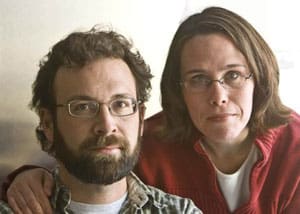
In this episode Peter Danzig discusses how his experience as a social worker to (primarily) LDS Church members led to an increase in sympathy for LDS homosexuals, a loss of his traditional LDS testimony, and his decision to write a letter to the editor of the Salt Lake Tribune to protest the action taken against former BYU Professor Jeffrey Nielson, and the LDS Church’s urging of members to support a constitutional amendment banning gay marriage.
The music from this episode was played live during the interview. For more about the Danzig’s music, check out their web site here.

Our Platforms:
Social Media:
Contact us:
MormonStories@gmail.com
PO Box 171085, Salt Lake City, UT 84117
Episode Transcript
Host: John Dehlin · Guests: Mary Danzig, Peter Danzig
This transcript is machine-generated and lightly edited for readability. The audio is authoritative. Please excuse occasional errors in names and spelling.
Exploring Questions About Homosexuality and Faith
John Dehlin [00:00:00] This is mormon stories. I'm John Dehlin. So around what year were you really starting to dig into the homosexual question?
Mary Danzig [00:00:57] It was 2003, 2004.
John Dehlin [00:01:01] So a couple years before writing the letter. So this is percolating. Mary, how are you feeling as he's starting to deal with these issues and talk to you about them?
Mary Danzig [00:01:13] It was disturbing to me. I mean, the more he talked about it and I started to learn more about homosexuality, I became disturbed about the way the church was handling it, too. But I couldn't straight out say, oh, the brethren, they're wrong. I kept thinking my first thought was, I just don't understand something. There's some piece of this puzzle that I don't have that the brethren had. And if I knew what they know, then it would all make sense. So that was my first suspicion, was that they just knew a lot more than me. And the other thought was, well, maybe they're just wrong, but kind of like the blacks in the priesthood, but they'll figure it out and it'll be okay. And it's not my job to question this. And so it disturbed me, and it disturbed me, too, because it seemed like from there then Peter started questioning all kinds of things about the church, which I didn't really appreciate at all.
Peter Danzig [00:02:10] I do remember being very upset with me.
John Dehlin [00:02:13] So you were worried about him?
Mary Danzig [00:02:14] I was very worried about him because he. I mean, he was losing his testimony a piece at a time. Kind of. It seemed like he would bring up something and I'd be like, oh, I don't even. You know, I don't even want to go there. And did this go on for years?
Peter Danzig [00:02:30] During a couple years, it was really my second year practice. This was all. This was a very interesting thing. I went into therapy with the hope that I could possibly work at LDS Family Services because
John Dehlin [00:02:47] Dancex are gluttonous for.
Peter Danzig [00:02:51] But if I couldn't do that, I still felt like I had my Utah office. Lots of LDS people come, and I had a real sense of calling that I understood. The gospel had not been very healing for me as a youth. I had grown up with these images of, for instance, the scripture, every knee shall bend and every tongue confess that Jesus is the Christ. And I had grown up with this image of angels wandering around with whips bow down. That was kind of how I grew up with it. And after my mission experience, I had really come away with the understanding for me that the atonement was so meaningful and so powerful to people that everyone would experience it and that everyone would be so overcome with their experience of God that this was so. It was much more affirming. But I felt like I had a really unique understanding for people who had been wounded by their religion and that I could be really helpful for them to heal using the gospel. It was what I was good at, I think, because I got a lot of teaching callings in church. And that's what I was good at in church, too, was taking this and making it a healing thing, even if people hadn't experienced it that way. So I felt a real calling to do that. And I pushed really hard to get my second year practicum at LDS Family Services. And it was that year that just. I had a major crisis of faith right in the middle of the year. And I was.
John Dehlin [00:04:25] So did you get in?
Peter Danzig [00:04:26] I did.
John Dehlin [00:04:26] So you did your second year practicum at LDS Social Services, which in some
Peter Danzig [00:04:30] ways was wonderful, and in other ways was just a nightmare because I did have to watch how they dealt with what they would term same gender attraction and deeply disturbed me. There were a lot of things that happened, and I. There are wonderful therapists there, and there were some people who worked there because they could not function outside of that setting. So it was really troubling to me. And I ended up too. Like, we had all these clients with pornography addictions, but nobody knew how to treat addiction. And yet we were treating all these people. It didn't make any sense to me that we could treat pornography addiction if we couldn't treat drug addiction. It didn't make any sense. And that was the year, too, that I just started questioning a lot of things. And I realized, kind of in a major paradigm shift, one night while I was out walking the dog, I realized that the church was not true in the way that I had always thought it was true. And that kind of was a really unique experience because it was, on the one hand, incredibly liberating. I felt this tremendous relief and exhilaration and freedom that I had never experienced before. And at the same time, I was like, oh, no, Mary's going to kill me. And so it was a very mixed blessing. And I was working at LDS Family Services, which was another tremendous panicking moment. So I took what I. Oh, go ahead.
John Dehlin [00:06:19] Give me an example of a treatment that LDS Family Services or Social Services would offer to a struggling gay member that you feel was harmful. I mean, did specific stories or approaches come to mind? Or is that just a feeling you had?
Peter Danzig [00:06:41] When I was there, being gay was not an option. You had to try and change it. That was the sense I got from everyone there, the experience that really frightened me was that they hosted a family and friends group for Evergreen where once a month this group would meet there and they would. LDS Family Services loaned them the room and loaned them a therapist. It was a peer led group, but there was a therapist there to answer therapy questions. And our therapist couldn't go once and said, why don't you sit in? It'd be a good experience for you. So, and went into this room with people who had been meeting with this group for years about their children that were gay. And they still thought their children weren't safe to be around their grandchildren because they might molest them. And I was horrified because I thought there's been a therapist here every week that could have corrected that misunderstanding. These people are harming their children because they're being fed incorrect information. And so I said, you know what? Your next door heterosexual neighbor is more likely to molest your kids than if your gay kids aren't dating kids. Gay men like gay men, not little boys and girls. You don't have to worry. And I got called in by my supervisor the next day who said, where did you get that information? And I said, well, it's in a lot of my textbooks. Do you want me to go get them? And she said, no, but check with us before you say something like that. I was really horrified. I just quit talking about it while I was there because there wasn't much room. There were a lot of ways in which it was a wonderful experience for me there, but there was one in which it wasn't. And I mentioned too how they dealt with pornography addiction. Right before I left, they came up with a video presentation to show us to kind of give us some training on how to deal with it. And the last episode, the therapist is sitting in the room with the person who has a pornography addiction who says, I want to guide you through this meditation. Imagine you're looking at porn on your computer, and you're right in the middle of this being aroused, and all of a sudden you realize that standing behind you is your wife, Bob. Your wife is there watching you, and your little daughters are watching you. Well, so addiction is driven by shame. And this poor guy is going to go home and feel so completely overwhelmed by shame that he thinks. I mean, research would show that statistically if he's addicted to pornography, he'll be more likely to use after an intervention like that. So there were a lot of things that bothered me about some of that. So that's kind of what the environment was. I did just. I didn't feel it was kind of a bad fit for me. I realized even though I felt like I was really helpful. And when you saw somebody for. The other thing that was difficult was I would see somebody for pornography addiction. And at the time I worked there, they've changed this since. Thank heavens the bishop was your client and you were providing contracted services to him with this person. So you had to staff with the bishop. Except there were cases where maybe that wasn't going to happen. So the bishop would want me to get this kid ready to go on a mission. And I would say, you know, the pornography isn't the problem. This kid has a major anxiety disorder. He's not able to connect with other people in an appropriate way. He's not able to date. And we need to solve that. You don't want him to go on a mission with that. Let's solve that. But sometimes it was hard to redirect to the issue that really seemed to be the problem. Let me back up because there was some really wonderful therapists there and wonderful things went on and they provided a lot of. Especially at a time when Valley Mental Health was cutting back. They provided a lot of therapy to a lot of people who desperately needed it. So I don't want it to sound like I'm picking on them. I've articulated the things that I thought were a really bad fit for me and maybe harmful to people sometimes and
John Dehlin [00:11:16] that we're informing your concerns about homosexuality.
Peter Danzig [00:11:21] But at the same time, there was a lot of good that happened and I didn't want to come across too one sided there.
John Dehlin [00:11:28] So you walk the dog. You have that experience. Mary, did he break it to you at some point?
Guest [00:11:35] He did.
Mary Danzig [00:11:35] A couple days later he sits me down, he put the kids to bed and he says, I don't believe in the church anymore. And I remember basically crumpling to the ground, just sobbing. I mean, kind of first shock, but then I'm like, no, he really means this. He doesn't believe in the church. And just sobbing and sobbing. I feel like my whole world had fallen apart. And I couldn't sleep that night. And the next day I get up and I could not function. I'm just crying. I'm thinking my mind is going over and over, what has he done to lose his testimony? Because in my mind and everything, I felt like I'd been taught you don't just lose your testimony. That's connected to some sort of sin. And I couldn't figure out what he was Doing. Because if he wasn't with us, he was at work or at school. And I didn't think he had any time to be doing any horrible things. Exactly.
Peter Danzig [00:12:39] He didn't work at a school and had five callings.
Mary Danzig [00:12:44] He did. He had five callings, one of which
Peter Danzig [00:12:47] was the orchestra at Temple Square.
John Dehlin [00:12:51] No time for sin.
Mary Danzig [00:12:52] Not really. And I'm thinking, okay, he pays his tithing. He keeps the word of wisdom. And so that's kind of my first thought. And then I'm worried, well, what is he going to do now that he doesn't believe? He's probably going to start drinking. He's probably. He might be unfaithful to me because he has no anchor anymore. I mean, my mind is just thinking these wild things that now my husband is all of a sudden going to do all kinds of things. I mean, who knows what he's going to do without the gospel. I mean, the way I thought I was taught, without the gospel, you never know what you might do.
John Dehlin [00:13:25] So how about Temple?
Mary Danzig [00:13:27] Marriage in eternity? Our marriage is going to be dissolved. What's going to happen with our kids? And is he going to drive my kids down with him? How am I going to raise them strong in the gospel with this man who doesn't believe in the church? And so actually, that day I actually called Peter and said, I think maybe we need to separate. Because in my mind, I'm thinking, first of all, I'm thinking there's maybe something really bad going on I don't know about. He might not be a safe person. And second of all, I'm convinced that maybe he's going to start drinking. He might become an alcoholic bum, and he's going to beat my kids. And so I'm thinking maybe he just need. We need to separate while he figures out what in the world he's doing, and we'll take it from there. And Peter's just like, no, Mary. And he comes home from work, you know, trying to calm me down, and I'm inconsolable. And then the next day, I'm still just a mess. But I made a really good choice, and that was that. I thought, who can I talk to? Because I thought, I can't tell anybody, because if I tell someone, they'll know. Peter's a horrible person. I don't really think he's a horrible person. But once that cat's out of the bag, you know, maybe my mom is going to hate him or my dad, or maybe my brothers aren't going to ever look at him. The Same way. And I'm not sure that that's right. But I did think, you know, my. I do have this sister in law, Elizabeth, that is just the nicest person that ever lived. And I thought if I can tell anybody, it would be Elizabeth because she would still think Peter's a good person even if she knows he's lost his testimony. And so I called her and I'm crying and. And she just said. She just was kind of quiet for a little while and then she said, she said, I don't really know what to say except that I know Peter and he's a really good guy. He's a really good guy. And you need to remember that right now. You need to remember that you married a really good guy. And my sister in law maybe saved my marriage because I was so hysterical and so afraid that my whole world had fallen apart that I couldn't even think about that simple fact that I had married a really good guy. And I think what if I called somebody else who had gotten hysterical with me? I could have destroyed a really wonderful relationship. So I will always have a huge debt of gratitude for my sister in law for saying that. And then I kind of had my own experience where I was praying and. And just felt a really strong impression that Peter needed to be able to make his own choices and that it was going to be okay. And I didn't feel like I knew that he was ever going to regain his testimony, but that somehow it was going to be okay. But it was still. It created a lot of friction in our marriage for the next couple years.
Personal Struggles With Depression and Belief
John Dehlin [00:16:25] So you went through a couple years of being in a different place?
Mary Danzig [00:16:28] Yeah, because Peter graduated in 2004 and it was just right before his graduation that he really decided he didn't believe in the church but was still willing to do everything, but he just couldn't literally believe in it anymore.
John Dehlin [00:16:46] Was that hard to go through the motions, Peter?
Peter Danzig [00:16:53] Only some of them, really. I mean, I was very lds. The things that bothered me were that I had really had my eyes open and was starting to see how a lot of people got hurt in the church. And so things that I knew were harming people really bothered me. Attitudes about mental illness, one that was really prevalent and still is. They've done a good job working on this one. But it's still difficult is the idea that depression comes from sin, which I had grown up. I was really depressed a lot of my life and anxious to kind of go together. And I had always felt unworthy because I just couldn't seem to feel right, and I must be doing something wrong. That was one of the really healing things that happened to me with this paradigm shift was that I realized I just get depression, and I didn't have to add a whole level of shame onto that. And I think actually I got, in mental health terms, I got a lot better. And I became a much more effective husband, more able to help out, more sensitive person, more available to Mary and the kids.
Mary Danzig [00:18:02] He really did. And that was really inexplicable to me because I'm thinking, he's lost the gospel, and yet he's more stable and he's like, I was doing the dishes. And it was really. I could. Didn't make any sense because that was not what was supposed to happen.
Peter Danzig [00:18:18] I did feel a little trapped because I told you I had been exploring this dual culture thing, and my whole life I had felt really drawn to Judaism. And I had wrestled for the two years before this about how could I be Jewish and be Mormon, too, without betraying my faith. I had wrestled with this a lot. And so all of a sudden I realized, you know, I could be as Jewish as I want, except that I still couldn't see a way to make it work and still be. Still be acting out as if I could work it out in my mind. Now all of a sudden, I could see how the two could fit together in a really great way, but I couldn't see how it wouldn't look to family or friends like I was betraying the church to get so involved in another faith that I didn't believe in either. Let me be honest. I didn't believe it literally either.
John Dehlin [00:19:15] Right, Right. So, Merritt, I got an email from a listener that said they heard a Sunstone presentation that you guys did this past year, maybe where they talked about some of the lessons you learned or some of the things, the ways that you reacted to Peter that maybe now you regret.
Mary Danzig [00:19:33] Yeah.
John Dehlin [00:19:34] Let's just say that someday there are going to be some wives or husbands who are believers as they're listening to the podcast, still true believers, but they have a spouse who's disaffected. What are some lessons you would give them regardless of where they end up with the church? What are some lessons or some. Some perspectives you give them on maybe some things not to do?
Mary Danzig [00:19:59] Well, first I would just.
John Dehlin [00:20:00] Things you regretted.
Mary Danzig [00:20:01] Things I regret. I regret making assumptions about Peter's character, making assumptions that his lack of faith had anything to do with any sort of deficit in his moral fiber. That was a very painful thing for Him. I put him through a lot trying to figure out what was wrong with him. I also regret that I felt. I felt so much like I had to make this work out somehow, that I really pushed him. I really pushed him to accept callings he felt uncomfortable with. I pushed him. I would try to say. I try to get him not to say things that he felt or concerned about in front of other people, because I felt like that could cause us problems. And I really regret that I did that to him, that I didn't recognize that he was his own person and that who he is is who he is and just give him the space to be himself and to be comfortable that that isn't me. That's him. And I just. I really regret most of all that, honestly, the church was more important to me than my husband was. And, I mean, I don't mean that the church isn't an important thing. Of course your relationship with God is very important. But how are you actually really being a Christian when being a Christian in your mind means hurting the person that you've committed your life to and your eternities to? So I regret that I didn't put my relationship. Value my relationship with my husband more. I valued the church so much that when he didn't fit with what I thought the church wanted him to be, he was disposable. And I really regret that.
John Dehlin [00:22:04] What did it take for you to change those feelings?
Mary Danzig [00:22:10] Well, that's where Peter's letter is. Probably the best thing that ever happened to our marriage.
John Dehlin [00:22:16] You know,
Peter Danzig [00:22:18] one of the songs we were thinking about playing for you tonight actually really fits this theme. Do you want it now or do you want it? Let's hit it.
John Dehlin [00:22:25] Let's hit it.
Peter Danzig [00:22:25] Okay.
Guest [00:22:30] Sam. Sa. Well I must be gone and leave you for a while Wherever I go I will return if I go 10,000 miles if I go. If I go if I go 10,000 miles.
Mary Danzig [00:24:00] Oh, 10,000 miles it is so far to leave me here alone While I'm in. And you, you'll not hear my voice
Guest [00:24:28] Know you. No you Know you not hear. So black my love can change its color if ever I prove false to thee the day will turn to night the day. Melts with the sun I'll never prove false to know what I love Till all these things be done. Do all these things be done.
John Dehlin [00:27:22] Well, thank you for that. That was beautiful.
Writing a Letter to the Editor
Mary Danzig [00:27:25] Welcome.
Peter Danzig [00:27:26] Yeah. That's a song that's been with me for a long time. I first heard Joan Baez play it, although hers isn't filled with Quite as much pain and angst, I think. But I love it when we play it together, because I think it really speaks to me about this particular dilemma of loving each other across this huge dividend where one person believes in the LDS Church and doctrine literally, and the other doesn't, and you're in such different places, and yet we were still deeply in love with each other. And I think you asked Mary about what she wished she had done or what might work well. And what I would say is, take a step back and remember what you love about each other. Take a step back and renew. What is it? Why did we get together in the first place? I've met people that they got together because they dated for two weeks and they got married because they want an eternal marriage, and they don't fit together very well. And that's a huge dilemma. Mary and I were very lucky that we fit really well together. Soulmates, I think.
Guest [00:28:58] And
Peter Danzig [00:29:00] it was worth loving each other across that divide. And I think when you can take a step back and look at it and it's worth it, because it's very possible.
Mary Danzig [00:29:13] Well, we had come a long way.
Peter Danzig [00:29:15] We kind of settled into an equilibrium before too long.
Mary Danzig [00:29:19] I mean, it did cause so stress and strain, but it had a lot. I mean, it was worth it. You know, it was a relationship that had some friction because of that issue, but it wasn't. I wasn't thinking anymore, oh, you know, we should separate. I mean, and we did find that our marriage brought us a lot of joy and our children brought us a lot of joy, and I'm glad we didn't.
Peter Danzig [00:29:41] And we moved to central Utah.
Mary Danzig [00:29:43] That's right.
Peter Danzig [00:29:45] Well, I really decided to go the route of, I guess a lot of people call it a New Order Mormon. And I thought, you know, so I don't believe in anything literally. But I had studied Judaism for several years, and I was particularly drawn to Reconstructionism, which is you take from the tradition that you come from and you reconstruct it for yourself and make it into a beautiful, vibrant, spiritual life. And I felt like I can do this with Mormonism. On the flip side, from what Mary talked about, the hardest pieces for me was that I could do that on my own privately, but I wasn't really supposed to talk about it to anybody. So Mormonism still meant a lot to me. And the orchestra at Temple Square was a calling I loved because I didn't have to say anything. I didn't have to believe in. I didn't have to proclaim the literal truth of anything. I could play music that made me feel the divine and I could help somebody else feel that. And that was a perfect spot, I thought, to be. If I was stuck having this pesky, not believing in things, literally problem. We went on for quite a while like that. And I really. Since I couldn't really talk to any family about it, I got onto. Back then, it was the first farms board. I think it's the Fair board. Huh?
Mary Danzig [00:31:18] Fair.
Peter Danzig [00:31:18] Fair. Fair board, yeah. Now it's what Mormon apologetics and discussion. And I thought, this is great. I can have all these conversations as like a loyal Mormon who doesn't really exactly believe it and is worried about some of these issues, like homosexuality. I can hash this out here with these people and I'll learn how to talk about it in a way that doesn't set people off. I'll learn how to express myself. So I spent a lot of time there for a couple years.
Mary Danzig [00:31:51] You didn't learn how to not set people off?
Peter Danzig [00:31:53] Well, that particular board, there wasn't really any way. I think it was actually really disturbing because I would. I'm pretty good when I want to be at being really moderate and really respectful. And I was just stunned how many people would come back with kind of the same accusations. You're not faithful enough, or you have something wrong with you, or you can't be a Mormon and think that. And since this was my testing ground to see how this was going to work in real life, it wasn't terribly reassuring.
John Dehlin [00:32:31] So you were trying to test your Reconstructionist Mormonism with the Fair Board.
Peter Danzig [00:32:38] It was a place where you could have these discussions anonymously. Anonymously. And I wanted to see how it worked because they were all people who knew about all these issues. And I had pretty reasoned views. I didn't think Joseph Smith was a bad person or anything. I didn't even really have a perfect explanation. What I had realized was that you didn't have to know everything. You can't know everything. I had a whole book full of unsolved mysteries. Well, of course you could have a book that you didn't know how it came to be. That doesn't mean anything except that you have a book that you're not quite sure how it got there. So, yeah, I had wonderful conversations, really. And I think I learned to express myself really well because people were really touchy. And so I careful. And I was feeling pretty good about it. But then the political activism of the church started to ramp up. There was Proposition 3 in Utah, which bothered me to start with. But then the church.
John Dehlin [00:33:46] What was that?
Peter Danzig [00:33:48] Utah's constitution was amended to make sure there was no gay marriage or civil unions. It bothered me to start with. And then the church released a statement in support of it. And then the drafters of the proposition rewrote the proposition to match the church's statement, which bothered me even more. But I just pretty much bit my tongue. Except for we did have one funny instance where someone called the house and I answered it. Vote no on three LEVANT HEADQUARTERS and it was the first councilman the bishopric who wanted to ask if we could give a talk on Sunday on building spirituality through families. Needless to say, there was stunned silence. But that was the extent of my activism really was that. So I kind of bit my tongue and just hoped it would. I didn't know what to do. And then they read this letter over the pulpit asking us to write in support of the federal marriage amendment. And Utah had been one thing. I was never under the illusion the church. I felt like inside the church church rules are how we function. And you can leave the church if you want. And so it's okay for even though I totally disagree with how we're handling homosexuality. The church can do that. That's their right. But all of a sudden I saw that my church was trying to insist on their standards for our whole country. And that really bothered me because I felt like that was really out of bounds to try and tell everybody in our country how they had to live their lives. Particularly when we were terribly uninformed. I thought on the issue was this 2007 2006.
John Dehlin [00:35:41] 2006.
Peter Danzig [00:35:42] So I was just. It was not a good day for Mary because I came out of church just hopping mad. And she knew it was going to be when she heard them read that. And then Jeffrey Nielsen wrote his op ed piece his BYU and was pretty immediately dismissed from byu. Yes. Now which was illegal. I mean he was a sort of contract part time professor. The thing that bothered me deeply was that he allowed to be published a letter that of dismissal. And it indicated that the brethren had requested his dismissal. And it was very clear to me that this was a punitive action towards him for writing what he did in his op ed piece. And that really bothered me deeply too because I had watched my dad lose his job or something he didn't even do. And I thought I'd working for the church. My dad wasn't the only person that things like that happened to. A lot of people had really bad experiences. So I had seen a lot of this in my life and I thought I served a mission in Germany as a kid that thought he was Jewish. And I had wondered ever since then. And during that time, I thought, you know, if somebody was doing something like them, rounding people up, harming people, what would I do? Because I met most of the Germans I met did nothing. They sat quietly in their houses and watched it happen and tried to ignore it. And I always wondered what I would do because I knew that the reason they did that was because their family would be the next to go and that it wasn't very safe. And I thought to myself, well, this is a good. Maybe I need this if I'm going to be a musical missionary for this church, maybe I need to be able to say what I think. I wasn't really sure what would happen, although I glanced at the questions you had, someone had asked, what did you think would happen? I didn't really know, but I thought, I have to be able to say what I think or I can't. In good. I can't pretend I think something else on this issue, because people are getting hurt, and it's not right. So I wrote several letters and got in immediate trouble.
John Dehlin [00:38:19] Several letters to the editor.
Peter Danzig [00:38:21] And I'd never written a letter to the editor before in my life. And in one month got every letter to the editor I wrote in every paper I sent it to. How weird is that?
John Dehlin [00:38:32] So, Mary, did you know he was going to write some letters? Did he tell you, or.
Mary Danzig [00:38:35] Oh, yeah.
John Dehlin [00:38:36] Were you nervous?
Mary Danzig [00:38:39] I was really naive. I really wasn't very nervous. I was a little bit nervous. I thought specifically the letter he wrote to the Tribune I thought was gonna ruffle some feathers. But in my mind, I thought, well, they have to understand that some people have different perspectives on this. And my thought was they might call him in and ask him what he meant, and he might have a chance to explain why he was concerned. And my biggest concern was that they might not appreciate that he said he was a member of the orchestra at Temple Square. And I thought they might say, please don't say that you're a member of the orchestra at Temple Square when you write letters about political things. And I really thought that would be the end of it. I thought, they know us. We played for a long time. They know he's a good guy. I didn't.
John Dehlin [00:39:24] For our listeners who weren't part of those wonderful times, I'm going to read the text of your letter. Is that okay?
Peter Danzig [00:39:33] That'd be fine.
Peter Reads His Published Letter to the Tribune
John Dehlin [00:39:36] All right. This is Peter Danzig to the Salt Lake Tribune. Published June 14, 2006, as a member of the LDA. Why don't you read it? Starts. Starts right there.
Peter Danzig [00:39:51] This bring back memories?
John Dehlin [00:39:55] Can you see it? Okay.
Peter Danzig [00:39:57] As a member of the LDS Church, returned missionary and member of the orchestra at Temple Square, I'm appalled at the intellectual tyranny that our leadership has exercised through the summary dismissal of Jeffrey Nielsen from his teaching position at Brigham Young University for speaking his mind in an op ed published June 4 in the Tribune. I was troubled that my church requested that I violate my own conscience to write in support of an amendment marriage that I feel is contrary to the Constitution and to the gospel of Christ. I am even more discouraged to see how they deal with an honest difference of opinion. I wish to express to Jeffrey Nielsen that I admire his courage, that I stand with him. I hope that rank and file members of the church, as well as members of the lay clergy who also find this troubling, will have the courage to step forward and let themselves be known. To do anything else would be to hide in the shadow of an injustice.
John Dehlin [00:40:55] Strong words.
Peter Danzig [00:40:57] Well, they sound stronger now, even in my wall.
John Dehlin [00:41:01] So when you wrote that, Mary, you just thought he'd maybe get hand slapped, right? You didn't envision ecclesiastical consequences or your positions at the orchestra being.
Mary Danzig [00:41:18] I really didn't. And I look at it now, and I've heard more. And I don't know how I could have thought that. Except that. Except that I think it was because I was raised by the parents. I was raised by. And my parents are both very staunch, active members of the church, but also very open to other ideas and opinions. And I never felt like they taught me that there should be anything punitive because somebody had a different belief. And so, you know, they were my example of how the gospel was to be the other side. I think that's why I thought that.
John Dehlin [00:41:51] Peter, did you think something might happen?
Peter Danzig [00:41:54] Oh, my. I had no idea what would happen. It ranged from possibly nothing, probably at least. Don't do that. Maybe they'd throw me out of the orchestra and leave me alone. Or maybe I'd be in really big trouble. I really had no idea all of those were in my mind. And honestly, for me, I felt like this was a moment to find out what kind of church I was in and whether or not I could survive in it. Because I thought I have to be able to say what I think. And I felt like this was the place to say it. It was a public political issue. I had no criticism. I tried very hard never to criticize the church for Something that was inside. I just felt like once it went out into the political world, I thought I had a responsibility, a dual responsibility, both to my church and to my country. And that I, part of. I had always for a long time, felt that part of supporting leaders of the church, and it's not a very Mormon idea, but is to add to their perspective when it seems like they aren't seeing everything.
John Dehlin [00:43:06] Yeah, that's not Mormon. Now, the language you used, I mean, it's hard if you were just saying, I don't support this amendment or this political action. I think that my views about gay marriage or this or that, that's one thing. But you did use some strong language. You called it intellectual tyranny that our leadership has exercised. That's pretty strongly.
Mary Danzig [00:43:41] Yeah.
Peter Danzig [00:43:41] People were very upset. I tried explaining several times that I was talking about a specific act in which one specific instance in which it looked to me like they had used punishment to enforce orthodoxy or to punish someone's non orthodoxy. And I said, if you can give me other words besides intellectual tyranny, I. I would love to say it in a softer way. And no one ever offered any suggestions. I struggled with that particular phrase for a long time. And what I've realized since is that everyone felt like I was accusing them of being intellectual tyrants when I was saying this particular act.
John Dehlin [00:44:21] And you're referring to the one of Jeffrey Nielsen, not their request that things be read over the pulpit and support the piece there.
Peter Danzig [00:44:29] As I was saying, you've tried to silence people through punishing them. And that, I think is the definition of intellectual tyranny is when you try and stop ideas by punishing the people who have them. But I wasn't trying to accuse anyone of being such a thing. I was trying to say this particular act troubles me. And I realize in retrospect they are strong words. And that's not what a lot of people who read it caught out of it. And if there was anything I could have changed about it, I think I would have tried to have them. I would have tried to write it in a way where it had said more specifically what I intended them to understand from it.
Silent Believers and Navigating Doubt
John Dehlin [00:45:12] So there are a lot of people who I think are in this non stage that you were in where they're silent partial believers or partial non believers or complete non believers, but for the sake of their marriage or because they still love the church, or for whatever reason, they're staying active in the church, not making waves, but feeling inside like they're not being true to themselves, like they're somehow complicit and conveying beliefs or supportive things that they don't believe or support. And they're trying to decide how to deal with it. And even though you're bursting onto the scene with sort of large scale, they're contemplating what to do just in their little realm. Do they talk to their spouse? Do they talk to their bishop? Do they talk to their extended family? And I imagine that at least some of the anxiety that you felt in coming out in this grand way is something that they're feeling anxious about right now. Do they come out to their spouse? Are they candid with their bishop or their friends or family about their semi belief or even disbelief? Because I imagine that there's a lot that could potentially be at risk. You know, is it worth it? Like, is the pain worth the risk? And how did you come to make that decision, to raise your voice? Well, I mentioned, given the potential risk,
Peter Danzig [00:47:01] I mentioned a couple times, growing up with an anxiety disorder and being that way, you hide a lot of things from a lot of people. I still struggle with it. I get insanely nervous when I have to perform, even just here with you in the room. But what I had learned is that anxiety is about all these shadows and the way to confront it is to deal with reality and just deal with whatever it is you're frightened of. And so for me, it was worth it because I didn't feel. There were a lot of reasons I didn't feel comfortable with myself. One of the questions on the temple recommend interview is, are you honest in your dealings with your fellow beings? Well, how do you answer that if you're hiding all this stuff? I understand it's a survival thing, but I felt like I was dying by bits and pieces by not being honest about who I was. I just pretty much that way with Mary. I remember before I told her, I had searched online and I had found this New Order Mormon website. And where else? The foyer, I think, at the time. And I was one of those new people who wrote in and said, oh, I don't know what to do. I'm not sure I believe the church. How should I talk to my wife? And everyone said, don't go slow, go really slow. Maybe you want to go back and work through it with her and maybe you should get these books and read them together so she can kind of ease into it. And I thought about it for a couple days and I thought, I'm just not that sneaky. I can't do it. I have to tell her where I'M at. Because I had this whole. I hid some of the journey, but I was pretty honest. I mean, there were things that I knew I couldn't tell her that I was worried about, but I had tried to talk to her about some of it. She didn't know how much I'd been wrestling with a lot of issues. Then I felt like I just. I can't. How can I have a relationship if I'm not honest? And it was really, really painful. But it was not as painful, I think, as hiding things. Because one of the things that happens when you have to hide all of that is you lose your ability for intimacy. You can't even be intimate with yourself if you're hiding all of that stuff. How do you have true intimacy with someone when they don't even know what's going on in your mind or your heart? And I really wanted that. And so although it was painful, I think it was probably better. And Mary would have been furious with me if she'd ever found out that I had already arrived at some conclusion. And then I went back to try and bring her with me. Oh, that would have been a nightmare. You know, that would have been. And I felt dishonest about it because I felt like that would be bad. Now I have an agenda for her. I have an agenda to have her think what I think, think. And I'm going to do it by deception and stealth instead of just being honest. This is where I am. And it's kind of been scary for me. And I bet it's scary for you. I probably wasn't totally that skillful, but.
Sharing Testimony Concerns With Church Leaders
John Dehlin [00:50:10] Did you ever talk to bishops or family members or members of the ward about your testimony prior to writing the letter?
Peter Danzig [00:50:17] I did try and talk to my bishop in Levin.
John Dehlin [00:50:21] Bishop what?
Peter Danzig [00:50:21] My bishop in Levan.
John Dehlin [00:50:23] Okay. Is that a town?
Mary Danzig [00:50:25] Yeah. We lived in a little town in central Utah.
Peter Danzig [00:50:27] When Peter wrote, Nabal spilled backwards. It's central Utah. Yeah. Mary talked about pushing me to accept callings I didn't want. They called us as ward missionaries. When I got down there, which was not ouch, I thought at that point I had reconstructed missionary work, and it was, go out and be Christlike, Be kind. Show people what your faith and your religion does for you. And if they're interested, they'll ask you about it and you can share with them the best of it. But, like, this aggressive. I want to tell you about the gospel and you should pray. That really bothered me. So that was a hard calling. And at some point, I had finally decided to Talk to the bishop. And I went in to talk to him, and as soon as he kind of. He was a really nice guy, and he kind of got a glimpse of where I was headed, and he said, I really don't need to know why this, as long as you're living the commandments. The sense I got, and I could have misread him, but I'm usually pretty good at reading people, was that he felt like, if Peter keeps telling me about this, I'll have to do something, and I don't want to do anything. So I prefer he not tell me and we'll just let him be.
John Dehlin [00:51:42] That's actually quite common if you're not looking for a fight and if you're not looking to convince anybody, a bishop is fine to let you go as long as you're not causing trouble. That's my experience.
Peter Danzig [00:51:54] But the other disturbing side of it for me was that I was really struggling with how do I fit in? Because I was in at this point. There were a lot of callings that I felt uncomfortable with, or there was quite a bit that I was struggling with, how to reconcile, especially where I had. There was this political agenda going on. And the other really painful thing for me at the time was that I was a counselor. I was working. It was actually. It turned out to be the job I had wanted. I was working primarily with a lot of LDS people or people from an LDS background. A lot of them had been very deeply wounded in some way by their religious upbringing. And I was doing exactly what I had hoped to do when I thought I wanted to work at LDS Family Services. And I was totally open. You know, some people don't want to ever go back to church. That's great. If they want to go back to church, they can have a healing experience there, too. So I had this job that I loved. But the disturbing side of it was that I really was forced to open my eyes and see, especially as I went through my own experience being disciplined, to see how much abuse happens every day. And the examples are sometimes hard to see. But all the time, I was meeting with girls who had been told they had to repent because they'd been raped. Or it's your fault you got raped because you were drunk that night, or marital rape. Well, it's your job to have sex with your husband instead of protecting a victim of a violent crime. Or women who had been counseled to stay with abusive husbands. Things that happened through priesthood authority as the voice of God to individuals who had no individual power and they came for help and then were abused by that person. Not on purpose. I'm sure the bishops meant well, but they were completely untrained and they did not know how to deal with these issues. They were way over their heads and they did more harm than good for a lot of these individuals I was working with. And I knew that was happening all over the place. And lessons on morality became very difficult for me when I worked in the town. And I knew that the teenagers who were sleeping around had been abuse victims as children and that their statistical likelihood of promiscuous behavior as a teenager was way higher than someone who hadn't. And I thought, people here are believing that these people are bad people because they were abused. And what I saw was a thoroughgoing pattern of complete inability to deal with abuse in any way. A lot of it got covered up. A lot of mistakes were made that were well intentioned. I don't want to say bishops were on purpose abusive, but it happened because they didn't know what they were doing.
Guest [00:55:06] And
Peter Danzig [00:55:09] there was no way to fix it because they would go. If someone tried to. Even if someone did get abused by a priesthood leader and they tried to fix it, it just went to the next higher person who said, well, this person's called of God. And there was no way around any of this. And then we went through our own experience where they really we were. What was disturbing to me is that we both had master's degrees. We were articulate, talented people, and we had a lot more personal empowerment probably than a lot of the people I was worried about. And there was no way for us around it. We grew up in a neighborhood with a lot of powerful people. We had connections and there was no way for us to resolve. There was no way for us around things that were happening that seemed really inappropriate.
John Dehlin [00:56:05] Even less so for the disenfranchised.
Mary Danzig [00:56:09] Yes.
Peter Danzig [00:56:09] And so what I would say is as bad as our experience was someone who had no chance, very disenfranchised people, they have no way around. And I couldn't see that anyone was doing very much to address that. And I couldn't speak out because I was told to be silent.
John Dehlin [00:59:52] Sa.
Transcript © 2026 John P. Dehlin. All rights reserved. Brief quotations are welcome with attribution and a link to mormonstories.org; all other use requires written permission.


11 Responses
Listening to this interview makes me remember something Lyndon Cook used to say in a religion class at BYU more than 20 years ago: “The GA’s are like elephants–they never forget and if they step on you, you’re squashed!”
Great interview! I’m happy to see you have found peace!
I’m right in the middle of listening to the podcast, and it’s so interesting for me personally because it was this very issue that initiated the process of “losing my testimony bits at a time” like Mary said about what she was feeling while her husband went through his crisis of faith. I take comfort in the knowledge that my wife and I aren’t crazy, there have been others before us experiencing a parallel story…
Thank you for sharing…
All this helped do was shake the dead wood off the tree. No offense.
This is the sort of attitude that harms the church more than it does any good.
Oh se7en, can you really mean that? Is the individual that disposable to God? Please reconsider.
se7en,
Offense taken.
I appreciate the Danzigs opening themselves up and sharing pivotal moments of their lives with the Mormon Stories community.
I was touched during the podcast when Mary explained how she was able to hold onto the respect she had for Peter. Deep inside she knew he was a good person.
The advice Peter gave for spouses confronted with marital challenges related to the religious changes/differences was priceless –
“Take a step back and remember what you love about each other. Take a step back and renew…Why did we get together in the first place?…When you can take a step back and it’s worth it, look at it as a long journey. That love with bridge that gap.”
They are great examples for those facing the same challenges. It was evident to me throughout the podcast that the Danzigs had nurtured a true love and appreciation for each other, and may have even come of out it with a stronger marriage.
The song 10,000 miles was beautiful and perfectly placed! I recommend checking out the song on their website. When you visit, you can skip to the song using the controls at the top right corner of the page.
I don’t see the Danzigs being that high profile as far as the church goes. So I question why someone gets thier hands slapped in writing a letter to the tribune vs someone who writes something far more contoversial on a very popular blog that may reach just as many people as Peters letter but nothing happens to them at all.
Maybe its because of our poor history with the press ie Nauvoo Expositor !!
I really appreciate the Danzigs for sharing their story. Their music during the podcast actually brought me to tears in the middle of my workout this morning. Many of my spiritual experiences within mormonism stem from emotions brought on by uplifting music and this was a reminder to me of the fact that much of what is good and beautiful in the world is not exlusively available in the institutional church.