
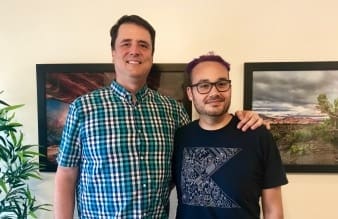
 In light of a statement on LDS.org declaring, “An inability to feel the spirit … is often a symptom of poor mental health,” Natasha Helfer Parker, MFT CST and John Dehlin, Ph.D. are joined by our guest Matt to speak about his experiences with Mormon faith crisis, depression, and suicidality—issues he has dealt with for 20 years.
According to Matt, it makes him angry to read that his struggles were a trial, test, or blessing from God, or that he could have been healed if he had more faith, prayed, or hadn’t “sinned.” Matt believes that religious observance is not a cure for mental health illness, and in these episodes, Natasha and John discuss how Mormonism, and in particular a faith transition in the context of Mormonism, can exacerbate the symptoms of depression.
___________________________
Part 1: Natasha and John discuss depression and then introduce our guest, Matt
Part 2: Matt shares his faith transition and how it affected his mental health
Part 3: Natasha, John, and Matt discuss the LDS Church’s statement regarding mental health and the ability to feel the “Spirit”
___________________________
Episode Transcript
Host: John Dehlin · Guests: Matt, Natasha Helfer
This transcript is machine-generated and lightly edited for readability. The audio is authoritative. Please excuse occasional errors in names and spelling.
Welcome and Episode Introduction
Part 1 of 3 · Ep. 930
John Dehlin [00:00:31] Hello, everyone, and welcome to another edition of Mormon Stories Podcast. My name is John Dehlin. It is Friday, May 11, 2018. We're broadcasting and recording live from our Mormon Story studios in Salt Lake City, Utah. We are very excited to have you with us today to be talking about a really important topic. Today we're going to be talking about Mormonism, depression and faith crises.
John Dehlin [00:01:00] This was triggered by a message I received from a family member and he pointed me to the LDS Church's website page on mental health. And there was a question in there that basically read, I can't feel the spirit. Is it my fault that I'm struggling? Do I just need more faith?
John Dehlin [00:01:22] And the first sentence that is offered, as the response says on the lds.org website, an inability to feel the spirit is often a symptom of poor mental health. And this was something that my close family member was very angry about. This person used an F word when they. When they stumbled upon this statement, and it made me very intrigued as well. So I went to Reddit and I posted this quote on Reddit. It got 972 upvotes, 174 comments, and 6.5 thousand views. So it definitely triggered a lot of concern.
John Dehlin [00:02:10] And this is a really important topic because Mormonism in many ways can sometimes lead other populations in depression. We're going to talk about that. And most importantly, even though Mormonism in itself can be a breeding ground for depression, a faith crisis can also very much be associated with the symptoms of depression. And so for those of us who are leaving fundamentalist Mormonism, orthodox Mormonism, either sort of branching to unorthodox or liberal or progressive Mormonism, or who are leaving the church. Depression is a real issue that we all have to deal with. And so it's really important that we talk about it today. One of the reasons we live stream and we are live streaming now on Facebook Live is because we really value the contributions of people who can join us live.
John Dehlin [00:03:05] It takes it from a conversation between three or four people to a conversation with hundreds of. And we can get your feedback, we can get your input. We can read your comments on air. So we really want to encourage those who are joining us live on Facebook to please make comments, post questions, and share their own experiences with depression and their faith crisis and Mormonism on the Facebook page. We really think that this is going to help make it a more rich and a live conversation. Very, very quickly. I'm just going to make a few quick announcements. We have the bumper that you just heard comes from a new singer songwriter that we are featuring in our bumper along with Angela Sof.
John Dehlin [00:03:51] And the singer songwriter that we are featuring is Sarah Sample. Sarah Sample is a Mormon, a former Mormon. I'm not sure exactly her status, but she is. She has recently released a new album that we're going to be plugging. We're going to try and have her on Mormon Stories. But the song that we're featuring, I think it's called love who you love. Is that right, Tim? Something like that. But Sarah Sample's amazing. You can check out her work@SarahSample.com and we're really grateful to have her music on Mormon Stories along with Angela Soph's. We hope to have a new song by Mindy Gledhill soon. And if you are a recording artist in Mormonism and you want us to feature your work, please reach out.
John Dehlin [00:04:36] We'd love to have some variety in our music of our bumpers and mostly we just want to spotlight good artists like Sarah Sample, like Mindy Gledhill, like Angela Soph. And with that we're gonna I'll just quickly announce a few events. May 17 next week in Salt Lake City, Angela Sof will be here. She's an amazing singer songwriter. We're going to interview her about her faith journey and we are going to have her perform songs from her new album live about her faith crisis. It's going to be a lovely evening. Join us May 17th.
John Dehlin [00:05:11] We're coming to Boise for one of our faith crisis workshops, May 18th and 19th. We're also that evening of the 19th having a social for those who don't join us in the workshop. These workshops and retreats are all about helping people navigate a faith crisis in a healthy way. They're priced very affordably. They have 4.9 out of 5 ratings every time. We would really love you to join us if you can.
John Dehlin [00:05:39] We're going to have Natasha Helver Parker for a retreat along with Margi Delin June 8th through 10th in Park City. This is going to be about all the same types of things, communicating, believing, family and friends, healthy marriage, healthy sexuality, navigating a faith journey, healthy spirituality and mental health. So please join us June 8th through 10th. Houston's going to be July 13th through 15th. Sam Young is sponsoring that. He'll be there along with Natasha again. And then Idaho falls August 10th through 11th. You can go to mormonstories.org events and you can learn about all these events and register and we'd love to have you there.
John Dehlin [00:06:20] Please sign up for our monthly newsletter if you'd like@mormonstories.org to be kept abreast of all the latest information. And then finally, thank you to everyone who donates and supports Mormon Stories and the Open Stories Foundation. We couldn't do this without you. If you go to the top right of MormonStories.org click on the Donate button. $10 a month, $20 a month, $50 a month, $100 a month, whatever you can afford. We're transparent in our finances. It's tax deductible in the United States. And all the money to the Open Stories foundation goes to supporting people who are experiencing or impacted by a faith transition. And we really need your support.
John Dehlin [00:07:01] So if you enjoy this programming, if you want to see it continue, please support. You can also right now you can like the Mormon Stories podcast page. You can give us a positive review on the Mormon Stories podcast page on Facebook that really helps. You can go to itunes and give us a positive review that really helps as well the Mormon Stories podcast there.
John Dehlin [00:07:22] And you can always follow us on Twitter, Twitter and Instagram @MormonStories. So that is our announcements and introductions and without any further ado, we are so excited for our two guests today and for those who will be contributing through Facebook Live.
Introducing the Guests and Their Backgrounds
John Dehlin [00:07:40] Our non studio guest, but a woman who will not be a stranger to most of you, is joining us from her home in Wichita, Kansas. It is none other than Natasha Helfer Parker. Natasha is a licensed marriage and family therapist. She is one of Mormonism's only licensed sex therapists and most importantly, she's the host of the Mormon Mental Health podcast which has been getting really solid support from listeners these days.
John Dehlin [00:08:12] And Natasha is a dear friend to me and Margi and to the Open Stories Foundation. So Natasha Helfer Parker, welcome back to Mormon Stories for a very important topic.
Natasha Helfer [00:08:25] Thank you John. I'm so glad to be here. And since we're doing plugs, I'd also like to plug the Mormon Matters retreat, which is also an Open Stories foundation organization which is happening June 1st through 3rd in the salt Lake City area. And you can either link to my website or to the Mormon Matters website to find information about that which is similar to the retreats that we do together. John de Lynn as far as supporting people in faith transitions and those who tend to show up to the Mormon Matters retreats tend to be a little bit more interested in still negotiating Mormonism, being part of Mormonism in some way or another, a lot of mixed faith couples come to those events. Of course, both retreats have a variety on the Spectrum. But we have as great of an experience as I do with you, John. So just plugging that too.
John Dehlin [00:09:17] Yeah, super excited. Check that out. And again, they can learn about that
Natasha Helfer [00:09:20] where MormonMatters.org under their events page or my page as well.
John Dehlin [00:09:26] NatashaParker.org all right, that's good to know. We are also really excited to have with us today a dear friend. I first remember meeting Matt at a mixed faith marriage retreat that we did last year during the summer. We did that one with Julie D' Azevedo Hanks, but we actually had 20 couples, so 40 people.
John Dehlin [00:09:53] Half of the males were the ones who didn't believe and half of the females were ones that didn't believe first. And so it was, it was split down the middle. Julie is a, as a faithful Mormon, me as someone who is no longer participating Mormonism. And then all the mixed faith couples and I met this wonderful gentleman named Matt Berto. And Matt and his wife came to the retreat.
John Dehlin [00:10:18] Matt's in a mixed faith marriage and he was just a really thoughtful, wise influence and participant in that retreat. And so, Matt, you really felt strongly about this topic and even about participating in this episode. Can you just tell us really quickly, just give us a little bit of introduction about yourself and enough about you to understand why you would want to participate in this. In this episode?
Matt [00:10:50] Yeah. So I'm from Colorado, software developer, and I've been dealing with depression and anxiety and suicidality for, you know, two decades, probably since I was a young teenager. And so I saw, you know, your Facebook post about the LDS mental health website, and I started going on there and looking at some of their resources and it just kind of, I just felt like I needed to speak out that religion is not necessarily a cure for mental health. And so I made a Facebook post and you reached out and I said this might be my only shot to be on Mormon stories. And so I got you. And then I said, let's get Natasha here because I love her podcast too. And here we are.
How Mormonism Frames Emotions and the Spirit
John Dehlin [00:11:43] Here we are. So let's go ahead and dig in if that's okay. And I think it might make sense to begin by just talking about this quote that was read that we can find on lds.org under the link of mental health. I'm going to read again what it says so that we can kind of begin there.
John Dehlin [00:12:15] So I just read it in the intro, but I'm going to read it again. So on the LDS.org mental health page, the questions asked. I can't feel the spirit. Is it my fault that I'm struggling. Do I just need more faith? And the answer is an inability to feel the spirit or a general feeling of. Of apathy or numbness is often a symptom of poor mental health.
John Dehlin [00:12:40] This caused a big stir, kind of a bit of a outburst amongst people. And I think it makes sense to begin. Natasha, if we can start with you by asking you to try and talk about the complexities of when the church talks about the spirit, because, you know, from the time that investigators are investigating Mormonism, they meet with the missionaries and they're taught about the Spirit. And I served a mission, and so I know the way this works. You read then the scripture that says the fruits of the spirit are. You know, they're taught about the Godhead, Heavenly Father, Jesus and the Holy Ghost, and then they're talking about the Holy Ghost.
John Dehlin [00:13:21] And they basically said the fruits of the Spirit are things like joy and peace and love, love, charity and patience and kindness. And so immediately we're taught that there's this Holy Ghost that comes into us, that that makes us feel these emotions. And then the missionaries are trying to convert these individuals, and so they'll teach them these lessons, talking to them about wanting to be with their families in the afterlife and do they want to be together forever with their families and does God love us and that sort of thing. And if the missionaries can get them to feel these emotions, what the missionaries do is they immediately say, see that thing you're feeling right now?
John Dehlin [00:13:59] That's the spirit. That's the Holy Ghost. And this is not just taught to investigators, but it's taught to young children in primary. In other words, we're taught that when we feel positive, happy, warm, loving things, that we're feeling the spirit.
John Dehlin [00:14:15] And then we're also taught that when, you know, as Mormons, you know, the spirit of contention is of the devil. So we're taught that there are satanic influences in the world, that Satan has spirits that help him, and that they're trying to tempt us. And so whenever we feel evil or dark or sad, it must be the adversary that is influencing us. So it's either Satan himself or. Or his angels that are coming into our bodies, making us feel yucky and bad and sad.
John Dehlin [00:14:52] And so very, very quickly, within Mormonism, our emotions are tied to this notion of good spirits that can possess our bodies or evil spirits that can possess our bodies. And so emotions become a lot more amplified and complex than just like, emotions of happiness, sadness, fear, anger, etc. And then, of course, there's this Other bias within Mormonism, where you're only supposed to have the good feelings. And so, you know, don't talk about difficult things because it brings up the spirit of contention, which is of the devil, and that'll make you feel bad. And so if you're feeling bad or sad or angry or upset, you're supposed to stuff those down and turn it off, like the Book of Mormon musical song sort of says.
John Dehlin [00:15:42] And you're supposed to stuff it and then fake it and put on a smiley face and be happy and cheery and positive. And that's sort of my introduction for how emotions, you know, are often treated in the church, how they're associated with good or evil spirits.
John Dehlin [00:16:00] And that sort of begins to try and talk about this question of the spirit of the Holy Ghost and what we feel. So, Natasha, I'm going to bring you in and you know, without digging into mental illness to start, let's just have you talk about your understanding of how we talk about the spirit, the adversary, and how we talk about emotions within Mormonism. What might be the good of that from your point of view and maybe what might be not so healthy. But before we launch into a discussion
Natasha Helfer [00:16:32] about mental health, okay, so when I commented on your Facebook post, the first thing I said is I can't. I don't even know where to start with this because it is so complex and there are so many moving parts and there's so many different ways that both spirituality and mental health can potentially interweave. And then the language and the doctrinal understandings of people and depending on who they are and what type of family system they grew up in, what type of ward that you grew up in, it just, it makes for kind of a big hot mess in understanding these types of topics.
Natasha Helfer [00:17:12] I do want to start out with maybe a potential positive in that, yes, depression is going to be something. If you're diagnosed with clinical depression, it is going to be something that affects every aspect of your life. You know, your sexuality, your relationships, your self esteem. And of course, if you consider yourself a spiritual person, it's going to affect your spirituality. So it's not necessarily an untrue statement that a general feeling of apathy or numbness may be due to depression, as they're saying. But I do immediately have issues with some of how they posited the language here.
John Dehlin [00:17:53] So, but before, but Natasha, before we do that, can you comment on just how we talk about emotions and the spirit and the adversary within Mormonism and then we'll jump to the actual mental Health part is that.
Natasha Helfer [00:18:08] Okay, okay, okay. So to your point, which you kind of already mentioned, in Mormonism, we are very equational. It's like if you do this, then you will experience this. And so oftentimes feelings are attributed to things that we have control over. So if we are leading good lives, if we're following the commandments, if we're reading our scriptures, if we're fasting, then the rewards for those things, for doing those behaviors will be feeling the spirit, being happy, having good relationships, etc. And so when you look at something as complex as depression, first of all, we know that that equation does not work.
Natasha Helfer [00:18:52] But if you're a member of the church and you're kind of coming at it from that language and that understanding, then what typically happens which actually deters from mental health rather than helping it, is the people's self blame. So there must be something wrong with me and how I'm doing these things or not doing these things, because of course depression can kill your motivation or reading scriptures or doing some of these things that maybe you feel like you would have done if you weren't depressed. And it makes it very self blaming. Now the part that is really super concerning to me that you talked about, and I actually wrote quite a bit about this on a blog post that I wrote called Depression is not Sin is the understanding of for those who have any type of belief system in a satanic being or power, that's a very scary type of thing to believe in.
Natasha Helfer [00:19:46] And anytime that we give power to a satanic individual for these types of things being part of our lives, I've never really seen that be helpful to people. In fact, cognitive behavioral therapy is probably going to try to challenge people from having those types of beliefs because even though there's really no doctrinal basis for Satan, Mormon Satan being able to read your mind, the fact that we talk about Satan a lot from the perspective if he's able to tempt you automatically is part of your thinking process. And so you do see Satan in your mind, you do see your thoughts and the way you're trying to make sense of the world through this lens, that somehow Satan is influencing the things I think about, how I think about myself and, and when you're clinically depressed, that can be an extremely damaging perspective to come at this problem from.
John Dehlin [00:20:44] Do you have a way, Natasha, of. I mean, some of us who are more secular are going to basically say probably that there is no such thing as this Holy Ghost that comes in and out of our bodies. What happens Is we have emotions. Maybe when whoever wrote the scriptures, you know, Holy Ghost was the way that they, you know, described the feelings that we feel and even the feelings of the adversary. But really, maybe those of us who are more secular are going to say no, you have feelings, you have happiness, you have sadness, you have anger, you have fear, you know, you have excitement, you have sensuality, you have different feelings, eroticism.
John Dehlin [00:21:25] And your brain generates those feelings as a way to alert you, communicate with you, warn you, motivate you, etc. And so, you know, feelings are chemicals that your brain produces. And so, you know, things that produce. When your brain produces positive emotions, it's trying to motivate you in certain ways to do certain things. And also when it creates negative emotions, it's also trying to warn you about things or slow you down or get you to stop and think, think about things. And so that's kind of, you know, a really brief discussion of emotions.
John Dehlin [00:22:04] How do we think about what the Spirit is? You know, how do you, you know, I know that you maybe are a little bit more on the church participatory believing side than maybe some more of our secular listeners.
John Dehlin [00:22:19] How can we talk about the Spirit and the Holy Ghost and, and emotions? And how can we tell the difference between emotions and the Spirit? Especially when we know that, you know, the men who flew the airplanes into the Twin Towers, they felt inspired to do what they did. And so, you know, and other churches feel the emotions that their church is true and all claim that the Holy Ghost is inspiring them in some way. So how do we make sense of spirit versus emotion? Or do you not really make a distinction?
Natasha Helfer [00:22:58] No, I think that seeing the difference between spirit and emotion is very important and actually something that I see members struggling with all the time. You know, what does it mean when I have this particular feeling? Does it mean that God is trying to have a conversation with me or trying to give me a message? Or is it something that's just coming out of my spirit? And of course, where this gets problematized is that if your feeling is not necessarily in correlation with kind of church teachings or how the prophets or the apostles or even your bishop would kind of understand your life or what's best for your life, it's hard then to see that as a feeling that is legitimized by the spirit, right?
Natasha Helfer [00:23:42] So it's just a feeling I'm having in me, or it might even be a feeling that I'm having because of the devil and the temptations that Satan gives. So self authority becomes A very challenging aspect, I think, for members of the Church of Jesus Christ of Latter Day Saints, even though we do have doctrinal basis for things such as personal revelation and things of that nature. But again, if personal revelation goes against my bishop's revelation, it's hard for my personal revelation to trump that authority because we have this patriarchal system in place now. I'm coming to this podcast from a clinical perspective. My job as a therapist is not really to change people's religious views or values or belief systems.
Natasha Helfer [00:24:26] So I would just encourage people in my office to have these types of conversations. How do they see the difference between emotion and spirit? Are the ways that they're currently interpreting belief in spirit edifying their lives, helping them? Because a lot of times we know through mental health research that spirituality at some level can be helpful to some ways of dealing with mental health. Or is it really making things worse? You know, issues of perfectionism, etc. That are making things worse.
Natasha Helfer [00:24:59] So it is a little complex because what I might believe personally is not necessarily what people in my office will believe, and it's not my job to try to convince them otherwise. It's just trying to help them sort these things out for themselves.
John Dehlin [00:25:14] That's true. And yet this idea of what is the spirit and what is emotions is a really important one to tease apart. So we don't want to try and change people's religious beliefs, but if we are aware of. Of beliefs that are limiting people or confusing people or causing negative associations that can prove to be harmful, is there a way to treat that, either to deal with that in therapy or coaching, or do you just have to leave that alone?
Natasha Helfer [00:25:48] No, I don't think you leave it alone. I think that you can say something like, so if I'm understanding you correctly, it seems to me like your perspective is that if you do something sinful or incorrect, that somehow that is now impacting your relationship with your deity, with your relationship with whatever relationship it is that you're wanting to have with your God, that's your belief system.
Natasha Helfer [00:26:15] Can we talk about that? Is that helpful to you? Is that not? Now, in my advocacy role, when I put on my advocacy hat and I blog and I write and I speak publicly, I feel like this is actually a very insidious part of our Mormonism. And I'm quite frank about this idea that somehow separating people from their Mormon God because of behavior is actually not extremely doctrinal at all and has huge ramifications for people's quality of life, relationships, mental health, etcetera. So when I'm wearing both of those hats, it gets a little complicated.
John Dehlin [00:26:54] And we do wear a lot of hats, don't we? The point I just want to make is when you feel joy, my perspective personally is that you're feeling joy. And sometimes people come along and try and make associations and try and tell you what that joy means.
John Dehlin [00:27:18] But we need to be really careful, especially when we're going through a faith crisis, of thinking about what associations have been imposed upon us, especially in our childhood and adolescence years. If you think about efy, if you think about, you know, seminary, if you think about some of the church movies, you know, so much of what we've been exposed to growing up in Mormons has been to create positive emotions for us.
John Dehlin [00:27:48] Feelings of love for our family, feelings of safety, feelings of joy. Religions, in some sense, are sort of positive feeling manufacturers. They use music, they use sermons. They use, you know, behavioral guidelines to help induce positive feelings. And, you know, it turns out that people raised in very secular ways, if they get exposed to really inspiring music, they have amazing positive feelings. And if they watch really great movies or really read really great literature, they experience really positive feelings. Perhaps the difference between them and religious people is secular people aren't taught that those feelings are the spirit, whereas religious people are.
John Dehlin [00:28:33] And so it becomes really important, you know, when you think about, oh, I love my family and I don't want to miss them in the afterlife. Yeah, it's possible that's the Holy Ghost saying to you, confirming to you that, you know, whatever truth you've been taught is true. It's also possible that you're just feeling joy and happiness about your family.
John Dehlin [00:28:54] And similarly, if you're in a heated discussion with somebody and you get mad and you feel anger, I guess it's possible that that's Satan and his minions sending spirits to, you know, make you do bad things. Or it's possible you're just having a conflict with somebody because you disagree, and that feels yucky, and that makes you feel angry or just uncomfortable. But it turns out that anger and that discomfort has a really important purpose in your life. Anger, for example, is an emotion, helps bring your attention to something. It helps provide you with energy and focus and motivation to make a change.
John Dehlin [00:29:35] And so there's a huge difference in life between leaning into your emotions, leaning into your sadness. If you guys saw that Disney movie, was the Disney movie about emotions? Do you remember Natasha? Oh, and then Out, Inside Out, Inside Out. The whole theme of the Inside out movie was don't run away. And Suppress your sadness, embrace it and lean into it. And that's the only way through your, that's the only way out of your emotions, is through them. The way to be out of sadness or anger is to go through your sadness and anger, not to pack them down and not to suppress them.
John Dehlin [00:30:14] What's harmful to me about this teaching of an adversary and evil spirits and even the Holy Ghost and positive spirits is instead of just recognizing emotions for what they are, instead of just recognizing anger as being something to motivate you, to make you pay attention, you know, to get you to make a change.
John Dehlin [00:30:36] We're told that, you know, these feelings are of the devil, so we need to avoid them and suppress them. And that can keep us from having the experiences and the insight and frankly doing the processing work to actually learn from what situations life is giving us and then make the changes that are necessary to get to a better place. And whenever you're stuffing emotions like sadness, you know, anger, fear, whenever you stuff them, it ends up causing you so much distress that you self medicate. And self medication can come in many forms. You can drink alcohol to numb yourself. You can, you can take drugs to numb yourself.
John Dehlin [00:31:22] In Utah and in the United States, there's this massive epidemic of opiates to numb yourself, right? You can use Netflix and distract yourself. You can hyper exercise. And it's probably really important when we're talking about depression to maybe just lay it out there that what is depression? Depression is a way to self medicate the negative feelings that you're experiencing because it's much more comfortable to sleep than it is to sit there awake with all these negative emotions. So your body slows down and you want to just disengage, shut things off and sleep as much as possible.
John Dehlin [00:32:03] And so that probably brings us to understanding kind of what the symptoms of depression are. And I'm going to read through the symptoms that I found on WebMD and then we're gonna bring Matt on and we're gonna talk about his experience and then we're gonna bring all this back as it relates to faith crises and Mormonism and the church's position.
Overlap Between Depression and Faith Crisis Symptoms
John Dehlin [00:32:30] So up on WebMD, I checked out the symptoms for depression and this is what I found. Trouble concentrating, remembering details or making decisions. Fatigue, feelings of guilt, worthlessness and helplessness, pessimism and hopelessness. Insomnia, not being able to sleep or sleeping too much. So not being able to sleep or sleeping too much can be symptoms of depression. Irritability, restlessness, loss of interest in things once pleasurable, including Sexual. So a decreased libido, eating too much or eating too little.
John Dehlin [00:33:11] Aches and pains, headaches and cramps. Very common in people with a faith crisis to have migraines and severe headaches. When they resolve their faith crisis, those headaches go away. Digestive problems, even irritable, you know, sort of digestive sort of things.
John Dehlin [00:33:28] Sad, anxious or empty feelings. And it can be suicidal thoughts or attempts. Natasha, do you want to add anything to what I've said so far kind of about either the symptoms of depression or kind of what the function of depression is just generally?
Natasha Helfer [00:33:50] Well, before I even go there, I just want to answer some of your comments about religion and Mormonism in particular. Kind of exacerbating or making depression more likely or worse. I think in some cases that can be absolutely true.
Natasha Helfer [00:34:07] At the same time, I've worked very effectively with believing members around issues of depression in the context of their spirituality. Because if you can point out, even within Mormonism, this is why I think it's important to have culturally competent people who work with the Mormons. Is ether, for example, in the Book of Mormon. I mean, he goes off, you know, for three to five days or a whole week. I forget how long to sit with his feelings, you know, to do mindfulness. To do mindfulness practice. We've got, I mean, any scriptural story will pretty much blow equational Mormonism out of the water. You've got tons of great people doing tons of great things, having horrific problems.
Natasha Helfer [00:34:50] Right. So I think that within the context and why I get frustrated with the church as an organization and comments like you posted on Facebook is that we have tools within the faith belief structure that could help. Much more so than when we use language like even it was.
Natasha Helfer [00:35:13] Poor mental health leads to poor mental health. To me, poor mental health implies that I'm doing something poorly. If they would have just said it can be a symptom of clinical depression, that's much different. For example, it's much different to say this could be a symptom of obesity versus poor physical health. Poor physical health implies that I'm doing something wrong.
Natasha Helfer [00:35:36] I wish that they would do better with just their languaging. I do agree with you, John, that the top down approach and the patriarchal approach and the main issue that we have, I think in Mormonism is that we do not honor the personal authority over the ecclesiastical authority. So I would agree that that is not helpful for mental health concerns. Now switching gears, as far as depression in general, depression is incredibly complex. You've got situational depression.
Natasha Helfer [00:36:09] Something happened in your life, like a faith transition, like a death, like a divorce. And now all of a sudden, six months later, a year later, you're still dealing with things that would not be considered normative to that acute situation. Even though it's normal to be sad, but being sad and being depressed is like comparing the sniffles to like life threatening pneumonia. Right? So there's a really big difference with a lot of those symptoms that you read off. But depression is like a bioelectric complex issue that's happening in your brain. And sometimes there are reasons that come from your background or genetics even. That is kind of being looked at in the research right now.
Natasha Helfer [00:36:57] How much genetics really has to do with it versus family environment. I mean, there's just so many complexities to this. And so some people have a very. Your understanding as to why they're depressed. A lot of people don't. And I'm glad you're going to have Matt talk because we spoke a little bit earlier on and he seems to have struggled with depression more in this chronic generalized way from a very early age versus going through a particular problem per se.
Natasha Helfer [00:37:24] And it affects everything. It affects your immunity, it affects your ability to. So a lot of people with depression have comorbidity, which means you now have anxiety disorder, you now have an immune disorder, you now have possibly some compulsive or impulsive traits, you now have an eating disorder. It can just pile on.
Natasha Helfer [00:37:50] Why? I find the, When I look at this little piece, it says, counsel with others. Remember what you knew, turn on the light. And you know, it does say in two places, seek help from a professional. But really, this little paragraph that the church presents for this particular question that they got from a member is so inadequate. It just, that's what angers me the most.
John Dehlin [00:38:17] Well, we're gonna, we're gonna get to that in just a second. Thank you for that perspective. And I just want to be clear. I, you know, I, I am not saying that religion equals mental illness. It is very well understood within the realm of psychology that generally speaking, religious participation is positively correlated with an increase in positive mental health.
John Dehlin [00:38:42] So I am not one to believe that religious participation causes mental health. Generally speaking, religious participation is associated with positive mental health. And what we understand is the active ingredient of that is community engagement. So because religions have usually, you know, religious participation involves a strong participation within the community, friends, social networks, positive community associations.
John Dehlin [00:39:12] The general sense is you get a slight benefit on average compared with the average person if you are participating in a religious group. On the other hand, And I think that's true for many Mormons. I think if you fit the Mormon mold, you are, you know, if everything's going right for you, if you're living the gospel, if your family's all with you, if you're having good experiences, if you're not experiencing abuse, if you're living the commandments and people are treating you right, generally I think you're going to have, you know, a positive mental health experience associated with those engagements. But as I, as I type into Google, you know, Utah and depression and I put in women there, I see things like Utah women in suicide.
John Dehlin [00:40:06] I see Utah has highest rate of mental illness in the United States. I see nearly one in five Utah women use antidepressants. I have Utah women commit suicide at rates nearly double the national average. And I think we all understand that. As I understand it, Utah is amongst the leaders in the nation on SSRIs and prescription, you know, psychotropic medication. And so, you know, it's not to blame religion and it's not to say that everything that happens in Utah is religion's fault at all. That's not what we're saying because there could be other factors, but you know, it is fair to say. And that's why this focus of today's episode is specifically on a faith crisis.
John Dehlin [00:40:58] I think it's really safe to say that having a faith crisis which can be disruptive to your identity, to your morality, to your marriage, to your relationship with your parents, your siblings, your children, your community, it could have implications for your job.
John Dehlin [00:41:16] It touches on your sense of meaning and purpose in the world. When you have that faith crisis, it causes intense distress. And that distress, you know, one manifestation of the way we can cope with that faith crisis is by, you know, by experiencing depressive symptoms like the ones we discussed earlier. So we're not throwing religion under the bus. But I am going to maintain that when Mormonism goes wrong and or not quite fitting the mold within Mormonism and or particular positions within Mormonism such as for some reason being a woman in Utah and probably a mother in Utah, and again having a faith crisis or being LGBT and being Mormon or you know, non gender binary or you know, other sorts of things, coming home early from a mission, for example, there are all sorts of things in Mormon, Mormonism that when that happens, it can trigger pretty significant depressive symptoms. So that's just to be clear what I'm saying and what I'm not saying,
Natasha Helfer [00:42:28] and I totally agree with everything you just said, John. And just to make a Kind of a quick little list of. I think. I think there's a lot more. Yes. And between what we're saying, we do have issues in Mormonism where we marginalize certain populations and put them at higher risk of depression. Like you mentioned our LGBT members. We do have a culture of perfectionism, which exacerbates depression. We do have a culture where we equate sin and shame with the separation of our relationship with God. That does not help depression if you believe in God. We do have a culture where personal authority is trumped by ecclesiastical authority. That does not help depression or mental health. And we do have this culture where we allow a satanic presence to have influence when we feel like things are going awry. That does not help.
John Dehlin [00:43:18] Beautiful. So glad you're joining us today, Natasha. Okay, so, Matt, if you don't mind, why don't you talk to us about, you know, a bit about your Mormon journey. Kind of what happened if you struggled with depression before a faith crisis, but kind of what were the factors led to depression being a significant kind of factor in your life? And then. And then we'll try and kind of tease that apart a little bit.
A Guest's Personal Faith Journey and Early Depression
Matt [00:43:52] Cool. Yeah. So I grew up in Colorado. You know, I loved the church. All of my friends were. Were members. And there was a couple of things that kind of struck me early on that kind of made me feel like I was different. And one of them was that my dad likes to joke around. And so my dad is, you know, he's brown, and my mom is half Japanese and half white, and so she looks white. And so my siblings, me and one of my sisters are brown. We're darker, and then three of us are whiter. And so that always just kind of made me feel different, you know, from the start.
Matt [00:44:39] And then you start reading in the Book of Mormon about the Lamanites. And my dad was always, like, really proud. You know, he thought he was, like, a Lamanite, and so he was always kind of proud about that.
Matt [00:44:51] And so I kind of thought, I'm a Lamanite. And then I read in, you know, the Book of Mormon, and they're killing people and they're bad, and they're being punished. And so I kind of had. I really hated the fact that I was brown and I was different. Like, I just wanted to be white. And I Littleton, the place where I grew up, like, not very diverse, like, almost all white people. And so that was kind of a factor.
Matt [00:45:20] My dad was in the military and grew up in a military family, and so he's really strict. And my mom grew up in a Japanese family, and so there was a lot of perfection was kind of expected. And so I always internalized a lot of that.
Matt [00:45:44] I always wanted to be perfect. I needed to be perfect. And so that was another factor. And I started. Yeah, I can remember having my first suicidal thoughts when I was probably around 10. And I'm, you know, I'm not. I don't know why, but I would just think, like, I would just get really upset and I would go to my room and just, why am I here? And like, should I just kill myself? And would anyone even care?
Matt [00:46:21] And those kind of thoughts never went away. And I have three older siblings and they all struggled with mental health issues. And, you know, there's suicide attempts and things like that. And. And so I kind of felt like I just saw the way they were kind of treated by my parents, and I didn't want to be like a disappointment.
Matt [00:46:49] Not to say that they were disappointments, but I didn't want to. I don't know, I wanted to not have my parents have to deal with me in mental health issues like they did with my other siblings. And so I just kind of, like you said, just stuffed it down, just pretended like everything was okay and was always just like the happy, kind of goofy kid. That was just the role I played no matter what was going on inside.
John Dehlin [00:47:21] Can I jump in for a sec?
Matt [00:47:22] Yeah.
John Dehlin [00:47:23] So something. Something that I think your experience so far is highlighting, you're saying that depressive symptoms showed up for you at a very early age. Yeah, and for me, this. And Natasha, you tell me if you disagree. This brings in the idea that there. There's a difference, you know, between biological or chemical depression and what I would call situational depression. And they can co. Occur, but they also have some very different components.
John Dehlin [00:47:53] When somebody has biological sort of chemical depression, it can be genetic. It can be something that was passed on. It can be something that runs with the higher prevalence rates in a certain biological family. And it relates simply to the chemicals that are in the brain, the serotonin levels, the way the synapses fire.
John Dehlin [00:48:17] And that is actually something in and of itself that requires its own sort of situation and treatment. For me, that sort of major depressive disorder that comes from a family history of depression is something that really does require. Require, you know, psychotherapy and possibly psychiatry, which means the prescription of meds, of SSRIs or other types of medications. You can go to a psychiatrist to get that, you can go to a family doctor to get that. And, you know, I just want to make sure we understand that that is its own real, legitimate thing that may occur without ever experiencing a faith crisis in your life.
John Dehlin [00:48:59] And it can co occur with a situational depression that happens when you have a faith crisis or a divorce or a death of a family member, that sort of thing. And it can be exacerbated by those types of situations. But I think I just want to make sure and note that there is a difference between that biological chemical, major depressive disorder and what we'll end up calling situational. Natasha, do you want to add anything to that?
Natasha Helfer [00:49:25] So what I'll add to that is that the studies show that situational depression, if left untreated for a long enough amount of time, your brain doesn't start differentiating between situational and generic depression. So that the CAT scans after a while will show the same level of electroshock, or not electroshock, but electric activity in the brain.
Natasha Helfer [00:49:50] So that's why treating depression early and even having preventative measures for depression are so important. Now, what I would also add is that, you know, you mentioned several pieces to your puzzle, right? So you do have family history. You're somewhat marginalized as a person of color in your community.
Natasha Helfer [00:50:08] You've got this religious aspect and understandings of who you are and your identity that are going on. And all of that is happening at a fairly young age. So you have a lot of interesting factors kind of coexisting together that set up this propensity or higher risk for for your genetics to then be played out. So many of us have genetic propensities, but depending on environment may or may not play out. And so that's an interesting component. One thing that I'm fascinated by, that I don't know that we know much about yet, but there's some new research showing that generational trauma has an impact. And so I don't know what your pioneer history is or even your family history, but these days, if you go get your DNA tested and you come from pioneer stock, they'll actually tell you that you're Mormon in your ethnicity.
Natasha Helfer [00:51:02] Now, we do know that Mormon pioneers had a lot of trauma as far as crossing the plains. A lot of the issues of polygamy, a lot of the issues that were going on with you're in or you're out, and the ways there was a lot of power struggles going on back then that were extremely traumatic.
Natasha Helfer [00:51:24] One of the things that I've just noticed in my anecdotal experience is that this family genetics within Mormonism with depression seems to be fairly common in the genograms that I do with people.
John Dehlin [00:51:38] I love it. Let me bring in a few comments really quick from our listeners. Kim writes the Natasha for president. So Natasha, you got a fan in Kim. Jennifer writes, I worked EMS for in Utah for six years on an ambulance, I believe.
John Dehlin [00:52:01] I've worked in two other states in EMS in the three states. Utah is where I've dealt with more mental issues, more depression, more mental illness, the keep up appearances or putting on a fake we are perfect mentality was and is a thing in Utah. The pressure to be perfect is real. So that's some anecdotal information from Jennifer. Thank you for sharing that, Jennifer.
John Dehlin [00:52:22] Stacy writes, hi Matt from your past ward and stake. I'm so proud of you for sharing your story. Sending love and support. Stacy Holm, she's saying hi also. Patricia says hi from Colorado, Matt. And then John writes, when you were looking at the national suicide statistics, statistics, Utah is very high, said Jurgen Korbanka, the CEO of Wasatch Mental Health and Provo Quote, the mountainous states have higher rates of mental illness and suicide. When you're looking at the map, all the Rocky Mountain states seem to be in the high end of the prevalence. So that is true.
John Dehlin [00:52:56] Utah and other states like Colorado do have higher rates than the national average. So that's significant. It all right. So Matt, you did have this maybe would you say you had a family propensity then towards depression or.
Family History and Generational Mental Health Patterns
Matt [00:53:15] Yeah, for sure. Yeah, I think at least, yeah. Two or three generations back from, you know, all the stories and stuff. I hear about my grandparents and great grandparents, definitely.
John Dehlin [00:53:25] So you were struggling with this from a young age and you've had other family members as well.
Matt [00:53:28] Yeah.
John Dehlin [00:53:29] Okay. Well, let's keep going to your story.
Natasha Helfer [00:53:31] Yeah.
John Dehlin [00:53:32] So
Matt [00:53:35] I think also another component and this kind of ties in with, you know, Sam Young's work is
John Dehlin [00:53:44] I would
Matt [00:53:44] try so hard, like I can't masturbate. Like I didn't even know what it was when I started. But then once I found out, I was like, I can't do it, like I'm sinning and I'd feel so guilty. And you know, we're talking like going months between masturbating and just feeling so much guilt and I would just be in tears and I would try to pray, you know, oh, if I can pray, you know, for an hour or two, maybe I'll never do it again and I can be cleansed. And you know, obviously I could never stop.
Matt [00:54:24] And so then going into worthiness Interviews, you know, I had to do. I become a, you know, a social pariah and have all that, that shame put on me if I don't take the sacrament or do I lie and say, no, I don't have a problem with that.
Matt [00:54:45] And so that really, really tore me up inside. And I would, I would get so anxious about any time I would have to meet with, you know, one of the bishop bricks or stake president or anything like that. Like, it was just agonizing for me the whole time.
Matt [00:55:00] Especially because I thought if I lie, like, are they going to be able to tell? Like discernment, you know, so and so, yeah, I was active all through, up through probably sophomore year. And then I kind of started having some doubts. Like my junior year of high school, we had release time seminary, and I was kind of getting picked on by some of the, I guess, I don't know, popular kids, the basketball players.
Matt [00:55:33] And I hate, you know, it was terrible. But I had to go. And I had some friends that weren't Mormon that had the same lunch hour. And so I'm like, I can go to seminary where I'm supposed to be, or I can hang out with friends and not get bullied. And so I stopped going to seminary and eventually my parents found out and they got really mad. And then I explained, like, I'm getting bullied, like, I don't want to go if I'm going to get bullied.
Matt [00:56:06] So I had to do a lot of makeup work. Like they gave me the manual and I had to do a bunch of writing essays in order to get credit for that. But that was like a really first kind of big, I don't know, weight on my shelf, I guess that, like, why, if I'm where I'm supposed to be, like, why would it be so terrible and why would people that are, you know, we're, you know, we're lds. Like, why are people that are LDS not acting like they should and treating me poorly and bullying me?
Matt [00:56:45] So that was, yeah, a big shelf. And then I, my senior year, I started working at a movie theater. And I remember my dad was pretty upset that I got a job because he said, I heard the stake president say that any young man that works at a movie theater never goes on a mission. And I was already having my doubts about going on a mission just because it felt disingenuous to me to tell people, like, I know this church is true and teach them, because I didn't know.
Matt [00:57:23] And I thought, like, there just must be something wrong with me. But I Don't want to go out and tell people about something If I'm not 100% sure of it. And so like I already was thinking I wasn't going to go on a mission. And so anyway, I worked at the movie theater and I just kind of, yeah, realized like, I'm not gonna go on a mission. And so I never put in my papers after I graduated. I just kept working at the movie theater and going to local university and I was still living at home.
Matt [00:58:01] And that's kind of when my depression got pretty bad. And that's when I didn't really know how to handle it. I didn't have any good coping skills. And so that's when I started cutting and I didn't even know what it was. But like my senior year, someone, a friend came to me and her friend was cutting and I was like cutting. I didn't even know that was a thing. But then, you know, like a year later I was really depressed and I, yeah, I started cutting. I guess we should say trigger warning for people.
John Dehlin [00:58:35] Yeah, yeah, yeah. Natasha, do you want to, do you want to sort of give a trigger warning?
Self-Harm During a Faith Transition
Natasha Helfer [00:58:42] You mean explain what a trigger warning is or just.
John Dehlin [00:58:46] I'll, I just kind of let, let listeners know. I'll do it. Just what we're going to be talking about now can be very triggering for some people. It's very complicated. As we talked about last week when we talked to Jennifer about her eating disorders, that something that's very complicated is you want to talk about mental illness to raise awareness. But at the same time, sometimes talking about mental illness can be very triggering for people who have been through very difficult things like an eating disorder or like self harming or suicidality or major depression. So you kind of want to try and give warnings to people to let them know, to take this podcast at their own pace.
John Dehlin [00:59:30] If they want to stop and not listen, they can. If they want to pause every couple minutes and go do some mindfulness, some deep breathing to come back to it, please practice self care when listening to the things we're about to talk about. Is there anything else you would add before I make another statement, Natasha?
Natasha Helfer [00:59:49] Yes. So our brains are actually wired to mirror each other and that's supposed to help us be tribal creatures. So if you're telling me a sad story, my process should not look like this. I kind of get my face into a concerned look because I'm empathizing with your story. And so we mirror each other. And so trigger being triggered is not necessarily mean that there's anything wrong with you or that you're not healed from your own stuff, it just means that you're empathizing and possibly some of your own stuff is being brought up and that's a normal thing that happens. And so I just want to take the shame out of being triggered.
John Dehlin [01:00:30] Yeah, absolutely. And with that trigger warning, we're going to talk about cutting for just a second because it's an important issue. And you know, I have my PhD in psychology, clinical counseling psychology, and I have to admit that suicidality and cutting were the two kind of most, I don't know, distressing things for me to deal with in my clinical work. Suicide was because I was just, I was taking responsibility for my clients potential suicidality. And that would just bring all sorts of stress into my sessions with them. If I don't say the right thing, if I don't do the right thing, I either won't prevent a suicide or I'll somehow cause it.
John Dehlin [01:01:16] So that was really stressing and I had to work through that. But also cutting, you know, I did have, you know, clients who came and, you know, if they take off their, take off their sweatshirt or take off their shirt or whatever, not their shirt, but take off their sweatshirt or their coat or roll up their sleeves or their legs, you would see cuts. And sometimes many, many cuts. And we talked about this last episode with Jen a little bit about kind of why people cut. But can you explain, you know, someone might go, who's never maybe experienced a level of depression or anxiety that you, you have, they might dismiss it.
John Dehlin [01:01:55] Oh, they're just trying to get attention or they're just copycatting somebody, or they might just say, why in the world would you do something so extreme? That just doesn't make any sense. So can you help someone understand what would drive, you know, what drove you to do something that others would say cut yourself with a, with a knife or a razor blade. That's so extreme. Talk about that.
Matt [01:02:19] Yeah, I mean, so like I said, I was living at home, you know, and so a bunch of my friends had actually gone off to other colleges and so I was just going to like this commuter college and so just kind of felt like a failure.
Matt [01:02:34] I wasn't going on a mission, so I kind of had that shame. And so I was just in a dark place. And you know, if you are feeling numb or, or if you are feeling really intense, you know, sadness and depression, you want to kind of feel something different. And so, yeah, I would, yeah, I would just cut started on my legs and Then later in life on my arms, and I felt really shamed, Shameful about the cuts, especially the ones on my arm that were visible. And so for years, you know, even in the summer, I'd wear long sleeves, never, you know, never roll up my sleeves, because I felt so ashamed about it.
Matt [01:03:25] But for me, there was something just about. So I. I would use scissors, you know, the. The point of a scissor, and just kind of start lightly scratching and then going deeper and deeper each time until, you know, I was. I was bleeding. And for me, the. It was distracting in the moment. And then also, I don't know, you feel kind of some good feelings, some endorphins coming through to kind of help with the pain. And so that feels good.
Matt [01:04:06] And so then I just kind of equate, you know, cutting with some of these good feelings. And so I would equate, you know, the throbbing of, you know, of the cut. And that would, you know, for, you know, a day or two afterwards, that throbbing would give me, you know, these endorphin rushes. So.
John Dehlin [01:04:31] So there's a dimension of it where it gave you endorphin rushes. And I've also heard, and maybe you said this, that sometimes you're feeling so much pain and distress that in some ways it can distract you from the emotional pain that you're feeling. And the pain of the cutting is actually preferable to the pain. To the emotional pain that you're feeling.
Matt [01:04:51] So if you. Yeah. If you want to distract yourself from feeling nothing or from feeling really overwhelmed feelings, either. I've kind of been in both where either I'm really apathetic. And so I would cut to kind of can I even feel anything? Or if I was feeling really overwhelming sadness, it would be. Yeah, to distract. And also just that at points in my life when I didn't feel like I was in control, I kind of. It was kind of a way that I can have some control over something in my life. I can. You know, I. I don't know if
John Dehlin [01:05:29] that makes sense, but totally, totally.
Part 2 of 3 · Ep. 931
John Dehlin [00:00:00] Sa. Okay, so how does your. How does your journey continue?
Matt [00:00:36] Yeah, so I. I went away for one semester to Colorado State University, which is up in Fort Collins. And so I moved out of the house. And so by this point, I had told my parents, like, yeah, I don't believe in the church. And they had said, well, if you live at home, you have to go to church.
Matt [00:01:01] So I moved away, stopped going to church, was, you know, just doing, you know, my studies up there. I felt kind of alone. I didn't know a ton of people, and I'm a little bit of an introvert, so it's kind of hard to make friends. And so I was feeling a little isolated. And while I was up there, like, halfway through the semester, I got a call from my dad one night, and my mom was in the hospital. She had leukemia, and so she had gone in. It was really advanced, so she had gone in just to the doctor because she was feeling really, you know, lethargic.
Matt [00:01:43] And they admitted her to the hospital, you know, ran some blood work. And she had leukemia, and she started chemo, you know, like, right away. And so that was kind of a powerful experience for me. I felt a lot of guilt, like, well, maybe it was because I stopped going to church and because I stopped believing, you know, like, maybe it was my fault. And so I internalized a lot of that guilt. And after the semester, I moved back home to help out with my little sister and just kind of help out around the house. My dad was a pilot, and so he was. He'd be gone sometimes, and so I took two years off of school and just moved back home and just really wanted to, okay, let me kind of start going back to church.
Matt [00:02:42] And, you know, maybe then my mom will be okay. And, you know, she. Yeah, she's fully recovered now. And. But, yeah, that was kind of a big moment. And so then I was at home for a couple years. I was just feeling really like I had no direction, you know, because I wasn't in school, I didn't know what I wanted to do.
Matt [00:03:05] And I had had this experience two years earlier where I kind of, okay, let me come back to church. But then the doubts kept creeping up, and I still didn't know if I believed. And so I just wanted to kind of get away. And so I booked a plane to Spain, booked a flight there with a return date three months later. And I didn't know where I was going to stay. I didn't know what I was going to do. I just saved up some money, and I didn't tell my parents until two days before I left. And so I thought, I just need to make a journey, I need to go do something, I need to get away to kind of figure out what am I going to do with my life.
Matt [00:03:45] And so I went and lived in Madrid, found a place with like nine other students, you know, people from France and Scotland. And so I was just kind of there. I wasn't really doing a lot of church stuff, but I had brought like my dad's little serviceman Book of Mormon that he had taken to Desert Storm. So I had had that because I told my mom I'd bring it. And that's kind of like, I didn't think I was actually going to do it, do anything with it, but I just had some downtime and so I kind of started reading it and like, well, maybe it's true.
Matt [00:04:26] And I didn't, you know, I need, I knew I needed to go back to school and so I thought, well, I want it to be true. I'll go to byu. I'll be around, you know, people that are like minded and I'll just kind of learn about it and I'll come back. And so I applied to BYU and got in and, and moved. Moved to Utah, moved to Provo.
John Dehlin [00:04:55] And you were at byu how many years?
Matt [00:04:57] So I did. Ended up being like four years because I had changed transferring schools two times and then changing my major. Took four years at byu.
John Dehlin [00:05:08] And did you meet your wife at byu?
Matt [00:05:10] Yeah, I did. Yeah. So we both worked at BYU in the data center. So we would, you know, if a server went down or whatever, you'd have to log in. And so it was like a 247 kind of operation there. And so, yeah, I was like a supervisor and she was one of the new people on my shift. And so that's how we met and got married. Yeah, in 2010. So coming up on eight years.
Marriage, Faith Crisis, and Emotional Unraveling
John Dehlin [00:05:38] And so how many years into your marriage did your faith crisis sort of begin?
Matt [00:05:45] So, yeah, so I mean, I've had a couple kind of bouts of inactivity and doubt and. But then I was like, okay, I'm at byu. You know, I'm gonna, I want it to be true. I'm gonna live it. I'm gonna.
Matt [00:06:02] But I never could really. It was always really hard for me to go to church. I'm just so shy. And so that was always hard to like to be around a big group of people. And so I always really struggled with that. And so I'd feel guilty about not going to church.
Matt [00:06:24] But I'd feel anxious if I went to church. And so it was a really hard struggle for me. But then I met my wife and made this really renewed effort to, you know, while we were dating, to go to church and to do everything I was supposed to. And, and so then, you know, got the Melchizedek priesthood because I'd never gotten that. I got my patriarchal blessing because I'd never gotten that. And then so we're engaged and a week before our wedding we both go to the temple. And that was like a giant weight on my shelf, like going through the temple for the first time.
John Dehlin [00:07:11] What was wrong with the temple?
Matt [00:07:14] It's just, you don't know what's going on. And you know, they say, hey, if you don't want to be here, you don't have to be here. But you don't know what's going to happen. Like I, I don't know what's gonna happen. So I was like, I don't know if I want to be here, but I can't like walk out. Cause my father in law is right next to me and my wife, you know, wife to be, we're gonna getting married in a week, she's right there, she's gonna see if I leave. And just a lot of anxiety.
Matt [00:07:44] I just, I never, yeah, I had had a really, really bad experience there. Never even afterwards throughout my, you know, the, the years, never really enjoyed the temple. It was always, always caused a lot of stress and a lot of anxiety for me to go.
Matt [00:08:06] And then, yeah, so that was a big wait. But we got married and then I, I had kind of told her, you know, my wife, like I told her about my cutting and some of my issues with depression and she, she had said, you know, like, you know, it's okay, just you know, don't cut again and things should be okay. So I was like, okay. And so the first year of marriage, right, I'm in school studying computer science. It's hard.
Matt [00:08:39] You're poor and recently married. I think there's also a lot of like sexual shame that comes in about like this whole time you're engaged, you're like, I can't do anything bad, can't do anything bad. And then all of a sudden, overnight it's like, oh wait, we can. And so it was just kind of like a lot of, I don't know, it was kind of difficult to that first couple years of marriage and so I knew I couldn't cut.
Matt [00:09:11] But I was depressed and stressed out from school and so I Turned to food and I gained a lot of weight. I would just eat, you know.
John Dehlin [00:09:24] Was that self medicating?
Matt [00:09:25] Yeah, yeah, for sure. Like if I, you know, if I eat a whole Domino's pizza or whatever, like each bite, you know, it's tasting good. And that was kind of how I was getting through those first couple years. And yeah, I gained a lot of weight and felt really bad about it. Right. Because I don't want to be like this. I like being active. And so then I, if I could
John Dehlin [00:09:54] just pause you for one second. Something that was really not intuitive for me and somewhat sophisticated that I was told by one of my trainers once as a psychologist was your goal when you have a client who is cutting is not necessarily to get them to stop cutting.
John Dehlin [00:10:16] And my, I was like, what are you talking about? That's the only goal. And what, what the, my trainer told me was that sometimes cutting is what's keeping them alive. And I, I, you know, I was just like taken really back. But again, if, if they're feeling so much distress that the, the cutting helps numb it, if you just take the, the cutting away and there's nothing that replaces it, they're back to feeling that those extreme levels of distress that then can become overwhelming. And so the goal isn't purely to just stop the cutting. It would be to, to have them transition from cutting is a form of coping and of distress tolerance and a sort of stress management to less harmful, more healthy forms of coping and management of their distress.
John Dehlin [00:11:19] And so you don't want to just so you know that makes sense. When you say that you couldn't cut, you had to stop. Well, that doesn't take away the sadness and the pain. And so conversion will happen where you just develop some other form of self medicating. And I guess fortunately you could say you found food, but then that has its own problems, right?
Matt [00:11:40] Yeah, yeah. So I, yeah, I got to the point where I was almost like £300 and so I knew something had to happen and I need to make a change. And so I'm kind of like just kind of my personality. I said I had read this book and so I was like, I'm going to cut out all meat, all dairy, all animal products.
Matt [00:12:01] So overnight I went cold turkey, I guess, no pun intended there. And yeah, I haven't eaten meat in the six years since. So I kind of had made that change and started working out. And so that was kind of like senior year of college and the first year of, of post college.
Matt [00:12:26] And so that was kind of this time where I was actually feeling good because I was eating right, I was exercising, I wasn't really depressed. All of a sudden you're not so poor because you're getting the real big boy job or whatever. Right. And so I just felt like my stress levels went down a lot and I was in a good place.
Matt [00:12:51] And that lasted a couple years. We were still going to church, but now you don't need to go to church to get your ecclesiastical endorsement. And so I would sometimes not go as often. And I still had some of these doubts, you know, about, about the faith and theology. And so it kind of turned into one of these things where like, just going to church would get really.
Matt [00:13:18] Make me really anxious and I just wasn't enjoying it and I would get really bad headaches. And so it was like every Sunday. It started to be like every Sunday where I'd tell my wife, like, I don't feel good, I'm sick. You know, you have to go without me. And so that was kind of the beginning of my faith crisis there.
Matt [00:13:37] And then just started finding out about, you know, history and kind of some of the thorny issues and just led me right down the faith crisis. And so that was probably two or three years ago that that started.
John Dehlin [00:13:59] I'll bring a couple listeners in just with their comments. Becky asks, will the church ever stop obsessing about masturbation? Let's hope, uh, if they do, it'll be because of the work of people like Natasha and Sam Young and others. Um, Maren writes, I can really relate to you, Matt. I have dealt with depression since I was young. Also, thank you for sharing your story. Patricia writes, I was 14 when my depression started.
John Dehlin [00:14:26] I came home early from a mission because of depression. Um, Jennifer writes, matt, you're a beautiful person. I've dealt with people who cut before. I understand that inflicting pain on yourself or hurting yourself in a physical way is like trying to make yourself feel a physical pain versus an emotional pain. People can sometimes see a physical injury when they don't see a mental injury.
John Dehlin [00:14:49] So that's, that's helpful. Megan, is that your sister? Yeah, she's listening and commenting. Hey, hey, Megan. She says, for me, self harm was brought about by an extreme sense of self loathing and wanting to punish myself. It's sad how prevalent this is. I didn't even know Matt did this until many, many years later.
Matt [00:15:15] Yeah.
John Dehlin [00:15:15] So you. Thank you, Megan, for sharing something so sensitive. You and Megan were both really struggling and you couldn't even talk to each other about It.
Matt [00:15:24] Yeah, yeah. She was the first person in my family that I eventually told. And.
John Dehlin [00:15:29] Yeah, yeah. And that doesn't necessarily mean it. It was a genetic thing, but there's. There's two members of your family experiencing so much distress that that is what they independently arrived at without even sort of influencing each other necessarily. Okay. Megan says hi back. Amelia writes, it's nice to hear other people that have similar stories to me. For so long, I thought I was the only one, so we're very glad, Amelia, that this could happen. Okay, Natasha, let's let you jump in. Is there anything you want to add or interject as Matt's telling his story?
Natasha Helfer [00:16:12] Well, I just wanted to second all the things that you said about cutting and the treatment of cutting. I think one of the things that people most inappropriately or just from misinformation correlate with cutting, a suicidality. They see it as suicidal behavior. It is not suicidal behavior. You might be suicidal and cutting, but they're two very different things. And it is a coping mechanism. And I always tell my parents of adolescents or my people who are doing that behavior that that is not our primary goal. Our primary goal is to actually kind of lay off the pressure of not cutting, and we're going to focus on other aspects of your life.
John Dehlin [00:16:53] Love it. Thank you, Natasha. Okay, so. Oh, please.
Natasha Helfer [00:16:59] My list of problems within Mormon culture is getting bigger as you're talking, so I'll get to that eventually.
Eating Disorders and Body Image During Faith Transition
John Dehlin [00:17:06] Wow. After you've been doing this for a long time, I imagine that list is lengthy, so I can't believe we're adding to it. So Matt was going through a faith crisis exacerbating to the depression or alleviating. How did you experience it?
Matt [00:17:25] It was definitely exacerbating. And so, I mean, so I'm starting to go through the beginning stages of this faith crisis. And I had just, you know, been losing a lot of weight, and so I was kind of stressed about what, you know, things I was finding. And so I, you know, I couldn't cut, and now I didn't want to use food to cope. And so I went, you know, to the extreme end where I started using restriction of food as my coping mechanism.
Matt [00:17:58] And, you know, it kind of makes sense because I've lost all this weight, and you start getting compliments, and so it just kind of feeds itself. And so I. Yeah, I kind of then started developing an eating disorder where I would try to restrict my calories.
Matt [00:18:16] And it's. Yeah. Your last interview with Jen, she kind of touched on this, but it was just another way for me to kind of take control and to distract myself from. From these feelings I was having. And so I would, yeah, just restrict my food. And food just consumed my life. You know, number of calories I was eating and how much I was exercising. And, you know, they have these apps now where, you know, my fitness pal or whatever, you can put in how much you exercise and how much you eat and kind of see in this gamified way if, if, you know, am I.
Matt [00:18:59] Am I good for the day? Quote unquote. And so that, that just kind of worsened and it was consuming everything. And I also kind of developed body dysmorphia just from having lost the weight. And I thought, well, I weigh this much now. Like, I should look better in the mirror. When I look at myself, I should look better and I just would notice all the flaws. And, you know, I just hated what I saw. And so, yeah, I don't know, Natasha, if you want to jump in and talk about body dysmorphia, if you have anything to add on that,
Natasha Helfer [00:19:43] I think you're doing a great job of describing that. I mean, it's exactly right where we. What you look like in the mirror to yourself is not necessarily how other people perceive you. I think we all have that a little bit. You know, we tend to be somewhat more critical of ourselves than the general population would be of us. We notice wrinkles or fat cells or whatever it is, but it can really be. When you get to the clinical diagnosis of this, it's obviously at a whole other level where it's really almost like a delusion in a sense of how you actually perceive yourself. And it's very harmful and of course deals with a lot of the different eating disorders like anorexia, bulimia nervosa, binging disorder, etc.
Matt [00:20:32] Yeah. So, yeah, that was I. My eating disorder and body dysmorphia, that was kind of how I was coping for the next couple years as I was going kind of through this faith crisis and going down the rabbit hole and learn, you know, learning all these thorny history situations.
Why Faith Crises Can Trigger Depression
John Dehlin [00:20:52] Let me ask you just something very. That may be obvious, but I want you just to kind of go into it. Why would a faith crisis. What was it about your faith crisis that was causing you distress? That was the possibly bringing on the depressive symptoms? What were the things, the components to that?
Matt [00:21:11] Yeah. So I think a big one is just how secret I had to keep it. I couldn't really talk to anyone. Right. Because most of my friends are lds. I can't talk to my parents about it, can't talk to my wife about what is my wife going to think if I, if I say I'm not sure if the church is true? And so you just feel like you're the only one in the situation and, you know, everyone else is going to church and happy and, you know, you're finding out this distressing information, and I can't tell anyone. I can't do anything about it. I, I just have to live with that.
Matt [00:21:48] And so I have to keep up appearances, you know, for my family, for my wife. But inside, you know, I'm feeling all these, all these emotions, and I can't let it out. I can't talk to anyone about it. And so I just needed a way to cope with it.
John Dehlin [00:22:05] Yeah. And I'm just gonna say we'll talk about maybe my recommendations for depression and a faith crisis. Natasha, I'm sure you'll have yours as well. But, you know, one of the reasons, you know, I'm looking at the Mormon Stories catalog, And there's like 900, what, 20, 30 episodes now, and, and we've done so many episodes on People's Faith Journey, and I'm wondering why. We have more listeners to Mormon Stories now than we've ever had. In spite of the fact that I was excommunicated, in spite of the fact that there's now so much competition for podcasts, and yet we have the best download rates ever. We did.
John Dehlin [00:22:42] Mormon Stories did something like 5.2 or 3 million downloads and views last year, which is crazy. And it was like, you know, 50% growth over the year before. And, and what people keep telling me, they're like, I can't get enough of these Faith Journey stories. I, I, it doesn't matter how long they are, the longer the better. And I try and get a sense for why.
John Dehlin [00:23:07] And what they tell me is listening to someone else's Faith story helps me feel like I'm not alone, helps me feel like I'm not crazy, helps me process emotionally what I'm going through. And so many of these people don't have anyone to talk to. You can't talk to your spouse. You don't want to wreck the marriage. They may leave you. You may be scared that they'll leave you, or you may try and talk about it. They get mad, blow up.
John Dehlin [00:23:34] You know, it can be disruptive to your job. It can be disruptive to a family. It can make your parents freak out. You can worry about disappointing your mom or your dad, who may be older, you may be judged by your siblings.
John Dehlin [00:23:50] You know, and so people feel desperately. They feel broken. They feel like nobody else understands. They feel completely alone. And so one intervention for depression in a faith crisis can be listening to people's faith journeys on podcasts. And more importantly, it's not to plug podcasts. It's to reflect what you're telling me, which is that you couldn't talk to anyone and you felt broken and alone and desperate.
Matt [00:24:20] Yeah, exactly. And I remember distinctly one. One day at work and super depressed, thoughts of suicidality, wondering, you know, would it be better if I killed myself? Because then at least, you know, my family, my wife, my parents, they wouldn't know that, you know, I'm not a believer, you know, things like that. And, you know, so these thoughts are running through my head. And I put on.
Matt [00:24:50] It was just after your interview with Jesse Stay, and I just kind of had it on while I was working, just kind of like on the verge of tears, on the verge of breaking down at work. And he.
Matt [00:25:06] He just said, like, find, you know, there's. There's people out there. There's community out there. And he had said, you know, you can email me. And just that moment I thought just him saying, you can email me, it made me realize that I wasn't alone. And so that just gave me enough strength that I could get through that day. I thought, man, okay, that gave me some hope. Like, maybe there's community out there. And so that's kind of when I went online and I found uvpm, Utah Valley Post Mormons, and so started going to some of the coffee meetups and meeting other people in my situation.
Matt [00:25:48] So I understand, because I was there, you know, like, I had really bad thoughts of suicide and super depressed. And it was, you know, just hearing an interview where someone said, reach out to me if you want to. So if anyone's out there, you can reach out to me. Like, you're not alone.
John Dehlin [00:26:07] So, yeah, I just tagged Jesse Stay. So shout out to Jesse. Thanks for being awesome and being there for Matt. Huge shout out to Steve Holbrook and the Utah Valley Post Mormon community. You're kind of given my list of recommendations for a faith crisis. You need to find someone you can talk to. If it isn't a spouse or a friend or a close family member, you need to find someone.
John Dehlin [00:26:31] You know Natasha Helver Parker. You know, go to natashaparker.org She's a coach and a therapist. I have a therapy practice at johndelin.com, a coaching practice I do faith crisis coaching. My wife margie@beautyinthenow.org she has a coaching practice. She's just gotten her license. There are professionals out there who have an expertise, as Natasha says, cultural competence in Mormon faith crises and significant expertise in listening and counseling people. And we just want to tell you, you don't need to go through this alone. If you don't have a friend or a family member, reach out to a therapist. You can go to mormonfaithcrisis.com and we have a list of options there, but please get help.
John Dehlin [00:27:21] You can also go to Natasha Parker's Symmetry Solutions and you can go to the Mormon Mental Health association website. There are all sorts of different ways you can find and get the support you need. But, but finding a friend in a community is a great way to do that and I'm really glad Utah Valley Post Mormon community is there. And also if you go to mormonspectrum.org map, there's this map of the entire world with all these pushpins. And if you live in Sacramento or if you live in LA or if you live in New York or Provo or Cache Valley, Logan, it doesn't matter where you live.
John Dehlin [00:28:01] Likely there's a community of liberal, progressive and post Mormons who you can join the group and meet up with them. You're not alone. You can also join many of the online communities if you're trying to remain engaged in Mormonism. There's the Thoughtful Faith Facebook group you can join if you meet their criteria. That's run by some great people. There's the Mormon Stories podcast community, which has something like 12,000 members. It's one of the largest Facebook groups in Mormonism. There's ex Mormon Reddit that you can go on to anonymously under a pseudonym to sort of vent and to share concerns and frustrations. There's thoughtful transitions Facebook group.
John Dehlin [00:28:43] There's a Facebook group for mixed faith marriages. There are so many different Facebook groups, Internet groups, forums, face to face groups. You are not alone and you don't have to be alone. And again, email Matt, email me. Email Natasha. I'm drjohndelin@gmail.com. natasha, what's your email?
Natasha Helfer [00:29:02] N helferparkermail.com Matt, you want to give your email?
John Dehlin [00:29:07] Matt bertomail.com all right, yeah, reach out. You don't have to be alone. And a shout out to everyone who's there for other people because that's important.
Natasha Helfer [00:29:17] Okay, well, this goes, this goes back directly to the where we first started. Right. Which is why Religions do well with people and mental health. When people feel like they fit in their religion, when they feel like they're finding meaning and purpose and value and they resonate with their religion, they tend to do better. But a big part of that is the community.
Natasha Helfer [00:29:37] We need to replicate the same thing on the other side. Community is so important. Isolation is a killer for everybody. This is why everything that John just mentioned, I would second, because whether it's just listening to somebody or group therapy or podcast groups that you're a participant in or in person, if possible, just makes a huge difference. And if you are coming out, like I talk to anybody who's coming out about anything, whether you're coming out about being gay or coming out about being in a faith transition, if you don't feel like your immediate circle is going to be supportive of that, find somebody who is supportive of that first. So that when and if that doesn't go well, you have somebody to kind of have your back.
John Dehlin [00:30:30] Thanks, Natasha. Patty writes, there is not as much help for those not living in Utah. And that's probably true, but that's why we have Skype and Zoom. And so you can, you can find a local therapist or coach, but you could also reach out to a coach like me, like my wife Margi, like Natasha.
John Dehlin [00:30:50] Lots of coaches and therapists provide support and treatment over. Over Skype or Zoom. And. And so you don't have to be alone. Also, Patty, there are Facebook support groups in Dallas, in Houston. I don't know how far Dallas and Houston are from Lubbock.
John Dehlin [00:31:11] I should know that because I lived in Texas for most of my life. But. But you can come to the Houston retreat in July. We're having a Mormon Stories retreat in July. And you can meet fellow Texans at that retreat.
John Dehlin [00:31:26] You can go to mormonstories.org events. And that's one of the reasons we have these events, to help people meet each other and to make it so it's only a little bit away. And if you, Patti, want to start a Mormon Transitions or Mormon Faith crisis support group in Lubbock, all you have to do is create one. Let me and the Mormon Spectrum community know, and they will post a link to your group. I'll post a link to your group from Facebook. Other people will post a link, and we'll find people from Lubbock for you, Patty, to be friends with. And that's not just Lubbock. That's people all over the world.
John Dehlin [00:32:03] So if you need support, don't stay suffering. Reach out to us. That's why the Open Stories foundation is here. Email me@mormonstoriesmail.com drjohndelinmail.com we'll find you friends in a support group. So how did your faith crisis depression progress, Matt?
Coming Out as a Non-Believer and Suicidal Ideation
Matt [00:32:24] Yeah, so eventually I kind of came out to my wife and told her, like, you know, I don't believe in the church. And it was right before the mixed faith marriage retreat that. That you put on you and Julie. And so I asked my wife, like, do you want to go to this? And she agreed. And so we went to it. And I guess a little bit before that, I had started going to therapy.
Matt [00:32:53] My wife and my sister kind of, they didn't push me into it, but they kind of said it might be helpful for me. And we going into it, I was just kind of. And they were kind of just concerned about like the eating disorder kind of thing. And so I started going to therapy and we kind of found out like, yeah, the eating disorder might just be, you know, the.
Matt [00:33:25] A symptom of something underneath. It might be the most visible symptom. And so that's what people are concerned about. But you need to kind of work the underlying issues. And so that was kind of dealing with, you know, this faith crisis, dealing with being in a mixed faith marriage. And so, yeah, we went to the mixed faith marriage retreat. We enjoyed it. It was difficult.
Matt [00:33:51] We do therapy together and therapy individually. And so I thought, like, once I would be able to tell her, like, for a little bit, it felt good because I was able to get it off my chest and finally tell someone. But then it was kind of the living.
Matt [00:34:17] This mixed faith marriage was. Was kind of hard just because now, you know, my wife kind of starts doubting, you know, my character, you know, like, oh, well, if you're not a member of the church, how do you have any kind of sense of morality? And now you're not a member of the church, like, what's to stop you from just going and cheating on me? And so that was really hard to kind of overnight kind of now be doubted my character and my integrity.
Matt [00:34:53] And so that was difficult to deal with. And so, yeah, in the last year, my depression got really bad. My suicidality got really bad. It got to the point where it was kind of a constant in the back of my mind, just like suicidal thoughts, you know, from the time I woke up to the time I went to bed in. In between just thinking about killing myself.
Matt [00:35:28] And so then I. My therapist, after a few months, six months, something like that, she suggested I see a psychiatrist and she recommended me out and so I went there and started some medications. And for six weeks I was on a dosage of a medicine.
Matt [00:35:52] And that was one of my lowest points because I thought, okay, I went to therapy and that didn't really help. And so then I went to, you know, went to a psychiatrist. I'm on medications. That's not really helping.
Matt [00:36:10] And so I just felt really hopeless, like, maybe nothing will help, like. And so during those six weeks, I really thought, like, it almost felt like a certainty like, I will die by suicide. Like, that is how it's going to end for me. And yeah, that was tough. Really tough.
John Dehlin [00:36:38] Suicide is something that's very, very tricky. On the one hand, most people, 90 plus percent of people, as I understand it, have suicidal ideation at various points in their lives. And so just having the thoughts is actually very normal.
John Dehlin [00:37:01] And of course, those types of thoughts will be exacerbated. You know, when you're having, you know, really, really distressful times in your life, what, what is something to kind of be aware of and watch out for is there's kind of a threshold where you're having the thoughts, you're having the ideation, but you have no desire or intent to ever act upon it. It's just the thoughts that you have.
John Dehlin [00:37:28] When it gets serious for yourself or for others is when you start actually thinking about ways that you might do it, making plans to do it, and that's when you know that it's really time to seek help. Natasha, do you have any kind of best practices or additional thoughts around suicidality?
Natasha Helfer [00:37:52] I would second everything you just said about suicidality. I think I want to talk a little bit about treatment. What you're mentioning, Matt, is that oftentimes the treatment for depression is a little bit lengthy. In fact, in the idea of finding the right medication, finding the right therapist.
Managing Suicidality and Finding Effective Treatment
Natasha Helfer [00:38:13] When you're dealing with suicidal ideation and it's taking six to 10 weeks to six months to get some type of relief from these therapies, it can feel extremely frustrating. And why I encourage people to get treatment sooner than later. Right. And then there's a certain part of the population that we call treatment resistant. That's not to mean that you're resistant, like rebellious. It means that the treatments, for whatever reasons, are not having the type of impact that we want to see in the mental health community as far as seeing you improve in your symptoms. So I think one of the ways to think about treatment is if you're kind of in the mild, general, mild clinical depression categories, talk therapies can be very effective.
Natasha Helfer [00:39:01] If you start getting into moderate, that's when you probably want to get some type of medical assessment. There are a lot of great medications and oftentimes the research shows that both the talk therapies in conjunction with the medications tend to have the best results long term.
Natasha Helfer [00:39:19] And then of course there are more intensive treatments such as electroconvulsive therapies, which can sound really scary and weird. Brings up all these images of the old mental health institutions with people getting their brains kind of shocked, but there's actually a lot.
Natasha Helfer [00:39:38] Like I mentioned, your brain is a biochemistry type of organ. It has electricity in it, running through it. And there are some really actually very effective treatments for severe depression. So getting good kind of team approaches to severe or treatment resistant depression is very important. So psychiatrist, a therapist, you know, nutritionist, sometimes it can be really important to attack this from lots of different levels.
John Dehlin [00:40:08] There is a bit of a thing, a stigma in Mormonism and probably in the world. Some people just think medications are bad. You shouldn't do medications. It means you're broken, it means you're weak. Week two Quick things about that. One is if you have, if you have, you know, diabetes, are you going to take the insulin? Like there are physical conditions where medication is, is really the only treatment. And I have seen SSRIs save lives, especially when you're experiencing to the point of suicidal ideation. That's, that's actually significant.
John Dehlin [00:40:43] And then also, also in addition, not only that, but sorry, we have a spider that's just coming down from the light and it's a big one. So I'm asking Tim to humanely deal with the spider. So in addition to the realization that medication can save your life and shouldn't be stigmatized, just like you might need it for diabetes or some other condition, sometimes we just need it to get the right serotonin levels in our bodies so that we can, can function.
John Dehlin [00:41:26] The only other thing I'll say is that it, it sometimes takes time. It sometimes takes trying different medicines, different doses. And so you don't. And sometimes some SSRIs in some populations can actually increase suicidality. And you have to watch that. And so, you know, finding the right medication is really significant. And then I'll just say that normally it's generally understood that what medication does is it takes the edge off, it takes you to a functioning level, but it doesn't cure whatever the underlying condition is, especially if you're dealing with something that's very situational, so you don't want probably to put yourself in a situation where all you're doing is self medicating through SSRIs indefinitely.
John Dehlin [00:42:14] Leslie Tasha said the best outcomes Sometimes you can get as good of an outcome for mild to moderate depression with just talk therapy as you or coaching, depending on whether it's, you know, treating the, the, you know, the mental disorder or the conditions that are affecting your life. So, you know, either one. Both can work. But regardless, you usually don't want to just take an SSRI without psychotherapy. You usually want to take them in conjunction with each other if you're going to be taking an ssri.
Natasha Helfer [00:42:53] And I'll just mention exercise as well is a huge component of being able to treat depression effectively.
John Dehlin [00:43:00] Not just exercise, but eating right. And so one of the most beautiful things you can do treat yourself in multiple ways is just once a day for 30 minutes to an hour, get on an elliptical or go take a walk. Bring your iPhone or your Android and listen to a podcast and you're double. You're double treating yourself. And then if you add eating right and getting good sleep, they've actually found that just exercising and eating right and getting enough sleep can actually sometimes be more effective than having a therapist or taking SSRIs again for mild to moderate depression.
John Dehlin [00:43:36] And so these are all things that can be really useful. But going back to suicidality, what's really serious is when the person is actually, and I actually have a list here of signs that you can use for yourself or that you can identify in others to know when they're sort of showing signs of suicidality. So a sudden switch from sadness to extreme calmness or appearing to be happy. So if they've been sad for a long time and all of a sudden there's a switch and they're extremely calm and maybe even happy, that's something to look into. They could be better, or they could be at risk for suicide.
John Dehlin [00:44:18] Always talking or thinking about death, clinical depression, deep sadness, loss of interest, trouble sleeping that gets worse. Taking risks that could lead to death, such as driving through red lights or just sort of increased risky behaviors. Making comments about being hopeless, helpless or worthless. Putting affairs in order, like tying up loose ends or changing a will.
John Dehlin [00:44:47] Saying things like it would be better if I weren't here or I want out. Talking about suicide, visiting or calling close friends and loved ones as if you're kind of preparing to kind of end things. And maybe just the last thing I'll say about that is do your best to help this person or to help yourself get help and in the case of suicidality, you don't want to just go with the coach. You want to go with a psychologist and, or a psychiatrist, mental health professional who's licensed, who can treat you for a severe depression and a mood disorder.
John Dehlin [00:45:28] And last case scenario, if you or someone you know is you have a reason to believe that they are going to take their life, you call 911 or you drive them to the hospital. Hospitals have, or the University of Utah, they have what's called a behavioral health unit. And in these units, I think it's called uni at University of Utah, but you can be admitted, you or a loved one can be admitted to a hospital or to these behavioral health units. They will give you 24 hour supervision, they will give you the medication you need and they will help stabilize you and get you into the care you need. So 91 1. Literally, driving yourself or a loved one to the hospital can be your friend if things get that bad.
Matt [00:46:19] Definitely.
Natasha Helfer [00:46:19] The only things I would add to that is that for many people who die from suicide, it can be a very impulsive decision, especially for those who suffer from bipolar and are going through some type of manic episode. Also, adolescents tend to be more impulsive in just their brain development and developmental stages that they're in. So some of the things that John just mentioned, which can be very applicable especially for adults, are maybe not going to be applicable for everybody.
Natasha Helfer [00:46:50] And the last thing I'll say about that is, even though I think we all want to share that responsibility and help bear that burden of getting people help, when we see these kinds of red flags at the same time, I will say that I've lost a few people to suicide in my practice and if somebody is committed enough to that process, there's not much many of us can do about that. So I just say that from the process of. I know a lot of people shame themselves when they've lost a loved one to suicide because they feel like they should have seen the signs or they should have done something.
Natasha Helfer [00:47:33] And I just want to tell people that at some level there's only so much we can do to help somebody who's really got a plan.
John Dehlin [00:47:41] Yeah. And that was what I had to learn in my training, is that ultimately this is hard, this is not fun, but the reality is if someone's going to take their life, they're going to take their life or they're going to fail trying to take their life and survive. But ultimately we can't control that. And so when you get in that position of Finding out that somebody's in that position, do, you know, do reasonable things that you can to help them, but also try and practice acceptance and self soothing, get them the resources they need, but realize that you can't ultimately prevent this and you can harm yourself or sometimes exacerbate the situation by trying to ultimately prevent something that really is at the end of the day outside your power. And that's, that's something that as a therapist you kind of have to come to grips with is that.
Natasha Helfer [00:48:45] And again, to go back to where we started on this interview is one of the reasons why it's so difficult to see the language that comes from the church is when this medical illness is treated really like a spiritual issue, somehow fasting or scripture reading or working on your spirituality is going to help this very medical concern.
Natasha Helfer [00:49:09] And although you can read your scriptures while you're maybe healing from a broken leg, we know that reading scriptures is not going to actually help the bones fuse back together any faster or sooner. And we just really don't talk about physical ailments the same way we do about mental illness within church culture. And you know, Matt, when you mention, for example, some of the concerns your wife had, you know, when she's seeing you transition and you're, you know, leaving the faith and you're not having the same belief systems, it can be very difficult for somebody from within to not see that from the perspective of the self fulfilling prophecies of, well, we've been told all of our lives, right?
Natasha Helfer [00:49:50] If you leave the church, you're going to go down the wrong path, you're going to have horrible things happen to you, you're going to be depressed or you're going to be angry, or you're going to have contention from Satan. And so when you're coming at it from that perspective, from a believing member, that's where it's really challenging because you have to be able to separate a physical illness, a mental illness that's medical from these kinds of cultural myths that we have and folklores that we have that really are not correlative at all.
Part 3 of 3 · Ep. 932
John Dehlin [00:00:31] All right, so, Matt, going back to your story, you took us to the point of kind of being suicidal. Tell us how you've, how you've journeyed from there.
Matt [00:00:43] Yeah, yeah. And it kind of. I was starting to cross into the unhealthy part where I was writing suicide notes and, you know, searching out methods, you know, online and, and Google, like, if you kind of do some of that, like, Google will actually pop up numbers that say, hey, do you need help? And they'll give you, you know, numbers to contact to like a suicide hotline if you, you know, in the moment. So you can see it right there.
Matt [00:01:17] So, yeah, I just, I was in a dark place and went back to my psychiatrist and adjusted some levels and had some medications, and that was a couple months ago. And things have gotten better. We've gotten to the point where kind of like suicide ideation is now only, you know, a handful of times a day instead of kind of the, like, all consuming like it was before.
Matt [00:01:50] My anxiety hasn't quite gone down as much, and so we're still kind of trying to tweak, tweak things for that. But I, I'm now more, I guess, cautiously optimistic. Whereas before I thought and thought it was a near certainty that I would die by suicide, I. I'm now a little bit optimistic that I can kind of get through this. So that's kind of where we are now. Yeah.
John Dehlin [00:02:22] Okay. Well, Matt, I want to thank you for being so vulnerable because you're sharing really intimate stuff, really personal stuff, and that's not easy. So I want to thank you for being willing to share that and to talk about these things. I think that helps quite a bit.
John Dehlin [00:02:42] Kelsey writes. For the record, I never thought Matt's depression was caused by sin. That's Matt's sister, my wife. Oh, wife. Sorry. Oh, hey, Kelsey. I know Kelsey. Jennifer says, the best thing I ever did for myself is find a therapist I trust. And she has been amazing. The best thing I've done for myself. So another shout out for therapists and. Or coaches, depending on the situation.
John Dehlin [00:03:09] Margo writes, if you're in Texas, message me. I'm in Houston and we have a Texas WACA group, so women of a certain age group in Texas, shout out to waka. Jennifer writes, my heart hurts for you. You are loved. You are so brave, sending only love to you.
Critiquing the Church's Official Guidance on Mental Health
John Dehlin [00:03:28] So let's go ahead and jump now back into what, what the church has written about mental health and why, Matt, you felt so, so strongly about coming on. So I'm going to reread what. What I wrote, read at the beginning. And then I'm going to have you kind of give your perspective on it. And then, Natasha, then now we can. Now is the point where we can dive into kind of what the church is writing and what we like and don't like about how they're addressing this sort of thing.
John Dehlin [00:04:01] So with that, again, somebody writes in, I can't feel the spirit. Is it my fault that I'm struggling? Do I just need more faith? The answer is an inability to feel the spirit or a general feeling of apathy or numbness is often a symptom of poor mental health. So, Matt, what didn't you like about that?
Matt [00:04:19] I think it in. And it might not just be this particular piece of writing, but I think culturally, you know, even in the United States, like, we just don't really know how to deal with mental health very well. And I don't know, when I read that, I kind of felt like I had for so many years where it's my fault, you know, I kind of took that blame on. It's my fault. I'm depressed. You know, if I just wouldn't sin or if I would just read my scriptures more or pray more, like, things would. I would be. I wouldn't be depressed. And so I just felt strongly like.
Matt [00:04:58] And I don't want to, like, tear down the church, like, but I just want to say, like, religion is not necessarily, you know, a cure for depression. Like, you, you can be, you know, you can be religious and cure your depression. You can be not religious and cure your depression. There's no causality one way or the other. And so that's just kind of why I felt strongly about it.
John Dehlin [00:05:27] Absolutely. Natasha, is there anything you want to add to that portion?
Natasha Helfer [00:05:32] Well, I'm oftentimes quoted as saying my classic statement, which is, the church is not a medical nor a mental health facility. It just isn't. And I'm always surprised when they're trying to step into that world because that's just not what they're good at. They should be doing churchy things, ecclesiastical things, ministering things.
Natasha Helfer [00:05:54] They don't want me to claim that I have the priesthood and start creating groups that would threaten their authority. So please stay out of my lane as well. I say this often, quite frankly, a lot of the. Like I said at the beginning, the language is not really appropriate. It does. Even though I'm glad that they do say twice and that same paragraph, go see a professional.
Natasha Helfer [00:06:24] The ways that they posit it oftentimes leave room for many people to feel this sense of something is wrong with how I'm doing things and this is why I'm experiencing this. They don't use correct clinical language. They're not in a position to diagnose. I just think they need to stay in their lane.
John Dehlin [00:06:44] Yeah. And if you go back and listen to the episode with Jen and Todd, just last week's episode, Mormon Bishops and the handling of abuse. Todd was a bishop and he admits that bishops don't get any training in mental health. They don't have any resources, they don't have any education or certification. And they're completely grasping at straws. Not only that, but so many bishops have learned from their bishops and their, you know, bishops, bishops and up on through all this sort of cultural baggage around the miracle, forgiveness and Bruce R. McConkie who condemns psychiatry and psychology in one of his editions of Mormon doctrine. And of course, there's all this stuff about repentance and depression and masturbation and sexuality.
John Dehlin [00:07:33] And bishops not only sometimes aren't trained, they carry really damaging beliefs and folk remedies for depression. So that, that's, you know, that's just another call for bishops to just refer. And then it's complicated because so often bishops are trained to refer to LDS Family Services.
John Dehlin [00:07:59] And, you know, I'm sure that there are good, you know, good therapists at LDS Family Services, but I've continually, over the past, you know, 15 years received reports that many of these therapists at LDS Family Services do not do a good job of separating their own values from the values of the client. They don't do a good job of separating what is empirically supported evidence based treatment from anecdotal, you know, churchy kind of pithy advice to give to people. So oftentimes these LDS Family Services people will say, pray and read your scriptures and try harder and serve more in the church. And that'll help when in many cases that actually exacerbates the problem.
John Dehlin [00:08:46] And in many cases, if the church is actually a toxic environment for somebody, let's say they're LGBT and they're getting homophobic messages at church. Let's say that they're a woman and they're really struggling with patriarchy and all they're seeing at church right now is patriarchy and it's triggering for them, let's say they're a survivor or a victim of sexual abuse.
John Dehlin [00:09:09] They very may well need to get out of church for a while, if not permanently, depending on their situation. And then what's most germane to this conversation is what if you're having a faith crisis? What if the Book of Mormon's historicity and the problems with the Book of Mormon are core to your faith crisis? And so then if your therapist is turning around and saying, read the Book of Mormon more, or what if your faith crisis is around wondering if God exists and never feeling like you're getting answers to your prayers in a way that you should, telling that person to pray more and pray more is just having them return to sort of that toxic expectation or relationship that is causing the problem.
John Dehlin [00:09:49] And so in so many instances, LDS Family Services might actually be the wrong move. And then again, I've had many mixed faith couples that go into an LDS Family Service sort of person to get help. And some of these LDS Family Services therapists have never had a faith crisis and they don't know what it's like. And so they end up sympathizing and supporting the believer at the expense of the non believer. And that can be really damaging to a marriage. And so what I can say is, especially with faith crisis work, even though I'm out of the church and I'm not actively participating at this time because I personally have the psychology training and then the training around values, the training around ethics, the training around being neutral, the training around supporting people where they are and valuing their values over my own, it's someone who's had a faith crisis that can actually usually most effectively arbitrate and counsel a mixed faith couple because they're able to empathize both with the believing person in the couple and the non believing person in the couple.
John Dehlin [00:10:59] And frankly, I feel like I do a really good job calling the BS of the, of the doubting and the questioning and the post Mormon because they can bring a lot of BS and unuseful, you know, stuff to a counseling session. And so you really do want to find an expert in faith crisis work when you're trying to seek treatment for a faith crisis. And you want to find an expert in mixed faith marriage counseling or coaching if you are going to be seeking help. Because sometimes the wrong therapist can actually do more damage than good, believe it or not. Now Natasha, I know that you and I have been working in this area for many, many years. So do you want to add anything to what I said about seeking out the wrong and the right type of support?
Natasha Helfer [00:11:55] No. I feel so strongly about this. This is exactly why I founded the Mormon Mental Health Association. It was actually because when I looked to join associations that had to do with Mormon counselors I came across amcap, which is I think the association of Mormon Counselors and Psychotherapists part about joining them. You had to kind of prove that you are temple worthy and that you would not practice in a way that would go against church teachings. I'm like, holy cow, wait a minute, where did the Church become my regulatory board? Since when is the church giving me my license to practice? Since when is the Church providing the peer reviewed research that tells me what is the best way to practice given any type of diagnostic or relational concern?
Natasha Helfer [00:12:39] So to me that's unethical practice. And as therapists, as mental health professionals, we should know better, but we don't. I see this problem also here in Evangelical Bible Belt Wichita, Kansas with a lot of like Christian counselors. I don't mind people being Christian or being Mormon as long as you know how to stay in your own lane as a therapist and not bring your own biases to the practice that you're giving.
Natasha Helfer [00:13:04] And this is true of, I mean we see this a lot with the religious freedom issues now. Therapists are, you know, can turn away people that are maybe gay or whatever, which goes against every ethical teaching we've ever been given in our professional fields because of these personal biases that get in the way of the treatment of individuals. So I feel extremely strong about this. One of the things that I would add about LDS Family Services is that I've talked to actually what I think are very capable therapists and they're feeling constrained by LDS Family Services, whom they work for as far as what they can treat.
Natasha Helfer [00:13:41] So if they do have a gay individual coming in, it's kind of against the LDS family policies to help that person figure out how to come out, make decisions possibly about dating somebody in the same gender, et cetera, because that goes against church teaching. So again, this church entity is having an impact on medical treatment. Where in the world, in any other part of medical treatment would you think that a doctor would say, well, I'm going to check with Elder Nelson first before I make sure that the cardiac decision I'm making is part of my treatment protocol. I mean, goodness flipping grief, I can't even. This is where I just go off.
John Dehlin [00:14:23] But wait, Nelson's a, he's a heart surgeon.
Natasha Helfer [00:14:27] Yeah, he's one of the ones. But you're not going to ask him his opinion as an 89 year old prophet of the church, you're going to talk to the people who are currently up to date with everything on that.
John Dehlin [00:14:38] And you certainly wouldn't ask bednar oaks about a heart condition. Right. And seriously. Yeah, that's. That's a good point. So. So get help, Matt.
Matt [00:14:48] Yeah, I was just gonna add. So my. The therapist that we see, like, she's active in believing and. But she just, you know, the first time she asked me, you know, you say you're going through a faith crisis. What is the outcome that you want? Like, do you want to stay in the church?
Natasha Helfer [00:15:04] Do you want to.
Matt [00:15:05] Are you fine leaving the church? So I said, I'm fine leaving the church. I'm out. You know, and that was it. That was just so that she knew which, you know, kind of what outcome I wanted and how to help me. And so, yeah, it's been so to find someone that's like that, that can respect what outcome you want.
Natasha Helfer [00:15:25] And I'll give you a very easy way to see if your therapist is doing this right. It's very different to say to a client, do you find spirituality important in your life? Are you a person who practices spiritual things such as prayer, fasting? Are those things that you find useful? That's very different than saying, hmm, I wonder if you've thought about praying. I wonder if you've thought about fasting about this. Those are two very different ways to approach those same issues. Because in one, I'm just assessing. I'm wanting to figure out what works for that client, whether or not what their relationship is with prayer or fasting or spirituality in general, which I may or may not be able to use as a resource for them, depending on what they tell me. And the other one, I'm just projecting my own belief system. Does that make sense?
John Dehlin [00:16:15] Absolutely. Okay, so let's continue with some of the suggestions the church gives, and let's pick them apart a bit. There. There are some good things the church does say, and I do want to recognize that. So, for example, elder Neil L. Anderson writes, struggle, struggling with your mental health does not indicate a weakness in your character or spirit.
John Dehlin [00:16:40] While one's earthly situation may not be ideal, one's spiritual DNA is perfect because one's true identity is as a son or daughter of God. So I do like that Neil Anderson is saying, mental health is not a weakness in your character or spirit.
John Dehlin [00:16:57] I like that. You know, some of the suggestions that they give in this article. First one they say is counsel with others. That's good. They say, make every effort to counsel together with your family. Bishop or mental health professional. Again, bishop is problematic when it comes to mental health.
John Dehlin [00:17:15] So, you know, like you said, Natasha, I'm not loving That I like that they're recommending a mental health professional, although oftentimes the bishop wants to recommend LDS Family Services, and that's a problem. Another problem, though, is that in Mormonism, there's this idea of stay away from people who doubt, stay away from people who question, stay away from people who leave the church. And many times that's exactly who someone who's having a faith crisis needs to talk to. Because if you've the. There's sort of this point where, when you have a faith crisis, where many people go beyond the point of no return. I even talked to Marlon Jensen once about this, and he said, generally speaking, once someone goes through a significant intellectual faith crisis, it's our understanding that we never get them back.
John Dehlin [00:18:02] And I think, for the most part, that's true. And if that's the case, when someone's going through a faith crisis and they're feeling alone and desperate, the very person they may need to talk to is someone who has successfully left the church and has found happy, healthy ways to do that, and they can fully empathize and support someone who's struggling. And so, you know, our culture of warning people to stay away from people who've left the church like they have an illness, like they have leprosy, like they're evil and scary, is problematic because it might limit who someone who's going through a faith crisis might feel comfortable reaching out to.
John Dehlin [00:18:42] Fortunately, we have Facebook and podcasts and the Internet, and that makes it a little bit better. Natasha, did you want to add anything to that?
Natasha Helfer [00:18:53] Well, and I would say that there's. Even though that's great that they've said that, I can't remember the article right now, but I remember writing a blog post about it, and I believe it was back, if I'm not mistaken, and I believe it was in the Ensign or somewhere Fireside, maybe at byu, where they're saying kind of opposite things, where they're saying, you know, professionals, perspective is not to trump, like, God's word.
Natasha Helfer [00:19:20] So if you have, for example, a professional who's saying, hey, maybe you shouldn't feel so guilty about masturbation, like, this is a normative behavior. And you know what? Tell me a little bit more about your religious background and why this is so difficult for you, or if you have a professional who's going to support an LGBT person in a lifestyle that would be seen as contrary to church teachings. So they're kind of speaking out of both sides of their mouth. I mean, on the one hand, they're saying, go See a professional, but if that professional has knowledge or advice or even research, supported research, don't listen to them.
Natasha Helfer [00:20:00] It even said parents. It said parents. Professional. It was basically like anybody who would say anything that's contrary to what we're telling you as ecclesiastical leaders, don't listen to them. And that's a very dangerous statement.
John Dehlin [00:20:14] Absolutely. This list of advice goes on to say, remember what you knew. Find an old journal entry that describes a spiritual experience, or talk to someone you trust. Have the person remind you of personal strengths, spiritual experiences, and testimony that you've shared with them in the past. And while this may work with someone who is faithful, when you're going through a faith crisis, you're deconstructing and you're questioning those emotional experiences that you had had that you had been told to label as spiritual experiences. Oftentimes you're realizing that you could get a spiritual experience watching the Muppet Movie or some really good, you know, musical on Broadway, and you realize that you just feel uplifting emotions when you're exposed to inspiring things.
John Dehlin [00:21:02] And then when you project that back to your Mormon experiences where you thought you felt the spirit, you're starting to realize that a lot of those times you felt those really good things. It wasn't necessarily God telling you the church is true, because again, those are the types of experiences that, that lead, you know, that led those Muslim men to fly those airplanes into those twin towers. Like every religion claims that their church is true based on the same emotional feelings, and they all can't be true. So ultimately, epistemologically, feelings can't be, you know, reliable measures of truth. And so when you're asked to remember those experiences you had or, you know, someone gives you that guilt trip, like your mission president, you were such a strong, faithful missionary in your mission, or your spouse or your parents, or like, you were so faithful.
John Dehlin [00:21:52] Of course, so many people who had a faith crisis, they left because they cared so much, not because they cared so little. And many, many times they were the noble and great ones. They were the most devout, the most, you know, committed to the church. And so, yes, they will have had amazing emotional spiritual experiences. But using that as a guilt trip to sort of club or corral them back into orthodoxy or fundamentalism can be counterproductive. It can be hurtful, it can be shaming, and it is not ultimately useful because it's not so important remembering what you felt before.
John Dehlin [00:22:34] What's important is going through the process of looking through your beliefs, looking through your worldview, reworking your identity Reevaluating morality, your sense of family, your sense of purpose, your sense of meaning, your community. That's just a bunch of work you have to go through. And so saying remember what you knew isn't necessarily helpful. What would you add to that? Natasha I agree.
Natasha Helfer [00:23:01] I mean, spiritual experiences are complex and I think they really require some level of critical thinking in conjunction with them. Because you can have a spiritual experience as a schizophrenic and be having daily conversations with Jesus Christ himself and see that as very valid.
Natasha Helfer [00:23:21] You can be having spiritual experiences as a Mormon that as an act of believing Mormon that then if you've gone through a faith transition, still have very deep meaning to you, but now through a different construct, you can have spiritual experiences that you feel was you just kind of making meaning to something that you no longer believe is the same spiritual experience that you once had. So there's all kinds of ways that people interpret their spirituality, their thoughts, their feelings, their belief systems. And I think that I caution against the black and white thinking where in the church narrative it's more about the spiritual experience needs to correlate with our narrative.
Natasha Helfer [00:24:02] Or else it's not a spiritual experience or the opposite, which is all spiritual experiences are just chemicals in your brain. Let's let people have authority and claim their own authority about what these experiences mean to them in a variety of spaces. And that's one of the tasks that I think is so important about faith transition, is reclaiming your own authority through this process, which is also very much tied to what John has said, reclaiming your identity.
John Dehlin [00:24:32] It's a huge thing. Jesse Stay has joined us. Hey Jesse. I tagged him. Jesse writes, when I worked for the LDS Church and was being exposed to these things, I remember how alone I felt even there, not having anyone to turn to in order to help me process what I was being exposed to.
John Dehlin [00:24:51] Thanks for reaching in, Jesse. Okay, Another point that they write, if I'm going to these lists that the church is putting together on dealing with depression, there's this thing called 5 tips for dealing with Depression. It's based on an Elder Holland talk, I guess, like a broken vessel, it gives these five points. The number one point in dealing with depression is never lose faith in God, your heavenly Father.
Healthy Emotional Processing After Leaving the Church
John Dehlin [00:25:23] And again, for some, that might be super useful. For some who you know, a faith in God is central. But what's complicated about that in the faith crisis context is that some people are questioning God, some people are questioning Jesus, some people are questioning Joseph Smith, the Book of Mormon, the scriptures.
John Dehlin [00:25:42] And that's a part of a faith crisis. It's even a healthy form of faith development if you are going to end up a believer just with the deeper, richer, more mature faith. And so sometimes you have to let go of God to either become healthy or to find God again. And so I just think that's really not a good first bullet point. I think the first bullet point should be find a competent mental health professional, not never lose faith in God. Natasha, what do you think?
Natasha Helfer [00:26:13] Amen. Especially when it's your God. Elder Bednar.
John Dehlin [00:26:18] Elder Holland. Right.
Natasha Helfer [00:26:19] If it's Elder Holland, I'm sorry.
John Dehlin [00:26:20] Yeah, yeah, yeah, exactly. Because sometimes part of becoming healthy, even as a religious person, is letting go of unhealthy, toxic perceptions of God. So, you know, there are a lot of people that end up still believing in God to go through a faith crisis. But for them, maybe God isn't male, maybe God isn't old, maybe God isn't authoritative, but maybe God isn't punitive. Maybe God doesn't kill little children or command prophets to cut men's heads off. Maybe prophets don't kill their own son to make some sort of point.
John Dehlin [00:26:54] And so they're able to sort of recreate. Maybe God's a mother and a father, maybe it's a woman, maybe it's nature, Maybe it's only loving, Maybe it's only kindness and goodness or an energy. And so like you said, Natasha, so certainly for many, the Mormon God, the God that would separate you from your spouse and children if you didn't profess to believe a certain set of beliefs that you couldn't know for sure, you know, that sort of punitive, sad heaven, judgy God, you know, is damaging. So you do, you probably do, if you're depressed, want to let go of that type of God.
John Dehlin [00:27:36] And then you can either reconstruct a God that you feel good with and not a God that would send an angel with a flaming sword to have Joseph Smith sleep with other women. Right. You would create a God or start to believe in a God. That would never do that. That would allow women to be equal. That would allow LGBT people to love who they want to love. That would never separate families or loving people in heaven. They would never punish someone, especially their own child.
John Dehlin [00:28:07] You know, they would just kind of be gracious and help someone learn. They would never keep someone from their presence. And so anyway, that's a really good point. Hope we haven't belabored it.
Natasha Helfer [00:28:19] Well, and to piggyback on that as well, a lot of times this faith in God is really directly related to disciplinary process in our church. And if you're going through any, you know, we equate behavior with worth. And so then you're caught into these disciplinary processes which are very counterintuitive to treating mental health. And when they call these courts of love, it's just really, I think, an immature and ignorant view of how these things affect people.
John Dehlin [00:28:51] Thank you, Natasha. So if we're going to kind of criticize the church for making recommendations that aren't helpful, I think that we probably have the responsibility to say what we think is helpful before we do that. I'm going to sort of give people, you know, let's say they are believing family and friends or just people dealing with others with depression. I'm going to give some things that aren't. I'm going to give some additional things that aren't harmful. Matt and Natasha, I'm going to have you guys add whatever things are not helpful to the situation. Then we'll talk about things that are helpful. So I'll list a few things that I have.
John Dehlin [00:29:34] Sometimes telling people to read the scriptures more can make it worse. Sometimes telling people to pray more can make it worse. Sometimes telling people to be extra religious and extra faithful can make it worse and exacerbate it. Having no one to talk to can definitely make it worse. So telling your spouse to be quiet and don't talk to anyone else who's had a faith crisis and stay away from those. The Internet or those support groups that just are sowing seeds of doubt that can actually make someone feel completely isolated and alone. You don't want to limit who someone can talk to that's not useful.
John Dehlin [00:30:10] I will just say that one of the most toxic things I've ever seen is a prolonged period of pretending to be something that you're not and doing things that you fundamentally feel are against your ethical code or your moral code. And some of the sickest, most unhealthy people I've ever confronted are people who year after year after year, just stuffed what they're feeling, went to church, tried to play the role, faked it for their spouse, faked it for their family. And that is literally like drinking poison slowly because you will get sick if you go, if you are inauthentic for an extended period of time, suppressing your feelings, suppressing your authenticity, and subjecting yourself to things that are morally or spiritually harmful to you.
John Dehlin [00:31:03] So that's not helpful. Sometimes stopping going to church for a while can be help, you know, helpful. You know, sometimes we like to call that a sabbatical. You don't have to leave the church forever to leave the church for a month or for six months or even for a year until you can sort of let your faith fall to the ground and then reconstruct it in a way where it's more useful. So that can be really useful if not attending. If attending church is making you toxic, don't call people dark.
Natasha Helfer [00:31:35] Don't.
John Dehlin [00:31:35] Don't tell them their countenance is darkened. Don't tell them they've lost their light, they've lost the spirit. Of course, if they're sad or scared or angry, they're not going to look happy. But telling them that they've lost the spirit just makes them sad and discouraged. So don't use that type of language and also don't use the language that Satan has come over you. There's a dark influence. Any of that type of language is just not helpful. It exacerbates the problem. Natasha, what would you add that isn't helpful? Anything you'd add? I think Natasha's frozen. So until we get Natasha back. Matt, what would you add to things that maybe aren't helpful?
Matt [00:32:26] I think not allowing someone to feel the depth and breadth of their emotions can be harmful to say, like, you know, you can't be angry, you. You can't be sad about this. I think that doesn't help because, like you said, it's in processing through these emotions that, that we get through them. And so if, you know, someone tells you you can't be angry or you can't be sad or upset, I think that doesn't help. Like, um, you know, it's kind of like a traumatic experience. Right. You're going to have different level, you know, different stages of dealing with that. And it's not always a linear thing. You know, sometimes you're doing good, sometimes you jump back into an anger stage.
John Dehlin [00:33:14] Absolutely. That is true. I'm going to go ahead. We may have lost Natasha for a second or two. I'm gonna have Tim go and try and get her back online. Because we really value Natasha's perspective. I'm going to go ahead and go to some of the things that are actually helpful.
John Dehlin [00:33:37] So these are sort of my final suggestions for, you know, what is helpful to faith crisis. And honestly, we've covered a lot of these. But exercise, Exercise can be as effective as medication for mild to moderate depression. 30 minutes, an hour, a day. Go out for a walk, go for a mild jog. You don't have to do heavy Exercise. Just walking can give you the exercise that you need to feel better. So just go out and walk 30 minutes, 45 minutes an hour. Start 20 minutes a day if you need to. Start small. But get out there five times a week and just walk or jog or get on the elliptical.
John Dehlin [00:34:16] Exercise will make a huge difference. It's. It's so important. Listen to podcasts, especially podcasts about faith crises, Mormon stories, Mormon Matters, a thoughtful faith Bill Real's podcast. Mormon Discussions, I believe it's called, even if it's on Thrones, because it makes you laugh.
John Dehlin [00:34:38] You know, year of polygamy, whatever the podcast is, listen to podcasts. They can really help you feel not so crazy and alone. The WebMD says eat right. It says get good sleep if you can. Of course, It's a catch 22 because sometimes depression makes it tougher to sleep. But sleep is important, so don't unnecessarily make it more complicated in terms of your sleep. And then talk to people. Find people that you can talk to.
John Dehlin [00:35:07] Talk with loved ones. If you can't talk to loved ones, talk to close friends. If you can't talk to close friends or family, reach out to a coach. Jondelin.com, j o h n d e h l I-n.com I do coaching my wife, Margi beautyinthenow.org Margi is a coach. She's excellent. Natasha Alpha Parker natashaparker.org she runs Symmetry Solutions. They have a whole host of therapists there.
John Dehlin [00:35:34] Mormon Mental Health Association. Find a coach or therapist to help you discuss. You know, part of the reason why talking to people is so useful is because you, you hopefully receive encouragement. You receive support, unconditional love. People offer understanding and support to you and they'll normalize this and tell you that this is completely normal. What you're feeling is completely normal. That's all really useful. And so you want to talk to people that make you feel that way, not people that do sort of the things that we talked about previously. Find good support groups online. Mormonspectrum.org map is a great place to find it. Mormon Stories Podcast Facebook Community A thoughtful faith Facebook Community if you're staying engaged constructively with the church.
John Dehlin [00:36:24] Thoughtful Transitions Group, Ex Mormon Reddit, they're all groups that can help you. You get the support that you need. And then the final two things I'll say is process your feelings. Like I said before, lean into your sadness, lean into your fear, lean into your anger, not away from them.
John Dehlin [00:36:45] Because it's the way out of Your negative emotions is through them, like we said. And so own your anger. Now, being angry and acting angry is different than feeling angry. So express your anger, process it. But then try and act in the healthiest way you can in accordance with your anger. Same with sadness, same with fear. So own your emotions, process them, talk about things, write.
John Dehlin [00:37:13] Writing can be super useful. Just journaling and journaling and journaling how you feel has been a huge balm to many, many people. And then the last thing that I always like to say, we talk a lot about this in our workshops and retreats.
John Dehlin [00:37:28] And I should add, come to the workshops and retreats, the Mormon stories ones, the Mormon matters ones. I can tell you there are many, many people who've told us that their marriages have been saved from these retreats and workshops. Their mental health has been dramatically improved.
John Dehlin [00:37:44] Their relationships with believing family and friends have improved. Better parenting, better spirituality, better mental health. All that stuff can come from these workshops and retreats that the Open Stories foundation has been sponsoring. But the final thing that I like to say in these retreats is fill the holes. When you have a faith crisis, you are going to question your identity. You're going to question your meaning and purpose in the world. You're going to question your morality. You're going to question your marriage, if you have one. You're going to question whether you wanted to be a parent. You're going to feel all this grief about what you might have done if you could have made different decisions.
John Dehlin [00:38:20] You're going to question your belief in God, in Jesus, in going to church, in an afterlife. You're going to wonder what happens when you die. Those are all holes that develop in your life, real holes that are tangible. And you don't want to run around with a bunch of holes in your life. If you remember Matt's story, Matt lost his faith and stopped going to church, or at least he stopped going to church as a child or as a youth. And all these holes developed. And so he's sitting home in Colorado feeling sad, feeling depressed, feeling meaningless. What does he do? He goes back to church.
John Dehlin [00:38:55] Because just sitting around with all these holes makes you feel crummy. And so the answer isn't just to leave Mormonism. If you're, you know, if you're going to leave Mormonism and then wreck your life or not rebuild a new life, you may be better staying in Mormonism.
John Dehlin [00:39:14] So an alternative is if you lose all these things, if you lose your faith to rebuild and fill the holes, come up with a new identity, come up with Your own intrinsic morality. Come up with your own sources of spirituality. Make new friends, Come up with a new community.
John Dehlin [00:39:31] Start a new marriage with your own spouse. Esther Perel Sundays everyone has three marriages. Sometimes it's to the same person, sometimes it's a different people. Negotiate with your spouse a new marriage, new terms for a marriage. And there are lots of different ways that you can rebuild a sense of meaning and purpose and even your beliefs in God again, if you want to, you got to rebuild all that. So fill the holes.
John Dehlin [00:40:00] Okay, so I've been monologuing quite a bit to try and get Natasha back on screen. And I think we have her now. So, Natasha, hopefully you've been able to hear something of what I've been saying this whole time, but is there anything you want to add about what not to do or what to do as it relates to depression?
Natasha Helfer [00:40:20] Yeah, so I was out for most of that. I'm so sorry. And I'm now on my phone, so I'm guessing my quality isn't as good.
John Dehlin [00:40:27] But it doesn't matter. You're good. You look great.
Natasha Helfer [00:40:30] I'm trying to be flexible and deal with my anxiety in a moment of uncertainty. So there you go. I would just say amen to all of that. I mean, we co present at these retreats, John, and we've been preaching so much of what you've just said for years.
Natasha Helfer [00:40:47] I guess the one thing I might add, just so I'm not repetitive, because I don't know exactly everything that you've covered, but for those who are still attending church, I would really encourage you to be an ally to others or also find ways to maybe self advocate so that if there is misinformation or folklore or myths that are happening in your Sunday schools and relief societies and elders quorum, that you might be, you might just have a few bulleted points that you can have around depression, around mental health concerns, that you can raise your hand and respectfully just kind of offer some different information than what's being given.
Natasha Helfer [00:41:29] I do think that there are lots of ways and why I get angry at my own church is that there are lots of ways we could be dealing with these types of issues much more proactively and even within the context of Mormon doctrine and Mormon theology in much more healthy ways. I do think that we have that capability. So it's unfortunate to me that we focus sometimes on some of the principles that are obedience centric, or again, ecclesiastical centric, instead of focusing on some of our own things that we have that are more about personal Revelation, personal journeys, personal testimonies, that there's truth in many different places.
Natasha Helfer [00:42:06] I mean, we have a lot of Mormon things that actually could be very helpful. So I try to work with people all throughout the spectrum, whether they're believing or, or not believing or leaving or nuanced. And depending on where they're at, some of those things just need to be abandoned. Sometimes they need to be reframed. Sometimes they need to have just different principles that they're willing to look at. Kind of like Eve chose one principle over the other in the Garden of Eden. I mean, there's lots of kind of cognitive behavioral therapy techniques, if you know enough about Mormonism that you can find what works best for you, regardless of where you're at in the belief system and the belief spectrum.
John Dehlin [00:42:45] I love it. Matt, what would you add to the do's and don'ts that hasn't already been said? And then we'll take some listener questions and comments.
Closing Advice, Resources, and Words of Hope
Matt [00:42:53] Yeah, I think for me personally, like you, you kind of said filling the holes in your life. And I think for me, kind of like service, like helping out other people, like that, that's really helpful. And you talked about going to the, you know, one of the Mormon Stories workshops or retreats, and I've done that. Mixed faith marriage and just a normal one. I found those helpful. And also one of the things that's been really a pleasant surprise is there's a scholarship fund for those. And if you donate to that scholarship fund, then Mormon Stories and Open Stories foundation will get responses from the scholarship recipients and they'll email them to you. And so that's been pretty. I've really enjoyed that. And that kind of makes me feel good and kind of, yeah, I want to donate more to the scholarship fund so I can help other people. So.
John Dehlin [00:43:53] So if you can't afford, if you think you can't afford a workshop or retreat, we've priced them really low. A day and a half workshop is less than. It's a hundred bucks, 125 bucks, depending on whether you donate regular to the Open Stories Foundation. But that's less than the cost of one hour of coaching or therapy. And you're getting a day and a half. The retreats are very similar. It's something like, you know, 300 bucks for two and a half days.
John Dehlin [00:44:17] But even if that's too much for you, which is true in some cases, please do, you know, email us@staffopenstoriesfoundation.org and you can request scholarship help and we can put some money towards that and if you are in a position to help other people. If you care about these issues and want to see people get help who can't afford it, please do email us at staffopenstoriesfoundation.org or go to the mormonstories.org events page. Click on any one of the events and there'll be a link where you can donate to the events fund and put a couple in a mixed faith marriage or an individual who's struggling through one of these workshops or retreats so that they can afford to go.
John Dehlin [00:44:59] I'm gonna go and read just a few comments and questions that our listeners are posting. So we have Jaina saying good job Natasha. We have Jennifer saying yoga works for me. So that's a spiritual practice that many people really enjoy and value and take advantage of.
John Dehlin [00:45:24] So that's good. Jesse writes, I'm in the process of reconstructing my spirituality after deconstructing it entirely. I'm still agnostic atheist, but I am beginning to develop the spirituality I had as a Mormon again in a non LDS frame. I still don't understand it entirely and mine is more science backed, but it's beautiful to start to gain spirituality back again in some way. That's great Jesse. Thank you for sharing. And so many Mormons are allergic to the term. Or post Mormons or questioning Mormons or doubting Mormons are allergic to the term spirituality. But spirituality can just mean connecting to something higher. It can mean nature, it can mean snowboarding, it can mean hiking, it can mean yoga, it can mean just meditation.
John Dehlin [00:46:06] It doesn't have to invoke spirits or ghosts or metaphysical sort of factors. So that's a great call, Jesse, for us to remember that we can be spiritual beings even if we're agnostic or atheist. Tracy writes, the singing harmony continues to be her buzz. So she loves to sing and that's something that still gives her that sense of flow or the spirit as it was called.
John Dehlin [00:46:32] So that's really useful. All right, so I think we have covered a lot today on depression, Mormonism and faith transitions. Matt, do you want to give us any final thoughts or feelings or encouragement for someone out there who's struggling? If someone's listening and they're kind of in the depths of depression? Any final things you want to say?
Matt [00:46:59] Yeah, I just think it's hard. You feel hopeless. That feeling won't last forever and I think you are worth it to get help. You are. And you might not believe that, but there are people, John, Natasha, me that believe it, that know it. So if you're struggling, get help. You're worth it.
John Dehlin [00:47:26] Beautiful. Natasha, what would you like to add?
Natasha Helfer [00:47:30] Well, I would just say, you know, that I think that there are so many different functional family and individual systems, both within Mormonism and outside of Mormonism. There are so many dysfunctional family and individual systems within Mormonism and outside of Mormonism. And Mormonism, in of itself, just because it's an entity, is going to have some really great functional aspects and it's going to have some really dysfunctional aspects, which is a lot of the work that I do in my advocacy is trying to point to the things that we can improve or abandon because they don't necessarily need to be part of our tradition. But regardless of all of that, there are best practice standards of care for treatments for things such as clinical depression.
Natasha Helfer [00:48:19] And regardless of where you're at, if that's what you're dealing with, if that's what your family member's dealing with, if you're going through a faith transition or not, there are really good resources for you to tap into that are appropriate and that will help you with the symptoms that you're experiencing. And so that's what we need to focus on, is a clinical focus, not necessarily a religious focus. Religion and spirituality can be a part for some people of their support network, but it is not a clinical way of treating anything.
John Dehlin [00:48:53] All right, And Natasha, if somebody wants to get ahold of you for help, can you tell them more, more time how to get a hold of you?
Natasha Helfer [00:49:00] Yeah, so there's Natashaparker.org is my personal website. My email is nhealthforparkermail.com Symmetry Solutions, which is an online practice that is focused specifically on faith transitions and issues that we've been talking about. Symmetrysouls.com Obviously, I'm at Mormon Mental Health Podcast through the Open Stories Foundation. I and involved in this Mormon faith crisis project that we're starting to work on with John. So lots of different ways, if you google me, you'll probably come across my masturbation stuff because that's what's most popular for me and I'm a big proponent for that. And my latest project, in case you do want to focus on healthy sexuality, is sex talk with Natasha.com and I'm really excited about that.
John Dehlin [00:49:51] All right, thank you so much for joining us, Natasha. We always love to have you on and thanks for all your great work.
Natasha Helfer [00:49:58] Thank you so much for having me. And Matt, I just want to thank you for sharing so much of your vulnerability. And I'll leave you by saying that I love that you brought your arms to the table
John Dehlin [00:50:11] and the purple hair. I'll just shout out as well that johndelin.com I will support, you know through my coaching practice people who have needs. Again, my wife Margi beautyinthenow.org you can check out her she just completed all her requirements to be a certified coach. You can go to MormonMentalHealth.com as well for resources there and there's just lots of other resources available. So please know that you have help people who are willing to help you and and Matt, again we just can't thank you enough for your vulnerability and your willingness to speak out on such an important issue.
Matt [00:50:51] Thanks. Yeah, hopefully the things I told to you when you asked if I wanted to do this, I said if it'll be interesting and useful. So hopefully someone out there found it interesting and or useful.
John Dehlin [00:51:03] I think they will shout out to your wife Kelsey Wright for listening and her support. I I just want to make sure everyone understands that this programming is made possible by donors to the Open Stories foundation and Mormon Stories Podcast. If you want to see this type of programming continue, which we really do believe saves lives, please go to MormonStories.org, click on the donate button at the top right of the page. $10 a month, $50 a month, $100 a month. Whatever you can afford.
John Dehlin [00:51:33] We're transparent. We release our finances each year more than the IRS requires us to. We are tax deductible in the United States and all the money we don't spend any money that doesn't go to supporting people experiencing or impacted by a faith crisis. So please be a donor if you're not already. We need that support to keep staying alive. If you already are a donor, then thank you and please keep it up. If you can come to our workshops and retreats@mormonstories.org events, they can really help.
John Dehlin [00:52:08] And please give us a positive review on itunes if you can. Please share this episode with as many people as you can because that's how we get the word out. Share these episodes on your Facebook wall or on social media. That's how we get the word out. Please like us on Facebook. Please give the Mormon Stories Podcast page a positive review that really helps. A five star review helps counter the negative. People who don't listen to the podcast but just want to tear it down with one star reviews. Please do give us a five star review there. You can follow us on Instagram ormostories and a Twitter Mormon Stories.
John Dehlin [00:52:45] Sign up for our newsletter and We've got some really cool stuff coming ahead. I just can't tell you how much exciting stuff we have. So thanks for our support. Thanks for all those who joined us live today, and please join us again soon. Also, thanks to Tim Curry, who helped us today in the studio with all the multimedia wizardry. Thanks to Cody Layton for his editing and post production, and for everyone at the Open Stories foundation, including the board of directors that make all this possible. All right, everybody, you guys take care, and we'll see you again soon on another episode of Mormon Stories. Bye, everybody.
Transcript © 2026 John P. Dehlin. All rights reserved. Brief quotations are welcome with attribution and a link to mormonstories.org; all other use requires written permission.
Part 1:
Part 2:
Part 3:
Part 1
Part 2
Part 3



10 Responses
I think religion is one thing that fosters mental illness. And Mormonism is quite adept that that. And when it happens they turn it around and blame mental illness on a lack of obedience to ecclesiastical authority. So the cure… blind obedience of course.
I would be curious to see your evidence for this statement. Generally, religiosity can serve as buffer against several forms of mental illness. Some factors, such as one’s conception of god (benevolent vs. punitive), mediate the efficacy of religion on mental health, but in the clinical literature religion typically has a positive influence.
I think that you people are totally taking the statement on LDS.org out of context, and that it lamentable that it makes some of you “angry” to read stuff like that. However, I wish you would look at it from a different point of view, respectfully.
I think it is not suggesting that somehow you are being blamed for something that is not your fault. I also suffer from things that are not my fault, and I don’t think that the LDS hierarchy are suggesting to me that religious observance is an antidote to what I go through. But to me, it does happen to make sense that not all people feel the spirit or experience it in the same way, and it also makes sense that the way that you feel or experience the spirit can change based on circumstance. And so, it is in fact on you to figure out in what way the spirit will speak to you, especially when circumstances in your life and health change, and it does make sense that not all will feel it through the burning of the bosom. And in fact, it does make sense that mental illness can affect whether someone feels or experiences the spirit in the same way that they used to if something has dramatically changed. And in fact, they may need to seek for what other mode or gift the spirit is using to speak to them. And so, regardless of what someone is going through, I maintain that still is their responsibility to figure out how the spirit is speaking to them.
Religious observance is not a cure for mental illness for sure. Good medical help is a way to deal with it. Religious observance is ONLY a cure for not having the Spirit as a result of non-observance. Non-observance and non-obedience will always result in a loss of the intensity of the spirit, even if not a total loss of it. Sorry. So I respectfully disagree with you and with the subject matter of this interview. The responsibility for feeling or experiencing the Spirit always does lie in the individual, and whether that individual is obeying or not, to what degree they will experience it. And it is also their responsibility to figure out how this communication or experiencing will manifest, or in other words, it is up to you to figure out through which type of spiritual gift this communication will manifest. This is entirely the responsibility of each person, and this has never changed. And I don’t think that the church is suggesting that religious observance is an antidote for mental illness. Rather, they are putting the responsibility on each individual to maintain their spirituality and their standing in the Church and with God through whatever challenges they are called to pass through in this life, and regardless of what we go through, that responsibility has not changed, and is not an antidote to any human condition.
Here is my article that relates to this. Thank you.
https://thoughtfulmormonism.blogspot.com/2017/02/the-holy-ghost-and-umwelt-is-burning-in.html
“Feeling the spirit” is a self-perception. You feel the spirit when you believe you feel the spirit and whether or not you believe you feel the spirit has to do with the premises you have and have not accepted and your current state of mind.
It’s therefore impossible to accurately correlate “feeling the spirit” to any other operationalized variables like mental health diagnoses. The operationalization of “feeling the spirit” would have to include some sort of complex self-report measure that would somehow take into all the variables being thrown around — including belief. The pressure of impending shame for not feeling the spirit would have to be smashed into the operationalization somewhere, too. I have a hard time believing any sort of construct validity could ever be established.
This entire discussion comes from Mormon Land. Both sides of it.
I dealt with undiagnosed depression during my mission in the early 1990s. While the mission president and his wife knew something was definitely wrong with me, the president had no idea what to tell me except to implore me to become more diligent in my missionary work. While the other missionaries expressed disdain for me because of my lack of missionary zeal (i.e. cockiness), the president’s wife was probably the only person who expressed genuine concern, even violating the rules of male/female contact by giving me a hug and a kiss on the cheek because she had no idea what else she could do. About a year-and-a-half into the mission, I was having delusions that the mission president had spies posing as normal people (i.e. shop keepers sweeping the sidewalks in front of their shops, etc.) to watch me. Fortunately, it wasn’t long after this point that I was sent home after an inappropriate interaction with a girl (a very welcomed experience after more than a year of feeling what seemed like unrelenting hostility and isolation). I reported the indiscretion to the president myself by calling him up the next day and stating simply that “I’ve lost my soul”. A few years later, my sister entered a psychiatric hospital for extreme depression, and when she got out, she used the experience to educate our family about depression and implored some of us to recognize the illness in ourselves and to seek help. Neither me nor my sister find it beneficial to remain active in the church anymore.
The Savior has already made it clear that His Spirit is not here; the members of the church just haven’t read the memo yet: “I, the Lord, am angry with the wicked; I am holding my Spirit from the inhabitants of the earth.” Doctrine and Covenants 63:32. Nobody is feeling the Spirit. Not the leadership of the Church. Not the members. Nobody. People who think they feel the Spirit are delusional.
Such an impressive interview. My husband and I have recently hit a faith crisis. I am hopeful that I will be able to come out the other end of this, with peace and contentment. Watching podcasts like this releases fear and is a way of receiving help in transitioning.
Once again, THANKYOU
Thank you so much for these episodes. I have dealt with depression since I was a teenager. My faith crisis worsened my depression substantially. I get tired of people in the church being so unwilling to talk about the realities of depression and about faith crisis situations. Avoiding these topics do not ever make things better! Thank you for always being willing to keep addressing both of these issues. You are saving countless lives by doing so. Thank you for being a lifeline for so many of us and giving us hope that we aren’t able to get elsewhere.
I was married to a man who suffered from a terrible, and at the time untreatable mental illness. He could at times receive powerful spiritual experiences, ones I knew were real because I was receiving the same ones. But he became more and more disturbed and did and said terrible things. Our Church leaders did not understand what was happening. Unfortunately, they followed the usual path, counseling with him until he wore them out, then referring us to a marriage counselor at my request, then finally excommunicating him for his behavior. The pattern continued following his rebaptism. I don’t believe the leaders ever grasped what was actually happening to him. I wish they offered better training to our bishops, stake presidents and general authorities about mental illness, especially the kind that causes psychotic breaks with reality. Their untrained responses can truly affect the eternal outcomes for people’s marriages.
I have had two people in my life who have committed suicide…My sister and her husband …several years a part…I need help in being okay again in my guilt for dealing with this..even now many years later. Since suicides, my resignation from the church created such deep regret and suicidal experience of my own. After many years I try to grapple as to what is my fault..thank you for this podcast. I don’t know where I will end up in the end. Many years of waste is not redeemed even if I have good days. But spirit or no spirit…it is the same.
Best to all of you.