
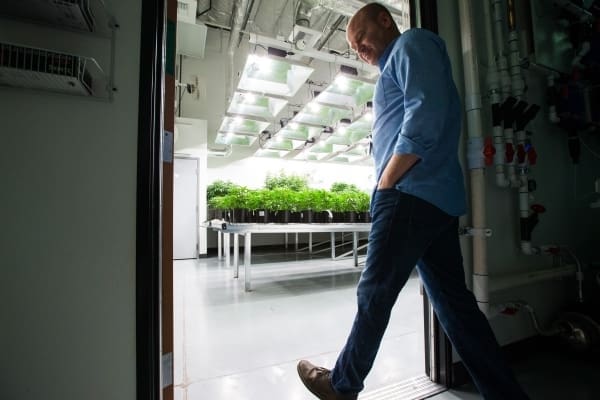
 Ahead of a possible Utah medical marijuana ballot initiative in the Fall of 2018—and in light of the LDS Church signaling its opposition to the initiative—Mormon Stories seeks to have an open, facts-based discussion about the medicinal uses of marijuana and the LDS Church’s role in the legislative process to prevent its passage in the state of Utah. To begin that conversation, we continue our interview with Andrew Jolley—an entrepreneur in Nevada who started The+Source dispensary in 2013 after Nevada passed legislation allowing the use of medicinal marijuana in that state.
We cover:
- What Andrew learned about the medicinal and societal value of marijuana that lead him to become involved
- A historical discussion about the political and cultural motives to making marijuana illegal
- The economic impacts seen in the states that have chosen to legalize marijuana use
- The medical impacts of the different types of cannabinoids found in marijuana
- Efforts made ‘behind the scenes’ by the LDS Church to oppose the initiative to allow for medicinal marijuana use
- What Andrew believes Utahns should do to inform their decision on legalization
If you missed our incredible interview with both Andrew and his wife Allison as they discussed healing their marriage during a faith transition, you may find that here.
Episode Transcript
Host: John Dehlin · Guest: Andrew Jolley
This transcript is machine-generated and lightly edited for readability. The audio is authoritative. Please excuse occasional errors in names and spelling.
Introduction and Andrew's Unlikely Path to Cannabis
Part 1 of 2 · Ep. 911
John Dehlin [00:00:31] Welcome back everybody to part four of this epic interview with Andrew and Allison Jolley. It's been an amazing ride to talk about their faith, their faith journeys, their mixed faith marriage, their marriage on the rocks, and then how they healed and how they're happier and healthier now than ever.
John Dehlin [00:00:49] We are now ready for part four of this interview. And part four of this interview I think should be its own five hours, but we'll do an hour or so and. But it's a really important topic because, you know, as I was sort of thinking about this, I think about, you know, there, there are only a few states, I think, in the nation, in the United States of America, where both medicinal marijuana or cannabis use is legalized, but also recreational cannabis or marijuana use is legal.
John Dehlin [00:01:19] And so when you think about what families or what couples would be at the forefront in one of the most progressive states in the country on marijuana and cannabis use, you wouldn't think it would be a Mormon postmormon couple who would be at the forefront. And incidentally, a lot of the Jolley's entrance into the cannabis or the marijuana business or industry came while they were still Mormons and they were still both, you know, engaged in church. And so this is particularly relevant because right now Utah is facing another year where they're considering whether they want to allow the medicinal use of marijuana or cannabis. And it's an issue because recently in the past week or two, the LDS Church used, I think, the Utah Medical association as a front.
John Dehlin [00:02:13] They sort of wrote some, you know, some expression of concern about the current legislation, which basically we all know that the way the LDS Church works is they, they find some front to express concern and then they sort of use them as a shield to then say, yep, well this, this authoritative body of, you know, the Utah Medical association has expressed concern and, and so we're going to go with them. And so, you know, when we really know that what the Church does is it decides what it wants and then it finds it communicates to an organization to sort of do whatever it can to make the statement that the Church wants.
John Dehlin [00:02:49] So then the church can point to them and then it can depress the vote and manipulate the legislative process in a sovereign state. It's done that with, you know, two party recordings. It's done that with same sex marriage in the past. It's done that with, you know, anti discrimination legislation. It's done that on a host of issues and it's doing that now. So we have the church in an indirect way coming out against medicinal marijuana in the State of Utah. But we have a really cool ballot initiative where, you know, political action committees or lobbyist groups who are pro marijuana or medicinal cannabis use, they've gone to every county in Utah and, and they've raised, they've gotten the number of signatures on petitions to allow this question to be put in front of the state for a popular vote such that the citizens of Utah can vote on whether they want to allow medicinal marijuana use.
John Dehlin [00:03:47] But I've been told through a source I won't name, that the LDS Church is actually actively trying to undermine and subvert that petition process by getting people to recant their signatures so that within the month process between the submission of all the signatures and the actual certification, the church is actually proactively behind the scenes getting people to reverse their signatures so that they can decertify in enough counties to undermine the potential of the state to actually vote medicinal marijuana in. And so we're at a really critical stage in this process. And those of you who are active or orthodox or devout Mormons, I know what you're thinking.
John Dehlin [00:04:32] What you're thinking is drugs are bad and marijuana is bad, Pot's bad, any substance is bad, alcohol is bad, everything's bad. And this is bad because drugs are bad. And this is bad because if we allow medicinal marijuana, it can be a slippery slope to recreational use. And that's bad. And most importantly, if the Church says it's bad, then it's bad. And so that's where we are. And we have, let's just say five or six, seven months until the November elections. If this petition can be ratified, then we have several months until the actual vote's going to take place. And so, you know, when Andrew heard about the Church's position on medicinal marijuana, when I found out about it, I'm like, what can we do to talk openly about it, to gather the facts, to gather the evidence, to understand this situation.
John Dehlin [00:05:24] So we're not thinking from our Mormon brain where we've outsourced our moral authority to some other institution that may not be making decisions based on science, based on evidence, based on the well being of the citizens of the state, but instead they're making it on sort of 80 or 90 year old octogenarians who are, you know, were raised in the Cold War or the, you know, baby Boomer era and are sort of imposing their moral values on all of us through the legislative process. We, let's have an open discussion about this whole process. So that's why we're on. And so the question that I'm gonna start with you. How in the heck, Andrew Jolley, does a couple who's lds, who's Mormon, get into the marijuana business? And why?
Andrew Jolley [00:06:06] I never used cannabis growing up, never touched it, never used any drugs or alcohol. And so in many ways, I am one of the least likely people to find in this industry, especially as immersed as I am in it.
Andrew Jolley [00:06:20] But it's been a long, fun journey. And it's interesting just having spoken about my marriage and the transition that Allison and I have gone through, to layer on top of that getting into the marijuana industry, it added a little bit more fuel to the fire. So let me back up to my thoughts about marijuana. When I was a kid, I thought all drugs were the same. I grew up in the height of the just say no movement DARE programs, you know, the cracked egg in the boiling frying pan.
Andrew Jolley [00:06:57] And, you know, I actually believe that stuff. I believe that drugs were really bad for you and that any amount of use would be, you know, putting your life in jeopardy. And that's part of the reason why I kind of steered clear of that. Even though I had and was around a lot of friends who did use, you know, drugs and alcohol growing up.
Andrew Jolley [00:07:18] But for whatever reason, I didn't partake. I was the designated driver, fast forward till I was 27. Had a dear friend that I grew up with, was one of my best friends, and he had some very systemic health problems that caused him a tremendous amount of pain throughout his body and most of it was undiagnosed.
Andrew Jolley [00:07:44] And in the late 90s, he moved from Nevada to California. He'd actually been in Utah and D.C. and other places and found medical marijuana and discovered that it actually helped him ameliorate a lot of the conditions he was suffering from.
Andrew Jolley [00:08:02] And I actually kind of judged him for it. I thought that it was dangerous because I didn't understand it. And this good friend of mine ended up, after a period, moving back from California to Nevada, still suffering immensely physically through some very, very serious illnesses, went to a pain doctor here was prescribed methadone, the drug that used to get people off of heroin. Went home before bed, took half the prescribed dose, got in bed with his wife and 3 year old daughter and died at 27 years of age.
Andrew Jolley [00:08:39] And that rocked me. He was one of my best friends, someone I love dearly. And he was successfully treating those symptoms and those ailments with medical marijuana in California, where it had been legalized in 1996, but he didn't have access to it here in Nevada. And that opened my eyes and left an indelible impression on me.
Andrew Jolley [00:09:01] And then, you know, my career was in technology and then real estate investments. And when Nevada passed its laws in 2013 to commercialize the industry, that had been legal but not functioning. It was legal to possess medical marijuana, but there were no stores or ways to buy it. You essentially had to grow at home. When those rules came into existence, and ironically that bill was co sponsored by someone who was in our stake presidency at the time, I jumped all over it. I thought, this is something I believe in.
Andrew Jolley [00:09:35] I want to be a part of this movement. I believe in the positive benefits that it can create for society and for the individual. And I just wanted to be a part of it. So we started an 18 month long application process to try to qualify for these medical marijuana licenses and ultimately we were successful and in obtaining those. And I've just been kind of immersed in this industry for about the last four and a half years.
John Dehlin [00:10:05] So what was Allison's reaction? When she's an active, orthodox Mormon and you're telling her, I'm going to start a marijuana business. What was her reaction to that?
Andrew Jolley [00:10:17] Wasn't great at the time. And to be honest, I didn't tell her for a very long time because it was a competitive application process. It was, there were 500 applications for 60 licenses or something. I mean, it was ridiculous. And so we, I kind of downplayed it. So yeah, looking into it, researching it, because I didn't want to create, I didn't want to have this big fight about something that was theoretical. And as it got closer and closer to the application deadline and everything, we finally had to talk about it. And you know, she was not too stoked about it, mostly because of, you know, appearance purposes her family, neighbors, church may not understand or whatever. But as we actually talked about it and sifted through the fact versus fiction, she quickly became a supporter. And I have to give her credit for being a huge supporter and guide all along the way.
Applying for Licenses and Building a Business
John Dehlin [00:11:17] Okay, so you, you decide you're going to apply for these licenses and that's before. Did you even know how to grow it? Did you know what it meant to, you know, to, to produce it? Did you know the economics of it and, and how, what the profit margins were like, how do you enter into business and what information did you have to kind of lead you?
Andrew Jolley [00:11:40] So the legislation passed summer of 13 and a good friend of mine I'd grown up with who's in the industry in California, recommended that we take a look at it. And I just kind of immersed myself in researching all things cannabis from the economic benefits and, you know, basically understanding the economics of the industry, the plant itself, the medicinal properties, the risks involved, federal law, operations, I mean, all of these things traveled around to various states where, where medical marijuana was legal and just did a lot of research. I treated, really treated it like a real estate investment, you know, and. And just tried to look at it from every possible angle and settle on my overall impression.
Andrew Jolley [00:12:23] I read an amazing book called Weed the People that really helped illuminate the history of marijuana and its place in modern society and culture and understanding. And it was through this research that I did that I really became not only convinced that it was right for me and for a good business opportunity, but I became incredibly convinced of the good that legalization and that the medical benefits can provide to individuals and to society in general. And so I became, fairly quickly, within about three or four months, very, very, very excited about the prospect, even though I was super intimidated by it.
John Dehlin [00:13:04] So a cynical person might say, well, you just saw dollar signs, right? You just saw an opportunity to make a ton of money. I get the sense you already making money in whatever your career was before this, but tell us about what you, you know, and we all know about confirmation bias, which is that you find the evidence. You're.
John Dehlin [00:13:21] If you see dollar signs, if you see an opportunity to make a ton of money, then you're going to favor the information that sort of buttresses your point of view, but you're going to downplay or ignore any evidence to the contrary.
John Dehlin [00:13:34] But I also respect you as an intelligent person that cares about truth and that wants to stay informed. So talk to us about what you learned about the medicinal value, about the societal value, about the, you know, governmental or social value of legalized, at least medicinal. And then if you want to talk about recreational separate from medicinal, that's a lot to talk about. But just tell us everything you learned.
Andrew Jolley [00:14:03] Yeah, sure. The beautiful part about that is that you don't have to, you know, think about confirmation bias a whole lot, because guess what? All the good things we thought would be happening are happening. The data, in my opinion, are clear. Right. We've now been at this long enough to kind of see what's happening. We see the drop in opioid overdoses in the 29 states where medical marijuana is legal, especially the states where they've commercialized the industry, like Utah is trying to do.
John Dehlin [00:14:36] So talk about that. People are using opioids for pain, a host of problems.
Andrew Jolley [00:14:42] Opioid is the answer to almost every medical problem you can Ask these days, it seems like. And so, yeah, we are misusing over prescribing and overusing opioids at a massive level. And they, unlike marijuana, are actually the gateway drug to really hard things like heroin is what we're finding. And so basically everything that the naysayers, including the church or whoever says is going to happen, the reverse happens when it comes to marijuana legalization, almost without exception.
John Dehlin [00:15:14] Yeah, I just want to say that I'm not an expert. We've done a few episodes of Mormon stories about opiate addiction and what you find out is it's highly addictive, it's over prescribed, and then once you get hooked, you can't get off of does lead to heroin use. We've got several episodes if you want to go back and listen to Dr. Dan Lonergren and a few, you know, heroin addicts that we've had on Mormon stories. It's a harrowing tale of how incredibly addictive it is and it's ineffective. What we find is that after you've used opioids for six months or a year, it not only doesn't solve the pain problem anymore, it actually creates additional pain.
John Dehlin [00:15:55] And so you've got all these people dying, risking their lives, addicted to these opiates, and it's actually not even no longer serving its, its initial purpose. And so, so it's, you know, what's. How does marijuana offer something different to someone who's struggling with pain?
Cannabis vs. Opioids: History and Medical Benefits
Andrew Jolley [00:16:15] Well, first of all, I would say in order to understand either opioids or marijuana, you have to go back to the history. You have to. Right. You have to. We as a society need to understand why and how marijuana became illegal federally in the first place.
Andrew Jolley [00:16:31] As a society, we have to understand how opioids came about, their discovery, their implementation, the fact that for 30 years, the medical community and pharmaceutical companies taught us and told us and promised us that these were not addictive, knowing full well that they were. We have to understand that history. But to get back to the differences, opioids are derived from the opium plant, but that are highly synthesized and mixed with other things.
Andrew Jolley [00:17:04] The drug fentanyl is 80 times stronger than heroin and has gotten incredibly popular as an opioid, as a pain reliever and other things. Incidentally, the manufacturer of fentanyl was the leading opponent to marijuana legalization in Arizona during the last election.
Andrew Jolley [00:17:28] And so it shows that there's a financial interest that some of these entities have in the marijuana versus opioid debate. Marijuana is a natural plant, thousands of different strains, thousands of uses Thousands of benefits, medicinal benefits being one of many categories.
Andrew Jolley [00:17:49] It isn't physically addictive. It can be psychologically habit forming. Like many, many, many things, almost an unlimited number of things can be habit forming. But marijuana hasn't been shown to be addictive. If you start using too early, before your brain's fully developed, the risk of habit is higher. And there are now diagnosable conditions for people who use too much cannabis. But that's not really that surprising. Anything can be addictive. The difference is, is that, you know, strains of marijuana cannot be patented. There's actually a legal argument being fought out right now whether or not that's the case. But the general legal principle is that anything that occurs naturally in nature cannot be patented, whereas opioids that are highly synthesized are patented and sold and highly addictive and very lucrative.
Andrew Jolley [00:18:44] So the whole business model when you look at marijuana versus opioids is very, very different. And I think the pharmaceutical companies are very, very afraid right now about the potential use and the potential economic impact of federally allowing people to use a plant they can grow in their backyard or buy from their neighbor or go to a dispensary and get. You kind of skip the pharmaceutical guys in a lot of ways. So I think they're very afraid of that, and I think they're taking steps to basically block further developments within, you know, the marijuana industry.
John Dehlin [00:19:22] And so when somebody's in, let's, you know, there are lots of uses, I think, for. Somebody said we should call it cannabis, not marijuana. Is there a reason why someone would say that?
Andrew Jolley [00:19:32] Yeah, yeah, yeah. Marijuana is a. Is a prohibitionist term that came about in the 1930s when the reefer Madness movement came about to make marijuana illegal for the first time. But prior to that, you could buy cannabis products at any pharmacy in the United States. It was used a lot for various things, you know, indigestion, sleep, nausea, pain.
Andrew Jolley [00:19:57] It wasn't terribly understood. But cannabis is actually one of the oldest domesticated plants that humans have used for many thousands of years. This is not a new thing. We just were screwed up about it for 80 years in the United States, and that actually was spread across the world. So we are kind of catching up right now on cannabis and having left that out of all of the medical research and development that's happened over the past 80 plus years. Marijuana is a derogatory term that was meant to reframe. It was a PR move to reframe the discussion. The people who used marijuana recreationally, at least in the 1920s and 30s, were brown people.
Andrew Jolley [00:20:49] They were immigrants from the Caribbean, from Latin America and other places, and African Americans. And so the racist people who were behind the Reefer Madness movement, namely Harry Anslinger, came up with a term to scare people, and that term was marijuana.
Andrew Jolley [00:21:10] So we use it, it's part of our vocabulary, but it actually has a pretty negative connotation and negative history. Sorry for the long winded answer.
John Dehlin [00:21:21] No, no, this is actually super important. So why would who. Who would have been incentivized in the 20s or 30s to give it a bad name and to make it, you know, illegal? Why wouldn't they have been celebrating its medicinal value? Tell us about that.
Andrew Jolley [00:21:38] That's a really complicated question, but I'll try to break it down as far as I understand it and can explain it if, you know, opioid, okay. This isn't the first opioid epidemic we've had in the U.S. there was an opium epidemic in the early 20th century with opium dens in New York and D.C. and other places in. And there was a growing fear about drug use. And that was legitimate. People were getting hooked on opium back then, very powerful narcotic, and ruining lives.
Andrew Jolley [00:22:16] One factor, another factor, the temperance movement from the 19th century was still flourishing, was still in existence. The idea that, whoa, we've gone too far with drugs and alcohol people. We need to understand this stuff. And there was a virtue that in dismissing alcohol and drugs. So that's another factor that played into it.
Andrew Jolley [00:22:35] And thirdly, you were having the end of alcohol Prohibition in the U.S. okay, that was clear. That was ending. And you had bureaucrats who were formerly in charge of alcohol prohibition who now needed a job. Harry Anslinger, who ended up being the head of the Bureau for Federal narcotics enforcement for 32 years. Like something like seven or eight presidents. He was the second in command at alcohol prohibition. And then he transitioned, ultimately became the head of the Federal Narcotics Bureau.
Andrew Jolley [00:23:19] He had an indelible mark on how our policy and how our laws, you know, developed and changed in that early, you know, early time period. And let me just say, what made marijuana illegal federally for the first time was the 1937 Marijuana Tax Act. It had nothing to do with the health risks or potential for abuse. It had everything to do with financial interests and with his dogmatic theory that all drugs were bad. He tried, Harry tried to have Congress vote to make marijuana illegal because of its health risks. And the federal government actually commissioned a massive study called the LaGuardia Study. The LaGuardia Commission studied marijuana for two years and found that it should be Legal.
John Dehlin [00:24:15] And this is around what year?
Andrew Jolley [00:24:17] This is the mid 1930s. Mid to late 1930s. Harry Anslinger then went around that research and lobbied to have it made illegal by making the tax to sell it about 400 times the street value, thus driving it underground, just like opium had been driven underground. And that is where we took the wrong turn in the road in our country's history with regard to this issue. We drove marijuana underground. We made it an illegal organized crime, you know, to grow and sell the stuff. And instead of properly understanding it and regulating it, we've been paying the massive consequences ever since.
John Dehlin [00:25:02] Okay, so it was driven underground, and for a long time it's been a. No, no. It's been classified as what level.
Andrew Jolley [00:25:11] In 1971, it was put on the permanent list as a Schedule 1 drug, which means that it has no health benefits whatsoever and has the highest potential for abuse of all known drugs. Cocaine and meth, Schedule 2 marijuana, LSD, heroin, Schedule 1. It's very ironic that was done by the Nixon administration. There's two bad players in our history regarding marijuana, Harry Anslinger and Richard Nixon. They're both assholes, and they both were racist people, and they did not understand the issue. And for political reasons, they both drove marijuana underground and made it illegal.
The War on Drugs and Criminal Justice
John Dehlin [00:25:59] And I just want to maybe add a tiny bit. There is a brilliant movie that I've referenced a couple times, and I just want to reference it again. The movie's called 13th. It's on Netflix, and it talks about how.
John Dehlin [00:26:13] And forgive me if I get the history wrong, but it talks about how after the civil rights movement won, which meant many Republicans and racists kind of. And I. I'm not saying Republicans are racist bigots. I'm not saying that. But I am saying that there was a time where Lyndon B. Johnson and John F. Kennedy were kind of the champions of the Civil Rights act of 1964, as I understand it. And there were a lot of Southerners and, let's just say Republicans and even some Democrats that were just against civil rights, against the progression of people of color and to some extent, women within the country.
John Dehlin [00:26:58] But once that was sort of, you know, civil rights movement happened, and, you know, the Jim Crow laws were lifted and people of color were allowed to vote. And, you know, the Republicans, and honestly, people who are racist, who wanted to keep people of color down, they said, how do we not allow people of color to sort of rise up from this? Even though we got rid of slavery in the 1860s and we were able to keep the vote away from them for another 100 years in the south through Jim Crow laws. Oh, now people of color are voting in the South. What are we going to do to keep, you know, from their perspective, people of color from rising up?
John Dehlin [00:27:43] And what. What the movie 13th Chronicles is how Richard Nixon and the Republican party, as part of what they called the Southern Strategy, what they did is they decided to use the war on drugs as the way to keep people of color down.
John Dehlin [00:28:00] And so you see incarceration rates, you know, in the 50s and 60s at this low. And then in the 70s, you see incarceration rates skyrocketing, right? Skyrocketing, growing exponentially. This is extremely expensive to our federal government, to our state governments. You know, incarceration super expensive. But what it was really expensive for were for families of people of color because you didn't get the judicial system equally prosecuting, you know, drug offenders, whites versus people of color. You had whites being able to afford, well, being let off, not being targeted by police, them being able to sort of use and purchase and sort of not have the same legal retribution.
John Dehlin [00:28:50] But then you had this crackdown on people of color, and they're incarcerating, you know, black men and Hispanic men at these incredibly astronomical rates. And as you see the incarceration rates of people of color skyrocket between the 70s and today, you see that that incarceration was heavily, disproportionately, people of color. Like 30, 40% of the incarcerations, that's my number, are people of color. And you actually hear some of these Republican strategists, and I'm not against Republicans, I'm not, but this is just a fact in this documentary 13th, you hear these Republican strategists saying, we can't have people of color rising up. Let's use drug laws, the war on drugs, and incarceration as the way to destroy the families of people of color, incarcerate the men in the families.
John Dehlin [00:29:45] And then we see how this cycle of poverty has continued across generations as heads of households, fathers of people of color, were incarcerated, and disproportionately so. And that led to poverty, a lack of education, a lack of support, which leads to more drug use, which leads to more incarceration. And the phenomenal cost, the tax cost, the social cost, the cost of poverty, and the cost to these real families has been astronomical. I'm sorry for that sort of segue, but that's something that I just learned this year. Do you want to add anything to all that? Did I get it wrong?
Andrew Jolley [00:30:27] Like, have you Studied that great documentary. I have studied that. And it's an important part of our history as a country. And it's the turning point. Marijuana, it's not just about getting high. It's not even just about helping somebody find treatment for a disease or for an illness. It's much, much more than that. It's about fairness. It's about correcting our mistakes of the past. And this war on drugs will be looked at as one of the most evil, horrendous practices that we implemented as a society. Private prisons damaging families for generations through incarceration. And all I would like to do is add one last thing for the skeptics out there who may believe, who may think, well, anyone can make a documentary. And John's drinking the Kool Aid. This quote that I'm about to read is absolutely fascinating. I want to tee it up. Do you know who John Ehrlichman was, by any chance?
John Dehlin [00:31:20] He was, wasn't he a Supreme Court justice?
Andrew Jolley [00:31:22] No, he was in the federal government. Okay. He was the domestic policy advisor for Richard Nixon.
John Dehlin [00:31:29] Oh, right, Ehrlichman, Yep.
Andrew Jolley [00:31:30] Ehrlichman.
John Dehlin [00:31:30] Yeah.
Andrew Jolley [00:31:31] He actually ended up being involved in Watergate and served, did a sentence in prison. Right hand man. You can't get more senior than this in his administration. He died in 1999. In 1994, he was interviewed by Harper's Magazine by a guy named Don Baum, Dan Baum. And what's interesting about the interview, it was never published, but it was the contents of that and the recording of that interview was released in April of 2016.
Andrew Jolley [00:32:02] And I want to go back and read what John Ehrlichman, the highest domestic policy advisor for Richard Nixon, said about marijuana. This is his quote. Do you want to know what this was really all about? The Nixon campaign in 1968 and the Nixon White House after that had two enemies, the anti war left and black people.
Andrew Jolley [00:32:30] Do you understand what I'm saying? We knew we couldn't make it illegal to either be against the war or black. But by getting the public to associate the hippies with marijuana and the blacks with heroin and then criminalizing both heavily, we could disrupt those communities.
Andrew Jolley [00:32:48] We could arrest their leaders, raid their homes, break up their meetings and vilify them night after night on the evening news. Did we know we were lying about the drugs? Of course we did. John Ehrlichman. Guys, that to me says it all. That was the frame of mind. That was the thought process. That was the philosophy behind the war on drugs. And look what it's gotten us And
John Dehlin [00:33:20] I don't want to sound too conspiratorial, but the other thing this documentary 13th brings out is how as we've privatized the federal prison system, what you have are these multi billion dollar corporations running the prisons, draining our tax dollars. And then they're writing the legislation that then gets put back into Congress so that policemen and law enforcement agencies, local and federal, can incarcerate more people. So again, you've got these prison corporations writing legislation knowing that they get a certain amount of dollars per person incarcerated. So they're writing laws to make sure they can incarcerate as many people as possible so they can make as much money as possible. And it almost sounds conspiratorial, like New World Order, Rothschild conspiracy kind of John Bircher kind of stuff. But I think this is kind of real.
Andrew Jolley [00:34:13] Look at Louisiana. Look at the financial incentives that parishes have for private prisons in their parish, they get a cut of the revenue from every prisoner that's put in a private prison today. And you couple that with the three strikes rule where they have very harsh sentencing. There was a man named Bernard, a father of five in his early 50s in 2013, who was sentenced to 13 years in prison for possessing two joints. That's Louisiana. And that is illustrative of how flawed our approach has been to marijuana for the last 80 plus years.
John Dehlin [00:34:56] Yeah. And Larry, Larry writes something really important, which is that Bill Clinton, the Democrats, signed into law the strictest drug bill ever to come for Congress. You are right, Larry. Yep. We don't, we're not. I don't believe in picking on Democrats or Republicans. I don't really identify closely with either party. But Clinton was complicit in this war on drugs and this movie. 13th totally calls Clinton out on that. Totally is not an issue of Republicans bad and Democrats good.
Andrew Jolley [00:35:24] All, all politicians were drinking the Kool Aid at the time because they knew they couldn't get elected if they weren't tough on crime and tough on drugs. Unelectable if you didn't have meet those two checkboxes. So I mean, I guess it was fine for Bill to smoke it back in college and I want to believe he still does. But it, you know, that those laws were very, very, very. Had negative consequences.
John Dehlin [00:35:50] I'm gonna say something I shouldn't have to say, but I'm saying it anyway. I've never tried marijuana.
Andrew Jolley [00:35:54] What was that? We just smoked, John?
John Dehlin [00:35:56] It wasn't me.
Andrew Jolley [00:35:57] Oh, okay. Somebody else.
John Dehlin [00:35:58] I've never tried marijuana. Never tried a beer. So this, this passion and evangelism for me doesn't come from any personal interest. I may try it someday, but I still haven't. And I just want to know that that's not where we're coming from here. This is from a real concern about our country, about people of color, about people who have real sicknesses and illnesses, about how corporation, corporate interests can sometimes really hijack things and trying to right historical wrongs and set our country in a right direction. Okay.
Andrew Jolley [00:36:30] It's a personal freedom issue. And I was, all the people out there, I was just joking about John using cannabis with me. But yeah, you're right, you totally hit the nail on the head. It starts with the individual. That's where this whole current debate starts with. It starts with the vet who has PTSD and eight opioids from the VA. It starts with a woman, a 60 year old woman with arthritis. It starts with Connor, a 10 year old beautiful boy that has severe epilepsy and autism. It starts with somebody who can't sleep at night and is addicted to sleep drugs. Right? And then that is the conversation opener.
Andrew Jolley [00:37:07] And then people become awake. And that is exactly why this ballot initiative is polling at between 75 and 77% in Utah. Because most people today with a brain and some level of awareness can know somebody or know of somebody who has been positively affected by medical marijuana.
Andrew Jolley [00:37:31] But the conversation doesn't need to end there and it shouldn't. Right? There's much, much bigger issues at play and there doesn't need to be to justify it, in my opinion. But there are much bigger issues like criminal justice reform, like personal liberties. But let's talk about the economic impacts of legalization. Okay? Today Colorado is generating almost $200 million a year of tax revenue that is going primarily to their educational system. They one of the top educational systems in the country. They have one of the top real estate markets in the country.
Economic Impact of Legalization
Andrew Jolley [00:38:09] Their economy is on fire. And a lot of that, not all of it, and actually not even a majority of it, but some of it has been sparked by the marijuana industry. So the economic impacts of legalization are massive and are very, very, very positive. There are about 40 something thousand jobs in the marijuana industry in Colorado today. Today there's about 14 or 15,000 in Nevada and growing. And that same economic impact, positive economic impact will be felt in all states that commercialize the industry, that allow these businesses to operate and to bring marijuana out of the underground illegal market into a legal, regulated, taxed and tested market. That's the beauty of kind of this movement today and where it's going.
John Dehlin [00:39:00] I just want to also say, what does it do to law enforcement? You think about what it's like to live in Mexico right now with drug lords and with policemen being decapitated and citizens being decapitated and then law enforcement agents here in the states that have to do drug busts and arrest people and you know, what does it do for police officers to decriminalize something that is actually not anywhere near as damaging as alcohol and in some ways super healthy for people who need it? What does it do for the police officers and law enforcement?
Andrew Jolley [00:39:33] It lets them focus on more important issues. You know, I mean, 60%, there was a time where 60% of all drug related arrests were for possession. Actually, it was like 84% were for possession only. That's a waste of all of our resources. If someone has a massive amount of drugs and they're harming people, yeah, they should absolutely be prosecuted and arrested. But some guy, this Bernard guy in Louisiana walking down the street with two joints, it's not worth law enforcement's time and energy and cost to harass him and to arrest him.
Andrew Jolley [00:40:04] So it is freeing up law enforcement to focus on bigger, more challenging issues that really negatively affect our society. There are challenges, of course, with legalization. Right. It's in some ways more out in the open and more pervasive, but. And law enforcement needs to figure that out. But overwhelmingly, I interact with law enforcement on a fairly regular basis with the police department here and with others in our state. And the overwhelming sense is that this is not something that they, they don't like marijuana enforcement. They don't want to be in that game of catching people with, you know, de minimis amounts of cannabis. Very few police officers get called out because somebody smoked a joint and is beating their, beating his wife.
Andrew Jolley [00:40:51] It's always alcohol. It's never marijuana. Marijuana does the opposite. He's on the couch eating a pizza, watching the game, not beating his wife. So, yeah, talk about the difference between
John Dehlin [00:41:02] marijuana and alcohol in terms of what it does to people. Go into that a little more detail because we tend to think marijuana is super evil, but alcohol is kind of an acceptable thing.
Andrew Jolley [00:41:11] Yeah, it's a weird jacked up social norm that is actually wrong. I mean, alcohol is. There was a, there was a study done a couple years back. They rated the risk of every single drug out there from heroin, LSD mushrooms, cannabis, alcohol. Alcohol was found to be 114 times more dangerous than cannabis on the overall scale of risk associated with all drugs. And they took into account physical health risk but also risk to others, driving impairment, addiction, the cost of treating addiction. On that whole scale, alcohol was on one end of the spectrum at the highest mark. And guess what was on the opposite end of the spectrum at the lowest mark. And I'll give you a hint. It wasn't marijuana. It was psilocybin. Magic mushrooms. But marijuana was like the second or third.
John Dehlin [00:42:08] So what else? What matches alcohol in terms of danger?
Andrew Jolley [00:42:12] Nothing in terms of its pervasiveness. The thing is, you're comparing a legal substance with a lot of illegal substances, so there's something inherently biased about that comparison. Right. I'm not saying that everyone who drinks alcohol is going to have problems, but in terms of its impact to society, the negative consequences and outcomes of alcohol are much greater than just about any other illegal drug. So, yeah, I mean, alcohol doesn't have any health properties. You know, it. It leads to some good stories and good conversations, and it loosens people up. And there's. There's value in that. Nothing wrong with that, but it doesn't fix anything, whereas many other drugs.
John Dehlin [00:42:59] But it can also make you angry. It can impair your driving totally. It can lead to DUIs.
Andrew Jolley [00:43:04] Yeah. And it does.
John Dehlin [00:43:05] It deteriorates your health. It's bad for your brain. Like, and I'm. I'm not even. Like, don't. I'm not like, I'm. People can responsibly use alcohol. I'm not like an enemy of alcohol. But objectively, it can make you meaner. It's a depressant. So if you are a person who's prone to mood disorders or depression, it's actually increasing your depression again, it can make you violent. It can impair you in driving. So, I mean, it's a really problematic substance. And I was just saying on an individual level, I kind of think of, like, meth, cocaine, heroin as being, like, super awful bad. Right? Yeah.
Andrew Jolley [00:43:44] And even within that, I would. I would rank them. But yeah, for sure.
John Dehlin [00:43:48] But. But alcohol.
Andrew Jolley [00:43:50] Alcohol doesn't have any health benefits. The difference with alcohol is that in our society, we have tried to learn how to use it in moderation. Not many people use crack in moderation. Like, oh, yeah, I just did a little crack to help me through my meeting. I mean, that doesn't happen. Right. Or I had a little crack with my dinner. You know, there are certain drugs that are so harmful and so powerful that they should be excluded from normal casual use, but that doesn't mean they should be illegal. Because when you make something illegal, all you do is drive it underground. Drive it to the black market and incur the societal, the law enforcement, the economic costs of then enforcing those laws.
Andrew Jolley [00:44:33] And if we've learned anything from the drug war, we should have learned that it is simply not worth the cost. It's not worth the cost to society, it's not worth cost to the families. We need to follow Portugal and other countries who have legalized drugs and then poured an enormous amount of resources into treatment and prevention.
Andrew Jolley [00:44:56] Let's treat it for what it is. And that is a health concern, not a criminal concern. Unless someone is being victimized, then it should be a criminal concern. But if someone's using a drug and they're not hurting other people, that person may need help. They don't need to be put in prison. That only exacerbates the problem.
Medical Uses and Chemical Properties of Cannabis
John Dehlin [00:45:18] Talk about, you've talked about arthritis and sleep disorders and cancer patients who are nauseous, kids with epilepsy. Talk about the chemical properties, the medicinal properties of cannabis so that we can understand in what ways it acts as a medicine for people who have need.
Andrew Jolley [00:45:41] Marijuana is not a cure all. It's not gonna do everything, but it does a lot. And the coolest thing about marijuana is it's been totally left out of our medical research for the past 80 years. We haven't been able to study it because it's been a Schedule 1 drug for so long. So if you think about all of the advances in healthcare treatment and in pharmaceutical drugs and in science, marijuana has been excluded from the vast majority of that. I mean, we're going back to the days of vaccinations, right, where they were still being discovered. Marijuana has been left out of all of that research and understanding.
Andrew Jolley [00:46:20] But even notwithstanding that, we still know a lot about the benefits that that medical marijuana can provide. We know, number one, that all mammals have what is called the endocannabinoid system. All mammals are designed to have marijuana receptors.
Andrew Jolley [00:46:42] It's called our endocannabinoid system. Humans have evolved with cannabis. We are built to use cannabis. Now we also have opioid receptors. Okay, so it doesn't mean that simply because we have a receptor that, that we should use it unlimited and indefinitely. But what it does is Dr. Meshoulam from Israel taught us and showed us that our bodies have special interaction with these cannabinoids. The cannabis plant has about 100 cannabinoids in it. These are the chemicals that make up all of the different medicinal properties. The most common cannabinoid is thc.
Andrew Jolley [00:47:19] And THC is the only one that that actually makes you high that has any psychoactive effect. So all these other cannabinoids in cannabis have different medical properties. Cbd, cbn, cbg, and all of these things do different things. Cbn, for example, has been shown to help with sleep a lot.
Andrew Jolley [00:47:41] THC mixed with CBD has been shown to help with pain. CBD has been shown to alleviate inflammation, which is excellent for things like muscle aches, joints, arthritis, where you have, you know, bone on bone or cartilage rubbing or deterioration, these kinds of things. And guess what else? CBD is good for helping to regulate our nervous system. So if we have involuntary twitches, if we have seizures, if we have a stutter, if we have these involuntary movements in our body, we see a lot of Parkinson's patients that come into our stores.
Andrew Jolley [00:48:19] Cbd, cannabidiol actually helps regulate that, helps the body moderate and modulate those misfirings, if you will, in our nervous system and helps kind of relax those muscles. There's a lot that cannabis does and can do. And the beautiful part is we're just now kind of figuring it all out through a lot of trial and error. I look forward to the day where we can study it and have clinical trials and actually really understand this plant and all of its constituent properties like we do so many other things.
John Dehlin [00:48:52] So what about recreational use then? So what if somebody says, all right, I get it, synthetic drugs are like, fake and can be super harmful to your system. But cannabis has evolved with us, and it can be an important medicine when you're getting chemotherapy, when you have arthritis, when you're really sick or having chronic pain or can't sleep. But recreational use is evil. And, you know, do you have any thoughts on that?
Andrew Jolley [00:49:24] Oh, yeah, I have a lot of thoughts on that. Yeah. Because I thought that way, too, for a long time, to be honest. You know, but here's the deal. Every user of cannabis is on a wellness spectrum. Whether you like to admit it or not, whether you understand it or not, whether you're aware of this or not, Everyone is on that spectrum. So even the most hardcore stoner, who is a wake and bake kind of guy, could be using that instead of heroin, right?
Andrew Jolley [00:49:56] Or instead of alcohol. What is better for him and for society. I'm not condoning that kind of consumption. I don't think it's healthy. But I think at the end of the day, we're adults and we need to have the freedom to make those kinds of personal decisions ourselves.
Andrew Jolley [00:50:12] And so I wrestled with legalization. Even when I was applying for the medical licensing. I wasn't sure how I completely felt about it, but I have become very settled, and it's not just because I'm in the business. Everyone should have the personal freedom to make that decision for themselves. If people can decide to recreate with a can of beer, why couldn't they enjoy a joint or a vapor pen or an edible or a capsule? What's the difference morally? The only moral difference is that some guy a long time ago had a political vendetta.
Andrew Jolley [00:50:46] And because of that, we have a social norm that tells us alcohol is okay and marijuana is not. Go to anyone in Utah who is opposing this ballot initiative and say, do you think we should make beer illegal?
Andrew Jolley [00:51:02] And the vast majority of people would say, absolutely not. That was a disaster. Al Capone, Mayhem, underground market. Then why the hell is marijuana still illegal? And why is it Schedule 1? The logic makes no sense. The logic really breaks down, but the leap from medical to recreational is not as big as it should be. Okay.
Andrew Jolley [00:51:24] Once you understand that many, many, many people use cannabis as a substitute for some other product to recreate, or they use cannabis medicinally but may not qualify for a marijuana card, then you begin to understand that this is a product that has broad applications that should be used and understood for what it is and shouldn't be judged. We need to stop making assumptions about why people use it and understand that it's a personal freedom decision and they should have the right. Everyone, every adult should have the right to make that call for themselves.
John Dehlin [00:52:03] Now, you did say that, like, use cannabis. Cannabis use before the age of 25 can negatively impact a forming brain for a youth or young adult. Is that true? Any drug used heavily, including SSRIs, right?
Andrew Jolley [00:52:19] Including anything. Including Adderall? Including anything. You know, what I've learned is that the brain during adolescence doesn't develop linearly. It's not like there's like a certain, you know, rate at which the brain develops. It's very irregular. And if, in what the studies have shown is that if your brain is going through one of these intense developmental cycles, like our bones grow in spurts, and I've had my own children say, man, my bones really hurt. That's because you're growing. If your brain is going through that and at the same time you're taking very large quantities of any drug, you are at a much higher risk of having developmental problems, of having addictions, of having all kinds of psychological problems like schizophrenia.
Andrew Jolley [00:53:09] There has been a link with a small increase in the chances of developing schizophrenia with youth marijuana usage. And there's a lot of reasons for that because people who use illegal drugs sometimes do all kinds of illegal drugs right but specifically with marijuana and the reason is is because if you are using an enormous amount during that developmental cycle you can have an increased risk of that. Now in the grand scheme of things it's nothing compared to some of these harder drugs but there is still a risk and that's why I advise my children, I teach my children if they are going to use cannabis number one invite me and number two wait till your brain is fully formed.
Andrew Jolley [00:53:54] You're going to have a long time to explore all the beautiful things that God or somebody or us planted all around this planet. Tons of beautiful plant medicines out there not just cannabis. Use it appropriately and wisely and responsibly at the right time. Under no circumstances should you be using any drugs when your brain is going through that kind of developmental phase. It's not worth the risk.
John Dehlin [00:54:17] It.
Risks, Productivity, and Safety Compared to Alcohol
Part 2 of 2 · Ep. 912
John Dehlin [00:00:26] What about this idea that. And I was just trying to pull together this philosophy as I was thinking about my own objections or concerns. You know, we have these receptors, we have oxytocin, we have dopamine, we have, you know, all these good things that you feel at the appropriate moment, you have sex in orgasm, you get this rush of dopamine, you, and that's, you would think that's evolutionary built in, because evolution wants us to propagate our DNA, so it wants to give us positive reinforcers. So if we have the right behavior, you get the right positive reinforcer. So if you had sex, if you have sex, which spreads your DNA, which helps populate the species, then you get the positive dopamine, you know, oxytocin kind of thing.
John Dehlin [00:01:12] If you fall in love, you get the positive things because you want, you know, healthy relationships and healthy, healthy families, raising kids. If you exercise, you get the right kind of chemicals. If you eat the right foods, you get the right types of chemicals. So yes, your brain, you know, all these drugs act on a system that exists within you. But in a natural course of life, those good feelings get invoked when you do the right behaviors. Right?
Andrew Jolley [00:01:40] Yeah.
John Dehlin [00:01:41] When you take drugs, sort of like you're pulling the lever on those positive feelings without doing the positive behaviors that you should be engaging in. Right. So instead of falling in love and having a wonderful family, where you earn those good feelings, you just take the drugs and get the good feelings. So what about sort of the idea that anytime you're self medicating, anytime you're trying to get those good feelings without earning them in the evolutionarily productive way, you're, you're short circuiting the system and potentially doing damage.
Andrew Jolley [00:02:23] We are always on drugs 24 hours of every day. You're the premise of your question I would disagree with. What I mean by that is there are certain chemicals in our body. Serotonin, dopamine being good examples of those are very similar to the chemicals that we derive from everything we put in our body.
Andrew Jolley [00:02:51] Food, drink, medicines, etc. It is impossible to pick a moment in time, John, when your body hasn't been on those drugs. Here's the problem. We call them drugs, we don't understand them for the chemical compounds they are and how they interact with our body. Now, I'm not saying we should use cannabis recklessly all the time, but we just need to understand that it isn't as if we have to earn the right to use these products, these products, when used responsibly at the right time, in the right dose, in the right setting can be very helpful. Even if we consider them to be exogenous, they're coming from outside of our body.
Andrew Jolley [00:03:31] But. And so I would disagree with how that whole question is characterized, because we are already doing that all day, every day. You know, the worst drug we put in our bodies every day in quantity wise?
John Dehlin [00:03:44] Sugar.
Andrew Jolley [00:03:45] Yes, sugar is a drug. And guess what? It's way more harmful than a lot of the other things that we label as drugs. Right. And we're just now starting to pay attention to that as a society. So I agree with the underlying premise of the question, which is how do we make wise decisions about the chemicals and the substances we put into our body? I totally am on board with that, but I don't think it's useful to draw the distinction between food and plants and medicine and all these kind of things by mislabeling them and calling them things that are, in my opinion, not accurate. Did that sound really condescending and like a dickish comment?
John Dehlin [00:04:29] No, it was good. What about the perception that marijuana makes you lazy, it makes you stoned, it makes you dull, it dulls your intellect, it makes you less productive, that. That you get kind of addicted to it, and then you're just kind of a burnout, wastoid, you know, dope, dope guy. Like, what. What about that perception? Like, I can think of, like, stoners, right? I can think of in high school, I had some super close friends that were, like, on the debate team, straight A's, really sharp kids, and then they start doing marijuana, and all of a sudden they're like, grades drop, lose their motivation, and they're just kind of. They're just kind of burnouts.
Andrew Jolley [00:05:14] And is that a representative sample of everyone that used marijuana at that time in your community?
John Dehlin [00:05:20] No, I'm just saying. But what about that as a risk?
Andrew Jolley [00:05:22] Yeah. Yeah. And my question wasn't meant to be a Snyder market. It's just, number one, we need better data, because that anecdotal experience of the stoner on the couch, there is some truth to that. Right? Marijuana does make you tired. Okay? It can temporarily kind of lower your motivation. But for other people that we don't hear about or see on the couch, it actually raises their creativity. It enables them to be more productive in their lives. So I just want to make sure we're being fair about how we're characterizing the users.
John Dehlin [00:05:58] It can temper their anxiety so they're able to function. So it may bring some people down in a. In an unhealthy way. But other people that are too amped up and too jacked up with whatever natural anxiety or disposition they have, it can bring them down to a functional level. Is that kind of what you're saying?
Andrew Jolley [00:06:15] Absolutely. And there are a hundred people that fit that category for every one guy that's eating Cheetos on the couch, blazed, making us all look bad. Those people exist. We all know one or two. Right. But those are not representative of Cannabis users. About 15% of the adult population in the United States uses cannabis today. And by trivializing the argument to that level, we're ignoring the 99.9% and looking at the point.
Andrew Jolley [00:06:50] But that's not to say that that in that specific case, that guy or that girl were being. We're making bad decisions. That's true. And cannabis probably isn't for them. Right. At least not that amount and that quantity in that time. So, yes, there's validity to that argument, but no, it is not representative of the people that walk through our doors every day in our stores. It's not why they're there.
Andrew Jolley [00:07:14] They're there to be on this wellness of this spectrum of wellness that could be from the hardcore cancer patient or epileptic patient to somebody who just wants to use a little bit of cannabis and watch the game instead of drinking a beer. A lot fewer calories, too.
John Dehlin [00:07:38] What about this is a. You know, I have a close friend, Kevin, that was a real advocate of. Of cannabis, and he made this point that, like, no one's ever died, no one's ever overdosed on cannabis, and no one's ever, like, drunk. And I know there's DUIs under the influence of cannabis, but I've been giving the impression that you really don't get people driving more unsafely or like, the type of, like, accidents that are associated with Mothers Against Drunk Driving.
Andrew Jolley [00:08:09] Yeah.
John Dehlin [00:08:10] You don't have the same sort of impairment. So talk about the safety of marijuana relative to alcohol.
Andrew Jolley [00:08:17] Yeah, sure. A couple of thoughts come to mind. First of all, let's talk about LD50. You know, from your training, I'm sure that every drug has an LD50, a quantity at which consuming it would make it lethal to a human being. Right. There is no LD50 for marijuana. There's no quantity at which marijuana will kill you because it doesn't attack, it doesn't shut down our vital organs. It is like ibuprofen, in a sense that it kind of blocks our receptors and changes the way our receptors work, but it doesn't actually change physically the way that our vital Organs work. So you cannot die from taking marijuana. However, there are people who feel like they're dying because they took too much. And usually that's associated with eating an edible, but. So you can overdose, but you cannot die from an overdose, if that makes sense. You can accidentally take too much and that happens. Unfortunately.
John Dehlin [00:09:20] It can make you often not kill you, correct?
Andrew Jolley [00:09:22] Yeah, yeah. It can make you sick, but it cannot. Marijuana cannot kill you in and of itself.
John Dehlin [00:09:28] And alcohol and opiates will kill you.
Andrew Jolley [00:09:30] Absolutely, yeah. I've personally known five people in my life, not close friends, but friends of the family and people in the community who have died from opioid overdoses. And those are tragic and those are preventable. And those come from taking the drug, usually, versus a death associated with cannabis. Might be somebody was driving while impaired and caused a crash. It's not the drug. It's the behavior that killed that person. And that's unfortunate. And the people that I know in the marijuana industry really take that seriously because that is a potential negative consequence of the legalization of marijuana.
John Dehlin [00:10:11] And it's impaired driving.
Andrew Jolley [00:10:12] You're saying it. Yes, it does. And let me clarify what I mean by that. Did you ever watch the Weed, the Special Weed by Sanjay Gupta on cnn?
John Dehlin [00:10:24] No.
Andrew Jolley [00:10:24] If you haven't, that's a great resource. It's very objective. Dr. Sanjay Gupta was staunchly opposed to marijuana for most of his. His medical career, and he decided to take a new look at it. And he spent a whole year researching marijuana, all things marijuana. And one of the things they showed on their documentary is they did a driving test where they. They took a group of people and broke them into categories.
Andrew Jolley [00:10:50] They had them. They were never users or rare users of cannabis and frequent users of cannabis, and the same with alcohol. And they broke these people up into these groups. They had them consume alcohol and drive a car on a closed course. And they counted how many cones they hit, how often they went out of bounds, how dangerous they were. And they quantified this and they did the same thing with marijuana. And what they found was everyone under the influence of alcohol drove poorly when they were drunk across the board. And it was almost a static kind of everyone was terrible. But for cannabis users, it was very interesting.
Andrew Jolley [00:11:34] The people who did not use cannabis often drove pretty poorly. Not as bad as the guys who were drunk, but they didn't drive very good. But people who used cannabis and drove while they were high, people who used cannabis regularly when they were high, they actually drove better than sober people and so or as good at and so the issue with cannabis and driving and doing anything is people who are familiar with the effects and know how to properly dose and properly consume and manage the experience and the effects. Those people are functioning, you know, people that don't have a problem, you know, putting themselves and others in danger for the most part.
Andrew Jolley [00:12:20] The newbies, okay, all you people in Utah who are about to start trying this stuff, be careful, start low, go slow. I was just joking by that people in Utah are already using cannabis, they're just getting it from Nevada. So, you know, the danger becomes when you're experimenting for the first time, you may not know what to expect, you may not know how to manage the experience. And you could put yourself in precarious situations again, especially when you're dealing with edibles.
Nevada's Experience and the Cannabis Industry Today
John Dehlin [00:12:55] Really quick. Do you get the sense that Nevada is better off? Your role. You're president of the Nevada Dispensary, what is it called?
Andrew Jolley [00:13:05] Yeah, the Nevada Dispensary Association. Yeah.
John Dehlin [00:13:08] Do you get the sense that those who are trying to look at this objectively, the data objectively, are feeling like Nevada's better off? And if so, how is Nevada better off from legalizing marijuana both for medicinal purposes but also recreationally?
Andrew Jolley [00:13:24] We're replacing the violent, gun toting, illegal underground economy with guys like me, with business people. We employ 160 people in our company. We pay taxes. We pay six different taxes. Every product we sell in our dispensary is tested by a third party lab. So we can ensure that everything that's going out to the public and to our patients and our customers is safe.
Andrew Jolley [00:13:55] Marijuana is taxed at almost 30% in Nevada recreational marijuana, and 100% of that money goes to our education system. So we're producing $6 million a month right now in tax revenue for our schools and that a year ago was going to drug dealers from California and Mexico.
Andrew Jolley [00:14:15] We have seen the disappearance of cartels in states with recreational marijuana, the eventual disappearance as prices go down, they get squeezed out of the market because our products are safer, better, higher quality, and when they become the same price or less, they're out. Simple economics.
Andrew Jolley [00:14:37] We're creating jobs, we're helping people have access to medicines that they didn't have before. We're helping people replace medicines with safer medicines and we're helping people recreate in a safer way. And so in almost every aspect, I think the community and the state is better off. And that's why you see people like Cory Gardner, a Republican senator from Colorado who was adamantly opposed to, to marijuana, who has completely changed his mind and who is now standing up to Jeff Sessions and President Trump saying, guys, you're on the wrong side of this issue. You're on the wrong side of history. We need to protect this industry and help it flourish.
Andrew Jolley [00:15:20] A guy who fought against the legalization initiative in Colorado tooth and nail is now a proponent. John Boehner, the former leader, speaker of the House. He, he's now working for a marijuana company called Acreage, helping them expand, helping to change Republicans minds because that's his community, that's where he came from, that's where he can make a difference. A little bit of education goes a long way and I think the data is very self evident. I think it very much paints the picture that legalization, both medical and recreational, is good for our society.
Andrew Jolley [00:16:00] And guess what the other benefit is most states who have allowed either the recreational or medical legalization of cannabis have also started funds to help fund people with addiction with problem. Let's not ignore the fact that some people abuse cannabis and so let's help treat them too. Let's help them make wise decisions. And those people are going to exist whether or not the industry is legal.
Andrew Jolley [00:16:26] But all of the commerce and the money and the tax revenue that's being generated, in my opinion, from what I can tell, is being used to support good programs and progress for the community.
John Dehlin [00:16:37] And you mentioned this before, I believe. But doesn't opiate addiction and opiate deaths decrease in states that legalize medical marijuana?
Andrew Jolley [00:16:47] Yeah, that's been shown. The studies have been coming out the last last couple years and it's not by one or two percentage points. It's dramatic in some cases and we're just getting started. So I'm really excited to see how that plays out. You know, as we continue to expand marijuana and embrace it in the country.
John Dehlin [00:17:07] Can it be used as a treatment for opiate addiction? Sort of as a replacement?
Andrew Jolley [00:17:12] That's a controversial topic, actually. I personally know people who have Coming off of opioids is one of the most horrific things a person can go through. And you know, marijuana can help lower the tension, lower the stress, lower the anxiety, but it's very individual. I don't think we're at the point where we can say that across the board it should be used or can be used to get people off of other stronger drugs. But I personally know many people and have heard of many people using it for that purpose.
Utah, Mormonism, and the Medical Marijuana Debate
John Dehlin [00:17:48] So let's turn to talking about Utah now and Mormonism as a way to conclude this episode.
Andrew Jolley [00:17:52] Okay.
John Dehlin [00:17:53] Did you read the statement made by The Utah Medical Association.
Andrew Jolley [00:17:57] Yeah.
John Dehlin [00:17:58] What are your thoughts about that statement?
Andrew Jolley [00:18:00] It feels like that's coming straight from Temple Square.
John Dehlin [00:18:03] What does it say? Tell us what it says.
Andrew Jolley [00:18:06] It basically says there's no proof that marijuana really helps people and there are other negative unintended consequences of medicinal marijuana. And basically it's too early. We don't know enough. Let's go slow on this.
John Dehlin [00:18:21] And you did admit that we haven't had a lot of research, but that seems like it's a bit of a conundrum. We haven't allowed the research of it, and then those wanting to prohibit it are saying there's not enough research.
Andrew Jolley [00:18:32] That's exactly right. President Obama, before he left office, asked the DEA to reschedule marijuana. At least look at it. And their conclusion after months of careful consideration was we just don't know enough because it can't be studied. Guess what? You cannot study marijuana when It's a Schedule 1. It's a total circular argument. So their argument from the Utah Medical association, which appears to me to be coming from the church, I mean, this whole, you know, recent law that was passed in marijuana or in Utah allowing people with six months or less to live with a terminal disease to use small amounts of marijuana, have you heard about that?
Andrew Jolley [00:19:13] That was, in my opinion, a ruse to be a half measure. I wouldn't even call it a half measure. I would call it a 1/32 measure of a way to kind of preempt the need for having a full blown medical marijuana program. I mean, that's good for those people who have six months or less to live, but I mean, who does that really apply to? Is that really serving the needs of the population?
Andrew Jolley [00:19:34] And so I think, I hope people see that the church is just wrong. The Mormon leaks recordings that came out a couple years ago that showed the brethren talking about marijuana and talked about missing teeth and this grave addiction and all this stuff with regard to marijuana was laughable. They are so out of touch with reality that to think that they could, well, they absolutely have had an influence on Utah's marijuana laws. And that they're continuing to have an influence even as it goes to the ballot, to me is very alarming. It should cause people to wake up and go, what is this really about?
Andrew Jolley [00:20:17] What's really at stake here? Even if you don't use, you have no intention of using, that's totally fine. But it, but the benefits are so staggeringly great compared to the negative consequences that this should be a no brainer decision in Utah and in every state. In the country
John Dehlin [00:20:38] really quick in Nevada, what happens if a Mormon. Or Colorado, what happens if an active, devout Mormon uses cannabis either medicinally or recreationally? How is the word, how is it cannabis use being applied to the Word of Wisdom and temple recommend worthiness, interviews, et cetera, from what you hear?
Andrew Jolley [00:20:59] From what I hear, there hasn't been an official statement on that, but I've talked to several leaders in the church about that. They've actually approached me in a lot of cases and we've had these discussions and I have to give the leadership at the ground level credit for this. Okay. They're telling people, from what I can tell, that if you need it medicinally, it's okay. You know, I can't tell you how many delivery, deliveries I've made around our neighborhood and with our community for people who want to use marijuana responsibly. And I don't sense that there's a big pushback from the church on that.
John Dehlin [00:21:36] Have you ever heard of someone being disciplined for cannabis use? Nope, not at all. So they're letting it happen. They're not adding it. And it's because the Word of Wisdom is silent on it. Right. And the Book of Mormon silent on it.
Andrew Jolley [00:21:47] Natural plant. What was that, the second or third day?
John Dehlin [00:21:51] Yeah, right, right. No, I've heard. I've heard proponents of cannabis who are Mormon actually quote scriptures from the Book of Mormon or the Doctrine and Covenants about herbs, and the herbs are provided. And they really are interpreting Mormon scripture to be supportive of marijuana use.
Andrew Jolley [00:22:09] It's a natural plant with very few side effects. It's very safe. It's not a cure all. It should be used responsibly at the right time. But you know what? This whole war on drugs thing has been so overblown and so blown out of proportion and caused so many negative externalities. It's time to wake up and use it properly. Let it be in our store, let it be in our community and treat it for what it is. I think that's really the best thing we can do.
John Dehlin [00:22:37] But the point I'm trying to get at here is the church is letting members use it medicinally and recreationally all over the United States and world. It's. We know of no instances where anyone's disciplined. So the church isn't opposed to its usage outside of Utah. They're not punishing anyone for it.
Andrew Jolley [00:22:57] That's a good point.
John Dehlin [00:22:58] So why are they. Any ideas on why they're prohibiting it inside Utah? Do you have a theory?
Andrew Jolley [00:23:05] Why do they hate gay people? I mean, These guys are old and they are out of touch with reality. And that sounds crass and dismissive, but it's true.
John Dehlin [00:23:16] But they could send an edict through some new policy like the. We'll call it the. We'll call it the May 2018 policy, where they tell all bishops, add marijuana use to your temple, recommend questions and discipline, or excommunicate people who use it. But they haven't.
Andrew Jolley [00:23:35] Yeah, I mean, I think they're damned if they do, damned if they don't. Right. I mean, if they come out and make a statement like that, they realize it's not popular opinion. You know, 82% of Americans today favor medical marijuana, and something like 65 or 67% favor legalization. It's never been higher. Pew started tracking that number in the 1960s. It's never been higher.
Andrew Jolley [00:24:01] So I don't think the church would really gain a lot of popularity or benefit by taking a hard line stance like that. Okay. But I think they would piss off some people and they would certainly contradict previous teachings and doctrine and opinion by saying, okay, it's now legal. Did God change his mind about marijuana? You know, like, how do you explain that from a revelatory standpoint? I think it's difficult. So I think PR wise, they're best just kind of leaving it silent. And it looks to me, from what I can tell, all their dealings on this issue have mostly been kind of behind the scenes.
Andrew Jolley [00:24:32] They tanked the last two marijuana bills that have made it through into the legislature. Mark Madsen 2 years ago was very close to getting a medical marijuana bill passed, and they tanked it two days before the vote. They came out with that policy. And when you have a 90% of the legislators in Utah are LDS and the church comes out with a very unambiguous statement, it puts them in a very difficult bind. But with the recent poll numbers and with the momentum in general in our society, I think it's going to pass.
Andrew Jolley [00:25:05] I believe very strongly that it will carry in Utah, and I am excited for Utah to join the club and to see that this is not something we should be afraid of. We should embrace it, treat it for what it is, and handle it responsibly.
John Dehlin [00:25:21] So it sounds like you're saying they're opposing it in Utah because they're sort of old and because they can oppose it in Utah.
Andrew Jolley [00:25:29] Well, I kind of feel like the church leaders feel like that's their backyard. You know, it's okay. Well, actually, it's not okay because they came out opposed to the legalization initiative in Nevada. But the sense is, look, this can happen in other states, but it's Utah's different. We have to be a beacon. We have to be a standard, blah, blah, blah. I'm totally speculating on that, but I assume there's an element of not in our backyard here, even though, as you astutely point out, they're not really cracking down on it from a word of wisdom standpoint throughout the church at least yet. So that's the only logic that I can come up with. Maybe someone else out there has a better theory.
John Dehlin [00:26:11] Can Kelly wants to know, is there a risk of cancer with smoking marijuana?
Andrew Jolley [00:26:17] The studies have shown no. So There was a 20 year long term study done in Sweden with military people who use cannabis for many, many years and they found no increased risk of lung cancer. However, people who do use a lot of cannabis do have a slight increase if they use it, if they smoke it. Right.
Andrew Jolley [00:26:37] They have problems in their mouth. And I can't remember what all the different illnesses were, but there was some issue where it caused gum disease at a slightly higher rate than average. But lung cancer? No. Tobacco has formaldehyde and a bunch of really nasty chemicals in it. Cannabis, if done the right way, legally tested, doesn't have any of that stuff in it, shouldn't have any of that stuff. Everything we sell in Nevada is tested for pesticides, mildew, microbials, heavy metals, all these things. So we're ensuring that the products that people buy in dispensaries are safe and no increased chance of lung cancer for people who smoke even regularly.
Gateway Drug Myths and Listener Questions
John Dehlin [00:27:20] Tyler. Hey, Tyler. Tyler writes, my wife told me just the other day that marijuana is a gateway drug. Is she right? Someone did. Our child's junior high was there teaching our public school children that it was a gateway drug.
Andrew Jolley [00:27:33] Yeah, no, she's not right. But that's been a very common kind of theory for a very long time. That's what I was taught as a child. And thankfully the science is proving that that is not correct. But think about this for a second. Think about the idea of an illegal drug, a Schedule 1 illegal drug in the United States. Okay? What type of child or adolescent is going to be drawn to using that drug? Is it possible that that person would also be more likely to try other things? Right. It's association but not causation. Right. I mean, that has been absolutely debunked that using cannabis somehow makes it more likely that you would use other harder drugs. There is a correlation because it's been illegal and underground and suppressed and part of the counterculture movement. But it is not correlated, it's not caused by using cannabis. It's absolutely not true.
John Dehlin [00:28:37] You almost get the sense that, you know, there's sort of people who experience the world in terms of their level of anxiety and depression and what they experience, pain, whatever. There's sort of a norm.
Andrew Jolley [00:28:49] Yeah.
John Dehlin [00:28:49] And then there's people that maybe they have too much anxiety or too much depression or too much pain or whatever it is. And they're just trying to find a way to level to a place of comfort. And so I think is that kind of what you're saying, that if they don't have cannabis, they may use alcohol, they may use other substances to try and get to a level that feels right to them, but it's wrong to sort of say that marijuana leads to other things?
Andrew Jolley [00:29:18] Absolutely. I believe that 100%. You know, it's a good moderator. Right. For things conditions that you just described. And it's not just my opinion. You know, one of the ironic things about the whole marijuana issue is that around 2003, our federal government actually patented CBD while it was a Schedule 1. You can look up the US patent number, you can read all about it. The National Institute of Health of the United States patented cannabidiol, the second most common property in cannabis, unique to cannabis.
Andrew Jolley [00:29:55] And so you have to ask yourself, why would the National Institute of Health patent CBD while it was a Schedule 1? And in their patent they say there was really two reasons. Because of its neuroprotective properties and because it is an anti inflammatory properties. This isn't thc, this is cbd.
Andrew Jolley [00:30:15] There are health benefits. We need to understand them. Many people, including people within the federal government system know about that and that's why they patented it. It's one of those real weird ironies that you really can't make up.
John Dehlin [00:30:31] So what? You know, I got this word that all the petitions have been submitted for all the different counties, that all the requirements were met for this to be on the ballot in November, but that the church is paying some sort of committee or group to try and convince TWIST members arms and convince them to withdraw their signatures so that enough counties can be decertified so that it can be taken off the ballot. Yeah. What do you think about that sort of political behavior?
Andrew Jolley [00:31:05] Well, I think by a church. Yeah.
John Dehlin [00:31:07] By a tax exempt organization. Yeah, I heard a sovereign state.
Andrew Jolley [00:31:12] I heard the same thing. And it's really subverting the will of the people. It's subverting the will of the people. We Beat our chest a lot about the Constitution. We beat our chest a lot about, you know, being civic minded and engaged in politics. And they read those silly statements every year before an election saying, we encourage you to get out and vote. But what this is, if it is true that they are doing this, this goes in direct opposition to the concept of the will of the people and the vote of the people. If there is a mistake in how the signatures are gathered, then fine, okay, that's fair game. But if these are gathered properly and demonstrate the will of the people should absolutely. This kind of subversion shouldn't be allowed and people need to be called out if that's taking place.
John Dehlin [00:32:12] So is there anything you would recommend that Utahns do? Is there anything that can be done?
Andrew Jolley [00:32:18] Yeah, there's a lot that can be done. And I hope we were a little bit tongue in cheek. At least I was at certain points today, a serious issue and has far reaching consequences. And I hope people first and foremost will just take a moment to kind of learn about the history. Don't take my word for it, read about it, study prohibition, study why we ended up in this mess, because it really informs what's happening in the country today.
Andrew Jolley [00:32:44] And marijuana in 20 years and 10 years will be so different than how it's viewed today. I just think it's important for people to be educated on that issue and understand where we're coming from. And secondly, I would not be, I wouldn't feel pressure to vote a certain way just because certain leaders of the church are opposed to it. I mean, why in the world would we single out this issue as being a moral issue regarding our freedom to vote as citizens? Why is this different?
Andrew Jolley [00:33:25] Why is this different? Why is there such a strong aversion to this? You have to ask yourself what is behind that? And the only thing that I can come up with is simply a lack of understanding and a misguided amount of.
Andrew Jolley [00:33:47] Energy and guilt and, you know, just misunderstanding this issue and thinking that it is so destructive, when in fact it's not. And that needs to change and it's a healthy part of our progress as a society.
John Dehlin [00:34:02] And also for the tens of thousands of believing Mormons that do listen to Mormon stories, I think it's just fair to know the Church used to be in favor of polygamy. Now they're not. The Church opposed the civil rights movement, or many top prophets and apostles opposed the civil rights movement. Now they like black people and are okay with blacks voting and crazy things like that. The Church opposed the equal rights Amendment for women.
John Dehlin [00:34:29] And we know that that was wrong. The church, you know, has, has opposed homosexuality and same sex marriage and, and, you know, many of us know that they were kind of on the wrong side of history. Do you see? Maybe we're coming to a close here and maybe I'm being a little bit overdramatic. We've got polygamy, we've got civil rights, we've got LGBT people, we've got women.
John Dehlin [00:34:50] Do you see this issue about legalization of cannabis on that same level in terms of its import? I don't want to overblow it and feel free to say, no, it's not that important. But is it super important for you, this issue, or is it just good for business and kind of a nice thing for humanity?
Andrew Jolley [00:35:08] I mean, nothing really in my mind compares to the destruction and the evilness of slavery and then later the civil rights movement. I mean, that to me was so inhumane that, you know, it's hard to kind of rank it anywhere near that scale.
Andrew Jolley [00:35:28] But I do think as a society, we don't understand and we haven't taken the time to really be thoughtful about the negative implications and consequences of prohibition. And it's easy for a high income older man sitting in Utah to think about how it would impact his world, but think about the people who are being imprisoned in inner cities. Think about the people who need access to medicines that they may not be in touch with or know about. Right. We need to think beyond our own little bubble and think about the pervasive unintended consequences of making this illegal and the millions and millions of lives. In 2016, something like 650,000Americans were arrested for possession of marijuana.
Andrew Jolley [00:36:25] That in and of itself should be alarming. I mean, that is a massive amount of people for simple possession, not dealing. And so we need to really understand the implications and make positive changes. And so, yeah, it's hard for me. I'm kind of dodging your question. It's hard for me to put those in relative rankings, but it's much bigger than, I think, what people generally associate with marijuana. People joke about it, it's fun. It's a new topic. Yeah, yeah, yeah. Everyone wants to smoke weed or whatever, but when you go under underneath that and dig a little deeper, you'll find that there are massive societal implications.
John Dehlin [00:37:05] Yeah, everything from the incarceration of people of color, incarceration, the. The focus of law enforcement on things that are less important at the expense of other things that are more important. The prison systems, the cost of the judicial systems, the war on crime, how that affects other countries in addition to our own, and then the prohibition of healthy medicine that can really be useful to people and the way that, that limits or encourages the use of other, less healthier, safe drugs like opiates and alcohol and other sorts of things.
Andrew Jolley [00:37:43] So one of the more surreal moments I've experienced since being in this industry was just a few weeks ago when my aunt called me and asked me to help. My great aunt, who had a fractured hip, had just lost her husband and was really dealing with some, some health issues. She said she was, she was desperate for something to help her relax, to move, to reduce the swelling in her hip so she could take a bath and walk. And I took her a whole bunch of different oils and said, okay, let's figure out what will work for you. And she was open to taking to using cannabis.
Andrew Jolley [00:38:19] 89 year old woman who's been a devout member of the church her whole life and just an absolute angel of a person, most beautiful person you can imagine. And that was one of those moments where I went, wow, things are changing, our society is changing, you know, to have this woman be willing to, to use these medicines, it was great.
John Dehlin [00:38:41] I also, I should have mentioned this earlier when we were talking about the Utah Medical association statement. I have heard from multiple people, friends of mine who go to doctors in Utah. These are Utah physicians, Utah Mormon physicians. And they'll say off the record, you should be using medical marijuana for the treatment of X, Y or Z condition. I can't tell you that officially, don't quote me. But if you can get to Colorado or get to Nevada and get some medical marijuana, this is absolutely the best treatment I could offer you for the condition you're in. Whether it's degenerate, you know, bone degeneration, whether it's nausea, whether it's epilepsy or whatever the conditions are. So many Mormon Utah physicians know about the benefits of, of cannabis, but they don't feel that they're able to talk about that openly.
Andrew Jolley [00:39:35] Very common in the medical community. We hear that a lot. You know, we put on monthly seminars. We have a doctor that works for us, does, puts these on and we get doctors who show up. We have a Parkinson's support group that shows up and I love having that conversation. I love hearing that from people. I wish they had more knowledge and more facts to share with them, but that's changing.
Final Reflections and Closing Thoughts
John Dehlin [00:39:58] All right, well, is there anything else that we should have covered in this discussion about cannabis and marijuana or did we cover it all?
Andrew Jolley [00:40:06] Oh, we've never covered it all, but I just am super encouraged by the discourse, by what's happening. I think, you know, if people pay attention to this kind of subversion of the ballot initiative, that's a red flag. We need to address that. But no, I look forward to seeing how this plays out in Utah and I want to be a part of it. I want to help. I wanted to. Happy to do tours for anyone visiting from Utah, especially legislators and others who just want to see what a dispensary looks like, what products we sell. Hit me up, find me online. And I'd love to help be a part of changing our perceptions.
John Dehlin [00:40:43] Really quick. Mike is asking about. Psilocybin. You know, there, I've heard about people using mdma, which is sort of the active ingredient in ecstasy, as I understand it. And then you hear about the cactus based hallucinogens like San Pedro. Yeah. And that's also known as, you might
Andrew Jolley [00:41:12] be thinking of ayahuasca. Yeah, that's a vine actually.
John Dehlin [00:41:14] But yeah, it's a vine. And then you've got LSD and mushrooms, which is psilocybin, Right, Correct. What, what do you want to say about, about those?
Andrew Jolley [00:41:25] Do you really want to open up?
John Dehlin [00:41:27] No, no, no. I'm just whatever you want to say. What do you want to say?
Andrew Jolley [00:41:30] And that's a whole nother.
John Dehlin [00:41:31] And you can say, let's not talk.
Andrew Jolley [00:41:32] Yeah. No, no, no. I love this. This is my life. I love, I love talking about these things. There are many compounds classified as psychedelics that have shown to have enormous medicinal properties, but they're very much misunderstood in our society today. And I think, you know, we would be well served to kind of take note as to some of the research that's being done, especially in Johns Hopkins, regarding depression, end of life, treatment of depression, ptsd, all kinds of issues that Roland Griffiths at Johns Hopkins is studying with the use of psilocybin. And I just think in general, I'll make a general statement, John, and then you can ask some follow up questions.
Andrew Jolley [00:42:16] I just think we should be more open minded. Right. The war on drugs has failed. Our labels have failed us, our categorizations have failed us. And let's be more open about the things that we can contemplate and use responsibly to help increase our quality of life. And when it comes to PTSD and depression, for example, the compounds in magic mushrooms, psilocybin, have been shown to have enormous positive impacts on people, even after taking them under clinical watch for only two or three times.
Andrew Jolley [00:42:52] I Just think we should be open to it. There are a lot of different traditions and medicines and techniques and tools out there that I think in Western society we've kind of excluded from the list of options. I think those need to be on the options list and we need to be talking about them.
John Dehlin [00:43:09] All right, well, this has been another epic. I think this is probably going to be a five hour.
Andrew Jolley [00:43:16] Holy crap. I'm so sorry. All you.
John Dehlin [00:43:18] Five or six hours, I don't know. But I'm sad Alison can't be here to close. But how's business? Just economically, how's the business?
Andrew Jolley [00:43:28] Well, that's another misconception about cannabis is there's this green rush going on, that anyone who's near or around the cannabis industry is making gobs of money. And that hasn't been my experience yet. I'm, I, I'm fortunate. Our business is thriving. We have an amazing team of people that I get to work with every day. But, you know, I'm not, I'm not retiring tomorrow. Okay. We're just, we're just paying the bills right now. The cost, the economic cost, the time, the energy to start one of these companies and really get it. Flourishing is much harder than most people I think, realize. Under the medical only days, we were basically break even. Today, under recreational sales, we are turning a profit. But most of that money is being reinvested in the company to help fund our growth and hire more people and do better things.
John Dehlin [00:44:22] So business is okay, but you're not filthy rich.
Andrew Jolley [00:44:27] No. And that's not even the goal.
John Dehlin [00:44:30] It's competitive business.
Andrew Jolley [00:44:31] It's very competitive. You were still competing against the black market. I would say two thirds of the marijuana demand in Nevada is still being met by the black market. So we've supplanted a lot of it. But we have a long ways to go and the regulatory costs are incredibly high. We have about 258 pages of regulations we have to follow and we have to pay enormous taxes. So I don't want to sound like a whiner, but it's hard to run one of these businesses. The compliance alone is very costly and very draining. And so it's not true that everyone who's in the industry is crushing it and making tons of money.
Andrew Jolley [00:45:08] There's a whole nother IRS issue that we could get into in banking and other things. It's a challenging industry, but I think that's the price to pay for being a new entrant in such a new field and new industry. But it's still worth it still fun.
John Dehlin [00:45:24] All right. And just to be totally fair, you know, drive this point home maybe one last time.
Andrew Jolley [00:45:32] Okay.
John Dehlin [00:45:33] My guess is your view wouldn't be everyone should smoke as much marijuana as
Andrew Jolley [00:45:38] possible all day long. No, no, no.
John Dehlin [00:45:39] It has risks, and it's something to be very thoughtful about.
Andrew Jolley [00:45:44] We joke about it a lot. People in the community joke about it. There was a time where the family was still going to church that I had this, like, this dream, this fantasy that I would bring a big cookie sheet of brownies at the church function and say, brownies provided by Andrew.
Andrew Jolley [00:46:04] We like to joke about stuff, but the reality is it is a drug. It can have negative consequences and side effects. It needs to be done the proper way, the proper amount, and the proper setting. And we need to make responsible decisions. No one in the industry wants to see mayhem. No one wants to see kids being hurt or traffic accidents or anything else. We want to see this done above board in a responsible way.
Andrew Jolley [00:46:32] Just like we treat so many other actions and products that have potential negative consequences in our society, we actually have a very high tolerance for that. Hell, lawn darts used to be legal, right? We've shown that we can responsibly integrate things that have negative consequences, and marijuana has potential negative consequences. We just need to be cognizant of them and work through them and have an open dialogue about it.
John Dehlin [00:47:02] Brilliant. Well, I just want to thank you and Allison for coming on Mormon Stories. This has been a really powerful day for me, and I've learned a ton, and you guys inspire me.
Andrew Jolley [00:47:13] Thank you, John. You inspired us first before we inspired you, and it's truly an honor. It's been hard. Today's been a long, hard day because of so much pain that comes out when we talk about these things. But at the end of the day, like Allison said, if our story can help someone give someone a little bit of encouragement, it's worth it for us. And we're trying to practice vulnerability and kind of making ourselves a little more accessible. So thank you for the opportunity.
John Dehlin [00:47:44] And I just want to thank everyone who has been joining us today at various parts of the interview. It's been fun to have your comments and questions. We love streaming these things live. We're grateful for everyone who tunes in really quick. If you want to be notified about from Facebook for these interviews, first of all, you need to like the Mormon Stories podcast page. That way it's going to pop up and tell you when these interviews are occurring live. But you also have to follow the page.
John Dehlin [00:48:12] There's a setting under Facebook where you can sort of say notify first or as a first priority. If you do all those things on the Mormon Story podcast page, then you'll always be notified when a live interview hits. But please do like our Mormon Stories podcast page. Please give us a positive review. We always have kind of people who want to see us not do well, who go on and without even listening to the podcast. They give us negative reviews, give us 1 star reviews. That brings down our average rating. They do that both on itunes and on Facebook. So please go to the Mormon Stories podcast Facebook page like us, follow us and give us a positive review.
John Dehlin [00:48:53] If you can, please go to itunes and log in and give us a positive review. For Mormon Stories podcast on itunes. We only have a 4.5 star rating on iTunes. We should have at least a 4.9 star rating on iTunes. But baddies have given us bad reviews. So please give us positive reviews on itunes. We'd really appreciate it.
John Dehlin [00:49:15] We really appreciate those who donate to the Open Stories foundation that make all this possible. If you are a donor to the Open Stories foundation right now, take your arm right or left hand and pat yourselves on the back for making this possible. If you don't donate to the Open Stories foundation, we, we love you. We're grateful that you tune in. Please become a monthly donor. Go to moremorestories.org, click on the right hand, top right button of donate. Become a 10, $10 a month, $25 a month, $100 a month donor. Whatever you can afford. This is a great way to pay tithing to the universe with whatever tithing funds you have.
John Dehlin [00:49:54] We really appreciate that all our donations are tax deductible in the United States and, and we're transparent in our finances and all of the money that you pay goes to supporting me and the staff. Amy Grubbs, Tim Curry, our new hire. We now have a new hire. In addition to Amy Grubbs, we have three full time employees now watch the Open Stories foundation and Warmer Stories grow. We're really excited to have Tim with us. Tim's been a great hire and this is because of your support. We've got so many cool projects in the works. We can only do it with your financial support. We still have Cody Layton helping us.
John Dehlin [00:50:29] We love Cody and Sharon Price helping with events. So please continue supporting us. And all the money that you donate to the Open Stories foundation of Mormon Stories goes to our core mission, which is providing people resources, information, community support for people either experiencing or impacted by a religious transition. We're saving lives, we're saving marriages, we're keeping families together and we're helping make the world a better place by helping people base their lives on reality instead of things that fall short of reality and to base lives on evidence based healthy choices instead of sort of non evidence based dogma or fiction or fantasy or sometimes bigotry.
John Dehlin [00:51:11] So please support the Open Stories Foundation. Thanks to those who do. We want to give a special shout out to Christian who has been helping us all day today. He volunteered and helped us and we're really grateful and we're just really grateful to all of you for tuning in. Please let everyone know about this podcast. Please share it far and wide. I think the interview with Andrew and Allison is going to save marriages. So share that and then share this discussion about medical cannabis or marijuana. We want to make sure that Utahns do the healthy thing and we want them to be informed. If someone decides not to support, you know, the medical marijuana bill, that's fine, that's your choice.
John Dehlin [00:51:55] But make that decision with all the information. Take Andrew's experience, which is evidence based, data based, experience based sort of feedback and have that factor in. Share this with everyone you know in Utah and let people know that the LDS Church is trying to subvert the legislative process and the democratic process in Utah. Let people know that as we understand it, the LDS Church is paying lobbyists or activists to decertify a ballot initiative that has gone through all of the states in Utah and has received the adequate number of of signatures, as I understand it, to let this be on the ballot. The LDS Church right now, this month is trying to decertify that ballot to keep it off that petition, to keep it off the ballot so the people, so the voice of Utahns cannot be heard.
John Dehlin [00:52:53] Raise this issue with your legislators. Raise this issue on Facebook and on social media. Call attention to these backrooms practices of the LDS Church so that we can sort of have Utah make the healthiest democratic choices and not be unduly influenced by the biases and prejudices of a religious institution that shouldn't be meddling necessarily in the affairs of a sovereign state.
John Dehlin [00:53:17] So thanks for joining us. Tune in again for more cool episodes. And then finally, don't forget that we have several upcoming events. We have Angela Soph, The Singer, coming May 17th in Utah. Go up to the MormonStories.org events to sign up for that event. She's a brilliant, wonderful musician who has written this wonderful album about her faith crisis. And you guys are going to love the song, the songs there, especially the Song rocks. I think it's great. Boise, Idaho, May 18th and 19th. We're coming to you. Please let everybody know. We want to have a good 40, 40 people attendance at that workshop. We want to save marriages, make people happy and healthy in Boise.
John Dehlin [00:53:58] We also have a two and a half day retreat in Salt Lake City. It's going to be in Park City, actually June 8th through 10th. We're really excited about that. Those retreats change lives, save marriages, save lives. So sign up for that retreat. Get your partners to sign up, get your friends and family to sign up. You will benefit. It's all about navigating a faith crisis. Healthy, you know, positive mental health, navigating relationships, saving marriages, healthy sexuality, raising children, communicating with believing family and friends. That's what we do in these retreats and workshops. We're coming to Salt Lake again in June. And then July 13th through 15th we'll be in Houston, Texas with Sam Young, with Natasha Alfred Parker.
John Dehlin [00:54:41] Same as in June. So come to that, let people know about it. And then finally we're scheduled to do something in Idaho falls August 10th to 11th and the Mormon Stories cruise in October. But if you want your own workshop or retreat, we want to come to Ogden North Utah. We want to come to Colorado again. We've had interest in Chicago, in Minnesota, in different parts of California, in Florida, D.C. area, if you want, Midwest, if you want one of these events to come. All we need is a good idea that about 30 people, 40 people are going to attend. Help us get the interest in your local region or area.
John Dehlin [00:55:21] Go to mormithstoriesgmail.com or staffopenstoriesfoundation.org let us know that you want to bring a workshop or retreat to your area. And Amy Grubbs and Sharon Price and Tim Corey and I will make it happen. So please team with us and we'll bring all this goodness and wisdom to every area that wants it it. So thanks again for joining us. We love you guys. Thanks to everyone who makes this happen. Take care and tune in again soon for another episode of Mormon Stories Podcast. Bye, everybody.
Transcript © 2026 John P. Dehlin. All rights reserved. Brief quotations are welcome with attribution and a link to mormonstories.org; all other use requires written permission.
Part 1:
Part 2:
Part 1
Part 2
13 Responses
Thank you!! I am so happy this is being discussed more and among active and inactive mormons. I have Multiple Sclerosis for 20 years, depression, anxiety, and back issues (teenage car accident) including a disc replacement. Our vacations in CO, CA, OR and NV are the best weeks ever!! No pain, anxiety, etc., it is a fabulous week! But back in VA, where we currently reside (until I can move back home to OR someday), it is illegal and with the opioid epidemic, I am treated as a druggy asking for help with the pain. I have seen since childhood, cannabis help people with cancer and anxiety. I anxiously wait for the day when it can be used everywhere for people with any of these illnesses.
I have worked with many people who used marijuana as a recreational drug. Every morning they would come in a little buzzed and often times after lunch. For the first hour, I considered them basically worthless to the team. Most of them seemed unaware of how dependent they became, not only on the drug but on co-workers who didn’t do drugs. It’s not good and it’s not fair. As for medical marijuana, I consider that an issue for the medical community but they are largely silent.
Concerning the legality, I can’t make up my mind. Seemingly, it would take drug cartels out of the picture, generate revenue for the states, cause much less incarceration, and allow people to pursue a job without having a police record or stress of worrying about drug tests. But where do we draw the line? Are truck drivers and airline pilots permitted to drive and fly with this substance in their bodies? It’s not a simple subject.
What great interviews! I so appreciate your courage, Andrew and Allison in sharing your long, painful journey. You two deserve so much love and fun together! Way to hang in there together all those years! When I was still a member of the Church (resigned August 2015) I voted for legalizing pot (and same-sex marriage in 2008 when I was still in CA) and caught such hell! I was sick on the sofa all day today, and this evening before this episode of Mormon Stories watched the new Sanjay Gupta Weed4 – Pot vs. Pills on CNN. Legalizing pot nationwide is the right thing to do. Thank you, John as always for another great interview!
Sandy – Vancouver WA
I’ll begin by stating that I am no longer a believing Mormon. I’ll dispense with my Mormon resume about how active I was when I was a TBM. Having said that, I can’t remain silent about the false history I heard today when John spoke about the Civil Rights Movement, the Civil Rights Acts of 1964 and the Voting Rights Act of 1965.
First, I cringed when I heard John say he wasn’t bashing Republicans. I fully expected him to use the cliché, “Some of my best friends are Republicans.” John, your remarks were border line bigotry (can you say racist whites folks). You and your leftwing friends, so-called progressives, arrogate yourselves to very high levels of pontification — acting as if you are morally superior to the rest of us unenlightened and unwashed Americans.
The first president of the United States to actively use federal powers to protect the civil rights of US citizens in modern times was President Eisenhower, a Republican. Not Roosevelt and not Truman, who were both Democrats. Eisenhower used the 101st Airborne Division of the United States Army in 1957 to protect black students, “The Little Rock Nine,” a group of nine African American students enrolled in Little Rock Central High School. In addition, Eisenhower nationalized the Arkansas National Guard which was being used to block the Little Rock Nine from attending Central by Arkansas Governor Orval Faubus, a Democrat, stopping him from using the Guard to enforce the segregation laws of Arkansas.
The Civil Rights Act of 1964 could not have occurred had it not been for the Republican Party. In the Senate, the Democrats could only muster 45 votes (61% of their caucus) for passage; the Republicans cast 27 votes (80% of their caucus) for cloture, paving the way for the Senate to overwhelming pass the bill. In the House, the Democrats only had 152 votes (61% of their caucus), which was far short of the majority needed to pass the bill. The Republican cast 138 votes (80% of their caucus) to once again to put the bill’s passage overwhelmingly over the top. I’ll say it one more time: “The Civil Rights Act of 1964 could not have past had it not been for the Republican Party!” Without going into detail, the same can be said for the Voting Rights Act of 1965.
I live in Oregon where marijuana is legal and I support that. When Andrew Jolley made the statement implying that the LDS Church was subverting the political process (I don’t agree with the LDS Church’s position on medical marijuana), I cringed again – it was like hearing fingernails being pulled down a chalkboard.
The LDS Church cannot endorse candidates but it can legally, and does, take positions on political issues – just like the SEIU and all the other public employee and private unions do. Anyone can participate in the political arena to influence public policy. Unions as a group have contributed billions over the years, way more than LDS Church by a longshot, to influence public policy. Pressure groups are merely extensions of homogeneous groups, both left and right, which have the right, one might even say the duty, to influence public policy — including the LDS Church. All organizations under current law are allowed to participate in the public arena of the body politic with monies and organizational resources. Sauce for the Goose is sauce for the Candor.
Gentlemen, your statements in the podcast made you sound petty and bigoted, which I sure you’re not. By your direct statements and innuendos, you are suggesting that people of my genre are.
Once again, I’m not fan of the LDS Church, but I’ll defend their right, your right and my right to free speech to the end.
Frank
“Frank”,
I apprecite the feedback and perspective. I’m curious. Have you seen the movie 13th? If you have, I’d love to read your response to it.
John
Gee whiz Frank it doesn’t take much to get you clutching your pearls with righteous indignation does it? It seems you managed to find offense in what wasn’t said rather than anything that was. At any rate, I found the discussion about cannabis very educational and I don’t believe there is a case to be made that John or Andrew were pushing an anti-“people of (your) genre” agenda.
Thank you. I echo many of your statements.
Yes I have. I’ll begin by quoting the film critic, Kyle Smith, when reviewing the documentary 13th, he wrote the following: “the film is a morass of distortions, half-truths, calculated omissions, absurd hyperbole and outright falsehoods.” (You can read his entire review at https://nypost.com/2016/10/05/new-doc-about-incarceration-of-black-men-is-filled-with-lies/). The documentary 13th is the Duke Lacrosse scandal on steroids.
John, the vast majority of people in America are incarcerated because of violent crimes (Chicago is a good example of the senseless violence that we are experiencing in our country, most of which, by the way, is black on black crime) and not because of drug convictions. Only sixteen percent of all people incarcerated in state prisons, where eighty-seven percent of the prison populations are housed, are incarcerated for drugs. I’m sure we can all agree that violent criminals need to be kept off the streets of America.
Let’s just agree that the social problems we face in America are complex. However, dogmatic and pithy rhetoric will not get us any closer to solving our problems. Blaming Republicans and suggesting that they are white racist, which is intrinsically racist, solves nothing.
Frank
“Frank”,
What do you make of the quote Andrew read in the interview? I’ll provide it here:
“The Nixon campaign in 1968, and the Nixon White House after that, had two enemies: the antiwar left and black people,” former Nixon domestic policy chief John Ehrlichman told Harper’s writer Dan Baum for the April cover story published Tuesday.
“You understand what I’m saying? We knew we couldn’t make it illegal to be either against the war or black, but by getting the public to associate the hippies with marijuana and blacks with heroin. And then criminalizing both heavily, we could disrupt those communities,” Ehrlichman said. “We could arrest their leaders. raid their homes, break up their meetings, and vilify them night after night on the evening news. Did we know we were lying about the drugs? Of course we did.”
https://harpers.org/archive/2016/04/legalize-it-all/
Some people will say that Erlichman didn’t say it, that Baum made it up. Others will say that Erlichman said it but was being sarcastic. I believe that Erlichman made the statement to Dan Baum to redeem himself by discrediting his former boss, Richard Nixon. Erlichman post-Watergate was a very bitter man who vehemently hated Richard Nixon. I believe that he was rewriting history. Why did he wait until ’94 to drop the bomb? Remember Nixon died in ’94.
We all know that a lot of accounts in Mormon history are written many years after the fact. I believe that you people with PhD’s like to use the words “non-contemporaneous accounts.”
I’ll let history sort it out when it comes to Ehrlichman’s controversial statement.
Dwayne,
To your question “Are truck drivers and airline pilots permitted to drive and fly with this substance in their bodies? ” It would or should be classified the same as alcohol or any prescription narcotic, you should not be operating heavy machinery (ie a plane, a car, a truck, etc) under the influence of these drugs either. If you are taking anything that impairs your abilities and you should not be behind the wheel, period.
Reply
And let me just state here and now: this is about civil rights. I have the inalienable right to do with my body what I want. The government is supposed to protect – not limit – my individual rights that I’m exercising when it does not harm others.
Mormonism can take any stance they want with their followers but they should not be allowed to restrict my rights ever. And they should be abolished for trying to do so.
They are intruding into my life and politics as a religion. And we should destroy this ridiculous cult for doing it.
Mormons need to reread D&C 89, the “Word of Wisdom”.
And again, verily I say unto you, all wholesome herbs God hath ordained for the constitution, nature, and use of man—
Every herb in the season thereof, and every fruit in the season thereof; all these to be used with prudence and thanksgiving.
D&C 89:10-11
Cannabis is a wholesome herb. According to the “Word of Wisdom”, God has ordained cannabis for the constitution, nature, and use of man.
The current leadership of LDS, Inc. must be composed of apostates who do not accept the Doctrine and Covenants as scripture, given their opposition to cannabis. Cannabis is a non-toxic medicinal herb, a wholesome herb.