
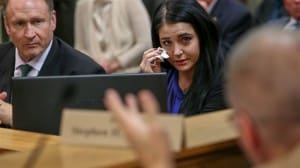
 In this episode recorded February 17, 2016 we discuss the recent Utah Medical Marijuana legislation from the patient perspective. This is a sobering, heartfelt, and extremely compelling panel.
We also briefly discuss the medical/scientific justifications for medical marijuana, and LDS Church participation in attempting to defeat this legislation.
Panel participants include: Enedina Stanger, Dallas Sainsbury, Aaron Campbell, Brian Stoll, Dr. Legrande Belnap, and activist David Kirkham
Huge thanks to DJ Schanz and Christine Stenquist for organizing this panel, and to Club/Cafe and 50 West for providing the venue and audio/visual services.
Episode Transcript
Host: John Dehlin · Guests: Aaron Campbell, Dallas Sainsbury, David Kirkham, Enedina Stanger, Legrande Belnap
This transcript is machine-generated and lightly edited for readability. The audio is authoritative. Please excuse occasional errors in names and spelling.
Welcome and Introduction to the Event
John Dehlin [00:00:00] Hi, everybody. Thank you so much for coming. We want to welcome you to sort of the first official Mormon Stories live event of 2016. We're very grateful to Jake Jensen and the club cafe at 50 west for sponsoring us here. Let's give Jake a round of applause, if you don't mind.
John Dehlin [00:00:22] And the staff here, we're really excited about the opportunity they've given us to hold these events maybe twice a month, every other week. It won't be exactly every other week, but, you know, we've planned at least sort of 10 of these sort of events over the next two or three months. And we're really excited to bring exciting guests and topics to a live audience. Some of them will be past Mormon Stories guests that some of you will know and love. And it's just a chance to kind of get to know them a little bit more on an intimate basis and have some audience Q and A and direct interaction.
John Dehlin [00:00:59] Others will be just new and exciting people and personalities and topics that have yet to be explored. But we're really excited about this series. We're really grateful for your support. You know, it's downtown. I know you have to pay for parking, and we are charging an admission. And I just want to thank you for being willing to support us. Part of that. Part of that money goes to pay for the audiovisual stuff that we're doing, and then part of it just goes to the Open Stories foundation just to kind of support our ongoing work. We promise we put this money to good use.
John Dehlin [00:01:36] You know, we value. You know, we value your trust, and we just want you to know that we're working really hard to make sure that your confidence and your contributions go to help people who are trying to heal and grow within our big, broad, beautiful Mormon tent and post Mormon tent. So thanks for coming.
John Dehlin [00:01:59] We want to give a special thanks to DJ Shonts, who's here. Dj, will you stand up? Let's give DJ a round of applause. DJ helped put this panel together with some friends, and we're just really grateful to be able to be here to talk about a really important issue.
John Dehlin [00:02:19] Now to kind of jump to the main event. We also want to welcome all of those of you in Periscope land. This is live broadcasting through Periscope. I hope they can hear us. Maybe they can comment. And, Steve, you can read if they can hear us, but I think they can to jump to the topic for tonight. This is a really important issue, and I'll just have to say as a disclaimer, we're here to discuss Obviously, medical cannabis in the state of Utah.
John Dehlin [00:02:48] I will, in full disclosure, just sort of say, regardless of kind of my ups and downs within Mormonism, I still have, you know, haven't tried alcohol. I still haven't tried cannabis. But that's not really what this is about.
John Dehlin [00:03:01] What this is about here tonight is to, to talk about something really important, which is, you know, we have all sorts of wonderful, and some not so wonderful medications, pharmaceuticals out there that people are prescribed for various reasons. And that's great.
John Dehlin [00:03:19] But what we have come to understand is that there are a lot of people who have found, you know, medicinal cannabis to be extremely helpful in their medical conditions. And, and as you know, some legislation is, you know, has been presented here in the state of Utah and it looks like, you know, we don't know, a final vote hasn't been made yet. We don't even know.
John Dehlin [00:03:44] I don't even know if it's going to come to an official vote. But what we're here to talk about tonight is kind of the stories behind it. So we're not here to bash anybody. We're not here to criticize anybody. We're here to be very positive, constructive, but we're here to just talk about how this issue touches real people's lives. So what we've assembled here tonight are a few people who are advocates for, in their own personal lives, the importance of medical marijuana or medical cannabis.
John Dehlin [00:04:15] We also have scheduled to have a physician join us to talk about it from a physician's perspective. And we also have another gentleman here sort of representing it from an activist perspective. So without any further ado, I want to just thank you all for joining us tonight. What we'll do is we'll kind of drive a panel discussion for maybe 45 minutes or an hour, depending on how that goes. And then what we're going to do is open it up to your questions here at this wireless microphone. So we would love to have a discussion after we, we hear from these beautiful stories. So without any further ado, let's give a round of applause to our panelists.
Panelist Introductions
John Dehlin [00:05:01] So I'm going to have each panelist introduce themselves a little bit. Don't go into your stories yet. We'll come back to your stories. But just maybe just tell us your name and just a tiny bit about you. And I'm pretty sure that everybody here, you know, has a relationship, some type of relationship to the LDS Church, is either an active member or has been raised LDs. So we're certainly talking, you know, we'll be talking about in some ways, the intersection between this issue and Mormonism. But again, I just want to say that we want to do that in a way that feels respectful and safe for people across the belief spectrum, from devout believers to people who are no longer members. We want to try and keep this discourse safe and respectful for everybody. So, Enedina, would you mind introducing yourself first?
Enedina Stanger [00:05:50] Okay. My name is Enedina Stanger, and go
John Dehlin [00:05:54] and pull that mic close to.
Enedina Stanger [00:05:55] Okay. My name is Enedina Stanger, and I'm here because I am an active LDS member of the church of the Church of Jesus Christ of Latter Day Saints. I am a medical refugee, and I currently live in Colorado. I want to live in Utah, but because of the political background and everything that's going on, I've become an active citizen lobbyist and work with an amazing patient organization, and that's kind of why I'm here.
John Dehlin [00:06:29] All right, thank you for joining us, Dallas.
Dallas Sainsbury [00:06:34] My name is Dallas Sainsbury, and I am a Crohn's disease patient. I. I've been born and raised my entire life as a member of the LDS Church, but within the past week, I actually formally resigned from the church. So between being an activist for the medical marijuana and that, that's why I'm here tonight.
John Dehlin [00:06:58] Thank you for joining us, David.
David Kirkham [00:07:02] I'm David Kirkham. I'm the president of Kirkham Motorsports, a businessman down in Provo. I was one of the original guys that started the Tea Parties in Utah, along with. I'm very happy to say, as I scanned across this crowd, I found five of them in this crowd. But I'm talking way back to the very beginning. So you would think in downtown Salt Lake we would be the hiss and byword, the Tea Party, but
John Dehlin [00:07:33] I was
David Kirkham [00:07:34] so grateful to see the. To see them here and to see that we all truly believe a lot of the same things. And, you know, I'm a very, very strong advocate of medical marijuana. I've been involved politically for many years and deeply politically, and that's really why I got involved, is to help try to use whatever influence I had with the legislature and the governor and my friends up on the Hill.
John Dehlin [00:07:57] Thanks. Thanks for joining us, David. All right, Aaron.
Dallas Sainsbury [00:08:01] Yes.
Aaron Campbell [00:08:02] Is there a camera that I should be looking at?
John Dehlin [00:08:05] Just the audience is fine.
Aaron Campbell [00:08:06] The iPhone.
Guest 2 [00:08:07] Wow.
Aaron Campbell [00:08:07] That's awesome.
John Dehlin [00:08:08] The audience.
Aaron Campbell [00:08:10] My name is Aaron Campbell. I am the father of five children, three of which have terminal illnesses. And I was born and raised. As an active member of the church. My father actually was an institute and seminary teacher and executive director for foundation for Ancient Research and Mormon Studies as I grew up. And in fact, there's several of us here whose fathers were seminary or institute teachers. Paul wasn't your. Isn't your dad. Yeah. So we're calling out audience members. Yeah. So we're going to get an acronym together, you know, Sons of Seminary Teachers for Medical Cannabis.
Guest 3 [00:08:53] Son of a bishop.
Aaron Campbell [00:08:57] Anyway, so I live in Orem, and any of you that would like to move to Orem, if you're refugees, you will find a wonderful, compassionate, kind and loving community. Even though Brad Dodd represents you. He represents me.
Guest 3 [00:09:15] My name is Brian Stoll. I was born and raised here in Utah, went to high school in South Jordan. I was raised, raised about as Mormon as you possibly could be. My dad was a. Was a bishop when I was in high school, as Aaron said as well. My dad has been a seminary and institute teacher as long as I could remember. As long as I can remember. Probably as long as I've been alive. So currently I live in West Jordan with my wife, Rachel. She's the beautiful one standing up right over there, who now feels like she's not standing up, but she's the beautiful one sitting over at that table. So they're all beautiful.
John Dehlin [00:09:51] So you're all beautiful, all of you.
Guest 3 [00:09:54] You are all beautiful. Good job. Beautiful people. That's me.
John Dehlin [00:10:00] All right. Thank you. Okay, well, I want to dive. This is Mormon stories, after all. So I want to dive right into the stories. And Ennadina, we're going to come back to you and start. And what we just want to hear is, if you don't mind, share with us just your, you know, what, talk about the beginnings of your condition, whatever the condition is, and what led you to, you know, what other things, if you tried other things to kind of feel better or to medicate or treat your situation, what you tried, what did or didn't work about that. And then talk about, to the extent that you're comfortable, how cannabis or marijuana, you know, has presented itself as a better alternative for you, and we'll kind of take it to that point.
Living with Ehlers-Danlos Syndrome and Cannabis
Enedina Stanger [00:10:54] Okay, well, as everybody was talking about the comments, I actually am a daughter of a bishop and my father, so this is kind of a little bit of my background. I was born in Texas. I am 27 years old. And you might wonder why I'm here talking to you guys about cannabis. But there are a few things that I'm pretty expert in, and pain is one of them. And my condition is a genetic condition called Ehlers Danlos syndrome. And I have A form of it that is not currently been able to be categorized. I was recategorized after my daughter started showing symptoms this past summer.
Enedina Stanger [00:11:45] And I have a four year old and a three year old. And I unfortunately passed on this genetic mutation of the collagen to both of my children. And it's passed on the type to the child. And I obviously have an uncategorized form. So after this legal battle, I'll be traveling and trying to get diagnosed and hopefully get some hope for other people that are battling this form. And an easy way to explain it is for me, my form of it was kind of like an Ms. With a mix of your bones popping out.
Enedina Stanger [00:12:26] I was symptomatic after my daughters were born and I started having nervous system problems like Parkinson's type shakes, tremors, seizures. I'd start passing out. I got diagnosed with bradycardia dysautonomia, that means very low heart rate. I have POTS and my internal system, my nervous system just wasn't working and nobody could figure out why.
Enedina Stanger [00:12:55] And we just kept going from doctor to doctor. And finally one neurologist looked at my entire medical history. And I was a runner and I love yoga and I was a dancer. I'm Mexican and I used to do Mexican folkloric dances.
Enedina Stanger [00:13:14] And in high school, by the end of high school, I had already had about four knee surgeries. I ended up having six surgeries on my knees. I was always having tendon problems. Endometriosis. I got diagnosed and had surgery for endometriosis when I was 19.
Enedina Stanger [00:13:32] And nobody could put these things together. It was always these random problems in my body. And it turns out that collagen is that connective tissue, the glue that holds your body together. And no doctors had put together the fact that Ehlers Danlos usually is a systemic problem.
Enedina Stanger [00:13:52] And a lot of people just say it's, you know, double jointed and flexible and that is part of it. But there are the extremes in all these cases and I am part of that extreme. So within about a year, every single bone in my body had dislocated.
Enedina Stanger [00:14:08] All my collagen just kind of gave out all of a sudden. And it started with a shoulder. And then currently now every bone in my body is pretty mobile. I have the tape here to keep my hyoid bone and my airways open because the damage that has been sustained from the constant dislocations has shredded my tendons. I don't have hip capsules or shoulders anymore. It's kind of. They're just floating in this blob of soft tissue and muscle. And the reason the cannabis was so effective was.
John Dehlin [00:14:42] Was it the first thing you tried?
Enedina Stanger [00:14:44] No. Oh, no. Okay. So this is kind of the background. So I was raised lds. My father is Mexican and my mother's Mexican. She was. She's a native of Salt Lake City, Utah. And my father was born in Mexico, but he put himself through law school and he is at the U of U and he is an FBI agent. He graduated summa cum laude at the. At the University of Utah Law School. And he used that to work for fighting for justice, fighting for the country that he loved and the country that he knew that the American dream would happen. And so I was born in Texas and after that I lived in Mexico and went to elementary school.
Enedina Stanger [00:15:31] And I actually was. We had a lot of issues. And I've seen both sides of law enforcement. I have been the person that had the hit out and have seen my has. I've seen my father be. Have drive by shootings. We've been. Tried to be kidnapped. People have been following us. We were kicked out of Mexico City and had to fear or Mexico and fear for our lives because of the work that my father did. So coming back to Mexico, to the United States after that experience, it was a whole new world. And I saw both sides of that. And my father was in charge of a gang task force unit in South Central Los Angeles.
Enedina Stanger [00:16:13] And so I have seen my fair share of the drug war. And coming from that background, I always had a huge respect for the law. I wanted to be a lawyer. That was one of my dreams. And with that as getting into the whole medical issues and all of these problems, I started, all I was given was just one pill after another. And everything was thrown at me. And all of the pills just started really affecting my system. I had tramadol, the oxycodones, the morphines, Percocets, anything and everything that doctors could think of to try to stop the seizures. Tramadol, everything. And every single time I would end up in the hospital, my nervous system would shut down because of the damage to the connective tissue.
Enedina Stanger [00:17:07] We didn't realize that because of the time release, it doesn't release properly with Ehlers Danlos syndrome. And so anytime I would take any time release medicine, it would just all hit me and I'd pass out or be completely incoherent or anything that I would try to digest. My internal organs are just as fragile as my bones at this point, so I couldn't process anything.
Enedina Stanger [00:17:35] And it would Just send me into the hospital. So it was definitely a last resort. I had no idea what to do. We had prayed about it, I had gone to my bishop, I went to my father. And I've actually seen both sides of the spectrum as my father worked with the general, as general positions of the church and they are. I'm not with my family today because unfortunately, because of this cannabis movement, I have been, let's say, put aside for a lot of the LDS community.
Enedina Stanger [00:18:15] And so I do know the hurt that it feels and the rejection to have something that you need or something that affects your life so personally and not have the support that we all wish that we would have.
Enedina Stanger [00:18:31] And that being said, I did try cannabis. After the approval, after I talked to my bishop, I wanted to make sure first and foremost that I was right with God. And I am not one of those people that takes things light hearted. I know that this church is true because I have studied, is not because my fathers have taught me. It is not something because of the community and it is not because of the people and the human beings. I know if there are things that I do know is that human beings have many faults. We all are subject to our own weaknesses and every single system that is put in place by human beings has to fight its own human weaknesses.
Enedina Stanger [00:19:24] I'm here because I am trying to represent the doctrine and the gospel that I know to be true. I study the scriptures every single day from the Old Testament, the New Testament, the Doctrine and Covenants, the Book of Mormon. There's many days that I can't even move if my neck shifts out. There are days that I'm a vegetable and I communicate to my husband with blinking or gurgles and a lot of things, the only thing I can do is sit there and the only thing that gives me comfort is the things that I know to be true. I have studied the doctrine of this church, I have studied the words of Christ and I know that medical cannabis was put here because it is for its intended purpose and that is for medicine.
Enedina Stanger [00:20:17] And the minute I used it, I knew that it was a miracle. I was having a seizure and my husband looked at me and we didn't know what to do. My back was spasming. It looked like I was being tasered and it felt like I was being tasered. If my bones shift and it gets in the wrong nerve or, or they get impinged in the wrong bones or muscles and there's a lot of things that we can't control and fortunately I had A friend that was like, okay, I don't want to push anything, but here you go. Just in case you ever think about using cannabis.
Enedina Stanger [00:20:53] And we had researched it and my husband had researched it. He was raised in Utah, but he was actually anti Mormon when I met him. And so he. So there's a long story with that, too. And he studied it and he had talked about.
Enedina Stanger [00:21:15] And he had talked to me about cannabis and researched and said, okay, Ehlers Danlos syndrome. We've seen patients outside of the states and we know that this is a medicine. And that's how I approached it. And we kind of prayed about it. I was having these spasms and we said a prayer and he's like, I need to get you the cannabis. And I couldn't breathe or move. And so I really didn't have an option. And I was totally fine with it because at that point, you know, anything was fine other than the pain. And within one, I mean, let's be blunt, within one hit, my fingers had stopped.
Enedina Stanger [00:21:54] They had been contorted. The muscles were cramping so bad. And within one hit, my muscles had completely relaxed. My nervous system had stopped attacking me. And then within another, you know, within a little bit more use of that, I was able to communicate with my husband again. I was able to eat, and I was actually able afterwards to sit down with my daughters and read a book. And that's really what this is about. I am a mom and I am just trying to function. I've done the medical route. I went to every single doctor, I, I went to the East Coast. We have gone to every single specialist, and all they can say is, I'm sorry, you're going to have a really hard life.
Enedina Stanger [00:22:41] Try some cannabis. It might help. And I don't know all the science. There is science, there is research out there. I'm not an expert on all the bills. I'm not a political expert. But there is one thing that I do know, and I know that this works for some reason or another. I know that I can't survive just with CBD and Marinol. I've tried. It doesn't work for me. I know that there is something about this plant that we don't understand that isn't just cbd. That isn't just cbd. There's the terpenes, there's the whole base of the plant that we haven't even looked into yet. And it's just because of fear.
Aaron Campbell [00:23:26] Fear.
Enedina Stanger [00:23:26] And it's just because of discrimination. So I'm here to say, guys, we need to stop. And as Utahns, as citizens, as human beings, our purpose is to be here and to show love one to another. That is our only purpose in life.
Enedina Stanger [00:23:47] And if we look and say, do unto others as you would have done unto you, what would you do if it was your mother? What would you do if it was your wife? And what would you do when it's your three and four year old child that comes up to you and said, mom, my ankle just popped out. Mom, my wrist popped out. I'm not going to give her a joint. But there are cannabis creams that don't affect children, that will hurt her or that won't hurt her when she's in pain.
Enedina Stanger [00:24:20] And I have to watch her cry right now. I have to watch my children suffer every single day because I am scared of getting them taken away, because I have to use something that has been discriminated and my children will have to use it too. I am not going to give them narcotics. I am not going to give them opioids. I want and I care for their bodies. In 20 years, they're not going to be experiments. I have been the medical experiment that you need to see. I am the living proof that it works for Ehlers Danlos syndrome. And that is the point that we're here for. It's about love. It's about our children and our families.
John Dehlin [00:25:12] Doctor Belnhop, thank you for joining us. Have a seat right there. Thanks for joining us. Anadina, thank you so much for that beautiful story. I wonder if you're one of the first people in the world to have prayed before you used marijuana.
Enedina Stanger [00:25:34] And you know what? I am just gonna say it is okay. It is okay. I use cannabis and read my script. And I don't think there is anything wrong with that.
Dallas Sainsbury [00:25:46] Okay,
John Dehlin [00:25:51] Thank you for sharing your story. Dallas, why don't you go next?
A Crohn's Disease Patient's Experience
Dallas Sainsbury [00:25:56] All right, so like I said in my introduction, I have Crohn's disease. I've pretty much had it my entire life. But I've been diagnosed. I was diagnosed when I was nine years old, and I struggled greatly with it when I was little. And I know I've kind of blocked a lot of it out, but my mom spent a lot of time by my side while I was in the hospital for malnutrition and blood transfusions and, like, severe weight loss. If you're not familiar with Crohn's, it's an autoimmune disease where essentially your body attacks the lining of your colon, which symptoms can be very different for lots of people.
Dallas Sainsbury [00:26:34] But for me, when I was younger, it was losing a lot of blood when going to the bathroom. It was stomach cramps, constant vomiting, not being able to eat anything. And now that it's came back as an adult, it's accompanied with lovely severe pain and luckily no vomiting. But there's a lot of different ways it has affected me my entire life. And when I was little, my mom and I kind of ran out of options. We got to a point where we met with a surgeon to discuss just completely removing my colon. Luckily, we were able to find a medication called Remicade. And I was on that for several years until my body stopped responding to it and I had another major flare.
Dallas Sainsbury [00:27:22] So your disease can kind of go in periods of inactivity where it doesn't bother you too much and then it comes back with vengeance. Essentially the last flare I had, I was 16 and it put me in the hospital for pain and I ended up on a new drug. At that time, it was the end all. I kind of ran through everything. I remember at one point being on like 18 pills three times a day, plus all these natural things that my mom tried, from chlorophyll to herbs to whatever the witch doctor is going to try and.
Dallas Sainsbury [00:27:56] But I got on Humira and it put me in remission. And I was in remission for about six or seven years, up until about July of this past year. And when it came back, it came back with vengeance. And we thought, you know what, I'll go to the doctor, they'll put me on prednisone, which is a steroid, and I'm going to get on Humira again and I'm going to be put back into remission and things will be fine. And well, like the Remicade, my body completely stopped responding to Humira. You do four doses in one day for a starter dose when you do that. And within two weeks my body had completely knocked out any of the drugs present.
Dallas Sainsbury [00:28:38] So at that point we were kind of like, okay, luckily now there's more options in Humira. So we tried another drug called Simsia. And this is all while I've had to drop out of school. I've been a full time student at the University of Utah for health promotion and education. I had a full internship, a paid internship at Peak teaching classes doing body composition testing. And I was a competitive bodybuilder and a fitness and nutrition coach. So basically everything related to my life got derailed and I ended up. I ended up being mostly bedridden essentially, while we're just kind of running through medication, figuring out what's going to work and what's going to work.
Dallas Sainsbury [00:29:22] And I've ended up in the hospital several times for pain. And so it's just kind of been the same cycle with no relief, no end in sight for the past six or seven months. And I mean, you're in the hospital.
Enedina Stanger [00:29:40] I.
Dallas Sainsbury [00:29:41] The first time I was DIA or the first time I was hospitalized this past year, I ended up not responding to oxycodone, I didn't respond to morphine. And then they finally gave me Dilaudid and I was out. Like, no recollection of going from the ER to getting CT scans to getting like in a hospital room?
Dallas Sainsbury [00:30:01] No. For several days I was just kind of in a drug induced haze. And after that hospital stay, after we decided the Simsia, the other injection drug that I tried isn't working, I kind of mentioned to my doctor, I'm like, I have been doing research and I've heard a lot of Crohn's patients have seen relief with this. And he just kind of looked at me and he's like, absolutely. Like, that's something I will support. That's something I will stand behind. He's like, your case is a little unique because I actually ended up with C. Diff on top of all of this.
Dallas Sainsbury [00:30:39] And so it's just been. Not many people stay this poorly off for this long. And so he as well as everybody else just wanted me to find something to help. And so I ended up doing a lot of research and going to Colorado. And I mean, with having to withdraw from school and being self employed, I'm actually able to travel and go there for a while. And I like, like you said, I mean from the first time I tried it, I was like, holy crap. Like this is Crohn's pun.
Dallas Sainsbury [00:31:15] But I was like, this is going to work. Because one thing with Crohn's that a lot of people don't understand is the social anxiety that goes along with it is crippling. I mean, I've been a little girl walking home from school that's had an accident, had to have my mom come and help me. And I mean, it didn't stop when it came back. It's like I'm a grown adult who on my first day of college had hide in a bathroom for an hour while my mom came up and brought me a change of clothes. It's like you get to the point where you don't want to leave your house anyways.
Dallas Sainsbury [00:31:52] So trying to find Medication to control that, to control the urgency. I mean, they give you oxycodone and then they give you Zofran to make sure you're not sick to your stomach when you take oxycodone. And I'm taking antispasmatics to help with the cramping. And the cramping is one of the things where, like, I'll be to the point where I'm doubled over and cannot stand up. And, I mean, when my mom first was able to see me use it, she literally watched me go from being curled up on the ball, crying, not being able to move, to being able to stand up and hold a conversation and function like a normal person.
Dallas Sainsbury [00:32:31] Like, I was able to attend a concert with my friends while he was in Colorado. Something I wouldn't even think about doing here. I mean, I haven't. I haven't gone out. I mean, until recently, since things are starting to get a little bit better, I hadn't gone out with my friends since August.
Dallas Sainsbury [00:32:49] And I was able to go out and not be terrified of, am I going to find a bathroom? Am I going to have an accident? Am I going to have to sit down the whole night because I'm not going to feel well. I mean, I even had to have my doctor write doctor notes for me to be able to take my prescriptions into the event. And it's a two day event and I was able to. To spend the entire nights with my friends. I ended up going out a little later and meeting them there because I know the fatigue that comes along with this. You don't have a lot of energy, so you kind of want to conserve your time.
Dallas Sainsbury [00:33:25] But I was able to not have to rush off to a bathroom, not have to be doubled over in pain. I was able to function again like I used to to some extent. And at that point it kind of was like, I can't just let this be something I only can have access to every once in a while, or if I want access to it in the state. I'm basically a criminal. And it's like, I'm not a criminal.
Dallas Sainsbury [00:33:52] I'm not using this medication to get high. I'm using this medication to get my life back. And it's like I've been high every single day since October because I've been prescribed so many painkillers. And it's like, that's not a way to live. I mean, a lot of most everyone in this room can't really speak for it because most people haven't had to be high off oxycodone, and they haven't had an opportunity to or hadn't haven't needed to use marijuana. And I hope none of you ever have to. But the fact that I've been feeling better over the past, like, three some odd weeks, and I've been trying to wean off my pain meds, and it's like going through opiate withdrawals for a prescribed dose isn't right.
Dallas Sainsbury [00:34:36] It's like I'm 23 years old and I'll go 12 hours with a pain med without pain meds because I forgot them and I was out or something, and I wake up puking and shaking. And that's not something you get from cannabis. That's not. So many people are afraid of addiction and the gateway drug and things like that. It's like that never, ever once have I been like, oh, that was great. I loved that high. Like, let me do that again.
Dallas Sainsbury [00:35:06] That's not what you get from medical use. I mean, geez, getting an IV dose of Dilaudid, that's getting high, if anybody's ever had that. Because that's kind of like, oh, that was nice. Like, that's scary.
Guest 4 [00:35:22] That's.
Dallas Sainsbury [00:35:23] I mean, being like that feels nice. That's scary. And that's getting high. It's like the first thing I do when I'm hospitalized is get off the IV pain meds as fast as I can, because I know how fast people get addicted to those. And it's scary. It's like, never, ever when I've used cannabis have I been like that and been like, oh, that was great. Let me do that again. It's like, oh, hey, my stomach's not cramping. Like, I don't have to run off to a bathroom. Like, I actually can eat food. Like, I've lost £25 over the course of this. And being a competitive bodybuilder, the majority of that's been muscle.
Dallas Sainsbury [00:36:00] And it's like, I know that I'd probably be less than £90 right now if it wasn't for cannabis. Because it's like, you take the pain meds that make you nauseous, and then you take nausea medication and you take other medication. It's just like, that's a cycle I don't have to live with. Like, I want the option to be able to say no to other drugs. I want the option to go, I can take a medication that essentially will get rid of my antispasmatics, my nausea medication, my painkillers, and, like, if I have access to the right medical doses, I can get off my prednisone. And there's been many, many accounts of people with Crohn's completely manage it, like, even off of biologics, even off of the injectable drugs, because of all of its wonderful properties.
Dallas Sainsbury [00:36:44] But it's coming from whole plant access. It's not CBD oil. I've used CBD oil, and like you, it doesn't help me very much. It helps a little because it does kind of have a little bit of calming properties, which helps with the social anxiety. But it's not what can help me. It's not what can get me back in remission. I don't want to see others like me where the doctor looks you in the eye and goes, you're running out of options.
Dallas Sainsbury [00:37:10] So that's kind of how I got into this. And I would absolutely love to see that this can be looked at as a medication, not as a drug that people are abusing to get high. Because the ones who are abusing it to get high, they're not here. They're not in pain. They're not.
Dallas Sainsbury [00:37:31] They're not patients. They're just people who like to get high. They're not going to be active. They're not going to be activists for this cause because they're going to keep using it whether or not medical gets passed. So I just want to be able to see it get passed, to see others like me not have to suffer. And it's really sad at this point that probably we won't be getting the vote on Friday, but that's why you've helped us try and start getting petitions out there. And it's honestly amazing the amount of support I've gotten from my friends, my family, random people in the media.
Dallas Sainsbury [00:38:09] I mean, I reached nearly 70,000 people on social media, and the majority of people are for this, and they support it because anybody who doesn't kind of have their head buried in the sand understands it's been a medication for thousands of years. And yes, everything gets abused. I mean, these opiates are getting abused, but they're killing people when they're abused. It's like, why not give a patient an option to take something else? And it's not like I'm going to turn into a pothead if I get access to medical marijuana. Same thing with the opiates. If I am feeling better, I'm going to try and get off of it.
Dallas Sainsbury [00:38:46] I don't want to be on medication every day, even if it is marijuana. And I think A lot of people are thinking like, oh, you guys are going to have access to this marijuana, and y' all are just going to turn into potheads. That's not the case at all. So I just want to kind of shine some light on that. But like I said, with support. I mean, my entire family is LDS on my dad's side anyways, and I grew up that way. And I actually was kind of hesitant to say something to my aunt about it, but when I did, she was like, heck, yeah.
Dallas Sainsbury [00:39:17] Like, this is a devout Mormon mom. And the whole reason I actually got involved with this movement and truce and everything is because I actually saw my cousin on the news and I was like, I know him. And so I got in touch with him and was able to kind of start being a little bit of a voice behind this. And I'm lucky at this point that my health is getting a little bit better and I can make it out to these things. So, really grateful for all the support, LDS or not, but I'm thankful that I can hopefully make a difference with this.
John Dehlin [00:39:52] Thank you, Dallas. Thank you, Brian. Since we've been talking a bit about opiates, why don't you go next?
Chronic Pain, Opiates, and Discovering Cannabis
Guest 3 [00:40:06] Microphone was a little bit short there. So, as I said before, I was born and raised here in Utah and had all the typical things you would think of as someone that would. Oh, okay. Of someone who was born and raised in the church and everything else. Served a mission in Brazil.
Guest 5 [00:40:28] And when I came home from my
Guest 3 [00:40:29] mission, I. I went to BYU as a student. As I was there, there was one day a family home evening activity with the singles warden. And this activity was playing a game in the H Vac building at byu.
Guest 3 [00:40:48] That building is their performing arts building. And this building has with all these stages. One of the stages that our group was around, this again was an open building. This wasn't somewhere we were sneaking around or not supposed to be. But one of these stages had the ability to drop the stage for plays or different things. And so as we're walking around, we find an entrance that will.
Guest 3 [00:41:16] A staircase that will take you to the bottom of this stage. And. And so as I'm walking underneath, it's very dark. There's not much I can see. I have my cell phone in my right hand, trying to see what's in front of me.
Guest 3 [00:41:30] And as I do this, there's that pit. Like I said, this is a stage where they can drop the stage. And so to do that, there is an open pit that's about a story and a Half deep or about 12ft deep.
Guest 3 [00:41:47] And as I have my cell phone in my right hand and I can't see much that's to my left, I step with my left foot and put my weight down and there's nothing there. My thought then is I'm falling and I have no idea how long. It's pitch black. I can't see how long I'm going to fall, how far I'm going to fall, or anything else about my surroundings or anything else.
Guest 3 [00:42:13] Woke up a couple minutes later and I'd hit my head on a steel beam and I broke my back about right down here and my neck up here. I was raised by a father who didn't particularly believe in the medical system. My roommate, who was there and watched it happen, came down and said, are you okay? I'm like, yep, tells me I'm fine. I stand up, I walked home.
Guest 3 [00:42:38] Because that's what you do when you break your back and your neck. You walk home the next day. I tried to go to work, but it was still just an. It took me two or three hours to get out of bed the next morning. But like a good Mormon person would do, didn't want to skip work. So I went into work. But about an hour in, I couldn't do it. My manager figured out that something wasn't okay and sent me into. The doctor told me I had to go to a doctor. It was a good idea on his part. As I went to the doctor and they started doing X rays, they found that I had broken my back and my neck.
Guest 5 [00:43:15] And
Guest 3 [00:43:19] there had obviously been a lot of pain up until that point.
Guest 5 [00:43:23] And ever since the fall, I hadn't felt. I hadn't felt relief.
Guest 3 [00:43:29] Didn't sleep particularly well the night before because of what all the pain. But ever since that moment, there hasn't been a single time where I haven't been in at least some sort of physical pain where my back or neck hasn't hurt to at least to some degree. Usually it's moderate to severe pain. And so after this, I started seeing a lot of doctors, went to that doctor repeatedly and talked about how to get better.
Guest 5 [00:43:58] I talked about how to improve this. They gave me as many opiates as I. As I needed. This was a serious injury and therefore they gave me serious meds to be able to deal with this, with the pain that I was in. And I found that after a time of this, that I.
Guest 2 [00:44:20] That I.
Guest 3 [00:44:22] That if I went without it, not only was I in more pain, but I became incredibly anxious. I felt I felt a ton of effects even when I was on them.
Guest 5 [00:44:35] There were all the side effects, but getting off them became something that I feared. I remembered a principal that I had
Guest 3 [00:44:42] in middle school who had a. Who was in his 60s and had a knee surgery.
Guest 5 [00:44:46] And they gave him, I believe it was lortab. And then after the lortab ran out, he ended up becoming addicted to heroin and later ended up overdosing and dying. And I became terrified that this would be my fate.
Guest 3 [00:45:01] However, I pressed on. I didn't want to. While I was terrified of addiction, I also couldn't even fathom or think of any other way what happened as a result of this accident. Though I was not able to work, I was not able to go to school. And this had an incredible impact on my spirit, spiritual life and my spirituality as well. I wasn't able to go to church. I never felt good enough to read my scriptures or say my prayers, which meant I became less active, not only by default, but also on purpose to a degree. I shouldn't say on purpose, but it happened.
Guest 5 [00:45:42] I lost my spirituality in a way, to a point where I didn't care if I was following the commandments or these other things. And I kept seeing these different doctors.
Guest 3 [00:45:54] And this went on for about a year, year and a half. I still was in this constant pain, still was not able to really get relief. I found my whole personality changed as a result of the pain. Found that the things I had a lot of joy in before were impossible for me, became very depressing because not only could I not do them, but it was incredibly painful for me to do.
Guest 5 [00:46:18] It was around this point where, again, I wasn't particularly high in my spirituality levels, where I was at a bar with some friends and I had one of these friends introduce me to marijuana. This wasn't at the time, anything related to medical. This was just something I was doing
Guest 3 [00:46:38] at a bar with a friend. And I didn't.
Guest 5 [00:46:41] And honestly, I didn't know what it was that they offered me, but I didn't particularly care and I tried it.
Guest 3 [00:46:51] We can go into, don't take things from strangers later. But what ended up happening was for the first time in years, maybe a year, year and a half, I felt that the edge from this pain was lifted, that I was able to not only feel relief, but I was able to get the full function of my brain back as I was not so thoroughly wrapped up in the pain that I was always in. This was even, you know, my spirituality wasn't particularly high. This was very surprising. To me, I'd always been raised and taught that drugs were a terrible thing, that drugs were something that.
Guest 5 [00:47:35] That have no value, that they are just there to destroy people's lives. To quote my father, they just are there to rot people's brains and make them slowly lose their minds. And this was, up until this point,
Guest 3 [00:47:51] what I thought of them. But all of a sudden, I found that this was something that not only wasn't just rotting my brain, but was bringing incredible relief. Allowed me to be more me than I had been in long, long time.
Guest 5 [00:48:05] As this then happened again, this wasn't something.
Guest 3 [00:48:09] Addiction was terrifying to me. I didn't know all the science behind marijuana, didn't know that this was something that was much, much less addictive than
Guest 5 [00:48:18] marijuana or anything else.
Guest 3 [00:48:20] Or, excuse me, I didn't know this was much less addictive than opiates or the other things.
Guest 5 [00:48:26] And so even though I tried it at that time, and I tried it a couple more times and felt the same relief every time, I was really hesitant. I really didn't want to get into something. I didn't want to
Guest 3 [00:48:40] try something and become involved with something that not only was illegal, but also that I'd been raised to believe was against the Commandments, was against my upbringing, that I'd felt that up until this point, up until later, I believed was an evil thing.
Guest 5 [00:49:01] And.
Guest 3 [00:49:06] Again, I guess I can't emphasize that I did not want this to work. I wanted to be able to. I continued going to my doctors, I went to my pain clinic, I went to my spine specialist, I went to all these other doctors trying to find legal remedies, trying to find legal ways of getting through this pain, of trying to find ways that I could find relief. And then I started dating a different. This girl who also had a share of medical problems and she was using marijuana for.
Guest 5 [00:49:47] For treatment. And because of this, I started using it more frequently. And as I did this, I found that not only was this relief really great for temper, it not only worked temporarily when I'd used it sporadically before, but I could use it more often and feel more relief. The more I used it, the more I felt that I gained my life back. Up until this, it had been a couple years and I hadn't been able to work full time. I had been a student at BYU, but had continually had to take semesters off to cope with the pain. Even when I wasn't working, I.
Guest 3 [00:50:23] Excuse me, when I wasn't in school,
Guest 5 [00:50:24] I wasn't able to work as much as I would like to But I found that more and more this allowed
Guest 3 [00:50:30] me to function as someone who I wanted to, as the person I wanted to be without worrying about the addictive consequences, without feeling like I was under a haze that came from the opiates. I didn't feel that I was slowly. That I was slowly losing my personality because of all the opiates. I didn't. During a lot of this pain, I had lost incredible amounts of weight. I used to be my steady weight before was 150 pounds before the accident. But for me to break 120 is often a miracle for me now. But all sudden with this. And I was constantly throwing up because of pain or the opiates or different things. I had ulcers in my stomach. I was throwing up blood on a regular basis. I was.
Guest 5 [00:51:28] And even still, while these helped, the opiates helped with the pain, they didn't take off that edge. They didn't do for me what marijuana did whenever I used that. And at the same time I found that I gained an appetite back, that I didn't throw up as much. I wasn't in nearly as much pain. I was able to work.
Guest 3 [00:51:54] I had always been a runner before and I was able to go back
Guest 5 [00:51:56] to running, which meant the world to me at the time. And for a long time I thought I had found my niche. I was good, I had worked.
Guest 3 [00:52:10] I was able to work myself off of the opioids for the most part and off of most of the prescriptions that I'd been using. And this enthralled me through and through that I didn't have to worry again about overdose, about addiction, about all these things that I'd found something that again allowed me to work, allowed me to function, allowed me to be me without having to think as much about the pain.
John Dehlin [00:52:38] Tell us about once you. Once you met your fiance. Awesome how that, how that had to go in terms of your interactions with the church. Real briefly.
Guest 3 [00:52:49] Cool. So like I said, this was working real well. And then I started hanging out with this girl who I'd actually met when I was 16 at EFY. Funny story there, but I started hanging out with this girl again and found that she was pretty great. While I again had taken these hits to my spirituality for a while. She was a bright light in the midst of a lot of darkness, a lot of things. And she helped me want to be
Guest 5 [00:53:20] better in a lot of ways, helped me want to be a better person. And as I, as we started dating and as we started first hanging out more and then as we started dating, we eventually got to the point where
Guest 3 [00:53:31] we decided that we wanted to be married. This girl that meant the world to me, and I wanted to do anything to make her happy.
Guest 5 [00:53:44] I can't talk about her very much
Guest 3 [00:53:45] without getting a little too emotional, without getting a little bit emotional, but I wanted to do anything for this girl that would make her happy. And I knew one of the things that would make. One of her dreams had always been to be married in the temple. And I wanted this girl not just for this life, but I wanted her for forever. Anything less than that seemed like. Seemed like not enough time. And so I went to my bishop
Guest 5 [00:54:11] and talked, resolved the things that I'd done before from, you know, from the things before and also because of that, mentioned what else, you know, the marijuana end. At this point, I was informed. I worked through everything else, but
Guest 3 [00:54:32] was informed that to be able to get a temple recommend, I would need to quit using marijuana. Despite the fact that I'd been able to get off the opioids and had felt all these things, despite the fact that I was using this as a medicine, not a recreational drug. Found that this was something that I. I was told that I would. I would have to.
David Kirkham [00:54:58] To.
Guest 3 [00:55:03] It took months, but eventually I was able to do so. You know, I went through the stages of grief first. I fought it, went through. And eventually was able to give it up. And we. I quit using in July and we were able to be married in November of this year. We were able to be married in the temple.
Guest 4 [00:55:23] But
Guest 3 [00:55:26] there's not been a harder thing that I have done. There's not been a single single day where I've had to go back on the opiates, which has been terrifying, which
Guest 6 [00:55:36] has
Guest 3 [00:55:39] scared me beyond
Guest 5 [00:55:43] about anything this has been. I've had to feel all the effects of the side effects. I've had to lose my personality in some ways. I eventually was laid off and have struggled to find a job. I've struggled to even be able to get out of bed most days before noon,
Guest 3 [00:56:03] all because I had to give up my health so that I could marry my wife. And I would say any day giving up anything for her would be worth it. But at the same time, it was
Guest 5 [00:56:18] difficult to feel I had to give up something like my health to be able to. To do this.
John Dehlin [00:56:26] Let's give Brian a round of applause, everybody. These are very powerful stories. Aaron, why don't you go ahead and tell us briefly about your children.
A Father's Fight for His Daughter's Health
Aaron Campbell [00:56:41] So I love the Mormon Church. I just want to get that out there. So my dad was a seminary teacher. When I was seven, we were asked to serve a mission or even employed by the church to go to Tonga and teach at Liahona High School. And while we were there, my 4 year old sister ended up getting a staph infection. We moved to New Zealand and she was operated on. And eventually when we came back to Utah, she passed away.
Aaron Campbell [00:57:16] And as an 8 year old, kind of ripped from my own childhood to go to Tonga and then ripped back again to watch my own sister die a cruel death kind of sets the scene. And in addition to that, several of the doctors and nurses accompanied us back to Utah from New Zealand. And in the process I learned that and developed a deep sense of understanding that this life is not the only life we have. And several of those doctors and nurses went back to New Zealand and investigated the church and joined the church because of the few months that we were living in the hospital as transients there.
Aaron Campbell [00:58:05] And so fast forward 30 years, I sold a business and I decided to my dad's complete anger, that I was going to take my kids overseas and travel the world. So My youngest was 6 months old and we boarded a plane and traveled the world and we lived in. I served a mission in Uruguay and met my wife at the University of Minnesota, and we got married in the manti temple in 1994.
Aaron Campbell [00:58:37] And so after having our children and when we moved to Uruguay, which incidentally a few years ago, passed a lot, it's the only country that allows for medical cannabis countrywide, ironically, because we wanted to give our children a sense of what life was like outside of the Mormon bubble here. And we also wanted them to learn Spanish.
Aaron Campbell [00:58:58] It was the most wonderful time. I mean, I spent every penny that I had saved for retirement and everything, traveling the world with my five children. For five years we lived in Thailand and Egypt and we visited, we did. I mean, it was everything from visiting Nelson Mandela's prison cell on Robben island in South Africa to visiting the Dalai Lama's house in Tibet. I mean, we just, we had the most amazing lifestyle.
Aaron Campbell [00:59:26] And then we moved back to Utah because my daughter, oldest daughter Tori, will you pull out one of her. My oldest daughter Tori started getting a little bit more. She turned 12, so we thought it was just hormones or whatnot.
Aaron Campbell [00:59:41] This is my oldest daughter, Tori. She actually looks like my sister Holly, who passed away. And over the course of the two years that we had moved back to the States, Tori became a little bit more unsure on her feet. She would crash her bicycle. She spoke several languages but yet had a hard time processing basic algebra.
Aaron Campbell [01:00:04] So for two years, we tried everything to find out what was going on. And during a visit to our pediatrician, he noticed that her tongue was flickering. So he said, you get her down to an mri in Provo right now. And this is just a normal day for us. You know, we're like, all right, we're going down to Provo. Get an mri and find out. You know, it's. You know, she needs to take more vitamin C or something.
Aaron Campbell [01:00:26] And while we were waiting for the mri, there was this little bookshelf in the pediatric neurology center there. It's Eliza's bookshelf. And it was this family whose child had this disease that ate away the myelin sheathing in the peripheral and central nervous system. You know, a little like Ms.
Aaron Campbell [01:00:50] And I just looked at it. I'm like, man, what a horrible, freaking horrible disease. That poor family. But, you know, at least they're doing something good by donating this bookshelf. And five minutes later, we were told that Tori had this disease, and she was 16 at the time. The disease didn't manifest itself until our children hit puberty. And then they also, in one fell swoop, said, oh, and it's genetic, so your other kids might have it.
Aaron Campbell [01:01:19] And we immediately were like, oh, my goodness, like, which of our four other children have it? It turned out that Tori's next oldest sister, Maddie, also had the disease. She was 14 at the time. She's always been creative and funny and spunky and, you know. And we then found out that our youngest son, Ike, also had the disease. And he was seven. Eight. I think he was eight at the time.
Enedina Stanger [01:01:44] Time.
Aaron Campbell [01:01:46] No manifestation of the disease at all. But we received, after lots of blood tests, complete assurance that three of our kids were going to die by the time they were 18 or 19. And it was going to be a horrible, slow, painful disease and a process.
Aaron Campbell [01:02:06] So my wife and I kind of gathered ourselves together, and my mom and dad were our politicians. And so they called the Daily Herald and said, hey, why don't you come and take pictures of Tori's sweet 16 before she goes up to a bone marrow transplant and chemotherapy at primary children's. And that started a process of the Daily Herald following us around for an entire year.
Aaron Campbell [01:02:30] We had a paparazzi that followed us through bone marrow transplants, chemotherapy. We were the only family to have ever had three children going through bone marrow transplants at the same time. And it was hell. I mean, it was the worst. We just come back from this amazing life. And now we're looking at the inversion from the, you know, from the fourth floor primary children's and the near death experiences of our children.
Aaron Campbell [01:02:59] It was just unbelievable that we'd gone from hiking volcanoes in Indonesia and Thailand to this. And. It was a little, it was too little, too late for Tori. She came home, the bone marrow transplant was considered a success. We stopped the disease progression, but Tori was in a wheelchair and she was slowly not being able to talk and slowly. But the last year of her life was amazing. And my wife and I decided that we would leverage this experience because, you know, teenagers are stupid. To help the teenagers of my daughter, her friends at Mountain View High School kind of pull themselves out of their little myopic, you know, self interested teenage life with great support from the church and the seminary and the institute.
Aaron Campbell [01:03:59] We wouldn't have survived. I don't think our marriage would have survived. I'm pretty sure my mental health wouldn't have survived. And when Tori passed away, we had thousands and thousands. We had to move the venue a couple times.
Aaron Campbell [01:04:14] Thousands of people participate. And then we realized that the bone marrow transplant may not have worked with Maddie. And so at the time she was struggling to walk and she was in a wheelchair and she wasn't going to school school because of her mental condition. And we had a good friend from California threaten to come up and kidnap Maddie if we did not start administering some cannabis oil. And conventional medicine had run its course. And so we have a. So this is all documented. We thousands of followers on Facebook. We have a weekly article in the Daily Herald, a column that we write every week.
Aaron Campbell [01:04:53] Because when the Daily Herald published this 20 page insert in Christmas in 2013, everybody wanted to know, is Tori gonna live? Is she gonna die? So this has been this like intense, dramatic thing that we write about every week and it's read by thousands and thousands and thousands of people all over the world.
Aaron Campbell [01:05:15] And so Brian came up to California. You know, he came up from California with some oils and boy, we were skeptical. And Emily is a science nerd. So she starts doing her research and she determines that it's something that she's going to try. So for full disclosure, my wife doesn't know I'm telling this that she's going to try cannabis oil just to make sure that it's not going to hurt our daughter.
Aaron Campbell [01:05:39] So she was the guinea pig for a few days and then we were at a complete loss because Maddie was dying. Just like we just buried. We just buried Tori. And the prospect of watching her Daughter just wither away in a wheelchair was not something we were going to stand for.
Aaron Campbell [01:06:01] These visions of Lorenzo Zoil came in, and I'm like, if I were a better man and had more money like Nick Nolte, maybe I could do something. And it was there. It was there. It was. My good atheist tattooed buddy from California. Really tattooed. Like, really tattooed. Like, he gets stares when he comes up to visit. That he just saved my daughter's life. And the kepper was making Maddie suicidal. Her brain function had obviously been diminished because of the chemotherapy, which is a horrible thing. A horrible, horrible.
David Kirkham [01:06:38] It's barbaric.
Aaron Campbell [01:06:40] And seizures went away within a week or so. She was so much more mobile. Her muscle spasticity, you know, the neurological effects of this disease make her hands and feet all, like, stiff. Like, her muscle spasticity, you know, obviously, pot loosens you up, so, you know, so it loosened her up, but it also increased her brain function. And so we started traveling to California, working with neurologists in California and pharmaceutical specialists there to concoct the right combination of THC and CBD that would work for Maddie. And she doesn't use a wheelchair at all anymore. At all. She's back in high school, mainstreamed in high. And every day we commit a felony to save our daughter's life. On that note, I shouldn't say that. That was probably something I shouldn't have said. So I was.
John Dehlin [01:07:45] That's okay. No one's listening.
Aaron Campbell [01:07:47] No, no, no, no.
John Dehlin [01:07:48] All right.
Aaron Campbell [01:07:49] And you have to know this. So, like, so last year, when Tory passed away and we started getting serious about using cannabis oil, I mean, I was like. I mean, I pulled every string and every relationship I had to make sure that I wasn't going to get arrested, prosecuted.
Aaron Campbell [01:08:07] You know, we. You know, the goodwill in our community, like, for a make a wish instead of, like, going on a cruise like I wanted. My daughter Maddie decided to hold a fundraiser to make crafts for primary children. So the Mountain View football stadium was filled with 3,000 people, and they made thousands and thousands of gifts. And I was just like, oh, I would love to be on a cruise, but this is my daughter who is so much better than I am. And it was the Girl on Fire party. It was awesome. We had the best fireworks display outside of the Stadium of Fire that Utah had ever seen.
Aaron Campbell [01:08:45] And this community that we live in, the church, you know, has been amazingly supportive, amazingly generous. The true fellowship of Christ of mourning with us, helping us. I have no idea how my kids got to school for a year. Like, I have no idea who was picking them up or who wasn't.
Aaron Campbell [01:09:11] The compassion and the care. I was Jeff Buman's campaign manager. He's the county attorney. So he would prosecute felonies, right? I was his campaign manager 10 years ago. And so, you know, and I went to his office last year when we rushed back to start asking legislatures to legalize cannabis. And we like stumbled upon this, you know, big kind of oafish senator who had just gotten back from Colorado. And I reached out to my legislature. Guess who he is, right? Brad Daw. And I'm like, you gotta help. This is good. We gotta get this done. I don't like walking around thinking that I'm gonna get arrested, you know, every night when we give our daughter her little drops under her tongue.
Aaron Campbell [01:09:58] And, you know, I went to, you know, I didn't speak with Jeff Buhman, so I gotta, like. But I did speak to several of his prosecuting attorneys and they're like, why would we ever prosecute you for this? That's ridiculous.
Aaron Campbell [01:10:09] I went to the Provo police chief and the Utah County Sheriff. This is Utah county, guys. Utah County Sheriff's Department and the Orem police and the resource officer at Mountain View High School. And they just looked at me like I was an idiot. Like, why would you ever think that we would ever arrest or prosecute you for this?
Aaron Campbell [01:10:30] Like, it's ridiculous. And so, you know, Brad Daw is a good man and he's my legislature and he is on the task force for Smart Initiative or something. And of course, so he is. He dug his heels in and like, well, I'll try to help, but I don't want any thc.
Aaron Campbell [01:10:51] So on that side of things, like, we're trying to figure out ways to get our girls to go to girls camp without having to give the church leaders cannabis oil to administer to our daughter during girls camp, you know, which happened. So
David Kirkham [01:11:06] we.
Aaron Campbell [01:11:08] There is, you know, I, you know, one of the greatest things that we have ever done as a family. And if, and if your testimony is struggling, go to primary children's at 10 o' clock on a Sunday morning and go to their sacrament meeting. And it will strip away all of the esoteric doctrine that you may not agree with and you will come down and get a. It's the most amazing. I wish I could go to church there because all it is, is about Christ and the atonement and the resurrection. I mean, that's it. It's stripped away and it is one of the most beautiful things you will ever Experience, whether you're LDS or not.
Aaron Campbell [01:11:51] And my personal testimony was not based on the church's PR decisions. So, you know, I did not evaluate the church's priority when I was younger. And even as a young adult and young married couple, we are experts at knowing how cannabis oil helps my daughter's really narrow disease, where only a few hundred people get it every year.
Aaron Campbell [01:12:19] I don't know what it does with Crohn's. These are great experiences. But the fact that we're all sitting here, the fact that we've done enough research to commit crimes to help with the compassionate care of our children and our wives and our spouses.
Aaron Campbell [01:12:42] Middle class people don't do that. Like I might. You know, people who need to rob banks might commit a felony, but middle class people don't go commit felonies unless they've done a hell of a ton of research. And I could.
Aaron Campbell [01:12:54] And 99.9% of people that this bill, it doesn't affect them. Until it does. Until it does. We've only, you know, we've only the tip of the iceberg on what cannabis can do. And there are legitimate. And I'm not here to like, there are legitimate policy issues in play here. Right.
Aaron Campbell [01:13:26] We don't want more pot being given to teenagers because it does affect their brains and it causes schizophrenia. But, you know, my daughter's case is specific. And if Brad wants to say, well, we don't want your daughter having THC because it affects her brain, I'm like, holy freaking cow. We have Stanford mds that administered dosage of chemotherapy every four hours for a week.
Aaron Campbell [01:13:52] If you have breast cancer, you get it every week for six or seven weeks. We got a year's worth of chemo in my 8 year old son's body and my daughter's brain is mushed because of it. Cannabis is not going to do any more damage. It's already been done by the medical establishment. Anyway, that's our story.
John Dehlin [01:14:18] Thanks, Aaron. Let's give Aaron another round of applause. So these stories are all so compelling. I loved everyone. And we're starting to bump up against our time, so thank you all for sharing. So far, we lost Dr. Belnap. I'm not sure if he's still here here. Okay. He's coming back. Okay, why don't we start really quick with Dave? Actually, Dr. Belnap, are you. Are you free for a minute or. Okay. Oh, you can't. Okay. Why don't you stand at the mic?
Aaron Campbell [01:14:56] There's some medicine for that.
A Physician's Perspective on Medical Cannabis
John Dehlin [01:15:01] So Dr. Belnap we would love if you could just give us a few minutes to. It's hi. From a. From a physician standpoint, maybe introduce yourself and just speak briefly about.
Legrande Belnap [01:15:14] Can you hear me?
John Dehlin [01:15:17] Hold up closer. Yeah.
Legrande Belnap [01:15:18] Can you hear me now? Hi, my name is Legrande Belnap. I am an abdominal surgeon, complex abdominal diseases. I started the multi organ transplant program for intermountain area in 1986. I'll hide back behind them. They can't really see me.
John Dehlin [01:15:37] That's better.
Legrande Belnap [01:15:39] So La Grande Belnap. I started the multi organ liver, kidney, pancreas transplantation program in this region, intermountain region in 1986. I do complex abdominal surgery, cancers of the liver, pancreas, stomach, et cetera. So my introduction to medical marijuana came because of a patient with cancer about eight years ago.
Legrande Belnap [01:16:01] Prior to that time, I had been asked about marijuana and I simply dismissed it without really having educated myself. When this patient brought back the stories of his travels through opioids, you've heard them. Benzodiazepams, antidepressants, et cetera, et cetera.
Legrande Belnap [01:16:18] These drugs with incredible side effects. Finally, to CBD oil, which helped him a little bit. Finally to medical marijuana from Colorado. I had to listen. Subsequently, there have been hundreds of patients I've seen benefit from medical marijuana. Today I was at the state capitol with Coach Ron McBride. You know him, he and I spoke to many senators. He's strongly behind this bill and it'll be on the news tonight. Probably has already been there. I understand.
Legrande Belnap [01:16:52] I think that the wave to push this forward is there. It's interesting that people on the state legislature, senators in this state of Utah seem to be lagging behind the public awareness of this very issue. I think currently 64%, I understand, of Utahns are in favor of legalizing medical marijuana.
Legrande Belnap [01:17:16] We're not so sure how this is going to fall out on Friday. The vote's going to be Friday around 11 o' clock about this bill. Until the LDS Church weighed in negatively, there was going to be a majority in favor of passing the bill.
Legrande Belnap [01:17:32] Unfortunately, there are probably three or four senators who've now defected simply because of this position statement. I understand where it all came from. I mean, the problem really is the federal government's classification of marijuana as a Schedule 1 drug. It's absurd. You probably have all read Sanjay Gupta's statements about this. You know, he published something in 2006 or 7 about his opposition to marijuana and then published a public apology in 2008. 9 and goes on to say that he simply was misinformed. He had relied on the federal government to do their due process research to look into the benefits and side effects of medical marijuana.
Legrande Belnap [01:18:14] And he was very disappointed to report that they simply did not do their job. The science is there, the medical research is there. There's absolutely no question that it's positive. It's just the word marijuana sticks in people's throats.
Legrande Belnap [01:18:32] It's too bad we simply can't change the word for called medication X. There wouldn't be a problem. It's interesting. Now There are over 20,000 papers published supporting the use of medical marijuana. 20,000. There are very few drugs in the history of mankind that have that much support.
Legrande Belnap [01:18:52] You'll be interested to know that the FDA requires only two good studies to approve a new drug. How's that? We have 60 to 100 peer reviewed articles supporting medical marijuana and we still can't get it through because it's called marijuana. You know, I do have a hard time when people can't think logically
Guest 4 [01:19:17] and
Legrande Belnap [01:19:17] I have a hard time being political occasionally. But at the Senate today, there were some pretty good people that we spoke to. There were some that didn't want to hear anything more. There was a lady senator from the north who I thought would be reasonable with this, but she said, I have heard all the arguments and I've made up my mind. No. And I said, wow, how can you take all the scientific papers, all of the background, all of the patient's testimonials like you've heard today and simply ignore this? If there were serious side effects to medical marijuana. Yeah. Maybe we could have more of a discussion about whether we should proceed or not.
Legrande Belnap [01:19:58] Anyway, it's quite remarkable to me to see how people's minds just stop at the word marijuana. As you know, there is a bill 73, I think you know, from Senator Madsen and a Bill 89 from Vickers. The Bill 89 proposes cannabinoid oil alone. CBD oil alone. Well, there are 80 different cannabinoids in the marijuana plant. Almost all the studies that have been done supporting the use of medical marijuana have been done using the entire plant or entire plant extract. Because the human body has multiple different receptors. The CBD receptor is one of many different receptors. And we know that the THC receptor is an important component of recovery.
Legrande Belnap [01:20:44] It has anti inflammatory effects. It's the only one of the cannabinoids that we know definitely has a neuroregenerative, neuroprotective effect. And still we have this block in people's mind. I tried to explain that today to a few of the senators. I also told them their own bodies make the endocannabinoids. In fact, they have marijuana in them.
Legrande Belnap [01:21:08] Their bodies make these cannabinoids. And that, in fact, is something that sometimes you need to augment. It's sort of like I use the analogy, well, you know, if you have a sore throat, your body may have a hard time overcoming, say, streptococcus. You may get heart disease if you don't take an antibiotic. Right. Why? Well, the body needs the antibiotic to augment the body's immune response. And the endocannabinoid system of our body, in times of stress, times of infection, times of cancer, needs an augmentation. It needs help. And that's what the marijuana product offers. It's just a plant. After all, you know, nature has a kitchen.
Legrande Belnap [01:21:48] It's just a plant. Some of our very best medicines come just from plants. Digitalis from foxglove, aspirin from bark of trees. You know, it's really quite remarkable, but people's minds stop at the word marijuana. So I simply want to say I think that Coach McBride did a great job there today.
Legislative Efforts and the Gateway Drug Debate
Legrande Belnap [01:22:07] You know, I want to give him a real positive thumbs up. But the guy who really needs a. Excuse me, I'm dry. The guy who really needs a thumbs up is Senator Madsen. He's a courageous man. Thanks. I have some water over there. Thank you.
Legrande Belnap [01:22:36] You know, but I would be happy to answer any questions from you about the size of marijuana or the objections raised. You know, like, is it a gateway drug? That's just completely absurd. But I can explain that if you'd like or, you know, explain that really
John Dehlin [01:22:54] quickly, because I think that's one major concern.
Legrande Belnap [01:22:56] Okay, please. Well, there is no scientific evidence that marijuana is a gateway drug unless you have to purchase the marijuana illegally. If you have to go to a drug dealer at Pioneer park, he'll have other drugs to sell you, too. And so that's how it's a gateway drug.
Legrande Belnap [01:23:20] There is nothing. Well, okay, yes. There is nothing in marijuana that's addicting that would want you to use heroin. There's absolutely no crossover there. We know that the pain receptors that heroin affects in the body is also affected by marijuana, but in a positive way. So they don't want the heroin, actually. So if you were really, you know, to look at. Is it a gateway drug? Well, guess what? It helps people avoid the use of opiates.
Legrande Belnap [01:23:50] We know that. You know, in Colorado, we have very good information that after legalization of marijuana there. The use of prescription opioids dropped 30%. And guess what? The mortality from drug overdose by opioids dropped 25% in that state. It's pretty clear there's no relationship. It's not a gateway drug. That's an absurd statement. Yes.
John Dehlin [01:24:13] You want to talk to a microphone? If you don't mind going up to the microphone, because otherwise the recording. Maybe you can stay where you are. We just need you to.
Legrande Belnap [01:24:27] We can repeat your question, too.
John Dehlin [01:24:30] They're bringing you a wireless mic right now.
Guest 7 [01:24:36] So my parents both live in California, and I started studying medical marijuana because my dad shakes a lot. He's got a lot of different things, and they have him on drugs for shaking, and then they have drugs to counteract the drugs and then other drugs to counteract the nausea. And you know the story. Okay. So I started learning a lot more about that. But my big concern, I am definitely advocate for medical marijuana. I'm still working on my parents to help them. They're in California, for crying out loud. I have to take another trip out there to help them, but trying to get them to try that, at least to get off some of the medications that they're on.
Guest 7 [01:25:12] And I'm close. But my concern with. Of course, now that Colorado's opened this up, I'd like to see what happens. I am concerned about recreational use or use of marijuana, because with alcohol, you can test the blood levels. You know, how much alcohol is in the blood levels. How are they? I've been asking. I haven't been able to find any answers. Queen of Google here. And I can't find it.
Legrande Belnap [01:25:34] Yeah, I can explain.
Guest 7 [01:25:35] How are they measuring that as far as, you know, let's say DUIs, because I believe anytime you're impaired, you're going to make mistakes.
Legrande Belnap [01:25:42] Yeah. First of all, let me just simply say, what is impairment with medical marijuana or even, frankly, with street marijuana? We know a lot about it from having studied this in the laboratory. A law enforcement officer. Well, we're going to have a lot more accidents, et cetera, et cetera. You know, guess what? That has not been the case in California, Oregon, Washington, Colorado, or any other of the 25 states that have now legalized this drug. So where are all these accidents? Just do an epidemiologic evaluation. They're not there.
Guest 7 [01:26:13] They're not seeing an increase.
Legrande Belnap [01:26:15] No, no. This is really absurd. Law enforcement. There's a real perverted story here. Law enforcement makes money for law enforcement. If they arrest somebody with marijuana in the car, because guess what? They can Impound the car. They own the car until you pay that off. If you can't pay it off, they sell the car. There's a lot of vested interest that is perverted here. But let me go back to the science. So this has been studied in the laboratory with people high on marijuana and normal people, right? In what we call simulators. You're driving a car and suddenly a kid runs in front of you. Foot goes on the brake. There's no statistical difference in the reaction time.
Guest 7 [01:26:57] Seriously?
Legrande Belnap [01:26:58] Yes, seriously.
Guest 7 [01:26:59] What about when they're totally baked? I know that word. Now.
Legrande Belnap [01:27:03] I don't.
Guest 7 [01:27:04] I haven't been totally baked. I haven't been totally baked. Just so you know. But I know it. I'm trying to be cool.
Legrande Belnap [01:27:09] So it's in like a little. I don't know what levels that they were using, but I do know they had a lot of THC in these people who were getting tested and they could not demonstrate a difference in reaction time in an emergency situation. Now you could say, well, okay, maybe they'll be more likely to talk and be distracted. But a lot of other things distract people.
Guest 7 [01:27:30] Is that in a published study anywhere? It is.
John Dehlin [01:27:33] Where can I find that so we can. I can post some links? There are a lot of stories after. Dr. Bellop, really quickly.
Enedina Stanger [01:27:43] Can I just.
John Dehlin [01:27:45] Yes, yes, please.
Enedina Stanger [01:27:46] As a Colorado resident now, can I just say something?
Legrande Belnap [01:27:50] I.
Enedina Stanger [01:27:51] So coming from a state where it is recreational, there is no difference. This is not a haze, a green haze in Colorado. I don't know what the world thinks I live in, but it is not a weed induced coma. There it puts a new meaning to
Guest 7 [01:28:07] John Denver's song Colorado High.
Enedina Stanger [01:28:10] And I have to say, like, this is a medical marijuana or medical cannabis study. I am going to be honest and truthful. In my youth, yes, there are times I have felt the effects of being high from marijuana. As a patient, I do not get high. I can use more cannabis than probably this whole room and you guys can all be stoned and I'll still be popping in my collarbone in pain. Okay, that is not how it works. Just like Dr. Belnap said, those endocannabinoids, when your body is traumatized like that, we're just trying to get back to baseline. We're trying to get back to normal.
Enedina Stanger [01:28:56] We're using the relationship between nature and our bodies, that synergy that we have that the earth has given us and are saying, okay, this is what our body needs. There is a form in nature that we don't have to alter. We don't have to process.
Enedina Stanger [01:29:14] And just like eating an orange and eating vitamin C, you're not going to go get the same effect from finding an orange, fruit, gummy, okay? It's not the same once you process it, change it, put it in a pill and do that. That is not what our bodies need. Our bodies are meant for those endocannabinoids that this doctor.
Legrande Belnap [01:29:35] I want to emphasize one thing, though. Even this discussion is not what we're talking about. We're not talking about people getting high because that's going to happen. Marijuana is everywhere. And the police thinking that medical marijuana would contribute to that. I think that there's too much self interest here, too much vested interest. They think they want to be able to measure a marijuana level, like an alcohol level. Well, guess what? It takes about 100 times more medical marijuana to make you high compared to just smoking what's off the street. It's really, as she has said, it's really difficult. People just don't get high on medical marijuana.
Legrande Belnap [01:30:14] THC is part of it, but you don't get high. There's never been a study anywhere that's demonstrated people are impaired. And again, when anyone brings this up, you need to bring them back to reality. Say, we're not talking about recreational, we're talking about medical marijuana.
Legrande Belnap [01:30:29] And it's hard to get this through police officers, brains. Sam Gill, you know Sam Gill, he's a really great guy. He realizes that medical marijuana should be passed. I think I maybe shouldn't quote him like this, but he will not prosecute medical marijuana. He's an attorney.
Guest 7 [01:30:48] That is great news.
John Dehlin [01:30:50] Thank you for your question. Sure. Kevin.
Addiction, Opiates, and Patient Experiences
Legrande Belnap [01:30:56] Well, he's coming up here. I'm going to say one thing quickly. We'll go to addiction.
John Dehlin [01:31:02] Just one second. Pass the microphone over to. Go ahead, Dr. Belnap. And then, Kevin.
Legrande Belnap [01:31:07] Well, I just want to simply say. So the other thing they bring up is, oh, addiction. Well, you know, there are addiction scales and so forth. Medical marijuana is probably less addicting than many sugars, chocolate and caffeine.
Guest 3 [01:31:20] Can I just say really quickly with.
John Dehlin [01:31:23] Let's do Kevin, and then we'll come back.
Aaron Campbell [01:31:26] Kevin, I'm glad you're making the distinction of frequent medicinal cannabis users where it doesn't have a psychoactive effect. And that doesn't mean it's high cbd, low thc. It means the transparent effects are different when you're a regular, frequent user. But even if you're an infrequent and it's very psychoactive, which it is, and it's impairing. The difference between alcohol and cannabis is cannabis makes you more cautious. It makes you paranoid. It doesn't make you reckless. That's proven. It takes a guy like me who lacks risk aversion from here to here and just makes me normal. And I've always been totally functional on it. I drive better on it. I'd be far better off burning right before I go on a road trip than not.
John Dehlin [01:32:19] Thanks, Kevin.
Aaron Campbell [01:32:21] Even when it was psychoactive for me, in the early stages, you know, before transparency.
John Dehlin [01:32:28] Thanks, Kevin. Brian, were you gonna say something really quick?
Guest 3 [01:32:30] I just want to say about, you know, the different. About addiction, you know, having had to go off of both marijuana and opiates at different times. I would go off of marijuana any day. Not because, you know, it helps a lot, but I'm still myself when I go off. I don't have the addictive tendencies when I go off of opiates. Those are the scariest moments of my life. Those are ones where I fear for my life, where I know that my body has become dependent. One of the things I value more than anything else is my independence. And coming off of opioids and withdrawals are about the scariest thing you could ever do. Coming off of marijuana.
John Dehlin [01:33:11] Not real quick, Dr. Belnoff. It's okay. I'm gonna bring David Kirkham in here for just a second. We've spoken with several patients. Dr. Belknoff's given us some really important medical perspectives. David, you are not necessarily a patient, and you're not a physician, but you care really deeply about this issue. Can you just tell us, you know, share with us your perspective about why you sort of are here and. And interested in this discussion?
David Kirkham [01:33:41] Well, I'm here because DJ Sean's asked
John Dehlin [01:33:43] me to be here.
David Kirkham [01:33:46] You know, it's how, you know, this is supposed to be the state where charity doesn't fail, right? I mean, isn't that what we're all about here, supposedly? And, yeah, I find that it's funny that the advocates are the apostates here, you know, and I. I'm not an apostate.
John Dehlin [01:34:05] Not everyone.
Aaron Campbell [01:34:06] I'm not an apostate.
Enedina Stanger [01:34:07] I'd like to say something about that.
David Kirkham [01:34:10] I was joking there.
Aaron Campbell [01:34:11] Hope my bishop isn't listening. But, no, I'm not an apostate.
David Kirkham [01:34:15] No, I completely understand and appreciate what you. What you say, truly. And actually, I was gonna bring that in. I was like, you know, I mean, this is, like, one of those discussions that really needs to be open, and at times you get really vulnerable. And that's really why I'm here. I hear Dallas's story where she has to run to the bathroom. Guess what? I was a missionary in Peru. And we used to call those brownouts. You know, I had typhoid. I had typhoid. I almost died many, many times. I have danced with a grim reaper three times in my life. Three times. And every time I've cheated him. And it was because of the miracles of modern medicine. That's why I was in Peru. I had a typhoid. I had giardia. I had E. Coli. All at once. As a missionary. Yeah.
Aaron Campbell [01:35:10] Yeah.
David Kirkham [01:35:10] You want to talk about a brownout? I was in Peru. I own a company in Peru, in Poland. I'm sorry. Where I had a staph infection. The systemic strep infection or staph. One of the two, I don't remember which, had 105 temperature when they hauled me into an ER. You want to wake up in a nightmare, you wake up in a nightmare in a Polish. You know, former Communist hospital.
David Kirkham [01:35:36] I had a heart attack two years ago. And, you know, you can't even see the scar on my wrist, John. You can't see the scar on my wrist where they stuck a stent in me, put a spring in my heart. St saved my life. You know, the difference is the miracles of modern medicine saved me three times with antibiotics or springs or whatever it was.
David Kirkham [01:35:58] Dallas talked about options. These are people who are out of options. I had options. I had wonderful doctors that saved me. These people don't have those options. And are we going to stand with these people? Will we stand with those that really are in need of comfort?
Enedina Stanger [01:36:17] Right?
David Kirkham [01:36:18] Isn't that what we're about here in the state? And I do deeply believe in those things. Although I may not believe in the tenets of the church any longer, but DJ called me, said, you know what? Hey, you know, we worked together in the past, got some things done. We need some help here with Senator Matson, who's a good friend of mine, you know, we need someone who's been down this road to help do this before. Like I said, I was in the beginnings of the Tea Party. I organized the first Tea Party in Utah.
David Kirkham [01:36:49] I'm like, yeah, sure, I'll help. And so before I did that, I called the doctor and I'm like, you know, one of my good buddies, I've got lots of clients who are very wealthy. Businessmen, doctors, lawyers. Called one of the doctors up. Pain doc. I'm like, hey, I want to know that this really works. You know, I'm not going to jump on board unless you me tell. Tell me that this really works. He's like, yeah, it does. And I said, well, how do you know it's not a placebo? I'll never forget his answer. He said, no, placebo is 100% effective.
David Kirkham [01:37:19] I'm like, you're telling me that every patient that comes into you that tells you that they use marijuana, it works? He's like, yes, 100%. This is a man I trust. And So I called D.J. and I said, yeah, D.J. count me in. There I am. And so we worked, and I've called the senators. I've been up in the governor's office. I spent an hour with Governor Herbert. We were talking about a ludicrous law in Utah where franchise. It's auto. Franchise. I'm in the car business. I make.
Aaron Campbell [01:37:46] Whose sister, actually, whose niece isn't the governor's niece or nephew.
David Kirkham [01:37:50] Yeah, it's his sister. So her niece.
Aaron Campbell [01:37:52] Yes, yes.
David Kirkham [01:37:53] And we're discussing this ridiculous law that, you know, frankly, is, you know, worth money to our company. Yes. And he called me up there, and as soon as this discussion got a little way, as I was there with my wife, I kind of cut him off and I said, you know, Gary, I really want to talk about marijuana now.
David Kirkham [01:38:10] Try that with the governor. And we spent the rest of the time, I was very strongly advocating, from all of my discussions that I'd had with patients, the discussions I'd had with doctors, and you're damn right I'm going to use my influence and I'll use my money and I'll use whatever I can do to help these people, because isn't that what we're supposed to do?
David Kirkham [01:38:38] So, yeah, I'll call the senators on the phone. I've got their cell numbers, and I call their cell numbers and I say, you know, I want to talk to you about medical marijuana. And it's extremely frustrating to me that I will get answers back, that they have changed their vote because of what the church has said.
David Kirkham [01:38:56] And I'm sitting here looking around, and I'm like, wait a minute. The people. This is not what the people want. And this is an issue, as you said, John, where I truly believe that the people of our state are good people.
David Kirkham [01:39:09] And I think they're out ahead of the legislature on this. And so with the help of many of my friends and contacts, we've put together a list of wealthy businessmen. I'm the little fish on that list. And my wife said, we're the little guns on that list. And I kind of look at the list and I'm like, I think we've got a BB gun here.
David Kirkham [01:39:30] And, you know, these are billionaires, some of them, and they were going to help to try to get this thing passed through the ballot, through a ballot initiative, because I am afraid that in the Senate, they're going to run out the clock. You know, they're just going to hold the ball and they're just going to run out the clock. This is all politics. Of course, I've played the game. I know how it is. And fortunately, we have some wonderful friends that I'm looking at right now who are here to help us from out of state. Thank you. Who understand the unique political situation of Utah and how we can best work this. And that is what I'm doing. I'm moving forward on the citizens initiative. Thank you.
Audience Questions and Community Voices
John Dehlin [01:40:10] All right, we're officially kind of out of time, but I definitely want to get just a few comments or brief comments or brief questions from the audience. Do we have a roving microphone? So I'm just going to ask everyone, please keep your comments or questions really brief, but let's try and get at least, you know, five or seven people in to this conversation.
Enedina Stanger [01:40:34] Kelly, next, I have to say, can I say something really fast before.
John Dehlin [01:40:37] Yes.
Enedina Stanger [01:40:37] I know that this is probably one of the elephants in the room, and I'll just address it before the questions come or anything. And that is the church's position that we've been talking about, the LDS Church's position. And I am.
Aaron Campbell [01:40:51] I thought we were talking about the Catholic Church.
Enedina Stanger [01:40:52] Oh, I know, I know. Seriously wrong. Well, I am. I have roots in that, too. So that's totally fine. I, as a member of the, of the LDS Church and as someone that lives outside of the state of Utah, and I have seen the Utah bubble that we're talking about. And we have to understand, I am here representing the LDS Church as I know it, the gospel of Jesus Christ. I am not here representing a policy that could have been, that was misconstrued. We don't know politics. We have never, us as individuals have never ran a worldwide organization full of human beings that are all subject to their own faults and weaknesses.
Enedina Stanger [01:41:40] There are struggles in this state, in this great state. And yes, our motto is charity never faileth. And that is the point of this, that charity doesn't fail. Because when you look at the doctrine, when you look at the church's actual position, check the handbooks. It says as long as a doctor approves of it, but we are also in a place where we are a worldwide church and we cannot go against the government that we are in. We've already done that. And the church got kicked out of the United States. If we don't remember our church history, okay? And we are not at a point that we're going to do that.
Enedina Stanger [01:42:20] We are going to fight the scheduling. We're going to do it through the right and proper ways, because that is the way of love and that is the way of peace, and that is a way that you actually make change. You don't make change by fighting with people, and you don't make change by picking on the big, you know, the, the people. Because every single person is subject to human weaknesses and every organization, we don't know the back policies of the politics of these things. And. But we also know that there's policy, there is church policy, and there is church doctrine. Medical cannabis does not go against the doctrine of the Church of Jesus Christ of Latter Day Saints.
Enedina Stanger [01:43:03] I know that because I have talked to my ecclesiastical leaders, I have talked to the general church leaders, and I have talked to the people out of the offices that that statement was made. I think that statement was misconstrued. And, and if we are going to live by faith, not fear, we have to stand up as every single person here. The change starts with you. The change starts with your community.
Enedina Stanger [01:43:28] And the change in the LDS perspective starts when we're not afraid to talk to our Relief Society sisters, when we're not afraid to talk to our home teachers and say, I know the truth. I know that the doctrine is, is where this stands. I know that Christ taught love for mankind, and we will stand by those doctrines. We will not be afraid, and we will not go and live by the discrimination that has been in this country for centuries.
Enedina Stanger [01:44:00] This is time for a truth. This is time that we're trying to find a truce between every single person and every denomination, every single background, because there is truth, there is science, there is evidence of this, and it is going to be brought about by love.
John Dehlin [01:44:19] Thank you, Anadina. Thank you.
Aaron Campbell [01:44:22] Can I echo the same statement? Sorry, go ahead.
John Dehlin [01:44:25] No, no, no, real briefly, because we want to get the audience in.
Aaron Campbell [01:44:29] Okay. I was pulled kicking and screaming as I was finding out that my daughters were dying to consider cannabis. And one of the things I, you know, there's a lot of us that are more educated than others. This is an education thing. And I'm going to ask from a PR perspective, we will hurt our case to the public if we become aggressive and belligerent and treat them like they're idiots because I was one of those idiots at one point who didn't give any kind of notion. So please use love and compassion to help educate and talk about. Driving under the influence is not going to help our case either. So while it might be true, that doesn't go very far with the soccer moms in Utah county to vote for the cannabis bill.
John Dehlin [01:45:16] That's what I love about the stories here tonight. These stories are very powerful. They speak for themselves.
Aaron Campbell [01:45:23] One of my mission companions and I were really concerned about our involvement when Senator Matson started the bill last year. And we reached out to the church and we got this statement back after it had been passed around by Gary Switzer, who is the. He's an md. He's the chair of the missionary department for Health services. This is not an official statement by the church, but it was the most amazing, articulate statement I think I have read from anyone about medical cannabis. And this is what it says. He says, this is my understanding. So, of course, you know, he's learning, which is good. In states where the medical use of marijuana is approved legally and given under the guidance of a licensed physician, the church has no position.
Aaron Campbell [01:46:07] It is important to know that many medications used today are derivatives of chemicals that are illegal for use for recreation. For example, cocaine, which is commonly used, it's class one narcotic, is commonly used to anesthetize the nose lining. If used by a physician to help the suffering patient, it is a blessing to be used recreationally. It can be a problem, and this was fantastic. Similarly, the use of medicinal marijuana can be a great blessing to individuals who are suffering with these diseases in which other treatments have failed yet to use it. Recreational without the appropriate medical supervision can be a major problem.
Aaron Campbell [01:46:48] And I just thought that was a brilliantly worded, compassionate, articulate. You know, it really brought me a lot of peace to know that that's the way that this doctor who works for the missionary department felt, and it had been passed around to Mike Otterson and others in the PR department. I believe that the church will change its position as they are educated and as they learn. And others will too, and my neighbors will too. So I have great faith.
John Dehlin [01:47:14] Thank you. Thank you.
Guest 5 [01:47:16] Thank you.
Guest 4 [01:47:18] I just wanted to bring up the PTSD and the veterans issue. I was late today, so I'm sorry if I repeat anything. You know, everybody keeps dogging on the psychoactive effect or whatever, but the problem with having a mental imbalance, which is what PTSD is, it's just a form of anxiety.
Guest 4 [01:47:38] The medicine for that is something that affects you in your brain and psychoactively. So if you have a disorder that keeps you just traumatized after the fact and keeps you depressed, something that has that psychoactive thing in it is what's going to help. I'm not a veteran, but I do have PTSD as well as I've experienced family members dying by suicide. And so I'm all about stopping that. And in this bill, the only people who will be allowed to use it for PTSD are the veterans. And so that's why I'm here. And I would really like to gather a lot of support and everybody show up.
Guest 4 [01:48:15] We should show up on Friday because it's just so sad. All the different medications that they have to be on that can cause suicidal thoughts, you know, and they don't help. And they have all these other side effects that need medicine to counteract that when they could just have a natural herb.
John Dehlin [01:48:32] So thank you.
Guest 4 [01:48:34] Oh, wait, one more thing. I chased the doctor outside, and he said he forgot to tell you all to write your legislatures.
John Dehlin [01:48:41] That's great. Yeah. We'll end with a few things about what people can do. Kelly had a comment really quickly.
Enedina Stanger [01:48:49] Can I mention about the anxiety issue that has been.
John Dehlin [01:48:52] Yeah, Real briefly. Yeah.
Enedina Stanger [01:48:54] Okay. Briefly. There's a ton of different strains of medical cannabis, and because of that, there are certain. Sativa is a strain that has been known to actually make you more anxious, and that is actually the one that they're trying to put in the CBD oil for Bill 89. But Indica, the other form of cannabis, there are different strains of this. There's different types of it, and they work different for each thing. I understand what you're talking about. I have depression, I have anxiety, I am ocd, and I. As soon as I used cannabis, I was on all the antidepressants and everything. And as soon as the terminal illness went crazy.
Enedina Stanger [01:49:33] Yes, it throws your brain into a lot of things. Cannabis. When I use Indica, the Indica strain, strains of cannabis controls my anxiety. Yes. If I use Sativa, I will be more paranoid and I will yell at my husband. But when I use Indica, the right way, the right medication, the right strength and the education that we need, that's what we need to know. The different forms, it will help with ptsd. It does control those mental imbalances.
John Dehlin [01:50:01] Thank you. That's great. Thank you.
Guest 8 [01:50:04] Hi. So I'm from Washington, and I'm all for recreational marijuana. Honestly, Marijuana is great, guys, but I think A lot of us know, as we live in Utah, people who are not going to listen even when we have all the research to back us up. And so I guess I have a question. My best friend has Crohn's disease as well, and she's a recovering addict. Unfortunately, she was on a lot of different drugs and she's been clean for over a year now. And she refuses to even consider medical marijuana because of that. And she told me she'd rather die than ever take medical marijuana, but she's on literally like 20 different dosages of drugs right now, prescription drugs, and she'd rather do that than take one prescription of medical marijuana.
Guest 8 [01:50:55] I don't know how to help her because she's very, I love her, but she's very close minded because she's had a horrible traumatic background and experience. And I know that there's other people that have similar experiences with marijuana and other forms of recreational drugs. So how do I go about, like helping people like her and others in, in Utah that aren't going to listen right off the bat?
Dallas Sainsbury [01:51:17] I mean, it's definitely one of those things where since she struggled with addiction in the past, I can understand where she's afraid to try a drug, a different drug. But kind of like I said in my testimony, when you're in the hospital and they give you Dilaudid and you take oxycodone and they give you morphine, that's a high that I understand people getting addicted to. The people that once they don't have access to opiates, they move on to heroin or whatever.
Dallas Sainsbury [01:51:44] It's very, very different. And like everyone has kind of said, when your body needs it, you're going to respond to it much differently. And if she can get it, like, I can understand if she is not going to smoke it or just get it recreationally, if she can get it. I mean, it's as simple as putting a couple drops under your tongue.
Dallas Sainsbury [01:52:05] And there is no, there's not going to be any sort of impairment. And like the doctor said, it's less addicting than caffeine and sugar. So all you can kind of give her is the facts and let her understand kind of where that sits with addiction and leave it up to her, essentially. But there are so many YouTube videos and blogs and personal accounts of people with Crohn's, people with any IBD that it has helped them substantially. So I would maybe just kind of approach it from that stance.
John Dehlin [01:52:38] Maybe you can ever listen to this podcast when we release it. Maybe she'll Maybe she'll check it out. Thank you. Okay, we are. We are out of time for today. I have so loved this discussion. I've learned so much. I think I want to end by. By kind of a summary of what people can do. Not just people here in the room, but people in our listening audience, our friends who we're periscoping this live to. Who feels able to sort of summarize what the next steps can be for those who want to support Christine. Christine, why don't you come on up? I should have introduced Christine to begin with. She, along with dj, helped organize this event. Christine, tell us just briefly your name and a little bit about you, and then maybe just answer this final question. Thank you so much for your help.
Patient Advocates, Voting, and Closing Remarks
Guest 2 [01:53:29] You bet. Christine Stenquist. I myself, am a brain tumor patient. Back in 1994, I was diagnosed with a brain tumor. I have been bedridden for about 16 years. Three years ago, I did start using cannabis and gave up the cane, started walking, and decided to make my way up to the hill to make it possible for other patients to have access. So that was really my driving force in all of this, was I. It changed my life. My dad's a narcotics officer. I actually went to him and said, dad, what the hell? I mean, seriously? And he's like, try it. Find out. Find out if it helps you.
Guest 2 [01:54:07] And it did. And so I met Senator Madsen last year. I started advocating in 2014 when they were working on the CBD only. The CBD oil only bill, trying to educate legislators, saying, whoa, you guys are making a huge mistake.
Guest 2 [01:54:22] Nobody listened to me, and that's fine. I said, I'll be back. And so 2015, I met Senator Madsen about three weeks before the session. Literally, like, dead run. We were like, all right, let's do a bill. Let's make it happen. We lost the Senate vote on the third reading by one. Then our bill went to interim. During the summer, we studied it, we brought in experts, we. We tried to tailor the bill to address all the issues they had. And here we are today.
Guest 2 [01:54:50] The biggest problem is the thc. They just don't want to listen to our doctors that we bring in. They don't want to listen to the science. They don't want to read the studies. So now we have tried legislatively. We're going for a ballot initiative, and that's just really the only choice. It just really is the only choice we have as citizens. Sins because we do have the popular vote here. So we're just looking at that. We've got financial donors. We're setting up websites to get things going so we can start collecting people's information and get on board. So.
John Dehlin [01:55:24] So there'll be. There's no website right now.
Guest 2 [01:55:26] We, we do have a website. We have www.truceutah.org and right now spell that.
John Dehlin [01:55:34] T R U. T R U.
Guest 2 [01:55:36] It's an acronym. Yes. And it stands together for responsible use in cannabis education. Truce is easier.
John Dehlin [01:55:43] So truceUtah.
Dallas Sainsbury [01:55:45] Correct.
Guest 2 [01:55:46] Www.truce t r u c e utah.org Excuse me? I said calm. But it's org. We're also on Facebook. Facebook.com truceutah we do have a lot of traffic and studies on that. So you can do that. We have Twitter. Follow us on Twitter. Twitter.com truceutah as well. We're just. Everybody's kind of coming out of the woodwork.
Aaron Campbell [01:56:10] So I just bought the domain utahcannabis.org I don't know why it wasn't taken. It was ridiculous. But we'll correlate to throw some stuff up in there.
Guest 6 [01:56:20] Right?
David Kirkham [01:56:21] Right.
Guest 2 [01:56:21] So the patients group is planning on doing a lot. If we don't, if we don't get our ballot stuff for this year, we're definitely going after seats. We're definitely looking at this election year as the year that the citizens actually speak back.
John Dehlin [01:56:37] So what can the average listener do at this point?
Guest 2 [01:56:41] Legislators aren't listening, really. I mean, you can sign up on our website so that we can let you know when the petition goes live and where you can go to sign up. Because in Utah, you can't do anything. An electronic petition, those aren't. They don't work here. So if you see them floating around on social media, guys, they're just trying to collect your information so they can solicit you. So you cannot do electronic petition here in the state. It's all paper again, thank Representative Daw for that one. That was his bill.
Dallas Sainsbury [01:57:10] So you guys know really quick. In addition to that, since there is not a petition to sign yet, I know lots of younger people like me were not registered voters until. I mean, I am now. But get online. If you have your driver's license, you have to be a registered voter. To sign this petition, you have to be an actual voter. So get online. It takes literally 45 seconds. You type in your address, you type in your driver's license ID and you're registered to vote. So you have to be registered to vote. So do that now. And then that way, once the petition comes out, you are ready to go
Aaron Campbell [01:57:45] to sign that yes, Millennials, get your butt out to the poll.
Enedina Stanger [01:57:48] Absolutely.
Guest 2 [01:57:49] It's time to flip this state.
David Kirkham [01:57:53] Just really quickly, this is not a. Okay, let's go get a petition and sign it. There's a lot of things. Remember, you're making law here. And so we've got to draft a law. The law has to then be reviewed by specialists up in the legislature, has to have a physical note on it. They've got timetables that they can work on. It's about five days for each one of these things, and you can see how they can easily run out the clock. So if somebody is telling you we got a petition node, there are still things we have to do. And just a really quick comment on the THC that keeps coming up.
David Kirkham [01:58:28] And it's psychoactive. I can't say what I want to say, but. Of course it is. No, I. Of course it is. And this goes to the question that came up over here. How do you talk to people? I have found that if you're really direct. Well, hey, you know, this may. Maybe this is gonna. Psychoactive. Of course it is. But, you know, we, we don't outlaw guns because crazy people go shoot people. Or should we? You know, I mean, wait a minute. This. I mean, this is a big gun state. That's why I say that at Utah, not to get into the gun district. But it's like, wait a minute.
David Kirkham [01:59:03] Of course it's going to be abused. And you know what? That really cuts them off pretty quickly. And you're like, yeah, it will, but are you going to abuse these people as well?
Guest 3 [01:59:14] I'll just say.
David Kirkham [01:59:14] And that ends that discussion quickly.
Guest 3 [01:59:17] I get high every day using the legal narcotics, and the high from marijuana is much safer, less risky. I don't risk overdose. I. I don't have the side effects. I get high legally every day. But the high for marijuana is 10 times better. Not necessarily. It's 10 times better. So, yeah, there's a psychoactive ingredient, but sure, there's psychoactive ingredients in muscle relaxants.
John Dehlin [01:59:46] Talk to a mic. Can someone run a mic to Russ?
Guest 5 [01:59:50] DJ no, no, no.
John Dehlin [01:59:51] This is for the listening audience. Dj, because there's people on the podcast.
Guest 6 [01:59:55] There's two competing bills. I mean, I guess if I asked the audience, how many bills do you guys think there's an option for?
David Kirkham [02:00:04] 2.
John Dehlin [02:00:04] 2.
David Kirkham [02:00:05] 2.
Guest 6 [02:00:07] Okay. So in reality, I mean, Christine can speak to this. Currently, CBD oil is legal, which is one of the bills. Right.
Guest 3 [02:00:14] It's illegal.
Aaron Campbell [02:00:15] It's legal everywhere around the United States. I can ship CBD anywhere I want company in Utah that makes it.
Guest 6 [02:00:20] If you get on Amazon.com and look to order CBD oil, you can get CBD oil, right Aaron?
Aaron Campbell [02:00:26] Yeah, you can get it in Orem in Brad Daw's own district.
Guest 6 [02:00:29] So this idea. So one of the bills, remember is CBD only oil. So that's one of the bills. So when we're thinking of this with that narrative that there's two bills in all reality, how many people do you guys think are currently on CBD oil
Aaron Campbell [02:00:46] only right now in Utah?
Guest 6 [02:00:47] If we had to take a number, 120.
Aaron Campbell [02:00:50] I mean, so there's actually, there's actually a fair amount and it's food grade CBD and it's not as effective as cannabis derived cbd but, but the numbers are limited.
Guest 6 [02:01:00] So currently there's a couple hundred people are currently using CBD oil. This bill that Brad, Don, Evan Vickers have, have created opens that up to more folks, more research, etc, but it's already an existing, existing legal alternative. Right now it's a legal option.
Aaron Campbell [02:01:18] Can I make a comment on this? Because Brad's my representative, so Brad's man, he's going to get so upset with me from what I'm about ready to say. So Brad touted that his bill with Vickers is a science based bill and I am going to thrash that with these two things.
Aaron Campbell [02:01:38] Science is a demanding master. It's not like religion where you can pick and choose what you want. Science is science. Okay? In their bill there's two basic components and that is every year on the 30th of September, we will review the diseases that are allowed to be treated. So that means if after the legislative session you go to your doctor and you decide that we want to treat Crohn's, it isn't on the disease list. You build a case on September 30, they forward that, some committee forwards that to the legislature. I mean, good grief, the legislature interrupting your relationship with your doctor.
Aaron Campbell [02:02:18] That is not science. And so then they approve it and then on July 1st you can then start using it so graciously they've allowed for you to add diseases based on science. But it's very vague. He even told me it's very vague.
Aaron Campbell [02:02:31] If it's truly science, then there's, I mean there's 20 or 30 constituents or more, 400, I don't know. My wife knows more about this than I do of chemicals inside, you know, cannabis. I spoke to Brad Dawe the day before it went to the subcommittee for his and Vickers bill at the Time it was at 3%.
Aaron Campbell [02:02:57] Okay. Now he's a stickler because he thinks that THC is addictive and psychoactive. It is psychoactive, and I imagine it could be addictive psychoactively. So I'm going to concede that point. What I want to say is I went to him and I said, you better do something to help my family like you promised.
Aaron Campbell [02:03:16] So he tripled the THC content from 3 to 10%. I didn't show him any studies. I didn't give him any science. He's afraid I'm going to run a campaign for legislature against him. I'm vocal. I have the power of the press. I write a column every week. We are loved in Utah County.
Aaron Campbell [02:03:38] He tripled the THC consent because of a constituent. That's me. Put the pressure on him. He abdicated his own science principles in doing that. Shame on him. I don't want to be given an exception to the rule, even though it does help my family when the rest of everybody else has to suffer. That's just not right. That's not what America is all about. I'd rather he move it back and I stay in that same category with everybody else.
Guest 6 [02:04:07] So as far as the patients are concerned, I think all of us who are advocating for meaningful marijuana legislation, I think the vast majority of us really consider, I guess what the point I'm getting at, that there aren't two options.
Aaron Campbell [02:04:23] Not at all.
Guest 6 [02:04:24] There. There's one option, and that's Senator Madsen's bill. So don't. I guess as we get the takeaway from this evening, there really aren't two options. The one option, what we consider is, was really meant to be subterfuge to undermine what we think were true legislative. Legislative.
Aaron Campbell [02:04:42] It's a submarine bill. Submarine legislators. A chance.
Guest 6 [02:04:46] Let's not fall for that narrative that there are two bills. There really aren't two bills.
John Dehlin [02:04:50] Good to know. Did you have a quick comment?
David Kirkham [02:04:51] Yeah, a quick comment here that we haven't brought up yet is I was just in an attorney's office before I came over here. They were. They were looking at. He showed me their data. Looking at suing the insurance. Not the insurance. I'm sorry, suing the medical. The pharmaceuticals for malpractice on OxyContin and Oxycodone and all these, you know, opioids. He was showing me statistics of 570 some people. If I remember correctly, this was 2006. It has since 2006, 2009. Time Frame has since gone down a little bit. Dying in Utah. Utah of opiate overdose.
David Kirkham [02:05:31] If there was a stoplight in downtown Salt Lake City that killed a person, a dead day, don't you think Gerke would be standing there with his pen saying, let's do something? As he should be. He's from the Salt Lake Tribune. Yes, he should be there. Don't you think we would all be demanding action? And yet how can we stand by when a person a day is dying in our state? I just. I don't get it. I don't understand Russia.
Guest 9 [02:06:04] Yeah. Thanks, John. Let me just make one quick comment. First off, I live in a state where we have. I live in the state of Oregon. We've had medical marijuana for, I don't know, a decade. We've had recreational use now for over a year.
Guest 9 [02:06:16] I've never used anything. I've never used marijuana in my entire life. Don't plan to, but I've seen the effects. And let me just say that if you want to know what you can do at this point, there will be a ballot measure. It will be. It will be prepared to circulate in the spring. So the summer is very, very important. It's the period of time when we can gather the most signatures. If you want to go home tonight, now is the time over the next three months to prepare your neighbors, your friends. Gather your friends, get them, let them know what's going on. Prepare them before we have the signature sheets so then when we do have them, they can go out and begin the process of gathering signatures.
Guest 9 [02:06:53] It's important if you want to see this go forward. You have to become active and get your friends active. It's the only way we get this done. Thank you.
John Dehlin [02:07:00] Thank you. All right, everyone, there's a lot more we could say, but would you please join me in giving DJ and Christine and all of our panelists here a round of applause for their story and their courage. This is a very important issue. Yes.
John Dehlin [02:07:19] Thank you all. Thank you. I want to thank those who've been joining us on our livestream. And again, I want to thank all of you for coming here today for supporting Mormon Stories Live, for supporting the podcast. If you do, your donations are what makes this possible. So thank you for your time. Thank you for your trust.
John Dehlin [02:07:43] We look forward to more events here in the future. We want to give a quick shout out to Jake Jensen and the staff here at Club Cafe 50 West. Thank you all. Let's give them a round of applause.
John Dehlin [02:07:57] Again, thank you so much. This has been a real pleasure and we hope to see you guys back here again in the coming weeks and months ahead. You guys drive safely tonight. Thanks for coming.
Transcript © 2026 John P. Dehlin. All rights reserved. Brief quotations are welcome with attribution and a link to mormonstories.org; all other use requires written permission.
14 Responses
My close friend of 30 years is dying of cancer, it has reached stage 4. We both graduated from BYU in the 80’s. We both are active LDS members today and have been successful in business. I share that because we are not radical outspoken people looking to ridicule without cause. The pain my friend is dealing with is at a very high level and pill medication therapy at high doses is harmful to his liver. He has a far better day if he can eat some cannabis. It alleviates the pain for a longer period and without the side effects of prescription drugs. The LDS Church put out a press release against medical marijuana. It’s my opinion that there is no reason why my church needs to be so cruel to so many people because cannabis helps with so many different ailments today. It’s actually an act of indecency to the highest degree, a cowardly position without compassion. Medical Marijuana has a place is our sociality today and to continue to put out reasons that are nonsense is an act of cruelty, yes you read that correctly, an act of cruelty. At what point in time are these out of touch Church Leaders that are suppose to be spiritualist going to stop trying to control legislation in Utah? More and more members are actually getting tired of all these press releases by the LDS Church that show a lack of compassion. It has become a pattern and the membership is actively aware of the constant outspoken, out of touch dogmatic approach in areas of legislation that need to be updated to combat the complications of the modern world that we live in today. I know my words are harsh, but their press releases are even harsher to people that are suffering.
For the purposes of “getting high,” marijuana is much, much safer and less damaging than alcohol. For the purposes of pain and nausea management, marijuana is far, far less dangerous than opiates and is often effective in treating symptoms that other medications have no effect on at all.
The main problem with marijuana is that you can grow enough for your own use in a square meter in your backyard for free. When things don’t make sense, follow the money. When you’ve followed the money from beginning to end, everything makes perfect sense. There is a film that can be purchased, rented or streamed called “The Union: The Business Behind Getting High.” It explains how the pharmaceutical industry, the brewing and distilling industry, the prison industry (yes, prison industry), the textile industry, the paper products industry, the law enforcement industry and others all benefit from the illegality of marijuana/hemp and all of its potential byproducts.
It’s too involved to detail here, but if you want to know really why marijuana/hemp is illegal, watch “The Union.”
If only there was a way for LDS leaders to receive guidance when making decisions that will affect a vulnerable group of their followers….
I found this episode to be incredibly illuminating – I had no idea how useful marijuana can be. I have minor pain issues that just require occasional (although mostly daily) pain killers (approx. 60 mg) I would be so much happier even in my minor case to use medical marijuana instead of painkillers with toxic paracetamol in them. It is nothing short of a criminal and literal evil to deny effective medication to those that have serious suffering.
What really disturbed me is that an untrained bishop would tell someone to take something toxic instead of something that works, when there isn’t even a doctrinal basis. This bishop is ignorant, evil and borderline psychopathic. A man like that does not deserve respect and does not deserve to be told the truth. But almost as bad, the indoctrination that would allow someone to risk their own life to obey such a man. Both sides show just one more way that the LDS so-called church is a horribly destructive organisation that needs to the lose their tax-exempt status and be opposed in every way.
This was a fascinating podcast. I learned a lot, about a topic I knew virtually nothing about. Great job, John and panelists! I don’t live in Utah, and the state where I live has not yet legalized the medical use of marijuana. I’m sure this is going to continue to be an urgent issue. I feel much better informed, and very empathetic, since listening to this program. A big thanks all who participated.
Although I am in favor of the legalization of medical marijuana. This episode was the hardest MoStories I’ve ever listened to. John Dehlin made several failed attempts to rein in the panelists and others who all seemed to want to explain why they were so rich or connected or how they could drive “high” and be even better drivers. Other’s wanted to continually bear their testimonies, while at the same time bashing the church. The last half became so frustrating I couldn’t finish.
A legislator who listened to this would certainly have some added concerns.
The stories are compelling but the episode is poorly done. Sorry John!
John, I’m sorry but this episode hurt to listen to. The rambling female commenter with Ehlers-Danlos Syndrome went on for 10+ minutes describing in a haphazard way everything from her FBI TBM father and her troubles in Mexico to her crippled children who need THC to treat their painful ankles. This was NOT a meaningful discussion, rather a gripe session about the short-comings of modern medicine. You conduct excellent 1-on-1 interviews, but shepherding a discussion group in this venue has proven too difficult to accomplish.
I will continue to listen to your thoughtful LDS perspectives, interviews with significant movers in the exMormon sphere, and harken to the pertinent topics you present. But this episode failed on so many fronts, I can’t be sure future live discussions will be worth my time. Sorry.
I am a TBM who is totally against using marijuana recreationally personally. However, I voted for its legalization in Oregon during both 2012 and 2014, so was already in favor of its legalization. One should not be required to obtain governmental permission for using cannabis, whether medicinally or recreationally.
I am hoping that the human rights and constitutional issues of cannabis will also be explored and discussed. When cannabis is illegal, the opportunities for the police to violate the 4th Amendment rights by conducting warrantless searches of automobiles and even homes, and tricking people to give up their rights enumerated in the 5th Amendment are increased. It is also cruel for people who could be helped by the use of cannabis to be denied it.
I am giving serious consideration to writing a letter to the first presidency regarding their stand against the legalization of cannabis in Utah.
Is there any action on the petition yet? I already have someone who will help on the issue of getting it on the ballot. Let’s stop the suffering. Thank you for this information. Misinformed decisions hurting those who are informed and need the help.
I’m 40 minutes in and I feel like I’m listening to people who are using the audience as a sounding board for therapy purposes. What I’m listening to is a lecture(with no structure), not a discussion. I resent the second girl who assumed people in the audience don’t understand pain. I wish the panel would have been more prepared and kept their intros short and let the rest of the info come out during discussion. I guess John was in a tough spot and didn’t want to just cut people off–setting better expectations of panelists in the future might help. As a supporter of medical marijuana I’m disappointed thus far, but will keep listening.
I am a cannabis user; let’s get that out of the way first. I don’t believe that this topic is related to the church in any way except the way they are inserting themselves into political and health issues. I don’t need to hear your testimonies about god and the church. I did however want your stories. I care about your health conditions for which cannabis has been helpful and I also care about the rights of humans to choose medicine that works for them – but more than that, their right to use cannabis “Just to get high.” I found the young lady with Crohn’s Disease to be way too judgmental and I would like to ask her to re-think her position on the topic.
Utah is the highest State for anti-depressant use. We describe depressed people as being low – high is merely the opposite of low. I understand that being active Mormons colors their thinking, in that they would not use alcohol or mood altering substances – UNLESS they are prescribed by a doctor. There is a difference between being ‘stoned’ and being high, just as there is a difference between being tipsy and being falling down drunk. Many people self medicate that low feeling by using cannabis – judge not, that ye be not judged.
Nobody should have the right to tell people under what conditions ‘they’ may use cannabis. It’s an extremely useful herb to be used with thanksgiving under ALL circumstances. Wishing each of you well and I’m happy to see more people promoting the use of cannabis.
By the way John, the volume for this episode was very soft.
Wow…. 11 comments for this podkast vs. 83 for Sister Grimshaw’s podkast. Overlooking the panelists prickly personalities [I love the obstructionist in chief…I, I, and then I founded the Utah Tea Baggers ] it speaks volumes about what people reveal of themselves when given a chance. There are people, specially children whose quality of life would improve by an order of magnitude. My gripe with the Church position is not about morals but numbers. If medical cannabis is bound to be abused, so be it. Was not The Man willing to spare a gayish, fornicating and debauchering town for the sake of 10?……….. What changed? I get it… The Restoration happened……. XD
As far as abuse goes, what exactly is the danger? I heard yet another plea for legalizing at least medicinal use the other day where they pointed out that in 2014 (the latest year they had complete statistics for), there were about 17,000 automobile deaths directly attributable to alcohol and about 35,000 firearms deaths (no data on how many of those were alcohol-fueled) and deaths directly attributable to cannabis ingestion/inhalation? Zero. That’s right, zero for the year. So even if a joint or a brownie or a pill finds its way into the hands of someone without a terminal illness, the resulting devastation will probably be less than memorable.
Amen!!!