
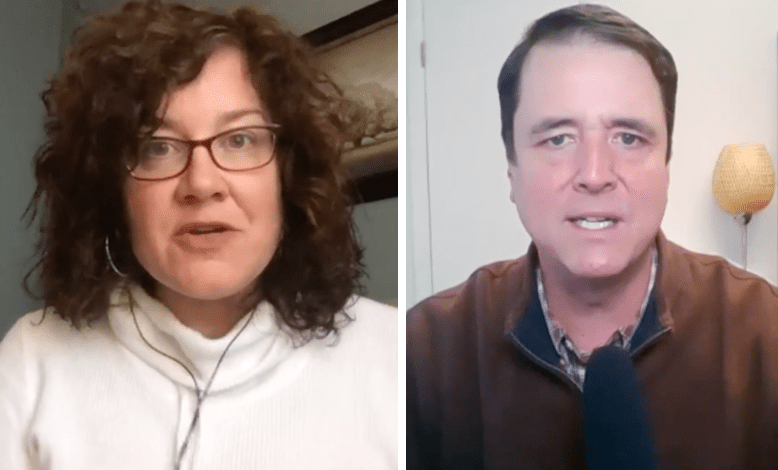
 In this jointly-released production of Mormon Mental Health Podcast, Mormon Sex Info Podcast, and Mormon Stories Podcast, Natasha Helfer Parker interviews Dr. John Dehlin about his research regarding LGBT Reparative Therapy in a Mormon context.
During this conversation, John discusses why he decided to pursue his studies on this topic with his colleague Dr. William Bradshaw—to cut through the talk, rumor, and debate on the success rates of reparative therapy by compiling actual data on the subject.
Join us as we learn important insights from the study, including:
- Are attempts to change sexual orientation effective and/or damaging?
- How do LGBTQ Mormons navigate their identity?
- What decisions lead to optimal health/well-being for LGBTQ Mormons and former Mormons?
Additional links:
- Mormon Stories interview with Dr. William Bradshaw
- Mormon Stories interview with Natasha Helfer Parker, Mormon Sex Therapist
- Natasha Helfer Parker, LCMFT, CST
- Mormon Sex Info Podcast
- Mormon Mental Health Podcast
Episode Transcript
Host: John Dehlin · Guest: Natasha Helfer
This transcript is machine-generated and lightly edited for readability. The audio is authoritative. Please excuse occasional errors in names and spelling.
Welcome and Guest Introductions
Natasha Helfer [00:00:25] You. Hello, and welcome to a multifaceted conversation that will be released on many different places. So I'm super excited about today's interview. I'm Natasha Helfer Parker. I'm the host of Mormon Mental Health Podcast. I'm also the host of Mormon Sex Info. And with me I've got John Dehlin, who is the host of Mormon Stories podcast. So we're going to have a really interesting discussion today about his research, specifically with gay and lesbian members of the church. I think primarily maybe bisexuality. We'll talk a little bit about whether or not his research covers that and mixed orientation marriages. So lots of really interesting things I'm very excited to talk to him about.
Natasha Helfer [00:01:14] And this is my first time doing a recording as a host on video. So that's exciting as well for those of my. My Mormon Mental health listeners and Mormon Sex info listeners. So maybe I'll do more of this if I get feedback that you like this format better.
Natasha Helfer [00:01:31] Just a few announcements before we get started. So for those of you who follow Mormon Mental Health Podcast, please Moe's asking for donations. We did meet our kind of base goal for financial support this year in 2018, which allows me to survive into 2019, but it's never too early to start helping the 2019 efforts. And also lots of more things I could be doing, such as offering video interviews, things of that nature, if we make a little bit more than just our base goals. So please consider a donation@mormonmentalhealth.org those of you who are Mormon Sex Info listeners, please consider a subscription to that podcast. It's only $35 a year, and that helps support the work and all the effort I do to get really great people to come onto that podcast.
Natasha Helfer [00:02:21] We have lots of wonderful kind of nationally and internationally renowned professional professionals and also personal stories on that podcast. So it's all very much based on sexuality and the intersection with Mormonism. And those of you who follow John Dehlin, obviously support him and his work at Mormon Stories. So without further ado, I would just like to introduce my friend and colleague, John Dehlin. Many of you do know him as the host of Mormon Stories, but believe it or not, he is quite more complicated than that. He's not just a podcast host. He's actually a clinical psychologist. Some of you know that. But he's also been published and done quite a bit of research.
Natasha Helfer [00:03:03] And I don't know that a lot of people know that about you, John, so. And it's kind of impressive, I mean, to be published in any of these kind of journals that I'll be mentioning here in a minute takes a lot of time, a lot of effort, and I'm guessing a lot of this you did throughout your PhD kind of journey. So he's been published in journals such as the Journal of Counseling Psychology, Journal of Sex and Marital Therapy, Journal of Gay and Lesbian Mental Health, and there's actually several others. So welcome to the program, John. So nice to have you.
John Dehlin [00:03:37] Thanks, Natasha. You do great work. We've been partners collaborating for a long time. I am a big fan of Mormon mental health podcast, of Mormon sex info podcast. Of all the good work you do, you're probably the top person I refer to as a marriage and family therapist, as a sex therapist, as a human, as an expert on faith crisis.
John Dehlin [00:03:58] And so it's an honor to continue our partnership. And you know, I have talked about this research before. The TED talk I gave was based on this research. This was the research for my dissertation. I think 10 journal articles or so, maybe eight have come out of this research.
John Dehlin [00:04:16] But Mormon stories listeners have heard us talk about it before. But a couple things. One is I'm sure a lot of new listeners have not heard us talk about it. And then no one's ever heard you and me talk about it. They've heard me talk about it. But you've got a lot of frontline expertise, actually, counseling LGBT Mormons, LGBT Mormons in mixed faith marriages, LGBT Mormons who have attempted celibacy.
John Dehlin [00:04:41] And so there's going to be a boots on the ground, gritty materialism to this conversation that I don't think has been shared before. So that's what maybe listeners can be in store for today.
Natasha Helfer [00:04:56] Yeah, I think this will be a great discussion. I'm really excited about it. And you're absolutely correct that right away, I mean, and I've talked a little bit about my career on your podcast and such that I started having gay, mostly gay men and mixed orientation marriages show up in my practice. Not so much lesbian Mormons or bisexual Mormons at that. You know, 20 years ago when I first started, over 20 years ago. And so right away I was faced with kind of having to face my own biases, my own ideas, you know, as an LDS therapist myself and looking at research, looking for resources, and there wasn't a lot out there, there was hardly anything out there, especially on mixed orientation marriages.
Natasha Helfer [00:05:40] So that's why I think this work that you've done is just so important. And I plan to have a follow up, hopefully podcast with some researchers that took some of your data and did another study for mixed orientation marriages. So that will be forthcoming, hopefully. All right, so why don't we get started just by you telling us a little bit about how you got into this interest out of all the things that you could have studied or had interest about, why this?
Personal Background with LGBTQ Mormon Issues
John Dehlin [00:06:10] Yeah, well, thanks for asking. So this was a very personal thing for me back. So growing up in Texas and growing up on Spencer B. Kimmel and the miracle of forgiveness and the church education system kind of stuff, I was raised to think that being gay was dirty, that being gay was sad, wrong, sinful, perverted, loathsome, evil. All that rhetoric that Boyd K. Packer and Spencer Lee Kimball shared. I bought well into college at byu and on my mission.
John Dehlin [00:06:48] The first sort of real experience I had, other than knowing some kids at high school that I suspected were lgbt, was having a few of my cousins come out gay while I was a BYU student. And Daniel Parkinson has become a very well known supporter, advocate for LGBT Mormonism, specifically to try and prevent LGBT suicide. But he's a psychiatrist who's been involved with affirmation, and you will read on Rational Faith some, I think, some blog posts that he co authored to help raise awareness about the LGBT Mormon experience. He also was the original host of Gay Mormon Stories podcast, which isn't active right now, but there's still a catalog of a lot of good interviews there.
John Dehlin [00:07:31] So when Daniel and his brother Sam came out as gay, that was the first. It's like, whoa, I have some gay family members. That's weird. And then they moved across the country and you never heard from them again, or at least for many, many years. And I always thought that was sad. The second brush I had with it was when I'm at Microsoft. Actually, let me go back.
John Dehlin [00:07:53] I made a kind of a homophobic comment in a work setting while I. While I was working in Chicago around 1995ish, and one of my colleagues turned to me and said, have you ever known a gay person, John? And I'm like, well, not really. And he said, well, actually you have. I'm gay.
John Dehlin [00:08:11] And that was this. I was so shocked and embarrassed that I had said something kind of insensitive. It wasn't homophobic, but it was insensitive. And. And he called me on it. And then he was so loving that he taught me about his life and his partner's life, and it really humbled me. Then I went to work for Microsoft, and in 2000, I got the news story of Stuart Mattis walking up to the steps of his local LDS church, pinning a note to his chest that said, do not resuscitate. And he took his own life.
John Dehlin [00:08:44] And that was like, oh, my gosh, gay people are killing themselves. I had no idea. And then my wife, Margi's cousin Scott came out to us as gay before he even came out to his own parents. And in that conversation told us he had had suicidal thoughts. And all that history just made it so. When I started Mormon Stories podcast, LGBT stuff was amongst the first stuff I covered because I knew by 2005 that the church had this one wrong. Now, when I started. I'll just say one more thing. When I started Mormon Stories, Evergreen was still very much thriving, which was this reparative therapy organization that the church always had either a general authority or former general authority be on the board of directors.
John Dehlin [00:09:28] The Evergreen International Conference every year would usually be held on church property. And then all the LDS family Services people would be referring LGBT Mormons to Evergreen, which meant that they were referring them to reparative therapy therapists and Journey into Manhood retreats and all these sort of unscientific, extremely damaging resources for LGBT people that would basically say to them, you know, you're being LGBT is a function of bad parenting, It's a function of sin, it's a function of choice, it's a function of sexual abuse. It's a function of not being manly enough or having the right role model. And so, you know, up until I did this research, Evergreen was thriving.
John Dehlin [00:10:19] Reparative therapy and Mormonism was thriving. And, you know, the church had this really awful, toxic approach to its LGBT members. And so when I finished my master's thesis on scrupulosity, which is religious ocd, I thought, well, I got to do a dissertation. What's a topic that will mean something? Because I'm certainly not going to just do a 200 page dissertation that never gets published and nobody reads. And so Bill Bradshaw reached out to me at that time, who is a much beloved former mission president, former stake presidency member, and lifelong biology teacher at byu. And he said, john, there's a lot of talk about reparative therapy.
John Dehlin [00:11:03] There's a lot of rumor, there's a lot of dialogue and debate, but there's no data. And so he said, will you partner with me on a study? And so I took that to Utah State University with my advisor, Renee Gallagher, who's never been Mormon, and we decided to do a study where we would survey as many LGBT Mormons and post Mormons as we possibly could to Ask them about things like reparative therapy, sexual orientation change efforts, celibacy, mixed orientation marriages, church activity so that we could actually have data to inform this discussion, not just rhetoric.
Natasha Helfer [00:11:44] Yeah, and that really mirrors my experience, you know, back in the day when I first started, I was a contract worker for LDS Family Services. So I remember I had a mixed orientation marriage and I had a gay kind of single adult. Those were my first two kind of clinical cases.
Natasha Helfer [00:12:01] So of course I called up my supervisor, you know, what resources do you have? And they sent me all this material that was pretty much put out by the church that mirrors a lot of what you just mentioned. And one thing I don't think that you mentioned in that was relationship with parents. So it kind of posited this idea that the mother would be an overbearing mother in these situations. That was part of what created kind of like blaming mothers for homosexuality and also distant relationships with fathers. So, you know, parents have been blamed for a lot of diagnoses, you know, schizophrenia and all kinds of things throughout the history of psychology, unfortunately.
Natasha Helfer [00:12:41] But this was definitely still happening, you know, in the late 1990s, early 2000s, that these types of messages. So as I was reading through those materials, which, you know, even at the time I was like not comfortable with the materials that I was reading. It felt like, where are they getting this data from? How do they know these are the things that are contributing factors to homosexuality, et cetera. And pretty quickly I started realizing it wasn't evidence based, standard of care, type of materials. And Evergreen was very popular. I know both of these men that I was seeing were involved with Evergreen even before coming to see me.
Natasha Helfer [00:13:19] So they had been referred to that organization, I'm guessing through bishops or other therapists that they had seen. And it was interesting too to see the church kind of say, oh, no, we're not in charge of Evergreen. Right. That's not our organization. But to your point, this is kind of how they kind of get to talk out of both sides of their mouths sometimes by saying, no, we didn't found the organization. We're not organizing the organization, but we're on their board, or we support or we refer to, or we, you know, have LDS Family Services, you know, refer to it all the time. So it's one of those things that can be confusing to the public.
Natasha Helfer [00:13:53] Like, is it or is it not affiliated with the church? So it definitely was. It definitely was affiliated with the church, as are, you know, relationships with other types of organizations even today with, you know, different issues like pornography Addiction, things of that nature. So that continues to happen. Fight the new drag, for example, all these kinds of organizations that have a lot of support from LDS energies, let's say. So, yeah. Were you gonna say something? Did I?
Natasha Helfer [00:14:25] Yeah. Okay, so let's talk then, a little bit about the data. How do you collect the data? How do you collect the sample? Who's interviewed for this? And how do you go about having a random sample, which is usually something you want for research.
Overview of the Research Study
John Dehlin [00:14:43] Yeah. So if it's okay, I'll share this PowerPoint presentation that I developed around my research, and then we'll stop me at any time and we'll have a dialogue about it.
Natasha Helfer [00:14:52] Okay.
John Dehlin [00:14:53] Is that all right? So can you see. Okay, so what we did. I'll just begin by saying that this study was conducted by four people. Dr. Bill Bradshaw, biology professor at BYU, tenured, you know, lifelong professor, former mission president, faithful guy. Renee Gallagher, professor at Utah State University, specializing in matters of identity and sexuality. Me. And then another grad student named Katie Krull. There were a couple questions going back.
Natasha Helfer [00:15:28] It said 1600. 1600.
John Dehlin [00:15:32] Oh, yeah. I'm going to talk about the sample. Just.
Natasha Helfer [00:15:33] Yeah, okay. Because that's a big number.
John Dehlin [00:15:35] Oh, yeah, huge number. We'll talk about that.
Natasha Helfer [00:15:38] Okay.
John Dehlin [00:15:39] So the question, the main questions we asked were, are sexual orientation change efforts or reparative therapy, are they effective or are they damaging? Because there was not a lot of data. Second was, how do LGBTQ Mormons navigate their identity? What works and what doesn't? And then the third was what decisions lead to optimal health and well being for LGBTQ Mormons versus and formal Mormons versus sort of really poor outcomes.
Natasha Helfer [00:16:08] Right away, I'm going to ask a question, and I hope this is not off putting, but one of the things that I've been called on quite a bit is using the term lgbtq, which is kind of what we use kind of as an umbrella term. And yet each one of those letters symbolizes an entire population. Right. That's very kind of unique. I mean, a transgender population is very different from a lesbian population. Some of them intersect, you know, like you can be a trans lesbian, things like that, or a bisexual intersex person or something along those lines. When you really think about this data that you did, do you think that you really studied each one of those letters? Or was it more about gay and lesbian Mormons?
John Dehlin [00:16:53] So here's where it's. First of all, you're bringing up a super important topic. Here's where we are fitting that acronym. And here's where we're not. We collected data from LGBTQ Mormons. So the data that we're going to be talking about there are lesbians, gays, bisexuals, transgender people, and people who identify as queer, along with people who identify as heterosexual and people who identify as same sex attracted. In other words, the study reached out to anyone who has experienced same sex attraction and at some point has been Mormon in their life.
Natasha Helfer [00:17:34] Okay.
John Dehlin [00:17:35] And so now what you're not going to find is data analyzed from a bisexual standpoint or from a trans standpoint. We have that data. It is still available to be analyzed that way. And in fact, if there was a budding grad student or even professor that wanted to take our data and analyze it from the bisexual standpoint or from the trans standpoint, they could do that. But this represents any respondent who is 18 years or older, has been baptized Mormon at some point and has experienced same sex attraction. And that fits across all those different identities.
Natasha Helfer [00:18:17] Was there any measure on where they were on the spectrum of Mormonism at the time of the survey?
John Dehlin [00:18:25] Yep, we definitely asked. And they rated themselves either active, inactive, disfellowshipped, excommunicated, or having resigned. Those were the five options. And then we also definitely did measures of religiosity to see how intensely religious they were. That was part of it.
Natasha Helfer [00:18:46] Wonderful. Thank you. Sorry to interrupt.
John Dehlin [00:18:48] No problem. I love it. Jump in anytime.
Natasha Helfer [00:18:51] Okay.
John Dehlin [00:18:52] So. All right. So our primary design goal was to have a very large and diverse sample because, you know, up until this point, there wasn't a lot of studies. This is actually worth talking about. So prior to this time, science, research, scientists, let's just say, who are more secular in their orientation, weren't interested in reparative therapy because, frankly, it was viewed as harmful and abominable and backwards. You know, the dsm, the Diagnostic and Statistic Manual, had de Pathologized being homosexual, as they called it back in the early 70s. And so for the medical community and for the mental health community, for the most part, this was a done deal.
John Dehlin [00:19:43] It was great, fine. To be lgbtq, there was no problem. You could, you know, you should do it. And it wasn't pathologized. And so in that sense, it wasn't necessarily a domain of interest for researchers. Where it did become a domain of research of interest was religious institutions wanted, you know, wanted to basically promote the idea that sexual orientation could be changed. So you would get evangelical Christians, Orthodox Jews, Catholics, Mormons all getting together and saying, hey, we've got this LGBT problem, but we can fix it if you'll just go to this therapist or go to this reparative therapy camp or go to this Journey into manhood weekend, we've got therapists that will reorient your sexuality and fix it.
John Dehlin [00:20:37] But they knew that just by saying that, that could be problematic. So what you would get is you would get these researchers that were religious and their research was motivated by religion, and they would do these little studies where they would bring a bunch of people to a reparative therapy camp, hand them out a survey, and say, hey, okay, you just had this weekend. You know, how's your sexuality? Did we help change it? And the problem with those studies, and there were several, is that they weren't random. They weren't randomly distributed. They weren't even. They didn't even make an attempt at random distribution of the survey.
John Dehlin [00:21:15] They would literally just say, okay, who's a reparative therapy doctor or therapist? Let's have them submit this survey to all their patients, or, let's go to a reparative therapy conference, and let's have all the people who attended the reparative therapy conference fill out this survey. And so the samples were small. The samples were biased. The samples were skewed only towards people that would be more inclined to say that their sexual orientation had changed as a result of the therapy or the conference. And so you will find several of those studies. And they were.
Natasha Helfer [00:21:54] And I will say, too, just to add to that, I will add that, you know, in working with a lot of people who did attend Evergreen or these types of retreats that you're talking about, I did have several clients who attended Journey into Manhood type of retreats. They would come back from those sessions. And again, this is at a time when I was kind of open. I was kind of like, well, if you think you can change your orientation and you want to try those things, go ahead and try it. Come back and report what your experience was to me, and we'll see what happens.
Natasha Helfer [00:22:27] Typically, what would happen after those types of experiences, What I would notice my clients doing is that they almost became homophobic themselves. It was really interesting to see kind of like what we call internalized homophobia, where they would come back and be very kind of just. It was kind of shocking. Like, I was like, well, but you struggle with this. And you're talking about people who struggle with this very demeaning and very belittling ways. And they'd be very kind of convinced and almost like, evangelic, you know, like, oh, yes, I can do this. I can do this. And then it wasn't until about six to nine months later, typically, that that would kind of come crashing down in our sessions.
Natasha Helfer [00:23:10] And they would say, you know what? I really, I can see now that I was really invested in that idea. I was really trying to make it work. I was really trying to convince myself that it would work.
Natasha Helfer [00:23:22] So to your point, if they're making, if they're giving out these studies at the end of this retreat or this little, you know, weekend experience that they've had, I think that even the people themselves who are filling out the surveys might sincerely think that they've experienced some type of change that isn't going to have a long lasting effect. So I just wanted to put my own experience into that.
John Dehlin [00:23:43] That's great. Yeah. And there was this groundbreaking. There were a couple of groundbreaking moments in the history of kind of the reparative therapy movement. One was when this guy named Robert Spitzer, who is a well respected psychiatrist, comes out with an article, a journal article that he couldn't get any respected journal to publish, so he published it in some backwoods journal, basically claiming all these people had changed their sexual orientation through reparative therapy. And that was used by Evergreen and People Can Change and all these organizations. For years, Exodus International, Spitzer's article was used to justify these reparative therapy camps.
John Dehlin [00:24:25] Later, almost on his deathbed, Spitzer acknowledged that the methods he used for the study were flawed and he renounced his own study. And that was one. But then also there was the leader of this massive evangelical reparative therapy organization who, after he was done spending decades promising change, admitted that 99% of the people that went through his program did not, in fact, have their sexual orientation changed.
Natasha Helfer [00:25:00] And so, yeah, those happened fairly recently. Right. Like in the last 10 years, I would say. Yeah, yeah, because I remember both of those things happening.
John Dehlin [00:25:09] Yeah, but, but, but see, it's important to understand that the study that we did with Bradshaw and Gallagher was before all that stuff had come out. So we were in the middle of a battle trying to defeat reparative therapy.
Natasha Helfer [00:25:22] Right. Before all these things, we're still in a battle, I mean, legal form of, you know, therapy in many, many states. It's starting to become illegal for minors in several states, but not. It's still practiced all the time. And also, I just want to remind the audience this is why, I mean, when we use terms like peer reviewed research that might, I don't know, you may not really care about that, but that's why it's so Important because you can find articles, you can find research that peer reviewed research and peer reviewed journals is where you're going to find the type of information that has been
Natasha Helfer [00:26:01] checked for research flaws, that has been duplicated, that has been looked at by a body of professionals that say, yes, they've met the parameters for a study to be considered legitimate. And, and that's why it's very important to know whether or not the stuff you're reading comes from peer reviewed sources.
John Dehlin [00:26:19] Beautiful. And so that was back to, back to the presentation that was our main design goal, was a large and diverse sample. We were not interested in cherry picking, only post Mormons that hated reparative therapy, you know, only people that we could use to prove our, you know, the side we wanted to show. We simply just wanted the largest sample we could get, diverse as we could get it, and then see what the data show. Then that's good science. And so what we did is we created this online study with, I don't know, 200 questions, very long study, and then we were able to get Jennifer Dobner of the Associated Press to write an article advertising our study.
Survey Reach and Demographic Findings
John Dehlin [00:27:03] And so this study went out in over 100 newspapers worldwide and we went to every known LDS LGBTQ support group, including Evergreen. So in other words, we went to the, you know, and I'll just be honest, I wasn't a big fan of reparative therapy before this, but I was even more motivated to be honest about our methods because I wanted good science. I didn't want to be, I didn't want our study to be undermined as being bad science. And so we made three direct outreach to Evergreen to say, and Northstar to say, hey, you guys are pro reparative therapy. Give this survey to everyone who's ever been through your program.
John Dehlin [00:27:40] We don't care. We just want the truth. We're not trying to stack the deck. And this is something that was, it was some really creative thinking that no one had done before. And so by having this study show up in 100 newspapers across the world,
Natasha Helfer [00:27:56] was North Star and Evergreen open to helping you?
John Dehlin [00:28:00] There are representatives from Evergreen and Northstar who filled out our study.
Natasha Helfer [00:28:04] Okay, great. Thank you.
John Dehlin [00:28:06] But Evergreen did not want to participate. They were hesitant to participate and they were reluctant. And I don't know how fervently they participated because I don't think they wanted, you know, the data. They didn't want to see the outcome. That's my opinion. And of course now they're defunct, they've folded and they've disappeared. Because they're not really a credible organization. They were a harmful organization. But anyway, we went overboard to recruit them. And the good news Is we got 1,612 people to complete this survey. And this is not just the largest survey of LGBT Mormons ever conducted. This is the largest survey ever of LGBT people who have been through reparative therapy.
John Dehlin [00:28:48] The only ones that even come close. There was a people can change study in 2007, which was not published, which had 224. Of course, I mentioned the Spitzer study in 2000, which Spitzer denounced that only had 200, and it was only recruited from pro reparative therapy organizations. And then there are a few others that were like 100, 150, 98, 37. Those were the sample sizes of the studies prior to our study.
Natasha Helfer [00:29:15] Right.
John Dehlin [00:29:16] So I was super proud of that. We were proud of that. And then, you know, we actually, we actually asked our participants where they heard about our study. 39% heard about it through word of mouth, email, Facebook, 22% through the LGBT support groups that we reached out to. 22% heard about it through news articles and web search, etc. 11% blogs, websites, Internet forums, and then 6% through non religious support organizations. So lot of participants from a wide variety of different sources. Okay, demographics. It's always good to kind of get a sense for who filled this out. It was 75% male and 22% female. That's a weakness of the study. We only have theories on why it was so predominantly male. It could be that many females who are LGBT just don't think of themselves as lgbt. They think of themselves as low libido or asexual Mormon. What's that?
Natasha Helfer [00:30:19] Especially Mormon women, yo.
John Dehlin [00:30:21] That's all this is.
Natasha Helfer [00:30:22] Yeah, right. So
John Dehlin [00:30:25] talk about that. Natasha, would you have a theory as to why 75% of our respondents would be male and so many women wouldn't?
Natasha Helfer [00:30:33] Well, there's several theories. I mean, we're male centric around sexuality issues anyway. We talk about homosexuality as a male issue in the church. Then to your point, the way we talk to sexual talk about sexuality with women, especially in a Mormon construct, is that they're fairly much, you know, the gatekeepers and kind of the protectors of their own sexual purity and virtue. And I've had actually several, many, many clients. Like I told you at first, I would see gay men and I was like, well, do we not have lesbians? Why are lesbians not showing up in my practice? And over time, I've actually had quite a quite A few lesbians.
Natasha Helfer [00:31:09] And the typical presentation is that she is married, heterosexually, comes in as low libido, not necessarily enjoying sexual, you know, life with her husband, although usually in a very good relationship with her husband, otherwise, you know, friendship wise and parenting wise and those kinds of things. And as she starts possibly considering orientation as, as an aspect to why she's experiencing lilabido in a heterosexual marriage, it's like the onion layers come back and like this blooming person comes out and all of a sudden her sexuality is like very front and center. And I'm like, oh, okay, we are, you know, this is, this is what we're dealing with is a lesbian orientation, not low libido issues.
Natasha Helfer [00:31:59] But a lot of times women, I don't think are as Mormon women are not as tuned into that in adolescence or young adulthood because they're not taught to really tune into their sexuality to begin with. So it's all about the male. It's all about my relationship with the male. It's all about me getting married, Mormon identity, motherhood, all of that stuff. And so when they finally get to a point where they're going to focus on their own sexuality, it's like, oh, my goodness, I'm in a totally different boat than the belt I'm on.
John Dehlin [00:32:28] So, yeah, yeah, that's so helpful for you to validate what we have had.
Natasha Helfer [00:32:34] That's my anecdotal experience.
John Dehlin [00:32:36] No, it's important because I think a lot of women didn't fill out this survey because they possibly were lgbt, but just thought of themselves. They'd never explored their identity because we know sexuality with women. From the research of Lisa diamond, we know that sexuality for women is more fluid, that women tend to have more prevalence of bisexuality than sort of this monolithic, either straight heterosexual or straight gay.
John Dehlin [00:33:01] And then women in Mormonism just aren't considered sexual beings. So oftentimes we know that through the work of like, Jennifer Finlayson, Fife and others, where they just. Their job is to please their man and they haven't even thought about their own pleasure or their own needs. And so I think some of the reasons why women didn't even think of themselves as LGBT and thus wouldn't bother to fill out a survey on LGBT issues because they didn't think of themselves as same sex attracted, because they'd never allowed themselves to even open that Pandora's box.
Natasha Helfer [00:33:33] Yes. Yeah, agreed.
John Dehlin [00:33:35] Okay. So the mean age of our sample was 37 years old. It was 91% white, because that's Mormonism, at least in the U.S. we did. Our 48 states covered 22 countries. 45% of our sample is from Utah. And then our respondents were higher than average income in education. And these are just some of the demographics that it's important to show when you're talking about your sample.
Natasha Helfer [00:34:03] Sure.
John Dehlin [00:34:04] Okay. So in terms of relationship status, 42% of our sample reported as being single. This was pre the legalization of same sex marriage. So, you know, LGBT people didn't have the option for marriage in most states. So 42% identified as single, 35% in committed same sex relationships, 16% in married heterosexual relationships, orientation marriages. 4% identified as divorced, 63% identified as gay, 14% as bisexual, 14% as lesbian, 6% heterosexual, 3% same sex, attracted or trans. Doesn't belong in there. So that, that shows our ignorance or my ignorance as a researcher at the time. There we go. I'm putting trans in as a sexual orientation and it is not. And I'm just noting my blindness and ignorance at the time. I'm embarrassed that that's there, but that's what the slide was back when I made this presentation, so I'll own it. There is a difference between sexual orientation and gender identity.
Natasha Helfer [00:35:09] That's right. That's right.
John Dehlin [00:35:11] It shows how far we've come, frankly.
Natasha Helfer [00:35:13] Oh, absolutely, yes.
John Dehlin [00:35:15] Interestingly, a third of our respondents were active in the church. So for those who want to say this was a biased sample that didn't include, you know, that were just angry post Mormons or whatever, that's wrong. 30% identified as active in the church, 36% inactive, 25% had resigned, 7% had been excommunicated, and 3% disfellowshipped.
Natasha Helfer [00:35:40] That's a fairly high number of resigned members. Do you think that's because people are avoiding disciplinary actions?
John Dehlin [00:35:47] Well, yeah. I mean, at the time, yeah, at the time, I think it's a. For many, it's a sign of empowerment. We've seen resignations increase within the post Mormon community and the faith crisis sort of, you know, situations over the past few years. I think LGBT people just for a long, long time, for decades, have been opposed to the church's rhetoric, opposed to the treatment of their own people. And resignation is just a form of empowerment. If you've lost touch with your bishop, your stake president, you're living somewhere else, you're not engaged with the church anymore, you just resign. That's how you get your name off the records. It's the way you get the church to stop harassing you. It's the way you get the home teachers to stop showing up. It's the way you get the church to.
Natasha Helfer [00:36:31] Well, I'm guessing specifically for the LGBTQ community and Mormonism, it might be a reason, a reason to resign, which is maybe not so much so for the rest of us would be to avoid disciplinary action because quite frankly, they're at a higher likelihood of being called in for discipline if they're, quote, unquote, you know, living the lifestyle, which is one of the ways that Mormonism talks about people being in same sex relationships. So I'm wondering, I. That's just something I'm wondering about, not something I'm expecting you to answer.
John Dehlin [00:37:05] Absolutely. Okay, so back to the data. Let's see. I'll share it now. So let's see. Okay, so this. Now it's time to sort of jump. Oh, we also, this was really interesting. This is a slide Bill Bradshaw came up with.
John Dehlin [00:37:28] There are some developmental milestones that we tracked along the way. We asked them questions like, when did you first have a sense of being different than others? When did you start feeling, you know, same sex orientation? When did you first become attracted to people of the same sex? And so you're going to see mean ages for men and women here. So we have men on average reporting that by 9, on average, they're feeling different than themselves and others. And women by age 11, men by age 13, are realizing that they're same sex attracted women by the age of 16. So women are having that awakening a little bit later than men on average.
John Dehlin [00:38:14] Men don't have, on average, their first same sex or romantic experience until 18 on average, and women 21 on average, or 22. And they don't disclose their same sex attraction until 21 for men and 23 for women. And for those of you who track Mormon history, you'll know that 21 was the age that men usually finished their missions. And so the common narrative for men was deny your same sex sexuality, maybe, maybe have a little bit of experimentation before, but go on a mission, serve your mission, go on the mission. Being promised that if you go on a mission, your same sex sexuality will disappear.
John Dehlin [00:38:57] They go on the mission, they serve faithfully. Oftentimes they're APs on the mission. Super valiant. Then they get home from their mission and they realize that it doesn't go away. And same thing for women. And it's by that point that they're at BYU or byu, Idaho, Rick's or whatever, where they go to a therapist for the first time. And it's usually their therapist that they come out to or their bishop or stake president. And so those are some of the milestones. And then finally, how long did it take until they actually were willing to label themselves with an LGBTQ identity? It was 22 for men and 25, 24, 25 for women.
John Dehlin [00:39:37] Now, I'm guessing that these milestones would look very different in 2018. We have kids coming out much earlier. We have people talking about it to priesthood leaders or therapists much earlier. We have people self identifying as LGBTQ earlier. And all that's, I think, positive for mental health.
Natasha Helfer [00:39:57] Yes. And also to just note that LDS leaders, Bednar in particular, have discouraged LGBTQ members from labeling themselves. Right. So that whole idea of don't label yourself as something so negative, instead of really understanding the importance of self identity and being able to own a label that, you know, matches your self identity.
John Dehlin [00:40:25] Right. And you even have Bednar saying there is no such thing as a gay or lesbian Latter Day Saint. Of course. Anything really weird with labels these days in Mormon. Yeah, but, but, but I think we're
Natasha Helfer [00:40:39] having a few label issues. Branding issues.
John Dehlin [00:40:41] Yeah. The good news is with movies like Believer with Mama Dragons, you know, with. With Mormons building bridges.
Natasha Helfer [00:40:50] Affirmation.
John Dehlin [00:40:51] Affirmation. You know, gay Mormon stories, all the different podcasts, you're seeing LGBT Mormon pride show up, and you're seeing parents are embracing their LGBT kids, kids coming out with Samantha, kids coming out with their LGBT identity younger and younger. And I don't think the church is winning that battle.
Natasha Helfer [00:41:11] Well, not to mention that Utah was the first state that we had to
John Dehlin [00:41:15] legalize same sex marriage.
Natasha Helfer [00:41:16] Yeah. To legalize same sex marriage. It's amazing.
John Dehlin [00:41:19] In the more modern era of legalization.
Natasha Helfer [00:41:22] Yes, yes.
John Dehlin [00:41:22] There were a few states like Massachusetts or.
Natasha Helfer [00:41:24] Yes, right. Yes.
John Dehlin [00:41:26] But, yeah, so lot of positives have happened since, you know, this study and other things that have happened.
Natasha Helfer [00:41:33] But.
John Dehlin [00:41:33] Okay, okay, so those are some developmental milestones. Now we'll just jump right into the data. So the first question that we wanted to cover was, okay, we've got all this reparative therapy going on. Is it working? You know, is it helping people?
Methods Used to Attempt Sexual Orientation Change
John Dehlin [00:41:51] And we basically, we identified, let's just say, nine different. Nine, ten different ways that people attempted sexual orientation. And this was one of the most innovative and important approaches of the study. We knew that people went. People attempted to change their sexual orientation through going to a therapist or through going to these, you know, group retreats. Right.
John Dehlin [00:42:17] What has never been talked about and never studied prior to this study, ever, in any religion, in any context, were Other methods that people use to change their sexual orientation, the most obvious being personal righteousness, prayer, fasting, serving, serving in the temple.
John Dehlin [00:42:36] And so we asked, do you use personal righteousness as a way to change your sexual orientation? We also asked, are there other individual efforts that you use? Do you go to your bishop or your stake president or your mission president to try and change your sexual orientation?
John Dehlin [00:42:52] And so we asked about 10 different types of methods. Group therapy, group retreats, family therapy, psychiatry. And what we found is that the top three most common methods of attempting to change your sexual orientation were never discussed and never, ever researched before. 76% of our respondents tried to change their sexual orientation through personal righteousness, prayer, fasting, etc.
Natasha Helfer [00:43:15] It's a Mormon equation. Right. It's like if you're. If you're righteous, then you will be blessed.
John Dehlin [00:43:23] 55% tried through other different individual efforts, and they could choose more than one. Right. Most people, on average, attempted in at least three different methods.
Natasha Helfer [00:43:30] What's an example of other individual efforts?
John Dehlin [00:43:33] Books, browsing the Internet, talking to friends. So just anything you would do on your own that wasn't through righteousness or talking to a therapist or going to a group or a counselor, Those sorts of things.
Natasha Helfer [00:43:45] Gotcha.
John Dehlin [00:43:46] But third on the list was church counseling. So that's talking to a bishop, talking to a stake president, talking to a
Natasha Helfer [00:43:52] mission president, which we know how much training they have on lgbtq, sexuality orientation identity.
John Dehlin [00:43:58] Not even less than.
Natasha Helfer [00:44:00] Right.
John Dehlin [00:44:00] It's hard to go less than none, but somehow, anyway.
Natasha Helfer [00:44:06] No, I don't think it's glib. I think it's hugely problematic that this is where people feel like they're getting expertise from. Yeah, I think it's unethical. I think it's really harmful.
John Dehlin [00:44:18] Yeah, it is. Only a third of our respondents had attempted sexual orientation change efforts through psychotherapy, but that's egregiously high because it's against the ethical code of pretty much every major mental health organization. So whether it's psychiatry, the medical profession, psychologists, marriage and family therapists, licensed clinical social workers, counseling psychologists, all of them, at one point in their history or another, had declared sexual orientation change efforts unethical and, you know, damaging. And so the fact that within the Mormon context in the 80s and 90s and 2000s and even today, there are still therapists doing different forms of reparative therapy, even as low as 35%, it's still egregious. Right.
Natasha Helfer [00:45:08] And not to mention that BYU was doing shock therapies and research and things like that all the way Into, I think, the late 80s, if I remember correctly, which, again, was post the diagnosis change in the DSM, which, like you said, happened in the 70s.
Natasha Helfer [00:45:24] And this is a big reason why I founded, with the help of several other professionals, the Mormon Mental Health Association. Right. So because it is always fascinating and egregious to me how many mental health professionals really allow for their own religious bias to interfere with clinical standards of care. It's a huge problem, not just in Mormonism, but in Christian counseling and evangelical counseling. And I say that as, you know, a Mormon therapist. I've had to call myself on a lot of that. And it's fascinating to me how many professionals and colleagues of mine really struggle with that issue. And I've actually been speaking about that at several universities, and we'll be speaking on that at a university in Wisconsin tonight. So.
John Dehlin [00:46:09] Awesome.
Natasha Helfer [00:46:10] It's a problem.
John Dehlin [00:46:11] Huge problem. Okay, here's the probably the most important slide in the reparative therapy discussion. What we did is we asked, did you find how did you experience your efforts? Well, we asked, which efforts did you try? How many years did you try each effort, and did you experiences that is harmful or not effective or ineffective? Right. Or highly effective. Right. And for those of you who are watching on YouTube or on Facebook, who have the visuals, what you'll see is something really, really alarming.
Harms Associated with Reparative Therapy
John Dehlin [00:46:53] You'll see some methods that were not used very frequently and, you know, did not then contribute to a lot of harm. But what this survey shows is that the most prevalent methods used for reparative therapy were also used for the longest amount of time and were the most damaging. So the method, by far the worst possible way to change your sexual orientation was through personal righteousness. Unfortunately, 76% of our respondents attempted that method, on average, for 11 years.
John Dehlin [00:47:30] And you'll see that 80% rated it as either harmful, severely harmful, or ineffective. And, you know, we had a lot of these narratives of people saying, I prayed, I prayed, I fasted, I served. And I got to the point where I was suicidal because God wouldn't fix me.
John Dehlin [00:47:51] He would claim, you know, there'd be these people standing up in these conferences like North Star, Evergreen, saying, God fix me. God changed me. Who turned out to be secretly still engaging in sexual behavior. And they were just either lying or, you know, they relaxed, but they still were willing to hold themselves up as role models for all these other people that then tried to follow their example. And then when they did, for 10, 11 years, they became suicidal because they said, I must be beyond God's Power, I must be so broken, so defective, beyond God's power, beyond God's love, that God will fix all these other people, but they won't fix me.
Natasha Helfer [00:48:31] That's right.
John Dehlin [00:48:31] And so that's why personal righteousness is the most evil and pernicious of all forms of sexual orientation. Change efforts, followed by individual efforts, which were practiced for nine years. Not quite as harmful, but still harmful. And then look at that. Church counseling. 47% attempted church counseling with bishops and stake presidents for an average of 6.6 years. And again, 80% declared it as either ineffective, moderately harmful, or severely harmful. And let me just talk about ineffective for a second.
John Dehlin [00:49:07] You know, okay, well, as long as it's not severely harmful or harmful, it's okay. Cause it's just ineffective. But what if you put your entire life on hold for 10 years instead of dating LGBT youth as a, as a youth, instead of dating LGBT people as a teen and in college, instead of getting into committed, loving, same sex relationships as a young adult, and as an adult, like so many, you know, heterosexual people get to do, these respondents would go well into their 30s never having a healthy, emotional and sexually intimate relationship with anyone. And so you're putting your life, not only are you postponing those really important years, and you're losing them to the opportunity to have intimacy and relationships, you're also not getting those really important formative relationships, just dating, flirting, playing around, sexually learning healthy sexual behavior.
John Dehlin [00:50:08] And that's what's led to all these LGBT men and women that would go to San Francisco or wherever and just get thrown into really unhealthy, underground, toxic forms of sexuality instead of the relatively healthy, normal sexuality that a youth or young adult would experience just in, above ground, not underground, day to day, normative living. Now, I should pause and let you jump in there, Natasha.
Natasha Helfer [00:50:37] No, I totally agree. And I think this has lifelong repercussions. Lifelong repercussions. It has developmental repercussions. How many people I've heard in my, you know, in my office talking about, you know, I'm in my 30s now. I feel like I'm 15 as far as a sexual person. I have very little experience. I don't know how to date. All of my, you know, colleagues and peers are completely in a different realm of their own experiences. I feel like an idiot. You know, so, so much pain. And, you know, we talk about suicidal statistics because obviously, you know, LGBT populations, you know, skyrocket in suicidal statistics compared to heterosexual statistics.
Natasha Helfer [00:51:24] And even outside of suicidality, I just want to say, you know, Even outside of that, even if you haven't gotten, you know, to the point where you're suicidal, this is so severely damaging to just life, you know, lifestyle, life projection, self esteem, self confidence, relationships, relational health, sexual health. You don't need to be, quote, unquote, suicidal to have a problem here. You know, so I just want to really, I don't think anybody escapes this type of upbringing or narrative or kind of context that you're very well providing without severe, you know, ramifications for their entire lives.
John Dehlin [00:52:06] Yeah. And we should also mention that just, you know, gay, lesbian, bisexual prevalence rates around, as I understand it, 5%. So we're not talking about a small number. If there are 16 million Mormons across the world, you know, whatever 5% of 16 million is. But it's not a small number. It touches everybody. And if you, if you.
Natasha Helfer [00:52:25] Oh, it's millions of people. Yeah.
John Dehlin [00:52:27] And if you include people who have experienced same sex attraction, even if they don't identify as LGBTQ or who have had some sort of same sex sexual encounter, it goes up to 10 or 11%. So it's a very large percent that's affected in all sorts of horrible ways by this, by this, these practices.
Natasha Helfer [00:52:46] Right, yeah. And even though your study is focused on Mormonism, I can imagine a lot of correlates here with evangelical, you know, Christians, you know that there's going to be a lot of similar results. So when you start looking at that type of population, we've got millions and millions of people who are affected negatively
John Dehlin [00:53:10] in this, all the non affirming LGBT religions, Islam, let's not forget Islam. Right?
Natasha Helfer [00:53:14] Yeah, yeah.
John Dehlin [00:53:16] Okay. So, you know, the takeaway here is the religious attempts to change sexual orientation are the most damaging and the most prevalent. So the worst thing you can do to try and change your sexual orientation is pray to God, have faith in Jesus, grasp the atonement, read your scriptures extra hard, go to the temple extra hard, serve your mission and just be super, super faithful. That's the most damaging thing you can do. Which is the opposite of what an untrained, unethical therapist would say, which is draw near unto the Savior. You know, read your scriptures, pray, trust in the Lord, the Lord and the Savior will guide you through this challenge of your life.
John Dehlin [00:53:57] Well, they're basically saying, they're basically leading you down a path of toxic, poor mental health and potential suicidality in the name of God and Jesus. Which is. So it's not, it's counterintuitive because we all want to think, oh, any engagement with God and the Savior is going to improve our mental health and well being. I'm not against people having God and Jesus as a strong, important source of mental health, but when you embrace it in the context of trying to change your sexual orientation, when you embrace Jesus, the Bible, the Book of Mormon, religiosity in that context, it's a potentially fatal or deadly usage of religion.
Natasha Helfer [00:54:39] Yeah, well, and counselors shouldn't be using that type of language anyway. You know, therapists should not be saying, hey, pray to God. You know, you know, if they're going to bring in any type of spiritual language or thought, it would be more like, you know, tell me about your spirituality, tell me about your religion. Is prayer something you find helpful? Why or why not? But to have it as an intervention is a completely inappropriate part of counseling and therapy. And then, but, and then of course, you know, back to your church counseling services. This is very much what ecclesiastical leaders would say, say, you know,
Natasha Helfer [00:55:13] this just falls right in line with what they would say because that's, that's their, that's what they do have to offer is pray and use these spiritual tools to help you with whatever problem you're bringing into the, to the, into the door. And they do that usually very well intentioned, very uneducated and not understanding the harm that they're causing.
John Dehlin [00:55:32] And that's one of the problems historically with LDS Family Services and you know, LDS Social Services, whatever they're called today. And I think the church is getting rid of that sort of thing altogether. But they have handpicked and cherry picked the therapists that bishops and stake presidents and mission presidents will refer to based on their willingness to incorporate what I believe in many cases are unethical practices of interweaving, commingling religious standards with people's identity and with their psychotherapy and with
Natasha Helfer [00:56:03] sexuality, which is again, unethical. Like LDS Family Services stopped referring to me when I started talking about masturbation being a normative, sexual developmental thing, which the American Pediatric association has come out with for, you know, decades now. And, and so they're going to stop referring to me, a licensed clinical marriage and family therapist with no issues, never been reported. I don't have any problems with my license or anything like that in the state of Kansas, but here locally they will not refer to me because I do not, I guess, adhere to the Church's idea of what correct mental health is instead of what the standards of care are for mental health. This is a huge problem that we're having.
John Dehlin [00:56:46] So use Natasha, or people she refers that's my.
Natasha Helfer [00:56:49] Well, that's why we have the Mormon Mental Health association. And I vet every single person on there to make sure that they're aware of these ethical concerns and we can trust to refer to them.
John Dehlin [00:57:01] Absolutely. Okay, now here's an even more stark slide. We talked about the prevalence rates and the harm and the, you know, the time that people spend 10 to some of these narratives. By the way, some of these respondents went 30, 40, or 50 years trying to change their sexual orientation.
Natasha Helfer [00:57:19] Yeah.
John Dehlin [00:57:19] You know, the average is just 10 or 20 years, but sometimes it extends well beyond. And there are men or women in their 60s finally coming out to their spouses as gay or lesbian, and just imagine what those lives often were like. Anyway, the message from this slide is religious attempts at change are the most prevalent, longest used, and the most damaging. So don't do it. The next slide was, though, was just overall effectiveness. And so we asked how many of you eliminated your same sex attraction? Right. Because that was their goal. They went to same sex, you know, sexual orientation change, you know, repair therapy to get. Make the gay go away. Right.
Natasha Helfer [00:58:04] Yeah.
John Dehlin [00:58:04] And this was a really disturbing number on a couple levels. We found that 0% of our respondents, and that's about a thousand who attempted sexual orientation changed. So we had 1600 felt the survey. Two thirds of those that attempted sexual orientation change. The two thirds who attempted change, zero percent reported that they eliminated their same sex attraction. Okay. Now you don't want a number like 0% in a scientific study because it looks like you're cooking the books. You would at least expect 1 or 2 or 3 or 5%. And remember, a third of our respondents were active believing Mormons. Right. You want a couple people or a small percentage saying that they eliminate their same sex attraction.
John Dehlin [00:58:49] We found like two people who said that. But out of a thousand, that doesn't even register as 1%. So we have 0% reporting an elimination of the same sex attraction. And if you think about that. Well, let me say a couple more things. 3% reported some change in their sexual orientation. That means that their same sex attraction decreased. Right. Or their other sex attraction increased, but they still remained LGBTQ or, you know, same sex attractive spectrum.
Natasha Helfer [00:59:21] Yeah.
John Dehlin [00:59:21] But then 40% reported harm from their attempts at change. So imagine if, for a second, imagine if reparative therapy were a drug that the FDA was going to approve. Imagine trying to get a drug approved by the FDA where 0% of the respondents reported that the drug achieved the goals that they had by taking the drug. And 40% of the people who took the drug reported harm with no positive benefit. Would the FDA approve that drug? Hopefully not, right?
Natasha Helfer [00:59:56] Yeah, hopefully not.
John Dehlin [00:59:57] What kind of therapy is that? You're laughing. Why were you laughing?
Natasha Helfer [01:00:02] Well, because it is so. I mean, that's just a great metaphor, right? I mean, that's. It's just ridiculous. It's ridiculous. And this is where the intersection of mental health and religiosity is such an interesting and complicated space, because obviously, in mental health, we are taught to.
Natasha Helfer [01:00:22] In training, we are taught to respect people's religious values. You know, if people come in with religious values, you're supposed to be comfortable enough to manage the thoughts and beliefs of your clients. And. And so when you have, for example, an entire religion taking a stance on something that really is more biological and medically kind of oriented, which is how we very much understand LGBTQ issues now, but they're looking at it from this religious lens, it becomes this very tricky space to know how to, you know, how to navigate as a mental health professional. Right. So if somebody comes in and says, hey, my goal is to change my orientation because of my religious beliefs, and I don't want to be a homosexual, and I want to be able to get married to a heterosexual, and those are my goals, that becomes a very tricky space for me to be able to honor their religious values, but also give accurate standard of care, you know, information.
Natasha Helfer [01:01:23] And these kinds of research, you know, projects make that so much easier to be able to have this kind of data and to be able to offer psychoeducation in a way that is hopefully, you know, still, I guess what I want to say, respectful of people's religious beliefs. So, and this is why I don't.
Natasha Helfer [01:01:44] When I critique and when I advocate, I advocate towards the leadership, not towards the members. Right. So it's the leadership of the church that should be aware of how harmful this is, because they are the ones that are prescribing the medication that you are saying is completely ineffective, and not only that it's harmful. And so I hold the church leadership responsible for having this knowledge, for having this kind of understanding. This is. This is not new, like you've been saying. When did you do this study?
John Dehlin [01:02:17] I think 2011.
Natasha Helfer [01:02:19] Right. It's been around for a while, and other types of studies have been around for a while around homosexuality. And yet they continue to not only give the prescription, but to double down on the prescription to kind of even make it worse as they've developed some of their policies and developed disciplinary actions that need to be taken that continue to worsen the lifestyle for LGBTQ members. And so that becomes a very ethical debate about church leaders and their role in continuing to put forth a treatment per se that is actually harming other people. We would not, we would not be okay with that if it was about diabetes.
Natasha Helfer [01:03:05] Right. Or heart disease, or if the leaders were saying, you know, don't pay attention to your cancer specialists, instead, you know, do essential oils. Right. Or something like this. I think most church members would be up in arms about anything like that being said from the pulpit. And yet that's what we're doing in matters of sexuality, gender identity and sexual orientation.
John Dehlin [01:03:29] We have several listeners who are listening to us live that we want to give a few shout outs to shout out to Julie Steenbachers Johnson. She says, we love you guys. Starless says, I'm so glad that you both are helping millions, including me, open my mind to so many things. My heart is full. Catherine writes, I so resonate with what Natasha is talking about. I think that was when you were talking about, you know, female sexual awakening and libido and asexuality versus same sex sexuality. Eric writes, yes, there are psychologists still doing the reparative therapy. Just a few years ago, I saw an LDS psychologist who wanted to do this therapy. I left him in the dust. Good job, Eric. You made the right choice.
Natasha Helfer [01:04:16] BYU, ID just had a. Just last year, or even at the beginning of this year just had some type of reparative therapy group or something that was going to be taking place.
John Dehlin [01:04:27] So we got that.
Natasha Helfer [01:04:28] It's alive and well.
John Dehlin [01:04:29] Read it to make that get canceled. Now, Jeanne Marie Todd offers a loving, I hope criticism. I think it's a loving criticism. She says, this is such important work, it would also be good to have a discussion that includes actual LGBTQ people. That's true. Guilty. We should have done that.
Natasha Helfer [01:04:46] Well, but I want to be very clear that when I. This is not a panel discussion. So when I bring on panels, then, yes, this is. I am interviewing John as the. One of the main people who conducted this research study. That's it. So we, we've brought on lots of other, you know, LGBTQ plus. We need to do more of that. That's fine. But this particular interview is. I'm just interviewing you as one of the main people who conducted the study. That's it. So it's not a panel discussion.
John Dehlin [01:05:17] Okay. And we appreciate that feedback from Jeanne Marie because it is a good practice, wherever possible, to always have members of the group you're discussing be a part of the conversation.
Natasha Helfer [01:05:30] Yeah. And I think a good follow up to this podcast would be maybe bringing on a panel to discuss, you know, this research and how it affects them or how it resonates with them, especially since it's been, you know, 10 years or more since you've done this research to begin with. 15 years.
John Dehlin [01:05:46] So Eric writes, they are talking about everything I have experienced to a T. And he says it was 20 years where he fought his same sex attraction. Jean Marie also writes, I can't imagine how angry I would be to realize that bogus theories for my church had robbed me of my true identity for so long. I'm glad you figured things out.
John Dehlin [01:06:09] And then I'll just say one more comment. Okay. No, that's it. So those are some great comments from our listeners. There's just two quick things I want to say about this section before we move on to the next one.
Key Findings and Mixed-Orientation Marriages
John Dehlin [01:06:22] The first is that, you know, to summarize the findings from the study, most LGBT Mormons attempt to change their sexual orientation because of their religion. Religious attempts are much more prevalent and harmful and longer in duration than therapist led attempts to change.
John Dehlin [01:06:44] Overwhelmingly, the majority do not change their sexual orientation. In fact, pretty much none do. And then most feel harmed by the efforts, and those are the takeaways. And then the only other thing I want to say, just historically, is that we don't know what the actual causes of this are. But as a result, let's just say after this research started getting published, all of a sudden, Evergreen gets shut down.
John Dehlin [01:07:09] It transfers all its assets to Northstar. So North Star becomes the new Evergreen. We've had people in the past talk about how Northstar is just a different animal of the same thing. Where North Star is encouraging cuddling parties where, you know, mixed orientation marriage couples will go to someone's house. The women who are all straight will all go to the upstairs and talk. All the men will go downstairs and they'll cuddle with each other and hold each other romantically under this bogus theory that holding a gay man will help you get your emotional needs met in a way to where you can then get that gasoline that you need to survive in a mixed orientation marriage.
John Dehlin [01:07:51] And of course, a journey into manhood still thrives with Ty Mansfield and others. And all of this stuff is basically just broken theories, false theories. It's still holding on to these theories about broken parenting and sin and choice and abuse lead to same sex sexuality. They're all assuming the religious belief that same sex sexuality is wrong and North Star is just a new face on the Same animal of trying to change or manage your same sex sexuality through righteousness.
John Dehlin [01:08:23] But the good news is reparative therapy has been beaten back, Evergreen's died, and the church is no longer at least openly and publicly supporting efforts at sexual orientation change. They're now just doing it in a more backdoor, North Star secret, sort of unofficial way. But it's still being.
Natasha Helfer [01:08:45] Yeah, they're also not. My understanding is that the suggestion to go into a mixed orientation marriage has decreased significantly. So that used to be 30, 40 years ago. That was what was kind of. That's what the bishop would tell you. We'll just get married, you know, to a nice young woman and it'll go away or it'll figure itself out or, you know, things of that nature. So they're not doing that anymore. Right now the options are really celibacy. I mean, they.
John Dehlin [01:09:15] See, here's the thing. Here's the thing, Natasha and I would never want to ever disagree with you, but I'm just gonna raise a point.
Natasha Helfer [01:09:21] Yeah.
John Dehlin [01:09:21] When LDS Living magazine puts Ty Mansfield and his wife on the COVID Oh, I agree. When Northstar conferences that are given funding from church sources, when Ty Mansfield's given a book contract at Deseret book called Voices of Hope. Right.
John Dehlin [01:09:42] They are in effect encouraging mixed orientation marriages without explicitly telling people to do it by holding up role models. And even when they came out with the Mormon and gays website, they've got these couples where the gay person in a mixed orientation marriage is bearing their testimony about how they put their faith in Christ and they've been able to have an awesome loving marriage in a mixed orientation marriage. On Mormons and gay's website, several of those people who were promoted as proponents of mixed orientation marriages on Mormons and gays were either at the time privately in same sex relationships or have since been in same sex relationships or have been divorced or have left the church.
John Dehlin [01:10:31] And the same for the people that were advocating for celibacy. So we'll talk about celibacy and mixed orientation marriage in a second. But I just want to say that we should not think that just because the church isn't overtly encouraging mixed orientation marriages, which is an improvement, that they're not still promoting it and encouraging it and supporting it. Because they absolutely are.
Natasha Helfer [01:10:51] Yes, I would agree. And this, you know, when we talked about, when we talk about mixed orientation marriages, which I'm guessing will be a different podcast because we're running out of time, it is this intersection of, and I feel this as a clinician, where I want to support those members who are in mixed orientation marriages. You know, on the one hand, like, I completely understand the context of what got them there, and many of them feel very, I think, betrayed by all sides of these discussions, right, because, like, they'll listen to us, for example, and see us as not affirming of their relationships.
Natasha Helfer [01:11:29] They'll listen to people who don't understand anything about LGBTQ issues, and they're not affirming either. It can be a very isolated, lonely place to be in a mixed orientation marriage. And at the same time, I can't ignore that the context of why they're in a mixed orientation marriage to begin with is largely religious based. And so, and we're going to talk about some of the, some of the issues with mixed orientation marriages. And so I'm hopeful that we can talk about that in a way where we're talking about data and we're talking about context and again, standards of care and evidence based, you know, practice and research, which is difficult, I think, for those in mixed orientation marriages to listen to or to be aware of because they don't feel like they're particular situation is being talked about in a respectful way.
Natasha Helfer [01:12:19] So I just want to put that out there. I think that's just a very difficult, you know, relationship to be a part of. And, you know, in your last little bullet point, you did say that some people did find some benefits to these types of approaches. And what I also want to say about that is that, for example, if you go to, like you've talked about a cuddle party, which I'm not sure exactly that's how they would call that, but, you know, whatever they would call that, where you have these interactions with other people and you hold each other, you have experiential experiences. If I went and did that as a heterosexual with the idea of bonding with other people, having an emotional, spiritual experience, I would probably find some benefit to that, you know, because there's emotional connection, there's connection with other human beings.
Natasha Helfer [01:13:08] The point I think we're trying to make is that even though people may say that there are benefits to those types of experiences, they're not the types of benefits that really are being sold to begin with, which is sexual orientation change, right? And so you may go to a, for example, a reparative therapist and find a safe space. You may find a person who's very loving, you may find a person who's very accepting.
Natasha Helfer [01:13:33] Even though they're conducting therapy that is not research based and evidence based, there still might be some Benefit to you going and having a person you can talk to and be open with about something you've never been open about in your life. So I just want to be very careful that we understand that just because there's a benefit doesn't mean one that we couldn't get that benefit from another place that is research and evidence based standard of care practice and that the benefit is not typically what the goal is, that the benefit is just an emotional connection versus sexual orientation change, which is what a lot of these people are going into those services looking for.
John Dehlin [01:14:10] And we also really should mention, and this came up in my interview with Chad Anderson, Gameworm and Dad, this came up in my interview with Benji Schwimmer that I just released a week or two ago, many of these cuddle parties or journey into manhood weekends where you do either cuddling with your clothes on or I've even heard of these cuddling sessions with your clothes off, naked cuddling with gay married Mormon men who are faithful and active in temple recommend holding. By the way, these practices that Northstar and Journey into Manhood promote become these seeding grounds and these hotbeds for infidelity. In other words. Yes, everyone goes with the idea of being faithful to their spouse and they cuddle and they, you know, the idea and the theory is that we won't have any hookups or sexual arousal or activity, but what ends up happening is in the parking lot or the next evening or, you know, text, you know, cell phone, cell phone numbers are exchanged.
John Dehlin [01:15:10] And what happens behind the scenes is the hookup that comes after the cuddling. And from everyone I've talked to has been involved in these sorts of things that happens. And it's very common.
Natasha Helfer [01:15:21] Yeah. And that would be expected. Again, you're looking at a population that is trying to desperately suppress a human huge part of their identity. And now they're meeting other people who are in that same boat. Of course you're going to connect with them. You're going to feel very intimate with them. They're going to understand you at a certain level that nobody else understands you, including other gay men or lesbian women. Because like we've posited today, this is a very unique kind of population issue, not necessarily a gay men issue overall. Right. And so I think it would be very common to connect with people and to make them, you know, make those kinds of connections that then become sexualized.
Natasha Helfer [01:16:01] So, yeah, that's for sure. Okay. So John, yeah, we got through like, you know, a fourth of what I was hoping to, which is awesome. Because we had a lot of really good discussion. Can I invite you back to do part two of your presentation?
John Dehlin [01:16:22] Do you want to do that?
Natasha Helfer [01:16:23] Would love to do that. And I also want to do that
John Dehlin [01:16:26] Sound too much John de Lynn for your audiences.
Natasha Helfer [01:16:30] I don't ever have too much John Dehlin. I'm one that my philosophy, just for those who care to listen, is that I am interested in people who practice, like I said, evidence based practice. And I know a lot of people and this just came up on my feed, I think yesterday. Oh, well, you know, I have people that wouldn't want to listen to some of John Dehlind's podcast or something because he was excommunicated. Well, I am a big believer that again, when I'm talking about Mormon mental health, that is not.
Natasha Helfer [01:17:06] I am not conducting an ecclesiastical interview to see whether or not somebody's clinical work is good enough to be on Mormon mental health. So Mormon mental health has active members and LDS therapists on it. It has inactive members and LDS therapists on it. It has excommunicated people like John Dehlin in it. And it has secular people who have studied, you know, things that would affect the Mormon audience. So that's what Mormon mental health should be about. And not allowing ecclesiastical concerns to interfere with clinical, medical or mental health practice.
Natasha Helfer [01:17:48] Just like I would hope that would be true of a plumber or an electrician or a dentist or any other profession, that they can be a good plumber whether or not they're excommunicated from any religion or not. So.
John Dehlin [01:18:01] Well, thank you.
Natasha Helfer [01:18:02] I would love to have you back.
John Dehlin [01:18:03] Oh, I would love to come back and I'll just, you know, there's other things we can talk about. We could talk about identity and the LGBT Mormon experience. We could talk about celibacy and mixed orientation marriages and church participation. Does church affiliation with LGBT people lead to better or worse outcomes psychologically? For example, does celibacy work? Does it make you happy? Is it toxic? We can talk about, you know, the benefits or the disadvantages of going inactive versus being excommunicated. And then you also want to talk about the understanding the Mormon faith crisis research that we did.
Natasha Helfer [01:18:39] Yes, that's a whole different one. So, yes. And I also want to talk about mixed orientation marriages because I do think, even though there are other professionals, I will also interview about that. You had some data on that that I definitely want to cover. So, yes, I think we're probably looking at part two and part three of this segment that I'd like to get you back on. And then I would like to do the faith crisis research. It's actually been kind of going. Going around the Internet without any, like, conversation about who created that data. So we will do that.
Closing Reflections and Listener Voices
John Dehlin [01:19:13] All right, And I'll just. I'll just end with a quote from Corey Linton, who's a listener. He says there are still LDS leaders pushing same sex attracted members to get married in a heterosexual relationship. I know personally of one from about 12 months ago, so I think that's just. Corey, thanks for the preview that these topics are still necessary to discuss.
Natasha Helfer [01:19:34] Super, super necessary. Okay.
John Dehlin [01:19:36] All right.
Natasha Helfer [01:19:36] Thank you, John, for being with me today. And I will make sure to get you on my schedule because you're tough to get.
John Dehlin [01:19:44] All right. You're awesome, Natasha. Keep up the great work, listeners. Donate to Mormon Matters podcast to support it. Your donations make Mormon matter. I'm sorry? Donate to Mormon Mental Health podcast. Your donations help to keep that podcast alive. Also support Mormon Sex Info podcast because Natasha is the best Mormon sex therapist around, period.
Natasha Helfer [01:20:07] Well, I'm one of several really good ones and there's Mormon stories, so help. Help support these efforts. We are very invested in psychoeducation. We're very invested in helping Mormons, wherever they are in the spectrum, to have good access to mental health information, especially here on Mormon Mental Health and Mormon Sex Info podcasts. These are the intersection of faith, sexuality, sexual orientation, gender identity is a huge spectrum and why I feel so passionate about it and why I actually have to have different podcasts about it, because otherwise I talk about sex all the time on Mormon Mental Health. And that's not fair either. There are actually other issues. Okay, so thank you, John. We will convene and figure out sometimes when we can do this again.
John Dehlin [01:20:55] Thanks, Natasha, and thanks, listeners.
Natasha Helfer [01:20:57] Goodbye, everybody.
John Dehlin [01:20:59] Take care, everybody.
Natasha Helfer [01:20:59] Take care.
Transcript © 2026 John P. Dehlin. All rights reserved. Brief quotations are welcome with attribution and a link to mormonstories.org; all other use requires written permission.
Audio

One Response
Thank you for this! I appreciated what Natasha said about those who are in mixed orientation marriages feeling invalidated from all sides. I have a loved who is experiencing this very thing. Thank you for your work and voices.