
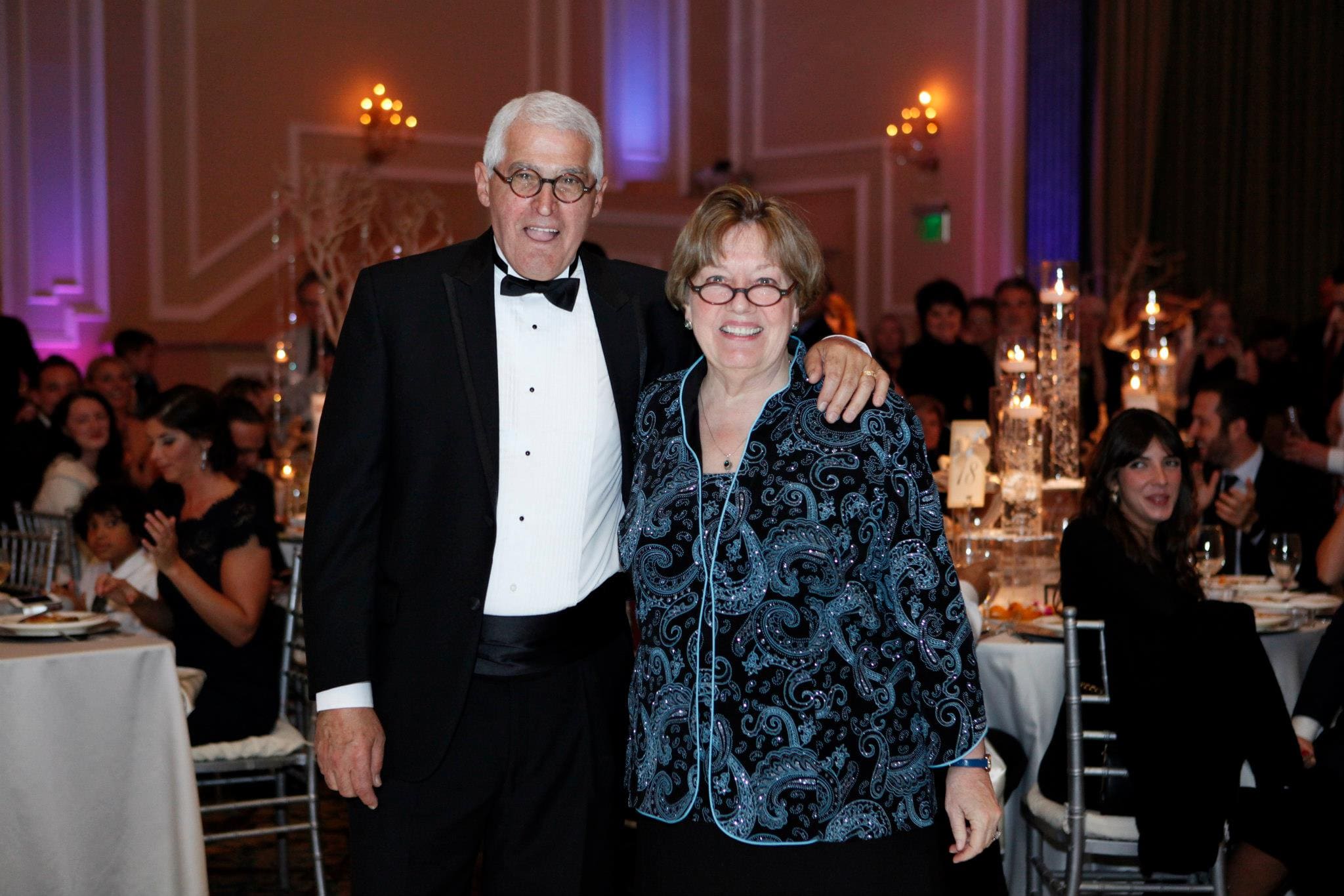
 Dr. Omar Kader was born in Provo, Utah to Palestinian immigrants. HIs father was a devout Muslim and a disabled World War I vet who owned a successful Provo fruit farm. During Omar’s childhood he and his family were called the n-word by fellow Provoans, but fought to earn the respect of his community. Omar and his father were close friends of Dr. Hugh Nibley, who liked to practice his Arabic skills with Omar’s dad.
In this epic multi-part series, we hear several inspiring stories, including:
- How Omar escaped Palestine after being sent back there by his father to prevent him from marrying a Utah woman.
- How Dr. Hugh Nibley fought to help Omar enroll in Brigham Young University.
- How Omar met, courted, and married his amazing wife Nancy – a brilliant Mormon girl from Ogden, UT (this courtship included his conversion to the LDS faith). We also touch on what it was like to enter into a multi-cultural marriage in Utah during the 1960s.
- Omar’s draft into the Vietnam War (serving in Germany)
- How Omar and Nancy risked expulsion from BYU for fighting against the Vietnam war and for supporting the BYU Student Democratic Party during the Earnest L. Wilkinson administration — and how Hugh Nibley came to their rescue.
- Omar’s experiences obtaining a Ph.D. in International Relations at USC, along with his 10 year career at BYU wherein he faced both considerable racism and heroic support from certain BYU faculty and administrators.
- Nancy’s work with the Democratic party in Utah, which included interactions with actor Robert Redford.
- Omar’s decision to leave BYU and move to Washington D.C.
- Omar’s work as a lobbyist for Arab-Americans, which included meetings with Yasser Arafat and King Hussein of Jordan.
- The part Omar played in helping BYU obtain the land to build the BYU Jerusalem center, which he later grew to regret.
- Omar’s scorching critiques of LDS apostles Ezra Taft Benson and Jeffrey R. Holland.
- Omar’s work as a successful businessman in Washington D.C. against all odds as an Arab-American.
- Nancy’s trial of faith after befriending Kate Kelly in her Virginia ward, and then watching her friend get excommunicated.
- Where Omar and Nancy now stand with the LDS church, and with matters of faith.
Episode Transcript
Host: John Dehlin · Guests: Nancy Kader, Omar Kader
This transcript is machine-generated and lightly edited for readability. The audio is authoritative. Please excuse occasional errors in names and spelling.
Introduction and Episode Overview
Part 1 of 4 · Ep. 653
John Dehlin [00:00:16] Hello and welcome to another edition of Mormon Stories podcast. My name is John Dehlin. I am your host. It is September 12, one day after September 11, 2016. And I say this every time, but I cannot express how excited I am for my guests. Today. We're in our home in North Logan in the basement. And today as guests, we have with us doctors Omar Kader and Nancy Stowe Cater. Is that right?
Omar Kader [00:00:49] That's right.
John Dehlin [00:00:51] And my guess is most of my audience will not know these names, but these are very, very thoughtful, experienced, seasoned, important people in the world. But I would say definitely in the Mormon experience. Just to give you a few highlights, just so you know, kind of what we're going to be talking about today and why you really want to tune in. Omar Kader, his father, father was Arab and grew up, was it in Palestine. And so Omar, so his father came to Provo in the early 1900s as an Arab man and raised a large family, Omar being one of the children. So Omar was raised as an Arab, as a Muslim.
John Dehlin [00:01:45] We'll talk about that in Provo. He knew Hugh Nibley, he knew, you know, he was at BYU during the time of Ernest Wilkinson and the spy ring and all that crazy stuff that was happening there. But Omar eventually converted to Mormonism and was at byu. And after his time at BYU where there was a lot of unrest and activism in the late 60s, early 70s, Omar went on to get his PhD at University of Southern California Arab Studies.
John Dehlin [00:02:22] We'll talk about the details. Eventually he was an important part of helping BYU found the Jerusalem center that was there. So he interacted with Elder Holland and Elder Oaks and other people. That was all super important and interesting.
John Dehlin [00:02:40] Parallel to this, Nancy was, you know, she married Omar. It was a multi multicultural marriage. So for a young girl from, you know, Ogden to be marrying an Arab in the, in the late 60s, that, that was, that deserves its own conversation. Discussion. But Nancy in her own right did a lot of really cool and important things in terms of like being involved in Utah politics. They were both Democrats in the 60s and 70s, which is really interesting. Robert Redford is involved in this story, which is always interesting.
John Dehlin [00:03:17] And so we'll be talking about their time at BYU both as students, but then coming back as, you know, with Omar being faculty there. Nancy was sort of, she knew Sonia Johnson and the people in the era, you know, Equal Rights Amendment in the late 70s, so we could talk about that. And then we're going to go on to sort of what led Omar and Nancy to leave BYU as well. Omar's faculty, they relocated and then Omar has developed an entire business or consulting firm. We'll get into it in terms of details around a lot of things. But he is, my understanding is his expertise in the Arab world.
John Dehlin [00:04:04] He's been sought after all over the world. This is a man who knew Yasser Arafat, who I believe knew the Prince of Jordan, like was definitely involved in the 70s, 80s, 90s in Arab Israeli Middle east sort of activities or at least awareness. And so we'll get into all that. I don't even know how rich that goes, but my sense is it's very deep. I was aware of Omar Kader when I was at BYU in the late 80s and early 90s.
John Dehlin [00:04:39] And so we're going to talk about their perspectives on the church as it's progressed. I think Nancy stayed much more active and involved and maybe believing in Mormonism after. We're going to talk about Omar's experiences ascending in Mormon leadership as an Arab man convert and how that became tricky for him. And at some point I think he became less engaged with the church. We'll talk about that. This is an epic story and it culminates, it culminates in just over the past few years, Nancy being in the ward with Kate Kelly in Virginia where Kate was excommunicated and how that affected her multi decade commitment to the church.
John Dehlin [00:05:27] And so that's interesting. Also we'll talk briefly about their four kids and how their four kids, what it was like for their kids to be raised in the church and how that, how being intellectuals affected their journeys within Mormonism so much here. And then if that's not enough, we are also going to do a dive into sort of Arab Israeli history, Arab Israeli conflict and talk about just a real one hour sort of deep dive with Omar on what we should know about Arab Israeli relations, about modern day conflict in the Middle east and even terrorism today as we think about ISIS and other sorts of things.
John Dehlin [00:06:11] I'm just going to pull a good hour out of him about helping us view the world in a more balanced or least thoughtful way as it relates to how we view Arabs and Muslims and terrorism. Is that ambitious? Are we a little bit too ambitious maybe? Omar Khadar and Nancy Stowe cater, welcome to Mormon Stories.
Omar Kader [00:06:36] Glad to be here.
John Dehlin [00:06:37] Thank you. All right, so for this first segment we are going to interview just Omar and there's a lot here. So Omar, let's begin and let's talk if you want to talk about before your father and mother, but tell us a little bit about your Ancestry and what you know about them as it relates to sort of eventually your father moving to Provo, Utah, of all places.
Palestinian Origins and Family Background
Omar Kader [00:07:04] My parents are first cousins. They were both born and raised in the same village about a mile out of Jerusalem. From the 1500s to about 1919, the Turks ruled that area. And it was a harsh rule. And my grandparents, who I'd never met, eventually came to the conclusion that there was no future for young men in Palestine. And so my grandfather started really quickly.
John Dehlin [00:07:37] I always heard that. That the Turks were more enlightened in their.
Omar Kader [00:07:40] They're very enlightened if you were looking at them globally, okay. But if you're part of the lubricant that made that enlightened society function, they ground you up and spit you out.
John Dehlin [00:07:55] And what I mean by that is there's this perception that Turks were a little bit more kind to Jews.
Omar Kader [00:08:01] They were more worldly, and they were more open and more secular. Definitely more secular. Especially after World War II or World War I. Anyway, my grandfather would put these young boys on ships just to get them out of the Ottoman Empire. And when it came my father's time to go.
John Dehlin [00:08:21] What do you mean, put people on ships?
Omar Kader [00:08:23] It was a big village. There are 5, 8, 10,000 cadres in this one village. It's very large. There are about a couple of thousand of us here in this country now. And so my father gets put on a ship about, we think about 1912-15. And he's like, by my grandfather, just get all these little grandchildren out. And some of them are as young as 15 because the Turks were too hard. They were sending them off to war, and they're not coming back. World War I, all the wars in the Empire, and serving in different kinds of capacities.
John Dehlin [00:09:00] And your dad had served in World War I, right?
Omar Kader [00:09:02] So my dad gets sent to America by accident. He gets sent war. No, to avoid the Ottoman Empire and its future. And this is before the war. So he gets sent to Liverpool, and the next ship out ends up going to the United States. I mean, it's just really as though a roulette wheel chose where we ended up. And he ends up in New York City, probably between the age of 15 and 19. And he doesn't speak a word of English. And. And he finds an Arab.
John Dehlin [00:09:33] Can you speak Arabic?
Omar Kader [00:09:34] He's Arabic. It's colloquial, what we call West Virginia Arabic. It's just really a rural bumpkin. And he finds the Arab community of New York, they set him up and say, listen, kid, if you're going to Make a living. There's only one place for you to work and that is to put backpacks on, fill them up with thimbles, needles, thread, linen napkins, everything that a household would need, and go door to door. And that's how he started his living as a backpacking peddler along with all the other immigrants. If you were Irish, you tried to break into the police department, become cops. But these were really exotic people.
Omar Kader [00:10:15] The Arabs coming in, the Muslims coming in. The Irish had a little bit of advantage. They were Catholic. But for the early Arabs that came especially, there were Christian Arabs and Muslim Arabs. So we started peddling and he ends up going, your dad was a Muslim Arab, Muslim Arab.
John Dehlin [00:10:32] How devout would he.
Omar Kader [00:10:34] Glad you really asked that question. I'm really glad. There was a time in my life when I thought that was kind of cool and exotic, but there was a time when it wasn't. He never missed a prayer five times a day. And he didn't matter where he was his whole life. His whole life. And he would carry a prayer rug with him. And I'll never forget, and I'll get to this later, we were coming cross country to be sent home.
Omar Kader [00:10:58] I'm going to talk about this. Earlier or later, he would stop at a Howard Johnson along the turnpike and say, I need to do my prayers. Never missed. And he always attracted a crowd. People wanted to know what was going on.
Omar Kader [00:11:13] A beard? No, no, he was clean shaven. And we were sitting at a Howard Johnson in some place in Ohio and there's a big panoramic window and there are 300 people dining. And out of that panoramic window out on the back lawn, this Arab has spread out his rug and he's praying. And everybody stops, what is going on? And we crawl under the table. We're teenagers and we think, what is dad doing? I mean, and instead of being humiliated, we weren't proud, we weren't unhappy. We were just thinking, is there any way to draw more attention to yourself than be who you are?
Omar Kader [00:11:52] Anyway, those were the kinds of things. And so when I was young, we would go to market with our crops. He would stop at the Murray park every time and pray in the park and it draw attention real quick.
John Dehlin [00:12:06] What were the. Just, just so that we can learn. What were the other components of his religious practice or observance, just so we can get a flavor of what religion meant to him.
Omar Kader [00:12:17] Every year, Muslims fast from sunup to sundown in the month of Ramadan. And then at the end of that, and that's about what month it rotates goes forward one month every year.
John Dehlin [00:12:34] So he observed Ramadan.
Omar Kader [00:12:36] He observed Ramadan steadfastly. I mean, he never missed. At the end of it, there is a period of readjusting yourself to daily life, hoping that you've cleansed your life in two ways. And there is, in that period, you look at this business of jihad, you've heard of that, the holy war. We say Jihad, Jihad is jihad. It doesn't matter. There is the big jihad, which is to make the world a better place by fighting evil wherever it exists. The second jihad is to bridle yourself and live according to the covenants of your faith.
John Dehlin [00:13:17] That's totally different than like.
Omar Kader [00:13:20] Yeah, that's a Fox News version of jihad. The other one, the real one, is how do you discipline yourself on a daily basis? It is, it's very sad that that's been sort of. But it's practiced. It will, it will overcome this short term problem because part of the introduction, mostly most people are unaware of it. As a matter of fact, my sister named her son Jihad and kind of ruined his life.
Growing Up Muslim in Utah
Omar Kader [00:13:44] So he had to change it to J. Anyway, Ramadan. So Ramadan. At the end of Ramadan, you take that three to four, five weeks of readjusting and then the celebrations begin. And the celebrations are like Christmas. There are gatherings of family around, meals and things. During that period, my dad would make gifts for all the neighbors. And it was always he would send us down to buy five pound bags of sugar or flour. And we as kids would have to go out to all the neighbors, knock on the door and say, ramadan's over. Dad wanted you to have this in Provo, Utah, late 50s? No, from the 40s, 50s, 60s, 70s, 80s until he died.
John Dehlin [00:14:31] I love that.
Omar Kader [00:14:31] Anyway, so gifts after Ramadan. Gifts and just a lot of well wishes after Ramadan.
John Dehlin [00:14:38] Did he attend a mosque?
Omar Kader [00:14:40] He tried to build one, but we fought him every step of the way. He had a lot of foreign students at byu, Utah State University of Utah that were Muslims, but not. No community. All the Arabs in Utah were Christians. We were the first Muslim family in Utah County.
John Dehlin [00:15:02] There weren't other Muslim families in Utah.
Omar Kader [00:15:04] There were other. There were no Muslim Arabs. There are Christian Muslims, but no Muslim
John Dehlin [00:15:08] Arabs in all of Utah.
Omar Kader [00:15:09] We didn't know of any until the 50s in Utah for decades. Okay, and go ahead.
John Dehlin [00:15:17] Okay. So no mosque, Ramadan celebrations afterwards, prayer five times a day, any other.
Omar Kader [00:15:27] Just couldn't, couldn't eat anything to do with pork. So we couldn't eat school lunch, couldn't take dance classes no matter what.
John Dehlin [00:15:37] What about reading the Quran?
Omar Kader [00:15:38] He read the Quran every day in its native Arabic.
John Dehlin [00:15:42] And he learned English.
Omar Kader [00:15:45] We're getting ahead a little bit. But about the kid. He lands In America about 1915, 16, 17, World War I breaks out. He's pedaling and he's going from capital to capital, wherever the railroad would take you, whether it's New York, Philadelphia, Baltimore, Chicago, Omaha, Denver, Ogden. When he gets to ogden, World War I breaks out. They stay around Utah a bit and they get inducted and he goes off to the war and he comes back deaf.
Omar Kader [00:16:22] And we had the VA took him up to the hospital and they'd fit him for a hearing aid about every three or four or five years. And he became a regular in Utah. He got a veteran's homestead in Price.
Omar Kader [00:16:42] Couldn't farm it. Moved to the nearest bigger city, which was Provo. Bought farms and farmed about 1920, 21, 22, after the military, he buys a little piece of land, starts building a house and decides he needs a wife. So he goes back to get my mother in Palestine. He marries her. He stays a year, she has a child. He comes home, the child dies before he's 1 years old. And he leaves my mother there from 1921 to 1931. And he doesn't go back for 10 years.
John Dehlin [00:17:19] And he stays married.
Omar Kader [00:17:20] And he stays married. He builds the house, plants the orchard, goes back and gets her in 31. They.
John Dehlin [00:17:28] So she's just like living a life
Omar Kader [00:17:30] 10 years without a husband miserably. And I heard all about it my whole life. Yeah. Every day about how miserable. Oh, the in laws were just really tough. Yeah. And I don't doubt it. I don't. She. He was sincere about it. Anyway, you'd get to New York, you'd meet in the Arab community, you'd say, anybody going west. And they found a guy that was going to California and wanted riders. So they hitch a ride with a guy and it took him 35 days to get from New York to Utah.
Omar Kader [00:18:04] And he puts her in this house. One of my uncles told me at one time that my mother was the first woman they had ever seen in a dress, a western dress. When she left in 1931, get to Utah, my dad's got this house all ready for her. And she comes right out of a village. The house is still standing with walls that are 4 or 5 foot thick of rock and soil and other kinds. It was primitive. She walks right into this house with indoor plumbing, stoves, everything, and doesn't really know how to function in that society in the 31. And over the long haul, it was the ladies of the Relief Society in the neighborhood that taught her how to use a Western kitchen. And that's how we got our first introduction to being around Mormons. Anyway, they had eight.
John Dehlin [00:18:59] She must have been in her late 20s when she started having kids. Is that right? She could have. I'm counting the first time.
Omar Kader [00:19:04] Well, she was young, so they were married.
John Dehlin [00:19:07] Do you have a sense for what age she was when they got married?
Omar Kader [00:19:09] They were 15 years apart. My dad was probably in his mid-30s when they got married. She was like, 15. Okay, so she would have been 25. Yeah. So. And I think at one time we. She had 16 pregnancies, and eight of us lived. It was really primitive living, and whenever we got sick, it was always primitive medicine.
John Dehlin [00:19:31] Improvo.
Omar Kader [00:19:32] Yeah. And then she started getting attached to
John Dehlin [00:19:36] doctors, and she didn't want modern medicine.
Omar Kader [00:19:39] She didn't want. She was illiterate. She couldn't read or write. She didn't understand it. She didn't know what it promised. She didn't understand. But as we learned, as we grew older, she was really bright, but she did not have the facility of writing when the Relief Society ladies would teach her. One, two, three. So when somebody called and they'd ask, tell them to call me. She would scrawl on the wall next to the phone numbers and then would memorize whose number was which. And so she did the best she could. It was a really austere existence, and she didn't have any of the skills of running a household in the Western sense.
John Dehlin [00:20:20] So were they poor?
Omar Kader [00:20:23] We were on a farm. My dad was on a veteran's disability, which was $228 a month for the whole rest of his life. And he never asked for more because he didn't expect any of it. My mother was always trying to get him to go back and say, we've got eight kids. We had a farm. We have animals, we had vegetables, we had fruit trees, we ate well, we lived. In terms of nutrition, we were pretty healthy.
John Dehlin [00:20:53] What type of farm?
Omar Kader [00:20:54] Fruit. Fruit trees, primarily. Apples, pears, cherries. Whereabout in Provo Wood, Right up, but probably a thousand yards from the Provo east, west of the Provo Temple House is still there. And then he bought other land and plant tomatoes. I remember one year, every year, he never sent us back to school in September. It was after harvest in October.
John Dehlin [00:21:20] Of his workers.
Omar Kader [00:21:21] Yeah, we were the workers. And we worked as a farm family, so we never Saw a lot of cash, but we had a lot of cattle, goats, sheep. So we had the meat we needed, we had the food we needed. He would go buy the grain, take it to the mill, mill it, come back with 25 to 50 sacks of flour, put it in the basement, and that's how we got through the winter.
John Dehlin [00:21:44] Do you look back on that time as fondly?
Omar Kader [00:21:47] In some ways I do. But when you're an immigrant, children, you're missing out on the assimilation process a lot. For example, everybody's coming to school with sliced bread sandwiches, and I'm coming to school with pita bread with no preservatives in it. And it gets hard as a rock before noon. And what do they put in it? No pork. You can't do anything with pork. So my mother always had slab of chicken in it or something like that. It's a good experience. But it's not the best way to get an education because neither parent spoke English. And so we didn't know we didn't speak English until about the fourth grade. And I was mixing words, and there was this incident where I fell down on a playground. And I.
John Dehlin [00:22:38] Wait, sorry, fourth grade? You didn't know you didn't speak Third,
Omar Kader [00:22:41] Fourth grade, Right in there.
John Dehlin [00:22:42] Public schools.
Omar Kader [00:22:43] I was in public schools, but I was speaking whatever language you know. I've got seven brothers and sisters, and we're all talking, talking to one another, and we're going between Arabic and English all day. And so I'm at school as you could. So I fall down on the playground and I get a bloody nose. And I run into this teacher, and she said, what's wrong? And I said, I have a dummy nose. And she says, a dummy nose? No, that's a bloody nose. And dumb is the word for blood in Arabic. That's the first time I realized I had bilingual capabilities, but I couldn't tell when.
Omar Kader [00:23:25] And it took years to figure out that half the words in my vocabulary were useless because my mother had created some of them. So there was an advantage there. And I learned later that when you're bilingual, you pick up 75% of each language and end up with a fairly decent proficiency in both languages. So I. I ended up going back to University of Utah Arabic program and took two years of Arabic.
John Dehlin [00:23:53] And.
Omar Kader [00:23:54] And it helped a lot to learn how to read and write it, just not just speak it. Okay. Oh, go ahead, go ahead.
John Dehlin [00:24:00] So. So your dad was a devout Muslim?
Omar Kader [00:24:04] Mother too.
John Dehlin [00:24:05] Mother too Shiite or Sunni, or would that even. Is that even relevant to ask? Shiite or sune soni suny. And just briefly does that. How is that different? How. How would that have manifested itself any differently? We.
Omar Kader [00:24:18] We didn't know we were sunny until we went to college. Okay.
John Dehlin [00:24:21] Okay.
Omar Kader [00:24:21] We didn't know the differences.
John Dehlin [00:24:22] Okay. And so any other thing you want to say about your parents before we drop into kind of me asking you some questions about your own childhood and stuff? Do we pretty much color them now?
Omar Kader [00:24:36] You know, I had a brother visit me in recent weeks and I asked him what's the most outstanding thing that we learned as children. And he gave us some thought. And he came back and everything my dad ever talked about was your integrity is everything.
Omar Kader [00:24:51] And if you lose your integrity, you've lost your soul. So don't smoke and drink. Don't look at girls. You can't look at girls in the eye. You have to cast your eyes to the ground. No. Right here in Provo, Utah. So I'll never forget the first time I looked at a girl in the eyes.
Omar Kader [00:25:14] A weird sensation. I thought it took courage and I thought I was exhibiting courage. There was nothing personal or sexual or one gender or another. Just the courage of looking a woman in the eyes was like saying, I looked at that tiger or that buffalo or that gray backed gorilla or whatever. And I just kept my eyes glued right there just to see what it would feel like. And I felt like I was being courageous. That's all.
John Dehlin [00:25:48] Because you've been taught that. Is it something you should do?
Omar Kader [00:25:50] Should never do.
John Dehlin [00:25:53] Okay.
Omar Kader [00:25:53] Not even shake their hand.
John Dehlin [00:25:56] Okay. And that's how he raised you.
Omar Kader [00:25:58] Yeah.
John Dehlin [00:25:59] So do you think of him as a man of integrity?
Omar Kader [00:26:01] Oh, yeah. Oh, yeah. If he had a choice between taking me up to the mountain and putting me on a rock and sacrificing me for the commandment that God had asked, I'd been toast.
John Dehlin [00:26:17] Meaning very devoutly religious.
Omar Kader [00:26:20] Very devoutly religious. Oh, yeah.
John Dehlin [00:26:22] But also honest, too, in his dealings with fellow man.
Omar Kader [00:26:25] And he was really, really a deeply religious guy. But the adverse effect of that is I couldn't tell sometimes whether he was just superstitious or deeply theologically committed. Because these were illiterate peasant immigrants, I knew more about the society we were living in than he did.
Omar Kader [00:26:48] I had to go with him because he was deaf and help him negotiate. Delivering a load of fruit and weighing the truck and getting the receipts and going to the bank and that kind of stuff. So when he started talking religion, it was always, I understood what he meant by integrity and honesty and faith.
Omar Kader [00:27:11] But I knew that I had to have more. And I looked around me at all the neighbors and how they lived. Oh, I was being a secular life. You couldn't live your religion night and day and pray five times a day in a Western society without disruption.
Omar Kader [00:27:30] Hugh Nibley came into my life as a child, and he came, visited us regularly to practice his Arabic. And he was the first guy to take us for rides to the canyon and up to Deer Creek Dam and up to the reservoir and speak Arabic with us and tell us a little about our history and encourage us to go to school. My parents had a high regard for him because he was learned and he understood the Koran.
John Dehlin [00:27:55] So he was.
Omar Kader [00:27:56] I always say he's the first white man I ever lived, met in my life, but not because he was Anglo Saxon, but because he was white. He never let the sun shine on his face. He had really fair skin. I don't know if you knew him or met him. Always wore that canvas hat and sunglasses on top of his other glasses. So Hugh Nibley helped us starting those adjustments. And then I got to know him well enough that I could say, I'm being taught this at home and that. And what does that mean? And he would give me the ancient origins, a lot of their habits.
John Dehlin [00:28:37] So real quickly, you've mentioned your dad being hard working and having high integrity. Anything about your mom you want to say?
Omar Kader [00:28:45] Mom was always pushing us and saying we can do better. There was an incident where we were farming out on our farm in Orem. We got to have three or four farms where we were doing quite well. And we were driving home and they stopped us in a roadblock to ask. And it was one of those typical rural farms if you're black in Mississippi and they just want to know what you're doing here. And they treated us like we were blacks. They asked us, what are you doing in our city?
Omar Kader [00:29:14] And my mother erupted and she said, what do you mean, your city? It's not your city. It's my city, too. You know, she acted like she's a member of the aclu. She had the right to be there. She ripped him. She said, that uniform on your back comes from our tax dollars. And I was, mother, don't do that. Don't tell me to be quiet. This is a free country. And she went outing. So they were very feisty.
John Dehlin [00:29:41] Now she's learning English then.
Omar Kader [00:29:43] Yeah. Yeah, she was.
John Dehlin [00:29:44] How many years did it take her to learn?
Omar Kader [00:29:46] Well, it was rudimentary English, you know, she was. She would have had an accent, very heavy accent. She just looked at that officer I was driving, I looked like I was 10 years old. I was 16, weighed 80 pounds. And so she leaned several years.
John Dehlin [00:30:00] Both of your parents could speak English.
Omar Kader [00:30:01] They could get by, but it was really tough.
John Dehlin [00:30:04] Okay. Okay. Do you have audio recordings of their.
Omar Kader [00:30:06] I do. I have about six hours of interviews.
John Dehlin [00:30:09] Oh, I'd love to hear.
Omar Kader [00:30:10] Yeah.
John Dehlin [00:30:11] Okay, cool. So your mom was feisty, and you said she's just a hard driver trying to always make you be excellent.
Omar Kader [00:30:17] You got to go to school, you got to do this, you got to do that. Then it got to the point where you got to get married. So we got to get you a
John Dehlin [00:30:25] wife, you know, so very achievement oriented. Yeah. Was she a good cook?
Omar Kader [00:30:29] She. She'd made pretty good Arabic food. Yeah.
John Dehlin [00:30:32] Yeah. Okay.
Omar Kader [00:30:33] Okay. Really good.
John Dehlin [00:30:33] Okay. All right. So how many? You said eight children?
Navigating Childhood as a Muslim Boy in Provo
Omar Kader [00:30:38] Eight.
John Dehlin [00:30:39] And where are you in the birth order?
Omar Kader [00:30:40] Six. Six boys, two girls. I'm fifth down total.
John Dehlin [00:30:44] Fifth. Fifth of. Okay. All right. So in terms of how your actual family interacted with the kind of Mormons and the ward around you, talk a bit about what that was like for you, and were there tensions? Was there racism? Did you feel accepted? Did you feel included? Talk about the interplay between the surrounding culture and your family.
Omar Kader [00:31:09] In Provo, one of the great challenges was to find out what was appropriate and not appropriate, because sometimes they would ask you to do something or go ask for something, and you just didn't understand because it didn't make sense. As an American boy, but as a compliant Muslim boy, when your father asks you to do something, you do it.
Omar Kader [00:31:31] As I was talking earlier, during Ramadan, he'd take these sacks of flowers out and everything. At harvest time, he would make us take a sample of everything we had grown to the police department, to the fire department, to the old folks home, to the state mental hospital. And then he would have us work through the judges, the lawyers, the doctors, the bankers, all the prominent people in the community would get something. And I think, you know, this is a really ancient tradition, I think is when the peasants share their harvest with the notables. And you say to dad, you know, you really shouldn't be giving a judge anything.
Omar Kader [00:32:13] What do you mean you don't. He works hard. You have to be honest. And he says, well, what about the people who don't give him something? You think he's going to judged them differently? And he didn't get the secular part.
Omar Kader [00:32:25] But growing up, as we grew more aware, I watched my brothers adjust that were older than me, and they always had a tough time There was enormous racism. And it wasn't just the taunting from the students. It was. The teachers were rough, partly because we're Palestinians, and then there's the Arab, Israeli conflict and other things.
John Dehlin [00:32:48] But racism will, like, give.
Omar Kader [00:32:50] Oh, you use the N word on you constantly.
John Dehlin [00:32:52] They call you the N word?
Omar Kader [00:32:54] Yeah, all the time.
John Dehlin [00:32:55] In the 50s and 60s.
Omar Kader [00:32:56] Yeah. And so was your skin noticeably darker than. No, it's about the same. But we were the only off color except for the migrant workers and just
John Dehlin [00:33:07] a little more brown, you're saying?
Omar Kader [00:33:08] Yeah.
John Dehlin [00:33:08] Okay. So what's that like for you?
Omar Kader [00:33:11] Well, there's an interesting thing. You know, you didn't. I always tell people I'm far more homicidal than suicidal, and when a guy would call me that.
John Dehlin [00:33:23] You got that from your mom?
Omar Kader [00:33:24] Yeah, she was really feisty. Don't come home and tell me you're picked on. And so you'd beat the hell out of them every chance you got. You would get in fights all the time.
John Dehlin [00:33:35] Fist fights.
Omar Kader [00:33:36] Absolutely. With little Mormon boys, big Mormon boys. And if I got beat up or whatever, went home and I had four older brothers and I'd come back with one of them. Wow. Yeah. We were full citizens. My dad was a disabled veteran. There's nothing to be ashamed of.
John Dehlin [00:33:54] But the Mormon masses could easily just step on a family.
Omar Kader [00:33:59] There were so many. This is a good point. I have a note here to mention this. There were so many just wonderful people that would come to our assistance anytime we needed it. Lawyers, doctors, Nibley, anybody. We didn't worry. We had backing. And so we just never tolerated. I had one neighbor who always said, you know, you ought to come go back where you came from. And I said, well, I just live up the street.
Omar Kader [00:34:28] And he would just constantly talk about that. And I said, if I asked you to go back where you came from, where would you go? You don't even know. You're about, what, 10, 15 generations out of a foreign country, and you get to be sassy like that, and you get to be a smart mouth like that. And they didn't always.
Omar Kader [00:34:47] There was a point at which you realized that in America, that it's a stratified society. There's a certain level of people that are informed and they're polite and they're professional. They understand the purpose of America. They understand how we all got here. They understand the meaning of the Statue of Liberty. You understand all the amendments to the Constitution. It's the minority, the poor. Everybody has a place. And then you look at a different strata of people which are today's rednecks, the trumps of society now, where they are crude, ill mannered, use the N word, that kind of people.
Omar Kader [00:35:26] And I didn't learn soon enough to leave these guys alone. Just ignore them because they taunt you if you left them alone. And it happened to me all the way up to the age of about 18. I was a freshman at UVU, but it was called Utah Technical College at the time. And I was majoring in a science major because I didn't realize I could have gone to college immediately. And we were out on a ball field and this guy from Mississippi called me the N word. And I just tore into him. And I'm 18 years old.
John Dehlin [00:36:02] Verbally or with fists?
Omar Kader [00:36:03] With a fist fight. And I'm 18 years old and I'm dressed to go to school. And we go at it and I rip a shirt, I bloody his nose, I knock a teeth out, everything. And as soon as I let him up, I said, now just don't do that ever again. He does it bleeding, staring at me. And at that moment it occurred to me that, that I'd lost my dignity that day just having a fight over a verbal racist comment from a kid from Mississippi who didn't understand and he never would, and it wouldn't do us any good to go at it anymore. But especially it didn't do my soul any good.
Omar Kader [00:36:45] I felt soiled, I felt terrible. And that's probably the first day I realized maybe I belong in a different class of American. I don't mean upper, lower, different vertical, just however you want to do it. And then I found out through life, no matter where I went, there was the knucklehead who would take me on. In every ward I've ever belonged to, the right wing racist would emerge.
Racism, Missionaries, and Early Church Encounters
Omar Kader [00:37:14] And they were the ones that were the most difficult to tolerate. Until you got to the point where you say, the guy can't harm me and he's just never going to help. I just don't want anything to do with him. And they were the ones that would go to the bishop all the time and say he shouldn't have a calling. I think he's got black blood, that kind of thing. It goes all the way through life like that.
John Dehlin [00:37:36] Okay, that's valuable. It's fascinating. So they called you the N word as a kid in Provo, some of the people. But you still felt scrappy. You stood up to them and your family just said, we're standing firm here as who we are. And you guys were proud of who
Omar Kader [00:37:53] you Were as a disabled veteran, he had, he had his cred, right?
John Dehlin [00:38:00] And Provoens respected that.
Omar Kader [00:38:02] You're saying the people you respect respected it.
John Dehlin [00:38:05] Okay, what about like interventions from the war to try and convert you guys, to send missionaries, to bring potluck, like to invite you to church, to invite you to young men scouting, ward activities. What was the interface between the ward and your family in your childhood?
Omar Kader [00:38:23] So we have a lot of property by now, and my father got up to a couple of million dollars worth of land. And this fellow, this unscrupulous guy in the church comes to my father and he says, the Mormon Church would like to ask a favor of you. This is prime land. They would like to build a church here. Would you consider selling your land to them at a reasonable price? And my father was a real softy on churches and donations. We were just looking through all of his papers and found how many donations he had made to Boys Town in Omaha, Nebraska. And he was just constantly this charitable, unknown charitable activity.
John Dehlin [00:39:08] Is that a Muslim value?
Omar Kader [00:39:09] Yes. Charity is everything. You go to hell for not giving. It's really two ways to go to hell. One is to abuse a widow or an orphan, and one is to be cheap. The word is that's a cheap, stingy person.
Omar Kader [00:39:26] So my father would go nuts on the Tea Party. These mean, greedy people who don't want to pay taxes but want good roads. That's just the way it was. We were taught we all have to pay our dues. So he tells this guy, okay, yeah, what's a good price? And he sells it to him, and then he sells it to the church for full price. And he was a crook and he was caught. So the member of the bishop of the local ward, Archie Bowden, comes in, knocks on the door one night. It's after dark. I remember they opened the door and it was dark outside and.
Omar Kader [00:40:03] And we lived like my mother and father would probably be living in the old country. Everything's all over the place and everybody's comfortable and it's not, it's just a mess. But everybody knows where everything is. You know, my dad's going to read that Arabic newspaper eventually. Don't throw it away.
Omar Kader [00:40:23] And he says, hi, my name's Archie Bowden and I'm the bishop of this ward. And I, I just want you to know that not all Mormons are like, what's his name? And he names him, and everybody knows him today. You use his name anytime in Utah County. He was a crook and he went to second generation crook. One of his Kids went to jail too. Just all the time scamming people.
Omar Kader [00:40:48] And my dad, it was hard for him to understand because he was deaf. And we would sign to him in Arabic and in English, you know, like, what time is it? It's two o', clock, that kind of thing. But he would read your lips in Arabic and English also. And it would take forever to say, he's the bishop of the Mormon Church or something. I don't think he knew what a bishop was. So I'd say to my mom, he's the bishop, and she would work on it. And we finally got it around to dad that this guy.
Omar Kader [00:41:20] And I'll never forget his response, he said, allah will get him. Just leave it at that. That's his job, not ours. And left it at that. And Allah is the Arabic word for God. And a lot of people think that Allah is some totem pole off in a cave someplace. But if you're an Arab Christian, when you pray to God, you pray to Allah.
John Dehlin [00:41:43] Oh, Christian. Yeah, it's just.
Omar Kader [00:41:45] Yeah, Muslims too. A lot of Arab Christians, but Muslims too, use the word Allah. So anyway, I learned early that dad knew he had done the right thing by reducing the price of the land because his purpose was to do a favor for a good cause. Even though the guy got it, they eventually got the land, but then eventually, I think he had to surrender the profit on it. But adjusting to the community, there was no integrating. You didn't go to ward activities. And then there was.
John Dehlin [00:42:22] They didn't invite you, try to get you to join.
Omar Kader [00:42:24] Well, there was a certain point at which they started inviting us as kids, but we didn't know how to dress. We'd go to work, we'd go to church in bib overalls right off the farm, and people stare at you the whole time. And you'd think, do I belong here?
Omar Kader [00:42:38] And their parents would just pat you on the head and say, don't worry about it. Just sing along, have fun. You know, we didn't fit. We never did fit. There was never a fit. And there were people that tried to help us fit. And the only way that I could see as a fit, and we can come to that when you'd like. But let me get to one part of the story that's important.
Joining the Mormon Church as a Young Adult
Omar Kader [00:43:06] When I turned 18, my parents were a little troubled, that of the six boys that they had already lost three or four of them to marrying American Mormon girls. And they didn't want it to happen to the rest of us. So one day In August of 1960, 1, they decided to take us home. They'd been gone for 30 years.
Omar Kader [00:43:33] And so I had two younger sisters and me and a younger brother. And my uncles had sent one of their kids living in California to come and get us and drive us to New York, get a ticket and fly home.
Omar Kader [00:43:48] So he talked my parents into it. Dad took a piece of land, sold it so we'd have enough money to go, and I came home. I worked for the Forest Service that summer up in Wyoming. And I came home, and they said, we're going to Jerusalem. You want to go? And I said, absolutely, I want to go. But I wanted to go for the adventure of travel. I didn't know what I was getting into.
Omar Kader [00:44:09] So we drove from Provo, five, six of us in a car. It was really uncomfortable. And we drove all the way to New York, stayed there till we got our flights and everything flew off. Just to tell you how hard it was to travel with my dad and this cousin uncle that came to get us to argue over whether we belonged here or there or go to this desk or that desk. We missed our flight out of rome and spent 24 hours sleeping in the airport trying to get another flight out. And it was really a miserable flight. And I always promised my dad myself, don't let dad lead because he doesn't know what he's doing.
Omar Kader [00:44:49] Or just tell him yes, and then do the right thing. So they didn't call ahead. They didn't tell him where we're coming. They didn't say anything. So we land in the. It's called the Columbia Airport, but it doesn't exist anymore. But it's about four or five miles out of Jerusalem. And we get two or three cars, and we pull into the village in the middle of an August day. And it's 100 degrees hot. But given the dry, arid land and the dust and everything, it had to be closer to 200 degrees. I mean, it was awful.
Omar Kader [00:45:24] And pretty soon, the whole village empties out. Everybody says, moses and Aisha are here. Moses and Aisha are here. And they all come running out, and I don't know any of them, but they all look like me. And it was really an odd experience to see them all. And I speak fluent Arabic and their dialect. And this old, old lady comes over to me, and she said, which one are you?
Omar Kader [00:45:53] And I remembered that voice from 1948. I was five years old when she left Provo and went home. And I said, your auntie is Zahra, right? And. It was weird.
John Dehlin [00:46:15] What brings up emotion for you right now.
Omar Kader [00:46:21] It never leaves you.
John Dehlin [00:46:23] What doesn't?
Omar Kader [00:46:25] The connection. And I never ever felt like I belonged until then. Whether I wanted it or not, it was reality.
John Dehlin [00:46:42] Belonged to what?
Omar Kader [00:46:44] A community?
John Dehlin [00:46:45] Your native community?
Omar Kader [00:46:47] Yeah. But I never felt it until I recognized that something was so deeply embedded in me. I have never felt like I belonged in the Mormon Church. I felt like I was forcing myself. When I was a bishop, it was not hard to be a bishop because of what you had to do was be a social worker, be a pastoral assistant to people in the ward. All the wonderful things you're supposed to do. And no one ever told me what to do. They were very good about it and the fast offerings. You'd spend it as you needed it, but you didn't really felt like you.
Omar Kader [00:47:31] I mean, they were just hands off and let you pray about things. But I never felt kinship. And there was something of a wall between me and the Mormon Church my whole life. And it goes back to the N word and it goes back to in my adult life to this day in September of 2016, that I'm convinced that the Mormon Church is a bifurcated schizophrenic church that can't decide whether it's political or ecclesiastical because the agendas are similar.
Omar Kader [00:48:10] There are differences. The position on immigration. The Mormon Church is very enlightened, but it's barbaric on blacks until it change. It's barbaric on gays until they change and they don't look like they're going to change. It's barbaric on women. And I mean barbaric. I mean primitive, primitive cavemen.
Omar Kader [00:48:33] It's not even worth the debate. So I go back to the relationship with the Archie Bowden, the Hugh Nibley, to Pearl Allen, Mrs. Daly, Mrs. Johnson, the neighbor ladies that were true Christians that really just you could see the charitable Christ like behavior ooze out of them when they were talking to your mother and your father and they were very nice. So that's the Mormon Church. I prefer to remember the Ezra Taft Benson part of the church is revolting, repugnant to me. He should never have had a priesthood manual in his honor. He was no more a Christian than Hitler was. He was awful. And if you read his stuff, he was a white supremacist.
Omar Kader [00:49:19] He was a racist and a bigot. And growing up in my formative years, there was not a more evil person than Ezra Taft Benson. Ernie Wilkinson joined him and they called themselves men of God. And I say baloney. They weren't. They never will Be. And faking it. Faking it and trying to convince us all to honor and support them is living a lie. So I go back to recognizing my Auntie Zahra and recognizing that voice and realizing that she was my surrogate mother when my mother was having babies, and she tended me as an infant up to the age of five, and never forgetting the voice because it was imprinted in my bandwidth up here.
Omar Kader [00:50:04] There's something about Christlike people that impress you so deeply. And I found that in Elder Hunter, who was the president for a very short time. I found that in, I thought, Kimball, even though he was pretty tough on some things, he had a charitable streak to him, a really soft side to him. I'm sorry that his legacy was something other than that. But Ezra Taft Benson did not deserve and does not deserve to be called a man of God, and neither does Harold B. Lee. And these are attitudes that prevail within the church that takes that Christianity out of it. And you can't be part of that.
Omar Kader [00:50:52] You can't fake it. So when I decided to join the church, I wanted a family unit. I wanted her to feel at home with the way we lived. And so we went through every step of being normal, everyday Mormons, and we put so much doctrine on the shelf that we didn't want to debate. And you take it on faith.
Omar Kader [00:51:17] But I found out that there was something that kept interfering with it. You cannot put things that are matters of faith without trust. And I didn't trust that Ezra Taft Benson even understood a smallest, infinitesimal notion of what Jesus was about.
John Dehlin [00:51:42] Yeah, and we could probably find a way to draw a line between Izzotaf Benson and Maybe Bruce R. McConkie, Boyd K. Packer, you know, even Oakes today. Let's not go there yet.
Omar Kader [00:51:54] But I wouldn't put Bruce Armaconka in the same category.
John Dehlin [00:51:57] Okay, we'll go back. So when you made that connection with your auntie was how would you have identified? Like, just give a word to that. Is it Palestinian? Is it Arab? Is it tribal? Like, what was that connection?
Forming a Palestinian and Mormon Identity
Omar Kader [00:52:14] I began my identity as a Palestinian. Then I just knew I was a Palestinian before. Then
John Dehlin [00:52:21] you made an emotional connection instead of just an intellectual one.
Omar Kader [00:52:24] Well, I just school book learning. You're a Palestinian because most people. Where are you from? They called you a Jordanian, but correctly, we were Palestinian. And then there she comes, and I say, wow, that's my aunt. I can't deny it. It's a fact. So what does that mean? That all of these peasants from this village that have just rolled out. And I'm talking about 2, 3, 400 people rolled out on a hot August day. And for the next six months we went to dinner at a different house every night. And they just lavished us with. Tell us more. What he doing? Who are you? Do you know what it means to be one of us? And you've got a grandpa. He's dead now, but here's what he was like. And here's your traditions. Here's who you are.
John Dehlin [00:53:10] You were there six months.
Omar Kader [00:53:12] I lived there from August to December, year no. Six months. 61.
John Dehlin [00:53:20] 61. And was the idea for you guys to stay there until you got married?
Omar Kader [00:53:24] Well, this is the. This is where my dad just really stunned all of us. He bought one way tickets. He never intended to bring us back. He was going to marry us off. He picked my wife. She was 14, I was 18.
Omar Kader [00:53:40] She was severely cross eyed. She was what you call a choice spirit. Right, Nancy? She was a nice kid. I don't think she even owned a pair of shoes. She just went barefoot her whole life. I couldn't even begin to think that he was going, that he was serious.
Omar Kader [00:54:03] And one day, in the middle of it, an uncle I had that knew me well and knew me as a child in Provo, and he lived in Provo too, came to the house when nobody was there except me and them, my brothers and sisters. And he says, I need to talk to you.
Omar Kader [00:54:20] He said, do you know what your father has planned for you? And I said, yes, I do. He's planning the engagement ceremony with Ms. Ada, the girl.
John Dehlin [00:54:29] This is while you're in Palestine?
Omar Kader [00:54:31] Yeah.
John Dehlin [00:54:31] Okay.
Omar Kader [00:54:32] And the engagement ceremony is a serious Islamic Koranic engagement. You read scripture and you seal the relationship. Then you work out the details. There's a. What do you call it? How much money you're going to put up and how much gold on the dowry and how much, what are you going to do? He says, your father, bless his heart. This is my dad's younger brother talking to me. He says, I have profound respect for your father, but he doesn't know your generation. You're an American boy. You cannot do this. It will ruin your life.
John Dehlin [00:55:13] He had not been assimilated in American culture.
Omar Kader [00:55:15] He was, but he knew how to do both.
John Dehlin [00:55:18] But he was living in Palestine.
Omar Kader [00:55:20] He went back and married a Palestinian woman.
John Dehlin [00:55:22] That's why he understood.
Omar Kader [00:55:23] And he lived happily ever after. And when we're done, there's a whole different story about him.
John Dehlin [00:55:29] But he knew it wasn't going to work, right?
Omar Kader [00:55:31] And I said, but I don't have any money, I don't have a passport. We came on family passport.
John Dehlin [00:55:36] Did you feel abandoned and was your family with you at the time?
Omar Kader [00:55:40] Mom, dad, a younger brother and two younger sisters who was taking care of the farm. It was with the older brothers that stayed home.
John Dehlin [00:55:47] Okay, got it.
Omar Kader [00:55:48] I had one that hadn't married.
John Dehlin [00:55:50] The family had relocated.
Omar Kader [00:55:52] He had. And he started construction on a house. He built a five bedroom house while I was there. Anyway, I said, I don't know what to do to get out of here. And he said, come with me. Don't tell anybody I helped you because it will cause problems in the family. Takes me to Jerusalem, the old city of Jerusalem. Walks me down to a stall. We walk in to a travel agent and he said, this is my nephew and his name's Omar. Give him a ticket to New York. He says, I'm not paying for you to go back to Utah. You get to America, then you take care of yourself, but I'll get you to America. And he buys me a one way ticket from Jerusalem to New York for $499.
John Dehlin [00:56:35] That's a lot.
Omar Kader [00:56:36] Back then it was a lot and I didn't have it. And then I had to go borrow money to get my passport. I had to put an extra in my face and get my own passport, take me off my dad's.
Omar Kader [00:56:48] And I got it all done without dad knowing. And then I borrowed $20 from my younger brother's savings. I'm not sure I ever paid him back, but I told him I was never going to as a joke. So I land in New York and I've got $20 in my pocket. And I found out I have some cousins down in Baltimore and that cost me 14. When I got to Baltimore, I had $6 left and I went to work. I took odd jobs and worked in factories. I worked in an envelope factory. I never licked another envelope after that.
Omar Kader [00:57:24] I worked in a Rexall drug warehouse. And I saved $499 in six months and sent my uncle to pay him back. I paid him back. I saw him 15, 18 years later. And I said, you got your money, didn't you? And he said, but you didn't give me a tip. That's all he said to me. But we were lifelong friends.
John Dehlin [00:57:47] How did you get from Maryland back to Provo?
Omar Kader [00:57:49] I saved enough money and got a Greyhound bus ticket and sat in a bus for three days.
John Dehlin [00:57:55] So did your parents. And your family ended up coming back to Provo eventually.
Omar Kader [00:57:58] A couple years Later.
John Dehlin [00:57:59] So you were in Provo alone and you were how old?
Omar Kader [00:58:02] I was 18, turned 19.
John Dehlin [00:58:03] So you kind of emancipated yourself a little bit.
Omar Kader [00:58:06] I did. I had to buy a car and lots of things.
John Dehlin [00:58:09] And so you're back in Provo. Your older brothers are there taking care of the farm, but your parents and younger siblings are all back in Palestine. Now was there this day of reckoning where you had to account to your parents that you had bailed?
Omar Kader [00:58:23] No, it may have looked like I bailed or I abandoned them, but I saw it as launching and because he bought a one way ticket.
John Dehlin [00:58:36] I know you saw it that way. How did he see it?
Omar Kader [00:58:39] We didn't talk about it. He was deaf. He was in his 60s, 70s. My mother and I had long chats about it. She didn't want me to marry that young. She didn't want me to. She wanted me to marry her side of the family. I mean, her parents she thought were a little step or two above my father's parents. So she thought she had married down.
Omar Kader [00:59:03] Anyway, it was. It worked out nicely. I probably made my break completely with the culture of the Middle east then and realized I've got to find my own way. I didn't give up Islam as a religion because I never fully adopted it. I didn't. Something as great and as historic as Islam isn't something you say yeah or no about. It's a fact out there, just like Nancy's a pioneer Mormon.
Omar Kader [00:59:35] You don't say it doesn't exist. It exists. Well, you just debate what it means. So I did feel emancipated. And then I realized that eventually I'd have to come to terms with what I'd do with my life. And it was the least of my worries because freedom is happiness.
John Dehlin [00:59:56] Was Islam part of your spiritual adolescence or religious or theological adolescence at all? You were. Your dad was devoutly Muslim, but you were secular then.
Omar Kader [01:00:08] I wasn't sure.
John Dehlin [01:00:09] Adolescent and teen.
Omar Kader [01:00:10] Yeah, but I was a believer, you
John Dehlin [01:00:12] know, in the Quran and Allah.
Omar Kader [01:00:15] Yeah, just. I knew there was something out there. I don't know what it was as I learned more by taking world religions and I thought I was a passive Christ really appealed to me.
John Dehlin [01:00:27] But you weren't raised reading the Quran and like you weren't indoctrinated.
Omar Kader [01:00:31] We were. No, when we'd read it and when I was in college and took the classes on was just another history class.
John Dehlin [01:00:42] Okay, okay. And so by the time you're 18, you're emancipated, you're Coming back to Provo, that seems to be the time where you. You what? How old were you and you met Nancy.
Omar Kader [01:00:57] It was 63.
John Dehlin [01:00:59] So this is within a year or two.
Omar Kader [01:01:01] Yeah.
John Dehlin [01:01:01] Okay. Okay. So you go back to Provo and you join the UVSC. The. The preview.
Omar Kader [01:01:10] Let's see. I. It was 61, 62. I went to UVSC.
John Dehlin [01:01:14] Okay. Okay.
Omar Kader [01:01:15] And then Nibley says, you don't belong there. You belong in college. So this is a great moment in my life because it was a technical school, right? I couldn't even transfer the credits I had from there. This next step was, to me, nearly comical. But it was a threshold in my life, a fork in the road. Come with me. Okay. Where are we going? You'll see.
John Dehlin [01:01:36] Nibley.
Omar Kader [01:01:37] Yeah, he marches me up to the registrar's office in the administration building at byu and he walks me over to the admissions office and he comes up to the desk and. What's her name? Carla Hanson or somebody about 4 foot 5.
Omar Kader [01:01:54] She was in charge of admissions. And he says, admit this boy. Just like that, he turns around and walks off. Brother Nibley, we've got to have some forms. Well, he'll take care of it. So they give me all the forms. I go home and I scroll on them and make a mess out of them. Take them back the next day and give them to her. She said, come back in a week.
Omar Kader [01:02:19] And I go back in a week. She said, we normally don't admit non Mormons, but because of Brother Nibley, we're making an exception. Just that clean. And I didn't have a clue what registration meant. I didn't have a clue what matriculating meant. And I flunked out of BYU three times before I figured it out.
John Dehlin [01:02:41] But Hunibly was your champion. He wanted you to succeed.
Omar Kader [01:02:45] Yeah, and I always. And so these are the Mormons that I think about. And then a Ray Hillam comes along and a Martin Hickman comes along and one of them calls up to the University of Utah and says, this guy's a great student, but he can't test well. Just give him a chance. And they admit me and test and I make the greats, but I don't do so well on the SATs. And then Hickman calls down the University of Southern Cal and he says, give him one semester. And I promise you, they gave me one semester. And then I ended up with a three year fellowship.
John Dehlin [01:03:20] That was grad school.
Omar Kader [01:03:20] Grad school got every tuition paid for for the next three years.
John Dehlin [01:03:24] And you're saying the fork in the road was mentors.
Omar Kader [01:03:28] Every time I had a mentor and they made calls and they encouraged me and they pushed me. And then Hillam comes back to sc, recruits me for a position that was open, was running the advisement centers because that's what I did at sc. And then I wrote my dissertation for the next three years there and lived happily ever after.
Closing Part One and Introducing Nancy
John Dehlin [01:03:48] All right, so we're going to close this first episode now. I think we're at a natural point to do that. Coming up, we're now going to begin talking about when Omar and Nancy met about their time at byu. Omar is going to go to war in Vietnam, and we're going to talk about sort of how that picks off in terms of Omar and Nancy meeting and their BYU years and beyond. But thank you for joining us for episode one. Omar, thank you for sharing with us just a tiny bit of your beautiful story. Make sure and check back for episodes 2, 3, and 4 and however many there are soon. So thanks for joining us and we'll see you guys in just a second.
Part 2 of 4 · Ep. 654
John Dehlin [00:00:15] Hello, and welcome back to part two of my interview with Omar Kader and his wife, Nancy Stowe cater. The first hour and a half or so we spent with Omar talking about his grandfather and his and his father, his life growing up as a Palestinian in Provo and his interactions with Unibli and all sorts of interesting things. Now we're going to. Now we're going to go back to Nancy's life, learn a little bit about her, and then we're going to have Nancy's story merge with Omar's, I think, at byu. That's what I'm anticipating. So, Nancy Stoe Cater, welcome to Mormon Stories.
Nancy Kader [00:01:01] Thank you for having me.
Nancy's Pioneer Mormon Upbringing and Family Roots
John Dehlin [00:01:02] Yeah. So we just heard Omar's story. Let's just talk about yours for a bit. Tell us a bit of background about sort of your ancestry really briefly and your upbringing.
Nancy Kader [00:01:14] Well, I'm a pioneer Mormon. My family, the Stowes, were among the first settlers of Ogden, and later my mother's family were Danish and Welsh immigrants into Brigham City and so on. So Mormonism is definitely in our blood. But I will say, being raised in Ogden, we may have been a trifle more liberal than some of the other places because Ogden had a little more diversity with the railroad and so on. But I was a good girl all through school and seminary and graduated from seminary. I played the piano and I was the ward organist and the primary pianist and all that sort of thing. And good grades, went to BYU with a scholarship. I wanted to become a nurse like my mother.
John Dehlin [00:02:02] Your parents were just Orthodox, Devout, yes.
Nancy Kader [00:02:05] When I was very young, my father wasn't active and my mother got him to the temple by the time I was about 5, so I guess that was a little slip. But that was just the youth, you know, and everybody, everybody in my family pretty much stayed active. One brother was inactive, but yeah. And all of our family occasions over the years revolve around church. You know, baby christenings are blessings and baptisms and so on.
John Dehlin [00:02:34] Do we have a sense for why your parents were Democrats?
Nancy Kader [00:02:40] They loved fdr. My father especially loved fdr, and he believed that FDR was for the working man and nobody else cared about that. He himself was a working man. He wanted to go to college and couldn't because of the Depression. And he worked at the Defense Depot in Ogden for many years. And my mother worked as a nurse.
John Dehlin [00:03:00] So the FDR programs had helped him, given him a leg up. So he was respectful of that.
Nancy Kader [00:03:06] Absolutely.
John Dehlin [00:03:06] Was loyal to the Democrats after that. Okay, so you were raised as a Democrat. Is that Right, Yes.
Nancy Kader [00:03:11] I didn't really think of it that way, but I just thought that, like, the church, everybody was Democrats. And I also had a little problem. I think other Mormons have felt this way. I didn't always know the difference between a church president and an American president. I mean, Wilford Woodruff and Woodrow Wilson kind of runs into one another. So I kind of had our government down as being Democrats and Mormons.
John Dehlin [00:03:36] Okay.
Nancy Kader [00:03:38] But when I went to byu, one of the first.
John Dehlin [00:03:40] Were you aware that some of the apostles were Democrats at the time?
Nancy Kader [00:03:42] No. No, I didn't know.
John Dehlin [00:03:44] You just thought everyone was.
Nancy Kader [00:03:45] But when I did go to byu, one of the first things that I noticed was that there were tables set up, you know, to get students to sign on to various causes. And they were Republican causes, usually, like the right to work was a big thing back then. And my father was really mad about that. He did not like Ernie Wilkinson. He thought he was a little Napoleon and that he was pushing his John Birch nonsense down our throats. So I guess I was programmed without quite knowing it.
John Dehlin [00:04:14] How would your dad have known about Wilkinson?
Nancy Kader [00:04:18] Wilkinson was originally from Ogden. He was raised in Ogden. And there's some connection, homeboy. Yeah. And at that time, the Birch Society was flaring up. I went to College in 1963 and the Birchers were, you know, a big problem.
John Dehlin [00:04:35] And as Benson was a part of that and we lovingly referred to him in the previous episode.
Nancy Kader [00:04:39] That's right.
John Dehlin [00:04:41] So John Birch was surging. Ernest Wilkinson was sort of part of a real conservative corporate arm of the church. And you were raised not to love that.
Nancy Kader [00:04:52] That's right. And I was. I was also not raised to fall in love with dark skinned guys. I wouldn't say my family was totally racist, but there was certainly that element, like most people at the time. And it never would have dawned on me to date someone who was much different than me. I looked at Mormon boys primarily as my interest.
Nancy at BYU: Studies, Activism, and Student Leadership
John Dehlin [00:05:17] When you went to byu, did you have a career idea? Was it to become a nurse?
Nancy Kader [00:05:20] Yes.
John Dehlin [00:05:21] Like your mom?
Nancy Kader [00:05:21] My mother was a nurse and my older sister was a nurse. Later, my brother's wife was a nurse. Me too. We were very oriented towards service and doing good for the neighbors. My mother was always the first one on the block to give somebody a shot who needed it or help out if somebody was sick. And so we were raised with that obligation.
John Dehlin [00:05:41] She was like the neighborhood's nurse.
Nancy Kader [00:05:43] That's right.
John Dehlin [00:05:44] And your dad's main job when you were in high school?
Nancy Kader [00:05:46] He basically was the superintendent of Grounds at the Defense Depot in Ogden.
John Dehlin [00:05:51] What is that? What's the Defense Department?
Nancy Kader [00:05:53] Well, during the war, during World War II, they needed a place to store supplies. They had these depots all around the country. And my dad moved up sometimes they called him an engineer, but he wasn't a trained engineer. But they had to supervise all the people who kept this place running. So it was a good job. It was a blue collar job, but it was good. And we didn't. We thought we were probably well off, I guess, but we were lower middle class. But then everybody around us seemed to be about the same. So how many siblings there are? Five of us all together.
John Dehlin [00:06:24] And you're aware?
Nancy Kader [00:06:25] Number four.
John Dehlin [00:06:26] You're four. Okay. And any just before we jump to byu, anything about your upbringing that you kind of really want to mention? Any stories, any. Any church sort of connections, positive, neutral, negative, that sort of. You see as really formative. And there doesn't have to be anything,
Nancy Kader [00:06:45] I just want to make sure, just maybe one, which is that we used to go to people's homes for firesides in those days where somebody would play one of these big long play 33 and a third type records and it would be an apostle or someone from the church, basically preaching to the youth. And that was pretty formative to me because that's where I heard a lot of the talks about sex that were really unappealing. Like, you know, you'll never be the same if you kiss a boy once. It's like, you know. Butter licking, we used to call it. It's like you've licked the butter off the toast.
John Dehlin [00:07:20] Never heard that one.
Nancy Kader [00:07:20] Yeah, butter licking. And I had one girlfriend who said that actually those types of recordings actually got her more interested in sex than she would have been otherwise, than she would frequently indulge with her boyfriend after her, for the record. But I found it a little scary, you know, so it kind of probably kept me from being, you know, very interested in too much of that kind of bodily contact. When I was in high school.
John Dehlin [00:07:45] Who were the. Who were the speakers on those LPs? Well, I remember.
Nancy Kader [00:07:51] I can't. I can't. I want to say names like Peterson. Yeah, like Markey Peterson.
John Dehlin [00:07:58] Yeah, that makes sense.
Nancy Kader [00:07:58] But I, you know, I would.
John Dehlin [00:08:00] You wouldn't know for sure.
Nancy Kader [00:08:01] Yeah, I couldn't remember for sure.
John Dehlin [00:08:02] Okay, well, that would fit. Yeah, he was a character. Okay, so those LPs, anything else about your parents or family that's worth, you know, or the church in your lives that's worth sort of, I guess not
Nancy Kader [00:08:16] I mean, it was definitely a place where we were valued by. To be obedient at home and to get good grades, which I did. And I was a bit rebellious, only in the sense that I felt like my father didn't always appreciate the fact that I was such a good girl and had good friends and had good grades. And so, you know, it used to make me mad that I wasn't seen in my great glory is what a good girl I was. And so the point was, I was always striving to be, to do. I got every individual award, as we called them. Then I got every badge on my bandalow at MIA and so on.
John Dehlin [00:08:51] Mia, the precursor to.
Nancy Kader [00:08:53] Well, we called it mutual then.
John Dehlin [00:08:55] Okay. All right. So anything about your. So I've read a dialogue article you wrote about some activism, political activism at byu really quickly. Anything about your upbringing that you think would have led to you becoming an activist? A political activist?
Nancy Kader [00:09:16] Only I guess that I was a student body officer, so I always had that type. I was the Ben Loman officer and yes, student body officer. So I always liked running for office and being involved in that kind of stuff. I liked organizing things. That's all I can give credit to.
John Dehlin [00:09:31] So you went to BYU to become a nurse?
Nancy Kader [00:09:33] Yes. And I, I was a little disappointed right from the get go because it was, you know, it seemed like going away to college, that was a big dream for me. And it seemed like that on the outside. But, you know, I lived in the dorms, heritage halls, and it was pretty strict and you had to be in. And my roommates that I had two older roommates that were like juniors and two my age. The older ones wanted us to stay dressed in church clothes on Sunday and invite boys over and cook dinners for them. And I already knew I didn't like to cook and I didn't. I like to put on my blue jeans and listen to the, you know, pop music of the time. Beatles, of course, the Beatles. The Beatles came out during my freshman year. It was really, really big. And I, I just.
John Dehlin [00:10:18] Do you have a favorite Beetle?
Nancy Kader [00:10:20] Well, Paul.
John Dehlin [00:10:21] Paul was your favorite because he was so cute.
Nancy Kader [00:10:22] It was cute. I'm sorry. But yes.
John Dehlin [00:10:24] Did you have a favorite Beatles album?
Nancy Kader [00:10:26] Well, the first one was probably, you know, meet the Beatles was probably the one. But maybe Rubber Soul after that.
John Dehlin [00:10:33] Good choice.
Nancy Kader [00:10:34] Yeah.
John Dehlin [00:10:34] You could tell a lot about someone by which Beatles album is their favorite Beatles album. And Rubber Soul is a legit choice.
Nancy Kader [00:10:40] It's a good one.
John Dehlin [00:10:41] I endorse that choice.
Nancy Kader [00:10:43] And so now were the Beatles.
John Dehlin [00:10:45] I'm just curious. Were the Beatles, like, forbidden by the church back then? Did the church think the Beatles were evil?
Nancy Kader [00:10:50] Well, I don't remember that. But I'll tell you what did happen is we weren't allowed to dance fast on campus. Meaning that if you went to a dance, it was still kind of like the 50s in that you wore formals and you had slow music and you danced boy and girl. Well, of course, by then, those of us who'd been listening to the Beach Boys and then the Beatles, we wanted to sort of do our own, you know, dancing. And Ernie didn't allow it. He thought that was definitely inappropriate. So you've probably heard this. There's a place in Provo back then that. The Steelworker Zone, the Steel Workers Hall. And you could get fast music over there. So that was one of my first acts of rebellion, was we'd go off on a Saturday night over to the Steel Workers so we could.
John Dehlin [00:11:30] And was. Elvis, Beatles, Beach Boys.
Nancy Kader [00:11:34] Yeah, I have to think about.
John Dehlin [00:11:36] Okay, that's fine. That's fine. Okay, cool. And, Omar, you were taught not to dance, is that right? That was forbidden.
Omar Kader [00:11:44] My father's famous words. Omar, don't dance.
John Dehlin [00:11:46] Omar, don't dance. Okay, all right. So, Nancy, keep going. Byu, your first act of rebellion was dancing to the Beatles.
Nancy Kader [00:11:58] And a lot of my roommates went home on weekends. They were from Salt Lake and places. And I was not going to go home. I was really trying to show I was independent, so I was a little lonely that first year. And I didn't date too much. And. And a lot of dates were to sacrament meeting, when sacrament meeting was in the evening. Then. Oh, and that was the worst thing about BYU is that, like, a boy would ask you out and it would be like, I'll pick you up for church and then maybe buy you an ice cream on the way home from church.
John Dehlin [00:12:25] At the BYU Creamery. Yeah.
Nancy Kader [00:12:27] And it was pretty boring, you know, so I wouldn't say that there was too much going on. And I didn't keep the best grade because I enjoyed the freedom of just reading what I wanted and all that. But one thing that had a huge impact freshman year was that JFK was killed during my freshman year.
BYU in the 1960s: Politics, Vietnam, and Campus Life
John Dehlin [00:12:46] 63. What was that like? Do you remember where you were?
Nancy Kader [00:12:50] Absolutely. I was midway walking toward campus. The Ernie Wilkinson center was just being built at the time. It was under construction.
John Dehlin [00:12:58] Was he naming it after himself?
Nancy Kader [00:12:59] Yes.
John Dehlin [00:13:00] What?
Nancy Kader [00:13:01] And you bet. And I remember that I rushed home and turned on my little transistor radio. We didn't have A TV in the dorm or anything. And it was terrible because he wouldn't lower the flag. And a day or two later, when that time.
John Dehlin [00:13:17] Wait, Ernie Wilkinson wouldn't lower the flag for John F. Kennedy's assassination.
Nancy Kader [00:13:21] Johnson was the president. I think Ernie was running for office, then himself ran for senator, I think.
John Dehlin [00:13:27] Right. Yes.
Nancy Kader [00:13:31] And so when it was time for the funeral, most places in the country either stopped school or turned on the funeral so the children could watch it in their classrooms. But at byu, the teachers were told they could not do that.
Nancy Kader [00:13:45] So I asked, because he was a Democrat, he didn't like him. He thought he was just the worst. I don't know what he thought. And so I remember in my psychology class, I had a pretty liberal teacher who quietly turned on the TV so we could watch it during that hour. But in my chemistry class, the guy said, if any of you think you came here to talk about politics or jfk, you're wrong. And we chemistry, you know, so it was isolating that we couldn't fully engage in the whole thing. And of course, I loved the Kennedys like everybody, most everybody did in those days.
Nancy Kader [00:14:20] So that was a huge problem for me when I really saw how far they'd go to make us feel like you're traitors to the country if you loved your president, you know, at byu. At byu.
John Dehlin [00:14:31] Okay, so that. And you're like this raised Democrat, and so you're starting to feel, whoa, there's tension between my university and maybe my church. Okay.
Nancy Kader [00:14:44] Oh, and I didn't go to church as much towards the end of my freshman year either, because I didn't. I was a little uncomfortable because so many of my roommates didn't hang around on the weekends, so I, you know, I would have to find somebody in the dorm to go with or anything. And I really found it off, putting the false cheerfulness of pulling us all together. And the Wards, I don't know if they still do this, but the Wards might have names like the roaring 90th Ward or the, you know, the hippest 6th Ward, was going to have a party and meet with the boys at an ice cream social.
Nancy Kader [00:15:20] And it was just kind of. I like church at home and all that, but this whole BYU concept of meeting boys there seemed a little pretentious or something weird. So for the first time in my life, I was not quite as regular of a churchgoer. But in those days, we didn't have to prove anything. We didn't have to have a bishop's signature or anything. So it didn't affect my attendance.
John Dehlin [00:15:45] Quick question. All the stuff that's coming out now about Joseph Smith and the Peepstones and polyandry and multiple versions of the First Vision and Book of Abraham stuff, were you aware of any of that in college?
Nancy Kader [00:16:00] No. The only thing I was slightly aware of is my parents owned the book. No man Knows My History, but they told me not to look at it. And of course, I did try to look at it, and it just looked kind of long and boring, so I didn't follow up. And I was also told not to take philosophy classes.
John Dehlin [00:16:18] She has a PhD in philosophy.
Nancy Kader [00:16:20] That's right. There was a philosopher at Weber College and, well, I guess Sterling McMurran at the U. Who is well known, and they were just known that people took their classes and left the church. So it was best just to stay away from that.
John Dehlin [00:16:34] So Sterling McMurran ruined philosophy for generations of Mormons.
Nancy Kader [00:16:38] That's right.
John Dehlin [00:16:39] Okay.
Nancy Kader [00:16:41] Although. So, yeah, to continue. One more thing in that philosophy vein, it comes a little later, but when I met Omar, I had taken a class from Chauncey Riddle, who taught us that. Well, we didn't talk about philosophy at all. We talked about how John Maynard Keynes used to come back to Earth in the robes of the priesthood to conduct secret conspiratorial affairs on Earth. Anyway, I didn't know who he was. I thought it was all crazy. And I said to Omar, have you ever heard of this guy named John Maynard Keynes? And of course he had. And he had to reassure me that that wasn't true, that he was just a normal philosopher who had.
John Dehlin [00:17:16] Was Riddle joking?
Nancy Kader [00:17:17] No, I am sorry to say he was not joking.
John Dehlin [00:17:20] It's like some weird, superstitious academic philosophical folklore.
Nancy Kader [00:17:25] Mm.
John Dehlin [00:17:26] That's weird.
Nancy Kader [00:17:27] It was very, very weird.
John Dehlin [00:17:28] Okay. Okay. So. So continue.
Nancy Kader [00:17:35] So where am I? So.
John Dehlin [00:17:36] So Kennedy dies. You realize you're different as a friend. Not loving Ernie.
Nancy Kader [00:17:42] Yeah. So, sophomore year, I think we'll jump there because that's when it got interesting, because we moved off campus. I had more girlfriends, we had a lot more fun. And our next act of rebellion was put a Coke machine in our apartment, Literally.
John Dehlin [00:17:56] Coca Cola?
Nancy Kader [00:17:57] Yeah, we got a Coca Cola.
John Dehlin [00:17:57] Was that rebellious company?
Nancy Kader [00:17:59] Yeah, it was the old kind that you put money in and pull the bottle up, out. And so the Coke guy would come once a week and deliver the. To us, the Coke. And then we would charge the neighboring kids who came. So in the middle of the night, a door might open and somebody come in. You'd hear the clink of Coins. And they'd get a Coke from our Coke machine. So we made extra money that way.
John Dehlin [00:18:18] And you couldn't get in trouble for that?
Nancy Kader [00:18:20] No. They didn't have a policy yet on who would be so foolish. But you weren't supposed to drink Coke on campus. Of course, that was outlawed back then.
John Dehlin [00:18:27] Because who knows? As far as I know, you could drink Coke back then.
Nancy Kader [00:18:30] Yeah. No.
John Dehlin [00:18:30] Okay.
Nancy Kader [00:18:31] It was not allowed at all.
John Dehlin [00:18:33] And that was the caffeine thing. Even back then, I guess it was
Nancy Kader [00:18:36] caffeine, but it was considered the word of wisdom. So I guess I was showing little bits of. Little acts of rebellion, but. So one day this fellow came to visit his girlfriend and brought his buddy. His buddy happened to be Omer. And I was pretty impressed. All my roommates were impressed. This dark, gorgeous guy. And he had a car. You know, most young guys didn't have cars at BYU in those days. He seemed mature. He seemed older than the average. He's only two years older than me, but I thought he was way more mature.
John Dehlin [00:19:10] Okay, I have to pause you for a second. So there have been a few famous Hollywood actors who have sort of Arab ancestry. Right. Is Omar Sharif.
Nancy Kader [00:19:19] Everybody then said he looked like Omar Sharif.
John Dehlin [00:19:21] So was that.
Nancy Kader [00:19:22] He's Egyptian.
John Dehlin [00:19:23] I was making that connection, but I wasn't sure if it was real.
Nancy Kader [00:19:25] Well, nowadays a lot of people don't know who Omar Sharif is. But he was very at the height of his fame then. And people used to say that Omar looked like Omar Sharif. So.
John Dehlin [00:19:33] Did you get that a lot, Omar? That's probably good for you, right?
Omar Kader [00:19:36] Yeah, it wasn't bad.
John Dehlin [00:19:37] He greased the wheels a little bit.
Omar Kader [00:19:38] Yeah.
John Dehlin [00:19:39] Were there other actors, or was that the main one?
Omar Kader [00:19:41] He was the main one.
John Dehlin [00:19:42] Okay. And you were named Omar?
Omar Kader [00:19:44] Yeah, we go so far as to name our son.
Nancy Kader [00:19:47] Oh, yeah. Omar Sharif's first son was named Tariq. And we named our first Centaur. Got the idea from him.
John Dehlin [00:19:53] Okay.
Nancy Kader [00:19:54] So anyway, so he was how old
John Dehlin [00:19:55] and you were how old?
Nancy Kader [00:19:56] Well, I was 19 and he was 21 when we met.
John Dehlin [00:20:00] What was it like? And I don't mean to turn the attention off your story, but just because you hit it. So he's raised with these immigrant parents that spoke broken English, let's just say, or in complete English. Kind of our urban, poor, kind of rural upbringing. How did you experience him? Did you experience him as kind of a bumpkin?
Nancy Kader [00:20:20] Not at all. He worked at a men's clothing store, Taylor Brothers. At the time, there were certain styles that were popular, like Gantt shirts and so on. And he sold those kind of clothes and wore those kind of clothes to me.
John Dehlin [00:20:33] He was a fancy dresser.
Nancy Kader [00:20:34] He was a great dresser. He was cool, he was smart, he was funny.
John Dehlin [00:20:40] Did he come across as like highly intelligent? Yes, because he hadn't done a lot of formal schooling by that point, but
Nancy Kader [00:20:46] he was a good listener and he was kind of humble and self deprecating. And he did not introduce me to his family and the farm and all that for quite a long time. So I didn't really know, you know, that situation.
John Dehlin [00:20:57] So he had really assimilated and a bit transcended his station.
Nancy Kader [00:21:02] I would think so, yes, by that point. And all, you know, all the girls in my apartment just. In fact, we'd call for his name when he wasn't there. We'd say, does anybody know where that guy Omar is? And we'd, you know, we just weren't in love with him. So I ran into him.
John Dehlin [00:21:16] You weren't like, oh my gosh, he's dark or there was. Was there racism amongst your friends towards him?
Nancy Kader [00:21:23] Well, I've later found out there was more than I thought because some of my college roommates have now, 50 years later, say, we never thought it would last. We thought you were a little crazy, you know, but. But they liked him, so they didn't say anything at the time.
John Dehlin [00:21:37] So he was a bit of a novelty. But you're saying there was some latent racism going on?
Nancy Kader [00:21:41] I think so, yeah.
John Dehlin [00:21:42] But for you, that wasn't stopping you?
Nancy Kader [00:21:45] Well, no. And I think he says what attracted him to me was that I had recently, I was a reader and I had read the book Exodus by Leon Uris that was a huge hit at the time of the story of the founding of Israel. And the music, there was a theme song from the movie that was a big hit, won Academy Awards, I believe. And one of the first things I said to him when I found out he was an Arab, I said, why in the world don't you let those poor Jews have their homeland? Why are you treating them so mean?
Nancy Kader [00:22:15] And he later said to me, hey, at least you knew what an Arab and a Jew was. He very seldom met anybody who knew. So that was my attraction. He thought I knew something about the Middle East. So anyway, so yeah, we ran into each other once or twice. And Omar, did you consider yourself an
John Dehlin [00:22:35] intellectual at that point? Yeah, but you were, you were reading, you were reading like an intellectual, sort of.
Omar Kader [00:22:42] I read a lot because I was not well read.
John Dehlin [00:22:45] Okay.
Omar Kader [00:22:46] I saw myself as unread.
John Dehlin [00:22:48] Okay.
Nancy Kader [00:22:49] I Think this was.
John Dehlin [00:22:49] And you liked about her, Barbara, you liked about Nancy that she was intellectual?
Omar Kader [00:22:54] She wasn't. We didn't consider ourselves intellectually as an intellectual, as a profile, did you?
Nancy Kader [00:23:02] No, we were too young. We just did well in school or we didn't. And I think he was only in his second year at BYU or something. But anyway, yeah. So it wasn't until semester break that year that I went to heaps of pizza. This is a traditional Mormon story I'm telling now, right? Went to heaps of pizza. One night, it was snowing. I had finals I should have been studying for. He was there with his friend. He had me sit down by him. Pretty soon he was going to walk me home. Pretty soon we're walking in the snow all around campus. Pretty soon we're saying things like, what if somebody like you married someone like me? What would our kids look like? And it was just romantically head over heels in major love. We really knew very little about each other.
John Dehlin [00:23:46] First date.
Nancy Kader [00:23:48] And I really thought that he kind of talked like he wanted maybe to be a diplomat or foreign service officer. And I didn't like that at all because I couldn't imagine in those era it was like white gloves and wear a hat and have tea parties. I knew that wasn't going to be my future. But whatever he wanted, I would have followed. If he said, let's go live in Timbuktu, I was ready to go.
John Dehlin [00:24:10] So for you, was it kind of love at first sight?
Nancy Kader [00:24:12] Absolutely.
John Dehlin [00:24:12] How about for you, Omar?
Omar Kader [00:24:13] Oh, yeah.
John Dehlin [00:24:14] Love at first sight. How much had you dated prior to Nancy?
Omar Kader [00:24:20] I probably wasn't in my first year of dating at the age of 2021.
John Dehlin [00:24:24] Okay, so you just. Wow.
Nancy Kader [00:24:26] You had a high school girlfriend?
Omar Kader [00:24:27] A little bit, yeah. But it's more of high school, you know, group date, but two people dating.
John Dehlin [00:24:36] So she has been married how many years?
Nancy Kader [00:24:38] It'll be 50 in January.
Omar Kader [00:24:40] 50 years.
John Dehlin [00:24:41] That's amazing. 50 years. Congratulations.
Nancy Kader [00:24:44] Thank you.
John Dehlin [00:24:45] And love at first sight. Okay. First love's for both of you.
Nancy Kader [00:24:49] Yeah.
John Dehlin [00:24:50] Okay.
Nancy Kader [00:24:50] I think so.
John Dehlin [00:24:51] All right.
Nancy Kader [00:24:52] And I remember he came, he drove me home one weekend to Ogden to meet my parents. And my mother, who's a saint of a woman, liked him right from the get go and was really nice to him. But I had an older brother who kind of rolled his eyes and acted like I was doing something crazy. And at that time, there were quite a few Middle Easterners going to school at Weber and at Utah State and we called them camel jockeys and a lot of them Were like, Iranians. Their government had been sending them, like, to the agricultural college here at Utah State. You know, it was kind of a heyday for that.
Nancy Kader [00:25:30] So we'd all been warned off. Don't go out these Middle Eastern guys. So that's how my brother and my dad kind of saw him. And they. I don't think they were particularly nice to him. But I did overhear a conversation, or my mother told me of a conversation where my dad said, I think we should send her away to break off this relationship. And my mother said, that'll just make her rebellious. It'll be better if we just wait. It'll pass over like things do. So they left me alone, and it didn't pass over.
John Dehlin [00:26:02] Okay, all right.
Nancy Kader [00:26:04] So I guess the next thing that I'm interested in telling is that I began to get people warning me about him, not as a person, but as that he probably might have black blood and I wouldn't be able to go to the temple. This became a theme. Even his best friend who had introduced us said, you know, Arabs can't go to the temple. And when I'd say, I'd ask why? And they'd invariably say, black blood. And this guy even told me, if you went to the temple, even though you thought the guy was white, the temple matrons can tell there's some magic way that they know, and they'll send them out of the ceremony you can't go through.
Nancy Kader [00:26:44] And I was pretty stunned by that, but I didn't believe it. But I wasn't sure, you know. And I had a couple of. He worked at this department store. A couple of his co workers asked me, do your parents know you're dating this guy? And there was lots of concern. Later, of course, I found out that it was actually illegal in many parts of the country still to marry interracially.
Nancy Kader [00:27:08] And I didn't really understand that we were at the cusp of these sweeping changes in the law where that could happen. I had one roommate who was dating an Asian guy from Hawaii, and her parents did come and take her out of school.
Nancy Kader [00:27:22] So I was intimidated by that because I did want to get married in the temple, and I knew he was a Muslim, and I knew that he may have black blood for all I knew what that meant. But I figured, well, I'll take the chance. And I just didn't listen to any of them.
John Dehlin [00:27:39] So how long did you date?
Nancy Kader [00:27:41] We dated two years because I was a nursing student and he was still young in school. And then we had the specter of the draft.
John Dehlin [00:27:51] For the Vietnam War.
Nancy Kader [00:27:52] For the Vietnam War.
John Dehlin [00:27:53] LBJ is president by then.
Nancy Kader [00:27:56] And we were. I think we were going into senior year. And he began hearing from his draft board that there were rumors that they were going to take a bunch more. And we decided, let's hurry and get married now as quick as we can, and maybe that'll give you a reason not to get drafted. So my mother cooperated and we began to hurry to throw together a semester break wedding in January, which, when it occurred there. And she put together a beautiful wedding for me. And his parents came from Provo, and it was a civil ceremony, of course, because he had only joined the church a week before the wedding.
John Dehlin [00:28:33] And Norma, did you join for her? Basically. Did you feel like you had a testimony?
Omar Kader [00:28:38] I didn't know what a testimony was. So nible he pulled me aside and he said, talk to me about before you get baptized. And I talked with him and he said, don't get baptized.
John Dehlin [00:28:50] Why?
Omar Kader [00:28:50] This was months before. He says, you don't know anything. You don't know why you're doing it. You've got a girlfriend. It's your organs thinking, not your brain.
John Dehlin [00:29:04] That's kind of cool, right?
Omar Kader [00:29:05] I respected it, and I didn't. And he put me on a reading program. And I started reading and kept asking myself, could you believe this? Could you believe that? The long and short of it all is once you get past virgin birth and resurrection, everything else is easy.
John Dehlin [00:29:28] I mean, it's all illogical or crazy or whatever you want to.
Omar Kader [00:29:31] Well, it's a matter of faith, just faith.
Nancy Kader [00:29:34] And he decided that a family should be united. And he was not tied to being a Muslim at that point. Point he was rejecting it pretty vigorously. So.
John Dehlin [00:29:46] So a civil wedding.
Nancy Kader [00:29:48] Civil wedding. Walked down the aisle. Everything was good. And that day, his mother brought a letter from the mailbox. The draft notice had come on our wedding day, so he was off to boot camp within four weeks. And I stayed behind and finished school. I graduated that May. And then we had two years of kind of ups and downs where we. He would get transferred. He was at Fort Ord in California, and I joined him for a few months. And then he got sent to Fort Benning, Georgia, and I joined him for a few months. And then with the greatest luck in the world, he was sent to Germany. So even though the war was raging, he was not sent to Vietnam.
John Dehlin [00:30:26] And what were you doing in Germany?
Omar Kader [00:30:27] Chaplain's assistant.
John Dehlin [00:30:29] Really? Because you wanted that or.
Omar Kader [00:30:33] I didn't think I could kill anybody, but I was willing to serve. And so you could volunteer for two things, to be a medic or a chaplain's assistant. And there was a high mortality rate with the two, but you didn't have to kill anybody.
John Dehlin [00:30:47] Why high mortality rate?
Omar Kader [00:30:49] With chaplains you're protecting and the medics are in hot zones pulling people out.
Nancy Kader [00:30:57] But it was actually amusing because he really, by now, he had become a Mormon, but he had only attended church with me a few times. He really knew very little about it. And as a Muslim, he'd never been to church. So he would be expected as the chaplain's assistant to pass the plate or to do things like that. He didn't know what they were. He would come home and say to me, this is interesting. They pass the plate around and people put money in it. And it would be funny because he didn't even know what that little wife
Omar Kader [00:31:23] or what are they.
BYU Surveillance Controversy and Democratic Politics
John Dehlin [00:31:25] So just to back up a bit, kind of touching on the. The substance of your article and dialogue, let's talk briefly just about byu, your involvement with the Democratic Party there, the Young Democrats, and Omar's, and kind of the environment that Ernie Wilkinson had fostered there. And just. Just touch on some of the most interesting highlights of that time.
Nancy Kader [00:31:50] Okay. Well, I certainly was not politically active during my undergraduate, except that during this time after we were married and he was off at boot camp and so on, just that short time is when the spy scandal happened.
John Dehlin [00:32:02] That's briefly what that is.
Nancy Kader [00:32:04] This was a famous event in which it turned out that students were being actually asked and even paid to go to certain classes and professors and then tell the administration what went on there, particularly if they were criticized or if Ernie was criticized. They were supposed to rat on them. And it was said.
John Dehlin [00:32:23] How was Hillam involved?
Nancy Kader [00:32:24] Hillam was considered a liberal political science professor.
Omar Kader [00:32:28] I was in the night class where there were 14 of us and at least seven of them were spies. And what they do is take lecture notes and turn them over to the administration.
John Dehlin [00:32:37] And his sin was what he'd raised
Omar Kader [00:32:41] questions about, should we be in Vietnam?
Nancy Kader [00:32:43] And he had been to Vietnam as a researcher, Fulbright or something like that. And so he knew quite a bit and taught about it. And they didn't want any questioning of Vietnam.
John Dehlin [00:32:55] It's kind of McCarthy stuff, definitely.
Nancy Kader [00:32:58] And it was so shocking to me and shocking to everybody. And they didn't fire him. You know, his comeuppance didn't come for a few more years. And the students who finally ratted him out admitted that they really were talked into it sometimes by other students. I think they weren't even always political themselves. But just the thought that you think you're at a university in which everything. The big talk is fairness and openness and academic freedom, and then this kind of stuff goes on, that was shocking to me. But other than that, Omar, did.
John Dehlin [00:33:33] Did you want to jump in?
Omar Kader [00:33:35] The way they found out about the spy scandal was that one of the spies went for their temple recommend. And are you honest in your business dealings? And he said, I've been asked by the administration to spy on professors. And the professor or the bishop was also a professor in the political science department and a colleague of Hillam's.
John Dehlin [00:33:56] Do we know. Can we say who that was?
Omar Kader [00:34:00] I think it was Midgley or the economist, what's his name, whose wife died.
John Dehlin [00:34:05] Okay.
Omar Kader [00:34:05] There were two of them that they went in, and it started to unravel. I was drafted by then, and Hillam wrote me a letter and said, you wouldn't believe what happened to that class.
John Dehlin [00:34:16] So Midgley was on the good side back then?
Omar Kader [00:34:19] Well, he got the confession. Yeah.
John Dehlin [00:34:21] Okay.
Omar Kader [00:34:21] He had to act on it.
John Dehlin [00:34:23] Okay. So Midgley's not all bad.
Nancy Kader [00:34:26] Yeah, Midgley has.
John Dehlin [00:34:28] Kidding.
Omar Kader [00:34:28] I'm kidding.
John Dehlin [00:34:30] Okay. I love you, Lou. Okay, so. Okay, so that was the environment that you go to BYU with, with the spy scandal having just been uncovered.
Nancy Kader [00:34:43] Right.
John Dehlin [00:34:43] And that was a damage to Wilkinson's reputation, right?
Nancy Kader [00:34:47] Yes.
John Dehlin [00:34:48] Okay.
Nancy Kader [00:34:49] So, I mean, then we had a couple of years in Germany and all these places that I mentioned, but we had to come back to BYU now for him to finish. He still had quite a bit of school to go. And as soon as he came back, I think the interesting thing was he worked on sort of a team of researchers who worked on Vietnam, and they went around and did presentations about Vietnam, sort of like a debate team or something.
Nancy Kader [00:35:16] And so he was getting more political from that and more knowledgeable. I had, of course, read up on Vietnam by then, and that's when he conceived of the idea to turn the Young Democrats into a big deal. Because traditionally at byu, there were Young Democrats and Young Republicans, and there might have been five of each, and they meant nothing to nobody. But Omar realized that was a force that he could manipulate and a force that he could.
Nancy Kader [00:35:44] He could nurture, he could build a constituency and so on. And so I was actually just working at the hospital, but we started doing all sorts of interesting to us, little stunts like wearing black armbands on certain days, and I would wear my black armband over my nurse's uniform.
John Dehlin [00:36:02] You meant what back then, that you
Nancy Kader [00:36:04] were sympathetic to the deaths of all the soldiers who were dying in Vietnam and in Provo.
John Dehlin [00:36:09] That was bad. Why?
Nancy Kader [00:36:10] It was anti war. And anything anti war was.
John Dehlin [00:36:13] So to be supportive of those who had died is interpreted as being anti war.
Nancy Kader [00:36:18] Anti war. And the country, you know, we forget how embroiled the whole country was. I mean, students were protesting everywhere. We went to Salt Lake to protest. There were very few in Provo. But I later found in the paper that you mentioned, I found proof that the FBI were taking pictures of those of us who gathered together to go to Salt Lake to demonstrate.
John Dehlin [00:36:42] So, Omar, what was your motivation for growing the young Democratic Party?
Omar Kader [00:36:48] They completely delegitimized us totally. They tried to drown us out. And I just. After being a veteran, I'm married, I got a kid. Don't take that kind of stuff from people who have never served. It was frivolous to say that the Democratic Party didn't have a voice there. And I wanted. The whole country was. Campuses were being burnt down over the draft and people dying. And at byu, they thought that they could actually abridge the First Amendment, the freedom of speech. So we wanted a loud voice that Mormons, Because Mormons were getting the reputation now of being very supportive of the war, and that BYU was the one campus in America where there was tranquility. And I thought that would be a shame to us to never have a demonstration, peaceful as it could be.
John Dehlin [00:37:43] Now, you didn't see. You didn't ever go to Vietnam, right?
Omar Kader [00:37:46] I did not.
John Dehlin [00:37:47] But did you get enough of the sense of the war during your service to sort of hate it?
Omar Kader [00:37:54] Well, I'd never met a guy who had served that hadn't been scarred. Every place I went in the army thereafter, every person I met from Vietnam had lost their sense of humor. They had lost their serenity of life. They were so realistic and uptight. Everybody was scarred by that. I wasn't affected by it at all, the war, but I was affected by all those who are sacrificed. And then all your classmates that start dying, you see them.
John Dehlin [00:38:24] You had classmates die?
Omar Kader [00:38:25] Oh, yeah. And when I got through just the grace of whatever, I didn't go because of one thing I made on a split decision with 1200 people in the room, they asked how many would like to volunteer to go to Vietnam to be a chaplain's assistant. Your chances of dying are high, but your service would be highly appreciated. And my first thought was, they're not dying. That's a good job. They're trying to scare us away from it. And I was exactly right. And so they said, anybody want to come on up? Forward now. And I hurried up, turned around, and four of us out of 1200 volunteered because they actually believed it.
Omar Kader [00:39:09] And those four of us went to Germany and every one of the rest went to Vietnam. And of those people, as much as 20% of them died. That was the closest I ever came. And I just thought, BYU doesn't have the right to tell you as an American what to think or how to think. I realize it's a voluntary university and it's a voluntary church, but it's an American church, American grounds. And so I was outraged by the idea that demonstrating against a war that's killing 500 a week.
Omar Kader [00:39:43] Imagine, imagine 500 a week dying. And the little pipsqueak of a president who'd never served and never ever opposed a war in his life, Ernie Wilkinson, is telling us, don't say anything about Vietnam. It was an outrage. And being married and having a kid and a nurse, and she was vocal as well.
Omar Kader [00:40:07] I owe it to Benson and Wilkinson for activating us and stirring us, because we'd have been. We would have betrayed the Founding Fathers, we would have betrayed the pioneers who drug their handcarts across the plains to remain silent. It is not in our nature as Mormons to remain silent. Silent in the face of cruelty. That's the end of my rant.
John Dehlin [00:40:30] Love it. How did you feel about the war and what was your background?
Nancy Kader [00:40:36] I wasn't interested until he was at Fort Benning and I realized he really might go. And Eugene McCarthy was rising. And I began to buy some books and read the history. And as soon as I read the history, it was clear that nobody had been able to knock the Viet Cong down. From the French to the Cambodians to Thailand, whatever.
John Dehlin [00:40:58] Who's Eugene McCarthy?
Nancy Kader [00:41:00] Eugene McCarthy was a senator. Right.
Omar Kader [00:41:03] He's a very left wing senator from Wisconsin.
Nancy Kader [00:41:05] He took on. He decided to run as an alternative candidate until Bobby Kennedy then kind of knocked him off. And that's what prompted Bobby Kennedy to say, well, if he can do it, I can do it. It.
John Dehlin [00:41:18] So he was an anti war kind of.
Nancy Kader [00:41:20] He was an anti war.
Omar Kader [00:41:21] Very articulate.
Nancy Kader [00:41:22] He ran as an independent, I think. Really? Did he or is there.
Omar Kader [00:41:26] I can't remember how many wasn't there.
John Dehlin [00:41:27] Like the guy from Minnesota, Hubert Humphrey?
Nancy Kader [00:41:30] Was he not a Humphrey? Humphrey was not anti war. He was.
Omar Kader [00:41:33] He was close to Lyndon Johnson and remained loyal to Johnson.
Nancy Kader [00:41:36] Yeah. Okay, okay, okay, so. And remember, we couldn't even vote till we were 21 then. So I was a little Slow, slow, you know, picking up on all this stuff.
John Dehlin [00:41:44] So the rise of. Sorry, so the rise of Eugene McCarthy inspired you?
Nancy Kader [00:41:50] Yes. And also right after he went to Germany is when Martin Luther King was killed and Bobby Kennedy was killed.
John Dehlin [00:41:58] 68.
Nancy Kader [00:41:58] Right.
John Dehlin [00:41:59] Okay.
Nancy Kader [00:42:00] And so, you know, that's all everybody in the whole country were, you know, beginning to say, what is going on in our country? Are we going to fly, fall and can't State happen? Kent State happened. Yeah. So it was in the atmosphere and it was in the air. But some people just like today you read, some people just follow Fox News and don't really look into these things. But I was one who read it in depth and I felt that I knew the answers by then.
Omar Kader [00:42:24] It was a time when the right wing was out of control and the governor of the state of Ohio decided to teach young anti war activists of US a lesson. So he gave all the National Guardsmen live ammunition and they killed six students in May of that was Kent State. Kent State. What did I say?
Nancy Kader [00:42:45] I think it was May of 1970.
Omar Kader [00:42:47] Was it? Anyway, there's some interesting things that it radicalized. That one incident, radicalized every campus because
John Dehlin [00:42:56] they're mowing down, shooting students and.
Nancy Kader [00:42:59] Can I just go backwards one minute and say something about his parents during this time because what did they think of you? They didn't approve of me, although I think it's maybe better for an Arab man to marry a Christian woman than the reverse. They wouldn't have liked their daughter, you know. But anyway, while he was away in the army, his mother would ignore me and she told him to don't let the American have your car or any of your papers. You know, she'll run off. She had a very low opinion.
John Dehlin [00:43:30] She referred to you as the American even though you were his wife.
Nancy Kader [00:43:34] And we had a little tug of war when his belongings were sent home. After you go to boot camp, they send all your clothes and things home and she felt that she should have them and I felt that I should have them, you know.
John Dehlin [00:43:46] Were you ever close to his parents back then in that those early years?
Nancy Kader [00:43:50] Not close at all, though. I couldn't even understand him very much. And it was miniskirt time and I'd be over at his house and his father would smack my knees and say, you know, put on some clothes, you know.
John Dehlin [00:44:01] Did he not look you in the eye?
Nancy Kader [00:44:03] No, he didn't really. And he didn't like me to touch them because, yeah, he would wash for prayer and he didn't want me touching him or anything.
John Dehlin [00:44:10] What Was that like.
Nancy Kader [00:44:11] It was crazy. And my parents were freaked out still by it, and I was a little freaked out by it, but I persisted. And one thing that helped is if his mother spoke badly about me, he would tell me right off the bat in English, he'd say, my mother just said that you should not have the car because you're an American and you might steal it. And then his mother would be mad at him. But she quickly learned that he was going to stay on my side and that he.
John Dehlin [00:44:38] It's her feistiness that he inherited. So she, you know, she had it coming.
Nancy Kader [00:44:42] That's right. And not to skip ahead, but in the end of life, we were very close.
Omar Kader [00:44:49] More than very close. My mother on her deathbed said, your wife has been a better daughter to me than my own two daughters. Remember that?
Nancy Kader [00:44:59] Yes, she was nice. So anyway, I just wanted to throw in that we did have a lot of fun with that in those times.
Omar Kader [00:45:09] And she had a sense of humor. She knew what I was doing to her when she would say in Arabic, your wife's skirts are too short, or your wife shouldn't have her name on the bank account. And I would immediately say, nancy, just for your information.
Nancy Kader [00:45:28] But so together, I think Omar and I, we had a lot of fun in that time. We did have our first baby in 1970. So, you know, I was busy being a mother and a nurse and so on.
John Dehlin [00:45:38] Can I just say one thing? How do you feel about now shoulders in Mormonism in 2016 being pornographic? When you're. You're at BYU in the, you know, late 60s, early 70s, I'm sure you're showing your shoulders and miniskirts. Like, is it weird to think that we've gotten more conservative?
Nancy Kader [00:45:57] You know, that's a good point, because before that, you know, churches used to have, like, golden green balls, they called them, and women wore sleeveless formals, you know. And in my early time at byu, yes, it was perfectly okay to wear a strapless or very small straps on a fancy dress. And they act now like, you know, you could never even show your shoulder a little bit. It's very strange. You're right. And I think it's made women ashamed of themselves. I think it's been terrible for the body image of women. So I'm very close to it.
Omar Kader [00:46:29] Do you think it's a BYU fad that is dominating the church with these kinds of behaviors?
John Dehlin [00:46:35] There does seem to be a tail wagging the dog kind of thing with BYU a little bit.
Omar Kader [00:46:40] Because our friends that come out of The University of Utah out of state don't seem to be as orthodox or crazy about things. I mean, we're running into people who are obsessed with. With pornography. Obsessed, rational, normal, everyday people, but never say a word about global warming.
Nancy Kader [00:47:03] You know, I mean, they're obsessed with pornography, using it. They're obsessed with how bad it is and how easy.
Omar Kader [00:47:08] Yeah, but if you listen to every general conference, they never miss the words masturbation, pornography or same sex sex attraction. Those three things. Oh yeah, and it's embarrassing that something as wealthy and a progressive as an institution of the Mormon Church focus on that. I find that peculiar.
John Dehlin [00:47:31] Yeah, yeah, it's interesting.
Omar Kader [00:47:33] It's almost. Well, never mind.
John Dehlin [00:47:36] Okay, so.
Nancy Kader [00:47:38] Okay, so you have a baby, I have a baby, and then he gets accepted into the University of Utah. And I just want or Arab to study.
John Dehlin [00:47:46] Arab Middle east studies, master's degree.
Nancy Kader [00:47:49] Okay. And I just want to talk about that part a little bit because I think together we were such a good team because I'm probably a planner and he's more of a get out there and do it. And we got very involved with the anti war crowd in Salt Lake at that time. And he planned and worked on some of the most interesting stunts, like Spiro Agnew, who was vice president, president at the time. And he was coming to Salt Lake to have a big dinner and it was very expensive and all that. So these guys, and with my help too, we organized an alternative to that,
Omar Kader [00:48:24] which was soup kitchen type thing.
Nancy Kader [00:48:27] It was like you could come to the dinner for 50 cents and we made pots of stew and we invited all the lefties in Salt Lake to come to this anti sparrow Agnew meeting and stuff. So we were doing more than just the typical demonstrations, marching. We were trying to have some fun with it. But during this time, I believe that's when the University of Utah had a fire which burned down some of their buildings. Not buildings, but the trailers. So it was very activist and I think by then we were both full blown. We were out of byu.
John Dehlin [00:48:56] But really quickly, before you jump out, it's probably fair to note that at byu, Wilkinson still did a lot of tracking of students, of monitoring. There was a lot of fear about the students for the Democratic Society and people wearing black armbands. It's all stuff you covered in your article. But is it fair to say you guys felt observed and harassed or judged at byu?
Nancy Kader [00:49:17] Well, we certainly had some incidents of it. Omar saw himself more as a protector, like Kimball's son Andy. He got in trouble with the Administration. And Omar jumped with the Young Democrats to his defense. And they would fight back. And it helped some students. Others got totally kicked out of school. Quite a few.
Omar Kader [00:49:39] You're on the right vein. The president of the presidency of the student body at the University of Utah was such. Of such an interest to Ernie Wilkinson that he donated money to the Young Republicans to take over the presidency. Student body presidency of the university and of the University of Utah. And that year they lost the election and a black man was elected president. And the homecoming queen turned out to be an African American woman. And it just drove them nuts. Yeah, that's interesting, because they wanted Mormons to be at the U of U doing the same thing. BYU students were dying.
John Dehlin [00:50:23] Right. And back at byu, there were students getting kicked out. And you were protecting them.
Omar Kader [00:50:29] As best we could, but they were.
Nancy Kader [00:50:31] And Omar was threatened. He had threats. He was told, you know, you'll be out of here in a minute. But they also would know. They would look at your records and you only had a semester to go. Sometimes they'd hang on. And by then he was close to being out. But lots of kids we know were kicked out of school during that time.
Nancy Kader [00:50:52] And it's sad. One of the guys I wrote about in the article was never able to finish school. His parents were mad at him for his behavior, even though it wasn't bad. And he had to get a job and he got a job at the Forest Service that he was never able to afford to go back to school. And I talked to him in the writing this article all these many years later, and he's not sorry. He's glad he did what he did, but. But I mean, they ruined his career, you know.
Hugh Nibley, the Book of Abraham, and Faith Questions
John Dehlin [00:51:16] So just one more thing about the article. Someone kind of a faculty member comes back in and kind of saves the day a little bit in the article in terms of giving you anti war students a little bit of coverage. Do you want to talk about that a little bit?
Nancy Kader [00:51:30] I can't remember who we named in that.
John Dehlin [00:51:32] Nibley.
Nancy Kader [00:51:33] Oh, of course. That's the whole point. Nibley voluntarily. We didn't even have to ask him or go to him. He voluntarily called Omar up and said, I want to put something in your newsletter.
Omar Kader [00:51:45] We had a newsletter, it was the Young Democrat, and he had an anti war article quoting Brigham Young, Joseph Smith, everybody on war. And we would publish. I think we published five or six of his articles. It was better than kryptonite. I'm telling you. We had Superman tied up and done. Ernie thought he was Superman, but it Was amazing how Hugh Nibley was astute enough to know that his actions would cover us. He volunteered it every time he thought we needed it, not when we asked, when he thought we needed it.
Nancy Kader [00:52:24] And we have to say that the reason it was so effective is because they did not have a policy on newsletters. Nobody had ever challenge that. So you couldn't have, you couldn't bring things onto campus. You couldn't write up something and have it published. The Daily Universe wouldn't publish it. But they were an established club. They had existed for a long time. There was no reason that they could stop their newsletters. So he just turned the newsletter instead of being a one page brochure saying there's a meeting Thursday night, he turned it into this huge anti war, you know, thing. And, and they were frustrated. Stein didn't.
Omar Kader [00:52:59] Boyd Peterson has gathered all those articles and put them in a book, a Nibley book.
John Dehlin [00:53:04] Okay, okay, cool. Very cool. So Hugh Nibley again, he's an important part of your life.
Omar Kader [00:53:09] Oh yeah, absolutely. Oh yeah. Boyd Peterson, by the way, is his son in law at uvu. Right. And he was always doing the right thing. He was a real Christian. He was so committed. I went through a session of the temple with him and he talked me through the whole thing and what it really meant and what it meant to history and taught me to respect it in the right way. Did you ever.
John Dehlin [00:53:39] You probably didn't even have enough sense for Mormonism to understand his role in early Mormon apologetics, his review of Fawn Brodie, his defense of the Book of Abraham, because I'm guessing now you might differ with him on a lot of those positions he was taking.
Nancy Kader [00:53:57] But we had a congress, remember, in Germany. Can I tell that? When he was in the army and we were in Germany, we met a fellow who was an Egyptologist. And I said, an Egyptologist, we know an Egyptologist, Hugh Nibley. Have you ever heard of him? And he said, yes, but he doesn't count as an Egyptologist. His, his work is not respectable. That was a huge shock to us.
John Dehlin [00:54:21] So in the world of Egyptologists, he was not respected. Mormonism, he's viewed as like, no, but
Omar Kader [00:54:26] there was something else involved. He told me in his later years that he didn't want Zina or. Boyd to publish one of his things. I think it was the no, ma'. Am. He didn't want it republished. He said he wasn't proud of it.
John Dehlin [00:54:49] He wasn't proud of it. It was a hit piece.
Omar Kader [00:54:51] And he said, so he knew what he was doing because he was asked
Nancy Kader [00:54:55] to do it, and with us, he was very critical of general authorities, and he said that they asked him to do things for political reasons, but at the same time, sometimes he did them. So he's a contradiction. He's hard to understand.
Omar Kader [00:55:08] I think he was trapped like most of you that are pioneers that are trapped. You've got pioneer heritage. For those of us that are converts, we don't have that stigma.
John Dehlin [00:55:20] We have the same thing with our ancestry that you had with your. With your auntie.
Omar Kader [00:55:26] Right. The facts are the facts.
John Dehlin [00:55:29] It's that tribal, emotional connection.
Omar Kader [00:55:31] You know, what community you belong to.
John Dehlin [00:55:34] Yeah. So we're just stuck.
Omar Kader [00:55:37] Yeah, yeah. If I were in the Game of Thrones and I were running for the castle and the gates were closed and they saw me coming, they'd hold it open for you, but they would shut
John Dehlin [00:55:46] it if it were me, and vice versa.
Omar Kader [00:55:48] That's right. Oh, yeah. We'd have shot you.
John Dehlin [00:55:54] Okay, so you didn't. You've never really thought about his apologetics much.
Omar Kader [00:56:00] I knew what he had to do. He did. Did. And. You should have heard him talk about his own father. He says, I knew my father was up to no good in business when he came home and started condemning communism. And it would always lead back to something that he pulled off shenanigans or whatever. He was aware.
Nancy Kader [00:56:25] But I think he felt sincerely like he was seeing connections that the rest of us now, in retrospect, don't find very believable. I don't think he was false about that. I think he sincerely thought that Mummy's transcriptions might really mean something.
Omar Kader [00:56:43] I asked him, and I had troubles with it myself. Before I joined the church, I became a Mason, and I had gone through all the rites and signs and tokens in the Masonic order. And I asked him and I told him we were in the temple, and I said, I've seen this before. And he says, yeah, a lot of people use this for different reasons. These signs are everywhere and different things. And yes, Brigham and Joseph rewrote them, but here's the ancient meaning of it. Here's where it started. It didn't just start here. It didn't just start here. These are ancient signs and symbols and tokens.
John Dehlin [00:57:24] So he believed that they had ancient origins.
Omar Kader [00:57:27] He did. And I didn't care if they had ancient origins as much as I did. What did it mean to the Mormons? What did it mean to the Masons? That's all that mattered. And you know what isn't? Plagiarism in a history of seven or eight or ten thousand years of human. Modern human existence or not so modern, but from primitive to now. I leave room for people who want to believe. I don't. It doesn't offend me that people defend the brethren no matter what and want to follow them 100%. It tells you something about them, but it's a right, it's a free country.
Nancy Kader [00:58:05] But Nibley wrote even an interesting. When we were moving away from Provo, he gave us speech to a Democratic Party audience about Omar's roots, which was pretty adventurous in his understanding of it, trying to define where the Palestinians came from and who his ancestors might be and turning him into a prince of all the Arabs. And it was pretty grandiose. So if that's the way he did his research, it was probably not very.
Omar Kader [00:58:32] We couldn't find the speech after, but we found something recently.
John Dehlin [00:58:37] But you're saying that amongst real legit Egyptian scholars, he was not viewed as credible?
Nancy Kader [00:58:41] I don't think so.
Omar Kader [00:58:42] Well, historians were critical of him too, because there were a lot of footnote problems. He didn't have a whole team or staff. He served a unique function that was a humibly function rather than a historian of the Church. I know my friends that are in the church are often critical of him because he misinterprets historical events the way they do. But.
Nancy Kader [00:59:07] Well, the papers that we put in the Young Democrats were not footnoted at all. And later when Midgley and the others began to annotate them and add footnotes, it helped, and they're probably reasonably accurate. But he clearly worked out of his brain.
John Dehlin [00:59:21] Right? Right. But you know him as a man you just loved, who was a great example of Christianity, Right?
Omar Kader [00:59:29] Yeah. He treated my parents like you would expect a Christian to treat a non Christian. And my parents respected him. My dad taught us, always respect the people of the Book. And the book is your book. Our book. A book, whether it's the Torah, the Bible, the New Testament, Old Testament, Book of Mormon, whatever other people consider to be sacred and follow that.
John Dehlin [00:59:55] Would your dad have been anti Semitic?
Omar Kader [00:59:58] No. As a matter of fact, the only place he would let me shop were at the Jewish shops in Provo. Norm Nathan would go, why would he
John Dehlin [01:00:06] only let you shop there?
Omar Kader [01:00:07] He could take a handshake from Norm and he knew that Norm would extend credit till the end of the season and sold the crops and then I'd go down and settle with him.
John Dehlin [01:00:18] So there was no.
Nancy Kader [01:00:20] They were more antagonistic toward Winston Churchill for the war.
Omar Kader [01:00:25] Of course, when I grew up My mother and father condemned Churchill, FDR and Truman. And in the 10th grade, I found out that Hitler and Mussolini had something to do with evil. And I mentioned it to my dad, and he said, well, everybody knows that it's the sneaky evil guys that are worse.
John Dehlin [01:00:47] Not Stalin. Stalin somehow.
Omar Kader [01:00:49] No, no.
John Dehlin [01:00:50] Okay. Stalin made that list, too. Okay. Okay, so let's circle back now. So that's kind of your BYU time. Okay, so you're on to the University of Utah, getting a master's degree. Anti war activism.
Nancy Kader [01:01:07] I'm ready to move on to California now.
John Dehlin [01:01:09] You are?
Nancy Kader [01:01:09] Briefly.
Omar Kader [01:01:09] Okay.
Nancy Kader [01:01:10] Wait a minute.
John Dehlin [01:01:10] What about Ted Warren Wilson? Does that come later?
Nancy Kader [01:01:12] Later.
John Dehlin [01:01:12] Okay. California.
Nancy Kader [01:01:14] Just that Omar was accepted at the University of Southern California for grad school. So we moved there for three years. And we did work for McGovern during that time.
Omar Kader [01:01:22] Right.
Nancy Kader [01:01:23] But other than that, it's probably less political.
Omar Kader [01:01:25] I finished my winter semester of my last year at the U and got accepted to University of Southern Cal. And I was in an Arabic program, which wasn't my interest. So I discontinued my master's and didn't finish it at the U and went on to the University of Southern Cal and got a master's and a PhD there in international Relations. And that master's at the U was Arabic, and that wasn't me. And I couldn't write a dissertation on pronouns. Linguistics.
John Dehlin [01:01:57] Linguistics.
Nancy Kader [01:01:58] But I think what we should move to in this part is then we. That's where he gets his job at byu. And at that time, so many students have gone back to college to avoid the war that there was a glut. And we were afraid we'd never get a job. But his friends at BYU that cared for him and knew him like Martin Hickman, Ray Hillam. And Ray Hillam found an opening for him, and we moved back to Provo in 1975.
John Dehlin [01:02:25] And I just reading your article, I thought it was weird that they would. BYU would take you back, but I guess Wilkinson had been gone by then. Who took his place? Oakes, you don't even have to remember if you don't remember.
Omar Kader [01:02:37] I'd say a long time.
Nancy Kader [01:02:39] Okay.
Omar Kader [01:02:40] He. He was excellent.
John Dehlin [01:02:43] Oaks was excellent.
Omar Kader [01:02:44] Yeah.
John Dehlin [01:02:45] Okay, just mute his mic for just one second. We can keep recording. So Oaks was excellent as an administrator,
Nancy Kader [01:02:54] you know, but during this time, it wasn't clear that Omar was going to be hired, you know, with a secure tenure type situation. So we were always a little bit on edge. And we. Can I tell the Hawaii part. Somebody actually told him, we would really, really like you to Spend some time at church College of Hawaii until brother Benson dies because he doesn't like how many liberals we've got here, particularly you. And it'd be nice if you just kind of would be willing to work over there for a while. And by then, of course, we'd moved and had jobs and kids and we said, no, either you want us to teach here, or you had been at
John Dehlin [01:03:35] BYU for a while, for a year maybe, and some people got nervous and wanted you gone because Ezra Benson was like, paying attention.
Omar Kader [01:03:43] He was counting. He noticed that the political size department had so many slots and he was holding and wasn't approving any slots in the faculty until they hired the guy he wanted who was at Pasadena City College.
John Dehlin [01:03:58] That was. I know. Blond guy, surfer guy. Who is. It turned out I graduated with a degree in political science at byu. So these were all names of either people I studied under or heard about.
Omar Kader [01:04:12] But Valerly turned out to be a really nice guy.
John Dehlin [01:04:15] Super nice guy. Not a scholar.
Omar Kader [01:04:17] No, but he was good for the introductory classes and other things, like I was, in so many ways.
John Dehlin [01:04:22] Yeah.
Omar Kader [01:04:22] Yeah. But he had a terrible.
John Dehlin [01:04:26] But he was Benson's boy.
Omar Kader [01:04:27] He was. And he was bought to be. And we all knew it. And he was frank about it. And one day I met him in the parking lot and he said, where are you going? And I said, salt Lake. I have a Democratic party luncheon. He says, that's interesting. Me too. And I said, do you want a ride? And he said, sure. And do you want to finish this
Nancy Kader [01:04:51] story just on the way. He admitted he was on his way to visit with Benson. And he said, I'm going to talk about you, Omar. So Omar's giving the guy a ride to Salt Lake who's going to tell Benson everything he could about what Omar was up to.
John Dehlin [01:05:04] That's so bizarre.
Omar Kader [01:05:05] But he was a nice guy, but he was open. He wasn't secretive. He. He knew what he had to do. And I. I think he was sharing it with the department chair and poor old Benson. And he's. I don't want to call him as. What. What's the worst thing you stooge. His stooges had no idea that the guy they brought to spy on us had integrity. And he was reporting he had betterly
Nancy Kader [01:05:31] grew to like Omar and he didn't. He wasn't comfortable that role anymore.
Omar Kader [01:05:34] He said, tell me more about this Keel guy, because they've got you two mixed up. Cater and Keel. And I said, well, they got us mixed up for. And he said, well, what you did the other day when Eldridge Cleaver came
John Dehlin [01:05:48] to campus, who was a Black Panther.
Nancy Kader [01:05:50] Black Panther, but now had become a Mormon.
John Dehlin [01:05:53] Right.
Omar Kader [01:05:54] And you guys took him on. And I said, I was in the audience sitting next to Keel, that Keel's the one that did it. He says, oh, well, they have you doing it.
John Dehlin [01:06:03] So he took him on how?
Omar Kader [01:06:05] Oh, he said, are you aware that you have joined a church and allied yourself with the right wing of the Mormon Church? And are you aware of that and just reading the riot act.
John Dehlin [01:06:17] Is that a BYU teacher?
Nancy Kader [01:06:18] Alan Keel, from German department.
John Dehlin [01:06:21] German department.
Nancy Kader [01:06:22] He's really funny.
John Dehlin [01:06:24] He was anti Mormon.
Omar Kader [01:06:25] No, no, it wasn't anti. He was anti right wing.
John Dehlin [01:06:28] Okay, okay.
Omar Kader [01:06:30] And so I had to straighten out betterly that. Yeah, I wished I could have handled it the way Alan Keel did. But I didn't say a word. I just watched him do it. I think I applauded him. Maybe that's what got him. But so he said. He came back weeks later and said, I saved your bacon. How? You know, for sitting silent. And he said, they had you down as the guy who did it.
John Dehlin [01:06:55] What happened to him? What happened to Kiel?
Omar Kader [01:06:57] Kiel was a tenured professor in German who had the highest.
John Dehlin [01:07:00] Did he get kicked out, though?
Nancy Kader [01:07:01] No, no, no, he retired lately.
Omar Kader [01:07:03] He retired.
Nancy Kader [01:07:04] Good standing.
Omar Kader [01:07:05] He is a. He's orthodox. He believes every. He doesn't question the church at all. He has had a moment in his life where he made it a commitment and he wouldn't break his commitment, and it meant a lot to him.
John Dehlin [01:07:20] But his political views didn't get him in trouble.
Omar Kader [01:07:22] Nothing.
John Dehlin [01:07:23] But it could have gotten you in trouble.
Omar Kader [01:07:24] Could have.
John Dehlin [01:07:25] Okay.
Omar Kader [01:07:26] Because I was vulnerable the whole time I was there.
John Dehlin [01:07:28] Right.
Nancy Kader [01:07:29] So one thing that helped Omayer when he got there was that he taught the current events classes, which were really a time that they would try to draw students into the. You know, the whole program by tempting them with Carnegie. And he had Redford come to speak all the time.
John Dehlin [01:07:47] How'd you meet Robert Redford?
Omar Kader [01:07:49] His staff. What's her name? I got to his staff and knew him well.
John Dehlin [01:07:56] Von Wagner.
Omar Kader [01:07:57] No, the ones that ran
John Dehlin [01:08:01] Sundance.
Omar Kader [01:08:02] Sundance. So anyway, and he would come, but he's hard to get because he doesn't come on time. Sometimes he comes and then cancels the first day. Sometimes he, you know, just went back and forth. And he's always late, but he's always busy. And he's always so gracious and really honest about everything. So he comes one day and he says, you know, Utah has two very Slippery, slippery, slimy senators who will do anything for big business to destroy the environment. And they were Senator Garland.
Nancy Kader [01:08:34] Who?
John Dehlin [01:08:34] Jay Garn, the astronaut who contributed to
Omar Kader [01:08:38] the destruction of the savings and loan industry. And Orrin Hatch, who has never voted for a single environmental regulation because, you know, environment's in the hands of God. And the phones rang off the hook. You got to fire this Cadr guy. You got to get.
John Dehlin [01:08:57] Because you brought Redford to byu.
Nancy Kader [01:08:59] But Redford, Alfred would only come if he. If they promised to let him talk about the environment and not about being a movie star. He didn't want that. But of course, that's all anybody asked him. There'd be. He'd give this profound talk and somebody would raise their hand and say, do you bleach your hair? It would make him really mad.
Omar Kader [01:09:19] The reason it was such an exciting thing. Over the years, my class had grown to 550.
John Dehlin [01:09:26] You were a popular teacher.
Omar Kader [01:09:27] Well, I was a successful teacher, but the idea was you would make them think in ways they had never thought before. And for example, I would play a game with them. Do you know the difference between fact and fiction? I want you to all make up a fact and try to sell it to the class next week. And you have to be so informed that you can ask the question in such a way as to intimidate the people observing it.
Omar Kader [01:09:57] And they started realizing that you can be tricked by words and you can be tricked by people finagling in the meaning of words and what were the facts? And you have to ask a second question. And what's the story behind the story?
Omar Kader [01:10:12] By the end of eight weeks, and we'd go every eight weeks and switch classes to a new group, you could get people asking questions that inevitably would find out whether you were trying to bluff them, convince them of something that isn't true, or that you were just giving them an opinion and there wasn't a single fact. And there's nothing wrong with an opinion. It's allowable. But just remember, opinions can never be proven. It's like mustard. I don't like mustard. So mustard. It doesn't taste good.
Tenure, Career Tensions, and Moving On from BYU
Nancy Kader [01:10:44] But that's why. That's why you were successful. I think we should move on to. That is because.
Omar Kader [01:10:49] Right. Because of that.
Nancy Kader [01:10:51] Because I wanted to say because Benson and others could see that he was really indoctrinating a lot of students who
John Dehlin [01:10:59] are indoctrinating or liberating.
Nancy Kader [01:11:02] Liberating. Becoming Democrats.
Omar Kader [01:11:04] All you had to do is just take any speech anywhere out of the newspaper. I never used a General authority speech. I could have taken a story, a speech by Benson and give it to those kids on the 6th, 7th, 8th and 9th week, and they'd run it out of town, but I never did. So I would take somebody just like him that's in the Senate or the House or political party someplace, and they would have a lot of fun with it.
Omar Kader [01:11:32] You were limited on how broadly you could think and the church. I told them all from the beginning, every class I ever taught, keep your faith on the shelf. Don't challenge it in this class. This class is about politics, not your faith. How many of you believe that you could be a good Mormon and be a Democrat? Hardly anybody. By the end of the semester, they had apologized for thinking like that.
Nancy Kader [01:12:00] So. So I just want to move on a little bit and say that. However, despite his success, he was like, you know, we felt worried the whole time we were there for how many years? 10, almost 10 years. And things went well. He was popular, he got his raises, he had a lot of support.
John Dehlin [01:12:21] Did he get tenure?
Nancy Kader [01:12:23] He did get it.
Omar Kader [01:12:24] Continuing status?
John Dehlin [01:12:25] Yeah, that's what I mean.
Omar Kader [01:12:27] Well, there was a battle at the end. They gave me something like a year to two years extension at the end. Said during that time, we want you to only focus on continuing status, so you got to publish stuff and then we'll look at it again.
Nancy Kader [01:12:43] In other words, no politics.
Omar Kader [01:12:44] And I had to, essentially, Mom.
Nancy Kader [01:12:49] And we also knew people go quiet
Omar Kader [01:12:50] about political issues, discussion, and they took the classes away that I was teaching
Nancy Kader [01:12:56] and some of my activities were brought into his. The discussions too. People in the know said that.
John Dehlin [01:13:02] Should we talk about that for a bit?
Nancy Kader [01:13:04] If you think it's time to.
John Dehlin [01:13:05] Yeah. Did you want to go somewhere else first?
Nancy Kader [01:13:09] No. That's good. Yeah. Yeah. Because one thing that, that I know that happened was because I had given a talk at a Planned Parenthood meeting and I wasn't a member of Planned Parenthood. I spoke as a nurse and women's issues, but that was at the time when things were just going haywire. Right wing crazies everywhere. And so he got turned in. And in his discussions, they said that his wife was kind of a crazy ERA person and she spoke at a Planned Parenthood meeting as if that should be a total disqualifier. And several people later said that that almost knocked him out of his job entirely. Some of my activities, which I defended as a nurse and a community resident, they weren't even political, really. I didn't think, you know, speaking of
Omar Kader [01:13:55] planning, they were completely out of bounds I mean it was illegal for them
John Dehlin [01:13:59] for your tenure status to be dependent upon her speeches to a little group.
Omar Kader [01:14:06] No, but I did find some racism in the heart in the middle of that battle by one guy in particular and a couple others that took me on because they didn't think I had any standing. But Tullis saved the day.
John Dehlin [01:14:21] Lamont Tullis, Yeah.
Omar Kader [01:14:23] But he was very frank about it and he said it took me all I had to win this battle for you
John Dehlin [01:14:31] to help you get tenure.
Omar Kader [01:14:33] Well, yeah, but it was. He was just being a nice guy. He was always a nice, nice guy. He was always straightforward. But by then we had already applied and I had gotten the job I wanted in Washington D.C. and I turned it down and went and left.
John Dehlin [01:14:48] Turned down tenure.
Omar Kader [01:14:49] It wasn't tenure, it was continuing status.
John Dehlin [01:14:52] After Tullis had fought those battles for you.
Nancy Kader [01:14:55] Yeah, we can see what the future is going to be.
Omar Kader [01:14:59] When you're a Democrat and a progressive Democrat, you're always on tenterhooks. And you got to keep one thing in mind. The church has made clear that they are a Republican organization and they're going to stay a Republican organization. When you're close to 80% Republican in the Mormon Church and you go to work at byu, you have got to be brain impaired not to be aware of the shortcomings. I know people there that gave up being Democrats and just to have a job and put bread on the table. And I know people to this day that are writing things that will never be hired because they have written things in the past that raise the wrong questions and people who have relatives on faculty can't get.
Nancy Kader [01:15:49] So I want to tell about my experience with Jeff Holland when he became.
John Dehlin [01:15:54] Two things about the talk about that, but also you're helping Jeff Holland with the Jerusalem Center. Was that while you were at BYU or after?
Nancy Kader [01:16:00] That was after.
Omar Kader [01:16:01] That was after.
John Dehlin [01:16:02] That was after.
Omar Kader [01:16:02] Okay, but they're one of probably hundreds that helped.
Nancy Kader [01:16:06] Okay, but.
John Dehlin [01:16:07] And then the Ted Wilson stuff.
Nancy Kader [01:16:09] Well, I just. Yeah, okay. So in this, during this period of time I became very active in formal Democratic politics. I became the secretary of the county party and then the chairperson of the county party and I ran the campaign in Utah county for Scott Matheson as governor and he ran it for Gun McKay as congressman. And later on we worked for the Matheson's for a couple of terms. And anyway, during that time we began to notice how unfair it was that BYU had speakers that were Republicans all the time but never a Democrat. And furthermore people who were professors on campus ran for office.
Nancy Kader [01:16:46] But if a Democrat ran for office, they'd be told, you're taking too much time away from your responsibilities. So anyway, all the former chair people that were available at the Utah County Democrats got together to go complain to Jeff Holland. So one of them, Lucille Taylor, was the head of the Utah Teachers Association.
Nancy Kader [01:17:08] One guy had been a steel worker, Grant Wightman, you know, I was a nurse, whatever. Anyway, maybe four or five of us marched in. We got an appointment with Jeff, and we said, we've had it. We want Democrats to get their fair share on campus. And Jeff, who's a really nice guy, we're still friendly with him. And he said, I didn't know. I haven't paid attention. And we're like, anybody could see, you know, that. I mean, we could have gotten Jimmy Carter to speak and you wouldn't accept him. We can't get the. The committees to approve them. So anyway, after this big march, you know, that we thought was so effective, Holland's response to us was, I'm going to see to this.
Nancy Kader [01:17:46] You're right. That's not fair. And we said, how are you going to show us? And he said, scout's honor. And I thought, scout's honor, that's what you get from a president of a university. But we all went out and said, well, he said, scouts honor. We're going to have more Democrats. Nothing changed.
John Dehlin [01:18:03] Nothing changed. So he was just speaking.
Nancy Kader [01:18:05] I think he meant well, but there were people working for him, like Noel Reynolds and that sort, and I think they managed to just put out obstacles.
Omar Kader [01:18:13] Subterranean operator.
Nancy Kader [01:18:15] Yeah, at all times.
Omar Kader [01:18:18] But it was all self for self. He didn't care about causes. It was all for.
Nancy Kader [01:18:23] But then getting off byu. Can I also tell about. We also had a bunch of us who wanted to talk to Barbara Smith about the ERA during that battle. And so Wanda Scott, who taught typing at Provo High, who was a good Democrat, Lanita Murphy, whose husband taught at byu.
Nancy Kader [01:18:41] There was a woman who was in the armed services. I forget her name. But they were then saying that women shouldn't be in the armed services at all because of the ERA battle myself. Anyway, we. Oh, a woman who was head of the aaut.
Nancy Kader [01:18:55] So we all were part of formal organizations that endorsed the era. So we made an appointment with Barbara Smith, who was the Relief Society general president. So we marched to Salt Lake again on our high horses, and we said, look, the ERA is endorsed by all these community organizations. I can't really any longer represent the Democratic Party. I'm the chairman, but I can't Be a chairman if I don't support the ERA because it's a tenant now of our organization. The same with aauw, the same with Utah teachers and so on, and even in the armed services. And Barbara Smith said, is that right? And we said yes.
Nancy Kader [01:19:32] You know, every organization that women belong to in this country basically have endorsed it. And she said, I didn't know that. And then she was very puzzled and she said, well, that's a problem. And we said, yeah, what are we supposed to do if we are to remain active in the church and go along with the church teachings? But we need to engage with our community and we're already members of these good organizations. And she said, well, we don't want you to quit those organizations. And then she said, I'm going to have to ask some people, other, you know, maybe some members of the priesthood what they think about that.
Nancy Kader [01:20:07] But in the meantime, just try to go ahead and do both if you could. And so we left totally puzzled. And of course we didn't expect to get a yes or a no. But the point was that they didn't get the complexity of what they were saying at all and they didn't know where to go. She couldn't go anywhere except to ask one of them.
John Dehlin [01:20:28] And that's ironic in a discussion about the era, about the era.
Nancy Kader [01:20:33] So I think that both these situations to me are emblematic of the kind of things that went on in the maybe go on today. The same way the church doesn't know how to handle what for sure they put it in force and then it's out of their control.
John Dehlin [01:20:46] They don't know. Yeah, real quickly talk about helping, trying to help Ted become senator.
Nancy Kader [01:20:52] Okay, so yeah, I think it was 1980 when the Orrin Hatches seat came open again and Ted Wilson, who was mayor of Salt Lake ran. And of course he was really, really well liked. He's a good looking guy, a charmer and very popular. And he appointed me to be his representative in Utah County. And we walked around to neighborhoods and we put stuff in the little local papers, the Santaquin and the Payson and all the little papers and so on and we had some success, but it was a hopeless cause. So one day we did have Robert Redford come to help us. And Ted and Robert were good friends and we went campaigning in Indian Hills area of Provo.
Nancy Kader [01:21:35] We went knocking on doors. People were pretty surprised to see Robert Redford at their door and he would say, I want you to vote for my friend Ted Wilson. And we worked pretty hard and I Believe we maybe got 20% of the vote in Utah County.
John Dehlin [01:21:50] So it's always been a feudal.
Nancy Kader [01:21:52] It's absolutely. Although if we could get upwards of 25 or 30% in Utah county, then the rest the of of the state might be 50%. So there was, you know, there was always hope. But anyway, yeah. So Ted Wilson and both of us go back a long way with him. And my gift from that was that his wife painted a lovely painting of Timp for me and for many of the campaign workers which later on Elaine Hatch became my visiting teacher when I moved to Washington D.C. and asked me where did you get that lovely picture of Tim? And I was able to say from Ted Wilson, his wife.
John Dehlin [01:22:27] I actually knew Elaine and Oren a little bit. So I've met Elaine.
Nancy Kader [01:22:32] She's a lovely person.
John Dehlin [01:22:33] Lovely woman. Yeah. Yeah, for sure.
Nancy Kader [01:22:35] Yeah.
John Dehlin [01:22:36] Okay. Well that's a lot. I'm just gonna have to say you're raising four kids, supporting your husband, serving your church callings and you're helping to run campaigns. That's a pretty impressive.
Nancy Kader [01:22:48] It was pretty hefty and. And I did get very involved in the IWY activities and the ERA activities and it was hard sometimes, but I dragged my babies over one arm and just dragged them along. The governor named me to the Governor's Commission on the Status of Women, which later the church tried to stack the membership of that so that it wouldn't be non Mormon. And then the legislature defunded eventually. So it was a fight, but I went there with a baby and a little carrier and so on. I don't know why.
John Dehlin [01:23:23] Did the church's opposition of the ERA ever affect your testimony at all?
Nancy Kader [01:23:26] Yes.
John Dehlin [01:23:27] Talk about that just for a bit. Did you ever get grief for it in your ward?
Nancy Kader [01:23:31] I was afraid I would. There was a pretty infamous pamphlet that went out saying another Mormon's view of the ERA because the church by then had said not to support it and this was showing that we, we could support it.
John Dehlin [01:23:43] So Sonia Johnson was the first Mormon who supported it?
Nancy Kader [01:23:46] Yes.
John Dehlin [01:23:47] Another Mormon was some other.
Nancy Kader [01:23:49] This was supposed to be a response to Sonia? Well, no, it's response to the church. It was saying we are also Mormons who support the era.
John Dehlin [01:23:58] Oh, in addition to Sonia. Okay.
Nancy Kader [01:24:00] And I believe the person who was the prime mover on that was Christine Durham, the judge nowadays. She was one of the first signers and quite a few well known people. Governor Rampton's wife signed it and the Senator's wife signed it at the time. Anyway, I signed it and I was afraid I was afraid that I was going to be in big trouble for it. And maybe I was too low on the totem pole or maybe the other more distinguished names protected me, but nobody ever said a word.
John Dehlin [01:24:31] So I did the other people get in trouble?
Nancy Kader [01:24:33] I don't think anybody got in trouble, so to speak. I think that by then the church realized that if they tried to go after every single person who said they supported the era, it would be a real bloodbath. But anyway, so, yeah, I was an early member of Mormons for the era, and I knew Sonya and participated in some of the stuff that went on.
John Dehlin [01:24:52] What did you think about Sonya?
Nancy Kader [01:24:53] Sonya was totally loony, really. When I first met her, I thought. Thought she was a true believer. She felt that God was answering her prayers very directly. She'd go to the temple to pray over these things. And even then I thought that was not the way politics should work. And I thought she was a little bit wacky, but she was.
Nancy Kader [01:25:15] She had the time and energy that most people don't, you know. So I think she was effective for what she was trying to do. It's always fun to have a radical to pull things over the cliff once in a while, and she tried to do it. The sad part is that nobody then took her very seriously later. And she did have a capacity for kind of holding a grudge that kind of, you know, she. You can't make it personal if you're going to be in politics. You can't be upset every time somebody criticizes you or thinks you're crazy, you know, And I don't think she handled it well.
Nancy Kader [01:25:47] But to be fair to her, she had a husband who was not treating her well. She had a father, many people know about that, who was very hard to her. And, you know, she didn't have a lot of male support in her life. But no, I wouldn't go some of the lengths that she went. Like they let a turkey loose in the. In a high council men's meeting once. You probably heard some of these stories of things they did.
Nancy Kader [01:26:10] It was in our stake. Yeah. And she knew they were talking about it or something, so they went over with a live turkey and opened the door and set loose the turkey, basically to say, you're all turkeys here, you know. So some of the stuff they did was funny like that.
John Dehlin [01:26:24] And you said it did or did not affect your testimony back then?
Nancy Kader [01:26:27] Oh, yeah. So I didn't say that very well. Yeah, no. I sort of picked a time to begin reading about the church because I was Pretty mad about these kinds of things. And as you begin to read some of the, you know, earlier published articles, it was so inconsistent. And I was also reading church statements that were inconsistent. Like, for instance, the church was happy to come out against the Amex missile because they didn't think it was good for the state. But then they wouldn't concede that they should even try to get any kind of statement about supporting women. Or Ezra Taft Benson could come out and say women shouldn't work outside the home, but they wouldn't say anything about the poverty that women were experiencing.
Nancy Kader [01:27:07] Anyway, so I kind of picked a year and said I'm going to start reading church history and really get a grip on how I feel about this. And after a year of that, I realized that this was a cultural phenomenon and not really anything that I needed to concern myself with testimony wise any longer. I did not leave the church or anything at that time. We had kids who were enjoying it and we were enjoying church and we just continued to go. But I didn't take it literally at
John Dehlin [01:27:34] that point, the truthfulness of the church.
Nancy Kader [01:27:36] Right.
John Dehlin [01:27:37] So you're saying in the early 80s you would not, you would cease to be a true believing Orthodox member, but you continued active and faithful for another 30, 35 years?
Nancy Kader [01:27:50] I guess that's about right.
John Dehlin [01:27:51] So we're going to come back. We're going to come back to that. But yeah. So I think it's time for society stop this next part of episode two. So it's been really fun to learn about Nancy, to learn about Nancy and Omar's marriage, to learn about all the ways that they stirred up trouble in Utah and at byu, et cetera. And in the next episode, we're going to turn to learning about Omar's career after he left byu, his involvement, involvement in international relations and foreign affairs in Arab Israeli, kind of.
Introduction to Part Three: Career and Middle East Work
John Dehlin [01:28:31] I want to hear how he met Yasser Arafat and the King of Jordan and how he helped out with the BYU Jerusalem Center. And we'll talk about Arabs and Muslims today. And then we're going to circle back to sort of in part four, kind of Omar's faith journey, Nancy's faith journey, what led to Nancy maybe parting ways a bit with the church or changing her relationship with the church, and then maybe some analysis of where the church is today. So thank you guys for a wonderful episode two, part two. And we'll come back in just a few minutes for part 3.
Nancy Kader [01:29:16] Thanks for having this.
Part 3 of 4 · Ep. 655
John Dehlin [00:00:16] Hello and welcome back to Mormon Stories Podcast. I'm your host, John Dehlin. We are now in part three of this epic story of Nancy Stowe Kader and Omar Kader talking about all sorts of cool things, from Omar growing up as a Palestinian in Provo, Utah, to Omar and Nancy polluting BYU in the 60s and 70s with all their liberal corrupt ideologies and politics at the consternation of Ernie Wilkinson and the shadow Apostle, Ezra Taft Benson.
John Dehlin [00:00:56] And we got Omar through graduate school, the University of Utah and through USC, back to BYU for a 10 year career there with lots of intrigue in the political science department at byu, some fun stuff discussed off camera. And now, even though La Montolis makes a. A valiant effort to help Omar Kader achieve continuing status as a professor against all odds, against all the racism, against all the problems and trouble and all his liberalness was causing, including trying to get him to go to byu, Idaho, which I don't think we finished that story.
Omar Kader [00:01:42] Byu, Hawaii.
John Dehlin [00:01:43] Byu, byu, Hawaii. Trying to get him to go there to kind of alleviate his menace until Ezra Bens could pass away. We now have Omar deciding to leave byu. So let's talk about what happened there. I'm super interested in, you know, how you may have played a part in helping Elder Holland with the Jerusalem Center. Any interesting information there. But I'm also super interested to learn how you got to know Yasser Arafat or the, the King of Jordan or whoever else you've known there, how you got involved in Middle Eastern politics as some rural farm boy from Utah. So talk about your career after you left byu.
Omar Kader [00:02:31] There were a couple of things that came up. One night I was teaching a night class and as I was walking across campus, this elderly gentleman that everybody knew, he was a British poet. Who was he anyway?
John Dehlin [00:02:47] Byu.
Nancy Kader [00:02:47] Leslie Norris.
John Dehlin [00:02:48] Leslie Norris.
Omar Kader [00:02:49] Well, it was the other one, Arthur King.
Nancy Kader [00:02:51] Arthur King.
Omar Kader [00:02:52] Just two very distinguished scholars and I got to know them. And as I got to halfway through campus, Arthur King walks by and I say, hi, Arthur, how come you're here so late? He said, what are you doing here? And I said, I teach a night class.
Nancy Kader [00:03:08] Really?
Omar Kader [00:03:09] And we were going on and on and I said something, I can't remember how it came up, but he said, if you're ever planning to leave here, don't waste your youth. If you keep putting it off, you'll be sorry because you're still young enough to start another career. If you're not planning to stay here for the duration, you'll be doing what I'm doing. Walking across Campus over the age of 70.
John Dehlin [00:03:43] It sounded like he had regretted that decision.
Omar Kader [00:03:44] Well, it wasn't so much that I think he made the decision and lived it out, but was I ready to do that? Because he seemed like a happy fellow and everything about him. This has more to do with the impact of what he said on me than about anything else. As I walked off, I felt goosebumps all down my back thinking, did that guy just give me some sage advice? Is that something I should be listening to? Or is that more of my faking an intellectual thought or something?
Omar Kader [00:04:18] And I realized I really had to make a decision whether I was staying or going, because you could always get a job, you know, at the gym or whatever. And that's when we started circulating the resumes. And I picked three cities I was willing to move to. San Francisco, Boston or Washington, D.C. and I got this job offer running a Palestinian charity that was interested only in health care and education.
Omar Kader [00:04:46] It was called the United Palestinian Appeal. They had not had an executive director, they had a office managers and things like that. And they were ready to start it up again and that they had known somebody in Saudi Arabia that could help them get a donation.
Omar Kader [00:05:04] But when you're fundraising for the Palestinian cause, you're competing with other Palestinian causes. So they said, we think it'd be a good idea if you went to Tunisia and met with Arafat and say, here's what we're doing. You're going to hear about us, but I want you to hear about us first.
John Dehlin [00:05:22] So this is right after leaving byu.
Omar Kader [00:05:26] It was my first job out of byu.
John Dehlin [00:05:28] You're meeting with Yasser Arafat, like, right out of byu?
Omar Kader [00:05:30] Yeah.
John Dehlin [00:05:31] That's amazing.
Omar Kader [00:05:32] Yeah. So I go and I said, you know, here I am. I'm Bill Marc Hater. I'm with United Palestinian Appeal. I'm going to raise money, and here's exactly what we're going to do with the money. And we're a certified 501C3, which meant nothing to him. We've got these four board members, and you should know them. And da, da, da, da.
John Dehlin [00:05:56] He was where?
Omar Kader [00:05:57] Tunisia.
John Dehlin [00:05:57] Why wasn't he in Palestine?
Omar Kader [00:06:00] They hadn't reached an agreement with Israel on peace talks. And the Israelis had been trying to assassinate him for years. And they were after him, and they weren't going to talk to him ever. And the PLO was considered a terrorist organization at the time.
Omar Kader [00:06:14] And so the United States had been working behind the scenes for years to try to get the PLO to break away from all the other radical organizations and transform itself into the Palestine Authority, which is what it's called now, the Palestine Authority.
Omar Kader [00:06:31] So I go back and I get the names of the people in Saudi Arabia that are going to donate the money to me. I'm supposed to go to the Royal Family and introduce myself, and I'm supposed to get a letter from them that tells me that I have authority to raise money in Saudi Arabia for a good cause, which is the Palestinian cause, health, education, because you can't just land in a country and start fundraising, because it raises questions.
Omar Kader [00:07:00] So he gave me a letter, and it said, to whom it may concern, Omar Kader is a representative of the United Palestinian Appeal, an American organization authorized by the government and is registered by the government. Donating to this good cause is pleasing to the royal family.
Omar Kader [00:07:18] So I take that, and I go out and it takes me 14 months after that letter and those introductions, and I get the million dollars that the guy had promised us. It took me that long. It was one of those things where when you make an appointment in Saudi Arabia, they may or may not meet it. And there's some fun movies about it. There's a recent one with.
Omar Kader [00:07:40] What's his name, the actor who played. Anyway, he waits for days, months for his appointment. Well, I go out there and I'm waiting every day for this phone call that tells me, you're going to go meet this guy and he's going to make a commitment to you. And I don't dare leave the hotel room because if he calls, I'll never see that call again.
Omar Kader [00:08:00] And so I keep ordering up food, and I don't go to the gym for fear I'll miss the call. And I gained 12 pounds in those 12 days, and they're still with me. I eventually got the call. I learned early on about a Bechtel employee who was following up a bid by going to London and hearing about two cities that are going to be built at a billion dollars each. And about 90 people showed up at the same meeting with this guy. But he knew what it was like to deal with Saudi Arabia. And so he brought lots of videos or DVDs or whatever, and novels, and he knew it would take a minute or two or months.
Omar Kader [00:08:43] And it turns out that after the afternoon, when the guy didn't show up on time, most of the people left and said, oh, he's not going to show. But the Bechtel guy went through his movies and everything, and for 90 days sat and waited. And at the end of 90 days, he was the last one there. And he got the contract.
Omar Kader [00:09:00] It's a great story. I'd like to be able to validate it. But I do know that Bechtel did get the contract and built the two cities of Jubail and Yambu in Saudi Arabia after.
Arab American Advocacy and Business Career
John Dehlin [00:09:14] Can I ask you a question?
Omar Kader [00:09:15] Yeah.
John Dehlin [00:09:16] So you're like political science professor at byu. You're, you know, Democrat. You're political science professor guy. All of a sudden, you're thrust into nonprofits for Palestinians. Did you have to, like, psych yourself up for that? Was that, like, coming home? Talk about that transition and what it meant to you?
Omar Kader [00:09:37] Yeah, no, I. It just. It was easier than being a professor at byu. Being a professor at BYU is like walking through a knife fight. You know, these guys were inviting me and giving me money, and all you had to do is be honest and tell them everything that you're there for and do everything. It was a sales job, and that's all I was doing. And I really believed in what I was doing.
John Dehlin [00:10:02] Why did they see you as. So this is going to sound maybe offensive, but, like, who are you? You're just some urban. Just some rural Utah kid.
Omar Kader [00:10:11] I avoided speaking Arabic.
John Dehlin [00:10:13] What do you mean?
Omar Kader [00:10:14] I didn't speak Arabic with them.
John Dehlin [00:10:16] With who?
Omar Kader [00:10:16] With these Middle Easterners when I met with them.
John Dehlin [00:10:19] Why?
Omar Kader [00:10:19] Because I have West Virginia Arabic.
John Dehlin [00:10:23] Ah, so they would have thought you were a yokel.
Omar Kader [00:10:26] That's right.
John Dehlin [00:10:27] Right off the bat, why did they trust you? I thought that's why they would want
Omar Kader [00:10:30] you, because they asked me, you look like an Arab. I said, I am an Arab. I'm a Palestinian. My dad came to America, and I was born and raised in Arabic. Do you speak Arabic? And I said, not well enough. And then if I got to know them and trust them, I would start using Arabic, but in a joking way, and they could tell. So anyway.
John Dehlin [00:10:50] So you didn't have polished Arabic?
Omar Kader [00:10:52] I didn't have polished Arabic. Now, no.
John Dehlin [00:10:56] Okay, that's fine. That's interesting. Okay.
Omar Kader [00:10:58] I got a call to go on Saudi TV about two months ago. I wouldn't go because my Arabic isn't good enough.
John Dehlin [00:11:06] So they trusted you because of your bloodline, then?
Omar Kader [00:11:08] No.
John Dehlin [00:11:10] Like, why did they want you?
Omar Kader [00:11:13] I was asking them for money for a good cause. And I had the Arafat letter for my bona fides. So, no, but I mean, even.
John Dehlin [00:11:21] How'd you get in the door originally just because you had been a professor
Nancy Kader [00:11:24] and
Omar Kader [00:11:27] the ambassador of Saudi Arabia in Washington, D.C. once I showed him the Arafat letter, called back and made the appointment for me. And it's not easy. It took months. All of it takes months. And I've been doing it right up to five months ago, my last trip, for another cause.
John Dehlin [00:11:48] Okay, you're okay. So we're saying after you stopped working for the nonprofit that was promoting education and health, then you went to civil rights. Civil rights. And that's what you did for.
Omar Kader [00:12:02] I established a fundraising package for them and we went to work.
John Dehlin [00:12:06] What were they called again?
Omar Kader [00:12:07] Because we Arab American Anti Discrimination Committee.
John Dehlin [00:12:10] And that's comparable to the Anti Defamation League?
Omar Kader [00:12:13] Yes, it's kind of patterned after it because that was very successful and they did well. So the idea was to go after as much discrimination in the easy ways. For example, the. The Supreme Court made a decision on allowing somebody to build a mosque someplace. And in it they made the error of saying the Mohammedans and Muslims find that offensive. That's like calling Mormons Joseph Smithites or something. So I wrote a letter to the Supreme Court and asked them if they would stop using this phrase and start using this one. And Justice Stevens sent me back a letter on supreme court stationery. Dear Mr. Cator, that letter helped me too on bona fides.
Omar Kader [00:13:02] So every way that I could build it up, about 5, 6, 7, 8 months a year into my tenure of doing it, I got the million dollars. I started raising the money. My Southern California regional director was assassinated. And then I had to start having full time guards wherever I traveled to meetings and realized that.
John Dehlin [00:13:28] Assassinated by who?
Omar Kader [00:13:29] A West Bank American citizen settler who went to live on the West Bank. And the reason he went to live on the west bank is we don't have an extradition treaty with the west bank or the authority on the West Bank. He lived there till he died about five years ago. The FBI never was able to get him.
Omar Kader [00:13:49] Anyway, I went to work for the Anti Discrimination Committee. I organized it, reorganized it, set up the fundraising, got it down to size and funds and everything else. And then realized that maybe, maybe with four young kids, they would never be able to go to college unless I got a job and made money. So I went off and created a corporation. And I selected as my work a software package that makes security identification systems that are called entrance identity. You have to have your identity, then you store it. And it's a highly sophisticated software package. And my first client was the Secret Service at the White House. And I sold it to him.
John Dehlin [00:14:44] Around what year is this?
Omar Kader [00:14:48] 86 or 87? 87, 88.
John Dehlin [00:14:53] So first job out of BYU was the health and wellness nonprofit. Then it was the Anti defamation, sort of anti discrimination organization for a couple
Omar Kader [00:15:06] years, A year and a half, two years.
John Dehlin [00:15:10] And then you started your own company.
Omar Kader [00:15:12] Then I realized that I needed to start my own company, so I created.
John Dehlin [00:15:15] You left the other. You left the other job.
Omar Kader [00:15:17] I left everything else alone. And I found a software package. I found a funder who would work with me on it. I found two engineers at Bell Labs in New Jersey. And we put this package together and we did the White House top secret entrance gates with all of this.
John Dehlin [00:15:39] So identity security for computer systems kind of stuff.
Omar Kader [00:15:43] Yep. It was access control. The whole thing was access control.
John Dehlin [00:15:47] Okay.
Omar Kader [00:15:48] And I worked at that for a couple of years, and it was really hard selling because it was all security and I'm a Palestinian and it's an anti terrorism thing. Thing. And I couldn't get anywhere. And everywhere I'd go, whether I'd go into the Pentagon, I'd go into an intelligence agency, I would go into any kind of a security briefing that say, you know, all around the table, what are you selling? What do you do? And I'd make my pitch. And one guy finally one day at the Pentagon said, omar Kader, that's an Arab name, isn't it? And I said, yeah. He said, what kind of Arab name?
Omar Kader [00:16:29] I said, palestinian. He says, I can just tell you right now, there's no way in hell we're going to do business with you. I said, why? He says, we're not going to do business with a Palestinian. And I said, you know that's discriminatory, don't you? He says, I don't care. There's nobody that's going to sue me or fire me for discriminating against a Palestinian and you had just worked for
John Dehlin [00:16:48] this organization defending Palestinian rights, or would
Omar Kader [00:16:52] you do me a favor and just say, I am not going to work with a Palestinian. Sign it and date it. And he said, yeah, give that to me. He was being brave. I had 13 people around the table and I put out blank type paper or, you know, printer paper.
John Dehlin [00:17:06] That is incredible hubris.
Omar Kader [00:17:08] Yeah, that's.
John Dehlin [00:17:08] And they all signed it.
Omar Kader [00:17:09] And they all signed it.
John Dehlin [00:17:11] Why would they sign that?
Omar Kader [00:17:12] And I went right to the Small Business Administration. And there is a designation if you're discriminated against, that allows you to get contracts without competing with anybody. It's called the 8. A small business disadvantaged status. So I applied for it and I sat for years. This is going to be a good enough story for you. I sat for years and I could not get an answer from them. They would not give me an answer. And I nearly went broke. One day I was out jogging with Rex Lee and what's his name?
John Dehlin [00:17:50] The Solicitor General.
Omar Kader [00:17:52] Solicitor General and Stan Parish. And they said, how are you doing, Omar? And I said, I'm having a terrible time. I can't get. The Small Business administration took knowledge, da da da. And Stan Parry said, do you know what I do, Omar? He said, I don't know. You're a bureaucrat. He said, no, I'm the deputy director of the Small Business Administration.
Omar Kader [00:18:13] He says, tell me about it. And he said, all right, here's what I want you to do. Going to make an appointment with you, with Orrin Hatch. And you're going to go into Orrin Hatch and you're going to tell him that they're refusing to answer you. And we'll get him to go to the head of the small business committee, which is Senator Heinz of Philadelphia. And the regional headquarters is in Philadelphia, a place called King of Prussia. Philadelphia, a suburb.
Omar Kader [00:18:41] So Senator Hines Hatch. I go to Hatch and I say, I don't want you to force them to make a decision that favors me. I want you to force them to give me a yes or no answer. So I made it easy for him. And he said, why would I do you a favor? You've been killing me in the newspapers for years. I said, well, you are my US Senator. You were my US Senator. He said, all right, I'll do it on one condition. Quit criticizing me and the press. And I said.
John Dehlin [00:19:09] Pat said this?
Omar Kader [00:19:10] Yeah. And I said. And he had a smile on his face. He wasn't. And I said, I can't give up my first amendment rights for a deal. I mean, it means more to me than that. He says, well, would you quit criticizing me? And I said, all right, I'll give you two years.
Omar Kader [00:19:28] And he said, make it four. And I said, take three. And he said, okay. And then I never did criticize him ever again. He goes to Heinz and he says, I have a constituent. They won't make a decision on him. All he wants is a decision. He's not asking you to influence a decision. I get up to King of Prussia, Pennsylvania. They call and tell me that they've been told to meet with me by Senator Heinz. Now they're trembling.
Omar Kader [00:19:55] They send in a special woman to me, and they say. She said, are you gonna sue us? I said, I don't have time to sue you. I want to run a business. Just give me a decision and get it over with. Don't hang me because I Know what the law is. And I know I've given you evidence. And I know I'll win if you do the right decision. And so do you. Don't you? And I said, and I'm not gonna sue you because I don't have time. I want to build a business, get my kids through college. All right, the reason we've held you up is that we don't want a Palestinian to have an 8A.
Omar Kader [00:20:27] We've never done it before. You'll be the very first Arab American to get it. We don't want to start a precedent. And I said, why not? It helps people. She said, because the Jews will attack us for helping a Palestinian. Well, let them attack you. It's part of the thing. Finally I said, I'll go right back to Senator Hines, just tell me no then, so I can appeal it. And he gave it to me.
Omar Kader [00:20:50] So I got a nine year term in the preferential treatment in contracting. And in every contract to now, I get the same discrimination. Except now they're saying things like, he is laundering money for terrorism. He helps underground. Anyway, so I've been investigated to death by the inspectors general, by the Secret Service, by the FBI. And I'm about as clean as you can get because I've got the clearances. I have very high clearances.
John Dehlin [00:21:23] Security clearance.
Omar Kader [00:21:24] Security clearance.
John Dehlin [00:21:25] Okay. So the decision out of Pennsylvania allowed what? Say there was one more time awarded
Omar Kader [00:21:30] me the status of 8A contractor. 8A is a veteran. Not a veteran, but a small business, disadvantaged contractor. And that contracts and your dis. And your disadvantage is anywhere of four categories. And mine was discrimination.
John Dehlin [00:21:52] And that makes it so that it's easier to get contracts?
Omar Kader [00:21:54] Yes.
John Dehlin [00:21:55] And you had that for eight years or you've had it?
Omar Kader [00:21:56] I had it for nine years and graduated. Went from 91 to 2000.
John Dehlin [00:22:00] Okay.
Omar Kader [00:22:00] And I just took off like a rocket.
John Dehlin [00:22:02] So what'd you do?
Omar Kader [00:22:04] I just went in and showed that I had the 8A and said, and don't think about discriminating against me again because I've already won once and now I'm.
John Dehlin [00:22:12] And so what businesses did you build or business did you build?
Omar Kader [00:22:15] It's all training.
John Dehlin [00:22:17] Okay.
Omar Kader [00:22:17] So the company, online, offline, stand up, butts and seats, you name it.
John Dehlin [00:22:22] So you started a. Did you start this company?
Omar Kader [00:22:24] I did.
John Dehlin [00:22:25] You left the identity access business.
Omar Kader [00:22:27] Oh, they said, we can't allow you to stay in the security business because you're a Palestinian.
John Dehlin [00:22:34] Okay.
Omar Kader [00:22:34] I said, well, you know, that's against the law to tell me I can't do something But I'm glad to get rid of it. But put it in writing and I'll do it. They never did put it in writing.
John Dehlin [00:22:44] They learned.
Omar Kader [00:22:45] Right. So now the business is owned by me and Nancy. 50. 50. And she's a treasurer, Secretary general.
John Dehlin [00:22:54] The training business.
Omar Kader [00:22:55] Yes. Okay, So I still have that business and it's, it has thrived really well up till about 24 months ago and it slumped and now we're back up again.
John Dehlin [00:23:09] Excellent. Okay, so let's now weave back to Jeff Holland, BYUA Jerusalem center, all that kind of stuff.
The BYU Jerusalem Center and Palestinian Land Disputes
Omar Kader [00:23:18] There are a lot of people that made the Jerusalem center happen and none of what I did helped because I opposed it because it's stolen property.
John Dehlin [00:23:27] Talk about that.
Omar Kader [00:23:29] The Khalidis and a couple of other families had the property confiscated by the Israelis without compensation. They would not take compensation because taking compensation would mean it was a legitimate theft. A lot of people don't want to talk about this, but the fact of the matter is Israel has a formal policy of land confiscation. They call it land confiscation. And as Palestinians, we call it theft. Now, before I get too far into this, I'm one of those kinds of Palestinians that believes that Israel has a right to exist in the borders closely resembling what ended at 67 and what the UN voted on. And I believe that we should sign an agreement with Israel to defend them with nukes and everything else based on those boundaries. And when you ask an Israel so
John Dehlin [00:24:22] you're okay with the right of Israel to exist?
Omar Kader [00:24:24] I'm not okay with it. It's a legitimate fact. The problem is when you ask an Israeli would you mind drawing your boundaries so I know what it is I'm defending. It's the only country in the world that won't give you a map.
Omar Kader [00:24:37] So what is the map of Israel? Well, I think if you ask a Palestinian what's the map of Palestine, it takes a giant chuck of Israel too. So there's a lot of work to be done to work this out. So the Israelis are under the impression that they can get the world used to confiscating land from the Palestinians year in and year out. And they're at the point now where they practically consumed everything that's possible to hold and never give the Palestinians anything. So the Palestinians have seen the two state solution erode and evaporate. And so Arafat had encouraged every Palestinian to have babies.
Omar Kader [00:25:19] It's 2016. We are now within seven years of there being more Palestinians in Israel than Israelis, Jews. Right now there's close to 2 million Israeli Palestinians that were engulfed in the 1948 war. And they were up to 2 million, but, but the West Bank Palestinians have been 100% Palestinian. Now they're down to maybe, I think it's between 60, 60 and 70%. Then there's another 400,000 Israelis stealing land as they go.
Omar Kader [00:25:54] The theft is unusual. What they'll do is they'll go in and they say, Mr. Delin, I see that you own this property. We'd like to buy it. Well, I'm not going to sell it to you. Well, you're going to have to sell it eventually. Why don't you just stay on it for a few years but sell it to us.
Omar Kader [00:26:10] I can't sell to you, you're Jewish. And by the way, there's a death penalty for selling to Jews and there's a death penalty in Israel for selling to Arabs. So it's a pretty nasty group of people on both sides.
Omar Kader [00:26:24] So they will offer you 10 times more than you could get on the open market. That's the kind of theft that goes on. They'll give you two, three.
John Dehlin [00:26:32] That's by being extra generous.
Omar Kader [00:26:34] It isn't generous, it's extortion. Either sell it to us for an exorbitant amount or we're going to take it away from you.
John Dehlin [00:26:41] At least they pay you well. I'm being flip.
Omar Kader [00:26:45] I don't mean to be. Yeah, I know it's an ugly situation. So what you've got in Israel is a non democratic country claiming to be the most democratic state in the Middle east, surrounded by the most horrible governments in the world. In the Arab world, Syria being the worst. It's the worst human rights catastrophe in the world today and has been for five years. It was only superseded by Colombia that went through a 50 year catastrophe of hundreds of thousands of people dead over time.
Omar Kader [00:27:22] So the Arabs aren't a great show. There are a couple of countries that are admirable. The Saudis for example, they're in a lot of trouble. But if they move their society too fast, the royalty will be overthrown. And the royalty is about as what I consider to be a modern, rational group of people as we're ever going to find in the Middle East. But I would say that 80 to 85% of the Saudis are probably illiterate and radical, radical Islamic. And I think that ISIS would have a lot of support if they were able to overthrow.
John Dehlin [00:28:02] Why didn't the Saudi government educate their citizens?
Omar Kader [00:28:04] They're working on it night and day. They've got 150,000 of them working on their degrees in this country and their graduate degrees. They opened up probably 50 brand new universities. They're working night and day on a. But they've got a 40, 50 year chug. You know, it'd be like trying to get 50% Republican, 50% Democrat in Utah County. I think that would take a few minutes.
John Dehlin [00:28:32] Okay, so tying this back to the Jerusalem Center.
Omar Kader [00:28:35] Now, the Jerusalem center, there was a lot of what I consider under the table stuff where there are some Palestinians that were getting paid to shut up and just take the payments and do it. But.
John Dehlin [00:28:46] So BYU wants a Jerusalem center under Holland, is that right?
Omar Kader [00:28:48] Well, I think they did it before Holland.
John Dehlin [00:28:50] So it would have been Oaks, starting with Oaks, right?
Omar Kader [00:28:54] Well, it wasn't Oaks and Holland necessarily. They were the arms. The church was doing it.
John Dehlin [00:28:59] Okay, and you're saying originally the land that the Jerusalem center is sitting on was owned by Palestinians.
Omar Kader [00:29:07] They are still claiming they own it.
John Dehlin [00:29:09] Okay. And so. And so the church wanted the land. And so somehow the land had to be wrestled away from the Palestinians into Israeli control so the church could lease it.
Omar Kader [00:29:20] The Israelis took in 67 control of the land.
John Dehlin [00:29:24] Okay. So it had been.
Omar Kader [00:29:25] By the time the Mormons got to it. By the time the Church got to it, the Jerusalem mayor had control of it.
John Dehlin [00:29:32] So you're basically saying the church should have known better than to lease a property on land that the Israelis would have illegally taken from the Palestinians.
Nancy Kader [00:29:44] They did know better.
Omar Kader [00:29:45] They did know, but they knew that they could do it without their permission and they weren't going to pay two claimants.
John Dehlin [00:29:52] So for you, that's kind of unethical for the church to.
Omar Kader [00:29:55] I'm not sure. I think it's done every day in real business. I don't think the church worries about it. They've got lawyers working on it. But you know, 99 years is 99 years. What are they going to do at the end of 99 years? Yeah, yeah, but I can just tell you that the Palestinians as a whole look askance at Christian churches that wed themselves to Israel. The only other thing in the Church's defense, you know, we've already condemned them. So whatever defense I give is meaningless, is they send these crummy little kits to the Middle east by the thousands that have crayons and a little pad to write on and maybe band aids and a little bit of tape or something like that. It's disingenuous. It's embarrassing what they send.
John Dehlin [00:30:44] I mean, BYU students.
Nancy Kader [00:30:45] Yeah.
Omar Kader [00:30:46] No, the church welfare system, 24 hour emergency kits.
Nancy Kader [00:30:50] They make, you know, they get members
John Dehlin [00:30:52] under the guise of charity. Okay, so were you involved in helping BYU obtain the Jerusalem Center?
Omar Kader [00:31:01] No, I was involved in a few steps where they went out and I met the lawyers who were considered scoundrel Palestinian lawyers. Matter of fact, one of them I think was killed, assassinated for doing it. But no, I was never involved. I was nothing more than a Christmas ornament on a tree when they took me out there.
John Dehlin [00:31:21] What did they need you for? Looks with who?
Omar Kader [00:31:25] Just to have me meet people to help them. Say we have Arabs on our side too.
John Dehlin [00:31:30] Did you realize at the time you were being used that way?
Omar Kader [00:31:33] I wasn't aware that the land was not open and free. I wasn't aware that the mayor of Jerusalem got a two million dollar payment by the church. Yeah, there are payments made all the time for land and a lot of it's fungible. I don't think that the church was criminal, but I think they were dumb.
John Dehlin [00:31:57] And you didn't know you were kind of complicit in that?
Omar Kader [00:31:59] No, it wasn't. They didn't ask me for permission. They just asked me what did I think of the site and what did I this and what did I that.
John Dehlin [00:32:06] And was this after you left byu?
Omar Kader [00:32:08] No, no, no, I was there.
John Dehlin [00:32:09] This was during your tenure time?
Omar Kader [00:32:10] Some time.
John Dehlin [00:32:11] Okay, and so you went there with Elder Holland?
Omar Kader [00:32:14] I went there with the previous guys that would go out. A guy named Taylor. What was the other guy's name? I've forgotten his name, but I went several times.
Nancy Kader [00:32:22] Schwendeman.
Omar Kader [00:32:23] Schwendemann. But Jim Curl's the guy that represents the brethren. And he doesn't respond to the President of byu. He responds to a member of the. He responds to Jeff Holland. Okay, so Nancy went with me on one of the trips and we went out there. This is one of the great lessons of life. You're part of this group of what, 14 of us.
Nancy Kader [00:32:48] Are we talking about Jordan now?
Omar Kader [00:32:49] Yeah, and then we made the side trip to Jerusalem.
Nancy Kader [00:32:52] Uh huh.
Omar Kader [00:32:52] Okay, so this is comical, but you
Nancy Kader [00:32:55] better explain that now you're in Jordan.
Omar Kader [00:32:56] Yeah, we're in Jordan. We flew to Jordan.
John Dehlin [00:32:59] And who's with you?
Omar Kader [00:33:02] Hall, London, about eight Hillam others.
Nancy Kader [00:33:05] David Kennedy.
Omar Kader [00:33:06] David Kennedy, who was the third member of the First Presidency.
Nancy Kader [00:33:12] Erlyn Peterson.
Omar Kader [00:33:13] Erlin Peterson. And David Kennedy was the preeminent racist and bigot. In front of me he would say, you gotta watch these Arabs. They're sneaky, they're slimy, you can't trust them. That kind of stuff.
John Dehlin [00:33:26] The Kennedy center is named after him at byu.
Omar Kader [00:33:28] Yeah, it is.
John Dehlin [00:33:29] And he had been an ambassador. To what? To where?
Omar Kader [00:33:31] NATO. A couple of places. He was Secretary of the Treasury. Okay. Anyway, so we go out there. It's kind of comical. I'd been working with the ambassador in Washington, D.C. from Jordan for a long time. I told him the church would like to open, could we meet with the king and get a letter welcoming us to open, and the church will rent a building, and da, da, da, da, da, da.
Omar Kader [00:33:58] They end up doing it all. They get approval to go to Jordan and they've got visiting couples and they're. They've got wards working in Jordan now and everything else. But something really strange happened. Nancy and I are out there with him. Ray and his wife Carolyn are out there. Palmer and a bunch of others. Kennedy. We're getting ready to go to Jerusalem, and there's Holland and his wife.
Omar Kader [00:34:26] And Kennedy says to Holland, I guess I don't think we should cross the bridge with Omar with us because he's an Arab and the Israelis will hold us up, and I don't think I can handle that long of a wake. He's in his 70s, 80s, whatever at the time.
Omar Kader [00:34:43] So they're in the lobby of the Hyatt in Jordan, and Nancy and I are standing around or walking up to this group, and Hillam's there. And as soon as they see us, they all go, mum. And I just said, what's up, guys? What do you need?
Omar Kader [00:35:01] He said, omar, we don't feel that we can cross a bridge with you, with us, because we think they'll hold us up. And Holland is explaining this, and I just chuckle and I say, hey, go ahead, I'll wait. How long do you want me to wait? I said, why don't you give us a couple hour head start so we can go? I said, fine. And Hillam turns to him and he says, I'll wait with Omar. And from that day forward, I would never allow Jeff Holland to call me brother. You know, this is the ultimate racism to me. And the reason it didn't bother me then, we kind of laughed about it.
Nancy Kader [00:35:39] Well, it was so blatant.
Omar Kader [00:35:40] It was so blatantly clumsy and stupid on his part, but he was always impolite. You know, the guy is a rube himself, isn't he? From St. George? I have always thought of him as a rubumpkin. Anyway, I let him go.
John Dehlin [00:35:54] We went to a pretty good school.
Omar Kader [00:35:56] Oh, he was this Institute person there, you know, that you talk about Kennedy No, Holland.
Nancy Kader [00:36:03] Oh, Holland.
John Dehlin [00:36:03] Yeah. I'm talking about Yale. Sorry, but he's quoted as having said he went to a pretty good school.
Omar Kader [00:36:08] Well, he lived at a pretty good school running the institute for years.
John Dehlin [00:36:14] But he got his PhD there.
Omar Kader [00:36:15] That's right. It's fine.
John Dehlin [00:36:16] But you're saying you weren't impressed with his.
Omar Kader [00:36:19] I've never been impressed with him because he's not genuine. So we wait the two hours and we get to the bridge and they're held up.
Nancy Kader [00:36:31] They're still there.
John Dehlin [00:36:32] They're held up.
Omar Kader [00:36:33] They're held up. So I walk over to Kennedy and I said, do you have your diplomatic passport with you? Yes. Why didn't you show it? They'd let you through in a minute if you showed it. He says, I'd rather not pull rank like that. I said, you'd rather sit here in the heat and give me your passport? And I take his passport. I walk over to the guard and I said, can you take me to the commanding officer of the post? Yeah. I go into the commanding officer, and I said, hi, this is my passport. I'm an American, Palestinian. I'm with this guy. We're the same group, but they want to get through.
Omar Kader [00:37:06] I'll go through your normal procedures. You know, I don't want you to put me in front of the line, but this old man needs to go through. And these others are dignitaries, and they need to go through, too. And would you accommodate them, please? Because they've been out there for two hours and they're being held up for some reason. So he says, come with me. So we march back to him and he says, is this your passport? Kennedy says, yeah, all right. Is this guy with you? And he said, you know, and he shrugged. He said, all right, meaning you. Yeah. And he takes them all, and he says, all right, you're coming with me.
Omar Kader [00:37:41] And he turns to us, he says, come with me. And we all go through. It was nothing. But it was a great lesson for me to find out how deep. How deep the manners went. I don't think of it as any more than manners. You could call it racism, you could call it bigotry, you could call it ill mannered, you could call it stupid. You could call all of those ignorant, ignorant. But I don't want to call it anything that would give them status.
Nancy Kader [00:38:10] But our true friend Hillam was there. He would rather be delayed than to leave us. That was really.
Omar Kader [00:38:16] And he was always a true friend. But I don't think people rise to the top like Holland did without being A conniver. I realize I shouldn't talk like that about the general authorities, but he's not my general authority.
John Dehlin [00:38:30] Was that the only bad experience you had with him, or did you have others? Or was that enough just to sort
Omar Kader [00:38:36] of just wasn't trustworthy ever? Scout's honor, everything.
John Dehlin [00:38:42] Oh, with Nancy.
Omar Kader [00:38:45] Yeah, he's frivolous. I think he's working himself to death.
Nancy Kader [00:38:48] I didn't see him as deceitful, but maybe not very deep.
Omar Kader [00:38:53] Not very deep. Not very deep. Anyway, it doesn't affect your testimony because only.
Meeting Arab Dignitaries and Church Leaders
Nancy Kader [00:39:02] I think you should also explain about the time you brought the ambassador to meet and Benson. Oh, yeah, that's a good story, Omar.
Omar Kader [00:39:09] That's a terrible story.
John Dehlin [00:39:11] Was this after the.
Omar Kader [00:39:12] No, it was years ago before. So I had worked for months to get these 14 Arab ambassadors to the United States to all fly out to Utah at the same time and meet the First Presidency and talk about the Middle East. And I got them here, took a couple of days for all of them to assemble, take them to the First Presidency, and there is a reception area. It's just elegant, just beautiful as you walk in, and one of them turns to the rest of the group and says, this is the most beautiful thing I've ever seen in my life. He's talking about how elegant it was and how incredibly precise and everything.
Omar Kader [00:39:56] President Hinckley heard them saying it, and he said, I'd like you to know what our goal was here. We want to be godlike in what we do. That is, we represent excellence, to represent integrity of the intent. And he says, take this fireplace, for example, and this carved mantle. And then he goes through a brief description of it. Take this chandelier and all that cut glass.
Omar Kader [00:40:22] The fireplace was carved in Italy. The glass and this was carved in Switzerland. That carpet beneath your feet. In front of the fireplace is a Persian carpet that has X millions of stitches in it. And the painting and the gold and the paint is this and that. And by the time he finishes, everybody's in awe of it. And he does such a tremendous job of describing it. They set some down. And I haven't been around him that much. I've heard him talk a lot, and he's a pretty confident guy. And he just turns to the ambassador from Jordan, Mohammed Kamal, who helped me get the whole thing going.
Omar Kader [00:41:03] And he says, ambassador Kamal, you and I are about the same age. He says, while you were a child living in Jerusalem, wasn't Jerusalem about, like, what it was during the time of Jesus Christ? And he says, you're from Jerusalem, aren't you? And Ambassador Kamal says well yes I am. And just as he says that, Elder Benson pops up and he says, well I'm from Idaho.
Omar Kader [00:41:41] And President Hinckley, if you could just have taken a picture of it, a moving picture. You could just see the red come up over his chin, right over the back of his bald head. Just the white turned red. And I thought how does he get out of this? How does he get out of that? You know. And he says, you were saying and just let President Kamal continue describing the old city of Jerusalem.
Nancy Kader [00:42:11] This was at a time when people didn't all know that Brother Benson was fading.
Omar Kader [00:42:15] I think it was one of the great moments in my life anyway, I
John Dehlin [00:42:20] was Benson the prophet at the time.
Omar Kader [00:42:22] He was.
John Dehlin [00:42:23] And it was a great moment in your life. Why? Because he had embarrassed himself.
Omar Kader [00:42:26] I know because I watched a master in Elder Hinckley handle a very delicate situation. And he did it with such. I was just impressed. I was really impressed. I know it's not a nice thing to tell a story at an apostles expense, but every now and then they act like the rest of us.
John Dehlin [00:42:50] That's a great story.
Omar Kader [00:42:51] Anyway, the Arabs have done a miserable job of working with the American public. They've done a miserable job of promoting democracy. They've done a miserable job of promoting women, their potential. And they've done a horrible job of turning their education systems around, getting rid of the Koranic learning of memorization and other things. There's not a single person in the world that flocks to an Arab country to go to school. Unless you're from a poverty stricken failed state.
Nancy Kader [00:43:27] How about the honey?
Omar Kader [00:43:29] So when I went to see Arafat, I wanted to take him something that he would remember Utah for. And I heard that because he's lactose intolerant like most of us Arabs, that he uses tea for his morning cereal instead of milk and then he puts honey on it. That's how he eats his morning cereal.
Omar Kader [00:43:57] And so I went online and I ordered a bunch of honey from Miller's Honey out in Vernal because it's really, really good honey. And I took it with me. And I took a journalist. I was with a journalist escorting him, Dale Van Ada. You ever hear of Dale Van Atta? He wrote a column for the 500, 800 newspapers for 20 years. Utahn, great guy. And so we get to Arafat. It takes a lot of time to get the appointment. You have to wait again and wait for the call. Then a car comes and gets you in the middle of the night, because that's when he takes his appointments.
Omar Kader [00:44:35] And we were in Tunisia for this one. And so I get there and we're going and I say to Vanetta, I want you to take a thousand pictures of this because I want this to work. So I said, I brought you a gift. And he said, what is it? And I said, it's honey from my home state of Utah. And it's one of those that has a beehive and I think it's yellow plastic, whatever. And I gave him two of them. Well, they probably took it out and target practiced with it to see if it'd blow up before they'd eat it. So he takes it and he holds it up and Van Ada shoots a about three or four pictures of Arafat holding it up.
Omar Kader [00:45:11] And then I send it back to the Deseret News or Tribune. I can't remember what it was under the caption, Cater promoting Utah products abroad. I understand Miller honey was not appreciative because apparently a right wing nut or something.
John Dehlin [00:45:30] That's a good story.
Omar Kader [00:45:30] That was fun.
John Dehlin [00:45:32] Okay, so just for a minute, I guess we could talk about your career as it related to kind of the Middle east. But is there anything else you want to talk about in terms of your career doing that sort of thing? I feel like we missed a lot about your dealings in the Middle East. But I do want to talk just a bit about how we in contemporary American society are viewing Arabs and viewing Muslims. But is there anything else you want to say about your career that you think our audience might be interested to hear or as it relates to the church?
Omar Kader [00:46:18] One of the things that I've learned since leaving Utah to live back east is how slowly things change. You know, how long it takes to rear a child and you move them from childhood to adulthood and everything. Changing public opinion is really, really hard. And I go out to the Middle east and in some countries I see progress from visit to visit. In other countries, it just never changes. And I ask them, what's holding you guys up? Because I go to Saudi Arabia, for example. When I first went there in the early 80s, it was a pretty barren country. But 20 years before I went, 10 years before I went in the 1970s, there was nothing there.
Omar Kader [00:47:03] They were just beginning to build a country. The oil was just taking off. The regime was just saying, we had better do something with this money. They built vast roads, they built vast capacity for pumping and getting oil out, but they didn't create any refining capacity.
Omar Kader [00:47:21] They didn't get into the Plastics and downriver consumables that go into the whole finishing from crude to plastic or crude to fuel or crude to whatever. And now they're trying because they didn't have the universities that were producing the engineers, the chemists, and others that could produce the kind of products they needed. Now they're doing it well from the 1970s to now. Here we are going through 30, 40, 50 years, and they're finally coming along, and now they're trying to move to a new generation of leadership. And it takes forever to change.
Omar Kader [00:48:00] So I don't expect the world to change very much, except that they rise to the occasion that is a threat to the status quo. So we will never be able to eliminate the likes of isis. We have to control it. And controlling it, meaning the war of attrition at all times.
Omar Kader [00:48:23] The drone program, for example, it will go for decades. We know who all the people are that need to be put out of commission, but we don't know exactly where they are. And it takes hundreds of millions of dollars to track them. And once we track them, you get them. And sometimes you've got them right where they are, but you have to wait and see how they get their information and where they go and what they do. And we've got now just tens of billions of dollars invested in eliminating that terrorism that's going on. But it will take decades to really master that process. And we're going to see a lot of carnage in between.
Islam, Terrorism, and the Middle East Today
John Dehlin [00:49:03] What do you say to talk show hosts and politics pundits who blame Islam for the violence?
Omar Kader [00:49:11] My immediate thought is that 95% of people that the violence kills are Arabs and Muslims. They're killing more Arabs and Muslims than Christians. I would say that there are a ton of written, what they call our fatwas. A fatwa is a religious decree condemning terrorism, them as anti Islamic and anti Quran.
Omar Kader [00:49:36] I mean, these are barbarians working on us. When anybody could go into a restaurant and hack people to death with a machete. And the latest report I got was they lace their machetes with anticoagulant chemicals so that if they nick them, they bleed to death, that kind of thing. They're doing all kinds of damage. But I can just tell you that never in the history have we ever seen a terrorist organization take over a country and govern.
Omar Kader [00:50:10] They make a mess of things, and a mess isn't the right word to use. They're barbaric. They destroy people. They murder innocent civilians. There's only one way to get them. You have to go find them and Eliminate them. And I shouldn't even use the word eliminate. What we're going to do is go find them and kill them. There isn't a better way to do it. And the drones are some of the most efficient ways to do it.
John Dehlin [00:50:34] What about progressives maybe who are more sympathetic to Muslims and Arabs might say no. The problem is geopolitics. The problem is poverty. The problem is imperialism, that we've exploited these other countries and we favored Israel, which then leaves all these people in poverty. Or we're propping up dictatorships that because we want their oil but these dictatorships don't care about their people. And that if we could just allow these countries to develop economically in ways that benefit the lower and the middle class, that's going to be the best way to eliminate terrorism.
Omar Kader [00:51:22] Well, they're right. But that will take 150 years and we are going at it as fast as we can.
John Dehlin [00:51:29] Why did it take Arabs and Muslims so long? Why are they behind. If it's not insulting to say this, it sounds like what you're saying is they're behind the rest of Western civilization.
Omar Kader [00:51:42] They're behind a lot. The Arabs are behind a lot of other Muslim countries.
John Dehlin [00:51:49] Okay, so like Malaysia for example.
Omar Kader [00:51:51] Malaysia is a good example. There are some Muslim countries that are doing really well and mix well with Christians, Muslims and others. But they're not the big ones. I'm convinced that there are. You've got to destroy Saudi Arabia to fix it. You had to destroy Iraq to fix it. Well, what came in the vacuum and one of the great problems with change is you can't go from dictatorship to democracy. You just can't go that direction. And in a dictatorship.
John Dehlin [00:52:28] Well, we had that in America.
Nancy Kader [00:52:29] Right.
Omar Kader [00:52:30] Well we walked into a. We're talking about what two, three centuries ago. It was vacant land with the Indians. They had their own tribes. I've never seen a country become a democracy from a dictatorship. They slowly, the dictator slowly evolves into some kind of open.
John Dehlin [00:52:53] Yeah, I guess in colonial America we had all these sort of ruled by the British but self governing for centuries. Right.
Omar Kader [00:53:00] But I can just tell you that what we did in Iraq is a perfect example of what not to do.
John Dehlin [00:53:05] You were opposed to the.
Omar Kader [00:53:07] Oh yeah. Nobody believed they had weapons of mass destruction. Even the CIA knew they didn't have weapons of mass destruction. But they couldn't get anybody past Vice President Cheney who lied about it. The big problem that we've got right now is the progressives that say everything you just said are right. However, we've got to be more active than that. You cannot wait and take a nine year old and wait till he gets 18 and educate him perfectly so that when he's 18 he turns into Thomas Jefferson. It's just not going to work that way. And so what we've got to do is, I mean if you look at the way dictators govern today, what's the prime characteristic of a dictatorship?
Omar Kader [00:53:51] If you go to a democracy and we have a difference, there's due process. If you want to change the law, you work through the legislatures and you get all of that done. In a dictatorship, the prime moving action is violence.
Omar Kader [00:54:06] Every dispute is handled in violence. They don't wait to sit down and say let's go to a judge to decide whether you murdered this person or not. They just say they said that Delin did it. Boom, that's the end of you. If you look at the Philippines, they got tired of due process. Did you see that? Tired of due process. And in the last two years the head of the Philippines has approved extrajudiciary measures to go out and eliminate 1800 people in a democracy.
Omar Kader [00:54:39] And these are all supposed drug addicts and not all of them that are getting killed are drug addicts. That's the time when lawlessness takes over because they say, oh, he was a drug addict, what was he? He's my brother in law and I hated his guts. That's what we hear more of. So all I can tell you is that nothing happens very quickly.
John Dehlin [00:55:01] So it's going to take time. But you're seeing progress in Saudi Arabia.
Omar Kader [00:55:05] I see enormous progress in Saudi Arabia. But my worry is that it's the top that's getting the benefits of it now on the bottom they're subsidizing them to pieces to keep them from rioting. Making food inexpensive, housing inexpensive, cars inexpensive while they do it. And they're wasting their money.
John Dehlin [00:55:23] Like you see women just covered completely nonsense. You hear about the rules over there. Do you think the rulers would want that to continue?
Omar Kader [00:55:31] They fight that right now, but the Wahhabis are fighting back.
John Dehlin [00:55:34] So the, so the government of Saudi Arabia doesn't want to see they're trying to stop it, do they? With their own women wives, do they?
Omar Kader [00:55:42] They're starting to integrate women into the government, trying to get them. See, we've been saying women should drive. Women should drive. Really? How about getting them into universities? How about getting a couple of doctors produced? How about some engineers? How about some PhDs? How about some ministers? Just in the last 12 months they've allowed Women to sell lingerie in the department stores of men. And they shamed them. They shamed the Wahhabis on saying, you guys shouldn't be selling underwear. You should go be selling spare tires. And they fought it.
John Dehlin [00:56:19] So you're saying the government's trying? They are trying, but it's hard to move.
Omar Kader [00:56:23] It's very hard to move. And some of the people in government are resisting, but they're trying. The king of Jordan, you know, we prop him up. He's probably one of the biggest receivers of our intelligence aid. Jordan is becoming a hub of intelligence. They're taking in all the Syrian refugees. We've given them 60 million a year. 60 million a year just to feed the refugees.
John Dehlin [00:56:51] Is Iraq better or worse off now than it would have been if we had left Hussein in power?
Omar Kader [00:56:55] So much worse. The region is worse off. There's not a single single positive out of Iraq. Keep in mind that Iraq was made up of three provinces. And the literature, if you really want to read a really good page, you go get an old book that's called Seven Pillars of Wisdom by T.E. lawrence. Lawrence of Arabia. Find the chapter in which they fight with Cairo. The British in Cairo, fight with the British in Baghdad over creating a country called Iraq. And the country called Iraq was going to take over. The northern piece, that's Kurdish, the middle piece that's Sunni, and the southern piece that's Shiite.
Omar Kader [00:57:35] And they glued them together, and all they wanted was the oil to run their navy. They didn't give a damn about the country, and they destroyed the country then. So we've been living on borrowed time the whole time.
Omar Kader [00:57:50] And Iraq will have to turn into three countries. The Kurds, it's the largest ethnic minority in the world that doesn't have a country, 35 million of them, that's Turkey, and Turkey, Iraq, Syria, all the way to parts of Iran. And they're a very capable group of people. They'll handle it well. But it's disruptive to pull them out.
John Dehlin [00:58:14] Is it our fault? Is it America's fault for. For colonizing and then extracting the resources?
Omar Kader [00:58:22] It is. But the arc of history is impervious to consequences. It just goes. And what drives it is what's in your national interest. It's in our national interest to what? Build our economy, get markets, build more friendships, build more alliances. Well, what are those building those alliances do for you? 5, 10, 4, 15, 20 years down the line.
Omar Kader [00:58:47] A good new book to read about how and where we're going is called Super Forecasting. What are the Attributes of a good judgment person. What's good judgment? Guessing where we're headed. Where is the arc of history going to make a slight blip here or there or up or down, and you look at the arc for the last 150 years and it's a miracle we got through the Cold War without a war, without a bomb going off. And here's North Korea acting like the world just begun and they're shooting and messing with nuclear weapons.
Omar Kader [00:59:28] And Pakistan, they gave them the technology. It's the most dangerous country in the world. That's a country with 150 to 175 million poverty stricken people with nuclear weapons. They're Muslim and they're Muslim and it's the most corrupt government on the face of the earth with resources.
Omar Kader [00:59:48] We have a. It's going to take a lot to maneuver and it's going to take a lot of cooperation by the big countries. So you got a Putin who's trying to restore the dignity of Russia to an international stature and he's going to raise just all kinds of issues that are of central importance to us.
John Dehlin [01:00:14] And he's just acting in his nation's best interest.
Omar Kader [01:00:16] That's right. And he's very popular and highly regarded and has been killing people that oppose him. Yeah.
John Dehlin [01:00:22] And he's behind partly what's going on in Syria. Right.
Omar Kader [01:00:25] He is the main reason we have not been able to reach an agreement.
John Dehlin [01:00:32] So what's it like? I mean, we hear about ISIS, ISIS, ISIS all the time, 9, 11 happens, and all of a sudden it's radical Islam. Radical Islam. Sean Hannity, Rush Limbaugh, FOX News what's it like to have not your people, but also the cousins of your people, the neighbors of your people, like the bad guys, the, the evil. You know, it's like the Soviets used to be the bad guys. Now it's kind of your people, so to speak. Is it fair? I mean, you just went through saying 20 things about sort of Arab countries that isn't super nice. That's basically saying they've messed up this, that and the other. And yet I think you're proudly who you are.
Omar Kader [01:01:16] Well, it's not a matter of proudly. It's a matter of you are who you are. I look at the west bank, for example, killing settlers, little kids here a couple of years ago, three little settler Jewish kids who are essentially corrupt parents who went off into a war zone and say, we're going to come out here and settle this and hell with you Palestinians. And somebody kills the three of them barbaric behavior and stupid behavior together has no good outcome. And the stupid behavior is anyone that would move their families west bank and is Jewish and saying, we're going to steal this land, go to hell. What do you say to them? Good luck.
John Dehlin [01:01:59] It's a death wish.
Omar Kader [01:02:00] Well, it is a death wish. It's stupid of them to do that. I'm not saying that they're not entitled to live in places, but you can't go steal land and say, I deserve to live here and others don't. What about the guy who says, I don't like them coming out here and living on our land. And he goes and kills three kids. What do you say to him? He deserves a fair trial, he deserves a noose. He deserves the death penalty.
Omar Kader [01:02:24] And he'll end up the rest of his life in jail. So then after the three kids are killed, what do the Israelis do? They send some crazies out to go find a Palestinian kid to kill. So they come to my home village and they get my cousin and they burn him to death.
Omar Kader [01:02:40] And then a week later, they don't think that's enough. So the cops go and get another one of my cousins from Tampa, and on camera, just pound him to pieces. And he's an American citizen. He comes home and the president invites him to the White House and says, sorry this happened to you. We don't want this to happen to American citizens. We go back to the Israelis, sorry about these three settler boys that get killed. We go back to the Palestinians and we say, you better find the people who killed them. Let's have some due process. Well, what does that do? That doesn't even get us back, back to the starting line.
Omar Kader [01:03:12] We've lost a couple of kids on both sides. And where is it we continue the same policies of land theft? The United States and the State Department condemned it yesterday. Where does that get us? It's the best we can do. You just have to wait for a new government to take over in Israel because that's the most radical government in the world.
John Dehlin [01:03:32] Netanyahu.
Omar Kader [01:03:32] Netanyahu and his. He's considered a moderate now. He's got such crazy people in his administration. But the lesson for me is you just. You've got to have an outcome in mind and just keep working and adjusting, working and adjusting. This is not made for Fox News. This is made for universities and for policymakers to think. But for the general public, this is terrible news because it's not going to change quickly. It's like immigration. It's. It's not Going to change quickly.
John Dehlin [01:04:05] Is it fair for Islam and ISIS to be the archenemies of the United States? Is that proportional? Do you think it's earned or do you think it's just.
Omar Kader [01:04:17] Of course it's earned.
John Dehlin [01:04:18] It is earned.
Omar Kader [01:04:19] It is earned. When you look at all the innocent people that are being killed for Islamic causes, it's terrible. What are you supposed to say if you're from France or Bangladesh, where it just happened recently, or any of these countries, what do you say? Oh, you got to understand the Muslims. To hell with that. You've got to understand the barbarians and who are they and where are they? And I got to say we're doing a really good job on intelligence. The drones are doing a really good job. We just need to do more of it.
John Dehlin [01:04:51] Do you okay with the drones?
Omar Kader [01:04:52] Absolutely. I would triple drones.
John Dehlin [01:04:56] Wow.
Omar Kader [01:04:57] I didn't used to know how efficacious they were. But yeah, I am. I've talked to a drone pilot. I know what they're doing and there's no better way to do it. But they can't do anything without probably a 100 to 1 effort on the ground to what he's doing up there or she's doing up there.
John Dehlin [01:05:19] So how does it feel to hear about Islam and ISIS being demonized? Do you think? So you're saying you think they deserve it? Is that what you're saying?
Omar Kader [01:05:31] ISIS definitely deserves anything. We can get at them, but it
John Dehlin [01:05:34] bleeds into national perceptions about Muslims. And your dad was anything but what people view.
Omar Kader [01:05:41] There are a lot of poor Muslims out there and I'd say 99%. What? They're a billion 300 million Muslims. 99% of them don't know what's going on. They live in poor countries, substandard health, substandard education, substandard country with bad water, bad air, everything. You can't fix it all at once. It takes time. We're getting some to help. They have lousy armies, horrible armies. I wouldn't depend on the Arab armies to defeat isis. It's going to take us. It's going to take the Europeans and NATO and everybody. ISIS will not survive. But it'll take us a while to take them down.
John Dehlin [01:06:26] What do you feel like? Obama has handled ISIS well. And when you think about Hillary versus Trump, take politics out of it for a second. What do you think about Trump's verbiage around ISIS versus Hillary's and or Obama's, if they're even comparable?
Omar Kader [01:06:44] I think Obama's done everything that can be done. He has supplied our intelligence and our military with all the tools they need. He has used far more drones than all the previous presidents put together, but not because they had the same capacity. It's that we've continued to build capacity under Obama. He has continued to expand it. So much so that they say that he has done 5, 10, 15 times more drone shots than all previous presidents put together. But that's because we've got more.
Omar Kader [01:07:21] Hillary was there during most of that. When they say, yes, go ahead and kill Osama bin Laden, don't. Well, of course she was with that, and so, so was Gates at Defense, and so was the guy over at CIA. And Obama has to. Obama has to give the approval on the big shots, and he's got so many minutes to give it and go. And he's been giving the approval on all of them.
Omar Kader [01:07:49] So Hillary loves the military, and there's a lot of criticism among progressives of her depending on military. She voted for the Iraq war. I believe she was wrong, completely wrong on that. The problem with Trump is that he has reached an ability to reach the frustration of a certain segment of the American society that love Fox News and that kind of thing. These are not the people with patience. These are not the people that love complexity, and these are not the people who understand complexity or abstraction.
Omar Kader [01:08:24] So it gets really tough for a certain segment of our society by nature. After watching Trump over the last six, seven, eight months, there's no question, I don't say this with a bit of reservation, that Trump would be impeached in his first year.
Omar Kader [01:08:50] He lacks discipline. He doesn't understand due process. He doesn't respect the law. He has already violated several very, very standard, routine protocols. Attacking judges is Third World tactics. You know, you're not a country if you do not have an effective integrity in your police forces or your armed forces or your judiciary. You do not have a country without those three. You can do without the legislatures, but you don't have a country unless your judiciary has integrity. Your army is disciplined and doesn't just go around shooting people and your court's working. And he has gone after a judge because he is due to be indicted on Trump University.
Omar Kader [01:09:43] So is Trump. It's not against the law to be stupid. You know, it's not against the law to be incompetent. And you can win elections and be both. And I think he may be the first example if he wins. But that doesn't mean he'll be there forever. I mean, Nixon thought that he could violate the law.
Omar Kader [01:10:04] I'll tell you about a good book on that, too. But Trump, Trump, this is a great country. We have a lot of good power. We're very powerful, from mayors to county commissioners to governors to state legislators to our military, our intelligence. This is a very powerful country. We can stand an idiot as president. We've had one before.
John Dehlin [01:10:27] Do you think he'll win?
Omar Kader [01:10:29] He can.
John Dehlin [01:10:30] Wow. But you're not super worried?
Omar Kader [01:10:33] No, I'm. I'm going to vote for Hillary. I know her. I've traveled with her as Secretary of State and as first lady, and I've seen her in action after 24 hours of being awake. She's very gracious, very kind, very soft spoken. There is not a single person alive in America today that has been more vetted than Hillary Clinton.
John Dehlin [01:10:57] That's probably true.
Omar Kader [01:10:58] Everything about Hillary Clinton is known. And when you sit down and you hear people say, she got away with this, she got away with that, and then you hear Comey, the head of the FBI, a prosecutor, say she's done nothing that would get her a conviction, I know would be wasting government money and time to do it. And then you get somebody who's incompetent, as we see on a lot of the news programs, saying, well isn't an answer. You've got to know. I don't know of a single lawyer that can attribute cause to any of her actions. I've read the memos on Benghazi, and I read the memo from the State Department that said to the ambassador, don't go, it's not safe. And he ignored it and he knew what he was doing.
John Dehlin [01:11:49] Nancy, Hillary or Trump?
Nancy Kader [01:11:52] Hillary. I'm with her.
John Dehlin [01:11:57] Like any good feminist, it really shocks
Nancy Kader [01:11:59] me how many people say, but she's dishonest. She's dishonest. And when you say where, what's the lie? All they can come up with is, well, something about Benghazi and something about the cables, and they don't know. They really can't come up with anything. It's just so in the atmosphere, like mist, you know. And like he said, I feel like everybody knows everything about her. We know what she eats in the morning, when she brushes her teeth at night. If she's done something so terrible, I think think a lot of people would know it by now.
John Dehlin [01:12:32] All right, so we have come to the end of part three of our interview. It's been really fun. And we are now going to end this episode, but we're going to jump finally into a final discussion about their faith journeys, Omar and Nancy's faith journeys and kind of what led Nancy to change her relationship with the church and where they are now and kind of what they think about the church. So thank you for joining us on Mormor Stories. And come back for part four in just a minute. You guys take care.
Omar's Faith Journey and Relationship with the Church
Part 4 of 4 · Ep. 656
John Dehlin [00:00:15] Hello and welcome back to part four of our interview with Omar Kader and Nancy Stohl.
Nancy Kader [00:00:23] Good job. Stowe stove. Stowe style.
John Dehlin [00:00:26] Stowe cater. We have talked about a bunch of great stuff, and we're going to finish by talking about their faith journeys. So, Omar, let's start with you. You know, as I think back to sort of episode one, part one, you were never really doctrinally, spiritually, even necessarily converted, at least at first. Talk a bit about your faith journey and your leadership sort of ascent that then at some point kind of went awry. Just maybe give us a few minutes on that, just so we can get a feel. Did you ever feel like you had a testimony? Did you ever pray for one and talk about that?
Omar Kader [00:01:10] When I first started, my. My main theme was family. How do I create a family that is unified in purpose, meaning do good things, pursue excellence in ourselves? You know, big jihad, little jihad. How do we get to be better people? And how do we make the communities we live in a better place to live?
Omar Kader [00:01:34] Whether you do that as an Episcopalian, a Protestant, or a Mormon, each individual finds their path. So I live in Utah, so the best way for me to improve my community is. Is to be a Mormon. I had joined the Masons a year or two before, and they were working really hard to make it a better community. But I think I was 21, 22, and the next guy was 60, and the guy after that was 70, 80. They were really nice folks, but it wasn't as active as I wanted.
Omar Kader [00:02:09] So I started to investigate it, and I ran into this guy named Ralph Woodward, who was the a cappella choir at byu. Convert. A tremendous guy. We weren't terribly close, but we were friends and his kids and others and I mixed once in a while and that same. And one day at one of the meetings, I think we were at their house, he walked over to me and just said, I understand you're investigating the church. He says, I'm a convert, too.
Omar Kader [00:02:41] And he says, let me just tell you, don't get your head wrapped around the axle on every word and every doctrine and everything. It's a damn good way to live, being a Mormon. Just keep that in mind. They're not trying to make you into a monster or anything else.
Omar Kader [00:03:00] And it was good advice. Then he went on to say, it makes your family happier. It keeps you unified. So you start looking at the big picture. Don't. I don't care about it. And when Benson gives these speeches that just so dissonant, so completely antagonistic to Jesus Christ, and everything he stands for, forget it. It's what Hugh Nibley did for me. It's what Hillam did. It's what the Archie Bowden's did, the great people of my life that helped me and showed me the way and emulated on how I should behave as I got along. So I decided not to pick and nitpick and just be as a faithful member without any pretenses of knowing anything.
Omar Kader [00:03:43] So I took it on faith. When I became a bishop, I had a couple of really unusual experiences. Some I prayed about and some were forced on me. And they were all positive and my mind was constantly working on it. So how do I know where they came from? I don't argue. I just have my own private way of explaining it.
Omar Kader [00:04:05] There came a time when I realized that politics was too much a part of the Mormon Church's agenda and it mirrored the Republican party. What they did on gays, what they did on women, what they did on intellectuals, the clumsy behavior of firing faculty.
Omar Kader [00:04:28] I've talked to some of those that got fired and I asked them what in the world were you thinking when you went there? That they were going to let you in and corrupt the place? I mean, there are a million universities around the country, around the world. Why wouldn't you go someplace else and be that way? Every one of them answered the same way. I care about my church, I care about a school I went to and I wanted to improve it. Well, the church isn't asking for help to run byu.
Omar Kader [00:04:53] The church isn't asking for help in running the church. They're asking for you to do what you're supposed to be doing. And they'll tell you what you're supposed to be doing. So the final straw for me was, and it's always been I tolerated the blacks really quickly.
John Dehlin [00:05:11] Did I get the impression that you felt like you were kind of being groomed for leadership in the church?
Omar Kader [00:05:16] I never, I never imagined she did. And some of my colleagues.
John Dehlin [00:05:22] What made you think that, Nancy?
Nancy Kader [00:05:24] Because they asked him to do things in the Middle east and they talked to him. You know, people would call him and conference with him about various subjects. It seemed to me that they were
John Dehlin [00:05:34] trying to see like high level church leaders.
Nancy Kader [00:05:36] Yeah. Regional reps in 70s and sometimes more.
Omar Kader [00:05:40] Meeting with First Presidency. Sometimes. But they were testing maybe to find out if I was fit. I knew I'd never fit. I was honest enough with them that I'm the wrong guy. I would tell them, were you ever
John Dehlin [00:05:54] invited for callings higher than Bishop?
Nancy Kader [00:05:58] I counseled It.
Omar Kader [00:05:59] That's all I counseled then bishop, and then after.
John Dehlin [00:06:02] Did you ever turn down callings or opportunities?
Omar Kader [00:06:04] Yeah, I turned down bishop three or four times. And on the High Council.
John Dehlin [00:06:08] Okay, why were you turning things down?
Omar Kader [00:06:11] I had a young family and I hadn't finished my dissertation. That's the only reason. Never doctrinal. Anyway, in the end, I felt like an artificial Christian for being a faithful Mormon when they didn't give the priesthood to blacks. I was shamed by that. And when it was all over, I was disgusted and felt dirty for pretending that it was okay to exclude blacks from the priesthood because it was some really rotten personalities in very high positions that did it. They were racists and they were bigots, and there's no other way to put it.
John Dehlin [00:06:50] We're talking Peterson, Benson,
Omar Kader [00:06:53] lots of them were in the shadows, up and down the whole thing. And then they had Harold B. Lee. Yeah. And they had the whole religion department at BYU following. I mean, they indoctrinated a lot of people. And so you just remain quiet about it, and then you're ashamed of yourself for remaining quiet.
Omar Kader [00:07:10] And then they turn on the heat on the gay lgb, whatever, abcq. And I listened to your presentation and others about the suicides and the rates and the harm they caused. And then I talked to my friends who had gay and lesbian children and how sad and sorrowful they were. And I was angry over it. I couldn't even be sad or sorrowful about it. I was angry that these people called themselves men of God and caused so much misery. And I thought it was peculiar to that men of God stand up quietly and mock gays and lesbians for being phony or fake. I watched Boyd Packer mock gays and lesbians and gender.
Omar Kader [00:08:00] It was a disgusting. It was at a conference when he did it. It was a disgusting performance. And I began to realize that I was enabling. I was a co conspirator. I was stupid for listening to it. Who did they think they are, trying to get us to be stupid with them?
Omar Kader [00:08:20] And it was not about gays. I don't have any gay relatives that I know of. And, you know, I've talked frankly about sexuality with my four sons, and they're all pretty normal guys. And I asked them what they think about it. And, you know, every one of them came down the same way. And they say, you know, we're all born the way we are. I'm not saying that I was born to swear or cuss words or be ignorant, but you're not born to be Stupid and a bigot. When you say, I know you're different and you don't have any right to be different, that's an ignorant statement.
Omar Kader [00:09:00] And so it's so out of bounds that the lack of kindness. It's back when I wrote this in an article in the Dialogue article in the last few chapters, that when the church designates somebody as not a full Christian or a full human being, you're telling some nut somewhere that is similar to the kid that got Matthew Shepard up in Wyoming and beat him to death because he was gay.
Omar Kader [00:09:31] The church leadership is giving license to violence against gays, bigotry against gays, and I have employees that are gay. And the law tells us what we can do and can't do. It's very explicit. And to be so blatantly illegal and demanding freedom of religion in the name of bigotry is beyond my ability. So it does not affect my faith in Jesus Christ one bit. Or Muhammad, Prophet of Islam one bit. Or the Presbyterians who just took a vote on condemning Israel for confiscating land on the West Bank. A very gutsy thing. I have faith in Christians all over the world.
John Dehlin [00:10:15] When did your relationship with the church change from you being a bishop and holding callings, or were you holding callings? All through the 80s, 90s and 2000s?
Nancy Kader [00:10:26] When we moved. When we moved about 10 years ago.
Omar Kader [00:10:31] Yeah, 10 years. It started to go when I saw people stand up.
John Dehlin [00:10:34] Okay, so through 2000, whatever. You were active and holding colleagues.
Nancy Kader [00:10:39] Gospel doctrine teacher.
John Dehlin [00:10:41] All through. All through 2000.
Nancy Kader [00:10:43] Something about 2000. Four.
Omar Kader [00:10:45] Four or five.
John Dehlin [00:10:46] Okay. Around the time Mormon story started, what happened?
Omar Kader [00:10:50] You know, there was a time when I realized I couldn't kid myself anymore. These people weren't going to change. They were going to double down. They were going to be stupid and then double stupid. And I consider them outrageously stupid. Now. You cannot go out and tell the world when the world is finally passing laws to make it legal for people to live. I don't see this as a gay issue. I see this as a human right issue. It's a human right that the Mormon Church is on the wrong side of. And not baptizing blacks was a civil right that the Mormon Church was on the wrong side of.
Omar Kader [00:11:29] And I knew who stood in the way of it. And when President Kimball finally did it, I was proud that they finally did it, but it was too late. They'd done their damage. I'm not going to wait for them this time. I can't be a part of it. So I decided that I'd quit going or I decided, I promised her that I'd go every quarter at least once. And I tried that for a year, year and a half and then just one day said that's it.
John Dehlin [00:11:57] So around 2005, 2006, you kind of stopped going. Yeah, that was bugging you back then?
Nancy Kader [00:12:03] Yeah.
Omar Kader [00:12:03] The human rights issue, It's a human right, that's all it is. I don't care about gay lives. My definition of a pervert is an over interest in other people's sex life. Anybody that has an overly active interest in other people's sex life is a pervert. And if you want to get up there and talk about masturbation and talk about homosexuality and talk about pornography over the pulpit of the only true church in the world, you go right ahead and do it, but do it without me.
John Dehlin [00:12:36] So they lost you then.
Omar Kader [00:12:37] So I decided and I stay home on Sundays. We don't watch tv, we don't watch football, we read and talk. We have the best family home evening in the world every Sunday, don't we? And we have a ritual, don't we? We get up, I make her breakfast, she reads.
Nancy Kader [00:12:57] Thank you, thank you.
Omar Kader [00:12:58] I read the paper to her, she reads the paper to me.
John Dehlin [00:13:00] Which paper?
Nancy Kader [00:13:02] Washington Post and the New York Times
Omar Kader [00:13:04] and the Washington Times. A really right wing rotten newspaper.
Nancy Kader [00:13:08] But I will have to say that during this time of transition he did blame me a little bit. He said, because I was still going to church but my beliefs were less. And he said, you dragged me into the church and now are you going to drag me out? He felt like he was a pawn in my schemes.
John Dehlin [00:13:24] Because you were nudging him out or what?
Omar Kader [00:13:26] She didn't nudge me out, I didn't nudge him out.
Nancy Kader [00:13:28] Exactly.
Omar Kader [00:13:29] But she quit and left me in. Well, but it was.
John Dehlin [00:13:35] Well, you left before her, so how did that.
Nancy Kader [00:13:37] What do you mean?
Omar Kader [00:13:38] Kinda.
Nancy Kader [00:13:39] It was the actual beliefs, not the actual attendance that changed.
Omar Kader [00:13:43] I'll tell you, it isn't the only thing that I went. And every time I went it was Republican, Republican, Republican. If I wanted to join the Republican party, I don't need to be a Mormon. I go downtown D.C. to the national headquarters, pay my dues and be a card carrying Republican. Every Sunday at church it was Republican hour.
John Dehlin [00:14:06] Even in Virginia?
Omar Kader [00:14:08] Especially in Virginia.
Nancy Kader [00:14:10] Well, it's so common, they're aware of it. I mean, we still have a home teacher and we explained to him that we were tired of hearing Republican doctrines over the pulpit and he had never heard that. He didn't believe that happened. They're not aware. They don't hear themselves.
Omar Kader [00:14:23] Well, didn't you hear so and so say such and such, you know, and we have special language for that. It doesn't take much.
John Dehlin [00:14:32] But anyway, was there ever, you know, right now the things people talk about are stone in the hat and the first vision, multiple versions.
Omar Kader [00:14:41] I don't care about anything.
John Dehlin [00:14:42] That was never interesting to you?
Omar Kader [00:14:44] No, it was interesting, but it didn't bother me.
Nancy Kader [00:14:46] It was never very little attention to that.
Omar Kader [00:14:49] I don't pay attention for you.
John Dehlin [00:14:50] It's the church's bigotry, stupidity and the Republican.
Omar Kader [00:14:54] It's the Republican Party association and the obsession with perverted ideas.
John Dehlin [00:14:59] Yeah, that got you.
Omar Kader [00:15:01] You heard that before.
Nancy Kader [00:15:03] I was just saying. I got it. Yeah, I got it.
Nancy's Faith Transition and Departure from the Church
John Dehlin [00:15:05] Okay. Nancy, how about you? Now you, you stayed another 10 years. So your, your departure from the church is recent. So talk to us about your faith journey.
Nancy Kader [00:15:14] Well, I was, I was earlier, much earlier on him I'm beginning to question and mine was because of women's issues. And to tell you the truth, I feel a little differently than you guys. I'm a little mad that gays are so far ahead of us in getting their rights secured and we women can't seem to organize.
John Dehlin [00:15:31] Oh no. Women are behind gays.
Nancy Kader [00:15:34] Yes. It's crazy, you know, so I was beginning to question, you know, in the 80s, maybe even before I was pretty literal, when we got married, I wanted to get married at the temple because I literally wanted to be with him forever and all that. But. But we questioned everything all along. We'd come home from sacrament meeting and question everything. But anyway, yeah, so in the early 80s, I really. That's when I went on my reading spree, which I've mentioned, and really decided
Omar Kader [00:16:03] that you read too many books.
Nancy Kader [00:16:05] Yeah, I couldn't go with it literally anyway. But I had no desire to quit entirely and I have, I think people would be surprised if they knew how many other people like me were going to church quietly and not really believing and I, you know, have some stalwart friends like that.
John Dehlin [00:16:24] Was your non believing conscious to you?
Nancy Kader [00:16:27] Yeah, then it was. And I was very much into the things you mentioned. I was paying very strong attention to whether the Book of Mormon was factually true and you know, all those kinds of issues were very concerning to me. And I was surprised at how many people put up with the polygamy. When I first read about the many, many like Todd Compton and the many, many women and the young girls, I was dreadfully upset and I couldn't. Women I knew were like, well, that's how men are. And it's to be expected. Just people are just willing to take it anyway, so. But the difference was I didn't want to upset my family, and I didn't want to upset people I loved. And the kids were growing up and it didn't seem like a good time, and I made excuses. I loved playing the piano in primary for the little kids.
John Dehlin [00:17:15] Did you take callings where you had to say things you didn't believe?
Nancy Kader [00:17:18] No, I was. I'm. Because I'm in music. It was pretty easy. I either played the piano and Relief Society or in primary. Although some of the primary songs are pretty vicious. Yeah.
John Dehlin [00:17:28] Follow the Prophet.
Nancy Kader [00:17:29] Yeah. Yeah. So it's kind of upsetting. But anyway. And the reason Kate Kelly became a catalyst was not just Kate, although I couldn't believe my bishop because I knew him. If it hadn't been my ward and my bishop, maybe it wouldn't have affected me.
John Dehlin [00:17:44] Tell the listeners about Kate and you and your bishop. What does Kate have to do with you and your bishop?
Nancy Kader [00:17:50] Okay. Well. Well, I should say that we have a little group in our ward of Democrats.
John Dehlin [00:17:56] What's the ward?
Nancy Kader [00:17:57] It's the Vienna Ward, Oakton State in Virginia. And in that ward we have probably 10 families in which somebody works on the Hill or whatever, and they're Democrats. And so every three or four months, we would have a party and talk politics, and they're Mormons, but it was strictly political. And, you know, who are we voting for? What are we going to do, who should win, whatever, And. And when Kate and her husband moved back there, she was in. Showed up in our ward, and I knew nothing about her except that she was a law student. And I think she just finished law school at that time. Her husband was studying, and she seemed interesting. And then someone told me, hey, she's more radical than most of the others here. She's really libertarian. So we talked, and I just thought she was amusing and pretty smart. I really.
John Dehlin [00:18:46] Kay, did you hear that? Pretty. She said pretty smart.
Omar Kader [00:18:49] Pretty smart.
Nancy Kader [00:18:49] Pretty smart. Oh, and we actually. Actually her parents stayed with us one year at Thanksgiving because they came to visit her and she didn't have a big apartment, you know, so we got to know them. They're really, really kind people. Her father gave me a lovely painting.
Omar Kader [00:19:03] Nice painting.
Nancy Kader [00:19:04] Really nice. And anyway, so we liked them. And so I guess I was kind of loyal to this group of people. And then I began to realize, oh, this is the Kate. She did something and we all went. This is the same Kate Kelly that we're friends with. This is Kelly out in Utah, because she was getting more press, of course, in Utah, we didn't realize. So I began to follow her saga. Just in.
John Dehlin [00:19:27] After she had left.
Nancy Kader [00:19:28] No.
John Dehlin [00:19:29] Okay.
Nancy Kader [00:19:30] You know.
John Dehlin [00:19:30] Oh, when she came here to do the election.
Nancy Kader [00:19:33] Right. And so in our.
John Dehlin [00:19:34] But in the ward, she wasn't raging.
Nancy Kader [00:19:35] No. She was leading the singing, as I recall, in Relief Society. And everyone liked her but the bishop. She started telling me a few stories about the bishop and the state president, what. You know. And there were disparities. I mean, I don't know if everything she told me is exactly the way it was, but I. I know that some of the things they said are not what they said. So that disturbed me to see the duplicity, particularly from the stake president, I would say. But I don't know. For some reason, after all these years, I thought, if I can't agitate for women, if I can't do that, I got away with it in the era time.
Nancy Kader [00:20:10] I got away with it in other times where I thought maybe I was going too far and I'd get in trouble, and I didn't. But in this case, I just felt that I'd had it. And I remembered Algie Balliff, who. I don't know if you've heard her name, but she was the famous Alice Louise Reynolds Club. Her husband had been a judge in Provo. When I knew her, she was an old blind lady, wonderful, wise lady, Esther Peterson's sister. And Algie said to me, nancy, when you're old, don't regret that you were scared, too scared to do what you needed to do. So it wasn't like, go out and do stuff.
Nancy Kader [00:20:45] It was like, don't be a boob. Don't be a baby. And I thought, do I want to die and have made the steps that I know are right? So I wrote a letter to the bishop. Well, and one more thing I want to say, too. We went to Mormon History association meeting right about that same time. In fact, it ended just before Kate got X'.
John Dehlin [00:21:05] Ed.
Nancy Kader [00:21:05] And Mormon History association has, you know, who the Bushmans, and I can't even name. Yeah. All these intelligent people who are intellectual but faithful in the church and so on. And we had several panels on the Ordained Women group on women and women's role and the history of the Relief Society. And I actually said to the bishop, leader, how can we go to one group and we talk about it openly and nobody feels threatened? And then we go to sacrament meeting, and we can't talk about it. And our actual, you know, everything we do in the church is now suddenly under.
Nancy Kader [00:21:45] And I said, I just think that is so astonishing to me that we can't model ourselves. What's the damage done if we have a panel discussion or we talk about these things? Anyway, that upset me a great deal. So I wrote a letter to him and just basically resigned my callings and resigned. I didn't.
John Dehlin [00:22:02] After Kate was excommunicated.
Nancy Kader [00:22:03] After Kate was excommunicated.
John Dehlin [00:22:04] So that upset you?
Nancy Kader [00:22:05] Yes. And one more thing about that, I guess, is that many people came to support her. And I lived pretty close to the church back there. And so the night that she was axed, we had a large group come to my house. And I didn't know all of them, a lot of young women from around the country, not just local, who were really upset. And so it wasn't just Kate. It was the feeling of, now I'm the older generation there, where I was a long time ago on the era. Now it's kind of revisiting, you know, are we going to stand up for things or not?
Nancy Kader [00:22:35] And I admired the Ordain Women webpage. I think it's nice, it's positive, and it just shows a lot of women wanting to experience the priesthood. So it didn't matter to me. A lot of people say, well, why did you care if you don't even believe in the priesthood or you don't even believe that this is special? Which is true. But I think women should fight for their rights wherever their rights are violated. I don't care what religion or what state or what.
Nancy Kader [00:23:02] So I don't want to say that I quit because of Kate. That's not entirely true. But that was definitely a catalyst that week, that month that made me finally write the letter. The bishop did not answer me other than to. He did text me and say, thank you for your thoughtful letter.
John Dehlin [00:23:18] And the gist of your letter was what?
Nancy Kader [00:23:20] That I am no longer going to attend church or hold a church job. I did not resign my membership. In fact, I value my membership in a social sort of way. And I said that I gave about two pages of reasons why I thought he would someday be ashamed of himself because he had daughters. And I said, I think this is going to. And I reminded him that I had studied ethics, which may be a little arrogant or something, but that studying ethics made it impossible for me to not look at this from the standpoint of all the different ethical ways of measuring what was right or wrong. And it's just wrong to treat people like tools, you know, and that you're
John Dehlin [00:24:00] saying the church treats women like tools?
Nancy Kader [00:24:04] Absolutely. I mean, we all know that we can carry the ball and do the work and do all sorts of things, but we don't get to reap the theoretical benefits. And, you know, one of the answers I always get from people is, oh, but you'd hate it if you had to do all the priesthood work, too. We do everything as it is. And I think that is so condescending to women. It just really upsets me.
Omar Kader [00:24:30] Even the Catholics announced two weeks ago that they're going to now take under advisement making women deacons.
Nancy Kader [00:24:39] Yeah, but that's not going to be a full priesthood thing. So I'm not impressed. But anyway, so it has been upsetting to some of my family because there's some confusion. Was I, you know, have I asked my name to be taken off the rolls? Have I asked to be excommunicated? And I haven't. And it hasn't been a huge deal.
Nancy Kader [00:24:58] We've got a new bishop since then. And the new bishop came over to talk to me about whether I might. Was there something they could do to get me to come back to church? And I said, yes, you could give me the priesthood. And that didn't seem suitable to him. And we're friends, and we parted that way, and that was sort of the end of the discussion. And I have many friends in the ward who still, you know, call me and they're friendly with me, but it certainly wasn't true in my ward anyway, that you could talk about it. You know, the church kind of said, oh, it's okay to have open discussions about this and nobody's going to be threatened.
Nancy Kader [00:25:31] And of course, that's not true. They've been threatened. And I would say that there's at least six or eight women in my ward who felt similarly to me, but they haven't. They wouldn't dare raise their heads. They don't want to be left out. They don't want to quit, you know, So I think it's sad to live under this sort of feeling of threat and endangerment. I think that's sad. But anyway, so my family have mostly, I wouldn't say they've supported it at all, but most of them have been kind to me about it and willing to talk about it a little bit. But I think they see me a little bit as, oh, Nancy, just kind of a little bit radical and wants to cause a little trouble. But My sons are proud of me. They wanted it to happen a long time ago.
John Dehlin [00:26:13] You have four sons?
Nancy Kader [00:26:13] Yes.
John Dehlin [00:26:14] Okay.
Omar Kader [00:26:15] We have a Baptist church near us, and it's called Primitive Baptist Church. And I feel like I need to put primitive on the Church of Jesus Christ of Latter Day Saints. You know, just think for a minute. This is a body of very bright and capable professionals all the way through the church, the rural counties, the urban centers, with all the MBAs and all the PhDs and everything.
Omar Kader [00:26:41] And they use a crude tool called excommunication. And what is excommunication? It's nothing less than go to hell, literally. You are on your own now. We're going to dust off our feet, and you are going to hell. It's 2016.
Omar Kader [00:27:04] That's about as primitive as you can be in a society like this. They can't write an honest letter and just say, your cantankerous behavior is not welcome in our church anymore. We'd appreciate it if you'd quit coming. But go to hell is different.
Omar Kader [00:27:22] Is it literally an excommunication any less than that? Or is it the telestial kingdom that they mean to go to? Or do they mean just go on out there into the black hole? Where do you go as a soul for excommunication? Come on, let's get real. It's a superstitious punishment.
John Dehlin [00:27:48] Well, what it really is, is it's a social mark that gives you a scarlet letter that makes everyone hate you and scared of you and want to avoid you. It's a way to kill you socially.
Omar Kader [00:27:59] Right?
John Dehlin [00:28:00] That's what it's really about.
Omar Kader [00:28:02] But it's a primitive. It's Witches of Salem.
Nancy Kader [00:28:06] You have to believe that now you will exude some kind of spirit that endangers other people. And that, I think, is tremendously sad.
Omar Kader [00:28:14] People ask me all the time, what does it mean to get excommunicated. My Jewish friends tell me that, and they laugh. Do you know you have to cooperate with people who excommunicate you by believing like they believe first and then saying, oh, don't excommunicate me, please, because this is what it means to me. Do they actually think an excommunicated person believes that they are worthless and are going to hell after they get excommunicated?
Nancy Kader [00:28:40] Well, yeah.
John Dehlin [00:28:43] They do it to protect the flock. They think they're killing the wolf in sheep's clothing to protect them.
Omar Kader [00:28:49] I think it's an eye for an eye, tooth for a tooth. It is a primitive church, but I
Nancy Kader [00:28:54] know, like, I'm good friends With Laurie Stromberg. And Laurie and I agree on this. That many people can't imagine why people like her and me would care, because we're not really believers anymore anyway. We are getting older. We've got nothing to make this a big deal. Why? And especially some friends of Lori's who are really critical of her, like, grow up. Go find something else to do with your time. But I really admire the fact that that's something that's important to her and important to me. Wherever we sit, you know, the church says, grow where you're planted. Well, this is where we're planted. And where we're planted is a place that isn't fair to women.
Nancy Kader [00:29:34] And it's sad to me that women come out of BYU not thinking that it's valuable, thinking that they're proud to say, I'm not a feminist, as if that was something to be proud of. I think it's so sad because the women are. They're demeaned and they don't know it. And in this modern age, they're not living in Bangladesh or Thailand. They're living here in America, and they're being demeaned every day that they go to church, but they don't know it. Sad.
John Dehlin [00:30:00] And yet that was you for 50, 60 years.
Nancy Kader [00:30:03] Mm.
John Dehlin [00:30:04] Right.
Nancy Kader [00:30:04] That's right.
Omar Kader [00:30:05] I think you knew it.
Nancy Kader [00:30:06] Well, no, I did know it, but I didn't want to act. I mean, I put off acting as late as I possibly could. And if I could, I would go to church more in a social way if I could. If I felt like I didn't have, you know, to stand up for the principal because I liked it. You know, I liked being there with the kids and my friends.
Omar Kader [00:30:28] I found it repulsive.
Nancy Kader [00:30:30] Well, of course I found the same things repulsive. You did. I'm just saying. Look, if you look at the church without all the.
John Dehlin [00:30:36] It wasn't your tribe, it was hers. I mean, really.
Omar Kader [00:30:38] No, but I'm not talking. If you went to the men meetings that I did, and the high priests and the elders. They were so poor.
Nancy Kader [00:30:46] I know, but sometimes I look at, like, the ward list in my ward and all the women who trade babysitting for each other and give each other help if they need a new. Their washing machine broke or, you know, people are doing good. And sometimes I think it really is a bunch of good people. They help you move.
John Dehlin [00:31:02] That's how they get you. That's how they keep you. Right.
Nancy Kader [00:31:05] That's true. And it's very painful to say that, but I am not religious. Unlike him, I'm not religious. I'm not, I don't, as Laurie says, I don't have the God gene or whatever.
John Dehlin [00:31:15] So you're not. God and Jesus are kind of suspended from now. Omar, what are you believing in these days?
Omar Kader [00:31:21] You know, I just think that there is the goodness of humanity. I do believe in the goodness of humans. I think we're a superior specie. I think we have more talent, more brains for good. And when you think about the billions and billions of dollars that we spend making medicines and health care for to make humans live better, that it's the ultimate charitable act on the part of the society anywhere.
John Dehlin [00:31:52] So you're humanist, but what about a theist?
Omar Kader [00:31:56] I have a hard time. I'm going through the 48 lectures of the big Bang theory. I don't know if you've seen those. They're about 4035 to 45 minute lectures, 48 lectures. When you see from the creation of 13 billion years ago to now and how evolution happened, it takes a big, big brain to think about a God out there lighting a match and creating the bang and letting it go. But like my Jewish friends, I have a hard time believing that God sat through, you know, to go golfing that day the Holocaust happened.
John Dehlin [00:32:36] But Nancy's sort of calling you a believer A little bit.
Nancy Kader [00:32:38] He's a little bit superstitious.
Omar Kader [00:32:40] I think I have faith in humanity. I don't call myself a humanist.
Nancy Kader [00:32:44] Yeah, but you talk about Jesus a lot.
Omar Kader [00:32:45] Yeah, I like the teachings of Jesus.
John Dehlin [00:32:47] Okay, so for you it's not son of God resurrected, new body living forever governing his own world.
Omar Kader [00:32:55] I take Einstein's definition. If there's a God out there, it's too big an idea for my small brain to understand. That's what he says. I don't have the comprehension of it. And I think it's frivolous for a lot of people to get up there and say I know for certain X, Y and Z. If you know that, keep it to yourself.
John Dehlin [00:33:15] So you're liking Christian ethics?
Omar Kader [00:33:17] I do like it a lot.
John Dehlin [00:33:18] But not wed to literalist Christian sort of.
Omar Kader [00:33:22] I don't know, maybe I am sometimes.
Nancy Kader [00:33:25] See what I mean?
Omar Kader [00:33:26] I don't waste a lot of time on it, but I do. The ethics drive me.
John Dehlin [00:33:30] What?
Omar Kader [00:33:30] The ethics drive me, but the afterlife
John Dehlin [00:33:33] and resurrection and you're saying you don't know?
Omar Kader [00:33:36] I don't know.
John Dehlin [00:33:37] Maybe a little hope.
Omar Kader [00:33:39] Surprise me.
John Dehlin [00:33:41] But you're open.
Omar Kader [00:33:42] Yeah.
John Dehlin [00:33:43] You haven't said I'm an atheist, I'm an agnostic.
Omar Kader [00:33:45] I don't think so.
John Dehlin [00:33:47] Okay, so you're just kind of open.
Omar Kader [00:33:48] Yeah. And I. I just. And when people tell me they believe and they know, I say, good for you. Keep it up. Run faster.
Nancy Kader [00:33:56] And I think he should take his lead from me because I'm the one
John Dehlin [00:33:58] who studied philosophy and you're trying to deconstruct his beliefs. What are you doing? What if it makes him happy?
Nancy Kader [00:34:05] Some people should just listen to their wives more.
Omar Kader [00:34:07] I'll tell you.
John Dehlin [00:34:08] So you, like, self identify as an atheist or agnostic?
Nancy Kader [00:34:11] Yeah, pretty much. Yeah.
John Dehlin [00:34:13] And you want him to. Why do you want him to agree with you?
Nancy Kader [00:34:15] Well, it's not that I just chuckle sometimes that he. I think he feels a little bit like God will still strike him down if he says anything.
Omar Kader [00:34:23] I am an optimist. That's why I'm in business. I believe good things can happen and you can fulfill all your dreams if you really work hard. But you got to believe you can do it.
John Dehlin [00:34:34] Now you're setting optimism against atheism here as sort of. Is that a false dichotomy?
Omar Kader [00:34:39] Yes, absolutely.
John Dehlin [00:34:41] Does that mean you're a pessimist?
Omar Kader [00:34:43] She's a realist.
Nancy Kader [00:34:43] A realist.
Omar Kader [00:34:44] She's got excellent judgment.
John Dehlin [00:34:46] Okay.
Omar Kader [00:34:47] Excellent.
John Dehlin [00:34:47] You guys are a great match.
Nancy Kader [00:34:50] Well, we are. And I'll tell you something, we've never had a boring day. Well, except maybe I get a little bored sometimes when he's lecturing.
Omar Kader [00:34:57] I bore the hell out of her.
Nancy Kader [00:34:59] No, we've never had a bad day. We've gotten along beautifully for many, many years.
John Dehlin [00:35:03] 50 years.
Nancy Kader [00:35:04] About each other.
John Dehlin [00:35:05] So quickly. Your sons, did they choose belief?
Nancy Kader [00:35:09] As soon as they were grown up, they were out the door. And I think I've got one. No, you don't.
Omar Kader [00:35:16] Erin and I.
Nancy Kader [00:35:17] No, we have one or two.
John Dehlin [00:35:19] I mean, Mormon belief, by the way.
Omar Kader [00:35:21] Not Mormon, but.
John Dehlin [00:35:23] So they all. Did they serve missions?
Nancy Kader [00:35:25] No.
Omar Kader [00:35:26] We asked.
Nancy Kader [00:35:27] One or two of them are kindly. They think of the church in kind of a kind way. And if a missionary came by the door, they'd bring him in for a glass of water. Two of them would probably say, I'm not even Mormon and wouldn't even, you
Omar Kader [00:35:41] know, all we care about is that they didn't leave home with grudges and that it's our job to do good. And if Mormons come by and it's their job to do good by visiting us, fine.
Nancy Kader [00:35:54] But they were a little hostile because they picked up on the Republicanism early, too. As early as 10 or 12, they would complain that the Sunday school teacher Said something really, really negative. Like, remember, they thought that civil rights was a communist plot and things like that.
Omar Kader [00:36:13] This was a congressman that was.
Nancy Kader [00:36:15] Yeah. And so our kids would hear some of this stuff at church and they'd come. So that's probably why, because then we'd criticize the speakers at church and everything. We were never very good at making it positive.
Omar Kader [00:36:26] It's all right to be Republican in the Mormon church and say right wing things over the pulpit, but it's not all right. I think if you went in there and said Medicare or Medicaid is a plan that Jesus designed, you'd be in trouble. You'd be in deep trouble.
John Dehlin [00:36:45] So your children opted not. Once I got 18, they just said, yeah.
Nancy Kader [00:36:50] I mean, they were graduating. As soon as they basically left home, graduated from high school, they're like, see you later, you know.
John Dehlin [00:36:55] Were you sad about that?
Nancy Kader [00:36:57] No, I. No, I just. All I said was, don't be hostile, you know, don't be hostile. I mean, all our extended family are active and try to be kind about it.
John Dehlin [00:37:07] So progressive Mormons breed non Mormons, you're saying?
Nancy Kader [00:37:09] Basically, yeah. You know, I think, I think all of our kids are less active than we are, though. I think it's a trend because their
Omar Kader [00:37:17] generation, millennials, are gone.
Nancy Kader [00:37:20] I think this whole generation is not going to have the easy, simple beliefs that we started out with.
Omar Kader [00:37:25] I'll tell you how we judge how these kids turned out. Three of the four have kids and they're the most loving fathers. This one, the comedian, sends us video of his child every day. She's a year old about now, and the one in New York, but they
Nancy Kader [00:37:45] don't teach the kids to say their prayers, you know, and those simple little
Omar Kader [00:37:49] things up in Brooklyn. Pictures every day. And when he's with them, I watch them and all of them and they're just really loving fathers and good uncles.
John Dehlin [00:38:01] Would your dad be proud of your sons as fathers? How about your parents?
Nancy Kader [00:38:05] Yeah, I think Arab fathers are better. My father tended to be strict and tell us what to do. Arab fathers are extremely loving with their kids. They carry them around and take them places. Omar himself has been the best father you can imagine. He never balked anything from diapers all the way up to driver's licenses.
John Dehlin [00:38:25] What's the secret to a 50 year marriage?
Nancy Kader [00:38:29] Sense of humor.
Omar Kader [00:38:30] Yeah. Open discussions, confrontations on a regular basis, you know, like, I don't agree and here's why. It's always on that tone. I don't agree and here's why. And usually she's right and I'm wrong.
Nancy Kader [00:38:44] Well, we both have, over the years, grown to enjoy the same kinds of conversations and the same kinds of ideas, I guess. But he's a good listener and we laugh at the same things.
Omar Kader [00:38:56] She's safe. So I practice with my ideas and she shoots them down.
Nancy Kader [00:39:01] I do.
Omar Kader [00:39:01] And it's an understood if I come at her and I press it, then she knows what I've hit the limit and I know when she knows I've hit the limit.
John Dehlin [00:39:12] So talk openly, disagree regularly. Have a sense of humor.
Nancy Kader [00:39:18] Okay, I'll say one more. Remember what it was like when you were madly in love. Because sometimes there are times in marriage when you're bored with each other a little bit or you're mad at them for something they haven't been doing for a month and you aren't hardly speaking, or sometimes you think the magic's gone or whatever. I think you have to go back every once in a while and say, remember how we couldn't live without each other? I mean, in our days, you couldn't go moving in together. You had to get married, right? And the thrill it was when we actually can get married, to sleep together and be together in our own little apartment. It was the most exciting thing on earth.
Omar Kader [00:39:54] Stop her on the jackpot.
Nancy Kader [00:39:56] I think sometimes couples, especially Mormon couples, I know some who marry because it seems church sanctioned. He seems like a fine fellow. He's been on a mission. He fits all the protocols. But where's that passion? Where's that feeling of excitement, you know?
John Dehlin [00:40:10] So remember that.
Nancy Kader [00:40:11] Remember that. Bring it back at least once in a while.
The Future of the LDS Church and Advice for Leaders
John Dehlin [00:40:14] All right, really quickly, Nancy, Future of the LDS Church. Is it going to keep going strong? Is it going to plateau? Is it going to crash and burn?
Nancy Kader [00:40:23] It's a bit of a hobby to me to follow the decline. And it's definitely, obviously in some decline. I think the decline might be more serious than it appears on paper because, you know, our membership in the Europe and Americas are not. It's not good. But I don't think that means it's going to die away or I think it's going to be a long, slow fade for a long time. And I think religion in general is in a long, slow fade.
John Dehlin [00:40:48] Do you look back with fondness on your time as a Mormon, or do you wish you had left a lot earlier?
Nancy Kader [00:40:53] See, I feel like I'm ethnically Mormon. I have a hard time telling people, though. I say, oh, I'm a Mormon. I'm proud to say I'm a Mormon, but Then I have to immediately say, well, I'm not really an active Mormon anymore because it has too many bad connotations. I don't want people to think I'm. I think when people hear Mormon, they think racist, they think sexist, homophobic. Yeah, I don't want people to think that of me. But at the same time I can't forget my pioneers and you know, what they went through to come here. So I'm still a Mormon.
Omar Kader [00:41:25] I'm willing to disagree with her on that. The future of the Mormon Church. Okay, I'm going to go on a record and it will be a permanent record, won't it, that the Mormon Church is going to find that there's only one way to survive. And they always do things late, always the black late. They're late on women, they're late on gays, and they will be late on the third World and Africa.
Omar Kader [00:41:53] Right now they're holding back baptisms of really poor people because they can't sustain their wards. And so there's got to be an endowment somehow that subsidizes these wards to get up and running. I think 50 to 100 years from now, the locus, the center of the Mormon Church will be in Africa and it will be millions of people that will join and those are the people that need it in these poverty stricken poor countries. And they will give up Europe, United States, Australia, New Zealand, all the wealthy countries and go to the poor countries.
Nancy Kader [00:42:26] When will that happen?
Omar Kader [00:42:27] It will start in the next 10 years and just grow.
Nancy Kader [00:42:29] 10 years. Okay, we can measure that.
John Dehlin [00:42:32] You know, the community of Christ is much, you know, much more a dynamic international church than they are a domestic church. It just feels like domestically they're kind of dying, but they're still seeing, maintaining or growing because of work in the third World. So I mean, you go where the
Omar Kader [00:42:50] business is like a good capitalist.
Nancy Kader [00:42:52] The missionaries out where we live are certainly not getting a lot of action. I feel sorry for them because it must be boring now that there's more missionaries and more women. But what do they do with themselves?
Omar Kader [00:43:02] I mean, the idea of adding women and we're up to 80,000 missionaries and producing the same results. You know, it reminds me of the guy who loses his contact lens and some guy comes down the sidewalk and bumps into him. He says, what are you doing down on your hands and knees? He says, I'm looking for my contacts. And he says, well, where exactly did you lose them? And he says, down there about a half a block. He says, well, why are you up here doing It. And he says, well, this is where the light is. The Mormons need to realize that membership baptisms are in Africa and parts of Asia. China hasn't fallen apart and they're adopting Christianity. Korea is. Russia is just beginning. Of course, they've been atheists so long they'll never join. There's enough people.
Nancy Kader [00:43:48] I think one thing we'd with agree on. The church is not going to grow by adhering to these classic values that they think are classic values, which according to Dallin Oaks, you know, are freedom of religion in spite of the fact that they kick other people in the butt or away. You know, I mean, people are different. And look how quickly we changed on gays. There wasn't long ago that I was uncomfortable with gay marriage and I thought maybe gay rights was good, but maybe not gay marriage. And then like everybody else, you know, we thought about it and we looked at it and there's been a conversion. And so I think that's going to have. I think that's not going to be reversed. And I think the church, if it does exist, is going to have to change. So,
John Dehlin [00:44:37] so do you have, do you have suggestions for the like. Let's say you were given the question, advise the brethren on how to make the church better. But your suggestions have to lead to more people coming to church and more tithing revenue. Do you have suggestions you could give them? Or is it like Saudi Arabia where if they move, they're basically just stuck with the people they have? And maybe the brethren want to move and change, but they know they can't because they have to cater to the base. Is that what's going on? We've got Holland and Oaks and Wickman and Bednar just really wanting to move the church in a progressive direction, but they can't because they, you know, they got the members holding them back.
Omar Kader [00:45:21] I don't think that's, you know, you don't find silver bullets for their problem. But they ought to have emeritus status at 80 for everybody. No, but I used to for apostles, because Everybody, including Prophet 70.
John Dehlin [00:45:33] Yeah, okay.
Nancy Kader [00:45:33] Yeah, but we used to say, even when we were young, we'd say, well, once the old ones go and the new ones come, these new ones, Bednar, they're worse than the old ones. They're worse. They're not liberal.
Omar Kader [00:45:43] The church does not ask for counseling and guidance from below. They've set up a long time top down, not bottom up. The money is bottom up, but they don't pull.
Nancy Kader [00:45:57] If you treated it as a business and you brought in Consultants. You know what the consultants would say? They would say do some good advertising that opens your doors to more people and sure, shoot for a higher income base if you want, if you're going to sell a car, if you're going to sell clothes, but you can't sell it to educated people this way. It's not going to hold on to the long term. And that would mean changing their ways
Omar Kader [00:46:23] and they're ready to do it. I don't think there's.
Nancy Kader [00:46:26] I'm not saying they're going to do it. I'm saying that would be the only way to keep it functional.
Omar Kader [00:46:31] This is an ethnic church and for you to be a Mormon you have to hitch your wagon. Well, nobody has a wagon anymore. We don't do handcarts anymore. We don't dig ditches anymore. Most of these young Mormon kids that are checking out don't like authority based guidance. I've interviewed every one of these kids and Republicans. Pete Jensen, I shouldn't have said his name on just a very bright lawyer, capable. What's your beef? And we didn't get to the bottom of it. But this guy's not going to be pushed around. He's too smart. He and his wife are hard working, beautiful couple, lovely kids and his dad in law is just, you know, bump on the log. What do you want me to do now, brother?
Nancy Kader [00:47:20] I think that's right, that authority figures in general in America don't go over well. And it's not just the apostles in the church, but their relationships to each other that are so authoritarian. I just don't think that's going to stay for the long run. It's too weird.
Omar Kader [00:47:35] You can't fix that. That's like going to a dictator in the Middle east and saying why don't you take a vacation and let somebody else take over?
Nancy Kader [00:47:44] And it's not going to be fixed just by putting women in either. Because as we all know, the women that are functioning in leadership positions now, they'll be worse. Well, they just think like the men, they haven't got any openness to, you know, I don't know what it would take to change the attitudes of women.
Omar Kader [00:48:01] No, I'll bet you'd agree with this. These guys are money driven and when the money dries up, they will change their ways because they have to have a really hard knock. And I had a senior person in the church tell me that tens of millions of dollars have dried up. That wakes them up. But they've got such good investments.
John Dehlin [00:48:21] Yeah, the investments are offsetting the decrease
Omar Kader [00:48:24] in, but not the time.
Nancy Kader [00:48:25] It is.
Omar Kader [00:48:26] Yeah, so it'll be a money issue.
Nancy Kader [00:48:29] And another fellow used the example of exit ramp. Yeah, yeah. He said the highways used to be crowded, but now everybody's taking the exit ramp. He felt like the flood going off track was so big. I mean, I don't know, but we all know that the activity rate isn't the same as what it.
Omar Kader [00:48:47] I'll tell you what's a bigger issue. Nancy and Omar don't care.
Nancy Kader [00:48:52] You don't dance and you don't care.
Omar Kader [00:48:54] We really, really don't care. We've benefited. I personally have benefited fine up till now, but who wants to be lectured to on mediocre goals and aims daily, really? I mean, when they attack gays, what are we supposed to do? Oh, yeah, let's go burn a house down. Is that what you're supposed to do? Or let's go hate them. What's the action, you know, versus we've got to help the poor. Well, do you want that done in school, health care, education? You want children to be modeled? What? But how do you model hatred? How do you model that really seriously?
Nancy Kader [00:49:38] Well, one more thing, too. The dumbing down of the transmission of the doctrine. Has anybody else noticed that the ensign is not dense with ideas? That's for sure.
Omar Kader [00:49:51] Trees die in vain, you know, I
Nancy Kader [00:49:54] mean, obviously we're in an attitude where we are only using visual and quick, little simple ideas in order to try, you know. And people who do convert don't really know everything. They're kind of shocked as they learn, you know. So in general, obviously you can see we have lots of ideas.
Current Beliefs and Closing Reflections
John Dehlin [00:50:15] So let's end with what each of you believe now. So if you were to give your own testimony today, yours, Nancy, is probably going to be quite secular. What do you stand for now? What do you believe now? And if you were to leave our listeners and even your posterity with sort of what your values and beliefs are today, what would you share?
Nancy Kader [00:50:37] Well, I certainly would not like people to go away thinking that we're mocking or condemning or making fun of those who stay in the church and love the church, because I can certainly see the many good and beautiful things the church does for people. But I would also suggest that we don't spend all of our time in church activities because life is short and there's so many beautiful things to do and to see and to become, and more education to get. And I feel like sometimes the church is so overpowering that that's all people do and then do they really have. Do they get out of that what they give? The contentment and the joy? I'm not so sure they do. So I would just say that I wish everybody well. And for me, I'm finding a great deal of happiness without constantly running to a relief, exciting meeting.
John Dehlin [00:51:26] What brings you happiness now?
Nancy Kader [00:51:28] I'm writing history, personal histories from my family. So see that's kind of church oriented, genealogy type things and you know, organizing all my kids stuff so that in their lives they can go on. And we read, we read to each other, we just. Life is good.
John Dehlin [00:51:46] Life is good. So you're okay? You're doing okay?
Nancy Kader [00:51:50] I'm doing great.
John Dehlin [00:51:51] Your light hasn't gone out, your countenance hasn't downgraded.
Nancy Kader [00:51:55] Do I seem shiny?
John Dehlin [00:52:00] Do you miss the garments?
Nancy Kader [00:52:01] That's one thing I will never miss. And I think they also make women feel body degradation that they shouldn't. And I think they're silly.
John Dehlin [00:52:13] When they excommunicated me, they said, you're no longer allowed to pay tithing or wear your garments.
Nancy Kader [00:52:18] That was so sad.
John Dehlin [00:52:20] You're really making me sad. Omar, what do you believe?
Omar Kader [00:52:24] I have become a fierce secularist.
John Dehlin [00:52:26] Okay.
Omar Kader [00:52:27] And I believe that everyone in America needs to be thinking about how to save America from churches and secularism. The founding fathers talked about deity, they talked about religion, talked about freedom of religion, but they did not say that there was a co relationship between government and church and state. And the churches have encroached on government so much that I consider it a disease in America. There's too damn much religion in government. There are too many congressmen and senators who get up and pray all day on their rameumptims and just go on and on and on about God save America and everything else. The thing that's going to destroy America or the churches, it's doing more to America damage than communism or atheism.
Nancy Kader [00:53:22] Wow.
John Dehlin [00:53:23] Okay. And what do you believe in now? And I don't mean spiritually or religiously, just what are the values or the principles that govern your life?
Omar Kader [00:53:35] I've been reading a lot of Gordon Wood, early American historian, about what is the character of the American. And he gives about 10 to 15 attributes of hard work, honesty. Religious religion is a part of it, but it's part of other things.
Omar Kader [00:53:54] And I'm trying to capture what the founding fathers wanted captured in the fundamentals of an American. And as you go through the 14 volumes of page Smith from the University of Virginia that wrote the history of America, I think it's volume two, first Chapter, he says the American is fundamentally religious. I believe that and I think it's good that people do it in the old fashioned way, the humble way. Go home and pray in your own closet and tear down these ugly yellow brick buildings. And I don't mean tear them down, but you don't need to be there to worship. Worship in your home.
Omar Kader [00:54:33] But I believe in the goodness of the fundamentals of Americanism. I believe in Americanism and I believe that we are an exceptional country. Not superior, just exceptional in that we believe in freedom and liberty and capitalism, and it's the greatest country in the world to live in. The church doesn't hold a candle to America.
Omar Kader [00:55:01] And I think that the Mormon Church would like all members of the church to think that the church is more important than America. The Mormon Church wouldn't exist without America. And I think that there's too many people wiping their feet on the flag and the churches are there doing it. Sorry, did I bore you?
Nancy Kader [00:55:24] No, you're just making me laugh. But bear your testimony to America.
John Dehlin [00:55:29] All right, well, this has been a wonderful for me honor and a privilege to meet you both, Nancy and Omar. You guys are brilliant and thoughtful and sensitive and wise and fun and I've had a ball. So please join us@mormonstories.org comments there if you want to share constructive or positive or respectfully critical comments. No mean spiritedness, please. We want to thank everyone who supports Mormon stories. Your donations make all this possible.
John Dehlin [00:56:05] We're a 501c3 nonprofit, so your donations are tax deductible and 100% of what you give goes to making these podcasts and to creating content and resources and information community to help transitioning Mormons find a way to either become unorthodox in a happy way or to leave the church in a healthy, happy way.
John Dehlin [00:56:28] So if you're willing, please support us by going to one of our various podcasts, Right Hand Corner. Pick an amount that you're able to contribute monthly and please contribute to us monthly. And we'll keep doing this as long as you're willing to support us. We're thankful to everyone who made this possible and we hope you'll join us again for more interesting episodes. So, Omar and Nancy, bless you guys and thank you for joining us today.
Nancy Kader [00:56:55] Thank you for having us. We really had a good time.
Transcript © 2026 John P. Dehlin. All rights reserved. Brief quotations are welcome with attribution and a link to mormonstories.org; all other use requires written permission.
Part 1:
Part 1 of 4 · Ep. 653Download MP3Listen on SpotifyPart 2:
Part 2 of 4 · Ep. 654Download MP3Listen on SpotifyPart 3:
Part 3 of 4 · Ep. 655Download MP3Listen on SpotifyPart 4:
Part 4 of 4 · Ep. 656Download MP3Listen on SpotifyPart 1:
Part 2:
Part 3:
Part 4:

52 Responses
My father and Omar were friends. Dad was an academic and taught International Relations and other social studies courses at Utah Valley University, back then Utah Valley Community College. My father also was an adjunct professor at Brigham Young University were he met and became friends with Omar. My parents were Democrats, so Dad and Omar had much in common.
I later attended BYU and majored in International Relations. Omar was a guest lecturer at some of my classes and at special lectures. I always found him fascinating and he gave the Arab / Palestinian perspective regarding Middle-East issues. I am progressive, so I never was offended by his views. But quite a few of my fellow students were. I remember hearing rumors that he was too liberal for BYU and the Brethren were going to fire him. I had a lot of respect for him and would defend him when I heard these rumors and gossip.
It was so nice seeing Omar and his wife on this podcast. They both are such an enlightened couple and I’m happy they found their way out of the Church. I found out, a long time ago, that the Church is not a safe place for intellectuals. Intellectuals ask too many questions and most have a difficult time adhering the to cult of obedience that the Church demands of it’s members.
Best of luck to the both of you.
Lots of good quotes, from both of them. “They [the curch] are doubling down on stupid.” I should have written it down, but does anybody remember what Omar said about the church wanting to take away the right to be different (gay)? The way he put it was so succinct.
This an incredible interview. I don’t know how John could ever interview anyone to top this one. The Kaders lay bare the monumental hypocrisy of the current leaders of the Mormon Church. The keen insight of these two people, whether on the church or the problems of the Middle east or even current American politics is uniquely remarkable.
Wow, what an exciting and ground breaking journey this couple has had and continues to enjoy. I loved hearing the mutual respect and camaraderie they clearly share. Thank you, John, for bringing their story and perspectives to light. I was at BYU as a student when Omar was teaching, wish we had met! Thank you to Nancy and Omar both for defending and defining what it means to be a true Christian/good person, and emphasizing the global import of being ethical and loving.
Thank you Omar and Nancy for a wonderful interesting interview, you were both great, l loved listening to you both, please Jon keep bringing on people such as these, they are so interesting and we all love to hear their stories, you should also talk again to historians such as grant palmer and historian dan vogel, it’s so good to understand all this information, keep up the good work Jon,
Omar,
This was a delightful few hours for me as I listened to you and Nancy tell your unusual and impressive stories. I don’t know if you remember running with me and Don B. and Scott Z. back in your BYU days. I didn’t know much about you at the time but I do remember I always liked listening to your ideas and your humor. I was impressed then and am doubly impressed now. Best wishes to you and your family!
I’ve only gotten to the 49 minute mark of the first episode, but I had to pause it there simply to say that minute 49 will go down as my favourite Mormon Stories moment of all time. <3
Yes, yes and yes. I agree. Love and pure love of Christ can’t be faked—it is real an authentic and transcends all creeds, religions and yes Mormonism. I descend from first/early mormon on all lines and yet my “bandwidth” kinship is not with what this church has become.
Thank you Omar and Nancy for allowing us to learn a bit of your history! This was a great and very enjoyable interview. The Middle East is such a complex topic, especially the Palestinian issue. Combine that with being Mormon and I can understand much of what you had to say. (My husband is Palestinian too.) Would love to meet Omar and Nancy but have not had the pleasure. John, thank you so very much for these interviews! I do appreciate your work in sharing many aspects of Mormonism. Carry on!
Way to represent Ogden Nancy, I knew your mother, Mildred, as she was a neighbor to my wife’s grandparents who lived near her Ogden home. My wife still speaks highly of your mother and the love and compassion she extended to her grandparents. You come from good stock.
Thanks for sharing your story.
Its interesting to hear that Hugh Nibley was a walking contradiction. I read that hit piece on No Man Knows My History and I thought, hmm, he is only condemning the author not what she said, so I sincerely did not believe him and would later go on to read No Man… and go through my own faith transition.
It ‘s just interesting to hear some good things about Nibley.
Great Interview! I’ve grown up in the church and never had a good perspective of what it’s like to be a Democrat/Liberal Mormon, so a lot of Omar’s perspective, especially on the political issues, was very eye opening! At one point he said being at church is like going to a republican meeting. You’re basically listening to republican doctrine, he said, and that’s never really occurred to me before. It’s very true, and the worst part is most members are unaware of it. It’s difficult to distinguish between republican values and church/gospel values.
The church publicly says that the members have the freedom to choose their own side for political issues, but on the church level it’s more complicated than that. There’s almost no distinction among the church membership between doctrinal issues and political/social issues. To come out and voice a liberal opinion on gay rights, abortion, medicare/medicaid, marijuana legalization, almost anything against the republican values, would be considered opposition to the church to many church members. There needs to be a separation of the church from the republican party and a more freedom of speech when it comes to politics…but I doubt it’ll happen any time in the foreseeable future
I absolutely love the Kaders and their story… Especially Nancy K. I, too, wonder why the women of the church haven’t been able to organize very well to protest gender inequality. But, I was there in SLC –trying to attend the Priesthood Holder sessions of GC with Kate Kelly (both times)… I know the resistance with which womens’ efforts are met.
I also feel for LGBTQ+ and “unorthodox” members who feel marginalized, as I frquentlydo also. Thank you for sharing this story– There is something here for everyone who doesn’t fit the preferred Mormon mold.
I am Omar’s first cousin on the Muslim side (I actually just found out we were that close). This was great listening to and watching. I never knew Omar and I think I met him once in California.
It is truly amazing hearing his story and his struggles growing up because my siblings and I experiences are/were very similar. I also admire his life and his journey through the Church, career paths, travels and his persistence!
Thank you for sharing!
Thank you so much for this incredible interview! I was fortunate to intern for Omar in the early 2000s; he was fundamental at helping shift my world, political, and feminist views. Omar was the first person to help me consider “maybe I could/should do more than become a mother”. I’m well aware that as interns we did very little to benefit his company, but I am incredibly grateful for Omar’s willingness to allow naïve kids from Utah to come to DC and see a whole new world. He encouraged us to read both the Post and Times every morning; sent us (as republicans) to the Democratic National Convention to hear Madeleine Albright speak; sent us to the Black Caucus to open us to issues we had never considered; and let us spend our “work days” researching the middle east crisis and other issues that interested us and would take the time to meet with us and answer any questions we had. Thank you for your mentorship, and Thank you Nancy and Omar for sharing your story!
Thank you John Dehlin! Mormon stories came at the right time for me, and stories like this one from good, faithful, intelligent members of the church and their various journeys are what made it possible for me to think for myself and do what was right for me.
May I give some feedback that might help make your interviews more enjoyable for your listeners? I’m sure you are doing your very best and can’t help , because of your enthusiasm , constantly disrupting the flow of the story with incessant questions that so often break the momentum of the story and worse take it on a completely different track. Often the questions are about what date that happened etc., or which Beattle album you liked. And it’s not just talking over them and interrupting, it’s asking a question right after your guest has just explained the exact answer to the question you are asking, that reveals you are not listening to what they are telling you.
I think that you are the perfect person to have created this amazing place for so many to go and the good that you do is incalculable. I’m being nit picky here because I sense that you are a person who cares deeply about doing what you do. I also expect that you will receive this in the spirit that it is intended.
Thank you so much for finding these great people to share their stories!
Great podcast series! Very interesting!
I was very excited to listen to this four part Mormon Stories episode. I went to BYU an d lived and studied in Jerusualem during the time the BYU Jerusalem center was conceived and built. Later I returned to the Middle East to study Arabic and learn about Palestinian culture and history. I returned from the Arabic program deeply disturbed by the violence of the Intifadah which was being perpetuated on the palestinian people every day. However, I returned to BYU and we brought Omar in to speak to the community as I was a member of the Young Democrats and the Arab/Palestinian club. I liked Omar’s positive attitude and his progressive views and it gave me hope as a young mormon for the future. However, I left the church 19 years ago and listening to both of them share their insights has been such an enjoyable experience. I loved it and it opens up many critical questions particularly during such a time of racial injustice as well as ongoing war in the Middle East. I loved hearing about their careers, their passions and their ideas. They are both well read and thoughtful people who were way ahead of their time.
I also loved their mentors: Ray Hillim was a great professor of mine at BYU and I studied under Martin H. at the Jerusalem Center. I love the radical humanism and the scientific approach they bring to life. Thanks for sharing your long and beautiful lives with Mormon Stories.
Thank you both very much for sharing your perspectives. Omar and Nancy, it was so nice to hear your life journey and especially through the vernacular of Arab and pioneer heritage. Fascinating. I find it disconcerting that as a lifelong member, I too, placed full trust in the church to speak policy on my behalf. As Omar explained, whether that policy was discriminatory and violated a person’s civil rights as blacks and the priesthood or the ERA movement, or the more recent bigoted stance the church took against homosexuals, violating their human rights. I am ashamed I was part of an organization for so long. I agree with Omar, that I was a co-conspirator. To allow such a few to speak for so many without debate nor consequence is irresponsible. They expect full and unquestioning loyalty and support. I believe what they will get instead is an ever shrinking yet more radical base as they double down on bigotry.
The more people see behind the curtain, the worse it will be.
Cheers.
Thank you very much, Omar and Nancy for this podcast. Your words about ETB really brought back memories for a now non-believer who has been married for 48 years to the same woman. And I was in my first year of college when JFK was shot and the Beetles were so popular., so we must be near the same age.
While in high school living with my parents (Religion was a sore spot with my dad.) who were strong Democrats, I had a best friend whose parents were right wing Republicans and they introduced mt to the anti-communist movement through “None Dare Call It Treason”, by John Stormer. Through college I grew in my right wing sentiments, of course being for the Viet Nam War. I later flunked out by playing poker during finals week and eventually volunteered for the draft. I failed the physical and could not get to Fort Ord, California, so I returned to Washington and re-entered the university and I found my sweetheart and we moved to a teacher’s college in Washington and were married. Going to school I remained right wing and would often return home and get into political arguments with my dad, who was a great debater.
After my first teaching position after graduating, my wife and I ended up in S.E. Idaho, in the heart of Mormon country. The people in this small rural community were so gracious and the circumstances leading up to my finding a job seemed to us to be God-caused, that we joined. Here I met up with a parent who even conservatives were troubled by due to his right wing extremism. He and I got along well! And then the 1970 general conference had Benson advocating that all members read four books and one was “None Dare Call It Conspiracy”. This parent had already filled me with more conspiratorial ideas such as the Illuminat,i League of Just Men, Rothchilds, and on and on and on, that I was thrilled hearing this talk. I even purchased a case of those books and would take them on trips during summers. Before I left this area, I even became a chapter leader of “The John Birch Society”. And I still supported the Viet Nam War.
After I left Idaho and returned to Washington, I continued with the JBS, writing letters to elected officials and reading more books that talked of world conspiracies run by Satan. In one conservative area, my stake president even got me to show Benson filmstrips in stake priesthood meetings. In this area I went to Skousen firesides which were filled with politics (Republican, of course.) At that time Skousen had an organization which informed good right-wingers of the “Bilderbergers” and “The Tri-lateral commission, so of course I was a member of that also.
My wife and I were visiting a member of our ward one day, when news came to us about a “secret” meeting to be held in Ellensburg, Washington. It was to be the Washington conference of the ERA and it was called for the next day, I think. The word went out to all Christian conservative women in the state, but of the 5000 women who showed up, 4500 were LDS. I even asked to go and my wish was granted. It would take many more years before I would be ashamed of my opposition of that conference and of that proposed amendment.
I remained very much republican until I voted for Nixon. That was to become the last time I ever voted by party. I was still a right wing but had no allegiance to a party.
Still moving around some, we remained conservative and got in trouble a few times by using Bensons words in sacrament talks or priesthood lessons. Finally we ended up in Idaho, but this time to an area that seemed to be rather infamous in the Church and in many political circles. While here, I met Bo Gritz and Randy Weaver. I was finally in my element and Mormons were pouring into the area in droves. People in and out of the Church were into this Global Conspiracy idea. Residents were continually watching for “black helicopters” and U.N. troops in blue helmets. This was one of the few counties in America that had no building permits. At one meeting of armed and un-armed citizens, I watch a resident slap down a noose in front of a panel of county commissioners. As a President Benson right wing- Book of Mormon- Gadianton robber-s extremist, I was loving this. Later the area became somewhat infamous for polygamy.
But gradually over ten to fifteen years, things calmed down, and I began reading some of the literature found in the homes of some of active Mormons who were a bit on the edge, and I began to wonder about a few things. We even came across the Maclean podcast on Mormon Stories and I remember warning my daughter in an eastern Idaho town to watch out because Satan was working hard. But that podcast kept bothering me. Then I found and read many Snuffer books, but his “Passing The Heavenly Gift” REALLY bothered me. I finally came across MormonThink, and my shelf began really straining. At first I hesitated but finally I read all I could and the day my wife and I read about the witnesses seeing the plates with their “spiritual” rather than their physical eyes, we stopped attending.
I began watching many online movies and documentaries on communism and how our good Republican leaders used wars as an excuse to build up our military-industrial complex, and I remembered all of what this truly inspired??? man of God, Ezra Taft Benson said in support of what leaders were doing. I learned more why people wanted to keep going to war and who was benefiting by it. My right-wing extremism really fell when I looked up the word “conspiracy” on line and saw all those many conspiracies that had come and gone during my lifetime and we never saw the end of the world. So now I am a secularist and a supporter of Bernie Sanders, leaning toward libertarian. Sorry to be so long. Thanks John for having these fine people on.
I could listen to these two talk forever. Their story was fascinating. I also want them to adopt me. I am 35 years old. Is it too late??
Inspiring! Yes. My favorite too.
I have heard wonderfully glowing stories about the Kader family my whole life. One of Omar’s brothers was my dad’s best childhood friend, and the Kaders left a lasting impact on my dad and family. I thoroughly enjoyed every part of this interview. I would have liked to hear about Omar’s siblings, if they ended up joining the LDS church, and how they managed to reconcile their cultural heritage with where they grew up. Thank you to Omar and Nancy for telling your stories, and to John for making it possible. This was an amazing perspective to hear. The church really loses when people like Omar and Nancy leave.
Great interview and very Inspiring.
Great interview full of interesting stories. I have fun memories of Omar and Nancy from when I was in their ward as a little kid–Nancy playing the piano in primary and playfully telling me the answers to questions being asked by the teacher so I would seem smart, and Omar announcing from the podium that a farewell party for a family in the ward was “an opportunity to get kicked in the shins one last time” by the tantrum-prone son in the family. Good people.
Best episode I’ve heard. I really enjoyed it.
Even though I attended the Y about 10 years later than you two, it brought back many memories of the place. Ha ha I remember the church leaders saying we shouldn’t watch Dr Zvagio because it was about adultery (in their mind) . But there was no way I was going to miss that movie because Omar Sharif was in it! 😉
Funny, I watched Dr. Zhivago while at BYU with my roommates because it was assigned for their Russian literature class, so I guess attitudes may have progressed (just slightly).
Amazing and fascinating story. I really appreciated the inclusion of a discussion on current geopolitics. Omar knows the middle east much better than I ever will and has interacted with the people there, so I value hearing his frank analysis of where things stand now.
What a great couple, such an insightful interview! Thanks John for having them on, I learned so much!
Congratulation Jonh Delin, this may be your BEST interview. Michael Coe was fabulous as was Tom Philips and many other interviews you have done !!!!!!!!!! I was at BYU in 1968, by 1970 I was in the military stationed in Viet Nam. Omar is probably a year or two older than me, his story is absolutely fascinating. I must say Hugh Nibley has regain some respect after hearing Omar talk about him. I had at least 1 class from Nibley while at BYU. But much later when I learned what a hack he was in defending BOA, I lost ALL respect for HN.
JD, please more interview like this !!!!!!!!!!!!!
Thank you for sharing your stories! My shelf broke when I realized that the Church leaders were not proclaiming God’s will but were simply pushing a right-wing conservative world view. I did not want to be associated with that. Although it is obvious to me now, you have confirmed that assesment for me and again validated my decission to disassociate from them. Thank you and all the best to you!
My first semester after my mission I took a class from Omar (International Relations 101) in 1975—his first semester teaching at BYU. I have referred to him and that class the rest of my life when I speak about what it means to really open one’s mind and consider challenging your own narrative politically, philosophically and even one’s religion. Omar in a very kind and yet persuasive way invited us to think and and have enough empathy for humanity to consider alternative points of view. But Omar was the exception and not the rule at BYU.
I really appreciate many things I heard during these four hours—particularly Omar’s comments about “kinship” with authentic good people.
Really wonderful interview. There were a lot of statements that stood out to me but the part where Omar said (paraphrasing) “it is not in our heritage to be silent” was particularly insightful.
Best of luck to Nancy and Omar. Thank you for sharing your story.
Thank You Omar and Nancy. Listening to your story has been wonderful. I appreciate your insight into the problems of the Middle East. I’ve always wondered about the real story with Israel. It has never seemed fair to me. I’ve been reading more about the politics for the last 6 months.
I’m very happy that you have stopped going to church. I resigned in November. My teenage daughter came out to me and although I haven’t attended in many years, that was it for me. I am very glad I didn’t raise her in that environment. Unfortunately, we live in Utah County. My elderly parents need to be taken care of. I have been nominated. To be fair, I’m the nurse in the family, so, it’s sort of my job.
Thank you again, you give me hope
Wonderful journey with the Kaders through a world that changes as much as it remains the same. I have observed in American Muslim friends a distinctive kind of humor based on the ironic potential of the truth of a matter. I heard strains of that humor in the stories of Kader’s life, especially highlighted in his efforts to get contracts for his work. You could see that same strain of humor in the recounting of his father’s approach to life.
While I enjoyed hearing Mr. Kader’s take on current affairs in the middle east, I detest the use of drones. I won’t say anything more than that particularly, but I did come to understand better the viewpoints of some of the people in my own orbit.
Anyway, thank you for the extensive interview. I enjoyed every minute. Has John Dehlin gotten like fifteen webby awards yet?
I could not pull myself away from this until I had watched all 4 segments. It was absolutely fascinating. Love this couple. Such fun and intelligent people. Love the discussion about the inner workings of the church and BYU in the 50s, 60s, 70s And beyond. As well as their personal back stories, Omar’s comments on the Middle East and Nancy’s commentary on the church and women’s issues. Thank you so much for doing this.
This interview is fantastic!
Just to clarify, Nancy mentions me in Segment 4 & I think she misspoke. I am not now, nor have I ever been a Libertarian. GOD NO. I think she meant Independent, because I was not a registered Democrat at the time, even though I came to all the Mormon Democrat parties Omar & Nancy used to throw.
They are AMAZING people filled with so much integrity & love. But, yeah, I’m not a Libertarian.
I have only listened to Part I of the Omar Kader podcast but I am having a hard time taking Mr. Kader seriously. Like his friend, Hugh Nibley, Mr. Kader likes to play loosey goosey with the truth.
In the first 30 minutes alone of Part I, Kader says the following outlandish things:
1. He says that the definition of “jihad” that the world recognizes is a myth perpetrated by Fox News. Sources, Mr. Kader?
2. He says that Ezra Taft Benson was no more a Christian than Adolf Hitler. Come on! Although most of us are not fans of ETB, his statement is ridiculous on its face.
3. He says that Donald Trump called Barack Obama a “nigger.” This is clearly a lie, and there is absolutely zero evidence of this. If this were true, don’t you think that the media would be all over it? After all, the media IS all over the numerous other outrageous and insulting things Trump has said. Sources, Mr. Kader?
4. While extolling the virtues of Islam, Kader repeatedly calls Mormons “barbarians” for how they treat gays and women. Yes, that may be true, yet he does not mention how Islam really oppresses women and kills gays. After all, Islam treats women and gays much, much worse than Mormons. Why the double standard, Mr. Kader?
It is apparent to me that Mr. Kader has a real chip on his shoulder — so much so that he has to spin false narratives in order to make a point.
You folks may talk about the brutality of Islam, but it has a ways to go to catch up with Christians. I am currently reading “Bury My Heart At Wounded Knee, an Indian History or the American West.” and I can only read a few pages at a time before all the blood and gore is too much for me and I have to do other things. I just read where American cavalry shot 900 Indian horses in the head and left them on the prairie. Yesterday I read of the battle at Sand Creek, where soldiers pull off the arms of the little kids, and cut off the private parts of the women and hung them on their saddles, and how children’s fingers were cut off for souveneirs. One hundred fifty Indians were slaughtered. Before that at another place 278 Indians were slaughtered. And most of this was done because of Manifest Destiny–the killers knew they were doing right because God was on their side. This is by far the most difficult book I have ever read. I checked it out at our public library as one of the books that had been banned in many parts of the U.S. Yes, some Muslims are vicious people, but no more than Americans who believed that they were a part of a Christian nation. And I assume Mormons want to be classified as Christians.
And when you talk of Muslims killing gays, where do you think that idea came from? Maybe you need to read the Old Testament. And don’t Mormons believe the Bible to be the word of God? And Joseph Smith did not re-translate those parts.
Hitler was also a Christian. His elite troops had on their belts, “God With Us.” I gained a lot of hatred by following Benson.
There may have been things said about Trump that do not apply to him, but we will be in deep trouble if he makes it in. Hillary may continue our road to deep socialism, but Trump will take us to was with anyone he gets mad at.
Good interview Omar!! Keep up the good work. Never be intimidated by those who fail to read history. One thing that the John Birch Society promoted that was worthwhile was, “Those who don’t read are no better off than those who can’t read. Read your history, Bob!
some of your concerns may be cleared up as you continue on
LOVE this interview! Kader seemed like such a familiar name to me and I couldn’t remember why. Then I remembered that in 2008 I found the “Axis of Evil Comedy Tour” and heard one of the comedians (Aron Kader) mention that his dad was Palestinian and his mom was Mormon and I thought, “Man, I’d love to hear that story!” AND NOW I GOT TO HEAR THAT STORY! What a fantastic interview with fantastic people. Wish I had moved to DC a decade ago so I could discuss Middle Eastern politics with Omar and Nancy. Truth be told, I did not realize how bigoted Mormons could be until I began studying Middle Eastern Studies at BYU and would come home, awash in the glory that is the beautiful heritage, history, language, and complex political situation that is the Middle East, only to have everyone in my ward ask me, “Why would you study that? Those A-rabs are terrible .” And then they would proceed to give me a Fox News run down of the Middle East. It completely perplexed me that people I had known to be otherwise kind, giving people would hold such strong opinions about a group of people they had literally never met. I spent many a Sunday walking out of lessons because of the bigoted discussion surrounding Israel/Palestine and the erasure of Palestinian identity. This was probably the first serious crack in my shelf that eventually led to many others. Anyhow, can we all sup at the table of the Kaders? I could listen for even longer!
Omar!
You inspired me and were my mentor in Young Democrats BYU. You always found a way to present an alternative voice in that desert of ultra-right censorship. I still firmly support the Palestinian cause because of you.
I needed your help my third year when I was suspended for circulating a petition demanding bail for Angela Davis. I think you were at U of U in SLC at that time. That was later in ’71 or ’72 but glad to get away from there anyway.
BYU removed “suspension” from my official transcript and changed it to “withdrew”. They are really afraid to be seen as abrogating First Amendment rights though I suppose they can remove anybody they want as private school.
I found a wonderful obituary of mutual friend Wayne Holley of Mapleton, Utah, 90+ years and champion of union labor and socialism to the end. I never can find anything on another fellow traveller, Peace and Freedom Party activist Hans Hart of Springville. I remember Wes Shook was quite active.
Thanks for your support of human rights. I am here with my partner for 40 years in Oklahoma City and we can finally marry.
I never was “LDS.” My folks were converts and tried to teach me but I could see right through it at the age of 10 just like Nancy says your 10 year old son questioned what was said in those ridiculous talks. BYU was NOT on my list EVER, but I received a very large academic scholarship to the Y, so against my own self interest, off I went.
I was glad to hear you and your wife have grown away from all that oppression. What a wonderful life, a glorious family history. Nice. Best wishes.
Doug Traywick,
Oklahoma City
John you are amazing at finding such incredible people and as always you have a great interview skills to get to the meat of the story
They have such incredible integrity and courage intelligence all wrapped together with compassion! totally awesome people I think Nancy’s reluctance to leave the church is very common especially for those raised in the Utah culture it is hard to let go of your community of friends that have come to be like family —even when you know the church is not true –but now that her family is raised she and Omar can create a life without the church
With all Omar’s experience in politics It would every interesting if He could take a closer look at Joseph smith and some of his ideas — and how it would’ be viewed today–politically–like the united order, the failed bank, the city military, polygamy as non traditional marriage and sexual freedom, , control of the media, mayor of the town, head of the military,being designated king of the world, his plan to take over cities and even create his own country, encouraging women to use ‘gods power to give blessings,
Church control and ownership of peoples property(navou), Interactions/attitude with the blacks and Indians ,Danite enforcers who were spies and hitmen etc, —he seemed very liberal in some ways and yet almost dictatorial in others ? where would Joseph smith fit in our political ideas today
It seems his desire for power was unlimited
Omar if you would please take the time to study jjosephs political ideas and comment in a future podcast– or now if you feel you can
I don’t understand why we don’t talk more about JS political ideas—and how different the church stands today
Without question my favorite Mormon Stories episode ever. Usually, I find myself wishing for editing on these, but this episode I wish there’d been more. Having spent a semester in the Jerusalem Center, and realizing that what we saw on the news, and heard in church was far from the truth, I became pro-Palestinian. So nice to hear someone put the conflict in real terms, and give the real story- it’s heartbreaking that so many people misunderstand the situation.
My favorite part of the series was when discussing people wanting to help the church from within, Omar saying something like ‘they aren’t asking for help’ Ain’t that the truth….I sometimes think people could do more good from within the church than I’m doing having left it behind, but that hits the nail on the head- they aren’t asking for help. Somehow they think they’re doing well. Tragic.
Please more like this!!!
I just finished watching all four episodes with these wonderful, intelligent, knowledgeable people, the Kaders. I love these people! I have learned so much. Thank you, John Dehlin, for bringing people with this level of knowledge, depth, understanding and wisdom into my awareness, and into my living room. I’ve always wanted to learn as much as I can, but it has always been frustrating to me that there has been such a dearth of people with good ideas and intelligence in my experience. Not too long ago I found Mormon Stories, and they have been are are very helpful to me. I left the Mormon church in 2005; life is just opening up to me more and more each day. Thank you, John, Omar and Nancy! These were the best!
Dear John, Omar and Nancy,
Thank you for sharing your remarkable journey. My husband and I were both a BYU during this time period. Although always democrats and aware of many of the oppressive policies on campus, we truly were mostly clueless. It was not until years later, as I was completing a master’s degree and began to study women’s issues, then history, that the truth began to set me free. In reconstructing the things I had been taught, I built a sense of self I had never known I had as a Mormon woman. Nancy, I especially related to you when you pointed out the obvious that the Black and Gay issues in the church seem far more important than any women’s issues! I 100 percent agree with you and it causes me so much frustration to watch for women to even make the all male authorities radar screens. I know I have mentioned this to John before, but it seems so incredible to me that women’s issues effect over half of the members of the church in comparison the other issues are small percentages. I would love to meet you someday!
As I watch the last revelation on Donald Trumps character as a sexual predator and assaulter, I am wondering if you, Nancy, and Omar have any suggestions about how to keep this front page news. If it has the life span of most bombshells about women’s issues it will fade quickly. I would like to do whatever I can to keep this front page news.
Thank you John, for continually looking for the good we can be doing.
John, usually I find the interviews very long (not a criticism – I suspect it wouldn’t be so if I was transitioning out of the church, but with so many years behind me, I often want to skip all the stuff that verifies that people used to be TBMs, as I just assume that was the case with most anyway). But holy moley, I could have easily enjoyed double the amount of interview time with these two. So fascinating in every aspect. There’s an article they refer to several times (as having written) – where is that to be found?
P.S. Has Omar not been catching any sun the last few years? Having listened to (not watched) the interviews and heard about the racism he experienced, I was most surprised to get here and find him so pale. :) I would not have realised he was an Arab.
I can’t exactly pinpoint why, but I LOVED this episode! Is it just ’cause these two are so like-able? Is it because of the no nonsense, no “nuance” way the see and explain things? Please have these guys on again!
Fascinating interview, full of interesting insights and personal experiences. This is the kind of interview that first drew me to Mormon Stories podcasts years ago.
I was in YM with their son Jake – played on the same ward basketball team. Great kid and great family. Wish the Kaders well.
Nancy and Omar, I have listened to your entire podcast several times and find it fascinating. So much of what was said reasonates with me. I was at the Y from 79-83, but don’t recall your name. I do remember the exact spot I was standing in the library when a friend was warning us about ‘philosophy majors’ and how they end up leaving the church! He was dating a girl at the time studying this and we all looked over at her with pity! How ridiculous!! I also remember knowing about the experiments on gay students. One of the guys in Deseret Towers jumped from the top of the building our freshman year and we all knew why, but didn’t discuss it. So much secrecy and shame. Unbelievable to be in an atmosphere like this under the guise of education and truth. Thank you for your powerful thoughts and information. It helps to hear from people who can put into words how we feel. “Bifurcated, schizophrenic… Indeed!! Best to you both!
Thinking of past friends, I decided to google Omar and Nancy Kader and found this website. I was glad for the opportunity to learn about how they were doing in 2016 and to send a thank you to them.