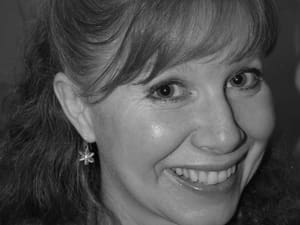
A Thoughtful Faith’s Kylan Rice presents an interview with LDS author, filmmaker, and playwright Margaret Young. In this interview Margaret shares her story of how she became enthralled with Mormon Race Dynamics, and how she has spent her life as an advocate for Black Mormon issues in LDS culture. Margaret also discusses how gender dynamics present challenges to her and other LDS women, and how she reconciles these issues with her faith in the Gospel.
Guest host Kylan Rice is a producer for BYU Radio, a poet, and a student of English literature. He also contributes, as a guest writer, to the blog RationalFaiths.com, which seeks to “provide a safe, fair, and balanced space to discuss the complexities, difficulties, and beauty of the Mormon tradition.”
To discuss this podcast, please follow this link to “A Thoughtful Faith.”
Episode Transcript
Full text · 10,400 words · 7 chaptersGuests: Kylan Rice, Margaret YoungRead transcriptHide transcript
This transcript is machine-generated and lightly edited for readability. The audio is authoritative. Please excuse occasional errors in names and spelling.
Introduction and Margaret Young's Background
Margaret Young [00:00:01] Come, thou fount of every blessing Tune my heart to sing thy grace. A Thoughtful Faith Podcast is a production of Mormon Stories and the Open Stories Foundation. All donations to A Thoughtful Faith are tax deductible and go directly towards keeping the podcast alive and towards building a community of support for Mormons like you. To support the podcast or to join the community, please become a monthly subscriber today@athoughtfulfaith.org.
Kylan Rice [00:00:45] Hello and welcome to A Thoughtful Faith. My name is Kylan Rice and I'll be your host. Our guest is Margaret Young, a professor of creative writing at BYU and a frequent award recipient from the association for Mormon Letters. Margaret's also a novelist and a playwright known for her work co written with Darius Gray regarding the African American Mormon experience. She and Darius also created the documentary film called Nobody the Untold Story of Black Mormons. Margaret, thanks so much for joining me today. It's a pleasure to have you here.
Margaret Young [00:01:18] Good to be here, Kylan.
Kylan Rice [00:01:19] So, to begin, I'm curious if you could talk to us about your childhood and how you decided on your current vocation. That's a big question, but maybe we can take it apart piece by piece.
Margaret Young [00:01:30] Well, I didn't decide on my vocation as a child, but I was born in a very cool year. I was born in 1955, which I consider one of the most important in the civil rights movement. That's the year of Rosa Parks refusing to stand for a white passenger. It's also the year that Emmett Till was murdered.
Margaret Young [00:01:50] So huge, and it's years, just eight years away from the big march on Washington. And I was of age to be aware that that was going on. We lived in Indiana while my dad was finishing his doctoral work. And I would say that because of what my dad was doing, which was working in indigenous dialects in various places in Central and South America, that if you consider that my vocation, I've been an English teacher for 27 years, mostly specializing in creative writing, and so that's a huge part of what I've been doing. And I started writing really in second grade, where I had my stories folder.
Margaret Young [00:02:34] But for the past 14 years, I've specialized on African American history, particularly African American Latter Day Saint history. And I think that all of that preparation was happening while I was a very small child because we had la Gente Indigena, indigenous peoples with us all the time. When I was six years old, we had a woman from Guatemala, Hermanna Levat, who would just stroke my hair. And so it was not at all strange to have people in my home who had a different skin color than I had and who wore. She has a particular style of dress that she would wear, and that wasn't a bit strange.
Margaret Young [00:03:18] And my father. We went with my father to Yucatan when I was 8. And again, you know, associated with the kids in Merida that spoke the language that dad was working on. And that was simply a part of my childhood. Nothing that I ever thought, well, my goodness, they have a different color of skin than I do. But I will say that leaving all white provo. And at that time, it was truly all white. It was the largest city in the United States without a resident black family.
Kylan Rice [00:03:46] Really?
Margaret Young [00:03:46] Yeah. And leaving that and going to Indiana when I think I was probably seven before I saw my first black person. And my little brother had been learning about slavery in his school. And at one point, a black man. And we were in a university area in university apartments, and there were blacks and whites, you know, all in Hoosier Courts in Bloomington. And a black man brought my little brother to my mom and said, will you please explain to him that I am not a slave? So he, you know, as kids, try to sort of piece together the things they're learning in school and the things they're seeing in the world, nobody necessarily explains to them what's happened, what our historical trajectory has been and where we are now and who we are, and that this man is a student at Indiana University and he's not plowing anyone's field or harvesting cotton.
Kylan Rice [00:04:43] Yeah. And so I'm curious at what point you came to your racial sensibilities. I'm sure that it's an ongoing thing, but maybe if you could pinpoint a time.
Margaret Young [00:04:53] No, there actually was a huge epiphany. It was my first year of seminary, so I would have been 14. Is that right? 13. 14.
Kylan Rice [00:05:02] About that.
Margaret Young [00:05:04] And my seminary teacher freely used the N word. And he would, you know, make racist jokes all the time. He was also a former bishop, and he had that sort of seminary teacher mystique where he could get his voice into really low tones and say, young people, I know.
Margaret Young [00:05:25] And you'd look and think, I bet he's seen Jesus. And there came a time where he said, I would like you to evaluate me as your teacher. We were near the end of the year. And I actually think he probably just wanted ego strokes. But when I did it, I thought, well, I'll be honest. And I know the exact words I used. I was a tad precocious. And I said, I think you say things sometimes that could incite racial prejudice.
Margaret Young [00:05:56] So we had our class the next day, and the seminary teacher said, I have read your papers, and there's one I want to speak about, and I know who wrote it. And then he looked directly at me, read what I had said, and then in that testimony bearing voice, said, I know blacks are inferior. That is why they don't have the priesthood. You provo kids have never even seen them. You haven't worked with them. I have. I know blacks are inferior.
Margaret Young [00:06:27] It was appalling and hit me so hard that I dropped out of seminary the next year. I went to the seminary lobby and just sat there, and one of the teachers, one of the seminary teachers said, margaret, are you not going? And I said, I'm not sure I'm going to do it. And he said, what's the problem? And I told him what had happened. And he was appalled, of course, as he should have been. And I don't know if my seminary teacher was ever reprimanded.
Margaret Young [00:07:00] And sadly, we've seen things in our recent past at BYU that indicated that that sort of thing went on in CES buildings, church education system buildings, and even here at byu, and we had not stemmed them. As a temple worker, I actually saw the seminary teacher there.
Margaret Young [00:07:22] He was a veil worker. And I walked past him several times. It was usually when I was doing what I was supposed to be doing, and he was always sitting in one place. And I never did ask it, and I think he's finally passed away.
Margaret Young [00:07:36] But I wanted to just go up and say, I don't know if you remember me, but you and I had a little bit of a tiff back in whatever year that was probably 1969 is my guess. And then to ask, so how was 1978 for you anyway? How did you deal with that, and what are your opinions on blacks now?
Margaret Young [00:08:00] You know, most people express joy that blacks could. One of the things that a friend of mine says is, as a black person, you go into an LDS temple and they say, welcome to our temple. And she'll look at them and say, well, welcome to our temple, too.
Race, Faith, and Early Mormon History
Kylan Rice [00:08:18] So very early on, there was this confluence, this mix of religion and racial issues. So how did you end up reconciling, even then, your faith and a lot of the racial prejudice that was going on?
Margaret Young [00:08:31] I read. And for me, 1973 was a very important year. It was the year I graduated from high school, and it was the year that Lester Bush published his seminal article in Dialogue, a journal of Mormon thought. My parents subscribed to it. And I remember somebody, they saw me reading a dialogue and said, what's that? And somebody else said, oh, that's for people who think they're smarter than other people. It was a lifesaver for me.
Margaret Young [00:09:01] I had not. I remember because, you know, I was sending my friends out on missions to various places, and I had a sort of a boyfriend who was going to go on a mission to Brazil. And I said, how are you going to deal with this issue?
Margaret Young [00:09:14] And I think we didn't know how important Brazil was going to be in preparing for the priesthood revelation. But he answered it by bearing his testimony. It was just expected that we would support this because this was part of being LDS at the time. And if you didn't, you were in apostasy.
Margaret Young [00:09:37] But it never, never sat right with me. I had no black friends at that time. There weren't any to be had, frankly, in Provo, Utah. But reading Lester Bush's article and for the first time hearing that, he goes into the story of Elijah Abel, who we know the most about. But in fact, we know much more now than Lester Bush did when he wrote in 73, even though it's just still a spectacular piece, but reveal that Elijah Abel had been ordained to the Melchizedek priesthood by Joseph Smith himself. And reading various ways that others dealt with it, Gene England saying, this is the Mormon cross to bear.
Margaret Young [00:10:17] And at the time, in 73, I thought, that's a good answer. This is just a really hard thing that we have to deal with now. Since then, I've thought the sorts of things that we said to blacks, the folklore that we circulated, that was our burden. I think we were smacking them with it. And the things that still go on, sadly, you know, where blacks are not made to feel welcome in their wards or branches. Fortunately, we have come so far since because of my age. And I actually love being as old as I am because of the arc of history I've been a part of.
Margaret Young [00:10:56] And we're in the Mormon moment. But I was born in 55, and so I saw all of it. I was 23 when the priesthood revelation was given, and I was living in Mexico and heard it then. But the idea of this is our cross to bear, that does not. I love Gene, I miss Gene, but that doesn't meet it. For me, this is a really hard policy to have.
Margaret Young [00:11:26] But we were killing souls. And now that I've studied the black pioneers and know that, that we pretty much lost all of their posterity. And why? Because we treated them so terribly. It wasn't our cross, it was theirs. And we were making sure that the nails were pounded in.
Kylan Rice [00:11:45] We'll get to more of that, but for the moment, let's look historically from your research and from your experiences. When did Mormons adopt the notion. Mormon discourse adopt the notion that blacks were. Were cursed, quote, unquote?
Margaret Young [00:12:00] They didn't adopt it. It was imported. Everybody believed that. The general belief was that black skin was the mark of Cain, even though the Bible does not ever say that. And in the Pearl of Great Prize, people tend to point to scriptures in Moses 7 talking about they didn't preach to this particular scene.
Margaret Young [00:12:22] And then it says they were black. And it sounds like they were ordered not to. But as you read further, you realize that there's only one group that has been left out, and it's the black group. And when God weeps and Enoch asks, how can the heavens weep? He's told, because these whom I've created are without affection and they hate their own blood. If you read that with just playing with the possibility that he's talking about mistreatment of those with black skin and not having affection towards them, it paints a completely different picture. But that was just the standard Protestant idea. Curse of Cain was black skin, and the curse of Ham which went through Canaan was servitude.
Margaret Young [00:13:17] And basically you've got it. You have some people in the 4th century preaching it by the 14th. It's the big justification for slavery. God intended that the seed of Canaan would be hewers of wood and, oh, I don't remember how it all goes. It's in Genesis 9.
Margaret Young [00:13:38] So people join the church with that idea already in their minds. And it's no surprise that some people will say, oh, my goodness, Joseph Smith said that blacks were the seed of Cain. Everybody said that blacks were the seed of Cain.
Margaret Young [00:13:52] There was nothing new in that. What would have been new is if somebody had said they weren't, and that would have been revolutionary. And even the fact that Joseph Smith said blacks have souls was a bit revolutionary because there were some who believed they didn't.
Kylan Rice [00:14:05] So it was an imported racism, More or less.
Margaret Young [00:14:08] Sure. You look at the global picture and then you look at the American picture where we still are. You know, 1844, when Joseph Smith is killed, we're six years away from the Fugitive Slave act, where slave catchers can go anywhere in the United States, claim that it can be a person who is very well regarded in his community, but they can claim that he's a runaway and take him back. You know, Sell him back south down the river.
Kylan Rice [00:14:37] So when did apologetics concerning the priesthood and temple bands first begin to form?
Margaret Young [00:14:45] You mean when we started thinking that we might be wrong?
Kylan Rice [00:14:48] Sure, yeah.
Margaret Young [00:14:50] I think Lester Bush's article is the kickoff. There were other articles before that, but his was by far the most comprehensive. The other thing you have to realize is that there were only. In the pioneer journeys in the 1840s, there were fewer than 100. There were people, black people of color, who came, most of them as slaves. And once we get the California Compromise in 1850, a lot of them go with their masters to California to look for gold. We've had the gold rush of 1849, so we lose a whole bunch. And then California is a free state, and so many of them remain. In California, we're dealing with just a handful of blacks, and that affects things because we've got Jane Manning James, probably the most famous of all the black pioneers, who is petitioning relentlessly for her temple blessings, going straight to the church president's homes, various church presidents, and Zina Young's home as well, and asking Zina to petition on her behalf that she can have the endowment.
Margaret Young [00:15:56] And she is quite something in her relentlessness and in her knowledge of the Scriptures, where she says, I realize my race and color, but inasmuch as all mankind may be blessed because of Abraham, is there no blessing for me? You know, she understands that there really is not a scriptural basis if she belongs to all mankind and all mankind can be blessed because of Abraham's covenant. She's included. And she, you know, that's repeated and other. She's repeating other things to try and break down that wall. And. And her lifespan is 1822 to 1908, and she's doing that the whole time, but she's really the only one.
Margaret Young [00:16:41] The other one is Elijah, Abel, and he served three missions and died shortly after the third. We do have some record of his petitioning for his temple blessings, but I've never seen an original. I've seen an original that purports to be his handwriting, but I don't know that it really is. I've also seen one where it's an X for his signature, but with Jane's. It's not her handwriting, but we know it's hers. She dictated it to be read at her funeral, her life story. And then historians have gathered her letters as well, so we definitely have her. But all we've got are the few who remained In Utah, generally LDs and their children.
Margaret Young [00:17:22] So a very few. So you Think of everything that's going on in Utah and everything that's going on in the nation. So we've got the saints here in 1847. The nation is revving up for what's going to be happening in 1861, where it's all going to be chaos. It's going to be the Civil War, and we're isolated. We are not involved in the Civil War. That's all happening behind the scenes. We're not even taking runaway slaves. So it's happening in isolation. And for the most part, people are not aware that there is a restriction for blacks, that because of the societies in which they had been raised, they would have assumed that a black person, for example, would buy, you know, sort of a caste system which.
Margaret Young [00:18:08] Which they thought would be in place should enter through the back door and the occupations that they would have. Jane was a laundress and made soap. Elijah Abel was a carpenter, had been for much of his life, but also did minstrel shows just to support his family. So, you know, they were not given great positions. And that's really how the bias against blacks was shown at that time. But as far as setting an absolute. What's the church rule about blacks and the priesthood in the temple, we know Jane was not allowed to go. And in at least one record, Wilford Woodruff, he says, we could not grant her wish because of Cain, because she was this seed of Cain.
Margaret Young [00:18:46] So we're getting that importation again of that idea. But then Brigham Young dies in 1877, and Elijah Abel petitions once more for his temple blessings. And at this point, his wife is dying. So it's with some urgency that he makes this petition. And with Brigham Young gone, John Taylor holds a meeting because he doesn't know what the answer is. And it's not now. What did Brigham Young say?
Margaret Young [00:19:14] They knew what Brigham Young had said. And by the way, it was given as a territorial speech. It is not recorded as a revelation anywhere. It was not voted upon by common consent. It appeared in his speech as a territorial governor. So we really don't have a beginning point.
Margaret Young [00:19:32] Almost certainly Joseph Smith didn't. There's one rumor that maybe he met in secret, but without documentation. It would just be silly to assume that that might have happened. There's a bit of hearsay from one man who's remembering 40 years in the past, and actually this is when he comes up. So President Taylor calls a meeting, and it's Abraham Smoot, who was a slaveholder himself, and Zebedee Coltrane. And Abraham Smoot says I was told when I served a mission in the south that I was not to ordain any slaves to the priesthood. And that is very believable. They were also told to not baptize slaves without the master's consent.
Black Priesthood Ordination and Institutional Memory
Margaret Young [00:20:08] We've got some political issues going on here. No problem believing. But does not ordaining a slave mean that we don't ordain blacks? Different question. Then Zebedee Coltrane said that he had been in an argument with a Brother Greene, and they had been arguing about whether the Negro could hold the priesthood. And Brother Green had said they could, and Zebedee Coltrane had said they couldn't. And they decided to take it to Joseph Smith and went to the Mansion House. And Zebedee Coltrane said, I've been telling Brother Green that they can't. And then he says. And then Brother Joseph kind of dropped his head and said, brother Zebedee is right.
Margaret Young [00:20:44] The Spirit saith the black man cannot have the priesthood. Well, that's part of the hearsay. And then Coltrane goes on and says, elijah Abel, once his race was known, was dropped from the quorum. Well, that is now on record. John Nuttall, who was John Taylor's secretary, has recorded all of it. And then Joseph F. Smith comes forward and says, not quite.
Margaret Young [00:21:07] We actually have two certificates verifying that Elijah Abel was recertified as a 70 with the Melchizedek priesthood. Twice in 1841 and then again after he arrived in Utah. Well, that plus the fact that Zebedee Coltrane said he remembered washing and anointing Elijah Abel in the Kirtland Temple. Elijah Abel was washed and anointed in the Kirtland Temple.
Margaret Young [00:21:31] That information was taken to Elijah. And he said, no, Brother Coltrane didn't do that, but he did ordain me a 70. So we've got a man with a memory that we just can't count on. And that's the only person that we have saying that Joseph Smith had said it. Otherwise, there is zero documentation. And you will never find a revelation saying that our doctrine is that the black man cannot have the priesthood until God declares it in 1978. So we have a revelation that was voted on by common consent on June 8, 1978. Well, actually voted on in October that we would accept official declaration number two and that all worthy males would be able to receive the priesthood, and consequently, all worthy black women would be able to receive their temple ordinances, and all of African descent could serve missions.
Kylan Rice [00:22:19] So along these lines, these lines of confusion, it feels to Me. There's an interesting passage in Gregory Prince's biography of David O. McKay that says few members. At the turn of the 20th century, when David O. McKay became an apostle, few Mormons were even aware of the policy.
Kylan Rice [00:22:37] Indeed, McKay himself did not confront it for another 15 years. In 1957, he recalled, I first met this problem, blacks in priesthood, temple ban, In Hawaii in 1921, a worthy black man had married a Polynesian woman. She was faithful in the church. They had a large family, every one of whom was active and worthy.
Kylan Rice [00:22:57] My sympathies were so aroused that I wrote home to President Grant asking if he would please make an exception so that we could ordain that man to the priesthood. He wrote back saying, david, I am as sympathetic as you are, but until the Lord gives us a revelation regarding that matter, we shall have to maintain the policy of the church. End quote. And so I'm wondering, in your estimation, when did the idea of blacks not being allowed in the priesthood enter into the general Mormon consciousness?
Margaret Young [00:23:24] And it's what we would call the institutional memory, right? And I would say that the year is 1908. We've got it, you know, from the time that Brigham Young pronounces, if no prophet of God has said it before I say it, the black man is not entitled to the priesthood.
Margaret Young [00:23:39] That's 1852. We come up to 1879 when Brigham Young's words are questioned and they wonder what Joseph Smith had said. And we get kind of convoluted answers, and we don't really have an answer. But Elijah Abel is told he still has his priesthood, but he is not allowed to go to the temple. Then in 1908, we've had all of the most prominent black Mormons in Utah pass away. Jane James finally dies in 1908. And then we have this very odd and strange things happen. Strange thing happen. Joseph F. Smith, the very one who had provided the certificates attesting to the recertification for Elijah Abel, undoes what he had done and says he was dropped from the Quorum.
Margaret Young [00:24:27] I have no idea how or why that happened, if that was what they needed to do, to have unanimity. But in 1908, I consider the institutional memory begins that. Then when that's there and we don't have him contradicting Coltrane, the institution remembers that we have always had this policy. And in 1949, when we have the statement that is probably most frequently quoted where it says the doctrine of the church has always been in a direct revelation from the Lord that the Black man was not to have the priesthood.
Margaret Young [00:25:03] Well, they weren't going back all the way to 1830. Elijah Abel joined the church in 1832. And we had quite a number of blacks freeborn and enslaved. And there were slaves who were baptized. They didn't have the Internet. You know, they're relying on their own memories. You've got people scattering. Brigham Young was a remarkable leader and he's got people all over Utah and in Nevada and in Idaho and people aren't getting together and saying, now what do you remember about this?
Margaret Young [00:25:32] So really, 1908, Jane James is gone. Joseph F. Smith changes what he had said earlier. And really that is the institutional memories beginning as I see it. So David O. McKay not being aware of it initially is no surprise at all. He did know a black man, Abner Howell, because David O. McKay was a great football player and Abner Howell met him. But Abner Howell was not LDS at the time. So it wasn't an issue there because the kid wasn't lds.
Fallible Prophets and the Black Mormon Documentary
Kylan Rice [00:26:03] And so in your documentary film Nobody Knows the Untold Story of Black Mormons, you and Darius Grey seem to come to the conclusion that leaders of the church are fallible and they, they made mistakes on the issues of blacks in the priesthood rather than it being a reason of, you know, fence sitting in the pre existence or any number of those reasons. How does one come to accept that mistakes were made in the past without coming to the conclusion that our prophets, seers and revelators are just making their best guess at things?
Margaret Young [00:26:36] Well, I think Elder Christofferson's talk in April conference was just wonderful in giving guidelines to that. I believe the talk is titled the Doctrine of Christ. But he talks about Brigham Young railing against the federal government in a morning session of General Conference and then returning in the afternoon saying, well, you heard Brigham Young speak this morning. Now the Lord will speak through Brigham Young.
Margaret Young [00:27:00] And then Elder Christofferson in the printed version, there's a footnote where he talks about that incident in. And it's in J. Reuben Clark's words. And J. Reuben Clark says, I don't know if this ever happened, if it's an actual historical fact, but it does point out that not every utterance of a prophet of God is going to be from a divine source. You know, there's sort of this because we have kind of the kids learn to sing, follow the prophet. And there's a mentality, whether or not we encourage it. There's absolutely a mentality that the twelve meet with Jesus Christ periodically.
Margaret Young [00:27:37] You know, that's Just, you know, whenever it happens, that's, you know, one of the meetings they have and that they. Well, the saying is Catholics say that the Pope is infallible, but they don't really believe it. Mormons say the prophet is fallible, but they don't really believe it.
Margaret Young [00:27:58] So we have this thing where huge pressure is put on the prophet. Gordon B. Hinckley talked about what a pressure it was to have that pedestal where they can say nothing without people immediately interpreting. So if President Hinckley were to say, or President Monson, good morning, suddenly you've got people saying, whoa, what does that mean? Is it second coming? Is that what he's suggesting? It was the prophet. And if they voice their personal opinions, there's nothing that goes, ding, ding, ding, personal opinion here. Now, I'm.
Margaret Young [00:28:33] I would say there are two keys. Elder Christofferson first of all talks about having our own moral compass where we listen to the spirit and if something doesn't jive. And for me, the priesthood restriction never did. I could never make sense of it when I became aware of it.
Margaret Young [00:28:53] And the second one, besides just the moral compass, is the Scriptures. So can you have the Savior saying, on one hand, God is no respecter of persons, and can you have that scripture in the Book of Mormon that says all are alike unto him, black and white, male and female, bond and free.
Margaret Young [00:29:09] Can you have those as your foundational scriptures? And then as Bruce Armand Conk he did in Mormon doctrine suggest, but God has a caste system, and there is a huge disparity between those two statements. And if God is no respecter of persons, he doesn't have a caste system. That doesn't mean that there won't be rich and poor, but that they are alike to him and he will give them equal privileges.
Margaret Young [00:29:36] Speaking of spiritual privileges, not necessarily temporal. In fact, I think it's more fortunate to be born into poverty than to be born into riches. I think the temptations that come to wealthy people are hugely beyond those that come to poor people. We all have different kinds. But I think in the end there are so many distractions for wealthy people and so many ways of learning new degrees of selfishness and forgetting the essential mandate of Christianity to love our neighbors, to give freely to the poor.
Margaret Young [00:30:16] I've lived in third world countries and I've told Bruce that if he dies, I'm going to Guatemala. I have to finish raising our children first.
Kylan Rice [00:30:24] But
Margaret Young [00:30:26] my heart is still very much there. And I've always. I've never been able to fathom having a really big house that hasn't fit with the person I am. And I've never been able to fathom the idea of having lots and lots of money. I'm very eager to raise money to make a movie, for example, that I hope will do some good and bring greater knowledge. But that's for a particular purpose.
Kylan Rice [00:30:56] Right. So changing track a little bit. In February 1987, Ezra Taft Benson gave an address entitled To Mothers in Zion to the mothers in Zion, where he stated the following quote, contrary to conventional wisdom, a mother's calling is in the home, not in the marketplace. And he went on to quote President Kimball who said, too many mothers work away from home to furnish sweaters and music lessons and trips and fun for their children. Too many women spend their time in socializing and politicking in public services when they should be at home to teach and train and receive and love their children into security. So as someone who has given so much to our religious community via your writing and your racial advocacy, how do you come to terms with these and other similar statements?
Gender Roles, Women, and Family Life
Margaret Young [00:31:44] Well, actually, I've been a single parent. My first marriage failed and I did have to do the nine to five. And to be honest, I hated it. I felt like I was not getting any time with my daughter. I had to be to work at 8, so I had to get her to her preschool 20 minutes before. Then I didn't get off until 5, so I really had very little time with her. And I hated that. And I felt like both of us were getting cheated. Not just that she was getting cheated, I was getting cheated out of my little girl. You know, I did a few things.
Margaret Young [00:32:18] We would make brownies and the weekends would be all for her. But it frankly didn't feel right to me. The way that I negotiate that in my own life. And maybe this suggests that I lead a really blessed life. But I've been able to choose that during my children's nap time when they were small, I would write and honestly I would write lousy stuff. But I didn't know how bad it was and didn't find out until later. But I was practicing and I was reading and so I was preparing for the writing I would be doing later. That actually when I would be doing that, when I would be using my creativity, it made me a much better mother because I wasn't frustrated over all of the messes just having that two hours a day.
Margaret Young [00:33:09] In fact, I would be really upset if somebody would come and visit me during that time. That was my writing time. And then later on I Did get a master's degree. I came to byu, took a class from Bruce Young and married him. We didn't date during the semester, but I married him about four months later. And we had three children in addition to the daughter I had brought into the marriage. And I did do my master's program and that that was difficult because it was negotiating and Bruce and I had this wonderful system. And again, it's the sort of thing I can tell you about.
Margaret Young [00:33:47] And women will say, yeah, well, you got to do that. I don't have that privilege. But it worked very nicely for us. I loved teaching. I still, I really get a kick out of it. It's really hard for me to realize that now I'm actually old enough to be my student's grandmother because I still feel like a peer. I don't know their music very well.
Margaret Young [00:34:10] A few Sufian Steven. But you know, when I first started teaching and I was single, I would notice, oh, he's kind of cute. And you know, now I remember a time when I was looking at my students and realizing that I had transitioned to a new phase where I was motherly. And now it's sort of like, oh my goodness, you could be my grandchildren. I've got a 10 year old grandchild and I was kind of late having my first daughter. But Bruce and I traded off. He was really good with that. So I would bring the baby in a baby carrier and put it in the office while I went to take my class or to teach my class, whatever I was doing.
Margaret Young [00:34:49] And a lot of times we'd have the same students so they would see us trading off. And I actually thought that was really good that they saw that we were doing this cooperatively and taking care of the baby. Both of us were doing that. And so Bruce was getting really good fatherhood training. In all of this, I have made some demands so that my children would have me and so that I would have them so that I could be a part of their lives.
Margaret Young [00:35:18] I agreed to go full time when we were at BYU Hawaii, because they had just lost their creative writing professor on the condition that they would give me only morning classes. And they were happy to do that. So I gave my afternoons to my children. And then I have the luxury of just teaching one class. Fall and winter. And again, it keeps me in the loop, it keeps me reading, it keeps me engaging with the students, it keeps my mind active. And that's actually a really good thing. As we're getting old, one of the scary things is to see mothers who have devoted all of their time to having cookies for the children.
Margaret Young [00:35:58] And I was such a good cook until I discovered Stouffer's Outlet. But I was never a mother who had. I did have after school treats sometimes, but I was not a mother who did all of the really crafty things. Every crafty thing in my house, referring to crafts, not crafty. Every craft I have in my house I made at Relief Society Homemaking. I didn't do a single one of them with my independent time, because if I had time, I was either reading or writing where my focus was going to be. And that would be one key for mothers who are trying to balance it is to figure out what they want to do so that they're not saying, well, I want to be a pianist and I want to be a historian, and if you're splitting five ways, it's just going to be frustrating.
Margaret Young [00:36:45] So that focus became really important, and I would not waste my time with it because I was dividing it between my children and myself. And so when I was writing, I was really serious about getting it done. Productive.
Margaret Young [00:37:01] I have a daughter right now, my oldest, who's getting her master's degree, and she has called to talk about the balance that she's trying to negotiate. This is really important to her. She's going into music education and feels very strongly about it, and her husband is extremely supportive.
Margaret Young [00:37:21] That support system becomes really important. When she was getting her undergrad, I babysat the kids, and I love doing that. And that's, you know, that's another advantage to third world countries is you tend not to travel far. You kind of have the families in one block. And so grandma takes care of the children, mom takes care of the children, dad sometimes. And it's shared all around now where kids go off to so many different places. You know, my daughter in Indiana doesn't have the kind of support system there that she would have here, where she would always have me. And I would always love to take care of my grandkids, but she's doing this, and she's called me in tears a few times saying, I can't do this.
Margaret Young [00:38:04] This is overwhelming. And I would. You know, my job would just be to calm her down and to say, you will get through this. And then you'll look back on it, and it's kind of like labor. You don't remember how much it hurt. You just remember that you got a baby, and this will prepare you for everything you're doing in the future.
Margaret Young [00:38:23] The other thing, with President Benson's talk, it was deeply Controversial for a lot of women because, for one thing, it seems so out of date. He was quoting President Kimball, and the jobs that President Kimball listed that women were doing were domestic service jobs. And not really the kind of jobs that women have nowadays where you've got politicians, executives, lawyers.
Margaret Young [00:38:52] Women are doing everything. And it is a huge challenge. And I'm not aware of any mother, anybody who says working mother, are neglecting their children or make that presumption, have not engaged with working mothers. I've never met a working mother who is not deeply involved with raising her children and finding a way to balance that.
Margaret Young [00:39:14] So the idea that that was an anachronistic talk, that it was referring to an era that we're no longer in. And I think when the hard choices really come, I see so many women who are lawyers who decide that they're going to defer for a little while and give those years to the children, which is fine, but they've got that. And then they could go back to it. The ones who have devoted everything to that. Not that they can't be marvelous afterwards and make cookies for their grandchildren and all that, but empty nest can be absolutely devastating. And that's not something that we want.
Margaret Young [00:39:54] That's not the picture of what Eve was supposed to be doing, that after her children were born, she would just kind of sit and look at the places where she used to figure out how to make something sweet. That we consider that she was doing creative things and that she continued doing them after all of her children were gone.
Inoculating Members on Race and Gender Issues
Kylan Rice [00:40:15] So along these lines, what's your view on inoculating the saint, so to speak, on some of these difficult topics, including gender issues and racial issues?
Margaret Young [00:40:25] Well, I've had to talk gender issues with my daughters just because they've raised it. And I'm very open with them. And interestingly, I've talked about them with my mother, who she had eight children, and that's a lot for somebody to take on. She didn't have as many as her own mother had, but eight is a lot. And she had five of us in six years.
Margaret Young [00:40:49] And she told me that if she would listen to the church authorities talk about how important it was for the mother to stay at home and all of that, that sometimes it would make her really angry and she'd think, you're not home. You don't even know what this is like. And the level of frustration of when you've got that many kids and we're all getting into messes and one is lighting the floor on fire, which did happen in the family I was raised in, my mother took classes at the university, and that was vital for her. I remember her reciting Robert Frost's Whose woods these Are, I think I know.
Margaret Young [00:41:28] Let's see if both of us. If we can remember the words to that. I bet we can do this together. Whose woods these Are, I think I know. His house is in the village Though he will not see me stopping here to watch his woods fill up with snow My little horse must think it queer to stop Without a barnyard near between the woods and frozen lake he gives his harness bells a shake I may be missing a stanza but these woods are lovely dark and deep But I've promises to keep and miles to go before I sleep and miles to go before I sleep.
Margaret Young [00:42:05] That is a mother's poem. And I think that my mother was able to. She took a poetry reading class, and I suspect that with her sense of so many things that she had to do before she could sleep, that she had a brilliant delivery of that.
Margaret Young [00:42:22] I have it memorized largely because she would recite it to me. And I remember one time saying, mom, tell me that poem about Whose forest is this? I'll bet I know. And she, of course, realized what it was. But, you know, that becomes a lot of motherhood. I have miles to go before I sleep. But that's life, too, you know, as we take on new journeys, which we ought to be doing wherever we are in our lives and making new seasons. There don't have to be just four. We can invent another five and just keep going and keep the journeys.
Kylan Rice [00:42:59] Sure. And now regarding racial issues, do you think. And other issues deep in the past at the church, do you think people should. These should be publicized? Do you think people should know about these to some degree or another so that it doesn't result in a crisis later in life when these things are discovered?
Margaret Young [00:43:20] And you're talking about inoculation, Right. And I have several answers to that. Because of who I am and what I do. My children were just raised with it. So we did a play I wrote about Jane Manning James called I Am Jane. And the first production, we had all of our children in it at the very end. So black and white. My children would all come and they sang I am a child of God.
Margaret Young [00:43:42] And they were raised with Darius as a sort of grandfather figure. They were raised with my other black friends. Plus I taught Spanish Institute. So they were raised with Hispanics. And that was, you know, fortunately in Provo, Utah, I was able to provide a life with quite a Bit of diversity. So those issues. I remember one of my friends, black friends, saying, your son Michael is so lucky because so many missionaries are just going to completely curl up when somebody says, tell me about this priesthood restriction. And she says, but Michael's going to know, he's going to be able to talk about it. So I said, well Michael, tell me about the priesthood restriction.
Margaret Young [00:44:22] And yeah, he's ready to talk. But my husband and I were in the MTC for a couple of years and a lot of our missionaries were headed to Africa. They knew that this was going to be really relevant and they knew that I had made a movie about it. We were doing film festivals at that time and so they said, can we see it? And I said no, not until after your missions. Because my sense was, are you kidding with what you've got to do right now? You're learning a language, you're looking at preach my gospel. You are in this intense time, if you haven't developed good study habits, you're trying to get along with a companion.
Margaret Young [00:45:00] You want me to pile that on top of you? And actually they've taken me up on it. I think all of the missionaries who I wrote to in Africa have seen the DVD and they know much more about it now. When Elder Holland was in Africa to dedicate Cameroon where my missionaries were, one of the African missionaries had his companion ask the question for him because the African was too shy. And the question was, my companion says that the church teaches that he was a fence sitter or less valiant in the pre existence. Is that true? And Elder Holland was absolutely definitive and said that is absolutely not true.
Margaret Young [00:45:42] And he, you know, we who know what have been said and this is the important point, those of us who are really familiar with this issue know where the website links are, where we can pull out the PBS quote where Elder Holland says we must not teach the folklore. Well what is that folklore? For example, we must not teach that blacks were fence sitters in the pre existence that exists, but it has never been spoken over the pulpit.
Margaret Young [00:46:04] We had this very interesting experience last year with one of our religion professors making some appalling racist statements and it went public. Actually the reporter had just been looking for somebody with office hours. He didn't single out this particular professor and happened to choose him. And maybe the most appalling thing he said was, well, you wouldn't let your 14 year old sister drive your car, would you? Blacks weren't ready for the priesthood before 1978 and it was honestly a reality check for the church and Instantly, we had two statements from the church newsroom.
Margaret Young [00:46:46] The first actually called the professor by name and said, he does not reflect our views. And then it went on in a very important statement because, remember, we talked about the institutional memory and that 1949 statement that as we've always had this policy, now we are more aware of what's happened. And so the statements, the two of them both state, we don't know how, when or why the restriction came into being, but we no longer have it. And we condemn racism everywhere and even within our own church and in our past.
Margaret Young [00:47:21] Very strong and important statement. And it takes away that it happened under Joseph Smith. We don't know when. So anybody who tells you, well, it was in. They're working on speculation because the official position of the church is that we don't know when this came into being.
Margaret Young [00:47:37] But the problem with something that has come out of the church newsroom is that people in Utah, people sensitized to the issue. Again, I knew about it immediately. We know about it. I could tell you how to find it. I could pull it up instantly. People outside the news didn't get there. Not even sure they read Horowitz's article in the Washington Post.
Margaret Young [00:48:03] So at the Mormon History association, where Darius and I spoke this past summer, marvelous historian who I just respect deeply, Jim Allen was talking about these statements and talking about repudiating the curse of Cain, repudiating the idea of fence sitters in the pre existence. And he said, well, the church came out with these two statements and surely condemning racism in our own past implies that we reject the idea of the curse of Cain.
Margaret Young [00:48:32] And I've known Jim for most of my life. And I said, jim, you are a Mormon historian, so you were ready for that. You are totally prepared, but you're not representative of most Latter Day Saints. They don't know what happened. They don't know about the statements because they were not given over the pulpit. They're not going to be included in the Ensign issue of conference addresses. The truth is, I think a whole lot of Mormons, because of the ways that they've been raised, and I think we absolutely are getting better. And I want to make that really clear. There are marvelous signs of improvement. But I think a whole lot of Mormons, if you said, well, you don't condone racism, would say, absolutely, I condemn racism.
Margaret Young [00:49:19] I never use the N word. And then, so what about blacks? And why didn't they have the priesthood? Well, cursed of Cain, but that doesn't mean I'm a racist. They haven't conflated those two things. That racism actually does include believing that someone came born with a lineage curse and therefore was sort of exempt from that idea that he would be responsible for his own sins, not for his ancestors transgressions or that he had misbehaved in the pre existence.
Margaret Young [00:49:50] Elder Holland was so clear about, if you're here, you were valiant. So that we would love to see the statement made more strongly and in specifics so that people can't hold on to those old theories they heard in seminary if they're my age, especially because they were actively preached and say, but I never say the N word. I'm not like Bob Ewell in To Kill a Mockingbird, so I'm not a racist.
Margaret Young [00:50:19] We need to actually recognize it in ourselves. And we will need some help to do that. And that help will need to come from the pulpit.
Kylan Rice [00:50:27] And so why would you say, why would you speculate that help isn't coming from the pulpit? Why aren't people, the leaders of the church, either apologizing or clearing up these issues?
Margaret Young [00:50:41] Well, I'm not sure how deep the interviews have gone about all of the, you know, do you believe in the curse of Cain? Do you believe blacks are fence sitters? But when you think of President Hinckley, what are the things that instantly come to your mind? Most people say President Hinckley, no tattoos, right? No double piercings, only a single piercing for the girls.
Margaret Young [00:51:02] And they tend not to remember. What I think was the most significant talk he gave, which was in Priesthood session April 2006, where he addressed racism head on. I got a call after that priesthood session from a dear friend in California who said, maggie, I just heard the most remarkable talk by President Hinckley. And then because he called me, I was on the phone when Darius called. And so I had the voicemail of Darius in tears saying he did it. He spoke directly to the issue.
Navigating Hard Questions Within Mormon Faith
Margaret Young [00:51:37] And then another great scholar, Armand Moss, called me just as my husband returned and said for the first time in years I missed the priesthood session. And I heard something actually happened. And Bruce had great notes. And so I read to him what President Hinckley had said. And the talk is called show greater kindness for people who want to look it up. And he goes into it almost immediately how nobody can consider them themselves Christian if they hold racist ideas, that that's in complete disharmony with the gospel of Jesus Christ and with the Church of Jesus Christ. And in one of the most important statements is this.
Margaret Young [00:52:17] How can any man arrogantly assume that he is eligible for the Melchizedek priesthood, whereas another who lives a righteous life but whose skin is of a different color is ineligible. What's really significant there is. There is no timeframe preface. There's not until 1978. It's not, you know, we have now had the revelation. It really seems quite transcendent. And I don't know what President Hinckley's ideas were about the priesthood restriction. I know what his. He was present for the priesthood revelation. He was there in the temple and talks about it in that talk. But that's.
Margaret Young [00:52:57] That's something I wish members would look at again. It does not go specifically into Curse of Cain and sort of the naming of parts where we say, let us help you understand what we mean by racism. Because, you know, it's so easy to just get this big hairy redneck with a shotgun and a rope as the picture of what a racist is. And, you know, we can demonize anybody, but we may be saying or doing racist things without even realizing it. And simply because of how we were trained.
Margaret Young [00:53:30] Even this religion professor, I think if you said, are you racist? He would say, of course not. You know, I have many black friends or, you know, whatever. And he would not see the things that got him called out by the church statement as being racist at all, because that was how he had been trained. Right.
Kylan Rice [00:53:52] And just to wrap things up, I'm curious with all these things in mind that we've been talking about, how do you personally, and how would you counsel others to approach these difficult issues and maintain a durable testimony despite all these
Margaret Young [00:54:07] durable duro means hard. And I'm. I'm not sure that that's the word I would choose. Maintain an expansive testimony, a testimony that's capable of expanding. And I think probably the big thing is my concept of eternal progression, that we get more revelation tends to be when we're ready for it.
Margaret Young [00:54:39] I certainly didn't get revelation about my children until I had children. And that is something I hold to. I know absolutely that I have received revelation for my children. That's where I'm positive I've received it. I've also had just a few little miraculous experiences that are touchstones and more. You know, if I were to describe those, it would kind of sound like, wow, that happened.
Margaret Young [00:55:10] You should send that to the Ensign. That's really good. But honestly, they are not as significant to me as what I've received and understood directly for my children. So I have a relationship with God that is very personal and sacred and not contingent on what particular policies are. I'm personally deeply uncomfortable with polygamy, but it's not going to take me away from that personal relationship I have with God.
Margaret Young [00:55:40] I'm willing to put that on the shelf. If it ends up that my husband is told to take another wife or 70, I'll just find another kingdom. I believe that eternally men and women are equal and are equally regarded by our heavenly father and mother.
Margaret Young [00:56:03] I'm not going to make up things I don't know about a heavenly mother or the divine feminine or whatever we wish to call her, but I believe in that. And I believe that things that I do in the temple are eternal and also educate me into what my powers are.
Margaret Young [00:56:25] They educate me in having authority, which in certain parts of the temple I do. And that helps me with the whole feminist thing. I cling to that much more than I cling to, why can't I be ordained to the priesthood? And actually, I'm kind of conservative on some things. Maybe because I'm aware that Orthodox Jews were deeply uncomfortable with women handling the Torah the way they did in Reformed Jewish ceremonies. Because the Torah was absolutely a male symbol and was to be handled only by the men because of what it symbolized.
Margaret Young [00:57:08] The male part of the covenant, the woman belongs. We always use the bride and the bridegroom in the New Testament, but also in the Old Testament, that's the wedding symbolism is pervasive in all scriptures and I would assume in scriptures of other religions as well.
Margaret Young [00:57:29] So, yeah, I believe that we have received many great things and we will yet receive many more. I think there will be more revelations, maybe even on race. We've made recent changes in headings on the chapters in the Book of Mormon and that we are a dynamic church. We can slow ourselves down. And the best way to slow yourself down is by nourishing your fear instead of your love. And my absolute favorite scripture, if I had a mission thing, it would say, for God has not given us the spirit of fear, but of power and of love and of a sound mind. I think that is completely liberating.
Margaret Young [00:58:15] As soon as we get afraid, as soon as we start thinking, ooh, I better not say this because I might get in trouble for this one. And as soon as we start judging someone else. Did you hear what Joanna Brooks said? And I'm using her name on purpose because I know that she is a faithful Latter Day Saint who has been really picked on because of some of her views, which is not a Christlike attitude.
Margaret Young [00:58:43] We have to have a tent that expands the way our testimonies ought to be able to expand. I think there will be more to come regarding gays. I think there will be more to come with all of these issues. I believe that we will become one in Christ. We are not yet, but I believe we will. I was thrilled to hear we've got a temple in Ghana. We've got one in Nigeria. Of course, those would have been impossibilities when I was a child. And there's now going to be one in the Congo, in Kinshasa. And I get weekly reports on how that's coming.
Margaret Young [00:59:16] We will keep growing and we'll keep getting better. The sad thing is we lose so many. And there's a list of about 10 things that they get caught up in. I'm not going to bother to list the 10 things because I'm afraid somebody will take notes and go look them all up. But about 10 things that people said, well, as soon as I found out about this one, and they're kind of predictable.
Margaret Young [00:59:37] You could kind of say, you know, go to somebody who's left the church and say, when he starts saying, well, I looked into the history and found. And you can interrupt and say, I'll bet you found out and give the 10 things.
Margaret Young [00:59:51] As I think of the many ways I failed as a parent and the many ways I've succeeded, too, my children could decide to focus on how badly I did one particular thing and say, do you know what I found out about Mom?
Margaret Young [01:00:07] She never washed that bottom shelf ever, ever. And that becomes the whole focus. You know, so much is in our vision of who we are and who we can become. And there is not a more glorious vision than the LDS vision of a divine destiny not equal to God's, but a divine destiny where God lifts us to a limitless possibility. And if we're going to choose to believe in God, I would say choose the most expansive vision you possibly can have.
Kylan Rice [01:00:44] Margaret, thank you so much for coming in today and sharing your personal experiences and some of your thoughts. Thank you.
Margaret Young [01:00:49] Thank you. Kylan. Come thou fruit of every blessing to my heart to sing them. Great. Thank you for joining us today on a thoughtful faith. To discuss this podcast, check us out@athoughtfulfaith.org the music from this podcast was generously donated by Lisa Frazier. Hear more from her@lisafraser.com.
Margaret Young [01:01:24] I'll praise the mountain I'm fixed upon it Mount of thy redeeming love. Here I raise my equanisen hither by thy help I come and I hope by thy good pleasure Safely to arrive at home. Jesus sought me with a stranger Wandering from the fold of God?
Margaret Young [01:02:12] He to rescue me from danger? Can you suppose his precious blood? O to grace how great a debtor? D Come strength to Thee? Let thy fetter mind my warm drink Hot heart To be prone to wonder Lord, I feel it Prone to the God I love?
Margaret Young [01:02:56] Here's my heart who take and seal it Seal it for Thy course above? O to O Lord, I feel it Come to the the God I love? Oh, here's my heart oh, take and see. Sat.
Transcript © 2026 John P. Dehlin. All rights reserved. Brief quotations are welcome with attribution and a link to mormonstories.org; all other use requires written permission.