Join us as we uncover what drove change within the Mormon Church, from government pressure on BYU to admit more black students to the church’s troubling response. We’ll dive into shocking letters sent to black prospective students, a five-step plan to keep them out, and the protests that followed. Learn how government intervention eventually forced the end of discrimination and explore why Mormon leaders were so uneasy with black students. This episode, featuring historian Dr. Matthew Harris, is part of our series on his book Second Class Saints: Black Mormons and the Struggle for Racial Equality.
Episode Transcript
Full text · 17,900 words · 12 chaptersHost: John Dehlin · Co-host: Gerardo Sumano · Guest: Matt HarrisRead transcriptHide transcript
This transcript is machine-generated and lightly edited for readability. The audio is authoritative. Please excuse occasional errors in names and spelling.
Introduction to the Series and Guest
John Dehlin [00:00:01] Hi everyone, this is Dr. John Dehlin of Mormon Stories podcast. I want to thank you for joining us today on this epic 17 part series featuring Dr. Matthew Harris and his amazing book, Second Class Black Mormons and the Struggle for Racial Equality. This series has been groundbreaking. We've never had the response so far that we've had in terms of people really valuing our in depth coverage. This groundbreaking book that's talking about the Mormon Church's priesthood and temple ban against black people and then the dynamics, the inner workings, the political machinations of how the sausage gets made in terms of lifting the priesthood ban in the aftermath. So we have some good news and bad news about this series. The good news is thanks to the generous donations of those who have been watching it so far, we've been able to, I believe, more than generously compensate Dr. Harris for his contributions. That's the good news. The bad news is, you know, because we made the promise that 100% of the donations would go to Matt, we have not received any compensation for about the $20,000 of production costs that we incurred to produce this series and that that sort of imbalance would make it so we wouldn't be able to produce series like this going forward. So. So if you value this series, if you want to see the Open Stories foundation also be compensated for its production cost for this series and if you want to see series like this with Matt and with other people continue, we kind of need you to step up and donate to cover our production costs. And it's really easy to do that. All you have to do is go to mormonstories.org donate or go to mormorstories.org and click on the donate button and you can do a one time donation, a recurring donation, and if you want to, you can type Second Class Saints or Matt Harris in the description and that will hopefully allow us to cover our production costs for this epic series. Regardless, we want to thank Dr. Matt Harris for his generosity in doing this series. We want to thank all of you who have supported us. Please go buy this book, Second Class Saints, Black Mormons and the Struggle for Racial Equality. And again, if you're wanting, if you're grateful for this series and you haven't donated and you want to see it continue, please, please donate to Mormon Stories Podcast. Thanks again to everyone who donated to make the series possible. Thanks to Matt and we hope you enjoy this next episode in the series. Take care. Hello everyone and welcome to another edition of Mormon Stories Podcast. I'm your host, John Dehlin. It is June 24, 2024. And we are here today in part nine of, of what I think is a really important series on this book, Second Class Black Mormons and the Struggle for racial equality by Dr. Matthew Harris. Today we are going to be discussing a groundbreaking institute changing civil rights investigation that happened at Brigham Young University in the late 1960s that frankly led to BYU being willing to have black athletes. So if you've ever wondered, did BYU ever have a ban on black athletes, when was that lifted? And then what led to BYU having black athletes and what started pressuring BYU to have black professors and to, you know, be open to recruiting or not discouraging the attendance of black students. Today is your episode really quickly. This is part of a, hopefully a 20 part series on the book. And we want to remind you all that this series is best enjoyed in sequence. There's eight that we've already recorded before this, so we invite you all to go back and check it out. This series can be found on Spotify, on Apple Podcasts and as its own YouTube playlist. And we also just want to remind you that we are Mormon Stories is putting up half the funds to pay Matt for his time, Dr. Harris for his time. And we're asking you, those of you who aren't already donors to Mormon Stories and the Open Stories foundation who value this content, to become donors for this specific project. 100% of your donations, if you donate through the link, will go to Matt. And you can cancel your donations when the series is over if you want. But all you gotta do is go to donorbox.org matharris and donate. And if there's just a donor of means that could just kind of go in and make a large donation or a few of you that can, that'll take away our need to continue asking. We've raised about a fifth of what we need to pay Matt what he deserves so far. Thank you. For those of you who have stepped up, we know that tens of thousands of you are enjoying these episodes and about 50 of you have donated to the series. So if you're really loving this series, please become a donor one time or a monthly donor for the series and we'll get Matt paid again. It's donorbox.org Matt Harris. And so we're on chapter five. We're going to be covering chapter five of this amazing book in two parts. And the official title of chapter five is Investigations and Protests. We're also going to be talking about all the universities that stepped up to protest BYU and what that was like for BYU and for the leaders. Anyway, without any further ado, we have Gerardo joining us again because he does such a great job. We are, we are putting together a panel of black Mormons and black ex Mormons to react to this series. So please know that's in the works. And without any further ado, Matt Harris, welcome back to Mormon Stories. Thanks for joining us.
Matt Harris [00:06:13] Yeah, thanks, John and Gerardo, nice to be with you guys again.
The Priesthood Ban and Civil Rights Era Context
John Dehlin [00:06:16] Yeah. So where, where I think today we want to focus on, I mean, you're, the chapter goes bounces a little bit between sort of Hubie Brown and his attempts to get the priesthood and temple ban lifted in the 60s and others who tried, like Sterling McMurran. And then it talks a lot about these BYU protests and the civil rights investigation. Before we jump in, I'm going to just ask you a generic question. I had to leave early at the end of episode eight where we were talking about George Romney and was it Stuart Udall and sort of this national discussion about the priesthood ban in the late 60s. And you know, and you know, this question of if two national political figures are openly discussing a problem within Mormon doctrine and theology or policy, and it's clearly embarrassing for everyone and the church is getting called out in major news publications, you would think that if there were any ever a time for change to happen back then, it would have been in the late 60s. And you know, without giving spoiler alerts, of course, it's not another 10 years until after all this, you know, 10, 15, 20 years, depending on how you're counting, 30, 40 years. If we, if we start in the late 40s, which is when a lot of this controversy emerges. You would think, though, that with all the heat going on with, with Bobby Kennedy killed in 68, with, with Malcolm X killed with Martin Luther King killed in 68, sorry, 63. And just all the, sorry, it's JFK in 63, Martin Luther King and Malcolm X in 68. Is that right?
Matt Harris [00:08:08] Malcolm X is a couple years back. Before that. He's 65.
John Dehlin [00:08:11] Oh, 65. Okay. Well, with all the, with all the controversies in the United States in the late 60s, you think that if any point the church might change, it would be then, and it didn't. That that left me wanting to ask you the question, what does your study of, of this particular issue teach us or tell us about what does and doesn't lead to change within the church? You know, at least up until 68. Is there anything you do or don't want to share about that? Because I think that is an important question that a lot of people like to think about. And, you know, it may be something you do or don't like to talk about.
Matt Harris [00:08:54] Well, I mean, in the introduction to my book, I talk about that the Brethren are not immune to larger societal trends and certainly the civil rights movement. I could enumerate many ways in which the civil rights movement affects them, both personally and also with respect to the larger church. And for one example would be that they recognize they can't be so open about their church teachings, like telling a black person they're cursed, they're less valiant. They recognize that that is really, really unpopular to talk about publicly. So they start to dial it down in the 1960s. But they don't want to give the impression that the civil rights movement is forcing them to make a change. That's just something that they don't want to do. And an interesting counterfactual for your question, John, would have been, what if George Romney, who was very loyal to the Brethren and to the church, unlike Stuart Udall, what if he joined Udall and produced a statement like Udall suggesting that the ban was wrong, it needed to be changed? What would have happened if the. If the church's two highest political personalities would have both worked in unison to accomplish that end? Turns out that Romney didn't and Udall did. But what would happen if they both did it? That would have been really, really interesting. I don't know that it would have led to a change, but it certainly would have maybe expedited things a bit. I look back as a scholar, and when most mainline Protestant and Catholic churches are reinterpreting their theology to promote racial equality in the 1960s, I look back and I think it's impossible for the church to maintain this ban, maintain their opposition to civil rights. And it's just not defensible. Because what happens is, is that. And what does happen is that everywhere they go, they're being hounded by their views on race, whether it's civil rights, whether it's the ban and the brother. And you read their diaries, their journals, their meeting minutes, they get. They're really frustrated by that because that's the last thing they want to talk about. But yet that's what they're being forced to talk about. It plants seeds, John. There's no question it plants seeds. Sometimes these seeds take time to, you know, to germinate and to come to fruition. But when people like Udall and let's say Romney, definitely planting seeds and forcing them to at least talk about the wisdom of lifting the band. But it turns out, you know, as we'll talk about in future episodes, that it takes a long time for Spencer Kimmel to lift the band because he has to get the rest of the Brethren to come on board. And that's no easy task.
John Dehlin [00:11:40] Yeah. And for me, there's always the balance. There's planting seeds, which clearly it has to, especially when you see how much tension and stress, you know, the Brethren were experiencing and sharing behind the scenes. But there's also just the idea that continues to reappear in your book that activists agitating, you know, lead the Brethren to think, well, now we can't make a change because it can't appear as though we're responding to activism or public pressure because we need. We can't have people believing that activists lead to change in the church. It's got to be people believing that God speaks to us through revelation because we're prophets. Like, that's the tension that I continually see is a resistance to respond because you don't want people to see behind the curtain and stop believing that God is leading everything at the end of the day.
Matt Harris [00:12:45] Well, I think it just comes to. We have to be reminded what revelation is. Right. Revelation is a process, not an event. Necessarily. Doesn't mean that God can't speak to a church leader and say, hey, look, this is something that maybe needs to change in the church. I mean, I'm not discounting that. I'm just simply saying that when it comes to institutional changes, policy, doctrine, it's a process. You have to get the 12 to agree to it. You have to discuss it, debate it. And just let me give you a quick, interesting sidebar on this, that in 1960, when Sterling McMurran gave his very high profile, contentious speech to the NAACP, that's the speech where the church sent two representatives to monitor him. And he called it a doctrine. And afterwards, his good friend Lowell Bennion wrote McMurran a letter and he said, I wish you wouldn't have called it a doctrine. And McMurran writes him back and says, well, it is a doctrine. Bennion writes him back and says, yes, that's beside the point. It's easier to change or get the Brethren to change their minds if we call it a policy. And that exchange of letters between these two high profile Latter Day Saints was really illustrating to me because they're talking about strategy. If we call it a policy, they're more likely to change it. So obviously Bennion was following the Hugh Brown, David O. McKay tact. And McMurran was calling it a doctor and which indeed it was. So there's a lot of stuff going on behind the scenes about how do we get the Brethren to change it. And to your point, John, about people ganging up or talking, pestering the Brethren and they kind of resist. I think the important thing is there's power in numbers. If there's a number of people agitating for a change, doesn't mean they'll get it, but they'll start talking about it. If it's just one or two people in isolation agitating for a change, that's harder to do because you can easily dismiss one or two loud voices. But if you get a whole bunch of people, it's hard to dismiss that. So I guess that's how I would answer that. If you want to get the brother to talk about something that could potentially lead to a revelation, there has to be a critical mass of Latter Day Saints, okay?
John Dehlin [00:15:00] But also, as we'll see today, personalities matter. And we have the hardliners that we're going to be talking about. And it just sounds like until the hardliners either changed their minds or literally died, it almost doesn't matter what machinations happen. Even if you've got a, quote, mole in the first presidency that can't override, you know, super powerful senior apostles. Right?
Matt Harris [00:15:31] Well, I mean, I think, I know that a lot of Latter Day Saints have a view of the Brethren, but I think that it's not remiss to. I mean, they're just, they're people, they have personalities, they have preferences, they have, they're strong willed about some things and less so about others. And it depends on what the situation is. But it's possible that one apostles really, really defending and then two days later he's exhausted his capital and he's not defending something else that maybe needs to be defended. So there's a lot of personality things going on here. And sometimes there are times where David O. McKay is a great example where he would make a ruling that would be contrary to the 12. And sometimes it would lead to a lot of tension because the 12 thought that they should have had buy in and more support. And let me give you one example. So Hubie Brown, we've talked about him, he's a crusader for racial equality. He had some baggage coming into church leadership because of allegations that he had taken bribes from a liquor commission, which I might add is not true. He was cleared of all that. But. So we came into the leadership with, with baggage and he had been proposed for the quorum of the Twelve Apostles on at least six or seven different. On six or seven different times before he was ultimately selected in 1958. And nobody, a lot of hardliners did not want him in the 12. And they were angry with David L. McKay when McKay showed up to a meeting once and said, hey, we're going to call Hubie brown into the 12. And Joseph healing Smith and some others didn't like that. They thought that they should have been consulted and given their agreement, but. But David O. Did it without their support.
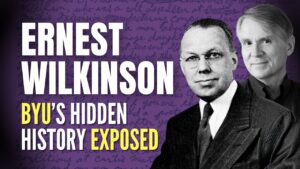
John Dehlin [00:17:15] Yeah. All right, Matt. Well, let's jump in. And I think maybe the first place we can begin is with an introduction to Ernest Wilkinson, and then we'll talk about the civil rights context, and then we'll talk about byu. Is that okay? Do you want to introduce us to Ernie?
Ernest Wilkinson and His Controversial Leadership at BYU
Gerardo Sumano [00:17:33] Yeah.
John Dehlin [00:17:34] Okay.
Matt Harris [00:17:35] Ernest Wilkinson is one of Mormonism's most annoying characters. But he. I have a little affection for him in this story, and I'll. Maybe that'll come out. But he's got a reputation of. From BYU faculty and students. He has a reputation as being a stern authoritarian. And the faculty called him two interesting names that sort of says it all. They called him Little Napoleon and Little Caesar, and both of those, the little part referred to as height. He was a short man, maybe 5 foot 6, 5 foot 7, and he was kind of rotund. He packed a pretty compact punch, if you will. And in those days, walking around the BYU campus, I mean, the stuff he would say and do to students would be just absolutely unheard of today. The guy would be sued for sexual harassment. I've talked to at least two students who were there in the 60s. They're now obviously in their probably 70s. But two of these students, Ernest Wilkinson, patted on the bottom, you know, touching them inappropriately. That's what he did. He was just that way. And he was just. A quick story about his stature. They were at a wedding once, and they were. There was a line at the wedding and Wilkinson was coming through, and there was a general authority daughter who was in the wedding line, and she was there shaking hands, too. I can't even remember which general authority it was. But anyway, the daughter was there shaking hands. Ernest Wilkinson goes up to her and shakes her so. Her hand so hard she actually flinches and sort of recoils. It was so hard. And finally when he let go, she had her high heels on. So she's looking down on him, and she said, if you ever do that to me again, I will kick you in the nuts. And now I don't know what that means. Does that mean she did that because of who her father was? I don't know, but, but anyway, that's what he did. And he was, he was very difficult to work with. He was a, we would say today was a red personality. John, you're a psychologist, you might refer to these color coded schemes. He was a red personality. And well, what's interesting about that is as a red personality, he classed with the other red personalities in church leadership, including Harold B. Lee. And so two very headstrong men who would often clash over policies at byu. Ernest Wilkinson's a lawyer by profession. He went to George Washington University where he received his Bachelor of Laws degree. Today we call it a JD or Juris Doctorate and he went on to Harvard for, for a Doctorate of Juridical Science, which is the highest degree that one can get in a law. It's called an sjd, I think Doctorate of Juridical Science. He had a law firm in Washington D.C. the nation's capital, where he made millions of dollars representing Native Americans on tribal land disputes. And so that's where he carved his focus. And by 1951, when there was an opening in the BYU presidency, J. Reuben Clark of the governing first President, I said BYU presidency is what I meant to say, I think. But in 1951 when there's an opening at BYU, J. Reuben Clark of the governing first presidency went to Wilkinson. They said, well, I'm going to recruit you and Ezra Taft Benson, who was a stake president in the 1940s in D.C. so just before Benson was called into to be a general authority, Ezra Taft Benson knew Ernest Wilkinson well, Wilkinson was in Benson's state presidency as I recall. And so they developed a close relationship. And so Benson and Clark went to bat to get Ernest Wilkinson to be the next president. And what's interesting is there were at least three other LDS candidates with PhDs who should have gotten the position in terms of experience and credentials, but instead they took a chance on a lawyer. And without going into a lot of details, Wilkinson had this vision that that BYU ought to grow, it ought to recruit students from beyond the Intermountain west, and that finally it ought to offer graduate programs where its faculty could produce cutting edge research. And so he does have this great vision. And over the course of his 20 years of leadership, the size of the institution essentially doubles. And anyone who walks on this beautiful Provo campus today will see that it bears Wilkinson's fingerprint just about everywhere you go.
John Dehlin [00:22:12] And of course there's the Wilkinson center that we all, you know, would, would visit as students there in his, in his name and his honor and many fond memories there. Okay, so that's Wilkinson. Now let's talk about the, the mid-60s and the environment, I guess, LBJ 1964 and why it takes four years for people to really care about what happens in 64.
Gerardo Sumano [00:22:39] One second, John, before we go there, can, can we have Matt just talk a little bit about the, the controversial policies or, or things that Wilkinson did as, as president. I think you have like a little bit summary and on the.
Matt Harris [00:22:52] About it.
Gerardo Sumano [00:22:54] For example, the Vietnam War stuff and.
John Dehlin [00:22:57] Oh, yeah, oh, yeah, yeah, yeah, yeah, yeah. A flavor of inspiring happens under him, right?
Gerardo Sumano [00:23:03] Yeah.
Matt Harris [00:23:04] The wish does, John.
John Dehlin [00:23:06] The spy ring.
Matt Harris [00:23:07] Yes. So Wilkinson imposed his particular conservative ideology on the institution. He wasn't rogue. Of course, his views align with probably most of the leaderships in Salt Lake, excluding, you know, people like Hugh Brown. But he was intensely conservative and he was against student activism in the Vietnam War. The. This is an era in which a lot of students are fighting their own voices. They're wearing armbands opposing the war. They're putting pictures outside of their dorm windows across the United States at their respective universities. And Wilkinson didn't want any student activism at byu, and so he forbade BYU students from putting anything that was anti Vietnam in their dorm windows. He did not want any left wing speakers to come to campus, which annoyed the heck out of liberal faculty because they were tired of hearing all these right wing visitors coming and giving the devotional addresses or the forms. Actually there'd be more forms rather than devotional addresses. So they didn't like that. And Wilkinson also imposes an honor code. And any of your listeners who have been to byu, including myself, were all well aware of what the honor code is, that you couldn't drink alcohol. It's against the word of wisdom. And so there was an honor code issue there. You couldn't have premarital sex, which of course would be against the church's theology that intimacy ought to be reserved for marriage. And then finally and most critically for this discussion that black and white students could not date or marry and they were to be called in if any black or white couple on campus were seen to become, you know, seen as too cozy. And this time. What's that?
Gerardo Sumano [00:25:00] That was written as part of, of the honor code inter the international.
Matt Harris [00:25:05] Well, so this is where it gets tricky. Where it gets tricky is Wilkinson's really clever. Unlike some other fundamentalist Christian groups that run a file of the government and we'll talk about that in a minute. But Wilkinson did not put some of the most racist policies in the promo in the BYU literature. What he would do is there would be, you know, there'd be the BYU catalog. We welcome all people, all races, all ethnicities. And he was really, really smart not to put. Except Negroes, because he knew that that would get him in trouble with the federal government. So he left that out. But in private, they devised a letter that if a black student were to apply to BYU or a biracial student, they were to receive a letter that he and his administration had written. And the letter simply said that we can't really turn you away, but if you come here, you should know that you will not be happy. You can't date any white girls. There aren't any Negroes at the university. Truth is, there are three in the mid-60s, and there are not any Negroes in Provo. You'll be at a fish out of water. We feel you'll be bitter. That's the word they use. We feel you'll be bitter. So there's kind of like the real estated policies. And then. And then there's this other letter that gets sent out, and he's. He does that because he doesn't. He doesn't want anybody from the federal government looking over their shoulders saying, hey, look, you're doing something that's racist and against federal law.
John Dehlin [00:26:35] Well, of course you've read that letter, right? You've seen it.
Matt Harris [00:26:38] I have it. Okay.
John Dehlin [00:26:40] But it's not something the public can see, is that right?
Matt Harris [00:26:44] No. And it's in a restricted collection. And just so your listeners know, you guys, I want to be very clear. So when I work in restricted collections, I don't share material because I have to apply. People trust me, and I honor that to the day, as long I don't share restricted materials. Other time. This is with fellow scholars, this is with podcasters, this is with anybody. And that's why I get access to restricted collections, because I don't share. But if it's not a restricted collection, and a scholar says, hey, I just read on page 34, you have this letter. I'm just curious, could I. Do you have a copy you could send me? And if it's not restricted, I'm happy to do that, and I frequently do that, but with restricted material, I just. I can't do that.
John Dehlin [00:27:24] Okay, so there. Just to be clear, though, there was a form. Sounds like a form letter. If a black student applied to BYU in the 60s, there was a Form letter sent out, basically saying, you won't be happy here, you probably shouldn't come, right?
Matt Harris [00:27:39] That is correct.
John Dehlin [00:27:39] Wow. Okay, cool.
Matt Harris [00:27:41] Yeah. Yeah, that's at 1961. They wrote the letter. And I should. I should say that what they're worried about, I don't want to jump around too much, but they're worried about, of course, having black students come to byu and they're worried about the interracial dating and marriage we've been talking about. And in 1961, Utah State, so just, you know, 100 plus miles to the north of BYU, they start to recruit black athletes, student athletes. And these black athletes create quite a scandal because they start to date these white Mormon girls. And this predominantly Mormon community of Logan, Utah, they're up in arms that these black kids, many of whom are from outside of Utah, they're coming to protect, participate in sports, and they're dating white girls. And it does. It becomes a scandal. The newspapers pick up on it. LDS parents in the area are protesting the university administration. And I remember going through David O. McKay's diaries in the First Presidency, minutes from this era, and it struck me that they're frequently talking about the scandal in Logan and they're drawing the appropriate conclusions, which is that if they recruit black student athletes to byu, they're going to experience the same fate. And they want to avoid that.
John Dehlin [00:29:06] I was struck in your book by the father that writes, is it Wilkinson basically saying, I'm concerned. I hear there's a colored student on BYU campus. And what Wilkinson's response is to that father, that was a fascinating exchange. Do you want to tell us about that?
Matt Harris [00:29:25] Yeah. So this businessman, LDS man from Florida, this is 1952, he writes, President Wilkinson, he had heard that BYU had a colored student. That's his word. And he was concerned that his daughter would go to BYU and could potentially date a black man. And I'm kind of chuckling, you know, when I read this, because there's one. I think at the time in 52, there was one black person. I mean, what are the odds his daughter would marry or date this man? But anyway, Wilkinson wrote back and he. He said, hey, you have nothing to worry about. We only have one colored student here and we're going to keep the numbers really low for the reasons that you suggest. So he's trying to assuage the man that, you know, if you send your daughter here, you'll be okay. What they're really worried about is the biracial student, because Ernest Wilkinson and his deputy, guy named William Barrett, they talk about this a lot in private and they talk about it with the board, to the board of trustees comprised of apostles. And they say that we can't be sure who bears the curse if somebody light skinned comes to byu. And so anytime a stake president would write Ernest Wilkinson and they would say something like, you know, I have this young man, part Negro, that's the word they used. We say biracial today. But I have this part Negro man or student who wants to come to byu. What should I tell him? And sometimes these students, these biracial students, were not even lds, they just wanted to come to BYU because the tuition was cheap and they had a friend who was going, usually a white friend. So the church leaders would ask Wilkinson, and you know, the biracial, what do I do? Wilkinson in turn then asked the board, hey, I'm getting all these inquiries about part Negroes coming to byu. What do I tell them? And they're caught in this really interesting dilemma because on the one hand you can't say, well, we oppose black students or biracial students. They know that that will get them in trouble. And so the council is always the same. We can't turn them away, but let's try to discourage them. That way we can have plausible deniability. If the federal authorities go after us, we can say we don't have any policies that keep them out. But of course they would never tell them about this nasty letter that they're sending him saying you won't be welcome here because there aren't any Negroes in the community.
John Dehlin [00:31:49] Yeah. You mentioned in the book that Joseph Fielding Smith was more concerned about a quarter a student that was a quarter black than he was a full black student. Right. That light skinned black people Joseph Fielding Smith considered to be quote, the most dangerous kind.
Matt Harris [00:32:10] Yes. Remember the one drop rule? So the one drop rule, you know, 100 ancestors and one of those hundred has African ancestry, you're considered cursed. And so their fear is that you, you can't detect anybody who's light skinned or biracial. And if that biracial student meets and marries a white student, then they're going to curse their offspring. That's what they're worried about. But with a black person, somebody with dark skin, you could avoid that because they have dark skin. And you can just make that assumption that they have African ancestry and tell
John Dehlin [00:32:46] the story about Harold B. Lee.
Gerardo Sumano [00:32:48] Yeah.
John Dehlin [00:32:49] Finding out that a black student, BYU student was running for student government. And what Harold B. Lee says to
Matt Harris [00:32:56] Wilkinson, that's a great one. So in 1960, Ernest Wilkinson was in a board meeting and he told the brother and he said, hey, we've got this colored boy who's running for the vice presidency. And Harold Lee went ballistic. And he said to Wilkinson, now these are two red personalities, two very headstrong men. Lee snapped at Wilkinson, he said, my granddaughter is going to byu and if she goes there and marries a colored boy or dates a colored boy, I will hold you personally responsible. And Wilkinson, being the fireball that he was, didn't miss a beat. He said, you should hold yourself responsible because you made the policy. The policy meaning that black students can go to byu, right? If they're. If they can be admitted, yeah.
John Dehlin [00:33:44] And I think it's important, Matt, for you to explain, especially to our. Never Mormons, but I think even to our Mormon audience, what the BYU board, who the BYU board consists of. Because it's not just like mid level educators who are Mormon, right?
Matt Harris [00:34:00] Yeah.
John Dehlin [00:34:01] Typically the Quorum of the twelve in the first presidency. Am I wrong?
Matt Harris [00:34:05] Mostly it's most of the apostles in the First Presidency, not all of the apostles. And it's also a couple of lower ranking general authorities. For example, for example, Marion Hanks, who was a first COR of the 70s. So this is a general authority tier of leadership ranking just below the quorum of the 12. And Marion Hanks was on the Board of education in the 1960s. And I don't know when women were invited, I think the 70s, don't quote me on that. But today, of course, if you were to look at the Board of trustees, there are women on there, usually from the leadership of the church, whether it's the General Release Society, presidency or primary. But in those days it was mostly men, I recall, and mostly apostles. Couple of lower ranking general authorities. As far as I know, nobody outside of the church leadership was on the board. You would think that you may have an educator or something like that, but that that wasn't the case.
John Dehlin [00:35:06] And you do a really good job on page 130 of the book, sort of trying to provide the context for why, you know, the LDS Church, First Presidency, Quorum of the twelve would be so uncomfortable with black people, frankly. You talk about their background, what types of environments they grew up in, and how that would influence their discomfort.
Matt Harris [00:35:30] Yeah, I mean, you know, the United States is just full of racism. And a lot of that just goes right to the core idea of interracial relationships. Just take Hawaii, for example. 1959, when Hawaii was petitioning for statehood. They'd been. People wanted Hawaii to come in long before 1959. But why 59? Well, there were so many people that opposed Hawaii because it was so interracial. They didn't support interracial relationships. And so a lot of conservative lawmakers in Washington, D.C. had opposed Hawaii coming to the union for such a long time. And interracial opposition was at the heart of it. And with the brethren. Most of them grow up in Utah, Idaho and in Arizona, these areas that don't have a black population. My sister lives in Huntsville, Utah, probably about a mile and a half away from where President McKay used to live. And President McKay's son David Lawrence, he said, my father never saw a Negro growing up where he lived in Huntsville. There aren't any Negroes around. So he's very open about that. Spencer Kimball grew up in Thatcher, Arizona. It was the same thing. And Bruce McConkey and Mark Peterson, Gordon Hinckley and others who lived in comparatively cosmopolitan Salt Lake City grew up in the 1920s and 30s. I mean, I think it was what, less than 1% of Salt Lake City in the 20s and 30s were African American. So they weren't, they didn't grow up around black people. They didn't know them as friends. They certainly didn't see them at church. And the, the media at the time, of course, they would have gathered some of their views about black people from the media, but this is an all white media for the most part. And so heaven knows, you know, the white media portraying black people in the mid 20th century wasn't flattering. And then you take, you know, the church's teachings on race, the, that black people are cursed and all of that. I mean, it doesn't, doesn't bode well in terms of the favorable impression of an entire group of people that the scriptures have, have called them to proselytize. And so they're really uncomfortable around black people and they're, they think nothing, at least some of them, I don't want to lump all of them together, but some of them, including J. Reuben Clark, would frequently use the N word in his diary. And there's a great story of Spencer Kimball that really, really struck me. That was really powerful to me when I was reading his diaries. I'm going to read this to you. He was Talking about in 1965, Spencer Kimball, who was then an apostle. He was visiting New York City on a church assignment and his wife Camilla had gone with him, and Camilla had been begging him for a long time. You know, Spencer, take me to a Broadway. I want to see a Broadway. And I Don't think that was his cup of tea, but he agreed to do it. And I'm saying that lightly. I know that wasn't his cup of tea. You know, after a long day of church meetings. Right. The last thing you want to do is maybe go to a Broadway and be around more people. He was kind of an introvert, so one imagines he just wants to go back to his hotel and relax. But so, being the good husband that he was, he takes his wife to this Broadway play, and as the play begins, he looks around and I want to read to you what he wrote in his diary later that night. He said the show itself was very good and entertaining, but the people that surrounded us made us wonder if we were in America. The colored people and the foreign element, the Puerto Ricans. It was almost unbelievable. And that really, really shook me, because this is a guy who grew up, spent the first part of his life in Arizona, then he moved to Salt Lake as a church authority. He's never been around racial diversity before, and he feels like a fish out of water.
John Dehlin [00:39:19] Yeah. Yeah.
Gerardo Sumano [00:39:22] Well, I think that gives us really good context as to what. What is causing this BYU policies to be instituted and, and followed. Right. To. To prevent black people from coming to byu. Where do you want to go next, John?
John Dehlin [00:39:40] Yeah, so. So I was just going to quickly just read another little quick couple sentences. You mentioned that Wilkinson denied students permission to perform the Negro twist at BYU dances. As a Sam Cooke fan, that was particularly jarring to me that literally, BYU students, students couldn't do the twist. And also that, you know, Joseph Fielding Smith, as we've mentioned in past episodes, called black people darkies, that J. Reuben Clark used the N word. You know, so. And, and Thomas S. Monson also felt out of place. And you've. You've told the story, I think, in a past episode as well, that when he found out that minority elements were moving into his, I guess, Holly Holiday neighborhood or Salt Lake neighborhood, that. That Markey Peterson told him to move. And, and I'll just make the final point that many of the Mormon stories, interviewees that I interview in 2024 say that in the high schools they grew up in, there were few if any black people in, you know, in the modern era. So this is not necessarily just 40 or 50 or 60 years ago. This remains many parts of Utah and Idaho and even Arizona today.
BYU's Exclusion of Black Students and Athletes
Matt Harris [00:41:06] It's true. I mean, even in the church today, in 2024, less than 3% of the church body in the United States is African American. So, you know, A lot of Latter Day Saints in their worship communities are not around black people. And certainly you get a higher concentration of black saints in, say, Atlanta, Georgia, and, you know, cities like that. But for the most part, throughout the church, there's just not a high concentration. So especially people in rural areas, they're not used to worshiping with people of color. I want to make an instructive point here that is important for today, maybe, and also important for the saints in the 20th century era that we're talking about, and that is that when Wilkinson is going to make a policy, with the board's approval, I might add, that you can't perform the Negro twist at a BYU dance, the question then becomes why that's not scriptural. What does that have to do with the band? Because there's a theology that keeps the ban in place. There's a theology that helps to understand why the church does what it does regarding people of African descent. But what does the Negro twist have to do with it? What difference does it make if white and brown kids are doing a popular dance that happens to be called the Negro twist? And there's nothing theological about that. There's nothing scriptural about that. And the answer is, of course, they're just so fearful of black culture, and they're fearful of students imbibing in this culture that may ultimately affect their racial theology. And so that same fear is extended to black faculty. They talk about 1960. Ernest Wilkinson had hired or had planned to hire a faculty member, and he read the person's resume. They had good credentials, good experience. Now, this is for a summer class, I might add. And at the 11th hour, Wilkinson, just before they tendered the offer, Wilkinson found out that this. This candidate was black after he had approved him. And he said, we can't have our white students learning from a black faculty member. We just can't. Again, this has nothing to do with the theology and everything to do with Wilkinson's prejudice.
Gerardo Sumano [00:43:25] Yeah, you have some really. A really interesting story in the book about the Brethren being worse, fears becoming true when at the rival university, Utah State University, they started seeing that black athletes openly boasted about dating white girls, I think.
John Dehlin [00:43:49] Matt, did you mention that in today's episode already?
Matt Harris [00:43:52] Yeah, just a few minutes ago.
John Dehlin [00:43:53] Okay.
Gerardo Sumano [00:43:54] Oh, I'm sorry. And about how that causes them, the Brethren, to tighten up BYU admission policies. I. I think some of these admission policies, you've already covered how. But there's the. The Barrett, basically, the Barrett points. Right. About how to do it. Do you want to talk about it?
Matt Harris [00:44:20] Yeah. Yeah, that's actually a good, good segue. So just after the Utah state debacle in 61, that's when Ernest Wilkinson and his top assistant William Barrett, that's when they decide that they have to tighten up their admissions policies at BYU and they create this interesting document that they want to use that will govern admissions. And Barrett asks an interesting question. He said, how can the door of the university be left open and still attract few Negroes? In other words, we can't say, you can't come here and put it on our literature because we'll get into trouble by the federal authorities. But how do we discourage them? And so Barrett had this uncommonly frank five step plan. He said, first, do not proselytize negro athletes. Don't talk to them, don't try to convince them to come here. And if they do want to come here, just creating more hardship for us because we don't want them to come, but yet we can't tell them that. Number two, discourage undue publicity of the Negro who was on campus. Numbers mean if there is a black person visiting the campus, don't call attention to it. Just let them come on campus unnoticed, unmentioned, and don't bring any attention to it. Could open up a floodgate. Number three, watch moral standards carefully. Boy, there's a lot I could say about that. There's this irrational fear in the 20th century that some, you see this with brown versus the board, when they try to integrate schools public post Brown, that these young African American men in particular, they can't control themselves. There are all these horrible, incredibly vile views about that these students will harass white girls. You see this a lot from southern parents in the wake of Brown. They're really worried about sexuality, that somehow their students will be preyed on. It's just awful.
Gerardo Sumano [00:46:25] Wow.
Matt Harris [00:46:26] So watch moral standards carefully. That's Barrett's way of saying that could happen here if we allow black students. Number four, quietly counsel students against dating a known Negro. Calling any boy or girl seen with a Negro. I mean, this is, this is part of the underground here that Barrett's saying if you see a white girl on campus or even off of campus dating a Negro or vice versa, there to be called in and talk to. And number five, send a prepared letter to answer inquiries of Negroes regarding admittance to BYU or church schools. So that's when the right, that's when a black student shows interest. And then in response they get this really vile letter saying, you know, you can come here but you won't be welcome. You won't be happy and you'll be bitter.
John Dehlin [00:47:19] Right, Right.
Gerardo Sumano [00:47:21] Wow.
John Dehlin [00:47:21] And then there's a part. There's a part on page 133 where they start getting questions about this policy. It's kind of in the first main paragraph at the top of 133. After Barrett establishes this policy, you've got athletic director Eddie Kimball talking to a reporter. Do you want to tell that story? Because it seems like they weren't fully comfortable being candid publicly about Barrett's private policies, correct?
Matt Harris [00:47:51] Yeah, correct. And I want to put. Give your listeners a bigger vision on this, just for a quick moment. A lot of sports teams in the 60s were not integrated. And one of the great. I'm a basketball person, come from a big basketball family. And one of the big basketball teams from the 60s would have been Don Haskins at the University of Texas, El Paso, started recruiting African American athletes at a time when most people were not doing that. And so the country, because of the civil rights movement, they're talking about the propriety of having, you know, all white and all black teams. And so they start to integrate slowly by the 60s. Obviously, BYU has not caught up with this yet. And in 1962, the Arizona Gazetted Reporter asked the BYU athletic director, Eddie Kimball, why they don't recruit Negro athletes. And he says, quote, we do not actively recruit Negro athletes and will not in the foreseeable future. This is not a matter of discrimination. Kimball said, we simply feel Negroes would not be comfortable on our campus. There is not a single Negro family living here in Provo. So he's repeating the letter that they would send out. This creates quite a social problem for Negroes wishing to come to our school. And then what I write in the book is William Barrett and Eddie Kimball both knew the real reason the school didn't recruit black students. They just didn't want to admit it. Unlike Native Americans, Polynesians, Pacific Islanders, and other students of color whom the school recruited and touted in its promotional literature, Mormon theology deemed black people cursed. So they're coming to this realization, Eddie Kimball and Barrett and others, that, you know, we can't say that publicly, so we have to take a different tack to sort of keep them at bay. But that's really what's going on here. And we're going to find out soon in this podcast series that this whole idea that you recruit every race and ethnicity out there except black people, that's going to come out to the federal authorities and BYU is going to pay a stiff price for this.
John Dehlin [00:49:54] Yeah. All right, so what is it? You know, it. This. LBJ, you know, John F. K. John F. Kennedy, Jr dies in 63. LBJ takes over and is the reason why the Civil Rights act of 1964 is passed. If anybody wants one of the best books ever written on American history, read Robert Caro's Master of the Senate about LBJ. It's. It's an incredible read. But LBJ helps the Civil Rights act get passed in 64, and it is another four years until things really get hot for BYU. So we. What happens in 68 that turns up the heat on BYU?
The Civil Rights Act of 1964 and Its Impact on BYU
Matt Harris [00:50:36] Well, when we talk about the Civil rights act of 64, it's the long. I wouldn't say the final, but it's the most. It's the culmination of the government's efforts in the previous, say, 15 years to integrate society. I mean, the first domino that goes down is brown versus the board in 54. But that was just public education. So it integrates public education, but. But restaurants and bus stations and zoos and swimming pools and all of that. The rest of the country is still segregated. And by 1964, largely the result of Dr. King and his allies, which include a lot of really women that go unnoticed in this heroic story. Dr. King sort of gets all the attention, but there's so many incredible women who are at the vanguard of this. And Dr. King would admit that they lead to the Civil Rights act of 64. Dr. King had been pestering John Kennedy to implement civil rights legislation. Kennedy, being the politician that he was, knew that it needed to be done but didn't want to do it because he was afraid of offending the Southern vote that helped get him elected in 1960 in a very close election against Richard Nixon. So Kennedy resisted, resisted, resisted. And then by the spring of 1963, when Guy named Gene Bull Connor in Alabama, the commissioner, public commissioner there, turned his hoses on children who are marching with adults marching. They turn attack dogs. People are watching this on the nightly news, and it was horrifying to them. A guy named Medgar Evers was murdered in June of 1963 in his driveway. He worked for the NAACP. A white supremacist had shot him from across the street. And his wife came to the door and saw her husband dying on the doorsteps. The two kids, little children, were there, too. August of 63 is the Million Man March in Washington, D.C. the I have a Dream speech that mesmerizes the nation. By September of 63, four little girls are shot or blown up The Klan bombs their church when they're there in September of 63. So Kennedy recognizes this has to be dealt with. It won't go away. And so in the spring of. In the summer and spring of 63, he starts to change tact on civil rights and decides that, damn, whatever happens in the future to my political career, I'm going full steam ahead with this. So he starts to propose legislation, and then he gets murdered In November of 63, as you mentioned, John. And then Lyndon Johnson then picks up the torch, the civil rights torch, and By July of 64, the following year, so just, you know, less than a year after Kennedy's murder gets passed into law. And what people don't realize is there is a provision of the Civil Rights act of 64 that would affect a lot of institutions like BYU that harbor discriminatory policies. This is Title 6. And what Title 6 said was that the federal government could defund any institutions that had discriminatory policies. And what that means is that if students had a GI Bill, if they had a federal student loan, or. Or if their faculty were receiving science grants, that would all be taken away. And so that was the federal government's way of saying, look, we're going to shut you down unless you abide by the results of the Civil Rights act of 1964. And so. But to go one step further, it's one thing to have those policies in place and another to make it a priority to go after institutions that discriminate. And so Lyndon Johnson gave the Justice Department its marching orders. We want you to identify schools, universities that have low Negro enrollments, the memo said, and that's what happens. And so BYU is one of many universities in the 60s that get swept up in this dragnet. And by the mid-60s, when BYU had to report how many black students were there. I have the report. They sent it in. And there were three. Three black students at BYU in 65 when they sent in the report. And then it took them a little while to get the government's priorities in order and people in the field and all of that. But By April of 1968, Wilkinson received a letter saying that you're going to be under federal investigation for civil rights violations. And Wilkinson panicked because only three African Americans were at the school. And he was just beside himself knowing that he was now going to draw the eye of the federal government.
Gerardo Sumano [00:55:11] Yeah, yeah, it is really interesting. I mean, just thinking about. I mean, the church is much larger and more. Has more economic means today than it did back then, but it's it's really interesting that they were kind of, well, as far as I can see in your book, kind of caught off guard as to how the Civil Rights act could impact BYU and not lobbying like they do today for religious exemptions. Back then it was kind of like, oh, they're already going to do an investigation based on. On something that was passed four, five years ago that was kind of interesting. Do we have any sense that the Brethren knew this was eventually going to happen when. When they were opposing civil rights? I think there was some mentioning of BYU back then when they were opposing the Civil Rights Act. Is that something that they were. They saw coming, do you know? Matt?
Matt Harris [00:56:11] Yeah. Yeah, they did, because Wilkinson's a lawyer and some of his top men in his cabinet are all lawyers. And so this had been talked about ever since the end of World War II, not just at places like BYU, but institutions in general. What is the government's role over private institutions? And a number of private universities, you know, whether it's Hillsdale College in Michigan or Liberty University or Bob Jones University in South Carolina, these are conservative evangelical universities. They had been not wanting the government to impose its rules on who they admitted into their student body. And of course, I'm talking about black people. And so what Bob Jones did in the late 50s is that they said, you know, we don't want the government telling us we have to admit black people, so we're just going to not take any government aid. And so that was the. The presumption was, if we reject government aid, if our students just pay out of pocket and our faculty don't accept science grants, then they can't tell us what to do. And so this is all uncharted territory in case law, because that's what happens when things like this get litigated. The courts often look at case law. What did previous courts say on the matter and why? They're not beholden to prior rulings, but they certainly take them into consideration. And so the case law wasn't where it needed to be. And that would get worked out in. By the mid to late 60s, there becomes a mounting body of case law that simply suggests that you can't hide behind the First Amendment to discriminate. And I know that we can make all kinds of parallels with LBGTQ rights today, but in the 1960s, that's what they were worried about, particularly in the face of a larger movement for racial equality. And so they thought, these private schools thought, including byu, thought that they could get around the government's dictates if they rejected federal funding. And Ezra Taft Benson, who never liked the Department of Education, it had just popped up in the late 50s during his second term in the Agricultural Department. They didn't call it that then. We call it the Department of Education today. It was called something similar, but it popped up so that it was a government bureaucracy that would oversee the nation's schools, but also overseeing the science race that the government was undertaking at the time, during the Cold War against the Soviets in terms of space race and all of that stuff. So that was the component behind the Department of education, late 50s. And Benson didn't like any of this stuff. And so he proposed to the Brethren in the 60s that we ought to follow Bob Jones's rule and cut off all federal assistance. And some of his fellow apostles on the board, they just said, you know, including Wilkinson, weirdly enough, because Wilkinson was a fellow conservative like Benson, but recognized that if we cut off all federal assistance, we're going to lose a lot of students because they can't afford to come here, you know, paying on their own dime.
Federal Scrutiny, Bob Jones, and Tax Exemption Concerns
Gerardo Sumano [00:59:20] Yeah, yeah. Just as thinking about, thinking about what happened here and, and this investigation now, this makes a lot more sense to me because I Remember studying Title 9 a few a couple years ago and how when Title IX was passed in 72, Elder Oaks was already president of BYU and he would be
Matt Harris [00:59:49] very.
Gerardo Sumano [00:59:50] Become very active in having Congress pass really robust religious exemptions for Title 9. And that's likely because they had already had probably bad experiences with not being super active with titles with title 6. Seems like as far as requesting from Congress this religious exemptions, which is kind of what caused them to be under federal investigations and, and the pain that they suffered during that time.
Matt Harris [01:00:21] Yeah, there's, there's no doubt that Title IX is going to pose problems for BYU too, because in the early 70s, Title IX suggest that you can't penalize women in hiring practices.
Gerardo Sumano [01:00:31] Right.
Matt Harris [01:00:32] And BYU had this, excuse me, had this policy that if that they weren't going to hire married LDS women, that their role was to be at home with their children. And. But the government thought, wait a minute, if these women are qualified and they're applying for a job, they should be able to get that position regardless of their family situation. And so that became a really difficult sticky point for Dallin Oaks and his presidency.
Gerardo Sumano [01:01:00] Yeah, yeah.
Racial Makeup of BYU Athletics Before Integration
John Dehlin [01:01:02] So, Matt, before we jump into the protests and the investigation, just to put a fine point on it, what was the racial makeup of BYU's football team and other athletic teams sort of 1968 and prior, just to kind of make
Matt Harris [01:01:18] it really clear, boy, none as far as I know. Don't. I'll stand corrected on this if somebody, you know, wants to correct me. But the first black athlete they that comes to byu, at least on the football team was until I think 1970. 71.
John Dehlin [01:01:35] Right.
Matt Harris [01:01:36] So before 68 they didn't have any black athletes. And I've talked to, not to put a too fine a point on this, but I've talked to some black men who are obviously older today, but they played against BYU in the 60s and it was, you know, black athletes, football playing against an all white football team. It was not pretty. I mean, the racial epithets that a lot of the BYU kids would use. I mean, when you're conditioned to see people as cursed, you know, unless valiant and all of that stuff, one can imagine that you're not going to have, you know, the most gracious things to say about them, even if it is on a competitive football environment. I mean, some of these BYU kids were crossing the line and some of the racial slurs they would use. And, and of course it's not just the BYU kids who are doing this. It's happening nationally. The kid BYU kids are just part of a larger national discourse. And one can imagine these BYU kids hadn't been around black people either. And so when you're not around somebody else, it's easy to demonize them.
John Dehlin [01:02:36] Yeah. Okay, so which happens first or does it matter? Where do you want to go? Do you want to start with the investigations or start with the protests? And I didn't realize it all kind of started with utep, University of Texas at El Paso. In my mind it was always like Stanford or University of Wyoming. But the protests start in your book, at least with utep. But do you want to, do we want to do the protests or the investigation first?
Matt Harris [01:03:01] Well, let's set the stage. So when Wilkinson received his the notice that the feds were going to investigate them two days later is when the University of Texas, El Paso, the protest began. And of course the time In April of 68 when UTEP the protests began, nobody realized that that would be the first domino of many that would protest not just BYU football, but basketball, track, wrestling. I mean it was, they ran the gamut. And I was absolutely shocked when I started this research how many institutions were involved. But here's a quote against one of the athletes who protested byu, it says, you've got to understand how we feel. Those Mormons say we're the Mark of Cain and that we can't go to heaven because we're black, man. I just don't want to associate with those people in any way. And so UTEP give you a little story. Why utep? UTEP had a young African American sociology professor who was an activist. He was just hell bent on going after institutions, particularly religious institutions, that had discriminatory policies. He's the same guy that had worked with the two Olympian athletes in the 1968 Mexico City Olympics where they stood on the podium and they held up their fists in solidarity signifying black power. Do you remember that?
John Dehlin [01:04:30] Yeah. And tell us quickly his name and whether he was white or black.
Matt Harris [01:04:34] Just because he's black. And his name is Harry Edwards.
John Dehlin [01:04:37] Okay. And he's black. Okay.
Matt Harris [01:04:38] He's a professor at, he's at UTEP for a short while. He's also at San Jose State. And so Harry Edwards, who's the mastermind behind this very, very public demonstration in Mexico City. I mean, the Olympics, right? Supposed to be brotherhood and solidarity. And here you have these two high profile black American athletes raising their hand, signifying black power. Well, Harry Edwards is the one that's starting to foment this opposition against BYU and the LDS Church. I don't want to give him 100% of the credit, but he deserves a lot of the credit for organizing some of these early student protests. And the U.
John Dehlin [01:05:19] Top student, just for a quick little reference, I'll throw the visual up because it's pre. Pretty important.
Matt Harris [01:05:25] Yeah.
John Dehlin [01:05:26] They're wearing black gloves, is that right?
Matt Harris [01:05:28] And wearing black gloves, which if your listeners take the time, you can look up what all this means. Poverty, racial oppression, and you'll learn later that they get their medal strip from them. It's, it's not a good moment in terms of an image for the United States. But the guy behind this, working with these two athletes is Harry Edwards. And he's the same guy that's one organizing the protest at UTEP and other places as well. And Harry Edwards said something interesting. He said, if they, meaning the LDS Church, if they don't change their policies, we'll close them up. I'm not even sure what that means. There he is. We'll close them up. I don't. We'll shut the university down. We'll make life difficult. He didn't say what that meant, but those are the words he used. We'll close them up. And so the UTEP situation was interesting because of his influence, but also that there was a policy on the UTEP campus that they too could not date white Girls. And so it wasn't just BYU that had this policy. UTEP and other places did as well. And so these athletes were already upset, you know, being told that they can't date certain people. And so they decided to take their ire out on byu. And one of the things that the UTEP student says that's particularly bothersome to Ernest Wilkinson is they asked one of the athletes there were about. Let's see, how many athletes were there? There were about nine of them that refused to go to byu. And their coach wasn't happy about it at the time. But Sports Illustrated asked Dave Morgan, one of the athletes, you know, why did you guys boycott byu? And he said, quote, the Mormons teach that Negroes are descended from the devil. Who the hell wants to go?
John Dehlin [01:07:21] Who.
Matt Harris [01:07:22] Who the hell wants to go up there and run your tail off in front of a bunch of spectators who think you've got horns? And, you know, this is the stuff that's being bandied about in the national news press. And of course, Wilkinson and the board, they're just horrified that people think that the church teaches that black people are descendants from the devil. Now, you know, I'm not in public relations, and probably neither are you guys, but it doesn't take a genius to figure out this is bad pr. Yeah, this is bad pr. And the fact that he's got the ear of Sports Illustrated is huge, because Sports Illustrated is the biggest sports medium in the United States in the late 60s. And a lot of newspapers will pick up that interview that Sports Illustrated does, and they'll run them in their own reprints. And so it's being circulated everywhere in the Wilkinson papers at byu. I gotta hand it to the guy. He always kept. I mean, it's great for people like me, scholars, but he always kept all of these articles in his private papers. And, you know, it's kind of like, you know, Ernest, you already have the story. Why do you need 15 other reprints from different newspapers? Well, he's following this carefully, and people will send him this stuff all the time, too, trying to keep him abreast about, you know, the bad publicity. And so Wilkinson's angry about that quote, and he issues a public relations statement right away. And it says, quote, we do not discriminate because of race, and we have Negro students in our student body.
John Dehlin [01:08:59] And there was like, two. Is that what you're saying?
Matt Harris [01:09:02] Yeah, and I write. This is what I write. Left unmentioned was the number of such students 3. And the fact that BYU didn't recruit them. So you know, he's trying to maintain the church's policies, but he's taking heat for it because there are so few people.
John Dehlin [01:09:21] Really quickly, I don't mean to go too much in the weeds, but have you done any investigation into who the two or three black BYU students were, how they got there and. And how they were allowed to be there, why they weren't kicked off or discouraged or run out by. By the. The board?
Matt Harris [01:09:39] Yeah. Yeah. One of the students there is a good friend of mine, Darius Gray.
John Dehlin [01:09:44] He was a BYU student. He. He was one of my first Mormon Stories interviews. He was a BYU student in the late 60s.
Matt Harris [01:09:50] He was.
John Dehlin [01:09:51] Oh, wow. Okay.
Matt Harris [01:09:52] Yeah, he joined the church in 1964 in Colorado Springs, not far from where I live. So Darius and I have this shared Colorado history. And then, oh, I think 64, 65, he went to BYU for the first time. And so he's there when all this is going down.
John Dehlin [01:10:08] Oh, wow.
Matt Harris [01:10:10] And just a funny little story about this, that in the Board of Minute Trustees minutes that I have. Wait, there is great.
Gerardo Sumano [01:10:20] Wasn't he one of the Genesis group?
John Dehlin [01:10:22] Yes, he was one of the founders of Genesis.
Matt Harris [01:10:24] We're going to talk more about him in detail when we get to chapter six. But anyway, in the board of trustees meeting minutes I have, it says that one of our Negroes is giving us a hard time on campus. And it doesn't really go into details about the hard time. And so I've teased Darius about this over the years, and I think that was you, wasn't it? Dry as. Huh, huh. That's up. And anyway, he's got a great sense of humor. He just smiles and laughs. All right, so in. I asked Bryce, I said, just in a serious note, on a serious. No, I said, what was it like going to BYU in the 60s as one of few, one of three black students? And he says, the first thing I was told when I was on campus by the Dean of student life was that I was not to date white girls. And, you know, he said. I said, how did it make you feel? And he said, well, frustrated. I felt like, you know, college is a time to date, and people usually meet their spouses on a college campus. And here I'm told that I can't date, you know, know 99.9% of the students. And, you know, it really is a tough situation for black Latter Day Saints because on the one hand, they're taught to marry within the faith. Right, to marry another black Latter Day Saint, but also that you should marry within your race.
Gerardo Sumano [01:11:34] Yep.
Matt Harris [01:11:35] And so Darius was left in a really difficult position. Either you marry a white Latter Day Saint woman or you marry a black woman who's not lds.
Gerardo Sumano [01:11:44] And if he marries a white LDS women, doesn't the belief was that he would pass the curse to her?
Matt Harris [01:11:52] The belief would be that he would pass the curse to her and her children and their children and their children. And of course the white LDS woman is taught growing up that you're to marry a righteous priesthood holder in the temple. And obviously, you know, Darius, if the person that he did marry a white woman, he did marry a white woman, you know, obviously they couldn't go to the temple because that was before the bed was lifted.
John Dehlin [01:12:12] Wow. Real quickly, Matt. I also just want to share one other photo. I was able to find a photo of Joseph Ray, who is the president, apparently the president of UTEP, you know, by, by 1968. And I just want to call attention to one other dynamic that I think is, is going to be important to know. And that's basically just the athletic conference dynamic because at the time in the late 60s, BYU was, was a member of the Western Athletic Conference or the wac. And Joseph Ray was making a stink about whether BYU should even be allowed to continue to play in the Western Athletic Conference. Is there anything about that you want to talk about?
Matt Harris [01:12:58] Yeah. That's huge. So Joseph Ray, the president, he tells Wilkinson, he says, look, you can tell me you're not racist at all, but the proofs in the pudding, the fact that you only have three negro students tells me all I need to know. And essentially what he said was your denunciations of racism ring hollow until there are more black students on your campus. And so these guys, these two presidents are exchanging letters and Wilkinson's doing his best to say we're not racist. Look at our literature. We don't have anything that says that black people aren't welcome here. Of course he doesn't talk about that letter that they would send black people that we talked about. So he's trying to convince them that he's, that he's not, they're not racist. And it, his, his views were undermined by this gadfly, this guy named John Fitzgerald. And I want to take a moment in weave Fitzgerald into this story. Fitzgerald was a one time seminary teacher in the late 1950s. So he taught seminary for a short period before he went back to graduate school to get his doctorate education. He would later become a superintendent and work for a school district. Very gifted writer, smart guy, but always even as a seminary teacher. Was always profoundly bothered by the ban. And he would write these lengthy letters to President McKay, and he would say, dear President, I just don't understand. This is what the gospel teaches, love and harmony, but yet we have this terribly divisive policy. How could this be? And essentially, he's doing what Lo Bennion was doing to the president, although Fitzgerald was being a little bit more edgy in some of it, the way he expressed himself. And so Fitzgerald is reading about Wilkinson's denials of racism in the press, and Fitzgerald was responding to Wilkinson's, who was responding to Dave Morgan, the black athlete, that we don't believe that black people are devils and all of that stuff. Fitzgerald was reading about these denunciations in the press, and. Oh, my goodness. I. I shouldn't laugh. It just. It makes me. I don't. I'm not laughing. I'm just like. I don't know. It's. Amused is the right word. It's sad is what it is. But. So Fitzgerald reads the denunciations about the racism that Morgan was talking about, that Wilkinson was disputing, and he writes to the Salic Tribune, and he says that it's. It's true. The church does teach this stuff. And then they go through. And he also sends a letter to Joseph Ray, UT President. He said, whatever Wilkinson's telling you, it's wrong. Here's the proof. And he goes through this lengthy dissertation about all the quotes from Joseph Fielding Smith and other leaders who had talked about black skin representing darkness and the sign of the devil. Quotes John Taylor that black people needed to have representation after the flood through Satan. I mean, really hard, hard, hard stuff. And.
Gerardo Sumano [01:16:00] And it's published in the Solid Tribune as well.
Matt Harris [01:16:03] Some of it is a tiny bit.
John Dehlin [01:16:05] Okay.
Matt Harris [01:16:05] Most of the work he's doing is done in private to Joseph Ray.
Gerardo Sumano [01:16:11] Okay.
Matt Harris [01:16:12] And Fitzgerald copies in Wilkinson. So Wilkinson's not in the dark. He knows. Wow. What's being sent to Ray. So essentially, a former seminary teacher is undermining all of Wilkins mea culpas about racism.
Gerardo Sumano [01:16:27] This is crazy.
Matt Harris [01:16:28] The evidence is right there. He's giving quotes from the way to perfection and from a prophet.
Gerardo Sumano [01:16:36] Right. Because at the time, Joseph, feeling Smith would still be, Was still part of the quorum.
Matt Harris [01:16:41] He wasn't the prophet Gerardo at that point, but he was a prophet. He was. Right. He was a senior member of the 12.
Gerardo Sumano [01:16:47] Yeah, right.
Matt Harris [01:16:48] Not to. Just for your listeners out there who may not be LDs, each of the top 15 men in the governing body, they're sustained as prophet seers. And revelators. So they each have those prophetic gifts as they're set apart. But there's only one person who is authorized to exercise all of the rights and authorities to run the church, and that would be the church president or prophet. They're used interchangeably. The president, the prophet and the. The president. The prophet is chosen not by democracy or a vote, but they're chosen because they're the most senior apostle in the church. So if you want to be the church president, then it depends on when you're. You're called into the quorum of the 12. That's how it works. This isn't like a papacy where you have an conclave over a period of, say, two weeks and you choose a new pope from the College of Cardinals. This is something different. If you want to be the church president, you've got to, A, survive, not die, and B, be in the Quorum for a long time. All right. So when they get word of what Fitzgerald's doing, Wilkinson is upset. He sulks. To Elder Spencer W. Kimball, who is an apostle, he said, quote, this is just another example of where Jack Mormons causes more trouble than outsiders. And a Jack Mormon is an interesting word in Mormon culture. It is somebody who was a member or still is a member, but doesn't believe with all of its teachings and sometimes becomes vocal. We don't use that term today, Jack Mormon, but in. In the mid 20th century, that was a term that meant somebody who was sort of disillusioned with some Mormon teachings. These are members. And when Wilkinson says that Jack Mormons give us more trouble than outsiders, what he means by that is this person has been on the inside. They know what Joseph Fielding Smith and other authorities have written, and outsiders don't know that, but he knows that, and he's using that against us.
Church Leadership Responses to Racial Criticism
John Dehlin [01:18:41] It's weird that they're not expressing anger at past racist statements or past harmful policies made by other church leaders. It's the outspoken critics who often come from a place of love or care or concern or wanting the church to be better. They're the ones that kind of receive the ire, not. Not the past leaders that kind of put us in the tough situation to begin with.
Matt Harris [01:19:09] Well, I think, you know, with the church leaders, I mean, we have to. We can't assume that just because they. And you weren't making that assumption, John. So I don't want to attribute that to you, but we can't assume that just because people don't speak out against Joseph Ealing Smith that somehow they we can take that as tacit acknowledgment that they agree with him, because that's not the case at all. I mean, Hugh Brown does not agree with any of this stuff. And there's stuff on race from Joseph Fielding, and there are some other apostles and church presidents like David O. McKay and Spencer Kimball. They don't agree with a lot of what was in the way to perfection, but they're not going to go out and denounce him publicly. And the reason is, is because they don't want to. You know, you denounce somebody's prophetic authority, then that could cast light on the other's prophetic authority. And so the brethren, when you come into that, that quorum, one of the. It's kind of like politics, right? One of the first rules in politics is you don't denounce your own party, even if there's something dumb going on and you don't want to undermine the next election. And that's what's going on here. And so typically, they keep their criticisms very private. They do not want criticisms to come out. We're going to see that later on in this book with Mormon doctrine. There are a number of general authorities who have issues with that book, but they're not going to say that publicly to the Saints. And that's what's going on here. And what you see in private is that even some of the general authorities who may agree with Joseph Fielding Smith's views, that they recognize that those views could cause or pose problems for the church. And so they're like, rolling their eyes because this is a senior apostle who has a lot of authority and a lot of respect in high church circles. And they're seeing how this book that he wrote in 1931 is coming to. It's. It's causing them problems during the civil rights movement. And, you know, what do you do about it? Once it's in print? It's in print.
John Dehlin [01:20:56] Yeah.
Matt Harris [01:20:59] So. All right. One thing that's instructive about this little exchange is as a historian, I always look at context and. And I think that's meaningful. Just after this, this whole Fitzgerald law nasty letter to Joseph Ray saying, hey, look, it really, truly is. They are racist. And Wilkinson's upset. Alvin Dyer, who was in the First Presidency at the time, he was a third counselor. Sometimes the church leaders would bring in an additional counselor if one fell ill and couldn't perform, you know, the responsibilities. So they would bring in a third counselor to sort of help. Alvin Dyer was brought in in 1967 to help with an aging he, Hugh Brown. And there are some other issues too, that I don't think we need to get into at this moment. But Dyer complained to the First Presidency just after this Fitzgerald thing. He said that he was tired of members taking constant potshots at church leaders. And it was shortly thereafter, in April of 68, where the Brethren decide that they don't want to say anything more in public about church racial teachings. The less valiant pre existent stuff, the curse. Anything that they say should be positive and brief. That's what they decide in this First Presidency meeting. And because outsiders, particularly during this national push for racial equality, they're not going to understand these difficult church teachings on race. So let's just make it positive and brief.
Gerardo Sumano [01:22:25] Yeah, this is a pivotal moment in church history. I think when they. Because this is when all these teachings start, I mean, becoming quite down. The Brethren are not going to keep talking about it. And then it eventually will allow for decades later to be later to be able for the Brethren to say, oh, those were just folklore. They were so long ago. It was just the opinions of some men. And then because the Brethren just stopped talking about it. So this was a really important point in history, in my opinion. As far as how you put it on your book, would you agree with that, Matt?
Matt Harris [01:23:06] Yeah. I mean, for our story here, it absolutely is critical because it's a civil rights movement that forces them to change the messaging about the church's racial theology. And the podcaster asked me not too long ago that it was Gordon Hinckley, and he said, no, no, no, no, no. Gordon Hinckley didn't come up with this idea that, you know, we don't know why the ban existed that predates President Hinckley. This is a civil rights thing. And so when they, when they talk about saying things that are positive and brief about the church's racial theology, which is to ignore the rationales behind the ban, the idea would be, we don't know why God has denied black men and women the rights of the church. And, and as I've pointed out and elsewhere, it's hard to sustain that position when there's been so much written by the church leaders about why the ban occurred, including the first presidency statement of 1949. And so the we don't know line was never had any substance to it. It was just a PR throwaway line that the leaders would use well into the 21st century. And by the 21st century, I mean, they'll. It'll shift again where a handful of years will start to call it folklore, which is also problematic because a number of BYU professors by that point are calling the race teachings hard doctrine.
Gerardo Sumano [01:24:24] Yeah, yeah. So give us some details about. Oh, sorry, John.
John Dehlin [01:24:30] One quick thing I wanted to say before we moved on.
Gerardo Sumano [01:24:32] Go ahead.
John Dehlin [01:24:32] Okay, go ahead.
Gerardo Sumano [01:24:33] Sorry.
John Dehlin [01:24:35] So. So the one I was going to say one thing, I. They talk about critics taking pot shots. I just wonder what the difference is between well intended members just confused about and trying to understand and. Or hold leaders accountable for past things said, harmful things said, contradictory things said. The first thing I'm just wondering is what's the difference between just sincere members trying to understand and have things be consistent versus critics making potshots. The second thing I just wanted to slow down and really make sure we covered was this. This paragraph on page 136 where you kind of show. When the Brethren know that there's a PR problem with a doctrine or theology, what they never do is sort of like hold a general conference, tell the world and the general membership we've made a mistake, there's a problem, we're making a fix. Here's where we got it wrong. We're sorry, and now here's how we're going to fix it. This paragraph kind of in the middle of page 136 gives just a more accurate sense for what they do with the messaging. Do you want to read that or do you want me to read that, Matt?
Matt Harris [01:26:01] Yeah, go ahead, John. Then I'll respond to your first part of your question.
John Dehlin [01:26:04] Okay. So it says this decision supplemented an ongoing public relations effort. So this is a PR effort to bolster the Church's image with black people. For example, the First Presidency removed offensive chapters from the Portuguese edition of the Way to Perfection. We talked about that in a previous episode. They denied permission for BYU religion professor James Clark to publish the 1949 First Presidency Statement on race and priesthood in a multi volume edition called the Messages of the First Presidency. So they intentionally withheld a First Presidency statement affirming the priesthood ban and the reasons for it. They intentionally withheld that from the membership. They refused to print a controversial address dealing with race and lineage by church patriarch Eldridge G. Smith, quote, because of the present turmoil over the Negro question, they forbade BYU students from writing on the, quote, Negro's position in the Mormon Church, questioning why students would choose, quote, this subject, particularly at the present time. So they're telling BYU students not to research or write on certain topics. And then, moreover, they instructed the Brethren not to publish the Church's interracial marriage teachings affirming, quote, that any instruction should be of an oral nature. So they shift from written, codified policies to maintaining those policies, but converting them to oral only. So there's no receipts or evidence anymore of the policy. And then finally, Apostle Smith denied that they ever taught that black people were an inferior race. So they just start saying, we never taught that. We never, you know, that was never something that we did. Those are really important things to note on, on how the brethren deal with inconvenient doctrinal, theological or PR problems.
Matt Harris [01:28:06] No, they're feeling the weight of it. It's a civil rights era. They're getting beat up.
John Dehlin [01:28:10] Yeah.
Matt Harris [01:28:11] Daily in the, in the national news press. And so the interracial marriage one struck me there because, you know, it's no secret that this is a church teaching. And you know, by the civil rights era, by the end of the era, you start to see public opinion polls and more and more Americans are supportive of interracial marriage. And when they said that those instructions that they have to be oral in nature, that's around the time that the Supreme Court had struck down interracial marriage laws. This is loving Virginia. So I mean, they're really responding to a lot of these national movements with respect to keeping out the 1949 First Presidency Statement and this multi volume edition called the Messages of the First Presidency. They specifically said that they didn't want certain things that were controversial or that could be perceived as controversial. So it wasn't just the 49 statement, it was also some statements they had issued years earlier dealing with polygamy, plural marriage. And so they're just trying to, you know, tamp down the criticisms because the criticism is coming regardless. But they're just, they don't want to make themselves, you know, put themselves on the firing line any more than they have to. And let me give you one example from the Eldritch G. Smith quote. You just read John. So you, you read about that. They didn't want to publish one of his addresses because of the present situation with the Negro question. I didn't say what the address was. I put it in a footnote, I think. But In November of 1966, Elders G. Smith gave this. This is during the civil rights movement, two years after the Civil Rights act was passed and a year after Malcolm X was murdered and two years before King gets murdered. I mean, just everything's at a high point here, it seems like. And here you have Elders G. Smith giving a, a devotional assembly at byu and you know, he talks about Patriarchal blessings because he's the church patriarchy. He talks about lineage and the purpose of blessings and all of that. And then he goes into this little rant about black people and how when they die, they'll be servants to white people in the next life. You're like, you gotta be kidding me. 1966, just go outside and see where the winds are blowing. And this is. I mean, this is so radical. Only a handful of hardliners who believe this, one of whom we've talked about already, Mark Peterson. But to say this at this late hour in 1966, holy cow, talk about tone deaf. And Harold B. Lee. So Wilkinson, Ernest Wilkinson, he's in the audience that day, and Wilkinson's very conservative, very racist. But even Wilkinson recognizes that the paycheck's gone too far. And so after the address is over, they're supposed to clean them up and publish them. And Wilkinson is in a predicament, doesn't think that this ought to be published. And so he reaches out to David O. McKay, and he says, President McKay, this is what the patriarch just did at BYU. And he let him read the copy of the address. And so McKay, you know, adjusts his glasses and stares at it. And he looks up at Ernest Wilkinson. They were meeting at church headquarters. He looks up at Ernest Wilkinson. He said, I can't believe that some people of ours don't have better judgment. In other words, the elderly church president was saying, I can't believe that he's doing this in public in 1966. And so the president says, we're not going to publish this. You tell him. And so Wilkinson has to write a letter to the patriarch and says, President McKay. And by this time, they brought in Harold Lee, too, President McKay. And I guess they need reinforcement maybe, I don't know. But President McKay and Elder Lee do not want this published, and therefore we're not going to publish it. Sincerely, Ernest Wilkinson. And I mean, I don't have Patriarch Smith's response, but that was not the first time that Ernest Wilkinson had to send out a letter like that, telling one of his guests that we're not going to publish your address. Benson's another one. When he gave this. This very, very challenging address called the Book of Mormon Warns America in May of 1968. They didn't publish that either. So. So that's what's going on here, a lot of that stuff. And somebody asked Apostle Smith, you know, about what he said in the way to perfection. He just denies it. I never said that people, that black people were inferior to white people. And, you know, that's a tough thing to do because it's in print. It's right here. But he's backing off of this. And maybe it represents his views, but it certainly represents a growing awareness that, you know, you can't be as forthcoming about raised teachings as you once were. To your first point, John, about people getting in trouble. Latter Day Saints, you ask about what happens if you have legitimate questions about this. Where is the church line? And the church, in my opinion, I think your listeners and anybody else may disagree with me, but in my research and my thinking on this over the years, they've been remarkably consistent about what constitutes that line and where it's crossed. And that's when you go public. And so Eugene England, who was a young graduate student, he'll be important part of our story in future episodes. But Eugene England was a graduate student at Stanford University in the late 1960s. He would later become a professor of English literature at BYU before they fired him in 1998 or pushed him out, is essentially being fired. And anyway, England went to Joseph Fielding Smith and he just said, look, President Smith, this is when Smith was president of quorum of the 12th. Look, President Smith, I do I have to believe in the less valiant pre existent stuff in order to stay in the church's good graces? Because I don't believe in it. And Smith opened up the Scriptures and started to read to him, which is what he usually would do. You know, like, I'm going to walk you through the Scriptures and convince you that this is the right belief. And that's what he did. And England just said, I'm sorry, President Smith, but I don't see it. I don't read those verses the way you read them. And so. And then Joseph Smith said something that was really, I'll never forget this, he told England, he said, you don't have to believe this to stay in the good graces of the Church. You just can't publicize it. And so that's what England did, is that he walked away from that meeting kind of like a burden had been lifting off his shoulders, because it was pricking his moral conscience that he had to believe in the church's race teachings in order to be a good member. And the senior apostle was saying, no, you really don't have to do that. You can believe what you want to believe. Just don't talk publicly about your opposition to these teachings. And the people that got themselves into trouble in the 1960s and into the 70s were the people who Wrote op ed piece. Latter Day Saints who wrote op ed pieces in the Selic Tribune, in particular the New York Times and the people who would stand up in sacrament meeting in their local ward where they were worshiping, their worship community in which they would criticize the church's teachings. I'm thinking of one man who's still alive today. He's in his 80s. He wrote a letter to N Eldon Tanner of the governing first presidency and he challenged him to a debate on the race issue. I just like, you know, I don't think that the, you know, this very busy man was going to take the time to debate somebody in a public forum. I mean, in the letter he, he spelled out the time, the date and the location where the debate would be.
John Dehlin [01:35:41] Basically noon, high noon showdown.
Matt Harris [01:35:44] Yeah. Show up and, you know, surprise when President Tanner didn't show up. So. But that man, I should tell you, got if you're doing that sort of thing, you're on the high road to apostasy. And that's what happened to him. So he got excommunicated in 1977. And so that's what's going on. A lot of people are disagreeing with the band. Lol. Ben is another great example. The Brethren know he does not support the ban, but he's not publicly writing these newspaper editorials. And he didn't. He got fired from his job, admittedly, because he's telling things to his students that were contrary to at least a lot of the leaders in their thinking. But he never went public with his opposition in terms of. Outside of the churches media outlets. And so that's why, you know, Bennion didn't get into further trouble after he was fired because he knew where to draw the line, but other Latter Day Saints didn't. They thought that putting pressure on the Brethren publicly could produce his desired results. And when that didn't happen, they were
John Dehlin [01:36:44] bitter with the exception of Sterling McMurran and Huey Brown. We'll talk about them next episode.
Matt Harris [01:36:49] Yeah.
The Federal Civil Rights Investigation Arrives at BYU
John Dehlin [01:36:49] All right, so let's talk about the investigation and it and its arrival at byu. Should we go there?
Matt Harris [01:36:55] Yeah. So they get the letter and the big day comes in May. The a three man investigatory team comes to, came to BYU.
John Dehlin [01:37:06] And this is 68, right?
Matt Harris [01:37:07] 68, yeah. And one of the men, a guy named Hollis Bach, he's the lead investigator. And I just, I tried to interview him a few years ago and I missed him by a month. The guy died, I think in his 90s. Yeah, I wanted to interview him and you know, it's hard to know with people's memory capacity when they're in their 90s, of course, but. But I have his private papers, and so I got to see sort of, you know, box views and all of this. But. So Bach and his two assistants, they were sent in from the. They were part of the Department of Justice, and I think they were called the Department of Health and Human Services or something like that back in the day. But that's what they are. They're a subsidiary of the Department of Justice, and they're all lawyers. And so when they decided to go to BYU in May, the board of trustees was ready for them. One of the things that Wilkinson had done prior to the board's visit, and this is after he received the letter indicating that they would be investigated for civil rights violations, is that Wilkinson held a meeting with some of his top lieutenants, and they wanted to look at their literature. Hey, guys, let's make sure there's nothing discriminatory in any of our literature. This has already been on their mind for a number of years at that point, because Bob Jones, just to draw a contrast, Bob Jones in South Carolina, they put right on their literature, Negroes are not welcome.
Gerardo Sumano [01:38:24] Wow.
Matt Harris [01:38:25] That's what got them in trouble with the feds
Gerardo Sumano [01:38:29] at that point, had decided to not take federal funding, right?
Matt Harris [01:38:33] No, they. No, no, no. They talked about that, but they backed off it because a number of people on the board, they said, hey, Wilkinson.
Gerardo Sumano [01:38:41] No, I'm talking about Bob Jones.
Matt Harris [01:38:43] Oh, yes, Bob Jones.
Gerardo Sumano [01:38:45] Bob Jones had decided that. But BYU is still not willing to BYU that step, even though there was some people in the board advocating for it.
Matt Harris [01:38:55] If Elder Benson had his way, they would have done it. But other people said, if you do that, you're gonna. You're gonna n. Byu. We won't have a student body.
Gerardo Sumano [01:39:01] Right?
Matt Harris [01:39:02] So. So they try. So what they do is they look at their literature to make sure there's nothing wrong there. They send out letters to local businesses and area offices, including the naacp, the Bi City Urban League, and Civil Rights Organization. And BYU sends out letters saying, hey, look, we don't discriminate. So they're trying to go on this preemptive campaign to show that, hey, we accept all races and ethnicities. You should know this. And of course they don't. They want to discourage black people and biracial people from coming to byu, but they're just saying the direct opposite to these civil rights organizations. And they want to be able to tell the investigatory team that, hey, look. Look at the Letters we just sent out. Look at our, look at our literature so we don't discriminate. And one of the things that they tell or the investigative investigatory team, they asked Wilkinson is they said, well, on your literature it says that you've got all these Native Americans, Polynesians, Maori, Brazilians, Mexicans, and people from the Caribbean. That's wonderful. Sounds like you have a pretty diverse university and that you recruit them because it's on your promotional literature. Where are the Negroes? And Wilkinson thought this was sort of a badge of honor. We're diverse. You know, look at all the people here. And he doesn't realize that what he thinks is helping their cause is actually hurting them.
Gerardo Sumano [01:40:24] Yeah.
Matt Harris [01:40:26] So where are the Negroes as he, as they ask? And so he gives the same line that Eddie Kimball, the athletic director, had been given in Barrett, that they don't come here not because of our policies, they come here because of their own choice. They know that there's not a strong black population in the community. And, you know, it doesn't take a genius to see through that. Right. Particularly when you ask a follow up question, is there anything in your theology that may pose a barrier? And that's where it gets really hard for Wilkinson, because Wilkinson, I'm going to say something that could be controversial to some people, but I'm going to stand by it. Wilkinson, being a smart man, he's Harvard educated, he has a very facile understanding of Mormon theology. He's been in the church his entire life. He grew up in Ogden, Utah. And you read, you, you hear him talk and read some of his letters describing things, you would think that he just joined the church six months earlier. And I guess what that tells me is he wasn't really much into theology. He was, he once said that I only read things that confirm my biases. And which from a well educated man, that's absolutely astonishing. So Reuben Clark, one of his close friends, said something similar.
Gerardo Sumano [01:41:55] Yeah.
Matt Harris [01:41:56] So. So he's having to defend himself against all of these different racial groups at BYU except black people. And he didn't feel comfortable explaining to the authorities the priesthood ban. And so he has the dean do it, a guy named David Yarn.
Gerardo Sumano [01:42:15] I loved it.
Matt Harris [01:42:16] And Dean Yarn takes some time to explain to the authorities that there is a revelatory basis for the Negro not being permitted to hold the priesthood. Those are Yards Yarn's words. And, you know, I don't know what Wilkinson's hoping to accomplish. It's kind of like, you know, the, the authorities thinking, oh, okay, now that you explain it. That makes perfect sense now that you
Gerardo Sumano [01:42:36] told me that God is commanding you.
Matt Harris [01:42:39] Yeah.
Gerardo Sumano [01:42:40] With black people, then I guess that's fine.
Matt Harris [01:42:43] When they, when they strongly intuit that this is a problem. Wilkinson goes to a time honored sort of issue when there's a conflict with the federal government and that is, he hides behind the First Amendment. He says, look, you can't make us recruit black students. We're a private university or black faculty. We're private university. We, we have the right to believe what we believe. There's something called the First Amendment. And this is where it gets really dicey because Wilkinson's a lawyer, he reads case law. He knows what the Supreme Court has been ruling upholding Lyndon Johnson's Justice Department and some of the rulings that they've issued. And so, but he's trying. Wilkinson is trying. And he reaches out to his friend, a guy named Robert Barker, who is a latter day saint man. They were law partners in their Washington D.C. law firm before Wilkinson was former appointed BYU's president. And they hired him. The board had approved him. Wilkinson thought it would get more, give more cachet if you had an outside person outside of the BYU community legal counsel, adjudicate and advise BYU in the church. Probably a wise thing to move it out of your backyard to especially somebody in, in Washington D.C. who, who's around federal bureaucrats a lot.
Gerardo Sumano [01:44:06] Yeah.
Matt Harris [01:44:07] And so they asked him, they said, you know, Wilkinson says, what do we do? What are our rights? Do we have? Do we, are we on good grounding to deny black people the priesthood or deny them entry into BYU because of our religious tenets? And Barker writes back and he says, I don't think so. The, the government's going in a different direction and we've got to figure this out. Wilkinson says, what about black faculty? And Barker writes back and he says, that's a different matter. I think we could probably fight that and win, but the, the black student population don't think we're going to win that.
John Dehlin [01:44:45] Yeah.
Gerardo Sumano [01:44:47] Wow.
Matt Harris [01:44:49] This is. Well, should we go to what happens in the summer of 68?
John Dehlin [01:44:53] What happens?
Matt Harris [01:44:55] Yeah, so just want to pause for a minute. The board of trustees, they're not used to being told what to do.
John Dehlin [01:45:03] I mean, they are prophets, seers and revelators and special witnesses of Christ. That's how they are. That's their title and that's how they're treated within a Mormon context. So there's got to be an emperor with no clothes sort of dynamic where you just don't tell these men what to do. Right. Culturally speaking, that's what they're used to
Matt Harris [01:45:24] among Latter Day Saints. That's absolutely true. You don't tell the brethren what to do. You don't tell them how to run on the church. And if, if they want your advice, they'll ask for it, but you don't give it unsolicited. That's just, that was true then, it's true today.
Gerardo Sumano [01:45:36] And man, I think it's important to acknowledge there's a pretty easy solution. And I'll say easy solution in air quotes, but the, the Brethren can do the exact thing, same thing that Bob Jones did, and say we're just not going to take federal funding. And if they don't, if they stop taking federal funding, then this all goes away.
Matt Harris [01:45:55] Well, no, that's not true. Bob Jones thought that all goes away. That if we, if we, if we cut off all financial ties with the federal government, they have no legal jurisdiction over us. And it turns out, well, they went
Gerardo Sumano [01:46:07] after their tax exempt status.
Matt Harris [01:46:08] Is that. Yeah. Oh, yeah. Later on, Bob Jones. So in 1971, they get notice. You're, you're, we're going to take your tax exemption status away. It takes them a few years, but by 1976, they actually strip it.
Gerardo Sumano [01:46:21] Yeah.
Matt Harris [01:46:21] And it's not until like 1981 in the Conservative Reagan administration where they get it back. But anyway, so, but that's how the government works. They can, they can play hardball against you. And usually, you know, when you're fighting the federal government, there's so many resources and different angles. It's just, it's just really, it's an uphill battle.
Gerardo Sumano [01:46:38] Yeah.
Matt Harris [01:46:39] And so Wilkinson is not dumb, Robert Barker is not dumb. But yeah, they have to go to the board. The board. Many of these guys on the board are conservative, the brethren. And they come from this conservative line of thinking that if we cut off, you know, sort of the funds, then, then we're free and clear, we can do what we want to do. And there's a, there's a deep division on the board and part of it is let's cut the funds off so they can't dictate who we hire and the students that we enroll. And the other half is, look at the case law. We're going to lose. So let's not go down that road. And the more pragmatic members of the board will win out. They don't cut off all federal funds, even though Benson and a few others want to. And so in, so the, the board issues. It's it's or the investigation team issues their, their ruling in about a month after their site visit. And in my book I talk about all the things that they want them to do and I'll just summarize essentially a couple main points. One is they want BYD recruit black students. They want them to go to heavily concentrated black populations and recruit. They want them to boost their student enrollment, their black student enrollment. And okay, here you go. So when they say population centers, that means black cities or black areas. They want them to recruit black student athletes. They want them to accept black students in the university approved housing. You can't bring minority students to campus and say, oh gee, sorry, we're not going to let you lodge here. So they're going through all these different rules that BYU has to follow. And this is in May and in June of 1968. We can talk more in detail in a minute. But In June of 68, the brethren are beside themselves. Sterling McMurran, we'll talk more about him next episode. But Sterling McMurran gives this NAACP address that sends the brother in reeling and he's really, really takes out his filter and he criticizes the Brethren for quote, holding a crude, superstitious Negro doctrine. And dozens and dozens and dozens of newspapers across the United States published this address or parts about of the address from McMurran. And he, he predicts in June of 1968 that if the church doesn't change its Negro doctrine, they're going to hemorrhage members. So that's obviously a catchy byline for the newspapers. And so the Brethren are really talking about that in June of 68. And then in July they usually take the summer off. So they're away from their offices. And it's in July when they're away from their offices where the federal authorities, Hollis Bach and his associates, they meet with Robert Barker and they say, if you don't tell your client to follow these, these to comply with federal law, these eight things that we've stipulated that you must do to comply with federal law will shut you down and we'll deny you funds. That's what they're saying, we'll deny you funds. And ultimately if we deny you funds, we deny you research grants, ultimately you'll lose your accreditation. I mean, they're really playing hardball with Hollis, with Robert Barker. So Barker has to go back to his friend and former law associate Ernest Wilkinson and say, look, it's non negotiable. This is what's going to happen unless we, we play nice. Let me I want to share something with you guys that. Well, let me, let me comment about that. How one of the things that, that Barker says to Wilkinson in reference to Bach and his team, some of the board members are really upset because they feel like, quote, that the committee is out to get us. And on the face of it, you know, that might be sort of a legitimate statement because in the fall of 1968, just four months after the investigation commenced, black students constituted, I'm reading from my book, about 0.03% of the body student body at BYU. At the University of Utah, they totaled 0.4%. At the University of Wyoming, 0.5%, University of Colorado, 0.5%. And at the University of Arizona, 1 point percent. And the broad were the brethren were complaining that those guys aren't under investigation. Why are we being singled out by the committee? Why they have to get us? And I mean, that's a legitimate thing, right? If people, other universities throughout the Intermountain west have a similar student body vis a vis black people, why aren't you under investigation? And it's because the church has an anti black theology that these other public universities don't have. That's why BYU's singled out. So, all right, so they're having to work through these very tough issues. And the Wilkinson is going through some of the legalese with the board. He's talking to them about. A Supreme Court case is called Jones v. Mayer in which the Supreme Court had ruled that Congress had the power to prohibit, quote, private acts of racial discrimination in the sale and rental of residential housing. In other words, Congress could dictate or the Supreme Court could dictate that you can't discriminate in residential housing. And if they can do that and Jones be mayor, then they can force us to accept black students. So there's this case law that, that Wilkinson's going to bring to the board. And the. The brethren returned from their vacations in August and Wilkinson is really, really upset. And he reaches out to a couple of his associates and he says the board does not recognize the need for speed, but you and I do. He writes a memo to one of his associates. And so by November, it's almost like
Gerardo Sumano [01:52:44] they're just kind of ignoring him. Right?
Matt Harris [01:52:46] They don't know, honestly. Gerardo. Gerardo. They don't know what to do. I don't think they're ignoring it. They don't know what to do because they resist being told they must admit black students. But on the other hand, you know, they know it's not going to go away. This is the federal government.
Gerardo Sumano [01:53:03] Yeah.
Matt Harris [01:53:04] And so they're resisting, resisting, resisting. They're stalling, stalling, stalling. And finally, Wilkinson, or actually Hollis Bach, in November of 68, he writes. Excuse me, October of 68, he writes Wilkinson a very sharp letter. He said, you better tell the board to make this their highest priority at their next board meeting. I mean, he's playing hardball. And so by November of 68, a month after he writes that letter, that's when they discuss it for the first time. And they're going to go through line by line, the eight recommendations that Hollis Bach and his team had recommended for byu. Which ones will accept, which ones they don't accept. And one of the things that they, they do to get the government off their backs is that they decide. Wilkinson decides to send recruitment letters to population centers in Utah, in Wyoming, because one of the recommendations was they had to make it a good faith effort that they were going to recruit black students. Now, I'm going to say it again. Utah and Wyoming. How many black students do you think are in Utah and especially wyoming in the 1960s?
Gerardo Sumano [01:54:17] Yeah.
Matt Harris [01:54:18] And. And so this is just a little game that Wilkinson's playing. You know, he knows it's not going to yield the results that the investigators want, but that's the game he's playing just to show that he's doing what they asked him to do, even though it's not going to work. And, and they're going to be onto his ruse because they told him, when he said, hey, I'm going to send out recruitment letters, Utah, Wyoming, they wrote back and they said, that's fine, but we need results. We're going to come back one year later and we need to see results that your recruitment is yielding enrollment, black student enrollment at the university. That's what we care about. The results, not the process, but the results.
Gerardo Sumano [01:54:56] Oh, wow.
Matt Harris [01:54:58] Yeah. Tough stuff. It's tough stuff. And the brethren are there. Harold B. Lee said something interesting. He said, we'll shut this place down before we start having Negro students and black faculty. Negro faculty. We'll shut it down. I think he said that one of those impetuous moments, because that's.
Gerardo Sumano [01:55:15] I don't.
Matt Harris [01:55:15] My opinion. I don't think he meant that, but that's what he said.
John Dehlin [01:55:19] And I had that. I had that marked with many, many red stars in my notes. That was such a shocking thing to say. I'd rather shut down BYU than have black student athletes. Is that basically what he said?
Matt Harris [01:55:35] That's pretty much what he says, and have the government telling us what faculty to hire. And a young Gordon Hinckley, who was very skilled in public relations. He had been an apostle since 1963, so he hadn't been in the Quorum very long. And he's one of the apostles. He and a guy named Richard L. Evans, they go to Harold B. Lee and they say, look, presently you might want to rethink this. This would be damaging to the church if we were just to shut the church down or shut the school down because we didn't want to adhere to the strictures of the Civil Rights Act. That would be bad publicity. So they have to sort of talk them off the ledge. I don't think it would have happened because I just. I can't imagine in my mind's eye that. That if they took a vote of the board of trustees to shut BYU down or inherit the Civil Rights act, that it would have passed. I just. I just can't go there. I don't think that that would happen. But the fact that he was just sort of putting it out there in some angry moment is really revealing about, you know, how at least Lee views the Civil Rights act and also an outside authority like the government telling a private institution like BYU what to do.
Gerardo Sumano [01:56:38] Yeah,
John Dehlin [01:56:41] if it's. Okay, let's. Let's go ahead and also include a little bit of the Athletic Conference part of the story as well. So I'll just read at the bottom of 146. Nor would the board grant BYU permission to recruit Negro athletes. So. So basically you're writing about what they would and they wouldn't agree to, Right?
The Board Refuses to Recruit Black Athletes
Matt Harris [01:57:05] Correct.
John Dehlin [01:57:07] And so have you already told us what they ended up saying they would do versus Not Should I?
Matt Harris [01:57:11] Just the one letter. There are other things.
John Dehlin [01:57:14] Okay, so here it writes, nor would the board grant BYU permission to recruit Negro athletes. Lee, this is Harold B. Lee informed. This is what we. We're rereading what we just said. Lee informed Wilkinson that, quote, he would close BYU if we ever had a colored athlete on our teams. Then you write, but the brethren were far from unified on the subject. Apostle Evans confided to Wilkinson that, quote, not having Negro players on our teams would jeopardize BYU standards standing in the conference. That's the Western Athletic Conference of the wac. And only intensify criticism against the school and the church. Others, like First Presidency Counselors Brown and Tanner. That's Hubie Brown and N. Eldon Tanner and Apostle Spencer B. Kimball expressed sympathy for Evans's position and Evans position Was what again, Matt?
Matt Harris [01:58:08] His position was that that byu, if they didn't start recruiting black athletes, they'd get kicked out of the whack, right?
John Dehlin [01:58:16] Yeah. Brown. Hubie Brown brazenly stated that the only way to satisfy the investigators, this is Brown, was to grab black men in the priesthood. Of course, Brown's just going for it any chance that he can. That's First Presidency member Hubie Brown. And then you have, of course, the holdouts, Apostles. Delbert, is it? Delbert Stapley, Is that his name? Delbert?
Matt Harris [01:58:40] Yes.
John Dehlin [01:58:40] As you have, Benson, Markey Peterson and Joseph Fielding Smith joined Harold B. Lee in rejecting the government's request for BYU to recruit black athletes and faculty. So anything else you want to say about the Western Athletic Conference and all the other protests that emerged? Because it was much more than just utep, right? Yeah.
Matt Harris [01:59:03] Oh, my goodness. So in the next chapter, too, I talk a lot about Stanford and some other bigger ones, University of Washington, there's so many of them. And what I. What I did in this book is I wanted to just highlight three or four of the protests that I think are the most important. And so I do that in chapter six, the next chapter. And
John Dehlin [01:59:25] the
Matt Harris [01:59:29] problem with this is that if they get kicked out of the whack because of racist policies, they're worried that no other conference will pick them up. So that's a huge concern. And also they're talking about, this is in the late 60s, they're talking about raising money for this beautiful new basketball facility that one of the church's wealthiest members will fund, a guy named J. Willard Marriott. He'll open up his wallet and pour in millions of dollars to build this beautiful facility on the campus of byu. It's still there today. It's called the Marriott Center. That's where the BYU basketball team is. That's where they have cultural events. And so they're talking about raising money for this big basketball facility. They desperately needed one. They were playing on the old field house that was old and decrepit and been around for decades. So they need a new facility. And, gosh, if we get kicked out of the conference and we have this new facility, we're done. We're not going to be able to use it. And so Richard L. Evans, he's the one that brought up the Marriott Center. He said, gosh, we're going to really build all this beautiful building and spend millions of dollars and then not have a conference to play in. What's the point? And so he was very pragmatic about all of this. Stuff as opposed to some of the hardliners who just cut it all off. We don't, we don't want to deal with this. So there is a huge schism in the quorum. And Hugh Brown, as you mentioned, I mean, you know, his go to line was, hey guys, this is all go away if we just ordain black men to the priesthood.
John Dehlin [02:01:00] I have a solution, brethren, I have a solution.
Matt Harris [02:01:04] I have a solution. And they, they weren't in the mood to entertain his solution.
John Dehlin [02:01:08] So, so how did this all end up for byu? Did they accept, did they reject except part or accept all? How did they get the investigators off their back? And then what changes were made eventually as a result of all these, all this pressure for byu?
Matt Harris [02:01:29] Well, of the eight changes, you know that they had, the big one is they had to recruit black students and athletes. They had to not only show effort, but results. And Wilkinson was really just focused on the effort and the feds were interested essentially on the results. And so how did it end? Well, In November of 1969, the athletic protests had been going on for well over a year. At that point, a year and a half. It had spread from UTEP in April of 68 to dozens of other universities. It is a public relations debacle. I think in the next episode we'll get into some of these protests, what they look like and how it happens. It's really fascinating. And the church is under heavy fire. And there are a number of presidents in the WAC who are coming to Joseph Ray's defense, the UTEP president. And the defense is President Wray. We agree with you. We think BYU should be kicked out of the conference. They're racist. And one of the, the presidents who comes to that conclusion, this is astonishing for me to even grasp that it's the University of Utah president who's a Latter Day Saint man, a very good Latter Day Saint man. And so he comes to the conclusion, tells Wilkinson, I agree with my fellow presidents, you guys need to change your policy or I'm going to vote to kick you out. So they have, they schedule a time to vote. November of 68, they're going to vote. And just before they schedule a time to vote three weeks earlier, Wilkinson writes this lengthy, it's like 39 page, single spaced memo to the board titled Confidential. And he tells the board, he said they're going to have a vote in November. We will not survive this vote. We will be kicked out of the conference. We have this beautiful Marriott center that's being planned and we're Going to. We'll be out of the athletic business. And so they're really worried about that. And Wilkinson also, he admits, he said, we're in a tough position. We haven't been truthful to the federal authorities. We've been telling them that we don't discriminate, but we actually do. We tell them that we give athletic scholarships to Negroes like we would a white. If a white student. If the Negro were to come here. We don't board. We don't do that. We would never give a Negro student a scholarship because we don't want him here. So he's in. He's admitting in this very private memo that the board. He's in a tough position because he's taking heat from federal authorities, and he's also taking heat from the board who don't want black students. And so he goes through the rationale in this memo, and he tells the board, look, we can end this, but if you want this to go away, at least temporarily, we've gotta. We've gotta admit and recruit black student athletes. Brown, of course, give him the priesthood. And Wilkinson hints at that. And he says, you know, I know, guys, it's above my pay grade, but you might want to consider giving him the priesthood. But he settles on something more practical, knowing their personalities and temperaments. Let's submit and recruit black student athletes. So that's what they do. And they write a letter. Wilkinson writes a letter to his fellow presidents and also to the WAC commissioner, the guy that oversees the conference. And he says, hey, my board just met, and we just want you to know that we're going to start recruiting black student athletes. And this is what we're going to do. And he listed the reasons how they're going to do it. We're going to target population centers in Los Angeles. So that's good. That's a black population. Right? We're going to target Houston. And he mentions a few places that have black student athletes. So he was moving away from, you know, this whole Wyoming nonsense because, you know you're not going to get black student athletes from Wyoming. So that's what he does. And then that's when the federal authorities back off, because a year later, Wilkinson produces the results where they do have black student athletes at Brigham Young University by the following year in 1970. And that's when this. The feds back off. But there's still an unresolved issue, and that's black faculty.
John Dehlin [02:05:48] Okay? And just because I think they bear mentioning some of the universities that I. That I notice who were protesting. I think you mentioned San Jose State, you mentioned Wyoming, you mentioned Stanford, you mentioned University of New Mexico. And this is all in chapter five. I know there's going to be more, but is it. And you mentioned University of Utah. Is it safe to say that these universities all started recruiting black athletes years prior to byu? And do you have a sense for when the critical mass of, let's just say, NCAA Division 1 universities started integrating?
Matt Harris [02:06:30] Yeah, in the 60s. In the 60s, yeah. I mean, it was, it was a little bit more risky in the 50s and. But in the 60s, definitely University of Utah starts to recruit. Let me just. I mentioned this, I think an episode or two ago when we were talking about the civil rights protests at Temple Square in 1965. Well, one of the, the people from the University of Utah was protesting was a. Their star running back, black student. And he was married at the time and they had a baby. And he's out there with his, his baby and his wife. And they walked over to the steps of the church office building where they wanted a photo op. And it shows. I wish I had the picture. I don't. But it shows the athlete, his wife and the baby, they're standing on the steps of the church office building. And they wanted, and Eldon Tanner of the first presidency to know that we can't get housing in this city because we're colored.
John Dehlin [02:07:30] Yeah.
Matt Harris [02:07:31] And they were responding directly to something Tanner had told the press that I know of no instances where colored people can't get housing because of their race. And this young couple was saying just the opposite.
John Dehlin [02:07:42] Yeah. Okay, so BYU was years late relative to other university in terms of black athletes. Now, in terms of, like, racial composition of the student body, they weren't too far behind other universities in the Mountain west, correct?
Matt Harris [02:08:05] Yeah, correct. So it's the athletes that come to these schools first before they start opening up and recruiting just typical, you know, black students. And one of the things that, that Wilkinson stressed in this lengthy memo that he wrote to the board In October of 69, he said, you know, basically, I know what you're thinking, that if we allow, you know, Negro athletes to come here, then they're going to date white girls. Don't worry, we'll take every precaution necessary to tell them that they can't date white girls. We intend to keep interracial issues at a minimum. This is what he writes to the board in this memoir. And of course, you know, in the 1970s, you start to get more and more black students, even though they were never going to be a, you know, huge threshold, but they started to recruit more black students. And, you know, you read these stories of these black students, and you can imagine how difficult it is because they're told that they can't date white people. And it's, you know, it's not the color of your skin. I'm not good enough. I'm inferior. I mean, all of that psychological baggage comes to bear, and then you. You start to get black Latter Day Saints who go there, and they're not part of an athletic team. They're just. They join the church. Most of them are converts, and they decide to go to byu. And they also struggle with the racial restrictions because they're told that they, too, can't date other members, including white people. Yeah.
BYU Begins Allowing Black Athletes and Why
John Dehlin [02:09:36] Okay, so I think we've answered today. When did BYU begin allowing black athletes? It was in 1970. And why? It was because of a federal civil rights investigation and pressure put on them by other universities as it relates to athletics. That's. That's what led to this change. And in this instance, as I'm hearing you, Matt, and reading your book, government pressure and bad media exposure from. From other institutions constantly protesting against and calling out the. The church. Is that fair? Did I get that right?
Matt Harris [02:10:21] One little footnote, and that is they're going to get kicked out of their conference.
John Dehlin [02:10:28] Oh, wait, I didn't read that in chapter five. Does that come later? Is that foreshadowing?
Matt Harris [02:10:33] Oh, did I foreshadow my own book?
John Dehlin [02:10:36] No. That's good. Or I missed it. It's awesome.
Matt Harris [02:10:38] Yeah. No, they're gonna get kicked out of their own conf. They're gonna get kicked out of the whack and. And then the protests. You know, I think. I think the. The short term is they're gonna get kicked out of their conference. They'll be without a conference. And the long term, because by the
John Dehlin [02:10:51] time I joined BYU in 1987, they're in the wacky. So they must. If they got kicked out, they must have been readmitted.
Matt Harris [02:10:57] No, no, no, no, no, no. I'm sorry. They didn't get kicked out because they admitted black people, but. Or black students. And they. They started to recruit. But that was the fear. So this is in October, in Wilkinson's memo, he told the board, look, they're going to take a vote to kick us out. We're not going to survive the vote. Even our own fellow Mormon guy, the University of Utah, is going to vote against us.
John Dehlin [02:11:17] So they were. They were set. The WAC was Set to vote, to kick out.
Matt Harris [02:11:21] They were set to vote. Okay.
John Dehlin [02:11:23] Yeah.
Matt Harris [02:11:23] And that's when they. They. They didn't have the vote because the board changed direction and said, okay, well, we can start to allow you, Wilkinson and your coaches to recruit black student athletes, but make sure the numbers will be low because we fear interracial marriage.
John Dehlin [02:11:40] So do you think they just did a couple, like, do you have. Do you have the numbers for, like, 70 to 75? Was it like two per foot? You know, for the football team? Two or three? Do you know what the numbers even were?
Matt Harris [02:11:52] You know, I do. I do. I have a document. I have it on me handy. I can maybe bring it for the next episode. But I do have a document in which the athletic coaches go through each of the names that they're recruiting. These are black athletes in LA and elsewhere. And I think. Don't quote me on this, but I think that they said something like, we're going to recruit, you know, two or three this year and maybe two or three next year. They were going to sort of stagger it.
John Dehlin [02:12:17] Okay.
Matt Harris [02:12:18] And a lot of it was just to see how it would happen. This is an experiment.
John Dehlin [02:12:21] Yeah.
Matt Harris [02:12:22] See if it'll work.
John Dehlin [02:12:23] Yeah. All right. Well, that's half of chapter five in this incredible book, Second Class Saints, Black Mormons and the Struggle for Racial Equality by Matt Harris. There's a whole nother part of chapter eight, which we're going to cover next time. Do you want to give us a preview of that, Matt?
Wrap-Up and Preview of Next Episode
Matt Harris [02:12:47] Yeah. So next episode, we'll talk about how do the BYU students respond to all of this because they're bothered by the negative publicity. We've just been talking about the board of Trustees, but this. This affects students, including people in my life who I know who were at BYU during this time. So I want to talk about how it affects students, and I want to talk about more about that memo that Wilkinson writes to the board. We can read parts of that. And. And I want to talk about Hugh Brown again, who witnesses the government investigation and witnesses the growing athletic protests. And he just. He's had it. And he leads a private meeting with David O. McKay's sons to get David O. McKay to lift the ban in the fall of 1969, when all of this is going on. And so they decide they're going to lift the ban and ordain a black man named Monroe Fleming. And we're going to talk about all of that and more on our next episode, including the.
John Dehlin [02:13:48] The Steven Taggart research paper coming again out of. Out of usu, one of my alma maters. Go Aggies.
Matt Harris [02:13:56] Yeah. Stephen Taggart, who. Who's overshadowed today as a. As a writer of the church's race teachings. But Stephen Taggart wasn't early linchpin in a lot of this. And as we'll learn next time, Hugh Brown and a few others will get a hold of this young graduate student named Stephen Taggart. They'll read what he writes, and they'll use it as leverage to convince the president to ordain this black man to the priesthood.
John Dehlin [02:14:21] All right. Yeah. So next episode, I think if we give it a title, it's going to be kind of Hubie Brown and his Fight to the End and what happens to Hubie Brown? Because it's kind of a sad story. We don't want to give it away, but it's. It's kind of a sad story. What happens to Hubie Brown, indeed.
Matt Harris [02:14:37] Yeah, it's tragic.
John Dehlin [02:14:38] He gets uchtdorfed, as we like to say.
Matt Harris [02:14:41] Boy, he's probably even more than uchtdorfed.
John Dehlin [02:14:45] All right, well, Matt, thank you so much for today. Gerardo had to leave early. Thanks to Gerardo. And Matt, thanks. Thanks to you for doing the series.
Matt Harris [02:14:54] Yeah, it's always a pleasure to talk about these important issues, John.
John Dehlin [02:14:58] And again, thanks to everyone for supporting this series again, the book of Second Class Saints, Black Mormons, and the struggle for racial equality. Please buy it now. Buy it for friends, buy it for family. Let's keep this as one of the top two books in Mormonism for at least the next several months, if not more. Also, we've had about of the tens of thousands of you who watch this episode, we've had about 50 step up to donate to support this series with Matt. We would love a few of you with means or several of you with 10 bucks a month to go to donorbox.org Matt Harris donate to this series so that we can, you know, pay Matt what he deserves for the generous time that he's taking away from his own research and family to do these episodes. So Please go to donorbox.org Matt Harris and donate to this series. Thanks to those of you who have. 100% of the money that goes into that link will go to Matt. And we're already committed as the Open Stories foundation to supporting the rest. So we're matching your donations. Please support us. Also, please know that this podcast is available as a standalone on Spotify, on Apple Podcasts, and there's a playlist on the Mormon Stories Podcast YouTube channel so that you can. You can watch you can binge watch these and share them with others as well. And again, thanks to Julia for all that she does with timecode show notes and the shorts, and to Maven and Brooklyn and all those at the Open Stories foundation that make all this possible. And of course, our donors who just donate generally to make all this possible. Couldn't do without you. Thanks again for everything. We'll see you again soon on another episode of Mormon Stories podcast. Take care and be good to each other and be kind to each other. See everybody.
Transcript © 2026 John P. Dehlin. All rights reserved. Brief quotations are welcome with attribution and a link to mormonstories.org; all other use requires written permission.
We are thrilled to announce that we have reached our donation goal to compensate Dr. Matt Harris for his contributions to this series. We sincerely thank everyone who supported this effort. While the goal to pay Matt has been met, producing this series incurred significant costs for the Open Stories Foundation. If you find value in this content and want to help cover these expenses and support future productions, we encourage you to donate at mormonstories.org/donate. Your generosity makes a difference—thank you!
Purchase Matt Harris’ book, Second-Class Saints: Black Mormons and the Struggle for Racial Equality
Thumbnail Credits: Image of Norman Wilson (the first black student at BYU); Background image from 1970s yearbook