
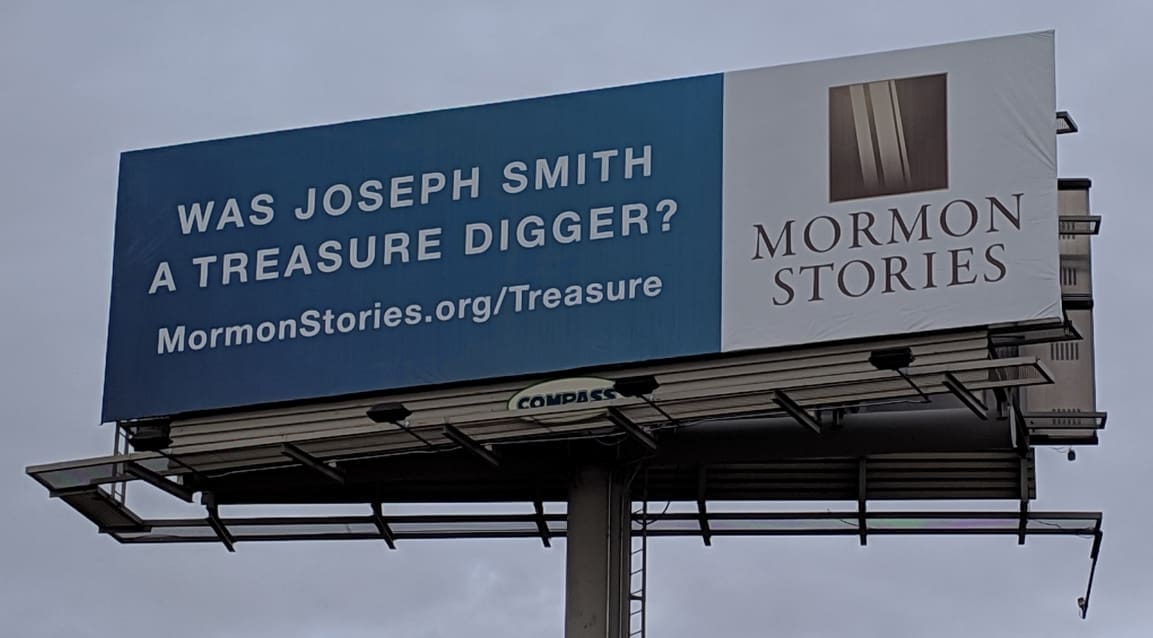
John Dehlin reads the first essay from Mormon Stories’ new Truth Claims project: a deep dive into Joseph Smith’s family and their documented involvement in folk magic, divining rods, seer stones, and treasure digging, the kind of rural New England folk-magic culture that produced amulets, talismans, and parchments the Smith family itself later donated and displayed. Dehlin opens by citing historian D. Michael Quinn’s observation that the official version of early Mormon history often leaves out these material facts, making it, in Quinn’s words, inaccurate in many respects.
The essay walks through the historical record of treasure-seeking in the Smith family’s world, including a passage from Benjamin Franklin mocking the same treasure-digging fever a century earlier, and traces the folklore of slippery cursed treasure guarded by spirits, folklore Dehlin connects directly to language in the Book of Mormon about treasures that become slippery and lands cursed by sorceries and magic. He details Willard Chase’s account of Joseph Smith’s encounter with a rival treasure-seer named Lawrence, who introduced his own seer stone and spectacles into the story of the plates, and covers Smith’s later treasure-digging trip to Salem, Massachusetts, with Sidney Rigdon, Oliver Cowdery, and his brother Hyrum, a trip Smith described to his companions as a missionary tour while chasing rumors of buried treasure hidden under a house. Dehlin also touches on how the church, originally called the Church of Christ, later took its current name in 1836, years after these treasure-seeking episodes. He closes by pointing listeners to the essay’s full sourcing, and to the Truth Claims billboard campaign, funded so far by a single generous donor for three months, which is paying for this and future essays and interviews with historians on similar topics, and he invites feedback or corrections on the essay by email.
What’s covered
- 00:01 Introduction and episode overview
- 02:53 Folk magic culture in rural New England
- 09:45 The Smith family and treasure digging practices
- 23:51 Slippery treasure, guardian spirits, and curses
- 35:15 Obtaining the plates and seer stones
- 44:27 Divining rods and treasure seeking in early Mormonism
- 56:14 Closing reflections on the essay
Related episodes: 1008-1009: Folk Magic, Joseph Smith, and Mormon Origins with John Hamer · Joseph Smith’s Treasure Digging – Dan Vogel | Ep. 1054-1055 · Joseph Smith and Treasure Digging w/ LDS Discussions – 01 | Ep. 1575
Episode Transcript
Host: John Dehlin
This transcript is machine-generated and lightly edited for readability. The audio is authoritative. Please excuse occasional errors in names and spelling.
Introduction and Episode Overview
Guest [00:00:01] One.
John Dehlin [00:00:09] Mormon Stories is a production of the Open Stories foundation and relies solely upon the support of people like you, its listeners to help keep the podcast alive or to become a member of the community. Please become a monthly subscriber by visiting MormonStories.org and clicking on the Donate button on the right side of the page under Support. All contributions to Mormon Stories are completely tax deductible in the United States and go towards producing the podcast and building communities and programs of support for Mormons like you. Thanks for your support.
Guest [00:00:42] One Life to Live Mind the Time.
John Dehlin [00:00:55] Hello everyone and welcome to another edition of Mormon Stories Podcast. I'm your host, John Dehlin. It's February 15, 2019 and I am very excited to be bringing to you today's episode of Mormon Stories Podcast and to be doing something new and exciting.
John Dehlin [00:01:13] For those of you who have been following Mormon Stories Podcast over the past couple months, you'll know that we have launched a new truth claims and initiative where we are slowly adding essays to the MormonStories.org website. You can find them at MormonStories.org Truth Claims and it's a series of, ultimately, a couple dozen essays involving various truth claims issues that the Church makes.
John Dehlin [00:01:41] And the idea is, each month we will release a new essay and an accompanying billboard along i15 that leads people to the essay and then release within that month several episodes with prominent Mormon historians to discuss whatever the topic of the month is. So the first topic that we did and that I'm doing this recording for is Joseph Smith's use of folk magic and treasure digging.
John Dehlin [00:02:13] So here we go. This is the essay Folk Magic and Treasure Digging that can be found@mormonstories.org treasure folk magic and occult beliefs were a part of early American and Mormon culture, affecting practice and doctrine in profound ways. Despite the scientific Enlightenment movement that swept across Europe, Americans of diverse social classes and education levels inherited superstitions and supernatural beliefs. From the colonial period. Publishers produced many volumes and almanacs that contained astrological and mystical information.
Folk Magic Culture in Rural New England
John Dehlin [00:02:53] Despite a predominantly uneducated citizenry in rural New England areas, an abundance of libraries across the region provided a vast array of books of all types, including texts on folk magic and alchemy. There's indisputable evidence of the Joseph Smith family's involvement in in ritual magic. Furthermore, numerous foundational Mormon families actively believed in apparitions, divining rods, talismans, seer stones, planetary superstitions, lunar cycles, astrology, and enchantments. Smith family descendants eventually donated and displayed folk magic items, including amulets, talismans, parchments, daggers, and even magical canes and handkerchiefs. D. Michael Quinn, a prolific historian of Mormonism, observed that quote, the official version of early Mormon history is often incomplete in its presentation of material facts and evaluation of evidence.
John Dehlin [00:04:00] Therefore, it is inaccurate in many respects. The Smiths family's folk beliefs, treasure digging ventures, and their effect on Mormon revelation are perhaps the most troubling topics for Mormon apologists and polemics, who often deny legitimate sources while selectively embracing items which conveniently fit the official Mormon narrative. Meticulously polished over a span of two centuries.
John Dehlin [00:04:28] And that's from Quinn's early Mormonism and the Magic worldview. And it is a highly recommended resource for anyone seeking to understand how folk magic impacted early church leaders. So next topic is treasure Digging. Upstate New York and Vermont were meccas of treasure digging. Poorer families were infatuated with stories of buried wealth, while treasure quests occasionally attracted even prominent and wealthy participants.
John Dehlin [00:05:00] The Smith's Palmyra home was approximately three miles from the Erie Canal. Public intrigue was such that a boat would, quote, move up and down the canal, bearing the riches of science as well as the gifts of fortune claiming to result from the digs. And that's from the Wayne Sentinel. Palmyra, New York. June 23, 1824.
John Dehlin [00:05:25] Oak island, the site of a tremendous amount of treasure speculation, lies just off the coast from New York. Not far from the Smith's Palmyra roots. A treasure lore developed around the infamous Captain William Kidd, a former pirate hunter who turned pirate in the late 17th century. Captain Kidd Adventure novels were popular in the day, and the Smiths are documented to have enjoyed them.
John Dehlin [00:05:53] Palmyra resident Ann Eaton noted that Kidd was Joseph's hero, whose work he eagerly and often pursued. And that's from Dan Vogel's Early Mormon documents. Many Smith neighbors, including Peter Ingersoll and Willard Chase, confirmed the family's involvement in treasure digging. Joseph Smith Sr. And William Cowdery, Oliver's father, were members of the New Israelites, a Congregationalist group that focused on the powers of raw divination.
John Dehlin [00:06:27] Clients testified that Joseph Jr. Followed family tradition looking into a peep stone in search of buried treasure. Upon hire, Smith would use what he was believed to be a gift of scrying, or looking into the stone and seeing the location of supposed treasure.
John Dehlin [00:06:48] However, as was typically the case with such digs, the treasure would slip away into the earth or be whisked away by a guardian spirit. The lore surrounding the treasure was that guardians protected the prize with enchantments. Treasure seekers spun tales of spirits or angels who would thwart the dig, sometimes appearing as beings, other times as enchanted animals such as salamanders or toads. Most treasure seekers, including the Smiths, would perform ritual magic in an attempt to counter such enchantments.
John Dehlin [00:07:26] Joseph Smith Sr. Possessed a pointed dagger inscribed with astrological and occult symbols, which his family used to etch circles around digging sites to bind the enchantment or protect the diggers. Regardless, the treasure always remained elusive. As one contemporary observed, their digging in several places was in compliance with Peeper Smith's revelations, who would attend with his peep stone in his hat and his hat drawn over his face and would tell them how deep they would have to go. But when they would find no trace of the chest of money, he would peep again and weep like a child and. And tell them the enchantment had removed it on account of some sin or thoughtless word.
John Dehlin [00:08:14] Finally, the enchantment became so strong that he could not see, and so the business was abandoned. And that's again from Dan Vogel's Early Mormon documents. Joseph's mother elaborated on the family's affinity for folk magic when recording her family's history. Lucy wrote, quote, let not my reader suppose that because I shall pursue another topic for a season, that. That we stopped our labor and went at trying to win the faculty of Abrac drawing magic circles or soothsaying to the neglect of all kinds of business. We never during our lives suffered one important interest to swallow up every other obligation, and that's from Lucy Mack Smith's biographical sketches.
John Dehlin [00:09:00] While understandably defensive of the disrepute commonly associated with money digging, Josiah Stowell indicates that the Smith's loss of land and home in December 1825, owed at least in part to the Smith's preoccupation with treasure digging. Treasure seeking. Joseph Knight's personal history tells of his early acquaintance with Smith. Housed in the church archives, this manuscript is quote, missing at least one beginning page, close quote. The missing portion would likely cover the period when treasure digging was the primary association of night with the teenage Joseph Smith. And the reference to that is Michael Quinn's magic worldview.
The Smith Family and Treasure Digging Practices
John Dehlin [00:09:45] Next topic is Benjamin Franklin. A century before the Smiths, Benjamin Franklin addressed treasure digging. He wrote, quote, there are among us great numbers of honest artificers and laboring people who, fed with the vain hope of growing suddenly rich, neglect their business almost to the ruining of themselves and families, and voluntarily endure abundance of fatigue in a fruitless search after imaginary hidden treasure. At length a mighty hole is dug and perhaps several cartloads of earth thrown out. But alas, no CAG or iron pot is found, no seaman's chest crammed with Spanish pistols or weighty pieces of eight. Then they conclude that through some mistake in the procedure, some rash word spoke and some rule of art neglected, the guardian spirit had power to sink it deeper into the earth and convey it out of their reach.
John Dehlin [00:10:44] Close quote and that is from the papers of Benjamin Franklin. Though often portrayed as harmless folklore, Franklin's commentary reiterates that the practice was perceived as long ago as the colonial era to be unscrupulous and even fraudulent. In Smith's day, defrauding others with claims of lost treasure was illegal.
John Dehlin [00:11:09] Joseph finds a Seer Stone the Smith's Manchester neighbors included the Chase family, known treasure diggers. When young Joseph learned of Sally Chase's reputation for locating lost objects using her blue green seer stone, he persuaded his parents to let him visit her. Upon gazing into Sally's stone, Smith envisioned an opaque white rock of his own. He described the stone as being located under a tree near Lake Erie, some distance away.
John Dehlin [00:11:41] Joseph's father suggested that Joseph obtained his first stone at about 14 years of age. Historian Dan Vogel suggests that this event occurred probably in 1822, when he was 16 years old. And that comes from early Mormon documents. This timeline aligns with Smith's confession at his 1826 glass liquor trial to have been engaged in scrying for three years.
John Dehlin [00:12:10] In 1822, Willard Chase hired Joseph and Alvin Smith to help dig. Some historians have suggested that they were digging a well, while others have described it as a treasure hole. Lorenzo Saunders, a brother in law of the Chases, claimed that Joseph's brown rock was found while digging a treasure hole with the Chases, not for the Chases, who likely told others they were digging a well. Quote they dug that hole for money, saunders wrote, quote, Chases and Smiths altogether was digging it.
John Dehlin [00:12:45] And that's again a Lorenzo Saunders interview from Quinn's Magic Worldview. Regardless of the timeline or intent, many sources, both friendly and antagonistic, have confirmed that Smith obtained three peep stones or seer stones as a teenager. Dan Vogel's examination of this period led him to conclude that Joseph Smith, quote, was was an aggressive, ambitious leader among Manchester's treasure seekers. Close quote and that's from Vogel's the Making of a Prophet. Elder Stephen E. Snow, Mormon church historian, noted quote By 1825, young Joseph had a reputation in Manchester and Palmyra for his activities as a treasure seer or someone who used a seer stone to locate gold or other valuable objects buried in the earth.
John Dehlin [00:13:36] Closed Quote, and that's from Stephen Snow's Joseph Smith in Harmony in The Ensign Magazine, September 2015. In an 1859 interview, Joseph Smith's early scribe and confidant, Martin Harris recalled, quote, there was a company there in that neighborhood who were digging for money. Supposed to have been hidden by the ancients of this company were old Mr. Stull, I think his name was Josiah, also old Mr. Beaman, also Samuel Lawrence, George Proper, Joseph Smith Jr. And his father and his brother, Hyrum Smith. They dug for money in Palmyra, Manchester, also in Pennsylvania and other places. When Joseph found this stone, there was a company digging in Harmony, Pennsylvania.
John Dehlin [00:14:24] And they took Joseph to look in the stone for them, and he did so for a while, and then he told them the enchantment was so strong that he could not see, and. And they gave it up. And that's Joel Tiffany in interview with Martin Harris, Tiffany's Monthly, August 1859. Joseph used his seer stones in the same manner as Sally Chase, by placing the stone in his hat and then burying his face in his hat to block out the light. It was through this method that Joseph's mother said he was able to see things, quote, invisible to the natural eye. Close quote. Lucy also recounted how Sally Chase aligned with competing treasure diggers and would use her greenstone years later to discover where Joseph hid the golden plates.
John Dehlin [00:15:10] And that's in Smith's biographical sketches. After his marriage to Emma, Joseph carried the brown rock around his neck in a small pouch that she constructed, and he regularly consulted it for guidance. Decades later in Utah, President Wilford Woodruff referred to having, quote, the seer stone that Joseph Smith found by revelation some 40, some 30ft under the earth carried by him through life.
John Dehlin [00:15:39] Seer for hire, Lucy Smith validated her son's treasure digging expertise and related employment when Discussing Josiah Stowell's 1825 Journey to New York. She stated that he made the long journey, quote, with the view of getting Joseph to assist him in digging for a silver mine on account of having heard that he possessed certain keys by which he could discern things invisible to the natural eye. Close quote. That's from Smith's biographical sketches on November 1, 1825, and articles of agreement was entered into by 11 shareholders, including Josiah Stowell and both Joseph Smith Jr. And Sr. Clarifying how they would divide the anticipated spoils of their money digs in Pennsylvania.
John Dehlin [00:16:29] And this was published in Articles of Agreement in the Salt Lake Tribune. Having previously lost everything in a failed ginseng enterprise, Joseph Smith Sr. Had yet to regain financial stability, Russell Stoddard, a carpenter who labored on the Smith's framed house, had sued Joseph Sr. For $66.59 that February for failure to compensate his labor. The Smiths owed many other creditors, and their mortgage was more than three years delinquent, the term having already been graciously extended by the land agent to December 1825.
John Dehlin [00:17:07] Meanwhile, Stoddard managed to obtain the deed to the Smith property, after which he promptly, promptly moved to evict them. At the final hour, the Smiths managed to secure the favor of an old Quaker friend, Lemuel Durfee, who purchased the property. He allowed the Smiths to remain for an additional year in exchange for Samuel Smith's help on his farm. Soon after, Joseph Smith launched out with the STO Company to pursue buried treasure in another state.
John Dehlin [00:17:38] Rumor and disgrace likely rippled through the small community as the Smiths became renters on their forfeit land. Dan Vogel observed the fact that he Smith Sr. Did doug for treasure with Stowell's company in Harmony, Pennsylvania, when he should have been working to pay for his Manchester, New York property undoubtedly contributed to his neighbor's assessment of his character. Close quote the Glass Liquor Trial Although previously discredited as a pretrial examination, historians of Mormonism now accept the court transcripts of the People versus Joseph Smith the Glass Looker on March 20, 1826, as a legitimate trial. BYU historian Marvin Hill observed, quote, most historians, Mormon or not, who work with the sources accept as fact Smith's career as village magician.
John Dehlin [00:18:33] Too many of his closest friends and family admitted as much, and some of Smith's own revelations support this contention. That's Marvin Hill in review of Roger Anderson, Joseph Smith's New York reputation re examined in BYU Studies Quarterly. Given that no treasure ever materialized, Josiah Stowell's nephew Peter Bridgman became sufficiently concerned over Smith's fleecing of his family and took legal action. In his complaint, he wrote, quote, Mr. Stoll is represented as being not a very bright man, but he had saved considerable money for those times and and Joe Smith managed to get and spend most of it. Close quote that's from Vogel Vogel's early Mormon documents.
John Dehlin [00:19:19] Joseph Smith Jr. Was arrested in March 1826 for disturbing the peace, a charge commonly used for charlatans and tricksters, including those, quote, pretending to tell fortunes or to discover where lost goods may be found. Close quote Referred to as the glass looker in court documents, Joseph admitted to indulging in magic arts and organizing hunts for buried gold. New York Law provided punishment for disorderly persons whose definition included jugglers or conjurers, diviners, and those pretending to have skill in discovering lost goods. The charge aligns with Uncle Jesse Smith's description of Joseph. Quote, he says he has eyes to see things that are not and then has the audacity to say they are and that the angel of the Lord has put him in possession of great wealth.
John Dehlin [00:20:15] Gold, silver, precious stones. That's Jesse Smith in letter to Hyrum Smith, June 17, 1829. In JS Letterbook, Joseph testified on his own behalf, asserting that he could see, quote, his hidden treasures in the bowels of the earth despite never once having found any. He confirmed that he used a seer stone to help others look for treasure. The Church confirms Joseph's involvement in treasure digging and the resulting arrest in Joseph's 1826 trial, and you can find that@ LDS.org under the church History topics.
John Dehlin [00:20:55] Various witnesses testified at Joseph's trial and including Jonathan Thompson, who told Judge Neely that he believed in Smith's powers. He reported digging with the seer in pursuit of a chest of money. Thompson, quote, struck his spade upon probably the chest, but on account of an enchantment, the trunk kept settling away from under them while digging.
John Dehlin [00:21:20] Josiah Stowell similarly described a dig in which the, quote, money moved down beyond their reach despite Joseph's later statement in 1835 that he had been, quote, horribly acquitted, close quote Judge Neely recorded, quote, and therefore the court finds the defendant guilty, close quote Dan Vogel observed, quote, joseph told followers that his early persecutions resulted from his visionary claims, but his severest persecution actually stemmed from from his activities as a treasure seer, close quote the story of Joseph Smith's arrest and trial for money digging was published in the Salt Lake messenger in 1971, shortly after the records were discovered. More important than Smith's conviction, however, is how the records confirm his involvement in for profit treasure seeking.
John Dehlin [00:22:16] Immediately before bringing forth the Book of Mormon, historian Dale Morgan wrote, quote, it is immaterial what the finding of the court was on the technical charge of being a disorderly person and an imposter. What is important is the evidence adduced and its bearing on the life of Joseph Smith before he announced his claim to be a prophet of God.
John Dehlin [00:22:40] That's Dale Morgan on The Mormons Part 2. Hugh Nibley, a prominent LDS scholar, observed, if this court record is authentic, it is the most damning evidence in existence against Joseph Smith. And that's humibly in the myth makers. Joseph Smith Sr. S testimony at the Trial framed his son's money digging enterprise in religious themes, asserting that both he and his son were mortified that this wonderful power which God had so miraculously given him should be used only in search of filthy lucre or its equivalent in earthly treasures.
John Dehlin [00:23:20] He hoped the Son of Righteousness would someday illumine the heart of the boy and enable him to see his will concerning him. And that's from Morgan's on the Mormons While Joseph Smith Jr. S favorite brown seer stone lacked the ability to locate Spanish treasure for stole and thereby save the family farm, the unassuming Little Rock would soon grant Smith the power to dictate the entire Book of Mormon that we know today.
Slippery Treasure, Guardian Spirits, and Curses
John Dehlin [00:23:51] Slippery Cursed Treasure the notion of slippery treasure, guardian spirits and curses reflects early American folklore. The Book of Mormon at various points describes a complaint common to 19th century treasure seekers. The the inhabitants thereof began to hide up their treasures in the earth and they became slippery, wrote the Mormon Prophet. The scene was evidently such that quote there were sorceries and witchcrafts and magics. The land was cursed. Close quote. And this actually comes from the Book of Mormon. Mormon chapter one, verses 18 through 19, wrote Helaman. And behold, if a man hide up a treasure in the earth and and the Lord shall say, let it be accursed.
John Dehlin [00:24:40] Behold, it shall be accursed. And if the Lord shall say, be thou accursed that no man shall find these from this time henceforth and forever. Behold, no man getteth it henceforth and forever. And this is from the book of Mormon, Helaman 12:18, 19 and yea, we have hid up our treasures and they have slipped away from us pass because of the curse of the land. Close quote. That's Helaman 1335 again in the Book of Mormon.
John Dehlin [00:25:12] In addition to testifying of the gold plates, Martin Harris later shared a fascinating story of his experience digging with the Smiths. Quote I will tell you a wonderful thing that happened after Joe had found the plates, Harris wrote. Three of us took some tools to go to the hill Cumorah and hunt for some more boxes or gold or something. And indeed we found a stone box. We got quite excited about it and dug quite carefully around it and we were ready to take it up. But behold, by some unseen power it slipped back into the hill. We stood there and looked at it and one of us took a crowbar and tried to drive it through the lid to hold it, but it glanced and broke one corner of the box.
John Dehlin [00:25:59] The three which Harris mentioned include Joseph Smith Sr. Who insisted upon it as well as Joseph Smith Jr. They reportedly broke off a chunk of the chest as it receded into the hill, retaining the piece as a memento. That's from Michael Quinn's Magic Worldview, Peep Stones and Urim and Thummim.
John Dehlin [00:26:20] The brownstone and the term Yerim and Thummim became synonymous to Smith. However, the only connection between the Urim and Thummim, which anciently prefers to the colorful jewel elements of the breastplate worn by the Temple High Priest and seer stones, is that they were both used as tools of divination.
John Dehlin [00:26:42] And you can refer to Leviticus 8, 8 and 1 Samuel 14:41 for an old Testament reference. For Old Testament references to Urim and Thummim, Brigham Young demonstrated the interchangeable terms Smith used. I met with the 12 at Brother Joseph's. He conversed with us in a familiar manner on a variety of subjects and explained to us the Urimum Thummim which he found with the plates called in the Book of Mormon the Interpreters. He said that every man who lived on the earth was entitled to a seer stone and should have one, but they are kept from them in consequence of their wickedness, and most of those who do find one make an evil use of it.
John Dehlin [00:27:25] He showed us his seer stone, and that's Brigham Young from the Millennial Star obtaining the plates. Joseph's family, friends and neighbors bore witness to a very different process of obtaining the gold plates than what is commonly taught regarding this period of Smith's life. Dan Vogel warned, one must be cautious in reconstructing the original story, especially when citing portions that were influenced by Joseph's later emendations.
John Dehlin [00:27:58] That's Vogel in the Making of a Prophet. Martin Harris confirmed he found them the gold plates by looking in the stone found in the well of Mason Chase. The family had likewise told me the same thing. It was by means of this stone he first discovered the plates.
John Dehlin [00:28:16] That's from Vogel's early Mormon documents. Henry Harris, a contemporary of Joseph Smith's, stated regarding the gold plates, quote, he looked in his stone and saw them in the place of deposit. Close quote that's from an affidavit of Henry Harris.
John Dehlin [00:28:32] Willard Chase recounted how Joseph told him that that without the stone he would not have obtained the book. Close quote that's in a Willard Chase affidavit. Another Palmyra resident, Erasmus Turner, recalled, quote, it was by looking at the stone in a hat, the light excluded, that Joseph discovered the plates. Close quote that's from John J. Hammond, the Creation of mormonism. Joseph Smith Jr. In the 1820s, John Gilbert, who typeset the Book of Mormon, wrote, recalled Smith telling him that, quote, by the aid of his wonderful stone he found gold plates on which were inscribed the writings in hieroglyphics.
John Dehlin [00:29:13] That's John H. Gilbert's interview in the Detroit Post. In Tribune, Willard Chase claimed that in 1827 Joseph Smith Sr. Told him, quote, that some years ago a spirit had appeared to Joseph, his son, in a vision and informed him that in a certain place there was a record on plates of gold and that he was the person that must obtain them. He Joseph Smith then observed that if it had not been for that stone, he would not have obtained the book.
John Dehlin [00:29:44] That's Willard Chase's statement in Howes Mormonism Unveiled, reprinted in Vogel's early Mormon documents. The 1823 visit Joseph made three attempts to obtain the plates from Hill Cumorah on the evening of September 21, 1823, the day after the angel first visited him. Willard Chase, Joseph Knight, Lucy Mack Smith, and William Smith recounted various aspects of Smith's attempts, including his astonishment when the plates unexpectedly disappeared, as well as how he was overpowered from touching them again after he had placed them on the ground. According to Smith, upon moving a large stone, he discovered the plates within a stone box. Lifting the plates from the hole, he set them on the ground to investigate if anything else would be of some pecuniary advantage to him.
John Dehlin [00:30:42] When he returned his attention to the plates, they had disappeared from sight. Returning to their location in the hole, Joseph again tried to retrieve them, but was hurled back upon the ground with great violence. When he recovered, the angel was gone.
John Dehlin [00:31:01] His story is consistent with early American treasure digging lore, which posited that treasure would disappear at the slightest breach of the guardian's requirements. According to Oliver Cowdery, when Joseph reached out to take the plates, he received a shock upon upon his system. Close quote Three different times, Joseph wondered if the enchantment prohibited him. He asked aloud, quote why can I not obtain this book? Close quote the angel appeared and responded, quote because you have not kept the commandments of the Lord. Close quote that's in Oliver Cowdery's letter to W.W. phelps in messenger and Advocate thrice repeated instructions from guardians or spirits to signified truthfulness in folklore.
John Dehlin [00:31:50] Thus, it should also be no surprise that the angel Moroni first appeared to young Joseph three times in one evening to repeat his instructions. Lucy Smith elaborated on the specific instructions Joseph had received from the guardian of the gold plates. He was not to lay the plates down or put them for a moment out of his hands until he got into the house and deposited them in a chest or trunk, having a good lock and key.
John Dehlin [00:32:21] On this task, Joseph failed. She further suggested that Joseph violated another provision when he allowed covetous desires to enter his mind, and this was Lucy Smith in Biographical Sketches. According to Joseph Smith, the angel provided further instruction to bring his elder brother Alvin the following year on an appointed date. The attestations of friends and family confirm the requirement to bring Alvin. Accounts differ regarding what transpired during subsequent visits. The 1824 visit Joseph is said to have returned to Cumorah in 1824 without Alvin, who had passed away in November of the prior year.
John Dehlin [00:33:05] Unsuccessful once again in obtaining the plates, all accounts agreed that the guardian required Smith to bring another person with him on the appointed date of September 22 of the coming year. While not providing specific instruction, Joseph was advised that he would know who the right person was. Joseph Knight recalled Smith explaining that he might have the book if he brought with him the right person. Close quote and that's Joseph Knight's reminisces Father Smith's newspaper notice within days of Smith's second unsuccessful visit to the Hill in 1824, someone discussed exhuming Alvin Smith's body. Perhaps a family member had mentioned the angel's requirement that Alvin accompany Joseph and the predicament his recent death precipitated.
John Dehlin [00:33:59] Some may have speculated that the Smiths would use Alvin's body to satisfy the treasure guardian. Joseph Smith Sr. Printed a public notice in the Wayne Sentinel to address the rumors, reassuring the community that Alvin's body was still buried and intact.
John Dehlin [00:34:19] Dan Vogel suggests Quote Joseph Sr's explanation for disinterring Alvin's body is questionable because one should have been able to determine if the grave had been disturbed without exhuming the body. It seems probable, therefore, that Joseph Sr. Himself may have been the source of the rumor that the story was a ruse to exhume Alvin's body for its use in attempting to get the gold plates.
John Dehlin [00:34:45] And that's from Vogel's the Making of a prophet. The 1825 and 1826 visits accounts of any visit to Cumorah in 1825-1826 are lacking. However, Joseph continued attempting to satisfy the Guardian's requirements. Willard Chase recommended fellow necromancer Samuel Lawrence as the man to accompany Smith to the Hill. Samuel's skill as a seer was known within the community.
Obtaining the Plates and Seer Stones
John Dehlin [00:35:15] Willard Chase provided a detailed account of the period. Joseph revealed the general location of the plates to Lawrence at which point he produced his own seer stone and inquired of Joseph if anything else accompanied the plates. Smith said no, prompting Lawrence to request that Joseph peer into his or Lawrence's stone. At first, Joseph could not see anything through the rock, but a second request came from Lawrence to, quote, look again and see if there was not a large pair of specs with the plates.
John Dehlin [00:35:49] This unexpected turn of events presented both opportunity and risk to Smith. In acknowledging Lawrence's vision, Smith became stuck with the spectacles that Lawrence introduced. Lawrence's assistance and visionary prowess would in turn become validated by Smith, thus bolstering both his reputation.
John Dehlin [00:36:16] Smith's association with Lawrence was brief, as he quickly recognized him to be a competitor. He did not take Lawrence to the hill or attempt to retrieve the plates for some time. Historical record confirms that on the momentous night in 1827, Joseph tasked his father with keeping an eye on Samuel Lawrence to ensure he would not attempt to follow Joseph Smith Jr. To search for Cumorah's treasure. And that's from Knight's reminiscences in Saints vol 1, the standard of Truth.
John Dehlin [00:36:48] That's both Knight's reminiscences and Saints, Volume 1, the Standard of Truth. Joseph still needed someone else to satisfy the guardian's request. Smith determined by looking into his seer stone that the right person would be his future wife. Numerous friends and family members corroborated the guardian's requirement that Joseph must be married and she must accompany him the following September lest the plates slip away forever. Joseph Knight, who at times employed and supported Joseph, recounted how Smith's angel instructed him to do right according to the will of God that he might obtain the plates the following year.
John Dehlin [00:37:30] Lorenzo Saunders recalled, quote, joseph said that he saw the angel again. The angel told him he must go and get him a wife, and then he could take his wife and get the plates. This is from Lorenzo Saunders interview.
John Dehlin [00:37:44] It was freely talked among the neighbors that Joe Smith said he had a revelation to go to Pennsylvania and get him a wife. Quote End close quote Sylvia Walker statement. Another neighbor recalled, quote, joel told Emma he had a revelation about the plates, but that he could not obtain them until he had married her.
John Dehlin [00:38:03] That's from William R. Hynde. Joseph Smith's sister Catherine summarized the guardian's requirement, quote, you will know her when you see her. She elaborated, quote, that fall he went down to Pennsylvania and became acquainted with his wife, Ms. Hale, and he knew when he saw her that she was the one to go with him to get the records. Close quote Consulting the Guidance of his seer stone Joseph confirmed it was Emma Hale he was to marry.
John Dehlin [00:38:32] The 1827 visit in preparation for his final attempt to obtain the plates, Joseph carefully followed occult protocol. He borrowed Joseph Knight's black horse and a carriage. Joseph acquired black clothes and there exists a receipt for the purchase of lamp black paint from the Palmyra store four days prior.
John Dehlin [00:38:59] Several friends and neighbors corroborated the requirement for total blackness during this critical visit to the hill and Lucy Smith commented on this in her biographical sketches. Joseph's sister stated that he was to appear at 2 o', clock the powerful hour of Saturday morning over which his ruling planet Jupiter provided.
John Dehlin [00:39:23] Oliver Cowdery's first published history of Smith used the terms necromancy and enchantment to describe this event. Emma's cousin reported that quote she stood with her black she stood with her back toward him while he dug up the box close quote he then took the plates and hid them in in a hollow black oak tree and this is from Quinn's early Magic Worldview.
John Dehlin [00:39:50] Though the plates remained in the woods, Lucy Mack Smith reported that her son brought home the specs which had previously suggested by which had been previously suggested by Samuel Lawrence. No one would ever see the spectacles but Lucy felt them through a silk handkerchief which Joseph had wrapped them in. Lucy recalled quote upon examination I found that it consisted of two smooth three corner diamonds set in glass and the glasses were set in silver bows which were connected with each other in much the same way as old fashioned spectacles.
John Dehlin [00:40:28] That's Smith's Lucy Smith's biographical sketches. Smith's retelling of this episode evolved over time. By 1838 Smith was suggesting he located the plates by the distinctness of the vision which I had recurring it close quote and that's from Joseph Smith's manuscript history.
John Dehlin [00:40:49] Later accounts never suggested that the plates were removed from the ground and avoid the details associated with the supernatural rules governing slippery treasure. Smith's attempts to obtain the plates were said to have been merely forbidden by the messenger powerful toad or salamander.
John Dehlin [00:41:11] Oliver Cowdery elaborated on how Smith was prevented from obtaining the gold treasure by a thrice repeated shock that was produced upon his system. Thrice repeated instructions from guardians or spirits signified a truthfulness in occult folklore. Thus it should surprise no one that the angel Moroni first appeared to young Joseph three times in one evening to repeat his instruction. Joseph Smith would later assert that an angel appeared to him three times between 1834 and 1842 commanding him to proceed with polygamy during the angel's third and final appearance. He came with a drawn sword, threatening Joseph with destruction lest he overcome his reluctance to take teenage wives.
John Dehlin [00:42:02] Benjamin Saunders, Joseph's neighbor, spoke positively of the Smiths in Mormonism Unveiled chose not to include his affidavit in 1838. Sorry. Mormonism unveiled chose not to include his affidavit in 1834 because it was deemed too favorable to Smith. Yet even he reiterated hearing firsthand of the toad from Joseph so this is Benjamin Saunders quote, when he took the plates, there was something down near the box that looks some like a toad that rose up into a man which forbade him to take the plates.
John Dehlin [00:42:39] Willard Chase's 1833 affidavit also identified the source of Sphere quote he was in the box. He saw in the box something like a toad, which soon assumed the appearance of a man and struck him on the side of his head.
John Dehlin [00:42:57] The Salamander Letter Mark Hoffman, the infamous forger of documents, was well versed in Mormon history and knew exactly how to entice church leadership. Hoffman knew the church had purchased documents and artifacts that could challenge its historical narrative, often with only cursory verification.
John Dehlin [00:43:17] See Leonard Arrington's the Writing of Mormon History. Having secured the leadership's trust with prior transactions, Mark Hoffman created a document that elaborated upon Smith's occult practices, explicitly mentioning the Peepstone enchantments, Alvin's role, and the Salamander lore. Hoffman later confessed to investigators that it was, quote, a clumsy job completed in a day, close quote and that he, quote, wasn't fearful of the church inspiration detecting the forgery, close quote and this is from Gregory White Smith and Stephen Nafez, the Mormon Murders it's likely that church leaders were persuaded of his fabricated Salamander letter because they knew Joseph had spoken of it before the Salamander letter was deemed inauthentic.
John Dehlin [00:44:08] Dallin H. Oaks defended the letter and Joseph's use of the word salamander. Later, as the fraud became public knowledge, Ochs derided critics for attacking his speech. Ironically, Gerald Tanner, a prominent anti Mormon researcher, discerned the letter to be a hoax early on.
Divining Rods and Treasure Seeking in Early Mormonism
John Dehlin [00:44:27] Treasure Seeking in later years, Joseph Smith's treasure seeking activities via his various peep stones did not terminate when with the formation of the Church of Christ or printing of the Book of Mormon and incidentally, the church Jesus Christ Latter Day Saints was originally called the Church of Christ before the name was changed in August 1836. Smith read an Ohio Telegraph newspaper story of treasure allegedly hidden under a house and discussed the article with Ebenezer Robinson, a border in his home. Desperate with debts he could not pay, Smith traveled to Salem, Massachusetts in search of the buried treasure. In persuading them to attend, Joseph Smith told Sidney Rigdon, Oliver Cowdery, and his brother Hyrum that it was a missionary tour.
John Dehlin [00:45:19] Joseph and his comrades stayed for weeks, tracking down clues confirming both the purpose of his mission and enthusiasm for the pursuit of the prize. Joseph wrote his wife Emma on August 19, with regard to the great object of our mission, you will be anxious to know we have found the house very luckily and providentially as we have one spell been most discouraged as the Prophet plotted to obtain the house and treasure, he reported, quote the house is occupied and and it will require much care and patience to rent or buy it. Close quote Smith soon returned to Kirtland empty handed, leading many to downplay the awkward fact that the entire First Presidency of the Church was involved in the failed treasure scheme.
John Dehlin [00:46:13] Folk Magic in Church History and Doctrine in the Book of Mormon, the Finger of God illuminated 16 Jaredite stones. Smith claimed that these stones became the Urim and Thummim that accompanied the gold plates. Joseph's original revelation to Oliver Cowdery stated that Oliver had the gift of working with the sprout or the rod of nature.
John Dehlin [00:46:39] When compiling the Book of Commandments, this revelation was altered to refer to his gift of working with the rod, that's book of commandments 7:3 as revelations were compiled into the Doctrine and Covenants, this revelation referring to his divining sticks was again reworded to the gift of Aaron. That's doctrine and covenants, section 8.
John Dehlin [00:47:04] Both Oliver and his father were known Rodsmen. Brigham Young later used Oliver's divining rod to locate the Salt Lake City temple site. The Church refers to its leaders Use of Divining Rods in LDS Org Church History Topics Divining Rods Reliance upon rods and canes for divine inspiration remained a theme of early Mormonism. Heber C. Kimball repeatedly recorded the inspiration, his rod likely a cane, channeled I inquired by the rod.
John Dehlin [00:47:40] It was said my family was well that my wife would come to me in the East. That's in Heber C. Kimball's journal. Heber C. Kimball's use of the rod continued. He went home and used the rod and the same evening I sat down in my house in the presence of my wife and inquired of the Lord by the rod.
John Dehlin [00:48:01] In later years, Heber C. Kimball continued to favor his staff, recording that quote, in the evening it was told me by the Lord. Rod Kimball's later autobiography had the word rod removed from the text Magical Items the Smith family created various parchments likely used to channel mystical energies. The symbols appeared to have been copied from occult handbooks, including Francis Barrett's the Magus, published in 1801. It's either Magus or Magus.
John Dehlin [00:48:38] Some historians propose that the parchments were mere heirlooms of the Smith family, lacking a confirmed provenance. However, the historical record today provides some context for these cherished items. One primary parchment was titled Holiness to the Lord. Open and close quote the same title affixed above temple entrances today.
John Dehlin [00:49:02] Acts 19, chapter 19, verse 12 illustrates how the apostle Paul sent special handkerchiefs among the people to heal them. In 1837, Latter Day Saint apostles wrote quote many scores of persons were healed by our sending a handkerchief to them. Close quote in 1839, Smith gave a handkerchief to a faithful member to to alleviate his sick child, suggesting that the cloth would deliver healing powers. There are numerous recorded instances of attempted faith healing via handkerchiefs, all found in the magic Worldview Smith Joseph Smith occasionally carried a cane with astrological symbols carved around a crown and serpent head. Following Joseph Smith and Hyrum Smith's death, wood from their caskets was cut into strips and turned into canes.
John Dehlin [00:49:58] Various canes were distributed among church leaders. Many were blessed in the temples. President Heber C. Kimball spoke in the Salt Lake Tabernacle on March 15, 1857, expounding upon the certain powers of coffin canes, and that can be found in the Journal of Discourses.
John Dehlin [00:50:18] Astrology in Early Mormonism Early Mormons openly demonstrated their enthusiasm for astrology and occult sciences. Folk astrology was based on the maxim that people should do nothing without the assistance of the moon. In the 1800s, rationalists opposed the use of astrology in decision making. Yet even many critics admitted that planets and stars directly influenced humanity. Clarity that's from Michael Quinn's magic Worldview the scientific method and modern medicine came of age in Joseph Smith's day.
John Dehlin [00:50:55] Speculative practices such as astrology had not yet diverged from what would become mainstream science. The astrological dominance of Jupiter in Joseph Smith's life is well documented and inscribed on numerous ritual items. The date of Smith's annual visits to Cumorah coincided with the autumnal equinox. Even the date of Joseph's marriage to Emma aligns with Jupiter's astrological power.
John Dehlin [00:51:23] Joseph possessed a silver talisman approximately the size of a large coin that contained astrological symbols, which was often referred to as a silver piece. Scholars have attempted to ascribe Masonic origins to various artifacts, but they were clearly astrological. Michael Quinn has thoroughly demonstrated how the talisman, as well as the Smith family's Mars Dagger, both relied on Barrett's the Magus or the Magus as their source. Smith retained the Jupiter talisman on his person until his death in Carthage, stating that it functioned as a personal protector.
John Dehlin [00:52:03] Charles Bitumen, the son of Emma Smith's second husband, listed various items for sale in 1937 that had belonged to Emma. The Jupiter talisman was referred to as, quote, a silver pocket piece which was in the Prophet's pocket at the time of his assassination.
John Dehlin [00:52:23] He wrote that Emma, quote, prized this piece very highly on account of its being one of the Prophet's intimate possessions. Nearly every major vision or event in Smith's life aligns with the astrological timing of Jupiter and the Moon. It is interesting to note one scholar observes open quote that Smith specifically recalls the exact date of his first Moroni appearance while providing only a general time frame spring of 1820 for his vision of God and Christ.
John Dehlin [00:52:59] September 21st was a day of great significance. There had been a full moon the night before, and the time of the moon was considered advantageous to search for buried treasure. The Key of Solomon says in its first chapter that without knowing the order of hours and of days and of the position of the moon, the magician's efforts will be of no effect.
John Dehlin [00:53:24] And that's from Clay Chandler, Scrying for the Magic Mysticism and the Origins of the Book of Mormon from A Journal of Mormon thought. Joseph Smith's journal presents an entry on March 14, 1843, as recorded by Willard Richards, that was likely prompted by the widely observed Great March Comet of 1843. Richard Richards sketched the phenomena titled Observations in the Night sky as Smith dictated a mystical interpretation of a moon, halo and sword shaped comet tail. The Magus instructs, quote, you must observe the moon or you shall do nothing without the assistance of the moon. Close quote and that's from the Magus or Magus.
John Dehlin [00:54:12] Joseph Smith suggested it was a sign of the times, representing, quote, a union of power and combination of nations. Smith further elaborated on the astrological event during the April 6 conference relating signs in the heavens above on the earth and beneath to the return of Christ Church. Newspapers further discussed the phenomenon.
John Dehlin [00:54:37] Conclusion the historical record is clear that occult and folk magic practices played a significant role in not only Joseph Smith's early career as a treasure seeker, but but also the formation and development of the current Mormon Church or Church of Jesus Christ of Latter Day Saints. How scholars and historians interpret the role of folk magic in Smith's life largely depends on their view of Smith's prophetic role. While some scholars may reduce Smith's treasure digging and seer stone usage as innocent preparation for a higher calling, others are unsatisfied by this reductionist explanation and point to numerous other historical facts that support a magical view that lies at the heart of Joseph Smith's religious innovations.
John Dehlin [00:55:23] Still others find Smith's use of folk magic and treasure digging to be evidence of charlatanism that continued with the fabrication of the Golden Plates and the Book of Mormon. Then, at the end of the essay, we have referenced several Mormon Stories interviews that are relevant, podcast interviews that are relevant, including episodes 1054 through 1055, Joseph Smith's treasure digging with Dan Vogel, Folk Magic Joseph Smith and Mormon Origins with John Hamer, Kathleen Malonakis, how the Mormon Church Came to Be, and our interviews with Mormon patriarch and Stake President and historian Richard Bushman, in addition to historian Grant Palmer and others.
Closing Reflections on the Essay
John Dehlin [00:56:14] Well, that's the reading of our first essay from the Mormon Stories Truth Claims Project. The essay was Folk Magic and Treasure Digging and we hope you enjoyed it. If you want to drill down on the references of this essay, you can go to mormonstories.org treasure and you can find all those references. If you find errors or want to make improvements or additions to this essay, we hope you will email us@mormonstoriesmail.com and we would love to get your feedback on this essay.
John Dehlin [00:56:45] We hope you if you value this project, you can support our Billboard. If you go to mormonstories.orgbillboard you can donate to the billboard project. We have three months paid for by a generous donor. That funding runs out and so if we want to continue the Billboard project, we will need your support.
John Dehlin [00:57:04] We also just generally thank anyone who donates or supports to the Mormon Stories Podcast. If you want to become a monthly donor, you can go to mormonstories.org and you can click on the donate button at the top right of the page. 10 bucks a month, 100 bucks a month. Whatever you can afford.
John Dehlin [00:57:22] This is a 501 nonprofit. Your donations go directly to support the podcast. They are tax deductible in the United States and they support the staff and all the expenses that go towards running the nonprofit and the podcast. We want to thank everyone who helped make this Truth Claims Project possible and we want to thank all our listeners. Please share this essay with everyone who you would like. We definitely think it's a better essay than the one the Church has produced on this topic and please spread the word about this and other podcasts, we the more people that we can get to listen and learn about this stuff, the more people can understand the truth about Mormonism and Mormon history and make informed decisions about their lives.
John Dehlin [00:58:08] And again, our goal is not to get people out of Mormonism or the LDS Church. It's just to help people learn the truth about Joseph Smith and the early years of the church so that they can make informed decisions about whether or not to join it and whether or not to remain a member of it, and how much time, energy and money to dedicate to the Church based on their understanding of his truth claims. So we thank everyone for their support. Thanks to Cody Layton for editing this essay or this episode. Thanks to the Mormon Stories and the Open Stories Foundation Board of Directors that makes all this work possible.
John Dehlin [00:58:39] And we hope to see you again soon on another episode of Mormon Stories Podcast. We also want to thank everyone who has tuned in today to our live episode. We really appreciate everyone who tunes into our live podcast. It makes it makes things more interesting. You guys take care and we'll see you again soon on another episode of Mormon Stories Podcast. Bye everybody.
John Dehlin [00:59:08] Thank you for joining us today on Mormon Stories. If you enjoyed this episode, please help us make more like it by becoming a monthly subscriber@mormonstories.org
Guest [00:59:18] Cause we're broken and
John Dehlin [00:59:23] we're bent One is a song by singer songwriter Mindy Gledhill off of her new album Rabbit Hole, an album chronicling the heartaches and rewarding discoveries of her Mormon faith crisis. You can purchase her album on itunes or by visiting mindygledhill.com
Guest [00:59:43] but they're all the same to me when we worship love and though we may speak in different tones May our hearts be sewn together when our hearts feel so undone Too much our pieces become. One life to live Mind the time while it takes we're all here you in this moment let's unwrap it like it's the most beautiful.
Transcript © 2026 John P. Dehlin. All rights reserved. Brief quotations are welcome with attribution and a link to mormonstories.org; all other use requires written permission.

12 Responses
how about an essay reading with NO intro? would be better for sharing and reposting. This one has 9 minutes of intro/announcements before getting to the content.
Yes, the announcements seem to get longer and longer with each episode. I wish they would go back edit them completely out of old episodes!
Since, I’ve read most of the new essays, I actually really like hearing John’s updates over the readings. Maybe “Part 1” could br an update and “Part 2” could be the reading.
Although I’ve bookmarked the page, thanks for providing a read through of it. As such, I was able to listen to all of it while commuting.
Interesting. Every one seems to have a different story. This is very Vogel and Quinn, obviously, given the recent Vogel interviews. If this is even half true, then I have to come to the conclusion that Richard Bushman is probably THE worst mormon historian out there. John, he may not be willing nor have the time, but you really should get Bushman on here for a serious discussion. Not some 50 minute shallow phone call.
The trial was a preliminary hearing. There is no first hand reliable evidence that he was found guilty. Looking at sources beyond Vogel and Mormon Think, such as Bushman himself, shows there is no good evidence to indicate that this was a trial or that Neely himself found The Prisoner (defendant?) guilty
The trial was a preliminary hearing, but the published record indicates JS was found guilty. There is good reason for that. There was enough evidence to proceed with a formal trial, which is indicated by the bills including a charge for notifying two other justices. The trial wasn’t held, but if it was JS would have been found guilty because he confessed to breaking the law and his two witnesses (Josiah Stowell and Jonathan Thompson) confirmed that he had “pretended” to find lost objects. The trial wasn’t held probably because of an off the record deal was made. Another charge on the bills lists: “10 miles travel with Mittimus to take him.” Apologists have no answer for this. This could be a re-arrest of JS to bring him back to South Bainbridge, or it could refer to a warrant to escort JS out of the county. A guilty verdict could bring a fine, jail, or banishment from the county for six months. It’s possible JS was given a suspended sentence and agreed to leave the county for six months. However, the verdict is less important than the testimony that was given at the trial.
https://www.youtube.com/watch?v=jlPR2qeahOY
In RRR, in an endnote, Bushman accuses Vogel of mostly conjecture and speculation with myriad “could be” “maybe” etc. I then read and watched a lot of Vogel, and this quickly became apparant. Now his above comment confirms it again.
And even in 1826, one did not get found “guilty” after a preliminary hearing. The burden of proof was not beyond reasonable doubt, as it would have been at trial, but something significantly lower. Being bound over for trial following a preliminary hearing is no indication that one is likely to be found guilty. Josiah still believed Joseph was a seer. And Joseph never admitted that he “pretended” to divine using a seer stone. Mr. Vogel, is Mr. Bushman a liar, or just a bad historian?
Thank you, John, This is very helpfull ! I started reading, but eyes got tired, had other things to do, and never reached the end of page, so, It was so great to hear it ! I also like the comments here: I found Richard Bushmann (went to the beginning and he was already on the next page, than learned he was in the Top 10, next time I’d better check that out ! lol ) (See comment march 4, 2019 at ‘Contact”). I like to hear all different views and enjoy them very much, each give a way to see Joseph Smith from different sides and learn from him. I don’t know if Richard Bushmann could be interviewed, we got 5 pieces and you wanted to add 5 more way back than (047-051: Richard Bushman — https://www.mormonstories.org/podcast/richard-bushman-and-rough-stone-rolling-part-1-experiences-as-a-mormon-historian/). Maybe it’s time for the next 5 pieces ? I really liked how he talked about Joseph Smith, it’s closer to my heart. Thank you for all you do ! Peace, Adrie
John, I’m confused by your reference to Oak Island being somewhere around New York. I believe that is Nova Scotia.
Will let the authors/editors know. Thanks, Fatfinger!