
Over the past several decades. credible Mormon-themed scholarship has determined beyond any reasonable doubt that Joseph Smith’s claim have special powers to “translate” ancient languages was not true, and that Joseph often relied on plagiarism to produce his “revelations.” Up until recently, at least three clear instances of false translation by Joseph Smith were widely known: the Book of Mormon, the Book of Abraham, and the Kinderhook Plates.
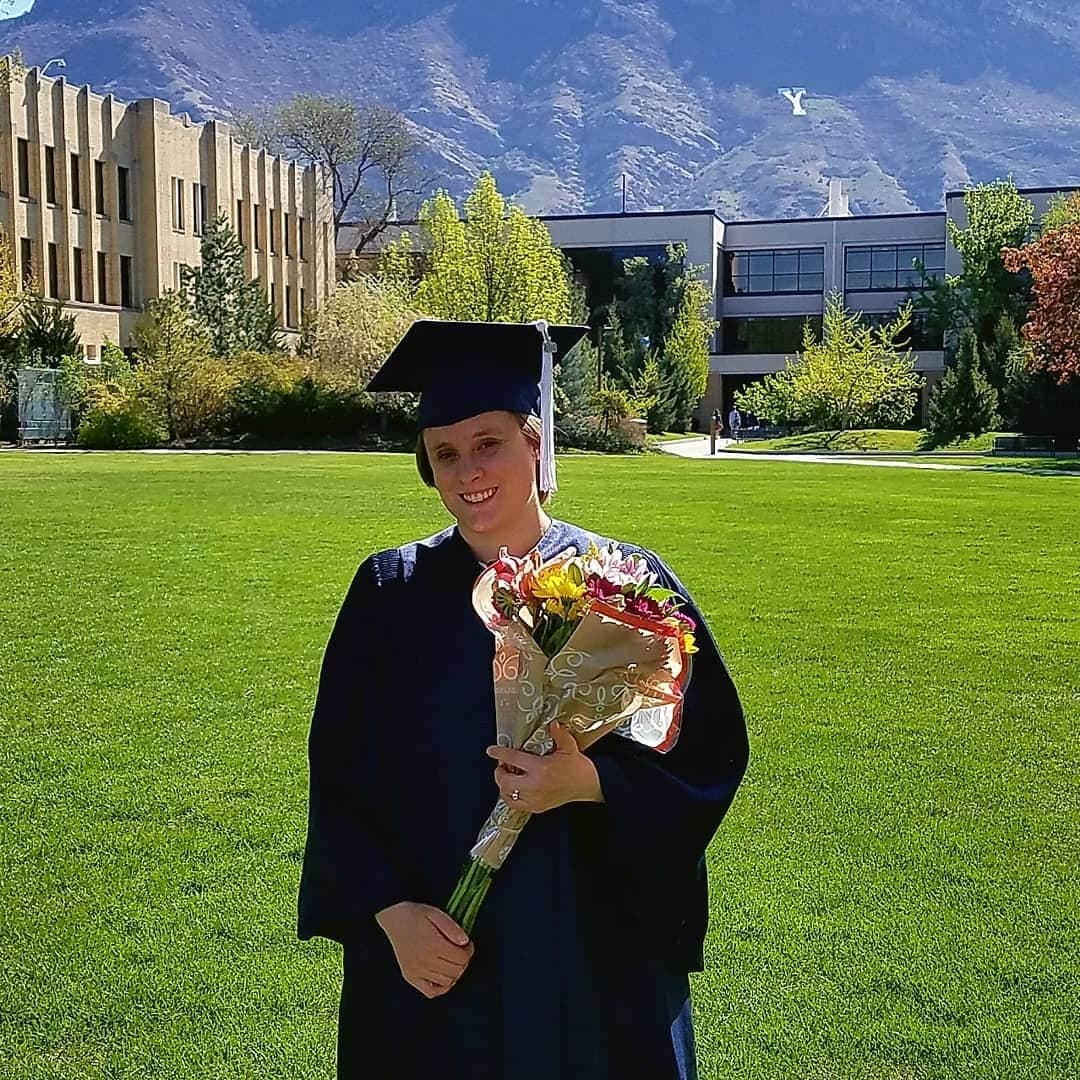
In the summer of 2015, something truly remarkable happened. A BYU undergraduate, along with her professor, discovered a fourth example of false translation, and yet another example of plagiarism on the part of Joseph Smith – this time in the canonized “Joseph Smith Translation” of the Holy Bible (found in modern LDS scripture)
Join me and scholar Haley Wilson Lemmón today as we discuss this groundbreaking research she conducted at BYU, along side professor Thomas A. Wayment — as together they discovered literally hundreds of instances where Joseph Smith plagiarized portions of the Joseph Smith “Translation” of the Bible directly from Adam Clarke’s Bible Commentary.

Today’s story includes:
- Haley’s early years growing up as a highly devout Mormon girl and young woman who struggled significantly with undiagnosed religious anxiety (possibly scrupulosity).
- Haley’s LDS mission to Panama.
- Haley’s discovery of Joseph Smith’s plagiarism, as she was working as a BYU undergraduate research assistant under Dr. Thomas A. Wayment.
- Haley’s deep struggle with her Mormon faith once she began studying the authenticity of Mormon scripture and other truth claims.
- Haley’s troubling brush with the BYU Honor Code Office, which almost resulted in her being expelled from BYU.
- How Haley’s name was almost removed from the publishing of her research with Dr. Wayment.
- How BYU apologists attempted to get Haley kicked out of her graduate program at Notre Dame, after she graduated from BYU.
- A review of Haley’s current views on LDS Church truth claims.

As a part of this interview, we will be discussing in-depth the article/chapter “A Recently Recovered Source: The Use of Adam Clarke’s Bible Commentary in Joseph Smith’s Bible Translation” that she co-authored with Thomas A. Wayment, which recently appeared in the newly released book “Producing Ancient Scripture: Joseph Smith’s Translation Projects in the Development of Mormon Christianity,” edited by Michael MacKay, Mark Ashurst-McGee, and Brian M. Hauglid.
Episode Transcript
Host: John Dehlin · Guest: Haley Wilson Lemmón
This transcript is machine-generated and lightly edited for readability. The audio is authoritative. Please excuse occasional errors in names and spelling.
Introduction and Episode Overview
Haley Wilson Lemmón [00:00:00] Sa.
John Dehlin [00:00:29] Hello everyone, and welcome to another edition of Mormon Stories podcast. I'm your host, John Dehlin. It's July 18, 2020, and today we have what I feel is one of those really historic Mormon Stories podcast episodes, akin to the Michael Koh or the Tom Phillips or the Brent Metcalf interview.
John Dehlin [00:00:48] Today we are going to be interviewing Haley Wilson Lemon. And some of you will know her name, others of you won't. We've covered the problems with Book of Mormon historicity on Mormon Stories podcast. We've covered problems with the Book of Abraham historicity. We've talked about the Kinder Plates. But this is an amazing story that strikes to the heart of Mormon Church truth claims.
John Dehlin [00:01:16] Haley was raised Mormon. We're going to talk about her story. Serving a mission, et cetera. She eventually ends up at BYU as an undergrad. And as she's studying along with the professor Thomas Waymont at byu, she stumbles onto a research project and discovers that Joseph Smith plagiarized that. You can find instances of plagiarism, let's just say hundreds of instances of plagiarism in Joseph Smith's translation of the Holy Bible.
John Dehlin [00:01:49] And you know, we knew about the Book of Abraham, we knew about the Book of Mormon, we knew about the kinderhug plates. But it wasn't until a few years ago that a budding female scholar out of BYU teaches us all that there's yet a fourth instance of failed translation or fraudulent translation or non translation, however you want to describe it in Mormon Scripture tied to Joseph Smith. And part of the miracle about this is the research comes out of byu.
John Dehlin [00:02:23] So the essay that Haley wrote, along with Thomas Wayment, her professor at byu, is called a Recently Recovered the Use of Adam Clark's Bible Commentary in Joseph Smith's Bible Translation. It's an article that has recently been turned into a book chapter for a new book that has just been released called Producing Ancient Joseph Smith's Translation Projects in the Development of Mormon Christianity, edited by Michael McKay, Mark Ashurst McGee and Brian Hauglid.
John Dehlin [00:03:01] This is a book that many people are talking about. Brian Haugland appeared recently on Radio Free Mormon talking to RFM about the Book of Abraham. And this chapter is also in this upcoming book. And so I cannot under probably, I cannot overstate how important I think this finding is, how cool the story is, and how excited I am, Haley Wilson Lamont, to have you on Mormon Stories podcast. Thank you for joining us.
Haley Wilson Lemmón [00:03:31] Yeah, thanks for having me, John.
Haley's Mormon Upbringing and Background
John Dehlin [00:03:35] Okay, so. So Haley, we've got a lot to cover today. And I think it would be fun to just start with your story. So you have a Mormon background, so why don't you give us a bit of. A Bit of a background on your Mormon story?
Haley Wilson Lemmón [00:03:52] Yeah. So like you said, I was born in the church and raised in the church. My mom was a convert when she was young, and my dad was born in the church. So I have some good Mormon stock in my family.
Haley Wilson Lemmón [00:04:06] I was really invested growing up. From as long as I can remember, I was so invested. And I wasn't just invested. I was happy in the church. I sent you some notes earlier about how I didn't just attend church. I took notes in sacrament meeting, and I didn't just attend seminary. I took notes in seminary. And I didn't just, you know, watch a session of general conference on Sunday mornings. When I was, you know, 13, 14 years old, I would voluntarily sit, you know, sit and watch all four sessions, even if it was by myself. Like, on Saturday, I would sit and watch it. So I was super invested.
Haley Wilson Lemmón [00:04:47] And even looking back, I have since been diagnosed with anxiety and depression. And I can see that my investment was in large part due to my anxiety. Mormonism creates a great or and sometimes hurtful environment for people who thrive on checklists, right? You have your boxes you can check. You know, you have all your things you can do. And on the one hand, that's great because you're like, this is how I'm doing in my righteousness level, I guess we'll say.
Haley Wilson Lemmón [00:05:19] But also, it can be really difficult because it leads to a lot of guilt. And, you know, that was definitely something that I balanced growing up. And so I. I almost made it stricter for myself. I mentioned in some of my notes that when I was about 15, I decided that I was gonna be that much more righteous and only read LDS fiction and Christian fiction and maybe some classics here and there if they weren't too racy, right?
Haley Wilson Lemmón [00:05:55] And so I did that for, like, a good 10 years. I only watched movies that I felt would be okay if Jesus were there and only read books that I felt would be okay if Jesus were that, you know, So I was. I was so invested. I never needed to be told to go to church. And so, yeah, it just made sense for me to end up at byu. Like, it just seemed like the natural place for me to go.
Scrupulosity and Religious Anxiety
John Dehlin [00:06:25] Haley, have you heard of the term scrupulosity at all?
Haley Wilson Lemmón [00:06:28] Scrupulosity?
John Dehlin [00:06:29] Yeah.
Haley Wilson Lemmón [00:06:30] I mean, in theory, I know what it means based on the word, but tell me.
John Dehlin [00:06:34] Oh, no. And I Just want to let listeners know we've done several episodes on scrupulosity. It's basically a form of religious ocd. So it's a form of ocd, but it's actually a diagnosable, you know, illness where you're so conscientious, hyper conscientious about your religiosity that it's. That it's a manifestation of obsessive compulsive disorder. So I just wanted to. I was just curious if you had heard of it.
Haley Wilson Lemmón [00:06:58] Yeah.
John Dehlin [00:06:59] Let listeners know that there are other Mormon stories, episodes that cover scrupulosity if you want to learn more. And I'm not trying to diagnose you.
Haley Wilson Lemmón [00:07:07] No. Yeah. I mean, I've been. I've done. Done tons of therapy surrounding my relationship, my relationship with the church and leaving the church. And yeah, we definitely have identified a lot of compulsion, type compulsions that I had developed for myself to make me feel like I was as faithful as I could be. And that. And that really came out on my mission too. And we can talk about that.
John Dehlin [00:07:34] Keep going.
Haley Wilson Lemmón [00:07:35] Yeah.
John Dehlin [00:07:35] Thank you.
Haley Wilson Lemmón [00:07:36] Yeah, yeah. So I ended up at BYU and I fell. So I kind of found my way to the Ancient Near Eastern Studies program, which is basically the closest thing BYU has to religious studies. And when I started out, I was like, oh, you know, Jesus, I'll get into this and, you know, maintain my testimony and, you know, learn about the Scriptures and that's what I will do.
Haley Wilson Lemmón [00:08:03] And I actually didn't get into any research type stuff until I came back from my mission. So in. What was it, October of 2012. That was that when the age change was, I believe sounds right for missionaries. Sounds about right, yeah. So I was 20 at the time and I had been thinking about going on a mission.
Haley Wilson Lemmón [00:08:24] And then when the age change came, there's that compulsion again. I was like, I gotta go now. I should be getting my papers. And like this week, like, there was all this, like, anxiety around. Now I have to go. And I got called to the country of Panama in Central America.
Haley Wilson Lemmón [00:08:41] And so the H chain happened in October. I left for my mission in April of 2013, and I turned 21 in August of 2013. So that's kind of the timeline.
John Dehlin [00:08:51] How was your. How was your mission?
Haley Wilson Lemmón [00:08:56] It was good, I guess. So I. I had studied Hebrew before my mission, so the language aspect wasn't too frustrating. It was Spanish speaking, so I already had experience learning a language. So I picked up. I picked up Spanish pretty quick and I was put with companion. I didn't have An English speaking companion until my last companion. So I was, you know, thrown into the fire and that was fine. But I actually about.
Haley Wilson Lemmón [00:09:31] Oh, I don't know, I would say about six months in, I got injured on my mission. I, I had sprained my ankle multiple times on my mission, but I was so anxious that I just needed to work and I couldn't, like, not work. And so I would ice it for an hour and then we would go back out and I would, you know, like, I, I literally basically walked myself into the ground. Like, it got to the point where I just sprained it so badly I couldn't walk.
Haley Wilson Lemmón [00:09:59] And that was when. So, yeah, they, I went to the hospital and they put a cast on my foot and put me on crutches. And even then I still tried to go, I still tried to go out and proselytize and we, we walked. There were no bikes, there was no car.
Haley Wilson Lemmón [00:10:13] And so I would still try to go out on my crutches and proselytized because I just couldn't. My anxiety was such that I couldn't just stay inside. I mean, it got to the point where I had to, like, when it was raining, obviously I couldn't go outside, but yeah. And so then I was in physical therapy for my. So once my cast came off, they wanted to do surgery on it because I'd screened it so bad that the bones had separated in my ankle.
Haley Wilson Lemmón [00:10:38] But the mission was like, we don't want to pay for that. And so they sent me to therapy, the city, and I did therapy for six weeks. And then I got back out and just wore tennis shoes my whole mission. But so that kind of shaped a good chunk of my mission.
Haley Wilson Lemmón [00:10:57] But that anxiety was always there. You know, there's the, on your mission, there's the obsession with the numbers. How many people do you talk to every week? How many lessons do you teach? How many people come to church? And on the one hand, it was a good measure of what I perceived as my success, Right? It was a way to measure my success. But at the same time, it was also, oh, we talked to 170 people this week, but nobody came to church.
Haley Wilson Lemmón [00:11:24] Right. And you have that rhetoric in the mission of, like, if you're not seeing baptisms, then you're doing something wrong. Maybe you're getting up five minutes late, or maybe you're not studying with your companion the full hour. You know, there's all that kind of rhetoric of if you're not. And I saw six baptisms my whole mission, right.
Haley Wilson Lemmón [00:11:48] So it was really Hard for my anxiety to, like, sit there and look and be like. We talked to 150 people this week, taught 55 lessons, and nobody came to church. And even, like, I. I pushed us so hard that when I left my last area, my companion. I'm in touch with my last companion. We talk pretty frequently. But she said right after I left, the elders thought that we had made up our numbers because of how high they were. And then all of a sudden, they weren't high because I wasn't there being like, we're out. We are out at, you know, 10 after language study.
Haley Wilson Lemmón [00:12:34] And we are. We don't come in until 9:30. Like, and we don't stop until then. And, I mean, we all have knee problems now because of all the walking. But it was definitely a very. It was a very anxious time. And the hard thing was at that time, I thought, oh, this is just Satan trying to make me feel like I'm, you know, not doing enough or telling me I'm doing something wrong and I need to fix something in order to have more success.
Haley Wilson Lemmón [00:13:11] But then you have the flip side of, well, maybe this is the spirit telling me I'm doing something wrong too. It's a lot. And I remember coming home, even on the plane, I was like, will everyone know that I didn't do everything I could have? Because that's how it felt coming home.
Haley Wilson Lemmón [00:13:30] I felt like I didn't do enough. I should have, because I was injured for, you know, three months. I should have extended my mission. Like my mission president said I could if I wanted to. Like, was. And, you know, it's just all that guilt. I don't know if I'm making sense, but. But, yeah, yeah, yeah. And I remember even the night I got released, I went and talked to one of the members of my. Of the state presidency of my home ward. And he's like, how do you feel that you did? And I was like, I feel okay. Cause, like, I.
Haley Wilson Lemmón [00:14:02] Anyway, and coming home was rather anticlimactic. I mean, I don't know, it sounds weird to say, but, like, I expected coming home to feel different than it did.
John Dehlin [00:14:16] And for how hard you worked.
Haley Wilson Lemmón [00:14:18] Yeah, yeah, yeah.
John Dehlin [00:14:20] That'd be hard.
Haley Wilson Lemmón [00:14:21] And then I was like, well, maybe it's not different because I didn't work hard enough. So anyway, that's a lot.
John Dehlin [00:14:30] Your anxiety tormented you.
Haley Wilson Lemmón [00:14:32] Yeah. And like, I was so anxious that I would wake up with sleep paralysis because I. Like, my anxiety was just. And looking back on. I know that's what it is now, but back then I was like, oh, my sleep. I couldn't even identify the sleep process. I was like, maybe Satan is attacking me in my sleep. You know, like I was. Anyway, so I came after my mission. I came back to BYU and I got a job with Tom just doing research. It was my first research job.
John Dehlin [00:15:03] Who's Tom? What does Tom kind of research and study?
Haley Wilson Lemmón [00:15:07] So one of his. So he was in religious. Religious education until released. Recently he moved over to Classics, and so now he's in the Classics department. I don't know what his current research deals with. At the time when he hired me, we were doing research on Jews and Christians at Pompeii in Italy. And he also has extensive experience with textual criticism. He released LDS New Testament like a. Recently with more academic consideration, like looking at the verses and the footnotes and kind of making the Greek and manuscripts successful to an LDS audience. He finished that recently and then he had a lot of experience with the jst, which is for our listeners.
John Dehlin [00:15:56] What's that?
Haley Wilson Lemmón [00:15:57] The Justice Smith Translation of the Bible. Yeah.
John Dehlin [00:15:59] And this is Thomas Wayment, just for those who didn't catch the beginning. Thomas Waymont.
Haley Wilson Lemmón [00:16:04] Yeah, yeah, yeah.
John Dehlin [00:16:06] Okay. So you. You went to work for him.
Haley Wilson Lemmón [00:16:08] Yeah, and we took a trip to Pompeii to do research on site there. And then when we came back, I went home for a little while. And that was when Tom emailed me about this idea of doing a project looking, comparing the Joseph Smith Papers, since the Joseph Smith Papers project was digitizing all of this previously previous material that was only available in hard copy. Looking at that, looking at Buck's theological dictionary, because there are places in Joseph Smith's like, lectures on faith where he quotes Buck and cites him.
Haley Wilson Lemmón [00:16:52] And so we were looking at, like, similar concepts and direct borrowing from there. And then Clark was the other one we considered. But initially I was mostly looking at Buck. Like, I didn't get into Clark until at least a month or two into the project because it just didn't occur to me exactly how to go about comparing those.
Haley Wilson Lemmón [00:17:19] But after we spent considerable amount of time looking at Buck, I moved over to Clark. And when I started looking at Clark, it occurred to me like, oh, this is basic. This is a Bible commentary. And the JST is kind of a Bible commentary, sort of. So what if we just looked at them side by side and I started with Matthew, and that's when I started noticing the parallels, the very obvious parallels.
The Joseph Smith Translation Project Explained
John Dehlin [00:17:46] So let me ask you. So was Thomas Wayment wanting to figure out the sources of inspiration for Joseph Smith's Translations, like, is that something.
Haley Wilson Lemmón [00:18:01] I don't think that was the. I don't feel like that was the intention. My perception was that we just kind of wanted to understand, like the theological influences behind Joseph Smith's thinking. Like what shaped his thinking, his theological ideas. That's initially what we were looking at, like what shaped his idea on resurrection and what shaped his idea on the pre existence or, you know, and what shaped his idea on baptism. And that's kind of initially what we were looking at.
John Dehlin [00:18:32] It's kind of interesting because an orthodox Mormon view would just be, well, God did. God shaped his view. God told Joseph Smith what was true and Joseph Smith told us. So there's something in my mind going, wow, why is it byu? And it goes to show what I don't understand about Mormon studies. But in my mind I'm going, why would a. Why would a BYU professor be questioning where Joseph got his inspiration? He got it from God. But that's. I know that's a simplistic view.
Haley Wilson Lemmón [00:18:58] It's quite simplistic. I mean, it's complicated. Yeah, it's complicated. There's, you know, there's like, I mean, there's ranges of opinion and belief within any department. Right. There's ranges of opinions and. Yeah, I mean, for example, at Notre Dame, there are people who will research, you know, the theology behind the worship of Mary and others who wouldn't dare touch that, you know, because it's a Catholic thing. Like, it's just, it's all over the place for sure. And. Yeah.
John Dehlin [00:19:34] Okay. Okay. So if it's okay, then should we dive into talking about the Joe Smith translation and Adam Clark commentary? Are you ready for that? Is there anything else you want to tell about your story?
Haley Wilson Lemmón [00:19:47] I'm looking, I'm looking. Oh, very important thing. While I was on my mission In April of 2014, I started writing my now husband.
John Dehlin [00:19:57] Okay.
Haley Wilson Lemmón [00:19:58] So that's important. Oh, sorry, what's his name? His name is Mitchell.
John Dehlin [00:20:03] Right.
Haley Wilson Lemmón [00:20:04] He was on a mission in Argentina at the time. And we basically wrote without meeting for almost the whole two years of his mission. And my mom set it up, so she's quite proud of that.
John Dehlin [00:20:16] Nice.
Haley Wilson Lemmón [00:20:18] But, yeah, so that's kind of important to the story a little bit.
John Dehlin [00:20:22] Okay. Yeah, it's very important.
Haley Wilson Lemmón [00:20:25] Yeah, yeah. So we can get into the paper and then.
John Dehlin [00:20:28] Yeah, okay. So what I wanted to do as we start this part of the conversation is let's start with what kind of the, you know, we recently, you know, a couple years ago, Richard Bushman admitted, you know, in a private conversation with some, you know, progressive Mormons in Salt Lake City that the church was gonna have to change its historical narrative because the historical narrative that it had been teaching its members for over a century was untrue or false.
Haley Wilson Lemmón [00:21:00] I remember that. Yeah.
John Dehlin [00:21:03] Not that Richard Bushman didn't believe in the church's truth claims, but that he admitted that the church was teaching false history. And again, not even necessarily saying that they were doing it intentionally, but just that the history that the church has been teaching its members, you know, has been false. And so what I want to start with is what would the story of the Joseph Smith translation have been taught? How would it have been taught to the orthodox. By orthodox CES instructors or in manuals to the membership?
Haley Wilson Lemmón [00:21:36] Let's start with prior to the paper and everything.
John Dehlin [00:21:39] Yeah, yeah, yeah. Like, just set up, like, what we thought or what we would have thought before and how we would have thought of it.
Haley Wilson Lemmón [00:21:46] So I will say that I don't think it. I mean, my perception was that it is not as canonized as, say, like, the Book of Mormon or the Book of Abraham.
John Dehlin [00:21:55] The Joseph Smith translation.
Haley Wilson Lemmón [00:21:57] Yeah, yeah. I would say that it's. It's definitely. There's a. It's not an ancient. Like, they don't. Mormonism doesn't see it as an ancient text. So I didn't ever feel like it was maybe as held in such high regard as. As something like the Book of Mormon.
John Dehlin [00:22:13] Your paper refers to it as nearly. Nearly canonical.
Haley Wilson Lemmón [00:22:16] Nearly. Nearly. Yeah. I mean, like a lot of things. Right.
John Dehlin [00:22:20] But tell us the story of the Joseph Smith translation as the correlated story of the Joseph Smith.
Haley Wilson Lemmón [00:22:24] Okay. So essentially the correlated story is that Joseph Smith felt inspired to restore things to the Bible that had previously been corrupted during the Great Apostasy. Right. Whether that was just restoring things that had been taken out or clarifying doctrine and theology or, you know, things like that. And I. It's so hard for me to remember if I was taught that there were scribes or not, because, I mean, anyway. But, yeah, he basically, under the inspiration of the. Of the Spirit, restored lost truths to the Bible, basically. That's what I remember learning. Yeah.
John Dehlin [00:23:14] And he. And, you know, obviously, in. Let's just say the traditional Christian world, there's probably few things that would be considered more blasphemous than, or presumptuous or outrageous than for some, you know, New England uneducated person, relatively uneducated person in 18 whatever, to be saying, I'm going to rewrite the Bible. So what Powers did, would we have been taught or would Joseph Smith have claimed to have had powers or authority to be rewriting the Bible for mankind?
Haley Wilson Lemmón [00:23:51] Right. Well, I mean, the correlated narrative is that Joseph Smith is restoring the church that Christ built upon the earth during New Testament times. Right. And so that was his authority because he had, you know, the priesthood given to him by, what is it, Peter, James and John. It's been a long time since I think of the narrative. Yeah, yeah, yeah. And so through that authority, he had the authority to, you know, restore this stuff, because that's just. That was his calling. And then correlated version.
John Dehlin [00:24:22] Right. And then. And then like with the Book of Mormon and the gold plates and like with the Book of Abraham and the papyra, what special powers were we taught Joseph Smith had?
Haley Wilson Lemmón [00:24:34] I feel like this is Sunday school, but, like, anyway. Well, we were taught that he had the power, the gift and power of translation, of being able to. I don't know if that's what you're looking for.
John Dehlin [00:24:49] Exactly.
Haley Wilson Lemmón [00:24:49] Yeah, yeah, yeah.
John Dehlin [00:24:51] The ability to translate what ancient, like,
Haley Wilson Lemmón [00:24:55] other languages that he couldn't have any way of knowing, or like texts that the world was meant to have that was saved for the Mormon Church, basically.
John Dehlin [00:25:08] So you could translate from reformed Egyptian to the Book of Mormon, from. From the papyrus Egyptian to Book of Abraham. And so this was sort of him saying, I've got special powers. I've got authority from God and special powers to rewrite the Bible based on.
Haley Wilson Lemmón [00:25:25] There's a source where Joseph talks about how one day he was reading the Bible and the truth of it was opened up to him and he was able to, like, recall things that were lost through the inspiration of the Spirit. I can't remember where that source is from. I think it's in the Joseph Smith papers. But yeah, like, all of our, all of our correlated material says that this was inspired. This is. Yeah.
John Dehlin [00:25:52] By the gift and power of God.
Haley Wilson Lemmón [00:25:54] Yes.
John Dehlin [00:25:55] Okay, now that we've established kind of the correlated narrative. Thank you for bearing with me on that.
Haley Wilson Lemmón [00:25:59] Oh, no, you're fine.
John Dehlin [00:26:01] So now what really happened?
Haley Wilson Lemmón [00:26:05] I mean, and how did you.
John Dehlin [00:26:06] And how did you discover it?
Haley Wilson Lemmón [00:26:07] You know, so like I said, we were doing Joseph. We were looking at Joseph Smith's theological influence. And I kind of. I had kind of exhausted the correlation. The connections between Buck's Theological Dictionary and his, you know, lectures on faith and, and all of that. And there were some things, but it wasn't anything like earth shattering. It was just like, oh, yeah, this was probably in conversation. And Joseph Smith was aware of these conversations kind of thing.
Haley Wilson Lemmón [00:26:40] And then it was in, like, June or July of 2015. It occurred to me that the JST kind of felt like a Bible commentary. And that's when I just decided to start with Matthew. And I can't remember how much. How deep I went into Matthew before I emailed Tom and was like, hey, this is a thing. Let's talk about this.
Haley Wilson Lemmón [00:27:07] But yeah, and then I just spent the summer after I showed Tom the initial, like, discoveries. He definitely. It was definitely a 50, 50 effort. He kind of, like, explained to me what we should be looking for in terms of. Within text, text criticism. Like, what. What constitutes a.
Haley Wilson Lemmón [00:27:27] What, for lack of a better word, like a plagiarism. Right. So six words or more is a definite direct borrowing. Anything less than that is typically thought to be an influence. Right. So that's what we were looking for when we were going through.
Haley's Faith When the Research Began
John Dehlin [00:27:45] Okay, so just. Just a couple quick questions. Number one is, where was your testimony when you started, you know, when you started studying this stuff for Thomas Waymond?
Haley Wilson Lemmón [00:27:55] Yeah. So, I mean, what was great about my program is it did expose us to difficult things. For example, the documentary hypothesis, the Old Testament, which claims that Joseph Moses is not the author of the first five books of Moses, as the Bible says. So that was related to the Old Testament within the New Testament. The concept of the Q source, basically an oral narrative of what happened. Anyway, so I had had some experience dealing with difficult issues outside of Mormon scholarship, but that was okay because, you know, I'd always been taught that the Bible was an imperfect text. Right. And. Yeah, so it didn't.
John Dehlin [00:28:53] What about. What about Book of Mormon historicity, Book of Abraham historicity and kind of ces.
Haley Wilson Lemmón [00:28:59] Yeah. So I had not. I hadn't come across any of that. And it was. So this project made me aware that scholarship like that existed for the Book of Mormon and for the Book of Abraham. Right. Because I'd come across it for the New Testament and the Old Testament, and that wasn't an issue.
Haley Wilson Lemmón [00:29:28] But I had never realized that there was that kind of scholarship for the Book of Mormon. And that was kind of something that I stumbled across on my own. I was. So one of the things that we had to do for the background of this paper was that we had to contextualize Clark in Joseph Smith's 19th century, like, in 20th century, like, worldview. Right. Like, we had to contextualize what was going on, who was reading Clark, what were they doing with Clark. And when I started, like, pulling back and broadening the. The research, that's when I stumbled across view of the Hebrews and all of this effort.
John Dehlin [00:30:17] Tell our listeners what that is.
Haley Wilson Lemmón [00:30:19] Yeah, so it's a. Oh, it's been so long. But it's essentially a 1919. Is it 19th century?
John Dehlin [00:30:25] Yeah, yeah.
Haley Wilson Lemmón [00:30:25] Text thought to be inspir. That shares an undeniable similarities with the Book of Mormon. Certain things.
John Dehlin [00:30:36] Right?
Haley Wilson Lemmón [00:30:38] Yeah. And I remember the day that I just come back from the temple with some friends and I was just like doing some casual research, just like 19th century theological climate kind of stuff. And I found. I can't even remember the name of the book, but it was just called the Book of Mormon. And it was by some non BYU scholar that I stumbled across online and I started reading it and it just showed basically it laid out parallels of the Book of Mormon with other 19th century texts. And I remember reading through that and thinking, what if the Book of Mormon isn't true? And it's just like everything just like shattered.
Haley Wilson Lemmón [00:31:20] Like it was like, literally felt like someone had dumped a bucket of cold water all over me. And I just like closed my computer and just sat there and I had just never. I was shocked to like, even have that thought enter my head. But I had been facing challenging things about the Bible for the last, you know, eight months. And so I was like, okay, like this doesn't have to be a big deal.
Haley Wilson Lemmón [00:31:53] And I actually had a bishop at the time, and I. I met him the next day. So that was a Saturday. And then on Sunday I went in and met with my bishop and I was like, you know, it's just to get to know you, any of you. But I was like, I have questions. And I was so scared to say anything because I had always been this faithful.
Haley Wilson Lemmón [00:32:16] Faithful to the extreme believer. And my first get to know you meeting with this bishop was. I don't know if the Book of Mormon is true anymore. Like, I don't know what's going on, you know, and you know. You know Paul Brockney?
John Dehlin [00:32:36] Yeah, a little bit.
Haley Wilson Lemmón [00:32:37] A little bit. And he was like, this is fantastic.
John Dehlin [00:32:40] Oh, yeah. I know Paul very well.
Haley Wilson Lemmón [00:32:44] He was quite excited. He was like, this is. This is good. This is healthy. This is normal. Like, he really kind of slowed me down a little bit. Even though. I mean, even though I proceeded afterwards to go through a very intense and excruciating faith crisis, he definitely helped me realize that while it felt like a part of my world was ending, there was, you know, things were opening up. There was.
Haley Wilson Lemmón [00:33:13] It was scary, but was exciting. So the way he couched it was quite helpful. Yeah. I. So this. The Clark and JST stuff did not make me lose my faith. I think. I think I was kind of moving in that direction slowly across ever since I came back from my mission. I think there's just, like, a slow kind of progress. And that the fact that it was just the Book of Mormon was just. I mean, it was because, you know, we grew up with the narrative that either the Book of Mormon is true or it's not. And if the Book of Mormon is true, the church is true, and if it's not true, then the church is not true.
Haley Wilson Lemmón [00:33:55] And, I mean, I feel like we might be going away from that a little bit, but not a lot. The church might be moving away from that a little bit.
John Dehlin [00:34:05] We'll talk about that later when we talk about the producing instant scripture book. But let me ask you. So when you. When you sit down with Thomas Wayment and he starts mentioning the criteria, kind of outlining the criteria for plagiarism, again, my, my. The bells of my brain go off. Is he not immediately, like, alarmed, like, oh, my gosh, we're starting to mention the word plagiarism in association with what, you know, many consider to be holy Scripture. Was that at all a thing in your early conversations with him or not? And if not, why?
Discovering Plagiarism in the Joseph Smith Translation
Haley Wilson Lemmón [00:34:41] I mean, I don't want to speak for Tom, but what I will say is that the whole time, he was very. So we frequently had conversations about, how are you? Like, he would ask me how I'm feeling about this and how I was feeling about things, and if I was comfortable and if I was okay. Because, I mean, we. We both knew that they. It was a challenging topic. And when we initially made the discovery, it was. We were excited, like, because it was a big deal. And so there was excitement there, but.
John Dehlin [00:35:19] But the type of big deal that could cause a lot of problems for a BYU professor. So I'm just wondering why. I'm just. It's. You don't have to answer for him, but I'll just tell you. I'm wondering why Thomas didn't just shut this down and say, I could lose my job. This could hurt the church. This could be really embarrassing or difficult. But to his credit, he didn't. And I. You know, I'd be curious to know why he didn't just shut it down. But maybe you don't know.
Haley Wilson Lemmón [00:35:43] I mean,
John Dehlin [00:35:45] or maybe he just has a lot of integrity.
Haley Wilson Lemmón [00:35:47] So, yeah, that's what I was gonna say. As an academic, like, you have. There's a certain amount of integrity that Exists with research and with what you find. And I think it just came to academic integrity. And, like, this is something that needs to be. People need to know about. Like, this needs to be shared. And so, yeah, like, I don't want to get too much into.
John Dehlin [00:36:19] Yeah.
Haley Wilson Lemmón [00:36:20] Any of that, but.
John Dehlin [00:36:21] Well, kudos to you and kudos to Thomas, you know, to Professor Waymont for having integrity and following the truth wherever it leads. So talk about what your process of comparing. And then let's talk from this article. You talk about various types of plagiarisms or borrowings. I don't think the term plagiarism is used in the article, but I talked to you beforehand. You're okay using that term and I'm okay using that term because we know Joseph Smith plagiarized in the Book of Mormon elsewhere. So. So talk about the process and give us a sampling of the types of things you discovered so that the listeners can understand a bit about how blatant and obvious and sort of irrefutable. These. I think your article says hundreds of examples of plagiarism.
Haley Wilson Lemmón [00:37:16] Yeah. So we didn't include them all because there were too many. And we just. So. And. And we just put together an appendix of the most striking ones. Right. So, like, when I was doing the. When I was doing the research, I had an individual word document for each book of the Bible, and there's pages of comparisons to put it into perspective. Some of them are more interesting than others.
John Dehlin [00:37:41] But take us through like a top five or a top ten, however many you think we can communicate over audio.
Haley Wilson Lemmón [00:37:47] Okay. Yeah. So I actually knew this would happen because Bill made me do it, too. But I actually just pulled up the article because I think we put the best ones in our article.
John Dehlin [00:37:55] Yeah.
Haley Wilson Lemmón [00:37:55] So for those who haven't read it. Yeah. So Joseph. Joseph relied on Clark for numerous. Like, numerous. For numerous types of. What is it like, Types of borrowing, I guess, like there were numerous things he was using Clark for.
Joseph Smith's Access to Adam Clarke's Commentary
John Dehlin [00:38:21] Your article starts. I'm sorry, Your article starts by actually talking about whether it's probable that Joseph had an access to a copy of it. And it talks about where he likely got it from. Why don't we just talk about that first?
Haley Wilson Lemmón [00:38:34] Great. Yeah. So it's unsure exactly how he got it, but what is really clear is that he somehow got it. Right. So part of the background research that we did was looking at the prev. Like, we looked at bookseller lists to see where Clark was being sold, and we looked at other sources to see who was aware of Clark. And who might be talking about Clark. And an interesting discovery that we found was Alexander Campbell was a Methodist preacher, and he uses Clark in a very similar way that Joseph Smith uses him in his JST work.
Haley Wilson Lemmón [00:39:17] So we did speculate that maybe Sidney Rigdon made Joseph aware of Clark, but there's no. We never found a way to exactly bridge the gap between Campbell, Rigdon and Joseph Smith. There's like, there's no source that we found. That's like Joseph saying, and then Rigdon pulled Clark off the shelf and we read Matthew like there's nothing like that, unfortunately. But. But what we did look at is Clark is a Methodist Bible commentary. Joseph Smith, for lack of a better term, loved Methodism even into the late 1820s. He would occasionally attend gatherings and his wife Emma had Methodist family members. And there is actually a source that we polled of Nathaniel Lewis was Emma's uncle confronting Joseph about the Book of Mormon and mentioning Clark in that conversation, I will say that that event is written down years and years after Joseph's death.
Haley Wilson Lemmón [00:40:27] So it should be taken with a grain of salt. But there are numerous accounts of it that even mention Lewis, who was a Methodist priest, I believe, even talking about pulling it off the shelf and showing Joseph Smith Clark's commentary.
Haley Wilson Lemmón [00:40:44] So it is difficult exactly to trace how Joseph Smith got Clark, but it is clear from both the environment, from bookseller lists, from quotes that we've seen from people like Campbell, and even this discussion of Nathaniel Lewis that somehow he was made aware of Clark and came into possession of one. And if that isn't enough evidence, then there are the hundreds of connections in the jst. Right. So, I mean, there is. And new stuff is coming out all the time about church history. Right. We're constantly, you know, finding out about new documents, and maybe someday a document will surface where, I don't know, maybe we'll find Joseph Smith's volume of Clark somewhere. It should be fun. But it's also.
John Dehlin [00:41:33] It's also worth mentioning from the article that the. Clark's commentary was released in 1824, which is right in the timeline.
Haley Wilson Lemmón [00:41:40] Yeah. So it. Yeah, so it was as early as 1824. It was in the U.S. okay, got it. It was published, I think it first published in the UK in the early 1800s. It's hard to tell if published volumes made it across, made it over to the US before then, but definitely by 1824 it would be circulating. Yeah.
John Dehlin [00:42:05] Okay. Okay. And so you were going to talk about some of the parallels you found.
Haley Wilson Lemmón [00:42:13] Yeah, so I actually wrote this down. So There are. So Joseph uses Clark to omit things from the text, right? So he will cross out entire verses, and up until now, for inexplicable reasons like we didn't know why he crossed them out. So he'll be.
John Dehlin [00:42:33] He'll be. He'll be translating the Bible and he'll just start crossing out verses and he'll
Haley Wilson Lemmón [00:42:37] be like, this shouldn't be here.
John Dehlin [00:42:38] And we'll say, oh, well, God told him to. God told him to strike out those
Haley Wilson Lemmón [00:42:41] verses that shouldn't be there because. Yeah. So, for example, rearranging. So omissions and rearranging Bible verses. So, for example, Colossians 2, 20, 22, where Smith writes it, wherefore, if ye, oh, if ye be dead with Christ from the rudiments of the world, why is, though living in the world, are you subject to ordinances?
Haley Wilson Lemmón [00:43:10] And then he rearranges 21 and 22. 21 says, touch not, taste not, handle not. And 22 says, which all are to perish with the using after the commandments and doctrines of men. That's a question. Sorry. Anyway, Smith rearranged the order of the words as they appear in the KJV so that a revised clause from verse 22 would read, which are after the doctrine and commandments of men and submitted directly to verse 20.
Haley Wilson Lemmón [00:43:43] This is hard to explain when you don't have it in front of you. But basically Clark makes a comment about these verses and said, after the commandments and doctrines of men, these words should follow the 20th verse of which they are, which they form a part. And it appears from them that the apostles in here speaking of the tradition of the elders. So basically, Joseph makes the change that Clark suggests. That's one of the big things that we see happening with these parallels.
Haley Wilson Lemmón [00:44:17] And then there's an example of an omission in Luke 19:25. There's a paralytical parenthetical aside that says, and they said unto him, lord, he hath ten pounds. Clark commentary says, this whole verse is omitted by the Codex, the xi, a few others, and some copies of the Italia. It is probably an observation that some person made while our Lord was delivering the parable with the design to correct him in the distribution. And Smith's translation omits the verse in its entirety.
Haley Wilson Lemmón [00:44:50] So on some level, and that was kind of one of the most shocking things, Joseph Smith considered Clark's commentary authoritative on some level, enough that he felt like he could make these changes based off of Clark's observations.
Striking Examples of Borrowed Text from Clarke
John Dehlin [00:45:10] Talk about the unicorns in Reem.
Haley Wilson Lemmón [00:45:12] Oh, yeah, yeah, that Was actually a really exciting one because there, for a long time, no one could figure out, well, why is Joseph doing this? But it's Clark. So
John Dehlin [00:45:25] I had forgotten that the Bible mentioned unicorns.
Haley Wilson Lemmón [00:45:27] Yeah, yeah. And so Clark, in Isaiah 34. 7, uses the word unicorns. And Clark says, and the unicorns shall come down with them. And Smith, in this same verse, changed unicorns to reem, which is the Hebrew.
John Dehlin [00:45:45] That's R E E M. Yeah, it's
Haley Wilson Lemmón [00:45:48] the Hebrew transliteration, I guess. What is our English word? Unicorn. Unicorn. And Smith revised his translation at the passage and reads, and the re' im shall come down with them. And at this point, Smith would not have studied Hebrew yet. Like that was. That hadn't happened yet.
John Dehlin [00:46:07] Apparently, re em means wild ox.
Haley Wilson Lemmón [00:46:09] Yeah, something. And so Clark says. Clark makes the note on this verse re emim, translated wild goats. But Bishop Lauth, the retem thinks to be a species of wild goat. It seems generally to mean rhinoceros, furthermore. And then we just said furthermore, Where Clark's reamim, as a plural reim, is readily recognized as a Hebrew transliteration for the word in question. Most sources would render the transliteration reamim Anyway, so. Yeah. So Clark. So Joseph just basically takes this Hebrew word that he doesn't even know what it means and puts in reem instead of. Anyway, it's just this crazy. Yeah, we. There's. There's no question that he got it from there. Just. Anyway.
John Dehlin [00:47:04] Yeah. And then you go on to talk about, you know. You know, there's the usage of the word damned versus condemned. And Joseph follows, you know, follows Adam Clark's suggestions on when to use those terms in various verses. Talk about this example of the wedding or marriage garments. That is an irrefutable.
Haley Wilson Lemmón [00:47:23] Yeah. Is that Matthew 22:14?
John Dehlin [00:47:26] Yeah, 22:14.
Haley Wilson Lemmón [00:47:28] Are you sure? Okay. Some of the revisions.
John Dehlin [00:47:30] Page. Page 10 of your article that I have.
Haley Wilson Lemmón [00:47:32] Thank you. Yeah. Okay, So. Yeah. So Matthew 22:14. For many are called, but few are chosen. Is that the one you're talking about?
John Dehlin [00:47:45] Yep.
Haley Wilson Lemmón [00:47:46] Okay. In that verse, Smith added an explanatory comment in the end of the verse so that the concept of being chosen by God would be denoted by the possession of a wedding garment. For many are called, but few are chosen. Wherefore all do not have on the wedding garment. Clark's commentary, after addressing the textual quality of the verse, interprets it as Many are called by the preaching of the gospel into the outward communion of the church of Christ, but few comparatively are chosen to dwell with God in glory because they do not come to the master of the feast for a marriage garment, for that holiness without which none can see the Lord. It's. Yeah. And so we just said, it seems highly implausible that Clark and Smith would independently interpret verse 14 using the word garment separately.
John Dehlin [00:48:36] Yeah, yeah, yeah. So, I mean, you're reading many are called and fewer chosen, and then all of a sudden you're. You're saying, I gotta add a conversation about wedding garments in there. There's just no way that.
Haley Wilson Lemmón [00:48:47] Yeah, that's totally. Yeah.
John Dehlin [00:48:49] Joseph would independently come up with that. When you add to it the Ray M and the unicorn thing, you add to it, you know, the rearranging, you know, it's just. It starts to be like, okay.
Haley Wilson Lemmón [00:49:01] That it's all over the place. Yeah. There's no question, like. Yeah. If there were just like, you know, half a dozen, maybe we'd be like, oh, well, maybe. But like. I mean, parallel after parallel. And like I said, some are more convincing than others. We pulled the most convincing ones for the paper, I believe. But I'm not sure that the final paper has an appendix like the book. In the back after our article, there's a little appendix that we included. I don't know if that actually made it in, but we did make one. So.
Haley Wilson Lemmón [00:49:32] Yeah. So it's just. It's overwhelming and it's definitely interesting because it's one thing. It's one thing to talk about this to people and be like, yeah, this is what we figured out, but to actually read the article and see it. We worked really hard to lay this out so that it would be very clear and accessible, but also undeniable.
John Dehlin [00:49:53] Yeah. And. And it's also important to understand that Joseph. It wasn't just grammar, it wasn't just syntax. There were theological. Theological changes that Joseph inserts, again, based on Adam Clark's recommendations. Right.
Haley Wilson Lemmón [00:50:13] Yes. So there is a whole section that we did, borrowing with theological consequences.
John Dehlin [00:50:21] I talked about it, but I go ahead and talk about the damned versus the condemned on page nine.
Haley Wilson Lemmón [00:50:27] So Smith's revision of Romans 14:23 has apparently heavily influenced Mormon thought. And the verse the KJV text reads, and he that doubteth is damned if he eat, because he eateth not of faith. For whosoever is not of faith is sin. Smith revised the first part of this to read, and he that doubteth is condemned here and hereafter the strike. Okay. Clark's commentary argues for the same minor change of wording. And Clark says this verse is a necessary part of the proceeding and should be Read thus. But he that doubteth is condemned if he eat, because he eateth not of faith. So there you go. So he's like changing.
John Dehlin [00:51:14] Changing damned to condemned based on Clark's recommendation.
Haley Wilson Lemmón [00:51:17] Yeah. And he accepts Clark. It's so interesting. He accepts Clark as authoritative. And maybe. I mean, maybe he's like. Well, I. Using Clark makes Clark authoritative. Maybe we have no idea what Joseph Smith is thinking. Maybe he thought in him using it, all of a sudden this. Yeah. Commentary is authoritative. I don't know. But yeah, that's. It's. You can't. You can't read these and not acknowledge that Clark was relied on for the Joseph Smith translation.
John Dehlin [00:51:57] And then you, you know, there are various sections of the types of changes he made. You've got another section on borrowing to harmonize the Scripture. Talk about why Joseph would feel the need to harmonize the Scriptures.
Haley Wilson Lemmón [00:52:07] Yeah. So
John Dehlin [00:52:10] that's on page 11.
Haley Wilson Lemmón [00:52:11] Yeah. I have to refresh my brain.
John Dehlin [00:52:19] That's the Mark 829.
Haley Wilson Lemmón [00:52:21] Yeah, yeah, yeah. So Joseph seems to have relied on Clark for his authority on manuscripts. Right. There are so many manuscripts of the early books of the New Testament. Right. The after Jesus death, the New Testament wasn't circulating as a book as we know it today. Right. There were sections and pieces, and there are copies and copies of manuscripts. And I mean, the Christian world has debated for centuries which manuscripts are authoritative and which books are authoritative and what to include. And I have gotten. I got the sense while we were doing this that Joseph Smith was participating in that conversation in some way and using Clark as. In a way, a leg to stand on in this ongoing conversation about what about the Bible is authoritative and what is. Has been added or taken away.
John Dehlin [00:53:22] Yeah, yeah, yeah. Another example that I thought was interesting. He changes the word from intercession to complaint. Again following Adam Clark's recommendation. Talk about where he replaces Christ with God.
Haley Wilson Lemmón [00:53:40] Oh, where's the. Where is that?
John Dehlin [00:53:42] That's on page 15 of the manuscript. So he's actually interchanging God with Christ based on whatever his theology was at the time.
Haley Wilson Lemmón [00:53:56] So in Romans 11:2, Smith makes the change. Well, the verse read, Elias maketh intercession to God against Israel. And Smith changes the word. Oh, no, you. That's not the one you want. You want.
John Dehlin [00:54:09] That's right before it. So he changes intercession to complaint.
Haley Wilson Lemmón [00:54:12] Yes. And then in first John 3:16, he speaks. Yeah. Joseph changes God out for, like, puts Christ in place of God. And the verse says, hereby, we the.
John Dehlin [00:54:27] We the love of God hereby perceive we the Love.
Haley Wilson Lemmón [00:54:32] Yeah, there we go. Hereby perceive we the love of God. But he puts Christ. And the change is obviously meant to clarify the identity of God. Then you have Clark's commentary, noted the verse was itself interpreting John 3:16 and thus refers to the Son. Clark also points out that some Arabic and Syriac texts contain the clarification that God in 1 John 3:16 is really Christ.
Haley Wilson Lemmón [00:55:05] So again, that's Joseph looking at. Looking to this commentary that relies on manuscripts and languages that he doesn't know and then supposedly enlightening, you know, enlightening his followers on what the Bible should say. But it's based off of Clark's observations, right? Not. Yeah, really any inspiration. I mean, and there are some things that we still haven't. Like we compared Clark to, you know, the. We looked through the book of Moses and the first couple, like the long emendations he made, we haven't found an explanation for. But like little things, like verse by verse, little things that he made changes. Clark definitely played a big role in this.
John Dehlin [00:55:57] Yeah. You know, replacing words like changing thy to thee. And, you know, like you said, there's hundreds of examples changing the tense of words so really quickly. Why? What makes this plagiarism? We've talked about that before. What about this qualifies it in your mind as plagiarism?
Haley Wilson Lemmón [00:56:16] So honestly, it's the sheer number of examples, just the sheer amount.
John Dehlin [00:56:23] I mean, I guess he's not citing it and telling us where.
Haley Wilson Lemmón [00:56:27] No, he's not. Yeah.
John Dehlin [00:56:28] I mean, what his source is. Right.
Haley Wilson Lemmón [00:56:29] And Obviously, you know, 19th century plagiarism ideas are different from our modern sensibilities of plagiarism. I mean, probably to him, he wasn't. I don't know, who knows what he was thinking? But yeah, so the sheer number of instances makes it plagiarism. But I also think the implications of some of these change it. Like the implications that Joseph Smith was relying on an outside source to do something that he claimed was an inspired act, I think is what ultimately kind of makes it such a big deal. Right?
John Dehlin [00:57:18] Yeah. He's claiming it's from the gift and power of God and he's not giving the source where it comes from.
Haley Wilson Lemmón [00:57:25] Yes.
John Dehlin [00:57:25] Yeah. So something that I didn't mention before, but I wanted to mention it now in the retelling of the story by Nathaniel Curtis. What I read. You need to tell me if this is right. Basically, Nathaniel Curtis is Emma's uncle. Right.
Haley Wilson Lemmón [00:57:46] I mean, Lewis.
John Dehlin [00:57:47] Nathaniel Lewis. I wrote it messy. Nathaniel Lewis.
Haley Wilson Lemmón [00:57:50] Oh, no, you're fake.
John Dehlin [00:57:51] Joseph's you know Emma's uncle, right? Yeah, he's basically. And we know that, you know, Emma Haley's family weren't the biggest fans of Joseph Smith. You know, that Joseph and Emma had to elope because Emma's dad, Isaac Haley, thought Joseph was a problematic character, probably charlatan, because of all the treasure digging stuff. So tell us the story of, you know, why Nathaniel Lewis pulled. Pulled the book down and how he sort of had a mini confrontation with Joseph.
Haley Wilson Lemmón [00:58:21] Yeah, so he basically. I'm finding the section in the paper, but you know, Nathaniel Lewis. Thank you.
John Dehlin [00:58:29] You can read it if you want, or I can.
Haley Wilson Lemmón [00:58:32] Oh, I'm fine either way.
John Dehlin [00:58:34] Go ahead.
Haley Wilson Lemmón [00:58:35] Okay, let's see, where does it start? So Nathaniel Lewis, the uncle of Joseph Smith's wife, Emma Haley Smith claimed that Smith likely possessed a copy of Clark or there was a copy of Clark in the room that Joseph had at some point been in.
Haley Wilson Lemmón [00:59:02] There's an account published several years after the events where Lewis reportedly sated. And this is just a direct quote. And when the story came out about the gold plates and the great spectacles, he. And the great spectacles, which is an item supposedly that just Smith. Anyway, he. Lewis asked Joe if anyone but himself could translate the languages into English by the aid of his miraculous spectacles. Or being answered in the affirmative, he proposed to Joe to let him make the experiment upon some of the strange language he found in Clark's commentary and stated to him if it was even so and the experiment proved successful, he would then believe the story about the gold plates.
Haley Wilson Lemmón [00:59:44] But at this proposition, Joe was much offended and never undertook to convert Uncle Lewis after that. And so that's just one account. The story has been retold numerous times and there are retellings where Lewis literally pulls a commentary of Clark off of a book off of the bookshelf of
John Dehlin [01:00:02] the room they're in, just to retell our listeners because it's hard to kind of get the story from hearing it. Not reading basically sounds like, you know, the word gets around that Joseph's claiming that he can translate ancient languages using spectacles, even though we know he's really using a rock and a hat. Word gets around that he can translate using spectacles. So Nathaniel Lewis says, okay, Joseph Smith, I've got this Adam Clark commentary that has Hebrew. Is that right?
Haley Wilson Lemmón [01:00:31] Yeah, yeah, Hebrew. And I think there's some Greek in there.
John Dehlin [01:00:35] And it would have also provided translations. So. So Nathaniel Lewis is like, all right, Joe, translate this Hebrew or Greek into English. And Joseph recoils.
Haley Wilson Lemmón [01:00:46] I believe you. Yeah.
John Dehlin [01:00:47] And is offended that Nathaniel Lewis would dare question or challenge or ask him to actually demonstrate his power or ability to translate. What that reminded me of is this charlatan named Uri Geller. There's a movie called An Honest Liar that my dear friend produced and made and directed Tyler Mieson. And it's about this guy who had run around in the 70s and 80s and claimed to be able to like move pages in a phone book with his fingers and bend spoons, you know. But whenever a scientist like the Amazing Randy or a skeptic would take away the conditions that would allow for fraud and then ask him to replicate the, you know, what he was able to do, he could never. He would get offended and he would never be able to replicate the scam. You know what I mean?
Haley Wilson Lemmón [01:01:36] Right? Yeah, yeah.
John Dehlin [01:01:38] Reminded me a bit of that.
Haley Wilson Lemmón [01:01:40] Yeah. Yeah. Lewis was definitely. I mean, some fragments of this are likely true. I mean, it's hard to know exactly because we don't have anything in Joseph's own, like journals or anything, but Nathaniel Lewis was a Methodist priest. I believe he had an affiliation with Methodism.
Haley Wilson Lemmón [01:02:01] Joseph Smith had been attending Methodist gatherings even after he reportedly had the first vision. Which is what I also think is something that makes his reliance on Clark so interesting. You know, we're always taught in the correlated version that, you know, Joseph had this first vision and then started the church. Right. We don't really have this narrative of like, well, what happened between 1820 and the later 1820s when he, you know, started translating the Book of Mormon. But he was attending other church, like he was still attending other church gatherings even after he reportedly had this life altering vision and likely hearing Clark quoted or even seeing volumes of Clark around at these gatherings.
Haley Wilson Lemmón [01:02:53] So bookseller lists show that Clark was being sold up and down the east coast and even a little out further west a little bit too. So as far west as you could go at that point.
The Evolution of the Bible Revision
John Dehlin [01:03:06] So towards the end of the article, you have a section called the Evolution of the Bible Revision starting on page 20. And at the end in 21, you start talking about the possible mechanics, who is involved, what Orson Pratt said about whether Urim and Thummim or Stone in the Hat was used versus not. Do you want to talk about just kind of what we know about the mechanics of this process and what Orson Pratt said and whether he's a reliable witness or not to claiming whether or not the Urim and Thummim were used?
Haley Wilson Lemmón [01:03:48] Yeah, it's hard to tell because there isn't a lot. There's Not a lot of direct quotes about the existence of really any books in the room. When Joseph is doing these projects, we'd love to have seen a sketch or something, you know, but
John Dehlin [01:04:10] you mentioned the beginning, that John Whitmer was the scribe, Is that right?
Haley Wilson Lemmón [01:04:14] Yeah. Well, so are you talking about for the Joseph Smith translation?
John Dehlin [01:04:17] Yeah.
Haley Wilson Lemmón [01:04:18] So he had numerous scribes for the Joseph Smith translation. When he jumps. So he starts out with the Old Testament, and then when Sidney Rigdon joins, he jumps to the New Testament. And that's where we see a lot of Clark's additions, is when he makes that jump to the New Testament and then he returns to the Old Testament. And there are some influences of Clark in the Old Testament, like the Re'm, which we looked at. But yeah, he had, like, I want to say, three or four scribes at different points for this project.
John Dehlin [01:04:49] And then this ends up being. How does this end up manifesting in LDS scripture, this whole endeavor?
Haley Wilson Lemmón [01:04:56] What do you mean? Like, just how it's perceived or how we see it in our scriptures now?
John Dehlin [01:05:00] Yeah. How's it in our scriptures now?
Haley Wilson Lemmón [01:05:02] I mean, the latest Elliot scriptures I've looked at have had it in, like, footnotes or if you get longer chunks, you will see kind of like in the back behind the topical guide, there are, like, chapters.
John Dehlin [01:05:16] Is it true that his. His translation of Genesis becomes the book of Moses? Is that right?
Haley Wilson Lemmón [01:05:21] I believe so, yeah. Like, his revisions that he makes too.
John Dehlin [01:05:24] His revisions of. Of. Of Genesis becomes.
Haley Wilson Lemmón [01:05:27] Yeah, there are. Yeah, there are sections.
John Dehlin [01:05:29] And then his revisions of the New Testament become footnotes throughout LDS scripture and
Haley Wilson Lemmón [01:05:35] in the Old Testament too. Like, once you get the smaller changes, those are also footnotes in the Old Testament. Right.
John Dehlin [01:05:40] Okay. And then. And then it's probably worth noting that the rlds, church or community of Christ, they created their own full version of, like, the Joseph Smith Bible.
Haley Wilson Lemmón [01:05:50] Yes.
John Dehlin [01:05:50] Is that right?
Haley Wilson Lemmón [01:05:52] Yep.
John Dehlin [01:05:52] Yeah. Okay. So do you have a theory for what was going on? Was he just. Was he using the stone in the hat? Was he using spectacles? Was he not using them at all? Like, later, you mentioned in the article that Orson Pratt said, no Urim and Thummim. No Urim and Thummim. Does Orson Pratt even know?
Haley Wilson Lemmón [01:06:19] Yeah, it would be really nice to have a scribesource saying, and Clark was sitting on the table, but we don't have that. I. So the theory that I have operated under is. I'm wondering if it was just so common for Joseph to use other sources that it wasn't worth mentioning. Is that a horrible That's a great thing to say.
John Dehlin [01:06:42] That's going to be a meme. Somebody's going to make that a meme and you're going to be quoted
Haley Wilson Lemmón [01:06:48] because, like, I mean, we did look at the Book of Mormon a little bit, I think. I definitely think people should take up this project. I'm not the one to do it. I've had my fun with JST and Clark, but I do think there is worth diving deeper into Book of Mormon and Clark potential Clark influences. Yeah. So I. So, yeah, so I. That's my theory. Like, if. If Joseph Smith was just doing it all the time, why mention, like, why mention it? And obviously, if Joseph wants to pass this office inspired, he's not gonna write it down. Right. I mean. Right.
John Dehlin [01:07:31] So one of the things I thought was super interesting was you mentioned in the article that at least one or two scholars had noted a parallel between the Joe Smith translation and the Adam Clark commentary. I have Barlow's name, you know, Phil Barlow. I have a Millet, I guess it's Robert Millet and then a Jackson. So did you find that out after that? A couple of people had made that connection.
Haley Wilson Lemmón [01:07:59] So it was funny because when I first made the connection, like a couple, like after we'd gone through, I think, the Synoptic Gospels of John, I just started researching because I wanted to see, like, oh, let's make sure that, like, this isn't something that has already been, like, thoroughly talked about. And one of the first sources that were brought up was the ex Mormon subreddit and someone mentioning Clark and JST in passing, I don't even know, which was just a good confirmation that we were on the right track. And they even said in the Reddit post, someone should really look at this. And I was like, well, we are.
Haley Wilson Lemmón [01:08:33] So that's good. But yeah, there were a couple scholars who mentioned in passing, like Buck and Clark, but nobody who had just sat there and. Because it was tedious, like, to go through and read every verse and then compare it to the clerk and decide if it was. Anyway, it was a tedious job, but it took, you know, four months.
John Dehlin [01:08:55] And how many hours a day were you working on this?
Haley Wilson Lemmón [01:08:58] Sometime I was working full time, so eight hours a day, roughly.
John Dehlin [01:09:02] Wow.
Haley Wilson Lemmón [01:09:03] Yeah.
John Dehlin [01:09:04] As an undergrad. I just think that's so cool.
Haley Wilson Lemmón [01:09:07] Yeah. And I. I remember I was with roommates at the time, and I was. Would occasionally mention this, and one of my roommates was even like, well, does this hurt your testimony? And I was like, no, not really. Because the JST isn't like the Book of Mormon or something.
John Dehlin [01:09:21] Yeah, that was still while you were believing. Let me ask you a couple more questions from your article. You there's this section about translation. It's got the word translation in quotes, translation in Smith's vocabulary and experience. And I just have to say this is triggering to me because when I was still living in Logan there was this like earth shattering monumental two day conference where like Phil Barlow and Richard Bushman and Jana Reese and you know, Rosalind Welch and all these like neo apologist Mormon scholars descend on Utah State University two day conference on what Joseph Smith really meant when he used the word translation.
John Dehlin [01:10:03] Like that really literally was the purpose of this two day conference. And it was just these academics for forever tediously trying to create other interpretations of the word translation so that we wouldn't have to call Joseph a liar or a fraud or charlatan. They're trying to say that Joseph Smith, when he said translation, what he really meant was. And then insert 16 hours of incomprehensible dialogue. In this article you write, the evidence presented in this chapter suggests that a major reconsideration of Smith's understanding of translation is in order.
John Dehlin [01:10:49] Because questions regarding the intent and impact of Smith's translation projects have tended to focus on the meaning of the word translation as Smith and his associates understood it. It is necessary to briefly review the discussion and, and its various developments. And then I have in the margins you think question mark basically saying, oh, you think we need to have a discussion about what the word translation means and what Joseph Smith meant. And then you go on for a few pages and I don't know if you wrote this or if Thomas wrote this, but it's basically trying to say that when Joseph Smith said translation, he meant what do you want to provide what the paper sort of tries to do in terms of explaining what Joseph really meant when he said translation.
Haley Wilson Lemmón [01:11:37] Yeah. So basically we spend like, I don't know, it's like three or four pages talking about how translation had nothing to do with changing. Because you know, our modern definition of translation is changing a text from one language into the other. And that is obviously not what Joseph Smith meant when he called something a translation.
John Dehlin [01:12:02] Was that what the word meant in 1835?
Haley Wilson Lemmón [01:12:04] No, no, we talked about, oh man,
John Dehlin [01:12:08] nobody used that word just in a traditional sense back then.
Haley Wilson Lemmón [01:12:10] You're saying, I mean I'm sure people did. So what we tried to do with this paper is kind of dive into like, well, why would Joseph Smith be calling this a translation if it's not actually a translation.
John Dehlin [01:12:22] But you're not able. I just thought it was weird. You're not even able in the article to. To put forward the possibility that it was just fraud or plagiarism.
Haley Wilson Lemmón [01:12:31] Yeah. So I do remember doing research for this because it was like a weird rabbit hole that I had to go down and there was like a section about translating shoes and fix. Anyway, I don't know. It was weird. Anyway. Yeah. So we tried to look at the. So we looked at the history of the scholarship, of how people have attempted to reconcile Joseph Smith's projects with the idea of translation. Because, you know, we've kind of. We've talked about it a little bit, but, you know, since.
Haley Wilson Lemmón [01:13:03] Since the 1800s and Joseph Smith and everything, we have kind of come to realize, as the Church has even admitted in places that translation probably doesn't mean translation. Like, I'm not. We. We converse back and forth. I don't. I think it was this year or last, the end of last year, that the Church had slipped this little fact about the JST and Adam Clarke into a footnote on their site. I think we talked about that, didn't we? Like, yeah, yeah. And so, yeah, it's a hard thing to talk about because of the present narrative that exists in the Mormon Church.
Haley Wilson Lemmón [01:13:47] It might not be as challenging as, say, like, the Book of Mormon, but it's still pretty damning in terms of what its implications are for not only believing members, just for future scholarship. I'm hoping that, you know, in the next five, 10, 15 years that there's suddenly a renaissance of sources for Joseph Smith's projects.
John Dehlin [01:14:09] Right.
Haley Wilson Lemmón [01:14:10] You know what I mean?
John Dehlin [01:14:11] Totally.
Haley Wilson Lemmón [01:14:14] And yeah, I mean, we. It's really hard to understand Joseph's intent with all of this. And so I, I don't know if it was maliciously done, but it was definitely not entirely truthful. So.
John Dehlin [01:14:37] So in the article, you. You find a quote, it says in 1815, you already referenced, mentioned this, but I'm just going to read it. In 1815, there was a published reference to a cobbler shop that would translate, quote, translate old shoes into new ones. And that's from Kathleen Flake. And so basically, it's like, if we can find any other possible usage of the word translate that can justify the fact that, you know, that the word meant something very different in 1830 than it does now.
John Dehlin [01:15:09] And I can understand why, why in the end of this article, they're scrambling to try. And that's what apologists do. They take words that are commonly understood, like horse and they try and turn it into meaning, like a taper or from steel to some type of stone or some type of bronze or iron kind of thing. That's what apologists have to do. They can't rely on the meaning of words. They have to find explanations to. To create new meanings of words.
Haley Wilson Lemmón [01:15:42] Right. Or even. I mean, even something a little bigger, like just the way the church has discussed polygamy. Like, you know, they, like, try to culturally contextualize it and historically contextualize it to make it okay. Yeah, I just think there's a lot that we just need to acknowledge and.
John Dehlin [01:16:04] Own.
Haley Wilson Lemmón [01:16:05] Own. Yeah.
John Dehlin [01:16:07] So there's a sentence that's on page 22. It says, Smith's translation efforts involved not only the experience of a supernatural gift, but a natural engagement with ancient languages, including the realization that he was augmenting his own meager language skills by probing the work of established scholars. So for me, that was kind of like the mother lode, you know, phrase or sentence that tried to describe. When he said he was translating, by the gift and power of God, one language to another, what he was really doing was using a supernatural gift, you know, but also a natural engagement with ancient languages. So he kind of looked at languages when he could. He did this with the Egyptian grammar. We know that later he studied Hebrew. And then including the realization that he was augmenting his own meager language skills by probing the work of established scholars. And the other word for that is plagiarism, right?
Haley Wilson Lemmón [01:17:10] Yes, yes.
John Dehlin [01:17:11] And I just wondered, like, how is this an academic book when it's even using the term supernatural gift? Like, why would. Why would. Why would scholars even have, in a scholarly article sort of the framing of him using supernatural gifts at all?
Haley Wilson Lemmón [01:17:31] Yeah, I mean, I don't quite know the answer to that. I just helped write the paper and research the paper, and Tom handled the publishing side of it. But what I can say is when we did this research, there were still. There are still aspects of the JST that are unaccounted for. Clark does not account for all of what the JST does or what justice was trying to do with the jst. And so there. If someone wants to look at. Try to reconcile this with a faithful perspective, we did leave room for that in this paper.
John Dehlin [01:18:13] Sure. And it's fine if people want to draw those conclusions. It's just weird. It's always been the weird thing of Farms or FAIR or the Neal A. Maxwell Institute to try and synthesize to
Haley Wilson Lemmón [01:18:25] do this academic work and then try to take a step back and be like, but wait a second. Yeah, I know what you're saying.
John Dehlin [01:18:31] Yeah. The couple other things I want to read just to close this article and then we'll talk about the aftermath of this article. You quote Phil Barlow, who was at one time, and probably still is a dear friend of mine. We haven't talked in a while, but as you're summarizing this article, you're quoting Phil Barlow, who wrote a book on the New Testament, kind of Mormons in the Bible. Is that what it's called?
Haley Wilson Lemmón [01:18:52] Yeah, yeah, I think I remember reading it. Yeah.
John Dehlin [01:18:54] And he said, basically, say Barlow's work also views the Bible revision, so the JST as exploratory, willing to creatively delve into the meaning of the text through a process described as translation. So basically it wasn't that Joseph was translating one language to another, like he says he was doing and like he told everyone is doing and like the church taught us he was doing for a century and a half. Instead, he was engaging in exploratory endeavors. Right.
Haley Wilson Lemmón [01:19:27] Yeah. So, like the, the stage was already kind of set for this discovery to be made. Like, there had been scholars who had kind of said, oh, this doesn't really look like translating, but we don't know what it is.
John Dehlin [01:19:37] Yeah.
Haley Wilson Lemmón [01:19:37] And now we do.
John Dehlin [01:19:39] Yeah. And then in the end, I just love the summary because you really do. You really do hit the, you know, what really matters at the end. You say, in fact, it is arguable that Clark is the primary source Smith drew upon in making these types of revisions. So you do just basically say, without saying, Joseph Smith engaged in a lot of plagiarism when he created the Joseph Smith translation. Now, I don't think Thomas Waymont would use that word, but. But that's your conclusion?
Haley Wilson Lemmón [01:20:07] Yeah, yeah. And I mean, like I said, the hope is that other people will take this paper and be like, well, I wonder about this source. You know, like maybe somebody has read something. Anyway, the hope is that this can be a building off point. Right. This isn't the end all be all live.
Faith Crisis While Writing the Paper
John Dehlin [01:20:23] Okay, so let's, let's continue the story now. So what happens once you, you know. So was there any point that you are able to share as you're writing this paper with Dr. Wayment where, you know, you already said he would check in with you to make sure you were okay? You know, is there anything you can tell us about any type of conversation before you started sharing this with others where it was like, oh, my gosh, could we get in trouble? Or, oh, My gosh, this is scary. Is there anything you're able to tell us about sort of like what. What you guys were processing as you were doing this work?
Haley Wilson Lemmón [01:21:00] Yeah. So we wrote the paper and we sent it around. We sent it to some colleagues in the religious ed department just to make sure that we were talking about it in a way that. Because it's a naturally challenging paper, we just wanted to couch it in a way that even, like, the lay members of the church could read and feel okay about. Now, I don't know firsthand how that's going. I have sent it to some of my Mormon family members and haven't heard anything. So the first. I have no firsthand knowledge of how that's going, but that was the goal.
Haley Wilson Lemmón [01:21:39] Tom has always been academic, but faithful and always thought it was important to keep the academic side of things in the discussion, even when challenging, difficult things. And that's kind of what we did with this paper, is we just laid out what we'd found and kind of left it up to the reader to decide if they can reconcile this with their faith or if this is something that they need to tackle and look deeper into.
John Dehlin [01:22:18] So you shared it with some colleagues and then what happened?
Haley Wilson Lemmón [01:22:22] They all came. It was favorable. Like, they all came back and said it was fine. We did. I can't remember if we did change a couple things. I don't know. It's been so long. But, yeah, we basically. We wrote. It was 50, 50 writing. I wrote part of it, he wrote part of it, and then we consolidated the research was 50, 50. Tom brought all of his previous knowledge of the JST to the paper, and I did a lot of the legwork with, you know, Clark's prevalence and the connections. And yeah, there was really nothing like we wrote it in fall of 2016, winter of 2017, and. Or maybe it was fall of 2015, winter of 2016.
John Dehlin [01:23:05] That sounds right.
Haley Wilson Lemmón [01:23:06] That sounds right. We wrote it then and nothing really happened. Mitchell came home from his mission in December of 2015. So that was fun.
John Dehlin [01:23:17] So the Mormon Church exclusionary policy for wealthy people came.
Haley Wilson Lemmón [01:23:22] Yes. Oh, that was really. That was the other thing, too. So I. So my metaphor. So in the ex Mormon community, when people start to lose their faith, they call it their shelf breaking. Because up until that point, you've just piled all these issues onto a shelf and then it breaks. And that's when you have to wrestle with everything. So I would say my metaphorical shelf broke in September of 2015.
John Dehlin [01:23:45] Before the November policy.
Haley Wilson Lemmón [01:23:46] Before the November policy.
John Dehlin [01:23:49] And how Would you tell us about that?
Haley Wilson Lemmón [01:23:52] Yeah, so that I kind of mentioned it a little bit. Just that first initial thought of, like, what if the Book of Mormon isn't true? Right. And then I started meeting with my bishop once a week. I got into therapy, which was great. Worked through a lot of my anxiety around the possibility of the truth and. But about. Around the possibility of the church not being true. And it was with a therapist at
John Dehlin [01:24:16] byu, the counseling center. Caps. Which is a great place. Yeah.
Haley Wilson Lemmón [01:24:20] Yes. And Paul, my bishop, Paul referred me to someone who he had sent other students to before for the same issues. So that was a safe space. And. Oh, and then in September, I started emailing Mitchell about my questions we've been writing for all this time. And I just came out to him and in the email and was like, I don't know if the church is true anymore, and I don't know what to do.
John Dehlin [01:24:48] And he's on a mission.
Haley Wilson Lemmón [01:24:49] Yeah.
John Dehlin [01:24:49] Oh, wow.
Haley Wilson Lemmón [01:24:50] And he. And I even said. I was like, I need to talk to Mitchell the person, not Elder Lamond, the missionary. And so we started talking, and he was. And he. We've talked about our story before, but he had graduated high school, left the church, and then came back and went on a mission.
Haley Wilson Lemmón [01:25:09] So he had kind of had his experience, and he was never as orthodox of a believer or as invested as I had been. And so he was like. I think he, you know, he just told me kind of what my bishop was telling me. Like, questions are good. Questions are healthy. If you can't question something, then there's something wrong with the system, not with you.
Haley Wilson Lemmón [01:25:28] You know, that kind of stuff. And so he came back in December of 2015, and he called me the night he got home from his mission, and we chatted. And then a week later, we went on our first date. And I remember I had talked to. So at this point, some family members knew that I had questions about the church.
Haley Wilson Lemmón [01:25:50] And I remember one of them told me, well, when you go on your date with Mitchell, you can't tell him about these questions because you could ruin this with him kind of thing. But, yeah, our first date, I was like, look, I don't know if the Mormon Church is true. I don't know what that means for us, but you just need to know that I. I'm not going to pretend that it's true. And he's like, that's fine. Mormonism is my tribe. And that's it. Like, he's like, you can do what you want. Like, people are more important than beliefs. And, yeah. And so we started dating.
John Dehlin [01:26:21] And go, Mitchell. Nice, Mitchell.
Haley Wilson Lemmón [01:26:23] Yeah, yeah, he's great. And we actually started when he. So he came before he got back from his mission. He made arrangements to go to UVU so he could be near me and we could actually date and, like, see if we liked each other out of emails. Anyway, and we started attending Community of Christ in Salt Lake in January of 2016 together. And my bishop was. Gave the okay and was fine with it. And that was kind of our really soft landing place for a while, because it was familiar enough, but it was also a safe space where you hit the bishop.
John Dehlin [01:26:58] You hit the bishop lottery.
Haley Wilson Lemmón [01:27:00] I know. I know I did. Yes. Yeah.
John Dehlin [01:27:05] Shout out to Paul.
Haley Wilson Lemmón [01:27:06] Yes. Thank you, Paul. Anyway, and then. Yeah, and Mitchell was great. Like, he. He. He made a comment to me after we got engaged. So we. He came home in December, and we got engaged in February, which was a very quick turnaround. But we've been writing for so long, it kind of just felt like we knew each other. And he told me that Mormonism would be his tribe as long as they didn't come after me. Right.
John Dehlin [01:27:39] For my come after you.
Haley Wilson Lemmón [01:27:41] So he knew that I was doing this research. He knew that I had been keeping a blog of my questions and my experiences and trying to figure out my place in the church or if my place was beyond the church. We had been. We'd started listening to podcasts together. Like, we started listening to Mormon stories and Mormon matters and some stuff like that. So we were kind of, like, exploring. We were exploring together. And I knew.
Haley Wilson Lemmón [01:28:12] We knew that if BYU found out that I was not going to church and stuff like that, that I could get in trouble. Like, we knew. And that's. Anyone who goes to BYU knows that if you start at Mormon and then you leave the church for. In any way, you can get expelled. And so there was that. We'd have that conversation a little bit. Like, if things get real and they find out, like, we're gonna be okay kind of thing. And actually, in. That's a good segue In April of 2016, a mole in the Mormon Stories Facebook group.
The BYU Honor Code Office Investigation
John Dehlin [01:28:52] Start with what you shared.
Haley Wilson Lemmón [01:28:54] Okay. So up to that point, I had been sharing my blog posts about my, like, experience, and I sent you some of them. What they were like.
John Dehlin [01:29:04] Is your blog still public?
Haley Wilson Lemmón [01:29:07] No, I made it so people who have the link can read it.
John Dehlin [01:29:10] Right.
Haley Wilson Lemmón [01:29:11] But yeah, anyway, so I've been sharing my blog posts with people on that group just, you know, as a good place to kind of hash out ideas and I'd heard rumors that there could be moles in these groups, but I'm like, they're not going to call me in for my blog. Like, they gotta get something good on me before they actually call me in. And it turned out that in April 2016, I mentioned trying wine, and they called me in a week later.
John Dehlin [01:29:42] So just to be clear and spell this out for listeners, there are people who represent the church, apologists, members of the strengthening the Members committee, whoever it is, who monitor private Facebook groups and then report back to the church.
Haley Wilson Lemmón [01:29:59] They'll send stuff to the honor code,
John Dehlin [01:30:01] like the kgb, like the CIA, tell on people. And in your case, you shared in a private closed group that you had tried wine.
Haley Wilson Lemmón [01:30:12] I was 24. I was 24 years old and tried wine for the first time, which Jesus did.
John Dehlin [01:30:18] And Joseph Smith drank before the night he was killed.
Haley Wilson Lemmón [01:30:21] And.
John Dehlin [01:30:22] And you know, we used to drink as part of our holy sacrament. Right? But you try wine, and then what happens?
Haley Wilson Lemmón [01:30:28] Okay, so I'll give you exactly how it happened. So my husband and I were. My fiance at the time. Mitchell and I were getting ready to go out of town to go take our engagement pictures with some family who are not Mormon. Like, we. It was like general conference weekend. That was our tradition to go spend it with non Mormon family. Like the general conference weekend. Anyway, and. And so we were going out of town and I get a phone call from the honor code office saying it has been reported that I broke the honor code and they would like to see me a week from Friday about.
Haley Wilson Lemmón [01:30:59] They wouldn't tell me what it was. So I immediately texted Tom and I was like, tom, is it our paper? And he's like, no, it's not. Okay, so that's not it. Then I texted my bishop and I said, the honor cutoff is wants to meet with me. I think it's because I drink wine. He called me and he was like, they would never call you in for just drinking wine. And I was like, all right, well, I think that's why.
Haley Wilson Lemmón [01:31:24] What's happening? And he's like, well, I'll find out. And so we go away for our weekend. Paul calls me back that Sunday and says, they don't want me to tell you this, but it's because of your blog and because you drank wine. And I was like, I told you it was for drinking wine. He's like, no, they sound like they care more about your blog, but you're being called in because you broke the honor code with the wine. Anyway, so they didn't.
John Dehlin [01:31:47] So The Paul tells you that they're concerned about faith crisis stuff you're writing on your blog, but they tell you that it's about the wine.
Haley Wilson Lemmón [01:31:54] Yeah, I mean, I obviously broke the honor code office by drinking wine. Like the honor code by drinking wine, whatever. But I think the red flag was they didn't want him to tell me. He's like, they want to blindside you when you walk in there.
Haley Wilson Lemmón [01:32:07] And they want, they didn't want you to know. But I'm telling you because I want you to. He's like, it's gonna be okay. I'm gonna go with you. Your therapist is gonna go with you. It'll be fine. Right? And so at this. But at this point, I'm like, you know, we've talked about my anxiety. So my anxiety is through the roof. And the anxiety wasn't, oh my gosh, what will I do if I get kicked out of byu? It was, how will I explain to my family that I was inexplicable, that I have inexplicably left byu?
Being Forced Out of BYU for Leaving the Faith
Haley Wilson Lemmón [01:32:37] Like, how do I explain to my believing family that that's what happened? And I, because I wasn't ready to be out to my family, I was still navigating a lot of painful things. I was still figuring things out. And I was so afraid that I was going to be expelled from BYU and then have to tell my believing family.
Haley Wilson Lemmón [01:32:57] I was kicked out of BYU because of X. Right. And I remember, so during my faith crisis, I did find some places around BYU that were safe, whether that was students or faculty or whatever. And there was one faculty member that I would meet with on occasion who, when I told him about the honor code thing, he was like, if you want to stay here, you can't be a martyr. You have to go in there and you have to be sorry and you have to make them believe you're sorry.
Haley Wilson Lemmón [01:33:29] And so that was my advice going into this meeting. And so we go into the meeting and Tom, not Tom, Paul is there, my bishop and my therapist is there who fortunately knew the. They're called counselors. So the honor code counselor. Such a non threatening word. Anyway, so my honor counts. My honor code counselor knew my therapist. So I think that actually helped me a little bit. So we get in there and he's like, so you drink wine? And I was like, yeah, it was a moment of rebellion. A friend convinced me to do it. I'm really sorry. And he's like, okay, let's talk about your blog. And he had it printed out, like pages and pages like, every post I'd ever made.
John Dehlin [01:34:15] What types of posts were you making on your blog that would have bothered them?
Haley Wilson Lemmón [01:34:20] Oh, I condemned the church about the 2015 policy. I think I sent that one to you. Yeah, I was. I talked about my struggles attending church. Just, like, the process of having to sit through. Yeah, like, so I talked about that.
Haley Wilson Lemmón [01:34:44] I talked about my struggles with believing. I talked about my grieving. I talked a lot about my grieving process and about, like, feeling like I had to say goodbye to the church because I couldn't, based off of, you know, intellectual integrity. Like, I didn't feel like I could stay.
Haley Wilson Lemmón [01:35:05] And at this point, people might be like, well, why don't you just leave byu? BYU was obviously not a safe place. Why didn't you leave? But I had developed a really good network of professors I was researching with.
Haley Wilson Lemmón [01:35:20] I was a student editor of a journal. Like, I. I was in a really good place in terms of my program and how I was doing and. And everything like that. And it just. It was. It just seemed too scary to drop all that and try and go somewhere else. And like I said, I wasn't ready to have that conversation with my believing family members either about why I would just suddenly leave BYU after having such, like, a productive year there.
John Dehlin [01:35:52] So what people don't understand is that it can cost you thousands of dollars and sometimes multiple years of your education to transfer from byu, partly because BYU requires all these religion classes and sometimes goofy classes like when I was there, like American Heritage, that do not transfer.
Haley Wilson Lemmón [01:36:13] Yeah, they don't transfer.
John Dehlin [01:36:14] Yeah, they do not transfer. And so you. You lose sometimes up to two years when you transfer. And, you know. And you know, you can also, as we've covered in Mormon stories, you can have your diploma held back. You can actually be disenfranchised of your degree, even if you complete all the requirements, if the church doesn't. Like a position you held or something you said in public on a matter of faith or something else.
Haley Wilson Lemmón [01:36:44] Yeah. And so, yeah, so I was doing everything I could to stay. And so he. The honor code counselor, he was. He talked to me about how damning a lot of my blog posts were, how if I wasn't happy at byu, there were ways to fix that, and how his job was to protect the church, the university, then me. So basically, if I was a danger to other students because of my faith crisis or if I was a danger to the agenda of the church that the church has at BYU because of my faith crisis, his job was to take care of that issue. Which basically meant expel me.
Haley Wilson Lemmón [01:37:31] And I would just. I acted really contrite, and I told him that fortunately, I had not made a post on my blog since January that I think really saved me was that I hadn't posted there for, like, two or three months.
Haley Wilson Lemmón [01:37:48] And so I was able to be like, well, that's how I felt then, but I don't feel that way now. Like, I have come back to the church. Like, my testimony is stronger than ever. Like, basically my narrative that I fed him. And then. So that was the first meeting, and they said they would let me know in a week. And that was a really rough week because they had to, you know, review my case. And there's a committee of them who decided what to do with me and what punishment, if any. But during that time, my bishop. So Paul calls John, the Honor Code office guy back, the counselor, I believe his name was John, anyway, and talks to him for two hours about why he shouldn't expel me.
Haley Wilson Lemmón [01:38:36] Just two hours straight, like, why he shouldn't kick me out of the university. And ultimately, he did let me go with a warning. And I sent you the. The form they made me sign. I don't have it in front of me, but
John Dehlin [01:38:58] I can. I can show it here if you want.
Haley Wilson Lemmón [01:39:01] Yeah, sure.
John Dehlin [01:39:02] Do you. Do you want to read it or do you want me to read it?
Haley Wilson Lemmón [01:39:05] You can read it. You can read it. That's fine.
John Dehlin [01:39:08] Okay, let me go ahead and change. I'll share the screen. Dear Haley, this letter is to notify you of the decision regarding. Is this worth reading?
Haley Wilson Lemmón [01:39:24] Yeah, I mean, the last thing is the self report commitment. That's the big thing.
John Dehlin [01:39:30] Okay. Oh, okay. Okay. Dear Haley, this letter is to notify you of the decision regarding the Honor Code issue we discussed on April 6, 2016. After careful review of the information provided, you are being given an Honor Code warning due to your conduct of drinking alcohol, which violated the BYU Honor Code.
Haley Wilson Lemmón [01:39:50] Right. So they couldn't expel me for my blog. Yeah. Anyway, okay.
John Dehlin [01:39:55] It's the same with me. They couldn't excommunicate me for standing up for LGBT rights or for, you know, having a podcast. So they had to try and take things I'd expressed out of context. And anyway, they never. They never are upfront about the real reason they're doing something. A warning decision indicates to you a caution to refrain from any further conduct which violates the by Honor Code and also acknowledges your efforts to appropriately resolve the situation. Any further Honor Code violations may result in additional action which may affect your BYU enrollment Haley because. And they use your first name, Haley. Because of the educational nature of our Honor Code process, I would recommend the following. Number one, reading and writing assignments. So they're giving you homework?
Haley Wilson Lemmón [01:40:39] I wrote. I had to write down my testimony. Anyway.
John Dehlin [01:40:42] Reading and writing assignment. Please study the following talk by brother Brad Wilcox and send me an email reflecting your thought and feelings about the key principles which apply to you in your future life. And the talk is His Grace is Sufficient by Brad Wilcox, BYU devotional, July 12, 2011. And then secondly, self report commitment. Commit to report to the Honor Code office any future Honor Code violations involving your conduct. Now, why do you like.
Haley Wilson Lemmón [01:41:10] Or anyone else's? They amended to say anyone else's as well.
John Dehlin [01:41:14] Where did they amend that?
Haley Wilson Lemmón [01:41:16] It's just when he gave me the form, he was like, we believe in a report like this, system works because people report issues.
John Dehlin [01:41:25] So you got a promise to tell on other people.
Haley Wilson Lemmón [01:41:28] Yeah. And yourself. That was my favorite. Tell on yourself.
John Dehlin [01:41:33] Well, it must have been terrifying, but I must have been a huge relief. And again, huge shout out to Paul for going to bat for you. Bishop Paul.
Haley Wilson Lemmón [01:41:41] Yeah. Yeah. I just. Yeah. And it was rather traumatizing. I remember after that, I just decided, you know, I'm not gonna have friends. It was really awful. But that was just, like, the decision I made. I was engaged. I mean, what's funny is, shortly after that. So that next semester, BYU gave me a full ride for the last two years of my degree. So, you know, I don't know what that was about, but. Yeah. And so that was Mitchell's final straw, all of that with the Honor Code office. Because he just saw what it did to me, how upset I was and how they treated me. And he threw his garments away, and that was the end of it for him.
John Dehlin [01:42:29] You'd already lost your faith by then.
Haley Wilson Lemmón [01:42:31] Yeah. I mean, that was definitely a thing on the coffin. Like, if I had been wanting to make it work, that was definitely a I'm not welcome here kind of feeling. So. Yeah. And then Mitchell and I got married that September.
John Dehlin [01:42:47] If somebody were to say, no, wait a minute, you signed the Honor Code. You broke the rules. They had every right to call you on it and to potentially punish you, and you got off. So why would that make you upset? You should feel grateful and happy that they didn't punish you. If somebody were to make that argument to you, what would you say?
Haley Wilson Lemmón [01:43:03] I have no problem them calling me in for breaking the Honor code for drinking alcohol. That's fine. What broke. What was so difficult for Me was that they treated me like I was dangerous because I had questions about the Mormon Church.
Haley Wilson Lemmón [01:43:22] They treated me like I was going to infect other students with my quote unquote disease. And I mean, at that point, I had had. I had had roommates use my faith crisis as a way to get out of a housing contract. Like, they wanted to move. And so they told the housing advisor that, well, Haley's experiencing a faith crisis, therefore I'm uncomfortable living here.
Haley Wilson Lemmón [01:43:54] And so I had already had that bit of experience of, like, to a lot of people, this isn't okay. And I had a lot. I had other great roommates at the time who were really supportive and stuff like that. But there were just little things that were happening, including this belief that my honor co counselor had to protect the church from me because I had questions.
Haley Wilson Lemmón [01:44:21] I had an issue right before my husband and I got married where a supposed friend of mine approached a professor of mine and said, haley has confided in me that she listens to Mormon Stories. And I don't remember saying this, but whatever, that she listens to the Mormon stories podcast and that she doesn't attend church regularly. And I think, think I should report it to the honor code office.
Haley Wilson Lemmón [01:44:48] And that was right before. That was like a week before my wedding. And that was kind of the. Just the environment that BYU was this constant fear that someone's going to notice that I'm not wearing garments or someone's going to notice that. I don't know, there's just inexplicable things. And, I mean, I couldn't have gotten through it without being married to Mitchell and having that safe space, at least at home, where I could come home and, you know, feel safe because for, you know. And I stayed in therapy and my therapist was great, too, and we just talked through a lot. A lot of the feelings of isolation and loneliness and. But that's just the environment that unfortunately, BYU creates because.
John Dehlin [01:45:38] Oh, go ahead, keep going.
Haley Wilson Lemmón [01:45:40] No, go ahead, you're fine.
John Dehlin [01:45:40] No, no, no. I want you to finish your thought. And then I.
Haley Wilson Lemmón [01:45:44] Because it creates this environment of. You tell on your friends when they're doing something that they're not supposed to be doing. Whether that's an issue of, like, the word of wisdom or if it's an issue of belief. Right. It creates this fear, this environment of fear.
John Dehlin [01:46:01] And yeah, I'll also say that it. It's not your fault. Like, this was a job hazard of your research. You were working for the university, doing university research that the university ends up publishing by the way.
Haley Wilson Lemmón [01:46:19] Yeah.
John Dehlin [01:46:20] And it would be like, gave me a grant. Yeah. It'd be like working at a, you know, in a, in a manufacturing facility and your arm gets chopped off and then they fire you for, for not working fast enough. Like the job caused the thing, you know, caused the ailment, caused the sickness, caused the infraction in the sense. And there was no sense of taking responsibility for that. Right.
Haley Wilson Lemmón [01:46:44] I mean, the research, like the research I was doing definitely played a factor. But I would like to think that even if I hadn't been doing that research at some point, I would have asked these hard questions.
John Dehlin [01:46:55] Sure, sure. But maybe not while you were a student.
Haley Wilson Lemmón [01:46:58] Yeah, maybe not. Maybe not.
John Dehlin [01:46:59] Maybe after you graduated.
Haley Wilson Lemmón [01:47:01] I've heard that it frequently happens in graduate school to people who go on
John Dehlin [01:47:04] to like school, but I'm just saying, you're in school and this faith crisis happens as you're studying historicity of Mormon scripture, which is a deeply fraught topic. So if somebody starts losing their faith in the historicity of Mormon scripture while they're studying the historicity of Mormon scripture, like, that's not your fault. It's not on you.
Haley Wilson Lemmón [01:47:26] Yeah. And like I've never, you know, I've never felt guilty for it. Like, I've never felt like losing my faith was anything to feel guilty about. It just at this point, it feels like a natural progression. But what was unfortunate is the unwelcome environment that it occurred in. Right. Because if this had happened at Notre Dame, like, wouldn't have been a big deal at all. Like it just would have been like, oh, yeah, this is hard and I have to deal with it, but I wouldn't have been at risk of losing my place in my program or anything like that.
John Dehlin [01:48:04] Yeah. And I, you know, when you look in the context of the Church, knowing since BH Roberts or earlier that the Book of, you know, the Mormon scripture had, you know, we KNEW in the 1910s the book of Abraham problems, because the New York Times publishes the problems about the Book of Abraham in the New York Times. We knew about the problems of the Book of Mormon. As Shannon Caldwell Montez taught us a few weeks ago, the church, all the First Presidency of Quorum of 12 and the Quorum of the 70 knew about the problems with the Book of Mormon in 1922, because they had a two day meeting where the first presidency, quorum of the 12 and all the 70 met.
John Dehlin [01:48:41] And B.H. roberts presented to them all the problems with the Book of Mormon anachronisms, historical problems, linguistic problems, geographical problems. They Knew it all. And we know that for every decade from then till now, the church has systematically suppressed the problems with the Mormon scripture and the truth about Mormon scripture and punished anyone who talked about it openly. So.
Haley Wilson Lemmón [01:49:06] And then sneak it into footnotes.
John Dehlin [01:49:08] What's that?
Haley Wilson Lemmón [01:49:08] And then sneak the discoveries into footnotes of essays and stuff like that.
John Dehlin [01:49:13] Anyway, so the church was acting ethically and honestly. There would be institutional knowledge that this was a problem. You would be studying something that was. We would be known and broadly understood to be problematic. And there would be all sorts of empathy and understanding for you. And they, you know, and if they were following Christian sort of love based guidelines, they would be showing you support and empathy and giving you extra counseling and giving you love instead of treating you like a threat and threatening to kick you out and hiding the real reasons why they were doing it. Like, there's just a million reasons why that was totally messed up. And you were a total victim. And I don't even like that word victim. But you were a victim.
Haley Wilson Lemmón [01:49:53] Yeah, yeah.
John Dehlin [01:49:54] I mean, I do like the word victim. I do like the word victim. Let me clarify. There are plenty of instances where people are victimized. I just. Nobody wants to be a victim because we all want to be efficacious, strong, healthy, capable people.
Haley Wilson Lemmón [01:50:07] Well, and one of them, one of
John Dehlin [01:50:09] the most messed up. And you are, by the way, but keep going. Yeah.
Haley Wilson Lemmón [01:50:12] One of the most messed up things about it too was he had this, you know, my honor code counselor had pages and pages of my blog. He had read them. And one of the things he said to me as I was leaving was, you know, this is really like damning stuff, but you write so beautifully. And I was like, I was like, okay, great. Glad that my, my execution order was written well.
John Dehlin [01:50:41] So for me, the most unbelievable thing of all about this story is that when it came time to publish this article in the book that we talked about at the beginning, producing ancient scripture, Joseph Smith translation projects in the development of Mormon Christianity, even though this finding was yours, and even though you did 50% of the work and this really was, you know, majorly your work, you were, you. There was a time where you wondered whether they were going to actually take your name off of this article or this chapter when it came time to be in the book. Can you take us to the point where you were in fear that they would take your name off the chapter?
Haley Wilson Lemmón [01:51:23] Yeah, I mean, I don't want to get too much into this, but whatever you're. And everyone's. And everyone's probably like, no, you want to hear this, but whatever.
John Dehlin [01:51:31] You're comfortable, you know, only what you.
Haley Wilson Lemmón [01:51:33] No, no, you're fine. Okay. So everything got really quiet. Like my husband and I got married. I became a. I, you know, kind of distanced myself from people and, you know, went to school, came home and just, you know, did what I had to just survive and make it through.
Threats to Remove Haley's Name from the Research
Haley Wilson Lemmón [01:51:53] And so one of the stipulations of getting an ORCA grant, which is like, I think it means like original research, something, something that BYU does for students who are doing original research, you can get a fifteen hundred dollar grant to like supplement, whether it's hours or if you want to need to take a trip somewhere to facilitate research that you can use that grant for those purposes. And so I applied for an ORCA grant while we were writing the paper to supplement the hours I was putting in doing the extra research and stuff. And the BYU awarded me the grant and they knew what the paper was about.
Haley Wilson Lemmón [01:52:30] And yeah, they gave me this grant. And so as I had to write a final report, which basically I just threw in like sections of our paper. It's like a summary because it's just a thing that had to be done at the end of the semester anyway.
Haley Wilson Lemmón [01:52:47] And so that happened in 2017. At the end of 2017, I think is when I published the grant. Or maybe it was the end of 2016, I can't remember. Anyway, the point is In January of 2018, the ex Mormon subreddit finds. It finds the final report and people, you know how they are on the ex Mormon subreddit. Oh, guys, did you see this? And so then it blows up.
John Dehlin [01:53:10] So what were they saying on the subreddit? What was the basic.
Haley Wilson Lemmón [01:53:12] That it was a big deal, but a BYU professor and student had found that Joseph Smith plagiarized the Joseph Smith translation.
John Dehlin [01:53:22] It was a huge deal. I remember.
Haley Wilson Lemmón [01:53:24] Yeah, everyone was like. And yeah, my Facebook started. My like messenger kind of started blowing up on Facebook and Tom started getting phone calls about it because all of a sudden, because we had been quiet about it, we weren't like going around being like, oh, did you hear what we're writing a paper on? Like, we did not do that.
Haley Wilson Lemmón [01:53:45] And so I had been relatively quiet and that was, you know, for me mostly right. I'd already. Anyway, and then Bill Real reaches out to me and says, can we do an interview? And I say, sure, but let's do, let's drop it after I graduate, which I was graduating in May of 2018, and I was kind of trying to ignore the blow up on the ex Mormon subreddit because a bunch of them were saying how I was an apologist and I just didn't have the mental capacity to handle that. But I also couldn't go on and be like, hey, guys, come on, I'm not an apologist because I was still a BYU student.
Haley Wilson Lemmón [01:54:26] So I just had to ignore it to the best of my ability. And so then in March, I did the interview with Bill and yeah, it was pretty quiet. And I just kept quiet until graduation and I graduated. And then May 11, my diploma post, and I email Bill and I say, hey, go ahead and publish that podcast episode. And in it, I had been open about my faith journey at byu. I had been open that, you know, my husband and I are agnostic atheists, and I was very vocal about it. And so there was a reason I had him wait, because I knew that it could get me in trouble, in theory, if I hadn't already graduated.
Haley Wilson Lemmón [01:55:12] So my diploma post Notre Dame lets me know that they have my transcript with my diploma posted on it anyway, and I go on Reddit and I say, I am the co author of this paper. And I am. What do I say? I'm the co author of this paper. I am not an apologist. And now I'm free because I just graduated from byu and like, I had felt so smothered and so isolated, and it was the best thing in the world to be able to go onto the subreddit and be like, here I am. This is who I am.
Haley Wilson Lemmón [01:55:45] I haven't believed for this long, and now I can tell. I can tell people that I don't believe the church is true anymore, and I can not get in trouble for it and feel like a social pariah for it. And so for me, that was a very liberating moment, like, to be able to do that.
Haley Wilson Lemmón [01:56:04] But that, combined with the podcast episode, created some turmoil, is the best way I can put it. And another professor who I had worked closely with took it upon themselves to try and get my letters from Notre Dame pulled. My letters of recommendation from Notre Dame polled.
John Dehlin [01:56:36] Because you were going to go there for grad school.
Haley Wilson Lemmón [01:56:38] Yeah. So I had gotten into the Early Christian Studies program at Notre Dame. It's quite a prestigious program. It only admits two or three students every year. And a BYU student hadn't. Before I applied, a BYU student had not been admitted to a theology program at Notre Dame in 20 years. And I had taken it upon myself to get into that program, if for nothing else, to show that it could be done. And I actually spent a summer researching at Notre Dame with some professors and makes. And networking and establishing relationships there. And so that's. Yeah, that's where I was going. And.
John Dehlin [01:57:14] And some doofus tries to get you kicked out?
Haley Wilson Lemmón [01:57:18] Well, because. Because BYU couldn't pull my diploma.
John Dehlin [01:57:21] Right.
Haley Wilson Lemmón [01:57:21] They already had it like that. That was probably what they would have tried to do first, but because it was already posted and I had thought ahead and set an electronic transcript to them instead of a physical one.
John Dehlin [01:57:33] I mean, that's like mafia level evil.
Haley Wilson Lemmón [01:57:36] It was bad. And the worst part was, I mean, I learned this from. I learned this after the fact from friends. We're still at byu. I learned this after the fact, but this professor was still emailing me saying I was making the worst choice of my life, but that he supported me. And I.
John Dehlin [01:58:02] What does that mean?
Haley Wilson Lemmón [01:58:04] I mean, he just thought I was making incredible. A terrible choice by leaving the church. Like, by leaving the church. I mean, I. This individual is very orthodox and they toe the line. And it's unfortunate, some of the conversations I had to sit through about certain things. He had me on work time, so I researched for him on work time. We were at a conference and he had to speak in church the next day. And so he paid me to research quotes condemning people who doubt and leave the church for his talk the next day. And he had no idea who I like, where I was. And I thought it was the most ridiculous anyway. Or. Yeah. I mean, there was a reason that I didn't make my situation with where I was with my faith known as. Because.
John Dehlin [01:59:07] Did you say he was asking you to help him prepare his talks for church? Yeah, as a. As a. And you're. You're his employee?
Haley Wilson Lemmón [01:59:15] Research assistant. Yeah.
John Dehlin [01:59:17] That's super weird.
Haley Wilson Lemmón [01:59:18] I know. Anyway.
John Dehlin [01:59:21] But anyway, that's like, go get my laundry. Yeah.
Haley Wilson Lemmón [01:59:26] Yeah.
John Dehlin [01:59:27] Go do my job.
Haley Wilson Lemmón [01:59:28] Yeah, sometimes. Sometimes. I mean, it's. But yeah. So there was this. I got to Notre Dame, and I was just so upset by everything that was going on. And I sat down with the head of my department and I was like, look, this is happening. It's really stressing me out as someone who is, you know, guiding me through this program. You just need to know that this is a thing and I don't know how stressful it's going to get before it's done. Done.
Haley Wilson Lemmón [02:00:03] And he, like, John Fitzgerald was his name, he was wonderful. He just apologized profusely that this was happening and assured me that even if. Which they didn't. But even if they had pulled all my Letters of recommendation that I was still in the program and that, like, they couldn't take that away from me and that he would go to bat for me if ever that was a necessity, if BYU decided for whatever reason to come after me.
Haley Wilson Lemmón [02:00:35] And. Yeah. And he just made me feel safe. And that was a big thing, after not feeling safe for so long, to feel like I had a place to, like, really deal with everything and work through it. And it was at Notre Dame where a therapist sat me down and was like, you know, it sounds like you have untreated anxiety. We should treat that.
Haley Wilson Lemmón [02:00:57] And. Which gave me. And it also gave me the ability to be able to look back and be like that behavior that is anxiety that, like, overcompensation anxiety, like, a lot of it. A lot of what kept. My perceived happiness about being a faithful member of the church is largely linked to my anxiety. Right. Because the church is great in the sense that it gives you a very clear roadmap on what you're supposed to do and when you're supposed to do it and how you're supposed to do it.
Haley Wilson Lemmón [02:01:34] And that can be great for people who have anxiety and have this sense and need of constant list making. But, I mean, as we've talked about already, it can also be incredibly damaging because it taught me that my feelings of anxiety weren't like, actual something that needed to be treated. It was Satan, right? It was. I was feeling anxious over something because I didn't have the spirit.
Haley Wilson Lemmón [02:02:01] And so that, I mean, we spent. I spent a good year and a half at Notre Dame working through that and. Except. And finally getting on medication and finally realizing that my constant overcompensation, whether in a Mormon context or outside of it, was an actual, like, mental disorder that could be treated and could be, like, fixed. And I've been on medication for what, like a year and a half now. And like, I just look back at the.
Haley Wilson Lemmón [02:02:35] The anxious Mormon girl that I was, and I feel sorry for her because she wasn't given the tools that she needed to really deal with that. But anyway, so that was the whole thing with potentially my name potentially not being on the paper. It ultimately did make it. And that's good. And I. I was so relieved when the book finally came out. I kept getting messages from people asking, sorry, just.
John Dehlin [02:03:05] Just to clarify, at some point, and we don't have to talk about who or how you felt like there was a decent chance they were going to take your name off the paper, right?
Haley Wilson Lemmón [02:03:14] Yes. Yeah.
John Dehlin [02:03:15] And we talked at that point and I almost went ballistic. And I hope.
Haley Wilson Lemmón [02:03:19] Oh, yeah, we did talk about that. We had lunch right before my husband and I left Utah. Yeah.
John Dehlin [02:03:25] I published 10 or 12 articles. And to take someone's name off a paper when it was their original idea and they contributed 50% or more of the work to it would be an egregious, outrageous violation of academic integrity. And you were substantively afraid. Not just paranoia, but you had been given reason to fear that there was a decent likelihood that they were going to take your name off this paper and publish it anyway.
Haley Wilson Lemmón [02:03:55] I mean, I was afraid. And at points during the ordeal, I was made to feel like in speaking out, I had done something wrong. In finally voicing my authentic feelings and beliefs, I had done something wrong. I mean, we talked about it a little bit, about how I was nervous to do this interview because of what happened the last time I did an interview. And, I mean, it's hard to. I don't want to call it ptsd, but it's hard to move past the crippling fear that when this interview comes out, something terrible is going to happen.
John Dehlin [02:04:41] I'm so sorry. I'm so sorry. And that's so courageous of you. And it's no coincidence that we waited for the release of producing ancient scripture, Joseph Smith's translation projects in the development of the Mormon Christianity. We waited until after the book was published. Yeah.
Haley Wilson Lemmón [02:05:00] And it kept getting pushed back. I know it kept getting pushed back. People would email me and be like, when's the book coming out? Someday. Someday. But it took my whole program at Notre Dame to be out. Yeah. So, yeah, it was definitely a difficult experience.
Haley Wilson Lemmón [02:05:22] And I mean, it's definitely something that I'm still, in a way, recovering from and moving past. But ultimately my name did end up on the paper. And when I was at Notre Dame, I got. I ended up working in a book conservation lab, which sounds kind of random, but basically we fixed the books in the circuit, the library circulating collection. And I mentioned at the beginning of my interview that when I was about 15, I got it in my head that I could be more faithful by only reading certain books and materials.
Haley Wilson Lemmón [02:06:05] And it was while I was at Notre Dame that I rediscovered my love of being able to read, like, whatever I wanted. Like, I have tons of books behind me, and I found a career in a public library. And I love my job and, you know, sharing what I love to read with people. And unfortunately, that was something that I let my. I guess my own anxiety and a little bit of Mormonism kind of robbed me of something that I loved for, you know, a decade, I didn't really start feeling like I could read whatever I wanted until, you know, I'd fully left and made the decision that orthodox.
Life After Mormonism and Final Reflections
Haley Wilson Lemmón [02:06:51] Orthodox Mormon belief wasn't for me. Like, I don't know, it's kind of a strange little thing, but it's a big deal for me to have realized that and to rediscover that love and being able to make that a career. So, yeah, I gotcha.
John Dehlin [02:07:11] I'm so happy it's turned out okay. And I'm so sorry for all the trauma. Nobody deserves that amount of trauma. Nobody deserves that much intimidation, fear, retaliation. It's all egregious and outrageous. And I'm so sorry and I respect you and honor you so much. Not just for your research and your discovery, because really, this. We knew the Book of Mormon was sketchy. We knew the Book of Abraham was sketchy. We knew the Kinder Plates were sketchy. And now we've got a fourth example of fraudulent translation, frankly. And it just. In three of three of the main scriptures that Joseph claimed to translate. They all are frauds.
Haley Wilson Lemmón [02:07:56] What's left? The dnc, I think. I don't know.
John Dehlin [02:07:59] And, you know, he claims that's direct revelation, but really it's him telling Emma to let him practice polygamy. Like, there's not him. Him having God tell him to sell the copyright of the Book of Mormon, which makes no sense, like Doctrine and Covenants is him taking temperance, you know, literature and basically turning it into revelation. Like, you could find all sorts of sources. The three years of glory you can tie to, you know, who's the scholar that did the three degrees of glory in the 1700s? Oh, I.
John Dehlin [02:08:30] Swedenburg. You know, just like he was a sponge. He basically, with the temple ceremony, he goes to the Masonic Lodge, and then all of a sudden, the temple ceremony has all the. He rips off stuff from the Mason Lodge. Like, he was just. He was a cultural sponge and. Or, you know, kind of a charlatan who is plagiarizing everything around him and calling it revelation.
John Dehlin [02:08:53] And we don't need to dwell on that. Let me just say that it's so courageous of you to do this research, to make this breakthrough in 20, you know, in the 2010s, to share it with us, to endure all you did and to be willing to talk about it. And I'm so glad you've landed on your feet, and you and Mitchell are doing great, and you're shining. Let me just ask you, even though it's probably really obvious, as someone who now has a master's in theology, as someone who understands textual analysis, how do you. Where do you come down on the Book of Mormon, the Book of Abraham?
What the Research Means for Joseph Smith's Claims
John Dehlin [02:09:35] And if somebody were to say to you, oh, no, they're miraculous books that are miracles, and there's no way Joseph Smith could have come up with the Book of Mormon and the Book of Abraham, how have you come down on the historicity of those books, those scripture?
Haley Wilson Lemmón [02:09:53] I mean, first of all, I would tell them that there's this great thing called confirmation bias that confirms things that we want to be true. Basically. Basically, if we're looking for something to be true, there are ways that we can find it. And I mean, throughout history, like, people have turned. Have claimed coincidences to be miracles. Right. And that's confirmation bias. I went through a phase early on where I tried to be a. What are they calling them now? Progressive Mormon? Is that what they are?
John Dehlin [02:10:37] Yeah.
Haley Wilson Lemmón [02:10:37] Liberal Mormon. Yeah. And I tried to make it work. And I know there are people like Paul, my bishop, who up to this point have made it work. I mean, we haven't been in touch for a while, but at the time he was making it work. And there are so many reasons that people who stumble across these things and stay. There are so many valid reasons to stay. There are. And I don't judge anyone for staying, and I don't judge anyone for trying to do the gymnastics it takes to stay, because it's all.
Haley Wilson Lemmón [02:11:11] It's a very personal experience, and everyone's experience is their own. But for both my husband and I, we ultimately arrived at the conclusion that it's not true that Joseph Smith's projects, I keep calling them that because I don't know what else to call them. That his projects were products of a 19th century mindset and amalgamations of texts and sources and conversations and beliefs that were available and accessible at the time, at Joseph Smith's time. And I mean, I even voiced this on Bill Riehl's podcast, that this narrative of inspiration and revelation and this idea that the Mormon Church restores these lost truths is making people leave faster than people are joining now.
Haley Wilson Lemmón [02:12:11] Especially because all this information is available and accessible. I mean, I just talked to. I've been talking to a friend of mine the last three weeks who has decided to leave the church because she just can't reconcile it all. And, like, that's actually happened a lot. Like, I came out as an ex Mormon on my Facebook last year, I think you saw. Anyway, and it's just. It's not a Tenable narrative. It just.
John Dehlin [02:12:40] What is it?
Haley Wilson Lemmón [02:12:42] Just this whitewashed, correlated attempt at standardizing a narrative that obviously is very complex and very problematic. I mean, the longer the church as an organization puts. Tries to put its head in the sand, the faster people are going to leave. Be that over historicity of Book of Mormon. Be that over this JST thing. Be it over polygamy. Be it over the 2015 policy. I think the church, the Mormon Church as it stands now, is not built for an age where there is unlimited access to information and to ideas and to difficult conversations.
John Dehlin [02:13:30] If somebody says, no, wait, Haley, there's no way Joseph Smith could write the Book of Mormon. And, you know, they like to say 70 or 80 days or whatever they say. It's too complex, it's too sophisticated, it's too amazing, it's too inspiring. It's a genius work, and he could have never produced that book. What. What do you say to that?
Haley Wilson Lemmón [02:13:47] I would say there's obviously evidence that he didn't need to be able to produce it out of thin air that there were already. It's really easy to write a book really quick if someone's already written half the book for you. That's basically what I'm saying.
Haley Wilson Lemmón [02:14:06] As we've seen with parts of the Book of Mormon and with the jst, he was obviously relying on outside sources. And yeah, maybe he wasn't educated enough to know what's the story, to know that Jerusalem had walls around it. Maybe not, maybe not. But he was smart enough to be able to take somebody else's work and use it in a way that made him look inspired.
Haley Wilson Lemmón [02:14:32] And I don't pretend to know his intentions. I have no idea what his intentions are. I don't pretend to know the intentions of the current leaders of the Mormon Church. But at the very least, he intentionally used sources to create what he claimed to be inspired texts and marketed them to followers as inspiration and revelation. And I just. I don't. We can see from the evidence that's incorrect. And there will still be people who say, oh, no, no, no, that's just, you know, a horse is a tapir or whatever, you know, whatever they want to say.
John Dehlin [02:15:19] Steel isn't steel.
Haley Wilson Lemmón [02:15:21] Yeah, yeah, yeah, yeah. And there will always be apologists. There are apologists for everything. But I think if you really take a hard look at the evidence, and if you are. I don't want to offend people. If you are intellectually honest with yourself, I think there are things that you have to acknowledge aren't the way the church has Always said they are. And for me, that meant, for me, that meant that I couldn't stay. That doesn't mean that for everybody. There are people. Yeah, there are people who are. Who, yeah, have wrestled with these issues and for whatever reason, they have a home in the Mormon Church. And that's fine. And I don't judge anyone for it, but for me and my husband, our path led us out of the church and we aren't upset about that.
John Dehlin [02:16:10] Sure, thanks for talking about that. So one of the things we've talked about previously, this new book, okay, so on Mormon stories we covered in the past, Spencer Fluman, who's the head of the Maxwell Institute, we have him recorded in a multi hour conversation with some people who are questioning the church. He tells them in the interview, he acknowledges all the historical problems of the Book of Mormon, all the archaeological problems. Like you said, the church can't hide from that. What Spencer Fluman does when he's in this private meeting with these people is he says, maybe the Book of Mormon isn't Joseph's grandest translation, maybe it's Joseph's grandest revelation.
John Dehlin [02:16:51] And he basically sets the stage for this change of framing where, just like you guys tried to do in this article, which is, okay, Joseph Smith translation wasn't a translation, even though we called it a translation, he called it a translation. It was really an exploration or, you know, whatever Phil Barlow, you know, called it.
John Dehlin [02:17:11] What Spencer Fluman is now telling people and what we know is I think the purpose of this new book is to start setting the stage for changing the context of how he described the Book of Mormon from a translation of reformed Egyptian into English to Joseph's revelation, where, just like with the Book of Abraham, instead of it being a translation from the papyrus into English, because we now know that the source text, the papyrus, doesn't even have the word Abraham anywhere on it. So it certainly could have been a book written by Abraham leading to the Book of Abraham. Now that we know that the Book of Mormon has all these massive problems with swords and steel and horses and wheat and barley and silk and languages and, you know, no Hebrew and talking about Jesus before he was born, all these problems with the Book of Mormon, now we have this apologetic gaslighting, I'll call it, where they're gonna reframe and recontextualize how we talk about the Book of Mormon and now say that it's just a revelation, that just like, you know, the papyrus was a catalyst to inspire Joseph to channel the Book of Abraham when he really wasn't translating.
John Dehlin [02:18:21] Even though he said he was translating, the Book of Mormon wasn't really a translation of the plates. And this kind of makes sense because now we know the plates weren't even in the room. And. And which means that probably the plates did never really exist. But he, you know, clearly he wasn't translating off of plates into the text of the Book of Mormon. So now with Spencer Fluman and what I think, you know, Richard Bushman and Terrell and Fiona Givens and Patrick Mason and Adam Miller and all these neo apologists, what they're gonna be doing is helping the church shift into a new paradigm where they say the Book of Mormon isn't a translation, instead it's a revelation.
John Dehlin [02:18:56] And the plates were only there to get Joseph's juices flowing. And then he produces the Book of Mormon as a revelation from God. And it's a. For me, that's a total shell game. It's a sleight of hand, and it's a massive act of gaslighting that is super unethical and disingenuous. Is that, you know, how do you read this new book that's coming out, producing ancient scripture? It's got faithful, you know, we know Brian Hagleid, now that he's been on our Radio Free Mormon. We know that his beliefs are nuanced. But it's got Mark Ash Hershy Gee, And Michael Hubbard McKay. Faithful church scholars.
John Dehlin [02:19:35] Do you think that this is the direction that the Church is moving? And is there anything else you want to say about this book? That's.
Haley Wilson Lemmón [02:19:45] That question might be a little bigger than me, but I feel like I get the sense that the church is. The church is doing with this what it did with the gospel topics essays. Right. So we kind of saw a first wave of this sleight of hand, I guess, by posting these gospel topics essays that address some of these issues, then coming back and saying, oh, well, yeah, of course this is the case. Let's hear in our approved essays. I don't know how this book will be used in very orthodox circles. It will be interesting to see that play out, if it does play out at all. But, I mean, in theory, it could be used that way, and I do. My hope is that it will serve as a jumping off point for more critical scholarship. That's what I hope. But we will see.
John Dehlin [02:20:48] And if the Church tries to change the narrative and say the Book of Mormon wasn't a translation, really, it was a revelation, how would you view that change in terms of ethics or honesty?
Haley Wilson Lemmón [02:21:03] I mean, the church doesn't exactly have a great track record for being transparent with the narrative. Right. They like to go in and change things and then say, it's always been that way. That's pretty, as you called it, Gaslighting. Right? It's pretty. It's pretty par the course. I don't. I mean, I'm gonna sound like a cynic, but, I mean, I don't think this is gonna be much different. I don't really have hopes that the church is gonna, like, own it and announce it over the pulpit at General Conference, you know?
John Dehlin [02:21:38] Yeah.
Haley Wilson Lemmón [02:21:39] So, I mean, they're gonna do what they're gonna do, I guess.
John Dehlin [02:21:43] And if. And if a NEO apologist says, you know what. And this is what Fluman tells people, we, you know, you were misled. The CES curriculum, you know, the church curriculum, they set you up for failure. They led you to believe that this was a literal translation. They shouldn't have done that.
John Dehlin [02:22:04] You know, you were set up to believe that it's all or nothing, that it's true or false. It should never have been framed that way. Being a prophet is messy. Being a prophet, you know, we all see through a glass darkly, and Joseph Smith was just like any of us. In fact, Flumen will say that it's inspirational, that if Joseph can be this broken and this flawed and this messy and still produce wonderful things, we just need to lower the bar on what we expect out of a prophetic.
John Dehlin [02:22:31] And then, frankly, the Bible gives us really solid ground to lower the bar, because prophets do all sorts of messy things in the Bible. But the new narrative is lower your bar. Joseph was broken and human just like any of us. He was doing the best he could. Maybe polygamy was a mistake. Who knows? And let's just give Brother Joseph a break. And he was doing the best he could. And look at the wonderful inspiration that comes from a messy, flawed man. That should make us more inspired that the church is true, not less, because we're all human, and Joseph's doing the best he can, and we're doing the best we can.
John Dehlin [02:23:02] And isn't that beautiful? Is that a compelling narrative for you to maybe give Mormonism a second chance? With lowered expectations? With lowered expectations and a new nuanced, progressive, earthy, compassionate view of Joseph Smith.
Haley Wilson Lemmón [02:23:22] Oh, that's a hard question. So I have no interest in going back to church, because if it was as inspired as apologists and neo apologists claim it is, why do they cast out these people who ask these hard questions, whether that's literally like excommunicating you and others, or figuratively, in the sense that they create this narrative around these people who question or leave.
Haley Wilson Lemmón [02:24:18] If it was really as inspired as they say it is, why isn't it doing more good? Why isn't it helping these people instead of hurting them? Why is what. If it is as inspired as it is, why won't they be upfront about all this stuff?
Haley Wilson Lemmón [02:24:37] There's that wonderful quote that's like, if, if something is true, then more truth can't harm it or something like that. If it's really as inspired as it is. Yeah, I mean, I guess, yeah, it can be messy and that's, that's fine. But it's the narrative around the messiness that is.
Haley Wilson Lemmón [02:24:59] That is, you know, hurting people. This narrative that it can't be talked about, or the people who want to talk about it are dangerous, or you can have thoughts about this kind of stuff, but you can't talk about them publicly. Like, it's all this very witch hunt, like, behavior that makes it feel uninspired, that makes it feel. And maybe I'm a little biased as someone who's been on a mission, who has seen firsthand it's about the numbers. It's about, like, getting people in the door no matter how you get them in the door. Getting baptisms, no matter how you get baptisms. Like, maybe that makes me a little bit more cynical, but if it was really inspired, why.
Haley Wilson Lemmón [02:25:49] Why is it the way it is? Why do we have to all of a sudden make excuses for it when 50 years ago there weren't. We weren't making excuses for it anyway? I don't know if that answers your question.
John Dehlin [02:26:01] No, that. That's great. It does. And for me, what it comes down to, and this is annoying to a neo apologist, but it comes down to truth, right? Did Joseph Smith really receive gold plates and do whatever. And did Nephites and Lamanites and Nephi and Moroni, did they really exist? And did Abraham really write the text that Joseph attributed to him through the book of Abraham? Did God really inspire him to edit the Bible? Did God really call Joseph to start the church? And if you consider it from a credibility standpoint, was Joseph Smith credible in his claims? Can we, can we trust his credibility enough to believe all that he says really happened?
Haley Wilson Lemmón [02:26:48] Yeah.
John Dehlin [02:26:50] Is that a fair question?
Haley Wilson Lemmón [02:26:51] No, it. Is Joseph credible? I've said numerous times that I don't know Joseph's intentions, but the more you get into church history and the more you dig into. I feel like Every little thing that you dig into, you just find issues. Every little thing, whether it's the last 116 pages or like, Hans Mill, like the Massacre at Hans Mill, like, I went down a really long, deep rabbit hole.
Haley Wilson Lemmón [02:27:22] There is a great podcast called the Naked Mormonism Podcast with Bryce Blankenagel, who goes through every little historical thing and uses historical documents to contextualize. Let's discuss all these things. So if you want something to keep you up at night about church history, that's a great podcast to listen to. But I feel like everywhere you look, there's just.
Haley Wilson Lemmón [02:27:44] There's reasons to believe it's not true. And if there's so many holes in it, I mean, it got to the point for my husband and I were intellectually, we just couldn't. We couldn't pretend that it was true, and we didn't. Yeah, we didn't want to compromise our intellectual integrity and try to keep believing something that we just couldn't.
Haley Wilson Lemmón [02:28:15] It just can't be explained away. Like, people will try, and I. I understand and I empathize with their attempts because you invest. I mean, I invested so much into the church of myself, and it's really terrifying when you are faced with the reality that it might not be true.
Haley Wilson Lemmón [02:28:37] And so I get the attempts of these neo apologists to smooth things over and try to make it believable, but I just. I personally think it doesn't work in the end when you stack everything up.
John Dehlin [02:28:56] Yeah. And I would just add to that. I think it's disingenuous, it's dishonest to not have a reckoning that, you know, church taught narrative A. For a century and almost two centuries, the church hid all the evidence that didn't demonstrate A. And the church punished anyone severely who talked about any evidence that didn't support A. And then all of a sudden, sneakily shift the narrative to B. And there's no accountability. There's no holding the church accountable. There's no public acknowledgement, and it really is a sleight of hand. And it's why apologists are not my favorite people, because they're enablers of the deception and of gaslighting that. That basically tries to say, you know, these are not the droids you're looking for with a hand, wavy thing. And to get. And to get members to not really understand what just happened, they base their lives.
Haley Wilson Lemmón [02:29:58] They. They kind of say, oh, it's always been this way. What are you talking about? Like, you know, there's that, like, sense of, like, oh, yeah, we've you know, rocking a hat. Yeah, like that's. That's how it is, though. Like they're trying to just change the narrative on people and expect them to not remember that that was always the case.
John Dehlin [02:30:20] Yeah, yeah. And then to make it about. It's good. It's not true. And that's why recently there was an eruption where I reshared the YouTube video of Richard Bushman secretly, privately telling this small little elite group in Salt Lake City, you know, as I talked about at the beginning of the podcast, where. Where he acknowledges the church had been teaching an untrue narrative for forever.
John Dehlin [02:30:43] He's willing to say that privately, but he's not willing to say that publicly. And, you know, I've heard that with Terrell and Diona Givens and others. They go around and have these private firesides where they're willing to address questions of people doubting secretly and privately and say all sorts of things. That really isn't Mormonism. That really isn't what the brethren teachers that even willing to criticize the Brethren and contradict the Brethren. But there's no courage to say it publicly. Everything's sort of duplicitous. Say it in secret, but not willing on up to it in public. And I was even disappointed to have Richard Bushman backtrack somewhat on his private statements once they were made public.
John Dehlin [02:31:21] And these are good men, These are smart men. We owe a lot to them. But there is shady dishonesty going on, in my view, that these apologists are complicit in along with all the harm where people are members because they think it's true. And then they're LGBT or their marriage, you know, they lose their faith and then their marriage is in jeopardy or they're almost kicked out of BYU or they're suicidal or whatever.
John Dehlin [02:31:46] They were in it because they thought it was true. And if it's not true, and if it's just good ish or somewhat good, somewhat bad and totally flawed, people would have made very, very different decisions in their lives if they had been given the full bit of information. So in that sense, there's a consent problem where people are lured into Mormonism without full understanding of what it is, and then they're not giving their consent when they're giving all their time, money, and reputation.
Haley Wilson Lemmón [02:32:11] Yeah. I remember when I first brought my questions to Paul, he looked at me and he said, haley, you're about to find out that all the anti Mormon lies you were told were anti Mormon lies are actually true. I was like, what?
Haley Wilson Lemmón [02:32:28] And it's true. Like as someone who's gone down the rabbit hole and you know, listen two hours of podcasts and read Roughstone Rolling and no man knows my history. All this stuff. Like, he was right. Like, it's not, it's not just an issue of like, oh, Joseph said he read this book when actually it was this book. It's like deep seated, like truth claims. And you know, we have problematic general, like we have at the ground level, we have a lot of people who are nuanced and can find ways to reconcile and say asking questions is okay. But then in general conference you have talks like Elder Holland who's like, either the Book of Mormon is true or
John Dehlin [02:33:12] it isn't and the biggest fraud ever perpetrated on mankind.
Haley Wilson Lemmón [02:33:16] Yes, exactly. And so, so yeah, it's not okay. And it's really unfortunate that that's the case and that people have to, that people find out about it and then don't know what to do. Like, I felt like that's how I felt. And I've talked with people since who know that I've left, who have come to me and been like, I'm losing my faith. I don't know what to do. How do I handle this? Well, you know, it's, it's so scary because the church has all this rhetoric, this harmful and dangerous rhetoric around questions and leaving and just don't ask questions, just believe. And it's.
Haley Wilson Lemmón [02:34:01] Yeah, it's definitely facing a reckoning in a way right now as people have more access to information and can use Google and things like that. So, so, yeah, but I mean, I don't know what this book will mean. I mean, I think for Mormon scholarship there's going to be a lot of stuff that comes out of it, hopefully that will continue to be critical and consider things, sources that we haven't considered. And I hope it's just the starting point for new discoveries.
Haley Wilson Lemmón [02:34:39] But on like a more personal level. One of my favorite quotes about that I discovered during my faith transition was actually by John Steinbeck, who in east of Eden, he writes, now that you don't have to be perfect, you can be good. And that's kind of my life launcher right now. Now with where I'm at and with the church and with everything like now I no longer have this overcompensating sense of anxiety that I have spent my whole life dealing with. And now like one of the biggest and most liberating realizations was that upon leaving the church, like, we can go where the truth takes us, no matter where that is.
Haley Wilson Lemmón [02:35:24] And unfortunately, that's not a narrative that exists in the Mormon Church and that hurts people because it's not honest. I don't know. I feel like I'm rambling now.
John Dehlin [02:35:35] No, it's great. That was beautiful. That was actually beautiful. What a beautiful quote to end our interview with. Is that John Steinbeck quote? It's a powerful quote. Well, Haley Wilson Lamon, I can't thank you enough for your scholarship, your courage, your endurance, your honesty, your integrity, your earnestness and your heartfelt, your story, your vulnerability. Like you're a hero to me and you're a hero to many, many other people. You're a modern day hero. How does that feel?
Haley Wilson Lemmón [02:36:15] I don't know. I don't know about that. But I'm glad that I was able to share my story with you and I hope it helps somebody. And remind the BYU students not to be too vocal on your Facebook, on your Facebook group. And yeah, keep your blogs to yourselves maybe a little bit, but other than that, no, it's. It's good and we're happy. And anyone who tells you you can't be happy after Mormonism doesn't know what they're talking about.
John Dehlin [02:36:44] Well, shout out to Mitchell and his awesome support of you. I've met him and we had a nice lunch at Zupa's and I've been waiting to interview you forever.
Haley Wilson Lemmón [02:36:56] I know, I know. Well, maybe we'll come to one of your thrive things or something and meet some people. We'll see. Yeah, when there's no Covid.
John Dehlin [02:37:05] Yeah, someday. And then huge shout out to Paul for being the amazing bishop that he was to you. That's just so phenomenal. And shout out to the BYU caps and the counseling center there. And I'm just. There's so many happy endings. Shout out to freaking Notre Dame and your advisors there that stood by you when cronies at BYU were trying to ruin you. Shout out to them.
Haley Wilson Lemmón [02:37:29] Yeah.
Closing Thoughts and Article Summary
John Dehlin [02:37:30] All right. All right, Haley. The book is producing ancient Joseph Smith's translation projects in the development of Mormon Christianity. The article or the chapter is a recently recovered source. The use of Adam Clark's Bible commentary in Joseph Smith's Bible translation by Thomas A. Wayment and Haley Wilson Lamond. And shout out to Thomas Wayment for pursuing scholarship and having integrity when many BYU professors and apologists might shut this thing down because it could hurt faith, you know?
Haley Wilson Lemmón [02:38:03] Yeah. Oh, I got the picture of the table of contents. I know it's late, but I'll send your way. Send so that you can contextualize that if you would like.
John Dehlin [02:38:11] Perfect. Well, Haley, you're awesome. Stay in touch. And listeners, I hope you've enjoyed this episode and thanks so much for joining us on Mormon Stories. Please comment on the blog@mormonstories.org if you have anything to comment on, feel free to join us at the Mormon Stories Podcast Facebook Community on Facebook, if you want a community of 10 or 20,000 progressive and post Mormons who are open about talking about things, beware. There might be moles there. There certainly are moles there. So don't share things that you don't want reported to your local bishop or stake president. If you're worried about that kind of thing, please like us on Facebook, give us a positive rating on our Facebook page.
John Dehlin [02:38:53] Mormon Stories Podcast Facebook Page Positive itunes on positive reviews on itunes are great and if you value programming like this and you want to see it continue, Covid has really hit donations to the Open Stories Foundation. We're fine for a year or two, but after a year to our future's in jeopardy because of the cash crunch resultant of COVID So if you want to support the Open Stories foundation, go to More Stories.org, click on the donate button. Become a monthly subscriber and I will do this as long as you guys can support the Open Storage foundation, which pays me and my family and allows us to pay back the decade plus of volunteer work we did for Mormon Stories and the OPA Stories foundation and all the debt we got into to go to grad school and to do Mormon Stories instead of making the money we did at Microsoft and before.
John Dehlin [02:39:40] So please donate and support us if you can. Thanks to everyone who does donate and support us. And we've got a phenomenal one more groundbreaking interview coming up very, very soon that is on the level, believe it or not, of of Haley Wilson Lamond and of Michael Koh. Believe it or not, it's that epic and it's coming next week. So stay tuned for an even more epic or equally epic, I should say interview on Mormon Stories Podcast. Thanks Haley. You take care.
Haley Wilson Lemmón [02:40:11] Bye.
John Dehlin [02:40:12] Thanks listeners. See you guys soon.
Transcript © 2026 John P. Dehlin. All rights reserved. Brief quotations are welcome with attribution and a link to mormonstories.org; all other use requires written permission.

35 Responses
I’d love to buy her book I really would. But $70? What the heck
There is a paperback for $35 I think.
$45 Amazon
Wonderful interview, thank you so much for sharing! Haley, you are truly a hero and inspiration. I admire your work and your journey so much! I’ve shared your article with several friends and currently reading Producing Ancient Scripture 😊
The church can redefine translation all they want with regards to producing the Book of Mormon, but it is really hard to get past the Title page of the Book…”written by the hand of Mormon upon plates…” How to explain that? I guess that was inspired too 😂
Thanks again, loved the discussion!
Great job Hayley! Thank you John!
Joseph definitely gets an “F” for his Bible translation project and will have to report to the principal’s office to discuss further punishment……………..
Thank you Haley and John for the enjoyable podcast.
I am curious Haley, do you think the John change about God becoming Jesus change is Smith and his Book of Mormon Modalistic theology surfacing?
Also, have you seen Rick Grunder’s Mormon Parallels? It may be something of interest. Clearly Smith’s environment was saturated with ideas that show up in his writings and speaking. At $10, it is also a steal: https://www.rickgrunder.com/getmp2014.html
Great interview! Is it possible to link to a PDF of the article itself? I find it easier to track stuff like this in print rather than aurally.
Nope, you’ll need to buy the book.
Just came out the mountains from camping. Downloaded the episode for tonight when I go back into the hills. Also – bought the book. I have been itching for this book since first hearing her on Bill Reels podcast. Now back to hang out with the TBM’s.
Thankful for Bishop Paul for being the voice of reason with the honor code office.
At Ricks I had a similar experience. A picture of me with a wine cooler off campus while on a camping trip between semesters was processed at the Albertsons grocery store photo dept. The guy working the counter took it upon himself to make an additional copy of my non ricks student film he had processed there and turned them into the honor code office. I understand why they have these departments but allowing any person to submit a complaint is not a safe environment for anyone. Regardless of what rule you broke.
I was given the option to drop out or be expelled after my 2nd semester. I lost a scholarship I gained a fear that any or everywhere I went someone was watching me. As a 18 year old this honor code handling of my issue made me turn far away from the church. I no longer felt welcome in a college ward meeting. It really messed me up. I never did return to full church activity. Luckily my own research of the church history led me away and I was able to let go of the issues that this incident caused me. (Trust in members).
Thank you for telling us your story! Fascinating!
I am glad she got the therapy she needed. When speaking about her mission, I was worried that she was still having anxiety issues, but when she started talking about her work, she seemed a lot more calm and confident. Good thing she has a supporting husband that she can open up to.
The word translate from the 1828 Webster’s dictionary: “To interpret; to render into another language; to express the sense of one language in the words of another. The Old Testament was translated into the Greek language more than two hundred years before Christ. The Scriptures are now translated into most of the languages of Europe and Asia.”
You said that apologists change the meaning of words to fit their intentions. True, but so do other people. This definition of “translation”, leaves a lot of room for interpretation.
This is an interesting topic, but I’m not completely convinced unless you can prove a 1:1 correspondence between the JST and Clarke’s commentary. How do you account for the additions concerned with Adam, Enoch, Noah, Melchizedek, for example?
This is crap the way she was treated over her blog. Writing is a great way to sort things out in your mind.
Thanks for the concern!
It’s always interesting to see what feelings come up when I talk about my time in Mormonism. I was honestly not expecting my discussion of my mission to get as intense as it did.
Like I said in the interview, there are still aspects of the JST that are unexplained. Clarke is a source for the JST. Not the only source.
“This was a job hazard of your research” – excellent point, John.
Is it possible it was priced so high to deter people from buying it?
I doubt any publisher – especially the University of Utah Press – would intentionally deter people from buying their books. In reality, most edited academic volumes such as this are super expensive.
The very height of Mormonism is in the temple rites it isn’t hard to see that Joseph and Oliver and Sidney did a lot of research and put a lot of the ideas of the day into the doctrines that became Mormonism in the early 1830s it’s not at all surprising to see these come out with a little bit of academic perspective. As a lifelong believer and as a follower of Christian principles. A person must ask himself like Gordon b hinkley did late in his presidency we either believe it or we don’t he ( Joseph Smith) was either a prophet or a phony . Now take a very hard look at how well he kept the Ten Commandments . It is earth shattering that the best Mormon idea to emerge from all the trauma that would have been everyone s to endure post polygamy and Pre polygamy is that we can somehow become as god is if we keep these commandments that Joseph spent 14 years of his life trying to bend into one great circle of truth. Truth is that deception is was and always will be a big part of the religion that is still practiced in tiny backwoods places like short creek and the colony’s. Modern Mormonism will not survive this onslaught of history it will morph just like the church did in the 1920s after all everyone has a level playing field in this quest for truth These are hard episodes to listen to it’s very disappointing to have the need for essays and apologetics Christ’s warnings to beware of false prophets just keeps ringing in my itchy little ears he co opted the Masonic rites why is it so hard to believe that he wouldn’t study the best information he could find and call it his own inspiration. Joseph wouldn’t last 2 minutes in any gospel doctrine class I’ve attended in the past 30 years he would be sent right to the hallway and rightfully so. If there is hell somewhere out there joe must be enjoying the fire . It’s tough to admit it but didn’t we all come here seeking the truth?????
John,
I’m a longtime listener. Usually a big fan. But…bro. You GOTTA tame the super dicksish rhetoric when it comes to your snotty dismissals of the ‘neo apologists.’ I listened to much of the USU symposium on ‘translation’ that you openly mocked in this episode as ’16 hours of incomprehensible’ something. John, you can do better than that. I often try to listen to your podcasts with TBM ears, always hoping that the engagement with topics can be well reasoned, thought out, and respectful. You’ve really slipped on that lately. If you’re trying to reach these folks, you GOTTA drop the smug arrogance, and be more respectful of ACTUAL scholars, even if you disagree with their approaches or conclusions. It belies your intellect and experience to do otherwise, and I fear makes is super easy for many (most?) traditional members to quickly categorize you as an angry, smarmy exMo.
I don’t agree with everything Travis said, but I do agree with him on this issue of ‘translation’. Not to say that Bushman and company are correct, but the point of such discussion is to ensure that we are not being anachronistic in our usage of the term ‘translation’. A similar point could probably be made about using the term ‘plagiarism’ in this context. I personally don’t see this exercise as being inherently apologetics. I think most people would be surprised to find out the debates that take place at academic conferences, especially among humanists. I once attended a week-long conference where we spent most of the time debating how to define the terms ‘digital’, ‘technology’, and ‘science’. The point is that the meaning of words varies significantly over time and between different people. The basis of historical research is understanding these variations and ensuring that we don’t automatically project our 21st-century language onto the past. Hence, understanding what Smith meant when using the term ‘translation’ is as much a historical question as it is one of apologetics. Again, my point isn’t to say that the ‘neo-apologists’ are correct, just to say that the context in which they think and write is much more complicated than discussed in this podcast.
I’m also a bit shocked, John, that your response to criticisms from Travis and Derlin was to ask whether or not they are donors. I certainly hope that you have more integrity than what this response implies…
That being said, thank you Haley for your story and outstanding research! I can’t wait to read the article. And thanks, John, for all of your hard work on the podcast.
I fully agree with Travis McKinnon. As a new listener to Mormon Stories, I am more accustomed to scholarly information, respectful disagreement, and solid argument. The condescending, dismissive, and insulting jabs from John are off-putting. Trying to dismiss Lemmón’s faithful period and anxiety as religious scrupulosity was unwarranted and insulting. Her story is strong without the Dehlin-derision.
As one who is well into (15+ years) of deconstruction, I love good sources of information that can continue to pull down false paradigms and help me build a more inclusive foundation. It is unfortunate that so many exMormon and postMormon sources intermix good, verifiable information with snide remarks and insults. Unfortunately, Mormon Stories is not a source that I can reference when interacting with those in my circle that are still “all in.”
I will work to do better. Thank you for the feedback.
Travis,
“You GOTTA tame the super dicksish rhetoric when it comes to your snotty dismissals of the ‘neo apologists.” (???) It sounds, Travis, like you should take some of your own advise! I’m sympathetic to your concern, but John deserves the same respect as the neo apologists.
Haley,
You ARE a hero! I so appreciate your courage and honesty.
I connected with your story on several points, including anxiety and especially anxiety within the context of being an active Mormon. I’m so happy you have received the help you needed and deserve, and that you are finding peace and joy in your journey!
Thank you for your work and for being willing to share. It is so important. I am deeply grateful.
That happens to good, bad and run of the mill people whose life foundations gets blown to smithereens. If you were born within the covenant that is ALL the life you knew. If you’re off Utah and Idaho that helps but it is still a great loss. A guys that is different is RFM who [according to him] was a convert. I’m a convert myself but I swear….I did ask about the facsimile. My missionaries said that I should ask the usual suspect or otherwise study and put my nose to the grind. Even if I was to become a Larsenite and go to Sunstone and the rest I honestly would not have an ax to grind with the Church personally. I married inside the Church and unlike other folks here my youth was cool and exciting.
Another amazing podcast John but Travis nailed it in his comment above. You are starting to undermine your own work with the venom that is increasingly noticeable in your opinions and commentary. I’ve been a huge fan of yours for years (and still am) but there is a tangibly different vibe coming from you of late. It is 100% your right take on this more “attacking” approach, and maybe that is what most of your listeners want, but I very much prefer your former approach for what it’s worth. The aggressive and condescending tone is hurting the cause in my opinion. Like I said, still a huge fan and admirer of your work over the last 15 years. Just some honest feedback that I wanted to send your way.
Fair question for sure. I feel guilty to admit I have not donated (how Mormon of me right?). I do get the struggle though I think. I donate hundreds and hundreds of hours a year to youth programs without a penny of compensation. I get more complaints than I do thanks for my time. The last thing I want is to come across that way (as an ungrateful complainer). I have benefited greatly from your work. I am extremely grateful for your efforts and wish I was in a little better financial position to support your foundation. I guess my only point was that 15 years ago what endeared me to you was your kindness and open mindedness about the whole complex struggle of the individual faith crisis. It just seems that lately your approach has been more of an attacking, aggressive one. If that had been the case 15 years ago I would have never given you a chance. It was your soft and kind approach that allowed me to hear you out on some stuff and then embrace it. I just think that is the key to engaging people in reasonable dialogue. The more aggressive approach seems to only create barriers. You’re a brilliant guy. You know what you’re doing. I’ll remain a loyal listener (and hopefully financial contributor soon). Like I said earlier, just an observation I wanted to pass along.
Great job Haley- true hero for sure !Thank you for your hard work and sharing the truth with everyone. Wishing you all the best and glad you got professional help with your anxieties.
John- thank you for interveiwing these incredible people so we know about their research and discoveries regarding how J. Smith used others’ work in his ” translations” and what the church is trying to hide from us. It is very frustrating to see all this manipulation, lies and cover ups.
I am struggling how any person could believe that Mormonism is “real”. The LDS Church is a wonderful place to make friends, socialize, serve, get to know your neighbors… but the “Church” is it’s doctrine, and the doctrine is a novel. For me, it’s like being a member of the Jedi religion after watching Star Wars.
There’s no good reason to believe that sources won’t also eventually show up for other scriptural inventions by Joseph Smith. It’s hard to believe they won’t. Including for his Book of Mormon and Book of Abraham.
There’s absolutely nothing in or about Mormonism that requires a god for explantation. As far as “inspiration,” no more is needed than the inspiration of Joseph Smith’s own authentic religious genius.
I like the Jedi comment. I’ve had similar thoughts about how I used to discuss the church doctrines in Sunday school or seminary. Now it seems no different than discussing finer Klingon grammar and vocabulary—made up and without purpose.
John I’ve been a follower of your podcast for 3 years now . Not too long ago , I would have felt that I had unshakable faith. In my life of 55 years I have had so many miracles And so many unexplainable experiences . I have truly been blessed by my membership in the church with an amazing wife and family. That’s the very reason why I’m not at all put off by your jabs it’s only natural when you come to realize how much we have invested in our faith. I’m a blue collar person no education after high school but I have spent much of my life from 12 on in leadership and teaching in the church . In other words I’m a typical basic everything on the line Mormon dad and husband I’m also the go to dude in every ward I’ve been in. You know the type . Every ward has person like me in Idaho Utah Oregon Washington California , I am a non educated construction worker the perfect candidate for the corporate church to use and abuse for most of his life . If Joseph f Smith hid an account of the three versions of the first vision and Russell m Nelson blames the lord for the reversal on gays and their children it sounds like historical rhetoric is the least of the churches problems . I understand your anger Joseph Smith was never a victim and the gunfight at Carthage jail really should have been the end of it . John what I’m getting at is that is it’s ok to feel the way you do ,these podcasts are not meant to ease our troubled feelings after all eternity is on the line here and to me you wouldn’t be authentic if you didn’t respond the way you have since your excommunication this is not an academic pursuit for many of us for some their very lives are at stake I think that with billions of dollars in the corporate holding company and the history of cover ups the church as we know it is about to implode. It’s obviously one big conspiracy and the ah ha moments are being exposed by the likes of you, r f m And Lindsey good work !!you are entitled to your reactions ,we as your listeners are also feeling the same way . Leave the revelations on Star Wars and lord of the rings to Dieter uchdorf he will take care of your detractors in the above posts in the meantime like my friend who is a farmer says you can’t raise good beef without enduring the smell of bull sh Well you get the point . The simple faith of the average member of the church. Is the beauty of the church. The ugly part is the fact there needs to be reversals on doctrines there needs to be apologetics there needs to be drawn out explanations. Your authenticity is what brings many of us back to listen to your podcast Joseph Smith’s lack of authenticity is fast becoming the downfall of modern Mormonism. And the hate that brings on excommunications of ounce proud members is appalling . Enough said B S is not a degree from a university it’s what it takes to raise a good beef John you’ve raised a herd with Mormon stories . Look at thee green stuff as fertilizer. And don’t apologize for your authenticity . You were a human long before you became a psychologist
You may not have a lot of advanced education, but you do have a lot of common sense and honesty. Honesty that I had found lacking with many members when I was a member. Also the clarity of your writing style is remarkable for one that has not had the advantages of a university education.
I have the book and unfortunately there is no appendices.
John, perhaps you could post it for her??
LDS Perspectives podcast just posted their interview (response?) with Dr. Wayment
https://ldsperspectives.com/2020/08/12/episode-122-producing-ancient-scripture-thomas-wayment-on-joseph-smiths-use-of-adam-clarke-in-the-jst/
What a brave, intelligent and awesome woman you are! YOU are making a change for the better. Congrats on your success another nail in the coffin.