
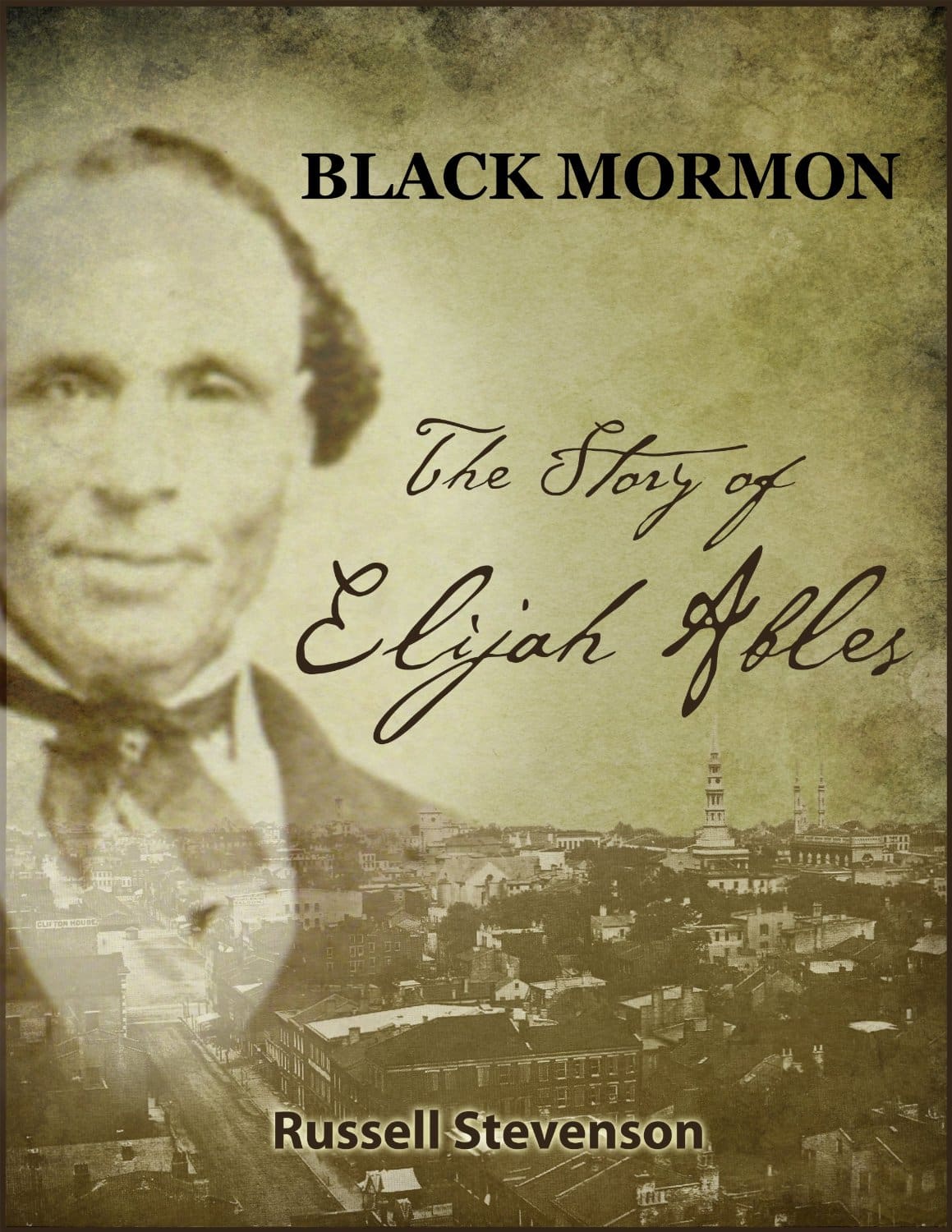
 As an independent historian, Russell Stevenson has been studying Mormon history for nearly two decades. His first book, Black Mormon: The Story of Elijah Ables, tells the vexing story of race in nineteenth-century Mormonism through experiences of Elijah Ables, a biracial man ordained to the priesthood during Joseph Smith’s lifetime. Drawing on documents unused in other treatments, Black Mormon is the first effort to understand Elijah Ables in all of his identities: black, male, Mormon, and priesthood holder. The volume can be purchased at Benchmark and Eborn books, as a Kindle eBook, or directly from Russ.
Episode Transcript
Host: John Dehlin · Guest: Russell Stevenson
This transcript is machine-generated and lightly edited for readability. The audio is authoritative. Please excuse occasional errors in names and spelling.
Introducing Elijah Abel and His Legacy
Part 1 of 2 · Ep. 436
Russell Stevenson [00:00:00] 1, 2, 3.
John Dehlin [00:00:07] Mormon Stories podcast is a production of the Open Stories Foundation. All donations to Mormon Stories are fully tax deductible and go directly towards keeping the podcast alive and towards building a community of support for Mormons like you. To support the podcast or to join the community, please become a monthly subscriber today@mormonstories.org.
John Dehlin [00:00:28] hello, and welcome to another edition of both Mormon Stories podcast and a thoughtful faith podcast. This is a joint production. I am your host, John Dehlin, and today I'm very excited to have with us an old friend, an old family friend. His name is Russell Stephenson, and I met Russell because he was best friends with my nephew Arthur Hatton when he was at the University of Kentucky in Lexington getting a master's degree in history.
John Dehlin [00:01:03] But Russ has gone on to distinguish himself both as a graduate of the University of Kentucky, but also as a teacher of American history and world history and other interesting courses in history in Utah. He's taught at byu. He's taught at Salt Lake Community College and at the Art Institute of Salt Lake. He has a blog called the Mormon History Guy. Is that right, Russ?
Russell Stevenson [00:01:35] That's correct.
John Dehlin [00:01:35] What's the URL for that?
Russell Stevenson [00:01:37] Mormonhistoryguy.com right.
John Dehlin [00:01:43] And most interestingly, and the reason why we have him on today, he has just finished self publishing a book entitled Black the Story of Elijah Abels. Now, that name is going to sound a little bit different to some of you because Elijah Abel or Abel's is known to many of you as Elijah Abel or one of the first, maybe the first member of the Church of African descent to. To not only join the church, but to hold the priesthood and become a 70. Now, I may have some of my historical facts already mixed up, but don't worry, Russ, I'm going to give you the full chance to clear this up. But today we are going to be talking about the story of Elijah Abel or Elijah Abel's, and it's going to be based on Russell's book. So, Russell, welcome to a thoughtful faith and Mormon stories.
Russell Stevenson [00:02:47] Good to be here, John. I'm excited to have a conversation with you.
John Dehlin [00:02:50] Yeah, so I learned about Elijah. Are we going to call him Abel or Abel's?
Russell Stevenson [00:02:57] What are we going to call him? I'm going to call him Elijah Abels.
John Dehlin [00:03:00] Okay. All right, so I'll try and do that, too. You know, I heard about him probably eight or nine years ago. I don't know. I read somewhere that Joseph Smith had ordained at least two or three black men to the priesthood before Brigham Young had Kind of taken it away. For those of you who haven't heard, one of my very early episodes on Mormon stories was with Margaret Young and Darius Gray, where they talked about, you know, the full history, sort of not the full history, but, you know, several hours worth of history about blacks in the LDS priesthood. Maybe we'll put a link to that up on this episode.
John Dehlin [00:03:46] But that's where I first heard about Elijah Abels. But to be honest, other than the fact that he is alleged to have received the priesthood and to become a 70, I really don't know much about him. So today, the goal is to just to spend an hour learning about his story and maybe even to find. I kind of challenged Russell to find a way to inspire us about his life and just to see what we could turn up. That's kind of interesting from your history. So why don't we dive in, Russ?
Russell Stevenson [00:04:21] Let's do it. And fortunately, your challenge was fairly simple. When you're dealing with a man like Elijah Abels, his kind of story is the sort of story that tells itself. It doesn't take a lot of creative license to make his life into an inspiring one. You know, the first point I want to cover, just so that way we can clear the air, is to talk about the spelling of his name. Because there are going to be a lot of people who, you know, they hear this and they will question, you know, whether, you know, whether I truly am talking about the same person or if I have really looked into his life, you know, in all of its depths.
Russell Stevenson [00:05:00] So let's talk about that spelling for just a second. We basically have two renderings of his name based on original manuscript evidence of his signature. They come from a letter that was written to Brigham Young with his name signed at the bottom in 1854. And then there was a second document, a receipt of payment for a work performed for the Perpetual Emigrating fund, signed in 1858. The first one was spelled Elijah Abels. The second one was spelled Elijah Abel Able, A, B, L, E.
Russell Stevenson [00:05:37] I chose to use the first rendering largely because it was the earliest rendering, and that is generally my rule of thumb. That being said, you can make a good argument for, you know, the Elijah Abel rendering as well.
Russell Stevenson [00:05:53] So, you know, who is this man whose name we can't even spell properly? He was born and raised in Antebellum, Maryland, sometime between 1808 and 1812. Whether he was a slave or not, it cannot be known with certainty. We can say that according to census numbers in the candidates for his birth, Frederick and Washington, county, the slaves outnumbered the free blacks by substantial numbers. So if we're to use statistics to measure this, you could make a good argument that he was indeed a runaway slave. But that cannot be known with any degree of certainty. And anyone who says that it can be is really going beyond the evidence that is available.
Russell Stevenson [00:06:43] Okay, so at some point in his life, we know that he was a father to a child and that this child died. We don't know what happened to her other than the fact that her name was Delilah. At some point, he was separated from the mother of this child. And eventually he ran away to the western frontier, to the city of Cincinnati. And it was in Cincinnati where he first came into contact with the Church of Jesus Christ of Latter Day Saints. And we have very little records of this initial interaction, except that the man who baptized him was not a missionary. He was a local.
Russell Stevenson [00:07:26] It was really a great example of member missionary work. He was a young father, a couple young kids at home. My guess is they came to know each other through some kind of labor. Oftentimes you had free blacks and whites intermingling in Cincinnati at the time, so that could very well be the case. Rather, regardless, it doesn't appear that there was any sense of a color barrier between these two men.
Russell Stevenson [00:07:58] The man baptized him quite freely, and Elijah Ables moved from Cincinnati up to Kirtland in the mid-1830s. And that was where Elijah first met the prophet Joseph Smith. And this was going to be a friendship that really would transcend generations. Memories of it would last long beyond Joseph Smith's death and even Elijah Abel's death.
Abel's Baptism and Early Church Membership
John Dehlin [00:08:26] Okay, so was there any to do about the fact that a black man, maybe even a former slave or runaway slave, was joining the church, you know, at the time he joined? Or do you know, is there any. To what extent could we expect, like the Times and Seasons or the Evening and the Morning Star, whatever the names of those publications were, to have mentioned him or written about him, you know, at that early point when he joined? Or would it have just been no big deal, like he would have just been viewed as any other member?
Russell Stevenson [00:08:59] Right. You've asked a couple questions there and a couple different answers. First of all, was there any kind of to do about a black man joining the church and being integrated into the body of the Saints? And the answer to that is there absolutely was.
Russell Stevenson [00:09:16] It's fair to say that the only reason Elijah Abels was even accepted into the Mormon community at all was because of Joseph Smith's strong support of his membership. We have evidence that Several of Joseph Smith's confidants resisted quite ardently the idea of any blacks becoming Latter Day Saints. We know Zebedee Coltrane. He was know, one of the first major members of the School of the Prophets.
Russell Stevenson [00:09:46] He refused initially to perform any kind of temple ordinances for Elijah Abel, so he wouldn't give him his washings and anointings. And Joseph Smith basically told him, zeb, you're going to do this and you're going to do it because, you know, basically, I'm the prophet. And Zebedee Coltrane would later comment to that end that, listen, I thought it was disgusting. I wanted nothing to do with it, but because Joseph Smith was a prophet, I obeyed.
Russell Stevenson [00:10:16] So we do have some evidence of some pretty strong resistance. Now, I do need to cover myself here. There is some dispute as to whether Zebedee Coltrane indeed performed those ordinances or not. I'm inclined to think that he actually did, largely because Zebedee culture is so. His feelings were so visceral and so passionate that I personally have a hard time seeing how someone with such passionate feelings would ever conjure up a memory like that. That's the kind of thing that stays with you.
John Dehlin [00:10:50] So regardless, the washings and anointings would have happened in the early 1840s, right?
Russell Stevenson [00:10:55] No, this would have been in the mid-1830s at the Kirtland Temple.
John Dehlin [00:11:00] Were we doing washings and anointings that early?
Russell Stevenson [00:11:02] Yeah, yes, yes, we absolutely were. I mean, there was no endowment at this point. And it was very. The ordinance was quite similar to the washing of the feet in the New Testament. It was an ordinance that was associated with spiritual gifts. So it definitely was infused with a kind of spiritual power. But this was not at all like the endowment that would be administered in Nauvoo.
John Dehlin [00:11:28] Was it viewed as a saving ordinance? I just didn't know anything about this.
Russell Stevenson [00:11:32] It was. It was viewed as an ordinance that was to be administered largely to Joseph Smith's confidants. And at this stage, you know, the idea of ordinances being saving ordinances, you know, the kind of, you know, you know, items on a checklist, you know, that idea hadn't really developed, Mormon thought. Yet at this stage, ordinances were seen primarily as. As a means of communicating a higher level of spiritual knowledge.
John Dehlin [00:11:59] Got it. Okay. And then later that would have been sort of brought into the temple ceremony as. As the washings and anointings officially. Is that right?
Russell Stevenson [00:12:10] Yes, yes.
John Dehlin [00:12:11] Okay. Okay, Got it. All right, sorry. Didn't want to derail us, but I. I wanted to understand the time frame with the Zebedee Coltrane thing and the. The context. So keep going, by all means.
Abel Receives the Priesthood in Kirtland
Russell Stevenson [00:12:23] Yes. So Elijah Abels provides some assistance in the construction of the Kirtland Temple, and he receives the priesthood in March of 1836. Now, for those doubting Thomases out there who just. They've got to see it to believe, I can tell you right now that we have smoking gun evidence that Elijah Abels was ordained to the priesthood. The. That's not even a point open to dispute anymore. We can just get over that. We have his priesthood certificate signed by Joseph Smith himself. Joseph Smith attests to his good character, to his diligence to the church, his commitment to the church, and his commitment to preaching the gospel.
John Dehlin [00:13:03] So Elijah Abels, who has that document,
Russell Stevenson [00:13:05] you know, it's just in the Kirtland elders licenses book. I mean, anyone can walk into the church history library right now and examine it.
John Dehlin [00:13:14] The original.
Russell Stevenson [00:13:15] A digital copy of it.
John Dehlin [00:13:16] Yeah. Okay. Okay. But it's not part of the Joseph Smith papers project.
Russell Stevenson [00:13:20] No, it is not.
John Dehlin [00:13:21] Okay. All right. All right. Okay. So that's not okay. And so would he have definitely been the first black Mormon then, or do we know?
Russell Stevenson [00:13:31] I think. I think we're pretty safe to say that he is. There is only one other candidate, and that would be Black Pete, as he was called. We don't know his last name. He was a member of the Kirtland Mormon community from late 18th, 1830 to early 1831. We do not know if he was in fact ordained to the priesthood or not. There is no documented evidence. He did talk about receiving an ordination of some kind, but he said it in a context where he could be referring to more of a heavenly ordination or a spiritual ordination, not so much an ordination by the laying on of hands.
John Dehlin [00:14:07] Okay, so are you saying that we have official records of no other black ordination than Elijah Abels?
Russell Stevenson [00:14:17] Later on? We have evidence of blacks receiving the priesthood. Walker Lewis in Massachusetts, for example. But Elijah Abels was definitively the first to have documented evidence of receiving the priesthood.
John Dehlin [00:14:32] Okay. The first that we can nail down. That's right. Okay. Because I did remember Margaret and Darius saying at least two or three were likely. Likely have received it.
Russell Stevenson [00:14:42] Right. And Joseph Ball is another example of that, too.
John Dehlin [00:14:45] Okay, okay. All right, all right. So likely the first. Okay, keep going.
Russell Stevenson [00:14:49] So Elijah Abels receives the priesthood. Obviously, you know, there is significant resistance to this. And Joseph Smith, he refused to cow to it. He insists that Elijah Abels be integrated into the predominantly white Mormon community. Joseph and Elijah, they forge a strong friendship that just manages to deflect all this criticism. And Joseph Smith, you know, he would constantly bat down Snyder, Marx, from a variety of church leaders. A couple years later, Joseph Smith having the kind of faith in Elijah Abels that he does, he sends Elijah on a mission to Upper Canada, now known as Ontario.
Russell Stevenson [00:15:35] Now, at first, we might think that to be a rather unremarkable mission call. After all, we have other church members who hailed from Upper Canada. John Taylor, he had hailed from Upper Canada. So you think that there's nothing terribly noteworthy about this, but for Elijah Abels, there was something very important about Ontario, and that was it was the leading site for runaway slaves. It was the northern terminus of the Underground Railroad. So when Elijah Abel set foot In Ontario in 1838, he saw a large population of people who looked like him. This was not an experience he had been terribly accustomed to since joining the Latter Day Saints, but now that he was in Ontario, he would have been in a veritable sea of runaway slaves. So I do think that it is significant that he was called to Ontario of all places.
John Dehlin [00:16:36] Right. As a missionary.
Russell Stevenson [00:16:38] As a missionary, yeah.
Abel as a Seventy and His Missionary Work
John Dehlin [00:16:39] Okay. Were 70s missionaries back then? Were they almost synonymous?
Russell Stevenson [00:16:46] I mean, you could be a 70 without being a missionary, and you could be a missionary without being a 70. But if you're going to be called to be a 70, which he had been by the end of 1836, it was almost certain that you would end up being called on a mission at some point.
John Dehlin [00:17:02] And just so that we understand the calling, is it similar to being a 70 today, where there were first, second and third quorums?
Russell Stevenson [00:17:12] Yes, there were three quorums of 70 in the early church. And then towards later on, those organizations were done away with and they began to decentralize 70s. So you could have a 70 in every ward.
John Dehlin [00:17:29] Right.
Russell Stevenson [00:17:29] But more recently, we have gone back to the original model.
John Dehlin [00:17:33] Okay, all right, got it. So he was viewed. So would he have been viewed as a general authority or area authority, or was it not like that?
Russell Stevenson [00:17:43] You know, they didn't really use the. The terms general authority, but they certainly would have seen him as being a person of authority.
John Dehlin [00:17:51] Right.
Russell Stevenson [00:17:51] You know, and it was one of those things where the better part of the Latter Day Saint population, they either had indifferent or rather resistant feelings to him, but because of his relationship with Joseph Smith, they were willing to kind of roll with it.
John Dehlin [00:18:08] Yeah, yeah. Let me just ask about that. So, you know, for those of us who want Joseph Smith to come off in a positive light, we're going to want to find things that make him look good. And so one of the things that the church, you know, in its movie that I saw on Temple Square, you know, about the prophet, you know, it wants to make him look like a feminist. It wants to make him look like, you know, the best husband and father. It wants to make him look like someone who's very generous and tolerant of racial minorities. And so what I'm asking you
John Dehlin [00:18:51] to do is to help us understand how cool or interesting or progressive was it for Joseph to be totally close, tight friends with and supportive of a black man versus just like normal, you know, was there a bimodal distribution of love and support for black people or was he really like in two orders of magnitude away from the mean, you know.
Russell Stevenson [00:19:13] Right. I wouldn't call Joseph Smith a radical, if that's what you're asking. I mean, if you wanted to find a good radical, I could point you to other Mormons who are more radical than Joseph Smith. But that being said, I do think Joseph Smith should be given some credit for giving Elijah Abels the level of authority that he did.
Russell Stevenson [00:19:33] It was not entirely unheard of for black preachers to have some kind of jurisdiction over white congregations in the North. There had been one such preacher not far from Joseph Smith's own home. That being said, it was somewhat unusual. So Joseph Smith gets credit for that. That being said, though, it's also important to understand the political and social situation that Joseph Smith faced when he ordained Elijah Abel's the priesthood. So when the Saints were kicked out of Jackson County, Missouri in summer fall of 1833, one of the leading complaints against them was that they were too friendly to black people.
Joseph Smith, Race, and Early Mormon Society
Russell Stevenson [00:20:17] They were being called, quote unquote, black Mormons. They were being accused of wanting to support racial integration, you know, inviting black people into the state of Missouri to marry their fine daughters. So white Mormons weren't just seen as a strange religious sect. They were seen as kind of these social radicals who wanted to overturn all the hierarchies that matter to Missourians.
John Dehlin [00:20:47] Now that was, that was 38 when they, when, when they were kicked out of Missouri. Is that right?
Russell Stevenson [00:20:51] They were kicked out of Jackson county in 1833. They were kicked out of the state of Missouri in 1838.
John Dehlin [00:20:57] Okay, got it, got it.
Russell Stevenson [00:20:59] So in 1830, and part of the reasons for this was W.W. phelps, you know, the, the editor of the Evening and Morning Star in Missouri. You know, he had published some articles that said some very positive things about the anti slavery, about Maybe allowing some blacks to come into the Mormon community. And because of this, it immediately cast them as these wild eyed abolitionists, not unlike people such as William Lloyd Garrison out in New York City. And this reputation, it wasn't just trash talk. It proved deadly for the Latter Day Saint people. So when the Saints were kicked out of Jackson county, it, it taught Joseph Smith some, some pretty potent lessons.
Russell Stevenson [00:21:47] Lesson number one, don't get too close to the black population. If you do, then the Latter Day Saints will be cast as abolitionists and they will continue to suffer mob attacks. So Joseph Smith, he was forced to negotiate, you know, a pretty delicate political situation. And it's because of this that in, in April of 1836, only one month after he had ordained Elijah Abel's the priesthood, he published an editorial in the messenger and Advocate, basically defending slavery as God's curse on an immoral and beastly people.
Russell Stevenson [00:22:27] He talked about black people in very disparaging terms, saying that he wouldn't dream of letting such a cast of creatures letting. He wouldn't dream of letting such a cast of preachers go on a white population.
John Dehlin [00:22:43] Wait, Joseph Smith wrote that?
Russell Stevenson [00:22:44] Joseph Smith wrote that in 1836, April of 1836, one month after ordaining Elijah Abels.
John Dehlin [00:22:51] Wow, I wonder if that made. Wow, I wonder if he and Elijah had a little conversation about that.
Russell Stevenson [00:22:57] Yeah, I, I don't know. I, I sometimes wonder. You know, it's interesting that you bring that up because Elijah, he had so many opportunities to be offended. He had lots of legitimate, you might say, to say, hey, you know what? I do not need this. I can go live in a community in the north where I'll be free from this persecution. It may not be perfect, but hey, it beats the heck out of having my prophet say these things about me. And yet with the exception of maybe a few years in the late 1840s, he never even came close to wavering.
John Dehlin [00:23:33] Okay, so I derailed you. You were talking about him going to Canada. What year was that again? That he was.
Russell Stevenson [00:23:40] That was in 1838.
John Dehlin [00:23:41] Okay, so we're still in that time frame. Okay, we are. So in 36, you're saying that Joseph ordains him, writes that letter. We don't know if there was a conversation about it, but we know that Joseph was both progressive in some ways, but also caught in a delicate political situation that made him have to be ambivalent about the black issue. And you're saying that he wrote kind of a pro slavery piece during kind of those later Missouri years?
Russell Stevenson [00:24:10] Yes, yes. And Largely in an effort to deflect this version of being an abolitionist. No one wanted to be an abolitionist. It would be a couple months after that article when Governor Daniel Dunklan of Missouri would send a letter to W.W. phelps. And in this letter, Duncan would say, so you've been called abolitionists, and you're basically guilty until proven innocent. So if you want to prove that you're not abolitionists, you better get to it, because if you don't, vox populi, vox dei, Right? In this republic, the voice of the people is the voice of God. I can do nothing to keep the mobs back.
John Dehlin [00:24:45] Now, was he the. Was he the successor to Boggs then?
Russell Stevenson [00:24:48] No, no, he was the predecessor to Boggs.
John Dehlin [00:24:51] Okay, got it, got it. Okay. So delicate times. All right. So you were going to talk about the. The Canadian.
Russell Stevenson [00:25:01] Canadian mission.
John Dehlin [00:25:02] Yeah.
Russell Stevenson [00:25:02] Yes. Yeah. So whatever conversations took place between Elijah and Joseph, they did not have a long lasting impact on his faith because he was willing to serve a mission on behalf of the church in Canada. He arrives in Canada and there is such a large population of black people that it's impossible to not suppose. Did Joseph Smith send Elijah Abels to Canada in an effort to preach to the black population? You know, Missouri, it was off limits for black people. Now, they had passed laws saying that no free black would be allowed in the state of Missouri. Here you have Joseph Smith, good friends with Elijah, and he had to have been thinking, so what are we going to do for people like Elijah?
John Dehlin [00:25:53] Right?
Russell Stevenson [00:25:54] So did he want.
John Dehlin [00:25:56] Do you think maybe he wanted to get Elijah out of the state? Like, let's just get him out of
Russell Stevenson [00:26:00] here because, well, Elijah never went to Missouri.
John Dehlin [00:26:02] Okay, okay, got it.
Russell Stevenson [00:26:04] But Joseph, he saw Missouri as the gathering place, and he knew that there would be no place for people like Elijah. So my, you know, my argument, and this isn't something that we can, you know, nail down firmly, but I do think that there is good reason to believe this. My argument is that Joseph was considering the possibility of establishing black congregations in Upper Canada. Newspapers throughout the region were talking about how well educated and how hardworking the black population in Upper Canada was. Joseph Smith would have been exposed to this. Here you have a faithful black man. And in Joseph's eyes, there would be no better way of feeling out the possibilities of this than sending his black missionary to Upper Canada.
John Dehlin [00:26:55] Got it. Okay. So he went. How long did he go?
Russell Stevenson [00:26:59] So he gets there. He's walking the streets of Upper Canada. He is renowned for being a powerful preacher, even though he was very illiterate we have, you know, one document, a letter from a woman who witnessed him preaching, saying that the spirit of God rested upon him. And she heard a gospel sermon like she had never heard before. You know, even later in life, you know, 50 years after she heard these sermons, she wrote a letter to a friend saying, you know what? There is no person I would rather see than Elijah Abels.
John Dehlin [00:27:34] Wow.
Russell Stevenson [00:27:36] So Elijah Abels made a lasting impact on the population of Canada. And, you know, other things happened while he was there, too. And these are events that people have generally overlooked when studying the life of Elijah Abel. I credit Newell Bringhurst for his short biography of Elijah back in the late 1970s. It was a tremendous piece.
John Dehlin [00:27:56] What was that called?
Russell Stevenson [00:27:58] That was called Elijah Abel and the Changing Place of Blacks within Mormonism. Okay, maybe changing status. The exact name is slipping my mind right now.
John Dehlin [00:28:08] Okay, so was Newell the first to write a book on Elijah?
Russell Stevenson [00:28:12] It wasn't a book. It was. It was a relatively short article.
John Dehlin [00:28:14] Oh, got it, got it.
Russell Stevenson [00:28:16] And Lester Bush, he had talked about him in his famous 1973 article. Well, not nearly with the depth that Newell Bringhurst did.
John Dehlin [00:28:24] Okay, got it.
Russell Stevenson [00:28:26] So while he was there, there was some pretty, pretty dangerous political situations that were swirling around Elijah in Upper Canada in late 1837 or early 1838. There had been a group of pro American rebels who were beginning to plan to secede from the British Empire. They wanted to ally themselves with the United States, really create their own republic with the United States as their patron. Obviously, British authorities catch wind of this and they're not going to take too kindly to people who are threatening to secede. And to make matters worse, there was a prominent Mormon who was one of the rebels, namely Moses Nickerson.
John Dehlin [00:29:14] When did Canada get its independence? Just to give us context, do you know?
Russell Stevenson [00:29:18] Right off the top of my head, I cannot tell you, but it's later on in the 19th century.
John Dehlin [00:29:24] Okay, okay. So we're still under British rule.
Russell Stevenson [00:29:28] Okay, Right. We are still under British rule at this point.
John Dehlin [00:29:32] In Canada. In Canada.
Russell Stevenson [00:29:33] In Canada. That's right. All right, so Elijah Abels here, you have this black Mormon American, and you have the British who see, you know, the Americans as basically friends of these rebels.
John Dehlin [00:29:50] Right.
Russell Stevenson [00:29:51] And in these kinds of circumstances, you can imagine that anyone who is an American is going to be subject to legal prosecution or anyone who says good things about America, which Mormons often did. I mean, after all, Missouri is the promised land. It's, you know, it is the Garden of Eden, is where we will be gathering for the millennium. And before long, you see Mormons throughout the region being imprisoned, you know, being brought before tribunals. You see mob attacks on Mormons home, Mormon homes. You know, they're breaking through glass windows, destroying family families. A lot of pretty bad things are happening to American Mormons at this time. So Elijah Abels is surrounded by mob activ. By anti American rhetoric. Making matters worse, there are vigilantes in upstate New York who are smuggling arms across the St. Lawrence River Way.
John Dehlin [00:30:45] Wow. Okay.
Russell Stevenson [00:30:47] And they're hoping to, you know, foment rebellion even further. So Elijah Abels tells the Saints that they need to get out of Canada, quite reasonably, if you ask me. Furthermore, he says that there will be stakes of Zion throughout all the world. For traditional Mormon dogma at that time, this was at best, not exactly orthodox. Missouri was the promised Land. That is where the Mormons were together. There wasn't supposed to be this talk about establishing stakes throughout the world.
John Dehlin [00:31:21] It's a bit of a visionary there.
Russell Stevenson [00:31:23] Yes. I would say that Elijah Abels was prescient in his ability to foresee in a modern Zion. So he helps to lead the Saints away from, you know, away from the tumult of Canada. You know, at one point he had a dodge, a tarring and feathering, and, you know, one of the. One of the white Mormon sisters actually opened fire on the mob in order to protect Elijah. So we know that he had a good relationship with white Mormons there. They eventually escape Upper Canada and some of them make their way down to Nauvoo, and that's where Elijah Abel settles down for the next two to three years.
Abel's Years in Nauvoo and Later Travels
John Dehlin [00:32:02] So he goes to Nauvoo. He leaves. He leaves Canada around what year he leaves Canada?
Russell Stevenson [00:32:07] In late 1838.
John Dehlin [00:32:10] Okay.
Russell Stevenson [00:32:11] Around the same time that the Missouri Saints are being expelled from Missouri by Lilburn W. Boggs.
John Dehlin [00:32:16] But Nauvoo didn't start until like 1840, right?
Russell Stevenson [00:32:18] That's right.
John Dehlin [00:32:19] So he must have gone to Missouri first, or.
Russell Stevenson [00:32:22] No, what basically happened was they. They entered Michigan and they came down south and settled in western Illinois around the same time that Joseph Smith arrived in late 1839.
John Dehlin [00:32:34] Okay. All right. Wow. So he's there right at the beginning of Nauvoo.
Russell Stevenson [00:32:38] Yes.
John Dehlin [00:32:39] Okay, cool. So what did he do in Nauvoo?
Russell Stevenson [00:32:43] So what did he do in Nauvoo? You know, he. He worked as a carpenter. He worked as an undertaker. He would have been right there by Joseph Smith Sr's bedside as the local undertaker.
John Dehlin [00:32:56] Now, undertaker would be like a mortician.
Russell Stevenson [00:32:58] What is that?
John Dehlin [00:32:59] Yeah, that's so they would embalm bodies.
Russell Stevenson [00:33:02] You know, I'm not terribly familiar with the particulars of, you know, of mid 19th century mortician practices.
John Dehlin [00:33:08] No, I'm just curious.
Russell Stevenson [00:33:10] Right, right. No, that's. But he certainly was a major caretaker for the dead, probably because of his carpentry skills.
John Dehlin [00:33:17] So he maybe make the coffins.
Russell Stevenson [00:33:19] Yes, yes, exactly. So Elijah Abels, he also served a key role in a rescue mission after Joseph Smith had been kidnapped in 1841. He, along with the famous destroying angel Bill Hickman, went to save Joseph Smith from a group of Missouri ruffians. So Elijah Abels was definitely one of Joseph Smith's go to guys when it came time for a crunch. So in 1842, Elijah Abels makes a pretty significant decision, and that is to move away from Nauvoo to the city of his freedom. And that is Cincinnati.
John Dehlin [00:34:03] Okay, again, what year?
Russell Stevenson [00:34:06] 1842.
John Dehlin [00:34:08] Okay, so that's before. That's before Joseph's martyrdom. So why is he leaving Nauvoo?
Russell Stevenson [00:34:13] You know, that's a great question. And you know, one author I've read has, has argued that it was because Elijah had a sister living in Miami, Ohio. I've looked up the biography of this supposed sister, and it's a pretty tough sell if you ask me. She.
Russell Stevenson [00:34:33] She is, or her husband is of Germanic descent that got married in Maryland, which makes it highly unlikely that she would have been of African descent. You know, interracial marriages were taboo for everybody, right? Joseph Smith, you know, you name it. No one got, you know, no one really, especially in that area, dared to engage in interracial marriage. So I'm not. The point of that is I'm not inclined to believe that it was his sister. Frankly, we don't know the exact reasons. We know that Joseph Smith approved of him going in early 1843. You know, he told saints, you know, go to Cincinnati, you'll find, you know, one of the most educated, refined black people you'll ever see. In fact, he's probably more refined than the politicians in Washington.
John Dehlin [00:35:21] That's a real quote or that's real
Russell Stevenson [00:35:23] quote that comes from. Yeah, that's a paraphrase from Joseph Smith's journal.
John Dehlin [00:35:27] Okay, cool.
Russell Stevenson [00:35:29] So Elijah Abels arrives in Cincinnati. And Cincinnati, like many of the places where Elijah had lived, was a dangerous place. In late 1841, there had been one of the worst race riots that the northern states had seen in its history. And you know, there had been an anti abolitionist riot in 1836. So Cincinnati, it was a Racially explosive place. You know, it was the vortex of the Underground Railroad. It was really the home. It was the home of a Harriet Beecher in her early years. It was where Harriet Beecher became a acquainted with slavery. And one of the key passages of Uncle Tom's Cabin was inspired by a scene that she saw across the river in northern Kentucky. So Cincinnati, it was a hot place to be, especially if you were a free black.
John Dehlin [00:36:23] And remind me, it was a slave
Russell Stevenson [00:36:24] state or was not Ohio or Kentucky? Ohio, Ohio was not a slave state. But in southern Ohio, you had strong pro slavery sentiments.
John Dehlin [00:36:35] Got it. Okay. But Kentucky was a slave state.
Russell Stevenson [00:36:39] Kentucky was a slave state.
John Dehlin [00:36:40] Okay, got it. All right. So of sort of antagonism towards blacks.
Russell Stevenson [00:36:48] That's right. You know, only a few months earlier, you know, your average white person would have seen bands of armed blacks roaming the streets. So, you know, when Elijah Abels walks into the situation, you know, he's gonna have to watch his step. And it's noteworthy that, you know, he doesn't move to a white neighborhood. He move eastern Cincinnati, which is known as Little Africa.
Russell Stevenson [00:37:08] It's really the slums. I mean, it's, you know, prostitution is rampant, gambling is rampant. You know, he's just living as a renter with, you know, with a local white collar guy. So the world in which Elijah Abels lived, you know, resembled more of the inner city than it did this, you know, nice frontier milieu that we like to imagine when we talk about Mormonism, especially mormonism in the 19th century.
Russell Stevenson [00:37:35] So another important thing happened in spring of 1842 as well. And that was the baptism of a man by the name of Reese E. Price. Now, Reese E. Price, he's a big deal in Cincinnati history. If you go to Cincinnati today, you can find two major landmarks devoted to his name. You have an elementary school named after E.C. price, and you also have a suburb named after Recy Price. So he casts a long shadow over Cincinnati history. And the reason that is is one, he was very wealthy. He was a prominent figure in the community.
Russell Stevenson [00:38:11] But also important is that he had been a longtime member of the Ohio Anti Slavery Society Executive board. He was in close alignment with abolitionists like William Lloyd Garrison, John Rankin and Gamaliel Bailey. You know, now these were not your typical, you know, okay, we don't like slavery, but we're not going to do anything about us for the people. They were the kind of people who said, we need to end slavery right now, today.
John Dehlin [00:38:38] Okay, so they were in Cincinnati.
Russell Stevenson [00:38:42] In Cincinnati. And Recy Price, he was born and raised in Cincinnati. You know, a true son of the region. He joined the Latter Day Saints.
John Dehlin [00:38:51] Oh,
Russell Stevenson [00:38:53] and you know, the reasons he joined the Latter Day Saints. I mean, that is a fascinating discussion and you can look more into that if listeners choose to purchase my book. But the short story is that it was around 1842 that Joseph Smith and the Latter Day Saints generally began to think a little bit more broadly about their future as a people, you know, up. You know, throughout the Missouri period, Mormons had basically envisioned themselves as law abiding citizens. You know, we're going to appeal to the courts. That's what the revelation said. You know, abide by the law of the land.
John Dehlin [00:39:31] Right.
Russell Stevenson [00:39:32] But after the expulsion from Missouri, after Martin Van Buren had told Joseph Smith, you know, what your cause is just, but we can do nothing for you. The Latter Day Saints underwent massive disillusionment with not just the legal system, but with America generally.
John Dehlin [00:39:49] Yeah, yep. That led to the Council of 50 stuff and all that.
Russell Stevenson [00:39:56] The Council of 50 is important in this sense, if only in a tangential way. But Reese Price's political views accorded nicely with those of the Council of Fifty. In 1850, Riisi Price would identify himself in the census as a three, as a theocrat by trade.
John Dehlin [00:40:17] Oh, wow.
Russell Stevenson [00:40:17] That was. His profession was theocracy.
John Dehlin [00:40:22] Wow.
Russell Stevenson [00:40:22] So when we see Price join the church, he wasn't just joining any other religion. You know, he saw the Latter Day Saint people as, you know, an alternative to America. And he was so committed to the ending of slavery. I mean, you know, his passion for ending slavery really knew no bounds that he was willing to do anything to do it.
John Dehlin [00:40:45] Now you're not saying Elijah Abel converted him, are you?
Russell Stevenson [00:40:48] You know, I have no idea. All I know is that they went to church at the same time in the same place.
John Dehlin [00:40:55] Interesting. Okay, well, we don't have a baptismal record for Recieve Price.
Russell Stevenson [00:40:59] Well, we don't have a baptismal record, but we do have a letter identifying him as being baptized.
John Dehlin [00:41:05] Got it.
Russell Stevenson [00:41:05] Elijah Abels wouldn't have baptized him, though Phineas Young did. So regardless of exactly how it went down, I feel quite certain in saying that Recy Price and Elijah Abels would have forged an immediate connection. You know, Recy Price was well connected to the Underground Railroad. You know, all the other members of the Ohio Anti Slavery Society executive board were underground railroad conductors or they collaborated in some way. So I think it's fair to suppose that Recy Price was also involved in that. You know, given the depth of his involvement with that society.
John Dehlin [00:41:40] Fascinating.
Russell Stevenson [00:41:41] Okay, so it's, you know, one could speculate that Elijah Abels was involved in the Underground Railroad before. We've, you know, before that has been a, you know, a pretty big speculation. Say. Okay, you know, maybe, maybe not. But now that we have the Reisi Price connection, we can feel like that is not such an. It's not such a radical or out there idea.
John Dehlin [00:42:03] Where was Harry Tubman living at this point? Do you know?
Russell Stevenson [00:42:07] You know, off the top of my head, I don't.
John Dehlin [00:42:09] All right, all right. Just curious.
Russell Stevenson [00:42:10] Okay, Right, right. But, you know, it is worth noting that Harriet Beecher and Elijah Abels lived in Cincinnati at the same time.
John Dehlin [00:42:18] Yeah.
Russell Stevenson [00:42:19] Back in 1832. So, you know, they. They definitely saw the same. Same world. So Elijah Abels and Recy Price probably got to know each other pretty well. In June of 1843, though, three apostles passed through Cincinnati. Heber C. Kimball, John E. Page and Orson Pratt.
John Dehlin [00:42:39] Say the year again.
Russell Stevenson [00:42:41] 1843.
John Dehlin [00:42:42] Okay. All right. So it's the year before Prophet's death.
Russell Stevenson [00:42:44] The year before Prophet's death. A year after Recy Price joins the church and Elijah Abels comes to Cincinnati.
John Dehlin [00:42:49] Okay.
Russell Stevenson [00:42:50] These three apostles come through. Come through the region, and they're probably informed of all of the racial riots that have been going on in Cincinnati. And here they see, one, an abolitionist and two, a black man, which had been the sources of their mob problems in Missouri. So being leaders of the church, as they were, and worried sick that Jackson county was going to happen again, they felt it necessary to take immediate action in regards to Elijah Able's relationship with the white community.
John Dehlin [00:43:26] Oh, okay.
Russell Stevenson [00:43:27] They directed. They directed that Elijah Abels basically be prohibited from interacting with the white community on a proselytizing basis. He was only to preach to black people.
John Dehlin [00:43:41] Okay, interesting.
Russell Stevenson [00:43:44] And this is really the first evidence that we have of, you know, any kind of decision being made as regards to black people in white Mormonism before this time, you know. Yeah. You have, you know, some criticism from people like Jedediah M. Grant and Zebedee Coltrane and others, but this is the first instance where there was an official decision made saying that black people could not interact with white people within the Mormon tradition. They didn't strip him of his. Of his priesthood. And that's an important point worth noting. And in fact, that would never happen. Elijah Abels would never have his priesthood taken from him.
Russell Stevenson [00:44:22] Right, but this is the first case. Right. Listen, as a matter of political expediency, we can't let there be any kind of racial integration. It's it's interesting that it was only a few months later when Recy Price apostatized. Oh, he formed his own. His own movement. He called himself a new prophet. He began releasing, you know, statements to the press, you know, prophesying about the future of America, the future of the British Isles.
Russell Stevenson [00:44:52] He never spoke of his Mormonism except to a select few. And really, for the rest of his life, virtually no one would bring up his. His brief stint with Mormonism.
John Dehlin [00:45:04] Okay, all right.
Russell Stevenson [00:45:05] But yet you can see Mormonism flavor most of what he does. And, you know, that's. You know, the story of Recy Price is an entirely different story. And. And one that could be saved for another time.
John Dehlin [00:45:17] Are there biographies about him?
Russell Stevenson [00:45:19] You know, there is no solid biography. At least, you know, secondary works. And there were some biographical sketches in the late 19th century. We have letters to the editor that he wrote, but his story has yet to be written.
John Dehlin [00:45:32] Got it.
Russell Stevenson [00:45:34] So he leaves the church, Elijah Abel stays, And June of 1844, of course, Joseph Smith is assassinated by a mob in Carthage jail. Now, interestingly enough, we don't see a lot of evidence of how Elijah Abel's reacted to the prophet's death.
Russell Stevenson [00:45:55] He was certainly notified of it by some passing missionaries, but they don't indicate him saying anything. They don't indicate that this great black friend of the prophet reacted in any particular way. The next evidence we have of Elijah Abel's doing anything is in summer of 1845, when, as a presiding 70, he plays a key role in supporting the 12 during the succession crisis.
Russell Stevenson [00:46:24] Now, as far as I'm concerned, that's a fascinating thing because here you have, you know, Elijah Abels has been deeply criticized by, you know, by some members of the 12. Joseph Smith was really his only friend and confidant, and yet he upholds the 12.
Russell Stevenson [00:46:45] Yeah, so, yeah, that isn't what I would expect him to do. And he even upholds it to the point of ordering the exc. Or calling for the excommunication of three women who dared to criticize church leaders and fail to attend church meetings. And no one really questioned him on it. They backed him up on it. And the women were swiftly kicked out of the church. The branch president said, you know what? We've never had a more unified time in our branch than we. Than we do today.
John Dehlin [00:47:14] Oh, okay, Interesting. So he's kind of a. I don't know, is he a company guy? A little bit, like, just really loyal to the institution?
Russell Stevenson [00:47:26] You know, that's the. That's the impression that. That Arises from the documents is, you know, he believed in institutional Mormonism and you know, that didn't mean that he was incapable of resisting. We would see him resist some decisions quite heartily later on in life, but he would never defect from the institution. It was a little bit like how Quakers see, you know, their community. There's this notion in Quakerism of the Peace Covenant saying that, you know, listen, you all can follow your inner light, as they called it. You know, you can all be, believe your own doctrine, fill your own things, but don't leave the Quakers. You're part of this community and it's not right for you to break off from us. You know, have all the intellectual freedom you want, but you're still a Quaker.
John Dehlin [00:48:12] Got it?
Russell Stevenson [00:48:13] And, you know, that's, I think, I think there is a comparison between Elijah Abels and the Peace Covenant in that regard. Okay, so Elijah Abels cracks down in dissent in Cincinnati and he continues to live in Cincinnati for the next eight years. Now, it's during this time period where Elijah really, he disappears from the narrative. And it's unfortunate because it's probably one of the more fascinating time periods in Cincinnati Mormon history because remember, you've got a number of individuals who've been vying for supremacy in the Mormon movement. You've got James Strang, you've got Sidney Rigdon, you have the 12. And then later on in Covington, Kentucky and by extension Cincinnati, you have Joseph Smith's younger brother, William Smith.
John Dehlin [00:49:00] Yeah. And in fact, we just released today a four hour series on the history of the community of Christ or the RLDS Church. And we actually go into the succession crisis quite a bit in the first two hours. So, yeah, that was a really significant time in the church for sure.
Russell Stevenson [00:49:17] And you know, the succession crisis affected the Cincinnati Saints just like it affected the Nauvoo Saints, except they didn't have a miracle of a mantle. They didn't have a great showdown between Brigham Young and Sidney Rigdon. It was all thought in absentia.
John Dehlin [00:49:34] Now, I need to ask your opinion on this because the scholars that I've talked to said that the Nauvoo Saints didn't really have a miracle of the mantle either. That that was something that was written about 20 years later.
Russell Stevenson [00:49:49] I've looked at the evidence on that and I do find it convincing that certain church leaders wrote about it, you know, you know, with some of them without even being there. That being said, I see a multiplicity of evidences that I don't know exactly what happened, you know, but I'M inclined to think that certain people experienced something. You know, you could say that it was Brigham Young's presence. You know, you could say that it was, you know, his ability to preach powerfully. You know, you could say a number of things.
John Dehlin [00:50:20] They were inspired. They were just inspired.
Russell Stevenson [00:50:22] Yes. Yeah, they inspired. They felt inspired. And, you know, for them, they felt it was Joseph Smith esque, and I'm not in a position to deny them of their voice. So. Yeah. Since I don't have enough contemporary evidence to really nail it down in the same way that I nailed on other things, I'm sympathetic to those who feel that there was some kind of spiritual manifestation. Okay, sure.
John Dehlin [00:50:50] That's cool. Sure.
Russell Stevenson [00:50:51] So, yeah, moving onward, I suppose.
John Dehlin [00:50:55] Okay, so you were saying that the Cincinnati Saints didn't. Whatever happened with Brigham Young, they didn't get that in Cincinnati, so they had to figure out with whom their allegiances lay.
Russell Stevenson [00:51:07] Right, right. And my guess is Elijah Abels was probably one of the most ardent Defenders of the 12 in Cincinnati.
John Dehlin [00:51:15] Okay.
Russell Stevenson [00:51:16] And what's interesting about this is how well connected he was to the dissenting community. He was not making, you know, he was not cracking down without knowing any of these other contenders. Let's take, for example, Zenas Gurley. My guess is Zenas Gurley's name came up during your conversations on the rise of the community of Christ.
John Dehlin [00:51:39] Doesn't ring a bell, but maybe.
Russell Stevenson [00:51:41] Okay. So he initially joined with James Strang. He became quickly disenchanted, and he eventually came to believe that the only way that the church could endure was through the seed of Joseph Smith. What's noteworthy is that Zenas Gurley and Elijah Abels served a mission together in Canada. Zenas Gurley ordained somebody with Elijah Abels to the priesthood.
John Dehlin [00:52:08] Right.
Russell Stevenson [00:52:09] So Elijah Abels and Zenas Gurley were very close, and yet Elijah abels chose the 12. You know, let's take William Smith as another example. When William Smith, you know, eventually formed his own movement, you know, he had already associated with the Strangites, and, you know, he had become disenchanted with them. He felt that they had fooled him with some, you know, with a fake miracle. He comes back to Cincinnati and he says, no, as Joseph's. You know, as Joseph's brother, I have the right to succession, and the keys rest with me. In 1850, William Smith's movement falls apart. He's accused of polygamy, he's run out of town, and he ends up boarding for a brief time with none other than Elijah Abels.
John Dehlin [00:53:04] Interesting.
Russell Stevenson [00:53:07] And part of that's because one of William Smith's apostles was also born with Elijah Abels at this time. So in 1845, Elijah Abels had cracked down on dissenters in favor of the 12. Now, in 1850, he is, you know, you could say, chumming around with, you know, some of the twelve's leading critics. Now the question is, what did that mean?
John Dehlin [00:53:28] Right.
Russell Stevenson [00:53:30] I don't know all the answers to this. It is worth noting, though, that the man who lauded Elijah Abels for bringing the branch together, by 1850, he had totally apostatized, you know, from the twelveites or the Brighamites. He had totally committed himself to William Smith. He even wrote a hymn in his honor. So for all intents and purposes, I think it's fair to say that whatever branch existed in Cincinnati by 1850 wasn't much of a branch.
John Dehlin [00:54:03] Right.
Russell Stevenson [00:54:04] So Elijah Abels was basically left without a strong faith community. I could imagine him saying, you know what? This is? This is ridiculous. To make matters worse, there was a woman in the branch who had written a letter to the 12, and she was talking about Joseph Smith being the atoning savior of mankind.
John Dehlin [00:54:22] Wow.
Russell Stevenson [00:54:23] So you have radical thought all over the place. And Elijah Abels, he was, you know, in most things, he was never much of a radical. The most radical thing he said is that there would be stakes of Zion in all the world.
Russell Stevenson [00:54:36] Other than that, he was a man of the institution. So you've got this woman over here talking about Joseph Smith. You've got, you know, John, the branch president, talk about William Smith. And I could imagine Elijah saying, you know what? I'm good. Joseph Smith was a prophet, and I'm living a good life.
Russell Stevenson [00:54:54] So for now, I'm just going to settle into Cincinnati. So eventually, William Smith leaves, and in 1853, Elijah Abels finally chooses to move west to live with the saints in Zion. And that really marks an important turning point in his life.
Russell Stevenson [00:55:19] Before 1853, he had been a man on the move. He had been going on a mission to Canada. He'd been running away from mobs. It had been a pretty tumultuous experience for him. By now, he had married, he had a child. Eventually he had a second child a few years later. And by the time he arrived in Utah, he was ready to settle down and maybe live a quieter life. And he would live a quieter life.
John Dehlin [00:55:53] So these two children were with a different woman than he had had his first child that passed away?
Abel's Family Life and Marriage
Russell Stevenson [00:55:59] Yes. In 1847, he married a young woman by the name of Mary Ann Adams. She was extremely extremely young, about 17 years old. And we know very little about how they became acquainted. But the fact that she was a teenager and a black and she was from Tennessee could hint at the possibility that she was herself a runaway slave. And, you know, one might speculate that Elijah Abels met her as a part, you know, as a part of his work in the Underground Underground Railroad. But that's just something that we don't know.
John Dehlin [00:56:35] Okay, but she. Did she convert to the church? Was she lds? Yes.
Russell Stevenson [00:56:39] Yes. She joined the church, and she lived faithfully for the rest of her life. Come, come, you saints. No toil nor labor fear, but with joy.
Part 2 of 2 · Ep. 437
Russell Stevenson [00:00:00] 1, 2, 3.
John Dehlin [00:00:07] Mormon Stories podcast is a production of the Open Stories Foundation. All donations to Mormon Stories are fully tax deductible and go directly towards keeping the podcast alive and towards building a community of support for Mormons like you. To support the podcast or to join the community, please become a monthly subscriber today@mormonstories.org. all right, so he. He has this new bride. He's got one to two kids with her, and they eventually move to Utah in the 50s. In the 50s?
Russell Stevenson [00:00:39] Yes. They arrive in fall of 1853.
John Dehlin [00:00:42] Okay. All right. And what do we know about their time there?
Russell Stevenson [00:00:50] Well, in order to understand their time there, we actually need to backtrack a little bit. We don't need to spend too much time on this. Some key events happened in the Mormon community, in the white Mormon community in 1847 that would cause whatever tolerance for black people existed to fracture. So the Saints had been kicked out of Nauvoo. They were living a pretty rough life in winter quarters. And an African American man by the name of William Carey arrives in the camp with a white wife named Lucy Stanton. Now, Lucy Stanton, she was a prominent white woman in the. In the community in that her father was a former stake president. She had long had an affection for, you know, for strong African American men. She was a follower of Black Pete in Kirtland. We discussed him a little bit earlier. And now, what did it mean to
John Dehlin [00:01:48] be a follower of Black Pete?
Russell Stevenson [00:01:50] Well, you know, he developed something of, you know, of a. Of a congregation of his own. You know, he was very charismatic. He was a fantastic singer. He was a tremendous preacher. And people were naturally drawn to him, especially the Stanton family. Not just Lucy, but her whole family. You know, they. They liked black preaching. You know, part of, you know, this experience, you know, was, you know, reenacting scenes from the Book of Mormon, you know, kind of singing, spontaneously speaking in tongues. You know, some today, we would associate it with Pentecostalism in certain ways. So that is, you know, that's what it really meant to, you know, have an affection for Black Pete or to support black religion in Northern Ohio.
John Dehlin [00:02:37] That was going on in Kirtland.
Russell Stevenson [00:02:39] That was going on in Kirtland. This was before Joseph Smith arrived in early 1831, when Joseph Smith arrived and he began receiving revelations about false spirits and that sort of thing. Those revelations were directly speaking to the environment that Black Pete had helped to create.
John Dehlin [00:02:58] Yeah, because I have a hard time imagining Joseph allowing there to be someone else with followers associated with Mormonism.
Russell Stevenson [00:03:07] Right. He had already. Yeah. He had made it clear that Hyrum Page, you know, could not be a contender for authority.
John Dehlin [00:03:14] Exactly.
Russell Stevenson [00:03:15] And that in addition to, you know, how Joseph Smith viewed spirituality, you know, early in his days, you know, he had wanted to jump and shout with the rest, right? Now, at one point, he did have an affection for, you know, this Pentecostal experience, but, you know, his visionary experiences taught him otherwise. So he began to say, okay, you know what? That is not true spirituality based on my own spiritual experiences. So I can't allow that kind of spirituality to exist in this faith, even
John Dehlin [00:03:46] though it made it into the articles of faith.
Russell Stevenson [00:03:49] Well, what made it. What articles of faith are you referring to?
John Dehlin [00:03:52] Well, the gift of tongues.
Russell Stevenson [00:03:54] Oh, right, right. And you see, that's important because, you know, Joseph Smith, he never distanced himself from the gift of tongues per se. He said, it's a gift that the devil can manipulate very easily. So if you're going to do it, do so very gingerly. Do so very carefully. So, you know, we believe in spiritual gifts, but, you know, it's important that we not let ourselves get carried away because, you know, the devil can use us to his own ends.
John Dehlin [00:04:24] That's interesting. I didn't know about that.
Russell Stevenson [00:04:26] That's great.
John Dehlin [00:04:27] Yeah.
William McCary and Hardening Racial Attitudes
Russell Stevenson [00:04:29] So William McCary and Lucy Stanton, they arrive in winter quarters and immediately, you know, they get under the skin of the white Latter Day Saints, primarily because. Primarily because they were an interracial couple. And you hear, you know, they heard constant racial epithets hurled at them. And they would say, there goes that old N word. And his white wife.
John Dehlin [00:04:53] Wow.
Russell Stevenson [00:04:54] This is not Brigham Young talking. That's an important distinction. William McCarry and his wife approached Brigham Young, and they say, brother Brigham, so here's what your people have been saying about us. What do you have to say? Basically asking if they were welcomed members of the community. And Brigham Young's response. And mind you, I am definitely condensing a fairly long conversation. His response was, it doesn't matter what color of skin you. You have. What matters is, you know, your commitment to the faith. We are all of one flesh. So.
John Dehlin [00:05:35] Wow, that makes him at least more complex than many want to paint him.
Russell Stevenson [00:05:41] Yes, he was a person who went through a transition, and unfortunately, it was a transition for the worse. But initially, you know, he was, you know, he was devoted to Joseph Smith more than we can imagine. Even three years after Joseph Smith's death, you hear Brigham Young being incredibly vulnerable emotionally, more vulnerable than we're used to hearing him. He would say, I still feel the hurt. I still feel bitterness over Joseph Smith's death. Brigham Young missed Joseph terribly, and he was saying these kinds of things only a couple months after his conversation with William Carey. So Brigham Young still believed in the vision of Joseph Smith when it came to racial inclusiveness.
Russell Stevenson [00:06:24] At this point, Brigham Young leaves winter quarters. And while Brigham Young's gone, William Macary begins to institute his own form of polygamy. Now, polygamy was being practiced at this time. It was still on the DL, but it was kind of like it was something of an open secret.
Russell Stevenson [00:06:41] But his polygamy crossed some lines that others were not willing to cross. And that is, he began to practice interracial polygamy. And to make matters worse, he often consummated each marriage in front of the first, second, or third wife.
John Dehlin [00:07:00] Okay, wow, you're blowing my mind here. So let me back up. So William Makary is a black member of the church, right?
Russell Stevenson [00:07:06] Yes.
John Dehlin [00:07:06] And he would have been in Nauvoo.
Russell Stevenson [00:07:11] He was not in Nauvoo. No. I'm trying to remember if he was ever in Nauvoo. If he was in Nauvoo, it was very briefly. You know, he was from the south originally. He did spend some time in Cincinnati, but the really important moments took place in winter quarters. You know, he had been baptized and ordained by Orson Hyde. So, you know, he was definitely, you know, seen as a. At least initially, as a legitimate member of the Mormon community.
John Dehlin [00:07:39] But as I understood it about polygamy, it was kind of restricted, and you had to be called to it, and it was. And it was kind of limited. So do we have evidence that he was brought into the club, so to speak?
Russell Stevenson [00:07:52] No evidence of that whatsoever. And given the reaction, it's most likely that he was not brought into the club.
John Dehlin [00:07:58] So he was more of a William Law type of polygamist than maybe he began.
Russell Stevenson [00:08:02] He began doing it on his own and with.
John Dehlin [00:08:05] And with white women.
Russell Stevenson [00:08:06] With white women, to make matters worse. So he was basically run out of town on a rail along with his white wife.
John Dehlin [00:08:12] And how do we know that he was consummating the marriage in front of other wives?
Russell Stevenson [00:08:18] You know, we have the. We have the testimony of a man by the name of Nelson Whipple. And, you know, he was well connected to that scene or he knew who to talk to. And eventually rumors got out exactly what had been doing, and winter quarters wasn't so big that rumors like that would stay confined. So that's basically how we have that information is from a man living in the community and who heard the complaints from the women themselves and really as much from men as it was from women.
John Dehlin [00:08:49] Wow, that's crazy. Okay, all right.
Russell Stevenson [00:08:53] So this, you know, this really serves to harden the Latter Day Saints racial sentiments. Orson Hyde, he went through the wringer when it came to his decision to ordain William McCarry. Orson Heights, an interesting figure in this way, because in, you know, In January of 1843, Joseph Smith had chastised Orson Hyde for not being more racial inclusive. And this would be a conversation that would happen more than once between Joseph and Orson.
Russell Stevenson [00:09:21] So whatever Joseph said to Orson clearly moved Orson to be more inclusive of blacks in the church. But with William McCary, people accused him of having horrible judgment. You know, William Smith, you know, he would never let Orson Hyde live it down. Throughout his newspapers, he would attack Orson Hyde for supporting interracial marriage. At one point, they even attacked Brigham Young. They said, well, you know what Brigham Young's name actually stands for, right? Well, you know, you take his name Brigham, and you separate it by syllables and it sounds like Brigh Ham. Well, we all know who Ham is, right? It was an indicator of what Brigham Young's racial status was, at least as far as William Smith satirists were concerned.
John Dehlin [00:10:05] Oh, wow.
Russell Stevenson [00:10:07] So the decision to ordain William Makary, it had some pretty far reaching public relations consequences. And, you know, Orson Hyde had a really hard time living it down. So with the William McCary scandal having gone down with Orson Hyde coming under heavy attack, you have the first comment by a Latter Day Saint church leader saying that blacks could not hold the priesthood. And that is from Parley P. Pratt in spring of 1847. Yeah. So, you know, that's the first time when a. When Parley P. Pratt, or when any church leader for that matter, really cracked down and connected skin color to a priesthood exclusion. Now, there had been a long standing consensus that blacks were the descendants of Ham and that they were cursed, but that did not necessarily equate to being excluded from the priesthood. It was partly Pete Pratt who connected the two on the record for the first time.
John Dehlin [00:11:06] And what was Pratt's position at the time? Do you remember his.
Russell Stevenson [00:11:11] His position in regards to blacks in the priesthood?
John Dehlin [00:11:13] No. Was he an apostle?
Russell Stevenson [00:11:14] Oh, yes, he was an apostle.
John Dehlin [00:11:16] Okay. Not First Presidency?
Russell Stevenson [00:11:18] No, he was not a member of the first Presidency.
John Dehlin [00:11:20] And do we have any idea if Brigham endorsed that statement or not or.
Russell Stevenson [00:11:25] Well, yes. And what ends up happening is Brigham Young comes back to winter quarters in. In the fall and winter of. Of 1847, and when he comes Back, you can guess that people immediately notified him of what had been going on with William McCary. Now, Brigham Young, you know, he had tried to be inclusive. You know, he said, you know, I support. Supported William Carey. I was okay with him initially. But, you know, this. This talk of, you know, interracial plural marriage, it caused the same kind of visceral reaction in him that it did in others. Now, in all accuracy, though, we need to make sure it's known that when Brigham Young was first introduced to William Makary, he was also introduced to Lucy Stanton Macquarie, and he expressed absolutely no opposition to their interracial marriage.
Russell Stevenson [00:12:21] So between March of 1847 and December of 1847, Brigham Young underwent this major shift in thinking. So he's told about William. He's told about William Carey. He's also told about Walker Lewis and his son, who had just married a white woman in Massachusetts.
John Dehlin [00:12:42] Okay.
Russell Stevenson [00:12:43] And this sends Brigham Young over the edge. Now, Brigham Young's comments, they're fascinating and troubling all at once, because you see within a single breath the contradictions that Brigham Young was wrestling with within himself. The very first words out of his mouth were, they should be killed.
John Dehlin [00:13:09] Whoa. Referring to who?
Russell Stevenson [00:13:12] Referring to Walker Lewis son and his new white bride.
John Dehlin [00:13:17] Oh, wow.
Russell Stevenson [00:13:18] They deserve death. Now, that was not unheard of commentary in 1840s America. It was definitely on the harder line of things. There had been other comments to that end, even in state legislature, so one in Arkansas, for example. But even still, it's pretty cringeworthy rhetoric. Here's what makes it such an interesting comment. Because only two sentences later, he's reverting back to his March 1847 position. He said, well, you know, if a black man and a white woman come to you wanting temple ordinances, I mean, can you really tell them no?
John Dehlin [00:13:57] Huh?
Russell Stevenson [00:13:58] This is all within one breath. He even says, you know, you can't keep them out of the temple. Provided that. And here's the major caveat. They cannot have children.
John Dehlin [00:14:09] What?
Russell Stevenson [00:14:10] That was the line for Brigham Young.
John Dehlin [00:14:12] They can't have biological children.
Russell Stevenson [00:14:13] They cannot have biological children. Because he was buying into popular scientific thought at the time, especially by men like Robert Knox and Josiah Knott, who believed that interracial marriage would ultimately sterilize the human race. You know, when you have a quote unquote mulatto children, they would be less capable of reproducing. So, like mules.
John Dehlin [00:14:36] Like mules, basically.
Russell Stevenson [00:14:37] Mules, exactly.
John Dehlin [00:14:38] Oh, my gosh.
Russell Stevenson [00:14:39] That is where the word mulatto came from was mule.
John Dehlin [00:14:43] Oh, my gosh. I had no idea.
Russell Stevenson [00:14:45] Yeah, so Brigham Young, he bought into this. So he thought of interracial marriage as kind of a crime against humanity. You know, you weren't just getting married to somebody.
John Dehlin [00:14:56] You were.
Russell Stevenson [00:14:57] You know, you were possibly causing the demise of the human race.
John Dehlin [00:15:01] But you're saying he was okay with William Makary?
Russell Stevenson [00:15:06] I believe it's because they did not have any children at that time. So, you know, if you want to do your thing, if you want to marry a white woman, okay. But don't have kids.
John Dehlin [00:15:16] But we do know that he kind of blessed that marriage.
Russell Stevenson [00:15:19] He didn't curse the marriage. I mean, he said, you know, we're all one flesh. You know, welcome to society, Just serve the Lord.
John Dehlin [00:15:26] And if he knew about it, then there's a chance that he told William Makary he could practice polygamy.
Russell Stevenson [00:15:34] Is that.
John Dehlin [00:15:35] I mean, because Brigham was doing it right?
Russell Stevenson [00:15:37] So, I mean, it would depend on, you know, on how Brigham Young felt about William McCary. It's one thing to say welcome to the community, and it's quite another to say, welcome, welcome to this higher level holy order that is reserved for the elite. There were white men who were excluded from that order. So I would personally have a hard time imagining Brigham young initiating William McCary into that society.
John Dehlin [00:16:00] But was William McCary hiding?
Russell Stevenson [00:16:07] Was blatant enough that it got around.
John Dehlin [00:16:10] Right.
Russell Stevenson [00:16:11] He wasn't taking care to hide it very well at all. You know, it could just. That's what makes it William carry such a fascinating figure. He comes waltzing into this community, and, you know, he. You could argue one. Maybe he had some kind of tacit, you know, endorsement from Brigham Young. We really don't know that. I would be skeptical of that claim. But he comes waltzing into this community, and he just blows through the women, you know, and it freaks everybody out.
Origins and Roots of the Priesthood Ban
John Dehlin [00:16:39] And how many. Do we know how many wives he had?
Russell Stevenson [00:16:41] Oh, let's see here. We do not. We know that it was at least
John Dehlin [00:16:49] three and all white.
Russell Stevenson [00:16:51] Yes.
John Dehlin [00:16:52] What a scoundrel.
Russell Stevenson [00:16:54] Yes.
John Dehlin [00:16:55] What a scalawag.
Russell Stevenson [00:16:57] Yeah. And, you know, his.
John Dehlin [00:16:59] He's a player.
Russell Stevenson [00:17:00] Doesn't end there. Yeah. He was truly the player of the community. The story doesn't end, though. I mean, for the rest of his life, you know, he. He becomes something of a con man. He and his wife take on Indian names, and they began telling everyone that they're Indians. He had been selling himself as an Indian musician. He was a very talented musician. And they put on Indian shows throughout the country.
John Dehlin [00:17:21] Huh. But that were they excommunicated. From the church?
Russell Stevenson [00:17:23] Oh, yes. Oh, yes. I mean, I mean, they ended up actually settling in Jackson county, of all places, towards the late 1840s. So, okay. We know very little of his death. We do know that his wife would later be put in jail for practicing abortions.
John Dehlin [00:17:40] So that sounds a lot like William Law again.
Russell Stevenson [00:17:43] Yeah, it was a pretty City confidential kind of story for the winter quarters community.
John Dehlin [00:17:52] Okay. And so that we're thinking that that is the impetus for the priesthood ban.
Russell Stevenson [00:17:59] That is the last racially related incident before Brigham Young makes his first comments about blacks being banned from the priesthood. Mind you, he would not, you know, these comments about how they should be killed and, you know, how they, you know, they should be allowed temple blessings. Those comments were made in December of 1847. His first comments about the priesthood ban were in February of 1849.
Russell Stevenson [00:18:24] Now, there are. There are other factors playing into this as well. I don't want to be reductionist about, you know, the sources of the Priesthood Band. 1849 is also the first time that the Utah Territory is submitting a constitution to the United States for statehood.
Russell Stevenson [00:18:43] The Mexican American War had been won. Utah was now part of the United States as a territory, much to the Saints chagrin. They weren't very happy about that. But hey, if we have to be part of the United States, then we might as well be a state.
Russell Stevenson [00:18:56] They knew that Northerners didn't like them. I mean, they tried to live in New York, they tried to live in Ohio, they tried to live in Nauvoo. So they said, okay, that's, that's not going to be a fruitful path. Maybe we can, you know, we can reach out to the South.
Russell Stevenson [00:19:13] And the best way to do that would be by adopting, you know, a kind of whiteness as our new ideology. And that's what's fascinating about the Utah experience. You see a large number of Latter Day Saints switching from being, you know, moderately anti slavery to be ardently to being ardently pro slavery once they come to Utah. Take W.W. phelps, for example. As a young man, he had been an abolitionist in western Missouri. He had opposed slavery quite passionately. In the Evening and Morning Star, when he comes to Utah, he gives a speech and he said, here in Utah, the Canaanite can bow down to his master in hopes of an eventual exaltation.
John Dehlin [00:20:01] Huh.
Russell Stevenson [00:20:03] So there was something about coming to Utah that caused people to change. Look at Brigham Young, March of 1847, still in winter Quarters says that, you know, some of one of our best black elders is a Man in Massachusetts, you know, he openly endorses blacks holding the priesthood. In December of 1847, he begins talking about how interracial couples should be. Should be killed, even if he was just kind of spouting off as he tended to do. He's a colorful guy and I'm not terribly convinced that he actually intended for them to be assassinated. A lot of people use that kind of language in those days. Even still, that's pretty violent rhetoric compared to the Brigham Young of March of 1847. Okay, so there was something about coming to Utah that changed the hearts and minds of people like Brigham Young and wwf.
John Dehlin [00:21:01] So what I hear you saying is that maybe the anti black sentiment that emerges in the Utah era came out of a desire to curry favor with the Southern states in hopes of Utah gaining admission to the union. Is that kind of.
Russell Stevenson [00:21:20] I think that certainly plays into it. You know, in the initial state constitution, Brigham Young told some of his closest confidants saying, hey, hey, listen, on the slavery issue, I'm not terribly fond of slavery, but if you have to compromise on that point, then feel free to do so.
John Dehlin [00:21:40] Right.
Russell Stevenson [00:21:41] So, you know, we see an element of wanting to be integrated into the United States. You know, we see obviously the William McCary incident. And I think there was something about just the sheer distance of the Mormons from the rest of American society.
John Dehlin [00:21:55] Fascinating. And that's one of the, you know, that's one of the problematic sort of dynamics of prophetic leadership that we deal with, is that if they're, if they're impacted by their context and their culture and they happen to make a statement, it can be held onto for 50 or 100 years later purely out of allegiance to the prophetic mantle.
Russell Stevenson [00:22:20] I think that's a really interesting comment that you make there, talking about the problematics of prophetic leadership. In the introduction of my book, I talk about how we see the relationship between prophets and lay members today and how I think it's more the product of 20th century corporate America than. Than it is true to the 19th century Mormon experience.
Russell Stevenson [00:22:45] In my book, I argue that the deepest roots of the priesthood ban actually cannot be traced to Brigham Young or even prophetic leadership. It can be traced to ordinary Latter Day Saints. The sin of racism in the Latter Day Saint movement was a collective sin, not an individual sin. And Latter Day Saints aren't terribly accustomed to thinking in those terms, largely because we are products of the 20th century and 20th century capitalism and corporatism, where, you know, it's all about the individual and the individual's plight and the individual's relationship with God. But the Latter Day Saints saw themselves as modern day Israel. And Israel was a collective experience then, and they saw it as a collective experience in the 19th century as well.
Russell Stevenson [00:23:33] You know, notice in 1847, it was not Brigham Young who first began hurling epithets against William Macary and his white wife. It was your average run of the mill Latter Day Saint.
John Dehlin [00:23:45] Yeah. So Brigham Young represents more of a thermometer or a barometer than the leader on this issue. He's sort of trying to figure out the church's future, the political situation, you know, the, you know, word on the ground, take the pulse of the members, and it bubbles up through him. Not so much. He's leading it and pushing down the right. Is that what you're saying?
Russell Stevenson [00:24:13] That is what I'm saying. In March of 1847, he was actually attempting to, in some ways, clamp down on that racial rhetoric. He didn't go as far as he could have, to our knowledge. He didn't go around preaching sermons about how people shouldn't be using the N word and should stop talking about black people in that way. But to William McCary's face, he said, okay, listen, what they say doesn't matter. You should ignore it. They're wrong.
John Dehlin [00:24:43] Right, right. Yeah.
Russell Stevenson [00:24:44] So I would say in that sense, you know, that's a very apt analogy. You know, that he was an indicator, an index of the Latter Day Saint people, not the dictator, as, you know, we're sometimes inclined to believe him to be, at least at this stage.
John Dehlin [00:25:00] And that's not you trying to just salvage Brigham Young?
Russell Stevenson [00:25:03] No, no, no. What, if anything, I say, by focusing on Brigham Young, you let people off the hook.
John Dehlin [00:25:09] I see, Right.
Russell Stevenson [00:25:11] Yeah. You know, you say it's all Brigham Young.
John Dehlin [00:25:14] Yeah. It's like he's the. He's the. Who's the guy that got busted in Mountain Meadows?
Russell Stevenson [00:25:22] John D. Lee.
John Dehlin [00:25:22] Yeah, he's the John D. Lee of the blacks in the priesthood.
Russell Stevenson [00:25:26] Yeah. You know, one could. One could certainly make that argument. So.
John Dehlin [00:25:30] So you don't want to scapegoat him. You want to say it was a cultural thing, right?
Russell Stevenson [00:25:34] Yes, yes. And even when we say it's a cultural thing, that is often used in a way to excuse it. Well, you know, it was the culture. Right. No big deal. Why are we. That's just how they thought about things. I would say they had choices. They had the opportunity to be inclusive of the black community. I mean, Joseph Smith, he set the tone from the outset. You look in Moses chapter 7.
Russell Stevenson [00:25:58] When Enoch is looking down on all of mankind and his heart swells as wide as eternity, does he see racial lines when he's weeping over all of mankind? No, he doesn't. Yes, he saw that. Okay, there are black people and there are white people and there are different people with different skin tones and that kind of thing. But when it came to that transcendent moment where Enoch wept over God's creations, he was not weeping over one population. I think Moses, chapter seven, and you know, really the pro and really the book of Moses generally should set the tone for racial discourse in the church. I mean, it was released in late 1830. It's the earliest commentary we have on how people should be viewing other people.
John Dehlin [00:26:48] Right, interesting. Yes. You know, I'll just say this. I don't even know if it's really relevant, but anybody who wants to go back and say, oh, if I had been in the 1850s, I would have, you know, thought or acted differently. I just think that that might be a bit of an arrogant position because we just don't know what the social, political dynamics, how they would have affected us, you know?
Russell Stevenson [00:27:15] Yes. Yeah. It's a self serving position to say, you know, to, to take that line, I think, especially when, you know, you're facing the real threat of a mob attack if you happen to stand up for the abolitionists.
John Dehlin [00:27:29] So after having experienced mob attacks and knowing what that really meant.
Russell Stevenson [00:27:34] Right, right, right. Because, you know, we all living in the sanitized 21st century America, you know, we know what it's like to be ripped from our homes and have our wives, Our wives raped and our newspapers burned. No, we don't. You don't?
John Dehlin [00:27:48] Yeah, yeah, yeah, yeah. Okay. Well, that's fascinating. And that, you know, that makes sense. And I like it that you're saying you're not trying to get anyone off the hook. You're trying to just paint a full picture, which is that it's much bigger than Brigham Young.
Russell Stevenson [00:28:03] Yes, it is much bigger than Brigham Young. And more importantly, and the reason this is important is because it speaks to the relationship between Mormons and their leaders, or ordinary Mormons and their leaders. It originated with the population. And I think if we can keep that in mind, that teaches us an important lesson for today. You know, the Lord for the faithful, gives us what we are willing to receive.
John Dehlin [00:28:32] Yeah. That seems to be the message Tero Givens is trying to. To evangelize is, you know, you want the church to be something better, get off your duff and be something better. Yeah. And Revelation, trickle up, grassroots revelation basically might be the outcome. Yeah. Right.
Russell Stevenson [00:28:54] So, yeah. So you know, Abels, he comes to Utah in this new racial community and you know, obviously the racial. By the time Elijah abels arrived in 1853, the racial discourse had changed quite a bit. By this point, Utah was in fact a slave territory. On the books. They had passed slavery in the territory and it was quite legal to bring your slaves to Utah. And no one would tell you no. Yeah. Brigham Young, he didn't really love slavery. He didn't think it was the best thing. But at the end of the day, he thought that blacks should be the servant of servants.
Russell Stevenson [00:29:30] And he makes comments to that end for several years. And we could catalog all of them and it would be cringe inducing and it would be very offensive to all of us. But my guess is most of your listeners are familiar with these comments, or if they're not, they can find them in two seconds with a Google search.
John Dehlin [00:29:47] And he makes quite a bit. Is that what you're saying? Quite a bit of statements.
Russell Stevenson [00:29:51] A fair number. It isn't just one, it isn't just two. But what's interesting is even in spite of all these statements, it doesn't seem to seep into all of Utah society. You have Latter Day Saints in the peripheries who are aware that there's something wrong with being black, but when they begin asking around, they begin saying, hey, Bishop, so I have African ancestry. What does this really mean? They don't know exactly what it means. There is just a sense that, okay, if you have African ancestry, it poses a problem. You might want to get that checked out. This is coming from a man living in, in 1861. Well, after the comments that Brigham Young had made.
John Dehlin [00:30:39] Right, yeah.
Russell Stevenson [00:30:41] So, you know, I don't want to go too far with this cultural argument saying, you know, that, oh, all the Mormons were just a bunch of racists. They clearly weren't, especially people in these remote communities.
John Dehlin [00:30:55] Got it. Yeah. I mean, the church just, it moves slowly and not monolithically. And you're never going to find pure consistency anywhere.
Russell Stevenson [00:31:07] Right, right. In any large community, there's going to be a diversity of opinions. Joseph Smith experienced that he had to navigate a racial coalition. So just to get towards the end of Elijah Abels life, unfortunately you don't have a lot of documentation on what he did in Utah. We have a couple newspaper ads where he said he was running a boarding home. We have, you know, some evidence of where his son worked, but, you know, looking for, you know, the Good hard documentation that exists for his early life. It's unfortunately not there. A key moment in Elijah Abel's life, though, took place in late 1879. You know, his. His wife had died in 1877. By this point, he was an old man. And how old? About the. In 1879, he would have been approximately 69, 70, give or take three years.
John Dehlin [00:32:01] Yeah, that's pretty old. Yeah, yeah, for that. For back then, too.
Russell Stevenson [00:32:05] Yeah, yeah, certainly. And, you know, he had. He still held the priesthood, but when he came to Utah, Brigham Young denied him of his endowment, said he couldn't have it. And, you know, we have no evidence of.
John Dehlin [00:32:19] What does that mean to not have
Russell Stevenson [00:32:21] your endowment not receive the ordinance.
John Dehlin [00:32:24] Oh, so he. He had not received it.
Russell Stevenson [00:32:26] He never received his endowment because he was in Cincinnati? You know, we don't. That's. That's the thing. We. We really don't know Brigham Young's exact reasoning.
John Dehlin [00:32:36] No, no, I'm saying that. I'm saying that Elijah Abel was in Cincinnati when the endowment would have been rolling out.
Russell Stevenson [00:32:42] Oh, yes. Yeah. Okay.
John Dehlin [00:32:44] So he wouldn't have received it at that point.
Russell Stevenson [00:32:46] Okay, yes.
John Dehlin [00:32:47] And then he leaves, and then there wasn't a temple around until, you know, what, Logan of Salt Lake or. Right, right.
Russell Stevenson [00:32:55] Okay, right. Right. Now, he could have easily received, you know, received as others did. Perhaps. But the point is that Latter Day later, leaders after Brigham Young had died, they recalled this conversation that Brigham Young had had with Elijah Abels. And they said that Brigham Young put him off, said that it was a privilege that he could not grant. So whatever the issue was, it was Brigham Young making a decided effort not to administer Elijah Abels endowment to him in any way. He wouldn't even make a provision for Ensign Peak as Addison Pratt had done.
John Dehlin [00:33:34] What does that mean?
Russell Stevenson [00:33:36] So, you know, back there was a time when Addison Pratt, for example, he was a missionary and in Polynesia, he received his endowment on the top of Ensign Peak.
John Dehlin [00:33:46] Whoa.
Russell Stevenson [00:33:48] Yeah.
John Dehlin [00:33:48] Didn't know that.
Russell Stevenson [00:33:49] Yeah. It wasn't a terribly common occurrence, but it did happen. So, you know, Brigham Young could have made a provision to that end, but he. He decided against. Was a privilege he could not grant.
John Dehlin [00:34:04] Yeah. So I'm. I'm just kind of putting myself in Elijah Abel's shoes for a minute. And what a. You know, what a difficult thing to have gone from Joseph Smith being buddies with Joseph Smith to maybe, you know, to potentially even being affiliated with the. With the Underground Railroad, but definitely with people connected to the Underground Railroad to then come to Salt Lake where it's kind of an inhospitable environment for him.
Abel's Later Life and the Race Question
Russell Stevenson [00:34:32] Exactly. I mean, I can only imagine, you know, how much of a paradigm shift he had to undergo. And you know, Walker Lewis, he. He came to Utah in 1853 and he left. Walker Lewis wouldn't stand for it.
John Dehlin [00:34:46] Left the church?
Russell Stevenson [00:34:47] Yeah, he went back to Massachusetts. We don't know. I don't know exactly what his relationship was with the church in Massachusetts, but based on my reading of Conal o' Donovan's article, there was none.
John Dehlin [00:35:00] So he. And we have evidence that he was upset by the way he was treated in Utah.
Russell Stevenson [00:35:06] We don't know for sure.
John Dehlin [00:35:08] Okay, okay.
Russell Stevenson [00:35:09] But given how, you know, how short of a time he stayed in Utah, I think that can be fairly assumed. You know, slavery was legal and he certainly heard of that. And Walker Lewis himself was an abolitionist. He was a member of the Massachusetts Abolitionist Society.
John Dehlin [00:35:23] Right.
Russell Stevenson [00:35:24] So, you know, if I were an abolitionist and I came to Utah, say, wait, I'm moving to a slave territory. Why?
John Dehlin [00:35:31] Yeah, right.
Russell Stevenson [00:35:32] Yeah, yeah. But Elijah Abel stayed.
John Dehlin [00:35:35] Yeah, yeah, stayed. Now, one of them had a son who was also ordained to the priesthood. Right. Am I right?
Russell Stevenson [00:35:43] Elijah did, yes. You know, two of his sons, both Enoch, or Enoch as some of the descendants pronounce the name, and Elijah Jr. Were both ordained to the priesthood. I've talked to one of Elijah Abel's descendants, and he's shown me a picture of a man he believes to be Enoch. I haven't verified it, but taking him at his word, I can say that Enoch looks very white. You know, he looks more like Mark Twain than he does Elijah Abel's.
John Dehlin [00:36:15] Well, so did Brigham Young allow Elijah Abel's son and grandson to then be received the priesthood in Utah?
Russell Stevenson [00:36:25] Presumably, yes.
John Dehlin [00:36:26] That's just crazy, right?
Russell Stevenson [00:36:28] Yeah. I mean, there are all kinds of problematics with this narrative. According to Newell Bringhurst, the way it worked was that Elijah Abels family kind of had a special halo around them. And there is reason to believe this. I mean, even after Elijah Abels death, people would recall his strong relationship with Joseph Smith. They would even say that Elijah was the only black man in heaven. Which, you know, obviously to us is terribly offensive. But it also speaks to how. Well, how highly people thought of Elijah Abels. You know, he had stood the test of time. He had basically uncle taunt his way into the celestial kingdom. Oh, that's how the. That's how the memory envisioned Elijah Abels. Yeah. You know.
John Dehlin [00:37:14] You know, when we. When we go back to some of the other people we talked about and the contradictions. Everything changes when it gets personal, you know, when. So if Brigham Young had known these people personally, he could approve one marriage that's interracial and say that another should be put to death purely on the fact that he was friends with one and not with the other. And as we know, with LGBT issues, sometimes that makes all the difference. Right?
Russell Stevenson [00:37:40] Familiarity, as Richard Bushman has argued, is an essential part of forming faith. It's one thing to talk about those weird Mormons who do all those weird things, but it's quite another to actually attend a Mormon church service and say, well, I don't know that I buy into your theology, but you all aren't what I expected you to be.
Russell Stevenson [00:38:01] So, yes, familiarity plays an important part. In fact, later in the early 20th century, there would be a black journalist who would visit Utah, and he would learn of Elijah Abels. And the way he depicted Elijah Abels was as the quote, unquote, good black man. The one black man that Brigham Young was. Was willing to allow him into his society. Now, I think he was ultimately getting Brigham Young confused with Joseph Smith, but I. I think that the point still holds true, that in the eyes of outsiders, you know, Elijah Abels had somehow transcended the racial prejudice that seemed to dominate Utah society.
John Dehlin [00:38:41] He was kind of grant. I mean, grandfathered in, really.
Russell Stevenson [00:38:45] You. You might say that. And, you know, given the laws that were passed at the time, I'm sure you had, no pun intended, maybe a
John Dehlin [00:38:50] little bit of a punishment.
Russell Stevenson [00:38:51] Oh, maybe, maybe. But, you know, there's an important moment in all this. You know, so Elijah Abels, he's somehow managing to navigate white society. He is, you know, establishing, you know, fairly positive relationships with white people. You know, they see him as the, quote, unquote, good black man.
Russell Stevenson [00:39:11] After his wife dies, he approaches church leadership. At this point, it was President John Taylor and says, President Taylor, I want my endowment. I wasn't given it before, and I want it now. And what's remarkable is that the way church leaders talk about him in the minutes that are available, they almost talk about him as though he were an unknown entity, as though they had never met him before, saying there was a man named Abel. We don't know what.
Russell Stevenson [00:39:42] He's staunch and stalwart, but they didn't seem to show the intimate familiarity with him that we would expect. I mean, John Taylor, he was, you know, he had been in Canada around the same time that Elijah Abels was. To. To imagine that they never crossed paths would, you know, would be, you know, it would Be hard to. To accept that, though. I suppose it's possible. And yet they. They spoke about him. They interacted with him as though they did not know him.
Russell Stevenson [00:40:13] So he asks for his endowment. And this causes major debate within church leadership. You know, they. John Taylor begins to ask around, saying, hey, what's the deal with this Elijah Abel's guy? What's his story? And he asks two men, Zebedee Coltrane and Abraham Smoot.
Russell Stevenson [00:40:35] Now, Zebedee Coltrane's testimony in it, he says, well, you know, Elijah Abels was ordained the priesthood, but it was only because he helped to work on the Kirtland Temple. That's the only reason Joseph really liked the guy. And, you know, he gave him a free pass. But other than that, you know, Joseph definitely opposed giving blacks a priesthood. Abraham Smoot would not have been a good witness. I mean, he. He owned slaves himself.
Russell Stevenson [00:41:00] You know, some people have said that he wouldn't even support Joseph Smith's presidential campaign because, you know, Joseph's presidential campaign included a form of abolitionism that. That really isn't fair to Abraham Smoot at all. Abraham Smoot did play an active part in the presidential campaign. He read Joseph Smith's views on government to congregations. The reason that idea has come about is because while he was serving one of these political missions in Tennessee, he's publishing these pamphlets. Someone approached him saying, hey, if you publish these pamphlets, you know you're going to get prosecuted. It's illegal to publish abolitionist literature in Tennessee. So fearful of the mobs as Mormons had been ever since of Jackson county, ever since Jackson county, he shut down publication.
Russell Stevenson [00:41:49] And because of that decision, you know, it has come to be believed that Abraham Smoot. That he supported slavery and that he opposed Joseph Smith's presidential campaign even though he owned slaves, for some reason, he was still willing to support the presidential campaign.
John Dehlin [00:42:08] Right.
Russell Stevenson [00:42:08] So that was a divergence, but I feel it to be an important one in the context of Abraham Smoot. So Zebedee Coltrane and Abraham Smoot are serving as the primary witnesses for John Taylor's views on the priesthood problem, on the black problem.
John Dehlin [00:42:25] And the question is whether or not he ever really received the priesthood.
Russell Stevenson [00:42:29] Yeah, that does come up for debate or, you know, for Zebedee culture. And he said, well, yeah, he received it, but he doesn't count. You know, that doesn't count. That's an exception to the rule. He argues, well, you know, Joseph Smith ultimately caused Elijah to be dropped from the priesthood. That, you know, Joseph eventually retracted the ordination.
John Dehlin [00:42:47] What? Huh.
Russell Stevenson [00:42:50] Now, Joseph F. Smith, he questions this. He said, no, no, that's wrong. I know for a fact that Elijah was ordained. And he accuses Zebedee Coltrane of lying about administering the washings and anointings to Elijah Abels.
John Dehlin [00:43:06] Huh.
Russell Stevenson [00:43:08] Saying Abel's himself said, you're wrong. But again, we have so little of Abel's own words that it's hard to nail down exactly what happened.
John Dehlin [00:43:18] Yeah.
Russell Stevenson [00:43:19] So what's important here is that John Taylor's final decision was, okay, Joseph Smith did ordained Elijah Abels to the priesthood. That much we know. But it was a mistake.
John Dehlin [00:43:31] Oh, wow.
Russell Stevenson [00:43:33] Granted, he said it was before the word of the Lord was fully understood.
John Dehlin [00:43:36] Yes.
Russell Stevenson [00:43:37] He can. You know, you might compare it to, you know, the Nauvoo baptisms where they're baptizing men for women and women for men. You know, he said, okay, you know, I'll give it a pass for that, but, you know, now we know better. He did not claim revelation. He didn't say that. We've, you know, you know, we have received the word of the Lord in this, but rather he said, we are now understanding the word of the Lord. I think that's a key distinction. They at no time claimed that the Lord had spoken to them and saying, from this point onward, blacks will not hold the priesthood.
John Dehlin [00:44:12] Thus, the claim that it's more policy than doctrine.
Russell Stevenson [00:44:15] Thus the claim that it's more policy than doctrine. It was based on their understanding of Brigham Young's words, which themselves, you know. You know, cannot be nailed down as revelation, at least by the conventional standards of Revelation.
John Dehlin [00:44:30] And so they denied him his endowment.
Russell Stevenson [00:44:33] His endowment. They did not strip him of the priesthood, though. They. They let that stand.
John Dehlin [00:44:39] His son or grandson.
Russell Stevenson [00:44:41] Right. They were never strapped. Stripped of the priesthood.
John Dehlin [00:44:45] Huh.
Abel's Final Years and Historical Legacy
Russell Stevenson [00:44:47] So in 1880, we see Elijah Abels under very different circumstances and very sad circumstances, for that matter. His wife has died, his children have moved away, and we have good reason to believe that there had been a serious falling out within the Abel's family. We know this because of Abel's living conditions. He was living as a largely unemployed renter in the local dog catcher's home.
John Dehlin [00:45:17] Ugh.
Russell Stevenson [00:45:18] Yeah, it wasn't great. Meanwhile, his family's all living in one home, and they're putting up a German border in the same year. If they're putting up a German border, they certainly have room for their aging father.
John Dehlin [00:45:33] Right? Yeah.
Russell Stevenson [00:45:36] So for the last four years of Abel's life, you know, he. You know, he does his best to stay active in the church, and, you know, he continues to attend his priesthood quorum meetings, but there really isn't much going on. There's been some stories circulating about him helping to stop a shooting. I tried to follow up on those. I haven't been able to document that. If any of your listeners are familiar with good primary source documentation on that, I am more than happy to hear.
John Dehlin [00:46:05] But crowdsourcing history on Mormon stories podcast.
Russell Stevenson [00:46:08] Hey, hey, why not? You know, I would love. Trust me, I would be happier than anybody if someone knows of a. Of a good primary source on that. That was. That was a problem. You know, I had heard of, you know, you know, long after the fact sources, but. But nothing contemporary.
John Dehlin [00:46:24] Got it.
Russell Stevenson [00:46:24] So in 1884, he serves a final mission to Cincinnati. Really, he does. This is the last year of his life. We know very little about his preaching activities except that he fell ill during the mission. He came back and died, and that was the end of it. He died with very few family connections around. He basically died alone. It was a very. It's a touching story of. You know, it feeds into the old warrior mythology of Latter day saint history, But I think it fits in Elijah Abels case.
John Dehlin [00:47:02] He was called on a mission.
Russell Stevenson [00:47:04] He served a mission. We don't know of the circumstances of his calling. I asked the church history archives to look into the incoming correspondence and outgoing correspondence of that time, and we have no evidence of any communication, official, official communication between Elijah Abels and the first presidency. There might have been a note passed or a verbal conversation, but there was certainly no mission report or official calling.
John Dehlin [00:47:33] Interesting. Wow. And so that was what year again that he died?
Russell Stevenson [00:47:37] 1884.
John Dehlin [00:47:39] Okay, so before the manifesto.
Russell Stevenson [00:47:42] Yes.
John Dehlin [00:47:43] Okay.
Russell Stevenson [00:47:43] And we have no evidence that he participated in a plural marriage. That. That seemed to be a pretty foreign experience to him.
John Dehlin [00:47:52] Yeah, because he missed that. Maybe he missed that part of Nauvoo.
Russell Stevenson [00:47:56] Yes. And, you know, by the time he came to Utah, you know, the new racial dynamics would have precluded initiating him into that order.
John Dehlin [00:48:05] Yeah, because the blood atonement was the consequence, Right.
Russell Stevenson [00:48:10] Yeah. And, you know, interesting thing about Brigham Young's comments on that. You know, though he did say that, you know, interracial marriage, you know, would cost a man his life. You know, I found similar comments throughout the country at that time, you know, sometimes even from black legislators. So the degree to which he actually meant that, it's really hard to say. And what else is important is in the act in relation to service, the law that legalized slavery in Utah, it included a provision that outlawed interracial sexuality. It did not outlaw interracial marriage, but interracial sexuality and the consequences for that. It didn't say that anyone would be killed. It said that they would have a prison sentence as well as a heavy fine.
John Dehlin [00:48:55] Yeah.
Russell Stevenson [00:48:56] So making sense of Brigham Young's comments on blood atonement, it is a little bit more problematic than it might seem at first glance.
John Dehlin [00:49:06] Yeah. This is just a total side note, but my memory might be faulty, but I remember as a teenager or a young adult thumbing through the journal discourses and reading some statement about if a black and a white person are caught together, lying together, that a javelin should be stabbed through them or something crazy like that is. Yeah.
Russell Stevenson [00:49:30] You know, I'm familiar with that comment in the context of adultery.
John Dehlin [00:49:34] Okay.
Russell Stevenson [00:49:36] As far as interracial marriage, Brigham Young argued for decapitation or beheading.
John Dehlin [00:49:41] Okay, okay.
Russell Stevenson [00:49:42] So, you know, the principle is the same.
John Dehlin [00:49:46] Oh, wow. Okay. Okay. So Elijah Abel dies sort of tragically. Huh.
Russell Stevenson [00:49:53] He is something of a tragic figure. You know, he starts out as, you know, being this mighty missionary. And might I also add on a side note, he was probably one of the greatest mid single adults in Latter Day Saint history. He didn't get married until he was 37, you know, his wife or his partner dying at a very young age. So, yes, it was. You know, he is a moving story. And yet he comes to Utah and it's like he largely disappears from the narrative, only popping up to have this conversation with church leaders in 1879.
John Dehlin [00:50:31] Well, what a life, huh?
Russell Stevenson [00:50:34] What a life. You know, and you asked about inspirational qualities of Elijah Abels. And as far as I'm concerned, his sheer doggedness speaks to how committed he was to the Latter Day Saint movement. He had, you know, in 1839, he was called up for a disciplinary council for daring to preach there be sakes of Zion in all the world and for daring to wrestle with white elders.
Russell Stevenson [00:50:58] And, you know, I can imagine that, you know, he would have been profoundly offended by this. How dare you? How dare you? I was called on this mission. And we all know that Mormonism will fill the world. We all know that it will be a global faith. Brother Joseph has taught that himself. And yet here you are accusing me of teaching false doctrine.
Russell Stevenson [00:51:20] That would have been an ideal time for him to leave. And I wouldn't have blamed him if he had. Yet he didn't. He went on to be the local undertaker in Nauvoo when he was in Cincinnati. He could have easily said, you know what? Like, I, Joseph's dead. I don't really connect with the other church leaders. I'm done with this. Yet he did not.
John Dehlin [00:51:46] He could have joined any of the schisms. Right.
Russell Stevenson [00:51:49] He had options. And, you know, James Strang, you know, he had made it quite clear that he was open to blacks joining his church. And, you know, the, you know, the William Smith's movement. I, he certainly could have joined the William Smith's movement. I, I'm inclined to think he didn't. Mostly because of William Smith's hard line. You know, actually, never mind on that. We're not going to go there. But regardless, I could see Elijah Abels joining with William Smith, at least for a time, albeit temporarily.
John Dehlin [00:52:24] Right. Well, you know, lots of people went different ways, you know, trying to make sense of it all.
Russell Stevenson [00:52:31] Yeah. And James Strang, he was definitely one of the leading competitors. We don't, you know, today we look at James Strang as being kind of a weirdo. Like, oh, wow, there was this weird guy set up, you know, establish a settlement in Wisconsin. How random is that? No, the Latter Day Saints, they yearned for the prophetic vision of Joseph Smith and James Strang claimed to have it.
John Dehlin [00:52:49] No, I think as I remember, some of the Smiths, maybe some of the Harris's, maybe Martin Harris, maybe some of the, some of the Whitmers followed Strang at one point or another, as I understand it. I'm, I'm sure I'm getting some of that wrong.
Russell Stevenson [00:53:04] But, you know, he certainly was a major contender.
John Dehlin [00:53:07] Some of the early witnesses followed him.
Russell Stevenson [00:53:11] I know Martin Harris, he, he dabbled with, with Strangism. John C. Bennett even makes an appearance.
John Dehlin [00:53:17] That's right. That's right.
Russell Stevenson [00:53:19] In the Strangite movement.
John Dehlin [00:53:20] Yeah, yeah. But, but, but Elijah Abel didn't fall for it, that we know.
Russell Stevenson [00:53:24] No, he didn't. He didn't. And we know he didn't because Eunice, Eunice Kinney, who was, you know, one of the witnesses of his preaching in Canada, she did end up joining the James Trang movement. And late in life, she wrote a letter to the Strangite historian saying, you know what? I think Elijah Abels would make a great Strangite if he could just read some of your literature. He would. Or some of our literature. He would be fantastic. But unfortunately, you know, that, that time has passed. You know, that kind of thing.
John Dehlin [00:53:53] So, so he stayed loyal and true.
Russell Stevenson [00:53:56] He stayed loyal and true. And I think that is the, the big picture message that Elijah Abels would want us to learn. I, you know, I wrote a post on Mormon history guy, and what Elijah Abels might have to say about gay marriage too. And you know, it's, it is, you know, something of a, you know, conjecture and I, you know, I do so in a self avowed way. I'm not claiming it is hard and fast historical but I do know how, you know, we know how Elijah Abels felt regarding alienation within the church and being alone and having to fight a battle alone. And my belief is that, you know, whatever, you know, however he would have felt about, you know, gay marriage, I can't imagine, you know, Joseph Smith thought, you know, John C.
Russell Stevenson [00:54:41] Bennett's homosexuality was a pretty bad thing. So I can't imagine Elijah Abels being tolerant of homosexuality. But I can see him saying, listen, wherever you're coming from, we want you to be as close a Zion as you possibly can be. You know, I've had to fight back criticism, Snyder marks, you know, racial epithets and you know, I could do it just, you know, believe in the gospel principles in their purest form and you have a place in our church.
Russell Stevenson [00:55:11] So that's, you know, if we're going to take, you know, conjecture with Elijah Abels life, I think that he does have a message for us that resonates today
John Dehlin [00:55:22] which is one of tolerance and inclusion. Is that what you're saying?
Russell Stevenson [00:55:26] At least in a measure in 1845, he drew lines. He said, listen, there is a line and you can't try to tear down this church, but we will take you. We want you to be as close a Zion as you possibly can be.
John Dehlin [00:55:43] Right. Did, did you just say that John C. Bennett was engaging in homosexuality?
Russell Stevenson [00:55:49] That's, you know, that is what I believe to be the case based on the evidence. Conan o' Donovan also argues that as is Samuel, Samuel W. Taylor and the Joseph Smith disapproved. Yes, we have evidence of that. In a May 15 times and seasons article, there had been accusations leveled against Joseph Smith by Francis Higbee. And you know, Francis Higbee was, you know, accusing Joseph Smith of, you know, the kinds of things that John C. Bennett had. Higbee and Bennett were, were close allies. And Joseph Smith testified that one day, you know, Higby was feeling ill. And we know that, you know, Higbee had definitely been engaging in sexual relationships with local prostitutes.
Russell Stevenson [00:56:33] He admitted to that in fairly open settings. So Joseph Smith was called upon to administer to one of these sexually transmitted diseases that he had contracted. And when he finds Francis Higbee, it says in the newspaper article that he found Higbee lying on the floor. And the next passage Includes a pretty remarkable caveat by the editor, John Taylor. He said, what follows in the testimony is so disgusting and so reviling and so awful that we dare not put it to print.
John Dehlin [00:57:10] Wow.
Russell Stevenson [00:57:11] Now you think about what had been put to print at that point and what had been talked about quite openly. You know, you have adultery, you have fornication, you have, you know, you have accusing women openly of being whores. It had been pretty dramatic accusations. So what could possibly be so awful in that context that it is not fit for print?
John Dehlin [00:57:33] Right.
Russell Stevenson [00:57:34] And, you know, we know, you know, later on in John C. Bennett's life, you know, we know that he felt quite passionately, passionately about a man named Pierce Fagan. So the evidence is that John C. Bennett was likely bisexual.
John Dehlin [00:57:49] Huh. Had no idea that. No idea.
Russell Stevenson [00:57:54] So. So, yeah, that. There's a lot there, John. He was a man of many communities and a man of many worlds.
John Dehlin [00:58:03] So. So, Russ, this has been fascinating and, and before we end, I guess. I guess there's a broader set of, you know, questions that I'd like to just, you know, put before you and have you share your perspective on because, you know, we've done the 3,000 plus person survey on why people leave the church and, you know, blacks, blacks in the priesthood definitely comes up in either the top 10 or the top 20 reasons. It's sort of one of the classic things that's really disturbing to people who don't. To members of the church who don't know their history.
Wrestling with the Priesthood Ban Today
John Dehlin [00:58:40] They're troubled, you know, with lots of things. They're troubled with the fact that blacks were ever denied the priesthood, of course, imposing a 21st century mindset on the past, admittedly. But they're also very troubled by the, you know, the racist statements that Brigham Young and others made, which we've talked about a bit. And then sometimes they're even really confused and troubled when they learn that some blacks received the priesthood before it was taken away, before it was given back. And so I would just, you know, since this is, you know, a thoughtful faith as well as Mormon stories for someone who studied Elijah, Abel and in extension, the issue of blacks in the LDS priesthoods in the LDS Church history.
John Dehlin [00:59:31] So in depth, you know, what perspective can you share about either how this isn't an issue for you or how you've come to feel better about it, or. Or how to just kind of put all this in context to where you can remain a faithful member and maybe even have it become a strength for your testimony in some weird way. I don't Know, what things would you want to talk about to sort of leave our listeners with that perspective?
Russell Stevenson [01:00:03] You know, those are great questions, John. And, you know, you mentioned, you know, what, how have I, you know, come to feel better about this or how I've come to find that it's maybe not an issue for me. And the fact that I wrote a book about it tells you it was an issue for me.
Russell Stevenson [01:00:20] It bothered me. And part of, you know, writing the book was, you might say, part of that coming to grips process, you know, and whenever you're writing a book about a person or a group of people, it is a historian's duty to do the very best they can to step inside their world history. Writing is the ultimate act of empathy because you're trying to relate to somebody who lived in a different place than you did, in a different time than you did.
Russell Stevenson [01:00:49] So how have I personally come to grips with this? It helps that at one point in Latter Day Saint history, and at the earliest point, it can be pretty well argued that the Latter Day Saints got it right.
Russell Stevenson [01:01:05] You know, the Book of Mormon, which is really the first doctrinal statement of Latter Day Saints in these times, you know, it said that the gospel is for black and white, bond and free. In Moses, chapter seven, you know, Enoch weeps over all of mankind without any real regard for racial lines.
Russell Stevenson [01:01:30] So I look at how the Latter Day Saints started out well, and then I look at how over the course of time, they began to adopt the ways of the world. Now, that's an experience that we're all familiar with. We're all familiar with materialism. We're all familiar with pride, we're all familiar with sexism.
Russell Stevenson [01:01:52] Why can we not see racism as yet another one of these sins that the Latter Day Saints absorbed from the world and really made into their own golden calf? That is how I see it. And they didn't just like Israel, they did not cease to be Israel. They did not cease to be the Covenant people.
Russell Stevenson [01:02:15] But they did begin to, you know, follow after a pretty heinous sin that the rest of American society, you know, had really established to be into being the norm. So from my perspective, I do not diminish the sins of my 19th century forebearers. You know, I include my own ancestry in that. My ancestor, William Holmes Walker, he served the first mission to South Africa.
Russell Stevenson [01:02:43] And while I have reason to believe that he had more sympathies for the African American population than many did, at the same time, he didn't preach to black people. He hired them to Maybe announce meetings, but black people were never part of his proselytizing experience. So in some ways, my own family played a role in upholding this system.
Russell Stevenson [01:03:08] So I do not diminish what they did. I'm not okay with what happened, but I do believe in a plan of redemption. And that plan of redemption does not apply to individuals alone. It also applies to the Mormon people as a body.
John Dehlin [01:03:26] Right? Yeah. And I mean, if you look at the Book of Mormon, right? I mean, what is the cliche narrative of the Book of Mormon? It's God's people falling in and out of sort of sin and pride. And then if you read the Doctrine and Covenants, how many times does the Doctrine and Covenants sort of call the members to repentance or tell them that they're making mistakes? And so why, other than maybe a whitewashed historical narrative or some remnants of presentism, why would we not expect. Why would we expect anything other than for members of the church to fall astray at different times in very serious ways? Right.
Russell Stevenson [01:04:15] Yeah. Yeah, exactly. And, you know, as you said, that's actually not an attempt to whitewash the history. When we read the Book of Mormon, we read in pretty gory detail sometimes, you know, the depths of the Nephite sins, and, you know, eventually, you know, that causes their demise. But a lot of the times it just brings chastisement upon. Upon the Nephite people, you know, for doing any. Any number of things. So certainly it's within our tradition to acknowledge that, you know, the Mormon people, while still being a covenant people, could at times err. And that needn't cause us to, you know, that needn't cause us to think of, you know, Mormonism in a fundamentally different way. In a lot of ways, as we've discussed, this is a very old narrative.
John Dehlin [01:05:11] Right. And then. And then I'm not gonna. I'm not asking this to put you on the spot, but instead to help
Russell Stevenson [01:05:16] you put me on the spot.
John Dehlin [01:05:17] No, no, no. To help you share your perspective with others who might want to find ways to reconcile this issue. But the next question that often follows is, yeah, but what about the prophetic leadership? What about these men called as prophets, seers and revelators? Some say they're supposed to have the bat phone to God. And if they're really talking with God in some very direct way that somehow much more substantive and literal than. Than the rest of us lay members, then that starts to call into question their legitimacy, their authority, their connections with God. How do you work through that part of It, Yeah.
Russell Stevenson [01:06:01] And that is the million dollar question, isn't it? These days, most people, they don't have a problem with official declaration number two. They have a problem with official declaration number two taking as long of a time as it did to come about.
Russell Stevenson [01:06:16] So, you know, in my introduction I speak to this. And harkening back to some comments that were made earlier in this conversation, it's important that we understand the nature of prophetic leadership in the way that early Mormons understood it. You know, these days when we think of prophetic leadership, we see it as a pretty unilateral relationship between prophet and, and lay members. We sing the song, follow the Prophet, Follow the Prophet, and we don't ever think about to what degree we as lay members help to form the Latter Day Saint Church. Now I must admit, when I have thought in these terms, it's often been in a way to maybe vindicate myself, say, hey, listen, it's not my fault.
Russell Stevenson [01:07:09] I'm just doing as my leaders told me to do. And I think that whatever the virtues of that perspective are today, they do not fit the 19th century Mormon experience. It is pretty old school standard doctrine that the Lord gives according to that which his people are willing to receive. Joseph Smith made this comment on several different occasions. He talked about how stubborn the Mormon people were and how they weren't ready for the visions that God had in store for them.
Russell Stevenson [01:07:45] So I think the most healthy way to look at this issue is not as a unilateral relationship, but rather as an organic relationship. And by organic, I mean that Mormon people were a collective organism. When you change one part of their society, all of it changes. When the ordinary Latter Day Saints err and when they begin to adopt erroneous philosophies, well, sometimes the prophets are going to call them to repentance, but sometimes the Lord silences his prophets. And sometimes, as J. Reuben Clark made crystal clear in a seminary talk, he even allows them to say things that are not correct. It's rare, but it happens.
Russell Stevenson [01:08:35] So from my perspective, the Latter Day Saint people, they were the ones to erect their own God of whiteness. And the Lord decided to allow them to wander in the wilderness for their 40 years. And by 1978, the white latter Day Saints had proven themselves worthy of having black people in their communities.
John Dehlin [01:09:00] Right, but. And does this sort of in some ways knock profits off the pedestal that we've put them on or that some would argue they've encouraged us to put them on, although others would say they've encouraged us not to put them on those pedestals. But doesn't this. It seems like in 21st century Mormonism there is this almost leader worship that we sometimes do. Doesn't this approach say, look, respect your leaders, you know, love them, it's a difficult job, but don't, I don't want to say, don't follow them blindly because I'm not trying to get you to encourage subversion or dissent. But doesn't this sort of humanize them to some degree and make it so you, you have to look at what they say even today with a grain of salt or with your own spirit and wisdom, and at the end of the day, make your own decisions about what is or isn't true?
Russell Stevenson [01:10:03] Sure. And these are important questions, John. I'm glad that you're bringing them up. On the topic of leader worship, I would be lying to you if I said I had not seen it myself or even engaged in it at points in my life. But having had the experience I've had and seeing the tone that the church is establishing for itself, I'm inclined to think that any sense of leader worship is actually being de emphasized by church leaders themselves. Great examples of this include Elder Neal Anderson's talk as well as Dee Todd Christopherson's talks in recent conferences where they both emphasized, just because you read something by a prophet somewhere does not make it, you know, worthy of your obedience. You know, Neil Anderson couldn't have been been more blunt. He said, if you find a paragraph in a book somewhere that means nothing, true doctrine is taught time and time again.
John Dehlin [01:11:03] Consistently, he's describing as a process and unfolding, not as a moment in time.
Russell Stevenson [01:11:10] Right, exactly, exactly. Now, of course, you could argue that, you know, the racial assumptions of the Latter Day Saint people, that was certainly a long lasting component of Mormon identity. In fact, in the early 20th century, which is when really Mormon racism hit its worst moments, you see Utah city councils instituting ordinances banning dances that were seen as black. It was very much a footloose kind of experience.
Russell Stevenson [01:11:41] You know, the dance committee told church leaders not to allow the jitterbug because it was seen as basically a black dance. So obviously racism had been a part of Mormon culture for over a century. For me, it's important to understand that sometimes false traditions of our fathers seep into our thinking, and it takes a lot of work to rid ourselves of them. And given the tone that the church has taken by general authorities, by the Mormon newsroom, where they have said, everything that's said by prophets is not necessarily doctrine, unless as we've said it is confirmed time and time again.
Russell Stevenson [01:12:31] Aside from that, we need to allow for the possibility that sometimes attributes end up affecting how we see ourselves. And as a consequence, we sinned.
John Dehlin [01:12:43] Right, yeah.
Russell Stevenson [01:12:45] Hopefully that made sense.
John Dehlin [01:12:46] No, it does. You know, even Elder Holland in a recent talk said that. I think I remember him saying that Joseph and. Or the leaders just don't expect them to be perfect. You know, they make mistakes. And we are seeing that message more and more, you know.
Russell Stevenson [01:13:02] Yes. And I think that, you know, the doctrine of common consent is an important one as well. And a good example of this is in 1843 when Joseph Smith tells the Saints that he's done with Sidney Rigdon. Sidney Rigdon had been causing problems for him and he wanted him to be removed from positions of leadership. The Saints refuse. The Saints says, no, we want to hold on to Sidney Rigdon. Joseph said, fine, your problem. He stays in the first presidency. Basically. Yeah, I throw him off of me onto you. And I think that's an important concept for, you know, for this process that we're discussing. To what degree was race upheld by this sort of common consent? People refused to start revisiting the racial assumptions. They refused to start, you know, engaging other discourses, and as a result, they allowed themselves to be led astray.
John Dehlin [01:13:57] Right, yeah.
Russell Stevenson [01:13:59] So common consent, I think, can work to the saint's salvation as well as to their damnation.
John Dehlin [01:14:05] Right, yeah. Yeah. So this is a. This is kind of a nuanced, progressive view of faith and spirituality, or at least maybe it's a little bit retro, maybe it's a little bit of going back in time, but it's definitely different than, you know, what many have experienced in kind of the 21st century Cesar kind of mindset. But it seems like it might be one both rooted a bit more in our history in gospel principles, but also on more solid ground for allowing a viable faith, you know.
Russell Stevenson [01:14:42] Yeah, it certainly has worked for me. And my experience has been that, you know, those who begin to, you know, acknowledge that, you know, the doctrine making process is a little bit more involved than we give it credit for. They have a healthier faith. And I think it's a more durable faith. It's one where, you know, they can resist the cognitive dissonance. You know, when something weird happens, it doesn't send them flying to pieces. And I don't say this to dismiss those who have had that experience. I had a dear friend or several dear friends who have, and it breaks my heart. And I wish that I could, you know, I could do Something for them. But everyone's faith journey is their own, and it's not one that we can make for them.
John Dehlin [01:15:35] Right. Well, I appreciate you modeling maybe a bit more of a grounded and mature faith for those who are interested in making that work. So thanks for sharing that.
Russell Stevenson [01:15:46] No, we're all just doing what we can to. To make Mormonism a fulfilling experience.
John Dehlin [01:15:51] Yeah. And what's the response to your book been?
Russell Stevenson's Book and Closing Reflections
Russell Stevenson [01:15:57] You know, so far, it's been a good response by both, you know, traditional and liberal Mormons alike. That is one of the beauties of Elijah Abels is everyone who becomes exposed to him. Everyone who meets Elijah Abels walks away liking him.
John Dehlin [01:16:15] Has Darius or Margaret had a chance to look over the book yet, do you know?
Russell Stevenson [01:16:18] Yes, actually, I probably should have sent it to you. Margaret is writing the blurb for the printed version of the book.
John Dehlin [01:16:24] Oh, nice.
Russell Stevenson [01:16:25] Yeah. And I can send that your way. I don't know if Darius has had the opportunity. You know, he's been feeling quite ill these days, and he's not able to get out as much, but he still does make appearances on occasion. So, yeah, they've had the chance to look at it. My. My dear sister, who is as traditional of a Mormon as you can ever find. Her husband's in the Sikh presidency. She adores Elijah Abels.
John Dehlin [01:16:51] Nice.
Russell Stevenson [01:16:53] Yes. So Elijah Abels has a message for everybody, in my opinion.
John Dehlin [01:16:58] And that message is, you know, that
Russell Stevenson [01:17:01] message is that there is a lot good in the institutional church that regardless of, you know, your, you know, regardless of your personal feelings, your personal grievances, however legitimate they were or legitimate they are, there is a place for you here. And if you stick it out, you know, history will. Will redeem you. And I think the past 40 years has shown us that with Elijah Abels, with Lester Bush's article, with Noel Bringhurst article, and hopefully, in a small measure, my volume on his life.
John Dehlin [01:17:33] Right, right. All right, well, how do people follow up? Can they. Can they buy your book? Should they buy.
Russell Stevenson [01:17:39] They can. They can if they will just go onto Amazon, Kindle, type in Black Mormon the Story of Elijah Abels. They can buy it for $5. 90. It's very inexpensively priced. You can read it on any Kindle application. So if you have a Kindle device, if you have an iPhone, there are a number of different ways that you can read it. A smartphone, you know, Google Chrome. Lots of options.
John Dehlin [01:18:03] Yeah. Support our brother Russell with his good historical work. Everybody go buy his book.
Russell Stevenson [01:18:10] Yes. And I'm not even making that much money off of it. So really it's, you know, it's more about Elijah than making the $2 per copy that I make.
John Dehlin [01:18:20] That's great. So what? All right. So, so, so perfect. Anything else you want to leave our listeners with? Like, I mean, we mentioned your blog, mormonhistoryguy.blogspot.com any anything else you want to leave people with before we sign off?
Russell Stevenson [01:18:36] You know, this has been a great conversation, John, and I think if you give them, you know, what's been said, it will be a positive experience for everybody.
John Dehlin [01:18:45] Excellent. All right. Well, Russell, congratulations for all your great work and your scholarship. And I know you're applying to grad school, so I want to wish you well with that as well.
Russell Stevenson [01:18:55] Thank you.
John Dehlin [01:18:56] Yeah. And hope to have you back on Mormon stories or thoughtful faith when the time is right.
Russell Stevenson [01:19:02] Looking forward to it, John.
John Dehlin [01:19:04] All right, Russ, good luck and thanks so much again for coming on.
Russell Stevenson [01:19:07] Thank you. Come, come, you saints. No toys labor fear, but with joy when your way.
Transcript © 2026 John P. Dehlin. All rights reserved. Brief quotations are welcome with attribution and a link to mormonstories.org; all other use requires written permission.
18 Responses
I’m not sure it’s a foregone conclusion that the policy had no ties to Joseph Smith.
—
Saturday, May 31st, 1879, at the house of President Abraham O. Smoot, Provo City, Utah, Utah County, at 5 O’clock p.m.
President John Taylor, Elders Brigham Young Jr., Abraham O. Smoot, Zebedee Coltrin and L. John Nuttall met, and the subject of ordaining Negroes to the Priesthood was presented.
Brother Coltrin: The Spring that we went up in Zion’s Camp in 1834, Brother Joseph sent Brother J. P. Green and me out to gather up means to assist in gathering out the Saints from Jackson County, Missouri. On our return home we got in conversation about the Negro having a right to the Priesthood, and I took up the side that he had no right. Brother Green argued that he had. The subject got so warm between us that he said he would report me to Brother Joseph when we got home for preaching false doctrine, which doctrine that I advocated was that the Negro could not hold the Priesthood. “all right” said I, “I hope you will.” And when we got to Kirtland, we both went to Brother Joseph’s office together to make our returns, and Brother Green was as good as his word and reported to Brother Joseph that I said that the Negro could not hold the Priesthood. Brother Joseph kind of dropped his head and rested it on his hand for a minute, and then said, “Brother Zebedee is right, for the Spirit of the Lord saith the Negro has no right nor cannot hold the Priesthood.” He made no reference to Scripture at all, but such was his decision. I don’t recollect ever having any conversation with him afterwards on this subject, but I have heard him say in public that no person having the least particle of Negro blood can hold the Priesthood. (Journal of L. John Nuttall 1:290-293)
—
Abraham Smoot inquired of the Prophet Joseph Smith: “What should be done with the Negroes in the South as I was preaching to them? [Joseph] said I could baptize them by the consent of their masters, BUT NOT TO CONFER THE PRIESTHOOD UPON THEM. (L. John Nuttall Journal, May 31, 1879).”
—
Monday, 26 Oct. 1970: Priesthood Answer. Editor, Tribune:
What then is the reason for the continued racial exclusion?
The answer is simple. The Prophet Joseph Smith was commanded by God to withdraw the priesthood from Elijah Able [sic], and revoke the ordination. There is no exception. The continued church’s policy over the years is an evident fact that Presidents Young, Taylor, Woodruff and Snow, as well as Heber C. Kimball, William Clayton, and other leaders of the time, all knew of this excluding doctrine and continued to abide by it. Although there is no official Church record as to the revocation, Elijah Able affirmed the fact to father, Thomas A. Shreeve, when both were living in the Salt Lake 10th Ward, during 1872-1877. At the time, Bro. Able told young Thomas, who baptized Able’s grandchildren that the Prophet Joseph “came to him with tears in his eyes one day, and told him [Able] that he had been commanded by the Lord to withdraw the holy priesthood from him.”
Patriarch Shreeve, testified many times before his death in 1931, of the facts in the case, and of his close relationship with Brother Able. As of this date there are still living three members of the Shreeve family, who know of the facts to which their father testified Elijah Able told him. (Caleb A. Shreeve, Sr., The Salt Lake Tribune, “Forum,” 26 Oct. 1970)
—
Zebedee Coltrin also maintained that Elijah had later been dropped from the quorum of Seventies. Abel did, however, receive a patriarchal blessing under the hands of Joseph Smith, Sr., in which it was said:
“Thy soul be white in eternity, and receive all the power that thou needest to accomplish thy mission.”
He was also promised that he would be “the welding link between the black and white races, and should hold the initiative authority by which his race should be redeemed.” (Council meeting, Aug. 26, 1908, G.A.Smith Papers)
—
In 1924 Joseph F. Smith noted that: “The question arises from time to time in regard to the Negro race and the Priesthood …. It is true that the Negro race is barred from holding the Priesthood, and this has always been the case. The Prophet Joseph Smith taught this doctrine.” (Imp. Era 27:564)
—
“President George Q. Cannon remarked that the Prophet taught this doctrine: That the seed of Cain could not receive the Priesthood nor act in any of the offices of the Priesthood until the seed of Abel should come forward and take precedence over Cain’s offspring.” (Way to Perfection, p. 110)
—
In this connection President [Joseph F.] Smith referred to Elijah Abel, who was ordained a Seventy by Joseph Young, in the days of the Prophet Joseph, to whom Brother Young issued a Seventies certificate; but this ordination was declared null and void by the Prophet himself. Later Brother Abel appealed to President Young for the privilege of receiving his endowments and to have his wife and children sealed to him, a privilege President Young could not grant. Brother Abel renewed his application to President Taylor with the same result; and still the same appeal was made to President Woodruff afterwards who of course upheld the position taken by Presidents Young and Taylor…. (Council Minutes, August 26, 1908; Bennion (or G. A. Smith) papers.)
—
In January of 1844, the Prophet Joseph, as mayor of Nauvoo, fined two Negroes “for attempting to marry white women.” (D.H.C. 6:210)
—
“History and common observation show that these predictions have been fulfilled to the letter. The descendants of Ham, besides a black skin which has ever been a curse that has followed an apostate of the holy priesthood, as well as a black heart, have been servants to both Shem and Japheth, and the abolitionists are trying to make void the curse of God, but it will require more power than man possesses to counteract the decrees of eternal wisdom.” (1 Apr. 1845, “A Short Chapter on a Long Subject,” Times and Seasons, vol. 6, no. 6, edited by John Taylor [Nauvoo, Hancock County, Illinois: Published by John Taylor, 1 Apr. 1845], p. 857.)
—
The other thing I can’t help but notice is that there seems to be little to no debate about when the policy was firmly instituted allegedly by BY. Think of how much debate there was about the origins of polygamy, or say the Adam-God doctrine. Apostles themselves even questioned BY on doctrine about whether Joseph taught it. Why didn’t anybody question BY’s drastic departure from Joseph’s policy? Maybe it wasn’t a departure? I only wish there had been more debate. As Brian Hales has noted, we have to thank our RLDS friends for questioning the origins of polygamy or we’d have much, much less evidence of the practice – debate led to more evidence. We still have a number of independent contemporaries that claimed Joseph instituted this policy, like Abraham Smoot, Zebedee Coltrin, and perhaps even Abel[s] himself if you believe the Thomas Shreeve account. Yet the only evidence people can point to is 1 or 2 EXCEPTIONS (one of who we know was only 1/8 black) to a policy, and ZERO persons claiming Joseph DIDN’T institute the policy (versus the several that say Joseph DID institute it). Only historians are saying that. I find all of this significant.
Excellent questionns, iamse7en.
Re: Zebedee Coltrin’s testimony-it’s the only testimony on record saying that Elijah was dropped from the quorum. Even Coltrin himself acknowledges that he resisted Joseph’s directive to administer Elijah’s washings and anointings, suggesting that Joseph knew of Elijah’s racial ancestry when he ordered the ordinance to be administered. We also have two priesthood certificates (from 1836 and 1841) attesting that he indeed held it, contrary to Coltrin’s comments (I have digital versions of both certificates). Further, Coltrin makes myriad factual errors in that testimony: Able[s] (or whatever your preferred spelling is) was not a member of the third council of the seventy but of the first. And we have myriad documents attesting to Elijah holding the priesthood in the years leading up to and following Joseph’s death (1843 and 1845 meeting minutes, for example.
Additionally, it’s really untenable to say that Joseph somehow discovered that Elijah was black. In 1838, a non-Mormon witness who didn’t even know Elijah’s name recognized that Elijah as a “negro.” While Elijah obviously wasn’t terribly dark (take the picture on the cover for instance), he was dark enough that all could tell he had African ancestry. All your “independent” sources come at least 40 years after the fact. The Shreeve source comes nearly 150 years after the fact. Even among the priesthood ban defenders, they couldn’t agree. In the early 20th-century Patriarch Miner declared at the funeral of Eugene Burns (Elijah’s grandson) that Elijah *did* have the priesthood but held it only because of his faithfulness and service to the prophet. Surely, Miner concluded, Elijah was exceptional. So was he exceptional (as Miner said)? Or was he excluded (as Coltrin said)?
I think there’s a debate to be had over the origins of the policy, if only because it was so unevenly applied. Take the 1852 law outlawing interracial sexuality. We have evidence of interracial unions during this time, so it clearly wasn’t enforced very well. Add to this that in 1861, a Parowan congregation *still* didn’t really know to what degree (or even whether) the priesthood ban should be applied. It was an unevenly-implemented policy from the outset. And Brigham never claimed authority from Joseph Smith.
That Elijah held the priesthood his life is really no longer a subject for serious debate, given the body of evidence available. The question becomes why and how the Latter-day Saint people made the tragic shift in the years following Joseph’s death.
Enjoyed! Thanks John and Russell.
LOVE IT! Great interview John. Kudos to you and your guest. The ‘trickle up’ arguments are very real. Much like the co-opting of the church by the John Birchers in the 1950s it really does show that democracy (at least of the dark-side) is very possible within the Church. Sadly, trickle-up progressiveness seem much more difficult, but this does give us some hope.
During the interview, John twice refers to William Law, saying (paraphrasing) that such and such a person practiced William Law-like polygamy. Is there some new historical information supporting this characterization of William Law or was that a slip of the tongue.
I caught that too, and wondered if John was actually referring to John C Bennett. If not, I’d really like clarification as well.
iamse7en
You would have us believe that in 1834 it was revealed to Joseph, after being quizzed in a private meeting with a few people, that the blacks should not hold the priesthood.
And yet, for the remaining 10 years of Joseph’s life he never made this clear to the entire church.
He never produced a revelation or even made a public declaration to the church about this divine policy, to make sure that it was understood and followed?
It just slipped his mind for a decade?
Remarkably absurd.
Even more unbelievable is the fact that God himself neglected to enforce the priesthood ban when declaring who was called to the work
NOW behold, a marvelous work is about to come forth among the children of men.
2 Therefore, O ye that embark in the service of God, see that ye serve him with all your heart, might, mind and strength, that ye may stand blameless before God at the last day.
3 Therefore, if ye have desires to serve God ye are called to the work;
4 For behold the field is white already to harvest; and lo, he that thrusteth in his sickle with his might, the same layeth up in store that he perisheth not, but bringeth salvation to his soul;
5 And faith, hope, charity and love, with an eye single to the glory of God, qualify him for the work.
6 Remember faith, virtue, knowledge, temperance, patience, brotherly kindness, godliness, charity, humility, diligence.
7 Ask, and ye shall receive; knock, and it shall be opened unto you. Amen.
I guess what God really meant to say was-
if ye have desires to serve God [and are not black] ye are called to the work
John,
You referenced William Law multiple times being a shady character(for instance Part 2: 17:41). I believe you meant John C. Bennett. Just wanted to mention so people don’t get confused. Seems like William Law was a fairly decent character despite his issues with JSJ regarding Nauvoo Expositor.
My bad. If I was referring to a shady character, it definitely would have been Bennett, not Law. I see Law as a stand-up guy.
I thought it not incidental when you mentioned the movies at Temple Square during the first part of this interview. Although I appreciate the superb scholarship and learning marvelous new insights about the remarkable Abels, I would have hoped for a more critical eye towards Joseph’s and Brigham’s role in not progressing the case of doing what would have been right and just, and that especially the “million dollar question” could have been considered.
From what I got from the interview was basically old wine in a new bottle taken straight from the apologetic playbook. When it came to both Joseph Smith and Brigham Young it seems Stevenson went to great lengths to show how both of these men behaved pragmatically, judiciously, and like the men of their day, as in other words, the old chestnut of “we weren’t better or worse than other churches and organizations of the time. It seems this approach says that the church was forced into social conformity for pragmatic longevity, for harmony among the ranks, and for governmental inclusion of statehood finally. Are we arguing that first and foremost that both Joseph and Brigham were mere leaders, organizers and administrators, not Prophets, seers and revelators?
It also employs a particular nasty and annoying apologetic that perhaps Stevens wasn’t aware of, and that is casting the onus of denial of priesthood upon the collective Saints instead of the Prophetic mantle. It is we Saints who are not ready for blacks to have the priesthood, it is us that are sinful, depraved and unworthy for such a principle to be instituted among us. Isn’t this like the argument the church has always put upon those who have rejected the doctrine and left? It’s because of the sins and faults of the defector, not the organization one defects or apostatizes from?
Closely related is the third apologetic stating that like line upon line, the saints weren’t ready at the time to accept black inclusion in the ranks but miraculously in 1978 they were. I mean, really is God Himself such a terrible God, teacher and succoror that he can’t lead his people into an important kind of righteousness on such profound moral questions as these? That an entire group has to suffer a demeaned and subclassed position so that the white and delightsome have time to develop? Because not only was the priesthood denied, but so were temple blessings for black families, including women and children. And all of this analyzed without the backdrop of the racist language in the Books of Mormon and Abraham.
This book is a book about a particular man and a particular dynamic of his existence in 19th century America in a church that is famous for its 20th century racial exclusions. It was a great interview and again, I appreciate the scholarship. Thanks.
Rude Dog:
I appreciate your concerns and your comments.
I would encourage you to look throughout the Mormon tradition for evidences of this. The idea of collective responsibility/sin is probably one of the least remarkable elements of it. The question really ought not to be: is this apologia? (which, whether you are aware of it or not, is an epithet that closes rather than furthers conversation). It ought to be whether this actually represents Mormon theology, discourse, and doctrine.
You mention that I claim it’s the problem of the defector. Not at all; perhaps quite the opposite (though defectors such as William Smith said some pretty awful things as well).
Whether it does in this context is something that I leave for you, the reader, to decide for yourself based on the evidence available. That Joseph Smith navigated political currents is something I discuss at some length. And that Brigham Young employed rather offensive racial rhetoric is clear as well–a point made clear in the interview.
You mention both the Book of Mormon and the Book of Abraham. When it comes to African-Americans, the Book of Mormon makes only one comment–that the gospel is for “black and white, bond and free.” With the Book of Abraham, it is true that Saints utilized to justify the priesthood ban. However, any commentary on race in the scripture was implied, not inherent. It talks of Egypt, the Pharoah, and other figures–nowhere does it mention race. One can make a better argument that the Book of Moses says these things, but even then, it’s more complicated than it appears at first glance.
Perhaps you’ve found that your Mormon communities are unified in goodness and that there are no prevailing sins. If so, I count you as fortunate. I cannot say that I share that experience.
Mr. Stevenson,
I have to take issue with the following from your answer to Rude Dog: “With the Book of Abraham, it is true that Saints utilized to justify the priesthood ban. However, any commentary on race in the scripture was implied, not inherent. It talks of Egypt, the Pharoah, and other figures–nowhere does it mention race.”
Abraham 1:21-27 is without a doubt where the priesthood ban for Blacks originates. Verse 24 specifically uses the word “race”, but you say, speaking of the Book of Abraham, “…nowhere does it mention race.” Apparently you and I have very diverse comprehensions of the English language.
While it is true the verses don’t mention “Black”, “African”, “Black African”, etc., it doesn’t mention any other races either. How many Asians were denied the priesthood in the LDS church based solely on their race? How many Europeans? American Indians? Hispanics? Eastern Indians, based solely on race? None that I know of.
You may want to consider what John Taylor and Bruce R. McConkie (among other high-ranking general authorities) have said on the matter. They make it quite clear that the curse of Cain was carried forward through the flood of Noah’s time by Ham and Egyptus. McConkie twice references these verses from Abraham to make his case that Blacks carry the curse of Cain which disqualifies them for the priesthood. John Taylor doubles down on the whole notion and states that “…it was necessary that the devil should have a representation upon the earth as well as God…” (JoD, Vol. 22, page 304)
Then there are the attempts to deflect the true nature of the issue when the LDS church recently re-wrote the heading for Official Declaration 2 and added this little gem, “Church records offer no clear insights into the origins of this practice.” Church records may offer no clear insights, but their scriptures certainly do, “Now, Pharaoh being of that lineage by which he could not have the right of Priesthood, notwithstanding the Pharaohs would fain claim it from Noah, through Ham…” (Abr 1:27)
Lineage disqualifies Blacks from the priesthood. Pharaoh understood the ban. So much so that he instituted a fake priesthood. A priesthood of his own making (“…to imitate that order…” (Abr 1:26)). If we are to believe that the god of mormonism establishes a lineage that is the representative of the devil and that lineage was to be disqualified for the priesthood, then how is it that Spencer W. Kimball was in a position to go against the god of mormonism and remove the ban?
I sincerely wish the LDS church and the church’s defenders, could be honest about the origins of this racially errant doctrine and face the issue straight on rather than making boldly false statements about the Book of Abraham such as, “…nowhere does it mention race.”
This podcast was absolutely fascinating! Thank you! Can’t wait to read the book. I Truly appreciate the scholarship and research of this great person elijah abels. Amazing! Thanks again.
The book is free today on Amazon/Kindle —
https://www.amazon.com/Black-Mormon-Story-Elijah-ebook/dp/B00DLGTX6W/ref=sr_1_1?ie=UTF8&qid=1379599721&sr=8-1&keywords=black+mormon+the+story+of+elijah+ables
I am always surprised to hear the argument that the Church leadership was, essentially, just giving in to pressure from the bigoted saints (or God was) who were not ready for those black people to be on equal footing. I am surprised because somehow the leaders thought the saints were ready to be told that multiple wives and even polyandry were God’s higher laws (even with coerced teenage brides and even with wives of men on missions being married to others while they were gone serving). Apparently plural wives and polyandry were so important that God insisted on them despite the impact it would have on the Saints, but giving blacks the Priesthood was simply not important enough. Wow.
Mr. Stevenson,
I have to take issue with the following from your answer to Rude Dog: “With the Book of Abraham, it is true that Saints utilized to justify the priesthood ban. However, any commentary on race in the scripture was implied, not inherent. It talks of Egypt, the Pharoah, and other figures–nowhere does it mention race.”
Abraham 1:21-27 is without a doubt where the priesthood ban for Blacks originates. Verse 24 specifically uses the word “race”, but you say, speaking of the Book of Abraham, “…nowhere does it mention race.” Apparently you and I have very diverse comprehensions of the English language.
While it is true the verses don’t mention “Black”, “African”, “Black African”, etc., it doesn’t mention any other races either. How many Asians were denied the priesthood in the LDS church based solely on their race? How many Europeans? American Indians? Hispanics? Eastern Indians, based solely on race? None that I know of.
You may want to consider what John Taylor and Bruce R. McConkie (among other high-ranking general authorities) have said on the matter. They make it quite clear that the curse of Cain was carried forward through the flood of Noah’s time by Ham and Egyptus. McConkie twice references these verses from Abraham to make his case that Blacks carry the curse of Cain which disqualifies them for the priesthood. John Taylor doubles down on the whole notion and states that “…it was necessary that the devil should have a representation upon the earth as well as God…” (JoD, Vol. 22, page 304)
Then there are the attempts to deflect the true nature of the issue when the LDS church recently re-wrote the heading for Official Declaration 2 and added this little gem, “Church records offer no clear insights into the origins of this practice.” Church records may offer no clear insights, but their scriptures certainly do, “Now, Pharaoh being of that lineage by which he could not have the right of Priesthood, notwithstanding the Pharaohs would fain claim it from Noah, through Ham…” (Abr 1:27)
Lineage disqualifies Blacks from the priesthood. Pharaoh understood the ban. So much so that he instituted a fake priesthood. A priesthood of his own making (“…to imitate that order…” (Abr 1:26)). If we are to believe that the god of mormonism establishes a lineage that is the representative of the devil and that lineage was to be disqualified for the priesthood, then how is it that Spencer W. Kimball was in a position to go against the god of mormonism and remove the ban?
I sincerely wish the LDS church and the church’s defenders, could be honest about the origins of this racially errant doctrine and face the issue straight on rather than making boldly false statements about the Book of Abraham such as, “…nowhere does it mention race.”
They Call Me Israel:
As you admit, “it is true the verses don’t mention “Black”, “African”, “Black African”, etc., it doesn’t mention any other races either.” That church leaders from John Taylor onward have applied the text in that way is beyond dispute.
So at the core of your comments regarding the Book of Abraham, there’s not much I can disagree with you on.
May I share with you a simple back row trick often used in the 1960’s when this topic came up for discussion? I used to know it by chapter and verse but that is not crucial since I am not trying to actually convince anyone.
1. The Egyptian pharaohs were black, of the lineage of Ham, at least partially.
2. Joseph who was sold into Egypt married an Egyptian woman. His sons, Ephraim and Manassah, would be partakers in the curse of Cain through their mother’s lineage and thus not eligible for the Priesthood. (Only the Levites held it then).
3. Joseph Smith claimed that he was a direct descendent of Ephraim. Therefore he would not be eligible to hold the Priesthood under the not-one-drop-of-blood standard which was later replaced by the white-for-4 generations standard. His ordination under the hands of Peter, James and John needs to be revoked on the same grounds as the case of Elijah Able.
4. Anyone in this room who does not trace their Priesthood line of authority back eventually through Joseph Smith?
Conclusion: All of us deserve to have our Priesthood revoked.
The whole ban buckles in many directions under close examination. Only the most theological gymnastic and extreme literalists and zealots ever bought into a serious justification of the ban beyond the common ignorant emotional reaction that black folk was poor and considered uncouth.