
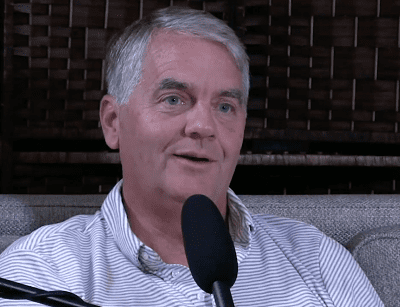
 Join us now as we interview David Ostler, author of the new book “Bridges – Ministering to Those Who Question.” In Part 1 we will hear David’s story – focusing on how he came to write a book in support of disaffected Mormons. In Part 2 and Part 3 we will explore his book, digging into his suggestions for how to minister to Mormons who are struggling with their faith, and how the LDS church can become a more hospitable place for Mormons who question/doubt/disbelieve.
Episode Transcript
Host: John Dehlin · Guest: David Ostler
This transcript is machine-generated and lightly edited for readability. The audio is authoritative. Please excuse occasional errors in names and spelling.
Introduction and Episode Overview
Part 1 of 3 · Ep. 1177
John Dehlin [00:00:00] Foreign. Stories is a production of the Open Stories foundation and relies solely upon the support of people like you, its listeners to help keep the podcast alive or to become a member of the community. Please become a monthly subscriber by visiting MormonStories.org and clicking on the Donate button on the right side of the page under support. All contributions to Mormon Stories are completely tax deductible in the United States and go towards producing the podcast and building communities and programs of support for Mormons like you. Thanks for your support. Cry baby, cry. Everything is gonna be all right. You gotta. Hello everyone and welcome to another edition of Mormon Stories Podcast. I'm your host, John De Lynn. It is September 18, 2019 and we are very, very excited to have with us today David B. Ostler. And David is the author of a brand new book for Latter Day Saints, or Mormons, as I like to call them. And the book is called Ministering to those who Question. I have read this entire book. It's published by Greg Crowford Books and it is a phenomenal book. I don't think there's a page in the book that I haven't marked up and I have several pages of points and questions to ask David. But this is a special book. We'll be digging into it. But the purpose of the book is to be a resource to leaders of the church and members of the church and the CLDS church, of course, that we're talking about who are trying to minister to those who are doubting or questioning. So I'm pretty sure the audience for this book is true believing kind of orthodox Mormons and any others who are just sincere in wanting to reach out to those who are struggling in a faith crisis and or who have stopped attending church as a way to show them Christlike love. And in that sense, I think my first impression was that it's a radical book and we'll get into why I think it's a radical book. But the format for today's discussion and we are live streaming on Facebook for those who are joining us there. And we'll be recording this for YouTube as but our format for today, we're going to maybe spend an hour talking to David just about his own personal story and what led to him wanting to write this book. And then we're going to at least hopefully spend two hours just digging into the book itself and really coming to tease out, teasing out and digging into all of David's recommendations. And I think it's a profound book. And so really quickly I'll just make one Quick announcement. For those who don't know, we are really excited to announce the Thrive Day that we're having. November 17, 2019. It's an all day conference on a Sunday in Salt Lake City. And the purpose of the Thrive Day conference is to. It's to host an all day conference for Mormons who are unorthodox or who have left the church. But the entire focus of the Thrive Day is to be positive, to focus on healing and growth and community for those who no longer are able to attend church. We have Amber Skora from the Jehovah's Witness movement who's coming to keynote. We have Wayne Sermon, who's the lead guitarist of Imagine Dragons.
David Ostler [00:04:16] Wayne.
John Dehlin [00:04:17] We have several amazing speakers lined up. Natasha, Alfred Parker, Christian Moore, Stephanie Sorenson Larsen of the Encircle House, Donna Showalter, Spencer Nugent. So many cool speakers. Others Mindy Gledhill, others that I haven't mentioned. And again, the whole purpose is to provide healing, support and community oriented towards growth for those who have left the church. So that that announcement doesn't totally fit this presentation, but I need to start announcing it because it's two months away and we're trying to get about 3,000 people to attend the conference. It's priced at only $15 for the entire day. We're set to lose a ton of money. There's no financial motive in this event, but we just want to administer to those who have left the church and need support. So in that sense, it is in the spirit of this book because post Mormons deserve ministering too. So with that, I come back to this interview. David Ostler, it's such a pleasure and an honor to have you on Mormon Stories podcast today.
David Ostler [00:05:24] Well, good to meet you, John, and I'm glad to be here.
Why This Book Is Groundbreaking and Courageous
John Dehlin [00:05:28] All right, so as I said, I think this is a groundbreaking book. I think that this book is an act of courage. I think it's an act of faith. And I think it's a radical book in the sense that it's calling us to be like Christ. And I think Christ not, not to use extreme rhetoric, but if you looked at Christ, I mentioned this to you before we started. If you look at Christ in the context of his day and time, the things that he was teaching were kind of radical. And in that sense, you're calling on all of us to be more Christlike. And that's how I. That's how I took the book. Are you okay with that introduction?
David Ostler [00:06:07] Yeah, that's. I'm fine with that.
John Dehlin [00:06:09] I.
David Ostler [00:06:09] You use more superlatives than I would. Maybe it was an act of courage for me to even write, but I'm glad you feel that way.
John Dehlin [00:06:21] Yeah. Well, I think it's an extremely well written book. So let's, let's start though, not by talking about the book, but by talking about your story. And I'd love to spend a good 30, 45, 60 minutes just on your background, because that's part of what we do on Mormon Stories podcast. So where would you begin about your own journey and what led you to write this book?
David Ostler's Background and Life Experience
David Ostler [00:06:43] Well, I'll just give you a brief summary of who I am and my life experience. And I think there's some of my life experience in the book that helped me want to write a book like this. I have a fairly traditional youth. I grew up in Salt Lake City on the east bench. My dad was a leader. I did all the things that one does as a youth in church. Eagle Scout, go on a mission, graduate from seminary. I think I graduated from seminary. I went early admissions to the University of Utah, so I'm not sure I completely finished that last semester of seminary, but was active in every way. I served a mission in Japan, came back and married Rochelle Taylor. Rochelle's an important part of my life and my family. And shortly after I graduated from the University of Utah, we moved back to New Hampshire and largely raised our family in the New England area. I got a graduate degree from Dartmouth College in business and took my first job in Boston and then moved back to the Hanover, New Hampshire area. Hanover is kind of famous for church lingo because that's where the doctor came to operate on Joseph Smith's legs. So it's very much in a part of the history of the church. And we lived there for almost 20 years and worked and established a career in what I would call evidence based medicine. This is kind of the way in which one takes looks at healthcare and uses data and processes to make it more effective and to be able to use evidence to prove out particular pathways for healthcare so that you assure yourself that you're getting the right kind of care. And so it's a very much of an inquisitive profession where one is kind of saying, okay, you say that this treatment will help someone, but where's the data that shows that? And so data and analytics became really kind of part of who I am, both because of that career and probably just because of the way in which my brain is wired. It was a very rural life and, you know, that's kind of an interesting life. We loved it. It was just wonderful. And while there, we raised six of our own children. And we had two foster children that we raised. They joined us when they were kind of 9 and 12. I think they were sisters. They are sisters. And so we raised them. So we had a rich family life and a rich church life. I served as a bishop, a young bishop. I think I was 33 or something, and knew less than I know now, and I know very little now. And then became a stake president while I was there and was responsible for. I think we had 13 congregations spread out through kind of 200 miles of rural New Hampshire. And we love that since that time, we've moved a number of times. We moved to Salt Lake and lived here for five or six years and then moved to Minnesota. And then my last job was in London, England, where I was responsible for a number of international healthcare businesses for a large multinational company. So we retired maybe seven, eight years ago. And then after that, my wife and I being in the career I was, I traveled a lot, and so I wasn't with my family as much as I would have liked. And it was nice to be able to retire early because of fortunate financial circumstances. And so my wife and I went to India, and we lived in India for a year doing some humanitarian work. It was in southern India, kind of in a very rural area. We worked with those that are affected by leprosy and kind of had a really interesting experience there. We lived there for about a year, and we weren't there all the time. We did some wonderful vacations and went to places of the world we hadn't seen before. But it was just fun to do that with Rochelle and kind of step away from kind of corporate world and live in a more humanitarian world. And while there, I got a call from the church to serve as the mission president in Sierra Leone, West Africa. And so Rochelle and I went there, this would have been 2013, and worked. This is one of the poorest countries in the world. Most people don't know where it is, but it's in West Africa. And it's probably most famous now for either blood diamonds and the civil war that happened there in the late 1990s or in the Ebola epidemic that we experienced and ended up closing the mission in 2014. So we lived there. Just start poverty. I mean, this is a place where one out of, I think, eight children die before the age of five. One out of 12 women die in childbirth. So, you know, you're dealing with kind of extreme poverty. And we loved our time there. It's not a simple mission, but we loved the time there. And then it was cut short as the mission needed to be closed because of that epidemic. And we had all of our missionaries reassigned to other missionaries, and we came home.
John Dehlin [00:12:44] So you don't get reassigned as a mission president.
David Ostler [00:12:46] You know, they don't have any missions that don't have mission presidents.
John Dehlin [00:12:50] So it's not like, you know, actually, occasionally that does happen. Yeah.
David Ostler [00:12:53] Well, they call them pretty fast.
John Dehlin [00:12:54] If a mission president gets in trouble, they'll replace him. But.
David Ostler [00:12:58] Yeah. And sometimes they'll do a kind of a parachute of someone in there.
John Dehlin [00:13:03] But the timing has to be perfect. Yeah.
David Ostler [00:13:05] Yeah. So we came home for a couple of months, and then, you know, on a Tuesday, I got an email. This was maybe four months later Tuesday got an email from someone in the missionary department saying, you know, what's your phone number? So you kind of wonder about that, right? You know, and then on Thursday, we got a call from general Authority saying, what are you doing? So we told him what we were doing, and he says, you know, I'll probably give you a call on Friday. So on Friday, he called us and asked us to serve as the directors of the historic sites at Hill Cumorah. And the only complication on that was, and we're doing training in Provo for all the historic sites directors on Monday. Would you. Could you accept the call and go to your training on Monday? So we quickly went to Nordstrom's and bought cold weather gear, since our Sierra Leone mission attire really wouldn't kind of COVID upstate New York winters, and then went on our mission on that Monday. And so we served there for a while, being responsible for the missionaries at the historic sites at Hill Cumorah, the Joseph Smith farm, the Whitmer Farm, and the Grandin Printing building there in Palmyra. So, you know, we've done a lot of different things, John. We've moved around. We've seen a lot of different cultures. We've.
Leadership Roles as Bishop, Stake President, and Mission President
John Dehlin [00:14:31] So you've been a bishop, a stake president and a mission president.
David Ostler [00:14:34] Yeah.
John Dehlin [00:14:34] Wow.
David Ostler [00:14:37] But all in very different context. All in kind of circumstances that are kind of not main Wasatch front kinds of situations. And having lived on four continents in four years, North America, you know, Europe, Asia with India and Africa, you know, we've just seen a lot of the world and have kind of comfort in the diversity of the world. And, you know, that's been wonderful for us to be able to see that and have it shape our views. So that kind of takes us up to maybe 2016 or so.
John Dehlin [00:15:19] And that's when you.
David Ostler [00:15:21] The.
John Dehlin [00:15:21] The first inklings of the book started emerging.
David Ostler [00:15:24] Yeah. So we got another calling. So we're back in our stake in Northern Virginia. We live.
John Dehlin [00:15:30] Can I. Can I jump back for one second?
David Ostler [00:15:32] Sure.
John Dehlin [00:15:32] Is that. Okay. So what year did you graduate from high school? Just so I can get a sense for 75. 75.
David Ostler [00:15:37] So I'm 62.
John Dehlin [00:15:39] So you're 12 years older than me. Okay, so. Because. Because I think a lot about all the people that come before, not only your work, but mine. I'm. I'm really. And because your book, like, if I were my best self, the best possible self, I almost feel like this is the book that I would have aspired to write. And I've been doing this a long time. So, you know, I've been doing this formally since 2004, 2005, but I've been doing it informally since 2001. And so. But I've also been paying attention since. Since 19. Early 1990s. And. And so I'm curious, you know, you channeled this book somehow, wrote it in a couple years, and yet it's. It's including so much. And so I'm just curious. So, like, when Dialogue was started with. With Gene England in the 60s, and as dialogue kind of was doing its thing, Dialogue, the journal of Mormon thought, 70s, 80s, 90s, were you aware of Dialogue Journal?
David Ostler [00:16:50] You know, distantly, but I wasn't kind of a reader of or, you know, wasn't. I wouldn't say that I was following kind of those cultural or academic analyses of, you know, Mormon life.
John Dehlin [00:17:04] Okay.
David Ostler [00:17:05] You know, so I don't have that history and background.
John Dehlin [00:17:08] So. Same with Sunstone. You would have never attended Sunstone.
David Ostler [00:17:11] No.
John Dehlin [00:17:11] Red Sunstone magazine.
David Ostler [00:17:12] You know, I certainly would have been nervous about Sunstone. It kind of has a brand that, you know, was different than, you know, what I was comfortable with.
John Dehlin [00:17:22] Sure, sure. And so would you have heard at some point about Von Brody's book or the Tanners?
David Ostler [00:17:29] Like, I knew of them.
John Dehlin [00:17:31] Okay.
David Ostler [00:17:32] But I hadn't read them, you know, growing up or in my probably 30s or 40s. You know, those would have been anti Mormon.
John Dehlin [00:17:41] Yeah.
David Ostler [00:17:42] And so I wouldn't have read them. I was aware of them.
John Dehlin [00:17:46] Perfect. And then when the September 6th stuff happened in 93, where the scholars were excommunicated, would you have known about that in 19?
David Ostler [00:17:55] I knew about it. But, you know, I'm living in New Hampshire.
John Dehlin [00:17:58] Right.
David Ostler [00:17:59] You know, and we have more moose than we have members of the church in New Hampshire, so. You know, this.
John Dehlin [00:18:05] Did you say moose?
David Ostler [00:18:05] Yeah, I mean, you know, there's a lot of moose in New Hampshire, and there aren't a lot of members in New Hampshire. So, you know, I'm living in rural life, and, you know, the Internet is kind of nascent. You know, there's some stuff that's out on it about this time. I'm aware of it. And I lived in a ward that is an academic ward. It was a ward around Dartmouth College. And so there were folks that
John Dehlin [00:18:36] would
David Ostler [00:18:36] be aware of this. And so it would kind of surface, but not in a mainstream sort of way at church. So I think you're kind of asking what in my background kind of made me comfortable with the material and maybe in some ways a life experience that prepared me to. To think this way kind of.
John Dehlin [00:18:58] But I'm also, like, curious if any. If all this was done in three years or if. If there were touchstones along the way where you either had your own faith crisis or got exposed to some of these materials earlier on, and if so, how you dealt with it. Because, you know, after September 6th, there would have been, you know, blogs and podcasts emerging in 2005, and then, you know, eventually the church would have started excommunicating. I mean, before that, there were lots of efforts to try and do similar work to yours. Like when I created the stale DS website, when, you know, just over the past 10 years, many of us have tried, even pre. Patrick Mason's book, pre Thomas McConkey's book, lots of efforts to try and build understanding, to get. To build compassion, to try and get the church to understand. And my sense is you kind of weren't aware of any of that until just a few years ago.
David Ostler [00:19:54] Yeah, I mean, I. I wasn't aware of your work until probably two years ago.
John Dehlin [00:20:02] So even the excommunication, I was aware
David Ostler [00:20:04] that you can excommunicator, but I. I mean, we were living in London and then Africa and India, and so we weren't kind of confronted with these kinds of issues just because of where we lived and our stage of life. And I'm flying to China every other week.
John Dehlin [00:20:21] Yeah, sure.
David Ostler [00:20:23] So it's busy. I think I've always been aware that people's life experiences are so different and that we do better when we understand those differences as we minister. So I recall, for example, so I'm a young bishop. When.
John Dehlin [00:20:47] How.
David Ostler [00:20:48] When was I called as a bishop? Probably 1990, somewhere in there, maybe 89. So, you know, I'm young, you know, no, nothing. But I'M aware that the male, you know, the patriarchy of the church, the male leadership structure in the church, is really difficult for many women and some men. And so we would plan our sacrament meetings to have all women speakers, and we'd be overt about that because we felt like that was important, because women need to be visible in our meetings, and women can give just as good a talks as men can, and women talk differently and have different life experiences, and we need to look up and see people like us. And so, you know, I do things like that. You know, I'd be really comfortable with that because that would reach kind of the individualness. So I wouldn't say that I'm. I'm woke or, you know, anything like that. But, you know, I think I was very comfortable examining what do we need to do in order to be helpful, what do we need to do to be able to reach each person in the pew? And I have a lot of regrets about my lack of understanding about that. I have a lot of regrets about mistakes I made in that period of time, because now with another 20 years or 30 years of experience, I can see that even though I was aware of some issues, I wasn't aware of many issues. And because I wasn't aware of them, I'm sure I did stupid things. And I know I did because I woken up in the middle of the night as I kind of relived some of those experiences where I just blew it because I didn't know any better or because I was lazy or because I didn't have understanding or, you know, because I wasn't in a good mood or whatever. So I've also had personal experience in my family. We raised eight children. Not all are active members of the church. They've had their own life experiences that have. Have played out. And they have. Some of them have. I guess all of them do. Everyone has different beliefs. Some of their differences have led them away from the church, but that was really More in the 2014, 15 kind of time frame and not earlier. Okay, so that might have prepared the
Personal Faith Journey and Children Leaving the Church
John Dehlin [00:23:28] soil a little bit, having some of your own children leave the church.
David Ostler [00:23:32] Yeah. So, you know, every mission we serve, one of our children gives us a call during the mission saying, hey, dad, mom, you know, can't do this anymore. And so it was really kind of in that time frame where my own adult children, my youngest child now is 25, 26. So my children are older, and they're starting to make young adult decisions or adult decisions. And sometimes they make decisions that take Them away from the faith. So after we came back from Palmyra, we got a call on our stake to. It was called a church service mission. So it actually was badged. You know, we had badges, we never wore them. But we were called to minister to the singles in our stake. And in Washington, D.C. there is a young single adult stake. So if you're a young single adult and active, likely you will be attending the young single adult stake. There is also a mid singles ward. So if you're over the age of 30, it may even go to 45 or 50. You might be attending the mid singles ward. So most of the singles interstake don't attend because they're choosing, you know, they're not in one of these other single type wards. So we had about a thousand of them and about 800 of them don't attend church.
John Dehlin [00:24:58] Yeah, you said in the book, like 20% attended, right?
David Ostler [00:25:00] Yeah, so it's about 1,800 and 200. So, you know, we're not an inner city stake. We have lots of leadership. So they weren't looking for us to go out and knock on doors because the ward has that capacity to knock on doors and find out why someone's not coming to church. So we wanted to be maybe more systematic and say, well, so we got these 800 people, why don't they come? You know, so let's ask them. So that's really kind of where the book's origins came.
John Dehlin [00:25:38] Your first, the survey, the first survey you did about why the young people weren't attending. Had you ever had anything like a faith crisis yourself prior to that time?
David Ostler [00:25:48] No, I don't think so. I mean, would I be nuanced? I don't know what nuanced means. You know, was I comfortable with. No, I mean, I'm, I'm, I'm believing. Member of the church.
John Dehlin [00:26:06] Like the dark. You talk about the dark night of the soul in the book.
David Ostler [00:26:08] I haven't had a dark night of the soul.
John Dehlin [00:26:09] You've never had that. When you talk in, when you talk about kind of the historical problems that people end up stumbling on in the book, like, you know, polyandry or book of Abraham or whatever. Had you struggled significantly with that? Did you. Were you aware of the, the major kind of CES letter type issues prior to this calling, and if so, had you struggled with them or grappled with them or were they just not problems for you?
David Ostler [00:26:36] No, I, I was aware of them. So there's kind of nothing. Is there anything that I kind of hit in My research for the book that I didn't know before, not kind of academically, so it's not like I never knew about Meow's Massacre. You know, I knew about that.
John Dehlin [00:26:56] You knew about polyandry. You knew about polyandry, the Book of Abraham problems.
David Ostler [00:27:00] But I probably hadn't read, you know, the story of the Kimballs bringing their daughter over to Joseph. You know, that's probably a story I hadn't read.
John Dehlin [00:27:07] Got it.
David Ostler [00:27:08] Did some of those things trouble me? Yeah. I mean, I grew up in the 60s during a time when blacks couldn't hold the priesthood.
John Dehlin [00:27:17] And that troubled you?
David Ostler [00:27:18] Pardon?
John Dehlin [00:27:19] That troubled you?
David Ostler [00:27:20] Yeah, yeah, I remember. And I think I allude to this in. In the book. You know, I. I went backpacking with a friend up into the mountains, and. And. And I think I'm 18 at the time. I think it's the year before my mission, if I get that right. It might have been the year of my mission, but no, it was the year before my mission. So I was 18. And, you know, I kind of felt an impression that, you know, it'll work itself out. And so I was able to still go on a mission. And I'm not sure I was at the point. I wasn't in crisis about it. I was aware of it. It bothered me. I was concerned about it. And I remember where I was in Japan on my mission when I heard about the proclamation allowing blacks to fully participate in the church. And, you know, that was great blessing. I felt joy and happiness about that and felt like some burden had been removed. So my wife and I have always kind of been able to talk about these kinds of issues, and I think that's been helpful. I've been able to see things from her perspective. Rochelle has strong feelings about the importance of women and sometimes how we dehumanize women in the church. And so I've been more sensitive to those issues. I still don't get it because I don't live her experience experience, but I can understand a lot of it, and that can shape the way in which I act. And, you know, when I'm a leader, to be in a particular way. So I'm aware of these kinds of issues. Probably the issue that I was least aware of, because I had the least experience about it, was some of the challenges of sexual orientation and sexual identity. And I think those are more issues. I started becoming more acutely aware probably in 2013 and 14, and I don't have any immediate family members who are gay or lesbian or transgendered that, you know, of that I know of. I have a cousin that I know of, but.
John Dehlin [00:29:32] But your brother's done a lot of
David Ostler [00:29:33] work in the association, so. My brother has, yeah. And his name is Richard Ostler. Richard Ostler, yeah. A Papa Ostler to many. And I'm not sure kind of where his timing was. If I kind of go back through, it's probably about in the 2015, 16, 14 time frame that he's starting to talk about these issues. And so I remember my own process of trying to understand issues of sexual orientation. And I have a daughter who has been able to help me understand these issues. And so I can ask her questions, and she'll say, well, dad, you need to think about it this way. Well, what about this? And she says, well, yeah, but here's why. And she'll help me kind of walk through in my own mind how I can think about things a little bit differently. So I've had some mentors that have helped me where I've wanted to learn something, and they can help me learn it because my own life experience maybe isn't exposed that way. And that's been wonderful. And my children have really been a help for me in many ways, in addition to Rochelle.
Awareness of Church History Before Writing the Book
John Dehlin [00:30:48] So if I were to summarize what I've heard. Tell me if this is right. None of the historical issues that you mention in the book were you unaware of prior to starting to think about the book. But maybe, number one, none of them had ever caused you to seriously doubt the church. And two, you probably didn't maybe dig into them deeply, but you just had a general understanding of the main issues.
David Ostler [00:31:12] True. Yeah. I probably dug in more deeply on polygamy. You know, that was one. I probably became aware of Joseph Smith's polygamy in the late. Probably 2005, 2008.
John Dehlin [00:31:26] Was that with Rough Stone Rolling coming out or.
David Ostler [00:31:29] Well, I read Rough Stone Rolling. I think I knew about it before. I remember going to Wikipedia once and kind of going through, you know, what Wikipedia said about it. And so, you know, I didn't learn it at church, I guess. Right.
John Dehlin [00:31:46] Yeah. Yeah.
David Ostler [00:31:47] So I'm not exactly sure how I learned it. Yeah, I did learn. Bothered me at the time.
John Dehlin [00:31:53] Right.
David Ostler [00:31:54] I think it's one of those challenges that we, you know, have to. That can be difficult for people. It's our history. It's who we are. It's where we came from. And so I can understand why it's difficult. And, you know, for me, as a believing member of the church, I have to say, well, you know, if it was wrong and a mistake. Can I still believe in Joseph Smith and his prophetic role? And. And I can. So I've had to ask myself that question. So. But that wasn't a dark night of the soul. It didn't challenge kind of the very foundations of who I am and what I believe. So I want to kind of honor that some people have, you know, real dark dissonance with regards to some of these issues, and I did not. Even though there were and still are and always will be. It's called faith. It's messy. It's who we are. It's full of imperfect people. And, you know, so I think that there are those things that, you know, we are just messy. So you.
John Dehlin [00:33:10] You've had some exposure to the historical issues, but nothing that ever really caused you to kind of go down the rabbit hole of. Of really questioning the church's truthfulness.
David Ostler [00:33:20] No.
John Dehlin [00:33:21] Yeah. That's remarkable that you can write a book so compassionate and so spot on without having been through the thing you're trying to minister to. But I think your methods that we'll get to in the book about really listening and, and connecting with people must be how you. How you pull that off, because you. You just really listened with your full heart and with an open mind, and that's how you came to understand something that you had never been through yourself. Maybe. Yeah.
David Ostler [00:33:52] I mean, I want to kind of face who we are and where we come from. You can't skate over that. You can't move beyond it. I know that a few years ago, when Traveling back from St. George to Salt Lake City, we chose to take the long road and go through the mountain meadows area. I'm not sure there isn't a town there, but we, you know, went to the historic site that was there. We did that with a couple of our kids. And that was important for me to go there and kind of recognize the darkness of. Of that event and to. To be willing to face that. I. I know as a missionary at the historic sites, when, when I would greet visitors, I would often quote from different accounts of Joseph S.M. smith's story of the first vision, because there are multiple accounts, and I think it's important to acknowledge them and recognize the reality of that, even though that's difficult for some people. We would talk about seer stones at the Whitmer farm and hats and things like that. That's kind of where we come from. We're in New York and not in Kirtland, so we don't have to talk about polygamy so, you know, that's who we are. I remember as I was writing this book, as I was thinking about writing the book, I still hadn't committed to writing the book until about May of 2018. So that's when I said, okay, I'm going to do at night. I was on a trip going through Germany, and I'm just going to pull out my phone because I want to read the quote. And Germany is fascinating for all sorts of reasons, but we were in eastern Germany and in particular traveling through Berlin. And in Berlin, so much of the historical that we saw there that were really interesting were related to Nazism. And we were traveling through the Berlin. If I can't find this, I'll be really disappointed. I think I can paraphrase it. We were traveling through the Berlin metro station, and there was a quote on the wall in English, and it's by a civil rights leader, an American civil rights leader named James Baldwin. And the quote was, that which we cannot confront, we cannot change. And I think I got that quote right without looking at the picture. I'm bad at memorizing things, but. But that, to me, became kind of a guiding principle with regards to this issue. It's people leaving the church, my children leaving the church, you leaving the church or whoever. Feeling like they can no longer be there, to me represents, to some extent, a failure in the church. I realize that the church isn't for everyone, but the church could be for more people if we could confront who we are and confront some of the difficulties associated with disaffiliation. And so I felt like I needed to confront it and confront it in a way that would be accessible to a traditionally believing member of the church and could be understanding and not threatening to them, but was honest to the issue. So that's the tension that I felt in the book was how to be. How to accurately and honestly represent the voices of those who have chosen to leave or struggle to stay. But to put that in a format and a structure that would allow someone with my background or someone who's less maybe aware of these issues to become understanding. And that was really the approach that I did with the book. And I felt like it needed to be written because there are resources we can discuss the quality of them that are kind of focused on someone who has questions or someone who's in a faith crisis or someone who's left. There's a lot that's directed that way. There's little that's directed to leaders and parents on how to consider this as an issue. And we both know, and you know, I think probably the vast majority of your members or your listeners here know that leaders often act out of ignorance on these issues and have preconceptions about reasons for disaffiliation. And because they, and they do it usually in really good intention, but because of their lack of understanding, there they are not often. They're not always helpful and sometimes they're even hurtful in the process of faith crisis and religious deconstruction and just even questioning or doubts. You know, it doesn't have to be a dark night of the soul or it can be in just differences of who we are. So, you know, that's kind of where I wanted to take the book and the information.
The Decision and Motivation to Write Bridges
John Dehlin [00:39:55] So when you first made that decision to write the book, did someone ask you to write it? Was it just. Was there some impetus other than reading that quote? Was there some event that kind of really either that you attribute to leading to the writing the book, personal event, or some request or some external influence or influences.
David Ostler [00:40:19] So in this assignment, one of where we kind of got with it was we wanted to work with our stake leaders, stake and ward leaders to help them understand these issues.
John Dehlin [00:40:31] This is in the Virginia stake.
David Ostler [00:40:33] Okay. So we're, we're working with these leaders and trying to communicate this and, and, and leaders have a lot that's going on. You know, we're one of many of their priorities. There's a lot of changes going on in the church, et cetera. And I felt like there simply were not good resources for them to understand this. And it couldn't be handled in a 10 minute presentation. So, you know, we were talking to bishops and ward council members and state council members and kind of had, would have 15 or 20 minutes on an agenda. And we, we'd go through and kind of talk about some of these issues. But because there often was the disconnect of, you know, doesn't everyone leave because they want to sin or because they've been offended to. No, there's, you know, really some significant issues that if we talk about, we can respond effectively. And that's not a 15 minute conversation, you know, that's a longer conversation.
John Dehlin [00:41:37] Yeah.
David Ostler [00:41:37] And so in those settings, there really wasn't an ability to go from here's where we are today to here's where we could be. And to do that kind of quickly and effectively. And so kind of in my mind I realized that there needed to be a more comprehensive resource on this than a set of five slides in a PowerPoint presentation that would kind of tip everyone away and help them see something they haven't seen before. You know, we're really asking for many of our leaders and our families and our parents to go through a shift of perspective that is not simple and that hasn't always been taught at church in a way that allows that change to occur quickly. You can't just have a general conference talk and say, you know, we're going to rename the church from the Mormon Church to the Church of Jesus Christ of Latter Day Saints. Everyone picks up on that really easily. But when you talk about the reasons why someone might disaffiliate, you have to. It's far more complicated to change people's views as to why people might disaffiliate than simply a simple conference talk. So that means you have to write a book.
John Dehlin [00:42:59] Did you, like, check with church headquarters, check with any general authority contacts or friends and say, hey, I want to do this. Did. Was there any communication about this as a project that kind of had support from people inside the church? No.
David Ostler [00:43:15] I mean, I know some people inside the church, but. I didn't feel I either needed permission to do that. I also didn't feel like. I didn't feel uncomfortable about doing it. Like they would be, you know, angry or sad or feel like I'm going the wrong direction. I asked a number of folks that I know whether there's kind of training for stake and ward leaders on talking about disaffiliation that comes through kind of the traditional channels and didn't feel like there was. I realized that there's a lot of variation between kind of the ecclesiastical leaders that stake presidents work with, which are really area and general authority 70s and in their coordinating councils, you know, there's a lot of variation between what one general or area authority will say and what goes on in another council, because they're different people and there's different needs that are there. I'm aware that some have addressed this, and I'm aware that some, maybe most, don't address it. You know, there's other issues that they feel important to address when they get all the stake presidents in an area together. So I didn't feel like I needed permission. I didn't feel like they'd be mad if I did it.
Publishing Path and Working with Deseret Book
John Dehlin [00:44:50] Did you have covert books as a targeted publisher from the start?
David Ostler [00:44:54] No, I wanted to publish it through Deseret Book.
John Dehlin [00:44:57] Oh, okay.
David Ostler [00:44:57] So, you know, my focus was make this as safe as possible for a leader to be able to pick up. And so I went through the process There met with them, gave them an early draft of several of the chapters
John Dehlin [00:45:11] because Tom Christofferson and the Givenses had been able to publish Sue Desert book.
David Ostler [00:45:15] Yeah. And I'm very sympathetic to the reason why they cannot publish my book. There's too much in here that is leadership focused. And I have a whole chapter called Ministering at Church, and I give direction or guidance or thoughts or ideas to bishops and ward councils and stake presidencies and stake councils. And Deseret Book doesn't publish leadership books. And if you go through their books, you'll see that they don't do that. So even if you look at the Givens books or Tom Kristofferson's books, they don't direct leaders or give advice to leaders on that. And I felt like it was an important part of the book and that I needed to have that in. I would have hoped that they could have published it, but they. I think they sincerely considered it, and their response to me was, we just don't do leadership books.
John Dehlin [00:46:10] Got it.
David Ostler [00:46:11] So, by the way, they're selling it. It's on their website, and it's in their stores.
John Dehlin [00:46:18] That's good.
David Ostler [00:46:19] So it can't be published through them, but, you know, they do publish or they do sell other books. A good example of another book that they sell is Stone Rolling. Well, rough Stone, Nylan McBain's book on women at church.
John Dehlin [00:46:34] That's a covert book as well. Yeah.
David Ostler [00:46:36] And, you know, that's a great book. I read that book probably before both of my missions, and I think it came out maybe in 2011 or 12 or 13 somewhere in there. So, you know, I've read that book, and to some extent, I felt like this book needed to, in some ways, model itself after Niland's book. You know, it was all. She has a paragraph in there about how everything in the book is consistent with church policy and practice. And she really tried to write that book, I think. I haven't talked with her about it, but in a way that would be accessible to a leader.
John Dehlin [00:47:13] Yeah.
David Ostler [00:47:14] Okay.
John Dehlin [00:47:15] So I can see at least three challenges if I were to consider writing a book like this from your perspective. One is, how do I understand what it's really like to go through the dark night of the soul if I've never gone through it? The second is, whatever recommendations I'm going to make, how do I know that the award or a stake setting would be compatible with the recommendations that I'm making? And then a third would be, how would I know that the recommendations that I Make. Even if award and a stake were fully amenable to your recommendations, how would I experiment that these recommendations actually are effective at ministering to people in a faith crisis? So this is a big question, but how. How did you prepare and gather the information necessary so that you could know? I feel pretty good about nailing the faith crisis thing and the dark night of the soul. I feel pretty confident that my recommendations will work in a church setting and that they'll be effective for those who are being administered to. Did you understand that?
David Ostler [00:48:31] Yeah, I do understand. And I'm, you know, I think I understand the answers to one and two better than three. Okay. But so in terms of number one, you ask people, you know, what's it
Understanding What a Faith Crisis Feels Like
John Dehlin [00:48:45] like to have a faith crisis?
David Ostler [00:48:46] Yeah. And so you interviewed what, 20 people?
John Dehlin [00:48:49] How many?
David Ostler [00:48:49] I probably interviewed about 40 or 50.
John Dehlin [00:48:52] And you surveyed.
David Ostler [00:48:53] So I did a survey and had 320 respondents of people who said they were currently in a faith crisis.
John Dehlin [00:49:01] And how did you recruit?
David Ostler [00:49:03] So I went through some Facebook groups. Facebook groups. So it's what Jana Reese calls a snowball survey.
John Dehlin [00:49:08] Right.
David Ostler [00:49:08] So it's not statistically valid. It's not representative. Not representative.
John Dehlin [00:49:13] But it's a common way social scientists recruit.
David Ostler [00:49:16] Yeah. So I got 320 or so. Maybe it's. I can't quite remember, but it's in the low 300 respondents. And I asked them to respond to about 75, I think, statements or questions like, do you believe wholeheartedly in the teachings of the church? And I used some similar wording of. Of questions to try and tie back to work that Benjamin Knoll and Jana Reese had done that had been published in Dialogue magazine. What was that? Winter of 2017, 16. Somewhere in there so that I could match up. But I asked questions about what triggered their faith crisis. What are their concerns? Do they feel like they belong at church? Do they trust church? Church leaders and the like. And so there were a lot of questions that I asked there. I also created a faith crisis focus group and had about 85 people. This was a close Facebook group. And I recruited people that would be willing to answer questions. It's interesting. There's a number of them that no longer are in a faith crisis and they've left the church, but these people were in a faith crisis at the moment. And so I could ask them questions and I could try and understand what they were experiencing, and I could understand what would be helpful to them at church. And I think I explored some pretty interesting issues with them, and I learned a lot. And Then I did interviews with people. And, you know, you're the master of interviews. You know how important these are for people, and not just for the person who's being interviewed as a chance to kind of voice and express their experience, but for someone like me, it was just wonderful to be able to have them tell me things that would help me understand this issue better. And I use a couple of these stories in the book because there's a couple.
John Dehlin [00:51:27] Proxy.
David Ostler [00:51:27] Use two proxy, kind of two major stories there.
John Dehlin [00:51:31] What are their names?
David Ostler [00:51:32] Mike and Amanda. I have to be careful that I
John Dehlin [00:51:35] don't use the real names, but.
David Ostler [00:51:40] And what was interesting, both of them, after the interviews, thanked me for the interview.
John Dehlin [00:51:47] Yeah, you mentioned what their comments.
David Ostler [00:51:49] We'll.
John Dehlin [00:51:49] Maybe we'll come back to that in your last chapter. Right. You talk about their reactions to the book. But go ahead. What were you going to say?
David Ostler [00:51:56] It's really important for people to feel heard. And there were a number of interviews that I did that are not in the book. And a fellow who I interviewed and then didn't retain contact with him until the book came out, he messaged me after the book came out, and he said, dave, I just want you to know that that interview that you did with me allowed me to stay in the church just doing the interview. I didn't even help him. I didn't even say, well, you know, here's the magic answer for how you can stay in the church. It was just being heard helped him feel like he could stand. I don't know if he'll stand forever because, you know, we need to be heard every day, not just once a year or once every 10 years. So. But. So I've had enough of those experiences to know how important it is for those stories to be heard. And so I wanted to be able to personally understand it and respect it and then write about it in a way that really honored the individual experiences that people had. And I think I write about it in the introduction. This was an area that surprised me. The level of pain and challenge of going through a dark night, that surprised me. You know, I had heard stories like, well, if you just leave the church, just leave the church. You know, and why is it a big deal if you don't want to come? And I realized in a way that I hadn't before how our whole lives are wired if you grow up in the church and serve as both Mike and Amanda had throughout their whole lives up until that point, in a way that would be considered orthodox. And then faith breaks. How tremendously devastating that is, emotionally and psychologically, I just didn't understand that. And I still kind of only understand it intellectually because I haven't had that same experience. But I did enough of these interviews to respect that that is true for many, many people.
John Dehlin [00:54:09] So between the 20. Or did you say 20 or 40 interviews?
David Ostler [00:54:13] About 40.
John Dehlin [00:54:14] 40 interviews and over 300 survey respondents
David Ostler [00:54:18] and the focus group of 85 and
John Dehlin [00:54:20] the Facebook focus group. Any other, like you had mentioned, the Greg Prince study that I did with Greg and Travis Stratford and Hans Mattson and any other background research or resources that you consulted. I'm just curious.
David Ostler [00:54:33] Well, I mean, I kind of. I kind of went everywhere. So, you know, I have frequented the Exmo Reddit thread. I've listened to podcasts, a lot of
John Dehlin [00:54:42] different kinds, which were some of your main podcasts.
David Ostler [00:54:46] I listened to Bill Real. I mentioned. I've listened to a couple of years. I listened to Gina Colvin, Dan Witherspoon. Dan.
John Dehlin [00:54:55] Mormon Matters. A Thoughtful Faith. Yeah, Mormon discussions.
David Ostler [00:55:01] I didn't kind of know. I mean, I. I now have a subscription to Dialogue magazine. You can toss out others and see if I've heard of them or listened to them. But I. I kind of. I mean, I'm retired, so I've got time. And so I. I'd listen to a lot. I'd read a lot. I'd, you know, follow. I'd be in Facebook groups. People would let me be in Facebook groups so that I could, because of what I was trying to accomplish, and they knew I was sincere and could abide by the rules and the privacy associated with that. And, you know, it changes you. You know, you don't kind of experience what other people are experiencing and not change. And I don't think that's been a. Like a crisis of faith, but it has kind of opened my eyes to some of the limitations of our ability to reach out to people who have differences. And they aren't kind of doctrinal constraints. They aren't policy constraints, although there are some policies that are really difficult. But so much of it is just the social structure of our wards and our preconceptions about certain ideals and ideas that get in the way of doing that. And so it is sometimes hard for me to see us do something where I know that the doubter that's sitting two pews away from me is hearing those words in a way that the speaker or the leader doesn't see, didn't intend. But, you know, it's being felt like that by that person. And, you know, it just makes you sad. And then it makes you doubly sad to know that you were that leader, you know, at one point and, you know, you were the one that was saying things that you thought were the right things to say. But with more understanding, you realize that, you know, you, you didn't have understanding.
John Dehlin [00:57:21] Did you, in your research, did you get a sense for the stakes in terms of individual depression and anxiety, in terms of, you know, marital disruption, in terms of potential divorce and the fracturing of families, in terms of alienation between. Between spouses, between parents and children, siblings, and even the possibility of severe mental illness or suicide connected to the faith crisis? Were you able to get?
David Ostler [00:57:51] I was, but not as systematic as now. I wish I had. So if I were to write a second edition, I would go down those roads and specifically go around, go down the road of marriage. I should have had at least a section in the book about marriage.
John Dehlin [00:58:10] Navigating a mixed faith marriage.
David Ostler [00:58:12] Yeah, yeah. And I don't have a mixed face marriage. So I focus more on what I personally was aware of, which is the leadership challenges and the parental challenges. And I think if I had had more insight into that that I've gained post publication, I would have added things there.
John Dehlin [00:58:36] Are you considering a second edition?
David Ostler [00:58:38] Second edition? You know, John, I'm a business guy. To ever think I would write a book in the first place and then to think about, like, revising it, I don't know. I think, you know, I'm not thinking about it. But who knows who. Is on the brink of perforation? You think you're losing your religion.
John Dehlin [00:59:05] You second guess your own existence. Thank you for joining us today on Mormon Stories. If you enjoyed this episode, please help us make more like it by becoming a monthly subscriber@mormonstories.org where I be rabbit Hole an album chronicling the heartaches and rewarding discoveries of her Mormon faith crisis. You can purchase her album on itunes or by visiting mindygledhill.com.
David Ostler [00:59:48] It.
Is There a Place for Doubters in the Church
Part 2 of 3 · Ep. 1178
John Dehlin [00:00:00] Foreign. Stories is a production of the Open Stories foundation and relies solely upon the support of people like you, its listeners to help keep the podcast alive or to become a member of the community. Please become a monthly subscriber by visiting MormonStories.org and clicking on the Donate button on the right side of the page under Support. All contributions to Mormon Stories are completely tax deductible in the United States and go towards producing the podcast and building communities and programs of support for Mormons like you. Thanks for your support. Cry baby cry.
David Ostler [00:00:55] Everything is gonna be all right.
John Dehlin [00:00:59] You gotta. We're back. Hi everyone. We are here to discuss the book Bridges Ministering to those who Question by David Ostler, former Mormon bishop, Stake president, mission president, and a remarkable interviewee in my opinion. This book is published by Greg Crawford Books and and it's all about it's written to and for orthodox Mormons and leadership about how to minister to Mormons who question, who are in faith crisis, who doubt, and even who leave the church. And I think it's a marvelous book. I highly, highly recommend it. As I said in last episode, it's the book I wish that I had written if I could have been my best self. So it's a great book and we're going to dig into it now. I have read the whole thing. I don't think there's a page that isn't marked and I'm going to begin. I don't know why I picked this as a place to begin, but I'm going to start on page 130. And you write in the book the other day I talked with a man named Jim who stopped believing in attending church several decades ago. As we discussed the average church experience, he said, it's Sidney or the Bush, an Australian saying that means it's all or nothing. In other words, he was expressing common sentiment that there isn't a way for someone to participate in the church if they are not a complete believer. And then he goes on to write, When Jim stopped attending, he believed in Christ and wanted to live his life in a Christlike way. But he did not believe that the church had a monopoly on truth. He found it difficult to participate because he didn't agree with the claim that the Church of Jesus Christ of Latter Day Saints is the only true and living church. We spent about an hour talking about whether someone like him could find space at church, even though we do teach and believe that the church has a unique role within the plan of salvation. Is there a place in our wards for Jim and for Others who don't fully believe in every doctrine. And part of the reason why this struck me so hard is when my brother Joel was working at church headquarters as the chief information officer for the church, and I was going through my faith crisis and trying to minister to those, while I was still in. To those who were disaffected. He set up two meetings with Elder Holland. And in my. And I just thought for weeks and weeks and weeks, I knew that I was going to be meeting with Elder Holland. And I thought, what am I going to ask him? Like, what in the world could I ask him? I'm not going to ask him about Fanny Alger. He probably doesn't have a good answer. And that's probably just going to be embarrassing for my brother and for him. I'm not going to ask him, you know, I'm not going to ask him about church history tidbits. What can I ask him? And the one question I did ask him at the end of the interview was, is there a place in the church for Mormons like me, John de Lin? And his response, he almost like. It was almost like he rose from the table and he kind of pounded. And he said, yes, there is a place in the church for John Dehlin and for Joel delin. We want 100,000 John and Joel Delins in this church. And that was my first meeting with Elder Holland. And that got me really excited to think that there was a place. Obviously, things didn't work out so well for me and for others who have tried to go down this road of helping the church figure out how to minister to those who are struggling. But I think this book. I think that that quote from Jim really gets to the heart of the matter, but I think it's twofold. It's. It's. So I think you're. I think Jim's statement covers it, but there's kind of two parts. Can the church become an organization that's. That's loving and supportive and compassionate and safe for someone who no longer believes some or all the church's truth claims? And can. Can that environment be compelling to make someone who has kind of lost their traditional faith want to stay in? And I think that's that, to me, that's the heart of your book. How do you feel about. About that as an introduction and then we'll get into who the book's for and kind of what you're saying in the book?
David Ostler [00:05:33] Yeah, I. I don't know if I have all the answers on this. If you know the story, you Tell about Elder Holland saying there is a place for you. I think there's a different. There's an answer that I would say which is we have to make a place for people like you at church. Clearly there is, you know, the church's whole. At its core it is to bring all unto Christ. You know, there isn't someone who it doesn't want to bring unto Christ. The terms of that are difficult because there's always an expectation in there that people are going to change in a way, and if they don't do that, then they're not coming unto Christ. I'm not sure I'm saying this real well, but. I think there's two concepts here. One is we have to figure out the unintentional things that we do that make it difficult for people like Jim to feel like they can come and worship with us. And the book talks a lot about that. There is another kind of challenge which speaks to the desire that we have implicit in a word like ministering, which means that we're trying to fix people and make them a particular way so that they are coming unto Christ. The church has motives, it should have motives. It has beliefs, it has passion and doctrine that compels us to want to come unto Christ, compels many to want to come unto Christ. And so it's not benign in this. It's an active participant does want people to change in a particular way because they have doctrines and beliefs that compel us to want to change that way. But sometimes we're so dogmatic in our belief around that that we make no space for people to come on their own terms, in their own stage, their own place in that setting. I'm not saying this very well. I'm sure you know where I'm going. Yeah, yeah. And you probably can ask some clarification. That kind of breaks this up into little pieces. But I know when I was a bishop, for example, I did want people to change, but I did that so poorly that at times the things I did made them gems, saying I can't stay. Which meant that I had no influence and no ability to be able to talk about the doctrines of Christ that I think are powerful and liberating.
John Dehlin [00:08:46] Right. So how can the church guard what's precious, including its identity, its doctrine, its policies, its vitality, its strength, and still follow Christ's mission of trying to bring all being the most effective as possible at bringing all into Christ, including those who doubt some or all of the church of truth claims or have legitimate concerns about the church's practices and policies.
David Ostler [00:09:18] Yeah. Right. So I think that is the question. And the answer is we can do a lot better than what we're doing.
John Dehlin [00:09:23] That's the thing. We know.
David Ostler [00:09:24] Yeah, we do. And, you know, there's simple things that we can do that mean that I don't judge. I don't blame people for their questions or their doubts.
John Dehlin [00:09:37] Right.
David Ostler [00:09:38] I recognize that they are intelligent people with agency and life experience that is different than mine, that sees things in a way that causes them to have questions.
John Dehlin [00:09:51] Would you say those questions are credible?
David Ostler [00:09:53] Yeah.
John Dehlin [00:09:54] Okay.
David Ostler [00:09:54] I mean, they're credible to them, and many of them are credible to me. I get why some of these issues are really difficult for people. But even if I don't, even if I say, you know, just off the record, that's a stupid thing, you just shouldn't believe that. You know, And I never say that. It just sticks in my mind and I think it. I have to recognize that it's valid and important to them. And if it's valid and important to them, it's real. You know, it's what they're experiencing. And I can't try and take that away from them. That would be wrong because, number one, it's ineffective. Number two, it doesn't honor who they really are. And number three, it doesn't respect that they truly feel that way. So, you know, we have to legitimize the issue and we can't sweep it away, ignore it, gaslight it, judge it, label it, blame it. You know, all of those kinds of things are just not helpful in terms of ministering to people.
John Dehlin [00:11:03] I love it. So tell us again, you mentioned this in the first episode, but tell us again who your audience is for this book. Who did you have in mind when you wrote it?
The Book's Intended Audience and Purpose
David Ostler [00:11:12] I wrote it for traditionally believing members of the church so that they could better understand people that have doubts and
John Dehlin [00:11:18] questions and have left and a subset of that would be leaders, you know, leaders in the church.
David Ostler [00:11:24] Yeah, I mean, and I really wrote it at a warden stake level. So when you say leaders in the church, I don't mean.
John Dehlin [00:11:30] That's what I meant. That's what I meant.
David Ostler [00:11:32] Yeah. I'm, you know, and in the.
John Dehlin [00:11:34] You're not trying to steady the ark.
David Ostler [00:11:36] You know, there's. There's issues above my pay grade, but. But. But I'm a member of a ward in a stake.
John Dehlin [00:11:43] Yeah, Right.
David Ostler [00:11:44] And I've been a leader and will be a leader and get called in and out of things, and. And I'm a parent. And so all of these issues are really important to me and the sociality that I experience in a warden and a stake. And so that's really where I've tried to ride it to. That's where my experience is.
John Dehlin [00:12:03] This is for ward and stake members that want to support their church members and. Or friends and family, Right?
David Ostler [00:12:11] Yeah.
John Dehlin [00:12:11] Who have left.
David Ostler [00:12:12] Yeah.
John Dehlin [00:12:12] Okay.
David Ostler [00:12:13] So one of the things we haven't talked about, but I did a survey of ward leaders, ward and stake leaders. So I had.
John Dehlin [00:12:21] We'll make some references to that, but please tell us about that now.
David Ostler [00:12:24] So there's about, I think, 514 that responded to the survey, largely North American. And I asked them many of these same questions. And one of the questions I asked them, I think is really important is do you think addressing faith crisis is important in your ward or stake? And, you know, high answers here. I think, like high 60s said strongly agree with that statement. And another 30% agreed. There were very few people that said it's unimportant to address. And then is it important to address in your family? And even higher numbers are there. So of these 514 leaders, they all recognize that addressing faith crisis is really important. Then I asked them if faith crisis had affected members in their ward or their family, their children, close friends, and it's affected everyone. I mean, there's probably someone that has been affected, but it's affected pretty much every family that's out there. And it's an issue that is so different from the time I grew up. Certainly we had people that had faith crises when I was young or when I was in my young adult life. But it's different today. And because of that, it increasingly is affecting families. And so it's just a universal issue in the church. So it's not something that is some academic thing that you don't really need to worry about. It's at the core of our families and in our wards.
John Dehlin [00:13:59] Do you get a sense that it's presenting the church with almost an existential problem? That it's that serious?
David Ostler [00:14:07] Yeah, I don't know how to define existential.
John Dehlin [00:14:09] Yeah, yeah. A significant. Is it becoming a significant problem for the church?
David Ostler [00:14:14] I think it's. I think it is. I. You know, the.
John Dehlin [00:14:18] One of you have the Marlon Jensen quote in there.
David Ostler [00:14:20] Yeah. So Marlon said what he said. You probably can paraphrase it.
John Dehlin [00:14:23] Just that the church is experiencing an apostasy at the levels never before seen. Back to Kirtland, you know, Ohio. In other words, a full third or half of active members leaving kind of thing.
David Ostler [00:14:34] And that was a 2011 quote, Am I right on that? So, you know, has that slowed down or increased since then? Right, it was probably increased, yeah. So one of the things that I did in the book was I tried to compile all the resources to help us understand and quantify disaffiliation within the church. And these aren't just church issues, these are all church issues. Right. They're affecting Baptists and people of any faith community.
Trends in Disaffiliation and Religious Decline
John Dehlin [00:15:02] And you mentioned the rise of the nuns and the pew, the Pew foundation study that just shows general disaffection religiously in the United States across the board.
David Ostler [00:15:11] Yeah. So you know, one of these is by a guy named Darren Shirkat who's I think a sociologist in Southern Illinois University. And his data shows that, you know, we probably are losing 50% of our
John Dehlin [00:15:26] millennials, the LDS Church. Right, yeah, so.
David Ostler [00:15:32] And Jen Zers. So you know, people born after that, what, 1980 kind of time period. Yeah.
John Dehlin [00:15:39] I tell, I tell mixed faith coup couples all the time. If you are expecting all your kids to stay faithful, you're going to be disappointed. And I tell the non believing, if you're expecting all your kids to leave the church, you're probably going to be disappointed. I mean statistics show it's about 50, 50 chance kids right now who are reaching adulthood are going to be staying in the church. Right?
David Ostler [00:16:00] Yeah. I mean, so there's something fundamental about society today that makes affiliation with religion different than in times past. And some of those hit the church harder than others of those issues. I think there's many things that we can do to respond to those kinds of things. I don't think we have to be passive in having those societal trends wash over us. It's not inevitable that we will continue to have large rates of disaffiliation. Right. But I think the more we confront it, the more we know about it, the more we can respond in ways in our wards and in our families.
John Dehlin [00:16:47] Yeah, yeah. And just to, just to clarify, there's the church is all. As long as I've been paying attention, 2/3 of all people in the world baptized Mormon have left the church. So like a one third activity rate has been going on since 2005 as far as I'm aware. What's different is 50% of Mormons raised Mormon in the U. S are leaving. And that's a much more stark thing. When half of all children raised Mormon in the United States once they reach adulthood are leaving, that's a whole order of magnitude level, more of a severity than kind of what we've seen two or three, four decades ago.
David Ostler [00:17:29] Yeah, and that's. That's sure. Cat's methodology. He. The methodology is what. What religion were you at age 16? What religion are you today? So he's measuring the ins and the outs and the flows between religion.
John Dehlin [00:17:41] But that's on statistically, you know, representative samples. And so it's.
David Ostler [00:17:46] Right. And that's where he gets the 50.
John Dehlin [00:17:48] I think the pew says something very similar about Mormons.
David Ostler [00:17:51] Yeah.
John Dehlin [00:17:52] So. So as far as. So you told us who the audience is. Okay. Going back to your surveys, you talked about how many church leaders that you surveyed had family or friends or ward members who had left. Then you also asked them about to what extent is the church providing effective and meaningful resources to support people in a faith crisis. Talk just quickly about what you found when you asked leaders about that.
David Ostler [00:18:23] So leaders are. Are committed to the church. And so I have to interpret their responses in that lens. And about 50% of them said that they are getting materials from the church to help them with this. That's actually a pretty low number. And it's not 50% strongly agree. It's 50% either strongly or agree with that statement. Then I ask them whether they are getting training in their ward about how to address it. And these numbers are really low. You know, they. They are. Maybe I should find them in the book and read them. Should I?
John Dehlin [00:19:03] Sure, sure. And while you're doing that, I'll just buy. Buy your time. They're. They're, you know, there's the issue of. Of whether they're getting training and resources. Go ahead. Did you find it?
David Ostler [00:19:19] Yeah. So the statement is I found the wrong one.
John Dehlin [00:19:27] There's also the question of whether they knew about the gospel topic essays and whether they had read them. Those are also ones that were really illuminating to me.
David Ostler [00:19:35] So here's the statement that I asked leaders to express their agreement to the church as a whole, provides adequate information for leaders to help people who are in a faith crisis. And 9% of leaders strongly agreed with that and 43% agreed. So that's kind of a lukewarm answer in my opinion. Then our stake and ward provides training to leaders about faith crisis. These are leaders responding. 2% strongly agree, 13% agree. So 85% disagree.
John Dehlin [00:20:12] That what?
David Ostler [00:20:13] That the stake and ward is providing training to them to address faith crisis. And then my ward leaders know how to effectively minister to individuals in a faith crisis. 1% strongly agree and 25% agree. These are leaders. So.
John Dehlin [00:20:30] And then I asked 74% don't feel
David Ostler [00:20:33] like their leaders can effectively address it, then I ask people in a faith crisis about this. You know what the answers are here. My ward leaders know how to effectively minister to individuals in a faith crisis. 0.3% strongly agreed. 3.8% agreed. So what's that, 96%.
John Dehlin [00:20:57] 96% disagreed? Yeah.
David Ostler [00:20:59] The church as a whole provides adequate information for leaders to help people who are in a faith crisis. 0% strongly agreed and 0.6% agreed. So they all know it's important, but we don't really know what to do about it. That's what that says to me. And Faith crisis members say, yeah, they really don't know what to do about it. And so we make it up, and we make it up the best way we know how to do. And it's usually without deep levels of understanding.
John Dehlin [00:21:39] Yeah. I love that you quote like Thich Nhat Hanh and Brene Brown and Rabbi Herschel.
David Ostler [00:21:49] And don't forget Henry Nellon.
John Dehlin [00:21:54] Yeah. Who's that?
David Ostler [00:21:55] He's a Catholic priest. He's Belgium.
John Dehlin [00:21:57] Right. I want to read that. Even George Orwell in 1984. Like, I love that you draw from people that I really admire and respect in your book.
David Ostler [00:22:07] Oh, but I got to read this now.
John Dehlin [00:22:08] One quote. Okay.
David Ostler [00:22:09] I put it at the head of chapter one because I think it's so important, and to me, it defines what I'm trying to accomplish with the book. Compassion asks us to go where it hurts, to enter into the places of pain, to share in brokenness, fear, confusion, and anguish. Conflict. Compassion challenges us to cry out with those in misery, to mourn with those who are lonely, to weep with those in tears. Compassion requires us to be weak with the weak, vulnerable with the vulnerable and powerless with the powerless. Compassion means full immersion in the condition of being human. And that, to me, is the way in which we deal with. It's either Sidney or the Bush.
John Dehlin [00:22:56] Right.
David Ostler [00:22:56] That's where Elder Holland was saying, there is a place. And where I add, we can make it a place because by understanding and entering to those places of compassion and understanding, we then can just be more loving.
John Dehlin [00:23:16] I love it.
David Ostler [00:23:17] More responsive and more there.
John Dehlin [00:23:23] Yeah. And that's one side of the coin. What. What we as members can do on the other side of the coin is kind of like, as we've already talked about a bit, the dark night of the soul. And let me just read this Brene Brown quote you have on page 103. We believe that the most terrifying and destructive feeling that a person can experience is psychological isolation. This is not the same as being alone. It is a feeling that one is locked out of the possibility of human connection and of being powerless to change the situation. In the extreme. Psychological isolation can lead to a new sense of hopelessness and desperation. People will do almost anything to escape this combination of condemned isolation and powerlessness. And that's so significant because so many people that describes so much of the Dark Night of the soul isn't really theological or historical. It's like, is my wife going to leave me? Are my parents going to disrespect me or disown me? Am I going to lose my community? Am I going to lose my friendships? And oftentimes people do lose all those things, but then even if they don't, they're sort of like being cut off from the ward community just in terms of feeling isolated from believing family, believing friends, believing ward members. And that really, I think, gets to the heart of a good chunk of the Dark Night of the soul. It's not only dealing with your identity and your existential worldview and your theology and feeling betrayed by the organization, but it's staring at the real possibility of isolation from everyone you really care about, sometimes including your own children. Yeah.
David Ostler [00:25:10] You know, this would have been great to add another paragraph just right after it that kind of connects that also to perhaps suicide ideation that comes, you know, in this experience when she talks about, you know, anything to escape this sense of isolation and loneliness. And I didn't mention that, but that that would be there in any sort of revision. And I go back to Mike's experience where Mike had this dark night of soul for a year and he couldn't talk to his wife about it. So this aloneness, who am I? What can I believe? What can I trust? What are the implications of what I feel weigh on him for that extended period of time. Yeah.
Why Members Leave: Key Findings from Research
John Dehlin [00:26:06] All right. So as you begin the book, you. You list, or at least I wrote down, three main issues that you pulled together from. And I don't have a page number for this, but that you pull together from your survey about kind of a way that you would summarize some of the main problems that. That people who have become disaffected had. You. You mentioned the one true church narrative, that it's the one and only true church on the face of the earth, and it's either all true or all false. You mentioned that the church has not been open and honest about its troubling history, so they feel lied to or betrayed or whatever, and that the church has modeled how not to treat people who lose their. You know, how that the church has poorly modeled how to treat people who lose their faith. Silencing. And this may be my notes, but silencing, excommunication, marginalization, shunning, false impressions and stereotype.
David Ostler [00:27:10] Yeah, I don't. I don't think I quite say it the way you do.
John Dehlin [00:27:13] Yeah, yeah, go ahead. I'm just reading from my notes, so I don't know how much of that's.
David Ostler [00:27:17] So, you know, I kind of go through all of the issues. You know, church history, LGBTQ issues, gender roles. This is in. Kind of starts on page 28. So there's a section here on church history and the implications of that and the church's LGBTQ policies and practices. Unequal gender roles, feelings of judgment and anxiety at church, concerns about prophetic leadership and revelation, cultural language issues, political conservatism, mental and emotional challenges. And then some unique issues for millennials. I kind of think that these. I found it difficult to kind of categorize why people leave, and in kind of my uneducated way. But someone who has more experience here could refine this. I kind of felt like there were three underlying issues, and this may be where you're going. And the first was trust. And the way I write that is even with limitations of church members and leaders. So these are the positive aspects of that. If someone felt like they had these three attributes, then they likely would feel comfortable being a member of the church and being fully believing. So first is I have trust. Even with the limitations of church members and leaders, I have confidence that the church and its leaders will help me find spiritual purpose and guidance. I trust church leaders and other members to help me as I make choices for my own spiritual growth. And that breaks with many, many people. And whether it's church history because I feel I've been lied to, or because there's a policy that I disagree with strongly, I don't feel like I can trust church leaders. The second issue is belonging. My ward accepts my authentic self and supports me as I develop my own spirituality and relationship to God. I feel like I belong and feel love, acceptance, and support even with my differences. And there's many people that don't feel like they can stay because they don't feel like they belong. This was kind of part of the substance of the conversation you had with Elder Holland. And then meaning and relevance. I feel spiritually lifted when I think of church doctrines and participate, I feel my most important questions are addressed and answered. I feel closer to my heavenly parents and find meaning and direction in the teachings and the doctrine of the church. So I think all these kind of little, they're not little. All these issues that we could list and we could list all the CES letter issues and a whole lot of others get to issues of trust, belonging and meaning. And I think if we think about them in that way, we're better able to address specific issues and better able to create an environment where people feel like they can stay even if they don't believe everything.
John Dehlin [00:30:30] Yeah. And that's in chapter three. I apologize. I don't. I that those three summary points that I, that I called together came somehow from the introduction. And I did some of this at like 3:30 in the morning today. So I apologize. I wasn't trying to impute upon you things you didn't say, but somehow I pulled that out from that early chapter.
David Ostler [00:30:51] So I think, I think I touch on all those issues.
John Dehlin [00:30:53] Okay.
David Ostler [00:30:54] You know, I do touch on those issues. I don't. But they're not kind of the major.
John Dehlin [00:30:59] Sorry that I wasn't meaning because I was going to get to chapter three, so. Okay, I'm glad you got to it. One, I, I going back quickly just to chapter one, which is called A Different Time. We've already talked about the, the level of disaffection. We've already kind of covered it. But, but I was. You're basically, you basically come up with a statistic that360,000 left between 2007 and 2014, which you quote as 25 members in each congregation. And that's just between 2007 and 2014. That's not from 2014 to now. Right, right. Which is about 51,500 a year that I, that I, you know, I did a quick divided 33 or 60,000 by seven, and that's what I got. It's probably plus or minus something like that. And then you talk about how millennials. It's a lot worse than Gen X, which is worse than the Boomer silent generation. That reflects the Pew foundation study that the younger the kids get, the more likely they are to experience the faith crisis. And then you talk about the declining church growth, that there's been a 12% increase in membership but only a 7.7% increase in units, which shows that the church. What does that show?
David Ostler [00:32:20] It just shows that we're not growing as fast as we used to. So if population is growing faster than units, either the units are getting larger or there's less people in the pews.
John Dehlin [00:32:33] Yeah. And I think we all know it's the latter.
David Ostler [00:32:35] Yeah. And you know, there's an update on that. We do know what 2018 was. And 2018, I think Church Wide created less than 60 units. You might know. I think it was like 55 new wards and branches, you know, in the church.
John Dehlin [00:32:56] Was that net new? That's net new minus the ones they got rid of, because they did close a lot of branches.
David Ostler [00:33:01] Well, and I know they open a lot of them in Sierra Leone and the Philippines and.
John Dehlin [00:33:06] Right.
David Ostler [00:33:06] So, you know, if we're growing it at a net positive 50 units, either we're structurally changing what we define as a unit, or with all the growth that happens in some of those high growth areas, they have to be being offset by reductions in first world areas.
John Dehlin [00:33:25] Yeah. It's almost like the church is in severe decline in west Western Europe, many parts of the United States, and, you know, Canada and developed Asia, let's just say. And that's a significant decline. But that is, like you said, being offset by the Philippines, Latin America sometimes and Africa. Yeah. So in some way that. Because the, the. Maybe the heart and strength sometimes of, of the church is kind of along the Wasatch front and its pioneer generation members, along with the tithing revenues and stuff, it is a serious thing to have the developed world in decline. Although I'm sure people would take exception, especially Gina Colvin, to say the heart of the strength of the church is the members along the wash. That's front. So I don't mean to be insensitive to the people outside.
David Ostler [00:34:15] They're really just in New Hampshire.
John Dehlin [00:34:20] But it's a. The point made, it's a challenge. In chapter two, you go on to talk about millennials and how millennials are different than previous generations. And you talk about a low respect for authority, more internally driven more into diversity and inclusivity versus exclusivity. Anything you want to say about millennials really quickly?
David Ostler [00:34:39] No, just I think for people my age, we think we're experienced and we've been all these church leaders, so we kind of think we know it, but we really don't know what's in the minds of millennials and gen zers because we don't experience what they've experienced. My. My psyche was formed in a particular time and culture, and that time and culture is over and new psyches are being formed and they have to grapple with a different world than what I experienced growing up. So the way in which they interact with spirituality and meaning and belief and direction and purpose and authority and authority and institutions and you know, all of that world is just different today.
John Dehlin [00:35:34] Yeah.
David Ostler [00:35:34] And I can understand that, but it's so academic and remote that I really don't know what goes on in their minds.
John Dehlin [00:35:45] Yeah.
David Ostler [00:35:46] And if, if we think we do, and if we think we know what will resonate with them, we will likely be wrong.
John Dehlin [00:35:53] Yeah.
David Ostler [00:35:54] So that's kind of the point of that chapter is, you know, it's not the same. Don't think it's the same. If you think it's the same, you're going to blow it. You're not going to be able to develop. You know, if I tell the stories to my kids about how I develop faith, you know, in the 70s and in the 60s, there's parts that are going to be relevant, but much of it's not.
John Dehlin [00:36:19] And that's part of a structural, structural challenge with the church that I don't want to be disrespectful or flippant about. But the church is run at the top levels by octogenarians and nonogenarians and there's a lot of value that comes from that level of experience and, you know, seasoned wisdom and knowledge. And that's gotta be hard for 80. I mean, you and I struggle to understand 20 year olds today. Sometimes I think, how would an 80 or 90 year old who was sort of raised World War II and right after, in the 50s, how hard would it be for them? Right.
David Ostler [00:37:00] Yeah.
John Dehlin [00:37:00] To wrap their brain around 20 year
David Ostler [00:37:03] olds and, you know, if they did it full time, they'd get it done. But.
John Dehlin [00:37:07] Right.
David Ostler [00:37:08] Lots of things they got on their plate.
John Dehlin [00:37:10] It's a multi billion dollar kind of organization.
David Ostler [00:37:11] Right. Yeah, but, but you know, the good thing is that much of the culture can be defined in our wards where we do have millennials, you know, where they sit and can be brought in and counseled with us and where we're raising them in our homes and we can listen to them and learn in that local unit in a way that regardless of, you know, what policy comes out, I love that we can do things differently in our wards.
John Dehlin [00:37:44] I love that. So let's not worry about, let's worry about what we could do at our level. That's what I hear you say. Well, that's the whole purpose of the book.
David Ostler [00:37:53] That's what I can do.
John Dehlin [00:37:54] Yes.
David Ostler [00:37:55] The only way I can contribute.
John Dehlin [00:37:56] Yeah. You also talk about, it's a great chapter. You talk about the lower switching costs for millennials in terms of leaving their religion or switching.
David Ostler [00:38:05] They're still pretty high, aren't they, John? Don't you personally kind of feel the, you know, the high switching cups?
John Dehlin [00:38:10] They're still high. Yeah, but, but they're. But for some reason, millennials feel it less than 40. You know, I see 40 or 50 year olds or sometimes 70 or 80 year olds trying to leave the church or, or change their relationship with the church. And it's a, it's a bit of a different equation. It's kind of the older you get, the harder it is to leave.
David Ostler [00:38:27] Yeah.
John Dehlin [00:38:28] And your grandkids, your children won't let you. You have access to your grandkids if you're a grandparent and you've raised them. Devout Mormon, but then you no longer believe. And so, like, that's a whole different ball game than if you're 20 and you're not even married yet.
David Ostler [00:38:42] Right. But think of it 50 years ago when, you know, switching costs were a lot higher and, you know, living in a rural Utah town.
John Dehlin [00:38:51] Right.
David Ostler [00:38:52] Having no choice but to stay there and.
John Dehlin [00:38:54] Yeah, yeah.
David Ostler [00:38:55] So you go to church. Right. Because if you don't, you, you don't sell your crops or. Right. And you can't move out of state and.
John Dehlin [00:39:02] Yeah.
David Ostler [00:39:02] So, you know, it's a different world.
John Dehlin [00:39:04] Yeah, yeah. And. And just the fact that community now, all the different communities for progressive and post Mormons, those emerged in the past 10, 20 years. They didn't exist before, but. All right. And of course, the availability, you talk about the availability of technology and of Google, and that's all really central to this whole problem. What happened in 2004, 2005? Blogs and podcasts and Google and the Internet and Facebook all started emerging. And that's clearly what made this a problem the church could no longer avoid. And you've got a great part. Gone are the days. I really recommend the way that people read, the way you end chapter two. Gone are the days when we can control how history is told. Gone are the days when our members only have access to church published materials. Gone are the days when it is uncommon to find church members who have questions about church history or policy. Gone are the days when it could be assumed that members share an unreserved trust in church leaders and the institutional church. It is a different day. I love that.
David Ostler [00:40:11] Well, you know, I'm using President Ballard's remarks. He did an instruction, an old talk to the CES instructors in February of 2016 that was gone are the days and we just live in a different time. Let's just acknowledge that Ballard may be
John Dehlin [00:40:33] the most referenced apostle in the book. Is that what your memory Is. Yeah.
David Ostler [00:40:39] Or Elder Uchtdorf.
John Dehlin [00:40:41] Uchdorf.
David Ostler [00:40:42] Yeah. Yeah. Both have talked a lot about this. This topic.
John Dehlin [00:40:45] Yeah. So in chapter three, Chapter three is entitled why People Leave. And that's. Honestly, that's the first chapter I jumped to because I wanted to see if you got that right. I've been. Did I get it close? Oh, yeah, yeah. You're great. It's great. I, you know, I, I think in 2000, early on, 2005, 2006, I created a PowerPoint presentation called why People Leave the LDS Church and what We Can Do About It. And then later, after I did the Marlon Jensen study with Travis Stratford and Hans Mattson, and we shared that with church headquarters, I updated it with the information from our study that I think you did say Greg Prince has shared with you.
David Ostler [00:41:30] Greg Prince shared the study, and I think that was in there and the
John Dehlin [00:41:33] book that was compiled. But I've been thinking, you know, I've been thinking about that forever. And we, we studied 3,000 plus people who had left the church about why they had left. And it was an early study, but, yeah, I think you hit all the important parts. You've already summarized them. You talk about testimony, and then you talk about trust, belonging, and meaning and relevance. But it's those three, trust, belonging, and meaning and relevance that the book is structured around. Right. And that's what we found that most people, it wasn't the church history in and of itself as much as it was feeling betrayed and lied to and deceived by the church. And then do they feel a sense of belonging? And does the church provide meaning? Those are two things that we didn't explore that I think were great additions. And as you, as you mentioned previously, and I apologize that I confused you with that early quote, you went on to list the reasons people leave in order of relevance.
David Ostler [00:42:33] History.
John Dehlin [00:42:34] Right. LGBTQ issues, unequal gender roles, feelings of judgment and anxiety, concerns about prophetic leadership and revelation, culture and language issues, political conservativism, mental and emotional challenges. And then you end with millennial issues. So is that the, Did I get that right?
David Ostler [00:42:55] Yeah, you did.
John Dehlin [00:42:57] Anything you want to say about any or all of those points? I think our listeners of all know those issues.
David Ostler [00:43:03] You know, I, I, I, I struggled with this chapter. This is a chapter that probably took me longer than anything to write, because for many people that I'm writing to, this might be the first time they've encountered a long list of like this.
John Dehlin [00:43:18] For sure.
David Ostler [00:43:19] You know, they haven't read the CES letter, and so this might be the longest list of concerns they've read.
John Dehlin [00:43:24] Yeah.
David Ostler [00:43:25] And so I wanted to be honest about the issue, but I didn't want to trigger a faith crisis or have them close the book because it felt too negative.
John Dehlin [00:43:38] Right.
David Ostler [00:43:39] So I think that is one of the central challenges in addressing this. You have to face it, but if you face it, you can be destructive. So how do we as a church kind of come to grips with these issues and acknowledge them as being real and acknowledging the significance that they can be to some individual or many individuals and not and still provide a pathway of faith and growth for people? So I don't know if I got the balance right. I tried. I hope that you felt, and other readers who are very aware of these issues felt that I was honest and authentic and direct about them. But I also hope that a bishop who's never experienced this, that really wants to understand this, doesn't read this and say, oh, you know, now I got a problem, or oh, I can't read this book because, you know, it. It disturbs me.
John Dehlin [00:44:52] Yeah, I. I feel like the entire book is strong. I don't want to say bold. I don't. And I don't want to mischaracterize it in a way that you don't like, but I did not feel like you were. I felt like you were diplomatic, but still direct and sometimes strong, even though I don't think your language was sharp. It's just the issues are hard. And if you're going to be honest about the issues, then it does come across sometimes as strong. But I thought you did as good of a job as I could could possibly imagine in being soft and diplomatic while still being strong.
David Ostler [00:45:27] Well, there's been. There were a lot of rewrites.
John Dehlin [00:45:30] I'm sure what I didn't mention, this isn't a criticism, but there is kind of one big category that doesn't for me, doesn't get encapsulated in history, that actually doesn't quite appear on this list. It's kind of the Book of Mormon historicity, the Book of Abraham historicity, and just the question around translation. And are those books, is our scripture authentic?
David Ostler [00:45:56] Well, add the Bible and the Old Testament. So what is scripture, I think is not issue for people. It certainly could be.
John Dehlin [00:46:04] Did it not come up in the survey or did you just intend to lump that under history or.
David Ostler [00:46:08] No, it's not history.
John Dehlin [00:46:09] Or is that one of the issues? Because the church has never done a gospel topic essay on Book of Mormon historicity. And I think. And it's not because it's not an issue. You don't think.
David Ostler [00:46:18] Until Callister's book was that essay.
John Dehlin [00:46:21] I haven't read Callister's book yet. I should, but I just mean a gospel topics essay.
David Ostler [00:46:26] Yeah.
John Dehlin [00:46:27] And I just have to think. I mean, Grant Palmer's entire book and a lot of the CES letter really is on the historicity of the Book of Mormon and Book of Abraham, and I'm not. It's not a criticism. Tell me if that was so.
David Ostler [00:46:39] Givens, you know, has a new book, and I haven't read his book on Book of Abraham. So, you know, that may be an attempt there, but, yeah, it's an issue. I don't think it slapped me in the face.
John Dehlin [00:46:52] Okay.
David Ostler [00:46:54] You know, through the questions. But I'm certainly aware that that is an issue for people.
John Dehlin [00:47:00] Right. I'm aware of DNA and all this. I guess the church did do a DNA.
David Ostler [00:47:05] They did a DNA. But that's not what you're talking about here.
John Dehlin [00:47:08] It's anachronisms and all that stuff.
David Ostler [00:47:10] Isaiah, you know, I remember listening to a symposium up at Utah State.
John Dehlin [00:47:14] I was there.
David Ostler [00:47:16] Were you?
John Dehlin [00:47:17] Were you.
David Ostler [00:47:17] Yeah. Were you a participant?
John Dehlin [00:47:19] No, they did not invite me to participate in the.
David Ostler [00:47:22] But I, you know, I listen to that, so I kind of understand the, you know, the different ways. And I think Givens was there and Bushman and Rhys. Was she.
John Dehlin [00:47:33] Yeah. Phil Barlow.
David Ostler [00:47:35] There was another Rosalind Welsh. Rosalind Welsh was the other. And so, you know, I'm kind of aware of those issues. I'm aware of the issues about a historic Jesus, you know, and so you get into, you know, kind of, what is Scripture? Where did it come from? How do I read it? What are the claims that we make about it? How durable are those claims? So, you know, it probably could be
John Dehlin [00:48:01] added here, but you have read about, like, the steel and the horses and the DNA and the. The Isaiah stuff.
David Ostler [00:48:10] Sure.
John Dehlin [00:48:10] The anachronistic stuff that's in the book.
David Ostler [00:48:12] Okay.
John Dehlin [00:48:13] That's. It's not a. It's not a big deal. I didn't even plan to talk about that, but it just jumped out at me. Yeah.
David Ostler [00:48:18] It's not in there. It wasn't some intentional act on my part to not put it.
John Dehlin [00:48:24] Oh, you're saying it didn't jump out of you in the data you read? Yeah. Makes total sense. I love. I love. At the end of this chapter, the. The section on some assumptions to reconsider. You know, this is one of the huge issues for people who leave the church when. When members assume that it's because they didn't read the scriptures enough, they didn't pray enough, they didn't go to the temple enough. They wanted to drink beer, they wanted to sin, they were offended in some way, and you just hit that out of the park. Do you want to read kind of the, the. The statistical points there at the bottom of 43?
Challenging Assumptions About Those in Faith Crisis
David Ostler [00:49:04] Yeah. So what I'm trying to do is I'm trying to take away the strawman that people use, the quick assumptions that allow us to explain away this problem or to blame people. So I redid my Faith Crisis member survey because I wanted to have some of this data. So I did it twice and the results came out very similar for the questions, but these questions did not appear in the first version.
John Dehlin [00:49:32] Nice. That's a lot of work to redo a survey.
David Ostler [00:49:36] Yeah. Am I going to get the same results? And I did, and that was encouraging. In the Faith Crisis member survey, I asked about individuals religious practices at the time of their faith crisis. 86% believed wholeheartedly in the teachings of the church. 98% held a temple recommend. I'll just pause on that one. That, to me, says that my survey is truly not representative. I mean, this is a very unique group of people that apparently I got. Because most of them were holding temple recommends, Right. Almost all of them are. But knowing that actually is really useful because what that means is that people who are completely inside the church can have a faith crisis. 98% were keeping all the commandments, 64% for reading their scriptures daily. Which seems low, but that's actually above average, according to when you compare it to Reese data. That's why there's a footnote there. 82% were having meaningful personal prayer. 99% attended church weekly. 79% of those who were endowed attended the temple regularly. Yeah.
John Dehlin [00:50:46] So these are, as Marlon Jensen was quoted as saying, these are the best and some of the best and the brightest. The church has its former, you know, at least one area authority. I know of one general authority who have stopped believing in the Church. He's a member of the presidency of the 70. Many patriarchs, former patriarchs, temple, you know, or stake presidents, bishops, et cetera. Right. It's really study presidents, APs on missions. It's people who are highly committed.
David Ostler [00:51:18] Yeah. And there's lots of people who leave. But there is that group of people that are highly committed that do leave. So, you know, I think the narrative. We need to have a more accurate narrative on this. I think that's helpful for the church. I Don't think that is harmful for the church to acknowledge this as an issue. I think if, if, if we cannot face this, we cannot solve it, then we're in that Berlin subway.
John Dehlin [00:51:49] Right.
David Ostler [00:51:49] You know, denying James Baldwin.
John Dehlin [00:51:53] Is that right?
David Ostler [00:51:53] Yeah, James Baldwin.
John Dehlin [00:51:54] Tell us the quote again.
David Ostler [00:51:56] That which we cannot confront, we cannot change.
John Dehlin [00:52:00] Right.
David Ostler [00:52:01] And you know, he's a black gay civil rights leader of the 60s, so, you know, he personally felt that, I'm sure.
John Dehlin [00:52:10] Yeah. Chapter four is entitled Confronting Today's Challenges of Faith. Tell us what the purpose of this chapter is.
Balancing Critique with Faithful Perspectives
David Ostler [00:52:18] I felt like I needed to have a chapter that kind of balanced out chapter three.
John Dehlin [00:52:25] Chapter three, we kind of got heavy and negative.
David Ostler [00:52:27] It's kind of like, woe is me, here's all these problems. And so, you know, what I kind of tried to do with chapter four was, was to talk about faith maybe in a different way that allowed us to consider ways to deal with weaknesses of leaders, of confronting our history, of facing things honestly, of returning focus back to Jesus Christ, of kind of understanding that we make mistakes. And so I'm trying to, in some ways, subtly address other issues that people come up with, but provide kind of a faithful way to consider them and pattern how someone like myself has found testimony even after being fully aware of chapter three.
John Dehlin [00:53:22] Yeah. If it's okay. I highlighted a few things to ask you about. So the first point you're making seemed a little bit out of place for me. But. But I've heard other people say it. I've heard this sort of apologetic, semi apologetic quote that, like, people leave the church not for studying church history too much, but for studying it too little. And what's implied is that if you, if you study church history a little bit, then it'll cause you to leave the church, but if you study it really in depth and deep, it'll actually be strengthening to your faith is. And so I'm not sure if you're trying to say that, but I have heard that said. Tell me how you respond. And what you were trying to say, that studying church history can actually help your faith grow.
David Ostler [00:54:09] Well, you know, I don't know if I would say it like that, but I would say.
John Dehlin [00:54:15] And I wasn't trying to quote you, but I've heard others say that.
David Ostler [00:54:17] Yeah, and I've heard others say that too. And that doesn't completely resonate with me. We are who we are. You know, we as members of the church, massacred children at Mountain Meadows. Right. That's who we are. We, you know, had a prophet who practiced polygamy polyandry. Withheld it from Emma.
John Dehlin [00:54:44] I wasn't honest about it. Yeah.
David Ostler [00:54:45] So, you know, that's who we are. We had for a long time a ban on temple ordinances and priesthood ordination to people just because of their race, whatever race means, but because of their skin color. And, you know, that's who we are.
John Dehlin [00:55:05] Right.
David Ostler [00:55:06] And we can kind of pretend that those things didn't happen, but pretty much everyone who grows up in the church is going to find out about those things. And if we don't incorporate that into who we are, then they will feel a broken trust and they will feel deceived. So I think I quote Patrick Mason here where Patrick says, it's not enough to know church history. We have to kind of do the work to understand the implications on our faith. And I think he says that fully knowing that some will leave because of the implications on faith. So I'm not to the point. I don't believe personally that once we understand everything, it will reconfirm all of the goodness of the early acts of the restoration. But I believe that it is a part of who we are and that as we confront that, there actually are some interesting gospel truths that come out of that. One is God works through reading imperfect people, and that's okay with him.
John Dehlin [00:56:31] Reading the scriptures lowers your standard for a prophet if you read them deeply, whether it's David or Job or, you know, any of them, Abraham, Isaac, Peter. Right.
David Ostler [00:56:42] And what that means for me personally is I fit in. Right. You know, my impossible quest to become perfect, which, by the way, I gave up a long time ago, you know, is fruitless, but that I have to rely upon the grace and the goodness of God in the imperfections in me and in the imperfections around me. There was never a time where there weren't those imperfections. There never should be a standard that is set up, that raises a level of perfection in who we are and in our leaders. And so I think actually, by studying church history, we probably do gain insights into how God works with imperfect people trapped in imperfect culture and tries to elevate us and tries to make us better.
John Dehlin [00:57:46] Right.
David Ostler [00:57:47] So I don't know if that's a completely responsive answer to what you say there. It's who we are. I think there actually are some interesting lessons in there.
John Dehlin [00:57:56] Sure. And I think you acknowledge that when members, and you talk about this later in the book as well, when. When they overly estimate the, you know, church leaders, for example, and have too much expectation of church leaders or even of the church itself, they Kind of come by that honestly because they're kind of taught to be reverential and deferential and to kind of view everything as kind of a true false, and kind of a true false paradigm. Right?
David Ostler [00:58:26] Yeah.
John Dehlin [00:58:27] Or inspired or not inspired.
David Ostler [00:58:29] Yeah. So I think we can set people up for that kind of crisis by the way we talk about it. And the church does talk that way. I want to acknowledge that. I don't want to gaslight and say that because I can find a couple of quotes from leaders where they say, hey, we're.
John Dehlin [00:58:44] Give Brother Joseph a break.
David Ostler [00:58:46] Yeah, you know, he's imperfect. You know, Elder Uchtdorf says, you know, we're all kind of works in progress. Elder Holland says, you know, this is all the Lord has to work with. You know, be kind to your leaders. We're human, too. And, you know, I think President Ballard says something like, just because we're general authorities doesn't mean we're authorities in all things. You know, we're trying to figure it out, too. Go find an authority if you want an authoritative. So, you know, there are those quotes, but there certainly is a culture. Yeah.
John Dehlin [00:59:18] You stand when they enter the room.
David Ostler [00:59:21] We use titles, we praise them.
John Dehlin [00:59:24] Nelson's birthday celebration. Like, I mean, this is a lot of. I mean, there's a lot of leader worship and a lot of an emphasis on exact obedience and follow the prophet, you know, follow the prophet, don't go astray. And that's part of the tension we live in.
David Ostler [00:59:43] You know, I was a ward and a stake and a mission leader, and, you know, it feels good.
John Dehlin [00:59:49] It is good to be the king.
David Ostler [00:59:53] I think I remember that reference. But, you know, if I had my own way, we'd all just be brothers and sisters who would have titles.
John Dehlin [01:00:01] But that's not part of my plan. Is on the brink of perforation.
David Ostler [01:00:12] You think you're losing your religion.
John Dehlin [01:00:15] You second guess your own existence. Thank you for joining us today on Mormon Stories. If you enjoyed this episode, please help us make more like it by becoming a monthly subscriber@mormonstories.org. Rabbit Hole, an album chronicling the heartaches and rewarding discoveries of her Mormon faith crisis. You can purchase her album on itunes or by visiting mindygledhill. Do.
David Ostler [01:01:01] Appreciate J.
The Gospel Topics Essays and Transparency
Part 3 of 3 · Ep. 1179
David Ostler [00:00:00] Foreign.
John Dehlin [00:00:10] Stories is a production of the Open Stories foundation and relies solely upon the support of people like you, its listeners to help keep the podcast alive or to become a member of the community. Please become a monthly subscriber by visiting MormonStories.org and clicking on the donate button on the right side of the page under support. All contributions to Mormon Stories are completely tax deductible in the United States and go towards producing the podcast and building communities and programs of support for Mormons like you. Thanks for your support. Cry, baby, cry.
David Ostler [00:00:55] Everything is gonna be all right. You gotta.
John Dehlin [00:01:08] Okay, so study church history. We're going to come back to that. Because there's all. With the church, there's a reason why people don't know about the gospel topics, essays. There's a reason why the church hid its history for so long. It's because many, you know, the whole Leonard Arrington stuff. If you read, you know, the books on that.
David Ostler [00:01:24] I've read the Arrington book.
John Dehlin [00:01:25] Yeah. The brethren have been paranoid that being open and honest about the history would cause people to leave. And so you're saying something, I guess you're, you're kind of saying something different. And you're not. You, you are listing reading, reading church history as a way to help your faith grow, but you're also acknowledging that some are going to leave because of it. And that's just realism. It's just realistic.
David Ostler [00:01:47] Yeah, I, you know, I think that over time, church history, if we're good at it, becomes more both normalized into our discussions and then the implications of it become considered in a better way. I think one of the challenges is that when we don't talk about things and someone finds out about them, number one, they lose trust. Number two, we provide meaning. We, as faithful church members, provide no narrative for them to deal with it.
John Dehlin [00:02:22] Yeah.
David Ostler [00:02:22] And because of that, they're left alone and they can't ask the questions in gospel doctrine class, their bishops. You know what, as Marlon Jensen says, first off, the bishop doesn't know the answer to the question.
John Dehlin [00:02:35] Doesn't know the question. Yeah, he certainly doesn't know the answer. I think he says something like, now
David Ostler [00:02:39] go do your home teaching and read the Scriptures more. And if we can only respond that way, then we're actually missing a critical element of faith development in our own lives.
John Dehlin [00:02:52] Right. So contextualizing the history, basically.
David Ostler [00:02:55] Yeah.
John Dehlin [00:02:57] And we.
David Ostler [00:02:58] So does that happen next week or next year? It doesn't happen when the gospel topic essays rolled out. Right. And, you know, still many don't know about them. And they're certainly not incorporated into curriculum.
John Dehlin [00:03:08] And many are uncomfortable with the framing of the Gospel Topics essays because you, like many, criticized Richard Bushman in Rough Stone Rolling. But also, certainly in Gospel topics essays, if someone hands to you a contextualization of the Book of Abraham or polygamy or whatever, they can do it in a way that's honest, and they can do it in a way that for many, feels like it's incomplete or. Or it's. Or it's. Or, you know, it's. It's a little bit too generous or a little bit disingenuous. And so thus you get. A lot of people, even in your book talks about at least one of your. The people you mentioned in the book talk about reading the Gospel topics essays and being very disappointed.
David Ostler [00:03:47] Yeah. That was it.
John Dehlin [00:03:48] For anticipating that it would be this moment of, like, honesty and clarity and it. And you said it was it for them.
David Ostler [00:03:56] Yeah.
John Dehlin [00:03:57] Yeah. Okay. You talk about focusing on the Savior, Jesus Christ. There's another part of the book where you talk about how. And I thought this was really bold that you mentioned that sometimes people can go an entire, you know, two or three hours and not hear the name Jesus Christ, except when it's in the closing prayer, the end of a testimony. And. And so you're saying focusing on the Savior is a great way to help your faith grow.
David Ostler [00:04:25] You kind of mentioned this at the beginning, and I don't know if we were on air or just private at that point, but, you know, the Savior really was really remarkable in what he was saying in his ministry. Some would say revolutionary. One would say he was blowing up kind of the social and the political and the spiritual world around him.
John Dehlin [00:04:51] And all radical means, by the way, is getting to the roots. Right. That's it. It doesn't mean blowing up things. It just means getting to the heart of the matter. Yeah.
David Ostler [00:05:00] Yeah. So thank you for clarifying that. I love a couple of his examples. I love where he ministered to people who were ritualistically unclean, who, because of the nature of their birth or their bodies, were not able to worship and participate. And there's a couple of instances of that. One was the lepers. We say that differently now. Those who are affected with leprosy, but just because they had that disease, they could not worship in the temple, could not make offerings.
John Dehlin [00:05:36] Yeah. And he's saying, stop that.
David Ostler [00:05:37] And then there was the woman with an issue of blood, and she had an issue. She had a bleeding disorder. And because of that, she could not worship. And there was an element of the Savior's ministry, where he was breaking down the societal structure that was tied to religion and tied to class and economics, where he was tearing that down and saying, we are all children of our heavenly parents. And that was pretty radical there. And then you can kind of track that further as the church starts to think about going out to the Gentiles and get into Peter and Cornelius and, you know, circumcision and dietary laws and what's in and what's out. And Christ painted that message with the Samaritan at the well, with the good Samaritan so many different ways. But still, even then, it was really hard to get through their head that we are all sons and daughters of our heavenly parents. So I think when we focus in on Christ like that, it allows us to transition to thinking about what does it mean to love God and what does it mean to love our neighbor. And in the context of faith crisis, our neighbor is someone who is in the dark night or who is post Mormon or, you know, who is different in one way or another. And so I think that's the essence of the church and the gospel. And I think we could talk more about that and we could talk more boldly about that and challenge some of the preconceptions that we have about its implications in our own personal lives and in our ward life. But. Personal lives, yeah.
John Dehlin [00:07:34] It was also the, the woman caught in adultery. And it's also the parable of the lost sheep and leaving the 99 to get the 1. I mean, Christ really is a great example for how to minister to people who've lost their faith.
David Ostler [00:07:45] Yeah. So he wasn't standardless.
John Dehlin [00:07:49] Right.
David Ostler [00:07:49] So we, you know, it wasn't wishy washy or, you know, hey, kumbaya, all's good.
John Dehlin [00:07:55] Yeah.
David Ostler [00:07:56] You know, he did demand hard things.
John Dehlin [00:07:58] Yeah.
David Ostler [00:07:59] But usually of us to change.
John Dehlin [00:08:02] Right. So jumping to the Patrick Mason concept of a truth cart, this is something that, that I, I touched on in my, my essay. I wrote an essay back in 2007 called how to Stay in the Church after a Crisis of Faith. Have you, have you ever seen that?
David Ostler [00:08:20] No, I haven't. I'd like to see that.
John Dehlin [00:08:22] Yeah. In that I, I called it Buffet Mormonism. And basically I'm, I. And you, you mentioned that term Buffet Mormonism as mentioned as something that's derogatory. Mentioned as derogatory. Oh, yeah.
David Ostler [00:08:33] Cafeteria Mormonism is, you know, as a negative term. That's.
John Dehlin [00:08:37] But, but that's what's different than truth card. I mean, that's the same Idea. It's basically saying there's. There. There is a personal. There's a personal process of. Of keeping what's good and discarding what doesn't feel right or good. And I. Isn't that what the truth card's about?
David Ostler [00:08:55] You know, someone else has kind of pin. Tried to pin me down on that, and I think they're right to try and pin me down on that. I think one could. I mean, what Patrick's trying to say is there's core doctrines that are really powerful, that are important. You can throw the other stuff out. I think sometimes people use the term cafeteria Mormon to describe kind of not a thoughtful approach to that, but a very casual approach, which, you know, it probably fits into the narrative of people are lazy and want to sin and have coffee and, you know, don't want to wear their garments or, you know, and that's kind of cafeterian Mormonism. And I think it's wrong to judge that way. So I think your point is actually accurate, that it is that we should put less judgment on those terms and let people determine for themselves what is important and how to apply it in their lives and that we can respect their individual choices on that with. With less value. Yeah.
John Dehlin [00:09:58] The point I make in that essay from way back when was that we're all cafeteria Mormons, we're all buffet Mormons, we all have a truth cart, and we just don't talk about it. And we're ashamed or scared to admit it because of this. Of this. What is the quote about Australia and Sydney or whatever.
David Ostler [00:10:14] There's also either Sydney or the Bush.
John Dehlin [00:10:15] It's either everything or nothing. And that's the ideal that we all sort of feel pressure to live under. And at the same time, none of us could live up to everything or none of us can believe everything. Just DC132 is really hard to believe if you take it literally. And that's, you know, the section of the Doctrine and Covenants about eternal marriage and virgins, and you can have a third wife if your wife consents and she's a virgin. Like, it's hard to believe stuff. And so at some level, I guess I make that point that we're all. We've all got a cart. And you're saying that even though you're acknowledging that it's a sensitive thing to talk about because of the expectations of all or nothing. Right.
David Ostler [00:10:56] Yeah. And so I appreciate the discussion you've. You know, this has been. I learned from you, and I think we do operate like you describe. I mean, I think one of the things in my leader survey that was interesting to me was that many leaders have doubts.
John Dehlin [00:11:16] Yeah, yeah, yeah.
David Ostler [00:11:17] So. And one can believe wholeheartedly in the church, but one can define. You know what that means, right?
John Dehlin [00:11:25] Yeah, yeah. There's leaders that. That plan on practicing polygamy in heaven, like clearly Russell Nelson and Dallin H. Oaks. And there's leaders who don't. Who believe polygamy is a mistake. And they're both bishops or sick presidents at some point. Right. Like there's, there's, you know, there's all sorts of interpretations of the word of wisdom. There's just all sorts of notions in the gospel that, that you get two Mormons, you're going to get two different points of view. You get a thousand Mormons, you're going to get a thousand different points of view. Right, yeah. And that also comes to with the ecclesiastical or bishop roulette. Some bishops will let someone masturbate and still go on a mission or still be worthy of the temple. Others will keep them from their mission and keep them out of the temple. Like that really shows up in how bishops and stake presidents choose to enforce certain policies. And you talk about that as well in the book, right? The whole standard of worthiness.
David Ostler [00:12:22] Yep. True.
John Dehlin [00:12:23] Okay. All right, so. So let's jump to chapter five really quick. You talk about how. How faith changes, and I was really happy to see a reference to Stages of Faith. You won't know this, but in my first 30 episodes on Mormon Stories, we. We cover Stages of Faith with Dan Witherspoon and Tom Kimball. I know that Thomas McConkey picked that up and also shared that there. But it's this idea of stage three is a literalistic, orthodox faith. Stage four is the dark night of the soul. Stage five is kind of a reintegrated faith. Is that right? Do you consider yourself kind of an aspiring stage five?
Stages of Faith and Progressive Belief
David Ostler [00:13:03] Well, sometimes I'm three, sometimes I'm four, sometimes I'm five.
John Dehlin [00:13:07] I have no idea what six really means.
David Ostler [00:13:08] Yeah, kind of funny. We had our neighbors over for dinner, and they're both psychologists, and we were talking with them about their journey, and they grew up evangelical and became psychologists and went to study under Fowler wherever he was teaching at the time.
John Dehlin [00:13:28] I think he was at Harvard.
David Ostler [00:13:29] Was he?
John Dehlin [00:13:29] I think.
David Ostler [00:13:30] I can't quite recall. So it was fun to have a connection with them as I was kind of writing this book using some of Fowler's frameworks and. And, you know, people have different feelings about Fowler. I think it's whether it stands up to kind of critical analysis or not, I think it's a useful paradigm to look at. And I think what I like about it is that understanding that we in the church do a lot to support a stage three faith and do very little to support stage four or five. It's important to acknowledge that. And it's also important to acknowledge that we need to build three in a different way. That, you know, it may be literal. You described it as literal. I think it's really the framework that you get integrated with as an adult, you know, so we in the church create that framework in a very literal way, but we could create it in a way that was more robust against some of the challenges to faith. And that, that's where, you know, talking about leaders making mistakes, talking about our actual church history and, and helping form that into a stage three part of faith makes it more more durable and robust against today's transparency, information, ubiquity, we
John Dehlin [00:15:10] can build better stage three faith. Yeah, yeah. And you. And we, we left off a few of the bullets from the end of chapter four. Remember what you do know and believe. Expect that your faith will change and continue to grow and be comfortable with not having all the answers. If we teach kids, your faith is going to change, it's going to grow, and you won't always have all the answers. If you build that expectation when they're young, you probably are building a more resilient faith, even if they still stay in stage three forever. Yeah, yeah.
David Ostler [00:15:39] And stage three may be that place. Right. Because it's a stage that permits and allows and doesn't constrain evolution and change with regards to belief. Right. We expect that.
John Dehlin [00:15:52] Right. So this is a topic that I would love to pick your brain on forever, but we won't have time to really go into it. But when I released that essay, how to Stay in the Church after a Crisis of Faith, and started promoting it as a way basically progressive liberal Mormonism, where you don't necessarily have to view it as God's one true church. You don't have to view the Book of Mormon or Bible as fully historical or even in any way historical. It's more about myth, it's more about. It's more about parables, it's more about teachings. Focus on the, the community, on the value of the church, on the lived experience. And you even talk about this, about ignoring historicity and, and having a nuanced faith. Those are, those are words I pulled from, from chapter five. What I found is that was really hard for a Lot of people. And it, it was hard, probably first and foremost, because really from the top down, the Brethren are still communicating a very orthodox kind of stage three brand of Mormonism. And of course we're all refreshed to have Patrick Mason and Terrell Givens and Fiona Givens and others starting to be elevated. But this is, this is a, for many, it's an unsustainable road because they, because they, if they happen to mention. It's one thing to have a nuanced or liberal faith, non literal, whatever, progressive. It's another thing to be open about that to your bishop or to your stake president or to your. In Sunday school or in priesthood or in relief Society. And many people find that as, as you mentioned later in the book, they're kind of shout shouted down. So we'll come to your recommendations for how wards and leaders can do better. But have you seen that this liberal, kind of progressive, stage 5 ish type Mormonism has a limited shelf life for some people?
Recommendations for Ward Members and Leaders
David Ostler [00:17:46] Yeah, yeah, I know. You know, how many more weeks can I go through this? You know, can I really listen to this lesson? I need to get up and leave. So those are all the stories I've heard, you know, through the focus group and the like. And it varies so much from word to ward in terms of the boundaries and how they're set, who's the leader. And it's primarily the culture of the ward. We like to. I mean, I want to say that the women leaders have some influence on this, but it's largely the bishop and the stake president that set the tone on this. And you know, that's kind of where it goes. And if you're in a ward where you get shut down and you know, I think I use a very benign example of job, the literalness of job.
John Dehlin [00:18:38] Right.
David Ostler [00:18:38] I try and pick a very benign one and you get shouted out on job, then you know, you're never going to be able to express your view about evolution or the age of the earth or polyandry, you know, so you know that that's a test. Right. And if you can't get through job, you can't get to some of the realm.
John Dehlin [00:18:59] Historicity. Yeah.
David Ostler [00:19:00] So.
John Dehlin [00:19:01] Yeah.
David Ostler [00:19:02] And, and you know, Book of Mormon historicity is a pretty big reach to get into in a Sunday school class.
John Dehlin [00:19:08] Oh yeah, for sure. Especially now. Yeah.
David Ostler [00:19:11] Maybe forever, I don't know. But you know, there certainly should be more space.
John Dehlin [00:19:18] Yeah.
David Ostler [00:19:18] And I think members that have questions kind of know the limits and I think they're fine operating in some sort of social construct where they honor the limits that that construct creates for them. But if there's no middle way, there's no permission to be slightly out of the center, then, you know, it gets pretty tough day after day, week after week. Yeah.
John Dehlin [00:19:50] So we've got a lot of growing to do as a church, and your final chapters give us some tips on how we can grow. So we'll wait and come back to those. But I love that you mentioned stages of faith and maturing faith, and I love the work people are doing there. Chapter six is about trust, and you have four tips for building trust. Listen, ask questions, don't stereotype, and keep confidences. Do you want to Talk about Chapter 6, your favorite parts or.
David Ostler [00:20:21] Well, so some of the data here, you know, it was probably just worth mentioning. I asked the question of members in a faith crisis survey. I trust my local leaders to guide me through my faith crisis. And 0% strongly agreed. 1% agreed. So for someone in a crisis already, they are completely on a different page than their ward leaders are. You know, they don't trust their leaders in terms of them providing help and understanding for them. That's at a local level. There's also. I trust church leaders in the big buildings to be able to respond to, well, trust in a lot of ways, the policies they set, the representation of the church, the direction of the church and things like that, we can't change that, but we can change the first part. You know, we can change the ability of our leaders to be able to relate to people and help people in a faith crisis. And I'm not sure what the four exact four points you went through, but
John Dehlin [00:21:34] understanding people listen, ask questions, don't stereotype, and keep confidences.
David Ostler [00:21:39] Yeah. So if I get that right, I'm not sure they're broken out that way, but all those points are in there. Okay, so if we choose to, the first time we hear someone with a concern about the church, go to the historically inaccurate narrative of Thomas Marsh and the milk and judge them as being offended or wanting to sin. We use that Sunday school lesson to inform us as to how to relate to that person. We're lost. They'll never trust us. Right. We can't add any value to them. And usually even when we open our mouths in that setting, we're going to set back the cause of faith and belief. So we have to listen. We have to really understand what they're feeling, why they're feeling it, why it is so important to them, what it threatens. And we need to validate that that's real for them, that is where they are. And you can't kind of deny that away. And I think we get this a little bit later, but I remember as a church leader when someone would be sitting across the desk from me and would express some sort of concern, maybe not about the church, but I would always want to think about how can I testify, what scripture can I give, how can I answer their problem? And I was so wrong with those approaches. The more correct approach, the more effective approach is to be kind of in my mind praying about what is that person really feeling, what questions can I ask that really help me understand what's in their heart? And if I can do that, I'm far better than if I'm simply trying to react and defend and testify and call to repentance and you know, all of those other knee jerk reactions that I think we as leaders or parents have. So, and that means we don't judge them, means we don't put labels on them. And it means that we, we truly do get into their human experience.
John Dehlin [00:23:53] And this is, this thing I'm about to say is, was all throughout the book in my response and I'll just, I'll throw it out here, but we'll come back to it. Asking, listening and asking questions is, is. I found one of the most difficult things for orthodox Mormons to do. It's so stereotypical for the, for the people that I work with to have their crisis of faith to want to come out about it. So they write some big letters or email to announce their faith crisis to their bishop, to their family, or they just leave. But overwhelming the response to people leaving the church is, do you know what the one word answer I'm about to give is? Silence. Every single person I've ever talked to, I think or almost everyone feels like they're just stunned. My parents never asked me what happened. My siblings, my ward members. I was bishop. Not one person from the ward ever came and asked me what happened, wanted to understand. And the reason why I'm saying all this is because I believe, and this is the biggest question I have for the entire book. This is it is I believe that the reason why the brethren have acted the way they have for so long and why people react with silence to people having a faith crisis is because of the perception that doubt is a virus. It's a virus that can be caught and infected and spread. And so people always say, why wouldn't they just ask me questions? Why wouldn't they just listen? And my response is, because it represents a crack in the door of their entire worldview unraveling and them becoming infected with the virus of doubt. And so I do think your recommendation of listening with sincerity, asking questions, showing empathy, which we talk about later, is probably the most radical suggestion in the whole book because of the risk of the virus spreading. How do you think about that? Do you disagree with that? And how do you know that that's not the outcome of these recommendations? I know it's a heavy question.
David Ostler [00:26:20] Well, I mean, it's one that I have thought about a lot. I did a presentation the other day and someone tried to pin me down and say, okay, you've done all this listening. How have you changed?
John Dehlin [00:26:34] Right.
David Ostler [00:26:35] And can someone, you know, one of the risks is that if you listen, you will change.
John Dehlin [00:26:43] Not just change, but potentially apostatize. Right?
David Ostler [00:26:47] Yeah. That's just a form of change. Right, Right. And I, I, I don't see any other way, you know? You know, is, is there any other way? I, I, I, what, what is the
John Dehlin [00:27:04] alternative, what we're doing,
David Ostler [00:27:11] so we can pretend that there's not an issue there that doesn't fix it. Someone who leaves kind of the rate of current disaffiliation is such that it's not a problem that could be ignored. Like perhaps it was in my generation, infection, you know, I know it's not a fun term. Well, you know, but you know, there's actually a related term and it's called going viral. And you know, it kind of gets to disease and you know, a virus and infection are the same and so disaffiliation, you know, I don't have a better answer, I suppose, than is what is the alternative?
John Dehlin [00:28:03] Yeah, and maybe the Church is schizophrenic because you look at like the Leonardo, the Leonard Arrington administration, the Brethren shut it down because they feared the, the open discussion of history would infect the Church. And even, and, and then you have the essays come out and rough stone rolling and the Joe Smith Papers Project. But then you have Elder Snow admitting that they intentionally didn't promote broadly the essays because they were worried that it could cause members to doubt. And that shows that at the highest levels of the Church there was a desire to share the information, but only kind of just in time to the people who needed it, but a real fear that an open availability and awareness of the history would be the impetus to a lot of other people losing their faith. And so you're right to say, what's, what's the alternative?
David Ostler [00:28:56] Well, you're going to a set of issues. I don't.
John Dehlin [00:28:58] Our above your pay grade.
David Ostler [00:29:00] Yeah. I mean, you know, I only kind of know what happens in that bishop's office or in, you know, the conversation you have with your son or your wife or whatever. And, you know, we have these broader global issues about how does the church respond to it. And I've done two things. One is I stayed away. I've stayed away because I'm not smart enough and because, yeah, I'm not either.
John Dehlin [00:29:25] I can't affect it.
David Ostler [00:29:28] I can't affect it. So it's beyond me for many reasons. And I've really chosen, and I think I'm right to choose this, to think about what goes on in that gospel doctrine class when someone vomits because they're gay. And the family proclamation was just used as a hammer to. To make them where they feel like they can ever belong at church. And, you know, so I have to listen to that person. I have to acknowledge that they have those feelings. And so I have to go up to them after the class and say, tell me why that was really hard for you. I want to understand. And if I'm the bishop in the office, I want to understand why someone feels that way, or a son or a daughter. In that sense, there is no other choice. Otherwise they do just disappear and it's silence. And they left. And we knew they had a hard problem, but we didn't know what to say, so we didn't say anything. So we walk away. It's not just a church issue, though, John. I mean, it's just kind of life. You know, it's represented in politics. It's represented in so many ways around us that it's just a life skill that for whatever reason, we haven't developed a lot, and we're just better if we develop the skill. You know, I come from a business setting and, you know, if I have a staff meeting and I don't put out a question and people don't give me their honest answers, we're going to do a crappy job as a business, and so we have to do the same. You know, when we're working with people one on one or we're in any sort of council meeting, we truly have to understand the, you know, what's going on.
John Dehlin [00:31:15] Yeah.
David Ostler [00:31:16] Just isn't a choice.
John Dehlin [00:31:17] Yeah. It's kind of like quarantining has a limited value in the long run. You. You got to get to how to cure the illness. Right. And not to call faith crisis an illness, because it can be. It can lead to a flourishing of personal development. But we have to figure that out. And I'll just say personally that I've probably interviewed 20 ex bishops on Mormon stories, several of them who lost their faith while they were bishop. And just. You're right, the church can't avoid this because when someone has a faith crisis now, they're going to go to their bishop. And so if the bishop doesn't know this stuff, they're going to become aware of it while they're bishop. And I can't tell you how many, and I even am in communication with actively serving bishops who no longer believe, but they're stuck in their calling because they don't know how to get out of it without hurting people or their marriage or their reputation. And it's. And you're right, it's. It's either deal with it now or it's going to be worse later. Is that what you're kind of.
David Ostler [00:32:15] Yeah, Yeah.
John Dehlin [00:32:16] I think you're right. What choice do we have? And it's. If we're a Christian church, can you imagine Christ doing anything else than dealing with things directly? Is that fair to say?
David Ostler [00:32:28] He may have had special spiritual skills to be able to understand what was going on, but he listened. You know, he wanted to understand. I mean, the whole essence of Mormon atonement theology is that he descended below all of us so that he would learn our experience. I mean, we go to Alma chapter 7 11, where he talks about how he took upon him our pains and sins and sufferings so that he would know how to succor us in our infirmities. So his very atonement was an atonement of love and understanding. And again, he may not have had to have had as many conversations, but he felt what needed to be felt to understand people.
John Dehlin [00:33:14] Yeah, I love it. So we're not going to have time to go into chapter seven and eight, because I really want to dig into nine and 10. Other than I want you to read the Theodore the Rabbi Abraham Heschel quote on page 97. I discovered Heschel when I was going through my faith crisis. And super wise Rabbi, I'm sure you've also studied Richard Rohr, right? You've heard about the second half of life and all that. But. But I thought just using this Heschel quote was super bold. Do you mind reading that quote? Yeah.
David Ostler [00:33:46] I want you to know I used this in Elders Quorum the other day. I didn't have it at fingertips, so I said, could someone Google Heschel? And, and I think
John Dehlin [00:33:58] Dolan.
David Ostler [00:33:59] Insipid. Insipid.
John Dehlin [00:34:01] You know, Google that and read the quotes.
David Ostler [00:34:02] They did, but it's custom and interesting thing about this quote is 1955.
John Dehlin [00:34:09] Well, the Jews are always 50 to 100 years ahead of us, whether it's historicity of scripture, faith crisis stuff. Right.
David Ostler [00:34:16] I thought that, you know, the first time I came across this quote, I thought, man, this is a great 21st century quote.
John Dehlin [00:34:22] Oh, yeah, yeah, yeah, yeah.
David Ostler [00:34:23] You know, this explains the nuns, right?
John Dehlin [00:34:25] The rise of the nuns.
David Ostler [00:34:26] It is customary to blame secular society and anti religious philosophy for the eclipse of religion in modern society. It would be more honest to blame religion for its own defeats. Religion declined not because it was refuted, but because it became irrelevant, dull, oppressive, insipid. When faith is completely replaced by creed, worship by discipline, love by habit, when the crisis of today is ignored because of the splendor of the past, when faith becomes an heirloom rather than a living fountain, when religion speaks only in the name of authority rather than with the voice of compassion, its message becomes meaningless.
John Dehlin [00:35:07] And you know how earlier in this podcast I mentioned the word strong or bold or sharp, like, including that quote in a Mormon context is a really bold thing. But I think many of my listeners and probably many of the people we're talking about will relate to.
David Ostler [00:35:25] Well, you know, it's a tough slope.
John Dehlin [00:35:27] Right.
David Ostler [00:35:27] Some Sundays. That's the way I relate. Right. You know, it's dull, it's insipid, it's, you know, repetition. It focuses in on the past. It's an authority. Yeah.
John Dehlin [00:35:38] Right.
David Ostler [00:35:39] So, you know, the. The quote is bold because elements of it are really true.
John Dehlin [00:35:46] Yeah. Right.
David Ostler [00:35:47] So again, if we can't look in the mirror, you know, so it would be fascinating to be in a ward council where that quote was the topic.
John Dehlin [00:36:02] Yeah.
David Ostler [00:36:02] You know, and so Heschel's onto something here. Right. We all feel that. We read it. How do we change things? Is there something that would constrain us from changing the way in which we worship and participate in our ward that would respond to what Heschel says? And there's all sorts of things we can do, and none of them violate any sort of handbook. At least you can come up with hundreds before you start violating the handbook. There's lots you can do. So I think this is fertile ground. And my hope is that we find ways to kind of take Heschel's observations and. And think about them and elevate what institutional religion and the latter to saint tradition. Can. Can. Can be in context.
John Dehlin [00:37:00] I love it. Were you at all worried that the Brethren might not like you including a quote like that in a Mormon context? Because it's, it's. Acknowledging the church can be boring or insipid is a really strong word. And touching on the issue of authority is a really sensitive thing for the church and its leaders. Right.
David Ostler [00:37:22] You know, I didn't do a lot of worrying about stuff like that, John.
John Dehlin [00:37:26] Should I have? You're talking to someone who's excommunicated for speaking out. And I'm not the only one, but you are very different than me, and you communicated way more effectively and compassionately and diplomatically. Well, maybe I should.
David Ostler [00:37:42] I mean, I, I, I said that too flippantly back to you. I'm sorry that, you know, there's reasons to be concerned on that. I wasn't, it wasn't a big issue for me. I felt like the context in which I kind of put the book together, you know, didn't give me cause to be concerned on this.
John Dehlin [00:38:02] Right.
David Ostler [00:38:03] I, I felt like there's some outside speakers on this and, and you mentioned a couple, and we've quoted some.
John Dehlin [00:38:11] Richard Rohr.
David Ostler [00:38:12] Rohr. I don't think I quote Rohr, but.
John Dehlin [00:38:14] No, you don't.
David Ostler [00:38:14] But, but I could.
John Dehlin [00:38:16] Yeah.
David Ostler [00:38:17] Bernay.
John Dehlin [00:38:18] Bernay Brown.
David Ostler [00:38:18] That Vietnamese monk who. I can't even say yes. Thank you.
John Dehlin [00:38:22] Yeah.
David Ostler [00:38:23] So, you know, there's folks like that that are here that have, you know, great insights. And I take the verse in the Doctrine and Covenants literally when it says, search out the good books. And, you know, there's a lot to learn from other people's observations. And I don't know if we'll ever hear that quote in general conference. Maybe someday, but I think we'll hear it in wards. I've heard it in a ward.
John Dehlin [00:38:50] Sure. So just because we're not digging into chapter seven and eight, belonging and meeting are huge. There's, they're great chapters. Read them. But we're going to jump on to nine, which is ministering. And just because for the sake of time, I've got some final questions I want to ask separate from just kind of in summation. But I'm just going to summarize some of your main points. And this is going to be slightly repetitive, but you talk about deep listening. You talk about avoiding alienating behaviors like formulating a response instead of listening, preaching, and giving unwanted advice. Turning. So, so if we could just imagine you go to a leader or a parent or a minister or a member of the ward with a faith crisis, Things not to do are. Don't don't, as the believer, be thinking about your response while they're sharing. Instead, genuinely listen. Don't preach or give unwanted advice. Don't turn the conversation back to you. Keep it on them. Don't use labels that aren't useful. Don't judge the stereotypes that we've talked about. Don't gaslight. And you actually use the term gaslighting and refer to the movie Don't Gaslight. And know when to stop anything you want to say about those. Since that's a lot to say.
David Ostler [00:40:12] I'm just kind of embarrassed that the chapter has been so meaningful to people because this is just basic stuff, how to treat humans. Yeah. You know, and yet as I wrote it and as people have read it, they've thanked me, you know, more for the thing called listening. And, you know, one of the things I found on it is you've noticed this throughout the book. I use a lot of authoritative in church quotes throughout, you know, many of the concepts that I introduced that might be a little difficult for people. I can usually find an Apostle Holland
John Dehlin [00:40:55] or Ballard or Uchtdorf that have commented on it. Yeah.
David Ostler [00:41:01] I've read all the general conference talks by apostles and prophets since I can't remember the date. Maybe 2011.
John Dehlin [00:41:09] Wow.
David Ostler [00:41:10] There aren't any talks on listening. You know, I think it's an oversight. I don't think it's intentional. I think that when you're a leader, and I've been one, I know the tendency, our tendency is to explain, is to preach, is to provide arguments for and to defend. But I think it would be wonderful if we could have more discussion about how to listen. I think it's important not just in context of this book, but in context of life. And I think it's really hard. It is for me. And to even have written the chapter would imply that I feel like I'm some sort of expert on this. I don't. I make mistakes all the time.
John Dehlin [00:42:01] Right.
David Ostler [00:42:02] And you just have to kind of kick yourself again and again and again saying, I want to listen.
John Dehlin [00:42:09] Yeah. Yeah. Beautiful. So well said. And then you close the chapter by talking about creating loving relationships. And you talk about expressing empathy, building positivity. And you referenced John Gottman, which is huge. John Gottman is a marriage expert. That sort of the top three people we refer people to for marriage. And then you talk about validating. And again, I'm just. This is going to be repetitive, but if a member gets to the point of real empathy and even being able to validate someone who's been in a faith crisis and they've really listened to all their concerns. They're skating really closely to the edge of their own faith crisis, I think. And I think that's the most difficult part of this whole proposition in my view. Any thoughts on. I mean we've already covered it, but anything else you want to say about that? There's no other way. You've already said it.
David Ostler [00:43:04] I mean, so we haven't really talked about this side. I have kind of some children that are non believers. What's my choice as a parent?
John Dehlin [00:43:16] To alienate and isolate and judge and stereotype and ostracize and distant yourself? That's what many parents do.
David Ostler [00:43:25] Yeah, I don't find any of those satisfactory answers. I don't find any examples of that in Christ's ministry. So I, I don't know what else to do except to. To do that and immerse myself in. In their condition. I. We. We haven't talked about the word ministering. I didn't use that as a marketing ploy because you know, the church moved away from home and visiting, teaching to ministering. The Word is a beautiful word.
John Dehlin [00:44:00] What does it mean?
David Ostler [00:44:01] It means to deeply understand people's needs and to find ways to help.
John Dehlin [00:44:05] That's what it means.
David Ostler [00:44:06] I think it's what it means.
John Dehlin [00:44:07] Does the church know that that's what it means? Well, you do provide the definition and
David Ostler [00:44:11] I provide it from an authoritative source.
John Dehlin [00:44:13] Yeah, you do. And you also talk about D&C121, which really is a phenomenal reference for.
David Ostler [00:44:21] It's beautiful.
John Dehlin [00:44:21] Yeah. To keep going.
David Ostler [00:44:23] So here's what it says on the church's learning of and attending to others needs. So it is doing the Lord's work. When we minister, we are representing Christ and acting as his agents to walk over, lift, strengthen those around us. And then in the head of that chapter I use a quote by Ann Tanner, who's a church member and she said often what is needed most is for us to be prayerful and to listen without giving advice or platitudes. People who are suffering don't need our explanation for their conditions. Our well meaning attempts to put the situation in perspective. Our perspective can unintentionally come across as demeaning or insensitive. So I think ministering is to truly understand what someone's needs are and to attend to them. And how can you do that without listening and trying to truly understand and not labeling them, to push them away or to categorize them in some way? There just isn't A choice?
John Dehlin [00:45:32] Yeah, there's no choice. I love it. Well, the final chapter is on ministering at church, which is separate from individually ministering. And I just have to say the vision you have for church is powerful and appealing. As I read through this chapter 10, I'm like, I want to attend that church. You know, this is the church I want to attend. But it's not, it's not the church I experienced. And so you do you talk about 1984 and thought crimes. You know, you talk about we need to not have sort of thought police who are kind of investigating people. And I'll just read through the main points. Make church a place of ministering. Be welcome and inclusive. Be inclusive in the church classes, which means no policing, thought police or doctrinal, you know, policing affirming comments that are alternative. So if somebody expresses something that's different from the mainstream point of view, for other members of the congregation to actively affirm those comments and to even hold training classes on how to teach members and leaders how to respond, that's. And there's other things, we'll come to it, but that's revolutionary, right? A gospel doctrine class where doubt and faith is welcomed and where, where difficult issues are discussed and people are even rewarded or embraced. Like, that's inspirational. And very few people's lived experience at the church and so thoughts on that?
David Ostler [00:47:19] Well, so if someone has a problem, you know, and it never gets addressed by a bishop or in a class or by their parents or whatever, what do they do with it? They can put on the shelf and it stays there for a while and maybe eventually or for many, it cracks and breaks. They go to places where other people are talking about it and the church loses all opportunity to be able to support that person from an institutional perspective. So we really have to create faithful places where concerns and discussions can occur. Now not all of those can happen in a gospel doctrine class. So we have to be innovative about how to be able to create those. But if we don't create those, those will occur. They just won't occur in the eyes of any appointed ordained set apart leader.
John Dehlin [00:48:15] They'll occur on ex Mormon Reddit or on the Mormon Stories podcast, Facebook group, or on Facebook or in private meetings,
David Ostler [00:48:21] or they'll suffer alone because they know none of that, none of those are from, you know, if I'm a defender of the church, which I am, none of those are desirable.
John Dehlin [00:48:31] Right?
David Ostler [00:48:32] So we have to find these spaces. And it's not simple, you know, and I've read how some wards and stakes have tried to accomplish it, and some are trying.
John Dehlin [00:48:45] Yeah. There have been these second Gospel Doctrine classes. I've heard about them in Dallas. I've heard about them in Alpine, where it's a designated Sunday school. Sometimes it's in the evening on a weekday where. Where members of a ward, together with leadership talk about difficult issues. Correct.
David Ostler [00:49:03] Yeah.
John Dehlin [00:49:04] What's been the. Do you know what's been the finding?
David Ostler [00:49:07] I don't. I mean, I don't know how to systematically assess it.
John Dehlin [00:49:10] Yeah. So you've heard about those?
David Ostler [00:49:12] I've heard about them, yeah. I've. We had one in our stake.
John Dehlin [00:49:15] Right. And that's in Virginia. Yeah. So the church has kind of been piloting that either unofficially or officially.
David Ostler [00:49:23] I think it's been local innovation.
John Dehlin [00:49:25] Yeah. Okay. But that's the type. So the types of things you recommend are you have a section faithful Ways to Address Concerns, and you say share the gospel topics essays with people. Maybe we need special gospel doctrine classes, institute classes can address these issues. Maybe the church can appoint mentors or even have callings as people who minister to the disaffected. Is that right?
David Ostler [00:49:52] I say all those things. I don't know how this shakes out this part of the chapter. I don't completely punt on, but I do say that we need to talk about these in our council meetings and we need to come up with the best ideas that come out of those discussions. So I don't want to take over a bishop or a stake president's prerogative and prescribe. So I'm tossing out ideas that could help kind of ferment conversation, and then they can try things. They have to own it. You know, if I were to come in and tell them the things to do, number one, I'd be wrong. And number two, they wouldn't feel like it's their. I mean, they have to feel direction and inspiration. There's a process that they have to go through in order to be able to approach these issues. So what I'm trying to do in this chapter is to offer up enough ideas that enables them to kind of go into that mode where they can say, we need to do something. What can we do? Here's some ideas, but let's us talk about it. So that's where I'm trying to really go with this chapter. And some of it is because I don't really know the answers, some of it is I don't have a calling that and authority to kind of propose this.
John Dehlin [00:51:15] Right.
David Ostler [00:51:15] But I hope it sends them down that road. Yeah, you're Given enough to start the conversations.
John Dehlin [00:51:23] Now, in the end of this chapter, you really hit on some really important topics. You recommend that we. I know you got to go. How are you doing?
David Ostler [00:51:34] Oh, we probably have 10 minutes. 10 minutes, yeah.
John Dehlin [00:51:37] Perfect. So thank you. A few. A few points you mentioned in the end that I thought were powerful. That we reconsider worthiness, that we disassociate worth from leadership callings. In other words, sort of celebrating or lifting up our leaders is higher than we should. Engaging more women and listening to their perspectives, using our counsels, ministering through sacrament meeting and building durable faith in the first place, why reconsider worthiness?
Rethinking Worthiness, Callings, and Sacrament Meetings
David Ostler [00:52:09] Well, so worth and worthiness are really closely related words.
John Dehlin [00:52:17] Right.
David Ostler [00:52:18] And I think that the way we talk about worthiness implies that we're talking the same way about worth. So if I can enter the temple, because I have a temple recommend and have met the requirements through interview and life to enter the temple, that doesn't mean I have more worth to God. Every soul is valuable to God. There is no soul that isn't valuable to God that he doesn't weep over and consider and love. And I think we can at times equate position and recommends and meeting certain standards of behavior and belief as worth, because they come from the same word. I don't know if they do in other languages or it's just English, but they relate so closely to each other that both those that hold those emblems of authority and orthodoxy and those that don't feel and create a divide. And I don't think that's helpful.
John Dehlin [00:53:39] So what do you propose?
David Ostler [00:53:42] That we celebrate the worth of the soul and that we do everything that we can to highlight that regardless of any sort of condition, that they are of worth to God and that they're of worth to us. To reach out and support, love, mourn with comfort, minister to.
John Dehlin [00:54:10] So would that are. And this is sensitive, so I understand if you don't want to go here, but are you saying eliminate the temple recommend? No interview. Are you saying no, eliminate the youth worthiness interviews?
David Ostler [00:54:24] No, because those. But. But to put them in a context so that it separates it from worth,
John Dehlin [00:54:31] like spiritual development instead of worthiness.
David Ostler [00:54:34] So you can. It's fine for institutions to have rules of participation, but we have to protect the doctrine that every child is a child of God and it doesn't matter whether the institution allows them to go to the temple or not, they are of worth.
John Dehlin [00:54:53] So you're just saying change the word. Don't use worthiness at all. Qualification.
David Ostler [00:54:59] And it's really hard in the church because so much of what we do talks about keeping commandments and living a particular type of life and purity and cleanness. But as much as we stress that, we better stress equally the importance of every soul to God. So I'm just asking for that part to be elevated.
John Dehlin [00:55:20] Okay.
David Ostler [00:55:21] I'm not trying to tear this other part down.
John Dehlin [00:55:23] Got it. Why do you talk about disassociating worth from leadership colleagues? I mean, I watched the reactions to Russell M. Nelson's BYU talk yesterday where he tried to give a further explanation of the November 2015 policy and it's undoing. And I watched some BYU students afterwards and they're like, we came the day before and camped out so that we could be on the front row. And these are Jesus own personal messages to us. I mean, they do tell us they're prophets here's and revelators. They do tell us they're special witnesses of Christ. And basically what they communicate is, and this is even scriptural, when one of them speaks, it's as if God or Jesus themself is speaking. Whether we have Jesus quoted as saying, whether by my voice or the voice of my servants, it's the same. So we're taught that they are the mouthpieces of God in Jesus. So how do we.
David Ostler [00:56:18] I'm talking more at the local level.
John Dehlin [00:56:19] Okay, you're talking at the local level.
David Ostler [00:56:20] I'm talking about men that have never had a leadership calling and because of that they don't feel that they're equal.
John Dehlin [00:56:30] So you're saying stake president down. Basically, yeah.
David Ostler [00:56:33] And I just. We have status in our wards and stakes based on. I mean, how many times have I unintentionally said, when I was a bishop, I did this.
John Dehlin [00:56:47] Right.
David Ostler [00:56:47] And somehow or other that gives me credibility. It shouldn't. I'm just a member.
John Dehlin [00:56:52] Got it. Anything else you want to say about engaging women more? Using our councils, ministering through sacrament meeting, or building durable faith in the first place?
David Ostler [00:57:02] I think we need to think about our sacrament meetings as places of ministering. You know, this is where we can develop better understanding. This is where some of the principles of the book can be taught. We could have a church talk on how to listen. We could have a church talk on mental illness. We could have a church talk on understanding difference and how to be more welcoming and accepting. How not to judge.
John Dehlin [00:57:29] Listening, listening.
David Ostler [00:57:31] There's so many things that we can address there. And that doesn't mean that we throw away all the talks about coming unto Christ or living a particular way or seeking the Spirit in our lives. But we need to be able to speak to the concerns that people have at church, and sacrament meeting is the primary place in which we can do that.
John Dehlin [00:57:54] Do you have a idea of how lgbt let's just say legally married LGBT people who are in same sex relationships can be integrated into the ward and
David Ostler [00:58:05] stake level in every way we can
John Dehlin [00:58:09] without them feeling like a second class citizen or like they're being judged.
David Ostler [00:58:13] Again, I can't change policy and my approach isn't. But anyone who comes to church and is sincerely seeking Christ, they should feel that they are welcome and are able to participate at church. If they feel that the Latter Day Saint tradition helps them come unto Christ, we should make space for them to be able to be there unless they're destructive. And that's not the case with many of the people I've talked with.
Final Reflections on Bridges and Ministering to All
John Dehlin [00:58:49] Couple final questions.
David Ostler [00:58:53] So
John Dehlin [00:58:56] the several of the people that have come before you who have tried to encourage change in the church have been excommunicated or disfellowshipped or marginalized or censored. Did that come up at all with the people that you've communicated with? And how do you square your recommendations with the fact that many people have seen when they've tried to speak up, when they've tried to be vocal, when they've tried to speak out, whether it's on Facebook or on Twitter or in their congregations, they they've been either marginalized or sometimes disciplined. Do you have thoughts on that?
David Ostler [00:59:40] Well, I know that I come from a place of privilege on this largely because I have served in church leadership. And I just feel that I have an opportunity to talk about these issues in a way that is safe for me and can be accessed by, you know, the church? I don't know. Everyone has their own individual journey and I'm not exactly sure how to respond to the question. When it comes right down to it, I know that people feel this. I know people feel excluded. I know that when people advocate for change, they are often met with rejection or worse. I think that's just part of our culture. I don't think it has to be that way in every case. There's probably some cases where the church does need to institutionally police its boundaries, but so many of the policing that we're talking about here don't fit into that category.
John Dehlin [01:00:56] I guess that goes to just the bigger question of like, if somebody takes this book. Let's just. This will be my closing question. If somebody takes this book, they've lost their faith or they're struggling. They take this book to the bishop and say, I will engage the church. If the church can be like this here, bishop read this book and then the bishop reads it and the bishop tries to lead a ward this way and the members engage in that way. Will it be safe? And do we have any sense that this is actually workable?
David Ostler [01:01:31] I don't think I've proposed anything in this book that would be controversial to the Handbook of Instructions. So, you know, that was my defining, you know, that's. I'm only going to propose those kinds of changes. So everything that I feel I have in this last chapter that you mentioned to me is straight and center, honest to goodness church leadership. I don't think I'm being radical here. Someone may correct me and tell me I am being radical. But having talks in sacrament, meaning about how to minister to people with mental illness or to how to listen or how to withhold judgment, that's straight in the middle of what helps people come into Christ. So I don't engaging women more, you know, talking about the worth of every soul. You know, those are doctrinal and scriptural.
John Dehlin [01:02:29] Right.
David Ostler [01:02:30] So I don't think I'm proposing anything here that is controversial.
John Dehlin [01:02:35] And at the end of the day it's very Christ centered. What you're recommending? Yeah, I could talk to you for 10 more hours. You got to go. Cody's got to go. Thank you so much for this book. This book is, in my view, courageous. It's an act of faith, but it's an act of deep love and it's very effectively written. I recommend everyone buy it. It's on Amazon. Go to Coford Books, wherever you want to get it. The book is called Bridges Ministering to those who Question. The author is David Ostler. The publisher is Covered Books. I hope and pray in my secular prayers that the church moves in this direction and I know that everyone will be better off for it. So David Ostler, thank you for this work of love. You want to say something?
David Ostler [01:03:19] Yeah. Can I just say one thing, please? You know, I know that there's probably some that are troubled that I'm on your show. You know, I'm trying to communicate to an audience of traditionally believing members and some people see Mormon stories or you, John is somehow or other opposed to that. You and I talked about this before I came on and, and I just felt like you don't write a book called Bridges and don't start it off in my introduction about. It's not about us and them. It's about all of us together and not have a conversation with someone like yourself that has such experience and understanding and ways in which you communicate to people who have felt some of these issues. So I would hope no one is kind of troubled for me, you know, about me being here, because I've enjoyed the conversation. I have felt it has been true to my beliefs and what I'm trying to accomplish. And I feel like your questions have been great questions and ones that I've learned from. So thank you.
John Dehlin [01:04:27] Well, your trust means the world to me. And thank you. And thank you for coming on and thank you for writing this book. Thanks everyone for listening. We gotta go. The book is Bridges Ministering to those who Question. Join us again soon on another episode of Mormon Stories. Thanks, everybody. Take care. Thank you for joining us today on Mormon Stories. If you enjoyed this episode, please please help us make more like it by becoming a monthly subscriber@mormonstories.org. Rabbit Hole an album chronicling the heartaches and rewarding discoveries of her Mormon faith crisis. You can purchase her album on itunes or by visiting mindygledhill.
David Ostler [01:05:30] Cry baby cry? Everything is gonna be all right? You gotta live a little in the
John Dehlin [01:05:39] dark to appreciate the morning light.
Transcript © 2026 John P. Dehlin. All rights reserved. Brief quotations are welcome with attribution and a link to mormonstories.org; all other use requires written permission.
Part 1 – David shares his Mormon background:
Part 2 – We delve into the contents of David’s book:
Part 3 – We delve into the contents of David’s book, continued:
Part 1
Part 2
Part 3

24 Responses
I’m just beginning part 3 where he talks about the amazing Jesus. I know that there are some exes who didn’t just find problems in the BoM and then just accepted the Bible to be true, so I am wondering why David seems to just take all on Bible scripture on face value. The Bible has the same problems with anachronisms as does the BoM. And as we know the Mormon scriptures have been heavily changed since the original, at least we have copies of the originals with which to make comparisons. But there is no original manuscript of the Bible and therefore as talked about by Professor Ehrman on Mormon Stories, there is no way we can verify what Jesus, if he existed, either said or did. If we quote him, we can easily be misquoting him.
David seems like a mild apologist to me. If the Church hopes to someday explain problems in Mormon scriptures, then why should they teach about Jesus, incorrectly, when there is such a discrepancy regarding the Old Testament verifying Jesus or not. In Gospel Doctrine, I have been taught that Isaiah prophesied the coming of Jesus and then I read why the Jews don’t believe in the Christ, and why that prophecy does not apply. If the Church is based on Jesus, shouldn’t we have proof of his existence. According to many schools of religion, there is no proof. So this realization knocks the church’s claims out of the water. Or does the Church believe in the Bible stories because the rest of the Christian world does?
When I read the Book of Mormon, I knew it was true, but when I really studied it, I found it to not be inerrant. When I read the Bible, I knew it was the word of God and therefore Jesus was my Savior, but when I really studied it through reading class material of distinguished professors of religion, I no longer felt the Bible to be the inerrant word of God or that Jesus is divine.
If struggling members read David’s book before they listen to podcasts or read about problems, they will likely keep their testimonies, but not after they read things such as Mormon Think or the CES letter, or listen to MS podcasts.
> If struggling members read David’s book before they listen to podcasts or read about problems, they will likely keep their testimonies, but not after they read things such as Mormon Think or the CES letter, or listen to MS podcasts.
His book isn’t targeted towards doubting members looking for answers, it’s for believing members who are trying to understand those with doubts or who have left. I read the book, loved it, and have never felt so well understood by someone within the church.
It’s not an apologetic book. Rather than focussing on specific issues (though it mentions them), it shows believing members the trauma and pain it is to go through a faith crisis, and how to support those on that path. He mentions several times that the goal is to have real understanding relationships not to ‘bring people back’.
Won’t be for everyone, but it was refreshing to read.
> If struggling members read David’s book before they listen to podcasts or read about problems, they will likely keep their testimonies, but not after they read things such as Mormon Think or the CES letter, or listen to MS podcasts.
His book isn’t targeted towards doubting members looking for answers, it’s for believing members who are trying to understand those with doubts or who have left. I read the book, loved it, and have never felt so well understood by someone within the church.
It’s not an apologetic book. Rather than focussing on specific issues (though it mentions them), it shows believing members the trauma and pain it is to go through a faith crisis, and how to support those on that path. He mentions several times that the goal is to have real understanding relationships not to ‘bring people back’.
Won’t be for everyone, but it was refreshing to read.
John and David thanks for a great interview just a few months ago I went to the podium and for some reason I blurted out that I would have shot Joseph myself just a tiny bit of research on Carthage jail and the council of Fifty and my 54 years as an active ongoing ward council member every calling image able were done the stake president chose to discredit me in public and there has been nothing done to help me through my dark night of the soul it’s still ongoing it’s like loosing my one and only safe space my wife and kids are still very active as are a few of my friends. But no one seems to know what to say or what to do I have a very bad case of spiritual lepracy The five truths speech given by president Nielsen th other day sent me over the edge. I have given my best to this church and for some reason I do not feel alone.
God bless you Bill,
You are at a stage that you can now create your own personal theology.
Work that out within your own soul as the kingdom of God is within you.
Work out a personal theology that works best for you and that allows you to effectively mingle among those you associate with (the whole world).
Spiritual lepracy what a fantastic description for us
The biggest problem revolves around the church’s reliance upon using the power of shame and the use of the place that anyone who disagrees with a church authority that any person must repent. Until they change those basic beliefs the leadership will continue to struggle with relating people. Brother Oster has so real answers here. Have little faith that any real church leadership will listen
I agree somewhat but i also believe the brethren will never understand its people . Why ?
Because they exist in an uphoric bubble in an ivory wealthy tower . Do they desire to do good yes . They are well intended men . But if you notice the patern.. they will only change things when pressure build and they start loosing members ( tithing ) … remember the blacks and the priesthood … civil rights pushed the envelope . Would the blacks have the priesthood if the civil rights movement failed . Not according to Bruce R McKonkies revelation …. and now women can witness at baptisms .. ???
to sum it up ..the brethren stuff a lollipop pop into the mouths of their winging child to quiet them . That is what I see .
It’s been very interesting seeing David Ostler pop up around the internet these last few weeks. I’ll be very eager to see where his journey takes him over the coming years. Hopefully his book will be able to help reduce the pain for those making a religious transition or having a faith crisis. Cheers to that!
One thing that I’m curious about is the use of the term “dark night of the soul.” It seems to be used in a Latter-day Saints context differently than I’m used to. The context that I most usually hear the term comes from Carmelite nuns and monks in the 1500s like John of the Cross and Terese of Avila. In that context a “dark night of the soul” refers to “spiritual dryness,” generally during prayer, and is related to growing spiritual maturity where one has a sense of emptiness without any spiritual “feel good” moments. This type of dark night of the soul is viewed as necessary in spiritual growth and can last either a long or short time since, according to the scholars I’ve hear speak of it, humans are called to move beyond spiritual “treats” and move towards a deeper understanding of their faith.
I realize that this definition for a “dark night of the soul” would not work within a Mormon context since Mormonism closely connects feelings with truth (which I know doesn’t mesh well with most of the other groups in the broader Judeo-Christian world). It seems like within Mormonism this term is used to describe a faith crisis/collapse and the resulting existential crisis. Just curious of the root of the Mormon “dark night of the soul” which seems so different from the term from the 1500s. Maybe the definition has just grown over the years and I need to get updated or it’s just a coincidence that Mormons and Catholics are (once again) using the same word to mean two different things.
I’m with you Peter. This is the first time I’ve heard “dark night of the soul” used in an LDS context, and it seems John and David are using it as another term for “faith crisis”.
Catholics use “dark night” to describe a general lack of communication from God (God goes dark on you for a while). I experienced this for 13 years myself as a mormon. I haven’t found an equivalent LDS term for this experience, seeing as how we associate most positive feelings with the spirit as you mentioned.
Dewey, how fascinating. That must have been a real challenge to go through. I hope you weren’t viewed negatively by your ward or family. As you seem familiar with the Catholic use of the term, I hope that means that you were about to lean on other theological and intellectual traditions for help/spiritual guidance or direction during that part of your journey.
And, I agree with your second comment, hearing the story of a Mormon who has gone through this type of “dark night” would be very thought provoking! I wonder how common it is.
It was quite a challenge Peter, and I’ve got 13 years of confused journal entries to show for it. And as you mention ward and family, the feeling of being abandoned by God is compounded by mormon views on the gift of the holy ghost that more or less state that you only lose the spirit by sinning. So the people I went to for guidance could only assume I had sinned God out of my life.
I unfortunately didn’t learn of the Catholic’s understanding of this situation until recently but, regardless, things turned out better than I could have expected. Although by the end of that 13 years I had lost 90% of my LDS beliefs, I now understand the meaning of my “dark night” and count it as one of the most profound and positive experiences of my life.
I would be very interested to know how many of your listeners have had a Catholic style “dark night of the soul” faith crisis, John. I haven’t heard you interview anyone like that yet.
A divine absence, “God leaving the corner of the room where we once knew Him, the experience of the heavens closing, and essentially, the “Dark Night of the Soul”, seems to be more common among those who experience an acute crashing of past constructs of how we interpret spiritual experiences.
At least, that was my experience. My interview was in August.
Hi Anthony! I believe that the challenge between distinguishing between the Catholic use of the term “dark night of the soul” and the Mormon use of the term is that a lot of the descriptors sound familiar. I think the biggest difference is that this Mormon dark night you’re referring to would be part of a faith crisis and the crashing of assumptions. In the Catholic context, a “dark night” would never be related with a collapse or crisis of faith. The experience that Catholics identify with as a “dark night of the soul” is actually fairly positive in that it is viewed as an experience associated with being drawn closer to God to the point that the person begins to understand how unnecessary “feel good” spiritual experiences actually are in the grand scheme of things and is able to much better turn themselves outward towards others through agape (self-giving/self-sacrificial) love.
I don’t think that I’m doing a good job expressing the Catholic use of the term “dark night of the soul.” :) The challenge with such a complex Catholic theological term (which I admit, I have a far from perfect understanding of) is that the more I study the more I’m struck that Catholic theology seems to be the antithesis of LDS theology. Even when Catholic and Mormon theology comes to the same (or at least similar) conclusions, the way they get there is completely different. Even the way of determining truth (reason/discernment vs. feelings/burning in bosom), meaning of life (moving from selfishness to love vs growing in worthiness for exaltation), etc. are so different that Catholic terms like “dark night of the soul” seem to be stacked upon so many assumptions about God, life, love, etc. that it’s hard to even frame in an LDS perspective. I’m still learning myself!
It might be better to actually read John of the Cross’s Ascent of Mount Carmel and The Dark Night, but here are some high-level descriptions that I found online about the concept.
1. https://catholicexchange.com/st-john-cross-dark-night
2. https://www.catholiceducation.org/en/religion-and-philosophy/spiritual-life/understanding-the-dark-night-of-the-soul.html
Your completely right peter about the dark night of the soul . And yes it has been plagerised .
Trouble is there is little hope of renewal or resurgence of faith in the Mormon DNS . Eventually we continue on with the pattern of study and discovering deception in all scriptural and religious avenues like Sherlock Holmes and a magnifying glass . The result is a complete lack of trust and believe in any man made religion or faith or cult .
I’m thinking (as dramatic as it may be ) we should call it Dark Death of the soul …
Earlier I mentioned dark night of the soul should be Called death of the soul I hope not to have made this sound like there is no hope what I actually meant was death of faith in men made religions it is still very likely that we have a soul
Yeah, unsatisfying interview. It seems as though David, although seemingly kind and loving, just brings another unclear and flowery apologetic, without settling down to the real problems and disconnect that would be present after any Gospel Doctrines class on any given Sunday. The disconnect about the reality of post Mormon and the everyday Mormonism is stark when one attends their meetings and absorbs the messages of Mormon Leadership. Nelson’s call for obedience first, seeking truth as given through the hierarchy is the message, and members are absorbing and entrenching in the face of loved ones presenting compelling reasons for exodus.
David’s list of why people leave; History, GLBTQ issues, gender roles, feelings of judgement and anxiety, concerns of prophetic leadership and revelation, cultural language issues, political conservatism, mental and emotional challenges, and mellenial concerns. Most of that list still smacks of “leaving because they’re offended” tropes, and John hit it when he mentioned that history and the empirical evidence against the big issues, BoM historicity, (yes, DNA is huge) BoA historicity, the translation process, the issue of Adam and Eve, Abraham, Moses, Noah, the flood, the Tower of Babel, are fictitious events and people, are glossed over and not given the gravity they deserve, especially in the minds of Post Mormons who’ve moved on, and the fact that Given’s and other accommodating apologists who write about such things are completely unsatisfying.
Good luck with the Book, and your message is positive for the most part I’m sure, but like a mist that never settles down, I don’t think a flowery language will reach many who have legitimate concerns about the facts of history. It’s been said that one does not need their faith to be completely proven right, but one does need a faith that is not completely falsifiable. What’s left are the universals, and really, isn’t that most new-apologists are going? And before we throw the “Only true church” meme under the bus, don’t forget that this is a restorationist church which claims that the lost priesthood was restored, and that the saving ordinances can only be validated through this priesthood, making the Mormon baptism and other saving ordinances the only valid ordinances, and we all know what the Bible says about being born of the water and the spirit. The entire ethos of our church revolves around this restored tradition, and the “only true and living” church statement has to be the correct assumption. But silly me, attending GD class and all,
John, during the interview, you mention in passing that one of the current presidents of the 70 has lost his faith. Did I hear that right? I would imagine that you cannot mention his name, but if true, you’ve narrowed the list down quite a bit!
Dear John and David, Thank you for the interview. I sincerely appreciate the tone of kindness between you during your discussions.
I enjoyed hearing about the process of finding a publisher and why Deseret Book chose not to publish David’s book. When the book was released I was grateful that the publisher was not Deseret Book. As a young man I enjoyed collecting church books (including Church President biographies) but I now somewhat avoid purchasing books from Deseret Book. I don’t want to give the church more money if I can avoid it. They are starting to publish books by the Givens that have more nuance and push back against some of the dominant narratives of church culture. That is good but I still have the impression that much of their content contains ineffective apologetics. What I have read of Fair Mormon’s apologetics concerning Book of Mormon historicity doesn’t resonate with me. I feel the church relies on such apologetics to make gray areas to answer members’ questions without having to really take a stand.
Really enjoyed this one, loved the tone. I’ve met several Ostler’s over the years, I’m also fb friends with David’s brother (Richard) highest regards to this family! I served a mission in New Hampshire so can relate to some of the remarks in regards to the region. I’m most fascinated by intelligent people that are well read that remain in the Church. I just can’t seem to find a way to process the information I’ve learned in recent years any differently. While in the Church I use to think I knew something none of my non-member friends knew. Now on the other side of the fence, once again, I think I know things very few of my member friends know. I watch my member friends tilt their head at me and hear their subtle remarks. I actually admire, what I perceive as, naivety. Sometimes I wish I knew less, there was a certain peace that I now can’t seem to find. I also know (idiom) I can’t put the genie back in the bottle. I know what the Church response to my comments will be… Maybe I have lost the Spirit, I get it! I wish it was that simple. How do I get the Spirit back without unlearning what I now know?
I just finished the three hours of interviews with David Ostler. I have been studying most of the big questions raised by this book for the last 64 years, beginning when I was 14. I think I finally have most of it figured out. The next question is how put some of that research to work. I am impressed that David Ostler made this leap toward a solution. I’m hoping that my practical and theoretical studies could mesh with his statistical studies and leadership experience and result in some program plans. I have ordered his book, but I haven’t received it or read it yet, although the interviews covered many of the topics.
I have yet to find a person who can handle the truth of what is actually going on, but perhaps David Ostler and John Dehlin are such people. I intend to remain cryptic at this point, since most people are so clueless as to what is going on, and it would take at least one large book to begin to explain all, but the key concept has something to do with charity — THE critical issue in the New Testament. Perhaps this blog comment will serve as a way to create a “bridge” to one or both of these men, and they will contact me. I might try a few other routes as well. Gospel studies should not have to be reduced to a tense “spy versus spy” environment to make any progress, as we see with the “Democrats versus Trump” farce which plays out every day, but perhaps that is part of the new reality.
I’m trying to stay. I think that the more fundamentally one was raised, the more painful the deception is. My husband is a true believer, so it’s complex and painful. I don’t think I could stay married to him, if I thought that he couldn’t get over judging me and thinking I have “spiritual leprosy.” Though my faith journey of 8 years, I have found a place that works for me at church. It took a long time for me to “come out” to my bishop. But it felt really good to do so. The entire bishopric came to my house and I talked about my faith journey. They listened. My bishop didn’t know what an apologist was, so I’m quite sure he had never even questioned anything. But he was very kind. Allowing me to talk and them to listen meant so much to me. It probably saved me from leaving completely. After, we all knelt down and in the prayer I was blessed that I would get my faith back. Ha! But it was still said with a good heart. I wanted to tell them that they should pray for themselves, and that they could learn to accept me just the way I am. David, I ordered your book. I intend to read it to my husband and then pass it on to my bishop. Thanks for a good podcast.
For generations you have been gas-lighting us, lying to us, manipulating and controlling us, taking our money and our time and now you think you are in a position to minister to us?
Really?
Thanks, but no thanks.
I can imagine nothing more grotesque than the abuser “ministering” to the abused.