
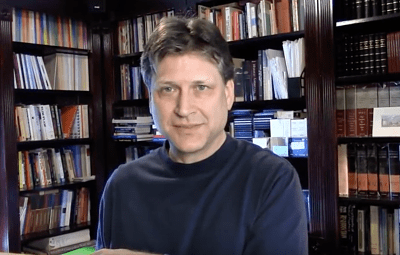
 In our final segments with renowned Joseph Smith historian Dan Vogel, author of Joseph Smith: The Making of a Prophet, we focus our attention on the creation of the Book of Mormon.
Through his extensive research, Dan theorizes that the Book of Mormon is a tangible artifact giving insight into Joseph Smith’s state of mind, and commentary on the cultural and spiritual influences that surrounded him in his early life. In this interview, we focus our attention on the role of the golden plates in the creation of the Book of Mormon, the 116 “lost” pages of the original Book of Mormon and how this event influenced the final product, and we discuss the different events that may have influenced the timeline in which the Book of Mormon was created.
Dan has an extensive Youtube video collection devoted to many different aspects of the life of Joseph Smith. These highly informative and popular videos may be found here.
- 1051-1053: Dan Vogel – Preeminent Joseph Smith Historian
- 1054-1055: Joseph Smith’s Treasure Digging – Dan Vogel
Part 1 – Dan discusses the role of the golden plates in the creation of the Book of Mormon: This transcript is machine-generated and lightly edited for readability. The audio is authoritative. Please excuse occasional errors in names and spelling. John Dehlin [00:00:04] Mormon Stories is a production of the Open Stories foundation and relies solely upon the support of people like you, its listeners to help keep the podcast alive or to become a member of the community. Please become a monthly subscriber by visiting MormonStories.org and clicking on the Donate button on the right side of the page under support. All contributions to Mormon Stories are completely tax deductible in the United States and go towards producing the podcast and building communities and programs of support for Mormons like you. Thanks for your support. Welcome back to our interview with book author 18 or so books Dan Vogel Joseph Smith the Making of a Prophet Signature Books Amazing book. We have spent a couple hours talking to Dan about his upbringing and background and what led him to become a historian and some of his major works. We then spent a good two hours talking about Joseph Smith's history as a treasure digger and how that ended up by 1826 with him being convicted, likely of what being a glass liquor or a disorderly person or whatever the disorder. Dan Vogel [00:01:29] It was a disorderly person. John Dehlin [00:01:30] Yeah. Dan Vogel [00:01:31] Yeah. John Dehlin [00:01:31] And, and he was kind of washed up, embarrassed. And, and that led him to figure out what next to his life. He he goes back and he, and he marries Emma. He elopes with her against Isaac Hale's wishes, goes back to his home with Emma, they stay there for a while, and then at some point he's got to go back to Isaac's to get some of Emma's furniture and her dowry or whatever, whatever possessions. So let's pick up on this story. Last we talked about the Book of Mormon, all that had been discussed was that in 1823 Joseph had, in trying to resolve family disputes and in this, this habit of his of telling stories to his family that related to Indians and Indian lore, he references golden plates that are in a local hill as the source for these stories. And so Joseph Smith Sr. And later Alvin and the whole family are sort of like believing that there are golden plates in the local hill guarded by a spirit and that at some point Joseph was supposed to get them. And they're thinking, maybe we'll make a bunch of money or maybe we'll get famous or maybe we'll do some important work. But Joseph was never able wasn't able to retrieve the plates in 1823, wasn't able to retrieve the plates in 1824. By that point there was no talk of a Nephi or Moroni. Right. According to Dan. But there's still this lingering hope and belief, not just with the family, but in the book I read he mentioned it to that competitor charlatan guy, Samuel Lawrence. Samuel Lawrence. And he mentions it to one of the ministers. So over time, word starts spreading that they're really. That Joseph Smith believes there are these golden plates in a hill. And there's probably superstitious folks that maybe believe it and are excited about the possibility, and there's probably other people that think he's full of garbage and they want to expose him as a fraud. But. But controversy starts swirling around this idea. So we pick up in 1827 when Joseph Smith is back with Isaac and they have this confrontation. Joseph promises not to do the treasure digging anymore, but now he's married to Emma and he's got to come up with a profession and a career. So that's the setting for the emergence of the Book of Mormon. Is there anything you want to add to then take up the story from there? Historian Dan Vogel. Dan Vogel [00:04:14] So let's back up just a little to There were no visits, contrary to what he said, between 1824 and 1827. John Dehlin [00:04:26] He didn't visit the Hill. Dan Vogel [00:04:27] No. John Dehlin [00:04:27] Even though we believe there were supposed to be four visits, or he told people later there were four visits. Dan Vogel [00:04:32] Okay, that's to connect the original two visits with the later visit, as if this is the same project. So what he does is he picks up the plate project out of the blue. Nobody expects it, nobody's. If he were going every year, they would have known where he went that night and that he was going to the Hill soon to get the plates. So what happens is he is sent to Manchester on an errand and he comes home and he tells his father, I've received the severest chastisement I ever have in my life. And Joseph Smith Sr. Says, oh, I'd like to know who did that. And Joseph Smith says, oh, settle down. It was the angel of the Lord who said, I haven't been doing my duty to get the plates. And so nobody knows that he's going to the Hill. They don't expect it. And Joseph Smith, no one knows exactly December 22nd, he goes to the Hill every year when Joseph Smith is gone to the Hill with Emma and he comes home, Joseph Smith Sr. Is totally surprised about where he went. He had no plan, no anticipation of, oh, yeah, he went to the Hill. It's time. John Dehlin [00:05:57] Is your point that he's changing the story, that now we think that this was like from the beginning? Moroni appears and he says, four years, you're gonna return every year, and then eventually you'll get the plates and basically it sounds like what your point is to say that story that's made up later, that he's basically can't do treasure digging anymore. And he's thinking, okay, well, I did tell everybody about these plates. I need to think of something else to do. And so later he rewrites history to make it sound like there was this divinely mandated plan about producing a book from as early as 1823. Is that what you're trying to say? Dan Vogel [00:06:41] Yeah. He picks up the story, all of a sudden he's going to use this story in a different way. Well, in a religious way, sort of like he did in the beginning to try to solve his family disputes. John Dehlin [00:06:55] Well, let's talk about that. So he's married to Emma. He's back with Isaac. What are your thoughts or what's the evidence around how in his mind, he reached the point where he said, I know I'm going to write a book, and I'm going to write a book tying it to the gold plates thing that I told everybody, and eventually I'll publish the book and maybe make money off of the book or whatever. You know, what were the factors that would even lead him to think about a book? And this is where we could talk about View of the Hebrews, we could talk about other things. What are the conditions that would make him think, number one, that he should write a book, and number two, that the book would be what it turns out to be because he had to have premeditated, thought about and planned the writing of a book and the production of the book and all the lore around the story. It's almost like a marketing plan for ultimately selling the book. How are you thinking it all started? Dan Vogel [00:07:53] Well, if it were a plan to sell the book and make money, it wasn't a good one because you just insult all the other religions, all your potential readers with the book. So I'm not so sure how good that plan would have been. If you're out to get money and you're insulting every church as being part of the church of the devil. John Dehlin [00:08:16] Unless you want their gig. Unless you. Dan Vogel [00:08:18] Unless you want to convert them over to your thing, which is what he John Dehlin [00:08:21] ended up wanting to do. Dan Vogel [00:08:22] Right. But to just sell a book. It seems like he's more interested in converting people over to his side out of other Christian churches rather than selling the books to them. John Dehlin [00:08:40] But there are also a lot of unchurched people. But either way, tell me your theory on how he comes up with the idea. Dan Vogel [00:08:46] The important thing, too, is what's burning him on is when Lucy Smith joined the Presbyterian Church, she joined the church that had condemned Alvin to hell. John Dehlin [00:09:03] Right? Presbyterian. Yeah. Dan Vogel [00:09:05] Well, the minister. And so she come, she joins the Presbyterian Church, tried to get other people to join the Presbyterian Church. And Joseph Smith Sr. Saying, well, what about Alvin? Do you believe he went to hell? John Dehlin [00:09:18] Right. Dan Vogel [00:09:19] You know what happened to Alvin? Joseph Smith Sr. Is a universalist, so he believes in universal salvation. Alvin's just fine, so he's not likely to give up his universalism for that. And Lucy is also denying Joseph Smith Sr. S dreams because the dream said all the churches are false, that, you know, it's Babylon and wickedness out. The churches are not the churches of God. So she's denying his revelations and he's stuck in his revelations. So how to. What I think is Joseph Smith's problem is to save Alvin and reunite his family in a church where they can all belong. And the only way to do that is to support Joseph Smith Sr's dream visions, but convert him to Lucy's type of religion. So the Book of Mormon is very anti universalist. It saves Alvin just right in the beginning of Mosiah, the part which is the earliest part that survives, the earliest part is Mosiah, where King Benjamin preaches that the infant and those who die without the law are saved in Jesus. So he saves Alvin, he saves the infants that have died in the family. And he wants. The problem with universalism is. And the Book of Mormon tells us what worries Joseph Smith about universalism is that it causes people not to obey the commandments because they're going to be saved. So he tries to resolve that. He tries to get his father to repent, basically. John Dehlin [00:11:26] But, but, but, but, you know, just like you said, it's a not very smart way to make money to write a book like the Book of Mormon. That's a pretty elaborate way to solve a family conflict, not just to write a book, but to write a book that you claim it comes from an angel with golden plates. And so, I mean, there's other things there's got to be. He's married, he can't do treasure digging anymore. He needs to figure out a profession. And he probably wants to make some money so he can support his family and have kids. Right. So it's not just solving doctrinal theological problems, although I would agree that's clearly an important part of it. Dan Vogel [00:12:02] Well, in my view, Joseph Smith's a true believer and that's the source of his charisma. John Dehlin [00:12:12] True believer in Dan Vogel [00:12:14] God, in that he himself is inspired, that he's got a conversion in his 1820. He did have a born again, what I believe is a born again experience. The born again experience in 1820 converted him to Jesus in that he then didn't follow his father's beliefs, Unitarian beliefs, and he's still a version of universalism. And universalism is what helps him not fear punishment for lying. So just exactly what he's writing in the Book of Mormon of what's wrong with universalism because he's secretly universalist, but he makes the Book of Mormon. He uses strong language in the Book of Mormon to frighten people to repent and for their own good, which is what I get out of DNC 19 D&C 19 is a revelation Joseph Smith dictated in the month that the Book of Mormon came off the Press and March 1830. And it says that, you know, it's written eternal punishment, everlasting punishment, but it doesn't mean that it's forever. John Dehlin [00:13:41] It's God's. Dan Vogel [00:13:42] It's God's punishment. And then it says not to tell anyone about this revelation because they'll use it as an excuse to sin and perish. Right, and because you still have to go to hell. Because in the revelation it says, I God has suffered these things for all that they might not suffer if they repent, but if they would not repent, they must suffer even as I. Well, that's to scare people. Hey, you don't want to suffer for your sins. You'll still be saved, but you still don't. It's so bad. You don't want to sin because you want to avoid this punishment. So that's about it. At this point in his career, that's all he's worked out as an incentive to repent. Later he works out the three heavens and that becomes more elaborate where everyone basically gets saved, but there's an incentive to keep on, to do good still, even though everyone is saved in some form except the sons of perdition. And so, so he, he's secretly a universalist, but he doesn't want to allow other people to be univers, to be John Dehlin [00:14:56] universalist because it doesn't get the results right. Dan Vogel [00:14:59] Okay, so, so I'm saying he's a true believer. He's been born again. That's the original core of the first vision that he changed and made into a vision that was worthy of a prophet, you know, and even implemented his new mission as he saw it later in his history. In actual fact, there are clues as to what that experience really was. Well, so he's A true believer. And how he has his authority and his charisma and is able to draw people in is that he truly believes the end of the world's coming and that a short amount of time it's going to be over with, people are going to be destroyed. We've got to get people converted, especially my father. So he really believes that. And that's at the core of his ability to convert and convince people. Okay, so. And I'm really going off of Max Weber's charisma. Charisma works where he talks about believing in his mission, that he attracts people to him through this authority of his mission. Well, and what is his mission? And the Book of Mormon announces what his mission is. So he believes. And this is where it gets into anti Masonry. A lot of people draw parallels between the Book of Mormon and Masonry secret combinations. And it's all usually superficial parallels to show the Book of Mormon is not historical. But I want to know why he's putting that in there. What does it mean to him? And the first readers of the book, because they see a lot more in the Book of Mormon than just parallels to Masonry. Martin Harris, when he came to Kirtland, Ohio, he's quoted in 1831 as saying the Book of Mormon is the anti Masonic Bible and everyone who doesn't believe it's going to be damned. So they're seeing a lot more, you know, in the book. And the reason why the Book of Mormon is anti Masonic is because, and this is what he could not have written if he tried to do it in 1823, is that in 1820, as he's sitting down with Martin Harris in 1828, there's an election going on, the 1828 election with Andrew Jackson against John Quincy Adams. John Quincy Adams is a Whig, a conservative, and Andrew Jackson is a, you know, you can describe him as a Democrat. He appeals to the common man, the lower classes. And in the 1828 election, the opponents of Jackson used the anti Masonic furor that was going on in western New York against Andrew Jackson. John Dehlin [00:18:31] Because that guy that was killed, what's his name? Dan Vogel [00:18:34] William Morgan. William Morgan in 1826 had been what they believe, what people commonly believed. He was abducted by Masons because he was going to publish their secrets. Eventually got published after his death, but he was preparing to publish their secret ceremonies and signs and words and things. And he lived only like, I forget how many miles, 20 miles from Joseph Smith in Batavia, New York. And so he disappeared. And it was rumored, people assumed that he was assassinated. They Found somebody floating in the Erie, Lake Erie. And they thought it was him and that it was Masonic vengeance. And they tried to. The governor, DeWitt Clinton tried to. Tried to take the perpetrators to trial. They got off with light sentences or altogether. And it was rumored that the juries were secret. You know, Masons, they gave the signs and stuck together and protected their. The assassins. And so there was a conspiracy in government, in law and government. Andrew Jackson's running for president. He's a Mason in Tennessee. And Masons, you know, they have kings. And one reason why Masons are disliked is that they think. They think they're like the Illuminati in France and they're. They're going to set up a king in America and take over the republic, free republic. And when Andrew Jackson gets elected, that's like the worst thing that could happen. There's all this fear that a civil war is going to break out immediately after Jackson gets elected. And Jackson had this reputation. He was the hero in 1812 War of Being brutal, you know, just decisive in his actions and brutal. And he would. He hung for, you know, men in Florida for mutiny. And one of them was a minister even. So they had this thing called a coffin bill where they would show these four coffins against Andrew Jackson. And anyway, Masons, the secret combination. And in the Book of Mormon, they talk about secret combinations among the Nephites and Lamanites, and it's responsible for the downfall of the Nephite and Jaredite nations. John Dehlin [00:21:41] Talks about king men. Right. Like wanting to install kings. Dan Vogel [00:21:44] Well, yeah, there's that. But that kind of harkens back to the Revolutionary War. That's fine with Loyalists. John Dehlin [00:21:53] Right, right. Dan Vogel [00:21:54] You know. Well, so in the world, 1812, the War of 1812 worked into the Book of Mormon more than a lot of people think. But it's not so much a Revolutionary war, it's. It's really. The War of 1812 is kind of a pattern that Joseph Smith borrows about how to overthrow a country uniting with the Indians, using them against the intruders, you know, from Britain and. Or Britain, I got that backwards. Britain hooked up with the Indians and tried to use them against the colonists or the Americans. I mean, so this fear of war, it's all rhetoric. It's not real. I mean, Jackson's election suffered in western New York in 1828. And so when he sits down with Oliver Cowdery, Jackson's just barely in office, so only several months. And the Book of Mormons, you know, they're finished dictating it towards the End. You know, the book of ether has a warning. So. And the warning is, you know, if you see, it talks about secret combinations in the plural a lot, but all of a sudden, in ether, it gets singular. When this combination gets above you, you shall know that, you know the end is near. Kind of a warning. And John Dehlin [00:23:30] so let me just say this is super important. I know it is. But I want to bring us back to the initial question, which is 1827. Joseph's married to Emma. She's there with Isaac. He's got a. He's. What's your theory on how he came up with the idea to write a book and why? What were his motives and how did he. Why a book? And so you're talking about the Masons and how that would have influenced him. But I just want to tie it back. He's sitting there in 1827. Why a book? Why a book? Dan Vogel [00:24:02] Well, the book, like the stone, is the source of his charisma. John Dehlin [00:24:13] Okay? Dan Vogel [00:24:14] So he gets his authority from the stone. People believe the stone works. This is how he gets his authority and charisma and influence. John Dehlin [00:24:21] He needs a new relic. Dan Vogel [00:24:22] He uses the stone to create the book, and the book becomes the source, not the stone anymore. The book is the source of his charisma. People read this, he doesn't even have to be present anymore. He sends it to foreign lands. It converts people. He. And he knows he has this gift or else he wouldn't have done it. He knows he can look into the stone. He knows he can dictate, more or less impromptu. It's a little more complex than off the top of his head, but he knows he can do this. He believes, in my view, he believes it's inspired in a very general way, sort of like a patriarch would believe his blessing is inspired, but he isn't hearing words and repeating exact words. So I believe scholarship can't decide if the Book of Mormon's inspired. That's not the realm of scholarship. We can try to determine if Joseph Smith believes it's inspired. That's about as far as you can ever go. John Dehlin [00:25:29] Okay, but before we get to that part, if you had to finish this sentence. When Joseph Smith, sitting around in 1827, deciding to create a book, what's his plan? The plan is that I'm going to create a book and. Dan Vogel [00:25:45] Oh, the plan is in the book. What's the solution to this crisis in America? John Dehlin [00:25:53] What's he trying to solve by creating the book? Dan Vogel [00:25:56] Well, first of all, Joseph Smith's pretty definitely a narcissist. John Dehlin [00:26:03] Okay? Dan Vogel [00:26:05] And a narcissist loves power. That's what Joseph Smith's after. John Dehlin [00:26:10] So he wants more power. Dan Vogel [00:26:11] He's after power. He's not after money, per se. Money is the means to power. John Dehlin [00:26:15] Right. Dan Vogel [00:26:16] So. John Dehlin [00:26:17] So he's thinking, I'll create this book and it'll give me power. How? Dan Vogel [00:26:21] By creating a community around himself that he controls. John Dehlin [00:26:28] You think he had a. The creation of a religion in mind? When he comes up with the idea Dan Vogel [00:26:33] of creating the book, he has the creation of a theocracy in the West. That's his goal. John Dehlin [00:26:40] Okay, that's him. He's just some dude who had just got busted for treasure digging. He's down on his luck. He was almost thrown in jail, and he just marries Emma. And you're thinking that he's already got in mind that he's going to create a theocracy where he's the leader. Dan Vogel [00:27:01] Right. Really? I did mention he was a narcissist. John Dehlin [00:27:05] Yeah. Yeah. I mean. Dan Vogel [00:27:06] Okay, Right. John Dehlin [00:27:08] Okay. Dan Vogel [00:27:09] So. John Dehlin [00:27:09] So he thinks I'm going to create a book, and ultimately it's going to lead to a theocracy that I'm in charge of. You really think? Dan Vogel [00:27:15] Exactly. John Dehlin [00:27:16] In 1827. Dan Vogel [00:27:17] That's in the book? That's a book tells you. John Dehlin [00:27:20] Okay, what does the book say? Dan Vogel [00:27:21] The book says that the believers are to create a new Jerusalem. You think that's like some future thing? No, he's going to build a new Jerusalem. He sends over Caldera. In October 1830. Right. October 1830, the four Lamanite missionaries leave New York to go look for the new Jerusalem, and they go into Indian territory. Indian territory was their original goal, but they got kicked out of Indian territory. Linking converting the Indian. The Book of Mormon is to convert the Indian and to marshal them in his army. John Dehlin [00:28:08] Interesting. Okay, okay, okay, okay. So. So he. So interesting. You say on the one hand in your book that he was discouraged and downtrodden for having almost been put in jail and being busted. But you're saying he emerges from that with new vision. He's basically, you know, what we learned from the last segment is he leaves with this confidence that I can convince people to believe me, that I have power. Right. I can get people. Even when I don't find the things I promise I'm going to find, they still believe in me more. Right. Which we know is true. Like, I remember it was William James who talked about when the Jehovah Witness predictions about the end of the world wouldn't come true, somehow the Jehovah's Witnesses believed even more in the prophets after the predictions didn't come true because the predictions were always. The predictions not coming true were always blamed on the sins of the members. Right. And so somehow the, the predictions not coming true end up reinforcing the belief even more. But anyway, regardless, Joseph Smith emerges from his treasure digging years believing that he can convince people that he has power. You're saying he believes in God? He believes in Jesus. He believes Jesus second coming is nigh. He's trying to solve his family's theological and doctrinal problems, but not just his families, civilizations, debates over Christianity. He's trying to solve that. And you're saying he has an ultimate goal of establishing a theocracy and creating a new civilization, the new Jerusalem, and recruiting the Indians to be a part of that, and that this book is going to lead to all that and that's why he creates, that's why he wants to create a book. Is that what you're saying? Dan Vogel [00:29:47] Well, it's a faster way of converting people to your thing, you know, you going out one by one. The book is a sign. It's a miracle. Every charismatic prophet has to create miracles. You have to perform a miracle to create the charisma. And the book is his miracle. I mean, Max Weber even mentions Joseph Smith. This is like 1922 or something like that. And he talks about Joseph Smith, that Joseph Smith earned his charisma through the Book of Mormon, through the miracle of the Book of Mormon. All these prophets perform miracles, not just Joseph Smith. This is Joseph Smith's miracle. This is something I knew he had a talent for, that he could do that. He practiced in some way. And he created. He knew he could pull it off. He knew he could create it. John Dehlin [00:30:50] Yeah, it's like, it's like his equivalent to Moses returning from the mountain with the tablets and the burning bush. It's his. It's the sign to the world that he is a prophet. Right, okay. Dan Vogel [00:31:02] Right. John Dehlin [00:31:02] Okay. So we've established a motive. And you're saying money was just a. You're saying money was just a small part of it. Dan Vogel [00:31:09] It's a means to an end. John Dehlin [00:31:10] Okay, okay. Dan Vogel [00:31:11] Most prophets, as they study them, aren't that concerned with money. That's not one of their things. It's always a means to an end. And the, the end is their power, their narcissism. John Dehlin [00:31:24] Okay, okay. So tell us how he wrote the book and who were his. If he had conspirators, who you think they were, that's the next kind of question. So it's 1827. He's back with Isaac and Emma. Right. What happens? How does he start writing the book? Dan Vogel [00:31:47] Okay, we want to go to. So he gets the plates from the hill. John Dehlin [00:31:56] Wait, there were no plates? What do you mean? Dan Vogel [00:31:58] Well, okay, then we have to tell that story. He makes plates, a set of plates out of tin that he keeps in the sack and then in a box. John Dehlin [00:32:09] Okay. Because he had told everybody there were gold plates. He needs to make good on that. So he needs to produce plates. Dan Vogel [00:32:18] The first thing he does in the confidence is in 1825, when he gets a stone back, he needs to renew his reputation. So he takes Samuel Lawrence to the hill and points out the area and has Samuel Lawrence look in his. Samuel Lawrence has his own stone. And he looks and he says, yeah, I see the plates. Samuel Lawrence wants to do this, too, because it increases his faith or his reputation. Excuse me. But he ones up Joseph Smith and says, but I see a giant pair of spectacles sitting on top of those plates to read them with, you know. Yeah, just regular spectacles. Nothing magical. No Urim and Thummim. Just a large pair of spectacles because the mountain builders were believed to be large people. So Joseph Smith says, I don't see him. And Lawrence says, well, look again, more or less like, if you want my testimony, I'm going to show that I'm the greater seer because I saw something you didn't see. So they're both playing the confidence thing, and he knows. They both know what they're doing. John Dehlin [00:33:31] So Joseph stuck with spectacles. Dan Vogel [00:33:35] Yeah, he's stuck. So Lawrence gets to go back and say, yeah, my stone's more powerful than Joseph Smith's stone. You know, I saw the spectacles. He didn't see the spectacles. He had to look twice. You know, so that's how. And then he builds his reputation. I'm the better seer. And that's how it goes. That's a confidence scheme. That's how it works. John Dehlin [00:33:54] Okay. Dan Vogel [00:33:55] And you're building authority and power from nothing, because it really doesn't exist. So only powers are only created. John Dehlin [00:34:04] Right. Dan Vogel [00:34:05] So. So anyway, when he gets the plates, he has to get this. The spectacles also. John Dehlin [00:34:12] Okay, go back. What do you mean, when he gets the plates? You don't believe he had plates? So he's got to. He's got to make good on his promise of obtaining the plates. And so you're saying he. Dan Vogel [00:34:26] Well, he and Emma goes to. They go to the hill in. Joseph Knight Sr. Had been visiting with Josiah Stoll, and they go to the hill during the middle of the night. And only Lucy Smith knows what's going on because he requests to have a box. Make sure you get a box for when I bring the plates home in the morning. But he does, he doesn't bring the plates home. John Dehlin [00:34:49] So he's telling everyone, I'm going to go get the plates. Dan Vogel [00:34:50] Yeah. John Dehlin [00:34:51] And he takes Emma to go get the plates. Dan Vogel [00:34:52] Yeah. And he leaves Emma in the wagon at the bottom of the hill and disappears into the darkness of the night. John Dehlin [00:34:58] Okay. So she, she probably believes he is going to obtain plates. Dan Vogel [00:35:02] Right. John Dehlin [00:35:02] Okay. And then he goes up to get the plates. And what happens? Well, she's in the wagon. Dan Vogel [00:35:09] Yeah. He comes down, he has no plates, and they drive home and he says, I, I removed the plates, but I hid them in a log. John Dehlin [00:35:19] Okay. Dan Vogel [00:35:21] This tells me that he was making the plates probably at that time. John Dehlin [00:35:27] Okay. Dan Vogel [00:35:27] And he didn't finish, but he took longer than he thought. John Dehlin [00:35:32] But he wanted to tell everyone that he had got them. Dan Vogel [00:35:34] Yeah. So I believe during the time from the time that he came home and said he got chastised by this angel and the time he went on the hill, he was, you know, pilfering tin. It could be various sizes, various everything, because nobody's going to really see it. And it's sort of like the feather. It's the same effect. And he doesn't finish them, but he goes to dig a well for this widow the next day or so. And while he's doing this, there are rumors that his money digging, former money digging friends are trying to find these plates. And the. John Dehlin [00:36:29] Because they're seeing dollar signs. Dan Vogel [00:36:32] Well, they believe it. Yeah, they believe he had pointed out the plates on the hill to Samuel Lawrence. John Dehlin [00:36:38] Right. Dan Vogel [00:36:39] It was on the east side. John Dehlin [00:36:40] Right. Dan Vogel [00:36:41] And they started digging. And in 1826, around there, because Lorenzo Sanders says, well, when Joseph Smith said he got the plates from the hill, we went up on the hill, went looking for a place that had been freshly dug or whatever. There was no other disturbance on the hill except for the hole that was dug on the east side. So the east side had been. There's a huge hole there. John Dehlin [00:37:07] Anyway, so Senior, didn't you say Senior dug that? Dan Vogel [00:37:12] No, no, it was a money digging company that where Joseph Smith had showed Lawrence. John Dehlin [00:37:18] Okay. Dan Vogel [00:37:19] So they go, oh, Lawrence saw it, Joseph Smith saw it. Let's go try to dig it up. And they're trying to dig it up on the east side. John Dehlin [00:37:24] Okay. Dan Vogel [00:37:25] Well, later Joseph Smith says, well, I deceived you. I showed you the wrong location. And in the history of the church and in Oliver Cowdery's writings in the messenger and Advocate, they locate the plates on the west side. So that's the real location according to Joseph Smith. So. He went to dig the well for the widow after he had hid the plates in a log, supposedly. John Dehlin [00:38:00] Right. Dan Vogel [00:38:01] He could have put the tin plates there. That could have been a likely place to hide them. And he had it finished. And then the money diggers are about. And Martin Harris said the money diggers were angry at Joseph Smith because he betrayed them, because they were in a company together. And he got the plates. They really believed he got the plates. This is how believable his story is. It's fantastic to us, but to the money diggers, it was totally believable that he had the plates for a while. They believed it. John Dehlin [00:38:31] And they were mad that he would, like, got the. Got the goods, but wasn't sharing it. Wasn't sharing the. Yeah, yeah. Dan Vogel [00:38:37] So they're trying to steal them back. John Dehlin [00:38:39] That's why they're mad. Dan Vogel [00:38:40] Yeah, yeah, they're trying to steal them back. So he's got everybody, you know, at a fever pitch. He's really orchestrating these people. John Dehlin [00:38:49] Right. Dan Vogel [00:38:49] You know, so Emma comes to Joseph Smith while he's digging the well and says, oh, the money diggers are about trying to find the plates. And he takes out this seer stone that he carries in his pocket, you know, the one that we recently saw in that little bag, that little sack, and puts it in his hat and says, oh, they're perfectly safe. So. John Dehlin [00:39:18] Because they don't exist. Dan Vogel [00:39:20] Well, they could find the tin ones and then he'd be exposed something. But. So he is legitimately afraid when he takes him home, when the house gets, you know, attacked or whatever. He's legitimately afraid that they could go in and uncover the plates and expose him. But, you know, he could probably think of something real fast like, got you. But. So he then says, I'm going to go after them now. And he leaves the family in the house. John Dehlin [00:39:57] Go after the plates. Dan Vogel [00:39:58] After the plates. John Dehlin [00:39:59] But they're in the log, according to them. Dan Vogel [00:40:01] Yeah. So he goes out into the woods looking for the plates, supposedly. And after a few hours, he comes home and throws himself through the door. One story is that he handed the plates wrapped through the window to Josiah Stowell. I'm not so sure. But according to his sister Catherine, he came bursting through the door. You know, I'm being chased. Joseph Smith Sr. And Joseph Knight Sr. Go out looking for these people chasing him. They come back. Joseph says, I was Attacked, you know, three times by these ruffians. And I hit one of them and I dislocated my thumb. Right, I dislocated my thumb. And he had his father pull the thumb and put it back into place. And it was injured. They could see it. It was bruised. My speculation theory is that the plates were not finished. The last touch on the plates would have been to bend the rings, the rods. He had rods. This is what I imagine. You would drive three rods into the ground. I mean, you would take one, you would cut the plates, you would take one, you poke holes through them with an instrument. Then you would put the rods in the ground and then you would just string, use. Use the plate as a template. And then you would just string them on there. And then at the end you would bend the rod. And then in bending the rod, it would put lots of pressure on your thumb, on your right thumb. If you're right handed and you're trying to bend them. And I believe he injured his thumb that way and he made up the story as a cover. John Dehlin [00:41:47] Okay, forgive me for one question. So he was with Emma and you know, he elopes. He was with the Smiths, with Emma. Then he goes back to Isaac. Is all this stuff happening after, after he goes back to Isaac and then he goes back to, you know, back to his home again? Or is this before he. Dan Vogel [00:42:08] Okay. While they were visiting Isaac Hale for the furniture and they were crying and repenting and saying he's going to stop this, Isaac said, well, if you promise to make a good start, honest start at making a living, I will help you, you can come back here because they would do anything to have Emma nearby because, you know, this guy's a flake. And yeah, that's, that's what they think. And if something happens, it's better to have them nearby. And so they agree. John Dehlin [00:42:43] So all the stuff with the thumb and the. In the treasures and the ruffians happens before they go. Happens before they go back. Dan Vogel [00:42:49] Yeah. John Dehlin [00:42:50] Okay. So while he. Dan Vogel [00:42:51] So what? John Dehlin [00:42:51] So after he's eloped, but before they go back. Dan Vogel [00:42:54] So he says, I get, I'm giving up treasure digging. They go back and he gets the plates and they come back with these plates and Isaac Hale's going, what, what's this? You know, and he has them in a box and he allows Isaac Hale to lift him up. And Joseph Smith says he, well, he can't see him. And he goes, well, if I can't see him, you can't have him in my house. Get him out of Here. So Joseph Smith supposedly buries them in, in the woods somewhere. John Dehlin [00:43:21] And that's jumping ahead. So I just wanted to establish the story you're telling about the rings and everything. So when, when he goes back with Emma to live with the Smiths, he's already starting to, you know, build. He's already thinking about the book, he's already starting to build the lore around the book and he's actually claiming to people that he found the plates finally, including his family, and he's learning metallurgy so that he can create a fake version of the plates that are actually tiny. But somehow he, he has already pre thought about how he's gonna have tin plates but somehow cover them up in a way to where people believe they're gold. Is that what you're saying? Dan Vogel [00:44:03] Right. Well, you know, there's no reason to cover the plates and not let anybody see the plates and, you know, supposedly have the, the spectacles in a cloth and have Lucy fill them and stuff. There's really no logical reason for that other than that they, they can't pass visible inspection. John Dehlin [00:44:26] Right. But, but he's stuck with the gold. So he's going to create plates, they just won't be gold, but then he'll just keep them covered up and they Dan Vogel [00:44:33] ruffle them and they hear metal. John Dehlin [00:44:35] Right. Dan Vogel [00:44:36] You know, and the thing is, is that the weight of the plates that they've given, that William Smith and Martin Harris gave is between 40 and 60 pounds. John Dehlin [00:44:45] Right? Dan Vogel [00:44:45] Right. And at the dimensions Joseph Smith gave, you know, six by six by eight is not necessarily the true dimensions, but if you go by that and you account for not a solid block, but leaves, and it would. Ten plates would weigh between 40, 60 pounds. John Dehlin [00:45:08] But that's. Dan Vogel [00:45:09] I have an exact measurement. John Dehlin [00:45:10] But something that's kind of weird is because at any point if he's going to be showing him to somebody covered with a cloth, as he's premeditating this con. Right? Dan Vogel [00:45:21] Yeah. John Dehlin [00:45:22] He's got to think, well, they could just pull the cloth off at any time. Right. Or they could sneak a peek when I'm not looking. So it's, it's a weird thing to. But again, he's gotten people to believe much crazier things. So on the one hand I can get why he would come up with a really harebrained scheme that people would still believe because that's kind of the business he was in. But on the other hand, that's a huge, awful lot of work to learn metallurgy to fashion these fake tin plates to bend the Rings. Dan Vogel [00:45:52] You didn't have to learn metallurgy. John Dehlin [00:45:54] Well, how did he create the tin plates? Dan Vogel [00:45:55] Plates are all tin. Sheet. Sheet tin is all over the place. And it's not solid tin. It weighs a little more because it's really iron coated with tin because that was the only legal way to make it in America. John Dehlin [00:46:10] Okay, so he's getting prefabricated sheets of tin. Dan Vogel [00:46:14] Yeah. And all over the place. And they use it. John Dehlin [00:46:16] And he's just hooking them together with those rings. Dan Vogel [00:46:18] Well, they use it for coopering, like the band that goes around a barrel. John Dehlin [00:46:23] Right, right. Dan Vogel [00:46:24] They use it for the, you know, roofs of sheds. John Dehlin [00:46:30] Okay. Dan Vogel [00:46:32] They're scrap. They use it to make buckets. They use it to make candle or lanterns. The Wayne Sentinel, you know, had tinware for sale. They would announce tinware, painted tinware and tin, you know. John Dehlin [00:46:52] Okay. Dan Vogel [00:46:53] So it's all over the place. John Dehlin [00:46:54] Okay. So he didn't have to learn metallurgy. He gets the sheets from tin. That's around. But you. You get my question. That he's going to create these fake plates, but he's confident that somehow he can get people to touch them and hold them and. And have them in the room. Yeah, but that somehow they'll never be able to sneak a peek and then discover that they're tin, not gold. That's. I mean, that's a little bit weird that he thinks he can get away with that, isn't it? Well, you know, because Emma could just sneak a peek. Dan Vogel [00:47:28] They're very. They asked Emma why she didn't, and she was afraid to be struck dead by God. John Dehlin [00:47:36] Okay. So that's part of it. With this superstitious magic worldview and this idea of spirits and demons or whatever, a cunning shyster could use the fear of God, the fear of angels, the fear of cursings to get people to be so scared they could control their behavior or their perceptions through that fear. Is that. Yeah, that part. That's part of his plan. Dan Vogel [00:48:04] He could have a ready excuse if such a thing happened. But he knew his people. He's good at. That's. That's his. John Dehlin [00:48:13] He'd been doing this for years at this point. Okay, so. Okay, so at what point does he actually bring plates in the presence of somebody else? When's the first time that he does that? Dan Vogel [00:48:26] What do you mean? John Dehlin [00:48:27] Okay, so you said either. You mean he tells everybody, the ruffians were trying to get me. They injured my thumb, so he has Dan Vogel [00:48:33] them wrapped in his frock. John Dehlin [00:48:35] When does he first bring the plates in the presence of somebody else? Dan Vogel [00:48:40] That time when he brings them home and he breaks through the door. John Dehlin [00:48:43] Okay. Breaks through the door. He's carrying the plates and he asked Dan Vogel [00:48:46] for a trunk immediately. John Dehlin [00:48:48] And who's there? And who's there? Dan Vogel [00:48:51] Okay, the family. So it's senior, Lucy, Hiram, even Josiah Stoll. Joseph Knight Sr. Are there visiting. John Dehlin [00:49:00] Okay. And he says, I've got the plates. Here they are. Dan Vogel [00:49:03] They were money digging, according to Martin Harris. And. But he wants to lock them right away. That's one of the things. John Dehlin [00:49:11] It's like, I've got the plates here. Yeah, they're covered. And I need to get them somewhere locked away immediately before someone sees them in his mind. But. Dan Vogel [00:49:19] Well, and he has them wrapped up and he puts them in the trunk and it has to have a good luck. John Dehlin [00:49:23] Okay. Dan Vogel [00:49:24] So there is that fear there. John Dehlin [00:49:28] Yeah. Dan Vogel [00:49:29] But he does leave him in the open around Emma when, you know, wrapped while she's dusting. She moved him. She says she could hear him chink. John Dehlin [00:49:38] I mean, that's a little bit. Some people wonder whether Emma was in on the con. Right. And you would think that if Joseph's not even in the house and she's dusting and she's going to go to the trouble to lift them, she's going to sneak a peek and see if they're gold. Dan Vogel [00:49:54] Okay. This is. I mean, she doesn't have to be on the. In on the con. She could suspect it and just go along with her husband because she got a lot of payoff from it. You know, especially, you know, she was at the center of Mormon society. You know, she, she probably loved that too. You know, so she didn't want to know. Maybe. But if you don't have the evidence to show that she's in on it, you can't really talk about it. I mean, you know what I mean? John Dehlin [00:50:31] Part of it, though is she ends up. She lies about polygamy later. So she kind of condemns herself as a liar at that. As a liar at that point. Dan Vogel [00:50:39] Well, historians don't look at things like that. That's how attorney would look at things like if you lie in one thing, you lie in it all. That's, that's a legal, you know, principle. Historians don't judge things that way. They, they judge things by pieces. Now if it's a very. If the person. There's no other evidence and they're standing alone and you know that they lie and there's no nothing. Sort of like in the testimony where Emma denies polygamy to her son, Joseph Smith iii. I mean, she has a High motivation to deny polygamy to her son. You know, it doesn't mean she's lying about how Justice Smith translated the Book of Mormon, how he would start and stop without being cued, and how he put the stone in the hat. She's backed up by other testimony in that area. She's also contradicted about polygamy by other people. So a historian would judge the two things separately. John Dehlin [00:51:50] Okay. Dan Vogel [00:51:51] And just because she's lied about polygamy, which she's high, she has a high motivation to deny that to her son. Okay, see, that doesn't mean. Oh, she's in on the con. I mean, that's pretty jump. John Dehlin [00:52:05] Got it, got it. So your opinion about Emma being complicit or non complicit in the fabrication of the Book of Mormon is what I Dan Vogel [00:52:17] believe that she wasn't. I have as few. If you're going to talk about conspiracy, you want to have as few people involved as possible. Because the larger the conspiracy, the hard it is to keep it secret, the less likely it is to believe it. So you want to have as few people in it as possible for it to really work. And the one thing about the Spalding theory is that you have to keep expanding the conspiracy to everybody and it just gets larger and larger to where it just is unbelievable. It falls under its own weight in my mind. But. John Dehlin [00:53:00] Okay, so for you, Emma wasn't. Wasn't a conspirator. Dan Vogel [00:53:04] Well, if you don't have the evidence, you can't really talk about. John Dehlin [00:53:07] You found no evidence that she's a conspirator? Dan Vogel [00:53:09] No, not really. Nothing that's convincing. John Dehlin [00:53:12] Okay, so he. So he brings the. So he brings the plates home, but really fabricates the plates. He gets them locked away. What happens next in the creation of the book? Like, okay, all this time, is he. Is he in parallel working on a manuscript? Dan Vogel [00:53:28] Oh, how does he. John Dehlin [00:53:30] Is he in parallel. Was he start. When did he start writing? Because that. That's actually the most important question I think we're going to be addressing. Dan Vogel [00:53:39] Yeah. John Dehlin [00:53:39] Is this idea that the general authorities keep harping on now. Dan Vogel [00:53:43] Yeah. John Dehlin [00:53:43] That Joseph wrote the book in a super constrained short period of time that basically after he lost 116 pages, which he could have written over, you know, months, if not years. Right. He only had the short amount of time to produce however many pages. What was it, six weeks or nine months? Three months. What are the general authorities claim? Dan Vogel [00:54:04] Three months. John Dehlin [00:54:04] They claim three months. Dan Vogel [00:54:05] About three months. About, let's say, 90 days, give or take. There's no set in time. We know when Oliver Cowdery started on the 7th of April, 1829. And David Whitmer says that it was completed by the 1st of July. Well, it's not definite as the starting time, so give or take, you know, nine months now. John Dehlin [00:54:33] But let's go back. Dan Vogel [00:54:34] Yeah, he's. John Dehlin [00:54:35] There's two, so there's two things he's working on. There's the, the scheme to make everyone think he has plates and the scheme to get everyone believe that this is divine. But there's actually the writing of the book. Right. When do you think the writing of the book actually started? Where, how and with whom? Dan Vogel [00:54:53] Well, he sat down with Martin Harris in February of 1828 and did that. 116 pages, or however long it was when nobody knows the exact size. John Dehlin [00:55:04] So what do you think was happening there? Dan Vogel [00:55:07] Okay, so the, the content of the book would have been less religious. First of all, it would have been Mormon's abridgment of Nephi, the books of Nephi or the record of Lehi, actually. So there was a record of Lehi that Mormon abridged. And Lehi's book probably continued on with Nephi and maybe some other names that he forgot. And it went all the way up to Mosiah, though, and then Benjamin, King Mosiah. And the first parts of the book of Mosiah were retained from that 116 page manuscript. Probably King Benjamin's speech was probably, you know, in there. The first part of King Benjamin's speech has two parts and the first part of King Benjamin's speech. And then all of a sudden it goes on for no reason. But that part is probably retained from the lost, that connected with the lost manuscript and would have been probably in Martin Harris's handwriting. Okay, so when, if we had the original manuscript in this area, we would know a lot more about what was going on if we had the original manuscript in the beginning of Mosiah, but that part was lost in, you know, the cornerstone. John Dehlin [00:56:40] And, and so, and so what I remember from reading Brody is that when, when he first set out to write the book, it wasn't supposed to be so much a religious book. Dan Vogel [00:56:50] It's religious as. It's not as directly religious as the, the replacement text of Nephi. It was Mormon's abridgment of this people that migrated to America, you know, Lehi and the Nephites and all that. But it was probably incidentally religious like Pilgrim's Progress or some sort of thing like it. They had a religion, but it probably wasn't as more political document or it was probably more of a story and it might have had sermons like King Benjamin's sermon in it. King Benjamin's sermon is a lot like what you would imagine a Reverend Stockton or Presbyterian minister giving, except it's anti infant baptism but more of a social. It's very King Benjamin's speech is more of a social gospel thing happening. So it was probably about religion. It was about people that had a belief. But it was Mormon's abridgment. But it wasn't so doctrinal. It probably didn't plan on Jesus coming. You know, there's several hints that Jesus's appearance in America was not planned in this early stage that it came that part of the story came later as he was dictating. And Brent Metcalfe, his book on the priority of Mosiah in his book New Approaches to the Book of Mormon lays all that out. Why the Nephites didn't know so when you get to the replacement text of Nephi, he knows for sure Jesus is coming because he had already written about it. But when you read in Mosiah and Alma, there are hints that they didn't know. John Dehlin [00:59:10] Thank you for joining us today on Mormon Stories. If you enjoyed this episode, please help us make more like it by becoming a monthly subscriber@mormonstories.org. Guest 1 [00:59:38] Take your time, clear your mind There isn't alive beyond the shore Calling to you once more this is the life you're making There is a love for the taking it's all right these guys don't have to be you Baby, you're somebody new when the lines are drawn in front of you it's all right to be you. It's all right to be you Shame, disbelief It says who you want to be but there is a wise apart of you I know you feel it too. John Dehlin [00:00:04] Mormon Stories is a production of the Open Stories foundation and relies solely upon the support of people like you, its listeners to help keep the podcast alive or to become a member of the community. Please become a monthly subscriber by visiting MormonStories.org and clicking on the Donate button on the right side of the page under support. All contributions to Mormon Stories are completely tax deductible in the United States and go towards producing the podcast and building communities and programs of support for Mormons like you. Thanks for your support. So what what this suggests, and I just, I've never really gotten this clear in my mind what this suggests is, is he, is he starting with, you know, so you're saying in 1828, he's sitting down with Martin. Is he starting out with some outline or some, you know, structure for how the story is begin, middle and end, and he's written the first 116 pages of it, but there's some source document or some source outline or, you know, some plan, right? Or even finished text or whatever. Because this implies that he wrote the 116 pages, they got lost. Then he finishes writing the book, and then he has to go back and rewrite the part that he got lost. But that implies that there's something pre existing that still remains after the first 116 pages gets lost, but before he had actually written it down in a manuscript form. Explain that to us and me. Do you know what I'm saying? Dan Vogel [00:01:48] Well, he knows the end. He knows the beginning, what the beginning is. He knows that they come from Jerusalem, right? He rejects the 10 tribe theory, by the way, because it's too limiting. The 10 tribes are supposed to go to a land where never mankind dwelt. Well, he wants to include the Tower of Babel story. So if the Jaredites were here, the Nephites couldn't go to a land where never mankind dwelt. So he had them be Jewish, but not the 10 tribes, okay? So he freed up his ability to write about two migrations, okay? And he still fulfills the Jewish origin of the Indians and links them into all the prophecies of their conversion before Jesus returns. He knows the beginning. He knows that. He knows the end. The mound builders, right? He knows that they're going to be wiped out. The white side of the migrating party is going to be wiped out by the darker side. He knows that. He's making it up more or less as he's going, but not right on the spot necessarily. Okay? He, the 90 days we talked about divided up between the first edition is 588 pages, which is an average of eight pages a day. Eight pages can be dictated, you know, back and forth, writing it down, maybe in a couple hours. What is he doing the rest of the time? Well, I believe D&C9, where you must work it out in your mind and ask me if it's right is a real, really a description of how he does it. It's an instruction to Oliver Cowdery how to do it because he doesn't have the ability to use a stone and see it. So while Joseph Smith is claiming that he sees the translation and that's what he presents to people because that's what they need to believe. The revelation. If he just went around said, oh, I got a revelation, nobody, he wouldn't get anybody's attention. But when he says that he sees it and he's dictating it and it's a translation, they're more apt to believe it, less apt to reject it. And. But when he tells Oliver Cowdery, because Oliver Cowdery uses the rod and he doesn't have the ability with the stone, He has to work it out in his mind and ask me if it's right. And if it's right, I shall cause that his bosom shall burn within him, that kind of a thing. And therefore you may know that it's from God. John Dehlin [00:04:49] Well, Dan Vogel [00:04:52] that's how he's doing it. He's. He's working it out in his mind before he dictates. He's in total control of when he stops, when he starts. If he's going to dictate, he's not going to dictate if he's going to go out and throw stones or he's going to go out in the woods and pray. So I believe that it might not be one sitting for two hours even. It might be like 15 minutes and 15 minutes here and 15 minutes there whenever he wants. But he's working it out in his mind before he even starts to dictate. He has it worked out and he may even consult his Bible. He might be over there in the corner reading his Bible. I'm not ready. I don't, you know, feel the spirit or I'm resting. And it's, you know, one time he tried to dictate but he couldn't because he had an argument with Emma and he went out according to David Whitmer and prayed and asked for forgiveness and he came back and started dictating. So he can start and stop. He's in total control of what he's doing. And so I believe he thinks that what he's working out is inspired. He can't tell people that's how he's doing it. He's reading it. They'll have more faith. If he's just translating and reading it, then he's working that out, and it's a revelation. Pseudopigraphic writing, inspired pseudepigraphic writing. No one's going to believe that. So, okay, so he's. John Dehlin [00:06:22] So Martin's there because he needs. Well, he's probably not a good. Can he write like he always needs scribes? Is that because he's not very good at writing? Is that part of it? Dan Vogel [00:06:33] Well, the necessity of doing it is. I believe the Book of Mormon tells us why itself, in a way. When it says, we are not mighty in writing. If we could be there in person and speak to you, you will feel the spirit and know that these words are Jesus's words. Right. So several times the characters in the Book of Mormon complain about their inability to write and that they're better speakers and they speak by the spirit and it would carry the spirit to you. So that's Joseph Smith's favor. Favorite position, which is predictable for a charismatic leader. Charismatic leader. John Dehlin [00:07:15] You can't write well. Dan Vogel [00:07:16] Well, writing gets in the way of the speaking. John Dehlin [00:07:21] Right? Dan Vogel [00:07:22] Charismatic leaders want to talk to you. John Dehlin [00:07:25] Right? Dan Vogel [00:07:25] They want you to hear their words. They control people through their words. They move people, manipulate people. Whatever you want to say through words. And to say that Joseph Smith is good at this is saying nothing, because it's so evident that Joe Smith is good with words and talking to people. Not fancy words. I mean, the Book of Mormon's not high literature. John Dehlin [00:07:51] Inspiring, though it has its moments. Dan Vogel [00:07:55] I mean, overall, you know, you might have to agree with Mark Twain, you know, chloroform in print. But overall, it's laborious text. But it's a year. It was intended to be a year by year, by year account. And all those years are not necessarily connected. It didn't take any great memory. Some of those years have nothing to do with it, anything. They're just standalone year in the this year and that happened and this year and that happened. And that's how it started. That's how the lost 116 pages read. Was like, in this year, this happened and the story went. And there were kings of the Nephites, and he never names any of those kings in the replacement text because he couldn't remember them. The thing it tells you that he's doing it impromptu in A way is that, well, he can't replace the 116 pages is one piece of evidence that he isn't memorizing some text that he could just redo. Also, he doesn't know that Jesus is coming. That's another clue that he's making it up as he goes in a certain way. There's also at the very first part of Mosiah, there's King Benjamin's speech. And it has to do with the infant dying in infancy shall be saved. And I believe at this time probably Emma, she had just lost her child, is writing as described. But then all of a sudden, King Benjamin stops. And then he carries on and he says something very unusual. If someone borrows something from a neighbor and doesn't return it, they commit sin. Well, this seems to be the very moment when Martin Harris makes a trip in March 1830 or March 1829. Excuse me. Just before Oliver Cowdery comes in April, Martin Harris comes to Pennsylvania and he wants a greater witness. He wants to see the plates. And Joseph says, well, follow my tracks in the snow and you shall see them. But so Martin Harris does that and doesn't see him and that it. And then he gets a revelation. And the revelation to Martin Harrison, March 1829, is that he. He sinned. He needs to repent. And if you repent, then you shall see the plates. John Dehlin [00:10:37] Right, Right. Dan Vogel [00:10:38] So one thing about that is that if Martin Harris was there and the revelation says, translate a few more pages and then stop for a season. Well, Martin Harris is there, perhaps writing as the scribe a few more pages. Well, this is where he may have been the scribe for that second part of King Benjamin's speech that mentioned about borrowing something and not returning meaning the 116 pages. And then it goes on and makes other allusions to Oliver Cowdery when he comes. This is another indication that it's partially impromptu. John Dehlin [00:11:24] Okay, so I'm just sort of go back. He's got Martin as the first scribe. He does. He writes 116 pages and they get lost. Why. Why does he keep going with the story versus just start over? Dan Vogel [00:11:42] Oh, well, it seems logical to me that he wouldn't do the replacement text, that he would delay that hoping to get it eventually. So he would wait till the last moment where he needed to. Where he was done with the Book of Mormon and he needed the first part. And at that moment he had to give up and figure out some way of replacing it. So just. John Dehlin [00:12:15] So he just keeps going? Yeah, he keeps thinking that somehow we'll Find those pages. So I'll just keep going. But he changed. Why did he. And again, just explain this to me. Why did he change the. To a more religious theme when that wasn't his original intent at the point of losing those pages? Dan Vogel [00:12:34] Okay, so he, Mosiah is less religious than, let's say, third, Nephi and the rest of the Book of Mormon gets, you know, almost where Moroni's book gives you all the rules and things, ordinances that you need to do to start a church. John Dehlin [00:12:53] Yeah. Dan Vogel [00:12:54] And then he goes back to the beginning and it's totally Isaiah and prophecy and Nephi knows everything. He knows Jesus is coming. You know, he talks about Joseph, the son of Joseph. You know, he quotes his father as saying that prophecy and even has Lehi saying, 600 years from the time I left Jerusalem, Jesus is going to appear here in America. So very exact. But yet the prophets after that don't seem to know anything about Jesus coming to America. So it gets more religious, I think, because his ideas are evolving about what. What his mission is, what he's going to do. And it is this, you know, secret combination isn't mentioned until, you know, you know, Helaman. And Alma talks about it with his son. Not to show the. Plates, not to. Not to talk about. What's the content of the plates, the Jaredite plates, because they have these combinations on it. So it has the Jaredites ending with secret combinations, but in Alma, you know, like 36 or 37. And. So he gets. He's getting more clearer picture and the book being centered around Jesus. John Dehlin [00:14:42] Okay, so it. So it grows in its religious emphasis from Mosiah forward. And then when he doesn't find the 116 pages, he's got to go back. And so it begins with that high level of religious ending. And that's why it again begins with some of that content. Is that what you're saying? Dan Vogel [00:15:02] Well, what happens is. So he waits to the last moment he needs to replace the text, and he gets a revelation. It's now DNC 10, which was given they have the wrong date associated with it in the Joseph Smith Papers and in the Doctrine Covenants. But the Book of Commandments says it's May 1829, and May in June. The beginning of June is when David Whitmer comes from Fayette, New York, to move Joseph Smith and Oliver Cowdery up to Fayette, New York, because of the persecution that's happening in Harmony, Pennsylvania. So may the revelation. DNC 10 gives the solution. And the solution is to not translate the same over again, because the enemies have altered the text, which is a bunk. I mean, if they had altered a written text, you'd be able to see that. But it says which Joseph Smith was incapable of giving the same. Over again. So he didn't have a written text beforehand. He was writing it as he was going and couldn't remember all those kings he had named. It probably had a list of kings, much like the Book of Ether has a list of kings and then tells you the story of each one of those in that list. John Dehlin [00:16:35] And Martin would have remembered that. He and his enemies. Dan Vogel [00:16:39] Martin could have remembered, yes. John Dehlin [00:16:41] Yeah, yeah. Okay. So he had to come up with something new. Dan Vogel [00:16:44] Yeah, he said, oh, they were all named Nephi. All the kings, they were named Nephi. John Dehlin [00:16:51] Right. Dan Vogel [00:16:51] So he gets over that. But he creates another set of plates and says that the first plates were more for the secular, you know, more historical plates and that these small plates were for religious reasons and they're handed down among them. John Dehlin [00:17:12] And the Lord knew that this was all going to happen before they all Dan Vogel [00:17:15] knew that the whole thing was going to happen. So one would think, though, that he would just use his seer stone and find where the. Those. The manuscript was. But he couldn't be sure. He couldn't be sure that Lucy Harris or whoever took him burned them. He. She probably burned them because she wanted to stop Martin's involvement. She didn't want to trick Joseph Smith. She wasn't interested in that kind of stuff. She just wanted to stop Martin's involvement, stop the project. It's over and he won't invest the money or time. And so. So anyway. John Dehlin [00:18:03] Okay, let me. So. So he writes 116 pages with Martin. Does he fire Martin as a scribe after that? After the pages get lost? Is that when he fires Martin as the scribe? Dan Vogel [00:18:15] Yeah. John Dehlin [00:18:16] Okay. But then he's got to keep writing the book. So who. Who becomes his new scribe after that? After Martin, you say it's Emma. For a time. Dan Vogel [00:18:24] For a time. And then it was then Martin came that one time. And then, then Oliver Cowdery heard about the plates when he was teaching school in Manchester and living with the Smiths, and he started becoming really fanatical about its thinking on it. And he wanted to meet Joe Smith and so he and Samuel Smith went down to Harmony, Pennsylvania to meet Joseph Smith and they. Joseph Smith talked him into becoming the scribe. Probably didn't have to talk too hard, but. So Albert Kettery became the scribe on the 7th of April. And in the first part of their translating, probably was Mosiah. Chapter 8, which talks about it, tells a story of Ammon, a missionary that goes to the Lamanites. King Limhi. King Limhi. They have these plates from the Jaredites, and they can't read them, and they need to read them. And Ammon says, I know someone that has this gift wherewith he can translate the record. You know, it's a seer stone, basically. John Dehlin [00:19:45] But I'm going to turn on a light. Keep talking. Dan Vogel [00:19:48] Yeah, it's getting dark. John Dehlin [00:19:50] Keep going. Pretend I'm there. Dan Vogel [00:19:56] Hello. So here we are. You can now see us. John Dehlin [00:20:00] So. Dan Vogel [00:20:05] Ammon, as you recall, says, I can't translate, but I know someone who can. And a seer. He says a seer is greater than a prophet. John Dehlin [00:20:14] Yeah. Dan Vogel [00:20:15] Well, at this time, when Saul Cowdery gets there, he has his rod and he's working his rod, and he gets answers according to Joseph Smith's Revelation, you know, D and C8. And he is a competitor. He wants to try his hand at translating, but he fails because Joe Smith doesn't let him use the stone. Really? And so he's trying to tell Oliver Cowdery what their relationship is. John Dehlin [00:20:48] Yeah, he's trying to establish, I'm a seer. Dan Vogel [00:20:50] I'm the seer. John Dehlin [00:20:50] Yeah. Dan Vogel [00:20:51] So he knew Oliver Cowdery would fail anyway, but it was the lesson. And so that's what I mean. Impromptu. It's impromptu. It seems to be tapping into things that are happening around him and relating to things that are happening around him. John Dehlin [00:21:11] Okay, so just going to change your angle just a tiny bit. Okay, so. So what you're thinking is, is that Joseph is just orally. Joseph is orally making up this story as he goes. Obviously he's bummed that. Obviously he's bummed that the 116 pages got lost, but he's undeterred. He's gonna keep. He's gonna keep going. And he fires Martin and uses Emma, but then uses Oliver. But in your mind, the whole time he's just. Just creatively thinking it up and then telling it. Thinking it up and then telling it, and someone else is writing it down, Dan Vogel [00:21:56] working it out in his mind, feeling burning in their bosom, maybe. So he counts it as revelation. John Dehlin [00:22:04] So in his mind, you think he's thinking that it is from God. It's inspired from God. Dan Vogel [00:22:09] Yeah. And so I kind of liken it to say a faith healer. And some of these faith healers use tricks. And the tricks in there, they rationalize the tricks this way that they're used to create faith and raise the Faith of the audience to the level where the real miracles occur, like usually psychosomatic kind of cures or on the moment adrenaline and they can throw their crutches down and walk or their back braces or whatever. So then the faith healer tells himself, hey, God has performed these miracles. He must approve my methods. So I believe there's some sort of thing like that happening with Joseph Smith, that he sees people being converted and good is happening. And in fact the Book of Mormon gives a definition of truth and inspiration at the end. You know where Moroni has, you know, if you wanted to know if these things are true, pray about it. God will tell you through the Holy Ghost that they're true. Well, just before that, Moroni says that whatever is good cometh of God because the devil could do no good. You know, so that by that definition the Book of Mormon is good because why it says whatever commands to do good and to obey God's commandments is sent forth by the gift and power of God. That's how you may know that this is true. So Joseph Smith gives that definition of truth and inspiration that is consistent with a pious fraud, basically that he must be doing good if it, if he's commanding people to believe in Jesus, keep the commandments and because coming to Christ, basically, yeah, if he's doing good, it can't be evil, it can't be from the devil because the devil wouldn't command anyone to obey the commandments or to believe in Jesus. John Dehlin [00:24:38] And you also establish in your book many instances in the old New Testament where God's okay, violating one commandment to obey another. Dan Vogel [00:24:48] Well, yeah, the Mormon theology includes the fortunate fall. It's called the fortunate fall, meaning the fall of Adam wasn't a bad thing in most Christendom. It's bad, it was evil. Mormonism has a fortunate fall, meaning Adam fell, that men might be and men are, that they might have joy that like. Well, you know, most Christians, especially Calvinist types that believe it, that humans are innately evil, they don't like passages like that. John Dehlin [00:25:22] Right. So what? So with the hat and the stone, people want to know whether there's some type of document in the hat that Joseph's actually reading from. What do you think the mechanics of the dictation are? Is there anything in the hat other than a stone? Is there any pre written documents that he's reading from in your mind? Dan Vogel [00:25:47] No, I can't say that it's impossible. But as a magician I got a former or whatever in magic trying to keep all those angles and Repeating the trick is very dangerous for a magician to ever try to do. Repeating the trick is, you know, you don't want to ever repeat the trick. Magician never repeats this trick. So having to the same person. Well, it is the same person. John Dehlin [00:26:17] Right, right. Dan Vogel [00:26:19] And there's other people around, not just Oliver County. There's so many angles, Joe Smith. Magicians have to control their angles, you know, or else you see things. And it's very impossible to try to, to do that on a consistent basis and remove it. I mean, when Martin Harris tells the story that Joe Smith would have his head in the hat and he would be dictating and then they went out to throw stones, you know, and Joseph Smith left the stone in the hat and Martin Harris found a stone that he believed anyway that looked like the other stone, and he replaced them. And so Joe Smith just left the stone in the hat and trying to remove some sort of text and read this text. And it would just be very difficult to try to pull anything like that off. But when Harris switched the stone, Joseph Smith looked in there and he knew that it wasn't the stone. And he said, oh, what happened, Martin? All is dark as Egypt. And Martin said, yeah, I switched the stone to try to stop the mouths of fools who say you are memorizing these lines. Well, you know, Joseph Smith had no alternative but to play along. But what it shows is that Joseph Smith was presenting the stone as producing the phenomenon that he was. It was a special stone. Yeah, because if it were a fake stone and he didn't know it, he would have just carried on and it would have worked. John Dehlin [00:28:08] Right. Dan Vogel [00:28:08] You know, if the apologists are right, you know, about. Oh, it's just a focal point. It really happens in the mind. John Dehlin [00:28:16] No, the stone has power. Dan Vogel [00:28:17] No, the stone. Yeah, the stone. It's a seer stone. It's a special stone. That's why the Urim and Thummim was special and put in with the plates, Alvin. John Dehlin [00:28:25] That's why Hiram had to go back and get it from the Chases. That's why he wouldn't give it back to the Chases. Right, yeah. Dan Vogel [00:28:32] So that's, that's, that's an essential part of the story. Not anybody can look in the stone, though you do have to be prepared. But it is the stone. John Dehlin [00:28:41] Okay, so for you, he's not looking at pre written text in the hat. Dan Vogel [00:28:47] No. John Dehlin [00:28:49] And of course, all the grammatical errors and all the sentence structure, as I understand that the sentence structure is very verbal, right? Dan Vogel [00:29:00] Yeah. That's one of the things that even Even Brent Gardner talks about in his translation book is that it reads like an oral text. Now he has a different explanation for why that it was an oral tradition put down in writing. John Dehlin [00:29:19] But it was an oral text. Dan Vogel [00:29:20] But they're putting down. Yeah, would have. Putting it down in writing would have forced you to change it. But most of Joseph Smith's writings, even the 1832 account read like one run on sentence. John Dehlin [00:29:34] And the punctuation and the grammar and the capitalization that all would have been added later. Dan Vogel [00:29:39] Added later. John Dehlin [00:29:40] Yeah, right. Dan Vogel [00:29:41] Albert Cowdery didn't put any punctuation in Gilbert the typesetter. Forget his first name right now. But Gilbert, he, he put the punctuation. No, it was Grandin's helper. Okay, okay, John Dehlin [00:30:03] okay. Anyway, so the actual manuscript would suggest also that it was very much an oral work. Dan Vogel [00:30:09] Yeah. When you look at the. John Dehlin [00:30:10] Not a pre written work exactly is Dan Vogel [00:30:15] that there are oral hearing mistakes in the text where instead of sight mistakes like dittography, haplography, these are sight mistakes. When you're copying, your eye skips to the wrong line. You know, there would be those kind of mistakes. There are hearing mistakes where words sound the same but Cowdery wrote them the other word, but they sound the same when you're hearing them. There's other kind of like an instead of and John Dehlin [00:30:56] the. Dan Vogel [00:30:57] Instead of the with two e's or that kind. Those are hearing mistakes. There are those kinds of things. Plus it just, you know, the no punctuation, it just flows like a dictated text. John Dehlin [00:31:11] What about the theory that many have that either Lucy or Hyrum or Oliver or Sidney Rigdon were somehow helping Joseph write or author the storyline in the text? What do you think about all that? Dan Vogel [00:31:28] It's an unnecessary theory. John Dehlin [00:31:30] That's what Hamer says. Dan Vogel [00:31:32] It's unnecessary because Joseph Smith. Who's helping Joseph Smith do all those Revelations or the Book of Abraham? Nobody. Sidney Rigden's not helping him. Nobody's helping him. John Dehlin [00:31:42] And who's helping him when he's sitting around the Smith family home and telling all these extensive stories about Native Americans? And you know, Joseph's just good at producing stories. Dan Vogel [00:31:51] Right. But if Sidney Rigdon wrote it, it would have been better. I mean, maybe not story content, but the actual language being used would have been more fluent and more elegant. Probably. But people that talk about Joe Smith as speaking, I mean, he was not a flowing speaker, not an eloquent speaker, but he was an emotional. He had emotional content hold on his audience. He was more trying to get the ideas across kind of A guy, he was charismatic. And sometimes the learned, you know, sermons don't reach the audience the same way. But. John Dehlin [00:32:37] Okay, so you're saying it's an unnecessary theory. Dan Vogel [00:32:40] Spalding. It would have been better language, grammar, the, you know, it would have been different. It just, it reads like Joseph Smith, like you would expect. Joseph Smith, especially the, the first edition had like a journey. I was a journeying, you know, that folksy, that's what they say about his speaking style too, was folksy. Okay, it shows up. It's just Smith. John Dehlin [00:33:09] What about the people that have done the wordprint analysis to try and tie different parts of the Book of Mormon to Oliver Cowdery, to Sidney Rigdon, to Hiram to whoever? Dan Vogel [00:33:19] Well, the fact that there's these wordprint, all the computer can do is count. It can't do much more than that. So you have people over here doing, getting different results and people on the other side and there's multiple authors. And I think the computer gets in the way of actually analyzing this style of writing in the Book of Mormon. John Dehlin [00:33:48] Okay, and so to you, that wordprint analysis. Dan Vogel [00:33:55] No, to me it's too small. Counting how many the's Joe Smith uses or whatever. One thesis I read at BYU many years ago and I can't remember the author's name, but he analyzed sentence structure, you know, passive, active voice, those kinds of, you know, the type of sentences. And he's still got multiple authors, but fewer. And it's just too, first of all, they're just too small. Joseph Smith is a beginning author and still developing as it goes on. You have historical writings versus sermons, you know, so I always say, well, why don't you compare this writing style to the Doctrine and Covenants, you know, the sermons to the Doctrine and Covenants kind of things. We would probably know a lot more if we had actual transcripts of Joseph Smith's sermons. But all we have are even in Nauvoo, they're not word for word. John Dehlin [00:35:10] So, okay, so for you, Joseph was the sole author. Yep. Okay, what about people who say, oh my gosh, the book is so amazing. There's so many details, there's so much continuity, so much consistency across all the different books, you know, the currency and the dates and a timeline and a calendar. You know, one of the general authority arguments is that it's so complex, so sophisticated, so inspirational. No one person could have written all that, let alone kept it all in his head and revealed it in such a short period of time. What's your answer to that? Dan Vogel [00:35:52] Somebody had to write it. You Know, even the ancient guy would, John Dehlin [00:35:56] well, if God wrote it, then that explains the marvel. Dan Vogel [00:35:59] Well, no, Mormon wrote it. Okay, well, you just replace Mormon with Joseph Smith. I mean, if Mormon could do it, why couldn't Joseph Smith do it? John Dehlin [00:36:08] Well, at least Mormon would have had. He was the editor and records, and he would have had time and he would have had, you know, he would have had all the artifacts to keep the story straight and the consistency and all that stuff versus someone just doing it verbally from his own imagination. Dan Vogel [00:36:24] So this, what I say is that we shouldn't judge Joe Smith by our inabilities. So Joseph Smith evidently had abilities beyond ours. That's one of the things about the charismatic leader, is that he uses his superiority to create the miracle and to get the charisma. So. Keeping all those facts together, Joe Smith was really deep into it. It was written in a very short time. How long did he have to remember some things? There are mistakes. There are many mistakes in the text. John Dehlin [00:37:12] Like what? Dan Vogel [00:37:13] You know, Mosiah. They had to change Mosiah to Benjamin because it repeated later. In the text of the Book of Mormon, there's times where the text is going one way and then you could tell the author. The. Author loses his place and then has to backtrack. There's several places where there's backtracking and recovering from going off on a tangent. The Book of Mormon is not as good as a lot of people try to present it. Joseph Smith is not as dumb as they try to present him. Some of those revelations are amazing in themselves, you know. John Dehlin [00:38:06] So you're basically saying the Book of Mormon is a lot less sophisticated than we give it credit, and Joseph Smith is a lot smarter, a lot smarter than we give him credit. Dan Vogel [00:38:17] Than you give him credit for it. John Dehlin [00:38:19] That fills the gap quite a bit. Dan Vogel [00:38:20] Yeah. Just because you say, well, you know, we can't do it. Your average person can't do it. First of all, we will never know, really, because no one's going to do it. You know, there's no one that's going to try to duplicate such a thing. There are things that come close in automatic writings. You know, that's one reason why I published Scott Dunn's thing was automatic writing. And, you know, there's a lot of things. There are moments I don't want to give the wrong impression. Joseph Smith did amazing job, especially in the sermon portions. The historical portions are, you know, more like scaffolding for these sermons. And I don't see the book overall as being wow. I mean, you can compare it to the Bible. Because the Bible is pretty boring in some places too, like in Chronicles and Kings and things like that, Deuteronomy, John Dehlin [00:39:29] judges. Dan Vogel [00:39:30] But there are certain stories that we highlight that we like that. Miracle stories. The thing is that you have, say Noah's Ark, then you have. In the Jaredites, they have eight arks, you know, with animals. And this thing's supposed to be turning and tossing in the water and eight of them all landing together, you know, and repopulating the new world, you know. Is that great literature? I mean, not in my book. I mean, I remember Mark Twain criticizing Hawthorne because he had some Indian tracker track somebody that walked through a stream. And you know, so that was unrealistic according to Mark Twain. How can you track somebody that walked through a stream? You know, so. And in Mark Twain's mind, that was a faux pas. So there's over the top miracles, as I call it, miracle stories that are. That is sort of like Joe Smith takes the Bible and puts it into a grinder, you know, and comes out with a different sausage, you know, and there you are, that's his story. But some people think it's great literature, you know, I just don't. John Dehlin [00:40:54] Not that impressed. Dan Vogel [00:40:55] I've read it so many times that it, you know, for a farm boy. Yeah. I mean, the guy was obviously born in the wrong place, but it happens. John Dehlin [00:41:13] Yeah. Dan Vogel [00:41:13] So I'm not, I'm not that impressed. I mean, the sermon parts, if you like sermons and sermons, your genre, then the sermons are quite interesting. And there are. He had the Bible language down. I mean, he spoke what I would say, fluent Bible just natively. He was a fluent Bible speaker because he probably had so many large sections memorized and they knew Bible poetry, you know, the couplet, the parallelisms, you know, in the Old Testament, especially in the poetic sections, there are parallelisms. And they would try to emulate other writers. Sermon givers would try to emulate Bible language. The Quakers spoke, you know, in the King James type language on a daily basis. And so he was immersed in this culture, this language. John Dehlin [00:42:24] And of course it makes no sense that the book would be written in King James English. If you were just to say that it was a translation of Native American records, why the King James English? That makes no sense. But if Joseph was fluent in King James English, then if he were to produce scripture, that's how he would produce the scripture. Because it's his language, it's his scriptural, it's his spiritual language. Dan Vogel [00:42:50] He's purposely imitating Bible language, sacred language, to tap into Feelings that people already have that are Christians that already have. John Dehlin [00:43:04] Yeah, but that makes no sense. But it does if Joseph wrote it. Dan Vogel [00:43:07] Yeah. John Dehlin [00:43:08] Okay. So in terms of where he gets a lot of the material, there's sort of. I remember reading Grant Palmer where it's like a good chunk of it, you know, some of it's Joseph Smith Sr's dreams, which becomes the, you know, Lehi's dream. There's Joseph's own biographical story. He's even got a younger brother named Sam. Is that right? Yeah, Joseph does and Nephi does. But there's also the dynamics of his. The parents, Lehi and Sariah, or Sarah Sariah, modeling Joseph Smith's own parents. Dan Vogel [00:43:43] Well, both families are migrate to. From. Like the Smiths migrate from Vermont to New York. And so they are displaced people and alienated in a new land and that God has promised them kind of a thing. It's just MSR's dreams. Sariah complains against Lehi's dreams. He's a dreamer, just a dreamer, taking us to this place. We lost our inheritance. The land of their inheritance in Vermont. That was the land of their inheritance. And they lost their inheritance. Joseph Smith Sr. Did, through his ginseng. He invested in ginseng and failed and lost their money, Lucy's inheritance. And so Lehi gets a dream that's very much like Lucy described for Joseph Smith Sr. But there's differences that are very important. And in Joseph Smith Sr's dream, he has a Tree of Life type of dream, and they follow a rope and they get to the. The whole family makes it to the tree because he's a universalist. They're all saved. Right. Well, Joseph Smith changes the Lehi's dream. It's disguised, you know, but they follow an iron rod, they get to the tree, but some of the family do not make it to the tree. Some of the family are off on, you know, these other paths and they're blinded by wickedness and the, you know, fog and stuff. But so what Joseph Smith is showing in the dream is the reality of the family, that they are split. They got split over Alvin's death. Some of the family, by the craftiness of men, got taken off into strange paths and lost their way. And some of them make it to the Tree of Life. And Nephi, Lehi tells the dream, and then Nephi says he has the same dream, but he corrects his father. He corrects the father's dream. And Nephi says, my father was all caught up in the dream, that he missed one important aspect of the stream of water that it was filthy and it represented the depths of hell, which as you remember, universalists. Yeah, Just me senior is a universalist. John Dehlin [00:46:37] Right. Dan Vogel [00:46:37] And all of them make it to the tree. Everything's perfect. So Nephi is correcting the father, father's dream. John Dehlin [00:46:46] Joseph Jr. Is correcting Joseph Sr. Yeah, that's crucial. Dan Vogel [00:46:49] Hell is real. Some people aren't going to make it to the tree of Life. John Dehlin [00:46:53] Right. Dan Vogel [00:46:54] If you know, okay. John Dehlin [00:46:56] And so there's Joseph's biography, there's his father's dreams, there's the mound builder myths that are clearly there. There's view of the Hebrews sort of possible influence. Now some want to say that Ethan Smith, who is a preacher who produced View of the Hebrews, inspired Oliver Cowdery, and that Oliver Cowdery would have brought the view of the Hebrews influence into the Book of Mormon. That wouldn't fit your theory. Dan Vogel [00:47:25] Well, if you want to say there's plagiarism, you have to have. John Dehlin [00:47:29] I'm not saying plagiarism influence. Dan Vogel [00:47:30] Oh, influence. Ethan Smith is a good candidate for having some kind of direct influence. It doesn't have to be. The thing about what makes Ethan Smith's book similar to the Book of Mormon. Ethan Smith is a ten tribe theory guy. Okay. But he's trying to promote the 10 tribe theory and mix it with the 10, the, the mound builder myth. John Dehlin [00:48:01] Right. Dan Vogel [00:48:01] Which the Book of Mormon does. Other 10 tribe theorists didn't necessarily mix it with the 10, with, with the Mound Builders. So Ethan Smith, in blending the two theories together in the Mounds, other 10 tribe theorists could have multiple migrations. Some people would have like, so who were the two groups and the one group that ended up in the mounds, who were they and who were the Indians? So if they didn't, if they said, oh, there were Asiatics, well, they could have two Asiatic groups come across at different times. One came over, then another group came over, they warred one destroyed, annihilated the other, and they're in the mounds. Well, once you add the 10 tribe theory to the mound builder mythology, you have to have one migration because you have to come to a land where mankind dwell. So the 10 tribes come across. John Dehlin [00:49:09] Where does the never mankind dwell come from again? Dan Vogel [00:49:11] The Book of Esdras, which is where the 10 tribes comes. Yeah, well, that's the Apocrypha. John Dehlin [00:49:18] Apocrypha. Dan Vogel [00:49:19] Okay, so it's the Apocrypha. John Dehlin [00:49:20] They would have known about all this. The 18th, 19th century Americans would have known about the Apocrypha. Dan Vogel [00:49:26] Yeah. John Dehlin [00:49:26] Okay, okay. Okay. Dan Vogel [00:49:27] And Ethan Smith's book is based on the book of Esdras. John Dehlin [00:49:30] Okay, okay, okay. Dan Vogel [00:49:32] They're using the book of Esdras to say the book of Esdras is Talking about the 10 tribes leaving Assyria and traveling eastward. John Dehlin [00:49:44] Got it. Okay. Dan Vogel [00:49:45] And going to a land where never mankind dwelt. That's the phrase. That's the phrase. Well, Joseph Smith uses that phrase for the Jaredites. John Dehlin [00:49:53] Right. Dan Vogel [00:49:55] So they go to. Yeah, they go to a land where never mind can dwell. John Dehlin [00:49:58] And why does it. You've already said this, but tell me again, why does there have to be a light skinned and a dark skinned? That's because the mound builder myth said so. Dan Vogel [00:50:06] Right, well, so the mound builder myth is a projection of the Puritans. John Dehlin [00:50:13] Right. Dan Vogel [00:50:14] They are the mound builders because the Indians could not have built the mounds because they're inferior race. John Dehlin [00:50:20] Right. It's racism because we're killing them. Because we're killing them. We're displacing them from their homes. We can't have them be fully human. Dan Vogel [00:50:29] Just remove them out of the way. John Dehlin [00:50:30] We've got to make them subhuman. Dan Vogel [00:50:32] Yeah. John Dehlin [00:50:32] So we've got to explain all these wonderful civilizations. But it couldn't have been from their standpoint the dark people that could have done it because they're not human. There's had to have been a light skinned people that would have done all these amazing work. Dan Vogel [00:50:45] There's actually two views of the Indians. One is it's called primitivism. Anti primitivism. The primitivists would say man in the primitive state is pure and clean and untainted by civilization. And the Catholics basically had that view. When they went to convert the Indians in Central and South America, they didn't try to civilize the Indians, they accepted the Indians as they were. The Calvinistic types in North America were anti primitivists. They believed that civilization was. Goes hand in hand with Christianity, that you can't be a true Christian unless you're truly civilized. And so they would try to civilize the Indians and Christianize them at the same time. Because there are savages. Right. They're not the noble savage, they're just savages and there's no reason to try to save them. They might not even have souls. In fact, they may not even come from Adam. You know, there was an Adamic theory, the pre Adamics were people that existed before Adam and they didn't have souls. And that's probably where the Indians came from, from in their, in these theorists view. So the Calvinists wanted to civilize them and they wouldn't be civilized. They would just war and resist civilized civilizing. And so they just determined, well, I'll just remove them and take their land because they weren't doing anything with the land anyway. So. John Dehlin [00:52:29] Right, okay. Dan Vogel [00:52:30] So it's, it's racism at the bottom of why the Mound Builders are white. And so they got destroyed. And that's us. That could be us in the mounds. We don't control the Indians. John Dehlin [00:52:46] Okay, okay. So that's an important part. So you don't think the view of the Hebrews needs to be an important inspiration? Dan Vogel [00:52:52] It doesn't have to be, because Joseph Smith could have brought the two theories together also. And the two theories coming together forces you to divide the, the troop into light and dark skin. So Ethan Smith, what happens is in the Book of Mormon, one group comes over and divides and then becomes dark. If you don't do the 10 tribe theory, you have Asians coming over, you can have one group and then another group come over and they could be not related and fight. Once you add the 10 tribe theory into the picture and it says where never mankind dwelt, you can only have one migration and it turned dark. Yeah. And so they divide and one side turns dark. And so the ten tribe theory forces you to do that. John Dehlin [00:53:42] Okay. Dan Vogel [00:53:43] But again, so that's why Ethan Smith is so similar to the Book of Mormon, because he brought the two theories together in one book, just like the Book of Mormon. John Dehlin [00:53:51] Is it possible that Joseph would have known about the view of the Hebrews and said, I can do a better job than Ethan Smith of explaining this Dan Vogel [00:53:58] is that, well, they're written for two different purposes. Ethan Smith's trying to save the Indian in saying that they're the 10 tribes and they all. And their conversion fulfills prophecy. They have to be converted before Jesus returns. John Dehlin [00:54:11] Right. Dan Vogel [00:54:12] So we have to save the Indian, not destroy them. John Dehlin [00:54:16] They have to be converted. Why? Before Jesus returns. Why? Dan Vogel [00:54:18] Because the prophecies in Isaiah say that before Jesus returns, the Jews will be converted and the 10 tribes will be converted. John Dehlin [00:54:28] Oh, that's why we got to convert. Convert the Indians, because it's the only way to get Jesus back. The only way to get Jesus back is to first convert the Jews and the Indians are Jews. So that's why missionary work to the, to the Jews are the Indians. Dan Vogel [00:54:40] Right, right. So you, you, the, the. They. They will be converted before. Before the end. It's not Jesus really. It's the Messiah. John Dehlin [00:54:48] Yeah, yeah. Right. Dan Vogel [00:54:49] So. John Dehlin [00:54:50] And that's why all that Talking Jacob in the Book of Mormon about grafting and the olives and the vineyard, that Dan Vogel [00:54:55] tells the whole story. John Dehlin [00:54:56] That's basically trying to explain the conversion of everyone before the coming of the vineyard master or whatever. I haven't read this in a while. Dan Vogel [00:55:05] It's an elaborate allegory explaining the history of the Book of Mormon. But Jacob is written after the Book of Mormon is written. So Joseph Smith already knows the whole story. John Dehlin [00:55:16] Wait, after the Book of Mormon is written? What do you mean? Dan Vogel [00:55:18] Well, after he wrote the end and then he came back to the beginning, and then Jacob is written and he does this elaborate allegory that explains everything that's already been written. John Dehlin [00:55:29] Okay, okay. And then of course, the sermons. Joseph, when he flirted with Methodism, he was. I read in your book, he was. He preached. And so he could have had sermons at his disposal from his time as a lay preacher, or is that he would have been familiar with these sermons. And Greg Palmer wants to say that as well, that a lot of these sermons that we find in the Book of Mormon are, you know, can be traced to sermons that were being preached in 1824 during these revivals. Is that right? Dan Vogel [00:56:04] When he was partial? Well, it could have happened even before 1824. This is Orsimus Turner. So it's. Some people assume Orsimus Turner left Palmyra in 1822. So they say, oh, it had to happen in 1820. He was a very young kid doing it. But Methodists have an exhorter that kind of backs up what the preacher says and exhorts the congregation. And it has a certain formula to it. But according to Orson would have heard John Dehlin [00:56:41] a lot of sermons. Dan Vogel [00:56:43] Oh, yeah. And they read the, you know, they were a Bible reading family. And so. Orsimus Turner was a printer and he went on to Canandaigua, I believe, and was printing. So he was still in the area. Basically could observe Joseph Smith even after 1822. But he said Joseph Smith was a passable exhorter and he used to participate in our political and religious debates in the Palmyra Debating Club. So. And as you recall, Mormons in Kirtland had debating clubs. And so that was the kind of the pastime that. The pastime that people in those days did to pass, to pass the time, because there was no. There was no TV or anything. John Dehlin [00:57:41] So. And yeah, and so basically what I'm trying to do is sort of figure out or identify for our listeners now the main potential sources of the Book of Mormon. Okay, so we've got sermons and then there's all that anti Masonic noise going on which can for many become the. Who are the characters in the Book of Mormon? The robber thieves or what are they called? Dan Vogel [00:58:02] Gadianton Robbers. John Dehlin [00:58:03] Gadian robbers. There's a Gadianton robbers and then there's, and then there's the Old Testament, which obviously is a huge chunk of second Nephi, which is anachronistic, but Isaiah is put into second Nephi and then a huge chunk of third Nephi is New Testament stuff. Right? And so, I mean, if so, yeah, Matthew. Dan Vogel [00:58:22] So you have the, you have the Sermon on the Mount, which is not a real sermon, it's a literary text that Matthew invented. So Jesus never gave the Sermon on the Mount. I mean, as a whole sermon, and it was written down word for word. How could it be word for word to the Nephites? John Dehlin [00:58:40] You know, and so, and so I guess what I'm trying to say is for those who want to say the Book of Mormon is too amazing for one yokel to have written, first of all, he's not a yokel. Second of all, he was quite brilliant. Third of all, it's not that impressive of a book. But fourth of all, there are a lot of sources that he pulled from to generate, you know, and it's pretty clear not only that, you know, did he kind of amalgamate all these sources, but a lot of these amalgamations, you know, don't really make sense, are anachronistic. Dan Vogel [00:59:14] Well, that's, that's the deal. That's. Even though you can't say exactly how everything's done, it's not possible. We don't have that much information. You can say it was done because there's literary anachronisms, there's, you know, all through nearly every other page of the Book of Mormon has some sort of allusion to the New Testament. In the Old Testament times, you know, John Dehlin [00:59:40] all the baptisms, parts pre Jesus baptisms, even knowing Jesus name before he was ever born. The Jews didn't get that in Israel. Why is, why are the Nephites getting Jesus name before the actual real Jews are getting Jesus's name? Dan Vogel [00:59:54] You know, all sorts of things. There's, there's these goofy things on every other page, but apologists want to say, oh, it's just a loose translation. You know, all this is all explained by Joseph Smith having freehand in the translation. And Blake Ostler even goes to say that he expanded the ancient text with his own stuff, you know, sublimating the ancient sermons himself. So it's like a commentary, you know, like Nephi goes on and on about Isaiah 29. He, you know, redoes Isaiah 29 about the sealed book, you know, coming forth in the last days and taking it to the learned and all that stuff. Well, most scholars admit that Isaiah didn't write that the way Nephi interpreted it, that it's being reinterpreted to fit the Book of Mormon, conveniently. Yeah. And so either Nephi did that prophetically or Joseph Smith allowed, allowed himself or God inspired him to do it, to rewrite it to fit the Book of Mormon. Even though it originally didn't have anything. The sealed plates had nothing to do with the Book of Mormon. John Dehlin [01:01:25] Right. Dan Vogel [01:01:25] I mean, when you read the Old Testament, you understand the context in which it was written. It had nothing to do with plates, you know, written in America or anything like that. John Dehlin [01:01:39] Okay. Thank you for joining us today on Mormon Stories. If you enjoyed this episode, please help us make more like it by becoming a monthly subscriber@mormonstories.org. Guest 2 [01:02:22] Take your time, clear your mind There is a alive beyond the shore Calling to you once more this is the life you're making There is a love for the taking it's all right John Dehlin [01:02:53] this Guest 2 [01:02:54] guys don't have to be you Baby you're somebody new when the lions are drawn in front of you it's alright to be you. It's all right to be you Shame, disbelief It says who you want to be but there is a wise apart of you. John Dehlin [00:00:04] Mormon Stories is a production of the Open Stories foundation and relies solely upon the support of people like you, its listeners to help keep the podcast alive or to become a member of the community. Please become a monthly subscriber by visiting MormonStories.org and clicking on the Donate button on the right side of the page under support. All contributions to Mormon Stories are completely tax deductible in the United States and go towards producing the podcast and building communities and programs of support for Mormons like you. Thanks for your support. So in your mind, was Oliver a true believer that the Book of Mormon was of divine origin, even as he was acting as the scribe and the translator? Dan Vogel [00:00:54] I know at some point he became involved, especially with the angelic ordinations in the mid-1830s. He's willing to lie At a very early time in 1830, Joseph Smith was tried on the same charges as the 1826 trial. They saw that he had. Resumed his treasure seeing activities and so they tried to retry him again in South Bainbridge and he beat that charge on the statutes of limitations. It was more than three years. Then they took him to Colesville and tried to say that he was still continuing his practices through his Book of Mormon activity. They said, well, you were using the same stone that you dug treasure with to translate the Book of Mormon, and so it's basically the same thing. You're breaking the law. Oliver Cowdery, according to this guy named Benton who was there and who wrote or testified about it in the newspaper only a year later, said that Oliver Cowdery said, no, it wasn't the stone, it was the Urim and Thummim. It was the spectacles, it was the instrument that came with the plates, which is not true because every witness, even when Cowdery was scribed, says that the stone was in the hat. David Whitmer in Fayette and his sister Martin Harris. Emma Smith says the stone was in the hat. Emma Smith said it was never used. The stone was. I mean, the Urim and Thummim, the spectacles were never used after the loss of the 116 pages, and that she would be working around Oliver Cowdery and Joe Smith while they were working. So Oliver Cowdery lied on the witness stand in July 1830 to save Joseph Smith from prosecution of what? Because he was retried in Colesville on the 1826 charge of using the seer stone, which was illegal. And so they tried to say that using the stone in the hat was the same thing as looking for treasures in the hat. It's still illegal. So they were. That's what the prosecution was trying to use. So Oliver Kedge says no, he didn't use the stone. It was another instrument that he got with the plates, the spectacles, basically. And so that was reason for saying that he hadn't continued the activity because it had nothing to do with seer stones. And so Oliver Cowdery was willing, and he was willing all his life really to say it was the spectacles, even when he came back into the church. So he believed enough in Joseph Smith's project of saving souls through this method and believe Joe Smith, perhaps he believed if Joseph Smith was inspired, that he would lie for it. Even with the ordination. He believed that it was necessary to tell these stories in order to hold the church together, to thwart usurpers and to put it on a firmer foundation. Oliver Cowdery also had ambitions of replacing Joseph Smith, actually. So he was willing to perpetuate, you know, an untruth for a greater truth at a certain point. So when he met Joseph Smith, he was a true believer. He presented himself as having had a vision of the Lord. And the plates of the 1832 History near the inn says when Oliver Kedri came to Joseph Smith, he had already had a vision of the Lord, had already shown him the plates in a vision or a dream vision or whatever it was when he came. So he was very phonetical, according to Lucy, he couldn't talk about anything else. So I believe he was a true believer. Very fanatical, very impressionistic. He was. He could have been manipulated by Joseph Smith to see another vision or maybe the three witnesses testimony that was good enough for him to participate in that. But so I believe he was a true believer willing. He showed Joseph Smith his willingness to lie on the witness stand to keep him from being imprisoned or fined or whatever it was was their intention. And when it came to, he was the first one to write about an angel coming and ordaining them in the messenger and Advocate in 1834, in September 1834. And it was at a crisis period when it seemed like the Missouri church was going to splinter off and could go away with taking the Holy Land of Zion with him. So Joseph Smith called it a crucial period in the history. And Elberciaty came and told about an angel in a letter to W.W. phillips in Missouri, said that this would hopefully this will strengthen your faith. And that was September. In December, he was elevated from the printer. He was the second elder in the church. But that was only because he was the second elder in the church. Wasn't anything special, really. He was elevated from that printer in the newspaper to being second in authority in the church above Sidney Rigdon. Sidney Rigdon was the first counselor in the presidency. And Frederick G. Williams and Oliver Cowdery was all of a sudden raised to be assistant president. John Dehlin [00:07:51] And you're saying in part because he was willing to do Joseph's bidding, Is that what you're saying? Dan Vogel [00:07:56] He was willing to go in with Joseph Smith to save the church from splintering. Because the thing is, once you say we were ordained by angels, you can't have some charism Bishop Partridge over here or David Whitmer's president of the church in Missouri splintering off because Joe Smith gets ordained. Joe Smith and Oliver Cowdery and everybody else's authority depends on the chain, like Catholicism. So that changed it from a more Protestant charismatic kind of concept of inner authority, the command from the angel. Now it's actual ordination by an angel with undisputed credentials. John Dehlin [00:08:42] Right. Dan Vogel [00:08:44] And it's a chain, and it centralizes John Dehlin [00:08:48] the authority so Joseph could maintain control. Dan Vogel [00:08:52] Right. John Dehlin [00:08:53] So going back to the Book of Mormon, you believe that all of believed that he was. That he was transcribing Joseph's inspiration. Yeah, that he believed that Joseph was indeed translating. Dan Vogel [00:09:11] As far as I know. I mean, that's your possible. There was more to it. But there's not a clue. John Dehlin [00:09:18] Okay. That you found. Dan Vogel [00:09:19] Yeah, not a clue that I've ever found. John Dehlin [00:09:22] And so that's why. That's why people want to know. Well, if Oliver was a co conspirator when he and Joseph had their falling out, he would have eventually told on Joseph. And you're saying he didn't ever do that because he always believed that it was from Joseph. And I'm just going to corroborate what you said with just some factoids that I learned. I learned recently that when Jim Jones. Jim Jones from the People's Temple would perform fake miracles, like pull out chicken gizzards and make it seem like he had pulled those, as if he was exorcising demons from some of his congregants. And some of his followers eventually realized that he was defrauding people, but they never exposed him because they believed Jim Jones larger cause, bringing people to Christ or whatever was divine. And they themselves justified it, saying that as long as he's bringing people to Christ, it doesn't matter if he's using fake miracles to persuade them to believe. So there's a real instance in modern history that would back Up. Your idea that Oliver could have been a sincere believer in the Book of Mormon, but still later been willing to tell lies for the cause, following Joseph's example. Dan Vogel [00:10:39] Well, I believe he was trying to save the church from Joseph Smith, who he believed was going in the wrong direction, being too militaristic, being too worldly, the God's kingdom is of this world kind of a thing. He also knew about Joseph Smith's polygamy or early dabblings in it. Whenever Fanny Algeria happened. I'm not sure of the date that that happened, but Oliver Cowdery did try to use that against Joseph Smith, and it would have led to a trial. And if something happened, Oliver Cowdery would have been in charge of the church. John Dehlin [00:11:40] Right. He could have taken over. Dan Vogel [00:11:41] He could have taken over. John Dehlin [00:11:42] Okay. Dan Vogel [00:11:45] And I have other evidence, but I won't mention what it is. Why I have other evidence that Cowdery all along and Joseph Smith feared Cowdery's what Cowdery was doing. And they were playing, you know, chicken with each other or whatever you want to call it. Sort of like Samuel Lawrence and Joseph Smith. The little confidence thing that Samuel Lawrence and Joe Smith was doing, Oliver Cowder and Joe Smith were doing sort of like that, too. John Dehlin [00:12:15] Okay, all right, so we've kind of covered a lot of ground about the Book of Mormon. What else do we need to, you know. Okay, let's go back quickly just to the timeline, because we've made allusions to it, but we. I wanted to talk about it in some sort of chronological sequence, but the main thing the brethren seem to be resting on these days is that it was written in only 90 days. Right. So again, Joseph was too dumb. The book is too amazing, and the time period was too short for it to be written in that time period. We've already addressed that Joseph was smarter than they give him credit for, and you're positing, and many agree, that the book is a lot less impressive. Now, let's just talk about the time frame. Does the Book of Mormon have to have been written in 90 days? Could it have been written over nine months or a year? You may have already alluded to this, but what's your answer to that? The timeline? Dan Vogel [00:13:21] I don't know John Dehlin [00:13:23] for you. How long? Dan Vogel [00:13:25] I think he did it all right there, because, as I mentioned, it seems to allude to things that are happening with Martin Harris or Oliver Cowdery in the early chapters of Mosiah seem like it's happening. He didn't know Christ was coming. He didn't Know what other parts of the story were going to be. He was writing it as he was going. He was thinking about it. He was probably very religious about it, praying about it, hoping to get the right words, just like any patriarch and. But the thing is that he dictated fairly long revelations. There's one story of Corey, Howard Corey, a scribe, pretty neat little story where they were trying to find some kind of notes or sermon, and they couldn't find them. And then finally Joseph Smith says, okay, just get a pen and paper. I'll dictate what I need. And so he starts dictating, and this text starts flowing out of him. And Corey says, he's writing this and writing this and writing this. And when it was over, it was like a revelation. And when it was over, he wanted to just bow, you know, and kiss his feet and worship Joseph Smith. Because it was unbelievable to him that Joseph Smith could just dictate this. He said he looked at in his eyes sideways, and it just. Joe Smith just stared forward the whole time while he was dictating this. So, you know, there is a thing in the difference between a Presbyterian minister and a Methodist or Baptist minister. Presbyterians and Congregationalists would like, prepare their texts, and they'd be all learned and have the Latin phrases and, you know, Bible, you know, commentary, and very impressive. But Methodist ministers, you know, would. Some of these revival preachers wouldn't have a prepared text. They would have an outline, probably, but they would get up and when the sermon would flow, and it would be very emotional. It would be so emotional, some of these preachers, that people would, you know, fall down and convulse and speak in tongues and get very carried away. They could work the audience up that way and. And it was flowing. And the more it flowed, the more they believed that the Spirit was working through them or upon them. Now, if these guys can do that, why can't Joseph Smith, you know, why can't Joseph Smith do the same thing when he's dictating the Book of Mormon or any of his sermons or his revelations? This is not beyond human ability. I mean, he was really into doing it. That was his thing, or else he wouldn't be doing it. But John Dehlin [00:16:56] someone references a theory or some statement at some point that Oliver gave a law partner an indication that it was all a hoax, that at some point Oliver did tell someone that he believed it was a hoax. Are you aware of anything like that? Dan Vogel [00:17:20] Not. Not off the top of my head. John Dehlin [00:17:22] Okay. Dan Vogel [00:17:22] But there. There are stories where he reaffirmed his testimony many times. In court. So the law partner. I think I've heard that story, And I don't know, you know, what to make of it. It stands alone, if it does exist. I think it was. What was the guy's name? Long Lane, something like that. But I think I heard of it in conjunction with usually the Spalding theory, But I don't. I don't. I don't. He came back into the church, though, and, and reaffirmed his testimony. But I don't know why he would tell anybody it was a hoax. I mean, I mean, it's possible that he. He knew certain parts were hoax, like the angelic ordinations. So maybe he did say something. I don't know. John Dehlin [00:18:24] Okay. Some talk about a Miner's Hill cave where it could have been written. What are your thoughts about the fact that it could have been written in some cave somewhere separate? Dan Vogel [00:18:42] There's always outliers, what we call outliers. When you have data, you have this data pool of data, you'll always find outliers, things that just do not fit and you don't know what to do with them necessarily. Like, just note that they're there. There's nothing to substantiate those outliers. They're late. They're. They're usually late. Accounts in Palmyra. I think it's a Palmyra resident or something. But the Miners Hill thing, probably. I don't know why, why would Joseph Smith go over there? Why Lorenzo Sanders would allow Joseph Smith to go on. On their property if they were still there? I'm not sure how long they were on that property, but I'm pretty sure they were there. But Joseph Smith didn't translate the Book of Mormon in Palmyra. It would have been very early, you know, from September when he got them, into December when he left. You know, so during that period, the only thing that comes out is that he's making copies of the characters off the plates, maybe doing preliminary kind of translation. But why would he be in this hill. I don't know. Okay, but you know, folklore. You know how folklore is. John Dehlin [00:20:14] Okay. And I'm. And I'm covering. I just asked you this, but I want to make sure I solidify my mind. You believe he wrote or dictated the text that now comprises the Book of Mormon in what period of time? Dan Vogel [00:20:28] 90 days. John Dehlin [00:20:29] So you believe he did it 90 days? Dan Vogel [00:20:31] Yeah. Why not? John Dehlin [00:20:33] It wasn't three years where he was working on. Dan Vogel [00:20:35] Oh, he's thinking about it. I mean, how can he not think about things in practice? He's been talking about the plates since 1823. You know, he has the plates there and like I said, I believe he was reading them from his stone and telling his family stories. John Dehlin [00:20:54] So some of the stories that he would have told his family you think may have ended up in the book. Dan Vogel [00:20:58] I think it was early dry runs practices. John Dehlin [00:21:05] Okay. Dan Vogel [00:21:06] You know, so. But he had time to think about it. I don't know if he was thinking about it constantly because he didn't really plan on the 1827 getting the, taking the plates out. But at some point he probably started thinking about getting the plates and started. He must have had a plan, must have an idea before he even decided, hey, I'm going to the hill to get the plates. John Dehlin [00:21:24] Okay. And so for you, no pre written manuscript. It's all coming out of his brain. Dan Vogel [00:21:30] It's possible. And then he memorized parts. I mean it's always possible that he had something that when he went out to pray in the woods he would read. But how do you demonstrate that from the data? You can't, you know, it's not in the data anyway. John Dehlin [00:21:48] Someone wrote. How do you deal with Brian Hales who basically says the sentences? How did Joseph dictate all those 5394 sentences without any major structural changes to any of them? It's too impossible. So that's the basic Brian Hales claim again, that too many sentences to dictate orally. I think you've probably already addressed that. Dan Vogel [00:22:16] Well, most of it, like I said, is year by year and, and they're not connected to anything before. And where it gets really involved in detail is the chronology, the timekeeping devices. And when you really analyze, they change their dating for when Christ comes or when the new star appears. John Dehlin [00:22:42] What do you mean they change the dating? Dan Vogel [00:22:44] The dating method. At first it was 600 years before the coming of Christ. It was so many years after leaving Jerusalem, one missing. John Dehlin [00:22:58] I guess you wouldn't have been counting your years in terms of before Christ and after Christ in America as a Native American. So he's imposing the AD BC sort of way of thinking about time back on Native Americans. Is that what you're saying? Dan Vogel [00:23:15] When he comes back to the beginning, he gives Lehi, gives a 600 year prophecy. But before, before that there is this chronology of so many years from the time we left Jerusalem. And it kind of goes that way. Then it goes according to the year of the Judges, right? And then so many years from the time that it appears, this new star appears. So they have to link up the 600 years the new star. And they start the time over again. 600 years, boom. And it's a little tricky, but this is his book. He worked it out. So then it goes. So you get to, you know, your 34th year after the appearance of the new star, which in the Gospels isn't a real star. It's so it appears and then moves over above where Jesus was born. It's a moving around. It's not really a new star, you know, in the galaxy or whatever. John Dehlin [00:24:23] What was the Golden Bible Company? What. What do you make of that? What is it? And what. What was its intent? Dan Vogel [00:24:32] I just think that's a, you know, Palmyra residents talking, you know, trying to. They're blending the money digging thing into the gold Bible thing and making it sound the same. I don't think they sold shares to the gold plates, you know, so. John Dehlin [00:25:00] So Joseph didn't put together a golden Bible company. As far as you're concerned. Dan Vogel [00:25:04] There were people that probably claimed there was a gold Bible company when they were digging in 1826 on the side of that hill. Okay. And that's might. Might be the origin of it, but I think they used it to kind of slander just Smith or make fun of, mock them or whatever. John Dehlin [00:25:26] Okay, so did anybody ever see those tin plates uncovered entirely that you're aware of? Dan Vogel [00:25:36] No. The eight witnesses. The best reconstruction of the eight witnesses, although the written testimony has very elliptical kind of language that makes it sound all, you know, naturalistic. John Whitmer said, according to Theodore Turley's reminiscence in 1845, it was put into the history of the church. He questioned John Whitmer in Missouri, and John Whitmer said he saw them by the power of God, and it was. It was a spiritual sight. So my best reconstruction was that they handled the plates in the cloth, felt them. It could have even been allusions to previous times, but saw the plates through the clothes, like Martin Harris claimed. Now, Martin Harris, in 1830, as early as 1838, in Kirtland, Ohio, when there were, you know, apostates, Martin Harris being one of them, they were debating whether they should still believe the Book of Mormon or not after the Kirtland bank failed. And they were disbelieving in Joe Smith but believing the Book of Mormon. And some people were disbelieving Joseph Smith altogether and starting a new Church of Christ. And some of them still hung onto the Book of Mormon and believed Joseph Smith was a fallen prophet. Martin Harris was trying to talk them into still believing the Book of Mormon, although he Provided them evidence to explain it away. And so it's not just this Martin Harris is being reported by this Bennett. Anyway, Martin Harris got up and was talking to a congregation and saying that no, basically no one saw the plates uncovered that all, everyone, including Joe Smith, saw them spiritually. And he's going off of DNC 17, which says, promises the three witnesses, you shall see them with the eye of faith, even as my servant Joseph Smith has seen them, which so some people try to interpret, including Martin Harris, that even Joseph Smith sees them spiritually. No, what the revelation is trying to say is that the three witnesses, after they see them with the eye of faith, are to testify that. That they saw them naturalistically, like Joseph Smith, that it wasn't, you know, hallucination or whatever. It was a real angel with real plates in front of them, not a spiritual sight. So the eight witnesses were not anticipated really, but it came along and Josephus seems to have taken advantage of it. And Martin Harrison, his 1838 speech says that he never saw them except with. He never saw them with the natural eye. And even the eight witnesses never saw them with the natural eye. And that's why they hesitated to sign the testimony. And. John Dehlin [00:29:07] And they didn't actually sign it. Right. One person wrote that. They probably signed their signatures. Dan Vogel [00:29:14] One person wrote it because it's a unifying document. To unify all of them and even the three witnesses is a unifying document because it doesn't really happen the way the document describes. But the eight witnesses, it's a unifying document and it's general so that all can sign. They all signed it, but it got copied. And there's a lot of critics that go off on the wrong track and say, oh, it's all the. It's one person's signature. Well, they're talking about the printer's manuscript. We don't have the original testimonies. All we have is the printer's manuscript where Oliver Cowdery copied it into that manuscript. But David Whitmer says that they all signed it. They all signed their names to the three witnesses anyway. So. But that's not the issue. They all stood by their testimonies all their life, whatever that testimony meant. So the Martin Harris in his 1838 statement, goes on to say that he saw the plates many times as they sat on his knee, although they were covered with a cloth. He saw them as you would see in your mind's eye, a city, through a hill, through a mountain. So I used Martin Harris description of seeing them through the clothes as A model for solving the problem of how did they handle the plates. But yet John Whitmer and Martin Harris says that they saw them spiritually. So how could they handle them and see them spiritually? Which is they saw them through the cloth and then they wrote it in an elliptical way to make it just sound. It was a matter of fact everyday viewing of the plates, they turn them the leaves, which they can do through the cloth. But so there's John Whitmer, there's Martin Harris making that statement. There's the DNC 17 says they shall see them with the eye of fate, just as same as Joseph Smith. So a week later, there's people seeing them. Naturally, that doesn't fit. So that's my reconstruction. The thing is that the testimony of three witnesses, when you read it, you see all three witnesses there. The angel Joseph Smith standing there with the three witnesses. But we know Martin Harris later testified, years later, that he had to leave the group. And Joseph Smith's history, this is the first inkling that we got that Martin Harris wasn't with the other two witnesses, that he had to go off on his own. And then Joseph Smith had to come, and then they prayed together, and then Martin Harris had a separate vision, but they signed the document as if they all three saw the angel together. So. And naturally. And it doesn't mention a lot of other things like seeing the, you know, the table. There was a table with the Liahona, the Urim and Thummim and the sword and the breastplate by the angel. It never mentions angels speaking, which David Whitmer talks about the angel speaking. So it was a. You could tell it's a unifying. And if you tried to reconstruct their vision historically, it wouldn't match what they later revealed about their experience. It would be like the paintings, you know, all of them together and the angel. So you're on dangerous ground when you try to do that with the testimony of eight witnesses. Read their testimony and try to paint a picture with the plates sitting on a log and them turning the pages, you're. You're on very dangerous ground because that's most likely not what happened. John Dehlin [00:33:43] Okay, so. So with the, the three witnesses, you believe that Martin Harris, Oliver Cowdery and David Whitmer all believed that they saw a vision of, of an angel and plates, is that right? Dan Vogel [00:33:59] Yeah. John Dehlin [00:34:00] And the eight witnesses were probably able to feel these tin plates that Joseph had created through a. Through a cloth. But when they saw them, they saw them again in some sort of visionary state. Dan Vogel [00:34:16] Right. John Dehlin [00:34:17] That's, that's kind of your theory, but that they were all sincere believers. Dan Vogel [00:34:23] Well, the important thing is that all these people, all the ones that we have documentation for, demonstrate that they have the capability of visions. And Martin Harris's visionary, David Whitmer has visions right before his vision of the plates. He sees an angel while he's plowing. The angel talks to him. Even the words that the history of the church puts in Moroni's mouth. At the three witness experience, David Whitmer says that actually occurred before in the field. And Oliver Cowdery never says anything ever about his testimony as one of the three witnesses. Never describes it. Ever so possible that Oliver Cowdery is in the group because he had seen the angel in his dream vision before he met Joseph Smith. So you don't have three people seeing the same vision at the same time, although there is documentation of group hallucinations where it appears that they all see the same thing at the same time. Like at Lourdes or whatever. Other similar experiences. Like the Shakers see eight. They have eight witnesses that saw the angel on the roof with a holy roll. Once they. They have the experience, they could talk about it during and suggest one another, pollinate one another while it's happening. John Dehlin [00:36:17] Like a narrator that's like, can you see this? Now? There's the angel. Can you see it? Yes, I see it. Dan Vogel [00:36:21] That's what I believe Joseph Smith did. John Dehlin [00:36:23] Yeah. That's why I think Vaughn Brody talks about that too. Dan Vogel [00:36:25] Yeah. I give that example of Joseph Smith and signing Rigdon in having the Three Heavens vision. The actual written document is not the vision, it's a version of the vision. So you don't know what they were saying or what signing, reading, they actually saw. The document unified the experience. John Dehlin [00:36:49] Right, Right, Right, right. So afterwards. Dan Vogel [00:36:51] Right. John Dehlin [00:36:52] There's a pattern there. Dan Vogel [00:36:53] Right. So there's a reason why, when there's a crime, please don't let people talk to each other because they'll infect the other person's testimony. Even their memory, your memory can be affected. And they think they saw the same thing. John Dehlin [00:37:06] Yeah. Even if they're sincere. Dan Vogel [00:37:08] Exactly. So once the witnesses start talking to each other, it's, you know, it's over. You've got an amalgamation starting. Plus there is a tradition among the early Mormons that you don't necessarily see the same vision. Remember, Nephi corrects his father. His father didn't see certain things and corrects what the vision meant, what he. He saw but didn't notice. So there is some testimony by Abner Cole, that the witnesses actually gave different descriptions of what the plates look like. So he describes Martin Harris said this, David Whitmer said that. And David Whitmer himself says he didn't think Martin Harris saw all that that they had seen. John Dehlin [00:38:09] Right. Dan Vogel [00:38:11] So that's. It's an effect. And it's, like I said, documented. I didn't make up the group hallucination theory or anything. I just. I documented it in my articles. John Dehlin [00:38:26] Okay, Guest [00:38:31] so John Dehlin [00:38:35] for those who. So in your mind, again, the three witnesses and the eight witnesses all sincerely believe that Joseph, you know, translated this through the gift and power of God and none of them are co. Contained. Dan Vogel [00:38:52] Yeah, we have no hint. It's unnecessary. If they were co cons, just Smith's head is in the head repeating this stuff, you know, and they. And I believe there's. When David Whitmer says this is what happened, he's basically sincere. There is a tendency for them to exaggerate miracles. Like Emma Smith, he. There's no possible way, you know, or just Smith that didn't know that Jerusalem was a walled city. You know, I think that's feigned on his part, but there's no way he could start and stop without any me reading back any part. And he was so unlearned. And I think all of that's exaggerated. They want to. In their descriptions. They're trying to prove to their readers that they weren't schmucks, that they weren't gullible. You know, they're trying to defend their reputations too. You know, I had evidence. I know for sure he could not have done this or that. And it's the same thing when you interview people after they see have a seance or get a cold reading or see a magic show, you know, that this, you know, they exaggerate the miracle part of it. I've done an experiment one time online, I showed him a film of David Blaine doing magic on the street. And you know, he put his hand through a window or whatever, and I. So then I said, okay, tell me what happened. Let's do an experiment. Tell me what you saw. And they describe it and it's totally a miracle how he did it. It's just no way that he could have done it if he tried to do it the way they described. So there's always a tendency to exaggerate the miracle, which is what I see in the witnesses statements of him reading precisely the words and overcowdrepeating back. And if it wasn't exactly the same, it wouldn't Disappear from the stone, going on and on like that, making it more miraculous than it was. John Dehlin [00:41:14] Okay, I guess maybe one of the biggest questions then to ask, and I think you've already suggested this, but just to be explicit, did Joseph believe, A, that he was channeling revelation from God in his creation of the Book of Mormon, and B, did Joseph believe he was really dictating somehow an ancient record, even though the plates weren't really golden plates and they really weren't forged by Mormon or whoever, and they really weren't delivered in by Moroni, that he was still somehow channeling a legitimate ancient record, even though he had to deceive people about the mechanics of how it was created? Does that make sense? Yeah. What did Joseph believe was going on? Dan Vogel [00:42:14] So in your mind, on one level, it's not important, but, you know, the fact that the Book of Mormon's not history, that's. That's one conclusion. John Dehlin [00:42:25] So like I said, it's not important Dan Vogel [00:42:27] why scholars can't decide whether it really is inspired or not. Because, you know, God, did God talk to Joe Smith or what? You know, we can't do that. So we can try to say, figure out whether Joe Smith believed it and how he believed it. And so I would say Joseph Smith, he taught his followers how to receive revelations like he receives revelations. You know, the burning in the bosom, the working it out in the mind. Patriarchs are a good model for this because they go to. I see them at the historical department of the church coming in and reading other patriarchal blessings and learning the language and, you know, what is expected for patriarchal blessing, and they learn it. But when they get up there and they fast, they pray, they hope God leads them to say the right words, but they don't hear words. You know, they're not given the words in a mechanical fashion, you know, but they fail. They still feel like they're inspired in giving the words. So I think Joseph Smith was sort of like that. And whether he thought, oh, there's some sort of ancient book behind this, I don't think he did. I don't think he was delusional, that delusional, you know, but I think he felt it was inspired and it would work. And God, he felt inspired while he was doing it. He had a definition of truth. Whatever testifies of Jesus and commands to do good is inspired and sent forth by the gift and power of God that the devil would do no good. You know, he would inspire no man to do good. No, not one. That's the language. And in that Principle, the Book of Mormon is inspired. And the fact that the conversions happened and people felt the spirit and even spoke in tongues, I mean that was one of the signs. Early Mormons really emphasized tongues, even though they don't anymore. These were all signs that God had approved of the method. So he believed the Book of Mormon was inspired and it brought people to Jesus. And most importantly, he got a following that he believed gave him more power to do more good, to save America. All of America from the secret combination had turned away from Jesus. That's what the Book of Ethereum. The one thing about Jackson was that he wasn't only a mason. He believed in the separation of church and state, states rights instead of federal rights, central government. He believed in states rights instead. And before the fall of the Nephites, they break into tribes and they forget the God of this land. That's what it says in Ether. It not only warns of this secret combination. When this secret combination gets above you, it also says when you forget the God of this land, Jesus Christ, you shall be swept off. And when Jesus comes to America, the prediction is that the new Jerusalem will be built and that the believing Gentiles will unite with the Indian and that they shall go through and tear to pieces. And it's taking a passage from the Book of Micah in the Old Testament, Jesus is quoting it and it's taking off from that, it's riffing off of that passage and saying that they shall be swept off as a lion to the prey. And that's what frightened the Missourians. That's why the Missourians were scared to death of the Mormons. And so they took unconstitutional, perhaps means to get rid of the problem because they, they were the Mormons. These, for this first generation Mormons, they were not like Kurt Mormons. They were very charismatic and you know, John Dehlin [00:47:32] fired up, right? Dan Vogel [00:47:34] And frightening and frightening to their neighbors. Scared them to death. And they got political power quickly because they believed in Zionism. Zionism is what caused the problem in Missouri. It was the gathering together into larger groups. And they said, once you get kicked out of here, stay in separate groups. They explicitly said, do not gather together like that. Stay in splintered groups. John Dehlin [00:48:03] Too much danger, too much power. Dan Vogel [00:48:04] You scared the hell out of people. So and the Indians are like right there on the frontier and the book is making these predictions. They were scared out of their minds. And that's why they went above and beyond the law and persecuted the Mormons, John Dehlin [00:48:23] you know, because they were scared and desperate. So in your mind, Joseph Smith felt like the ends of making up a story about how he created the book justified the means of creating a pseudopigriphical pseudepigraphic. Pseudepigraphic text that testified of Christ when he was really just trying to fabricate ancient Native American prophets based on the mound builder myths that could then add credence or credibility to the, the, to Joe Smith's words. Dan Vogel [00:49:05] Yeah, because face it, nobody would buy a theological book written by a farm boy. They just not going to go anywhere. He's not going to have any authority. Nobody's going to listen to him. And he had ideas that he wanted desperately. Like I go back to Max Weber and the mission that has him fired up and that injustice, fire it up with this vision. He has a vision, a revolutionary vision and he acts it out, but it totally fails. And that's what usually happens with narcissists, that it just totally ends up failing. And John Dehlin [00:49:48] yeah, okay. And so, and, and so in the end again, you said that his ultimate ambition was to create some theocracy to create the new Jerusalem Zion, the new Jerusalem government, usher in the. And that's what, usher in the second coming of Jesus. And that's why we're called the Church of Jesus Christ of Latter Day Saints, you know, as an indication of that end times apocalyptic kind of teachings which fits very well with Christianity. How do you explain really quickly that the Book of Mormon wasn't really emphasized in the early years of the church? If, if Joseph Smith intended it to be so instrumental and critical, why was it not really mentioned or emphasized in the first years of the church? Dan Vogel [00:50:39] Well, Mostly because they were using the Bible as a proof text to convert people, to beat them in arguments, you know, to make them pause, you know. You know, if you believe this in the Bible, you're a hypocrite if you reject rich thing, you know. So yeah, the Book of Mormon wasn't quoted as much as you think it would. We don't know what this is in print anyway. You know, Joseph Smith is not quoting it even. You see it in his king fillet discourse. He's quoting the Bible all over the place, trying to convince people, you know, of certain doctrines that they have missed in the Bible. It's in his revelations sort of when you fail at, you know, establishing the Zion, you just kind of don't want to quote it. But like I said, they were quoting it in Missouri, which is what scared people in Missouri when they would quote those passages. They would, they would quote the, the scary parts and the anti Mormons or Missourians would quote them back in their complaints. This is what they've quoted out of this book. This book gives them authority to this land and this is what they plan on doing. John Dehlin [00:52:17] But I guess another way to ask the question is, did the Book of Mormon achieve the purposes that Joseph intended? I mean, it ultimately led to him starting the church. And do you think that was his plan all along? From 1827 to 1830 he was going to start a church? Dan Vogel [00:52:33] Well, yeah. Well, the church wasn't going to be around that long. I mean, he was going to Missouri, set up a church with apostles. The apostle thing got delayed mostly because the Cowdery didn't want apostles, mostly because the revelation that in June 1829, the revelation that talked about apostles being established assigned David, Whitmer and over Cowdery to pick the apostles, which meant that they were out of the hierarchy. John Dehlin [00:53:05] Right. Dan Vogel [00:53:06] They didn't like that. So what happened was a compromise in the articles and covenants of the church was DNC 20 the articles and covenants of the church talks about apostles but says apostles are elders. So the elder, it was distributed among all the elders because apostles were the charismatic leaders, you know, lead by the Spirit and elders were to lead meetings by the Spirit. And so that was the early connection. It was kind of dissipated among all the elders. And the hierarchy didn't start until 1835, February 1835, where Cowdery does it. But Cowdery is already second command, so he's safe. So he now goes along with the the 12 apostle idea and he's a guy that helps organize it. The three witnesses actually do. But Cowdery is the one that speaks to the 12 apostles and says you're. You have your authority from the angel, meaning Moroni with the plates. Not any or the ordinations haven't been introduced. At least Peter, James and John have. The angel that gave him authority to baptize was mentioned in September 1834. 1835. The apostles are organized then when the Doctrine and Covenants is published in September 1835, a few months after the apostles. Because he didn't say that you're apostles because Peter, James and John ordained us. That would have been a good opportunity. But he didn't. It isn't until the Doctrine Covenants is published and the additions Joseph Smith made to earlier revelations D and C27 makes allusions. You shall drink the fruit of the vine afresh with Moroni. And it goes on to Peter, James and John and John the Baptist, whom I am sent you, Peter, James and John, who gave you the keys of the apostleship. So it was invented between that time and the time they revised that revelation. So that was another thing that they agreed on, I guess. But. John Dehlin [00:55:26] But did the Book of Mormon help Joseph start the church? Was it six. What role did it play in helping Joseph successfully start a church? Dan Vogel [00:55:34] It became more of a symbol after. John Dehlin [00:55:36] A symbol of what? Dan Vogel [00:55:37] Charismatic authority. That there's a prophet. John Dehlin [00:55:41] It gave him legitimacy. Dan Vogel [00:55:42] Yeah, legitimacy. See, and that's what the charismatic leader does, is give others legitimacy. And it was largely through the book and through his revelations. But his doctrine eventually started evolving beyond it. John Dehlin [00:55:59] Right. It contains. That's something that other believers have to reconcile is the Book of Mormon doesn't have three degrees of glory. It doesn't have, you know, pre existence. It doesn't have temple work, it doesn't have baptisms for the dead. It doesn't have the endowment, it doesn't have polygamy. Like, it just. So many things that are crucial in Nauvoo don't exist at all. Dan Vogel [00:56:23] The things we cherish about when we were. When I was a Mormon, you know, the, you know, plan of salvation, the gods and planets and everything seemed to make sense. It all seemed. John Dehlin [00:56:35] And it doesn't have a trinitarian even. Doesn't even have a trinitarian deity. Right. Dan Vogel [00:56:39] It's right. John Dehlin [00:56:40] It's got. Dan Vogel [00:56:41] It has a. Well, the modalism, it's called. But yeah, and his theology evolves to separate. God and Christ are separate beings and not the same being. In the Book of Mormon, they're the same. God comes down, dwells in Jesus. So. And then that evolves, the theology evolves and that. They're separate persons. Finally. The Holy Ghost is a personage instead of just this ethereal kind of spirit essence. In the lectures on faith, it's the mind, The Holy Ghost is the mind that connects the body with God as a spirit being. But yeah, it evolves. And Joseph Smith brought heaven down. He got rid of all that, like, complicated theology, philosophy kind of stuff, made it more down to earth, brought humans up to their, you know, like a potential gods, things like that. So he had a lot of things that were very, you know, clever, appealing, you know, he knew what he was doing. Sure. John Dehlin [00:58:00] So we're. You've been so. You've been so generous. We're coming up on five hours after doing three, so we will have completed eight hours today. You've been very generous and I've got just pages of questions I haven't been able to ask you yet. But because my chip is about to run out of time. We're supposed to go to a party and you're probably exhausted. I'm an end with this. What if you had to summarize the biggest and just summarize the biggest indications for you that the Book of Mormon is not a historical document, is not what it claims to be. What are the categories of those biggest evidences? Just as a summary point to kind of wrap everything we've talked about today together. Dan Vogel [00:58:51] Oh, there's so much, actually, you know, without the apologist around, massaging everything, trying to keep it alive, it would have died a long time ago. It doesn't necessarily have to die as John Dehlin [00:59:09] a religious text, but as a historical document. What condemns it? The biggest things that condemn it in your mind. Just list them as categories. Dan Vogel [00:59:17] Well, okay. To me, the literary and historical anachronisms. It describes the mound builder myth, which included all the North, Central and South America. It wasn't some limited geography thing. The book describes exactly what people believed about the mound Builders, that all the mounds created a chain, and that one theory was that they landed in South America, they built those great civilizations, and they deteriorated as they went north into the Mississippi and up into the Great Lakes region, where they were finally destroyed. So the book describes the land northward, land southward, with a narrow neck of land. And I can go into detail why it doesn't fit anywhere else, no matter what the apologists try to do. John Dehlin [01:00:05] Okay, Dan Vogel [01:00:08] so you know, the book as. It doesn't describe reality. It's as if the Nephites didn't know the Mayans and the other people were here and the Mayans didn't know they were there. John Dehlin [01:00:25] Okay, what else? Keep going with the big categories. Dan Vogel [01:00:28] Oh, you know, the Indian. There's no Jewish heritage for the Indian. They are from Asia. Like, you know, more scientific minds believed there were no Jaredites that brought all the seeds and animals and ate barges and repopulated America. It's a silly story. The flood didn't wipe away all the living here, you know, and they didn't all get destroyed conveniently, you know, before Lehi came. And they didn't split into two groups and one became the Indian and. John Dehlin [01:01:14] And God doesn't. Dan Vogel [01:01:15] This is what the Book of Mormon describes. Now, the apologists try to massage that, you know, and make up little loophole, try to invent little loopholes. But I say they're. They're working way too hard. If you have to work that hard to make things fit, you know, it's really not worth it. John Dehlin [01:01:34] And there's way too much 19th century content in the book, Right? Dan Vogel [01:01:39] Yes. There. Well, the King James Version, including all the mistakes and mistranslations of the King James is in it. John Dehlin [01:01:51] King James English is a problem there. Dan Vogel [01:01:53] There are incongruencies between. When Joseph Smith wrote the first part, he may. He wrote things that contradicted other parts, especially when you get to the seam where it connects with Mosiah. There's certain things that happen that can't happen the way it describes. And. I don't know, it's. It's just. It was believable at the time. That's the thing, is that the Book of Mormon was totally believable at the time. And nobody noticed the geography. Everybody assumed, oh, yeah, it was a whole continent. I mean, for the longest time, I believed it as a Mormon. Oh, the whole continent. Well, now that you think of it, it's ridiculous. I mean, it could be the history of the whole continent and people are traveling all over it, and it's like B H Roberts wrote in this thing, it's a fairy tale, you know. John Dehlin [01:03:01] Yeah. Dan Vogel [01:03:02] But it doesn't. You know, the thing is, is that if. If the Mormons want to go in the direction this. Where I think the apologists should go is in the direction that it's a revelation. Not historical, but it's a revelation. John Dehlin [01:03:15] That is where they're going. Dan Vogel [01:03:16] Yeah. John Dehlin [01:03:17] I think they are Spencer Fluman saying it's. It's Joseph's grandest revelation. Dan Vogel [01:03:21] Yeah. John Dehlin [01:03:22] Moving away from the idea that it was a translation. Dan Vogel [01:03:24] That's the. That's the way to go. Although I have problems with that. But still, it's the only way to go. I've known it for 30 years. John Dehlin [01:03:37] All right, well, everyone, you've been very patient. We thank you so much for sticking with us. And most importantly, Dan Vogel, we just so honor you or appreciate you. The book of many books is Joseph Smith, the Making of a Prophet. It goes into much more detail than we were able to cover today. Buy this book. It's better than Rough Stone Rolling. It's as important to me as Fawn Brody's book. No man Knows My History. Dan Vogel is a true champion hero, historian, and you deserve way more credit and way more attention and way more focus than you've been getting. And I want to do whatever I can to change that. Dan Vogel [01:04:24] Well, thank you. John Dehlin [01:04:25] Yeah. And so I kind of want to still spend a few more hours with you, at least. But we can't do that tonight. Dan Vogel [01:04:34] No. John Dehlin [01:04:34] So is there any way to do that another time, maybe over the Internet or something? Dan Vogel [01:04:38] Over the Internet would be one way. John Dehlin [01:04:40] Could I interview you? Dan Vogel [01:04:41] Oh, yeah. John Dehlin [01:04:41] Could we follow this up with a couple more hours? Dan Vogel [01:04:44] Sure. John Dehlin [01:04:44] You'll give me some more time? Dan Vogel [01:04:46] Yeah. John Dehlin [01:04:46] Okay. All right. Dan Vogel [01:04:48] Anything we can do for you, Questions or whatever. John Dehlin [01:04:50] Okay. Dan Vogel [01:04:51] Get questions from. John Dehlin [01:04:52] Okay. So we're going to continue this interview with Dan Vogel at another time, but we've just gotten started. We've got at least a few more hours. I'll just thank everyone who made this all possible. Remind everyone that check out mormonstories.org treasure to learn about treasure digging. Look for the billboard. Donate to the billboard campaign if you want to see more billboards. Come in the future. And that's all@mormonstories.org truth claims. And look for us to be each month focusing on new topics like polygamy, like book of Abraham, etc. So that Mormon Stories can become yet at an additional. An additional record and resource for. For addressing Mormon truth claims. Thanks to everyone who donates to make this possible. Please go to mormonstores.org and donate if you can to keep this stuff alive. It's all tax deductible. 10, 50, 100 bucks a month, whatever you can afford will allow the Open Stories foundation and me to keep generating this content and doing interviews like this. Support Dan Vogel. Support signature books. How can people support you and signature books if they. If they want to support what you're doing? Dan Vogel [01:06:06] Yeah, I don't know. John Dehlin [01:06:07] Buy your books. Dan Vogel [01:06:08] Yeah. Buy my books. Yeah. John Dehlin [01:06:09] Okay. Buy his books. And just thank you for everyone who makes all this possible, especially Cody Layton, who does the audio, video editing and production and the open storage foundation board that keeps our foundation alive. It's a bit of busy two couple days. Dan, between you and the Youngs Yesterday, that's like 15 hours of interviews in two days. Dan Vogel [01:06:34] You earned your pay. John Dehlin [01:06:37] Well, you have. And again, thank you so much for all you've given us as Mormons. And check out Dan's YouTube channel. Dan's got an amazing YouTube channel of hours and hours and hours of quality scholarship. And you can check all that out as well because it's great stuff, right? Dan Vogel [01:06:55] Yeah, just put my name in. You'll. You'll run right into it. Just Dan Vogel or Mormonism. Early. Early Mormonism explained. John Dehlin [01:07:04] Yeah, it's great stuff. All right, everybody, take care. We're about to run out of space on our. On our SD card. Stay tuned for more Mormon Stories episodes and more time with Dan Vogel in the future. Goodbye, everybody. Thanks, Dan. Dan Vogel [01:07:19] Bye. John Dehlin [01:07:34] Thank you for joining us today on Mormon Stories. If you enjoyed this episode. Please help us make more like it by becoming a monthly subscriber@mormonstories.org. Guest [01:08:11] There is a light beyond on the shore Calling to you once more this is the life you're making There is a love for the taking it's all right these guys don't have to be you Baby, you're so somebody new when the lines are drawn in Friends of you it's all right to be you. It's all right to be you Shame, disbelief It says who you want to be but there is a wiser part of you I know you feel it too. Transcript © 2026 John P. Dehlin. All rights reserved. Brief quotations are welcome with attribution and a link to mormonstories.org; all other use requires written permission.
Episode Transcript
Host: John Dehlin · Guest: Dan VogelIntroduction and Episode Overview
Part 1 of 3 · Ep. 1056
Joseph Smith's Early Motivations for the Book of Mormon
Masonic and Biblical Parallels in the Text
Joseph Smith's Plan and Personality
Obtaining the Plates and Early Fabrications
Emma Smith's Role and the Plates Come Home
Beginning the Dictation Process
The Translation Method and the Seer Stone
Part 2 of 3 · Ep. 1057
The Lost 116 Pages and Their Aftermath
Joseph as Sole Author and Oral Composition
Alleged Co-Authors and Source Texts
Mound Builder Myths and Hebrew Origin Theories
Oliver Cowdery's Role and the Witnesses
Part 3 of 3 · Ep. 1058
The Golden Bible Company and the Eight Witnesses
The Three Witnesses and Their Visionary Experiences
Did Joseph Believe His Own Book, and Its Legacy
Closing Thoughts and Appreciation for Dan Vogel
Part 2 – Dan discusses the 116 “lost” pages of the Book of Mormon:
Part 3 – Dan discusses the different events that may have influenced the timeline in which the Book of Mormon was created:
Part 1
Part 2
Part 3
29 Responses
I listened to all seven volumes of the Dan Vogel interview with great interest. They were difficult, but worthwhile. In many ways, Mr. Vogel is the opposite of Joseph Smith… not a good speaker, but a very cogent writer. His ideas, which are many and solid, are better expressed in his books. Nevertheless, I can strongly recommend the interviews. Stick with them, they get better and easier to digest.
I was struck by one particular point made by Mr. Vogel, namely his theory that the golden plates were both a prop (made of tin) AND unseen by witnesses with their natural eyes. Most other theories I’ve encountered, including my own, posit that the plates were either one or the other: crude props eventually shown to witnesses, or unseen by anyone except in visions. Instead, Mr. Vogel has Smith snipping and binding tin plate into a ring-bound book, and letting his friends and family pick them up, but he never shows this crude tin book to anyone. I favor a slightly more elegant brass prop book, perhaps gold-leafed, with a few squiggles etched on it for good measure. This would have been more expensive and laborious for Smith to do, but still well within the technology of the day and it might have been shown… briefly… under controlled circumstances… to a few hand picked witnesses.
Still, Vogel’s theory has strong merits. Why show a physical brass prop to eight witnesses when Smith previously gets away with “showing” nothing to 3 witnesses only in chaperoned visions?
But then there’s the problem of the sealed 2/3rds of the book. Why seal or braze shut 2/3rds of your leaves of tin or brass if NO ONE is ever going to look at the actual prop? Why not leave them all loose and jangling? But if you are fashioning a crude brass prop which you are etching with “curious writing” that you mean to be seen, however briefly, and you happen to be a rather lazy and poor writer, perhaps you get tired of filling leaf after leaf with lines imaginary reformed egyptian scratches and so after you think you’ve done enough to satisfy your investors, you braze shut the remaining 2/3rds of blank plates lest anyone flip through them. The minute you’re done with your witnesses, you bury your props on the Whitmer Farm or you toss them in Seneca Lake, good riddance.
I’d be curious to know does Mr. Vogel explain the sealed 2/3rds?
In the biography, I explain: After Jared’s brother descends from the mount, God instructs him to make a record of his visions and revelations and to “seal them up” and allow no one to see them “until the time cometh that I shall glorify my name in the flesh” by being “lifted up upon the cross” (3:21; 4:1). The Jaredite plates are not physically sealed, as David Whitmer and Martin Harris would affirm in their visions of the plates, but they were closed in that “no one can interpret them; for ye shall write them in a language that they cannot be read” (3:22). God uses the word “seal” similarly, meaning to “hide” or “preserve,” when he commands Jared’s brother to “seal up the two stones” with “the things which ye shall write” (vv. 23, 28). Moroni ends his own book by stating that he is about to “seal up these records” (Moro. 10:2). … While neither Moroni nor Smith revealed the size of the sealed portion of Mormon’s plates, Orson Pratt said it was “about two thirds” of the total gathering of plates, which Smith claimed was “something near six inches in thickness” … (The Making of a Prophet, 347, 348)
I’d be interested in your theories regarding all of the various “latter day visions” (individual, and shared) for want of a better word e.g. not just the three witnesses or the visitation of John Baptist, PJ&J etc, but also the visions inside the Temple (JS & OC, JS & SR), and ESPECIALLY the “demonic manifestations” – the exorcism of Newel Knight, the apparitions of – and attacks by – evil spirits on the British missionaries (Hyde, Kimball etc)
Went to Amazon to buy Dan’s book. Listed at $843.00.Did I miss something? Could not find on Signature Books.
Our blog description contains a hyperlink to a free online version of the book since it is no longer in print
Can’t find. What is the url?
Duh. Found it.
Is there any evidence for Dan’s theory about the tin plates that Joseph supposedly manufactured? I’ll concede it seems plausible, and he provides a compelling story, but zero evidence to support it.
There is the same evidence for tin plates as for gold plates.
Interesting that the tin plates caught many peoples attention, as it did mine. My issue is that you stated this as a fact, not a theory. Or at least that was my impression. A prominent anti-LDS Twitter account stated “there is solid evidence” based on your statements. But, as I suspected from your reply above, your comment confirms it ‘s just a theory you have.
Not a very “historian”-like claim. And John, acting like the play by play announcer for the home team, why don’t you challenge this fairly extreme claim. This one is easy. Where did dirt-poor Joseph get the money to buy a bunch of tin sheets? Where does a Palmyra resident go to get these? Who cut them or paid for them to be cut? How did they acquire the tools or pay for someone to assemble these tin sheets into a bound set of plates? Holes need to be drilled or cut. The metal binding device for the plates was created how? In 2019, this would be quite the challenge for most people.
“There is the same evidence for tin plates as for gold plates.” – By your logic (not your bias), then there is just as much chance the physical plates he possessed were real as not? I agree that there are multiple concerning issues in Joseph’s history, but when you throw in the crap with the actual ingredients, the whole recipe gets tainted.
In saying that “there is the same evidence for tin plates as for gold plates,” it does not follow that “there is just as much chance the physical plates he possessed were real as not.” My point was that no one saw the plates uncovered, although there was something under the cloth that felt like metallic plates held together with three rings. That’s all anyone can say for sure. Concluding it was a golden book from ancient America is therefore just as much speculation as asserting it was made out of tin.
However, a few things compel me to conclude the object under the cloth was most likely made of tin. The primary reason is that the Book of Mormon is not real history. If there were no Nephites, then there was no one to make the plates, bury the plates, or appear to Joseph Smith to reveal the plates. The lack of indisputable evidence for the Book of Mormon makes tin plates more probable than gold plates.
Next, according to Martin Harris and Williams Smith, the plates weighed between 40 and 60 pounds, which is perfect for tin plates of the dimensions Joseph Smith described. Gold would be too heavy unless it was mixed with another metal like copper. Apologists have suggested Tumbaga. However, this is still too heavy, unless reduces the gold content to 3 percent. Such plates are also susceptible to corrosion.
Making a set of tin plates was not hard at all. Remember Joseph Smith saying the plates were as thick as “common tin”? Well, tin was common. Sheets were used to make buckets, lanterns, and other kinds of tin ware, and also roofing sheds, chicken coups, etc. I don’t think Joseph Smith bought the tin; I think he pilfer it from various places, which is what I said in the interview.
Common tin can be cut with tin snips or shears and holes can be easily made with a hole punch, awl, or nail. Metal rods of various sizes were also common. Most often they were used to make nails or handles for pails. As I mentioned in the interview, the three rods could be driven into the ground and the plates strung onto them, using one plates as a template. After a stack of about six inches of plates were made, the rods were bent by hand to form rings. This would have been difficult depending on the thickness of the rods, but not impossible.
I discuss this at length in my YouTube video: “Joseph Smith Brings the Plates Home.”
https://www.youtube.com/watch?v=mmX-H1GBivk
Very interesting interviews. Dan likes to go off track a lot. I think John did a great job of trying to get answers out of him. I wasn’t always convinced by Dans theories and it sounded like he was making it up as he went along but i found it interesting and enjoyable. Well done John, I felt your frustration at times but great work on the interview.
This is probably the most interesting and educational interview I have listened to, since I started to listen to MS in 2008.
Props to Dan for sharing from his deep and throughout knowledge of early mormon history.
I am impressed with Dans level of reasoning and with his ability to keep a red thread through this multifaceted forest of historical evidence.
From an analytical point of view, his insights with respect to the Smith family dynamics and the BOM text are quite interesting, showing strong correlations with potential causality.
For the apologists, there seems to be no ground left but to run for the “inspired translation” version.
Except the gold version of the plates have witnesses. No tin plate witnesses exist or are documented? This is just crazy connect the dots and fill in the gaps logic. Not very fact loaded and lots and lots of supposition! Brody 2.0 with just more insinuations.
Except that the many varied and confusing accounts of the 11 witnesses indicate that they may have seen them in visions with their “spiritual eyes”. Whereas other accounts of lifting the hidden plates in bags etc. seem to be more realistic, not invoking the supernatural.
Well, you can blame Joseph Smith for the lack of evidence since he kept the plates covered and the best interpretation of the evidence is that the 11 witness only saw them in visionary situations. The idea that historians are limited to explicit statements is incorrect. My theory that Joseph Smith constructed plates is supported by the fact that the Book of Mormon is not real history. There were no ancient Nephites who made the plates and buried them in the hill in New York.
What a fantastic interview. Dan’s research and insight are amazing. His comment about the BoM being written in a pattern more like “speaking” than “writing” caught my attention. Years ago I bought a replica of the very first BoM to read it in its original format…when the chapter and verses are no longer numbered (to look like the bible) the entire book reads and sounds like some guy talking and creating it as he goes along. It was another a-ha moment for me. Joseph really was just telling a fantastic story, winging it as he went along.
Thanks so much for this interview, Dan Vogel is amazing, I loved this interview
Any chance of this book being reprinted? I’d gladly buy it but can’t afford $1000
“There is the same evidence for tin plates as for gold plates.” Amen Brother… great Reply !!! Fantastic interview loved every minute of it
John, I love your work. Thank you.
Great interview, Dan. I’ve been watching your work for some time. Your deconstruction of myths and Mormonism is itself marvelous work and a wonder.
Having grown up a Mormon, I wanted it to be true.
I am actually surprised by how spoon fed John is during these episodes. I am used to him sometimes playing devil’s advocate and challenging assertions on both sides. I have read and heard a lot of Dan Vogel. He reminds me of Grant Palmer with the many speculations and assumptions he makes. Vogel’s biography may be better (more interesting) than Bushman’s, but he lacks the scholarship of Bushman. Bushman addresses a lot of the criticism’s in Rough Stone Rolling. Basically, if the criticism isn’t addressed in RSR, it’s because the criticism lacks any substance e.g tin plates, animal sacrifices etc.
Really enjoyed these interviews, and could take many more hours. I hope there will be future interviews with Dan Vogel.
John, you seemed very incredulous at the idea that JS would risk being found out with tin plates. You must not be a magician. Magicians know that people believe what you tell them to believe. I can see him being confident in his ability to fool people, and worrying that they would lift the cloth or question whether the plates were real. His people believed in him.
I meant to say “not” worrying…
I was hoping to hear Mr. Vogel’s opinion on the book, “The FirstBook of Napoleon” . Is it likely that this book, published in 1802, was influential in the creation of the Book of Mormon. There are many very similar phrases.
John and I talked about the Late War in the second round of interviews. What I said there applies to Napoleon as well. There are similar phrases but nothing that is decisive. I was not impressed by the parallels because they appear to be caused by the similar subject of war and use of KJV language.
Hey Dan or John or whoever reads this,
I have wondered if it is possible that Joseph found some sort of metal plates buried somewhere in 1823 (not necessarily constructed by Nephites), but maybe by Indians or someone else. Hypothetically, he then could have backtracked the whole Book of Mormon story to fit with this discovery by having the mindset that he was more or less giving voice to the ideas common in his time in addition to what Dan talked about with solving family theological disputes, etc.
For a long time, I really struggled with Dan’s theory of Joseph constructing tin plates. In my mind, if thats how it really happened, it would seem hard for Joseph to be a genuine believer in the Book of Mormon as a history (even though he obviously wasn’t privy to the information we are about anachronisms).
Any thoughts on this?
Thanks!
Hi Ben!
I don’t think the Indians made metal plates for engraving records. I JS had such an artifact, there would have been no reason for him to restrict people seeing them.
My version of the pious fraud theory is that JS knew there was no plates and no angel that came to him tell him where they were, but that when he dictated he felt inspired. Indeed, he must have been inspired because all good comes from God. Did JS believe the Book of Mormon was an authentic history? Probably not, but he could have.
Hello All,
In my opinion, the religious people are not those who talk about religion. I have met many, many people talking about religion who were in fact not religious at all. Religion was their topic of interest, hobby or even sincere pursuit but not religious themselves. Religion means literally connection back to God and what people who are not religious have in common is that they exclude God from their pursuit to find out the truth. People have a good mind and a good logic and they are able to process correctly whatever physical evidence they might find but, by divine design, God does not allow to find out the truth in those religious and human existential matters in this way. Archaeological artifacts and historical facts will never be sufficient. Otherwise, why God took the golden plates and not just put them in museum? Why all this “secrecy” and why God put a veil between our world and the spirit world, and why does not He remove the veil that all of us to see and have knowledge?
The main purpose is to develop free agency of man and to develop faith, to connect with God their father. It is a personal spiritual connection and communication is not merely processing facts. If you want to find out the truth about the Book of Mormon you need to read the book and in parallel attend the church each Sunday together with the latter day saints in the closest chapel from your home of the Church of Jesus Christ of Latter Day Saints. Refrain from critics, ponder in your mind and in your heart all what you read and all what you see and hear in the church and if the Holly Ghost whispers to you that you need to change some things in your life, with whom God is not pleased, be humble and change them. Pray many times to God and explain that you know your own opinion but you want God to tell you the truth, you want to know from Him if what you read and what you hear is true or is fake and delusion and just traditions. This is a spiritual experience not a logical conclusion. You are entitled to a direct answer from the Holly Ghost, because this is one of the gifts given by God to humans after the atonement of His Son, Jesus Christ. This is the way and the path given by Jesus Christ in Bible and in The Book Of Mormon and this path was walked by each latter day saint to find out the truth for himself/herself.
Andrei, Toronto, Canada
Bravo