
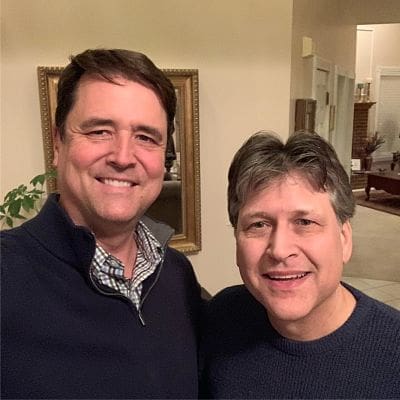
 Dan Vogel is a sixth-generation Mormon most well-known for his biography, Joseph Smith: The Making of a Prophet—the product of decades of research into the life of Joseph Smith. In these Mormon Stories interviews, we are excited to delve into Dan’s own personal Mormon background and to begin to understand the motivations behind his ground-breaking work into the life of Joseph Smith.
What motivated Dan to deeply study the Smith family’s spiritual dynamics and financial circumstances, as well as Joseph’s history of learning to create an environment for belief through his treasure seeking activities?
With these 3 episodes, we hope to set the stage to delve deeper into Dan’s studies on Joseph Smith’s treasure digging and the creation of the Book of Mormon.
- 1054-1055: Joseph Smith’s Treasure Digging – Dan Vogel
- 1056-1058: How the Book of Mormon was Created – Dan Vogel
Dan has an extensive Youtube video collection devoted to many different aspects of the life of Joseph Smith. These highly informative and popular videos may be found here.
Part 1 – Dan shares his Mormon background: This transcript is machine-generated and lightly edited for readability. The audio is authoritative. Please excuse occasional errors in names and spelling. John Dehlin [00:00:04] Mormon Stories is a production of the Open Stories foundation and relies solely upon the support of people like you, its listeners to help keep the podcast alive or to become a member of the community. Please become a monthly subscriber by visiting MormonStories.org and clicking on the Donate button on the right side of the page under support. All contributions to Mormon Stories are completely tax deductible in the United States and go towards producing the podcast and building communities and programs of support for Mormons like you. Thanks for your support. Hello everyone, and welcome to another edition of Mormon Stories Podcast. I'm your host, Sean delinquent. It is January 9, 2019. I am broadcasting to you today or recording this episode for you today from Dan Vogel's house in Westerville. Westerville, Ohio. That's where Dan lives. And we are so thrilled to bring to you this interview today. Dan Vogel is probably, I would say, the most prolific and prominent Mormon historian of our time. Dan is the author of, among other things, Joseph the Making of a Prophet. I would just have to say that this is an amazing book. It's published by Signature Books and everyone right now needs to go out and buy this book and read was actually published around the same time Rough Stone Rolling came out. And I can't believe before. What's that? Before Rough Stone Rolling. And I can't believe that it wasn't until 2018, 2019 that I actually read this book. I'm ashamed to admit that, but I'm just gonna own it. But this book is phenomenal and it's really important and I feel like Dan's a more prolific and probably important Mormon historian of Joseph Smith than Richard Bushman. And I'm sticking with that. So today we are going to be interviewing Dan Vogel. We're going to be talking about his life and we're going to be talking about his scholarship on Joseph Smith. This is going to include the history of the Smith family. This is going to include Joseph Smith's treasure digging. It's going to include the creation of the Book of Mormon. We're going to talk about a bunch of questions. I've assembled hundreds of questions from our live viewing audience or from my social media audience. And we're going to cover the gamut of topics and it's going to be super important. Now, before actually, let me turn this around. Before we begin, I just want to make kind of an announcement that I think is really important and significant for everyone. We are so grateful for everyone in Mormon Stories land who donated to our billboard campaign for those of you who don't know, over the past three, four, five months, we had a billboard along the i15 corridor that promoted Mormon Stories podcast. Many of you who donated are curious to know to what extent was this billboard campaign effective? And the truth is, it was highly effective. So I had my social media guy, Jeremy, who I'm super grateful for, tell me what the increase in new viewers or attendees on the website was. And he estimated an 18% increase in new visitors to the MormonStories.org website year over year 2017 compared to 2018 during the same time period. Now, he says, of course, we can't perfectly tie that increase in website visitors to the billboard itself, but he says it would be silly and folly to completely discount the billboard either. So for all of you who donated to the Mormon Stories billboard campaign, thank you. It's made a huge difference in an uptick in new visitors to the website. We have an even cooler announcement to make as well. For 2019, there is a amateur historian who, you know, as he was processing his own faith crisis, decided that he was going to write out as much of his processing in Mormon history as he could. And he created a bunch of articles or essays on various aspects of Mormon history. The Book of Mormon, Book of Abraham, a huge incredible timeline of his records of early Mormon history. He's done stuff on folk magic, he's done stuff on the Kinderhook plates. Just pick any of the main topics that CES Letter, Mormon Think, you know, letter to my Wife, any of those amazing resources. He's also compiled his version of essays on those topics, and he donated his writings to the MormonStories.org website. So if you go to MormonStories.org Truth Claims, you can find these writings on the MormonStories.org website right now, the reason why we're putting that on the Mormon Stories podcast webpage is not out of any disrespect for CES letter, MormonThink, letter to my Wife, and all the other amazing resources out there. Those are great resources. We will eternally be grateful for those and referring to those. But we feel like since so many people come to MormonStories.org, it's probably one of the most visited websites in Mormonism. We want it to have its own record of issues surrounding the truth claims. And this amateur historian who donated the content did his best to write these essays in story format. So it fits really well with the idea of Mormon Stories. It'll be the story of the Book of Abraham and its truth claims, the story of the Book of Mormon and its truth claims, the story of folk magic and treasure digging. And so we really are looking forward to your feedback. So we want to make it sort of a crowdsourcing effort where you guys will read these essays and go up and comment, help us get the tone right, help us make it really feeling as safe and comfortable as possible for people who are just starting to investigate the church's truth claims. We want to make it not snarky, not snide, not caustic, but instead professional, thoughtful, fair and balanced. And it's not there now, but with your help, we're going to get it there. And here's the exciting news. Starting in the next few days, a new billboard is going to come up on i15. And the first question we're going to ask on the billboard is, was Joseph Smith a treasure digger? Question mark. And then at the bottom it'll say mormonstories.org treasure. And then I'll have the Mormon Stories podcast logo and the idea behind this billboard campaign. And again, this donator, this, this donor contributed $20,000 so far in 2019 to this billboard effort because it cost $5,800 a month to run a billboard along the i15 corridor. So far from what we've been able to negotiate. And the purpose of this billboard campaign is to try our best to reach new people. You know, if you were able to see the Cody and Leah and Brinley Young interview that we recorded yesterday, the Youngs were oblivious to all the podcasts, CES letter, all the issues facing Joseph Smith and the church, and the truth claims on all the way up through December of 2017. And if you can imagine that, you know, Mormon stories had been running for 12 years by that point, and all the incredible progress in the excommunications and the books released, and everything is still completely unknown to the vast majority of active, faithful, orthodox, devout Mormons in the United States and across the world. So as much progress as we've all made in trying to bring awareness to the truth claims, including the church's own publication of the Gospel Topics essays, most active devout orthodox Mormons remain completely oblivious to all of this activity. And so the purpose of a billboard is to try and find an avenue to reach new people. And so that's what we're hoping we will be providing you with a way to donate to this billboard campaign. And what we hope to do is to cover on Mormon Stories podcast, a new topic each month. So in January, we hope to cover treasure digging. And that's why I'm here interviewing Dan Vogel. We hope February will be Book of Mormon authorship. And then from there we will do, you know, things like polygamy, Book of Abraham, Kinderhook plates, blacks in the priesthood, LGBT stuff, the witnesses, Joseph's martyrdom, the first vision. Just imagine all of the major issues surrounding the truth claims we want Mormon stories to cover on a monthly basis. And each month, if we can keep the billboard campaign alive, there'll be a new billboard up which will ask a new question. So imagine for, you know, February of 2019, did Joseph Smith. No, you know, how you know, did Joseph Smith author the Book of Mormon or something like that? And it'll say, you know, mormonstories.org bookofmormon or imagine another month, you know, did Joseph smith practice polyandry? Mormonstories.org Polyandry, you know, was the LDS temple ceremony taken from Masonry,? As a billboard? Mormonstories.org Masonry and this is just a new attempt that we're making in 2019 to bring more awareness to the issues around the truth claims, not to pull people out of Mormonism, not to get people to stop believing in Mormonism. Our motive is purely to bring as much awareness to the problems with the church's truth claims as possible so that every active, devout Mormon and investigator can know exactly what the history and the background and the evidence supporting the church or not supporting the church, whether they're an investigator or a member of purely so that they can make an informed decision about their lives. We believe that people's time and money and reputations are sacred and that everybody who is a member of a religion or an organization should have information about it to be able to make an informed decision. And of course, if people decide that they learn all the information and want to remain an active, faithful member, thumbs up. We are in total support of that. We just want to make sure people do that with all the full awareness. So that's the motive behind this campaign. We're excited about it. In the coming days and weeks, we'll ask you to go to mormonstories.org billboard and if you want to donate to this project, if we can raise enough money, we'll keep these billboards going for at least a year, if not two years, and see how much awareness we can bring to the truth claims issue. So thank you for your patience. And as I introduce all of that, we really appreciate it. So the main reason, again, why we're here for this interview is to interview Dan Vogel. He's amazing. This book. Again, Joseph Smith, the Making of a Prophet for me stands toe to toe with Fawn Brody's no Man Knows My History in terms of its importance to modern day Mormons. I think it's a better biography of Joseph Smith than Rough Stone Rolling by. Far more useful, more relevant, more credible. And I love Richard Bushman. I really respect him. And so today we are going to be first understanding all we can about Dan Vogel's background because I and many of you know very little about his background. Was he raised Mormon? What was his early years in the church like? Did he serve a mission? What got him into church history? We're going to cover all of that in the first hour or two of our epic interview with Dan Bogle. Then what we're going to do is we're going to turn to a discussion about at least two major topics we want to go into. Treasure digging, Joseph Smith and his family, their. Their treasure digging and their affinity towards folk magic. That's going to be kind of part two of this interview. Part three of this interview is going to be us having Dan explain to us his best understanding of how the Book of Mormon was created. If you are not in the camp that believes that angels delivered gold plates and Joseph Smith translated the Book of Mormon with a Urim and Thummim and the plates through the power and gift of God, if you're not in that camp, then you're in the camp of feeling like it was created by some secular means. And we are going to have Dan's best explanation of how Joseph Smith created why and how Joseph Smith created the Book of Mormon. That'll be part three of our interview today. And then part four is gonna be just this robust Q and A. I've assembled hundreds of questions from you, our listeners, covering everything from polygamy to Book of Abraham to Kinderhook plates to modern day contemporary issues around the Mormon Church, apologetics, church history, etc. And questions about Dan and what he's working on now and all sorts of cool stuff. So that is going to be what today's interview is about and I'm super excited to have you all joining us. Several of you are joining us through our livestream and we invite you to ask us questions and to make comments throughout this interview and I will do my best to incorporate your questions, although it's going to be hard today because there are so many questions I've already preassembled. So that's the introduction. And without any further ado, Dan Vogel, welcome to Mormon Stories Podcast. Dan Vogel [00:14:58] Thank you, John. It's a good to be here. John Dehlin [00:15:00] It's a pleasure to have you. Dan Vogel [00:15:01] I'm in my own house, but I'm John Dehlin [00:15:04] gonna fix this so that people can see you. Is that all right? Dan Vogel [00:15:07] Okay. John Dehlin [00:15:08] All right. And just ignore that as much as you can, but this is just gonna let people kind of check out what we're doing. So. Dan Vogel [00:15:15] Great. Great to be with you and finally get to talk with you. John Dehlin [00:15:20] Yeah. Well, it's my honor. And again, I'm just gonna apologize in advance that has taken me so long to read your book. I'm ashamed and embarrassed. But Brene Brown tells me that shame has no value. I just need to feel guilty and then change my behavior. And so I'm working on that. Dan Vogel [00:15:37] All right, that's cool. John Dehlin [00:15:40] Okay. So anything I got wrong in the introduction or that you want to correct or change? Dan Vogel [00:15:46] No, everything's fine. John Dehlin [00:15:47] Everything's good. Okay. Dan Vogel [00:15:48] All right. John Dehlin [00:15:49] All right, so let's begin. Dan. So I. I'm curious to know first and foremost, like I ask all my interviewees, do you have kind of a Mormon heritage and kind of. What is your story about your early years in the church? Dan Vogel [00:16:03] All right. Well, I'm a sixth generation Mormon, like me. Yeah. And my heritage, I guess, goes back to New York. And my ancestors kind of it all began with David Foote. And David Foote and Irene Lane, you know, are my great, great grandparents. They came from New York. And David was converted and baptized in 1833 in Livonia, or near Livonia, Livingston County, New York, John Dehlin [00:16:45] by Dan Vogel [00:16:47] John Murdoch. And so Irene Lane Foote was a good Methodist and put off joining the church for many years. Her brother was the famous to Mormon history. Anyway, Reverend George Lane that preached in Palmyra about which church to join. And Joseph Smith was agitated by that sermon, according to Oliver Cowdery, and so she resisted joining. They then moved to Kirtland, Ohio, eventually, and they were there and they saw the mummies in the Kirtland Temple. And their son Warrenfoot, my great, great grandfather, he was about 17 at the time, and he writes about it in his journals. And he was a teacher and pretty well educated for the time. And Warren put off joining for the longest time because he wanted to be sure. And he didn't get baptized until Nauvoo in 1842. And around that same time he married Artemisia Myers. Her father was Jacob Myers, who owned a mill in Missouri near Haun's Mill. And Artisa Myers was there after the massacre at Hans Mill and writes about it. And Warren put her story in his journal, very gruesome kind of story about the, you know, 17 some odd people that got massacred there. John Dehlin [00:18:59] Then Dan Vogel [00:19:01] David died in Nauvoo and was buried in Nauvoo in 1845. And his wife got baptized after his death and she died a year after that and was buried also in the Nauvoo cemetery. And Warren came across the plains. He was a captain of 50, came across the plains and settled in Utah. And he was eventually assigned to what is known as the Muddy Mission down in southern Utah near St. George. And he lived polygamy. He only had one other wife actually, and he was married in 1856 to a 14 year old girl and had seven children with her and in Brigham Young's office, by the way. So then he had a son, George Albert Foote, who's named after George Albert Smith, a church historian at the time and apostle. And George Albert Foote is the father of my grandmother, Arvilla Vogel. And she ended up moving to Los Angeles because she was a maid in a rich Mormon's house in Utah. And then when they moved to la, she and her sister Florence went with them and worked as a maid. And they seemed to be adventurous young Mormon girls actually. And they went out dancing and they met a non Mormon, my grandfather, Wilbert Vogel, who was from Pennsylvania Dutch actually, and was in World War I. And he was there and hung out in this place where they danced. Usually military men were there and they met and they got married and he got converted to Mormonism. And they had three children and the youngest was my father, George. John Dehlin [00:21:24] And he was raised where? Dan Vogel [00:21:26] Pardon? John Dehlin [00:21:26] Your father was raised where? Dan Vogel [00:21:28] In la. Okay, I was born in la. Okay, I was born in la. John Dehlin [00:21:32] Nice. Dan Vogel [00:21:33] He met my mother who was a non Mormon. So I have Mormon and non Mormon heritage. Kind of helps balance things out a John Dehlin [00:21:41] little bit, diversify the gene pool. Dan Vogel [00:21:44] Plus we were out in gentile land, you know, in California, you know, away from Zion, you know, Utah. And it was a little freer environment to grow up in for myself anyway. And when I was very young, we moved to, I was about one and a half, we moved to Orange County. And I was raised in Orange county mostly. And it was kind of out in a rural area. It wasn't fully developed like it is now. And there were orange groves still and cow fields and things to roam around and play in when I was a kid. And my mother converted with the help of my grandmother probably. And we lived a time in the mountains because my father was wanted to escape the city and be in a rural environment. So we moved to Big Bear, California and lived there for a couple of years. And my family was active part of the time. Part of the time. Not hot and cold Mormons. John Dehlin [00:22:59] What was your upbringing like? Church wise. So were you attending primary? Dan Vogel [00:23:05] I did. John Dehlin [00:23:05] Did you have favorite primary songs? Did you attend the youth program? Did you attend seminary? Talk about the role of the church in your life. Dan Vogel [00:23:12] Oh, okay. So my mother taught Sunday school. My parents, by the way, always had a word of wisdom problem. They smoked, drank coffee, you know, and at times they would quit, repent, try struggle with that. And during, during my childhood, my mother was teaching Sunday school and she would take me along with her. And I'm a member of the original Westminster 1st Ward that used to meet in the basement of a warehouse next to train tracks. And I can remember learning about it. My parents were very, I would say, fanatical about talking and discussing Mormonism constantly. And they would talk about these, you know, many gods and worlds and things, and. And it would always mystify me. But it became a very foundational way of thinking for me as a child because I heard all these mysteries. John Dehlin [00:24:22] Did you have a sense for whether they were true believers? Dan Vogel [00:24:26] They were true believers, yeah. Okay. Even though they had a word of wisdom problem and struggled constantly with smoking and so. But they went inactive a lot for a period of time. And then my mother got active when I was about 16 and I started going back to church, not because of her, but because in high school. So I spent a lot of years outside the church, not even really thinking about it, except when my parents would debate theological topics, have big drag out arguments over things. And in high school there was the Christian crusade on campus thing that just started getting underway, you know, in the early 70s, 60s, early 70s. And I would be intrigued by some of the other. My fellow students would be carrying Bibles and wearing big crosses on their chests. And I would get in these theological debates and I didn't really know very much about what I was supposed to believe. And I would get into debates with them and I would say, oh, wait a minute, I'll go home and research that question. I'll be back. You know, because they would say, you're a member of a cult. And I go, what? Why is Mormonism so bad? You know, so I would go to my grandmother's house and she had been a ward missionary or a stake missionary, and she had all these books and she would tell me proof texts out of the Bible and I would go back to school and use those. And that's kind of how it kind of started. And then I said to myself, well, I better actually read the Book of Mormon, you know. So I was about 16, and I'm reading the Book of Mormon, I'm reading the New Testament to get proof texts, and I'm reading the missionary tools to get my proof text ready when I would talk to these other students. And it kind of like absorbed in me for a long time like this. And then I finally said to myself, well, maybe I should start going to church, you know, because I wasn't going to church or anything. I had no interest in really going to church. So I went and I found, like, you know, for me, this is what church meant to me, as I look back, really was. This was my second family. My. My primary family, my real family was kind of fractured in a way. It was not a. Not, I wouldn't say a happy upbringing. My father drank. He could be aggressive and abusive. And so I had a very tense relationship with my father. And so there was a lot of turmoil at home. I wouldn't say, looking back, my father wasn't a good role model. And what I found at church was good role models. And I was just a teenager and I was attracted to it. And I'm really grateful for what they provided for me at that time in my life, even though I kind of outgrew it. John Dehlin [00:28:12] The church, you mean? Dan Vogel [00:28:13] The church. I eventually outgrew the church. But at the time, it was a very important, pivotal experience for me. It was very positive. So I have no really bad feelings about the church. I just grew out of it. My intellectual pursuits went in a different direction. Didn't make sense to me anymore, the more I learned. But when from 6 to ages 16, you know, I wasn't just reading the Book of Mormon. I was also reading Joseph Fielding Smith's, all of his works, all of Berta McConkie's works, everything. My parents had, everything. My grandma had, everything I could get my hands on. Then I started going to the Deseret bookstore and buying more and more books. I had shelves of books even when I was like 16, 17, 18, when I went out my mission. I had, you know, read all the standard works many times, you know. John Dehlin [00:29:15] So did you. Did you attend seminary at all? Dan Vogel [00:29:17] I attended seminary, yeah. Thanks. It's been so long ago. I was a real gung ho kid. And I was at seminary. I started. I was about 10th grade when I started going back to church, and I was at seminary. And I would always hold my hand up. I know that. I know that. You Know, and I was very precocious. Yeah, I was like very into it, you know, probably very annoying to people around me. And I had a good social life with. As a Mormon kid. I went to all of the dances with, you know, with the youth and it was a very good experience for me, social experience for me. Something I needed at the time. I went on a mission mostly. John Dehlin [00:30:08] Really quick. Super quick. Dan Vogel [00:30:09] Yeah. John Dehlin [00:30:09] Did you, did you like. Would you have characterized yourself as a true believer as a late teen before your mission? And would you have had that struggle of wanting to know the church was true? So praying to Moroni, you know, Moroni's promise, trying to get a testimony of the Book of Mormon, you know. How would you have characterized your either search for testimony or obtainment of a testimony during those pre mission years? Dan Vogel [00:30:36] Oh, thanks, thanks. That's an excellent question. So, you know, I had warm and fuzzy feelings. That's about probably it. I would, I wouldn't say I was a true believer, of course, but there was always a nagging doubt and I always wanted a greater witness, you know, sort of like what Martin Harris used to say, I want a greater witness. And I would pray for a greater witness, you know, and nothing would happen really. That was earth shaking, just the worm and fuzzies. I felt it was true and I would get up like everybody else and say, I know this is the true chur. I know Justin is a prophet, you know. Now an interesting story to this is my younger brother Larry. He was always. He's the artistic type and he would have long hair and he was a surfer and cool and listened to cool music and. And he would go to church and they would bug him about his long hair and. And he would get up and bear his testimony and he would only say what he believed. He would say, I believe this is the true church, you know. And he's a bit more philosophical. Yeah, yeah, he was way ahead of me in that area. I was trying to conform and fit in. I'm a firstborn and you know, I'm real successful trying to be successful, trying to be liked, you know, codependent and all that. My brother, though the members afterwards, after testimony and meeting and he got up and said what he honestly felt and wouldn't be pressured into saying more. They would say, oh brother Vogel, we need to work on that testimony. And my brother would say, oh well, you know, I'm trying to, but this is all I can give you, you know, at this time. So that way, you know, I'm very proud of the way he Was at that. At that young age. And he was young. Two years about two years younger than me. Okay, so that's. That's probably where it stood when I went on my mission. Even on my mission, I would pray for more, and it was just never nothing. Fantastic. John Dehlin [00:33:20] Whatever happened, where were you called to? Dan Vogel [00:33:23] England. Birmingham Mission. John Dehlin [00:33:24] Okay, and what year did you graduate high school? Dan Vogel [00:33:27] 74. John Dehlin [00:33:28] 74. Dan Vogel [00:33:29] So I went December 74. John Dehlin [00:33:31] Okay. Dan Vogel [00:33:32] To December of 76. John Dehlin [00:33:34] So you didn't do a year at BYU before your mission? Dan Vogel [00:33:37] No, no, in fourth grade, I got held back, so I was always a year behind everybody else. John Dehlin [00:33:43] Okay, so you were 19 by the time you graduated, right? Almost your mission? Dan Vogel [00:33:48] Yeah, almost 19. John Dehlin [00:33:49] Were you, were you a good student? Did you study? Did you excel academically? And did you have any other interests like athletics or, you know, science or anything? Dan Vogel [00:34:02] Yeah, so I wasn't good in social situations. I was a lot like. I remember Brent talking about his attention. Brent Metcalfe, my great friend. He. He and I both are like, attention deficit. But I was more hyperactive, too. I was hyperactive kid. I was into everything. I still have hyperactivity, but it's more channeled. And so I wasn't good in social learning situations, when people stand in front of you and talk. I still struggled in the university. I managed, but I always wanted to do my own thing. I was. It was Mormon history. Of course, when I was in the university, I was always trying to squeeze that in, but I had to be really disciplined to listen to do. You know, a very structured way of learning is not conducive to my style. So. I, you know, I got passing grades, but I was always super interested in everything around me. And when I was a kid, I really wanted to know how nature worked, how the human body worked, how, you know, machines worked, how cars worked. I was always asking questions, and I never lost that, even though I had struggles in school and learning through that method. And I was always studying stuff when I was a kid, I was always asking for books ever since I was a kid. Give me this book for Christmas, you know, I would ask my mom, I want a book. You know, give me a book about this or that. I would ask for medical books, you know, and when I was 16, I was reading medical books on my own and wanting to know that kind of stuff. So I went through phases from about 12 to 16. I was around there, maybe even younger than that. I was really interested in medicine and doctors and, you know, physiology. My mom would go to the local junior college and get medical books. For me and my friend, my best friend, Randy Moon, who eventually converted because of me and went to. He went to byu. His mother was a nurse, and I would read all of her books, too. But John Dehlin [00:36:57] any other hobbies besides reading? Dan Vogel [00:36:59] Well, so around 13 or 14, I got really interested in martial arts. John Dehlin [00:37:10] Is that Bruce Lee time period? Dan Vogel [00:37:12] Yeah. My father, he went to Japan and Korea in the service before he met my mother. And when Bruce Lee came on as Kato in the Green Hornet on tv, that reignited his interest in martial arts. He was a military police in Korea. So he started taking Kenpo karate, which Kimpo karate was. Ed Parker was a Mormon, and Ed Parker held the international Karate Tournament in the Long Beach Sports arena in California. And my dad would take us there as kids and I would see Bruce Lee, Chuck Norris, a guy named Joe Lewis, not the boxer, but the karate guy. And we got really into the Asian culture and I had lots of Asian friends and I took judo. My dad made us take judo. I wanted to take kung fu. I want kung fu like Brizzly and. But my dad, his friend, Japanese friend he worked with at the Long Beach Naval Shipyard is where my dad worked. And his kid went to this judo dojo. And so I was. He took us, my brother and I, there to take judo with the other kids and this other Asian man's son. And there I met lots of great martial artists. And I was young and pretty strong, you know, I started lifting weights when I was like 14. But there would be like these old men, 70 years old, just throw me around like I was nothing. And it was quite funny. But. And it was a. It was a great experience. And I kind of went. Grew out of that too. And it got really. When I got into the church is when I just. I went gung ho about Mormonism too, you know, and tried to read everything and try to solve all the puzzles I could get, you know, in those. John Dehlin [00:39:33] In those early studious years, pre mission, did you come across, quote, anti Mormon literature, any of the Tanner stuff? No Man Knows My History by Fawn Brody? Were you exposed to any of the stuff that would cause someone to doubt or question pre mission? Dan Vogel [00:39:48] No. I knew they. There were anti Mormons, of course, but I thought they were all a joke because they didn't know anything about Mormonism really, and they were just proof texting out of the Bible counter back and forth, and it was all interpretive meaning. John Dehlin [00:40:09] The Tanners or. Dan Vogel [00:40:10] No, I didn't know the tenors existed. John Dehlin [00:40:12] Okay. Dan Vogel [00:40:12] But until my mission, actually. John Dehlin [00:40:14] But not Brody, you hadn't heard of Brody pre. Dan Vogel [00:40:17] No, I didn't know Brody. All I knew was that there were anti Mormons out there because I went tracting with missionaries even before my mission and I got exposed to, you know, that there were counter. Well, you know, I told you about the people on campus telling me I was a member of a cult and Mormonism is wrong and that, you know, we would debate about whether there's one or three gods, you know. John Dehlin [00:40:52] So on your mission, is there any, anything about your mission we should know that was significant to your later career as a historian that motivated you or pushed you towards becoming a historian on your mission or to your faith journey? Dan Vogel [00:41:09] Yeah, well, on my mission I still for the longest time focused on church things and Bruce, I was still a Bruce Armaconki fan and Bruce R. McConkie actually came to my mission and I sat like right there at his feet and he would do his thing and you know, I'd be all awestruck with Bruce. I'm a conkey and I was. But I was exposed to a lot of like it was a great experience to me on my mission that I wouldn't have had otherwise because I was born into, I would say, on the lower end of the middle class. And it was a, it was a great learning experience for me and I, you know, one of the highlights probably for me was when Stephen R. Covey came and spoke to us and gave us his techniques and things about, you know, trying to convert people. And that was a. He would come and talk to us at Christmas time when we had our Christmas convention conference. And I did run into. This is on my mission is where I ran into my first hearing of the Tanners. And it was towards the end of my mission and I heard about this Reverend Cuthbert. And Reverend Cuthbert lived in, I can't get the name of the place, but he was well known in my mission for putting out literature and tapes of anti Mormon ideas. And so I wanted to meet him and I went there to meet him and it just happened to be his church had scaffolding all around it because it had been hit by lightning. And I was kind of known in England in my mission as being cheeky. You know what they call a cheeky monkey? You're a cheeky monkey. Like I'm a smart ass. So precocious, right? Yeah, precocious. So when I knocked on his door and he came to the door and we started talking, eventually I asked him, so Reverend Cuthbert, did you declare this lightning strike on your church as an act of God on your Insurance. So he invited us in and, you know, I kind of struck up a friendship. He took us out to his office. He had an office in the back of his house, and he had the tenor literature there. And we started talking about the tenors. And he goes, you don't know about the tenors? I go, no, I've never heard of them. He goes, yeah, I went to America recently, and they live right by this baseball field, right? John Dehlin [00:44:35] Yeah, the bees go. Bees, yeah. Dan Vogel [00:44:38] So he mentioned that I didn't know what he was talking about. I go. And he showed me their literature. And I found out that a lot of his stuff was just basically stuff that they were saying and he was saying it in a different way. And that's where I got onto, well, there's changes in the Revelations, you know, there's changes in the Revelations. You know, there's in. I saw the photocopy. John Dehlin [00:45:04] Like the Doctrine and Covenants. Dan Vogel [00:45:06] Yeah. In the doctrine covenants, the 1835 Doctrine of Covenants. It would be all circled with changes and stuff. And it was the Tanner's photocopied from the Tanner's literature. It was the first exposure I had to changes. I never even thought of such a thing. He also exposed me to the Oliver B. Huntington's reminiscence about just miss seeing moon men, you know, generally five feet high and look dressed in a Quaker clothes. And. And I go, I never heard any such thing. And I was so naive and. And unlearned about these things at this time that I actually wrote a letter to Bruce McConkey, my hero, going, and I sent a photocopy of this Oliver B. Huntington reminiscence from the young Woman's journal. Is this true? I'm asking him. And I finally got a letter back, actually, on my mission. And Bruce McConkie said, this is pure fiction. Your job is to just follow your president, your mission president. And he gave me a lecture on not worrying about stuff like this and just concentrating on converting people. So that was kind of a letdown. Like, that's not an answer, you know, But I couldn't do anything about what I was learning on my mission. You know, I was kind of stuck there. And I did research. Most of the research I did was biblical. You know, I bought Bible commentaries and Bible dictionaries. Even on my mission, I discovered masonry. On my mission in England, I knew about Masons, and my dad had mentioned something about Masons are similar to the Mormon endowment, which, you know, when I was a kid, I didn't know what he was talking about, but. So I bought books on masonry that showed their typescripts or whatever of the transcripts of their ceremonies and I compared them and, you know, I was quite concerned, you know, so I vowed when I get home, I'm going to look into this. You know, this bugs me. John Dehlin [00:47:28] What bugged you about it? Dan Vogel [00:47:29] Just that I didn't have any answers, you know, I didn't. I didn't know what they were talking about and I knew I needed a, you know, to investigate this stuff. I couldn't just let it go. John Dehlin [00:47:40] Why? Dan Vogel [00:47:41] I'm just not that type. I'm kind of obsessive compulsive that way. If there's something bugs me, I don't know, I gotta, like, you know, is part of a probe. It. John Dehlin [00:47:52] The truth matters to you. Dan Vogel [00:47:54] Yeah. You know, I don't want to be misrepresenting, you know, what's real and truth, if they're, you know, whatever truth I can tease out of the world. But. So when I got home, if you want to move on or more on my mission. John Dehlin [00:48:20] Okay, so. Your mission. Dan Vogel [00:48:22] I loved my mission and it's a great memories. I make friends with. I have an English friend at work that I hang around with and talk about England. And so it was a perfect place to go for me because I love the Beatles. When I was. When I grew up, the Beatles were my first music to really, you know, call my own besides my mother's music. The music to call my own, I would sing to the records, you know, music I would escape. When I was a kid, my home life was kind of painful, so I would escape into the music. When I was young, I was very good at doing that kind of a thing. And the Beatles were it for me. John Dehlin [00:49:10] Me too. We. We share that. Thank you for joining us today on Mormon Stories. If you enjoyed this episode, please help us make more like it by becoming a monthly subscriber@mormonstories.org. Guest [00:50:00] Clear your mind There is a light beyond the shore Calling to you once more this is the life you're making There is a love for the taking it's so these guys don't have to be you Baby, you're somebody new when the lions are drawn in Friends of you it's all right to be you. It's all right to be you Shame, disbeliefs It says who you want to be but there is a wiser part of you I know you feel it too. John Dehlin [00:00:04] Mormon Stories is a production of the Open Stories foundation and relies solely upon the support of people like you, its listeners to help keep the podcast alive or to become a member of the community. Please become a monthly subscriber by visiting MormonStories.org and clicking on the donate button on the right side of the page under support. All contributions to Mormon Stories are completely tax deductible in the United States and go towards producing the podcast and building communities and programs of support for Mormons like you. Thanks for your support. Okay, so get home from your mission and then tell us about what. How your faith trajectory went and what led to you kind of becoming a historian. Dan Vogel [00:01:03] So I got home too late to start college, and I wouldn't have started college if it weren't for the church. You know, the church wants you to be educated. And, you know, my family certainly, you know, didn't emphasize education. They were smart, clever people, but they didn't excel in school. Both of my parents dropped out of high school. John Dehlin [00:01:32] Really? Dan Vogel [00:01:35] My sister never completed high school. I think she got her GED eventually. And my brother and I completed high school, so. But I delayed it because I got home too late. And. The next summer, my friend and I, Randy Moon, we hopped in the car and drove to Salt Lake because we wanted to connect up with some of our old missionary companions. But while we were there, I decided, oh, let's go find the Tanners. Where's that, you know, ballpark? So I drove around Salt Lake going, where's the ballpark? And people would point. Oh, go down here, make a left. So I found the ballpark, and then I drove around the ballpark until I saw the sign on the. That Reverend Cuthbert mentioned. There was a sign. Modern Microfilm company, you know. So I went in, met Sandra. I met Sandra Tanner. John Dehlin [00:02:46] 76. Dan Vogel [00:02:48] Yeah, well, 77. John Dehlin [00:02:52] Okay, 77. Dan Vogel [00:02:53] Yeah. All right, 77. I met Sandra in her little house, in the front room of her house and her books. And I went around and I talked to her, probably annoyed her with my true believer, you know, position. And I bought some of their stuff, and all the way home, I made my friend drive home while I read their stuff, all the way home. And so then I started researching, and I. Oh, there's got to be answers to this. And I started trying to solve some of their puzzles. Eventually, I don't know how long it exactly took for me to graduate from that to actually wanting to get a hold of their sources. So I always wanted to go back. Okay. And somehow I got onto the first vision and the Book of Abraham. The Book of Abraham really bothered me the most, probably because it was so right there in your face. You know, here's the documents. Here's his fake translation. There you are. So then I was intrigued with the first vision and the revivals and things. And so I wanted to really talk to Wes Walters personally, and I started writing. Wes? John Dehlin [00:04:24] Why Wes Walters? Dan Vogel [00:04:25] Because he's the first vision guy. He's the guy that discovered that there were no revival in. Or there wasn't a revival in Palmayra in 1820, that the revival that was happening that Joe Smith described fit perfectly with 1824, 25. The winter of 1824 25. But I was trying to explain it away still, and. But I wanted to talk to him. And we started writing, and Wes wrote back and forth, and I was very impressed with his reasoning and that some of the things I would learn from Milton Backman. I read his book and I read. I believe, I think it was published at this time, Richard Bushman's response to what Wes. And there were other things that Wes wrote that also on money digging and the 1826 trial that, you know, were documents that he discovered and were really important to understanding what was going on. And so I wanted to talk to him personally, and I did. And he had to cut off the back and forth that we were having because he was working on his master's thesis at the time, which dealt with the use of the Bible in the Book of Mormon. John Dehlin [00:06:02] Wait, was this a church employee? Was this a BYU professor? Dan Vogel [00:06:07] Who is this? Oh, yeah, sorry. John Dehlin [00:06:09] No, no, no. Dan Vogel [00:06:10] Wes. Wes. Well, I just assume everybody's up with me, but Wes Walters was a Presbyterian minister that live in Marissa, Illinois. Oh, and Wes, he got really intrigued with Mormon history. Of course, he's a Presbyterian minister, but he took on the subject. And what I liked about Wes was that he would actually get in his car and go out and dig in these archives all over the United States. You know, he'd go to historical societies or. What do you call it, jail houses, the. Where, you know, basements or attics of courthouses, you know, looking for original documents. John Dehlin [00:07:03] Fon Brody did that, Right? That's my understanding. Dan Vogel [00:07:07] She might have done a little, but not nothing like Wes. Guest [00:07:12] She. Dan Vogel [00:07:12] I don't. I don't think she discovered any. She. She did compile a lot of early newspaper kind of things. John Dehlin [00:07:19] Okay, okay. Dan Vogel [00:07:20] You know, before they were on microfilm, probably. And so you'd have to go to a lot of historical societies to see the newspapers, but a lot. Her source was really Walker or Walker, was it John Dehlin [00:07:41] I forget someone. Dan Vogel [00:07:42] Anyway, okay, so, but Wes looked, he. He tried to find a revival in Palmyra and couldn't find any in the records. You know, great multitudes were united to the different religious parties he tried to find because there were lots of, you know, bragging about, you know, in the newspapers and especially church periodicals on how many converts they had in various towns. And he couldn't find any great multitudes uniting to the churches, you know, within a reasonable distance, Palmyra at the time. So then Milton Backman, he tried to, you know, argue that the wording is, you know, doesn't say that they were converted in Palmyra just as region of country and. Or district of country. John Dehlin [00:08:41] And that would have been a church apologist. Dan Vogel [00:08:43] Yeah. Milton Beckman, a BYU professor. And they, Milton Backman and Richard Bushman tried to counter Walter's thesis by mostly arguing that it was in the region, not in Palmyra, because just the way the 1838, just Smith's 1838 history, you know, worded how it happened. So then, so I was researching the first vision and I was talking to Wes about it. I started having doubts. I was going to the university by this time also of Utah. No, no, it was a junior college, two year junior college, Golden West College in Huntington Beach, California. John Dehlin [00:09:40] Okay. Dan Vogel [00:09:40] And then I transferred from there to Long Beach, California State University at Long Beach. John Dehlin [00:09:45] Got it. Dan Vogel [00:09:47] But I was going to the university, I was doing research. I was writing letters back and forth to Wes to other people I eventually met. When Wes couldn't write anymore, I went and met Mike Marquardt, who is still my really close friend. And we, we regularly talk, you know, weekly probably on all sorts of things that both of us are working on. So Mike Marquardt was. He's a really good researcher. He hasn't gone to the university to learn history or anything, but he's an amazing researcher. Everybody knows, you know, anybody writing working in this subject knows Mike Marquardt and he has the most fantabulous memory. You know, he remembers details and facts like nobody else that I really know and knows right where things are and what they say and much better memory than I've got. But so I tap Mike on a regular basis and I got involved with him mostly. We were talking about the Book of Abraham and he had responded. Hugh Nibley, professor apologist Hugh Nibley, and responded to Hugh Nibley's apologetic on the Book of Abraham. Where Nibley's argument was, we don't have the actual document, the actual scrolls that Joseph Smith used to translate the Book of Abraham, that it's missing. And his line of argument was that Oliver Cowdery described. Scrolls as containing red and black ink, and there's no red ink on the whore papyrus on the Book of Breathings. And Mike responded in a little pamphlet where he pointed out that Oliver Cowdery is describing both the scroll that was assigned to Joseph, which is Ta Sheret min papyrus, Book of the Dead, has red and a small part in red and most in black, and the Book of Abraham, which is the horror papyrus, the Book of Breathings. And not that one should not expect for there to be red writing on the Book of Abraham, what Joseph Smith claimed was the Book of Abraham text. So it just totally blew Nibley's argument out of the water. And I was impressed by that. But I did write Nibley just to see if he had a response to Mike. And Nibley sent me back some thing he wrote on Jeff judging and prejudging the Book of Abraham. And he attacked DJ Nelson, who was an amateur Egyptologist who claimed he had a doctorate, when he didn't. So they said, oh, he doesn't have a doctorate degree. He lied. And so that did away with D.J. nelson. And I met D.J. nelson, too, at some Christian gathering that my friends took me to. He was quite a character. He was an interesting guy. But nothing he said was particularly wrong about, you know, a preliminary way of understanding what the actual Egyptian said on the papyrus. And so anyway, that's how I met Mike. And we've been friends ever fast friends ever since. And, you know, John Dehlin [00:14:22] so by. By 77, 78, you're starting to question your testimony, getting more into history. You're going to college. Dan Vogel [00:14:30] Yeah. John Dehlin [00:14:31] What? Dan Vogel [00:14:31] College was another thing. I started taking philosophy. And what philosophy did. I was intrigued with philosophy. And there was a professor who was quite eccentric. He would. He looked like Plato, or what you would imagine Plato to look like. Walked around in sandals, had a gray beard and glasses. And he had a unique way of bringing out people's assumptions. And he would draw on the board and, you know, we would have these debates in the class. And what he did was to make me think more precisely, not to take mental shortcuts, which as a Mormon, I was used to doing. And so that was a very good training. And I was a philosophy major for a while, and I switched over to American history, U.S. history, because that was more. I figured, I love writing, I love researching and writing, and, you know, you don't write and publish very often in philosophy. So I really got intrigued with the history of ideas. And I always liked to know where an idea started and how it developed over time to get to where we are. And those kinds of subjects attracted me. So I was, for the longest time, it was more into the, the history of ideas, which is like philosophy in a way. And, you know, that would probably grew, you know, affected my approach to early Mormon history. John Dehlin [00:16:32] At what, at what point would you say. There's two, there's two points I'm driving towards. At what point, what year would you say you would have lost your testimony? And at what point would you have. Or what year would you have decided, I'm going to be a historian and start doing original research. Follow whichever one takes us to the first, the earliest year, and then the one that takes us to the later year. Does that make sense? Because those are two tracks. I want to know when did your testimony end, what year? And what year did you start deciding you were going to write Mormon history? Which happened first? Dan Vogel [00:17:08] Well, I always wrote for myself and or friends about Mormon history. I just had a natural urge to write and externalize. And writing a paper for myself just for my own notes was my way of focusing and keeping track of what I've discovered or learned. And you really don't learn until you write. I mean, I remember Wes used to say, reading makes a full man, writing makes a precise man. He used man, but person, woman, whoever. And so I always liked to write. I wrote, kept notes. I was just. That was my habit ever since I was a kid, even as a believer. So I loved studying Mormon history as a believer. So when I became a non believer, I didn't lose my love for studying Mormon history. I just had a different interpretation. John Dehlin [00:18:20] But you. Okay, so what year did you kind of. Can you pinpoint a moment where you're just like, I don't believe this anymore. Dan Vogel [00:18:27] There is no moment. Okay, that's the easiest answer. You don't wake up one morning saying, oh, I don't believe. It's a process. And sometimes you don't believe before you even know it. So like I said, I had these doubts. Things weren't gelling. And because I didn't have this really huge emotional attachment to Mormonism, mostly because I didn't really get into it until I was 16. I probably went on a mission because it was a social thing. I believed I was like my brother, really inside, I believed it was the true church. It made the most sense to me, but it was the only thing I really knew. And so you know how you go through life, and there's awakenings at different stages and where you wake up to something and it takes. And I had nothing but Mormon friends, really, also. And I didn't dare think anything else because that was all I knew. Those were my friends at the time. I didn't have anything else. So probably in the universe at Golden West College was about the time I stopped believing. And I'm on my second marriage. Really? John Dehlin [00:20:17] Right now. Dan Vogel [00:20:17] Yeah. John Dehlin [00:20:18] Okay. Dan Vogel [00:20:18] I got married at the age of probably. I can't remember, 20, shortly after my mission, 22, 23, somewhere around there, to a Mormon girl. And she even expressed worries about me because I was studying controversial things. Oh, don't worry. I'm just trying to answer these things, you know? And so part of my. What slowed me down probably was that. And I was going to church. I did. There was. I did get excommunicated because I was a non. You know. John Dehlin [00:21:07] Wait, when was that? Dan Vogel [00:21:08] I did get excommunicated about that time. John Dehlin [00:21:11] Wait a minute, minute back up. Dan Vogel [00:21:14] So what year were you excommunicated about that time? I don't remember exactly. John Dehlin [00:21:19] 75, 76, 77. Dan Vogel [00:21:24] Well, after you were married at the same time, because what they probably. I can't tell you because I didn't go to the trial. Okay. John Dehlin [00:21:37] Okay, you didn't go. Dan Vogel [00:21:38] I didn't go because I didn't want to participate. John Dehlin [00:21:40] How'd your stake president find out you were. Dan Vogel [00:21:42] Well, they. I was going to church. It was a more of a social thing with my wife. And they pulled me into the office and I answered their questions. That's all there was to that. John Dehlin [00:21:54] Why did they pull you in the office? Dan Vogel [00:21:57] Well, they knew because we asked them to marry us. John Dehlin [00:22:01] Okay, but why'd they know you were studying stuff or what made. Dan Vogel [00:22:04] No, I didn't get excommunicated for any intellectual. John Dehlin [00:22:07] Oh. Dan Vogel [00:22:08] Or apostate thing. I'm sure it was morality issues. John Dehlin [00:22:12] Okay, okay. Dan Vogel [00:22:13] So. But I wasn't a believer. John Dehlin [00:22:16] Okay. Dan Vogel [00:22:17] And I was single. John Dehlin [00:22:18] Okay, got it. Dan Vogel [00:22:19] Okay. And going to the university, I met. John Dehlin [00:22:23] So you excommunicated for premarital sex? Dan Vogel [00:22:25] Yes, Probably. John Dehlin [00:22:26] Okay. Dan Vogel [00:22:26] I wasn't there. John Dehlin [00:22:27] Okay, Okay. Dan Vogel [00:22:29] I wasn't there. I didn't participate because I didn't believe in it. John Dehlin [00:22:34] Okay. Okay. All right. So how do you know how long your marriage lasted? Dan Vogel [00:22:39] One year. Just Almost. Almost one year. John Dehlin [00:22:45] And it ended. Why? I mean, whatever you want to share. Dan Vogel [00:22:49] No, it just didn't. We weren't. John Dehlin [00:22:52] Was it religious faith stuff or. Dan Vogel [00:22:54] It was. We weren't compatible. John Dehlin [00:22:57] Okay, okay. Dan Vogel [00:22:57] It didn't work out. We were just two different people. It was a mistake. John Dehlin [00:23:03] Yeah. Dan Vogel [00:23:03] To even begin with because I didn't know what I was doing until I was maybe 30 years old and had a year in therapy. So. Okay. So at any rate, As soon as I got divorced, that was it with the church. That was it with the church. So that was slowing me down. That's. That's why I. I didn't say anything to my Mormon friends. I didn't say anything to anybody. I couldn't really verbalize it. I couldn't say it out loud. John Dehlin [00:23:44] What? Dan Vogel [00:23:45] That I didn't believe it. John Dehlin [00:23:46] Oh, okay. Dan Vogel [00:23:48] But after I got divorced, then I told my Mormon friends that I was hanging around with in the university and at the institute. I used to go to the institute, even though I was going to university. And I wasn't really. I wasn't a believer or a non believer. I was in limbo land. I was. I didn't have any feelings about it really, but I was still studying the history because it was very intriguing to me still, and trying to work out puzzles what was really going on there, you know, so. As soon as I told my Mormon friends, I remember my one male friend that I hung around with mostly said, you know, we're probably not going to hang around you anymore. John Dehlin [00:24:42] Funny how that happens. Dan Vogel [00:24:43] Yeah. So it was kind of messy, but there was no Internet, there was no Mormons around. Me leaving. There's none of that. I was alone. There was nobody to tell me how to do it or what to do or how to go about it. And I wasn't particularly. I was just feeling my way through life, stumbling, really. John Dehlin [00:25:15] Were you aware of Leonard Arrington, Michael Quinn, all of the Arrington years of church history, kind of in those late, late 70s, early 80s time period? Were you aware of any of that research going on? Dan Vogel [00:25:32] I don't know. I can't tell you the dates. But I started going to the Mormon History association, which was the first historical gathering I went with. It was. Mike Marquardt invited me up to stay with them. And. And it was in Ogden, and I believe it was 82. John Dehlin [00:25:59] Had you been to Sunstone before that? Sunstone was started in the mid-70s. Dan Vogel [00:26:03] No. John Dehlin [00:26:04] Okay. Dan Vogel [00:26:04] I never heard of them. John Dehlin [00:26:06] So Mormon History association was the first sort of Mormon scholarly thing that you attended? Yeah. Okay. Dan Vogel [00:26:14] So. And Mike invited me. I believe that's how I went. And I went. And I believe that's when I met Brent Metcalfe. He was still a believer at the time. And. We sat down and started discussing Mormon history. I had just Published actually a paper in the Journal of Pastoral Practice. Excuse me, Wes Walters. It was a paper I wrote, and it was a response to Ed Ashmut in Sunstone. So I knew about Sunstone magazine. And it was a response to Ed Ashman's essay in Sunstone that talked about, is the Book of Mormon a translation? And he was trying to argue that it was a very loose translation. And he was trying to explain why Joseph Smith could make changes later or that there were, you know, most of the changes were grammatical, but there still are about 21 changes that are theological and, you know, substantive. And John Dehlin [00:27:40] that was before Blake Osler's theory. Someone else was developing that. Dan Vogel [00:27:44] Yeah, it was before Blake Osler's expansionist theory. It was just what I would call a conceptual translation or loose translation theory as opposed to a literal translation, you know, And Joseph Smith in the Times and Seasons says it was a literal translation translation. But then I went through the. You know, the. Joe Smith claimed to the people around him when he was translating that he could see the actual words. John Dehlin [00:28:15] Yeah, we all. Yeah, we've all read that. Yeah, that. He says, I saw a character right here, wrote it down, then it would disappear, and knew new. Sorry, words would appear. I'd write him down, new words would appear. So that doesn't leave a lot of room for him injecting his own biases or culture into the text. Dan Vogel [00:28:35] Right. John Dehlin [00:28:35] Yeah. Dan Vogel [00:28:37] And so it was a visual. You know, even the Book of Mormon talked about, you shall see, the stone is a seer stone. You see in the stone, the translation. And so I argued against him, and it was a paper I wrote, and I gathered up all these descriptions, and Wes asked me if he could publish it. I didn't intend on it being published. John Dehlin [00:29:08] That was your first publication. Yeah. Dan Vogel [00:29:11] So I go, oh, okay, I guess you can have it. And so he published it in the journal Pastoral Practice. And Brent had read it, and he wanted to talk to me about it and tell me how wrong I was. And. John Dehlin [00:29:23] And so he was being an apologist. Dan Vogel [00:29:25] Brent. John Dehlin [00:29:25] Brent Metcalf was being apologist. You knew Brett Metcalf as an apologist? Yes. I love that. Dan Vogel [00:29:30] Yes. John Dehlin [00:29:31] And. Dan Vogel [00:29:32] And Brent was totally brilliant. I thought he was. He was very smart, and he was not an average Mormon, for sure. John Dehlin [00:29:43] And Dan Vogel [00:29:45] so we became fast friends also and kept up. You know, we talked on the phone a lot. Shortly after that, he started working in the security for the temple square. And he would call me late at night and talk to me because I was up late. I was a late. I usually get up early now, but back then I used to stay up really late and research and write. That was my prime time. And Brent would call me, you know, two in the morning and we'd talk about stuff. And so we've had had this great friendship ever since. And I benefited from all my friends, by the way, all my friends. John Dehlin [00:30:38] Did you know Mark Hoffman when he was running around Salt Lake? Dan Vogel [00:30:41] Well, since I didn't live in Salt Lake, I was not exposed to Mark Hoffman on a regular basis. I saw him at Sunstone when I went up there and it was 85, right before the bombings. Mark annoyed me. I didn't like Mark. John Dehlin [00:31:01] Why? Dan Vogel [00:31:02] He was too secretive. I don't like secretive people. Sneaky people. And he was sneaky and secretive. Plus I have a vivid memory of Mark in the Hotel Utah where the Sunstone used to meet. And it was at the time when Mike Quinn was giving his paper on magic. I think it was this one or the next one. But I used to admire Mike Quinn a lot and now he's a dear friend of mine. But I used to admire him. I was a lot younger and he was older and a professor at BYU and his research was amazing and he just knew a lot and he was very smart and he's very quick, he's a very quick thinker and he's a great human being. Everybody loves him. So. And I benefited from my friendship with him immensely also. So it was at this time though they were honing in on Mark, the scholars. And it was at the time when Richard Anderson had a display in one of the rooms and he talked about one of the letters. I think it was an Illinois letter that had a hand stamp. You know how a letter in the corner back then they would stamp it with the stamp by hand and sometimes the stamp wouldn't be straight, it would just get a sharp edge and then it would fade out on the other side of the round stamp or oval stamp. And Richard Anderson had a blow up of that showing how it didn't look real. It looked like it was hand drawn with these little dots. It was hand drawn and I can remember Mark looking at that real carefully and people walking by looking at that and still they didn't put the finger exactly on Mark. And then there was right before Marvin Hill was going to give his presentation on the Salamander letter. And even I have to mention Gerald Tanner was on the mark first probably, I don't know, but he was saying that there's something wrong with this letter. And I would get, I would get these photographs Mine came via Wes Walters, actually. But I would get a photograph of the Salamander letter and I would look at that and go, well, there's no crossouts, you know, it's too perfect. But I wouldn't, I didn't know enough to really say anything, but I would remark, it's like an artwork piece of art. Look at this. John Dehlin [00:34:18] So you were kind of on to him, you know, as a potential sketchy guy. Dan Vogel [00:34:22] Well, I didn't know. I didn't know it was Mark. Maybe he bought one that was not real. John Dehlin [00:34:30] Right, right. Dan Vogel [00:34:30] You know, and that's the same thing Marvin Hill was saying. He, Marvin Hill was suggesting, well, Maybe it's a 19th century forgery. John Dehlin [00:34:39] Right. Dan Vogel [00:34:41] Nobody was actually questioning Mark for some reason. John Dehlin [00:34:45] He was a later. Dan Vogel [00:34:46] Yeah, he was not. I didn't question him until way later. Okay, so, but Mark, Brent and I were talking and Mark came up and said, oh, I need to talk to you, Brent. And they go off at a distance and whisper and talk, talk, talk, talk, talk. And I didn't like that. And I said, well, I don't have no one to talk to now, so I'm just going to follow Mark around. So I started following Mark around and watching what he's doing. And it ended up with Mark in the lobby of the Hotel Utah on his knees talking to Marvin Hill before Marvin Hill was going to give his presentation. And Mark is trying to probably talk him out of giving his presentation or changing his presentation, you know, on the Salamander letter, on the provenance of the Salamander letter. And so I'm standing there listening. Mark sees me and then just then Brent happens to come up and Mark more or less motions to Brent, take him away, you know, so Brent and I go off. Well, then Marvin Hill's session starts and there's like Rick Grunder, Lynn Jacobs was there and you know, we're all on this one row and Mark's there and Marvin Hill's giving his presentation and Marvin Hill's talking about. He talked to the dealer that supposedly sold him the letter. And the dealer says, no way, you know, and so Marvin Hale goes, well, maybe it's a forgery from the 19th century, you know. Well, when it became to came to question and answer time, Mark stands up and starts trying to change things, you know, and defend the letter and change the story about the provenance, you know, which didn't really work very well with Marvin Hill because, you know, Marvin Hill's kind of strong minded. And so that's etched in my mind. And then I Went home back to California and heard about the bombings. You know, what is going on here? You know, we all thought it was some mad person, mad bomber type person that had an issue with Marx letters or something, the people that were funding Marx researches. But then when Mark's accident happened and he accidentally blew himself up, I call, I remember calling Rick Grunder that night going, what? What's going on, Rick? Do you know anything about what's going on? And he didn't know. He was trying to, he was trying to find out too. And, and then even when they charged Mark, still I had, I didn't know for sure that they were on the right track. But eventually I remember going up the next year and Mike Marquardt had the transcripts of his confession and I read through all of those. I think it was like three volumes. I was going through it, learning things, techniques and things that he was doing. And it was pretty clear. I mean, yeah, of course he confessed, that's fun. But I didn't really know Mark. He would never want to know anyone like me, really. Probably. And I had no use. I don't care about actual documents. You know, photocopies are just fine with me. I just want the information from the documents. I'm not a document Right. Collector or anything. John Dehlin [00:39:09] What year was your first major book published? Dan Vogel [00:39:14] The Indian Origins. John Dehlin [00:39:16] Is that the first major book? Dan Vogel [00:39:17] Yeah. John Dehlin [00:39:21] What year Was that published? Dan Vogel [00:39:22] 86. John Dehlin [00:39:24] Okay, so this would have been after. A little bit after the Mark Hoffman stuff. And, and what was that book about? What was the point of that book? Dan Vogel [00:39:35] Well, it started out, my research for. It started out with some debate I was having with a friend and, and we were debating about archaeology and geography and, and somehow I got onto the Indian that the, the Mound builder myth, which is the white Indians were destroyed by the dark Indians. John Dehlin [00:40:09] Wait, wait, wait. Was that a myth prior to the Book of Mormon? Dan Vogel [00:40:12] Yeah. John Dehlin [00:40:14] Okay, so I, I'm sorry, I probably read this a long time ago. I did not realize, I mean, unless, unless in the view of the Hebrews, I guess there was a lighter and a darker civilization. Dan Vogel [00:40:25] Yes. Yeah. John Dehlin [00:40:26] But the Mound builder myth, would that precede the view of the Hebrews? Dan Vogel [00:40:28] Oh yeah, it goes back to the Puritan. John Dehlin [00:40:31] So this idea of a light and a dark skinned Native American far precedes the Book of Mormon. It was in the air just like all the tens of thousands of other things that Joseph Smith probably got out of the ether. Okay, so the book's about that? Dan Vogel [00:40:49] Well, it's like a major assumption to the first readers of the Book of Mormon, it was invisible. I mean, it was an assumption of the time and place. It wasn't anything anybody would really debate. John Dehlin [00:41:02] I had no idea. Dan Vogel [00:41:03] Yeah. John Dehlin [00:41:04] Okay. Dan Vogel [00:41:04] And so I wanted to look up as much as I could find printed before 1830 about the Indians and what people believed about the Indians. John Dehlin [00:41:18] Oh, wow, that's cool. Dan Vogel [00:41:20] And so this is my introduction to really serious research before the Internet. So I would spend hours and days on end going through microfilm. And there's a. Like. It's called the Wing collection. It's everything printed in America before 1700. And the Shaw Schumacher series, which was everything printed from like, 1800 to 1840s. And they would be. Most universities have them, and they were on either microfilm or microtext, which were these cards that have books printed on these white cards. And you put them in special machines and you read them. And so I started trying to compile bibliography of everything I could find. And what did they believe about the Indian before the Book of Mormon was written, you know, by Joseph Smith? John Dehlin [00:42:30] Thank you for joining us today on Mormon Stories. If you enjoyed this episode, please help us make more like it by becoming a monthly subscriber@mormonstories.org John Dehlin [00:00:04] Mormon Stories is a production of the Open Stories foundation and relies solely upon the support of people like you, its listeners to help keep the podcast alive or to become a member of the community. Please become a monthly subscriber by visiting MormonStories.org and clicking on the Donate button on the right side of the page under support. All contributions to Mormon Stories are completely tax deductible in the United States and go towards producing the podcast and building communities and programs of support for Mormons like you. Thanks for your support. Summarize for us the. Let's just say the key three to five things that were just generally believed about Native Americans prior to the Book of Mormon being published that we would have probably thought was original stuff. Dan Vogel [00:01:05] Yeah. John Dehlin [00:01:05] From the Book of Mormon that really was just remix or plagiarism or whatever you want to call it, if those can come to your mind readily. Oh yeah, okay. Dan Vogel [00:01:16] So one would be, like I said, the mound builder myth. And the idea was these mounds all through the Great Lakes region were filled with bodies of the dead, the ancestors of the Indians. And how did they get. How did these bodies get into the mounds? And they would speculate that there were these great wars and that there was a white race. And it had to be a white race because the Indians didn't have the ability, according to the Puritans and those after them, to build these mighty works in America, like down in South America, Central America, or the mounds. Some of them were temple mounds, some of them were burial mounds. They didn't have the. They believed the Indians didn't have the capability of building them. So it must have been another race that the Indians had destroyed. And what this was actually was a projection by the Puritans onto the Indians that they feared that the Indians would do to them. What had happened in ancient times to these mound builders that had disappeared, they vanished into, you know, where did they go? Who were they? And so the ministers would use the mound builder myth in their sermons to scare or frighten their parishioners into repenting. They call it this whole literature, they call it a Jeremiad, like Jeremiah in the Old Testament calling Jerusalem to repentance. You know, so they would call this literature, this Puritan literature. Jeremiah. That's the genre of this literature. And they would say, repent, or else God will allow the Indians to destroy us if we don't repent. Right. So that's kind of what the Book of Mormon's doing with the mounds. The Book of Mormon mentions mounds and burying bodies in the mounds. Actually, the truth of it is that they weren't mount. They weren't mass graves at all. They were actually cemeteries where the bodies were entered at various different times. But they didn't know that archaeology hadn't even been invented yet. So the second one would be the Jewish origin of the Indian. And they would make these long lists of Indian sounding words and Hebrew sounding words. And they'd say, see, the Indian language is basically from Hebrew. And this would support their theory that maybe the Indians are the 10 tribes. And so the 10 tribe theory was probably the most prevalent one. You know, among those who are looking for theological answers. There were always people that had the Bering Strait theory and that they were Asiatics. There were always those guys around. But the, the existence of the Indians in the New World was a theological problem to Bible believers, fundamentalist Bible believers, and was. So there was a fl. Everything wiped clean. How did the animals get here? How did the humans get here? So they would look for biblical answers. And one would be the Tower of Babel. After the Tower of Babel, they were spread throughout all the world. Another one was the 10 tribes that in the book of Esdras, in the Apocrypha, their second Esdras, there's this passage about the ten tribes leaving Jerusalem. Well, the ten tribes are carried north into Assyria, and the southern kingdom was Judah top, the northern kingdom is Israel. And they're carried away captive into Syria, Assyria. And they are about 721, I think it is BC and according to this Esdras passage, they were went off into a region, eastward into a region where never mankind dwelt. Some would say, oh, that's America. Where never mankind dwelt. So, so the Indians are the 10 tribes and of Jewish origin. That's how they know Hebrew. They would look into Indian culture. And this was all amateur archaeology at the time because there wasn't real scientific archaeology. And they would see various customs being the same as the Jews and but, you know, how did they get the darker skin? And most answers were like James Adair. He was a trapper, Indian trapper, wrote a big book on the Indians and others, even Ethan Smith, Boudinot, Josiah stole no Buddha. No. John Dehlin [00:07:16] All right. Dan Vogel [00:07:17] He wrote a book called Star in the west in like 1817, I think it was. Anyway, they would make their case for the 10 tribe theory. And there was a reason behind this having the 10 tribe theory was the white man wanted to destroy the Indians and take their land. And Ethan Smith and others that had the 10 tribe theory was trying to say Wait a minute. Before you know, they are God's chosen people, really. They're the 10 tribes. They're fulfilling prophecy that we discovered them. And the prophecy is that they'll be converted before Jesus returns. So that's our real job, is to convert the Indian. And this is why the 10 tribe theory went really big around ministers who were convert trying to convert Indians. So it was. John Dehlin [00:08:12] And that's super important because the Book of Mormon's title page or whatever basically says the purpose of this book is to convert the pure blood of Israel to Jesus. Dan Vogel [00:08:22] Right. John Dehlin [00:08:23] And that. So that if that was in the ether prior to the Book of Mormon, it would make sense that the Book of Mormon would state that as its primary purpose. Dan Vogel [00:08:32] True. Joseph Smith is trying to save the Indian. True. But he's also trying to use the Indian after they get converted to form his army to take over the wicked gentile nation that America has become. John Dehlin [00:08:53] That's the council of 50 minutes stuff, right? Dan Vogel [00:08:56] No, no, no, no, no, no. John Dehlin [00:08:58] Before that. Dan Vogel [00:08:59] It's the Book of Mormon. That's what the Book of Mormon is, converting the Indian. And then in three Nephi, 20 and 22, you have Jesus coming and saying that the Indian will be converted in the last days. They will join up with believing Gentiles and they will go through and tear to pieces the unbelieving Gentiles. That's why the Missourians were scared to death. John Dehlin [00:09:35] Right. Dan Vogel [00:09:36] Because of these prophecies. And Mormons would quote these prophecies in their sermon, you know, you might as well give us your land. It's ours. God has given it to us. And they would read these prophecies and they would quote these prophecies in their complaint against the Mormons and their explanation for wanting to kick them out. So the Book of Mormon is a revolutionary work. It's about revolution, and it's about America has become wicked for various reasons. I mean, I don't know how far we should go into off track here. John Dehlin [00:10:19] No, let's save that for the. For the discussion about the creation of the Book of Mormon. Okay. So this gives me a sense for what that first book was about, and I'm really excited to talk more about this. Okay, so that was published in 86. Is that what she said? Dan Vogel [00:10:35] Yeah. John Dehlin [00:10:36] Okay. Dan Vogel [00:10:36] And the important thing in my life was this was the year my dad died. My dad and I had this, you know, tense relationship over Mormonism. He believed it. He didn't like it when I started talking about not believing it. I had to be super diplomatic when I talked to My dad about it, you know, why? You know, it's okay for you to believe. You should give me space to not believe because I don't have the testimony you have, you know, so I'd let him have his testimony, and I would say, I don't have that testimony, and I have a lot of doubts. You can't blame me for being the way I am. That's one thing. If God. There is a God, he knows. I don't know, so why should I pretend? So that's kind of the approach I took. Try to cut out my, you know, little space where I can exist in. My parents weren't too. I wouldn't say they were so fanatical like a lot of Mormons to where, oh, you're going to hell. You won't be in the celestial kingdom. They weren't that type of Mormon. John Dehlin [00:12:00] Right. Mine aren't either. Dan Vogel [00:12:02] So. So there was that. And my dad died before, just before the book came, and I put one in his coffin. John Dehlin [00:12:12] Oh, wow. And you, you and he. Did you have a reconciliation about faith or anything that. Or was that just kind of unreconciled? Dan Vogel [00:12:28] Well, my dad claimed to have spiritual experiences, which were actually probably a mental disorder of some kind. He talked about, you know, being harassed by demons. You know, we would have these conversations, but before he died, early, early in my disbelief, I would tell him, well, my dad would try to bear his testimony, and I would say, well, there's really more than one interpretation of that which would set him off. John Dehlin [00:13:09] Right. Dan Vogel [00:13:10] And so it was tense, but just before he died, he was having more difficulty managing, and he went to psychiatrist and he got medication. And I remember having a conversation with him where he said, they're still there, but they're like, further away. And I say, well, dad, you know, demons really don't respond to medication. Do you have any doubts, you know, about the origin of these experiences? No, no, that can't be it. So. But I would never press. Of course. John Dehlin [00:14:02] Right, right, right. So real quickly, what. Who was the publisher of your first book? Dan Vogel [00:14:10] Signature Books. John Dehlin [00:14:11] Okay, so you. They were supportive. Yours from the 80s. Dan Vogel [00:14:16] Oh, yeah. This is a story in itself. The publication of the first book wasn't planned. I mean, I didn't go, oh, here's my manuscript. Consider it for publication. It was something I wrote up. I had been doing all this research on Indians, you know, compiling my bibliography and going, wow to myself. So I go, I'm going to share this with my friends, Wes Walters, Mike Marquardt, you know, and all of a Sudden, I was living with my mother at the time. I was taking care of my dad in his final illness. He had lung cancer. And the phone rang and I answered it. It was George Smith. And he said, you know, I really like that manuscript. I want to publish it. And I said, well, it's not written completely. I didn't write it like a book. Let me work over the summer when I'm out of school and I'll get another manuscript and submit that. So that's what I did. Then it was given to Susan Staker and she was like an editor with Signature Books and she was an English major, so she was really good and she helped me work it up into a better manuscript. And I really dedicated myself to trying to understand everything she was doing and learn the writer's craft as best I could. And then it was published. John Dehlin [00:16:01] Okay. And I just have to say George Smith is one of the least known relative to biggest impact sort of Mormons that I'm aware of. Do you want to give like a one minute version of the history of Signature Books? Because it's really important. Dan Vogel [00:16:21] Well, so first of all, if there weren't any George Smith, there would be no Dan Vogel, probably, or Graham Palmer. John Dehlin [00:16:30] Yeah. Dan Vogel [00:16:31] So. And he founded Signature Books and has John Dehlin [00:16:35] tried Michael Quinn in terms of his awareness. Michael Quinn, Grant Palmer, Dan Vogel is all thanks to George Smith. Right? Dan Vogel [00:16:43] Yeah. John Dehlin [00:16:44] Yeah. Dan Vogel [00:16:44] So George Smith, he's a capital financier in San Francisco area and he underwrites, you know, a lot of stuff that you don't really know what that's being supported. But by George, even every now and then, I believe it's George, George D. Smith Fund on pbs, you know, that I see every now in a great while. But so George has, he's a. He's a scholar too. And he writes books on polygamy. He's written articles on the Book of Mormon, you know. And so he started. He became the president of Signature Books and he hired Gary Bejera and Ron Pridis. And we were all very young, you know, in our early 20s. And so signature Books got going way before I knew it existed. It started publishing, you know, Scott Kinney's Woodruff Journals, seven volumes, I think it was. John Dehlin [00:18:02] And Scott was one of the founders of Sunstone. Dan Vogel [00:18:05] Yeah, right. And some other scholars. They started publishing. And. Then I met Gary and Ron and they've been. Of course, that was like seven in the 70s, I think it got started. I can't remember the year, but before I came around. And so I've been lucky to have them as an outlet all these years. And Ron is Garrett. You know, I got to say, Ron is like, I love his editing. He really, you know, makes my stuff look better than I could do myself, probably. And it's going through some changes now even because they're getting ready to retire. So they've been with Signature. Here we are like 30 years later, you know. John Dehlin [00:19:07] Yeah. And also, George Smith has been a major funder of Sunstone. So my understanding is he donates a six figure amount to Sunstone every year to keep it afloat. And so I don't know. But between Sunstone and Signature books, George Smith has been a massive influence on Mormon intellectual history. And most people don't know his name. Yeah. Okay, so what was your motive for writing this first book? Was it to take people out of the church? Was it to destroy faith? Was it you were angry for being betrayed? Was it something else? Why? Why did you write that first book? Dan Vogel [00:19:48] Well, I've never been angry. I'm not an. I don't consider myself an anti Mormon. Wanting to take people out of the church, that's not my goal. It's really never been my goal. My reasons for writing have evolved over time, but I always loved writing Mormon history or studying Mormon history. Even before I stopped believing, I just kept on going because I still like doing it. Brent and I talk about this. We have similar ideas about our interest in Mormon history. I don't keep up on who's the prophet or anything like that. I don't really care, you know, I don't care to take people out of the church. I don't care to help people make decisions for their life. That's their problem. I only worry about myself and my life. It's nice when people can use my stuff and it helps them. I would never try to go in. And I debate with apologists, so I might be considered an anti Mormon apologist, but not an anti Mormon, you know, so. Because I think they put out some really goofy stuff. But. But I appreciate them at the same time. I appreciate their point of view, their angle, their. Their input in pushing the boundaries. They can be annoying, I understand, but I don't, I don't have. I'm not really all that agitated by them, to tell you the truth, so. John Dehlin [00:21:31] And this is me projecting, but I'm just going to own it. Like, I went several decades believing a certain narrative and then I found out it wasn't true. And I'd made all these life decisions and spent all this money and time and reputation investing in something that wasn't what it claimed to be. And then it was so difficult to go through that faith crisis on me and my family. So, you know, why have I spent 14 years, which is a fraction of what people like you and Brett and others have spent. I've done it not to take people in or out of the church, but like feeling like this is wrong, that number one, people are basing their lives on something that isn't true or accurate, and two, that it can cause so much pain and destruction. So I'm going to dedicate a decade or two or three of my life not again to hurt anybody or to take people in or out or to make people believe or not believe, but just to try and be a counterbalance to injustice and to try and help people minimize pain and suffering and maximize joy and thriving by helping people make informed decisions and by giving people tools to thrive. Are you telling me that none of that is a motive or a foundation for your decades long commitment to Mormon history? You're just saying it's like I'm a geek and I'm fascinated with history. Dan Vogel [00:22:52] I'm a geek, I'm a geek and a nerd. But no, it's. I probably, I don't have the anger. Brent says he doesn't have anger. John Dehlin [00:23:04] I'm not saying anger, I'm just saying social justice. Dan Vogel [00:23:07] But no, no, it's probably because I was very young. And also I don't impute to leaders of the church some kind of conspiracy. And I know it's just like any other tradition. Mormonism is not unique in this. Everybody thinks that they're trying to help. They think they're trying to help. Of course they don't understand how damaging it can be. I mean, I haven't got out of it unscarred, but I've worked through it. And like my wife still says, I'm still that, you know, conservative Mormon guy inside, but. Although I am a liberal. Right, but everybody has a different path and a different response. I don't try to tell anybody that their feelings are wrong. I mean, they need to have them, they need to go through them. If they're angry, they're angry. That's where they're at. And I just didn't dwell on that. Plus, my interest in Mormon history is not to deconvert. If it were to deconvert, I would have been totally frustrated. Angry, angry. And you know, but what about to John Dehlin [00:24:37] alleviate suffering and help people based our life on truth? Dan Vogel [00:24:41] Well, you, you always hope that that's a side effect, but not a goal. Okay. My goal is to help myself. Okay. This stuff helps me work through my stuff. I have layers and layers of Mormon stuff that I still think through. You know, I. The first thoughts and theology and reality as you see it, with gods and planets and, you know, celestial kingdoms and things. That's all laid down first in my psyche, you know, and other things are laid down on top of that. So I have to like work through that sometimes. Well, So I focus on self actualization. I'm self actualizing myself. And this is my therapy. So the thing is, my belief is that everyone has a religious dimension, ritual in their life. And this is my form. You can't just like take away all those, the religious impulse that all humans basically have and throw that away and ignore it. You have to replace it with something else. So this is my thing. If you really want to get down serious, it's more like it has to do with a book I read by Ernest Becker called the Denial of Death. And we all do our best not to think about it. That's basically what it is, not to think about death. So it's a distraction and sometimes you think about it and a little at a time through life. In fact, death is part of what woke me up was soon after my mission, I went to a funeral with my mother. It was the patriarch of the Westminster, or I think he was the patriarch way back when it was the Westminster ward and then it became the Huntington beach stake, and we went to his funeral. I've never been to a funeral before. And I was like in my early 20s, right after my mission, probably right around there. And I looked at the body of the patriarch and I was stunned, you know, like, he doesn't look like he's asleep or anything. He looks like he's dead, you know, and that kind of like shocked me. I'm going to myself, I'm saying to myself, do, you know, do we really walk around after this somewhere else? And do these stories that I've been told, do they really sustain me in my deepest thoughts, you know, about death? And it was no. The answer was no. No. These stories really don't take away the sting of death, you know, they really don't. And, you know, I was in my early 20s and you start thinking about things like that. But that's one of the layers of my journey. John Dehlin [00:28:29] Love it. Do you describe, do you. Do you think of yourself as a believer, as an atheist, as an agnostic, a Christian? How do you self identify in terms of beliefs in God and Jesus? Dan Vogel [00:28:45] Well, in philosophy, I Started having serious questions about. The problem of evil and death and unnecessary things. And these stories about, oh, it's all for our learning and, you know, all those little children starving to death. What are they learning, you know, and what's the whole purpose of that? There's no purpose to that. So it came down to my decision that, you know how some people say, oh, without a belief in God, nothing makes sense? Well, it's opposite with me. Everything makes sense. Whoops, sorry. Everything makes sense until you add God into the picture. Then it doesn't make sense anymore. So that's my conclusion. I don't say that there isn't a God because I can't do that. It's a negative conclusion. I can't say there isn't. But why does there have to be? And when you start learning the anthropological approach to religion and you start learning why humans are myth makers and a thing called the psychological imperative, which is humans can't stand chaos, they get tense, causes, you know, bad feelings, tension. So they invent a story. Any story will do. Long as it's not chaos anymore or doesn't make sense or they want to try to feel like they have control over things that they can't control. And so that's where magic comes in. And that's sort of the approach. So in the university, that's what I took. I took psychology, sociology, anthropology, and I used those, you know, methods and concepts with my history. So I'm social historian. John Dehlin [00:31:12] Got it. Dan Vogel [00:31:13] I use whatever tool I need in my toolbox. John Dehlin [00:31:17] But not a. Not a religious person. Dan Vogel [00:31:20] No. So there. But I would call myself spiritual. John Dehlin [00:31:27] So do you pray? Dan Vogel [00:31:28] No. John Dehlin [00:31:28] Okay. Dan Vogel [00:31:29] I don't. John Dehlin [00:31:29] And you. Dan Vogel [00:31:30] What I mean, spiritual is. It's all an internal process, because that's all. You know, spiritual doesn't mean there's spirits or things out there, because nobody knows what's out out there. All, you know, is what's the internal process? So it's a. It's. I would describe it as more of an approach to life, contemplative. You know, go. Go towards the pain, things like that. John Dehlin [00:32:01] Love it. Okay, quickly, just to kind of talk about your publishing record. What was your. What was your second book? Dan Vogel [00:32:12] Religious Seekers and the Advent of Mormonism John Dehlin [00:32:16] and the sort of paragraph abstract of that. What year was that? Dan Vogel [00:32:22] Well, that was 86. This would be 80, not 8 or 9. John Dehlin [00:32:28] Okay. Dan Vogel [00:32:28] I think it's 8. 88. John Dehlin [00:32:30] Okay. Dan Vogel [00:32:31] I think I should have my Vita. John Dehlin [00:32:34] That's all right. Dan Vogel [00:32:35] So that's basically about people who believed in a restoration of the gospel Before Joseph Smith, religious seekers were. There was actual sect in England associated with the Congregationalists, the separatists, really in England, people that separated out of the Church of England believing it was corrupt. Seekers were the most radical version of separating. They said, okay, the problem is after you leave the Catholic Church and their ministers, you know, their priests are ordained from Peter and you cut the chain, how do you claim authority? Well, these seekers said, well, there is none. You don't. There's no authority. Well, most Protestants claimed authority, say to baptize, because the Bible commanded it to be done, and that's the authority. So the Bible gives you the authority to baptize because it commands you to baptize. John Dehlin [00:33:45] That's what evangelical would say today. Dan Vogel [00:33:47] Right. So seekers have a more literal concept of authority. And they said, there is no authority until God sends new apostles that will found the church. Whoops. Found the church with charismatic authority, at least charismatic among the seekers. They didn't know how the authority would come. Roger Williams in America was a seeker. Roger Williams talked about that the sacrament can't be administered, no baptisms until God sends new apostles with new authority. And Joseph Smith had an uncle, Jason Mack, Lucy's brother, who was a seeker preacher, actually. And he came and visited the Smiths in Vermont. And probably that's why Joseph Smith Sr. Became a seeker. He wouldn't join. And neither Lucy nor Joseph Smith Sr. Together, they did not baptize their children. And so the children did not belong to a church. They both agreed about not joining any of the churches because they're all corrupt. Lucy changed or modified her view. Later. Joseph Sr. Hung onto his view, and his dreams were consistent with that view. His seven, seven dreams that Lucy writes about are consistent with a seeker theology. And that's Joseph Smith fulfilled that expectation, his father's expectation about the true church being restored. Now, that concept evolved after that, but it kind of evolved within a seeker view of things, from a more charismatic authority to a more literal angels. Peter came and reordained us. You know, Peter. So it was within that tradition that Mormonism evolved. That's what that book was about. John Dehlin [00:35:52] Okay, okay. So again, this theme is studying the historical context that would have ultimately produced or explained the production of the Book of Mormon. Is that fair to say? That's a common theme between those first two books? Or a justification or motivation or a drive? Dan Vogel [00:36:10] No, the second book's more about the church. John Dehlin [00:36:13] The church, Sorry, not the Book of Mormon. The church. Yeah. Okay. Joseph Smith's dealings. Joseph Smith understanding the historical, contextual phenomenon or Movements that would have produced things like the Book of Mormon or the Mormon Church or Mormon theology or doctrine. Right, Yeah. Dan Vogel [00:36:29] I was just. I was discussing why it was restored in a certain way which happened. This is the reason for a lot of its success. It attracted Signe Rigdon and his group because they had separated from Campbellism and they were looking for a restoration of the spiritual gifts, an actual living church. And it also attracted the brethren in England who had a similar view. And so they're on the radical end of the Reformation. And. And it was about why the authority evolved in the early Mormon church from a charismatic. At first, the Peter, James and John and angels ordaining people didn't come until 1834. There was none of that. Okay, so the authority that Joseph Smith had was the command not from the Bible but from an angel. The angel came and commanded them verbally. No ordaining or anything verbally. The angel Moroni later was named, but the angel with the Book of Mormon. The Book of Mormon was the authority. And the angel commanded them to baptize. John Dehlin [00:37:52] Okay, so you're saying Joseph Smith's own conception of authority evolved over time. And then he. More literal, as he did with the first vision, as he did with other things, his view of the Godhead and other things. Dan Vogel [00:38:04] Right. John Dehlin [00:38:05] He kind of revised history over time or. Or his associates would revise the history over time to match his evolving theology. Dan Vogel [00:38:14] Right. John Dehlin [00:38:15] And that's why the witness. That's why the Peter, James and John or John the Baptist actually laying on of hands. Dan Vogel [00:38:20] Yeah. John Dehlin [00:38:20] Would have been inserted later in the historical narrative once Joseph felt like that was an essential component to. Dan Vogel [00:38:26] It's not, it's. Yeah, it's not in the early record. John Dehlin [00:38:30] Got it. Yeah. Dan Vogel [00:38:31] And there's a reason for it changing, which was. The short story right now is that he needed to stabilize charismatic authority. Charismatic authority is unstable because anybody can have it. And he was being challenged by various people. John Dehlin [00:38:50] So important. Dan Vogel [00:38:51] Hubble. I got. I got most of these ideas from Max Weber, a German sociologist. And he wrote this thesis on charisma and from. From charisma to institution, and that all charismatic groups to survive have to evolve into an institution. And the institution is self promoting and self surviving and stabilizes charisma. Charisma's still there. John Dehlin [00:39:23] Makes sense. Dan Vogel [00:39:24] But it's more stable and less likely for Joseph Smith to be challenged by usurpers, which is. And Oliver Cowdery gets in on the scheme. Okay. He's in on it at that point, according to my thesis anyway. And. And then it culminates. In the 1836 visitations in the Kirtland temple Behind the Veil with Oliver Cowdery and Joseph Smith getting keys that nobody else has. That puts them out of the range of any usurper. John Dehlin [00:40:03] Right. All right, makes sense. Okay. What are the other major books you published between that second book and the Joseph Smith biography? Dan Vogel [00:40:19] There are some compilations, the Word of God, which was a bunch of where I tried to get rlds or Community of Christ Scholars and Mormon Utah Mormon scholars into one book so that they kind of. There'll be a liberalizing effect maybe. And the Word of God. What does the Word of God mean? And I published several essays there. And then. I don't know. I'm trying to remember articles along the way. In the 90s, early 90s, I published an article on the Joseph Smith family dynamics and I've published one on masonry in the Book of Mormon in the John Whitmer in 89, which is very important essay, I think, which I want to talk about and John Dehlin [00:41:19] about masonry. We'll talk about that as one of our topics in the Q and A. Yeah. Dan Vogel [00:41:23] So then Joe Smith, Family Dynamics, which is an interesting story. How I came to write that essay, which was in conjunction with my therapy. And it was actually Mike Quinn. I was hanging around Mike Quinn quite a lot in California before I got married and moved away for my second marriage for 26 years. And Mike Quinn. I was talking to Mike Quinn about some of my issues with my father and stuff, and he suggested a book called Family Crucible. And so I read it and it got me onto family systems theory. And the family systems theory I really liked because it wasn't so Freudian. It was more sociological approach to the family and political. How the family is a political unit and tries to achieve homeostasis with various people in the family playing different roles and how that can get dysfunctional at times. So I read that and it really struck me. Plus I got into therapy, kind of stumbled into that also. But I got into it. My therapist assigned different readings that were very helpful. Then I started researching family systems, more scholarly stuff. And then I wrote the. I tried to work out the Smith family dynamics. What were the. Of course, we don't know enough about some of the members of it, the key members we know somewhat. But I was mostly in tuned with the dynamic between Joe Smith and his two parents. The triad. Oops. The triad. The triad. And so I would go through the Book of Mormon looking for these triads and where Joseph Smith. We'll talk about this later. But how he felt pulled between his two parents. John Dehlin [00:43:37] Yeah, for sure. That Finch, crossing your biography and how Dan Vogel [00:43:40] he's trying to get the family back together, hold the family together and restore patriarchy because it had a weak patriarch. John Dehlin [00:43:51] Yeah. Dan Vogel [00:43:52] And he's trying to restore. The Book of Mormon. Has a lot of that. Restoring the patriarchy in it. And. John Dehlin [00:43:58] And Lehi's weaker than Nephi. Right. So there's a little bit of. It seems like there's a little biography there. Dan Vogel [00:44:03] Exactly. John Dehlin [00:44:04] Yeah, yeah, yeah. Dan Vogel [00:44:05] And the mother. John Dehlin [00:44:07] Yeah. Doesn't Murmurs. Dan Vogel [00:44:09] Murmurs. And doesn't believe the. Doesn't believe the revelation. John Dehlin [00:44:12] Yeah, yeah, That's. Dan Vogel [00:44:14] There's some other. And there's some other subtle things, but it's not a psychobiography like, in the sense. Psychobiography, when you talk about psychobiographies, Brody. No, not even her. She's not even heavily psychobiographical. You're talking about, like, Freud doing biography of Martin Luther. John Dehlin [00:44:40] Yeah. Dan Vogel [00:44:40] You're talking about Oedipal going back to edible complexes and working your way up and through the guy's life and mostly concentrating, because Freud was mostly on those first. And Erickson was like later with later stages, but still, it's nowhere near. There's no Freudian subconscious or Freud. There's no phallic discussion of phallic stage or anything like that. But anyway, so. I don't know. I think it's the biography. Is it. I can't remember my own writing history here, but. John Dehlin [00:45:25] No, that's okay. Dan Vogel [00:45:28] Well, I think I was doing early Mormon documents, actually. I think that's 2002, maybe, or 1999. John Dehlin [00:45:37] I got 1996 here. I'm looking at your. For volume one, maybe. Yeah. Dan Vogel [00:45:43] Okay. So, yeah, the documents. So my thing was to. I'm going to gather up every document dealing with Mormon origins that I can get, so. Because I wanted to know what the parameters of what I could say were. And so if I had everything I could. You're more. You have a better ability to put it together, you know? John Dehlin [00:46:21] Right. Dan Vogel [00:46:23] So my thing's always been people are trying to theorize before we get all the information, you know, and so let's get. Let's get the information, and then we'll build our theories. John Dehlin [00:46:33] So early morning documents came before your. Okay, okay. All right. So tell us, just what has your profession been? You haven't been able to provide fully for your family just from your work as historian. True or not true? Dan Vogel [00:46:55] No. John Dehlin [00:46:55] What's been your primary source of income over your life? Dan Vogel [00:46:58] Well, I don't want to say like where exactly? John Dehlin [00:47:01] No, what, what has been? Oh, whatever. Dan Vogel [00:47:04] Part time work. John Dehlin [00:47:05] Okay. Dan Vogel [00:47:06] That's where I get my health insurance, first of all. But that's what my week to week income. But I've been able to is what for 30. Well, I'm just a clerk in a grocery store. John Dehlin [00:47:22] What does that mean? Dan Vogel [00:47:24] It means that I don't pay much attention to that part of my life, really. It's just a necessary thing. John Dehlin [00:47:30] So are you like an accountant? Are you. Dan Vogel [00:47:33] No. A grocery store? John Dehlin [00:47:36] No, no, no. For the grocery store. Dan Vogel [00:47:38] No, I just work as a regular worker. I hobnob with all the rest of the people. John Dehlin [00:47:43] And that's been your career for how long? Dan Vogel [00:47:46] Well, I've often on for 30 more years or more years, but with this one company, 21 years here. John Dehlin [00:47:55] Are you saying you're like, you're literally like taking the boxes and scanning them and taking the money? Dan Vogel [00:48:01] I don't work as a. I have worked as a cashier, but I, I work more as stocking. I'm a stalker. John Dehlin [00:48:09] And that, that's your main, that's your main job? Dan Vogel [00:48:12] That's my main job for how many years? That's my main physical activity. John Dehlin [00:48:16] How many hours a week? Dan Vogel [00:48:18] 24. John Dehlin [00:48:19] 24 years you've been a stalker at Dan Vogel [00:48:21] a grocery store 24 hours a week. John Dehlin [00:48:25] Okay. Dan Vogel [00:48:26] I've done it full time at different times when I needed to. I've done it less when I needed to. So it fluctuates. But yeah, yeah, that's the way I work. John Dehlin [00:48:41] And so you're. Dan Vogel [00:48:42] And I need it for balance, actually. But I couldn't do a job. I knew I could not do a job where I had to think. Right, okay. Because I wanted to think here, you know, in my office here, and write. I write while I'm working, actually. So I wanted something physical and, and I've always. I've worked in, in the grocery industry since I was 17 and then I was out of it, then I was in. I did. I've done various other things. John Dehlin [00:49:17] What I'm kind of hearing and tell me if I'm wrong and, and I'm not. I don't want you to tell me anything you're uncomfortable telling me. So don't think that I'm trying to dig who with. Who with what? Dan Vogel [00:49:28] Who I work for, actually. The company's name. John Dehlin [00:49:30] Oh, that's fine. Yeah, that's fine. So what I'm hearing is you've been able to get a source of income part time for your historian, your writing, a sustained income for decades, and then as a Supplement to that income. You have worked at a grocery store. Dan Vogel [00:49:49] Yeah. John Dehlin [00:49:49] Is that. Am I accurate in saying that? Dan Vogel [00:49:52] No, actually I need it for health insurance, like I said. And I also need it for a more steady income. I do. I have gotten pretty steady income for my writing. I mean, it's not fabulous income. At one time it was. I liked it. It's a little less right now, but John Dehlin [00:50:18] probably from signature, I'm guessing from George. Dan Vogel [00:50:20] George. So either I could get royalties or I could get paid a stipend type thing monthly. At one time it was monthly. Now it's, you know, periodically. And I bank it. Okay, I bank it, then use a little bit. And the other job slows that down. And so the thing that. The goal is to keep on going. And my main goal is to write and research as much as I possibly can and publish as much as I possibly can. John Dehlin [00:50:59] And Dan Vogel [00:51:03] this is the balance that I've been able to manage. John Dehlin [00:51:08] Got it. So total number of books you've published is how many? Dan Vogel [00:51:13] Well, just at that seven volume thing. Eight volume. Excuse me, Eight volume thing. So I don't. I don't know, could be 18. John Dehlin [00:51:24] I don't know, 18 books, 18 volumes, 18 volumes of. Dan Vogel [00:51:28] But there's a eight volume set and the five volume set. John Dehlin [00:51:31] And again, what are those? The eight volume is called what? Dan Vogel [00:51:35] The History of the Church. You know, Joseph Smith and the History of the Church. John Dehlin [00:51:40] And that is what? Dan Vogel [00:51:41] It's a critical text, critical edition of the history of the Church. The first six volumes, not the seventh, but the first six volumes of the History of the Church. So what I did in that was to find out where all the sources behind the. It's called a documentary history. So I called it a documentary history. So it's really a string of documents connected together with the minimal narrative by the Joseph Smith or his aides, the historians that helped him, and even some of it after he died, most of it probably after he died. And I annotated those documents to show you any serious word changes. Things that were left out I put back in. So you have a critical text. The eighth volume is transcriptions of documents that aren't published anywhere really. Some of them were published a long time ago, but they're documents that lie behind the history of the Church. So you have everything there that you need to know what the authority is of any passage in the history of the Church. So you know if it's okay to use or not okay to use or who probably wrote it and what the date was when it was written. And so it's a Critical Source Textual and Source Critical Edition. John Dehlin [00:53:26] Got it. And then that took me about 10 years. Yeah, that's huge. Yeah. And that was called again what The Dan Vogel [00:53:39] History of Joseph Smith and the Church of Jesus Christ of Latter Day Saints. Okay. John Dehlin [00:53:43] And then you've got Early Mormon Documents, volumes one through five, Early Mormon Documents, Dan Vogel [00:53:48] which go through just Smith's life up to about 1831. John Dehlin [00:53:53] And how's that different from, like, the Joseph Smith Papers Project? Dan Vogel [00:53:57] Joseph Smith Papers only collect Joseph Smith Papers. John Dehlin [00:54:00] Okay, so this is. Dan Vogel [00:54:01] This collects people that observed Joseph Smith as well as Joseph Smith just up to 1831, when he leaves New York and goes to Ohio. That's my cutoff period. John Dehlin [00:54:12] Okay. And you co edited American Apocrypha with Brett Metcalf. Dan Vogel [00:54:17] Yeah. John Dehlin [00:54:18] Which was a series of essays on the Book of Mormon, which is what got Brent excommunicated and also got Robert Wright in trouble. Dan Vogel [00:54:24] Right, Yeah, I think that's true. John Dehlin [00:54:26] Yeah. Dan Vogel [00:54:28] And in there, I published two essays. One on the first, the the Three and Eight Witnesses, and another one I can't remember. John Dehlin [00:54:42] Okay, that's great. You're so prolific you don't remember your own publications. I love it. That's how people work. You know, different people can have detailed memories about some things and they can't remember their birthday about other things. You know what I mean? Dan Vogel [00:54:56] Right. John Dehlin [00:54:57] That's how brilliant minds work. Well, personally, I'm super glad that you have been doing these amazing works for decades and that there have been benefactors like George Smith and others that have been willing to support your work. I'm just thrilled. Dan Vogel [00:55:12] Me, too. I mean, thank you, George. John Dehlin [00:55:17] Thank you, George. Dan Vogel [00:55:18] And Gary and Ron. John Dehlin [00:55:19] Yeah, yeah, for sure. Dan Vogel [00:55:20] And everybody else at Signature Books. John Dehlin [00:55:21] For sure. Okay. Well, I know that I could talk to you forever about your history and about your life. This. This. We're about 2. 2 hours and 30 minutes in, and I'm really excited to. To jump to kind of the next phases. And the next phases of this discussion are going to be we're going to dig into folk magic for a segment, and then we're going to dig into your theories on the creation of the Book of Mormon as. As the next segment after that. And then we're going to conclude by just doing a Q and A of all sorts of topics. And so I want to thank everyone for joining us both on the offline podcast and on YouTube and Facebook offline, and everyone who's been joining us online. We're really eager to get to your questions and your comments and to cover these new topics. So Join us. Stay tuned for parts three, four, five and six and more of Dan Vogel. We're going to cut the Facebook feed and restart it. I'm going to see if I can get the audio quality to be better. For those of you who are listening. And again, for those of you joining us through the podcast and other sources, thanks for joining us and just join us right again with the next episode. We're excited for you to learn about all these things and more from noted author Dan Vogel. And again by this and the other 18 books that or so books that Dan has been involved with. The book that we're really here to talk about is Joseph Smith, the Making of the Prophet and and all the other works that Dan's done. So thanks everyone, and Dan, thanks for the time so far. It's been fascinating to get to know you. Dan Vogel [00:57:12] All right, great. John Dehlin [00:57:13] All right, Thank you for joining us today on Mormon Stories. If you enjoyed this episode, please help us make more like it by becoming a monthly subscriber@mormonstories.org. Guest [00:57:55] Take your time and clear your mind. There is a light beyond the shore Calling to you once more this is the life you're making There is a love for the take okay it's all right these girls don't have to be you Baby, you're somebody new when the l drawn in front of you it's all right to be you. It's all right to be Shame, disbelief It says who you want to be but there is a wise apart of you I know you feel it too. Transcript © 2026 John P. Dehlin. All rights reserved. Brief quotations are welcome with attribution and a link to mormonstories.org; all other use requires written permission.
Episode Transcript
Host: John Dehlin · Guest: Dan VogelIntroduction and Welcome to Dan Vogel
Part 1 of 3 · Ep. 1051
Dan Vogel's Mormon Heritage and Family Background
Growing Up in the Church
Becoming a True Believer Before His Mission
Mission Experience and Early Doubts
Meeting Wes Walters and Early Historical Research
Part 2 of 3 · Ep. 1052
Influence of Mormon Scholars and Leaving the Church
Mark Hofmann and the Salamander Letter Forgeries
First Major Book on Native American Origins
Part 3 of 3 · Ep. 1053
The Book of Mormon and Its Historical Context
Motivations as a Historian and Personal Beliefs
Later Works on Joseph Smith and Family Dynamics
The Documentary History Project and Legacy
Part 2 – Dan shares what led to his interest in LDS Church history:
Part 3: Dan describes his motivations for writing Joseph Smith: The Making of a Prophet:
Part 1
Part 2
Part 3
9 Responses
I have loved the first 3 of Dan Vogel and this sharing of knowledge, studies and perceptions. I simply can’t wait to read all of his books…where have I been?? Thanks, John!
Dan Vogel is amazing. We all need to buy his books and support him in order for him to have the means to publish more!
At the beginning of the episode you discussed a new billboard campaign, I think it is a really great idea. I think another good question to ask would be:
“Why were 24 women sealed to Joseph Smith before Emma Hale?”
Bergera, “The Earliest Eternal Sealings for Civilly Married Couples”, Dialogue: A Journal of Mormon Thought, Volume 35, Fall 2002, Pgs. 41-66, available at https://www.dialoguejournal.com/wp-content/uploads/sbi/issues/V35N03.pdf – “By the time of his sealing to Emma, Smith had married some twenty-five celestial wives” (Pg. 54); also see Bushman, “Rough Stone Rolling”, Vintage Books, 2005, Pg. 494, “on a cold Sunday evening, May 28, 1843, in the upper room of Joseph’s redbrick store, Joseph and Emma were ‘sealed’ for eternity by the power of the priesthood”, available at books.google.com/booksopen_in_new ; Madsen, “My Dear and Beloved Companion”, Ensign, September 2008, available at https://www.lds.org/ensign/2008/09/my-dear-and-beloved-companion-the-letters-of-joseph-and-emma-smith?lang=eng&_r=1 – “May 28, 1843 – Joseph and Emma were sealed for eternity.”
Great podcast. I’d love to read Joseph Smith: The Making of a Prophet, but it looks like it is out of print. Sells for $350 on Amazon, which is slightly out of my price range. Any chance of another print run of this book?
Our blog description contains a hyperlink to a free online version of the book since it is currently out of print
Can you provide a direct link to the online version of Joseph Smith: The Making of a Prophet?
It’s already in our blog description
Is it possible for you to provide a link to the blog description so we can get the link to the on-line book? (Or maybe just provide the link to the book direct here.)
👍🏼