
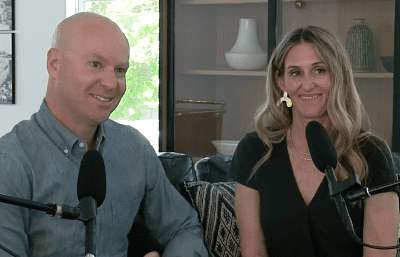
 In this Mormon Stories Podcast episode, we travel to Nevada to listen as Andrew and Allison Jolley tell the story of their Mormon faith crisis, how they healed their painful and disconnected marriage, and (in episodes 911-912) how Andrew became a founder and owner of a marijuana company in Nevada called The+Source Nevada.
We cover:
- The shame and unresolved issues that were brought into the marriage by transgressions in their youth
- The barriers to emotional intimacy that both felt throughout their marriage and how they sought to meet their emotional needs in other places
- How Allison clung more to the church when she felt Andrew pulling away in the marriage
- Why Andrew embarked on a journey to deepen his faith, which instead lead to a faith crisis
- How Allison experienced anxiety and confusion when Andrew worked harder to strengthen his marriage after expressing doubts about the LDS Church
- How Allison experienced her own faith crisis
- What Andrew and Allison did to heal their marriage after experiencing a faith transition
___________________________
Part 1: Andrew and Allison describe their early marriage including the shame and unresolved issues each brought in
Part 2: Andrew and Allison share their difficulty with emotional intimacy and the impact a faith crisis had on their marriage
Part 3: Andrew and Allison share how they healed their marriage
___________________________
Episode Transcript
Host: John Dehlin · Guests: Allison Jolley, Andrew Jolley
This transcript is machine-generated and lightly edited for readability. The audio is authoritative. Please excuse occasional errors in names and spelling.
Welcome and Episode Introductions
Part 1 of 3 · Ep. 908
John Dehlin [00:00:31] Hello, everyone, and welcome to another edition of Mormon Stories podcast. I'm your host, John Dehlin. It is April 17, 2018, and we are broadcasting live on Facebook, live from Las Vegas, Nevada. And we are really excited for today's episode.
John Dehlin [00:00:49] More and more, I've been trying to travel to wherever the good interviews are. We had our interview Last Week with Dr. Michael Koh from New Haven, Connecticut, the campus of Yale University. We were really excited to be able to travel there. We're thankful to our donors and supporters who allow us to purchase this equipment that allows us to travel to people's homes and livestream and for the donations that help us make these trips. But we're super excited to be here today in Las Vegas, Nevada, to interview two dear, dear friends of mine.
John Dehlin [00:01:26] Today we're going to be interviewing Andrew Jolley and Allison Bedford Jolley. And we're going to be talking about three things during the interview. The first, we're going to be talking about their, you know, early years in the church.
John Dehlin [00:01:38] They both serve missions. We're going to be talking about their marriage and how both of them experienced a faith crisis like so many dogs. But most importantly, we're going to talk about how they had what they describe as sort of a painful and disconnected marriage and how they were able to heal.
John Dehlin [00:01:56] It's a really inspirational story, and I desire all to hear it. So that's, that's kind of going to be the first part of the focus. The second part of the. The story is going to be how Andrew became a founder and an owner of a marijuana company in Nevada called the Source. Nevada. Nevada. And, you know, so how does a Mormon couple become owners of a marijuana company? And Andrew's also sort of a spokesperson in Nevada for, for the marijuana industry. And we'll be talking about that as well. And, and kind of the reason why we want to talk about that is because we also all know that Utah is considering a medical marijuana initiative, a ballot initiative.
John Dehlin [00:02:44] And we have the possibility of Utah legalizing of Utah citizens legalizing medical marijuana as soon as this fall. And lots of good progress has been made. But we know that there are forces trying to defeat that initiative. So we're going to be talking about Andrew and maybe Allison's perspective on the benefits of medical marijuana, maybe the costs and, and what they see and how, you know, how we can sort of provide Utahns with the information that they need to make an informed decision based on people who are very experienced. And then we'll end. I've had the beautiful fortune of hanging around the Jolley's home for a little bit of time and they have a wonderful family.
John Dehlin [00:03:29] And we're just going to be talking about how they have rebuilt a life and a home that is quite beautiful after going through a Mormon faith transition. So that's going to be what we're going to be talking about today. I have just a few really quick announcements to make. We do have some events coming up that we are really excited about.
Announcements and Upcoming Workshops
John Dehlin [00:03:49] So we are, we are excited to announce that we are adding a workshop to our event itinerary. We're going to be coming to Boise, Idaho, May 18th and 19th. So any of you who are from Boise or have friends in Boise, we would love to have you attend our workshop. These workshops and retreats are all about healthy marriages, healthy relationships, navigating a faith crisis, positive mental health during and after a faith crisis, communicating with believing family and friends, raising children, finding community, and basically rebuilding a life after a faith crisis. And so we're excited to come to Boise May 18th and 19th. We are also going to be having a retreat in Park City in Salt Lake City, June 8th through 10th.
John Dehlin [00:04:33] And these retreats are more intensive. They're two and a half days and they're really powerful opportunities for people to meet people, to share experiences, to bond, to share intimate experiences in their lives and to learn. Natasha Helfer Parker will be joining me on that retreat as well, which means we'll be having some talk about sex and healthy sexuality and healthy marriages and those sorts of things. We're really excited about that. Then we're coming to Houston July 13th through 15th. Sam Young will be there. Natasha will also join us in Houston. So for those of you down in the south, we'd love to have you join us there.
John Dehlin [00:05:05] And then we're coming to Idaho Falls August 10th through 11th. Of course, we have the Mormon Stories cruise October 24th to 28th in the Bahamas. We'd love to have some of you join. That will be less of a clinical focus, more of just a fun focus. Hanging around, sitting by the pool, going to some islands and just connecting as humans. We're really excited about that. And of course, the singer Angela Sof is coming to Salt Lake City May 17. In the evening, you can check out all these events@mormonstories.org events and we hope you'll join us again. All of this is made possible by those of you who donate to the Open Stories foundation and Mormon Stories.
John Dehlin [00:05:43] So just a quick plug, please go to MormonStories.org, click on the donate button at the top right of the page. $10 a month, $20 a month, $100 a month, whatever you can afford. We're transparent in our finances. All donations in the US Are tax deductible. And our mission is to provide resources, healing, community, and support for people experiencing or impacted by a religious faith transition. So we think it's a good cause, a worthy cause, and we appreciate your support. And if you value this programming, please consider becoming a monthly subscriber today.
John Dehlin [00:06:17] So that's it with the announcements now onto today's program. So I've already kind of given the introduction, but I'm really excited to introduce to my listening audience Andrew and Allison Jolley. Andrew and Allison, thank you for joining us today on Mormon Stories podcast.
Andrew Jolley [00:06:37] Yeah, we're excited to be here. Thanks.
Allison Jolley [00:06:39] Thank you, John. Thanks for pushing us out of our comfort zone.
John Dehlin [00:06:42] This isn't just natural for you.
Allison Jolley [00:06:44] Quite the opposite. We're actually very private, I think. I feel like we're open with our inner circle, but outside of that, you know, very private. So this will be an interesting exploration for all of us. Well, we're sorry, kids.
John Dehlin [00:06:58] Oh, yeah. Well, I know you're going to help a lot of people. I, you know, in addition to the topical content, I try and just interview really wonderful people and I, I've been able to spend some time with Andrew and Allison over the past year and I think they're just lovely people. So this is going to be just one of those epic, important Mormon stories podcasts. So let's begin by just as we always do, just hearing a bit about your Mormon stories. So let's do ladies first. Allison, why don't you talk to us a bit about kind of your Mormon upbringing?
Allison's Upbringing and Early Faith
Andrew Jolley [00:07:30] Okay. I was raised in a very active and involved LDS family. I don't have pioneer heritage or stock. Both my parents were baptized when they were young and so my grandparents were first generation members. But I was raised in Mesa, Arizona in a very loving and active LDS family. So it played a huge part of, of the way I was shaped and formed and my thought processes were developed. I was very active my whole life.
Andrew Jolley [00:08:15] I went through a little rebellious stage during my teenage years, but I think from a very young age I always felt connected to the church. I remember when I was very small, I felt like I always just believed from the beginning. I can't remember not believing.
Andrew Jolley [00:08:34] And I went to byu. I guess one thing that when I did go through some rebellious years in my high school time, I never, even though I did some things I shouldn't, I always knew my thought Processes was I can just repent and I will change and I'll just do this a little bit in high school and then I'm going to go to byu, go to colle, get married in the temple and be strong in the gospel. That was always kind of my plan. And when I was about 16 is when my personal testimony started to form.
Andrew Jolley [00:09:19] I got in some trouble and had to turn things around. And that's when I. It was at that age that I decided that I was going to serve a mission if I was not married or there weren't other options. But I really felt a strong pull to serve a mission and that it was like a personal commandment in a sense to go. And so I decided when I turned 21 I would be in the MTC. And that's exactly what happened.
Andrew Jolley [00:09:46] I did a study abroad in London and received my mission call there to serve in the Guayaquil, Ecuador mission. And I turned 21 on January 23rd and entered the MTC on January 25th. And that was a life changing experience.
Andrew Jolley [00:10:05] My mission was really an important part of my faith development and of my life. It was one of the hardest things I've ever done. Really, really challenging, really difficult for me.
John Dehlin [00:10:21] What was hard about it?
Andrew Jolley [00:10:23] I think I struggled every day to be there. I wanted to leave every single day I was there. It was physically challenging. It was very third world. Those things were challenging. But I just, I think I. When I got on my mission, I think I ended up getting. I think I became depressed and was struggling with depression. But in the mission, that's not recognized. It's Satan's getting you down. If you work harder, you're more obedient, you'll be happy. You get all these mixed messages. And so I think I blamed myself a lot and had a lot of guilt for feeling so unhappy and struggling. When I was there, the people were beautiful.
Andrew Jolley [00:11:05] I was over the top, obedient. I mean, I woke up an hour earlier than I was supposed to to study more. I don't have a single regret about my mission. I could not have worked any harder than I did. I gave it my heart and soul, so.
John Dehlin [00:11:22] So just backing up a bit. Do you feel like your, your, let's say, middle school and high school years were very traditionally Mormon? You know, family home evening and family prayer. Talk about like what the church was like with your family growing up.
Andrew Jolley [00:11:37] You know, we always had family prayer and we usually had family home evening. My dad led all of that. He definitely was, you know, if I was on the phone talking to my friends at night, not wanting to get off the phone, but it was time for family prayer. It was, come in. You don't even have to get off the phone. Just put the phone down for a minute and we'll just have a quick prayer. Like, he'd make it work. He'd slide it in. We weren't very supportive. Teenage years, a family home evening.
Andrew Jolley [00:12:06] Did not like it. Most of the time, my sister and I. I just had one sister. We'd sit on the couch with our arms crossed and kind of look at them and they'd talk and we wouldn't even participate, but they'd do it anyway. And they were, you know, I remember having scriptures hung on our door and we'd say them every night before bed, memorizing favorite scriptures.
Andrew Jolley [00:12:27] My dad was in the bishopric. Everyone was very involved. We never missed a Sunday. It was just. That was the way. That's the way life was. But then they were lenient in other areas. You know, I could wear shorts that were short.
Andrew Jolley [00:12:46] I could wear a tank top. I could do those things. But no way could I show my stomach or wear a bikini. That wasn't going to happen. That was not okay. But there were. It was a very orthodox but loving household.
Andrew Jolley [00:13:01] They gave me. They gave me space and they taught the gospel and they lived it, but it wasn't overpowering or shoved down my throat. A lot of my development I did on my own. They just supported it.
John Dehlin [00:13:17] Did you try and get your own testimony as a teenager? Was that important to you? Did you just feel like you always knew it was true or did you?
Andrew Jolley [00:13:24] Actually, I always knew it was true until I. I remember one summer, I was 16, we. My dad was working in Mexico City and we went and stayed there for a month. And I had just. I had been drinking and I got a consumption ticket. When I was at the lake with my friends and I had to fess up to my parents, all this stuff came out and I knew I needed to make some changes in my life and this made it real and that I had to do it because I told my parents I would never do it again.
John Dehlin [00:13:57] What was the age?
Andrew Jolley [00:13:58] 16.
John Dehlin [00:13:59] So you had that kind of guilt and shame?
Andrew Jolley [00:14:01] Absolutely.
John Dehlin [00:14:02] Hit you pretty hard.
Andrew Jolley [00:14:03] It did. And I had some things happen with friends. And at that point, I had changed all my friend group. I had stopped everything. And I was in a world of hurt. And when I was at this house in Mexico City, they were members and I found all these church books, like Youth. I don't know what some of them Are like Charlie or what are some of these old school, you know, youth books? And I just started reading, and I've. I was an English major at byu. I've always loved to read. And I started to just read all these books, and I had just this inner change and realization. And that's like, when my personal testimony started to become very real and separate from anybody else's, I always knew it was true. But then at that point, it started to individualize and become very important to me.
Andrew's Upbringing and Youth in the Church
John Dehlin [00:14:58] So the gospel, by the time you hit your mission and you.
Andrew Jolley [00:15:00] I mean, I'd read the. I read the Book of Mormon completely through. I think before I was age 12, I mean, I was really. My grades were always high. I never complained about going to church. I was always active, even in the middle of my rebellious years.
John Dehlin [00:15:16] Okay, so. And you went on a mission during a time where women weren't, like, all strongly encouraged to go, right?
Andrew Jolley [00:15:24] No, it was just starting to. I had friends who went, but it wasn't the norm by any means.
John Dehlin [00:15:31] Yeah, but so that was. And there's this perception, I think, that I grew up with in Mormonism, that back then, the women who went on missions, like, couldn't find a boyfriend or, you know, the life wasn't working out so well.
Andrew Jolley [00:15:45] That was just starting to shift, I think, a little bit. At that time, I didn't feel like I was an old maid, so I better go on a mission. But it also wasn't the norm. It was very. Not everyone did. I think that's kind of right when that transition was helped was happening.
John Dehlin [00:16:04] Okay, so we'll come back. We'll come back to your story in a second. Is that all right?
Andrew Jolley [00:16:09] Yeah.
John Dehlin [00:16:09] Andrew, let's talk about your upbringing in the church. Was it similar to Allison's, or.
Allison Jolley [00:16:14] First of all, I have to say I love you, man. Love your podcast. I am so inspired by the work you've done and. And it's an honor to be on.
John Dehlin [00:16:23] Thank you.
Allison Jolley [00:16:24] Yeah. So to answer your question, yeah, in many ways it was, but it was slightly different. I was the oldest of six kids. I grew up in the desert here in Las Vegas. We lived kind of outside of town for most of my upbringing. We actually lived on a dirt road for a while, and so the word free range parenting comes to mind when I think about my upbringing. We were very involved in the church. We tried to have family, home, evening at least once a quarter, and it was always a disaster. It ended up with a black eye and usually some blood and a very angry parent or two.
Allison Jolley [00:16:58] We were just rambunctious, kind of free kids. And, you know, our dad was kind of in his own world in a lot of ways, very heads down, trying to provide for eight people, having children very young, having a difficult upbringing himself. And my mom was really our parent. She was there to nurture us and to guide us and to help us, but she had a very hands off philosophy. So I kind of feel like my upbringing was, you know, mostly involved, you know, riding skateboards, bikes, and blowing stuff up a lot. And it was. It was chaotic and fun, and the church was an integral part of our family, but it wasn't nearly as dogmatic.
Allison Jolley [00:17:40] I remember my mom going back to school to get her bachelor's degree when I was a teenager. And she was a feminist studies major at unlv, and she was. She did a project about brothels and prostitutes in Nevada. And pretty soon we had prostitutes hanging out at our house. We had their stuff stored in our garage for months at a time. And so my mom was very open minded, and I felt like, encourage us to be kind of free thinkers and to think outside the box a little bit. Even though we grew up in a very traditional Mormon paradigm where following the rules was very, very important, and kind of just implicitly or tacitly understood that that's what you do.
Allison Jolley [00:18:26] And so I never pushed the envelope with drugs or alcohol as a young person, even though I tried really hard to kill myself and my friends dozens of different ways, and things like that never happened. Just like sports and oh, yeah, we bought a car before we had a driver's license and ran it through the desert for six months. And we built forts and lit bonfires and built our own bombs. We blew up porta potties. Used to be wood. They're not plastic. And we shoved a bomb in one of those to see what would happen, and the whole thing just blew up. I mean, we were standing 10ft away and had shrapnel in our face.
Allison Jolley [00:19:04] I mean, we were just stupid, basically, and unsupervised. But it was beautiful, especially considering kind of how society has transformed since then and the relatively insular kind of upbringing that most kids have today. But. But, yeah, I don't want to downplay the church. It was a very important part of our upbringing. Unlike Allison, I don't ever feel like I had, like, this firm, independent testimony. It felt like I was just part of this thing. I was in a river, and we were all floating down this river together. And that river was Mormonism. And it wasn't until years later When I actually tried to stop that, I realized how strong the force of that water really was.
Allison Jolley [00:19:49] All of my ancestors going back five and six generations on both sides of my family are Mormon and came from pioneer heritage, people who left their homes in Europe to join the Saints. And so it's in my DNA, it's in my blood. All of my aunts and uncles and grandparents are all in the church. And so for me, it felt like just a natural part of growing up.
John Dehlin [00:20:17] So you didn't really have a rebellious sort of youth in terms of the standards of the church?
Allison Jolley [00:20:23] Yeah, my parents would violently disagree with that. I did and I didn't. So my where I deviated from the church rules were, you know, law of chastity issues, right? Girlfriends, masturbation, that kind of thing. And so I did have, like, Allison, a lot of guilt and shame, but it wasn't about drugs and alcohol. It was about sexuality. And looking back, that made an indelible mark in my. In my path and in my history and in my life. And I think we'll. We'll see that theme resurface through our discussion today.
Navigating Sexual Shame as Mormon Youth
John Dehlin [00:21:03] So what was that like for you as a, as a youth? How did that. And, you know, you don't have to give gory details. I'm just saying, like, you're a kid, you're becoming sexually aware. You know, you. You do things that are normal for kids to do. And then what was the church's reaction and how did you experience that as a youth?
Allison Jolley [00:21:26] Well, it was drilled into us that, you know, we have to be morally chaste in every way. And so for me, that meant, you know, how I conduct myself personally with girls with, you know, pornography and all this external stuff.
Allison Jolley [00:21:44] And it created a great deal of anxiety for me because, you know, for whatever reason, I've always felt like a fairly sexual person. Like, I remember the, you know. Okay, okay. So I felt, you know, in those teenage years when the hormones started raging and developing, I felt strong attraction to girls. And I had a very, you know, a lot of curiosity around sex and these things. And, you know, fortunately I had a mom who was very accessible and could talk about those things. But even that was very limited compared to, I think, the scale of, you know, such a big issue. And the message from church was very one dimensional.
Allison Jolley [00:22:34] It was don't do anything. And I think that's an unrealistic expectation to put on young kids. And so for me, you know, ever since those kind of middle teenage years, felt a great deal of shame and guilt about my feelings about sexuality, masturbation, and these other things.
John Dehlin [00:22:55] So when you decided to go on a mission, was it controversial at all? Was it pretty natural?
Allison Jolley [00:23:04] Controversial in what sense for you?
John Dehlin [00:23:06] Was it just a natural step?
Allison Jolley [00:23:09] I did think about it, but I thought there was an inevitability to me going on a mission. It was like all my family had, my dad had. It was just kind of an expectation that was there. What was hard about going on a mission wasn't the decision to go on a mission. It was confessing the sins, quote, unquote sins that I had to resolve and feeling for the first time, very judged and very humiliated. I had to sit on the sidelines for a year while I repented of my, quote, sexual sins. And for a young person whose entire community is lds, I think that's a very isolating and humiliating thing to go through because I think everyone knew why Andrew had turned 19 and he wasn't on a mission. And that's just part of it. And it wasn't crippling, but it was. It was there, and it was part of my experience.
John Dehlin [00:24:07] Yeah. Okay. And did you. When you would think about your testimony, were you just swimming in Mormonism so you knew it was true? Did you have severe doubts? Did you sort of have that Moroni 10:4 moment where you tried to pray to know it was true? What would your testimony look like by the time you decided to go on a mission?
Allison Jolley [00:24:28] I knew it was important to have a testimony. I felt an obligation to develop one, even though I didn't have this real strong inner sense of belief. And so I trusted the system, and I said the words that we all hear at church. They're not very creative. I said those words, but I don't know that I really felt that in my core.
Allison Jolley [00:24:49] I feel like for me, I kind of. I loved my family, I loved my community, and I really trusted the system. And I knew that going on a mission was the right thing for me to do based on how I've been raised. And an essential part of going on a mission is having a testimony. So I did read the scriptures. I did read the Book of Mormon entirely. I did pray about it. And, you know, I didn't feel bad about it. I felt relatively good. And that, to me was. Was enough to, you know, to get me going and have that enough of a testimony to feel like I could, you know, go on a mission.
Allison's Mission Struggles and Spiritual Growth
John Dehlin [00:25:29] All right, so, Allison, let's come back to your mission. Now, it sounds like for you, your mission wasn't all peaches and cream.
Andrew Jolley [00:25:39] No, it Wasn't. I've spent years trying to work through it and come to terms with it, if I'm honest.
John Dehlin [00:25:48] You mentioned some depression. So just talk about how you experienced your mission. Maybe.
Andrew Jolley [00:25:52] You know, when I look back now, I think I was depressed, and I think that played a role in it, of why I struggled so much, but I didn't know that or recognize it at the time. And so it just became a feeling of, like, guilt or shame or that I wasn't doing a good enough job because I couldn't make these, you know, feelings go away. You hear all these, you know, stories. The Hinckley, you know, forget yourself and go to work. And like, I did that. Like, I did that. And it didn't make any difference at
John Dehlin [00:26:24] all to your feelings?
Andrew Jolley [00:26:27] Yeah.
John Dehlin [00:26:28] You were just constantly sad and kind of depressed.
Andrew Jolley [00:26:31] Yeah.
John Dehlin [00:26:31] And you thought you shouldn't be feeling that way.
Andrew Jolley [00:26:33] Yeah, I thought I should want to be there. Like, I loved the people. I worked hard, I believed in the message. I felt the importance of it. And I did have success, but not like, you know, baptisms every week. I mean, it was a struggle. It was really hard, hard work. And, you know, I think my saving grace, like, when I look back on my mission and what I took from it is I clung so tightly to obedience and to study.
Andrew Jolley [00:27:08] I lived to study. I'd get up early to do it. When I'd come home, the second I'd get back in my room, it was like I would straight to pick up the scriptures or to pick up conference talks or any of the books. I just devoured doctrine. And. And then I really. That's when I felt like I.
Andrew Jolley [00:27:32] The only thing that helped me to survive it was through prayer and this relationship that I found with Heavenly Father. Like, this is when, like, this deep seated testimony started to grow. And it was like the only thing that kept me alive.
John Dehlin [00:27:52] So your relationship with your Heavenly Father helped you battle your depression on your mission?
Andrew Jolley [00:27:58] That's the only place I could turn. I had nowhere else to go. And so that was what I. That is, yeah, what. What saved me.
John Dehlin [00:28:10] And when you say a relationship with your Heavenly Father, some people, I'm sure that means a lot of things, a lot of different people. Does that mean just in your prayers with Heavenly Father, you would have sort of some sort of exchange or dialogue? Does that mean he was with you whenever you were going around? Like, what did it mean for you then to have a relationship with your Heavenly Father?
Andrew Jolley [00:28:31] Yes, I felt like I was. I felt like I was speaking and getting answers. I Felt support just walking those dusty streets. Like, when I would just be alone, Like, I would just go there and think about it. Like, I just relied on it completely. I feel a little differently about it now. I see it a little differently, what actually was going on.
John Dehlin [00:28:54] We'll get to that.
Andrew Jolley [00:28:55] But I felt that. And so when I would come back, that was part of my conflict on my. Of how I would view my mission or how I would feel about things is because I'd look at it so positively, because it gave me this great inner strength and place of safety that I was able to turn back to throughout my life to stay grounded and safe and loved and comfortable. It was very, very real and alive for me. And my testimony was extremely, extremely strong and profound and deep and very alive for me. It was kind of the core of who I was.
John Dehlin [00:29:39] So how would you describe your state by the end of your mission? You're coming home. How was Allison at that point?
Andrew Jolley [00:29:46] I was a mess, if I'm honest. If I look back at what kind of took place when I came back, I was extremely depressed. I remember calling my mission president. I refused to call my mission president, ask for any help, express any weakness. I was just going to fight my way through it and do it. I remember in my farewell talk, the only thing I remember from it is my dad said, if you can't accomplish this, you'll never accomplish anything in your life.
Andrew Jolley [00:30:13] And that just. It still sticks with me to this day. Like, there was this pressure. Like, I wanted to go home so badly that it was like, how could I get injured bad enough that I won't have a permanent injury, but bad enough that I'd get sent home worthily. Like, it was serious. I had many friends who did some pretty extreme things because, you know, you couldn't go home. It wasn't an option. I had to fight my way through. I was gonna be weak. I'd be a failure if I didn't do it. And that hung over my head every day because it was not okay to feel like I was feeling. Admit it, go home. Those weren't options. I just had to get through it.
John Dehlin [00:30:53] So by the end.
Andrew Jolley [00:30:55] So by the end, I came home kind of a mess. What does that mean? But it was just kind of hard for me to get back into. Like, I couldn't relate to any of my friends. I didn't fit anywhere I was. You know, I came back. I worked at the mtc. I was at the temple every week. I. You know, my friends were ditching church to go shopping after Sacrament meeting. And I was like, horrified. You know, I was very, very, very, very straight arrow dedicated. But I was really unhappy and really lonely and I was not in a healthy place mentally. I was hurting a lot inside. And as we get into this, coming home in that state, I think that directly affected what kind of went on with Andrew and I when we started dating, because I was in a very low. I was still dealing with depression and I didn't know it.
John Dehlin [00:31:52] One last thing before we switch to Andrew's mission. One of the most famous important sayings in Mormonism is, you know, well, man, is that he might have joy or, you know, the purpose of life is joy or whatever it is, you know. Were you aware at the time that the whole purpose of the thing was joy? That spirituality and righteousness was supposed to equate to joy? And yet you were incredibly depressed. Were you aware of that? And did you?
Andrew Jolley [00:32:22] I was.
John Dehlin [00:32:22] Try to process that.
Andrew Jolley [00:32:23] I was. But like, I. I did, but on a daily basis, like literally on a daily basis, I would feel some type of love or intervention in my life that was personal. That would be like, you can get through this, right? Like a tender mercy or a little something that would come along. That even though I didn't feel joyful all the time, I knew something would come to give me what I needed. Like enough of it to get through. So I was like, surviving. I wasn't feeling that joy all the time. I was not super happy, but there was something feeding me enough that I felt grounded there.
John Dehlin [00:33:06] It's almost like living spiritually, hand to mouth.
Andrew Jolley [00:33:09] Oh, yeah.
John Dehlin [00:33:10] Like subsistence level living spiritually.
Andrew Jolley [00:33:13] That's been the story of my life.
John Dehlin [00:33:15] Yeah, that's powerful. Okay, we're going to come back to that.
Andrew Jolley [00:33:20] Okay.
John Dehlin [00:33:22] I would give you a hug right now, but we're doing an interview.
Andrew Jolley [00:33:24] That's okay.
Andrew's Mission and Baptism Success
John Dehlin [00:33:27] Andrew, how was your mission?
Allison Jolley [00:33:29] Very different from Allison's. I went to Santiago, Chile, and I was called to the South Mission. I was in the South Mission for a year and they created a new mission in the west and went and was some of the first. One of the first missionaries in that mission.
Allison Jolley [00:33:46] My mission was all about hard work. Work was. And baptisms were prioritized over just about anything else. We didn't have a disobedient mission. I felt like our missionaries were, including myself, were very obedient, but we were working so hard that we didn't have time to be disobedient. But things like what time you woke up or scripture study or companionship inventory, those weren't nearly as Important as how many discussions you had and most importantly, how many baptisms you had that week. So, you know, our mission under the South Mission regularly baptizes, baptized seven or 800 people a month. And then when our new mission president came in the west, we ramped up.
Allison Jolley [00:34:33] Within six months, we were over 15 baptisms a month, 1800. And I was completely swept up in this idea that we were special as a mission and as a church and that we were, you know, helping these poor Chileans find, you know, the truth. And, you know, that was intended to be a little bit sarcastic. You know, Chileans are the most beautiful people in the world. I mean, they are so warm and inviting. And I think that's part of the reason we had so many baptisms because they were very receptive to us, but intense focus on baptisms. And I was very, I was very drawn to that.
Allison Jolley [00:35:21] It brought something out of me, this, this kind of collective idea that together we could baptize and hundreds of people a month, thousands. And that we were recognized as one of the highest baptizing missions in the world. And the area presidency came down and even toured with us to meet these baptisms. Who are these hundreds of people you're baptizing? You know, and so we felt like we were very special and very unique and in a lot of ways we were. We had a very defined culture as a mission. And our mission president, Roli Walker, will always have a special place in my heart. He taught me the value of goals and of work and of community.
Allison Jolley [00:36:03] But I feel like I was working so intensely hard and really pouring my soul into this that I didn't have the daily struggles that Allison described. I didn't have depression. I had moments of loneliness, I think that all missionaries go through.
Allison Jolley [00:36:19] But on a day to day, I felt very fortunate to be there. And I tried to work as hard as I could and just pour my heart and soul into. Into the work and into the people.
Andrew Jolley [00:36:29] Well, and he was AP and one of the leading baptizing missionaries and had a pretty influential role with the other missionaries in his mission, from what I understand. I mean, he, yeah, he. He worked his tail off.
John Dehlin [00:36:46] So what would have been the highest number of baptisms you would have had in a month?
Allison Jolley [00:36:51] Personally around 30, I think. Elder Eubanks and I. Tank driver. Hello, Eubanks. If you're out there, that's one a day, dude. In one month we had 29 baptisms. Yeah. And there were many, many months where we had 15, 20 plus.
John Dehlin [00:37:07] How do you do that?
Allison Jolley [00:37:09] Work hard and you know, when we would. It's like mining gold. You get into a vein, a pocket of people, families, friends, right? And you bring them all together. You get very efficient about teaching them. And, you know, we would commit people to baptism on our first discussion. And if they said, no, I'm not interested, we would usually just drop them at that point. So we weren't looking to change hearts. We weren't looking to really improve lives. We were looking for people who were willing to go for a bath and go to the church and get baptized. You know, first discussion on the doorstep. This is how Christ got baptized.
Allison Jolley [00:37:48] Did you get baptized like this? Well, no, because they all got sprinkled as babies in Catholicism. Well, if Jesus did it, wouldn't you think that's important that you do it? So manipulative and condescending. But I believed it. I believed, yeah, you know, Jesus did it. How can you go wrong? And so that was the most important kind of qualifier. Are you willing to be baptized?
Allison Jolley [00:38:12] And so the very nature of our work and how we kind of address the work and the stuff that we did led us to people who are ready for baptism and the fifth and sixth discussions. And maybe you. Those are kind of optional. Maybe you do the interview on the back of a bike on the way to the church. The baptismal fun on a Wednesday afternoon at 2pm but overall, whenever there was a hard and fast rule, we followed it. I don't want to give you the impression that we were, as we would have called Chaco. We followed the rules. Rules. But if there was some latitude and how and when someone could enter the waters of baptism, we were definitely at a culture of. That was important. That was the most important thing.
John Dehlin [00:38:54] Was church attendance a prerequisite for baptism or not?
Allison Jolley [00:38:58] Towards the latter part of my mission, they had to go to church twice before getting baptized. But before then, before then, no, it wasn't a hard and fast rule. And so you had a lot of baptisms that were, you know, the Wednesday afternoon, and we'd show up at church and be like, hey, Bishop, we baptized three people on Wednesday. You know, please take care of them and involve them and give them a calling and, you know, go interview them and everything. And they would be furious. Like, what?
Allison Jolley [00:39:22] We need to meet these people. There was a constant kind of struggle and tension between the missionaries and the leaders. We were just baptizing for baptizing. And they wanted to really have a community and build a community. And so I don't think our goals are really aligned. That's why you see, a 3 to 5% activity rate in Chile right now. That's why they closed 80 stakes a few years ago.
Allison Jolley [00:39:44] And so I think you see the repercussions of that, of all those baptisms in the 90s. Now kind of it's turned into reactivation or finding these people.
John Dehlin [00:39:56] For those who are interested. Several years ago, I did an interview with Dr. Ted Lyon. L Y O N. He was a mission president in Chile, a temple president in Chile. I think he was an MTC president in Chile. He was Elder Holland's personal interpreter because Holland was sent there for three years, as I understand it, to try and make sense of the massive amount of baptisms and the abysmally low activity rates.
John Dehlin [00:40:26] I met with Elder Holland twice and talked to him about this, and he said it was one of the. One of the worst moments for the church in its history, just how devastating it was to the church in Chile to have this sham of baptismal practices. He actually told me personally that people would go to the area offices and picket and protest. You know, you Mormons baptized my children without my consent, you know, and they're. You know, they spread the wards and split the wards and split the wards based on numbers. But you would have a ward with like 20 people attending, you know, and so it was sort of this Potemkin town of baptismal practices that really eviscerated the church in Chile, but they did it for decades.
John Dehlin [00:41:12] Was there ever, like, just really fraudulent baptisms? Like, in my mission, they'd go play soccer with a bunch of kids and then baptize them in the pool as, like, a way to cool off. So it was almost like swimming, doing cannonballs in the baptismal font. But, you know, baptism, I hear about in Vinha del Mar, they would go to beaches and have beach parties and then baptize people at the beach parties. Were there kind of fraudulent baptisms in your mission that you were aware of?
Allison Jolley [00:41:39] Not like that in my mission. You know, our missionaries really, really, really followed the rules and worked hard. I'm sure that stuff went on because there was an intense pressure to hit numbers, but I never personally saw that. I did. I think I smelled some alcohol on the breath of a few people that we were interviewing for baptism at different times.
John Dehlin [00:42:00] Standards were low. You're saying standards were low?
Allison Jolley [00:42:02] Standards were low. Right. I mean, looking back, I have a way different kind of perspective on it today, looking back, but at the time, I felt like if our heart was in the right place, we were following the big rules, you know, it was okay so I'm sure that stuff went on, but I never saw it and it was never a really integral part of our mission. I think that would have been very rare, actually.
John Dehlin [00:42:28] Okay, so by the time you're finishing your mission, you're ap. You've got hundreds of baptisms. Probably like, you must have been on cloud nine, church wise.
Allison Jolley [00:42:38] I should have been. I checked all the boxes, I worked my ass off, I gave it my all. But ironically, I came home and I felt this hollow feeling. It started to creep in. It wasn't like a wave, it was a tiny bit. And I had a hard time reconciling that.
Allison Jolley [00:43:02] And I remember going to Europe with my brother a few months after I got home from my mission. I remember just seeing how big and beautiful the world was and how small Mormonism was in comparison. And this intense feeling started to really blossom of what did I just do in Chile?
Allison Jolley [00:43:25] Did I help people? Did I improve their lives? Or was I there for me? Was I there to show how hard I could work, to prove myself, some rite of passage, some responsibility to authority? Or was it because I love the people and was really acting in their best interest? And so I actually started to have some very unresolved, but very, you know, conflicting feelings about what I had done in my mission. And that weighed on me fairly heavily. And I never spoke with anyone about it, never talked to anyone, because I was always seen by my friends and family as of having the privilege of serving in this super successful mission and working hard and had this kind of glamorous appeal to it.
Allison Jolley [00:44:12] And inside I was going, yeah, but did I help anybody? Did that actually improve their lives? And so, ironically, it was the opposite. It started to hurt.
John Dehlin [00:44:25] And so did you go to college after your mission?
Allison Jolley [00:44:28] Yeah, I went to byu.
John Dehlin [00:44:29] So you were at byu, reflecting on your mission, wondering whether you had done good?
Allison Jolley [00:44:36] Yeah, yeah, I did. I wish I would have been more conscious and awake and alert to my emotions and my feelings at the time, but I was busy and had more work to do. And so like good Mormons do, they just turn off the light switch and keep pressing forward with, you know, with a smile on our face. And so very much there, but very much unresolved at the same time.
Wounds and Expectations Entering Marriage
John Dehlin [00:45:00] So it sounds like both of you left your missions primed for marriage with some wounds that you were. That you were bringing into your. And you had the sexual shame really quick, Andrew, how did you deal with kind of the temptations of masturbation and, you know, on your mission and the shame that you had experienced Were you able to just turn that part of you off, or did you compartmentalize? How did you deal with that?
Allison Jolley [00:45:28] Yeah, the good part about working so hard, like, from the moment we woke up till late at night, we were encouraged to stay out late on our mission, unlike others. The good part about that is I literally had no time or energy to really deviate from the plan, you know, so I didn't have any issues, really, with sexuality on my mission at all. I was so intensely focused on the work that that never came up for me. It was really, you know, dealing with guilt related to kind of high school and that kind of thing that, you know, I wouldn't have recognized it at the time, but I think I was.
Allison Jolley [00:46:09] I was feeling a deep sense of judgment and shame and guilt for being. Having gone through this kind of tribal shaming that I went through as a teenager. So. Yeah, but to reiterate the mission part, there were missionaries who struggled with kind of sexual things on the mission, but it wasn't super prevalent in our mission, and it wasn't an issue. It was an issue for me. But, you know, Allison changed that very quickly.
John Dehlin [00:46:42] Excellent. Okay, so how did you guys meet and how did you get married? Who wants to. Allison, you want to tell that story?
How Andrew and Allison Met and Courted
Andrew Jolley [00:46:52] Okay. We met our freshman year at byu. I went out with one of his friends a few times, and that's how we became acquainted. And he actually hung out with some of my friends from high school. We didn't know each other personally very well, but we knew of each other and had kind of hung out a little bit.
Andrew Jolley [00:47:13] Fast forward to both of us just getting home from our mission, and we bumped into each other on campus and talked, and he was with the friend that I had dated, and I knew both of them. And I have to say, even when I first ran into him on campus, I can tell you exactly what he was wearing. I still remember that.
Andrew Jolley [00:47:41] That moment. But I was working at the MTC at the time, and before my mission, I worked at Los Hermanos. I remember that, yeah, for a long time before my mission. And I was, you know, I was lonely and struggling with friends, and I just thought, you know, I had this strong feeling, go back and work at Los Hermanos. You need some social interaction. It'll be good for you. It's not what the MTC was for.
Andrew Jolley [00:48:05] So Andrew was actually working at Los Hermanos, and I went and started working there again. So we worked together there, and he had just started dating somebody. So the whole time we worked together, we just got to know Each other. We're good friends.
Andrew Jolley [00:48:22] I moved in with his girlfriend and her friends and lived right around the corner. So we knew each other really well. Hung out a lot. I hung out with some of his friends, and long story short, he ended up breaking up with his girlfriend and was on my doorstep the next day. Nothing had ever happened prior. We were close friends, and I had to buy a bed because I was moving out. So our first date, we went bed shopping, went to RC Willie and tried out beds and got lunch.
John Dehlin [00:49:01] Bed shopping.
Andrew Jolley [00:49:03] Yeah, he was. He went and helped me because I was moving in and needed a bed. So little did we know that that would become our marital bed, but it did.
John Dehlin [00:49:15] So what struck you about Allison Andrew?
Allison Jolley [00:49:17] Yeah, I met her our freshman year. As she said, we had a lot of mutual friends. Her energy. She was very vibrant and very kind of open and very adventurous is kind of what stuck out to me. Not to mention she was beautiful and articulate and smart and all these other characteristics that really attracted me to her. But it wasn't until that actually moment. It's funny that Allison remembers that exact moment, because I do, too, very distinctly. I was walking up from Jamestown, south end of campus, with my friend Charles, and. And Allison was walking down the grass hill as we were walking up. And we met, like, under this tree. And it was like, yesterday.
Andrew Jolley [00:49:55] Yeah.
Allison Jolley [00:49:56] Yeah, it was cool. But, yeah, we became good friends, which was important. And then we dated for a year. I was adamantly opposed to getting married. I thought I was too young. And my mom had kind of indoctrinated us, like, hey, kids, don't get married young. Right. That was, like, important rule. I think maybe some of her own experience, you know, being reflected in that. In that advice, but. So I was dead set against the whole concept of marriage. I was 26 years old, you know, 24. Well, 20. 24. Yeah, 26. We had kids. Yeah.
Andrew Jolley [00:50:32] So actually 23 when we were single,
Allison Jolley [00:50:33] when we were dating. Yeah. Thanks. So I was way too young to think about marriage, but there was something about Allison that I knew was solid. Like when we would talk and hang out and play cards and go to movies and hang out with friends and travel. There was something very steady and very centering about being with her. And I tried to deny it. I tried to say, gonna play the field for a decade or something and get married later. But I mentioned that trip to Europe earlier. I was gone for six weeks. And while I was in Europe with my brother, Lauren, I just had this very strong feeling of loss. Like, I really love her. And maybe she is the one for me. And we came home from that trip and proposed two weeks later. We'd been dating for a year and we were married six weeks, seven weeks after that.
Andrew Jolley [00:51:33] Six weeks.
Allison Jolley [00:51:34] Six or seven weeks. For various reasons. She wasn't pregnant. It was. Her parents were living.
Andrew Jolley [00:51:40] We had to get married before school started. Yeah.
Allison Jolley [00:51:43] But, yeah, we kind of jumped right into it.
Andrew Jolley [00:51:45] Yeah. I think what was really tricky about that is when we started dating, we already knew each other pretty well and were good friends. So there wasn't that, like, long period of, like, getting to know you. When we started dating, it went intense, like, overnight. Like from day one, it was intense.
Andrew Jolley [00:52:03] And so there was like this shadow and difficulty that hung over our dating and our relationship because we were so compatible. And there was just this crazy, like, sexual energy and tension that started from day one. And Andrew didn't want to be serious, and he didn't want to be in a serious relationship. And at that point, I'm back from a mission. We're hitting it off. Everything's going well. The biggest complication is we can't keep our hands off each other. And we're dealing with.
Andrew Jolley [00:52:45] I'm dealing with extreme amounts of shame and guilt because I'm fresh off my mission. I'm at the temple every week. I'm very, very committed. And all of a sudden I'm finding myself really, really struggling to. To stay morally clean. And there was so much guilt and shame in it. He was feeling it too. And it complicated our relationship dramatically. I remember at one point. Cause he's not wanting to get serious. And we'd had some issues. And, you know, he told me he didn't love me and he couldn't be with me and broke up and left. And I was devastated. And then he'd come back. There was just.
Andrew Jolley [00:53:25] He was always pulling away and stringing me along. Cause he couldn't commit. But at the same time, we're struggling with these morality issues that were weighing heavily on us. And so it created a really unhealthy. There was just.
Andrew Jolley [00:53:43] It was rough. Our dating was. I have so much regret about that because I look back now and I see the chemistry that we had and how much fun we had together and how awesome it could have been if we weren't so.
Andrew Jolley [00:54:00] If the shame and guilt wasn't so, so deep. And that really pushed me into an even deeper depression with that shame and guilt on top of where I was. And so I can see how that really factored into some of the dysfunction that started to form very early on in our marriage because of this shame and guilt that we were both carrying and trying not to blame each other and feeling this force to get married because of this, but yet we did love each other. I don't know. It was a very complex, confusing and difficult time.
John Dehlin [00:54:37] What was it like for you, Andrew, that whole sexual component tension?
Allison Jolley [00:54:44] It wasn't as big of a stress for. For me, but it was very stressful because, as Allison mentioned, we were so compatible on so many levels. And it just felt natural and it felt pure to hold each other, to be with each other, and yet we had to draw these boundaries, right? And I remember we were in the same ward. I lived in a house with five guys. She lived in a house with like, five other girls around the corner. We were in the same ward. I remember going to the bishop together to kind of confess some things that had happened, and he got angry with us.
Allison Jolley [00:55:21] How in the world. What are you doing, you know? And how could you have done this, this and this and not had sex? And he was very angry and it was. Allison was dealing with a lot of stuff internally. I was dealing with a lot of unresolved stuff internally. And yet this sexual frustration and shame just layered on top of all that created a very confusing situation for these two young kids, right? Trying to navigate world and life and make huge decisions about career and school and marriage and family.
Allison Jolley [00:56:00] So it was very, very challenging for us both because I deeply loved Allison. I deeply cared for her. I had a connection with her that I had never felt within anyone ever before. But there were so many tangential and superficial layers added on top of that. That really made me confused. So, John, I think for the most part, I.
Allison Jolley [00:56:21] My default protective stance was just to shut it all down. That's why I dumped Allison that one day. Sorry about that. It wasn't because I didn't love her. It was because I was confused and I didn't know how to sort through all these emotions that were kind of going through me at the time. And so, yeah, it was hard. It was challenging.
Andrew Jolley [00:56:41] And during this time, like, I. I literally lost 20 pounds. I was like an emaciated. Like the doctor was putting me on insure. Like I looked skeletal. I mean, the depression, everything was real. This was a very serious time for me. And it was all from she shame and guilt and fear and so conflicted and confused of why I would love him so much and why this could be so good, but yet it was so wrong and horrible and it was. It was brutal.
Allison Jolley [00:57:13] It was a Tumultuous time. It was. There was a lot of beauty in it, but a lot of sorrow and a lot of confusion as well. So, yeah, that's, you know, story of our lives. That's how it all started.
John Dehlin [00:57:28] And Andrew, did you. Did you have a sense for her depression? Did you. Did she talk about it? Did you sense it? Or was she putting on a face so you couldn't see it?
Allison Jolley [00:57:41] Yeah, all of the above. She was putting on the best face possible. But I knew something was wrong. And the problem is, the biggest problem is that we trusted our system and our system identified that depression as sin. And that is so destructive and so evil and so misguided that it actually stirs up a lot of anger today, thinking back at the hurt children that were just trying to do their best and having them feel that they had committed almost, not all, not entirely something second to murder, to tell a child that is, you know, as a parent, I look at that and I just cringe like, that is so wrong. And so, yeah, I knew she was going through depression, but our community, our bishop, our parents, and we identified it as stemming from sin, not from some other, bigger, more underlying issue.
Andrew Jolley [00:58:44] Yeah, so.
Early Marriage and Growing Disconnection
John Dehlin [00:58:50] So you decide to get married and I guess we all have a vision for what we hope our marriages are like, maybe, maybe let's start talking about your marriage and, and how things maybe didn't turn out the way you wanted.
Allison Jolley [00:59:10] You know, that's true in some ways, I would say, and not true in a lot of other ways. I mean, we always got along on kind of the day to day level. We've never been fighters, we've never been screamers. Allison did punch me a couple times a long time ago. I'd love to talk about that in great detail, but we're not like, I kind of feel like we had always a solid base, solid fundamentals, but there were some key issues that we never really addressed or resolved properly. And those big issues formed wedges, they formed scars. They were never fully resolved. And I think what you'll see through the thread of our marriage is overall a good, fundamental, loving relationship where we both respect and love each other, but with a couple of like, gnarly, unresolved issues and, and we can kind of get into those.
Allison Jolley [01:00:04] But I don't want to give the impression that it's been a struggle since day one. It's actually the day to day has been beautiful. Allison is such a loving, fun, energetic person. She's made every day of my life better. But when you start off with some of the handicaps we both brought to the marriage, I think we were kind of setting ourselves up for some serious challenge.
Andrew Jolley [01:00:28] Yeah.
John Dehlin [01:00:30] So you get married and you get married in the temple, right?
Andrew Jolley [01:00:33] Yeah.
Allison Jolley [01:00:33] I proposed to her in the Las Vegas temple in the celestial room. And I'll never forget that day, because in the session prior to going into the celestial room, my. I guess they would be my second cousins. Three women who were a few years older than me were back there in the session in the back row talking. And the officiator stopped the temple session in the middle of the session and lectured my cousins for like, 20 minutes about being reverent in the temple. And I thought that was the coolest thing that ever happened. And then we went into the celestial room, and of course, later they all said, yeah, I knew you guys were gonna get engaged, so, yeah, I proposed in the celestial room.
Andrew Jolley [01:01:18] Yeah, we got married in the Mesa, Arizona temple.
Allison Jolley [01:01:21] Yeah.
Andrew Jolley [01:01:21] Six weeks later.
John Dehlin [01:01:22] Because that's where your family.
Andrew Jolley [01:01:24] Yeah, that's where I'm from.
John Dehlin [01:01:26] Yeah. Okay.
Allison Jolley [01:01:27] Yeah, it was. It was super special and super unique. We said all the right words.
John Dehlin [01:01:33] Just kidding.
Allison Jolley [01:01:34] We had a temple marriage. It was pretty. It was very, you know, quick. It all happened quick. Allison's parents were living in Guatemala. Her dad was working in the US Embassy down there. And so the logistics were actually challenging. But, yeah, got married in Mesa and back to school.
John Dehlin [01:01:52] So when did you kind of start realizing that marriage wasn't turning out the way you thought?
Andrew Jolley [01:02:05] You know, I think I always felt a distance from Andrew. He. We got along on the day to day, but he didn't share a lot of personal. Like, I. I always felt he kind of kept me at arms length. Like, I couldn't get into, like, his heart and soul. Like, something he kind of pushed me for, away from really being able to get to know him. And I felt that very early on. And so I think that that was always a source of, like, insecurity for me and pain. And I think that existed from the get go. And I didn't know why. And I internalized a lot of it and felt bad about it. And I recognize now it was just we were developmentally in different places, and he was dealing with things and I was dealing with things, and we were just missing each other.
Allison Jolley [01:03:13] Yeah, I agree with that. I mean, when it came to starting careers, we lived in five states. Our first seven years of marriage, started having kids. Like, I just feel like these big, big, big life changes and life decisions were happening, and I was. I was a passenger. I wasn't awake I don't know how to describe it. And so, you know, looking back, I realize how lonely and isolating that must have felt for Allison. I was really, really, really heads down working in my career. I was in IT consulting and software development at the time. I was traveling in the early years of our marriage, 80% of the time in Toronto, San Francisco, all over.
Allison Jolley [01:03:59] And so I was heads down, feeling the weight of the world on my shoulders, having to provide for, you know, multiple mouths to feed, you know, children on the way. And so I don't think, John, I ever took the time to really understand me and to be square with myself and to really understand myself and to feel my emotions and allow those emotions to be expressed and felt.
Allison Jolley [01:04:24] And so in our marriage, I think it, you know, unfortunately developed in a way that caused us to not always communicate. I definitely withheld myself, there's no doubt about it. And in turn, Allison, as a defense mechanism for her, kind of shut me down in a lot of ways and judged me. So it was kind of like we developed this, you know, where our force fields just wouldn't.
Allison Jolley [01:04:49] They prevented us from really bonding and really understanding each other at the deepest level. And all that got more complex as we had bigger life changes as we had children. I went back to graduate school. We had. Our second daughter was born four hours before my classes started at asu, and I went back to graduate school. And life was just very, very fast and very big at the time.
Andrew Jolley [01:05:15] And part of it is like we never really had a strong spiritual connection. We always functioned a little differently that way. So as this was going on and he's pulling off and doing his own thing, he's also pulling away from. I mean, I could sense he was pulling away from the church. I could sense it didn't mean as much to him. We didn't have those conversations. We didn't connect on those points. He'd always go, but I knew he didn't love it and didn't feel it. And I had the reverse experience as he would go the other direction. I would pull more strongly and firmly into kind of what I developed on my mission, that relationship and being sustained from church and my relationship with God. And so I felt like there just became, at a very early stage, a very strong split spiritually in the way we were developing and functioning.
John Dehlin [01:06:13] What was happening to you spiritually, Andrew?
Allison Jolley [01:06:16] What was going on inside? I wasn't really connected with myself. I was not in tune with my emotions, my past, my history. There's trauma that happened as a child that was Buried deep, that never really got resolved. And so for me, that was kind of inside me, at my core. And then the church level, I just became.
Allison Jolley [01:06:43] It became really hard for me to identify with the church culture. That became a big stumbling block for me. The church, it felt like, was getting progressively conservative and it didn't feel like it represented who I was as a person.
Allison Jolley [01:07:03] And Mormonism started to feel very small minded to me, even though I probably wouldn't have used those words at the time. And I just felt like an outsider and I didn't really know why. I wasn't exactly like really trying to uncover or explore these feelings. It was just. I just felt a little bit out of place. And that grew steadily over time.
John Dehlin [01:07:26] Would you have described at the time as having a crisis of faith or were you still believing it just wasn't feeling good to you?
Allison Jolley [01:07:35] Probably more of the latter, but I had a hard time believing too. There were certain issues in the doctrine that I could never resolve. Right. I would call it the math problem. Right. Okay. So there's a God that creates all of us and the planet and humans. 110 billion people that have lived on the planet and only.0002% of them are privileged enough to have his true full word. I mean, that, that math problem never squared for me and it hurt my brain a lot to think about it.
Allison Jolley [01:08:10] Systemic institutional racism never squared with me. Systemic and institutional misogyny and putting down of women and ignoring women never squared with me. And these things were on my shelf, but lightly touched, not really examined. And then when I felt this kind of cultural shift in the church between divide between myself and the church, it became harder and harder to go to church and harder and harder to be counted among them, and harder and harder to serve in callings and to give authentic talks and to bear my testimony. And instead of sitting down and saying, al, you know what, I really don't, I don't feel good at church.
Allison Jolley [01:08:58] It came out as, yeah, Mormons are a bunch of judgmental jerks and I don't want to go back there. You know what I mean? It came out cynical and it came out very juvenile. It wasn't a thoughtful discussion. It was like, I don't fit in and I don't really want to care or understand why, you know, I just don't belong there. And that was a struggle, as you could imagine, because as that happened to me, as I became less and less comfortable in Mormonism and as I turned kind of to myself, right, or like away from Allison, Allison felt more lonely and more rejected and more isolated.
Allison Jolley [01:09:41] And what fed her, the sisters at church, the talks at church, the scriptures, prayer. And so this wedge was steadily and consistently forming between us, and we could never bridge that wedge. And it started fairly early in our marriage and got worse and worse and worse over time.
Allison Jolley [01:10:03] And that feeling of being an outsider or not belonging in Mormonism got to a point in my life where I could no longer just leave it on the back burner. I couldn't. I'd made all the jokes, I'd made all the sarcastic comments.
Allison Jolley [01:10:22] I'd vented it unconsciously through so many different ways. And there came a point in my life where I kind of felt like I had become a jerk.
Part 2 of 3 · Ep. 909
John Dehlin [00:00:26] How many years into your marriage would you say you reached the jerk point?
Andrew Jolley [00:00:32] 10 years? 15. 10.
John Dehlin [00:00:34] 15. 10?
Andrew Jolley [00:00:35] 12. Yeah.
John Dehlin [00:00:35] Okay. So, Allison, as he's pulling away from the church and pulling away from you, and as he's keeping things to himself, focusing more on himself, career, how are you feeling and what's it like for you in the marriage as you're seeing him pull away and maybe aren't super happy? How are you feeling?
Loneliness, Betrayal, and Marital Crisis
Allison Jolley [00:00:58] I was just really lonely. I was really lonely, and I felt like I was giving everything I had, and I didn't understand why we couldn't connect. And so I was just very confused. And I didn't know what to do because I felt like I was doing everything that I could, and I didn't know how to get to him. I couldn't even figure out. I didn't even know if I could really hurt him. Like, I felt like he was so closed off. I just. I didn't know. I didn't know what to do. And it just kind of, you know, escalated over time, and he pulled himself away, and there was just a lot of things that occurred that just continued to feed that pain and hurt.
John Dehlin [00:01:53] Andrew, what do you want to say about kind of your darkest time, where you were most disconnected and most selfish? What would you want to say about that, kind of how you got there and what. What was going on?
Andrew Jolley [00:02:08] I was living unconsciously. I was a zombie. I was a walking corpse, working hard at life, giving everything I could to my career, even to my family. But I was missing something very fundamental, and that was a soul I didn't know myself.
Andrew Jolley [00:02:31] I had nothing to give her. I couldn't offer her anything because I was so torn up inside. And that took me a long time to figure out, but that's exactly what was going on. And I was consciously aware of the things that I needed to do to have a happy life and a fulfilling marriage. It's what I wanted.
Andrew Jolley [00:03:02] But without resolving these inner issues, without being true to myself, I just had nothing to offer Allison or my kids. And I would be there. I would come home from work. I would be with the family. I wasn't making terrible life decisions.
Andrew Jolley [00:03:18] I was acting out in certain unhealthy ways at a subconscious level through negative thoughts and other things. But I wasn't making the big mistakes that you sometimes see, right, that everyone can point to and go see. His life is jacked. I wasn't doing that. It was an inner turmoil, an inner alignment that was so off that it just prevented me from being the healthy, happy, Person that had the emotional capacity and spiritual capacity to be there for my wife. Even though I loved her and I would profess my love to her, I didn't have the tools, the knowledge, the experience to open myself up to her and to our family and to our relationship.
Andrew Jolley [00:04:07] And so it was very much a lonely path. And looking back, I see, I see my dad walking that same path in that same stage of his life. And I realize like how much of who we are comes from our upbringing and our parents.
Andrew Jolley [00:04:39] And not being conscious of that stuff and not resolving it can lead to so much heartache and strife and how important it is to really dig that stuff out and, and remove it from our, from who we are. And I look back and I just see, I see my dad, I see myself going down a very similar path that he went through in that stage of his life. And it's really, it's sorrowful now. It's really hard to think about, to be honest. But it's part of my path, it's part of our history. And it's helped me today to have the perspective to kind of see and feel what I was going through.
John Dehlin [00:05:29] What were the ways that you would kind of self medicate or distract if you're comfortable sharing?
Andrew Jolley [00:05:35] Yeah, yeah, for sure. I'm crying in front of tens of thousands of people, so I'm open. Yeah. I. Work would be number one. I threw myself into my career. I felt like that was my biggest value as a husband and a father was to provide for my family.
Andrew Jolley [00:06:00] Plus I felt like at work I received accolades, I received compliments, I received raises. I was promoted very quickly in my career and I really fed on that because I knew deep inside that I wasn't like an award winning dad or husband. But at work I was acknowledged as being somebody who went above and beyond, you know, beyond that. I think anger is a type of coping too. I felt myself. I would wake up in the mornings and my jaws would be sore from gritting my teeth at night.
Andrew Jolley [00:06:43] I would have negative inner dialogue, driving down the street, rehashing uncomfortable situations with people and saying, I would have said this or you know, and just that really unhealthy negativity that can come up that, you know, fed me as well.
Andrew Jolley [00:07:01] Thankfully I didn't develop any like serious addictions or anything, but you know, I watched porn on occasion and that was hard for me because we would, we'd still go to church at, in this time. And the voice, the anti pornography voice grew pretty loudly. It's still there in Mormonism.
Andrew Jolley [00:07:25] And that created a lot of guilt. And like, you know, am I really some kind of deviant for indulging in this? On occasion, I have a much different perspective now. But that was part of that, you know, that. That kind of fed into.
Andrew Jolley [00:07:42] Into that unhealthy mindset at the time as well. But. But mostly it was. It was kind of work and anger and just shutting down my emotions, man, just keeping them so. So stuffed in there that it was just a, you know, it was just a geyser ready to explode, really.
John Dehlin [00:08:01] And you talk about. We talked before a bit about sort of a moment where the bishop gets involved and you're kind of talking a little bit about maybe some minor forms of discipline. Can you talk anything about that?
Andrew Jolley [00:08:14] Yeah, yeah, sure. So in 2005, I made some decisions that led to some erosion of trust between Allison and I, Mostly of kind of a subconscious, kind of wasn't some affair or some like, planned out thing. It was just bad judgment coming from a place of hurt.
Andrew Jolley [00:08:43] And it was to the level where I felt at the time I needed to. Well, we talked about it. I came. I was on a business trip, came home, told Allison all about it, and she was devastated. We went and talked to our bishop and, you know, the whole disciplinary thing. I wasn't excommunicated or anything, but it was disciplinary and part of the path we both felt would be important for me to kind of share this with our parents. And so I ended up doing that. And it just. It turned into this another tribal shaming in my life. You know, I had experienced that as a teenager and it happened again as an adult.
Andrew Jolley [00:09:21] And it was very humiliating and misguided, thinking that I had done something so wrong that I had to seek the forgiveness of my priesthood leaders and of God. And that whole concept I see now as being so misguided and wrong. But that's what we both felt at the time. And we needed to heal. We both agreed on that. We both agreed there was something kind of fundamental that we needed to resolve. So, yeah, I went through that. And in the middle of it, we moved and I had to confess again to another bishopric. And it was, you know, being able to. Sitting there with my family at church, not being able to take the sacrament and having my kids look at me like, daddy, aren't you going to eat the bread?
Andrew Jolley [00:10:09] And I'm like, no. You know, I had some peanut butter and jelly sandwiches before church. You know, say, what do you tell a child? Right, no, Daddy's not worthy in the eyes of those guys. Sitting up there, and most importantly of God. So it felt at the time it was the right thing to do. But looking back, it probably actually made the situation worse.
John Dehlin [00:10:30] Allison, how was the betrayal experienced by you? What was that like? And in the mindset of having grown so distant from him anyway, what was it like at the time to experience what you felt a betrayal?
Allison Jolley [00:10:49] It was devastating. It was extremely, extremely hard. I just. I had felt like I had felt him pulling away for so long, and we were going in opposite directions. And as I clung more to the church, he went more the other way. And all the fears that the church would talk about in terms of. I just. I couldn't trust Andrew. I had. I didn't trust him at all. And I was really hurt and devastated and lonely and angry and broken, and it was horrible. It was a very deep, dark time.
John Dehlin [00:11:37] What does it do? As a Mormon mother who's chosen to stay home and take care of the kids? You don't have a job, a career, a way to make income. You're 100% reliant on your spouse to be earning the income. It's really hard to stay home and to raise kids. And then you feel a sense of betrayal where you don't even know you can trust that person that you're literally dependent on in almost every way.
Allison Jolley [00:12:06] Here's what I. I felt very trapped. And my initial reaction was, I'm going to probably have to divorce or leave. That's what you do when this happens, right? That's what I thought. And that was my initial reaction, if I'm honest.
Allison Jolley [00:12:25] But I didn't know what I was going to do because I. I mean, I had a college degree, but I had three young kids, and I was pregnant with my fourth, and I didn't know what I was going to do.
Allison Jolley [00:12:37] But the bottom line is, at this time, period, I once again would get back on my knees and pray about it and really try to figure out what I was supposed to do. And every time I did that, no matter how bad it got, and even though I didn't trust him, and I didn't understand why I was in this spot, because I felt like I had done everything I could possibly do. I didn't know why this was happening to me or what was going on, I always felt like I should stay and I wasn't supposed to leave. And I told him that. I said, you know what?
Allison Jolley [00:13:12] I am strong enough to leave. I'm not staying here because I'm weak. I have no problem walking out that door. And I meant It I would have left and I would have been fine. I had found that inner strength in myself because I had been lonely for so long that I think I realized I didn't need him anymore.
Allison Jolley [00:13:29] That's how I legitimately felt, is that I didn't need him. And I would be fine to leave, but I didn't feel like I should, and so I stayed.
John Dehlin [00:13:40] Andrew, how does that feel to have your wife reach the point where she's like, I don't need him, but I'll stay for the commitment and the kids. How was that for you?
Andrew Jolley [00:13:53] Oh, man, it was, I don't need you. Probably one of the worst things I could have felt or heard at that time, right. I had created this idea of what my role, what my job was as a dad, as a husband. And I felt like I was doing my best to meet those, to fulfill all those things, those checkboxes. With the exception of very few minor things, I did check all the boxes, right. And so to feel like, you know, I didn't get caught, I wasn't having an affair, it wasn't like that. I did some things that I felt guilty about and I told Allison because I wanted to heal as a couple, purely voluntarily.
Andrew Jolley [00:14:36] And so to then a few weeks later hear, I don't need you. It was a wake up call. It was like, there's something fundamentally wrong here. Even though we get along on a day to day, even though we have beautiful chat, we have great vacations, you know, our family album is awesome, but there's something fundamentally off. And that was one of the first times in my life where I really felt powerless. I felt helpless. I felt, what do I really have to offer her? And why are we, why are we even together if she doesn't need me, why am I here? Am I just a paycheck provider?
Andrew Jolley [00:15:16] Am I a roommate? Am I an errand runner? And it really caused me to start digging deep. And that was that moment, was the moment that I started to really look in the mirror and take a really hard look.
John Dehlin [00:15:35] In one of my previous interviews, I sort of did these timeouts where I give a coaching moment and I'm going to do one of those here. You know, as Margi and I have worked with lots of couples over the past few years, we've sort of developed this model around emotional intimacy that so many couples sort of begin a marriage by bringing the sense of brokenness into the marriage where they had dysfunctional families or trauma in some sort of way. So they bring that to the marriage.
John Dehlin [00:16:06] Unhealthy communication, sort of patterns and role models, fears and anxieties and even past traumas, they bring that to the marriage. They both sign up to the Mormon sort of paradigm, which is we're going to obey and do what we're told and have kids and earn a living and be a housewife and serve in our callings. And so the church can provide this infrastructure where two people can live and a marriage can persist and children can happen and maybe many of the basics of a family can. Your basic needs of a family can be met. But what isn't really growing in the dyad is a strong sense of emotional intimacy.
John Dehlin [00:16:51] Because emotional intimacy is fueled by vulnerability, by a shared sense of values, by. By a willingness to communicate our deepest needs, by a sense of unconditional love and fierce commitment to the other. And those things are hard because how do you have unconditional love if you also have this religion that has all these sort of really tough rules and a very low tolerance for mistakes or deviance from the set of rules. So there isn't a real sense of unconditional love. Many times in these marriages, it's very conditional love based on a mutual assent to the gospel as the binding force. So there's almost kind of Jesus between you and your spouse.
John Dehlin [00:17:36] And as long as everybody's obeying Jesus, the relationship's okay. But as soon as someone starts deviating from the path of Jesus, then the marriage is traumatized. And instead of being vulnerable and being open and candid and sharing and developing this emotional intimacy, so often, you know, the offending party clams up and gets quiet and grows distant and starts leading this double life where they are trying to live the best they can in the relationship, but then they've got this other life and emotional intimacy just, you know, diminishes even more. The couple grows apart and you can go 10, 20, 30 years into a marriage and really have no deep emotional connection between you.
John Dehlin [00:18:23] And instead you're just sort of injuring each other, alienating each other, kind of building your own siloed emotional life, self medicating or seeking emotional intimacy in other means and doing everything you can to avoid actual emotional intimacy with each other. And that's sort of a way that I maybe conceptualize.
Allison Jolley [00:18:45] And that's exactly what happened. Like, as I said, like, I don't need you. I didn't anymore because what I needed from him was what he wasn't giving me was that emotional intimacy. He thought he was providing the home and all the needs, which he was. But what I really wanted All I wanted was that emotional intimacy. And he wouldn't give it to me. He never had. I couldn't get to it. I thought it was not accessible. And he pulled further and further away and made these decisions that were hurting me and. And were going against.
Allison Jolley [00:19:20] He was. I mean, he was breaking promises he had made to me. I mean, he, you know, and so I went the opposite way. And so Jesus was kind of in the middle because for me, the only way I got my emotional needs met was through the church. And that emotional intimacy that I could not get with my husband, I found in God.
John Dehlin [00:19:47] And you think, oh, well, that's wonderful. God's filling your emotional needs. But it's not necessarily good for the marriage because God can't hold you at night. God can't hug you, God can't hold your hand. God can't make love to you unless you're married. There's one exception to that. But, you know, and God's sort of this concept, but it's not who you're living with, it's not who you're sharing your bed with, it's not who you're raising your kids with.
Allison Jolley [00:20:10] But it was really confusing because at the same time, we didn't fight. We got along really well sexually. We've always been compatible. That was never been a big issue in our marriage. It's, for the most part, been good. And so all these boxes would be right. And I'm like, how are we missing this? Why can't we get to this? Why can't I get this from him? What am I doing wrong? And then I was just got to the point where I was just so lonely and unhappy. And really, at this point, I think there was a really big split that happened because he never came back to the church. We'd kind of had this. We healed it enough to continue, but it just led down these. Like, we were just going in different directions. Yeah, so.
John Dehlin [00:20:55] Yeah, so. And Andrew, I want to thank you for being so vulnerable because you really are being vulnerable. But I want to make the statement that I. I don't believe that, like, you were some jerk. For me, it's like you were living in China and didn't know Chinese. And when have we ever had a lesson in priesthood or Relief Society about emotional intimacy? Like the word intimacy has even been perverted in Mormonism to be synonymous with sex. And we don't want to talk about sex, so we're not going to talk about intimacy. But the truth is there's this whole world of emotional intimacy which really is the fuel of.
John Dehlin [00:21:32] For relationships and marriages. And we've never had a. It's like the most important thing. It's like the fruit, the treasured fruit that's desirable above all other things. We all want our core emotional, intimate needs met. And we've literally never had a discussion about it, never had a family evening lesson about it, no priesthood or Relief Society lessons about it. When parents have the talk with us, if they have the talk at all, and it's about the mechanics of sexuality, but there's never a talk about what is emotional intimacy. How do you get it, how do you nurture it, how do you lose it?
John Dehlin [00:22:09] People just don't know anything about it. And so that's a significant problem. And so with that, we just basically keep injuring each other, starving each other. And then each tries to find the emotion, get their emotional needs met wherever they could. Andrew's doing it maybe with a. You know, with a friend or an associate or with work.
John Dehlin [00:22:32] Allison's getting it through God and church service and maybe raising her kids. And so you end up finding getting your emotional, intimate needs met from every other source other than the one that is most important and most crucial in your life. And this is like, not only is this the most important thing, it's like rampantly an epidemic. Like, pretty much every couple goes through this and doesn't even know what's going on. Like kind of that Chinese analogy. You just don't even know. You don't have the language or the conceptualization to even know what's going on, let alone how to fix it. Right. And because you bring into your marriage these traumas of maybe sharing and being emotionally vulnerable and intimate and having someone betray your trust, maybe it's a mission president, maybe it's a parent, maybe it's a friend.
John Dehlin [00:23:23] You're so injured that you are even disposed to not want to be emotionally intimate with the person that you're coupled with out of fear of them being someone who hurts and devastates you. So in some ways, we're almost incentivized to not want to be emotionally intimate with the person that we're desiring intimacy most from. And it's this really perilous, confusing, and almost tragic paradox. And Adam. So we kind of got off on this.
Allison Jolley [00:23:53] No, but that's very accurate because that's where we were. And we were in such a hard place, and we were so divided and separate that when the faith crisis and Andrew leaving the church came forward and started to happen, it was just like the most devastating thing Ever. Because we were already so distant. I was already distrusting him, lonely on my own. We were separate emotionally. He wasn't being honest. He wasn't sharing these things with me. And I'm so tied to church and God, and that's what's sustaining me. And then that's like the last straw, that it's like we've. You've already withheld all this from me emotionally, and now you're going to take this and you. It just. Anyway, it got really complicated and really painful fast. It wasn't like we were tight. And all of a sudden he starts having a faith crisis. We were already, like, struggling when that came on the scene.
John Dehlin [00:24:57] Yeah. And so, Andrew, as you're. You had this awakening and you're like, I want life to be real now. And you realize that religion just wasn't the thing you thought it was. As you start to unpeel that onion and you try and really say, I'm not happy. Religion isn't working for me. I'm going to really scrutinize religion because I think it might be not what I need and not what's good and maybe not even true for you, Allison. You've been so lonely and traumatized and distant and sad. You had grown to become attached to God and Jesus and the church as your source of emotional intimacy. So after injuring you with sort of his struggles as he was trying to find himself, now he starts injuring you with the one thing that had brought you peace and comfort.
Allison Jolley [00:25:48] Exactly. And the things that he had done to take care of himself or that had hurt me were against the principles of the church. So he was already doing things that I could. Wasn't approving of. It was hurtful to me. But I could also blame some of these issues that he's having on not following the teachings of the church. Right. So everything from the church's perspective is he's really messed up. He's the one at fault. Of course he's not going to believe in the church because he's not doing things that would allow him to have the spirit with him and all, all these things, there were a lot of complicating factors that. That played into that as well.
John Dehlin [00:26:31] Yeah. And so when you should be celebrated, Andrew, for finding yourself, for seeking truth, for growing and becoming whole, that's something to be celebrated in the human experience. The way you're perceived by the person that you're supposed to love and care for most is you're becoming more and more evil. What's that like when you're when you're trying to engage in introspection and growth and it's conceptualized by your partner as further wickedness and evil.
Andrew Jolley [00:27:02] Yeah, I mean, it's exponential. Guilt is how I experienced it. I mean, I was already feeling inadequate. And it came to a point where I knew something inside of me just wasn't resolved, wasn't whole, wasn't complete. And at the time that I started to, for the first time, really think about that and try to understand it, that was inextricably linked to the pain that I had experienced in Mormonism.
Andrew Jolley [00:27:37] The judgment, the self loathing, the guilt, the shame, the feeling that I was never enough, that I could never meet all of the criteria. In fact, no one can. And so when I started unpacking that it was inextricably linked to Mormonism. And I got to the point where I had. I kind of said, in order for me to understand me, I told you about the gritting of the teeth and not sleeping well, the anxiety, the stress that I'd never experienced in my life. When I got to the point where I wanted to figure that out, I came to this kind of conclusion that in order to understand me, I had to understand my connection to Mormonism.
Andrew Jolley [00:28:18] Or was I broken? Or was Mormonism broken? Because this relationship, Mormonism and I, you know, God and I, Jesus and I, it wasn't working out. At least with Allison, I had many, many, many glimmers of beauty and connection and experience time together. Whereas I didn't feel that with God. I felt like, okay, I had emotions over the years at different times, but was that God speaking to me or is that just a human having glimpses of true emotion and connection?
Andrew Jolley [00:28:54] So for me, I started to really unpack Mormonism and unpack Andrew at the same time. And that was a multi year process. A lot of reading, a lot of listening.
Beginning to Question Mormon Truth Claims
John Dehlin [00:29:08] So tell us, give us kind of an overview of how you started unpacking Mormonism. What the. Was it friendships? Was it relationships, was it books, was it podcasts? Kind of, what was your. What was your timeline or sort of path to exploring Mormonism?
Andrew Jolley [00:29:25] A lot. All of that that you just mentioned, a lot of venting, a lot of blowing off steam. The one thing when you asked me what were my vices, so to speak, that I turned to my escapes. One huge one that I completely missed was, was adventure sports. So motorcycles, mountain bikes, snowboarding, skiing, wakeboarding, climbing, hiking, all these things that I would do that were intense and focused to help me kind of escape from the normal life. And so I Would turn to that, you know, and on my guys trips, you know, through riding motorcycles through Mexico, I would love to just unload on the church. It felt great. And then in times when I'd be by myself, I would study a lot, read books, understand.
John Dehlin [00:30:11] How did you first discover that there were things to learn about Mormonism that you hadn't been taught? And then how did that grow?
Andrew Jolley [00:30:18] My mom had a big influence on that. She was, in addition to being a feminist, a Mormon feminist, she was also a scholar and grew up studying church history intensively. And I was aware of enough issues, I could have named enough issues to, to know that there was a bunch of stuff that I had never really gotten into. It wasn't like I was unaware of Joseph's misdealings and his really immoral lifestyle. I knew that was there. I just never wanted to know about it.
Andrew Jolley [00:30:48] I knew that there were problems with the Book of Mormon, I just didn't want to go there. I knew there were issues with race, I didn't want to go there. And it got to the point where that became inextricably linked with discovering myself and really rooting out what was causing me to have know, this kind of negativity in my life. And so it was a, it was a deep, it was a deep dive and quest into Mormonism. And you know, I can, I can share what that meant for me and how that happened. But ultimately I just came to the realization that I couldn't in any way look myself in the mirror and say, yeah, I can believe that.
Andrew Jolley [00:31:28] Even though part of that exploration involved going to the temple, reading scripture, praying, fasting, I did those things as part of my quest and I did them sincerely because I did feel like in a sense I was at rock bottom. Even though that probably wouldn't have made sense to somebody in the outside world. And ultimately, through a lot of study and contemplation, I. I remember a very distinct moment.
Andrew Jolley [00:31:57] I was driving in my car to go on a hike in California. I was by myself and I said the words. I uttered the words audibly. The church isn't true. And that was the first time in my life where I felt like I had drawn a line where I'd said, this is what I believe. For so long I had kind of just not really thought about it, hadn't resolved it.
Andrew Jolley [00:32:22] And uttering those words was actually a pivotal moment in my development because I gave myself the authority to make that decision, to make that determination based on a lot of work and a lot of contemplation. And I knew that I was being intellectually honest and emotionally honest with myself when I uttered those words, and that that was at the same time liberating and incredibly horrifying because I knew that I could not share that with Allison. And, in fact, not only could I not share it with Allison, I felt like if I did, it would almost certainly lead to even further strife between us and probably divorce.
Andrew Jolley [00:33:06] So I feel like this whole setup, right, everything that's led up to this, was pitting my biggest weaknesses with her. Big, biggest fears. And we were in this downward spiral of suffocating each other because I couldn't be there for her, and she couldn't be there for me to help me discover, resolve and unpack what had caused me the most pain in my life.
Andrew Jolley [00:33:36] And I couldn't do that for her either. And it was. It was very scary because I didn't know how we could ever get out of that. How can you lift each other when you're both drowning, when you're both clinging to each other, slowly sinking to the depths of the ocean?
Andrew Jolley [00:33:57] How can we. All of a sudden, there's no life jacket to pull. There's no ripcord. And it just felt like a lot of despair because it wasn't like our life was shit and. And it all needed to end, right? There was so many good things about it that I really wanted to make our relationship work. I wanted to be that husband, that father. I just didn't know how. And I could not understand. A way for me to share my authentic self with her and for her to share her authentic self with me, and that we could find harmony in that. It just seemed like an impossibility.
John Dehlin [00:34:34] Really quick, a couple just micro questions. What were the top five or ten sources of exploration that you turned to?
Andrew Jolley [00:34:42] Mormon stories. Mormon stories. No. Friends, Family? The few that I could talk to. Mormon stories was huge, John. Huge. You had only had a couple of hundred episodes by the time I started listening. And to hear other people vocalize and express the things that I had buried so deep within me and judged myself for, for so long was deeply cathartic and healing for me. I can't emphasize that enough. And I felt connected to other people after feeling disconnected from my people for so long. And that was deeply moving and deeply impactful. And that's why I said I love you at the beginning of this interview. I really do. I love your work and reading books, you know, straight books.
John Dehlin [00:35:41] Any really fundamental book titles that.
Andrew Jolley [00:35:44] Oh, all of the usuals. Everything. You know, no man knows. My History, rough stone rolling, you know, Grant Palmer, all these books that.
John Dehlin [00:35:52] Because some listeners won't know what these books are.
Andrew Jolley [00:35:55] Okay, yeah.
John Dehlin [00:35:57] I mean, so an insider's view of Mormon origin.
Andrew Jolley [00:35:59] Insider's View was a good overview, especially unpacking the Book of Mormon, because that was one of the last vestiges of Mormon that I clung to. Like, this is a physical object that represents consciousness, that represents thought, that no one can deny this book exists. How the hell did it get here? And why did I give so many copies out in Chile?
Andrew Jolley [00:36:19] And that book helped me really understand. And even if you don't believe every single theory that he presents, there's enough substance there to create a very plausible kind of explanation for how it came into existence. Right. And so those books and your podcast were very, very, very critical in that unpacking.
Andrew Jolley [00:36:45] And a lot of just thought, a lot of just sitting alone. I couldn't talk to Allison about it. I'd stay up at night listening to podcasts in our bed six inches away from her. It might as well have been your China example. We might as well have been on different planets. And we were only six inches apart.
Allison Jolley [00:37:02] He was listening to that and I was reading my scriptures.
Andrew Jolley [00:37:04] She was reading her scriptures.
Allison Jolley [00:37:05] I mean legitimately.
Andrew Jolley [00:37:06] I mean, like we are the poster children for that emotional intimacy void that you described in so many ways. And what makes it hard, actually, this is hard to talk about. It's not fun. I just hope that someone out there can identify with it and develop the self love and the self care required to pull out of that. But we were that poster child couple. So many good fundamentals with this massive barrier between us.
John Dehlin [00:37:41] And really quickly, we're going to come to you, Allison. But last question, in your this exchange with you, the five or ten elements of the church that kind of disappeared or became untrue for you, what were the, what were the major discoveries or things you learned where you're like, yep, I don't believe in that anymore. I don't believe in that anymore. This is a problem. This is a problem. If you had to list them off for those who maybe are just starting the journey, what were the ones for you?
Andrew Jolley [00:38:07] I mentioned the numbers game earlier. The world is so huge, the numbers didn't make sense to me. Didn't add up to be a. If that was the plan of salvation, it was a very poorly thought out plan. Right.
John Dehlin [00:38:18] Number two, to be less than one half of 1% of the world's population is Mormons. And yet we're supposed to have God's
Andrew Jolley [00:38:25] Full truth only vessel for all of his truth. And so few people know about it. And even those who know about it, two thirds of them don't participate. Doesn't make sense to me. Never did. But the fallibility of prophets, starting with Joseph, right? Polyandry, polygamy, getting caught having sex with his housemaid, you know, having sex with 14, 16 year old girls.
Andrew Jolley [00:38:56] The Kirtland savings disaster. The society, you know, manipulating people, betraying their trust, pitting people against other people, bargaining for wives and daughters. This calculated, narcissistic approach that came through when you read books like Rough Stone Rolling, like that narcissist jumped out of the pages to me, and I could see this person, who he really was. And there's no way I could believe he was God's one true prophet, second to Jesus Christ.
Andrew Jolley [00:39:36] But other things, I mean, doctrinal, you know, flaws, this idea that a loving God would send his children to this horrible, confusing test on earth and rest of eternity would hinge on, you know, your ability to perform. And it just didn't ring true to me. It didn't make sense. The judgment, the critical castigation of his own children and the sorrow and the misery that we experience as human, how could that come from God? Just didn't feel right. So there were some kind of bigger picture, existential issues and a lot of issues with the church, you know, Book of Mormon. The Book of Abraham, to me was the first black and white part of my shelf.
John Dehlin [00:40:21] Smoking gun sort of thing.
Andrew Jolley [00:40:22] Smoking gun, right. The papyri. We found the papyri. They don't relate to Abraham in any. Any way, shape or form. And it turns out they're common funerary texts that any Egyptologist that has taken more than a 101 level class can identify.
Andrew Jolley [00:40:38] And we're led to believe that this came from Abraham. And none of the brethren, none of the leaders of the church, none of the prophets, seers and revelators have any prophecy, seeing or revelating to do with regard to the Book of Abraham, other than to say, I'm not a dodo, that doesn't work for me. I'm sorry, Elder Holland, we need a better explanation than that. That's the whole point of having a prophet. And if you can't give me a more insightful, thoughtful explanation than that, that, to me, was an open and shut case. It was open and shut.
Andrew Jolley [00:41:09] And then seeing just how disconnected Mormonism culture is from truth, from reality, you know, the constant harm and damage we've done to women and to LGBT community and to other races, this superiority complex that we have. Those were. Hit me hard as I looked at the history, because I realized it wasn't a one, you know, person speaking as a man. It was systemic, going back from the very early days of the church through Brigham Young, through modern prophets. So those were kind of the top, you know, the top things that caused me to reach that conclusion that I ultimately reached.
Allison's Crisis of Faith and Emotional Fallout
John Dehlin [00:41:59] Okay, Allison, so you are clinging to God stronger than ever. You've been betrayed in a way, and now he's attacking the one source of solace for you. Talk about what that's like to be a believing orthodox spouse, really involved. I'm sure you had callings.
Allison Jolley [00:42:20] Yeah.
John Dehlin [00:42:21] What is that like for you? What was it like? Take us into the depths of what that was like. Take as much time as you want, man.
Allison Jolley [00:42:27] It was. It was a deep, dark time. It was my worst nightmare. Honestly, I don't have. I know I've talked about depression a lot. I just want to clarify. Like, for the most part of my life, I have not been depressed. When I go to the doctor, there's been, like, situational depression. So when things would get very stressful, very intense, then it would kind of flare up. Right on my mission. Early dating, probably some of the stressful time. Around 2005, there were little periods of time. I used some medication right before we got married for a short period of time for, like, three months. But when this hit, I spiraled into a deep depression.
Allison Jolley [00:43:15] Physically, I was failing. Emotionally, mentally. I did use medication for about a year during this time frame, but I was desperate. My mind was going 24 hours a day. I wasn't sleeping well. There was so much fear. It's like I could not turn. My mind was just on a permanent negative feedback loop.
Allison Jolley [00:43:45] So much fear, so much anxiety. Was just this crazy game of mental gymnastics. Like, I could not make anything add up. I think what was so difficult is I had had so many experiences, personal experiences, spiritual experiences, that I could not let go of those things. I believe the church was true, 100%. Like, we would fight because he'd be like, you can't know it. And I'm like, I know it. Like, I literally knew it. I believed it with everything. So for him to say these things, even when he'd show me the CES letter, he'd tell me all these facts. It's like they would just bounce right off because I'm like, okay, I guess you can make that not be true.
Allison Jolley [00:44:38] But I can't change what I know and what I feel like I know this is true. Like, there was just this depth to why I believed so deeply. And those two things just clashed. I heard what he said. I mean, I heard those things about the Book of Mormon and about Joseph Smith and. But I. I could push them away and I.
Allison Jolley [00:45:05] It was just extremely isolating, lonely, devastating. And I didn't know how I was going to survive it. I mean, in some ways, like, I thought the easiest, like, the only solution that would be easy is like, this sounds horrible to say, but there were times where I'm like, if he could just like, die and not be here. Even if we divorced, he's here. Even if we divorce, he's still influencing my children. How do I. How do I do this? How do I survive? But yet I still really cared for him and loved him. I mean, it was just the most conflicting situation ever. I mean, on one hand to say, like, if he didn't even have to exist, but then I still loved him. Like, the conflicts were deep and confusing and so unsettling that I could make no sense of it.
John Dehlin [00:45:52] And he was being a good provider and he was, yeah, you know, at this point, being faithful. And he was pretty much faithful his
Allison Jolley [00:46:00] whole life was so a good dad.
John Dehlin [00:46:01] Right.
Allison Jolley [00:46:02] And confusing to me is that he didn't want to walk away from the marriage and that he's like, I don't want to do this because I don't want. I'm too afraid of losing you. And he's trying to fight for our marriage. And that was even confusing to me because I'm like, you've pulled away from me for all these years and now all of a sudden you're like, wanting to save the marriage and you're. Or giving me more attention and time than I've ever had before. Like, I had a hard time understanding, like, his commitment and why he wasn't running away. I mean, it was all just. It was just mind blowing. It was so, so confusing.
John Dehlin [00:46:47] So in what ways? You know, let's just say that there are people going through a faith crisis right now in a mixed faith marriage, and they're trying to cope with that and deal with it. In what ways did he mishandle how he was going through it? What were the ways where he maybe did more harm than good?
Allison Jolley [00:47:08] The anger.
John Dehlin [00:47:10] Give us some examples of what he would do.
Allison Jolley [00:47:14] Every time he would talk about the church or anything related to it, it was with so much, like, vitriol. So much, like, just. There was so many, like, offhanded, like, sarcastic comments, and it was never, like, we could sit down. I felt like I'd be put on the spot, like, well, explain to me why. How do you think you know this? Everything would become a debate. Everything was heated, everything was like so energetic and charged that it. He wasn't speaking to me through the way I function. I didn't want to be challenged. I wanted to connect. I would have happily spoken to him about expressing my feelings and listening to his if there wasn't all the heat and anger and force behind it. It was like he was going to convince me he was going to, you know, shove everything down my throat. And that did not work.
John Dehlin [00:48:13] Yeah. What happens when someone's coming at you with. Trying to get you to not believe? What does that make you do?
Allison Jolley [00:48:19] It pushes you further into your belief. It has like backfire effect. 100%.
John Dehlin [00:48:27] So did you find yourself actually clinging more to your beliefs in the church?
Allison Jolley [00:48:30] Absolutely.
John Dehlin [00:48:32] So what's that like for you, Andrew? The more you're outraged, the more you're frustrated, the more you're trying to actually share and be authentic and intimate, the more retrenched she gets in her beliefs.
Andrew Jolley [00:48:42] Yeah, and that was my side of the equation. I felt like I was being Restra. I really did, man. I was like, I was. The rage was deep and real and I didn't even know how to handle the anger. You know, like it should be a force, a motivator to prompt change. And if. I wish I could have redone all that, I wish I could have stepped back and replayed those episodes.
Andrew Jolley [00:49:12] But you know, to my defense somewhat, there was zero compassion. I'm sorry, it just wasn't there. Regarding the church, she was care. She cared a lot about me. I knew that. But regarding the church, there was a carve out and there was zero compassion. In fact, John, I would say the reverse of compassion. There was blame and judgment. I can't. Contempt, probably contempt. I can't tell you how many times I heard the words, well, if you would just follow when you would just do a better job, if you could just read more, pray more, give it your all, then you wouldn't have these issues. The very thing that was causing me so much pain in her mind was the answer to my problem.
Andrew Jolley [00:50:10] It was this cyclical loop where we couldn't spin out of it. And so it was. I knew that she didn't react well to the anger. I knew that she didn't want to have a trial, put the church on trial, or Joseph or the Book of Mormon or anything, but it was incredibly difficult and self defeating for Me to even say, you know, I don't feel good at church, or I don't feel anything when I read the Scriptures or even beyond that.
Andrew Jolley [00:50:46] Did you know that the Book of Abraham papyri, the original text for that book, have nothing to do with Abraham. There was no compassion. There was no. Well, tell me more. How did you learn that? Is it true?
Andrew Jolley [00:51:02] Why did you reach that conclusion? Help me understand. The analogy that I would use over and over. She's probably triggering. For me to even bring it up now, years later, was if I had cancer, you would be doing all kinds of research. You'd be reading every book. You'd be talking to every professional oncologist, doctor, every medical clinic in the US we'd be figuring out the best treatment plan if I had cancer. And you'd be my advocate.
Andrew Jolley [00:51:32] And because my cancer is a lack of belief in the system that you hold so dear, you're not only not helping me, but you're telling me the cancer is my fault. And it was. It was just a very hard dysfunction at that time, you know, to have that lack of communication. And we both contributed to it, especially me.
John Dehlin [00:51:57] And if you had to describe why you were angry, what were the pillars of your anger? So far you've said not being cared about or really listened to. What were you scared of? Anger is a secondary emotion. Usually under anger is something like fear. What were you afraid of?
Andrew Jolley [00:52:16] Everything. I felt an enormous sense of betrayal. This institution that I had pledged and sacrificed so much for had withheld the most important parts of its history, the most critical parts of its history, had lied to me about morality, had judged me, had tribally shamed me on a massive scale on at least two occasions, had told me for three decades that I wasn't good enough, had at the same time held the truth of its history and of its founding beliefs and doctrines and documents from my view.
Andrew Jolley [00:52:54] And so the betrayal was the biggest thing. And then second from that was a mistrust. The idea that I gave everything to this plan and this plan isn't working out, right? Like, I bought into this and I'm here. I've laid the groundwork my whole life for this, and this is what I get, you know? And then thirdly, it was a lost opportunity, right? Looking back at my life, my teenage years, my mission years, college years, you know, I went from a child to an adult overnight. I never had that kind of freedom of that transition that all humans should go through, right? I jumped from a mission into a parent.
Andrew Jolley [00:53:50] Like, in a matter of two years and that was. There was this huge sense of loss of opportunity there, that I'm a free, adventurous person, like I should have been doing other things right. And on and on and on. But those were the emotions that were really kind of causing me a lot of pain and a lot of suffering at the time.
John Dehlin [00:54:11] What about fear around your marriage and your children and your family as it related to the church?
Andrew Jolley [00:54:18] Yeah, no, that was huge. Huge. Huge. Huge. John. I didn't. On one hand, if I was 100% authentic, I thought for sure that it would destroy my marriage and ultimately harm my children's relationship with my children and may lead to, you know, being rejected in my community. And on the other hand, I couldn't. I couldn't keep it inside. So it was palpable. It was tough. And I did have a ton of fear about what that path would, how that would unfold and where it would lead. And I became resigned to the fact that my marriage, at best, was a 50, 50, you know, coin flip as to whether or not it survives.
John Dehlin [00:55:02] But let's just say you contemplated staying silent and just trying to put your head down and be the good priesthood leader and then having, you know, 10 or 20 or 30 more years where your kids were raised in the church, and. And you were just kind of being the good soldier. What were you scared about from that scenario?
Andrew Jolley [00:55:20] I couldn't physically do it. At the time that I started really unpacking Mormonism, I was unpacking Andrew. Those were inextricably linked for me. And at the time that we actually started having a dialogue, I already knew that that plan that you just described was not possible for me. I couldn't be a healthy, full, complete, happy person and live for 20 or 30 more years faking it. It was not in me. And so I didn't use those words when I described it to Allison, but I think you probably got that impression too.
Allison Jolley [00:55:56] Oh, no. I knew that it was very clear when it finally came out like it. That wasn't an option. I knew that wasn't an option.
Andrew Jolley [00:56:04] Couldn't do it.
John Dehlin [00:56:04] Okay, so you being the good soldier wasn't an option.
Allison Jolley [00:56:06] He'd been the good soldier for the previous, like, 15 to 17 years. So by the time this stuff is really becoming active in our marriage, he's already. At that point.
Andrew Jolley [00:56:18] That's. That was.
Allison Jolley [00:56:18] There was no more pretending to be the good priesthood leader that had died a long time ago.
John Dehlin [00:56:23] Okay, so you knew that wasn't an option. But what about the option of you doing your thing and your wife and kids remaining super devout. What were you scared of in that scenario? Because some would say, oh, what's so bad? Your family's super moral and honest and faithful and families are important and religious, but who cares because they're living a good life. What were you scared about if Allison and your kids were to follow down that road?
Andrew Jolley [00:56:47] Well, that is the scenario that we created. That's the conclusion we both came to ultimately, was that I would leave the church and she would stay in and I would support her and the kids. And that wasn't the worst case scenario in my mind. That was not ideal, but at least it meant keeping my family.
Andrew Jolley [00:57:09] It's not what I wanted, but it was enough. And. And we tried that for a few years and it didn't get better. Our communication improved. Right. The technical parts of our relationship improved. We identified things like the lack of intimacy. And we really started to make progress on a lot of the tools and techniques and started talking more and spending time together.
Andrew Jolley [00:57:41] But we were leaving aside. We were setting aside this whole issue of how to raise children in a mixed faith marriage. We never ever could decide on that. Like, we would have these discussions, we'd go out to dinner, we'd say, okay, let's talk about mission.
Andrew Jolley [00:57:59] Well, I want my kids to know all of the ugly truths, the good, the bad and the ugly, before they decide to go on a mission. And Allison would be like, well, what does that mean and how are we going to do that and why? You're only going to focus on the negative. I mean, when you really get down to the details and the logistics, it's hard. It's hard to raise kids in such disparate ideologies. And it was.
Andrew Jolley [00:58:30] Those were some very challenging conversations. But in hindsight, it was preparation for what was to come. But at the time, there was still an enormous amount of fear on both of our.
Allison Jolley [00:58:43] But I think it was the topic of the children that really became the breaking point.
John Dehlin [00:58:49] So for Alice, you, Andrew, and then you, Allison. So devil's advocate. I met someone who once said, I'm a dad. I know the church isn't true, but you know, it's a good way to live. And so I'm just gonna fake it and let my kids. And I'm like, well, don't you feel an obligation to tell your kids the truth and to not have them be deceived and to have them know everything that they're following? He's like, ah, it's a good way to live. I'm just not going to bring it Up. So what were your fears in. With. In having that information about the truthfulness of the church being withheld from them? Why wasn't it just, oh, they'll go to BYU and they'll get married in the temple and they'll live happy Mormon lives? What were you scared about that made you want them to have that information?
Andrew Leaves the Church and Mixed-Faith Tensions
Andrew Jolley [00:59:31] I have heard that argument and I respect it. I really do. I have personal friends who view it just that way. But for me, it didn't work. I'm not the kind of person who.
John Dehlin [00:59:43] But why did you want them to know? Why did you need them to know?
Andrew Jolley [00:59:47] Because I didn't want them to look back 20 years in the future and go, why didn't you tell me? At a minimum, you were inauthentic and withheld yourself from me. At a maximum, you knew the truth, you knew history, you knew the facts, and you withheld them. To let me blindly walk down a path with such huge amount of magnitude and importance without telling me the truth. So that weighed on me heavily. I felt the only way we could navigate the mixed faith relationship was with raw truth and authenticity, and that was something that we were both still working on.
John Dehlin [01:00:30] In some sense, you would have been doing to your kids what the church did to you.
Andrew Jolley [01:00:35] Absolutely. I felt that way, and I couldn't deal with that. I couldn't deal. In other words, if Allison would have said, we'll stay married, but you have to pretend the church is true and let the kids devote their lives to it, that would have been a non starter. Couldn't have worked for me. You know, I was okay with them staying in the church, and I still am today. But they need to do it with both eyes open. Every decision in life, not just about the church, every decision in life. And the more important the decision, the more important this concept is, must make with a clear vision and truth without strings attached, without condition, without prejudice, without biases. We need to understand the truth and the reality before we make big commitments. And that was immensely important for me as a parent.
John Dehlin [01:01:35] Now, Allison, looking back now, seeing it with different eyes, what do you regret about how you treated Andrew and how you were there for them when he was really going through not just a hard time, but you could almost say in some ways it's a heroic journey to, like, face something where there's so much potential negative consequence, but to care about truth and sort of a firm foundation so much that you're willing to face jeopardizing your marriage, alienating yourself from friends and family, mental health, whatever the Problems are, in some ways, maybe you could say he was going on a hero's journey. Whether or not you agree with, you know, whether the church is true or not.
Allison Jolley [01:02:19] No, he absolutely was. I now, viewing that I am, you know, I do have a level of guilt of not being able to. That I was incapable of supporting him and being there for him and that he went through that painful, painful journey alone.
Allison Jolley [01:02:43] But I have this, like, really deep, deep respect for him that he was so driven and had to be true to himself and had to do it and he was going to do it at all costs. That he wasn't.
Allison Jolley [01:03:06] That he wouldn't just sit back and suffer and let it go and not deal with it like he couldn't. It's not him. He's so driven. He was so willing to do the fight and do whatever it took. And I just have a deep.
Allison Jolley [01:03:21] I'll always have a deep respect for that. Because that was so incredibly difficult. Difficult. I mean, just my own faith transition was so incredibly difficult and painful. And I had his full support during the whole time. And I couldn't imagine if I was trying to grapple with that and sort that out while the person I love the most is against me. And I don't know how he did it, but I'm so, so grateful that he stayed true to his inner voice and that he listened to it and followed it and had that.
Allison Jolley [01:04:00] That strength of character to do it. I have a deep respect for it, and I have a deep amount of, you know, remorse and sympathy that I. That I was incapable of being there for him, to support him through it, because I know what a deep, dark space that is, and I can't even imagine what it was for him doing it alone.
John Dehlin [01:04:21] And so if, let's just say a believing spouse is listening now and they're in the middle of the same battle, retrenching, fighting, distancing from each other. And then the kids are kind of footballs in the battle. What advice would you give that believing spouse, even if their beliefs remain very precious to them, Put yourself in that sort of orthodox believing mindset and make a plea to believing spouses.
Allison Jolley [01:04:52] Um, you know what? I think what really helped us a lot was. And everyone's situation is so different, right? But I think we had to go back and work on our marriage first. There were things we had to fix between us and taking the church out of it and. And fixing some of those problems first. But I guess what I ultimately say to anybody is, you just have to be true to yourself. I Think you have to love and respect the other person and recognize that.
John Dehlin [01:05:35] But you were being true to yourself.
Allison Jolley [01:05:37] I was.
John Dehlin [01:05:40] But you realized you were hurting him and you were. Maybe you weren't acting as you wish you had.
Allison Jolley [01:05:47] You know, I. I have regrets that I could not see what he was going through. I could not understand it. Right. I regret that. Like, I wish I could have, but in the moment, I couldn't. But from that believing place, I guess what I always went back to is when I was believing and I would pray and I would work and I would struggle through it, I always got the answer to stick with it and everything would be okay.
Allison Jolley [01:06:29] Every time, I could never get the answer to walk away, to leave, to divorce. My bottom line answer was always, I have no idea how in the world this will ever work out, but stick with it. And so that's what I did. Even though sometimes I wanted to run. So I guess it comes back to, I think you have to be true to yourself and listen to your heart and the. And what answers you're getting from yourself as to what you're supposed to do. I think every situation is different and I'm.
Allison Jolley [01:07:01] I just had to fight through it and keep going and not give up. And things do work out and things change and things fall into your path that make it work out.
John Dehlin [01:07:14] So it sounds like what you're saying is, don't give up, don't give up. You're kind of saying something really interesting, which is you're acknowledging you wish you had acted differently. But at the time, it's like that Chinese example. You can't, like, make yourself understand Chinese. You don't understand it.
Allison Jolley [01:07:30] So I literally couldn't understand. Like, I did the best that I could for where I was at. So do I have regrets? Yes and no. Right. Like, I did the best I could. I was incapable of seeing his point of view. I couldn't see it. And so I did the best I could with the knowledge that I had.
Allison Jolley [01:07:57] I wish I could have seen it. I wish I could have been there for him. But we were both incapable of kind of doing it for each other. It was like this learning process and path we had to go down and figure out to get where we are now. It was just part of our path. Like, we had to fight our way through it. So, yeah, I say don't give up, but I also say, listen to your voice and be as loving and compassionate as you can, but don't lose yourself in the process.
Allison Jolley [01:08:29] I could have just bowed down to him. Right. He's always, like, coming in so strong. I had to fight for my voice. I had to fight every day to, like, keep my feet on the ground and not get mowed over in the process.
John Dehlin [01:08:44] So it sounds like what you're saying is live your process, but. But don't give up on the marriage.
Allison Jolley [01:08:52] Yeah.
John Dehlin [01:08:53] Do everything you can. Absolutely everything on the field.
Allison Jolley [01:08:57] We did everything we could. We went to numerous therapists. We did, actually. I mean, like, we worked. We did everything we could to. To make it work. We did it. We were willing to try. We get. We both gave a hundred percent, one hundred and ten percent effort to get past this and to make our marriage work. We did not ever give up. So that's what I would say. Just do not give up. You just keep fighting until. I don't know, you just keep fighting. And things. Things show up, things happen, things shift, things change. I mean, things change. I changed 100%. I mean, it's bizarre what actually transpired. And I am where I am. I mean, that is. It's almost. It is. It's kind of inexplicable. You just keep going.
John Dehlin [01:09:51] So, listeners, our memory card is about to run out. So we are going to thank you for joining us up to this point on this really wonderful interview with Andrew and Allison Jolley. We hope you've enjoyed their epic journey. We're getting so many positive comments on Facebook about how people are loving this interview, how they're connecting with it, how they don't want to let it go.
John Dehlin [01:10:12] All we're going to do is thank you for joining us so far. We're going to stop this live broadcast, stop this interview, call this kind of segment. Two, we're going to unload the memory card and then we're going to start right back up with two parts. Number one, how they got out of this mess, how they healed, their marriage, got stronger to now. I experienced them as a couple that deeply loves each other and are very much on the same page. We're going to figure out how they did that and then we're going to talk about how they got into the cannabis business or the marijuana business and why they believe in that and what that means to them and why they think Utah should legalize medical marijuana.
John Dehlin [01:10:55] So thank you for joining us. Thank you for supporting mormor stories and please don't go away. Please join us in just a few minutes for the final parts of this epic interview. Take care, everybody. Talk to you soon.
Part Three Begins: Road to Healing
Part 3 of 3 · Ep. 910
Allison Jolley [00:00:00] Sa.
John Dehlin [00:00:31] Hello everyone, and welcome back to part two of my interview with Andrew and Allison Jolley. For those of you who haven't joined us yet for the first half, it is a really, really epic, mind blowing interview about how Andrew and Allison Jolley were raised in the church, but but had some deep difficulties and challenges with how they experienced Mormonism. Andrew with a lot of sexual shame and guilt and public shaming. Allison as she struggled with depression on her mission and how she coped with it and just kind of stuffing it and trying to just soldier on. They brought some of that damage and difficulty and trauma into their marriage.
John Dehlin [00:01:14] And as their marriage progressed, Andrew got more and more focused on work, more and more keeping things to himself. Allison became more focused on the family and the children and the church. And we just saw their marriage kind of really fork and separate to the point where the marriage kind of reached a real state of peril. Andrew decided that he was going to really do a lot of self discovery and try and heal and grow. But that involved really digging into Mormonism and trying to understand it more.
John Dehlin [00:01:47] And that ultimately led him to sort of lose his belief in Mormonism and criticize the church to Allison, which made things even more complicated because then Allison was holding onto the church even more as sort of a backfire effect, reacting to the criticism. And this is just driving this massive wedge between them. So that's where we are in the epic journey. This part three is going to be how their marriage got better and how they healed it, which I think we're all on the edges of our seats to hear how you did that. We'll cover that. And then at some point Allison may book and we will end with coming to understand how in the heck does this Mormon couple, where they'd served in colleagues.
John Dehlin [00:02:29] He was AP on his mission. I'm sure she had Relief Society young women's colleagues. How do they become the owners of one of the major companies in Nevada growing and dispensing marijuana or cannabis to the public? How does that happen?
John Dehlin [00:02:47] But this marriage and faith journey in and of itself deserves its own, its own treatment. So thanks to everyone who's been joining us on Facebook Live. We've had a great audience so far. Please like us, please like the Mormon Stories podcast Facebook page. Please share it. Please give us a positive review. Please go to your wall right now and say, hey, there's this epic, amazing interview going on about, hey, healthy marriages and a faith crisis and then medical marijuana. Please share it on your walls so that other people can know about it. And we can have a big live audience. We do want to take your questions and comments, so please keep sharing them.
John Dehlin [00:03:22] And again, it's April 17, 2018. We're broadcasting live from Las Vegas, Nevada, and we're here with Andrew and Allison Jolley. So, guys, welcome back to part three of your interview.
Allison Jolley [00:03:35] Yeah.
John Dehlin [00:03:36] Thank you, John, Are you tired yet?
Andrew Jolley [00:03:38] Actually, very much. This has been a lot harder than I thought.
John Dehlin [00:03:44] Well, good. Well, so we're all on the edge of our seats. We're trying to figure out how in the heck you were. You saved this marriage. This marriage. Would you say it was in a very perilous state?
Allison Jolley [00:03:57] Absolutely.
Andrew Jolley [00:03:58] I think that's being generous.
John Dehlin [00:03:59] Give us some adjectives to describe the state of the marriage when it was at its worst.
Allison Jolley [00:04:07] We just literally could not. We could not get on the same wavelength. We could not connect at all. And the issues were just bubbling up. Like we couldn't go 24 hours without. Towards the end, without something kind of surfacing. And we just couldn't talk about anything because everything had gotten so heated that it got. It got pretty intense there towards the end.
Andrew Jolley [00:04:39] Hopeless gridlock, despair, sadness, remorse, frustration. A real deep sense of confusion, too. How do we get out of this mess?
Allison Jolley [00:04:53] Yeah. So confusing.
John Dehlin [00:04:56] So how. What were the steps towards healing your marriage? I. I get a sense you guys are healthy and happy now and you've been able to sustain that for months, if not more.
Allison Jolley [00:05:07] Yeah.
John Dehlin [00:05:08] Talk us through the steps of healing your marriage. How did you do it, Allison? You start.
Allison Jolley [00:05:14] You know what? I think I have to say, for a good year and a half to two years, we were going to therapy and working on our marriage simultaneously while all this was going on.
John Dehlin [00:05:26] So.
Allison Jolley [00:05:26] So there was work being done.
John Dehlin [00:05:28] So talk about that.
Allison Jolley [00:05:29] Right.
John Dehlin [00:05:30] How did you. How did you find a therapist and, you know, who was helpful for you in therapy and what was helpful for you in therapy?
Allison Jolley [00:05:43] You know, Andrew found the therapist. We started. We tried a few different ones. Right. But we found one that was a good fit. She was fantastic. She was raised LDS but had left the church. But she was so capable of relating to both of us.
Allison Jolley [00:06:04] While I saw her as a fully believing, active member of the church, she made me feel very comfortable. She encouraged me to follow what I felt was right and true. And I didn't feel threatened by her point of view. Like, she was very able to manage both sides and heal us as a. Help us work on healing ourselves as a couple and see things differently through different perspectives, which was really helpful because I know some people who are believing feel like they have to have a therapist that's believing, and that's like a criteria that they don't want to go if. If they're not going to understand them or they're going to be skewed or I can't trust them.
Allison Jolley [00:06:50] And I just want say that that was not the case in our situation. And I have to kind of give hats off to our therapist for her skillful way of handling both of us.
John Dehlin [00:07:02] Okay.
Allison Jolley [00:07:03] Fairly.
John Dehlin [00:07:04] What aspects of that particular therapist approach to therapy was useful to.
Allison Jolley [00:07:16] I don't know. There just was no pressure. We were able to just communicate openly in front of her, and she sensed into where we were going. I don't know. Maybe you have something to say on that.
Andrew Jolley [00:07:27] Well, I think she deprioritized the church a lot in the beginning to help us recognize that there were fundamental deficiencies in our marriage that had nothing to do with the church. And starting with that as a kind of a baseline was very helpful because then we started to practice communication. We started to practice the fundamentals. We started to practice respect. We started to give each other space to express these deep, hurtful, sometimes feelings that we were unable to express to each other alone. She provided a space for us to do that in a healthy way and to start unpacking some of the trauma, some of the sadness, some of the difficulty that we just weren't able to get out on our own.
Andrew Jolley [00:08:09] And I think that more than anything, laid the groundwork for the work that came later, just being able to communicate and respect each other's voice. Allison can hear me express my deep anger and frustration with the church without feeling attacked. And I could hear her express her loneliness and isolation without me feeling like a failure as a husband. So providing that space where we could really share without attacking each other, I think was critical, and it took a little bit of trial and error. It's like dating. You have to find a therapist that you really jive with and who really gets you.
Andrew Jolley [00:08:42] Not all therapists are created equal. And, you know, I think there are great therapists in the church, there are great therapists out of the church. It's really finding that right kind of combination. But that was a big step in our. In kind of shedding some of our baggage and making headway.
Therapy, Communication, and Early Breakthroughs
John Dehlin [00:09:00] Okay, so what. What else helped?
Allison Jolley [00:09:09] I don't know. I'm not you PTSD over it. I kind of do.
Andrew Jolley [00:09:16] You know, one thing that I did and that we did is that I put in my calendar every Sunday night. I'd block out two hours, and it just said, allison Time. And that was our time to practice what we were talking about, you know, in therapy or whatever during the week. I think that was really helpful.
Allison Jolley [00:09:37] Yeah.
Andrew Jolley [00:09:37] And it was hard. It was challenging going out on dates. You know, just spending that time with each other was. Was really, really critical and important. And what I. Looking back, what it felt like was that. That we both looked at each other. Instead of turning outward. Her turning to the church, me turning to anger or whatever, we turn to each other. And that, to me, showed that, okay, we're committed to making this work. Now let's just figure out how to make it work and how to communicate. And that felt.
Andrew Jolley [00:10:12] That gave us the optimism, that kind of fueled the work that we needed to do. Right. I've seen cases where one spouse, when they hit something this significant, turns outside of the marriage in any shape or form. Right. Whether it's turning to the church, whether it's turning to vice, whether it's turning to addiction, other relationships.
Andrew Jolley [00:10:32] And when one person is facing the marriage and the other person is facing externally, that's not going to work. And the good thing for both Allison and I was when we hit this kind of crisis moment, we both looked at each other and said, we're going to fight for this. We're going to try. And then the things just kind of fell into place as we did the work from there, if that makes sense.
John Dehlin [00:10:55] Okay, so you're seeing a therapist. You're starting to have. You have a therapist that's able to sort of moderate healthy conversations. You're starting to talk things out. You're starting to get closer. How are you resolving the faith differences?
Andrew Jolley [00:11:16] To me, that was much more fundamental and actually came later. We kind of, in a sense, set it aside and said, do we care more about being right or about being connected? That was a huge lesson I had to learn because I was always the lawyer putting the church on trial. She didn't want to be a part of that conversation.
Andrew Jolley [00:11:40] And so, you know, when we were able to hear each other and just quiet the noise and quiet the chatter, quiet the fear, quiet everything else and really hear each other, I believe that was our first step in healing, really truly listening and understanding each other. We would do these basic exercises where it wouldn't even do it with our relationship. It would be like I would share a concept, and then she would listen without interrupting me, and then she would have to repeat that concept back to me in a way that I could say that 100% captures the concept I was trying to communicate. And then we would reverse and she would do the same thing.
Andrew Jolley [00:12:26] And just that practice of actually listening to each other and actually understanding each other at a fundamental level, to the point where you have to prove it back to the communicator. That was an exercise. I remember that was actually, you know, helpful, even though it seems pretty basic.
Allison Jolley [00:12:43] But if I'm honest, like, all these different. All these things made a difference, and they were setting the stage for what was to come. But I don't think any. I think the real breakthrough happened when I went through my crisis. I think that was like, we were at the edge, the breaking point. Like, I actually remember the day we were in the kitchen. We were at just a complete impasse, and I was dying, and I asked him to move out. And I think that was kind of the. When it. Just. When it got really real, and that's when everything started to shift.
John Dehlin [00:13:25] So what was. What were the dynamics that were making you kind of want him to move out? What. What was going on with you? How was it building? What. What were you experiencing?
Allison Jolley [00:13:36] You know what? He had already resigned from the church, and I was still in. And I really wanted the ability. I was okay. I. I really was okay with him being out of the church. So if I was going to respect him and let him be out and not fight it, complain about it, or have an issue, I wanted the same respect. And I wanted to be able to go to church. I wanted to be able to fulfill my calling, have the kids go do all these things and just have it be okay. I wanted that equal respect.
Allison Jolley [00:14:07] And when he first left, he was kind of on a high, and it was okay, and he could do that. And then it got to the point where he was getting. He. I was. Was sensing that he was getting resentful. When I would go to church, he would get resentful. When I was gone at night with my calling and Relief Society, he'd get frustrated if I was reading my scripture sometimes.
Allison Jolley [00:14:32] I remember there were numerous times where he would struggle with. He'd kind of make fun of me wearing my garments, and that would really hurt. And I was like, what am I supposed to do? This means so much to me. Like, if I'm going to respect you and be okay with you being out, you have to be okay with me. Me being in.
Allison Jolley [00:14:51] And I felt like all of a sudden, we lost that. And then when we got to that point, he's out, I'm in, he's getting upset when the kids are going to church. It was going to be. It was summertime, and all of a sudden we have got someone going to girls camp, someone going to scout camp, someone wanting to go on a church history tour, someone wanting to go here. And all of a sudden he's losing it. And I'm like, this is our life. This is what our kids do. This is what their friends are doing. Like, why are you having such a problem with it?
Allison Jolley [00:15:17] Like, the reality of living a mixed faith marriage was really put to the test. And I realized, like, I wasn't feeling the freedom to do that. And as that started to happen, I started to get even more resentful and angry and like, the mental gymnastics of, how do I make this work? How can I stay in it? It got real and I got. That's when I started to get even more, like, depressed. Like, even, like, physically, emotionally. Like, I was just in this downward spiral where I got to the point where I'm like, I don't even know if I can save this marriage. I don't know what I can do.
Allison Jolley [00:15:55] But at this point, all I can do is save myself. Like, I am drowning. I was not suicidal, but it was like I was at the end, like, I saw no way out. It was. There was no answer. I had come up with every possible alternative in my head 10 times, you know, that hour, I mean, that was just. It was constantly, constantly going and I couldn't take it anymore. And I was just at the point of completely being able to give up and not function.
John Dehlin [00:16:26] And again, the hardest parts for you were what? I mean, he's. You're going through therapy, you're communicating better. He's staying home from church, is that right?
Allison Jolley [00:16:36] Yeah, yeah.
John Dehlin [00:16:36] And you're taking the kids to church. What was that like for you to go to church alone and to be taking the kids to church alone?
Allison Jolley [00:16:42] Oh, I preferred it. I was totally content doing that. I didn't like it when he went because I felt stressed. He was irritated. He'd come home in a bad mood. It actually was more stressful. I liked going to church by myself. He felt guilty and he didn't want to be that guy making his wife go to church. So he'd come with me to show support and love. But that was actually more difficult. I preferred it when he didn't go.
John Dehlin [00:17:03] Okay, and so why was this mixed faith marriage weighing on you so heavily? Why were you getting more and more depressed?
Allison Jolley [00:17:10] Because he would not let me live my faith without giving me grief over it.
John Dehlin [00:17:15] Okay, so he was still harassing you. The therapy wasn't stopping that?
Andrew Jolley [00:17:19] Correct.
John Dehlin [00:17:20] Okay, so, Andrew, you were Being a jerk man.
Allison Jolley [00:17:24] He was trying not to be.
Andrew Jolley [00:17:25] I was trying hard not to be. And it's weird because when I look back at it, I feel I. I actually had a different experience than what Allison described. I mean, we were working on the fundamentals of our marriage at the same time trying to navigate this mixed faith marriage, trying to talk about raising kids. And in a lot of ways we were communicating better. But in my experience, we still couldn't talk about openly, 100% openly about how we really felt without offending each other. We just couldn't do it. We got better at it. But we went from a zero to a three, right? I wanted a nine or a ten. I think Allison wanted a nine or a ten.
Allison Jolley [00:18:08] Well, we could accept the differences, but we could never see eye to eye or see each other. We could not see each other or understand where each other was coming from. We fundamentally disagreed at such a deep level on these critical issues that form your whole worldview.
Allison Jolley [00:18:26] I mean, your whole worldview. We had different world views. So as much as we loved each other, would treat each other nicely, would go out to dinner, you know, everything was still in every other aspect fine. When you can't have that connection and that emotional intimacy at that level.
Allison Jolley [00:18:47] I wanted more from a marriage than that. And so did he. Some people could be happy with just getting by, but we are both kind of like fighters, high expectations. We're gonna live our best life. We want the best of the best. Always right for ourselves and for our level of happiness. And we weren't gonna settle for that. And so we were just buttoned up against it. Cause we couldn't get there. We weren't okay with status quo. We expected more than that. We wanted more than that.
Andrew Jolley [00:19:17] Probably a year into the mixed faith marriage after, I mean, I had stopped believing years ago. I had resigned maybe a year before. One night, it was probably in February or so, we were out to dinner, we were at Sushi Fever. And we were talking about our summer. We love to travel with our kids.
Andrew Jolley [00:19:35] And I wanted to try to plan a vacation with the family for the summer. And so we kind of got out our calendars and started looking at. And from the very beginning to the very end of summer, it was filled with church stuff. It was girls camp, it was boys camp. It was efy. It was this conference and that conference.
Andrew Jolley [00:19:55] And then she had to do some stuff. And I realized that I was going to miss that summer with my kids. That what I wanted was to take them somewhere beautiful in the world and just to be with them. And I wasn't going to get that. I was going to be shuttling them to my biggest source of pain, you know, the church. And I erupted. I.
Andrew Jolley [00:20:19] I just lost it in the restaurant and was, you know, just went off. And I channeled so much of my anger at Allison. And in that conversation, this is what happens when you make the church a higher priority than your marriage and then your family.
Andrew Jolley [00:20:35] And it was that kind of explosive moment that I think was really pivotal, because the very next morning we went home, went to bed without talking and resolving it. The very next morning is when she asked me to move out.
Andrew Jolley [00:20:48] And I think that was actually a really critical moment because I had to really look at her and go, yeah, this could be it. And what came to me was, the church still isn't worth it. I'm not going to ruin my marriage. I'm not going to distance myself from my kids over the church. So I said, okay, I'm done.
Andrew Jolley [00:21:09] Not going to bring it up ever again. I'm done talking about the church. I'll just keep it inside and I'll do it, deal with it how I need to deal with it in the best way I can. But I'm not going to burden you in our relationship because you don't want to hear it. And I can't apparently express it in a way that doesn't offend you.
Andrew Jolley [00:21:27] And we left, you know, that conversation. I came home from work when she asked me to leave, and we had this long talk. And that's when I made the decision never to talk about the church again, at least in a disparaging way.
Allison Jolley [00:21:42] And then.
John Dehlin [00:21:42] And I'm just gonna.
Allison Jolley [00:21:43] If I can jump, I just have to say, like, that is accurate. But even though he would say that I was never even. I wasn't comfortable with that because I knew I couldn't do that to him because that wasn't him and he would never be happy. So even if we stayed married, I didn't want that from him because that's not him and he wouldn't be happy. There was still this under. Like, I couldn't be comfortable with that. It wasn't like I wanted to win this battle and have him just.
Andrew Jolley [00:22:14] But that's what I did. I said, it's not worth it. So I. I just dropped it. And from that point forward, we just didn't talk about the church at other than the logistics.
Allison Jolley [00:22:23] Oh, that's actually also when we called you. We had a few really key.
Andrew Jolley [00:22:27] The very day.
Allison Jolley [00:22:28] Very key.
Andrew Jolley [00:22:30] That was very, very, very John.
Allison Jolley [00:22:32] Yeah.
Andrew Jolley [00:22:32] Important point.
Choosing the Marriage Over the Argument
John Dehlin [00:22:33] So quick coaching moment. I love this. Two things that are sticking out for me. I remember this quote from Fiddler on the Roof, and I'm going to get it wrong, but it's like a fish and a bird may love each other, but where will they build their nest? Right?
Andrew Jolley [00:22:47] Yeah.
John Dehlin [00:22:49] You know, Allison, you talk so beautifully about this idea of worldviews. When one person, let's just say, has a scientific, empirical worldview where they care about evidence, they care about truth in terms of learning all the history and basing a life on, let's just say, science and evidence and history and the best gathering of information that they can find.
John Dehlin [00:23:11] Breaking off societal norms or parental norms or religious norms, because you don't want to follow or obey anything that doesn't feel right to you, that doesn't have evidence to back it up, that doesn't seem supportive of the world. That's kind of one worldview and then another worldview, which I'm not saying is lesser than or illegitimate. It's like, my parents taught me this. I believe this. I have faith in this. This makes me feel good. I've had emotional witness that this is all true. And so I don't care about that evidence or that history or science or whatever it is. I don't care. What I care about is, like, living this good, wholesome, committed life with this faith being integral.
John Dehlin [00:23:50] Like, those are two really different worldviews. And it is really hard to have true emotional intimacy in that paradigm because Allison will say to Andrew, oh, I learned this great thing at church today. It really warmed my soul and made me feel really fulfilled and enlightened. Let me share it with you, because Allison's being genuine in that moment and saying, this is what really matters to me. And Andrew's like, rolling his eyes and saying, this is the story. Stupidest, dumbest thing I've ever heard. Like, how can you relate on that level? Or what's really common on the non believer's perspective. It's like, I read this thing about Joseph Smith, or I read this thing about the Book of Abraham.
John Dehlin [00:24:31] Oh, my gosh, you're my loved one. I just want to share with you something that's really fundamental to what I've been learning and discovering. And then Allison was like, instead of, like, being there for you and wanting Andrew to understand you and to. To connect with you with that thing you want to share most. She's, like, angry and startled and defensive and fearful.
John Dehlin [00:24:52] You can't. It's really hard to build emotional intimacy when your Worldviews are just totally diametrically opposed. Like literally, not just different, but diametrically opposed. And that's just a super hard dynamic to build emotional intimacy. So that's kind of the first thing now. You guys were looking at each other, smiling.
Allison Jolley [00:25:12] That's so nice.
John Dehlin [00:25:13] I was going to make a second point, but what were you going to add to anything I said?
Andrew Jolley [00:25:16] It was just ringing true for me, what you were saying.
Allison Jolley [00:25:19] And you know what came to my mind is one little anecdote that you shared with me, shared with us, was the thought of being in a boat in the middle of the ocean. You got your whole family in the boat. I'm on one end, or it's like a canoe type thing. Right. I'm on one end, Andrew's on the other. Our kids are in the middle. There's a shark in the water. So Andrew's there, I'm here. The shark is actually the church. Andrew's standing up in the boat yelling and screaming, there's a shark.
Andrew Jolley [00:25:48] There's a shark.
Allison Jolley [00:25:49] There's a shark. It's going to get our family. It's going to kill us. He's freaking out, but in the midst of freaking out, he's got the boat rocking all over the place. So what do I do? I don't care about the shark. I'm not even going to look at the shark. All I'm doing is trying to keep the boat from not tipping over. Like, I'm trying to keep my kids safe and all of us just in the boat. And so, like, that's kind of. It's not the same thing as the worldview, but like, his focus is somewhere totally else. Somewhere else. I can't even look at that because I'm just trying to keep everyone safe and in the boat. And in the process, we're just floundering, missing each other and in a really precarious situation. And that really just like, came up from you when you were sharing that.
John Dehlin [00:26:35] Yeah. So that, that, that's a really important dynamic. The second dynamic that I just want to note is that we all realize that Andrew was, was causing the backfire effect. He was freaking out, getting angry. Now from Andrew's point of view, he's being super restrained because what he wants to do metaphorically is like, mow the whole thing over, like destroy this, this entity that has been, you know, hijacking his life and causing all this pain. And that isn't true and that isn't what it claims to be. So I think if he were just surrendering to his emotions, he'd go postal. Right? Yeah, but. But in his mind, I'm not gonna go postal.
John Dehlin [00:27:14] I'm gonna totally, like, be as controlled and as careful and as thoughtful as I can, but I'm gonna just share these things here and there because it's who I am and it's what I'm experiencing, and I'm worried for my family. So from his perspective, he's being really restrained, but in. From. From the way she's experiencing its anger, and it's bitterness and it's unrighteousness. And so that's an important perspective, that even from Andrew's perspective, he was being restrained and diplomatic and even compassionate, even though Allison was still experiencing his anger. Right.
Andrew Jolley [00:27:48] Same set of facts, two totally different interpretations.
John Dehlin [00:27:51] Yeah. And so the final rub that I just want to make is an analysis of this scenario is Andrew decides the right course of action, which is, I'm going to stop talking about it. I'm going to pack it down. Right. I'm just going to go find either other friends or ways to cope with and deal with all this anger and frustration and sadness. But I realize I'm wrecking my marriage if I don't just clam up.
John Dehlin [00:28:20] That's actually the right answer from the perspective of giving the marriage a chance to heal. Okay, so that's good to stop talking about it, to stop poking and prodding, to stop being angry, to stop trying to put pressure. Because as soon as you sit back down in the canoe and you're no longer shaking it and you're sitting there low and calm and just collected, then Allison's going to be able to let go of the canoe. She's going to be able to sort of get out of her fight or flight mode, look around, and she's going to be able to actually start feeling comfortable and safe enough to do her own analysis and to figure out who she is, where the marriage is, and where she wants to be.
John Dehlin [00:29:07] So the rub is, Andrew, you made the right move there. But we all know that packing and stuffing psychologically is damaging. And learning to find external sources of emotional intimacy in a marriage is also damaging, because if. If he turns to another woman, if he turns to other friends, all of a sudden he's wanting to be with them, and they're who he connects with, and they're just growing further and further apart. So it's good that you went silent, but it's not good for your mental health to pack and stuff and avoid, and it's not good for your marriage to have you Seeking other sources of intimacy. So it's a perilous. It's a perilous point in the marriage, right?
Allison Jolley [00:29:50] It was very perilous. And luckily it worked to our benefit and he didn't have to do that for very long.
Andrew Jolley [00:29:57] Yeah.
John Dehlin [00:29:57] So what happened?
Andrew Jolley [00:29:59] We had a couple of false peaks on our journey up to this point in the story, right? We had a couple of points at which if we felt we crested that hill, it would be. Be solid. And those turned out to be false peaks and we could go back and talk about them. We kind of already did. But at this point, I would say this is truly the point of rock bottom. This is truly the hard journey. This is the point at which we have the tools, we have the understanding, and we have the clarity to make a decision.
Andrew Jolley [00:30:33] Everything up until this point was unpacking, unpacking, unpacking, stripping away the layers, the guilt, the shame, all this stuff. And now we were faced, looking at each other in calmness after that blowout, saying, is this what we really want?
Andrew Jolley [00:30:49] And all I could do was just to offer my soul and offer my heart and tell her that I would do anything I could do physically to not blow it up, at least right then. And I just tried to be as calm, as reassuring. I tried to be as present as possible. I would come home from work early. I would take extra rotations on the. On the shuttle driving, on the dishes. I would do whatever I could just to let her know I was here. And I think that calmed the explosiveness of that really difficult episode. And then Allison, unbeknownst to me, really started digging deep and having her own independent experience that was separate from our relationship.
John Dehlin [00:31:41] Let me just add that. Just a quick question to lead into that. You mentioned. You mentioned coming to me for a session or two. I don't bring this up to be self serving, but just like I asked you, what about your other therapy experiences was helpful? What. What was it about our interactions in those sessions that was pivotal for you guys and specifically for you both? What did you take from that that led to some real change, some positive change? Again, not to be self serving, but just to let people know what helps them move the needle. So what. Who wants to start on what was helpful about that?
Andrew Jolley [00:32:19] It was immensely helpful for me. And at that point, when I called you through our mutual friend, what up, TS? I was at rock bottom because I thought my marriage was likely going to end. And I had built up an enormous amount of trust for your wisdom and your judgment. And I knew that there was this Massive chasm between us and that very few people understood that chasm better than you. And I felt compelled and inspired to reach out, and you graciously.
Andrew Jolley [00:32:57] It was four sessions, and they were two hour sessions. And I just felt like more than anything, you helped bridge a chasm. You helped bring us back together where we had been trying to connect for so long and in so many ways that I just felt like you. The first. I remember the first many minutes, maybe hour, it was you really showing Allison you not only understood, but honored her path at a deep, sincere level.
Andrew Jolley [00:33:30] You paved the way to connect with her heart. And that, to me, was a huge turning point, you know, because without that, I don't know that she would have been open to having the kind of conversation that needed to happen, especially with an apostate.
Allison Jolley [00:33:48] I have to be honest, at this point, I was not a John Dehlin fan. And if that would have been brought up sooner as a place to go for counseling, I probably would have been pretty resistant because I had a lot of pent up animosity and anger about the thousands of hours he spent listening to your podcast that I was so frustrated with. So I. I was at such a desperate place that I'm like, I will go to anyone and anything, and if Andrew can relate to him and this may somehow help, I am there. But it. But what Andrew said is accurate. And as soon as we started talking, like, there was just.
Andrew Jolley [00:34:28] You.
Allison Jolley [00:34:31] You just saw our situation so clearly, and everything you said, it was just. It just resonated.
Andrew Jolley [00:34:36] The.
Allison Jolley [00:34:37] Everything just, like, clicked. And it just took us to a different place than we had been before.
Andrew Jolley [00:34:45] I think it allowed us. Having that conversation with you, allowed us to again be reminded to de. Emphasize the differences, to de. Emphasize the church, to look at each other for who we actually are and really focus on the fundamentals. And that calmness and stillness, I think, you know, allowed Allison to eventually deal with all the stuff that had been building inside her that was heretofore unresolved.
Allison Jolley [00:35:11] And some of the things just rang so true, like when you shared that story that I just shared about the boat and the shark, like, it was just like, oh, yeah. Like, there was just a few of those where you just gave these situations where I'm like, that's it. Like, you just put your thumb on it. Like, there was just a lot of clarity there that it was really helpful.
John Dehlin [00:35:32] So. So who made the changes then? After kind of those sessions or two, Andrew, it sounds like you got softer. You backed off.
Allison's Personal Transformation and Faith Evolution
Allison Jolley [00:35:43] How did your transformation right when My transformation started to happen.
John Dehlin [00:35:48] And was it because you felt safe? You felt safe enough to start exploring because you were no longer being threatened and attacked and assaulted or not?
Allison Jolley [00:35:59] They kind of happened simultaneously, if I'm honest. I don't think it's because he let off. I think that started before that happened. But luckily they coincided. And as soon as I started to have. Have that change start to happen was when he was softening up. And I desperately needed that. I needed that space. And I think that that day when I asked him to move out was kind of pivotal because I realized at that point when I said that that I was. I was literally having to make the decision between choosing my husband or choosing the church. And I knew I had to make that decision, and that's what it came down to. And at that point, I realized this is kind of a complicated. I kind of have a hard time even making sense of what happened, if I'm honest. I just.
John Dehlin [00:36:56] Because you were. You were like, weren't you callings in the church, like, super orthodox?
Allison Jolley [00:37:00] Like, yeah, I was in the society presidency, state relief presidency, young woman presidency. I mean, like, no, I was teaching leash society. I was very, very. Yeah, yeah, yeah. Very involved. But I think what happened is I just hit this point of such utter desperation, and I.
Allison Jolley [00:37:23] All of a sudden, I felt like I couldn't trust any information I was given. The mental gymnastics was so great of what I was being fed from church, what I was being fed from leaders of the church, what I was being fed from Andrew, what I was getting. I couldn't even listen to myself if I would pray. I couldn't trust anything. Like, everything just became a blur. I'll give you one example that, like, there was so much fear and anxiety wrapped around this decision, and I was so confused. One example of this is I. The stake president asked me to come in and he wanted to meet with me.
Andrew Jolley [00:38:02] This is after I resigned and.
Allison Jolley [00:38:04] And I was a little nervous about it. And, you know, I went in and initially it started out really nice, like, you know, just thinking about you, wondering how you're doing. I know your husband left the church. You know, the whole. You know, my mom was a single mom, and she raised these kids. She raised us. And you can do it. You can do it. Basically, he's telling me I can be a single mom and I can raise the kids in the church and do it all without my husband. And, like, this is supposed to make me feel better.
Allison Jolley [00:38:34] But it started out really from a caring place. At least that's what it Felt like. But by the end it started to go south and kind of derail as it continued on. He just kept talking and talking and all of a sudden it turned into this really fear based situation where like he gave me the story from in the Book of Mormon about Lehanti up on the mount and a Malachi trying to convince him to come down and he wouldn't, he wouldn't come down and he stayed up there and then he keeps asking him and he wouldn't come down and then finally he did come down and you know, Malachi ends up poisoning him in that whole situation where he fell for it.
Allison Jolley [00:39:18] And he basically told me, he said, you've got to stay up on that mount and when your husband tries to get you to do things you shouldn't do, or he wants to take you to a bar or he's doing something he shouldn't do, you don't come down. You stay up there. You can do this on your own. I had bishops tell me that all my covenants are still intact, my kids are mine, everything's safe and it'll all work out, but it's all without my husband. And then there was, you know, your husband's leading other men in the stake out of the church and oh, I bet he's super successful because he thinks marijuana is going to go wreck and he's going to make all this money and all of a sudden it went really south of creating all this crazy fear about my husband and being petrified of he's going to lead me away.
Allison Jolley [00:40:02] I have to be so careful, I have to be careful of my husband and keep my distance that I mean, I'm getting all these mixed messages everywhere I go trying to make me feel better. But now I don't even feel safe at church because I'm this new project family because I'm now a part member family and oh, you're so good and righteous. You'll be fine. But then it makes me feel so unsafe at home. I'm getting all these mixed messages and it got to the point where I just mentally like checked out and I made this decision that I am not going to trust or listen to anybody but myself, period.
Allison Jolley [00:40:40] I am going to let every belief I have ever thought was true. I'm wiping it clean. I'm like a new baby. I am born and I believe nothing because I can't trust anything. And if, and if the church is true, then it's going to rise up and just be true. But I'm going to challenge everything and I'M just going to take what feels good and true and I'm going to keep it. And if it doesn't feel true or good, I am letting it go because I can't do anything else but that. And I had given my voice up to outside authority for my whole entire life that I think I had become so disconnected that I could not even tell what I thought was accurate.
Allison Jolley [00:41:26] And that's when I got scared because I couldn't even trust myself. I couldn't trust anything. So I said, no, I'm cutting everyone off. I'm not listening to anyone but me.
John Dehlin [00:41:35] Because you had allowed yourself to be fooled. So how do you even trust yourself?
Allison Jolley [00:41:39] Right, Exactly. I didn't know how to believe anything. So I said, I'm wiping it all clean. And I'm going to preface this with that. Last year, when this leading up to this, I went to the temple every week. I read the Book of Mormon three times that year. I was serving the church. I did everything above, beyond. I was on my knees praying three to four times a day. And not casual prayers like sobbing, 20, 30 minute prayers. I was praying in the car while I was driving. I mean, I was so consumed in this that it was like, I can't mentally carry living like this anymore.
Allison Jolley [00:42:19] Like I'm letting everything go and I'm just starting from scratch. And that is when, like everything changed. I went to the temple and I sat there and I said, how do I feel when I'm here? I went to church and I sat there. How do I feel when I'm here?
Allison Jolley [00:42:35] I listened to one of your podcasts because I decided, how did John get from true believing to where he is now? I need to see his pr. I need to see his path and do I trust his voice? And what did he, what he went through? And I started listening to little things and I would allow myself just to think about it and see if it were. It felt right because I would not look at them before I tried to figure out how I felt when I prayed all these separate things. And I'd keep things that I thought were true and I'd let things go that were not true.
Allison Jolley [00:43:09] And one thing that was really pivotal, pivotal at this time is I started to read In Sacred Loneliness and really looking into polygamy and into Joseph Smith. And I was doing both of these things simultaneously. The church sings and this.
Allison Jolley [00:43:25] And I literally. There was like a two to three day period. I don't know how long or what happened, but I literally woke up one day and you've Given this analogy before, but it was like I had been living my whole life in black and white.
Allison Jolley [00:43:43] And I woke up one day and my life was in color, and my whole worldview had just changed. It was like a light switch went off in my head. I did not make it happen. I did not want it to happen.
Allison Jolley [00:43:55] I don't know how this occurred, but literally something just flipped, and it became clear as day. Clear as day. The church was not true. I literally knew it in every. Like, more so than I knew all that time that I thought the church was true. But the weird thing was, is I knew it came from my own voice and my own heart and my own head. And I kept studying. I didn't just let it go at that. Like, I kept studying. I was reading books, listening to podcasts, really studying these issues deeply. But then when I was feeling lied to and that the prophets now, like, I'd learn these things and I'd get on and actually look at the church hista essays online, and I'm seeing them leave out all these things on polygamy and giving a whitewashed version of what went on.
Allison Jolley [00:44:49] And I just felt this deep betrayal. Like, I listen to your authority. I gave my life to your authority. I am trusting you, and you will not be honest with me. You are lying to me. You will not be honest.
Allison Jolley [00:45:06] And it was so devastating to realize that I had been so lied to, that they're not truthful, that none of this stuff was true, that I had given everything to. And I recognized that in Joseph Smith and all that polygamy and all the things they did to women and the voices of women and the whole feminist side, all these things became so real. And all of a sudden, these parts of my life just popped open. And I saw how I had been held back in these different ways, how my mindset, how my life choices had been so dramatically affected.
Allison Jolley [00:45:46] Being a woman in the church and not listening to my voice and bowing down to authority and not listening to myself, how it had totally affected and shaped who I was. And it was. It was the craziest experience.
Allison Jolley [00:46:06] I mean, you talk about, like, you know, dark night of the soul, like, from a human developmental perspective, all these different things happening. It was like I literally became another person overnight. And I don't know how that happened, but it was like the light switch went off, and I live in a totally different world.
Allison Jolley [00:46:25] And it's like I see so clearly, and I trust myself. And when I trust myself, like, I'm finding truth and good things happening. I. For the first time in my life I could see Andrew. I had never seen my husband before.
Allison Jolley [00:46:44] I'd never seen him. And for the first time I saw him, I saw his heart. I could look at him honestly and see him for who he was, not who I had concocted, not who the church had concocted, not who my parents had concocted, not who everyone had. I saw his heart.
Allison Jolley [00:47:06] And all these things just changed. Everything changed. And I started like this year long process or longer, it's been longer than that now, but it's just going quiet, taking time, listening to myself, studying. And one of the biggest fears and things that changed was what happened to that spiritual connection? What happened to me talking to God? What happened to all those answers? What happened to what was me?
Allison Jolley [00:47:35] Because when that happened, everything went silent. Everything just went. Everything just stopped 100%. And I got super freaked out. Like, does this mean this isn't that I'm wrong? I don't know. But I. But I felt this clarity to just sit in that space. And I was okay with it. I'd question it, but I was okay with it because I realized I could hear myself. And I felt calm and I felt peaceful and I felt happier than I had ever been in my entire life.
Allison Jolley [00:48:08] And I felt supported. And I just decided, I'm staying here, I'm not going back. And as this time has progressed and I. I'm not atheist. I don't know what I am. I'm not agnostic. All I know is there is divinity in each one of us that we can tap into.
Allison Jolley [00:48:28] And all that guidance I received and all those answers to prayers and all that support and love and things that carried me through my mission and my marriage, that was in me all along. There is something else going on. There was an additional force. I was receiving help in some way, but in no way is that that God that Joseph Smith saw or didn't see or whatever. But I found this inner voice and there's just this inner divinity that each one of us has. And I think that's. That spirituality is when you can tap into yourself and you can find that voice and listen to it and trust it.
Allison Jolley [00:49:10] The clarity that comes. It's like I just live in this stillness now and things get crazy and rocky. But I can go back to that point of like stillness and peace. And I'm learning to trust my voice and to trust my intuition and the church. Everything just changed. And it all just disappeared. And that's where all the healing started.
John Dehlin [00:49:34] I have to ask. And this is really Powerful. Some of the most powerful minutes in the history of Mormon stories, as far as I'm concerned. Beautiful stuff. Can you look back now and correlate your low grade depression for decades and the disconnect you had from yourself and the way that you had sort of outsourced authority to other people? I don't want to project that onto you, but I just want to know if you see a connection there.
Allison Jolley [00:50:06] 100%.
John Dehlin [00:50:07] Talk about that.
Allison Jolley [00:50:09] 100%, like that's what was going on. It was like in order to believe in the church and to live all of its teachings perfectly and to fully believe, because I did. I literally did. And it sustained me. I wasn't looking to get out of it. I loved it. I wanted to be in and I wanted to believe it. And so to have this be the result was shocking to me. I was not trying to disprove it. I wanted to stay there. I was getting pushed out of my comfort zone.
Allison Jolley [00:50:43] But all of a sudden the light switch came on and it was like, this is what was keeping me from hearing myself. I wouldn't trust it. If those feelings, anytime they came up where I would question authority, where I would question anything, it would clamp it down and it would keep me in this depression.
Allison Jolley [00:51:03] It fueled my depression 100% and. Kind of blows my mind. I still try to sort some of that out, but it played into all the aspects of the different times in my life where I struggled with depression was from a loss of not hearing my own voice and bowing to authority.
Allison Jolley [00:51:32] And what's funny is you have a fear of trusting yourself, that if you don't have this authority, telling what you, what you're going to do, you're going to ruin your life. People are telling me, you leave the church, your kids, your. Your kid, you can't raise your kids outside of the church. They're going to be ruined. They're not safe. You can't do it. You need all these people telling you what to do. This is the only safe community and tribe to raise your children. Children. And it's the only safe place for you to be in. Your husband's gonna leave you, you're gonna start drinking, you're gonna.
Allison Jolley [00:52:00] Your marriage is gonna fall apart, you're not gonna be happy. All these lies that I had totally bought into and believed because living those things had kept me very safe. Right? I didn't experience a lot of that, but I didn't experience myself.
Allison Jolley [00:52:15] I didn't experience life. I didn't trust myself. And all of a sudden, like my relationships, I are 100% deeper. I am completely connected to my husband, my kids. I am free to love them 100% as they are. There is not a single.
Allison Jolley [00:52:41] There is nothing that. That prevents me from doing that. I don't care if they serve a mission. I don't care what they. They could do anything. I love them unconditionally. There are no conditions to my love to anybody, to any person I see on the street, to anyone who's different from me. I see every stranger when I'm checking out at the grocery store. Like, I can love that lady that's checking me out. We're totally different, but, like, now we're totally the same. Before, I just lived in this shell where I was disconnected from everyone because I was better. I was safer. I was in this great spot, and everyone else was the other.
Allison Jolley [00:53:21] And all of a sudden, the other just evaporated. And I became, like, one with everybody. And it's like, so. I don't know. It's just so freeing and healing. And I. I just wish everyone could, like, tap into themselves and trust themselves and find that, like, inner divinity and voice within you.
Allison Jolley [00:53:45] And it's all okay. It's all good. Everyone has it. I can still have those experiences. Not people to the Holy Ghost. People in the church are not the only ones who have access to the Holy Ghost, or whatever you want to call it.
Allison Jolley [00:54:00] Everyone has access to divinity, spirituality, whatever it is, and it is in you, and you can find it on your own. You don't have to outsource it. You can't outsource it.
John Dehlin [00:54:24] I'm going to ask you a question, but I'm just going to. I'm going to acknowledge that there are people. Little timeout. There are people who find deep joy in meaning and fulfillment in religion. So my point is not that, you know, Allison's experience is everyone's and that religious people are all dumb and fooled. That is not actually what I hope is getting communicated here, because I think that there are people that can find religion, and religion makes them feel as awesome as now Allison is feeling.
John Dehlin [00:54:54] But for Allison, what we just heard is that there was this system that was simultaneously telling her, you can't be well without us. And it was making her sick. And for her, it was actually unplugging from the system that had told her she can't be happy and healthy without the system. It was the very act of unplugging from that system and connecting with herself, where she healed and became her best self. And that's just a really ironic kind of scenario. I don't think they're like evil people. The church saying, let's make people sick and let's make them dependent on us.
Allison Jolley [00:55:36] No.
John Dehlin [00:55:37] Right.
Allison Jolley [00:55:38] No. I'm not trying to say that at all. And I'm not trying to put down people's spirituality because when I hear that, I can relate to it because I found that within the Mormon Church, that fed me for many years. And I actually think that helped pave the way for what has occurred because spirituality has always been important to me, feeling that connection and. And there's something to be said for that. Right. But it's just, I. This has just been my experience. It's your experience, it's mine, and I'm not.
John Dehlin [00:56:10] But that's important. You went decades with low grade or severe depression when, when it was. It was needing to disconnect and connect with yourself. That was going to be the solution.
Allison Jolley [00:56:23] Somebody scary to do that. It was scary to give yourself permission to do that because you're not allowed to do that.
John Dehlin [00:56:28] Yeah, yeah. There's so many comments. I'm just going to share a few because people are really resonating with what you're saying. Allison Daniel wrote the quote. I don't know what I am. I just know that there's divinity in all of us. And that's something you said. Sean says, wow, Allison, thanks for sharing and articulating your experiences so clearly. Tammy says, so beautifully said. Me too. Too.
John Dehlin [00:56:51] Tim and Alyssa write, once you see the light, you can't go back to the darkness. It's so freeing. Janaya writes, allison, you are speaking my truths. Thank you for sharing this with love in the way that you are.
John Dehlin [00:57:07] Carrie writes, there's a reason that Prozac is the candy of choice in Utah. And we're going to talk about medicine in the next episode. But my guess is you're not the only person in Mormonism that has been disconnected from themselves. And because they were systematically disconnected from themselves, they felt like they needed some sort of medicine to numb or to medicate the pain of being disconnected from oneself. Right.
Allison Jolley [00:57:38] Yeah.
John Dehlin [00:57:38] And that's where the pharmaceutical companies, Big pharma, is very willing to step up and they're say, here's a pill, Here's a pill to make you feel better when really what you need is self connection.
Allison Jolley [00:57:49] Yeah.
John Dehlin [00:57:49] Right.
Allison Jolley [00:57:50] During that time, I had taken Prozac for a year up until that point. And I knew I was starting to. It was starting to not settle. Well, I was falling. I couldn't stay awake. I couldn't focus. I was struggling and it was about that time and maybe a month before I decided to go off and I had weaned, I had stopped taking it and I knew it was time to get off and it kind of happened simultaneously with this as well that I got myself off of that and and I just knew I had to stop and get my body clean and do something different.
John Dehlin [00:58:22] And Andrew, I want to bring you in, but I'm just going to read a couple more things. Lisa writes, this is my story too. Although I don't doubt my story and new truths, it feels so good to be validated. Thank you for sharing this, Ruth. We'll bring Ruth's question later. Heather, who I met last night and we had fun. Heather last night. She says, you speak so much truth to me. I love your voice, Allison. And Chelsea writes. Allison for President.
Allison Jolley [00:58:46] You know what? I have to thank you for all those comments. That feels really good. It was scary to come on here and to speak this, but I just hope that if it can help someone or if someone's struggling or feeling anything close to what I did, I just want there to be hope and there's answers and for people to really love themselves and to trust themselves because it's so.
Allison Jolley [00:59:15] Life is, can be so, so good. You don't have to stay in that spot. And. Life is so good. Like I have my dream marriage. I have it. It was always there under my nose and I just feel so grateful that I stuck it out and that I held on and kept going and that he fought and he developed and he had his own process and I had mine and we were able to find each other and see each other because I could not be happier.
Rebuilding Love and Life Beyond the Church
John Dehlin [01:00:06] Andrew, I want to ask how you're feeling now, but what was it like to see her make this transformation? What was it like for you after years and years of. Of self doubt, of shaming, of anger, of stuffing, of venting of pain? Talk about what that was like for you.
Andrew Jolley [01:00:30] I don't know that I'll be able to. To be honest. I'll try. It's hard. It's still pretty fresh, but it's joyful and it feels beautiful and amazing to hear her say what she just said. It was so inspirational for me and selfishly, I just would rather end the interview now and just be done and bask in what she just said.
John Dehlin [01:00:56] Really, it was that good for me.
Andrew Jolley [01:00:59] But I want to answer your question. You know, it's ironic that Sushi Fever is the restaurant where we had this big blow up, where I lost my shit about our summer.
Allison Jolley [01:01:11] It was honey salt.
Andrew Jolley [01:01:12] It was. Oh, dang it.
Allison Jolley [01:01:14] Sushi fever was the good conversation.
Andrew Jolley [01:01:15] You're right. Yeah. That was honey salt. Oh, I totally remember that now. Yeah. So forget that point. We were at dinner. Sushi fever this time. Got that right. And I knew something had been changing. Right. I knew we were in this silence period about the church. We were taking care of each other. We were being relatively still. No conversations about.
Allison Jolley [01:01:42] Let me say one thing. When this was going on. I did not talk to Andrew about any of it. No, we went silent. He stopped pushing me. I asked him no questions about the church. I didn't want to tell him what I was doing because I was doing my own research. I did not want his influence.
Allison Jolley [01:01:58] I do not want anyone to ever say that I left the church because of my husband. That is so hurtful to me that someone. So insulting that someone would think that I would do that, that I was. This was my own process, and I did it on my own.
Allison Jolley [01:02:18] And I just needed that space to not have that happen. And that's when he got quiet and gave me that time to let me knew, let me do it. And I am really grateful that he was able to step back because he must have been really curious and wondering what in the world was going on. But he stepped back and he gave me the space.
Andrew Jolley [01:02:37] That's a great point. And we were at sushi fever. It was a few weeks into this exploration that she was doing completely on her own, unbeknownst to me. And I just said, al, there's something different. Like what's going on. You're acting different.
Andrew Jolley [01:02:53] There's a calm, there's a stillness at home and with each other that has been a stark contrast to how things have been last few months. And it was then that she told me that she had. She was forgetting everything she believed and rebuilding her entire belief system from scratch.
Andrew Jolley [01:03:14] And I got super emotional at that moment because I knew what it meant and I didn't know what it meant in terms of engagement with the church, but I knew, or I wanted to believe. I knew what it meant for her soul and for her happiness and for her peace.
Andrew Jolley [01:03:30] And I had experienced a lot of that by this time myself. And I was incredibly excited. And that gave. That reinvigorated me. And so over the course of the next couple months, it was deep conversation. It was three, four, six hour long conversations. It was bonding, it was healing, it was connection. It was making up for lost time. And there was no judgment.
Andrew Jolley [01:03:56] And at that Time she hadn't even reached a conclusion about the church yet. At least that you told me. I mean, I kind of felt that you were open and you were.
Allison Jolley [01:04:04] I had, but I wasn't ready to say it at all.
Andrew Jolley [01:04:06] You weren't ready to say it? Yeah. And so for me it opened up this beautiful, blissful period where we could talk to each other and love each other and share everything with each other without even getting into our actual beliefs. It was a conversation that had been missing from our marriage for so long and it just felt fulfilling. And I said many times in that period, you know, if you end up concluding that the church is right for you and right for the kids, I'm at peace with that. I'm okay with that. You know, I need to get work through this anger I have. I need to forgive the church. I need to get past that and see the beauty and not just the damage. And so that in and of itself was a beautiful healing period that we went through. But it was only a couple of
Allison Jolley [01:04:59] months and then things happened really fast. It went pretty high speed when it happened.
Andrew Jolley [01:05:06] And then she ultimately said, look, I think I'm done, I think I'm done. I mean this whole thing, the fight, move out John de Lynn rebuild everything from scratch at 43 years of age to not just I'm done. F you Mormonism. It was the calmest, quietest, maturest, love filled decision that was after an immense amount of turmoil and I knew what it meant for us and it was invigorating and beautiful and uplifting and peaceful. And before, before we told any shared any of this with our kids, they started making comments like, what's going on?
Andrew Jolley [01:06:02] Things are different. My mom said that what's going on with Allison? She's like, there was a palpable difference in our relationships that was just incredibly healing. And you know, if I hadn't lived it, I would probably dismiss it a little bit. Probably like, hey, they're rehashing history, telling a favorable kind of view of story, a story, tale version of it.
Andrew Jolley [01:06:28] That's exactly how it happened and unfolded. And it was just this stillness and calmness and where we had turned away from each other for so many years. When we came together and really faced each other and let all the bullshit aside, we finally saw each other for the first time ever and it was beautiful. And fortunately we both loved what we saw and it was magical and, and the beautiful thing is it's only gotten better in the over year since that happened and it's rubbed off on our Friendships with our children, with our relationships. There are people who may be confused about what we've gone through, but no one can doubt our love for them.
Andrew Jolley [01:07:16] And it has been incredibly fulfilling and gratifying. And I just can't believe that we both had such massive changes of heart that allowed us to get to the this point. And I feel very blessed and fortunate and, you know, just to hear her say the words that she just said just means everything to me.
John Dehlin [01:07:40] We have about eight minutes before 1:15, so we're going to be wrapping up with Allison's portion and then Allison's going to bolt and we're going to talk about the cannabis, marijuana business and how that happened as our final sort of episode. But one of our listeners, Ruth, writes something really important. She writes, I still feel that I need to put my kids into a church because of that fear. Do you have something spiritual in your life now and what are your thoughts about needing a church to raise happy, healthy kids? Allison, why don't you go first?
Allison Jolley [01:08:17] You know what? I am working on that. I don't feel like I need a church to raise my kids. I don't want to be a part of any other religion. I don't. I don't need that. I know that I am capable of doing it. I believe I am partly because I have so much trust and faith in my kids.
Allison Jolley [01:08:41] And the conversations that we can have now are so open and honest. Where before there were all these conditions to the conversation, they were only allowed to really answer in one way. There was only one correct answer. And now there's so many that I'm finding so much like joy and discovery in just talking about all these things with them. And I'm just seeing their goodness and their abilities come forward. And I'm blown away with their capacity for good and knowing what's right. I'm really wanting to teach them to listen to their own voice. One thing that's helped me tremendously is meditation that has become a daily practice.
John Dehlin [01:09:24] Is that something Thomas McConkey helped you with or.
Allison Jolley [01:09:27] Yeah, introduced. I've been doing some. I've been doing a lot of studying a lot of. I'm involved in a. Anyway, human development. I've been studying a lot of things, but I started a meditation teacher training course and that has been a lifeline for me. It is such a great tool to find peace and clarity to.
Allison Jolley [01:09:54] That's been a gift. So I highly, highly recommend using that. But I don't have any intention or desire to need another religious community. I think there are Other outlets and other ways of doing it. But that's just for me. That's just for my family. I think it's different for everyone. And we're working on that. We're ironing. I have not mastered that. We're still trying to figure out ways to make sure we're giving our kids enough. It's hard when on a week to week basis they're being taught honesty and gratitude. All these type of things that I still want to teach them.
Allison Jolley [01:10:29] But I. We have good friends. We're meeting different communities where they can be around people who think like minded and live good moral lives and they recognize it.
Andrew Jolley [01:10:45] My take on that is community is great. Dogma is where I find the challenge in it in any religion or doesn't even necessarily have to be a religion, just dogma. The idea that somebody has experience, exclusive truth or the one right path to me is very dangerous and inhumane. Community is great. And to the extent that a church or any organization can provide a healthy community, you know, kids need that, we need that. We're very social beings and so I think that's a personal decision that you have to make. But for us, we haven't felt compelled or drawn to a particular religion. But I do see the value in community if it's done properly.
Allison Jolley [01:11:28] Yeah.
John Dehlin [01:11:30] Really quickly, Daniel asks a really good question. Have the believing family and friends that have watched you through this transition, are they. How affirming are they? Number one, as to how happier you seem and how positive this path has been for you, are you able to get validation? Is it fair to expect validation from your believing family and friends about the path you've chosen?
Allison Jolley [01:11:57] That's a good question. Mixed reviews there, right? I have felt a lot of validation from Andrew's side of the family. I have not gotten any. Let's just say I've not had any negative. I have not had people tell me negative things. My family doesn't like to discuss it. We just don't talk about it. They know, but it's not discussed. So whether they see a difference or not, I have no idea. We don't spend enough time together or talk about these things enough for me to know if they recognize a change. But I do have a lot of people comment that I do seem happier. Even people that I don't know very well. I do get a lot of comments that way. So I would have to say it is more positive and maybe I'm just so much happier. That's just my interpretation of it. I don't know.
Andrew Jolley [01:12:53] Yeah, I Think the whole idea of needing or wanting or seeking or even being attuned to others perceptions has really gone down. And to give the community credit, I think for the most part, the people who have said things, who have voiced their opinion or commented, have all been positive. There's a silence there that is not positive. And there have been some interactions with our kids and, you know, seminary teachers and others who have, you know, kind of made judgments and assumptions that haven't been helpful. But overall, I would say it's been fairly positive.
Allison Jolley [01:13:28] Everyone's been very great. My only observation that's been hard is there's just a silence.
Andrew Jolley [01:13:36] There's awkward silence.
Allison Jolley [01:13:37] There's just a silence. No one asks, no one says anything. Everyone just pretends like everything's exactly how it always has been. Yeah, I've never talked about this with any of them. Yeah, my believing friends.
Andrew Jolley [01:13:49] This is our coming out, John.
John Dehlin [01:13:51] Well, so many people think this. My parents love me, my siblings love me, my ward community loves me. They respect me. They know I'm a good, honest person. So of course, when I make a change around something so fundamental, they are going to want to know why, they're going to want to understand it. They're going to want to learn. Well, they're so smart and honest that if they found something that's important, I want to learn that too. And so we all kind of expect that. That's what love, love means. Go ahead.
Allison Jolley [01:14:20] Let me say this because as you say this, no one is asking any of it. They stay quiet. They don't want to know. They don't want to know. But they are just as loving towards us. And I was really nervous about that. Like judgment or lack of respect or losing that, that they were going to think I was CR or I don't feel that. I still feel that they see my heart and that I see their hearts. Like, I still love them. And I think they still love me. I really do. They might question or wonder what I'm doing, but it's been okay. I was more scared. And when I let it happen, it ended up being more positive than I anticipated. And my parents, even though they don't understand or even know what I believe, they just love me.
Andrew Jolley [01:15:17] They're beautiful people and they're.
Allison Jolley [01:15:18] That's what, you know, they're trying their hardest. And I have to recognize that goodness in people.
John Dehlin [01:15:29] Allison, we don't want to make have you miss your flight. So this will be the last question for you, okay? And then, Andrew, we'll finish up this episode together, okay? And then we'll keep going. Is that okay, Great. Do you guys want to kiss and say goodbye now?
Andrew Jolley [01:15:40] Definitely want to kiss.
John Dehlin [01:15:41] Well, I will as I'm leaving. Okay.
Andrew Jolley [01:15:44] So she's running off to Seattle.
John Dehlin [01:15:45] Last thing. For all the security you had before, for the support in raising your kids, for the church community, and for all the relationships that you had that were faithful and devout that have now been compromised in some way because of your change in beliefs, the distance that's grown, for all the cost that you've incurred from experiencing this change, has it been overall worth it? And if so, why? That'll be your final.
Allison Jolley [01:16:17] It has been 100% worth it. I've never been happier in my whole life. I have never been more at peace with myself. I have never experienced more healing, more insight, more understanding. I've never felt closer to my husband, to my children, to. There was no cost.
John Dehlin [01:16:48] Even if you're estranged from maybe family a little more than you might have been.
Allison Jolley [01:16:54] Not at the end of the day, because I don't believe it would stay that way because there's so much goodness that has been found and is out there. There's still healing going on. This isn't all been like flowers and rainbows. Like, it's been hard. This has been a process. I've had to work through a lot of stuff, and there's still things I'm working through. But at the end of the day, it's totally worth it because relationships are deepening, and the ones that might have been a little damaged, I'm actually experiencing, like, breakthroughs of. I'm gonna get to know them in a different way, and it's gonna change. And the relationships that have mattered have deepened and strengthened, and I've made new ones that have been so much more fulfilling than ones I had before that I would never trade it or go back, ever.
John Dehlin [01:17:45] Allison Jolley, you're amazing. We love you. We're so grateful for your. Everything you share. This is. These segments are going to save marriages. They're going to save lives. They're going to bless the lives of tens of thousands of people. You guys kiss and say goodbye to each other on camera because we got to continue. But you got to go. Go ahead.
Andrew Jolley [01:18:05] Love you.
John Dehlin [01:18:05] Love you.
Andrew Jolley [01:18:06] Thanks.
Allison Jolley [01:18:06] Okay, thanks. Thank you.
Transcript © 2026 John P. Dehlin. All rights reserved. Brief quotations are welcome with attribution and a link to mormonstories.org; all other use requires written permission.
Part 1:
Part 2:
Part 3:
Part 1
Part 2
Part 3
Show Notes:
- 101-103: Dr. Ted Lyon on LDS Church Change, Latin American Missions, LDS Membership Statistics, and Thoughtful Faith
- An Insider’s View of Mormon Origins
- In Sacred Loneliness | Todd Compton
Mormon Stories Thanks Our Generous Donors!
Help us continue to deliver quality content by becoming a donor today:
- One-time or recurring donation through Donorbox
- Support us on Patreon
- Pick “Mormon Stories” as your charity on Amazon Smile or through the Amazon App
Our Platforms:
- YouTube
- Patreon
- Spotify
- Apple Podcasts
Contact us:
MormonStories@gmail.com
PO Box 171085, Salt Lake City, UT 84117
Social Media:
Show Notes:

17 Responses
Thank you so much for your vulnerability and for your willingness to share feelings and experiences that are deeply personal. Thank you for helping other people feel like they are not alone.
My only critical comment was the discussion about psychiatric medicine. I do believe that circumstances, stressors or toxic environments can contribute to mental illness, but I think it is dangerously simplistic to imply that removing oneself from those circumstances can eliminate the need for medication. Medication is neither a crutch nor a maniacal scheme by the pharmaceutical companies. I agree that big pharma is selfish and has done things to inhibit many cheap, natural or lifesaving/improving drugs to be available. But the psychiatric medication we do have, can be life saving and sometimes the only option. I worry that the message that came across was that depression can always be cured without medication. I worry that some people will either feel shame about using the antidepressants they are already on, or someone whose life could be saved or significantly improved with medication will never try it.
Also, while it may be true that Utahans have a high rate of Prozac use, the cause cannot be simply pegged on religion. Correlation is not causation. There could be multiple factors such as a smaller gene pool where genes linked to depression could be more likely to be passed on, altitude or a myriad of other factors or a combination of factors. I agree that the shame, fakeness, religiosity and other toxic factors could be and likely are contributing, but I alarms always go off for me when complicated issues are painted with such a broad brush.
Interesting perspective, Vhari. Maybe I missed something, but I didn’t hear anyone in this interview suggest that medication is always and necessarily a crutch. I thought their point was that what might feel like clinical depression is not always but often nothing more than a “dark night of the soul” caused by the religious pressure, shame, etc. Yes, dark nights of the soul sometimes spiral into clinical depression, and yes, antidepressants might be needed in this case, and they sometimes save lives. No shame should be attached to their use, but at the same time, they are shamefully over-prescribed. Many an LDS woman has told me she was “completely messed up” by one or more of these medications, and my husband, who’s worked in mental hospitals, has seen this time and again.
Loved this interview; thank you for your vulnerability and courage, Allison and Andrew. I wish you all the best moving forward.
I think that she did a great job showing that her depression really was situational. She didn’t imply anywhere that clinical depression shouldn’t be medicated. We don’t need to pretend that situational depression doesn’t exist to prove that clinical depression does.
Another amazing Mormon Story and an important one for couples to hear. Andrew and Allison, thank you for your courage and openness to share your journey. It was painful to listen to at times, but necessary for others to know how our efforts to double down in Mormon orthodoxy can be depressing and can lead to the breakup of an otherwise potential filled marriage.
I’m on that journey myself with a loving spouse that is following the church guidance not to look behind the curtain. One day I am hopeful she will do the work to learn about the full story of the church she clings to.
Thanks John as always for your work in this important space.
Wow! Thank you, Andrew and Allison, for your honesty, sincerity, and courage to tell your story. It resonated with me at so many different levels and was so very healing. John, thank you for all you do!
This is an interview that shows how deep you have to dig for a marriage not to just survive, but to open up to let in the beauty and vulnerability that you can have in real intimacy between two people. I feel privileged to have been able to listen to this story. Thank you so much!
Thank you, Allison. Your words made a deep impact on me.
Her story reflects so much of my own story. Especially the depression. It can be so deep and damaging and that realization that you have your own power, your own divinity within you, and your own authority over yourself can be the most freeing uplifting realization in the world. I wish I had discovered it sooner, but am so glad I discovered it. I relate to Andrew’s anger, and Allison’s depression. I’m still learning how to move on from here but and seeing more and more glimmers of light, freedom and hope. Thank you both for sharing your story!
Great podcast. So glad you you were willing to share.
A couple of months ago my Stake President called my husband and I in. The part that made the most mad was him saying that our kids would not know God and have strong morals if we did not let the church teach them. The worst part was he used letter from our oldest son to fuel the fear message. Serious use of a “Positive Freedom” tactic.Allison, I loved “I used to buy into these lies.” in your Mormon Story it rocked. I am still in a very strong feeling stage and I hate that junk the most, I can not even try going to church because I go nuts on people wanting to figuratively hit them upside the head with a big old Mormon history fact check tome.
My take away:
1. Porn, infidelity, and embarrassing shame leads to disbelief.
2. Allison can distinguish the difference between her “inner voice” and the holy ghost.
3. The damage done to this couples’ family, especially parents, must be devastating.
Gian,
From the real life experiences I have had and have seen others go through, porn, infidelity, and shame do not lead to disbelief. Shaming can and will lead to a myriad of things, including making someone actually stay in the church when they don’t want to, but it’s not what leads someone into disbelief. Loving a church with all your heart and trusting in those who went before you with all your being, then finding out the narrative and many other “truths” are not and never were what the church always taught us they were…is what leads to disbelief. I was taught my entire life that staying in the church was what the real challenge is in life and that leaving it is the easy way out. That’s the farthest thing from the truth; challenging the church and asking the hard questions is the hard thing. You become an outcast in your own family and home if you do challenge it inside our culture. These are the things that lead people into disbelief…not porn and infidelity. Believe it or not, there is a whole subculture of “good upstanding mormons” in Utah who serve in bishopric callings and the like, who go around cheating on their spouses over and over with multiple partners, all the while hiding it and going to the temple and yet they still believe and never lose their faith or leave the church. It’s disgusting. I am so much more faithful and honest and loyal to my wife now as a questioning mormon than I ever was as a true believing mormon…that’s truth.
If someone chooses another belief system, it’s okay. That’s their choice. If it’s something they truly believe and find peace with, then it’s a good thing. If other people feel like those who choose to believe otherwise leave a path of devastating damage in their wake, then they need healthy boundaries. No one else gets to feel bad for someone else’s faith choice. If you feel badly because your child chooses to believe in something else, then you have poor boundaries as a human being. My parents felt this way too about my brother who left the church. They felt personally responsible for his salvation. If someone is left devastated because a family member leaves the church, they need a reality check; no one is responsible for anyone but themselves. The only things you get to control in life are your own thoughts, feelings, and actions…no one else’s. Once you teach your own children the best you can, they leave the house and they become responsible for themselves. The church even has the age of accountability being set at 8 years of age, yet they don’t really believe that because they continue to guilt priesthood holders into believing that they are personally responsible for their entire family’s eternal salvation.
Those in similar situations as the Jolley’s have been shamed BY the church, not by their own sins, and have been left hurt and damaged. Sins are easy to overcome and get past, but feeling betrayed by a church you loved for decades is a whole other story. Living and believing inside the church, we have been told many twisted truths that we readily accepted for a long time and rarely do any of us realize the damage they are causing until we have an opportunity to step out and open our eyes a little. I am grateful for anyone willing to step up to the plate and be vulnerable and true to themselves, in or out of the church. I love my fellow Mormons who believe fully; I wish I was one of them. I also love my friends and family who don’t believe. We all have so much to give each other through this life.
I just listened to the entire podcast. I really loved your story. Allison, as you explained your perspective as you broke through your belief and started seeing things in color- that just rang so true to me. Wonderful way of explaining things. We were part of an earlier podcast, and my sister in law and her husband had a similar story to yours. Absolutely loved your perspective. Thank you for being vulnerable and letting us all in!
I remember seeing things this way. I might have put it just like you did at one time. But then I went through what this couple went through and I can tell you the change in belief does not come from porn or any other “sin.” True believers sin all the time. It causes guilt and ultimately leads them back into the fold. Even Jack Mormons are typically still believers. This is about a change in belief that comes from an ernest desire to know the truth. They just told you their story- why not believe them? I believe my family when they tell me they “know” the church is true. I believe them. I don’t doubt their sencerity. I used to believe the same thing. The least you can do is believe a person when they open up and are this vulnerable.
I would suggest skipping the psychological BS John and Andrew spew and only listen to Allison’s story. I found her level headed, thoughtful and authentic. I wish John would have allowed her to speak more often.
One day I hope John will unpack the psychology theories he either knowingly or unknowingly promotes. If he does, he will find those theories to be very hurtful and damaging to the individuals he “counsels”.
Lastly, I’m not Mormon. I found this podcast very degrogitory and disrespectful to the Mormon Church. It’s ironic that the open song uses the words “ why do so many throw stone at those who are different”. I’m sure there a many who find happiness in the Mormon Church; however, listening to this podcast you get the impression the Mormon Church is the devils tool for psychological repression.
Emotional connection is a feeling/belief many married couples struggle to obtain, most of whom are not Mormon.
This is one of the most powerful and heart felt interviews I have ever heard. Both of the Jolley’s were very well spoken, level headed, and real. Their willingness to be vulnerable and share their experience saved others from more guilt and shame. Not only can you raise a happy family outside of mormonism but you can raise a HAPPIER FAMILY outside of mormonism! A huge thank you for putting this together and taking the time to improve the lives of others that you don’t know.
Thank you for sharing. This is powerful and I hope my spouse will listen and our marriage can heal in similar ways. I carry guilt as I have transitioned out of Mormonism after being fully active and a true believer 47 years, and my spouse feels betrayed. Thank you John as well.
WOW!
I am absolutely amazed at this interview, especially Allison’s courageous monologue in part 3.
I went back and listened to the episode all over again just to follow your evolution as a couple. Your peaks and valleys, destruction and reconstruction all resonate so powerfully with the unfolding I’ve recognized in my own life. My tears were flowing walking along with you on this journey, and your perspective offers a great hope that marriages really can heal from this hurt and disconnection that feels like a near-constant feature of my marriage.
Thank you, Allison and Andrew for your courage. Thank you, John, for moderating and publishing this conversation.