
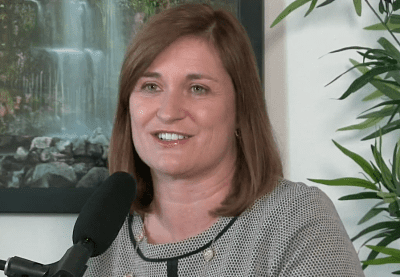
 In this episode of Mormon Stories Podcast, we interview Jenny Wilson, Democratic nominee for US Senate, challenging Mitt Romney for Orrin Hatch‘s seat in Utah.
We discuss:
- Jenny’s political heritage in the state of Utah
- Her Mormon upbringing and experience in Utah politics as a non-practicing member of the LDS Church
- Her views on some of the political issues facing Utahns and Mormons in particular
- Her experience on the intersection of Utah politics and the LDS Church
- Thoughts on her opponent and an invitation from Mormon Stories for Mitt Romney to appear on the podcast
Episode Transcript
Host: John Dehlin · Guest: Jenny Wilson
This transcript is machine-generated and lightly edited for readability. The audio is authoritative. Please excuse occasional errors in names and spelling.
Introducing Jenny Wilson and the Episode
Part 1 of 2 · Ep. 950
John Dehlin [00:00:31] Hello and welcome to another edition of Mormon Stories podcast. I'm your host, John Dehlin. It is June 22, 2018. We are recording and live streaming from our offices in Salt Lake City, Utah, from the Mormon Stories office. And we are very excited for today's interview.
John Dehlin [00:00:51] Today we are interviewing the Democratic candidate for U.S. senate for the state of Utah. Her name is Jenny Wilson. And for those of you who don't know the background, for those of you who aren't from Utah, basically, Orrin Hatch gave up his Senate seat. He has served for, I don't know, six or seven terms a long, long time.
John Dehlin [00:01:17] And now we have a race for the Senate. And as it's looking, Mitt Romney is likely going to win the Republican nomination for the Senate seat against Kennedy. But you know, that runoff hasn't yet happened, but it will very, very soon. But what we know is that the Democratic candidate is going to be Jenny Wilson.
John Dehlin [00:01:47] I have a cousin, Cliff, who is a big Jenny Wilson fan. And let me just explain why we're doing this interview. It's not, you know, one of the biggest faux pas I think I've ever made in Mormon Stories history is I was interviewing Amy McPhee all the best the night of the November election of whenever Donald Trump was elected. And I kind of rubbed it in the face of my listeners and I said, tomorrow morning, Hillary Clinton will be our new president. You know, and I recorded that on a podcast and of course that didn't happen.
John Dehlin [00:02:20] But, but this is, you know, this isn't an endorsement. Mormon Stories isn't necessarily a Republican or a Democrat, you know, enterprise, but you know, politics and religion and even sexuality are all very intertwined. And you can't, you can't understand Mormonism, you can't without understanding Utah, and you can't understand Mormonism in Utah without understanding politics. And so there are all sorts of cool and interesting reasons why it'd be interesting to interview someone like Jenny.
John Dehlin [00:02:59] She, she comes from a long sort of a heritage of political involvement within Utah. We'll get into that. You know, we'll talk about her being raised in the church, but she's been operating in Utah politics for some time now as, let's just say a non practice, actively practicing LDS person. And that's its own interesting thing. There are all sorts of political issues that impact Utahns and Mormons.
John Dehlin [00:03:32] You know, you're always going to be interacting with the LDS Church when you're doing political stuff in Utah. And then of course, Romney is an interesting candidate. And you know, we, we are going to we would welcome Romney to come on Mormon Stories podcast if he's willing. So we're not going to show any favoritism here, but we also know that we have listeners who are Republican and conservative who are Trump supporters. And I just want to say, you know, this isn't an attack on conservatism or Republicanism or even showing favoritism. We just think that there are cool, interesting things to talk about at this level of political engagement.
John Dehlin [00:04:09] So that's why we're interviewing Jenny Wilson today. We're live streaming this, so we really do welcome our listeners to ask questions on the feed and we will ask them as we can. If you have if you want to share comments, we'll also share some of those comments as well. So anyway, we've got a lot of cool things to cover. We're going to see if we can do this in two hours. I don't know, that might be unheard of in Mormon Stories land generally, but we're going to try. But without any further ado, Jenny Wilson, thank you so much for being willing to come on Mormon Stories podcast.
Jenny Wilson [00:04:47] Well, thank you. And I don't know that I've ever done a two hour interview and I certainly have not done an interview on this subject. So I'm looking forward to it. I'm happy to sort of expose myself a little bit in terms of my own philosophies, my background, background, my religious leanings and history, whatever you want to talk about. Because I think transparency in government is so important and I think we're lacking it often. And I'm willing as a candidate to just put myself out there. I know that I'm going to have critics when I take that risk and do that. But I also hope that people understand I'm doing this, I believe for the right reasons running for this office.
Jenny Wilson [00:05:27] And I appreciate that you you'd bring me on to just talk about that and to share a little. And I always love learning from people, too, whether it's people asking me questions or a dialogue. As I'm out traveling the state, I'm learning so much. So this is just another little moment in my own evolution as well.
John Dehlin [00:05:45] Well, it's super fun. I don't know if my listeners know this, but I studied political science in my undergraduate work. I did an internship on Capitol Hill and I followed politics very closely for a long time. The recent election killed my stomach for following politics super closely. So I'm not as much of a wonk as I used to be. But I've still Got a little bit of chop, so we'll see how that goes. Anyway, thanks so much for joining us. We're really excited. So let's start with your. With the political background in your kind of ancestry, talk a little bit about whatever Mormons, Mormon and or Utah political heritage that you think people would want to know about you in terms of your background.
Jenny Wilson's Utah Roots and Family Background
Jenny Wilson [00:06:27] Well, sure. I was raised in Salt Lake City and I'm a fifth generation Utahn and my legacy goes back to Orson Pratt. So it's on my father's side. But when we were talking earlier, I shared my dad was actually a convert to the LDS Church. So that in itself is sort of interesting. So fifth generations back, Orson Pratt on my father's line. So when my dad was born, his father was actually a non Mormon who had come to Salt Lake City due to the big band era and his mother had an LDS background and on the Orson Pratt line. So in any event, my grandmother and my grandfather got together.
Jenny Wilson [00:07:10] He stayed in Utah. They had two boys, my father and his brother Larry. And my dad was not raised lds. And then he met my mother when he was in his early 20s when he was at the University of Utah. And she had just graduated from South High and she was one of five
John Dehlin [00:07:26] kids, which doesn't exist anymore.
Jenny Wilson [00:07:27] I know.
John Dehlin [00:07:28] Yeah, my dad attended South High.
Jenny Wilson [00:07:30] Oh, he did?
John Dehlin [00:07:31] Yeah. Way back in the day.
Jenny Wilson [00:07:32] Right. Well, I bump into people on occasion that are my parents age that were South High graduates. But in any event, my mom was an active Mormon, my dad. No. And then he converted to Mormonism through my mother and raised the five Wilson kids in Salt Lake City. I have an older brother, I have three younger brothers and sisters. And I went to East High and that was my youth was East High, Bryant Junior High before that. And I grew up in the area right around the University of Utah and it's actually very close to where I live now.
John Dehlin [00:08:10] So you were born and raised in Utah?
Jenny Wilson [00:08:11] Yes.
John Dehlin [00:08:11] Okay.
Jenny Wilson [00:08:12] Yeah.
John Dehlin [00:08:13] Your dad held some important offices in Utah and ran for some important offices. Talk a bit about who your dad is and his political history.
Jenny Wilson [00:08:22] Yeah, my dad's Ted Wilson. He was the mayor of Salt Lake City from 1976 to the mid-80s. And he actually ran against Orrin Hatch in 1982. He was Orrin Hatch's first major race, major challenge and his first reelection. And then my dad again ran in 88 against Norm Banger and lost narrowly in 88.
John Dehlin [00:08:43] That's the governor's team.
Jenny Wilson [00:08:44] The governor's for governor. Yeah. And I joked earlier in the Race. When I entered, Orrin Hatch was. There was a great possibility he would run for re election. So I started joking that it would be Wilson Hatch, the sequel. But it didn't turn out that way.
John Dehlin [00:08:59] Yeah. And what was your dad and or mom's sort of occupation?
Her Father's Political Career and Influence
Jenny Wilson [00:09:06] Yeah, so my dad was initially a schoolteacher. He's a mountaineer even to this day. He gets out and hikes. He's at an age now he's not doing a lot of rock climbing, but he was one of the original rock climbers of the, I guess, 60s, late 50s. He and his buddies would go up with whatever safety rope they could pull together and climb some of the first routes in the Wasatch. So he was a climber, went to the University of Utah, became a school teacher. And then as he was teaching, I think up in Colville, he was asked to go to Europe by Royal Robins, whose brand we all know, the Royal Robbins brand of clothing, outdoor clothing.
Jenny Wilson [00:09:50] But Royal Robins himself was a mountaineer and he was buddies with him. So he ended up in Europe climbing, teaching. He's a really strong skier. He does skiing at a school over there. And that's where I was conceived. And my mom with my older brother Ben, my brother at the time was two years old. They decided to come back to have me. And they never did go back to Europe again. But in those early years, my dad was actually climbing major peaks in Europe and schoolteacher. And then he came across Wayne Owens. And I don't know if you're your folks watching, remember, have heard of Wayne Owens, but he was a very accomplished Democrat in the 70s, and he actually ran for the US Senate while he was a member of the House of representatives in the 70s against Jake Garn and lost to Jake Garn and then ended up being very involved until his untimely early death from a heart attack.
Jenny Wilson [00:10:49] Worked very closely on environmental issues and on world peace. He was very involved in Middle east work in Israel and with the PLO and with Arab leaders as well, forging those. And so that was my dad's early work was with Wayne Owens in politics. And that's what led him to run for mayor of Salt Lake City.
John Dehlin [00:11:12] What did he do as his day job when he was after he would maybe lose an election. What was his day job?
Jenny Wilson [00:11:18] So he was mayor and then as he was leaving mayor, and I can't remember the timing exactly, but he ended up running for governor and then he became the director of the Hinckley Institute of Politics at the University of Utah and did that after his time as mayor.
John Dehlin [00:11:33] Oh, cool.
Jenny Wilson [00:11:34] Yeah. So he's really influenced a lot of people in different ways and I'm really very much a product, I think of his style of leadership. I at least hope I am. I try to be. I try to emulate some of his really incredible principles as I go about my work. And my mom too. She's an artist.
Jenny Wilson [00:11:57] She has sort of a more, less focused artist temperament in a way, which I love. But she's a small business owner. She's owned multiple galleries, art galleries in Utah. She currently owns a gallery called Sago 3 and she features her own art and other Utah artists. And she's very committed to art in the community. And I think she sort of struggles as she's, you know, in her 70s, as she sees the next generation maybe not loving, you know, the type of art that she has loved and supported and done herself over the years. And I think in this era where people are shopping online and maybe spending less time on big 4,000 square foot houses, she, I think she's sort of holding on in a way, in such a valuable way to that era. And I am very influenced by her as well.
John Dehlin [00:12:52] We have a couple comments from our live listeners. Laurie writes. Hi Jenny. Laurie Caldwell, your fellow Brian and East friend.
Jenny Wilson [00:13:00] Oh wow.
John Dehlin [00:13:01] So shout out from Lori. And then Paul writes, I've rarely voted Democrat but much more inclined lately. Very interested in you, Jenny. So Paul's interested.
Jenny Wilson [00:13:10] Awesome.
John Dehlin [00:13:11] It's fun.
Jenny Wilson [00:13:12] Like Lori, I mean that if I had not stepped up and done this, there are hundreds of people I wouldn't have met. I've had the most incredible year to date doing this. So back to Laurie. Fun. I remember those days.
John Dehlin [00:13:25] So we'll talk more about that. So talk about your LDS upbringing and what the church, what influence the church had in your life up through your adolescence, I guess.
Growing Up Mormon in Salt Lake City
Jenny Wilson [00:13:37] Yeah. Well, so I had a typical upbringing bringing for a Mormon child. I mean I went to primary. I remember primary back in the days where you did it on a Tuesday or Wednesday, I can't remember. But I remember the Crystal, not the Crystal Heights, the Federal Heights Ward House and it's still the ward in my neighborhood. And I remember sitting as a child singing the songs in the afternoon. I would bring in non LDS friends to come with me and made it just as LDS kids do, part of our lives. It was very much my upbringing.
Jenny Wilson [00:14:16] I was one of those kids who, I'm not sure any LDS kid absolutely loves being at church for three hours on a Sunday, but there's so many things about it that I look back on that were so important to my upbringing and the friendships I still have and. And the memories. And I think that the structure was very much and is part of my legacy and who I am. And I look back on those days fondly, both from the leaders that influenced me and the experience that I had as a child.
John Dehlin [00:14:51] Was there ever a point where you maybe would have considered yourself like a true believer, Orthodox?
Jenny Wilson [00:14:57] I think, as a child, absolutely, yeah. As a teen, maybe a little less so. And I think one of the things, given my father was in politics, I was very. Had a great opportunity at a young age to travel with him. I remember I met Jimmy Carter in the 70s. I think it was before he was president. I was very young, and he went out his way to come up and greet me as a small child. And that memory is very much imprinted on my mind. I was able to travel with my dad to Washington, D.C. and he was a mayor. And those were big influences in my life as well.
Jenny Wilson [00:15:35] So I think I was always balancing my interest in the world. For whatever reason, I was one of these kids, maybe more so than my brothers and sisters, who wanted to get out of Utah and see the world. So at 19 years old, I packed up. I arranged on my own, through my employer, to spend the summer in New York City. And I did that alone. And I'm surprised my parents let me, but I think I had a pretty independent strike. And I think they felt that I ended up staying in Greenwich Village in the apartment of an employee that I was working with who happened to be in Utah.
Jenny Wilson [00:16:12] It was the Redford organization. It was Sundance. So Robbie, who owned the apartment, had gone to Sundance to work with Redford and left her Greenwich Village apartment vacant. And then Sundance had an office there. So that they just allowed me to shift from the Utah operation to the New York operation. And I had the apartment, and I didn't have to pay rent. And I took care of a few things for Robbie that summer, but it ended. I was supposed to have a friend, actually, Sarah Owens, who's the daughter of Wayne and the sister of Doug Owens. As many would know, Doug just ran for Congress the last cycle.
Jenny Wilson [00:16:47] But Sarah was supposed to come with me, but she ended up getting a job at a summer camp in northern New York. So she would come down on the weekends, and I was alone during the week. I'd go to work, and then I would, you know, walk through the city. I would go to the parks. I made some friends, and just. And so I ended up really. I think embracing life outside of Utah. And I think that led to my evolution maybe not to be an active LDS churchgoer to this day. I go to homecomings, I go to baptisms or to the confirmation or the neighbors are celebrating something, returning from a mission.
Jenny Wilson [00:17:29] I think I support people's religious choices. And though I'm not a weekly churchgoer, I appreciate the influence of my neighborhood and the community and enjoy going. I'm just not a devout LDS person at this point.
John Dehlin [00:17:42] A big chunk of my listenership would be people who were really orthodox, really devout, but then had this, what they would, what we would call a crisis of faith and had to, you know, had their world turned upside down and had to make sense of it all and re. Establish an identity and had relationships threatened and potentially jobs threatened and you know, a multi year, sometimes a multi decade sort of traumatic event that coincided with them coming to terms with what they did and didn't believe and then deciding how to handle it and then all the fallout. It doesn't sound like you had any of that. How did you escape all that?
Jenny Wilson [00:18:24] That was not my journey at all. Well, I think my parents and they, we were expected to go to church and we did. And I think for me it was. I shifted as a young adult outside of Utah and was on my own. And so I think that I would go to church on occasion in those years, but rarely when I lived in Washington D.C. and so I, I think it's just that I sort of entered into a different path, a different route.
John Dehlin [00:18:50] And your parents weren't like, you need to be Mormon, you need to stay Mormon. No, you're a disappointment and all that.
Jenny Wilson [00:18:55] No, I did not have that pressure. So. And I'm pleased that I didn't. And I think if I had had that pressure, it might have been more of that journey. But because I think my dad was a convert and you know, my mom's like, I don't. My mom is still very culturally connected to the LDS Church from the era that she was raised as an LDS woman. And I think my aunt even, who is no longer LDS family members. So I feel that we haven't had always that conflict in my family. And I look at my extended family because my mom's brothers and sisters are all still alive and they live in Utah.
Jenny Wilson [00:19:34] One is a devout Republican, very lds, former military, he's retired as a military officer, Air Force. And his family lives more a traditional LDS life. And so we have that in our family. We've had everything happen in our family that any other Utah family has had happen. We've had an overdose of my cousin's child of heroin.
Jenny Wilson [00:19:59] An issue that I'm working on, literally as we speak. I'm working on that issue today with. Yeah, but I mean, we've had cancer in our family. Some have survived, some have. We've had everything you can imagine. LDs, non LDs, Independent, Republican, Democrat. And. And I think that is one of the things that I bring to the table is that openness and understanding of the depth of our community as it relates to family issues. And I think that one of the things that I want to see happen more in any religion and certainly in the LDS Church, it's just an acceptance that we're not perfect. We have challenges.
Jenny Wilson [00:20:38] I've lived them, my family's lived them. I'm gonna own that. I'm far from perfect. So I just think that, you know, I love my Utah heritage. I love my LDS background. Sometimes I feel like I want my kids to go to church with their cousins and to be a part of that, because I share with them quite often that I appreciate that, that peace and that connection in my past, if that makes sense.
Evolving Relationship with the LDS Church
John Dehlin [00:21:08] How did you escape this internal conflict of like, oh, my gosh, I thought the church was true, and now I don't necessarily believe it. How did you avoid your own personal internal conflict?
Jenny Wilson [00:21:20] That's a really good question.
John Dehlin [00:21:23] Or did you?
Jenny Wilson [00:21:24] I think that I. My dad said to me at one point, like, I think you'll have. That. You'll kind of go through that. And I think my influences were always so diverse that I think my LDS connection is just one of many influences. Just one of many influences. And I value it. But I think the LDS Church, and certainly the Catholic Church and certainly many churches has such a dominant influence in people's lives in many cases that I can see that. And I understand that. For me, I think it was. I was very. I don't know that I was career driven in my 20s, but I was experience driven.
Jenny Wilson [00:22:07] I wanted to live in that. In New York City. I wanted. And I took every advantage as a single person without a lot of responsibilities when I worked for Congress, to travel overseas with friends and to get out and go up to New York City when I was working in D.C. and live and want to be. And that was really. I've been so interested in foreign policy and international affairs and travel and what's happening in the world.
Jenny Wilson [00:22:35] And I get that from my mom. She has this very interest. She had this worldwide kind of focus. She spent years going to India and I think she really thought she could solve India's problems. And I think she did in some way, some small way.
Jenny Wilson [00:22:49] So that just problem solving interest. And that's probably what led me to government, frankly, into falling into that. So I didn't have that. And it's interesting because I think a lot about the afterlife and my own convictions and my own spirituality. And I wish I had answers because I think that's maybe as I age and look at, and I'm at the age now, in my early 50s, losing people that we care about and the fact that our.
Jenny Wilson [00:23:18] That's really where I think religion. And I look at people who are still very committed to the LDS Church and their faith and I envy that blind faith in many ways, as you look at losing people and death and
John Dehlin [00:23:34] tragedy, you haven't joined some other church. You don't identify with any other religious tradition.
Jenny Wilson [00:23:41] No. And I think I get something out of him, including my own connection back in some way to the LDS Church.
John Dehlin [00:23:46] Sure.
Jenny Wilson [00:23:46] Yeah.
John Dehlin [00:23:47] Listener Thaddeus is asking if when you mentioned Robbie, were you referring to Robert Redford, Were you calling Robbie?
Jenny Wilson [00:23:54] No.
John Dehlin [00:23:54] No.
Jenny Wilson [00:23:54] That's funny. So Robbie Miller was his long serving age.
John Dehlin [00:23:58] Got it.
Jenny Wilson [00:23:59] So Robbie, I call.
John Dehlin [00:24:00] That's a good question.
Jenny Wilson [00:24:01] It's Bob to those of us who worked for him, Robbie Miller, who I think is in Santa Fe, New Mexico now. Bobby. Yeah.
John Dehlin [00:24:10] Okay.
Jenny Wilson [00:24:10] So. So I didn't have Bob's apartment in New York. That would have been really great. But Robbie's was like a very nice apartment, but not Bob's.
Path into Public Service and Politics
John Dehlin [00:24:19] So talk about your path into running for public office or doing public service.
Jenny Wilson [00:24:25] So I worked on my Dad's campaign in 1988 for governor. And I had just graduated from the University of Utah in journalism. So I was a press secretary and actually got like 500 bucks a month or something to do that. I was like, wow, I've got a paycheck. I'm now a politico. So I ended up. My dad lost and it was. For the Democrats, it was a big loss because that was our last. The demographics changed so dramatically. There's a lot of reasons, things that were happening nationally where the Democrats couldn't, you know, gain back that.
John Dehlin [00:25:03] Was there a time in Utah's history where there were more, let's just say federal level Democratic.
Jenny Wilson [00:25:10] Absolutely.
John Dehlin [00:25:10] Elected officials?
Jenny Wilson [00:25:11] Well, that's my childhood. My dad was the mayor of Salt Lake. And we will.
John Dehlin [00:25:16] I think of that as a Democrat office now.
Jenny Wilson [00:25:18] You're right. And then. But his, you know, at that time we had Cal Rampton prior to Scott Matheson as governor. So.
John Dehlin [00:25:25] So there have been Democratic governors in Utah.
Jenny Wilson [00:25:28] Yeah. And I don't know, it would be 19. It would be the year that Scott Matheson left serving as governor that we. And so that would have been 80. Early 80s was the last.
John Dehlin [00:25:40] So it was.
Jenny Wilson [00:25:42] Yeah.
John Dehlin [00:25:42] So in this. In the 60s and 70s, let's just say Utah was more.
Jenny Wilson [00:25:45] We had more political balance. Absolutely. And that's really what I'm looking to do as somebody who stays in the game as a Democrat is. I'm seeking that balance.
John Dehlin [00:25:54] So would there have been US Senators who were in Utah that were Democrat or.
Jenny Wilson [00:25:59] Yeah, so the last Democrat in the U.S. senate was the Democrat that Orrin Hatch defeated in 1976, Frank Moss.
John Dehlin [00:26:07] Okay.
Jenny Wilson [00:26:07] Yeah. So it's been a while.
John Dehlin [00:26:08] Okay. But in the 60s and 70s, we would have seen Democratic governors, we would have seen Democratic members.
Jenny Wilson [00:26:15] We saw more balance in our. More House of Senate and House of Rep. Absolutely.
John Dehlin [00:26:20] And in state politics as well. Okay. So prior to the 80s, it wasn't like a ridiculous thought to have a us. We were a Democratic US senator.
Jenny Wilson [00:26:29] We were purple, not red as a state.
John Dehlin [00:26:31] Okay. All right. So that's. That's kind of your upbringing. And then in the 80s, when your dad starts running for things, it shifted dramatically. Do you have a sense for what caused the shift?
Jenny Wilson [00:26:43] Well, I think if you look at the national Republican Party around that time or a little bit earlier, you saw the conservative movement, the quote, unquote, moral agenda, evangelicals, combined with the conservative arm of the Republican Party. And that combination has led largely to that strength in these red states and these rural areas and what have you.
Jenny Wilson [00:27:14] So there was a national movement that affected Utah. And then I think as we looked at rights movements like the women's movement, that didn't often align with women of that era within the LDS Church, the LGBTQ movement has evolved over the years, but I think there was that. And that movement alienated many in the state, I think, too, who had been sort of core worker, middle class, traditional Utah families that aligned Democratic. So I think there's been a lot of things that have happened, and these are things that I support. I mean, I would have supported. Supported the ERA in the era. I would think we need it now.
Jenny Wilson [00:27:56] I believe in the advancement of LGBTQ people, but I think the Democratic Party ended up with our coastal dominance as the party to leave a lot of states like Utah behind. So I very much think there's a branding issue and that we as a party still stand for those things. But I think Some of the movements have overshadowed some of the partisan issue. So it was a number of things.
Jenny Wilson [00:28:24] And I now think that the Democratic brand is just not good. I mean, I've traveled the state of Utah and the Democratic Party has some undercurrents that cause some issues related to where and how we will govern. And there's always the debate of should we as a party be more to the left or to the right. Should you said the Bernie Sanders movement and all the people turn out in the state, which was very powerful. And then there's a very, very strong and growing LDS Democrats caucus, very strong in our party. So we're sort of a clash of cultures too, within the party now. So in any event, I think the 80s, you did see more balance. And it started 70s into early 80s, it started to erode.
John Dehlin [00:29:17] Okay. So that whole religious based culture war stuff, kind of during Reagan's time, Ralph Reed and all that.
Jenny Wilson [00:29:25] Yeah. Very much impacted our politics.
John Dehlin [00:29:27] Just took Utah straight.
Jenny Wilson [00:29:29] Yeah. And I think there were actions of the LDS Church, people I know in the LDS Church who are of that era, a decade or two older than me talk about those political actions of the LDS Church in that era. And I don't. I can't really comment on that because I wasn't engaged and I just don't remember.
John Dehlin [00:29:47] Okay, so you, you worked for your dad for a while. Yeah, Press secretary. Then what happened?
Jenny Wilson [00:29:53] And then I ended up deciding to pack my bags and go to dc. It was a pretty difficult loss because he was challenging an incumbent governor. Norm Banger, very nice man. In fact, on Father's Day, I posted. One of the pictures I posted in tribute to my dad was a picture with my dad and Norm Bangerter after my dad's lost to him. And they remained friends. They were friends until Norm passed away. And that's just who my dad was. You know, he was gonna go and embrace the guy who beat him and vice versa for Governor Bangoter. And so in any event, I. But I had had enough.
Jenny Wilson [00:30:33] I was like, you know, I'd had that experience in New York and I had traveled the country quite a bit, I think, by that point. And I was like, hey, why? I'm gonna go to D.C. there are jobs there. I'm out of college at that point. I wasn't focused on a graduate degree. That came later. I went and got a degree later. But I ended up just calling a friend and saying, do you have a space in your apartment?
John Dehlin [00:30:59] Around what year was this?
Jenny Wilson [00:31:00] This was 1989. Right in the wake of George Bush's victory. George Bush Sr. And I remember arriving in D.C. in a cold January, early January night. And I remember the day well, and I think it was three or four days later that George Bush was inaugurated. And I ended up working in D.C. for a few years and then went
John Dehlin [00:31:29] back doing what type of work.
Jenny Wilson [00:31:31] So initially I ended up deciding to temp, which you can do in D.C. because I'm like, I gotta pay the bills. So I signed up with a temp service and they would send me to law firms primarily. I attempted NBC News once. That was fun. And they would. They actually paid a living wage, these temp agencies, because Washington is, you know, there's so much going on with the federal government, influence agencies, nonprofit organizations, trade associations that lobby government. So they paid a strong wage. So for a couple of months I temped and I ended up landing my first permanent temp assignment. It was a three month assignment for a woman going on maternity leave for the national association of Counties.
Jenny Wilson [00:32:24] Well, I'm now a county elected and I go to those conferences that I used to staff and I check in, like the woman checking in, you know, given the badge and the packet. And I say, I used to have your job and I'm now a county elected. So that was my.
John Dehlin [00:32:37] You treat them well.
Jenny Wilson [00:32:38] I treat them well.
John Dehlin [00:32:39] Because you've been there.
Jenny Wilson [00:32:39] I've been there.
John Dehlin [00:32:40] Okay.
Jenny Wilson [00:32:41] But I ended up, not long after, getting a job on Capital. Well, I went and worked for the cable industry in government relations. Interesting time with deregulation, broadcast issues, satellites. At the time, there was no idea really that we would be where we are today. And cable was big in that era, so I did that. And then I actually missed kind of the pulse of political life. So I ended up getting a job on the Hill for a congressman from Oregon. And that was 1990 or 89.
John Dehlin [00:33:15] Think about the timeline.
Jenny Wilson [00:33:16] Letters and assistant press secretary, early 90s. And then ended up working for Bill Orton.
John Dehlin [00:33:25] It wasn't one of our Mormon senators from Oregon, was it?
Jenny Wilson [00:33:27] No, it was Les A Coin who was a House member and then ran for the US Senate in 92 and was defeated. That was the year that Clinton won. BILL Clinton President ended up back in D.C. right after I had worked on that Oregon campaign.
John Dehlin [00:33:43] 92.
Jenny Wilson [00:33:43] Ish.
John Dehlin [00:33:43] 93.
Jenny Wilson [00:33:44] 92, yeah. And then 93, yeah. Ended up in 93 working for Bill Orton.
John Dehlin [00:33:50] Bill Orton was a Democrat congressman from Utah, right? Yeah, yeah.
Jenny Wilson [00:33:55] And that was a great experience.
John Dehlin [00:33:56] He was a great guy, right?
Jenny Wilson [00:33:58] Yeah. Bill was your. He just didn't fit the political mold in that he had won without a previous experience. He was a tax attorney who ended up having a strong belief we needed to reform the tax code. And that's what led him to run as a Democrat, Mormon guy in his 40s. And he ended up winning on a fluke. And that's another story.
John Dehlin [00:34:28] Snow. Right. He beat Snow.
Jenny Wilson [00:34:30] Yeah. And I wasn't with Bill then, but he. Carl Snow had attacked him and implied he was gay.
John Dehlin [00:34:37] Right.
Jenny Wilson [00:34:38] And he wasn't.
John Dehlin [00:34:38] That's right. That's right.
Jenny Wilson [00:34:39] And the Republicans actually in Utah county stood up and said, this is wrong. And Bill handled it well and managed the media around that. And he ended up winning in 1990 by a landslide. And so he had served one term by the time I was introduced to him and his operation. And then I served with him until his defeat in 1996 to Chris Cannon.
John Dehlin [00:35:06] Right.
Jenny Wilson [00:35:06] And that was in the.
John Dehlin [00:35:07] Geneva Steele. Right? Geneva Steele guy.
Jenny Wilson [00:35:10] You got it?
John Dehlin [00:35:10] Yeah.
Jenny Wilson [00:35:11] No, well, it's his brother.
John Dehlin [00:35:12] Right?
Jenny Wilson [00:35:12] His brother. Yeah, his brother.
John Dehlin [00:35:14] Desert news or newspaper. Right.
Jenny Wilson [00:35:16] Yeah. And I can't remember too much about Chris's life before he went to Congress, but I think. Utah county business guy.
John Dehlin [00:35:23] Yeah, yeah.
Jenny Wilson [00:35:25] And Chris was a nice man, actually. Would chat with him on occasion after that defeat. And. But, you know, Bill lost, largely because of Clinton's declaration of the Grand Staircase Monument.
John Dehlin [00:35:38] That.
Jenny Wilson [00:35:38] And he was out spent by Chris. Chris had money and what'd you do for Bill? So I started off as his press secretary, communications director, and then he promoted me to chief of staff. So at a young age, I was
John Dehlin [00:35:55] running the show for a U.S. congressman.
Jenny Wilson [00:35:58] U.S. congressman.
John Dehlin [00:35:59] Oh, that's great. Okay.
Jenny Wilson [00:36:01] Overseeing a staff of 17. The House of Representative. Representatives gives each Congress, man or woman, a budget and a certain number of employees. And you work within that, and that's what you do to run your shop. And that's what I did for him.
John Dehlin [00:36:17] Were you living in D.C. doing that?
Jenny Wilson [00:36:19] I was living in D.C. yeah. Traveling with him. Back on a fair. Well, I'd say a good percentage of the time. I'd probably be back once a quarter and would come back for the August recess and ran the show with the team in the Provo office. And, yeah, it was a great experience.
John Dehlin [00:36:36] Okay, so how'd you go from there to where you are now ended up?
Jenny Wilson [00:36:41] Bill was defeated in 96. I took the year off and traveled. My father and I went to New Zealand together with his buddy. He was going to climb the highest peak in New Zealand, but his buddy got sick. So that was one of the great adventures of my life, was Just going with my dad and his buddy for several weeks to New Zealand, went to Europe with friends, spent too much money and decided, oh no, now what? And I had done while I was working for Orton, an executive program at Harvard's Kennedy School, which is Harvard's government program. And I had really been interested when I did that program at considering a graduate program there. So I applied, got in, spent a year, got the most efficient Harvard degree.
John Dehlin [00:37:27] Mpa.
Jenny Wilson [00:37:28] Mpa, yeah.
John Dehlin [00:37:29] From Harvard.
Jenny Wilson [00:37:30] From Harvard, yeah. Did that.
John Dehlin [00:37:32] That's fancy.
Jenny Wilson [00:37:33] Yeah, it was fun. It was good. In fact, I just went back to my 20 year reunion and I still have amazing friendships and connections and we were together 20 years later doing the same arguments around. Interestingly, we missed one of the ringleaders of our group because he's just become Trump's appointee as ambassador to Germany. So Rick always mixed it up a little with our more traditional progressive group of people. But that was a good year to learn about government, people in government. There's such a range of opportunity with that program. I really loved that experience. And I was single. I would have signed up for another year if they would have let me.
John Dehlin [00:38:24] Okay.
Jenny Wilson [00:38:25] But I'm actually one of these people. I just not long ago paid off my Harvard loans because one of them had this great government, low interest rate. So my husband's like, shouldn't we just. I'm like, well, no, I'm going to take my time on this one. So. But I, you know, so I'm one of these people. I just, I paid for my own education. My parents helped me a little bit.
Jenny Wilson [00:38:49] But you know, I really can relate to the death that we're seeing with young people coming out of their undergraduate degrees with hundred thousand or even more. You go to medical school and you don't get part of that covered. I don't know how you recover from that and own a home and raise a family. So I'm very, I think the life experiences that I've had have helped me in policy making.
Jenny Wilson [00:39:14] But in any event, I did that after I graduated. I remember sitting, I had one of those, one of the first big computers that I don't know what they called them. Everyone has a laptop now but a desktop that had this big fat screen. And I remember sitting at it right the day or two before my graduation. My parents were flying in.
Jenny Wilson [00:39:39] I had an opportunity to do international work, democracy building, work overseas with an organization. I had run the startup for a candidate running for Congress. I had cross enrolled at the business school, the Harvard Business School for a couple Classes. I actually had a very light load the last couple months. A friend had said, would you go into a startup for a guy running for Congress, a Democrat? And I said, sure did that. So that had led to political opportunities for the city, Boston City. And I was looking at those opportunities and then something just said, no, go home, go back to Utah. And I loved Boston and I loved that as a Democrat I had backup.
Jenny Wilson [00:40:28] Right. Boston, as Romney knows, is not, you know, Republican stronghold. So that was good. And I, but I just like, you know, I think I'm ready to go home. By the way, I met Mitt Romney for the first time during that year.
The 2002 Salt Lake Olympics Experience
Jenny Wilson [00:40:44] I had a friend working on a non profit organization. He was a board member. So I remember meeting Mitt in the common at one of the nonprofit events. But anyway, I came back not long after a ran a mayor's the campaign of a guy running for mayor, Dave Jones of Salt Lake City. He lost. I ended up not long after sending my resume into the Olympic Games, Salt Lake Olympic Games Committee and was hired.
Jenny Wilson [00:41:18] So that's where I met Mitt Romney, worked with him, did that throughout the Games and then ended up running myself for where I serve now, the Salt Lake County Council.
John Dehlin [00:41:30] What'd you do for the Olympic Games?
Jenny Wilson [00:41:34] I was hired as a volunteer director. So other Games had one volunteer director because the effort is so massive and we knew that we needed 26,000 people and we needed to recruit more. We had a recruitment lead, my colleague Steve. I ran retention which was best Games practices throughout the organization. We did the goody bags, the Nu skin product and all that. Worked with my colleague who worked with the uniform program. I had a hand in HR generally during that role. So there were three or four of us who were volunteer directors and I was one of those.
John Dehlin [00:42:12] And that's one of the things that Mitt Romney and his people might tout is that he saved the Olympic Games and, and delivered a really successful Olympics. So I imagine you got to see an inside view as to what did and didn't.
Jenny Wilson [00:42:26] Yeah. The one criticism you will never see me make of Mitt Romney is that he doesn't work. The guy works and he worked during the Games and he came in with a drive and a commitment to make sure that the Games are a success. I will also say when I applied and I did my interview with my boss, I knew who reported to Mitt. I knew that the Games were going to be a success. We were in a position where everything was kind of coming together. So what Mitt did was raise money and stabilize the budget and show leadership. I won't ever say that he didn't show leadership because I believe he did.
Jenny Wilson [00:43:09] And I enjoyed working with him. And believe me, we were all one happy family. Most of us who. Well, most Utahns, I would say probably who worked for the Games were your typical cross cut of Utah culture. You had some Democrats, some Republicans, a lot of Republicans. People from out of state, the ones I worked with tended to be the ones from other countries tend to be more progressive. There were more Democrats who had come in from out of state. We all just worked well together.
Jenny Wilson [00:43:41] I do think the success of the Games was the 26,000 people who stepped up because that was our free workforce. You can't run something like that and pay people. So we had a very limited number of people like myself who got a paycheck for doing it. And the heart and soul and the success of the Games were the people. And I think that's where Mitt and I agree. And I think if we have an opportunity to go into that together, I think we will see. Say this is one area we're on the same page and I'm proud of my work. I think you did a great job and I really think, I look back on those days and it was a very special experience.
Work on the Salt Lake County Council
John Dehlin [00:44:22] Talk about the county position you have and what your responsibilities have been during the time you've. How long you've worked there and what the responsibilities have been.
Jenny Wilson [00:44:31] Yeah, so I met my husband while I was working for the Games and we got married in 2000 and our first child was born three months after the Games ended. And I. So I was six months pregnant. So a lot of people had a, like late nights, but I was pregnant, I was working. And that's why I want to get the Games again because I want to have a really, really good time this time.
Jenny Wilson [00:45:01] As much as the experience was great, it wasn't quote unquote, a lot of fun because I was working hard and very tired. But in any event, so I had my first child in May of 2002 and the 2004 election cycle rolled around. I'd been working, I did a little. I did a adjunct brief opportunity teaching at the U.
Jenny Wilson [00:45:26] Practical Politics and did that with my dad. And then I was working for an organization called Voices for Utah Children part time. And the opportunity to run for the Salt Lake County Council came up and I thought I think I'm ready to step up, put myself out there. And also it was a part time job. So that worked for me and my family. At the time with a young child. And I won. I defeated a Republican incumbent and, and won that office.
Jenny Wilson [00:45:55] I serve 1.3 or 1.2 rather million people in Salt Lake County. I'm in my second six year term. I actually took a four year break. I decided not to run for reelection and went and worked up at the University of Utah and then just couldn't shake my political work. I learned a lot of Republicans actually come up to me and say, your voice is missed. And I actually think there's a lot of Republicans who lean Democratic, but our brand has not been good. And I think there are a lot of Republicans who liked that I would raise the elephant in the room and I continue to do that.
Jenny Wilson [00:46:40] So I was quietly complimented for that. And it was only when I left that I realized the impact that I had had. And so when an opportunity came up to run for the same position, I actually was recruited to do it and I resisted and then ultimately said, okay, I'm going to run again. So I'm one of these people who actually went back to high school and sat in the same chair that I'd sat after taking a four year break, I'm now in my second six year term. We deal with everything from tourism. We oversee the budget for the Salt Palace, Our arts facilities downtown, including the Broadway, the new Broadway theater are Salt Lake county owned and operated.
Jenny Wilson [00:47:26] The Broadway Theater is a kind of unique relationship with Salt Lake City. But we do that jointly and then we are the entity that is the local government of the Canyons. So even though the governance form has changed quite a bit for Salt Lake county, we now have townships, less unincorporated area. We're the home base to less land. Right now we still oversee the Canyons.
Jenny Wilson [00:47:50] We deal with everything from running the jail to multi jurisdictional issues. I was at an event today with the state drug task force which is under the federal division, the drug enforcement Agency and the localities put in officers to serve as our narcotics investigators and units to get drugs off the street. I've worked with them. I just helped them assure that they wouldn't have layoffs and proud of that work and I was recognized for that at an event today.
Jenny Wilson [00:48:26] So we do it all. I mean, I love my role and I think if we're going to change Congress, we need people who understand what's happening on the ground. You and I talked earlier. I've worked on the opioid crisis. It's devastating our communities. We need somebody who's seen, who's been in the trenches on those issues, has been in the weeds on those issues, who understands those issues to change how we operate as a federal government, on that issue and many others. So I do quite a range of issues. I work on those issues.
John Dehlin [00:49:00] Yeah. My wife and I just got done watching a documentary on RFK and Robert Kennedy, and, you know, we were. I think we probably voted for Hillary, you know, after she was a senator from New York, the state she wasn't from. So, I mean, on the one hand, I think it's probably a tradition in the US Senate for. I don't know if carpetbagger is the right word, but for someone who's really never lived in the state and really never worked with the state in any meaningful way to come in and run for Senate, I guess even Democrats have a long history of that. And I, you know, it seems pretty obvious that Mitt Romney isn't a Utah and hasn't really done much here.
John Dehlin [00:49:42] And you've born here, raised here, lived, lived here most of your life and have worked in for years and years and years, kind of at the, at the local political levels, really getting to know the people and their concerns and their issues that I think in a normal election, in a normal state, that would matter.
Jenny Wilson [00:50:04] Well, there's something happening in this state that is tangible in terms of change. A lot of it's your work and others in the LGBTQ advocacy community saying, we don't want to discriminate anymore. It's women standing up and saying, I've faced things that have been hard, whether it's discrimination at work, MeToo. Most women have a MeToo story. You know, I think we're now saying, and the younger generation, as you see, I mean, I went to the rally and the march for gun control and supported the students in that effort because they're coming from it from a different place right now. And I really believe that there's this undercurrent of change.
Jenny Wilson [00:50:52] And, you know, I don't know that it's going to play out in this election cycle. I didn't sign up saying, oh, I would love to run against my former boss, Mitt Romney, but at the same time, I'm invested in this process.
Jenny Wilson [00:51:06] I think I have something to say, and I don't think I'm a lightweight. So I'm certainly not going to step aside and say, welcome to the race, Mitt Romney, whatever you want. So I've got four months to say what I believe, what I believe needs to change. I am more and more passionate about the needs of this state, having traveled 29 counties. Listen to people. And I am empowered, I think, by the voices of people that want to see things happen differently in the state. So that's what I'm bringing to the table. And I'm fairly certain because I read the polls, that I'll be head to head with my former boss in a week or two and we'll, we'll go from there.
Deciding to Run for US Senate
John Dehlin [00:51:48] All right, so shifting gears a bit. So that gives us a sense for your history and kind of what leads up to this candidacy, this race for you. Let's shift gears a bit, talk conceptually about running for office as a Democrat in Utah, and then let's shift back to your candidacy and we'll talk about issues that affect our audience and Utahns etc, and that relate to the LDS Church. So.
Jenny Wilson [00:52:18] Sure.
John Dehlin [00:52:18] Okay. So as I'm thinking about, you know, the, the past several Democrats that have run for Senate in Utah, I'm in my mind it all. Maybe the two words that would come to my mind would be fool's errand. It's just like the Republicans are always going to win the Senate seats. Why bother? It's almost like a symbolic thing or a joke or something. So now I'm not saying that's true. I'm just saying that's like in my mind, that's just the Democrat, the demographics here.
Jenny Wilson [00:52:52] That's right.
John Dehlin [00:52:53] So, so maybe first talk about that issue. Like, why would anyone run? And how. What are, you know, what were you thinking when you decided to run?
Jenny Wilson [00:53:05] You know, so it's a good question. And I think.
John Dehlin [00:53:09] And what's the process for getting elected the nominee for the Democratic.
Jenny Wilson [00:53:13] Sure. Well, I did not go into the last election cycle, 2016, with an idea that I would be a candidate in 2018. So. And I worked with Hillary. It was frustrating in the state of Utah because I know and knew how unpopular she was in it. She remains, you know, it just is what it is. But I really, especially as I saw Trump as, you know, nobody believed he was going to get the nomination. I mean, there were a few wise people who truly were maybe connected to the undercurrent. But in any event, he ended up getting the nomination. Hillary Clinton was our nominee and election night was passed.
Jenny Wilson [00:54:01] And I thought, wow, there's something going on and I'm not in the Trump camp. I get why people supported him. Even to this day, I understand it. People want Washington to respond. They want change. At some level, people even don't mind the tweeting because it's not the norm. People don't want scripted politicians. I get that, so I get at some level why he was elected. But what I don't understand where people are still defending him is they overlook so much. I mean, look at what is playing out. He's not denying at this stage anyway, though he did at first the relationship he had and I can't remember her name but you know, he's had some form of a relationship with a porn star and had to cover it up.
Jenny Wilson [00:54:46] We know that much. We know he's insulted people of various races. The border issue right now, the list goes on and there's nothing about my ethics.
John Dehlin [00:54:58] There's the grabbing women in the.
Jenny Wilson [00:54:59] There's the grabbing women.
John Dehlin [00:55:00] Right.
Jenny Wilson [00:55:01] Yeah, he lost me at grabber by the. You know what like. So I just cannot go there. I could support a Republican, I'm going to be clear about that because I, what I want in my state is balance. That doesn't mean if the right, more moderate Republican who I thought were ethical moved and I didn't like the Democrat, I wouldn't cross over. I would do that. I'm not always going to. I mean I tend to give the Democrat the benefit of the doubt, all things considered in this state because we don't have balance. So I'm a party person because you pick your team and you can't be in politics and run as an independent or a new party or a libertarian.
Jenny Wilson [00:55:41] So I'm happy with my Democratic Party and I align for a lot of reasons with it. And it's primarily because of, I think the party has proven to be compassionate and fair to people, to our needs. The compassion element is what really connects me. And for people who are watching, who are active LDs or still aligned, who are Christians, I think that Christian value is there for Democrats and it does. It's not an exclusively Christian value. I don't believe that. But the do unto others as you would have done to unto you. That is very much a guiding principle in my life. So with that, you know, I've made this. And now I'm off on a tangent. I didn't even know where we were. That's what happens when you put me on for hours.
John Dehlin [00:56:24] Okay, so how, how did you come into this position or.
Jenny Wilson [00:56:28] Yeah, so. So I entered. Oh, you're right. Yeah. Just that. So I ended up.
John Dehlin [00:56:34] So the election changed something in you.
Jenny Wilson [00:56:36] It changed something and made me realize this is a time that someone needs to step up. So actually went to Ben McAdams, my ally and friend at Salt Lake county, and I'm like, we had a closed door meeting and I Said, hey, you need to run. Hatch may run. You have the highest favorability, the biggest name recognition in our party, and we cannot go another year without a qualified Democrat running for the US Senate. If Hatch runs, you can win. Well, Ben had just been reelected at that time, and I approached him early. I'm like, we got to get going. So Ben said, no, I just, I don't think so. And I ended up stepping up and doing it well. In the meantime, months passed and Ben found a good alignment in running for Congress himself. And so we're now both against me
John Dehlin [00:57:29] of love, right against me of love.
Jenny Wilson [00:57:31] So now you have two of the strongest Democrats in the state who have the widest reach, given we both represent the largest county, a third of the state's population running at this moment. And that I think is a good thing for the Democratic Party so for us to rebuild and for the benefit of my children, very much wanting to preserve the wonderful life I had as a child for my grandchildren in this state, I felt like I needed to step up. And I know that, I mean, I use the elephant in the room, given I'm the donkey, not the elephant. But I will talk about those issues that matter in this community.
Jenny Wilson [00:58:13] I like Gary Herbert. He's employed my father, actually, my dad is Governor Herbert's token favorite Democrat and my dad was his environmental coordinator. They like each other very much. My dad didn't compromise his own ideals by going to work for him and would, I think, talk turkey on the environment with Gary Herbert not always getting his way. But in any event, I really get offended though when I hear the governor continually saying, and the economic development leads for the state saying, we are so great, let's bottle it, let's send it off to the rest of the nation. We have great need in this community and I love this state.
Jenny Wilson [00:58:52] I love living here. The quality of life is better than any other state in the nation. I really believe that. But there are many people suffering and if we don't have somebody in our federal delegation being the voice of the people, the workers, maybe somebody suffering from a family member who's addicted or is addicted themself and can't find a pathway out, I mean, who's going to speak for that person? I don't believe it's a six federal electeds we have now. So that's why I'm doing this. I felt it was important for my kids, for my grandkids, for the state. I love for preserving the things that I love about the state to step up and I recognize it Would be so much easier to walk over to the Republican headquarters, be who I am without changing my policies, but put an R next to my name. But I'm not going to do that because it's not genuine.
John Dehlin [00:59:48] Why not?
Jenny Wilson [00:59:49] Because it's not who I am. And I think I would then be more frustrated as being sort of lost in that bureaucratic machine of the Republican Party in this state. And I also feel right now, especially with all of the confusion within the Republican Party, that, you know, I just can't. I wouldn't align.
John Dehlin [01:00:13] When you say it's not who you are, what is it about being a Democrat that is who you are?
Jenny Wilson [01:00:21] So I think, what does the party stand on? I believe in my principles, like I really believe. And Bill Orton was so great at articulating this because he was an active LDS churchgoer until he died tragically in an ATV rollover, I want to say, five or six years ago.
Jenny Wilson [01:00:40] I know it was the month of April. I've just lost track of the years. And his wife's still a dear friend. She's a candidate right now, and she's running for a House office and is a Democratic nominee on the ballot on Tuesday. But anyway, so Bill was so good at his own connection between Mormonism and the Democratic Party. And there are a lot of democrats, including Ben McAdams, who are still active LDS. And I think it's that just that sense of what, you know, the voice of Jesus Christ and what he believed and the values that are instilled in me because of my childhood and my ties to my family.
John Dehlin [01:01:27] Name a few of those values.
Jenny Wilson [01:01:29] Well, I think we are, as Democrats, always caring for the person that needs care. We're the ones to fund the programs that step up and that provide a safety net for someone in need. And I know, and I really can identify with the common goals that I felt I had with Republicans in the 90s when I worked in Congress, where I think those same goals were there. The Bob Dole era, many Repu. And there's still Republicans who hold those values, including those that I work with on the Salt Lake County Council. But I think we sort of lost that at the federal level. We've become so, you know, divided that I don't see the Republican Party of this era standing for those things.
Jenny Wilson [01:02:13] I want to solve problems, and I want government to be efficient, and I'm a government reformer. But I want to make sure that we don't have homeless people on the street and that we're investing in the right way and we're you know, we're caring for people. And again, I'm not implying that the Democrats are exclusively the ones that care for homeless people. I don't believe that. But I think we've come up and been very solutions driven, including what's happening on the border. You know, I think Democrats making demands is the reason we saw it change. Citizens making demands. Seeing the president reverse his own policy the other day, he caved quicker than he usually does to public sentiment.
Jenny Wilson [01:02:56] And I think it's going to take us working across party lines. But I believed that our efforts on the environment and protecting our lands, I think those are, have aligned more closely with the Democratic Party. And that's very important to me too, in a gross state that we preserve. And I see also this, the word progressive has become such a bad word. And I feel like what progressive means is change embracing change.
Jenny Wilson [01:03:32] And that's very much who I am. I want to see how we can be more efficient, how we can do things better, where and how can we embrace new ideas and make them happen. So those are some of the, the values that I align with as a Democrat.
Becoming the Democratic Nominee in Utah
John Dehlin [01:03:46] Okay, to kind of wrap up this first hour, how does one become the Democratic nominee for U.S. senate in Utah? How does it happen? Are you anointed? Do you have to run? Do you have to fill out forms? You have to pay money?
Jenny Wilson [01:04:02] You have to. You.
John Dehlin [01:04:04] What's the process?
Jenny Wilson [01:04:05] You file for office, you go fill out a form. The early stage is actually none of us can file until March. So it's only been a few months that any of us have been official candidates, half a year or so. But in the early stage, we need to start campaigning prior to the filing period. So you get the word out. You open a bank account, you file with the Federal Elections Commission if you're running for federal office and start to get the word out.
John Dehlin [01:04:35] Is this literally a form you fill
Jenny Wilson [01:04:36] out that doesn't happen until later, but you do with the Federal Election Commission.
John Dehlin [01:04:40] It's like a form on a website somewhere.
Jenny Wilson [01:04:42] When you spend or raise $5,000, you're in violation of the law if you're running for federal office, even if you're not declared, if you don't file with the Federal Elections Commission, and that's a way to keep public disclosure and transparency on the election process.
John Dehlin [01:04:57] Do you usually hire a lawyer to do that or so.
Jenny Wilson [01:05:00] Oh, yeah, there's a. Well, if you want to keep yourself safe, yes. You hire a compliance person, you hire
John Dehlin [01:05:06] an attorney and they're firing. They're doing all the filing, yeah, they do.
Jenny Wilson [01:05:09] The fire filings, yeah. There aren't state filings except to declare for office. But for we fill out required information on our donors and there are limits to donations. And so we have to adhere to the federal election laws. So you do that and you form a team and you get going. You try and come up with some budgets and some plans and let the world know. And then by March, the actual open filing period is or the period opens for both parties and the window opened and Mitt Romney got in. So did 12 other Republicans. I had three Democrats running as well who filed against.
Jenny Wilson [01:05:53] So there were four of us on the Democratic side, 12 on the Republican side. The four Democrats met in late April at our state convention. Any one of US who receives 60% of the vote becomes the nominee. I did that on the first ballot and received 81% at convention at my party's vote. So, you know, a big traditional political convention on a Saturday in April, I became the nominee.
Jenny Wilson [01:06:20] Romney went through the Same process with 12. They had multiple ballots. He ended up losing to Kennedy, coming in second. But Kennedy did not get 60% of the vote as was required there.
John Dehlin [01:06:32] He lost to Kennedy. I didn't realize that.
Jenny Wilson [01:06:34] Yeah, he came in second to Kennedy, but because neither reached the 60% threshold, they moved to a June primary. My 81% victory avoided that. So I've been kind of, I've been waiting for a couple of months for them to move on.
John Dehlin [01:06:49] And it was your just many years in state county level service that put you over the top. What would have put you over the top over the other candidates?
Jenny Wilson [01:06:59] Well, one of the things, even going back to your other question, one of the reasons I realized I would be a strong candidate is I don't take this lightly. I made the commitment with my family to do this every day. I hold multiple events, I tour the state, I fundraise, I do what's necessary to be a viable candidate. And it certainly helps that this isn't my first rodeo. I've been involved in Democratic politics. I've worked for others from Bill Orton to Dave Jones. I've worked for myself. I've supported candidates along the way. So I sort of know the lay of the land to do this.
Jenny Wilson [01:07:36] My DC experience is very helpful. Having worked on Capitol Hill and sort of knowing and being very comfortable in how the House and Senate operates, I feel incredibly qualified to represent the state. And that's been, it's given me the ability to go out and convince people that I'm a good choice.
John Dehlin [01:07:59] Is there and if this were true, I don't know if you could even acknowledge it. But is there at some level like the Democratic power brokers in the state kind of meat over coffee or lunch and I mean that metaphorically, but they're like, well, who, who do? Who needs to be the nominee this year? Well, this year Jenny's the best one we've got. Let's go with her. Is there sort of informal behind the scenes kind of anointing of like who the right person would be this year sort of thing?
Jenny Wilson [01:08:29] That's a fascinating question and I'm going to go ask my dad that question because we do not have that anymore. I think we did when we had more, quote, unquote power. I think there were more power brokers. I mean, I've heard some of the stories from back in the day. We don't have that now. I mean, I think that we.
John Dehlin [01:08:48] Meaning Democrats.
Jenny Wilson [01:08:49] Yeah, I mean we don't have a deep funder base, for instance. We don't have. We. There are some. And there are a lot of people who step up and support. I have a grassroots funded campaign with thousands of donors, low dollar. I do have a few that have given the maximum amount for various reasons.
John Dehlin [01:09:05] What is that amount?
Jenny Wilson [01:09:07] So they do it by cycle. So it was 5,400 per person, but that gets cut in half when you become the nominee. So I am now in the phase of the campaign where I can ask for $2,700 from anyone individual from between now and November. So for a wife and a husband or a family of two adults, then they could give 5400 together, 2700 each.
John Dehlin [01:09:39] So that's not a lot. I mean it seems like a lot, but I mean.
Jenny Wilson [01:09:42] Yeah. And then there's political action committees. Actually Romney got 3. 25, 2700. So he was able to raise 8000 and something to my 5400 because he actually had that third phase. I eliminated one in getting the nomination outright at convention. So he had 2700 times three limit,
John Dehlin [01:10:06] a limit per person.
Jenny Wilson [01:10:08] Per person. And then much to my chagrin, he transferred $1 million from his presidential race into his Senate campaign.
John Dehlin [01:10:18] You're allowed to do that?
Jenny Wilson [01:10:20] Yeah, because it's federal money. It's, it's. We're getting in the weeds a little on federal election law. But yeah, he could transfer federal money into his race.
John Dehlin [01:10:27] And so he's got a lot more money.
Jenny Wilson [01:10:29] Yeah. And then he was able. I looked at his first report and he was receiving, I think it was the 8800 or whatever the number is 8100 from multiple people from out of state. So a lot of his presidential donor base was giving money. And that's all public. You can go online.
John Dehlin [01:10:47] And then you were saying something about PACs.
Jenny Wilson [01:10:49] Yeah, PACs can give 5,000 political action committees. 5,000 per cycle.
John Dehlin [01:10:55] And you don't accept money from PACs, so.
Jenny Wilson [01:10:57] I, I do, but I am not soliciting corporate money in that way. I mean, I, I've been asked to look at a corporate ban on donations and I very well may do that because I'm a. Aligned with the reform movement. I want to eliminate. I wanted to overturn Citizens United. If we could pull that off, that would be amazing. It's a Supreme Court decision that allows us outside money to come in and influence our elections. And I think we've had far too much special interest money coming into our campaigns. And I'm unique in that. I mean it's very like it's more than likely, it's. Well, I shouldn't guess what would happen in the future.
Jenny Wilson [01:11:43] I will go to the US Senate and literally work my heart out for this state. And if that means I'm a one termer, so be it. I have a great personal life and I'm a second income in my family. I don't need to be in the U.S. senate. There are pros and cons who are. Personal perspective for my family, I think it would be. But the reason I'm doing it is I really believe we need a different voice in this delegation and that's sincere. So I, you know, I'll go in and be like, hey, if I agree with what Chuck Schumer wants, great. If it is in the best interest of Utah.
Jenny Wilson [01:12:18] If not, I'm happy to raise less money than my neighbor next door running for the US Senate and you know, just let it play out. I'm tired of the partisan, the machine. I mean, I could go on and tell you how corrupt I think the system has become on both sides of the aisle. That's not to say I think our electeds are corrupt. I don't believe that. I think the system has become really not what we want for the betterment of the people in the country.
Part 2 of 2 · Ep. 951
Jenny Wilson [00:00:00] Sa.
John Dehlin [00:00:31] This may seem like a weird question, but given that Utah hasn't elected a Democrat to the US Senate for decades, are there benefits to running knowing that if past is prologue, you're likely to lose? Are there benefits of running even if you know you are likely to lose? Yeah.
Jenny Wilson [00:00:52] So the personal calculation for me would was first and foremost, is this doable with my family? And it is right now my kids are in a sweet spot and I'm happy that we're a year in. And I actually said to My husband maybe three or four months ago, on a scale of one to 10, how much has this impacted our family one way or the other? And it was a two. Well, it's probably a five now because it's summer, my kids are out of school, I'm working, and my friends are stepping in and taking them to the camps. So I am home a little less this summer.
Jenny Wilson [00:01:27] But my kids join me. We're getting ready for parade season. So they're going to be out with me more. They've traveled the state with me. So we're going to be as a family doing this a little bit more now that they're out of school. So I was able to do it.
Jenny Wilson [00:01:41] There wasn't going to be too much of a personal cost. You know, I, as I mentioned, my husband works, he supports my political life. I have a council job, so I remain involved in my council duties. And we've been quite busy lately, but I'm able to dedicate the time. So that was important that it worked for my family. And it is. And I think being a senator will work for my family, given we run every six years. I chose not to run for the House of Representatives. There might have been a better opportunity to win from that. But I basically was joking around saying, like, I don't want to buy, you know, a ticket to a lottery that I don't want to win.
Jenny Wilson [00:02:22] Like, I don't think I don't want to be in the House of Representatives because. Because I still have a young family and it's every two years and you don't stop campaigning. I think I can have more influence in the Senate for the state of Utah as a Democrat. And so it was worth the risk and the time and again I felt like we needed a strong voice to build for the future, to have me step up and do this.
Jenny Wilson [00:02:43] But I think that it certainly gives me more exposure. I hope it's positive exposure. I have a forum. You're talking to me for a couple of hours. So people, you know, what does Jenny think. And I have an opportunity to share my values, share what I believe needs to happen in the state. And I know how to take advantage of that. So I think there are benefits back if I return to the Salt Lake County Council. I've expanded my. It's almost like an apprenticeship and what's going on throughout the state because I've been Salt Lake county focused for, you know, when Orton was in office, I traveled the state representing him.
Jenny Wilson [00:03:24] I traveled with my father in the 80s, I recreate in the state. But to go in and actually talk to somebody in Delta, Utah about how they feel about the power plant potentially closing or shifting over to natural gas, I mean, that's a real concern in that community. That's good for me to know in my public Life. And come November 7th, I'm still an elected official serving this community. I still have a bully pulpit. I still have a voice in the process.
John Dehlin [00:03:51] You don't have to resign.
Jenny Wilson [00:03:52] No.
John Dehlin [00:03:53] Okay. So how long has it been. This is a trick question. How long has it been since a woman senator was elected from Utah?
Jenny Wilson [00:04:03] I would be the first.
John Dehlin [00:04:05] So Utah's never elected.
Jenny Wilson [00:04:06] We've never elected a woman to the U.S. senate. In fact, we've only elected one woman statewide, and that's Jan Graham. She was a Democrat Attorney general in the 90s. Olene Walker was appointed governor. She was the lieutenant governor when Leavitt took the Health and Human Services position. So he vacated the seat. She moved up, she became governor, but she then turned around to run for governor and the Republican Party chose someone else even though she was a sitting governor, which is unheard of. I mean, I look back to that now as a statewide female elected and I'm like, wow, that's, you know, I have some empathy for Aline in that position, the position she was in back then.
John Dehlin [00:04:54] So Utah's never elected a woman to be governor or, or to us statewide or to be U.S. senate. We have had Congress women.
Jenny Wilson [00:05:04] Yeah. We've had congresswomen including Mia Love, who's there now.
John Dehlin [00:05:06] Right.
Jenny Wilson [00:05:07] Yeah.
John Dehlin [00:05:07] Enid Green.
Jenny Wilson [00:05:08] Enid.
John Dehlin [00:05:09] If my memory.
Jenny Wilson [00:05:09] And Enid was there when I was serving for Bill or I was going to say, yeah, okay, we had some drama during that era.
John Dehlin [00:05:19] Okay. So yeah. And is there. This is going to be probably the weirdest question of all. Is there can you imagine a scenario where Utah would elect a Democrat to the US Senate in, in 2018?
Prospects for a Democrat Winning in Utah
Jenny Wilson [00:05:32] So there was a poll done, me versus Hatch, and I had an 11 point lead, which proves to me that Utah's willing to support a Democrat.
John Dehlin [00:05:46] Is that why one of the reasons why Hatch didn't run?
Jenny Wilson [00:05:49] I, I've got to think he had his own internal polling and people around him saying, you've had many years of service. I'm sort of disappointed and sort of sad about Orrin Hatch. I mean, he was always too conservative for me, frankly. But I, he has been very kind to me personally. Kind to my father who he defeated.
Jenny Wilson [00:06:15] Really always asks about how they're doing when I had seen him as an elected at various events or what have you. But I think he really took a very strange turn the last year and a half or two under the Trump presidency. And I think that the public was rejecting his candidacy. So I don't think it was that I was there necessarily, but I'm sure they looked at my background and where I was polling and said, whoa, we need to. I mean, what I brought to the table is a viable candidate. I get that. It's Utah. I get that. I'm not a Republican. I understand polling.
Jenny Wilson [00:06:53] I'm not naive. But on the other hand, I am taking this seriously. I'm seeking media opportunities, I'm raising money. We have. I've far outraised any other candidate running for this office other than maybe my dad when he was taking on Hatch back in that era.
Jenny Wilson [00:07:11] I think my dad raised a million some odd and I'm approaching 700,000. So I think in today's dollar, my dad probably outraised me. But there hasn't been a strong funded or somebody's raised a fair amount of money since that time. So, you know, I'm not taking this lightly.
John Dehlin [00:07:33] Yeah. And man, Utah, elect a freaking female governor and female senator. What are you doing, Utah? We need more women.
Jenny Wilson [00:07:42] And what I say is Democrats aren't going to take over if you send Jenny Wilson to the U.S. senate. But what you're going to get is somebody talking to the other side of the aisle. I have worked with Ron Wyden in the past when I worked for Alessa Coyne in Oregon. He's been the one fighting for payment in lieu of taxes, which is what our counties need to compensate for the federal land that's all held. And they can't expand their tax base. So let's pay a fair share. It's Democratic Senator Ron Wyden who's got the backs of rural Utah. Let me help him and get that done.
Jenny Wilson [00:08:18] He actually took the lead in putting those funds back in the budget after Trump's budget had zeroed them out. Where was Orrin Hatch? There are many issues that Democrats have stood for Utah and really are representing us on that side of the aisle. So wouldn't it be great to have a voice from Utah to the other side of the aisle?
Jenny Wilson [00:08:43] I'm nothing if I'm not direct. I'll answer any question and I don't flip flop. So you can know that I will be there advocating for Utah, putting it first, and will be willing to stand up to Chuck Schumer or anybody else. And even if it means I'm a one term senator. So I think, you know, if you're going to have Mitt Romney one term or a Jenny Wills, I think, I actually think I'm the better choice of those two options because there's more of the same on that side and we already have Mike Lee and, you know, four House members who aligned with the Republican Party. It might be good to shake it up a little bit.
John Dehlin [00:09:18] All right, so just to close this segment, a couple comments from listeners. Glenn writes, this lady is the change Utah needs. Stephanie Sorensen Larsen of Encircle House says, love you, Jenny Wilson. Do you know Stephanie?
Jenny Wilson [00:09:31] I do know Stephanie. She worked for Bill.
John Dehlin [00:09:34] Oh, okay.
Jenny Wilson [00:09:34] Yeah, maybe she should like confirm that that's the one.
John Dehlin [00:09:37] But yeah, she's an attorney, went to byu.
Jenny Wilson [00:09:39] Yes, yes, yes.
John Dehlin [00:09:40] Her husband Mitch is an orthopedic surgeon.
Jenny Wilson [00:09:43] Oh, awesome. See, two connections from the past already.
John Dehlin [00:09:47] Victoria writes, jenny is an empowered woman. I love it.
Jenny Wilson [00:09:53] And you're just saying like all those negative ones you're not reading, right?
John Dehlin [00:09:57] No, no. This is just I'm reading what's here. And then Shandy. Hi, Shandy. She writes, go, Jenny, go. So a lot of love so far from our listeners. So this wraps up part one of our interview with Jenny Wilson. We're not ending. I'm just sort of like, we'll break this up and start the next section for the, for the stuff we release. But thank you for joining us, Jenny. This has been a great first hour and 20 minutes. We've gone a little bit over, but we're going to turn right back around and start again and we're going to talk issues. Is that all right?
Jenny Wilson [00:10:28] Awesome. Sure.
John Dehlin [00:10:29] So listeners, thank you and viewers, thank you everyone joining us live on Facebook. Thank you for joining us for this first part of interview with Jenny Wilson, a Democratic nominee for the US Senate likely to run against Mitt Romney this fall 2018. So join us immediately for part two where we're going to talk issues with Jenny. Thanks, everybody. Oops. Thanks, everybody.
John Dehlin [00:10:56] See you in a second. All right, we're back. Hello, everyone. And welcome back to part two of my interview with Jenny Wilson. This is More Stories podcast. I'm your host, John Dehlin. It is June 22, 2018. We just spent a good hour and 20 minutes talking to Jenny Wilson about her growing up in Utah, her dad, who was the mayor of Salt Lake City for many years, who ran for governor, and her own career as a. As a, you know, working for politicians in. In Washington, D.C. and other sorts of pursuits, including, you know, being elected for two terms, working for the Salt Lake City County.
Policy Priorities and the Role of Government
Jenny Wilson [00:11:46] What is the Salt Lake County Council?
John Dehlin [00:11:48] Council, yeah. So we've talked about running as a Democrat in Utah, and whether or not that's a fool's errand. We've decided that it's not a fool's errand, and we've talked a bit about why Jenny wants to run. Now we're going to just dive into issues.
Jenny Wilson [00:12:06] Great.
John Dehlin [00:12:06] Is that all right?
Jenny Wilson [00:12:07] Sure.
John Dehlin [00:12:09] Okay. At the very highest level, you touched on this a tiny bit. What can you explain how Trump got elected and what not in a way that's negative, Just like, what does that say about our country.
Jenny Wilson [00:12:25] Yeah.
John Dehlin [00:12:26] And what our needs are.
Jenny Wilson [00:12:27] Yeah. So I think I felt in the 90s that Congress was pretty broken when I worked back there. And it was interesting because that was like Newt Gingrich. Yeah. I was there for the Newt Gingrich takeover on the Democratic side. Now, Bill Orton was relatively junior in Congress. He'd been only there a year, I guess, two terms.
Jenny Wilson [00:12:52] That happened in 94. 92. 94. So in any event, it was 94. So Bill had been there two terms. So pretty radical change. And I think the Democrats were shocked that it actually really happened, and the House was lost. And so I look at that era and how divided things were, and I'd been raised the daughter of the mayor, who worked across party lines, who worked with Republicans, more balanced time, as we talked about earlier in terms of party affiliation and leadership in the state. But I was sort of struck that the parties I would go to and the friends I hung out to were divided by party.
Jenny Wilson [00:13:36] And that seemed strange to me. I felt that Congress was fairly dysfunctional back then, but it's even more so now. I mean, the divisions are further. I think one thing that was raised about the Senate, that made me think I was watching Meet the Press several months ago. And I cannot recall who the Republican senator who's being interviewed, but I do remember what he said. He said, one of the reasons that the Senate isn't as collegial as it used to be across Party lines is that we now have Fridays off, so people are flying home typically on Thursday nights, and they're not staying together over the weekend, where they're getting together socially and having offline conversations one to one.
Jenny Wilson [00:14:26] And I do that as a council member. Like we have quorum requirements and we can't. None of us can get together. No more than four of us can get together to discuss policy. And we don't do that very often. But we have a lot of one on one conversations about how we're thinking about things that help us evolve policy initiatives, and then we bring them for discussion for the full council. I think that's been lost.
Jenny Wilson [00:14:50] What I really believe is that the federal government, not just because Congress is less collegial, but the federal government has become more and more bureaucratic. And then when you have budget meltdown and you fund by continuing resolution, not by new budgeting, nothing changes. And that leads to more, you know, arm's length between the federal government and our needs locally. So I think that needs to change. Now, I don't. I'm not naive enough to think that I would go Jenny Wilson and wave a magic wand and change it immediately. But we need to elect a new generation of leaders who get that and who will stand up and make that change and who will push aside the party infrastructure and networks.
Jenny Wilson [00:15:35] And I'm pretty closely affiliated, affiliated with the Democratic Party. I'm not going to be dishonest in this conversation and not say that I am. I ran for a national committee position from my state because I wanted to have an influence within the dnc. And I was put on the Rural Advisory Committee to represent our Democrats and how we can reach out to rural America. And I've worked on those task forces. So it's not that I'm not aligned with my party. I am. But I'm also willing to be a change maker within the party and stand up to it.
Jenny Wilson [00:16:04] So in any event, I think that what happened was this lack of attention to people by the federal government. And I think people are tired of a political script, which is why Donald Trump was resonating with them. I actually think Donald Trump became famous by a TV show, his own TV show, which he managed. So what people were seeing from Trump may not be the Trump that they got, but they were used to him and they liked the brashness and the no BS nature of Donald Trump. And I think to this day, I was at a lunch before I came here and just engaged with these two.
Jenny Wilson [00:16:47] They're drug agent officer investigators at the event I was honored at. I sat and had lunch with them, and I didn't know them, little bit older, but still Trump, diehard Trump supporters. And they like that the tweets don't alarm them as they do me, because they like that he's saying what he thinks. And I think what we saw from Hillary Clinton was way too much script. Where was her authentic self? Which led to a question of trust. And I think one of the reasons that Bernie Sanders was so popular was that exact reason he didn't fall into the Democratic mold. He said what he thought he wants to bring about reform and change.
Jenny Wilson [00:17:31] And I had worked with Bernie Sanders when I worked for the House, when he was in the House and knew him. And I didn't really see. I didn't really think he was the right messenger to bring about the unity I want to see, which is why I really didn't fall into the Bernie Sanders camp. But I think affordable college, transformation of government, many, many principles that he stood for, I identify with. And. And this idea that we don't need to be so scripted, I think is very much what people were identifying with. And then you look at the fact that Democrats forgot how to message to our base, and that's a reminder to me.
Jenny Wilson [00:18:13] And I think I'm genuinely interested in a fair social platform and economic platform for people. So I tend to identify, I think, very much with workers in the state of Utah and their needs and the fact that the rich are getting richer and that we have wages not keeping up with our economic prosperity in the state. So I think there was that. That Trump got that and Hillary Clinton didn't. So that's generally what I think happened. And there are others who have evaluated it more in depth who could give you a better answer than me. But that's my perspective.
John Dehlin [00:18:51] April writes absolutely. Candor, honesty, whether it is pretty or not. So April's reflecting this idea that we're just looking for authentic politicians. And you. And I don't know that there'll be a candidate that says I'm inauthentic. Having said that, you feel like that's part of your. What you have to offer. It's just.
Jenny Wilson [00:19:13] Yeah. And it's. I'll be honest. It's one of my concerns about Romney. We've seen such change in his positions. It's okay to evolve. But on major issues, he's had two positions. One is governor of Massachusetts, a different one is candidate for US President to get the Republican nomination. And then I don't know what we're going to get now.
John Dehlin [00:19:33] So I was going to go to that next. So I actually worked at Bain and was a Romney fan in principle because of his reputation at Bain and Company. And then he was like the governor of a largely Democrat state.
John Dehlin [00:19:51] So. And he had the business background. And so back then I was like, oh, wow, he can work with Democrats. He works across the aisle. And then he got the sense that he was for, you know, pro choice. He was, he seemed to be kind of pro lgbt.
John Dehlin [00:20:05] Like, there was a lot to like for me back then. Right, right. So. But yeah, when he tried to run for president twice. Right. He was, people never really felt like he was authentic and genuine. I think the criticisms were number one. He's done 180s on several issues. And I'm not saying this is true. I'm just saying this is the perception that I've been privy to, that he changed a lot on issues and that he was a bit robotic or mechanical. Right, right. Well, who is he? Who is Mitt Romney?
Jenny Wilson [00:20:38] And I don't know what are his perceptions? I just don't know.
John Dehlin [00:20:41] So talk about that. So talk about. You were. I was actually quite impressed. And this speaks to this issue of candor. We talked about Mitt Romney in the last episode and you talked about working for him when he was running the Olympics in Salt Lake. And you were very, you spoke very favorably of him when you could have, I'm sure you could dig up dirt or come up with things to say bad about him, but you didn't. You gave an honest assessment, which was favorable, which some would think you wouldn't be incentivized to do. So now that we've, now that you've said nice things about Romney for this episode, what are your criticisms or concerns about him as a candidate?
Thoughts on Mitt Romney's Senate Run
Jenny Wilson [00:21:22] So my issue is, it's 2018. One of us will be sworn in in 2019. Is this the best role for Mitt Romney? And I don't think it is. I think, and there was a, it's worth Googling the New York Times piece on him from two weeks ago where they talk about his motivations and there's not much in there that says, I want to serve the people of Utah. The article reflects someone who has served the nation as a candidate who served a state, not Utah, and someone who now, as Ann says, wants to go into the burning building. Well, we need as a nation to collectively all senators and congresspeople care about our nation.
Jenny Wilson [00:22:08] But I will be going to the U.S. senate to serve this state. And that's a true heartfelt motivation of someone who lives here is raising their family here, who loves the state. So I don't question. I like Mitt and Ann Romney and I'd love to go to dinner with them and hang out and have a tour of one of their beautiful homes. But I don't think this is the best role for him in 2019 as our senator. He's, you know, we talk so much about seniority. That's all we heard from Orrin Hatch for the past two or three cycles when he was reelected. I'm bringing home the goods for the state of Utah.
Jenny Wilson [00:22:47] It's because of my seniority. Well, mitzvah at the point in his career that he can't do multiple, multiple terms. I'm not saying I would, but I think at my age, understanding that a term or two will need to be expended by any new person in the process. So we're going to see a turnaround with the seat either way. Romney won't seek reelection, I wouldn't think. Or if he doesn't, maybe for one more term. So there's that. And I also think that this idea
John Dehlin [00:23:17] of
Jenny Wilson [00:23:19] service to a state, on the campaign trail against Kennedy a couple of times he said, well, this is the way we did it in Massachusetts. Well, it's Utah and we do things differently here for good reason. And we have unique needs in this state. And so I really just don't believe that a continuation of the Republican policies are going to benefit us. And we have Mike Lee, a constitutionalist, that's his comfort zone. A senior staff member even said that to me the other day, that that is his comfort zone, that that's where he falls. I think knowing, like having somebody serve who's worked on the opioid crisis, who's balanced a budget as a local elected, who works across party lines, who thrives on policy, that's what I do best.
Jenny Wilson [00:24:10] That's what we need in the US Senate. And that's where I just think it's a, you have a choice and I'm not. If Mitt Romney succeeds in November, you know, my life goes on his does as well. I just think we're missing an opportunity.
John Dehlin [00:24:26] Some people, this is just a comment. I've heard several people say. It's I really didn't like Mitt Romney, but Trump is so much more awful. According to these people. Man, Romney would have been much better. Let's go with Romney. Have you heard that kind of logic?
Jenny Wilson [00:24:43] We don't have that choice. We're not going to rewind time we're electing a US Senator from the state of Utah. And I actually think what I've heard from the comments Mitt has made or others have said that sort of relating to his motivations early it was to hold Trump accountable. The Utahns were saying, well, I want Romney in there cause he's gonna tell
John Dehlin [00:25:03] Trump cause he's a high profile national no name with power.
Jenny Wilson [00:25:08] Right? So this idea that he's gonna hold Trump accountable, well, this is yet another deal where he's kind of pulled back on that more anti Trump. You know, the most scathing speech that was given in advance of Trump's nomination came from Mitt Romney. And now we're saying we're hearing, oh, thank you Mr. President for your endorsement of me. And he said the other day that he agrees with Trump's policies. So you know, to me it's a matter of which Romney, I mean again is what's the. Who is the authentic Romney? If just a year and a half ago he was repulsed by Trump and now that Trump has power, he's behind him. So I'm just confused still. And I think that confusion I'm hearing as I talk to people throughout the state is like that very point that you bring up is one that citizens raise as well.
John Dehlin [00:26:04] We talked about this a bit, but I'm just going to ask this really directly. Why does America need more women in the U.S. senate? How, how would we benefit as a nation by having more women? And Utah specifically, how could Utah benefit from having its first female US Senator?
Women in Government and Leadership
Jenny Wilson [00:26:25] So in government, I've never approached any decision that I make as a, oh, I'm a woman. What is the feminist point of view or what's the women's point of view or what's the mother mother's point of view? But I've had those experiences as a woman. I know for a fact as a woman in the workforce.
Jenny Wilson [00:26:44] And I've had these conversations with men who had the same college degree as mine who entered the workforce. I actually think it's tougher for a woman to make it in the work world. I've seen that enough. I've had enough anecdotal conversations with friends about our challenges rising above getting to senior management. We know that the journey is harder. So I bring a certain scrappiness to the table. As a multitasking mother who's solving problems, I don't know that sensitivity is a women's attribute only. I've seen sensitive men, but I get teased for being the sensitive woman. I actually burst into tears. The other day talking about the border and my speech on Tuesday at my county council meeting and got very emotional over it.
Jenny Wilson [00:27:31] And it was and I know that a father could and has done the same thing, but it was my maternal sense in that moment of what's happening on the border that just drove me to want to impact that horrible situation. And so I guess I bring that to a table and women bring that to the table as we but fundamentally, we have more than 50% of women in the workforce, or I'm stating that wrong.
Jenny Wilson [00:28:03] The vast majority of women that are of working age in the state of Utah work with that. Why don't we have more of them in our House of Representatives, in our state Senate, running for these offices? Why aren't there more? Mia Loveson, Jenny Wilson's I think it's a really important point. Somehow in this process, we've sent the signal to women that they're either not qualified or that this isn't a career that they would aspire to serve in. So I just think that we should be conscious of that and finding ways to promote women and women's involvement in government. So I take that seriously when I'm out speaking or when I have the opportunity.
Jenny Wilson [00:28:43] I always share how rewarding it is not to be a woman in government, but to be in government. So I do think there's some barriers to entry that we need to overcome to get more women in politics. And I do think a women's voice.
Jenny Wilson [00:28:57] And it's not. Again, I don't want to stereotype to the point that men can't carry some of the interests that I've carried as an elected because I think it's person to person unique. But I was the one that wanted to serve on human services committees in my council. I've worked on the opioid crisis and worked very hard at some issues that I think tend to be human impact kind of issues. Health care, the opioid crisis, mental health, substance abuse. These are all areas that are very much a part of my policy arena and I want to work to solve problems in those arenas.
John Dehlin [00:29:42] Excellent. Shifting gears a bit. Let's talk about the church, the LDS Church specifically. Probably the number one question I received from our listenership is to what extent will the LDS Church influence your decisions as a US Senator? That's a complex question.
The LDS Church, Politics, and Separation of Church and State
Jenny Wilson [00:30:02] That's a good question. So I think that there's no way I would enter as a US Senator and not understand the influence of the LDS Church on our citizenry. But there's also a vast I mean number of people that are not affiliated with the LDS Church. Either they're not active LDS or they're just another religion or they're agnostic or what have you. So I think understanding that the LDS Church does have influence is important and that the LDS Church does a lot of good with its social services networks. And I think going the way I think it would play out is, first of all, if I, if I win this race, I'm going to have a line of people wanting to talk to me that may not have been knocking on my door.
Jenny Wilson [00:30:49] I actually would imagine that government relations with the LDS Church will be among them. At that point. It's like, how can I be of service to the LDS Church in the US Senate? In the sense of we know that the LDS Church influences people in the state and that it's a major employer and that in the heart of our capital city it has invested. I think that's real. I wouldn't dismiss that. But there would be no policy influence per se other than my own, I hope balanced sense of who I am as an elected now and who I would be as a senator related to my own upbringing and the things that I have already mentioned that I was taught by the LDS Church that have influenced my life and my choices.
Jenny Wilson [00:31:36] But I don't want the LDS Church knocking at my door and telling me how to vote because just like Chuck Schumer trying that approach, it probably wouldn't go over that well. Now I would say, let me hear what you have to say. But I have operated independently. I think I'm a strong independent thinker. And ultimately what I like to do when making any decision now or in the future is get all of the information and land on a position.
John Dehlin [00:32:04] I think a lot of the concerns come out of the perception that the church tells, and I know this is at the state level, but it's like, here's how you vote on the liquor laws, here's how you vote on marijuana, here's how you vote on same sex marriage or LGBTQ rights. And it's just sort of like a theocracy in a sense.
Jenny Wilson [00:32:25] And the truth is, I really don't know. I have heard that there are signals or whatever that goes to leadership within the church, in our leadership within the House of Representatives or the Senate. I really don't know because I haven't had that happen to me as a county elected.
John Dehlin [00:32:43] So there's this video that came out with Mormon leaks of a Oregon Senator meeting in front of the first presidency of the Quorum of the twelve and basically saying, hey, I voted for the Iraq war because I think it'll break open the country and then Mormon missionaries will be able to come in and spread the gospel in a new, you know, territory. So, so deciding whether or not to go to war on how it might affect the church, you know.
Jenny Wilson [00:33:09] Right. Yeah.
John Dehlin [00:33:09] And it's missionary efforts.
Jenny Wilson [00:33:11] I think they might find other avenues than me for those discussions is my guess.
John Dehlin [00:33:16] Okay, so do you, would you even have a way to estimate whether the church, the Mormon church, has too much influence in both state and federal politics?
Jenny Wilson [00:33:28] I think they have too much influence, but I think that the overt, the one you refer to, I saw a clip of that and that is wrong to me because I think we do have to have a separation of church and state. That's part of our fundamental, I mean that's part of our constitutional principles, is separation of church and state. So I think that we should be concerned of that very direct influence. On the other hand, I think that the citizenry and the objectives.
Jenny Wilson [00:34:00] I think there's been this perception that Democrats don't reflect LDS principles. And I just think that's not true, especially back to my earlier points about the vision of Jesus Christ and the efforts made, efforts by many elected officials to serve those principles, whether they be Christian principles or Christian aligned or Muslim or any other due onto other principles. I just think that we are better to keep a clear separation of church and state. And that's really the principle that I would bring to governance.
Child Safety, Sexual Abuse, and LGBTQ Issues in Utah
John Dehlin [00:34:40] Another very prominent question I had, and this may seem out of place a little bit. There's been this recent discussion about church leaders interviewing children and adolescents behind closed doors, talking about explicit sexual sort of behaviors and practices, masturbation, that sort of thing. And it's weird to ask you about this as you're running for a federal Senate office, but you have mentioned me too, you know, and women's rights and children's rights. So I sense this is an issue you might care deeply about, even if it's not a plank in your platform.
Jenny Wilson [00:35:24] Well, I'm certain that the LDS Church has the best intentions in terms of clergy and bishops and what have you. I just think that any decentralized system, you're going to have some challenges. And I can tell you, having traveled through rural Utah and areas, I do think when you have isolation, you're isolated from areas, in this case out in areas throughout the world, rural Utah, what have you, maybe that lack of direct connection, you're going to have the ability to have more abuse and that's of concern to me. So I think that, and this isn't true, my concerns don't just fall into the LDS Church camp.
Jenny Wilson [00:36:12] As I look at, you know, you look at the priests and what's happened in the Catholic Church and how horrific, and a black guy on that church. And I just feel that it's incumbent upon any religion and the LDS Church to educate and do everything to, to when those violations are revealed, to take the right steps. And these are, I mean, in many cases some actions could enter into the realm of criminal. And if and when those do happen, any institution, including the LDS Church, needs to step up and do the right thing. And we need to make sure that law enforcement and our mechanisms and systems in these more remote areas especially, I think unfortunately life's not simple.
Jenny Wilson [00:37:05] And I mentioned rural Utah, but we have very difficult challenges in an urban setting like this one. I've been very involved in domestic violence and efforts to eradicate those challenges in our county. And we know that economic decline affects it. We know that alcoholism and drug abuse affects those challenges. We know that stress on a family, all of these things contribute to things that just make that end up being horrific practices. And I think where we. So I think about these things in terms of where I could impact policy.
Jenny Wilson [00:37:48] That's my lens and I don't want to pass judgment on that in terms of very specific incidents. I've already mentioned I'm not a weekly church going member. Technically I'm still a church member because I have not removed my name from the roles. But I don't like, it's not up to me to question practices except to say we know the difference between right and wrong. And when anyone, no matter their level within the Mormon Church observes that or sees that reporting it up. Giving women a safety net and support is so critical. Giving families and children support is so critical. So I don't care if you're the Relief Society president or the bishop or a neighbor.
Jenny Wilson [00:38:29] It's incumbent upon you as a human to share and do that well. And I hope that the people I know and love that are LDs are embracing that and doing that and supporting them, if that makes sense.
John Dehlin [00:38:40] What about just the practice of, of a 50 year old man being alone with a 12 year old girl behind closed doors.
Jenny Wilson [00:38:48] Yeah.
John Dehlin [00:38:49] Talking about sexual stuff.
Jenny Wilson [00:38:51] I don't think that's right.
John Dehlin [00:38:52] Okay, so that for you, that's pretty clear.
Jenny Wilson [00:38:54] That's pretty clear cut.
John Dehlin [00:38:55] Okay.
Jenny Wilson [00:38:56] Yeah.
John Dehlin [00:38:58] All right. So is it true that Utah has disproportionately high levels of sexual abuse in the state relative to other states. Are you aware of that? Because I've heard we have very high rates of.
Jenny Wilson [00:39:15] I can't quote a statistic on that. You know, again, I just think that where being. One of the things I feel is important as a community member, not necessarily elected official, is that we have channels, we have support networks, and they come in a lot of ways and hopefully religion is one of them and not the reverse of that. And that our community based organizations are accessible and they're well funded and people who are isolated in any way have a channel to get help. And one of the things that I think is incredibly important within the state of Utah is that we accept that we're not perfect, that we are all on a journey, that we are all.
Jenny Wilson [00:40:05] I mean, I think that my community life, which tends to be aligned with people who are Democrats, not always. I come from, as I mentioned, a family with active LDS brothers and sisters. But I really believe being open to expanding these networks, where people who are suffering have an avenue out, are really critical in any community. And it's not just religion, it's not just government. It's all of us in it together. And where we can collectively foster those networks is so critical. And I'm proud that I've worked on those issues. I worked on expanding LGBT employee benefits, health benefits, back when it was a big deal.
Jenny Wilson [00:40:54] I remember my first policy initiative to expand healthcare benefits for county workers. Four TV cameras showed up and I looked around, I'm like, why are they here? I had no idea it was for my initiative because I thought it just made sense.
Jenny Wilson [00:41:08] It ended up being rather groundbreaking when I finally was able to pass that and we were able from the local government level to create more benefits. Salt Lake City stepped up. Other communities stepped up. We now have non discrimination ordinances throughout the state. The state has passed one that was groundbreaking. The elders church was involved in that too, because they were there to stand for religious against religious discrimination and then LGBT discrimination. We're coming. It's a long way, but you got to do it one step at a time. And each of us has to find our own avenue to advocate, step up and support people.
John Dehlin [00:41:45] Speaking about that with Dan Reynolds, new documentary coming out through HBO June 25th. Watch it, share it. About the LGBTQ plus suicide crisis as some will describe it.
Jenny Wilson [00:42:02] Have you seen it, by the way?
John Dehlin [00:42:03] I'm in it.
Jenny Wilson [00:42:04] Oh, you're in it. Did you get a preview then too?
John Dehlin [00:42:07] Yeah, I've seen it like 12 times.
Jenny Wilson [00:42:08] Oh, you have?
John Dehlin [00:42:09] Yeah, it was a Sundance, so.
Jenny Wilson [00:42:10] Oh, it's been okay. Oh, it was at Sundance.
John Dehlin [00:42:13] Yeah. Super. I was actually in New York just three days ago at the premiere.
Jenny Wilson [00:42:18] Oh, awesome. So, as a former Sundance employee, I didn't do Sundance this year because I was campaigning, but I did. You're right. Okay. I can't wait to see it.
John Dehlin [00:42:26] It's super. It's super. It's this Monday. It's. It's super cool. But he's. He's been on Ellen. He's been on the Today show. He's been on the Daily show, like, and all these. Just saying. Utah's got an LGBTQ plus suicide crisis. Can you talk about that? Is it from your perspective? Is there a problem?
Jenny Wilson [00:42:46] Well, we look at our numbers, and you've got to figure, right, you look at where we're seeing the suicides, and when I just mentioned community channels, wherever they may be, you know, and I think if a given ward isn't progressive enough, hopefully there's a community organization that can help a young person. If the parents and the family don't know how to deal with that, hopefully there's another channel elsewhere, a friend, a school, another network. That's what's most important.
Jenny Wilson [00:43:15] I think part of my advocacy right now as a Senate candidate and as an elected official currently in Salt Lake County, I really want people to understand this idea of perfection, this idea that life's a breeze and it's not. We all suffer.
Jenny Wilson [00:43:34] You look at Anthony Bourdain, who was one of. I just found his show so fascinating when I had time to watch it. I didn't even know that he was such an accomplished celebrity chef, because I knew him from, you know, his program where he would go into a community and dispel myths and eat with people and listen to them and engage with them and. But there, I mean, if you've ever had a success story, right, Guy from New York who became a celebrity chef, who had a TV show, who traveled the world, who had wealth, and he ended up, you know, suicide. You take Kate Spade, famous designer.
Jenny Wilson [00:44:15] She had anxiety. Whatever happened with their networks, those were broken down, and those are people with success, money, fame. Take a child in a family who's struggling, and every ounce of or every influence around that child is everything that he or she is not.
Jenny Wilson [00:44:37] And adolescence is tough enough. So I just want to empower people with my voice in some way to pick up the phone, call a suicide hotline, find a friend, talk to somebody. You know, what if you need to. If you're feeling down and you need to just go watch Go binge on your favorite TV show or go do what you find. If you need some sort of safe escape aside from suicide, find it. But that's where I really think government can be a catalyst for action. Government can't solve those problems. But funding programs, I've worked very hard at finding avenues to increase funding for drug abuse, substance abuse, the opioid crisis, the avenues for people suffering, shelters for women who are facing domestic violence.
Jenny Wilson [00:45:39] Those are all really key things that we have to find a way to fund in government and do that well, do it efficiently and provide a safety net for somebody who's facing despair. And that includes youth and suicide.
John Dehlin [00:45:52] When you see very high rates of, let's just say, suicide and you know, depression amongst LGBT youth and you hear these stories and you're not actively LDS and you know the LDS Church's historical opposition to things like same sex marriage and same sex love. And it would be easy to just say the problem is the church and to kind of wage jihad or war against the church and just, and just kind of turn your guns right at the church and start firing. Do you have, do you ever, can you understand that impulse? And how do you.
Jenny Wilson [00:46:33] I understand it. I mean, I have two very close friends who, one, one actually works for me. One is a elected official colleague, both raised in LDS families, both openly gay, one's married now with two wonderful children. One has a long term partner and they feel that tension very much. And I identify with that having heard their stories. And they are still, they're in relatively strong, they have relatively strong family relationships now and with their active LDS family. But I do think that they are, look at that. They look back at the despair of their youth and feel some hostility. So I do get that.
Jenny Wilson [00:47:27] But my objective, again, I'm not an analyst of the LDS Church. I'm not working to reform it. That's left over to my family members who are LDs or people in the church. And I do want those change agents out there because I think it's important and it's important that we all accept that it's 2018 and life is different than the 1950s. And sometimes I think the LDS Church doesn't get that. But in any event, I want the change agents there. But that's not my role. My role is to figure out how in Salt Lake county right now I can help those networks and expand those networks and provide funding for drug treatment and do whatever's necessary to, to make sure our call lines are well funded and do those types of things.
Jenny Wilson [00:48:13] And that goes with the US Senate candidacy as well. So I'm a piece, I think, working towards solutions, but I think I've got enough on my plate to take on and not be. But I do get it, and I've heard the stories.
John Dehlin [00:48:31] So if someone were to say, well, I'll vote for Jenny, if she can help reduce LGBTQ suicides in Utah, would they have reason to choose you for that reason alone, or.
Jenny Wilson [00:48:44] Yeah, I mean, I think it's not
John Dehlin [00:48:45] something a US Senator can influence in a state.
Jenny Wilson [00:48:48] Oh, I think it can. I was responding more to your question about the LDS Church's role in that.
John Dehlin [00:48:53] I do think many people say that we lead the nation because of the church.
Jenny Wilson [00:48:57] Yeah. Well, no, where the. Where the federal government can absolutely help, help is through health and human services. That's a budget funded by Congress, and it is what trickles down to our communities in terms of funding that creates the revenue, the grants, the opportunities for call lines and help centers and resources in the community. And, you know, we're a government, we're not a France, that everything's centralized with one national government. We have a diffused government with a federal system, a state system, a local system on down. And every government has its own role in that continuum.
Jenny Wilson [00:49:37] I'm proud of the work that I've done at Salt Lake county to support social services and mental health services and provide a safety net in that arena to the best of my abilities. And I do think there's a federal role. So. Absolutely. And I think it starts with.
Financial Transparency, Campaign Finance, and Opioid Crisis
Jenny Wilson [00:49:54] And whether it's a woman thing or it's a Democrat thing, or it's just a Jenny thing, these are the issues I want to work on. And I want Congress to change, and I want government to change. And I'm willing to invest, you know, years of my life in trying to get Congress and the federal government to wake up, you know, and to be willing to do it differently and to align with the people who believe, as I do, that we can do things differently.
John Dehlin [00:50:21] One, as I understand it, nonprofits traditionally file their financial reports at the end of each year, and then those financial reports, at least a part of them, become public information. So there's financial transparency with nonprofits. One of our listeners wanted to know, but religions seem to have an exemption where their financial filings aren't public information. So there's not financial transparency with religious nonprofits. Do you have a position.
Jenny Wilson [00:50:51] So, and this is an area where I. I'm not that aware of the federal tax and transparency requirements of religions. I do know that for a property tax exemption when they come before us. Since an LDS church is allowed the property tax exemption, we see the wardhouses, we see the valuation of that area, and we approve it. And I'm actually one of nine that goes through that process, serving in what's called a board of equalization.
Jenny Wilson [00:51:27] And then we serve in another committee capacity annually to review charitable exemptions. So I do do these exact things. I don't know the federal requirements for that, but I would say if there's a federal tax credit or a federal allowance or a federal, you know, a benefit that churches receive, they should absolutely provide disclosure in the same manner that a nonprofit does. So I don't really. I'd have to look into that a little bit more. But we do have. For property tax exemptions, we do have the transparency through government currently.
John Dehlin [00:52:03] Okay. What many would want to know what you would do to help address the opioid crisis? You know, as a U.S. senator.
Jenny Wilson [00:52:13] Well, at the federal level, we need to. And this. I can talk about campaign finance reform. We've had far too much influence from the manufacturers of opioids and the pharmaceutical companies. We need to rein that in. And Orrin Hatch has been one of the biggest offenders. He supported tying the hands of the DEA for prosecution.
Jenny Wilson [00:52:38] And I don't know why. It makes no sense to me. I'd like to hear him defend it because it's horrible. And he's received hundreds of thousands from the pharmaceutical industry. So there's that. But there's a number of things. So the opioid crisis first hit my radar only a few years ago, and I think I was ahead of the curve in terms of policymakers. And I started to realize, because I remember when I was first elected, we were facing a meth crisis where meth labs were occurring in our neighborhoods. Highly toxic. You would. Once there was a left meth lab bust, we would need to. I mean, it actually affected the real estate value because the, the drugs were so toxic and now meth is shipped in.
Jenny Wilson [00:53:29] But I took me a couple. It was only a few years ago I understood the continuum for prescription prescribed opioids for a knee surgery or a back surgery or wisdom teeth pulling. And then before you knew it, people were addicted. And then when their pills were cut back, either because they couldn't afford them or the doctor wouldn't renew the prescription, they turned to heroin. So we now see equal numbers of deaths for actual opioid drugs compared to heroin with our death rate in the state of Utah. And the opioid crisis is the highest cause of death of people under 50 years old right now. It is that horrific.
John Dehlin [00:54:13] US or Utah?
Jenny Wilson [00:54:14] US and Utah fell from third to seven to maybe a little lower recently. But worst or best, we've fallen worst. We were third worst in the nation only a year and a half, two
John Dehlin [00:54:28] years ago in opioid overdose. So we're the top 10 worst in the nation for opioid deaths.
Jenny Wilson [00:54:35] I'm told by the state that it's not so much that we're getting better as we go to 9th, 10th, wherever we are, it's that other states are getting worse. So there's so many. I mean, I have been meeting monthly and doing work in between these monthly meetings at the task force that I founded and co chair with a Republican on my county council, council member Steve DeBry and I. He's a unified police officer, a captain or a chief, actually.
Jenny Wilson [00:55:04] I don't want to demote him or he might be mad. But in any event, we meet on a regular basis with the dea, with our county sheriff administering our jails, the health and human services people at Salt Lake county to figure this out. And sometimes it feels very slow. But the federal government can better fund the Drug Enforcement Agency. We need drugs off our streets. Something I've been working on just over the past week.
Jenny Wilson [00:55:35] We can get more treatment money out to the communities. We know that treatment is never an easy path and it's highly costly, but we have no choice but to fund it unless we want more and more deaths in our community. People willing to get treatment need to be allowed in the door immediately and not wait in line because it's only a moment or two that will lead to their death through another round of taking drugs. So access to treatment and funding is very, very important. And we need to approach it not as a like anyone. And I know just by the sheer nature of the numbers that people watching right now have family members who have lost their lives.
Jenny Wilson [00:56:25] And it is not their fault anybody out here. It is not the fault of the viewers watching this program who have lost a cousin, a friend, a daughter, a neighbor. The drug companies created a highly addictive drug that changed the chemistry in one's brain and left people's respiratory systems not functioning at full capacity. And people have died. And then this movement to heroin because it's cheaper.
Jenny Wilson [00:56:54] So what I want to say is education is so critical. Everything that we can possibly do and fund needs to be funded and needs to be. We need to make the investment or we're going to continue to see people. We're going to lose A population.
Jenny Wilson [00:57:14] We worked at Salt Lake county coordinating with the state, and we ended up opening or attacking it head on by putting police officers on the street and arresting people and either allowing them to go to jail if they had a criminal history, if they were long term, you know, drug dealers, they went to jail if they were users who would get treatment. We moved into treatment and we actually broke apart the cartels that were dealing in the heart of downtown through operation Rio Grande. We're now investing in new shelters. They're going to be online in a few, like, within a year or so. These are highly politically charged decisions.
Jenny Wilson [00:58:01] And believe me, it's not easy to do this, to move a new treatment center into a community. But we all have to sacrifice and we all have to be willing to do the hard work around this issue. And we, bottom line, we got to pay for it. And we need to expect insurers to pay more. Again, we need to get influence out of Congress by the drug companies. It's very much part of the problem.
John Dehlin [00:58:28] What's your view on medical marijuana and recreational marijuana?
Jenny Wilson [00:58:32] So I believe we should pass the medical marijuana initiative and that, you know, we're going to treat people for a surgery by having narcotics in a hospital. We certainly should be able to help people's pain and their treatment as, you know, if it's a child having seizures or it's somebody approaching death, I think it's just common sense that we would utilize marijuana. And we know that marijuana isn't killing people. It's just not opioids. I don't know how many people, how many lives have been lost in this nation in the, you know, hour and a half we've been talking, but it's far too many. So I think it's just common sense. And Utah's ready for that, and the public's ready for that. We've seen the polling on that. I'm not a fan of recreational marijuana. As a mother, I'm not. I don't want to open that door in the state of Utah.
Pay Gap, Economic Diversity, and Advice for Young Women
John Dehlin [00:59:25] All right, talk about, is there a. Is there a pay gap between men and women in Utah? And if so, is that an important issue for you?
Jenny Wilson [00:59:33] Yeah, there is, but we don't know why. And my friend and fellow Democrat Luz Robles, a senator, Luz Escamilla, I used her maiden name. Luz Escamilla, moved this initiative in the session last January and was denied by the legislature the utilization of the study. She had coordinated with one of the universities. I think it was Utah State. State to get the research done and to do an assessment as to why we have this gap. And the legislature denied it, which is yet again proof that we need more diversity in our legislature. We need different voices, and we need to be willing to ask the tough questions and get answers.
Jenny Wilson [01:00:18] So I want to see why. And I'm a working mom. I've worked part time when my kids are young. I've had a choice. I've worked. And it's what I really want is any young woman out there to be able to be her best self and have an avenue to whatever it is she has a goal to be president of the United States or an astronaut or, you know, wants to stay at home with her children. I want her to have those choices. And I think that takes education, investment, and us changing as a society and be willing to embrace and be more open to what the world of 2019, 2018, 2019 looks like.
Jenny Wilson [01:01:01] And I think we're opening our eyes, but maybe not as quickly as we need to. And I want to say I appreciate that. I've had incredible mentors in my life, women and men, one of them being Bill Orton, one of them being Robert Redford, one of them being a guy who supervised me when I was very young and working at Wendy's Hamburgers, believe it or not. But it's like, I mean, there are excellent mentors in the workforce, and women don't have to be mentored by women, but men, women. We just need to be recognizing that a culture of work should be a culture of professionalism and that.
Jenny Wilson [01:01:47] And I think we hopefully are getting through women's participation in college because those rates have gone up over the years. And we're getting, I believe we're turning the corner and we're going to see those stats change. And that's my hope.
John Dehlin [01:02:04] You mentioned something as we were talking before the program began to air. You know, we've seen a lot of economic development in Utah. Utah has turned a few corners in the past decade in terms of, you know, big Fortune 500 companies being willing to come in like Adobe, like Goldman Sachs. But you, you gave an interesting argument about how having party diversity in the federal positions or even in the state positions could be helpful in attracting, you know, more economic development in the state. Can you talk about that?
Jenny Wilson [01:02:44] Well, I think you've got it. You got to take yourself out of Utah to answer this question. What do people perceive Utah to be? And I, you know, people are. I still have to dispel the myth of polygamy as I travel. So if people are still thinking we have, and we do have polygamy in the state. And where we have it is a problem. But I think there's a perception for many who don't know much about the Mormon Church that Mormons are political myths. So we have to dispel that. And if we're having that be a challenge with educated people, then you've got to believe that our reputation is not what it needs to be in terms of attracting new workers to our state.
Jenny Wilson [01:03:26] Then you think about, okay, so the Economic Development Division of Utah, run by very good people, state of Utah, but tend to be male dominated, one party, you know, let's, let's show them the Utah way. And you bring them to Utah and they don't relate to a workforce that is predominantly mal dominated, primarily Caucasian. So I think that to show the diversity in Utah, in our workforce by embracing women, by having women in leadership positions, by having, you know, more party diversity, that's all a really good thing for attracting business.
John Dehlin [01:04:11] You're saying a Fortune 500 CEO might be considering Utah, but it's like, oh, there's so many Mormons and so many white men and so little diversity and so many reflections, so few women.
Jenny Wilson [01:04:23] Yeah, but really, I mean, like. Yeah, exactly. I think it's hard to attract and I don't know that we're different than other communities necessarily in that sense, that every community has its own challenges. But I think a lot, I mean, what does attract people here is the lifestyle. We know access to recreation is one of our big opportunities. So yeah, I think to have a Democrat in the delegation who's promoting Utah's diversity is a very good thing.
John Dehlin [01:04:56] Yeah. So to sort of close. What can I guess, you know, how can, you know what, what would need to happen for you to have a successful candidacy? There's another way to ask that, which is how do Democrats, what can people do to help the Democratic Party grow in its influence? Is it a cause worth fighting for? Is it a lost cause? What's the path to see Utah become more diverse in its political affiliations?
Jenny Wilson [01:05:31] Well, you know, I'm not going to tell people they should be a Democrat. I'm a Democrat because I align with the Democratic Party for some reasons. People can align with any political organization. But if, but if, if they look within their soul and they do identify with Democrats, I think in the state of Utah, I hope they're supporting the Democratic Party's efforts and they get out and vote and they give Democrats the benefit of the doubt. What I think is more important is that we work towards Balancing government. So what I would say to a Republican, I mean, if you are a die hard Trump supporter and you're very to the right of the political spectrum, I'm probably not your candidate.
Jenny Wilson [01:06:18] I'm just not. That's not what I represent. But I would challenge that person to look at their interest in wanting balanced representation. And we don't have that in the state of Utah. Five of our 29 senators are Democrats and they're good people.
Jenny Wilson [01:06:37] We have no Democrats in our federal delegation. I can speak to the other side of the aisle. I will do it on Utah's behalf. I bring the lens of a former active LDS person, a mother, somebody who's committed to the community, who's fighting for Utah people. That's what I bring to the table. And I hope that people will see the need to have again some Democrats in the delegation as it means a balance, fair representation. And I think we can hold each other accountable. And I do want people to also understand that I want to work across party lines at the federal level as I do with my county council.
Jenny Wilson [01:07:16] As we engage, we solve problems together. Sometimes we disagree, sometimes we agree. We more often are working across party lines to solve problems. So that's really what my candidacy is about. But again, I think look at the Democrats, look at all of us. Make a fair assessment of where you land. And you know, if you're a long term, if you consider yourself a Tea Party Republican or a white right wing Republican, then maybe I don't fit your, you know, I'm outside of your comfort zone, fair enough. But if you're a moderate, you're an independent, you lean different directions as a, or you're a Republican who believes in issues that may at times land on the Democratic side. I think take a hard look at Democratic candidates because I think that again, that balance is so critical.
John Dehlin [01:08:09] If there were a young person or even a young woman who wanted to have a political career, career in Utah, what advice would you give them?
Jenny Wilson [01:08:18] Well, you get involved in the community is the first advice. Jump into a campaign if you're high school age even. I think high school is probably the perfect age to engage with a candidate. Find a candidate that represents your values on either side of the aisle. Jump in and go in an intern and see if you enjoy that experience.
Jenny Wilson [01:08:46] I think that the world that I live in, there are many, many barriers to entry, including the barriers are quite High for U.S. senate. But school board members are as young as early 20s, many of them a county council or a county commission seat or a local Government seat seat is not out of reach. And I would say the best and most rewarding thing for me is that my voice is heard in the process. And when I put my head on the pillow at night, I can rest assured that I have had an impact on the system. And that's very rewarding. And I don't get paid big bucks for doing it, but I feel that my contribution really does matter. So if there's a young woman who really is wanting a career that really empowers her voice, politics is it.
Top Campaign Priorities and Immigration
John Dehlin [01:09:47] I should have asked you this at the very beginning, but what are, like, the three to five top priorities that you're running on for this, for your candidacy? Have you isolated it down to those things?
Jenny Wilson [01:09:58] Yeah, and I was.
John Dehlin [01:09:59] We've probably covered them.
Jenny Wilson [01:10:00] Just like on my county council, things just come at us, and we have to be good to see decision makers. That's a lot of what we do. But I've taken pride on the Salt Lake County Council that I've advanced ethics reform. And we passed a gift ban that I took. I led on that when I was first elected. I already mentioned that I moved health benefits for LGBTQ partners years ago. So there are things you can drive and make a difference on. And at the congressional level, there are three areas that I would focus on and seek to serve on the appropriate committees. One is reform.
Jenny Wilson [01:10:33] We're not going to get past this partisan divide if we don't reform the system. That means repeal Citizens United, which has allowed far too much money to flow into the system. I'm very big into reform. It means how can the Senate rules change to make sure that information specialists have a voice? That's one area is reform. Another area is health. Health policy, drug addiction, substance abuse, mental illness. Those are areas I've worked on. At the local level, I want to reform and assure. I mean, I just think that we have to expand health coverage and good quality health in this nation, and we have not done it.
Jenny Wilson [01:11:15] The Affordable Care act was a step. It had flaws. We need to fix it, reform it. I don't want to throw it out. I think the idea that Orrin Hatch would not allow debate on that issue and just up down vote John McCain stepping in and kind of saving the day, in my opinion on that, it's critical. But now the next era, the next Congress needs to take that on, and I want to be a part of that.
Jenny Wilson [01:11:38] With Utah's interests in mind, we have two big health providers. Two primary one's the University of Utah network, the other's intermountain healthcare. How do we work within these systems so that they can reform under better federal guidance, driving costs down and getting more and more people in the state insured with primary health coverage? That's important to me. And then third area is, I've touched on it, economic development. On our wasatch front, it's growth management, transportation funding, figuring out where and how we can have the federal government give our state our fair share on infrastructure and putting it in the right place to kind of manage this explosive growth we're going to have for the short term and doing what we can to deal with the fact that workers are not making enough.
Jenny Wilson [01:12:26] They're just not making it with many of our jobs in the state. So it's higher wagers, better wages, economies. That's what matters in Weber County, Davis County, Salt Lake county and Utah county, you get beyond those counties. We need unique plans. We need to invest.
Jenny Wilson [01:12:45] I am frustrated that when I toured the state in the 90s and saw the needs that not much has changed yet many of the people in those communities continue to support this all Republican delegation. I'm like, hey, look at what's going on. You're not getting the new jobs. You tour these other counties. All they want are jobs. They don't want a handout. These counties have unique needs. Agriculture to the north and even in the west and central Utah, land issues in the south. I'm a big proponent of the payment in lieu increase so that we can have some infrastructure built in these areas. Jobs, economies. That area is about really the wages and the economic fabric of our state are areas that I want to focus on. On.
John Dehlin [01:13:33] Real quick, your thoughts on immigration and separating children from parents.
Jenny Wilson [01:13:38] I, I've. I've been horrified by what has happened. Let's not point fingers anymore. Let's just get down there and reunite those families. I think it's. I'd have to think long and hard to come up another example, example of a mar of a failure in America like the one we've been living the last few months with these families separated.
Jenny Wilson [01:14:06] As a mother, I just can't imagine. I think we need to renew DACA and give the protection to families. Let's get people living in this country who've been here a long time working out of the shadows. Let's move them on an immediate path to citizenship. We know that a state like California needs more and more people on the farms, picking the berries, taking care of the needs of our people, being contributing members of our community. And I have to say that I have such A respect for people from Central America and Mexico who are in this nation, including my husband. And I just did a landscaping project and my husband walked up to the gentleman when he pulled up his truck, he was a subcontractor and said, I need to know if you're documented.
Jenny Wilson [01:14:57] That's of concern to me and my family, especially. My wife's an elected official. And he ensured he was. But it was, you know, I look at these men who have been working, helping our family. It's a small project. And I look at the work and the ethic and the friendship we've made with people. My husband speaks Spanish and that's been great. I speak just a tiny bit. But I want us to get beyond our prejudice and our stereotyping and embrace people and have our economy drive some of the renewal of our policies around immigration. We tend to forget that.
Jenny Wilson [01:15:36] I mean, the farm industry utilizes people from South America and Central America and Mexico and needs, frankly, the people in this, especially in such a healthy economy. We should be, we're two or three decades behind on this issue, making good, sound policies that protect our workers, that protect our nation, that move people in that are looking for a better life. That's who we are as a country. This problem is one that we can solve. And I'm frustrated and I'm inspired to be in Congress to work on these issues and think that we can do it. I just, I don't want to think that we're going to, in two decades from now be stuck on this issue.
John Dehlin [01:16:22] So if there are listeners who really liked what they had to hear today and they want to support you, what are the best ways they can support you?
Jenny Wilson [01:16:30] Well, we have a website, wilson4senate.com wilsonforsenate.com yeah, I think that's right. I hope that's right. Google me if not. So. Yeah, and I'd love to hear from you. My email is jenny wilsonforsenate.com and that's right. Is it right? Okay, thank you. I started thinking because I've had a council website in the past. I'm like, did I get that right?
John Dehlin [01:16:54] Oh, that's right.
Jenny Wilson [01:16:55] Is it Elect jenny? Is it wilson4senate.com Check out my website. I have a really tough task in that I need word of mouth to. I mean, Romney's name ID is much higher than mine. He, as I said, he did a great job in the Olympic Games, I think, and I thank him for that. But I think we need a different voice in Washington in this era. So I need friend to friend, neighbor to neighbor people can host house parties for me. Get your neighbors out. You know, for those of you still going to church, I'd love to come meet at, you know, the ward picnic.
Jenny Wilson [01:17:29] Not that I can do it actually at the church, but in your backyard. Romney's actually, I think frankly cross the line a little on his. He uses faith quite often in his promotion of his campaign. I'm probably a little more subtle and I think most LDS people are. He's doing a Monday night thing. I'll come on a Monday night and meet with your family. And I just want people to know that my interests are genuine. You may or may not like my politics. If you don't like my politics and you like Ronnie's vote for him. But we, I really strongly believe we need a change in the state of Utah and, and that's what I'm all about.
Jenny Wilson [01:18:05] And friend to friend is amazing. I didn't have a million dollar transfer for my county council account as he did from his presidential. So I am needing to raise money a buck here or there. You can do that on my site. Goes a long way.
John Dehlin [01:18:20] Okay. And yeah. So Jenny for Jennifer senate.com right.
Jenny Wilson [01:18:29] Wilson4senate wilson4senate.com I think I got it right.
John Dehlin [01:18:31] Yeah. Yeah. Yep. Yeah. So what we.
Jenny Wilson [01:18:34] That's what happens after like two hours. I'm telling you, it's getting warm and my mind's not working.
John Dehlin [01:18:40] I know it's like that.
Jenny Wilson [01:18:41] You must do that. You might, it must be some like sort of technique.
John Dehlin [01:18:44] Yeah.
Jenny Wilson [01:18:45] Let's wear him down.
John Dehlin [01:18:46] CIA, FBI technique. No, no. But you know, we're really grateful you'd come on a U.S. senate candidate coming on Mormon stories. It's a real honor. We love the Mormon connection that we're able to talk about stuff about the church and Mormonism that it's, that it's actually relevant to our listeners. We're, you know, we're, we're excited to see you doing what you feel is right and to trying to make a difference. And so on behalf of my listeners, a lot of listeners are excited. Let's see. So Victoria writes. Oh. April writes if you want to support Jenny, share this interview with friends and family. I think that's a great idea. We'll have it out in the next few days. Victoria writes, thank you for this interview. I really enjoyed watching this. I think Jenny's great. I'm British so I can't vote for her but I would if I could. She's fabulous.
Closing Remarks and Farewell
Jenny Wilson [01:19:39] That's great.
John Dehlin [01:19:41] Angie writes. I'm with.
Jenny Wilson [01:19:42] So is she actually in Great Britain right now.
John Dehlin [01:19:44] Oh yeah. We always have people from Australia and England and that's great. Boston and all over the place tuning in. Yeah, we have a global audience for sure.
Jenny Wilson [01:19:54] Well, I can't come to Great Britain for a fundraiser. I'm traveling the country a little bit for fundraising, but I won't make it there this year, unfortunately. But Victoria, not that I could.
John Dehlin [01:20:01] Thanks for checking in.
Jenny Wilson [01:20:02] I think the FEC would probably consider that a violation if Victoria hosted something for me.
John Dehlin [01:20:07] But all right, everybody else, but she appreciates the moral support. Angie writes, I'm with Jenny. Let's see. Jill writes, you have my vote. So lots of people are excited about your candidacy. So thank you. And just to be clear, we will reach out to the Romney campaign and see if they're willing to come on Mormon Stories. So this isn't, you know, trying to show political favoritism or even some sort of editorial position for the Open Stories foundation or Mormon Stories. We value all our listeners and we understand their good reasons to be on either side of the aisle.
John Dehlin [01:20:46] But when a viable, awesome, courageous, strong, confident candidate is willing to come on Mormon Stories for a US Federal office, we're going to take it. So we did. So if any of you have connections to the Romney campaign, let them know we're here in Salt Lake City ready for that interview as well. But thanks to all our listeners for joining us today. Thanks to everyone who supports Mormon Stories Podcast financially to make this possible. We are a 501c3 non profit. We're transparent in our finances. You can go to MormonStories.org, click on the donate button at the top right of the page. $10 a month, $50 a month, $100 a month.
John Dehlin [01:21:22] Whatever you can afford. We will be dogged in our commitment to supporting Mormons who are departing from orthodoxy and trying to figure out how to transition either to more progressive forms of Mormonism or if they feel they need to leave the church. We're here for you. We have a bunch of workshops and retreats that we do every month to support people in transition. You can go to mormonstories.org events to learn about those. We're coming to Houston, Idaho Falls, Portland.
John Dehlin [01:21:54] We're coming to Sacramento. We've got that Caribbean cruise to the Bahamas. Lots of events coming up. If you need support in your faith, the religious transition, we're here for you. And we'll do more cool interviews. So if you have ideas for other interviews you want to do, email us@mormonstoriesmail.com and please share this with your friends. You can like us on Facebook. You can give us a positive review at Mormon Stories podcast on Facebook. We appreciate that. You can give us a positive review on itunes. That's helpful. Follow us on Instagram and on Twitter. Mormon Stories is the handle. Thanks for all the support. We love all of you. Please tune in again soon for more episodes. And, Jenny, good luck. Thank you. All right.
Jenny Wilson [01:22:37] Four months and counting. Four and a half, maybe.
John Dehlin [01:22:39] Four months and counting. Take care, everybody. We'll see you again soon.
Transcript © 2026 John P. Dehlin. All rights reserved. Brief quotations are welcome with attribution and a link to mormonstories.org; all other use requires written permission.
Part 1:
Part 2:
Part 1
Part 2



5 Responses
John, I really enjoyed this interview. Jenny would make a great candidate for president someday. Jenny, you are really qualified. Having a less than active LDS candidate running for such a high office in such a Mormon majority state may set a precedent of sorts. We’ll see.
I live in the western Idaho which, according to Church records, is 24% LDS. This spring there was a primary with three main republican candidates for governor. Two of those three were active LDS, but the non-Mormon candidate, although the current lieutenant governor, won. But the real startler for me was the democrat primary, the loser of which was an LDS fellow. The winner to face the republican, was a Native American woman. Paulette Jordan. In a heavy Mormon population state, it is very unusual for a woman to run. but even more unusual for a Native American and this lady is only in her 30’s, but has quite a bit of legislative experience and is on a tribal council. Maybe you could interview her. And Jenny, maybe you could contact her and give her some encouragement. I am very impressed with both women and these two will cause me to change my support to the democrat party, and I used to be a super-patriotic last-days active LDS.
I hope you win Jenny! I really like the things you are focused on. Senator Hatch has been away so long in DC, it is hard to think of him as a Utahn anymote. I will be sharing this interview and your name.
She supported Hillary Clinton, the worst candidate for President in any of our lifetimes, who was outflanked on the left by a right wing fascist. She claims to like Bernie Sanders but thinks he’s the wrong messenger. He’s the most popular politician in the country and the Democratic party keeps distancing themselves from him. Jenny is typical of the weak, unconvinced of their own policies, brand of Democrat and she will unfortunatley lose big to a carpet bagger like Romney because she makes his conservative arguments for him. Why would anybody vote for somebody who says the other guy is right 90% of the time? Fight for Democratic/Liberal/Progressive/Populist ideas if you’re a Democrat.
Why would mitt Romney come and be interviewed by John Dehlin, and most of his audience are not conservative, not active Mormon, and mostly those who have left the church. When Romney is just the opposite. I have my issues with Romney as well. But I can see why it would be senseless for him to be interviewed on this program.
I was very impressed with Jenny and her stance on issues right up until said she couldn’t speak to the statistics of sex abuse in Utah. She’s been saying again and again how she loves Utah and will fight for Utah but she isn’t educated on the issues of sex abuse in this state? By the way, one in three women in Utah will experience sex abuse. Utah has a lower crime rate than the national average for all crimes EXCEPT sexually violent crimes which are HIGHER than the national average. I know that and I’m not running for office. It is a huge pervasive problem here in Utah and I find it deeply disappointing that a liberal, progressive, woman candidate doesn’t seem to be educated on this issue. Or maybe for some reason felt it was too controversial to address? Either way, hugely disappointing.