
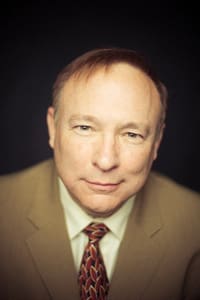
 The grandson of Greek immigrants, Jim Dabakis moved to Utah when he was 17 to attend school at Brigham Young University. After college, Jim worked for 13 years as a Radio and TV talk-show host. He became known as the “Voice of Utah Democrats” as he defended the Party’s values against the continual onslaught of the Ronald Reagan-era Republicans.
Jim also began his own company in the art dealership world, and has worked primarily with Russia for the past 20 years. During that time he also founded the Jim Dabakis Educational Foundation which has helped bright students from all over the world continue their education in the United States. He is also one of the original founders of both Equality Utah and The Utah Pride Center.
Never one to stay uninvolved, before becoming Chair, he had been active in helping many of our Elected Democrats in this state achieve office. This is his Mormon story.
Episode Transcript
Host: John Dehlin · Guest: Jim Dabakis
This transcript is machine-generated and lightly edited for readability. The audio is authoritative. Please excuse occasional errors in names and spelling.
Introduction and Conference Context
John Dehlin [00:00:00] The 2011 circling the wagons conference was a production of Mormon Stories podcast and the Open Stories Foundation. For additional Circling the Wagons audio and video, and for additional content regarding LGBT issues within Mormonism, please check out gaymormonstories.org also please know that the video for this conference is available@YouTube.com mormonstories and and thank you for listening.
Jim Dabakis [00:00:27] Now let us rejoice in the day of salvation. No longer as strangers on earth need we roam.
John Dehlin [00:00:39] Hello and welcome to this Potluck post. Potluck interview. My name is John Dehlin with Mormon Stories Podcast. I'm very honored that you'd all be here today to talk and to meet and to learn about Jim debacis. How many of you know who Jim debacis is? Raise your hand. How many of you have never heard of this guy and wondering why we're interviewing him? Okay, the truth is that most of our listening audience are going to be like the latter of you. I had not heard of Jim debacus until a few months ago when Carolyn Pearson emailed me and said, you need to meet this guy. I don't think he had yet ascended to the chairmanship of the Utah Democratic Party at that time, but since he has, as I understand it, the first openly LGBT chairman of the Utah Democratic Party, or probably of any party in Utah, I don't know how distinguished that is, but it seems really distinguished to me. Also, some of you may know that in Salt Lake City they passed some very pro LGBT or anti discriminatory legislation to support our LGBT citizens in Salt Lake. And that couldn't have been done in Utah without the support of the LDS Church. And there are a group of several men. I've heard it described as the Gang of Five. I don't know what that means or who the other four might be, but Jim was one of those people who, in a very diplomatic and respectful way, engaged in a respectful conversation with the LDS Church leadership and worked to help, which I think is going to bless the lives of many people. So that's why we have Jim debacis here. He also has a Mormon story or a semi Mormon story. We'll find out how Mormon that story is. But Jim debacis, welcome to Mormon Stories podcast.
Jim Dabakis [00:02:24] Pleasure to be here.
Jim Dabakis: Early Life and Mormon Upbringing
John Dehlin [00:02:26] All right, so where were you born?
Jim Dabakis [00:02:29] In Massachusetts.
John Dehlin [00:02:30] All right, what part?
Jim Dabakis [00:02:32] Springfield. It's in the Western part. It's the part that's not Boston. The part nobody's ever been to.
John Dehlin [00:02:39] Okay, what did your parents do for a living?
Jim Dabakis [00:02:41] My dad worked in a factory and my mom took Care of the house. All right, kind of.
John Dehlin [00:02:47] Okay, no digs on moms. They do the best they can. Any siblings?
Jim Dabakis [00:02:54] Three sisters. Okay, some people say four sisters. But.
John Dehlin [00:03:04] Any sort of noteworthy dynamics in your childhood, moments of stress or of joy, of triumph, of pain that you see as kind of defining who you are today?
Jim Dabakis [00:03:16] You know, I think I'm going to answer all the questions yes and no and we can wrap this up. Events in my childhood. Well, my childhood was a little bit grim. Our town was grim. It's one of those eastern kind of factory towns that lost their factories and there was a lot of boarded up places and there weren't very many jobs and my dad was always. He worked at a factory but they were sometimes on strike or they wouldn't have enough stuff. And I remember as a little kid at Christmas time somebody had some, I don't know, some do Gooder had left a big Christmas thing in front of our front door. And rather than being grateful, I was humiliated that people thought we were poor having left that. But there was never enough money. And my mother was. She's passed away but she was sets of mental illness problems and was difficult. She spent seven or eight years locked in her room more or less as I was growing up. So it was a difficult time for us, for me.
John Dehlin [00:04:39] I see that sounds hard since this is a conference about supporting our gay and lesbian brothers and sisters. Do you remember a time in your childhood where you first started thinking you were different? And if so talk about that.
Jim Dabakis [00:04:53] Just about gay stuff.
John Dehlin [00:04:55] Sorry. A little bit.
Jim Dabakis [00:04:59] Actually one of the first things I. Well, a story just flashed in my mind that I won't tell. But when I. But I will tell when I was, when I was. When I was 11 years old, about four or five houses down, the missionaries converted a family. And somehow or another the missionaries were led over to our house. Maybe divine inspiration, maybe not. And they found this 11 year old kid, me. And times were grim, I think for baptisms and so they told me about a basketball team they had and they could see because I had been playing basketball, I wasn't very good and probably couldn't play on any other teams. But I was tall, I was probably, I was taller than all the other 11 year olds. So anyway, they brought me to church. That was my first contact with the LDS church. And I played basketball and I was okay for the ward team, for the branch team it was then. And we would play all the other branches around but they weren't close. I mean we would go New Haven, which was maybe an hour or different places. So every game was an experience. And pretty soon I really got to enjoy playing basketball and I got to play, which was unique for me. And about, oh, six, seven months into this process, the LDS Church had a rule then which was there could only be one non Mormon playing on the basketball court at a time. And so at that time, a guy named Richie Page, who also wasn't a Mormon and who was taller than me and a much better player, started playing. And so I stopped playing. I didn't stop. They wouldn't, you know, I couldn't play. So the coach came over one day, old Brother Healy, and he said, look, you know, there is a way you could play, Jim. So I went home to my mom and I said, mom, I'm going to become a baptism and become a Mormon. And she said, what? And I said, yeah, yeah, it's no big deal. And she said, all right, but don't tell your father and be home by 5. So I remember, and maybe it was the missionaries or the baptism or maybe, I don't know what it was, but in those days the missionaries had these ramblers because I think old Brother Romney was the head of American Motors and they probably got him a good deal, but I don't know that. So these two hunky missionaries put, put me right in the middle as this 11 year old and we drove off to the church to get baptized and I'd only been there to play basketball. And I remember kind of feeling that was kind of nice to be between these two missionaries. And we went, got baptized and got home for dinner and that was kind of the beginning.
John Dehlin [00:08:31] I see. So the Mormon missionaries inspired you in more way than one.
Jim Dabakis [00:08:39] Exactly. You know, I remember their aftershave. Easterners, I don't. At least the Easterners I was around didn't use aftershave. And maybe they were using too much. I don't know what it was. But, you know, I remember sitting in that, sitting there between those missionaries and kind of going and kind of smelling them. Sounds weird, but I remember that I was only 11. Give me a break.
John Dehlin [00:09:06] So up through the time that you went to college, did you at some point start feeling those feelings stronger and at some point recognize that you might have, you know, might be gay?
Jim Dabakis [00:09:19] You know, that branch in Springfield, Massachusetts, kind of took this kid who really was not. I wasn't functioning very well actually. And they kind of grabbed me up and did the best thing that LDS people do in branches and wards and whatever, and they kind of mainstreamed me into their organization. And into their families and into their hearts. I mean, it was. I. Most of the good things that I consider to be good things about my character came from that next 10 years as they picked me up every single Sunday. They picked me up every Tuesday and every practice. I mean, you're 11. You can't exactly drive, you know. And I used to look forward to Tuesday nights when there was mia and it had a dramatic impact on how I grew up and the leadership and a lot of things that happened during that whole period. So the whole. The whole experience I look back on as something very good. I kind of knew, to answer your question more directly, I kind of knew there was something a little weird. But that may not have anything to do with being gay. I mean, people still say that about me. It has nothing to do with that.
John Dehlin [00:10:48] So you had an inkling, but you were really submersed in the culture, and you kind of went with it during those years.
Jim Dabakis [00:10:54] Yeah, I went with it.
John Dehlin [00:10:56] So do you have a soft spot in your heart for your Mormon upbringing?
Jim Dabakis [00:10:59] I do. I mean, I don't know what would have happened to me if they. Those people, those LDS people were. Every summer, our bishop had an apple farm, and it was about 40 or 50 miles away. And from the time I was 15, every summer, Bishop Phelan had the. They had 12 kids, 11 boys. And they would pick me up kind of the first weekend school got out. And I would stay out in this country place, except I didn't like to work hard. It was a problem on a farm. So my first job was picking blueberries. And that didn't go well because I was eating a lot of them. So I managed to weasel my way into the packing house because the work was easier. Unlike all the other people that were up there working, I stayed in the house with a feeling family, but they were just one of. Just many, many, many, many people in the branch that just kind of took care of me.
Testimony, Mission, and BYU Years
John Dehlin [00:12:08] Did you ever feel like you had a traditional LDS testimony of the truthfulness of the church and kind of spiritual manifestations about his truthfulness?
Jim Dabakis [00:12:18] That's a good question. I think less than others, but, you know, I kind of went with it. You know, I didn't have that kind of Saul on the road kind of experience, but I kind of liked it, you know.
John Dehlin [00:12:37] So college. Where'd you go?
Jim Dabakis [00:12:41] You know, Massachusetts. There's not a lot of good schools, so I went to byu.
John Dehlin [00:12:52] How'd that go? Now, what years would have that been?
Jim Dabakis [00:12:57] 1971, I arrived at BYU, so Wilkinson was still there. No, that was Oakes first year I missed Wilkinson. So I do remember this. I remember getting there and I drove a car, this 15 year old Ford Galaxy and drove it across and it barely made it. And I loved college. I enjoyed every minute of it. I enjoyed the friendships. But I can remember thinking, you know, look at this. All of my friends, all of these fantastic people that I know, they're slowly getting paired up and what's going to happen to me? I'm going to be the only one left here. So that kind of, that was a little bit grim.
John Dehlin [00:13:45] Did you serve a mission?
Jim Dabakis [00:13:46] Yes. In between that, Yeah, I went to school for a year and then my patriarchal blessing said that I would be called to serve among my people. So being Greek, they sent me to San Francisco, actually fulfilling the prophecy in the patriarchal blessing.
John Dehlin [00:14:18] So did you happen to find a Greek population? Oh no, no, no, no.
Jim Dabakis [00:14:26] Well, we eat in a Greek restaurant occasionally. But I do remember, I do remember saying to our mission president, we were in an elevator one time and I enjoy being a wise ass, you know, at least occasionally. And our mission president was not exactly. He was a great, I mean I really liked him but he not much of a sense of humor. So we got in this elevator in San Francisco and I said I was a district leader or something and he said, well Elder, how's it going? And I said president, we've had a lot of problems. There's a lot of sexual immorality, there's homosexuals everywhere. There's, there's non believers. And he pulled his glasses off and I said, and President, that's just among the missionaries. Not a crack, nothing. Just put his glasses back on and we walked out like nothing had happened. But it was fun to go there. I mean I was tracking in Berkeley in the early 70s and in San Francisco at Ashbury and you know, those are fun times. It was a great time.
John Dehlin [00:15:41] So you enjoyed your mission overall?
Jim Dabakis [00:15:42] I loved every minute of it. I didn't like the tracting thing. It just seemed to me to be not very cost effective. So I tried to come up with options. So I remember we would come up, we would try to come up with different ways to not do what we were supposed to do, but still not necessarily cheat with what we were saying. So you were supposed to contact X number of people or do things. So I remember going into the Safeways in San Francisco and going to the meat department with my companion and we would hold up a piece of beef and wait for just the right housewife to come along and Say, ma', am, how would you exactly cook this? And, you know, just trying not to knock on doors, which seemed useless. I enjoyed it. And then they brought me to the mission home. They were desperate. They didn't know what to do with me. So the president said, okay, I want. This is the new president. I want you to be an assistant. But I realize that we'll have Elder Nelson do the praying. You can be in charge of other things. What did that mean?
John Dehlin [00:16:58] It meant you gave irreverent prayers.
Jim Dabakis [00:17:01] So one of my first tasks was, again, it seemed to me that we ought to be doing things that were more effective. And I liked. I got bored easy. So there was a guy named Jeff Mullins. Any NBA fans here? Jeff Mullins was a basketball player for the warriors, which is the team in San Francisco that's actually in Oakland. So we, one way or another, by hook or by crook. I ended up at his house, and he invited us in. And so they were never going to join the church. But I liked going over and visiting, and it was fun. So we didn't. I went to the mission president and to the stake presidents, and we came up with this idea to have a special presentation at halftime at one of the Golden State warriors games. And they were very pleased with that because 3,000 Mormons would be coming to a game and paying for the tickets. So the basketball team was excited about it. And so I worked for a month getting everything ready, getting the word out, getting the tickets, tickets sold, working with management. Plus, I didn't have to track. I could go down there and watch the basketball practice and go in the locker room and strictly for professional reasons. So as all that happened, finally the night arrived, and what we were going to do is give away something kind of new then, a family home evening manual, which seems like a good idea now, but looking back on it, I should have looked through the program a little better because, well, here's what happened. It's half time, and the PA guy came down, and the person right before me was a guy. It was an appliance store. And so back in those days, you had tickets with a little number on it. And so the way they would decide a winner is they would read off the ticket number and. And then that person, they put a spotlight on, and that person would run down and get this. So if you can imagine this, ladies and gentlemen, we're now going to give away a new washer and dryer. And so they read that, and the spotlight found the person. They came running down and got their washer and dryer. And then it was a Volkswagen car they gave away. Well, then my mission president read off the number while I was standing there, and this black woman from the very top won, and she went crazy. And the spotlight went on her and followed her as she. She was a bit overweight. As she ran all the way down, she got to the floor and the stake president handed her this family home evening manual. She said, what's this shit? I don't want this shit. And the guy was going, kill the mic. Kill the mic. So from there, I got transferred to Los Banos, which is to the far southern part of the mission.
John Dehlin [00:20:28] So some fun mission experiences. Did you convert anybody on your mission? Have any success?
Jim Dabakis [00:20:35] Yes, I did. And I. I've gone back and seen some of the people, and they seem to be doing fine.
John Dehlin [00:20:44] So what'd you study at byu?
Jim Dabakis [00:20:45] Communications.
John Dehlin [00:20:47] All right. Did you date at BYU at all?
Jim Dabakis [00:20:50] Boys or girls?
John Dehlin [00:20:54] This was the time where reparative therapy was happening.
Jim Dabakis [00:20:57] They tried to get me to go to that, and I told them they were full.
John Dehlin [00:21:00] So you were there. Were they marketing it? Were they. How would you have heard about it?
Jim Dabakis [00:21:04] Well, because there was a. I was pretty. I didn't even know there were. I probably would have gone, but I didn't know where there were any gay people. I just kind of. There was no Google Apps, you know, So I didn't know what to do. But I did go as soon as I got there in 1971. So that would have been in August. And in September, I drove. I borrowed a friend's car, drove up to Salt Lake, marched in the South Temple to the big church office building. And I said, I need to talk to somebody about a problem. And the wise woman there, who's a receptionist, said, is this with a girl or a boy? Which is kind of. Which may say something that they were having a lot of people.
John Dehlin [00:21:55] There was the 70s.
Jim Dabakis [00:21:56] Yeah, it was the 70s. And so I said, it's a boy. And she said, okay. And then they brought me up to Elder Mark peterson of the 12 right there and then. And I went into his office, and I remember he had on his wall, Whoa, you better edit that out, bro. He had one of those Book of Mormon paintings that are actually illustrated in the Book of Mormon, you know, not handcuffs. And so he talked to me for a couple of minutes, and he was sympathetic, and then he said, okay, I'm going to give you a blessing. You're going to go to BYU and you're going to do fine, and you're never going to have any problems. And you never. You're cured and you're forgiven, and you don't have to bring this up again. So if you're bishop or anybody asks you, you don't have to bring it up. And if anybody asks you and pushes you or do anything, you tell them to come see me. And I thought, well, that's good. And then he gave me a blessing and I was cured. And it's not much of a story.
John Dehlin [00:23:11] Gotcha. So you were fixed. Did you date women at all at byu?
Jim Dabakis [00:23:17] I did, and it was very uncomfortable. You know, women are fine, but women at BYU are looking for a husband, and I was looking to escape. I was looking for a husband, too.
John Dehlin [00:23:33] So at that point, you knew you were gay? Was there even a word for that? I mean, was that something.
Jim Dabakis [00:23:38] It's not that long ago. Yeah, I knew I was gay and. And this sounds a little weird now that I think back on it, but I had a wonderful roommate there and. Well, I'm not going to tell that story. No, that's it. Sorry.
John Dehlin [00:23:59] Okay, so I'll ask again. You knew you were gay?
Jim Dabakis [00:24:01] Yep.
John Dehlin [00:24:03] All right. So did some type of dilemma start happening where you had your beliefs and you had the pressures and you had what you knew you felt inside?
Jim Dabakis [00:24:16] You know, I didn't face a lot of that. I did go see a counselor about the gay stuff, but I don't know how this happened. He was working on his clinical. He was going to be a clinical psychologist, and he was working on his PhD, and he was Jewish from the East. And how he got into byu, I don't know. And how I got the luck of the draw to get him instead of where else they could have sent me. And I remember him just saying, don't worry about this. His name was Joel. He said, don't worry about this. He said, you're fine. You're a good kid. You're going to get through this. And, you know, we met two or three times, and that seemed to, you know, that seemed to be fine with me. After I got back from my mission, I moved in with the Phelan family right after I decided to leave byu. And this was my old bishop in Pleasant Grove. And I remember thinking, okay. And that was just for a couple of weeks. It was a transition time, and I had gotten an apartment in Salt Lake. And I remember going to a sacrament meeting and looking around and thinking, well, this is it. Kind of. This is going to be my. I remember the first meeting I went to, and this will be my last one. And, you know, it's kind of nice, and I'm enjoying singing. So it wasn't this kind of emotional horror that I know a lot of people have. I mean, it was just like, okay, this has been the phase, and now it's time for a new phase. I'm going to move to Salt Lake and I'm going to. This is the end of the Mormon story. Because that kills the interview kind of.
John Dehlin [00:26:02] Oh, okay. No. Mormonism is harder to shake than that. So what age was that?
Jim Dabakis [00:26:13] It was 23.
John Dehlin [00:26:15] So at 23, you said, I'm going to make a clean break from the church.
Jim Dabakis [00:26:18] Yeah. And it wasn't gradual. It wasn't, okay, I'm not going to go. I mean, it was, you know, going every week, doing everything, paying the tithing, too. Okay, that's it. It's over. Goodbye.
John Dehlin [00:26:28] What about your beliefs?
Jim Dabakis [00:26:30] I guess I'm schizophrenic. I just. I remember about that time I had read two things. Cleon Skousen had been a professor of mine, and he was a charismatic. I mean, he's by far the most entertaining, unforgettable professor I had at byu, and he was a little bit goofy, but very interesting. And he had started a thing called the Freeman Institute at byu, which was the beginning kind of of Glenn Beckism and this kind of conspiracies, and the world is being taken over, and it ties into a lot of somewhat obscure political thoughts. So that was one. On one hand, I had been studying Skousen. On the other hand, I had gotten a hold of Fawn Brody's book called no Man Knows My History. And I had decided, putting all this gay stuff aside, it would just be interesting to intellectually decide if this is really right or not. And I think Brody's book had a big impact on me, so I was able to kind of make that transition relatively seamless.
John Dehlin [00:27:48] So maybe you severed your. Your faith ties before you actually severed participation.
Jim Dabakis [00:27:54] Yeah, I would say probably pretty close.
Career in Radio and Coming Out in Utah
John Dehlin [00:27:59] Okay, so what was your career? Just in general, we won't go deep into it, but prior to getting into politics, kind of. What was your career?
Jim Dabakis [00:28:08] Well, I had decided that really there was only one. I didn't like work. I've never really been able to kind of go out there and do stuff for eight hours and, you know, it just didn't work well for me. So what I really wanted to do is be a talk show host. And this was before talk radio was kind of big. There was only one talk station in Utah, and it turned off at sunset. So But I had listened to that station, and I decided that that was what I was qualified to do, and that's what I wanted to do. So I went up to Salt Lake and talked to the guy who owned the station and said, I would like to work for you. And he said, okay, kid, fill out the paper. I filled out the paper, and then he opened this file and he put my application in the middle of it. And if I would have given him $1,000, he couldn't have picked that application back out. So I figured, well, chances of him calling me back are not good. So I didn't have anything to do anyway, so I went back the next day and I said. Got past the receptionist and I said, so Mr. Bush, could I. You know. He said, no, I'll call you. So I went back the third day and the fourth day, and by the fifth or sixth day, they wouldn't. They. Well, they wouldn't let me in the building. So I waited outside and figured out that this was Mr. Bush's Audi. And I waited for him to go to lunch. And I said, Mr. Bush, look, I'll work for free. I'll work on an internship. And he said, what the hell's an internship? And I said, I'll work for free. And he said, well. So there had been a woman named Laura Ferguson who had been on the air. It was the early, early days of talk radio. It wasn't sophisticated the way it is now. So this woman was at Ditzer, but a lovable ditz, and men would kind of flirt with her. So this guy had been calling up. She would say there was no producers. She would answer it live. So Laura would go, okay, let's go to line one. And this guy would go. And then laugh. And then she would go back. And he kept calling again and again and again. So Starley said, okay, you come in, you answer the phone, and when there's a real human being, then you tell Lauren. So that was my first job in radio. So he said, get there at 11. But I had nothing to do. So I got there at six in the morning and I stayed till they closed the station. And about four years later, I owned. I was partners with him, and we did well.
John Dehlin [00:30:53] And so you started your own radio show.
Jim Dabakis [00:30:56] So after nine months of working for free, I got a show.
John Dehlin [00:31:02] And so that show dealt with what?
Jim Dabakis [00:31:04] It dealt with gay Mormons? No, it didn't. This was the 70s. So I would usually interview somebody the first hour. Politician or historian or. That's where I first got to know Michael Quinn and Trevor Southey and I would just do an interview. Usually if they were good, I'd keep them over a little. If they weren't good, I would dump them. And I would usually tell them that in the beginning, if you're no good, you'll be gone in 10 minutes. So then after that, it was just me and the audience for three hours. And it was very enjoyable.
John Dehlin [00:31:42] People calling in.
Jim Dabakis [00:31:43] People called in? Yeah.
John Dehlin [00:31:44] You just talked to them. And did that turn into a TV show then?
Jim Dabakis [00:31:48] Yes, on Channel 4. I had a show no one watched. What year was the TV on Sunday morning? It was for four years. It ended in 1988.
John Dehlin [00:31:59] Okay, and what was that about?
Jim Dabakis [00:32:00] That was the same thing, just the two of us talking. So I'd have Larry Miller or Governor Banger or the inventor of a Yo yo or, you know, whatever was coming to town.
John Dehlin [00:32:12] So were you kind of becoming a bit of a celebrity?
Jim Dabakis [00:32:15] Very little.
John Dehlin [00:32:16] Are you being modest? I mean, seriously, did people know you in town?
Jim Dabakis [00:32:19] Not very many, really.
John Dehlin [00:32:21] Was it like a VHF, UHF, whatever?
Jim Dabakis [00:32:24] No, Channel 4. It's that ABC affiliate.
John Dehlin [00:32:26] Okay, so it was a mainstream channel.
Jim Dabakis [00:32:27] Yeah.
John Dehlin [00:32:28] Was it just on a funky hour?
Jim Dabakis [00:32:32] Three in the morning is not funky. No, I was like at 9 o' clock Sunday morning. So it was one of those Sunday morning shows. But we really were. We were breaking through. I had the first that I know of panel of drag queens on. We handled the AIDS situation. I remember being furious when Tim Hoover, my friend, was dying of AIDS and there was not a doctor. Can you imagine this? In our lifetime? Doctors would refuse to see him until we came to Dr. Rees, who would see him. They wouldn't even let people with HIV in the early days into their offices. And I had the heads of the medical association on. And so it was a good platform. And I wasn't shy about getting. Getting involved with gay issues then, even then.
John Dehlin [00:33:37] So was there gay underground or was there a community of people that were trying to support each other and help each other behind the scenes?
Jim Dabakis [00:33:47] There was a wonderful group called Affirmation, which started in the. So my social life at this time consisted of the MIA of Tuesday night of my youth had been replaced by. We started a group at the University of Utah, which met every Monday night. And then afterwards we'd had speakers and there would be maybe 10 or 15 or 20 of us. And then we would go to the Village Inn down on Fort south afterwards. And that became a core where I met a lot of. A lot of wonderful people that continue to be my friends now. We also had a group. We were involved with a guy in Los Angeles called Paul Mortensen in starting a chapter of Affirmation in Salt Lake. But we saw affirmation differently than they did at the other chapters. At the first National Conference of Affirmation, there was four or five of us that drove down to la and I think we all stayed in Paul's apartment. And the other chapters were insistent on having a prayer to begin our meetings. And the Salt Lake group, we were outraged. We saw it as a social outlet. They saw it as a kind of religious substitute for what they were doing. So there was tension back then, but we would have 100 or 150 people on Thursday nights in this mostly social group that really some of my closest friends to this day are from that association. We also had a group called the First Sunday where we would have but that was much more LDS oriented, where we would have speakers that talked about LDS thing. I remember had a guy named Mark Hoffman come and talk about all of these manuscripts that were being discovered. And we got a big crowd there and there was a lot of activity. You know, we were kids kind of, and we were on the emerging front of this whole the whole world was changing and it was we didn't quite realize that, but, but it was very exciting.
John Dehlin [00:36:08] Mr. When did you first come out?
Jim Dabakis [00:36:11] I think I came out, I was 23 and I is that old still in the 70s? Yeah.
John Dehlin [00:36:20] So right when you left BYU, basically, yeah.
Jim Dabakis [00:36:22] The next weekend I was out.
John Dehlin [00:36:24] So you were an out gay male in Salt Lake City, apostate male in the 70s?
Jim Dabakis [00:36:31] Boy, Yeah. Well, I don't know if I ever became an apostate, but I remember I went to the there was a bar called the Radio City, and I had heard that that was a gay bar. And I went there and I went inside. It was on State street and I went inside and it was pretty grim. I was the only person under 70 there or maybe it just appeared that way, you know, now I probably feel comfortable there.
John Dehlin [00:37:03] But how'd you get radio and TV jobs as an out gay male in Utah in the 70s and early 80s?
Jim Dabakis [00:37:12] Well, it wasn't that I was out. I wasn't in I mean, I, you know, I was just wasn't discussed. It wasn't discussed. Nobody talked about it. Nobody knew about it. Nobody spoke about it. Even people that knew didn't talk about it.
John Dehlin [00:37:24] So you weren't hiding it, but you also weren't talking about it.
Jim Dabakis [00:37:26] Right? Right.
John Dehlin [00:37:27] Okay. When did you first start talking about it?
Jim Dabakis [00:37:29] Well, that happened so I bought into the radio stations and then we sold the radio stations. And then I went to Russia and lived there and started some businesses. And then when I came back from Russia, Tom Barberry, who was a morning guy on the radio here, would call me in to fill in when he was gone. So I was filling in with a good friend of mine, John Prince, who had. Who's a very straight guy who had. We'd worked together at KTalk, so really the leading morning talk show personality would go away on vacation and both of us would go fill in for him. So one day we were filling in and this woman called and said, hi, my name is Gail Ruzzika. And I said, oh, Gail, hi, how are you? She said, well, don't you think you have an obligation to tell all the audience that you're gay, Gay, gay. So poor John Prince, he went, oh, brother. He said he could see where I was going. And I think he wanted me to say, no, you're not, I'm not gay. But I said, gail, Gail, Gail, I know you're worried about this, but I've seen your husband and don't worry, he's safe. So let's go to the next caller and then Clear Channel, being the epitome of strength and valor and courage, never invited John or I back to co host again.
John Dehlin [00:39:06] What year was this?
Jim Dabakis [00:39:07] So this would have been in about 93 or 4. So then John says that he feels like he was discriminated against for being not gay because he was with a gay community.
John Dehlin [00:39:21] Guilt by association. So was that devastating for you? Was it a relief for you? What was, was a non event.
Jim Dabakis [00:39:30] It was, you know, it wasn't. It was fun because I was just filling in, you know, so it might have been three or four times a year for two or three days or whatever. So it was. It wasn't as though I had lost my job and lost my dignity and self respect. It was, oh, well, you know, too bad. And some other radio stations asked me afterwards anyway, so I still had somewhat of a voice, but it felt bad,
John Dehlin [00:39:57] sure, but were you ashamed? Were you embarrassed? Was it a weight off your shoulders? Did words start spreading and gossip and rumor mongering?
Jim Dabakis [00:40:08] Oh, there was probably a little rumor mongering, but you know, I didn't really have family here. There was nobody, almost everybody that really knew me by then knew I was gay. It wasn't. There was no breakthrough of shame.
John Dehlin [00:40:21] Got it, got it. So before we move into your life as a politician, can you just talk briefly about what tragedy or pain or Suffering you saw amongst your gay friends and associates in Utah during those 70s, 80s and early 90s, and if any of that motivated your desires to be a politician.
Jim Dabakis [00:40:47] There was a young man when I was on the radio, so the mid-70s, probably 76, 77, who was a BYU student. And he had been, somehow or another, got in a car with a BYU undercover guy and they went up Provo Canyon. And apparently at some time going up the canyon and they had met and I don't. I can't remember the circumstances of how or where or whatever, but anyway, they got into this car and this young man had reached over and touched the knee of this undercover police officer. So that undercover police officer grabbed the kid, brought him to the BYU security, they arrested him, they booked him in the county jail, and he was charged with forcible sexual assault. And he was tried and convicted and went to jail to the point of the mountain. And I remember being furious beyond words. And I took off on the radio every day about how is it that a private university had a public police that could be off campus and could be arresting people and blah, blah, blah, blah, blah, blah, blah. So we went through all of that. And we were an NBC affiliate at that time. The radio station was. That is, we took the news from NBC. So using that, using that as a pretext, I called Dean Cameron, who was the dean of students, and said that I was working on a story for 60 Minutes and I would be down to talk with them, realizing that public relations is important to byu. So I arrived down there, met with the dean of students and told him that we were looking into a story about abuses in the BYU security. And I wanted to talk specifically about this case and know if there were any other ones. Luckily, he didn't listen to talk radio. It had an effect.
John Dehlin [00:43:17] Were you fibbing?
Jim Dabakis [00:43:18] Well, everything I said was true, but it was in a very contorted way, the truth. I was working on a story for you, but they didn't know that I was working on a story for them. And, you know, so. So we did have an effect on policy at that time in the 60s, but. And I was there. I've heard people tell the story, but it's absolutely true. Tim Hoover, who is my great friend, was going to byu. I had left byu, but I saw him standing outside the sun, which was the big nightclub to go to, and they played disco music and it was cool. In the mid-70s. Tim had a hooded sweatshirt on as I was walking in. He had been a roommate of mine, a gay guy had Been my roommate at byu. I didn't know. So I saw Tim standing out there in the hooded thing, and I went over to him and I said, tim? He said, oh, yeah? I said, what are you doing here? And he said, well, what are you doing here? I said, look, I'm working for BYU Security. I have to turn you in. Tim said, no, you can't. I said, tim, it's my job. So it was, of course, not true on my part at that moment, but we knew they were doing sweeps of the parking lots and they were writing down license plate numbers. And that continued beyond the Wilkinson time into the Oaks time, and then running it through to see which BYU students would be called in. So when I was at byu, I missed all the underground fun stuff. I don't know how. I just was oblivious toward it, and I would have liked it if I would have found it, but I just never was clever enough to figure out what was going on. I guess probably I looked too macho. So nobody. Yeah, no, not that. But there was a lot of pain. There was a lot of hurt. And where I saw most of it was in these groups that were in their infancy in Salt Lake at that time with affirmation and at the university and First Sunday and in those groups. And there were suicides. There were bad things.
Entry into Politics and the Democratic Party
John Dehlin [00:45:42] I guess this is the last question I'll ask. You would think that in Utah, being gay, being somewhat, maybe of a bit of a social activist stirring up a little bit of trouble, that you would have been targeted, that the powerful forces that be would have tried to kind of take you out or marginalize you or. And it sounds like you were like Teflon.
Jim Dabakis [00:46:08] I think a couple things. First of all, I was such a small fly that nobody cared. And second, I am not even now the legislature is furious with me and Speaker Lockhart and the rest. But I have, I hope, I think, an ability to say what I want without usually in a way that makes people laugh and isn't threatening. It isn't all of that serious. So people are able to accept that more than if you just kind of directly go after and go after people. So I think that's been an asset to me, and I think it was on the radio and I think it was on television that people, you know, they kind of put up with me.
John Dehlin [00:46:54] Is that a skill you developed or is that just how you came and your personality?
Jim Dabakis [00:46:58] No, I studied joke books.
John Dehlin [00:47:02] Seriously?
Jim Dabakis [00:47:03] No, no, no. I don't know.
John Dehlin [00:47:06] That was a joke.
Jim Dabakis [00:47:07] Yeah, that was a joke. Sorry.
John Dehlin [00:47:10] That was a meta. Joke.
Jim Dabakis [00:47:11] I'm sorry. No. Maybe it was a way, you know, I had a grim childhood. Maybe it was just a way to. You know, I remember staying over at my friend's house sometimes, and their mothers would come up four times and shake them and say, time to get up. And breakfast is waiting, and everything is, you know, be sure and you got your money for lunch. And, you know, I mean, it wasn't anything like that in my house. And I think in a way, mothers let your kids make their own damn breakfast, and I think they come out better for it. So I think maybe the personality kind of comes out of a combination of all these things. So maybe it's my parents. I can.
John Dehlin [00:47:53] All right, so this is going to do a great injustice to what I'm sure is a distinguished political career. Just give 30 seconds about what your ascension was to your current position. Did you start, you know, local stuff, state legislature?
Jim Dabakis [00:48:12] No, no. I. I have a lot to say, as you can tell. And I'm off the radio and my friends don't want to hear about it. And I was at a stoplight listening to the radio, and a car pulled up right next to me. And I was angry about whatever they were saying on the radio. So I motioned for the guy next to me to roll down his window, which he did, thinking I was going to ask directions. And I said, can you believe what that governor is doing over education funding? The guy looked at me and just sped off, you know, without even answering or anything. So I have a lot of opinions. I have a lot to say, a lot to contribute, nobody actually to listen. And I thought, what better place for a person who's got a lot to say and not a lot of ideas than politics? And so that kind of motivated me that I'm getting old. It's time to kind of decide something. And I couldn't really get elected to anything that I thought. So I thought, what about state party chair? Nobody really wants to do that. And so I went around to all 29 counties, and they were to all the county conventions. I got in a little town in Iron county, and a guy came up to me. By then it was when I announced it was the gay guy is running as the state party chair. You know, so got down there to this little town in Iron county, And there was nine or 10 Democrats. And this guy came up to me and said afterwards, he'd quiet, said, I'm gay. I said, oh, yeah? He said, yeah, but I don't dare tell anybody down here I'm gay. And I said, well, no, I can understand that. He said. Said, yeah, if I tell them I'm gay, they're going to know I'm a Democrat. So I knew we were in. The pecking order was all wrong there. So I have. Did go around. Went around all the counties and.
John Dehlin [00:50:25] Okay, wait, so you never had a political career before? No. Seriously? Are you kidding me?
Jim Dabakis [00:50:31] Are you trying to hurt me? What are you going back?
John Dehlin [00:50:34] All right, well, then I'm just gonna jump into it then. What does that say about the state of the Democratic Party in Utah?
Jim Dabakis [00:50:41] Sorry, let's get back to Peterson's handcuffs.
John Dehlin [00:50:48] No, no. Okay, I'm gonna retract that question, but I'm gonna say this. How is it not a fool's errand to be a Democrat in Utah? We know the deck is stacked, except in Salt Lake City. We know how the elections are going to go. Why go through the trouble of running candidates that are going to lose by a 60% margin?
Jim Dabakis [00:51:12] I don't believe that. I think your premise is just dead wrong. I think that the Democrats are due for. For a huge resurgence here. I think the wackies have taken over the Republican Party. They've gone so far, can you imagine saying Bob Bennett is too liberal? And I really believe. I mean, as I go around the state, it's a lot of Republicans that are whispering to me, save us. These people are crazy. And they've taken over their party. So I really believe we have a historic moment, an opportunity even in Utah county to go down and shake some things up. And I. The premise of what I'm trying to do is attract LDS people. 71.3% of Utah's population, according to the 2010 census, is LDS. 71%. 9% of active LDS people say they're Democrats, self identified. It means we're going to lose elections as Democrats again and again and again until we reach out to LDS people. And I said at the convention before they elected me, here's one queer that is going to say to LDS people, we want you. We need you. We want your spirit. In our party, we've got a big tent of diversity, which is what Democrats pride themselves on. And we're diverse. We have room for everybody except in Utah for LDS people, which is crazy on a lot of levels. So we've started an LDS caucus. To the horror of some, we are recruiting LDS candidates. We are. We're going to. Within our Democratic beliefs and values. We're going to get LDS people involved. And the truth is, aside from the rhetoric, LDS values are a lot closer to Democrats than they are those blood sucking Republican banker kind of people. And not that I'm outspoken on it,
John Dehlin [00:53:21] so you've started to touch on it, but give a one minute appeal to a believing Latter Day Saint about what the main values are that the Democratic Party represents that resonates or harmonizes with traditional LDS beliefs. What are they?
Jim Dabakis [00:53:38] They are hardworking, common sense kind of answers. You know, Republicans are just full with his Glenn Beck crazy loony theories, things that are ideological. And I think the LDS Church has been harmed in the United States of America by the belief that it has been captured by this political wacky ideology of the far right that makes even mainstream Republicans uncomfortable. So if you want to help your church, you should renounce this. You know, when somebody in an investigator or a new LDS member arrives their first Sunday in Oregon or in Florida or in Massachusetts and they accept Joseph Smith and they accept the first vision and they accept tithing and they accept the fact they can't just come to church, they got to have a job now in too many wards. They also get this whole kind of groupthink that is right wing political thing and they don't feel comfortable in that atmosphere and the church loses them. And I think the church recognizes that. And that's one of the reasons why they are trying to work to get more Democrats, although they're not doing it directly, indirectly.
John Dehlin [00:55:10] So let's transition to what it would be like to work. What was that? Bravo, Bravo. Sweet clap for. So let's go to what it would be like to work with the LDS Church to try and advocate for some pro LGBT legislation. Whatever history or interesting stories or tactics you want to talk about, to talk about how that in the world would ever be possible.
Working with the LDS Church on LGBT Legislation
Jim Dabakis [00:55:41] Fifteen years ago, after some very grim personal experiences, I went to Michelle Turpin, who was my friend and a lawyer. I said, michelle, I would like to give some money to help a gay cause in Utah. So will you kind of look around? And so she looked around and I had said, what about the gay and lesbian center? And she. It was in effect kind of non functioning. They were over on Third west and their executive director had left and there was a large tax bill and they were about to lose their lease and it wasn't working. So Michelle, mostly Michelle, organized a bus tour where we invited a lot of LGBT people with money and we took a bus tour among four or five horrible sites and said, we're going to start a new center and we need money from you guys. And we brought them to all these horrible places. And then we brought them to the one that was expensive, which is where the Pride center is now. We said, nobody can leave the bus till we have enough money to start this thing. And a lot of wonderful people put the money down. And we also had some alcohol on the bus, which may have had something to do with it. So we started that Pride Center. And as soon as we did, I was the chair and I wrote a letter to the LDS Church. And I said, you know, we're all here, it's a wonderful time, it's a beautiful city. Why don't we get together and find some commonality? And a letter came rolling back about a week later that said, we have nothing to talk to the so called gays about. So and I kept that letter.
John Dehlin [00:57:41] 95.95ish.
Jim Dabakis [00:57:42] Yeah. And we get that letter. And I have presented that in the face of my good friends now and said, you signed this. Okay, so we did that letter. So then, let's see, about 2001. And the pride center flourished as soon as I left, it flourished, which is a pattern of things after Democrats in 2015. Yeah, they are. Put your money there. Exactly. So the Pride center did really well. And I was asked, I was asked by our incoming mayor, Rocky Anderson, who had been my lawyer, if I would be on a small business committee. And he said, I said, rocky, I don't do well on committees. I don't want to do this. And he said, jim, I'm not asking you as your lawyer, I'm asking you as the mayor. I said, rocky, all right, I'll be on the small business committee. So it needed a city council approval. And there was, there's a process where the city council approves this. And there was like 50 of these. It's very kind of. It just happens automatically. I mean, it's a volunteer thing. They're just happy to have bodies and everything filled. So to make a long story short, there was a one city councilman who will remain nameless, Dave Bueller. And Dave decided that a guy like me should not be representing the city, because by then I was kind of out and had done the Pride Center. So Rocky, who was young and naive, said, look, Councilman Bueller, once he knows you, he's going to say, fine, and it'll all be approved and it won't be any problem at all. So Rocky invited both Mayor Anderson invited me and Councilman Bueller into his office. And Bueller stood there and said, we cannot have somebody like him representing the city. And I said, rocky, he's right. I Don't want to be on this committee. The city should not have somebody like me representing. Rocky got furious. His face like a cartoon character, just got redder and redder. And I thought he was going to pop off. And he said, you will, sir. So I said, okay, Rocky, we'll go. And Bueller stormed out, and I stormed out and that was the end of it. And I called Rocky and I said, look, this is not a Supreme Court seat. I don't want to do this anyway. So I didn't do it. But then I drove around and it started to make me angry. And I thought, you know, this was an insult to me, but to everybody who's lgbt, that just is wrong. And so we sat down and started Equality Utah with four or five wonderful
John Dehlin [01:00:26] people at that same Village Inn.
Jim Dabakis [01:00:29] Exactly. So I wrote another letter to the church. So this would have been four or five years after the first one. It took nine months for the letter to come back this time. So they were thinking, they thought about it. Yeah. And I had asked the same thing. And this time the letter came back and it said, we see no reason to meet with the so called homosexuals. Thank you. And that was the end of it.
John Dehlin [01:00:50] Same letter.
Jim Dabakis [01:00:51] Basically the same letter. So now we've got to zoom ahead from then, which is 10 years ago, to the weekend after the first kiss in which Troy organized back there.
John Dehlin [01:01:07] What year was that? This is right after Prop 8.
Jim Dabakis [01:01:10] So 2008. So 2009.
John Dehlin [01:01:12] 2008. 2009. Okay.
Jim Dabakis [01:01:15] So I was just driving along.
John Dehlin [01:01:18] Not a politician.
Jim Dabakis [01:01:19] No, no, I'm just a normal guy. Guy with opinions. So I was driving along, the phone rang. They said, hi, we would like to meet. I said, who is this? I said, well, this is the Church of Jesus Christ of Latter Day Saints. And I said, come on, you know. So we got in. Well, where should we meet? You know, should we meet at the Joseph Smith building? Should we meet at the gay and lesbian coffee shop? Oh, no, that wouldn't be good on a lot of grounds, you know. So finally, I happen to be going to my good friends Sam and Diane Stewart, who have a lovely home on the Avenues. They are very lds, but very, very close friends of Steven and mine. And we happened to be going there and it was a party, and I grabbed Diane, pulled her in the bathroom and said, diane, could I meet the church here? And just then somebody walked in the bathroom and went, oh, like that. So Diane said, yes, the Stewarts. And I said to the church, look, I'm uncomfortable. I'm not anybody now. I'm not on the board of the Center. I'm not on the board with Equality, but I know those people, so I can arrange things.
John Dehlin [01:02:54] Why did they contact you?
Jim Dabakis [01:02:56] I think it was from the letter. That's what I said to them. So is this from the letter 12 years ago or from the letter six years ago? No laughter, no nothing. It was actually Dita Seed, the city council person, who had given them my name. I found out subsequently. So I arranged for the head of the Pride center, the head of Equality, John Jepson, because he's a great guy and he looks just like a missionary. And he'd been a counselor and a bishopric and he was also a homosexual. And. And Stephanie Pappas, who was the chair. So the five of us met. It was very hot. So as we were pulling in there to this. It's a beautiful house. I mean, it's a gorgeous house. Sam and Diane, I mean, they have a Georgia o' Keeffe there that costs more than my net worth. I mean, it's a beautiful house. And I'm only saying that because it's important to what happens next. So we got there, it was 180 degrees. And as we were going in, I decided, I'm going to look the pond. Because President McKay said, Whate' er thou art, act well thy part. And I thought, you know, I'm meeting with the church guys. Yeah. So I put on a white shirt, I had a suit on, and the church guys pulled up at the same time and they were all dressed like that. And I said to you guys, look, if you take the coat off, I will. And there was our first agreement. We all took our coats off, left them in the car, we went into Diane's house. They didn't know me, I didn't know them. Everybody was kind of sitting around. And so you got to imagine this incredibly elegant, beautiful home and this beautiful living room. And I said to them, trying to break the atmosphere, look, I hope it's okay. But I told Brother and Sister Stuart that if they let us use their house for our first historic meeting, that you would lower their tithing to 6%. Wow, you would have thought I would have said something bad about the Book of Mormon. I mean, these guys just went kind of white. And I said, no, no, just kidding, just kidding. Oh, all right. So we sat down and we started to talk. And what had been originally going to be a 45 minute meeting turned into two hours. And at the end we said, well, should we meet again? And they said, yes. And I thought you know, a month or two. And they said, no, next week. And so it began a long, wonderful, life changing series of meetings that have, I think, had a tremendous effect they have personally on me personally, but I think they have on the lives of the LDS people that we have met with.
John Dehlin [01:05:49] So if there was someone now who had some occasion to have audience with church leadership today, what types of advice or recommendations would you make in having that be a constructive and potentially a productive set of conversations?
Jim Dabakis [01:06:08] Well, what. One of the byproducts, I think, of our discussions was the Salt Lake City ordinance. The ordinance would have passed anyway, but we said to the church, and they recognized this, that it's hard for the church just to come out with a statement about LGBT issues. You know, there needs to kind of be some kind of. And with Salt Lake City having this ordinance come up, it would be natural that the church would therefore make some kind of a statement. So it was a natural flow. And what the statement would be was what was interesting. But, you know, I think the message ought to be, look at the good, look at the change, look at what's happening, look over the last 20 or 30 years, and you'll see tremendous change. Look at the evolution of the life of a BYU student from. You even think you're homosexual. And you are not only thrown out of school, your credit's destroyed. We'll call your parents and your bishop and do all we can to destroy your life, and we may try to arrest you. Under the Wilkinson era, I mean, it was grim. It was J. Edgar Hoover, it was listening devices. It was awful to. Now where. I went down recently to talk to the editorial board at the Daily Universe on something and enjoyed lunch at the Wilkinson Center. And there must have been 10. I was with a gay student, and there must have been 10 or 12 gay students who came over and talked and kind of hugged each other in a very LGBT way. And nobody seemed to take particular notice or the students didn't seem to be threatened. Is there a way to go? Of course. But you. You have to measure these things in decades. You have to look at the long picture and the arc of history, as Martin Luther King said, is slow, but it favors justice. And the church is a big organization. There's a lot of personalities. Everything has to be done with unanimity, which means the speed of what goes on goes on to a certain extent at the rate of the most conservative person in the decision making process. So on that kind of scale, I think what's happened over the last two or three years in particular, has been phenomenal, and I'm tremendously optimistic.
John Dehlin [01:09:07] Was there a cynical part of you that said that the church was trying to save face from Prop 8 and a lot of PR does disasters, and this was just. You're kind of helping them to kind of regain some cred that they may
Jim Dabakis [01:09:19] have lost, you know, in life, I try to look at the results and not the motivation because it's impossible to figure out really the motivation in any other person. We can't even figure out the motivation in ourselves most of the time. So you can only look really at the concrete results. That statement is there. It's hard, it's fast. And the church has even added onto it recently. They added some adjectives to what they said on vis a vis the Salt Lake City ordinance that said the church strongly and boldly. Those weren't the exact words. Stands behind its statement on non discrimination. I think that's about where we need to be, and I expect even greater things to happen. But we have to be patient. We have to be realistic. We have to recognize it's a big institution. It's a large battleship, and battleships take a while to change course.
Vision for LGBT People and Closing Reflections
John Dehlin [01:10:28] Do you have a vision someday for how LGB's might be treated in the church or for what types of other changes you think the church might make? Do you have kind of the mountaintop that you've seen and we may get there?
Jim Dabakis [01:10:43] No, I'm not a mountaintop guy. I just think that, you know, I talked to Carolyn Pearson, who's one of my great heroes, and she keeps me informed about what's going on in the Bay Area wards where there's tremendous change, and that change does not happen without at least a nod from Salt Lake City. So when an openly gay man is serving in a bishopric as a ward clerk and it makes headlines, if he would have been released the next day or the next week or the next month, then we might have realized that it was a mistake. But what's happening there, and the outreach to LGBT people is not a mistake. And I spoke to a bunch of political science kids at byu, and three or four of the questions were out and out LGBT questions. And I said, okay, who's for gay marriage here? There was a lot of kids in the class, and no hands went up, and I said, okay, who's for civil unions? And a few hands went up and I said, okay, who's for anti discrimination in housing and in employment? And virtually every hand went up. I mean, this generational thing is something that will pass and it will Be looked upon as a peculiar, weird moment in old time history, I think, and we're already seeing the change. I'm tremendously optimistic.
John Dehlin [01:12:26] Beautiful. Who's Steve?
Jim Dabakis [01:12:29] Steve is. I don't know. We have been together 26 years and frankly, it's too long. I'm looking for somebody younger.
John Dehlin [01:12:49] All right, I'll talk to my wife.
Jim Dabakis [01:12:55] Okay.
John Dehlin [01:13:00] Just kidding.
Jim Dabakis [01:13:03] So
John Dehlin [01:13:06] back to that experience. One last thing. What in the world was transformative for you, personally or spiritually in those negotiations and talks? How in the world could you come out ahead. You come out ahead from those negotiations
Jim Dabakis [01:13:22] because there was a human. Human face. I mean, I do not. I feel like it would be betraying some confidences, but the. It seems to me there was a moment where we talked about Prop 8 and the gist of the discussion was to put a. It was, for us, not personal. We were not attacking people. There was a principle, it was a legal issue. It was nothing personal. But meeting you and seeing the face and seeing your relationships and seeing children and your families, you actually love your kids as much as everybody else, It stopped being the. The issue of, okay, here's marriage on its pedestal and here's some kind of another relationship, and how close can we allow these two things to get without this being contaminated? A very legal, a very philosophical, a non personal issue at all. But suddenly, from their point of view, I think meeting aside from me, a pretty good group of people and to some extent getting involved in their lives personalized it, and it worked the other way. Let me tell you what happened. The Sunday after Troy caused all those problems with a kiss in which I opposed. No, I love the kiss in. There was another kiss in that somebody else put on. And by then we'd already had one meeting. And they called me and said, jim, will you come down here? Brother Debacis is what they said, will you come down here? So I went down there. So it was this very interesting moment where I was standing there in the plaza with my new church friends and cars were lined up and people were kissing. They'd broken through the barricades kind of, and people were screaming obscenities out their windows at me and at my church guy. And I was appalled. I said, hey, wait a minute. Well, you don't know me. And they would say, well, I flipped one of them off, which was. And I've got to say that guy was astonished that this church guy would do that, or at least got all mixed up. But I began. And we began to see that it's not quite as easy as, okay, why doesn't the 12 just get together and do all of this? It's a large bureaucracy. They have constituencies. There's a lot of complexity to all of this. So it's not to make excuses. It's just to understand reality. And so when the church for the first year invited the five of us and our five partners to the Joseph Smith Building, to the Tabernacle Choir broadcast and where they met all of our partners and hugged them, and then we walked from the Joseph Smith building across the plaza, where they said, okay, anybody want to kiss? No problem, into the big building there to the VIP seats where there's a delegation of homos at the invitation of the church was sitting there. And I sat next to the Senate president wattups. And I couldn't wait to say to him, so I'm here with homosexuals. Who are you here with? So. It has changed me, I think. I'm sure it's changed all of the five. And I want to believe that it also has had an effect in the church. And we just need really to be tolerant. We need to recognize the other person's position to some extent. And it's going to go back and forth. There's going to be eruptions, there's going to be times when the more conservative elements within the church win a battle. I mean, look what happened a couple of conferences ago when Elder Packer said what he said. But look what happened on the other end. You know, within two or three days, President Uchtdorf stood up and in effect reprimanded him. Now there's problems. 10 o' clock session of conference gets out to millions and millions of people, and that will stick with them. And the kind of withdrawing it from the official General Conference, General Conference report and then saying it in a regional conference without television is different. But nonetheless, that's very difficult thing to be done. And so you have to look at. You have to look at the totality of where we are, where we've been, where are we going, where are the trends, who are the personalities? And when I see that, I see a lot of sunshine.
John Dehlin [01:19:07] Beautiful. We always end in typical Mormon stories fashion, asking our testimony. Testimony. How did you know? Were you kidding?
Jim Dabakis [01:19:15] Yes, I am kidding.
John Dehlin [01:19:17] That is actually how we end Mormon stories interviews. Except we don't, of course, expect an orthodox testimony from anybody. So what we ask is people just to end by sharing. I'll ask you to do two things. I want you to share what you believe in most in life. What are the guiding principles or pillars of your life that are meaningful and true to you. And then I want to ask you to do your best to motivate our listeners, which are in the tens of thousands at this point. A lot of them aren't sure what they think about this issue. If you wanted to make an appeal for either empathy or activism in whatever way people are able, I want you to make that appeal. As you close Take Us to the Mountaintop, even though you're not a mountaintop guy.
Jim Dabakis [01:20:02] Yeah, I'm not a mountaintop guy. I think they're the same for me. And I think it is to live your passion. If you're muddling through life without any passion, you have to question your existence. Figure something out, whether it's pets or model trains or Glee or sports or something and get some pain. Passion. It gives you a reason to get up. It gives you a reason for your heart to continue beating. And whatever it is, pick out something and get passionate about it. I hope it has to do with LGBT rights, but pick something that is your passion and then stay with it. Give yourself a reason to get up and be optimistic. Look, we have come so far. Don't get discouraged with these bumps in the road. They're going to come. Believe me, they're going to come. But don't let it. Don't lose track of the far sightedness of where we've come and where we're going. Recognize that we are on the good side of history and it's going to happen. That's all.
John Dehlin [01:21:24] That's all. Beautiful. This podcast was brought to you today by Mormon Stories Podcast and by the Open Stories Foundation. To learn more about LDS homosexuality, please check out Gay Mormon Stories. Music on Today's podcast was brought to you by the Saber Rattlers. Take care.
Jim Dabakis [01:22:08] When all that was promised, the saints will be given and none will molest them. From morning till Eve and Earth will appear as a Garden of Eden and Jesus will say to all Israel, come home.
Transcript © 2026 John P. Dehlin. All rights reserved. Brief quotations are welcome with attribution and a link to mormonstories.org; all other use requires written permission.

12 Responses
Can’t wait to listen to this interview – when I was a student at BYU, I was huge fan of Jim’s back in his talk radio days. I well remember the “how long can Jim stay awake” shows, his descriptions of his trips to Moscow, and the entertaining way of dealing with absurdity. A class act, by any definition . . .
Awesome interview! Thanks John and Jim.
Never believe anyone who says, “I have a lot of people whispering to me…” Or anyone who throws around ad hominem instead of arguing the issues on their merits. Dabakis states the “values” of the Democrat Party are more in line with the LDS Church than the Republicans, but the LDS Church teaches self-reliance, the Dems espouse redistribution of wealth. Jesus taught “render unto Caesar that which is Caesar’s…”, but the Dems promote replacing God with government. Jesus admonishes us to care for the poor. Each of us. The individual, not the government. The Constitution calls on government to “promote” the general welfare, not to “provide” it (like it does the common defense). If you believe in God and believe that you will be accountable for your actions before God, abdicating your personal responsibility to care for the poor to the government isn’t going to fare well with you in God’s eyes.
Dabakis is a little too concerned about pointing out the so-called “crazies” in the Republican Party than looking at the occupants under his own tent. I would have liked to have heard his specific political views and defending those views instead of listening to ten minutes of calling Republicans crazy, whack jobs. Dabakis plays a single note the whole time and it gets very boring very quickly.
Why is this a “Mormon Stories” feature instead of a “Gay Mormon Stories” feature? For those of us who are interested in hard political issues rather than social issues, this was a big waste of time. John, you had a chance to interview the chair of the Utah Democrat Party and give a voice to the distinctions between Utah Dems and Utah Republicans and you blew it. You are such a shill for the LGBT community that you let the interview drift. You need to rename this podcast “337: Mormon LGBT Advocate Jim Dabakis”
Maybe you should think of “Gay Mormon Stories” as just more “Mormon Stories.” Why does it need to be separated out? Mormon stories are about people’s personal experiences–their stories!–and being gay has clearly been a defining part of the experience for Dabakis. Neither he nor John are under some sort of mandate to talk about any specific political issues during a discussion about his experience being Mormon. Judging from the response of the audience, who clearly enjoyed Dabakis very much, (not surprisingly, since he was entertaining, human, and intelligent), lots of listeners did not find he was “boring very quickly.” I certainly didn’t.
Also I think calling John a shill for the LGBT community is pretty dang insulting. A shill is someone who tries to sell something covertly. John makes no bones about his support for LGBT Mormons–he is their open advocate.
Good grief…loosen the girdle there Alice. It was a great interview and who cares if he’s Gay or Straight or Whatever. He shared his story and was both entertaining and informative.
I’m not LDS, not Gay, and not a Dem….just a fan of the podcasts and thought this was one of the most enjoyable I’ve listened to.
That was one of the best podcasts ever! It might be a little more meaningful and entertaining to me since I have known “Jim,” James Dabakis, for a few decades from back in the K-Talk days of the 80’s (and as his eye doctor…). Make no mistake, he is very humble in his speech, but he IS a rockstar in this community for bringing positive change. As his story demonstrates, change is possible when you can be respectful, empathetic, and have a good amount of understanding and patience. Thanks John for doing this interview; and thanks Jim for your great work!
Thanks for this interview! As a fifth generation Mormon and a fourth generation democrat, I don’t understand why it is a stretch to be a mormon democrat. It’s about taking care of the least of these…….
RE: Patriarcal Blessing ‘prediction’ that he would teach or minister back amongst his people.
Evidently he didn’t understand what the god was on about. He didn’t say that he would go to Greece for his mission but to his people ie his people were now Americans, as he clearly is in every way. His parents may have been Greek at one point in their lives but after a few decades in Mass they would or should also say they are American. Isn’t that the deal?
Obviously he was a bit confused about his identity, was he Greek or american?, but the patriarcal blessing cleared that up by directly telling him that were he would serve his mission , which would be amongst “his people” ie Americans in San Fransisco….ie gay center of the country in the ’70
BRAVO!!
My timeline and Jim’s are about the same. How I wish I could have been the “Steve” in his relationship, as opposed to LDS married, then divorced and laboring for decades as a second class citizen in the church, be it one with wonderful children and grandchildren (and soon to have a great grandchild). I regret not being supportive for Friends of Aids victims, Gay Pride, Equality, those things which Jim has contributed so much for. I did thankfully join the Los Angeles Chapter of Affirmation for a few years and found fellowship/love there. Still my own personal path has been lonely, and the LDS church still demands said road for its GLBT members. It ruins lives my friends. I believed “to much” when I should have walked away.
Thanks John and Jim for this podcast. I am recommending it to my gay son in Amsterdam who as Jim suggests, has found a passion to build his life around (Rugby and Saloon gatherings!).
Shalom again Mr. Dabakis.
None of the Mormon stories u tube videos will load. :(
What a great interview, and so good to see it posted here on Mormon Stories. I was in attendance earlier that evening with my awesome gay son. We enjoyed the Q and A session, but weren’t able to stay to the Jim Dabakis interview. Now I wish we would have abandoned those commitments, because this was infinitely more important.
What an optimistic, charismatic individual. We Democrats are fortunate to have Jim Dabakis, and the LGBT community is equally as fortunate. Thank you, Mr. Dabakis. I’m one of your newest fans and grateful for your successful efforts and positive outlook! Thank you!