
Jana Riess joins John Dehlin for a long, unhurried conversation about how a girl raised by secular, often religion-skeptical parents ended up a scholar of Mormonism with a Ph.D. from Columbia University and the author or editor of nine books, including Mormonism for Dummies and What Would Buffy Do. Riess describes a childhood with no religious instruction at home, a father openly dismissive of belief, and her own pull toward it anyway, sampling Catholic mass and Protestant chapel services at summer camp as a girl. A field trip to Nauvoo planted a fascination with Mormonism that resurfaced during college, where she wrote her senior thesis on Mormonism and American politics before converting in her twenties. She and Dehlin talk through how the priesthood and the church’s claims to unique authority became tangled up with her testimony, what it means to sit in a “liminal” space between belief and doubt, and where she thinks organized religion is headed as more people drift from it.
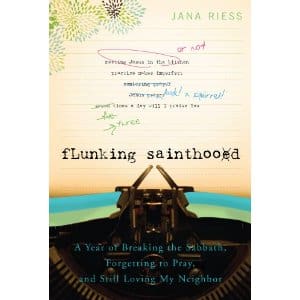
The second hour turns to Riess’s book Flunking Sainthood, built around a year she spent testing spiritual disciplines borrowed from outside her own tradition: fasting sunup to sundown as in Ramadan, practicing the presence of God while doing dishes in the manner of a 17th-century monk, and other exercises in contemplative prayer. She and Dehlin discuss how Mormon fasting practices have shifted over the church’s history, the risk she took writing candidly about being Mormon for a broad, non-Mormon readership, and what she took away about grace and failure after a year of falling short, again and again, of her own spiritual goals. They close by talking about where her writing has taken her since, and Dehlin promises listeners they’ll be hearing from her again.
What’s covered
Part 1 (Ep. 305)
- 00:00 Introducing Jana Riess and her background
- 03:55 Career as a religious book editor
- 06:51 Growing up without a religious parent
- 18:43 Early fascination with Mormonism
- 22:26 Investigating and converting to Mormonism
- 34:49 Exclusivity, priesthood, and spiritual calling
- 42:41 Navigating a liminal faith space
- 53:53 Deep scripture reading and truth in Mormonism
- 1:14:01 Disaffiliation trends and the future of faith
Part 2 (Ep. 306)
- 00:00 Introducing the book Flunking Sainthood
- 04:25 The origin and structure of the book
- 12:53 Exploring spiritual practices month by month
- 21:08 Fasting across traditions, including Mormonism
- 27:56 Writing for a broad audience beyond Mormonism
- 33:00 Meeting the sacred through everyday practices
- 40:58 Reflections on prayer and lessons learned
- 55:24 Closing thoughts and farewell
Related episodes: Navigating Progressive Mormonism with Carol Lynn Pearson, Jana Riess, and Jana Johnson Spangler | Ep. 767-768
Episode Transcript
Host: John Dehlin · Guest: Jana Riess
This transcript is machine-generated and lightly edited for readability. The audio is authoritative. Please excuse occasional errors in names and spelling.
Introducing Jana Riess and Her Background
Part 1 of 2 · Ep. 305
Jana Riess [00:00:00] 1, 2, 3.
John Dehlin [00:00:07] Mormon Stories Podcast is a production of the Open Stories Foundation. All donations to Mormon Stories are fully tax deductible and go directly towards keeping the podcast alive and towards building a community of support for Mormons like you. To support the podcast or to join the community, please become a monthly subscriber today@mormonstories.org hello and welcome to another edition of Mormon Stories Podcast. I'm your host, John Dehlin. As always, I'm very excited to have my guest with me here today. Today, my guest on Mormon Stories is Jana Reese. Some of you may know Jana Reese, but my guess is most of you won't. But it's time that you do. Right, Jana?
Jana Riess [00:00:55] Well, thank you.
John Dehlin [00:00:59] Let's see, if they were to know you, they would know you probably either from your blog, right. Called, is it called Flunking Sainthood?
Jana Riess [00:01:08] It is.
John Dehlin [00:01:09] It's on Beliefnet, Right, Right.
Jana Riess [00:01:12] It is currently on Beliefnet and it will be moving in January, but it will still be called Flunking Sainthood.
John Dehlin [00:01:17] Okay. But Jana is also the author or the editor of nine books. Some of you may have heard of Mormonism for Dummies. She is the co author of Mormonism for Dummies. She wrote a book called what Would Buffy Do? I'm assuming that's Buffy the Vampire Slayer.
Jana Riess [00:01:37] That's right.
John Dehlin [00:01:39] We'll talk about that in a bit. But we're here to talk about her story because I've wanted to interview her separate from from her new book. But her new book was the impetus to making me want to interview her. Now her new book is called Flunking Sainthood and the subtitle is A Year of Breaking the Sabbath, Forgetting to Pray and Still Loving My Neighbor. But most importantly, Jana is, you know, we interview people all along the faith spectrum and it's usually it's easy to find people who are willing to talk that are disaffected. And there's always some story or angle that can be interesting or intriguing. What's harder, what's always been harder for me has been to find people who consider themselves believers or happy with the church or, you know, kind of, kind of more in the faithful camp that are also, I'm going to say, super thoughtful but also super interesting. And that's not to disparage believers at all, but sometimes, I don't know, an LDS believing testimony can just kind of sound traditional just because there's a certain form that it often takes. But Jannah is in no way a traditional Mormon or a traditional thinker or I would say, a traditional believer. And that's why I have her on today, because I get a lot of my listeners who say, anytime you can share with us someone who still believes but does it in an innovative or creative or thoughtful way, we want to hear them. And so, Janet, thanks for coming on Mormon Stories.
Jana Riess [00:03:27] Thank you so much.
John Dehlin [00:03:28] Do you want to correct any of that introduction?
Jana Riess [00:03:31] Well, I'm just sitting here thinking, how
Jana Riess [00:03:33] in the world am I going to live up to that?
Jana Riess [00:03:35] Okay, here goes.
John Dehlin [00:03:37] Yeah, well, we'll do our best. I don't think you'll. You'll fail us. I should also. I should also mention that you were the. What did you say? The religious book review editor for Publishers Weekly for how many years?
Career as a Religious Book Editor
Jana Riess [00:03:55] For nine years.
John Dehlin [00:03:56] Yeah. So there's the number nine again. What is that exactly? What is that position? What does it mean?
Jana Riess [00:04:02] So when I was at pw, my job was essentially to sort through every religion book that was being published in North America and then decide based on that maybe the 5 to 10% that we could cover in the magazine in some way. So it was a great way to keep abreast of what was going on in religious studies and also popular texts about religion. This was the whole time of the Left behind craze and Purpose Driven Life and a lot of religion bestsellers. So it was a really exciting time to be in the industry.
John Dehlin [00:04:34] What about the whole, you know, the Four Horsemen of the Apocalypse, atheist guys, Hitchens and Dawkins? Were you doing it at that time, too?
Jana Riess [00:04:43] Yeah, actually, I got to meet Christopher Hitchens.
John Dehlin [00:04:48] You met Christopher Hitchens?
Jana Riess [00:04:50] Did. Yes, I did.
John Dehlin [00:04:52] That's cool.
Jana Riess [00:04:52] It was an experience, I bet.
John Dehlin [00:04:56] What. And for those who don't know, what is Publishers Weekly.
Jana Riess [00:05:00] Okay, Sorry.
Jana Riess [00:05:01] Publishers Weekly is basically the trade magazine for the publishing industry. So if you're in the publishing industry,
Jana Riess [00:05:08] you probably read PW fairly regularly to
Jana Riess [00:05:11] know what's going on. Librarians also read it to decide in advance what they might want to order. And it's, you know, it's a fairly influential magazine. It was a great job to have. It's hard in the magazine industry at all right now, so it was good to leave when I did. But it was a wonderful experience.
John Dehlin [00:05:33] Yeah, it sounds like it. Well, that sounds like a plum job. Although no job is perfect. A couple other things I didn't mention about you, Jana. Jana has a doctorate. Is it a Ph.D. yes, from Columbia University. Is that religious studies or.
Jana Riess [00:05:51] It is specifically in the history of religion in America. So I was focused on the 19th
Jana Riess [00:05:56] century primarily, and my work since then has actually been more contemporary. I've strayed.
John Dehlin [00:06:03] I guess you've strayed, but you got a good underpinning in your PhD.
Jana Riess [00:06:09] Thank you.
John Dehlin [00:06:13] And the other thing that's interesting about Jana is that she is a convert to the LDS Church. And we'll talk about that, but, well, let's just dive right in. So, Jana, why don't we start, as we always do with Mormon stories and just talk a little bit about whatever parts of your childhood kind of maybe are most relevant or interesting as they inform the spiritual or religious path that you've taken. And we'll weave in the book as it's naturally fitting and. But we'll make sure and cover the book heavily at the right point.
Growing Up Without a Religious Parent
Jana Riess [00:06:51] Okay?
Jana Riess [00:06:52] Yes. So I guess what's most important to know about my childhood is that it was completely secular, and my parents had no interest whatsoever in religion. My mother was not openly hostile to religion, but my father was just full of disparaging comments about religion and religious people and the lemmings that they must be.
Jana Riess [00:07:16] So it was.
Jana Riess [00:07:17] It was not a very hospitable environment to grow up in if you were a religious person. And I think inherently I always was. Even as a child, I prayed to God and I believed in God. I didn't quite know what that meant, but I was fascinated by how people practiced religion. I was at camp every summer. I would go on Saturday night to the Catholic mass, and then I would go on Sunday morning to the Protestant chapel service just because I thought it was so great. And nobody told me that on Saturday night, I wasn't supposed to take the wafer, so I did. And then on Sunday, I would also take the Protestant communion because, you know, you just gotta hedge your bets.
John Dehlin [00:07:58] Well, I have to stop you right there because, you know, I'm not happy about this, but it's just kind of a reality. You know, A decent percentage of Mormon stories listeners have left the church. And from the survey that we've conducted, we found that about 50% of the LDS people that we've surveyed who've left the church or don't believe anymore, become agnostic or atheist. And so it's probably alarming and shocking for some to hear that a kid can be raised because many people, when they become more secular, they kind of embrace it and say, this is the way to go in maybe almost a religious fashion. And so here we have someone who was raised by secular parents, and it almost sounded like you rebelled.
Jana Riess [00:08:49] That is so funny, because that's actually how I describe it in the book. That you have to have something to rebel against as a teenager.
Jana Riess [00:08:56] And I think rebellion for me in finding religion. So, yeah, there's. There's a lot of truth to what you say.
John Dehlin [00:09:04] Why would you, like, if your parents. So did they raise you to believe in God at all or.
Jana Riess [00:09:11] Absolutely not. My father was, you know, of the Christopher Hitchens mold, very suspicious of institutions and the damage that they can do. And I think there are very important and valid points in that argument, which we can talk about if you like. But my mother was much more accepting of people's different beliefs, even if she didn't share them. And actually, I would never have predicted this as a child, but my mother then as an adult, when, after I had become an adult, she became a Lutheran, was baptized actually in the Lutheran Church. I think she was about 50 years old. So she had a very interesting journey to get to that place, but it's not something I ever would have predicted growing up in that environment. You know, that would have been quite the story. And it's so funny because I look around at Mormons that I know, and they're so earnest about the importance of raising their kids in the faith and. And that they have to know the articles of faith and they have to teach their kids every little jot and tittle of religion or else they might lose their kids. And I just sort of think it's going to happen or it's not going to happen, and just teach them love. That's your most important job.
Jana Riess [00:10:31] The rest or not.
John Dehlin [00:10:34] Right. Wow. Well, so do you have a. What would make a kid who. I mean. Okay, I'm just gonna put on the. The secular hat from a second. For a second. You know, God and religion is silly. It's. It's. It's manufactured by man. You know, it binds people, it limits them. You know, this is again, the secular perspective or one secular perspective. And so a child that's raised without it is a lucky child because they aren't encumbered by all the limitations and the dogma and the stereotypes. So why would a teenager, like, really, Was it just rebellion or.
Jana Riess [00:11:19] No.
John Dehlin [00:11:19] Did you feel. Did you feel something was missing?
Jana Riess [00:11:24] I felt.
Jana Riess [00:11:26] Well, I had a conversion experience. And it's, as conversion experiences go, a very familiar story. I was 14 years old. Gosh, that sounds like Joseph Smith, but
Jana Riess [00:11:38] believe me, it wasn't at all like that.
Jana Riess [00:11:39] I was on a retreat with this youth group, Presbyterian youth group, and we went to this wonderful kind of place where you could ski up in the freezing winter of northern Wisconsin. And on that retreat, I had a really profound experience of God. It was at night. I was sitting on a rock, and I just continued to sit there because I felt that God was trying to speak to me in this ineffable way. And I was. I was almost mad about it. It's hard to describe that feeling, but I had this strong sense that it was about to be interrupted and I wasn't perfectly happy about. But I also felt peace over me at that time. And my religious journey has taken some very unexpected turns. I mean, here I am talking to you, and I've been a Mormon now for 18 years. Believe me, I never would have seen that coming because I was studying to be a Presbyterian pastor. I was Presbyterian through high school and then college, and then I went to seminary. And a funny thing happened to me on the way to ordination. Realized that my theology was taking me in a very different direction.
John Dehlin [00:13:04] But what made you even want to go to those retreats originally? I just want to kind of nail that down. Did you feel a void? Were you just curious? Like, what would make you even want to go to that retreat where you could then have that experience?
Jana Riess [00:13:18] I think this is where my concern is. Story is quite typical, particularly very typical of teenagers in that it was a very social experience.
Jana Riess [00:13:29] I had a wonderful friend who had
Jana Riess [00:13:31] been going to this Presbyterian youth group since she was probably in fourth grade
Jana Riess [00:13:35] and grown up in the church.
Jana Riess [00:13:37] And there was community there. There was a strength there that I
Jana Riess [00:13:41] envied and wanted in my life, even
Jana Riess [00:13:43] if I wasn't able to articulate it necessarily in that way. And so I was aware on some level that I was there because these people were fun to be with and they were kind. You know, when you're 14 years old, that's not nothing. When you have peers who are kind to you and accepting of you, that is a very powerful pull. So I think that in that sense, it's a pretty convert. Conventional conversion. I've been reading this fantastic book called Conversions by Craig Harlein Harleen. He's a history professor at byu, actually. But the book traces a conversion of this Dutch Reformed teenager in the 17th century and how he leaves his family so that he can become a Catholic, which was a dastardly deed. Then there's a parallel story of a Mormon young man in the 1970s who has converted to Mormonism, then realizes that he's gay. And so it's almost as though our world has been upended by his conversion to Mormonism. And then it's upended one more time because all of those friends don't necessarily accept who he is now. So it's a fascinating book and I've been thinking a little bit about my conversion as I have read the book and noticing things that are similar. For example, in 17th century case Kidd, who converted from the Dutch Reformed religion to Roman Catholicism, he sacrificed a lot to do that and I think also sacrificed quite a lot when came a Mormon, but Roman Catholic magistrates and authorities would basically trot him out as an example. See, this must be the true faith if this young man who came from a long line of Dutch Reformed preachers would embrace this like truth. And I've had that happen with Mormonism. And it's, it's a very humbling experience when you realize that someone is listening to your story in order to have confirmation of their own or disconfirmation in
Jana Riess [00:15:54] some sense as well.
Jana Riess [00:15:56] And so that's a lot of burden for a convert to bear. And my faith, I mean the title of my book is Flunking Sainthood. So you can probably tell how well that's all working out for me. I don't think I'm really the best role model here, but that has been, I don't know, I'm going with this experience. I have loved being a Mormon. So many aspects of it have been absolutely beautiful to me. My conversion to Mormonism was very different though in that it was not a social experiment at all. I hardly knew any Mormons when I converted. I knew a couple, but not very many at all. And there was no social gain from making that change in my life. In fact, there would be a tremendous social deficit. It was all because of theology. It was because I was realizing the push factor of understanding that I wasn't a Calvinist. And I was sitting in 8 o' clock theology class studying Calvin and thinking, huh, I really don't buy this stuff about predestination. And I certainly question the whole idea of God's exclusive sovereignty and the idea of human free will makes a lot of sense to me. So there was that, that factor. And then I was also learning how to be a pastor where you actually go and you do work in a church and you practice doing all of the things that a pastor would do. And one of those for me, I mean, I was fine with some of them like preaching. I loved teaching Sunday school, I enjoyed preaching. But one of them was that every Sunday afternoon I would go and visit people in the hospital. And I tell you, there are people who are called to that ministry. There are people that I knew in seminary and that I know now who are just called to be chaplains. They are called to sit next to total strangers and hold their hands while they are dying. And boy did I realize that was not my calling. I felt very out of my depth. I was 21 years old, 22 years old, and feeling like I had no wisdom to give to this 85 year old person who was dying. So I'm in and just kind of smile and drop off some flowers and a prayer card and feel uncomfortable the whole time. And I'm sure it showed. So that was a bit of a push factor that, wow, maybe I'm really not called to ministry after.
John Dehlin [00:18:22] Right, okay, so. So while you were studying for the ministry, if I got it right, you had a theological kind of crisis of faith. And how did you go from there to thinking Mormonism?
Early Fascination with Mormonism
Jana Riess [00:18:43] Yeah, that's a bit of a strange. I had always been very fascinated by Mormonism. Not necessarily Mormonism for me, but just Mormonism in general. And when I was in the sixth grade, or I guess the summer between sixth and seventh grade, I took this little summer enrichment class. It was a college for kids kind of experience. And one of the classes that was offered was called Nauvoo and the Mormons. I grew up about 80 miles from Nauvoo, and there was a field trip to Nauvoo, and I thought, great, you know, field trip. I'm always up to go anywhere and
Jana Riess [00:19:17] have been all my life.
Jana Riess [00:19:19] So travel, even to another town in western Illinois sounded exciting. So I signed up for that class just on the basis of the fact that there was a field trip and that the boy that I'd been in love with since the second grade was going. So that was a big important factor as well. But when I was in Nauvoo, I thought, what a bizarre, wacky religion.
Jana Riess [00:19:43] I went into this room.
Jana Riess [00:19:45] I don't even remember what building it was in, but it was called the women's room.
Jana Riess [00:19:49] And the.
Jana Riess [00:19:50] They had quilts in the room and they had photographs of women and there was this enormous picture of Marie Osborne, her mother, on the wall. And, you know, I'd grown up watching Marie show and worshiped both of them, especially Donnie. And so that made a big impression on me. And actually I went back three years later on another trip and that photograph was gone because Marie had gotten divorced in the intervening times. Suddenly, you know, she's not this exemplary role model for women anymore.
John Dehlin [00:20:23] Do they leave? Donnie's up.
Jana Riess [00:20:27] Donnie wasn't up there. This was the women's room. So it was Just all. Just women and their handicrafts. She did, yeah, she kind of got the shaft.
John Dehlin [00:20:37] She flunked. Sad.
Jana Riess [00:20:39] When I was in Nauvoo, now, keep in mind, I'm only 11 years old here, right. So when I'm in Nauvoo, our group went through the different visitor centers. We went to what was then the RLDS Visitor center, the LDS Visitor center, and at the LDS Visitor Center, I was looking in the gift shop at some books and was very interested in reading. I've always been interested in reading. And one of the missionaries who was working there actually chased me down in the parking lot and brought me a Book of Mormon. It was my first ever Book of Mormon. And. And I never read that copy of the Book of Mormon. But my chief memory of it was that when you opened up the flap on the inside, there was a photograph of this woman's family. So it was. She was like the matriarch. And then it had her grown kids and their children. And it was a family to family Book of Mormon program. I don't know if you remember that.
John Dehlin [00:21:36] Sure, of course. Yeah, absolutely.
Jana Riess [00:21:37] Okay. Well, I was one of the receiving families of the Book of Mormon.
John Dehlin [00:21:41] Family of the. Wow. That program actually worked for somebody.
Jana Riess [00:21:44] Well, eventually, like I said, I don't think I ever read that copy of the Book of Mormon, not until I was older. But I was very interested in what I learned in the class. Mostly we did Mormon history, and the teacher of the class was just very interested. I don't think he was Mormon himself.
Jana Riess [00:22:00] I never really knew his story about
Jana Riess [00:22:03] why he was interested in this, but he wanted to approach it from the perspective of these were events that happened right here in western Illinois. In fact, Emma Smith, I found out later, after the Saints went west, one of the many places that she lived was in Knox county, which was where I grew up. So there's another little Mormon connection.
John Dehlin [00:22:24] Nice.
Jana Riess [00:22:26] Yeah.
Investigating and Converting to Mormonism
John Dehlin [00:22:26] Okay, so you had some early exposure to the church, and at what age did you start investigating it kind of seriously?
Jana Riess [00:22:39] Well, in my junior year of college, I started doing much more serious reading about Mormonism. And I don't think I could tell you what the catalyst was at that particular time. I don't remember any particular event. But then I decided in the spring of my junior year that I would my senior thesis on Mormonism and American politics, which is completely ironic because right now part of my is consumed with planning this conference at Columbia University on Mormonism, American politics. So Randy Balmer and I are co convening this in conjunction with the Romney story, the Romney campaign. So it's kind of funny that 20, whatever years ago, my undergraduate thesis was about this topic, and I looked at the era, I looked at the MX missile issue and also African Americans in the priesthood. It was a very negative thesis. In fact, one of my readers pointed out that I had used the term the Mormon menace in the thesis. Yes. So it's not like I was really looking to convert. And I was horrified about Mormon involvement against the ERA because my mother had been an ERA activist, a pro ERA activist, and, you know, an early feminist president of the League of Women Voters, all of those things. And so that was. That was what I grew up valuing. Of course you would want equal rights, and what religion worth its salt would not want equal rights? Duh. That was basically my response.
John Dehlin [00:24:13] So so far I'm thinking, there's no way she's going to end up joining. So you still. There's still something that happens. What happens?
Jana Riess [00:24:21] Yes. So I once heard Rodney Stark, the sociologist, speak at a conference of the mha, and he said, no one ever converts to Mormonism because of theology. Everyone always converts because of kinship networks, friends and family.
John Dehlin [00:24:40] Right.
Jana Riess [00:24:40] And I wanted to just raise my hand and say, well, there's me. Because it really was about theology. It was about encountering Mormonism through books and resonating with what. What I felt was being taught, particularly about the idea of agency, which I found to be profound and beautiful and not. Not quite the same as agency had been formulated in Protestant theology. In fact, more radical, a little more extreme, I found very appealing. Of course, we don't really live as
Jana Riess [00:25:16] if we believe in agency.
Jana Riess [00:25:17] I find that Mormons. It's such a damned inconvenient doctrine that we just kind of push it aside and obedience is so much. But agency is a big part of why I converted.
John Dehlin [00:25:31] So the whole war in heaven and
Jana Riess [00:25:32] the Book of Mormon. Oh, sorry, yes. Well, you know, actually I didn't know about the war in heaven until later. At the time, I was just thinking, oh, wow, human freedom, wonderful free will. But I think that when I did finally settle down to read the Book of Mormon after college, it was another one of those tremendously inconvenient experiences because I knew it was going to make a claim on my life in a way that I wasn't necessarily prepared for. You have to understand that this whole process, starting maybe with my. The second semester of my junior year of college and then finally being formalized in my last year of seminary when I'm finally baptized, that's About a five year period or four and a half year period.
John Dehlin [00:26:19] And you don't mean, you don't mean LDS seminary, you mean.
Jana Riess [00:26:23] No, thank you for that clarification. I mean, when I was studying to be a pastor and going to Protestant seminary to be a pastor. So this is a long process and it was very difficult. But when I finally did read the Book of Mormon, basically under duress because I promised that I would give it a chance.
John Dehlin [00:26:43] Did you say under duress? What did you say?
Jana Riess [00:26:46] Yes, under duress from a missionary who confronted me. I went the summer after college. I was living in Vermont. It was the best summer ever. And some friends of mine and I had just seen this poster in the student center of a ski house that was sitting empty for the summer. And we thought, let's go to Vermont. You know, we didn't have jobs, we didn't really know anyone in Vermont, but we just had this vision that we would have a wonderful summer in this beautiful place. And we totally did. It was exactly like we had dreamed. It was cool. But one of the things, yeah, I know, it was great. One of the things I did on a day off when I was in Vermont was drive up to Sharon, which was not that far away, to see where Joseph Smith was born, right? And when I was there, it was almost entirely empty. And there was a woman, an older woman missionary, who really seized upon me as her prey. And I recount this story in the introduction to a commentary I wrote about the Book of Mormon. She asked me, well, have you ever read the Book of Mormon? And I said, I've tried to read parts of it for my senior thesis, but it really didn't grab me. I don't quite understand it. And she said, I just don't think you have the right to judge our religion unless you read the Book of Mormon. And I felt, as evangelicals would say, I felt very convicted by that language that she used because, you know, by that time I'd been a Christian for a number of years. And I always felt that it was unfair for people to judge Christianity without having at least pride to read the Bible. And so why would Mormonism be any different? Did I have the right to judge this religion without taking a chance on its sacred text? So I committed that I would try to read the Book of Mormon. And it was really a life changing experience. I began to realize the Book of Mormon had the same effect on me when I was approaching it prayerfully as the Bible did. And that's not to say that I would ever exclude that Experience happening with another sacred text. I think it could, it probably, it probably will in my life, but it definitely did with the Book of Mormon. And I recognized it. I recognized that this was for me a scripture that would be normative in some way for my life. But that was a really hard thing because I was between my senior year of college and my first year of seminary where I was already committed to studying to be a pastor. And then the other thing was that Book of Mormon or no Book of Mormon, I had very serious problems with Mormonism as it was practiced. You know, the, the marriage of contemporary Mormonism and conservative politics, the subjugation of women. And I just don't think that another term that is appropriate, but subjugation. You can talk all day long about women being separate but equal in Mormonism, women having different gifts. You know, those arguments just don't have any weight with me because a five year old girl can look around when a baby is being blessed in sacrament meeting, as my daughter did when she was 5, she's no longer Mormon, and
Jana Riess [00:30:05] say, mommy, where are all the girls?
Jana Riess [00:30:10] So I had very serious obstacles. And when I made the commitment finally to be baptized, it was not because those obstacles had been overcome, but rather because I felt a spiritual confirmation that this long process of coming to un understand how God works in my life and also in a particular religion, it's not going to be resolved overnight. And that I had a ministry and a calling to be within the fold of this faith, whether I understood why or not.
John Dehlin [00:30:47] Wow. So how much of your testimony, your early testimony was, oh, I found the true church with God's priesthood and exclusive authority. Was there a shade of that in it? Like, did you buy the restoration idea?
Jana Riess [00:31:06] Not for ages. You know, I talked about how this was a process. So here's an interesting story. At least I think it was interesting. I was a member of the church for several years and had not had a patriarchal blessing and probably would have described myself as one of those people for whom patriarchy and blessing don't necessarily go hand in hand. But I accompanied a friend on her patriarchal blessing and I saw that it was a very moving and benign experience for her. And I thought, you know, I'm kind of being stupid for just stubbornly holding to this. And one of the other factors in deciding was that by that time I was getting my doctorate at Columbia and I had met Richard Bushman, who at that time was a stake patriarch in Manhattan. And he was one of professors and I had tremendous respect for him and I thought well, you know, if it's Richard, then that would be different and it would be a very beautiful thing. So I'm sure that it will be fine. So I went to him and I asked him this, and, you know, I didn't know anything about how things worked in the church terms of bureaucracy. And he told me very regretfully that it was very unusual for a stake patriarch to be able to give a blessing outside of the stake to someone who wasn't a family member, which I'd never known before. But he did ask, he put up an inquiry, and then it was denied. And after that happened, I was fairly put out. Like, the church wouldn't be willing to make an exception for me, even though I'm so afraid of this ritual and it would be a lot easier for me to have it done by someone I know I'm not going to have a patriarch family. I don't have any Mormons in my family, so how's that ever going to work? So I sat with this for months and just didn't do anything about it. And finally I decided I would go ahead and get my patriarchal blessing in my own stake. And so what happened was, was a very unexpected experience of priesthood. And I don't think I've actually had another experience like that since then. So it's been many years. But the patriarch, who'd never met me before and didn't know anything about me, had some very pointed and specific things in the blessing that brought tears to my eyes and they didn't have anything to do with, and I was married to or children that we would have or my future in heaven. It had to do with my job and my ministry in the church and the Word. You know, I'm going to go ahead and tell you all this. The wording that's used is to be leavening in the church and to never be afraid to voice my opinions. That's in my patriarchal blessing.
John Dehlin [00:33:52] Holy moly. I wish I had that in my blessing.
Jana Riess [00:33:55] I'm totally astonished when I. When I look back on this, because that person didn't know me. I mean, if something like that had come from Richard, I would have said, well, obviously that's Richard, and he knows me and he knows how much I'm interested in history and he knows that I have issues with things in the church. But this guy had met me like two minutes before he put hands on it. So I had to step back and say, wow, that's pretty powerful and amazing and experience something that I was not expecting to experience. I Had heard stories about other people's patriarchal blessings being fairly pro forma. And I think that the one that I had witnessed with my friend, what, you know, was fairly standard, and I wasn't expecting anything different than that necessarily. And then suddenly this. This wonderful thing pops out. So it was a beautiful experience in the end, and I do think about that.
Exclusivity, Priesthood, and Spiritual Calling
Guest [00:34:49] So.
John Dehlin [00:34:50] So it's interesting because you told that story in response to the question of whether at some point your testimony was rooted in the kind of exclusive truth claims. And I'm wondering how you tie those or what it was about that question that made you tell that story.
Jana Riess [00:35:07] Is it because you talked about the priesthood? I think it was that particularly.
John Dehlin [00:35:13] So that was something that strengthened your commitment or feelings about or testimony of the priesthood, maybe.
Jana Riess [00:35:21] Well, it certainly helped. I would say that this is something I still struggle with because my husband is Episcopalian. Just today I had lunch with one of the priests at his church, and she's amazing. And I would never say or believe that what she does with her congregants is anything less than the work of God on the earth. I look at her and think what she does is absolutely amazing. And when she goes to bless the sick, how is that different? That part I still don't understand. The exclusive truth claims that we hold are very difficult for me. I was asked to speak a few years ago at an interfaith festival, and it was great that we all had the same assignment. All of the speakers from all of the different religions were told, we bring one thing from your sacred texts that would indicate that yours is the only religion that God approves of on the entire planet. And then bring one thing from your sacred texts that invites universalist understandings of the fact that we are all blessed by God and we're all on this journey. And it was amazing to sit there and to hear, you know, these verses from the Upanishads or the Quran or, in my case, the Book of Mormon, and understand that all traditions have this intention somehow that all religions are. Are working through this issue of exclusive truth, inclusive community. And we still have not figured it out.
John Dehlin [00:36:59] So you didn't pull out D&C1. You went to the Book of Mormon, huh?
Jana Riess [00:37:04] Yeah, I did. And I'm trying to remember now exactly what I used.
John Dehlin [00:37:08] Well, that's all right.
Jana Riess [00:37:09] Well, the inclusive text was, you know, I will take my text here and I will preach it to them and here and preach it to them. One of your listeners is going to be able to tell me immediately where that comes from.
John Dehlin [00:37:20] Well, okay, so, okay, so is it fair to then summarize that you felt called to Mormonism? You like the theology, but you experienced something divine as you read the Book of Mormon and kind of planted the seed and experimented upon the seed and felt called to join, and that seed grew the more you, you know, were active and the more time you spent within the church. You had strengthenings of your feelings around priesthood and other things. But never at any point nor now would you characterize your testimony as being either emphasizing or strongly rooted in exclusivity, but instead just in goodness and divinity. Is that fair, or would you say it some other way?
Jana Riess [00:38:20] Well, I do think that Mormonism has some exclusive truths that the world could
Jana Riess [00:38:26] share in if it darn well wanted to, but so far has not expressed much of an interest, the Book of Mormon being one of them. There's, there's, you know, there's no monopoly
Jana Riess [00:38:36] that we have on the Book of Mormon.
Jana Riess [00:38:37] It's open to the world if people would, would be interested to reading it.
Jana Riess [00:38:42] For me, I think that it's the
Jana Riess [00:38:43] institutional claims to exclusive truth and exclusive priesthood that I find problematic, particularly cause. And this is that secular childhood come to bear. You know, you never really, you never get over your childhood, but particularly given
Jana Riess [00:38:59] history of how individuals throughout history have used those kinds of justifications in order to commit all kinds of atrocities and even, even benignly than that, just exclusion and prejudices. And I, I'm not on board with that.
Guest [00:39:18] Hmm.
John Dehlin [00:39:19] So for you, sort of one and only true church and all others are false, that kind of language has deleterious side effects culturally that don't resonate with you and that you aren't, you know, you aren't going to embrace necessarily.
Jana Riess [00:39:40] I think that's fair. I told the story before sitting in church with my husband on one of the times that he with me to sacrament meeting, and this guy gets up there and he bears his testimony about how grateful he is be part of the true and living church, a member of the true and living church of God. And I turned to Phil and said, sweetheart, you better hurry up or you'll be late for your worship service at your false and dead church. Well, you know, what are we thinking when we use language like that? And here is a lovely, incredible person who happens to be Episcopalian sitting right there. The obvious corollary, if this is the only true and living church on the face of the earth, is that the church that he belongs to and all other ones are false and dead. Yeah, well, is that really how we feel is that really the core of our tradition.
John Dehlin [00:40:35] And you know what, most of the level headed Mormons that I've talked to about that they, they actually, they don't want to embrace that. They want to find an interpretation that's more charitable, that's more loving, that's more accepting. So I mean, in my experience, we seem, you know, the average Mormon that I talk to wants to embrace truth wherever it comes from and wants to legitimize others. I think even the church. If you asked Robert Millet about that quote in some evangelical meeting that he's in, I bet he would lightly dance around that verse, wouldn't you say?
Jana Riess [00:41:14] Well, we all should, we all need to hold that very lightly because when we, first of all, as a pride issue, when we have this idea that we are the remnant, that we are the sole bastion of truth upon the earth, that is not Jesus, that is not of Jesus. And Jesus was constantly warning people against religious pride. So beware, you know, all ye who enter here, beware.
John Dehlin [00:41:42] Right, right. Okay, so, but the most, so the two most deliciously, beautifully ironic or unexpected things about your story so far are that you were raised in a secular home, yet you felt pulled towards faith. I think there's a lot of nervous, disaffected Mormons right now. But you know, it sounds like you've had a delightful journey. So it's not in any sense a cautionary tale. But the second is that you were feminist, you were, you know, for social justice, you had problems with patriarchy, you knew about all the weirdness, and yet you still felt drawn to this thing. Like I asked myself, is that possible? Like in 2011, could a Jana Reese join the church today? And I'm just curious whether you have a perspective on that.
Navigating a Liminal Faith Space
Jana Riess [00:42:41] Absolutely, because sometimes those people write to me and you know, I hear from people who are in what I would call a liminal space. Sometimes we'll receive emails.
John Dehlin [00:42:54] What does that tell us? What that word means?
Jana Riess [00:42:56] In between and in between space. So people who grew up in the tradition or converted and are on their way out for whatever reason, and there are a lot of really good ones, and then people who have discovered this and there's a part of them, there's that yearning to believe. Like in Alma 32, which you referenced a few minutes ago, that desire to believe, but you don't necessarily want to give place to it because it's going to change your life because people will laugh at you for whatever reason. I hear from people on both of those extremes and in some ways they're Asking many of the same questions, is this truth worth giving my life over to? And I can't answer the question for those people. All I can do is listen to them and. And say, you know, yeah, I've been there, or actually, I really haven't. But people need. Need a compassionate ear. And I think that from some of the. The new converts and potential converts that I hear from occasionally, it is really fairly encouraging, actually, that somehow, despite a lot of issues that might drive people away from Mormonism, like Proposition 8, for example, there is this beauty, there is this truth, and there is this community that is very attractive. And so we have so much to offer, and we have so much that's good, but sometimes it's very hard to see that.
John Dehlin [00:44:31] Right? And yet you've stuck around, you've hung in there. Right.
Jana Riess [00:44:37] Except for one year. I took a sabbatical in 2000-2001 for basically an academic year and stayed home and read the New York Times on Sundays and went to husband's church sometime. And it was hard to explain to people because in Mormonism, we don't have any concept of sabbatical. We don't go on retreats. All we do is advance. Right? We're all about the army of Helaman marching forward. We know the truth, we never take a break, blah, blah, blah. Well, I needed a break. It was either take a break or leave back. That was 12 years ago, almost. Now, was that.
John Dehlin [00:45:14] Was that Prop 22? What was that? Was something going on that wasn't actually
Jana Riess [00:45:18] about politics, that was not related to national issues or of any import. That was really more where I was spiritually and also geographically, to be honest with you, because we moved in 1999 to rural Kentucky, and it was, you know, we moved from. From Princeton, New Jersey. That was the only ward I'd ever known, was in Princeton, New Jersey, which, as you can imagine, is kind of one of those holy grails of Mormonism. And I didn't appreciate that at all at the time. I didn't know anything about what the rest of the church was like. We had a great choir. We had two gospel doctrine classes, one of which was wonderfully liberal. My bishop was for gay rights. I mean, yeah, okay. I never really knew what life was like outside of this wonderful little bubble that I lived in. And a lot of people were students, you know, grad students and whatever. And then I went to rural Kentucky and encountered a completely different kind of experience of the church. And that ward also had some. Just some organizational behavior issues that made it A very dysfunctional environment. It changed. It actually got much better in the time that I lived there. Not because of me, but because someone who needed to die actually died. And I'm so sorry to have to say that, but sometimes you need to have that funeral, you know. Oh, I hope you'll edit that part out. Anyway, so.
John Dehlin [00:46:47] So I want to ask you what town. I want to ask you what town you lived in. How's that?
Jana Riess [00:46:51] No, Well, I think, you know, people who know me probably know where it was. And it was a loving. It became a very loving community. But it's interesting how sometimes if you do have a very powerful person who is a very negative, toxic person, it can poison an entire community. And that's not just Mormonism. That's wherever you work. That's also if you happen to go to some other, you know, synagogue or temple or, or that can happen anywhere. So after about a year and a half of feeling like I was kind of banging my head up against the wall in this community, I decided to take a sabbatical. And it was hard to explain to people because we don't have the language for that. We don't have any category for that. And at one point in the middle of the year, I ran into one of the sweet sisters from the Relief Society at the grocery store and she said, oh, we missed you and we hope you'll come back. And I said, I'll be back on September 1st. You know, like, I've got it all planned.
Guest [00:47:47] Oh, wow.
John Dehlin [00:47:48] It was like a. It was like a 12 year period. A 12 month period.
Jana Riess [00:47:52] No, it was, it was, it was very exact that I was, I was going to be gone for this academic year. And so her eyebrows sort of lifted, like, huh, really?
Jana Riess [00:48:00] You'll be back September 1st.
Jana Riess [00:48:03] And what was particularly interesting about it was that I did come back at the very beginning of September in 2001, which, as you know, was a rather inauspicious time to return to religion. And I returned, though, with this renewed sense of calling and vigor. And I had actually been reading my scripture more, felt a great commitment, personal spirituality that I hadn't in a long time before that. So when September 11th happened, I actually just called the person who was one of the counselors in the bishopric and I told him my big fear was that I would go to church on Sunday after September 11th, and we'd be having a talk about tithing or we'd be doing something completely irrelevant to what everyone was thinking and praying about and grieving about. And so he said, you're right. And. And we will definitely do that. And can you talk? You know, so that's Mormonism. If you have a complaint about it, you better be ready to correct the problem. But I talked to mine, who on The Sunday after September 11, they went to their ward, and one of the assigned hymns, I swear to God, was There is Sunshine in My Soul today.
John Dehlin [00:49:18] Oh, yes.
Jana Riess [00:49:20] What are they thinking? I mean, how is it. How is it even possible that we could be so liturgically stupid so as not to recognize this tremendous grief and pain? Yeah, that's another topic.
Jana Riess [00:49:34] For another.
John Dehlin [00:49:35] We got you going on that one. Okay, so. And I'm just going to ask you this really quickly. There are a lot of people who are feeling a lot of pressure about, you know, activity, and they're just not feeling happy at church. Did you find that taking a sabbatical was healthy for your testimony or healthy for your relationship with the church?
Jana Riess [00:50:01] Definitely.
John Dehlin [00:50:02] How's that?
Jana Riess [00:50:03] I definitely did. Well, we have sabbaticals in all of these other areas of our lives that are fairly demanding areas. People take vacations from work. Sometimes parents will take a vacation from their kids because that's demanding. And we have cycles for academics so that they can go and be creative and focused about something. Why don't we ever think to do that with our faith? I mean, for centuries, other Christian traditions have sent people on retreat, whether it's just for a week or possibly for three months, or they go on pilgrimage. There are all sorts of wonderfully sanctioned ways in which to step back from your ordinary life, think about God in a new way. But we don't have anything like that. We don't go on retreat. We don't go on pilgrimage. We don't take sabbaticals, we don't take time off. Everything is about doing, doing, doing, constantly moving ahead for God. You cannot sustain that. You just. You cannot sustain that pace. And the people that I worry about most, frankly, are these. These wonderful men who serve as local church leaders who, God bless them, tend to get promoted in the church because it's a corporate structure and they do well in their very demanding careers. Right. They're also often the same people who have large families. So you might have a demanding career, a large family, and a church calling that takes up 15 to 25 hours of your week. Now, how does that compute without someone basically going barmy?
John Dehlin [00:51:40] Right.
Jana Riess [00:51:43] It doesn't make sense.
John Dehlin [00:51:43] Yeah.
Jana Riess [00:51:44] Yeah.
John Dehlin [00:51:45] But what if your stake president called you up and said, I heard on a podcast you were telling people to take a year off Church, I would
Jana Riess [00:51:51] say, yeah, of course I said that, and I believe it. If people know if that's the question, if they're on the verge of leaving or taking a year off, it should be an obvious question. One of the issues with Mormonism is that so many people have an either or mentality about a lot of things. You know, we've talked about the question of is it the true church or not, as though there's a pure dichotomy in which those are the only two options. Right. But also have that mentality about how we pursue our lives. And frankly, that was one of the things that I had in my mind as I was writing Flunking Sainthood, because I know people like me who maybe have a perfectionist tendency. We want to do our best, and that is a very godly, beautiful desire. Well, sometimes it is. It can be a very godly and beautiful desire. But when we, and we will fail all the time, if we have that mentality that we are only acceptable to God when we are perfect, then we leave. You know, people will throw out the baby with the bathwater. And I hear those stories again and again in Mormonism. Maybe it's that they've been told all their lives that the church is true. There is no error here. There is no room for human machinations in our theology. Well, of course there is. And history proves that. You know, we have lots of problems with historicity, Book of Mormon DNA, Book of Abraham. I mean, it doesn't take any kind of genius to be able to tick off a lot of things that just look a little bit off about our religion. And if there's no spirituality at the core there, and people have been told all their lives that it's an all or nothing proposition, they have no choice but to leave. But it isn't an all or nothing proposition. It isn't.
Deep Scripture Reading and Truth in Mormonism
John Dehlin [00:53:53] It isn't. What is,
Jana Riess [00:53:56] is a. Both. And,
John Dehlin [00:54:00] and you talk about this in your book when you, when you. And we'll get to your book. But we talked. When you, when you talked about, you know, reading the scriptures in depth for a month, you. It seems like the lesson from that was you were reading intellectually, right?
Jana Riess [00:54:17] Well, that's how I tend to approach the Bible, as if someday I'm going to be, you know, on Jeopardy. And have to answer all these questions about Bible trivia. And in that chapter of Flunking Sainthood, I was trying to get past that mentality, this is not pure information, that this is supposed to change me in some way. Right. And what am in what way am I supposed to be changed by this?
John Dehlin [00:54:42] Right. So I have to ask, since you brought it up, how do you maintain? I mean, I'll refer to the survey a million times over the next year, but Book of Abraham and Book of Mormon were like top five issues for people that have caused them to leave. And a lot of us just have the assumption that the only people who haven't left are the ones who don't know about Book of Mormon and DNA and the Book of Abraham and everybody else has left. You know, how in the world do you stay known about that stuff?
Jana Riess [00:55:20] Well, I don't know that this is going to be a satisfactory answer, to be honest with you, because one of the things that I have found is that some of the people, most of whom are men who get very exercised about being in the know about what really happened with the Book of Abraham, etcetera, are not persuaded by arguments that rest on spirituality. They only want arguments that meet them point for point, saying if, and this is an either or proposition as well. The whole way they approach the question, if the Book of, you know, if the Book of Abraham is not a divine translation of this ancient document, if it is in fact just an ordinary funerary document that Joseph Smith completely expanded, embellished, elaborated, elaborated on, or if you're looking at a more cynical view, just simply lied about, then what do we do with the rest of our faith? Well, let's step back, first of all and think about how important is the Book of Abraham to the Mormon faith in general? I don't think it's terrifically important, but that's just me. But we need to have a tradition of midrash. We need to have a tradition where we can look at a prophet in the way that Jews have looked at prophets of old and say, this is a midrash on a revelation, or this is a midrash on an earlier work of scripture.
Jana Riess [00:56:49] What does that word mean?
John Dehlin [00:56:50] What does that word mean?
Jana Riess [00:56:52] Midrash? Well, it's basically an teaching. It is.
John Dehlin [00:56:57] Wait, you cut off for a second, say it one more time.
Jana Riess [00:57:00] I would say it's an expanded teaching.
John Dehlin [00:57:02] Okay.
Jana Riess [00:57:03] I don't know what the exact definition would be, but an expanded teaching, something where in mid Rashim you are taking a core text and then thinking about it cosmically, you're thinking about it theologically. And you could look, for example, at the entire pearl of great price as a midrash. You have Moses as a midrash on Genesis. Right. If you think about it in those terms, the Literal nature of it is less important than what the book is trying to teach us about who we are as children of God. I think that is where we need to be looking. And I frankly don't give a hoot about some of the arguments about historicity, DNA. The more troubling is, of course, Joseph Smith. The more troubling aspect, not the Scripture in and of itself, but what Joseph Smith said about it and whether he can then be relied upon as a prophet of God. And based on my work in the Hebrew Bible, I would say yeah. Have you looked at those guys lately? I mean, we have this completely ridiculous idea of what a prophet is supposed to be. No human being can measure up to that. And there's certainly no biblical example that actually does. And yet we conveniently forget about it. We come up with these stupid gospel doctrine lessons that encourage us to look at people in the Old Testament as if they were perfect. And then we set up our own leaders to be perfect as well. And when they aren't, well, we leave.
John Dehlin [00:58:36] Right. And then.
Jana Riess [00:58:38] And then
John Dehlin [00:58:41] that all is a compelling or a viable intellectual response. And I want to dig into that a bit in a second, but it sounds like what you were also going to say is there's a strong spiritual component to it as well. Is that right?
Jana Riess [00:58:58] Yes, there is. And I worry that we don't emphasize deep reading of Scripture in the way that we ought to. We talk about reading the Scriptures all the time. Don't get me wrong. And I think that's an important devotional practice. I think our church actually does a fairly good job of encouraging people to. To dig into the Scriptures every day. But we're doing it for that informational thing that I was talking about before. We're doing it so that we can learn the scriptures. We have the same thing when we go to the temple. The temple is not a worship experience. The temple is learning experience. It's instruction. And that's not at all the same. We don't have any corporate worship in Mormon culture. And that's a huge problem. I think if we have more authentic experiences of worshiping in community, of reading the scriptures together in community, not in the gospel doctrine sense where we're there to learn about so and so, but in the sense where we have a small group of people, people who get together, who read the scriptures, who pray together about the needs in their lives, that is a completely different understanding of the Scriptures. And we don't do that. I have no idea why we don't.
John Dehlin [01:00:09] And yet you feel it sounds like Your Mormon ness has been overall spiritually edifying for you and that's part of what's kept you around. Right. So have you just had to supplement on your own or.
Jana Riess [01:00:25] I do a lot of supplementing, yes. That's well said. Yeah, I do. I do a lot of supplementing and I think that's one of the blessings of having not grown up in this tradition. I worry about people who basically feel that they have to leave Mormonism because they are convinced that the world out there is so much better. Right. It always is going to look that way. Sometimes it actually is that way. But they don't understand that it is possible to learn from other traditions without leaving your own and to instead that bless and enrich your life as a Mormon. You know, I've been enriched as a Mormon by studying Buddhist texts from Tibet and about mortality and Tibetan prayer beads and how they sit and think about death because the prayer beads are actually made of human bones and skulls and they sit there and they touch them, they think, yeah, I'm going to die. How does that change the way I live now? I want to clarify that I don't actually have such a rosary. I don't have anything that's constructed out
Jana Riess [01:01:31] of human bones and skulls.
Jana Riess [01:01:32] But the idea of it, just the idea of it has transformed my spirituality and how I think about prayer and mortality. The fact that this is so fleeting, we are here for such a short time. We have to think about that every day.
John Dehlin [01:01:54] And so, and you know, I'm. I'm going to kind of just use this as a way to kind of close this first hour. So don't think I'm going to now dig into some big, deep exploration of this, but. Well, I guess I have two questions. One is. And I won't ask them at the same time. So the first question is, what about the person that says to you, no, Jana, like, either the Book of Abraham is what Joseph Smith said it was, or it's a fraud. And either the Book of Mormon is what Joseph said it was, or it's a fraud. And truth actually matters. Facts matter. And a fair reading of the archaeological, anthropological, genetic, whatever, evidence of the Book of Mormon and a fair reading of, you know, the text, you know, the funerary texts that Joseph claimed to translate the Book of Abraham, you know, from, you know, points that it was not true. And if it's not true, I'm out of here. Because it's based on fraud and deception and isn't what it claims to be.
Jana Riess [01:03:02] You are defining, you're Defining truth in this incredibly narrow way. When you do that, or not you personally, but anyone who does that, you are defining truth in the way that Enlightenment philosophy has taught us to define truth, which is that it is factual, that is historical, that is epistemologically verifiable. Right. Well, truth does not have to be factual, historical, or epistemologically verifiable. It's awfully nice when that happens because we can explain it to our friends and not sound like spiritual idiots. But I'm afraid it doesn't always work that way, and I think it bothers me. God bless the people at Fair. I think they do wonderful work, and it's very persuasive for some people, but they're not asking the bigger question, at least sometimes about why is this important. I once heard a fantastic sermon when I was in seminary. It was called the Second Question. And the preacher, this professor had been to a magic show by Penn and Teller, and the guy behind him just basically spoiled the experience for the preacher by saying, oh, I know how they did that. I know how they did that. And at one point in the show, either Penn or Teller said, probably there are some people out there who are saying to themselves, I know how they did that. But that's not the important question. The important question is, why do we do that? Why do we do this every day? And so the preacher then extrapolated from that this whole sermon called the Second Question. And if we were to apply that to this situation, for example, using Book of Mormon DNA, DNA as our test case.
John Dehlin [01:04:53] Right, okay.
Jana Riess [01:04:57] The problem with the Book of Mormon DNA is that it demonstrates that you have this understanding of the Book of Mormon that simply cannot be factually true. And they're right. It cannot be factually true. In that sense, why does it have to be factually true? And this is where I really disagree with Terrell Givens that you had on your show. And I love Terrell, and I think his work has been so important, and I think it's awesome that he. He came on your show.
John Dehlin [01:05:26] Yeah.
Jana Riess [01:05:27] But Terrell sets up this situation in By Land of Mormon where he says, if you don't believe it happened this way, everything else falls apart. That the rest of it hinges upon the literal nature of this. And I think that when we do that, we are setting everyone up to fall, because, first of all, it may not be factually verifiable. But why do we care about that? I think we care about it into a ridiculous degree because we're concerned about how it all Sounds to other people. We are a persecuted religious minority. We're very sensitive about how our faith plays in Peoria, which, by the way, it doesn't. Because I grew up near Peoria, and I can tell you it totally. It doesn't. Yeah. So the apologetics issues and the questions that are asked. Let's get to the second question, and let's look at some of these scriptural texts prayerfully and ask God, before we even start reading, what want to teach me from this? How does this have bearing on my life? And that's a very transformative way to approach the Scriptures.
John Dehlin [01:06:43] So you're saying, forget if Mormonism is factually, historically, what it claims to be, live it. And if it transforms your life, then you've enjoyed a transformed life. Is that what you're saying?
Jana Riess [01:07:01] I don't think it's quite as reductionistic as that. I mean, this is not Pascal's Wager, where we are just saying, I'm going to live as if this were true and see what happens. Because there is an element beneath this entire experience that is that seed of faith, that yearning, that desire to believe, and that undergirds everything else that undergirds every spiritual question. But I think that you're right when you say at some point there is this point where it's a leap of faith, and you do take that faith leap on faith, as they say, for better or for worse. But I. You have to do it with both eyes open. And this is where I look at some of the people I know in church, and it all just seems to come so easily to them. And of course, this is all true. And I was raised on this with my milk. And how dare you ever question this? And, you know, that is so immature. That is as immature as it is for someone to say, well, this one thing wasn't factually true, so I'm throwing it all out because it's all lies. We have to grow up. And that's the whole point of Mormon theology, where the burden is upon us with our agency, that we need to search for truth.
John Dehlin [01:08:18] Right. So you're not saying truth doesn't matter. You're saying there's got to be a core hope or belief that at some level there's some validity and truth to what's going on.
Jana Riess [01:08:38] And then, yeah, you know, when.
John Dehlin [01:08:41] And then from there, the struggle can be. The struggle is part of the point. It almost seems like, yes, it is.
Jana Riess [01:08:48] Well said. The struggle is part of the point. And I think when Pilate makes this comment, that just seems like a Throwaway afterthought. Ha. What is truth? As though that's this kind of cynical approach. I'd like to give him the benefit of the doubt here. I'd like to think that actually there's a part of Pilate that really wants to know, what is truth to you, Jesus? Because you're totally blowing my mind. And why don't we have that curiosity ourselves? There's a Gnosticism to people who say I have discovered the real truth. Whether it's the conservative Mormons who believe that they have discovered the real truth and everything else is crap outside the church, or it's the disaffected former Latter Day Saints who say I've discovered the real truth about the Book of Mormon or the Book of Abraham and everything else is crap. That's Gnosticism. When we believe that some sort of sacred, secret teaching has awakened us and opened our eyes and that everyone else is in the dark, that is not Christianity.
John Dehlin [01:10:02] And for someone who didn't believe in Christ, what would you appeal to? It's just not, what, mature or broad thinking or enlightened?
Jana Riess [01:10:10] That's a good question. Yes, I think it is not spiritually mature. And if we as progressive people want to be able to say that we are in fact progressive people, we need to entertain other points of view. And I find that on both of those extremes, there's often a hardness and a coldness to investigating new truth. And I worry about that.
John Dehlin [01:10:39] Right. And isn't that if I'm just going to play pro LDS for a second, isn't that one of the beauties of what Joseph Smith left us is a legacy of we will follow the truth and be willing to accept new truth when it comes?
Jana Riess [01:10:59] You know, I'm so pleased that you brought that up because unfortunately, we don't live that way. And it comes in even how people talk to me about my conversion. I converted in 1993. That's the official story. Right. But I am always converting. I am on a journey of conversion. And I'm not the same Christian that I was in 1993 when I became a Latter Day Saint Christian. And I won't be the same Christian in 18 years from now. I am always converting and I hope that I am always going to be open to new truth and wherever God leaves me.
John Dehlin [01:11:42] Yeah, right. Okay. In the last part of this segment, I'm just going to kind of bring it back to your childhood for a second. I mean, so right now, based on our data, people are leaving the church at an exponentially increasing rate and intellectual issues really are most prominent. There are spiritual reasons people leave, there are cultural or political reasons people leave. But by and large, it's the types of things we've been talking about today. And I think it's important to look ahead and see where that takes future generations a bit, because, I'm sorry, this is a bit long of a statement, but, you know, I sat across the table from Sam Harris. I had lunch with Sam Harris. And I sat across the table with Michael Shermer. I had lunch with Michael Shermer. And these are, you know, two of the world's greatest atheist, you know, writers and thinkers. And I asked them point blank, I said, when my wife gets cancer, when is one of your people going to be showing up at our door delivering a casserole, you know, in Logan? Right. Like, and what I mean by that is, and I don't just mean it socially, I mean, if you believe in evolution at all, and most people who leave the church probably do, you would probably concede that if religion weren't adaptive for the human species, it would have died out. Right? It would have gone the wayside. But actually, my understanding over the past century is mankind's gotten more religious, not less overall, even though right now there might be a bit of a waxing and waning going on. And so I think there's a lot of people right now who are leaving religions, leaving Mormonism, sort of envisioning this post religion world where religion's dead. And as soon as we can shake off the chains of religious, you know, oppression, then rainbows will emerge and it'll rain gumdrops and butterflies will fly around.
Disaffiliation Trends and the Future of Faith
Jana Riess [01:14:01] Oh, unicorns.
Jana Riess [01:14:02] Don't forget the unicorns.
John Dehlin [01:14:03] Unicorns will come out and we'll all be enlightened. And it's just fascinating to ask, what if Janer Reese, you know, what if. What if Janer Reese is one of the outcomes of this, you know, this mass movement towards secularism. In other words, what if we just ain't escaping this religious thing as a species anytime soon? And the minute that we think we are, as Greg Prince said, atheists are having a hard time keeping their children in the fold. What if we're gonna boomerang? What if we're gonna boomerang whether we want. What if society's gonna boomerang back to religion whether we want it to or not? And if it is, then why not stay and make it as great of a place for our grandchildren if they're gonna end up back here anyway? That was not even a question. I'M embarrassed that I just said all that and didn't even shape it into a question. But feel free to comment.
Jana Riess [01:15:06] I have nothing to be embarrassed about. This is a conversation. It's not an interrogation.
Jana Riess [01:15:10] Nothing to be embarrassed about. Well, the things that occurred to me
Jana Riess [01:15:13] while you were talking. First of all, I can understand that people within Mormonism would be very concerned
Jana Riess [01:15:20] about disaffection, disaffiliation, people leaving the church. It is a concern, and I sure hope that people at the church are taking notes on why this happens and
Jana Riess [01:15:32] that they are planning to make changes in the way we do things, particularly
Jana Riess [01:15:35] the way we set up these either
Jana Riess [01:15:37] or dichotomies in which people are essentially forced out if they have questions. But I would also say, and I think you alluded to this, that this is not just the trend within Mormonism. The trend toward disaffiliation is happening everywhere.
Jana Riess [01:15:53] And it's a really fascinating moment in American culture.
Jana Riess [01:15:58] I read a book a few years
Jana Riess [01:16:00] ago by Christian Smith called Soul Searching, where he was looking research on teenagers and religion.
Jana Riess [01:16:08] And then he followed up with those
Jana Riess [01:16:10] same teenagers some years later when they
Jana Riess [01:16:12] became young adults, so college age and
Jana Riess [01:16:15] in their early 20s to find out
Jana Riess [01:16:17] specifically what happened to those kids, but more generally what's happening to this whole generation. And I really recommend reading those books
Jana Riess [01:16:24] in tandem because it's quite illuminating of
Jana Riess [01:16:26] how this is affecting.
Jana Riess [01:16:28] In the first book, Mormonism comes off
Jana Riess [01:16:30] very well, actually, because Mormon teens at least know what they're supposed to believe, and they report praying regularly.
Jana Riess [01:16:39] You know, they report devotional practices that would demonstrate some kind of personal commitment. But even those things are not really enough to hold people in the fold. And so more recently, just last year, Oxford published another book by Kenda Creasy Dean, who had been one of the researchers on the Youth and Religion project that Christian Smith started. I hope this isn't, you know, boring people. But the upshot is that she had a whole chapter on Mormons. Are they the success story, you know, in how their kids are learning the faith, being indoctrinated in the faith and then staying in the faith?
Jana Riess [01:17:16] And I don't think.
Jana Riess [01:17:17] I think the chapter was very good in terms of how it examined Mormon kids and how they are enculturated? I don't think it did such a great job of looking at the darker side and the fact that a lot of these people then leave, even returned missionaries will come home and sometimes leave for whatever reason. People you would expect to have the highest commitment levels of commitment to the faith. But much of that is because we are living in a culture in which now 14% of young adults claim no affiliation. So that is a significant change, even from a couple of decades ago when it was more like six or seven has doubled. So it's not. It's not just Latter Day Saints.
John Dehlin [01:18:03] Yeah, yeah, but. And that's all true. And in Europe, religion's really struggling. And there are some predictions that in like nine countries across the world, religion will become extinct. But that's kind of what I'm wondering is I wonder if in the human condition there's just no escaping God and belief. You know, overall, I wonder if we're destined as a species to boomerang back to faith or if science or social engineering is going to someday lead us to a better place. Have you thought about that at all?
Jana Riess [01:18:50] I have thought about it some, but probably not enough.
Jana Riess [01:18:54] I think those are important questions for the future.
Jana Riess [01:18:56] But no, I don't have any grand,
Jana Riess [01:18:59] sweeping wisdom to give you.
John Dehlin [01:19:01] But as far as you're concerned. Well, what you represent to me is a testimonial that it's not as simple as yank your kids out of church, you know, and teach them the secular ways. Because somehow, at least for some, that spirit just calls them right back. Right.
Jana Riess [01:19:19] Sometimes that happens.
John Dehlin [01:19:20] Yeah. Well, I mean, I remember a speaking of faith episode with Krista Tippett where there were these liberal, loosey goosey Catholics who raised their kids outside the faith. And lo and behold, by the time they were young adults, they were like fundamentalist Catholics. Have you seen that dynamic happen in Judaism or in other religions? Is this.
Jana Riess [01:19:45] Yes, there is a whole kind of
Jana Riess [01:19:48] reverse trend and it is very interesting to observe. I think the book that you're referring
Jana Riess [01:19:55] to from the Krista Tippett show is
Jana Riess [01:19:57] called the New Faithful. Colleen someone, I can't remember her last
Jana Riess [01:20:01] name, but she was looking at this
Jana Riess [01:20:03] phenomenon precisely of people who you would
Jana Riess [01:20:07] think are going to embrace largely secular
Jana Riess [01:20:10] values and then take a turn for
Jana Riess [01:20:13] conservative religion, in that case, conservative Catholicism.
Jana Riess [01:20:16] Why?
Jana Riess [01:20:17] What is it that they are finding there?
Jana Riess [01:20:20] And I think that the reductionistic sociological answer is that people want to know
Jana Riess [01:20:27] what they're supposed to believe. And never more so than in a
Jana Riess [01:20:29] time of confusion more generally. I don't think that that kind of explanation gives people very much credit. And it doesn't hold true with people that I talk to. They don't say, I wanted to know the truth so that my life would be simpler. Their lives are rarely simpler because of
Jana Riess [01:20:50] the changes that they've made.
John Dehlin [01:20:56] Thank you for joining us today on Mormon Stories. Music today was provided by the Saber Rattlers. Check them out at sabre-rattlers.com the Mormon Stories logo was generously donated by studio. Thanks for listening.
Guest [01:21:11] Come come ye saints no toil nor labor fear but with joy when you're away Though hard to you this journey may appear Grace shall be as your day Tis better far for us to strive Our useless cares from us to drive to the San Jo Hearts will swell O all is well. Why should we mourn? I think our lot is high Tis not so all is right why should we think too earn a great reward if we now shun the fight Gird up your loans Fresh courage take Our God will never us forsake soon we'll pass tell it tales oh, all is well, all is well oh, all is well all is well. For our journeys through half a day all is well we that are free from toil and sorrow too with the just we shall dwell. But if our lives are spared again to see the sa the rest obtain I will make this chorus well oh, all is well all is well well all is well all is well all
John Dehlin [01:25:07] is well
Guest [01:25:11] oh, all is well. All is the way All.
Introducing the Book Flunking Sainthood
Part 2 of 2 · Ep. 306
John Dehlin [00:00:00] 1, 2, 3.
John Dehlin [00:00:07] Mormon Stories Podcast is a production of the Open Stories Foundation. All donations to Mormon Stories are fully tax deductible and go directly towards keeping the podcast alive and towards building a community of support for Mormons like you. To support the podcast or to join the community, please become a monthly subscriber today@mormonstories.org all right, so our first hour and 15 minutes or so, we talked with Jana Reese just about her life. And this is kind of the second segment, so welcome back, listeners. And now we are going to dive into what I consider to be a delightful book. We introduced it at the beginning of the show. It's called Flunking Sainthood, A Year of Breaking the Sabbath, Forgetting to Pray, and Still Loving My Neighbor by Jana Reiss. And Jana, I'm just going to be honest with you. I read your book on a flight to and from Washington, D.C. and after, like, two hours of reading your book, I got this incredible urge to call you just to say, I love you. That's all I wanted to say is, Maurice, I love you. People picked me up at the airport, so I wasn't able to do that. But that's how I felt about your book, frankly, and I want to dive into it. So what introduction do you want to give about the book before I start peppering you with questions?
Jana Riess [00:01:41] Well, I guess first of all, I want to say that's very amazing to hear, and it has been so cool to have readers who are strangers. I mean, you know me. And so it would not be bizarre for you to call me up and say, you know, nice job, or I loved your book, but to have total strangers contact me and tell me how they responded. They want to be friends with me after reading the book. And that is just about the greatest compliment that I could be paid. I'm. I'm so amazed.
John Dehlin [00:02:12] Yeah, well, it's also, I think. I think the past hour and 15 minutes that we just went through is really relevant here. And let me tell you why I say I love you. Because, you know, I've been through a, you know, let's just say I've been through some periods of growth with my relationship with the church. And a lot of the binary thinking that I was raised to have kind of is unraveled. And, you know, I'm constantly figuring out whether I can really do this Mormon thing, even do this Jesus, you know, Christian thing. Like, because frankly, the type of spirituality and religion that I was raised with never really spoke to me. You know, it didn't end well. It ended with Disappointment and disillusionment and a sense of God, where are you? You know, and it's not all rainbows, like we say in the past episode. It's not all rainbows, gumdrops and unicorns. You know, there's a need that religion fills, but we're not given a template for how to live it, you know, especially, let's just say, in a 2.0 or kind of a 21st century way that's compatible with whatever modern sensibilities we have. And what I love about your book is that it's sort of a journey into trying and attempting to live a religion or spirituality that's cool. That's, like, thoughtful and fun and witty and interesting and just downright cool, you know, and that's why I'm like, well,
Jana Riess [00:04:00] my inner ninth grader is thrilled.
John Dehlin [00:04:03] No, because you're. It's just like, wow. Well, this is the. This is an approach to religion that, like, I could. I could, like, I might be able to do this. And so let's dive in, talk about what. What. What gave you the idea to sort of experiment on various tenets of your religious faith in the way that you did?
The Origin and Structure of the Book
Jana Riess [00:04:25] Well, okay, so the book is called Flunking Sainthood, but that is not the project that I was originally hired to do. I was hired to write a book that was in the tenor, some of these year of whatever books, and to have a comic approach to reading spiritual classics. That's the book that I was hired to do. And I said, well, it wouldn't be very interesting for people to read about someone reading, so we need to add something that I'm doing to correspond with each month of reading. And then pretty quickly, what I was doing became more important than was reading, and the reading became supplementary to the actual practices. The practices are fasting as if it were Ramadan from sun up to sundown for a month, trying to practice the presence of God in a meditative way in my kitchen while cooking. That's an actual spiritual practice. Lexio, which is a way of.
John Dehlin [00:05:23] Wait, say that word again. Sorry, the sound broke up. Say that word again. Lexio.
Jana Riess [00:05:27] Lexio divina, which is a Latin term for sacred reading. And it's a way of approaching scripture in a very meditative, prayerful way. I totally failed at that. And then chapter five is giving up shopping for a month and trying to curb the consumer impulses that keep that treadmill of just wanting more and more. Chapter 6 is called Centering prayer, and that's crossed out, and then it says the Jesus prayer that's crossed out and it says, look, a squirrel. Which probably shows you how well I did at deep contemplative prayer.
John Dehlin [00:06:04] Prayer's hard.
Jana Riess [00:06:04] I basically suck.
John Dehlin [00:06:05] Prayer's hard.
Jana Riess [00:06:06] Yes, it is. And that's, I think, one of the hardest kinds of prayer because it's basically meditation. And I have monkey mind in a massive way. If you have not already noticed, in chapter seven, I was trying to live an Orthodox Jewish Sabbath. So not cooking, not using electricity, not driving, not working, shredding my toilet paper in advance, that was something I did not expect. So lots of practices affiliated with trying to live like an Orthodox Jew. And August was a practice of gratitude, which I thought would be easy, and it turned out to not be easy at all. I had a September practice of Benedictine hospitality, trying to implement the hospitality of welcoming a stranger as Christ, which is kind of harder than it sounds. Chapter 10 October was Implementing Christian Vegetarianism. I was reading St. Francis at the time, who, as it turns out, is not a vegetarian. But I did not know that until I was halfway through the month. Whoops. Chapter 11, chapter 11 is about fixed hour prayer, which is the way that Jesus and the apostles prayed at at fixed times during the day. And in Roman times it would have been 6:00am, 9:00am, 12. Yeah, 12:00pm, 3:00pm, 6:00pm blah, blah, blah. You see this in the New Testament several times, where, for example, Peter's up on the rooftop and it's 12 o', clock, he's saying his noontime prayers. You see a couple of the apostles coming out of the temple at 3 o' clock and something happens there. So, you know, there are hints throughout the New Testament that they followed the practice of having prayer at certain times of the day. And so I wanted to try that and see what it's like. And turns out it's not very easy.
John Dehlin [00:07:53] Right.
Jana Riess [00:07:53] And then the final chapter is about generosity. I was turning 40 the month or the year that I was doing these practices. And that month I decided I wanted to raise for charity.
John Dehlin [00:08:05] How much?
Jana Riess [00:08:06] So I talk about how much. $4,000 for charity in conjunction with my 40th birthday. And so that's about why we give, and really proportionally how little most of us give. Mormons come out pretty well on various indices of charitable giving, but most Americans give less than percent to charity.
John Dehlin [00:08:31] Less than 1%.
Jana Riess [00:08:33] Less than 1%. Yeah. And the really depressing part is that the statistic that they tell you is 1 to 2%, but then they say in the book it's called passing the plate. It's logical Study of charitable giving in America. Then they say the 1 to 2% is really probably pretty optimistic because it's based on self reporting. And people always tell you that they were in church when they weren't in church. They tell you they gave money and they didn't give money. And. And they tend to overestimate how much they gave if they did give. So that was chapter 12. And then there's an epilogue which completely undermines the comic nature of the entire rest of the book because of a tragedy that happened in my family and how that affected our lives.
John Dehlin [00:09:21] Right.
Jana Riess [00:09:22] So it ends a little sadly.
John Dehlin [00:09:24] So it sounds like, you know, I once heard this sort of cheesy salesman, like, quote that if you practice something for 30 days, it'll become a habit. And then it sounds like you were going to become bionic, religious, spiritual woman. If you could apply that through 12 months, you would come out the other end a saint, basically.
Jana Riess [00:09:45] Right? Yeah, pretty much not. It didn't really work out. The point of this book is that it was worth trying to, even if I didn't succeed well.
John Dehlin [00:10:00] So let's explore just a few of your favorite months or the ones that you want to share. We don't want to take all the fun surprises away from those who are going to march out and buy the book, but let's take a couple of the months and just talk about what you tried and what you found out and what your experiences were.
Jana Riess [00:10:23] All right. Was there one in particular that you wanted to know about?
John Dehlin [00:10:30] I enjoyed so many of them. But let's just talk about fasting. So Ramadan.
Jana Riess [00:10:36] Talk about fasting.
John Dehlin [00:10:37] Ramadan, right. Why? Not just the.
Jana Riess [00:10:40] Why Ramadan?
John Dehlin [00:10:41] Yeah.
John Dehlin [00:10:43] Well, in a post 911 world,
Jana Riess [00:10:48] I've always been impressed by the practice of Raman and the tremendous faith that I found out it takes in order to fast every day for more than a month, in their case, just a month in mine. And I was such a loser that I chose the shortest month of the year. I planned the years. I would do the fasting practice in February because it's only 28 days. And also the days are very short. So. So when I think about how difficult that was, and then I think about right now, for example, this year, Ramadan was in August and September and the days, you know. Yeah, right. The days are very long. It's just so much more difficult. Even those extra four or five hours that you're fasting. So my hat is off to Muslims everywhere. It's kind of an amazing practice. What I found in trying to implement it, though, by myself, is that the communal aspect of fasting as it's done in Islam and also, I have to say, as it's done in Mormonism, we do this part really, really well. The communal aspect of fasting is a very important part of the overall experience that you are doing this with other people for a purpose that is greater than yourself. And I didn't have that. So for me, I discovered pretty much halfway through that I was fasting for the wrong reasons and fasting thinking that I might lose some weight, for example, or fasting because I thought that, that it would be good for my health. And it's funny because I'm sitting here eating cookies and I'm trying to be really unobtrusive about it as I talk. Sorry about that. Yeah, it's dinner time, you know, I'm hungry. So with flunking sainthood and the fasting, my failure was not in that month that I didn't do the practice, because I don't think I ever cheated on the fast itself. There were other months where I cheated on the practices, but with the fasting I was able to do the practice
John Dehlin [00:12:46] and tell us what that is. There's a lot of people who don't know what Ramadan. So the Muslims, you know, practice Ramadan. Right?
Exploring Spiritual Practices Month by Month
Jana Riess [00:12:53] Right. Ramadan is the name of a month. So, you know, think of it as January or February or whatever. And so every month in the Muslim calendar, which is a lunar calendar different from the Gregorian calendar thing that we use, Ramadan occurs and it's basically a movable fast so that it's going to be at a different time of year. You hope that Ramadan is going to be in December or January because it's a lot easier than when it's in the middle of the summer, as I said. And in Islam, 1.2 billion Muslims are doing this practice altogether, which makes tremendous difference in how you feel about it and the fact that you have solidarity with other people. I did an article for my college alumni magazine a couple of years ago where I went back to the college and I interviewed students from different religious traditions about how they felt in this new multi faith space that the college had created. In the basement of the old Protestant chapel is now this wonderful multi faith space. And the Muslim students there were so amazing in that they would plan to get together before dawn on the days that they were fasting. And they would organize this so they would get together in their dorms, they would have breakfast together, and then they would get there again in their dorms. At the end of the day and break the fast together. It takes a lot of planning, it takes a lot of energy. Apparently the, the newest episode of this All American Muslim series that's been very controversial in the US shows the Muslim man who is the football coach, he's one of the among one of the five families in the show. And because it's Dearborn, Michigan and such a high percentage of people there are Muslim, a lot of it's on his football team that he coaches are Muslim and they're trying to get ready big game during Ramadan. I mean, how do you do that when you are so hungry and depleted? And I mean, it's amazing when Mormons complain about having to fast on Sunday, when a lot of us can just sort of zone out and take a nap or whatever. It's very different when you're fasting in your daily life. That's one of the things that I discovered.
John Dehlin [00:15:01] So it's for, you know, let's say on average a 29, 30, 30 day period, right?
Jana Riess [00:15:08] No, in Islam it's more like 40 days because their calendar, as I said, there are only 10 months. I'd have to look that up. But I think there are 10 months in the Islamic lunar calendar.
John Dehlin [00:15:17] 40 days. They don't eat when the sun is shining.
Jana Riess [00:15:22] Right.
John Dehlin [00:15:22] They have to eat right before and right after. Right.
Jana Riess [00:15:26] And I found out in the, I took this part out of the book just because it was running long, but I'm sure I'll put it in a post at some point. I found out after I'd started the practice that it's not just food and water. You know, they also don't fast from water. Cannot kiss your spouse because you might accidentally. Yes, you might accidentally exchange saliva and swallow their saliva, which would be sustenance for you. I'm not making this up. And brush your teeth except before the fast begins and after it ends. If you were to swallow some of the saliva that is generated when you brush your teeth, etc, I mean there are all kinds of rules. And you know, just like in Mormonism or any other religion, there are people who are very hard and fast about those rules and people who are much more loosey goosey. There's a lot of diversity. So I didn't do, I didn't do that total extreme. Especially because when you're fasting and you don't brush your teeth, it's really bad.
John Dehlin [00:16:18] Yeah. Does that mean they abstain from any sexual relations or not?
Jana Riess [00:16:25] Yes. And that's, that's not part of, you know, Obviously, the sustenance part of fasting, but the idea is anything that is nourishing, pleasurable, whatever is on hold during the daylight hours and can be resumed at night.
John Dehlin [00:16:41] Okay.
Jana Riess [00:16:44] Although I didn't subject my husband to that. There's a scene in the book where I talk about how he wasn't really quite listening to me when I was outlining the year for him. And so just as a little marital test, I said, so there will also be a month where I give up sex. And then he looks over to me and says, wait a minute. What? What did you say? And I said, well, some of these monks were celibate their whole lives. The least that I can do is give up sex for a month. And he was really not as excited about that as I was. I can't imagine why.
John Dehlin [00:17:19] It didn't go over very well, huh?
Jana Riess [00:17:21] No. So I decided not to inflict that on him. He had enough to deal with. Just trying to be supportive while I did all these crazy things.
John Dehlin [00:17:30] And I just want to say that's. For me, that's one of the absolutely most delightful parts of this book, is that every single paragraph has witnessed. It's just witty, the whole thing. It's just a delightful read because you bring a lot of sense of humor into what you write. A lot of kind of common language or kind of modern parlance. I don't know what the right word is, but it's just. It's just entertaining and fun. And I guess that that was the point, right? You were trying to bring more complicated religious concepts just to the common reader. Is that was that kind of the point.
Jana Riess [00:18:10] When I was outlining what my goals for this book, as opposed to lots of the other stuff that I've written, this is very, very different. My number one goal was to be entertaining. I want the book to entertain people. I want them to laugh. The best compliments that I've gotten about it have been from people who tell me they loved a particular line or they laughed at this, or they shared something with their kids or their spouse. That's just great. The secondary goal was to educate. And I think it's important for people to try to explore a little bit outside of our religious comfort zones. That's what I was trying to do with some of these practices. And to learn from that vicariously through someone else's experience is a bonus. You know, if you. If you can learn about it a little bit by watching someone else completely fail, then there's a bit of great schadenfreude in there. And hey, thank you for saying also that you felt that the book had something on every paragraph that you found entertaining. Because I'm in a writing group here in Cincinnati. We meet. It's a small group, we meet about twice a month. And they went through the entire manuscript with me, and I would have them mark the paragraphs that they thought were funny. There was at least one thing that made them laugh, and if too long had gone without a laugh, I would just cut it. And so the book is a lot shorter now than it was at one time. I think it was a good editing process.
John Dehlin [00:19:37] Yeah. So in the. Like, on page 14, a Christian friend asks you, so have you had any visions yet? And your response was only of casseroles.
Jana Riess [00:19:51] Yes, I had a lot of visions of casseroles. I. I used to watch, and I don't do this as much anymore, but I used to watch the Food Network while I would fold laundry. And one time Phil came up here. I'm up in the third floor in the attic where I was watching the TV back then. And he would say, why are you doing this to yourself? You know, you're fasting and yet you're making yourself watch ina garden, creating something absolutely amazing. What is this about? But I was so drawn to thinking about food and dreaming about food that I just couldn't turn away from it. Yeah, I talk on a more serious note, I talk in the fasting chapter about why do we spiritually. And I think for Mormons, this is an important question, because fasting is a part of our monthly Mormon life, and it's on the schedule. It's something that we plan to do. We don't always follow through, maybe, but we at least plan to do and attempt. But we don't really talk much about the reasons that people fast, and I regret that. I think that's something that we could explore. And I've just written an article for Exponent 2 in the new issue of Exponent 2 that talks about the history of fasting and Mormonism and also about the theology behind it.
Fasting Across Traditions Including Mormonism
John Dehlin [00:21:08] Has the history changed? Has fasting changed for Mormons?
Jana Riess [00:21:12] Well, it has in many ways, especially logistical ways. You know, Fast Sunday used to be Fast Thursday. Mormonism had Fast Thursday, just like in New England. They would declare fast days and feast days in the 17th and 18th centuries, and they were almost always on a Thursday, which is why we still have Thanksgiving on Thursday. To this day, it's always on a Thursday because that was the tradition in New England that if you had a fast day or a feast Day, it would be on a Thursday. And so the early Mormons who came out of that heritage followed that tradition and it didn't change until well into the 19th century when they were in Utah. And it changed mostly for, from what I can tell, for practical purposes, it was just hard. I mean, as I learned, it's a lot harder to fast on a weekday when you're trying to go to school or go to work or whatever you do than it is on a Sunday when the schedule is at least suspended. In some ways, yeah.
John Dehlin [00:22:07] It'd be hard to be on a business trip or, you know, a business meeting with clients and you have to go to lunch.
Jana Riess [00:22:13] Oh, yes, that was the worst. You know, you go to these business lunches and you're just sitting there like a vulture watching everything that goes in everyone else's mouth. And of course they feel uncomfortable because you're just staring at them. It was bad.
John Dehlin [00:22:27] So you had to do that, huh?
Jana Riess [00:22:29] I did, yeah. Like I said, I tried to do everything by the book with that month.
John Dehlin [00:22:36] So what did you learn from your experience fasting for a month?
Jana Riess [00:22:41] Well, like I said, that fasting in community is far more preferable, at least for an extended period of time than fasting alone. And that also we need to be very clear about the motivations for fasting. One book that I read by Lynn Bob, who is a Presbyterian minister, it's a great book on fasting. And she said that the biblical injunction that no one can serve two masters becomes very clear when you fast. Because if you are fasting for, as I was, often the wrong reasons, if you're trying to lose weight or even if you're on some big self improvement kick that's not necessarily of God, then you are trying to serve two masters and you're not fasting for the right reasons. Another thing that I would say, and this is particularly applicable in a Mormon context, which is that there are many different kinds of fasts and levels of fasts. And in Mormonism, we define it in this extremely narrow way where we are fasting from food and water for 24 hours. And that's the only kind of fast that anyone ever really attempts or talks about. There are 24 hours.
John Dehlin [00:23:47] How about two meals?
Jana Riess [00:23:49] Yeah, well, it's supposed to be 24 hours. How often people actually get there? I don't know. I can tell you I don't often get there full 24 hours because, you know, I always have dinner at 4:00'. Clock. Right. You know, that's just normal.
John Dehlin [00:24:02] Absolutely.
Jana Riess [00:24:04] What was I going to Say, though. Oh, so different kinds of fasts. The idea that if in our church, for example, you are or you are pregnant or you are ill or you're on medication, that you can't fast because of the medication, we simply say, and this is that all or nothing mentality. Again, you don't have to fast. Well, I think that's really not what we need to be doing. We need to say you don't have to fast from food, but there are a lot of other things that you could change in life from that time. Whether, oh, there are media fasts, there are, you know, digital fasts, there are Facebook fasts, which I find to be a very powerful kind of spiritual exercise. And I do that regularly from Saturday night until Monday morning. I try very hard not to turn on my computer at all. It's hard. So much of our lives, even on the weekends, is caught up with that. But because for me, if I start doing it, then it turns into work, even on Facebook, because readers contact me on Facebook, or if someone messages me and it's about work, well, that's work, too. And it's not that I'm so holy that I think that God is dishonored by that, but it's that I'm so selfish that I want to. I want to guard that time for myself. Because I've learned that I will be depleted when I try to go to work on Monday morning if I don't carve out that time. And that is something that everyone can do, whether they're religious or not, having those kinds of breaks that are simply in the schedule. There's a great book called Hamlet BlackBerry that came out last year, last summer, and he says that, too. The author is not religious, but his family does a digital Sabbath as a family every week precisely because they are craving that kind of silence. They're craving solitude and just stepping back from the treadmill of a very busy life.
John Dehlin [00:26:00] You said a digital fast. Is that what you said?
Jana Riess [00:26:03] Yeah, there are digital fasts also. There are many different kinds of food fasts. Okay, so when I was pregnant, I certainly could not have fasted from all food and water, but I could have fasted from sugar. In the Eastern Orthodox tradition, they have all kinds of food fasts, one of which is during Lent, you fast from foods that are cooked in oil. At least some of the time you fast. You might fast from meat, for example, or you might fast from certain kinds of meat. There are all kinds of fasts. And as long as you were doing it prayerfully and with the intent in mind, it's a fast. How we got this idea that the only fast that counts is a 24 hour fast from all food and all water is really beyond me.
John Dehlin [00:26:52] That's interesting. Yeah, that's really good insight. I agree. There's a lot more power to know that everyone in the community is fasting too, and not just you. Yeah, there's just something a little bit nicer about that for some reason.
Jana Riess [00:27:07] Well, and it's a powerful experience to know that other people are fasting for you. If you are the person, that can be a tremendously deep spiritual experience.
John Dehlin [00:27:19] Yeah. So, I mean, this is a question out of the blue. It's one of the ones that I had kind of right early on. To what extent are you trying to promote or hide your Mormonism as you write this book? Because it didn't. I don't know. I don't know if you ever actually state that you're lds. You. You might, but it certainly isn't dripping with that. It's sort of, you know, kind of traditional Christian. Tell me how you thought about to what extent to display or not display your Mormonism to your readers.
Writing for a Broad Audience Beyond Mormonism
Jana Riess [00:27:56] You know, I think, I think that the book is 100% me it in that I am Mormon. It informs everything I do and everything I write and everything I say. But when I meet someone for the first time, I walk up to them, shake their hand and say, hi, I'm Mormon. Which that's just not me. So it's not that I'm hiding my Mormonism in this book. Anybody who googles me is going to find out in two seconds that I'm Mormon and fairly open and vocal about that because I'm a Mormon blogger. So there's nothing hiding here. But I would also say that I learned a hard lesson about six years ago when I did a commentary on the Book of Mormon and the book was published by a religious press that had done a whole series of books on the sacred texts of different religions. So the Book of Mormon was among many of these other texts like the Dhammapada and I don't know what else. There were dozens of them. And yet, even though it was part of this series and accepted part because it was a book that was not negative about Mormonism, some religious bookstores refused to carry it at all. And I got the royalty statement in the mail and I had, you know, in my Girl Scout way, already decided and declared in the prologue of the book that the royalties were going to be donated to the Book of Mormon fund or no. It was the Humanitarian Fund of the LDS Church, and yet there were no royalties forthcoming from this book. And so I saw the publisher at a convention and I went up to him and said, oh, man, I'm so sorry. I think that's the worst selling book I've ever done. And he said, oh, worst selling book we've ever published. Which was not fun to hear. But then he went on. Then he went on to tell me that he had encountered anti Mormon prejudice. And as a Jew, he had not realized that anti Mormon prejudice could be as akin to antisemitism as it turned out to be. So he told me that a number of their customers refused to carry the book at all. And it just basically went nowhere except online. So when I was thinking about this book, I didn't want my publishing house, which is an ecumenical Christian publishing house, to have that same kind of experience. They've taken a chance by publishing a religion book by a Mormon author. They've taken a chance. In the first place, I don't need to rub it in everybody's nose, you know, everybody's face. Right. That. That I'm a Mormon and hurt them because basically that is what would happen. So people, the good people like Pericles, who took a wonderful chance on this book, don't need to suffer because of my affiliation.
John Dehlin [00:30:47] Yeah. And I mean, that's a bit of a sobering reality. I mean, we live in a time when, you know, Harry Reid's Senate Majority leader and there are two Mormon candidates for president. But it sounds like we're not out of the woods yet in terms of becoming mainstream. Are we?
Jana Riess [00:31:04] Oh, we're definitely not. And just last week I had a very whiny blog post that described something that happened to me recently. I. The publisher has hired a friend of mine who's a book publicist, and she's phenomenal at setting up interviews and all of these. And she had set up an interview with an evangelical Christian website, and two of the editors there had read the book and really liked it, and they were excited on the site. And then one of the higher ups who runs the site found out that I was Mormon, and so they pulled the plug on the whole thing because. And the editor, one of the editors wrote to my publicist and said that the author is a vocal Mormon. And I thought, you know, I was really upset when I heard this, and I thought, it's bad enough to be part of a religious minority apparently, but to not be ashamed of it is beyond the pale. That's just terrible. So anti Mormon Prejudice is out there. It's very real. I don't let it bother me. My readers will find me one way or the other. I would say they're probably mostly not Mormon, my readers, but I have a lot of Episcopalian readers. I think that's so awesome. My husband and daughter are Episcopalian, and Episcopal Church has been phenomenal and wonderful about giving me opportunities to speak and to talk about the book.
John Dehlin [00:32:24] So just in Cincinnati or all over,
Jana Riess [00:32:27] mostly in Ohio, but also it looks like I'm going to be speaking at a church in New York City early next year, and I'm leading a retreat, an Episcopal retreat here in Ohio in March. So, yeah, some good, good things happening.
John Dehlin [00:32:43] You're an Episcopalian rock star and your husband is accruing all sorts of social benefit therefrom. Right.
Jana Riess [00:32:51] I don't know if he would see it that way. Not at all. And Rockstar is a bit of an overstatement, but thank you.
Meeting the Sacred Through Everyday Practices
John Dehlin [00:33:00] Well, so what's the point of, you know, you talk about on page 38 or so as you're concluding your month on trying to meet Jesus in the kitchen. So it's kind of a, I don't know, is it fair to say, a mindfulness kind of exercise where you're trying to, you know, in this chapter you talk about. It's Brother Lawrence. Right. And this is. Tell us a little about who Brother Lawrence was.
Jana Riess [00:33:30] Sure. Well, Brother Lawrence was a French monk who I thought was a saint and turned out actually not to be a Saint, just like St. Francis turned out not to be a vegetarian. You find out lots of things about your heroes when you really study up on them. And Brother Lawrence is famous for finding God in cooking. So finding God in the kitchen. He served for 15 years, as served kitchen duty in the monastery where he lived. And so his goal was to allow his love for God to suffuse every meal, like, in a, like, water for chocolate way, but not with all of the sex. So I was reading Brother Lawrence and trying to practice the presence of God and finding that, you know, he just never really outlines how that's supposed to happen. And it was a bit nebulous to me how that was supposed to occur. But I like the idea of it. And so I'm going to read just a little bit of that, if that's okay.
John Dehlin [00:34:30] Sure.
Jana Riess [00:34:30] I like this little part. So it occurs to me that it's no coincidence that Brother Lawrence's writing, neglected by French Catholics after his death, was subsequently championed by English and American radical Protestants. His DIY spirituality coordinated precisely with their worldview, no intermediary was necessary. Just step right in, folks, scrub those dishes and presto, change. Oh, you're that much closer to God. Anyone can do it. Even in the most profane of spaces. You don't need a priest, a scribe, or a Eucharist. You just need a cutting board and a cleaver and suddenly you're flying down the spirituality express. Yeah. And I think that Brother Lawrence has been so perennially popular because he opens the door for ordinary people to become saints. And some of The Appeal of St. Teresa of Lisieux is the same where she's called the little flower. And she I can't do much, but I can be a little flower for God. And a lot of us can identify with that. But boy, it's a lot harder than it sounds to find God when you're washing dishes and trying to wash your kitchen floor. Those are great things to do. But when we think about a lot of housework is just about staving off entropy. You know, we're doing the same things over and over again. I this afternoon vacuumed, vacuumed the bedroom, but with our dog, in about four days it will need vacuuming again. And it's always like that. We wash the laundry, we mend the children's clothes, whatever it is. And then next week or next month, we have to do all those same things again. But I discovered this great book called Keeping House, and it's by Margaret Kim Peterson, and it's about the spirituality of housekeeping. And she points out that actually it is precisely that never ending nature of household work that makes it like the work of God, which I found to be a very profound argument. The first thing that God does in the Garden of Eden is after the fall is to clothe Adam and Eve. And, you know, then he gives the Israelites manna in the wilderness. He always is asking for a house. This is one of the things that I found really interesting in the Old Testament. He's always asking for a place on earth to dwell. And so he's in an ark, then he's in a tabernacle. Finally he's in a temple. And you know, why? Why would God need that kind of domestic space?
John Dehlin [00:37:02] Right. Yeah. And did you come up with an answer?
Jana Riess [00:37:12] I came up with a suggestive thought. I wouldn't necessarily say that it's an answer, but that there is something sacred about our domestic spaces and the import that we pour into them of trying to be Christ to family and friends. You know, in Matthew 25, Jesus is very clear about the sheep and the goats and the people that aren't going to wind up in the kingdom. Whether that's a kingdom in the here and now or a kingdom in the far and away is unclear. But the people, it is clear that the people who will wind up there are the ones who clothed the naked and fed the hungry and took care of the sick. But we tend to denigrate, even in our own families, the work that we do. I can't tell you. My husband just got home. I can't tell you how many times I've heard Mormon women, Heard Mormon women reduce the important work that they might be doing if they're staying home with their kids, as if that were not the work of God. And it is. So that was one of the things that I picked up from that particular practice, although I did not live it perfectly, that's for sure.
John Dehlin [00:38:34] Sure. In the end of that chapter you write, I feel like I've missed the mark. I've experienced no spiritual epiphanies, no moments of transcendence while mindfully loading the dishwasher. And is that a comment on maybe a slight commentary on what we should and shouldn't expect from what trying to live a religious life entails? Like, is it about sort of whatever endorphins you can create or move around through whatever behavior that leads to epiphanies or transcendence? Or maybe is religion about something more than just those occasional highs?
Jana Riess [00:39:15] Oh, I think it's definitely about something more. And the answer lies in the acts of caring that we do for others. And this isn't just Christianity. This is religion writ large. At the end of the day, where the rubber meets the road is how we love each other. And those sorts of housekeeping practices of cleaning and cooking, yeah, they're very repetitive, and sometimes you wonder about the point of them. But at the end of the day, they are about caring for either the people that we love or even people we've never met before. And that's the work of God.
John Dehlin [00:39:54] Right? Right. Well, cool. Janet. Well, I'm going to jump to just, I'm going to jump to a very direct question. I intentionally do not want to cover your book comprehensively because I want people to run out and read is not going to do it justice. As much as I think you're eloquent and I love my capacity to interview people, I'm just kidding. But it is not going to do the book justice to try and talk about it, because so much of the art and the wit is in your written word. And the experience of reading it. So let's jump to just a very direct question. What opinions do you have about how Mormons on average, practice their religion that, you know, maybe the book, some of the experiences you had could help us, you know, in some fundamental ways, look at or approach our religion differently? Is that a question that I'm just springing on you, or is that something you can. You can kind of run with, say,
Reflections on Prayer and Lessons Learned
Jana Riess [00:40:58] the beginning of it one more time?
John Dehlin [00:41:00] Yeah. What are some lessons you learned from, you know, this year of trying to live spiritually and failing in most of the things you tried, Quote, failing or maybe not failing? What are some particular ways that Mormons try to be spiritual or religious that maybe some of your lessons that you learned could help inform a more enlightened or a different approach or a better approach or just a different spin on how we might approach our religions differently?
Jana Riess [00:41:36] Well, here's something that happened. Just last week. I got a message from a reader that I have gotten to know through Facebook. I've never met him in person, but he said that he had just recommended my book to his neighbor whose son came home from seminary and said, dad, not sure I'm saved or that I'm going to heaven because I can't seem to keep the word of wisdom. And so, first of all, how did we get here that someone who is a Mormon teenager living in Utah thinks that his very salvation is connected with keeping the word of wisdom? That's quite far from the origins of that particular bit of revelation, because technically,
John Dehlin [00:42:24] it's not even a commandment. Right?
Jana Riess [00:42:27] Right. Not by commandment or constraint. And yet here he is believing. And also it's that all or nothing thing. Why am I even staying? If I can't keep the word of wisdom and I'm not going to be saved, why am I going to try to do all this other stuff? So there's that question of all or nothing that we addressed earlier. But the person, the reader, contacted me and said that he'd recommended my book to this boy's father as just a way of looking at spiritual practice a little bit differently, I think, and stepping back from it and saying spiritual practice is important and it helps us to grow, but it does not define who we are in God. You know, whether or not we keep the Sabbath does not have bearing, I believe, on what our eternal destiny is going to be. It has a whole lot of bearing in how our lives look right now and how balanced they are and how beautiful they are and making time for God. All of those are Very important. But we've got to keep spiritual practice in its place. And there's a legalistic aspect of Mormon culture that I worry about a lot, because those are the people that when they can't keep everything as perfectly as they would like to, they become so disgusted with themselves that they think they're not worthwhile. And they are. Having said that, though, on a more positive note, I would say that just the fact that we emphasize many of these spiritual practices at all is great. For example, keeping the Sabbath, Mormon culture, we don't do this perfectly. There's a lot of variation in how we do it. But we do have an ethos in Mormonism that there's supposed to be something different about this day and that it is supposed to be about rest and it is supposed to be about worship. And that is very well, I think. And the fact that we fast together is also great. I wish that we would also pray together. I wish that we would read the scriptures together. I wish that we would start saying the Lord's Prayer. But that's another.
John Dehlin [00:44:37] What do you mean, pray together? We do pray together. We pray every, you know, every meeting, beginning and end of the meeting.
Jana Riess [00:44:44] We say a pro forma prayer basically to get it out of the way. We're not feeling it. We're just not feeling it. I don't know anybody who's feeling it. You. You have the person giving the opening prayer. You have the person blessing the food. We do that because it's something that we do. The most honest prayers in Mormonism happen in the family and in the home and with the individual rather than in church. And until we as a people decide that it is important that we pray together as a people, we will not be able to stem the tide of people leaving. Because if they don't have that sense of solidarity that's only going to happen through prayer, how are they going to stay? How are they going to find the community that enables them to stay?
John Dehlin [00:45:30] So what's another type of prayer that we're not doing? I don't even have a conception of what you're talking about.
Jana Riess [00:45:38] That is so sad to me that you. You can't envision what this is.
John Dehlin [00:45:44] Okay, maybe I'm playing an interviewer's role, but either way, pretend that I didn't. Okay, well, what's another way of prayer?
Jana Riess [00:45:52] There are so many different ways to pray together. Sometimes you can certainly do it by a prayer that has been written that people say together and then alternate with this time of silence or they have some sort of Litany. And that's. That's fine. But to me, the most powerful prayers are actually the extemporaneous kinds of prayers that people. Well, that's not always true. I should say that the Lord's Prayer would be the big exception, and I wish we would do that. But. But the extemporaneous prayers where people get together groups and they pray about what's going on in each other's lives. I mean, I've prayed for other Mormons, and they always seem surprised when I'll say, can I pray for you? And they'll say, yeah, sure, pray for me. And then I do it right there.
John Dehlin [00:46:41] Yeah, that would be weird. That would be a little weird.
Jana Riess [00:46:44] You know, so that it's not just something I'm going to go off in a corner by myself and pray for you while you're on the other side of the room. No, it's. I'm going to hold your hand and I'm going to pray to God for you Right. Right now. Because that's what we need to do. Right? Why don't we do that? That is so clear and obvious from New Testament Christianity that the early Christians were doing that all the time. We are all about this idea that we are supposed to be a representative of the New Testament Church, and yet this is this huge lacuna in our devotional practice.
John Dehlin [00:47:17] I see. Okay. So we could. We could expand what we think prayer means. We can expand what we think fasting means, right?
Jana Riess [00:47:30] Yes, I think so.
John Dehlin [00:47:31] Any. I mean, we're kind of drawn to a close. So. Any other. Any other ways that, you know, let's say. Let's say you wanted to give a tip or two more about a new way that we could approach our spirituality, or different way that we can look at things that could maybe end as a final teaser to make people run out to the store and buy your book.
Jana Riess [00:48:02] Well, that's a lot to ask, but I'll tell you, I will read just this last little bit of the book about what I learned from this. These are small outcomes from practices that were done far from perfectly in a culture that stresses perfection. I have often heard the maxim that good is the enemy of perfect. In other words, when people of faith aim for anything short of godliness, we miss the mark. I have learned the reverse is true. Perfect is the enemy of good. I may have spent a year flunking sainthood, but along the way, I've had unexpected epiphanies and. And wild glimpses of the holy. I would never have experienced without these crazy practices. A Failed saint is still a saint. I claim the S word for myself, even with all my letdowns. I turn to Dorothy Day here who said that we are all called to be saints and quote, we might as well get over our bourgeois fear of the name. We might also get used to recognizing the fact that there is some of the saint in all of us, inasmuch as we are growing, putting off the old and putting on crown. There is some of the saint, the divine, right there.
John Dehlin [00:49:11] So maybe you're kind of saying drop this obsession or this emphasis on perfection.
Jana Riess [00:49:17] Yes.
John Dehlin [00:49:18] And loosen up and bring a little bit more of the grace that we. That some of the other traditions talk about. Maybe we could stand to bring a little bit more of the grace into our own lives.
Jana Riess [00:49:33] We absolutely could. And, you know, this is not something I figured out. Okay. This is something that I'm still struggling with because as I said before, I'm a perfectionist. I'm probably one of those overachiever types who has to be taught that it's okay to make mistakes. But publishing this book, I almost didn't want to publish this book because I just felt like such a failure. And the book that had started out with such high expectations became this book about failure. And it never was supposed to be that. And I almost pulled out because it's humiliating to just put your failures on display for the world and say, you know, far from being the spiritual expert I was hired to be, I am actually a complete chump. And here is what happened to me. It's humiliating. But what I found is that it's so freeing to just be myself and say, yeah, okay, I don't always keep the Sabbath and I can't sustain prayer to save my life when I'm trying to sit and meditate for 20 minutes. And what's more, there are a lot of people like me, and let's talk about that.
John Dehlin [00:50:38] And it almost seems like for you, it's taken the pressure off where it said, you know, what the first inclination is. Well, I'm just never going to be a saint. But maybe it sounds like you've redefined what it means to be a saint. And to be a saint means to fail a lot and maybe to learn from some of those failures.
Jana Riess [00:50:57] I like that. I like what you just said.
John Dehlin [00:51:00] Well, I'm sorry, I know you have to go, but I'm not going to let you off the hook. We always end our Mormon stories, interviews with people bearing their testimony, and you don't have to give a full and complete and comprehensive testimony but something that you are is a Columbia PhD who's very well versed in religion and also a believer. And so maybe would you just share with us some closing thoughts on the pillars, you know, some of the pillars of your faith and what, what it is that would keep you enjoying and wed to this tradition that, to be frank, a lot of people seem to want to abandon. Maybe you could give a quick, a quick perspective that would make people maybe want to give, give sainthood, LDS sainthood, maybe another chance after their sabbatical. So
Jana Riess [00:51:56] after the sabbatical, I like that.
John Dehlin [00:51:57] So take us out. Take us home.
Jana Riess [00:52:02] I wish that I could convey the love experienced within Mormonism. The cookies that I was actually eating an hour ago because I got hungry. Those were from the Relief Society for my birthday. Just as a tangible example of, you know, how faith is enacted in community that is not exclusive to us, but the fact that we take it so seriously is a beautiful and Christ like thing. As far as Mormonism particular goes, I believe in the Book of Mormon as a word from God about how we are to live our lives. And it has affected many decisions that I've made, not just in how, whether I joined the church or not, but how I care for the poor. Thinking about King Benjamin's sermon and the ways, the many ways in which I fail to live up to what it means to be a godly society and to that an entire society will be judged based upon how it cares for the least among us. And Mormonism in the best tradition within Mormonism, upholds that and puts that in a place of beauty. And as I said, I come back to the idea of agency. I think you might have had to have been part of a religious tradition in which freedom was not emphasized to understand the glorious, revelatory and radical nature freedom. I think in Mormonism we have so much to live up to in terms of how we are so eager to surrender that freedom so that other people can make the decisions for us. And the call upon us is to pray and to take the harder path and to work at it and become spiritually mature. Because Mormon theology teaches that we all have it within us to have a godlike, eternal destiny. And so if we are to meet that destiny, then how we choose here is important. Not that it's wrong to fail, thank goodness, and that grace exists. I'm so grateful for that. But the journey is ever upward overall, despite any regressions that I make or we make.
John Dehlin [00:54:40] Ever upward, huh?
Jana Riess [00:54:44] Ever upward.
John Dehlin [00:54:45] I like that.
Jana Riess [00:54:46] Over the long haul, right? We have to keep that in mind, and we can't put all of this pressure on ourselves. Growth doesn't happen that way. It never happens in a linear fashion. Growth is unexpected and wild and unpredictable.
John Dehlin [00:55:08] And yet it's worth striving for.
Jana Riess [00:55:11] Yes, it is. Thank you for giving me the opportunity to speak today. I know it's a little bit unusual for your listeners, and I appreciate them giving me the chance.
Closing Thoughts and Farewell
John Dehlin [00:55:24] Well, it's my pleasure, really. The book is Flunking Sainthood. The author is Jana Reese. That's spelled R I E S S. Jana, you're just a delight, and I hope the church is as proud of you as I am as a fellow member to have you among us.
Jana Riess [00:55:44] Not necessarily, but thank you. Not always.
John Dehlin [00:55:51] Well, we wish you and your book infinite success, and so thank you and keep writing. I know you got some other books coming and we'll make sure to have you back, but thank you so much for coming on Mormon Stories. You've been a. You've been a delight.
Jana Riess [00:56:11] Thank you.
John Dehlin [00:56:16] Thank you for joining us today on Mormon Stories. Music today was provided by the Saber Rattlers. Check them out@sabre-rattlers.com the Mormon Stories logo was generously donated by StudioCase.com thanks for listening.
John Dehlin [00:56:31] Come, come ye saints no toil nor labor fear but with joy when you're away Though hard to you this journey may appear Grace shall be as your day Tis better far for us to strive Our useless cares from us to drive to the San Jo hearts will swell O wall Is well well all is well. Why should we mourn? I think our lot is hard t not so all is right why should we think too Earn a great reward if we now shun the fight Gird up your lo fresh courage take our God will ever us forsake soon we'll pass Tell tale it tells oh, all is well all is well oh, all is well all is well. Sam. Sa. Before our journey's through happy days all is well we that are free from toil and sorrow too with the just we shall dwell. But if our lives are spared again to see the sa the rest obtain I will make this chorus well oh, all is well all is well all is well all is well all is well oh, all is well. All is well.
Transcript © 2026 John P. Dehlin. All rights reserved. Brief quotations are welcome with attribution and a link to mormonstories.org; all other use requires written permission.

40 Responses
Great book! I am looking forward to this interview. My disaffected wife (I am still active in the church…) also loved the book and can’t understand how Jana could possibly have been attracted to and continue in Mormonism! Jana is one of those people I greatly admire and her sessions are always the first Sunstone mp3’s I listen to. Thank you so much for your great example, sense of humor and integrity!
Why do you think some members of the LDS church who left the church became atheist?
After sunset sex is allowed during the month of Ramadan. The event when Muslim break their fast is called Iftar
Been a few minutes, and I’m already excited. This is GREAT stuff. Oddly enough Christopher Hitchens died today (I mention b/c he is mentioned a few times)
I’ve read a few of her blog posts in the past (and plan on reading the book over the holiday), but this interview was a much better introduction to Janna Riess than anything I’ve read before. What an incredible woman! I feel like you’ve just unveiled another of my Uncorrelated Mormon All Stars for me. After just the first installment of that interview, she moved up among my very favorite “women who stay” with Joanna Brooks, Tresa Edmunds, and Jennifer Finalyson Fife. Can’t wait to finish the podcast tonight.
Just finished the first part, and am loving it. Jana, I love your discussion on truth, and that you’re asking whether it matters if something is factual or not. I’ve wondered that for a long time; I find truth or goodness in things that aren’t aren’t factually true all the time. My problem is that the church is claiming factual truth as well as spiritual truth. The church says that the Book of Mormon happened, that you have to accept everything or nothing. Pres. Hinckley said that either the church is the one true church, or it’s a fraud. So the church is shooting itself in the foot, which you pointed out. But I also believe that if the church is going to make that claim, it should be held to it. If it’s going to insist that it is the one true church and that it is factual and divinely inspired, I believe it should live up to that. So I hold with your idea of truth; I find goodness all over the place, even in Mormonism. But I choose to distance myself from it because it can’t accept that understanding of truth, even though doing so would make it a lot easier for people like me to stay.
On another note, I read Flunking Sainthood in one sitting. Loved it! It was such a down to earth view of spirituality, and it was wonderful!
I’m in the process of reading Jana’s book. It’s good. It’s about the practice of religion. The practice of becoming holy, becoming (or not becoming) a saint.
In the balance of praxis and poiesis, religion has clearly discovered what eluded philosophers for so long until Kierkegaard and Heidegger. Specifically, that there is an inescapable link between being and knowing; between who we are and how we see the world; a link between our embeddedness in the world, our “being there,” and our understanding of the world. Religion understood this early and inculcated practice, observance, rituals, ordinances, and obedience to commandments. “Be ye Holy” was the commandment. Being holy precedes the new revelation; personal holiness–the naked unsoiled feet–precedes to the burning bush. God speaks face-to-face with the holy man, Moses, while the dissolute masses pray to the golden calf. The bible gives us a vision of the mountain top, being with God, and the valley low, being in the world without God, with the image and likeness of God, but not his revelation, not his word, not his spirit. For this same reason, Kierkegaard said that philosophy, worldly understanding, “cannot nourish us.” A radical change in being, a transformation, was necessary before the Israelites could enter a holy land. This is the model of the judo-christian religion. Being–being holy specifically–precedes knowledge, precedes revelation.
Accordingly, perhaps we could hear more from Jana about her thoughts on the type of individual religion aims to create and the type of community it desires to create. Accordingly, beings of that type–religious beings–see the world in a certain way. What is that? How does religious observance determine our vision and understanding of the world. How does being holy, or striving for holiness in this case, determine our understanding of who we are and what the world is? What did she learn from her quest for religious observance? Further, religious observance leads to a way of being, a kind of person, and collectively, to a kind of people. How does a religious people see the world? Is it possible to follow these observances on her own, as a side project, in the absence of a religious community?
What is it specifically about the observance of Mormonism that determines our vision of the world? What is it specifically about our collective observance, our collective worship, that determines how we see the world as a people? What is the Mormon “being” deconstructed and accordingly, what is the Mormon “vision” deconstructed?
Also, as we understand Mormonism properly, we may leave much of it behind. We may also keep much of it. What can we keep and what must we leave behind in our unique “being” and “knowing” as Mormons? How does that affect us?
I find this helpful for having some new questions to ask. Since I’ve left the church I’ve been wondering what I should believe and who I should be. Who do I want to be now? I have no idea. I feel lost because I just don’t feel like myself anymore. I go to church and I say to myself “Who are these people? Was I one of them?” It seems so judgmental and small now.
I thought about going back to church a few times just so I could feel like my old self again, but truthfully, I’m not my old self anymore. I can’t go back because I don’t even relate.
I’ve been coming to Mormon stories where I find a lot of useful information about the struggle I experience on a daily basis but no clearly defined answers for how to move forward. Maybe that’s the point. I’ve tried to figure out who I want to be and what I want to believe in but it’s hard because I’ve lost trust and optimism and things seem a bit hopeless.
Eddie,
I don’t have the answers. I can tell you what I did.
I started at the most basic, the most atomistic level I could break things down to. For me, that was my family, my wife and kids. I knew that I needed them and that I couldn’t break that apart, that I could never let those bonds dissolve. From there, I started building outward based on what those people (my wife and children) needed from me and the kind of person I needed to become in order to strengthen my relationships with them and make them more joyful and meaningful.
Then we started working outward from there. What can we do as a family for our extended families, our community, our coworkers, for the greater whole, and most importantly, what can we do to give back to God, or the cosmic reality that unites us all, whatever you want to call it. For us, we like to call it God because it works for us and it draws us out of our selfishness.
Starting at the most atomized level that is comfortable for you and then working outward. This is the only pragmatic, grounded, yet deeply spiritual vision and belief system we could create.
Start with the immediate the personal and work outward. Religion sometimes starts with the abstract and impersonal–with dogma–but that practice doesn’t work.
Very interesting conversation. Thanks Janna and John.
With regard to the future of religion – which John brought up at the end of this first half – listeners may be interested a recent podcast interview with Robert N. McCauley, Director of Center for Mind, Brain, and Culture at Emory University and author of a new book, Why Religion is Natural and Science is Not.
McCauley argues that religion isn’t going anywhere because its conceptions fit our evolved cognitive capacities (mostly unconscious) much better than science. Jana Reiss’s responses (dare I say, style of cognition?) seemed illustrative of several points that McCauley makes.
The podcast can be accessed at:
https://www.pointofinquiry.org/robert_mccauley_why_religion_is_natural_and_science_is_not/
Book description from the Oxford University Press website:
Why Religion is Natural and Science is Not – Robert N. McCauley
In Why Religion is Natural and Science Is Not, Robert N. McCauley, one of the founding fathers of the cognitive science of religion, argues that our minds are better suited to religious belief than to scientific inquiry.
Drawing on the latest research and illustrating his argument with commonsense examples, McCauley argues that religion has existed for many thousands of years in every society because the kinds of explanations it provides are precisely the kinds that come naturally to human minds.
Science, on the other hand, is a much more recent and rare development because it reaches radical conclusions and requires a kind of abstract thinking that only arises consistently under very specific social conditions. Religion makes intuitive sense to us, while science requires a lot of work. McCauley then draws out the larger implications of these findings. The naturalness of religion, he suggests, means that science poses no real threat to it, while the unnaturalness of science puts it in a surprisingly precarious position.
Note: There are more accessible books covering the cognitive science of religion. Justin Barrett’s “Why Would Anyone Believe in God” is a good place to start. Barrett is a practicing/believing Christian if that makes any difference.
Another interesting and accessible treatment is the following 1 hour lecture by Andy Thomson (https://www.jandersonthomson.com/about/).
One may have to guard against a negative emotional response to the fact that it was delivered an American Atheist conference preventing an open and objective assessment of this scientific argument.
It can be found on YouTube:
https://www.youtube.com/watch?v=1iMmvu9eMrg
This was a very interesting interview. I am personally skeptical that we are entering a new golden age, in which secularism will redeem us from religion. For me, the bad things in religion are fundamentally bad things in human nature, and (like John) I see a lot of good things coming from religion (along with all the crap, which for some reason has a historical tendency to drift toward the top of religious hierarchies).
Leaving organized religion is not entirely beneficial. We lose a lot of good things along with the bad, and some of the bad persists (like our tendency to make snap judgments based on emotion and then use reason to create a backstory defending them from critical scrutiny). Skeptics don’t unite to form communities, as a rule; maybe someone will change that (as several people are currently trying to), but for now the historical record accurately characterizes religious folk as communitarians (for good and ill) and their irreligious counterparts as individualists (for good and ill). The good news is that there is no good reason rational people cannot be communitarian (or religious). Jana is an example of this. The bad news is that the old-time religions have an immune system that is allergic to them (perhaps because they disrupt the stability of the community: I would contend that some such disruption is healthy, but there does need to be some order for the community to persist).
Maybe we should look at introducing the character of the village idiot or court jester into our religions. Back in the day, the idiot could say whatever he wanted (something very important to rational people and social critics): people didn’t have to agree with him, or respond favorably to what he said, but they were not supposed to react with violence. They could laugh at him, rebut him with an argument, or ignore him. Churches these days seem to do a lot of ignoring (which is fine), but then they follow this up with measures designed to shut the idiot up (threatening to take away his standing in the community, denying his integrity, cutting him off from his friends and family, etc.). The latter response creates a sizable crowd of disaffected idiots with increasingly cogent arguments to offer against the sanity of their community (which has denied their right to exist, defining them as a kind of social cancer). Once a certain critical mass is reached, something has to give: either the church finds an acceptable place in its community for the idiot, or it starts a war with him. In the past, such wars have always ended badly (for everyone: the community is permanently injured, much the way a body is in the wake of chemotherapy or an auto-immune disease).
I wish people felt less threatened by one another. I wish church was a place where everyone could go to find meaning (not just the idiot or his opponents). I wish we could see what really ties us together as viable communities and honor that over our piddling definitions of it (and the fights that come about when we quibble over these definitions). I wish we were comfortable embracing the mysteries of love, communion, and service without trying to define them so narrowly (and fighting to keep some people cut off from them). But I am just another idiot, doing what the idiot does (i.e. wishing that people were more rational than they are).
I personally no longer feel the motivation to privilege ancient “sacred texts” – which seems to be the impetus for the Midrash that Janna mentioned. I’ve become particularly impatient with study that requires so much “panning for gold nuggets” when explicit formulations of these same ideas, or better ones, are available elsewhere.
But still I am curious why others do – which means I am also curious why I did.
The answer is simple on one level. I believed the claim that the text was a direct revelation from God. That made it sacred by definition and placed the burden on me to discover how it lived up to that.
But I think it must go deeper than that to explain why I so blithely discounted the ponderous and nasty bits as while engaging in creative expansions of the rest. (I have to admit I did not do that very well – so form here on I am speculating about people far more intellectually talented than I am.
Perhaps it has something to do with keeping things real.
Consider a person who is sensitive to the faults (literary and/or theological) of their scripture and yet deeply experiences hints of an ultimate cosmic truth that lies beyond those imperfect words. This truth inaccessible by empirical means – perhaps by necessity – but still attainable, at least in part, by creative personal spiritual exertion.
Perhaps on some level, that person senses the danger of going untethered to empirical reality. Such a project can go dangerously adrift – veering off into solipsism.
So he works from the base station of a shared tradition. Ancient scripture provides an anchor to an inter-subjectively shared model of reality. The key is that it is shared with other people. Reality is realized in relationship with other human beings (Descartes opinion notwithstanding).
It appears to me that Janna is trying to apply a liberal Christian mode of theologizing to Mormonism that doesn’t fit very well. She had (and may still have) plenty of inter-subjective validation for this mode of theologizing – but, as she said, that tradition is missing some crucial content (e.g. agency). Mormonism has the crucial content, but not a shared tradition of creative theological expansion – too much of that pesky literalism.
I can sympathize with Janna’s lonely “supplemental” work. The church would be better off with some of that leavening. And whether there is something to what I just wrote or not, I wish Janna the best in her “struggle” which, as she said, “is part of the point of it all.” The struggle from the secular perspective is tough at times as well, but in a good way, so far.
Cheers
JT
Hermes
I have taken a part of your post to post it again to emphasize its relevance.
Churches these days seem to do a lot of ignoring (which is fine), but then they follow this up with measures designed to shut the idiot up (threatening to take away his standing in the community, denying his integrity, cutting him off from his friends and family, etc.). The latter response creates a sizable crowd of disaffected idiots with increasingly cogent arguments to offer against the sanity of their community (which has denied their right to exist, defining them as a kind of social cancer). Once a certain critical mass is reached, something has to give: either the church finds an acceptable place in its community for the idiot, or it starts a war with him. In the past, such wars have always ended badly (for everyone: the community is permanently injured, much the way a body is in the wake of chemotherapy or an auto-immune disease).
Thanks for the love, Maverick.
Hi everyone, and I’m sorry I am so late coming into this conversation. I appreciate your taking the time to listen to the interview (at more than two hours, that’s a time commitment almost as demanding as a three-hour Sunday block). I’m impressed by the people I’ve heard from here and those who have found me on Facebook. Glad to meet you as fellow pilgrims on the journey. And I love the idea of the Court Jester who can speak certain truths only because she is an outlier without institutional power. Can someone please extend that calling to me?
Jana,
I think I speak for many who don’t often comment but nevertheless love and NEED commentary from the likes of you when I say THANK YOU and that the 2 hours was time very well spent! I found myself making lots of notes, especially in the second half of the first hour, as you were articulating points that I wish I could better. I live in Cincinnati a few years back. I wonder if you’re influence, or that of others with a more progressive view is being felt in my old ward? (Norwood) Man it needs it!
Thanks, Jana. I would call you. As is, I am happy to let you be a spokesperson for those of us Saints who remain moral, spiritual, and faithful without feeling nourished at church.
I subscribe to Mormon Stories but don’t listen to all of the episodes. This one I really enjoyed and was helpful to me. Thank you.
I think Jana is stressing the point I’ve been stressing for a long time: It’s not about claims of absolute truth, but about practise, practise, practise. Your only religion is the one you live.
I subscribe to the podcast, and in my player, the link for Pt2 was for the same file as Pt1.
LOVED THIS. Thank you so much, John and Jana. And I loved the book, too: one of my favorites of the year.
I needed to hear this podcast TODAY. Jana, I can’t even put into words the relief and joy I feel having heard your podcast today. I ordered your book after the first 10 minutes of the podcast. You’ve helped me believe I can think my own thoughts and still love and experience the LDS religion. Thank you for helping me accept my own spiritual progression.
My wife and I felt the same and did the same thing, but, so far, the book is pretty dissimilar to the interview in both topic and tone. Enjoy both, but don’t expect the author to explore the issues in the book through an overtly LDS framework or you may be disappointed. Also, the book has a more flippant tone toward religion than the interview. I’d be more interested in a book where Janna Riess took us on her journey through Mormonism.
That’s not to say that Flunking Sainthood isn’t great. It is. Just different.
Thanks for the heads up. I agree that I was hoping for an LDS framework. Her confidence as well as her insights into traditional Mormonism are refreshing.
I really enjoyed listening to this one. Jana is a thoughtful and intelligent person who seems to have found a way to survive and thrive in Mormonism. I was a little surprised by her comments about people who take the teachings of the church as literal. She said something like “people who leave the church because of literal truth or historicity issues are falling in the same trap as those who cling to the literalness of the institutional church’s message.” (Please correct me, Jana, if I’m misunderstanding you.)
She seemed to be carving out a middle ground or middle way that is in her view higher. It’s Fowler’s stages of faith development where stage 4 is superior to stage 3. I’m not sure Fowler argues that one is superior, but I feel like Jana is. Maybe she could clarify.
Now it is probably clear that I left the church for “literalness” reasons (because I’m writing this comment). In my efforts to understand the people who live into the symbolism and mysticism of religion I have come to believe that people probably just have different needs from their world view or belief system. Some people need the experience of faith and some people need the propositional truths of their faith. Most people are probably between these two.
My assertion is no different than the logos versus pathos approaches in rhetoric. I think some people need an aesthetic/revealed/transcendent theology and some people need a natural evidence-based theology. I don’t think one of these approaches is inherently superior to the other. I just happen to believe that one of these is inherently superior at meeting my personal needs. I think both of them are undeniable flawed and incomplete.
Jana, did you ever read the book: The Life of Pi, by Yann Martel? Your description of your childhood relation to organized religion reminds me of this great book about faith. If you read it I wonder if you ever saw yourself in this book.
So I hate to be the Negative Nelly, but I found this discussion rather insulting. Jana spent a lot of time talking about all the things the church and the faithful do wrong in their devotions and practice and then went on to be quite self congratulatory about all the extra “supplementing” she has had to do to remain happy in the church. How very condescending to those who practice and find value in traditional Mormonism.
Jana also went on to rail against people who put too much energy into the factual validity of Mormonism. I, for one, do not reject Mormonism because I’m worried about how my beliefs look to other people. I don’t know a nonbeliever who does. The nonbelievers I know and engage with reject Mormonism on the basis of factual validity because truth actually means something to them. I am one such person. I reject Mormonism on the basis of its factual validity because there are a limited number of years of consciousness I get to borrow on this planet and I don’t want to spend any of it believing or rejoicing in delusion or fallacy. I would rather marvel in the scientific understanding of the brain and what about its function leads to spiritual experiences than bend truth to continue believing in something that didn’t actually happen or doesn’t actually exist. I’d rather marvel in the scientific understandings of our universe than bend truth so I can continue to believe myths about the creation and activities of its early inhabitants are facts. If that makes me overly obsessed with truth, then bully for me.
I don’t mind if people find value in religion or spirituality. There are plenty of meaningful lessons about life and humanity to be learned in religion and the grand myths that have followed humans through their many years of development and change. What I do take exception with is the curt dismissal of those who want to crawl outside of the Plato’s cave and venture into new horizons.
What Jana fails to mention, is that supplementing IS traditional Mormonism. (if JS, BY or any number of current GA’s are any example)
https://bycommonconsent.com/2012/01/19/spoiling-the-egyptians-on-non-lds-source-usage/
First off I have to say that I absolutely loved Jana and the podcast!
As a former Protestant myself prior to converting to Mormonism, her take on Mormonism and suggestions for improvement rang a familiar bell to me. Unfortunately Mormonism isn’t a metaphorical belief narrative faith. I observed several times where she clearly projected a form of Protestantism onto it – just like I did before my conversion 28 years ago.
Like me one day before my crisis struck, she is perfectly fine with what she thinks Mormonism is. But she is a sitting duck for a major smackdown when the reality of Mormonism hits: obedience to authority. Perhaps leadership will cut her some slack because she is a woman and an academic.
All faith is subjective. There are times and circumstances where subjective truth has more utility and validity than objective truth. I don’t pretend to understand all the situations where that might be the case but I’m willing to grant it liberally where people realize benefits from their subjective truth. Obviously though there is a major disconnect between the subjective truth of Mormonism Jana espouses and the objective truth claims the Church makes. As long as her local leaders don’t do anything to enforce their view on Jana – bully for her!
Janna, I would love to have you in my ward! What a great mentor to women in the church.
Jana, I’m slow to praise most anyone, but your story stands as a great example for all of us (Mormon or not). It will certainly help many. Thanks for your willingness to share. BTW, how do people reach you outside of FB? And where do I find out about this NYC church event you’re involved in? (That’s my town!)
From Jana:
john, thanks for forwarding this. Christian, I appreciate that kind feedback! Facebook is actually the best way to get in touch with me, as I am about to change email addresses. (My New Year’s Resolution was to get a gmail account. I thought if I set the bar really, really low for this year’s achievements I would surely succeed at*something*.)
And the conference is at Columbia University on February 3 and 4. It is open to the public and we would be delighted to have you there. Here is the link for the conference:
https://ircpl.org/2011/event/mormonism-conference/
And I’ll be posting a schedule of speakers on my blog this week. Please come and introduce yourself when you are there.
This was one of the best interviews I have listened to. I am definitely going to buy her book. I hope it is selling well and Anti-Mormon prejudice isn’t keeping people from finding out about and reading this book. I’m not sure yet if I will be able to stay in the church like her long term but it is nice to know some people succeed at it and do so quite happily.