
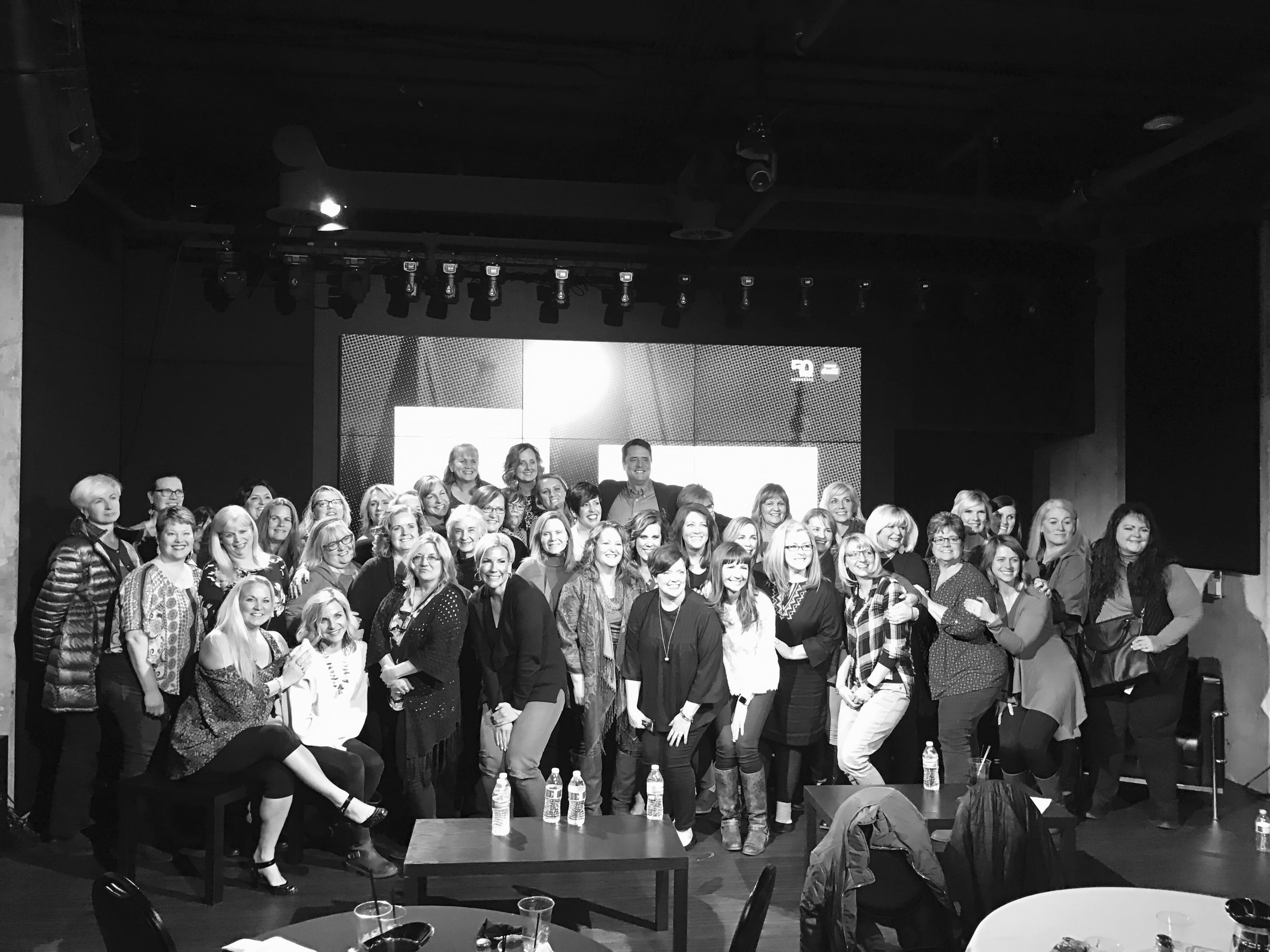
 We are a group of women 40+ with longer life experiences. We are grandmothers, mothers, aunts, single, divorced, widowed or married. We are LGBT friendly and feminists! Many of us are just learning feminism. Having felt the pain of patriarchy, but not having a “language” to describe our experiences, we are giving ourselves permission to flourish and grow with no limitations or constructs.
Many of us are at the beginning of a life we never imagined. We have had to make tough decisions, been tried by our choices, and some of us have lost important connections along the way. Being of a “certain age” makes it harder to make friends and to find a community of like-minded souls with whom to move forward with love, joy and friendship. We realize that our decisions can affect many generations, so our time is spent fostering relationships with our loved ones and excelling in our careers, businesses, and at home, all of which leaves little time and opportunity to make new friends.
This group is for “women of a certain age” or lovingly called WOCA (Wah-kah). We also have a group for “women of a certain age” and under. This age group, affectionally known as the UNDERS is from 30-40. The final group under the umbrella of WOCA are the COCAs. These are “Couples of a Certain Age” for those wishing to participate as couples. And housed inside of COCA is the “men only” group which meet regularly in men-only events.
WOCA activities are NOT within the paradigm of our former religious background, although themes from our lived experiences may come up. We have transitioned from our former organized religious choices and wish to create wonderful spaces where ALL people with commonalities can come together, share and find community.
If you would like to join us, please contact, from the list below, the appropriate person from your geographical area by way of Facebook messenger.
Wasatch (The Mother Ship): Christine Elkington & Kim Turner
COCA: Brett Nord
UNDERS: Ruth Tyson
Phoenix: Amy Grubbs
Boston: Amy Grubbs
Las Vegas: Christine Elkington
Bay Area: Kim Turner
Texas: Lisa Keyes
So-Cal: Lisa Durtschi
Idaho: Lisa Keyes
Sacramento: Lisa Keyes
Seattle: Nicole Bruderer
Cedar City/St. George: Nicole Bruderer
Denver: Ruth Tyson
Florida: Kim Turner
Oregon: Kim Turner
And if where you live isn’t on the list, please join our ONLINE group and be with women around the world just like you!
ONLINE: Kim Turner & Christine Elkington
Episode Transcript
Host: John Dehlin · Guests: Amy Grubbs, Christine Elkington, Kim Turner, Lisa Durchie, Lisa Kais, Nicole Bruder
This transcript is machine-generated and lightly edited for readability. The audio is authoritative. Please excuse occasional errors in names and spelling.
Welcome and Introduction to the Evening
John Dehlin [00:00:24] Hello, everyone, and welcome to another edition of Mormon Stories podcast. I'm your host, John Dehlin. It's March 7, 2017. We're in downtown Salt Lake City at club cafe at 50 west to celebrate women of a certain age, or waka. Let me hear it, everybody.
John Dehlin [00:00:43] Yeah, that's what I'm talking about. I'm supposed to say we're super excited to have you all here. Super duper, super duper pooper scooper. Excited to have Waka. We want to thank Jake Jensen and the good folks at Broadway Media for making this possible.
John Dehlin [00:01:06] Let's give them a hand, everybody. Hope you enjoyed your dinner and assorted beverages of your choosing. We love this venue, so we're really glad to be here. All right, so let's get into it. Some of you may know that we just released episode 701 through 704 of Mormon Stories podcast.
John Dehlin [00:01:32] How many of you have had a chance to check that out? Look at that. Look at that. Somebody's a superstar. Yes. For those who don't know, for the viewing audience, listening audience, we just released our interview with Kim Sandberg Turner. We're sorry we couldn't have Terry on the interview as well, but that was an epic four plus hours of wisdom and thought and blather.
John Dehlin [00:01:58] And I just refer listeners to that because we certainly did do a not sufficient but certainly a deep dive into the life of Kim Turner and her wonderful family. And in that, if you want to learn more about Kim and her background, she is one of the founders or co founders of waka, depending on how you want to spread the responsibility and glory. But that was a wonderful interview. So those of you listening or watching for the first time, check that out. If you haven't, you'll learn all about Kim and what led her to want to create waka. But we're going to go ahead and we're going to repeat a little bit of that tonight as well.
John Dehlin [00:02:37] And she did talk about WAKA in part four, but tonight is different. Tonight is a community event where we're going to be able to celebrate together, to bring up people from the audience to share comments and questions and experiences. And we have this wonderful, amazing panel up here as well.
John Dehlin [00:02:57] Team Waka. We have Team Waka. And I'll just tell you, in 705 episodes of Mormon Stories, no one's ever provided me with a list of questions. Questions. Never, never has anyone said, these are the questions you'll be asking, but these are the questions I'm to ask.
John Dehlin [00:03:17] Now, was this a walk of thread did you guys all come up with these? What is up with that? Does she micromanage everyone this way?
Christine Elkington [00:03:24] Or is it just.
John Dehlin [00:03:25] Or is it just me? Is this what it was like growing up in. In the Turner home?
Guest [00:03:29] Is it?
John Dehlin [00:03:30] JC's nodding her head yes. So let me just start with. No, I'm just kidding. No, I can ask whatever questions I want. But we do have a list of questions here, so I'm going to introduce. Without any further ado, I'll welcome you all. Thank you so much for coming. It's an honor to have you here. We want to do more events. I have a tiny bit of news. Margi and I put an offer on a home yesterday in Holiday. It was accepted. It was accepted today. So if all goes well, we'll be moving to Salt Lake in June. And we're super excited about that. And part of the idea is to be able to do more things like this because normally.
Kim Turner [00:04:12] Hey, where's the holiday harem stand out?
John Dehlin [00:04:14] Whoa, we have a harem. That's awesome. Mark and I aren't into that, but, you know, we're not judgmental at all. We support any and all life choices. It's not a problem. We don't judge here. But, yeah, part of the idea is to maybe hold more events like this. So if you guys have ideas, let's have some parties. All right, so with that, it's ready. It's time to begin. Why don't you take those questions away, get those back. Thanks for coming. Let's do more of these and let's begin. So we have eight. Is it eight wonderful ladies up here today? Seven. Seven wonderful ladies up here today. And let's begin by having each person introduce themselves. Kim, we're going to start with you. For those in the listening audience who don't know and haven't listened, episodes 701 through 704, just tell us briefly about yourself. Introduce yourself, Kim.
How WOCA Got Started
Kim Turner [00:05:18] I'm Kim Turner. And the reason I started WACA was because I wanted somebody to go to lunch with. And that's the truth. I thought I might get 10 ladies out who knew, you know, that there would be all these ladies. But thank you for coming tonight. And my life's an open book as of three days ago.
Nicole Bruder [00:05:39] So
Kim Turner [00:05:42] have a drink. If you listen to it, it's the only way to get through it. Nicole.
Nicole Bruder [00:05:48] My name is Nicole Bruder, and I live in Holiday. For my holiday friends. How much do you want us to go into?
John Dehlin [00:06:00] Just. Just tell us. Just tell us to start. Just your name, where you live. And one interesting thing about you.
Nicole Bruder [00:06:10] Okay, just one. She makes modest joking. One interesting thing about me, I have three daughters, no sons, so. And a female dog. So we have a house full of girls at our house and an amazing husband that supports us and loves it all.
John Dehlin [00:06:30] So welcome, Nicole. All right.
Lisa Kais [00:06:36] Hi, Lisa. I'm Lisa Kais from North Ogden, recently
John Dehlin [00:06:41] featured on a Mormon Transitions podcast episode. By the way, it's great to have you, Kim.
Lisa Kais [00:06:47] What am I supposed to say is interesting about me? Is that on the paper?
John Dehlin [00:06:50] Oh, shoot.
Lisa Kais [00:06:53] Gosh, that. I don't even know what's interesting about me. I ride motorcycle with my husband.
John Dehlin [00:06:58] That's cool. That's super cool. Welcome, Lisa.
Amy Grubbs [00:07:03] I'm Amy Grubbs, and I'm from South Jordan. And one interesting thing. I don't know if this is interesting. This may be a little bit weird, but I love home decorating shows, so. Jeff will attest, I am constantly watching hgtv, so. And I need help, I guess. So.
John Dehlin [00:07:21] Welcome. Andy.
Kim Turner [00:07:22] Did you know Chip and Joanna Gaines might move to Salt Lake City?
John Dehlin [00:07:32] Holiday, Holiday, Holiday is the place to be.
Kim Turner [00:07:37] They heard John was moving to Holiday. That's all it took.
Guest 2 [00:07:41] Okay.
Lisa Durchie [00:07:41] I am Lisa Durchie. I live in Cedar Hills, Utah. I have three kids. And what's interesting about me is that I'm on a lot of Xanax to be up on the stage. True story. And I just. Yeah, I was like, oh, just another half. Just another half.
John Dehlin [00:08:06] She's feeling good.
Lisa Durchie [00:08:07] I was gonna say, this is definitely a testament to how much I love Kim and how much I have waka, because probably some of our worst nightmares is to be on stage with a microphone. But we're here. So happy to be here.
John Dehlin [00:08:18] All right, she's taking one for the team. Or two or three.
Christine Elkington [00:08:31] Hi, I'm Christine Elkington. I'm from Tooele, Utah, and I'm doing this podcast completely unmedicated. And I was thinking back to the time when I was a Mormon and I used to give a lot of talks in church, and I went with that whole just imagine the audience in the their underwear thing. And it was so much easier when I was a Mormon speaking in church to imagine you all in your underwear, because I had a pretty good clue
Kim Turner [00:09:00] what you looked like.
Christine Elkington [00:09:03] And now it could just be anything.
John Dehlin [00:09:08] Wow. You never know with waka women. Are you guys gonna come out with a line of underwear? Is that in the works? Call it walka Wear walkaware. Call it waka. Waka.
Guest 3 [00:09:25] I'm Ruth Tyson, and I live in Lehigh, and I'm addicted to hiking, so that's. Know how exciting that is.
Amy Grubbs [00:09:33] But.
Lisa Durchie [00:09:33] All right, we've had a lot of fun.
John Dehlin [00:09:34] Let's give our panelists a round of applause, everybody. All right. All right. So, Kim, for those who don't want to listen to the previous episodes or haven't gotten to it yet, tell us just a tiny bit about what led to you wanting to start Walker.
Kim Turner [00:09:50] Well, I was serious. I was a woman of a certain age, and women.
John Dehlin [00:09:57] So your faith transition happened around what age?
Kim Turner [00:10:01] Okay, it started eight years ago, but acutely the last five years.
John Dehlin [00:10:06] Okay.
Kim Turner [00:10:07] And I'm 65 this year, so around 60. So, you know, it's. Those are pretty hard years to have a major change in your life. And you examine your life and you think, what would I have been? What would I have done? What would I have thought if I hadn't had this?
Kim Turner [00:10:24] Lived in the Truman world. Right. And so anyway, I was John. I'm going to write on John. Because, John, basically, what started it is I kept waiting to find a group that took care of women of our age. And when I did a lot of things with the Mormon feminists, and I love them dearly, but I kept saying, what about your matriarchs? What about us? There's an underserved part of the population where we are. You know, we just kind of disappear. And in the church, we disappeared. We became the little woman sitting there holding the purse while husbands became bishops and stake presidents and mission presidents and went on to all those wonderful things they had to look forward to.
Kim Turner [00:11:07] And after our baby days were over, we were pretty much relegated to a quiet position. But it was also that way in the community as well. And I always wanted to do something for that undeserved part of the population. And so as I was thinking about things, John would put me in different groups, and I would go in and I'd go. I'd leave too angry, or I'd leave. They were too angry. They were all angry. It seemed like I was done being angry. I wanted to be happy. I wanted to move on. I wanted to go forward. I wanted a wonderful life. And so one day it dawned on me, well, maybe you're gonna have to do it then.
Kim Turner [00:11:45] So I didn't want to have a name with the word Mormon in it. I think Steve Holbrooke. He's over there. Is Steve over there? Oh, okay. Every time they designed these post Mormon groups, and they'd always put the word Mormon in it, and I'd always say, do we have to have the word Mormon in it. Can't we just have a word that doesn't have Mormon in it? And then so we became women of a certain age and later on it became waka and there were just really, just a few ladies and I really thought it really was just so I would have companionship and you know, and friends in that regard that knew my, the things that I knew as an older woman and then, and at the time when I started waka, it was 50 on up.
Kim Turner [00:12:29] And then I get a slug of 40 year olds saying please, please, please, please, can we come in? Please, please. So I'm going, okay, so I lower it to 40. And we've been cooking, you know, pretty good for the last. We're almost two years old and now all of a sudden we've got a bunch of unders. And unders are women of a certain age and under and they're in their 30s. And so we're, we put together any unders in here? Yeah, there's some unders here.
John Dehlin [00:12:56] Yeah, a couple unders.
Kim Turner [00:12:57] All right, so anyway, so let me get this straight.
Lisa Kais [00:13:00] Yeah.
John Dehlin [00:13:00] My contribution to waka was putting you in so many awful groups, you had to start your own. I'm very much obliged. I'm very happy to have supported you.
Kim Turner [00:13:11] They weren't awful because people need to be in angry groups for a while and sometimes they need to be.
John Dehlin [00:13:17] Oh yeah, and all my groups are angry.
Guest 4 [00:13:18] That's great.
John Dehlin [00:13:19] I'm glad, I'm glad to know. I'm happy. And sometimes you have to do that stuff.
Kim Turner [00:13:24] But I was done with all of that stuff. I was done with that stuff. I wanted to do other things and I wanted to think other things and the world is wonderful. So there you go.
Life Before and After Leaving the Church
John Dehlin [00:13:35] Let me ask you this. So many people just want to process their own experience, have their own pain. So many people just want to move on and run away. And people can form their little coffee groups or lunch groups. But what, what was different about you? What made you want to start a support community?
Kim Turner [00:13:56] Well, the thing that to me, the
John Dehlin [00:13:59] thing that's a different deal.
Kim Turner [00:14:00] Right, right. Because the thing that was important in our, in our former LDS wards was the fact that you saw the same people every week. They knew your kids names, they knew the things you liked. There was a community there. So, you know, you can go places and hear speakers and see, see things, but it's a different group every week or it's a different set of people. And when waka starts, we know each other now and we see each other every day and we Talk to each other all the time. Oh, Waka. The Facebook page of Waka is alive and well. Let me tell you, it's alive and well.
John Dehlin [00:14:37] Can I join?
Kim Turner [00:14:38] Can we talk about everything? Nope. And so. But. And then we started this thing called Good News Every Sunday, which sounds familiar, but what it does, though, is it takes it to a new level where we get to know the things that motivate you, things that you, you know, that were great that week, or we knew things that your kids did or things that you did.
John Dehlin [00:14:58] And so you're jumping ahead of me.
Guest 4 [00:14:59] Yeah.
Kim Turner [00:14:59] Well, now you're getting to know each other, right?
John Dehlin [00:15:01] Yeah, yeah, yeah. So you didn't answer the question. Why did you start. Why start a community and not just find your own little group of friends?
Kim Turner [00:15:10] Because I didn't know it was going to be community. I was starting my own little group of friends.
John Dehlin [00:15:14] So you thought it would just be. You literally thought Waka was going to be 10 people?
Kim Turner [00:15:17] Yeah.
John Dehlin [00:15:17] Do you believe her?
Guest 5 [00:15:18] And then.
Kim Turner [00:15:19] No, it really was that way. And then people started wanting to come in.
John Dehlin [00:15:23] You weren't trying to lead a move?
Kim Turner [00:15:24] Oh, no, no, no, no. And people just started coming in and then coming in. It started growing beautiful. It got bigger and bigger and. No.
John Dehlin [00:15:32] What was your life like prior to Wacca, when you were active in the church? Who is your friends and who is your community? And did that change when you lost your faith? Did that leave a vacuum? So what was it like before?
Kim Turner [00:15:44] Yeah, the only two friends I have from my ward are sitting in this audience.
John Dehlin [00:15:53] Raise your hands. Raise your hands.
Kim Turner [00:15:54] Stand up. My two friends.
John Dehlin [00:15:57] So before, did you have a lot of friends in your ward?
Kim Turner [00:15:59] I think so, yeah.
John Dehlin [00:16:01] And you thought they were real?
Kim Turner [00:16:02] I lived with them for 20 years, and I served and I fed them meals and I took care of their kids and I cooked for them and I served them.
Guest 4 [00:16:09] And.
Kim Turner [00:16:10] Yeah.
John Dehlin [00:16:11] What was that like? Did you think when you left the church you'd keep more friends than you did?
Kim Turner [00:16:17] Well, did you think it would be too. Let me put it this way. About a year or two before that, I would have said yes. But then I was hearing these rumors about people just kind of disappearing, and I. It was really funny because they'd be going to church, they'd be this active family, and the next thing you know, they're not there anymore. But nobody said anything about it. Nobody said, well, what's happening to the Smith family? Let's go take care of them. Give some. You know, they just disappeared off the. Off the radar. And it was weird. And Then somebody else disappeared off the radar. And I don't know. It was just odd. I don't know why people didn't do something about it.
John Dehlin [00:16:54] And what was that like for you emotionally to lose then?
Kim Turner [00:16:59] I knew it was gonna happen. Well, I knew. I knew When.
John Dehlin [00:17:01] How did it feel when it happened?
Kim Turner [00:17:03] I kind of knew it was gonna happen. But you don't escape feeling badly, of course. You feel like. You feel like you hope that people knew you and that it's like. I think there's got to be cognitive dissonance because they've known you for 20 years, then all of a sudden you just change your mind. And then they go into the robot zone, and they're going to act like this certain way with you from now on, but they've got to be confused inside because they got to still remember that, don't they?
Kim Turner [00:17:35] And so they've got to be going back and forth because the church is telling them or making them feel like they have to behave a certain way with someone in my position, because now I'm someone to be. To be shunned or ignored or othered or just forgotten, but yet they've known me for 20 years. Does that give somebody, a good person, cognitive dissonance? Don't you think that should.
John Dehlin [00:17:56] So were you sad?
Lisa Kais [00:17:57] Yeah.
John Dehlin [00:17:58] Were you lonely?
Kim Turner [00:17:59] Nope.
John Dehlin [00:17:59] You weren't lonely?
Kim Turner [00:18:00] No. Because my ward wasn't my world. I have a big world.
John Dehlin [00:18:04] Okay. But you. But you were something enough to want to have a group of friends.
Kim Turner [00:18:08] Yes. And I. But I really wanted to talk to women my age, women your age, because we have a unique set of problems that are unique to our situation when doing this thing.
John Dehlin [00:18:19] Got it? All right, let's go down the list, and I'm going to have everyone do what I want you to do. Tell the age you were, if you're comfortable, when you decided that the church wasn't for you, and in 10 words or less, say what the impetus was for you leaving, if you can. 10 words or less. It's a test. Who's gonna count? Jeff, you count the words. I want your fingers to go up. 10 words or less. How old were you when it happened? And 10 words or less what the impetus was for your transition. Should we start with Ruth? Right.
Guest 3 [00:18:59] I'm gonna be 50. How old am I gonna be? 57, Friday. And I was in 2012. I was 50.
John Dehlin [00:19:09] 52.
Guest 3 [00:19:10] Two. So 52.
John Dehlin [00:19:11] All right.
Guest 3 [00:19:12] Oh, brother.
John Dehlin [00:19:13] You guys do your math now. Do your math now so we don't have to do all your math later.
Kim Turner [00:19:17] Okay?
John Dehlin [00:19:18] I didn't bring my calculator.
Guest 3 [00:19:19] And the impetus was I wanted my calling election. It's gonna be more than 10. I gotta do the 10 words. I know. Second anointing. I wanted Jesus to come in a physical form and visit me and tell me I was, of course, worthy servant. Now he's going to celestial kingdom for sure and found out it's just good old boys club.
Amy Grubbs [00:19:37] All right.
John Dehlin [00:19:38] Okay, so second anointing. All right. Christine.
Christine Elkington [00:19:44] I don't remember exactly, but I think it was probably around 45, which is weird because I'm 29 now.
John Dehlin [00:19:53] She's witty. I didn't know Christine was that witty. She's so cool.
Christine Elkington [00:19:58] I started listening to podcasts and studying podcasts.
John Dehlin [00:20:03] I take no responsibility. Lisa.
Lisa Durchie [00:20:07] Mine was 2008. It was the month I was turning 40.
John Dehlin [00:20:11] 40.
Kim Turner [00:20:11] Yeah.
Lisa Durchie [00:20:12] I kind of fantasized about being out for a while, but that kind of turning 40 and Prop 8, being from Southern California was a big one for me.
John Dehlin [00:20:19] Prop 8.
Lisa Durchie [00:20:20] And, yeah, I just kind of. As my kids got older, the older they got, the more I thought, this is not going to be a happy place for them. And so we kind of made a clean break. But I did maintain a lot of friendships in the ward. We can talk about that later. But it's taken time.
Guest 2 [00:20:35] Yeah.
John Dehlin [00:20:36] All right, cool. Amy.
Amy Grubbs [00:20:39] I think I was probably around 39 or 40, and it was definitely a slow descent, so I can't think of a specific impetus. But I remember Jeff and I only have one daughter. We couldn't have any more kids, and that made church and everything just seemed really difficult. We didn't belong. And then Jeff found your podcast, and it was just kind of downhill from there. So
John Dehlin [00:21:08] I'm setting myself up.
Amy Grubbs [00:21:09] It was uphill.
John Dehlin [00:21:11] What?
Amy Grubbs [00:21:11] It went downhill, but then uphill.
John Dehlin [00:21:13] All downhill from there. I'm to just going getting beat up today. All right,
Lisa Kais [00:21:18] so I just turned 59. And mine started exactly two years ago, almost like right now. And what started it was my daughter was leaving church and I was going to answer her questions and keep her in. My daughter.
John Dehlin [00:21:42] All right, now you get some of the blame. I'm happy to share it. You'll take it. She's proud.
Nicole Bruder [00:21:48] Oh, gosh. It was about four and a half years ago, so 40, and my brother left the church about six years ago, so that kind of made my mind ask some questions and. Yeah. Listen to some podcasts.
John Dehlin [00:22:09] All right. I want to ask which ones.
Kim Turner [00:22:12] Can I read something?
John Dehlin [00:22:13] Yeah, please.
Kim Turner [00:22:15] Before we get into.
John Dehlin [00:22:16] She's just going to take over and ask the Question.
Kim Turner [00:22:18] No, this is really funny. No, this is funny. We have this thing called group me. And whenever we talk to each other, that's how we go on and plan things and talk about things. So today, today. I'm going to read a few things they talked about today. First of all, there was somebody put a meme with a viking on it. It said, brace yourselves, the wakas are coming. Then somebody said, that's okay. I think I've gained 10 pounds. Stress eating, just thinking about being on stage. And then somebody says, who has Xanax? And somebody says, screw Xanax. Who has pot? I think maybe John de Lynn has no idea what he's getting himself into when he asked us to do this.
John Dehlin [00:23:05] That's true.
Kim Turner [00:23:06] I'm already high on Xanax. I'm not kidding. But don't worry. But don't worry. I'm riding with Sharon.
John Dehlin [00:23:16] Lisa, you. Lisa, you've been buzzing all day, haven't you? She's still. She's going strong. She starts in the morning.
Kim Turner [00:23:27] Somebody says, well, I'm high on the gospel. Christine, you're obviously the brains behind this organization. How do you manage to stay sane working with these clowns? It doesn't matter what John asks. Every question directed to me will be answered like this. That's really a great question. Thanks for asking that, Lisa D. And I were talking about that the other day and she had some amazing thoughts on that very thing, and I'm sure she'd love to share. Lisa, I need a subtle clue when I should shut up. You know, I always have mouth regret.
Kim Turner [00:24:06] Well, like maybe a brick to the head or a shh. Or a cut sign. I need a safe word. I'll just say shut the hell up. Lisa, who is that? What are you crafting? Are you making handouts? I'm crafting our barf bags for tonight.
Kim Turner [00:24:29] I'm never gonna put cinque ones on them. Oh, you guys are way too funny. And you make me pee my pants way too often. No jokes tonight because that will be embarrassing. I think I will just need to sit in the audience with my depends on.
Kim Turner [00:24:45] I'm way too boring for this panel. Okay, here's the question. Question John could ask. Many times when people leave Mormonism in middle age or beyond, there is regret for things they may have missed out on, paths not explored or opportunities turned down because of the need they felt to be obedient to the commandments, church leaders, gender roles, etc. What, if any, do you feel are the advantages of leaving the church at your age?
John Dehlin [00:25:18] My voice? Are you doing my voice? I'm offended.
Kim Turner [00:25:21] And then we all just stare at John blankly. Okay, we need to color coordinate our outfits. Remember your pearls, ladies. And of course, Ruthie brought her scriptures. Then. Then. Then we all had to look at pictures of Ruth and decide if she should wear her glasses or not.
John Dehlin [00:25:48] Do you still have them? Okay, I'm gonna try both and let
Kim Turner [00:25:53] her know what regarding why Waka? I wish we had had more time to prepare for this, because I seriously would have crafted a special WAKA testimony glove. Patent pending. You can't really go wrong with either of those, Lisa. Oh, oh, oh, oh. Lisa posted a dress. Two black dresses to decide about wearing tonight. And Xanax girl, we call her. We call her Pina. Okay, you. You can't. You can't really go wrong with either of those, Lisa. And Lisa says, and then, Lisa, do you speak German in those dresses? And she said, I guess it's just a matter of which one. I'd rather go with the front cleavage or the side butt. No, I speak German when I wear my Lance nightgown. And then finally, someone said, don't forget your scriptures.
John Dehlin [00:26:51] She really brought them. Beautiful. That was good. Super fun. All right, so. So you guys have way too much fun. That was actually a really fun sample of what you guys do behind the scenes every day. Every day, all day long. How many of you feel like your productivity has declined significantly since joining? All your bosses are really angry? Your kids are naked running around the streets as you're Facebooking all day long. Is that how it goes? All right, so some of the panelists, I'm curious to know, know why you needed WACA. What. What was your life before PW&AW. What is it? Pre Waka Post Waka Any after Waka? Pwaw. Any of you guys want to share the role that WACA played for you sort of in your transition?
What WOCA Means to Its Members
Lisa Kais [00:27:47] For me, WACCA has been, like, the most amazing group of women I've ever been associated with. So I spent. What was it like before, 57 years, totally immersed in church. That was what I ate, drank, breathed, talked about, thought about, slept, dreamt about. I.
Lisa Kais [00:28:10] Right. Water. Just water. I was that. It was truly all I did. And. And I served a lot in young women's, and so that was just my wheelhouse, and I loved it. And so when my faith went away and I didn't believe anymore, all of that left.
Lisa Kais [00:28:34] And for a long time, I felt very lonely. I felt like nobody in my family understood me. I was an outsider looking into this Class, close knit family that I had once been such a part of. And they had admired me and wanted me to bear my testimony and share my thoughts with them always. And I was a person they looked to for advice and everything. And I lost that immediately with all my nieces and nephews. And so it's really hard. It's hard when you lose your family, and it's hard when you lose your ward family.
Nicole Bruder [00:29:11] So
Lisa Kais [00:29:13] pre waca, it was all about church. And then about a year and a half ago, I met some of these wonderful women and they filled in all those gaps. And I think that's the beauty of this group, is that we all get each other. Like, we've experienced very, very painful things, hurtful things our parents have said hurtful things. Our siblings have had similar hurtful things, friends we've lost, friendships that we thought would be forever, and turns out they weren't. And so now we have this amazing group of women that.
John Dehlin [00:29:52] Can you cry in Waka? Tears are encouraged.
Lisa Kais [00:30:01] So I don't know what I would do without Waka. This is fabulous. And to Mama Kim for making this all happen through you. I mean, thanks for setting up.
John Dehlin [00:30:13] Thanks for ruining her life so that she would start WAKA as a recovery program from. It's worked out well for us support communities.
Lisa Kais [00:30:20] Right, right.
John Dehlin [00:30:21] My pleasure. It's my pleasure. Who else wants to share Pre walk up post Walker, real quick. We'll get into what Waka does, but I just want to understand what brings people to it.
Amy Grubbs [00:30:30] I think I agree a lot with what Lisa said. You know, before waca, I had met a lot of people, but they're all kind of more surface relationships. You know, you go to different events and you meet post Mormons. But again, it was no real in depth relationships for me. And once I started and was invited to be a part of waka, I felt like I was making real meaningful relationships with women. Women who were like me, were the same age as me, and, you know, that really cared about me. And it was more than just, let's go out to dinner once and then never talk again, you know, so the deeper relationships.
John Dehlin [00:31:09] Anyone else want to join in?
Kim Turner [00:31:10] I do.
John Dehlin [00:31:12] Wait, where's your glasses? Get her glasses.
Kim Turner [00:31:15] I can't see anything.
John Dehlin [00:31:18] No, I'm just being silly. I'm totally being silly. All right, let's ask the audience. Glasses. Oh, they like the glasses. All right. Keep the glasses.
Guest 3 [00:31:30] Exactly what they said. I wanted the second anointing and they said to pray for it. I was praying for it, but my life was entirely immersed in church every moment of every day. I went to the temple twice a week for almost my entire married life. Every Saturday morning, Rick and I went twice a week, twice a week, for.
John Dehlin [00:31:50] Who could say they did that?
Guest 3 [00:31:52] That was me.
John Dehlin [00:31:53] That's intense.
Guest 3 [00:31:54] Yep. In the week, I went with.
John Dehlin [00:31:56] Where's your husband? Bless you. Twice a week.
Kim Turner [00:32:01] Yep.
Guest 3 [00:32:03] He went every. He went every Saturday morning with me, but I went in the week with my friend anyway. So they were. I had a lot of friendships, but they all revolved around church. So we'd go to the genealogy library, right, at the fe. You know, it open, and then you have five minutes before you need to. You need to refile your films. Anyway, I just spent every waking moment doing church. Every moment. And that's why I brought my scriptures.
John Dehlin [00:32:29] You just can't leave them.
Guest 3 [00:32:32] Every page just like that. Ridiculous. So now I get to do where I want. So I go hiking all the time, and I've been on hikes with so many of these amazing. I am a nature girl. I'm a hippie inside. I grew up in Georgia.
John Dehlin [00:32:47] Are they called waka walks?
Christine Elkington [00:32:48] Walka walks.
Guest 3 [00:32:49] Exactly.
John Dehlin [00:32:50] I made that up.
Kim Turner [00:32:51] Yeah. Walka walks.
Guest 3 [00:32:53] And it's really fun.
Nicole Bruder [00:32:54] And.
Guest 3 [00:32:55] And we have something almost every day. It feels like we go on walks.
Guest 4 [00:32:59] We go.
Guest 3 [00:33:00] We have breakfast, we have lunch, and we have dinner. We have. Have. We have. Do art, and I make jewelry. I mean, seriously, these are the best times of my life. And anger is just that I don't have more years, you know, more years to do this. And so finally, I get to do my life.
John Dehlin [00:33:19] Love it. Does anybody. Were you going to jump in?
Lisa Durchie [00:33:26] I was going to jump in.
John Dehlin [00:33:27] Please. Lisa.
Lisa Durchie [00:33:28] The Xanax has kicked in, so I'm good.
John Dehlin [00:33:31] So flying high. All right, bring it.
Lisa Durchie [00:33:34] I grew up kind of like Kim. I was the only active member in my family growing up, and so I went to church by myself as a teenager. My family was always very supportive, but for me, friends were super important in the church. And so when we found ourselves thinking about Mormonism differently than we ever thought we would, we live in a very, very conservative neighborhood in northern Utah county, and people asked if we should, you know, maybe move. And I said, I'm not going to get kicked out of my neighborhood. I want to stay here and connected to all these people that I love just because I found myself in a different place than I thought I would.
Lisa Durchie [00:34:08] So having said that, you know, I run into people at the grocery store, and sometimes I could tell they were a little uncomfortable, and I just ram my Card into them and say, hey, I haven't seen you in a while. And I could visibly see people kind of. Kind of disarm. And, you know, I found that humor can really help a lot of awkward situations. And I have made a point of maintaining so many of those friendships. But having said that, finding these women that have something in common with what we've all gone through, there's something just really different about that. I love my friends that are in the church, but these sisters just. We get each other.
John Dehlin [00:34:42] It's amazing. Why? Why just women? It's probably an obvious question, but what's the value of keeping it to a specific gender? Sex, Sex, gender.
Kim Turner [00:34:56] So we can talk dirty.
John Dehlin [00:35:02] Do you guys talk dirty? Okay, okay. I want to hear some examples of dirty talk.
Kim Turner [00:35:10] We. You know, we could never talk about that stuff. And we talk about what's says.
John Dehlin [00:35:16] What do you talk about? What are some of the threads?
Lisa Durchie [00:35:18] Anything.
John Dehlin [00:35:19] Edit. You don't want to give it. Is it too. Is it too racy for podcast? Probably too racy for Mormon stories. Really?
Amy Grubbs [00:35:28] All right.
Kim Turner [00:35:30] But it's a women's space. But we all have permission to just.
John Dehlin [00:35:33] So, like your sex lives. You talk about your sex lives?
Lisa Durchie [00:35:36] Not maybe on the Facebook page.
John Dehlin [00:35:38] What?
Lisa Durchie [00:35:39] Amy calls me every morning with details.
John Dehlin [00:35:41] Amy. Jeff. Jeff. Did you know that? Jeff.
Amy Grubbs [00:35:45] That is not true. I think Amy is the one we know about. Take another Xanax.
John Dehlin [00:35:52] No. So you're not sharing your sex?
Kim Turner [00:35:54] Well, we talk about healthy sex and sex when you're older and sex and stuff like that. And somebody had a party about that. And then we talk about things on the wall. But they're healthy things. They're good things. There's nothing to be ashamed about. It's part of everything. It's wonderful.
John Dehlin [00:36:11] Should husbands be nervous?
Kim Turner [00:36:14] They should be afraid.
John Dehlin [00:36:18] Do you guys share inappropriate photos on Waka? No, No. I don't mean that in a bad way. I just mean, like.
Kim Turner [00:36:25] No. No.
Amy Grubbs [00:36:26] All right.
Kim Turner [00:36:26] No.
John Dehlin [00:36:27] All right. So it gets racy. Why else Women. Why else? Just women. Like, why not? Why not a community with both.
Christine Elkington [00:36:36] It really cuts down on the swinging.
John Dehlin [00:36:38] Less swinging. So there's still some. It's just less.
Amy Grubbs [00:36:42] Yeah.
John Dehlin [00:36:43] Okay. Less swinging.
Kim Turner [00:36:44] There is no swinging.
John Dehlin [00:36:47] No swinging, no swing. Just wait a year. Just wait a year. It comes down. It comes to everybody. I'm just kidding, man. Never.
Kim Turner [00:36:56] You know, it's illegal.
John Dehlin [00:36:57] It's illegal in Waka. No swinging. Okay. Why else? Why else? Just women. Why not men and women?
Nicole Bruder [00:37:03] Well, I mean, we've spent our lives serving with women in organizations and and in our communities. And so I think all of us, well, at least for me, I was missing that. And to have an instant group of friends that understood my background and that could be my friend, listen to me, and I could support them back and forth. I mean, we just gravitate towards each other and we need each other. I mean, for me, it was a lifeline and when I felt really alone. So, yeah, I think.
John Dehlin [00:37:35] Okay, any others perspectives on women?
Guest 3 [00:37:37] It's exactly what Kim said at the beginning. We wanted somebody to go to lunch with or hiking with or make jewelry, whatever. And so on the website, which is kind of how we plan our events. If it was a co ed or like some of the other, the websites where it's discussing all the other issues, this is a get together. We do some, you know, discussing things, but mostly it's like, and who wants to meet to go here and oh, let's go get together to go to movies. So it's really about what Kim said, people to go to lunch with and all those other things.
John Dehlin [00:38:11] Okay.
Lisa Kais [00:38:13] And I think women need women. Like, women really need women. And like, we, we're going through some experiences at the same time. So when we were in church and we gave everything to church, to the church, we thought we were building the kingdom of God. And so we had all the validation that we needed because God gave us our validation. And so when you leave church, you no longer have that validation and you flounder like, am I okay? Are my kids gonna think I'm okay? Does my husband think I'm okay?
Lisa Kais [00:38:46] Do I think I'm okay? Where am I gonna get my validation from? And so as we, as problems arise in our group, like your child's going to the temple and you don't get to go, then we discuss that, you know, so we've had people who can say, well, this is how we handled it, or this is how I handled it, or this is how I handled my granddaughter's baptism. This is how I'm handling. So we have that commonality that helps us through the difficult times as well as the laughter that helps us through the good times.
Kim Turner [00:39:22] There's nothing we can't say. I remember the first time somebody used the F word on the wall and they wrote, oh, should I not do that? And I remember thinking, because I'm the admin there. And I remember thinking, okay, what do you think? And I thought, no, they can use whatever words they want. We're not into restrictions or rules or those kinds of things anymore. And they can say anything. Nobody it's just open. It's just open. I hope everybody feels that way.
John Dehlin [00:39:53] Why not include. Okay, so I know that you tried being parts of sort of the younger feminist groups, and that didn't quite meet your needs. Why not create a group where you're the leader, where the women of a certain age are leaders, but young women are also invited. Why the need to kind of draw a line and have it not include the 20 somethings, for example?
Kim Turner [00:40:15] Well, we have young women. We've got the 40s. It's because I think in your 20s and your 30s, there's a lot. And I think there's more support and there's more things that happen to women. Again, like I said, when you get older, you disappear. And we need to come back and we need to make a statement. We need to be present. Feminism is a big part of WACA and having a presence and not asking for permission anymore. And down with the patriarchy. We no longer live within that.
John Dehlin [00:40:58] And I'm offended. You're taking all my power away. Cut that out.
Kim Turner [00:41:06] So. Well, we've talked about that.
John Dehlin [00:41:09] How can I feel strong if I'm not over?
Kim Turner [00:41:11] It's not. It's not a matter of making men weak. It's a matter of making us equal. It's not even a matter of that. And yet people throw that out there as just a red herring, you know, but to keep from facing what we really need to do. But we're. I don't know, there's just. And we all feel equal. And you know what? We did do this one thing where we. They. The 40s do have their own Facebook page, and they wanted to do that so they would have some 40s activities too, and still be with Wacca Wasatch. But it kind of got kind of inactive because we kind of found out they kind of like hanging out with us old broads.
Kim Turner [00:41:48] But that's the beauty of women. We need each other at all ages. I need to know how a young mother feels and I can give her wisdom about babies that they're, you know, when they're scared and they can talk to me about menopause and what it's like and what it's like to get older, what it feels like. And generations past, what 100 years ago women were. They all lived in the same house by generations. And we talked to each other and helped each other. And it's kind of like that in Wakin now because we've got. We've just got the best relief society we could have, don't we like it should have been. Like it should have been.
WOCA's Reach, Events, and Community
John Dehlin [00:42:24] Any idea how many WAKA women there are in the world total in all the groups? Any idea? 100, 200?
Kim Turner [00:42:31] Well, I did the total today. How many groups do we have?
John Dehlin [00:42:35] No, there's eight groups talking to the microphone. No, the listening audience can't hear you. Eight groups. Eight or nine groups.
Kim Turner [00:42:43] Nine, yeah. And then we. We've got one that's going to be opening up.
John Dehlin [00:42:47] But some of the cities include.
Guest 3 [00:42:52] Speaking of microphones, Phoenix, Denver, California, Sacramento,
Kim Turner [00:42:59] Seattle, Austin, Boise's coming up. Boston's coming up.
John Dehlin [00:43:05] Okay, how does someone. If someone wants to join waka, what
Kim Turner [00:43:08] do they do for as of today, they message me, Kim, Sandberg, Turner, and they. And they. Sandberg with an e. But this week, it will all change. They've all. Everyone's going to be over a specific area.
John Dehlin [00:43:22] Divide and conquer. And it's kind of like a quorum of the 70.
Kim Turner [00:43:25] And after that.
John Dehlin [00:43:25] Oh, wait, quorum of the 12. Oh, no, each one has your own area. I see how this works. We all know how this ends, don't we? All right, you need a few more. If you shave 12.
Kim Turner [00:43:37] We've got. We've got more coming up. And then. And then, since the podcast.
John Dehlin [00:43:41] Yeah.
Kim Turner [00:43:42] I probably have 25 women in the tube since just yesterday and different places, so. All right, Texas is forming. Texas is forming up. Yeah.
John Dehlin [00:43:52] I think if I'm your walker, missionary, I get to. I get to join waka.
Kim Turner [00:43:56] You are in coca.
John Dehlin [00:43:59] I'm in the spirit of waka. Okay, we'll get to coca. Okay, so, all right, so I want to hear from several of you your favorite WKA experience. And the purpose is to give the listening audience an idea of the types of events or activities that you hold. So don't repeat, but just share a diversity of WAKA experiences so that the listeners can know what they'll experience or if they want to create their own waka, what types of events they can envision. Is that a hard question?
Nicole Bruder [00:44:38] Well, it is a little hard to decide which is our favorite event. Yeah, well, for me, my first event, I joined Waka 11 months ago. I checked on my face on the Facebook page today.
John Dehlin [00:44:51] Is there a month and year WAKA started? Is there like a birthday probably? Wait, talk to the microphone.
Kim Turner [00:44:58] We're coming on two years this August, so August 2015.
Nicole Bruder [00:45:03] Yeah.
John Dehlin [00:45:04] All right.
Nicole Bruder [00:45:05] So I joined 11 months ago, and I felt very isolated and alone, and I had a very dear friend who was in WAKA who told me about it and added me to the group and soon after I joined, there was a sleepover retreat in Midway in April of last year. Storytelling event. So, yeah, it was the first storytelling event. So I was really scared. And I'm like, can I come? Even though I'm late joining. And they made accommodations, and I came up, and there were probably what, 20 of us up there?
John Dehlin [00:45:46] 20, 30 women, something like that.
Kim Turner [00:45:47] Yeah.
Nicole Bruder [00:45:49] And we. We spent the weekend just sharing our stories. And that was the first time I'd really been able to tell my experience and hear other people's experiences. And I was living in a lot of fear at that time of coming out more and being more open about where I was with the church. And so to be able to listen to other people saying, like, I did this and I had to do that, and I lost this, but I gained. That was life changing for me. Like, it really brought me out of a dark place into a place of hope and a place where I was like, okay, I can do this.
Nicole Bruder [00:46:28] And to know that I had these women who. Who had my back if I needed it and I could turn to it just. It was really. I keep saying it, but it's life changing for me, and it gave me a lot of courage, and it helped me find my own voice in this experience.
John Dehlin [00:46:45] And now you guys have two of these a year, right, If I remember that correctly.
Nicole Bruder [00:46:50] Yep.
John Dehlin [00:46:50] Yep.
Nicole Bruder [00:46:50] I got one coming up in April again.
John Dehlin [00:46:52] All right. And the men don't have to come to girls camp, do they?
Nicole Bruder [00:46:58] They don't get to.
Kim Turner [00:47:01] The beauty of the. Of the storytelling twice a year is for. Largely for the new ones that come in because they can hear everyone tell their stories. And there's something very magical about hearing someone share their story and you know who they are. And it's binding and it's. It's just powerful. I can't explain. And it's just a simple thing that we do. We just tell stories.
Nicole Bruder [00:47:25] And I think it's also very powerful to be able to use words to tell your own story and vocalize it. Yeah, Verbalize it.
John Dehlin [00:47:34] I'm partial to stories, too. Okay, who's next?
Christine Elkington [00:47:37] I love the big storytelling events. I love getting together in this huge group. But I inevitably leave these big gatherings feeling sad about all the people I didn't get a chance to talk to. So some of my favorite WKA events are these little things that pop up. Like, Ruth will post. I'm going on a hike tomorrow. Who wants to come with me? So to hike just with Ruth or maybe one or two other people so that I can really enjoy some in depth conversations with them. Or someone will say, hey, who wants to go to dinner? And it will be such short notice that we can't get all 150 of us, but it'll be seven or eight. And those are some of the best times that I've had with some of these friends. It's just small gatherings as well where we get to really get to know each other more in depth.
John Dehlin [00:48:24] Love it. All right, who else? Favorite walkie events or experience?
Lisa Durchie [00:48:29] I was just gonna say I don't think we can kind of underestimate the importance of the in person events when we all get together. And even if it's just one or two people at like the retreat, because there's a lot of us there that you take away. I know Amy and I always joke that we were kind of relegated to the kitchen one the fall retreat and we bonded over the amount of trash that was generated at the Waka retreat. And we just took out trash all. But we have now we probably talk every single day. And a couple other girls that I met at that weekend and we just text every day and just. Yeah, you kind of find. And then maybe at the next retreat I find five more people that I connect with. But it's those little connections you make and come home with.
Guest 3 [00:49:08] I think one of my favorite ones on the small group idea, my house isn't nearly as big as Kim's. And so we talked. We have another kind of event. It's called takas, or Topics of a certain. And they don't have anything to do with religion or, well, Mormonism. They might have to do with religion, but they don't have to do with Mormonism. So this is one of the ones people were talking about. I had this dream and this made sense. I had this dream too. I wonder what that means. And I've been studying dream interpretation and Jungian psychology and archetypes and all that forever. And so I had a comment and so we just had a group.
Guest 3 [00:49:42] And so I said, first, how many people? And then that's how many people that could fit into my house. And other people, I've been to other people's houses and they've had they're good at something. And they just said, oh, I'm having a class on, you know, refinishing furniture. And then how many people are going to go to that. So that's the best. We just have topics, people, different people are good at something and we just go. It's really fun.
Kim Turner [00:50:05] It's self motivating. I mean, everyone can decide there's no one in charge of making events all the time. Anyone can create an event on any subject at any time. And we did talk is because we are so big now, if anybody puts the word out and says, we're going to do this thing, we get 150 women show up and stuff. So it's like, so now that the talka thing is smaller groups, you say, hey, this is the subject. We've got 10 slots. Let's get together and do things like that. And then I know Vicki's here. Vicki did something. Vicki Eastman did something fun. They wanted an intimate at lunch, so they said, okay, we're meeting for lunch.
Kim Turner [00:50:39] We've got six lots. As soon as they're filled, you're done. So you get, you know, those people that prefer more quieter lunches and things like that, you know, I mean, there really is no rules. You can invent, create, do anything that you'd like to, and there'll be some woman that will love to do it with you.
John Dehlin [00:51:00] Sometimes, you know, you think, you know, we've all learned sort of how patriarchies work in highly bureaucratic organization with lots of rules. Right. And sometimes we start to believe that that's necessary to create order in a community. In what? And I don't. I want to hear from people who, well, you guys are all kind of leaders, so maybe, maybe I'll hear from any of you. But how have you tried to manage and lead WACA in ways that are different from how we all learned leadership was before? You know, how are you avoiding some of the pitfalls of patriarchy? Honestly? No rules. Is that the answer?
Nicole Bruder [00:51:42] We never ask our husbands.
John Dehlin [00:51:44] Okay, but I mean, women can replicate patriarchy, right? So like, how do you manage this group without it, you know, being a bunch of drama, a bunch of parents problems?
Lisa Kais [00:51:57] Yeah, I feel like everybody's equal. Like, I think that in workplace or in religion, somebody is the president or somebody is the boss or somebody is the, you know, and Kim is in charge of all of it. But there never seems to be any, like, she's the president or. I just feel like we're all equal and everybody has an equal say, everybody has an equal opinion. Everybody's voice matters and it truly does. Like, Kim has made it so that everybody matters.
Leadership, Growth, and Influence of WOCA
John Dehlin [00:52:34] Any other perspectives on leadership, how you make it work?
Nicole Bruder [00:52:40] We talk a lot, but we're not like talking about a lot of specific things. Like, so I mean, we just kind of let it self regulate and once
John Dehlin [00:52:50] in a while, what about gossip and backbiting and stuff? How do you avoid that.
Lisa Durchie [00:52:55] I don't know.
Guest 3 [00:52:55] It hasn't happened.
John Dehlin [00:52:56] Talk to the mic.
Guest 3 [00:52:57] It hasn't really. I haven't seen a bunch of that.
John Dehlin [00:53:00] How do you explain that? Isn't that normal? What is. What is the reason why you've avoided that?
Kim Turner [00:53:07] I've asked myself that a lot, you know, but I think there's a. There's a real spirit with everybody that when they come in, they just. And maybe it's because they go through the vetting and what we ask them and they do their bees. I don't know.
John Dehlin [00:53:19] What are the bees?
Kim Turner [00:53:20] Oh, don't ask me. I always ask me.
John Dehlin [00:53:23] Be kind. Talk to the mic. Be kind. What else? Wait, we can't hear you.
Guest 3 [00:53:29] Be yourself.
Kim Turner [00:53:30] Be yourself.
Amy Grubbs [00:53:31] Be honest.
Kim Turner [00:53:31] Be you. Be funny. That's the best one.
John Dehlin [00:53:34] So you have some rules.
Kim Turner [00:53:35] So we have some basic golden rules. There's. We don't call them rules, but we call them affirmations. When you come in, you affirm to just be a good person and just do good things.
John Dehlin [00:53:51] You have to be a member of WAKA to come to a WAKA event. Have you ever had to deal with that excommunication of kicking someone out of the community? Why are you laughing?
Kim Turner [00:54:02] Well, you know, one thing. Why. Maybe another reason. That byproduct is we are older women, we are more mature. We know what works. After this many years, I know what works and what's not going to work. And you don't die on every mountain. And you don't. There's things you don't care about anymore. There's things that you just don't value anymore. You value peace or you value communication. So maybe is the maturity of the group. It really could be, I think, a contributing factor.
John Dehlin [00:54:36] Have you ever thought about how the church might be missing out by not having its WCA women leading the organization?
Kim Turner [00:54:43] That's a common thing. That is so common. We've had people come in for their first time and sit there and cry. And I said, I've heard this a hundred times. Well, how come you're crying? I just look around this room and I feel sorry for the church that they're missing all this time. Talent and all this beauty and all this wisdom Happens all the time, doesn't it, guys?
John Dehlin [00:55:11] I believe it. Do you guys ever worry that WAKA will be too big and once it's too big, it will lose its feel for the community and vitality? Kim shaking her head no, you guys don't worry about that.
Nicole Bruder [00:55:24] Well, all I know is that when I needed a Place, a safe place. It was there for me. And we don't want someone to miss out on that.
John Dehlin [00:55:33] Have you talked about dividing? Sort of like, you know, so, you know, could Utah north, Utah south, or anything like that?
Guest 3 [00:55:41] It sort of has naturally not divided, but. But in. In Lehigh. So north Utah county, because we're close, we put it out there for everybody. But kind of who comes to some of those things are people who can right before work, go meet here to have, you know, breakfast or something. So it kind. Not really divides, but it's organic.
Kim Turner [00:56:05] It's just how it naturally does.
Nicole Bruder [00:56:07] Yeah, like the holiday harem just. We created a little Facebook chat where we can invite each other to meet up or have a gathering.
Kim Turner [00:56:16] And there's a natural thing where people are going to come and go. And I don't know, I don't think it's going to keep getting. It'll just kind of stay a certain
John Dehlin [00:56:25] something and so you're not worried about growing too big. So this is a fun question that I'm supposed to ask. Who are some of your favorite cultural heroes or sheroes? Just random question out of the blue, but it's in here. So heroes or sheroes? Let's go.
New Interests, Role Models, and Happiness
Kim Turner [00:56:50] Michelle Obama.
John Dehlin [00:56:52] Michelle Obama.
Kim Turner [00:56:53] Michelle Obama. If she runs for president, I'll be a very happy girl. But she's got all the right stuff. She's my hero.
John Dehlin [00:57:00] I read that Oprah is considering running for president. How cool would that be? Yeah, I think that'd be cool. Any other sheroes? Kim wants to know.
Lisa Kais [00:57:11] Okay, this is gonna sound cheesy because you're John Dehlin, but Margi Dehlin, honestly,
John Dehlin [00:57:21] I'm down with that. I'm gonna challenge Walkie to get Margi out to an event. That's my challenge. That's my challenge. We're coming. We're coming. Any other heroes or sheroes? You guys are stumped.
Guest 3 [00:57:38] Given us the questions ahead of time.
John Dehlin [00:57:40] Maybe you guys are done with heroes. Okay, Kelly. All right, so. So here's one.
Kim Turner [00:57:50] Was that a man talking to us?
John Dehlin [00:57:53] That's a man recommending a hero to everybody. All right, so. So what? Here's here. I love this question. I just thought of it. What. What's a behavior that maybe you were scared to engage in or participate in or scared of that you've started doing or behaving in drugs as a part of your involvement with waka? That's actually enriched your life and talk about it. So alcohol could be an obvious example. Is alcohol a part of walking events? Is Anybody have their first alcohol experiences in Waka? Is everyone scared to answer?
Lisa Durchie [00:58:33] Not in Waka.
John Dehlin [00:58:34] No. No drinking in Waka.
Lisa Durchie [00:58:37] Oh. Oh, yeah. It's always optional. If it's at your home, and you don't want to have that as part of the event. It's never. And it's like, sometimes we'll, like. We had our Thanksgiving party. Everyone's supposed to bring their. Their kind of their signature homemade dish. And we said, bring a bottle of whatever you drink that could be Martinelli. Yeah. It's never requirement, never pressure.
John Dehlin [00:58:59] Any new hobbies or behaviors or activities that you've acquired as a result of your WCA exposure.
Christine Elkington [00:59:08] I used to only wear tank tops in the backyard, and if I had to go to the front yard to pick up the mail where my neighbors might see me, I'd throw on a jacket to go to go and get the mail, and. Yeah, yeah, that's all gone now. Now I just.
John Dehlin [00:59:26] And now you're just porn shouldering all over the place.
Christine Elkington [00:59:29] Yeah. Shoulders, knees, head, shoulders, knees and toes.
John Dehlin [00:59:33] Head, shoulders, knees, and toes.
Kim Turner [00:59:45] We did a professional sport photo shoot down at the photo collective, and everyone wore black, and we wore whatever however we wanted to dress, and it was fabulous. And we posed and we did group shots. I don't know if some of you saw some of the pictures in that. That was so fun. There was a lot of porn shoulders hanging around.
Amy Grubbs [01:00:04] Yeah, I would have never done the photo shoot, because that's. I don't know. But it was really fun, and it was a great way to celebrate. You know, they took individual pictures, group pictures, and it was fun. Fun to just celebrate all of us. And I think that's not natural. We take family pictures. You know, we'll take group photos. But to dress up and just have professional photos of yourself in a group was fabulous.
Kim Turner [01:00:29] That's going forward, girls. Right?
Lisa Kais [01:00:31] Our group is so diverse, too. Like, there are so many women who are doing, like, really cool things, and they started doing really cool things at a certain age. And so it's inspiring to watch them find their artistic self.
Kim Turner [01:00:49] Like Leslie Peterson.
Nicole Bruder [01:00:50] Where are you, Leslie?
Kim Turner [01:00:51] Yeah, stand up, Leslie. Stand up, Leslie. Stand up. She is the epitome of a Waka woman going forward. Just what you were saying.
Lisa Kais [01:01:06] And so she's going to help us paint Brigham Young's wives. So that's a test there.
Kim Turner [01:01:14] We all get a wife. How many? 55. We have to pay 56. Brigham Young wife people.
Guest 3 [01:01:24] I have something I've never done before. Waka. I've never been on a political walk before and Kim took me and. And I. It was the first I've ever done of that.
Guest 4 [01:01:35] What was that?
John Dehlin [01:01:35] What was that walk we did?
Guest 3 [01:01:37] The women's walk.
John Dehlin [01:01:37] The women's. Women's walk at the Capitol. Wasn't that fun?
Guest 3 [01:01:41] Amazing.
John Dehlin [01:01:42] That was super powerful. All right, what's it. How many of you are. How many of you are grandparents? Are there particular sort of experiences of a grandparent that you guys have been able to support each other over? And if so, talk about the difficulties of going through this as a grandparent.
Navigating Family, Faith, and Grandchildren
Christine Elkington [01:02:04] It's not really hard for me because my grandchildren aren't being raised lds, so.
John Dehlin [01:02:09] So your kids left before you or at the same time?
Christine Elkington [01:02:12] At the same time, yeah.
John Dehlin [01:02:13] So it's not been a problem?
Christine Elkington [01:02:14] It hasn't. It hasn't been.
John Dehlin [01:02:16] Are you a different type of grandparent than you thought you would have been?
Christine Elkington [01:02:20] Oh, yeah. I'm sure that as you're growing up in the church and you're young, Mary, did you have these dreams about a forever family and you dream about going to watch your grandchildren as they perform in the primary sacrament meeting program? Well, that's not going to happen now, but.
John Dehlin [01:02:39] Are you disappointed?
Christine Elkington [01:02:40] No. Have you sat through one of those things? But you know.
John Dehlin [01:02:47] But life is fundamentally different than you thought it would be? Do you mourn that at all or is it better? Is it better than you imagine being a grandparent?
Lisa Kais [01:02:56] Yes.
Christine Elkington [01:02:56] It's just. Are you asking, being a grandparent, is that better than I imagined?
John Dehlin [01:03:01] Or grandparents being a non Mormon grandparent better than you thought it would be?
Guest 3 [01:03:05] Oh, yeah.
John Dehlin [01:03:06] Why?
Christine Elkington [01:03:07] Well, for one thing, I have a whole other day in the weekend to do stuff.
Lisa Kais [01:03:11] Yeah.
Christine Elkington [01:03:12] To do stuff with my family and grandkids.
John Dehlin [01:03:14] Sundays are marvelous, especially in Utah. What else?
Lisa Kais [01:03:20] I had a great experience with one of my grandchild. Well, two of them, I guess, this summer. The whole thing had come out about the Seer stone and equating it to an iPhone. And so my little grandsons are five and they love to play with my phone. And so one of them said, grandma, can I play your phone? And I said, oh, the battery's dead, it's charging, but why don't you go find a rock? Because they're like just as cool as an iPhone. And he said, a rock? And I said, yeah, if you find the magic rock, then you can play on it. You can play games on it, has words on it.
John Dehlin [01:04:04] It's naughty, Grandma.
Amy Grubbs [01:04:06] Yeah.
Lisa Kais [01:04:06] He goes, that's dumb.
John Dehlin [01:04:10] Out of the mouth of babes.
Kim Turner [01:04:12] See, this is why when people come into waka and I talk to them and I find out where they're at in their journey, how far in their post Mormon life they are, because they could be damaging coming into this group. And so if they're tender and they're still this, I say, maybe you need to wait a while, come back, and then we'll let you in. But it might not be a good place for you right now. We have this weird grandma that talks to her kids about stones.
John Dehlin [01:04:46] Any other grandma stories?
Guest 3 [01:04:48] Just hiking on Sunday with my grandkids is, like, fabulous.
John Dehlin [01:04:52] Any of you have kids who are still believers? Any of you? None of you?
Christine Elkington [01:04:57] I have one who's still attends church who still attends. I'm not sure what his audience members.
John Dehlin [01:05:02] Raise your hand if you still have kids who believe. So I'm really interested. Do you guys think that when the grandparents or parents leave that the kids
Kim Turner [01:05:11] often follow my kids? They didn't follow. They were all doing it themselves.
Lisa Durchie [01:05:18] It was.
Kim Turner [01:05:21] And some were before and somewhere after, but nobody was talking about it. Completely. Completely. Intel.
John Dehlin [01:05:26] How many of you left before your children? Raise your hand. How many of you left after your children? Raise your hand. Okay. All right. So what makes you happy these days? I like that question. Just jump in, grab a mic. Besides Xanax, Lisa?
Lisa Durchie [01:05:49] Yeah, I think going back to kids, just being able to raise my kids outside of that framework and see them think for themselves and talk about things that were at one point taboo, that we are just really open, and I feel like we are closer to our kids. We're happier. We're happy as a couple.
Lisa Durchie [01:06:08] I think there was a lot of fear that kept us in as long as we did, because I know with my husband and I, we wouldn't have a lot of fallout from our families, but I couldn't imagine being done living in the neighborhood I was raising my children in and with the friends that we had. But just when I kind of. I kind of wore being a Mormon as a badge of honor in my family, being the only one that was still attending. And when that badge became too heavy to bear and kind of push came to shove and I had needed to let that go, it's just been such a relief to realize that that fear was kind of. Kind of unfounded. And it's just happy. Happy. The kids are happy. Super healthy. Awesome.
John Dehlin [01:06:50] Love it. Things that make you happy.
Amy Grubbs [01:06:54] I think just getting rid of a lot of the guilt and shame. I wouldn't say I had a ton of guilt and shame, but I think there was always things with the church and so forth. That always just make me feel bad about myself and I wasn't making the right decisions. I've always worked and so I always felt bad about that and I couldn't have more kids. And so I always thought there's something wrong with me and just to leave all that behind, it just is so refreshing and it just makes me feel great now.
John Dehlin [01:07:24] Love it.
Nicole Bruder [01:07:25] Yeah, I would echo that. I have two. My kids are 20, 16 and 15. And I asked my 15 and 16 year old in the car today what, what is the best thing about leaving the church? And they said that they just felt like they had more self love for themselves and more love and compassion for other people.
Nicole Bruder [01:07:53] And so we were talking about that and like Amy, I had a lot of guilt and shame about things and maybe like a deep seated sense of unworthiness at times in the church where I always felt like I needed to prove myself or do more to make up for my lack because some things weren't happening the way I thought they should or the way I was told that they would go. And so, you know, my kids kind of had some of the same experiences. So my 15 year old said, well, Mom, a couple of years ago I used to swear a lot when we were still in the church and I would feel really bad, so then I would swear some more. And now I don't even want to swear that much anymore because it's not naughty anymore.
John Dehlin [01:08:35] It's not naughty because the walking women are doing it all the time. They're like, I don't want to be like, grandma, I'm going to stop swearing. I get it. I see how that works. You guys ruin swearing for the young generation. Leave it to wocka.
Nicole Bruder [01:08:50] But I think the experience, because it has been painful at times and difficult, that they've gained a fair amount of compassion and empathy for others and they're able to look outside of themselves and they've been on the receiving end of feeling judged and criticized because of that decision that we made. And so for them, they're grateful for it and they have a really healthy, happy outlook on life. And that's happy for me as a parent.
John Dehlin [01:09:21] I love it.
Kim Turner [01:09:23] I have a daughter here sitting right over there with my husband.
John Dehlin [01:09:27] Jc.
Kim Turner [01:09:28] Yeah, that's Jenny.
John Dehlin [01:09:29] Jc Oh, Jenny.
Kim Turner [01:09:30] That's Jenny. JC and there was a time when I was, I just didn't think I could hang on anymore. And it was, you know, it affects your health, it affects every day of your life and you're in such agony and, and everything. And I thought, I thought But I thought to myself, because I have grandchildren that are. My oldest is 17, so she's only known a Mormon Nana. Right. And they've seen us just behave a certain way, so it's very hard to think about how that's going to affect their lives. I knew my children would be all right, but I had these deep concerns about my grandchildren.
Kim Turner [01:10:09] And I was talking with my daughter and. And she said to me, I said to her, jenny, I don't know how long I can hang on. I said, but I want to tell you, if you want me to fake it so I don't hurt them, I will. I'll fake it. I'll do whatever it takes not to hurt them. And she said, let me think about it, mom, and I'll get back to you. And it was like a day or two later, and she called me. I don't know if she me told me in person or what, but she said, mom, I think you need to be who you are, and you're going to be that grandmother that will role model for my kids.
Kim Turner [01:10:48] What happens in life when it doesn't go the way you thought it would? And the release that I felt from that. And thank you, Jenny. That was so important. Thank you. And my grandkids, I just thought I'd just gradually kind of tell them. And one day I was talking to Ava and I just said, you know, Ava, you know when Anna doesn't go to church anymore. And it was so. I mean, they love me, they don't care. And so we all the way down and it's just been from there.
John Dehlin [01:11:23] Real quick, let's start a line. If anybody wants to make a comment, share a walking experience or ask a question, let's start forming a line over there at the. At the wireless microphone. And go ahead. Who's next?
Beliefs, Spirituality, and Finding Meaning
Lisa Kais [01:11:36] I was just going to say about the whole happiness factor. I know that we've talked about this in some of our groups, but now that we. Or, okay, I'll just say I. Now that I'm not sure what happens after I die. I no longer have that firm knowledge of everything that's going to happen.
Amy Grubbs [01:11:54] And.
Lisa Kais [01:11:55] And now I question what's going to happen after I die. And so every day is way more important than it used to be. So every day has got to be filled with happiness, doing good things and things that make me happy because.
Kim Turner [01:12:15] And this world is beautiful not to be endured. It's wonderful. It's not a drudgery. It is wonderful. Wonderful.
John Dehlin [01:12:23] So I'm just curious, and this is just an informal poll. Pat, we'll be right with you. How many Waka women consider themselves to still believe in God or some sort of supreme being? Raise your hand high. How many Waka women identify as sort of atheist or agnostic or don't know or don't care? Okay, that's a lot. All right. That's well over the majority. Pat, take it away.
Guest 5 [01:12:46] I just wanted to say that everyone in the group is so different, and some people come with lots of support. They left the same time as their husband or their children. Then you have some people who just are out by themselves, living in a family, who are active. And the thing that I have felt and said and other people have echoed on our Facebook pages, we have lots of fun together, and we all feel welcome. But many times there's a feeling where they are our oxygen, where there are days that we don't think we could have made it through another time without each other. And even though.
Guest 5 [01:13:20] I mean, just from the pain of the loss. I'm not talking about jumping out a window, but I just mean. Or maybe that, too, but. So I'm just saying that we all just connect, even though our stories are all different. The pain is the same and the support is there, and the. It is astounding, the judgment that is not there.
Guest 5 [01:13:43] That judgment, I could just hear it in my head in the beginning, just the check off, you know, the ears, the shoulders, how long is the skirt, all that stuff, you know? And now it's, whoever walks in the room is welcome and loved and is free to be who they are. And that, for me, is the very best part of waca.
John Dehlin [01:14:09] Are you next, Jaina? Gina. Right.
Guest [01:14:13] I thought there'd be, like, a huge line, so I just want to answer the one question that you asked about why only women. The thing that kept going through my mind was all of. I only speak for myself all of my life, over 60 years of it, we are always under the thumb of a man.
Guest [01:14:36] So it was your father in your home. Then it was your asshole husband. I'm not saying this is me. And then you had to answer to bishops and Bishop Ricks and stake presidents, and you couldn't do anything in primary or in the Young Women's Presidency or in the Relief Society presidency, which I served in all of those capacities multiple times.
Guest [01:15:01] And there wasn't anything we could do without asking permission. And so to be in this group of loving, kind, amazing, strong, creative, beautiful hearts women, serving other women without anyone directing us or saying what we can and cannot do, we just. I Think everybody that is in this group wants to be in this group wants. We all do have kind of a commonality that we came from. And it's not a group for people that are on the fringe. It really is a group of lovely women that know where they are, and we support each other and love each other, and there are things that we like to talk about and we like to discuss, and there isn't anything that's taboo, and that's okay.
Guest [01:15:48] And it is a safe place for us to learn about alcohol or about cocktails, coffee. And it isn't for everybody. And you're not. It doesn't have to be for everybody, but it's a safe place to come and to learn and to explore. I mean, in any other State of the Union, in any other place, we are so, like, it's so weird here. Like, what? You never. You've never tasted coffee and how old are you? You've never, like, you've never tasted green tea or you've never, never tasted alcohol. You've only had sex with one person.
Christine Elkington [01:16:23] What?
Guest [01:16:24] Okay. So anyway, so that's why I.
John Dehlin [01:16:28] Most of that's still me, by the way.
Guest [01:16:30] And it's a place to learn and to be safe. And I love you all.
John Dehlin [01:16:34] Thank you. Jayna. Are you next, Steve? Are we going to let a man speak? Yeah. Steve is an exception.
Audience Questions and Open Discussion
Guest 6 [01:16:47] So first of all, thank you, all of you. This has been fantastic. I had to step out for a few minutes at the beginning, and I'm glad it's being taped because I want to see what I missed. I heard the laugh.
John Dehlin [01:17:00] It was very inappropriate, I can just tell you that.
Guest 6 [01:17:05] So. And thank you for whoever just spoke, kind of saying what it was like, why it mattered to have an all women's group. I'm a guy, and I get that. I get how powerful that is for you, and I'm kind of envious, if you want to know the truth.
John Dehlin [01:17:27] Because you want to be with women. Is that because you want to be with women or because you want to be with other men? Which one?
Guest 6 [01:17:35] No, no, no. Just. Just having that camaraderie, that level of commonality that you have, it's lighting you all up. And I'm glad that you've hit this part of your life. Congratulations. It's great.
John Dehlin [01:17:50] Thank you, Steve.
Guest 6 [01:17:53] So just two other things. There are. I counted them, seven WCA groups on the Mormon spectrum map, the in person map. So if you have more, send them over. We'll. We'll get them on the map. Yeah. And the other thing is There actually is a men's group. It's called the Elders Quorum. No, the Post Mormon Elders Quorum. And. And I said, can I join? Because I'm kind of more like a high priest these days, even though I don't have my white goatee anymore. And they said, yeah, and we'll change the name to be the Post Mormon Elders Corman High Priest Group. So these guys every once in a while get together and do things. So if any of the guys are
John Dehlin [01:18:37] interested, is that affiliated with Waka? Different thing. Okay.
Guest 6 [01:18:40] Completely different thing.
Kim Turner [01:18:41] We don't have the word Mormon anywhere in our name.
John Dehlin [01:18:45] All right. All right.
Guest 6 [01:18:46] Okay, Cool.
John Dehlin [01:18:46] Good.
Guest 6 [01:18:47] So thank you.
Kim Turner [01:18:49] Can we talk about Coca for a minute?
John Dehlin [01:18:51] Yeah, I was going to bring that up.
Kim Turner [01:18:52] You tell me when.
John Dehlin [01:18:53] Okay, go ahead.
Guest 4 [01:18:56] So one quick thing about judgment. I don't know, this just ran in my mind when you asked about the backbiting or the catty women thing, which has always driven me nuts. We've never had that. That I know of, to my knowledge. And it's such an amazing thing. And I'm sitting there thinking, why is that? And it's because we all get it. We've all been judged. We've all been judged, whether in the church or on our way out of the church, or while we're going through our faith transitions or whatever it is, we've all felt that. So we've all been there for. I mean, for that, and we're there for each other.
Guest 4 [01:19:30] And it was funny because I was telling my husband something the other day, and he said, well, wait a minute, so you don't really know these women all that well, so wouldn't you call them more acquaintances than friends? And it was kind of like, no, actually I would call them my friends because. Because I know they get me and I get them, and we're all really different, but we're all the same and it's awesome. So, yeah, love them all.
John Dehlin [01:19:54] Love it.
Guest 2 [01:20:02] For me, personally, when I came in, I have a beautiful gay daughter who is engaged to a woman.
John Dehlin [01:20:10] Congratulations.
Christine Elkington [01:20:11] And yes.
Guest 2 [01:20:12] And we are throwing big wedding, and I had no one.
John Dehlin [01:20:18] How many people do you know have thrown a gay wedding?
Kim Turner [01:20:22] Nobody.
Guest 2 [01:20:23] Right. So for me, I needed a community that could help me figure this out. How do I plan this? How do I deal with extended family relationships that are very strained because of this? So this group of women has been invaluable to me to be able to do what my heart says I want to do, and that is celebrate a beautiful daughter of mine and her soon to Be wife. So thank you.
John Dehlin [01:20:47] Love it. Lisa, I was literally about to call you up. When you stand up, I want you to tell your temple story. But go ahead. Whatever you wanted to say first. Tell both whatever you want to tell.
Kim Turner [01:21:06] So I had been going, Is your mic on?
John Dehlin [01:21:09] Hold it right up to your mouth.
Guest 2 [01:21:11] So I had been going to therapy for a while because I'm kind of out in no man's land, and I knew no one and was going through this really hard thing. And we would drive into Salt Lake to go to therapy, and my therapist finally said, lisa, you've got to find a group. A lone monkey is a dead monkey. And so I found this group Facebook group, and then they were having an event, and that was like, literally the scariest thing I'd ever done is drive two and a half hours by myself to meet these ladies that I never knew. And it just, like Lisa said, it was life changing. That was like. It saved me. So that weekend was amazing. I went home. I felt like my brain was bigger. I could think thoughts I'd never thought before.
Nicole Bruder [01:22:03] And she had a notebook, and she made notes of everything everyone said.
Guest 5 [01:22:09] I did.
John Dehlin [01:22:10] That's so Mormon.
Kim Turner [01:22:16] Except for she twirled her baton for us, too.
Guest 2 [01:22:20] Not a bad event. I was still too scared, but. But I just felt like I had a home. And then not that much longer later, I had a son come home from a mission, which we had transitioned while he was on his mission. And he, of course, like a good missionary, got married really fast. And we had to plan a temple wedding and do all of that and not be a part of that. And these women came and sat with me as my son got married.
Guest 2 [01:22:57] And I was on the outside of the temple, and they brought joy and love and happiness to that day that I couldn't have found without them. And many of them had their parents set outside of their temple marriages.
Guest 2 [01:23:14] And I think in a way, it was maybe healing for them, too. But it helped me to see that these are really good people and those are really good parents, even if they're not getting to see their child get married.
Guest 2 [01:23:29] And then my last story is in January, I went to California to be with my daughter, who's totally believing and her two little baby twins who I love to death. And there's a few women there in the Southern California group. And I just created event and said, we're going to lunch on this day. And three ladies besides me came, and now they are my best of friends, and they are good friends together, and they get the whole woka thing. Just from that face to face meeting.
Guest 2 [01:24:05] That's what it's all about. Even though we're clear out in the middle of nowhere, that one time every three months, we get to be together. Just keeps me going.
John Dehlin [01:24:16] Thank you, Lisa. That Temple story is still one of my favorite stories in my 12 years of doing what I do. Before we have the gentleman speak, tell us about Coca Kim.
Kim Turner [01:24:31] Well, we had a very important event tonight since I get to do things a little different in Waka. I. I called someone to the coca and Brett accepted. Brett Nord accepted this?
John Dehlin [01:24:48] He accepted a call?
Kim Turner [01:24:49] Yes, he accepted a call.
John Dehlin [01:24:51] Did she set you apart?
Kim Turner [01:24:52] Yes, that's after. That's after. But I had to go and apologize to Ann because I didn't ask her for permission.
John Dehlin [01:25:00] Permission. That was so typical. How dare you?
Kim Turner [01:25:06] But she said it was okay. And Brett said he's never turned down a calling and he would be happy to do this. But we have a men's group. They're the mocas, but they're kind of blended in now into the Cocas as couples of a certain age. And Brett and Ann are going to take that on and plan activities. This is for all the couples. And that came out of the fact that the women were having way too much fun and the men were supporting, started to complain. And so we decided to. We did this name the men of a certain age. But that went over like, men are sort of helpless at planning events and things like that.
Kim Turner [01:25:44] And sister Turner got tired of planning all the events for the guys, and so we turned it into coca so that we can do both. So now there's all male activities sometimes, and then there's couples activities. So. So thank you for accepting Brett. Any of those that want to stand in the circle afterwards will be in the buffet area.
John Dehlin [01:26:08] This is the second podcast in a row she's given your full name to our full listening audience.
Kim Turner [01:26:12] Oh, I did.
John Dehlin [01:26:16] I love it. So for men who want part of the action, there's Coca.
Kim Turner [01:26:22] Well, you know what? Now that you touched on that subject about names, the reason we're doing this is because we're tired. We don't belong in the shadows. We belong in the sunshine. And I'm proud to have my name here and out. And I'm proud to say what I'm doing. I'm proud of them. I'm proud of you. And I tell people all the time, they say, well, what should I do when I tell someone about my story or what I'm doing? And I always say, what do I always say? You look them straight in the eye and you tell them your story because you've done nothing to be ashamed of. Nothing. Nothing. And this is our coming out to say that as Woka women, we're proud of what we do, and we're not going to be in the shadows anymore. And we're a force for good.
John Dehlin [01:27:11] Watch out, world. Here come the wokas. All right, next question. Comment.
Kim Turner [01:27:17] Yes.
John Dehlin [01:27:18] So I was gonna come here with my mother, Jan, speak right into the mic.
Christine Elkington [01:27:23] Sorry.
John Dehlin [01:27:23] I was gonna come here with my mother, Jan, but she broke her foot and so is Jan your mother?
Christine Elkington [01:27:30] Yes.
John Dehlin [01:27:31] I do, too. I love Jen as well. And seeing this group, she was talking about going to some group kind of not churchy. And now seeing this, I'm extremely grateful that she has, like, a sense of community and just. It's so important to have that. And I. I really appreciate this group after. After being here tonight.
Guest 2 [01:27:59] So thank you.
John Dehlin [01:28:00] All right. A son says thank you. All right.
Kim Turner [01:28:06] Hey, John, is J. Is Jake. Jake Jensen here? Can you see?
John Dehlin [01:28:09] Jake Jensen is next on the mic.
Kim Turner [01:28:11] Well, Jake, apparently I grabbed the mic. Okay, everyone look at Jake. If you look at his eyes, you can see it. But Jake is the son of Kathleen Jensen in Waka. His mother is a waka.
John Dehlin [01:28:27] And again, I'm kind of a little
Guest [01:28:28] bit new to a lot of this
John Dehlin [01:28:30] different stuff, and my mom's been cluing
Kim Turner [01:28:33] me in on a lot of different
Guest [01:28:34] things with her life in the last year.
Lisa Durchie [01:28:36] But.
John Dehlin [01:28:37] But thank you guys for being so
Guest [01:28:38] accepting of my mom and my family. It's been something that's been an incredible support to her.
John Dehlin [01:28:43] This has been an interesting journey for
Guest [01:28:45] her over the last few months. So from the bottom of my heart,
John Dehlin [01:28:48] I appreciate you guys.
Guest [01:28:48] So thank you.
John Dehlin [01:28:55] All right, last call for people to share the mic, but I think it's time to start winding down. I do want to say that if people want to find a Walker group in their local area, they can go to mormonspectrum.org and there's a map, a community map there, mormonspectrum.org map and you can zero in to a geographic area. The main Wocka pin is found in sort of the Draper vicinity.
John Dehlin [01:29:24] But you can also just contact Kim Sandberg Turner if you want to be admitted to this special, super secret, awesome club. But as we know, as you've said, there's at least seven other wakas around the United States and we want many more.
John Dehlin [01:29:41] So all you have to do is get in touch with Kim, learn the Woka ways, and then you can add a New Waka community on the Mormon spectrum map. And we can have Waka pins popping up all over the intercontinental globe. How does that sound?
John Dehlin [01:29:59] So that's the vision. Let's come back in a year and see how many Woka wards have sprung up. Is that all right? Okay. So we're coming to a close. It's probably time to wrap up. I do want to hear from each of our Team Walker members before we close. And you guys know how we end Mormon stories?
Closing Reflections and Secular Testimonies
John Dehlin [01:30:22] We end Mormon stories by having everyone share, you know, something that means a lot to them, maybe part of your current secular testimony or whatever type of testimony. But I would love to hear each woman, as we close, share a piece of wisdom, something they've learned, a story, a comment, something to inspire our audience. And if it's WACA connected, that's great, too. So you guys get that going? Lisa's ready. Lisa's on the radio.
Lisa Durchie [01:30:53] Is actually John Dehlin connected as well. A couple years ago, my husband. I went and saw.
John Dehlin [01:30:58] How did I ruin your life before, Walker?
Lisa Durchie [01:31:01] It's all your fault. We had been out for a while, but my husband and I, Jacob and I went and saw you speak at UVU a couple years ago, and we were. We'd been out for a while, but I didn't have this.
Lisa Durchie [01:31:15] And I remember one of the things that resonated with me that comes back to me quite often is what you said, is that, you know, rather than going out there and being angry and trying to take others out with you, just go live a big, beautiful, happy life and let that be a beacon to others. And we have seen because we stayed in our neighborhood now for. We were in our ward for 10 years, and we've been out for almost nine. I'm seeing it finally come back. I didn't want to force it down anyone's throat, but we are seeing kids that we taught primary. We saw kids that we've taught young women's, young men's coming to us now.
Lisa Durchie [01:31:53] And I think if you are patient and just be like I said, go live your big, beautiful life, it all comes back, and you can be that person for someone else. So that's kind of what my happy, happy whatever it is that going forward. Yeah,
Christine Elkington [01:32:17] I've just appreciated being able to let go of so much of the fear that I have carried with me throughout my entire life. My fear of being unworthy, my fear of my children doing something that's unworthy and having my friends and neighbors and ward members see that and then judge them as unworthy.
John Dehlin [01:32:38] And me.
Christine Elkington [01:32:40] So I'm so grateful to be in a group of women now where everyone is worthy. No one is going to ask you to see or recommend. No one is going to ask you what you think you've done to deserve to be here. It's just a beautiful feeling to let go of that fear of being unworthy.
Guest 3 [01:33:12] I wanted to answer so this will be mine, about how happy the happiness the happiness comes from. Finally, after all of our married life, getting to be with my husband, who has been in church leadership our entire married life. He was never home all day Sunday, almost any Saturday, every Wednesday night, sometimes Thursday night, never home. And now we have so much time together, it's unbelievable. That's what makes me extremely happy.
John Dehlin [01:33:51] Waca, saving marriages, bringing couples together. You guys do it all.
Nicole Bruder [01:33:57] Yeah.
Amy Grubbs [01:33:57] I think a lot of what people have said has rung so true. You know, I think Kim's done a really good job. And everybody in WACA is so great about just being so accepting. No matter if you still believe in God or you don't believe in God, if you want to drink, if you prefer to not have alcohol. I mean, everybody's accepting no matter what event comes up or our opinions. And I think that that's really made, like you said, the drama low and this community work. And I think if you go in your life and you be accepting, no matter who you come in contact with or what their opinions are, you just be kind and you love. And I think that that is going to just bring you so much happiness at the end of the day. And that's what this community has really taught me for sure.
Lisa Kais [01:34:51] I remember two years ago, right about this time when everything started to crash and I was reading no Man Knows My History. And I would lay in bed at night and I would plead with God that if I was making the wrong choice, that he would let me know.
Lisa Kais [01:35:06] Because I really, really needed to make sure that I got this right. Because my eternity depended on it. And the eternity of my family depended on it. And I got crickets. And that was really, really hard. That hurt. It hurt that everything that I had believed in, everyone that I had trusted so deeply, I felt that I had been lied to and misled, that I had been taught a narrative that wasn't true.
Lisa Kais [01:35:39] And I 100% trusted the people that told me those things. So when that crashed, a part of me hurt for a long time. And I was angry for a while, and I didn't know how to fix all of that.
Lisa Kais [01:35:58] And so my daughter, who took me out of church also helped me heal by telling me about this John Dalen or something like that. And he had this podcast, and I'm so techno savvy, I didn't know what a podcast was. And so I started listening, and I found out that there were other people out there and that they had hurt the same way that I had hurt, and they had experienced the same things that I had experienced. And so what was a really, really hard thing for me turned out to be a really, really great thing for me because of you and because of your work with Mormon stories.
Lisa Kais [01:36:38] And I grew to love people's stories. I love I can look around this room and when I look around this room and I look in the eyes of so many of you who I love so much, and. And I know your story, and I love that. I love that I know your story and that you're starting to know my story, even though sometimes they're not that great, but that you know my story and that we love each other and support each other. And what started out as a very difficult and hard journey has turned out to be the most wonderful journey of my life, where I get to be in a free judgment zone and I get to love people and accept them just the way they are.
Lisa Kais [01:37:21] There doesn't need to be any measuring stick or ruler or judgment or anything. People are lovely and wonderful, and my family's wonderful, and I don't have to help them along or force them to be good Mormons. They don't need to fit in any kind of mold anymore. They're just so perfect exactly how they are. And I'm glad that I. I get to appreciate them for that.
Nicole Bruder [01:37:54] I spent a lot of my life living to try to meet a certain expectation or level, and because of that, I ended up sometimes being a jerk to. To my family members especially, and putting a lot of pressure on the people around me to live the same way that I expected them to live, and putting a lot of weight on not what I was doing in this life, but what I was going to earn in the next life.
Nicole Bruder [01:38:28] And because of that, sometimes I. I really was a jerk and at times put a strain on my marriage because of that. And so leaving the church has brought me a lot closer to some people in my life. It's distanced me from others, but it's been so beautiful to live my life for today. And you touched on that, Lisa. But.
Nicole Bruder [01:38:57] But I did spend so much of my time thinking about the next life, and I just know I have today. And so I'm living for that and enjoying it and enjoying what I have and beautiful relationships so much more than I used to.
Nicole Bruder [01:39:12] On that same note, I remember when a man in my ward growing up left the church and we would say, like, oh, can you see in his countenance? Like, he's dark. And that has been one of the most beautiful, unexpected lessons that I've learned. And things that I've been able to see is the light that the women in this group have. I mean, they are glowing and they are full of love and energy and zest and passion and compassion and acceptance and friendship, understanding. I mean, it just. The list goes on and on. But these are not dark women and we are not dark people.
Nicole Bruder [01:39:57] And we have so much to give and so much to live for and so much to offer. And it's been really fun to explore that and figure all of that out with all of you.
Kim Turner [01:40:17] When I had been doing WCA for about a year by myself, and I thought, I need help, I need women. So I started thinking about all the women and who I could choose. And I wanted to have a whole, what I call a whole brained organization where everyone had different talents. They weren't all me, they were all different.
Nicole Bruder [01:40:39] And.
Kim Turner [01:40:39] And in fact, all of these women have gifts and talents that I don't have, that I rely on, that I love. I love their wisdom, I love their joy de vie, I love their feminism, I love their love, their compassion. I love everything. And I personally want to thank all of you for saying yes and saying yes every single day. And I can count on you for anything. And I always know how you're going to be and how you're going to act. You're just such good women. And I'm honored to be with you. And John, you pushed me. You pushed me out of my comfort zone. You put me in those places, but you were pushing me. You were teaching me. And I just. I appreciate that and I thank you. This would not be here if you had not done that. And I appreciate it for. From the bottom of my heart.
John Dehlin [01:41:43] Well, I don't think I've ever said this on a podcast before because it probably sounds a little bit condescending, but, Kim Turner, I just want you to know I'm very proud of you. And I say that with humility because it takes a very special set of attributes and courage to not just meet your own needs, but to stand up and try and meet the needs of others.
John Dehlin [01:42:10] So I love you and you're a hero to me. And that goes for Terry and His family. And that goes for you and you and you and you and you and you and all of you. So I'm going to give Waka a standing ovation right now. That's what I'm going to do.
Closing Song and Farewell
John Dehlin [01:42:58] Before we close, I want to do one more song. Can we do a song? All right. This is the song I want to do, and I think it's almost a pure song. I want to do Dare to do right.
John Dehlin [01:43:09] Dare to do right. Do any of you know Dare to do right? Who knows it? Not so much. All right, I want to sing Dare to do right because I think it fits. And we have to. We have to swap out the word angels, though. What's a word we can swap out for Angels Walker? All right, who wants to sing? Who wants to sing Dare to do right with me? I'm gonna. I'm gonna. I'm gonna promote this as an unofficial Waka theme song. All right. All right, who wants you guys ready to sing? Okay.
John Dehlin [01:43:40] Dare to do right. Dare to be true. You have a work that no other can do. Do it so bravely, so kindly, so well Walk a will hasten the story to tell. Dare, dare, dare. Dare to do right.
John Dehlin [01:44:07] Dare, dare, Dare to be true. Dare to be true. Dare to be true. That kind of fits. All right, well, we have a ton of people to thank. Thank. Thanks to Kim Turner. To the Wacca. To the Wacca team, wca. To all of you who've joined us today, I want to give a special shout out of thanks to Amy Grubbs.
John Dehlin [01:44:39] Amy is the. As many of you know, she joined us in December as the director of operations for the Open Stories Foundation. She's been a lifesaver. She's been amazing, and she made this possible along with Lisa. Did Lisa help out a little bit? Yeah.
John Dehlin [01:44:57] So thanks to both of you. Let's give Amy a round of applause, everybody. Again, we'll thank Jake Jensen, Broadway Media, and the good folks here, Alicia and the good folks here at club cafe at 50 West. Let's give them a round of applause for supporting us today and always. We just want to thank. Thank everyone who supports Mormon Stories, the Open Stories Foundation.
John Dehlin [01:45:25] Your support is what makes all this possible. If you guys literally didn't support us, we couldn't do this kind of stuff. So if you're listening, if you're here, if you support us, thank you so much. If you don't support us and you appreciate what we do, a $10 a month or $20 a month donation can. Can keep us alive. So please consider supporting us if you can. And we'll just. We'll be around another 30, 40 years if.
John Dehlin [01:45:50] If we can keep up the support. So thanks to all of you. Thanks to our listeners. Please. What's that? You'll be dead. Well, we hope not. We get another 30 out of you, can't we? 30, 40. No, you don't want to. You don't want to go that long. All right. We'll take what we can get. We'll take what we can get. All right?
Kim Turner [01:46:13] Yeah.
John Dehlin [01:46:13] Who'd want to leave this group of people? These women will keep you alive. All right? So please make sure for those of you who are listening, if you want to make comments, please join us@mormonstories.org you can make comments. If you have any questions for these Waka women, you can ask them. If you want to start your own group, please contact Kim and check out Mormon Spectrum. And just please keep tuning into Mormon stories. We hope to have many more events here in the coming months, in years. So if you have ideas on topics or events that we can hold, we always want to do these sorts of things.
John Dehlin [01:46:46] We did Mama Dragons here. That was an amazing event. This has been amazing as well. And let's keep having fun events and getting together as much as we can. So we love you guys. We're so grateful you'd come. Please stay in touch and we'll see you guys all again soon. Thanks so much for coming out, everybody. I want a picture. Can someone take a picture of us?
Transcript © 2026 John P. Dehlin. All rights reserved. Brief quotations are welcome with attribution and a link to mormonstories.org; all other use requires written permission.

9 Responses
I said I only have two friends from my ward that have maintained friendship with me. I was being sarcastic and flustered (I don’t do well on the spotlight) . There are not two but six. And lots of smilers and wavers! We’ve been one of the lucky ones with only two shunning experiences! But the six are some of the most Christlike people I know–and you know who you are.❤
This was really interesting to listen to. My mom was good friends with Christine Elkington years ago so I have some memories of her from when I was a kid. It was really cool to hear her thoughts.
I wish there was a group like this for single women who leave in their late 20s/30s. My transition might have been a little easier. The support and friendship this group shares is amazing. Kudos to these women for welcoming any and all.
LH, I would love to know who you are (and who your mom is)! If you’d like, you can contact me on Facebook. Thanks for your kind words!
Are any of these women single?
Such a fun and witty group of women. I laughed through the whole interview, but lost my tears when Lisa shared her experience of waiting outside the temple while her son was married…. with WOCA friends by her side. I’m touched beyond words by this act of genuine love for one another. You women ROCK and I hope to soon be part of your awesome group.
So glad to hear your shero is Michele OBama. What a class act!
I was wondering how to get on the online group
There is a book titled Women’s Ways of Knowing that discusses how women learn juxtaposed against how men learn. As a man, I learned a great deal regarding an approach to life other than patriarchy. It is written by not one; but three ladies. That alone represents a new way of thinking that is different than the masculine hierarchical approach. It is mind expanding. https://www.goodreads.com/book/show/139850.Women_s_Ways_of_Knowing
How do I get on the online group?
I do not have a website.