
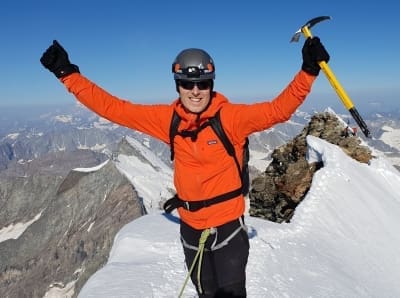
 Continuing our series of European Mormon Stories, we visit Switzerland to interview Philipp to hear his important and fascinating Mormon story. As a former branch president and member of the Stake High Council, and as a lifelong member from an influential family in the Mormon community, Philipp has a unique perspective on the LDS Church in Switzerland.
These episodes cover topics in Philipp’s life such as his experience growing up in the LDS Church, divorce, second marriage, and achieving tremendous business success—but also importantly how he responded to the difficulty of having his faith challenged. These episodes contain great advice from Philipp on how to navigate your own faith journey and also how to include believing family and friends as you forge a new life.
Part 1: This transcript is machine-generated and lightly edited for readability. The audio is authoritative. Please excuse occasional errors in names and spelling. Philipp (Swiss Mormon) [00:00:11] Your mom and me, we've seen this life with eyes that only see in black and white. John Dehlin [00:00:21] Mormon) Stories is a production of the Open Stories foundation and relies solely upon the support of people like you, its listeners. To help keep the podcast alive or to become a member of the community. Please become a monthly subscriber by visiting MormonStories.org and clicking on the Donate button on the right side of the page under Support. All contributions to Mormon) Stories are completely tax deductible in the United States and go towards producing the podcast and building communities and programs of support for Mormons like you. Thanks for your support. Philipp (Swiss Mormon) [00:01:03] Tune me out if you must I know you've heard enough But I sing this song Just because I hope you'll be wiser than your daddy was I hope you'll be wiser than your daddy John Dehlin [00:01:27] hello everyone and welcome to another edition of Mormon) Stories Podcast Europe Edition. This is your host, John Dehlin. It is September 23, 2018. For those who have been following, I came with Jeremy Runnels to Europe. We spent some time in Sweden and we interviewed Hans Mattson, Brigitte Mattsson, and several Swedish Saints, including Christina Hinke, about the Sweden Rescuer, the Swedish Rescue, about Hans Mattson's new book, Truth Seeking, and just with an attempt to not only honor Hans and Brigitte and help people learn about their book, but also to honor the Swedish Saints for their contributions in bringing, I'll just say, intellectual enlightenment to Mormons back in the United States and around the world. So we had that wonderful event and we also interviewed some Norwegians while we were there. And then we actually traveled to Switzerland and had a Mormon) Stories Faith crisis workshop in Switzerland. And I was super happy to learn that there was at least one Swiss Mormon) who was willing to share his story. And this will be the first ever Mormon) Stories interview with someone from Switzerland, with someone who's Swiss and his name is Philipp Giesler. And his story is important and it's interesting and I'm really excited, Philipp Giesler, to have you on Mormon) Stories Podcast Europe Edition. Thank you for joining us, John. Philipp (Swiss Mormon) [00:03:09] It's great to be here and finally meet you in person after all these years of listening to Mormon) Stories. John Dehlin [00:03:16] Yeah. Philipp (Swiss Mormon) [00:03:17] Thank you for having me. John Dehlin [00:03:18] My pleasure. Thank you. There will be lots of cool themes in this interview. We'll be talking about what it's like to grow up in the church in Europe and specifically in Switzerland. Philipp comes from one of those, I'll just say, blue blooded or royal or elite Mormon) families in Switzerland. I believe his father served as his stake president, if I'm not mistaken. And he himself has served as a branch president and in stake High councils. And we'll be talking about a little bit about divorce, we'll be talking a little bit about second marriages. We'll be talking about Philipp's journey as a Mormon) growing up, what it was like to grow up as a Mormon) in Switzerland, and lots of cool stories along the way. He became a successful, I don't know if entrepreneur is the right word or businessman, but his business efforts were very successful. And then he came to a point where his traditional orthodox Mormon) faith became challenged. And we'll learn about how that came about and how he and his family responded to it. So it's going to be interesting and an epic interview. Philipp (Swiss Mormon) [00:04:30] I look forward. John Dehlin [00:04:31] All right, so let's begin. Philipp, talk a little bit about. We've already referenced this when we interviewed people from the UK a little bit and then in the Swedish interview and in the Norwegian interview. But talk about the role of kind of these royal or blue blooded elite Mormon) families and how they play a role in European countries and the LDS Church as a context for your family story. Because that seems to come up in every interview I do. And it seems to be kind of the backbone of the church in Europe. Do you understand what I'm asking about that? Philipp (Swiss Mormon) [00:05:10] Absolutely, yeah. John Dehlin [00:05:11] So maybe start there. Philipp (Swiss Mormon) [00:05:12] Yes. So like in other countries in Europe, in Switzerland, the church is very small, but it has a long tradition. So the first missionaries, I think came about 1850 to Switzerland. And at that time it was the Gathering of Zion. So a lot of the members, they moved to the US and so there is actually a lot of Swiss or members in the US that have Swiss blood or Swiss heritage. But for those who stayed, the few who stayed, they really had to build up the church. And while the church is very small, the church is actually quite strong because it is such a minority that those who really clung or cling onto the church, they really have to stand for something and really face also opposition or when I was younger even, you know, some were some persecution by friends. You were really completely different. So as an example, in the, in the school that I was in, I was the only Mormon), obviously, and all my other fellow students, they were either Catholic or Protestant. And religious life, while they were not strongly religious, still in the school curriculum, religion was taught and I was not part of that. And so there was a lot of questions, well, where, where do you go to church? And anything outside of Catholicism or, or Protestantism is basically a sect and so John Dehlin [00:06:52] the, and when Europeans say sect, I think the best translation for us Mormons is cult. Is that fair to say? Or, you know, is, does, does sect translate into the kind of the cult meaning in the US when you say the word sect? Philipp (Swiss Mormon) [00:07:09] Yes, maybe. I mean cult is even, I would say, stronger. And also the term sect over the years, I think also the Mormon) Church has gained more visibility and has a little bit secularized to the point that it's not considered a sect anymore. But if you look at the membership, then there you see that it's centered around families with very strong tradition that often go back several generations and really form the pillars of the church in Switzerland. And the growth always being after that first wave of conversions, maybe post or, you know, before and after Second World War, you know, in the last 20 years, the growth really coming from within, organic growth by way of family, and the rest being more, you know, refugees or people with high social mobility that occasionally join the church, but the strong pillar really coming from within these families. John Dehlin [00:08:24] So are there any stories or lore about like the first Swiss converts or some of the early families when you're growing up in a Switzerland ward or branch, do they tell stories about some family or some man who joined the church early on and became, you know, a leader? And if not, maybe you can just name some of the families that would be viewed as like multi generational kind of formidable names within Swiss Mormonism. Philipp (Swiss Mormon) [00:08:55] Yes, well, that would probably be a question a little more for my parents who might know a little further back. But certainly in every family you have a narrative or a story of how the first person accepting or joining the church. And our father told us also his story, I think it was a grand aunt of his that joined the church. Her husband didn't and she started that, that legacy and, and that, you know, heritage. And so that is something in the families that is important, important families. And the ward that I grew up in was very strong in that regard. So it was the Geisler family, really. We had the Lauener family, the Weidman family, and these were like three families that played or continue to play a big role in Switzerland and very strong families that, where there were hardly any children falling off from the church, but because you were so different from all the others, the culture was very strong. And so for us it was on the one hand being different from our peers at school, but then also within the church having a strong self awareness that in addition to that, we are a special family. John Dehlin [00:10:20] Yeah, so you felt that we visited the Swiss temple and Learned that Switzerland was the first European country to get a temple. Is that right? Philipp (Swiss Mormon) [00:10:30] Yes, that was in the 50s, 1950s, yes. John Dehlin [00:10:34] So that means Switzerland was important, either central enough or important enough to be the first country dedicated to have a temple dedicated. Philipp (Swiss Mormon) [00:10:42] Yes, I think it was the country not affected by Second World War and also a freedom, a free, very free country, very central. And yes, it has a very strong membership. And I felt that throughout my youth, it was a happy youth within the church. There was also a lot of or quite a few young or children or I had a peer group and it felt really great and it felt strong in a sense. John Dehlin [00:11:18] Yeah. So was your grandfather an active member of the church? On either side. Philipp (Swiss Mormon) [00:11:25] So on my father's side, he grew up in the church, so he was already born into a family that was devout to the church. My mother, she converted around her 20s and met my, my father. And so on her side, it was really her and her mother that joined the, the church themselves. John Dehlin [00:11:50] So your dad was a third generation, Philipp (Swiss Mormon) [00:11:54] I would say at least. John Dehlin [00:11:55] Yes, at least in Switzerland. And your mom was a first generation? Yes, but her mom converted? Philipp (Swiss Mormon) [00:11:59] Yes. John Dehlin [00:12:00] Okay, so what type of. Did your dad serve A mission? Philipp (Swiss Mormon) [00:12:06] Yes, he served a mission in the French speaking mission. So I think it included part of Switzerland and France. And actually I was also myself called to the. Or to the Friends Paris mission. I grew up bilingual, my mother being from the French speaking part of Switzerland. So the French speaking culture always played a role in our family. John Dehlin [00:12:29] Okay, so having a grandfather who served a mission, that's kind of a big deal. Philipp (Swiss Mormon) [00:12:33] Probably my father served a mission. John Dehlin [00:12:36] Both. Both did. Philipp (Swiss Mormon) [00:12:37] No, my grandfather not, not. Not sure about that. No, I don't think so. John Dehlin [00:12:43] He said okay, so having a dad that served a mission, that's probably still a big deal. Philipp (Swiss Mormon) [00:12:47] Absolutely. And it was something that we grew up with that we children, we knew that one day we would servant mission the boys at least. John Dehlin [00:12:57] And so what types of common Mormon) activities did your family engage in during your childhood and you know, early young adult years? Philipp (Swiss Mormon) [00:13:07] So at the time I grew up, church was still morning and afternoon. And so it was really a Sunday that was filled with church at the time. We didn't have a lot to do during the week. At my youngest age, I. Well, actually, no, I have to correct that. On Wednesday afternoon we had primary, so that was still during the week. And I also enjoyed that time a lot and went there every week and also to church. John Dehlin [00:13:39] Was it a branch when you were a child? Philipp (Swiss Mormon) [00:13:41] No, it was a ward. It was a very strong unit with more than 100 active members. And we. A lot of families. John Dehlin [00:13:50] Okay. Philipp (Swiss Mormon) [00:13:53] And so we, we. Our week really centered around this. Going Sunday, going to church, Wednesday, the primary, and we had family home evening every Monday. And you did family home evening? We did family home. John Dehlin [00:14:08] In German. In Swiss German. Philipp (Swiss Mormon) [00:14:10] In Swiss German. Okay, absolutely. John Dehlin [00:14:13] And did you remember liking those lessons or hating them? Do. Do Europeans hate film home evening as much as, you know, us children do? Philipp (Swiss Mormon) [00:14:20] Well, it was part of being a successful Mormon) family. And you know, David O. McKay saying that no success outside family can. Can re. Or replace the failure within family or. And, and so for us, it was not a question whether we would do it or not. We had to. But yes, there, there was some incidences where there was, you know, some fights or something, but overall it was something we had to attend. John Dehlin [00:14:48] Did you guys do daily scripture study? Philipp (Swiss Mormon) [00:14:52] Yes, we started many times and usually succeeded for a short time. John Dehlin [00:14:58] Okay, did you have a favorite or a couple favorite primary songs as a kid? Philipp (Swiss Mormon) [00:15:05] Well, yeah, Ich bien ein Kin von Gott. I'm a Child of God. That was obviously one that we sang a lot. And then I Want to Go on a Mission. That was probably my. My favorite one. John Dehlin [00:15:14] Can you sing? Can you sing a little bit of that? Do you mind? Philipp (Swiss Mormon) [00:15:34] Something like that? John Dehlin [00:15:35] You're smiling so big when you sing that song. Why are you smiling so big? Philipp (Swiss Mormon) [00:15:39] Well, because it was an aspiration and something that I looked forward to being a missionary. John Dehlin [00:15:47] So you were just super excited to be a missionary as a young Mormon) boy? Philipp (Swiss Mormon) [00:15:51] Yes, I was. John Dehlin [00:15:53] Tell us any stories you want to about your childhood that you think might be important in forging your character and your commitment to not disappoint your parents. Philipp (Swiss Mormon) [00:16:03] Yes. So, I mean, we were three children. I have an older sister, two years older, a younger brother three years younger. And I was probably the child that was the one that. I have a risk taking nature, a very open nature, and I like to experiment. And at the time, I remember I was in second grade, I was fascinated. Or I was together with a friend and he asked me whether we should smoke one day. And we felt like, okay, we want to be grown ups. And so we went to a grocery store and we smoked some cigarettes and we. We smoked these that evening that we stole them. And then another day we were in school and around school we lit a cigarette and someone reported us to the school teacher. And so we were called in by the school teacher and the whole thing blew up. And it ended basically with me having to go with my parents to the store and confessing that we had stolen these cigarettes and done this terrible thing. And I remember at the time, or the reason I'm telling this story is one that formed me in the sense that I felt I never want to disappoint my parents again. I remember my mother, she was completely dissolved, crying how she had deserved this, and almost feeling like I had fallen from grace. My father was much cooler about it and was, okay, let's discuss it. Let's talk about this. And he really kept the calm, and it formed a relationship probably also between me and my father, that he would be the person also that I would go to more in terms of talking about problems, because he was very rational, very calm and tried to help me. And my mother was more the emotional part, who really wanted to make sure that everybody's staying the course in the church. Super devout to her husband and to her family. But it was so hard to see my mother cry that I felt I never want to disappoint her again. And so I really wanted to be a good boy. And yes, my aspiration really was to. To be successful in this life and to be the way that God wants me to and progress towards perfection. John Dehlin [00:18:48] So in your adolescent years, as you start learning things like the law of chastity and the plan of salvation and Word of Wisdom, and you're coming into kind of puberty and your sexual awakening, you know, and, you know, we're having stories about Sam Young and all that stuff, you know, these days in 2018, how did all that affect you as a teenager? Anything you want to talk. Anything you want to say about that? Philipp (Swiss Mormon) [00:19:14] The law of chastity was always something that my parents and I think also in church was stressed a lot. And so my view of this was really that this is the thing basically next to murder, that in terms of sin, you could do to. To break the law of chastity. And it was something that I think in terms of talking to church leaders was. I was never probed, or so I think it was talked about in a healthy way. Things like discovering your own sexuality, you know, in terms of things like. Also like masturbation. That was certainly something that. That occupied my mind. It's something that my father discussed with me. He held the regular interviews with us. And the way that he explained it to me was a bit the factory John Dehlin [00:20:13] approach of the little factories boy. K. Packer. Philipp (Swiss Mormon) [00:20:17] Yes. And telling me basically that there are young men that fall into that trap and start doing that. And I felt, whoa, that, you know, as if that was a complete minority and it was something that I struggled with certainly during my youth and that I was also sometimes very successful at oppressing it for quite some time and. But I remember also really praying to Heavenly Father, you know, strong prayers like take away my sexuality, you can take it away forever, but take that bondage or that temptation away from you, which out of today's, you know, if I look at back on this today, it's a very unhealthy thinking or behavior. John Dehlin [00:21:16] Right. How would you describe then overall your adolescent experience in the church? Did you go to seminary? Did you go to young men's, young women's Mutual. Was it fun or not fun? Philipp (Swiss Mormon) [00:21:29] So, yes, we had a little bit of young men's. We had a little bit of young men's. It wasn't, it wasn't every. Every week, but occasionally we had something in terms of seminary. We did that at home. And my sister and myself, we. I think my sister was more diligent than I was. So sometimes I took her booklets and it was usually every week a new booklet. So it was a lot of work and I sometimes copied that from my sister, to be honest. So I think I completed seminary, but I'm not 100% sure about my last year actually. Maybe I don't have the four year certificate. So it was something I did reluctantly, but I did it, I think. John Dehlin [00:22:23] And were you sort of taught The Bruce R. McConkey form of Mormon) doctrine? Philipp (Swiss Mormon) [00:22:28] Mormon) Doctrine is a book that I enjoyed reading during my mission, actually. So that this was the gospel basically that we learned there. And I was introduced to that book through my American companions. But yes, I think that the way that we understood the gospel was in a way very orthodox way of. John Dehlin [00:22:59] So like 6,000 year Earth, Adam and Eve were the first humans, you know, signs of the times, revelation. I'm just thinking about my upbringing, but a very fundamentalist, sort of orthodox, literalistic view that's kind of incompatible with science. Did you get all that in your upbringing or was it different? Philipp (Swiss Mormon) [00:23:21] Yes, I told my high school teacher that I didn't believe in evolution, but that the world was 6,000 years old. And he laughed at me and I felt the spirit consoling me of, yes, you did the right thing, Philipp. And that the inhabitants of the American continent came through the Magellan Strait. So also there I corrected him and told him they come from Jerusalem by way of boats or of a boat. So also there he was chuckling at me. So he knew I was a Mormon) and so did some of my other teachers. And sometimes he took me up on it. John Dehlin [00:24:03] Was your patriarchal blessing anything special for you? Philipp (Swiss Mormon) [00:24:08] I got my patriarchal blessing short time before my mission. And yes, it was a special moment. It turned out. Hindsight, we'll come back to that. It was the grandfather of my wife who gave me my patriarchal blessing. And there were promises in there that were dear to me and that I could identify with it. John Dehlin [00:24:40] Did you feel like you were kind of one of Saturday's warriors, kind of chosen generation to usher in the second coming of Jesus? Did you have that sense as a high schooler, as a kid? Philipp (Swiss Mormon) [00:24:50] In high school, that's what we were told as. As children, yes. There were also stories around patriarchal blessings where someone was promised that they would put the flowers in the temple before the second coming. So I felt it was imminent. Yes. John Dehlin [00:25:10] Cool. So talk about, did you date at all in high school? And were there dances? Were there ward or stake or regional dances where high school kids in Switzerland were just dancing in a chapel somewhere to Michael Jackson or to U2 or George Michael or whatever the musicians would have been. All those Live Aid bands that I watched from the UK or from Europe. Philipp (Swiss Mormon) [00:25:37] Yes, we had that. And I have fond memories of the youth camps that I went to. So usually we try to dance every evening indoors. And I had girlfriends inside and outside the church and very much enjoyed my youth in that regard. Always within boundaries, obviously. But I had friends that played in a band outside the church and so I went around with them. I usually had to be home by midnight on Saturday nights, but generally I would say I had a happy youth and really enjoyed being around inside and outside the church. Other young people. John Dehlin [00:26:25] Do you remember any of your favorite songs to dance to at church dances? Philipp (Swiss Mormon) [00:26:30] I think it was some Footloose songs. John Dehlin [00:26:33] Footloose by Kenny Loggins. Philipp (Swiss Mormon) [00:26:34] Yes, that's what we enjoyed, really going on that. But otherwise I was more a bit heavy metal person. So I enjoyed Scorpions, Iron Maiden, Scorpions. I was actually at a Scorpions concert two years ago and felt I was in the right place because at the end of the concert, a member of the Stake Presidency. I walked into a member of the Stake Presidency and we were both, yeah, we're in the good place. This is a safe place here. So I enjoyed Scorpions. John Dehlin [00:27:04] I would think he'd love Scorpions because their native language was German. Philipp (Swiss Mormon) [00:27:07] Yes. I mean, they played in English, but their native language is German. So I love the Scorpions too, but also ACDC and others. I still love ACDC now. John Dehlin [00:27:17] Best rock, Ozzy Osbourne and, well, less so. What About Journey and Styx and Foreigner and Rush. Philipp (Swiss Mormon) [00:27:23] Yeah, Foreigner. It's, it's. That's. I loved Foreigner. Jukebox hero. John Dehlin [00:27:29] Yeah. Philipp (Swiss Mormon) [00:27:32] Yeah. John Dehlin [00:27:33] Are there any famous Swiss that we don't realize are Swiss in the world? This is a random question. Musicians or actors or anything. Philipp (Swiss Mormon) [00:27:45] Oh, wow, that's. That's great. Well, in terms of musicians, we. We have more a local, like more local Swiss, German music scene. But I, you know, it's. John Dehlin [00:27:57] Nothing comes to mind. Philipp (Swiss Mormon) [00:27:58] No. John Dehlin [00:27:58] Okay, that's fine. Okay, so how about. So did you try and get like a testimony in your teenage years? Did you just always have it? Did you, like, when you heard about Moroni's promise in the Book of Mormon), did you actually try and like read the Book of Mormon) cover to cover and then take Moroni up on his promise and kneel down and pray about it? Or did you never have a testimony or always had a testimony so you didn't need to pray about it? Talk about the formation of your testimony pre mission. Philipp (Swiss Mormon) [00:28:28] So eventually, before going on a mission, I did have the desire to test Moroni's promise. And so I did that. I read the Book of Mormon) cover to cover just to have the full context of it. Because when I read it in seminary, I still don't think I did the full Book of Mormon) in seminary, but it was not like in one flow, the whole story. And so I did that in a week. And I prayed and I tried and I cannot say that I got a witness. It was more. I felt good about certain chapters, like Alma 32, about faith, and many places in the Book of Mormon) really made sense to me. And in the end I felt, yes, maybe I had a warm feeling a little bit. So I felt I had a testimony, really of the Book of Mormon), I think. John Dehlin [00:29:37] Okay, talk about. You mentioned you converted your girlfriend. Was that pre mission? Philipp (Swiss Mormon) [00:29:44] Yes. So when I was about 18, I fell in love with this girl and it was very intensive. And I introduced her to the church and she eventually took the discussions and I ended up baptizing her. So this was something that made me very happy. And also I felt very strongly that this was really a big step in my life, helping someone join the church. And certainly was also one of the reasons I felt even more excited about going on a mission. The sad part of it really was that her family almost cast her out for that or basically disengaged with her. So she made a big sacrifice joining the church. And not only joining the church, but eventually waiting for me for two years while I would serve a mission. So this was an incredible sacrifice that, that she went through at the time. John Dehlin [00:31:09] And so she waited for you on your mission? Philipp (Swiss Mormon) [00:31:12] Yes. So she went to the French speaking part of Switzerland and learned French there. And we wrote all through my mission and when I came back, she was at the airport when I left for my mission and she was at the airport when I came back from my mission. And we actually got married within three months. John Dehlin [00:31:38] Okay, we'll come back to that. Philipp (Swiss Mormon) [00:31:40] Yes. John Dehlin [00:31:40] So what was. So did you always. You always want to serve a mission? So when it came time to serve, were you excited or fearful or insecure? How did you feel on the eve of serving a mission? Philipp (Swiss Mormon) [00:31:56] So I was excited. I was excited to go to the France Paris mission. When I got my calling, this was. Wow. Yes, this is the country I'd love to go to. And of course when I left, it was a sad moment. I felt, wow, I'm not going to see my family for so long. But I went to the London MTC and it was like a family there. There was maybe 20 missionaries. We were. And those two weeks there were already incredible in itself. I met there my best friend even today, and he and me, we had a great time there and also with the other missionaries. And by the time the MTC ended, I was super eager to go out and really get going. And I did. And I remember I was junior companion for three months and my frustration of not being able to my com. My. My. My senior companion was a bit trunky. And we were even a threesome at the beginning with one of them going home in two weeks. And I wrote the mission president was, this cannot be this way. We. We once watched TV at a non member and I felt, oh, I'm no, you're never going to baptize like that. So super obedient missionary. I really wanted to make a difference and I became senior right at the first transfer. So I was junior for one period. No, actually two periods. And then my second city, I turned senior and finally I could really follow my own inspiration and work super hard. And it was a fulfilling time that I have very good memories of. John Dehlin [00:33:47] So that's Paris, France. Philipp (Swiss Mormon) [00:33:48] Yes. John Dehlin [00:33:49] And did you have success on your mission? Numerical success? I know it's rude to ask that, but I'm gonna ask it anyway. Philipp (Swiss Mormon) [00:33:56] Well, I baptized in every city, so we had baptisms in every city. Wow, that's hard. John Dehlin [00:34:03] Isn't France like super hard? Philipp (Swiss Mormon) [00:34:06] It is. Well, at that time I think we had maybe still about 200 baptisms or so a year. John Dehlin [00:34:13] A year in our Mission, which would be 20, 20amonth. Philipp (Swiss Mormon) [00:34:18] Yes. So was. It was a good. Yes. You. You were able to have discussions. So we had between three and 15 discussions a week. And I. I enjoyed so much working with American companions. It taught me the English language more. And also there on my mission, formed friendships that last till today. John Dehlin [00:34:53] And how good was your French going into the mission? Philipp (Swiss Mormon) [00:34:55] I was French speaking because I grew up bilingual. So I hit the ground really running. And I served in all parts of France, really in the Normandy, in. In Paris, but then also in the southern part, like Bordeaux. So it got me all around the mission. I biked a lot and I was in the metro a lot in Paris. And I also had good spiritual experiences. John Dehlin [00:35:28] Any you want to mention or any worth mentioning, either converts or spiritual experiences worth mentioning. Philipp (Swiss Mormon) [00:35:34] I really trusted in the Lord. And so, for instance, one experience that I had was there was a problem with my permit to stay in France at, like, I think about three, four months into the. Into the mission, and I couldn't find my staying permit. And I remember I prayed to have. I thought, okay, I'm going to pray and I'm going to find it. And so I prayed to Heavenly Father super intensive. And I got up from my prayer, I turned around and like mechanically went to the wardrobe, opened it and looked behind some clothes on a shelf and pulled out that permit. And to me that was, wow, Heavenly Father really guided me in that. Or I had an incident where I was disappointed and I felt discouraged and I opened the Book of Mormon) and there was the case of Alma, who went to ammonia and he didn't have success. And later he came back and met Amulek and he converted Amulek. So I felt also Heavenly Father telling me I have to go back. And so I felt the divine. And that is also something to this day that hasn't left me. I view it a little bit in a different way some things today I don't think that Heavenly Father should help me find or would help me find my permit, while at the same time so someone getting raped in another part of the country, he should help that person. So I don't believe in that kind of interference. That's certainly also a focus of thought. But I have a gratitude and that is a seed that I thank to my parents. They instilled in me that I feel the divine. John Dehlin [00:37:45] Any other mission experiences that were really formative for your story, or does that Philipp (Swiss Mormon) [00:37:52] not for my story? I was impressed by meeting, you know, often we also had to do with people that were a bit on the fringes of society. But then also I had a young law student that came out one day to to church and he was prepared to be baptized. He had read everything about the Mormons and he basically said, how can I get baptized? I've read everything on Mormons, positive and negative. And he did co teachings with us after one week teaching other investigators and got baptized within two or three weeks. And to me, that was Heavenly Father's gift to me for the labor that I had put in that he would send me an elect. John Dehlin [00:38:49] Did you serve as a zone leader or an ap? Philipp (Swiss Mormon) [00:38:52] Yes. So the second half of my mission I served as a zone leader and I was a very dedicated zone leader. I was a dedicated zone leader to the point that once I got a lazy companion zone leader. And I was so frustrated that I told my frustrations to the mission president. I feel we should do more work and all that. And that rarely happens. My companion got bucked down. John Dehlin [00:39:27] Oh, demoted, Demoted, Yeah. Philipp (Swiss Mormon) [00:39:29] So he came off his call. It was his time to be transferred out of. Of the city. And he came off the call and he was. I got bucked down. And yes, so it's my. I felt that my commitment also my mission president, he really felt my commitment to this, to this work to the point that I had a very high level of trust of him. John Dehlin [00:40:03] Okay, so you completed two years of a mission, came home honorably, I assume. Talk quickly about this is going back in time, but how did you experience the temple? So you went through in 87, which was before they made the big changes. How was your temple experience? Philipp (Swiss Mormon) [00:40:23] I think it's hard to feel perfectly good about the temple experience. It was something that caught me by surprise. I was prepared that there would be covenants in the temple, but obviously not prepared to the rituals that were there. My father was all along. So my father was all along there. And I had this deep trust in my father that while it was strange, it would be okay. And so I went through that, not quite understanding. And in the end, when I entered the celestial room, my family, my parents were there. And my father, he opened his arm and he said, wilkomen im tzelesh dialarich. Welcome to the celestial kingdom. And that in that moment, you know, these emotions, I felt this strongly. And so that was my point of reference that I liked to refer to when I thought about the temple. But I've never been a temple going person very much so I never became a temple worker or went regularly to the temple. John Dehlin [00:41:46] All right, well, sure. You're not the only person who had that experience? So you get home off your mission and then what happens? Philipp (Swiss Mormon) [00:41:56] So, yes, I inscribed for university to study where business in St. Gallen, which is in Switzerland, the Harvard of Switzerland. John Dehlin [00:42:07] So it's a good school. Philipp (Swiss Mormon) [00:42:08] It's the best school for business. It only has business and law. And I had applied for there and I saw my girlfriend again and there was no question really whether we would be together or not. She had waited for me and so we naturally got married within months. And I felt good about it. But at the same time, it was something that was just a course of action of fulfilling that wonderful story. That was such a great story, right? John Dehlin [00:42:53] Yeah. Did you feel like God told you to marry her? Did you pray to say, is this the one? Or was it just you knew you would do it? And there was no question. Philipp (Swiss Mormon) [00:43:01] There was no question. John Dehlin [00:43:03] Okay. Philipp (Swiss Mormon) [00:43:03] On that. John Dehlin [00:43:04] All right. So how'd that marriage go? Philipp (Swiss Mormon) [00:43:09] Well, it's like in church when you get married, not living together. We got together and roughed ourselves together and had our up and downs. But something was always a bit lacking in that marriage. And I don't know what it was exactly. Maybe it was also the alienation from. From her family or also having joined the church just for myself. But we didn't feel so close. And during some time, trust was gone. And eventually that marriage, after two years, we ended it. It ended in a divorce. We didn't have any children. And so I felt, and I think, I hope she felt that way too. But we felt it's better for both to start over, really. John Dehlin [00:44:11] Now that's not part of the, that's not part of the Mormon), the Swiss Mormon) dream. So you're multi generational Mormon). You have a father who ends up as a stake president at some point. You're serving a mission, you're a zone leader. Marrying the temple. Divorce is not part of that plan. Philipp (Swiss Mormon) [00:44:28] No, it's not part of the plan. And so that was a big failure in my life. And I felt as a complete failure, I mean, the divorce is. I would have never envisaged that, that this would happen to me. And it was also to my family, my mother again, for her, I think it was the biggest shock of this being possible, this happening. You're on the front line of membership talk for some time. And I also felt a lot of shame and it caused me to take a break, actually. And I took a year off and interrupted my studies for a year and went to work a bit and get my act back together. John Dehlin [00:45:22] Did it affect your testimony at all at the Time? Philipp (Swiss Mormon) [00:45:25] No. I knew my way was in the church. It was certainly a time where I had to take a decision myself. The church council is put the vessel back together. And I felt that if I put that vessel back together, it will always leak water. John Dehlin [00:45:46] Meaning the marriage? Philipp (Swiss Mormon) [00:45:47] Yes. John Dehlin [00:45:47] So you were being counseled to stay in the marriage? Philipp (Swiss Mormon) [00:45:50] Yes. I remember I even asked at the time, my bishop, do you feel that? And he said, yes. John Dehlin [00:46:01] Do you feel what? Philipp (Swiss Mormon) [00:46:02] That I should be back together with that we should make this work. So is this something you're telling me that you feel it? And he was young, and I don't think he was that experienced yet, but. But he gave me that strong indication. And I talked to my dad, and my dad was very supportive at the time. He said, philip, you are free. It's your life. And I really thank him for that, that he gave me this guidance and this room to really decide for myself, because the love of the children, for their parents and their respect is so great that I think, even though being a grown up, I would have followed the advice of my father and he left it open. John Dehlin [00:46:47] In your outline, you have this quote, divorce is never a solution. Was that told to you by your bishop before? Philipp (Swiss Mormon) [00:46:53] No, it's actually. That was a good friend that sent me that in a letter. When I got married, I had served under Freddy Groip, who later became my new father in law. I had served under him as a youth representative. And he was the High Council for youth. And he was a very strong High council. He was himself engaged in social work with. With young people. And everybody liked and loved him. And he was one of those leaders to me that I went through the fire for. And we. I organized youth activities for the stake under his leadership. And when I got married, he sent me that letter, that congratulation letter to my wedding, where it was written, divorce is never a solution. And so when I got. Or at the time where I was at the point of divorcing, I. I called him up and I said, hey, can I talk to you? And I wanted to counsel with him. And I met him and I asked him, what did you mean in that letter? It stuck with me that you wrote to me. I got all these congratulations from the others. And it stuck with me that you wrote to me, divorce is never a solution. And we talked to each other. And he put that a bit into a relative or he put that into the correct context that he meant it and really listened to. To my story. And I also saw there very quickly when I arrived there, Milena, who Later I met again and who became my wife. But it formed a very strong bond between me and my later to be father in law. And I really appreciated his counseling in this dark hour, which, outside of my father, was probably the second person that I really trusted that would give me counsel that is not just the church narrative or the church handbook counsel, but genuine, experienced, honest men counsel. John Dehlin [00:49:03] And so did he stick with that original quote or did he change the story and say divorce could be okay? Philipp (Swiss Mormon) [00:49:10] He left it open to me, too, based on the situation. John Dehlin [00:49:14] How did he reconcile that with the quote that he had given you when you first got married? Did he explain it or not? Did he say, I know he wrote that in the letter, but I didn't read it? Philipp (Swiss Mormon) [00:49:25] He put it in a way, he told me the analogy of being together. As long as you're together in the same boat, if one of you leaves the boat, then there can be a case where, yes, it doesn't work. John Dehlin [00:49:42] And without going into detail, it wasn't just you guys didn't get along. There was probably, you know, maybe a big event that, that, you know, there was a, you know, some. You, you mentioned a breach of confidence. In other words, there. There were. It wasn't just a matter of you guys not getting along. Right. There was something, you know, maybe some type of big event. Right. Is that fair to say? You don't have to comment, but I just. I don't want listeners to think it Philipp (Swiss Mormon) [00:50:05] was just a matter of we did not have a base of trust anymore. John Dehlin [00:50:09] Yeah. Okay. So trust eroded. Philipp (Swiss Mormon) [00:50:13] Yes. John Dehlin [00:50:13] Okay. All right. So that's interesting. Do you think that future father in law was kind of secretly hoping that you'd get divorced because he had his eye on you for his daughter or not? Philipp (Swiss Mormon) [00:50:26] No, I don't think so. Actually, what happened is that my brother got married the following spring, and I was at that wedding, and my Milena, my wife, was there as well because my brother married the cousin of my wife. And so she was obviously at that wedding as well. And we somehow got together. There was like there was an activity or like there was an interruption and an announcement. Everybody had to sit down and there was one free spot besides Milena. And I ran there and I fell right in. I slipped and fell right in front of her. And we started talking that evening and we talked the rest of the evening, and it was love at first sight. And I think for everybody else, it was clear that, wow, something just clicked there. And she told me at the time, I'm going to a youth camp the following week. And I said, oh, I'm going there as well. Or at a young adult camp, I'm going there as well. And I said I'm going already on Wednesday. And she said I'm going on Friday. And so on Wednesday, Wednesday I drive towards that camp and I see all of a sudden that there is a sign that points to the village where my Milena lives. And so I felt, oh, I'll just drive by there and pay her a visit. And so I drive by her house and, and her father is outside and start chatting with him and talking to him and he talks to me like for 20 minutes. And then I ask him, is Melena here as well? And he goes, no, she already left for the camp. And I was like, oh, I thought she was only going on Friday. And she said, oh, she changed her mind. And so I arrive at that camp and I see Milena and like, oh, you already left, you came already early. And I was, why did you come early? And she was, you know why. And so that camp was just, we just enjoyed coming together. It was, we knew the end of it and we just enjoyed that time that slowly we were coming together. And for me it was at the beginning I was very reluctant because I was, I was divorced not long time ago and I felt, oh, I, I, I want, I'd rather wind surf or surf and women, that's, that's done for me, I'm done with marriage. And I said to Melena, after I kissed her, I said, not sure we should be or I'm ready for this. And she said, we don't have to tell somebody. And so I was like, well, maybe we can keep our friendship secret. But we didn't do that. So eventually it was a year between my divorce and myself getting married again. And it was, I was first a bit afraid of my father in law being reluctant basically being this friend, but once I start eating into his turf that he would be, oh no, no, no, I don't want my daughter to marry a divorced guy. But it was him who pushed it in the end because he felt that myself, having been married already, he was a bit worried that we would step over a line together. And so he talked to us and he was basically, well, if you guys know you should be together, then get married. And I felt like, oh, this is going to be stress again. He was like, life is stress, but if you have the right partner, that's not stress, it should be the opposite. And it was. So we got married. John Dehlin [00:54:37] So was there no sense on the part of Your girlfriend and her parents that you were damaged goods for having been divorced. Sort of like this stigma or black mark where a valiant young woman or her parents would be like, stay away from him. He's been divorced. That's a bad sign. Philipp (Swiss Mormon) [00:55:05] I was a little worried that that could be the case, but that wasn't the case at all. And she comes from a great family as well. Her grandfather being the patriarch and at the time, my father being at the same time a patriarch actually because he was very old, her grandfather. So it was basically patriarch and patriarch family coming together. And it was again, it was like it would be my first marriage. It was a dream marriage. And obviously both families really coming together close. Our families were close anyway. My father much appreciated the Groip family, which is also a multi generation family in the church. And so it was. John Dehlin [00:55:51] Didn't her dad serve as stake president at some point as well? Philipp (Swiss Mormon) [00:55:54] No, he served as bishop. John Dehlin [00:55:55] Okay. Philipp (Swiss Mormon) [00:55:56] And high council. John Dehlin [00:55:58] Okay. Philipp (Swiss Mormon) [00:55:58] So. John Dehlin [00:55:59] And then patriarch. Philipp (Swiss Mormon) [00:56:00] Her dad, not her grandfather. John Dehlin [00:56:01] Oh, grandpa. Okay, okay, got it. Okay. So almost kind of a royal wedding. Now was this, I mean, a Mormon) royal, A Swiss Mormon) royal wedding. Is that, is that over dramatizing it? Philipp (Swiss Mormon) [00:56:13] It was a wedding between children of good families. John Dehlin [00:56:18] Yeah. Philipp (Swiss Mormon) [00:56:20] And I felt, I think also to Milena, to me it felt like Heavenly father had corrected a mistake in my life. And it gave me maybe also the failure of my first marriage gave me a higher awareness for what I really have in my wife and so gave me even a higher appreciation for her. John Dehlin [00:56:47] And so you knew it was the right thing. Philipp (Swiss Mormon) [00:56:50] Yes. John Dehlin [00:56:51] Yeah. Philipp (Swiss Mormon) [00:56:52] We're still married. John Dehlin [00:56:53] How many years later? Philipp (Swiss Mormon) [00:56:54] 26 years. John Dehlin [00:56:55] Yes. Okay. Fun. All right, well that's a fun. That's a fun follow up to that first not so good marriage. All right, so you get married and tell us what I think I want to do is for this first part, kind of go to the part where you. Right before you start questioning. So we'll kind of finish out all the years leading up to the beginnings of your faith crisis. Does that make sense? So let's just, let's finish the story up until that point. Philipp (Swiss Mormon) [00:57:25] So we, we were in my, we lived in my home world, Winterthur, which was a very strong world. John Dehlin [00:57:32] Is this Zurich area? Philipp (Swiss Mormon) [00:57:33] This is the. About 20, 30 minutes from. From Zurich. Yes. Zurich area. John Dehlin [00:57:38] And that's German speaking Switzerland. Philipp (Swiss Mormon) [00:57:41] Yes. John Dehlin [00:57:42] Okay. Philipp (Swiss Mormon) [00:57:43] Same word as my parents, same word as my sister and her family. Very strong word. And the word I grew up in. John Dehlin [00:57:53] And the stake was what? Philipp (Swiss Mormon) [00:57:54] Zurich. John Dehlin [00:57:55] Zurich stake. Philipp (Swiss Mormon) [00:57:56] Yes. John Dehlin [00:57:57] Okay. Philipp (Swiss Mormon) [00:57:57] And I got the bishop Was bishop was from Matthias Weidmann. So the Weidmann family, which again is a very strong family and. And he called me into the bishopric which was a great honor for me. And so I served in the bishopric for a number of years and had. John Dehlin [00:58:18] Were you pretty young? Philipp (Swiss Mormon) [00:58:19] Yeah, I was in my 20s. John Dehlin [00:58:23] Yeah. In the United States that would be more rare for someone in their 20s to make the bishopric. Philipp (Swiss Mormon) [00:58:27] Yeah. John Dehlin [00:58:28] But that might be more common. Philipp (Swiss Mormon) [00:58:29] Yeah, I was in my mid-20s. John Dehlin [00:58:31] 26 or something. Philipp (Swiss Mormon) [00:58:34] Yeah, 25 maybe. Something there. John Dehlin [00:58:36] That's pretty early. Philipp (Swiss Mormon) [00:58:37] Yeah. John Dehlin [00:58:38] Okay. Philipp (Swiss Mormon) [00:58:39] So I profited there from the leadership of experienced men around me and we had there followed a few wonderful years really. I completed my studies, I started working as an investment banker for what later became UBS and had a good, good experience there as well. And at some point I professionally felt that it wasn't so fulfilling anymore because it was more taking almost a bit the. The cream off the. The milk. Being a. A banker. John Dehlin [00:59:25] What do you mean by that? Philipp (Swiss Mormon) [00:59:28] I mean by that that you are not. You're not creating something. Being a banker is more arbitraging. You're taking something out in between. But I didn't have the sense of creation that what I'm doing is doing something good. I was fulfilling orders of someone or I was trading stock. But I didn't have the feeling that I was serving a greater purpose or that I was doing something really good for society. And banking has a bit. And received obviously with the financial crisis even more a stigma of profiting. Although I was making very good money, probably. John Dehlin [01:00:13] Profiteering is what you profiteering? Yes. Philipp (Swiss Mormon) [01:00:16] I was making at a young age very good money being sales department of a bank, selling to institutional investors. And so at some point I felt after four years I needed to make a change. And I got involved with a friend through actually a mutual friend. I was close befriended with the wife of a convert, Freddie Guntner, who had started a new firm, Partners Group. It was a small firm. And I got together with him and he told me about private equity or basically the investments in non listed stock where you would instead of just arbitraging stock, you would actually give money to build up companies, to improve companies, to make them better. And so venture capital. Exactly, venture capital and buyouts. And so that alluded to me very much. And so I. John Dehlin [01:01:23] How's that better than banking? Philipp (Swiss Mormon) [01:01:28] You're investing money in businesses where the money is invested for where that money takes control of businesses is invested for several years, years. And you improve a business, you create value in a business and you earn money by selling that business after you have created value at a higher price. So if, if you, if you make money, you will have improved the business. You will, will have created jobs within that business. So venture capital, private equity is money that is directed to opportunities in order to help them grow. John Dehlin [01:02:05] Does that mean that you get into the operations of the business and help consult them to help work with them to make the businesses more successful? Philipp (Swiss Mormon) [01:02:13] Yes, eventually it does. And we dabbled also a bit into that. But at the beginning we basically invested in other private equity funds. So we start operations that invested in such opportunities on a global basis because we were auto deduct in that sense that we were the new kids on the block. We had no idea about private equity really. We, we got into that business by financial engineering or innovation, which is what we were good at. So we came from different banking backgrounds, the founders from Goldman Sachs. So they had an idea about selling and an idea about financial innovation. And that's how we started being. And we sold something that we produced once we had sold it, basically. So it was a company, a crazy company, you could say super entrepreneurial and super self over self confident that achieved and it was friends and family. So I had known the, the CFO from my youth. He was also a church member. I brought in my brother in law into the company who also became a partner. So at the beginning this was who do we know. And we brought in these people and the partnership for the first. I was basically one of the first partners that left 13 years later. It never had any defections. It was almost like a church community, you could say. Very coherent, very strong culture with deep, deep friendship that lasts until today. And the company where everything is possible. So about. John Dehlin [01:03:51] And just not to interrupt but just to give listeners a sense for this, as I understand I was told this the day before yesterday that the, the gentleman who started the company, what's his name again? Freddie Gauntner, he's a billionaire. Like he's worth a couple billion. That's what I was told by somebody else. So that's just to give people a sense that this is, this became a very significant company. Am I, am I getting that wrong? I'm not asking you to divulge. Philipp (Swiss Mormon) [01:04:19] It became. Yes, I think this is public. It became a very successful company. In 2006 the company was listed on the Swiss stock exchange and today it's one of the larger financial firms. So it has today a market cap close to 20 or around $20 billion. John Dehlin [01:04:41] Yeah. And you were employee number what Approximately. Philipp (Swiss Mormon) [01:04:45] Approximately number I would say between 15 and 20. John Dehlin [01:04:49] And yeah, and it's so it's kind of like a, like a Mormon) Goldman Sachs and a Swiss Mormon) Goldman Sachs. Philipp (Swiss Mormon) [01:04:57] Is that not quite so? One of the founders, one of the founders was or is lds. The other two founders were not. So Mormons were always a minority, but Mormons attract Mormons. And so there were a number of Mormons in the company and myself later being assigned to build up the US Office or start a US Office in New York. I went to BYU and also there hired Mormons, a lot of Mormons also, of course from other universities. But BYU was a stronghold of us, the founder being a graduate from the Marriott Business School. John Dehlin [01:05:42] Cool. Well, that's a huge accomplishment to build a company of that high value and to be a principal partner. Philipp (Swiss Mormon) [01:05:51] It's a high integrity company that to this day is very successful and that I have highest regards for. And that is probably the largest player or certainly the largest player in Europe today and still has a lot of the attractions it had in the early days. It has kept very strong and good culture. John Dehlin [01:06:17] Well, cool. Well, anything else you want to share about your story before the cracks in your testimony started emerging? Philipp (Swiss Mormon) [01:06:26] Well, yes, I mean, I experienced the church as a wonderful community, also moving abroad. So in, and in 2000, we sat around the table at the firm and we agreed that we should go to the US and we asked, okay, who wants to go? And I said, okay, I'll ask my wife. And my wife didn't speak any English. And I asked her, you want to go to the US and she was yeah, let's do it. Let's have a change. So we moved to the US And I took some office space, started hiring people, started investing there and built up the, the company for the, for the next two years there. Immediately when we arrived in New York, we, we found a wonderful church community. It was a ward that had not a lot of footage. John Dehlin [01:07:14] What area? What area? Philipp (Swiss Mormon) [01:07:15] Brooklyn, Manhattan. Just outside of north of New York. The, the Scarsdale. John Dehlin [01:07:22] Scarsdale. Philipp (Swiss Mormon) [01:07:22] Scarsdale ward is worse. We lived in, in in n a wonderful community there. John Dehlin [01:07:27] What stake do you remember? It's not important if you don't remember. Philipp (Swiss Mormon) [01:07:31] Oh, that was one of the North New York stakes. John Dehlin [01:07:35] Scarsdale ward. Philipp (Swiss Mormon) [01:07:36] Scarsdale, yeah, it's one of the Scarsdale wards. And there were people there from all over the US Obviously that you have a lot of people on assignment in New York. And we had game nights together with other families. We met regularly together, had Rocklet nights at our place. So what games like game you know, nights you come together, you play some games. John Dehlin [01:08:03] You do trades or. Yes, it's Settlers of Catan. Any German board games? Philipp (Swiss Mormon) [01:08:08] No, it was more like pantomime games, stuff like that. So you do games together and you visit regularly with each other and you form friendships. We still write Christmas cards to each other. Overall, a great time. And I felt moving to a new place also for my family, we immediately felt adopted into a new community. And that is a wonderful aspect of the church. Yeah, maybe this is a good time to interrupt there because once on our move back, you know that that's where becoming a branch president, I think that that's a good seizure here. John Dehlin [01:08:51] All right, so thank you for joining us for part one of our interview with Philipp Giesler. It's been fun to hear about his upbringing in the church and his first marriage and his second marriage and then how he builds his career. What we'll be talking about in part two is how he ascended up the ranks of church leadership, including becoming a branch president and then eventually a member of a stake High Council, but along the way, how some cracks started developing in his faith and then, you know, how he dealt with that. And this includes mixed faith marriage for, for quite some time, as I understand it. And so we'll, we'll see if that's true, but we'll. Please, please don't go away. Please come back immediately if you can for, for part two of my interview with Philipp Giesler as we, as we seek to understand the Mormon) experience in Switzerland. So thanks for joining us and catch us on the flip side. Thanks, everybody. Thank you for joining us today on Mormon) Stories. If you enjoyed this episode, please help us make more like it by becoming a monthly subscriber@mormonstories.org better sing this song Philipp (Swiss Mormon) [01:10:03] just because I hope you'll be wiser than your daddy was. John Dehlin [01:10:10] Wiser is a song written and performed by Mormon) Stories listener Russell Ash, a message intended for his children to have love and kindness be their guiding star. It. Philipp Giesler [00:00:11] Your mom and me, we've seen this life with eyes that only see in black and white. John Dehlin [00:00:21] Mormon) Stories is a production of the Open Stories foundation and relies solely upon the support of people like you, its listeners. To help keep the podcast alive or to become a member of the community, Please become a monthly subscriber by visiting MormonStories.org and clicking on the Donate button on the right side of the page under support. All contributions to Mormon) Stories are completely tax deductible in the United States and go towards producing the podcast and building communities and programs of support for Mormons like you. Thanks for your support. Philipp Giesler [00:01:03] Tune me out if you must I know you've heard enough But I sing this song Just because I hope you'll be wiser than your daddy was I hope you'll be wiser than your daddy John Dehlin [00:01:27] hello everyone and welcome back to part two of my interview with Philipp Giesler. We are talking to a Mormon) who was raised in Switzerland as a part of our series on Mormon) Stories podcast featuring European saints. We've done the UK quite a bit of a time back. We've interviewed people from Sweden and Norway and now we're interviewing someone from Switzerland and we're really excited about that. And Philipp joined us for the first part of our interview which where he shared about his kind of, I like to call it, his royal Mormon) family heritage in Switzerland, multi generational member, you know, patriarchs in his Sikh presidents and patriarchs in his family line and serving a mission in France and having a first marriage that didn't work out, but then having a second marriage that was kind of a dream marriage and helping build up a really successful global billion dollar company which included a move to the States. So a really interesting and fascinating interview so far. Philipp is also just a genuinely lovely human. So we're really honored to have you on Mormon) Stories podcast. So thanks for joining us. Philipp, welcome back to part two. Philipp Giesler [00:02:46] Thank you. Excited to continue. John Dehlin [00:02:49] All right, so you were kind of living, with the exception of your divorce, you were kind of living the Swiss Mormon) dream, including having already served in a bishopric at a, at a young age, a relatively young age, 25, 26, something like that. And you now are, you know, part of this up and coming successful multimillion dollar company at the point where you are going over to New York and having these great experiences. So, you know, take us now to the point where you, where you start having some questions. Philipp Giesler [00:03:26] All right, so yes, we had a great time in New York and also upon my return to Switzerland, things moved along very nicely. I had proven myself to the partnership and I was put in charge of the whole private equity operations and was able to really fill my dreams professionally and also family wise. We had a wonderful time. We have three children, two girls and two boys. My youngest son being born in the US So little American citizen. So the New York Times was not only an intense time professionally, but also family wise. Having a child abroad is. It's a special thing because you don't have family clothes or anything. And so also for my wife, it was a very intense, intense time. John Dehlin [00:04:28] As you're working hard building this business, she's taking care of the kids. Philipp Giesler [00:04:31] Absolutely. John Dehlin [00:04:32] Now, did you say three kids or four? Philipp Giesler [00:04:33] We have four overall. The fourth being born in New York. John Dehlin [00:04:37] Okay, so how many girls or boys again? Philipp Giesler [00:04:41] Two girls first. Two girls in 95 and 97 and then boys in 98 and 2001. John Dehlin [00:04:47] Okay. All right. Philipp Giesler [00:04:48] All of them very close together. So very intensive time. And I was, for all my professional career, I was traveling a lot. And so there was a. My wife filled a very, very big role in our family, being really the strong person at home. And she also sacrificed a lot of her personal interests or engagement, and hopefully I can make up for that today or she later did. So it was a good time. And we moved to a new area in Switzerland, which was again, a wonderful ward. I had several members of my company that were living in that same ward. So we had interaction during the week, but also on Sundays, but were very well able to really separate church and. And business. And both sides really flourished until in early January 2004, I was called to be the branch president of that branch in Richtersville. John Dehlin [00:06:00] So you were in a ward, you said? Philipp Giesler [00:06:03] No, it was in a branch. I'm sorry, it was a branch at the time and had a branch president before. And I was called as branch president. John Dehlin [00:06:13] Okay, and do you remember the approximate age? Philipp Giesler [00:06:16] It was 2004, so born 67. I was like 37 years or older. John Dehlin [00:06:25] So, okay, so you're the equivalent of a bishop in your kind of late 30s. Philipp Giesler [00:06:31] Yes, okay, exactly. I think I was ready for that. I really enjoyed that calling. It was a wonderful calling, and it was a wonderful congregation that I loved interacting with. I had been young men leader before that and knew the youth from there and really felt a lot of fulfillment in that calling. We also had an incredible stake president, Hitch Bolt, who was a vet, who is a very visionary man. And the trust he put in me was so strong. And also the relationship he was. Again, I have these mentors in the Church and he was a super strong mentor and also a non orthodox thinking person. So one day I called him to make an appointment for my wife for the temple interview. And he asked me have you signed the recommend? And I said yes, I signed it. And he asked did you interview your wife? And I felt like, oh, should I say yes or no? Because I didn't interview her, I just signed it and I said no, I didn't interview her. And he said I would have been disappointed otherwise. This is the way to do it. You don't interview your wife. John Dehlin [00:07:57] Did he say why your wife is Philipp Giesler [00:08:00] the best you have in your. Your life and your, your. She gets your signature. She, she has your trust. So it's. To me it just, it, it just showed me his generally his appreciation and also his inclusion of the wives also in my, my calling me. It was. Everything was with. With my wife. So she was really in this with me. And also the way she supported me. The. It was the weak point had always been the nursery. In the, in the nursery is everywhere the weak point where you have freelancers and nobody really wants to do the nursery. She said Philipp, I'm going to do the nursery. And so she was the. She took care of the nursery and made of that a wonderful place where children. She just loves to work with children and really cover my back in all regards. So the ward really flourished the branch, sorry. And we grew, we grew. We had baptisms, a few. But then also it was a very strong economic time in Switzerland in the 2000s, the one leading up to the financial crisis eventually, obviously. But I got a lot of emails from people who were about to move into Switzerland, into the Zurich area, asking me where should I go live, what are good wards or branches? And I really caught onto that. So I started writing, being very helpful to these executives that were about to move to Switzerland, introducing them. Okay, here are the best areas to live. Here are good schools. In our branc we're translating in English. So I was doing all these things to attract them to our branch and we got a lot of, lot of inflow from the US and our branch grew to the point where in certain months it was the largest unit in the stake, but still a branch. And so my secretary and my counselors, they come up to me excited and they were, Philipp, let's make of this award. We can be award we have the number of members tightening was no problem anyway with all these executives being in our branch. I can say that in confidence. It was per capita the highest paying tithing branch. I would say in Europe. And so there was really nothing in the way of doing it. John Dehlin [00:10:44] And didn't a leader from Salt Lake ask you why this was a branch? Philipp Giesler [00:10:49] Eventually, yes, but. But leading up to that. So I talked to my branch president and he was, Philipp, it's a blessing that this is still a branch, otherwise we could not have called you as branch president. I was, why is that? He said, well, Philipp, we will try to fix this, but it's because you were divorced. So this is in 2005 time frame. Ish. It's because you were divorced in 91. And to me I was, oh, that, that's strange. But yes, I think I read something like that in Bruce R. McConkie's Mormon) doctrine. John Dehlin [00:11:38] This is 14 years later. Philipp Giesler [00:11:41] Yeah, this is 14 years after my divorce. Divorce. And I always had a Templar recommend. And so it got me a little thinking. And he was like, don't worry about it, we will continue to negotiate with Salt Lake. And I remember also I knew people from the High Council, I mean it's very close knit community. They would tell me, Philipp, this is such a joke. We're laughing in High Council. This is such a joke that this cannot be a word. And it, to me, it triggered a bit into. In me also the ambition. I'll show them I'll be the biggest branch in Europe. And I think it was the biggest branch in, in. In Europe. So we were more than 100 people on Sundays and super strong quorums, priesthood quorums, everything. But it wouldn't become. Wouldn't. But at the same time I started thinking, I need to look into this. And I started searching the topic of divorce in the Internet. I wanted to have answers what is it all about divorce? And started also searching what are incidences where leaders went through divorce. And all of a sudden I see Joseph Smith was divorced, Brigham Young divorced. And Joseph Smith had plural wives. Brigham Young, I knew he had plural wives. John Taylor divorced Wilford Woodruff divorced Joseph F. Smith. He divorced from his first wife because she eventually couldn't cope with plural him marrying other women. So the next. John Dehlin [00:13:31] What do you mean Joseph Smith got divorced? Because in fact all these polygamous marriages weren't civil marriages. Philipp Giesler [00:13:39] Exactly. So they were not legal marriages. But in several instances, his plural wives wanted a divorce of that eternal marriage. And yes, he basically told them, it's okay, we're divorced. So just like that, he basically dismissed them. Just like that, we're divorced. But it's something that doing the search came up that led me to see basically Googling. This led me to see Joseph Smith had plural marriages. And furthermore, a new topic was introduced, which is called polyandry. John Dehlin [00:14:15] Okay, really quick. So in all your years to your late 30s, had you thought of Joseph Smith as being a polygamist? Philipp Giesler [00:14:23] I had not identified him with polygamy. Maybe. I. No, I had really not identified him with polygamy. And that did not even disturb me that much because I felt, oh, yeah, Brigham Young did polygamy. Joseph. Okay, then before that. But it was not. No, it was not something I had considered. I was more occupied with. Okay, what are the reasons we had polygamy, which was to raise a seed? Because there were men got. Men got killed in wars, and there was not enough men. You know, all these stories that we tell. I had a narrative that I learned from my mission on polygamy that aren't true. Yeah, they're not. So. John Dehlin [00:15:04] Yeah, yeah, just keep going. Philipp Giesler [00:15:07] So, yes, but the really new. The new topic introduced was really polyandry. John Dehlin [00:15:17] Yeah. And tell us what that means. Philipp Giesler [00:15:19] Polyandry. The fact that Joseph Smith didn't marry single women or virgins, as is stipulated in doctrine and Covenants 132, basically, where it's outlined under which conditions the eternal covenant of plural marriage can be contracted. But he married women that were married to other men already. John Dehlin [00:15:51] And do you remember where you first read that? Philipp Giesler [00:15:56] I. John Dehlin [00:15:57] Was it a website? Was it a book? Philipp Giesler [00:16:00] That was the thing you shouldn't do. Google, I think that. That. That I read this. So this was not a qualified source, I would say. And so that deeply troubled me and with the trust level that I had with my father, I decided to approach my father on this. And this must have been end of 2005. And so I asked my father about this topic of polyandry. And he himself, being lifelong, as I can remember, in stake presidencies, stake president or patriarch, having interacted with knowing all these general authorities, as he had gone every other year to General Conference at the time, they were still invited to the US Knowing personally most of the general authorities of the apostles. Personally, he had never heard or he had not heard about that topic. And he was questioning. He was, Philipp, I will look into this. And he wrote to Richard Craycroft, who had been a mission president in Switzerland in the 80s, and asked him about the topic. And Richard Cracoft was a professor at BYU for American Studies, and he wrote a letter back in which he elaborated on that troubling and sad story of polygamy and polyandry and referred in that letter to Several books. He referred actually to Fawn Brody's book. He referred to. John Dehlin [00:17:53] What's the name of that book? Philipp Giesler [00:17:55] No Man Knows My History. So he referred to that book. He referred to Richard Bushman's Rough Stone John Dehlin [00:18:03] Rolling, which would have been brand new. Philipp Giesler [00:18:05] That came out, I think in 2005. So, so that was end of 2005. He had already processed that and much of the letter elaborated actually on. On quotes or where he put quotes from. From Richard Bushman and Richard Bushman himself being a. A faithful author and source, you know, being himself a patriarch of the. I think patriarch, former state president and former state president, former stake president of the church and his historian, scholar. So this. And my father, he gave me that letter and he recommended to me, Philipp, you know, let's, let's read Rough Stone Rolling. John Dehlin [00:18:45] How'd that go? Philipp Giesler [00:18:48] So my wife will remember this was on a holiday in the Caribbean in Bonaire, that I was on holiday with my family, consumed with that book. I could not put that book away. So my wife didn't find it that exciting or fun a holiday. But to her this was the trigger point or the change point. John Dehlin [00:19:13] In what way? Philipp Giesler [00:19:15] In a way that it changed me. My shelf came off. I got introduced to all these other troubling topics of the church, the constituents of the church, the way that Joseph Smith grew up, his treasure seeking activities. I mean, Richard Bushman always tried to put it in the context of a faithful spin. And so I felt safe reading the book. But at the same time it troubled me deeply. Going into the first vision with the different versions of the first vision, going into the restoration of the priesthood which was only known to the membership years after the occurrence of the event, with a recreate or rewriting of the Doctrine and Covenants and the revelations in the Doctrine and Covenants, all these incidents which look to fabrication with the translation of the Book of Mormon), not being with. With gold plates, but being. Or not being based on translation of gold plates, but with magic, with seer. With seer stones. And then eventually, obviously polygamy was a very big one. Where I later processed another great book, I think Anton or Arthur Wagner's History of Polygamy, where I think I read that short after, where I really felt, wow, this is this principle. While I'd like to believe that one day I will understand why God does that, the way it was exercised was so abusive and manipulative and that I could not accept it as really divine when you claim revelation in order to manipulate really someone, and then the end of it being really Then the book of Abraham, where we are faced with facts really of this not being a true translation of papyri. You know, other topics like Adam, God, blood, atonement, the way these early days worked. It was crazy day. So I can. But it. It just. All of it coming together gave so much a different picture because I had always in family home evening we. My father, he showed us a ring. He showed us his wedding ring. And he said, truth is eternal. It doesn't change. It has no beginning, no end. And my mother always told us, remember, the. The members are not perfect, but the gospel is perfect. And here all of a sudden, I learned completely different. So in an instance, really in that instance, I had a feeling. My shelf basically broke. And I had a feeling, wow, what if this is not true? What if I'm called or I'm the vessel that has to end this for my family and my posterity and what, John Dehlin [00:22:47] and what? Philipp Giesler [00:22:51] I had a good feeling. I felt. I felt at peace. I felt at peace. I felt everything is going to be fine. John Dehlin [00:22:57] But you're saying you felt like you had the impression that you might need to end something? Philipp Giesler [00:23:02] Yes. John Dehlin [00:23:03] What end? What. What did you need to end? I just want to make sure I Philipp Giesler [00:23:07] understand end our tradition in the church and our being Mormons. John Dehlin [00:23:18] Okay, so maybe break the chain. Philipp Giesler [00:23:20] Yes, I had a feeling maybe I have to break that chain. If it's not true, I have to break the chain. Now you have to see my whole analytics. I'm an analytical person. I'm an investment committee person. So whenever I look at investment opportunities, I have to see, are they good, are they not good? I have to be devil's advocate. So my approach. I'm a true seeking, I'm a right or I'm the right thing. I cannot stand. I cannot stand wrongness. Also when people are treated wrong, it hurts me. And so this was something that extremely, deeply troubled me and shook my whole roots. John Dehlin [00:24:09] And this is in 2006, while you're a branch president of the most successful branch in Europe. Philipp Giesler [00:24:15] Yeah, I think the most successful. Yes, of course. The most successful branch. I think it. Yes, it was two years into being that. John Dehlin [00:24:27] So was rough stone rolling in this von Wagner or Wagner book, Were the only two sources during those two years, or did you start looking the Internet? Did you start listening to podcasts? Were there other sources in your exploration Philipp Giesler [00:24:40] around A bit later, I think a bit later, I came across Mormon) stories. And in Mormon) stories, I looked into again, at the beginning of your work in Mormon) stories, you interviewed a lot of historians. And scholars and Mormon) Stories for me was really a tool to orientate myself in that maze or that jungle of. Because this is a huge mountain now all of a sudden that you have to tackle because it's one thing you read rough stone rolling. Now you have to start backing it up. I mean, I cannot leave the church. I cannot leave my legacy just based on, okay, this one source. I need to dig deeper into all these topics. So Mormon) stories was a very good resource of mine. And then MormonThink was the other resource that, that I found that I did not really trust. I mean I, I knew that it was a critical website, but it pointed me into directions. Okay, here I have to search. Here I have to search. Here I have to search. I have to substantiate everything. And all I. Everything that I substantiate substantiated. I had to substantiate it with Mormon) faithful scholars. So I don't know exactly when I read what book, but it led me to read the biography of Brigham Young American Moses of John Taylor's written by one of his nephews or descendants. Wilford Woodruff's biography led me to read short after I read Mormon) Enigma by. On. On Emma Smith. And my appreciation for that woman just, just increased so much all of a sudden. She was my, my hero, I could say. And also there we get glimpses into. Into how polygamy was lived by Joseph Smith and some of the. The deception like afidavitz written people lying for the prophet about being engaged in polygamy while being in a relationship with the. With the prophet himself. John Dehlin [00:27:02] Okay, so the. I asked you before about the. Someone from Salt Lake also suggesting that the branch should be a war. Do you want to tell that story at some point or not yet or is that even important part of the story? Philipp Giesler [00:27:20] I mean Salt Lake was contacted in that regard, but Salt Lake never. I don't think something Salt Lake did not want to. To make this award. It was really efforts from my, from my. From my stake. And, and it did not result. I mean I would. It did not become award while I was a branch president. I became unstable in the sense that of course I returned again back to the source, to my father. And because he had taught me all these things and I must say what I really appreciated my father. He was open to read what I read. So he read a lot of the things that I processed thereafter and was willing to engage and maintain the dialogue with me. At the same time, he felt sometimes that I was not so stable. So once we were in a Leadership meeting. And we. On the way there, I had voiced concerns and everything. And we were there and something. I was very upset, and I raised my hand and he felt I was going to stand up and basically say, this church is not true or something. So he was like, philip, don't do this. Don't do this, please. So I didn't do it. And. But I. You know, there was always a bit this pain of also this not being a ward that was confronted with. Once Elton Perry was in. In our. He became responsible for Europe, for fixing things there. And in his approach, he came there and taught us how everything is being done, because we're not so smart in Europe. So he. He went through. John Dehlin [00:29:01] You're saying he was condescending A little bit, yes. Philipp Giesler [00:29:05] It's. It's. He. You know how authority. I mean, the brethren usually are a little nicer. I had the 12, but I had this so often on my mission that the 70s, they would usually bash you down, and then in the end, they build you back up. But it's certainly the case that in Europe, we always felt a bit like the US they come, they show us now how it's done, and you're doing everything wrong. You have to do it this way or that way. So he basically went through and talked quickly to everyone, and he chatted with me and said, what are you, a branch president of Richtersweet? Why is this a branch? Why is this not a word? And I was like, I don't know. It should be a word. And he looked at the stake president, and the stake president was like, it's okay. We can talk about this another time. So he did not, obviously not want to elaborate on that, but to me, it was. I was already at that time, I felt, you know, there was all this. He really instructed us and did everything. And then in the end, bearing his testimony, his voice changed in tune, and somehow he could turn on that vibration voice. I know with every fiber of my heart that this is the work of the Lord. So it was to me, I was just. I don't know. It just didn't. It felt very. It didn't feel inspiring. John Dehlin [00:30:37] You mentioned a leadership meeting, something not being stable. Is that what you've already said? Philipp Giesler [00:30:43] Yes, yes, I said that. John Dehlin [00:30:44] Okay. And then. And then some meeting in a hut. So what? Philipp Giesler [00:30:47] So, yes. So in all of that, I mean, who are my. My confidence or who are the people that. That. That I can talk to? Because you have a need of talking at the same time. This is such an explosive topic. You're Being branch president, every Sunday, you're at church and you're, you, you, you're expected to bear testimony. You're expected to. You have responsibility. And I felt that burden very, very heavy. I was able to talk to my father and then also, of course, to my wife. And my wife, she always understood the gospel completely different. She's more a serving person. She's not a scholar or not a reader. She's a person of. She just does what Jesus said we should do. And her approach was, Philipp, I never believed in the way that you believed. And look, there's weird things in all religions. And Mormonism, it's good for our children, and I will hang on to it. But she also gave me the feeling that, yeah, you know, if you have to do what you have to do, but, hey, be careful with our family. Come on, let's try do this. And then the other person that I John Dehlin [00:32:05] talked to, how'd that make you feel when she said that to you? Philipp Giesler [00:32:07] Well, just, I was not ready to let go myself at the time. I, I, I mean, I felt, this is so big. Can I already, Can I take that responsibility? It felt, it felt very, very heavy because it sort of rested on me. And I knew that our love was not at risk. Milena and I, we loved each other regardless, and I knew that this would never be a problem. And at the same time, my love for her, I, Again, it's. I wasn't at the point, I was at the point that I didn't want to be branch president anymore. I felt that weight of that calling. I wanted to just hide and disappear without the scandal, making myself small. You know, this is how I felt. John Dehlin [00:32:58] Because it's a big deal to leave one of these royal families, right? To be the first to break the chain. It's your parents, it's your siblings, it's her parents, it's her siblings. Talk about that pressure. What it's like to contemplate being the one to break the chain when everybody's a member and everybody's stake president or Philipp Giesler [00:33:21] patriarch or so my three siblings, all of them active in the church, all of their children active in the church, all of the children eligible for temple recommends. Temple recommends. My wife's siblings, all of them, the same thing. So it's this, this is huge. This is who I, who I am. Where, Where. You know, at that time, I didn't know where would I go? Where should I go? I just felt I cannot stand that burden of being branch president anymore, of masking, of leaving this, this dual life and at the same time, I could not let this explode for my wife and for my children. I felt this would be really selfish. And so the other person that I really sought refuge at was my best friend from my mission. He was at the time a stake president. He lives in another country in Europe. He was a stake president. And our friendship was very deep. And I remember we. He came to Switzerland and we drove up to my mountain hut in the, up in the snow. It was a very little hundred years old cabin that we had up there. And we talked about this and I said, I. I think the church is not true, is not what it claims to be. I. I came across this information and did a search. John Dehlin [00:35:01] It was he a state president at the time you told him it was stake president. Okay, so European stake president. Philipp Giesler [00:35:07] Yes. John Dehlin [00:35:07] Who you told this to? Philipp Giesler [00:35:08] He was. Who's your best friend exactly two or two years or so into stake president? John Dehlin [00:35:13] Someone you've been friends with since. Philipp Giesler [00:35:15] Since my mission. John Dehlin [00:35:16] Since your mission. Okay. Philipp Giesler [00:35:19] And we can talk about everything. And, and I felt safe with him. And he confirmed that safety. He was Philipp, wow, we have to look into this. And I told him, hey, I want to go away. I want to, I want to go. I want to, I want to hide. I'm. I'm thinking about creating a business plan for my company to be moved to Asia. John Dehlin [00:35:48] Just to get out of the calling, Philipp Giesler [00:35:49] get out of that country, get out of calling. And he was, Philipp, if this is what you feel you should do, then do it. Just be very thoughtful about it. But there was no also, I mean also from my father. There was no condemnation or. So why did you read this stuff or this is not good for you. This is completely wrong. No judgment, no judgment at all. But just. I just felt loved. I just felt love. And eventually he would, over the years, he would accompany me along the way and be my trusted friend that I could turn to and talk to and that would understand me. So this was. In that sense, I really felt, in that complete loneliness. I at the same time felt, really felt rich having that friendship and that support. And, and so yes, I, I mentioned it. I wanted to go away. And I started drafting a. A business plan to build out partners group in Asia. And I proposed to the partnership to, to be moved, to be moved there with my family. And I, I. The business plan was accepted. There was like at the time, like three people in Asia. And I led a team of 60, 70 people. And it was like, okay, so this has been to be something bigger. And so I had to build this and eventually built this into the second largest office of the, of the firm with like 10 offices across Asia, but allowed me to. I felt, okay, finally I can. I can. I can go away. And I talked very early on to the, to the stake president and told him we're moving. And he. At the end of 2007, finally I was. I was released as branch president. And this was a huge burden coming off me. John Dehlin [00:38:21] Do you want to mention your conversation with your daughter? Philipp Giesler [00:38:24] Yes. So during that, during that time, still in, In Switzerland, my daughter was born 95. And so she must have been at the time, about 12 years old, I felt. And she's just such a happy nature and such a cheerful girl. All our children are very special, but she's very bright, very intelligent and everything. And I felt I have to tell her just how I. How I feel. The other children were still too young. And so I remember I went to a restaurant with her and we had lunch together. And I said to her, aline, you. You sometimes ask me how I can know or how we can know this is all true. Said, actually, I don't know that it is. And I sometimes think it's actually that the story itself is not what I've learned. It is. At the same time, I feel like this is a good way. It's a good way of living. It's what makes me a better person. That's why for now, I'm hanging on to. But I'm not sure I will do this all my life. And she started crying. For her, it was basically world falling apart, being, you know, grown up in this bubble of indoctrination of every Sunday at church, giving little talks of her baptism being only four years ago. And it hurt me, but I had, I had, I had. I had to do that just to be authentic towards her. And in the following, the way we educated our children. And my wife was always a little more mellow. I was the one that was like following the script, very orthodox. She was always cool and easy about. And she still reminded me over the coming 10 years, Philipp, be cool about it, that we educated our children in a very open way, telling them, this is the way we feel now, and we feel this church is a good place, but there could be. We are not. We don't believe this is necessarily the only truth on earth. We don't know that. And so I think that established also a healthy pattern for what was much later to come, as this journey lasted much longer than I expected it to be. John Dehlin [00:41:20] Now, had you stumbled on the Stale DS website And the essay how to stay in the church after a crisis of your faith. Because around 2007 is when that website got put up. And when that essay, when we wrote that essay, was that something that. Were you just doing this in parallel to that or was that an influence to you? I'm just curious. Philipp Giesler [00:41:40] I did not look at that essay. What I saw in my life was that everything that is of a deeper value stayed with me. So my faith in God, in Jesus, in the atonement of all that was eventually even strengthened. And every Mormon) particular really, in the end I had to reject upon investigation, John Dehlin [00:42:13] but this idea of staying in the church as a progressive, sort of buffet, liberal, progressive Mormon) that, you know, in 2007, you know, Dan Witherspoon hadn't started his podcast yet, a Mormon) matters. And you know, that that was a, maybe a bit of an early time for someone to come to that sort of conclusion. Did you have any inspiration or role models or anything that would have helped you feel like that was okay or that would have given you that idea? Philipp Giesler [00:42:42] I didn't know yet. So at that point I just wanted to slowly disappear. And so when we moved to Singapore, I was reluctant to going to the church. And eventually I just came along once or twice with my wife. And as it is, this is a wonderful community. And this was an expat ward. And while I had planned to go inactive and take a break, we ended up staying in the church, making great friends. I was called to become by the stake president, to become a counselor in the bishopric. And I rejected that calling. I told him basically, look, I've been a branch president and I was there and right now this is not the time for me. And so I ended up being the nursery teacher for all our time for those two and a half years in Singapore together with my wife. And I was able, I had up and downs in my crisis, but I was able to just get a little rest and to heal a little bit. Not being so much in the crossfire where you have to testify all the time. I also didn't have to give talks there. So it was a time of a bit relaxation and also very busy time professionally where I just emerged in, in work and travel and tried to really put that on the, on the back burner of things and deal as least as possible as I as I could. I also felt, and it was certainly also drain on, on our marriage a bit myself, I was consumed with either work, if I was not consumed with work, I was consumed with my faith crisis. And so in that Regard, I was emotionally not that close sometimes periods to my wife as I could be. And she really held the family. She really held the family together and was carrying me in that regard. John Dehlin [00:45:10] So the faith crisis wore on you? Philipp Giesler [00:45:14] Yes, it still wore on me. While it had. It was much more painful while I was in Switzerland than when we were in Singapore. I was able to. John Dehlin [00:45:25] So how long were you able to maintain that position of a semi believing, progressive, less engaged Mormon)? How long did that last? Philipp Giesler [00:45:34] Too long or very long. So we eventually, end of 2010, we came back to. To Switzerland. My oldest daughter, she showed strong symptoms of asthma because of all the pesticides that are being sprayed in Singapore. And so my wife and family return and I, half a year later, returned myself. And also this was the time where I felt I really want to. I need to take time now for my family as I had really, again, as I told you, I neglected my family. And so I retired from Partners group, from the executive board of that firm. And I wanted to take more time to read and to try to find a way to make it work as a Christian. I had felt that in Singapore, somehow I was functioning okay and I was sort of healing. And also in Switzerland, I did not get a call immediately, but it was good. And also the ward is very inclusive. It's not super orthodox, and the program is great for the children. And so we got engaged in servicing service in the ward and also loved the people and just enjoyed the community. John Dehlin [00:47:05] Okay, so you retire and start studying more. What happened next? Philipp Giesler [00:47:11] Well, next is you get put back in charge and called to new calling. In that case, it was being called to the High Council in our stake. And that again triggered a discussion at home. And Milena was like, filip, come on, do it. This is not as much an executive position that you have to be in direct, direct leadership, but it's more counseling and you can do good. And at the time I had, through the podcast that I had listened to, I came to a view that it's also good to be within, make change within, and be a positive or a good force within for more thoughtful and less orthodox Mormonism. And so I accepted that calling. And I also felt that at the same time, the people that I was involved with in the High Council, these were wonderful brothers. The discussions in the High Council were very constructive. There was true care. And also that the stake president was someone who would rather ask for forgiveness than permission. So he was someone that was, yeah, very. A very humble person, that he's a convert himself and was at the Same university as I was. So I had known him for a long time and he was really an example to me. I like to be inspired by other people, by other people around me, business wise and also church wise. I always had that and also in that case. And so I enjoyed giving talks, building up people, and I could choose my topics myself, so I was able to talk about Jesus more. I did not have to testify in the Book of Mormon), so I was trying to be a good Christian. And our children or teenagers, I enjoyed being a lot together with them, having more time for them. I built up a small, or started a small family or investment business for, for my. For myself. So I had also some business interest. And at the same time I. I also self medicated a bit with a lot of leisure and a lot of adventure, extreme sports. So tried to balance my life in the, in the best way that I can to, to make it work. And sometimes I also felt like, well, yeah, I find a way I can make it work. The church makes me a better person. And I felt also you yourself in your journey were also at a point where when I listened to your journey, you were counseling a lot with your stake President. And I felt, well, John De Lin, he also finds a way. And I'm also finding a way to. Of somehow making it work still. Because if I summarize that the 10 years really between my realizing the church is not what it is, what I thought it was, and eventually pulling the pin, I tried for 10 years to make it work and make it true. John Dehlin [00:50:58] This may be going back a bit. And tell me if I just somehow missed it. Did you tell the listeners kind of what your reaction was when you were called to the calling of Stake High Council, what you told the stake president? Did you already mention that? Philipp Giesler [00:51:12] So I. Yes. So I had. Obviously I was reluctant to accept that calling. And I really told him, not sure you want me as a high counsel. I'm. I'm critical, I'm progressive. I'm not saying yes to things, I challenge things. And he said, philip, that's exactly what I want. And I need strong voices and I need opinions. And I felt always I had a voice in that council and was respected for my voice and that it counted and was appreciated by the others. So again, I'm giving you a story. You warned him. John Dehlin [00:52:00] You warned him. Philipp Giesler [00:52:01] I warned him. But I'm giving you a story of actually apart from my faith crisis or just the thing being not true, everything else being a wonderful experience. John Dehlin [00:52:11] Right. And I'll just say as just a Quick side note that I'm hearing this more and more that friends of mine or people that I know or listeners are actually being called to bishopric or even stake high council positions where they'll admit to their bishop or stake president. I don't believe in some or all the church anymore and they're getting the callings anyway. And these bishops and stake presidents are basically saying, yeah, either it doesn't matter if you believe or not, as long as you're willing to accept the call, we're okay with that, or going a little bit farther and just saying we need non believers in these leadership positions. And I'm just. It's interesting because I'm hearing that more and more. Philipp Giesler [00:52:51] I can give you an anecdote of that as well. But before doing that Philay, maybe just let me go back to the timeline where we are now, year sort of 2013. And you know, just right around the time frame that the essays start coming out or are about to come out. John Dehlin [00:53:13] The gospel topics essays. Philipp Giesler [00:53:15] Yes. And this was something that I really awaited because I had heard about. You know, one of the frustrations that you have in a faith crisis is that you get no answer from the brethren. Can't they just pray about it and tell us how it really was? And so all you get is the apologists who basically drive you even further away from the church because their arguments are so. Yeah. So one sided or so selective in the resource that they look at that really they do not help. And so I was told that there's essays going to be come out and John Dehlin [00:54:04] you mean Fairmormon, you mean the Maxwell Institute, which are those the main apologetic resources you pursue? Philipp Giesler [00:54:11] Yes, and I obviously try to, I always tried to read Mormon) or credible resources and those were resources my father appointed me to. And it was just, I don't know if you have just not even a large level of knowledge. It's so lame, just debunks very quickly. So what, what happened is that in one of those high council meetings our stake president opens to us. Okay. There's going to be these gospel topic essays. They're not easy to find and also heard so they have to be googled. Really. You can't access them directly through just going through the website. At least at the beginning you couldn't. And, and he mentioned the word, the English word inoculation. He said, well, it's going to be a two step process in the first process is going to be these gospel topic essays. They will go to a certain level but their purpose is not for people who have gone very deep into church history, but more in terms of Schutz impfung or inoculation to help members already have heard of troubling or difficult topics in order not to trouble them when they hear again about them. Oh, to me already a little alarm clock or alarm went on. And when I started reading these essays, it caused a big frustration. And I also talked to my stake president friend. I felt so frustrated. I was like, wow, this may be the moment where the church is changing its history and is rewiring its members into believing. We always believed in this now new narrative that is a bit closer to the truth. And I felt, wow, this is how the next our generation may be lost or some in our generation, people like me, the church knows that we're gone mentally, but this is for the next generation. The tune has changed and now we're dancing to a new music that is more appropriate in the age of Internet. John Dehlin [00:56:38] Without ever apologizing, without ever acknowledging that we had all been taught something different than what was true. So there was no accountability piece? Philipp Giesler [00:56:47] Not at all. Just with a very selective story portraying things. Some church leaders claimed that, you know, blacks were maybe not vigilant or that, you know, when in topics or things where the first presidency had declared as doctrine, for instance, like the blacks could not have the priesthood. It was some church leaders advanced theories basically. So it was a way of deception. And also in my discussions with my father, I was like, wow, dad, you told me a wrong thing here. It was just some leaders, it wasn't apparently a doctrine. And I felt how if truth is eternal, my demand to the church would have been, yes, no, we stand for that. It was the way, or this is how God views it. I asked my father, does God now not view it that way anymore or was this not a revelation or was this completely wrong? Well, no, I think it was not the time. Well, then why do we denounce it now? Why don't we just stand, no, this is the way God thinks. We don't care about the morals of the world where they are against racism. No, there is a difference in color. So I, I felt, wow, yes, this a bit betrayed by that. And I felt, wow. What I felt could be a solution for me wasn't the solution. So there was hope going. And I also thought I will have to start opening up a little to John Dehlin [00:58:38] my family now at some point in this process. You spoke to your stake president about your lack of belief, is that right? Philipp Giesler [00:58:46] Yes. So this was in the year 2014, about 2014, going 2015, maybe, that I felt I want to be released again. And so I went to my stake president and I opened to him, really, the whole vulnerability and told him my story. He listened to my story and he said, philip, we all have questions, and I appreciate you as a person. I know you're sincere. I know you have a deep testimony of Heavenly Father, Jesus Christ, and I know you're, you're a positive influence in our stake. And I will not release you if you ask me to, but I will not really, if you ask me to, I have to, but I will not release you. And so I felt, okay, if this is on the open. And he said, I know that you're sensitive about this and that you're not destroying faith. And I did not have that intention. I just wanted to have a little more integrity also versus my leader. And again, the churches, that community proved to me again and the leadership to be truly wonderful. And later, he would also accommodate my temple interview. When my daughter was getting married, I didn't have a temple recommend for probably more than a year or two years or so. I didn't go back. And eventually when I came for my temple interview, I answered questions in a very vague way in the sense that if God has a prophet, I'd like to believe that it's him, but I'm not certain that he needs one. If that a restoration was needed, I will believe it's this one, but I'm not at all, or I don't really believe that necessarily one was needed. So they tried everything to really make room for me in that setting, and I tried everything to, to make it work. John Dehlin [01:01:23] And at some point, you, you pulled your family together and felt like you needed to have a conversation. Is that right? Philipp Giesler [01:01:30] Well, I, I, I. We had a, in 2014, I think we had a family gathering of the John Dehlin [01:01:40] overall, broader family, so parents and siblings. Philipp Giesler [01:01:43] Parents, siblings. We had like a, a weekend camp, and we had a testimony meeting in that. And I went to the scripture of Paul, where he says that he looks through a glass darkly. Or when he was a child, he believed as a child. When he became a man, he believed as a man. We saw clear now I see through a glass darkly. And I said that everybody thinks that I'm the happy man. I have all this, this wonderful, awesome life of success on all fronts, but that I had a burden as well, and that while Heavenly Father was close to me, I had the burden of really having lost my testimony in the Mormon) faith. And my siblings, they're super strong in the Gospel, especially My younger brother, my three year younger brother, Alvin, he's a scholar. He's the scholar and the poster child in our family. He was always reading so much on the Mormon) story and everything. And so he didn't judge me. He even mentioned to me afterwards, Philipp, I really appreciated your, your vulnerability. And he said, you know, Thomas Ferguson said, yes, I heard about him. He was the researcher of basically ancient artifacts of the Book of Mormon) who eventually never found anything and eventually lost faith. And he was, yeah, yeah, that's really an interesting story. And he said, maybe you should just take a little break and figure things out. Which I found interesting. Little did I know or not guess at the time that even my brother could have questions himself. John Dehlin [01:03:48] So ultimately, did you ask to be released from the calling? Philipp Giesler [01:03:54] Ultimately I did. What triggered it or what happened before is that in Christmas 2015 my father released his biography to his children, like a 300 plus page book that he had written. And he had asked me whether he could quote letters that he had written to me of our correspondence around my faith crisis. And I had said yes to that, realizing only after I looked into it that my correspondence was not so much in it, but just his. So less so my concerns, but more just his answers. And so I felt a bit frustrated on that Christmas. And my father introduced the biography and he said, sometimes it's difficult to have faith and some of you know that Philipp has a difficult faith journey, but sometimes we, yeah, we just have to endure believing in God. And after the. And I said, well, it's not everything that I feel is in that, but maybe I will all write you an email with my feelings on it. But after the words my brother Alvin, he said, philip, can I talk to you for a second? John Dehlin [01:05:14] And he pulled me aside and Alvin's a physician, right. As kind of a successful doctor, pediatrician, nutrition. Yeah. Philipp Giesler [01:05:21] Six children, successful family. His wife at the time serving as Stake Relief Society leader, her father being stake president. So again from a church stock family, the cousin of my wife. And so. John Dehlin [01:05:43] And had I served in any calling? Philipp Giesler [01:05:46] Alvin? John Dehlin [01:05:46] Yeah, had he served. What was his highest calling? Philipp Giesler [01:05:49] He had served in. I don't know if he was member of bishop. He never served in a, in a super leading position like bishop or so. And this was something, hindsight, he tell his wife told me like in his patriarchal blessing, it said he would serve in high callings. But he was very busy in his work and somehow they never called him to a very high calling, which, which is interesting but super faithful, super engaged on, on all fronts and super intelligent. Yeah, he's the intellectual. John Dehlin [01:06:29] Yeah. But he's a doctor, six kids, and his wife was Stake Relief Society president. Philipp Giesler [01:06:33] Yes. John Dehlin [01:06:34] Yeah. Philipp Giesler [01:06:35] And so he pulls me aside, falls into tears, says, philip, I know what our father just said is wrong. It's not that you have lost your faith. I know you have faith in God. The church is wrong. Boom. This was like a bomb exploding in my face. Himself crying. We hugged each other and. And he told me we had like 15 minutes together. He told me of the search that he had gone through, where the essay is coming out. He studied all of that, how he consumes everything, and went deeper into these things and these things that had all sort of been there for himself now that the essays came out, put everything into. He had expected answers to these questions. And he just saw, wow, this is just whitewashing of things, justifying. And his shelf broke. And he had already done all that research from a faithful point of view and knowing a lot more about also the Bible than I did. He had come from the angle, really, of Christianity of, you know, the temple not being necessary according to the New Testament. It was demounted. It's so many doctrines that we have today not being in line with Christianity. And to me, what happened. The price dropped. I knew now I had an ally. And if. If I. John Dehlin [01:08:22] The price of leaving. The price of leaving dropped because you had now had a brother. Philipp Giesler [01:08:27] I would not lose my brother, which was the one where I felt he would have. He would have criticized me most or judged me most. I would not lose that love. And with that price level to me, I strongly started thinking about. About ending my calling. And so I. I wrote in. In 2016, in March, I wrote the. There was an upcoming stake conference in May. And I wrote an email to my stake president in which I. I told him that while I feel very connected to the community and to the church, that the time had come where I wanted to broaden my search and I would also not be so active in the church anymore. And I asked for my release. And I was serving to the last day, to the last Sunday. I think even the Sunday before the state conference. I gave a talk in a branch. So I was able to serve to the last day. I got released from my calling at Stake conference honorably. And I never again put a foot into an LDS church. John Dehlin [01:09:42] Whoa. All right. So that was the end of your active membership? Philipp Giesler [01:09:50] Yes. I think also for my wife, she really also pushed me a bit into that. That she said, philip, it's time for something new for new You've tried, you've done everything. Now go stop it. John Dehlin [01:10:07] Was she ready to leave too, at that point? Philipp Giesler [01:10:10] No, she was serving as young women president of the. Of the ward and was doing a wonderful job there. So this was in May when I got out the. My wife served until the end of the year until she sent her email. And also since then, she's not put a foot back at the end of the year 2016. That was the time where she ended it. John Dehlin [01:10:44] All right. Philipp Giesler [01:10:46] And so, yeah, that triggered the discussion with our children, obviously, me not going to church anymore. And we opened it to our children and they were. They were sort of prepared throughout the time a bit. And I also had discussions with my sons individually with the children. And one of the triggering point also was that there were. In the whole, you know, upbringing of healthy development. While, you know, the common narrative for me was always that the church is the only or it's a healthy place to raise your kids. Why I was willing to. Okay, let's move on. Maybe it's good for the kids. I felt in different regards that maybe it's not as healthy a place or can be an abusive place that they would have to live eventually with cognitive dissonance, one day they would come out. I also knew that I would eventually come out myself. And this was still a time, I mean, where the children were. My oldest was not yet or was 17, so he was soon becoming 18 and would become an elder and question of a mission. So it was still a time where I was close enough. My oldest daughter was married, though she was out of the house, where I was close enough to the children that they could still feel my love. And I knew that if I would postpone that any further, in the end, I would just be an apostate to them because the church would do everything to save them. And obviously they certainly also did. Especially in the case of my daughter that had already moved out. The two boys were living at home. My other daughter, my second daughter, she was studying at BYU psychology. And so she was in that environment. She experienced it from abroad, basically myself going inactive. For her, obviously it was not an option. The boys basically immediately stopped going to church. They. We elaborated shortly on why we felt. Why I felt the church was not what it was. And especially my older son, he put his stuff away immediately, and for him the case was done. And also for our younger son, Fabrice, the case was closed and they quickly stopped going to church. So it was for half a year, probably my wife going by herself and my daughter, who is Married, she also continued to go. John Dehlin [01:13:44] How'd the son in law like the stress to the faith of their marriage? Philipp Giesler [01:13:51] Well, he also experienced our family as a progressive family. And so he. It's always the wife that pulls the son a bit to her side, obviously because the bond of a daughter is stronger than the bond of a son. And so we were also close to him and had discussions also together that said, I think that the church really put high hopes into him, the Word. And they talked to him. My father also talked to him and he was certainly put a bit into the role of the one holding onto the rod and being now the priesthood leader. And he was even made ward clerk to probably also be closer to the bishop. And he accepted that calling and, and did that calling also probably about. They stayed maybe even a little over the year end. But my daughter felt. Aline, who I had already talked to when she was younger, she felt very strongly that while she did not, her problems were not so much history. People talked to her about history, trying to convince her, no, no, it's okay with the history. Her problem was really the whole the way the church forms you, inoculates you, manipulates you in a sense also and puts itself between you and God. And I had opening to the children, I had also communicated to them that part of the reason for me going was that the greatness of God was reduced. I felt that putting all these things on a shelf that I would one day understand why God acted in this or that way was really reducing the greatness of God. I felt like, well, that God is not such a cool God. If he does all of that, my God is greater. And I felt also the atonement itself, It's reduced to the point that it only counts if it's turned on by the endorsement of a church baptism or by the endorsement of the forgiveness of the church. So again, an eternal atonement. I felt all is being reduced. And I wanted to believe and aspire to that greater God again. And I think also in my daughter, she's very similar in terms of thinking and also right and wrong thinking and integrity towards what I am. And also to Ruben, my son in law. In the end it was a liberating experience. And so eventually we, while everyone took a little bit his own journey. We stayed very close, connected as a family and. And we left as a family. John Dehlin [01:17:07] So in the end your wife and children all left with you and your brother. Philipp Giesler [01:17:12] Yes. So my brother Alvin, his journey was. He has an own one to tell, obviously, which is in itself a fascinating Journey. Yes. So also his family. It's interesting. The church taught us a lot of things, how to raise a successful family. And. John Dehlin [01:17:33] And Philipp Giesler [01:17:35] I'm convinced had we stayed in the church, all of our children would have stayed in the church, whether they would fit in the church or not. But they would have made that sacrifice, helping me to fulfill my dream of building that posterity. They would have put their own desires under that, at least for a long time. And at the same time, us going out, that bond of love being so strong, them feeling this is not just my parents are disintegrating or my father is going crazy, but it's out of an honest search and it's out of integrity. And we need to listen to what is his story is it's an honest search. John Dehlin [01:18:29] You're kind of lucky. You probably know you're kind of lucky that your whole family has stayed unfractured, let's say. Philipp Giesler [01:18:38] Well, it's. Yes, obviously, stepping out still changes everything. Since your marriage, which was eternal, is not eternal anymore. The. The benefits of the church is, or what the church gives you, it makes things eternal for you. It gives you an eternal perspective. And with an internal perspective, you're willing to endure things. You're willing to live an existence that is less than what it. Maybe you wish it would be in order to just have this eternal reward that the church promises to you. John Dehlin [01:19:25] But what I imagine you're very grateful for is that you don't have a fractured family where some are in and some are out and the non believers are disrespecting the believers and the believers are disrespecting the non believers, and your family becomes fractured. I imagine you feel grateful about that. Philipp Giesler [01:19:43] That is a great. That is the greatest blessing. And that has put us as a family. It has moved us closer. It has also moved me closer to my brother and his family. Although we were always a bit competitive, my brother and I, and our relationship was not that close, really. Also as a family, our bonded, everything centered around the church, as opposed to really, you know, we could have been closer to each other, but that brought the closeness. At the same time, it a bit alienated us from my parents and obviously also from my other siblings. And it also drew us a little bit away also from obviously or almost instantly from that beloved community itself. The reaction of which to me, you know, stopping to go from one Sunday to the other was in itself something that truly amazed me. John Dehlin [01:20:53] Thank you for joining us today on Mormon) Stories. If you enjoyed this episode, please help us make more like it by becoming a monthly subscriber@mormonstories.org. Wiser is a song written and performed by Mormon) Stories listener Russell Ashe, a message intended for his children to have love and kindness be their guiding star. Sa. Guest 3 [00:00:11] Your mom and me, we've seen this life with eyes that only see in black and white. John Dehlin [00:00:21] Mormon) Stories is a production of the Open Stories foundation and relies solely upon the support of people like you, its listeners to help keep the podcast alive or to become a member of the community. Please become a monthly subscriber by visiting MormonStories.org and clicking on the Donate button on the right side of the page under support. All contributions to Mormon) Stories are completely tax deductible in the United States and go towards producing the podcast and building communities and programs of support for Mormons like you. Thanks for your support. Guest 3 [00:01:03] Tune me out if you must I know you've heard enough But I sing this song just because I hope you'll be wiser than your daddy was I hope you'll be wiser than let's talk John Dehlin [00:01:27] a bit about the aftermath. Is that okay? Guest 3 [00:01:30] Yes. John Dehlin [00:01:31] So how were your parents about all this and your wife's parents and only what you're comfortable saying? I'm not asking you to throw them under the bus. Absolutely, we can be sensitive to all that. But what are you able to share about their reactions? Guest 3 [00:01:46] So I think for my parents they had to understand this because I had tried for so long and this was not a question am I doing this or not? They really had to accept my father. Obviously he made clear to me what the repercussions of this is. Philipp, if ever you're going to go, come back, your family might not. You're destroying something here. You're going down a hole where things cannot be repaired anymore. But I was willing, obviously after all I was fully there to take that responsibility, even though I even felt no, this is my responsibility. And so that in itself was not a problem. We continued the dialogue and the dialogue sometimes is a bit heated because he was my sparring partner all these years and I can also understand why his point is not moving even though he knows what I know. His point is not moving because he's vested so much in the church and also in the echelons of everything he has invested a lot more and also his life is defined solely through the church or my parents life. And so there's no alternative to that really to my parents in law. To them the story came obviously a bit more unexpected, but they really accepted it and at the same time they held hopes that Milena would continue and also they really did not want to know too much about what I thought. So their approach was more this is okay, Philipp and I don't need to know everything and everybody can believe what he wants. But they certainly had hopes that my wife would stay. And it turned into a relationship of mutual respect where we respect what they believe, but they also have to respect what we believe. With my siblings, really other siblings, with my sister, I've never talked about it. And with my other brother, my faithful brother, I have talked about it with him and he understands my viewpoint and we respect each other's viewpoints. But certainly there is less interactions with siblings than there used to be before because we saw them at church and everything and in activities and so we lost a bit of that. And it's also certainly also from our side that our children, sometimes we don't feel comfortable so much being around the LDS culture anymore with all the little hints, oh, don't you want to listen to this talk or you want to go come with us to this or that? John Dehlin [00:05:16] So I imagine that your family had a history of like your parents getting all the children and grandchildren together time and time again to be together, to enjoy each other, to kind of enjoy the whole posterity thing. Tell me if that's true and if so, has yours and Alvin's disaffection disrupted kind of family get togethers and family unity at the level of your parents and siblings? Have things changed? Guest 3 [00:05:50] Yeah, well, on my wife's side, the gatherings were never about church or instruction on church. So that has not changed. John Dehlin [00:06:00] So things are great with your wife's family? Guest 3 [00:06:02] Yes, and also with my family. We're still having gatherings around Christmas, always being the most important, where maybe it's more an inclusive Christian instruction or spiritual thought as opposed to now stay faithful in the in the gospel of LDS church. John Dehlin [00:06:28] So it sounds like your parents and your wife's parents aren't being horrible about this. They're being decent. Guest 3 [00:06:33] They try to keep the relationship as good as they can. They're interested and very, very appreciative of our relationship. I think they would even want to have more of us and more contact even. And it's. John Dehlin [00:06:51] So maybe if there's some distance, some of it's on your end. Not feeling absolutely. Not feeling totally comfortable. Guest 3 [00:06:57] Yes. It's just. John Dehlin [00:07:00] And what if I were to say, well, come on, you know, just love them anyway and don't distance yourself from your family just because they're believers. That's bigoted in the other direction. Guest 3 [00:07:08] I love them anyway and yes, I have to do progress in that regard. John Dehlin [00:07:13] But it's hard. Why? Again, it's because they're always bringing up church things and church articles. Guest 3 [00:07:18] No, they're not Bringing it up, even I'm bringing it, bringing it up. Sometimes it's just that two different worldviews, right? It's something changed. And we used to see each other a lot at church because we are in the same ward as my parents and also my parents in law and obviously that connection is not there anymore. And also the children, they've grown up at some age, up to 12 years of age. You like to be together with your grandparents when you grow a little older, you're busy with school and stuff and work and you don't have so much interest again in meeting with your senior grandparents all the time. John Dehlin [00:08:03] So if someone were to say, Philipp, okay, reside from your state high council calling, you know, don't go to church every week, but just be a country club Mormon), just be a member of the tribe. Go once a month or once every other month. Let your kids, you know, do the BYU thing, Teach them to be progressive, non literal members. Just, just fade into sort of the cultural progressive Mormon) paradigm as non literal believers, but continue to enjoy the benefits of membership and community and tribal benefits and just milk it and enjoy it and contribute in ways you want to pay 2% tithing instead of 10 and volunteer in the areas where you think you can make a difference and just become that cultural Mormon) that stays engaged from the inside. Why, why not that route for you and your wife and your kids? Guest 3 [00:09:10] It is an alternative and I've seen or I see other or no other members in Switzerland, in Switzerland who are going that route. John Dehlin [00:09:21] It's less disruptive. You don't hurt anyone's feelings. Yes, you get your cake and eat it too. You get your membership and you know, you get to be a free thinker. Guest 3 [00:09:33] I think it can be a transitory thing. It, I considered it in my. You play, you play through different. John Dehlin [00:09:40] Well, you did it 10 years scenarios. Guest 3 [00:09:42] Well, no, I was 10 years fully engaged in it. Full time payer. I did everything that would have entitled me to a temple recommend but was not a temple going person. So I did not do that. But I paid my tithing to the last year. It shouldn't have, but I did, I did. John Dehlin [00:10:03] I mean you paid a lot of tithing. Guest 3 [00:10:06] I paid a lot of tithing, yes, yes, I, I supported it. I supported it. To me that was also the, basically the disaffection or the faith loss coincided with wealth. In 2006, I lost my faith. In 2006, our company came public and I became financially independent. And so something I was always worried about for myself, for my well being was Is it pride? And I like to believe that this is certainly today a narrative that people have within the church that I didn't make or couldn't make a career, maybe to. Due to this or that or that. Yes. Money or pride. And so I was very. I paid more than 10%. I actually paid a lump sum because I made some money in some years and didn't make any money in other years. I wanted to stay, stay on the safe side. And so I paid a very large lump sum every year to the church in my final years, which was even more than tithing, just because it was the measure to myself. I never wanted to be about the money. And also the only deliberation that we got from not going to church anymore is that we could get to say how we spend that tithing or how we get or what our offering should be. And it's so much more satisfactory offering. So coming back to your question about the Buffet Mormon), for me, while I contemplated it, it was never an alternative because to be. Or what is the message to my children. My message to my children should be this is a worthwhile cause going with or this is a cause not worthwhile going. Sitting in the back row of the bench being lukewarm. That's not just not who I am and is also not what I want to be respected for. While I've fallen from grace, what is important to me is that I'm respected for following my belief, my inner belief. So I left this community not to have the fun ride. It's less of a fun ride than it was before because I had the recipe for salvation before. Now I have to find it out. But it was to gain or to keep my integrity and also to worship a God that is greater than the one that's being portrayed. If I look through Mormon) theology. John Dehlin [00:13:15] You fell out of love with the Mormon) God? A little bit, yes. Okay. Some people would say, well, if you lose your faith in Mormonism, you're just going to cheat on your spouse. And why would you even want to stay married? Because you don't have the gospel to kind of reinforce fidelity and a commitment to marriage. Talk about how this has affected your marriage. Guest 3 [00:13:47] So, yes, I am not sure that I will or don't believe that I will be there in the afternoon life with my wife, you know, having a large posterity, eternal family. I don't know if maybe the human. I don't know how we are connected or I don't know what is after this life. What I know is that this life counts. But if you go out of this, you know, eternal covenant. Yes. You look each other in the eye and you really have to ask yourself, do we make it work between ourselves? And also with all the benefits of the career I had and the freedom of financial freedom, everything is possible now. And so you stay together when it's worth staying together. And I always deeply loved my wife. And at the same time, I would accept that the day that if we don't love each other anymore, I think we would. I would hope that we would keep the family and would give each other the room to start over. We are living in a life that's not eternal anymore, and we want to live this life to the fullness, which also means that we are not following this path of safety and security, of enduring to the end, but we are following the path of an abundant, fulfilled life. And that also means a life where you may have more scar tissue. We will have more scar tissue. And that scar tissue will also be, for members, a reason to judge on the fruits of apostasy or departing of the church. But I'm more afraid of a life not lived than of a life where things change. John Dehlin [00:16:01] One of the ways that our top church leaders scare members into not leaving is by saying, it'll destroy your children. It'll make them bad people. It'll make them prostitutes and drug dealers and dark, sad, lonely children, uneducated, whatever. You know, just striking fear into the hearts of members that you can't raise healthy, moral children outside of a Mormon) and or religious framework. What's been your experience with that? Guest 3 [00:16:34] Well, in the church context, there's the do's and the don'ts, and these are the commandments that you have to live by. And when you get out of that circle, when you leave the dogma, you also leave patriarchy in a sense that everybody's free now. So I cannot go out and then say, okay, this is now what we believe, or, this is the new rule John Dehlin [00:17:00] set to your kids. Guest 3 [00:17:02] No, because I don't have. And this is the thing. I don't have anything to offer other than integrity. And so what remains is this connection that we have between each other and all the things we taught them. We taught them in the church context. But they are the principles of a happy life. They're. There are ethics that are universal, that don't belong to the Mormon). I mean, the Mormon) particulars belong to the Mormon) Church. Christianity doesn't belong to the Mormon) Church. We didn't invent Jesus. We adopted him. Or maybe we think the eldest church thinks they Own them. Well, we think they own them or that they are his only, but that was already there. And so for the first time now, you experience freedom of choice. So we don't. Everything is now a thoughtful decision approach. And for the first time, you experience, wow, how do I participate from this menu? And is it good to rob the candy store? Or how thoughtful should I be about it? And to me, that's part of the beauty now to see how my children take decisions and how I try to help them to take for themselves healthy decisions that help them on their path to find their own happiness. And what I can see, just to take an example of alcohol, the evil. We've tried this in a family home evening. We had that little party in our chalet and talked about, okay, how are we thoughtful about this? And I can see that it really means not a whole lot to anyone apart from me from time to time, a glass of red wine. But the fact that this is not a commandment anymore, but something that I choose makes it so much healthier and easier to live out of a conviction. I don't need this. If I say no to alcohol, I say I don't want to. It's not that I can't or that I'm ashamed I'm not allowed to drink or whatever. It's either I enjoy it or I don't enjoy it. But if I do it, whatever I do, I know that a responsibility comes along with it. Also, with your sexuality, there's always. With whatever you explore, with whatever you do, there's a responsibility that comes along. Freedom doesn't mean that you can do whatever you want and you will be happy with means that you can choose. And there's unconditional love from your parents or from your God or whoever on what your choice is. But the outcomes may be different, but that depends on your thoughtful choice. And so I think in terms of maturing and growing, yes, all of them are on a. On a very healthy path. And they have their struggles and everything, and they will have their scars themselves, but they're on a healthy path. John Dehlin [00:20:48] But that'd be true if they stayed in the church. In fact, I was gonna ask you, is there a part of you that feels like you're actually setting them up for healthier lives or better success by taking them out of the church? I know that might be a weird or even an abrasive question, but is there a part of you that feels like they'll actually be better off because you took them out? Are there elements or angles that you feel are actually positive about having them. Guest 3 [00:21:16] What's positive is that each one of them is different and they will get the gift of choosing what makes them happy as opposed to being the project of my self fulfillment. In the church, we build a chain where we're passing on this precious gift and we're telling our children, only drink from this water, otherwise heavenly Father, and we will be so disappointed and sad and you will be excluded from our family. Now it's the true concern of parents for their children to become who they are and to find lasting happiness in who they are. And that option or that's the gift that I think my children can still appreciate. The next generation or the people outside the church, they cannot appreciate that. But to me, passing on the brainwash so strongly, and I find it incredible how people can do that with all the knowledge on the church, still passing on that gift so strongly, without that innocence that we had 20 years ago with what we know through all the church essays and all the history. That is something a little selfish because your happiness depends on your children following on your path. And so in that regard, I think it's healthier living. But the boundaries of the church themselves make for a decent life. A decent life, I think a decent and more protected life. So outside the church, you're more vulnerable. But you go a little bit from maybe black and white TV to a little more colors, or you go from a bike with little wheels on the side that help you not to fall. You're not going to fall with a bike like that. You go to taking the wheels off of your little bike. John Dehlin [00:23:40] The training wheels. Guest 3 [00:23:41] The training wheels, and starting to bike yourself. And you will fall on your nose and you will get bloody knees. But eventually you will have a wonderful experience biking, which you would have never known had you followed the advice of never taking those wheels off because they are so protective and help you to never fall. John Dehlin [00:24:02] How have your. Have you retained any religious beliefs? God or Jesus or any of that? The Bible or not? Or do you want to talk about that? And you asked to refer back to the spiritual experiences you had early on to how you recontextualize or how you think it is now. Guest 3 [00:24:20] Yes, exactly. So the good things have stayed. I'm a person of nature, so I experience God in nature, in the creation. I. That's deeply ingrained in me that there is somewhere for something that is a creation around that. Also when I read about Jesus in the New Testament, that always resonated with me and that is something I aspire to. So the Atonement is something that's a bonus. I love to live, I love to follow Jesus. If the atonement is true after all, I'll take that along. I'm not going to bet against that. But if it's not, I believe that this person, his story, it held up. I'm not literally believing in every sentence in the Bible due to the fact that of the facts, how it was, how it came about to be written. But these things, they. They stayed with me. But I will never again let someone become between me and God. There's no one that knows more about this or can. I don't want or need or will never accept an intermediary. The atonement doesn't have to be switched on by an organization. For me, it is there or it's not there. And God is there or it's not there. I believe the project and coming to the Holy Spirit, the project of this life is not about finding out an absolute truth. It can't be the project. The confirmation is not reliable enough. But the way that it's turned into being truth is deceptive in a sense that for me, the Holy Ghost is pretty simple. Jesus taught us these things, you know, dress the naked, feed the hungry, visit those in prison. Whenever you do something like that, you feel great. Whenever you feel forgive, you feel great. For me, these are the fruits of the spirit. How is it corrupted? It's corrupted in a way that. Jeffrey Holland tells us a wonderful story about Jesus and then he makes the link. This means the Church of Jesus Christ of Latter Day Saints is the only true church. Implicitly, he makes that link. He uses the spirit that Jesus and his teachings emulate in order to make the quest for the work being the only work of God. And that is the deception. That is what we used as missionaries. And what I regretted. I helped people feel the spirit of Christ, the Holy Ghost. That Holy Ghost, which comes from. I can listen to an imaginary story of doing good, like Les Miserables where Jean Valjac goes back to the priest and the priest was basically tells the police, no, he didn't steal that silver, I gave it to him. And here is the silver that you forgot. Basically symbolizing the atonement, complete forgiveness. I had to cry when I watched that. It's not confirming this story is true. It's confirming that forgiveness and generosity are true. These principles are true. So when I look at truth, that's truth for me. And that's also how when I dissect and I look back into my spiritual experiences, I can Understand how the spirituality in them, but at the same time how the church created that link. Just how it creates the link also that whatever good happens to you in your life, it's due to the church. Whatever bad happens in your life, it's a trial or it's due to your sinning or your non belief or your non vigilance. So that is a little deceptive. Yeah, we have to be careful about that. John Dehlin [00:28:55] So will you join another church like a Lutheran church or some other Christian church? Guest 3 [00:29:01] No. While I miss the community and maybe I can afterwards also elaborate a bit how the community reacted to my not coming from one Sunday to the other, I don't feel the need for other. Yeah, I cannot have another intermediation or dogma for me is not an alternative anymore. And I think also for my wife, it's our. We've taken the responsibility of our salvation into our hands. We are not willing to fulfill an offering that someone else defines for us. Be it that I go to a temple 12 times a year or that I do this visiting, teaching, or I come to a church every Sunday. We have to find our own offering and put that on the altar, the whole heart. And that's why I say life after active Orthodox or church high demand. Church doesn't become the mere fun ride. You ask yourself more questions as to how am I going to close the loop of the goodness that I've been given to give that goodness back. So it raises more questions because all of a sudden you're carrying that responsibility that if you are a believer as to or even if you're a non believer, how do I get even with my existence or what is the goodness or what do I want to leave? Because in my view, man is not an enemy of God inherent there's goodness in everyone. But we're being screwed up by our environment, by our upbringing, whatever it is, but the nucleus of each one of us, gay or straight or whatever, is goodness and is good. John Dehlin [00:31:09] How have you been treated by. So what's it like to leave the church in a country like Switzerland, a European country where you and your wife were part of the royalty or the, you know, prominent families where you've been in high levels of leadership and then you drop out. How. How's that been? How have your ward members, your former bishopric members, stake presidency members, high council. How's that been for you and your family? Guest 3 [00:31:39] So I did not know what to expect because I never saw someone else. I did not have an example or a predecessor who did it. My only experience was basically What I had experienced myself, my only experience was the experience that I experienced myself being on the other side of trying to retain members who were about to go inactive. And so this was an interesting case. I think it was also an interesting case for the church itself. A guy like myself going out, that doesn't go out for lack of vigilance or, you know, slowly goes out or we don't see you anymore or whatever. But I stopped going from one Sunday to the other. And other than to the stake president, I told no one. And so what happened? Nothing. Which was incredible. Not a phone call, no nothing. I just didn't go to church anymore and nothing happened. And also to my wife, nothing happened. No discussion in the ward council. She was in the ward council as a young woman president. And no questions, no nothing. Just going into the void. And that was, for me, incredible. Not that I think they knew exactly that. Philipp has made up his mind, there's no way to save him. If anything, then he's a danger. And so they were very careful at leaving me alone. I had one chat with my stake president and one chat with a counselor of the stake president, which both changed. And those were the only interactions or reach outs that there were. And what you saw is that all of a sudden you realize that a lot of the friendships within the church were within the program. So you met on activities in the frame of church activities and all of that. And only those friends that you met also outside of church, actively, only those really remained the contact with those. And even with those, with some of my best friends, there was an elephant in the room that they would not talk about this. And with one of my best friends after like being out half a year around Christmas, I said, we talked so much about your things and I alluded several times a bit to him that I'm going through a spiritual transformation as well. I asked, you want to know what I'm going through? It's very personal. I don't want to interfere with your personality. And that's okay. That's okay. And what if I want to tell you, well, you know, you can keep that to yourself. It's so personal and it's. To me, this was not really friendship and we're still best friends, but. But we had to both learn. And also he had to learn. Hey, yeah, I just wanted to get rid of the elephant in the room. And so today it's a select, very few handful of friends that I can have or I'm having a thoughtful discussion and they have the self confidence also that And I'm not trying to bring them out or whatever, but that is a loss that I'm still mourning. I lost a wonderful community of wonderful people where, yes, I interacted with most of them just within the program and still they were very dear to me. And today they are Facebook friends. John Dehlin [00:36:07] There's this weird dynamic. I think most of the progressive and post Mormons that I interact with are really disturbed by the fact that they can serve for decades in low, mid and high level callings and that nobody, including close family members, want to know what happened when they stop. Like I've heard them say, if there were cancer, it'd be like, what happened? How can we help? What's wrong? What can we do? But if you leave the church, it's just like crickets. It's just so, you know, are you at all sad or disappointed that these people that you thought were your friends, these people that you've served, these people that you've spent decades with, decades of your life with, as soon as you come on hard times or struggle or drop out of the thing which they believe is the most important thing on earth, to them, there's nothing worse that could happen to you. To them, you dying would be probably, they would think that would be better for you than you leaving the church. So something kind of worse than death in their mind has happened to you. And yet they're not leaving the 99 to come after the 1 to try and help you and rescue you. Has that been difficult or hard for you to watch or to experience? Guest 3 [00:37:29] I'd like to say no, because it's not. If I was to ever go back to the church on a Sunday, everybody would hug me and embrace me and I could go on right where I stopped. Basically, I could go on right where I stopped, although I don't want to do that. And I will tell you also what I did in order not to be able to go on right where I stopped. But it's also something that, I mean, it would be from both sides. It will also be for me reaching out. I think if I reached out to people and wanted to maintain friends with people, that I just had to do in the church context and I wanted to do interact with them now outside of church, they would be open, open to that. So I don't feel disappointed or. So of course you, you, you wonder or, or you're, you're more astonished by the way the efficiency of the church of ring fencing you so efficiently. John Dehlin [00:38:39] What do you mean by that? Guest 3 [00:38:40] Ring fencing you in the sense of circling the information is not part of this anymore. Careful. This could be a danger for you. Just be careful. So that's ring fencing. John Dehlin [00:38:54] You mean warning the church, warning members to stay away from you now that you're an apostate? Is that what you mean? Guest 3 [00:39:00] Well, I mean it has to be that otherwise people would reach out to you, that they don't see you on Sunday anymore. Somehow there must be a communication going around. Philipp is not coming to church anymore. Stay away and please leave him alone. It's his decision. And I think this is also what. And that's why I say that's okay, because I think it was very clear that I cannot be turned around or there's nothing to manipulate me. If someone's turned around, it's going to be you. So. Because I've been at this for a while. So that was very clear. And in that regard, the church did what it had to do for its own safety and it was just efficient at circling the narrative. Philipp, for whatever reason, he's not coming and please leave him alone. John Dehlin [00:40:05] So you're okay with that? Guest 3 [00:40:07] Yes, yes, I have to be okay with that. I wanted to go out and I frankly did not want. I mean, if missionaries drop by, I'll entertain a discussion with them if they want to, but it's not something that I sought or I'm not disappointed. I wasn't trying, someone is not trying to bring me back. And also the stake president offered me, can we see each other on regularly? And I was like, yeah, okay, in a year or so, in three months or so, don't think so. And also my stake president on our last interaction, he said, philip, yeah, maybe, you know, in some time I'd like to know how your spirituality develops and your views and everything. So whenever I'm meeting someone from the church, I'm just getting a hug. And we, yes, we may not address the elephant in the room, which is also not necessary, but I think in that regard I'm being respected. And part of myself coming out on Mormon) stories is also for people who want to know the true narrative outside of what a self protecting organization is circling that, that they can know what. What my thinking was, I don't think that the narrative within the church can be, Philipp investigated the church and found out it's not true. That's not a good narrative to have the members think that's the reason I left. John Dehlin [00:41:43] But that's what happened. Guest 3 [00:41:45] Well, there's probably a different narrative to that. There can be plenty of them. John Dehlin [00:41:51] Are you saying that people make up excuses for why you left or stopped believing? Guest 3 [00:41:58] Well, you know, I hear different narratives of, yes, of course, you know, wealth, pride, all these things. There is always an explanation from a faithful point of view of what caused you to lose your faith. It takes an amount of arrogance and self confidence that can be interpreted as arrogance to say, no, I don't believe the Brethren, but I believe my own judgment. John Dehlin [00:42:37] Yeah. So you're okay with the distance between you and former church members here? Guest 3 [00:42:44] I have to. It was my choice to leave the community and that's the price I'm paying. John Dehlin [00:42:49] And so that's a big price. And you're okay with it. Let's see. Let me ask you quickly this question kind of about the United States and Europe. So if you look back, Christ lived in the Middle east or whatever, and then the Catholic Church kind of flourishes, and then the Reformation happens. And the Reformation largely happens in what, Germany and Switzerland, like here in Europe. Guest 3 [00:43:26] Yes. John Dehlin [00:43:27] And so this sort of. And the Enlightenment happens kind of in Europe with da Vinci and, you know, the Renaissance and all that stuff. Right. Michelangelo and Galileo and, you know, even Darwin, you know, these were all Europeans. And then eventually America gets settled and then a couple world religions come out of America's settlement. And one of those is Mormonism. They send missionaries back to Europe and start taking Europeans out of whatever trajectory they were on and bringing them into the sect. Right. And that reaches all the way down into your family. And I'm curious how you feel about that now, as a European, to know that whatever trajectory your ancestors were on, that this Utah, you know, American sect kind of took your family out of that trajectory into this section, and they're still around and they're still very powerful. They're now, let's just say, a $400 billion organization. And they're recrafting the narrative and they're still trying to keep hold of not only the members over there, but the members over here. What thoughts and feelings do you have about that now, as a European? Guest 3 [00:44:50] Yes. As a Swiss, it's actually something that. Yes. I've also discussed with my father. And that is something that was kept from me in regards that Switzerland has a strong culture of Reformation. Zurich was one of the hotbeds of the Reformation. And this Enlightenment that Protestantism brought back to, you know, Christianity, the way Jesus taught it, away from the symbols and myths and the worships that the Catholic Church had built up, is something very valuable that also enabled, in the end, the Mormon) Church. And so in every village in Switzerland, there is a big church, a church that people sacrifice things for. And in every village, there is a communal living of the church. And while it's being, you know, it has been secularized, it's still good works and support and sermon and all that is still there. And I'm not part of that. And if today I feel, okay, where would you belong? It would be Protestantism, definitely. And. Or from a. Purely from a thought, you know, dogmatic thought and. Or theology. And so that is something that was taken away from me for an ideal dream that in the end, like so many things that are. It's so stereotypical American, you know, the, the perfect simple solution that in the end I say sometimes Mormonism is a bit like Donald Trump. It's quite a bit of fake news, really, and crafting. And so it's today, really. I look at Mormonism really as a. It's really an American religion with an American Jesus. Why are you laughing, John? John Dehlin [00:47:16] Well, we do have listeners that like Donald Trump, so I, of course, they'll Guest 3 [00:47:22] just get turned off at the end of the interview. John Dehlin [00:47:26] But also they could think good things about the church because you made that comparison. Guest 3 [00:47:31] Yes, it's just that it's this perfect story that if you scratch a bit, is not that perfect where I think Europe has had more. Also the, you know, the secularized churches, they face their challenges. They have their bad and dark moments, but they've always been honest about it. And probably the worst service the church is doing to itself is that it's the only true church. You show me the community of Christ in here in Switzerland, it's really something that Mormonism being my tribe, I would even contemplate attending because the community and, you know, the Christianity in itself is something wonderful, but it's just the dogma of being the only true ones. And with that, you know, if you look at the first vision and the account of the first vision, the eldest church is trying to be so inclusive also with other churches. But if you look at the message that Joseph Smith got, then it is only the Mormon) Church. And it's really a plan where that is not working out, because this church is not growing in a way that it should in numbers, and it's not growing in a way in spirituality that it should. That means for me, the average member today cannot believe in the tenets of the church anymore how it used to be. Increasingly, you will have members that just believe in a way of convenience. It's my tradition. It's the best way to raise kids. Doubt. My doubts follow along the path, endure to the End, but the heart of really, you know, this is the truth restored. I will understand why polygamy is there. I will understand all these things, why God acted in all these weird ways. That is, is you cannot maintain that or the members that maintain that they. Well, if eventually these are the members, then it's not going to be a church that is worthwhile attending. So the more enlightened or more open, more thoughtful members, they will not have the same faith, the innocent faith that I grew up with. So in that sense, the church will increasingly lose spirituality and will go through its repeat loop on many doctrines and revelations that they're having these days, such like the gay and lesbian issues. John Dehlin [00:50:21] How do you like. I was really surprised to learn in Sweden that Sweden went through this entire Hans Matzson Swedish rescue thing with Marlon Jensen and Richard Turley. And, you know, a ,thousand out of five or six thousand Swedish members completely falling away from the church in the matter of a couple years. That's a major crisis. And then to find out that like Norway and Denmark learned nothing, heard nothing of, you know, neighboring countries, you know, that had people married to Swedes, somehow the church was able to control that information and nobody knew that that was happening. It just, it was sort of mind boggling to me how much power the church has on information. So I'm wondering, is the church in decline in Europe? Is the church, or if you can't speak about Europe and Switzerland, is it growing? Is it staying the same? Is it in decline? And do you see more dominoes falling over time? Or do you see the church, you know, what trajectory do you see for the church in Sweden, in Switzerland and then maybe in Europe? Or do you have any opinions on that? Guest 3 [00:51:30] I can only comment on Switzerland. The rest of Europe, I'm not close enough to. In some Switzerland, I must say, the, the program of the church, the members, everything is of a very high level and it's very strong. And so people enjoy their experience they're having in the church and that will make them willing to also compromise on things or not go the route of reading these things or ignore, ignore. So there is less intellectualism than there is in the US There always was. There is less scholars, less historians, all these things there. There is less. And Switzerland is a busy country. Everybody's in his little rat race or in his little hamster wheel. And unless you step out of that or you have the luxury of time of really going through that or a trigger. I, I needed to have a trigger. I would have never lost my or. Or left My faith, if I didn't have a trigger of going into searching this divorce topic for me, you know, okay, this is anti Mormon), don't need this. Okay. The brethren have it under control. So I don't see the church in Switzerland decline. What I see or what I hope sometimes and you know, few times it happens, is that people like myself or my brother going out showing that integrity, it shows just an alternative path. Because right now the path is if you leave Mormonism, these are all the losers that, you know, those that didn't come or didn't carry, that they didn't belong to the third that really carries the church with myself and my brother. There's people going out that really carried the church that were some of the carriers. And so that, that is a different thing. And so that is a point of. Can be a point of reference. But overall, no, I don't see, I don't see a decline of it. I see that it's becoming more complex to live it. More cognitive dissonance or less healthy, less cool. And that is a loss for all the members. Nobody can evade that. If you go on a mission, you have to learn about the troubled story of the LDS Church. So Mormonism is not what it used to be anymore. It's not as cool a religion anymore, but it will in Switzerland continue to be an awesome community. John Dehlin [00:53:54] Love or hate Donald Trump? I don't think he's super popular in Europe. Do you feel like Donald Trump's lack of popularity influences how people also perceive an American church like Mormonism? Guest 3 [00:54:11] I don't think that that connection is really being made. It's true that since just sort of exert on politics that since Bush Jr. That really the image of the US really has gone down. Obama was able to counteract that a bit. But overall the image of the US has us is not the promised land or that desire, that awesome country anymore. But I don't think it, it affects Mormonism in a great way. John Dehlin [00:54:49] Well, this has been an amazing interview. I want to. Oh, go ahead. Guest 3 [00:54:53] So, yeah, so one thing, you know, this community being so awesome that to me, you know, I mentioned, you know, they would openly embrace you when you come back. To me, the way I see it, if I ever come back, which I cannot envisage today, but I don't know the future and people change is I want to answer the questions. I don't want just to be hugged and to be able to come back, but I would like to answer again those questions and crawl under, under that bar or over that or Go over that bar of passing. If I ever come back, I want to. I want to have to pass over that bar, over that hurdle. And so that's also why, for me, in terms of integrity, there also comes somewhere the point, or there came the point where, you know, it's one thing to distance myself from the community, but to also fully remove myself from the membership in the church. Not out of the feeling of, you know, a garage or whatever, but just out of integrity and also to I want to have that hurdle if ever I would, for some reason or another, be crazy enough to go back and enter cognitive dissonance again. John Dehlin [00:56:24] So you resigned? Guest 3 [00:56:25] Yes. John Dehlin [00:56:27] And family, do you want to talk about their relationship, membership Guest 3 [00:56:36] in a similar way, one of our daughters who just had our BYU experience. I mean, everyone is doing what they want, but the majority of us has gone that step. John Dehlin [00:56:51] Okay, so to conclude, this has been a wonderful story. I really appreciate you taking the time. I think I want to end by just asking you, what have been the things that you're most grateful for or that you've most enjoyed about your new life? Because they're going to be people who stay and let them stay and let them enjoy their decision. But there are also people that would possibly make other decisions but are scared. They're held back by fear. They're held back by intimidation and by uncertainty. So if you were to basically just want to end by saying, these are the things that I and my family have really enjoyed about our decisions, what would those be? It's kind of like bearing your testimony of the path you're on. What would you want to end with? By sharing with our audience. Guest 3 [00:57:52] So I stepped out of the predictable life and rejoined the adventure of this existence and came back to a life where you're searching, you're open, you can accept people the way they are. You define your own values. You have meaningful discussions, not about what do we believe exactly or what is exactly true, but as to where do we want to go and what do we want to do. And so the greatest gift that the church claims, this freedom of choice or this possibility, is something that I came to appreciate in a complete new way and that I never want to give up again. And also the closeness that comes with exploring that together with your family and going this path of the unknown, the unpredicted openness, outcome, this adventure of living the life. John Dehlin [00:59:13] So it feels more adventurous, it feels more authentic, less secure, but more authentic. Guest 3 [00:59:19] Yes. John Dehlin [00:59:20] Do you still pay tithing? Do you have your own form of Guest 3 [00:59:24] tithing in another way? John Dehlin [00:59:25] Yes. How do you look at it? Guest 3 [00:59:28] Well, it's part of giving back. The existence is about closing the circle in many regards. And a church like the Church of Jesus Christ, I don't know if they believe in the second Coming, otherwise they wouldn't accumulate treasure on earth, but they would give it away if the time is so imminent. And we do what we feel we should do and we should do more. And so that in itself, choosing your offering is a wonderful experience to go through. John Dehlin [01:00:12] What about your sense of openness and sensitivity for others and diversity and that sort of thing? Has that changed? Guest 3 [01:00:23] Of course, it's non judgmental. You approach people in a more open way, I think. And you, you don't see in other people a project or someone that is a poor person because he's not having this or that. And yeah, you have more openness for diversity for people who are different than you are, believe different things, or are wired differently. Definitely that in that sense you're. Yeah, it's, it's, it's more open. John Dehlin [01:01:04] And your views on LGBT people, Guest 3 [01:01:08] it's. It was always a difficult, a difficult concept to me to, to or to believe that this is, well, that this is something that will be changed in the afterlife or whatever. I think it's whoever you are, it's how God made you and it's your gift. And I feel very sorry. I mean, that's the people in church. I feel most sorry for those people who really sacrifice their intimacy and their, you know, this aspect of loving and finding a mate in this life because of they have to, you know, they have the wrong gender preference or because they don't find a husband in the church. This is something that is so sad, a life that is not really lived. So in that regard, I have a lot of compassion with the members and regard for that sacrifice, which is a sacrifice in vain really, but to endure such a sacrifice. But I wish for everyone, including my children, and we will have children or children's children who have gender issues or who have a different gender preference. And I wish them to find happiness just the way I find wonderful happiness in finding a mate. John Dehlin [01:02:34] What does spirituality mean to you now? Guest 3 [01:02:40] Spirituality is your own responsibility, taking responsibility for finding sense in this life. And I have to accept that it's something that may only start in the second half of your life. It's something that I spend a lot of time with, but to my children, right now may not be a first issue, they have different occupations, but it's something that will change over the course of my life as My purpose evolves and the openness for God and for things to find me is something wonderful. And sometimes I feel I'm still in a waiting room. And sometimes I feel I find again new enlightenment and insight. It's a journey. John Dehlin [01:03:38] What if somebody were to say to you, you broke the chain? That's bad of you. Your family was connected to the church and everything, and now you've broke the chain. Shame on you. Guest 3 [01:03:49] I acted to my best knowledge in that regard. And I hope that this, that also down my posterity, that this, this quest for freedom of thinking and freedom of finding your way and finding yourself to the divine is a value that can be kept. John Dehlin [01:04:20] And so before, the goal was to endure to the end and to enjoy a life after. How do you look at it now? Guest 3 [01:04:29] Life is perishable. So make, you know, enjoy the gift of every day that you have and live it to the fullness. Love the people you love, meet new people and yes, enjoy the adventure of it. John Dehlin [01:04:45] So instead of enduring to the end, what? Guest 3 [01:04:50] Live it. John Dehlin [01:04:51] Live it. All right, Philipp, thank you so much for sharing us your epic Swiss Mormon) story. It's so nice to have an interviewee from Switzerland. It's been a real pleasure. Guest 3 [01:05:09] Thank you for having me and listening to me. John Dehlin [01:05:12] Is there anything else you wanted to say, anything else I should have asked or anything you want to add? Guest 3 [01:05:18] No, this feels like it's very late and time to go to bed. John Dehlin [01:05:23] All right, well, I just want to thank everyone for joining us today. I want to thank Holly, our producer in studio, for helping out. Thank you so much, Holly. And I want to thank everyone for tuning in. Thank Cody Layton for the post production and just thank everyone who supports Mormon) Stories Podcast. Your donations, those of you who donate make this possible. So thank you. If you are not a donor but you like this programming, you want to see, continue, please go to MormonStories.org click on the Donate button at the top right of the screen. On a mobile device, you have to search in the menu for donate, but you can. We'll try and make that easier in the future, but your monthly donation of 10 or 50, 100 bucks a month, whatever you can afford, will allow us to keep doing this kind of thing. So please do support us if you can. Email us@mormonstoriesmail.com, comment on the blog if you can, and please share this episode with people you think might be interested on your Facebook wall and Instagram Email Friends. The more that we share this stuff, the more we can help other people come to whatever truth they want to come to. Thanks to everyone who supported the Mormon) Stories billboard campaign we are going to have. And we have an awesome Billboard up at 3300 south facing South on I15 in downtown Salt Lake. It's already gotten great publicity and it's going to be up all the way through the end of December. And that's because of donors who stepped up to support that campaign. So we're really excited about that and to see how it spreads the the word about Mormon) Stories. But please do your part to share it as well. Thanks for all your support. Thanks for sticking with us. And we we hope to do some interviews with some other Europeans. So if you're in a country in Europe that hasn't been featured yet on Mormon) Stories, we're interested in Finland, we're interested in Denmark, maybe. We're interested in maybe France or Germany and who knows, Russia. If you're interested, please reach out and we'd love to maybe have you tell your version of your story from whatever country you're from. So thanks again to everybody and we'll see you guys again soon on Mormon) Stories podcast. Take care of thank you for joining us today on Mormon) Stories. If you enjoyed this episode, please help us make more like it by becoming a monthly subscriber@mormonstories.org. Wiser is a song written and performed by Mormon) Stories. Listen listener Russell Ash a message intended for his children to have love and kindness be their guiding star. Transcript © 2026 John P. Dehlin. All rights reserved. Brief quotations are welcome with attribution and a link to mormonstories.org; all other use requires written permission.
Episode Transcript
Host: John Dehlin · Guests: Philipp (Swiss Mormon), Philipp GieslerIntroduction and Swiss Mormon) Context
Part 1 of 3 · Ep. 988
Family Background and Conversion Stories
Childhood Faith and Mormon) Activities
Adolescence, Testimony, and Patriarchal Blessing
Youth Dances, Camps, and Pre-Mission Life
Converting a Girlfriend and Deciding to Serve
Mission Experiences in France
Return Home, Marriage, and Temple Divorce
Finding Love Again and Building a New Life
Career in Finance and Early Cracks in Faith
Living the Swiss Mormon) Dream as Branch President
Part 2 of 3 · Ep. 989
Discovering Difficult Church History
Faith Crisis While Serving in Leadership
Called to Stake High Council Despite Doubts
Gospel Topics Essays and Deepening Doubts
Eventually Stepping Away from the Church
Part 3 of 3 · Ep. 990
Family Reactions and Life After Leaving
Spirituality, Beliefs, and Reflections on Mormonism
Closing Thoughts and Lessons Learned
Part 2:
Part 3:
Part 1
Part 2
Part 3


12 Responses
Very good interview! As for well known Swiss bands I would suggest Krokus, and Yello.
Wow! I’ve listened to literally hundreds of podcasts and this one is in my top 5 for sure! This is a MUST listen to podcast. This gentleman is so intelligent (and authentic) and everything he said was so spot on. I’m not surprised that he has done well in the business world, he is well spoken and has a way of explaining things in a clear, calm demenour. This was such an amazing podcast, thank you! This and Trevor Haugen’s podcast are my top 2. And Thomas Phillips of course. Any chance you can bring Trevor Haugen back on for a follow up podcast? It would be interesting to know where he is at now with the church/family.
Also, it would be really interesting to hear about his brother’s journey out of the church as well?? That was fascinating that they were both questioning at the same time, on two different journeys out. I think that is the case in so many families. So many question and suffer in silence. Once he knew he wouldn’t “lose” his brother, that gave him more confidence to be honest. Maybe a possible podcast there?
Awesome interview. Really impressed by how thoughtful and well-spoken he is. Especially loved the way in the third episode at 15-16 minute mark he talked about the beauty of living a fuller life, despite the challenges that brings. I served a mission in Switzerland so this really hit home for me.
I have greatly enjoyed the fruits of the European tour and second what George said. I was deeply moved by two things Phillip said.
“I’m more afraid of a life not lived than of a life where things change.” and
“I don’t have anything to offer other than integrity.”
The wisdom of Sophocles, friends, stated in the twenty-first century.
I was glued to this interview until it came to the point of believing in Jesus and the atonement and from there I skimmed to the end. Phillip would probably state that if a person wanted to remain a good active Latter-Day Saint, he should refrain from intensive study of Mormonism. But why do many people believe this but not carry this concept further and say that if someone wanted to be a good Christian and follower of Jesus, they should refrain from an intensive study of Jesus and Christianity? When I stopped attending, I believed much as did Phillip but I continued studying and found similar problems in Christianity as I did with Mormonism. Phillip, you really need to look and listen to the fairly recent interview that John had with Bart D. Ehrman. You also need to check out or purchase Ehrman’s book, “Misquoting Jesus”.
I enjoyed your interview, Phillip, because I live where I have TBM neighbors along with some Denver Snuffer followers (who are also active LDS), but I feel alone and my wife and I need such interview such as yours.
What a great interview! I found myself nodding in agreement many times and saying, “Yes! Exactly!” to so much of what Philipp expressed so clearly and tactfully. Thank you for taking the time. Enjoyed it so much I might listen to it all again!
Loved this, and not just because I have Swiss heritage! What an authentic and intelligent human being, this was a pleasure to listen to. Thank you for sharing your story.
An incredible interview!! His demeanor of love and contentment shone through!!! This would probably be one of the best podcasts
An incredible interview!! His demeanor of love and contentment shone through!!! This would probably be one of the best podcasts
An incredible interview!! His demeanor of love and contentment shone through!!! This would probably be one of the best podcasts. Keep them coming John 👍🏻👍🏻👍🏻
What a delight Philipp. Powerful, honest, heartfelt … beautiful. I look forward to meeting up in the future in CH. Cheers.