
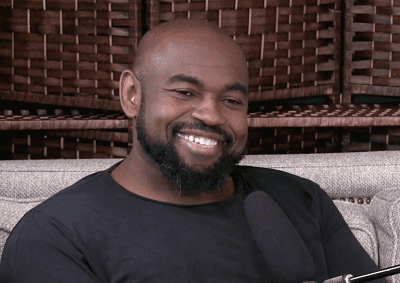
 Spencer Nugent is absolutely one of the most talented and gracious humans I’ve ever interviewed on Mormon Stories Podcast. He also has a fascinating story.
Spencer, along with his parents and siblings, were the first Jamaicans baptized on the island into the Mormon church. Later Spencer’s family moved to Orem, Utah. Spencer attended UVSC and BYU, served a mission to San Antonio, Texas, and became an Industrial Designer. Spencer is a renaissance man of sorts. His many talents/interests include karaoke/music, art, travel, design, drawing, landscape architecture, teaching, etc.
After Spencer was married in the Salt Lake City temple and had two sons, he and his ex-wife eventually experienced a Mormon faith crisis and divorced.
Today’s episode will cover numerous topics, including:
- His family’s conversion story in Jamaica, BEFORE the black priesthood and temple ban was lifted.
- What it’s like to be an early part of a Mormon branch/district in the developing world in the 1970s and 1980s.
- What it’s like to be part of “Mormon Royalty” (a pioneering family) in the developing world.
- Mormon cultural imperialism/whitewashing,
- Being black in the Mormon church,
- Spencer’s mission,
- Male eating disorders
- Parenting, divorce, faith crises, and finding identity, morality, and community as a black, ex-Mormon divorced man in Utah.
You will not be disappointed hearing Spencer’s incredible Mormon story.
Episode Transcript
Host: John Dehlin · Guest: Spencer Nugent
This transcript is machine-generated and lightly edited for readability. The audio is authoritative. Please excuse occasional errors in names and spelling.
Introducing Spencer Nugent and His Jamaican Roots
Part 1 of 3 · Ep. 1124
Spencer Nugent [00:00:00] Sa.
John Dehlin [00:00:30] It is May 23, 2019. We are again broadcasting live to you today from the Mormon Stories podcast studios in Salt Lake City, Utah. We are very, very excited for today's interview. As always, this is something, this is an interview that's special and personal to me as I've gotten to know this guest.
John Dehlin [00:00:55] I think this is a person, a personality, a human, a soul that people in my community need to get to know and will benefit from knowing about. Today's interview is with a dear friend of mine that I learned about through my cousin, Thomas Hatton, or WOM as I like to call him, my sister, Julianne Hatton. Her son Thomas is a dear nephew of mine and, and he became friends with Spencer Nugent. And Spencer has a fascinating Mormon story.
John Dehlin [00:01:31] Spencer, along with his parents and siblings were the first Jamaicans baptized on the island into the Mormon Church. And actually Spencer's parents were baptized before he was born. Spencer was raised in Jamaica as an active, devout Mormon along with his parents went to high school there. Eventually he and his family moved to Orem, Utah where Spencer attended UVSC and eventually byu.
John Dehlin [00:02:02] Spencer served a mission to San Antonio, Texas and then he pursued a career as an industrial designer. I learned about the term Renaissance man when I visited Monticello in, in Virginia to learn about Thomas Jefferson and all the things that Thomas Jefferson was able to do. And as I've learned a little bit about Spencer, I have been incredibly impressed with all of his abilities.
John Dehlin [00:02:32] He's a singer, he plays the guitar, he loves art, he's a drawer, he's a designer professionally. He loves to travel. He does his own landscape architecture. He's a teacher. He's got an Instagram channel and a YouTube channel. It's called SketchAday Sketch a Day.com SketchAday.com youm can check that out.
John Dehlin [00:02:54] Just an amazing human, wise, thoughtful and he hates all of this part of the introduction, I'm sure. After Spencer got married in the temple in Salt Lake City and had two sons, he and his wife, what is now his ex wife, eventually experienced a Mormon faith crisis together and eventually got divorced. So today's episode is going to be another one of those multi hour epic Mormon stories interviews where we dig deep.
John Dehlin [00:03:26] We're going to cover many important topics including Mormon cultural imperialism and whitewashing as it relates to Jamaica and also the positive aspects of what Mormonism brings to, you know, people outside of the United States in a country like Jamaica, because it's good and bad. That's at least my experience of what I believe we'll see If Spencer would agree. He's shaking his head yes, so I think he would.
John Dehlin [00:03:53] We're going to talk about what it's like to be black in the Mormon Church, both, you know, in Jamaica and also here in the United States. We're going to talk about Spencer's mission. We're going to talk about his marriage. We're going to talk. Be talking about parenting. Spencer also experienced male eating disorders, so we're going to talk about that.
John Dehlin [00:04:13] We are going to talk about divorce, losing your faith, faith crises kind of stuff, and what it's like to find identity, morality, and community as a black ex Mormon man in Utah. And that's intense. So I think it's intense. Spencer, you can tell us if it actually is intense or if it's chill, like, I don't know. But we're so excited to have you here. Spencer, thank you so much for joining us, us on Mormon Stories podcast.
Spencer Nugent [00:04:42] Thank you, John. Thank you.
John Dehlin [00:04:43] Thank you.
Spencer Nugent [00:04:43] It's good to be here. Kind of surreal, actually, but any.
John Dehlin [00:04:47] Any corrections on the introduction or.
Spencer Nugent [00:04:48] No, you did. You did great, actually. You did too much.
John Dehlin [00:04:52] All right. Yeah, I apologize for that.
Spencer Nugent [00:04:54] It's all good.
John Dehlin [00:04:54] Not really sorry. Not sorry. Okay, so without any further ado, let's just jump in.
Spencer's Parents: The First Mormons in Jamaica
Spencer Nugent [00:05:02] All right. To.
John Dehlin [00:05:03] To your story, because I think people are going to really value it. So tell us about how your parents first learned. Well, tell us whatever you want to about the history of the Mormon Church in Jamaica that precedes your parents becoming the first baptized converts on the island.
Spencer Nugent [00:05:23] Okay.
John Dehlin [00:05:25] And any disclaimers you want to offer before we start.
Spencer Nugent [00:05:28] Yeah, I'll probably sprinkle disclaimers in throughout. Well, first of all, I'm no historian, and what I'm telling you is largely, you know, the. The oral history of the church in Jamaica and my family's experience. So if I mess up or miss any details, my apologies to everyone.
Spencer Nugent [00:05:47] But the gist of it is there are. There actually were missionaries who went to Jamaica. I think it was in the 1800s, a long, long time ago, and they didn't have a lot of success. So it wasn't until the 1970s when my family, my parents specifically, they had a friend who was an expat on the island. So companies would have businesses on the island. They sent these expats who happened to be Mormon. And at the time, so I guess going back a bit further, my parents, clearly they didn't grow up Mormon. So my mother, her background was Episcopalian or Anglican, and my father actually grew up as a Jehovah's. Witness.
John Dehlin [00:06:35] Whoa. That's intense. Do you know about that at all? We've covered that with one interview on More Mysterious.
Spencer Nugent [00:06:42] Yeah, I did listen to that one. Got into the weeds on that one. But I learned a ton. As far as my father goes, however, I just recall him mentioning that they would go out ministering, they would, you know, proselytized. I guess I forgot the correct term that they use. So I remember that his. The majority of his family is still Jehovah's Witness practicing as well. Oh, wow. Yeah. Yeah. So he shared a couple experiences of going out with his father, his family, teaching, preaching, that kind of thing. So that was his background. And it's really easy to find. You can just Google Jamaica Nugent. You'll see his whole story,
John Dehlin [00:07:30] like from the ensign or.
Spencer Nugent [00:07:32] Well, lds.org or. Because they were the first, they met a lot of significant leaders, people in the church that would interview them. Hartman Rector Jr. Did. I think it was in his book no More Strangers. There was an interview with my father where he tells his whole experience from his perspective. But essentially he left the Jehovah's Witness faith in his, I guess you could say early 20s or thereabouts. Basically, when he went to college, he became an atheist. And his experience, as he tells it, is something along the lines of, you know, just being completely outside of any context of religion, living a worldly life, you could say.
Spencer Nugent [00:08:25] And one day he was coming home and he felt inspired to kneel down and pray. And he did. And I always loved that part of the story. We can talk about where I'm at now in my life spiritually later. But for him, I always thought it was touching that he felt inspired to reach out for some answers. So he did. And he felt inspired to read the Bible. So that's what he did.
Spencer Nugent [00:08:56] He would. And I remember this growing up, he would still read the Bible obsessively, but at this particular time, when he was working with his expat friend at this company, it was an aluminum plant, alumina plant. That's the raw material used to make all your aluminum foil that you use.
Spencer Nugent [00:09:17] This friend noticed that he was reading the Bible, asked what he was doing and mentioned that he was a Mormon. That night, went over, showed a film strip reel. I think it was called Man's Search for Happiness or Meet the Mormons. I don't remember the correct title. But that was when they had the little film canisters. And I still remember those growing up.
John Dehlin [00:09:40] Dude.
Spencer Nugent [00:09:41] Yep, Exactly. Yep. So that film strip projector. So they had that Presentation and right then and there, as my dad says, he knew he wanted to be baptized. My mom, she took a little extra time.
John Dehlin [00:09:57] So he watched the man's search for happiness.
Spencer Nugent [00:09:59] Yep.
John Dehlin [00:09:59] Film strip.
Spencer Nugent [00:10:00] He watched that. He read the Book of Mormon, voraciously finished it and was just convinced this is.
His Father's Baptism Before the 1978 Priesthood Revelation
John Dehlin [00:10:06] Did he have, what level of education did your parents have?
Spencer Nugent [00:10:08] Oh, good question. So my dad, his background was in botany and zoology I believe with some chemistry. So scientific. Yes. He went to University of the West Indies in Jamaica. That's where he studied. And you could say he's a little bit like me. He does a lot of different things as well. My mother never did go to college, but she was actually one of the first computer operators back when computers were room sized things on the island. And I wasn't alive then, but I've seen photos of her, her doing that, but she was, you know, for, for my, for the majority of my life she was a stay at home mom. She had a couple business ventures that she did on the side here and there. She used to do baked goods and sell them, that kind of thing. But yeah, my dad was college educated at that time.
John Dehlin [00:11:04] Okay, so he went from Jehovah's Witness to atheist.
Spencer Nugent [00:11:08] Yes.
John Dehlin [00:11:08] To seeing the missionaries. And were there missionaries that.
Spencer Nugent [00:11:11] Well, it wasn't missionaries. It was members of the church who were sent to Jamaica to. Not by the church, in the.
John Dehlin [00:11:18] Aluminum.
Spencer Nugent [00:11:19] In the aluminum industry. Yeah, Mining, you could say. Mining and refining. So they were just there. There was no church on the island. There was no infrastructure.
John Dehlin [00:11:30] Do you remember the name of the, like the families or the.
Spencer Nugent [00:11:33] Yeah, yeah, the name is Schmile. S C S C H M E
John Dehlin [00:11:36] I L SH Brother Smile would have worked for aluminium? Kind of.
Spencer Nugent [00:11:41] Yes.
John Dehlin [00:11:42] Plant. Aluminum plant. And he would have met your dad
Spencer Nugent [00:11:45] and yeah, just, just like you know, seeing a co worker playing your favorite video game and you go, hey, what are you doing? And you, you connect that way. So that's kind of what happened for him.
John Dehlin [00:11:56] Okay. And so have you talked to your dad about what it was about? The message or the film, the film strip, the doctrine, the teachings, the missionary that really connected with him. He's an atheist.
Spencer Nugent [00:12:13] I don't know specifically. I remember a few details from his telling of the story in his reading of the Bible. He had almost like a Joseph Smith like experience, you could say, where he realized, oh, the true church, if you will, should have a priesthood, it should have some authority and set up a certain way. And he in his retelling of this essentially said that he just realized that churches on the earth didn't really embody what he read and what he felt was a representation of how God would run things.
Spencer Nugent [00:12:54] So that part of the message resonated with him. It was also a conflict for him in a way, but he resolved it. And what I mean to say is he actually got baptized in 1974, which was four years before the priesthood revelation. So part of the presentation was, hey, that's great. You want to be a part of this, but I need to let you know, here's how the church views people of your race.
Spencer Nugent [00:13:26] So that was something he had to come to grips with, and my mother as well. He quoted a scripture in Psalms. I forgot the actual reference, but something to the effect of, I'd rather be a doorman or something, stand at the door than enter the place of the faithful, or something like that. It's a psalm. I think it's Psalm 84:10, if it's coming back to me. But that was somewhat bittersweet for me because it spoke to his realization that, hey, this is something I want to be a part of, but I can't really fully be a part of that.
Spencer Nugent [00:13:59] And I think he came to grips with that, with that part. But as far as what resonated, he just realized, based on his reading his study, that to him at the time, the Mormon Church was the closest thing to what he had read about.
John Dehlin [00:14:17] And just to be explicit, I think you just referenced this, but were they baptized before 1978?
Spencer Nugent [00:14:23] Yes, January 20th, 1974.
John Dehlin [00:14:26] Okay. So four years before the church allowed, you know, black people, people of African descent or of color, to receive the priesthood, to attend the temple.
Spencer Nugent [00:14:34] Yeah, yeah. So he had a lot. He had a lot of experiences, you know, really poignant, powerful, profound experiences of, I think, you know, butting up against that reality. There was one he shared in particular where. Well, sure, good and bad, I guess the good. Just feeling the part of something, some energy, something that was good for him. He felt like it was a good fit. But there was also the struggle of, hey, what happens when we need to pay tithing? Or what happens when we need to?
John Dehlin [00:15:10] Because there's no branch.
Spencer Nugent [00:15:11] There's no branch. There's no branch. There's no leadership. There's a bunch of people hanging out on the island as an unestablished unit. But he bought up against that. There were cultural things, too. And what I mean to say is there was the doctrine of exclusion for blacks from priesthood ordinances, or at least officiating. But there was also cultural things that happened where members interpreting as they would made choices that, you know, in hindsight were hurtful or were discriminatory. So, for example, not being allowed in elders quorum meeting. You know, he would sit outside once
John Dehlin [00:16:00] there was a branch.
Spencer Nugent [00:16:02] Well, it wasn't so much a branch as it was a unit, so it wasn't an official branch. So there were expats on the island. They would all meet in someone's home.
John Dehlin [00:16:11] Okay.
Spencer Nugent [00:16:11] And then they would rotate between homes or among. Among the homes.
John Dehlin [00:16:15] Cottage meetings or.
Spencer Nugent [00:16:16] Yeah, cottage meeting. Exactly.
John Dehlin [00:16:17] Church or whatever.
Spencer Nugent [00:16:18] Exactly. So the elders would go together, or the priesthood members, rather. And then my dad would sit outside the door as he was instructed to, and he would read for an hour. Read. Read the Book of Mormon Bible and that kind of thing.
Race, Exclusion, and the Mormon Church in Jamaica
John Dehlin [00:16:33] Excluded. Physically.
Spencer Nugent [00:16:35] Physically excluded from entering the room. Yes.
John Dehlin [00:16:37] Okay. So. So, like, it's, as I think, about people of color joining the Mormon church prior to 1978. You know, you hear stories about an African fellow stumbling on a Book of Mormon and reading it and writing Salt Lake City saying, how do I become a member? You know, and I can get that. They read a book, it's talking about Jesus, it's talking about their salvation. They're inspired. They want to be a part of whatever. And there's no real wards or, you know, branches anyway, but. But they still want to be a part however they can.
John Dehlin [00:17:13] And especially if they maybe have a certain level of education, but then not an advanced level of education. And let's just say there have been centuries and centuries of exclusion or slavery or bigotry or whatever. It's just like, well, that's just our world. Like, we're discriminated against. So, like, what else is new? Mormonism, outside of Mormonism, when it comes to the seventies post Martin Luther King, which I'm assuming the news of the Martin Luther King civil rights movement would have reached Jamaica, you know, so post 1964, and someone who is more highly educated.
John Dehlin [00:17:53] And this is after the Black Panthers, this is after the Black Power movement, you know, all that stuff in the way I think about history and reflect back on it, an educated black man, no matter what country they lived in, would simply read about the church or learn about the church, find out about the exclusion policy, and say, no way. I mean, there's no freaking way. Like, fu. Church. I'm not joining a church that excludes me. Have you talked to your dad or mom about that process?
Spencer Nugent [00:18:25] There's a lot there in that question. Yeah, yeah, break it down. Coming to mind. Because I, you know, having. Or being Being at the point I'm in my life now, I'm trying to make an effort to understand more about their experiences. And we've had conversations along those lines where, yeah, all of this will come into focus. But, you know, discovering or embracing my blackness and learning about that and becoming passionate about the struggle, if you will, and being somewhat at odds with where my parents are now and their understanding of the struggle. They've referenced their youth and their passion and their zeal for the struggle as well. And by the struggle, I mean racial discrimination, the civil rights movement, all that stuff.
John Dehlin [00:19:19] Wasn't Jamaican founded Jamaica, Was it like a. Was it colonized? Were Europeans?
Spencer Nugent [00:19:25] Yeah. So slavery. A little bit of history there. Jamaica is one of the former countries that was part of the British Commonwealth. So historically speaking, the indigenous people of Jamaica were what you would consider Native Americans. They were on the island. The Spaniards came and there was genocide. They were all killed off. And so they needed a labor force. So they went to Africa, India, China, and imported humans real quick.
John Dehlin [00:19:57] The racial background of the indigenous people of Jamaica would be comparable to the Mayas and Aztecs and Incas.
Spencer Nugent [00:20:04] Absolutely, yes.
John Dehlin [00:20:06] Any of those people.
Spencer Nugent [00:20:07] Those people do not exist. They were completely.
John Dehlin [00:20:09] They don't exist.
Spencer Nugent [00:20:10] They were completely eradicated.
John Dehlin [00:20:12] Oh, my gosh. I have never thought about that.
Spencer Nugent [00:20:14] So there's a museum on the island that has artifacts, stories, but there are no people of that. I feel gutted on the island. Yeah, it's a horrible thing to think about. Slavery, the slave trade, imperialism. You think about blacks from Africa. But there was also a calling, a clearing of peoples that happened so that these imperialists could take advantage of the land and resources. So there's that, right? Yeah.
John Dehlin [00:20:46] Okay. So then they. What are the main crops or agricultural?
Spencer Nugent [00:20:51] There's a lot of sugar cane.
John Dehlin [00:20:52] Okay.
Spencer Nugent [00:20:53] In fact, my father, his profession was in the orange juice industry for a large part of my life. And that's another big crop.
John Dehlin [00:21:03] So there's oranges, Sugar.
Spencer Nugent [00:21:04] Yep. Orange is sugar cane. There's the raw material for aluminum. It's called bauxite. B, A, U, X, I, T, E. It's this red dirt that they process. So that's a big one. And then there's just farming in general. I guess marijuana is a big thing now since it's legal there. I don't think it's legal to export, but certainly that's something there. But above all of that, it would probably be. Tourism is a big part of industry there.
John Dehlin [00:21:33] Like resorts.
Spencer Nugent [00:21:34] Yeah, resorts, Hospitality. No casinos, to my knowledge. Maybe that's changed. It's been a while since.
John Dehlin [00:21:40] And is there a predominant. Has there traditionally been a predominant religious culture in the island, like Catholicism?
Spencer Nugent [00:21:47] Yeah, so because of the history of the British and Spaniards coming over, you know, they took us from Africa and gave us religion. So that's why most Jamaicans are Christian, if not Christian. There is a small subset of Rastafarians and not sure if there's Muslims probably. I don't remember interacting with many growing up, but largely most people are Christian on some.
John Dehlin [00:22:20] But not Catholic.
Spencer Nugent [00:22:22] They're Catholics. I actually went to a Catholic high school. There are Catholics, Baptist, Pentecostals. So the type of church where you speak in tongues and, you know, have those miracles. Mormons are just a blip compared to everything else.
John Dehlin [00:22:39] But no one predominant religious tradition synonymous with the island.
Spencer Nugent [00:22:44] Christianity in aggregate would be the tradition, but there's no indigenous or local religion. There is a practice of what's called Obia, similar to voodoo that some people practice. That's kind of a carryover or hold over from when slaves were brought onto the island. But that's. That's about it.
John Dehlin [00:23:11] So would, Is it just, is it just a fact then that your parents ancestors would have been slaves?
Spencer Nugent [00:23:20] Yeah, actually, yeah, that's. That's, that's a. That's a heavy question because my name, my last name is actually the last name of Nugent. Nugent.
John Dehlin [00:23:31] Spell it for us.
Spencer Nugent [00:23:32] N U G E N T. Just like Ted.
John Dehlin [00:23:34] Okay.
Spencer Nugent [00:23:35] No relation. I say that all the time, but my last name is the last name of the last slave owner of the line of people my family came from. So Peter Nugent, that's the ancestor who settled the area of the island that my family is from. He acquired a Christian name, but also the name of his slave owner. And so that's been propagated through, through time. And, and here I am.
John Dehlin [00:24:05] So I think of Nugent as a Vietnamese name. I don't know why.
Spencer Nugent [00:24:09] Well, that's, that's a Wynn. That's N G U, Y E, N. I think it's pronounced Win.
John Dehlin [00:24:14] Okay.
Spencer Nugent [00:24:15] But yeah, I.
John Dehlin [00:24:17] And what nationality that Nugent slave owner character.
Spencer Nugent [00:24:21] Oh, so we're from. I believe it's Guinea Coast. So the West. West.
John Dehlin [00:24:27] I meant the slave owner.
Spencer Nugent [00:24:28] Oh, the slave owner. I'm not sure.
John Dehlin [00:24:31] British probably.
Spencer Nugent [00:24:33] It wasn't British. It was either Irish or.
John Dehlin [00:24:37] And then. Yes, your ancestors.
Spencer Nugent [00:24:39] Yeah, so my ancestors. My lineage goes back to West Africa.
John Dehlin [00:24:43] That's Guinea.
Spencer Nugent [00:24:45] Guinea Coast. Yes, Guinea Coast. That's as far as we know.
John Dehlin [00:24:49] And have you guys tried to do genealogy?
Spencer Nugent [00:24:51] My parents are Obsessive about it and have been really passionate. I guess passionate is a better word. And so they've been able to go as far back as the African coast. Unfortunately, there's not much beyond that.
John Dehlin [00:25:04] So do they know when their first ancestors came to Jamaica? About.
Spencer Nugent [00:25:08] We have an idea. It would have. I mean, it would have been, you know, in the 16 or 1700s, round about that time, but. Okay. Yeah, I'm just.
John Dehlin [00:25:19] I'm breathing deeply. I'm just. Heavy stuff.
Identity, Names, and Colonial Legacy
Spencer Nugent [00:25:21] It is heavy. It is heavy. It's something I've thought about a lot, particularly as I've moved into this new phase of life and, you know, trying to piece together an identity, realizing that, oh, well, a piece of me is tied to this Christian mindset that was imposed on my people and also my name, you know, and how do I come to grips with that? And that's been a struggle a bit.
John Dehlin [00:25:46] Just as a side note, one of the most important books I ever read was the Autobiography of Malcolm X. Hopefully most of you have heard of Malcolm X. I'm sure most of you have. When the Nation of Islam really rose to prominence in the 50s and 60s, it sort of had this practice of. Of having its adherents replace their slave name, as they called it, with the term X. Not not only so that they're not using slave name anymore, but also as this big reminder that their whole genealogy and history was erased with the slave trade. And so Malcolm X, the name, the term X, is a replacement of Malcolm Little, who. Whose ancestors were slaves.
Spencer Nugent [00:26:26] Yeah. It's interesting you mentioned that. Like I said, I'm still coming into my own. It's something I've considered, but at this point in life.
John Dehlin [00:26:35] Changing your name.
Spencer Nugent [00:26:36] Yeah. I mean, the cost to that is significant. Small thing, but it's something I think about. Something I think about whether or not I do it. We'll see.
John Dehlin [00:26:47] And it's a phenomenal book for anyone who wants to read it. And the story of the Nation of Islam very much parallels the story of Mormonism with the charismatic founder, and the founder ends up being a polygamist, and Malcolm X has to have his own enlightenment. And it's a great. And a great movie. Spike Lee directs the movie as well. It's great stuff anyway.
Spencer Nugent [00:27:08] But, yeah, going back to your question, my dad often referred to himself when he was. Or described himself when he was younger as being socialist. Very liberal, Very progressive in his ideals and thinking. And I.
John Dehlin [00:27:24] One last question. I'm sorry.
Spencer Nugent [00:27:25] Oh, go ahead.
John Dehlin [00:27:26] What year was slavery abolished in Jamaica? Do you have any.
Spencer Nugent [00:27:28] Oh, you're putting me on the spot.
John Dehlin [00:27:29] Any idea, like, what century? What century?
Spencer Nugent [00:27:33] It was the 19th century.
John Dehlin [00:27:34] Okay.
Spencer Nugent [00:27:35] So that'd be the 1800s.
John Dehlin [00:27:36] So around. So mid mid 19th century. Probably around the time it was.
Spencer Nugent [00:27:40] Well, I think it was 1860, if I recall. Yes.
John Dehlin [00:27:43] And that's when the Civil War started in the United States.
Spencer Nugent [00:27:45] I think so. Maybe not. Okay, well, I've got a lot of dates jumbling around in my head right now.
John Dehlin [00:27:50] The 1800s would have been abolished.
Spencer Nugent [00:27:51] Yeah.
John Dehlin [00:27:52] Okay. And do you know anything about how your parents ancestors sort of rose from literal slaves to middle class? Like, what would you have seen?
Spencer Nugent [00:28:02] Yeah, I mean, in Jamaica, we were middle class. You could say, you know, the economics of moving to another country certainly shifts that balance in some significant ways, and we've had to kind of start that journey again. But.
John Dehlin [00:28:18] So you say your dad was liberal or progressive?
Spencer Nugent [00:28:21] Yeah, he was. He was liberal or progressive. Yes. When he was younger, educated. As far as our family, like, progressing and getting to where we are when the. When slavery ended, my ancestor Peter was awarded a plot of land, if you will, or area of Jamaica. I'm not sure the reasons. There's. There's probably reasons in journals somewhere. But that became Nugentville, I think. Really got renamed to Bell Castle. Yes. So
John Dehlin [00:28:57] that's 40 acres in a mule. Right.
Spencer Nugent [00:28:59] I'm not sure if it was. You know, I should look up the. The actual area. But it was significant.
John Dehlin [00:29:04] In the US I think. Weren't slaves, granted. In the US I'm not sure.
Spencer Nugent [00:29:08] Okay, I was a. Sorry, random thought here, but I was just thinking the condition of the black person in Jamaica and the United States is somewhat different. So I've been trying to hold information from both. And so that's why I was a little bit stupid at your question there. But as far as the land goes, we had that as a family. Not my personal family, but, you know, my ancestors. And that became our land to work. And there was a town, and so there's. I have a lot of family in that particular chunk of Jamaica is what I'm saying. So we had that to work off. They worked the land. Education was always big for me and my family, something that was stressed. So we always worked hard in school and tried to excel. And it's kind of where or where or rather how we ended up where we were.
Family Background and Jamaican Society
John Dehlin [00:30:10] Would your grandparents have been more highly educated or would they have just been farmers and your dad university student?
Spencer Nugent [00:30:17] I'm fairly certain my grandpa did not go to college or my grandmother. They were farmers, at least on My father's side, my mother's side, they were educators, so they were principal and I think teacher at the local high school. And my parents met in high school. That's how they met.
John Dehlin [00:30:36] And tell me about the socialism part of your dad's upbringing. I'm just curious about that.
Spencer Nugent [00:30:41] So he, again, this is just as far as I've been told, but essentially being pro social programs, giving back to people, not leaning in so heavily into capitalism or conservative ideals that at face value, can seem to neglect society, the working class. Yeah. So he was a big proponent of what's called the Labor Party in Jamaica.
Spencer Nugent [00:31:10] And that was, I think, at the time. Was it labor? I don't remember. But was it Michael Manley? Politics are interesting in Jamaica, certainly like the British system. But in any case, that was kind of his thing. I mean, when I say liberal and he was of a socialistic mindset. It wasn't so much that gay marriage was a thing. I mean, Jamaica is or has been one of the most homophobic countries in the world. So it's been interesting myself, even growing out of. Out of those ideals and mores, if you will. So for him, it was just. It was more about being considerate for people in general, giving back to the working class.
John Dehlin [00:31:57] Okay, so this was a really good background to a question that I started with, which. No. And I, you know, I was wanting the background, but it's like I'm checking off the, the boxes of like, my values today, which is like, all right, he's educated, middle class, secular atheist, like, socialist. Like, I'm thinking, wow, that, that's really good trajectory. Right.
Spencer Nugent [00:32:22] Two degrees in college. Yeah, yeah.
John Dehlin [00:32:24] And then freaking joins a racist church.
Spencer Nugent [00:32:27] Like, again, I mean, that's one way.
John Dehlin [00:32:30] No, an exclusionary, racist church. And I love Mormonism. Like, I don't mean to be shocking my listeners. I love the church, but I mean, from his paradigm, he's educated, he's secular, he's like riding the wave. And then he's learning about this theology that some now says sounds fanciful or crazy or like whatever, along with being racist.
Spencer Nugent [00:32:55] Yeah, yeah. In the, in the no More Strangers account again, you can find that online. I believe the phrase he used to describe the discrimination was a fly in the ointment. Meaning this was, this was the one thing that, that was hard or heavy. But given his feelings about the doctrine, the presentation that he had, I think, and I'm extrapolating here a bit, but his association with Paul, he thought Paul is the gentleman who introduced him to the church. So Paul he describes Paul as just one of the best people he knows. So I think that was probably part of it, feeling like, well, if Paul is so great, this thing must be great.
John Dehlin [00:33:40] So it's a social conversion at minimum.
Spencer Nugent [00:33:42] At minimum, yes.
John Dehlin [00:33:43] But also kind of a doctrinal, spiritual one.
Spencer Nugent [00:33:45] Very doctrinal, very spiritual, yes, absolutely. 100%. He was a firebrand. He was passionate about Mormonism in every sense of the word. And it was inspiring. I mean, it really was. I still feel chills telling his story because of his passion. Not necessarily that I agree with it all. Just I respect him for his passion and dedication, devotion to his ideals.
Spencer Nugent [00:34:13] But, yeah, that was a sticking point. He was able to overcome it. And I've heard many justifications. Specifically, the one that comes to mind is in the Old Testament, the Aaronic order, if you will, the Levites, they were the ones who were allowed to officiate. They were the ones with the priests. And so he created an analogy there that I think biblical basis, right? Yeah. Maybe that was the first stick under the shelf for him back in the day.
Spencer Nugent [00:34:46] And I am not going to speak to his shelf. I'm sure it's intact based on how he lives his life. But certainly that was something that was told to me that helped me in my acceptance of that discrimination from my
John Dehlin [00:35:01] position of privilege, being able to pick and choose exactly what I want to do in life almost in every aspect. Aspect, I'm like flying the ointment. That's like taking a dump in the ointment like that. That would be a deal killer from day one. But what I'm not. I'm imagining, what I'm not considering is, you know, just the way social dynamics work and history and oppression, how that's going to play into someone saying it's just a fly versus like a major, major obstacle or like a deal killer for me and my privilege, that would just be a deal killer. I have to sit outside the elders quorum. Sorry, F you, you know, I'm out of here. But for him, it was just a fly in the ointment.
Spencer Nugent [00:35:46] Yeah. I mean, that was
John Dehlin [00:35:49] a thing.
Spencer Nugent [00:35:50] Yeah. To us, it might seem like a mountain, you know, like. But I think one of the things I've learned as I've gotten older is to not necessarily apply my context to history. So I'm okay holding space and creating space to say, hey, you know, maybe his place was such that it was just a flight ointment to him at the time. Maybe his heart was in a place to see it that way. For me, It's a bit harder given, I think, the time I grew up in and my experiences that I've had to just call it a fly in the ointment. In fact, that was a. Or that has been a big struggle for me in the past and I think something that ultimately led to me transitioning out.
The Church's Role in a Developing Country
John Dehlin [00:36:42] But if you think about, as I think about Guatemala, where I serve my mission, when you think about what the church and in the United States, what the church does offer, I mean, that's the point, right? It offers spirituality, identity, community, theology, doctrine, hope, meaning, purpose, you know, family, support, sometimes financial or, you know, sometimes. Sometimes support for just daily living, like. And a structure and morality, you know. Yeah, that's a lot.
Spencer Nugent [00:37:14] It's kind of this neat bundle that gets handed to you and you're like, awesome, I think. I think.
John Dehlin [00:37:19] And great role models, right?
Spencer Nugent [00:37:20] Yeah, exactly. Like I said, he was impressed by Paul.
John Dehlin [00:37:23] Yeah.
Spencer Nugent [00:37:23] You know, and their family, and rightly so. They're great people. I still love them to this day, you know. Yes, I do know them personally.
John Dehlin [00:37:29] They're here in Utah, I believe.
Spencer Nugent [00:37:32] I won't say exactly where they were, just to preserve their.
John Dehlin [00:37:36] Okay, okay.
Spencer Nugent [00:37:37] Somewhat anonymity. But they're in the Western United States. Okay.
John Dehlin [00:37:42] So what. What was it like? So you were born in the covenant, is that right?
Spencer Nugent [00:37:46] Yeah, interestingly enough. So to add to the historical context, in Jamaica at the time, again, as retold by my parents or passed on to us, there was a movement or push similar to China, where I would say not as heavily enforced or imposed on people, but there was a push to limit population growth because there were concerns. And maybe it was similar to the ideas in the US at the time. Zero population, that kind of thing. But the saying was, two is better than too many. So two is better than too many, meaning two children. That's it. So there are five children in my family, and the first two were the ones who were there in the 70s when my parents converted.
John Dehlin [00:38:35] Zero population thing.
Spencer Nugent [00:38:37] Yeah, you know, just. Just being sensitive to resources. Jamaica is about 160, 150 miles wide by about 50 or 60 miles top to bottom. So it's fairly small. We have limited resources. So there was some concern then, and my parents leaned into that and they were like, yep, we're just having two kids. They had a boy and a girl. And when they joined the church, they were encouraged to have more children because that's what we do. We are fruitful and we multiply and we fill the earth. So I owe my very existence to them. Converting to the Mormon Church because they were done. Yeah.
John Dehlin [00:39:18] That's kind of humbling, right? You wouldn't exist without Mormonism.
Spencer Nugent [00:39:21] Yeah. And as you can guess, my name comes from their. Their love for the prophet at the time.
John Dehlin [00:39:27] Spencer W. Kimmel.
Spencer Nugent [00:39:28] Spencer W. Kimmel. My. My sister has a name that's associated there as well, but. But I'll just leave it at that. But, yeah, they certainly leaned into that.
John Dehlin [00:39:41] And there wasn't a temple when they would have. In Jamaica. Is there one now?
Spencer Nugent [00:39:46] There is no temple in Jamaica. So at the time I left the island, There were about 5,000 members. There were two districts on the island. Now we have. Or not. We. Now there are stakes that are on the island. People I grew up with are bishops and stake presidents. So it's kind of surreal. But as far as I know, the membership is under 10,000. Okay. I can fairly confidently say that. So there is no temple. The closest temple would be in the Dominican Republic.
John Dehlin [00:40:20] Dominican Republic, Yes. Doctor.
Spencer Nugent [00:40:22] Doctor.
John Dehlin [00:40:22] That's where Thomas went on mission.
Spencer Nugent [00:40:24] Yeah, that's where he went. Yep.
John Dehlin [00:40:25] Shout out to Thomas. Love you, Thomas. So I don't want to jump too far ahead, but at some point, would your parents have been sealed in the temple then?
Parents Sealed in the Salt Lake Temple
Spencer Nugent [00:40:34] Yeah. So between 74 and 78, a few things happened. 78 being when the priesthood revelation happened. So my parents. Some of this is just painful to recount because, again, my context is different than theirs and just even thinking this would be so hard. But my parents expressed that when they were baptized, they knew that in this lifetime they would never have the priesthood
John Dehlin [00:41:03] because that was doctrine.
Spencer Nugent [00:41:05] I'm not sure why or. And I believe that that was said, you know, not until all the sons of Adam are redeemed.
John Dehlin [00:41:12] That. Yeah. The first presidency issued a statement in the late 50s saying until all the white people get the priesthood, basically blacks will be getting it.
Spencer Nugent [00:41:20] Yeah.
John Dehlin [00:41:21] Right.
Spencer Nugent [00:41:21] And I don't want to misquote, but yes, I'm familiar with that. And so they express that. And I remember hearing that as a child and just thinking, wow, that's heavy. You know, a bit of awe. Like, wow, that's a lot of faith. You know, that's really cool. And a bit of shock and horror as well, and sadness. So they didn't expect or anticipate to ever go to the temple or to ever go to the temple be sealed.
Spencer Nugent [00:41:46] Between 74 and 78, I'm not sure which year my parents did visit Utah, so they got to go to BYU campus and tour it. They went to Temple Square. My dad described touching A temple and realizing, I'll never enter this building, but it's so amazing.
Spencer Nugent [00:42:06] So, yeah, they had those experiences. They didn't anticipate ever being able to, but they ended up getting sealed in the Salt Lake Temple again before I was born. So I was born in the Covenant in 82.
John Dehlin [00:42:23] So have they. First of all, like, from a believing Mormon perspective, the way that that's framed is what incredible faith.
Spencer Nugent [00:42:30] Yes.
John Dehlin [00:42:31] Like, one of our first interviewees on Mormon stories was Darius Gray, who joined the church as, like, a reporter for KSL News, like, years before the priesthood ban was lifted. And his story and all the other saints is, like, incredible faith.
Spencer Nugent [00:42:47] Yeah, that's. That's how I viewed it at the time. And I still view it as, wow, they have incredible faith. And I can respect that. Their conviction, their faith, their belief, their hope. I think, to me, that's admirable.
John Dehlin [00:43:02] Still, have they talked about when they heard the news? 78.
Spencer Nugent [00:43:08] I don't remember details of it, but I do remember them expressing feelings of shock and awe that, wow, this actually is happening. Here we are four years later, 1978, and we have the priesthood, or access to it, anyways.
John Dehlin [00:43:24] Wow. Okay.
Spencer Nugent [00:43:26] But there were other stories, too. Like I mentioned before, one of my siblings needed to be baptized, and they flew that sibling to Florida, because that was the closest. Yeah, that was the closest place to have someone officiate in the priesthood. Because what happened? At a certain time, the expats that were on the island were removed from the island.
John Dehlin [00:43:47] Why?
Spencer Nugent [00:43:48] I'm not sure the reason. Again, history is a little bit spotty. I believe it was a bit of both business and government. Something changed, essentially, and they had to leave. And so my parents were left on the island in isolation as a family. So there were four Mormons on the island for a time. And my mother would take one child, my father would take the other child, teach them separately. They would collect their tithing, and without someone to pay it to, would just store it. So they would store that tithing, and when they would go to Florida, they would just say, here's all the tithing we saved.
John Dehlin [00:44:27] And it's their own tithing.
Spencer Nugent [00:44:29] Yeah.
John Dehlin [00:44:30] What faith?
Spencer Nugent [00:44:31] Yes.
John Dehlin [00:44:33] They couldn't pass the sacrament. I wonder what they're doing.
Spencer Nugent [00:44:36] There was no sacrament, but they would do talks and lessons, and they did the best they could.
John Dehlin [00:44:41] Your dad to your mom. Your mom to your dad.
Spencer Nugent [00:44:43] Yep. Basically, yeah.
John Dehlin [00:44:45] When I opened an area with my companion on a mission, we did that our very first Sunday. It was just me and him, and we passed the sacrament to each other, had an opening prayer, closing prayer, gave talks to each other.
Spencer Nugent [00:44:56] 30 minute meeting, right?
John Dehlin [00:44:57] No, it was like 45 minutes. And we prophesied that the area would grow. You know what I mean? And within four months, there are 40 people.
Spencer Nugent [00:45:04] There you go. There you go.
John Dehlin [00:45:06] I mean, the only reason I'm. It's not about me, but that's a magic thing to start out so small and humble, with an eye towards growth. It's a. It's a magical thing. It was for me. I'm sure it was for them.
Spencer Nugent [00:45:20] Absolutely. They. They have had. Have they. They have tremendous faith. That's. That's my parents. They're salt of the earth people. Just very humble, smart, certainly, and have an ironclad conviction in what they believe. So there were. Yeah, there were experiences like that, you know, being willing to. You talk about, or you may have heard stories in the conference or ensign about people, you know, selling cars to go to the temple. That's. That's the kind of people my. My parents are. Not that they did, but just that they had faith such that, hey, it's time to baptize our child. We're going to travel to Florida and get it done, because that's what we need to do. So that's how far their faith took them.
John Dehlin [00:46:08] Okay, so at some point, the church in Jamaica starts growing.
Spencer Nugent [00:46:18] Yeah. So as soon as 78 happened, as soon as the revelation happened, that's when, hey, green light. We can send missionaries. We can. I believe the first missionaries came in 1980 or 19. Excuse me, 79. And that's when things really started taking off. When my dad was ordained. Excuse me. He brought friends into the church. So they started sharing the gospel with their friends. And quickly they grew into a branch of about 100 people.
John Dehlin [00:46:49] This is in what city again?
Spencer Nugent [00:46:51] So this is in a city or town called Mandeville. That's where I was born.
John Dehlin [00:46:55] Is it near the capital?
Spencer Nugent [00:46:57] It's in a parish. A parish is kind of like a state or analogous to a state here in the United States. So that parish is where I was born, where he was working at the time where they lived. And the town was Mandeville. So the Mandeville branch was the first branch on the island of Jamaica. The island was dedicated by Elder Ballard under a mangrove tree. I believe in that town. And so as soon as the revelation happened, that's when leaders started coming and observing things.
John Dehlin [00:47:33] Is that close to the main city, the capital of Mangalore?
Spencer Nugent [00:47:36] It's about, if my memory serves me right, it's about A two hour drive.
John Dehlin [00:47:40] And the main capital of Jamaica is
Spencer Nugent [00:47:42] used to be a two hour drive. Now they have freeways, so I'm not entirely sure, but the capital is Kingston. Kingston, yeah.
John Dehlin [00:47:47] So two hours from Kingston.
Spencer Nugent [00:47:49] Yes. So Mandeville was first and then there was a Kingston branch established shortly after that.
John Dehlin [00:47:53] Okay, and then what's. And you were born in 1980?
Spencer Nugent [00:47:59] 1982. 82, yes.
John Dehlin [00:48:02] So tell us what it was like. Was your dad made branch president, like right off the bat?
Spencer Nugent [00:48:07] Yeah, so my, my dad was always, as far as I recall as a youth, he was always in some sort of leadership capacity in the church. From my recollection, it's interesting because each of us siblings have different understandings of who our parents were at different times. But for me, from my perspective, he was always in leadership. Always the type of person that was kind of the backbone of the church, if you will.
John Dehlin [00:48:37] For the unit or for the whole country?
Spencer Nugent [00:48:40] For the country, essentially. He wasn't a mission president, but he was the type of figure who everyone knew, and I mean inside the church and outside. He was associated with Mormonism, interestingly, the church as it sought to be established as an officially recognized body on the island. He was one of those people who had to go to government and work with leaders and establish some rapport with them so that, you know, they wouldn't be so suspicious of the church. There was a lot of apprehension about the Mormon Church. You know, you have these two white guys showing up in white shirts and ties. People were wondering if they were the CIA or FBI.
Spencer Nugent [00:49:30] There was just a lot of paranoia about it. And so he did a lot of work, like I said, working with government, being on media, whether it was the radio, doing interviews, kind of like I am here or being on TV as well, being in a newspaper, writing articles, trying to establish some better perception of the church.
John Dehlin [00:49:55] He was like an ambassador, basically.
Spencer Nugent [00:49:57] Yeah, you could say he was a pioneer and ambassador for the church.
John Dehlin [00:50:01] And I know this is minutiae, but was he officially a branch president or a bishop or stake president?
Spencer Nugent [00:50:06] He was. He was always either a branch president or district president, which is equivalent to bishop or stake president.
John Dehlin [00:50:14] Yeah. Okay, so he did serve in those.
Spencer Nugent [00:50:16] Yes.
John Dehlin [00:50:17] And again, that's so sacred of a family story to like, I've traveled, you know, met church members in the uk, you know, in Germany and in Switzerland and there's always kind of that family or those kind of royal Mormon families that like are revered multi generationally and the stories are told. And when the state conference comes and the general authority Comes they tell the story about, like, when they first joined and when they first met. And that's culturally a very prominent, important, meaningful sort of legacy.
Spencer Nugent [00:51:00] Yeah, in some ways, my family. I don't know if I'm being presumptuous here, but my perception is that my family was somewhat of a symbol to a lot of people because we were those pioneers. We were those people who were at every event, every function, every church service opportunity. That was us. And odds are, if you know someone from Jamaica who is Mormon, they know of my family, if not knowing us personally. So, yes, he was an ambassador of sorts.
Growing Up Mormon in Jamaica
John Dehlin [00:51:37] So what was it like for you growing up Mormon in Jamaica?
Spencer Nugent [00:51:41] Ah.
John Dehlin [00:51:41] So what are your memories as a kid?
Spencer Nugent [00:51:44] In the youth, my earliest memories were in nursery. Okay, I remember nursery.
John Dehlin [00:51:48] Was there a chapel or were you in a.
Spencer Nugent [00:51:50] To this day, we had chapels. Yes. So I grew. So I was born in Mandeville. My earliest memories of the church would have been in a small town called Bogwok, and that's where I grew up. We had a small building that was rented, I believe.
Spencer Nugent [00:52:06] I remember that chapel. I remember the blue hymn books. I remember when we switched to gray or, sorry, green hymn books. I remember setting the chairs out. I was, as friends and family would tell me, mischievous kid. I would crawl under the pews and between people's legs and cause trouble.
Spencer Nugent [00:52:25] So that was bag walk. I will say, just to preface all of this, church in Jamaica for me was less spiritual, more social. If I were to look at both sides of community and the social aspects of the church and also the spiritual side, it was definitely more of a social institution for me.
Spencer Nugent [00:52:50] So then we built a building in Linstead, which is kind of town. I'm not sure of the exact distance. I just remember it took about 10 minutes to get there. So Linsted was a bigger town and we built a huge building, at least from my perspective, it was huge. Two stories, chapel upstairs, cultural hall, classrooms, all that good stuff. It was the talk of the town because it was beautiful, it was well built.
Spencer Nugent [00:53:19] And I remember my father breaking ground for that building. I have that memory. But yeah, like I said, my earliest memories. Earliest memories were in nursery. I remember the classes, the lessons, and even just thinking about it. I'm smiling because those were good times. Those were good, simple times when I remember just feeling love and happiness and we were all in this thing together. We did feel peculiar, certainly because we weren't like the other Christian churches, if you will. We didn't have a cross in our building. That was always something we had to explain. But, yeah, for me, it was. It was a good, happy time filled with love.
John Dehlin [00:54:03] Do you remember your favorite primary songs?
Spencer Nugent [00:54:06] I Hope They Call Me on a Mission.
John Dehlin [00:54:08] Really?
Spencer Nugent [00:54:08] Yeah. Book of Mormon stories. Book of Mormon stories that my teacher. You know, I won't keep singing, but please sing.
John Dehlin [00:54:17] Please.
Spencer Nugent [00:54:18] Well, the tune of that song is somewhat disturbing, but because of, you know, the association there. But okay, so Book of Mormon stories. Hope they call me on a mission. Jesus wants me for a sunbeam. Yeah, I'd say those are. Those are probably. Oh, Love one Another. I guess that's technically a primary song, but the primary hymn book at the time that we used was the orange primary hymn book. I don't know if you all remember that. And I remember switching to the new one and thinking, what is this? But, yeah, those are some of my early memories.
John Dehlin [00:54:50] This is a random question, but occasionally. So it was an English hymnbook, English hymn. It wasn't a localized Jamaican hymn book in any way?
Spencer Nugent [00:54:59] No, it was not localized. This was a hymnbook from the United States that we used. And we sang. Sang happily, those songs.
John Dehlin [00:55:10] Do you remember early I. Identification with the United States and with America? The Osmonds, like, any of that kind of stuff.
Spencer Nugent [00:55:19] I didn't discover the Osmonds till later in my life, actually. I didn't really cue into their existence to add a little bit of color and context to this as well. No pun intended. We had two TV stations. Well, actually, I grew up with one TV station on the island, so as far as media consumption goes, it was one source. So being exposed to American culture was somewhat limited until I was a bit older when we got a satellite dish. And that changed a lot for us. We were able to see American programming and American TV shows.
Spencer Nugent [00:55:52] And so I think culturally that started to influence me and just say, my older sibling, who was also influenced by that, I think also, as I reflect on the past, we thought the missionaries were cool. So, you know, two white guys, white shirts, ties, they were cool. So that's kind of the symbol that they represented for us. And, yeah, we wanted to be like them. They were the cool guys.
Spencer Nugent [00:56:22] So there was likely some association created there of, hey, here's a white guy serving the Lord. I want to be like that. I want to be. And I hate to say it, but, yeah, I want to be white like him. You know, delightsome, if you will.
Spencer Nugent [00:56:40] And so on some level, really, I think, just not so much outwardly expressed, but rather something I just kind of took on. The church represented what we aspired to be it wasn't about, hey, in the context of being a Jamaican, what do I aspire to be? Everything was pointed toward Salt Lake, if you will.
John Dehlin [00:57:08] Well, we talked a little bit about, in our introduction, description about cultural imperialism or whitewashing, and there's always this tension between local culture and kind of American white culture, and this tension between how much local culture is allowed to be incorporated into the Mormon Church practice and beliefs versus no, no, no, that's not how we do it in Salt Lake. You know, that's not what we wear, that's not how we sing, or that's not what instruments. Do you remember any of those tensions at all?
Spencer Nugent [00:57:40] Yeah, I don't remember them as tensions manifesting themselves in any kind of argument or disputes, anything like that. But there were certainly uncomfortable moments. And maybe some of you viewers can relate somewhat. You've been on a mission and someone goes up to the podium and they want to express themselves, and they do it in a way that's true and genuine to themselves, and then they get spoken to, after course corrected, if you will. So music is just a part of how we express ourselves.
Spencer Nugent [00:58:13] And by we, I mean myself, but also, I think Jamaicans, we have a certain fondness, love for music. And it was difficult at times to see the response that was given to people who chose to express themselves through music. I mean, think of fast and testimony meeting or other instances where they might want to sing a certain song. As far as the dialect goes. So in Jamaica, we speak patois.
John Dehlin [00:58:45] What is that?
Spencer Nugent [00:58:46] As you can tell, I don't really have that accent. I can tell you why in a minute. Patwa is essentially broken English. You can think of it that way. Or pidgin English, you may have heard of that. So a lot of times it's combining words. So if I wanted to say, what's up? I could say wagwan, Right. So if I slow that down, wa a guan, it's like, what's going on? Or what? What going on? Yeah. So wagwan, or if I want to say what's happening, I can say wap m. What happened? Right. So, yeah, that's two words for you from Patwa.
John Dehlin [00:59:25] But just to make this explicit and not trying to be sensitive to, not like asking you to perform for us, you know what I mean? Like something that isn't explicit is you're speaking with no detectable accent to me. So to me, you sound like someone who was raised in the United States, right?
Spencer Nugent [00:59:44] Yes, yes.
John Dehlin [00:59:45] But. But that's not how you sounded growing up.
Spencer Nugent [00:59:48] No. When I was growing up. I sounded more like this when I was growing up. There's a little bit more of a. And maybe angular tone to how you say things. So that's more of the Jamaican accent. And even speaking like this, if a Jamaican was listening to me, they would think, oh, you spent some time in the United States, because it's a little bit. Because it's just a little bit off.
John Dehlin [01:00:06] Okay.
Spencer Nugent [01:00:07] And even, you know, being away from the island for a time now, they use certain words and expressions that are different. Patois are very organic language. It changes it. It moves. It shifts depending on who you speak into. And also it changes depending on the time frame and context you're in. You make up. You make up words with your friends that you use or in your community. So it varies. You might use a word like shuggy, and it means something to you and maybe 50 other people, but outside of that group, it means something else. So there's a lot of memes, if you will, to use, use that term
John Dehlin [01:00:47] when you speak in that original accent.
Spencer Nugent [01:00:50] I'm going to shift back now.
John Dehlin [01:00:51] Okay. And you say that's code shifting, right?
Spencer Nugent [01:00:54] Yeah, code shifting. We can talk about that a little bit, too.
John Dehlin [01:00:56] But when you speak in that original native accent, for you, do you feel better? Worse. Awkward? More comfortable at home?
Spencer Nugent [01:01:06] I feel more comfortable, but it's. It's. Oh, man. I think it's part of the context I'm in. So if you were. If you're a black person from Jamaica, for example, I would. I wouldn't even think about it, but there's a certain mental. I would just speak like. I would. I speak.
John Dehlin [01:01:27] Would you code shift immediately?
Spencer Nugent [01:01:29] Yeah, immediately. I would. I would go Jamaican. Yes. Yes. Because that's what would feel comfortable. I think there's just a subconscious response to the situation I'm in that. That's causing me right now to even feel more comfortable speaking with my acquired Utah accent. But your question about code shifting. Yes, I think. And feeling comfortable with my family, particularly my parents, it just. I don't even think about it. It just happens. Or with friends.
John Dehlin [01:02:01] Okay. Thank you for. For helping us understand that. Oh, for sure.
Spencer Nugent [01:02:05] For sure.
Visiting Church Leaders and Race in the Congregation
John Dehlin [01:02:07] Okay. So I imagine at some point you would have either noticed the leaders that came from Salt Lake general authorities, whatever area authorities, and. Or gotten to watch videos or live streams of general conference at some point and noticed that all the Mormons in the United States were pretty much white, right?
Spencer Nugent [01:02:28] Yeah. Every now and then we would see a black person, and it was. It was delightful because we. I would Think to myself, oh, there's. There's someone like me. Wow, okay, there's someone like me. But yes, the majority of people were, you know, every. At least for me, growing up, every mission president was a white person. It was very likely that the counselors were white. It shifted after some time.
Spencer Nugent [01:02:53] But there was certainly the feeling that we were just doing things wrong. I remember feeling like, oh, you know, there's not enough priesthood holders, or you're saying this or doing this the wrong way. I do have some memories going back to your initial question of growing up, of correlation meetings. I remember walking in and I think my mom was on the correlation committee at some point. They had committee meetings every few Sundays. And my understanding is that was just to make sure everyone was all aligned and on the same page.
Spencer Nugent [01:03:28] That was what used to happen, just to make sure there weren't any aberrations or just odd things happening with how we did things and why we did things. But I would say the feeling I had, just an underlying feeling was the church in Utah, the United States, they're doing it right, we're doing it wrong. And there's always this effort to, to get it right.
John Dehlin [01:03:54] What a. So a feeling of you're always doing it wrong and trying to get it right.
Spencer Nugent [01:04:00] That's.
John Dehlin [01:04:00] That doesn't sound totally comfortable. But also, I guess it gives you something to strive for, right?
Spencer Nugent [01:04:06] Becoming a stake was the overarching goal of my life, or at least that was presented to us was like, that was the milestone. That was the next step. You know, we dreamed of having a temple, for example, but we had to have righteous priesthood holders. And culturally, I would, without getting too much on a tangent, Jamaicans, we like to be free.
Spencer Nugent [01:04:32] And there's an independent streak. Yeah, there's an independent streak. You know, we, we were liberated from slavery, we got our in, and then we were under British control until 1962. That's our independence. August 6th, 1962. And so, yeah, there's an independence. We take pride in ourselves.
Spencer Nugent [01:04:56] At least normal Jamaicans do. I'm not a normal Jamaican. And so for the men, I think it seemed like it was a struggle to get active, consistent LDS men who were committed to that thing for one reason or another, whether it was, hey there, worthiness issues or just commitment falling off, demographically speaking, there was always an imbalance of active, what they would call worthy males to females. And so we were always, for the majority of my life anyways, outside of the realm of possibility of having a stake. And that didn't happen until after I
John Dehlin [01:05:41] left the island and I experienced that in Latin America, just in developing countries, the, I guess the rules, the standards, word of wisdom, love, chastity, tithing, and probably just other cultural factors made it way harder to baptize a man than a woman and her children.
Spencer Nugent [01:06:02] Yes, yes, absolutely. Still, there was a certain aspirational quality or appeal to the church. Hey, these people are from America. They seem to have great families. And you know, it felt at times, and again, I'm reading into things from a distance, but that Mormonism was a gateway to a better life, if you will. And it's that hope and aspirational outlook and mindset that was appealing to a lot of people.
John Dehlin [01:06:33] You talk, I mean, this is just aside, but I remember people in Guatemala confusing us with the CIA.
Spencer Nugent [01:06:41] Yes.
John Dehlin [01:06:41] You know, Mormon missionaries at the CIA.
Spencer Nugent [01:06:43] Yeah.
John Dehlin [01:06:44] So there were reasons for that.
Spencer Nugent [01:06:46] Yeah.
John Dehlin [01:06:47] Have you studied that at all?
Spencer Nugent [01:06:50] I have not studied that at all, but I do remember, you know, we'd be out with the missionaries as kids and people would yell at them, CIA, FBI. And we're just like, what? That's.
John Dehlin [01:06:59] No, no. There's a classic book called the Ugly American that chronicled, you know, in the Eisenhower administration, the Kennedy administration and the Johnson administration, how we would send CIA agents to developing countries, sometimes destabilize their governments, sometimes overthrow their leaders, sometimes imposing our own dictators. You know, there's a large history in Chile and Guatemala and other countries of us doing really shady things.
Spencer Nugent [01:07:30] Yeah. There's a, there's a Bob Marley documentary. Some of you may be familiar or familiar with Bob Marley rather. But there's a documentary on Netflix that alludes to that CIA interfering with things and some fear that Jamaica would become a communist or significantly socialist stronghold in the Caribbean. Yeah.
John Dehlin [01:07:49] Cold War.
Spencer Nugent [01:07:50] You had Cuba. Yeah. Jamaica. So there was some concern, there's history of the CIA infiltrating South America and influencing the outcome of political movements there. So. Yeah, it's not outside the realm of possibility, certainly. Yeah.
John Dehlin [01:08:07] So what about when I mentioned kind of general authorities and leaders from the states coming. Part of that was the skin color reference. So I mean, tell me what it's like to grow up as a boy seeing Spencer B. Kimball, your namesake. Right. Seeing General Conference, noticing that all the leaders are white, all the, all the leaders coming over from Salt Lake are white. And you're all dark skinned and you've got The Bruce R. McConkie like teachings about worthiness and the pre existence and you've got the Book of Mormon teachings of dark skin being a curse. You know. So how did you. Did you. Were you aware of all that as a kid?
Spencer Nugent [01:08:51] I was aware. But I accepted and trusted in my parents faith. You know, I borrowed light from them for some time. And as much as things didn't make sense to me then I brushed them aside. I tried to focus on, remember I mentioned happiness and love, those feelings that I had, camaraderie with the saints there, that's what carried me through ultimately.
Spencer Nugent [01:09:20] I certainly had my questions even as a young kid, but quickly those were moved to the side as far as seeing the white faces on tv, just to give you a little or paint a picture of what conference was like. So twice a year, April, October, there were I think two satellite dishes on the island that could receive conference. Actually there was one for a long time and it was just in Kingston.
Spencer Nugent [01:09:48] I think we added one in Mandeville. And so every member from the island would descend on Kingston because there was no way to watch it at home. I remember coming to the United States, for example, and hearing that people watch conference at home and thinking, wow, this is so strange.
Spencer Nugent [01:10:03] You know, you just watch at home in your PJs. That's weird. So we would charter buses, large coach liner buses. And it was awesome, John. It was awesome. I remember, you know, people would, this is what I loved about the church. People would cook food and we would sing songs along the way. And it was this event, this big event.
Spencer Nugent [01:10:31] We didn't spend the night. So there would be a trip into Kingston, a trip back, a trip to Kingston, a trip back. People would save their money so they could buy a ticket to get on the bus. But it was, it was an awesome, awesome happy time.
Spencer Nugent [01:10:44] I don't remember talks as much because, you know, I probably nodded off or tried to escape a few times as a kid. But just the memory and it's all coming back now. I can just see those people and taste the food and hear the songs. And it was, it was a special time. So that was conference and then, you know, you see the people on tv. To get back to your question really
Jamaican Food, Culture, and Youth Activities
John Dehlin [01:11:09] quick, what are some of the food dishes that you remember most?
Spencer Nugent [01:11:16] We eat a lot of rice. We eat a lot of rice. It's a coconut rice with red kidney beans. Super delicious. And there was always some sort of stewed or slow cooked chicken dish with spices. Jamaica, as I mentioned, after or during slavery, rather was it during or after? I think it was under British rule anyways. A lot of Asian influence and also Indian influence came in. By that I mean East Indian. So curry Was a big thing. We would have curried goat, curried chicken. There were just the salads and fresh fruit. The drinks.
John Dehlin [01:11:54] What are some of the big fruits in Jamaica?
Spencer Nugent [01:11:56] Mangoes. I mean, I grew up. Well, one of the houses I grew up in, we had a tree. We called it the head mango tree because this thing would produce mangoes that were the size of your head. And the tree, we had to prop up the limbs so the tree wouldn't split. Like that was something. But yeah, mangoes were good. Bananas, plantains. Oh, fried plantains are so good.
John Dehlin [01:12:22] Whipped cream?
Spencer Nugent [01:12:23] Nope, just ripe. A little bit of salt. We'd have jackfruit. It's kind of like durian, but doesn't smell as bad. It's this huge thing that grows on the side of a tree. There was star fruit. We had these things called guineps. At least we call them guineps, but they're similar to lychees, if you've ever had a lychee. Just really good as far as candy goes. Tamarind balls, we would eat those. They're just tamarind fruit rolled in brown sugar. And you kind of got this tangy, sour with sweet combination. Oh, so good. Anyhow, I could go on and on about the food.
John Dehlin [01:13:04] Is there an authentic Jamaican restaurant in Salt Lake?
Spencer Nugent [01:13:07] There's one in Park City, actually. Is it good? Called 11 House. Shout out to 11 House. Actually went there two weeks ago. Pretty good.
John Dehlin [01:13:15] Like, is it legit?
Spencer Nugent [01:13:16] Yeah, it's legit. It's legit. Yeah. Check it out. It's. I don't remember exactly where. It's near this New Park Hotel, I think it's called.
John Dehlin [01:13:23] But do you remember any of your favorite hymns that you would sing Standing in General Conference that you love? Did you love that part of it, Standing with everyone singing?
Spencer Nugent [01:13:32] I loved if we ever sang Call to Serve. How Firm a Foundation. Loved that song. What was the other one? I Believe in Christ. Those are probably the top ones that I just loved singing.
John Dehlin [01:13:48] Do you remember any favorite parts of the scriptures or scripture stories or inspired by any prophets?
Spencer Nugent [01:13:54] You know, I was never the best scripture reader, admittedly, but as far as scripture stories go, I would say I leaned more heavily into the Book of Mormon. So that was kind of my thing. Always. I guess not now, but always loved Nephi's story and. And kind of the progression of things there. The Stripling warriors was one, I believe it was. The names are fading now. Is it Nephi and Lehi in the Book of Helaman? Their story, but yeah.
John Dehlin [01:14:32] Sons of Messiah.
Spencer Nugent [01:14:33] Yeah. Sons of Messiah. Yes, yes. The one where they. The Book of Mormon's really violent if you think about it. But the one.
John Dehlin [01:14:40] Or Ammon.
Spencer Nugent [01:14:40] Yeah, Ammon when he's cutting arms off the. The poor Lamanites. But yeah. Do you remember as a kid, that's what I liked.
John Dehlin [01:14:49] Do you remember what you were taught about Joseph Smith or Brigham Young or any of the early church leaders, any of that stuff? Are they important to you?
Spencer Nugent [01:14:58] It's a bit fuzzy, but Joseph Smith, he was mentioned, but I wouldn't say emphasized so much. Not as much as here and the. The time between his death to say the modern prophets isn't something that ever was talked about. Polygamy was never talked about or really referenced. It was just a thing we used to do that's been resolved. But yeah, there wasn't a tremendous emphasis on that beyond, hey, here's the Doctrine Covenants, Pearl of Great Price, Book of Abraham, all that.
John Dehlin [01:15:38] Okay, so would you have gone to war dances, steak dances, district dances?
Spencer Nugent [01:15:43] Yeah.
John Dehlin [01:15:45] You know, what were youth activities like? Like as a young adult or as a young man?
Spencer Nugent [01:15:49] Young woman, again, smiling as I think about this, because those are some of the best times. Still friends with a lot of those people to this very day. Dances were few and farther between than they are here. It was more similar to conference, more of a big event. I remember. And maybe some of you laugh at this. I remember going to maybe two dances, but I do remember them specifically. One of them was we did a 70s retro night. Was it night or evening, whatever dance. So I did that. And then there was another one that I went to in Kingston as well as a youth. But youth programs somewhat struggled in Jamaica. I mean, as a teacher, for example, you might be the only teacher in
John Dehlin [01:16:35] your area, meaning teachers in a.
Spencer Nugent [01:16:37] That age group, 14 to 15 to 15 or 16, whatever the ages are.
John Dehlin [01:16:41] Okay, so not some big thriving youth.
Spencer Nugent [01:16:43] Yeah, no. I mean, one of my best friends who. I think he's a bishop now, he. It was just me and him for a while. You know, we'd be in class and it was just me and him and. And our teacher.
John Dehlin [01:16:56] So no studies, like no multi group.
Spencer Nugent [01:17:00] I remember coming to Utah as a couple kids. Yeah, I remember being. I think I was 15 or 16 coming to Utah and spending a few days and going to a ward in Orem. And I think I went to a youth activity and just being completely blown away at the number of youth and the fact that there were people in each age category. It just felt awesome.
John Dehlin [01:17:23] But yet. Do you think about that time with fondness.
Spencer Nugent [01:17:27] I do, I do. Because again, it was about love, camaraderie and those feelings. It wasn't so much about the doctrinal soundness. I mean, that would come later in life, particularly as I was getting ready for a mission, having to make sense of things and like, oh, wow, okay, I've really got to read this Book of Mormon thing that I'm going to go out and teach people about. So, yeah, it was more about the fondness. There was no scouting program even in Jamaica. I went on one camp out with some youth once, but that was it. So I'm the last person you want to have around in a zombie apocalypse. I won't be able to keep us alive.
John Dehlin [01:18:11] So no seminary.
Spencer Nugent [01:18:13] I did have seminary. Seminary is a little different. We would meet after school, not before. It was in the evenings. My mother was my seminary teacher, so that was, that was interesting because there was no getting out of doing those assignments and reading assignments, even though I pushed the limits of that a bit here and there. But yeah, she would, she would teach us seminary and then after seminary there was institute. So she would teach seminary, sometimes teach institute or my dad would teach institute or there were other teachers called eventually and while. Because we had one vehicle or two at certain points. But I wasn't driving, certainly.
Spencer Nugent [01:18:51] So I'd hang around after seminary, either do my homework or play ping pong. That's what I love doing, Ping pong. And basketball. There was a basketball hoop at the church, but it was in the parking lot and we would play ping pong in the cultural hall.
Family Devotional Life and Church Standards
John Dehlin [01:19:13] To what extent did you guys do family prayer, Family scripture study, Family home evening or not?
Spencer Nugent [01:19:19] That's a great question. And again, I think this answer would just be totally different for my siblings. I remember not being perfect in those things. At home we would pray every day. Family home, evening. I always hated it. Always did.
Spencer Nugent [01:19:38] Sorry, mom and dad, but I always hated it. And so it was a struggle. I would say it tapered off the older we got as kids, but it's something we tried to do, spend time together as family. Sometimes we'd go to the beach, sometimes we would go to a restaurant in Kingston, which was a big deal because it was a 30 minute drive and we were excited to have that experience. To not like here, where, you know, I can walk down the street and have some delicious food. So it was an event. But as far as the little things go, prayer, scripture study, it wasn't so much study as it was sharing a verse here or there.
Spencer Nugent [01:20:19] We had this huge family Bible that we would read from, from time to time. And I can see it and I can feel it right now. It's just this big white Bible with embossed letters and very heavy binding. I wish I had that right now, but just because of the memory, you know.
Spencer Nugent [01:20:34] But yeah, my dad would read through the, read from that Book of Mormon. We would do Book of Mormon stories sometimes we would watch film strips or videos. So yeah, how.
John Dehlin [01:20:49] What role did the word of wisdom and the law of chastity play in your teen years?
Spencer Nugent [01:20:53] Oh, boy, oh boy, Heavy question. So not really. But being candid, I was very by the book, letter of the law, straight laced. As a kid, I didn't really have any, by Mormon standards, indiscretions with people that weren't. Were super serious. I mean, as a kid, you're curious and you happen upon things, whether it's porn or experiences with the opposite sex, which actually is interesting if your dad's your branch president. Right. He's the one you're working through things with.
Spencer Nugent [01:21:37] So. I was a virgin until I was married, at least as far as the traditional definition of that interaction goes. I did encounter pornography as a kid, and so that's something that weighed heavily on me for many, many years, which ties into the weight and body image side of things. But I think for me, it was something that I was content with keeping to myself because of, honestly, an attempt to just preserve the image of, hey, there's this pioneer family and we're all great, everything's fine, we're good.
Spencer Nugent [01:22:20] You know, we don't talk about things. So if there were either of those two things, Word of wisdom, law of chastity, I would say law of chastity is probably the thing I had the most liberty with. If you could, if you could say that.
Spencer Nugent [01:22:38] Word of wisdom, you know, in the strictest definition of Mormonism, I didn't necessarily. Hair wasn't the healthiest. Like I said, it was tied to my depression around not meeting the expectations of this family. We were supposed to be not being the best, not being perfect. Be you therefore perfect. You know, you had the, you know, even though we, we didn't have the most robust youth program, I remember Mormons from Utah who would have firesides. We had a lot of firesides. That's the other thing. But we'd have these firesides and you'd hear the story of the lick cupcake or the chewed gum. Chewed gum, that was one I remember.
Spencer Nugent [01:23:26] And I was distressed over that for so long. I remember seminary lessons where, you know, people who broke the law of chastity were called sexual deviance and just that word. I didn't even know what it meant at the time, but I just felt, ugh, you know, just icky.
John Dehlin [01:23:45] And did they mean masturbation, or did
Spencer Nugent [01:23:47] they mean it was a lesson about masturbation, homosexuality?
John Dehlin [01:23:49] Did they.
Spencer Nugent [01:23:50] It was masturbation specifically. And.
John Dehlin [01:23:52] Okay, so you had that pressure and shame.
Spencer Nugent [01:23:54] Yeah, absolutely. That. That was something that. That was core to at least my experiences as a Mormon.
John Dehlin [01:24:01] Is.
Spencer Nugent [01:24:01] Is that shame that. That pressure to be perfect and somewhat compounded by the context I was in? You know, I felt like I had.
John Dehlin [01:24:12] And your family, Right.
Spencer Nugent [01:24:13] Yeah, I felt like we had a mantle, we had a banner. We. You described my dad as an ambassador, and. Yeah, he was, but I had that weight that I felt like, what's the
John Dehlin [01:24:24] dark side of that? Like, I would think, oh, you're ambassadors, you're pioneers, everyone loves you. And, yeah, you're striving for to be as good as you can. That all sounds really good. Is there a dark side to those high expectations and the perfectionism? And if so, what is that? How does that play out in.
Spencer Nugent [01:24:42] Oh, man. I.
John Dehlin [01:24:44] Or is that not a thing? I don't want to.
Spencer Nugent [01:24:46] No, no, no, It's. It's a thing. Certainly. I. I always felt like I had to be the best, and if I wasn't the best, I wasn't worthy or worth consideration. I don't know. I wanted to be always an example.
Spencer Nugent [01:25:03] We. We were always trying to do our best to get it right. You know, kind of like it talks about. We were always doing it wrong, and I wanted to get it right. And so if there was any sin on my part, I internalized that a lot. And I.
Spencer Nugent [01:25:22] Oh, I could just feel those emotions coming. It's something I struggled with. I have journals just filled with comments about how horrible I was. Because this week you messed up again. Or why can't you get this right? What's wrong with you? Just those feelings of me not even loving myself or accepting myself. And so I would resort to things that I thought at the time made me feel good, like eating or could have been indiscretions on my part. But, yeah, those. Those things comforted me, if you will, on a certain level. So there. There was tremendous pressure.
Spencer Nugent [01:26:09] At least I perceived it as tremendous pressure, whether or not that's real. I wanted to be the best, and I wasn't always the best. Sorry, everyone, but yeah.
John Dehlin [01:26:21] So the pressures brought with them a lot of guilt and shame.
Spencer Nugent [01:26:25] Yeah. And.
John Dehlin [01:26:25] Which then led to Self medication.
Spencer Nugent [01:26:27] Absolutely, absolutely. Whether it was, you know, like I said, I was actually exposed to porn at school in third grade. I remember someone brought a magazine, but that kind of set things off and so that's something I had to work through. And it's interesting because the desire to even see or experience that completely went away. Having transitioned out, as opposed to being in healing, it's all of a sudden
John Dehlin [01:26:56] how uninteresting that porn can become once you don't have the rule of not looking at it. Huh.
Spencer Nugent [01:27:02] Okay, well, I don't, I don't have to feel bad about this thing I did forever ago because I don't know if I'm going to hell or not. We can talk about that later. But yeah, that, that pressure was there, certainly. Okay. Just to, to be the best I could be.
The Gap Between Public and Private Church Experience
John Dehlin [01:27:21] And the discrepancy between the public face and the private experiences.
Spencer Nugent [01:27:25] Yeah. So I talk about code shifting a bit and you know, context shifting, if you will. Yeah. When you go to church, you show a certain face. When you, when you're on your own, there's a different you. I think we all implicitly do that to certain extents, but for me it was. There was. Certainly there was. My teens were a turbulent time, internally speaking, and I didn't always find the healthiest ways to manage those feelings.
John Dehlin [01:27:55] But you weren't viewed as a rebellious youth.
Spencer Nugent [01:27:57] No, no.
John Dehlin [01:27:58] Still very devout.
Spencer Nugent [01:27:59] I was viewed as very devout. Very, very much an example to follow.
John Dehlin [01:28:10] Your parents are still alive and they're still very faithful and you're very close to them. So it's a bit of a delicate question, but I imagine as it is in the States, when a family is sort of like held up in high esteem and trying to convey the appearance of real faithfulness or actually just living faithfully, there's a lot of this pressure from parent to child of like you've got to the family name, the reputation, our status, that can probably affect different families in different ways. But I could see a certain type of family where it's like strict and you know, kids aren't necessarily encouraged to pursue self expression or maybe it doesn't really matter what they really think or feel or want to do.
John Dehlin [01:28:59] You got to kind of follow the rules, keep up the family name. There's a strictness and maybe an imperson impersonality that can come maybe in some family contexts as, as parents are trying to make sure their kids portray the right things. Was, was that, was that a thing or not so much?
Spencer Nugent [01:29:21] I would say it wasn't explicitly so. You know, there's, I guess along my story, there's implicit and explicit of things meaning, you know, overt, covert. From my parents, it was always subtle. We carried, or I carried rather. I won't speak for my siblings. I carried the expectation that I was promising essentially to carry on this legacy, to always be the best, always be this pioneer. You know, when we introduced ourselves, it wasn't hey, we're the Nugent, and that's it. It was hey, we're the Nugent. We're the first members of the church in Jamaica. Nice to meet you. Oh, what's your story? And then that became a thing.
Spencer Nugent [01:30:02] So with that we, we carried that pressure along. As far as my parents go though, it's always been just a. It's always just been a subtle feeling that they do want me to be a certain way. But I've, I've. I haven't had too many awkward conversations where there's been an overt expression of dissatisfaction with, with myself.
John Dehlin [01:30:30] Okay, so any other, any other thing about your kind of upbringing, high school, your family experience before we, we talk about high school, whatever. Before we talk about your family's move to Utah?
Spencer Nugent [01:30:49] Let me think on that. I mean, for, for what it's worth, I was always studious. My, my family really stressed education and just always being the best at whatever we did. So maybe that, maybe that's kind of where I get my tendency to always want to be the, the best, best at things. But in high school, certainly, you know, always in the top of my class.
Spencer Nugent [01:31:16] By that I mean, you know, top top five, if not top 10. Jamaica, the educational system was ranked, so your opportunity in life was somewhat determined by your effort as you applied it to your studies. So for example, to get into a good high school, you had to take an examination at the end of elementary school. That examination would cover a variety of topics and you're stack ranked across the island based on your scores. Based on your scores, you're able to essentially select which high school you want to go to. So it's not so much region dependent as it is here.
Spencer Nugent [01:31:57] As long as you can get to that school, you're welcome. Well get to and pay for because there is a tuition associated with, with many schools. So as long as you could get there and you were smart enough, you were good to go. So I think that's somewhat where my tendency to want to perform and be great at things comes from. Just my parents emphasis on education, but probably somewhat influenced by the church as well. That idea of being perfect and always getting right. You know, you're saved by works, not by grace. That kind of thing. I was on my high school chess team. Love chess. We've played chess.
John Dehlin [01:32:38] We played chess.
Spencer Nugent [01:32:39] We have.
John Dehlin [01:32:40] And you slaughtered me.
Spencer Nugent [01:32:41] I did.
John Dehlin [01:32:41] Under most context.
Spencer Nugent [01:32:43] And then you got me back. Yeah, I had a little handicap, but you got me back. But, yeah, let's see. Didn't really as far as like, dating as a teenage. Had to wait till I was 16. Right. Officially. Didn't technically have a girlfriend or really have a girlfriend, but went out several times. Not really out. It was more. It wasn't so much going on a date as it was hanging out is what. What we. What I did anyways. But yeah, didn't. Didn't have a ton of experience till I eventually moved to the United States.
John Dehlin [01:33:21] Did you mention if you played sports? Did I miss that?
Spencer Nugent [01:33:24] I didn't. Well, I did try out for my basketball team. That was not great. Tried out for the ping pong team at my high school, but I just enjoyed ping pong and basketball quite a bit.
John Dehlin [01:33:39] Okay. Anything else about life in Jamaica before the move?
Spencer Nugent [01:33:43] I think that's good. I'm sure questions will come up along the way.
Moving to Utah: Culture Shock and New Beginnings
Part 2 of 3 · Ep. 1125
Spencer Nugent [00:00:00] Sa.
John Dehlin [00:00:31] So what led your family to move to the United States as a Utah?
Spencer Nugent [00:00:34] That's a great question. So there are five children at the time we relocated, which was, I believe in 2001. Yeah, 2001. I was the last child at home. So I had completed high school. It's a British educational system. So I'd done what's called ordinary levels. Excuse me, I'd done what's called ordinary levels and was doing my advanced levels, which is kind of equivalent to like an AP course over two years. And midway through that we decided to relocate because at some point I was going to go to college. Everyone had gone to college in the United States. Going back to the beginning of the interview, I mentioned that my dad had come to Utah and went to byu. One of the things he did when he was on campus is he actually knelt down and said a prayer that all his children would be able to go to byu. And so we all did, ultimately.
John Dehlin [00:01:33] Wow.
Spencer Nugent [00:01:34] By way of UVSC at the time. That's Utah Valley State College. It's Utah Valley University now. That's where I attended college. So being the only one at home having grandchildren in the United States, my siblings were getting married and moving on in their lives. They wanted to be closer to everyone. And so we made the decision to then relocate because I was essentially about to be gone and they would be empty nesters in Jamaica.
John Dehlin [00:02:02] Okay, so that move happened what year?
Spencer Nugent [00:02:04] That was in 2001.
John Dehlin [00:02:06] 2001. That's the same year as 9 11.
Spencer Nugent [00:02:09] So this year? Yes, that was the same year as 9 11. In fact, I remember 9 11. When it happened, I was at UVSC in a computer lab and it was just surreal. Like, whoa, what is this? This is odd. Is this actually happening? Because you're seeing it on the televisions. I remember that, but yeah.
John Dehlin [00:02:29] What's it like to come, like, live in a developing country for your whole first two decades of life and then to move to not just the United States, but to Utah? And not just to Utah, but as a. As a person of color.
Spencer Nugent [00:02:43] Yeah.
John Dehlin [00:02:44] What's that like? And it's been Zion, you know, for 20 years. It was Zion. It was. It was like. This is like Oz, right?
Spencer Nugent [00:02:53] It was moving to Oz. It was an idea that quickly became a reality. And by virtue of that change, you learn a lot really quickly.
John Dehlin [00:03:02] Talk about as much as you want to spend on that. I want to hear about that.
Spencer Nugent [00:03:04] Okay. Okay.
John Dehlin [00:03:05] Like, there's food, there's entertainment, there's people, there's friends, there's. This year there's ward, like all that
Spencer Nugent [00:03:11] stuff this year makes 18 years that I've lived outside the United States and inside. So I'm at my midway point.
John Dehlin [00:03:18] Nice.
Spencer Nugent [00:03:19] So, yeah, lots of observations. I remember moving and it was, it was wonderful, you know, not having to. Jamaica is also violent. I shouldn't say Jamaica is violent. There's a lot of violence that we struggle with quite a bit. Gangs and guns, murders, that kind of thing. Like, I have high school friends that were kidnapped and murdered, you know, held for ransom. Like just grisly stuff. But it was nice to come here and almost be at ease in a sense. And maybe some of that was me assuming that this was just a safe and good place. But at the same time, we were quickly met with experiences that, you know, were surprising. You know, this was like, as you put it, Zion. This was the place. This is the place. Right. Things should be great and everyone should be. We had assumptions that everyone would be well intentioned and things would just be awesome.
John Dehlin [00:04:19] Okay. So the great stuff was the safety.
Spencer Nugent [00:04:21] Safety.
John Dehlin [00:04:22] Do the great stuff and then the hard stuff.
Spencer Nugent [00:04:23] Oh, the great stuff. Okay, okay. Was looking forward to experiencing the church in the way that it should be because again, not getting things right or doing things right. It's like, what's it like to have a high priest group and what's it like to.
Spencer Nugent [00:04:41] To be able to just go to the temple? I wasn't old enough to go. In fact, I've never done a baptism for the dead. Never have never done any of that. So it was more anticipation or excitement about just seeing the church in action.
Spencer Nugent [00:05:00] I remember just feeling giddy at being able to go to temple Square. Things like that. Looking forward to. Oh, man, I remember the Internet. Right. Experiencing high speed Internet because that was never a thing we. I don't know the statute of limitation is here. But another interesting tidbit about high school. I used to sell bootleg CDs. That was my thing. Because we, my family, we had a dial up Internet connection that was, I think it was 144 baud. Or 20 20. Yeah. So in our town, we were one of the few people listeners.
John Dehlin [00:05:37] Millennial blisters have no idea what we just did.
Spencer Nugent [00:05:41] Yeah, you know, you'd buy a modem for your computer and put it in and dial in.
John Dehlin [00:05:44] Over your phone line.
Spencer Nugent [00:05:45] Yep, over your phone line.
John Dehlin [00:05:46] And people were like, what's a phone line?
Spencer Nugent [00:05:47] And we paid for the Internet, like, phone line.
John Dehlin [00:05:49] What?
Spencer Nugent [00:05:50] We paid by the minute, you know, So I remember taking orders from kids in high school and I'd make a Custom playlist on a cd and I was able to turn some decent profit. I think I was, you know, 80% upside on the whole deal. But that's a side note to. Yeah. Being able to experience high speed Internet, cable modem. Wow, that changed a lot in good and bad ways. But having the access to information, media, food, you know, I mean, did you
John Dehlin [00:06:23] like the food here?
Spencer Nugent [00:06:23] I love the food. Yeah, I did, I did. It was different. It certainly was sweeter and fattier and just, you know, just good. Just good.
John Dehlin [00:06:32] Do you remember some of those early fast food restaurants or restaurants you loved?
Spencer Nugent [00:06:35] So in Jamaica there are fast food restaurants. They're just far away from you. So it was somewhat to do with the convenience of having close access to things like, you know, KFC or Burger King. Those were the two big things in Jamaica.
John Dehlin [00:06:53] Whoppers.
Spencer Nugent [00:06:53] Oh, yeah. Oh, yeah.
John Dehlin [00:06:55] Onion rings or fries?
Spencer Nugent [00:06:56] Fries, definitely fries. Yeah.
John Dehlin [00:06:57] Milkshake.
Spencer Nugent [00:06:58] Yeah. Double whopper cheese, no lettuce, extra tomato. Yeah, no milkshake. No milkshakes. And the food in Jamaica tastes different too.
John Dehlin [00:07:09] Did you miss the food? I guess your mom, your parents would have been.
Spencer Nugent [00:07:12] By food, I mean the fast food in Jamaica tastes different. But yeah, you know, my parents, they still do. Still cook Jamaican dinners and so you
John Dehlin [00:07:18] still got the home cooking. Yeah, we still do that supplement.
Spencer Nugent [00:07:21] Yeah, yeah, exactly. But yeah, it was, it was discovering and having access to that, that was, that was delightful at the time.
John Dehlin [00:07:31] What about being in a ward full of people, like the big chapel filled with the organ?
Spencer Nugent [00:07:37] Being in a singles ward? That was different. We didn't have singles branches or units. It was. I didn't even know that was a thing.
John Dehlin [00:07:44] You know, what about, what about, forgive me, you know, all these white women, you know, these white girls. Right. Was that weird or cool or, you
Spencer Nugent [00:07:55] know, it was, it was fine. I laugh because that's, that's in large part who you date here, you know, by virtue of statistical realities. So that's something I embraced and certainly I didn't discriminate against people, but that was interesting and different. I thought, wow, there's a lot of pretty people here, a lot of beautiful people here. This is great. This is different. Not that they're not beautiful people back home. Just being in the context of a singles ward was, like I said, having to learn a lot of things very quickly. The shift from the love and happiness to more of a purpose. Purpose based attendance. Hey, you go to a singles ward to meet people and get married because you got to get to the next step or you're in that's different. That's different. Yeah, that was different back in Jamaica.
John Dehlin [00:08:54] It was.
Spencer Nugent [00:08:55] Didn't quite feel that pressure or emphasis. I mean, you were expected to get married at some point, but it didn't. You weren't in a situation where everyone was of that same mindset and the dynamics that naturally crop up in a situation like that, that was not there.
Being Black in Utah and Navigating Racial Dynamics
John Dehlin [00:09:14] What about being. I don't know if the word is exotic. Exoticized. What's the word where it's like, oh, I love your accent. Tell me about your accent or touching your hair.
Spencer Nugent [00:09:23] All this stuff in the context of dating or just life in general?
John Dehlin [00:09:27] Both. Just. You move here, you've got a different accent, you look different, you're different colored skin, different hair, and all the things that white people do.
Spencer Nugent [00:09:36] Yeah. So I'll roll.
John Dehlin [00:09:37] Make people of color feel uncomfortable. Right? Or comfortable. Either one.
Spencer Nugent [00:09:41] I'll roll that all up into just assumptions. So one of my first experiences here was my family and I, we went to. I think it was a Food for Less at the time in Orem. Just at the bottom of the hill, actually, technically provo. But we went in. My dad, he had a habit of the time of having his hand in his pocket. He had some medicine with him that he was just a bottle of Excedrin that he had with him that he was just fumbling around with. So we're going through the store. Didn't even notice this guy at first. But someone started following us around this grocery store, shopping while black.
John Dehlin [00:10:18] Basically.
Spencer Nugent [00:10:18] Basically we get to the checkout stand, pay for our stuff, and guy's like, hey, I'm need you to come with us. Like, what's going on? Well, they just need you to come with us. So they take us into this dark room, and it feels like something out of a. Just a movie. Just so surreal. Because it's dimly lit, there's one light kind of hanging. And he's interrogating my father. And I'm standing there just thinking, what is this? You know, what have we done?
John Dehlin [00:10:44] We're telling that never happened in Jamaica.
Spencer Nugent [00:10:46] No, no, not at all.
John Dehlin [00:10:47] Anything like it?
Spencer Nugent [00:10:48] No.
John Dehlin [00:10:48] And by the way, I've never had anything like that happen to me ever. Oh, really?
Spencer Nugent [00:10:52] No one's ever followed Your own story?
John Dehlin [00:10:53] 49 years. You. Yeah.
Spencer Nugent [00:10:56] So
John Dehlin [00:10:58] seriously, 49 years. That's never happened to me once. Yeah, that happens to you.
Spencer Nugent [00:11:02] Your first year and the first week we were here. Yeah. My mom was in tears and my sibling was in tears, and we were just so upset and bothered because it came in conflict with. I Think how I perceived this move. You know, hey, this is Utah. This is the place. Mormons are great. What is going on right now? You know, we haven't done anything wrong, so they let us go. Eventually they let us go, we left. And they. To their credit, I guess. I don't know. I hate even saying that, but they offered us free ice cream for a year. We didn't accept it.
John Dehlin [00:11:43] For a year.
Spencer Nugent [00:11:44] Yeah, we didn't accept it.
John Dehlin [00:11:45] We didn't accept it.
Spencer Nugent [00:11:45] We didn't accept it.
John Dehlin [00:11:46] Why?
Spencer Nugent [00:11:48] I'm not sure about my parents or. Pardon me.
John Dehlin [00:11:51] Because it was too degrading of experience.
Spencer Nugent [00:11:53] Yeah. It was making light. Too light of something that was completely inappropriate. And I don't know, even if they offered us money, if that would have felt right. It was disturbing and sad that the whole thing even happened. And it added injury to insult by just saying, here's some ice cream. I hope. I hope this makes things better for us. So, yeah, that was hard.
John Dehlin [00:12:23] What does that do to setting a tone for your experience? Because I'm thinking maybe there's some insensitive listeners who are like, oh, well, hey, but you got to come to America. So, yeah, that's going to be some bumps. But you're in America, so, like, net positive. On the other hand, someone might think now you're. For the rest of your time here, you're going to feel watched. I remember, judged. Like, what an awful way to start out on that foot.
Spencer Nugent [00:12:49] It kicked off a series of events, if you will, or realizations that ultimately led to the moment I realized I was black. And that sounds weird, but growing up around black people, I'd say 90% black people. I didn't even think, I'm a black man. Oh, I'm a black man. I didn't even. Yeah, I'm just a human. I'm. I'm just. Spencer.
John Dehlin [00:13:13] Human. Yeah.
Spencer Nugent [00:13:14] And so that experience, among others, I mean, I could. I could go on, but do some
John Dehlin [00:13:19] more if you don't mind. If you're comfortable.
Spencer Nugent [00:13:22] Yeah, yeah, for sure. It.
John Dehlin [00:13:23] I don't want it to make it sound like it's an isolated experience.
Spencer Nugent [00:13:25] It was. It was the beginning of a disappointment in people and I guess maybe my skepticism, the realization that, hey, racism is actually real, it's a thing. Because I mentioned the Jamaican experience is a little different than the African American experience where the time that slavery was abolished in each country was different. And the fact that we had our own country and took pride in that independence, I think it put things in a different context. And so here I am coming to a point where I'm confronted with the reality of the struggle here, that I am black. Another experience I had, I was somewhat curious because I started to realize, okay, I'm black.
John Dehlin [00:14:19] When you're 18.
Spencer Nugent [00:14:20] Yeah, I'm 18 at this point, and
John Dehlin [00:14:22] for the first time, you're like, huh, I'm black.
Spencer Nugent [00:14:24] Huh? Okay, I wonder. And you start going through questions in your head, right? This one time I was in the store, did they treat me differently because I'm black? And you start questioning everything all of a sudden, instead of just being and living and being able to move freely, you become very aware of how you carry yourself.
Spencer Nugent [00:14:47] You become aware of how you speak, you know, because I want to sound intelligent. I want to. Not that speaking with my accent means that I'm not intelligent. It's just. It's a subconscious shift, as. As I mentioned before. But this. This other time I went to a store. I don't think they're in business anymore. Ultimate Electronics. And I had the means to make a purchase. I had the intent to make a purchase. But for whatever reason, I was completely ignored in the store for a long time. And I was a bit more shy and apprehensive than.
Spencer Nugent [00:15:22] Particularly as I was trying to just navigate living in Orem, you know, with no other black people around. But I remember being ignored, and I didn't get any help in the store for the thing I was interested in. So I left. I actually went home, and I put on a white shirt and a tie, and I went back to the store. And immediately they were responsive. So that taught me that, again, how I carry myself, how I present myself has an impact. Unfortunately, if I'm presenting myself as a comfortable black man in the clothes I like to wear, people think of me differently, unfortunately. So that was another experience.
Spencer Nugent [00:16:04] And just small vignettes of other times might include walking by a car and having someone lock their doors. Granted, I'm a man. I get that. Um, but it's still just upsetting because I get the feeling that you hear
John Dehlin [00:16:20] the click or you see the.
Spencer Nugent [00:16:21] Oh, you hear the click. You see. You see people, you know, pull their kids in closer to them as you walk by. Just things like that make you go, huh? I wonder if they do that with everyone else. It's. It's. It's a situation where you find yourself, like I said, never questioning. Questioning your place in this context. You're in to all of a sudden, always questioning, hey, am I. Am I having this impact? Or are they looking at me differently? Are they communicating with you differently, you just always question yourself.
John Dehlin [00:17:00] And any driving while black, any of those types of experiences?
Spencer Nugent [00:17:08] Not exactly, but I do fast forwarding, I guess. Back then, I never got pulled over. Back then it was more situations where living in Utah county, for example, living in a home that may at face value, seem out of the reach of my means and ability. I was living in Highland at the time. Someone came to the house and knocked on the door. And instead of assuming I was the owner, asked, oh, hey, is the owner around? And I'm thinking to myself, well, I know I'm in Highland. I know it's a bigger house, but I am the owner, you know, and it smarts a bit to have that happen. Or just feeling like you're in a place where you shouldn't be sometimes. Because they don't expect a black person to be in a certain context or situation, whether it's having the means or access to a certain standard of living or group of people.
John Dehlin [00:18:16] Yeah, I. One thing that kind of was a light bulb for me when Barack Obama was running for president or became president, there was a Stephen Colbert episode where an African American scholar basically made the argument that he wasn't really. Or he wasn't really black, he wasn't really African American. That because he was of African descent, I guess, through Hawaii. And it was hard to understand the argument that he didn't really.
John Dehlin [00:18:57] That there were people in the African American community that were sensitive that he not be held up as a representative of them. Because it's very different to grow up in the United States as an African American versus being someone who is of African descent. And I'm probably going to guess that being someone of Jamaican descent, there are differences there in terms of how you're. What your experience is when you're here.
John Dehlin [00:19:27] Sometimes there are differences, and then sometimes you're just assumed to be a part of some of those other communities that you have never been a part of. I don't know if there's any way to even. That's such a big topic, but am
Spencer Nugent [00:19:41] I. Yeah, we can talk about that a little bit. And something I didn't tell you prior to this actually used to be super conservative to the point where I'd listened to Rush Limbaugh and Sean Hannity and what's that guy's name, Michael something, but Glenn Beck, because it felt like it aligned well with the doctrinal outlooks of the church. So I was comfortable with that. And so I remember when Barack Obama was elected and I was conflicted, was happy that this Black person was elected, but also just feeling uncomfortable with the whole thing. And I say black person, liberal. He's too liberal. You know, he's the Antichrist.
Spencer Nugent [00:20:26] He's gonna usher in the end of the world, you know, that kind of thing. Because that's essentially what they were saying. But quickly I realized, you know, the joyous opportunity, if you will, that this presented for people like me and others who now we could see, hey, this is possible, meaning someone who looks different than the majority of people in the United States can be elected to a position of responsibility.
Spencer Nugent [00:21:00] And I thought that was. That was great. I didn't quite leave conservative conservatism, whatever being conservative, until I started transitioning out of the church. But as far as Barack Obama, I mean, he ended up loving him, ultimately. But to answer your initial question, it's not about who you are to others so much as it is how you present yourself.
Spencer Nugent [00:21:30] So looking at you, I know a little bit about you, but you present as a white male. But what I don't know is where you're from, your culture, country, whatever. Barack Obama presents as a black male because of just his appearance. So he is perceived as black. Yes, he's mixed. Half white, half black. But. And I teach my kids this.
Spencer Nugent [00:21:58] It's not about the fact that your mom is not Jamaican like me or black. It's how you present. Right. People are going to see you a certain way, and they're cute about it. I try not to influence them too much, but just ask them, hey, how do you think of yourselves? And I've gotten anything from brown to black.
Status, Identity, and Belonging in a Singles Ward
John Dehlin [00:22:21] Okay, so going back now to your time pre mission, when you're here in the States, you're active in a singles ward. How did you feel treated in your ward, in your stake? And did the issue of interracial dating ever come up as a part of that whole experience or other matters of race in your Utah Mormon experience?
Spencer Nugent [00:22:51] I certainly always felt like an other, meaning just an outsider. There was a certain discomfort that was almost palpable, like, what do we do with. Like, this is different. I mean, I was the only black person in the ward, which kind of was my existence for the majority of my time in Utah pre mission and after.
John Dehlin [00:23:12] What's that like to be the only person of color in the ward?
Spencer Nugent [00:23:16] Well, like I mentioned, you. You realize you're black. There's a lot of attention. You know, it was. It was almost a continuation of, okay, you're from a pioneer family. All eyes are on you. You're black, all eyes are on You. So I carried that sense of obligation and self imposed pressure with me into those contexts.
John Dehlin [00:23:37] But, oh, one thing that just occurred to me, or did previously, your status in Jamaica, coming from the Nugent family, was so elevated as the ambassador for the whole country, as pioneers for the country. You come here to some award in Orem, you're just some person of color. Not even middle class, maybe. What's that like? Like, yeah. Did you feel a downgrade in status?
Spencer Nugent [00:24:05] Yeah, we felt that. And I think part of why I introduced myself as, hey, I'm Spencer, I'm from Jamaica. My family was, you know, some of the first converts on the island. I think I wanted to.
John Dehlin [00:24:18] What would that do to the listener, to the person?
Spencer Nugent [00:24:20] They would perk up. All of a sudden they would go, oh, okay, you're not just another person. There's a story here. Tell me more, pioneer. And that felt good. You know, I enjoyed barring light from that story, if you will, to quickly establish some common ground or understanding of my context and background, that was fine. But as far as being the only black person, I guess I should take a few steps back. My sibling was in the ward for a time and prior to my mission, so they were there as well with me. So I wasn't the only. But it certainly was, you know, two out of 300 people or so that were different.
Spencer Nugent [00:25:08] And you feel self conscious. You feel like, you know, people are not quite sure with what to say sometimes. I mean, I had people ask me if we lived in trees. I've had people, you know, typically. So do you speak English or just. Just things like that that, you know, I. Maybe I take for granted, but. And stretching a bit, I can see where they're coming from. But it still didn't feel great to not be understood. I don't know if there's any truth to this necessarily, but I've always questioned and wondered in this maybe could be a segue into the mission, but I never was.
Spencer Nugent [00:25:54] So my family in Jamaica, we were the ones that were called to serve in those leadership positions. And all of a sudden we're here and we're not. And it felt maybe a little disappointing because.
John Dehlin [00:26:11] So you weren't. You didn't feel as valued in your wards?
Spencer Nugent [00:26:13] Yeah, yeah. You know, we weren't the ones that were picked to. Because I felt like, you know, maybe I had something to offer or just carrying that like, contextual expectation into this new context. It was a little disappointing that, hey, all these white people are in leadership positions, but my dad, who's this? You Know, spiritual giant was never, like, his path seemed to be stunted a bit. He did end up in the bishopric, but it felt like a missed opportunity, if you will.
John Dehlin [00:26:54] Maybe like a downgrade a little bit, maybe spiritual social downgrade.
Spencer Nugent [00:26:58] Yeah. I mean, socioeconomically, certainly, you know, middle class in Jamaica is not middle class here, particularly as you take the exchange rate into. Into consideration. I'm not sure what it is right now, but at the time it, you know, it's on the order of tens to one. So could be. It could have been 70, 70 Jamaican dollars to one US dollar. You know, things cost more, that kind of thing. So we. We took a step back to the point where, you know, my parents, to the best of their ability, they. They helped me pay for one semester of college, and then the rest of it I had to figure out. And it was similar for my other siblings as well. You know, we just always had to work hard to catch up, if you will, or level up.
John Dehlin [00:27:48] Would you have been considered or identified as immigrants?
Spencer Nugent [00:27:52] Yes, and I wouldn't say, you know, people would point us and label us immigrants, but they knew that we were.
John Dehlin [00:28:00] Were you on green cards or whatever?
Spencer Nugent [00:28:02] So at the time, I had a student visa because I was in college. Actually, this is a good segue. So I was in college on a student visa. My parents, they came over as residents of the United States. So because it's a parent child relationship, if the child is petitioning for the parent to come over, it's a fairly quick process.
John Dehlin [00:28:26] Oh, your siblings had already come over.
Spencer Nugent [00:28:28] Student visa. One of my siblings, my oldest sibling, he married, became a citizen, and then petitioned for my parents. And so that was very quick. And this was prior to the current administration that the process was a lot easier as long as you weren't a criminal or had some crazy background. So they came over. Unfortunately, I had missed the window of being able to automatically be considered part of their application. So I had just turned 18, which ages me out of the minor status that would have allowed me to just easily transition into residency. But when I came, I had a student visa. And I say it's a good segue because went to uvu, UVSC at the time, studied math. Actually wanted to be a math teacher.
John Dehlin [00:29:22] Did you find your education to have prepared you well for?
Spencer Nugent [00:29:27] Oh, yeah. School here was. School here was easy.
John Dehlin [00:29:29] Okay.
Spencer Nugent [00:29:30] I. I remember thinking, you know, this is high school level stuff we're doing in college. Like, what are we doing here? Tested out of, you know, math 1050, which was college algebra at the time,
John Dehlin [00:29:45] just so you felt prepared educationally?
Spencer Nugent [00:29:47] Oh, yeah, absolutely.
John Dehlin [00:29:49] Okay, quick question. Socioeconomically, did it feel like an upgrade in standard of living or a downgrade?
Spencer Nugent [00:29:55] Certainly in standard of living, it was an upgrade.
John Dehlin [00:29:57] It felt like an upgrade. So you felt like, whoa, we're moving on up.
Spencer Nugent [00:30:01] Yeah. Standard of living access, or rather the ability to economically level up was a bit harder to get ahead because. So take my dad, for example. Despite his two degrees and experience,
John Dehlin [00:30:20] he had worked in plants. Right.
Spencer Nugent [00:30:22] Like orange juice factory.
John Dehlin [00:30:25] Right.
Spencer Nugent [00:30:26] Managed the whole thing, but essentially CEO of that operation. That's a but. Yeah, yeah. So in the. In Jamaica, it's a big deal here. Opted to start his own business. So they run a carpet cleaning business right now because those degrees, those accomplishments don't exactly translate. And in fact, I was speaking with a Lyft driver the other day whose family he comes from a background of engineers and pilots from South America, came here and he had essentially the same experience where you're starting over. So it's no small thing for someone to leave their country and come to the United States and essentially start from scratch. It's really hard. Really, really hard.
John Dehlin [00:31:14] So was it hard to see your dad cleaning carpets when he had run a whole.
Spencer Nugent [00:31:18] Yeah.
John Dehlin [00:31:18] Factory.
Spencer Nugent [00:31:19] Yeah, it was hard. I cleaned with him. You know, we would hustle. You know that word, hustle. We would work really hard and just grind and, you know, it gave me an appreciation for just really hard work, just cleaning. That's what I did for my first job.
John Dehlin [00:31:41] And did your fellow Oromites treat you like less educated, less sophisticated, lower in status?
Spencer Nugent [00:31:49] Not an award so much. One of the advantages, I think, to the church is when you meet someone new and you know they're a temple recommend holding member of the church, you go through a checklist and make a mental checklist, if you will, and make some assumptions. So I think my family benefited from that, particularly as they would tell their story. There was an immediate, like I said, acceptance and recognition of their status, at least in a church.
John Dehlin [00:32:16] Okay, so you felt loved by your ward.
Spencer Nugent [00:32:18] Yes.
John Dehlin [00:32:19] Two quick questions before we go to your mission. The decision to code switch, as you called it, or kind of lose the Jamaican accent. I could think on one hand it's your native way to. Way to pronounce things. It's your native dialect. What do you call it?
Spencer Nugent [00:32:35] Like, dialect. Dialect.
John Dehlin [00:32:38] It's natural. And there's like the fascination of like, whoa, that's a cool accent. On the one hand, that might be attention to keep it identity. What's natural? The fascination. And then there's some tension to lose the accent. Like, I remember seeing y' all when I came to Utah, Texas, and everybody giggles, and I'm like, well, I'm not going to say y' all anymore, because I don't want to be laughed at. Right.
Spencer Nugent [00:33:03] Yeah.
John Dehlin [00:33:03] Talk about in your mind, the tension that led to you just. I don't know if it was a conscious decision or does it just happen naturally where the. Where the accent goes away?
Spencer Nugent [00:33:14] I think growing up in the church, I didn't quite embrace my blackness or Jamaicanness as much as I could have or would have otherwise, because the church was a proxy for what my normal experience would have been, and it largely replaced that. And so that's the beginning of the answer to your question.
Spencer Nugent [00:33:37] There's always been the desire to perform at a high level, to meet these expectations as I impose on myself and by others of this pioneer heritage, awesome Mormons, that kind of thing. So coming to Utah and the United States, I wanted to continue that feeling of acceptance and recognition. And part of that was not drawing unnecessary attention to the fact that I was Jamaican, but rather feeling like I just fit in.
Spencer Nugent [00:34:09] So actually, when I first moved here, I still had my accent and used it to varying effect, dating and otherwise. But I think it was my mission that actually got me to the point where I started to shed that even more. So, yeah, the shift, the subconscious adjustment to context, particularly as it pertains to accent, has to do with that desire to be accepted.
John Dehlin [00:34:39] Just want to fit in. You don't want to stand out any more than you.
Spencer Nugent [00:34:42] I wanted to. I wanted to just be Spencer. I didn't want to be Spencer the Jamaican, Spencer the pioneer Mormon. I just wanted to be like I. I wanted to feel like I did even outside of the church, in Jamaica, just, hey, you're human. And that's part of it.
John Dehlin [00:35:00] That's called assimilation, right?
Spencer Nugent [00:35:01] Yes.
John Dehlin [00:35:02] And I guess there's a positive and a negative to assimilation, right?
Spencer Nugent [00:35:07] Yeah. There's a point where assimilation for me worked or works as long as you find yourself in a group or context that supports that move. Once. Once that's removed, then you're left questioning, you know, who am I? That's a big question I've had to dig into. I'm still digging into and still learning what it means for me to be black as Spencer Nugent.
Interracial Dating and the Church's Impact on Family
John Dehlin [00:35:40] Before we jump into your mission, one last thing. Oh, we didn't talk about interracial dating. Did you ever?
Spencer Nugent [00:35:46] Oh, before my mission, I didn't really date that much. No, I. I think I was I was shy, apprehensive, didn't really know what to do. Like this completely different culture. Like I mentioned in Jamaica, it was more about hanging out. Dating here seemed to be, for lack of a better word, somewhat gimmicky and prop based. Hey, we're going to do this mini golf thing and we're going to wear balloons on our head or whatever instead of just, hey, we're just all together hanging out. I like you, you like me. Cool. Okay. So not a lot. Yeah, didn't quite do that until after my mission.
John Dehlin [00:36:24] Okay. And then just for your family, you think about your parents decision to join the church in 74 and then you think about what it did to their happiness, their quality of life, their opportunities for making a living, for advancement, for social, you know, personal development, family development. Up until your mission, do you think of the church? And you can kind of think about this fork where your parents didn't join the church and lived whatever average normal Jamaican life they likely would have lived versus what happened to them, education wise, socioeconomically, eventually moving here, you think about kind of what the church in their lives did for your parents and your siblings. How do you reflect on the impact of the church on your family's trajectory?
Spencer Nugent [00:37:27] I think had it not been for the church, my father would have found himself in a very, very different place. A place of excess, of lack of care or concern for others. I mean, at the time he joined, he had children at home. He just wasn't home a lot. He enjoyed very worldly things like I mentioned. And so had he continued on that path, one I wouldn't exist.
John Dehlin [00:37:57] Two kids, he would have not had the extra.
Spencer Nugent [00:38:00] It may have affected his job. Well being.
John Dehlin [00:38:02] I remember how many siblings came after again.
Spencer Nugent [00:38:04] So there's five of us total.
John Dehlin [00:38:05] Okay, three came after.
Spencer Nugent [00:38:06] Yeah, three after. So significant gap.
John Dehlin [00:38:08] You and two siblings wouldn't exist.
Spencer Nugent [00:38:10] Yep.
John Dehlin [00:38:11] Job wise.
Spencer Nugent [00:38:12] Probably would have impacted his job negatively. Yes, negatively. Yes, it would affect, it would have affected their marriage negatively. I remember my mom expressed that at that time. Not that they were considering splitting, but just that it was a stressful. His behavior put stresses on their relationship. And I would guess that it would have impacted things further down the road.
John Dehlin [00:38:39] I don't want to stereotype developing countries and, and all of the things I'm about to mention happen here and even in Mormonism. But there was this, the, you know, with, with men in the Mormonism, even if they joined the church in Guatemala, there would be the issue of drinking, you know, sneaking out, drinking at bars or womanizing.
Spencer Nugent [00:38:58] Yeah.
John Dehlin [00:38:58] Just whatever the base culture was there, there was the perception that it wasn't very conducive to the family life.
Spencer Nugent [00:39:05] Yeah, absolutely. And with converts that would come in, that was certainly a struggle. My dad was, again, his faith conviction, all of it, conversion was inspiring because even he actually used to smoke cigarettes, chain smoking. And he quit cold turkey just like that. And he never has. So there's a benefit to health. I don't know if I'd have him now if he had continued on that path, for example. So there's pluses as far as.
John Dehlin [00:39:35] Aren't those phenomenal?
Spencer Nugent [00:39:37] Absolutely.
John Dehlin [00:39:39] Life changing, generational change. And I highlight that because when we get to you having doubts and leaving the church, that's intense. To think about how positive, I'm assuming, net positive influence the church had in your life and then have to face the possibility of leaving it or not not believing in it anymore. That's kind of intense.
Spencer Nugent [00:40:06] Yeah, absolutely. There's. There's certainly a lot of good that it's done for them as a couple, as a. As a. As a family, as a father. But there's also negatives.
John Dehlin [00:40:18] Yeah, okay. And we'll get to that too.
Spencer Nugent [00:40:20] He, at least my relationship with him is something I've had to, in later years build because he's absent in other ways. So there's being absent to enjoy delights of the world versus hey, you're absent because you're in this meeting or you have to travel, things like that. So I've had to work to attempt to build that relationship later in life. It's been hard, but.
John Dehlin [00:40:51] Okay, so. So the extent to which he was super busy with church stuff.
Spencer Nugent [00:40:55] Yeah, it was church at work. Church or work? Yeah, it was probably church work, family were close there, but it certainly felt flipped, that relationship.
John Dehlin [00:41:11] So church came before family.
Spencer Nugent [00:41:15] Absolutely. 100%. 100%.
John Dehlin [00:41:16] Oh, wow. Okay. Okay.
Spencer Nugent [00:41:18] Yeah.
John Dehlin [00:41:19] Okay. So what do you want to talk about? Your mission and what came after?
Serving a Mission in San Antonio
Spencer Nugent [00:41:24] Yeah, so I served in San Antonio, Texas in 2002-2003, which sounds odd, but I got released on in December of 2003. So, like 23 months, that was a mission to me, was never a question of if, it was when.
Spencer Nugent [00:41:46] And I struggled with that a bit because again, that. That feeling that I had to meet a certain expectation or image was heavy. And I remember at one point I just did not want to go. But you had asked about visas earlier, just to add a little color to the missionary or the mission phase here.
Spencer Nugent [00:42:11] So as a student, I had to transition from a student visa to A missionary visa, depending on where I was called. So I got my calling or I submitted my visa, because once your semester is over, you have a certain amount of time before you have to leave the country, because if you're not here for school, you cannot stay. And so we sent that off to Salt Lake, fast tracked everything, you know, this kind of thing where within two weeks you've had your patriarchal blessing, your buying suits, your callings issued. I actually received my calling and picked it up in Salt Lake in the missionary department.
Spencer Nugent [00:42:49] They have a little couch that you can sit on and opened it right there with my parents and I knew where we were going. And then we went shopping, scheduled a temple. So between the time I got my calling and actually leaving to the mtc, it was nine days.
John Dehlin [00:43:03] Whoa.
Spencer Nugent [00:43:04] Yeah. So it was a fairly quick transition. And I was dating someone at the time. I guess I forgot about that. Maybe repressed memory. It was my ex wife. We were dating at the time. And you had met her before your mission? I met her before my mission.
John Dehlin [00:43:21] At uvc?
Spencer Nugent [00:43:21] Yeah, at. Well, I met her at a party, but she was attending byu, I was attending uvsc and. And we dated for a bit and I was, you know, smitten and wanted her to wait. But she lasted about two weeks. Dear John. Me and two. Well, two weeks after I got into the field and then we. I'm going to fast forward the mission story. I'm going to move through time forward and backwards. But she actually. Deirdre John, me, twice on the mission because we had reconnected and then that didn't work out. So. But yeah, got called to Texas and had mixed feelings going into it.
Spencer Nugent [00:44:05] You know, I didn't. Hadn't read the whole Book of Mormon at that point. I didn't feel like I knew a lot. I felt like I had a testimony. I felt like I had felt things and felt good about the doctrine at the time.
Spencer Nugent [00:44:23] And so I was ready to just share that part of me went to the mtc, did all that and yeah, just went to the field.
John Dehlin [00:44:33] And how was your experience overall? Any really important formative experiences or good or bad?
Spencer Nugent [00:44:38] Yeah.
John Dehlin [00:44:39] Any leadership you made allusions to that or lack of leadership?
Spencer Nugent [00:44:43] Yeah, yeah, it was a. It was a. You know, I'd gotten my patriarchal blessing and it had promises of, you know, meeting my future wife and callings I may have, if I were righteous, talked about how to deal with struggles. So I leaned pretty heavily on that document to kind of guide me on my mission. So a lot of experiences I had Were educational, certainly, you know, learning to live with someone 247 and have them by your side, that was. That was.
Spencer Nugent [00:45:20] That was an adjustment because leading up to that, it was my family or if I was spending time with. With my girlfriend at the time. Right. That was new. I. I remember the mtc, and I remember, you know, the intake, the speeches, the lofty promises. I remember being interviewed as you come in to just make sure you didn't, you know, lie to your bishop or stake president coming in, meeting your district that you're assigned to.
Spencer Nugent [00:45:55] We had some elders leave because of those interviews. Never knew why, but that was. That was kind of scary because I didn't want to be sent home from admission for a few reasons, admittedly. One of those was, hey, if I get sent home, I'm not just going back to. To the US I'm going to Jamaica because.
John Dehlin [00:46:16] Without your family.
Spencer Nugent [00:46:18] Yeah, because I don't have a student visa. I haven't been accepted into any college. You know, I wasn't accepted to BYU at that time, so that was a big deal. Right. So I felt pressured to make sure I was doing everything right, and I didn't. I still had to, you know, meet with my mission president, have those uncomfortable conversations. But ultimately, it was a good experience for me. The mission was actually where I really started to develop a love for the doctrine of the church. And I had a hunger and appetite to just learn as much as I could. I felt compelled, or maybe push driven to just dig and find out, you know, these mysteries. You know, I've had the milk and I'm ready for the meat. Line upon line, precept upon precept. Discovered Cleon Skousen.
John Dehlin [00:47:12] Ooh, the first 2,000 years.
Spencer Nugent [00:47:13] Yeah, just, you know, his. His outlook or mindset on the atonement. And I've largely forgotten a lot of the details there, but I just. I just fell in love with it. And I was obsessed. And if I could get a member to find a talk or something or some article, I would. I would have them printed so I could. I could read it. This was before we could really use computers or phones. We didn't even have digital cameras at the time, so film cameras. So just developed a love for doctrine, and I found myself studying more and more and becoming a scholar of sorts. Like I said, I've forgotten a lot of that since, but it was a real passion of mine to just study and write and analyze and see what interesting connections I could feel. And it was awesome. It was fun.
John Dehlin [00:48:11] What about preaching the gospel?
Spencer Nugent [00:48:13] So preaching the gospel In Texas. Yeah, in Texas. So in San Antonio, it's hot, it's flat, it's different. Hadn't been to anywhere else in the U.S. you know, at that point in my life, at least. Yeah. At that phase of my life. I'd gone to other places when I was young, but I'd forgotten about them. Went to Disney World, for example. But yeah, it was just very different. And every mission has its own tradition. In Texas, one of the traditions is to go to the Alamo. There's a line in the ground if you've ever been there. And they talk about the last stand and so they do this presentation and they have you cross the line.
Spencer Nugent [00:48:53] I forgot which church leader said it, but the line of demarcation is clearly established. And we have this quote and we would recite it anyhow. We cross this line and they go, okay, elders, here's the Book of Mormon. It's your job to go give that out. And we're in this plaza where there's tourists. And that was nerve wracking. You know, I.
John Dehlin [00:49:13] If I remember my Texas history, they were defending the Alamo.
Spencer Nugent [00:49:17] Defending the Alamo, Mexico.
John Dehlin [00:49:19] Yes.
Spencer Nugent [00:49:19] It was a Mexican American war. Yep.
John Dehlin [00:49:21] And crossing the line meant I'm going to stay and defend and not run away.
Spencer Nugent [00:49:26] Yeah. It was a symbol of their commitment.
John Dehlin [00:49:28] And they all ended up dying, right?
Spencer Nugent [00:49:29] Yes.
John Dehlin [00:49:30] So it's like a pretty. It's like crossing the Rubicon.
Spencer Nugent [00:49:32] Yeah, it's an intense, pretty intense story.
John Dehlin [00:49:34] And so the church kind of co opted that.
Spencer Nugent [00:49:36] Yeah, the mission. Yeah, the mission did. And so we would cross the line at the beginning of our mission. At the end we'd cross back.
John Dehlin [00:49:43] Oh, that's. I mean, that's kind of intense, but
Spencer Nugent [00:49:45] also it is, it is intense or interesting. Yeah. Yeah. So after that I remember that night just talking to people and I'm introverted by nature. And so it was. It was somewhat of a stretch for me to just go talk to people at random, willy nilly and share this part of me that was at the time precious and sacred and meant a lot to me. But ultimately it was a good experience. The doctrinal study and intensity there didn't really come till later in my mission, particularly as actually I was Dear John and I. I essentially committed to just being the best missionary I could be. And yet still I wasn't. And those feelings of guilt and shame, meaning what would come in you weren't,
John Dehlin [00:50:39] meaning you slept in or broke the rules.
Spencer Nugent [00:50:44] That's a good question.
John Dehlin [00:50:44] Talking about love, chastity stuff.
Spencer Nugent [00:50:46] Yeah. So you know, I remember this one night, I think I had like a wet dream or something, and I contacted my mission president and confessed to him for something totally natural that happened. A nocturnal mission elicits a confession. Yeah, but that kicked off.
Spencer Nugent [00:51:08] So that struggle. I talked about growing up as a teenager with masturbation or porn, whatever. Not that I had access to that on my mission. It was just. It kicked off that cycle of shame and eating and just trying to medicate myself to feel better despite the things I'd done, because I wasn't quite.
Spencer Nugent [00:51:30] I felt anyways, feeling completely resolved with myself and loving myself the way I should. So it was, hey, you've got to work harder, you've got to read more, you've got to study more. Just all these things. In fact, I received a packet. I should have brought it, but I received a packet from my. My mission that had recommendations on how to resolve those issues. You know, things like tying your hand to the bed.
John Dehlin [00:51:53] That was the Markey Peterson.
Spencer Nugent [00:51:54] Yeah, yeah, yeah, yep.
John Dehlin [00:51:56] Tying your hands to the bed.
Spencer Nugent [00:51:58] Yeah. And, you know, wearing tight clothes, Multiple layers of clothing. Yeah, yeah, right. It was very odd. Very, very odd at the time. In fact, I wasn't even expecting that my mission president mailed it to me. But, yeah, that was a struggle. And probably the reason that I leaned into studying so much because I just wanted to focus on being the best. I didn't want to have those feelings of shame or guilt or inadequacy. So I was always a real follower up on time, in on time. I had one difficult companion that would take extra long showers. And in hindsight, I wonder what he was up to. But, I mean, I'm talking showering to, like 10:30 in the morning. So it was. It was interesting, man.
John Dehlin [00:52:48] Yeah, that's intense. Okay, so overall, like, baptizing people that were able to teach families, bring them in.
Spencer Nugent [00:52:58] That's another thing I shouldered a lot of. Not guilt so much as just feelings of inadequacy for. Because my mission was particularly unique in that we had something called the. So it was a Texas San Antonio mission. We had something called a TSAM Challenger, and it was a newsletter that went out, and it also had a list of every companionship in the mission. Yeah, and we had a point system. So our point system was, hey, if you have a first discussion based on tracking, you get one point, but if it's a member referral, you get three points. Convert. Baptism is five, you know, so there was varying points for varying activities.
John Dehlin [00:53:40] I'm hating this already.
Spencer Nugent [00:53:41] And everyone was Very competitive. You wanted to be at the top of that list.
John Dehlin [00:53:46] How many points for baptism?
Spencer Nugent [00:53:48] I think it was seven points for a baptism. Either seven or ten if you did the additional discussions. So the post baptism discussions, that was worth a point. Each discussion was worth a point. If you went on splits with members, that was worth certain points. So. And there are ways to game the system as well. You didn't want to be on the bottom because that's when you're going to get a talking to. I was never on the bottom, but.
John Dehlin [00:54:16] And they'd stack rank the companionships.
Spencer Nugent [00:54:19] Yes. So on each month. Yep. Well, each week. So on Sunday nights and the newsletter would go out on Sunday nights, you would get phone call from your district leader, you'd ask about all your discussions and while you're doing that, you're writing points. And I know this because I was the district leader at the end of my mission. I didn't ever make it to zone leader ap, which really threw me for a loop because of the patriarchal blessing and how it spoke about my mission. And I'll come full circle back to that. But the point system was particularly depressing at times if you just hadn't baptized or, you know, and you're just pushing yourself.
Spencer Nugent [00:55:05] And it was, it was less to do with the fact that you were bringing this person into the church and sharing a part of you as it was, hey, I don't want to be at the bottom of the list, you know, so I'm going to baptize a nine year old this week or whatever it takes is kind of the feeling that was there, I remember. And I'm not, I'm not one to like reach out to old converts and be like, hey, I'm so sorry or whatever, but there is one convert I had that I feel kind of icky about, particularly because I think my motives weren't completely the best.
Spencer Nugent [00:55:44] It was a couple, they were, I think 14 and 15 at the time living together and she was expecting. They wanted to be baptized. And you know, we're like, okay, well the only way for you to baptize is either to stop seeing each other or get married because you're living in sin. Right.
Spencer Nugent [00:56:03] Eventually we got them married and well, actually he moved out of the house first and then they got baptized and he was living in like a tool shed in the back of this, this house. Right. Like literally. And then finally they got married and they could live together. But I mean, you're talking about encouraging a 14 and 15 year old. And this is endorsed by you know, your leadership going up, like, hey, there's these people want to get baptized. They're 14 and 15. At no point was there, hey, you probably shouldn't try and marry a 14 and 15 year old.
Spencer Nugent [00:56:36] Or maybe you should just encourage them to keep going to church or see what service you. There wasn't any of that, and I suspect it had somewhat to do with, you know, hey, we can get some points here.
Spencer Nugent [00:56:50] So that. That's probably. That's probably my biggest regret on my mission is that encounter that I had. But the going back to the point system, that was. That was really onerous and really hard to deal with. So baptism wise, I didn't baptize a lot of people. I don't remember the number, but it was certainly less than 20, maybe less than even 15 people, which to some people seems like a lot, depending on where you served. But in my mission, there were people baptizing 50 to 100 people over the span of their mission.
Spencer Nugent [00:57:27] And while those numbers aren't outwardly shared, missionaries would share, like, oh, man, that companionship. They baptized 10 people this week, and I'm just thinking, wow, that is. That's crazy, you know?
John Dehlin [00:57:42] Yeah. Any families you got super close to that you did bring in or. Not really.
Spencer Nugent [00:57:48] Not that we brought in, but just member families. Yeah, there are a lot of member families that I'm still friends with today. Some have left. Some. Some are still. Still in. It's been interesting to kind of see how the relationships evolved as. As you've evolved as well.
John Dehlin [00:58:06] Sure.
Spencer Nugent [00:58:06] In your thinking or understanding. But as far as converts that I've brought in, I don't. There's a few I'm friends with on Facebook, but I believe they've since left.
Race and Leadership Opportunities on the Mission
John Dehlin [00:58:18] Did you ever wonder if you didn't make Zone Leader AP because of the color of your skin?
Spencer Nugent [00:58:24] The thought crossed my mind. But more importantly, I felt like, okay, because you messed up in a certain way, there's no way you're gonna be ever considered for that.
John Dehlin [00:58:33] You went to your guilt and shame.
Spencer Nugent [00:58:34] Yeah, I went there first because other
John Dehlin [00:58:35] zone leaders and APs don't masturbate.
Spencer Nugent [00:58:37] Right. Certainly not. No one ever does, but just me. Just. Just. But that. To answer your question, though, the. The thought that it had to do with the black blackness of my skin didn't really set until after my mission.
John Dehlin [00:58:52] Okay.
Spencer Nugent [00:58:53] For a few reasons. Yeah.
John Dehlin [00:58:54] And did you ever attract into people of color that are like, what are you doing being Mormon?
Spencer Nugent [00:59:01] Yeah, it's. It's funny. It's. Maybe you're Inspired to ask that question because, yeah, it must be one of. One of my favorite experiences was we. I think her name was Diane. Yeah, Diane was her name. I was actually serving with another Jamaican in my mission.
Spencer Nugent [00:59:20] He's in the Stake presidency there now. And. Well, I don't. Maybe they've shuffled things around by now, but we were companions and we went on, what do you call it, blitz, when all the missionaries go to a certain area.
Spencer Nugent [00:59:39] We'd gone to an area where there were some sister missionaries. We did our thing, we said a prayer. Our mission was big on not just proselyting, but harvesting, we called it. So we would pray for specific experiences. So we prayed specifically that we'd meet someone. And, you know, our.
Spencer Nugent [00:59:58] We had an experience where retracting, and I think it was the. Maybe the second door we knocked on in this apartment complex. Diane answers the door, and she looks at us confused because there's two black missionaries in Texas at her door.
Spencer Nugent [01:00:18] And after a long pause, she goes, black Mormons. Black Mormons, come on in. And we go inside and we have this long discussion. And anyhow, she ends up being baptized by the sister missionaries who were responsible in that area. But that was one experience where,
John Dehlin [01:00:38] you
Spencer Nugent [01:00:38] know, someone was just completely floored and surprised to see two black missionaries in Texas. In addition to that, there were times when we were assigned to, for example, East Austin, and East Austin, at least at the time, I don't know what it's like now, but it was heavily segregated. So you had. Northeast by MLK Boulevard, lots of black people. So we loved going there. And just. Just the crazy things you'd see or people you'd run into. And then just south of that were a lot of Latino or Hispanic people as well. On the west side, that's where all the rich white people lived that are area covered as well. But we really enjoyed that. And just like many missionaries, you see a lot of things, and it's kind of eye opening to run into people in different circumstances and situations.
John Dehlin [01:01:31] When you would spend time with African Americans in Texas, would you feel like they were part of your family or culture? Would you feel like you were somehow connected to them, or were they as foreign feeling to you as they would have been to a white missionary? Or do you have any way of assessing that?
Spencer Nugent [01:01:52] I felt most connected with my companion that was Jamaican, because we just. We would cook Jamaican food together. You know, we would make our curry chicken and dumplings together. We would speak like Jamaicans. That felt good. I didn't quite associate with blacks in the same way that I did with my companion, however. And I think some of that was just, again, the struggle. The realities of living as a black person are just different from me growing up than they would have been for people here.
John Dehlin [01:02:29] Yeah. Just because you share maybe a similar skin color doesn't mean you culturally identify
Spencer Nugent [01:02:34] with them socially as much as someone from Africa might have. Different. And by Africa, I don't mean a country Africa, but continent. They may have different experiences. Or someone in South Africa. Right. You know, might just be totally different.
John Dehlin [01:02:48] Right. Any other mission experiences you want to talk about?
Confronting the Church's History on Black Members
Spencer Nugent [01:02:52] Yeah. So my mission was particularly pivotal in that it was really the first time, besides, as a child, hearing the stories of blacks in the priesthood, it was the first time that I realized I am not okay with this.
Spencer Nugent [01:03:12] The racist history of the church, in. In particular, specifically speaking. Yeah. So I had committed to being a scholar, to studying, to working hard, to just being the best missionary I could be. And in my studies, I was assigned to an area.
Spencer Nugent [01:03:36] It's called Universal. Universal City. It's a military town and there's an air force base there. Yeah. And the ward house had a cool library. So I'm talking full journal, discourses, Mormon doctrine, first edition, doctrines of salvation, you name it. Right. And then it had the other books that you might have encountered in your studies as a Mormon. But at this time, like I said, I was in Kleon Skousen, and I was just scanning the library and I found this book called the Church and the Negro. And I thought, huh, this is interesting, you know, and I'm having those thoughts of things my parents would say or family about, you know, the 1974-1978 time.
Spencer Nugent [01:04:28] And I'm just curious. I'm like, oh, okay, you know, I'm going to pick up this book and see what's in it. I didn't even, like, check the book out of the library. I was just flipping through and I happened on a page where.
Spencer Nugent [01:04:43] And just to give context to the listeners, it's a book that's not officially written by the church, but has a collection of quotes and things that were said in talks or things like excerpts from a journal of discourses, that kind of thing that speaks specifically to the condition of the black man here in this existence, and woman, or dare I say human in this existence.
Spencer Nugent [01:05:13] So I'm reading this book and I just. I mean, it was just by chance perhaps, but this experience was being relayed in the text, and it was. It had to do with Jane Manning James, who I didn't really know Much about at the time, I just thought, oh, there's a black sister in the church. Cool.
Spencer Nugent [01:05:39] But the way they were talking about her was such that they were going over her expression or desire to go to the temple. And repeatedly she was told, no, you can't go because you're black. Well, at her funeral, I believe it was Wilford Woodruff was eulogizing her.
John Dehlin [01:05:59] And.
Spencer Nugent [01:06:00] And the thing that completely sent me into an existential tailspin was Wilford Woodruff preaching at her funeral that, you know, she's a faithful sister and her death is a good thing because in the resurrection she would attain the longing of her heart and become a. Was it beautiful or white and delightsome person? Something. Something to. Something to that effect. Right?
Spencer Nugent [01:06:31] I had never heard anything like that, that, hey, when I'm resurrected. Because to me, resurrection was about correcting, you know, physical imperfections. Hey, you, you're in a wheelchair. You're going to be able to walk. Hey, maybe you'll be able to create your own world and fly around, whatever, all the good stuff. But to be essentially told and if you read between the lines that my being black was a disadvantage that my identity, how I saw myself, remember, I had just come into this realization that I am black.
Spencer Nugent [01:07:06] That's a bad thing. I had no idea it was a bad thing that I remember that day so clearly and just feeling, you know, you talk about guilt and shame. This was another feeling of just complete utter inadequacy to your core, to where you realize, hey, you are not okay. You're not accepted as you are.
Spencer Nugent [01:07:34] We're gonna have to fix you. You're not doing things right by your very existence. You know, continuing on that theme, that was really hard, John, that, that, that was a dark, dark day for me. And I'm not trying to be dramatic, but I prayed for hours, literally. We went back to the apartment and I just. Was just praying.
Spencer Nugent [01:07:59] Help me make sense of what I just read. I couldn't read anymore. I just put the book back and just had to put it out of my head because all of a sudden, nothing made sense. Absolutely nothing made sense.
Spencer Nugent [01:08:15] Even though my parents had taught me about the ban blacks in the priesthood, I knew we couldn't go to the temple. It all just came rushing into focus at that point. You are not okay. You are not enough. You are. Your blackness, your color, your parents, the way your hair is, all of it is not okay.
Spencer Nugent [01:08:34] That was. That was heavy. Even though I realized the church didn't preach that then and there, this was a prophet saying that this was someone who spoke to God, communicated with God. I took that as okay, this is real. That was heavy. So after what felt like a few,
John Dehlin [01:09:02] I should say, it's kind of weird. On the one hand, we've got the article of faith that right off the bat, man will not be punished for. Man will be punished for his own sins and not for Adam's transgressions. Which sets us up as Mormons to think, oh, it's all about what I do. It's not about anything I inherit from my ancestors. That's a fixated part of Mormonism. But then you've got the Book of Mormon with its narratives about dark skinned curses, you know, being passed on. And then you've got all these general authority quotes, whether it's Spencer B. Kimball and the Lamanites will blossom as a rose, meaning they'll get lighter. You've got all the interracial teachings, Brigham Young, down to Spencer B. Kimball, that interracial marriage is, you know, at best awful and at worst punishable by death
Spencer Nugent [01:09:52] on the spot for mixing seed.
John Dehlin [01:09:54] Yeah, right. And then you've got all these racist pronouncements by general authorities, prophets, apostles and first presidencies all the way down. That's, you know, that's just gotta feel terrible.
Spencer Nugent [01:10:09] Yeah, you feel, you feel like crap and it sits on you.
John Dehlin [01:10:15] You didn't do anything why you were born.
Spencer Nugent [01:10:17] Well, yeah, I didn't do anything. I was just born, you know, and I had done some additional reading which actually didn't bother me. I understood that I was less valiant in the pre existence. I understood that, you know, in the war of heaven, I, I may have been ambivalent. I understood that you'd internalize that. I understood that Ham may have been my ancestor. That, you know, none of that mattered to me.
John Dehlin [01:10:44] What was your lineage in your patriarchal blessing?
Spencer Nugent [01:10:48] Ephraim.
John Dehlin [01:10:48] Ephraim. Okay, I, but so that's internalized racism. I would, you know, where you're like, yeah, I wasn't valuing the pre existence, but, you know, what are you going to do?
Spencer Nugent [01:10:56] I'm not. Yeah, absolutely, absolutely. And as I've gotten older, a lot of that's come into focus. Yes, there is some internalized racism, some aspirational outlook toward white people that, hey, they're doing it right, I want to be like them. It didn't mean that I was comfortable with the idea that, hey, one day I'm gonna be white. Clearly that was upsetting.
John Dehlin [01:11:20] But I don't necessarily want to become white.
Spencer Nugent [01:11:22] No, no, I wanted to be part Of I wanted to feel accepted. I wanted to feel like, I'm getting this right, you know, um, and by virtue of who I was, I wasn't. That. That was hard. It was like, there's nothing I can do. I can't change being black right now. You know, and you're saying when I die, I'm going to be changed against my will. Am I going to have a choice in this? This doesn't make any sense.
Spencer Nugent [01:11:48] So, yeah, all of that just came crashing down. And in praying, it was either I'm going to lose my mind and I'm going to go crazy right now, or help me. You know, I was just praying to God, help me make sense of this. And I remember feeling in my meditative state that, okay, just focus on the Book of Mormon. Put that out of your head. You know, I didn't even know there was a thing such as a shelf or any of that. Just like, put it. Put it off to the side. It took a few days to turn it off. You know, I'd just be like, okay, I can move forward.
Spencer Nugent [01:12:24] I decided to refocus and shift a bit and just focus on the Book of Mormon and Joseph Smith. I decided to keep it simple. So I pulled back from being curious about the deep doctrines and the interesting theoretical side of the church, what I call weird or fun Mormonism. I mean, I was reading about Quakers on the moon and people living on the side, and that had no impact on me at all. None. The thing that really got me was being resurrected white and just realizing your race is a defect.
John Dehlin [01:13:09] Yeah. In that Book of Mormon message that God cursed the Lamanites with dark skin so that they wouldn't be.
Spencer Nugent [01:13:15] That didn't even bother me because I wasn't Lamanite.
John Dehlin [01:13:20] But if you think about it, dark
Spencer Nugent [01:13:21] skeleton,
John Dehlin [01:13:23] I mean, those are so white and delightsome. Dark and dark and loathsome.
Spencer Nugent [01:13:27] Yeah. I would say in my. In my naivety at the time, I didn't really consider myself part of that. So that's them. Yeah. I was like, oh, that's them.
John Dehlin [01:13:37] But wait, what?
Spencer Nugent [01:13:38] J. Manning James, a black woman, she's going to attain and the longing of her heart. Like, I've never longed for that. What are you talking about?
John Dehlin [01:13:46] To become white.
Spencer Nugent [01:13:46] To become white. That's.
John Dehlin [01:13:47] Wasn't it also to become a servant? Wasn't she promised that?
Spencer Nugent [01:13:50] I'm not sure about that.
John Dehlin [01:13:51] I've heard that in the heavens.
Spencer Nugent [01:13:53] It sounds doctrinally.
John Dehlin [01:13:54] She was sealed to Joseph to become his servant in heaven, in the social kingdom, and she was Cool with that. It's like, hey, man, it's Joseph. I'll be a servant, you know, in the social kingdom, like, where do I sign up? Right.
Spencer Nugent [01:14:08] Yeah, that was heavy. I mean, still, at this point, I had no idea Joseph Smith was a polygamist. No idea. At this point, I knew polygamy was a thing. I didn't understand the depth and breadth of the many lives essentially taken from young people that may be considered children nowadays. I just. I had no idea of any of that. It was really just down to, you are wrong, and we're gonna fix you when you're dead.
John Dehlin [01:14:43] So you did what we do with cognitive dissonance management.
Spencer Nugent [01:14:45] I didn't. Yeah, I didn't know what cognitive dissonance was, but I remember that feeling so well, and just the panic and confusion and, you know, you on your mission. I feel like the more you come into being a missionary, the more confident you can become. And I was flying high. I'm studying, and all of a sudden everything is just not making sense, and I'm unsure. And remember, if I go home, I'm going back to Jamaica, away from my family. It's essentially like, you know, my family making the celestial kingdom, and I'm going to outer darkness. I did not want that situation at all. So I threw those doubts away.
John Dehlin [01:15:26] Put them away.
Spencer Nugent [01:15:26] Yep. I decided to just turn it off, put it away, not talk about it with anyone. I never mentioned it as my mission president. It wasn't that I was reading anti Mormon material. It was in the church library, you know, But I didn't want any reason for anyone to think, oh, man, he needs to go home, or I didn't. I didn't want that kind of attention on myself.
John Dehlin [01:15:47] Joy Denison writes, Jane Manning James was sealed as a servant to Joseph Smith. Her great grandfather, Salt Lake City temple recorder wrote it in his journal the day it happened. Oh, thank you, Joy.
Spencer Nugent [01:16:01] Okay.
John Dehlin [01:16:03] I don't know why I'm smiling.
Spencer Nugent [01:16:04] Always, Always learning.
John Dehlin [01:16:05] Yeah. Okay. Any other from your mission? Any other? Or is that kind of the main.
Spencer Nugent [01:16:11] So, let's see. So after that. Yeah, just. I kept it simple.
John Dehlin [01:16:15] Okay.
Spencer Nugent [01:16:16] And I waited and waited and waited for. The other question in my head was, hey, is this patriarchal blessing thing real? Because at this point, you know, I'd kind of worked out my issues, if you will, and was following the white handbook and, you know, refocused again.
Spencer Nugent [01:16:37] And I kept wondering, okay, am I going to be. I forgot the exact verbiage, but am I going to rise to the heights of leadership on my Mission and impact people. And it was the last six weeks of my mission, I was called to be a district leader. And I thought, oh, there it is. Okay, this all makes sense.
Spencer Nugent [01:16:56] But for the. For the majority of my mission, I. Because I was essentially promised I was gonna be a leader. Right. And it wasn't outside the realm of what I expected because of my family background and where I was from. My mission president was aware of that. And, you know, I would take that story and tell other people as well, but I had to kind of come up with my own definition of leadership because it didn't happen until 22 months into my mission.
John Dehlin [01:17:26] Yeah.
Spencer Nugent [01:17:27] You know, so here I am expecting and hoping and studying and working hard, and never happened.
John Dehlin [01:17:33] Yeah, I was made as only to, like, 10 months into my mission. You know what I mean?
Spencer Nugent [01:17:38] Yeah.
John Dehlin [01:17:39] My brother was made an AP before his first year was up.
Spencer Nugent [01:17:42] Now, my other siblings in their missions, one went to Los Angeles, the other went to Atlanta. They were APs. Arizona. There's also, like.
John Dehlin [01:17:55] So it must have been you.
Spencer Nugent [01:17:56] Maybe I'm kidding. But no, there's also the familial, like, okay, they did it. You know, am I going to be like them? But that never happened. So I had to come up with my own definition of leadership. You know, leading by example. It was doing what I could to be the best missionary I could be. That kind of thing, helping do as much service as possible. All that. All that good stuff.
John Dehlin [01:18:22] Is Cecil Shulman family?
Spencer Nugent [01:18:24] Yes.
John Dehlin [01:18:26] She writes white handbook. Lol.
Spencer Nugent [01:18:30] Yeah, I didn't have a black handbook. No, definitely the white handbook.
John Dehlin [01:18:35] So, okay, so you come off your mission and we're gonna have to compress a lot of stuff.
Spencer Nugent [01:18:41] Yeah.
John Dehlin [01:18:42] But you go, what happens after?
Spencer Nugent [01:18:44] So, like you mentioned, I'm creative and artistic. I actually used to on my mission as a creative outlet. I think I still have this sketchbook, but I used to look at the conference issue of the Ensign where they have all the leaders in the church, and I would just draw portraits of people I saw on the Ensign, and that was kind of a fun thing for me. So during that time is kind of when I realized I was going to have to apply to college. As an aside, going back to before I left for my mission, my home teaching companion at the time, who I work with now, actually, he was studying industrial design at byu.
John Dehlin [01:19:27] Great program.
Spencer Nugent [01:19:29] Yes, absolutely great. Yeah, I think. I think I taught your niece. Niece? Cousin. Yeah.
John Dehlin [01:19:35] Millie Perkins.
Spencer Nugent [01:19:36] Yeah. I used to teach at byu. We can talk about that, too. But I was curious about what he did at byu as we were home teaching and he told me, oh, okay, I'm going to look into that. So I go onto the website and I'm looking at it and thinking, oh, this is interesting. I get to use computers and make models and be artistic. My dad, as scientific as he was, or rather academic, he also painted. So he went to an art school and learned how to paint. So he had a good blend of left and right brained abilities.
Spencer Nugent [01:20:16] So it wasn't too much of a stretch for me to go, oh hey, I can do this thing that I've enjoyed art. My brother and I growing up, well, it was mostly him. He collected comics and I just loved looking through those comics. In fact, he got mad at me once for ruining some comics. And that's a little experience we had together. But I just loved art. We were always curious and breaking things, putting them together.
Spencer Nugent [01:20:41] So I discovered my career through that home teacher. So when I'm on my mission, I'm sitting there drawing these portraits and it's time to apply to college. And it says I was applying to BYU and it says, okay, pick a major area of emphasis. So I picked industrial design right away
Discovering a Passion for Industrial Design
John Dehlin [01:21:00] and
Spencer Nugent [01:21:02] that's what I did. I didn't really have a lot of information about it. I just felt like this is something I could do. And so when I got home I opted to leave a transfer early. So that's why my mission date is 2002 through 2003. Doesn't mean I got sent home early. I always have to clarify that, but just went straight into byu. So similar to leaving and having nine days to get ready, it was come home and two weeks later you're in school. Because I wanted to make it in time for the. That would be winter semester.
John Dehlin [01:21:39] At the time, describe what industrial design is for those who don't know.
Spencer Nugent [01:21:43] So industrial design is a bit of like, if you, you could think of it kind of like architecture. It's a mix of understanding how people think and how people use products to good aesthetics. So what looks good, basic principles of understanding there and a mix of how things work. Much like an architect would understand how a building works, but also is able to use that knowledge to create beautiful buildings and structures.
John Dehlin [01:22:11] And while we're talking about that, I'm going to call Jeff out and maybe we'll be fast forwarding but just so that we can deal with the industrial design in its entirety, maybe you can show us some of the products. Are these products that you.
Spencer Nugent [01:22:25] Yeah, these are.
John Dehlin [01:22:26] Make or.
Spencer Nugent [01:22:26] Yeah, I brought some products that, that I've done. I. I also build furniture like you mentioned and do. I've designed homes and done landscape stuff, drawing, painting, teaching, all of that stuff. So yeah, I can, I can run you through.
John Dehlin [01:22:43] Why don't you show us some of your products? Because this is, this is something that I think is super cool.
Spencer Nugent [01:22:50] Okay. So I just grabbed a bunch of random ones actually on the way out. I've done a lot more than this, but this is a piece of furniture I did recently. It's just a little bench. That thing is called a space monkey. So I've owned my own design consultancy at one point. And. And so that white thing with the triangles on top, that's kind of a cloud based storage device for those listening on the podcast. My apologies, but you can Google that. Space monkey. This thing is just like an activity tracker I did back in the day. This is one of the projects I did in college.
John Dehlin [01:23:32] What is it?
Spencer Nugent [01:23:33] It's a lamp. It was part of an assignment. We were asked to build something with differing materials. And so I just, I was learning how to use a metal lathe at the time and a wood lathe and so ended up creating this LED lamp. These are some more recent items. As you can tell, they're wine bottles. A few things have changed since college, but I recycle wine bottles now and just turn them into containers. So you put a votive candle in this one, for example. These two are back. You guys remember flip phones, slider phones, that kind of thing? So these are two phones that I did.
John Dehlin [01:24:12] Go ahead and hold those up just so we could see them.
Spencer Nugent [01:24:14] Okay.
John Dehlin [01:24:14] You designed the phones?
Spencer Nugent [01:24:15] Yeah. So I did the. For who, for which carriers? So this was for Kyocera back in the day. It was a small flip phone manufacturer. They used to do a lot of these, these type of phones, but this was.
Spencer Nugent [01:24:28] I don't know what year this was, but I designed the look and feel. This ended up getting sold with Metro PCs. This one actually didn't get manufactured. But this is what you call an appearance model in industrial design. So it looks and feels and weighs about the same as the real phone would and functions as well. So this was back when the Sidekick was a thing. So it's got a slide out keyboard here and the keys actually work, but the screen's actually just dead screen.
Spencer Nugent [01:24:59] And by designed and made, I mean I do what's called CAD, so computer aided design or 3D modeling. So I made this in 3D, then that gets shipped to Asia and a prototype gets made on the path to production. And then this is a piece that I did.
Spencer Nugent [01:25:21] Do you want me hold it up here or just here? Just here. Okay. So this is actually a piece I did for a Black History Month event that we did with Adobe. My sister was a part of that as well.
Spencer Nugent [01:25:35] And it's called the Perfect Fit. And the concept of the piece is meant to evoke or rather invoke the idea or this feeling that you never quite fit in. As inviting or enticing as the light is.
John Dehlin [01:25:51] And those who are, who can switch to YouTube or who are watching YouTube. YouTube? Well, no, if you're just listening audio, you won't be able to see these images.
Spencer Nugent [01:25:59] So I can describe it a little
John Dehlin [01:26:00] bit, know that it's also on YouTube if you want to get.
Spencer Nugent [01:26:03] Okay, yeah. It's essentially positive negative space, three dimensional space that shows, shows or embodies this feeling that, you know, I've never quite felt like I've fit in as much as I want to. And so that's, that's part of my black experience here. Here in Utah.
John Dehlin [01:26:24] So the talk just a bit more like the lines or like. Oh, that.
Spencer Nugent [01:26:29] Yeah. So the, the lines are meant to convey or evoke this sense of order, rigidity, structure you can think of, you know, the, the doctrines, rules of society and the church itself. And you've got this square, I think it's in the, the top. What's this top left corner. And that's the piece that's been removed, the door that's been opened, if you will. The sphere represents me and the light is kind of the invitation to, hey, come be a part of this group or this collective. But as you can imagine, a sphere doesn't quite fit in a square peg, round hole or whatever the inverse of that is.
Spencer Nugent [01:27:13] That's kind of the feeling or sense that I'm trying to convey there. And then you've got the color application as well. The warm and cool to, you know, warm colors pull you in. Cool is meant to express this. The cool being the purple side, this. The sense of coldness despite the warm, inviting light of that. That opening.
John Dehlin [01:27:36] So powerful. Beautiful.
Spencer Nugent [01:27:38] So that was, that was on display for a bit. Just that little show we had put
John Dehlin [01:27:42] together and then what we're not coming conveying here. Your sketches like you.
Spencer Nugent [01:27:47] Oh, yeah, yeah.
John Dehlin [01:27:48] You have a website called.
Spencer Nugent [01:27:50] So I'm actually not a painter, like, I don't really paint. That was somewhat of an experiment. But I do have a website called Sketch a day. It's just sketch a-day.com or on Instagram sketchday.com and YouTube. So that's more along the lines of kind of my industrial design training where I try to just challenge myself to draw something every day. Not always.
John Dehlin [01:28:17] These are just like cartoons or animations or skinny dragons or give us some examples of this.
Spencer Nugent [01:28:22] Not a lot of dragons, a lot of robots products. I love drawing shoes, cars. Sometimes I'll do a more involved illustration. It's been interesting to see just where industrial designs kind of taken my work and skills. I've done a mural for an oil sheik in Dubai, for example. It was like 15ft tall by 40 something feet wide.
John Dehlin [01:28:47] Not a painting.
Spencer Nugent [01:28:49] It was, what would you say? An illustration. Okay. He had a garage in his home with an F1 race car and a pedestal that would twirl 360 degrees. And they just commissioned me to do this art piece for his home. So that was really fun. But yeah, I've developed kind of an online presence and have about 100,000 people on YouTube that kind of follow. And sometimes it's a weird and sobering thought to think, oh, wow, there's that many people that are interested in what I do. But it's fun. And because of that, I do get to travel from time to time and conduct workshops. So I've worked with companies and schools just kind of teaching about design and specifically visual communication and drawing. So, yeah,
John Dehlin [01:29:50] let's see. Jeff Pearson writes, Spencer did our logo. Big Key real estate.
Spencer Nugent [01:29:57] Oh, yeah, yeah. So if you see. See that company locally? I do. I do a lot of logos and products as well. So Big Key Realty, that's the guy I was talking about who was in my former bishopric and I saw him online and I was like, wait a minute, something's different about you, Jeff. And we kind of connected over that.
John Dehlin [01:30:20] Yeah. And you have. Not only did you teach for byu, but you would be hired as an instructor to teach others how to design. Right. Like internationally sought out instructor, teacher trainer.
Spencer Nugent [01:30:36] True. Yeah. So one of the coolest experiences I had was actually last year, which I feel like. Feel like was kind of a highlight of my career. I actually got to travel to Germany to work with Adidas for a week. So just kind of training their designers. And I'm not a shoe designer by trade, but I had the opportunity to just work with them, which was really cool. Oh, no worries. I think we had a little AV hiccup there. But that was one of the coolest experiences I've had as far as workshops and travels. But I do that not so much as a means of income, but really because I love. I just love drawing and visual communication and I love teaching. So it's a good intersection of those two things, if you will.
John Dehlin [01:31:33] Yeah, so and if you follow Spencer's Instagram, he'll share, you know, him playing the guitar and singing, he'll share, you know, the stuff he's doing in his yard pouring cement and doing landscape architecture. And I am just personally really inspired by his abilities and the furniture that he's created. We have not done it justice, just all the many pieces of furniture and it's just what a remarkable human as far as I'm concerned.
Spencer Nugent [01:32:05] It's sometimes hard to talk about myself because I get self conscious about it and maybe some of that's just a holdover from being Mormon where you're told not to be prideful and toot your own horn. So yeah, if you guys are curious, there's another Instagram that I run that's more of the woodworking and project based. It's just Mr. Project, Mr. Project. But I always tell people just Google me and things will pop up and I'm easy to find.
Part 3 of 3 · Ep. 1126
John Dehlin [00:00:00] Sa. So let's change gears now. Thanks for. Thanks for sharing that with us. Let's change gears now and talk about. It'll probably be a fast journey, but, you know, you come home, obviously you got married, you had some kids, got divorced, and had a faith crisis. So take us through some of that. That's a pretty epic story.
Coming Home, Marriage, and Early Married Life
Spencer Nugent [00:00:52] All right, so, yeah, I got home from my mission. I jumped right into industrial design. I just, like, my mission was focused on excelling and just working as hard as possible. I knew that my parents were only able to commit to a certain bit of financial assistance, which was one semester. So for me, college wasn't so much about partying and exploring and any of those things. Plus, I was at byu, but I just leaned really heavily into just working as hard as I could.
Spencer Nugent [00:01:32] I didn't have a lot of experience drawing before. I mean, I say drawing because drawing and the visual side of industrial design is a fairly strong component of what we do. It's not everything, but certainly as we capture ideas and communicate those ideas, being able to draw is important. So switching from a math major to industrial design, I just had to work really hard. I didn't have time to go to parties or events.
Spencer Nugent [00:01:59] I do remember just trying to date and meet people along the way, but it wasn't, I would say, a primary focus of mine in college. But I did graduate, actually, I think my last two semesters, I essentially got paid to go to school because of my scholarships, and I was teaching as student. I was teaching a transportation design class. Had a lot of great experiences, got to go to San Francisco on an internship. I actually worked at GM as well on an internship. Great experiences.
Spencer Nugent [00:02:35] So graduated in 2007 with a job right out of college with a design studio in San Francisco, and so relocated there. And one of the people from my program at byu, I also got him a job at the design firm I was at in San Francisco.
John Dehlin [00:02:57] Okay, wait, so you emerged from BYU without having been married?
Spencer Nugent [00:03:02] Yes, so I graduated.
John Dehlin [00:03:03] Did you try, like, you know.
Spencer Nugent [00:03:05] You know. Yes, I absolutely tried. I remember I was dating someone. We're still friends now. I was dating someone, and I did not want her to go on a mission because I wanted to get married. I was totally selfish about it. And, you know, we didn't end up dating through then, but that was probably the closest I got to any sort of meaningful, deep relationship, if you will. But in my youth, I was a bit impatient and probably bolstered a bit by, you know, when you leave your mission, they give you a talk or your mission president does, and he's like, okay, elders, you know, you've had all these habits and good things that you've done.
Spencer Nugent [00:03:47] I want you to continue that as you transition into real life. And I want you to get married as quickly as possible. And so you see your former mission friends just getting married. And you think, you keep. You start thinking, what's wrong with me? Why? You know, why. Why am I not having success?
Spencer Nugent [00:04:07] Part of that certainly is because I wasn't as social as I was able to be because I had to pay my way through school. But there's still that question of, okay, what am I lacking here? And so I talked about before the cycle of indulging in things that in the context of Mormonism wouldn't fly.
Spencer Nugent [00:04:33] And yeah, I found myself back in those patterns because I felt less than. I felt like I was a disappointment. I wasn't able to just make that happen. So didn't graduate married. I felt really self conscious about it. I remember transitioning into living in San Francisco. Granted I'm 20. How old would I be? 24 at this time. Moved to San Francisco. I remember having the distinct thought people,
John Dehlin [00:05:08] you are being diplomatic or nondescript and that's fine.
Spencer Nugent [00:05:11] Okay.
John Dehlin [00:05:12] But because people are tormented by different things. Someone who's listening, you know, we have Catholics and Jehovah's Witnesses who listen. They might interpret what you just said as like, what, were you on meth? Were you drinking? Were you on drugs? Like, what are you just saying that sometimes you fell back into the law of chastity kind of stuff?
Spencer Nugent [00:05:29] Yeah.
John Dehlin [00:05:30] It made you feel unworthy, made you have a lot of self doubt. The masturbation stuff.
Spencer Nugent [00:05:34] Just to be explicit, I am being diplomatic and.
John Dehlin [00:05:37] But, but only because it's a real journey that people have. Right.
Spencer Nugent [00:05:40] Yeah. I'd feel lonely and, you know, not adequate, or feel shame or guilt. And it was just a cycle of. Yeah. You know, just to feel good. I would eat or I'd masturbate. That was my life.
John Dehlin [00:05:52] And you would feel when you. I've talked to a lot of people like this. It's like, I can't date a girl because I'm not worthy.
Spencer Nugent [00:05:59] Yeah. It's like, so I'm not gonna get
John Dehlin [00:06:01] into dating because I'm a bad person.
Spencer Nugent [00:06:03] How am I gonna get sealed ever? You know, how am I going to climb out of this hole, so to speak? You know, I mentioned the journals where I would just beat up on myself and essentially just hate myself for those things. And it wasn't a good place to be, certainly I.
Spencer Nugent [00:06:22] So, yeah, I struggled with that. The food thing was interesting too, because I remember at one point. So I used to be. I mean, I'm not like a skinny guy right now, but I used to be 130 pounds or so. Heavier and heavier. Yeah, yeah, yeah. I lost a lot of weight.
Spencer Nugent [00:06:40] And I remember a time in my life where I would just eat fast food. Breakfast, lunch, dinner, and then after dinner. But I was ashamed of it. There was a shame component because, you know, my mom was concerned about. I lived at home for a little bit in Orem, My mom was concerned about me. And I would stuff food wrappers under my bed, I remember. And at one point I just had just a mountain of like food wrappers.
Spencer Nugent [00:07:07] I would get creative with hiding food or sneaking out at night to go, you know, feel better because I was depressed and I didn't even realize I was depressed. Depression wasn't a thing that I understood as a Jamaican. Like, you're not depressed?
Spencer Nugent [00:07:24] What is that? What is. What is depression? Shake it off, you know, And I can't say that. I mean, I never. I was medicating in my own way through food and other means. But I'm being diplomatic again. And turning the corner on that for me didn't happen till later in life. But it was certainly a crutch, it was certainly a comfort, a place that could take me away from my shame even for a moment. To not feel.
Spencer Nugent [00:07:58] To not feel like I'm. I'm going to hell. Because the overarching thought I had a lot of the time was, you're not doing it right, you're not enough, you're filthy. Or just those dark, heavy feelings. So I would try to keep busy. I would eat, I would look at porn from time to time because it, it made me feel something that wasn't those feelings of guilt or shame.
John Dehlin [00:08:36] And as you look back now, the depression, was it just those things? Was it just the food and the. And the porn and the masturbation? Was. It was. It was the skin color thing. Was it.
Spencer Nugent [00:08:47] It was, it was partly, yeah, it was partly that.
John Dehlin [00:08:50] It was just the treadmill of perfectionism.
Spencer Nugent [00:08:53] Yeah, it was a cycle of not quite meeting my own expectations for myself and what I perceived to be others expectations of me. And yeah, it's hard to talk about because those are personal dark times really. I would say writing kept me alive, friends keeping it simple, focusing on family. But yeah, it was hard. It was hard to be single and graduate and again wonder, hey, what's wrong with me? You know, I'm, I'm old. I'm 24. I'm old. Why, why, why haven't I made that, that connection yet, you know?
John Dehlin [00:09:47] So the, the writing that you did, what type of.
Spencer Nugent [00:09:53] I was an obsessive journal writer. And I still write to this day, but not on a daily basis so much as a more event based cadence. But it was, it was daily, just journal writing, processing through events. Sometimes that meant beating up on myself because it felt like I should be punished or I should be, you know, unloved for a minute or whatever. But it was a good way to just record that. It's not the kind of writing I'd ever think would inspire my children necessarily. I remember thinking of journal writing as, hey, one day your kids will read this. I'm like, I don't want my kids to ever read this.
Spencer Nugent [00:10:39] But, but there were just a lot of feelings of self loathing, if you will, that I recorded. And by keep me alive, I mean it kept me out of my head a bit more. More than had I just been indulging in food and distracting myself with porn or whatever. Like it was a better way I felt to deal with those feelings of guilt and shame.
John Dehlin [00:11:08] I had a client tell me yesterday that alcohol saved her life. And what she meant by that is she was feeling so much stress and sadness that alcohol numbed that pain and got her to, you know, got her through that period of suffering until she could find healing. But she actually attributed alcohol and this self medication we do as saving her life. I'd never thought of it that way.
Spencer Nugent [00:11:32] Yeah, that's certainly interesting. I wouldn't have thought of that either, but. And I can't say that for myself,
John Dehlin [00:11:37] certainly I can say food important saved your life.
Spencer Nugent [00:11:40] No, definitely not. I've since replaced that with exercise.
John Dehlin [00:11:44] But yeah, what, what, at what age were you like your max weight?
Spencer Nugent [00:11:50] I was 26, 27.
John Dehlin [00:11:54] So that's, that's a couple years in. Is that before your marriage or a couple years into your marriage?
Spencer Nugent [00:11:58] That was actually about six months into my marriage.
John Dehlin [00:12:03] Okay, okay, okay. So you moved to San Francisco.
Spencer Nugent [00:12:06] I moved to San Francisco, was working for the design firm of my dreams, a firm called Astro Studios. And just.
John Dehlin [00:12:14] That's a tough job, right?
Spencer Nugent [00:12:15] Yeah, at the time they were. So if any of you have heard of the Xbox 360, they were the design firm that did that. They've done a lot of work for big brands, so I was able to work with people from Microsoft or HP or Dell just doing future, mostly consumer electronics products. Did work for Nike And Adidas as well. So it was a great experience.
John Dehlin [00:12:41] Dream clients.
Spencer Nugent [00:12:42] Yeah, dream clients. Yeah. I was working for real big companies, you know, as a studio member of a studio. But yeah, it was really great work. It was a time when I was now living somewhere that was more diverse, which was interesting. Not quite as diverse as other places, as you'd think. Not as you would think, but rather contrary to what you'd think.
Spencer Nugent [00:13:08] Not a ton of black people in. I almost said Salt Lake, San Francisco, but definitely more than Utah. And it felt more open and accepting. At the time, however, I was still somewhat conservative minded. So being judgmental about people's lifestyles or choices. LGBT with something. Yes. Something that came with that conservative mindset. I didn't hate gay people or I didn't actually. I was there during. During Prop 8.
Spencer Nugent [00:13:39] So I remember being in the ward and being invited to go speak to neighbors or just all these outreach efforts and kind of sinking in my. In my pew seat and going, I'm not doing that. There's no way. It's not because of fright or the inability to speak to people, because I had since developed that on my mission. It was. I am not comfortable with this. This is not right. I didn't quite get to the point of anger about it, but I certainly did not want to be a part of that movement.
John Dehlin [00:14:13] Right, okay, so how did you end up. So talk. You know, we probably won't get too much into your marriage and all that, but what do you want to say just about that?
Spencer Nugent [00:14:27] So as I mentioned before, my ex
John Dehlin [00:14:33] had dumped you twice.
Spencer Nugent [00:14:34] Dumped me twice. On my mission, I jokingly tell people that it takes me three times to learn something, but the third time was she had reached out to me on Facebook and. And at this point, like, that part or phase of my life had been so out of my. The forefront of my mind that it took me a while to recognize her. I remember the reason I mentioned my friend from college being hired is we would sit next to each other. His name was John.
Spencer Nugent [00:15:07] And I go, john, you won't believe who contacted me. He's like, who? Like my ex. My ex from my mission, she dare John me. Because he had never met her or knew of her. And he's like, man, I'd stay away. And I jokingly tell him now, like, I wish I'd listened to you. But that being said, at the time, I was happy. I was smitten. I felt like, hey, my person, this is great, you know, I'm finally turning the corner on this dream or goal. I'm old. I'm 26, but, you know, I'm gonna get married and start a family.
Spencer Nugent [00:15:42] Because a big part of Mormonism, I think, or a big component, is this idea of a plan. You know, you're on a path, and there are progressive steps to leveling up on that path, whether it be priesthood advancement or the young women's program, or it could be the fact that you've gone on a mission. So I feel like everything's spelled out. And so that part of my plan was missing, and that was really hard to reconcile. So I jumped at the opportunity. You know, reconnecting. I felt like, hey, this is gonna be great, and just jumped right in. And we.
Spencer Nugent [00:16:22] We dated for a bit. She was actually divorced at the time, so her bishop didn't want her dating. Right. So that didn't happen for a bit. But once we did, we got married. And I think it took us, like, six months to get married and figure that out. And it was a beautiful wedding and lots of good.
John Dehlin [00:16:44] What temple?
Spencer Nugent [00:16:45] It was the Salt Lake Temple. Okay, Salt Lake Temple. We had the reception at the Joseph Smith Memorial Building. She's also a creative designer, and so we worked together. We were kind of this power team of creatives where we'd bounce ideas off each other or I would execute on something. So I hand lettered all the time invitations to her wedding, and she did all the place cards and decor at the wedding. So it was a good time.
Spencer Nugent [00:17:13] Unfortunately, at that time, however, thanks for pointing out Cecile on the stream, because it reminds me, at the time, two of my siblings had left the church and weren't able to attend the wedding. And that was hard. I mean, admittedly, I didn't think a ton about it because I felt justified in my Mormon righteousness that I was doing what's right. Too bad for you.
Spencer Nugent [00:17:44] In fact, when I came off my mission, I was kind of a jerk to my one sister that, let's say, wasn't acting in line with the expectations of the church at the time. I've since apologized to her, but, you know, I came home thinking, I'm gonna fix this. I'm gonna get her back in the fold, and everything will be right.
Spencer Nugent [00:18:11] So that was. That was something that I regret. Not was. Is something I regret and have apologized for. But, yeah, it was a beautiful wedding. That was in 2009. And we were married for seven years just about. And had two children, two boys. And, yeah, then we split, and we've
John Dehlin [00:18:35] talked a little bit over sushi. And I remember you telling me how Much you enjoy, particularly, I think it's your time in Sacramento. Is that right?
Spencer Nugent [00:18:42] Yeah. So we good.
John Dehlin [00:18:44] Good church experiences.
Spencer Nugent [00:18:46] Yeah. We wed in Utah, lived in San Francisco, in the city for little under a year. And then the Great Recession happened, and all of a sudden, all my co workers started losing their jobs, getting laid off one by one. And it would happen in a way that people would get called into kind of this main conference room, and it was all glass, and you could just tell, okay, they're having that conversation. And pretty soon it was my turn. And my best friend at the time, John, we got called in and we got laid off and. Or I think it was furloughed, technically, but.
Spencer Nugent [00:19:29] Excuse me. We're like, man, we live in San Francisco. Rent's high. He's got. He's married and has a kid. I'm married. It's like, I don't. We're not gonna last very long here. So that day we walk out into parking lot and decide to start a business. And, like, where do we want to start it? Well, I have a house in Sacramento. Well, he did.
Spencer Nugent [00:19:50] And Sacramento, as far as the housing market goes, took a pounding and was like, you could buy a house for half off. So we went to the temple, actually, and in the celestial room, we prayed about it and felt like, okay, this is the path we're going to take, both couples. And so we went and moved just outside Sacramento to a town called El Dorado Hills is where we lived and ran our business. And it was great. The church there felt very, very different than the church in San Francisco or even Utah, Especially Utah. It felt more like home. And I say that because, as I mentioned, that feeling of love and peace and happiness, that was above all what we felt.
Spencer Nugent [00:20:43] What I felt in that ward, there are people that we just fell in love with. People would. People. It felt proactive. We weren't just a number or just the ward. We were in San Francisco, for example. There were a lot of people that would move in and move out. And so I think people were actually investing in getting to know us, and that felt real.
Spencer Nugent [00:21:12] I met my other parents, I call them this family called the Davises there. And I just, to this day just love them. They're. They're great, great, solid people. But, yeah, that was a fantastic experience. It was also difficult, you know, starting a business two years out of school, not really knowing what we were doing, so had to do a lot of learning on the job, so to speak, also learning how to be a husband and soon to be father at the was also something that I had to do.
John Dehlin [00:21:52] So we've got about 20ish minutes before I have to wrap up. My daughter's graduating from high school today. So. So what can you tell us about the, the faith crisis?
Faith Crisis and Questioning Everything
Spencer Nugent [00:22:05] Okay.
John Dehlin [00:22:05] And so how that impacted the marriage we had.
Spencer Nugent [00:22:09] Or I'd mentioned the book I read on my mission, or at least the excerpt that I saw and kind of pushing that off to the side and my struggle with hearing that I was going to be resurrected white. So that had always.
Spencer Nugent [00:22:27] I thought I'd put that to rest, but really it was just kind of lingering in the shadows, so to speak. Marriage, much like any other phase in life, you learn a lot and you learn a lot quickly. I would, I would say for me, entering the marriage was based on the foundation of, of my faith at the time.
Spencer Nugent [00:22:48] With that, you know, I mentioned the checklist when you meet someone that's Mormon, did you go on a mission, are you temple worthy? All that stuff. So I'd gone through the checklist in my head and felt like this is a good choice. So Fast forward to 2011 or so. We decided to leave California because most of our family was here in Utah at the time. And we would jokingly say the road to California is a one way street because we weren't really feeling as connected with family. So made the decision at the time for business reasons, but also because of the family lack of connection to just relocate.
Spencer Nugent [00:23:34] So moved to Alpine, Utah, lived there for a bit while we were building what would have or what we thought of at the time as our dream house and designed that, did a lot of work on it. All of that was happening at that time and eventually finished that house, moved to Highland, Utah, just as Mormon as Alpine, Utah.
John Dehlin [00:23:59] Super white, super Mormon.
Spencer Nugent [00:24:01] You know, Highland and Alpine are interesting because you have a lot of white families who adopt black kids. In fact, my friend Jeff, one of his kids is black. And so it felt good in a sense to be around more people that look like me, albeit in an unlikely setting or place.
Spencer Nugent [00:24:22] So I'm in Highland and I wouldn't say we at the time, at least I wasn't aware at the time that we were struggling in our sexual relationship. But my then wife at the time was like, hey, here's this podcast, it's really good, you should listen to it. Like, oh, okay, I'll listen to it. And it happened to be Jen Finlayson Fife on your podcast, Mormon Stories. Yes. And so I'm listening. I'm like, oh, this is really good. And mind you, Again, that thing's in the back of my head about race and the priesthood. And I'm listening about sexuality and, you know, trying to be a better partner and husband.
Spencer Nugent [00:25:05] And then we make it through the whole series, we talk about it. I'm like, I want to hear more of this. I wonder what else is on this podcast. So I start listening and, you know, I tried to listen to the ones that were more faith promoting, but eventually you make it through those. And I would listen as I was woodworking in our garage to build furniture or to build things for the house just to pass time. And I listened to an episode.
Spencer Nugent [00:25:32] I believe it was Damon Smith, I believe, and if I'm getting the name wrong, my apologies, but the author of this book called the Book of Mammon, and he was talking about essentially the corporate nature of the church. I hadn't heard of Michael Quinn, for example, but he referenced his books there. And so I started digging in.
Spencer Nugent [00:25:54] I listened to episodes about Rock Waterman and Denver Snuffer, and this whole new world of thoughtful Mormonism was presented to me. And I was shifting from a place of, okay, sweep it under the rug, push it to the side, to more of a what if open minded approach to. To doctrine and the history of the church.
Spencer Nugent [00:26:21] Things didn't really come crashing down, however, until. And this probably sounds so common to so many, but November 2015, I'm teaching at BYU as an adjunct professor. The exclusion policy for the children of gay parents comes out. We were running our own businesses at the time, and so we would pay tithing on an annual basis and just everything came into focus in that moment into a question, is this right? Is this good thing? Because little by little, you know, polygamy would come up and my then wife would be dealing with that. The Rock Waterman episodes particularly were impactful for her, and that was kind of what set her on her path.
Spencer Nugent [00:27:12] She got to where I was in a week, and it took me about 18 months. So just that timeframe, November through January, was really turbulent. It was really kind of an unraveling of that presumed foundation that we had as a couple where, hey, you know, this is what we do on Sundays and this is how we are. And all of that just unraveled. So granted, that's not why we got divorced. But the faith crisis, if you will, had to do more with do we support this organization that holds these views and is willing to exclude these people. And I think on some level it felt familiar because of what I had read, which was essentially an exclusion of me and My family going back as black people from these blessings, these things that we aspire to.
Spencer Nugent [00:28:08] So it kind of rang true in that sense. And I felt anger. So my panic that I had on my mission now turned to anger. And I was upset and confused as to why God and his church would essentially punish children, as I saw it, for something their parents chose to do that didn't make sense. You talk about Adam and, or man not being punished for, or being punished for their own sins and not Adam's transgressions. Right. That came into focus.
Spencer Nugent [00:28:45] I remember going on Facebook and ranting and just being really upset by the whole thing. But ultimately we decided as a couple, hey, you know, we're not going to cut that five figure check this year because we don't support this. And I remember looking at my then wife and asking, how do you feel about this? We just kind of agreed we're not, we're not going to do it.
John Dehlin [00:29:08] Can I just note, maybe it's obvious, I don't want to be glib, but it took the exclusion of a different group of people for the anger and the frustration to register. Whereas when it was your own group of people, somehow that wasn't enough.
Spencer Nugent [00:29:24] It was okay because it was explained to me in a way that made sense. You know, the Levites, it's not our time yet.
John Dehlin [00:29:34] And your parents are.
Spencer Nugent [00:29:35] His ways are higher than our ways. Yeah, they're believing and barring their light, leaning on their faith. So I hadn't really thought about that, but that is interesting. I think I was maybe prepped or conditioned or groomed to not see that as anything out of the ordinary. It was just, this is God and his ways aren't our ways. But it was really that policy. It was that policy. It was just realizing, this doesn't make sense. I read about Quakers on the moon, brushed it aside. It wasn't upsetting, it was more funny.
Spencer Nugent [00:30:12] I then realized, wow, you know, these are people speaking to God. They should know that this isn't the case. Right. There should be some foresight, there should be some inspired outcomes, you know, prophecies not happening or coming true.
Spencer Nugent [00:30:30] Remember having been an aspiring scholar on my mission and really leaning into the deep doctrines and mysteries and then realizing, okay, this is conjecture, it's speculation. It's not really anything that's, that's been fulfilled in a meaningful way.
John Dehlin [00:30:48] Yeah. So what do you do when you're of royal lineage, pioneer ancestry, your parents are devout and a lot of your family's still in, some are out. You've given Your whole life to this, your identity, everything. What. How did that proceed?
Spencer Nugent [00:31:09] Yeah, you know, the. Once you make that choice to consider the possibility that everything you've been taught may not be true, once you open that door, it's really hard to not have questions and doubts just all of a sudden flood in. You know, it's kind of a tidal wave, if you will. Of all the small things that you brush to the side, all of a sudden just come roaring in like a tsunami, for lack of a better expression. But feeling and dealing with all of that at once is.
Spencer Nugent [00:31:47] It's overwhelming. And I remember I didn't ever feel comfortable asking my parents about any of it. I never did. I made that. I made that choice on my own. I didn't want to disappoint them. Or part of it might have just been fear of having to wrestle and deal with the debate. At that point, I made up my mind that this isn't something I want to be a part of.
John Dehlin [00:32:13] I didn't want the drama.
Spencer Nugent [00:32:14] I didn't want the drama.
John Dehlin [00:32:16] Was there a part of you that didn't want to mess with their faith? That you felt like their faith worked for them and you didn't?
Spencer Nugent [00:32:20] That came later.
John Dehlin [00:32:21] Disrupt it.
Spencer Nugent [00:32:21] That came later. So now I try to be very respectful of where they're at, and we don't debate, we don't argue. I've challenged them to. To find a place for us to develop a relationship outside of that. Because for a while, it was just very subtle things that they would say or do that alluded to their desire to have me come back.
Spencer Nugent [00:32:55] But to this day, we've never talked about it. As far as the question about lineage and the history that we kind of set up at the beginning and how that comes into play when I did make it publicly known for a while, okay, so my racial identity as being black, I was hypersensitive in Highland, Utah, of being the stereotypical deadbeat dad who stopped going to church. I would sit in church and rock back and forth on my bench because I'm having a mini panic attack at what I'm hearing over the pulpit or in a lesson. And I remember having a conversation with my ex at the time.
Spencer Nugent [00:33:35] She's like, I just can't do this. And she's like, well, don't. Don't. Just don't go. I'm like, it's not that simple. Because I don't blend in. Right? If I stop going, I am that deadbeat dad who abandoned his spouse and children, and I just did not want to be that guy. So for a while I would just kind of work through my many panic attacks and anxiety episodes and just sit there and endure.
Spencer Nugent [00:34:07] So granted, I'm the ward chorister at the time. I'm in tears every Sunday leading to music and people are thinking, man, he's having a spiritual experience. But it was really turbulent. So when I finally turned the corner, rounded the corner and came out publicly that hey, you know, I'm done with this. And I did make an announcement on Facebook, but that was in an effort to just get it out. And I did. And you know, I got phone calls from friends in Jamaica. I got people reaching out, asking if I was okay. So there was that. But at that point I had. I had gotten to a place through therapy and through my own healing process.
Spencer Nugent [00:34:53] This is after I divorced. But I got to a place where I felt confident, where I stood and those conversations weren't terribly difficult. But there was certainly the sense that there was some disappointment or at the very least surprise and concern because I had left.
Marriage Ending and Processing Grief and Anger
John Dehlin [00:35:18] What can you tell us about the marriage ending? Is there anything you want to say about that or the.
Spencer Nugent [00:35:24] At the time it didn't make sense because what didn't? The split. As a Mormon, you're taught, do what's right, things will work out right. Any two good people can make it work. So it was confusing and perplexing at the time, but since then I.
John Dehlin [00:35:42] Are you saying you didn't end it?
Spencer Nugent [00:35:45] Not. It wasn't something I wanted. No, it wasn't something I wanted. But now it makes sense. She's actually. Turns out she's lesbian and very happy, happily married and moving on and that's awesome. It made a lot make sense for me and I'm grateful for that. But as far as that experience goes, it. It helped me grow in a lot of important ways. Being able to own my own part, to improve my self awareness, to grow up, if you will. I thought, I thought, I think that was. That was a good outcome of that divorce. I'm a better father for it, certainly,
John Dehlin [00:36:31] but that's a lot. To lose your faith completely and then to lose your marriage and then to be grappling with the reconstruction of an identity. All the feelings of trying to understand who you are now, what you've been through, what all the conditioning and then to have it all disappear.
Spencer Nugent [00:36:56] Yeah.
John Dehlin [00:36:57] And to do all that in Utah.
Spencer Nugent [00:36:59] Yeah, that was certainly difficult. Just to give context as well. That happened within a six month time frame. All the unraveling, there's build up to that you know, as I was building the furniture and working my garage and listening to podcasts and reading. But the complete, absolute unraveling of life happened within six months. And that was, that was really tough.
Spencer Nugent [00:37:25] And it's one thing, like you said, to leave the church in order to get divorced, but all of it happening at once. So suddenly I find myself without a community, without a place. I'm still in this space where I'm thinking, you know, I'm having conversations with a family member at this time, and I'm like, hey, you know, it's about holding on to good and figuring out the middle path and staying active, when really I don't believe any of it.
Spencer Nugent [00:37:56] And ultimately we would discover that we had, we had both chosen to leave. But community is something that I've struggled with since. Certainly there's a certain benefit that comes from being LDs. You can move anywhere, go to church on a Sunday, and you've got a lot of quote unquote friends instantly. And that's nice. It's. It's comfortable, it's convenient, but it's not real. So my, My community has since shrunken and I've had to find small pockets of.
Spencer Nugent [00:38:36] Of people to associate with. We could probably talk for hours about being a single ex Mormon in, in Utah specifically. But I will say it's not so easy to leave behind, at least here the bit the church socializes us to behave a certain way. And those behaviors sometimes are perpetuated outside of the church, even as you leave, culturally speaking. So that's been difficult.
Spencer Nugent [00:39:12] But yeah, my community's since been smaller. I love more deeply, I listen more, I try to. My sister might argue otherwise. She's one of my best friends now. I've found pockets of friends in other spaces as well. I've started to embrace, as I mentioned, my blackness more and seek for opportunities to connect with, with people who have that perspective or that understanding, if you will.
John Dehlin [00:39:50] Yeah. So how, like, I'm just trying. I have no idea. I don't think many of us would have any idea what it would be like in your, what, 30s?
Spencer Nugent [00:40:01] Yep, 30s.
John Dehlin [00:40:02] To not know you're black and then all of a sudden to learn you're black, but to learn you're black in a Mormon, in a white Mormon context, where has got negative associations and have to cope with that stuff. It all put it in a box and then realize that none of it was true. And then having to say, well, who am I then? Right. Do you just go back to being human? You know, and we could, we should probably do a whole episode just on. Yeah, I'm sure we could be together, you know.
Spencer Nugent [00:40:38] Yeah, I'm sure we could get some really interesting people and perspectives together for a chat like that. But it's almost like, you know, you're going through the temple and you go from one place to the next and the lights turn on and you're like, whoa, hey, it's brighter in here. That's kind of what it feels like, being able to just see things as they are. And as I've entered into this phase, as you put it, of embracing that blackness, it's not that I have to talk a certain way or act a certain way.
Spencer Nugent [00:41:10] That's on a superficial level. That's something that we can use to identify with a certain group. But it's more about gaining an appreciation and understanding for the struggle, listening to people and their stories, sharing my stories with them, and feeling a part of something that's bigger than me. That's what's begun to give me identity. It's studying the history. It's understanding and realizing that things as they are, we're not always this way.
Spencer Nugent [00:41:45] There's a tendency, I think, in modern society, or in a Christian context specifically, to just assume that things have always been that way. You know, what was before Christianity? There's a question. What was my ancestral religion? What can I learn from that? Was it good? Because there's a tendency to think of things out of Africa as being bad or less than.
Spencer Nugent [00:42:15] So it's been a process of studying a bit, scratching the surface, digging deeper. Like I said, I'm still learning. There's so much to understand. You know, you talk about being in my 30s. Yeah, that's. I've got a lot of studying and learning and reading to do still.
Spencer Nugent [00:42:33] But it is difficult. I try not to shy away from my blackness anymore. It's what I get to make it out to be, certainly. And you know, even just how I carry myself, or thinking of myself as less than. I don't think think of myself in the same way I used to when I was active believing Mormon.
John Dehlin [00:42:59] So as you think about. And again, this is something we talk about really a lot. But number one, what about what have you done with the anger? Because I imagine now that you look back and see the exclusion policy for African Americans. When you think about the teachings that prophets, seers and revelators made about skin color and people of color, when you think about just the way people of color are treated and the way the scriptures talk about them, et cetera, I imagine this awakening could lead you to a place of still feeling very angry or frustrated or duped or deceived, that in some ways your identity was robbed from you and that you didn't even have a chance to form an identity.
Race, Politics, and Shifting Worldview After the Church
John Dehlin [00:43:57] And then we compound upon that, probably you having been conservative, but then moving into a more progressive mindset, and you start thinking about Black Lives Matter and a lot of the issues around social justice with people of color today.
John Dehlin [00:44:12] That's kind of one whole branch I could imagine you pursuing and seeing. The types of movies that talk about driving while black and talk about the prison system and 13th, the movie 13th.
Spencer Nugent [00:44:25] 13th is great.
John Dehlin [00:44:26] Yeah. Phenomenal stuff.
Spencer Nugent [00:44:27] Eye opening.
John Dehlin [00:44:28] Yeah. But then there's also what you said just an hour or so ago that like Mormonism, fundamentally transformed your lives, your family's lives, in very positive ways. I imagine that's some serious conflict.
Spencer Nugent [00:44:43] Yeah. Back to the beginning. I wouldn't exist if it weren't for mormism, literally, you know. So in a sense, I'm grateful for that. As far as the anger goes, my, my anger was, I would say, short lived. I.
Spencer Nugent [00:44:59] This is going to sound weird, maybe, maybe along the lines of your client, but I am grateful that I got divorced at the same time as, as hard as it was, because it served as a, a good emotional distraction from dwelling on the anger that I may have had. At the time, I would say my anger turned to contempt and then pity and now compassion. So I try to seek to understand, I may not always agree with, you know, the opinions or points of view beliefs of others, but I try to, to seek to understand now. But that anger, specifically with the exclusion policy, that was short lived.
Spencer Nugent [00:45:43] I don't have or espouse feelings of anger right now because I've since had my name removed from the records and that kind of helped. That was a symbolic move on my part. But it also, I think mentally helped me separate myself from the body at large, knowing that I'm not counted among the numbers and, you know, it just for me anyways, and I'm not saying this is for everyone necessarily, but for me it was an important step in just creating some space and separation, which I think has helped me not necessarily feel as angry. If anything, I feel concern for people who are in. I do feel anger that maybe, maybe anger is the wrong word, but it's very disturbing, upsetting, sad that this organization does cause people to make choices, to take their lives.
Spencer Nugent [00:46:42] That to me is just absolutely heartbreaking. And I can't imagine, I mean, I can imagine somewhat feeling like you're not enough. And you, as a human, are just wrong. I didn't quite go through any sort of exclusion myself, but, for example, people that are gay, that are excluded from being married and recognized, are or were. I'm not sure. There's so many changes now. Haven't taken my vitamins today, but they're just.
Spencer Nugent [00:47:14] I can't necessarily relate to that, but I do understand the feeling of, hey, I'm fundamentally unacceptable to God. And that is. That is hard. It's a hard, hard feeling to grapple with and to reconcile.
John Dehlin [00:47:34] And yet you experienced that for so long yourself. And it took, like we talked about, took your empathies with the LGBT community to sort of then allow yourself to feel the same way.
Spencer Nugent [00:47:49] Right, Yeah. A good analogy might be, you know, we're on this journey. I'm in this car, we're on this path. And the exclusion policy for me was like being T boned. It was something that was adjacent to my own experience, but I think it helped bring into focus what I had read before. In fact, I, at the time I was transitioning out of the church or questioning. I bought that book, the Church in a Negro, I bought a copy. It was so upsetting that I threw it in the trash immediately. And several months later, maybe it was a year or so later, I actually bought another copy, and I still have that copy just as a reminder of that moment for me and what was actually said. Yeah.
John Dehlin [00:48:43] And so you don't have a copy now?
Spencer Nugent [00:48:46] I do have a copy now.
John Dehlin [00:48:47] Okay.
Spencer Nugent [00:48:47] I do have a copy. I have that. I have another book called Mormonism and the Negro. So I've since expanded my collection. But I think those things shouldn't be buried. I think they shouldn't be just swept under the rug. Because the way you talk about my or asked about my experience with conference growing up, these are prophets, seers, and revelators who speak with God who are saying these things. And it's important that we remember what was said. So for me, it's not a means of holding onto the anger. Just, hey, this is how this organization thought of my people.
John Dehlin [00:49:28] Yeah. Did the reversal of the exclusion policy make you feel better? Change anything?
Spencer Nugent [00:49:36] That's a good question. I remember where I was. I was just at work with some friends, and my phone starts blowing up. And I jokingly would tell people, well, you know, I'm not going to baptize my oldest because his mom's gay. So it was a nice out.
Spencer Nugent [00:49:54] So when that happened, I was kind of like, ugh, okay, now I'VE got to actually just be like, no, I'm not going to baptize my kid. But I do remember when it happened. And for me, it didn't make anything better per se, because. And I feel this way about race in the church as well.
Spencer Nugent [00:50:15] Culture is really difficult to move, if you will. Policy changes are like a tugboat trying to write an ocean liner that's moving in the ocean. It takes time. You know, the civil rights movement, we still have racism in this country. Certainly to deny that is absurd. I would argue that within the church, even these are things that were practiced forever.
Spencer Nugent [00:50:46] Well, not forever, for a significant amount of time. And I'm not convinced that with a policy change there will be a cultural shift that is meaningful until a generation has passed. So while I'm excited for the prospect of it, I'm also sad of what that means rather, I'm also sad for the people who are still in the church that are living in that context. Even though the policy has changed, the culture may not catch up to that soon enough.
Family Relationships With Those Still in the Church
John Dehlin [00:51:22] What's it like having your parents still in and some of your siblings still in?
Spencer Nugent [00:51:29] It's interesting. We're divided on spiritual, religious lines, but also politically divided as well. So that leads to some interesting interactions and commentary where I'm accepting of things they may not be accepting of. But as I mentioned before, we don't really talk religion.
Spencer Nugent [00:51:49] It's hard because part of me does wish they would come join me in the light side, as I call it. But I did have an experience with my parents once, or specifically my mom. I just said, look, you know, four of us, we're not coming back.
Spencer Nugent [00:52:12] That's just not happening. So we need to find a way to build a relationship. And since then, I've been able to see a different side of my parents. To their credit, they have been more open and accepting, loving.
Spencer Nugent [00:52:27] And I don't feel as criticized as I used to. Maybe that's just myself coming into my own place of comfort. My mom, she'll still tell me she's praying for me, or puts my name on the rolls of the temple, that kind of thing. But there's no longer a pressure to feel like, hey, you need to come back. But it's shifted a bit to more acceptance. That's specifically with my parents.
Spencer Nugent [00:52:55] I've never had a super tight relationship with my oldest sibling, and that's somewhat a factor of just the age gap. When I was born, they were 19, so we've had to get to know each other later in life.
Spencer Nugent [00:53:13] They are what you would consider to be an apologist. And, you know, we've had specifically another sibling and my oldest have had conversations, and he's very much apologetic in his approach to defending the church, which is somewhat frustrating because the other part of this story is as Nugent, we value education. We value mindfulness and just being sharp. And so it's. It's frustrating on a level to. To see this sibling kind of step away from that and excuse themselves out of logical presentations of facts, for example. So those are some of the struggles we have. But I would say things are a lot better now than they probably were closer to when I was divorced and leaving the church.
John Dehlin [00:54:13] There's a whole conversation we could have about being a single black ex Mormon man, divorced in Utah, and how you navigate morality and dating, and we'll probably have to cover that another time. But I am curious where you've landed if you're comfortable sharing with just beliefs, you know.
Spencer Nugent [00:54:37] Yeah.
John Dehlin [00:54:38] You still have spiritual or religious beliefs,
Spencer Nugent [00:54:40] as far as I know, John, we're. We're living in a computer simulation. I'm just kidding. I don't know. I would say. I try not to focus on that. My. My belief, actually, David Bacavoy said it better than I could ever. My religion is love, for love is my religion. Bob Marley said essentially the same thing. It's. It's not so much that I believe that there is a corporeal being in the heavens that's concerned with whether or not you're masturbating or looking at porn. I. I believe that fundamentally, humanity, we're the result of people before us doing better than the people before them. And that's what I try to do, is treat people better, be better, learn from my mistakes, own them.
Spencer Nugent [00:55:28] I'm not perfect. I've made plenty of mistakes in this turbulent exit from the church, certainly, and. But I try to learn from those experiences and be better. So if I were to assign a label to myself, I would say I'm a hopeful agnostic. I hope there's more to this, but if there's not, I hope to come to a place where I'm at peace with.
Spencer Nugent [00:56:05] One day the light's going out and all that's left is the things I've done to help. Help others. Because it's. It's been somewhat of a challenging thought, given what you're taught about forever, families and all that. And, you know, challenging that notion and being open to the idea of what if this is all there is? How does that change my day to day? Interactions. And I think about that a lot. But what if the lights go out and there's no more?
Spencer Nugent [00:56:38] I have to be okay with that. But I do hope. I hope there is more to this. I don't expect that there will be some being on the other side that's waiting for me to shake their hand or wave at them in a certain way and let me in to wherever I'm going. But I do hope that the connections I make in this life are meaningful in the long run.
Reconciling Guilt, Pride, and a Pioneer Heritage
John Dehlin [00:57:04] Maybe to close I imagine you have had to fight with feelings of guilt or shame that your parents were pioneers into Mormonism and now you're leaving it. Although when I think about Carolyn Pearson's poem about pioneers, every era kind of has its pioneers. So I wonder how you've dealt with the potential guilt or shame of making a very different direction than your parents did when they came from such a position of status and of courage and of pioneering spirit, et cetera. And then I don't want to answer that question for you, but I wonder if you think of yourself as a pioneer, too.
Spencer Nugent [00:57:49] Actually, I had that thought as you were asking the question. But as far as the guilt or shame that's largely subsided, I did grapple with feelings of disappointment because I've carried that my whole life. I've carried that story.
Spencer Nugent [00:58:06] I've identified by that story. I've lived on their bored light. I've loved their story. Like, it's really cool. So we've never had a direct conversation about it, my parents and I. The feelings of their actions being meant as an expression of disappointment have largely subsided since.
Spencer Nugent [00:58:37] So I feel like I've come to terms with that exit, that departure. I no longer feel like my choices are. Well, let me say it this way. I feel like on some level they're likely disappointing. My choices are likely disappointing to them. However, it no longer matters to me. Because what matters is how I live my life and what I'm doing for my boys to teach them to be better than I am.
Spencer Nugent [00:59:09] Because, like I mentioned, just being absent because of church. I don't have the best relationship with my dad, for example. So trying to be present and sometimes, honestly, I catch myself. It may not be church, but I find myself absent because of work or other things. And I have to catch myself. And hey, you know what? Tonight, guys, we're gonna watch a Lego Movie and we're just gonna hang out and chill.
Spencer Nugent [00:59:35] So little things like that. But as far as the disappointment goes, I feel like I'm in a place where I can and have managed that. I haven't had the thought or process through thinking, hey, you know, you're kind of a pioneer. But I do feel like I am charting a different path for my kids. It's completely terrifying at times because I don't have an instruction manual for this. I no longer have a plan. I don't know what's next. I just am interested in making sure that they are better than I was, that they don't feel guilt and shame. You know, we've already had light sex talks, body image, positivity.
Spencer Nugent [01:00:22] Like, you know, my body as a, as a grown man who used to be overweight is a little different than theirs. And, you know, I try to let them know, hey, that's okay. People come in different shapes and sizes, just things like that. So my goal is to, to be a pioneer in that regard with my, my family and my responsibility.
John Dehlin [01:00:43] That's beautiful. Last question. I don't know if there's any chance that any Jamaicans will ever watch this interview. If there's a Jamaican watching this interview that's like, oh, I didn't know any of this stuff, or they're feeling compelled by your story. Do you have any advice for any of them?
Spencer's Advice and Closing Reflections
Spencer Nugent [01:01:03] My advice, and this goes beyond Jamaicans, but if you are listening to this or watching and I've said something that makes you go, whoa, I had no idea about this or that. I think the best thing you can do is be willing to consider the possibility. Not accept that it's so, but consider the possibility that what you've been taught may not be completely true or for you. Be open. Be willing to question, ask why, and don't settle for answers that seek to hand wave away your doubt or anxiety. Consider the source. Always consider the source of the information you're receiving. But also be open minded and just know that there are real answers out there.
John Dehlin [01:01:57] Beautiful. Well, I think one of our listeners, Kelly, said it best. She writes, Spencer, you are a beautiful human. Thank you so much for your heartfelt, story, honesty and sincerity. Very much enjoying listening to you. And on behalf of all our listeners, Spencer Nugent, thank you so much for sharing your beautiful, amazing, courageous, epic story on Mormon Stories podcast. And I love, I can't wait to see how your talents and abilities express, get expressed in the years and decades ahead because I think you're doing and will do many great things and I can't wait to follow what happens next.
Spencer Nugent [01:02:38] Okay, thank you. Thanks, John.
Farewell and Ways to Support Mormon Stories
John Dehlin [01:02:40] All right, well, thanks everyone for joining us today on Mormon Stories podcast. It's been great email us@mormonstoriesmail.com if you can want to support us financially? Go to MormonStories.org hit the PayPal button and become a monthly donor. 10, 15, 20, 50, 100 bucks a month, whatever you can afford. Keeps the lights on, helps us pay for all that we pay for and helps us bring this programming to you. We really appreciate it. Thanks to Jeff for your production support. It's been great. And Spencer, again, you're awesome. Thanks so much. Take care.
Transcript © 2026 John P. Dehlin. All rights reserved. Brief quotations are welcome with attribution and a link to mormonstories.org; all other use requires written permission.
Part 1:
Part 2:
Part 3:
Part 1
Part 2
Part 3


5 Responses
Spencer, you might find these websites useful.
https://www.ucl.ac.uk/lbs/search/
https://www.realhistories.org.uk/articles/archive/slavery-sites-in-the-uk.html
https://www.nationalarchives.gov.uk/help-with-your-research/research-guides/british-transatlantic-slave-trade-records/
With thanks
Thank you!!!
Spencer, I had to take a little road trip yesterday and while I drive I usually listen to a John Dehlin Podcast and YOU were it! I just wanted you to know that I thoroughly enjoyed hearing your journey from the time you were 3 till present! I have a son close to your age, so your timeframe reminds me of him! I am a convert and became a very strong TBM after being baptized. When my son married in the temple, I did not feel sorry for his father not being able to attend the temple wedding – he KNEW what was required to be there! But, since I was a convert, none of my family could attend either. Since leaving the church myself a few years ago, I have become aware of how judgemental and non-empathetic I was while being a TBM. I’m SO SORRY for the many times I must have been blind to my “better than thou” attitude. I said once that I was not bitter towards the people in my ward but I am towards the upper leadership of the church. I get less bitter as the years go by because I am so glad to be FREE. I like listening to Mormon Stories, they remind me not to be complacent about ALL the lies the church won’t admit to. Yes, the essays are a step but hardly the full truth. I am saddened by all the years that I felt so unworthy to be a member; now I know how unworthy the leadership of this church are! I wish you all the best as you go forward in your life!
Hi, Great interview! Thanks so much. Would you be so kind as to post the links to your sketch website? (I was walking and forgot to note it down) Spencer you are an awesome person. I’m so glad your boys have you as a dad. Thanks for helping heal the world with your authenticity
Here are links for Spencer, if anybody else is looking for them:
https://www.sketch-a-day.com/
https://www.youtube.com/channel/UCBtSgEZk914z5InEs_U2J3w
https://www.instagram.com/sketchadaydotcom/