
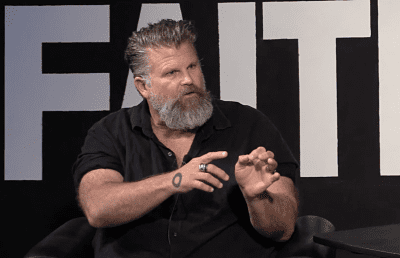
 Continuing our themes of interviewing past guests from some of our most popular and impactful interviews and showcasing alternative spiritual paths for post-Mormons, we interview Shawn McCraney who first appeared on Mormon Stories in February 2010 to discuss his experience as a “Born-Again Mormon.” Shawn currently leads a church in Murray, Utah called C.A.M.P.U.S. and has continued the ministry through a weekly streaming service, called Heart of the Matter. Shawn is widely known for his bold and sometimes bare-knuckled approach when comparing Mormonism to Christianity, and given his reputation as an animated and articulate speaker, this interview will keep you entertained and even inspired.
In this interview we cover:
- Part 1: Shawn provides a brief recap of his born-again experience, and then discusses the meteoric rise, and ultimately descent of his tv program Heart of the Matter after he confronted local Utah Christian churches for focusing more on programs and tithes, and less on the Bible. According to Shawn, these churches were providing the same “bondage” to people as the Mormon Church was.
- Part 2: This segment of the interview is a conversation focusing on Shawn’s theology and beliefs, and Shawn provides a pitch for why a questioning Mormon or post-Mormon should seek the Jesus of the Bible
- Part 3: Shawn describes the “bondage” he sees when local churches focus more on “religion” and less on the teachings of Jesus. After our interview with the South Mountain Community Church earlier this year, Shawn voiced concerns to Mormon Stories about our visit and in this segment, we engage in a respectful dialogue about churches such as SMCC and how they serve their congregants.
If you missed our recent release where roles reversed and Shawn interviewed John, you may find that here.
Part 1: This transcript is machine-generated and lightly edited for readability. The audio is authoritative. Please excuse occasional errors in names and spelling. John Dehlin [00:00:00] Well, I once had a mother too. She said the things like mothers do but mothers can be wrong sometimes. Mormon Stories is a production of the Open Stories foundation and relies solely upon the support of people like you, its listeners. To help keep the podcast alive or to become a member of the community, Please become a monthly subscriber by visiting MormonStories.org and clicking on the Donate button on the right side of the page under support. All contributions to Mormon Stories are completely tax deductible in the United States and go towards producing the podcast and building communities and programs of support for Mormons like you. Thanks for your support. You're just in love who you love you're just in love who you love. Hello everyone and welcome to another edition of Mormon Stories Podcast. I'm your host, John de lynn. It is May 15, 2018 and we are super excited for today's episode. Today we are re interviewing Sean McCraney. For those of you who don't remember, we're doing this series on bringing back some of our original interviewees, some of our most interesting and informative and entertaining interviewees, kind of to see where they are so many years later. So we've brought Greg Prince on recently, we've brought Carolyn Pearson on recently. We brought Dr. Michael Koh on recently. We're bringing people back and we are now bringing back Sean McCraney. Some of you will remember Sean from episodes 126 through 128 of Mormon Stories. At the time, Sean had a TV show that was very, very popular called Heart of the Matter, and he had published a book called Born Again Mormon. So Sean was raised lds and then he left the LDS Church and eventually had a Born Again sort of conversion to Christianity and then became a preacher, a pastor or minister. And he's been doing that ever since. So we brought him on Mormon Stories. It's a really good episode. It talks about he struggled with all sorts of things before and after his faith crisis and leaving the church. He has been known to be kind of really tough on the Mormon Church and on Joseph Smith and to dig really deeply into the challenges and the problems with Mormon history and culture and theology and with their version of Christianity. And so it was so fun to have Sean on years ago. We even got him to sort of be thoughtful and a little bit kind and respectful to Joseph Smith. I thought a lot of people were surprised to hear you willing to say some nice things here and there. So people were really touched by that interview and we're really thrilled to have you back. Now for those of you who've been paying attention. Sean interviewed me on his program a couple weeks ago. So you've already listened to that episode, but now we're turning the tables once again back on Sean. Now, Sean has a website. Sean, tell us the name of that website. Shawn McCraney [00:03:42] HOTM tv. John Dehlin [00:03:44] That's heart of the matter. H O T M TV tv. And he runs a church now called Campus Church. Tell us what Campus Ministries. Tell us what CAMPUS stands for. It's an acronym, right? Shawn McCraney [00:03:57] It's an acronym. It used to stand for Christian Assemblies Meeting to Prayerfully Understand Scripture. Then we changed it to Any A Word. Christian Artists, Christian Anarchists, Christian Asses, or whatever it is. Meeting to Prayerfully Understand Scripture. We realized assembly was just too vague. We wanted to be more specific. Any A word. John Dehlin [00:04:18] And where's your church located? We're here in it now. Shawn McCraney [00:04:21] We're here in the church. This is in Murray, and it's on the website, CampusChurch TV. We have a small crowd, mostly former LDS and who are still searching to understand Jesus and the Bible. Really? The Bible. We teach the Bible and we get out of here. Nothing midweek. Nothing ancillary. It's just we teach and leave. John Dehlin [00:04:42] And it's not just a physical presence. You also livestream, right? Shawn McCraney [00:04:46] We live stream and we have pretty good audience that tunes in every week for milk or meat. John Dehlin [00:04:51] It's also important to mention that we've also been doing a series on Mormon stories about options for spirituality and faith after leaving Mormonism. So, you know, over half of those who leave the LDS Church for some reason become atheists or agnostic. Plenty of our episodes are supportive of that audience. But recently we've done interviews with followers of Denver Snuffer, who you last interview called him one of the three prophets. Shawn McCraney [00:05:18] Religious leaders. Religious leaders in Utah. You're another one. John Dehlin [00:05:22] Okay, Apparently I'm another one. And then we also went to South Mountain Christian Church. Smc. Shawn McCraney [00:05:31] South Mountain Community. Yeah. John Dehlin [00:05:33] And we did a nice interview with them. And, you know, afterwards I got a call from you expressing some concern. And so not only are we going to talk about what Sean's doing, his history since our last interview, and kind of how things have evolved for him and his ministry, we're also going to talk about your concern with other Christian churches around here and why you feel strongly about what you're doing, and we want to do that in a way where we can be honest and open and thoughtful, but maybe also as respectful as we can be. Because, you know, I feel like anyone who's trying to do good deserves Deserves respect and credit, but that doesn't mean we can't be thoughtfully critical, so we'll do that as well. Shawn McCraney [00:06:18] Good guidance. You gave me that same guidance when you first interviewed me. John Dehlin [00:06:21] Yeah, yeah. Shawn McCraney [00:06:22] Be respectful, Sean. We can talk about anything. I'm glad. John Dehlin [00:06:25] All right. All right. So without any further ado, we're not going to do announcements for this episode. Let's just dive right in. So it's been eight years since we interviewed last. Tell us for those who haven't listened, give us the sort of three minute version of your story. We can refer people to those earlier episodes. Give us kind of the three minute version of your story up until you started Heart of the Matter. And then talk about just in a minute or two how successful Heart of the Matter got. And then we'll talk about kind of what happened after our interview. Shawn McCraney [00:07:01] Okay. John Dehlin [00:07:02] Yeah. Shawn McCraney [00:07:02] LDS love the church, love the activities, just like you. Raised in Southern California, I went on the mission, married in the temple. But I was unlike you. I was not a Nephi, I was a Kori whore. I was always in my flesh, always lean towards sin. So I was active in the Mormon Church, but I could never get my act together morally. I was just really, really out there. But I got my. John Dehlin [00:07:30] Was a missionary. Shawn McCraney [00:07:32] No, no, no. Before the mission. Got on the mission. Reformed myself. But when I got home that day, I realized I just kept myself busy. It really wasn't an inner reform. And so I longed for something that's authentic. I mean, I really could play duplicitous roles, but it bugged my soul. So I didn't have that authentic heart for God yet. My life was in opposition to it. Long story short, stayed active, all the different types of local leadership roles. And then I. John Dehlin [00:08:05] What was the highest level of leadership you rose to? Shawn McCraney [00:08:07] Stake high counselor, Bishopric one, either. John Dehlin [00:08:09] Oh, nice. Shawn McCraney [00:08:10] Yeah. John Dehlin [00:08:10] Okay. Shawn McCraney [00:08:10] Elder Scorm, President. John Dehlin [00:08:11] So you were. You were in it. Shawn McCraney [00:08:12] Seminary teacher, just like you. Yeah, okay. Yeah, I was in it. John Dehlin [00:08:14] How many years after your mission did you remain in the church? Shawn McCraney [00:08:17] Oh, geez. After the mission, 22, I think. John Dehlin [00:08:22] Yeah, 22 years. Shawn McCraney [00:08:23] Yeah. After. John Dehlin [00:08:24] Until you were how old? Until you're 40. Oh, wow. Okay. Shawn McCraney [00:08:27] Yeah, 40. John Dehlin [00:08:28] All right. Shawn McCraney [00:08:29] Had a roadside experience. Changed my life completely. We talked about that on the first shows with you. John Dehlin [00:08:35] Give us the 32nd version. Shawn McCraney [00:08:37] Heard a radio preacher ask if you could get your life right before God, why haven't you done it? I had tried to do it. John Dehlin [00:08:43] Were you sinning? As a Mormon? Shawn McCraney [00:08:44] Yeah, as a Mormon. John Dehlin [00:08:45] I was an adult Mormon. Shawn McCraney [00:08:46] As an adult Mormon, I Was you. John Dehlin [00:08:47] You were on the bishopric and high Council, but you were sinning. Shawn McCraney [00:08:50] Yes. John Dehlin [00:08:50] Like. Like Mormon sins. Meaning what? Shawn McCraney [00:08:53] All sins. John Dehlin [00:08:54] I mean, you know, there's like thinking. Shawn McCraney [00:08:56] Sexual immorality. No, I was actively sinning by this point. John Dehlin [00:09:01] Okay. Shawn McCraney [00:09:01] Yeah. John Dehlin [00:09:02] Word of wisdom stuff. Word of wisdom, love, chastity stuff. Shawn McCraney [00:09:04] Chastity, yeah. Sinning, okay. But I got to that point. John Dehlin [00:09:08] And you were lying to your leaders. Shawn McCraney [00:09:09] Yeah, I lied all the way, okay. And I lied because I. That I started lying and sinning. When I realized that this was not true. That's what happened with me. I stayed in. I knew it wasn't telling me the truth, but I just stayed in for my family and for the roles and John Dehlin [00:09:26] the things that led you to believe it wasn't true. Just the quick list. Shawn McCraney [00:09:29] Oh, just all the things with Sandra Tanner's websites. And I read, of course, no man knows my history. And it was those things that led me to believe it's not true. When I realized it wasn't true. Stayed Mormon, fell apart morally, still had leadership callings, which is what made me laugh. I'm sorry, but I laughed about that anyway. Was excommunicated, asked to be, but I had a born again experience prior to that to LDS people. That doesn't make sense for them. They think that you got to be right morally to have God work in your life. I have found that he works more in my life when I'm really kind of messed up. And so he worked in my life strongly then. And it was. I heard a radio preacher ask the question, if you get yourself right before God, why haven't you done it? And I thought I had tried. I really had tried with the Reformation, for the mission and married in the temple and everything else, but in my heart, I was really just a rat John. So I could not do anything about that. I tried, I really did, but it didn't work for me. So I listened to him and he says, the reason you haven't is because you can't. You can't reform yourself. There's someone who did that does that for you. Jesus. He came and he lived a life that you can't live. And you look to him in faith. And that is where you place your faith. Not on your righteousness, not in your ability. And when I heard that the preacher John Dehlin [00:10:52] said that, or God said that preacher Shawn McCraney [00:10:54] said, that preacher taught. John Dehlin [00:10:55] Who was the preacher? Shawn McCraney [00:10:55] Charles Stanley, big radio Christian preacher. And so I heard that message. By the end of that day, I had a special spiritual experience that radically changed my life. I realized I am in my person, a sinner. Jesus came and lived a life I couldn't live, placed my faith and trust in him. And I was born again as they talk about. And so I wrote after that, wrote the book born again Mormon. And my whole thing was stay Mormon. Do you know Jesus, have you been born again? I the Book of Mormon talks about the mighty change and everything but. But I didn't really. It never came through to me that that was taught really. I don't remember ever being Sean, have you been born again as a Mormon? And so that began the ministry. And after that somebody here in Utah read the book. They asked if I would come and be a guest on a TV show on a station here. The show was. John Dehlin [00:11:53] What year Was this? Shawn McCraney [00:11:54] About 2005. John Dehlin [00:11:55] Okay. That's the year I started Mormon Stories. Shawn McCraney [00:11:57] Yeah, we were concurrent. Yeah. And that aired on an afternoon which was getting, it was a live call in show and they were getting one call or two calls and they had over 30 calls from me being on there and they had requests of like a hundred books. We said, we'll give our book for free. There was like. So later the manager of the station called me and said, you want to do your own show? I was living in Southern California. I was going to theology school at that time. I had no money, no experience and so I said, sure, we'll do it. So I started flying up here on our credit cards to. To do our own show. We did our first show on March 2006 and it was me just standing there and live hour long show talking about the difference between Mormonism and Christianity. And that's how that started. John Dehlin [00:12:43] Wow. I didn't realize it was right around the same time I was getting going. That's so cool. Shawn McCraney [00:12:47] Yeah. John Dehlin [00:12:48] Okay, so as your show picked up, you kind of had a brand as kind of like, I don't know, Bible thumping anti Mormon. Now that's not what how you would have characterized yourself, but maybe other people might have characterized you in that way. Was that intentional? Shawn McCraney [00:13:04] Yeah, I didn't want it to be anti Mormon, honest to God. I didn't want it to be anti individual. I don't did not care if an individual. I wanted to be anti mormonism. Corporate church, 12 apostles, screw them. I really did. So to the authority I was like, you have no respect from me at all. But to the individuals, I maintain then and I maintain now, it's okay, I love you, I'm not going against you. You want to believe in Mormonism, I'm not your enemy. But that was never Seen that way. So that was kind of lost in translation, so to speak. It was greatly misinterpreted. But our audience, John, on that live call in show for those seven years was not to the stalwart lds, not to the Nephi guys. It was to the guys at the bar who were raised Mormon, who were not Mormon in any sense of the word, but still defended it and believed it was true. It was to them to relate to me and to look at me and get mad at me or whatever and then kind of listen to the message of Jesus is our solution to this. That was, that's been the message that we started with and that's still the message now. John Dehlin [00:14:16] I'm curious about your strategy at the time. You know, one strategy would be just preach Jesus. Like don't ever talk about Mormonism. Why? What, what was it about your strategy that made you want to incorporate dissecting Book of Abraham, Joseph Smith, all the details and even kind of, you know, criticizing the leadership big time. How is that part of your strategy? Why? Shawn McCraney [00:14:39] Because I realized that up until this time, many people have preached Jesus and it never reached into the Mormon group. They're like, oh, we believe that. You know, my mom listens to Jesus preacher, she's full blown Mormon. Still. We are fine with that. We believe that's good. We just add to it. And it was the addition, which was the lack of Jesus in what I felt was a lack of Jesus in those years in my life. And it was the additional stuff that was focused on the tithing, the Sabbath day, the temple. That was not Jesus to me. That was. And so I got that part. I didn't get the Jesus part. Now maybe they taught it, I just didn't hear it. And because I didn't hear it, I knew there were others who didn't. So in order to say your presentation of Jesus is ineffective, I had to bring in Mormonism to compare the two. And that's why I went after both. And it was very, very effective. John Dehlin [00:15:36] So talk about kind of how you measured success over those 7ish years and how it grew. Shawn McCraney [00:15:42] No analytics. I still don't understand any of that. But I knew what our effectiveness was by emails. And we were getting hundreds and hundreds of emails a week. And that was for a period of about seven years. And then also it was sometimes I would be invited to go to a place. It wasn't that often, but it was the crowds that would show up or we would open up and have an open house and the lines that would come for that. And I just knew from that there was an effect. If we took the sum of the emails and looked. I've either not joined the Mormon Church, I've left the Mormon Church, or I've come to know Jesus because of your show, it would be in the tens of thousands. And I knew we were having an effect, but the station didn't pay for any kind of Nielsen ratings, so we didn't really know. John Dehlin [00:16:33] How did you survive financially throughout this time? Shawn McCraney [00:16:37] We did not ask for support for the first three years, which was a mistake. I went into deeper debt. I personally have a real rub against money and religious ministry. I have no problem with money for a corporation or anything else, but religious ministry tied to God's name have a real rub with money. And I know that because maybe it was because I went to the temple and Satan was in the employ, and I knew that Mormons were looking for that. So we did not ever. When we got into debt where it almost shut the ministry down, some people came along and said, you got to start saying, we can use your support. When we did that in 2009, the tables turned radically and we were bringing in close to a half mil. And just saying, not saying, give us just a dollar, or we'd say this. If you're led of God, if you're in a position and if you're not on a limited fixed income, we welcome you to support us financially. If you can't, pray for us. That's all we did. And the money came in. Now, remember, that station was full service all of Utah, part of Idaho, part of Wyoming, part of Nevada. And then we were also on DISH TV to other states out there. So we were really reaching a pretty sizable audience and getting the emails to prove it. John Dehlin [00:17:59] So you were up to half a million dollars a year in annual revenue? Shawn McCraney [00:18:02] Yeah, donations. John Dehlin [00:18:03] Where would that money go? Shawn McCraney [00:18:05] Oh, it went to me. John Dehlin [00:18:06] Right. Shawn McCraney [00:18:07] It went to the serving, the websites, it went to producing books that we would give away. We. It would do anything like that. I don't know what was your max John Dehlin [00:18:18] annual salary if you. Shawn McCraney [00:18:19] 90 grand. John Dehlin [00:18:20] Okay, so you didn't take 300,000? Shawn McCraney [00:18:24] No, we used all the money. It went to helping Benevolence? Not that much. It just went to my plane fares because I was still living in California, so. And it also went to any of the outside festivities that we'd have where we would do open water baptisms, festivals. We never charged for anything, including books. So it was like we would use donations to help subsidize anything like that. But 90 was the height and that was in 2000. About 2000. John Dehlin [00:18:54] The height of your personal salary. Shawn McCraney [00:18:56] Personal salary. John Dehlin [00:18:57] Were you able to pay off your debts? Shawn McCraney [00:19:00] I was for it, yeah. I think I finally got there. Okay, John Dehlin [00:19:06] and were you, Were you transparent in your finances? Was it a 501C3? Shawn McCraney [00:19:11] We were. 501C3. John Dehlin [00:19:13] Did you. This is Alethea Ministries. Shawn McCraney [00:19:15] Alethea. Alethea Media. Okay. Yeah. John Dehlin [00:19:19] And were you. Did you publish your, you know, no finances on the web or anything like that. Shawn McCraney [00:19:23] Okay. But if anyone ever asked. And again, I never did the books and I didn't have the money. It was our partner who still runs our books and he was one of our largest contributors. So he also not only contributed, but he ran the books and he made sure with our CPA that my salary was commensurate with the income coming in and all of that. We didn't break any rules. It really helped those few years where we had some money come in to alleviate that debt. But I've never been in it for the money. Okay, I'll take the money, but I've never been in it for it. John Dehlin [00:19:53] Is the archive of all those Heart of the matter episodes on YouTube or anywhere on the Internet. Shawn McCraney [00:19:58] They are. They're all over the Internet. They're still there. John Dehlin [00:20:00] They're all there. Shawn McCraney [00:20:01] All there. John Dehlin [00:20:02] Okay. Shawn McCraney [00:20:02] Yeah. And we stand. We just started. Have converted. Well, actually Wendy's converted a lot of them to podcasts, but we are convert, reconverting all of them to a systematized podcast. And there are, you know, 380 hour long shows and people still write us every week about Mormonism because they watch them on YouTube and we still have that outreach to people about Mormonism. John Dehlin [00:20:27] What do you know your YouTube channel, is it Hotm Seth? Okay, that's fine. All right. Okay. So that's a lot of success. And so by the time the Mormon Stories interview happened, that was. Was that kind of the pinnacle or, you know, of your success? Shawn McCraney [00:20:51] No, 2008 wasn't. 2012 would have been the pinnacle. John Dehlin [00:20:54] Okay, so you kept going. Four more years of success. Shawn McCraney [00:20:57] Yeah. John Dehlin [00:20:58] Got bigger. Shawn McCraney [00:20:58] Yeah. John Dehlin [00:20:59] So Mormons did. Mormons. Shawn McCraney [00:21:00] I was still in debt when I was on Mormon's Story. We, we didn't have an income. We weren't asking people for money when I did Mormon Stories. John Dehlin [00:21:05] Okay, okay. It came after. Shawn McCraney [00:21:07] It came after. John Dehlin [00:21:07] Good, good, good, good. Well, all right, so what happened? So you come on Mormon Stories, you have four more years of success, Then what happens? Shawn McCraney [00:21:16] What happened, John, was it's a multifaceted thing. First of all, I started to burn out. I was doing it every week, flying back and forth, doing an hour show, doing church services, and. And I felt like I had run the gamut of church history. And our calls started coming in that were repetitive. Well, don't you think Joseph Smith. It's just like I was starting to visibly. It was starting to show that I was just like, ah, come on. So I started to get tired. The second thing is Romney was running for president during that time and he was running against Obama. And so I'm representing evangelical Christianity, which at that point I kind of embraced with about as much insight and reflection as I embraced Mormonism. I came to know the Lord from an experience I believe that was equal to my evangelical brothers. So I thought that's what I was. And that's what we were. Well, here comes Romney running for president. And I'm saying, my brothers have said Mormonism is of the devil. They say it's a cult. They say it's evil. And everybody who follows Mormonism is going to hell. And yet we have Romney show up to run for president. And they're all saying, Romney, Romney. Because they didn't want Obama. And they said, well, it's the lesser of two evils. But. And the hypocrisy pissed me off to no end. We were saying on the show all through 2012, look it, I'm sure President elect Romney would probably administratively be a really great president. Mormons are really good administratively, but the Mormon Church wins if there's a Mormon president. And I was not for the Mormon Church. So we said, don't do it. Well, remember, we have this whole state we're reaching and other states and then we orsa on dish and we're pushing this message out every week and we're getting the emails that reflect, well, wait a minute, you know, we need to save our country. This is God's country. And like, you guys are so pathetic. You know, we have someone. You've been railing on Mormonism. The rubber meets the road and now you want one to save you. It was just really angered me. The third thing is in this state, there is a reverend. His name is Greg Johnson. I hope I can mention names. He represents a ministry called Standing Together. John Dehlin [00:23:37] Is that a physical church? Shawn McCraney [00:23:39] It's a physical ministry. Four churches. It's a para ministry to churches. He's kind of deemed himself the leader of these churches. He's Uber. He's the one who brought Robbie Zacharias to the. Okay, yeah, that's Greg Johnson. John Dehlin [00:23:56] Is he friendly to the LDS Church? Shawn McCraney [00:23:57] He's friendly. He and Bob Millet have a sit down show. John Dehlin [00:24:02] That's great. Ecumenical thing. Shawn McCraney [00:24:03] That's the ecumenical thing. John Dehlin [00:24:04] And then what are some of the biggest named physical churches that he would sort of represent or affiliate with or that would affiliate with him? Shawn McCraney [00:24:13] Well, I don't know the ones that affiliate with him, but I know they're John Dehlin [00:24:16] bigger, like First Baptist, is it Presbyterian Shawn McCraney [00:24:18] or usually the bigger ones. Okay, yeah. John Dehlin [00:24:21] All right. Shawn McCraney [00:24:21] He's going back and forth to Washington because Romney's asked him to participate. Greg is uber politically driven. He's so political in his mind, the Republican that he's named his children. And I know some of these names are correct. America, Reagan, Jefferson and whatever. So he's uber. So I'm on the TV on the only Christian radio station talking about Mormonism and saying don't vote. And. And he's out there going back and forth to Washington and he represents the churches in the state. So there's the setup. I'm burning out. December of 2012, we announce I am not going to do the show for a month. I'm not going to do church for a month. I'm going to go and visit the churches that people say they are going to because of our recommendation to leave Mormonism and I'm going to see what they're doing. John Dehlin [00:25:10] Because up until that time you had never started a church. No, I never understood that. Shawn McCraney [00:25:14] Yeah. John Dehlin [00:25:14] I'm like, you've got this great following, this great ministry. Start a freaking church. Shawn McCraney [00:25:18] Well, we started Bible studies. We just started getting together on Sundays and studying the Bible. But I didn't want to do a church thing. John Dehlin [00:25:26] Mega church, man. Sha McCraney. Mega church. Shawn McCraney [00:25:29] I'll be honest with you, I could have done that anytime. John Dehlin [00:25:32] Yeah. Shawn McCraney [00:25:32] Yeah. John Dehlin [00:25:33] You got the personality for it. Shawn McCraney [00:25:34] Got it. Got the personality. John Dehlin [00:25:35] You had the TV reach. Shawn McCraney [00:25:36] Got the TV reach. John Dehlin [00:25:37] Sean McCra. Shawn McCraney [00:25:40] I can't sell my soul. I did it when I was Mormon. I have to be authentic to myself. John Dehlin [00:25:44] How would that have at the time, how would that have been selling your soul? Shawn McCraney [00:25:47] Because I was seeing, I went to Calvary Chapel, trained there, and I was just seeing that there's something about religion that is not the same thing as a relationship that I experience at the side of the road. People don't need the religion, they need the relationship. You can find your religion at the boys club, taking judo. You can find your religion in any secular group you want. We don't need our churches to provide religion. We need our churches to teach people about the relationship that a human being can have with God through the Son. We don't need the churches to do anything else. And I was seeing from my days of becoming an evangelical that churches were more than just that. They were a lot about other things. And I just didn't want to start something that was another thing. And that's honest. And so that's why we didn't. Okay, so I. We go and visit the other churches. We go. The top, largest churches. South Mountain was one of them. We went to Calvary Chapel. We went to Washington Heights. We went to all the biggest churches in the state. John Dehlin [00:26:53] K2. Shawn McCraney [00:26:54] Went to K2. Yeah. Yeah. Went to K2. And so what did we see? I took a pad paper, my wife with me with most of them, and I was stunned. Stunned by what I saw. And I can't emphasize that enough. These frickers. I'm sorry, these are Mormon swear word. Can I say what I want to say? John Dehlin [00:27:16] Frickers. Good. Shawn McCraney [00:27:17] Okay. These guys are taking people who have come out of the best organized religion on Earth. Mormonism. You're not going to beat Mormonism when it comes to organization. And they're trying to be organized so that they can be, you know, in there, in people's lives. And they start off their meetings with the worship and the worship and the rock bands. One of them had a fog machine where the guitarist stands like this, like Jesus in front of the crowd. And the people are like, oh, oh, you know, and I can see what's going on. And I'm like, you got to be kidding me. You've got to be kidding me. And one of the guys in the band tells me, yeah, we say to each other, well, should we base it up a little? Should we turn it to 11 to really get them to respond? And then what they do is they tie in the giving to that. All right? And now that everybody's kind of loosened up with the music, we're going to take a collection and. And they call it tithes. Well, listen, I've been studying the Bible, man, and I'm in it. And that is a misappropriated word in the Christian world. It's not used in the new. In the New Testament at all in the sense of we should do it. But Christian pastors say, let's go to the Old Testament and let's borrow that one, because it really does benefit us if we can at least get 10%. John Dehlin [00:28:43] The Malachi thing, right? Shawn McCraney [00:28:44] Yeah, yeah. We remember that from the mission. So I'm watching the tithes get worked, then I'm watching the tithes get worked. Again. And then I'm watching more music. Then finally they do, and then they do the announcements. And then it's, you know, more trying to be like, we want to be the relevant church for you to give your life to and you to take, bring your family to. Okay. And then finally the pastor gets up. Nine out of the ten pastors gave a anecdotal recitation. Five out of those nine told stories about, yeah, I went up skiing with my son today and it was just this. And I thought, you know, lord, you've given such great creation. And my son, dad, you know, why is the snowflakes different? So we're just talking about the snow, and it was just so cool, you know? And the Christian world, if you don't buy it, I love you. If you buy it, then this is it. You have to know the word of God. You got to study the Bible if you're going to, because the Christian Bible teaches that that word goes in and it washes out the secular mindset of a human being. The people are coming out of Mormonism. They don't know the difference between Alma and Jonah pretty much. And they're going to church and they're not getting fed anything. They need to really break from the bondage of religion. They're stepping from the frying pan into the fire, in my estimation, at the hands of men and women who should be feeding them the word of God. They should be feeding them something that they can take and go out and be better people with because of it. And I was inflamed. I was so ticked. So January 1st. John Dehlin [00:30:32] And I'll just say we'll come back to Sean's concerns about other organized Christian religions after his story. I don't want to derail the story by going into that. So stay tuned for a discussion of Sean's concerns with other Christian groups in Utah. Shawn McCraney [00:30:47] Yeah. John Dehlin [00:30:47] Okay, so 10 churches. Shawn McCraney [00:30:50] January 1st, I go live again, 2013. And I am filled with the righteous indignation of God. I mean, I was wrong in retrospect. I was wrong in the way I did it, but I could not help doing it this way. And I said, look, I'm not going to spend one ounce this year on Mormonism. I'm going to give every bit of my passion and time, everything I've got to exposing the religious heresy, the religious game playing of the churches in this state and what they are doing to people coming out of Mormonism, especially what they are having them believe. I was on the air, full power station in Utah, ripping on Mormons like mad. For seven years they couldn't get me off. Five days. Five days. Greg Johnson went out, he got the churches and he got those pastors to step in and call the station and say, you got to get this guy off. John Dehlin [00:31:55] How do you know? Shawn McCraney [00:31:56] I know this because I got somebody forward me an email that Greg Johnson wrote and it said, I am proud to say that Sean McCraney will never be on the airway on the T on television again in the state of Utah. John Dehlin [00:32:09] So he's taking credit for that. Shawn McCraney [00:32:11] Yeah. John Dehlin [00:32:11] Now, why would the owners of the television show. I'm sure they appreciated the success. Shawn McCraney [00:32:16] Yeah. John Dehlin [00:32:16] And I think they're even Christian, right? Shawn McCraney [00:32:18] They are. They were. John Dehlin [00:32:19] So why would they allow this to happen if you had such a successful show? Well, and did you talk to them about it? No. Shawn McCraney [00:32:29] I had had run ins with the station management over the course of my time there for different things. I mocked Benny Hinn and the charismatic healings on stage. Well, the owners are charismatic Benny Hinn followers. And so I got sat down on that one and I did some other things in there that troubled them. They were taking our tapes and they were taping over them, so we had no backup. So I went and I took all of our tapes. Well, they were rightly owned by the station, so that ticked them off. And I was outspoken. I mean, and if you get the pastors who are representing Christianity talking to the Christian station and they just felt, probably, we're going to sell this station down the road. This guy's run his course. We don't care if he's at the height of his popularity or not. Were getting rid of him. And they did. John Dehlin [00:33:22] Okay, so why didn't you have some big argument where you went down and yelled at them or. Shawn McCraney [00:33:29] Okay, I called the owners, called the manager, called the people I knew and they just said no. Decisions made, decisions made, decisions made. So it was done. They see the problem was, John, they could never really rope me in from the day one. And we were so popular almost from day one that they really couldn't edit me. They couldn't do much, but they wanted to a lot on different subjects. And they would constantly say, why don't you try to do it this way and why don't you try to do it that way? There was a lot of behind the scenes stuff and I just think they were fed up with me and I can see why. John Dehlin [00:34:10] Did you ever have a conversation with Greg Johnson about that? Did you call him up? Shawn McCraney [00:34:14] I called Greg. He does not return my calls. John Dehlin [00:34:17] Okay, so you've never met him face to face. Shawn McCraney [00:34:18] Oh, no, I know him. It was his show that I was on when I was first invited to come out. John Dehlin [00:34:24] Oh, wow. Shawn McCraney [00:34:24] Yeah, it was. Invited you. He actually, the station managers invited me and told Greg, hey, on your show, we want this guy to come on and do it. So that's how Greg and I first met. Yeah. And I was, we were always friendly. In fact, as a human being, he's very personable, he's likable. But he led the charge and I think he considers it a victory. I considered it a loss. I can. I took it really hard and I felt like all the stuff we had done and accomplished, I thought we were going to lose it. But in retrospect, it was the best thing that could have ever happened. John Dehlin [00:34:58] So talk to us about that fall. What was that like to go from seven years of a successful program. Shawn McCraney [00:35:03] Yeah. John Dehlin [00:35:04] To not being on the air. What that did to your donations, what it did to your ministry and your self esteem and mental health. Shawn McCraney [00:35:12] Yeah. It gutted the ministry quickly financially because people were just like, you're not doing it anymore. We sent out newsletters to all of 10,000 people and said, listen, all of our content is still on there and we're going to continue to produce content in the subjects. Don't give up on us. But it didn't matter. The show was gone. And so that happened quickly. That started going down quickly. Personally, I went through my own dark night and I felt like I was done for with what I really believed. I honestly believed and still believe in my heart that I was called by God to come to Utah to help liberate exiting Mormons from religion. And I felt like he had kind of like said, no, you got too much. You were too proud. You were too this. No, you're done. And I thought it was probably over. That lasted for about a week. I'm pretty, pretty much of a fighter. And so after a week I said, nah, we're gonna fight back. And so I started coming back and decided, we're going to do our own studio. We're gonna build our own studio, streaming studio. And took a while, but we did it. John Dehlin [00:36:27] How long did it take? Shawn McCraney [00:36:29] It was kicked off in 13, I would say. I'm trying to think. I think within five months we bought a Tricaster, cost us about 20 grand. And we started tricasting out of a house. Looked horrible. And then we got this place and we started just building this place out more and more. And we started streaming and Seth and Kathy, Maggie, the people behind us, they Got it all working and we just have just learned and grown and we've kept. We've built actually an entirely new. Not entirely new, but about a 90% new following. And it's for people who are really looking for religious freedom. It's not so much the Mormon thing anymore. I don't talk about it very much at all, much to the chagrin of most people. They want that from me. And it's not there anymore because I've come to see the faith in a different way, including Mormonism. And when that came amidst a bunch of other things that led to it all, that former audience and the former support left. Another reason our popularity went is because in the state, all of our fans watched that one show and they thought I'd lost my mind. Their pastors reiterated, this guy is not. Don't listen to him anymore. And I pretty quickly lost my reputation. I became anathema to some people. Yeah. John Dehlin [00:37:56] Okay, so you rebuild the ability to stream. When did the decision to actually create a campus or a church kind of come into the picture? Shawn McCraney [00:38:06] We had been meeting in that Bible study up at the U of U for all those years, and we just said, well, why should we have our studio here and go up there? Let's just bring it all in house. So we started to formally do a church called Campus with milk and meat, and we started it up there, and then we came down here and transferred it and it all became one ministry church. And then the shows. John Dehlin [00:38:29] And about when did that happen here? Shawn McCraney [00:38:31] 2014. John Dehlin [00:38:33] Okay. Shawn McCraney [00:38:34] I think so. John Dehlin [00:38:35] 4ish years ago. Shawn McCraney [00:38:36] Yeah. Yeah. John Dehlin [00:38:37] You started campus? Shawn McCraney [00:38:38] Yeah. Here full time? Yeah. John Dehlin [00:38:40] Okay. How did you keep these volunteers energized and eager to support you? Shawn McCraney [00:38:47] I don't. John Dehlin [00:38:48] Were your volunteers paid? Shawn McCraney [00:38:50] No, they're not. John Dehlin [00:38:51] So why would they want to spend their time and energy helping you? Shawn McCraney [00:38:55] I. I think they are seekers. I think they realize that most of them have been raised in religion of some sort. I think they realize and have seen that there is freedom here. There is total freedom here. And that means doctrinal, theological, expressional lifestyle, total freedom here. And we do focus on teaching the word and searching. And I think they just want something that is at least trying to be true. I think that about them, they're in it because somehow it helps them in their life. John Dehlin [00:39:31] I think maybe gives them a sense of service, a sense of mission. Shawn McCraney [00:39:35] Sure. John Dehlin [00:39:36] Sense of purpose. Shawn McCraney [00:39:37] It does me. That's why I'm here, you know, so. John Dehlin [00:39:41] So do you think. Do you think of yourself as a pastor then? Shawn McCraney [00:39:45] Pastur. Combination of a pastor And a bastard. I'm a pastor. I. This is part of the, of the thing, John. And this is why I didn't do the mega church. And I, I really believe we talked about humility when you and I, you and I talked. I think it's really important for those who follow Jesus to serve and not to, like John the Baptist said, increase. They need to decrease. So I have to consciously decrease my natural skills, my natural charisma and my ability to lead if I want. I have to tone that down constantly so that people don't think anything of me. I don't want to be thought of as anything because I'm not. I'm really a rat bastard, really. It's only Jesus who has in my life taken me and moved me to something that is worthwhile, so he gets the credit. And so I try to really eliminate any man centeredness in what we do. And that's a goal. Yeah, I really believe in that. John Dehlin [00:40:53] But it probably limits your growth, right? Shawn McCraney [00:40:55] Absolutely, absolutely. John Dehlin [00:40:56] And the financial support. Shawn McCraney [00:40:57] Absolutely. People want, they want certainty. They want a noble leader. They want to be told this is the truth. And they want that cult of personality. I won't give it to them. And I disappoint them with it often. We did a show about six weeks ago. First time the show, I dropped the F bomb throughout the. The show. It was about me being fat and emails coming in saying you're overweight. And I dropped the F bomb on purpose so that people can say, this guy is not someone who's like Jesus. We don't look at him as a religious leader. We look at him as a teacher and a thinker. And if we like what he does, we'll accept it. If we don't, it's okay. We can, we cannot. They have to have that freedom, I think. John Dehlin [00:41:39] So you, you wrote in an outline that I've been kind of reading through, that you went through your own, you know, in depth study of Christianity, maybe like you had never studied it before, which I found to be interesting. Shawn McCraney [00:41:53] Yeah. John Dehlin [00:41:54] And then you did an inventory of your beliefs of Christianity and of Christianity and started to maybe scrutinize some of the commonly held tenants. Shawn McCraney [00:42:04] Big time. John Dehlin [00:42:05] Do you want to talk about that? Shawn McCraney [00:42:06] Yes. Big. Huge. John Dehlin [00:42:08] All right. Shawn McCraney [00:42:09] Okay. So I want your audience to know that I have had the luxury, like I made, you know, $25,000 in doing this last year. I want the luxury of being able to fully go after this subject with all my heart. So since 2006, I have been in the Bible at least four hours. A day I get up at between four and five and I am at Einstein's and I'm in the Bible studying which Einstein's. It's up on South Temple and East Street. John Dehlin [00:42:41] Okay. Shawn McCraney [00:42:42] Yeah, I'm there for those who want to come visit. Yeah. And they do check Sean out. John Dehlin [00:42:46] They do. We have little conferences, Einstein's and Third. Shawn McCraney [00:42:49] No, South Temple and East Temple and E Street. Yeah, they can check my. John Dehlin [00:42:54] Yeah, yeah, yeah. Shawn McCraney [00:42:55] So I'm there every morning in the world and I've done that since 2006. So it's 2018 now. When I was kicked off the air. John Dehlin [00:43:04] 16 six or 16, 2006. Oh, wow. Shawn McCraney [00:43:06] Yeah. So when I was kicked off the air and I saw how the evangelicals were treating Romney and Obama and I saw how evangelicals were treating me as a person because I spoke out and said I was going to examine them. I said, I've got to know what's going on. It started when someone gave me a book. They gave me a book. Over the years, I get about 30 books a year. I never read them. Someone gave me a book and it was God's sacred secret. It was written by a former pastor. I said, I don't know why, but I'm going to read this book. The whole thing was a stripped down. Looking at the Greek, looking at the context of hell in the New Testament and God in the end, God's sacred secret is it's done. Not that it wasn't. It's done, it's over, kaput. That's the good news. Proven by the New Testament. That's the thing about proven by the New Testament. The people who don't want to accept it don't use the New Testament to prove it. They just will pull a passage out and say, no, it says right here it's not true that there's no hell. It's. It's not that there's no hell. There was a hell. It played a purpose. Sheol. It has a historical purpose in the biblical sense. But when Jesus came and did what he did, according to scripture, hell and Satan were cast away into the lake of fire which was created for them. They're done. That's the good news. So it was Augustine who came up and said, I hate my flesh so much, hell is going to burn my flesh away. And he really promoted that. And that got into our liturgy and it got into thinking of people. But the Bible. I'll stand knee to knee with anybody on hell with the Bible and go through what it actually says. And I think anyone who is trying to seek for truth would say, I will side with him on that one. So I was able to see it in the Bible through this little book given to me. John Dehlin [00:45:01] There's a super cool this American Life episode that turned into a movie that I saw at Sundance just a few months ago about a famous African American preacher. Shawn McCraney [00:45:10] Heard about that who. John Dehlin [00:45:12] Who came out that there wasn't a hell. Shawn McCraney [00:45:13] And what happened to his congregation. John Dehlin [00:45:15] He lost his ministry because people want Shawn McCraney [00:45:18] there to be a hell who are Christian. I don't know why, but they do. Well, we lost more of our ministry of that one too. Lost it big time. Okay, I want to give you a really quick side story that's interesting to this. John Dehlin [00:45:28] Yeah, I want to hear it. Shawn McCraney [00:45:29] The guy who gave the guy who wrote that book his. His sister in law gave me the book. She was going to a Bible study my wife was teaching, and I didn't know him. I read it and I came to understand it. So then later I flew out to Colorado for a private meeting and I met him. His name's Darrell Scott. Darrell Scott was a pastor and his daughter, Rachel Scott was the first girl, first person killed at Columbine by Nebold. And he said, he goes and he teaches about this concept about there being no hell. And the evangelicals say to him, well, you know, you probably haven't been in a position where someone's hurt you bad enough to believe in a hell of a. If someone hurt you bad enough, you would probably embrace hell fully. And Darrell Scott is able to say, well, actually, I think Klebold and the other guy, I think they're okay. I think that God is. And that was a real witness to me. Fascinating connection there. So that helped me. John Dehlin [00:46:33] Just for those who want to know, the movie is called Come Sunday and it's about Bishop Carlton Pearson. Shawn McCraney [00:46:40] Yeah. John Dehlin [00:46:41] So check that out if you're interested. I thought it was interesting. Shawn McCraney [00:46:44] Yeah. And I would concur with what he says. Probably. Yeah. Then John so stepped out and said, don't think there is hell any longer. And that was a ripple that got out to the evangelicals. Less support. Then came the big one. Someone from Canada sends me a book. It's a guy from who wrote it. And it's called Christianity's Greatest Dilemma. And I said, okay, so what I can tell, it's not written too well or whatever, and it's mass produced by home publishing. And I get into it and what his premise is, Jesus has come back. And I'm like, this guy's so full of it. Come on there's no way, you know, so I'm going to go to the Bible and I'm going to prove this book wrong. So I started in and I'm doing this and I'm doing the research and I'm looking at the Greek and I'm looking at the history, I'm looking at the statements of the early church leaders and I'm looking at what Jesus said and what it says in the Bible. And bottom line, bottom line, eschatology is the, is the big word, end times, study of end times. The eschatology of Christianity is tweaked and it keeps people coming to church, sitting on the edge of their seat, saying, Jesus is going to come back. I got to live in fear. I got to be ready for the rapture and all of this stuff. So I came out and I realized my eschatology had been wrong. When your eschatology changes in the faith, everything in the faith changes. If Jesus has come back, and I would love to go at length on how he has come back and why, if he has done that, it changes the complexion of what this faith is all about. John Dehlin [00:48:25] Now how's he come back? Shawn McCraney [00:48:26] Okay, the Bible is a record and a history of the Jews, and it's a record of God working his will through that nation and people. They were promised a messiah. He came to them. I came only to the house of Israel. When John the Baptist came to announce him, he came prophetically and apocalypse. And he said, listen, the ax is laid at the root of the tree. You know what that imagery is? It's like it's coming down. Everything that we have had is coming down. Prepare yourself for this kingdom that's coming. In Matthew 24, Jesus takes his disciples and they ask him three questions. They say, when will all this stuff happen that you've told us about? When will be your kingdom and what will be the end of this age? And Jesus tells them in Matthew 24 exactly what's going to happen. And you know what he says in Matthew 24:34? He says, all of this will happen within a generation. It'll all happen within a generation. That's a 40 year span of time. In biblical tense, in 70 A.D. nero came in, Titus came in, and they destroyed Jerusalem so badly that all the prophetic utterances that Jesus said about the end times occurred then, as substantiated by Josephus, secular writer, as substantiated by Cassius Dio, secular writer, as substantiated by a number of secular writers, that everything that you read about the end Times from the lights in the sky to the eagles to the dead to all that blood and all this other stuff fulfilled. When Jerusalem was utterly routed. Their temple was taken down piece by piece. Their genealogies were burned. We don't even know who Jews are today. They don't even know who they are. They don't have genealogy. The priesthood was burned down and gone. That was the end of the age in the, in the King James Bible. John Dehlin [00:50:22] That was the second coming. Shawn McCraney [00:50:23] That was the second coming. And the end of that when we read, we read the Apocalypse or whatever, the Apocalypse it was everything we read in scripture. The end of the world. That's because the King James translators decided to put world there. But the Greek has always aged. When will be the end of the age? It's going to be the end of the age. One more thing. Every one of Jesus apostles taught he's coming. He's coming. They used words like quickly in the Greek. That could not mean more than a few years. It's going to happen quickly. The book of Revelation says, I'm coming quickly, quickly, quickly. It opens with that. It ends with that quickly. And it was to the seven churches on earth at that time when it was written, because it was all written for them. Materially. He came materially wiped out that age. It's done. And we enter into a new age called grace. That's the good news. You say, I want a good heaven. You've got it. That's the good news of Jesus Christ on this earth. He came and he saved the world. And the religion to play religion is done for. It is no longer necessary. It's all spirit. It's in the heart. That's what God says. He says in these last days, after this time, I will write my laws in the hearts of people. And no one will say to his neighbor, know the Lord, know the Lord. Everyone will know him. And so we have a complete turnover when your eschatology is correct. But because it doesn't bode well for church playing, the religionists have discounted and discarded this eschatology and they have embraced futurism. We're waiting for Jesus to come back. And Mormonism is founded on that. Latter Day Saints waiting for it. Baloney. So there's my, my pitch. John Dehlin [00:52:08] So, okay, so Jesus has already come back. We're not waiting for him to come back. There's no longer a hell. Yeah, it seems like people would like this talk really quickly. Also about. It says the combination of new end time view and the view of eternal punishment moved us into seeing and promoting the Christian faith in different ways. So how did that change how you preached? And also talk about the Trinity? Shawn McCraney [00:52:33] Okay. John Dehlin [00:52:33] Because your views on the Trinity also changed. Definitely talk about those two things. Shawn McCraney [00:52:37] Okay. The way it changed how I preach is that I used to teach an objective faith. I used to teach that this is the truth. You must do this. This is what it is. You must do that. And I would preach that over the pulpit or on the television show. I realize that in an age when the Spirit is working upon individuals, that objective religion is done. We live in a world where the faith of people is subjectively lived. It's subjectively understood. John decides he wants to believe in this or that. We follow that. John doesn't. It's okay, because you're responsible for who you are before God at the end of your life. And so that's. That's how we go about it, is you are responsible for your faith because God has said, I will write my laws on their hearts and they'll do what they want. Paul says, clearly, happy is the man that does what he wants in his life. There is no more objective religion to heap upon you. No more. And that's how it changed our way of doing the faith. And which is why I am additionally incensed at what the churches do around us in this valley and around the world, to be frank, quickly on the Trinity. It was just another thing I realized, and it's debatable. And I just don't believe. I don't. Of course I don't. I reject completely Joseph Smith's version of the God, of the Godhead as a material God and all that. But I absolutely have rethought God. And I think there's one God, one God. And I think that he had a human Son that was God in the flesh. And they call him the Son because he's in the flesh. I don't see it three separate beings, Co eternal, co equal forever and ever. I see as being God. His words became flesh and dwelled among us and he sent his Spirit. One God, one God manifesting himself. That is not trinitarianism. Classic creedal trinitarianism is there are three that have co. Eternally co. Equally existed for eternity, uncreated. Father, Son, Holy Spirit. These three are one, but they are as separate as you and I and him. And there's absolute. I do not embrace that at all from Scripture. One final point I want to make. Everything we talk about is from a. As scholastic as I can get view of Scripture. It is not made up. So that we can start some religion. It's not made up so that I can be unique. It is an approach to scripture that I do not alone take. I just happen to take all these disparate, unique views and incorporate them into one. What we do here at campus. Yeah. John Dehlin [00:55:13] All right. Well, thank you, Sean, for this first hour. We are going to wrap this first segment with Sean McCraney now, but stay tuned. We are not done. It's been super fun to hear about Sean's life since our last interview with him. But don't go away because we are going to continue. We are going to talk in our second segment with Shawn McCraney about, you know, the core tenets of Christianity. Now that he's preaching here on campus and in his television program Heart of the Matter, we are going to, I'm going to sort of drill down with him on his beliefs and try and understand maybe from a bit more of a secular perspective, you know, what the foundation of his beliefs are today and kind of what they are and how he's viewing things. And then we're going to talk about the criticisms mentioned earlier in this episode. You know, we consider ourselves, you know, interested in helping people transition away from Mormon orthodoxy or fundamentalism, and sometimes that means transitioning to other Christian churches. So we're going to dig in a little bit and maybe even challenge some of Shawn's criticisms of some of the Christian churches around here, like south mountain, like K2 and others. We're going to talk about his concerns, push back a little bit, and then maybe close by just understanding where he is today and where he sees himself going. So thanks for joining us on Mormon Stories podcast. Appreciate everyone who supports us financially to make this possible. Grateful to Sean and his awesome staff of volunteers who are helping us. And please stay tuned again soon for part two of my interview with Born Again Mormon Sean McCraney here on Mormon Stories. Take care, everybody. Well, I won't settle. Thank you for joining us today on Mormon Stories. If you enjoyed this episode, please help us make more like it by becoming a monthly subscriber@mormonstories.org I hope she'll come around with time. Two girls can love as big and true as any man. Love who you love is a single off the upcoming album Red Wing by singer songwriter Sarah Sample. To hear the entire album, find Sarah Sample on itunes, Spotify or at sarahsample.com. Shawn McCraney [00:57:44] Simple it isn't hard or rhyme or John Dehlin [00:57:48] reason to Shawn McCraney [00:57:51] ain't no should have, could or would have. You just love who you love. John Dehlin [00:58:00] You just love who you love love, love, love. You just love who you love you just love who you love love, love, love who you love Shawn McCraney [00:58:28] who you love John Dehlin [00:58:30] you doesn't love who you love you just listen, I. Guest [00:00:00] Well, I once had a mother too. She said the things like mothers do but mothers can be wrong sometimes. John Dehlin [00:00:13] Mormon Stories is a production of the Open Stories foundation and relies solely upon the support of people like you, its listeners. To help keep the podcast alive or to become a member of the community, please become a monthly subscriber by visiting MormonStories.org and clicking on the Donate button on the right side of the page under support. All contributions to Mormon Stories are completely tax deductible in the United States and go towards producing the podcast and building communities and programs of support for Mormons like you. Thanks for your support. Guest [00:00:56] You're just in love who you love you're just in love who you love love you just love, love, love. John Dehlin [00:01:14] Hello everyone, and welcome Back to part two of my Mormon Stories podcast interview with Sean McCraney. I'm John Dehlin. It's really exciting to have you with us today. It's May 15, 2018. We just spent the first hour with Sean talking about his original interview with us on Mormon Stories podcast eight or so years ago. We talked about quickly his life story of how he became born again Mormon, how he started his ministries here in Utah, how that rose and rose and rose to the point of making half a mil a year. That's pretty sweet. Nice coin. Shawn McCraney [00:01:50] The ministry. John Dehlin [00:01:51] Yeah, the ministry made up to half a million dollars a year. He had this really successful TV program for eight years and then finally how that all came tumbling down when he started to challenge the local Utah evangelical and other Christian churches. And then how he recreated a ministry again with Alethea and Campus Church. He built an online streaming ministry and, and actually built a physical church, which is where we're meeting right now, called Campus Church. So that was our first episode. If you haven't checked that out, please go back and listen to it. It was good stuff. Sean's an engaging and an interesting and a sincere speaker. We talked about then why he didn't start a megachurch and I'm going to push back on that. But now we're going to go into a few things. We're going to talk about Sean's beliefs now, what his ministry is about now, and we're going to talk about some of his criticisms of some of these churches that I kind of thought had some cool things about them. So we're going to talk about that and I'm going to try and convince Sean to become Utah's Joel Osteen and start his own mega church here. But just do it the right way. That's my Goal. By the end of this hour, we're going to have Sean convinced to start a megachurch that he's been doing it all wrong. By the way, you got some tats on your arm. Show us. Show us your tats. Shawn McCraney [00:03:24] I'll tatt it up. John Dehlin [00:03:25] And tell us what that. What that's about. Shawn McCraney [00:03:27] This was my first tat. Got it 50 years of age. John Dehlin [00:03:29] Show the camera. Shawn McCraney [00:03:30] And I. And I tell people that. Well, there's my camera. I tell people it's so when I flip you off, you'll know I'm a Christian. That's a joke. Sort of. This is a Christian anarchy tat because I am a Christian anarchist, probably one of the only ones in the world. So I have no following in that. This is just about God. No big deal. This is not the equal sign. This is the. It just represents death to the flesh, life to the spirit. And this one right here is too long to explain, but it's an X, and I'm very big on X's. John Dehlin [00:04:04] And there's a scar in the middle of that. Shawn McCraney [00:04:06] There's a scar that came before the X. The X was built around the scar. Yes. So. And then I have the Star of David here. And those are my tats. Star of David. John Dehlin [00:04:15] You're tatted up, man. Tattooed Christian. Yes, Sean, the tatted Christian. Shawn McCraney [00:04:20] The tatted future mega church Joel Osteen Christian. John Dehlin [00:04:24] All right, we're gonna get there. We're getting there. You ready? Shawn McCraney [00:04:28] I'm ready. John Dehlin [00:04:28] Are you ready for this? Bring it. All right. Okay, so I'm gonna just go through. I'm sure we did this in my last episode, but we're gonna do an inventory of your beliefs. What I understand evangelical Christianity to be about. And we're going to have you tell us where you are now. Shawn McCraney [00:04:44] Okay. John Dehlin [00:04:44] Maybe it'll be identical. For those who are real geeks, go back and compare his beliefs eight years ago to now and let us know how they've changed. All right? Shawn McCraney [00:04:54] Excellent. Okay. John Dehlin [00:04:55] So God, what is God to you? Shamakrini? Shawn McCraney [00:04:58] God is everything. He's one, he is. He, she, it, whatever. I don't know. Like you said, unknowable. But I think to know him the best of our ability and his Son is life eternal. I think that God manifests himself in his son. I think God manifests himself in the Holy Spirit. I think there is one God. There are not three parts of him. There are not three separate gods that make one. I don't think he's a man. I think he's spirit. I think he's love. I think he's light. I think he's all good, 100%, thousand, billion percent good. John Dehlin [00:05:37] And so did God was. God wants a man. How did God come to being? Shawn McCraney [00:05:41] No idea. Not once a man. It says God is never. God is not a man. God is spirit. You worship him in spirit and in truth, but not a man. I don't know origins. I just believe in faith. I believe in faith. I trust in faith that he has always been self, existent, uncreated, eternal. How that is, I have no idea. John Dehlin [00:06:04] Okay, so not some big bearded dude in the sky? Shawn McCraney [00:06:09] No, no bearded dude. No. John Dehlin [00:06:11] And is it just, is it just the universe, energy behind the universe? Is that what it is? Shawn McCraney [00:06:17] Definitely. John Dehlin [00:06:18] The creation power. Shawn McCraney [00:06:19] He's the power. He is life, he is light. I don't know. I just use the words the way I know God is by what the words that are used to describe him, and they are light, love. God is, is only used like 6, 7 times in the entire Bible. And God is love, he is light. That's all I can say. John Dehlin [00:06:42] Do you ever use female pronouns when you're talking about God, or do you prefer male pronouns? Shawn McCraney [00:06:48] And why I use male pronouns when I talk about God simply because of habit. But I think the Holy Spirit in the Greek is feminine, and so I think the spirit of God is feminine. When we think of being born again, that's God giving birth to us, new life. So I think that is the feminine element of God. So I think God is not. He doesn't have a gender, so he encompasses all genders. So yeah, I just say he because it's convenient. John Dehlin [00:07:15] All right, so I'm going to challenge you to throw a feminine pronoun in there every once in a while. Shawn McCraney [00:07:20] Well, I do want to speak of the Holy Spirit, but I don't care about being politically correct. So I reject your challenge wholeheartedly. John Dehlin [00:07:27] Why don't you care about being politically correct? It doesn't matter to me, being sensitive to minorities. Shawn McCraney [00:07:32] I'm not sensitive. I'm not, I'm insensitive. John Dehlin [00:07:35] Are you proud of that? Shawn McCraney [00:07:36] I know I'm not proud of it. It's what I am. I, I, I'm sensitive to people's pain. But if someone's being pained over something that I don't think they need to be pained about, I don't care about that. John Dehlin [00:07:47] But wouldn't, doesn't Christ give you the power to change and to be better? Shawn McCraney [00:07:51] He does. I don't think using God in the feminine is better. So I'm not doing it. John Dehlin [00:07:58] Okay. Guest [00:07:58] All right. Shawn McCraney [00:07:59] Okay. John Dehlin [00:08:00] Does God have other creations, like other worlds with humans on them? Shawn McCraney [00:08:04] No idea. John Dehlin [00:08:05] No idea. Shawn McCraney [00:08:06] Could. No. No reason why I couldn't. May not. Don't know why we would be universal, central to the universe. Absolutely could. Absolutely could not. No idea. John Dehlin [00:08:17] Okay. Shawn McCraney [00:08:18] Don't care. John Dehlin [00:08:18] Is, do you feel like you worship the same God that Muslims and, and, you know, Hindus worship, just with different. Shawn McCraney [00:08:27] Yeah. John Dehlin [00:08:27] So it's kind of. You have a universalistic. Shawn McCraney [00:08:30] It's not universalistic, but what it is, is I think that I grasp through the dark to find God. They grasp through the dark to find God. And, and when we reach the true elements of God, we're reaching the truth. If we're not reaching truth about him, it's just our failure to understand him rightly. And I think that ultimately we will get to that. Seekers in Islam, seekers in Christianity, seekers in Hinduism will find God if they're seeking God. John Dehlin [00:08:55] How old is the earth? Shawn McCraney [00:08:57] Oh, no idea. But I'm not a New Earther. I reject the worldwide flood. I reject the creation in six literal days. I don't buy into any of that stuff. I don't think evolution is anathema to the Christian faith. I have no problem with anything that has to do with the biological record or any of that. I just trust that the record that we have in the Bible, it tells us of God's dealing with the part that means most to me, that's human beings that God is working with to reconcile to himself. John Dehlin [00:09:28] So no 6000 year Earth? Shawn McCraney [00:09:30] No. John Dehlin [00:09:31] Okay. What. So evolution. Are you okay with organic evolution as it applies to mankind? Shawn McCraney [00:09:36] Well, I mean, I don't make it a hill to die on, John. That's the thing. If someone believes that, fine, I don't teach it. Otherwise, I just teach what the word says and the people choose how they want to see it. If someone says, well, I think we evolved from apes, well, how about it? You have that right. I love you. You know, I don't know all the answers, so I just. John Dehlin [00:09:56] So literal Adam and Eve as the first humans. Shawn McCraney [00:09:59] I do believe in literal Adam and Eve. If there were humans before them or subhumanoids before them, or apes before them. Possible. No idea. I just know the record I look at is the Adam and Eve story, and I, And I trust in that. John Dehlin [00:10:13] So you don't need. You don't need Adam and Eve to be the first humans? Shawn McCraney [00:10:17] No, I don't need. I don't need anything because the scientific John Dehlin [00:10:20] record shows people 20,000 years ago or more with wall, you know, writings and with artifacts and the Bible's chronology kind of doesn't add up to 20,000 years ago. Right. Shawn McCraney [00:10:33] We're talking about a garden that was created for Adam and Eve. Outside of that, maybe there was all kinds of people going, so a literal John Dehlin [00:10:38] Garden of Eden for you? Shawn McCraney [00:10:39] Oh, yeah, yeah. Absolutely. Believe that because it's so interwoven into everything else. I believe it gives us a type and a template for everything else that extends from it and is woven through the narrative to revelation. The garden story of God speaking to Adam and Eve is important to me. Guest [00:10:56] Yeah. John Dehlin [00:10:57] And could Adam and Eve have been born by mothers and fathers or were they created poof. By God? You don't know? Shawn McCraney [00:11:04] No. Poof. This record says that Adam was red and he was taken out of the clay and actually out of the dust of the earth. And God breathed into that body and he became a living mind, will and emotion. I believe that story. And from him came Eve from his side. John Dehlin [00:11:20] So literally, God did a surgery, took a rib out and made Eve however he did it. Shawn McCraney [00:11:24] I don't know if it was a surgery or what, but somehow we have from the one coming to. And that was the model most Moses used for marriage. John Dehlin [00:11:32] Should all that been metaphors? Guest [00:11:33] Sure. John Dehlin [00:11:34] The rib coming out of the side and Adam from the clay. Shawn McCraney [00:11:38] Sure. I don't know. John Dehlin [00:11:39] They could have been born by other humans. Shawn McCraney [00:11:42] Could. Anything could have been. John Dehlin [00:11:43] Okay, you're not rejecting that? Shawn McCraney [00:11:44] I don't reject anything like that. John Dehlin [00:11:46] You just are like, this is the text we have, and I'm going with Shawn McCraney [00:11:48] and I teach it this way. And you see it differently. You may be right. John Dehlin [00:11:51] And you're not trying to project back or make scientific explanations. I kind of like that. Guest [00:11:56] Yeah. John Dehlin [00:11:56] I don't know that I've heard that a lot. Shawn McCraney [00:11:57] No, you don't. John Dehlin [00:11:58] Okay. So how much can the Bible just be taken as metaphor? Depends on the symbolism for you. Shawn McCraney [00:12:06] For me? Well, okay. First Corinthians 11 tells us that the mind of man understands the things of man. You're a man. You have a mind. You understand Microsoft, you understand computers. You're talking with Seth about all this stuff. You get it because you're a man. The scripture says that the. To understand the things of God, you have to have the spirit of God. And so I believe that those who have the spirit of God are given a channel or frequency to use the words to understand things about him, because they're seeking to understand that and have that in their life. So my interpretation of things is for me, and other people will disagree. And somewhere in between, the truth Lies. So I don't try to have any kind of answers or whatever. I think you have to understand spiritual things, but by the spirit. If the spirit isn't guiding you on spiritual things, you probably are going to have difficulty understanding them. John Dehlin [00:12:59] I don't totally understand that answer, but that's okay. Well, maybe we'll drill a bit more. There's a lot of what people would call atrocities in the Old Testament. Genocide, murdering of men, women and children, and animals, kind of. You know, there's probably sexual abuse in there. Pedophilia, like really awful stuff sometimes. Do you allow for the possibility that that wasn't God commanding some of those things, that the people thought that God was commanding them of those things, wrote those things down in the scripture as their own cultural, social understanding of what was going on. But in reality, you know, because a lot of people are like, Old Testament, I'm out of here. I can't buy into a God that's this violent. Shawn McCraney [00:13:46] I have three responses for you. First response is, in the New Testament, there's a passage that says, all scripture is inspired. Unfortunately, that has been used by people who use the Bible as a club. And they say everything in the New Testament is literal and is God's word, and so it's inspired. So therefore. But unfortunately, they don't understand that the better Greek translation of that is anything that is scripture is inspired. So it's not that the whole thing is inspired. Obviously, we have text in there that is not from God. So I think very easily Paul says, I'm not talking from God. This is me speaking. I think very easily people could have said, God is behind us. Let's go in and do this thing and let's destroy these people, or let's cut this woman up and distribute her parts throughout all the land, or rape this person. Or. I think that is entirely possible. However, second story. Who was it in Pablo Picasso did Guernica, Beautiful, crazy painting. And a member of the Nazi party came to visit him in Paris in his studio. And the member of the Nazi party said, did you do this? And. And Picasso's answer was profound. He said, you did this? And so when I think of God and interrelating with human beings, I say, what was God's part in the human race? And it was the Garden of Eden. It was Adam and Eve. It was good. Hey, I've given you everything you want. Just ask me what you want and we'll do it. We created an atmosphere in which we're going to have rape and we're going to have all these crazy things. And I think God is so good, he doesn't intervene and impose his will upon people. I think God is there to try to save us amidst our messes. And so he comes into Guernica and he's saying, I'm going to make him. And he doesn't. He does it with the mess at hand. So if there's slavery, he's working within slavery. If there's polygamy, he's working within polygamy. If there's things where they're doing things crazy, he. He does not stop free will. I am so opposed to Calvinist determinism and a lack of free will in the faith. I believe he is all about free will, so much so that he lets us do what we want. And so my answer to the Old Testament stories is not that he's the author of it or behind it, but he's there to try to fix it, as evidenced by what he did with the very first story in Adam and Eve in the Garden. That's how I would say that. The third thing, I don't remember what it was. John Dehlin [00:16:23] Okay, so how do you. So that's how you address the problem of suffering, which a lot of people really get hung up on. They would say to you, well, if God is the creator of all things, he created the earth. He created all these people. He could have devised a better plan so there wasn't so much pain and suffering. Shawn McCraney [00:16:48] Oh, I love that. John Dehlin [00:16:49] Why did he What? Shawn McCraney [00:16:51] I love when there's a guy who was created who says he could have done a better. That just fascinates me when men say that he could have done better. In fact, he's all powerful. John Dehlin [00:17:00] Like. Like the typical thing on God is he's all knowing, all powerful and omnipresent. Shawn McCraney [00:17:07] Right, Right. Okay. So God is He. Before he creates anything, anything he knows is it's going to go south. We know that it's going to go south. He doesn't want it like the Mormons will teach, he just knows it's going to be. But he loves to create. He wants to create a being in his image. And he does, knowing the full fallout. But in his purview, he sees the whole parade going by and he sees beginning to end. And his end result is, I'm going to redeem every single one of them to myself. And so a period of suffering that they create for themselves, that goes on here, which I know is going to happen, I'm going to let it happen because I'm going to work through it for the end result, which is the redemption of humankind through my son's shed blood. So we go around and we say, he could have done better. Well, let's say that he said, okay, I'm not going to let there be suffering. He would become despotic. He would become a jerk. He would become someone who says, I'm not going to let that evil happen. I'm going to come up with a better system. And we become automatons and we become robots. We lose free will and we just become puppeteers that God has created. So everyone's happy. I don't think that's a good God. I think that's a despotic God. John Dehlin [00:18:15] But he could have made us without a sinful nature. Why do we have to be created with a sinful nature if he's our creator? Shawn McCraney [00:18:22] Weren't created with a sinful nature. We were created with an ability to choose. Adam and Eve didn't have a sinful nature. There was no sin in them. But they chose their own will. That's the nature of human beings. Because if we didn't have that nature to choose evil, we would not have a nature to choose good. We would be complete robots. So the nature in us to choose evil has to go hand in hand with our ability to do good. If we didn't have it, we couldn't do good. So it just seems very reasonable to me that he puts a tree in and says, listen, I've made this place. You have everything you want. Multiply, replenish the earth. You don't know how to do it. Talk to me, I'll tell you. But that tree over there, don't eat it. When you do, you're sure they're going to die. When you die, everything's going to spiral down that they said we're going to do what we want, which is what humans do. They do it. And then he's here to clean up the mess so much he sent his own son to save us in it. John Dehlin [00:19:12] So I'm just going to say, on the one hand, you're saying that's what humans do. Shawn McCraney [00:19:16] Yes. John Dehlin [00:19:17] On the other hand, you're saying he created us. So he created us to do evil. Shawn McCraney [00:19:24] He created us with the capacity to do good or evil. If he created us with only the capacity to do good, we would be robots. So he created us with the capacity to choose to do one or the other. He didn't create us with the demand to do evil. He created us with a capacity to do evil. I see that being a very different thing. And so I respect them as a God for giving us the choice to choose to have relationship with him or not, to choose to want to seek him or not. And I think that is a great definition of a good God, you know, so that's how I see him. John Dehlin [00:20:03] So when somebody is really confronted with child rape and torture and murder or genocide or massive natural disasters or starvation of children, that's kind of when they go really sour and say, if God couldn't do better than this, I can't buy in, I'm dumb out. Shawn McCraney [00:20:25] And I would say, God couldn't do better than that, because if he's a good God, that's the best a good God could do. If he was a despotic God, then he would say, when your child was about to get hit by that car, whoo, take him out of the way. But then when you want to say a swear word because you hurt your hand in basketball, whoop, take that away. And then when it comes to worshiping me and doing good, do it. Do it. You're a robot. So with the ability to live good lives and to have good things, there must be the ability to suffer. If you're a good God, there has to be, or else there's no choice. There's no opposition, which the Mormons teach, you know, And I see that as necessary in the makeup of a good God. John Dehlin [00:21:10] So did we exist as spirits or souls prior to our mortal existence as humans? Shawn McCraney [00:21:16] Quoting scripture, Jesus said, I'm from above, you're from beneath. So, no, we existed. When God created man out of clay, he breathed his breath, living breath, and he became a living soul. And from the unity of Adam and Eve, those spirits are continually reproduced through human beings. And that is where we came from, the dust. That's why Jesus said, you must be born again. John Dehlin [00:21:41] So at some point, is there spiritual creation of our souls before there's a physical, temporal creation of our souls? Shawn McCraney [00:21:49] No. In fact, Paul teaches the opposite. He says, first we are material, carnal, and then we are spiritual. So we first were carnal creatures, and then we become spiritual. John Dehlin [00:22:00] So the sperm inseminates the egg, the baby starts forming. Do you have any sense for when the spirit enters the fetus? Shawn McCraney [00:22:09] Not big on abortion, not big on right to life. Don't one way or another, people do it because they need to. I don't judge anyone who's done it. I don't know that you said that at the minute a woman feels the movement, that's when life begins. I don't know. Quickening. John Dehlin [00:22:22] You don't know. Shawn McCraney [00:22:23] No idea. John Dehlin [00:22:24] But you're basically. It's your view that the fetus is forming before the spirit enters it. Shawn McCraney [00:22:30] Absolutely. Material first. Yeah. John Dehlin [00:22:32] Okay, so why the variation that there's some people that have. Have their heart towards God and did God make them better? How do we account for variability in people's own conscience and in their decisions? Shawn McCraney [00:22:49] Such good questions. These are great questions. And I've yearned for people to ask the questions. And from my perspective, reading the scripture, from my perspective, God has by his foreknowledge known everybody's propensities and choices and will. Beginning of the parade to the end, Adam and Eve tell. John Dehlin [00:23:10] But he created us, Right? So how much of who we are is. Because God made John, the guy that would do the Mormon Stories podcast. Shawn McCraney [00:23:18] He created us with free will. He knew what our free will choices would be. He didn't create us. He didn't. He didn't predispose us to do and predetermine us to do what John is going to do. He just knew what John would do through his actions and choices over the course. John Dehlin [00:23:32] But there wasn't a John before he created the John. Shawn McCraney [00:23:34] There was no John. John Dehlin [00:23:35] So when we have a genetic kind of explanation, for me, there are all these chemicals, these chromosomes, these combinations of chemicals inside our body, the A, the T, the G, along all these traits, right? And. And as we shuffle all those different traits, then as I'm forming, I've got a propensity towards eating too much or liking food or tacos too much or liking sex too much or being greedy or blue eyes or tall or not. Those can explain behavior. Right? Add them all up. Shawn McCraney [00:24:16] He knew all of them. He knew all of them and he knew them from beginning to end. He's outside time and space. He sees the whole parade as one. He knows what it would be. It's all done. John Dehlin [00:24:26] But if you have a tendency to. If you and I have a tendency to eat more than other people, didn't God make us that way? Shawn McCraney [00:24:32] Yeah, you could say that. And that's what. Let me get to the point that was going to get to. He uses all those propensities. You can say he created us that way. I agree. He creates us. John Dehlin [00:24:40] Jeffrey Dahmer without a conscience. Shawn McCraney [00:24:42] Okay, sure. John Dehlin [00:24:43] God created Jeffrey Dahmer without a conscience. True. Shawn McCraney [00:24:46] Yeah, I think so. He created all things. John Dehlin [00:24:49] So he's like, I'm going to create this dude without a conscience and then he's going to go kill and eat people. Shawn McCraney [00:24:53] I think we created Dahmer by the human Race and our choices collectively since Adam and Eve decided to go against him. I think it's the Guernica example. I think God knew that Dahmer would exist. I think God knew how to use Dahmer to the benefit of his end goal. But I don't think that God created Dahmer to kill and torture. I think God said, I know what Dahmer's going to do because of all his genetic propensities, et cetera, et cetera. I am going to allow because I'm not going to stop things. I'm going to allow him and I'm going to interweave the solution to what Dahmer's choices were to my final solution, which is the redemption of all. That's how I see it. Yeah. John Dehlin [00:25:31] When you said that we were created in God's image. Yeah, but God's not a man. What does that mean? Shawn McCraney [00:25:37] Characteristics, I think. Ability to choose. John Dehlin [00:25:41] Personality. Shawn McCraney [00:25:42] Personality traits. The ability to love. The ability to get angry. Jealousy. John Dehlin [00:25:46] So God has all those negative. Or I guess a psychologist wouldn't call those traits negative. Wouldn't call fear, sadness or anger bad. Shawn McCraney [00:25:55] No. John Dehlin [00:25:55] But you're saying God gets angry. God gets sad. God gets jealous. Scripture, you believe that? Shawn McCraney [00:26:01] Oh, absolutely, yeah. We're created in his image. We have the same traits, but we also have the ability to reason. That's how we're different from the animal kingdom. The rest of the animal kingdom, I should say. I think we're animal part of the animal kingdom. But we have that ability to reason. And he's given us that being made in his image. And so we get to choose. And we're not just driven purely by instinct. We do have an ability to choose. And he says, I love that because I want people who want to choose me, not people who are forced to. John Dehlin [00:26:32] So can God sin? Can God be a pervert? If we are lustful, Can God be lustful? Shawn McCraney [00:26:39] No. John Dehlin [00:26:40] So where do you draw the line between what traits he can and can't have? How do you know? Shawn McCraney [00:26:45] I think he has the. I think he has the traits. Perhaps because he can get angry. Can he get over angry? No. But can he get angry? Yes. Can we get angry? Yes. Can we get over angry? Yes. Can he be jealous? Yes. Can he be over jealous to where it becomes an obsession and you kill a somebody? No, because he's good. We are not good. We are of the clay. We are. We are carnal. We are of the earth. And so we have take these propensities that he gave us, but we also intermingle Them with a fallen state, an earthly state, a carnal state. And so what he's doing is he is saying, I want to redeem you from that. Here I am. John Dehlin [00:27:21] So why can he be angry but not lustful? Shawn McCraney [00:27:25] You know, maybe he was lustful in the man, Jesus. Maybe when he became flesh, Jesus experienced the things that men experience. And being that Jesus is God in the flesh, God with us, Jesus experienced lustful feelings. He was tempted in all things. He probably experienced what it meant to be a homosexual and a pedophile. He probably experienced what it meant to go through all these types of feelings and lust that you have in the flesh. That's why God became flesh, so that Jesus flesh could experience and then die for what we did. And so we have God relating to us through his Son. That was the whole picture. That was the Old Testament, pointing to his arrival and the need for his Son, the Messiah, to save the fallen world from what we had created. So in terms of God being lustful, I think, yes. But did he act on his lust? No, he didn't. So I answer that in Jesus. Yeah. John Dehlin [00:28:17] So some of my friends, or probably most of my listeners will not love homosexuality and pedophilia being put next to each other. Shawn McCraney [00:28:25] Okay. Separated. But I can say. I would. I would say any lustful. Because there's lust in homosexuality, there's lust in heterosexuality. There is. I'm just talking about lust. It doesn't mean to. There's lust in pedophilia. I mean, there's lust in food. Lust really, in scripture, doesn't have anything to do exactly with sex. It's all of our. John Dehlin [00:28:44] Okay, you were just talking about lust. Human lust. Shawn McCraney [00:28:47] Human lust, human loss. John Dehlin [00:28:49] And you're not putting those. Shawn McCraney [00:28:50] No, no, no, no, no. John Dehlin [00:28:51] Good, good, good. Shawn McCraney [00:28:51] Yeah. John Dehlin [00:28:52] Okay. So we're created in God's image in terms of ability to choose and personality traits. What is our destiny? You know, why did he create us? And what happens? Do we continue existing after we die as conscious personalities? Shawn McCraney [00:29:12] Taking what I have understood from the Bible, I'm going to do a really quick example of what I think happens in the Old Testament. God carved out a nation for himself. The Jews, they had a temple. And in that temple there was a surrounding circumference which how far it could go on a Sabbath day. And in that temple, around the temple, they had their tribes, okay, that outside the temple area that they made for themselves to live in, they put their trash, they put their animal sacrifices, people with leprosy, anything like that. They were outside the city gates. Jesus Comes along. There's a temple. There's a city. Around a city wall. Jesus is sacrificed outside the city gates where the trash and refuse are as a common criminal. It's a type and picture, okay? The New Testament speaks of a new Jerusalem. In that new Jerusalem, there is a temple. It's heavenly. It's a heavenly temple. It's a heavenly Jerusalem. There are. There is a wall around it. Outside that wall are those who don't care about God. He isn't that. He is giving them what they want. They don't want to be in relationship with God. They don't want to inhabit the city. They want to be outside of it. He gives them that. That's the destiny for people who don't care about God. They have the right to. He's calling to them constantly. Their conscience, the nature sees God. They say, I really don't care. And they have that right. And he loves them. They're his creation. Inside the city gates are his people who cared about Him. And then inside the temple and the holy of holies are those who were actually his sons and daughters who live by love, not just by faith, but they actually live their love. Because God is love. That's how I see those pictures played out with what the future is for every single human in mankind. Is there a place of fire and misery and eternal punishment? Did you hear me describe that in that? No. So there's not. But that is the type I see in Scripture of what the future destiny is for every human being. John Dehlin [00:31:10] Have you read CS Lewis? Shawn McCraney [00:31:12] Yeah, some years ago. John Dehlin [00:31:13] Have you read the Great Divorce? Shawn McCraney [00:31:15] No, I don't think. I know. John Dehlin [00:31:17] That's the basic premise of the Great Divorce by C.S. lewis. Basically, all who are in heaven choose it. The people that don't go to heaven are just the ones that are kind of tooling around but aren't interested. Shawn McCraney [00:31:29] I would agree with him. John Dehlin [00:31:32] Okay, so. So in your vision of it, what are they doing if they're tooling around? Not with God. Are they gardening? Shawn McCraney [00:31:38] Like idea? No idea. John Dehlin [00:31:41] And then what are they doing if they're in the wall? Shawn McCraney [00:31:42] No idea. John Dehlin [00:31:43] Like harps and singing. Shawn McCraney [00:31:45] Couldn't tell you. John Dehlin [00:31:46] Why? Shawn McCraney [00:31:47] I don't know. It doesn't tell us. John Dehlin [00:31:48] Partying. Shawn McCraney [00:31:49] There's one thing it says I haven't seen. Ear hasn't heard the glories that await them that love him. That's all it says. John Dehlin [00:31:56] So you don't know what we do? Shawn McCraney [00:31:57] No idea. So even the heart playing on a cloud is baloney. Okay. All of the speculation of afterlife stuff is Baloney. Unless you buy into near death experiences, which I'm kind of looking at now because they're interesting. But scripturally we get nothing at all. John Dehlin [00:32:14] Is there a physical resurrection? Shawn McCraney [00:32:17] I don't believe in a physical resurrection. For us, I believe the resurrection is a spiritual resurrection. I don't believe because of what the Bible says of bodies coming out of graves. I think Jesus body came out of the grave for a special reason. His witnesses needed to see him and touch him to show he overcame sin and death. First one. But the rest of us, I think it's spiritual. And so John, just to jump ahead, my idea, since Christ has been whoever has lived on this earth, when they die, they die, they're taken, they're judged, they're given a resurrected body and they are their eternal. Their eternity is determined then where they live in that heavenly kingdom. John Dehlin [00:32:53] But it's not a physical body. Shawn McCraney [00:32:54] Not a physical body. I don't know what that means. It's a spiritual body. That's taught in First Corinthians 15. But it's not a flesh and blood cannot inherit the kingdom of God is what it says. So no flesh is going to be in his presence and it's not the John Dehlin [00:33:07] form of a man. Shawn McCraney [00:33:08] I don't think so, but it could be. I don't know. That answer doesn't tell us how. John Dehlin [00:33:13] If Jesus was God, which I heard you say earlier, made flesh, where did that go, that flesh go when Jesus died? Shawn McCraney [00:33:22] Such a good question. When Jesus died, his body was laid in the tomb. Then he rose with his body, told Mary, don't touch me. He then ascends to his Father somehow. Then he appears in a room with a closed door. Obviously he's in a body that can go through things, et cetera, et cetera. Finally, he ascends with his body into heaven. The question is, was that a spiritual body? Was that his physical body? Was it a mix? What happened to the physical? Does he keep it? Well, I believe he was in that until he returned in 70 AD, which we talked about with wrath and reward for the nation of Israel, for either receiving him or killing him. That was the end of the world, the end of the age. And all of it was wrapped up in the biblical sense. It's done materially. There's no more material application of the Bible to people since that time. So his purpose in having a body was to be seen as having resurrected, ascending to the Father and then coming back with it. And those Hebrews says who were looking for him would see him. That is the whole Picture for that model and type of him, what he's done with it since. Will he have it when we die? No idea. No idea. John Dehlin [00:34:31] So this Mormon teaching of an atonement where Jesus has to suffer in the garden of Gethsemane and take upon him all the pain of all the sins as. As a sacrificial lamb so that we can receive forgiveness. Yeah. Are you down with that description of the atonement? Shawn McCraney [00:34:50] I'm not. I'm down with him coming and suffering for the sins of the world. But I think it was all by John Dehlin [00:34:55] suffering in the garden. Shawn McCraney [00:34:56] No, on the cross. John Dehlin [00:34:58] Not in the garden. Shawn McCraney [00:34:59] Never in the garden. John Dehlin [00:35:00] So the bleeding from every pore, suffering in the garden as if it were Shawn McCraney [00:35:04] from every poor Luke only. And in the garden, he had an angel come and help him to prepare him for what was about to happen. There was no angel coming to him when he got on that cross. Everybody who writes about him in the New Testament speaks of the cross. The cross, the cross. It's a metonym. Just like we speak of Washington being for our government. Washington won't let us. Won't lower our taxes. Well, the cross is a metonym for any Christian. It means everything took place on that cross. The garden was a unique thing, Joseph included, to probably differentiate the Mormon faith from standard Christianity being the restored gospel. He probably wanted to restore everything. And so every little aspect had some thing to tweak a little bit. He added the garden in there, but. But we've done shows on the garden, and there's a lot of reasons why it doesn't hold water at all. John Dehlin [00:35:54] So on the cross, is it just. Is the pain he's suffering just being nailed to a cross because that's going to hurt, or are you saying God, like, sent extra punishment down? It's like. Like a superhero movie. Like, okay, here's all the suffering of all the sins of all the people, and Christ is receiving. God's, like, torturing himself and sending all that suffering down so that he can feel it, so that then somehow justice satisfies mercy or whatever. Shawn McCraney [00:36:24] Really, really vivid description. John Dehlin [00:36:26] I'm just asking how it works. I'm just. I've seen a lot of Avengers movies. Shawn McCraney [00:36:30] All right. John Dehlin [00:36:30] I've been watching Marvel lately. Like, I'm just seeing, like, you know, Shawn McCraney [00:36:35] the equation of the Marvel comics with the atonement of Christ is. Guest [00:36:39] Sorry. Shawn McCraney [00:36:40] All right. It's all right. John Dehlin [00:36:40] So listen, I'm just trying to make it work. Shawn McCraney [00:36:42] Christians have errantly said God poured his wrath out upon his son. There's Not a scripture in the. In the New Testament that says that. How could God pour his wrath out upon a son who didn't do anything wrong? John Dehlin [00:36:55] Plus, it's himself. And that's kind of weird. Shawn McCraney [00:36:57] In your model, he's torturing himself in the flesh. In the flesh. Okay, I got to step back just so there's clarity. When we read of Jesus, it says that God's words were made flesh. That's what it says, John, right? Yeah. And that word is his Logos, which is his reason, his heart. It's more than just the words. So in the Old Testament, God, whatever he is, she is. I just fulfilled your wish. John Dehlin [00:37:25] You're politically correct. Shawn McCraney [00:37:27] I knew it. Whatever she. It is. When she spoke, things happened. God said. And it was. God said, let there be light. And there was light. So whatever God said, God had an ability, not with vocal cords, to speak. God's words are amazing, whatever they are. And his words became flesh and dwelt among us. Words express things. Jesus was expressing the invisible God when he walked on the earth. Okay. He was in flesh as a man. Jesus of Nazareth. He was a human being. So he was biologically Joseph and Mary's biologically human being. Biologically, he was Mary's, not Joseph's. He was Mary's. John Dehlin [00:38:08] So you believe in an immaculate conception? Shawn McCraney [00:38:10] No, because the Immaculate Conception refers to the conception of Mary in Catholicism. Just a little. But what I believe in is that the Holy Spirit overshadowed Mary and she conceived without intercourse, that the sperma, which is the word used, is conceived, the flesh. So Jesus was man. He had all the propensities of man, and he was in Mary's DNA. In Mary's DNA. And God's. God's spirit. Okay, but he was. He went through his earthly life, and he was tempted. Scripture says God can't be tempted. Well, Jesus was tempted, was he not God? He was God in him, but his flesh was not. His flesh was man. So he overcame for us what we could not do, and he did that on our behalf, full of God, but it was God. So I. I understand the. The game when. What was God torturing himself and. And all that? John Dehlin [00:39:04] It's not a game. Shawn McCraney [00:39:05] Well, I know, but it. But for some people, curious, it. It wasn't. I don't know how to explain it. Yeah, yeah, of course. Yeah. John Dehlin [00:39:12] It's miraculous. Shawn McCraney [00:39:13] Yeah, it's miraculous. John Dehlin [00:39:14] If it happens. Shawn McCraney [00:39:14] Is a product of faith. John Dehlin [00:39:15] How could we. Shawn McCraney [00:39:17] But that's how I explain it now, just to let you know. The Trinitarians say Jesus was a little Jesus. Well, not Little. But they say Jesus was a spirit. Jesus who came down and took on his flesh. And that is really not much different than polytheism. And I just don't embrace trinitarianism as a result of that. Many more things. So back to it. Jesus did take on flesh, and his flesh did not sin. And his flesh was offered up as the paschal lamb during Passover. His blood was shed, and his blood did not have impurities. And that blood cleansed the world of sin, past, present, future. So we teach here there is no such thing as sin. That's something people hate in church. There is no sin if he paid for it. How could sin exist if he paid for it? So there is no sin of the flesh. If you have sex with your neighbor's cat, that's not a sin. Okay, what is the sin? The sin is in failing to love, because those were his commandments. Failing to love. Was it unloving to have sex with your neighbor's cat? Yes, it was. Your neighbor probably didn't want you to do that. John Dehlin [00:40:23] The cat didn't like it either, and Shawn McCraney [00:40:25] the cat was like, nah. So it's love now that we are judged on? It is love now. It is not the sin. It's taken care of. People don't understand. Understand that. Good news, John. They go to church and they hear about their sin. We'll talk about that would be something I hope you'll bring up when we talk about churches. All right. John Dehlin [00:40:46] Yeah. So. So guilt and shame and sin. Let's do that now. And then we'll come back to guilt, shame, sin. Shawn McCraney [00:40:51] What? What you can. I have shame When I fail in my love, when I get mad at the guy who cut me off, right John Dehlin [00:40:59] after it happens, Flip them off with your cross. Shawn McCraney [00:41:01] I flip him off. I'm a Christian. Right after it happens, my spirit says, sean, that's not you. You follow me? I'm the Prince of peace. You forgive, you turn the other cheek, you return evil with good. Shawn, you don't do that. And so that is that thing. It's self imposed by the spirit upon the individual. You don't need a pastor or preacher giving you objective religious beliefs and pointing at you and saying, you must repent. Of what? The sin's gone, you see? So I think that needs to be understood by people who are trying to pursue Christ, that he took care of sin. Just ask yourself, if he did it, when did he do it? 2,000 years ago. So is sin left? No, it's not. What's left to love if you fail in Love. Well, then think about that. And that's what you're talking about. John Dehlin [00:41:46] We talked a bit about homosexuality, I think in the last. In your interview with me, some would say that. That the Old Testament makes a few vague references, but they're often taken out of context. And then the New Testament makes very few references. And again, many say those are taken out of context. Yeah. What's your position? Shawn McCraney [00:42:08] My position is everything from a biblical stance is pretty sinful. Everything. And that's why Jesus came. So to pick who. John Dehlin [00:42:17] Being heterosexual. Shawn McCraney [00:42:19] Being heterosexual in most. In the ways that humans practice heterosexuality, Pretty much, yeah. We're pretty lustful. We're pretty carnal. And so the Bible indicts almost every fleshly characteristic. That's its job. Why? Because it points to the Messiah and it says believe on him. Because you can't do it. You're screwed. If you think that your righteousness is going to make you God happy with you. I sent my son to take care of you for you. Look to him. Homosexual, heterosexual, whatever. Look to him. That's the whole point. Just look to him and relax. Relax. He did it. We don't get that message anymore. We get, no, it's sin. You got to repent. It says this. It says it right here. No, no, it's not the message. John Dehlin [00:43:07] So everything's sinful in a sense, except for love and looking to him. Shawn McCraney [00:43:12] You're saying, yeah, but we are dead. We are dead to anything being sinful. Paul says we're dead to the law. Okay, let me back up. If I put up a law that makes you a sinner, if there's no posted law, there's no sin. If you have a school district and you drive through it and there's no posted speed, you can go 100 miles an hour, okay? But if they put up a sign 25 miles and you go 26, you are convicted of sin. So what Paul says is the law is dead. Christians are dead to the law. If you get rid of the law, you've gotten rid of sin. You've gotten rid of it. It doesn't exist because there's no posted commandment against it. Which is why when people use the Bible to convict homosexuals of sin, it's wrong because they're posting up a law to say you are sinful instead of saying, did you know that Jesus came and paid for all the infractions of the world. Come to the good news. Instead. We want to have the conversation as whether homosexuality is sinful or not. And that is not the conversation. It can't even be in our vernacular as Christians because we're dead to the law. We're dead to it. It doesn't exist. Nothing posted, no sin. John Dehlin [00:44:22] What does it mean to be born again and saved for you Now, Adam Shawn McCraney [00:44:27] and Eve, God said, when you take of that fruit, you're going to die that day were his words. Well, Adam lived to be 920 years old. So what happened? He died spiritually. Okay. He was a tripartite being. God manifests himself in heaven. He manifests himself through him, son. He manifests himself to us in spirit. That's three in one. He was a tripartite being. When God created him, he took his clay, he breathed into him pneuma, and he became a living three in one in Adam. Well, when he took of that fruit in rebellion, he died spirit spiritually. So then man, Adam and Eve and all the progeny began to live life as bipartite beings by their body and by their mind, will and emotion. And that's how the human race lives, by their mind, will and emotion. And I think, I'll do this, I want to do this. I'll do it. And my body agrees. Jesus came and he said, listen, you got to be born again. That means you have to receive that spiritual sense segment in your person again that Adam had when he and Eve were created. When I was born again, that segment of the spirit that was lacking in me from being a member of the Mormon Church that I never was able to get through rituals and rites came into me and it gave me new vision and it gave me an ability to love which I did not have before. I had. I was very, very. Remember I told you I was the sinner. I was very selfish. I was egocentric. I've taken tests on narcissism as what I was like before. I've taken tests on borderline personality things, and I'm right up there at the top cusp of a very disturbed person. So the gospel is best for the sinner because it gives us that new heart and it gives us that spiritual worldview that we could not get from our flesh. I don't. I think everybody is failing. I think everyone needs to be born again. That's what scripture says. But for me, someone who's really messed up, it was night and day. I became a completely different man sitting here than I was in 1997 when it occurred. John Dehlin [00:46:31] How much of that is change in behavior for you? Shawn McCraney [00:46:35] I have never allowed since that time for my behaviors to. I've never lived by my behavior. So along the road of being a Christian. Since 97, I have been in fist fights, I've gotten drunk, I've had some sexual interaction that shouldn't have been because I've never gone back to, I've got to do this in my flesh. That's what I did as a Mormon. What I have done, honest to God, is I've said, you've got to take it, you've got to handle this for me, because I can't do it myself. And over time, that has happened to where today? I mean, those things haven't happened in maybe 10 years. But boy, when I first became a Christian, I wasn't much different. My flesh, it was still in operation. But as the Spirit grows and overcame me, I became better equipped at managing that flesh by the Spirit. And now anyone who's known me, my family, my wife, anybody knows I am a much better man having Jesus in me than I was without him. John Dehlin [00:47:32] When I was growing up in Texas, meeting with First Baptist, there was this idea of being saved where you do the altar call and you say, I'm saved, Jesus. And then as I remember how they explained it to me, then it didn't matter what you did, you were going to heaven. And so there was no sin after being saved, in a sense, but I don't know if that's right because I'm sure they would have said, there's still Shawn McCraney [00:47:56] sin, but doesn't make sense, does it? John Dehlin [00:47:59] It didn't make sense then. Shawn McCraney [00:48:00] Still doesn't make sense. They still do it. There's no sin. You've been forgiven, but. But you're a sinner. It doesn't make any sense. John Dehlin [00:48:07] Right. Shawn McCraney [00:48:08] So the, the way that I have understood it to be, John, is that you're forgiven of all sin, past, present and future. Those who understand what Jesus has done for them, they don't allow sin to reign. They allow the Spirit to reign over the course of time. They are grateful that, that they realize what their sin was amounting to, or what they called their sin, their fallen nature amounted to. They're grateful to God. And so they say, I'm going to choose to do well here. So Christians, the say, I've been saved and do whatever you want is really, really a misnomer because a true Christian does not do whatever they want. It's actually the opposite they do. They do things they don't want to do. My flesh still wants to do everything my flesh wants to do. It still does. The flesh will always be bad, at least in my life. But with Christ in me, I Choose out of love and respect and humility for what he's done for me, to take my will and submit it to his. And his will says forgive, his will says love. His will says do what I did when I walked on the earth. That's what born. That's what the regenerative thing means to me. John Dehlin [00:49:17] So in theory, would it be possible for someone to have that born again experience be saved, turn their life over to God or whatever, and then 15 years down the road, lose their job, wife leaves them, they get depressed and sad, and then they become a serial adulterer or a mass murderer? Can that happen to someone who has been born again? Shawn McCraney [00:49:42] Sure, it can happen. It does happen. I can see it happening to me. And that's one of the reasons why I'm in the Word and why I think the preaching of the Word and teaching of the Word contextually is so important to people, is because if you stop feeding the spirit, it gets weak and you don't feed it through religious. John Dehlin [00:49:59] Even if you've been born again? Shawn McCraney [00:50:00] Even if you've been born again, absolutely. So that's one of the reasons why you would go to church, is to be fed spiritually so that when you leave, you have less of a propensity to do those things. Now, let's say you walk out of the church, you have a bad day, and you kill somebody. Let's be extreme. Well, that would break you as a real Christian who has. Who's been born again. You would be overwrought with having done it. You'd confess it, you'd take your punishment, and you would. You would do all you could while in prison to serve other people because you really slipped up in your flesh. But you wouldn't say, I'm a Christian, I'm saved. You know, it just doesn't work that way. John Dehlin [00:50:36] It would almost be like a second anointing, like the Mormon version of second anointing, you know, where it's like, oh, I'm good, right? Yeah, I don't like that. Shawn McCraney [00:50:43] Good luck with that. John Dehlin [00:50:44] I don't like that. Shawn McCraney [00:50:44] Well, you know what? In truth, you know, the New Testament, it talks about the rebirth experience in four places, maybe, but it talks about bearing fruit and producing fruits of love 90% of the time. So those guys who preach once saved, always saved. You know, I'm really skeptical of that because I think it really does send the wrong message. John Dehlin [00:51:08] Okay. All right. I interviewed Bart Ehrman recently. Shawn McCraney [00:51:14] Yeah. John Dehlin [00:51:15] And he was really brilliant. He talks about, from his view, how, from his view, a human named Jesus or whatever you know, became perceived to be the son of God. How just his teachings among other people's teachings sort of were privileged to the point where they started to really catch on how the legends and oral traditions around Jesus got passed down until the point where people started writing him down. How Matthew, Mark, Luke and John didn't write the New Testament. People wrote down the oral traditions that they heard over many generations. And that's how we got the Gospels. And then from his perspective, how the Bible, the New Testament has a lot of contradictions in his mind, some very problematic contradictions then about how the Bible was changed over time and even the Mormon perspective corrupted over time and, you know, and then how Christianity grew into this global superpower when it was really just a small band of followers of Jesus. What are your views on all of that perspective of Bart Ehrman's? You know, does he have it right? Does he have it wrong? Where does he have it right? Where does he have it wrong? Shawn McCraney [00:52:42] I asked you a question when I interviewed you and you said, do you have 10 hours? Okay, so that's a 10 hour question to me. But let me say this. I appreciate Bart Ehrman. I think he brings out points that should be definitely taken into the discussion of Christianity. I think that he knows his stuff. I think he studied under Metzger and who's a brilliant scholar. But in misquoting Jesus, Ehrman says, what I say is not really that much different than the teachings that Mesker gave me. So while he who's a believer, Master's a believer. So while he does bring up points of great criticism and it gets these zealot Christians, I think he is doing a service. And I think anytime the truth and light can be brought forward, I don't care what it is, if it is that the myth of Jesus grew to where he became God in the flesh, let's see it. That's fine with me. Having said that, I agree with him that the Bible is not maybe what we have let it become. And let me explain that when Jesus was there, he had his apostles. He said, go out and preach. He never said, go out and write. Okay? And so then they go out and preach and they're killed off one by one. And we get to around 70, 70 A.D. and I think John was the last one then that would be debated. And the last book is written Revelation. And then we have a. We have manuscripts all over that ancient world that are not available to everybody else. We have 250 years, minimum, 250 years before those manuscripts are actually collected. So what governed the church from the last apostle for the first 250 years? It's the Holy Spirit. Okay, so then we come to Constantine, we come to the gathering and the approving of this book or that book. And we have books that are excluded, and we have that. And then it comes out to the 1500s. We have Erasmus, he gives us a version of the Bible. And then we, we have the Protestant Reformation. And what do they say? They say sola scriptura. You know what that means? It means scripture alone. And so what that did was it took a faith that began for the first 250 years with nothing written except the Old Testament. And it was all word of mouth and it was the spirit. And they said, now we have a manual to make this a legal thing. And you know what it did? It caused the church to go like this in 10 million different directions with interpretation. So I think the use of the Bible is egregiously misused in the, in the faith today. I think it should be taught the best to our ability. People should have the right to understand it the way they do, by the spirit. If someone's a Bart Ehrman fan, they should say, you know, in this passage right here, Ehrman points out, and you say, wow, add that to your list, you guys. That's what's come out. That's some truth we need to incorporate. Let's see what it really means. But instead, you don't get that. You get an us versus them division based on the Bible being this God that they worship, when in fact it's a map. It's a spiritual map for people to read and get gleaned for themselves the things that are beneficial to them in their life. They're responsible to God for what they glean. And so I welcome higher criticism from men like Bart Ehrman and I welcome their pointing things out that we should know. There are passages in there. They don't substantially change things, but they certainly endorse, like the Trinity. There's passages in there that absolutely endorse the Trinity that appear to have completely been inserted, but it doesn't mean the whole thing is wrong. There's a lot in there that's good. So I think Ehrman has a role. I think it's beneficial. I think his writings should be included. And let's talk about him. John Dehlin [00:56:29] So you're not an inerrancy Bible inerrancy kind of guy. Shawn McCraney [00:56:31] No. And really, really the scholars, all they say is what that means is when Isaiah heard the words and wrote it that those were inerrant, but when the copyists came, not inerrant. That is really the biblical way to understand biblical inerrancy. John Dehlin [00:56:46] So for you, Matthew, Mark, Luke and John didn't necessarily write Matthew, Mark and John. Shawn McCraney [00:56:50] I know Q. And I know all the stuff that goes with it. Here's what I know. And I'm going to go to one last thing about when you're talking about do I know if Matthew did it and all that. Here's what I know. There was a blind man, and he was born blind. And his he Jesus healed him according to the scripture. And his parents were brought in before the Sanhedrin. Sanhedrin. And they said, you know, tell us about him. He's old enough tell himself. And they start questioning him. It's going back and forth. And he's. The blind man who can now see, is getting a little annoyed with these religious leaders. And he says, let me just tell you this. This is all I can say. I was blind and now I see. That's what he said. That's what I say to all the scrutiny about everything else. You can say, well, you're just under a spell. You can say, it's been a crutch for you. Have at it. I've needed a crutch. But I was blind, John. And now I see. I see the need for love for other people. I see the need for selflessness, which I did not have. So where Ehrman's right, I rejoice in truth. Where the Bible is off, let's get rid of it. But I was blind, and now I see. And that's all I can say. Now a Mormon can say that too. And I. I re. I say, fine, brother, if that is great. If that works for you, fine. And that's where I've changed a lot from the show till today. John Dehlin [00:58:15] And when the Bible says that women should stay silent in the church. Sorry, doesn't say that or you don't believe. Shawn McCraney [00:58:21] Oh, no, it's right. And here's the other thing. Why eschatology is so important. Paul was trying to keep a church that was under such pressure together, the women didn't have rights. And he was just like, look, you know, and he even said, look, it's better that you don't even get married. Be like me. Don't. Now, would that be for the whole world, forever and ever? No, it was for that time because the end was coming. So it's better to be that this time I don't want you to talk in church. It's better than that was a cultural thing and that's how you have to read it. But the Bible was materially fulfilled for them. It does not have material application since then on and that's what men have done. They've said let's take the material things, let's have deacons and elders boards, let's have churches, let's send missionaries, let's do all this that had. There's not a scripture in the New Testament, not one that says and these things shall go to every church till the end of the age. None says it applies to us. All of it is contextually written to them at that time for that end that was coming to them hastily. John Dehlin [00:59:25] Why did the scripture have to stop? Why didn't God keep inspiring prophets with ongoing continuing revelation? Shawn McCraney [00:59:31] Well, I mean my answer to that is at the end of that age was the end of material religion. And God now writes his laws upon the hearts and minds of individuals whether they go to a church, whether they've said Jesus name. A Muslim can have it, Buddhist, Buddhists can have it. He writes his laws on their hearts and minds. There's no need for a prophet if God is writing on your heart. There's no need for apostles, there's no need for church organization, there's no need for going to church on Sunday, there's no need for any rules, there's no need for any of that. There's the need for his seekers to have his spirit written on their hearts and on their minds and they self govern. They are. There is no intermediary between them and God at all. Period. That's what Jesus came to bring. Freedom, liberty to set the captives free. Yeah. John Dehlin [01:00:22] If a Hindu out there or a Muslim or an atheist or agnostic or someone who just doesn't know a post Mormon who's just burned, if they're doing their best to live a life of love, if they're doing their best to be kind, to be honest and to serve people, what is their state in the afterlife relative to a born again Christian? Shawn McCraney [01:00:53] Well first of all a born again Christian, just the term doesn't mean God, Jack. John Dehlin [01:00:59] What is it? What is the state you want people you're striving to get people to arrive at? Shawn McCraney [01:01:04] A follower of Christ would probably be better. If you're talking comparing, I would say a follower of Jesus because you look at his life, you follow what he did. So a born again Christian really is loaded with a language that's very unfortunate. But if you're comparing an atheist, someone who's lost to Buddhism if, as we would say it, someone who's lost to metaphysics, that aren't true, that aren't Jesus, but they are seeking God and they're seeking to love and all this, they could be better than I am. John Dehlin [01:01:35] What if they don't call it seeking God? What if they're just like I, I walk in nature, I meditate, I serve my fellow man, I try and be as loving as possible. Shawn McCraney [01:01:45] Scripture says every knee will bow and every tongue will confess. That's what it says. And then it says in another place, no one can confess that Jesus is Lord but by the Spirit. So what that says to me is everyone will know and everyone will acquiesce to him being. That's why I'm not a universalist. All roads do not lead to God. Jesus leads to God. But people who are following what the, what they know the best that they know, they're okay. Paul covers that in Romans 1. You know, they look to the skies, they say, there's something bigger than me. That's what I know. God is graceful. God is good. He's not looking for reasons to keep people out. He's looking for reasons to bring people in. When we have a blanket saving of Jesus for all people, all sin, atheist, Buddhist, Christian, whatever, we have something very different here. That's the good news. When they die, God will judge their heart and they'll say, you know, I saw in your heart while you were doing all those good things, you were really a rat bastard behind the scenes. And if he says, I saw in your heart why you walked in nature and just sought for me and didn't know Jesus and didn't know this. I love you, you're my son. So that's what it's based on, you know, the heart, love. John Dehlin [01:02:59] So does everybody return to God? Shawn McCraney [01:03:00] Everyone returns to God. John Dehlin [01:03:03] But then you talked about, like, inside the wall of the city and outside of the wall of the city, all Shawn McCraney [01:03:07] heaven, but it's not in the same proximity to him. Why would God force people who don't want anything to do with him, here or there, live in his presence. John Dehlin [01:03:16] So those outside the walls of the city of heaven will confess that God is God and Jesus is Jesus. But they'll just be on the outside. Shawn McCraney [01:03:24] Sure, because every knee will bow and every tongue will confess. They die. And they'll say, I can't help but. John Dehlin [01:03:29] And if at some point they tacos, Shawn McCraney [01:03:32] we just heard them crunching. John Dehlin [01:03:34] And if at some point someone on the outer, the walls in the afterlife says, hey, I want to. Okay, I get it now I want to move closer to God. Shawn McCraney [01:03:41] God is good endlessly. His love is endless. He tells us to love endlessly. I would say his love is endlessly. And I would say that whatever someone is going to do, he is going to bring them into what they want. John Dehlin [01:03:53] So no permanent state of no idea. Shawn McCraney [01:03:56] So when you ask me, do you know what happens afterward? I have no idea. All I know is what it says about here, what happens there. But we do know God is love. If he's love, boy, you can bank a lot of good things will be happening because of that. John Dehlin [01:04:10] All right, two things are very important, actually. 3. One is that it's been really fun to talk with Sean for the second hour. The second is that tacos are here. The third thing is that we've reached an hour and I'm gonna add a fourth thing which is we're not done. So we're going to go eat some tacos and then we're going to come back and do a final hour with Sean McCraney. We're going to talk about some of these other churches that he's been critical of. I'm going to push back a little bit. We're going to talk about where we are in the world today with his ministry with Mormonism, with everything, and we'll figure out what else we ask Sean to spend a final hour with him. So thanks for joining us for part two of our interview with Sean McCraney. Of this round of interviews with Sean McCraney. Of course, there's the previous rounds of our interviews with Sean McCraney, but don't go away. Please join us again immediately for our final hour with Sean McCraney. Thanks, Sean. Shawn McCraney [01:05:03] Thank you, Brother Knuckles. John Dehlin [01:05:05] Don't go away. Come right back. Taco time. Thank you for joining us today on Mormon Stories. If you enjoyed this episode, please help us make more like it by becoming a monthly subscriber@mormonstories.org I hope she'll come around with time. Guest [01:05:30] Two girls can love as big and true as any man and woman. John Dehlin [00:00:00] Well, I once had a mother too. She said the things like mothers do. But mothers can be wrong sometimes. Mormon Stories is a production of the Open Stories foundation and relies solely upon the support of people like you, its listeners. To help keep the podcast alive or to become a member of the community, please become a monthly subscriber by visiting MormonStories.org and clicking on the donate button on the right side of the page under support. All contributions to Mormon Stories are completely tax deductible in the United States and go towards producing the podcast and building communities and programs of support for Mormons like you. Thanks for your support. You're just in love who you love. You're just in love who you love love you just love, love, love. Hello, everyone, and welcome Back to part three of my interview with Sean McCraney, Born Again Mormon. I am Dr. John Dehlin. This is Mormon Stories podcast. It is May 15, 2018. And for those who joined us in the first two episodes, we're bringing back Sean McCraney. Eight years ago, we interviewed him. Since then, a lot of cool things have happened. You'll have to listen to parts one and two to figure that out. In part two, we talked about his theology, his beliefs, now. And now it's time for the throwdown. Are you ready? We just had technical glitches and asked him to repeat his enthusiasm. So that was feigned enthusiasm, but it was good. Thank you. Yeah, I'm sure you meant it some. I did, somehow. Shawn McCraney [00:02:03] Yeah. John Dehlin [00:02:04] So we are going to talk about a few things, so I'll give a little disclaimer. Sean's going to love this disclaimer. But on Mormon stories, the past, you know, year or two, we've been trying, as part of what we do, to feature spiritual paths that people who leave the LDS Church take. We've interviewed people from Denver, snuffer his, his tradition. We have interviewed people from the South Mountain Church, the South Mountain Community Church here in Draper, Utah. And so I'll give a little background to this, part three. And this was really the main reason, one of the main reasons we ended up doing these series of interviews. So I, I, you know, I, I'm, I'm asked by one of my listeners, hey, John, you ought to come to South Mountain. They'd love, you know, to have you interview them. And, you know, again, I knew a couple cool people who went, so I'm like, okay, I'm open to this. Some of the people that work for me were interested in it. So takes a couple months, but we end up working out a Deal where we come to South Mountain Community Church. No, they didn't pay us. There was some rumor that we got payola for that interview. No truth to that interview, but we go and we check it out. And I, you know, I have to admit that when I went, and Sean doesn't want to hear me say this necessarily, but when I went, I thought the campus was beautiful. I was very impressed. People were enthusiastic. The energy was really high. The facilities were beautiful. The child care was exceptional in the sense that they had windows. They did background checks on all the. The people taking care of the kids. The. The windows allowed you to make sure that your kid was being protected. They had coffee there. Who's not going to love that? And then in the sermon itself, there was really interesting and fun music. No fog machine. That's a really important part to mention, given, you know, Sean's criticism earlier in this episode. And the. The sermon was. The music was enjoyable. It was. It was kind of uplifting. And the sermon was very practical. The Pastor Rick talked about you know, not. Not going into debt, about being a responsible financial steward, saving your money, saving for retirement, being practical. There wasn't some hard press for tithing or donations. It seemed very, you know, low pressure. And then I was surprised at the end. It's like, stay for 15 minutes if you want. We're going to do our financial review. And Pastor Rick did a full financial review with full transparency of all the finances. They've got a board of directors. It's an independent board of directors. I mean, you know, it didn't necessarily persuade me to, like, join. It didn't resolve, you know, the interview didn't resolve a lot of my core theological or doctrinal concerns. But I thought, man, this is a nice option for people leaving Mormonism who still believe in Jesus. People could wear jeans, they could wear shorts, they could wear T shirts. It just seemed like all of the weird stuff was stripped out. And they had these little special interest groups for people who had been divorced, for people who had been Mormon, I think for people who had experienced abuse. They had all these services that they were offering, and they had, like, five campuses. So I'm like, okay, you know, I'm. I'm not gonna go, but this is cool. So fast forward. I don't know, weeks, month, whatever it was. I get this call from Sean McCraney. I'm, like, driving down the road, and it's like, Sean McCraney. I think it was a text. I was like, how dare you interview the South Mountain people? Shawn McCraney [00:05:52] Blah, blah, Blah. John Dehlin [00:05:54] I can't believe you do that. There are, you know, I don't want to say that you said they're awful, but you know, these people are whatever it was you said. And I was like, I was surprised. Like, I know that there's always going to be rivalry. I know that there's always going to be, you know, people feeling like it's a, you know, a fixed pie and that it's a scarcity sort of world and, and if somebody's got more money or more followers, that might make someone else, you know, be jealous. But. But I know you well enough, Sean, to know that that's not how you're wired. Shawn McCraney [00:06:27] Thank you. John Dehlin [00:06:28] Like you want. You have not been in this for the money and you have sacrificed. I know you well enough to know you've sacrificed an incredible amount. So I was just kind of like. And I haven't even really drilled down with you on that. We've had a few small conversations, but, you know, so I want to begin by understanding why, you know, why you were so upset about that. And let's start by having you acknowledge the good, or can you acknowledge all the good that I just mentioned. The people were smiling, happy, they felt like they were following Jesus. They felt good about it and they felt inspired and uplifted. And they were no longer in the Mormon Church. Shawn McCraney [00:07:14] Yes. John Dehlin [00:07:15] And had community. Shawn McCraney [00:07:16] Yes. I can acknowledge that. About what your experience was. I believe that is probably very accurate. I think it's the same accuracy you would have if you go to Disneyland. And I think it's the same experience you would go. If you go to Temple Square. You're going to find happiness, you're going to find clean grounds, you'll find a real well appointed gig. You're going to see everything on the outside that looks wonderful. Disneyland, Mormon Church, South Mountain. John Dehlin [00:07:46] Kay too. I have a really close friend, smart guy, honest guy, goes to K2, says he loves it. Says he loves K2 because it's got more urban people, more poor people mixed in. It's less of a suburban, affluent kind of thing. It's more all types anyway. Got it. Shawn McCraney [00:08:05] Understand. And I have no heartburn with the right for people to do church and that it does serve a purpose for people who are looking for proper childcare and good grounds and five campuses and all of that. I get that. I understand. That's what church is. Okay. But let me now explain a couple things. First of all, we're in the state of Utah. And second of all, we were on the air and we were talking to People about leaving the Mormon Church because of false doctrine and corrupted history. And we're trying to preach that the solution is not religion, because if the solution was religion, they should just stay Mormon. I mean, you're going to have cultural hall. I went to the Mormon Church. I saw a good kitchen. I saw scout leaders. I saw men who seemed to live good lives. I didn't hear them talking about money. Every time I went, they only talked about money once when I was there. I didn't see anything that you're talking about. And that's. I agree. You don't see it when you. When you. When you just kind of go and visit. All right, but we're in Utah, and there's people who are leaving Mormonism, which is the religion of their. Of their lives, and they had a relationship with Jesus of some sort in that religion, and they've left it having been burned by religion. Now, that is something dear to my heart and yours, maybe yours, but certainly mine. I was burned by what I once believed. True. And I was burned by the fact that I was in the bondage and shackles of a religion, because I believe that's what God wanted me to do and be with my time. He wanted me to go to the temple every month. He wanted me to do these things so that I would be worthy before him. So it got ahold of me. And when I was able to take the hooks out and see what it was, I said, okay, not good. Not good. So I left. So we do the show, and we're reaching out to LDS people, and we find out they're going to churches like South Mountain. So we say, well, what are they feeding them? So in that one month that I took off in 2012, I go and visit South Mountain. I noticed that when you interviewed South Mountain, they said, we're not going to tell you our salaries. They clearly said that to you. They may have been open with their financials. They didn't say their salaries. They have five campuses. Why? Because a percentage of the money they take is that percentage. And if they open more and more, the bigger the churches get, the more money they make. So they want more campuses. So. But the bottom line to this, all of it, is that sign behind me which says freedom in Christ. When people come out of Mormonism, they don't know what that means. They are like lambs for the slaughter. And the wife says to the husband, well, we've left the Mormon Church. We have kids. Let's at least go to church. And. And they walk into a place like South Mountain, do they get handed to them in that situation that you just described being so beautiful and great and, and going? Do they get freedom in Christ? What does that look like from a biblical perspective? Let me tell you, John, it does not mean being a member of a church. It does not mean paying money ever to a church. It does not mean tithes ever. It doesn't mean any pressure to give to anything for the church. It means going and hearing the word of God taught. And so I have to look to see what does South Mountain do now? It provides plenty of services and it provides all kinds of great things that you like for your family and activities and things like. But I'm not looking at it from that view. I'm looking at it from. Are the people going in there, going in, getting involved and experiencing true freedom in Christ? What you don't know is Derek and I went and sat down with Paul Robey and the guy who was on the stage with you, Rick, I think his name was, and we confronted him straight up about the tithes. Straight up. I said, you know, you're over there, your million dollar building. He says, $2 million building. Oh, wow. I never knew that money and materialism, especially with my eschatology, is part of the gig. I didn't know that. You need to have some kind of facility that does everything for everybody, that makes them feel really good, was part of faith in Christ who didn't have a place to lay his head. We're talking about a night and day corporation versus a relationship that those people coming out of Mormonism should walk in there. They should hear, you are free in everything. What would Paul Roby do if a person came in and he was in the lobby after church is saying, yeah, I'm gay and I proudly live it. This is my husband. What would Paul do? I guarantee you that would not last. John Dehlin [00:12:56] No, no, no. They, they had on stage in the interview a woman who had been lesbian. Shawn McCraney [00:13:01] Who had what? John Dehlin [00:13:02] Who had been lesbian. Shawn McCraney [00:13:03] Thank you. John Dehlin [00:13:04] But, but then I asked them and they said they have gay members attending all the time. Shawn McCraney [00:13:07] Yeah. I'm telling you, what you're hearing is. It's the same thing we got in the Mormon Church. You're hearing the facade, you're hearing the public answers, but you are not hearing. If you sit and talk to them behind the scenes, what does tithing mean? What does membership mean? What do you expect of people if you say, do you expect people who are gay and attending your church to change? Oh, yeah, definitely. They need to change their orientation. Definitely. What do they teach people about hell? Do they teach them the actual literal thing? No, they don't. What do they teach them about end times? They teach them Jesus is coming, you better be ready. Why don't they change those things? Because when you build, when you build a community and it's big and it needs money, you've got to feed that community. It's where if you strive to attain something, you have to strive to maintain something. And once you set your feet on this is what we preach, this is what we talk about. The. The truth takes a back seat. They can never change their mind on things. They can never allow people in there to say, wait a minute, we don't. Never. It becomes Mormonism all over again. You belong to the group, you become a member. These are the expectations. But the bottom line thing that that is doing and what other churches doing, including K2 with putting tithing on people, is that it's putting them in bondage to believe that they have to, to make God happy with them. Give to the church. The church is there to serve them, to serve those people and to be there for their every need. Now maybe you think the serving comes through those material things. Okay, you can go to a church like that. But I am going to be vocal to truth seekers. And I want any xlds, I want any person who goes in that church to know there is another way, it's a better way. And you are free in Christ in that way. And they're not doing it. They're not doing it. And it pisses me off it because they were one of the. Of the 10 that we went to. So there's my response to why I was so how could you just get on there and say, this is a great place if you were once Mormon and are looking for a church go. It offers them bondage. I don't think people should be in bondage. The word tithing, John, he gave me a printout this thick to take home and study and so take home and study this. And this is our reason for tithing. It was the biggest. It was like reading something from fair. It was just like, so what? What? Give me a break. These are your rationalities. I wrote him back, I said, here's the reason why you don't preach tithe. And I gave them not a word back. I will fight these guys till the end of the day when they place their material dream, their material vision of their church, Paul Robey's vision of what church is going to be. They went out two, three weeks ago. They did A full hour long on money. Full hour long. They said, we are a corporation. That's how they're moving around this now. Churches are a corporation, and through this corporation, you choose if you like our product and you like what you're getting from the corporation and you support it. It was a full hour. I have people who sent me the notes. That is not. That is not what Jesus came to die for. It is not. It is men manipulating God's name now. I don't care if someone else. I'm proud. Disneyland is clean. I love that. And if Mormonism becomes completely secular and gets rid of all of its religious side, I love how they do business. But don't freaking bring God and Jesus name into it and put it on people to perform. That is not what the faith is about. John Dehlin [00:16:45] So. So I. You know, I imagine there may be some people from SMCC who end up listening to this. If you do, let me just repeat to you kind of the. The things I heard. I don't mean to be inflammatory when I say accusations, but I think evidence is important. So some of the things I heard is that they skim donations made that are intended for charities. You're saying, you know, that they skim some of that? Shawn McCraney [00:17:14] I'm saying that's the game in church, that they do it. I don't know, but when I see it, I say I think that's going on. John Dehlin [00:17:19] Okay, you're saying that they won't disclose their salaries publicly if they ask? Shawn McCraney [00:17:25] No. John Dehlin [00:17:26] Okay. So, you know, I'm not saying you have to. I'm just saying that's something that you can or cannot provide if you want to respond to these things. If you don't, that's fine, too. You say that they. They find ways to pressure people to pay tithing. Shawn McCraney [00:17:43] Definitely. John Dehlin [00:17:44] And for you, tithing is not of God or of Jesus. Shawn McCraney [00:17:48] It's the Bible. I go by the Bible. John Dehlin [00:17:50] Well, Malachi has tithing. Shawn McCraney [00:17:52] We're talking about Old and New Testament. Big difference. Old Testament has slavery, genocide, whatever. A lot temples, a lot of different things. John Dehlin [00:18:00] And then you're saying that LGBT people, if they're in a relationship with another LGBT person, it's your view that they're not welcome as LGBT people in the Shawn McCraney [00:18:11] congregation if their mindset is, I'm LGBTQ and I'm happy with it. Never. John Dehlin [00:18:17] If they're. If they say that. Yeah, they're not welcome. Shawn McCraney [00:18:21] No way. No way. John Dehlin [00:18:22] Okay. I mean, that's not what they said. At least that's not what I heard. Shawn McCraney [00:18:26] Yeah. Now, when you. When they Might say, well, they're welcome, they're welcome to come and visit with us, but if they, you know, we have a pride parade, if they act that way in the church, we're going to have to let them know. I mean, just point blank, ask Paul Robey, is homosexuality a sin? John Dehlin [00:18:42] We talked about that in the interview. What did he say it was? I think it was more Rick at that point. But, but he, he said, yes, but we're all sinners. It was, it was a shade more conservative than your view, but your view was only a shade different. Shawn McCraney [00:19:00] Right, but the thing is, is that the shade is significant when in fact behind closed doors and in their theology they, if they were not in the public eye talking to you, they would not. That's the thing that irritates me about that type of place and specifically South Mountain and specifically Paul Roby, is that what they say is not what they're really about. And I will, that's just my, that's my explanation. I don't think if the rubber met the road and the three of us were sitting here and I could ask them questions. I don't think that they could support what they're saying by what they actually do. They have a dogmatic approach to theology which traps people with religion and they can, they can song and dance it all they want when they're in the public eye. But, but the bottom line is that's what they do. But the other thing is you are happy that they spent time talking about getting out of debt. And so then it becomes sort of a social club. It becomes a thing where you're self improvement. That is not what Christianity is. It's not a, it's not a self improvement, it's a God improving in you. It's letting God work in you. It's teaching the word. They don't teach it. At least they didn't when I saw it. So I have these criticisms against any church that is pulling LDS people. Now remember, they're like sheep, they're like lambs. John Dehlin [00:20:22] Vulnerable. Shawn McCraney [00:20:23] They're vulnerable. And you take a voter now, they'll say, oh, and if you're new, you don't need to pay. But then in another message a week later, they'll say, now as you grow in Christ and when you're a mature Christian, well, God expects you to then be a member. And, and in part of that membership it says pay a full support, commit to it in writing, how much you'll give. There's all these other things that prey upon their innocence. Everyone wants to Please, God, who's in a church. So they use those things to trap them. And I just don't think it's. It's right. I think it's wrong. John Dehlin [00:20:58] And I feel really, you know, I. I've always liked you. I've always respected you. And so on the one hand, I don't, you know, I don't love contention for contention's sake. And especially when I feel like people of good hearts and of good intent are trying to do good in the world. Shawn McCraney [00:21:17] Yeah. John Dehlin [00:21:19] You know, I don't. I don't like to see good people kind of fighting or try to take each other down or whatever it is. And so I felt torn about this interview, but I wanted to give you your say. But I feel like, you know, if South Mountain watches this A and then cares, you know, I do want to invite you guys to provide whatever responses you want. I don't know how that would happen. We haven't even brought K2 in yet or other churches. But. But, you know, I just want to make sure people understand that. I just want people to find health and goodness. But I wanted to give you a fair shot at. Shawn McCraney [00:21:54] Can I say one more thing? John Dehlin [00:21:55] Yeah. Shawn McCraney [00:21:56] Remember when we talked about the law? If you put up a law, you automatically become a sinner. You and that. So you're dead to the law, as Paul taught. Well, the word tithe is, as you know from being LDS, it really means 10, a 10th part, but it actually means more in the Old Testament. And so when you use that term, especially on people who are formerly Mormon, they have an automatic idea of what that means. What you have done is you've put a roadside in their head and you've said 10%. And people who want to please God, who want to belong, who want to participate or be in the thing they believe, coming from Mormonism, that is, that is necessary the use of the word. In this state alone, it should be just. The Christians in this state alone should never use it. Not because it isn't supported by the New Testament, just because it is an affront to people coming out of the faith of Mormonism. But they don't. And they all use it on their people. And I cringe when I think of someone who is broken by Mormonism stepping into a church and hearing, well, now collect your tithes and God loves a cheerful giver. And if you're a good follower of Jesus in this strata of belief where you've joined South Mountain, then we'll accept your tithes. To me, it's anathema to the dead to the law that Paul preached. John Dehlin [00:23:19] All right, all right. So. So now I wanted to turn to how you run things here on, you know, campus church. What. What is different about the campus church experience than what someone would get at K2 or South Mountain or Calvary Baptist or whatever. Shawn McCraney [00:23:41] Oh, I'm so glad you asked. It is boring. It is hard for people who. And so I admit there is a need for other churches. This place is for people who are seeking to understand God through the Word. That's what it's for. We show up. We have no anything. We just show up. Whoever's here, we start the cameras, we have a prayer, we sing the word of God set to music. So we don't sing modern Christian songs. We don't have a band. It's pre recorded. No one's up here before them. And we sing verses like the Jews did. We sit in silence. And then we teach verse by verse, and we go through an entire book, and we go through the entire Bible, verse by verse, through the book, and we look at every passage with its historical and linguistic setting, and we try to explain what we think it means. Under the auspices of I could be wrong. We end with a prayer. Oh, no. We end with a Q and A. And so this is online. People have called in from other places, or they're in the audience and they have the microphone. Sean, what do you mean by this? Or I don't like this. Or this is how I see it. If someone says, this is how I see it, that's great. I may be wrong. It's always, I may be wrong. And then we have a prayer and we leave. We do that in the morning, we do that at night. That's it. That is what the church is for. Now, during the week, I have people call and say, my husband wants to leave me. I've committed adultery. I'm doing this. I need help. I'm addicted to drugs. Well, you meet with me. And I meet him in a central location, usually a restaurant, and we sit and I counsel people all week long. We answer emails from people around the world who are still watching our old shows. And that is campus church. I mean, that's it. We've done marriages here. We don't take a cent for marriages. We don't take a. We have open water baptisms. Someone wants to be baptized in the Father, Son, Holy Spirit, they can. Someone wants to be baptized in Jesus name alone. A woman wants to baptize. A child wants to baptize another person. It's open. The people decide how they're going to live their faith. We teach what we think they're open to do it. It's a subjective approach to the faith. And that we believe is the spirit of liberty. There, there is a box in the back. I've never pointed the box out. I've never stopped and said, hey, we're in need for money on a Sunday. That has never come from my mouth, it never will. And people, some people choose to support us in that box. Not very many. Most of our support comes from because we have a presence online and people like what we do, so they support us that way. But here within campus, I don't know the numbers, but I'll tell you, I think we probably get about maybe, maybe a thousand, maybe fifteen hundred dollars a month. And we have, we've ranged from those two services somewhere between 80 to 100 to 25 to 35. It goes back and forth. We have people who stand up and say, you're a heretic. Because if something I'll say, this is my view. They'll storm out. We'll say, we love you, come back anytime. You're always welcome. It's an open, free flowing form and it's not meant for them to serve us. We are here to do what pastors like Isaiah, like Ezekiel says we are to fight, feed the sheep, the word of God. That is the pastor's job. And it's none of the other ancillary stuff that makes churches popular. Who build up those models and then have to sustain them through words like tithing. That's campus. John Dehlin [00:27:07] So there's no like baptism for membership? No, no, there's no membership, no. And then do people get baptized? Yeah, you mentioned baptism, but I don't understand. Shawn McCraney [00:27:17] We have an open water baptism in the summer. We take this cow trough out there and we have people who've never been here come drive in because they've seen it or heard about it was happening. Come and they want to get baptized because they love Jesus and they feel like they should be baptized. We don't do an interview, we don't care what they say. There's no profession they have to make. It's them and God. John Dehlin [00:27:37] Not immersion necessarily. Shawn McCraney [00:27:39] Doesn't have to be. You want to be sprinkled. We just say we have immersion because I think that's a good biblical model as sustained by being buried with Christ and rising to new life. But you don't have to. It's all open to the individual. John Dehlin [00:27:51] Is the baptism required to get to heaven like Mormons think? Is there a Gift of the Holy Ghost equivalent. What about sacrament bread, water, wine? Shawn McCraney [00:28:02] Jesus said, do this until I come to his 12 apostles. That's the context he thought he came, so I think he came. So we don't do it unless someone says, I would like to have communion. So we have grape juice here and we have real wine there, and we have unleavened bread that Kathy Maggie makes. And we play a scripture that's for the singing, and people come up and eat it if they want. And that's the communion we do. And we do it maybe three to four times a year if people request it. I don't ever do it perfunctorily or insist that we do it. It's just what people want. Yeah. John Dehlin [00:28:34] Are there offices? Deacon, whatever. No offices. Shawn McCraney [00:28:38] They're done away with. It's fulfilled. No material church, remember? So that's why I even hesitate of saying, this is a church. It's just a gathering place of believers to hear the Word and go out and live the Christian life. That's what people need in the state, John. And I'm being emphatic. They don't need. I mean, if someone needs a social club and they go to a church to get it, okay. But that church better do the part that they're supposed to do, and that's keep them free and teach them the Word. When they start to divert from that and they start to make it something different, you're going to hear from me at least, because that's what the Word says. You know, Jesus didn't have a building fall out of the air. It's a spiritual event. So. John Dehlin [00:29:27] So I mean, basically they started small. Like you in any church, they start small, probably meet in someone's house, then they outgrow it, and then they. They maybe meet in some school and then they outgrow it, and then they lease some building and then they outgrow it. And the whole time they're preaching the Bible, the whole time they're trying to help people be better. They're helping people form a community. They're encouraging to be good spouses, good parents, good citizens. They're encouraging charitable endeavors. They're encouraging people to read the Bible and to study it. Like, what's wrong with all that? Shawn McCraney [00:30:11] Like, what's wrong with Mormonism? John Dehlin [00:30:15] Yeah, but I mean, that's what's wrong with Mormonism is some people would say, well, Joseph Smith, he made it up the Book of Mormonism. Shawn McCraney [00:30:22] So did John Calvin. I mean, we can go endlessly on making the comparisons when we justify the existence of a church just because it started small to me in my world, the way it works, and I've seen it work this way, if you get big, you're doing something wrong. I mean, how can you shepherd pastor, sub pastor a church if you don't know the people's names? How can you have a mega church and be a true pastor? Oh, they'll say, we have sub pastors. Look at, you know as well as I do, no one wants to go to the sub pastor. They, they want to go to the bishop, they want to go to the priest, they want to go to the pastor. So the sub pastor answer doesn't work. You can't pastor a group of people who you don't even know all their names. There's another criticism of South Mountain. It's an easy place to slip in and slip out and feel that you've done something with God. He doesn't care about that. He cares about the heart. He cares about the relationship, the truth. So as they're growing from a school to this and that, are they growing in truth or are they still sustain in the traditions they have to maintain in order to survive and grow? And I guarantee you it's the latter. John Dehlin [00:31:25] So on a given Sunday here, you won't probably know everyone's name, especially if someone just kind of wanders in off the street. Shawn McCraney [00:31:33] No, but if they're a visitor, I'll get to know them. They come again. I'll get to know them, certainly. John Dehlin [00:31:37] But your Internet audience, you don't know them. Shawn McCraney [00:31:39] No. And, and, and, but at least they're getting the word of God. And I don't claim to be their pastor. That's why when you said, what are you? I say I'm a big, I'm a pastor. I mean, I am. I don't let them look to me as someone that. You've got it right, I've got it wrong. Teach me. Never. They have it better than I do. And probably in most cases, all I am is a teacher. That's what I do, is I teach. And that's my call, is to be a teacher. And every pastor should be a teacher. And then pastor the people in their immediate physical congregation. You're right about that. I, which I, I do have phone calls and conversations with people who watch online, and I do have email conversations, but probably not with everybody. So that's a, that's a failing on our part. John Dehlin [00:32:18] What if someone in the audience wanted to preach? Shawn McCraney [00:32:21] They've done it. Come on up. They don't, though. I'll tell you why they don't want to put the effort and time in to do it that it takes to really teach it and, and teach it where it's almost irrefutable about what it's saying relative to content. And I mean, context. If you spend the time you do it. And anybody who comes here, if they watch how it's done, if they say, I want to do it, we'll say, guys, want to do it, Come on up. No problem. I'm nothing but the teacher. And if someone else wants to teach, I'll be glad to share it. But I do feel a responsibility to teach them the Word because of the time I put into it and have put into understanding it. And that is part of my call for the LDS to help them understand the Bible. If they don't like my views, they're welcome to it. And that's another thing. How many people can say, we don't like your views on this to a pastor, you can't do it. How many churches will allow a Q and A? I mean, that's the difference between the two. They should. John Dehlin [00:33:19] Sunday school. That's what Sunday school is for. Shawn McCraney [00:33:21] Okay. All right. From the pastor answering. John Dehlin [00:33:24] Yeah, usually not. Shawn McCraney [00:33:25] Yeah, so. And that. And when you say the Sunday school, what we're doing is, is we're going back into hierarchy for church, which is a New Testament construct that they've borrowed and implemented, thinking we need to do this, because that's what was done then. John Dehlin [00:33:39] What did Jesus mean when he said to Peter, upon you, I will build my rock? Did he say my church? Shawn McCraney [00:33:46] Yeah, my church. John Dehlin [00:33:47] What did he mean? Shawn McCraney [00:33:48] And the gates of hell won't prevail against it. John Dehlin [00:33:50] What did he mean? Shawn McCraney [00:33:50] He asked him before. He said, these guys are, what do people think of me? And they said, people think this of you. People think that of you. And he says, what do you think of me? And Peter said that you are the son of the living God. And he said, upon this, you. He said, flesh and blood has not revealed this to you, but my Father, which is in heaven, upon this, this revelation that my Father has given to you. Upon this, I will build my church. Now, the Catholics say, upon Peter, I will build my church. And the Mormons say, upon the authority that Jesus. Jesus is saying, upon the authority I'm going to give you, I will build my church. John Dehlin [00:34:24] And the evangelicals that you don't love so much, what do they interpret that to Me? Shawn McCraney [00:34:28] I think they interpret it to mean the same thing I do. Yeah. I don't. I love the evangelicals. I just don't like what they do. I don't think it's in harmony with the contextual understanding of scripture or the Spirit. The Spirit it says we're with. The spirit of Christ is there is liberty. There's no liberty where there's law. There's no liberty where there's law. There's only sin. And they, they break that and they're inconsistent in how they apply it. Like you mentioned, you're saved. John Dehlin [00:34:55] You're. Shawn McCraney [00:34:56] You're welcome here as you are. Come here as you are. You've been saved by you. Receive Jesus. Let them stand up in the audience and kiss their husband goodbye, one man to another. And you see what they do with them being free. They're not free. They don't preach true freedom in Christ. They preach religion because they have to do that to keep everybody happy. If you don't conform, you're cast out. And they do it. Anyone will do it along the road because they have to keep that people happy. John Dehlin [00:35:25] You're reminding me of the Mormon Temple ceremony when, when Satan brings out the pastor and there's that dialogue about they want religion, you want someone to preach to you. I wonder if that's what they were getting at, you know, maybe. So you're down on churches and religion general. Shawn McCraney [00:35:43] Absolutely. In this day and age. John Dehlin [00:35:45] But I think South Mountain has that the religions are bad. Like, oh, of course they're anti religion. Shawn McCraney [00:35:50] There's billboards on the i15 of churches in the valley, not religion. But every one of them preach religious tenets. Every one of them preach repentance. Every one of them ask South Mountain, do you preach repentance? Repentance for what? John Dehlin [00:36:03] Didn't Christ say preach nothing but repentance Shawn McCraney [00:36:05] Again, Christ was to the house of Israel and he was talking to his apostles who were sent to nobody but the Jews. To them, they had the Messiah predicted. To them, they had to repent for their wayward ways. Paul came along, did not preach repentance. Paul said to the gentiles, just believe. Just believe. The repentance part is done. Sins gone. You're not repenting for sins. That's a, that's a wheel. You're a hamster on a wheel for repenting of sins. For that you're the bishop's office revolving door and you're going in and out because you masturbated that night or you swore at your mom. The deck's day. That's done away with in the true faith. They, the Christian churches don't preach that because they need to have that revolving door in some sense. John Dehlin [00:36:47] Are you. Are you aware of kind of logical fallacies? The. The kind of. The basic logical fallacies, like ad hominem, Shawn McCraney [00:36:54] Some of them, not all of them. John Dehlin [00:36:55] So there's. There's one fallacy, and I may get this wrong, but this is just my understanding of it. It's the no true Scotsman fallacy. Shawn McCraney [00:37:02] Oh, yeah? What is that? John Dehlin [00:37:03] Have you heard of that? Shawn McCraney [00:37:04] I've heard of it, but I can't remember it. John Dehlin [00:37:06] I don't know for sure, but imagine some Scottish guy who's like, well, he's not a real Scotsman. He's not a real Scotsman. I'm the one true Scotsman. Yeah, but no one else is the true Scotsman. Shawn McCraney [00:37:15] Right. John Dehlin [00:37:16] Sometimes, you know, that does come to mind when I'm hearing you talk. It's like, well, that Christian church doesn't do it quite right. That one doesn't. That one doesn't. That one doesn't. But I do it right. Shawn McCraney [00:37:25] No, we don't do it right because we are humans. And I'm fallible. The institution, if you want to call it that, is fallible. Campus will serve. I mean, we don't do it right. I teach things that are wrong. I teach doctrines that are wrong. But there is a difference. There is a difference. When someone who will take another human being and in God's name put them under bondage. I don't think that's saying I have it all right, and you're all wrong. I think it's just saying that's not correct. That's not fair according to what the Bible says. That is not logically consistent. You are playing religion with these people. You're not bringing Christ in to set them free for something that has been taken care of 2000 years ago. I think there's a big difference between the true Scotsman analogy you just used. I have no problem. Look at people. Gonna do church, fine. But I came here to help people leave Mormonism. They did. I watched where they went. Then six months, a year later, I get the emails. They're telling me I gotta do this. They're telling me I need to do that. I feel like I'm a Mormon again. This is just like Mormonism again. After you get enough of those, you start saying, what are they doing? This is not even in harmony with what the Bible says. They're just moving it to seem like it. They are playing church. They're institutions. That is not that. The church is a body of believers, not an institution. There's no true church on the face of the earth. There's a body of believers. They might be Muslim, they might be Hindu, they might be Christian, they might be. Call themselves atheists. But in their heart they are gods. They love others. They are part of his community. That is the real church. These guys try to make it like, be part. If they have a membership, they're saying, this is exclusive. You need to be with us because we have doing it the right way. And then they impose money with it. No way. No way. John Dehlin [00:39:27] So can you name any other churches in Utah that are doing it right or doing it right enough? Shawn McCraney [00:39:33] I. I can't name any church. I think that they all have problems. For instance, we have a problem. And that is I don't hold people accountable for things that perhaps I should in a physical facility. We let people come and do kind of what they want. And maybe I should be better in that. Maybe that's a better steward of the sacred funds we get. So I have a problem. I haven't been to. I've only been to 10 of the largest churches. I stopped after that. I was just going to the major draws to see what we could see. So I'm sure. And this is another thing, John. I am certain there's great old pastor out there and this is the thing. They are doing their job. They're teaching the word. They're loving on the sinner, they're loving on the saint, they're welcoming everybody and it's a good old down home, hey, we're going to love in this church and what you are, don't worry about it. And they bring that peace and they give that liberty. I know the world has those guys everywhere and they put me to shame as men. So I'm not saying we're the only way. But when these big guys start coming up and when they get big, you know, there is a model in place. And when you said you need to start a megachurch, it's virtually impossible. There's an old saying, you can't. The Indians have it. You can't be a millionaire and an honest man. And there's something to that. There is a sailing off of something when you get to those levels. When it comes to corporations, fine. Comes to God. No. No way. No way. John Dehlin [00:41:05] Come on, man. Like, no, man. Think about, like Joel Osteen, like, oh, God. Well, wait, what's wrong with, with improving the lives of tens of thousands of people instead of hundreds? The. Shawn McCraney [00:41:22] The game is not improving the lives. And this is where you and I John Dehlin [00:41:25] are probably for you and me it is. Shawn McCraney [00:41:27] This is where we're going to have our biggest divide. John Dehlin [00:41:29] No, no, I know that. That's what I'm trying to do. Shawn McCraney [00:41:32] No, no, no, that's. John Dehlin [00:41:32] And I think that's what you're trying to do. Shawn McCraney [00:41:34] You got to understand that's not what John Dehlin [00:41:35] you're trying to do. Shawn McCraney [00:41:36] No, I am trying to get people to improve their lives through Jesus in them. John Dehlin [00:41:40] Right. Shawn McCraney [00:41:41] Okay. But Joel Osteen, he's trying to get people to improve their lives through positive mental attitude, and other people are trying to improve their lives through legalism that you have to do this and you have to do that. So it's the means to improve the life that matters. Because there are great things that will improve lives, but they have nothing to do with God. The army will. Will turn some reprobate kid into an improved person. I'm not about that at all. John Dehlin [00:42:05] Okay, so why not? Instead of impacting, instead of getting hundreds of people to have a relationship with God that's uplifting and meaningful to them, why not build an institution where you're helping thousands or tens of thousands of people? Shawn McCraney [00:42:21] Because that has to be sustained. That institution that has hundreds or tens of thousands has to be sustained. Which is why Osteen at first didn't want people coming into his church who were part of that flood. He said, no, no, no, no, no, because you're going to soil the carpet of our place. It has to be sustained when your numbers get too big. A shepherd always was a shepherd in Israel. When he could name his sheep, they knew him by name. Jesus said he could call them by name. John Dehlin [00:42:49] That's literal. Shawn McCraney [00:42:49] That's. Well, I think it was because he knows their character. That's the true shepherd. If you have a sheep of 5,000 people, Joel Osteen, 30,000. That is not what the deconstructed church is. Those humble souls who give their life to help those sheep, and they got to know them. And if they get it Too big with 10,000 people or 1,000 people, you build it so big it has to be sustained. And when something has to be sustained in the religion business, it takes money. And so you have to start doing collections. And you're sitting in the pew and you're thinking, jesus, help me. I am so screwed. And here comes a plate, and everyone's looking to see if you're giving or not. You're under a bondage here, and so you only have $10 for the week, but you give 5 of it. That is not what God wants. He rails on that in the Old Testament he says, I don't want your rivers of oil. I don't want your sacrifice lambs. I want a broken heart and a contrite spirit. I don't. His church is not materially driven. John Dehlin [00:43:51] Okay? So do a church in a field where you don't have to pay for a physical, okay? Shawn McCraney [00:43:55] And that's kind of what we do. This place cost us $1,000 a month. That's pretty much a field. If it rains, we're not going to get wet. All right? And we have an Internet church where people can sit on their couch and, and they can participate in what church is without any of the encumbrances. They don't have to pay a cent. We don't know who they are. That is what church is. But when I. If I start saying, you know, we got a building fund and they all do this, we got a building we want to do. And, you know, we want plush seats and we want granite. John Dehlin [00:44:25] Come on. Shawn McCraney [00:44:25] The Lord loves. It's just a business. It's a business. The Mormons do it so good. They just put a temple in the neighborhood and, and get everybody to come in temple worthy. They don't even have to push it, just become temple worthy and you got to pay. They put up the building fund because it's the pastor's dream. It's part of his ego. It's an extension of his penis. He wants to get bigger because bigger means more for him. And that's all based on him thinking that God is going to be pleased with him with a greater number than just with one person. Just affecting one person. Life should be enough to a pastor. But those guys think, no, no. And you know what they say? How many were at church this morning? What were our numbers? How have we grown? They show the statistics. They justify their existence by numbers. Mormon church does the same thing because that's the business model. You're a businessman. You know how that works in religion, in real religion. It does not work that way. It's the opposite way. It's the opposite, John. And that has to be understood. If this place got past capacity here, we would. We would double services maybe, but we would never go to building a church. We have. I've said that from the beginning. I could have been a. I could have been a mega. But you have to embrace the business model. And to me, they sell their soul. As strong as that is, they sell their. A piece of their soul for that dream. And that is not what a true Christian is about. Not at all. John Dehlin [00:45:50] When you said the thing you said about me and Denver Snuffer, and was it you? Shawn McCraney [00:45:55] Yeah. John Dehlin [00:45:55] Say it again. Shawn McCraney [00:45:56] I think there are three true religious leaders in this state. John Dehlin [00:45:59] So why now? I'm trying to think about whether that's an insult or a compliment. Shawn McCraney [00:46:03] No, you're. You're a secular religious leader. You. I mean, it is a religion. Everything's a religion, really. Everything's a cult. You have a following. You provide them with a certain amount of information that helps them in their life with what they want. Those people who follow you, they're part of your church, they're part of your religion, and you're providing them what they want spiritually, even if it's to listen to an atheist say there's no God. You are given. You are the. The secular Isaiah. You're giving them what they want. And that is how you are a real leader. Because you've stepped away from the trappings of Mormonism and you're saying, I'm going to show you what I think is better. Okay, Denver Snuffer, he's showing them what he thinks is better. That's real religion. I don't agree with it, but it's real religion. Because he's doing it his way and he's saying, this is it. I think I am, because I'm doing it right in the face of everything. I'm just saying, this is what. But I'm using the Bible, and I can't emphasize that enough. It's not my interpretation. Other scholars agree with my interpretations. It's just I am showing them how they're wrong and what they're doing, and they don't like it. They can justify, like Joseph Smith. They can make up stories and they can look so good on the surface, but in the end, what do they do to people? What do they do to people's lives? And if there's one person who feels like they need to do this for the church to be right with God, it's wrong. John Dehlin [00:47:22] So I interviewed some of these people, and they're like, I'm a better husband because of this church. I'm a better wife. I'm a better mom. I'm a better dad. I've stopped drinking. I've stopped sleeping around. I'm. I serve my fellow man. I do service. Like, these are good, smart people who would say their lives have been positively transformed by their association. Shawn McCraney [00:47:46] Say the same thing about Glenn Beck when he joined the Mormon Church. John Dehlin [00:47:48] Yeah. Shawn McCraney [00:47:49] Stopped drinking. He stopped fooling around. His life changed again. That's the biggest chasm between you and I. I Want them to say this church helped me be free in Jesus Christ. I am free from the trappings of religion because of this church. I have come to know what a real relationship is with him. Where I can choose to get drunk tonight. I can choose to be sober. I can choose to follow my gay lover. I can choose to be married. I. It's up to me. This church has given me freedom in Christ and placed my responsibility for my future in heaven on me and him. That's it. That's what this church has done. When you hear that, you'll hear my applause. But when you hear, yeah, they've helped me with, with this and that. Fine. You know, we have any social service that can do that and you. John Dehlin [00:48:35] Oprah. Oprah does that. Shawn McCraney [00:48:36] Very good. John Dehlin [00:48:37] Dr. Phil. Shawn McCraney [00:48:38] Dr. Phil. It's all over the place. There's more of that than there, right? I think churches should be doing it in Jesus name. I think that's our job. And if we're not popular and we're not full, that's okay. But let's stick to what's true to do it. We don't need. That's that, that's my point. That's all. I'm not against people's lives being improved. John Dehlin [00:48:57] So this takes me back to 18, 20, 20, where Joseph Smith's like there's this burned over district and the Presbyterians and the Methodists and the Lutherans and the Evangelicals. I don't know which church to join. Like you've not only left the predominant religion in this state, you have now sort of in a sense condemned all the other major players. Yeah, and I'm sure you're not a big friend of the Catholics. Shawn McCraney [00:49:26] You know, again, the Catholic people I love. John Dehlin [00:49:29] No, no, the Catholic Church. Shawn McCraney [00:49:31] Catholicism. John Dehlin [00:49:32] Yeah. Okay. So you, you're. It leaves you with this God who created this scripture and he wants this path that you think he wants for everybody. But the percentage of people who are actually finding this path that you're talking about is like even smaller than Mormonism. And Mormonism's claim is ridiculous. That 16 million out of 6 or 8 billion are following the true path. And really, you know, it's only five maybe that's ridiculous. And your numbers are even smaller. Again, it's ridiculous. Shawn McCraney [00:50:06] You're using the quantities to justify whether it's. Jesus was the one who said straight as. You know, the few be there that find out. I didn't say that. He did. John Dehlin [00:50:14] Yeah, but that makes God super inefficient. Shawn McCraney [00:50:16] No, no, no, because you're seeing it in terms of the God, of how you're thinking what God's going to do. But God is using everything to bring about his will. But I will admit there are only so many seekers in this world. Most people don't care. But they're not coming from me and campus. Those, those guys in the other churches who are humbly teaching the seekers. When you meet them, John, you know them, they are. They are. They would walk into a south mountain. Some of them are Amish. Some of them, they would walk into South Mountain. They turn around and walk right back out. I walk into South Mountain, I turn around and walk back out. Anybody who loves God, who seeks God and spirit and truth, walks into the show, they'll turn around and walk back out. I'm not saying that those in there don't, but they're not at the place where they realize that what is going on there has captured them. They're in bondage to religion again. And what happens to the former Mormons is it's like a divorced person. I got divorced once, I remarried. I can't do it again. There's something wrong with me if I leave another church. So they stay and they play the game and they're in bondage. And so it's not just me. It's not campus, it's any believer. When they come and are confronted with manipulation of religion, they say, no, you know, it's not a numbers game though. Remember, Jesus saved all. He saved all. So it's not like God is so inefficient. Jesus saved all. But it's those who want to really know God in spirit and truth, they will find him. Those places inhibit that to a certain extent. Can I do one more example? John Dehlin [00:51:47] Yeah. Shawn McCraney [00:51:48] You know Aristotle, when the great systematizer of all things. Well, Aristotle comes along and he says, listen, I'm going to tell you about how to understand, how to persuade people. So I want you to pretend that this is a piece of paper and we divide it right down the line. And here on this side we have non artistic influence or persuasion, non artistic. And on this side we have artistic. That's how he divided it. Non artistic persuasion is facts. You don't need any artistry to produce facts. You just give them facts. On the other side, Aristotle said artistic. These are the ways I'm describing it. He really said technical and non technical. But we have the artistic ways of persuading people. And what you have there is you have three words Aristotle gave us. You have ethos, you have pathos, and you have logos, ethos is you appeal to the man and his degrees, his wisdom. Pathos is you appeal to their emotions. And then logos is you appeal to their reason and their ability to reason. So I'm going to ask you, put you on the spot. Here's the paper. Non artistic facts. And then we have pathos, logos, ethos on. Okay, what is Mormonism? What's the order of Mormonism in those things? John Dehlin [00:53:07] Mormonism is pretty much only pathos, right? It's like all pathos. Shawn McCraney [00:53:13] That's right. It's all pathos. John Dehlin [00:53:15] It's emotion. Shawn McCraney [00:53:16] Secondly, they definitely appeal to ethos. They say, well, our state president, he owns authority. Authority, right? John Dehlin [00:53:22] Yeah. Shawn McCraney [00:53:23] And then they'll, they'll use reason within the circle of what their facts are, what their doctrines are, and then they use the facts. Okay, there it is. If you take a, if you take a Christian church today who has rock concerts, who has appeals, and they have all that, you have a similar dynamic where they use pathos to motivate people. That's why the rock concert system. But if you look at Jesus, Christianity with his apostles, there was no emotionalism going on there. There was none. There were facts. This is what God says. That's how he said it. These are facts. And secondly, there was logic, you know, well, he would sit with the Sadducees and Pharisees and he would reason with them through the scriptures using the facts. Pathos was last, Ethos was second. I'm the son of God, but it was in there. But ethos may have even been last. I don't know. So when you have a church that operates off pathos, you have a church that's not operating the way Jesus did in his original church. When you have a church that operates off Ethos first, which is what Calvinists do, which by the way, is what South Mountain is behind the curtain. But they'll never admit it. John Dehlin [00:54:30] They're what? Shawn McCraney [00:54:30] Calvinists. It's a whole other story. So, so then we have ethos next. John Dehlin [00:54:35] Look at us. Shawn McCraney [00:54:35] I got my degree from Harvard Divinity School and I can articulate and proper hermeneutic of the scripture. Listen to me. That is not what Jesus did. He called fishermen. So churches today, they show by their approach to the faith how errant they are. All you got to do is go to someone like Aristotle to see the facts. We lose all that because we care about emotions today. You know, and so churches like campus and the small guys out in the country who just teach the old Bible, they're not popular. But popularity does not mean being, not being Right, Yeah. John Dehlin [00:55:08] So I was going to ask you why not the charismatic, you know, entertaining sermons? But you're saying that's manipulative. Shawn McCraney [00:55:15] It's totally manipulative. Yeah. That's the rock concert. John Dehlin [00:55:18] And it's not Christian. Shawn McCraney [00:55:19] No. And in my experience, and I've done this long enough, I think I have some. I'll appeal to my ethos of working with people who have come out of religion. One of the most damaged people religiously are the people who have bought into the pathos approach to church. They are damaged and they keep thinking Jesus is going to show up and heal their kid who has cancer and no medical training, you know, he'll do it. And it's that emotional response to miracles and feelings. And now Jesus said, look, here are facts, let's reason with them. That's what churches should be based on. John Dehlin [00:55:59] Okay, well, this is interesting. So. So I'm going to totally switch tracks now. So I try and make sense of this all. And, you know, the way that I sometimes tend to reduce things is, number one, none of us can really know if there's a God for sure, because so many people are going to claim to know God, but through different means and with different explanations. And none of it seems really testable or reliable. We're all going to describe it differently. And I've been asking God forever to come visit me and talk to me, and he doesn't or she doesn't or whatever. So, you know, there's a big chunk of my listeners that are like, God's not noble. We're all agnostics. And then I think they agree. Well, they question whether Jesus really existed or not. And even if he did, they kind of view the Jesus story is just overblown. Like the fish gets bigger and bigger every time you retell the story. Bart Ehrman would reflect that, that if you take the Gospels in chronological order, the story grows in mark the exaggeration or in supernatural as you progress across the over time, that miracles don't really happen. That, you know, if faith healers really healed people, they'd just be sitting out at the hospital just healing people as they walk in. So the people that claim to be healing are charlatans. Maybe Jesus was a charlatan. If there are claims that he healed people or those are just stories that got added. Jesus was just trying to preach common sense and love and wisdom, and people added those miracles on afterwards. And I'm guessing there's evidence that some of those tales are more fanciful. And so we don't know you know, there's so many people that I know are like, we don't know if there's an afterlife. Anyone who tells you they know is probably conning you. Anyone who tells you that they've talked to God is probably conning you. And that model of we need someone else to tell us what God says, we need prophets because God won't talk to us. That leaves us vulnerable to abusers. Right? Shawn McCraney [00:58:32] Yeah. John Dehlin [00:58:33] And the whole epistemology of relying on your emotions, which most religions do, is, Is totally fallible because anyone can whip up emotions in somebody else. Shawn McCraney [00:58:43] Absolutely. John Dehlin [00:58:43] And then use that to manipulate them. Shawn McCraney [00:58:45] That's right. John Dehlin [00:58:45] Right, right. And then like, look at the Bible or the Book of Mormon. It's like, these are Bronze Age documents. I mean, the Book of Mormon's a 19th century document for many of these listeners, but a fifth of it's plagiarized right out of the New Testament. Sure. Or Old Testament. So they're like, we've got way better wisdom now than this stuff in the Bible that was written in four different languages and so long ago and all these translations. We've got science now, we've got modern wisdom, we've got Brene Brown, and you know why? Eckhart Tolle and Alain de Bouton and wise people now. So we don't need God, we don't need Jesus, we don't need someone to save us. We don't need a Bible, we don't need a church, we don't need a pastor. Shawn McCraney [00:59:36] We. John Dehlin [00:59:36] What we need is common sense, good laws, law abiding citizens. We need the best books of wisdom for our time. And then we need to just focus on living in the present moment, getting centered. Meditate, not prayer. Meditate, get still. Figure out who you are, what you're about. Read from the best books, have friends, have social groups, and then be as honest as you can be as hardworking as you can be, as loving as you can. Serve as many people as you can. We don't need to go to a church and we don't need to read the Bible. We could do that just because it makes sense. It's smarter and healthier to be a good person than not. So why does, why do these people need. Why would they need anything else? Shawn McCraney [01:00:25] Okay. First thing I would say, in all honesty, I welcome them to that path. Eckhart Cart Tolle, any, any philosopher, if that's the path and that's what you're seeking to do and be, go for it. I love you. My call is to love you as you are whatever you do. So if your audience is 99% about that, go for it. Never come to campus, watch it. Go to any other church. Do what you do. That's what you believe is right. That's what you think. You're being honest with yourself. Pursue it. I absolutely believe freedom is the paramount thing with God. That being said, there are those who will say, within me there is something bigger, there's something more. I don't need to have Sean or anybody else tell me how to, I'll listen to them. But my relationship is directly with God. My, my relationship's directly with God. And, and that is what I would promote. The third thing I would say, and, and this is going to be tough for you, but I, I, it's gonna be tough for your audience. But I gotta be frank, because this is also supported by scripture. We have an option. There is a God or there's not a God. I'm gonna give an either. Or if there is a Goddess, if there is by chance, I would suggest that if someone made this universe, these galaxies, these humans, this earth, I would suggest that if there was a he, she or that did that, that, that God would probably appreciate humility in his creations that were formed in his image. And I think that that God would, would, would seek for his creations to be kind and, and loving and do good, etc. Etc. When I read religious leaders of the past and I read about Jesus and studied him for as long as I have, plus I've read the Eastern mystics, I don't see that embodied better than in Him. So to me, if there's a God, then I am a Christian, not an evangelical. I am a follower of him. If there's a God, that's how I see it. Those people who can live their life better in other ways, fine without him. Have at it. And the evangelicals should shut their mouth about them going to hell and about them being inferior. Evangelicals should just get off all that because the work's been done by Jesus. Okay? Now the other hand, if there's not a God, this is where you and I differ. I get nothing in my person at all to be considered enlightened, to be considered a good neighbor. There is nothing in Sean McCraney's human soul that came into this earth that cares about good things. I don't care about good things in my flesh. You gotta understand that. I'm demented, John. In my flesh, I'm one of the. Jean Paul Sartre said, I am the biggest sinner I've ever Met. And I would say, no, I am. I don't say that out of false humility. It is my lot. If you were on the road with me and I didn't have that experience where God took me blind and gave me sight and you did something to me, I would attack you, I would attack your car, I would attack your wife, I would slit your tires and. And I would considered myself, consider myself in those actions. Good for the faith of the broken, the lost, the reprobates, those people who don't have the intelligence, who don't have the serotonin levels. I'm a criminal and it's not a joke. You can interview my wife sometime and talk to her or my children. I am a bad human being. And so if there is no God and we can prove there is no God, you enlightened guys watch the hell out because guys like me are not going to make it easy on you. We are going to pray upon you, we are going to take advantage of you. We're going to feed ourselves. We don't care about your enlightened views about being kind for kindness sake. We care about ourselves. That is where Jesus comes in and does something that's so radical that it took a guy like me and changed me to do the good you talk about naturally you naturally can do. I cannot do it. So my appeal is not to people who are enlightened and who find their religion through Oprah or whatever or who go to South Mountain. My appeal is people who need Jesus to heal them and free them from the confines of their flesh. When that happens, that's the real miracle that beats healing a blind man, hands down. When you can change a human heart that has self will to doing what's right, forget about it. And that's the Jesus I preach to people who are seeking liberty without any confinement. John Dehlin [01:05:36] Yeah, I was, yeah, I was talking to a guy the other day. He told me almost the exact same thing. He just said, he was like, it was a mixed faith couple where she was raised Mormon and he's Christian and he was really angry because she's still willing to engage with the church at some level. And he's like, it's the wrong path, it's the wrong path. I'm like, how about you each have your path and they're both good. He's like, oh no, no, no, that's the wrong path. I'm on the right path. And I'm like, I wanted to kind of probe there. And he just said, let me just stop you now. I need this religion. He's like, I'm not a good person without it. And this makes me. You know when someone says that to you? Shawn McCraney [01:06:23] Yeah. John Dehlin [01:06:24] You don't. You're like, dude, yeah, yeah, bless you. Shawn McCraney [01:06:28] Yeah, I need it. And that's an open, honest advice mission. I need it. Yeah. John Dehlin [01:06:36] So this is the final sort of question I wanted to ask you, is. So you've been doing this for 15 years? How many years? Shawn McCraney [01:06:47] Yeah, since 2006. So. John Dehlin [01:06:50] Well, you wrote Born again Mormon. Shawn McCraney [01:06:52] Oh, yeah, I wrote. I probably 2000, so about 15, 16 years I've been involved in ministry. John Dehlin [01:06:57] 18 years maybe. Okay, so how's it been for you? Like. Like number one. Do you have regrets? Shawn McCraney [01:07:10] I have regrets in my flesh. I've made fun of people on the air when we were on TV that I regret. I regret when I get into my carnal nature and forget about love for others. Today, even today, people can think I'm arrogant because of my presentation. I'm really. I'm only arrogant in describing things and arguing and talking. But I really. I really have humility of Christ in me because of him, not because of me. I have regrets if I am perceived as pompous and I feed into that. And if I say, I don't care if you think I'm. I regret that I don't have any regrets at all for the path. None at all for the path or where I'm at now or where we've been or what we went through. Not a regret. Yeah. John Dehlin [01:08:02] So mistakes, big mistakes. Did you make any big mistakes? Shawn McCraney [01:08:06] Dude, I make them all the time. The people I work with can tell you, you know, I'm the worst administrator on the face of the earth. They have to. John Dehlin [01:08:12] I may challenge you on that. Shawn McCraney [01:08:14] Really? Well, the way you answer your calls, that may be true. John Dehlin [01:08:19] I know, right? That's just one of many things. Shawn McCraney [01:08:21] Yeah, that's me too. So I do. I do make mistakes all the time. I've made mistakes in my beliefs and I'm still going to change in my beliefs. That's the other thing is what you're hearing from me now may change again. If I could be wrong in the past, I'm certainly going to be wrong in the future, in the present, so. But no, I'm pretty satisfied not with myself, but. But with what I believe is allowing God to change a wretched man. I'm pretty satisfied with where I am and what it's been brutal to get through to that place that he is allowed in his love. What we call sin or not what we call Flesh or not, he allows that because the response in someone who loves him is humility, you know, I'm so sorry for what I'm about. Please. You know. And so he grows strong in our weakness. He is strong in human weaknesses. He's not strong in our strengths. If we're strong in an area, where's his glory? Where is he strong in? It's just you being strong in something. But when you're broken, he is more elevated in his glory because of his love that continues on for us. So I make mistakes, but he is always there, always will be there. Yeah. John Dehlin [01:09:38] Have you had those dark moments where you're like, why did I do this? What have I done? How did I get here? My God, my God, why hast thou forsaken me? Shawn McCraney [01:09:50] Sure. Yeah. I have them probably four or five times a year. And we have a strong penchant for suicide. My brother killed himself. We have a strong. My sister talks about it. My grandmother attempted it. There's a strong line for suicide. So I battle suicidal ideation, especially when I distance myself from the things of the spirit. So when that starts to creep in, I realize you're starting to go down your flesh. People don't know that about me too much, but, yeah, it's there. John Dehlin [01:10:23] What do you do to get closer to the spirit? Shawn McCraney [01:10:26] I don't pray. John Dehlin [01:10:27] How do you regroup? Shawn McCraney [01:10:28] I. I get in the Word. John Dehlin [01:10:30] And you don't pray? Shawn McCraney [01:10:32] No, I don't. I don't do the praying that we were taught to pray. I talked to him all day long. Like when you were talking to Wendy and Seth and Kathy in the back. I was talking. How am I doing? Okay. John Dehlin [01:10:42] To God. Shawn McCraney [01:10:42] Yeah, that's how I talk. I'm just, where am I at with you? Help me, Lord. Because I don't want to embarrass John. I don't want to embarrass myself. So it's that kind of dial that is the praying. John Dehlin [01:10:51] Does he talk back to you? Shawn McCraney [01:10:52] No audible, but I. I see sense a piece with, I'm okay. It's never, you're great, dude, but it's like, you're doing okay. Sean, you know I love you. You know you're my son, and I get those reaffirmations. I admit I can't prove them. Maybe it's me, but that's what I say. I'm getting from God. John Dehlin [01:11:13] And so when you say get into the Word, that brings you back to a better sense of spirituality? Shawn McCraney [01:11:18] It does. It brings. John Dehlin [01:11:20] Just reading the Bible. Shawn McCraney [01:11:20] You mean right back? Yeah. Reading the Bible. And I read it a lot. Yeah. And that's the key for people who are Christian, people who say, well, I just don't feel and I, I'm not doing good. Well, what about read the Word? That's why we study the word and that's why the churches should be teaching the word. But you know what, John? People don't want to hear it. It's boring. It's in a different language, it's cumbersome. It talks about stuff we don't get. And so churches don't get, teach it because it's boring. So they, what they do is they, they give their version of it. There was this guy and he was, they call him a prodigal son. You might consider and, but the word itself is very powerful. Sharper than any two edged sword. Divides between soul and spirit. And that is my source of understanding him more. John Dehlin [01:12:04] Don't you ever look at the Bible and just go, oh my gosh, I have to read this again? Shawn McCraney [01:12:09] No, no. John Dehlin [01:12:10] How? Shawn McCraney [01:12:11] Never. I, I, I love it. I, I live to read it. And I know that's it reminds me of Tevye. Really? John Dehlin [01:12:19] And the Fiddler on the Roof. It's like the sweetest thing he knows is reading the holy book. Shawn McCraney [01:12:23] I would agree with Tevier. Yeah. John Dehlin [01:12:25] You look like Tevia. Well, you're like a Christian, Tevia. Shawn McCraney [01:12:28] If I were a rich man. John Dehlin [01:12:30] You're not. So it all fits. Shawn McCraney [01:12:32] You and I are right there. Did he have three daughters? John Dehlin [01:12:35] He did. I think he had at least three. Shawn McCraney [01:12:36] There's me. Yeah, I can never do that. These moves will move too big on that one. John Dehlin [01:12:48] Okay, so do you feel like all of a sudden, you know, you could have been wealthy. You could have made a ton of money as an investor, stock market guy. You could have the mega church. Instead you're, you're still. It just seems like you're fighting every year to get by. Yeah, you probably made a ton of financial sacrifices. You probably don't live in a fancy house or drive a fancy car. Shawn McCraney [01:13:10] No, no. John Dehlin [01:13:11] You probably don't have a big retirement or a big bank account. Shawn McCraney [01:13:14] If I have any kind of money, it's because my in laws passed and left Mary and her sister and brother some money. It's not a lot, but they left him some money. And if, if I have money in the future, it'll be my parents die and decide to leave me some for that. But that's where the money will come from. There's no retirement plan. We haven't had insurance to. My wife started working this past year in probably 12 years. So yeah, it's not for the creature comforts. No. But that, you know, one more model, I just have to share it quickly. Jesus started his ministry off really popular. I may have shared this when I interviewed you, but it started with a party and he made wine. And I mean, people loved the guy. John Dehlin [01:13:49] Someone's like, first miracle water to wine, baby. Shawn McCraney [01:13:51] That's right. That's right. So. And nothing against that wine either, by the way. John Dehlin [01:13:54] That's what they mean. Shawn McCraney [01:13:55] Yeah. And as he grew, I mean, he just kept getting bigger and bigger and bigger. So they were thronging him and then he came out and he told him the truth. He said, listen, if you don't eat my body and you don't drink my blood, which he meant in a figurative way. You're not my disciple. That's what he taught and it says in the scripture. And many departed from him thence. So he started on this arc of popularity. And then he kind of reached the point where I'm going to start teaching the truth. And it went down to the point where not only did his disciples all leave him, his apostles left him and he wound up outside the city gates hanging on a cross, naked like a criminal. That is the arc of a Christian in this world. It is not this. It is this. And what you're headed for is a complete death to the flesh and a life to the spirit. And so I don't mind the difficulties in the, in the flesh because it's mandated as a Christian. That is what the call is. It's not to be something in this world. It is to probably be nothing in this world and to be large in spirit. I hope I can get there. Yeah. John Dehlin [01:14:58] There's a acceptance element to that which comes out of Buddhism as well, where life has suffering. So just expect the suffering. Shawn McCraney [01:15:05] Expect it. John Dehlin [01:15:06] And that can almost liberate you. Shawn McCraney [01:15:07] It does liberate you when you expect it. Buddha under the bow tree. First principle. Life is difficult. John Dehlin [01:15:13] So you're okay with Buddha a little bit? Shawn McCraney [01:15:15] Oh yeah. So much good stuff there. Sure. John Dehlin [01:15:18] So I know it's been hard for you. I know you've sacrificed it a lot. What's made it worth it? All the sacrifices? How has it been worth it for you? Shawn McCraney [01:15:30] I have personally changed when I thought there was no hope. My wife has come to know the Lord. My three daughters all walk with him in the sense of non religion freedom in Christ. I'm surrounded by people. There's not a lot of us, but they're the salt of the earth. I love Them, I relate to them because of their love for God. And that is a reward in this world to be able to sit and relate with people on a spiritual level who have the same ambitions for you that aren't tied to your prosperity or your anything. It's just we're all in this together and then we've been able to affect other people's lives which the emails reflect. And that is a great reward. It trumps any of the downside. You know, I don't mean to besmirch Paul and K2 and Rick and I'm not attacking the men. I'm attacking what the men are doing in God's day name. They are probably better Christians than I have ever been. They probably live better lives morally than I ever have. I know they probably mean well. It's not that they don't mean well, it just me. I just think they've been misguided and I think they've lost the way because of what the culture of Christianity gives them today. And I think they think it's acceptable and I just don't believe it is acceptable. So I, I'm sorry if it comes off as you know, I know I'm bold and brash that way way, but I think it could be better in this state especially John Dehlin [01:17:04] so if you were to give our listeners a final sermonette or closing testimony or words of wisdom, look into that camera and preach your final, well for now Mormon story sermon. Maybe in 10 years we'll do this again. Shawn McCraney [01:17:17] Maybe in 10. My final thought won't be long, I've talked enough. But if you are, if you haven't been burned completely by your experience in Mormonism, if you're willing to pursue truth, pursue it wherever it can be found. Do not be fearful of facts. Investigate, question, but keep your heart open. My advice to anybody would be go to God yourself and just say, I don't know if you exist, I don't know what you are, but I want to know truth. Here's the deal, here's the gig. Your heart has to believe what you're about to say next. I'll do anything you want if you show yourself in my life. God knows your heart. He knows if you're sincere or he knows if you have some caveats, well, I won't do that. I won't do that and I'm not going to give my life for you. You know, he knows all that. But if you really want truth, don't go to a man, don't go to me or anybody else. Go to God and say, I want it like we say Joseph Smith did, go to God, ask him. And if you really want to know it and you're willing to wait for him and you're willing to pursue him and do what he wants when he says, and he will speak if you want, if your heart's right. I promise you the most radical transition in your life that you will ever experience, believe you can experience. It won't be easy, but it will definitely be worth it. And I don't think it's ever tied to a religion. That's what I would say. John Dehlin [01:18:52] Where's the Bible? Shawn McCraney [01:18:53] And all that comes along later. Map for people to pick up and start to learn. That's the first step I shared. John Dehlin [01:19:01] Sean McCraney, everybody. Born again Mormon Campus Church in Murray, Utah. Shawn McCraney [01:19:07] The website is CampusChurch TV. John Dehlin [01:19:12] You can check out Heart of the Shawn McCraney [01:19:13] Matter every Tuesday night, eight to nine. John Dehlin [01:19:17] And it's also on YouTube. Shawn McCraney [01:19:18] It's all over YouTube. John Dehlin [01:19:20] Yeah. Hotm TV. TV. Yeah. Thank you for coming back on Warmer Stories. Shawn McCraney [01:19:27] John, I really appreciate you having me. I realize, you know, I. I sing a different song than maybe what most of your believers want to hear, but I really appreciate your willingness to have me to take the time to sit here and ask me really good questions. I got some excellent questions from you. And so I really appre. I love you and love what you do. And I know we are going to be friends here and there. John Dehlin [01:19:53] Can we party there? Shawn McCraney [01:19:54] We will party like a mad dog there. John Dehlin [01:19:57] I don't know. Can I be in the wall or outside the wall? Shawn McCraney [01:19:59] That's up to you. John Dehlin [01:20:00] You come visit me outside. Shawn McCraney [01:20:01] Up to him. John Dehlin [01:20:01] And you come visit me outside the wall. Shawn McCraney [01:20:03] I will climb that wall like an escaping prisoner. I'll drag Jesus with me. We got to go see John. John Dehlin [01:20:10] You're coming with me. Shawn McCraney [01:20:11] And he'll say, I've been going to see John forever. He just is a little bit resistant. Yeah, it's good. John Dehlin [01:20:18] Love you too, Sean. All right, well, thanks for joining us today on Mormon Stories. Thanks, Sean and the wonderful crew at campus church. You guys know who you are for helping out. Thanks to everyone at the Open Stories foundation who makes this stuff possible. Want to thank our donors, everyone who donates to the Open Stories foundation and Mormon Stories podcast. We want to thank you for your support. Your contributions make all this possible with our staff and with me. We want to encourage those of you, if you value this program and you want to see it continue, we do encourage you to support us. This is a 501c3 nonprofit. Your donations are tax deductible in the United States. All the money goes towards the mission and we're transparent so we report more than we have to according to the rules of the IRS so that you know where the money goes. And we're just grateful for everyone who supports us. So you can go to MormonStories.org, click on the donate button at the top right. Become a monthly subscriber. 10, 20, 50, 100 bucks a month. Whatever you can afford will put it to good use and to help enlighten people and to help help them see ways of healing and growth and even spirituality after they leave orthodox or fundamentalist Mormonism. And so please support us. There are lots of ways to support us. Check out our events page. We do workshops and retreats to support people who need support in their faith crisis. MormonStories.org events. We're coming to Boise, Park City, Houston, Idaho Falls and then we're doing that Caribbean cruise in October. Come check some of those out if you're interested. If you need some support, you can like our Facebook page at Mormon Stories Podcast. You can give us a positive review on the Mormon Stories Podcast Facebook page. That helps when all the haters come and give us one star reviews. We want to get to 5. We've got a 4.9 average. I want to get to 5. Help us get to 5. I know we can do it. Please help us out. You can also give us a positive review on YouTube, iTunes. You can go there, give us a five star rating and a positive review. That all helps. You can follow us on Instagram, follow us on Twitter ormondstories and share these interviews with anyone who you think could benefit. If you think someone could really benefit from Sean's message, pass it along, post it on social media, post it on Facebook, wherever you can. Spread the word. That's probably the best way that you could help us. So thanks again to you Sean. Thanks to everyone at the Open Stories foundation and we've got more super cool stuff in the weeks and months ahead. The cool interviews just never stop. So check us out soon again on mormonstories.org Take care everybody. Well, I won't sad on mother too, she said. Thank you for joining us today on Mormon Stories. If you enjoyed this episode, please help us make more like it by becoming a monthly subscriber@mormonstories.org. Love who YOU Love is a single off the upcoming album Red Wing by singer songwriter Sarah Sample. To hear the entire album, find Sarah Sample on itunes, Spotify or@SarahSample.com. What a good or what a you just love who you love you just love who you love love, love love who you love you just love who you love you just love who you love love, love, love you. Love who you love you didn't love who you love you just love. Transcript © 2026 John P. Dehlin. All rights reserved. Brief quotations are welcome with attribution and a link to mormonstories.org; all other use requires written permission.
Episode Transcript
Host: John Dehlin · Guest: Shawn McCraneyIntroduction and Welcome
Part 1 of 3 · Ep. 927
Shawn McCraney's Background and Campus Church
Heart of the Matter and the Anti-Mormon Brand
Financial Survival and Growing the Show
Burnout, Controversy, and Leaving the Air
Falling from Success and Redefining Ministry
Deep Dive into Christian Theology and Hell
The Trinity, End Times, and Wrapping Part One
Part 2 of 3 · Ep. 928
Part Two Begins: Evangelical Beliefs Examined
The Nature of God, Creation, and Scripture
Suffering, Human Origins, and Free Will
Resurrection, Atonement, and Sin
Born Again Experience, Salvation, and the Bible
Who Gets Saved and Closing Part Two
Part 3 of 3 · Ep. 929
Part Three Begins: South Mountain Community Church
LGBTQ Issues and Church Confrontations
How Campus Church Operates Differently
Critiquing Institutional Religion and Megachurches
Mixed-Faith Families, Personal Costs, and Final Reflections
Part 2:
Part 3:
Part 1
Part 2
Part 3



19 Responses
I am new to Mormon Stories and i appreciate the dialogue. I am an active very believing Latter Day Saint. I listen because i find all aspects of the Church interesting, even when those i hear do not share my beliefs. I listened to the entire Dr. Hendrix interview. I would say my time as a Mormon Stories listener are over. Shawn McCraney is someone i know and have known (not personally) for many years. I find his speech and his way of spewing vitriol towards the Church a bridge too far for me. I am as committed to the LDS Church as any time in my life but i can listen to dissent and debate and I enjoy the Histrionics very much but guys like these immediately make me turn the channel and not come back. I am know i am not your core audience and may not even be someone you want to not listen and with guest like this guy i will no longer be listening.
Tre, with hundreds of interviews conducted to-date on Mormon Stories, there are lots of interviews of faithful members of the church for you to listen to if you look back through the catalog. I would also point out, it’s hypocritical to say you appreciate dialogue, then throw a hissy and stomp off because one out of hundreds of interviews offends you. I would say that shows you’re really not open to dialogue and just want to stay comfy cozy in an echo-chamber surrounded by people that flatter your beliefs. Ultimately, it’s your loss and chance to grow as a human being.
Well said Min-Shaft.
John is the best, in part, because of the diversity of guests he interviews , including some perceived as controversial.
Tre, I would recommend sticking with Mormon General Conference Podcasts.
Good advice – I will
Shawn, John! Fantastic interview. I think that it was Shawn’s first interview 8 years ago that first got me to understand what Christianity was and that Mormonism wasn’t Christian.
Sorry to mention another podcast but Infants on Thrones episode 492 is a listener essay about how a true reading of the Bible is enough to show that Mormonism is not in agreement with the Bible.
John, Christianity isn’t about making us better people, read the Seven Habits book. It’s about knowing who God is and knowing who we are in relationship to him (or her). I’ve heard it beautifully said that the purpose of life is no know God and to make him known.
God and heaven exist outside of time, so the question of what will we do in heaven is irrelevant.
Shawn definitely knows the Bible and is absolutely correct to focus on the basic tenets of Christianity (believe in God , Love your fellow man.) The power of christianity i think is in it’s simplicity thru a direct relationship with God – too often lost in the present man made religious institutions.
One request for all you advertising, social media, internet experts out there – would someone please get shawn his own mega-church! I know he says he doesn’t want one but i think he would learn to like it and he’s definitely got the charisma and camera presence to be very successful……..
Min-Shaft thank you for the insight. I agree, I was too quick to judge based on an interview I didn’t not like. I’ve only listened to those who are no longer affiliated with the church, so I’m not comfortable with just the echo chamber. Shawn has just not been someone I’ve enjoyed over the last 5-6 years. I appreciate your comments and taking the time to reply.
When I first listened to the podcasts, I had a somewhat negative view of Shawn McCraney. I wrote a few comments and started to click submit but stopped. I remembered the interview I had seen with him several years ago. So, I went to google and searched for him. I found some interesting debates, interviews, and his ministry podcasts. I watched one such debate with well-known scholar David Price. It was a good exchange but David did what he always does; he injects the Greek when it’s convenient, Hebrew when it’s convenient, and throws out multiple verses to prove a point knowing full well that nearly no one can handle all the incoming machine fire. Mr. Price tried these same tactics in a debate with Bart Ehrman and got absolutely destroyed.
At any rate, I found the softer, gentler version of himself that I had remembered. I found someone far less judgmental. I found someone talking about God writing on our hearts and how that was the greatest testifier even before we had a canon. Do I now think he’s hardened his stance? Yup! The part about attacking a man and his wife like a psychopath if it were not for Jesus in his life was just disturbing. To me, he still seems to hold in a lot of anger that’s on the surface.
Shawn is likable and you really want to be agreeable with him. I do believe he has integrity and truly believes what he says (although see point 1 below). But…
1) It’s a little frustrating hear him continually say how wrong he might be, how wrong he has been, how nobody knows, etc etc and be so indignant about how wrong the South Mountain (for instance) setup is. He admitted his church is boring (see point 2) and said something like “there’s a real need for other churches” but then later says there’s not a single church that he knows of in UT doing things right. So… what’s a person to do if they respect Shawn as a teacher? If we follow Shawn’s model there will be no real believers in two generations…
2) Piggy backing on that last line, I can’t imagine anything more tedious than line-by-line reading of the bible or book of mormon. Shawn’s church sounds awful to my ADHD mind. That’s me, I never enjoyed scriptures (I’m an active, mostly believing, RM Mormon). It might be self-effacing for Shawn to say his church is boring, but I believe him by that description. Again, where are the future believers if he’s the only one in the state doing things right? (I know he’d say he’s NOT doing things right. But then, why all the really strong opinions about others doing it wrong…)
3) Community is so important to building faith and Shawn is blowing by the importance of that. Saying any social group or setting (Disneyland, etc) will get you the same thing just isn’t true. Understood many here don’t care about faith, just saying from Shawn’s Christian perspective I don’t see the sustainability in his new model
4) John mentioned shades and his point was good. Shawn is a few shades more liberal than South Mountain on gay members it seems. But certainly not as liberal as John Dehlin for example. Shawn collects money, has overtly asked for it on his TV show in the past (albeit in a MUCH more less-threatening and pressurized way), but by a few shades South Mountain is even more overt/aggressive. John mentioned by Shawn’s reading the church should meet in an open field. Shawn countered saying his was an open field building w/ a roof. Again, we’re talking scope and comparing it to black-and-white rules in the Bible. The point… there’s aren’t hard and fast rules it seems and it’s easy to wonder if Shawn’s criticisms of other churches can’t be turned on him.
There are a couple other things but I’ll stop at that. I do like Shawn like I wrote but for whatever reason felt compelled to write this out.
To your third point, a Lim and Putnam (2010) study on life satisfaction and religious networks concluded:”in terms of life satisfaction, it is neither faith nor communities, per se, that are important, but communities of faith. For life satisfaction, praying together seems to be better than either bowling together or praying alone.” You’re right to point out that a faith community provides benefits above and beyond those which can be gleaned from any other type of social group.
Incidentally John, I really enjoy the interviews of former Mormon Christians. Interesting stuff and I appreciate the time.
Shawn and John, your hearts are in the right place. However, drop this Jesus crap (Jesus was like us — Human) and change it to God!!! Drop the bible, devils, demons, hell, etc. they are not accurate —- find the truth for yourself!!! Dropping religion is ‘correct’ they are all man made as is the bible! Find God yourself, and you will find truth!!! If you seek truth you will find it but work with God yourself, you don’t need anyone else but you and God!
To Aaron,
I welcome an investigation, Aaron. We have worked too hard to live what we claim so come on over and do some due diligence! Im the meanwhile the repetition of “i dont know” is both important and honest. Its vital in real religion because we dont know much. I stand fully by my criticism of all institutional religion that imposes ANYTHING on anyone in the name of God.
Traditional Christianity is bondage, and the traditional Christian Jesus is bondage. The Bible as “the word of God” is bondage, and the Gospels as reliable history are bondage.
The things of most value in the Bible and Christianity and Mormonism are whatever overlaps with or is consistent with the values of Humanism. Pretty much everything else is just religion. Which, like all religion, is purely human and nothing but Homo sapiens.
But even after leaving Mormonism and leaving Christianity, the Bible remains interesting and endlessly fascinating, not least as a window into the invention of Christianity out of the life and death of Jesus.
If Christianity or any religion improves the quality of your life and death, and your family and community, and helps you be a more compassionate and empathic person, it probably doesn’t make much difference that it’s false — as long as you don’t hurt anybody else with it. And that includes indoctrinating and brainwashing children, and it includes the false religious sin, shame and guilt that comes with it..
Keep up the good work, Mormon Stories!
Traditional Christianity is bondage, and the traditional Christian Jesus is bondage. The Bible as “the word of God” is bondage, and the Gospels as reliable history are bondage.
The things of most value in the Bible and Christianity and Mormonism are whatever overlaps with or is consistent with the values of Humanism. Pretty much everything else is just religion.
But even after leaving Mormonism and leaving Christianity, the Bible remains interesting and endlessly fascinating, not least as a window into the invention of Christianity out of the life and death of Jesus.
If Christianity or any religion improves the quality of your life and death, and your family and community, and helps you be a more compassionate and empathic person, it probably doesn’t make much difference that it’s false — as long as you don’t hurt anybody else with it. And that includes indoctrinating and brainwashing children, and it includes the false religious sin, shame and guilt.
Keep up the good work, Mormon Stories!
According to the First Article of Faith of the American Humanist Association:
“Religious humanists regard the universe as self-existing and not created.” (Humanist Manifesto 1, First art.)
Where is the scientific proof that the universe is self-existing? My answer… nada. This is one of those superstitions held by humanists, atheists, and freethinkers that cannot be backed by science. Science is all about understanding causes and effects within the universe. To say that the universe itself is self-existing is to say that it has no cause. Therefore, such claims are no longer in the realm of science, but outside of it. It is therefore a superstition.
Unfortunately, we know from science that the universe has not always existed. There was a moment in the finite past when it did not exist. Therefore, it cannot be self-existing. Something must have caused it to exist.
Now if the very first article of faith of these humanists is bunk, it’s hard to see how the rest of their beliefs isn’t bunk either.
The quintessential example of psycho bible BABBLE. If I had to choose between McCraney and the LDS faith I would vote for the latter despite the negative weight of LDS history
Shawn is correct when he says that a church is just a social club. Where people go wrong is in connecting their direct relationship with God and Jesus through prayer and living their lives in harmony with his teaching and the blessing they receive from that relationship and that it’s somehow connected to the church they attend. You don’t need a church to have a relationship with God and Jesus Christ.
Loved hearing sean’s perspective. Very inspiring. Jesus took care of it all (assuming you believe in him) – and that message resonates with me as an atheist. If I were to describe myself it would be athiest Christian – and I for one don’t need a religion to bring meaning to my life. The principles of Jesus alone are valuable to me and to all.
>>”Come to church, pay your tithes, live a certain way, be a certain way…”
that is lame.
IF Christ did what Christians claim he did/was – then learn from that and apply it. If that makes me Christian or athiest- I don’t care. I don’t believe in a literal Jesus, I believe in human progression. And that message is good for any/all