
In part 1 of a three-part series, we discuss the Ordain Women-planned event on 10/5/2013 to attend the LDS general conference priesthood session. Participants include Heather Olson Beal, Ann Marie Whittaker, Tinesha Zandamela, and Lorie Winder Stromberg — all of whom participated in Saturday’s event.
P.S. Here is a video attempting to explain what the Ordain Women think and feel, and what they are trying to accomplish.
Episode Transcript
Host: John Dehlin · Guests: Ann Marie Whittaker, Heather Olson Beal, Lorie (Ordain Women)
This transcript is machine-generated and lightly edited for readability. The audio is authoritative. Please excuse occasional errors in names and spelling.
Introduction and Welcome
Guest [00:00:00] You say either, I say either. You say neither and I say neither. Either, either and either or neither. Let's call the whole thing off. Yes, you like potato.
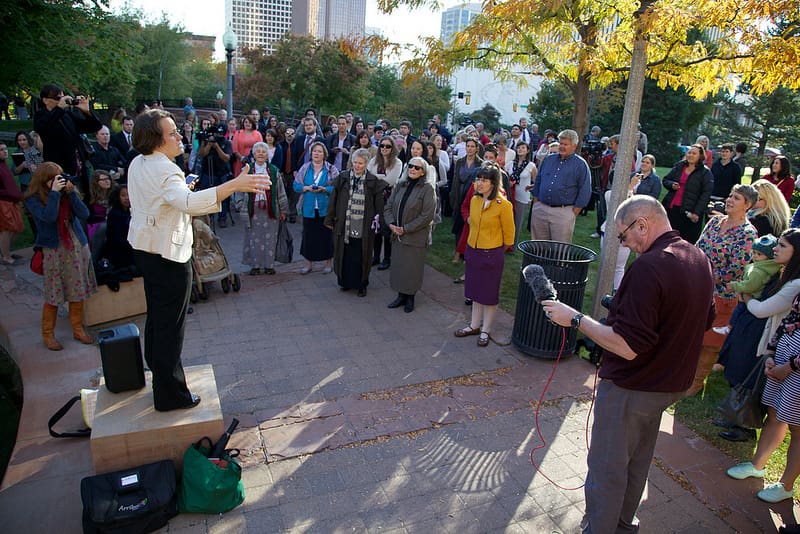
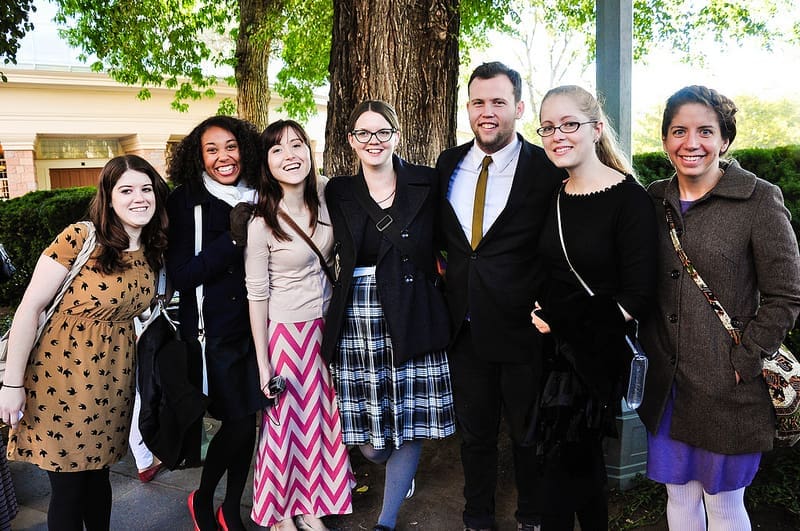
John Dehlin [00:00:17] Hello and welcome to another edition of Mormon Stories and the Mormon News Review. I am your very excited host. This is John Delinquent. We're recording this call on October 7, 2013, precisely two days after what many view as being a historic event within Mormonism. On October 5, 2013, several women, LDS women who are part of an organization called Ordain Women), went to downtown Salt Lake City, went to a park there, the City Creek park, had a little brief devotional and then they went over to the General Conference priesthood session and stood in line with hopes of gaining admission. And we have a wonderful, amazing, all star studded spectacular panel and diverse panel to join us for what I believe will be at least a two hour discussion, maybe three. And so I'm going to describe up front what we've got. So for the first part of this program, we have Heather Olson Beale, we have Tanisha Zandamela, we have Anne Marie Whittaker, and we have Laurie Winder Stromberg. And these four women are part of the ordained women group or organization. They're going to talk to us about what the event was like for them while they were there downtown in Salt Lake. Then we've brought on Fiona Givens, Margaret Blair Young, Nylan McBain and hopefully Maxine Hanks will be joining us in just a minute. They're going to spend the second hour, we'll say or segment of this discussion talking about how they actually have alternative approaches to ordained women. I'm not going to necessarily say they're critical of ordained women, but but I'm going to say that they maybe view things a little bit differently. We're going to talk about how they view ordained women and what their approach is regarding women and the church. And whether we do this recording tonight or finish it up another night, what we hope to do is bring some or all of these women together for a third segment of the discussion to facilitate a constructive dialogue between them, allow them to ask each other questions and to see what type of insight we can gain through that type of dialogue. So that is an amazing three part interview that I'm so elated and excited and honored to be a part of. And so with that I'm going to for the first segment, welcome Heather, Tanisha, Ann Marie and Laurie Winter Stromberg. Heather, welcome.
Heather Olson Beal [00:03:07] Hi John.
John Dehlin [00:03:10] Tanisha, welcome. Hello John, thanks for joining us. Annemarie, welcome.
Ann Marie Whittaker [00:03:19] Hello everyone.
John Dehlin [00:03:20] And we have Laurie Winderstromberg.
Lorie (Ordain Women) [00:03:22] Hi, everyone.
Participants Share Their Paths to Ordain Women)
John Dehlin [00:03:24] All right, Laurie, I'm going to begin with you because I believe you've been at this a little bit longer than the rest of us. Is that true?
Lorie (Ordain Women) [00:03:32] Probably. So we've been talking about women's ordination for probably 30 to 40 years.
John Dehlin [00:03:41] Okay. So there are some reporters who say that this all kind of began with feminist Mormon housewives. And I love fmh, but the truth is these issues go a little bit farther back. When did you start engaging in these issues? Like what time period and through what channels?
Lorie (Ordain Women) [00:03:57] Well, a number of us started talking about these issues in the late 1970s, and some of the first sort of pivotal articles that were written about exploring the issue of women's ordination in Mormonism appeared in the early 1980s. Among them were Nadine, an article that appeared in dialogue in 1982 by Nadine Hansen, and the next year, a presentation that was given at Sunstone by Margaret Toscano on women's ordination. I myself gave a presentation at Sunstone in 1985 in a panel discussion on Since Sonya, referring to Sonia Johnson, who was ex communicated for her outspoken views on the Equal Rights Amendment. And the panel was entitled Since Sonia New Directions for Women) in the Church. And in that, I suggested that if the church didn't grapple with feminist issues, including the ordination of women, that a future panel might feature a presentation. It might be entitled Since Sonia Divergent Directions for Women) in the Church.
John Dehlin [00:05:18] Wow. Okay. So your participation in this dialogue goes all the way back to the late 70s, early 80s?
Lorie (Ordain Women) [00:05:24] Yeah. Personally, I started thinking about women's ordination in the 1970s and discussing it among my Mormon feminist friends. And then publicly, we started discussing it in the early 1980s, and since then.
John Dehlin [00:05:44] Well, that's great, Laurie. And I also noticed that Nadine Hanson and Margaret Toscano were both at the event.
Lorie (Ordain Women) [00:05:52] They were both at the event. And it was very heartening, actually, for those of us who have talked long and hard about this issue, to see the number of young Mormon women who are interested in seriously discussing this issue.
John Dehlin [00:06:10] Yeah. Well, I was so glad to see you there. And that makes me feel good to see generations bridged a little bit. So that's great. Tanisha, I don't know you, and I've never heard much about you. And that's not a bad or a good thing. That's just reality. Tell us a little bit about yourself and what brought you to ordain women.
Guest 3 [00:06:33] Well, I am a junior right now at byu, and I write for the Young Mormon Feminist Blog. I grew up in a very progressive Mormon household. And my parents. I always ask my parents growing up why I didn't have the priesthood, because I was always confused. I never envisioned myself as a mother. So from the time when I was very young, I asked myself those questions. I have a younger sister and a brother, and when my brother got ordained to the Aaronic priesthood, he asked the same question, actually, why don't my sisters get to have the priesthood? And so I was really excited when I heard that there was something going on here, and it felt so natural to be able to be a part of it. I was a little nervous about going to the event at first, but it just felt natural, and I'm glad I did.
John Dehlin [00:07:26] But you're currently a BYU student, is that right?
Guest 3 [00:07:29] Yes. Correct.
John Dehlin [00:07:30] Okay. Well, that was courageous of you. And, you know, there is sort of a. You know, there's a perception that some people have, that the people who are involved in ordained women are not active in the church, are not sincere believers, that this is just kind of a show that they put on. But really they just want the church to be damaged or they're not sincere in their. Their desires. They just kind of want to make a show. And I guess you're telling us that you're active and believing and participatory. Is that right?
Guest 3 [00:08:07] Yeah. Correct. I love this gospel. I love being part of it, and I love being part of the church. There are certain things that I wish were different. And I think that, for me, part of my love for the church is to shown in ordained women. I'm working in ordained women because I
John Dehlin [00:08:25] love the church, I think. Yep. I think I've heard Kate Kelly say the same thing, and I'm sure that's true for most, if not everyone on this call. All right, well, Ann Marie, this is not your first time on Mormon stories, actually. Is that true?
Ann Marie Whittaker [00:08:42] That is true. About five years ago, you interviewed me, and I am part of the. I think you called it, spirituality of the rising generation or something like that. Yeah. So you can look me up and. I don't know, it's interesting for me to watch that, to see where I was five years ago and where I am now today.
John Dehlin [00:09:02] Yeah, we interviewed Ashley Sanders and Lloyd. What's his name? Dobson. What is it?
Heather Olson Beal [00:09:10] Ericson.
John Dehlin [00:09:10] Lloyd Erickson, and several other people when they were still college students. That's really fun. Anne Marie, what brought you to ordain women?
Ann Marie Whittaker [00:09:20] This has been, for me as well, a lifelong question about what it means to be a woman here on Earth and what it means to be a woman in the eternities. And it was beginning to be something that I believe very deeply in this Mormon tradition. And I hold very tightly onto an idea of a heavenly mother. And I'm fascinated by her and have just had a strong desire to get to know her and to know what does it mean for a woman, how do you become like her? And, you know, and there's all these questions around priesthood. And to me, it's. It's a fascinating linguistic discussion about how we talk about priesthood and who has access and who benefits and. And who kind of gets to do what. And we talk about holding the priesthood or, you know, or is it something we're a part of, or how does that work? And so I'm just fascinated by this idea of priesthood. And it's a conversation that I've been having with my siblings for a while now. It's something I've been talking with my mother for a while now. And I just. It's just been a journey of me trying to find my place and trying to find how do I truly fulfill the measure of my creation. And I felt like I wasn't getting really good answers for me personally, and I've always been a believer. I've never felt like I've been a doubter. And I feel like sometimes someone like me can be easily framed as a doubter. But I feel like I've never said I don't believe. I feel like I'm constantly saying I believe something. And when ordained women just showed up in my Facebook feed one day, I think it was my Facebook feed. I can't remember, but I just saw those words, ordained women, and it hit me so hard. And I immediately put up a profile and I thought, I don't know what. I don't have any answers, but this feels right. This feels so right. I have felt so much peace. And I thought, this is where I'm obsessed with words obsessed. And I'm obsessed with letter writing. And I've written letters and I've written articles and I've written emails. And I thought, this is a way for me to get my body involved as the way that I get my body involved in a temple ritual. This is a way to get my body involved in seeking for answers. And so I'm just really grateful that this group has popped up and allowed me to explore my faith in a new dimension.
John Dehlin [00:12:15] Beautiful. Well, thank you, Anne Marie. We're excited to hear from you, and thanks for your heartfelt sentiments. Heather Olson Beal, would you mind taking us through? Kind of an overview of the events of Saturday. Kind of. Even if you want to start on Friday night and just talk about, you know, for a couple minutes what the itinerary was and what people experienced, and then we'll have others talk about their experiences as they map onto the timeline that you kind of lay out. Is that okay?
Heather Olson Beal [00:12:47] Yeah, that's great.
John Dehlin [00:12:48] Okay.
Heather Olson Beal [00:12:50] So Friday night we met in a room at the University of Utah for a training, kind of a logistics meeting. I counted 55 people that were there. I was a little bit nervous in anticipation of it, and I was kind of feeling like, ah, what if we show up and there's only the 10 of us here? I was feeling like we'll still be sending a message, but it'll be a little bit of a different message. But I was very heartened by that. I'm gonna have a. I may have a little bit of a hard time. So at that meeting, we started with the prayer. We sang a song. People were kind of filing in. I mean, right at 7, all those people weren't there. But the room quickly filled up. We had to go get extra chairs. There ended up being people standing. And Lorie gave a little introductory message, as did Kate Kelly. Laura, you can correct me if I miss anything. Then we had Chelsea Shield Strayer, did a kind of a. An organizational thing. She asked people to sign up for different roles at different places because we knew we were going to have. Well, we hoped we were going to have a lot of people. We wanted to be able to get information out, and we wanted to make sure people knew where we were meeting and what we were doing and everything. And then Danielle Mooney did a little bit presentation on de escalation. We were worried that there may be. That there may have been hecklers or people that were angry. We've taken a lot of heat, publicly and privately from other church members. Enough that it made us feel like we needed to help people, have some kind of strategies in mind to counteract people. So we didn't want anything to dissipate into, you know, arguments or fighting. I mean, I think we were really feeling like we wanted it to be peaceful. We wanted to respect that. The holiness, the sacredness of General Conference for Mormons and of end of Temple Square. So we were trying to really help. Help avoid any nastiness. And then I think that's it. We had. We had a Q and A. We had lots of questions. It went on for a couple of hours. And like I said, there were. There were 55 people there. We also had a Standing ovation for Lorie Nadine and Margaret Toscana who were there. And I would say just from my standpoint, personally, it was very heartwarming. I felt very much. As much as I can say. I felt like the spirit was there. I felt like everyone was very. It was heartfelt. It was genuine. It was a powerful, powerful, energizing meeting of saints for me personally.
John Dehlin [00:15:33] Heather, you were getting a little bit emotional earlier on. What was it about that meeting that brings up emotions for you?
Heather Olson Beal [00:15:43] So thanks, John, because I just got it together.
John Dehlin [00:15:46] Now I'm trying to get you unraveled.
Heather Olson Beal [00:15:49] Yeah, I'll be unraveled. I felt the same way on Saturday. I felt like. Like I was coming home. I felt like these are people, some of whom I've seen on Facebook. I think I've met actually in person. Very few of the people that were there on Friday, but a few of them I've met on Facebook. So it was fun to kind of actually see those people in real life. But most of the people I don't know at all, but I felt like we were there, we were united. I felt like they were people who. Who get me at least. Who get me at least with this one issue, I would say for at least 20 years, I'm 40, that I have felt very, very burdened by what I will call or what I experience as gender inequality in the church. It's a huge source of pain for me and my life and has been very disruptive to my life and to my sense of my ability to fully participate in the church. So for me, it was just very powerful to feel like all these people are here and to see when the room filled up, because, like I said, I was nervous. There's safety in numbers. So it did kind of feel like, okay, well, if there's 55 people here, then hopefully there's at least going to be 55 people there tomorrow to do this with us. So that's why it made me feel emotional, because I felt an odd, perhaps inexplicable connection to people that I've never. That I've never met. Does that explain it?
John Dehlin [00:17:24] And it felt like you were coming home. Go ahead, Laurie.
Lorie (Ordain Women) [00:17:26] Yeah, if I can just jump in here, too. I would say that most of the people involved see this ordained women as an extension of their. Not only their faith in the church, but of their service to the church. Heather, would you say that?
Heather Olson Beal [00:17:43] Yeah, definitely.
Lorie (Ordain Women) [00:17:47] And for many people, this event was a leap of faith, a leap of faith on the organizers, that people would show up and we wouldn't be alone. And also a leap of faith that in the LDS Church that. That it really does. One of the most compelling. For me, one of the most compelling doctrines of the Mormon churches is the idea that the heavens are yet open, that there is continuing revelation, and that I know, speaking personally, I believe that members are a vital part of that process and that they. That we as members are vital in terms of articulating the need for new light and knowledge and at times for change in the church. And so I think that it is that sort of faith and that sort of, you know, in the church as an institution and in each other as members of. Or not members, but as activists in terms of Mormon feminism. Faith that we can be heard and faith that we can be part of this vital process.
John Dehlin [00:19:12] Thank you. So it's an act of faith
Guest [00:19:16] and
John Dehlin [00:19:16] of showing commitment to the church in some way.
Lorie (Ordain Women) [00:19:20] I think it is a sign of commitment to the church because if we didn't care about the church, we wouldn't be there.
John Dehlin [00:19:27] Yeah, that makes sense to me. Why bother? Just walk away. Right?
Lorie (Ordain Women) [00:19:30] And one of the. I know that there was a lot of discussion when ordained women. Most people, I'm assuming, who are listening to the podcast will know that we have a website up called ordainwomen.org and the website features information about the. The organization Ordain Women). But one of the most compelling parts of the website are the number of people who have the courage to put up profiles telling us about their commitment to the church or their interest in the church and their reasons for believing that women should be ordained. I find every time we get a new profile in and they come in, you know, several come in each week, we have trouble keeping up with, you know, putting the profiles up on the site. I find the stories there very compelling. We. In terms of the profiles, our profile policy is that we invite people to submit profiles who are active members of the church, actively participating in the church. Also those who care very deeply about the church and are not active now, but might be active but for gender inequality. And also those who may not be active but care very deeply about the church and its members. What we don't support are diatribes against the church.
John Dehlin [00:21:13] Good, because that doesn't really help anybody.
Heather Olson Beal [00:21:16] It doesn't.
Lorie (Ordain Women) [00:21:16] And it's not what we are about.
John Dehlin [00:21:18] Right. So, Heather, talk us through Saturday real quick so that we can then get to people's experiences.
Heather Olson Beal [00:21:24] Okay, I'll try to be more efficient.
John Dehlin [00:21:26] Oh, it's good. You're doing great.
The Gathering at City Creek Park
Heather Olson Beal [00:21:27] Okay. So on Saturday, we Met at City Creek park, which is across the street, kind of over a block from Temple Square. At about 4:00', clock, we started again with a hymn. We had a prayer. Kate Kelly gave a little, I guess, devotional or little speech or talk. I guess we should call it a talk since we're Mormon. And then kind of again, Chelsea Shield Strayer went over some of the logistics, and then so did Danielle. We did kind of a very miniature version of what we had done on Friday night. And then we. We sang a couple verses of Come, Come Be Saints as people lined up and we marched. We didn't march, we walked. I guess we walked across the street and someone counted 171 or 176. I can't remember people that walked over with us. So she waited at the crosswalk and counted all the people that were walking with us. So that's kind of the best count that we have.
John Dehlin [00:22:31] And there are people like me that couldn't stay, but there are others that were at that park that weren't able to go over with you. So probably over 200 people, right?
Lorie (Ordain Women) [00:22:39] Yeah, there were others who joined us actually, on Temple Square.
John Dehlin [00:22:42] All right. Okay. That too. Yeah. Okay.
Heather Olson Beal [00:22:44] Yeah. So we were feeling like we had 200 people there. And then we also had a number of people who had indicated that they would love to be able to attend but couldn't because they lived far away or had to work. So we gave them the opportunity to send in their names to us. And we gave everyone who. Anyone who was there. We had about a hundred cards that we handed out that had basically, like, a person's name on it so that that person could sort of attend by proxy. And that was actually really cool for me because the person. Two people that were standing next to me were holding cards of people that I knew. So I took a picture of them and emailed it to the people and said, hey, look who's standing next to me. And they were like, oh, my gosh. One of the women said, now I'm starting to ball. I'm so glad that you sent this to me. So that was kind of fun. And then a lot of the women who were there on Saturday wrote their names on the backs of the cards, and we're going to try to get those back to the people so that they can kind of connect and know who had their card with them. So that was just a way.
John Dehlin [00:23:44] Yeah, a little bit of proxy work, a little bit.
Heather Olson Beal [00:23:47] But we try not to call it that because we didn't want to get anyone unnecessarily nervous.
John Dehlin [00:23:53] So what was the spirit of the little meeting? Devotional? How would you describe it? Because I was there, and I love it when liberal Mormons pray and sing hymns, personally. But what did you feel? Whoever wants to speak up, Heather, or anybody else, what was the spirit of that little devotional before?
Heather Olson Beal [00:24:14] I'll try to be quick and just say that. For me, it was totally just transformational. I mean, it was amazing. I was totally overcome with emotion. And if anyone were to have looked at us there and said that we were protesting or angry or dissenting, I mean, I don't think anyone could possibly have said that looking at us, because that was absolutely not the feeling at all of the meeting. Not from my perspective at all. Anybody else.
John Dehlin [00:24:48] Tanisha, what was it like for you?
Guest 3 [00:24:50] You know, it was. I remember walking up to the park and, you know, one of the things that's been really difficult for me is sort of the culture of the wards here at byu. And it was so amazing to me to kind of step out of that for a little bit and have people that I knew from the Internet or that I barely knew walk up to me and say, we're so glad that you're here. And I just thought, like, this is what the gospel is all about.
John Dehlin [00:25:21] Meaning what? The gospel is what about what?
Guest 3 [00:25:24] Just the gospel of Christ. And just the idea that, like, everyone is welcome. And, you know, as I'm walking up, like, everyone wants to say hi, everyone's excited that I'm there. And I. I was so struck by that. And just the whole devotional and everything, people are smiling. I just remember feeling really, you know, happy that I was there. I was incredibly glad that I had come, and just being among people that, like, I barely knew. But we're happy that I was there, too. That was so wonderful.
John Dehlin [00:25:59] And Marie.
Ann Marie Whittaker [00:26:00] Yeah? I mean, I was just thinking, for me, it was, again, kind of going to that analogy of it feels like home. It felt a lot like that. And it felt, for me, personally, a little bit different than Tanisha. Like, it felt like how I feel in my ward here in Salt Lake City, you know, that we're all different. We all come from different backgrounds, we all feel different things about the church, and we all believe basically in the same things. And I felt like this is what I would expect and maybe even a little bit more. I mean, it was just. It was that same kind of spirit I feel when I'm sitting in a chapel singing a hymn and thinking about God and all of his creations and what God has in Store for us. I mean, it was just yet another hopeful moment for me to write down in my journal. And it felt natural, it felt good, and I felt a lot of peace.
John Dehlin [00:27:00] Laurie, any quick reactions about the park part?
Lorie (Ordain Women) [00:27:04] I don't think I could say it any better than they've already said it.
John Dehlin [00:27:07] Okay. Okay. So you said that everyone walked in a kind of a single file line. Heather, they counted almost 200 people. What happened once people walked over to the conference center? The pictures that I saw look like it was the tabernacle, not the conference center. Talk about that.
Heather Olson Beal [00:27:26] It was the tabernacle. And I'm going to defer to Laurie, probably because my job was kind of was a sweep. So I was at the back.
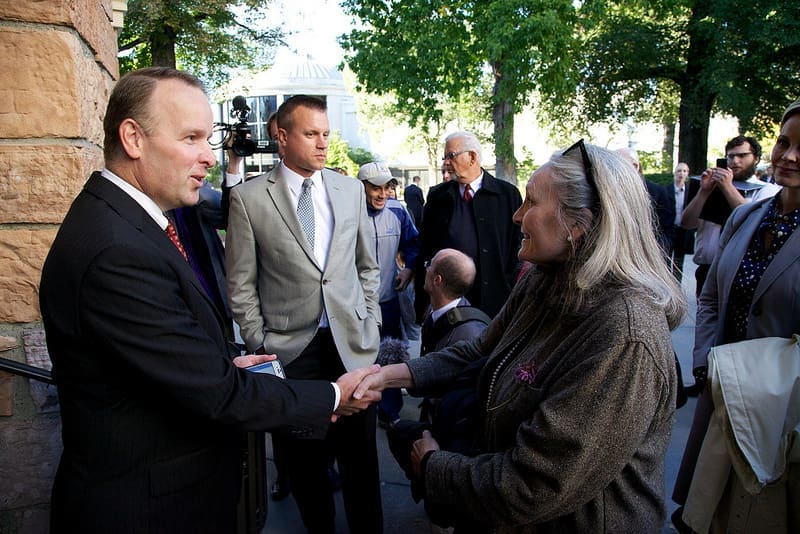
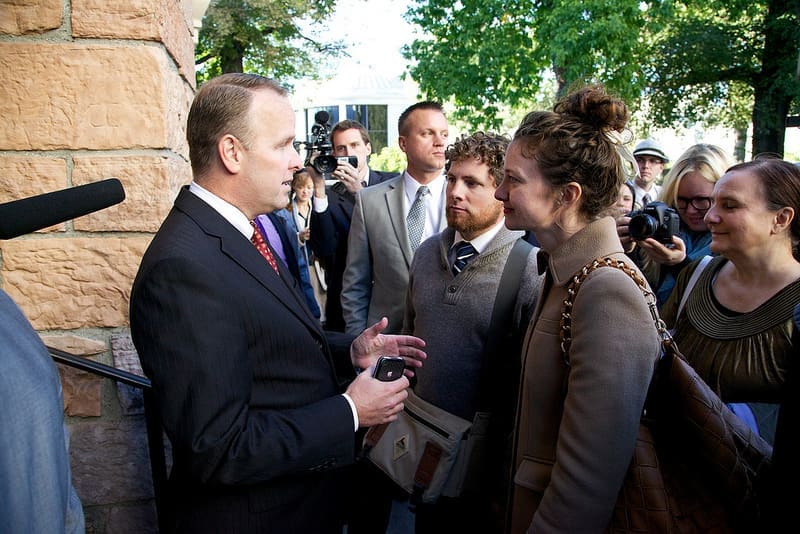
Lorie (Ordain Women) [00:27:35] Well, we walked over and as a group and I think we had described that the ticket line was inside the tabernacle. So we walked toward the tabernacle and we were met by a lovely spokeswoman from the church, Ruth Todd, who had received a letter from us. We had written a letter prior to the. Prior to conference requesting tickets to the priesthood session. And we had received a response from Ruth Todd saying that they couldn't give us tickets. And I think her words were that the event was that the conference session was to strengthen men and boys. So we. She met us and greeted us warmly. And then she said, you know, as we've already said in our letter to you, we cannot give you tickets to the session. And then after saying hello to everybody and shaking some hands, she said that the church had an official statement, but usually they don't hold press conferences on the grounds of Temple Square. And she invited any of the press members who were following us to leave with her and she would hand out their. Give them a statement, official statement from the church. And she walked away. And at that point we decided that.
John Dehlin [00:29:24] Did anybody try and talk to her to engage her?
Lorie (Ordain Women) [00:29:27] Oh, she. She actually throughout we all talked. A number of people talked to her, absolutely. Yeah. But you know, warmly and you know, in a greeting sort of way. But, you know, she was there in sort of her official capacity as a spokesperson for the church. And so I think she was her. Her job was basically to then present the official church, the churches official position. And so it was quite appropriate that she invited the press to hear her give the official response. At that point, we decided that we would go ahead and stand in line for tickets to the priesthood session. People had come from all over the United States and indeed one woman came from Germany. So we stood in line at the door of the tabernacle and as we did, making sure that we weren't blocking the entrance. And we just waited. And as we waited, ushers took men and boys past us into the tabernacle and admitted them into the tabernacle. So many, you know, probably hundreds of men and boys walked past us as we, as we stood quietly and respectfully in line. And then after staying there for about half an hour to an hour, we individually, one by one, went to the head usher and asked for to be admitted and were told kindly but firmly that the meeting was for men and boys and that we would not be admitted. And then just about got through the whole line. Heather was in the back. And at that point, once we were told that each person asked individually and then would. And then would leave the line.
John Dehlin [00:31:43] So Laurie, did you ask Laurie?
Lorie (Ordain Women) [00:31:45] Yeah, I did.
John Dehlin [00:31:46] What'd you say?
Lorie (Ordain Women) [00:31:47] I said, I'm a member of the Church of Jesus Christ of Latter Day Saints and I would like a ticket to the priesthood session of general conference. And he said, I sorry, but the precinct session is for men and boys only. And I said, thank you. And I walked away.
John Dehlin [00:32:06] How'd you feel, Lorie?
Lorie (Ordain Women) [00:32:08] You know, I think for a lot of people and Ann Marie and Tanisha and Heather can speak to this. It was much more emotional for a lot of people in line than they had anticipated. Particularly the image of men and boys walking past us and being admitted and then being denied admittance was a little more painful and emotional than many of us had anticipated. So I can actually, if you'd like, I can a young woman who participated read a very moving account of her experience. Would you like me to read it now?
John Dehlin [00:32:50] Sure.
Lorie (Ordain Women) [00:32:51] Okay, let me get it. And if I can get through it without weeping. Katie writes, after being personally rejected at the door of the tabernacle, I cried. I wanted to compose myself, so I looked for a private place. I walked to a nearby tabernacle wall where no one else stood. During the hour I stood in line, people tried not to see me looking above or beyond me and my sisters and brothers. Now I felt someone's eyes on me. I looked up and saw through the age old glass of the tabernacle windows a man looking out at me. We held eye contact. He looked torn as he gazed out the window at me. Our interchange was real and personal. He stood inside, accepted in to listen to our prophet's. And I. I stood outside. The reality of my rejection became undeniable. I began to cry harder. The man seemed torn, as if he desired to comfort me if only he could. He began to Smile, perhaps to better connect with me or cheer me, but then quickly realizing it would not be appropriate, pulled his lips down and then his eyes, breaking our eye contact. I couldn't get continue to keep gazing. He couldn't continue to keep gazing at me as I stood outside, denied and tearful. A powerful dimension of this experience for me was that this man was African American. Whether or not he has ever experienced this type of treatment personally, he has inherited a heritage of discrimination and oppression. I'm grateful for this man and our interaction. This experience humanized him and the men and boys who walked unseeing by me into the tabernacle. I pray that this experience humanized the identity of Mormon feminist. For him, this forcefully manifested the reality of gender inequalities and discrimination in the church. I cherish. I believe women should be ordained.
John Dehlin [00:34:55] Thank you. Tanisha. Did you get a chance to go up and request entrance?
Attempting to Enter the Priesthood Session
Guest 3 [00:35:02] I did.
John Dehlin [00:35:03] What was that? What did you say? And what was that like for you?
Guest 3 [00:35:07] It was. I'm gonna be emotional about this because it's. Before I walked up to the door, it was interesting because people were telling us they're saying no. And, you know, I knew that they were gonna say no. I got. I checked my phone right before I walked up there, and I had email messages and Facebook messages and tweets from people who couldn't be there, people that I didn't even know were planning on or were interested in ordained women. Saying, when you walk up, will you think of me? Like I was holding someone's name, and it was really powerful. As I walked up, it was like there were other people with me. So I got up into the line and I said, I would like to be admitted into the priesthood session. And I remember smiling and thinking of all those people that I had never met or some people that I knew quite well who wish that they could have been there. And when he looked at me, he said, we're sorry, it's only for men. You can watch it somewhere else. And I remember walking away and thinking, you know, as I have these, a lot of men and boys kind of looking over me or sort of, you know, one runs into me as he's walking up and thinking, not just for me, but for the women that wish they could have been there. How sad and heartbreaking that was. And the first thing that I actually thought of, I kind of talk about my experiences on the Young Mormon Feminist blog, but with the forgive them, for they know not what they do. And I thought, if Christ were here, he would have led us in. And it was such a powerful experience. It's so interesting. Like, I know a few others have said that I didn't realize how emotional it was going to be. And even when I knew that they were going to say no, I didn't realize how painful that was going to be to be looked in the eye and saying, no, you're not a man. You can't come in. And my favorite scripture is 2nd Nephi 26:33. And I remember reciting that in my head. And one of the lines in there is God denieth, none male or female. And that was really powerful for me, especially as I'm standing there and I'm tweeting people back and I'm emailing them back and saying, you know, I didn't get in, we didn't get in. So it was a heartbreaking experience.
John Dehlin [00:37:51] Thank you, Tanisha. Ann Marie, how about you?
Ann Marie Whittaker [00:37:55] Oh, man. Yeah, I'm. I was able to ask. What was interesting to me emotionally was, you know, as we were standing in line and waiting for the opportunity to ask, and, you know, we see the brethren and the young men walking past us and into the tabernacle, and you could feel the awkwardness from some people and like has been mentioned the aversion of eyes. There was even some laughter. And what was so interesting to me was this, you know, having kind of two emotional experiences at once where simultaneously feeling at peace, that this is where I needed to be, and with my sisters and my husband was with me too. And so simultaneously feeling that peace. But also this part of me that is wants deeply to care for others could see the discomfort of some of these men walking by. And it's just an interesting feeling to have where something that I believe and hope and something that brings me so much joy can cause someone to feel uncomfortable. And that was just really palpable. Anyway, so when it came to be my turn to ask, you know, my husband and I decided we would. We would ask together. So I just simply. I asked first. I simply asked, you know, this is my husband, and both of us would like to attend priesthood together. And I was given the same answer, that the session is only for men and boys and that I would not be admitted. And my husband and I had agreed beforehand that if I was not admitted that my husband would stay by my side. And so after I asked, and he asked one more time for the both of us, he said. He said, please, this is my wife. You know, can we. Can we go to priesthood to go to the session together? And he had the Same answer. He said no. And I think at that moment, just the, you know, the adrenaline, I didn't. There was no tears for me, it was just kind of like, I don't know, I didn't absorb it instantly. I think maybe just the standing in line had kind of worn me out emotionally, but, I don't know, I felt, overall, I was very grateful to be able to have that experience, to. To embrace what has been called the girl gene, to be vulnerable, to be emotional. And it's not easy to say something out loud to strangers by your actions and say what you believe when you know that it's not what everybody else is thinking. So, yeah.
John Dehlin [00:41:33] Thank you, Anne Marie. Heather, did you get to ask?
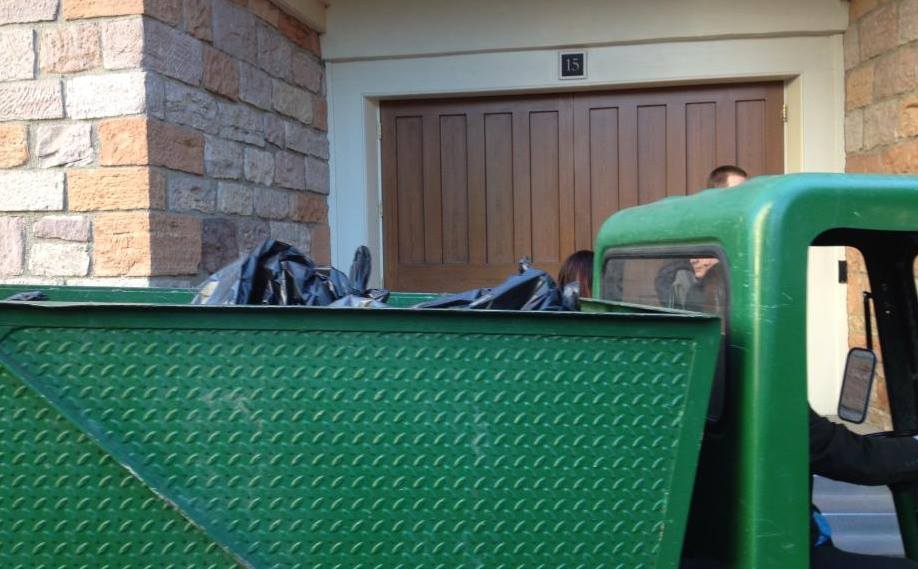
Heather Olson Beal [00:41:39] I didn't get to ask. I had signed up the night before to be one of the people at the back that would kind of, you know, make sure we were all kind of staying together. So I missed seeing all of that. You know, after it was all over, I started seeing pictures. And I mean, that. The experience was very different for me because we couldn't really even see the line. I mean, there were enough of us there that we were really pretty far away from the entrance. But as it got to be about six o', clock, I got close. And I'm happy to be able to tell this, and I hope people listen to it, because I feel like the story has kind of gotten distorted over the weekend. I was about 10ft away from the steps to the. To the door and a garbage truck. I saw it with my. My very own eyes, sort of approached and kind of got close. And I, you know, I sort of had to take a few steps back to get out of its way so that it could come. And it. And it moved in and parked temporarily for about 30, I don't know, 30, 45 seconds. And it sat just between me and the door. And I was like, that's kind of weird. I pulled my phone out of my pocket, I took a picture of it, so you can see, and the picture's everywhere now. Then it drove away. And then there was a woman that I assume works for the church pulling across. The doors were closed at that point, and there was a woman pulling across a red, you know, cordon. And I said, you know, I'm here to ask for my ticket to get into the priesthood session. And she said, we're closing. We're closing down the line. This session is getting ready to start. So. And then it was just kind of like, okay, it was over. I think there were probably 20, 20 or maybe 25 of us who were still there. And like Ann was saying, there was just so much information, we didn't really process it. We walked back to the park. I actually went to the bathroom
Ann Marie Whittaker [00:43:34] and
Heather Olson Beal [00:43:34] I got back to the park and I showed the picture to someone and said, that's weird, isn't it? That garbage truck. And you know, what should I do with this picture? And then she said, you should tweet it. You know, it's horrible. It looks. It's so emblematic. And I said, well, I don't tweet. I'm 40. Maybe some 40 year old people tweet. So she said, send it to me and I'll tweet it. So she tweeted it and it's out there everywhere. And I've seen lots of people saying there was no garbage truck. That didn't happen. Someone today on my own Facebook wall said, you're being deceitful. And I said, I'm not being deceitful. I'm showing a picture. That is what happened to me. I have no idea why. It seems very, very odd to me that it would be like Disney World scheduling a routine trash movement right when the parade and fireworks show is about to start. I mean, it's crowded, there's strollers, there's babies, there's kids. I mean, it just seems weird. I have no idea whether it was just epic bad judgment. I want desperately to believe that it was just an employee not realizing what was happening. But regardless, that is what happened. So I didn't get to ask for a ticket. And it did feel kind of crummy that that's what happened. I feel a little bit cheated that I didn't get to ask for my ticket. And there were others who didn't either. But that's okay. It is what it is.
John Dehlin [00:44:57] It's almost as if the ability to ask was experienced as a sacrament by those who were able to ask. Is that making it too dramatic?
Heather Olson Beal [00:45:08] I didn't get to. So, I mean, maybe I. Yeah, I
John Dehlin [00:45:12] guess to the others.
Lorie (Ordain Women) [00:45:14] I think a sacrament might be overstating it, John, but it was still. It was a powerful moment for everybody. A lot of people, as I said, had come from great distance at great expense. And so it was a way to feel individually like they had participated and registered their voice.
Reflecting on Whether the Effort Was Worthwhile
John Dehlin [00:45:36] Sure. So, you know, it sounds so disappointing. I'm wondering how each of you feels about the endeavor being worthwhile. Because if you walk away empty handed and you walk away feeling sad and rejected, do you then say, why did I do it? Was it worth it, you know, it's kind of a bummer, right? It's like a movie ending with the hero, you know, not being victorious and everybody kind of being bummed out. Is that a fair way to describe it? How would you guys describe it? I'll start with Tanisha.
Guest 3 [00:46:17] You know, I didn't really feel like that at the end, actually. It was really painful, and it was really heartbreaking. But I remember when we were all standing outside after most people had asked for tickets before the doors closed, and we were singing I am a Child of God. And I remember feeling so much love for the people that were there. And I remember feeling so. It was like hope, and it was like.
Guest [00:46:50] So.
Guest 3 [00:46:50] It was heartbreaking for me, but I don't think. It didn't feel like a closed book or the end of something. It felt like the beginning. And I was so grateful that I had gone by the end. I was. You know, I said before I wasn't thinking about going. I was kind of nervous, but I was so grateful to be there. And I felt so much more. Instilled love for the gospel and for my savior and, like I said, just for the people who are there. And so, yeah, I don't. I don't. I didn't feel like it was sort of this. It was really disappointing, and it was really heartbreaking for me. But I also feel like it was sort of this open book of that someday I will sit with all my friends in the gospel at the priesthood session, no matter who they are. It was just like it was the beginning, right?
Lorie (Ordain Women) [00:47:53] Yeah. I don't think anybody. This is Laurie, John. I don't think anybody who attended felt disheartened when they left. They were. What I described, I think before was they weren't prepared quite, you know, for the range of emotions that they would feel. But almost universally, the people I talked to were so glad that they were there. As Tanisha said, they felt like they had. You know, in my profile, I talk about the fact that my Mormon. My Mormon aunts and my aunts were Mormon pioneers who gave up everything for their faith and conscience. And I feel like I honor them by following my mind. And so this felt like very much for many people, like an act of courage and an act of. Conscience. And so I think most people felt very. Felt empowered by that.
John Dehlin [00:49:00] Laurie, if the church were to grant women the priesthood, would you actively participate in church? As a female priesthood holder, I think
Lorie (Ordain Women) [00:49:14] I would be much more likely to do so, yes. I mean, for so many years, I found it so so troublesome for me. It was an act of faith and an act. I had to make a conscious decision every week as to whether I would participate in a structure that I found inequitable. And so. It would. For me, it would make my participation in the church less. You know, I would not. Wouldn't have to struggle. It wouldn't be an act of. I wouldn't have to struggle with my conscience every Sunday.
John Dehlin [00:49:57] Right. How about you, Heather?
Heather Olson Beal [00:50:01] That's a tough question. I feel, in some ways, kind of broken by not. Not by. Not by this, you know, the events of this weekend, but just by the gender inequality quality. So would that resolve it? I don't know. I mean, if I'm being completely. Completely honest, I. It's possible.
John Dehlin [00:50:23] Yeah.
Heather Olson Beal [00:50:25] I wanted to just go back if it's okay, because you had asked how people felt or whether it was worth it. I think that was your.
John Dehlin [00:50:31] Yeah, yeah, yeah.
Lorie (Ordain Women) [00:50:33] My.
Heather Olson Beal [00:50:34] Brent. Brent, my husband, was sending me several texts kind of throughout the day saying, you know. You know, after it was over, the kids want to talk to you. They're anxious. We had talked before I left about what I was doing, and they were worried. My kids are 10, 13, and 16. My youngest son was worried and saying, like, are you gonna get hurt, or will there be police there? And he's like, nervous Nellie. So I was like, no, you know, it's gonna be okay. And I said, but it's really not considered okay to, you know, to publicly dissent in our church. And we talked about the September six, and I was at BYU during that time. So I told them, you know, that sort of framed my consciousness as an adult in the Mormon Church, knowing about that and kind of feeling like we can't speak publicly about things that concern us. So the kids were worried. It was crazy in the aftermath. And so I just sent them a text that I just pulled up that I'll just tell you, because it's sort of. It was from a couple hours after the event. So this is how I felt on Saturday night, Although I feel a little bit differently now. I said, dear kiddos, today I did the scariest thing I have ever done in my life. It was hard. I did it for myself and for you. I want our church to be a place where women and men are equal. And I showed that tonight to my church leaders and members with my body, my physical presence, my voice, and my prayers. I'm so happy right now and feel so proud and full of positive energy. I'll tell you all about it when I get home. So that's how I was feeling a few hours afterwards. It was, you know, and I. I want for that message to get out also more than the picture of the garbage truck that now has all sorts of memes being made of it, because that's what's gonna stick with me. Not. Not the closed doors. Although I think those. Those. Those images are emblematic. And I don't want to dismiss that, you know, or remove that from anyone's experience. But for me, it's. The other things I think are going to have more. More staying power. The good. The good stuff.
John Dehlin [00:52:26] So you're glad you did it?
Heather Olson Beal [00:52:28] Yeah, I'll never forget it. And I'm sure that I would have been on Saturday seeing that and saying, why didn't I go? So, yeah, I'm very glad. It was very powerful for me.
John Dehlin [00:52:39] And, Heather, you said the hardest thing you've ever done. Harder than childbirth.
Heather Olson Beal [00:52:44] Oh, yeah. Yeah. I mean, some people really don't get this. I was talking to one of my co workers today. I said, I. Honest, I mean, because I feel like for. I would say, my whole adult life, I've been worried about this issue. And I feel like I told someone in the line, I said, I feel like I'm an onion. And being here is like peeling away another layer of fear, numerous layers of fear, or. And just feeling like I can't say what I think. I can't say that this isn't okay. I can't say that this isn't fair. I can't say that this situation is wrong because it's considered, you know, to be a sign of lack of faith and lack of trust in my church leaders. And I've had countless people say to me, if you don't like the church, why don't you just leave? Which I find to be very unchristlike and unchristian and unmormon. Because I'm like, I don't want to leave. I'm Mormon. I feel like that's like someone saying to me, why don't you stop being a woman? Or, why don't you stop being Heather? Why don't you stop being, you know, from Texas? I'm a Mormon. And it's like, I feel like it's my right. It's my right to be here and to be in that space as an active participant in my religion. And I want it to be better than it is. I want it to be a more right place for my kids. So I resent people saying that I should go away. I don't want to do that. I don't think I should have to and I don't like people to suggest that I should. Sorry.
John Dehlin [00:54:22] No, that's good. I have a couple questions about post event. Are there any other comments that people want to jump in and make about the event before I talk about other things? Anyone going once. No rush, no hurry. I just want to make sure everybody. Good.
Lorie (Ordain Women) [00:54:44] We're all tired.
John Dehlin [00:54:45] Okay. Okay. A couple more things and I appreciate your patience. There's really a simple logistical issue, which is that if, you know, 5,000, let's just say 2,000 or a thousand women decided each priesthood session that they wanted to come that actually literally would keep. I mean, it sounds like there were at least a few dozen seats, maybe a couple hundred. But if all of a sudden the church said that women were welcome, that literally would take. Keep men and boys from attending. I remember Kate Kelly telling me that Relief Society was her favorite meeting in church. I know that you guys in theory don't oppose, you know, men and women being able to have separate meetings. So there is sort of just a simple logistical issue around them wanting to keep it to just, you know, males who can respond to that? Just because I know my listeners might be asking that question.
Lorie (Ordain Women) [00:55:49] They can watch it online.
John Dehlin [00:55:53] Okay. You mean the men and boys who can't attend?
Lorie (Ordain Women) [00:55:58] Yes. Like there are all kinds. There are thousands of men and boys who can't attend right now because there just aren't enough seats.
John Dehlin [00:56:05] Okay, but I mean, is it okay for the church to want to have meetings of just one gender or the other? Is that okay?
Lorie (Ordain Women) [00:56:15] Well, I have mixed feelings about that. For me, this is. It's symbolic of our exclusion from the decision making structure of the church. And ultimately it isn't about going to a meeting, John. It's about ordination. It's about women being included in the decision making structure of the church. It's about, you know, quite frankly, it's really hard for me to understand why it's so difficult for people to envision a church where men and women join together in blessing their children, in baptizing their children, in giving blessings of healing and comfort to their neighbors, in sitting on church councils and bringing their perhaps unique set of experiences to those councils so that decisions are made that are more inclusive for all. I don't understand why it's so difficult to envision a church where that occurs. In many ways, one of the strengths of Mormonism is a sort of democratization of spiritual authority, that we don't have an elite clergy priesthood and the power of God as the church. Defines it is available to all worthy, at this point, adult male members. It doesn't seem like such a stretch to suggest that it should be available to all worthy adult members of the church. One of the most compelling teachings of Mormonism is the. And in fact, we could probably sum up Mormonism in a few simple sentences, and that would be that. Mormons believe that. That the power. That God's desire for us is spiritual empowerment for both men and women. And it seems antithetical to that foundational belief to deny access to the power that animates that belief to half the population of the church.
Ann Marie Whittaker [00:58:47] I have something to add to that, too, if I may.
Heather Olson Beal [00:58:49] John, please.
Broader Questions About Priesthood and Equality
Ann Marie Whittaker [00:58:52] For me, personally, this comes back to kind of the linguistic issue with how we talk about the priesthood and the church. And for me, I love the idea of having a women's meeting and a men's meeting. I love meeting with my sisters. There really is. I enjoy that. And I think my. And I know my husband and my brothers love having their time with just the guys. And I think the problem, the issue that I have is that you have a meeting that's called priesthood session. It's not the Men's Society or something like that. It's priesthood. And for me, the priesthood isn't something we hold or we own or we have, but it's something that we are a part of. And I believe that I am part of the priesthood and that I just as much as my husband have
Heather Olson Beal [00:59:45] the
Ann Marie Whittaker [00:59:45] same access to God. And we heard that a lot in conference this weekend, that men and women do have equal access to God. And so that is what I am asking, is that we put our actions where our mouth is, and that if the priesthood is for all of us, then this priesthood session should be available to all of us. And if you want to have a men's meeting and a women's meeting, that's fine, too. I get that.
John Dehlin [01:00:12] That's interesting. I hadn't thought of it that way.
Guest 3 [01:00:16] One thing that I thought was really interesting, actually, which is again, from the young Mormons on this blog, but one of my friends, Ryan, who this is written in the blog, actually went to the Relief Society meeting in the tabernacle. And he's a male, they let him in. And so I think that as far as. It's just interesting to me that really the idea of this, like, oh, there's separate meetings, there's one for the guys, there's one for the girls, really doesn't exist, essentially because there are men presiding at the early society meeting. And he was let into the tabernacle with other sisters. While, you know, this weekend, women were not allowed in the tabernacle to the priesthood meeting. But I also echo the statements of. Of the others, too.
John Dehlin [01:01:04] Right.
Lorie (Ordain Women) [01:01:07] So
John Dehlin [01:01:10] I'm curious to know for. I'm curious to know for Tanisha and Anne Marie and Heather, to what extent this might or might not alter your relationship to the church. So I'll start with Tanisha, then Annemarie, then Heather. Do you think being denied, being shut out, does it make you more or less excited to stay active in the church? Does it make you more determined or less determined? How does you know? Does it make you more sad at church versus more happy? Tell us how this affects your relationship to the church.
Guest 3 [01:01:53] It's interesting because I thought that at first that I would be very, you know, if what happened, happened. I thought, you know, I'm not coming back. I'd be really upset. But what's interesting is that after I left, I feel a greater resolve to be part of the church and to really impact change. I got a message from a young woman who's 14, and she said, I saw what happened. This is so awesome. You know, and I. For me, that was really powerful because I thought, you know, she's 14 years old, and for me, that's. I was able to kind of impact a little bit of change there. You know, she was like, wow, this is really cool. I've never thought about this. I love this. And I just think I feel
Lorie (Ordain Women) [01:02:46] just
Guest 3 [01:02:47] a greater resolve to be part of the church and create change within the church, which is something completely different than if you had asked me at the beginning of this event if, you know, I got turned down, what would have happened? But I feel just more strength. And I felt like, you know, and I don't know if this is how the people felt, but I felt like I did something so brave, and I could keep doing that.
John Dehlin [01:03:16] All right, Emery.
Ann Marie Whittaker [01:03:19] I'm just as faithful as I've always been. I mean, it just kind of helps me to articulate in my own mind more and more what it is that I believe. These challenges that we face. Like, for me, I. I've learned over the years, there are good things that they help me to just define what I believe. And it just. It does. It does. You know, you're reconverted when you do something like this, when you do something that is hard and puts you in a vulnerable place. Vulnerable place. And makes you revisit those core beliefs that you have, and it just sets them on fire even stronger. And I think, you know, and that's why I'm so, I'm so very grateful for this. And so I think my personality too is like, I don't give up very easily on things I don't want to. I don't see why I would. And I'm in this church for the long haul. I mean, it's me. I don't know. There's no other place for me.
John Dehlin [01:04:35] Thanks, Anne Marie and Tanisha. How about you, Heather?
Heather Olson Beal [01:04:39] I don't know, I'm processing. I feel like for me it was sort of a way for me participating in this as a way for me to kind of claim I'm Mormon. This is me and also committed to seeing the church become a place where there's equality between men and women. And in many ways those things are not. Those two ideas are divergent, I guess. I know a lot of people won't agree with that. So I'll just say in my opinion, in terms of church governance, for me that issue is not up for debate. But, you know, I don't, I just, I don't know, long term, I felt differently before I had kids. Now I have kids and I, they, they are not okay with, with inequality. They see it, they recognize it, they don't like it. I mean, Stuart saw some of the pictures of the boys, you know, walking into the priesthood session. He's 10, he's almost 11. And he said, mom, that's so bad. And I said, well, you know, why talk to me about it? And he said, well, it's just bad. Like, didn't they feel bad walking by all those ladies, you know, so he, and I'm not trying to guilt trip any 12 year old boy that went into the priesthood session with his dad. Like, more power to him. That's, and that's, you know, but I just see that for my kids and I think for a lot of kids in that generation, the gap between what they see in the world and what they, they see in their future world and what the church is providing to them right now is really big. You know, for one of my daughters, it's right now, it's too big. That gap is too big for her. So I also kind of feel like possibly this is a way for me to say to the kids, well, I'm here, and maybe the church can get to where that gap will be smaller and maybe even go away. I don't know how long, but it's just important for me to show that to my kids. I don't know what that means. For me, for me personally,
John Dehlin [01:06:47] I have to ask this. You know, I've been thinking a lot about this myself. Like, I've been working for 10 years just to achieve what happened with Elder, with President Uchtdorf on Saturday. I wanted. I probably. There's probably a point where actually said this explicitly. I want a member of the First Presidency to say during General Conference, the people who leave the church are not doing so because of sin or because they're lazy or because they've been offended, that instead they have legitimate issues. And I want the brethren to acknowledge that the church has made mistakes. You know, and it's almost like, you know, it took 10 years. It took 10 years, you know, and probably, you know, $700,000 worth of income that I sacrificed and, you know, probably 40 to 60 hours a week for my family for 10 years. But, you know, eventually it happened. But then I asked myself, wow, that's a lot of work for, you know, a few minutes of words that a lot of people may probably not even pay attention to. And in the end, they're going to focus on other parts of his talk where he said, doubt your doubts. And so it makes me ask myself two things. One, is, man, is all this effort worth it? And then two, is it possible that we're making it worse, that activism actually delays the change? Because as we learned, what I hear through rumors is that the church was drafting some big apology about blacks in the priesthood, but somehow it got leaked out to the press that the church might be caving to activist pressure. And so they scuttled the apology. And some say that the delay in the blacks receiving the priesthood partly was made because the church couldn't be viewed. The church leaders couldn't be viewed as responding to social pressure. So they had to wait till the civil rights movement died down, wait enough years, and then say, okay, now we feel like the revelation is sincere, whereas before it wasn't. And I'm just wondering, do you guys ever feel like a. This is too long, too much effort for too little gain, or, you know, two, that we're actually delaying the progress because the brother not going to want to respond to pressure this way.
Lorie (Ordain Women) [01:09:12] John, this is Laurie.
Ann Marie Whittaker [01:09:13] I'm.
Lorie (Ordain Women) [01:09:14] I. A document that is meant that I've read several times this year is Martin Luther King's letter from Birmingham Jail. Are you familiar with it?
John Dehlin [01:09:25] Yeah, I am, but go ahead and
Lorie (Ordain Women) [01:09:27] talk about it and what he. I mean, there are any number of quotable quotes in this, but it was a letter written to his fellow clergyman who were saying to him this might be too precipitous. You're just going to alienate people. Do you know what I'm saying? You understand the genesis of that letter, right?
John Dehlin [01:09:50] Yeah, for sure.
Lorie (Ordain Women) [01:09:52] And that letter was written eloquently in response to those people who said. Who warned him about very much the very thing you're talking to us about. And there's one line that he uses. He's actually quoting from Gladstone, a former, I believe, 18th century British Prime Minister, who said, justice too long. Justice too long. I'm sorry, now, I don't have the quote of in front, front of me, but it was. Heather, can you help me with this? Justice too long delayed is justice denied. Justice too long delayed is justice denied. And I really believe that, you know, in that eloquent letter he wrote, he was saying that men and women of conscience have to speak out. Things will never change until women and men of conscience do that. The other line that animates me is injustice anywhere is a threat to justice everywhere. And so my belief is, as a society here in America at least, we've come a long way secularly in terms of gender equity. And, and in fact, as Heather was suggesting, her children, my children, no longer accept the gender inequity that was prevalent when I was growing up. We refuse to accept gender inequality in our secular lives. My question is why do we so readily accept it in our religious lives? And it seems to me that or change to occur, there have to be people willing to speak out and name the injustice.
John Dehlin [01:12:02] Yeah, well, I think that's a strong argument. It's hard to argue with Dr. King. All right, well, I'm going to ask each of you to give a closing little summary statement, but I want to give you time to think about that. So while you're thinking about it, I'm going to ask one of you to dual process and not only think about your summary statement, but also tell me what's next for ordained women. Are you guys going to do this every conference? Are you going to have other types of activities? And what can people do who want to participate?
Heather Olson Beal [01:12:38] Who's first?
John Dehlin [01:12:39] Well, no, no, no. That is a question for either, I think probably Heather or Laurie in terms of the future for ordained women. Anything. You guys can talk about that.
Heather Olson Beal [01:12:51] Lorie, you want to take it?
Lorie (Ordain Women) [01:12:53] Well, as I said, we're all sort of a bit tired right now. Yes, we definitely believe we'll continue with our work. We encourage people to send in their profiles. Those, as I said before, are probably, I think, one of the most powerful things about the ordain women movement and why it has increasingly been talked about and had success in terms of raising the issue. For the first time in many, many years, people are talking very seriously about the question of women's ordination in the Mormon Church. And so I would encourage people to who want to be involved to submit a profile. And if they want to be involved in ordain women, we welcome. Welcome, people. It's not a club, it's not a group that one joins. It's a movement, I would say, and we would encourage people. If you want to get involved, please go to our site and indicate that you'd like to help us. We definitely need people to help us spread the word. Talk to your local leaders, talk to your friends, and raise the question of women's ordination. I've long said that the whole issue of women's ordination has to become part of the vocabulary. It has to become part familiar in order for it to become a possibility. So we have no,
Guest 3 [01:14:26] we haven't made
Lorie (Ordain Women) [01:14:26] a decision in terms of our future actions. But if you'd like to be part of the discussion, we certainly welcome your input.
John Dehlin [01:14:35] Got it. Laurie, I'm going to count that as your final comments. Unless you have something else you wanted to add.
Lorie (Ordain Women) [01:14:39] No, that's fine.
John Dehlin [01:14:40] Okay. Tanisha, what do you got for us?
Closing Thoughts and Looking Forward
Guest 3 [01:14:44] I guess in closing, I just. I feel. I just feel so empowered from this weekend. I'm so grateful I got to be a part of it. And I just, I guess I wanted to read my favorite scripture, which I kind of briefly mentioned earlier, which I really feel like summed up my experience and, and how I feel about the church and, and how I feel moving forward in the church. It's second Nephi 2633, and it says, for none of these iniquities cometh the Lord, for he doeth that which is good among the children of men, women, and he doeth nothing save it be plain unto the children of men. And he invited them all to come unto him and partake of his goodness. And he denies none that come unto him, black and white, bond and free, male and female, and he remembereth the heathen, and all are alike unto God, both Jew and Gentile.
John Dehlin [01:15:39] Beautiful. Well, good luck at byu.
Guest 3 [01:15:43] Thank you.
John Dehlin [01:15:44] Thank you, Anne Marie.
Ann Marie Whittaker [01:15:48] I guess I would just like to just kind of emphasize how empowering it's been to me to research and study in the scriptures about priesthood and to study our own history and that it wasn't until, you know, coming into this ordained women group that for me personally, motherhood was always something I feared. And it's only when I began to study about the priesthood and how one gains access to God and more about a mother in heaven, that I began to feel empowered that motherhood was something that I could do and that something I could do in partnership with my husband and that we could work together as a family. And that is what I believe ultimately the priesthood is for, is for sealing not only families, but, I mean, it's one of those, like, mind games. If you start thinking about who's sealed to who, it's everybody. It's about uniting this family of humanity, and we all have access. And I would just echo that scripture that Tanisha shared and a few verses before that. It's mentioned that all men are privileged, the one like unto the other, and none are forbidden. And I would, of course, expand that to say all women are privileged, the one like unto the other and none are forbidden. And this weekend, to me, has been a blessing. And that's it.
John Dehlin [01:17:47] Wow. Thank you. All right, Heather, you get final word.
Heather Olson Beal [01:17:51] Oh, no, I shouldn't have the final word. I would just say, you know, we're gonna plow forward. I think we had a lot of energy there over the weekend. I personally have energy. I feel animated. I feel excited. I feel lots of other emotions, too. But I feel like this is just something that I need to do. You know, I learned as a. As a. In some beams, probably, you know, what the spirit is and what it feels like. And I would say that for me personally, I had spiritual confirmation this weekend that that's where I needed to be and that that's what I needed to be doing for myself, but also, also for my kids, like I said. So it's a way for me to show my commitment to the church and my commitment to achieving greater gender equality. So I would say we should carry on, carry on, carry on, carry on.
John Dehlin [01:18:53] All right, well, ladies, thank you so much for joining us for this first segment, for recounting your experiences for the history book. I consider this my contribution to family history and genealogy to be able to share your stories with your families in mind. But it's just been an honor, and I want to remind my listeners that we're going to have a part two where we bring on Nyla McBain and Margaret Blair Young and Maxine Hanks. And who's the fourth person? Oh, if you want to. Fiona Givens. And we're going to talk about their approach to women in the church and female ordination or not, and ordained women. And then we're going to have a third section where we have the ladies talk to each other and facilitate a dialogue. So we hope you'll join us. But in the meantime, please check us out@mormonstories.org Please leave comments there. Hopefully, these wonderful women will respond. And please continue supporting us whenever you can and spreading the word. But Laurie Winder Stromberg, Heather Olson Beale, Annmarie Whittaker and Tanisha Zandamela, thank you all so much for joining us and for your courage.
Heather Olson Beal [01:20:16] Thank you, John.
Ann Marie Whittaker [01:20:17] Thanks, John.
John Dehlin [01:20:19] All right. Take care.
Guest [01:20:21] And I say neither, please. Neither. Neither or neither or neither. And let's call the whole thing off. Yes, you like potato, I like potato. You like tomato, I like tomato. Potato, potato, tomato, tomato. Let's call the whole thing off. But oh, if we call the whole thing off, then we must fart.
Transcript © 2026 John P. Dehlin. All rights reserved. Brief quotations are welcome with attribution and a link to mormonstories.org; all other use requires written permission.

28 Responses
I listened to the first half on my way to work this morning and there is plenty of emotion to go around. It is a bit embarassing to show up at a construction site with crying eyes….Wish I could have been there! You have done a great job conveying the spirit of the event. Thanks for your efforts!
John, thank you for doing this interview. This topic is something I’ve come to only recently and I applaud these women for their manner in approaching this issue. Many have accused them of being “militant” feminists, but I find that they have been respectful, thoughtful, and firm and that they have every right to ask their questions. Personally, the response made by the general authorities during this conference about the issue of women’s ordination puts the question to rest in my mind for now. I hope, however–especially now that I know how personal of an issue this is for these four women and how genuine they are–that the issue doesn’t die. Even though I may not personally get further involved for the time being, I surely will stand up if I hear undue criticism of these great women.
Thank you, John. I bristle when I hear “Mormon Feminist” and wonder how a feminist can be active in the LDS church. The doctrine is so sacred and dear to me that it feels like an ungrateful child throwing a tantrum when I think of the stereotypical way people often protest. That said, this podcast was heartfelt and I appreciate the respect and reverence with which they spoke. I do wonder, however, if these women gave a fraction of that effort in attending the regular sessions of General Conference or the Relief Society Session. I am curious about that.
To walk away from the church over this issue would be a tragedy! I was happy to hear most are still moving forward with faith.
Hi Diane,
Thank you for your response.
I do make every effort to attend all sessions, and listen to all of them. Some years I make my way down to the Conference Center because I feel a desire to be there in person. Other years I like to stay at home with my family to watch the session.
I think it makes sense that there had to be “more effort” put into trying to attend the Priesthood Session because women aren’t allowed inside. I take this Gospel seriously. If there was no effort at all, and it was just easy then what is the point of it all? Everything I do in life and in this Gospel is deliberate, prayerfully thought out, and I act upon the promptings I receive. Always. And that takes effort. Would you agree?
I understand your discomfort with the phrase “Mormon Feminist.” My mother felt the same way when I first began to identify as a Mormon Feminist. As we talked together, and I explained to her that it was feminism that helped me truly appreciate motherhood and domesticity, and my individual role as a human being that she began to let her perceptions roll away.
I am not attempting to change your views or make you agree with me. I hope this addressed your curiosity about me and my personal efforts in this Gospel.
I’m interested, Diana, if you have to make more effort in one area of your life than in others to participate in the Gospel. For example, does it take more effort for you to go Visiting Teaching than it does to plan and give a lesson? I think we all have our struggles, and what is easy for one person might be difficult for another. That’s the beauty of the Gospel and all of us–we’re different and we lift each other up. Would you agree?
Sorry, I misspelled your name, Diana.
I am not sure you understand the meaning of the word “feminist”.
A feminist is a person or activist who supports the notion of “equal rights for women”
How is equal rights for women against Mormonism in any way ?
I’d disagree that feminism only means equal rights for women. One doesn’t have to be a feminist to support equal rights. Equal rights doesn’t mean equal roles or ability in the real world, lds church or the family.
Diana,
I also attempted to attend the priesthood session. I listened to every session and attended the RS session at my MIL’s stake building. I find conference to be informative and one of the best things for trying and refining my testimony of the gospel.
As I saw these (or similar) photos posted on the SL Tribune site late Saturday night, I had one strong impression come over me.
I feel strongly that if Jesus had been present at LDS Conference on Saturday Evening, He would have communed with you amazing, beautiful women on the OUTSIDE of the LDS Conference hall (rather than joining the throngs inside).
And then he would have said exactly what Neil A. Andersen said. And then there still would have been women who rejected the message.
I think so, too, Joe.
Amen Joe!
The sincerity of those participating — their open hearts — will help everyone pay attention and realize that these are real people, real *active* *faithful* mormon women, who have a perspective worth considering. They are not making demands. They are simply asking to be heard and considered. They are willing to work with the leaders. I wish the leaders would acknowledge them and talk with them. I wish our leaders were more like Pope Francis who acknowledges the need for a better theology of women–who acknowledges that we humans do not have all the answers and that it would benefit us to think, pray, and consider on these things. Instead, I feel like our leaders respond by saying — “This is the way it is, we don’t know why, but asking why shows disrespect and a lack of faith. Know your place, sit down, and be quiet.”
I feel like Jesus would sit, listen, and suffer with these women.
At the same time I am energized by these women. There is no question that this action has been successful in raising the discussion. It has helped us articulate *why* we do it this way to a point where we are acknowledging that we really don’t know why. This will open the door for further light and knowledge.
I for one desire further light and knowledge concerning gender, priesthood, families, and God’s power and love. I believe God desires to give it to us if we will ask and sincerely open our minds and hearts. I believe our Father has promised to send us further light and knowledge and I believe it can only come when we realize we are in darkness and we don’t have all the answers.
I am grateful for the point that was made that “Priesthood” has become a linguistic problem. It means so many different things. The brethren have taught recently on at least two occasions by two separate apostles that “men are not the priesthood.” So why is it that “priesthood session” is the “men’s session.”
Moses 6 teaches that when Adam was baptized he became a part of that order “of him who was without beginning of days or end of years, from all eternity to all eternity.” He was told that he was thus a “son of God” and that “thus” through baptism “may all become my sons.”
I feel that this was the same for Eve and all her daughters. I feel that when we are baptized we all become after the order of God, or the priesthood. And that we all become the sons and daughters of God in a priesthood sense.
The Priesthood is larger than men. It is larger than gender. It incorporates the male and the female.
I want to know why it is that we teach that the highest order of the priesthood is the Family where men and women are equal partners. Yet within the church we do not organize ourselves in this way. Ironically, men preside and we have a hard time hearkening to our women because we insist this is the “order” of heaven or the way God made it. Well, the only thing we sort of know is that the Family is the highest order of the priesthood organized in the temple and that men and women are equal partners together and together hold the keys of their own kingdom. They have this power only insofar as they fully love one another and are united. The man hearkening to the woman and the woman to the man. They both respect one another.
Is this not mormonism? Why do we feel like acting in concert with women will compromise the order of God when the order of God as we teach it is for men and women to be equal one with another?
If I can find joy in being fully one and united with my wife in my family and in the priesthood, then why can’t I do that in church? Why can’t I find joy in serving with priestesses? How is it that being a priestess causes a woman to devalue motherhood? Isn’t that what being a mother is? Blessing and administering the blessings of life and of the gospel to her children together with her husband? Isn’t that the image given to us in the temple when Adam and Eve receive the blessings of the atonement and then respectively pass on those blessings to their children: Eve to her Daughters and Adam to his sons? I see Adam and Eve presiding over the human family, being the first church, being the first priest and priestess in ministering to their children and passing on the blessings of the atonement. THAT is priesthood.
Thank you to John for hosting this. Great job to all of the courageous women on this panel. I enjoyed hearing about your beliefs and experiences on Saturday.
This was a very insightful discussion. While I still disagree wholeheartedly with the Ordain Women movement, I realize that there is a severe lack of compassion for the pain they feel, and those of us striving to be Christlike need to demonstrate more of it.
I have given up on the LDS church and Jesus as I feel it is another control and financial enterprise. The Corporation of the President of the Church of Jesus Christ of Latter-Day Saints will have the revelation to allow women to have the priesthood at the precise moment it is financially expedient to do so. Not a moment before. This is the GA’s club, they make the rules. Abide by them, or go join the Methodists or Anglicans if progressiveness is what you seek.
I would love for the church to make the change, only for the chaos which would ensue. The leaders are not ready for the lost revenue which would result from such a “revelation”. My guilty pleasure will be rubbernecking as I drive past this train wreck as it unfolds. When it comes to the LDS movement, every one loses. At least for me, I’m glad that is over.
Yes, I’m recovering from Mormonism, and my comments are directed at the organization, and not individual members.
I agree with your comment. Ordain Women will affect change once they become an entity that wields financial power. Bring the masses together and convince them to not pay tithing for 6 months…the hand that rocks the cradle….
Too bad Joesph smith isn’t around. If he was he might say “I received a revelation today and the answer is no! Moving on to another topic”…. lol but we don’t do modern day revelation on the fly like he did. hmm i wonder why?
This is so over the top. Women crying because they are denied entry to the men’s session? weird.
For us men there are very few places where we can be in a boys club. Even Augusta is open to women also (shocking!) All we have left for our sisterhood is priesthood sunday mornings and at conference. Women have their session which I don’t want to go to off course. And since Monson is there presiding maybe the problem is that Monson and his counselors are there in the all-female session. Why not have signs up and advertise that you don’t want the man Monson and counselors to go to your all-female session instead of trying to get into the all-man session?, where speakers talk to men and tell men what men should be doing?
Maybe you girls should be spending your energy and time in seeing an ‘Eve priesthood’ or something instead of trying to crash our all man session?
Charlie:
Sounds like you didn’t listen to what the issues are. I don’t think any of the women were crying because they couldn’t go to an all men’s meeting.
What is tragic is that our church culture has conflated men with the priesthood. Women remain second class citizens within the Church. If you don’t think so, you may want to listen to those who have been treated that way as you are privileged to be one of those in first class.
second class citizens? yeah, several can claim that title: divorced men, single men over 30, men with speech impediments or difficulty with public speaking however a woman who is married to a stake pres or bishop or especially a GA is well above that second class citizen, or single divorced man, in our mormon culture.
Agreed.
The hierarchy within the church on all levels is a problem. It is not what Christ taught. We are all one in him and there are no differences in status or gender etc.
Ordaining women into the priesthood would also become a release valve for the disaffected husband who no longer honors his priesthood. Instead of embarassing and belittling the father, the mother could step up and take the reins. I once gave a talk in a stake priesthood meeting and made a comment that some of the most organized and meticulous women I knew would make great ward clerks and executive secretaries and that maybe we should just give them the priesthood. The men I addressed that evening had that “deer in the headlights” look and seem dumbfounded. The 1st counselor in the stake presidency was upset with the comments and tried to detox me after the talk….he said, “I’m not sure what to think after those remarks”, I told him he had a right to think however he wanted and so did I. I am glad they put PH session on TV, because of my disaffection I do not take my sons to the PH sessions and they can watch it from home instead of having a surrogate father step in – let’s let Mom take them. Now that PH session is on TV for everyone to view and the contents are made public…who give a flying fig if they let women sit in….what is the difference? They should have escorted as many women into the center as would allow. There is no secret hand shake or decoder ring needed to get in (just a penis). The message spoken from the pulpit was the exact same as on TV…I say we let as many people in the sand box as we can…just don’t throw sand at the ladies.
I think this priesthood session event was counter-productive and just clouded the issue. The women were not given tickets because they are women, not because they don’t hold the priesthood. Similarly, men would not be given tickets to the women’s session because they are men. I don’t not see any problem with there being conference sessions specifically for men and women. Men and women are different so it makes sense.
Anita, men ARE allowed to attend the RS Broadcast. In fact, they not only attend, they speak and preside! We do not have gendered spaces in the LDS Church. We have male spaces where women cannot tread and female spaces where men are in charge.
I haven’t read the previous comments, but want to thank MormonStories for this conversation and subsequent one. My views reside with the “alternative” group of the other discussion, but I want to thank the participants here for sharing their stories. I cried as I listened and feel your pains. These are valuable conversations to have and I am proud of courageous men and women who trust this venue with their pain and sacred experiences. Thank you so much Ladies and John!