
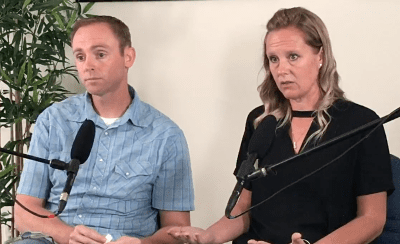
 Join us as we begin a new series on instances where the LDS Church protects alleged abusers instead of advocating for their victims.
Trigger warning: This interview discusses sexual assault. Please practice self care, and use discretion regarding who else listens in.
In Part 1 of this interview, Jared shares how he was allegedly sexually abused as a young boy by his uncle and how these experiences formed the basis for his most vivid memories. Jared also talks about the guilt and shame he carried from those experiences throughout his youth and through his LDS mission. As Jared progresses through life, he feels he has forgiven his uncle and was ready to move on, until his uncle was called as a bishop and given stewardship over a ward, including children. Feeling pressure to say something, Jared finally told his wife Juli of the abuse he suffered decades earlier.
In Part 2 of this interview, Jared and Juli discuss multiple meetings and interactions with LDS Church leaders including multiple stake presidents and bishops, and a private meeting with Elder Steven O. Laing of the Seventy (recorded by Jared and Juli and presented as Part 3 of this interview) to warn them of his uncle’s alleged history of abuse. During this meeting, both Jared and Juli were still true believing members, but now regard the inaction taken by their priesthood leaders and instead focusing on their personal faith as a major tipping point for their testimonies. As of today, Jared’s uncle remains bishop in a northern Utah ward.
Notes/Links mentioned in this interview:
- Bill Reel’s special podcast episode on Elder Cook’s Church History fireside
- KUTV News coverage of this story
- Mormon Mental Health podcast interview on this topic
- How to reach Natasha Helfer Parker, a licensed marriage and family therapist and certified sex therapist
- Mormon Newsroom statement on “How the Church Approaches Abuse“
Episode Transcript
Host: John Dehlin · Guests: Jared Egley, Juli Egley
This transcript is machine-generated and lightly edited for readability. The audio is authoritative. Please excuse occasional errors in names and spelling.
Introduction and Episode Overview
Part 1 of 3 · Ep. 991
Jared Egley [00:00:11] Your mom and me, we've seen this life with eyes that only see in black and white.
John Dehlin [00:00:21] Mormon Stories is a production of the Open Stories foundation and relies solely upon the support of people like you, its listeners. To help keep the podcast alive or to become a member of the community, Please become a monthly subscriber by visiting MormonStories.org and clicking on the Donate button on the right side of the page under Support. All contributions to Mormon Stories are completely tax deductible in the United States and go towards producing the podcast and building communities and programs of support for Mormons like you. Thanks for your support.
Jared Egley [00:01:03] Tune me out if you must I know you've heard enough But I sing this song just because I hope you'll be wiser than your daddy was I hope you'll be wiser than your dad
John Dehlin [00:01:27] hello everyone and welcome to another edition of Mormon Stories Podcast. John I'm your host, John Dehlin. It is October 2, 2018 and we are very excited to be broadcasting live to you today. For those of you on Facebook, live from Salt Lake City, Utah in the Mormon Story Studios today we have a really sobering story. So I think I want to begin just with some trigger warnings. Today we are going to be talking about sexual abuse with kind of an overriding theme of how the Mormon Church in 2018 continues to cover up and protect their abusers at the expense of the abused. So that's the theme. We plan to do a multi interview series on this topic just like we did kind of the Losing the Lamanites series and the Inappropriate Bishop interview series. So if any of you are interested and willing to come on Mormon Stories on Video and tell your stories about how you were the victim of abuse and the Church covered it up and protected the abuser at your expense. Our intent is not to embarrass or shame the church or even less to embarrass or shame perpetrators. It's to help fix a system that systematically is again harming abuse victims by focusing on sort of its own legal concerns, its own reputation concerns, and its own leadership at the expense of the abused. So thank you for joining us today. We have in studio Jared and Julie Egli. They live in Idaho, is that right? And the story is kind of harrowing because it involves Jared's uncle. Jared will be telling us a story about how he was abused as a 6 or 7 year old by his uncle when the uncle was around 18, 17, 18 and lately recently within how many years ago.
Jared Egley [00:03:41] He's been a bishop for three years,
John Dehlin [00:03:43] about three years ago his brother, his uncle, was called as a bishop, to Jared's knowledge, having never confessed the sexual abuse or received any punishment for it. Jared and Julie kind of did a lot of due diligence to let the bishop, the stake president, and even a Mormon general authority know about the abuse so that this could be handled quietly and let's just say diplomatically. And it appears as though this was completely bungled by the Church. And so the only reason they're coming out now is because they feel like the way the church has handled this is unacceptable. And so because the way they handle it is so unacceptable, they want the church to handle these things more appropriately. Is that true?
Jared Egley [00:04:43] Correct.
John Dehlin [00:04:44] So that's kind of the teaser or the. The abstract of what story we're about to hear today. It's somber stuff, it's sobering stuff, Trigger warnings. Please practice self care. Please know that we're going to be talking about some heavy things, even some graphic things. And so if you need to turn it off or monitor who's in the room, practice self care. Take it in increments, whatever it is you need to do to practice self care, Please know ahead of time that we're going to be talking about heavy stuff. So without any further ado, Jared and Julie Egli, thank you so much for coming to our studios. Thanks for joining us on Mormon Stories.
Jared Egley [00:05:25] Thanks for having us, John. We appreciate it.
Juli Egley [00:05:27] Yeah, thank you.
John Dehlin [00:05:29] All right, so is there any disclaimer or intro you want to sort of add to supplement what I just said before we dive into your stories?
Jared Egley [00:05:38] No, none that I can think of.
John Dehlin [00:05:41] No.
Juli Egley [00:05:41] Okay, we're good.
John Dehlin [00:05:44] Okay, so before we talk at all about the abuse, let's just establish a little bit about your backgrounds as Mormons so that we can then just sort of know from what background and point of view you guys are telling the story now. Is that okay?
Jared Egley [00:06:03] Sure.
Juli Egley [00:06:03] Perfect.
Jared and Juli's Background and Faith History
John Dehlin [00:06:04] Okay, so, Jared, let's start with you. Let's. We won't do a long time treatment of your background, but just give us kind of the bullet points of your history and background of the church and what the church has meant to you prior to deciding that you wanted to speak openly about these issues.
Jared Egley [00:06:22] Sure. I was born and raised lds, fifth generation. My ancestors came from Switzerland and we currently live on the farm that my great, great grandfather homesteaded in the 1880s.
John Dehlin [00:06:38] What was his last name?
Jared Egley [00:06:39] Egley.
John Dehlin [00:06:39] Okay.
Juli Egley [00:06:40] Yeah.
John Dehlin [00:06:40] Oh, wow.
Jared Egley [00:06:40] Yeah. So same last name came from Switzerland. Every generation of the Eglie family has been active LDS members.
John Dehlin [00:06:50] Where's that farm? Exactly.
Jared Egley [00:06:51] It's in southeast Idaho, just north of Preston.
Juli Egley [00:06:54] Okay.
Jared Egley [00:06:54] Yeah.
John Dehlin [00:06:55] So around Preston Franklin.
Juli Egley [00:06:56] Yeah.
John Dehlin [00:06:56] Okay.
Jared Egley [00:06:57] Yeah. Preston is the closest city.
John Dehlin [00:06:59] Okay. What high school is in that area?
Jared Egley [00:07:01] Preston High.
John Dehlin [00:07:01] Okay.
Jared Egley [00:07:02] Home of Napoleon Dynamite.
Juli Egley [00:07:04] Yeah.
John Dehlin [00:07:04] See? Did you know Jared Hess at all?
Jared Egley [00:07:06] I did.
John Dehlin [00:07:06] You knew him?
Jared Egley [00:07:07] Yeah. In fact, we were in Young Men's together.
John Dehlin [00:07:09] Oh, wow.
Jared Egley [00:07:10] Yeah.
John Dehlin [00:07:10] Jared's a friend of mine.
Jared Egley [00:07:12] Yep. I'll.
John Dehlin [00:07:12] I'll make sure he knows.
Jared Egley [00:07:13] We were in the Riverdale ward.
John Dehlin [00:07:15] Okay.
Jared Egley [00:07:15] Together.
John Dehlin [00:07:16] Okay.
Juli Egley [00:07:16] Yep.
John Dehlin [00:07:17] So you know Jared and his brothers?
Jared Egley [00:07:18] I haven't talked to him since I was in Young Men, so I don't know him that well, but we were in the same ward at one point.
John Dehlin [00:07:24] Okay.
Jared Egley [00:07:25] Yep.
John Dehlin [00:07:26] All right. So that's so great great grandfather.
Jared Egley [00:07:29] Is that great great grandfather any idea
John Dehlin [00:07:31] if he was a polygamist?
Jared Egley [00:07:33] He was not.
John Dehlin [00:07:34] Okay, so that's interesting.
Jared Egley [00:07:37] There is some family history there that we question whether he was or not, but. No, none of the Eglis were polygamists
John Dehlin [00:07:43] that you're aware of.
Jared Egley [00:07:44] There was some divorce and some marrying of some neighbors and stuff like that. That doesn't make a lot of sense, but yeah.
John Dehlin [00:07:49] Okay.
Jared Egley [00:07:50] Not polygamists, to my knowledge.
John Dehlin [00:07:53] So anything you want to say about your background before you talk about you, like, your ancestors or anything like that?
Jared Egley [00:07:58] No, I'm good with that.
John Dehlin [00:07:59] Okay. Just farmers.
Jared Egley [00:08:01] Farmers from Switzerland that came over and every gen. I'm the first generation that's not been a full time farmer.
John Dehlin [00:08:08] And what farming was it? What type of farming? Was it milk? Was it dairy? Was it potatoes?
Jared Egley [00:08:14] Beef? Cattle and crops. We. Right now we run a large alfalfa farm.
John Dehlin [00:08:19] Okay.
Juli Egley [00:08:19] Yeah.
John Dehlin [00:08:20] Okay. So your upbringing in the church? Just at a high level.
Jared Egley [00:08:24] We were active members of the church. I always remember going to church. We, you know, that was what we did. I don't know that we regularly had family home evening and scripture study, but we were always active in the church as long as I can remember. Our family became a lot more active when I was in middle school and high school years and my dad was called into a bishopric about the time I left on my mission and has been either in a bishopric or a bishop or a high counselor for the last 25 years. So we have a very active family, and I was always very active. Served a mission when I was 19, went to Montana, all the way from Idaho. Came back, went to byu, got married in the Salt Lake Temple, and we've been active Taiping members until April. This last April.
John Dehlin [00:09:18] So how many years is that?
Jared Egley [00:09:20] Would have been 40. Well, I was 40, turned 42 in April so.
John Dehlin [00:09:25] So how many of those 42 years were you. Would you have considered yourself an orthodox believing Mormon?
Jared Egley [00:09:33] I'm going to say 39 or 40.
John Dehlin [00:09:35] So almost four decades as an orthodox.
Jared Egley [00:09:38] Correct.
John Dehlin [00:09:39] Believing, active Mormon.
Juli Egley [00:09:40] Correct.
John Dehlin [00:09:41] And how would you generally characterize your experiences in the church and relationships in the church?
Jared Egley [00:09:47] Good.
John Dehlin [00:09:48] Not talking about the abuse or the way it was handled.
Jared Egley [00:09:51] I loved the church. I mean, every decision that I made was based upon principles that the Church taught. And I love the church. I believed it and it brought meaning to my life. It brought answers to my life. And I had no reason to not believe what I was taught. I had questions like everybody else. You know, I have stuff for my mission about anachronisms in the Book of Mormon and historicity and stuff like that, but none of that stuff ever caused me to question my faith or trust in the. In the church.
John Dehlin [00:10:22] You shelled that stuff?
Jared Egley [00:10:23] Yeah.
John Dehlin [00:10:24] How about church service? Did you serve in callings throughout those four decades?
Jared Egley [00:10:29] Yeah.
John Dehlin [00:10:29] After your mission?
Jared Egley [00:10:30] Yeah. I've served in elders quorum presidencies for a number of years. I'm still currently the young in the young men's presidency in our ward.
John Dehlin [00:10:37] Whoa.
Jared Egley [00:10:39] You can ask my bishop why I've not been released. I've asked to be released, but I'm still.
John Dehlin [00:10:43] So you're currently.
Jared Egley [00:10:44] Currently in.
John Dehlin [00:10:44] You have a calling. You currently in your ward.
Jared Egley [00:10:47] I. A calling. Okay. I'm the young men's secretary currently.
John Dehlin [00:10:50] Okay.
Jared Egley [00:10:50] I've been to church since April, but I'm still there.
John Dehlin [00:10:52] Okay.
Jared Egley [00:10:53] Yeah.
John Dehlin [00:10:53] But for 40 years, you were active and believed served.
Jared Egley [00:10:56] Never said no to a calling. Okay.
Juli Egley [00:10:59] Yeah.
Jared Egley [00:10:59] All in.
John Dehlin [00:11:01] Okay. And how many. I guess we'll talk to Julie in a second. But Mary, in the temple.
Jared Egley [00:11:08] Sure.
John Dehlin [00:11:09] How many kids you have?
Jared Egley [00:11:10] Kids?
John Dehlin [00:11:10] Four. Four kids.
Jared Egley [00:11:11] Four kids.
John Dehlin [00:11:11] Okay. All right. Anything else you want to say about your Mormon upbringing?
Jared Egley [00:11:15] No, just that we were. We were absolutely active members of the church and it meant the world to us.
John Dehlin [00:11:21] Okay. Julie,
Juli Egley [00:11:28] I have some. I do have polygamy in my background. My great. Great. One of the greats was John Pack.
John Dehlin [00:11:35] Wait just one second. Jared, are you feeling something right now? I'm just sensing you might be feeling a little emotional, but. You all right?
Jared Egley [00:11:41] Yeah, I'm good.
John Dehlin [00:11:42] Okay.
Jared Egley [00:11:43] All right.
John Dehlin [00:11:43] Julie?
Juli Egley [00:11:43] Yeah. So, yeah, I have polygamy. I'm sixth generation. All four grand. All my parents both set six generations back. My parents both come. I have. John Pack was an ancestor and he had, I think five wives. He was on the. His name's on the monument. He was with Brigham Young's party When they came to Salt Lake. So my parents were both raised very active. Their parents were both temple workers. Lots of family history. I one day traced a family history line all the way back to Adam. I haven't since found it, but just clicking, yeah, there he was. Yeah. So my parents were both very active members. They both got married young. My early years in the church, my mom was the perfect Mormon mother. She was the bishop's daughter. You know, we did everything right. We had family, home evening. My dad worked away from home a lot that stressed their marriage. They ended up.
John Dehlin [00:12:50] What city was this in again?
Juli Egley [00:12:52] I grew up in Colville, Utah, A little tiny town outside of Park City, Morgan area.
John Dehlin [00:12:58] Okay.
Juli Egley [00:13:00] My dad ended up cheating on my mom. My mom went to her bishop for counsel and was told she had a greater sin because she couldn't forgive my dad. That kind of strained her relationship to the church. So my parents ended up getting divorced. We still went to church, but we weren't forced to go to church. My mom and dad tried to make it work for us the best they could. We stayed in the same house, and they would take turns because my dad worked away from home. When he was home, he would be with us. When he was gone, my mom would come back. So I was kind of unsupervised as a teenager at times, but I still was a good kid. I went to girls camp, graduated from seminary, didn't go every Sunday. But I still believed was still on the Mormon path. Wasn't perfect by any means. Graduated high school, went to college. There I met Jared.
John Dehlin [00:14:00] So which college?
Juli Egley [00:14:02] I went to the good school in Provo. UVSC at the time. Uvu.
John Dehlin [00:14:07] I went to the Wolverines.
Juli Egley [00:14:08] Yes.
Jared Egley [00:14:09] The one that people that can't get into BYU go to.
Juli Egley [00:14:12] I didn't even apply to byu.
John Dehlin [00:14:14] Oh, no digs? No digs on Mormon stories?
Juli Egley [00:14:17] No, no, no, no. Yeah. We were in Provo, Happy Valley. So we met. Do you want to know the story of how we met? Does that matter? Just. We met, dated for about a year, got married in the temple. He was. I graduated from nursing school about six months after we got married. Then we moved to Vegas. Then we moved to Preston. Then we moved to Houston for Jared's college career. We lived in the Woodlands, Texas, for about six and a half years. Jared worked at Continental Express. We had three kids, lived the dream. We were both in presidencies.
John Dehlin [00:15:02] So you served in colleagues?
Juli Egley [00:15:03] Yeah, yeah. I think I was the secretary of every organization. Jared was in Elders Quorum because he had a truck and could help people Move.
John Dehlin [00:15:11] So were you faithful when you got married? Did you believe?
Juli Egley [00:15:15] Yes.
John Dehlin [00:15:15] What was your vision of your marriage and your family? Church wise.
Juli Egley [00:15:20] So my mom actually was disfellowshipped from the church and we chose to get married in the temple. She was not at our wedding, which is a very hard thing for me now at the time I feel really bad because I felt like if she wanted to be there, she would have been there. But she had the, she's amazing. She had the integrity that she wouldn't lie just to be there. She was just outside and felt like she was part of it and supportive completely. But yeah, I basically chose the church over my family. So I was all in. It's what you do, it's where you go.
John Dehlin [00:16:00] What about your dad, was he at your wedding?
Juli Egley [00:16:01] He was there, yeah, he was there. So yeah, you, you choose the Mormon path and you be the Mormon mom and the Mormon wife and serve and love and I mean I was a missionary till, you know, I made non member friends out in the mission field and you know, tried to convert them and just lived the dream. We had perfect life. Jared got a job with Delta, we moved back to what we felt was Zion, I guess and moved back to Idaho, had another child, so we have four kids now. We lived in Preston for about five years and then we moved up to the farm where Jared's dad farms and kind of helped do that. That brought us up to. Yeah, current day.
John Dehlin [00:17:02] Okay, so as far as your faith goes, you know, prior to this sort of stuff, where was your testimony? Where was your faith? How did you feel about the church?
Juli Egley [00:17:15] I knew it, I knew it. I believed it. I, I mean I was the. I actually got called to be primary president the same time I served in primary in our ward in Mint Creek. And since the time we moved up there and then I got called to be primary president about the same time Jared told me about the abuse and then that's where it got tricky. But up to that point we went to church every Sunday. We weren't great at having family home evening. We spent a lot of time together as a family. But Jared's schedule is not your typical 9 to 5. So when he was home we would do family events. It wasn't always on Monday, but we taught the kids the gospel we believed, we had family prayer. We weren't the best at reading scriptures because I'm not a morning person, but we, we were all in.
John Dehlin [00:18:08] And, and Jared, you're a pilot for do you want to say who or do you not want to Say who? You're a commercial airline pilot?
Jared Egley [00:18:15] I'm a commercial airline pilot. Let's leave it at that.
John Dehlin [00:18:17] Okay. And you do international flights, so you fly?
Jared Egley [00:18:20] Yeah, I mostly do domestic flights by choice, but.
John Dehlin [00:18:24] But you have flown internationally? Big, big jets.
Jared Egley [00:18:27] Correct.
John Dehlin [00:18:28] All right. Okay. And have you worked at all outside the home?
Juli Egley [00:18:31] Yes, I actually was a nurse, a registered nurse, and I worked in labor and delivery, so. And that's when we were in Texas. I would work when he was home. He would take care of the kids while I worked, and we worked our schedules around each other. Then when we moved back, we had our fourth child. I continued to work for about a year and a half, and then it got to the point where it was easier for him to go to work and I just worked part time, so then I got to stay home.
John Dehlin [00:18:56] All right, well, so I guess to summarize, it sounds like for four decades both of you were faithful, orthodox Mormons, committed to the church. And as I understand it, from what background I've heard, there's no motive to hurt the church or to attack the church. This, this all kind of blindsided you in terms of your faith. Is that right? This whole experience?
Juli Egley [00:19:20] Yes.
Jared Egley [00:19:21] Correct.
John Dehlin [00:19:21] Okay. All right, well, let's. If it's okay, let's jump to the story. Sure. How do you want to, how do you want to start telling us kind of what, what happened to you when you were. When you're a child?
Jared Discloses Childhood Sexual Abuse
Jared Egley [00:19:35] Well, I guess I could just start when the abuse occurred. You know, everybody's always asked what your earliest childhood memories are. That's a common question that people ask in group settings. And you know, my entire life, when that question would come up, I remembered abuse that I experienced when I was a child. And that abuse would occur in my grandparents home when we would go to visit my grandparents. I had an uncle that was 12 years older than I was and he had some tractors that were toy tractors that of course a six year old would love to play with. And I. And I always liked to go to grandma and grandpa's and play with those tractors. And he kept those tractors in his room. And I remember that I would go to his room and in order for me to play with those tractors, I would have to perform oral sex on my uncle. And I vividly remember that. It's something that I've always remembered. And you know, it's what happened. I don't know why I allowed it to happen, but I remember that happening. And then, you know, I would watch him masturbate into a garbage can and Those are vivid memories. Like I can remember those as clearly as any of my childhood memories that I have. I've always remembered them. It happened on numerous occasions. I can remember, I think three occasions where that happened that are separate. I don't know if it happened more than that and I don't remember if it happened over a one month period or a six month period. Those are details that I don't remember. And then when that abuse was over, he would tell me that if I wanted to play with those tractors again, that I wouldn't tell anybody and that if I did tell anybody that I would be in a lot of trouble because what I had done was wrong and I knew that what I had done was wrong. I felt, I remember the feelings of feeling that that was not something that was right. So I did. As a child, I feared that if I told anybody that I would be in trouble and that I wouldn't get to play with those tractors again, which to a six year old that's like the most important thing, you know? So I didn't tell anybody. The abuse did eventually stop. Like I said, I don't know how long it occurred. I don't know why it stopped. He did go on a mission, so it would have had to have stopped maybe because he went on his mission. I don't know those details. No adults were ever made aware of the abuse and he never did tell anybody or take care of that abuse. So I don't. He would be the only one that would know those details. I don't know those details. So the abuse stopped and I continued to live my life.
Impact of Abuse on a Child's Development
John Dehlin [00:22:23] Let me ask you, and I don't even know if you're able to remember or conceptualize this, but can you talk at all about what that type of abuse does to a child? Can you even tease that out?
Jared Egley [00:22:39] I just remember those details being very vivid. I mean, there are details, like I have other childhood memories that you can kind of remember. Like I have a childhood. I threw a rock at a kid in kindergarten and I thought I was going to get kicked out of school. So instead of going to see the principal, I just walked home and the whole town was looking for me. And I remember that, but not very clearly, but I remember the abuse vividly, like it's something that I've never forgotten.
John Dehlin [00:23:08] And this some would ask, well, was this something that was recovered memory that some therapist kind of led you to remember?
Jared Egley [00:23:15] I've never talked to a therapist in my life ever.
John Dehlin [00:23:18] Okay.
Jared Egley [00:23:19] And I've always remembered those things. Like I said Whenever the conversation comes up in a group setting of. What are your earliest childhood memories? Those are mine. And obviously I didn't tell anybody that those were my memories, but I've always had them as long as I can remember.
John Dehlin [00:23:34] And is there anything you can say to how that affects a child or a boy or even a. A youth, a young male, to sort of have experience that and then to. To grow up with those memories having never told anybody? Is it.
Jared Egley [00:23:54] Sure.
John Dehlin [00:23:54] Is it harmful? Is it.
Jared Egley [00:23:55] Oh, it was very harmful because it's something that you. For, at least for me, I was so afraid. I remember being afraid as a child that somebody would find out and I would be in trouble. So I wasn't going to tell any. There was no way I was going to tell anybody. I do remember having a conversation with. It must have. We've talked about this with my parents, because I remember having a conversation in a car. I know that most children never, could never tell adults that they are abused. It usually, if they do find out, it's by accident that a child says something. I do remember a memory in a car asking somebody if. When I got big, if somebody did the things that I did to my uncle, if I could have the same things happen. And my parents don't remember that. So I don't know if that's a valid memory or not, but I didn't, you know, I never told anybody because I was afraid that I would be in trouble. And then as you get older, you know, I remember as I got older, early teenage years, I didn't want my friends to know what I'd experienced. And I honestly, in my mind, had questioned whether or not I was gay because I had done things that were considered homosexual acts. Did that make me. I wasn't attracted to men, but I had those questions, and it was a concern to me as an early. As an early adolescent youth. And, you know, I like other people, and I will talk about that. I had masturbated as a young teenage kid, and I thought the reason why I did those things was because of the abuse. And I thought that, you know, listening to church leaders that those, you know, only people that are broken do those things, and only people, you know, those are sins and those are bad. And I thought that the reason why I have that flaw in my character is because I was abused. And maybe that's the way I was because of that abuse. But I didn't want anybody to find out because I didn't want to be embarrassed by those things. So Bishop's interviews to Me, as an early teenager, were. Were miserable because I thought that they were, you know, these men that could see through your soul and could use discernment and know everything about you. And I wasn't going to admit to them that I had masturbated because I was certain that they would find out that I had been abused, and I didn't want them. So I dreaded bishop's interviews. And they were miserable, and I went in there and lied my way through them as an early teenager because I, at all costs, did not want them to know of the abuse that I experienced. So I did everything I could to avoid bishops interviews. I despised them. I was asked by bishops if I masturbated, and I just lied and said, no, they didn't. I never had them dig any deeper than that, but I never admitted that I had done those things for them to dig deeper into those interviews. But they were. I remember them being miserable interviews. One of the things that I think comes into my life is I've always been uncomfortable around priesthood leaders, maybe because of that. So, you know, that's how I kind of lived my life. As I grew older, I realized that I didn't do anything wrong. I wouldn't be in trouble, but I didn't want to confess or let anybody know because I was embarrassed about what had happened. So I, you know.
John Dehlin [00:27:12] So it sounds like some of the harm is you, basically, from a very young age, you're feeling like you did something wrong, feeling like you have to keep something secret, feeling like if someone found out, you could get in trouble. And then you're carrying that year after year after year.
Jared Egley [00:27:29] Right.
John Dehlin [00:27:30] And then as you start to mature into, you know, into adolescence, the guilt and the shame and then the association of that with other things that are basically normal, it just has you carrying a burden and a sense of guilt and shame for a decade or decades.
Jared Egley [00:27:49] Correct.
John Dehlin [00:27:49] Feeling like you can't talk to anybody, and then teaching you to lie because you are scared about what happens. If you're honest, then you're sort of, like, nurtured or. Or corralled into becoming a liar or. Or someone who lies, not a liar, someone who lies, then you've got that extra burden.
Jared Egley [00:28:06] Well, I always felt that way. I felt like a liar in bishop's interviews, because I was.
John Dehlin [00:28:10] And that makes you feel just worse about yourself.
Jared Egley [00:28:12] But it was. It was better for me to be a liar than to let them know at that point in my life what had. What had happened.
John Dehlin [00:28:19] Yeah. So I guess if we're summarizing Some of the effects on a child and a youth, it's just carrying a lot of guilt and shame and sadness and secrecy that you shouldn't have to carry. Growing up is hard enough.
Jared Egley [00:28:33] Right.
John Dehlin [00:28:34] And then having it affect how you think of yourself in your own sexual development, causing a lot of confusion and noise when it's hard enough to just go through puberty without having to carry that baggage.
Jared Egley [00:28:49] And as a victim of that, I'm not going to say that only victims understand why victims don't come forward immediately, but I know why I didn't. I have valid reasons for not bringing that up.
John Dehlin [00:29:04] You were worried. What were they? Summarize, where did you get in trouble?
Jared Egley [00:29:09] Get in trouble and guilt, shame. I didn't, you know. If my friends as a teenager found out what I had done, would they
John Dehlin [00:29:14] make fun of you?
Jared Egley [00:29:14] Oh yeah, absolutely.
John Dehlin [00:29:15] They stigmatize you.
Jared Egley [00:29:16] Correct, Right, yeah.
Juli Egley [00:29:19] Yeah.
John Dehlin [00:29:20] So that's, that's heavy stuff to have to carry.
Jared Egley [00:29:23] Yeah.
John Dehlin [00:29:24] Did it, did it, did you just internalize it or did it come out in unhealthy ways as.
Jared Egley [00:29:31] I internalized it very well. In fact, when I was 15 years old, I broke my back on a motorcycle. And that was a pivotal point in my life where things changed for me because I was given a very small chance to walk again as a 15 year old kid. And I matured very, very quickly. I was told by numerous people around me that was a miracle that had happened and that the priesthood had healed me. And because I did, I walked out of a hospital two months after I was told I probably wouldn't walk out of a hospital. And I got a patriarchal blessing shortly after that. Said my life had been preserved for a purpose. And at that point in my life, I changed to be somebody that was more. I doubled down on being good because I felt like God had protected me and I owed him something. And so I doubled down on being good at that point in my life. And I was a good kid from that point on. You know, I didn't do things that were not, you know, I didn't sin much as a kid after that. And I became sin. Yeah, right, exactly. You know, but I became more faithful and doubled down on being good. And that, that is how I internalized that was, I'm going to beat this by being, being better. And so I did that as a teenager. I decided, you know, I finished high school and I turned in my mission papers to go on a mission I think on a Tuesday or Wednesday. And that weekend I broke my back a second time on a Snowmobile. So by time, I was 19 years old, I have broken my back twice. I have two sets of metal rods in my back. And at that point, I was being told, there's a reason for this. But I was mad because I thought, I've done everything in the last four years to be good, and now I can't go on a mission. Like I was gonna go, and now I can't go. And so the next few months of that portion of my life was very difficult. I didn't know. I did question whether or not that happened because I had not confessed of some of the things that I'd done prior to age 15, because I didn't want to. And that was always in the back of my mind. But I still never did confess those things. And the doctor, that was my doctor at that point in time, she was not a member of the church. She said she would not sign the medical release for me to go on a mission for three years because she knew that I would be sleeping on a dirt floor, walking through a jungle, and with my back injuries. She said that that's something that couldn't be done. So I decided I was going to give up on that and go to school. My mom and my dad were upset about that. They had a stake conference where I believe it was Elder Fowler, who was in the first quorum of the 70 at the time, came to that stake conference. They drugged me up to talk to him after the stake conference. And he asked what was going on. And I told him. I said I was going to go on a mission. I broke my back. I can't get the medical release signed. I'm just going to give up and go to college. And I still remember the feelings of the spiritual feeling that Mormons talk about. He told me, he says, you don't go to school, the Lord will make it possible for you to go on a mission. And within a week, my medical papers were signed to go on a mission. Now, we had a bishop, or he wasn't the bishop at the time, but he was in our ward who was a doctor. He took the papers and signed them. And I'm almost certain now, as I look back, that the asterisk at the bottom was, this kid can only go somewhere where there's good medical care. He has to be somewhere where he has a normal house and he can't have a bike. And I was sent to Montana. The first area that I went into had was in Great Falls. It was in the city. And the companion that I got was really excited because he had been a walking, biking area, and we had a car.
John Dehlin [00:33:17] So you had cars and Stateside.
Jared Egley [00:33:19] Cars stateside. I had to go to a doctor in Montana every month and get X rays and send them, and it worked out great. And I served a great mission and had a wonderful, wonderful mission.
John Dehlin [00:33:28] That's just the church looking out for you and letting you serve, but serving in a way that would be medical
Jared Egley [00:33:33] healthy for you, which looking back, that was. I'm glad they did that because it worked well for me.
John Dehlin [00:33:37] Of course they frame it as divine intervention, but really it's just being respectful to your medical condition, and it worked great.
Jared Egley [00:33:44] So.
John Dehlin [00:33:45] Yeah.
Jared Egley [00:33:46] But on my mission, I had an experience about six months into my mission, and the experience that I had about six months into my mission was that I had not. You know, when you get asked that question, is there anything that you have not taken care of with priests or leaders that you should take care of? I had not taken care of some of those things that I had done early on because I didn't want the abuse to come out. And I confessed those to my mission president about six months in. And I told him I didn't confess the abuse, but I confessed that I had had problems as an early teenager with masturbation. I had never brought that up with anybody. And he was a great mission president. He ended up being an MTC mission president while I was at byu when I came home. He's instrumental in me getting into BYU to begin with because I wasn't smart enough. But he. But he did get me in. He looked at me and he says, did this happen, like, right before he came on your mission? I said, no. This was when I was. Before I was age 15. He's like, oh, well, not a problem. Don't worry about that. Just go out and go to work. So I did, but I left.
John Dehlin [00:34:43] And you were confessing masturbation correctly?
Jared Egley [00:34:45] That I hadn't confessed to anybody else prior. So I walked out of that zone conference knowing that I had confessed everything and was. Was good.
John Dehlin [00:34:56] And why didn't you feel safe by the time you're 19 or 20 or whatever to talk about the abuse?
Jared Egley [00:35:02] I don't know. I just. I don't. I can't answer that question. I don't know why. I just didn't want to talk about it.
John Dehlin [00:35:08] But you knew about the abuse.
Jared Egley [00:35:09] Oh, yeah.
John Dehlin [00:35:10] You would. It would have been, in fact, memory fresh in your mind. But you didn't feel safe talking about it?
Jared Egley [00:35:15] No. And that. That experience that I had when I confess those Things. I left that meeting with a understanding of the atonement that my uncle had been forgiven. Like I forgave him for the abuse that he subjected me to. And all of the burdens that had been on my shoulders growing up with that abuse, I felt those disappear. And it was no longer an issue for me. Like, I didn't need to internalize it. I didn't think about it. The. The heaviness and the burdens of that were gone. And I always believed that that was me feeling the power of the atonement, you know, those burdens being lifted and disappearing. And I. From that point on in my life, I finished my mission, I came home. I was comfortable being at weddings or family reunions with my uncle. I held no grudge. It was not an issue. Even though I had those memories, it was not an issue. And I had no intentions ever of ever bringing that up because it wasn't not a problem for me.
John Dehlin [00:36:19] Julie, anything you want to throw in here? Kind of as he's kind of shared the narrative relating to your marriage to him, your memories, anything you want to throw in? Just kind of up to the timeline.
Juli Egley [00:36:34] Yeah. No, I never would have imagined that Jared had suffered any kind of abuse. I mean, he and Lynn weren't. Or he and his uncle were not close, but they could be at a family event. You would never have sensed tension. You would never have sensed anything was a problem. He didn't seek him out, but it wasn't. It wasn't an issue.
John Dehlin [00:37:04] Sometimes victims of sexual abuse, it affects their sexual relations or sexuality in marriage. Did. Was that a side of. Is there anything you want to share about that?
Juli Egley [00:37:17] No.
Jared Egley [00:37:17] No. We talked to Natasha about that and it's not affected us at all that we know maybe we're not normal. I don't know. No.
John Dehlin [00:37:25] That's a shout out to Natasha. Hilford Park.
Jared Egley [00:37:27] A huge shout out.
John Dehlin [00:37:28] Who introduced this? The Eglies. To me. To me. She's interviewed them on Mormon mental health podcast, is that right?
Jared Egley [00:37:35] Correct.
John Dehlin [00:37:36] And check out Mormon mental health podcast. Natasha is a real pioneer in this.
Juli Egley [00:37:40] She's amazing.
John Dehlin [00:37:41] And so. Thanks.
Juli Egley [00:37:42] Super amazing. Yeah.
John Dehlin [00:37:43] Okay. So, so, so. And so things were. It was a good marriage.
Juli Egley [00:37:49] We were good.
John Dehlin [00:37:50] You didn't know there was a problem?
Juli Egley [00:37:51] Yeah. No. Okay.
Jared Egley [00:37:52] Yeah.
John Dehlin [00:37:52] And you're thriving your career. You become a commercial airline pilot. That's a top notch job.
Juli Egley [00:37:58] Yeah.
Jared Egley [00:37:58] You know, very successful in my career endeavors and you know, we had great kids and, and life just, you know, moved on very, very quickly until.
John Dehlin [00:38:09] So someone would say, like, leave it Then, right, like you're healthy, you're happy, you're in a good marriage, you're having a healthy sex life, you know, your sexual identity. By this point, you've forgiven your uncle. It's all, you know, he's moved on, you've moved on. So like, I mean, obviously that's, that's one thing that comes to mind. So how in the, how in the world could this come back up? And why, what happened?
The Uncle Is Called as Bishop
Jared Egley [00:38:34] Well, and that's what I, you know, I had no intentions of ever bringing this up and my uncle around. I don't remember the exact years, but he, he was called, I believe, first to be on a high council. And it didn't bother me that bad, but I scratched my head a little and thought, hmm, you know, I'm pretty sure he's never confessed or taken care of what he did, because had he done so, I probably would have heard something from somebody. But I don't know. I would hope, but I didn't know. So I just, you know, in the back of my mind I had questions about that, but it didn't bother me that bad. He got sick and actually got bladder cancer and struggled. He's a cancer survivor and he overcame that and then was called into a bishopric. And I don't know the exact timeline of this. He may have been in a bishopric before he was sick and then they released him when he got sick. But when he got better from cancer three years ago in the summer of 2015, he was called to be a bishop. And I remember being at my parents house and they were all excited and says, oh, your uncle Lynn's been called to be a bishop. All of my, my grandfather had four sons. All four had now been called to be bishops at one point in time in their life. And that was a very proud moment in our Mormon family was all of the sons of grandpa have now been bishops. And that day to me was something in my mind clicked and said, no, how does that work? Like, that can't work for, for me. Like, you know, I, I was not comfortable with that. And so I started to question stuff. Initially, I was really quickly, I don't,
John Dehlin [00:40:19] like someone might, a faithful orthodox Mormon might immediately say the atonement. Like, why didn't in your mind, you just go, oh, I've forgiven him. I'm sure the Lord's forgiven him. The Lord in his wisdom, there's discernment with the calling of leaders. Clearly the Lord has forgiven him. It's taken care of. And his calling's inspired. What kept you from just sort of like drawing that conclusion and moving on?
Jared Egley [00:40:42] I don't know, because I tried to draw that conclusion. I tried to draw the conclusion. But in my mind, the conclusion was the way I understand the atonement to work is unless you confess and forsake and make your wrongs right and restitution, which would have involved you, which would
John Dehlin [00:40:56] have involved at least an apology.
Jared Egley [00:40:58] Correct? So he's been living his life. When somebody asks him the question, is there anything that you have done in your life you have not taken care of with priesthood leaders? I knew that clearly there was something that he had done that he had not taken care of with priesthood leaders. And that bothered me. I thought, how can revelation work to call this man into that position when clearly he's probably not worthy to be called into that position? And that's the road that I, that I went down. And so I actually started to get on the Internet, get copies of handbooks on the Internet to see what the handbook said about how the church deals with abuse. Because I want to know, maybe it's ok, maybe he did go and confess it and maybe he did take care of it. And as I start to study those things, I realize that had he confessed it most likely would not be called as a bishop, but he's called as a bishop. So in my mind, I had to reconcile. Is he called by revelation? Did God call him into this position or did God not call him into this position? And I came to the conclusion in my mind that most likely he didn't call him into this position. That was my thoughts.
John Dehlin [00:42:06] And this is just something that I'll just jump in and say. We are raised to believe that callings are inspired of God as Mormons. But over the past several years, I've had many, many people come to me and tell me that, you know, their uncle or their brother or their dad or their husband was in an affair when they were called into the bishopric or b bishop or in a stake presidency or even a stake president, former sexual abusers, current and former abusers, current and former adulterers, current and former people engaging in business fraud. And you know, I don't mean to like attack Mormon doctrine or people's sacred beliefs, but this idea that every person who receives a calling, that it's inspired of God and is worthy, is a real. It's one, it's clearly not true, and two, it's very damaging because what it does is it enables people to be put in positions of trust. And then in those positions of trust and power it enables people like a Joseph Bishop to do something like sexually abuse a missionary in the mtc, as a mission president. And so we have to find a way to get rid of this belief that all callings are inspired, or it allows very dangerous people to have even more power and access to abuse others. I'm sorry for that detour, but that's
Jared Egley [00:43:33] exactly what I would say. And in my mind, from a victim's perspective, and I felt like I was, you know, God's going to reward him and call him to be a bishop, and he's going to get this position, which is a, you know, a position that some people in the church, you know, covet. And as a victim, how does that make a victim feel? Like God. God doesn't care about things that happen to you. As a victim, he's going to reward this perpetrator. And so I struggled with that for probably a year, trying to figure out what's going on here. Like, how does this work? Because does this. Is discernment real? I knew from early on as a kid in bishop's interviews that some of these guys don't have discernment because they clearly didn't discern that I was lying to them through a bishop's interview. And maybe there's no discernment in the way bishops are called. So I spent some time trying to figure out how this works. And then in that process, I ran across a podcast that you had done with the sex crime investigator from Arizona, I believe. I never heard of Mormon Stories podcast, but when I was googling, how does the LDS Church deal with sex abuse? That came up, and I listened to that, and I'm like. Because I thought that this was a very isolated, you know, in my naive Mormon mind was, this is a very rare isolated. This has got to be one of the only. This can't. This can't be a big problem. This is. This is just an isolated incident.
John Dehlin [00:44:58] That's the episode with Matt Long, by the way, for those who want to reference.
Jared Egley [00:45:01] Very, very good episode. There was another one that you did earlier with the woman Barbara. Barbara Peterson, maybe somebody. There was two of them that I found that I'd listened to. And those interviews, you know, opened up my eyes to this is this. Is. This happens more than just with me. And of course, that led me to start to question, well, if this. If this isn't what they say it is, maybe nothing else is either. And I very quickly went down the road that most people that are experiencing faith transitions go through. I knew a lot of those Issues before, very, very mildly. But as I started to research what else may not be right, you know, I very quickly went down that road of questioning my faith and questioning whether the church was what it claimed to be. And my life was a mess.
John Dehlin [00:45:54] Now, what year was this?
Jared Egley [00:45:55] This would have been 2005, summer of 2015 to summer of 2016.
John Dehlin [00:46:00] So two to three years ago, you're going through a full blown faith crisis.
Jared Egley [00:46:03] Yeah, by myself, you know, I'm at work, you know, Googling and listening to podcasts and trying to read stuff and ordering books, and she doesn't know that I'm doing any of this.
John Dehlin [00:46:14] What made you scared to tell her?
Jared Egley [00:46:20] Honestly, I don't know, because I knew that she would probably. I wasn't the type that thought that she would leave me.
John Dehlin [00:46:28] Why not?
Jared Egley [00:46:30] I don't know. I just trusted that she would. Would not. But I didn't want to tell anybody. Like, my dad was our bishop for part of that time. I just, I didn't. I didn't want anybody to know that I didn't believe, but I didn't believe, and that was an issue. And I got. I didn't want to be around anybody. Like, I would bid to work on Sunday, so I didn't have to go to church, and I would avoid family stuff if I could be alone. I didn't want to be around anybody, my wife, my kids, my family included. I just. It was miserable. And she knew something was going on. She didn't know what. And at that same time, I had a side business in North Dakota and I had a court case. I had to go up to Bismarck, I had to drive to Bismarck to a court hearing for this business that I had been running. And it was a 12 hour drive up, one hour appearance in court, drive back, and I just told her, I got to drive up. I'm gonna drive up, I'm gonna go to the drive back. I'm gonna make a quick trip out of it. She's like, I'm going with you. And I'm like, no, you're not. I'm driving by myself. I need 24 hours, you know, of alone time. I don't want. And I told her she couldn't come. And we got in probably almost one of the first fights we've ever been in in our marriage. And she dug her heels in and said, I'm going. And I said, I'm leaving without you. And I woke up early, I was going to leave without her, and she was ready.
Juli Egley [00:47:58] I got up early, she packed my stuff.
Juli's Perspective on Jared's Disclosure
John Dehlin [00:48:00] So Julie, tell us what's happening as an observer as he's going through this. What was it like for you?
Juli Egley [00:48:07] So we moved up to the family farm and I remember sitting in early society lesson and it was on trials. And I remember thinking in my head, you know, everyone's like, everyone has trials. They're all different. And I'm like, I don't. This is crazy and this is prideful, whatever. But I had no trials. We were happy. We had a great marriage, we have four amazing kids, we're financially successful, we're where we had planned to be. I'm like, maybe. So I convinced myself that's my trial, is to not have trials and not be prideful. So we start building a house, we get this side business. I start on some trials, I guess. But I noticed that Jared starts withdrawing. I think it's the stress of this business. He's farming more. He. Between his airline job and his farming job in the summer, I mean, he would work 18 hours a day, you know, six days a week, because you always took Sunday off. His stress loads through the roof. I assume he's, you know, over the top with this business, the house, the farm. I'm trying to make it as. Get it back to the way it used to be when we had no trials.
Jared Egley [00:49:22] And I used that stuff as an excuse when it would come up, as, you know, I used, I'm just busy, I don't have days off. And I used that as an excuse to cover what I was really going through.
John Dehlin [00:49:34] Overworking is a form of self medication.
Juli Egley [00:49:36] Yeah.
Jared Egley [00:49:36] And I definitely, definitely did that.
Juli Egley [00:49:39] Yeah. So he did that.
John Dehlin [00:49:40] Avoidance. An avoidance of dealing with issues.
Juli Egley [00:49:42] Yeah, he was withdrawing from. You know, he would usually always engage more with the kids and with me, and he just kind of wanted to be by himself. And so he's got this car ride coming up and I know something's. Something's up. And I was, I was going. And like he said, we. Like, it's crazy, but we never fought. I guess he just put up with my crazy ways and would let me get away with stuff. But we never fought. And that's the closest to we. I'm going, no, you're not.
John Dehlin [00:50:13] And what were you thinking and feeling?
Juli Egley [00:50:15] I didn't know. I just felt like something is going on and I don't know what. And I mean, I, you know, I really just thought he was stressed with the business, stressed with the house, stressed with the farm.
John Dehlin [00:50:30] But why go? Why did you want to go?
Juli Egley [00:50:32] Because I didn't want him to go by himself. I just was gonna force myself. What were you forced him to spend time with me.
John Dehlin [00:50:38] What were you worried?
Juli Egley [00:50:40] I don't know that I was worried about anything, but I just felt like if I could get him alone and cornered, maybe I could alleviate some of the stress, maybe because he used to talk to me all the time. You know, we'd talk about things, and he hadn't been talking to me. And I'm the talky, touchy feely one, and he's the I need my bubble one. And so I just knew. I'm going because something is going on.
John Dehlin [00:51:06] Okay, good for you. I like that image of you. Just. I'm going.
Juli Egley [00:51:10] I did.
Jared Egley [00:51:11] I was mad.
Juli Egley [00:51:11] I had my stuff packed. I got up. I think I got up at, like, 5 and got ready just in case. And he wakes up and I'm in the car.
John Dehlin [00:51:21] Literally?
Jared Egley [00:51:21] Yeah, literally. And I was mad.
John Dehlin [00:51:23] And so you were mad?
Jared Egley [00:51:25] I was mad.
John Dehlin [00:51:26] Why?
Jared Egley [00:51:27] Because I didn't want to go. I wanted to spend, you know, 12 hours in a car with nobody there to, you know, just. I just want to be alone. And so we drove until we were past Bozeman. So we drove for four hours. And honestly, silence was not a word said. Like, not. Not a word said. And I remember being on the road between Bozeman and Billings thinking, something's got to change. Like, I can't do this any longer. And so I told her, I said, I've got something to tell you. And she's like. I don't know what she was thinking. She's like, okay, you can tell. I remember her saying, you can tell me anything. Whatever it is, I will stay with you. And I, in my mind, thought that she might be thinking that I was having an affair with somebody or was cheating on her, was gonna want a divorce.
John Dehlin [00:52:22] What did you think?
Juli Egley [00:52:23] I don't remember thinking those things. I just knew something was not right.
John Dehlin [00:52:27] What made you say, you can tell me anything? I will leave you.
Juli Egley [00:52:32] Maybe that's my flaw. Maybe I would choose Jared over the Church no matter what, but I would.
John Dehlin [00:52:39] So that was your biggest fear that he had?
Juli Egley [00:52:42] I mean, no, I don't think it was. I didn't even really think the Church had anything to do with it. I just knew that Jared was the most important thing in my life. And no matter what or who or even an affair, I knew that I would try and work through it because he was the most important.
Jared Egley [00:53:06] And I knew that she had no idea. I mean, I knew that she. If I were to ask her to list a dozen things of what she thought was going on, that she would never guess in a million years what they were.
Juli Egley [00:53:23] Well, and he actually said to me, how good of a counselor are you? And I was like, what do you mean? I took some psychology classes. Like, where is this going?
Jared Egley [00:53:36] But I told her it was the hardest. It was the hardest thing that I've ever done in my entire life was to tell my wife that I had been abused as a child and that she. She was the first one that I'd ever told and that I didn't know what to do and that I didn't believe in the church anymore. And, you know, I just unloaded the whole mess on her for the next hour and a half or whatever in the car. And I didn't know. You know, I didn't know what to do. And that's. That's why I had to tell her. I'm like, I don't. I can't keep doing this, but I don't know what to do. And so she right off the bat, says, well, we've got to tell somebody. You know, somebody needs to know that this happened. And I said, no, I can't. That was, I believe, In September of 2016, I think, some. Somewhere around there. And I wasn't comfortable telling. You know, I. I didn't want to talk to my parents about it. I didn't want to talk to any priesthood leaders about it. I said, we need to just take our time and figure this out, because this is something that we need to make sure is handled so that everybody can. Everybody's lives can be as easy as possible because it's a mess. I knew it was a mess. I knew it was going to be a huge mess. I knew eventually we would have to tell somebody, but I wasn't ready then. And so we. At that point, it was great because I said, look, you've got to listen to these podcasts about how the church is dealing with sex abuse. And so I sent her those. And. And then I'm like, well, you've got to listen to these podcasts about this and about that. And so we were very quickly. I don't know if she was. I honestly, at that point, had pretty much determined in my life that I didn't believe that the church was what it claimed to be, but I figured that was still a good place to be. So we kind of went through that faith transition over the next year kind of together, trying to sort things out. She was called to be the prayer primary president, I think right before we left on that Trip and I was sitting there with the the bishopric member was, came to call her to be the primary president. And I'm sitting there in the, in the back of my mind screaming, no, don't say yes. But I knew she was going to say yes. So she said yes. And I'm like, great. Now I don't believe in my wife's the primary president and but we went through the next year kind of going down that faith crisis road, but knew that the bigger issue was what do we do about my uncle who's a bishop, who shouldn't be a bishop, you know, And I knew we had to tell somebody about it and I drugged my feet as long as I could because I didn't want to tell anybody about it because it was difficult and I knew that it was going to make our lives probably more difficult to bring that up. So we decided to tell our bishop in December of 2017.
John Dehlin [00:57:01] Let me pause before you do that. Okay. I'm going to just read a few comments from our listeners. We have a very large audience joining us, a couple hundred plus people joining us live. So we want to thank you guys for joining us. I'll just read a couple comments and then I'm going to ask the audience one thing before we continue. This is amazing. Thank you so much for sharing. Somebody just posted, this is a real tearjerker and it is so. Ivana writes, I just realized that it's not just the LDS Church admin covering up abuse. It's people in the church like my parents who never reported abuse from neighbors. Why? To not make waves. So she's basically saying one of the things that enables silence is just this fear of making waves, not wanting to hurt people, not wanting to hurt the church, not wanting to hurt the church's reputation, not wanting to cause problems. Thank you, Ivana. Jake writes, it can be so nerve wracking to share these things in private, let alone live on Facebook in front of hundreds of people. I'm grateful for the courage you both are showing right now and on behalf of my family, we support you 100%. So that's a little support from Jake. Thanks Jake. Curtis writes, that is exactly what happened to me in reference to the abuse. So you're not alone. Already people are coming out saying something similar has happened to them. Thanks Curtis, for being vulnerable. Victoria writes, I understand you. I was also abused as a child and these memories never change. We keep these secrets for so long, but eventually when we do speak out as an adult, it helps release a lot of the damaging issue that we carry with us. So she's saying it was very much a release for her to get this out and not keep it packed down. And we'll talk about whether that was your experience as well. But thanks, Victoria. Lisa writes, you have to wonder how it is that these men are able to move forward in life when the victims hold on to the things that happen to them through life. So when we think about your uncle, how did he just move on? How did he, what did, what did he do intellectually, psychologically, emotionally to just pretend that this never happened, or did he handle in other ways? We don't know. We would love to interview him. If he ends up watching this and with your permission, you know, that's an option that we have. If there are other abusers that want to come on Mormon stories and talk about how they do it, abuse from the point of an abuser, that would be a very sacred experience. But we would welcome abusers to come on and tell their side of the story if they're willing. Probably few will want to take us up on that. Lisa writes, no, sorry. Daniel writes, the vulnerability here is amazing and heartbreaking and beautiful. Thank you for sharing your story with us. So thanks, Daniel. Daniel's a great supporter. I just want to ask listeners a favorite. Right now we have a couple hundred people who are tuning in live. We are about to talk about the main thrust of this interview, which isn't to embarrass your uncle. It isn't to out him or shame him, although that's an inevitable product. But the purpose of this interview is to highlight how the church handles victims of abuse bureaucratically, administratively. And so I want to ask every listener who's willing right now to, to please go to this video stream and share it on your walls, if you're comfortable. And just say, I'm listening right now to an interview of a victim of sexual abuse whose perpetrator ended up as bishop. And the focus will be how the church handles abuse. And even if you are skeptical, the point is that someone is reporting abuse, someone else is a bishop. And it's an important thing to discuss how people who allege abuse are treated and how alleged perpetrators are handled. And it's going to involve a general authority, it involves a current bishop, and it involves people's lives. And this is during, right smack dab in the middle of the Kavanaugh hearings with the US Supreme Court and the MeToo movement after Harvey Weinstein and, you know, the United States and even the world is having this reckoning of how do we handle victims of abuse reporters, even years or decades after the abuse happened? How do we handle it? And it's not just Brett Kavanaugh. It's not just Dr. Ford. It's not just the U.S. supreme Court. It's Mormonism. It's Catholicism. It's Scientology. It's Jehovah's Witness. It's schools. It's whatever. And we all have to get comfortable talking about these issues and handling them in a better way. So I invite all of you listeners who are willing and who are vulnerable and who are in a position of privilege, willing to be vulnerable and who are in a position of privilege to please right now, or if you're listening after this has been live, if you're willing to share this interview on your walls and say, help team with us to learn about and talk about how to handle abuse, we can reach a lot more people that way because breaking the code of silence is part of how we improve and get better. So please share this right now on your walls, if you're willing. Let's see the live, active listeners increase to 3 or 400 if we can share it afterwards as well. And let's see if we can make a positive difference and help the Mormon Church and and all of us in all of our organizational stewardships learn to discuss openly these issues and to handle them better. Is that all right?
How the Church Handles Abuse Reports
Jared Egley [01:02:44] That's great.
John Dehlin [01:02:49] Thank you for joining us today on Mormon Stories. If you enjoyed this episode, please help us make more like it by becoming a monthly subscriber@mormonstories.org best sing this song.
Jared Egley [01:03:01] Just be I hope you'll be wiser than your daddy was.
John Dehlin [01:03:08] Wiser is a song written and performed by Mormon Stories listener Russell Ash, a message intended for his children to have love and kindness be their guiding star.
Part 2 of 3 · Ep. 992
Jared Egley [00:00:11] Your mom and me, we've seen this life with eyes that only see in black and white.
John Dehlin [00:00:21] Mormon Stories is a production of the Open Stories foundation and relies solely upon the support of people like you, its listeners to help keep the podcast alive or to become a member of the community. Please become a monthly subscriber by visiting MormonStories.org and clicking on the donate button on the right side of the page under support. All contributions to Mormon Stories are completely tax deductible in the United States and go towards producing the podcast and building communities and programs of support for Mormons like you. Thanks for your support.
Juli Egley [00:01:03] Tune me out if you must
Jared Egley [00:01:09] I know you've heard enough But I sing this song Just because I hope you'll be wiser than your daddy was I hope you be wiser than.
Reporting the Abuse to Church Leaders
John Dehlin [00:01:26] So now you're at the point where you've come out to your wife. She's been supportive, Julie and Jared. Now you're trying to think about how to talk about your uncle who's a bishop, to LDS Church leaders. So what did you do?
Jared Egley [00:01:45] Well, we knew we had to do something. We knew that it wasn't right, that he was in a position to be a bishop and to have the ability to have children. You know, we didn't know if he had abused other people. We didn't know. We didn't know anything about anything, but we knew that we had to tell somebody. And so In December of 2017, we met with our bishop. It doubled as a tithing settlement meeting as well.
John Dehlin [00:02:14] So less than a year ago, which means you sat on this at least a year after Trucking to Julie.
Juli Egley [00:02:19] It was a year and a couple months.
John Dehlin [00:02:21] It wasn't something you rushed into.
Juli Egley [00:02:22] No. During that time, I mean, we got home, he told me, I'm scouring the Internet. Kind of. He's. He's ahead of me. So I'm scouring the Internet. Of. Of course it's taken care of. You know, in the 80s, someone just brushed it under the table. But, you know, I go to the handbooks, I go to the podcast. How is it dealt with, that kind of thing? Well, of course God would intervene, because bishops names go up to the 12, you know, is what we're told.
John Dehlin [00:02:50] Yeah, the First Presidency approves bishops.
Juli Egley [00:02:52] Maybe this one, maybe just not this one. Don't know why, but if there's a time for revelation, it's right there. I mean, I was a primary president. I know that. Who could be a teacher. Maybe that one. Yeah, that sounds good. You know, that works in primary. But a Bishop. That. That's important.
John Dehlin [00:03:09] So that deconstructs as the primary teachers aren't important, right?
Juli Egley [00:03:14] No, they are, because they're the.
John Dehlin [00:03:15] No, I know you're not saying that, but, like, we have that mentality. It's just a. It's just a primary teacher. But they're the ones who could be alone with kids.
Juli Egley [00:03:22] Right? True.
John Dehlin [00:03:23] Yeah.
Jared Egley [00:03:23] They're the ones who, you know, mold the minds of our children in some way.
John Dehlin [00:03:27] They're even more important. But anyway.
Juli Egley [00:03:30] But anyway. So we're going through at that point, kind of the normal faith crisis of questioning how does this work? How does this. And so a year and a few months later, it's December, it's tithing settlement. We've got other issues at that point, too, because our deconstruction of faith has started with this event and now it's spread. But we're still in. I mean, we just. We. We baptized our son that year. That was a decision that a lot of, you know, we. We're still in. We're still making this work. We're trying to figure out how to nuance it, but we're still here. But at. The Sam Young petition had come up. We both signed it. You know, we start thinking he's meeting alone with people.
Jared Egley [00:04:16] It's just not good.
Juli Egley [00:04:17] This is not a good situation.
Jared Egley [00:04:19] Somebody needs to know.
Juli Egley [00:04:20] That's.
Jared Egley [00:04:20] We. We knew that we had a duty to make someone aware that you may have a problem here and there. Somebody needs to know.
John Dehlin [00:04:31] And that's kudos to Sam Young and the Protect LDS Children movement, everyone who supported him, because that has enabled a lot of victims to. It's given them the courage and the. And the interest and the willingness to speak out. Well, kudos to them. And, you know, for those who are just dropping in and don't know anything about Sam Young, he was just excommunicated a couple weeks ago, literally, as a former bishop, only for fighting to protect children from abuse.
Juli Egley [00:04:59] Right.
Jared Egley [00:05:00] Which is ridiculous.
John Dehlin [00:05:01] Yeah.
Jared Egley [00:05:01] And that's. In my mind, I was saying, not only do we have bishops that are asking inappropriate questions, but you may have bishops that are dangerous in addition to. Just. These aren't all just good men asking inappropriate questions because they may feel they have to ask these inappropriate questions. You've got a system in place that's allowing some bishops to get in there that should have. Shouldn't be there. And that's why I felt that it was important to let someone know, because
John Dehlin [00:05:34] oftentimes abusers repeat the abuse.
Jared Egley [00:05:36] Correct. And we didn't know replacement when you're
John Dehlin [00:05:39] at the level of having a 6, 7 year old child perform oral sex on you, that's a level of severity.
Jared Egley [00:05:47] That's not normal.
John Dehlin [00:05:49] Way outside the normal probability that there have been other victims is likely high.
Jared Egley [00:05:54] Correct.
John Dehlin [00:05:55] So we have good reason to.
Juli Egley [00:05:57] And we'd been researching these things like,
Jared Egley [00:06:00] and we knew that, so we felt we had to let somebody know. And I was at the point where I wasn't going to pay any more tithing to organization that I felt I had been, you know, had been dishonest to me. So we went into tithing settlement. And I pay my tithing once a year. I've always done it. I go into tithing settlement, write a check for the year. And our bishop, you know, says, it shows you've paid zero tithing for the year. You know, how would you like to declare your tithing settlement? I says, I'm not going to pay tithing this year. And I says, I've got problems with the church. I don't agree with some of the things that we're being taught. And the bishop looked at us like a deer in the headlights because we are very, you know, like primary president,
Juli Egley [00:06:39] elders, quorum secretary, sitting here.
Jared Egley [00:06:41] My dad's a high councilman. He'd been our bishop for five years. We're good friends. And he's like, where did this come from?
Juli Egley [00:06:46] He was blindsided.
John Dehlin [00:06:47] And this is in like rural farm farmland, Idaho, where everyone grew up together. Everyone knew each other.
Jared Egley [00:06:55] Right?
John Dehlin [00:06:55] Right. Everyone went to high school together.
Jared Egley [00:06:58] I cut our bishop tay for him. You know, he's. We, you know, this is his wife. You can just see in his mind that he's like, what is going on? Like, what? What's going on? And.
John Dehlin [00:07:10] And again, this is the Preston Franklin kind of outside of Preston Franklin.
Juli Egley [00:07:14] It's actually Mink Creek.
Jared Egley [00:07:15] Yeah, it's north of Mink Crick.
John Dehlin [00:07:17] You call it crick?
Juli Egley [00:07:18] It's a crick. If you're from there, you call it Mink Crick. If you're not, you call it Mink Creek.
John Dehlin [00:07:22] Right, Right.
Jared Egley [00:07:23] Okay. So anyways, that comes up and he's trying to process what's going on. And Julie just says, you know, something happened to Jared when he was a young child and we need to tell you that. And so we told him. We told him what had happened.
John Dehlin [00:07:36] And that's the first time you told a Mormon leader?
Jared Egley [00:07:39] That's the first time I told a Mormon leader.
Juli Egley [00:07:41] The first time he told anyone besides me.
Jared Egley [00:07:43] Okay.
John Dehlin [00:07:43] That was number two.
Juli Egley [00:07:44] And we didn't get explicit. We Said he was abused.
Jared Egley [00:07:48] I just said I was abused by. And he knows my uncle. I said I was abused by my uncle. And he's now a bishop. And I says, over the last few years, I can't reconcile that in my mind.
John Dehlin [00:07:57] And also in that moment, he knows who it is. It's his friend and it's someone.
Jared Egley [00:08:03] They're not close friends, but he knows who he is.
John Dehlin [00:08:05] He knows who he is and knew that he was a sitting bishop.
Juli Egley [00:08:08] Yes.
John Dehlin [00:08:08] So, okay, he. Notice has been served.
Jared Egley [00:08:10] Yeah. And so he knows in December of 2017. And he, you know, he was very kind. He said he was sorry and he didn't know what to say. Like, and we were sitting there thinking, what's he going to say? And he didn't know what to say. But he did ask us for our temple recommends because we didn't pay tithing, so we didn't have him with us. So we said, well, we don't got him with us. And he says, well, don't go to the temple then. So we were told in that meeting not to attend the temple because we did not pay our tithe.
Juli Egley [00:08:43] And this is in a conversation of, well, what are your thoughts on the Temple? What are your thoughts on the Book of Mormon dealing with our faith crisis?
John Dehlin [00:08:50] Okay, so after you've confessed that or reported abuse by a sitting bishop, it turns into an inquisition on your faith and your worthiness.
Juli Egley [00:09:00] And he was trying to figure out how he.
Jared Egley [00:09:01] Your worthiness with that. Correct. But yes, we were told we were not worthy to go to the temple.
John Dehlin [00:09:07] And you, you made a real. You made a point to mention to me that this is a good man.
Juli Egley [00:09:12] This is very good man.
John Dehlin [00:09:13] Someone you love.
Jared Egley [00:09:14] I still respect the man, but it's
John Dehlin [00:09:16] sometimes the systems that make good people do.
Jared Egley [00:09:19] He's a dentist. He doesn't know. He's not trained. He's not trained in. Somebody walks through your door and says, you know, 35 years ago, I was sexually abused as a child. He has no tools to deal with that. I thought that they did. I thought that there would be. And he says, I'm going to have to talk to President Keller about this, who's our stake president, who's also a good family friend.
John Dehlin [00:09:41] And.
Jared Egley [00:09:41] And he says, I'll get back with you.
John Dehlin [00:09:43] But still, the. So that's the compassion part of me. And you, the anger part of me is saying, how in the world, when you're reporting a very serious childhood sexual abuse, does it turn in not only to a worthiness inquisition on. Instead of like, oh, my Gosh. How do I find you support? How do I find you a therapist? Let's get to the bottom of this. Let's talk to this bishop. Let's get him in here. It turns into a worthiness interview where you're told, let me have your temple recommends. You can't go to the temple anymore. That is mine. But what was that like? How did you feel?
Jared Egley [00:10:21] I was smart enough to know that he is a very by the book man. And I kind of knew that when I didn't pay tithing that that would probably. I didn't think it would happen that meeting, but I was pretty sure that it was gonna happen. But I was very surprised that I just told him something that is very serious. And it didn't seem like it was very serious. He was concerned about it and said he was gonna talk to the stake president about it. And he did ask me, what do you want to be done with this? And I said, I don't know. I'm telling you guys that you have a problem with a bishop that shouldn't be a bishop. I don't know what you want to do. It's not what I want done with it. It's like we're. We have an obligation to let you know you got a problem here. I. You. I don't know.
John Dehlin [00:11:13] But you were surprised that what the.
Jared Egley [00:11:17] The conversation was more concerned about our faith in the church.
John Dehlin [00:11:23] So what was it like for you, Julie?
Juli Egley [00:11:26] Same that he, He. He did express empathy. And I'm. I'm so sorry that happened to you, but there was no.
Jared Egley [00:11:36] I've never, to this day, nine months later, been asked if there's any help that I need or been offered any
Juli Egley [00:11:41] counseling or any counseling. Jared probably wouldn't have taken him up on that. But nothing was offered. No skills, no. Hey, this works well for other people of abuse. Nothing about the abuse was ever offered besides, I'm so sorry that happened to you.
Jared Egley [00:11:57] They apologized. The abuse had happened, and I.
Juli Egley [00:12:00] We feel really bad that that happened to you. Now, how can we get you back believing the way you're supposed to be believing?
Jared Egley [00:12:06] That's right. Yeah. So we. We met with him that night.
Juli Egley [00:12:10] We.
John Dehlin [00:12:10] How did it end?
Juli Egley [00:12:13] He hugged us and told us he loved us and he didn't want to take our temple recommends. It was more kind of like we were discussing our faith and we'd recently been to the temple and he was kind of asking us, and then he was like, oh, well, do you have your recommends with you? And we said no. And he's like, well, since you're not paying tithing, probably don't go. And we were both kind of like,
John Dehlin [00:12:34] okay, you could, you might think, I mean, if there were ever a time a spiritual leader would want you going to the temple, that would be it.
Juli Egley [00:12:42] Go sit in the temple as a couple and think about these things, you know.
Jared Egley [00:12:47] But I knew that you had to pay your tithing to have a temple recommend. So I kind of figured that that's where they'd go if they were going to follow the rules. So it ended by him saying, I got to talk to President Keller. We'll see what we need if I can.
Juli Egley [00:12:58] He asked our permission.
Jared Egley [00:12:58] He asked if he could talk to President Keller. And I said, that's why we're here. Yeah, you need to talk to him. So we got a call from the stake president.
John Dehlin [00:13:06] Wait, what was it like driving home? What were you thinking and feeling?
Juli Egley [00:13:09] We didn't drive home. We drove to his parents house.
Jared Egley [00:13:12] Yeah, we drove straight to my parents
Juli Egley [00:13:13] because his dad's on the High Council. We are no longer temple holding members. Temple recommend holding members of our ward.
Jared Egley [00:13:21] We didn't want.
Juli Egley [00:13:22] He's going to find out.
Jared Egley [00:13:23] We didn't want him to find out through anyone else. Stake president.
John Dehlin [00:13:25] So what'd you do?
Jared Egley [00:13:26] We stopped in and
Juli Egley [00:13:30] small chatted for a minute.
Jared Egley [00:13:31] Small chatted and then told them.
John Dehlin [00:13:33] What was that like? That's like double stress or trauma in one night.
Jared Egley [00:13:38] It was good because my parents have been great to us through this whole process as, as well as we could expect, especially with the abuse aspect. Maybe not so much about the faith issues, but they, they didn't know. They had no idea that the abuse had occurred. And you could see my dad was angry. The, you know, had, you know, I think he said a couple times, had I known, I would have lynched him, you know.
John Dehlin [00:14:02] So he believed you?
Jared Egley [00:14:03] My parents did believe me. I still believe that. They do believe me. They've said a few things every now and then that make me question whether they believe me. But I think in their mind that's their active Mormon coming out saying, how can I believe? How can I believe?
John Dehlin [00:14:15] Both trying to manage their cognitive dissonance.
Meetings with the Stake President
Jared Egley [00:14:17] Correct.
John Dehlin [00:14:18] But overall your general impression was that they believed you and were upset.
Juli Egley [00:14:22] Well, and we walked into that thinking because Jared had that memory in the card that I thought maybe they knew. And that was one thing that had been hard for us over the years, was if I knew that somebody did that to my kid. No one had ever talked to Jared. Nothing had ever been said. So we go in and he started the conversation with, I remember what Lynn did to me. And his parents both kind of blank face. And he's like, I remember saying this to you in the car. And they both said, we don't remember that.
John Dehlin [00:14:54] Yeah, that's the. That's the thing. As a parent, like, I've had a kid experience some really traumatic things, and it's just you. You don't. You want to believe anything but that that happens.
Juli Egley [00:15:05] And his mom's reaction was, I don't remember you telling me that, but I remember your sister, when she was very young, coming to me and saying this uncle had asked her to pull her pants down. I mean, it's the 80s. His mom had just said, oh, well, you just don't be alone with him anymore. We're not gonna. And her sister was in the room. And since that aunt came and said she must have been telling the truth, but they both have that memory, so there's nothing was ever said.
John Dehlin [00:15:36] One other family member that experienced abuse,
Jared Egley [00:15:39] too, she doesn't recall anything like that happening at this point. So.
John Dehlin [00:15:44] But the mom does.
Jared Egley [00:15:45] My mom remembers hers. My aunt remember her coming to them and saying that. So, yeah, as a child. So it went good. We told them. We told them what was going on. We did tell them. I did tell them, you know, this has caused me to lose a lot of faith in the church. I didn't tell them that I didn't believe at that time, but I told them we didn't pay tithing. And we're questioning whether this is a good place.
Juli Egley [00:16:06] And we're still trying to make it work. I mean, we live in Mormondom, you know, our kids, it's everything. So we're trying to make this work, even if we have to be nuanced.
Jared Egley [00:16:17] I still believed it was a good place for our kids, even though it may turn into a very difficult place for us. So, you know, that's what we.
John Dehlin [00:16:26] So your motives aren't to take down the church?
Jared Egley [00:16:27] No, no. In fact, we continued to go to church.
Juli Egley [00:16:30] I was still primary president going to PPIs, teaching primary.
Jared Egley [00:16:34] Yeah.
Juli Egley [00:16:35] Yeah.
John Dehlin [00:16:35] Okay. So anything else about telling your parents or.
Jared Egley [00:16:38] No.
John Dehlin [00:16:38] Okay, so. So then how. What happened next?
Jared Egley [00:16:41] Stake president called us. We met with him. He was very concerned and wanted to get our side of the story. So he. We went in, told him the story. He says, I'm gonna. He knew my uncle's stake president because it's in the same area. So he says, I know his stake president, President Ballard. I'm gonna get in contact with him and we'll work this out.
John Dehlin [00:17:01] Any idea if it's related to.
Jared Egley [00:17:03] I don't know if it's related to him.
John Dehlin [00:17:06] I'm Russell Ballard.
Jared Egley [00:17:07] I don't know.
John Dehlin [00:17:07] Apostle.
Jared Egley [00:17:08] Yeah.
John Dehlin [00:17:08] Okay.
Jared Egley [00:17:08] I'm not sure I've thought that, but I don't. I don't know.
John Dehlin [00:17:11] Okay.
Juli Egley [00:17:11] And again, the stake president asked us, what do you want done? And we're like, I don't know.
Jared Egley [00:17:18] I don't know. It's up to you. Like, we're telling you this because we think that you need to act upon
Juli Egley [00:17:22] this, and we care about his uncle's
John Dehlin [00:17:25] family, and that's a burden that shouldn't be put on victims. Right.
Jared Egley [00:17:29] That's the way I feel now.
John Dehlin [00:17:30] The church should have a protocol. It's like, call, you know, get you number one, get you therapy, get you support. Release the effing bishop. Right, right. And call the police, notify the authorities.
Jared Egley [00:17:45] So.
John Dehlin [00:17:45] Right. And. And, like, do something, you know. Yeah. Do something. Not ask you what you want to be done. That's a very. That feels to me like a very lawyerly, and I feel like they were
Juli Egley [00:17:56] trying to be respectful, but they didn't
Jared Egley [00:17:59] know what to do.
Juli Egley [00:18:00] But they didn't know what to do. And then it puts it back on you, like, well, so I have to tell you what to do.
Jared Egley [00:18:05] Yeah.
John Dehlin [00:18:05] You don't want to be responsible for wrecking someone's life.
Jared Egley [00:18:08] No. And that's. That burden was on me, like, I didn't want to be the one that caused all that. Negative things to happen in his life. So he took that information and was going to get with President Ballard and figure out what needed to be done, basically. And so we had met the timeline. We met with our bishop again a time or two about our faith crisis,
Juli Egley [00:18:30] and he actually offered. He felt really bad that he'd taken our temple recommends. He said, let's get you on a payment plan for tithing, and you can nuance some of these questions. Do you believe in the. You know, do you feel good when you read the Book of Mormon? That means you believe it. Do you feel good in the temple? That means he's trying to help us. Walk us through temple recommend questions. And we're like.
John Dehlin [00:18:49] I says, no, not nuance the tithing.
Juli Egley [00:18:51] Not nuance the tithing.
Jared Egley [00:18:52] Get on the plan, payment plan. And I. I declined. I says, you know what? I know what the rules are. I know how you want those questions answered, and we can do that. I'm not going to lie about it. So I.
John Dehlin [00:19:03] That felt dishonest to you.
Jared Egley [00:19:05] Felt dishonest to me. So I'm like, I'm not going to pay tithing. I'm not going to lie about those questions. So I guess I'm not worthy of a temple recommend. So we have not had temple recommends since then.
John Dehlin [00:19:14] Okay.
Jared Egley [00:19:15] So we had a number of conversations with our bishop and stake president over the faith crisis issue.
Juli Egley [00:19:20] Nothing more was said about the abuse.
Jared Egley [00:19:21] Nothing more was said about the abuse.
John Dehlin [00:19:23] Nothing more was said about the abuse for.
Jared Egley [00:19:26] Let me get the timeline now, I believe about three weeks. So. So, yeah, so I didn't hear anything else other than we'd met with our bishop about our faith crisis stuff until finally on February 12th.
John Dehlin [00:19:45] So a few months later.
Jared Egley [00:19:47] Yeah, a few months later, I'm like, what? I haven't heard anything. What's going on? So I texted my stake president and said, what's going on? And he texted me back, and I have all the texts that I've saved. He said, I haven't heard anything. Let me get in contact with President Ballard and. And see what he's done. So he got in contact with President Ballard, and we set up a meeting and met with our stake president again on the 15th. But President Ballard had not brought it up with my uncle at that point. So he was made aware of the accusation, but had spent over a month trying to determine what course of action to take. Had not contacted my uncle or brought it up with my uncle. And my stake president didn't. Hadn't brought it up with anybody. And so I says, well, are we just gonna do nothing? Like, something's got to be done. And they. My stake president said, we don't know how to approach this. We don't know the best way to approach this. And so in that meeting on the 15th of February, somehow along the line, the plan got concocted that maybe I should go talk to my uncle about this.
Juli Egley [00:20:49] Well, I think Jared said, and I
Jared Egley [00:20:51] may have brought it up because we started to brainstorm on, is it your responsibility, my stake president's responsibility to go talk to my uncle?
John Dehlin [00:21:00] This is like the Keystone Cops.
Jared Egley [00:21:01] It's like, yeah, like, I shouldn't be there as a victim. Like, why should I be there trying to figure out how they're going to confront my uncle like that. That shouldn't have been my responsibility. But there I was. And at the end of that meeting, you know, the plan came up that maybe the best thing would be for me to contact my uncle and confront him about the abuse. They wanted to pray about it for a couple of days. So the two Stake presidents prayed about it and thought about it for a couple of days and both agreed that if I was comfortable, that would be a good idea. So I decided, well, I guess I'm going to contact my uncle, who I haven't talked to for a number of years. I've seen him in passing at some weddings and stuff, but.
Juli Egley [00:21:41] And I'm freaking out.
Jared Egley [00:21:42] I guess I'm going to go. I guess I'm going to go contact my uncle. So in my mind I'm trying to do this in a way that his wife won't find out or, you know, I didn't know. I wanted to do this as discreetly and quietly as possible out of respect for him and let him be the one that tells people. So I actually just texted him and I said, hey, Lynn, it's Jared. I need to visit with you about something. And that was like at 8 in the morning on a Saturday. And he didn't get back with me.
Juli Egley [00:22:11] I reached out to Natasha because I had been listening to her podcasts and I'm freaking out because I'm gonna go talk. He's going to confront his abuser. He's told me and some others, you know, like, I am like, what should he say? What should he do? I want to go with him. He doesn't want me to go with him. He wants to do it by himself. So I get in contact with her through Facebook messenger and her secretary, and she's giving me some ideas. She writes this rough blog post about, you know, maybe do this, maybe, you know, be prepared for it not to go well. And I'm like, oh, no, it's not going to go well. And that he's going to take it really hard. But so he go, go ahead.
Jared Egley [00:22:53] Yeah. So I texted him on a Saturday morning and I don't hear back from him all day long I'm thinking he's blowing me off. And at five o' clock that afternoon, he finally texted me back, said he'd been in the temple all day at a wedding and he was busy. And he had just got my text, he'd be more than willing to meet with me anytime. And I said, how about in an hour? Because I'm like, I got to just get this done. It's like ripping a band aid off. I'm not going to set up an appointment for days. And I'm on my way down there. How about we meet in your bishop's office in an hour? And he said, great. So we let my stake president and his stake president know that I was Meeting with him that night. So we met with him, I think at seven is when we met with him. And so I met with them. And honestly, the experience that I have of that meeting was. It was almost like. It was an experience that was almost like out of body. It was so hard for me to do that. I just did it. And I didn't feel like I was there. It was a.
John Dehlin [00:23:49] You're almost dissociated because of the stress of confronting your views.
Jared Egley [00:23:52] It was a stress level that I. I mean, you know, I've dealt with high stress levels in my life and my job and stuff, and. And it was hard to do, but I knew I had to do it, so I did it. And we chit. Chatted for a couple minutes and I. I wish I would have recorded that conversation, but I didn't. And I think the way I brought it up was I said, I remember what happened between you and I when I was a child and I'm here to talk about that. And he said, I don't know what you're talking about. And I said, I have vivid memories of sexual abuse as a child between me and you, and I've never forgotten those. And it's an issue for me now in my life. It's caused me to question my faith. I don't believe that you've taken care of those things. And. And I believe it's a problem that needs to be resolved. And I've told my stake president and your stake president is aware of it. I just wanted to let you know. And he denied that he remembered anything. I think his response was, we spent a lot of time together when we were kids, was his response. He wasn't surprised in any way or never said sorry. You know, in my mind, he was ready for me or somebody else to confront him with abuse. And I didn't know what to say at that point because, I mean. What else do you say? I mean, I didn't know what to say other than, well, I have those memories and I don't know what to do now. And so it ended very awkwardly and I left.
John Dehlin [00:25:27] So either he lied or has blocked it out of his own memory.
Jared Egley [00:25:31] Correct.
John Dehlin [00:25:33] So from your perspective.
Jared Egley [00:25:34] From my perspective, yeah. And so I went out.
John Dehlin [00:25:39] Did you think about going with him, Julie?
Juli Egley [00:25:40] I wanted to go with him. I was in the car.
Jared Egley [00:25:42] She was in the car.
Juli Egley [00:25:43] I wanted to go with him.
John Dehlin [00:25:44] Okay.
Jared Egley [00:25:44] Yeah.
Juli Egley [00:25:45] He said that there was no. I mean, I try and think of how I would respond if someone accused me of those things, and I would have been shocked I would have. How could you say that? Why would you think that? What. What are you talking about? Jared said there was none of that. That it was just a very cold. I don't remember that. We spent a lot of time together, but I don't remember that.
John Dehlin [00:26:07] That's kind of weird.
Jared Egley [00:26:08] Yeah. And he never reached out. He's never reached out to me since that day.
John Dehlin [00:26:12] Not once.
Jared Egley [00:26:13] Not once. He never reached out to my parents.
John Dehlin [00:26:15] What?
Jared Egley [00:26:16] His older brother. He never called my dad and said, oh, my goodness, like this just happened. Until, like, three weeks ago. My parents finally made the effort to get in contact with him, but he never reached out to anyone, any of us at all. Nor his wife.
John Dehlin [00:26:31] That's super weird.
Juli Egley [00:26:32] And his wife, they would usually come at Memorial Day to visit graves, things like that. We didn't see him, so we didn't. We didn't know if she knew or anything.
Jared Egley [00:26:42] Yeah. So that happened. I tried to. I. I go out to the car where Julie is, and I'm like, he doesn't remember it. Says it didn't. He doesn't remember it happening.
John Dehlin [00:26:51] Does that make you second guess yourself?
Jared Egley [00:26:53] Yes, absolutely. Because now I'm like, do I really? Maybe I. Maybe it didn't happen. Like, I immediately started to second guess myself, but I knew that that was not the. I know what happened happened. It's not a memory that I'm making up. And so I only second guessed myself for a few seconds. And then I quickly realized that this is a bigger mess now than I ever thought it would be. And so I wanted to meet with his stake president to give his stake president just my side of the story. So he knew. And he wouldn't answer our call. His voicemail box was full. So you couldn't leave a message. I could text him, but he wouldn't respond back. I called my stake president, said I would really like to meet with President Ballard tonight. Like, I'm down here. Can I go meet him anywhere?
Juli Egley [00:27:40] And they both knew that that meeting was happening.
Jared Egley [00:27:43] And he said, let me try to get ahold of him. He actually got ahold of him, and he told my stake president that he was a little bit busy that evening and it may not work out. And I'm thinking in my mind, I'm sitting there, you know, totally in a mental mess now, thinking, if I was a stake president and I had somebody that was accusing a bishop that I had of sexual abuse, I think that would very quickly rise to the top of my priority list. Like, I would want to go visit with this victim to get their side of the story. Not. It may not work out. I'm a little busy tonight. We waited around for three hours down there to see if he would meet with us. Texting him, calling my stake president, saying, you know, we're here. We went to Wendy's and sat at Wendy's for like an hour and a half so we could wait to meet with him, and he wouldn't meet with us that night.
John Dehlin [00:28:31] And it's. It's something that's hard, is it's gotta be a conflict of interest to have to report to a stake president who called this man his bishop, because it's. It's going to be immediately questioning their own inspiration because they're the ones that made the call.
Jared Egley [00:28:46] Right. And that's why I wanted to meet with him, to say, I get that you're in a tough position now, President Ballard, but hear my side of the story, because this is my side of the story.
Juli Egley [00:28:56] And they are actually close friends.
Jared Egley [00:28:59] Yeah, they're my uncle. And that stake president are very good friends.
John Dehlin [00:29:03] So you're. So you're the abuser. Your uncle the abuser, and the stake President Ballard are close friends.
Juli Egley [00:29:09] Yes.
John Dehlin [00:29:11] So that adds another layer of conflict of interest.
Jared Egley [00:29:13] And I totally understand that he said. He said thing at this point that it's an alleged. You know, I'm alleging this. It's many years ago. I totally get that. And I understand the position that Elder Ballard was in with, you know, he's the one who called him. And how do you. How do you figure that out? So I figured, okay, well, he's not gonna meet with us tonight.
John Dehlin [00:29:33] The only thing I'll say is that whether or not it actually happened, the seriousness of the allegation.
Juli Egley [00:29:41] Exactly.
John Dehlin [00:29:42] To me, because of the risk of other people being hurt, makes it so action needs to be taken regardless of whether it actually happened.
Juli Egley [00:29:51] Exactly.
Jared Egley [00:29:52] And that's what I tell people. I don't expect anybody to believe me or to believe my uncle or to not believe me or to not believe my uncle. That's not the issue here now. The issue now here is there's an accusation there that's serious and from a credible person. What are we going to do about it? I feel I'm credible. I don't have anything to win from this. Like, I have everything to lose from coming forward here. Like, it would be way easier for me to have just zipped my lips and kept it quiet. So I'm gaining nothing. So I tried to meet with him for another three weeks. He couldn't leave a voicemail ever. It was full. I would text him. He wouldn't text me back. And then he called me a couple times. The first time I actually got ahold of him, he says, well, I do interviews on Tuesdays and Thursdays. Tuesday's full, but I could meet you on Thursday. I was out of town that Thursday for work, so I'm like, I can't. I can't do that. But I'm driving to work on Monday. Can I stop by somewhere Monday and just visit with you? And he says, I only do interviews Tuesdays and Thursdays. He gave me that option. And so I tried for three weeks to meet with him. Finally, after three weeks, I realized this guy doesn't want to meet with me. And I was mad. And so I finally just texted him back and said, look, it's obvious that you don't want to meet with me. If you need any information from me, you can get it through my stake president. Because he clearly was making no effort to meet with me at all. So he's never, other than a few brief phone conversations with me, never met. I've never met with his stake president, so. So I told, you know, I met with my uncle, and that happened on February 12th, March 3rd. Oh, March 3rd. Yeah. So March 3rd. I met this year of this year on March 3rd. And my stake president actually contacted the area authority, who was Elder Stephen Lang at the time. He's been released. L A I N G. Okay. He's now the temple president, Brigham City. He's released, replaced by Elder Christensen, I believe, who's now an area authority or the area president, went from an area authority to an area president. So there's been a change in general authorities over the area. But my stake president contacted Elder Lang, and up to this point, I had not shared vivid details of the abuse with anybody other than my wife and my parents. I hadn't told them what the abuse was. And my stake president, we met with him again, and he said that he had contacted Elder Lang, and Elder Lang's response was, sometimes things happen in our youth and our memories are faint, and we need to trust in the Atonement and move on.
John Dehlin [00:32:25] Read that again.
Jared Egley [00:32:27] Sometimes things happen in our youth and our memories are faint. We need to trust in the atonement and move on. That was what I was told the general authority over our area had said when he was told about my allegations. And how did that make you feel?
Juli Egley [00:32:44] Awful.
John Dehlin [00:32:44] Why?
Jared Egley [00:32:46] I thought that we were doing the right thing and that this was something that was going to be taken care Of. And obviously I was being told the way I took that was I need to trust in the atonement. Like, what? The atonement's for forgiveness. Like, why do I need to trust in the atonement? Like, I'm doing what's right here and I'm stepping out of my comfort zone to make sure that right decisions are made. And this area authority is telling me, basically, he doesn't believe me is the way I took that. Took that.
John Dehlin [00:33:18] And it's a selective reading of the atonement because we're all taught part of the atonement is you have to make restitution.
Jared Egley [00:33:24] Yeah.
John Dehlin [00:33:25] So it's saying focus on the forgiveness part, but we're going to ignore the restitution part.
Jared Egley [00:33:36] So.
John Dehlin [00:33:36] And how did that make you feel, Julie, when. When you heard the general authority give that response?
Juli Egley [00:33:43] Things happen in our youth, not those kinds of things. I thought, he doesn't understand. He doesn't understand the severity of this. In my mind, I thought I gave him a little bit of leeway in thinking he doesn't get how serious this is.
Jared Egley [00:33:59] And that was valid.
Juli Egley [00:34:00] But it was very dismissive.
Jared Egley [00:34:02] Yeah.
John Dehlin [00:34:03] Yeah. And you're expecting more. You're kind of. I'm imagining. Expecting more awareness, more sensitivity, a better approach to handling the higher up you go in the chain.
Juli Egley [00:34:16] Yes.
Jared Egley [00:34:16] Right.
John Dehlin [00:34:16] And I'm guessing that's not.
Jared Egley [00:34:18] No, it didn't feel that. It felt like we were being dismissed more so by them, which can be even more painful. Yes.
John Dehlin [00:34:25] You expect better responses when you go up the chain.
Jared Egley [00:34:28] Some answers.
Juli Egley [00:34:29] I. At this point, something needs to be done. I'm like, this is almost four months, like three and a half months. Like, what are you doing? You need to do something and not set going back to. You don't have to believe Jared. You don't have to believe his uncle. But something needs to be done.
Jared Egley [00:34:52] So nothing was done for another month. So I think it's April 3rd is the next day that comes up finally. Like April 3rd. Yeah. I texted my stake president again on April 3rd, and his text backs to me was he thought that I was handling with my uncle's stake president. So he thought for the whole month we were working with my uncle's stake president on how to handle this issue.
John Dehlin [00:35:16] So clearly there's no communication between stake presidents.
Jared Egley [00:35:19] And it's out of his stake. So he does have no authority. We've learned that. That he was told, this is not your stake. You need to be concerned with the faith crisis. We'll deal with the abuse done in this state.
John Dehlin [00:35:31] But the other stake president's stonewalling.
Jared Egley [00:35:32] So, yeah, he hasn't done anything. So he calls, he says, I'll check into this. So he calls me back a little bit later and said, I talked to President Ballard. And he said he had visited with Lynn and that the issue had come up. So they had visited.
Juli Egley [00:35:50] Not that he called him in to visit about that issue, but in a visit that they had, it did come up.
Jared Egley [00:35:55] So my stake president, I was mad again. I'm like, something's got to happen here. So he. This is. And in the meantime, between me meeting with my uncle by myself and this month now, the whole McKenna Denson thing came out. Her name wasn't out yet, but the whole Joseph Bishop thing broke in the news. And so the church was scrambling to handle these things a little bit differently, I believe.
John Dehlin [00:36:22] Yeah. And I just want to. I just have to throw this in that for as poorly as you were treated, my guess is that you were treated five times better than a woman would be treated in the same situation. Because you have the priesthood, you're an upstanding member of the community, you generate the revenue. And as awful as you've been treated. And we'll be interviewing women about their experiences, my guess is the experience of a female is actually multiple times worse.
Jared Egley [00:36:51] I agree.
John Dehlin [00:36:52] Than what you're experiencing. And I just want to. It's a shout out to women and an acknowledgement that as poorly as you were treated, you were a person of privilege and power. And look how poorly you were treated. Think about how people without privilege or power.
Jared Egley [00:37:05] Correct.
John Dehlin [00:37:06] And without priesthood are treated.
Jared Egley [00:37:07] Anyway, I agree 100%.
Juli Egley [00:37:09] And that's actually when President Ballard kind of was, after forever was like, well, I guess I can meet with you. He actually said, I've heard you're a pretty good. Like, he said something about that. He heard that he was a pretty good individual.
Jared Egley [00:37:22] Like, I think you wrote me off at first because he thought I was.
Juli Egley [00:37:26] But he was like, oh, he actually has some credibility. I guess I could meet with you.
Jared Egley [00:37:32] Yeah. So anyways, my stake president at that point calls Salt Lake again. He'd call the 800 number right off the bat and didn't get any information there other than the statute of limitations, I think was expired or something.
John Dehlin [00:37:44] Because that 1-800 number isn't there to protect victims.
Jared Egley [00:37:47] Right.
John Dehlin [00:37:47] It's Curtin McConkie trying to look at the law and advise the church not about how to help the victims, but how to protect itself against lawsuits, which is why statute of limitations comes up which is mind boggling that that number is not primarily to provide aid and comfort. And to this day you haven't received therapy paid for by the church for the abuse.
Jared Egley [00:38:11] Someone's even asked if I would do that. I probably wouldn't take any therapy from
John Dehlin [00:38:16] this church, but no one's even asked, which is outrageous. Okay.
Jared Egley [00:38:19] So we were on vacation in California and my stake president actually called me and said he had called Salt Lake again to bring the issue up again and that he was informed that the inside legal counsel had referred this to the outside legal counsel and that they were very aware of it and that we may or may not hear from the outside counsel, which we've never heard from any lawyers from the church at all. But that's what. That's what. And he said that in a way that's like, this is a good thing. Like the. The attorneys are now aware of it. So that's what we were told then. We never heard from those guys. But in that conversation he said, Elder Lang, the area authority, would be willing to meet with you if you feel like you'd like to meet with him. And so we said, absolutely, we would like to meet with him. I've got a few questions for him. I want to, you know, know, hear his take on how we should handle this. So we met with elder Lang on April 25th. He drove up and met with us in our bishop's office. So
Juli Egley [00:39:18] when we heard that Elder Lang said that those are things we do in our youth, we kind of paused. I reached out to Natasha again and I said, I just want to clarify. This is the age difference. 12 year age, Spanish. Here's what transpired are these things that happen in our youth. So she actually, we're on this vacation in California, got my message, said she was meeting with some colleagues. They were going to discuss our situation. During that discussion, she realized she felt like she was a mandatory reporter. So we were notified she was going to be reporting it to cps.
John Dehlin [00:39:58] Yeah.
Jared Egley [00:39:59] So on that vacation, we were told, Natasha is going to report this. And the church attorneys were made aware of it and that we could meet with Elder Lang when we got home. So we did. We met with elder Lang on April 25. It was three hours we visited with him and my stake president and my bishop were there. And for three hours we visited with that. We have that recorded. And we went through our faith crisis issues, but mostly focused on how this was being handled, how the abuse was being handled. He apologized again that the abuse had occurred, said he was very sorry that that it had happened.
John Dehlin [00:40:34] You felt believed by the General authority, by Elder Lang?
Jared Egley [00:40:38] No, but he apologized. He apologized and said he was sorry that I had experienced this, but then told me that the way that the church operates is that we only do things in the mouth of two or three witnesses. And since I was only one witness, that there was really nothing that could be done. And he tried to get me to understand my uncle's side of the story. He's like, you got to understand the other side of the story, that it's a. It's an accusation that's only backed up by one. One person, and we can't do anything unless it's in the mouth of two or three witnesses. And I was not very nice to him in a couple of. A couple of times in that meeting because I was frustrated at saying that's ridiculous. There's never multiple witnesses that all come forward at the same time. Like, of course there's only one witness here, but that doesn't mean you do
John Dehlin [00:41:24] nothing that basically says that if you want to abuse children, make sure you're
Jared Egley [00:41:28] alone with the child, which is always the case. Yeah.
John Dehlin [00:41:32] And. And will. We may or may not. You may or may not decide to release that recording? It's something we've talked about, but ultimately that's going to be up to you. But listeners there, you know, look for the possibility that we release some or all of that recording. But. But if you guys decide not to, that's totally fine as well. But I just want to insert that so the people are aware to think about that. Anyway, so he says, no. Two or three witnesses.
Juli Egley [00:41:56] Yeah, well, and I called him out on it, and I said, what about if this was a business? What if this was a business and this came through an HR department that an employee was accused in the past of? And he's. He said, well, I was in education. He was a. He was the Utah State Superintendent. He said, in an education, they are immediately placed on administrative leave. And I said, well, okay.
John Dehlin [00:42:20] The General Authority said this, Yes.
Juli Egley [00:42:22] I said, okay, then. And he said, but that's not how we do it in the church. We need the mouth of two or three witnesses.
Jared Egley [00:42:29] And I understand that. I get that there are false accusations. And the, The. The issue I have in the church is there's nobody's livelihood at stake here. You're more safe to believe the victim than the abuser. And in the meantime, till we get to the bottom of this, let's not. Let's not leave him in the position that he's in yeah.
John Dehlin [00:42:52] Release the bishop.
Jared Egley [00:42:53] Release the bishop.
John Dehlin [00:42:53] Nobody dies.
Juli Egley [00:42:55] Right.
John Dehlin [00:42:55] It's respectful to the correct to the alleged victim, and it allows time for the process to unfold.
Juli Egley [00:43:02] And even, I mean, all of his ward members, they don't even have to believe that this is true, but there's an accusation there.
Jared Egley [00:43:09] They should be aware of that. You know, so that was kind of our process of that is this. We believe the way that this is being handled is wrong. And we believe that the way that you're continually placing this burden back on us after now, five months after we brought this up is ridiculous. And the last half of that meeting ended with them counseling us on our faith crisis. Again, my stake president, as much as I love him and as much as I care about him, really kind of chewed us out for not looking at things in a faithful way and don't leave the faith of your fathers. And, you know, and I left that meeting with. I mean, if there's one point in my faith transition where I decided that the church was not just not true, but harmful, that was it. I left that night thinking, not only is this not true, but it. It's damaging and it's harmful, and I don't want anybody else to experience what we've experienced here. And so.
John Dehlin [00:44:09] And I'm just gonna jump in. And we have a listener, Pamela, who writes, I spoke with Lang. So she spoke with Lang, too, about abuse. He told me he would look into my daughter's abuser. He never called me back.
Juli Egley [00:44:27] Exactly.
John Dehlin [00:44:29] So we have a second, two or three witnesses. We have two witnesses on how Elder Lang, who's now currently serving as a temple, as the temple president of Brigham City.
Jared Egley [00:44:41] Right.
John Dehlin [00:44:43] We have two instances where he is really bungled something very sensitive.
Jared Egley [00:44:48] He told us in that meeting that he had a few more questions for my uncle and that he was going to get in touch with him and that we would hear from him. We've never heard from Elder Lang since he was released. And I get that he was in a transitional period, but we never heard anything from him after that meeting at all until my wife contacted my uncle's wife and we heard what they were told by Elder Lang. So it was reported, though Natasha reported it. And we never heard anything from any law enforcement officials at all, probably because
John Dehlin [00:45:19] of statute of limitations.
Jared Egley [00:45:21] It was reported in Idaho. Yeah. So it was reported in April. And I had wondered, am I going to his sheriff's office? Going to come? Anybody call me? And I never heard a word. Well, there was a small brush fire up at our. Around our house. On August 6th. So just over, you know, two months ago. And I, you know, farmers, we see a brush fire, so we run up there to try to help with this brush fire. We're helping with this brush fire. One of the sheriff's deputies, who was younger than me but I knew growing up, comes over and says, I got a report from somewhere in the Midwest that has your name on it, and I don't really know what we should do with it. Do you know anything about that? And I knew exactly what it was. And I says, oh, yeah, I know what it is. You maybe. Maybe. Why don't you stop by my house and I'll fill you in. So that day on August 6, the sheriff's deputy came by my house and I told him the entire story. And so it has been reported. And the Franklin County Sheriff's Department does have my statement, and they're aware of it. Statute of limitations has long since run out, so there's nothing they can do. And I get that. But it has been reported, and there was more empathy and sympathy from that sheriff's deputy than there ever was for many of my priesthood leaders.
John Dehlin [00:46:28] Yeah, yeah. Diamond writes, this poor guy, he keeps being understanding of them and nobody understands him. That's so painful. Robin writes, is not his sisters and mom a witness? He asked his sister to take off her pants. The.
Jared Egley [00:46:43] The bishop, in my mind.
John Dehlin [00:46:45] So why isn't that two or three witnesses right there? Yeah, that's a good point. Thank you, Robin, for bringing that up.
Law Enforcement and CPS Are Notified
Jared Egley [00:46:52] Okay, so I. I have that experience with the sheriff's deputy. This is August 6th now, so. And that upsets me that they waited so long to contact me. We have a wedding that's coming up. I have a nephew that's getting married in the temple. We're obviously not going because we don't have temple recommends, but my parents are stressed to the max because they don't want to go to this temple wedding and see my uncle, who has, up to this point, not contacted them. So they had never talked to my uncle. They didn't want to meet him in the temple at a wedding ceiling. So my parents weren't even going to go to my nephew's wedding, which bugged me. I'm like, this is exactly what I didn't want to happen is to have this be a completely egg shoe, everybody tiptoeing around, everybody in a complete mess. So my parents actually went to the wedding. My uncle and aunt did not show up to the wedding. They claimed that they didn't know about it, which was not correct. And that they had things that came up. So the wedding thing happens and I'm like, okay, this is now August and it's causing issues in our family and I don't need to keep dealing with this. I was at a point now where I'm like, I was fine with this abuse for 35 years, but now I'm not because I've spent the last seven months with this being continually brought up, me being not believed, me being, you know, looked at as unworthy. They've totally brought this. If the hardest nine months in my life for me to deal with this abuse has been the last nine months
John Dehlin [00:48:27] because it, they say it re traumatizes you.
Jared Egley [00:48:30] It does talk about that. I, I don't know how to explain it other than I lose. I, some nights I can't sleep over this issue. I, you know, the, the anger, the, the guilt, the, you know, the, it's just, it just takes over your life again. And it shouldn't, you know, I should have.
John Dehlin [00:48:50] Should be a healing thing.
Jared Egley [00:48:52] Correct. And it's not. It's a, you know, you're, you know our name, you know, we're now non temple recommend holding, you know, members. And it gets worse here because what happens is I decide, this is it, I'm done. I'm going to give them one more chance to take care of this and I'm not going to worry about this anymore. It's not. And Natasha helped us work through that. She's told us, this isn't your problem. It's not your duty to protect people in his ward. It's not your duty to help him repent. None of that's your problem. That's their problem. Your problem is you. And to deal with you and for you to heal. And so I finally determined in August, this is it, we're going to fix this. And I'm not going to let them continue to make me the victim again here.
Juli Egley [00:49:37] And the hardest part of the re traumatization is not his uncle. It's not his uncle re traumatizing him. It's the church. And the church was everything to us.
John Dehlin [00:49:46] Exactly.
Juli Egley [00:49:46] It was this organization that we based our entire life, our marriage, our parenting, our where we live, what we do, everything around. And now this church is doing this to us when we are just trying to bring these, bring this forward because this should not happen.
John Dehlin [00:50:08] How much money in tithing do you think you paid too much? Tens of thousands, right?
Jared Egley [00:50:13] Oh, I probably paid a quarter of a million in tithing.
John Dehlin [00:50:17] And with all the service and all the Commitment and. And the fact that the church claims to be led by Christ and led
Juli Egley [00:50:24] by prophets and to have the gold standard of dealing with child abuse and sexual assault.
John Dehlin [00:50:28] It claims to have the gold standard.
Juli Egley [00:50:29] It claims to have the gold standard.
Jared Egley [00:50:31] So I printed this out, which is the Mormon newsroom statement that they send all media to on how the church deals with abuse. I printed this out yesterday.
John Dehlin [00:50:38] Show the camera.
Jared Egley [00:50:39] So you can go to Mormon newsroom. There's an infographic as well that comes with that, which looks like this. And for me to read through this,
John Dehlin [00:50:50] what are some of the points that it's laughable that make you angry?
Jared Egley [00:50:55] Literally the only thing on here that the church has done that they say they do is there's windows in our church house Sunday school building, but that's not church wide.
John Dehlin [00:51:03] But what are the things that it claims it does that it didn't do?
Juli Egley [00:51:07] The vigilant thing.
Jared Egley [00:51:13] Okay. 24 hour helpline professionals are on the line to make certain the victim is cared for and ensure compliance with all reporting laws.
John Dehlin [00:51:19] Not true.
Jared Egley [00:51:20] Never happened.
John Dehlin [00:51:21] Okay.
Jared Egley [00:51:21] Natasha finally reported it.
John Dehlin [00:51:23] Okay.
Jared Egley [00:51:24] After she realized, like nothing.
Juli Egley [00:51:26] To make sure that the victim is
Jared Egley [00:51:27] cared for, team creates a plan to move forward. I mean, the only plan that we ever had was they could put us on a tithing Plan leaders are instructed on how to address victims and perpetrators. My leaders had no idea.
Juli Egley [00:51:39] And they'd say they have no idea.
Jared Egley [00:51:41] Elder Lang had no idea how to deal with this. Church works with authorities as they investigate and prosecute abuse.
Juli Egley [00:51:50] They did say they were happy it was reported to cps, but they didn't
Jared Egley [00:51:54] ever take any responsibility to report it as necessary. Other congregational leaders are made aware so that they can be vigilant. So what about nine months? There's a bishop in Benson, Utah who's been accused of these things. And for nine months have people been made aware so that they can be vigilant?
John Dehlin [00:52:10] He's still bishop.
Jared Egley [00:52:11] Currently Bishop, yeah. Church supports investigation, counseling and prosecution of the abuser. He's still a bishop. Abuser faces church discipline. He's still a bishop. And I read through this and it just is a mess. You know, leader meets frequently with the victim to counsel and help healing. I mean, our healing has been. We don't, you know, believe our faith crisis has been our issue. So that they say that publicly they do not do that. There may be cases where they do do that, but for the vast majority of the cases, they don't follow what they say they do. And that's a cultural issue. They've done that since the day that Joseph Smith stood in front of the people in Nauvoo and said he wasn't a prisoner polygamist. Or the manifesto when they said they weren't practicing polygamy, they're not doing what they're saying they're doing publicly. And that's a problem. And it's a problem that gets shouldered back on the victims of abuse. Whether it's sexual abuse, sexual assault, domestic abuse, the victims are the ones that are shouldering the problems. And when someone like us, we look to the church for help because we always thought that if we needed help, that's where we get it. And to turn to the church doing what we feel has been right and getting no help has totally been a miserable experience. So the thing that made me the most mad, which has led me to be public about this, is after I realized that this was a mess in our family, my wife decided that she wanted to talk to my uncle's wife. Because we didn't know if she knew. We thought maybe he's just keeping the secret. So she did what I did with my uncle, texted her and says, I need to meet with you. And so she went down and met with my uncle's wife in her office where she works on. Do you remember what day that was?
Juli Egley [00:54:03] August.
John Dehlin [00:54:05] This is a couple months ago.
Juli Egley [00:54:06] Just like a month and a half ago.
Jared Egley [00:54:08] So she can tell you that how that went.
Juli Egley [00:54:09] So I went down there and met with her. We chit chatted kind of the same. Again, I couldn't tell. You know, she was very cordial. I honestly couldn't tell. But we talked for a minute about what we'd been doing. And I said, do you know why I'm here? And she said, yes, I think I do. So I learned that Lynn thought Jared wanted to meet with him because I was mad at him over a family campground. He had texted me the year before. I knew about it. I knew about the abuse. At the time, I didn't want to talk to him. I think I sent a very short text saying it was unavailable. Flooded wasn't going to work out. But check with my mother in law. He thought I was mad. So when Jared gets the text, hey, Jared wants to meet with me. I bet he's coming to tell me why Julie's mad. So he gets home from the meeting with Jared. Shelly says, why is Julie mad at you? Oh, no. Jared accused me of this.
Jared Egley [00:55:04] So he told his wife that night.
Juli Egley [00:55:05] So that was actually. It made me feel better, it really did. Because I had no idea if he would tell her. So that actually did alleviate.
Jared Egley [00:55:15] Right.
Juli Egley [00:55:15] Some feelings. I said, honestly, one great concern I have is his reaction to the accusation. And she said, oh, that's. That's just how he is. That's just how he acts.
John Dehlin [00:55:27] Meaning never reaching out again. Never reaching out again.
Juli Egley [00:55:31] Not showing shock, not showing surprise, just robotic. Why have you not reached out? While we were waiting for. For Jared's parents to reach out to us because we thought maybe they were mad at us, I said, what about your kids? I have a great concern for your kids. They have two older children, and they've adopted a child that has mild developmental issues. I was very concerned about her. She had history of abuse in an orphanage in another country. She assured me she'd never seen any signs of abuse with her children. She said she would go home and ask him for permission to ask their kids if she could ask them about that. Which I thought, how about you just go ask him? Like, really? She told me flat out that she did not believe Jared's story because she and her husband have had multiple spiritual experiences together. If he had done this, there's no way the spirit could be with him, and they never would have had those spiritual experiences, which is mind blowing to me.
Jared Egley [00:56:41] And the best part was, is that the stats in his ward are so
Juli Egley [00:56:44] far, and this couldn't be true because the stats in his ward are the best in the stake. So if he wasn't meant to be bishop, how could the stats be good? They'd both had spiritual experiences for him to be called to a bishop, and then six months later, guess what? He was called to be a bishop. I kind of logically tried to explain some of those things and said, you know, five years, a lot of people start speculating that they could be called as a bishop. Could that be it? Oh, no, no. These were.
Jared Egley [00:57:16] I would expect her to side with her husband, though. It wasn't a surprise to me that that's the way she went. And I don't invalidate their spiritual experiences,
John Dehlin [00:57:24] but that logic shows egregious naivete.
Jared Egley [00:57:28] Correct?
John Dehlin [00:57:29] Because.
Jared Egley [00:57:30] Correct.
John Dehlin [00:57:30] George P. Lee, as a general authority, sexually abused people. We have Joseph Bishop as MTC president who allegedly raped someone in the basement. And he's admitted to it. Right. And. And we know that bishops and stake presidents have. Right. Been adulterers and. And sexual abusers. Thousands, you know, hundreds and hundreds, if not thousands, have.
Jared Egley [00:57:51] Yeah.
Juli Egley [00:57:52] And they probably do have spiritual experiences. I'm not saying that they don't.
John Dehlin [00:57:56] They perceive. They have what they perceive to be spiritual experiences.
Juli Egley [00:57:59] Exactly.
John Dehlin [00:58:00] In fact, many of them are experts at manipulating people. That's the ability of abusive people is they're experts at manipulating emotion and manipulating others, and that's what gives them the power and the ability to abuse people. So this whole. This whole. Whole associating, these feelings that we've been taught are spiritual experiences with whatever meaning we attach to it, which is the church is true. This person must be good with God. Those are false equivalences. Right.
Church Authorities Respond to the Allegations
Jared Egley [00:58:34] And just because he's a good bishop and his stats are good and he's good to his wife and maybe good to his neighbors doesn't mean that he did horrible things to me 35 years ago.
John Dehlin [00:58:45] Yeah. It's kind of like the. The trains ran on time in Nazi Germany, you know, so what?
Jared Egley [00:58:51] Yeah.
John Dehlin [00:58:51] And what does it have to do with your abuse?
Jared Egley [00:58:53] Right. Nothing. Like he abused me as a child. And that's an issue. That doesn't mean that he can't have done other good things in his life.
Juli Egley [00:59:01] Exactly.
Jared Egley [00:59:01] And you can't use those good things to invalidate that he may have done bad things. Yes, but the biggest problem, the biggest thing that sent me off the edge was she said that they were told by Elder Lang.
Juli Egley [00:59:13] He was told she was not there.
Jared Egley [00:59:15] So Elder Lang told my uncle that he sensed discrepancies in my story and that he believed that we were using this as an excuse to leave the church and that Lynn would not be released as a bishop and that we would receive a letter telling us of that decision, which we did not ever see. And so I was livid. I mean, I was ready to. I mean, I'm like, are you.
John Dehlin [00:59:39] What'd you think? What did you. When you heard that?
Juli Egley [00:59:41] I was so mad. Oh. And also that their stake president said that we refused to meet with him,
Jared Egley [00:59:49] the one that blew me off for
Juli Egley [00:59:51] three weeks, that we were blowing him off, and that we refused to meet with him when that was an absolute lie. And our stake president can vouch that that is an outright lie because he tried to set up meetings for us as well. So I was. I told her that that was not true. I said, we have nothing to gain through this. We have nothing to gain.
John Dehlin [01:00:14] They're turning it as you're just trying to justify your sin.
Juli Egley [01:00:17] If we need to leave the church, we will just leave the church quietly, peacefully. They've given us plenty of reasons.
Jared Egley [01:00:24] Plenty of reasons. Yeah. Well. And prior to this, I had done an interview over the phone with Larry Craig from KUTV News in relation to Sam Young's Protect the Children movement. I shared my story with Sam Young anonymously because I thought that it was important that people realize maybe some of these bishops are bad bishops. And that reporter eventually, out of the blue, reached out to me. I didn't reach out to him. I got an email from him one day through Sam Young. And I debated whether or not to share my story with him, but I just shared it without names. But there was enough information in there that people could connect the dots. And that's on KUTV News. You can see that I let my stake president.
John Dehlin [01:01:05] We'll include a link to that in our show notes.
Jared Egley [01:01:08] After I had heard what Elder Lang had told my uncle, I immediately went home, went to my bishop and said, enough's enough. This is ridiculous. And if it's not going to be dealt with, I feel like I'm justified in dealing with this how I want to deal with this. Not following your rules to. To deal with this anymore. I've done an article on KUTV News. I'm willing to speak up about this. If things aren't going to be handled correctly, then I'm. I don't want to be vocal, but I'm going to have to be. And I shared the same thing with my stake president. We met with him the next morning. He called us immediately. We met with him. I told him the same thing. He read the article. He sent the KUTV News article to my uncle's stake president. And my stake president assured me that he was going to talk with President Christensen now and run it back up the ladder again, new area authority, and he would get back with us. So he. We met with him a week later. He said, I've talked to Elder Christianson. He's very concerned about this. He said he wanted to be kept very close. And my. My stake president and my uncle's stake president had met together to kind of figure out again for the fourth time nine months later, what are we going to do about this? And I thought that they were going to release him because of that.
Juli Egley [01:02:24] And we went and met with Natasha that same time.
Jared Egley [01:02:27] That same week was the week we went and met with Natasha. And I was pretty certain that my anger and my willingness to speak about this and saying this is wrong. They clearly knew that it wasn't about me or about my uncle. It was about he shouldn't be a bishop. Like, you guys can't have this policy to have him in there as a bishop. It's something that can't, you know, it's an allegation. I get that you don't have to believe me. But this is something where this man's not beyond reproach, and it's not going to ruin his life to be an Elders Quorum instructor, and we need to protect the kids that are there. And I don't think there's a single woman in that ward that has children that, even if they didn't, believe me, would feel comfortable sending their kids into his office to talk about things that bishops talk about. I just don't. And it's not. That's not keeping members informed of. To be vigilant. So I was pretty sure something was going to happen. We met with Natasha, shared our. You know, visited with her, and I said, I'm pretty sure something will happen. Well, about a week and a half ago, I got a text from my stake president that said, unless we continue to push this issue. I could read the text. But summarizing it, he said, unfortunately, unless we continue to press this issue, it looks as if nothing is going to be done. Would you like to continue to press this issue? And I'll. I'll read the texts just because I was just amazed that here we are nine months. The fourth time that we're. Nothing's. Nothing's being done here still.
Juli Egley [01:04:00] And so CPS knows, law enforcement knows, church lawyers, inside council, outside counsel, two general authorities.
Jared Egley [01:04:09] Yeah.
Juli Egley [01:04:10] Four times this has been brought up.
Jared Egley [01:04:12] Nine months of mental burdens we shouldn't have to deal with. And this is the text I get a couple weeks ago. So I just wanted to say I think we have ran as far as we are going to go. Unless you feel you would like to personally meet with President Ballard or Elder Christensen. I have a sense it is an issue that will not be discussed again unless we bring it up. I'm willing to do whatever you feel is best for you to do. I have no expectations other than you will do what is best for you and your family. I'm here for whatever it may be. So he places the burden on me, your stake president. My stake president basically says supportive. Either way, he's gonna be a bishop. He's not gonna be released. If you want to continue to push it, I'll do it. If not, whatever. And I'm done working in their system.
John Dehlin [01:04:55] So you don't want to go to Christensen and meet with them?
Jared Egley [01:04:58] I said, I don't need a visit with them. It's not going to do any good for me or my wife, and I don't think it will do any good for anyone else at this point. And then I sent him this I said, I do want to say I think it is a huge mistake for them to go this route, but that's not my problem. They can deal with whatever consequences follow for their decisions. I know that my wife and I have done nothing without a lot of thought and prayer. We are at peace knowing we have done what is right and are fine with whatever consequences follow our decisions. I really feel that my Savior would be with me on this issue and not the direction the church is going. And I left it at that. And that gave me the excuse to say I've done everything that the church would want me to do to handle this the way they would want it handled, and they have failed every time. And so I'm willing to speak about this because it's an issue that needs to be fixed. And silencing the victims in these cases is not the solution to the problem. And that's what they're doing, and it needs to stop. So if they're not going to handle it, then I'm willing to share. I know that I can't do anything myself. But the hundreds or thousands of us that are in the same situation, the stories that you hear over and over again that are the same need to be heard and people need to speak up and the church needs to realize that they are doing things wrong.
John Dehlin [01:06:16] So at a minimum, it seems like the ward members and stake members in your uncle's warden stake need to be made aware that very credible allegations of super egregious child sexual abuse had been made against their sitting bishop. And they all need to know that that's who's leading that ward. And interviewing children and interviewing youth and sitting alone with these youth and young women and young men and adult women and adult men, they all should be made aware because that is in and of itself a significant threat to their health and safety. Am I wrong?
Jared Egley [01:07:03] I think you're exactly right. And that's what the Mormon newsroom advice says that they do, which they clearly don't. I mean, I don't think that anybody, I don't think anybody would feel comfortable with anybody who's been accused of those things. Being a bishop. They're clearly not beyond reproach. And your chances of, you know, if
Juli Egley [01:07:28] you just, if you even take us out of the situation, if you just look at stat like statistics of abuse reports, they're 98% credible. So the church is taking a 2% gamble and that we're using this to leave the church. Yeah. So I guess that's a gamble they
John Dehlin [01:07:47] want to take because Legally, if the church takes action, I'm sure they're concerned that they're acknowledging or admitting that the abuse happened and then they risk not only liability but their own reputation, their own credibility, potential lawsuits, and just the admission that someone was called to a position that should have never been called and that that damages the reputation of the church in their mind. And so they're taking the legalistic lawyerly cover your bases, protect yourself approach.
Jared Egley [01:08:21] And that's why they don't, that's why they don't discipline people that are accused like Joseph Bishop or my uncle, because as soon as they do, they admit guilt. And that's, that to me is ridiculous that we're letting attorneys run this show when people, people's lives are being railroaded and they're just leaving a mess of carnage in people's lives which they don't care about. They care more about their risk and their image and their liability. And that's wrong.
John Dehlin [01:08:54] And what's then just an extra order of magnitude crazy or egregious is that the whistleblowers, the people like the Kate Kelly's, the Sam Youngs, the Jeremy Runnels, who call to the church's attention in a very public way so that they even have a chance at making the positive change, they shoot the messenger, they execute the messenger, the person that actually is the one that leads to them making the positive change. So they're shooting and killing, assassinating the whistleblowers.
Jared Egley [01:09:30] Correct. Well, and in our community, we're, we're the ones that have left the church because of doubts. You know, we're the doubting, you know, people, people in our neighbors don't know why we're not at church, but they should, you know, but they're being told that, well, their non temple recommend holding doubters and you know, don't, don't listen to what they have to say and that's the way they discredit you and keep their power there. And that's, it's tough for us to deal with.
Juli Egley [01:09:59] But I mean I went from, I told them that they had to release me finally in March. I couldn't do it anymore. And so we went one week I was the primary president, we didn't go back. The next week they released me and we haven't been since.
Jared Egley [01:10:15] So I think that's basically the story and where it sits today is my uncle is still a bishop. And you know, it's obvious to me that the general authorities believe him and not me, otherwise he would be released as a bishop. That's the message that I get from them is that there's, you know, or
Juli Egley [01:10:39] the lawyers are telling them they can't take action because it admits guilt.
Jared Egley [01:10:42] Yeah. Their legal risk in my case is zero because the statute of limitations are expired. So a Curtin and McConkey attorney would be saying we have no risk. The only risk they have is me being vocal and public about this, which they, you know, you go back two weeks ago and all my, you know, the only thing I've done is shared a story without names on KUTV News. So I've not been very vocal about this at all. But, you know, I'm not afraid to do so.
John Dehlin [01:11:11] Now, one of our listeners, Lori, she writes, you can just see this guy's anger. I'm so sorry this happened to you. My husband wants me to take my issue to the church and to the church school, but I honestly don't think I could go through what you are going through. This is grueling. And that's a really important point that Laurie's making, which is how many of these instances of abuse go unreported? Right. And then when you see the way that this is handled and what it puts people through, it's this huge disincentive to suppress anyone else. They're just going to say, why? Why bother? Why go through this? It's just punishing. And so that's all the more totally a credit and a kudo. Well, it's just so amazing that you guys are willing to go through this because what's your upside? You're not getting a financial settlement. You have a successful financial position.
Juli Egley [01:12:09] We've been accused that we're doing it for notoriety.
John Dehlin [01:12:12] So you want fame.
Jared Egley [01:12:14] Yeah.
Juli Egley [01:12:14] Great.
John Dehlin [01:12:15] To be known as the victim of sexual abuse is so. It has so many rewards to it.
Jared Egley [01:12:22] Yeah, I'm just basking all the rewards. It's been miserable for us. And I would hope that people that have similar stories would have the courage to, number one, report it to law enforcement first. They're not going to get much help reporting it to their bishops. Report it to law enforcement and find somebody that is a counselor that can give you the help and the guidance that you need. Laurie, the person there, I mean, there's nothing that is more healing than to speak about that to somebody that understands you. And that's not going to be a bishop or stake president in most cases, that's going to be a counselor. But law enforcement needs to know these things. They need to be reported to law enforcement first and let them deal with those issues. And then you need to find somebody that can listen to you and help you. Staying silent is not going to solve that. It's just going to be a burden you're going to continue to carry your entire life. But there are people that you can talk to that will help. And it does help. You just have to make sure that you talk to the right people. And that's the hard part, is active members of the church think the right people are your bishop, but they're not. And when you realize that, that can be devastating.
John Dehlin [01:13:41] So what, what counsel do you give people? So you're saying, speak up. If you're in a position to do so, get help. Sounds like Natasha Alford Parker is someone you can recognize.
Juli Egley [01:13:50] Amazing.
John Dehlin [01:13:52] You can contact Natasha natashaparker.org yeah, she's great. You can go to the Mormon Mental Health association website and there's a list of providers there who many of them are going to be skilled with dealing with trauma victims.
Juli Egley [01:14:07] And Natasha, actually, when we spoke with her, she kind of walked us through of, do we need counseling? Do we not? What could it do? What are the benefits? How do you receive counseling? All those kinds of things. And it was very beneficial.
John Dehlin [01:14:20] Any other suggestions you can make to victims or their family?
Juli Egley [01:14:25] It was very hard for Jared to speak up, and it was hard for me because with this faith transition, it was hard to share because this was such a pivotal part of it. I didn't feel like I could share his story, and it was very hard for him to share. But I think once he started to share has been. I don't want to speak for you.
Jared Egley [01:14:47] It helps. It helps to share the story that you have with the people that you trust. You have to be careful sharing it with those that you do trust. But it definitely helps. And if you're in a position where you feel you can do that, it's going to be beneficial for you. It's not going to be beneficial to stay silent.
Healing, Mental Health, and the Marriage
John Dehlin [01:15:06] So for you, this has been grueling. This has been frustrating, angering. Has it been healing? And if so, how it has, other
Jared Egley [01:15:14] than the anger towards the church, and that's where we're at now.
John Dehlin [01:15:17] How has it been healing?
Jared Egley [01:15:19] You know, I'm willing to talk with my wife about that, and we understand each other a lot better than we did before. You know, I know that she's got my back and I've got hers and our relationship with our kids, you know, the big fear that everybody's tried to. Tried to bring into our life is, what about your kids? You know, what are your kids are all going to turn out to be, you know, trouble children. But the relationship we have with our kids is better than it's ever been. And our family is way more open than we've ever been. We can talk about things they know they can come to us with anything. And it's a no judgment zone there that we respect their views. And so as a family, we're in a much better position. I feel we're in a much healthier position, a much happier position when it comes to, you know, our relationship with our parents. Julie's parents have been phenomenal. My parents have been great. Although the faith issue there, they're still very active, believing members and that relationship is different. So the church relationship, the community that we've lost there is hard and will probably continue to be hard. I don't ever see that changing much. But we're better for speaking up. Although there are days when the anger level really rises and you don't know whether it's something that you should suppress and just not use. But I think sometimes anger is an emotion that needs to be used.
John Dehlin [01:16:48] Anger is something you learn from and lean into and process, not suppress and
Juli Egley [01:16:52] avoid and not hang in there forever. I mean, it's getting better.
Jared Egley [01:16:56] And, you know, stuff that happens in it seems to happen regularly now. The Kavanaugh hearings, you know, I understand, I understand those scenarios so much better now. And the anger from seeing how people that don't understand those situations deal with that. You know, if you can use that anger to try to promote awareness, awareness and stuff that will improve people's lives, that needs to be done instead of tearing people down. So.
John Dehlin [01:17:24] So your mental health has improved, your marriage has improved, your relationship with your children has improved. I imagine you feel like your kids are safer from not being absolutely raised in an institution that handles abuse in this way.
Jared Egley [01:17:39] And that's why initially we figured we would be nuanced and continue to go so our kids would have a place with their friends and the community. Because it's almost all LDs, but I no longer feel comfortable with them. There's. Because I don't want them to be. You know, they go to college and get married and move on. I don't know if the bishop that they're going to have is going to be a bishop that can't be trusted. So. And we're very open with our kids and, you know, they're the generation that they make their own decisions. So my 14 year old did not get ordained to be a teacher and my 12 year old did not get ordained to be a deacon and that was their choice that they made. They were given the choice and told that we would support and they decided not to. And my 17 year old daughter did not enroll in release time seminary this year. So they're making their own decisions and they're doing very well and they're very happy. And I think that's a happier, healthier way to raise kids than to force them into something that, in my opinion, and I know it's my opinion, is not what is not truth and is not something that's going to bring them happiness.
Juli Egley [01:18:45] The community aspect of it is hard.
John Dehlin [01:18:47] But why? What's hard about it?
Juli Egley [01:18:49] Because everybody's Mormon. There's rumors about, because my daughter didn't sign up for seminary, that she's an atheist, which she's not at all.
John Dehlin [01:18:58] As if that's a horrible, as if that's a horrible thing.
Juli Egley [01:19:00] She's a great girl who probably doesn't believe that much different from a lot of the kids in seminary. But, you know, and our 14 year old had to stand up to the kid in the ward that said, are you not getting ordained? Nope, I'm not. You know, just things kids have enough to deal with. They shouldn't have to deal with this as well. They should just be able to be who they are and be confident in that. And so we'll see.
Juli Reflects on Her Faith Transition
John Dehlin [01:19:27] Anything else you want to say, Julie, about how things are now, what you've learned from all this?
Juli Egley [01:19:38] It's hard when your entire faith crumbles because you don't trust anything anymore, which is a hard place to be, but it's a freeing place to be. At the same time, we're in the process of figuring out where we belong, what we believe, what we don't believe, and that's a scary thing. But at the same time it can be very freeing and very, like I said, opening, you know, open with our kids and not judgmental and not being told what to believe. So it's scary, but it's good.
John Dehlin [01:20:15] Really quickly. What if someone were to, if someone were to say, well, okay, you just got offended, you left the church because you were offended. Right? That's a common trope or a common stereotype. Can you just quickly talk about other, other things you've learned or other major factors? You don't have to go into detail, but like list the other factors that have contributed to your decision to not continue believing or your loss of faith. Do either of you want to just
Jared Egley [01:20:42] like, like the faith transition issues?
Juli Egley [01:20:45] Yeah.
Jared Egley [01:20:45] Well, so the Big things for me, because this happened.
John Dehlin [01:20:49] And people are going to say, well, that's why you left. Because.
Jared Egley [01:20:51] Right. Well, I think everybody were offended because
John Dehlin [01:20:53] of the way the church handled it. Is that why you left?
Jared Egley [01:20:56] No, that's part of the puzzle. I mean, I think everybody that goes through a faith transition has some event in their life that moves them to question whether that's a. You know, you've heard this. Everybody has something in their life that moves them. The thing that moved me to question my faith was my uncle being called as a bishop, and he abused me as a child.
Juli Egley [01:21:17] That.
Jared Egley [01:21:18] That allowed me to say, let me. Let me look at this. And as I started to look at those things, you know, some of the things that I didn't know, the Book of Abraham issues were big initially, but I kind of looked at things and said, what does Mormonism have that's different from Christianity? And the three pivotal things for me were the temple, the priesthood keys, and the Book of Mormon. And so I spent a lot of time looking into the origin of the temple endowment ceremony and where all of our temple stuff comes from. And I looked.
John Dehlin [01:21:52] And you found what?
Jared Egley [01:21:54] Well, I found that, you know, obviously that the sealing ceremony and the endowment ceremony originated within the Quorum of the Anointed, which was the quorum that secretly kept polygamy a secret in Nauvoo, and that's where that came from. That's the only people that received those ceilings and endowments were the polygamists. Her uncle or her ancestor John Pack was one of those that was in that quorum, and he was only allowed in that quorum because he agreed with the principle of polygamy, so they let him in. Those are the only people that wore garments. And so when you look at that, everything.
John Dehlin [01:22:27] You know, that's a problem for you. Why?
Jared Egley [01:22:30] Because that's not what we're. You know, we're told that, you know, the temple endowment ceremony is something that has been ancient and ancient in origin and handed down through time, and that it's not tied to polygamy, but it clearly originated with polygamy, and it clearly originated with Masonic issues, and it's not what we're taught today. And so.
John Dehlin [01:22:50] So for you, the fact that it originated with the Masonic Lodge, not, you know, some ancient Solomon. Yeah. Which is only a few hundred years old, actually. And then the fact that it's tainted by having originally been used as a. As a way to create these blood oaths so the polygamy could be kept from people hidden and practiced in a private and yet very abusive way for you that taints the temple ritual.
Jared Egley [01:23:17] Correct. Okay. That to me allows me to say those things that are done in there are not essential for my salvation and the restoration of the priesthood. You get into the. Did Peter, James and John and John the Baptist really come and restore keys to Joseph and Oliver? I don't believe so. I believe that's highly questionable with the way that that unfolded. So I don't believe that that was the case.
John Dehlin [01:23:42] What a lot of people. Yeah, a lot of people don't know that Joseph never talked about the melchizedek priesthood until 1838.
Jared Egley [01:23:50] Right.
John Dehlin [01:23:50] That none of the early church leaders ever heard any mention of the Melchizedek priesthood. There's no date, there's no written record. And then in 1838, when the church is falling apart, people are questioning the authority. He writes back into the narrative that there was a Melchizedek priesthood. And even today we don't celebrate the restoration of the Melchizedek priesthood because there's no date. Because we don't know when it happened, because it never happened. Because it was written back into the narrative.
Juli Egley [01:24:16] Yes. The Book of Commandments versus the Doctrine and Covenants, what was added in.
Jared Egley [01:24:20] So that fell apart for me.
John Dehlin [01:24:21] Even David Whitmer was like, what was Joseph talking about? I have no idea what he means by exactly. And he was one of the three witnesses of the Book of Mormon, correct? Yeah, yeah. So the whole Melchizedek priesthood is bankrupt. Right.
Jared Egley [01:24:31] That falls apart. So that's not that important. And then the historicity of the Book of Mormon and the anachronisms and the DNA evidence, you know, I firmly believe that it's a modern day document. I don't believe that it's ancient. I don't believe that he translated it. So if those things fall apart, what's left for me to give all that I can to that organization? And I believed initially that I could still support and be a member and gain the benefits from the organization. But when I realized that it's not a safe place and that the things that they're doing to protect abusers, I can find a lot of other places that are safer places.
John Dehlin [01:25:11] People like to say I don't need. I think I've heard Bill Riehl say this, but I don't think he was the first to say it, that I don't need the church to be true, I just need it to be good.
Jared Egley [01:25:19] Absolutely.
John Dehlin [01:25:20] And what you're saying is what.
Jared Egley [01:25:21] And I get that sexual abuse happens in every organization, happens in every church, happens in every business, it happens in every government, it happens everywhere. And it's not that it happens in the church, it's that it's not dealt with. You know, the, the measure of a good organization is how they deal with that. There are plenty if you want to be a member of a church. There are plenty of churches that deal with sexual abuse on a very good, in a very good way. And unfortunately, I don't believe that the LDS Church is one of those. And so that's why we've decided that that's not where we're going to be for now. And I don't know where we end up. You know, we like going to evangelical churches. It's not that I, you know, if I were to, you know, I don't know what I believe at this point, I'm very comfortable saying that I'm an agnostic, maybe an atheist, but I don't know. I would hope there's something, but I don't know. I find value in good Christian based teachings even though I don't know that Jesus really was resurrected, but I find value in those. But I have a hard time tying myself to another organization and pledging allegiance to another organization.
John Dehlin [01:26:29] Tammy writes the church should be better than the rest of the world if Jesus is leading it. That's a good point, Tammy. Julie, anything else you want to add about your loss of faith that isn't just reducible to.
Juli Egley [01:26:41] You were offended, I think like what you said about Bill Real. It actually reminded me in a recent podcast he did where they were talking about the face to face with Elder Cook. He said a statement that summed up basically how I felt and it was kind of what you said and I had to listen to it 10 times and write it down. But he said I went from going the church may not be true, but it still has the ability to be good to going to. Not only is the church probably not true, but that it causes deep trauma and hurt intentionally to others if that damage will protect its authority in any way, shape or form. And once I came to grips with the fact that the church will do anything, including damaging and traumatizing its own members, if that protects its authority, then I no longer had a need or a want or a desire to walk people back into belief in the nonsensical.
John Dehlin [01:27:31] That's Bill Real.
Juli Egley [01:27:32] Yes.
John Dehlin [01:27:32] Yeah. And that Elder Quentin Cook Nauvoo, you know, a little fireside that they had deserves its own series on Mormon stories because it's.
Juli Egley [01:27:43] I actually had a proud parenting moment because our 17 year old came and said to me, can you believe they said this? She was shocked in that they would claim the things that they said in
John Dehlin [01:27:54] that because it was massive whitewashing and, you know, deception and gaslighting. The way that they're talking about polygamy and the Book of Mormon, the Book of Abraham, Church authority, the neo apologists and the faithful. Church historians are gaslighting and deceiving people now systematically. And it's deeply troubling. And we have to do a series on that as well.
Juli Egley [01:28:20] And I think Jared's more logical and I agree with everything he. Logically, I feel sometimes I'm a little bit more emotional, but I feel deeply betrayed. And then when the church tells me it's my fault because I just misunderstand translation, or I misunderstand what it. What Joseph actually meant when he said restored or revelation and puts it back on me that I was. We were even told by Elder Lang that we just misinterpreted what we understood. Revelation was
John Dehlin [01:28:54] Kimberly Anderson, one of our loyal listeners. Hey, Kimberly. She asks if LGBTQ+ issues factor into your disaffection at all.
Juli Egley [01:29:03] They do. I. I've. That's always kind of been a shelf issue for me, and that I tried to explain it away, you know, well, that's just a temptation God would give because I knew. I've always known that people would not choose that, but I.
Jared Egley [01:29:17] We both have friends from our childhood that are lgbtq.
Juli Egley [01:29:21] Yeah. And the treatment of that and the policy, that was a huge issue for us before. We just added it to the shelf till the shelf crumbled.
Jared Egley [01:29:30] And that's an issue for me. Participating in other evangelical organizations is. A lot of them are not accepting at all of that. And so I have a hard time. You know, there's some evangelical churches that I really enjoy, other than the fact that they're not going to accept LGBTQ people for who they are. So that's not a major issue for us. But it's something that I've always believed the way that the church has handled that is wrong. The November 15th policy was troubling to us, but we were going through a lot of other things at that time. At least I was. But, yeah, the way that those. The way the LGBTQ people are treated is. Is wrong. Yeah.
John Dehlin [01:30:13] And we always forget women. What about the way women are treated? Not able to hold leadership positions, not able to hold the priesthood. Let's let Julie answer that first.
Jared Egley [01:30:22] Well, let me answer one thing first and then let Julie answer, because she, for The. For most of these interviews that we have had with bishops and stake presidents and Elder Lang, the focus has been me. Like, they have looked at me through, they've talked to me, they've asked me, and it's been about the priesthood holder, the male, and very rarely. She was usually sitting over here kind of as a side guest. Like, there was not a lot of concern for her. And that was troubling to me. She brought that up a couple times and it was very obvious that their concern for her, both of us sitting there having the same issues, that they were not concerned about her. And I saw that, that, I saw that come out in that process, and it was troubling to me.
John Dehlin [01:31:14] Julie, what are you feeling?
Juli Egley [01:31:16] It's actually kind of funny because I listened to one of your podcasts. I can't remember their names, the mother daughter combination that you did a couple weeks ago.
John Dehlin [01:31:25] Katie and her mom, Jill. Katie and Jill.
Juli Egley [01:31:28] And Jill was talking about how our state president came on her porch and said, well, we don't need a hold of court. I listen as I mow my lawn. And I literally yelled, are you kidding me?
John Dehlin [01:31:38] She was in a same sex marriage.
Juli Egley [01:31:39] Yes.
John Dehlin [01:31:40] And the bishop's like, and you're a
Juli Egley [01:31:41] woman, so you actually don't need to be held a court. You can just be excommunicated. And I was like, I made you feel what? Just outraged. That really, like, women basically run, not run the church, but it kind of would fall apart without women in the Ridley society and everything that they do. Polygamy is a big issue for me. Reading my ancestors journals and their testimonies of John Pack's wife flat out says polygamy was the worst and hardest thing of her life and it nearly killed her. But she's glad she did it because she'll be rewarded in heaven. And that just makes me sick to my stomach listening to the polygamy stories of the way that women were treated. And it's not fair, it's wrong. I never really considered myself a feminist until I realized what a feminist was.
John Dehlin [01:32:33] And then what is it to you?
Juli Egley [01:32:35] Just that you stand up and believe that women should be treated the same as men. And that is definitely true. So, yes, I have issue with that.
John Dehlin [01:32:47] Wow. Wow. Well, this is powerful stuff. And if I were to read all the people thanking you and telling you how courageous you both are, it would take another hour. But I want to give you guys a chance to each kind of give some closing thoughts and share whatever. I didn't ask that you wish I'd asked or whatever you want to say that we didn't cover or any final words for abuse victims, for family of abuse victims, victims, for church leaders. I want to give you guys each a chance to kind of give a final statement. It almost sounds legal. Legalistic. Who wants to go first?
Juli Egley [01:33:26] I'll go first.
John Dehlin [01:33:27] Okay.
Juli Egley [01:33:29] I guess the saddest thing to me in the faith transition stories that I hear is when the wife chooses the church or the husband chooses the church. And I, I get that. But at the same time, when the
John Dehlin [01:33:42] believer chooses the church over their non
Juli Egley [01:33:44] believing spouse over their non believing spouse, that just, that breaks my heart. I mean even what kind of a church is it that teaches families that would tell you to destroy your family? So I would just say give him the benefit of the doubt there. Jared and I, we were on a similar path. He got there a little quicker than I did. But just have patience with each other and work through it and talk to each other and if there's a sexual abuse, just talk about it. The more you talk about it, the better it gets. It's hard and it's scary and our life isn't perfect. Now we're probably gonna get some backlash for this in the community as well as, but we feel like it's the right thing to do and we feel like the church isn't going to do it. So unfortunately, the burden's been placed on us again. So just believe your truth. You don't have to believe what they tell you to believe. You know in your mind what's true and in your heart. And I'm not just being logical and non emotional. And people say you've got to trust the spirit and ignore your mind. And we've been told that the Jeb, that the devil has checked his box and that we're just as evil as can be. And I don't feel evil. I feel good, I feel happy, I feel free. I feel happier. Without the community backlash. If we could live outside of Mormondom, this would be. And that's what I've told Jared. I am so, so, so sorry that he had to go through the things he did. But I am so, so glad that he finally told me and that we were able to open our eyes and see what this organization for what it is. Because I don't want my kids to have to figure this out on their own. If I can protect them. And even if they choose it, I want them to do so with eyes wide open, that they know what they're getting into, that they're choosing the Truth, not. Not this whitewashed version that we've been sold our entire lives. So I'm not sorry it happened because of that.
John Dehlin [01:36:12] Jared.
Jared Egley [01:36:13] You know, my primary purpose of being here is that I think that there's a problem within institutions and how they deal with sexual assault, sexual abuse and domestic abuse. And silence is not the answer to that. This story's not. It's not a story about me. It's not a story about my uncle. It's a story about abuse. And people need to speak up about abuse, and institutions need to deal with that abuse differently than they have been dealing with it. And if anybody, you know, people who really know me, like, if I. If I can be here speaking up about this, anybody can. Like, I am not a. I am not a public person. Like, for me to speak up about these things is difficult. And if I can do it, anybody can do it. And that's the solution to this problem, is the solution is not silence. The solution is not atonement and forgiveness. The solution is people need to be aware that these things happen and that institutions need to be held accountable for the way that they deal with those things. And there's right ways to deal with these things that can make it better for everybody involved. And that's what I want people to know, is that we need to speak up. Silence is not the answer to this. And if there's enough people that speak up about these things, maybe a difference can be made, because there's just carnage that's being left behind in people's lives, whether that's abuse or LGBTQ people's lives. I mean, the amount of damage that's.
John Dehlin [01:37:49] Or just kids who masturbate or. Yeah, normal sexual exploration.
Juli Egley [01:37:54] Exactly.
Jared Egley [01:37:54] Right. I mean, I don't. It's just amazing that this is the way things are dealt with when, if you deal with them correctly, people aren't going to look at you and say, wow, you're dealing with that good. I'm not going to be a part of that. Like, you know, doing the right thing is gonna. Is the right way to go. So that's what I would say, is people need to speak out about this. It does help, you know, find people that you can trust. Don't internalize it. Don't bury it deeper. You know, go to someone that can give you help and it can make a difference. That's what I would hope would come of this for my vulnerability in speaking out. You know, if it can make a difference and help make a difference, then it's been worth it.
Call to Action for Abuse Survivors
John Dehlin [01:38:47] So the Call to action. For those of you who are listening, if you're suffering with a history of abuse and you haven't spoken to anyone, find a trusted loved one to speak with. Find a therapist like Natasha Parker, natashaparker.org, go to Mormon Mental Health Association. Find a good therapist to try, talk to. Report to police when it's appropriate. Be really careful about talking to church leaders about it. Use caution there, but speak out, get help. And then for all of you who want to do more, share this podcast on your wall. Share it on Instagram, share it on Twitter, share it on Facebook, email it to friends and family. Share this story and other stories like it everywhere you can. We had, you know, at least 54 shares. I don't know, you know, I know we've had hundreds and hundreds of people tune in. Now we're up to 55 shares. I hope that those of you who are listening will consider sharing this story and other stories publicly that will make a difference. We need to get to not only the members of the ward of, of this bishop, but members of the stake family members. And it's not just this bishop in, you know, in Mink Crick. It's bishops and stake presidents everywhere. So we need to build broad awareness about how people think that leaders are inspired. People think that their children and young adults are safe. They're not. The church is not a safe place for its youth, for its children, children, for its adults, young adults. So we need to speak up. As the scriptures say, everyone who has been warned needs to warn their neighbor. You've all been warned. Warn your loved ones, warn your neighbors, speak up in or out of the church. And that's the way people get protected. And then here are Mormon stories. We will do at least a few more stories of how the church protects abusers at the expense of the abused. So if you want to message us, email us@mormonstoriesmail.com Tell us your story. We can't tell all the stories, but we'll tell a few. And that can be your way as well. You can write about it, you can blog about it, you can Facebook about it, but we just all need to speak out until changes happen. And there should be outrage. This story alone should generate outrage to the point where this bishop gets suspended or put is released not because he's guilty, but because a credible, multiple credible allegations have been made where it's clear that this person never. Where the church has been put on notice that they have a potential serious problem. Nothing's been done. And I would Call on listeners to do all they can to make it so the church makes the right decision here by any means necessary that's legal and ethical and kind and compassionate. Because this, honestly, this man shouldn't remain his bishop until this gets resolved. And this isn't the only case. There are hundreds and thousands of issues like it. So if you want to come on Mormon Stories and tell your story, mormonstoriesmail.com, we'd love it. Any other things I'm forgetting, it's not
Juli Egley [01:42:03] the bishop in Mink Crick. He's a good guy.
Jared Egley [01:42:06] Right?
John Dehlin [01:42:06] This is the bishop. Where?
Jared Egley [01:42:08] Benson, Utah.
John Dehlin [01:42:09] In Benson, Utah. Yeah. You can figure out who this is if you care and if you want to.
Jared Egley [01:42:15] Doesn't take a lot of footwork to figure that out.
John Dehlin [01:42:17] But it's a stake president in Benson and it's a stake president. You know, it's stake presidents in Southern Idaho that are mishandling a really important situation. There's a general. There's a temple president that's complicit in this in the Brigham City Temple, and there's an area authority president, that area authority, general authority, who is not handling this right.
Jared Egley [01:42:39] He's Busy fighting Prop 2 right now.
John Dehlin [01:42:41] He's fighting Prop 2, trying to keep the citizens of Utah for voting for marijuana. So priorities.
Jared Egley [01:42:48] Yeah.
John Dehlin [01:42:49] Mormon Church.
Jared Egley [01:42:49] Exactly.
John Dehlin [01:42:50] Sam Young and medical marijuana needs to be defeated. Need to be defeated. But we'll leave legitimately accuse sexual abusers in office and excommunicate Sam Young and fight Prop 2. So we need to speak up. And you guys are heroes for telling this story. And I, on behalf of I and my listeners, Jared and Julie, we cannot thank you enough for your courage and your honesty and your openness and your sacrifices. We love you.
Juli Egley [01:43:21] Thanks.
Jared Egley [01:43:22] Thank you.
John Dehlin [01:43:23] And there's listeners that write, we live near you and we to reach out. So go back to the comments and there's some people saying, you're not alone. Yeah, we'll be your community. And that's true. We will be your community.
Juli Egley [01:43:35] Thank you. And you are amazing. Like, I can't imagine going through what you went through with nothing and no one and the Internet and Mormon stories. And we didn't really include that in our story, but it was a huge. I mean, I probably listened. We probably both listened almost all. All of your stories. So it's, it's a huge. And that's why we're doing this, is because we know what a difference the stories can make. So thank you.
John Dehlin [01:44:02] Well, thank you. And a huge shout out. As you mentioned, it a huge shout out to our board of directors at the Open Stories foundation, to Cody Layton, who produces these podcast episodes, and to all the donors and supporters who make Mormon Stories of the Open Stories foundation possible. We couldn't do without you. So a huge thank you to anyone who supports us. And if you want to support us, MormonStories.org, you can donate there. Your donations make a huge difference and keep this alive. So please support us if you can. But thank you guys so much. We love you. Please stay in touch and bless you and we wish you happy, fulfilling, meaningful, thriving lives in your future.
Jared Egley [01:44:42] Thank you.
Juli Egley [01:44:42] Thanks.
John Dehlin [01:44:43] Take care, guys. Take care, everybody. Talk to you again soon on Mormon Stories.
Jared Egley [01:44:48] Take care.
John Dehlin [01:44:53] Thank you for joining us today on Mormon Stories. If you enjoyed this episode, please help us make more like it by becoming a monthly subscriber@mormonstories.org but sing this song
Jared Egley [01:45:05] just because I hope you'll be wiser than your day.
John Dehlin [01:45:12] Wiser is a song written and performed by Mormon Stories listener Russell Ash, a message intended for his children to have love and kindness be their guiding star.
Part 3 of 3 · Ep. 993
Jared Egley [00:00:11] Your mom and me, we've seen this life with eyes that only see in black and white.
John Dehlin [00:00:21] Mormon Stories is a production of the Open Stories foundation and relies solely upon the support of people like you, its listeners to help keep the podcast alive or to become a member of the community. Please become a monthly subscriber by visiting MormonStories.org and clicking on the Donate button on the right side of the page under support. All contributions to Mormon Stories are completely tax deductible in the United States and go towards producing the podcast and building communities and programs of support for Mormons like you. Thanks for your support.
Jared Egley [00:01:03] Tune me out if you must
Guest [00:01:09] I
Jared Egley [00:01:09] know you've heard enough But I sing this song just because I hope you'll be wiser than your daddy was I hope you'll be wiser than your daddy was
▶ Video Clip 1Video Clip 1 [00:01:30] Absolutely. I think we should start with prayer and then let's get going. All right. Please, if you would.
Part Three Opens with a Church Meeting
Video Clip 1 [00:01:39] Our Eternal Father in heaven, we express gratitude for the blessing of gathering together this evening.
Video Clip 1 [00:01:44] We're thankful for Jared and Julie and
Video Clip 1 [00:01:46] their willingness to be with us tonight. We're grateful for Bishop Iverson and for Elder Lang Forward with their willingness to serve, to bless. We appreciate the spirit that we've already felt here and invite and ask that it might be here in plenty tonight.
Video Clip 1 [00:02:07] We express a desire that we might feel of thy love and of thy
Video Clip 1 [00:02:15] care and that we might receive some feelings and answers that will help all of us as we move forward. We're most mindful of the egg we sent.
Video Clip 1 [00:02:28] Wonderful children.
Video Clip 1 [00:02:30] Grateful for the blessing that they are to us and to this area, and express the desire that we might be at assistance in some way for the pain that's been caused through the years. We're grateful for these blessings this night. Pray for these things in the name of Jesus Christ. Amen. Amen.
Video Clip 1 [00:02:53] Thank you. Well, thank you for coming. President has told me a little bit about a situation that occurred when you were a child with Daddy, an uncle. It was a teenager, and so he's told me a little bit about that. And then you. You've actually had a meeting with your uncle, as I understand, and he denied any sort of involvement. And his state president, I know, has met with him. I have not met with him, but that's kind of what I. What I know about it now. President has also indicated that the church's council has been involved and they're looking into some of that situation.
Video Clip 1 [00:03:48] Did they contact you? No.
Video Clip 1 [00:03:51] And he. It was most likely reported to CPS this morning as well through a I
Video Clip 1 [00:04:00] contacted a therapist through A therapist to kind of get some counsel through the whole thing. And she determined that she was a mandatory reporter.
Video Clip 1 [00:04:08] Yeah.
Video Clip 1 [00:04:09] Yeah.
Video Clip 1 [00:04:09] There could be some states have something like that.
Video Clip 1 [00:04:13] I called President Ballard and made him aware of that and just told him heads up that CPS may just recently,
Video Clip 1 [00:04:21] like, within the last couple of days.
Video Clip 1 [00:04:23] I called him about three hours. I didn't know that it was reported today until last night, late.
Video Clip 1 [00:04:28] Oh, okay.
Video Clip 1 [00:04:29] She let me know last night that she was gonna report it this morning, plan to report it this morning.
Video Clip 1 [00:04:33] And so I called President Ballard to let him know and to let Lynn know that CPS may be knocking on somebody's door.
Video Clip 1 [00:04:42] Sure.
Video Clip 1 [00:04:42] I thought this maybe was happening 10 days ago, seven days.
Video Clip 1 [00:04:46] She didn't report it because she did not feel I. I was originally. Yeah,
Video Clip 1 [00:04:55] she was kind of unclear.
Video Clip 1 [00:04:57] She really has to.
Video Clip 1 [00:04:58] She was unclear at first if she had to or not. So she contacted her ethics board and her lawyer through her licensure, and then determined that she was supposed to have to.
Video Clip 1 [00:05:10] Her concern, and I don't know if I've shared specifics with Bishop or with Dax, is that I was 6 at the time. I believe plus or minus a year. He's 11 years older than me, so he was 17 or 18. Plus or minus a year. It was abuse that occurred. I can remember specifically three times. It may have happened more. It was abuse that I was groomed by him to. He had tractors that I like to play with, and in order for me to play with those, I had to perform oral sex on him. And then I remember that, and I remember watching him. You know, I hate to share details with. With people, but she feels that it is abuse that there is no way that he does not remember. And because of the age gap and difference and because of my age and his age at the time, that she feels that I'm probably not the only victim. And he potentially could continue to be a threat to other children.
Video Clip 1 [00:06:16] Well, that would certainly be a concern.
Video Clip 1 [00:06:18] And so that's why she's decided that she has an obligation to report to cps because she feels that it's not safe for him to be around children of a young age.
Video Clip 1 [00:06:28] You don't know of any others?
Video Clip 1 [00:06:29] I mean, any of your siblings or cousins or anything? My mother remembered my older sister coming to her and telling her that Lynn had asked her to pull her pants down. And my mom did not do anything about that. My sister does not remember that. My parents did talk to my sister. She says she doesn't remember that, but My mother. When the first thing my mother said when we sat down and told them, she said, I remember Tara saying something. And my aunt also was with my mom when my younger. When my older sister mentioned that. And my aunt remembers my older sister saying that as well. And so they thought that it may have happened to her. But my older sister now says she doesn't remember that happened. None of the other three of my other siblings were probably. They were all younger than me. And I'm not aware of anybody else that we haven't spread. You know, we haven't advertised this to know.
Video Clip 1 [00:07:30] Sure. How's the relationship between your uncle and. I guess it would be your father's brother.
Video Clip 1 [00:07:39] It's his youngest brother. Yeah.
Video Clip 1 [00:07:40] How's their relationship?
Video Clip 1 [00:07:42] You know, it's been good. And I had a good relationship with him, and I was comfortable around him and really was over these issues until I sat with him for 30 minutes and talked to him about this six weeks ago. And since then, I have no desire to be around the man. And, you know, I approached him on my own in his bishop's office so that I could give him an opportunity as easy as possible for him to fix this in his life. I mean, I didn't. I texted him secretly and privately and told him I needed to visit with him and it would be best in the office at his church so that his wife wouldn't know. You know, I was thinking of every possible way to make this easy for him. And it was not easy for me to go visit with him.
Video Clip 1 [00:08:29] No, I can see it wouldn't be.
Video Clip 1 [00:08:32] And it was a meeting that was not good. He was very, you know, I. I could tell he was.
Video Clip 1 [00:08:43] He.
Video Clip 1 [00:08:44] He was prepared for me to be there. I feel. And I'm not an expert on this. He has not. That's been. I Look, on March 6, six weeks ago, more than six weeks ago, he's not called to see how we're doing. He's not reached out to my dad to say, hey, Ken, what do we. What do we do about this? He's said nothing to anybody other than President Ballard.
Video Clip 1 [00:09:09] So, you know, and President Ballard probably approached him because when President Keller first contacted me, then I contacted President Ballard to see if he knew and had done had any conversations. Right.
Jared Egley [00:09:27] Because that was the conversation that we had first is maybe he's taking care of this with his priesthood leaders. We didn't know, but obviously that's not the case. In the case.
Guest [00:09:36] Has he. And I don't know this. Has he been in the Newton area for a Long, long time.
Jared Egley [00:09:46] He's been there for I don't know how many years.
Juli Egley [00:09:49] Probably since they were married.
Jared Egley [00:09:50] Since they were married? Yeah. He lives on the farm that his wife. He lives next to his wife's parents and he runs the little farm there.
Guest [00:09:58] Okay. And that would have been. Oh, probably. What if he was late teens, maybe six to eight years after the event that they married? You have any idea?
Jared Egley [00:10:11] Probably because he went on a mission to Australia and came home and was married shortly after that, so.
Guest [00:10:19] Well, that is a. There's nothing we can say about that except we're sorry that that happened to you. I'm glad that those that are involved are. From the legal end of it. Yeah.
Guest 2 [00:10:39] Julie, I noticed when you were mentioning about your counselor, it kind of made
Guest [00:10:43] you a little bit emotional.
Guest 2 [00:10:44] Tell me what you were thinking.
Juli Egley [00:10:53] I just feel bad because Jared has had no choice in this whole thing. He didn't have a choice as a child. He got over it.
Jared Egley [00:11:06] I've had some slow.
Juli Egley [00:11:08] Yeah, but the way that things have gone, you haven't had a choice, so. But then I was mad that, you know, that you guys couldn't report it. So the choice is back on him. Okay. Do you want to report it? So the choice is back on him. And then I reach out to her, and then it feels like the choice is gone, but then that's. That takes away your power as well. I don't know. It's just. It's just a bad situation either way. I don't. I don't like that you can't report it, but I don't like that she has to report it either. It's. I don't know. There's.
Guest 2 [00:11:49] Well, I just think that. I hate that you feel like you're in the middle of that, you know, when you were going to get. Trying to find some comfort also. And then that comes out and I.
Juli Egley [00:12:01] And I understand it. And it's just a hard situation because if I knew that he was abusing other people or had abused other people, for sure. For sure. But, I mean, you know, I've been. I don't. I feel bad for his wife or, you know, I don't want to destroy his life. But then at the same time, honestly, I'm kind of angry at this point, too. He had an opportunity to take care of this and he didn't. And he's made the choice of where it's going. But I'm.
Jared Egley [00:12:41] This has made our lives a mess. And it's gotten worse since December. It's not gotten any better.
Guest [00:12:48] What brought it to a kind of a focal point? I mean, Obviously it's been 30 years, 20 years. What brought it to the surface?
Jared Egley [00:12:58] When they called him as a bishop.
Guest [00:12:59] When they called him as a bishop,
Jared Egley [00:13:00] he was called into a Bishop Rick, or he was called as a high counselor at first. And I never mentioned this. You know, I never mentioned this. Anyway, I told her, what, a year and a half ago, he was called as a high counselor at first. And I. I mean, I remember. I've remembered these things my whole life.
Guest [00:13:17] Sure.
Jared Egley [00:13:18] And when they called him as a high counselor, I was like, well, you know what? How does that work? But he's a high counselor. He was then called into a bishopric. And I was kind of like, well, that's, you know, he's. That's a little bit odd. How's he, you know, because I believed that God calls people through revelation. And I knew what he had done, and I knew that God was not going to call him into a position to be in a bishopric. But he was there. But he was there. And so he's called into a bishopric. And I'm questioning how that works. He then got cancer, bladder cancer, and that they released him because of that. And he went through that for two, two and a half, three years, and was pretty sick and got over that. And then after he got better, they called him as the bishop. And that was almost. It would be three years ago this summer sometime. I don't remember the exact month, but it would be about three years this summer that he was called as a bishop.
Guest 2 [00:14:15] Bishop.
Guest [00:14:16] Okay.
Jared Egley [00:14:17] I believe so. I don't know the exact date, but it was in the summer three years ago, roughly.
Guest [00:14:22] And so in that intervening time in the past three years, that's just.
Jared Egley [00:14:29] So since then, what happened with me is when they called me as a bishop, I'm like, okay, this. In my mind, that didn't make sense to me. And I was kind of, you know, angry at God because I'm thinking, you know, what, in questioning whether, you know, is how does this work? Are bishops called by revelation? Because if they are, why did you call him as a bishop when he had done the things that he had done? Nobody had ever approached me. And I didn't think he'd repented, because if he had repented, would I not have been contacted and told, hey, I'm sorry about this. I knew he hadn't. And so I started to question how this whole process works. My dad was a bishop at the time, but I couldn't go ask him because then I would have to tell him. And so I, you know, I got on the Internet to figure out what, what should have you, you know, had he repented, what should have been done. And if you read the handbook, he should have had a disciplinary council and his record should have been annotated. Most likely. That's the way I interpreted that book. And so if he had repented, he would have had a disciplinary council, maybe just disfellowship, you know, maybe not. But his records most likely would have been annotated. That would have probably. I know that they can petition the First Presidency or ask for those annotations to be removed, but from everything that I could gather, those are not removed. For those type of things, childhood child
Guest [00:15:57] abuse would be very, very unlikely.
Jared Egley [00:16:00] Correct. So if his records would have been annotated, he never would have been called as a bishop, but he's a bishop. And so in my mind I'm thinking if he did what he was supposed to do, he would not be a bishop. Why would God call him to be a bishop? He shouldn't be. If the Hanbok and the church policies are God's policies, he should be a bishop.
Guest [00:16:23] But he is.
Jared Egley [00:16:24] So is the Hamburg. And the policies, are they God's policy?
Guest [00:16:28] Yeah.
Jared Egley [00:16:29] So why would God inspire through revelation for him to be a bishop? And that's where I started to go. Because that was the question, you know, what's the answer to that? Like, what's your answer to that?
Guest [00:16:43] My answer to that is that God does inspire priesthood leaders that have the responsibility to make calls, but he doesn't force others against their will. So someone can. And sometimes they do say things that don't disclose.
Guest 2 [00:17:10] Okay.
How Bishops Are Called and Church Accountability
Jared Egley [00:17:11] So when you're, when you're thinking of calling a new bishop, I'd imagine that stake presidents have a four or five names. Here's who could be bishops in this ward.
Guest [00:17:23] That was my experience. I'm sure President Keller has similar.
Jared Egley [00:17:26] And so would God even allow that person to be in a position where he doesn't disclose something? Would not through revelation, President Keller or stake president say, I've got these five guys, I'm not going to choose this one? Would not God say, you've got five men that are, that are qualified based upon whatever qualifications we're looking at acting? No, because they're priesthood holder, tithe payers, temporal, you know, they're qualified. I've got these five men. And if revelation is involved, would God not say, President Ballard, these four are good, but not this guy. I understand that. I understand. I promise you that I understand more than anybody that God has to work with imperfect people.
Guest [00:18:09] Sure.
Jared Egley [00:18:10] That to me is a testimony builder because I know that bishops are men and stake presidents are men and area authority. We're all, we're all human. And I understand that there are priesthood leaders that might swear at their neighbor or get upset with their kids or slip up in one way or maybe be dishonest in dealings with their fellow men or in their work. I get that.
Guest [00:18:39] Good.
Jared Egley [00:18:40] That's a lot different than this. So would God not inspire somebody to say, you know, if there's a 1% chance that God is giving us revelation, in my mind, that's when he does it. That's when he says, president Ballard, not this one, not this one. And he doesn't even give him the chance to not disclose. President Ballard doesn't know why, but he knows I've got five men and this is not one of them because God has revealed that to me. That's the way I feel that the God that I know would work.
Guest [00:19:17] Well, it typically isn't the way that he has in the past. Now he can, but in the past, he gives people the opportunity. So even in the Scriptures, there was a case where there was a brother called to the First Presidency, Jesse Goss, who served for a little while, but then it came to light that he wasn't. He couldn't do it. So when you read in the Doctrine and Covenants, now that was given to Frederick G. Williams, that's when he came into the First Presidency. There was another case where.
Jared Egley [00:20:00] There's lots of cases in the early church where very high leaders were.
Guest [00:20:04] Yeah.
Jared Egley [00:20:05] Were called the sugar man.
Guest [00:20:06] But, well, but here's the thing, and even in the one that I'm thinking of is in the 39th section, it's a, it's a revelation given to James Coble, who the Lord himself gave counsel to James Covel. And then just a few, few weeks later, he had turned against it. And so the call that had been extended was. Was rescinded or the opportunity to serve was rescinded. On the other hand, this might have been the, this might have been the way that, that it could come to life. I mean, it has been. I don't know. I'm going to say 30 years. I don't know how long ago it was, was.
Jared Egley [00:20:49] 35.
Guest [00:20:50] 35 years. Okay, so 35 years. Nothing. Maybe it does need to come to life. If he hadn't been called, probably nothing would have happened. But as it is, at least someone is looking into it now. And there may be the possibility that we can bring some resolution. So I. I don't know. The Lord guides his church, but he doesn't force. He doesn't force us, and he doesn't force anyone to make choices or disclose or be honest. He gives them the opportunity. So when we're calling bishops, when I was a stake president, I don't do that anymore because that's not my keys. But when President Keller is looking at bishops, he probably does have three or four, and he's looking at them based on the experience that he's had with them, their service in the ward or in the state that they know about. And there could be things 30 years in the past that they have no idea about, so they can extend that call, and maybe that's what brings it out. And if there are other victims, you know, that's going to cause everyone some real heartburn and some real angst, because there's no way that the Lord countenances child abuse in any form.
Jared Egley [00:22:26] So my other issue with this is in Lynn's case and in the case of the MTC president who's been in the news lately, and there's another case of a mission president that had issues before that's not been very well publicized. The common thread that these men are telling us is, well, I was just called as a bishop, so God must have forgiven me. Joseph Bishop said that. He said that.
Guest [00:22:56] And so misunderstanding, it's a rationalization, but
Jared Egley [00:23:00] that's what they're thinking.
Guest [00:23:01] Yeah, it's the way they rationalize their own misbehavior.
Jared Egley [00:23:05] I just have a very hard time believing that they're being called by revelation. And if they're not being called by revelation, that opens up an entire other can of worms. Which is the bigger issue in this whole scenario, is because of that incident, you know, my testimony and my faith in the church that I grew up in has been shattered. And so I work through these issues trying to figure out, how does this work. Looking at the handbook, you know, I looked on the Internet of how has the Church dealt with sex abuse cases in the past? And, you know, and I can probably tell you how they've dealt with almost all of them that have been in the public, because I would look into these and say, okay, what's the church? How have they dealt with it? How, you know, what's going on? How do you deal with these cases? How do professionals deal with these cases? And as I look through these things, I realize that the Church has not dealt with these things in very good ways in a lot of cases. And so as my testimony begins to shatter over this issue, you know, that's when she starts realizing something, talking, going on here. And after about a year of that going on, I. I finally had to tell her, okay, here's. Here's. Here's the issue, because it was a mess, and I couldn't. I couldn't be dishonest to my wife over those issues. And so that's when I told her, look, I'm struggling to believe that this church is what it claims to be. And here's why. And here's. Here's what caused me to disbelieve that. That. And so for a year, we struggled with what to do with that. Do we tell people about it? And I didn't want to tell anybody about it because I knew it was not going to be easy. So it took us about a year before we told Bishop Iverson what was going on. And my parents and Dax, I was in December. But, you know, there's a lot of issues that come up, and I know that you've dealt with them. Dax has dealt with them. We've all dealt with some of the troubling issues of the church. And I've known about most of these since I was a missionary. There's polygamy and all the common historical and doctrinal issues that are tough. I've known about those, and that didn't affect my testimony. And until this, because after this, then I'm willing to say, you know what, I knew of those issues, and I would defend the church all day long. And I believed all day long because I believed that we were led by revelation. But when I step back and say, you know what? I'm not quite sure about this now. There's so many of those things that make sense, more sense when you believe that and when you start to really look into those things deeper. The Joseph Smith Papers Project. And a lot of these things, there's a lot of very troubling issues within the church that back up my thoughts and my feelings that God isn't calling these men by revelation. And I have read, read scriptures and prayed and fasted, and I've received answers to some of those prayers that some of the things that I believe now are right. And so that's kind of where I'm at today is, you know, I'm not sure that I believe it anymore, and I don't know how to overcome that. I wish I could go back in time and unlearn a whole lot of stuff.
Questions About Divine Guidance in the Church
Guest [00:26:41] Yeah, it'd be nice if it was as clean as we picture at one time that it was that. That God guided every step along the way. What I have come to understand is that he doesn't do that very often. He generally reveals a goal and then lets those that he's revealed it to work it out and move along. And it's a reflection of some of the things that we look at, such as how child abuse was dealt with. Other issues of a social nature reflect in some respects, the society of the time. I mean, I'm currently reading today, I was reading in the New Testament in Timothy, and here Paul is talking about things that are a reflection of that society that he's putting in the context of this is how the gospel, the church works, which absolutely is not how it works either today or I don't think even the Lord intended it to, but it was a reflection of the sight. Things like let the women keep silent in the church. Well, goodness gracious, no. We don't look at that that way at all as the progression of the Lord's kingdom has gone forward. But what I have come to understand is that he works with people and he works with the conditions and the whole thing. Both individuals and the church are progressing toward what will be a king worthy of his return. And so along the way, we'll find all kinds of starts and stops because he doesn't guide every step. He never has, as I can understand it, even clear back with the earliest records. And of course, then we can get into the whole discussion about whether or not those records that we have now in the Old Testament Testament or even the New Testament, are they really real? I mean, they are not from original manuscripts. We know that.
Juli Egley [00:29:02] Correct?
Guest [00:29:03] I mean, the earliest ones of the New Testament are like 300 years or so. Maybe the one in Mark maybe get back to about 100 years after. But no, they're accounts, and probably written accounts of oral histories more than anything else. So all of that being the case, you know, the question is, does he? Does he. Does he. Does he guide it in such to such an extent that he takes out of possibility someone making a mistake? I understand. My conclusion is, no, he doesn't. But he keeps it moving forward. And as he does, and as we do the very best we can individually and whatever calling we have, we progress and so does the kingdom. There's no question that calls come. But I think what we think of sometimes, maybe even naively as revelation is more a matter of feeling than it is declaratory in the point that out of all the possibilities. Only this one is the one you read in. Even in the New Testament, when they replaced Judas, came down to two. And it says they cast their lots, which is, I suppose, they voiced their opinion and the lot fell on the thighs. So, you know, if it was clear, if the Lord was saying, this is the only one, they would have had to do that. So there are a lot of things in the church history that are done by people trying to do the best they can based on where the Lord has guided, said, this is where we want to go. He very seldom, in my experience or my understanding as I looked at history, says, that's where we're going, and these are the steps we'll take to get there. He says, that's where we're going now. You work it out. When you get too far up the hill, he pulls it back and corrects it. So, and to my understanding, as I've wrestled with some of the same things that you're talking about, I have come to conclude that that's how he works. And therefore, the starts and stops and the things that are a little different now than we want them or a little different then than they are now or we think they should be, are the reflections of the weaknesses of men and the society at the time. The weaknesses of society, the weaknesses of the culture, all of which is trying to be brought up to a standard worthy of being in the presence of the Lord, with our Father in heaven, in the celestial being. So it's a process for everybody. And, you know, or you're just. In my life, I can see the changes that have come with major sorts of things. The priesthood for all male members. You know, as a missionary, I anguished because we had wonderful African American people that were interested. And when we got to that, we didn't have a choice and they chose not to. But now that's not such an issue. The thing that I have confidence in. Well, not only do I have confidence in, but my testimony is built on, is that the atonement of the Savior makes up for all of that. Everything that's unfair, everything that is unjust, everything that is done by those who may or may not have had the best intentions but were operating within whatever stewardship they had that may have offended some, the atonement will make up. And my biggest goal, my biggest challenge, as I think is really the challenge for any of us, is to say, what can I understand that is guiding us? And for me, it isn't really the church organization, great as it is for all the things it does. Has programs for the youth, programs for children, has way of organizing so we have an opportunity to watch over each other and gives us a sense of belonging to boards and stakes, corns and auxiliaries. All that stuff's good. But I can find the same thing in society. I can find brotherhood and fellowship in a fraternity of some sort or Rotary Club, Aquanis Club, or some sort of a civic group. I can find opportunities to serve in the Red Cross or in a multitude of charitable sorts of ways that benefit people. I can find opportunities to learn through myriad of opportunities that exist in our society here in America, through community colleges and colleges and online learning, even public education. We spend a fortune on those are all things that we do. The difference is for me
Guest 2 [00:35:05] in the
Guest [00:35:06] church are the ordinances. And the ordinances are what bring me to Christ. We know. I know without any doubt that the doctrine of Christ is real. He is indeed the Son of God. And therefore to follow what he would invite us to do individually, have faith, repent, be baptized and keep his commandments. Now, for me, the beauty of the church is being able to receive those ordinances. Baptism, the gift of the Holy Ghost sacrament, and then ultimately the ordinances of the temple and to be guided by that spirit. And there are things that happen all the way along that I can find a fence in. Whether it's by not you, but a bishop offended someone. Oh, I've done that. You know, I don't. I haven't. In my personal life, I have not been the victim of a child abuse as you have. And that just breaks my heart. It breaks my heart that that would happen to anyone. I think of my grandchildren and I see them. And if that were to happen today at the age you're talking about, it would break my heart. And I know it breaks the Savior's heart and I know it breaks our heavenly Father's heart. But the atonement will make up for everything if will ever. Now, whether or not, you know, compromising your faith in this church. This is the place that I found that leads me to the truth. And again, the truth is not something that's said by edict from a priesthood leader. There may be some things that are revealed that we've seen. Like a statement on the family. Well, that's a great statement. But the truth of it isn't because President Hinckley says it. It's because I've come to understand what the Lord means. It's so consistent with his purposes. As recently as the Sabbath day observance and now the change that President Nelson has announced with regard to the importance of caring for each other. For me, the truth of them comes not because they've been said by those that we sustain as prophets, seers and revelators. That's the starting point. The truth comes when I have done that. As Moroni has said in the very beginning, get a testimony of it for yourself. And I got that. So I can look at these things. And when I hear about this bishop guy at the mtc, it breaks my heart. Think of all the people that will be dissuaded from coming into Christ because of that. Some of them are the victims. And that sister that came forward, I don't know how to handle that.
Jared Egley [00:38:34] Did you follow how the church dealt with that? And do you agree with how the Church does it? They dealt with that horribly wrong.
Guest [00:38:42] Horribly wrong, yeah. It doesn't sound like it was handled very well because it first came to light both few years after it happened.
Jared Egley [00:38:49] Well, even recently, when she comes forward and it gets into the meeting, the church releases a statement that basically tries to discredit her. And then the church releases a nine page dossier telling, why don't believe this lady. This is the, this is the church. How do we say that this is God's church, that she's one of God's children?
Guest [00:39:10] Sure.
Jared Egley [00:39:11] The prophet is the prophet for all people.
Guest [00:39:13] Sure.
Jared Egley [00:39:14] And for the church to come out and say, well, she's untrustworthy, she's had, she. I mean, if you have seen, read those statements.
Guest [00:39:23] I have seen where some people have said that. I have, I don't see where, where, where the Lord is saying that. And, and ultimately, And anyone
Guest 2 [00:39:44] who.
Jared Egley [00:39:44] Would you want one of your granddaughters to be dealt with the way that she was dealt with if your granddaughter was abused?
Guest [00:39:50] Oh, no, absolutely.
Jared Egley [00:39:51] And when I come forward, I don't think Bishop Iverson and President Keller or maybe even, you know, how to deal with these things. I don't think that anybody understands and has been trained and knows the seriousness of these things. And they just hope that, you know, the atonement can take care of these things and we'll just let it be. But that's not, I mean, the church doesn't handle these things.
Guest [00:40:24] And you acknowledge, I'm sure, the difficulty that it creates when there are no corroborations. If we say, gee, we don't believe you, Brother Eboe, and we say we side with your uncle, that's a problem. On the other hand, if we can't find something that corroborates something, we Say we believe you, but we don't believe your uncle. You know, in a different room, a different setting, we've got the same issue. So it is difficult. It really is difficult. You know, throughout, throughout the scriptures. Even as I was reading this this morning in Timothy, Paul, speaking to Timothy is saying Timothy, as a bishop says if someone's, if there's a problem, you gotta have a couple of witnesses before you can really do something. Otherwise, it's a one word against another. And so the fact that there are those who can help figure out some of this stuff out, they're gonna have to ask some questions. If this counselor is reported at the CPS and they start asking some questions, maybe some things will come out that people wouldn't otherwise volunteer. That's not a bad thing. So I don't personally, I don't have any heartburn about those coming out. I don't have any. My angst and my pain is for the victims. Bishop guy, as they dig that out and find out some, you know they're gonna have to take care of that. They meaning it's going to be somebody like these guys. Because the prophet isn't going to do it. He doesn't have to. Well, he holds all the keys, but he doesn't deal with that. For 16 billion acres. That's where President Keller holds the keys for that church. Disciplinary action as does. As does your good bishop here. They'll be the ones that'll have to deal with that.
Jared Egley [00:42:33] Are they trained to deal with that? What do you mean trained?
Guest 2 [00:42:37] I mean what is it you're looking for?
Jared Egley [00:42:39] What, what, what are you told to do when somebody comes in and says, I've been abused by somebody who's a bishop?
Guest [00:42:49] You call the hotline for counsel.
Jared Egley [00:42:51] But you also do this.
Guest [00:42:53] There's a, there's a you've been lying that he called it to the church's legal counsel to see. But we also encourage the individual to report. And if someone say your uncle and I don't know because I'm just. We're using this situation. If he were to come in and confess, then the counsel would be, you need to report. You need to report that yourself. Now the problem they run into as in the legal sense is that priest penitent sort of thing is they don't disclose what's related to convention. But we strongly encourage that that needs to happen. If your uncle were to come forward, or if it was, if we could identify somehow that it really did happen, then for him to repent, he would have to make some Sort of confession. He'd have to also comply with whatever legal consequences there might be. That's the way it works. The difficulty that all of us face is that with one person saying one thing and one person saying another thing and no corroboration includes, it's very difficult. From the time the Lord was here, he said in the mouth of two or three witnesses, that makes it hard. He could do it. There's no question he could do it. The Lord could do it. He could sit up here and he'd say, okay, Bishop, look out over your congregation. You need to talk to that one and that one and that one, and this is what you need to talk about. But he doesn't do it. But sometimes, sometimes not that much because we all have agency and we get to make the choices. We can lie to our bishop, we can lie to our state president. It happens. Happens a lot. And because of the love these brethren have for every everyone, they'll accept that because they want to trust and have confidence. On occasion. On occasion, the Lord will say, no, that's not right. But he told Joseph Smith, we still believe in Joseph. You can't always tell evil people or evil designs that people might have. So you do the best you can. So I'm sorry. You know, there are a couple things I'm really. I've heard today that I'm really sorry about the pain that caused you. There's no way to undo that.
Jared Egley [00:45:57] I mean,
Guest [00:46:01] in best case scenario, if somehow you're uncle came to his senses and apologized and everything, it is not going to undo the 35 years that you've wrestled with that in character.
Jared Egley [00:46:16] It doesn't undo the questioning.
Guest [00:46:19] Yeah, yeah. And that's the second level. That's even more so because look what it's done.
Jared Egley [00:46:23] Right. And I can't not.
Guest [00:46:31] Yeah.
Juli Egley [00:46:32] Can I ask you so in. Take the church out of it, in a business sense, human resources, Someone comes and says, president Keller sexually assaulted me. What happens?
Guest [00:46:50] Well, as a school person, that's where I spent my career. If that was the school person to us, we have to disclose to the. We have to report.
Guest 2 [00:46:58] Just like you did.
Juli Egley [00:46:59] No, I mean, do you leave him
Jared Egley [00:47:01] in as a teacher?
Juli Egley [00:47:02] I'm sorry. He's denying it. You're accusing him. We can't prove it. So he's gonna stay being a teacher,
Guest [00:47:07] what we have done. And most cases do put them on some sort of leave, probably an administrative leave until they can get to the bottom of it.
Juli Egley [00:47:16] So here's my issue. The church claims that we have this Amazing gold standard of a program that protects victims when they do nothing for four and a half months. Nothing
Guest [00:47:32] for four and a half months relative to your uncle. Is that what I'm talking about?
Juli Egley [00:47:37] I'm not saying he has to be excommunicated. I'm not saying any other organization would take some kind of action.
Guest [00:47:49] I'm.
Juli Egley [00:47:50] I'm just so frustrated that. Well, God leads us, so God will. God will reveal it. But then you just said that God doesn't reveal conference.
Guest [00:48:03] Well, yeah, but.
Jared Egley [00:48:04] Yeah, the things that you told me.
Guest [00:48:06] I don't hear that in conference. I don't hear it to that micro level. That's what I'm getting at. Yeah, I hear it at the macro level. That's what I'm saying. This is where we're going now. Figure it out. I hear it at the macro, but I don't hear it at the micro level. I've never heard that. I've never heard that the Lord will put in the heart of a bishop or stake president or. I had the opportunity recently to sit in front of President Eyring. I've been with President Nelson. I've never heard that. They will look and say
Jared Egley [00:48:46] you need
Guest [00:48:46] to repent of that and revealed what it is.
Jared Egley [00:48:50] Well, I can. I can almost guarantee you that 80% of members that walk through these doors and come to church on Sundays believe that that's the way that it works. Well, when we believe that's the way that it works and we teach our kids in primary that that's the way that it works. And we teach our missionaries to tell people that's the way that it works. And then when you're me and it doesn't work that way, and we're sitting here saying it doesn't work that way, but we've been taught that it works that way. That's a cultural issue that people are going to struggle with.
Guest [00:49:22] What you're saying is not foreign to me. I have a son who could be sitting right there. Not with the sexual abuse, but with all the things you're saying. He could sit right there and I have another son that could sit right there. He's not quite that far along. Yeah, but I can, I can. I can understand where that comes from. Because who taught you that?
Jared Egley [00:49:49] The church probably taught you that.
Guest [00:49:51] The church didn't teach you that. Who taught you that?
Juli Egley [00:49:54] Every primary teacher I ever had, every young one teacher I ever had, every bishop I ever had.
Jared Egley [00:49:58] Well, and nowadays they're teaching it in general conference. She was the primary president. You teach from the correlated manual that has things in there that shouldn't be being taught to our kids because they're wrong.
Guest [00:50:09] Well, the point I'm getting at, we teach from what our experience is and what our understanding might be.
Juli Egley [00:50:17] A manual, and it says teach this, this, this, this, this, this. That is not their experience. That is what the church is telling them to teach.
Guest [00:50:28] Does it tell us to teach that the Lord will look into the heartbeat Israel and tell them why their sins are.
Juli Egley [00:50:35] But it tells us, that tells us
Jared Egley [00:50:36] to teach our kids that Peter, James and John came to Joseph Smith shortly after John the Baptist did and restored the keys to the priesthood. When I question that, that's really the case because if you look at historical documents, documents that's very questionable. And so I have, I have three things that I've thought about very, very deeply in the last year. Because I had a testimony that this. I had a testimony strong as you men did. And if I decide that this is not, not true, what do I lose? And so my three things that are important are, number one, the priesthood keys. Do we have the priesthood keys? Here is the priesthood in this church. Number one, because if it is, then I stay. Number two, are the temple ordinances revealed through Joseph Smith and are they necessary to gain exaltation in the celestial kingdom and to have an eternal marriage and eternal families? Because if they are, then I stay. Now, number three, scriptures is the Book of Mormon, the Doctrine Covenants, the pearl of great price, Joseph Smith translation are the scriptures that have been revealed to us in our day. Are they what we claim they are? Because if they are, then I stay. Those are. Those are three things. Now, I could list 50 other things which are insignificant in my opinion. Polygamy, lax in the priesthood. I've known about those who for a long, long time and take it or leave it, it doesn't make the gospel true or untrue, but those three things really do. If they're true, then you stay. If they're not, we're no different than any other organization. So did Peter, James and John come to Joseph Smith and give him those keys? Who ordained Joseph Smith to the highest high priesthood? To the Melchizedek priesthood? To who ordained him to the priesthood?
Guest [00:52:32] Peter, James and John collectively.
Jared Egley [00:52:35] Okay, on what dates?
Guest [00:52:37] We don't know.
Jared Egley [00:52:38] So you can get into many or. Yeah, I've read that book two and Lyman White ordained it in 1831.
Guest [00:52:47] Yeah, and. Yeah, and you can you get to the point that, you know, we know at least there was a record that made the 151829 was when John the Baptist came. We don't have that same record, but
Jared Egley [00:53:02] was anybody saying John the Baptist came? When. When did they first start to tell people that John the Baptist and Peter, James and John had restored the priesthood? When were the first journal entries written? When did people start to say this?
Guest [00:53:13] Quite a bit later.
Jared Egley [00:53:14] Quite a bit later. Yeah, like four years later. Like 1831 to 1832.
Guest [00:53:20] Ish.
Jared Egley [00:53:20] They were saying, well, the angels did. But then if you take the 1830 Book of Commandments and compare it to 1835 Doctrine and Covenants, all of this is added after the fact. You can find statements from early church leaders that disagreed with the changes that Joseph and Sidney made to the 1835. And so you start to. And I mean, I've spent literally hundreds of hours on this, and I've read nothing but stuff that comes from the church and from byu, which is scholarly stuff. And it becomes very, very questionable whether or not the narrative we teach is what we teach on the priesthood.
Guest 2 [00:54:00] So Moses and Elijah, they appear.
Jared Egley [00:54:03] Nobody said anything about that until years and years later. Those were all added into section 20 of the Doctrine and Covenants in 1835 edition. If you look at the section of the Book of Commandments to get side by side comparisons, all of the names of all the people that appeared to restore keys were added later. And it was a very. It was very controversial in the church at the time. And you can get journal entries of people that say, well, the 1830 Book of Commandments was the celestial law, the new book that Joseph's got, his treacherous law. People left the church over those changes.
Guest [00:54:39] They did, yeah.
Jared Egley [00:54:40] And so that brings up the question is if you have journal entries of Lyman White ordaining them for the high priesthood, and then all this other questionable stuff, and the dispute with Bishop Partridge in the Missouri Church and what Joseph and Sidney were trying to do to establish their base of power so that Bishop Partridge couldn't outpower them. This whole narrative of telling my kids that Peter, James and John came and ordained priesthood and gave him the keys is questionable. I don't want my kids in five years to read what I've read and say, wait, you told me this, dad. Because I don't know that it happened. It's more likely that it didn't. Based on the historical record, that's the priesthood keys, the temple. I mean, can anybody explain to me why the temple endowment ceremony is 80% similar to the Messiah Masonic ceremony and why those things? You know, I know the church's answers because that's the mode that Joseph is using. But none of it came from Solomon's temple. And even the masons agree with that.
Guest [00:55:41] No, absolutely not. And the same with the Book of Abraham. Some people think it was a literal translation.
Jared Egley [00:55:50] Joseph said it was.
Guest [00:55:52] Well, he said he got it from papyrus, just like you. He got the Book of Mormon from plates. He couldn't read those plates. No way he could read those plates.
Juli Egley [00:56:04] He didn't even look at the plates.
Guest [00:56:06] No, a lot of times he didn't because he couldn't read them anyway. What are the plates for? Ever wondered why the plates? I mean, if God wanted to reveal it, he could have revealed it. What are the plates for?
Juli Egley [00:56:20] The plates are brass to make us confused.
Guest [00:56:26] Because with the plates we have the testimony of three people that saw them directly from.
Juli Egley [00:56:35] But did they see them? Because they go back and say that some of them said they saw him with their spiritual eyes.
Jared Egley [00:56:42] Some of them saw plates that they later saw from the voree plates in the other churches.
Guest 2 [00:56:47] Because they left. Yeah.
Jared Egley [00:56:48] And they joined other things after Joe and they left. And they have the exact same testimony, other plates. And so those men said the same thing for plates that Oliver and Sydney did come back.
Guest [00:57:03] I mean, Oliver and Martin Harris did.
Jared Egley [00:57:07] Right.
Guest [00:57:08] The other eight. The interesting thing about them is we have those athletes, David's from them. They witnessed it there for us. Now we think, wait a minute, that's 200 years ago. Just about. That doesn't count. The Lord doesn't look at 200 years as any time at all. He looks at. He looks at the whole creation. And those were given for us. Joseph didn't need the plates to get the Book of Mormon. He didn't.
Jared Egley [00:57:43] We did.
Guest [00:57:46] Without the plates and without the testimony of those 11 witnesses, that book would be nothing more. The argument that that is a creation of someone's mind is as valid as anything. But it's very hard to. To dismiss the testimony of those eight men, especially the three that left the church and had plenty of opportunity to deny that. And while. Whitmer did say about something about some other place, he never denied those. Neither did Oliver, neither Barney. And they had plenty of opportunity would have been in their best interest sometimes personally to do that. I haven't tracked the other eight as well. For me, I've come to that conclusion that the plates. The plates are for us. They're not for. They're not for Joseph to actually translate. So when he got the papyrus, which
Jared Egley [00:58:53] he couldn't read either, and told everybody that he was translating it well, but
Guest [00:58:58] he was, he was translating it by the gift of God. But does that mean that he read the characters? He didn't read the characters on the plates. I doubt he read the characters on the papyrus either.
Jared Egley [00:59:14] And what about the Joseph Smith translation of the Scriptures? How did he get that?
Guest [00:59:20] That was a long time labor. I don't know exactly how he got all of that. I presume that as he read it he had inspired thoughts and added here and there. I mean when you read through those things, a lot of them are.
Jared Egley [00:59:36] So we could say he came up with a similar way that he came up with the book of Abraham. It's not a literal translation, but it was inspired thoughts.
Guest [00:59:43] And a lot of the things have been subsequently brought even closer in to harm you when you look at things like the Greek manuscripts and the Greek.
Jared Egley [00:59:52] Okay, so do you read the scholarship out of BYU that came out in September on the Joseph Smith translation from the Scriptures? Just came out in September.
Guest 2 [01:00:02] Just this.
Jared Egley [01:00:02] Literally this last September?
Guest [01:00:04] I don't think I have yet.
Jared Egley [01:00:06] So scholars from BYU have now determined that over 300 of the verses that Joseph Smith Smith TRANSLATOR Most of Joseph Smith Matthew is a direct copy, like word for word copy from the Adam Clark Bible Commentary which is a six volume Bible commentary that Sidney had from when he was a preacher that Sidney was very familiar with and that they believe and there's a thesis coming out on that shortly. But they believe that all of the Joseph Smith translation is basically a copy of the Adam Clark Bible Commentary. It's word for word from Adam Clark. So but Joseph told people that he was inspired. He didn't go and say, hey, Sidney and I are reading this Bible commentary. It's very good. It helps us understand the scriptures a lot better and it can, it can expound our knowledge on what the scriptures really mean. He told them that the Lord was revealing to him through revelation that this is what needs to be done when in fact him and Sidney were doing it. From Adam Clark's Bible Commentary the only
Guest [01:01:10] disagreement I would have there with your brother Edwards, that's a conclusion. That's a conclusion that's come by someone who has either ascertained for sure that Sydney had it and it was being used or that it existed. I mean it exists.
Jared Egley [01:01:33] You can get it on. It exists today. Yeah, but. And they have a copy. Apparently they have a copy of personal copy of Sidney Rigdon's that's signed by Sidney. So they have it.
Guest [01:01:43] But to say, to say that that is how it happened is as much an assumption as it is to say that it was translated by the power of God.
Jared Egley [01:01:54] I do agree. I do agree with that. Because it can go either way.
Guest 2 [01:01:57] Yeah.
Jared Egley [01:01:57] And I do.
Guest [01:01:59] That's the problem.
Jared Egley [01:02:00] When we see that the Joseph Smith translation is very likely that it could have come from Adam Clark's Bible commentary. The Book of Abraham is very likely not what Joseph said it was. It's an inspired. I think the church's official stance is now it was a, an inspired translate. It's not a translation. They're changing what translation means. And it's quite clear that most of the Doctrine and Covenants has been changed a lot. So we have those three volumes of scripture that aren't what they claim they are. They're very questionable on how they came up with them. That leaves us with the Book of Mormon. Did the same thing happen with the Book of Mormon? I mean, and that's, that's, that's a whole different issue. Is it historical?
Guest [01:02:43] That's where I would disagree. I think the conclusions you're drawing can be drawn, but I'm not willing to concede that they are the only conclusions.
Jared Egley [01:02:54] I'm not either. Okay.
Guest [01:02:55] The Doctrine and Covenants that we have. Yeah. It's different than the 1830 version. It's actually different than the 1835 version.
Jared Egley [01:03:04] Right. It's been right.
Guest [01:03:06] But it is consistent to me with the understanding that Revelation continues to exist and things really dying. The, the account that we have in Pearl of Great price of the first division is a classic example. The 1838 version, there were other versions written earlier and, and when you read them, there are some similarities and there are some differences. But in 18 years, because that's what it is from 1828, Joseph had learned a lot. And so the knowledge that he had gained helped him understand the experience he had much better in 1838 than he had in 1820 when he first had it. So the version that he wrote that we have in the 1838 version now is the. To me is much more informative and priceless because it reflects some of his understanding. The same is true of every other of those revelations that came along because once they come, then there's understanding that comes with them as the brethren try to do the best they can to implement and understand it and learn others. And as far as other inspired people.
Jared Egley [01:04:34] Hey.
Guest [01:04:36] Those who claim that we're the only ones that have any corner on inspired knowledge are short sighted. The Bible commentary you talked about, there's another one that James E. Talmage referenced a lot when he was writing. Jesus just A crunch.
Jared Egley [01:04:56] And that's what James E. Talmadge said. He didn't say that he was getting in another way. And I have trouble when people.
Guest [01:05:04] CS Lewis has some wonderful insights. There are lots of people who have some wonderful insight.
Jared Egley [01:05:12] But my issue is Joseph told people this when it most likely was this.
Guest [01:05:24] That's probably where we have to be most likely. It's possible. And the other thing that is possible is that Joseph didn't leave many records himself. But what we have is mostly the journals that you mentioned and some of the things that his scribes wrote for him that they wrote, what they understood him to say or what perhaps they felt he said. So there's all kinds of opportunities for deciding what does that really mean? And that's why the first and foremost principle of the gospel is always going to be faith. You want to believe. And your three principles, the three things that you looked at him critical.
Jared Egley [01:06:14] I know, and that's why I struggle, because I can. I have faith. I know God. And I have come closer to my Savior in the last two years than I've been my entire life. He has not abandoned me. I mean, there are times in my life when I was a kid when he was the only person that I could go to, and he has been with me in my life. When my uncle was called as a bishop, I. I felt abandoned, but I had not been abandoned, and he has definitely not abandoned me recently. And my faith in my Savior and the love that he has for me is stronger than it's ever been. But my faith in things, those three things, is weaker than it's ever been. Well, and that's. That's our issue. And how do we. How do we fit in with this group? Because we don't. We don't fit in with Mormonism. If you don't believe those things, you don't fit. You can't. Can you participate?
Guest [01:07:14] Yeah. I'd say yes, because to me, those are things that bring us to understand the Savior. You say you know your Savior.
Jared Egley [01:07:29] I do.
Guest [01:07:32] Is he. Is he a spirit? Is he being?
Jared Egley [01:07:36] I believe that he is the. I believe that my Savior is the one who redeems me from my sins. I believe that he is God.
Guest [01:07:45] I do, too. I do, too.
Jared Egley [01:07:48] He was the Creator.
Guest [01:07:50] He created everything under the guidance, under the assignment, actually, of his father. I believe they are distinct, real beings, and that only comes from revelation, because you don't find that in any of the common theologies.
Jared Egley [01:08:14] Do you believe that God is a God of flesh and bone?
Guest [01:08:16] Yes, I do.
Jared Egley [01:08:17] You Know that Joseph didn't teach that in the lectures on faith.
Guest [01:08:22] I've read the lectures on faith, and yeah, he didn't make a big issue
Jared Egley [01:08:27] of it, but he specifically teaches his body of spirit.
Guest [01:08:31] Yeah, well, but that's a matter of. That's a matter of understanding. Because I would say he's a body of spirit too.
Jared Egley [01:08:40] I can honestly say that to me, it doesn't matter if I know God has a body and bone or body spirit. I feel God's love in my heart. I know he strengthens me. I know he guides me. I have seen it in my life many, many times on my mission. I know that there was a God that loved me, that was guiding us to bring goodness to people's lives. And I've seen that in my life now. And I know that there's nothing that I can do without his love and without his help. And the salvation only comes through Him. It's not, it's not my, it's not my what I do that saves me. It's Him. I love him and that's what matters. There's nothing more important than that.
Guest [01:09:33] Right?
Jared Egley [01:09:34] The three issues that I talked about, I don't believe are as important as having a belief that Christ is my Savior and that if I love him and do my best to emulate him, salvation comes. I, I struggle, struggle to believe that I have to, you know, do these seven things. It's one.
Guest [01:10:04] But that leads you to many others.
Jared Egley [01:10:05] Exactly right.
Guest [01:10:08] To say I believe in Christ and say I want to do anything else, then that denies Christ because Christ says, if you love me, keep my commandments. And the more we understand him, the more we understand what we need to do to be like him. Which means we receive personally more commandments to be like Him.
Jared Egley [01:10:32] Well, I, I appreciate you visiting with us because I, I don't like, I don't like to be here talking about these things. You know, three years. I just don't. I mean, I want to believe those things, but I struggle to believe those things now because of the way my life has been. The last couple years, especially since December, has not made it easier for me. And I had all the hope in the world that this is what I, this is what I do. These are my priesthood leaders, and this is what God wants me to do. And it has not helped,
Guest 2 [01:11:17] And it
Jared Egley [01:11:18] should have if it was real, but it hasn't. And I've received help from people that are not in this room, that should never have helped me, co workers, people that had no idea what we were Experiencing that just showed up. Those were miracles as the latest hashtag. Those were tender mercies in our lives when we needed them. And it was people that had no idea. And so I hope that you can understand why I struggle with these things. It's not because I don't want to be here. The easiest thing for me would be to not have told anybody anything and just showed up and played the part. I couldn't do that. And I can't say that I'm going to believe those things when I really don't. And I. I have not tried to unbelieve those things. I've not.
Guest 2 [01:12:19] But.
Looking Forward and Final Reflections
Guest [01:12:23] So, Jared, Julie, going forward from here, what would you expect? What would you want to have happen if I could ask you?
Jared Egley [01:12:37] I don't care. That's the thing that frustrates me is everybody thinks that's my care, and that's not been my care. I could care less what happens with him. I did at one point, but after I met with him, I don't care if he goes. I don't care what happens with him. I had forgiven him. I had moved on. I had no anger feelings. And because of the last. Since December, those things have all came back up. And if he's not going to be man enough to. I mean, the things that I have done have been the hardest things I've done in my life. And if he's not going to be the person that has the courage to do what is right, then I don't care. I don't care what happens with him. It's not my problem. I didn't choose for any of this. He chose that. And he's the one who put me here. And so I. I'm gonna choose to not deal with that. That's his issue. He can, you know, I don't need to continue to focus on that. I need to say I'm, you know, I'm done worrying about him and what happened, and I need to move on with that. My issue is where do I end up with my faith? And I don't feel comfortable wanting to
Guest 2 [01:13:58] come here
Jared Egley [01:14:00] because I don't feel like I belong.
Guest [01:14:07] What are you doing? You say you felt closer to your savior. What are you doing to develop that feeling and that closeness?
Jared Egley [01:14:15] I study my scriptures every day. I mean, I have Bible studies on the. I mean, I probably have done it too much. I have been to more churches because my biggest fear is what happens with my children. You know, if I decide that I'm not coming to church, I'm not a two Saturday individual. I'm not going to just say, oh, I got a Saturday and a Saturday. That's not the right choice.
Guest [01:14:41] Good.
Jared Egley [01:14:41] But if I'm not going to go here on Sunday, because when I come and she can attest to this, I come here and it is not recently, it's not good for me because it. I leave with feelings of that's, you know, that's not right. That's not good. This is not bringing us closer. And I, and I feel I don't feel good when I come here. We don't have temple recommends because we don't match all the.
Guest [01:15:10] We have.
Jared Egley [01:15:11] Have all the beliefs and so we don't really fit. We, you know, so my biggest concern is where, where do we land from this?
Guest [01:15:18] Where do I.
Jared Egley [01:15:19] What do my. Where are my kids? If it was just us, we can screw ourselves up all day long. We'll be fine whatever we do. But my kids won't. And I don't. I'm not gonna just not go to church somewhere. So I've been to a lot of different churches. I have job where I can for a year. I would bid to work on Sunday so that I didn't have to come here because it was not a good place for me. And I would wake up and go to church somewhere. I've been to Baptist churches, to Catholic churches, to Lutheran churches. I mean, you name it. I've been to 20 different churches in the last year.
Guest [01:15:56] You're finding some good in most of them?
Jared Egley [01:15:58] I find good in almost all of them. And I find that I feel so good when I attend a church that just focuses me on my Savior and nothing else because I feel that's all that matters to me. And so where do we land? You know, I'm not going to drive two hours to church, but there are very good evangelical Christian churches that can center me in Christ and they can center my children in Christ. And kids turn out fine in those places. You know, I have family, parents, siblings that are like, well, you know, your kids are going to turn out horrible. And it's like they, you know, Mormons don't have a hold on good kids. And number, number one, Mormons don't have the hold on that. Number two, I don't believe that kids turn out good because of the church they go to. Kids are going to turn out good because what mom and dad do inside the walls of their home, that's where good kids are raised. They're not good kids aren't raised on Sundays and Tuesdays. It helps, but good Kids are raised in your home. And so I think my kids will be fine if they aren't here. And so if I'm not here, you know, I'm not going to send my kids here, but me not be. We're a family and we're going to do what we feel is right. And at this point, we honestly don't feel that we fit here. And I think. I feel that it's kind of dangerous for my kids because what, you know, do we teach our kids all this stuff and then in 10 years do I have my child come back from his mission when he's heard all these things that he's been told on his mission that he was never told before he left that are true and his testimony is shaken. I don't want that to happen to my kid. So my kids are going to know these issues, and they should. And I feel that if the church isn't going to be open and teach them, then I have an obligation to teach them and let them know that. Not everything may be as you're told, but the one thing that is as you're told is that God lives. He loves you. Jesus Christ is your savior and he's the only one that can save you from your sins and your problems. And that's where you need to look.
Guest [01:18:12] I agree.
Jared Egley [01:18:13] So, I mean, it's a mess in our lives. We would love to be here. This is our community. I mean, this is our family, my parents, you know, it's. It's just a mess.
Guest [01:18:26] It is, but it's a difficult situation to be in. I commend you for your goals personally. The reason I'm here is because in this church I come to know the Savior more completely than any other experience I've had or any other theology I've looked into. But do I spend years and years looking into them and going to them? No. As long as my spirit is being satisfied and growing. And I coming to understand the Savior more and more. And in that I have come to recognize, just as you said, there is good in not only all Christian churches, but in most religions. In fact, all religions, whether it's Islam or Buddhism or Taoism or Hinduism, there's good in all of them. This is the one that has helped me come to know the Savior more completely that I can bear witness of, because it's for me. And I leave that with you. In the name of Jesus Christ, Amen. I wish you well. Bishop, anything you want to add? I apologize if I haven't taking steps that I should have. I'M really sorry if I haven't done that. I want you guys to know I love you guys and I hope nothing
Jared Egley [01:20:13] changes between us, between our kids.
Guest [01:20:18] You guys are great. And my heart. I mean, what I've told you so many of the. Awkward, unexplainable feelings that you felt. I'm so sorry. As I have thought and pondered. What in the world can I help Jerry Julie with? You asked a question of me after a talk that I can gave and I said, where. Where do we go from here? It really is up to you and what you want.
Guest 2 [01:21:26] It is.
Guest [01:21:28] If you want to believe, you're. You're 100, right? You're going to have to believe in a different way. Probably, I think a better way more. Margaret read me, was reading me some stories, if you want something. She read some accounts of people's journals that did corroborate the things that happened, the things that the Church was saying.
Jared Egley [01:22:04] I'm sure there's more out there.
Guest [01:22:06] I don't know where to find them, but if you want to, if you have time, then have at it. But. I too know that Christ lives and that somehow, some way, the atonement will go through for all of us. I told you about that picture. I find myself in that kneeling man's position so much more often than I'd like. Whatever I can do. Thank you, President. Anything you'd like to add? Well, I just
Jared Egley [01:23:06] express my love to you.
Guest [01:23:09] We love you very much.
Jared Egley [01:23:16] Think that the whole thing has happened, defense of Bishop Iverson.
Guest 2 [01:23:23] I think he's been there for you.
Jared Egley [01:23:25] I'm not saying somebody else hasn't affected
Guest 2 [01:23:27] you more, touched you more.
Jared Egley [01:23:28] But Bishop Iverson has cried over you,
Guest [01:23:32] he's prayed over you.
Guest 2 [01:23:35] He's been there for. You know, there's some things I disagree with and I'm going to say. Does that make sense? If you want to say the things you feel, I'm glad to hear it. But I disagree with what you say that Bishop Iverson holds keys and he blesses you. He's blessed your family and he's wanted to bless them every way he can. And there's never been once he's done anything contrary to or tried to hurt you in any way, he wouldn't do it. And the fact that you know what happened in 18 is something maybe not on the top of his mind has not changed that. You're on the top of his mind in 2018, and both of you know it. I'm not gonna lie that the priesthood is on the earth. I know it's on the earth. And if you say Peter, James and John weren't there, say it, that's fine. And I've read those accounts. I know what they say, and it's wrong. Peter, James and John did restore keys. And I tell you what, there was something that happened in Kirtland and Moses
Jared Egley [01:24:41] did appear and Elijah did appear and
Guest 2 [01:24:43] they did restore keys. And if you don't want to believe it, it's your choice. And do I have the facts on it? No, I don't. And do I have somebody that wrote something then? No, I don't.
Jared Egley [01:24:55] But I can tell you what I
Guest 2 [01:24:57] have 23 million accounts of what happened
Jared Egley [01:24:59] to Mr. Crosland and that turtle and
Guest 2 [01:25:01] that dog, and that happened now. But I can tell you I know when my father laid his hands on my head, something happened. And I've used that priesthood numerous times this month.
Jared Egley [01:25:13] And there's a priesthood on the earth
Guest 2 [01:25:15] and I pass it to my son and I got it from my dad. And how it came about through Peter, James and John, I wasn't there. But what I do know is I felt that power.
Jared Egley [01:25:26] I felt that strength.
Guest 2 [01:25:27] And I know it works. I know it heals. I've seen it. I've been a part of it. I know it casts out evil spirits. I've seen it. I've been a part of it. Do I want to pass that on to my children? Yes, I do. Do I want them to go finding it somewhere else? No, I want them to find it here, because it is here. The fact that you even say priesthood keys, the fact that you even say we don't know that they passed the keys, the fact that you say you know where that came from. It didn't come from what was being taught then. It came because it was revealed. Priesthood keys was not something that's been discussed and is not something that's often discussed. It is something that was revealed. The fact that we even have to think about a Moses returning keys for a dispensation or Elijah for a dispensation. Dispensation is something unique here.
Jared Egley [01:26:22] The Christian church had keys or statues of Peter. Every time you see a statue of Peter in Rome, he's holding keys.
Guest 2 [01:26:27] And what did that mean? Come on.
Jared Egley [01:26:29] He held.
Guest 2 [01:26:29] What did that mean? What did it mean to them? Yeah, exactly. But we know, and you can go ask any Catholic church, any Christian church, what do those keys mean? And. And you'll be interested to find out what the answer is. But we know. We know what they do, and we know why it is Moses had certain keys and why Elijah had certain keys. We know those things. Find one that talks about a pre existence. Find one that talks about eternal marriages and eternal families. And you can find a piece here and a piece there.
Jared Egley [01:27:06] But put it all together and share.
Guest 2 [01:27:09] Don't leave that, don't leave the faith of your fathers. Don't leave it. And you know, we talk about those things that you can find good here and good there. But there is nothing that speaks about the atonement like the Book of Mormon does.
Juli Egley [01:27:24] Nothing.
Guest 2 [01:27:25] I mean, you can read what you want. I have never read anything that speaks about the atonement and brings it to my heart like the Book of Mormon does. How does that happen? It wasn't done by Joseph Smith. And you talk about, you believe, you can believe and it matters that you believe in Jesus Christ. But there is a covenant people. That's what all of this is about. It is about a covenant people. An Old Testament means an old covenant. A New Testament means a new covenant. That's what it is. And why is there an organization? Because it's brings these covenant people together and we build temples to bring blessings to man and woman to be sealed together and children. And how do we do that? We do it through covenant people. I can't build a temple wherever we have temples on the earth to bring people to the covenant of bringing those families together. I cannot do it alone. John Huntsman couldn't do it alone. It takes a covenant people. That's how we're able to do those things and bring those teachings. And you just, I just beg you not to leave that. And we can go on and on about it, but 90% of what you think, 95% of what you think and know came because of this church. And you can pick out that, you know, he did not read them that way. The way that that picture is is not the way that it happened. And first of all, I say it did happen with Emma. And he did look at those plates with Emma and she accounts that that's the way it happened. Did it happen the majority of the time with that way? It did with Emma, but not with the others. But the fact that we say, okay, it didn't happen. So that is a fraud. That does not take away the fact that it did happen once or twice is a way that we can teach our children this is what translation means. How do you teach a seven year old what translation is? You can't have a picture of him looking into a hat, looking into a stone. It does not tell them what translation is. And so some of the facts is that we just have to teach in ways that children understand it. Is there some of that stuff that we look at and we say that is not the total picture? Now that we look back, possibly some of that stuff is not exactly the way it all was the whole time. But the fact of the matter is there's got to be a way we can teach primary kids what translation means. And the fact that it happened to. Means that we can show that to children and say, this is what happened. And what does it bring to them? It brings to them an understanding of what the Book of Mormon is, that no man wrote this book named Joseph Smith. He did not write that, he translated it. And that's why we can read through
Jared Egley [01:30:31] that Book of Mormon.
Guest 2 [01:30:32] And it is not one man writing that book. It is not one man writing that book. And the understanding of a covenant people. How did Joseph Smith understand covenant people? How did he understand that? And it's throughout the whole Book of Mormon from the beginning to the end. It's covenant, covenant, covenant people. And we come together as covenant people. That's why we join together. That's why we get together. It's because we have to have a covenant people. And through a covenant people, we. Things that we cannot do alone, exaltation happens through that. And so there's just so much that we can talk, we can get down to the nitty gritty about on those things. But ultimately you both have a witness of things that are true. You know it, you felt it, you've lived it. And I'm just begging you, don't go
Jared Egley [01:31:24] off looking somewhere else.
Guest 2 [01:31:26] Don't do it. And sure you're going to have some things that you're going to have to deal with. That's part of it. That's what faith is. But faith, when I run into those things, makes me just dig deeper and say, this is where I'm at. I just, I'm here and it is three, four, five generations and I'm sticking here. And I love it. And the organization has brought to me blessings, blessings to serve and to bless that are numerous. Numerous. It happens every day. That would not have happened. It will happen to my children if they'll just be true to the faith. And so I just. I beg you not to do that. I beg you for your own selves, for your children, for your grandchildren. I'm not saying people are bad in any other religion. I'm not saying that. I'm saying this is the faith of our fathers that brings us such Great joy in the sacrifices, in the covenants, in the ordinances. And you don't want to leave. That's my testimony. And I love you so much. And that's why I say it. That's why I say it. I want Hayden in this church. I want her in that temple. I want her to be sealed to a husband. I want it for her and I don't want her going anywhere else. I don't. Thanks, Dax.
Guest [01:32:53] Thank you, President.
Juli Egley [01:32:54] Can I just ask you. Cause I. Just. The whole way that the church deals with sex abuse, I'm hoping that they're doing something. I feel bad for, for Dax. I feel bad for President Ballard because they don't know what to do. We get in the situation of he said, he said, she said, like I just wish that they had some policies or things that I don't want Lynn excommunicated, but I would just.
Jared Egley [01:33:28] We just need to put worrying about it.
Juli Egley [01:33:30] Okay.
Guest [01:33:31] Well, I just, I would say that they do have procedures and policies to guide that as far as an investigative arm, other than questions that priesthood key holders ask when they probe with, like in this case. And they can, if there's anyone else they can talk to. The church doesn't have a secret police. It's not going to. It will rely because it's a violation of the law as well as God's law. It will rely upon the laws of the land as much as we can. Obviously the laws of the land can change. They do. But no, it's probably going to, probably going to rest with those priesthood key holders mostly.
▶ Video Clip 2Video Clip 2 [01:34:22] And, and I appreciate what you just
Video Clip 2 [01:34:25] said because it is true. Elderly, there are some spots that it does get a little bit hard.
Video Clip 2 [01:34:31] It was difficult for me that I can call the 800 number and they can talk to me about legal issues, they can talk to me about counseling. But it was difficult when I had to work with. Not difficult to work with Elder Ballard, he's wonderful. But it's difficult to know what we're supposed to do to address it at this moment, if that makes sense for their, for their understanding and for the perpetrator or possible perpetrator. And if I could have called that Elder, if I could have called that stake president and he would have said that would have never happened by my bishop. I'm not sure where I would have gone.
Video Clip 2 [01:35:12] Well, and we're essentially at the same, we're at the same point with this CPS worker. Eventually they're going to have to ask some questions and they'll be seeking. They may talk to you some more. They may talk to Lynn. They may even decide that they have the authority to ask some other family members. But ultimately it's going to come down to can they find something that corroborates it.
Video Clip 2 [01:35:44] And I'm sorry, I don't think it was ever meant that we wanted to get to the bottom of, because we can. I mean, that's the laws. That's the law's place. But to be able to address it directly and to say, let's talk about this and present Ballard to know what to do. Okay, what do I do right now? That's frustrating.
Video Clip 2 [01:36:03] That's what I think.
Video Clip 2 [01:36:05] What has happened, I know, is that as soon as. As it was reported here. You talked to President Ballard. I talked to President Ballard. You talked to President Ballard. President Ballard has reported to me that he has talked to Lyn and I asked him to go back and talk to him another time after meeting. Now I'm going to ask him to go to talk to him again with another couple of questions. But ultimately there isn't any. There isn't. There isn't a police force that's going to ferret this out. And it is possible, although, because. Because God values agency so highly, it's unlike that he's going to take that away from anyone. He certainly didn't. At the expense of his only begotten son, Unfairly, inhumanely, unjustly treated and abused to the ultimate rule. He lived in a modicum of fairness. He could have struck somebody down. He didn't do it because agency is so crucial to this whole process. Thank you for being here. I'm so sorry. I know these brethren have been with you and their sorrow, the grief that you've experienced and the torment has come beyond the abuse to the anguish that you're feeling about dealing with historical issues and facts that don't line up with the primary version of how we can teach the gospel expeditiously. I sincerely do wish you well in your quest to come to know the Savior again for me has been through the revelations that have come. When Joseph described the Book of Mormon as the keystone of our religion, he was exactly right on. You're a man of faith. I can tell that President Keller opened for us. Would you be kind enough to give us a benediction?
Video Clip 2 [01:38:55] Our Father in Heaven, we're thankful that we were able to gather here today. Especially grateful for Elder Lane, for President Keller and for Bishop Iverson would ask that please bless them for their efforts and for their dedication to the Gospel. Father, please help all of us to be able to do the things in our lives that will bring us closer to our Savior, to Thy Son, and help us to always be mindful of the blessings which he has given us in our lives. Father, we ask you to please at this time, help Julie and I that we may be able to continue to strive to do Thy will, that we may not forget to involve Thee in those decisions. We're thankful for the love and the guidance which Thou has given us so far in our lives. We ask that you now bless all this as we leave tonight, that Thy Spirit will be with us that we may be grateful for that which we have. And we pray for these things in the name of Jesus Christ. Amen.
Video Clip 2 [01:40:09] Amen.
John Dehlin [01:40:14] Thank you for joining us today on Mormon Stories. If you enjoyed this episode, please help us make more like it by becoming a monthly subscriber@mormonstories.org.
Jared Egley [01:40:27] Because I hope you'll be wiser than your daddy was.
John Dehlin [01:40:33] Wiser is a song written and performed by Mormon Stories listener Russell Ash, a message intended for his children to have love and kindness be their guiding star.
Guest [01:40:52] It.
Transcript © 2026 John P. Dehlin. All rights reserved. Brief quotations are welcome with attribution and a link to mormonstories.org; all other use requires written permission.
Part 1 – Jared details the abuse he suffered as a child:
Part 2 – Jared and Juli talk about their efforts to warn LDS Church leaders about the abuser, with little to no success:
Part 3 – A recording made of their meeting with Elder Steven O. Laing of the Seventy:
Part 1
Part 2
Part 3


20 Responses
Jared and Juli,
Thank you. It takes courage to tell your story.
I love and respect you guys.
On May 28, 2013, the Mormon church released a statement, “Effectiveness of Church Approach to Preventing Child Abuse” through its on-line outlet, mormonnewsroom.org. This following is a quote from that release:
“The Church takes abuse allegations so seriously that even one member with a credible concern can derail the selection. And even after a bishop assumes office, any credible allegation of abuse against him would quickly result in the Church’s terminating the calling and selecting another bishop. Because termination does not result in loss of salary or living arrangements (local clergy are uncompensated), there is no need for a lengthy internal process. This zero-tolerance approach risks problems with false allegations, but the Church has chosen to err on the side of caution. The result is that abuse by LDS clergy is exceedingly rare and swiftly addressed.”
This statement was made well before the abominable handling of Jared’s case. Obviously, bishops and stake presidents never read the 2013 church statement. It seems to have been strictly for consumption by the public. It was a public relations move, not a policy actually put into practice in the church. You will not find the statement on-line now. It was removed from mormonnewsroom.org on April 28, 2016.
https://supreme.findlaw.com/legal-commentary/protecting-children-in-the-church-of-jesus-christ-of-latter-day-saints.html
It is still online. It was from legal commentary from Von Keetch in 2010. That is where they came up with the current “abuse policy” which is nowhere to be found in any handbook for local Bishops, Stake Presidents, or even General Authorities. It is only for the media. They dropped that paragraph dealing with accusations against Bishops for some reason. I’ve been asking why and have never received an answer as to why it was dropped.
I rate this as the most important mormon stories podcast to date, especially as it comes on the heels of the Sam Young excommunication. The Corporation of the President of the church of Jesus Christ of Latter Day Saints and all its subsidiaries need reorganization, they are an embarrasment.
I agree with your assessment.
All the stories have led this story to leap beyond all others to deal with the real harm done to members of this church.
John you continue to bring the ugly truth to light and teach us all the truth —so that we can make our own choices! please don’t ever stop !
Jared and Julie it takes courage to do what you’ve done
The stake president (whoever that was doing all the talking) sounded just like Warren Jeff’s with a soft sweet voice Leading you into The darkness of his deceiving ideas
Priesthood leaders who are apologists making it look like the bad is really good after all
It’s better to stay away from people who don’t focus on the facts— but their own interpretation instead
He’s an apologist who causes confusion and doesn’t focus on the facts
trust your own mind and heart
On May 28, 2013, a statement, “Effectiveness of Church Approach to Preventing Child Abuse,” was released through the church’s official on-line news outlet, mormonnewsroom.org. The author, Von G. Keetch, who died in January of this year, was a general authority in the 1st Quorum of the Seventy, Executive Director of the Public Affairs Department of the church, and a lawyer employed at Kirton and McConkie, the law firm that represents the church. The following are quotes from the release.
“The Church takes abuse allegations so seriously that even one member with a credible concern can derail the selection [of a bishop]. And even after a bishop assumes office, any credible allegation of abuse against him would quickly result in the Church’s terminating the calling and selecting another bishop. Because termination does not result in loss of salary or living arrangements (local clergy are uncompensated), there is no need for a lengthy internal process. This zero-tolerance approach risks problems with false allegations, but the Church has chosen to err on the side of caution. The result is that abuse by LDS clergy is exceedingly rare and swiftly addressed.”
“Because its clergy are laymen without professional training or qualifications in social work, in 1995 The Church of Jesus Christ of Latter-day Saints established a 24-hour help line and instructed its ecclesiastical leaders to call it immediately when they learn of abuse. The help line is staffed by licensed social workers with professional experience in dealing with abuse. They advise clergy about how best to protect the victim from further abuse, protect others from abuse, deal with the perpetrator, and aid the healing process for victims. Child abuse is a crime with serious legal consequences. The help line provides legal counsel to aid clergy in complying with the law and working with law enforcement.”
“The Church has long had a highly effective approach for preventing and responding to abuse. In fact, no religious organization has done more. Although no one system is perfect and no single program will work with every organization, the Church’s approach is the gold standard.”
Too bad the bishops and stake presidents in Jared’s area somehow didn’t get the memo. You will not find the 2013 release on mormonnewsroom.org anymore, because it was removed from the website on April 28, 2016. The statement appears to have been strictly a public relations move for the consumption of 0n-line readers who at that time were questioning the church’s handling of abuse cases. It appears that the protocol described in the statement never was a policy that was actually put into practice in the church. If it had been, Jared’s case would have been of great concern, he would have been treated much better, his uncle would have been handled very differently, and the safety of the children in his uncle’s ward would have been of utmost concern.
Thank you, Jared, for your courage in shedding light on a subject that the church wants to keep in the shadows. Best wishes for a bright future that is free of the burden you carried alone for so long. Kudos to Juli, what a loving, wise, and supportive partner.
The church is a business venture corp thats it, its what joseph smith wanted when he was a treasure seaker and now the church has the treasure in the trillions the lawyers make sure they keep it…. lol Wake up and see what it really is…..
Jared and Juli,
Thank you for your bravery and welcome to the Post Mormon community! Jared, I feel a great deal of empathy and compassion for you. The abuse you suffered at the hands of your uncle was awful. It shouldn’t happen but it happens all too often.
I also suffered abuse at the hands of a church member. I was 15 and he was an adult priesthood holder who, at the time, held a position in the Young Men. His wife was a wonderful woman who went to girls camp with us and we all loved her so much. I understand why people are afraid to talk and why people don’t wnat to rock the boat. I was all those things. I felt ashamed, afraid, guilty and so many other things. I told my bishop within a couple of weeks of the abuse. Then I never spoke a word until I was 26 and engaged to get married. Then my life was crazy for a long time.
I applaud you both for being strong and leaving an abusive church and standing up to tell your truth. Bravo!!
I watched the interview with great sadness for the experience that Jared and Juli described. What a shame that a religious organization is unable to get its procedures of protection well planned , organized and fully implemented so that everyone who is abused is cared for and supported fully. By the absence of such protective procedures, the only conclusion that can be reached is that the LDS organization really doesn’t care about the victims. Sam Young’s experience in seeking to protect children intensifies this as well. Mr. Oakes’ position on the LGBTQ community is yet another piece of evidence that LDS.org simply is not based in any sense of protection for the most vulnerable. How sad for all victims!!! Thank you for the bravery you have shown in your statements. May God bring peace and comfort to you as you heal.
I would like to express my gratitude to Jared and Juli for being willing to share such a difficult life experience. I am sure your courage will be an example for others who have also faced difficult issues within the LDS Church.
I was a little confused by the comments Jared made about his faith. When meeting with Stephen Laing, the comments seemed to reflect a strong commitment to a belief in God. During the interview with John Dehlin, Jared made a comment about a possible agnostic or atheist perspective. Since the Mormon Stories interview was the more recent comment, It seemed to me that there had been a change in the way he believed. My additional comments are made based on the assumption that Jared is now questioning or having difficulty believing in God.
In case anyone hasn’t seen my other comments on this site, I am a Christian who became interested in the Mormon people after being contacted by a number of LDS missionaries. I found them to be wonderful people who had a belief that was much different than the mainstream Christian belief. The most significant difference I found was the Mormon belief that a person can attain the position of a god or goddess. Isaiah 43:10 and Isaiah 44:6 and 8 clearly refute that position. Surprisingly, I also found it refuted by Moroni 8:18.
As a Christian, I am glad to hear Jared and Julie appear to no longer believe what I consider to be a false religion. On the other hand, the loss of confidence in the teachings of Mormonism does not mean there is no God. I would strongly suggest Jared or anyone else who doubts the existence of God examine the evidence for the resurrection of Jesus. The Christian belief stands or falls on the resurrection. Both William Lane Craig and Gary Habermas have a significant amount of information about the resurrection that can be easily obtained through internet text and video sources. It is something each person should investigate for themselves.
I also heard Jared comment about checking out a number of different churches. In mainstream Christian belief, the Church is the body of believers. It is not a building. It is the group of true believers in and followers of Jesus Christ. Local buildings that are called churches are simply places for believers to gather, fellowship and worship. Personally I find it more satisfying to pray and worship God while I am in a more natural setting … like while walking in the woods. On the other hand, I think it is also necessary to meet with and fellowship with other Christian believers on a regular basis.
In conclusion, I would like to say to Jared that you have found a good woman to be your wife. Juli has stood by your side and supported you through some very difficult times. In my opinion, she has a love for you that runs very deep. Are you are ready to take the atheist position that her love for you is simply a biochemical reaction of some sort? I think you know there is something much deeper and more significant about her love for you than simply a biochemical reaction in her brain. If I am correct, you need to reconsider any thoughts of atheism. The agnostic people I have known and know about live their lives as if there is no God. For all practical purposes they are atheists. Real, true love, as most people think of the term, cannot be found within the perspective of an atheist world view.
Thanks for your input. As a wandering soul… I found value on what you have stated here.
I am dwelling on the statements you have made.
Bill,
We met with Elder Laing in April. We recorded the podcast with John in October. I have tried to hold onto what faith I had when all of this started a few years ago. For 40+ years I believed God led the Mormon church. I realized that wasn’t the case early on in this journey, but still felt God in my life and believed God was there. I still felt that way at the time we met with Elder Laing. It comes out very clearly in our meeting with him. I walked out of that meeting a devastated man. We have never been back to an LDS church since that meeting. We have since regularly attended a local evangelical Bible church. I love the community there and feel peace when I am there. However, if you have never lost a faith tradition you held to be absolutely true for 40 years, it is hard for you to understand why one can’t leave a 40 year tradition and jump right into another religious tradition that claims it is the “way”. You have to rebuild your entire faith. Your trust of any institution or religious tradition claiming truth becomes very suspect. We are attempting to figure out where we end up. We are doing this in a faithful way, but have realized it will be a long journey. One of the most influential people in this whole journey for me has been a close co-worker who is an Evangelical Christian. I didn’t talk about him in our interview. He is a man I will always respect and he knows where we started and where we are now with our faith. He is a great man. I value Christian principles and I study the Bible daily. However, at this point I just don’t know what God is to me. I feel it is OK to identify as an Agnostic at this point. I know you will feel otherwise, just as my great evangelical co-worker does. I respect your position and beliefs. Honestly, I wish I could believe. I may be able to again. I won’t say that I cannot ever believe again. Right now though, we just have to re-build what has been destroyed in our lives.
Jared,
Thank you for the reply and the clarification. The one thing I will not say is that I understand what you are going through. I don’t, and I never will, because I have never been in a situation like yours. On the other hand, I have been through some very difficult life circumstances that have made me question my faith. My wife died of abdominal cancer (T-cell lymphoma) two years ago. It was a very difficult experience that taught me a lot about pain, deep sadness and loss. I definitely understand those feelings. I also understand how difficult circumstances can cause someone to question the existence of God.
As I understand the LDS faith, both God and Jesus are portrayed very differently than they are in mainstream Christianity. I would encourage you to spend time with your close Christian co-worker discovering exactly who it is that you are agnostic about at this point. Because of your prior Mormon belief, you may have an understanding of God and Jesus that is not accurate. In my opinion, it would be helpful for you to thoroughly investigate the Christian Biblical God and Jesus before you reject them.
In Christianity, it is Jesus who claims to be the way, not an organization. He said he was the way, the truth and the life. The organization he formed is the true Church I mentioned previously, not an earthly building. Reading the New Testament is the method used to discover who Jesus is and why to follow him. Continuing to read the Bible, as you have been doing, is a great way to start rebuilding your faith. another suggestion I have for you is to get a good Bible version that reads more easily than the original King James Version. Try getting a version that has the words of Jesus in red. This is another place where your co-worker could be very helpful. The New King James red letter version might be a reasonable place for you to start.
The mainstream Christian faith is different than the LDS faith in another way. Christianity encourages investigation of the faith to discover what is true. In my many years as a Christian, no one has ever told me not to look at or read any material that was critical of Christianity. I am free to read or view anything I like as long as it is not pornographic or profane in nature. I spent a lot of time investigating the claims of atheism because of my scientific background. I’m a veterinarian by profession. Atheists claim science is on their side, but I have not found that to be the case. For me, the scientific evidence overwhelmingly supports Christianity.
You and Julie have been through some extremely difficult trials. I do understand that difficult life circumstances can cause people to doubt the existence of God. I am sorry you have had to experience the compounded problem of loss of faith in both an Earthly organization and the questioning of the existence of God. Loss of faith in the LDS Church and the god of that organization was clearly justified. It is unfortunate that your bad experience with an Earthly organization and its false god has caused you to also question the existence of the God who created you. I pray you will eventually reconsider your present agnostic position and turn to the one true God.
What a powerful story. Like you I never feared my marriage would end because of my faith crisis and eventual total inactivity and loss of belief. Sadly I have a friend whose wife told him that she will stay until their kids are raised but if he is not THE at that point their marriage is done. He says the marriage is really good except in this one area.
This podcast really resonated with me. Thanks for sharing. My abuser was a neighbor and ward member. No one reported anything, including my parents, because they didn’t want to cause problems in the ward. This man’s wife served in the YW and there were issues there, but no disciplinary action was ever taken against him. Last I heard he was working as a veil worker in the temple. So, my abuser is now playing God in the temple. When it comes to sex abuse, the church is beyond messed up.
This podcast really resonated with me. Thanks for sharing. My abuser was a neighbor and ward member. No one reported anything, including my parents, because they didn’t want to cause problems in the ward. This man’s wife served in the YW and there were issues there, but no disciplinary action was ever taken against him. Last I heard he was working as a veil worker in the temple. So, my abuser is now playing God in the temple. When it comes to sex abuse, the church is beyond messed up.
BTW- His name is Jeff Jacobsen and it was in the Logan 20th Ward.
Thank you for your bravery and transparency!! Your courage will save other children from going through this pain. Hugs
Thanks for sharing your story. I’m very sorry that you were treated this way, both by your uncle and by the institution.
I just saw this. Jared, are you any relation to Sean (Shawn/Shaun?) and Royce Egley from Garland? Friends of mine when I was young.