
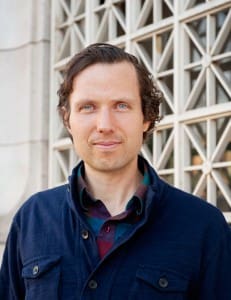
 In this episode, Jedediah Rogers discusses his new book published by Signature Books entitled “The Council of Fifty: A Documentary History.”
Mormon Church founder Joseph Smith had both millennial and temporal aspirations for the organization he called the Council of Fifty, named after the number of men who were intended to comprise it. Organized a few months before Smith’s death in June 1844, it continued under Brigham Young as a secret shadow government until 1851. Minutes from the earliest meetings are closed to researchers but contemporary accounts speak of a deliberative body preparing for Christ’s imminent reign. It also helped to sponsor Smith’s U.S. presidential bid and oversaw the exodus to present-day Utah.
One member downplayed the significance of this secret legislative body in 1849 as “nothing but a debating School.” On the contrary, a typical meeting included decisions regarding irrigation, fencing, and adobe housing, after which the group sang a song written by Parley P. Pratt: “Come ye sons of doubt and wonder; Indian, Moslem, Greek or Jew; … Be to all a friend and brother; Peace on Earth, good will to men.” Two weeks later, the council called for “blood to flow” to enforce its laws.
As the nineteenth century waned and the LDS Church moved toward the American mainstream, ending its emphasis on the imminent End of Days, there was no longer a need for a Church-managed municipal group destined to become the millennial world government. The council became irrelevant but survives today as a historical artifact available in fragmented documentary pieces which are presented here for the first time.
Jed is a co-editor of the Utah Historical Quarterly and the Senior State Historian at the Utah Division of State History. He earned his bachelor’s and master’s degrees from Brigham Young University and received his doctorate at Arizona State University in 2011. Recently, Jed was the editor of the Signature Book documentary, The Council of 50 – A Documentary History.
Episode Transcript
Host: Jay Nelson · Guest: Jedediah Rogers
This transcript is machine-generated and lightly edited for readability. The audio is authoritative. Please excuse occasional errors in names and spelling.
Introduction and Overview of the Council of Fifty
Jay Nelson [00:00:00] Mormon Stories is a production of the Open Stories foundation and relies solely upon the support of people like you, its
Jedediah Rogers [00:00:06] listeners to help keep the podcast alive
Jay Nelson [00:00:09] or to become a member of the community. Please become a monthly subscriber by visiting MormonStories.org and clicking on the Donate button on the right side of the page under support. All contributions to Mormon Stories are completely tax deductible and go towards producing the podcast and building communities and programs of support for Mormons like you.
Jedediah Rogers [00:00:28] Thanks for your support. The kindly light amid encircling gloom
Jay Nelson [00:00:43] Lead
Jedediah Rogers [00:00:43] thou me on the night is dark and I am far from home.
Jay Nelson [00:00:54] Hello and welcome to Mormon Stories. I'm your host for this evening, Jay Nelson, and with me today is Jedediah Rogers, who is a Mormon historian, or Western historian, I should say, who's written about Mormonism. He's a co editor of the Utah Historical Quarterly, author of Roads in the Conflict in Canyon country, editor of in the President's Office, the Diary of L. John Nuttall, and in particular the thing we're going to talk about today, Editor of The Council of 50, a new documentary history from Signature Books. Jedediah, welcome to Mormon Stories.
Jedediah Rogers [00:01:25] Thanks for having me. So we're going to be talking about
Jay Nelson [00:01:28] the council of 50. We're going to talk about your book, but also about the Council itself, since it doesn't pay to get too meta in life and in thinking about The Council of 50, I think this is an interesting topic for a lot of us. You know, when I first started reading professional Mormon history, one of the first things I ran into that let me know I was not home, that this wasn't the old familiar Mormon history I was used to was a reference to the council of 50. You know, we all know about the quorum of 12, the quorum of the 70, these kinds of councils of the Church. But a council with 50 people that did politics, I had never heard of this, and I'm sure a lot of our listeners are in the same place. So just help us get oriented right up front. What was the council of 50?
Jedediah Rogers [00:02:09] You know, I should probably say that I was kind of in the same boat. I mean, you know, I've done a lot of reading in Mormon history, but even as I was coming to this project and I was invited to do so by by Gary Bergera and the Smith Pettit foundation. But I mean, I only knew a very cursory basic understanding of the council of 50. Couldn't say that I really knew any of the essential details. And so I think there's we can talk about some of the reasons why I think that this, the council has always been shrouded in this myth or this lore. But in essence I think that we can think of it as Joseph Smith's attempt to create an earthly political kingdom of God with real world political power and responsibility. And John D. Lee. So in all of the records of The Council of 50, you know, we have diary entries from members, we have reminiscences and other types of writings. But John D. Lee provides a really useful, I think, summary of what The Council of 50 was. He calls it the municipal department of the Kingdom of God, set up on the earth and from which all law emanates, responsible to counsel, deliberate and plan for the general good and upbuilding of the Kingdom of God on the earth. And that's a quote.
Jay Nelson [00:03:32] Okay, so I mean, my response to thinking sort of someone who's heard this for the first time is, well, you know, I mean, the Kingdom of God is the church, right? I mean, what would be the difference? The Kingdom of God is doing the ordinances and giving God's laws and all that sort of stuff, right? I mean, this is just redundant, isn't it?
Jedediah Rogers [00:03:53] That would be a common perception, I suppose. But council members, members who are of the Council of 50, saw themselves members of a body that was distinct from the Church itself. So you have the church and then you have the Kingdom of God. And one member described it as the shield round about the church, but distinct nonetheless. And I think getting to this really was Smith's attempt to usher in a new era of divine political governance that would inaugurate Christ's millennial reign on the earth and eventually perhaps encompass the globe. I mean, I don't think that there's any question that Smith convinced his followers that the Council would play a pivot role in the end days.
Jay Nelson [00:04:41] So to be clear then, I mean, the council I guess would be intended to govern both Latter Day Saints and outsiders.
Jedediah Rogers [00:04:50] Yes, absolutely. And you know, I mean there's. For those who only have a cursory understanding of the council of 50, some may have heard that some non members were actually admitted as members of the Council of 50. In fact, that's true, there were three of them while Joseph Smith was alive. But that's essentially what Joseph Smith was trying to get at is this idea that, you know, the idea of what Joseph Smith called a theo democracy is kind of a blending of democracy and theocracy in which, you know, there seems to be this fusion of power in the hands of people with Strict, who were strictly adhering to the dictates of divinity of God. And so Joseph Smith and his successors as chairman of the Council of 50, Brigham Young and John Taylor, saw themselves as holding this divine kingship.
Jay Nelson [00:05:42] Okay, so that's actually really, I mean, colorful and extreme, isn't it, to say that these were actual kings intended to actually rule the world. But let's come back to that in just a moment. I want to come back to the beginning a little bit. When was this council founded?
Jedediah Rogers [00:05:58] So it was founded in the spring of 1844, specifically March 10th to the 13th of 1844. But maybe we can, if you don't mind, just back up a little bit. I mean.
Jay Nelson [00:06:09] Yeah, let's go back as far as we did.
Jedediah Rogers [00:06:11] Yeah. So Mormonism, right. And this is going to be a very cursory review. It seems to me that, you know, Mormonism comes into being directly after the election of Andrew Jackson, the. The Democrat, and then by 1834, what historians have called sort of this second party system, represented on the one hand by Jackson's Democrats and on the other by Jackson's opponents in the newly organized Whig Party. And I think it might be helpful to outline sort of the beliefs of these two parties. So the Democrats, right, they advocated for this agrarian nation. They were not necessarily into central planning or a strong central government beyond, I suppose, what was required to extend the geographical borders of the nation. But Whigs, on the other hand, they wanted this economically developed nation, sort of a strong central government and central planning. So they advocated for such policies as a national bank, protective tariff, internal improvements, and so on.
Mormon Involvement in Nineteenth-Century American Politics
Jay Nelson [00:07:17] My favorite phrase in American history, internal improvements. You read about American politics in the 19th century. You hear this all the time, right? Like presidential campaigns about whether we should have canals or not.
Jedediah Rogers [00:07:27] Exactly. As though that were really a question. But, you know. Yeah, back then it was. So it's important to note, I think, that Joseph Smith was no fan of political parties. I mean, he wasn't a partisan in that sense. He during, well, during his tenure in Ohio and then Nauvoo, he jumped from one party to the other, depending on how that party could serve the interests of the church. So in Ohio, for example, he was. The Mormons largely leaned Jacksonian, and they voted overwhelmingly for van Buren in 36. But then Governor Boggs of Missouri was a Democrat. Van Buren later rejects Mormon appeals for federal rejoice of grievances. And he was a Democrat, of course. So the Mormons began to shift, at least while they were in Nauvoo, to vote for the Whigs nationally, but they continued to support Illinois Democrats. You know, during their time in Nauvoo, though, I mean, some Mormons. Mormons had enemies and friends in both parties. Right. So I guess the point here is that the formation of the council of 50 in spring of 1844, I think, signaled Smith's determination not to go with one party over the other. But on the same token, he was also signaling to his political friends and rivals that there would be continued Mormon involvement in politics.
Jay Nelson [00:08:57] Well, not just continued, in a way, escalated, right?
Jedediah Rogers [00:09:00] Escalated, Absolutely escalated involvement in politics. I mean, even though the deliberations of the Council of 50 were secret, what they were actually doing were quite public.
Joseph Smith's Presidential Campaign and Theocratic Vision
Jay Nelson [00:09:14] So let's talk about some of the. I mean, you can't really talk about an organization like this without talking about the things it was created to do.
Jedediah Rogers [00:09:22] Right.
Jay Nelson [00:09:23] So what are the first projects that Joseph Smith gives to the council of 50?
Jedediah Rogers [00:09:29] So Joseph Smith had already been kind of batting around the idea to run for president, and that's because he didn't feel like the presidential candidates or the parties, rather, in early 44, represented the best Mormon interests. So even before the Council is organized, he declares, and he sort of plans in a meeting with the quorum of the Twelve in January of 1844, that he would in fact, be running as President of the United States. And it appears as though the quorum of the 12 had kind of responsibility for the campaign as well as the sort of the political implications of that move.
Jay Nelson [00:10:16] Now, was this campaign, I think, you know, a lot of contemporary Mormons find out about this, and they think that this must have been a sort of symbolic campaign, that this was a campaign like we would think of as a third party run these days, where someone's doing something to make a point. Is that sort of supported by the history you've read?
Jedediah Rogers [00:10:36] I don't know. I don't know that it was merely symbolic. I mean, I think that Joseph Smith had. From my understanding, again, the campaign is not greatly reflected in the documents that I edited, but my understanding is that Joseph Smith really thought that he had a shot at winning, at sneaking through in the conventions. So there were a number of candidates who had already declared themselves eligible for the election. None of them had real strong national reputations or influences. And Joseph Smith, I think, felt that he actually had a fair shot at this. And, you know, by a couple weeks after he announced in the meeting of the quorum of the 12 that there would be that he would run for president, then he receives a series of Letters from. Really, a couple of letters from members of a mission, LDS Church mission in Wisconsin, that were. The mission was basically to acquire wood for the building of the Nauvoo House in the Nauvoo Temple. And these letters outline all the problems, really, that were happening in Wisconsin, the need to sort of abandon the mission and what Lyman White, George Miller and others were proposing to move the Saints, or at least partially relocate the Saints in Texas. For whatever reason they outlined their ideas, Joseph Smith receives these letters, and it seems to really spark this whole. I mean, I think a lot of things are happening, right. Joseph Smith's running for president. There are a lot of other kind of. Kind of whirlwind events occurring in early 1844 that eventually led to Joseph Smith's death. But he receives the letters, and I think he feels the need to do something that he was sort of on his radar for a while, but had not been executed, and that was to organize what he calls the Kingdom of God, or the Council of 50. And so I suppose that the Council of 50 quickly obtains the responsibility then to direct Smith's presidential candidacy. But there are a number of other things that the council was charged to do. One was the scout out locations in the west or to relocate or partially relocate Mormons. Another one was to petition for redress of grievances in Missouri. So there's a petition to Congress for Joseph Smith, for example, to head 100,000 men in kind of a militia that would protect immigrants while they're on the trail moving west.
Jay Nelson [00:13:28] Yep. That was actually one of my favorite sort of documents in your collection. Right. Because the petition that they make puts Joseph Smith. He would be commissioned as an officer of the US army, but everyone underneath him would be personally responsible to him. So this is essentially a petition to create his own private army, right?
Jedediah Rogers [00:13:48] It is, it is. And what actually happens is that Orson Hyde, who's charged with introducing this petition to Congress, recognizes that that particular provision would get a lot of negative pushback. So he actually. Hyde actually writes that out that Joseph Smith then would not be personally responsible or personally in charge of the Army. And when Joseph Smith and The Council of 50 get word of this, they're furious and put height in this place.
Jay Nelson [00:14:24] So that means that there was definitely an intent to create an army that Joseph Smith could personally lead. I mean, that's core to this proposal.
Jedediah Rogers [00:14:32] Yeah, it seems to me that's. That's what's happening.
Jay Nelson [00:14:35] Yeah, I think that's. I mean, again, not to take stands on this one way or another.
Jedediah Rogers [00:14:41] It's just.
Jay Nelson [00:14:41] It's a striking and really unusual thing from the point of view of how we usually think of Joseph Smith, Right. As Mormons. To think of this guy as, you know, he's not just going to protect immigrants on the trail, but kind of create law and order where there is none, in his view. Right.
Jedediah Rogers [00:15:01] Well, and he was moving in expansive ways as well. I mean, another responsibility of the Council of 50 was they would appoint representatives or ambassadors to foreign countries. Joseph Smith is really dabbling now in national and even international affairs, kind of on shaky, even dangerous ground. So he appoints Amos Fielding to go to England, Alan Babbitt to go to France, George Adams to go to Russia. Lucian Woodworth is charged to go to Texas. And while the others that I just named didn't necessarily. I'm not sure on all three of those whether they had actually made their missions. I know Babbitt never went to France, for example. Woodworth does go to Texas, and he negotiates with Sam, or at least he has a chat with Sam Houston. Orson Hyde is sent to Washington to meet with John Tyler. So again, he's playing in the international and national arenas and really extending himself in quite provocative ways now.
Jay Nelson [00:16:10] So I want to try to get a sense, if we can, of what these people were saying when they talked to these folks, right? I mean, you meet up with Sam Houston and I mean, it sounds amazing, and it's kind of a historical moment, right, that Joseph Smith had an ambassador to Sam Houston. But what was the agenda?
Jedediah Rogers [00:16:29] The agenda. So Joseph Smith, in his designs for Texas, Texas was one of the locations that he was sort of eyeing as a place to relocate the Latter Day Saints. And, you know, with Texas being an independent republic, Joseph Smith wasn't aware, I'm sure, of negotiations that were happening even then to bring Texas into the fold of the United States. Joseph Smith wanted to create kind of a relationship negotiation with Houston for the creation of, I don't know, I guess a Mormon independent state carved out of part of Texas or some sort of relationship there. Sam Houston told Woodworth that, yes, he would do what he could. He would take this proposal to the legislative body. And then, of course, you know, by that time, Joseph Smith had died, and the proposal was essentially, it never happened, never got off the ground. But, yeah, there were some designs to really kind of align with Texas and to potentially carve out a sort of a Mormon state.
Jay Nelson [00:17:49] Okay, so that's. That's striking stuff, right? And in the. In the documents, we see this referred to as a kingdom, Right? So the question that immediately comes to mind is was there a king? I mean, presumably Jesus, was there a king of, of the kingdom?
Jedediah Rogers [00:18:06] Of the kingdom. Yeah, there was. We have. Yeah. And this is where I think this is how The Council of 50, I think, gets some of its allure as a really an attractive topic for researchers, but also a matter of speculation is that we have this terse notation in William Clayton's diary, dated April 11, 1844, that Smith had been voted our P, P and K without hosannas and clear. I mean, he didn't, he was hesitant to write out prophet, priest and king. And this might strike some who are familiar with temple endowments, for example, is just, oh, this is just symbolic language in which one is anointed as a prophet, priest and king. In fact, it was coming out of this overtly political body, the council of 50, that was, that was making these real world negotiations with Texas and Russia and England and elsewhere. So there is this idea that, yeah, Joseph Smith is clearly. We don't have the official record of the Council of 50 during Joseph Smith's period. So we can't say, although we will soon. We will soon. The LDS Church, as part of the Joseph Smith Papers Project, is planning to release that. And that will be wonderful. I think that's sort of the next piece of the puzzle here. This is really, we have these kind of terse, cryptic notations of folks like Clayton that Joseph Smith was anointed king.
Jay Nelson [00:19:45] Right. But we don't have any sense of, for example, with the Strangites, we have this wonderful description of the actual coronation ritual. And we have nothing like that for Joseph Smith.
Jedediah Rogers [00:19:55] We have nothing like that for Joseph Smith. Right.
Jay Nelson [00:19:58] Which I guess is just too bad, but that we'll have to live with it. So this gives us a good sense of where this is coming from. One of the things that's worth remembering, I guess one moment. Where this council has its historical footprint is that the council had something to do with the process leading up to Joseph Smith's death. Right?
The Council's Role, Structure, and Early Activities
Jedediah Rogers [00:20:18] It did, yeah.
Jay Nelson [00:20:19] So tell us a little about that.
Jedediah Rogers [00:20:21] So the council really met from March to May 1844. But of course, Joseph Smith doesn't die until late June 44. What happened is you get this prospectus of a new newspaper, the Nauvoo Exposure. The prospectus, I believe, comes out in late May of 44. So in the prospectus it announces that Joseph Smith had been anointed, was a self constituted monarch. He had been, and that further details of his monarchy and coronation would be released in the Actual newspaper of the Nauvoo Expositor. This signaled to Joseph Smith that someone had leaked information of Council deliberations.
Jay Nelson [00:21:12] And so the people who published this, this was the Law's and the Higbee's, primarily.
Jedediah Rogers [00:21:17] Right.
Jay Nelson [00:21:17] And so these are former insiders. So maybe they had. I mean, they weren't part of the Council, though.
Jedediah Rogers [00:21:23] Yeah, Law, William Law was never a member of the Council. He later received some key information from William Marks, who was president of the Nauvoo High Council and also a member of the council of 50. But by this time, I can't say that. I can't say who actually leaked the information. I don't believe it was William Marx. There are a number of possibilities. But in any case, the men who were publishing the Nauvoo Expository were Mormon insiders. So they would have been friends or had connections as opposed to folks who were members of the Council.
Jay Nelson [00:21:59] But nonetheless, it's definitive proof that someone somewhere didn't take their promise of secrecy seriously.
Jedediah Rogers [00:22:04] Right? It seems to be right. And to Joseph Smith, it signaled that the Council really the dream. As Mike Quinn, Michael Quinn is a scholar and historian of Mormonism. He seems to suggest that it was signal to Joseph Smith that really the kingdom of God was dead, that it was in shambles, that, you know, whether he would. Joseph Smith, if he had lived longer, resurrected at it. But for whatever reason, I mean, he just felt like he didn't have the confidence of the council of 50. He didn't have the confidence of the members, and he didn't. He wasn't confident in it as a body, as a governing body. So he didn't convene the council of 50 in June. And in fact, the decision to destroy the Nauvoo Expositor came from the High Council, was a meeting of the High Council in which that decision was made. You might expect that Joseph Smith and the Council of 50 may have made that decision, would have made that decision, but that wasn't the case.
Jay Nelson [00:23:07] So he didn't. He didn't meet with the Council or talk about that. Although. Although there was some kind of overlap between that and the city Council. Right.
Jedediah Rogers [00:23:16] Or that there was. So the Council. Right. Well, The Council of 50 did not meet in June, so it was not involved, so far as I know, in. In discussions of destroying the press.
Jay Nelson [00:23:30] Got it. But then again. So the existence of the Council then is one of the secrets that the Nauvoo Expositor prints. That is part of the reason why Joseph Smith and others decide to destroy the press. Right. Exactly. And then, as we know, this is one of the inciting incidents that leads to his being arrested and tried for treason. And one wonders if, if the full records had been available and people knew that he was in fact prophet, priest and king, maybe the treason charge would have had extra legs. Right?
Jedediah Rogers [00:24:01] I think that's a possibility.
Jay Nelson [00:24:02] Yeah.
Jedediah Rogers [00:24:02] I mean, I think there's a reason why. There's a reason why Joseph Smith wanted to keep these conversations secret. You know, even in 19th century America, where there certainly was more expectation of this fusion of church and state, I don't think that. I think that even for Joseph Smith recognized that that was. That what he was doing and the kind of conversations that he was having in this body in which, you know, instituting a theo democracy where all the power would be situated with the people, but the people would be obeying and adhering to God's laws. Well, that's problematic because to outsiders that appears as though the power were not necessarily centralized in God, but in one figure on earth. Right. Joseph Smith. I think that Joseph Smith recognized that there would be concerns over the kinds of directions and topics that were being discussed in council deliberations. Yeah.
Jay Nelson [00:25:10] So on the theo democracy term, which, I mean, this is a fabulous Mormon term, I've never encountered in all of my political reading, this kind of construct outside of Mormonism. Right. So one of the documents you have in the volume sheds some interesting light on this to me. They're talking about Justice Smith's presidential run. And the idea in this document is that people will try to convert a majority of the population of the US to Mormonism to vote for Joseph Smith. And that if that doesn't work, then they can go to fallback plants. So that there is this deep link between politics and religious belief. Right. In the project.
Jedediah Rogers [00:25:51] Right. And I think that the way I think about this is this was a. Individuals who are members of The Council of 50 felt like they were involved in something of great moment that and in fact, that the end days were upon them. And maybe, maybe this leads us to a discussion of millennialism, for example. But you know, during this period, you have the post millennialists and you have the pre Millennialists. The post millennialists for the first part believed that they were part of history, that human progress and effort contributed to God's plan, that they could, in effect, through their own efforts and human progress, inaugurate the millennium and Christ's second coming. And then you have the pre millennialists, you know, those who believe that the second coming occurs before the millennial millennium. Begins. And I think Mormons, to me, they don't fit squarely in either camp. They're kind of in both. You have some indication in, in the record, in the volume, that members like Joseph Fielding would say, the kingdom is now being established. And Brigham Young wrote in his diary that the millennium had commenced. Right.
Jay Nelson [00:27:11] And that happens basically at the time of Joseph Smith's murder, in his view. Is that right? Right.
Jedediah Rogers [00:27:16] The idea is the millennium had already begun, that Smith had, and Young and others were not merely waiting for Christ's
Jay Nelson [00:27:25] return, but that they were building. They were building the kingdom to receive him.
Jedediah Rogers [00:27:31] But Smith also seems to have had a pre millennial message. And Mormons were kind of like other pre millennialists. They felt alienated and isolated from society more than they felt a part of it, and that Christ's return was coming very grace. And so I think what you see in 1844 and even later, in 45 and 46 and on, is this idea that the millennium and Christ's second coming were upon them. And so that they were a part, as part of The Council of 50, part of Great things that were happening, whether it be converting the many, many people to Mormonism or spreading their message or acquiring domain, geographic domain in creating this Kingdom of God, this Mormon Kingdom of God. You just get this real sense that folks felt like they were on the edge of something great.
Jay Nelson [00:28:32] Well, so the next question, I guess is, did that sense disappear with Joseph Smith? Joseph stopped calling the council before his death. Did this go away? Or what happened to the. In the aftermath of his murder?
Jedediah Rogers [00:28:48] Joseph Smith dies in June 44, and Brigham Young takes Brigham Young. Of course, there's this wrestle for Joseph Smith's successor who would govern the church in the wake of Joseph Smith's murder. And Brigham Young is able to siphon away the majority of, I don't know, Mormons in Nauvoo and elsewhere. He's able to take the reins of church power and the 12, Brigham Young and the 12. But he doesn't decide to reconvene and reorganize the council of 50 until February 1845. So that's about seven or eight months after, I think, that he felt he himself. You get the sense that he didn't have the kind of vision, I think, for the Council of 50 and even the Kingdom of God, but particularly the role of the Council of 50 that Joseph Smith had. Brigham Young, I think, was wary of the Council of 50 and perhaps even nervous that it would. That would be a threat to his own authority and
Jay Nelson [00:30:06] no right I mean, my reading on this. Right. Is that under Joseph Smith, the church was organized, we could almost call a hub and spoke kind of organization where there were a ton of different domains in the church that depended directly on Joseph. Right. So there were. There were the 12, there was the council of 50, there were the stakes, there were the high councils, and in each of these bodies depended on Joseph Smith and didn't have a direct hierarchical relationship to each other. Does that sound right?
Jedediah Rogers [00:30:34] Yeah, yeah, that sounds about right.
Jay Nelson [00:30:36] And then under Brigham Young, this all has to be reconfigured because the 12 has to stand between the prophet and everyone else in order to justify his succession.
Jedediah Rogers [00:30:46] Right? Right.
Jay Nelson [00:30:47] And so, and this isn't to say that he's wrong in succeeding or that this wasn't Lord's will, but just in terms of like the politics of organization. That's the shift that we see. And so as a piece of that broader shift, the 50 have to be reconfigured as a dependency of the 12, right?
Jedediah Rogers [00:31:03] Yeah, I mean, they definitely were reconfigured as a dependency. So what's interesting about the Quorum, the quorum of the 12 was.
Jay Nelson [00:31:10] I should say that that's all my interpretation. And you're not responsible for any of that. So just to be clear,
Jedediah Rogers [00:31:17] it sounds fine to me. I think it's interesting. The Council of 50, the makeup of the council, of course, were the leading men of Nauvoo. So there are no women. They were all men. And they were all many. Many of them were also church leaders. So there are 50 of them. So of course more than just the 12. But even among the rest, you have high ranking ecclesiastical leaders. And into the Utah period, into even the 1880s, the vast majority of council of 50 members were also ecclesiastical leaders on a high level. Presiding bishops in quorum of the 12, first presidencies, all of these members, all of these. The men who populated the ecclesiastical bodies tended to also be members of the Council of 50. But it's exactly right. The Council of 50 was subsumed underneath the Quorum of the 12. And frankly, Brigham Young found the Quorum of 50 to be. To be unwieldy. I think he preferred more a streamlined efficiency of having two counselors in the first presidency as it was organized in 1847, and of course relying on the 12 apostles.
Jay Nelson [00:32:38] And we can see that in other ways in the fact that he doesn't call the Council all that often during his life. Right?
Jedediah Rogers [00:32:46] Yeah, he does and he doesn't. So what we have.
Jay Nelson [00:32:50] So there are Periods? Yeah. Okay.
Jedediah Rogers [00:32:51] It kind of depends on the period. What you have in 1845-early-1846 is the council meeting on a fairly regular basis, really, as the main body charged with organizing and preparing for the trek west. And I don't think that there's. We can't. We shouldn't minimize the actual significance of the Council of 50 in preparing folks for an arduous journey west. We have in this record, for example, detailed instructions regarding the kinds of provisions that would be required of folks if they were gonna make the trek into what they then were considering to be upper California or the territory. By late 1845, Brigham Young had settled on either the Bear River Valley or the Salt Lake Valley as the place to settle the Saints. But there were a lot of preparations involved, and so the council was involved in all of that. Once the Mormons were on the trail in Iowa and then beyond, it was really difficult for Brigham Young to organize and to convene the council of 50. So you have these. You have a couple of. After the 18, March or February of 1846, you have a couple of official meetings, but for the most part, you have some impromptu gatherings in which, you know, deliberations and discussions and arrangements were being made. Now, where The Council of 50 really does become prominent is in early Utah, in the Salt Lake Valley, in December of 1848, before it.
Jay Nelson [00:34:42] And at that point, we get my favorite kind of Dracula style code, Right. We find out that it's the Council of Eetfeth, which no outsider would ever figure out. Yeah. I mean, you know, like Dracula will always spell his name Alucard, and then no one will ever know.
Jedediah Rogers [00:35:00] Well, you do get that, and you get that from the diaries of Willard Richards and John D. Lee, but even before then. So when Joseph Smith was alive, he. His diary, he's probably kept by a scribe, Right. But one of his diaries spells words like Houston, Pineries, Santa Fe, Texas. These are all spelled backwards. So there's a. There's an early use of using. Yeah. Spelling words backwards to avoid detection, which I think is absolutely hilarious. Right. I mean, who couldn't figure out context, what they're actually trying to get at?
Jay Nelson [00:35:45] Well, it's funny because, I mean, there were other systems they used that were, I think, a lot more effective. Like, I mean, code names like Gazilam, that would not be totally obvious to an outsider. But then alongside that, you have these, let's say, token efforts at secrecy.
Jedediah Rogers [00:36:01] Yes. You have token efforts, right.
Jay Nelson [00:36:04] Yeah. Okay, so coming back to this, we're getting into the Salt Lake Council. And the council, in your view, really comes into its own in a way.
The Council of Fifty in Utah Territory and Deseret
Jedediah Rogers [00:36:12] It does. And for me, as a. I guess as a Western environmental historian, I really found this period to be fascinating. So what you have, at the end of 1848, Brigham Young has returned to the Salt Lake Valley. And while Brigham Young was. Brigham Young was not in the Salt Lake valley from late 47 to 48. He was back assisting with the migration in the Midwest. So he left the political governance of Salt Lake Valley to the High Council under John Smith. But once Brigham Young returns, he has this kind of newfound enthusiasm for the Council of 50. And in fact, in a public discourse, In December of 48, he actually announces to a couple thousand saints that Joseph Smith had organized this municipal body of 50 men. And then Brigham Young told the congregation that that council is here. Even though the council continued to be this secret organization, Brigham Young publicly announced it, which is really interesting. So from December 48 to mid-1850, almost two years, the Council of 50 is operating as the de facto political government in what would become Utah territory.
Jay Nelson [00:37:41] Now, how much of a sense do we have of, I mean, the relationship between the 50 and more familiar church institutions during that period? Presumably the 50 would obey Brigham Young if he told them to do things.
Jedediah Rogers [00:37:55] Yeah. So, I mean, between 1848 and 1850, the Council of Fifty really is the political governing body. Although I think some have shown as kind of beyond the purview of my. Of my research, that even then the Quorum of the twelve and certainly Brigham Young were in some instances, making decisions before The Council of 50 had even met. And then the Council of 50 would simply rubber stamp decisions made by the quorum of the Twelve and by the First Presidency. This would also happen in the 1880s. We can get to that later.
Jay Nelson [00:38:32] But, I mean, it's an obvious fact that that happens in any government anywhere. Right. That there are leaders who make decisions before the. You know, I mean, things go to Congress with things already decided. This happens. So that, in a sense, doesn't contradict the idea that this was really the government. Right. I mean, so was there a, let's say, secular government in parallel to this at that point,
Jedediah Rogers [00:38:55] A secular government parallel to.
Jay Nelson [00:38:58] To The Council of 15?
Jedediah Rogers [00:39:00] In Utah?
Jay Nelson [00:39:01] In Utah, yeah.
Jedediah Rogers [00:39:02] No, there were.
Jay Nelson [00:39:03] Right. So this is it. This is the show.
Jedediah Rogers [00:39:05] This was an example of an American brand of theocracy at work. I mean, it's very, very clear that here you have the complete fusion of church and state. And under the council of 50, I
Jay Nelson [00:39:19] mean,
Jedediah Rogers [00:39:21] I don't Think that we can minimize the kind of, like, impact that The Council of 50 had on establishing the foundation of society in the arid west, in the Great Basin?
Jay Nelson [00:39:33] What kind of decisions do we see them making?
Jedediah Rogers [00:39:38] So, you know, the council assumed municipal duties in early 1849. They appointed men to go out to the Utah Valley to seek out a stock range. They established fisheries. They established tannery. They sent others to go east to buy sheep. And then, you know, you have. They were extremely active in finding ways to save cattle from starvation, for example, or they required that no corn be made into whiskey. They erected an armory. They imposed taxes. I don't know. They redistributed money and food to those who had very, very little. They surveyed streets and fenced farm lots. They constructed canals. They located the site of the Salt Lake City cemetery. They organized the Nauvoo Legion.
Jay Nelson [00:40:28] So let me. I mean, stop here for a second. I mean, up to this point, this has been a secret body, right? And now they're issuing taxes. So does a tax. Like, does it a letter show up at your house that says The Council of 50 asks you to pay such and such?
Jedediah Rogers [00:40:45] I don't think they were calling themselves publicly the council of 50.
Jay Nelson [00:40:50] Okay. So, yeah, I mean, the idea of having your only government be secret is a little bit perplexing, isn't it?
Jedediah Rogers [00:40:57] It is. It's a very unique and perplexing period in Utah history. Absolutely.
Jay Nelson [00:41:03] So, I mean, how does this work? Like, if they decide that there will be taxes paid on, I don't know, water usage or what was taxed?
Jedediah Rogers [00:41:13] You know, it's hard to get a sense from the documents, but from what we do have. And in some cases, we actually have, you know, spelled out in the minutes what Brigham Young said and kind of the discussion and the ebb and flow and kind of how things. How decisions were being made. But let me just say this, that The Council of 50 was, as George A. Smith called it, a debating school. In other words, parliamentary disorder happening, in some sense, in this body. So there are a lot of ideas being thrown out there. But in the end, Brigham Young would sort of dictate, for the most part, what direction the council would move. So there are a number of instances in which members would say, no, I think we should do this and this. And Brigham Young completely disagreed, and the council ended up following where Brigham Young wanted to go. But I think there's one instance in which there was a proposal to tax. To actually. To officially tax folks on some usage or one thing or another. Brigham Young actually recommended in this particular instance, and this would have been early 1849, that instead of a tax, he thought that persuasion would be a better method. And, you know, it's interesting because I think in other instances, I don't think that he was. He hesitated to institute attacks or that kind of a political solution to a problem. But in this case, he was kind of. It was blending his pastoral kind of rhythm. Yeah. And into, you know, real world kind of governing situations. So whether it was to remove cattle from a certain section of land or to construct a fence or requiring bishops to build a bridge over canals within their word, jurisdiction.
Jay Nelson [00:43:25] Right. And you can see how this would work. Right. With a bishop, that a bishop would get an instruction from some ecclesiastical official that would reflect the will of the council. But there are times in your book, there's one that was memorable to me where so somehow or other, four men had ridden through a fort on horseback. And I don't know what was wrong with that, but somehow they needed to be fined $25 for this. The council decides. And I sort of. I have a hard time imagining how this plays out.
Jedediah Rogers [00:43:55] Right.
Jay Nelson [00:43:56] You're these random inhabitants of Utah, and I don't know, somehow you are made to understand that a government you don't know about is charging you 25 bucks.
Jedediah Rogers [00:44:09] You know, and I think that is interesting and funny, but I'm not. I'm not sure exactly how they would have represented themselves to the people. I can say this, that In March of 49, I think we're going to talk about some of the misdeeds.
Jay Nelson [00:44:25] Yeah, I think we need to. That's right.
Jedediah Rogers [00:44:28] And that might be a segue into this. But in early 49, they hold a public election in which it was decided officially as the provisional state of Deseret. Right. Who. Who. The legislative body who would be the officers to. Of the government. So Brigham Young, then governor, and there would be judges and associate judges and on and on. So they hold this. They hold this election in March. And I think that that's probably how they would have represented themselves to the public is as a provisional state of Deseret.
Jay Nelson [00:45:13] Got it.
Jedediah Rogers [00:45:14] So, briefly, another really interesting story during this time is this public hunt that was organized to eradicate wasters and destroyers. And wasters and destroyers are in quotes. It's obviously a reference to little critters and big critters, anything ranging from a raven to a bear. So they organized the Council of 50, organized into two parties of about 100 men each. And the idea was to, over a certain period of time, to kill as many of these critters as wasters and destroyers as was possible. And then whoever got the most would win. What's really interesting, I think it just, it reflects this early Mormon sensibility that is kind of noticeable in these Council deliberations of the impulse not just to shape human behavior, but also the land itself in conformance with divine decree. So this whole idea that you would make the desert blossom as it rose and the idea of environmental transformation is really playing out here. And I think that's a. You read the numbers of how many animals they kill during just a two month period and it's in the thousands.
Jay Nelson [00:46:38] So when we talk about the miracle of Utah blooming like a rose, one of the things this helps us see is that alongside whatever miraculous component of that there was, there's an awful lot of human planning and effort that goes into it.
Jedediah Rogers [00:46:51] Absolutely. And you see that throughout from the beginning of Mormons involvement in the west up to the present. I mean, there's this idea that human agency and effort and improvement is involved. It's not this whole idea of let's keep the land as it is and take a step back. It's more in line with the idea that we would. That one would almost treat the environment or wildlands as you would a garden, as sort of a place to domesticate or to make tame and human effort and agency was certainly a major role in the transformation of the ecosystem and environment here in Utah, certainly.
Jay Nelson [00:47:38] And in those early years that was a huge part of what the Council did.
Jedediah Rogers [00:47:41] I guess it was. You get a lot of environmental stuff. So from the planning of canals to the plotting of what was called the big field, which in the Salt Lake Valley, anything south of about 20th south would have been what they called the big field, at least in the early years. And that was divided into these 10 acre plots that were fenced with canals running through. So you really get this kind of imagery of the agrarian myth or the agrarian ideal in which you have the mountains and then below in the valley you have this well organized and ordered agrarian sort of plot of land with water running down the sides and laterals and crops growing. So it's.
Jay Nelson [00:48:42] Yeah, okay, so I'm going to say to a certain kind of modern listener, the idea of wholesale rearranging the environment and killing thousands of animals is a pretty horrible thing. But for another kind of audience, that's pretty normal. But there are other things that we hear about the Council doing that. Basically everyone's going to say, wow, that's terrible. Right. There are Rumors that are unambiguously scary about the Council. Isn't that true?
Jedediah Rogers [00:49:13] Yeah, there are. And let me just. First, I've got two. Two kind of worse behaviors that I kind of wanted to bring up. And one is going to be something that probably very few. I had no idea that this was happening until I really got into these documents. So the first is that the Council lied and misrepresented itself to Congress. So In December of 1848, the council started this petition for territorial status. And John Bernheisel, who was this distinguished kind of gentleman from the east, but also a Mormon convert, he was sent to Congress to deliver this petition then in February and March of 1849. So just a couple months later, they begin the process of applying for statehood. And yet another petition, but this time not for territorial status, but for statehood status. And at least this is what the Council told Congress. And up until a couple of decades ago, this is what, this is the narrative the historians thought was happening. They were left with this puzzling scenario. Why would the Mormons simultaneously take to Congress a petition for territory and a petition for statehood? And what's happening here is that the Council in July of 1849 actually fabricated from whole clothes events that they claimed happened in early 1849. So they got word, you know, by June or by mid-1849, they decided to switch tactic, and instead of applying for territorial status, they wanted to go directly for statehood. And. But what they did is they didn't have the time to give a notice of a convention to create a provisional government. They didn't have time to hold an election of convention officers or adopt a constitution for provisional government or convene sessions of the assembly of Deseret, all of these things that were required for petition to statehood. They simply didn't have the time. So from July 2 to July 19 49, the council created the documents that fabricated the election, convention sessions and other activities. And this is just a fascinating and really quite alarming move that Brigham Young and The Council of 50 makes during this period, which probably might be new to many of your readers or listeners.
Jay Nelson [00:52:07] So, I mean, just to be clear, so what you just said is that they pretended there'd been an election and wrote down the results. They pretended there'd been a convention and wrote down minutes. That's what happened. That's remarkable, right?
Jedediah Rogers [00:52:21] That is essentially what happened, right?
Jay Nelson [00:52:23] I mean, that is, you know, full scale political fraud, Right? I don't know another word for that.
Jedediah Rogers [00:52:31] And I should back up and say that, actually. In fact, as I, as I mentioned earlier, in March 1849, they did hold an election, but it wasn't the kind of election I don't think that they claimed to have held as part of the statehood petition. The election that was held was simply, you know, here we have a governing body, Council of 50. Whether they called it that publicly, probably not, but the idea was that we need some officers for this, for this organization. We're going to call ourselves the Provisional State of Deseret. But yeah, that's essentially what happened.
Jay Nelson [00:53:12] So in that election, was that a contested election or kind of an approval election?
Jedediah Rogers [00:53:16] No, it was an approval election. There were a couple of hundred. It was a blustery, snowy day in March, and there were, I think, about five or six hundred folks who ended up voting. But the decisions. It wasn't a contested election. And, you know, essentially it was just rubber stamping what had already been decided in a Council of 50 meeting.
Jay Nelson [00:53:39] So in a way, it was more like the kind of election that Mormons have in April General Conference than like the kind of election that we're going to have in November next year.
Jedediah Rogers [00:53:51] Yeah, I think you could think of it that way.
Jay Nelson [00:53:53] Okay, so. And then when they presented this as having been a Constitutional Convention that was voted openly, that. That's, that's what is kind of upsetting to you, right?
Jedediah Rogers [00:54:04] Yeah, well, I think it's. I think it's a bad behavior. I think it's one example of it.
Jay Nelson [00:54:09] But, but let's be clear. I mean, the kinds of bad behaviors that are rumored around this are a lot more kind of dime novel than, Than political maneuverings and misrepresentations. Like, we have stories about murder and the idea that this is tied in with blood atonement. Right, we do.
Jedediah Rogers [00:54:28] And I should, I should be very clear from the outset that I know I don't have any evidence that suggests that blood atonement was actually carried out during the, during the period of the Council of 50 or under the orders of the Council of 50. That said, we absolutely have to acknowledge the legacy of the Council, I think, in this idea of blood atonement and frontier violence. I mean, especially in 49 young and other members, they threatened violent retribution to one council member, for example, who had reportedly leaked sensitive information. We have some indication. And council deliberations of early utterances of blood atonement that would later come back in full force in the mid-1850s. Right, but here we have.
Blood Atonement, Rhetoric, and Political Tensions
Jay Nelson [00:55:29] So, I mean, one of your sources uses this phrase that I find memorable in Mormon history that so and so had forfeited his head. I mean, that's kind of extreme, right?
Jedediah Rogers [00:55:44] It is absolutely extreme. So there's this case, the case of Ira west. And actually the case was taken up in March, 1849. And the idea was that Ira West, I mean, he was, in Brigham Young's view, a thief and a swindler. I'm not sure what the exact details are of his case, but in any case, the council deliberations talked as though his sins were so egregious that he had forfeited his life. And there's even some indication in the record that some council members thought that The Council of 50 ought to just take matters into his own hands. And this is before this election in March had actually occurred. So as a result of these deliberations, what should we do with Ira West? They decide, okay, maybe we actually do need official representatives of this body. And that's where the idea of holding an election, which was held on March 12, 1849, in part because they thought they could handle Ira west as the quote, unquote, gentiles might handle this through the court of law. But you also have indication in council minutes that comments would be made that, oh, if Ira west doesn't show up or if he disappears, then that would just be fine. That would be a fine way to handle the matter. And then you have some overt references to chopping off heads and the need for blood atonement.
Jay Nelson [00:57:34] Yeah, no, exactly. I mean, in reading through your material on this, it's clear that there's no evidence that these people directly did these things. But it's nonetheless disturbing to me that they see violence as a completely acceptable solution to a range of different sorts of problems. Right. That this is something that's totally acceptable to talk about, as it were a polite company. Right.
Jedediah Rogers [00:58:03] And let me just make this point that it seems to me that, you know, Brigham Young and many, many Mormons who were entering the Salt Lake Valley in the late 1840s, early 1850s, they seemed to really grasp onto this idea that they were creating this new place, a place that was free from sin and transgression, really. So you have this dichotomy. You have, like, this rhetoric, violence of rhetoric, rhetoric of violence happening at this time, but side by side, these utterances of kind of a. Creating a utopian, peaceful society. But Brigham Young really seemed to believe that it was only possible to create kind of this kind of society that he wanted to forge in a new land with a new people, that the only way to do so would be with an iron fist. So in one case, he says that he wanted to prevent, quote, infernals, thieves, murderers, whoremongers, and every other wicked curse to exist. And he. Young himself says that he got this idea of dictating with an iron fist from revelation and revelation that was purportedly given in 1842, directing Joseph Smith to organize the kingdom of God. Anyway, the revelation has never shown up. I've never seen a copy of it, but apparently it says something like, the Kingdom of God and its laws and justice and judgment in my hands. Signed Amen, Christ. So I guess Brigham Young and the council considered it their solemn responsibility to carry out the demands of justice, just as God would do.
Jay Nelson [00:59:57] So then clearly, by that period, they see this as a revealed body that existed with a divine mandate to do these things, Right?
Jedediah Rogers [01:00:08] Absolutely.
Jay Nelson [01:00:10] No, I think it's. I mean, this is one of the things that I think is really valuable about your book is that we see in the discourse between these people some of the themes that we see played out in behavior in the territory of Utah. Right. So on the one hand, we have these cooperative efforts to build a utopian economy in society among the Saints, things that eventually lead to the united order and so forth. But then just in parallel alongside this, we see things like the wars against the indigenous Americans in various parts of Utah territory, the Utah War, eventually the Mountain Meadows Massacre, and so on and so forth. And these things to us seem like opposites in a way. But what we see in these discussions is that for the people doing it, these are really tied together, aren't they?
Jedediah Rogers [01:00:54] Yeah, I would think so. And I think it's important to note that you really do have this tension between rhetoric and reality happening in the. In the Council. So the Council would discuss these. These grand ideas, for example, playing a pivotal role in the end days, working to elect Joseph Smith as U.S. president, you know, destroying an army and a navy with an invention of liquid fire. All of these, like these. These are things that to modern observers. Right. Might seem kind of absurd.
Jay Nelson [01:01:28] Yeah.
Jedediah Rogers [01:01:28] Council members, interestingly, seem to have thought them all possibilities. And then you have, you know, you have this violent rhetoric side by side, this idea of creating this millennial utopian society. And then you have historiographical debates among historians that suggesting another dynamic. Was council merely symbolic, or did it represent Mormon quest for real political power? And that's an interesting question, too.
Jay Nelson [01:02:06] That is a really interesting question. I mean, something to be that I think should be clear at this point in our conversation is that in these early years in Deseret, Utah, Mormons absolutely had political power. Right. I mean, there was no political power other than the Mormon Church. So then the question really is how much of that power belongs to the council and how much belongs to Brigham Young and the twelve and other actors.
Jedediah Rogers [01:02:32] Right, right. And I think, I mean.
Jay Nelson [01:02:36] Yeah, okay, please.
Jedediah Rogers [01:02:37] Well, I think. Yeah. And I think that is. That's the question. I don't think that there's any question that what reigns supreme was Brigham Young, the first presidency in the 12 in Utah. So the theocracy as it was constituted had at its sort of its peak at its head was Brigham young and the 12. But you also have this council that especially during this two year period between 48 and 50 these early years in the Salt Lake Valley, the council was absolutely the governing body alongside the 12. I mean, it's hard to separate in this period, the 12 and the council of 50, at least in matters of political governance. But later on, of course, the council kind of fades in significance and in fact doesn't meet for a long period of time.
Jay Nelson [01:03:35] Right. So from 1850 until 1880, the council is actually mostly dormant, right?
Jedediah Rogers [01:03:42] That's right.
Jay Nelson [01:03:43] So what happens? Why does Brigham Young, I guess, turn his back on this organization?
Jedediah Rogers [01:03:48] Well, by 1850, you have Congress decides to grant Utah territorial status. Utah becomes territory of Utah, and then federal officials begin to come in. And by 1851, Brigham Young was still governor of. Was governor of the Utah Territory, but there were a number of appointed non Mormons who came to Utah. By 51, in fact, they became the runaway judges. But in any case, by 1850, 1851, the whole need for a governing structure for the Great Basin or the eastern edge of the Great Basin was no longer needed. Congress provided one in the form of territorial status. And so by that time, and that's when really the, you know, territorial records begin in 1851. So the records of the Council of 50 before 1851 are actually very valuable in documenting this early Utah period. But after 51, we have a new body at the helm. And, and what's interesting is that when the council met again. So in 1851, the council meets briefly to resolve some disputes between a few members. But between 1851 and 1867, it doesn't meet officially. During that 16 year period, when it does meet, it's interesting that the official council minutes say, well, even though the council did not meet during this 16 year period, in fact, many members of the council of 50 were serving in the legislature, territorial legislature anyway, as were public officials. And so it was a significant body in its own right, even though officially it wasn't meeting or in session.
Jay Nelson [01:05:53] So.
Jedediah Rogers [01:05:54] But in any case, it doesn't meet until 1867. And even then, it's really, really only convened at the request of Brigham Young to sort of renew acquaintances. And, you know, some members had died by that time. Other members were dropped, and then new members were added. And it meets briefly in 1867, 1868, and then it doesn't meet again until 1880. And by that time, Brigham Young had died. John Taylor was president of the quorum of the 12, head of the church. And John Taylor decides to reconstitute and reorganize the Council of 50.
Jay Nelson [01:06:37] And this second wind, this isn't a small or symbolic moment at this point. The church is facing real opposition from the outside with respect to polygamy. There's a real effort to. To bring it into line with national sort of norms with respect to family and politics. Right. And that The Council of 50 becomes one of Taylor's tools of resistance in a way. Isn't that right?
Jedediah Rogers [01:07:05] Yeah, I guess you could think of it that way. I mean, you kind of get this revival of millennial fervor. You really get. John Taylor's a really interesting character. I mean, I think. I think more needs to be done on him and his life and his outlook. But to me, he seemed to have been an ardent disciple and follower of Joseph Smith, who really took the ideas of Joseph Smith seriously. And whether it was the school of prophets or Platome or The Council of 50, John Taylor just believed that if it came from Joseph Smith, that it was important. So for that reason, I think that John Taylor, it makes sense that he would have reconstituted this Quorum Council, if nothing else, because it was important to Joseph Smith in the idea, but he was also a millennialist. He believed that the end times were here, and he was also a revelator. So more than any other church president that Elias Church has had, John Taylor received. Other than Joseph Smith, John Taylor received revelations, including some given to the Council of 50. And you're right. I mean, I think that in a way, by him organizing this council at this time, it was almost like, yeah, recognizing that perhaps, you know, theocracy in Utah was in its death throes, that there was. There was no longer. I don't think that there was much that Mormons could do it by that time to sort of stem the tide, that the direction, the ship, the ship, the national ship, was moving against polygamy. And I think that there's even John Taylor probably recognized that there was not much that he could do, but. But he could institute this council of 50, reorganize the council of 50, and in fact, he could anoint himself king and priest over the kingdom of God, just as Joseph Smith and Brigham Young had done as well.
Political Pluralism and the Council's Later History
Jay Nelson [01:09:20] All right, so we get a third king and in fact, three in a row, right?
Jedediah Rogers [01:09:25] Three in a row, Yep. Yeah.
Jay Nelson [01:09:27] So what, I mean, during this period, this kind of seven year revival that the council had, I mean, what sorts of activities was it doing? I imagine they were, weren't imposing taxes and setting up water and fences at this point.
Jedediah Rogers [01:09:41] Yeah, The Council of 50 was and John Taylor were primarily interested in questions of a response to constitutional authority and political authority, particularly in the form of the Edmonds act, which was passed in 1882, making plural marriage a felony. So you get in these council deliberations talk about political representation on the, you know, in this new world in which polygamists would be disenfranchised, for example, you get talk about responses and to, to questions of. I'm not sure exactly how to frame this. Sorry, let me back up again.
Jay Nelson [01:10:39] Okay, so I mean, let me actually maybe jump in a little bit. So what's going on in this sense? There's this contest between the US Government and Utah Territory, the Mormon Church, about whether Mormons are going to comply with laws against polygamy or whether those laws are unconstitutional or whether they might be constitutional and enforceable, but Mormons are just going to ignore them. And then alongside this, there's a contest of whether politics in Utah is going to be secular or religious. Right. That these are kind of two combined contested issues. Is that accurate? As, as I sort of my way of seeing it.
Jedediah Rogers [01:11:25] Yeah, absolutely. So you have, Right, so you have these, these conversations about, you know, what do we do in the face, in the face of the Edmonds act, which makes plural marriage a felony in 1882,
Jay Nelson [01:11:42] it makes plural marriage a felony. It strips citizenship rights from people who are involved in plural marriage, and it removes some privileges from the church organization.
Jedediah Rogers [01:11:52] Right, right. So you do you get some discussion about, you know, whether how we, how what the official church response should be to these provisions, which are quite, quite harsh. And they become even harsher in 1887 with the Edmunds Tucker Act. Right. But you also get these general deliberation of what it, what political governance means. So they talk about, you know, if the Mormons, you know, the nature of minority representation or the idea of political pluralism that in some ways the deliberations during this period are. Even though in a way, this is John Taylor's attempt to stick it to the federal government. In a way, you also get this more tempered, less strident kind of rhetoric in which they're talking about making concessions. And that may have been because they put themselves. They were in a corner. Right. So they had to make some concessions, but they saw it as not really their place necessarily to antagonize themselves from the rest of society. And that's, I think, where the original rhetoric of Joseph Smith in the early months of The Council of 50 really comes into view. In which. In which Joseph Smith. So they're always referencing back to what Joseph Smith had said, and they come to this conclusion that Joseph Smith believed in political pluralism, that everyone, that many, many voices could be represented. Even so, Congress might have its view, the Supreme Court might have its view on the question of plural marriage, but church members and Council of 50 could have its own view.
Jay Nelson [01:13:59] Right. So, yeah, and that's really a kind of a big move, isn't it? I mean, this is, in a way, the idea that there can be different perspectives and that's okay, and it's healthy to have debate in politics. Sounds almost banal, but that isn't how Utah had been working up to that point, Right?
Jedediah Rogers [01:14:25] No. And that's where I think the rhetoric and reality comes into light to a certain degree. Because, I mean, you have this talk of creating a pluralistic political society from Joseph Smith and some of his successors. But on the other hand, I mean, Utah, here you have ecclesiastical leaders making decisions, presenting candidates, and then when those candidates were in office, the ecclesiastical leaders oftentimes dominated and asked the officials to act in a certain way. So the idea.
Jay Nelson [01:15:08] Well, I mean, as I understand it, through most of the territorial period, there was literally a Mormon party and a non Mormon party. Right, right. Thinking about the way that the. That politics worked in Utah Territory during. During the 19th century, as I understand it, the. The governance mainly ran through this organization called the People's Party, which was effectively the Mormon political party. That people would get a nomination to office through the People's Party because they were supported by the church, and then Mormons would vote for them because that was the thing you do to support the church. And if you're elected through a party supported by the church and you receive your nomination because of the endorsement of the church, there's a very real limitation on the degree to which you can be a pluralistic representative of distinct perspectives. Right, right.
Jedediah Rogers [01:15:58] I mean, essentially you're representing the ecclesiastical leaders who put you into that position in the first place.
Jay Nelson [01:16:07] I mean, you could compare this in a way to the government that Mexico had through the middle of the 20th century, where there's elections, but the elections are determined by the nominations beforehand. Right. So that whoever makes the nomination has a lot of the power.
Jedediah Rogers [01:16:23] Right.
Jay Nelson [01:16:25] And if we see Utah politics in that light, to move from that to a space where the Council of fifties, talking about pluralism and the idea that it's okay to disagree and have argument is really a big move, isn't it?
Jedediah Rogers [01:16:38] Yeah, I think to a certain degree. I mean, let me just reference this revelation that John Taylor receives in June of 1888, 1882, and in which he says in part, shall all men be free. Yes. Free to do right. Free to express their sentiments and opinions and have a full, fair and free representation. But no man shall violate his covenants, pervert my laws, subvert others free agency, and trample upon my authority. In this council, saith your Lord, the Lord your God. So here it's almost as though, I mean, you can't have it both ways. I mean, a pluralistic political system and kind of a theocracy.
Jay Nelson [01:17:28] Right.
Jedediah Rogers [01:17:29] With God at the helm dictating exactly how things ought to run. So I think that you get this rhetoric of that the church was, you know, democratic in theory and maybe an inception with the Council of 50. But actually in Utah, the Council of 50 and the ecclesiastical leaders of the LDS Church operated as an. Operated as an oligarchy. Right.
Jay Nelson [01:18:01] Yeah. And this is an old tension, Right. In Mormonism. I mean, you can go all the way back to the founding document, the Book of Mormon. And you see this set up. So when we're talking about the government of the judges during Alma, you see that people are free to elect the judges, but no one can change the laws. So there's this sense of the voice of the people can be heard, but not on anything really important. Right. And there's an echo of that, I think, in this revelation you're quoting. Right. So this real tension between the idea that there can be legitimate disagreement and the idea that there actually is a right answer and God provides it is deep and in a way irresolvable, I think.
Jedediah Rogers [01:18:44] Yeah, I mean, that's how I read this. I just. You read it as though the idea behind political plurality and many voices kind of is a good one. But it doesn't necessarily. It doesn't allow for full expression operation in this kind of a theocratic system in which the council of 50 was operating.
Jay Nelson [01:19:11] So.
Jedediah Rogers [01:19:14] Yeah, yeah.
Jay Nelson [01:19:16] So I mean, this really is the end for the council, though, in a way. This is, this is a kind of highlight because they're involved in these deep and momentous questions and these issues that ultimately determine the survival and trajectory of Mormonism. But then on the other hand, as soon as John Taylor dies, this council, as far as we know, ends. Is that right?
Jedediah Rogers [01:19:39] It does. And really it holds its last official meeting in 1884. And then by early 1885, John Taylor is on the run and you have kind of impromptu gatherings of council members, but no more official meetings. And you know, there's John Taylor dies in 1887. You have a few council members who propose that the Council reconvene, that it be reorganized under, you know, Wilford Woodruff and later there are other instances under Joseph F. Smith in the early 20th century in which John W. Taylor proposes that the council of 50 convene. But it was never done. So, I mean, in a sense, as Mike Quinn has written and owe a lot to Mike Quinn in terms of like being able to find sources and presented an interpretive framework for the council of 50. But he argues that in essence, you know, by statehood, even the council of 50 symbolically didn't make much sense. By that time, you have members who had organized in the Democratic Party and the Republican Party. No longer was there even this symbolic idea of a unified Mormon political kingdom of God. It was now Mormons were operating in partisan political realm and The Council of 50 simply became irrelevant.
Jay Nelson [01:21:21] Yeah, that makes sense. So, I mean, looking back to this project, the number of sources you've given us is incredible. Obviously it will be great when we can add to this in the next couple of years with the Nauvoo Council minutes and whatever else we're given. But what would you say was the single most sort of eye opening thing you discovered in working through this project?
Key Revelations from Researching the Council of Fifty
Jedediah Rogers [01:21:44] That's a good question. I, you know, I think, I think I didn't. Well, no, let me go this way. I would say that probably the idea of the Council of 50s role in locating, scouting and determining and ultimately settling a place in the west was among the more eye opening revelations for me. So in this volume you've got. Well, we have documents that suggest on the one hand that Joseph Smith may have been after going outside of US jurisdiction and creating his own Mormon state, and Brigham Young himself may have had some expansive kind of like geographic political designs himself in moving to Mexican territory and carving out a Mormon state. On the other hand, you really get this interesting perspective of this idea that The Mormons, regardless of all the wrongs that have been committed and the federal government's refusal to provide a redress of grievances, you get this idea that still Mormons were through and through, adheres to the Constitution of the United States and to the ideals of the United States. So even in 1846, you know, Brigham Young sends this letter to Polk saying that, yeah, despite the bad taste in its mouth of wrongs that have been done committed against the Mormons, still the Mormons were committed to the United States. And once this Mexican territory became United States territory, then you would get this, Mormons would apply for statehood. So I guess what was interesting to me is seeing this wrestle between the idea that still, I mean, the solution to this question is not entirely clear in my mind. Did the Mormons were the Mormons after creating their own independent state outside of U.S. jurisdiction or creating home rule within the American political system? That was interesting to me.
Jay Nelson [01:24:15] Yeah, no, I mean, it seems likely to me from this and other things that I've read, but you've got a lot of it in here that both projects were alive simultaneously. Right. That some people favored one, some people favored another, and Joseph Smith kind of thought both were a good idea depending, don't you think?
Jedediah Rogers [01:24:32] Yeah, that is essentially my reading of it.
Jay Nelson [01:24:36] So I want to say what to me. Oh, sorry, go ahead.
Jedediah Rogers [01:24:39] No, I would just say that, you know, that's one of the questions that, you know, if there are a few unanswered questions in my volume, that's one of the questions that I would expect. The official minutes from the Nauvoo period that will be published by the LDS Church in a couple of years should shed some light on what were Joseph Smith's geopolitical designs. And I expect to have a bit more of an answer to that question once that volume is released.
Jay Nelson [01:25:08] Well, that makes sense. So I was going to say one of the things in reading through the material you've put together for us that's really, I'm going to say outright pleasurable to me is seeing these people in very difficult circumstances struggling with incredibly difficult questions of political theory. Right. Questions of how do you balance between freedom and community? How do you balance between the violence you need to maintain law and the peace that you need to maintain community? How do you balance between representation and doing what's right? And these are questions that are really hard. Seeing these people in a very kind of hands on, pragmatic way wrestle with these issues that have haunted us since the beginnings of literature on self government is really kind of fabulous. I mean, obviously they don't answer these questions in a definitive way, but then again, neither does Aristotle, so I don't think we should expect that. But. And it's fascinating to see them try with such seriousness to come up with an answer that's going to be perfect.
Jedediah Rogers [01:26:17] Right.
Jay Nelson [01:26:18] And that, to me, is one of the real pleasures of this book.
Jedediah Rogers [01:26:22] So you enjoy the human element of the council deliberations. I mean, in essence, you can think of the council, I think of them as kind of like this collective body, not necessarily as a individual, although Brigham Young certainly dominated in many instances. Here you have many, many voices chiming in. And some individuals become quite, in some ways, I wouldn't say heroic, but admirable folks like Franklin Richards, for some reason, just comes out as someone who. This record sheds a really nice light on the man and his character and his personality, but someone else like Orson Hyde, not as. Not as much, but you really get a flavor. For John D. Lee, for example, fascinatingly interested in violence. So he's always documenting in his journal everything about what people were saying about violence, and then maybe not so much on other aspects of council deliberations. And that's why I think it's useful to see the documents in context with other records on talking about the exact same thing, because you get really two different perspectives of the same event, two or three different perspectives, and you really get to. You get a sense for the variety and differences of opinions among council members.
Jay Nelson [01:27:57] All right, well, is there any last thought you'd like to leave us with? No.
Jedediah Rogers [01:28:03] I mean, I would just say that, you know, it's, as is often said, you know, the past is a foreign country and, you know, people do things differently there. I think that's. I think that that's apt to consider when we're thinking about the Council of 50, it's easy for us to, in our 21st century perch, to kind of snicker a little bit about what these folks were trying to do and the reality that they confronted. Right. So, as I mentioned, you know, acquiring an invention of liquid fire that was destroy an army and a navy. That was a conversation they were having in 1851, when Mormon settlement was still very, very small, and the main concern was primarily getting enough food on the table. Frankly, the fact that they would talk about these kinds of things might seem a little bit humorous. I would just say that from our approach, that we have a little bit of respect and understanding behind what these individuals went through. And look at these documents and look at this council as an interesting case of individuals trying to do and work out problems in the best way that they could, even if from our point of view, much of what they did seems actually frankly, quite absurd.
Jay Nelson [01:29:35] No, I mean, I think there are clearly moments that are fanciful. And, you know, my perspective is that it's great to have the empathy you're talking about. It's also probably fine to be a little bit amused by some of these things. If someone were to write down in detail all the conversations that we have with people, I'm pretty sure that we would say some stupid things too. So I think that that's completely allowed and human of them to have made ridiculous decisions and had goals that didn't really seem real because they were people. But the last thought, I guess I want to leave people with is, you know, if you're at all interested in what we've been talking about here and these questions of how Mormons structured government and this tension between revelation and freedom and between sort of institutions and personality, this book really gives you a lot to chew on in this. And Jedediah Rogers gives us an editorial framework, but it's really a light touch. He allows the, the voices of these actors to speak for themselves in a way that I think is wonderful and gives us a chance in a very non sensationalized way to look at some of the most strikingly different and foreign parts of our history. So I highly recommend this book. It's well worth adding to your wish list. Go out and, you know, go out and grab this at Amazon or signaturebooks.com right. And we'll be back to you soon with another episode of Mormon Stories. Thanks. This is Jay Nilsen, Sierra. I've been talking with Jedediah Rogers. Thanks for listening. Thanks for joining us today on Mormon Stories.
Jedediah Rogers [01:32:04] If you enjoyed this episode, please help
Jay Nelson [01:32:06] us make more like it by becoming a monthly subscriber@mormonstories.org music for this episode
Jedediah Rogers [01:32:12] was provided by the Lower Light. When with a wounded heart, anger or malice I draw myself apart, Searching my soul.
Transcript © 2026 John P. Dehlin. All rights reserved. Brief quotations are welcome with attribution and a link to mormonstories.org; all other use requires written permission.
13 Responses
I wish the audio of Jedediah Rogers’ voice was a lot clearer. Notwithstanding, these are always interesting topics.
I ask myself if investigators knew 1/100 of the information I selected from mormon stories, they would be very few baptisms. On the other hand if members knew 100% of what is available on mormon stories you would have mass defections and a few cultural minded members who wouldn’t pay enough tithes to pay the light bills. I’m confident the GAs will never do what is right with truthful information. So it a corporation not a religion. I could finish out my few remaining years as a non believing cultural member but I am sicked to belong to a corporation that wants me to committ more that a Waffen SS soldier in the nazi military.
Humans need to belong. I don’t have the gene to give me that inclination.
I am totally amazed what Joseph Smith would come up next. In this case preach imminent coming of Christ, form a government outside the constitution, run for president of the United states, be made a captain in the army but have all the soldiers be under his command, secrecy with his council of 50, secrecy with polygamy, secrecy with temple.
He just sounds like a NPD person who was quite smart and motivated up to a point when a bullet entered his brain.
I find it interesting that the current version of mormonism is so focused on being patriotic and sustaining the constitution. Where the Nauvoo and Brigham versions of mormonism were so anti the united states.
I get why this happened because of the persecution.
But when both versions supported their views in the name of the Lord, it seems a little inconsistent.
I love that there is more clarity on the council of 50. Thanks for putting this out there.
Brigham Young and to a lesser degree Joseph Smith found themselves under an environment that was consistently anti-mormon. In the context of the place and time of the events, the local authorities did not upheld the much mentioned Bill of Rights letter of the law. On those times and even in our times there is considerable range in the abuse towards religious congregations off the more conventional view on religion.
Joseph said that his name would be known for good and evil. I believe that those opposites say more about himself than the opinions that others have of him. I am aware of many of his evil acts. Now I am looking for the good.
I also believe that opposition is within most humans and that it is only when we recognize and acknowledge the evil within ourselves, that we will have the ability to rise above it.
Whether evil or just really bad mistakes, the LDS church has still not taken full accountability for behaviors of past and present “prophets, seers, and revelators.”
The Political Kingdom of God, often called the Council of the 50 was in essence a treasonistic body. It anticipated the elimination of the American Government and was putting itself in a position to supplant the Constitution as Smith hoped that he might become President and King. Smith and other Mormons believed that the return of Christ was fairly imminent and that it was the duty of Mormons to prepare the political way for his return. This was not a democratic notion because it did not require the “consent of the governed”, only the acts of the the person who would be “fore-ordained” as king. That started with Joseph Smith and it would have continued with successive top Mormon leaders until the advent of Jesus. In short is was a power grab that violated the basic tenants of the U.S. constitution and if permitted to exist would have been a secret shadow Government. “Theodemocracy”? Where is the democracy in any of this? It was simply an abortive attempt to implement a Mormon Theocracy.
In Quinn’s essay he says, “the singular importance of the Council of Fifty is that it reveals Joseph Smith, Jr., as Mormonism’s greatest Constitutionalist. The 1844 minutes of the Council contain hundreds of pages of the Prophet’s teachings about the meaning of the U.S. Constitution and the application of that document to the Latter-day saints in the world and during the Millennium.”
Question 1) Did Quinn have access to these hundreds of pages or has no scholar in either the 20th, or 21st century ever had access? 2) What are the names of the scholars working on this council of fifty 2016 JSP book? 3) Where can the rest of us obtain early release manuscripts from these teachings? 4) Is Quinn correct that 100’s of pages have been locked up for all this time? How did he know there was so much material not 50 or 75pages worth? 5) How many meetings were held or discourses delivered by Joseph to the council of fifty to generate these 100’s of “sealed” pages? 6) Who stored, archived, protected these 100’s of pages from the view of others during the trek west? It’s interesting that we protected fiercely these CoF lectures, but only have 28% of the original book of mormon manuscript – which didn’t make it into the 2013 edition by the way.
I’ve never viewed Quinn as a Mormon apologist. I think his views represents one persons opinion. A very well thought out opinion from someone not living off the udder of the corporation.
Ronald Esplin (general editor of the JSP) recently said, “Contrary to some conjecture, the minutes contain no hidden doctrine or sermons.” but then he says that the forthcoming 1844 minutes, “[preserves] additional teachings and statements of Joseph Smith and Brigham Young about government-related topics.” Esplin also says that the CoF minutes “will offer new insights along with gems here and there, expanding on familiar topics”. So we have Esplin, Grow, Turley, and possibly Underwood working on this? My feeling is that the published RS minutes expands greatly on our understanding, and yet newly inducted sisters of the RS don’t get a copy of the 6 lectures JS delivered to the RS when they join. These 6 lectures by JS are also not available in the mobile gospel library app. Neither are the gospel topics essays. Hopefully soon.
Today’s Mormonism is a fuzzy feel good version of Nauvoo Mormonism without all the sticky messy goo. If the members today were placed back in Kirkland Mormonism the would recoil from the doctrine believed and practiced. Mormonism’s survival depends on a slow retreat from its past at the same time becoming indistinguishable from other Christian faith. This strategy may take as long as 20 years but it is obvious what is being done by the council of 15. Eventually Mormonism will be on equal status of your ethnicity. It will survive as long as people are not embarrassed by it.
“…violated the basic tenants of the US Constitution . . .”
A “tenant” is a renter.
A “tenet” is a point of belief.
Very common error.