
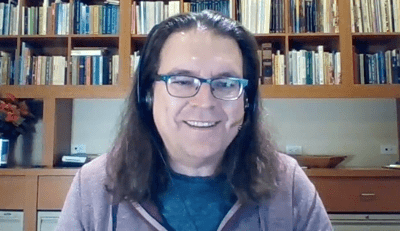
 In this Mormon Stories Podcast interview, historian John Hamer discusses the 19th century historical and cultural context—largely forgotten today—that informed the composition of the Book of Mormon.
John Hamer graciously created a number of slides that give important visual cues to his research surrounding literary criticism of The Book of Mormon, possible literary influences for The Book of Mormon, multiple 19th century instances of writers attempting to tie ancient American artifacts to Israel, and much more. This interview may be best digested using our video editions below.
___________________________________
This interview is part of the Mormon Stories Podcast “Examining Mormon Truth Claims” initiative that involves a new set of essays being released at www.www.mormonstories.org/truth-claims and a billboard campaign on I-15. For more information on how you can help in this effort, please visit www.www.mormonstories.org/billboard.
Part 1 – We discuss literary criticism of The Book of Mormon: This transcript is machine-generated and lightly edited for readability. The audio is authoritative. Please excuse occasional errors in names and spelling. John Hamer [00:00:25] You. John Dehlin [00:00:30] Hello everyone and welcome to another edition of Mormon Stories podcast. I'm your host, John Dehlin. It is January 25, 2019 and I, as always, could not be more excited to have with us back on Mormon Stories podcast. Historian, friend, scholar, priest, I don't know what to call you. Pastor 7070 John Hamer. You would have to be dead or something to not know who John Hamer is. If you're a regular Mormon Stories listener, we've had John Hamer on numerous times to talk about a number of issues because he's so knowledgeable about Mormon history, Mormon scholarship, Mormon studies, etc. John Dehlin [00:01:18] John Hamer is currently a 74 community of Christ, which for those of you who don't know is once was the Reorganized Church of Jesus Christ of Latter Day Saints. But John Hamer was raised devout Mormon, attended BYU and you know, within the past several years reaffiliated with Community of Christ, became one of the leaders of the Toronto congregation where he and his family sort of helped lead that church and recently was called as a 70 for community of Christ. And we are bringing him on today because we are in the middle of a new initiative on Mormon Stories Podcast. For those of you who don't know, we started an initiative that we're calling the Truth Claims Initiative. John Dehlin [00:02:08] We're introducing some new web content to MormonStories.org, if you go to MormonStories.org Truth Claims, you will see a series of webpages that we are currently editing and massaging. And we just want Mormon Stories to have some online web content that help address or explain the story behind many of the Church's truth claims. So if you think about it, for many years the LDS Church didn't necessarily teach openly its history. John Dehlin [00:02:43] And there's been a reckoning over the past 10 years where the Church has come more clean about its history and even has published several gospel topics essays trying to address some of the more problematic historical notions and issues and problems and conflicts with the Church. However grateful we are for that progress, for those steps towards transparency, I think many if not most fair minded people would agree that the Church still has a long way to go to be fully transparent and open about its history. So what we're doing on Mormon Stories is we're writing the essays that the Church should have written and we're publishing them so that people can get a sense for the story of, of the Church's truth claims. John Dehlin [00:03:31] And we have an accompanying billboard campaign to help promote this initiative. So right now if you go to mormonstories.org treasure. You're going to see our first episode, which, our first initiative, which is a big long essay on Joseph Smith's treasure digging and folk magic. And in conjunction with that, we've interviewed several scholars and historians to discuss Joseph Smith's use of folk magic and treasure digging, which includes Kathleen Malonakis, Dan Vogel, John Hamer, we've interviewed Richard Bushman and others in the past. And so all of that you can find on one page. And right now we have a billboard on i15 that says, Was Joseph Smith the Treasure Digger? John Dehlin [00:04:16] Go to MormonStories.org Treasure and it's got the Mormon Stories logo. So that's the campaign that's going on right now. Right now we're also furiously completing three essays on the Book of Mormon that talk about the cultural context that informed the Book of Mormon. It talks about, you know, the process for the Book of Mormon, many of the sources of inspiration that we think inform the Book of Mormon text. And we hope within a few weeks to be releasing that essay both for revision and review, but also for final publication. John Dehlin [00:04:52] And we'll be switching the billboard to say something to the effect of, you know, who wrote the Book of Mormon? Or how is the Book of Mormon created with a question mark? And that'll be the second billboard and hopefully is at least a 12 month billboard campaign. And that's kind of what we're doing. And we're going to be interviewing several people for the Book of Mormon episode. We've already interviewed Dan Vogel about the Book of Mormon's creation. So you can go to MormonStories.org right now and get Dan Vogel's view. Good. Three hours with Dan Vogel on how the Book of Mormon was created. But now we also have, we can't do this topic without John Hamer. John Dehlin [00:05:30] And so today we're going to be doing part two of our in depth interview with John Hamer. Part one was around treasure digging, folk magic. Today we're going to be covering the book of Mormon's 19th century context. A lot of important information to help us understand the background behind the Book of Mormon that informed its composition. A bunch of information that's largely forgotten today. And then we're gonna bring John Hamer back for a final episode in this series on his actual theory on how the Book of Mormon itself was composed with the timeline and with, you know, his sense for how it was created. So that's what we're in store for today. John Dehlin [00:06:14] We're really grateful for everyone who has joined us on Facebook live. One of John's many, many talents is he's a graphic designer, he's a cartographer, he's a map maker. He actually helped create maps, as I understand it, for the Joseph Smith Papers project, which is amazing. But he's also designed more book covers than more book covers from Mormon books than probably anyone alive. John Dehlin [00:06:41] So he's a gifted graphic designer and, and he's put together 99 slides for this presentation that we're going to use to inform it. So if you can check out either the Facebook video of this or the YouTube video once it's released, you'll get an even more robust and aesthetically pleasing set of data or information that always lovingly and beautifully complements John's verbal audio eloquence. John Dehlin [00:07:13] So check out the video version of this episode if you can. And of course you want to support the billboard campaign. We have enough money to fund three months. It costs $5,800 a month to put a billboard up on i15 in Salt Lake City. This billboard right now is on the right side south, facing around 3,200 south. As you're driving north, you can see it up on the right hand side. If you want to see this billboard continue, we're going to need your support. So you can go to mormonstories.org billboard if you believe in this campaign, if you want to support the awareness of truth claims and if you want to help other people understand Mormon history better, Support this campaign. John Dehlin [00:07:55] 100% of your donations to the billboard go to the billboard. We'll take no overhead out of that. It's all to fund the billboard. And just one final thing. Some people felt like our current billboard campaign is a little bit sharp elbowed. They think it feels a little bit more anti Mormon. Our first billboard just simply said know your religion. Everyone agrees. I think that was a really brilliant first billboard. But some people feel like the question was Joseph Smith, a treasure digger with the question mark, was a little bit aggressive, maybe even smelt of anti Mormonism. Whether or not you believe that, I just want to say one thing. John Dehlin [00:08:30] Our goal is not to take people out of Mormonism. It's not to create disbelief within Mormonism. If somebody's happy with Mormonism and happy with their understanding of Mormon history, we are thrilled for them and we want them to stay exactly where they are, as happy as they want to be. There are a lot of people who either want to know the true Mormon history because for them truth or history or evidence matters, or they're just interested in this stuff or their engagement with the church, their tithing, their time, their commitment, their devotion, their reputation. All the stuff that they give to the church is based on a certain understanding of the church's history and of its truth claims. John Dehlin [00:09:10] But if they had different information, they might make different choices with their time, with their money, with their reputation, with their devotion, etc. We just feel like everybody deserves, who wants to be, deserves to be fully informed about the church's history so that they can make informed decisions about their lives. And those are the people we're targeting with this campaign, people who are questioning or wanting to learn more. We're going to provide them with a more honest and open and accurate version of Mormon history than the Mormon Church itself is providing. John Dehlin [00:09:44] And we're going to work to be unbiased, fair with all this information, both in terms of the podcasts and with the written word. So those are our motives. It's not to tear people away from the church. It's not to destroy belief. It's just to help those who are interested find a more accurate understanding of the world and of the church and of reality. John Dehlin [00:10:05] For whatever reasons people might want an accurate, healthy, fair view of the church. So that's our motives. Please understand that and we'll talk about that more. If you want to do a favor for your friends and family right now, share this live stream on your Facebook page, just say hey. An amazing scholar, John Hamer, is about to share some really important information about the Book of Mormon. If we can get 30 or 40 people to share this right now, it's going to help a lot of people come to understand the Book of Mormon and the Church better. So I'm going to be refreshing this event and I hope to see at least 30 shares, you know, within 15 to 20 minutes of this launching. John Dehlin [00:10:46] Because that's how we get the word out, is through people sharing. Just like the church sends out missionaries, we should all be missionaries for truth. And what you're going to get today is more truth about the Book of Mormon than you've probably ever got before. So with, I don't know if that's too much of a build up, that's John Hamer [00:11:01] a lot of an expectation. John Dehlin [00:11:02] Without any further ado, John Hamer, welcome to Mormon Stories podcast. John Hamer [00:11:08] Thank you. So excited to be here. Always, always enjoy these conversations of your. Anyway, all the work you're doing and I feel like this new initiative, it's a great way to take this amazing wealth of content that now, over all these years that you've kind of compiled, bringing it together, like you say, into a particular page have some summaries, also a great essay to tie it together, but then also the links to, let's say, past podcasts that you've done on that purpose. It helps people organize their thoughts on all these things and find all of this. And, and I think the idea of the billboard is just bringing that to a bunch of eyes that maybe aren't otherwise seeing it because people aren't already in the podcasting as a community or listening to podcasts. John Hamer [00:11:52] And so then this is a new way to get eyeballs on it. I mean, to the charge that the current billboard that you have is sharp elbowed, I kind of feel like that for people for whom they're not really aware of Joseph Smith's history at all, that may seem like a very, you know, I don't know, a sharp term to say treasure digger, but I mean, the answer is he is a treasure digger, you know, and it's a, it's very, we know that from the sources. The church history department is quite aware of that. And I don't know. So I should think that that isn't, I mean, I mean, it isn't actually historically partisan to be saying that is what I'm suggesting. John Dehlin [00:12:33] And that's one of the weird things about the church's Gospel Topics Essays program. The church is acknowledging all this stuff and they're taking the time and money to publish these essays, but they're also really hesitant to want to share it broadly because they don't want to infect people with disbelief. John Dehlin [00:12:50] So the Church is in this conundrum of wanting to be open and honest, but wanting to be very judicious about who actually knows about the essays. So I meet all these progressive and post Mormons who are in trouble with their bishops and stake presidents because they have lost belief or have spoken openly about a lot of these issues, Book of Abraham, polygamy, book of Mormon, etc. They're in trouble with their bishop or stake president because the bishop or stake president not only hasn't read or absorbed this information, they don't even know that the essays exist. And that's still a reality in 2019, is that most bishops and stake presidents not only have not read these essays, but don't know that they exist. John Dehlin [00:13:31] And that's unacceptable because we need broad awareness. And you think even Russell Ballard said every Mormon needs to come to understand and reconcile with its true history. And so we're doing our part to help Elder Ballard and others spread the good word and spread the good information that the Church itself has acknowledged, and you're right, the church has acknowledged that Joseph Smith was a treasure digger, that he did get busted for it. And they've got their own essay about that. John Hamer [00:14:01] Right. John Dehlin [00:14:02] So, yeah, so that's. So thank you, John, for that endorsement. Anything else you want to say or to correct kind of before we jump in? John Hamer [00:14:12] No, I think that sounds great. Yeah, we can go ahead. I mean, there's so much material, like you say, 99 slides. And I even at that point, couldn't even get to the composition process. And so therefore, that's why we have a part three. So we'll see how long it takes to go through all of this. Exciting. John Dehlin [00:14:30] All right, so why don't you. Why don't you tell us, just a few, in a few words, what we're about to see, just so people get a sense for what, you know, set it up with a little bit of context. John Hamer [00:14:38] Yeah. So the idea here is that I think that when people now in the 21st century get a hold of the Book of Mormon, it is such a alien, strange thing that, you know, it's the. In a way, it's the idea of it even, you know, the idea that ancient Israelites got in boats and went to the Americas and became the Native Americans or the primary ancestors of the Native Americans or however you want to say it. You know, this is like. It's such a. It seems like a completely. I don't know, like Atlantis style, you know, some kind of crazy thing that, you know as some kind of very kooky, very strange and unique idea thing. John Hamer [00:15:25] At the minimum, unique. And of course, it's the object of ridicule in the Book of Mormon musical and things like that, where the I Believe song has that as a real laugh line. I believe that ancient Jews and boats came to America, all these kind of things. John Hamer [00:15:42] But the reality of it is, what I'll show is that in fact, in its context, in its time period in 1830, when the book of Mormon is published, that this idea is actually totally commonplace. This is the accepted understanding, the accepted worldview of how the Americas fits into what was then primarily a biblical worldview otherwise that people had and how we could explain, based on people's understanding or literal reading of the Bible and its history, everything from Noah and the Flood and how you could then explain why there would be people in the Western Hemisphere, why they aren't mentioned in the Bible, all those kind of things, the basic ideas, and we'll get to it anyway, that the Book of Mormon talks about a lost, highly civilized race who has been exterminated, presumably in antiquity, by the Native Americans, the Nephites and the Lamanites. John Hamer [00:16:40] That story is entirely well known to everybody at the time period prior to the publication. Everybody, European Americans. And so anyway, we'll talk about that. And I also want to give a little bit of context also, or a little bit of a description of the academic discipline of literary criticism or the study of text itself, which is one of the academic disciplines, like the discipline of history or archaeology, that we use to look back at the past. And it's one that's absolutely essential because history, when you're a historian, you have to work from text. The idea of history, you know, is how you read the text, how you understand the primary sources from the past in order to reconstruct what you believe is the most likely scenario given all of the other. John Hamer [00:17:30] All of the other source material. And we have to read into them. Well, part of the idea then is we have to understand when was any given text written. And so this is going to give us a little background of how that discipline has emerged, how we understand those kind of things, and how scholars have from the beginning, applied that to Scripture, specifically the Bible. And so with those kind of things, we can see, you know, again, the Book of Mormon, how we understand, to date it as a composition, and then also how the context around it, how the story that it tells, is actually completely within that early 19th century context. John Dehlin [00:18:08] I love it. Really quickly, one of the things I love about you is that you are an active member of a restoration. You're a leader in a restoration branch. Somebody might say, well, you must hate Mormonism, you must hate the Book of Mormon, you must hate Joseph Smith, you must hate religion. Talk very briefly about, you know, your love for Mormonism and the Restoration, because you're a 70 in a sister church, right? John Hamer [00:18:35] So, yeah, so obviously we're in the same way that people in the LDS Church, or rather you're not even allowed to say that. Anyway, people in the Church of Jesus Christ of Latter Day Saints headquarters in Salt Lake City, Utah, are no longer able to say. We're not no longer supposed to say the word Mormon, you know, to describe themselves. Right. And so in that same kind of way, the people in Community of Christ haven't ever really adopted the term Mormon to describe themselves. But essentially, like you said, Community of Christ is named from the 1870s on was the Reorganized Church of Jesus Christ of Latter Day Saints. John Hamer [00:19:13] And so the tradition goes all the way back to 1830, just like the LDS Church. I'm going to say, because I can't keep saying the whole thing. So just like the LDS Church goes all the way back, since 1844, the two have split. And so essentially, it's an idea of the Community of Christ is essentially a reform Mormon church. The people who stayed in the Midwest who opposed polygamy, who opposed a lot of the late Nauvoo theology and practices. So things that Mormons now considered to be considered temple practices, that's a Utah. John Hamer [00:19:52] Those are all Utah things. And so anyway, those aren't part of it. But the Book of Mormon itself has continued to be a part of the canon, and so is part of the standard works of scripture in Community of Christ, as is the, you know, the original Book of Doctrine and Covenants as it had existed up till 1844, and then with all of the additions that each prophet, president of Community of Christ has brought ever since then. So we're now up to 165 sections, with a bunch of them not overlapping because of the sections of Joseph Smith material that the LDS Church added in the late 1870s. John Hamer [00:20:34] But in any event, we have lots and lots of additional sections from Joseph iii, from Frederick Madison Smith, from Israel A. Smith, from W. Wallace Smith, from Wallace B. Smith, from Grant McMurray, and from Steve Veazey, who's the current prophet. And there may well be. I think we do have. John Hamer [00:20:51] I think we have inspired counsel that could. Anyway, the World Conference is happening in just a few months, and it's the conference of the church that decides what to add to canon. So anyway, so the point of it is therefore, that, yes, the original, the first prophet of the church in which I serve in the leadership, certainly as a pastor of the congregation here, was Joseph, Joseph Smith, Joseph Smith Jr. And then thereafter, all the prophets that I've just mentioned. And the Book of Mormon is in our canon of Scripture. John Dehlin [00:21:21] And so your love for Mormonism is what? John Hamer [00:21:24] I'm totally devoted my entire life, I'm totally committed to service in my church, service serving this movement, to reaching out and beyond the individual church, but to wherever we can do help beyond that. So, John Dehlin [00:21:44] all right. And are you trying to take people out of, you know, are you trying to harm people's faith or get people to hate? John Hamer [00:21:51] No. I mean, we've talked about this before in a previous podcast, which is Community of Christ doesn't consider itself to be the one and only true church on the earth, nor, in fact, do I consider Christianity to be the one and only true religion. Rather, we believe that we have a special calling that is informed by our heritage, that is informed by our special tradition. That, frankly, to me, is vital enough that I want to stand on the rooftop and share it to all the world. To say that we have a wonderful way of finding meaning and of focusing on mission in this life, on doing things. John Hamer [00:22:30] Our mission here in Toronto congregation, as we say it at every one of our lecture groups on Tuesday, invite everybody into community to continually learn and grow, to abolish poverty and needless suffering, to pursue peace and justice on earth, and to live life meaningfully together. And so within our tradition, building that mission built upon the rich heritage that we have as a. As a church, knowing that there's been all sorts of error, as everybody. All the prophets before, you know, and all the members before are all human beings that are simply writing down their own human response to the divine. So our understanding of Scripture and revelation is that text is all written by human beings, you know, and it is within their own limitations, their living at time and place when they may well be living in, like, the time of the Roman Empire. John Hamer [00:23:24] Like Paul, who hasn't ever even imagined a world without slavery, and so therefore doesn't know any better than that he's living in a time before they understand about the existence of sexual orientation. And so therefore he's just talking within the worldview, the limited worldview that is there. In other words, because they are limited by their time and place in history, they write their own human errors into everything. But everybody is trying to respond to the divine. So that's the understanding within the community of Christ tradition. John Dehlin [00:23:55] I love it. And thanks to Scott and Dan and Leandro and others who have already shared this episode. We've got 13 shares so far, so another 17 will reach our goal of 30. John Hamer [00:24:08] Very good. John Dehlin [00:24:09] We're getting there. All right, and welcome to. We've got about 60 people joining us right now on Facebook Live. We want to ask you to feel free to make comments and ask questions throughout this episode because we love to make this as collaborative and as dynamic as possible. So we welcome your comments and questions as we go. All right, so, John, without any further ado, should we dive into your presentation? John Hamer [00:24:34] Sounds good. John Dehlin [00:24:35] All right, so I'm going to share the screen, and I'll just advance it whenever you need me to advance it. John Hamer [00:24:41] Okay, well, this is one more introductory proviso here. Although we talked about just now my own personal understanding and indeed the community of Christ position on Scripture and the fact that this book is part of our canon. My presentation, however, is from an academic perspective and so you do not have to have that view at all or share that view in order to, you know, talk about this, because this is a meant to be anyway, anyway, an academic perspective as opposed to. It doesn't stop you from having the other view if you want to. John Dehlin [00:25:19] Yeah. So you're not trying to speak to any divine events that may have occurred. You're just basically saying, how do we understand the text? John Hamer [00:25:28] Right. John Dehlin [00:25:29] Using our best tools of science and scholarship. John Hamer [00:25:32] And my views on the divine component of that are not incompatible with the academic stuff. So you can be academic and you can come from an atheist perspective, and it would also be able to be understood exactly the same way. Whereas my view is not that precision. Right. But anyway, academics is a place where you can talk about it more neutrally on a common ground of how we understand from, like I say, academic disciplines like literary criticism, like history, archaeology, and that sort of thing. John Dehlin [00:26:06] All right, let's dive in. John Hamer [00:26:09] Okay, go ahead. All right, so like I said, I want to talk a little bit about literary criticism just as a little bit of a precursor to this. And so this is an academic discipline. It emerges in Western civilization in the modern era. So my background in training in graduate schools as a medievalist. And so for me, modern times is more recent or longer ago than for most people. A lot of people use the word modern to mean, you know, like the last hundred years or something like that. But I usually mean it to be since about 1492. So anything on so modern times? John Hamer [00:26:45] And so it's something that we didn't have. We had people could do, could judge texts a little bit before this, but all of the kind of the techniques and things like that are much more sophisticated. And primarily it develops in the west because of how important biblical study became because of the Protestant Reformation. So the Bible, which is now heart and center of pretty much as we think of all Christianity, but it's especially central to Protestants because the Protestants decided that all of the other pillars of authority upon which Christianity had traditionally rested, so apostolic succession, tradition, the writings of the early Christians, that all of those were negligible and in fact, that sola scriptura, that the Bible itself is the sole source of authority. John Hamer [00:27:41] Right. And so that's concomitant with this time period of the invention of the printing press. And so therefore, people suddenly had Bibles and they suddenly were translated into their own language where they could read it. So it wasn't just what the priests could read in a language that maybe you didn't understand. And so as a result, this relationship that Christianity has had with the Bible in modern times is absolutely different from what Christians had ever had prior to that. But part of that had what became a real commitment to try to study that in all of the universities of Western Europe. And so the academic discipline of literary criticism emerged to just do that. John Dehlin [00:28:21] Yeah. And also for those who are interested, my series with David Bacavoy goes into a really in depth, you know, experience with applying literary criticism, historical criticism, textual criticism to the Old and New Testament and the Book of Mormon and the Doctrine and Covenants and. John Hamer [00:28:41] Oh, great. Good. John Dehlin [00:28:42] It's definitely one of the best, you know, top Mormon stories interviews of all time. So don't miss the David Bacchavoy interview if you really want to get into literary criticism. John Hamer [00:28:51] Yeah. So this is gonna be just a summary compared to anything like that. John Dehlin [00:28:54] Yeah, that's good. All right. John Hamer [00:28:57] Okay, so I'll take a side trip here and talk about the story of King Arthur. A lot of people know a lot about King Arthur. There's present day. There's been TV series lately. There's lots of movies. Anyway, endure. It's an enduring story that people know a lot about. Right. John Dehlin [00:29:12] Yeah. John Hamer [00:29:13] So let's go ahead. John Dehlin [00:29:14] So, yeah, tell us about King Arthur. John Hamer [00:29:17] Okay. So the story of King Arthur, very well known today, however, in the earlier Middle Ages, so up until the early 12th century, he was totally unheard of. So nobody in Britain would have England, Norman England, let's say, would have ever heard of King Arthur, said anything about King Arthur. So all that changed in the year 1136, because in that year there was a British cleric named Geoffrey of Monmouth who published a book called Historia Regum Britannia, the history of the kings of Britain. And he claimed that he had translated that into Latin, that Latin book from an ancient book in the British language. So the history of the kings of Britain. Yep. John Dehlin [00:29:58] I hope you're not going to deconstruct my belief in King Arthur, but let's keep. John Hamer [00:30:02] Oh, no, but watch out. So this became a medieval blockbuster. So Jeffreys B book gave a history, we'll say, of ancient Britain, including its greatest monarch, King Arthur. And Geoffrey, as an aside, here is also the author of a book of the prophecies of Merlin and the life of Merlin. And in all, actually, Jeffrey's work here is actually the first appearance of the character Merlin too, as he's known today. So Jeffrey's history then of the kings of Britain as a medieval blockbuster. And the stories of Arthur and Merlin as you know and continue to be told and retold all the way up to the present. John Dehlin [00:30:43] Okay. I'm trying to figure out what the problem with all this is. So far, so good. John Hamer [00:30:49] Here's an example of how immediate. This was a blockbuster. So they didn't have printing presses. And so when you're publishing things, you essentially. These are still manuscripts that have to be sent around. I think 200 some manuscripts of Jeffrey's book survive, which is crazily popular to have that many copied and that many already survive. And you can see here, it's not a very good mosaic, I don't think. But anyway, in the. It's cool mosaic in the floor of the Cathedral of Otranto in the very south of Italy. So on the opposite side of Western Europe From England, just 30 years after Geoffrey's book first appears, there's already. John Hamer [00:31:27] This is an important enough character that says here Rex Arturis, right. King Arthur. And so King Arthur is actually depicted in the cathedral, you know, just within 30 years of the first time anybody had ever heard of Arthur. So he became immediately popular. And in part, this is because, although Arthur was this ancient king, as the knights, who, you know, initially monks because it's Latin, but then it becomes translated or written in French romances and things like that. Medieval French. And so as the knights are hearing the deeds of Arthur and everything like that, even though he's this ancient character, and all of the things that he does, you know, really coincides and really jived for them with the ideas of chivalry that were emerging in their class. So he was immediately popular because he spoke very well to the context of their present day. John Dehlin [00:32:18] Okay, so far. Still loving it. Loving everything. John Hamer [00:32:23] So, you know. Oh, here's anachronisms, John. John Dehlin [00:32:29] Wait, there. There are anachronisms outside the Book of Mormon. And I'm joking, actually. David Abacavoy showed us many anachronisms in the Old Testament and in the New Testament. So for. So for people that are just like, number one, think that it's just the Book of Mormon, or two, that, you know, for Christians that think that it's, you know, we all have, you know, anachronisms are everywhere, but keep going. John Hamer [00:32:52] Yeah, yeah, yeah, yeah. So Christians generally, I would say I talk to Christians all the time who try to make this kind of case about the Book of Mormon. And I can immediately turn to different books in the Bible and everything like that and have precisely the same complaints that they possibly have for the Book John Dehlin [00:33:11] of Mormon for listeners who don't know, tell us what an anachronism is. John Hamer [00:33:16] So an Anachronism, there's a couple bunch of different things that it means specifically something that's out of time, out of place properly. And so I'll explain here, for example, in this particular text, the anachronisms that are in the Geoffrey Amandmus book about King Arthur, the history of the kings of Britain. So one of the happen is that. So King Arthur, he portrays King Arthur as a British king who is, which is to say native Welsh, native, the first Celtic people that are there at the time of the Germanic invaders, the Saxon invaders. So he pushes them back on the one hand and then while he's. John Hamer [00:33:57] They eventually take over the island, right? Because obviously that's the way the history works. And it becomes the Anglo Saxon kingdoms and the Welsh are pushed into just Wales and Cornwall and places like that. But anyway, so immediately after he does that, he's such a great king that he then crosses the channel himself and he conquers almost all of northern Europe, all the way to Dacia, which is to say Romania. John Hamer [00:34:20] And even while he's there, then he fights against the Romans. The Romans bring out an army and they're led by this completely otherwise unknown to history, procurator named Lucius Tiberius. And King Arthur is really on the verge of conquering Rome when this whole thing with, you know, his. John Hamer [00:34:40] What's his name, Morgan Le Fay and everybody, you know, call him back to England because of this rebellion that's happening back home. And so this is an anachronism in the sense that there's all kinds of anachronisms here, but in the idea that just anything that this is a huge anachronism in the sense that there was never a British king at the time of the Saxon invasions that conquered all of northern Europe. We would have that. We would have that in all kinds of other different sources, you know, from the time period, essentially. John Hamer [00:35:10] I mean, this is a huge anachronism. Any other thing could be an anachronism, though. So, for example, if it's talking, I mean, an anachronism, for example, in Shakespeare's play Julius Caesar is that when one of the different symbols that foreshadows the fact that Caesar's about to be assassinated is that the clock, the clock strikes. John Hamer [00:35:35] And of course, clocks are a medieval invention as far as Shakespeare knows. They've been around forever. But of course they didn't exist. Mechanical clocks like that did not exist at the time of Julius Caesar. So that's an anachronism that Shakespeare has included in his play because he's not a Historian. Right, right. John Dehlin [00:35:53] All right. John Hamer [00:35:55] Okay. So this is how that works. And so in. In contrast, and when we're thinking about anachronism, the presence of the anachronism shows that the text isn't ancient. Right. So it shows that the text is 12th century and is not from the 5th century or whenever Arthur might have been meant to have lived as a. If he were a historical figure. John Hamer [00:36:19] So the fact that Jeffrey's text maybe, though, occasionally gets something right about ancient history, that doesn't. It doesn't matter. There's no such thing as a hit or a bullseye. Getting, you know, one or other things right doesn't wipe out the anachronisms. The anachronisms allow us to date it. You know, Shakespeare might have said all kinds of correct things about Roman history. That doesn't make the play Julius Caesar any more likely have been written in Roman times. It means that the anachronisms, anyway, and everything else help us, you know, have us place it in the. In the current time. So anyway, there's no such thing as hits or bullseyes that sometimes apologists for texts who want to maintain a view that they're ancient have. John Hamer [00:37:00] So the only thing that it can show is that if there is a whole bunch of material that is correct. So, for example, it just means that Geoffrey of Monmouth, in this case, had access to earlier works of history, such as the Venerable Bead, such as Gildes. He may have had a king list. He may have had a list of. John Hamer [00:37:23] Of historical figures, and Arthur of some kind might have been on that list. But there's nothing. His stories about Arthur have nothing more to do with the character than that. Right. So he's found a name, and then he's written largely a completely original story within anyway, and it doesn't mean that there is a true historical Arthur under that. John Dehlin [00:37:46] Got it. Yeah. So just because Nahom may be named coincidentally with some place in Saudi Arabia, and the apologists may want to call that a hit, which many would disagree with anyway, that doesn't nullify or neutralize the problem of steel and horses. John Hamer [00:38:06] Yeah, it's totally irrelevant. John Dehlin [00:38:07] Yeah. Okay, good. All right, so how does this apply to the Bible? John Hamer [00:38:11] Yeah, so like you said, you've already done podcasts that are. That are going to do this in a lot of detail, but this is really where literary criticism got, you know, started in the West. And so, you know, Christian scholars were very interested in the Bible and wanting to study it, and so the two different major branches of it. And you've already said and you already alluded to are lower or it's actually more frequently now called textual criticism. And that's the idea of seeking to identify the transcription errors and reconstruct the original author's text. So we know, for example, that there's this entire thousands year long manuscript tradition where the monks have to copy each copy of the Bible. John Hamer [00:38:53] And so when you're doing that, you can say, you can take a particular medieval manuscript, or let's say a manuscript of the Bible from the year 1300, and then you can say, well, this one is part of this family that was maybe coming through this particular earlier, let's say Bible copy from manuscript from the year 1000, which maybe goes back to this particular one from the year 500 or something like that, because they all have the same sets of errors in them, right? And so because some point or other, if you're, if you and your copy you inserted an extra line, or you accidentally copied twice a line, or you made any other number of errors, then those will often then be continued in all the ones that come after that. John Hamer [00:39:36] And so as a result of that, we can on the one hand try to reconstruct when we go through all the thousands of manuscripts that we have, and especially using the best and earliest ones we can identify, get as close as we can possibly can. We can never get to the original, but we can get as close as we can to what the original text would have been from the Bible. But then we can also kind of tell when a text is literally dependent. You don't, it's not just that it's literally dependent on the Bible. You can tell which particular Bible it's dependent on and what particular and when that Bible first emerged. John Hamer [00:40:14] So that's one of the things you do with lower criticism. The higher criticism or historic criticism, investigates the origin of the text and looks at its meaning in the historical context of the original author and who that author is writing to. So the original audience. And so whereas, for example, Christians, when they're doing exegesis and they're talking about the Gospels, and a lot of times they want to do historical background and they'll try to say, well, in Jesus's time, you know, this and that meant this and that, but the actually the correct way of doing the context is not what's going on at Jesus's time, because the Gospels are not history books. John Hamer [00:40:55] They're rather the context is the context of the author. So what were things like at the time that the author of Luke is writing in the 80s or something like that and, you know, and so that's the context. John Dehlin [00:41:09] Got it. Okay. John Hamer [00:41:13] Okay. So we'll just look. You've already mentioned there's lots of anachronisms in the Old and New Testament, so it's not just the Book of Mormon in any way. And so we have learned so much more in two centuries or more of doing this about the Bible than anybody ever thought was possible. They didn't have this idea going in, but now just amazing amounts of study have yielded lots and lots of results, including a bunch of scholarly consensuses. John Hamer [00:41:40] And so, although, for example, in the case of Isaiah, although there was a historical Isaiah probably who may have lived in the 8th century BC before the common era, we still have within the Book of Isaiah that we have today. So Isaiah 45:1, Isaiah is speaking to the emperor Cyrus the Great of Persia, who lived two centuries after that guy, you know, would have died. Right. And so he's living in the. In the sixth century B.C. and so that's an anachronism, you know. And so scholars agree then that the Book of Isaiah in its present form results from later additions to the original ancient text. John Dehlin [00:42:21] And if I remember correctly, David Bacavoi said there's likely at least three different authors to the Book of Isaiah, one being referred to as Deutero Isaiah. Is that right? John Hamer [00:42:33] Yep. So one's Deutero Isaiah, and the other one, I think, is Tritio Isaiah, so. Yeah, exactly. John Dehlin [00:42:39] And so that's the part of Isaiah that would have been written after Lehi left Jerusalem with the brass plates, which would mean that that part of Isaiah should not be appearing in the Book of Mormon because they would not have been on the brass plates that Lehi would have brought over. But the Deutero Isaiah is appearing in the Book of Mormon. John Hamer [00:43:01] That's right. John Dehlin [00:43:01] And so that's a problem. John Hamer [00:43:03] That's already a problem. It's gonna turn out that the problem is so much bigger than that. That almost doesn't matter. But. Yes, you know, because. But that is certainly one of the problems in terms of the Book of Mormon and placing it. It's completely impossible for Nephi to be quoting some of this Isaiah that he does, because, like you say, it's written not only after the destruction of Jerusalem, but after the rebuilding of Jerusalem, and everybody's been back in Jerusalem. John Dehlin [00:43:32] Got it. Okay. So, pseudepigrapha. We also talked about what that word means in the Bacavoi interview. But for those who didn't hear it or want a reminder, what does that word mean? John Hamer [00:43:44] So Pseudepigrapha means specifically authors who are writing under different names. And so you are. It's in a sense, a pseudonym, but except for the. In this case, it's not a pseudonym. It's actually. You're trying to say that you are an authority from an earlier time period. And so in that sense that the. The continuers, who we are happily calling Deuteron and Turtio Isaiah, are in fact, they're actually pretending to be Isaiah. And so in a sense, therefore, depending on how you want to look at it as a modern person, these are writers who are taking on for themselves the authority of the earlier author and continuing to write as if they were that person. John Dehlin [00:44:32] Yeah. And why would anyone do this? It's not necessarily with the intent to deceive. It can be with the intent to inspire and to get someone to be more religious and devoted to, for example, Jesus. So in other words, if you can write as if you're Paul or write as if you're Isaiah, then that word's gonna have more authority, it's gonna have more meaning, it's gonna have more emotional impact for the reader. And so it's a way to. To add credibility to what you're writing. It's not necessarily done with the intent to sort of forge and to deceive. It's often done with the intent to help. John Hamer [00:45:09] Well, or maybe both, because, I mean, motivation is that they, generally speaking, are saying, it may well be some of the cases someone has an anonymous text that they've written and that it has gotten attached. So then that one wouldn't technically be pseudepigraphic, but in some cases. So, for example, the Epistle to Hebrews, people attributed that to Paul, but in fact, it never says it's Paul anywhere. And so it's not actually pseudepigraphic. It's just some very early Christian writing. And somebody thought, oh, that sounds like Paul. It's not Paul, but it got in the Bible because people thought it was. And so anyway, but it's not that person who was intending to deceive in that sense. John Hamer [00:45:55] But like you say, it may well be that for other people who actually are saying that, you know, I, Peter, am writing this. Like, for example, the author of 2 Peter, who clearly is not Peter. Well, I'll show that in a second. That person is, in a sense, there is still a sense of where they're deceiving, but then again, they're not necessarily doing that for filthy lucre or to get game or whatever. It's going to be, but rather because they maybe thought that there had been that counsel from Peter before and it's fallen away, that these important teachings aren't being heard. And so that these are being made. John Hamer [00:46:28] Who knows? You know, we don't have, we don't have to address their motivation, but we have to at least just explain in terms of the complexity of this that happens sometimes. John Dehlin [00:46:36] It could be a follower that heard the alleged author teach these things and they're like, hey, wait a minute, my prophets being misrepresented. So I'm going to write as if I'm them because I was there and I'm going to correct the error that's out there. Right, certain. John Hamer [00:46:51] So it could be any of those things. John Dehlin [00:46:53] Yeah. Okay. John Hamer [00:46:53] So, so anyway, so an example of this, though that's a little more stark is the Book of Daniel, which pretends to be the work of a 6th century BC prophet, but it's actually composed, at least in the form that we have it in the between 167 and 163 BC. So we can know that pretty particularly. John Hamer [00:47:14] And we'll say, well, I'll show you why in the next one. Okay, so because Daniel, the Book of Daniel explicitly talks about the desecration of the Jerusalem Temple at 167 BC by King Antiochus IV Epiphanes, and then accurately relates other minute details of the guy's reign. So it just goes on and on and on about like we might say in Book of Mormon's levels of predicting Columbus and the American Revolution style of literary prediction. Daniel just amazingly predicts everything about Antiochus the Fourth up until it predicts that the guy dies in a camp between Jerusalem and the sea, when in fact he dies, you know, completely elsewhere in a completely different area. John Hamer [00:48:06] And so because it isn't aware of the actual circumstances of Antiochus actual death in 164 BC, scholars have all concluded that it's got to have been written after the events of 167 and yet before the events of 164. The book of Daniel also, although it's very aware of this desecration of the temple of Jerusalem, is not aware at all of the reconsecration that happens. And so in that sense, it's also definitely right from this time period. John Dehlin [00:48:38] So we can give a range. John Hamer [00:48:40] Yeah, I mean, that's pretty much written John Dehlin [00:48:41] after and before a certain set of dates. John Hamer [00:48:44] Yeah. And that's one of the closest ones of any scripture we can actually date. John Dehlin [00:48:48] Right. Okay, that's, that's valuable stuff. John Hamer [00:48:51] Yeah. So then the other way. And that besides anachronism, another huge tool in literary criticism that allows us to date texts, at least in a relative sense, is literary dependence. So when, you know, when one text, if you've written a text and then someone has just copied word for word a quotation into their text, you know that the wire, the one with the quotation, the word for word quotation is newer, you know, than the one that was the original. Right. And so that's a fairly obvious thing. And so. John Hamer [00:49:29] But it has all kinds of consequences in understanding and dating texts. And so, for example, the four canonical gospels of the New Testament, so Matthew, Mark, Luke, John, they're all, all of those authors are writing in Greek. And whenever they have Jesus quote verses from the Old Testament, from the Hebrew Bible, the text that these authors always use is the Septuagint. So the Septuagint is an earlier translation as a translation made by diaspora Jews in Egypt between the 3rd and 2nd centuries BC and so the point of that is that although Jesus and his disciples are very likely historical, Jesus wouldn't have been walking around speaking Greek. John Hamer [00:50:19] They're most likely speaking the common tongue of the people in Galilee, which would be Aramaic. And if they're quoting scripture, Aramaic is fairly closely related to Hebrew. So there would either be just maybe they might know the Hebrew and say it in Hebrew or they might be doing their own personal translations of that into Aramaic. John Hamer [00:50:39] If that were the case, and you imagine the Gospel writers, let's say, remembering what they said, although they're not eyewitnesses, actually, or if there was some kind of oral transmission of what they said in Aramaic coming down to them, then you would imagine that they would do their own Greek translation of that thing that Jesus was quoting. Right? John Hamer [00:50:59] But what in fact happens is every single time, every time you get to a quotation that Jesus might be making from the Bible, from the Old Testament, the Hebrew Bible, they in fact, are getting the Septuagint. So what that's showing is that anyway, that the text isn't maintaining a direct quotation, at least in Aramaic, that then is retranslated into Greek. But rather, as these Gospels are being literarily created by the individual evangelists, they are using the Septuagint as their source for the Hebrew Bible, for the Old Testament. And therefore, obviously, the Gospels are all dependent on the Septuagint. Right. John Dehlin [00:51:46] And this also is going to be more familiar in the Book of Mormon, just this idea of using texts in a text. Right? John Hamer [00:51:53] Yeah, yeah, yeah. I mean. I mean, there'll be all kinds of places in the Gospels where Jesus opens up the scroll of Isaiah and reads it, you know, or something like that, you know, and that you can see them quoting, right? John Dehlin [00:52:05] Yeah. Why? Yeah, why not? John Hamer [00:52:07] Just you've heard it said that, you know, an eye for an eye, you know, but I say to you, you know, that kind of thing. So they're quoting the Old Testament. Right. John Dehlin [00:52:15] And that's a commonly thing done. And it can be traced and it can inform you about the sources of the text. Yep. All right. John Hamer [00:52:24] Okay. So, you know, as the. In the same way, this shouldn't be too controversial that the canonical Gospels are all, you know, uncontroversially, they're written after the Septuagint, since the Septuagint is from the second and third, you know, the third and second centuries BC and the canonical gospels obviously are. I mean, Jesus is in the first century A.D. so the idea that the one is after the other is no big, you know, no particularly big deal. Although there are a lot of implications from it that we won't have to go into. But anyway, that just is showing how literary dependence works and we can know, John Dehlin [00:52:58] you know, which texts were written before and after which other texts. John Hamer [00:53:01] Yep. John Dehlin [00:53:02] All right. Okay. John Hamer [00:53:04] So probably you probably talked a little bit about then the issue, you know, which is people call the synoptic issue between the first three of the Gospels. The idea is that they, which tell a. Give a different picture and largely very, very different text and content than John. John Hamer [00:53:25] John, I mean, for example, doesn't have any parables in it, which you're like, wait a second, Jesus teaches a lot of parables. You know, there's all kinds of different things that are going on in John that aren't in the other three, but the other three do are, you know, they're called synoptic because they can, they read together. There's, there's, they, they tell a very similar story, although differently. They overlap in material. But the material actually also though is a direct textual relationship. So between Matthew, Mark and Luke, there is a literary dependency relationship. John Hamer [00:53:56] And there's, you know, been a number of different theories that scholars have worked out. You know, logically, there's only a couple of different ways it can be. So either one of them is first and the other ones are copying off of it or they all have a common source that they're all copying from. In other words, there's a direct literary dependency among those three, you know, and that's just to illustrate this. John Dehlin [00:54:19] And we talk about that a little Bit in our interview with Bart Ehrman. For those of you who want to get into historical criticism applied to the New Testament, Bart Ehrman's one of the world's top scholars in that subject. John Hamer [00:54:29] Yeah, absolutely. John Dehlin [00:54:31] All right. John Hamer [00:54:32] And so the. One of those. Just to explain that the most accepted hypothesis, with different variations, is that the authors of Matthew and Luke independently made use of Mark. So Mark is the. Is the earlier Gospel. Both Matthew and Luke, the authors of those texts, had access to that. And then there's another lost source which scholars call Q, which means. Which is German for source, Kefelle. And so anyway, that's a lost, unknown text. And so essentially, this is how most scholars agree that the literary dependence works. Which means then that Mark is the earlier Gospel. Right. Than Matthew and Luke. John Dehlin [00:55:19] Yep. And of course, that's important because you can see how the story changes and grows over time once you know the chronology of which. Which book is written when. John Hamer [00:55:30] Yeah, so absolutely. Yeah. And if we go to the next one. John Dehlin [00:55:32] Yep. John Hamer [00:55:33] We can see exactly that. Right. And so if we essentially we see that, what happens is that both Matthew and Luke have these two books which they find fault with in a bunch of different ways. What they both do is they chop up both of them, they intersperse them into writing their own text, but they also delete things, they also edit things, they change things, they add their own material. So it gives you especially, let's say when we have Mark where we can see it directly and you can see how Matthew edits Mark, then you get a sense of the kind of things that are important to Matthew. Right. John Dehlin [00:56:11] Yep. Yeah. Super important stuff. John Hamer [00:56:14] Yeah. John Dehlin [00:56:15] Because we just tend to think, oh, well, different people tell different parts of the story or they see it from different perspectives, but it all can be munged together as one big story. But that's. John Hamer [00:56:25] Yeah, but it's not. So. So it's. So, yeah, that's the way that it's often read, and that's even in the back of LDS Bibles. I think it's called the harmony of the Gospels and things like that. It doesn't work that way where you push them all together. It's rather, you know, you have the original source and the next two are literarily dependent on it. And so it isn't possible. It's not like we're looking at. They're not eyewitness accounts, any one of them. But if they were, it's not like three different eyewitnesses could go into their own room and write this way because they are using an Overlapping of words that show that Luke is directly copying words out of Mark's book. John Hamer [00:57:05] You know, so it is not. It isn't possible that they both go. And they are writing these down individually or something like that. They're actually. When I say literary dependence, it means you have the one book in front of you and you are using that text to make your text. John Dehlin [00:57:20] Right. Very good. Okay. John Hamer [00:57:22] And so just as. Just to end on this point, I'm probably gonna do what you guys want. People want to talk about the Book of Mormon, and there's a lot on this, but I think that this little graph is interesting. And so one of the things that you can tell with this is you take those two sources. John Hamer [00:57:36] If we look here at Mark, let's say so 76% of Mark is used by both Matthew and Luke. But then a bunch of 18% there is used by Matthew but not used by Luke. So Luke is much more likely to say, I don't like Mark. I'm throwing that away. And then just a little bit was deleted by both of them. John Hamer [00:58:00] And so then we don't know, since Q is lost, we don't know about how much of that might have been lost based on that same thing. So there might. They could have both deleted any number of parts. But you can kind of see then that essentially how these pieces work together. So 45% of Matthew's gospel is essentially derived from the contents of Mark, 25% from Q. There's 20% or so that unique to Matthew, and 35% of Luke is unique to Matthew. John Dehlin [00:58:33] Right. Very good. John Hamer [00:58:36] Okay. So I mentioned another one of these cases of literary dependence. And also pseudepigraphical work in the New Testament is the Epistle of Second Peter. So there's a little tiny book called Jude which doesn't get that read in the New Testament. But anyway, it claims to be written by Jude, who claims to be a brother of James. And. And James also is the brother of Jesus, although Jude doesn't make that case in this epistle. Or the author of Jude doesn't, which shows actually probably that James, the brother of Jesus, was very important in at least one of the Christian communities that in a different way than later understood in Christianity. John Hamer [00:59:17] I got pseudonym in my mouse. I got that. There's too much. That's a typo there. But anyway, go back. So anyway. So anyway, so the relationship in this case again is that the person who's writing Second Peter took the letter of Jude, cut it up. It's literally dependent. Changes the context a little Bit writes more around it and also claims that they are actively claims that all of it is the words of the Apostle Peter. And so we can say very clearly then that. And everyone's agreed that this is not Peter who's writing this, because in fact, the text is literally dependent on Jude and it's written much later than Peter would have been around. And Peter probably isn't able to write good Greek anyway. John Dehlin [01:00:00] And for anybody who's like, thinking, what does this have to do with the Book of Mormon? Why are we talking about all this? John is laying out all of these techniques and tools and ways of understanding relationships and validating and understanding the accuracy of documents, because all of this is going to apply to the Book of Mormon very directly very soon. John Hamer [01:00:19] Very soon. I think maybe next slide we'll see hopefully. John Dehlin [01:00:21] Yes, very soon. John Hamer [01:00:24] So the same circumstance occurs in the Book of Mormon. Right. So the Book of Mormon is literally dependent on the Bible. And that isn't a surprise to anybody. Although, as you already mentioned, John, that the Book of Mormon has an internal claim that it is using texts of the Hebrew Bible from prior to 586. So from prior to the destruction of Jerusalem. So the plates of brass. Right. Which is where presumably some of these texts, anything that had been written up to that time, however, that's really been shown not to be the case. And so, for one thing, it's amazingly problematic, almost even I don't think any scholars believe that the, for example, even the Torah, the Pentateuch, the five books that are attributed to Moses, nobody imagines that those were even compiled in their present form until. John Hamer [01:01:21] Until after they returned to Jerusalem, so until the time of Ezra. And so as a result, those wouldn't even be possible to be the five books of Moses as we have them, wouldn't be available as of 586, much less, as you mentioned already, Deutero, Isaiah, the other things like that. John Dehlin [01:01:41] Yeah. So a lot of the biblical texts that the Book of Mormon claims to drive from would not have been accessible, you know, to Jews, let alone to Native Americans. Right. John Hamer [01:01:52] To anybody. Yeah. John Dehlin [01:01:54] When they were accessing it. Yeah, yeah, absolutely. I mean, even just the use of Jesus's name. Right. John Hamer [01:02:00] Well, that's even more. But I'm even talking about. Yeah, we're going to get there. Right. So. So, yeah, so like you're saying, so actually what we, what we can do in the exact same way that I mentioned about how the New Testament is, for all of its quotations of the Hebrew Bible, is dependent on the Septuagint we also can say that the Book of Mormon is in fact literarily dependent on the King James version of the Bible, not any other particular version. So study after study, you know, of all the different components of it, everything like you were talking about from Isaiah, but more specifically then about, for example, the Sermon on the Mount that as it's repurposed in third Nephi, you know, coming from Matthew, who obviously anyway, is not written until decades after Christ would have supposedly appeared in the new world, much less Matthew, again having combined again, his text from Mark and Q, which also wouldn't have been written yet. John Hamer [01:03:00] And again, since you're quoting directly not only from the Matthew and text, but specifically from, you know, again, all of that entire text chain all the way down until the manuscripts that you get to the King James scholars that they had and the way that they put it into English and then specifically the version, the later version of that when, when it was printed with italics. John Hamer [01:03:22] And so one of the things that is very clear in the Book of Mormon is that when it diverges from the King James English, a lot of times what it likes to do especially is delete words that are in italics and stuff like that. So it's very aware of not only the King James Bible, but also which words in King James English are in italics. John Hamer [01:03:44] And so the dependence the Book of Mormon has on the King James Version of the Bible is really, really broad. So it is not just when Nephi is saying, my heart delighteth in Isaiah and just starts whamming in whole chapters from Isaiah, and you think, when is this gonna end? Why do we have to listen to. We could read Isaiah in our own book, you know, anyway, why do we have to read this in Isaiah? Whatever. But it's all over the place. So the I mentioned then all of the teachings that Jesus is having among the Nephites and Lamanites, anyway, the people of Zarahemla gathered there. John Hamer [01:04:21] Also all the different sermons, all these sermons that are pulled out of the Pauline letters of King Benjamin sermon, all the different writings that everybody has, all of these stories of people, the jail falling down around them of their bindings being loose, and these kind of things that are direct reworkings from Acts, all of these different ways all the way through the book is literarily dependent on the King James version of the Bible. So pretty. There's nothing that can be said about it other than that. John Dehlin [01:04:54] Yeah. So the Book of Mormon. And we'll talk more about this. It's clear that whoever was writing the Book of Mormon and Apologists and even faithful Mormons are now going to agree with this that it's pretty much obvious and irrefutable that somebody in the translation process or in the authorship process, whatever process you believe in, had a certain version of the New Testament or the Bible opened. And when they were writing down things from the Bible, they're literally copying text, right? Yeah, we'll get to that. Okay. John Hamer [01:05:28] So like you were just saying, therefore the only honest alternate option available. So if a person is trying to maintain some sort of historicity for the Book of Mormon, they're trying to maintain some ancient source other than the Bible, because we have the King James Bible as the direct literary antecedent. John Hamer [01:05:48] The only way you can assume that is, is that the Book of Mormon is a 19th century composition, a freeform original composition by Joseph Smith that is largely making use of massive amounts of biblical material that is being repurposed in different ways, is being put into sermons. It's being repurposed as stories about, as events in the Book of Mormon. And you have to then posit, as we did, this is almost the same exact tree as I was showing with Mark. And as Matthew and Luke are repurposing Mark, you have to posit that there is this missing ancient hypothetical source. But what you have to then do is identify which parts of the Book of Mormon clearly must be from that source. John Hamer [01:06:36] And so if there is anybody who's going to argue this, you know, any, anybody who's arguing anything about antiquity, the Book of Mormon, they have to start by being honest and Saying It's a 19th century book that Joseph Smith wrote that relies on the Bible. But I still believe there's an ancient hypothetical source. And then they have to go, using literary criticism, go through and say, I think this is where the source is, that is the actual ancient text. John Hamer [01:07:02] But I don't know that anybody's done this yet, but I mean, maybe a couple, maybe somebody who's really forward ranging on this issue, but it's certainly not mainstream anyway in the LDS understanding of this. John Dehlin [01:07:17] Right. What you're going to sometimes get, you'll probably address this is apologists who want to say, well, the Lord channeled deutero Isaiah to Joseph Smith. Right. They'll want to find some way to make a tie, you know, that required Joseph Smith to have, or God told Joseph to, you know, translate or to put deutero Isaiah in there. And that, that just leads to a more liberal, flexible version of how the book got created. And that's why many apologists in 2019 are moving away from calling the Book of Mormon a translation and moving into calling it Revelation. John Hamer [01:08:00] Well, even if you want to put it as God is the composer, then, Right. Then you have to again, it's still a 19th century text that God is composing in the 19th century that is based on, you know, this is your understanding. You're making a theological claim. Now this is really not a historical claim anymore, you know, because now you're asserting how God composes 19th century texts that are filled with anachronisms for God's particular theological purposes, whatever you're saying. But again, to be honest, you have to then say this is a 19th century text that God is writing with these particular cases and again identify what's the ancient part that God is also drawing from here that you're trying to maintain both to get. John Hamer [01:08:44] That's not history anymore, it's theology. So all of the things that people want to do, where they are doing that, they have to again, be honest at the front of it and saying I'm making a theological claim based on my understanding, my belief in how God operates and then specifically assert it to God as opposed to, I don't know what they're, you know, as opposed to pretending it's academic and saying, oh, this is still ancient in this way, you know, it's. John Dehlin [01:09:07] Right, right, right. Makes sense. Yeah. Then that begs the question, why would God create a 19th century book? Why wouldn't he create a timeless book that was accurate at all times and in all places? John Hamer [01:09:19] Well, you could. That's a theological idea. John Dehlin [01:09:21] Right. John Hamer [01:09:21] So I'm perfectly open people. What we're doing now, and I'm a theologian too, and I have theology. But what problems they. What unfortunately happens here when we're doing this is people who have a very particular theological idea or in some cases, you know, anyway, however they want to call it, think of it a supernatural worldview where. Which is a very particular. Try to argue these points academically but without being open about their particular what their under their supernatural understanding of this. And I think they should just go ahead and bring that forefront and say exactly what they're saying the supernatural part of it is. And then wait, then, then the whole rest of it's not in question. John Hamer [01:10:03] So I mean I'm going to be very open with my understanding of Scripture and how Scripture works. But this is the academic. What I'm talking about here is like I say, the academic question. Right. So it's 19th century composition here is not in question academically. John Hamer [01:10:16] So given the. At what am I trying to say there anyway, given that it should be say that not the end, given that its dating is not in question academically, then my goal in the rest of the presentation is to understand how we can best understand the text in its context and then how we can understand how it was composed. John Hamer [01:10:37] And then the problem that we come to now is that a lot of times when. Now I'm trying to explain how we can understand the text or how we can understand how it's composed, people assume that every one of those things is meant to be a proof. John Hamer [01:10:53] It's not a proof of how the text was made or how the text was composed. We have already proved that it's 19th century. It's over. Now we're trying to understand, you know, this. This 19th century text. And so every one of these different. These little things that I might say after this is not a proof. It's. It's given that we've already understand it's 19th century. How do we understand it? John Dehlin [01:11:15] Right, Good. All right. John Hamer [01:11:18] Okay. And so that's that little side component. John Dehlin [01:11:22] Yeah, no, that's important. Now we understand the tools that we can use to understand the Book of Mormon's creation. John Hamer [01:11:28] Yeah. John Hamer [00:00:31] Okay, so now let's look at the worldview in the context a little bit. Okay, so there is a poem a lot of times, you know, people, you know, like you were saying, you were talking about all the different books that people maybe think are influencing Joseph Smith's text and whether or not they do like View of the Hebrews, the late War, all these different things that people maybe think are. Unless people can demonstrate literary dependence like we have with the Bible, what I would suggest that these are doing is showing, they're showing the general worldview and understanding of the contemporaries of Joseph Smith. And so the idea that, you know, these ideas, like Solomon Spalding's novel, any number of these things that they sound so much like the Book of Mormon shouldn't surprise us when we realize that everybody believed that a Book of Mormon style story was probably the history of the ancient Americas at that time. John Hamer [00:01:23] By everybody, I mean European Americans, not Native Americans, they didn't believe that largely so by all of the other European Americans felt that way. And so this is just another example of this. This is a poem. I'm not saying in any sense here that Joseph. This is after, this is two years after the Book of Mormon, that this, this is not. William Cullen Bryant here has not read the Book of Mormon. You know, anyway, it's, it's, this is just the idea in the milieu, but I think it's so identical that people will find this to be very familiar. So he writes in this poem as O' er the verdant waste I guide my steed among the high rank grass that sweeps his sides. John Hamer [00:02:01] The hollow beating of his footsteps steams a sacrilegious sound. I think of those upon whose rest he tramples. Are they here the dead of other days? And did the dust of these fair solitudes once stir with life and burn with passions? So he's in the Midwest here, running, you know, which is now in the new American republic, has been vacant and open to colonization because of the death of the Indians and push back of the Indians by European Americans. And so he knows, though, that there was once a people that lived all across this land. And so he's saying, let the mighty mounds that overlook the river or that rise in the dim forest crowded with old oaks answer, so let all these mounds around me that everybody sees, that these were ubiquitous everywhere. John Hamer [00:02:52] A race that has long passed away built them all these mounds a disciplined and populous race heaped with long toil the earth, while yet the Greek was hewing the pentalicus to form symmetry and rear on its rock, the glittering Parthenon. So in other words, contemporary to ancient Greece, there was some lost race building mounds. And all that's left here are mounds. The red men came, the roaming hunter tribes, warlike and fierce. And the mound builders vanished from the earth. All is gone. All save the piles of earth that hold their bones, the barriers which they builded from the soil to keep the foe at bay. John Hamer [00:03:32] Till o' er the walls the wild beleaguers broke, and one by one the strongholds of the plain were forced and heaped with corpses. One more haply some solitary fugitive lurking in the marsh and forest, Till the sense of desolation and of fear became bitterer than death. Yield himself to die. Man's better nature triumphed than kind words welcomed and soothed him. And the rude conquerors seated the captive with their chiefs. He chose a bride among their maidens and at length seemed to forget, yet ne' er forget the wife of his first love, and her sweet little ones butchered amid their shrieks with all his race. So that's as much of that. John Dehlin [00:04:13] Tell us what that beautiful poem by William Cullen Bryant is basically telling us. John Hamer [00:04:19] Well, I mean, I mean, if that's not the Book of Mormon story to you, I don't know what is. Right, so here's the guy. There's one fugitive who's left. His entire race has been destroyed, you know, and he's now living among the natives. There had been this high civilization that was all across the land. They built mounds to defend themselves. But then the Native Americans came, people who were akin to the Mongols or something like that, destroying, who destroyed Baghdad and everything like that. Russia. And so now in the same parallel as far as early 19th century European Americans are concerned, this must have been what happened to explain all of these earthworks that they're finding everywhere as they move west into the Midwest. John Dehlin [00:05:13] And this Dan Vogel has a book about this, the kind of the legend or the, you know, the views of the mound builders. And you don't even need you, the Hebrews to get this. You don't need the Book of Mormon. There's just this. And you're probably going to talk about this, just this general understanding that the Native Americans were probably Jews or Israelites. John Hamer [00:05:37] Yep. John Dehlin [00:05:37] And that there was a light and a dark skinned group. And I'm just. I know I'm probably giving a precursor to what you're gonna say. John Hamer [00:05:42] Yeah, that's fine. John Dehlin [00:05:42] Yeah. John Hamer [00:05:43] But no, but you're right. I mean, this is. But people need to be aware of how ubiquitous this is because I still, you know, I don't know, get people who think that the Book of Mormon was simply plagiarized from view of the Hebrews or something like that. And I don't really. Or from the Spalding narrative. And it's just that these ideas are everywhere is what I counter. In other words, everybody believes that these. But that's the story. All the European American. John Dehlin [00:06:07] Yeah. All right. So that's super. That's super important. And if you want to reference the mound builders or mound builder myth, Dan Vogel's book, it is crucial to understanding the worldview that informs not only the Book of Mormon, but the view of the Hebrews, the Spalding manuscript and all sorts of other attempts to write books to explain, you know, where these Indians come from, basically, and to harmonize it with your understanding of the Bible and. And a 6,000 year Earth and the Tower of Babel and Adam and Eve, you know, because it's all going to come from that. And this is how it gets explained with the biblical worldview. John Hamer [00:06:48] Right, exactly, absolutely. John Dehlin [00:06:51] Yeah. John Hamer [00:06:51] So just back in time here, that's me at age 9 when I lived in. In this area in Ohio where some of the best relics of the Indian mounds were. And so we would go, I think more than once back in the 70s, to a very nearby site called Fort Ancient, which is nicely preserved and it's a UNESCO World Heritage site. Go ahead. John Dehlin [00:07:19] Yeah. John Hamer [00:07:20] And so anyway, this is the 3D representation of what it would look like. So essentially it's up on a hill and there's mounds all the way around it. And anyway, European Americans named it Fort Ancient. Although. Although very quickly, even the American excavators who were actually also had been in the War of 1812 and things like that were able to say these really aren't defensive by nature because the pits, for example, are on the wrong side. You can see the moat is essentially on the inside as you're looking at that. And so that doesn't make any sense as a defensive barrier. You do it the other way around. John Hamer [00:07:57] And so in fact it has to have a ceremonial status as making a sacred precinct or something like that, as opposed to what they assumed at the time originally, which was a defensive structure, essentially explaining that same thing into the poem. Right. So they made the mounds as a fortress against savage invaders or something like that before the civilization was destroyed. John Dehlin [00:08:19] Got it. Okay. John Hamer [00:08:20] So this is another example from that time period of Fort Ancient, the drawings of it. So it's the largest prehistoric hilltop enclosure north of Mexico. It's 3.5 miles of walls. It's a hundred acre complex. It is built by the Hopewell first nations peoples between, you know, 100 BC to 500-00 AD and so it's anyway a ceremonial center, although people in the early 19th century thought it was a fort. John Dehlin [00:08:52] Okay. John Hamer [00:08:55] And there's a bunch more of these. And these are also images then from the early 19th century as people were very interested in them. So the Great Serpent Mound, which is that one. Go ahead. John Dehlin [00:09:05] Yeah. John Hamer [00:09:08] Miamisburg Mound, near Dayton to Indian Mound, Georgia. Oh yeah. John Dehlin [00:09:14] And the idea here, and again I may be foreshadowing what you're gonna say is that the dark skinned Native Americans were too ignorant, were too unskilled, too savage to create these incredible structures. And they had to justify the fact that they were basically committing displacement and genocide. And you always have to dehumanize a group to be able to commit genocide upon them. And so this view of a white race emerges from this denial of the possibility that this dark race that you're killing and displacing could ever have created something of worth. John Hamer [00:09:53] That's exactly right. Yeah. And in fact, actually there's a direct justification which is to say because you have posited this former race which you assume is white because they're civilized, you know, they've made all of these instructures then because they were exterminated by the Native Americans, then exterminating the Native Americans is in a way simply justice. And people directly wrote that, European Americans directly wrote that. So it was actually definitely used as moral justification for outright extermination of Native Americans. John Dehlin [00:10:37] Right, Very good. John Hamer [00:10:40] And anyway, this is just to kind of show that they're ubiquitous. Right. John Dehlin [00:10:44] This is a map of it all over the New York, Ohio, Missouri, Oklahoma area. John Hamer [00:10:50] Right. John Dehlin [00:10:51] Just for those who aren't seeing the visuals. Just hundreds and hundreds of these. John Hamer [00:10:54] Yeah. And so this is just eight major sites, but they're everywhere. Right. And so there was just a huge amount of earthworks that were constantly being found. They're mostly all wiped out. So the farmers immediately, when in the settlers, when they would come in, they would just, you know, immediately start plowing them and tearing them down and everything like that. So only some of the best one biggest and best ones are still preserved. But you'll still. There's towns all over the place that are called like I'm in a suburb next to where I grew up in Minnesota, it's called Mound, Minnesota, you know, Mound City, all these kind of things. So there's different, they're remembered, you know, in some of the names of European settlements. But a lot of cases they're gone. John Dehlin [00:11:34] Right. And so you're, you're in the 18, early 1800s. You've got native Americans all around you and you've got all these mounds around you. You've got these teachings of the Bible and you're trying to harmonize all of them. John Hamer [00:11:47] Right. John Dehlin [00:11:47] And everybody's doing it. John Hamer [00:11:49] Yeah, absolutely. Okay, so where we are, like you're saying, so on the one hand, the European settlers are finding all of these earthworks. On the other hand, like you say, the Indians are all around them, except they're actually in a very terrible circumstance, Far worse than has been true for centuries, even after contact. So centuries of decimation from disease, loss of land, agriculture, hunting ground, to colonists, direct warfare with colonists, Native American peoples from the eastern North America. They're in a condition of just total crisis. They exist essentially as bands of displaced refugees anyway within their own territories. And so they have abandoned all kinds of practices that they may have had. John Hamer [00:12:36] If you can imagine, if 90% of the people in your society suddenly die and you have to recreate things, then you may have to go into essentially a refugee status. As you're being displaced, you move to a new place. Instead of doing the kind of traditional agriculture, everything you might have done for centuries where you had been living, you're now adopting new sorts of even going back to hunting and gathering or any kind of other ways that you're able to live under these circumstances. And so given that circumstance that the Indians now were in, and the short memories of the, of the settlers, of the colonists, they couldn't believe then that these impoverished survivors of Native American civilization had once had the capacity to produce this vast number of mounds. It just was totally total disconnect and incomprehensible as far as they were concerned. John Dehlin [00:13:23] Right. John Hamer [00:13:25] So like you already have said, the Europeans then, European Americans imagined that there must have been some previous race that built the mounds who'd afterwards had been exterminated by savages in the same way that as we mentioned, that Mongols had overrun the Middle east and Eastern Europe, Asia. John Dehlin [00:13:43] Yeah. And I, and this, this just this really, the light came on for me reading Dan Vogel's book and talking to Dan Vogel and thinking about it and learning about one of those first books he wrote, which was about the mound builders. John Hamer [00:13:54] Yep. John Dehlin [00:13:55] You know, I'm repeating myself, but this idea of a light skinned and a dark skinned race did not originate with Joseph Smith. It did not originate with the Mormon and it preceded View of the Hebrews. This idea that, that whatever savages were remaining must have annihilated a white skinned race that were their contemporaries at one point or another. That was what most people thought the predominant view. What's that? John Hamer [00:14:26] It's the predominant view, like you say. It's not anything like just a couple guys speculating or Joseph Smith saying something unique. That's the only thing that survived in any great size is the Book of Mormon from this time period. But the Book of Mormon is therefore a relic of a predominant worldview from its time. John Dehlin [00:14:48] Yeah, that's just so. It's so important to understand. John Hamer [00:14:52] I just throw the slide in because I like this movie. So anyway, Yul Brenner. It's Yul Brenner. John Dehlin [00:14:59] Yeah. John Hamer [00:15:00] Yul Brenner is the. As the. John Dehlin [00:15:03] He plays everything. He plays an Egyptian. John Hamer [00:15:05] He plays Native American. Exactly. King of Siam. John Dehlin [00:15:10] He was the dark go to guy, right. My Fair lady or what was that look? What was the King of Siam? John Hamer [00:15:16] Yeah, Thai. He's Thai. Thailand. You know. John Dehlin [00:15:20] But what was that musical? John Hamer [00:15:22] Oh, the King and I. John Dehlin [00:15:23] The King and I. Right. John Hamer [00:15:24] Yeah, yeah. And so I mean, I mean really, like as far as people in the 60s were concerned, you know, Yul Brenner was, was, was ethnic. John Dehlin [00:15:33] So anyway, who's the brown guy in Hollywood? It's Yul Brenner. Yeah. John Hamer [00:15:39] So anyway, so this movie is a 6, 1963 movie called Kings of the Sun. This guy from west side Story opposite Ramses, you know, opposite the King of Samuel Brenner. He plays a prince of these civilized white people who arrive in the United States area, essentially like Louisiana or something, by boat. They begin building a city. You can see that picture their pyramid down there. And they're immediately running into trouble with the more savage redder natives that are led by a guy who's actually called Chief Black Eagle, you know, so we can. It's not, it's a. It's. It's fairly the same story and it's still living on as of the 60s, you know. But anyway, that's. It's pretty much. That's like a last, last time anybody outside of Mormonism, I think, you know, was still thinking of this kind of a story. John Dehlin [00:16:30] So I love it. I love any Hollywood reference you can make. John Hamer [00:16:34] Yeah. John Dehlin [00:16:36] Okay, so we've got the mound builders. Now we're going to deconstruct the European lens. John Hamer [00:16:41] Yeah. So I want to go back now, even rewind just a little further to get to how. You have already talked about this a little bit when you're talking about like a Biblical worldview and everything like that. So why did Europeans jump to this really wrong, awful conclusion? And so let's look at that, okay? And so if you go back to, you know, the early modern era, Europeans had inherited from the Middle Ages two very different narratives about people beyond the known world. So this is a medieval map from the 12th century or 13th century maybe. And you can see on the edge of the world here, you know, there are all of these crazy, strange creatures and people, right? John Hamer [00:17:21] The different kinds of primitive savages that are far away from European civilization, far away from Roman civilization, right? And so that's like a sense that people had. And so one of the places on the, on the, on the map. So, for example, here we have a picture of one of these tribes. And so these are tribes who are. You can see them eating people, right? John Hamer [00:17:45] So there's the idea, one of the ideas then of people who are from the barbarous lands. Beyond that, they're soulless, they're lawless, they're savages, they're engaging in continual warfare, and they do things that are inhuman as far as Western Europeans are concerned. And so one of the ideas is they're cannibals. And the question is always actually whether, in a lot of cases, when Europeans go around and they decide that, for example, the Caribs are cannibals, whether the Caribs actually are cannibals, or whether Europeans are imposing that view because that's what they assume they're going to find. And so these are always complicated. As you kind of read back into our European sources on these things, that's certainly one of the ways that they looked at it the other way. John Hamer [00:18:27] Yeah, here's the other way is noble savage people, right? So the Adam and Eve story, the idea that they're naked, they're off on a desert island, they're living in total innocence, and they haven't been corrupted yet. You know, like the Garden of Eden story, the natives then lack knowledge of warfare, and they're ignorant also of vices. And so therefore, they're living in total harmony with nature. And that one survives on to this day in European American views of Native Americans, which is to say that their ideas, that they're more in harmony with nature and that kind of a thing. Again, this is one of an inherited ideas. John Hamer [00:19:04] It's the one that's not as bad. But in any event, it's also still an imposed from the outside view imposed on people that Europeans found. John Dehlin [00:19:17] Okay, okay. John Hamer [00:19:19] And so when I was growing up, when you're Growing up. Hopefully the books are better now, probably aren't. But, you know, the idea of it is always taught as an age of discovery, that essentially the only people that are in the known world are Europeans. And they're discovering people, they're discovering new lands that, you know, even though there are people in those lands. And the maps are also always drawn so that none of the existing nations and everything like that count as owning anything or being, you know, populating any territory. Instead, the territories are. The map is all empty until Europeans get there and start, you know, staking out claims, putting up fences, and deciding that they own stuff, or at least claiming to. John Dehlin [00:20:05] Right. John Hamer [00:20:07] And so you can see the maps kind of going like that. And so that history is entirely from a European perspective. John Dehlin [00:20:13] Okay. John Hamer [00:20:15] And sometimes there's a corrective. Like for example, they say, oh, well, it wasn't Columbus, but it's still what. That kind of corrective of saying that the Vikings were the first people to get here is completely irrelevant anyway, because really what it is doing is ignoring native civilization, native development, their global contributions, and ultimately even the existence of natives. John Dehlin [00:20:36] Right. And every civilization is going to do that. John Hamer [00:20:39] Sure. Yeah. John Dehlin [00:20:40] Yeah. John Hamer [00:20:40] Well, I mean, and again, I'm beating up, you know, our 400 years ago ancestors, but, you know, 300 years ago, you know, but they're, of course, much more primitive than we are now. And so we can now look back and say, oh, this is. They were. They were totally blind to these things. And hopefully we know better because of where we are. John Dehlin [00:20:57] Right, right. John Hamer [00:20:59] You know, obviously it's pretty well established that whether or not it's exactly over land bridge or if it's along the coast or whatever, they're doing, that in fact, America, in terms of people is discovered by Paleo Indians. So ancestors of Native Americans, you know, sometime ago, the date keeps on going, getting pushed further back, depending on finding new archaeological remains. And so what Columbus's voyage in 1492 is doing is not. Is not discovery, but rather ending millennial of isolation between the planet's hemispheres. Right. So there are people already there. It's already been discovered. But what has happened is there had been isolation for millennia. John Dehlin [00:21:37] Right. That's the whole Bering Strait migration of people from Mongolia or somewhere in Asia into the North Americas. Yep. John Hamer [00:21:47] And that's not only was always theorized, but that's been quite confirmed by DNA and everything else. John Dehlin [00:21:53] So that's kind of the reality of where the Native Americans come from. John Hamer [00:21:57] Right, yeah. John Dehlin [00:21:59] Okay. John Hamer [00:22:01] And you know, the reality of the Colombian exchange is that, you know, Whereas lots and lots of stuff from the old world made it to, you know, was brought by Europeans and Africans to the Western hemisphere. So everything from all of the livestock, so domesticated cattle, sheep, pigs, horses, everything from, you know, coffee beans to bananas, you know, and citrus fruits. And so anyway, all of that made its way this way. Whereas huge number of other crops, you know, in terms of animals, turkeys. But then everything from, you know, potatoes and sweet potatoes and peppers, pineapples, you know, tomatoes, all of those things. Corn, of course, you know, beans. So all of those things, you know, didn't exist in Europe until. Because they had all been domesticated by indigenous Americans. John Dehlin [00:22:53] Yeah, some of our best food, we have to think. Yeah, Native Americans for. Yeah, European food was pretty bleak before they colonized. John Hamer [00:23:05] So all the peasants. Every time you see a. Every single time you see like a European. Sorry movie that Europeans make about the Middle Ages, peasants are always sitting around eating potatoes because as far as everybody in England is concerned, you know, because of the Irish eating potatoes, you know, that medieval. Medieval peasants must have been sitting around eating potatoes. You go to medieval times and they give you, you know, like big chunks of meat and then they give you a big potato or something like that. Nobody in Europe in the Middle Ages had a potato. There's no. They didn't have access to the potatoes. Those weren't around, you know, so medieval, poor medieval peasants had to eat turnips, you know, so Roman peasants say that's what Europeans had. Didn't have potatoes. John Dehlin [00:23:44] Right. Okay. John Hamer [00:23:46] You know, so it's hard to imagine, obviously, Colombia without having coffee. But obviously, you know, in the Western hemisphere, there was no coffee that was. Came from the Eastern hemisphere. We can just go through a bunch of these. John Dehlin [00:23:56] Okay. John Hamer [00:23:56] You know, or again, Central America banana republics or whatever. Bananas without any bananas. So those also came from the, you know, the Old world, from Africa, obviously, Plains Indians without horses. But of course, the horses weren't. Were not from here. They're from the west, the Eastern hemisphere. John Dehlin [00:24:13] Right. Chocolate. John Hamer [00:24:15] Chocolate without Swiss, without chocolate. You know, obviously John Dehlin [00:24:21] Mexico. Right. John Hamer [00:24:22] Yep. John Dehlin [00:24:23] Yeah. Spaghetti. John Hamer [00:24:25] Yeah. I mean, so, yeah, the tomatoes specifically in Italy, but yeah, the el pasta, they also, I think, got the idea of that from the Far East. Right. So anyway, the Italians wouldn't have had John Dehlin [00:24:36] tomatoes prior to 1492. John Hamer [00:24:38] Exactly. John Dehlin [00:24:39] Wouldn't have had spaghetti. John Hamer [00:24:40] Right. John Dehlin [00:24:41] Yeah. John Hamer [00:24:42] And again, potatoes. We just mentioned that one already. So how can Britain, you know, they wouldn't have fish and chips because they don't have the fish. They didn't have the chips. You know, the Irish didn't have potatoes. So this is another example. So just like. And again, they have these medieval style movies. Technically, the Lord of the Rings here is not medieval Europe. It's Middle Earth or whatever. But Gandalf is sitting here smoking tobacco, Frodo is eating potatoes. These are all Western hemisphere stuff. So I mean, if you're playing a lot of times when it is historical, it's just so easy to do in acronyms, right? John Dehlin [00:25:21] And the point there is there can be commodities or materials that we associate almost stereotypically with a certain region that actually come from a totally opposite region and we just forgot our history. John Hamer [00:25:34] Right? And that's why it's so easy to introduce anachronisms when you're writing historical fiction or history books or anything. Plays like Shakespeare, you know. Okay, so part of the exchange was that Spain, for example, extracted just a crazy amount, 180 tons of gold, maybe 16,000 tons of silver. And that radically caused that hugely infused money because Europe was on a metal standard, gold, silver standard for currency. It infused enormous amounts of capital and caused a commercial resolution in Europe. And that also affected, you know, European economy, technology, everything like that. John Dehlin [00:26:17] Right. John Hamer [00:26:18] And so the narrative, as we kind of have said, even as we draw the maps, is the European countries all get colored in and they go and find all of these empty spaces, you know, and then ultimately fill, you know, fill in with their imperial power and those become colored into European colored countries. Right? But the reality, if we go to the next slide is that when. Oops. That when at the time of the Columbian exchange, there was certainly not a void in the Americas, you know, there were more people probably in the Americas than in Europe, you know, including some very heavily populated high civilizations. John Dehlin [00:26:56] Right? John Hamer [00:26:58] And so, you know, although we never do the maps, the maps are always cruel and wrong, you know, because they know. Because on one thing, one hand, it's hard to know where everybody was because we don't have the history for it. Nevertheless, the North America was also not, not just an empty void that according to European American myth, that it was. So the hemisphere was filled with different people, each of which have their own languages and the amazing diversity then of those languages. John Hamer [00:27:29] So, for example, the fact that even without DNA, the fact that Native Americans are speaking languages that are, you know, as far removed from each other, you know, as Arabic is from, you know, Bantu as from Finnish is from German, you know, I mean, all of those different language groups, even they're so far removed from each other that it's obviously completely impossible that if they were all speaking, you know, let's say Hebrew as recently as, you know, let's say the year. I mean, they would. It's after Christ. Right. Because they're all one people, let's say, up until the year 200. So they're all speaking one language together. John Hamer [00:28:08] So let's say as of then or whatever, the divergence linguistically wouldn't be any farther than Latin is to French and Spanish and Italian or something like that. Instead, what we have is a linguistic diversity that's, you know, as far removed as what's going on in the old world. And so the idea, you would have to include a second Tower of Babel myth, you know, in order to explain that and that that didn't get put into the Book of Mormon. So anyway. John Dehlin [00:28:38] Right, okay. John Hamer [00:28:40] Okay. So anyway, the point of it is, is that there are just sophisticated city states that existed on that. On that side, and it's. They are native. They are not a different race, Right? John Dehlin [00:28:51] Yeah, Yep. John Hamer [00:28:54] So they were also diverse. So in certain places, there's state societies with elaborate institutions, sacred kingship, there's farming societies that had festivals related to the agricultural year, there's hunter gatherers, and they may have an animistic spirituality. So in other words, there's a whole big range in the west, too. A lot of times I'm just putting these in because I think in talking about the Book of Mormon, a lot of times what we end up doing is denying so much the reality of the indigenous native culture that I want to hold that up and uphold it and say what was actually going on here and how much diversity there was, how much sophistication there was, and how much. John Hamer [00:29:32] For example, everything that indigenous Americans did in terms of especially domestication of all these different foods and every other thing like that have had this amazing impact on. On the whole global inheritance that all humans have had. Instead of the way we tend to view it, which is like, that Indians are all one people. John Hamer [00:29:55] As if Indians are like. It's like saying that, like French people, you know, it's. There's some diversity in France as well, but this is, you know, a much vaster diversity. And it's the outsiders, the presence of Europeans that make an identity of all one identity for Indians. John Dehlin [00:30:15] Yep, huge amount of diversity there. John Hamer [00:30:19] So just. I've listed some of those things, but one of those things is things like the written language of the Mayan script, all these other things. John Dehlin [00:30:28] And if you. If you reference my interview with anthropologist, archaeologist Michael Koh. Yes, Archaeologist. You know, you wonder why someone who's never been Mormon, would take an interest in the Book of Mormon. And part of that has to do with his involvement in digs in mesoamerica in the 60s and 70s and all the Mormon apologists that were down there trying to find Zarahemla while he was there. So obviously that's some of his interest. But some of it, I think, is just this outrage that we have reduced these beautiful cultures, sophisticated, advanced cultures to, you know, as Mormons, we've reduced them to these dark, loathsome savages that were cursed of God. John Dehlin [00:31:09] To someone who has really studied these civilizations with their own languages, religions, cultures, archaeological, you know, achievements, agricultural achievements, civilization, vast civilizations that were very complex. It's very insulting and denigrating to their accomplishments to just reduce them to these dark savages that sinned, killed off the white man, and then remain in their barbarism until we save them. It's just such a white European kind of racist ideology that undergirds that whole story, that whole narrative. John Hamer [00:31:45] Yeah, yeah. And again, it's the predominant worldview from the early 19th century, you know, the European Americans and Europeans generally, all through the 19th century, most of the 20th century, you know, have a very racist worldview that actually, even later, once, for example, Darwinism gets going and then people try to make a kind of a pseudoscience of social Darwinism and a pseudoscience of race and that kind of thing that even as bad as it already was by 1830, it actually gets worse. But like you say, that's one of our inheritances is this worldview that is inherently racist, but it's. Was the predominant worldview of everything. So all American literature essentially is informed by that worldview, you know, in the 19th century. And so it's. The Book of Mormon isn't unique, but it is informed by that and is written within that worldview. John Dehlin [00:32:46] Yeah. And you don't have to believe these people are evil and we're trying to do bad. It's just. It's just the cultural milieu that they were swimming in. So they understood the world in those terms. You know, we're not condemning them as being holy. John Hamer [00:33:00] This is presentism. Right. When we. When we. We know stuff and we. And we have our. Our values, our understanding that is in pact, informed by, let's say, the errors of the past, hopefully. And then we judge the people in the past by what we now know, which is, in that sense, you know, very, very unfair. So anyway, but that's. We also then shouldn't just, you know, justify it and be Apologists for them and say, oh well, they were right for their time. Well, they weren't, you know, they're still wrong, you know, but, but anyway, they just also they had no capacity to be right. They were in a, in a worldview that anyway, that was what it was, the way it was. John Dehlin [00:33:39] Right. Yep. John Hamer [00:33:41] You know, any other example? Just anyway here. So not only we were just doing the Mayans, like you say, Michael Coe, so that the Mayan script has been finally deciphered after all sorts of long scholarly errors in the 20th century. And so now that at least is one place where we have been able, modern people have been able to recover history because we actually have texts and inscriptions and things like that for the Mayans. We don't have that elsewhere, but what we do have is archeology and remains and things like that. Like, so for example, the pueblo here in Chaco Canyon, it was the largest multi unit dwelling in what is now the United States prior to, you know, when apartment buildings started getting really big in the 19th century in New York. So it's an amazing complex and civilization that had occurred in medieval times in the United States among the Native Americans. John Dehlin [00:34:30] Okay. John Hamer [00:34:32] And so therefore we talked then about before when we said these mounds. Right. And so these different periods, what there were Mississippi and Great Lakes watershed regions, they're home to successive Native American civilizations. I write on all these slides, first nations in Canada, we say First Nations Native American in the United States characterize. Then, you know, they go either pottery, their substantial agriculture, huge trade networks that are continent wide for exotic goods, and then the construction then of these ceremonial mounds for their major settlements and also say holy areas. John Dehlin [00:35:12] Absolutely. John Hamer [00:35:15] So there were a bunch of these different ones more recently. And in fact, actually some of these, although there had been a decline in some of these civilizations had already fallen by the time of the contact. In fact, some of the, some of the mound building cultures had continued to exist after the time of Columbus. And in fact, De Soto, when he goes around, encounters several of them. So the Europeans actually did have an awareness of the fact that the Native Americans had made these mounds. It's just that by the time of the 19th century in the United States, most of those that awareness was gone because of the condition that Americans that Native Americans were in by that time. John Dehlin [00:36:01] Right. John Hamer [00:36:02] So anyway, this is another mention of it in that time period though, prior to the. So Cahokia, which you could go to if you go visit St. Louis, is in that area center of the Mississippian civilization, might have had as many as 40,000 inhabitants in the 1200s, and therefore was larger than any city in the US and Canada until Philadelphia got bigger than that in the 1780s. So these were impressive civilizations, not to John Dehlin [00:36:28] mention the stuff going on in Central and South America and, you know, Guatemala and. John Hamer [00:36:33] Yeah, sometimes people think of all those as being the only place where there's high civilizations. And then let's say our Native Americans weren't doing anything. Well, they were doing lots of stuff, too. John Dehlin [00:36:42] Right. John Hamer [00:36:43] Okay. But the huge thing that happened in the Columbian exchange is disease. Right. And even though historically people have thought that syphilis maybe is the only thing that the natives brought, you know, in exchange for bubonic plague, chickenpox, cholera, the common cold, diptera, influenza, leprosy, malaria, measles, scarlet fever, smallpox, typhoid, typhus, whooping cough, yellow fever. All of those things that were brought across for which Native Americans had no resistance were, of course, devastating. Even syphilis, it turns out, though, may have actually started in the Old World. So it may well be that the whole thing, and one of the reasons, it's assumed, is that because Old World people had domesticated so many animals and were living with so many animals that they had developed a lot more diseases, for example, for which they had developed, you know, millennia of resistance, you know, and antibodies for. John Hamer [00:37:37] And everything like that, all of which were lacking in the people in the Western Hemisphere who just had never experienced any of these diseases. John Dehlin [00:37:45] Right. John Hamer [00:37:46] So that's the end. So this is kind of this graph here in terms of decline in the population from prior to contact, you know, in the 25 million or more even, you know, down to, you know, under a couple million. It's just. It's. It's. I don't know, it's so much more than the black deaths that devastated Europe. Right. So Europe lost whatever it was, a third of its people or a quarter or whatever it is, which is enormous. But if you're losing between 85% and in some places, 100% of the people, this is just staggering and catastrophic to the Westerners. And so, anyway, that's the primary way people died. John Hamer [00:38:25] But I also put that last bullet point here, that European conquerors, colonizers, exacerbated the catastrophe. So even though disease is the major culprit, Europeans were totally wanting to egg that along in order to empty the land out if they could. And they certainly helped by just outright killing people, enslaving people, and having them die through deaths, even attempting to spread disease at certain points. So there's all sorts of Europeans deliberately helping this Genocide along. John Dehlin [00:38:55] So, yeah, massive death. John Hamer [00:38:59] Yeah. And we can even see it in the US circumstances. Like when we think of the Pocahontas story, the John Smith story, like this is a map, 1612 map of Virginia. And you see all of those little settlements with these Indian names all over it. You know, there's just the one big. You can say maybe if you can see it. And over there, Jamestown, which is the European settlement, and it's just surrounded by. The entire thing is just dotted with native settlements. So it's not like the land was empty. John Hamer [00:39:27] And so you even know from, let's say that story that you know, Pocahontas, it's not just because she's a Disney princess that you think of her as a princess. But anyway, the colonists, initially, because of English people being, let's say, less technologically and economically, in every other way, in a superior circumstance to natives, they recognized essentially local rulers as kings and princes and things like that. And that was true for the off the early colonial period. It is only later, when all of these villages and everything are all wiped out and everything's gone that the remaining leaders of native nations are retroactively then thought of as just chiefs of tribes as opposed to kings of nations like it was initially thought. John Dehlin [00:40:23] So, John Hamer [00:40:25] you know, the area that became New England, which. So this is the immediate area of Joseph Smith's ancestors where they colonized. You know, it had been, you know, inhabited by strong nation native nations. But then after Europeans taking the fish, the land disease, the natives were decimated. John Hamer [00:40:46] So even when the, when the Pilgrims arrive, they actually just built Plymouth on the site of a native village called Patuxet that had, you know, existed, but all the people who had lived there were dead. So the Pilgrims were able to immediately inhabit like essentially a perfect site for a village because all of the natives had already died. John Hamer [00:41:10] And so the other thing that happened was they're able to be aided because there's a guy named, you know, tis Squantum, who we remember as Squanto, who was the last person from that village, Patuxent. He'd actually spent time in Europe, the fisher. You know, this is the first English settlement, but it was not. It was centuries after contact. So he'd actually been brought back by earlier expeditions and had been, I think, lived as a slave for a while in Europe and also got and had gotten back. And so he actually knew English. And so the Pilgrims were super lucky because they got a ready made village. John Hamer [00:41:47] You know, they had a transl. Already knew English, you know. And so then when they met though the locals, they again called them things like King Philip and stuff because again, they recognized that these nations were strong nations and they, and that their identity of them was that these were foreign nations with kings and things like that at the time. So there was that earlier past that is already then started to get forgotten by the end of the colonial period. John Hamer [00:42:14] So as the populations are devastated, we have these false narratives that get created. So one, there's a myth of the vanishing Indian and so that native peoples are simply disappearing on their own. Like, you know, and so people put all these statues up. You know, we want to think of Natives, you know, it's a way we can memorialize the fact that there once were Indians. But now of course all the Indians are going to be extinct, just like buffaloes. And so that's a very self serving myth on the part of the European Americans. And the second one is that there's a myth of a vacant new world. So the idea that Europeans had simply discovered an empty continent that was, had been left for them. John Dehlin [00:42:51] Right. Both of which do a disservice to history. John Hamer [00:42:54] Yep. Okay, so that's the Indian context I just want to also bring up here. Then by the time we get to the early 1800s, there is also for European Americans there is a brand new interest in antiquity. And so what had happened after the, so after the American Revolution. Then there was the French Revolution. The French Revolution. Napoleon ends up ultimately leading at this point still he's just one of the major generals in the French Republic and he has an expedition to Egypt. And when he goes to Egypt and all of his men start digging up ancient things out of Egypt, they're essentially doing the beginnings of archaeology. John Hamer [00:43:36] But really the archaeology is pretty much just organized looting and grave robbing. So they, they loot ancient tombs and things like that in Egypt and they get things like the Rosetta Stone, British end up stealing it from the French. But anyway, the Rosetta stone then allows, for example, champilion to decipher hieroglyphics. But. And that obviously gets access to recovering ancient Egyptian history. But in the meantime, by bringing back all of the artifacts and things like that, that made Europeans start to get really excited about ancient history. John Dehlin [00:44:10] And this is just 20 or 30 years before Joseph gets really busy with what he's doing. John Hamer [00:44:14] Yeah, right. And so, because, so one of the things that this became like really exciting around Europe. So British lords actually started building artificial ruins on their estates. So if you didn't have like a ruined castle, you maybe, you know, maybe made your Own kind of fake ruined castle, because ruins were so, so exciting for people and all these kind of antiquities. And so they were doing that in Europe, and American gentlemen, you know, wanted antiquities of their own. And so they began excavating all of these mounds that we talked about, these earthworks. And so one of the very most famous of these is Thomas Jefferson himself, the third president of the U.S. John Hamer [00:44:55] who goes and conducts an explosion, an excavation of, you know, like one of these medieval or ancient Native American mounds. And so this then becomes really a big deal. So William Henry Harrison, who was a Unist general who fought first nations peoples in the American Midwest, or Indian war warrior, you know. And so Harrison defeats Tecumseh at the Battle of Tippecanoe, which is why he's called old Tippecanoe. He's later president. John Hamer [00:45:26] He's famous for dying in 31 days. Right. So anyway, so he delivered in 1838. So right around again, the same kind of time frame. A Discourse on the Aborigines of the Valley of the Ohio. So he's talking about this very subject. John Hamer [00:45:44] And what does he say? So he says that if a man visited the Ohio River Valley prior to white settlement, his eye might have rested on some stupendous mound or a lengthened line of ramparts, which proved that the country had once been possessed by a numerous and laborious people. But he would have seen also indubitable evidences that centuries had passed away since these remains had been occupied by those for whose use they had been reared. He would not fail to arrive at the conclusion that their departure must have been a matter of necessity, for no people at any stage of civilization would have willingly abandoned such a country. John Hamer [00:46:23] Who built all the mounds? Harrison asserts that for answers, quote, we must search amidst the remains which are still before us. We learned first from the extensive country covered by their remains that they were a numerous people. Secondly, that they were congregated in considerable cities. Thirdly, that they were essentially an agricultural people because, collected as they were in great numbers, they could have depended on the chase but for a small portion of their subsistence. So he's saying, oh, there's one more thing. John Dehlin [00:46:50] Yeah, okay. John Hamer [00:46:52] Yeah. So anyway, there's one more. I'll continue and then I'll tell you. So he asserted then that this race of the mound Builders, these people who had done it, were, quote, compelled to fly by a more numerous or a more gallant people. No doubt the contest was long and bloody, and the country, so long their residence was not abandoned to their rivals until their number were Too much reduced to continue the contest. Taking into consideration all the circumstances, I have come to the conclusion that these people were assailed both from their northern and their southern frontier and made to recede from both directions and that their last effort at resistance was made here on the banks of the Ohio. John Dehlin [00:47:26] And what does that quote mean to you? John Hamer [00:47:28] So it's again, it's the same story as the Book of Mormon. John Dehlin [00:47:31] Right. John Hamer [00:47:32] So there's a, there's a numerous people who raised all of these cities. They were all over the place. They were agriculturalists, they had a high civilization. They were assailed by more gallant people, which is to say a more militarily gallant people, but who are, let's say more numerous but less civilized, you know, which is to say the present natives. And here's again, he's one of the presidents of the United States. This is a very, this is just, I'm trying to show here again, like you've already made the case, we said is in Dan Vogel's book on this topic, that this is the predominant view. Everybody believes this. This is not just Joseph Smith and the view of the Hebrews are just a couple things. John Dehlin [00:48:10] And Harrison would have been president in 1841. So actually this quote might, would it have come after the Book of Creation? John Hamer [00:48:18] Yeah, yeah, it does, but it's just, but it's, but this is before he's president, so it's a few years later. John Dehlin [00:48:24] Okay, okay. And, and yeah, and what this is talking about is just how everybody was thinking about this. They wanted to know where, you know, everybody was trying to explain where this civilization came from. John Hamer [00:48:36] Right. And they're interested in antiquities because they're interested in what the Europeans are doing to find ancient stuff. And they're also, you know, aware of the last couple Indians that are around them and they, you know, anyway, they're trying to put it all together. John Dehlin [00:48:49] It's a national, even a global obsession. John Hamer [00:48:52] Yes. John Dehlin [00:48:53] Yeah, absolutely. John Hamer [00:48:56] So like we say then, the mounds then are extensively studied, mapped, 19th century. And they all with the conclusion that they must have been the remains of an extinction non Indian race. John Dehlin [00:49:07] Right. And preferably white, because. John Hamer [00:49:11] Yeah. John Dehlin [00:49:12] Otherwise the natives may not be savages. Which means we should feel really guilty about killing them and displacing them. John Hamer [00:49:21] Everything is through a racial prism and they already are deciding that the lighter skinned people are more civilized. So it would be somebody who would be lighter skinned. Yeah. John Dehlin [00:49:31] Right. John Hamer [00:49:31] Okay, so like we say here then the mound builder myth then also seems to absolve the settlers of the responsibility of their own ongoing going ongoing role of displacing and killing Native American people and their culture. If the current natives had previously exterminated, you know, a lost white race, the modern genocide is imagined to be justified or even divinely ordained. You know, this is what goes around, comes around. John Dehlin [00:49:55] Yeah. And you define in the Book of Mormon like, well, they're gonna be punished and the, you know, the Lamanites are going to get it in the end because of their wickedness. Right, right, yeah, absolutely. John Hamer [00:50:10] So problem remains. So everybody agrees with this basic premise. You know, there was a civilized, superior race of mound builders. They'd been exterminated by the ancestors of the red men. In quotes here. Unfortunately, the story of that civilization, unlike what the French were about to discover with, you know, by the decipherment of the. Of Egyptian, unlike the capacity to recover some of the ancient histories that they had in Europe. And then we ultimately recovered only recently with the Mayans by finally deciphering Mayan script in the last century. Unfortunately, the story of this lost race, this hypothetical lost race that everybody in the early 19th century believed in is. John Hamer [00:50:55] Is never going to be recovered unless, as DeWitt Clinton pointed out in an 1823 discourse to the Literary and Philosophical Society of New York. So DeWitt Clinton is the guy who was the governor who helped make the Erie Canal, unless a record engraved on stone or metal could be found in the mounds. So if, you know, there was, obviously there's no way that we can get a piece of paper out of there. The paper or any other thing that it might be written on, skin that would all have decayed because it's so long ago. But if something had been buried, written on metal or stone, then we would be able to recover this history. John Hamer [00:51:27] And wouldn't that be wonderful? Because that's what we all desperately want here in North America in order to find out what this lost race would have been about. John Dehlin [00:51:36] So now we don't just have this, you know, theory, this fascination with the origins of the Native Americans, but we have someone postulating only we could find our buried record. John Hamer [00:51:48] That's right. John Dehlin [00:51:49] Even on plates, because otherwise it would have been destroyed. If we could only find a buried record of plates explaining their history, we'd all know where they came from. John Hamer [00:52:00] Exactly. John Dehlin [00:52:00] Yeah, right. John Hamer [00:52:02] And guess what we found? Fortunately, lots of white men over the years have found exactly. You know, they've excavated mounds and have found precisely what they were looking for, which is to say the lost records of the mound builder race. So, for example, in 1890. So this is at the end of the Century, a guy named James Scotford announced that he had dug into mounds in Michigan and discovered relics of the lost race, including writing on an unknown script on slate tablets. So in this case, these are stone plates, right? John Dehlin [00:52:36] Now, this is miraculous that they found this. Why haven't we heard of it before? John Hamer [00:52:40] Well, I don't know, but here it is. Right. So these are the Michigan artifacts. One of the Michigan artifacts. And you can see the script. John Dehlin [00:52:46] Now, is this authentic or is this forged or plagiarized or, you know. John Hamer [00:52:50] Well, that's what James Scottfield said. It was very real. He dug down there and he found it. Well, let's hear more about the story. John Dehlin [00:52:57] Okay. The story continues. John Hamer [00:52:59] Scotford joined forces with a promoter, Daniel Soper, who had been a Michigan Secretary of State who had had to resign because of allegations anyway, of embezzlement. So the two then staged additional mound excavations in front of local witnesses who helped disc hundreds more relics and tablets over the course of the next two decades. You can kind of see this one now. This one's not only writing, but now you're also seeing that there's illustrations and you might even be able to kind of make it out. Right. John Dehlin [00:53:30] So it's got the first image for those who can't see it. It seems to have this all seeing eye, and it's got animals in there. I almost want to project onto that some type of creation myth, but who knows? But you've certainly got a bunch of people flooding in water with rain. And so that's really wanting to put, I guess, the story of the flood, you know, onto these documents, right? John Hamer [00:53:55] Yeah. John Dehlin [00:53:55] And then there's a big barge with the dove and a little olive branch in the dove's mouth. So they're wanting to talk about the, you know, the Noah's Ark kind of thing. And they've got all these compartments. Maybe that's where the animals were living. And then they've got animals coming out of the ark. So it's clear, huh? John Hamer [00:54:19] You're jumping to conclusions. I think. I mean, it might just be a complete native story that has no relationship to Noah's Ark. It might just has a different dove with a olive branch and a barge and animals in it. John Dehlin [00:54:32] But if this were, you know, in 1890, if this were revealed, everyone would go, oh, my gosh. Native Americans knew and believed the story of Noah's Ark. They must be tied to. To Israel. John Hamer [00:54:43] Not Native Americans. The mound builders. So the lost. The lost civilization that the Native Americans had exterminated knew about it. John Dehlin [00:54:51] Oh, the predecessors to we described as the Native Americans. Okay. Yep, got it. John Hamer [00:54:58] Okay, so here's some more of the tablets. John Dehlin [00:55:02] Looks like Adam and Eve. There's a serpent, right? John Hamer [00:55:05] Yeah. There's the creation of a man. Creation of a woman. Woman. Man naked in a garden with serpent. Divine being kicking them out of garden. One man with a grass skirt. With another one, he's slaying him. And the other one is a shepherd and he's a farmer. And then we have a guy who's sacrificing his son or is about to sacrifice his son on an altar, but an angel is telling him to stop. And there's a ram in the thicket. John Dehlin [00:55:36] So it's Abraham and the sacrifice of Isaac. Is that Cain and Abel then Adam and Eve. Right? Yep. Great. Mound builders were freaking Jews. John Hamer [00:55:47] Exactly right. Really clear as the. As hundreds of the artifacts were recovered that the mound builders are monotheists. They worship the God of Abraham. Perhaps they were a lost tribe of Israel. It becomes very, very clear. Right, right. John Hamer [00:56:01] So one little problem. Oh, no. And here's one you can see with them. The Ark of the Covenant. Right. But anyway, so upon examination, it turns out that the slate tablets, these are all engraved on slate. The slate tablets that they're engraved on are actually industrial cut, industrially cut. So this is not just like a piece of slate. It's gone through a mill. And in fact, all the. All of the slates are actually drawn on scraps that are salvaged from a chalkboard factory. John Hamer [00:56:31] So essentially, the pieces of slate that are left over from the chalkboard factory, industrial cut. Then all of these images are on that. So it's a pretty clear problem in terms of claiming that these are antique John Dehlin [00:56:45] or ancient, you know, materialistically anachronistic. John Hamer [00:56:49] Yeah. And so nevertheless, the relics were studied at BYU until the late 1970s and were displayed in the LDS Church Museum until 2003, when they were given to the Michigan State Historical museum. John Dehlin [00:57:01] That's only 16 years ago. John Hamer [00:57:03] Yeah. So. John Dehlin [00:57:04] So are you saying that the church was believing in the authenticity of these plates and believing that they. That they showed that ancient Americans, mound builders, had a Israelite people were hopeful John Hamer [00:57:17] up until the middle of the 20th century, but they were still. Hadn't that the. They were keeping the jury still out until the 70s, and they were still being displayed as if they were supportive of the Book of Mormon, you know, as recently as that. John Hamer [00:57:32] Okay, so that's one example. There's actually dozens and dozens of examples of these. And so anyway, there's more than just those kind of Artifacts. But anyway, we'll just go to go from that one, which is pretty fun one, to another one that people are aware of, which is manuscript found. So in the early 1800s, resident of Coney, Ohio, penned a manuscript that began with the claim near the bank of the Coneaut river there are the remains of an ancient fort. As I was walking and forming various conjectures respecting the character, situation and numbers of those people who far exceeded the present race of Indians in work of art and ingenuity, I happened to tread upon a flat stone. John Hamer [00:58:19] This was a small distance from the fort and it lay on the top of a great mound of earth, exactly horizontal. The face of it had a singular appearance. I discovered a number of characters which appeared to me to be letters, but so much effaced by the ravages of time that I could not read the inscription. With the assistance of a lever, I raised the stone. But you may easily conjecture, to my astonishment, when I discovered that its ends and sides rested on stones and that it was designed as a cover of an artificial cave, I found on examining that its sides were lined with. John Hamer [00:58:48] And then the manuscript didn't get filled in there. Built in a conical form with down, and that it was about 8ft deep. Determined to investigate the design of this extraordinary work of antiquity, I prepared myself with necessary requisites for that purpose and descended to the bottom of the cave. Within this cavity I found an earthen box with a cover which shut it perfectly tight. And when I removed the COVID I found that it contained 28 rolls of parchment. And that when appeared to be. John Hamer [00:59:24] And that when I might be a typo there, that what appeared to be manuscripts written in an elegant hand with Roman letters in the Latin language. They were written on a variety of subjects, but the role which principally attracted my attention came contained a history of the author's life and that part of America which existed along the Great Lakes and the waters of the Mississippi. So that's kind of the beginning then of Solomon Spaulding. Yeah, you can go ahead now. John Dehlin [00:59:49] Manuscript found was lost. Right. John Hamer [00:59:52] So it was not. So it had been lost. John Dehlin [00:59:55] Okay. John Hamer [00:59:57] So essentially, as of the time of the publication of the Book of Mormon, it was not people anyway, hadn't initially been found. So they went. So the people who initially went and looked for it, philosophers, Hurlburt and everybody, didn't immediately find it. But then they ultimately did find the manuscript. And then it was in the possession of how E.B. howe, who published the original quintessential anti Mormon book, Mormonism Unveiled. But when it turned out that the manuscript did not fit the descriptions of the. Of the coneat testimonies and witnesses then and that, you know, anyway that they had all been mistaken about it in their recollections. They then it didn't end up getting published. It ultimately made its way. It got anyway inherited by somebody, made its way to Hawaii. It ultimately ended up at Oberlin. And so anyway, it was. It is found. We have it. John Dehlin [01:00:59] Okay, but, but there's two there, there are two Spalding manuscripts of which people speak, right? John Hamer [01:01:04] So there's. There's one Spalding manuscript. And then people have made people who. When it turns out the manuscript didn't fit the testimony witnesses as the. As the witnesses had remembered it, people created a hypothetical second manuscript which they assumed there therefore presumed is the actual source manuscript for the Book of Mormon. But there isn't any. John Dehlin [01:01:27] What is that and what is that called or how is it. How is that referred? John Hamer [01:01:29] I mean, one of manuscript story and the other one's called manuscripts found if they're going to be differentiated. But essentially it's the lost hypothetical manuscript that some people believe would be the source of the Book of Mormon. John Dehlin [00:00:30] And we'll talk about this later. But the main point is that it's yet another example of some author prior to Joseph Smith trying to author an explanation for the origins of the Native Americans. John Hamer [00:00:46] That's right. That's just one of a bazillion of these. Right. John Dehlin [00:00:49] And again, he's finding it in a cave and it's in a box and. Right. And so, you know, apologists want to go, oh, well, okay, compare the text, and obviously the Book of Mormon is different than the text of the Spalding manuscript, and we'll talk about. Are you going to talk about View of the Hebrews or does that not come up later in this? John Hamer [00:01:08] It's the same kind of thing. I mean, it may. I'm actually not remembering if I have a slide for it, but I'm more or less. John Dehlin [00:01:13] I'm going to read a quote. Is that okay? John Hamer [00:01:14] Yeah, please do. John Dehlin [00:01:15] Okay, so I was listening to Naked Mormonism because my brother is really into that podcast right now by Bryce Blakenigle, and he read a quote from Ethan Smith's View of the Hebrews. So, first of all, View of the Hebrews is another example of a book that was published in 1823, right at the time Joseph Smith miraculously comes up with the idea for the Book of Mormon. Or if you're a faithful person, you're believing that the angel came and told Joseph that he was going to be revealing or, you know, the Book of, you know, some scripture would come to light through Joseph. But if you're trying to come up with a rational, explainable explanation for the origins of the Book of Mormon, then you have to understand that in 1823, the same year that Joseph claims to come up with this idea through an angel, Ethan Smith publishes this book, View of the Hebrews, which in and of itself, number one, is an explanation or an attempt to explain, not only explain where Mount Builders come from, but also to tie them to biblical stories and our understanding of world history through a biblical lens. John Dehlin [00:02:28] So in addition to the Spaldy manuscript, in addition to the other Michigan, you know, plates, Michigan relics, you just found us. Another really clear example is View of the Hebrews. But then Bryce reads this quote out of view of the Hebrews. That, to me, is really significant. And John, I want to here, if you think it's significant as well, in the Hebrews, Ethan Smith writes, and he may be citing some other source because a lot of that stuff is just, you know, assembled. John Hamer [00:02:58] There have been several other guys who had written similar ones before that that Ethan was expanding like you say. John Dehlin [00:03:04] But here's what he writes. Quote, suppose a leading character in Israel, wherever they are, should found to have in his possession some biblical fragments of ancient Hebrew writing. This man dies and it is buried with him in such a matter as to be preserved. Some people afterwards, removing the earth, discover this fragment and ascertain that it is an article of ancient Israel. Would such an incident be esteemed of weight? John Dehlin [00:03:37] And so here we have basically Ethan Smith forecasting or envisioning what may have even inspired or have been drawn from a similar source of inspiration. This idea that man, what if we could just dig into the ground, find some sort of burial, whatever, maybe it's guarded by a spirit, maybe there's a skeleton there. But if we could only find the some relics, some ancestors, some buried ancient mound builders who have some sort of record buried with them that contains a record that's traced back to the Bible and Hebrew writings. Why do you think he thinks that would be amazing? Tell us, John Hamer. John Hamer [00:04:21] Well, so, no, I mean, I mean when you read that one, I feel like, you know, which is, I think people have commented on view of the Hebrews for a bunch of different times that this is completely in the air. John Dehlin [00:04:32] Right. John Hamer [00:04:33] And so what I've tried to do in this presentation, as I maybe have given three more quotes that are identical to that one by William Henry henderson, one by DeWitt Clinton, another one by the poet at the beginning where they're telling this exact same Nephite, Lamanite story. This is exact same mound builder, present day natives, red man story, and in many cases even opining that if only we had the record that was written on something durable, then we might find out, like you say, that they were actually related to, they might actually be Israelites. The record may actually be like their slate tablets may actually have the Noah's Ark on it. This is just exactly what everybody, this is the predominant view. John Dehlin [00:05:27] If only someone could dig up some sort of relic that would tie Native Americans or mound builders to Israel, wouldn't that be amazing? And it might even be on plates like all that's in the air priming and ready for Joseph Smith to produce such a work. John Hamer [00:05:48] Right. John Dehlin [00:05:49] It's like the world was begging Joseph to do what he did, begging lots John Hamer [00:05:55] of people to do it. It was begging the guys in Michigan to do it. John Dehlin [00:05:57] Right, right. John Hamer [00:05:58] It was begging another one. I mean there's, I mean I can't list all of these examples. There's another one that's like, I think it's called the Wallam Olim which is a guy who translated, who actually much more sophisticated. He knew, I think, that the Delaware language, he actually writes the kind of. The kind of a native myth, and then he translates it into Delaware so he can translate it back out into English and so that it has actually Delaware isms in it, that thing. So, you know, there. There are plenty of these. You know, this is what everybody wanted to find and what many people end up actually finding because they couldn't resist not making it happen. Right. John Dehlin [00:06:39] Yeah. John Hamer [00:06:40] And so again, so a lot of times people, then they hear the Spalding story, which sounds so similar, although, you know, again, we can go back one slide so I can read it, and it's all a half of Spalding. But essentially this poorly written romance novel went unpublished. It would have been totally forgotten had it not been misremembered by his neighbors and family as a source for the most famously told Mander Bill story, the Book of Mormon. So that's the difference. So Spaulding's story portrays essentially the mound builders as descendants of the Roman ship. They split into two great kingdoms, the Sciotas and the Kentucks. John Hamer [00:07:14] So the Sciota river is a river in Ohio and the Kentucky river is a river in Kentucky. And so essentially they become the two great powers that slaughter each other, that kind of a thing. But it's the same. It's. It's a very different story. It's a romance story. But anyway, it's the. It's the same basic idea that everybody's just giving. Giving form to. John Hamer [00:07:33] Like you say, also Ethan Smith, in his case, he's trying to do it by reconstructing those things. He's wishing that they'll find that. That lost artifact. And he instead is trying to do it by making cultural parallels and. And pretended linguistic parallels, which are all, you know. So he's trying to get at this truth pseudoscientifically, but, you know, all of his conclusions are wrong. But in any event, this is something that everybody. That people are very keen on in this time period, the early 19th century. John Dehlin [00:08:08] Right. All right. So it's almost like the stage was set for a book to be produced. John Hamer [00:08:15] Absolutely, yeah. So when it's translated, and we'll talk about the word translated in the next version. But anyway, what it's called, translated series that we. Yeah, next series. Next episode. I'm sorry, translated by Joseph Smith in 1829, then the refugee, you know, the story is explained. Refugees from Jerusalem, as we know, anyway, the destruction. They come to the Americas. They split into two factions, just like is normal in these stories. Nephites and the Lamanites. The Nephites then are these light skinned, the civilized, they're the mound builders. The Lamanites obviously are the savages. They're the ancestors of the Native Americans as seen in Joseph Smith's day. John Dehlin [00:08:53] Right, right, yep. John Hamer [00:08:55] And so you know, in Book of Mormon this has this like you say the 19th century worldview, ubiquitously racist and so therefore cursed by God with darkened skin on account of that wickedness. And then important, more importantly as a major theme in the Book of Mormon is without access to scripture, so the fact that they don't have text, they revert to then savagery as is viewed in the European American sense or perspective, but obviously then become more numerous than the Nephites and ultimately the Nephites. The mound builders are exterminated as everyone understood they were, because they've all known that this is the civilization that everybody sees the mounds about. And so now this is the giving voice to the story, the history that everyone knows. John Dehlin [00:09:44] And it's also giving people a little bit, they can feel a little bit better about what they've done to the Native Americans because after all they were cursed and had killed off a whole other group and an eye for an eye. And God even forecasted their demise. And so instead of Europeans, you know, instead of colonizers of America feeling guilty about what they'd done to the Native Americans, they didn't need to feel guilty anymore because God had forecasted that it would happen. They were simply fulfilling God's prophecy. John Hamer [00:10:14] Yeah, although in the different. Although that's again what everybody already viewed. John Dehlin [00:10:19] Right, right, right. John Hamer [00:10:20] That's the understanding that everyone already had with the mound builder myth. But now with the Book of Mormon at least we have a view that in fact actually the God's plan is to bring the remnants of the Lamanites to Christ. Right. And so they have a part now to, you know, by being reintroduced to their actual history by, you know, which is being told to them in the Book of Mormon, you know, as far as the Book of Mormon perspective is concerned, by then they are then going to see, you know, their actual inheritance as Israelites. They will then become Christian and they will therefore be gathered together as part of, you know, the second coming millennial kingdom. John Hamer [00:11:04] And so in that sense the idea of ongoing extermination is a. No, no, but rather there's a positive view. Right. For that. So anyway, but otherwise it's still informed by like you say, that same racist myth of the Mound builders that is ubiquitous at the time, John Dehlin [00:11:26] how does Jesus fit into this? John Hamer [00:11:29] Yeah, well, might as well have him in there too, right? So, like I say that what I wanted to say in terms of this is although the Book of Mormon today seems original and bizar and like I said, has been the object of satire and popular musical, it really is just telling the history of the Americas as understood by all European Americans at the time. So that myth of the mountain builders, and we've seen it, you know, in a bazillion different ways from, like you say, view of the Hebrews to Spalding, but to William Henry Harrison, to DeWitt Clinton, to all of the other. Everybody at the time is thinking this way. John Dehlin [00:11:59] And I'm just gonna say that for me, it's more accurate not to view prophets if you don't like prophets and if you think they're like the wizard of Oz, just fooling people for their own personal gain. It's not so much that prophets fool us, it's that we create profits, we have needs, we have questions. And then smart men and women, and mostly men historically, rise up and give us the answers that we're all craving. And that's, you know, if you're sad about someone dying, someone's going to stand up and say, hey, I know what happened to your children, and you're going to see them again. They're going to tell us what we are dying to know. Right? And the Book of Mormon becomes Joseph Smith, reflecting back to us what he thinks we want and need. That's my little. John Hamer [00:12:55] Yeah, that's certainly one way you can take it. You know, and so there's not just, I think, as we talked about in the first, in the first episode, you know, when I've said that, I think that it's very rare for a person to, you know, have a self image of themselves, that they are like nightly whiplash and they're going, I've got them this time, you know, and that kind of thing. But rather, people are. Have at least for themselves, they have positive intentions. And I'll. When we talk in the next episode, I can, I'll explain more, I think a little bit about what I think John Hamer [00:13:28] the motivation here maybe on Joseph Smith is, which is going to be, you know, in a sense, that portion is more speculative on my part, just like you're talking about maybe as you're reading into it, based on, you know, your own knowledge of this topic, which is now vast. So. John Dehlin [00:13:43] Right. Well, it's better than it was a year ago, I can tell you that. John Hamer [00:13:48] All right, so one of the ways, in my view, that you can understand text. So when we have text and we don't even know about the author, like for example, all of the, all of the canonical gospels in the New Testament, although we ascribe them traditionally to Matthew, Mark, Luke and John, none of them are written by anybody of those names, as far as anybody knows. So they are all anonymous gospels to which those names were later appended by Christian tradition. John Hamer [00:14:18] But what we can find out about any of those authors is by reading the text, therefore listening to what the author says. And through that, you can understand their assumptions and you can understand both more about who they are, what their motives are, and what their audience is interested in because of what the text itself says. And so if we do actually look at the Book of Mormon and read it from that kind of textual perspective, where we're trying to understand it in this 19th century context, we can find a bunch of different goals that it overtly is talking about wanting to do, or whether that it seems to be doing, let's say, not explicitly, but implicitly. John Hamer [00:15:05] And so you talked about this one before, which is how can we fit America into this biblical worldview that we have? You know, so this is something that we saw that the. Now you have to go back, sorry. John Hamer [00:15:19] This is something that we saw that the people with the tablets wanted to. We had the Michigan artifacts that have Noah's Ark on it. So how do you fit America into a biblical worldview if the Bible is encompassing your understanding of God and the world and how the world was created and everything like that, America's not in it. So here are these people who are fervent Bible believing Christians, and they're in a world that is not mentioned in their holy book. And among people, the natives who aren't mentioned. And it's confusing to them and they want to answer that question. John Hamer [00:15:58] There's the goal in the book of ending Protestant sectarianism. So the fact that in the early 19th century, as Joseph Smith complained, all the different sects are competing against each other and it's very hard to decide which one of them, if any, is the true church or the one that one ought to follow. John Hamer [00:16:18] I think there's also clearly, there's a bunch of different instructions in the Book of Mormon to the young American republic, the young United States, which is still a very new experiment and is concerned about things like potential overthrow through conspiracies like Freemasonry, a return potentially, can you have a serious republic? Can a republican form of government actually work? Or will things Revert to having kings again, those kind of questions. And then finally, and most importantly, to help Native Americans recover their history and embrace Christianity, which I suggested was like a major, major theme. If you read through the Book of Mormon, that's clearly a theme. John Dehlin [00:17:00] Yeah. And I just have to kind of reflect that, that if you believe, you know, Darwin hadn't done his awesomeness yet in 1820, you know, 1830, and certainly it hadn't, you know, the news hadn't been spread around and in fact America wasn't, you know, wasn't accepting a super old earth and you know, things like organic evolution until well into the mid to late 20th century. And so all the Americans were just assuming the earth. John Dehlin [00:17:35] You know, many most Americans were just assuming the earth was 6,000 years old, that Adam and Eve were the first humans. And so they have to think, well, there was this flood and then there was this bottleneck and then there was the Tower of Babel and people were spread. And then God worked with Abraham, Isaac and Jacob and then Moses. And that's how history began because that's the oldest historical record we maybe had was the Bible. And so they're thinking, well then how does all this fit in these Native Americans, like you said, they don't appear anywhere in the Bible. There's no way to account for them. John Dehlin [00:18:11] Oh, we've got the lost ten tribes of Israel. We've got to find a way to kind of figure out where they are and who they are. Oh, maybe these Native Americans are the lost tribes of Israel. John Hamer [00:18:22] Exactly. John Dehlin [00:18:23] And so it's just this way to try and tie everything together with your 19th century scientific worldview. Right. In their minds, they're being scientific, they're connecting the dots. Right, sure, yeah. And then if you understand Joseph's biography, you know that not only did he leave in the burn, live in the burned over district where there were all these different churches fighting with each other and condemning each other and claiming that they were the one true church, but within his own home. Biographically, you've got, you know, once Alvin dies, you've got Lucy being told that Alvin's in hell. And ironically she joins the Presbyterian Church that told her that Alvin was in hell. John Dehlin [00:19:04] But we've got Joseph Smith Sr. Who's a Unitarian Universalist, thinking that you don't need to join any specific church. And so Joseph's caught in the middle of this really nasty family battle and he wants to stop. Not only stop there being family strife, but. John Dehlin [00:19:20] But he probably wants to help heal the divisions and clarify things for the rest of the world. And so it would make sense for him to try and resolve the conflicts of the day in some sort of scriptural book. John Dehlin [00:19:38] And he could even have very good motives for wanting to do that. Now of course that presents a real problem because why, if the book is written 600 BC to 400 AD, why are they talking about things just coincidentally that were the raging issues of the day during the burned over district in New York, upstate New York in the early 1800s. Like that makes sense. John Dehlin [00:20:03] Jesus's name would even be mentioned, let alone trying to debate Christian doctrine and theology. That was of concern in the, in the early 1800s in New York. But that's another episode, right? John Hamer [00:20:17] Yeah, yeah. I mean it's clearly all of those ideas and everything like that that are in it are all clear anachronisms. Right. And so that's why, like we did at the very beginning of this, I have to say we just said the starting premise here is we understand this is a 19th century text, but then from this, you know, what are we trying to understand from the text? So what is the text trying to do? You know, and like you say, in doing all of these things to do these goals that I'm even trying to say here, fit America into the biblical worldview, end Protestant sectarianism, instruct young usa, help Native Americans recover their history, that all necessarily as motives are anachronistic. You know, I mean there would be anachronisms for an ancient book. Right. So none of those things would be known. John Dehlin [00:20:57] Yeah. And then you can't forget who would Joseph sent out missionaries in 1830. Who did he send the missionaries out to tell us? John Hamer. John Hamer [00:21:07] Yeah. Well, of course they were the very first things that they tried to do as their major expedition was the Lamanite mission. Right. So the goal was to really bring this book that they published the book for this purpose to give this history back to the natives so that they would see that, see themselves in it, see their role in God's plan, in it, embrace Christianity and again usher in the millennium. John Dehlin [00:21:32] Yeah, because we were the church of Jesus Christ of Latter Day Saints, after all. Latter Day meaning Christ was imminent. What was keeping Christ for coming? What was keeping Christ from coming? It's the Jews turning to Christ. Like God's chosen people needed to believe in the Savior and converting Lamanites or Native Americans to Christianity was a way to fulfill that prophecy, to then get Christ here. Because life isn't always fun, but when Jesus comes, it's going to be awesome. So let's Convert those Israelite Native Americans, you know, to Christ so that we can, you know, see Christ and have a happier life. Right, Yep. John Hamer [00:22:14] And although, although the Lamanite mission much predates the name Church of Jesus Christ of Latter Day Saints. John Dehlin [00:22:19] But, but there was a fascination with, you know, millennialistic. John Hamer [00:22:23] Oh, yeah, they're way more millennial even before they come up with that name. But anyway, I've just mentioned that. John Dehlin [00:22:28] Yeah, yeah, for sure, for sure. Okay, so all of that is the core objective of the text, right? Yeah, yeah. John Hamer [00:22:36] And so just to. Just to spell some of those out, we already. Just now you riffed on the bullet points. But I just. Here's a couple more points. So Anglo Americans generally presumed, you know, so going back to that biblical worldview, they generally presumed there must have been a story similar to Noah in the ark to explain all the animals in America. Anglo Americans theorized that the Indians might have been the last 10 tribes. Just like you were just saying. The Book of Mormon then confirms those answers that the people already have. It's not a new thing. It's just confirming that what everybody already knows. John Dehlin [00:23:08] Right. But it, but it kind of like this idea of pseudepigrapha. It has a lot more credibility of God saying it. John Hamer [00:23:16] Well, it's confirmed now. That's what I'm saying. By confirming, you know, so. Yeah, absolutely. I mean, if you just because you knew it before, now it's confirmed. John Dehlin [00:23:23] Yeah, by God. John Hamer [00:23:25] By God. So the next part here is that part that you were just talking about. All of these problems that are facing Protestants because Protestants believe in sola scriptura, or rather that the only source of authority is Scripture. John Hamer [00:23:40] And all of these confusion, all of these different things, like, can you baptize people who are infants? Do you have to have immersion baptism? What is communion for? What is Eucharist for? What is sacrament for? All of those things are controversies in, like you say, second great awakening, early 20th, I'm sorry, early 19th century America. And yet for some reason, the Bible doesn't speak directly to those things because of course, first century Christians had never thought of any of these problems. You know, these are all, like you say, early 19th century problems. But the answer here then is new scripture that speaks directly to our time, therefore is able to address doctrinal questions of the day. Right. John Dehlin [00:24:21] And if the Book of Mormon had been written in the 1700s, it probably in the model that we're suspecting a more secular explanation, it would have reflected whatever the religious debates would have been in the early 1700s or the early 1600s. John Hamer [00:24:36] If it's written in the 21st century, it would. There would. You would. It would mention. It would mention LGBT issues. There would think things about gay people and transgender. I mean, obviously, it's something that nobody. It's not like that. You know, nobody was worried about that. You know, nobody today is worried about, frankly. I should think, anyway, that we're not as worried about, I don't know, rote prayers versus, you know, the kinds of things that they're especially worried about in the Book of Mormon. You know, these kind of theological issues that were burning at the day. I mean, frankly, we are still holding in Community of Christ onto issues of how do we understand baptism? John Hamer [00:25:13] Because we've opened up baptism where we recognize other baptisms of other churches. So, for example, if you're LDs or were LDs and you've left the Mormon Church, but you at one point had been baptized, you can join Community of Christ now without having another baptism. You simply be confirmed. But we still are wrestling with this, in my opinion, unnecessarily, where if a person then had been baptized as a baby, as a Catholic, that isn't true because we still aren't recognizing baptisms from 0 to 8. Right. Or 7. John Hamer [00:25:45] And so anyway, maybe we'll get over that. But the point of it is that, you know, that we, I think we could get beyond that and beyond worrying about full immersion and all those kind of things, because it's not that particularly important, I think. But it was important back then. John Dehlin [00:26:00] Yeah, absolutely. Important point. Okay, what about the young republic? John Hamer [00:26:04] So the younger, as I said, again, trying to. Trying to encourage this anxieties that people are experiencing in the newly independent usa. Right. And so in that sense, I think that the Book of Mormon actually also acts as a scriptural epic of the young republic. And so can that republic last or will the state revert to monarchy? There had been very few republics prior to the US Especially on its size. The republics previously in recent past had been tiny city republics, largely like, so for example, the Republic of Venice or Florence or something like that. So city states, and so is it going to last? John Hamer [00:26:43] How dangerous are the freeze Masons? That's an amazingly, you know, pressing issue in late 1820s New York still, are the Indians going to have an uprising and bring about the apocalypse? Although the reality was that Indians had Indian, let's say independent power was now already a thing of the past. It was still within the memory of the early United States, the, you know, people, the descendants of settlers, the French and Indian War, when. John Hamer [00:27:10] When Indians were an appreciable military power that could have had an uprising and had huge massacres. And so they had remembered it. And that was still an anxiety. And that anxiety finds its place in the Book of Mormon or is iterated or written in the Book of Mormon. And it's also then tied in with the idea of apocalypse. Right. So all of these kind of themes that really place it right in that time period when, you know, just decades later, people aren't going to be worried as much at all about Freemasons or monarchy, the possibility of an Indian uprising. John Dehlin [00:27:43] Right, absolutely. John Hamer [00:27:47] And so I made this analogy in a couple places of the Book of Mormon and the Aeneid, which is to say the Roman epic. And so I'll just do it quickly. But anyway, essentially the Greeks, from time immemorial, from prehistory, their epics were the Iliad and the Odyssey. So Homer's Iliad, you know, the Trojan War and Odyssey, Ulysses sailing around and trying to get home, that kind of thing, or Odysseus in the Greek. And so what that was composed by an oral epic poet, traditionally Homer. But whether or not there ever was a Homer is, you know, lost to its prehistory. And so. But that formed kind of the basics of understanding Greek culture, Greek religion, everything. John Hamer [00:28:30] What it meant to be Greek when the Romans conquered the Greeks. When the Romans saw, though, that they felt that they were culturally inferior to this very high civilization that had they were politically and maybe militarily superior to the Romans wanted essentially to have a buy in to that, that scripture. And so their epic that they composed is called the Aeneid, which explains how one of the princes in the Trojan side of the Trojan War escaped, sailed all around the Mediterranean and ultimately became the ancestor of, of Romulus and Remus, the founders of Rome. And so tying it into the Roman national myth. So that the Romans were totally incorporated by a form of an epic, just like the Iliad and the Odyssey, into the Greek worldview. John Hamer [00:29:17] But the difference is that it's a very deliberately written one. So as opposed to something that is composed by, you know, somebody in time immemorial, Homer, it's composed specifically by a court poetry, who is his patron. His patron is Augustus, the emperor. So Virgil, you know, is actually writing this myth. He's writing it out and creating the details of it. John Hamer [00:29:41] And so it's nevertheless understood by the Romans as their history. It's tying them into Greek scripture, but it's also consciously composed. And in fact, all of the details that Virgil's creating, he has to know that he's filling in all of the characters that he's creating. He has to know that those stories being filled in, certainly all the speeches and words and everything like that, are his creation. But what he's doing is attempting to write what would have been said if it had been able to have been recorded. He's trying to write the details as essentially the Romans knew about them, but have all been lost. John Hamer [00:30:17] And so in that sense, I think that the goal of bringing the Book of Mormon to bring the Americas into the biblical worldview is almost directly analogous to the Romans attaching themselves to the Greek world. John Dehlin [00:30:32] Yeah. And even a more abstract level. I learned about this term fan fiction when I was getting my master's instructional technology. There's this, this. There's the genre where you take an existing, you know, body of work, a book or a series of books like Pride and Prejudice, for example, and then because you love that genre so much, but you want see more of it, right. You interject new or alternative or even modern themes, and you write new versions of the story, either a prequel or something that happens after, or you interject stuff in because you love the text so much. And, you know, an example of this would be Pride and Prejudice and Zombies, which is an attempt to sort of take the Pride and Prejudice story, which many people love, and then add zombies to it. Because that's a modern phenomenon. That's what fan fiction is. And some people like this would be, John Hamer [00:31:32] I would say, fan scripture as opposed to fanfiction. So your analogy that you just made was from a fictional book to a fan fiction book. What I would suggest here is that in fact, what the Book of Mormon does in, let's say, writing new Israelite stories, this is the same as what the Bible is actually doing. If we have, for example, switching over to the Book of Abraham. So the Book of Abraham is Joseph Smith composing new Abraham stories, New Abraham scripture. But the old Abraham scripture that we already have in the Old Testament is also entirely composed out of thin air or out of inspiration or whatever it's composed out of. John Hamer [00:32:07] It has nothing to do with any historical figure at all. So he is doing. He is doing the same exact thing that earlier scripture writers are doing. The same way the Gospels themselves are also not historical scripture, historical records or eyewitness testimonies. Rather, they are early Christians who are writing these stories out as they think that it would have occurred based on how everyone understood the story to kind of be. But them creating the details, them creating whole speeches, them creating characters that are filled in There. So in that sense, it's not completely separate. It's like a totally off, let's say fan fiction compared to scripture. Rather, it's in keeping with what we've already seen, how scripture writers were writing also couple thousand years ago. John Dehlin [00:32:58] Absolutely. Fan scripture. Is that the word? John Hamer [00:33:02] That's what I'm gonna say. Yes. John Dehlin [00:33:03] The Book of Mormon is Bible fan scripture or fan fiction? Yes. John Hamer [00:33:07] Yeah, fan scripture. John Dehlin [00:33:08] Taking the story of Jesus and Israelites and the Tower of Babel and merging it with an attempt to explain the origin of the Native Americans. Because everybody was wanting that at the the time. John Hamer [00:33:22] Right. I just made the point. But the Bible is not history. So there are some things in the Bible that are historical. But anyway, the Bible is largely written, again, it's written as scripture. It has a different point to it. The Book of Mormon is not written to be fiction, it's written to be Scripture. John Dehlin [00:33:39] Right. John Hamer [00:33:41] It's essentially not historical at all. Although there's some predictions that it makes, like Columbus, that are historical. John Dehlin [00:33:46] Right. Okay. John Hamer [00:33:50] Okay. So anyway, yeah, one of the other bullet points. And that brings us back to this whole Mound Builders thing that we were talking about, so, recovering, you know, Native history. So one of the Book of Mormons. It's like I say, it seemed fantastic. Everybody universally accepted this story, and the Mound Builders, you know, were completely understood to be this civilized people, so the same earlier race, you know, exterminated by actual Native Americans. John Dehlin [00:34:17] So. Okay, John Hamer [00:34:23] Okay. And we've already made this point a bunch of times. So anyway. Okay. You know, and so I just want to reiterate, though, despite this, you know, the mounds are actually built by Native American people. And so the ancestors of Native Americans are the people who built the mounds. And we have to recognize that actually what was happening, even though we don't want to use presentism in judging Anglo Americans of the early 19th century to impose this biblical history on them now, where we are now, and I say this as a church for whom the Book of Mormon is canon, that if we now were to continue to insist that it's history, then that is continuing that imperialism into a time period when we know better. John Hamer [00:35:05] And so in that same way, in Canada here, we've had a Truth and Reconciliation Commission, which has advised, has done all kinds of different advices about how we can, as a nation, improve relations between descendants of settlers and immigrants and descendants of first nations peoples, of Native peoples after this, you know, really quite terrible history of injustice and all these kind of things. And among all of the different recommendations, there's a call to churches to apologize for their part in imperialism, their part in trying to deny and eliminate native cultures, and to apologize for those things and to make right. And so for that reason, routinely when I talk about this topic, especially where we have a scripture that has been part of that, although with, I don't think with those motivations, it wasn't motivated that. John Hamer [00:36:12] But it was, it has had that result that it's incumbent upon anyway, our church to apologize for having, you know, attempting to deny all of the accomplishments and true history and identity of the actual diverse natives and instead imposing on them this European imperial idea that comes out of European biblically based worldview. And so anyway, for that reason, I don't say it's possible ever, not only just from academically, but it's not only that it's academically impossible to justify arguing the Book of Mormon is an ancient text. It's actually ongoing and contributing to the ongoing injustice, racism, imperialism, genocide that has my ancestors have foisted upon indigenous people in the hemisphere. John Dehlin [00:37:06] Yeah. So it's not just the dark skin curse narrative in the Book of Mormon that's racist. It's the entire structure that begins with the assumption that white people couldn't have created these amazing civilizations, John Hamer [00:37:24] Native people. What begins with the assumption that native John Dehlin [00:37:27] people couldn't have created these amazing structures John Hamer [00:37:30] that had to been white people. John Dehlin [00:37:31] And that the end that the people, that the colonizers and the settlers uncovered, the first nations or the Native Americans, that they were somehow barbaric and unworthy and descendants of sinful, bad people. John Hamer [00:37:45] And so this doesn't mean that we have to or that we should throw the thing away any more than we should throw away Huckleberry Finn because of the racist context in which it occurs. Rather, what we'd have to do is stop ever insisting or pretending that there might actually be a historicity to this, there's none. And instead read it so that we understand what it says about the worldview, what it says about our ancestors, what they understood, what they believe, where their religious beliefs were coming from, what it says about a picture and window into their time. And so it's a window into that religiosity of the early 19th century European American. John Hamer [00:38:28] And it is therefore talking about their relationship with the natives at that time. But that's how we have to look at this and use it in that way. So that's what I said in the. At the very beginning of this, when we're talking about the context of any text, it has to be understood in the context of its authors. Not of when it pretends to have been written or narrated about. John Dehlin [00:38:49] Right. John Hamer [00:38:49] So King Arthur's story tells us about Geoffrey of monmouth's time, the 12th century, and chivalry and all that kind of thing, or the 13th century. And also, therefore, the later elaboration on it about knights and stuff like that. It doesn't teach us a thing about Anglo Saxons fighting off, you know, Britain's fighting off Anglo Saxons. John Dehlin [00:39:07] Right. Okay. So judging the text. John Hamer [00:39:10] So with that understanding, the text has to be judged, in my opinion, within the 19th century context and not with presentist values. And therefore, it should be help read to help us understand Anglo Americans in the 19th century. And it can be and it should be. And in fact, there's all kinds of things in it. When we have King Benjamin's sermon, for example, you know, this is a 19th century revival speech, like the kind of preaching that Joseph Smith talked about going and seeing at Palmyra. Normally these are again preached orally composed, so the person isn't like reading from text or something like that. John Hamer [00:39:48] They are orally composing a sermon that could go on for hours. And so often we don't even have any transcript or anything like that. In this case, we actually have transcript of it because a scribe was writing it down as Joseph Smith was speaking it. Right. And so we are able to have a window into Anglo Americans of the early 19th century, and more specifically for those of us within this movement, how early members of our churches or our source church, you know, what their views are or how those evolved. John Dehlin [00:40:23] Right, okay. And that's only the end of the presentation. John Hamer [00:40:30] Three and a half hours or. John Dehlin [00:40:33] Yeah, we've got a couple minutes left. But, but, but I think what you've done is you've set up, you've given us the tools and the framework to really understand how to think about how to analyze the Book of Mormon, how to think about it critically, how to use our best understandings of historical criticism, of textual analysis, of science, really, to get to the bottom of the origins of the book, the likely origins of the book. And as someone who is a 70 for community of Christ, you're doing that from the perspective of also still valuing the book and the role that it can play in people's lives. John Hamer [00:41:18] Absolutely. And so that only leaves it sets us up for another episode when we can talk about, you know, whatever actual mechanisms and all that kind of thing about how the timeline, the time frame, the arguments that people have that it's amazing to have been able to. The timeline for composition, that kind of thing. John Dehlin [00:41:38] Yep. And so that's what. And so when we bring you back in the next week or two, it's going to be to give your theory of how it was, the timeline and the mechanics for how it was literally constructed. And we'll address the claims that how could a dumb yokel, Joseph Smith, who's uneducated, create such an amazing, sophisticated, phenomenal book in 30 days or however many days they're currently claiming? Yep, that would be the purpose. John Dehlin [00:42:09] All right, John Hamer, well, as always, it's a real honor and a privilege and a thrill to have you on. I also want to thank all of our listeners. We've had a steady large audience of people joining us on Facebook Live enjoying what you've had to say. We want to thank everyone for joining us. We had 22 shares of this episode, so we want to thank everyone. John Dehlin [00:42:33] Dang it. So asynchronous listeners, those who aren't listening live, please feel free to still share this episode. And over time we'll get up to 30 plus shares. We really want to give people a chance to learn this stuff because it's really important. John Dehlin [00:42:50] Desi Hudson wants to know. John Hamer, I'm so interested to know what do you now believe? How do you rationalize what you know with what you believe? Now? We did an entire episode on that. Is that right, John? John Hamer [00:43:02] I think so. We could, I mean there presumably we could be doing more. So it's a long, I mean, that's not an easy end question, right? John Dehlin [00:43:14] Absolutely. No, I'm not expecting the idea of John Hamer [00:43:15] what do we believe. So the belief here is probably referencing in terms of scripture, since we've been talking about this the entire time. So the idea of scripture, in my view and the view of community of Christ is that scripture is a human response to the divine. And so that the only it's not authoritative like coming out of a Dictaphone, like as if God was ever right. God, God isn't a human where our anthropomorphic visions of God, God doesn't talk like in English in Old English or King James English or whatever in that way. Rather, as people, leaders, prophets, evangelists are doing their very best in order to speak for the community, to the community on behalf of the divine. John Hamer [00:44:01] They are seeking inspiration. The words, however, as they write them are their own and they are also subject to all the different limitations that the person has, whether it's in the 19th century and all 19th century scripture would therefore have a racist worldview because of the predominant worldview. Or going back to Paul a sexist worldview because of the worldview of the contemporaries in the Roman Empire or going back further than that, all the different other limitations when they're writing Genesis, the different authors of Genesis have a worldview where they think the world is flat. Well, just because they think that anyway, that's because of the limitations of the people who are writing, who are writing to the best of their ability. John Hamer [00:44:42] And any scripture that exists right now, and that is canonized by Community of Christ, let's say if we were to do it at World Conference this year and this next month, next two months, it will be also with the limitations of where we are right now in our time and place in history. And hopefully there is continual advance and in learning and growing and moving things better and closer towards the good, towards love, towards the peaceable commonwealth on earth. And as we are making those improvements, people will look back 200 years and say, boy, they were. Their scripture is very embarrassing, you know, from 21st century community of Christ, because they weren't aware of all of these things that we're not aware of now. John Hamer [00:45:23] Because there was no way they could even predict what the issues of the day would have, what the issues of our day right now would have been in Joseph Smith's day. It's impossible. John Dehlin [00:45:33] Yeah, I just, I just have to say, I. You know, one of the most important interviews I've ever done on Mormon Stories was to interview Steven Veazey, who is currently president prophet of Community of Christ. And in there, we explore some of the. Some of the new sections of the Doctrine and Covenants that he, he and others helped usher into the church. And for me, it was just really inspiring to see how this teaching about modern revelation can actually, in fact, be implemented in a way that uplifts and inspires and energizes a membership. John Hamer [00:46:14] It also informs our view of these earlier books. So I think one of the things that has always happened, and this was a problem for Protestants, is that by being so alien and removed from the antiquity of Scripture, people really have the capacity to become, let's say, Scripture worshipers, where they just think that the people who must have written these are directly just saying, like, there's a divine word that's coming in the head and coming right out, even though they aren't experiencing that in the present day. John Hamer [00:46:48] And, you know, and people in the Mormon Church maybe are having that, again, because, again, not having any contemporary scripture being created. They think of Joseph Smith that way, but because of the ongoing process of prophethood and being a prophetic people and community of Christ and the willingness of prophets to share more and be more honest and open than Joseph Smith ever was and maybe having a more better ethics about it as far as I'm concerned than Joseph Smith probably did. But that's my own personal judgment of it. You know, Then it gives us a window into Scripture in the early restoration period, in the New Testament period and the Old Testament period. John Dehlin [00:47:30] That's awesome. All right. Well, Brian writes, I love the idea of reading scriptures as a cautionary tale. Danielle writes, I love this. I wish there was more of an accepting view of change of views and culture without having to be direct revelation from one God or one prophet. John Dehlin [00:47:51] I shared a bunch of links to past interviews with you and with Steven Veazy. In the comments on this Facebook Live episode, Desi writes, thank you. I'll definitely watch some of these. Ali writes, thank you so much. This was most fascinating. John Dehlin [00:48:08] And Desi writes, yay. More, more, more. So I echo what my listeners and viewers are saying. John Hamer, we're so glad that you continue to share your wisdom and scholarship and best thinking with us. We're so grateful for you helping us understand the Book of Mormon a little bit better today. John Dehlin [00:48:27] And we're very much looking forward to you coming back to kind of finish your part of this series on helping us understand the origins of the Book of Mormon. So thank you, John. John Hamer [00:48:36] I look forward to it. I love it every time. Wonderful talking to you and all your audience. John Dehlin [00:48:41] Good luck with Community of Christ and the congregation, the Toronto Congregation. Say hi to your wonderful family. John Hamer [00:48:48] Absolutely will. John Dehlin [00:48:49] And to listeners. If you like this project, check out MormonStories.org Truth claims check out MormonStories.org Treasure for the Treasure Digging Folk Magic episode within the next few weeks, look for mormonstories.org bookofmormon to read our new essay on the Book of Mormon, check out my Dan Vogel interview on the Book of Mormon, my Kathleen Malinakis one. We've got John Hamer's one that's coming up as well. In companion of this one, I may interview Bryce Blakenigle about his view. He kind of leans a little bit towards the Solomon Spalding theory, but we're going to give you a lot more content. If you support this project or Mormon stories in general, please go to MormonStories.org, click on the Donate button. John Dehlin [00:49:35] 1050, 100 bucks a month. Whatever you can afford. You keep us alive and your donations are tax deductible in the US and they go towards supporting more programming like this. We're transparent in our finances so you'll know exactly what we get and generally what we do with the support and we'll keep creating great content for you and we'll keep creating these billboards and if you want to donate specifically to the billboard project to the Truth Claims project knowing that none of the overhead will go towards the Open Storage foundation or Mormon Stories you can go to mormonstories.org billboard you can donate and that will help make a three month campaign eventually a 12 month campaign where we can have a billboard along i15 running at all times helping to share with those who are interested a better understanding of the Book of Mormon, of the church, of its truth claims and of all the things you need to know to live an informed, happy healthy life either in or out of the church. So please continue supporting us. Thanks to all our supporters and John Hamer you're awesome. We'll see you again soon on Mormon Stories podcast. John Hamer [00:50:42] All right bye bye. John Dehlin [00:50:44] Take care brother. Transcript © 2026 John P. Dehlin. All rights reserved. Brief quotations are welcome with attribution and a link to mormonstories.org; all other use requires written permission.
Episode Transcript
Host: John Dehlin · Guest: John HamerIntroduction and Welcome to John Hamer
Part 1 of 3 · Ep. 1063
Overview of the Presentation and Its Goals
Literary Criticism and How We Date Ancient Texts
Anachronisms and the King Arthur Example
Literary Criticism Applied to Religious Texts
Pseudepigrapha and Writing Under Another Name
Literary Dependency and the New Testament Gospels
The Book of Mormon as a Literary and Historical Source
19th Century Views on Mound Builders and Native Americans
Part 2 of 3 · Ep. 1064
Deconstructing the European Lens on Indigenous Peoples
Population Collapse and the Fate of Native Civilizations
Early American Writers on the Mysterious Mounds
Manuscript Found and Pre-Smith Explanations for the Mounds
Part 3 of 3 · Ep. 1065
Ethan Smith's View of the Hebrews and the Book of Mormon
The Book of Mormon as a Scriptural Epic of the Young Republic
Addressing Historical Issues and Audience Questions
Closing Thoughts and the Community of Christ Perspective
Part 2 – We delve deeper into the 19th century worldview and context of The Book of Mormon’s creation:
Part 3 – We discuss different 19th century instances of writers attempting to tie ancient American artifacts to Israel:
Part 1
Part 2
Part 3
___________________________________
John Hamer is no stranger to Mormon Stories Podcast. Past episodes including contributions from John may be found here:
- 116-117: John Hamer – The LDS Succession Crisis of 1844 and the Beginnings of the RLDS Church to the Community of Christ
- 422-423: John Hamer on Returning to Mormonism Through the Community of Christ
- 503: Discussing the New LDS.org Polygamy Essays Part 1 — With Lindsay Hansen Park, John Hamer and J. Nelson-Seawright
- 526-527: John Hamer on Community of Christ as a Church Home for Transitioning Mormons
- 612-613: Reviewing 2015 with J. Nelson Seawright, John Hamer, Jamie Hanis-Handy, and Marisa Calderwood
- 796-797: LDS Church Purchases Printer’s Manuscript of Book of Mormon for $35M and BYU Now Serves Coke
- 1008-1009: Folk Magic, Joseph Smith, and Mormon Origins with John Hamer
___________________________________
Additional past Mormon Stories interviews referenced may be found here:
- 590-592: Stephen M. Veazey, Prophet-President of Community of Christ (Formerly RLDS Church)
- 904: Dr. Bart Ehrman – New Testament Scholar
- 1013-1016: David Bokovoy – Bible Scholar, Former CES Employee
- 1019-1022: David Bokovoy – Applying Higher Criticism to Mormon Scripture

17 Responses
Are you going to post the presentation slides here? Thanks.
Matthew, these are now hyperlinked in the blog description
I second this! Listening today and would love to click along
Question: Did Joseph Smith Jr. (and/or others at the time) believe that the Hill Cumorrah was built by the mound builders? I understand that it isn’t but what was the prevailing thought at the time?
I
This is one of the best podcasts you’ve ever done!
This was a fascinating and very thorough analysis of why the Book of Mormon was a 19th creation of gifted American steeped in the lore and beliefs of his surroundings. Completely convincing. However, that knowledge leads me to the inescapable conclusion that if the BoM is just a clever New York farm boy riffing on spiritual themes while assimilating the common knowledge of his times, why should anyone give his tale any special veneration or even consideration? Let alone the dedication of a life spent in worship as a Seventy. Why is Smith’s dictation of his made up religious story any different than those Michigan blackboard scribblings? Giving it attention as an historical or academic curiosity is one thing, but building an entire religious worldview around it is entirely another.
Do you know exactly where I can fin the Dewitt Clinton quote about a record of mound builders of engravings on stone or metal? Also do you think it would have printed in a news paper that the Smith family might of read? Thanks
What was the Naked Mormonism Podcast episode you referenced in this interview?
There just isn’t enough Hamer to go around. I could listen to his confident flow of erudition all day long. I learn so much about history.
To the Johns:
This article is horrifying but informative regarding European colonization of the Americas.
https://www.theguardian.com/environment/2019/jan/31/european-colonization-of-americas-helped-cause-climate-change
I loved this episode. Not only was it enlightening about the origin of the Book of Mormon, but learning more about American history was a real treat. A great combination. I especially appreciate gaining a deeper understanding of the forces that helped create Mormonism and so influenced the course of my life. Can’t wait to hear more of what John Hamer has to say!
Interesting to note that the ruins of Great Zimbabwe, first visited by Europeans in the 19th century, were met with a skepticism similar to that of the mounds of North America. Could not have been built by the indigenous peoples, lost white tribe, etc.
In part one, Hamer has a few slides that depict the gospels as scrolls. I believe this was only for presentation purposes and to create interesting visuals, so please do not think I’m trying to harshly criticize. Small point I’d like to share for feedback, that’s all. As I understand it, the early writings of Christianity were generally not written on scrolls like many other sacred writings of or before that time (Hebrew Bible). The gospels and other early writings of Christianity were written on papyrus and bound in book form. This is according to the work of Larry Hurtado, “The Earliest Christian Artifacts.” Scrolls have been found in the relics of Christian communities for sure, but the scrolls were usually of the Hebrew Bible. This is all according to Hurtado and my memory of his book. Again, such a minor point, but literary criticism often overlooks the medium of communication. Any feedback or correction is welcomed, but I found Hurtado’s work interesting in the arena of early Christian texts.
Quite right that Christians very quickly adopted the codex and helped popularize the new format. In my slides for texts later than the first century, I show icons as codices. For the first century, I have tended to show scrolls — papyrus can also be stitched together to make scrolls. As we don’t have any autographic texts, I’m not sure we can say whether the evangelists bound their originals as scrolls or codices. However, you’re quite right that we should be showing codices very early on in the Christian period.
After watching this, I’ve come to a conclusion that astonishes even myself.
The Mormon Church claims the Book of Mormon is scripture in the same sense as the Bible, and Joseph Smith was a prophet in the same sense as biblical prophets. My astonishing conclusion is, the Mormon Church is 100% right!
But the fine print in that conclusion is not good news for the church, or for any brand of Christianity that holds a literalist view of scripture. It’s that their perception of what scripture and prophets are is faulty. From what John Hamer shares with us, it appears that Joseph Smith produced the Book of Mormon in a very similar pattern to how all the writings of the Bible were produced, which indeed does make it “scripture as the Bible is scripture.” It’s just that the Bible is not scripture as the Mormon Church envisions scripture.
Enjoyed this podcast! Thanks for all the awesome slides and teachings about American history and the influence on the BOM text. I loved that the past insights from Dr. Coe, David Bokovoy, Dan Vogel, and even Stephen Veazey contributed to an fuller understanding of John Hamers brilliant insights! Looking forward to the next one!
You could definitely see your enthusiasm in the work
you write. The sector hopes for more passionate writers such as you who aren’t afraid
to mention how they believe. Always go after your heart.