
 After exploring historian Dan Vogel’s motivations behind his studies of the life of Joseph Smith in our first segments, we now delve deeper into Joseph’s treasure digging activities.
Dan devoted a portion of his book Joseph Smith: The Making of a Prophet to understanding not only the financial motivations for Joseph’s treasure digging practice, but also to explain how this practice possibly became the start of a chain of events leading to the creation of the LDS Church, best explained by a portion of the abstract in Dan’s book:
“Over time, Joseph became aware that people trusted him and that he could be an influence for good or ill, that even through nefarious means, God worked through him when his heart was right. He realized this when he led groups in search of Spanish treasure in New York and Pennsylvania. Although no treasure was found, the men sincerely believed that Smith had a spiritual gift and could see where casks of gold were hidden in the earth. This training ground in spiritual leadership was invaluable because the prophet learned how to create an environment for belief—one in which people could exercise faith and be converted to Christ through the sensible influence of the Spirit, all prior to the overarching work of restoring primitive Christianity.”
Dan has an extensive Youtube video collection devoted to many different aspects of the life of Joseph Smith. These highly informative and popular videos may be found here.
- 1051-1053: Dan Vogel – Preeminent Joseph Smith Historian
- 1056-1058: How the Book of Mormon was Created – Dan Vogel
This interview is also a part of our new Mormon Stories Podcast “Truth Claims” initiative, which includes a new essay on Folk Magic/Treasure Digging published on the Mormon Stories web site which provides the story of Joseph Smith’s treasure digging, along with a billboard campaign this month along I-15 to help build awareness of this important topic. To support the billboard campaign, click here.
Part 1 – Dan discusses the history of folk magic in Joseph Smith’s time and how the young prophet became involved: This transcript is machine-generated and lightly edited for readability. The audio is authoritative. Please excuse occasional errors in names and spelling. Dan Vogel [00:00:00] Sa. John Dehlin [00:00:31] Hello everyone and welcome back to my what I Feel like is an epic interview, a historic interview with Joseph Smith historian dan Vogel. I'm Dr. John Dehlin. It is January 9th, 2019, and we spent a good two and a half hours talking to Dan Vogel just about some of his history. I realized that I tried to do too much today. I could talk to Dan Vogel about his history for weeks, let alone two and a half hours. And we didn't cover nearly enough of his story, but we got enough of his story to give you a flavor for him and some of the various works. John Dehlin [00:01:08] What got him into Mormon history, you know, his faith journey, some of the works that he's published, and some of his interesting interactions, including some interactions with Brett Metcalf and Mark Hoffman and others. Mark Michael Marquardt, Great stuff. Make sure and check out the first two and a half hours on Dan Vogel if you haven't yet. John Dehlin [00:01:31] What we're now going to do is what I consider is the main purpose that I wanted to interview Dan Today. We are going to do a deep dive into Joseph Smith's use of folk magic and then Joseph Smith's creation of the Book of Mormon. If we have time, we're going to do a robust Q and A at the end, but those are the two main things that I wanted to cover. John Dehlin [00:01:55] Again, we are going to be featuring today the book Joseph the Making of a Prophet. For me, this is one of the most important books ever written in Mormonism, and I think it's a better biography than Rough Stone Rolling. John Dehlin [00:02:11] I don't want to say it's better than Fawn Brodie's no Man Knows My History, but it's certainly as important to modern Mormonism, in my view, as is that book. I'm loving this book. And just to give you a little bit more background, I mentioned this in the first episode. We are launching a new initiative on Mormon stories called the Truth Claims Project. So if you go to mormonstories.org Truth claims, you can see a whole bunch of essays that have been donated to us by amateur historian. We're going to be refining those essays over time. So that Mormon Stories website has its own series of essays or stories about the various truth claims. John Dehlin [00:02:53] The very first of which we're working on is the one on treasure digging. So if you go to mormonstories.org treasure you'll see an essay there about Joseph Smith's treasure digging. We think it's a solid essay and what we've done is we've purchased a billboard that's going to be going live in Salt Lake City in the next week or so in and it's basically going to say, was Joseph Smith a treasure digger? ?mormonstories.org treasure and it's going to be trying to get more people who are unaware of the issues around the church history and truth claims to become aware again so that they can make informed decisions about their lives. John Dehlin [00:03:34] And that's this project. And so each month we're going to be featuring a new essay, a new topic. We're going to be releasing hopefully an in depth podcast episode on the various topics. Next month will be the Book of Mormon. So we're kind of hitting both treasure digging and Book of Mormon with Dan Vogel today. And that will be the first two months. And we hope that the billboard will change from month one to month two from a question about treasure digging to a question about how the Book of Mormon was made. And then you'll see us in the future cover issues like polyandry and the Book of Abraham and masonry in the temple and all those issues. John Dehlin [00:04:12] And we're excited about it. If you really support this billboard initiative, you can go to mormonstories.org billboard Donate to the Billboard Project. 100% of your donations will go to the billboard. None will be taken for overhead. We just want to promote this project and that's our motives. And we're grateful to our generous donor who has made all this possible, who at the current time wishes to remain anonymous. But we're thankful for him. We're glad all of you are joining us on Facebook Live. We hope that you will send in your comments and questions as we talk about treasure digging and the Book of Mormon. And that's how the next at least three or four hours is going to proceed. How does that sound? Dan Vogel [00:04:56] Let's go for it. John Dehlin [00:04:56] Let's go for it. All right, so I'm going to turn the laptop around and you'll be able to see Dan and. All right, so Dan Vogel, as I think about welcome back to Mormon Stories, Dan Vogel [00:05:11] by the way, I'm here. John Dehlin [00:05:15] Okay, so what so many people care about is just to understand how Mormonism came to be, which as I'm tracing it back, there's the founding of the church, but the founding of the church sort of required the Book of Mormon. The Book of Mormon led to the founding of the church. And in my view, and I think many, it was Joseph's treasure digging and folk magic experiences that led to the creation of the Book of Mormon. And Joseph Smith's treasure digging didn't happen in a vacuum. We've got good evidence that this treasure digging stuff was happening in the Americas in the 1700s and maybe even earlier. John Dehlin [00:05:53] So what I want to do in the next 44 hours with you today is try and just give our listeners an overview of the history of folk magic that led to Joseph Smith's treasure digging, that led to the Book of Mormon, that led to the creation of the Church. John Dehlin [00:06:11] That's what I want to do. And we're going to have to balance being thorough with managing our time because there's so much and that's why this book is so urgent. Go buy this book right now. It's brilliant. It's amazing. If you look at my comments, this book is just, it's all stars and underlines because I'm loving this book so much. Again, Joseph Smith, the Making of Prophet with Dan Vogel. John Dehlin [00:06:40] So let's begin by talking about the history of treasure digging prior to Joseph Smith ever engaging in it. And I think I want to begin again. I'm on the Mormon Stories website with this essay on treasure digging and I'm going to read a quote from Benjamin Franklin to kind of tee this off. Is that okay? John Dehlin [00:07:05] Yeah. So here we go. Benjamin Franklin writes, and this would have been 1730. You know, somewhere in the early 1700s, Benjamin Franklin would have wrote this. He wrote, there are among us great numbers of honest artificers and laboring people who, fed with the vain hope of growing suddenly rich, neglect their business almost to the ruining of themselves and families and voluntarily endure abundance of fatigue in a fruitless search after imaginary hidden treasure. They wander through the woods and bushes by day to discover the marks and signs. At midnight, they repair to the hopeful spot with spades and pickaxes full of expectation. They labor violently, trembling at the same time in every joint through fear of certain malicious demons who are said to haunt and guard such places. John Dehlin [00:08:07] At length a mighty hole is dug and perhaps several cartloads of earth thrown out. But alas, no cag or iron pot is found, no seaman's chest crammed with Spanish pistols or weighty pieces of eight. Then they conclude that through some mistake in the procedure, some rash word spoke or some rule of art neglected, the guardian spirit had power to sink it deeper into the earth and convey it out of their reach. John Dehlin [00:08:38] So this is Benjamin Franklin in the early 1700s, talking about a con, I would call it, or a practice or folk magic or whatever it is. People are doing this as early as the 1700s and probably before. And that's important context to then Fast forward to the Smith family. John Dehlin [00:09:00] And so where I want to begin is before Joseph Smith. Can you begin by talking to us about to what extent we would be aware of any of Joseph Smith's, you know, his father or any of his ancestors being involved in this sort of stuff? Let's start there. Dan Vogel [00:09:19] Okay. Well, I think first that we should talk about money digging in general, because there's different kinds. It's not all a con. I mean, there's sincere believers among the money diggers and there's different kinds of money digging. I mean, there's some people that just get a treasure map and they go out and dig and try to find the treasure according to the map. Dan Vogel [00:09:46] Then there's others that use various devices to try to find the treasure. And they might use a forked rod, you know, where they put tension on it just like a water witcher, and walk along and wait for it to dip and they dig there. They're trying to get help in finding the treasure or water or salt sometimes, or whatever they might be finding lost objects like the rod might lead them to cows out of a runaway or something or. Dan Vogel [00:10:26] So there's people that use these quasi scientific methods of trying to find treasure. Some use seer stones that we know because of just Smith using a seer stone. But a stone, a special stone, a stone that's found in a special way, something that's curious looking, they believed had special properties, just like the. Dan Vogel [00:10:57] The rod worker. And they would put it in their hat. Joe Smith wasn't the only one. But they would put it in their hat and look in and the spiritual light would shine and they would see places, a stump of a tree or some kind of location. A tree with a hand painted on it. Josiah Stowell mentioned, or Joseph Smith mentioned. Dan Vogel [00:11:22] But. So there were these people that thought these were scientific methods and they were totally sincere. And the reason why they're sincere is because, well, some people see things, but the rod especially. Even now, they've tested people that use rods and how it works. They can never find the water. They've been tested. Nobody can really make it work, but they still believe it works. And they always have an excuse for why it doesn't work. Dan Vogel [00:11:51] But there is a thing called the ideomotor response, which is the same thing that makes Ouija boards appear to move by themselves, where the person doesn't. It doesn't feel like they're making it move. It's sort of like auto suggestion and the Ouija board will move. Or they would hold the rod and the rod is in tension, and just the slightest movement of the wrist will make it dip. Dan Vogel [00:12:22] Some people use the metal rods that are L shaped that come out of their hands, and if you just twist your wrist just slightly, it will move. Now, these people that do this don't know they're moving their hands. Dan Vogel [00:12:38] So the reason why I'm telling you this is because I believe Joseph Smith Sr. Was a rod worker in Vermont. And he. I believe he had a sincere belief that the rod would work. And people in New York described him using the rod. After they moved there, he would use the rod. And so he was a. Since what? I believe he was a sincere. He wasn't just. Smith Sr. Wasn't a charlatan. He was. He was a sincere believer. Dan Vogel [00:13:05] And he would locate treasure, especially in mountains around New York, around his property in Manchester, New York. And then there was another group there was. Okay. Moving from rod workers to Sears. Sears. They were all around Joseph Smith in Manchester, New York. Dan Vogel [00:13:28] There was Sally Chase, William Stafford. South, about a mile south of the Smiths had a stone. Other people had stones around. Samuel Lawrence would be another seer that was a competitor of Joseph Smith. This is his environment. John Dehlin [00:13:45] And Lumen Walters. Dan Vogel [00:13:46] Right, And Lumen Walters. Now, Lumen Walters brings in another kind of money digger altogether. While these people are using these devices. And some of them might make excuses of, magical excuses of. Well, the treasures moved. There's a guardian spirit guarding the treasure. Some legends had it that. Like Captain Kidd. Everybody's trying to find Captain Kidd's treasure up and down. John Dehlin [00:14:15] Who was Captain Kidd? Dan Vogel [00:14:16] And Robert Kidd. He was a pirate. Sorry. He was a pirate. He stole money from other ships, other places. And they believed he hid some of this loot somewhere on the East Coast. Maybe he made it up the Susquehanna river, maybe as far as Harmony, Pennsylvania, you know, so. So. But Lumen Walters added a dimension to it. John Dehlin [00:14:51] Okay, wait. And so, so Captain Kidd. Dan Vogel [00:14:53] Yeah. John Dehlin [00:14:54] There was rumors that he would have. Dan Vogel [00:14:55] Yeah. John Dehlin [00:14:56] Taken this pirate's booty, this treasure, and buried it somewhere in New England. Dan Vogel [00:15:00] Yeah. John Dehlin [00:15:01] And so. Dan Vogel [00:15:02] And that he killed somebody, slit their throat, threw the body in, buried it so that the spirit would haunt the treasure and scare people away from the treasure and protect the treasure. John Dehlin [00:15:17] And so that's where the idea of an angel or a ghost or a protector of the treasure comes from. Dan Vogel [00:15:22] Yeah. John Dehlin [00:15:22] That I think eventually becomes Nephi or Moroni. But that's just. That's me. Dan Vogel [00:15:26] It does. John Dehlin [00:15:26] Okay. Dan Vogel [00:15:27] Yeah. John Dehlin [00:15:27] Okay. So Joseph's. So Joseph and Joseph's dad and others are swimming in all of this Lore. Dan Vogel [00:15:34] Yeah, treasure lore. John Dehlin [00:15:36] Okay, you're gonna talk about Lumen Walters. Dan Vogel [00:15:38] Now, Lehman Walters, he brought a different dimension that I think Joseph Smith latched onto. And this was the part he liked even more than the other part. But Lehman Walters would try to control the spirit by driving in stakes around the treasure. Dan Vogel [00:15:55] And 12 was a magical number, usually metal stakes or wooden stakes before that. Sometimes they would drive a stake right on top of where they believe the treasure was to hold the treasure to the place and spiritually. Yeah, hold it to the place. And then they would take. And they would walk around the periphery and read a magic incantation, usually in Latin, they thought. Dan Vogel [00:16:29] And in order to make the spirit leave the circle so that the treasure would be safe to dig it. And as one story goes, they dug around the treasure, like, you know, around that pole in the center so that they believed that the treasure was within this cone of earth, and they were going to try to get it before the spirit would come. And they would tear into the mound of earth, hoping to find the treasure, and it would be gone. And they would say that the spirit had moved the treasure through the earth magically by enchantment to another location. And this is exactly what Joseph did with the Spanish treasure in Harmony, Pennsylvania. John Dehlin [00:17:21] We'll get there. Okay, so did Joseph meet Lumen Walters? Did he actually watch him do his thing and learn from him? Dan Vogel [00:17:29] Yeah. Okay, so we'll just jump to Joseph Smith. So Joseph Smith's first diggings or locating treasure was on the. John Dehlin [00:17:41] Actually, actually, let me pause you. I'm sorry, I know I'm trying to rush and be thorough. Sim. Simultaneously, there's a sense from your book that I get, and I got this from Kathleen Malonakis book as well, that Joseph Smith Sr. And Lucy are almost grooming Joseph Smith Jr. To become some sort of seer or prophet or special person with powers. Do I have that right? In other words, would Joseph Jr. Have been primed in some way to. To start doing some of these seer and prophet like things by his parents? Dan Vogel [00:18:18] Okay, so there is. Stories coming from Vermont, from the Green Mountain Boys, as they called themselves in 1844, published by Thomas Sharp. The Green Mountain Boys make a statement that when your father lived here, he said that Joseph Smith was special. And because he was born with a veil over his face. Dan Vogel [00:18:56] Now, this veil probably goes into magic folklore of. And it's sometimes called a cowl. And it's when the baby's born and a piece of the amniotic sack is stuck to its head like a cowl. A veil over his face. It's supposed to be a magical omen to be lucky. Dan Vogel [00:19:26] And so that was like an omen that these people from Vermont are claiming. They also said, and your father said he's going to find a special stone for you. We remember that. And they're kind of mocking Joseph Smith. Dan Vogel [00:19:43] So there is this. There's also in the Smith family, a Sol Smith and Mary Dudy Smith. When she came to Kirtland finally and joined the church, she believed Joseph Smith fulfilled this expectation in the Smith family that a prophet will be born in their line. Dan Vogel [00:20:04] And she believed it was fulfilled in Joseph Smith. So there's. That. There's a. You know, Joseph Smith was named after his father. He was like. Joseph Smith was the inheritor of the father's talent for having prophetic dreams. John Dehlin [00:20:27] Because Joseph Smith Sr. Had several dreams and visions. Dan Vogel [00:20:29] Joseph Sr. Had dreams and visions. And Joseph Smith, what he did kind of fulfilled those dreams because that was the only way he could get his father's attention. John Dehlin [00:20:41] Okay. Dan Vogel [00:20:41] It was the authority, the line. Magic, money, digging, dreams. This was the line of authority he had with his father to get his father's attention, to unite the family. John Dehlin [00:20:56] Right. Okay. So one other thing briefly before we jump back. And so. So Joseph Smith Sr. Would have been involved in treasure digging prior to Joseph Dan Vogel [00:21:05] Jr. Yeah, he had a rod in Vermont, but he wasn't part of the woodscrape thing that the Quinn tried to make much out of. I believe Oliver Cowdery's father was. William Cowdery was involved with that wood scrape in Wells, Vermont. But I don't believe Joseph SM Smith was senior. He. I don't believe he was involved with them, although it was kind of claimed later. Later. Interpreters, Is it fair to say that. John Dehlin [00:21:36] That Joseph Smith Sr. And other family members of his generation would have been involved just generally in folk magic, superstition stuff? That's. That was kind of. I don't want to say gypsy, but kind of like the family culture, background from his ancestry, from his heritage. Dan Vogel [00:21:54] I don't know if it goes back before Joe Smith Sr. Okay, okay. But Joseph Sr. Was involved. He did it in New York. The neighbors describe him doing it in New York. Peter Ingersoll was their neighbor immediately to the north of their farm. And he describes in detail Josephus Sr. Using the rod and. And a seer. Stoney just grabbed off the ground and put in his hat and said, oh, there's a treasure back in my house. You don't know the treasures that are behind my house. Well, there's a hill right behind Joseph Smith Sr. S house. This is the first hill they probably dug on for treasure. Dan Vogel [00:22:34] And William Stafford describes how Joseph Smith located the treasure in that hill. Joseph Smith Sr. Stayed in the house. Joseph Smith Jr. Stayed in the house. Joseph smith Sr. Went and asked William if he wanted to participate, and they did. They didn't find anything. And Joseph Smith Sr. Went into the house for a while, came back and told William Stafford that Joseph Smith Jr. Was watching the whole time in his stone and said that the spirit had come up and moved it. John Dehlin [00:23:06] So this is from Joseph Smith Jr. S very earliest years. He's watching his dad do this. He's seeing his dad do it. He's seeing Lumen Walters come into town. There are all these lores. There are all these other figures like Sally Chase and others. And so he's kind of swimming in treasure digging, at least to some degree, in his childhood and youth. Dan Vogel [00:23:27] Yeah. John Dehlin [00:23:27] Okay, let's talk briefly about, just really briefly, about Jill Smith Sr's inability to sort of provide for his family and to what extent treasure digging might have been financially motivated. Like genuinely financially motivated or not. Dan Vogel [00:23:46] Well, Elvin, the oldest son, who died in. In 1823, in November 19, 1823. Before that, he was the father figure in the house, really. And Joseph Smith Sr. Joseph Smith Sr. Is a shadowy figure, as Lucy describes him herself in her history. Dan Vogel [00:24:12] He always needs her guidance, and she's the one that steps in and saves the farm at one time. And at other times they lose the farm. They eventually lose the farm after Alvin's death. But. Money digging, they did legitimate farming, and I believe they were legitimate hard workers up until a point. And the odd thing is, is that after they lose a farm, they get accused of being lazy. But I believe it's just because they don't own it anymore and they're less interested. But they did lose the farm after Alvin's death. Dan Vogel [00:25:01] They couldn't make the last payment. And the odd thing is that this happened in 1825. And this is where Lucy dramatically describes the landlord coming. They bought it out from underneath them because they couldn't make the last payment. And during this very time, Joseph Smith Sr. Is go digging for treasure with Joseph Smith Jr. In Harmony, Pennsylvania. John Dehlin [00:25:33] We'll definitely get to that. Okay. But I was just trying to establish that Joseph Smith Sr. You know, I want to think that somehow, eventually, Joseph Smith Jr. S involvement in treasure digging and the creation of the Book of Mormon were both, at least in part, attempts to make money for the family. And so I just wanted to Establish that Joseph Smith Sr. Was not a great provider financially. And then Alvin's death sort of dealt a second blow to the Smith family financial fortune, which. Which then sets up, you know, if we can't farm and if we're on the frontier and we don't know how to make money, that, that treasure digging, then the Book of Mormon and then a religion all becomes sort of, at least in part, financially motivated. Is that too much of a stretch? Dan Vogel [00:26:24] Well, what I would say is that after Alvin's death, Alvin was like a legitimate provider through hard work, labor, the normal standard way of doing things in society. That way. Joseph Smith Jr. Though, raised the dignity of the family through what he was doing. And of course, I can't say that oh, that's financially motivated. I don't really believe it. I believe finances are always going to be intertwined with it. But if you're going to make money through Mormonism, you don't put in your book condemnation of the hireling priests, you know, that are making money off of preaching. You just made your job twice as hard if that was your goal. John Dehlin [00:27:24] Right. So you're saying, you're saying it wasn't a. Money was never a primary motivation, but that it's there. Dan Vogel [00:27:31] But I don't believe it was. The major. Okay, goal is to get money. Okay. You know, if you're. If your goal is to make money, you don't make that institution go right into debt by building a temple you can't afford. John Dehlin [00:27:47] Right. Dan Vogel [00:27:48] So you just blew all your chances of making money off of your scheme. So I don't believe that was it. John Dehlin [00:27:55] Okay. Okay. That's important. Dan Vogel [00:27:57] Okay. John Dehlin [00:27:59] Okay. So when did Joseph Smith first start getting involved in treasure digging? What's the earliest year that we're aware of that he was actually participating? Dan Vogel [00:28:11] The neighbors in Manchester say 1820. And there is a dispute over when he actually got his first stone and which stone came first. He had two stones, a white one and a brown stone. And. Pomeroy Tucker, in his book about Mormonism, 1877, and he was the printer for the Book of Mormon actually there in Palmyra. He was the printer, not the publisher, but the guy that was a foreman of the printing office. And Pomeray Tucker said that Joe Smith got a white seer stone in 1819, but he got all the facts wrong. He said he got it from the well and that it was white and it was shaped like a baby's foot. Dan Vogel [00:29:06] The well stone didn't come until 1822, according to Willard Chase, because it was his well that they were digging in. So for Joseph Smith, he's the con man. Okay, he may have had some sincere parts to it, but he was willing to use a con to get money for doing this anyway by using trickery. Dan Vogel [00:29:42] And so if he did have any sincere part, this. That becomes unimportant once you catch him using deception, then deceptions takes over the interpretation. John Dehlin [00:29:56] Well, we'll go into this later because there's this whole pious fraud concept that's attributed to you that you discuss at length in the book and in your YouTube videos where you're trying to say it's both he had some sincere belief and he was fooling people. But maybe when he was fooling people, it was for a higher cause. But, but you're saying, okay, so he was born what year approximately or exactly? Dan Vogel [00:30:17] Joseph smith was born December 23, 1805. John Dehlin [00:30:20] 1805. So you're saying as early as 1819 or 1820, he's starting to be involved in treasure digging. So he would have been around 15, you're saying, when he started. Okay, and did he start having a stone or did he start by helping other people out like his dad or other people? Or do we know? Dan Vogel [00:30:43] No, there's no. Like, like he was a digger first. And because I don't think he really ever dug very much, actually he made everybody else do it. Okay, but so does it start with John Dehlin [00:30:56] them finding a stone? Is that what it starts with? Dan Vogel [00:30:58] Okay, well, that's, that's the purpose when you're a con man is how to. How do you create confidence? If you're a confidence scheme, you have to build confidence. How do you build confidence? And through the stone, you can't just go get a stone. If I get a stone and I go, oh, this is a magical stone, who's gonna believe it? Nobody. But if you get a stone that someone else that already has a reputation, like Sally Chase and Willard Chase's family says is a real stone, and you take that stone and start using it, you're more credible. John Dehlin [00:31:38] Okay, so about that, because what I read in your book, around 1825, after he gives up treasure diggin, I guess he gives the stone back to the Chases and then he sends Hyrum to go re get the stone. That led me to believe he believed the stone really had special powers. Else why would he need to go get that specific stone from the Chases? He would just find another stone. But you're saying he didn't ask for that stone back because he believed it had special powers. You're saying you believe he Asked for that stone back because that stone was an important part of people believing that he had special powers. Dan Vogel [00:32:19] Right. That's how. That's the whole deal. How do you convince people? John Dehlin [00:32:23] But wasn't there also a time where he goes out and finds his own stone separate from the one he got from. Dan Vogel [00:32:30] That was the white stone. And the white stone didn't give him the reputation he needed. Oh. So even though he said he had a dream, he went and dug it up. But the Chase had declared this a real stone. Willard tried to say, oh, it was just a curiosity, but it wasn't. It was a real seer stone as far as he. And probably his sister Sally. Sally had a green, bluish green colored stone that was set into a paddle that she held up in the light and looked through. And so he got the stone. John Dehlin [00:33:11] Around what year did he get the stone? Dan Vogel [00:33:13] 1822. It was taken out of the well. John Dehlin [00:33:16] So before Alvin dies, he's getting the Dan Vogel [00:33:18] stone before Alvin died. Okay, Right. So he has his own stone. And he did give it back in 1825 during the revival. John Dehlin [00:33:32] Well, we'll get to that. We'll get to that. Okay, so he. So he gets a stone in 1822. Dan Vogel [00:33:37] He gave it back to them. No, but he got it again. John Dehlin [00:33:40] Right, right. But he starts with. Let's just. Let's follow it. So he gets it in 1822. Dan Vogel [00:33:44] You're saying 1822. John Dehlin [00:33:45] And he will have already seen Lumen Walters do his thing. He would have. Dan Vogel [00:33:49] Not yet. John Dehlin [00:33:49] Okay. Okay, so what happens? 1822. How does he get into treasure digging? Dan Vogel [00:33:54] Okay, well, the first place is the. The hill behind their house. Okay. That he used that stone with. Because the father went into the house and Joe Smith said that he watched the whole thing in the stone and saw the spirit. Alvin and Willard Chase hired Lehman Walters before Alvin died. Okay. And they went and dug on a hill that was owned, or the hill was actually owned, by Abner Cole, who was the newspaper man and justice of the peace in Palmyra. He owned the hill. And that's why in 1830 and 31, he writes about Lumen Walters. He owns the hill. That's how he knows. John Dehlin [00:34:48] Right. So does that. Does that suggest that. That Alvin Smith and Joe Smith Sr. Who are the two that hired Lumen Walters? Dan Vogel [00:34:57] Alvin. John Dehlin [00:34:57] Alvin and Willard Chase. And Willard Chase. Does that mean they believed that Lumen Walters had special powers? Yes. So that makes. That means Alvin was a sincere believer in the special power of treasure digging. Right. Okay, so they hired Lumen Walters. Then what? Dan Vogel [00:35:10] And so Willard Chase also. John Dehlin [00:35:12] Right. Dan Vogel [00:35:12] He's a believer. John Dehlin [00:35:13] Right. Dan Vogel [00:35:13] So they hired Lumen Walters to find the treasure on this hill. And it's usually hills. And it's the hill that's behind the Smith home in Palmyra or Manchester. Sorry. The next hill over is this one called Old Sharp, which supposedly Joe Smith dug on also. And then the next hill after that, it's called Minor Road now, is a hill. And the people actually lived there. They didn't own it because Abner Cole owned it, but the people actually lived there was Lorenzo Saunders and his family. Enoch Saunders was his father's name. And they own the hill. And they let Joe Smith Sr. Dig. And, I mean, Alvin and Willard Chase. And Willard Chase. And this is like right off of the Canandaigua road. And Willard Chase lives a little north of that. And they're digging on it, but they finally got disenchanted with Lumen Walters. John Dehlin [00:36:19] Were they trying to get rich? Like, why were they. Dan Vogel [00:36:21] Yeah. Oh, yeah. John Dehlin [00:36:22] They just thought there was treasure there. Dan Vogel [00:36:23] It's just extra insurance to try to make money. John Dehlin [00:36:27] Okay. Dan Vogel [00:36:27] Alvin's a hard worker, though. John Dehlin [00:36:29] Right. Dan Vogel [00:36:30] So they finally got rid of. This is probably where Joseph Smith saw Lumen Walters with his stuffed toad and, you know, a book with Latin enchantments and, you know, and saw him go in the circle, and that's where he saw that. John Dehlin [00:36:50] Okay. Dan Vogel [00:36:50] And that was a good cover for when you don't find anything. John Dehlin [00:36:54] But the COVID being what? Dan Vogel [00:36:56] His cover story for when you don't find a treasure is what? Oh, it's sunk. The enchantment didn't work. I didn't say it just right. John Dehlin [00:37:05] Somebody did something wrong. We didn't sacrifice. Dan Vogel [00:37:08] So let me add here real quickly, forward to the temple. This is where you get the spirit out of the circle. You know, this is where if you don't say it just right, and it's not performed just right when you baptize them, the feet came out or whatever. It doesn't work. It has to be done over, you know, and so I believe this is probably the seeds of that. John Dehlin [00:37:29] You're saying the circle of the true order of prayer comes out of the. Dan Vogel [00:37:33] Or just the temple where you dedicate the temple to keep evil spirits out, you know, and things like that. John Dehlin [00:37:42] Okay. All right. Dan Vogel [00:37:43] I think that's where the seeds of that come from. This. John Dehlin [00:37:46] So. So Lumen Walters didn't work out. Dan Vogel [00:37:48] And the ceremonial. The ceremonial magic. John Dehlin [00:37:52] Right. Dan Vogel [00:37:52] Okay. Is different than just your run of the mill folk magic. Sally Chase, she used a stone and. And the other people used the Rods. But they didn't use this ceremonial magic to try to control spirits. And this is what Joseph Smith liked. Dan Vogel [00:38:09] Got it. Okay. So this is just this stuff of, you know, making a religion. So. So they fired Lehman Walters eventually. Then Joseph looked in his stone junior Joseph junior Looked in his stone and said that he saw a golden throne. This is according to Lorenzo Saunders, who lived on the land, and that there was an Indian chief sitting on the throne inside the hill in a cave. Dan Vogel [00:38:49] Then Lorenzo Sanders says Joseph Sr. Started digging there day and night, digging this tunnel in the east side of the hill. It's always the east side. Okay. It was even on the east side on the hill, Cumorah, until Joseph Smith changed it to the west side to say, see, I told you the wrong place. But it was always the east side of a hill. That was the prime target for digging. John Dehlin [00:39:16] Where does the angel Moroni point? Towards the east. Dan Vogel [00:39:19] It's always east. It's a religious thing. It's okay. Magical, But. So he digs. Joseph Sr. Digs a tunnel which is still there now to this day. They just uncovered it. This one researcher went there because he read some of my articles. John Dehlin [00:39:41] That's cool. Dan Vogel [00:39:42] And he got permission to take a plow and dig in the side of the hill. And he found the entrance of the tunnel. Again, it was open until 19 something. And then it washed over. And eventually I think they covered it on purpose because it was too dangerous. But you can still see the pickaxe things that Joseph messenger made. John Dehlin [00:40:06] So he's already believing that his son maybe has these powers. And I'm guessing that when Joseph associates a treasure with an Indian, that's just coming out of all the Indian lore. And the Mound builders that you talked about. Dan Vogel [00:40:20] The Mound Builders. John Dehlin [00:40:21] And so he's. He's trying to be a vision. Well, he's either trying to be a visionary and have visions and sincerely find treasure, or he's fooling his dad. Do you have a theory on which one? He's doing that early, is he? Dan Vogel [00:40:35] Well, there's. There's no textual document, you know, okay. Nothing, say, saying, I'm really fooling my dad. But, John Dehlin [00:40:50] I mean, it'd be impossible for you to know. Do you have a theory? Dan Vogel [00:40:52] Yeah. You can't distinguish at this point. John Dehlin [00:40:54] All we know is, at this particular thing, all we know is Joseph. Seniors believe in Joseph already. And he's starting to dig stuff. Okay, keep going. Dan Vogel [00:41:02] So finally, and the reason we know the date of this too, because Lorenzo Sanders says it was her. They stopped digging, and his father ordered him to make a door for it. And they locked it. And this was before his father died. And his father died on the 10th of October, 1825. John Dehlin [00:41:26] Whose father? Dan Vogel [00:41:27] Lorenzo Sanders. John Dehlin [00:41:28] Okay. Okay. Dan Vogel [00:41:28] So it was Enoch's. Enoch's. I just happen to remember it for some reason. But Enoch's. Saunders. Enoch Saunders, the father died 10th of October, 1825. So all this, Alvin and Walter's the magician was before that date. John Dehlin [00:41:45] Okay. Dan Vogel [00:41:46] So I maintain Joseph Smith started getting a reputation, though, that exceeded all the other seers in the area. Because he used trickery. Because he would steal a cow and hide it and pretend to find it, steal somebody's tool. And then they would come to him and say, can you find this? These guys can't. And he would find it. John Dehlin [00:42:14] And there's decent documentation. Dan Vogel [00:42:16] Okay, so Jesse Townsend, who was Lucy's minister in the Presbyterian Church, said that Joseph Smith used to find lost objects a little too well. So there is an accusation of that. But I believe it's probably the way he built his reputation and why his exceeded everybody else's. He was ambitious and wanted to. At this time in his life, he wanted to be the best seer that there ever was in this area. He was competing with these people. There is another theory, though, about seers in Europe. They're in Europe and England, and it's that they pretend to be seers in order to scare away thieves. Dan Vogel [00:43:02] You know, it protects more of their property than any gun ever did. Some people would say back in England, superstition. No, it's just a way of scaring thieves. Because if a thief took it and you claimed to be a seer, you would find it and catch them. Got it. And they would be afraid to steal from you. John Dehlin [00:43:26] So something that seems significant to me, again, we have this term prophet, seer and revelator, thinking that that's somehow some divine restored idea. The term seer was a common term during that time of somebody who would look into a stone or whatever and try and find magical objects. Dan Vogel [00:43:48] So that's where there were other names like Piper, Peeper or stone Gazer was on the 1826 trial documents. John Dehlin [00:43:56] Schreier, Glass looker. Juggler. Juggler, right. Dan Vogel [00:44:01] Yeah. John Dehlin [00:44:01] Okay. Dan Vogel [00:44:02] It was illegal, by the way. John Dehlin [00:44:03] Right. Dan Vogel [00:44:04] To. To pretend. It was always pretending in the law. Pretending to find lost objects was against the law. John Dehlin [00:44:10] And Joseph wanted to be the best person at that. At an illegal activity. At an illegal legal activity. Okay. And he probably knew it was illegal. Dan Vogel [00:44:19] Yeah, but it's like spitting on the sidewalk. John Dehlin [00:44:22] Okay. You know, misdemeanor. Dan Vogel [00:44:23] Nobody Cares. Nobody does anything unless somebody complains until 1826. John Dehlin [00:44:28] Okay. Dan Vogel [00:44:28] Yeah, until someone complains like Josiah Stowell's nephew. John Dehlin [00:44:31] Right. So, okay, so Joseph is starting to get. He wants to be the best seer in the neighborhood. He starts to get a good reputation. How does it build? Dan Vogel [00:44:41] Well, they also, the next target was digging for gold plates. This is in 1825, on the hill, Cumorah, on the east side in 1825. John Dehlin [00:44:54] Okay, wait a minute. So let's go back. Yeah, so it's important to say the. The revival that we talked about in the last episode happens in 1824. And that's when. Because. Okay. Alvin dies in 1823. This is. I got this from your book. Alvin dies in 1823. Lucy kind of goes into a depression. She's all worried. Alvin's minister said one of the local ministers, I think it's Presbyterian. Right. Says that Alvin's going to hell. Dan Vogel [00:45:22] Yeah. John Dehlin [00:45:23] That offends the family. Lucy's worried. But in some twist of offense, all this, the revival that happened in 1824 leads Lucy to convert to the Presbyterian Church. Right, Right. And Joseph's investigating Methodism, not Presbyterianism. Right. And during that time, he gives up the stone back to the chaser and gives up treasure digging. So there's no. He repents and repents. So there's no important. There's no important treasure digging that happens between 1822 and 1824 that we need to mention. It's just, we know that he did it. We know that he repents of it. Dan Vogel [00:46:02] Okay. Gives the stone we should probably cover besides digging on the hill, Cumorah, around 1825. Not him, but a money digging company because he pointed out where. That there was gold plates there. John Dehlin [00:46:17] We're not at 1825 yet. Dan Vogel [00:46:20] This ties in with 1823. Okay. Starts claiming, okay. That there's plates in that hill. John Dehlin [00:46:26] Who does? Dan Vogel [00:46:27] Joseph smith. John Dehlin [00:46:28] So in 1823, okay, tell us about that. What is he, what does he claim? Dan Vogel [00:46:31] 1823, just like the story goes, Alvin's still alive. John Dehlin [00:46:34] Right? Dan Vogel [00:46:35] Alvin's still alive. He points out, he claims that there's gold plates in the hill. John Dehlin [00:46:45] And where's he coming up with this idea of gold plates? Why plates? Dan Vogel [00:46:50] I don't know. But I don't know why he picked plates. But he picked plates. Just like the golden throne, you know, it's an object, but he has no plans of ever getting them. John Dehlin [00:47:02] But you, but you mentioned, I think in the book that one theory is that coming up with the idea of plates would explain how they would have survived in the ground for so long. Dan Vogel [00:47:12] There's that, right? Yeah. John Dehlin [00:47:13] So, I mean, that might be one reason. And maybe he heard about that. It's a golden writings on plates. Dan Vogel [00:47:18] There are. There are legends of Indian books, a lost Indian book. John Dehlin [00:47:25] But gold also would. It's this. It's this. Seems like it's this holdover from the Captain Kidd stuff. It's like gold. It's worth a lot, and everybody's looking for money. So some type of writing, it's sort of like Native Americans, some sort of ancient writing. And gold. Right. And plates that would preserve it. I'm just trying to come up with what he would assemble in his mind. Those might seem like the components. Gold, because it's precious and valuable. Plates, because it would be preserved. Writings because we're trying to explain where the Indians came from or what they thought or what they were doing. And Indians, because everybody was thinking about the Indians. Is that. Dan Vogel [00:48:06] Well, at this point, I believe he has this book in the hill that he reads when it's still in the hill. John Dehlin [00:48:15] That is the golden point. Dan Vogel [00:48:17] Yeah. And he's telling the stories to his family. John Dehlin [00:48:22] Okay, so with this. Dan Vogel [00:48:23] With the stone, this is my theory. John Dehlin [00:48:26] Okay. Dan Vogel [00:48:26] This is not laid out anywhere. But why a book? Why in. Why in the hill? What is he trying to do at this early stage? Because what came later is totally different than what it started out as. John Dehlin [00:48:39] Yeah, exactly. Dan Vogel [00:48:40] Okay. So he doesn't have any plans of getting this. These plates. And there was no continuity that he. That he invented later. There was no. Every year he goes to the hill and talks to the messenger. Why? Why go every year and talk to the messenger? Well, there were. There were only two main visits, 1823 and 1824. And in 1824, it failed. End of story. John Dehlin [00:49:07] And you talk about two years where he probably didn't visit. Dan Vogel [00:49:09] Nothing. It was over. He didn't get the plates. The angel. Well, not angel, but the spirit won. Okay. And it's just like any other treasure he never got. John Dehlin [00:49:20] But before then, he must have been sitting around the house telling stories about Indians to his family. And you're saying that as he was telling these Indian stories to his family, he referenced a book in a hill that he was reading from. And this obviously will project to the Book of Abraham, to that scroll that he translates from the Doctrine Covenants from some cave in the Book of John or something. So that remote viewing, that claimed ability to remote view, can be seen as early as 1823. And that's where maybe the beginnings of the story of the Book of Mormon take place because he's telling these stories to his family and he's claiming that he's reading it off of some golden plates in a hill. Is that right? Dan Vogel [00:50:12] Yeah. And he's trying to solve his family problems through this method. John Dehlin [00:50:16] How? Dan Vogel [00:50:17] Because it has content in it that solves his parents religious debates. John Dehlin [00:50:22] Oh, so he's stressed out that his parents are fighting because we know Lucy wants Joseph Smith Sr. To join a church. Dan Vogel [00:50:31] So the family dynamics is that Joseph Smith Sr. And Lucy are pretty much together on no true church existing. There's no true church. Let's not baptize our children up until Alvin dies. Okay. When Alvin dies and Reverend Stockton, the Presbyterian minister, where Lucy occasionally went, she hadn't joined or anything, but she had occasionally went. She knew Stockton and she let Stockton do the funeral sermon. And during the funeral sermon, and this is mostly information from William Smith, Reverend Stockton imprudently implied that Alvin had gone to hell because he was trying to convert people in the audience that weren't members of any church yet. Dan Vogel [00:51:23] And Joseph Smith Sr. Got incensed is how Williams states it. He got incensed and refused going anymore. And Joseph Smith Jr. Was torn between the two parents because soon after Alvin died in 1824, a revival hit Palmyra. And it's just exactly how Joseph Smith describes it for 1820. There's a war of words and contest over opinions and trying to get converts. And Lucy joins the Presbyterian church. Dan Vogel [00:52:10] She's so anxious about Alvin's death. Really, you know how vulnerable people are after deaths in their families, especially children. And so she joins and starts trying to pressure other family members to join. And three of the oldest children, Hyrum, Samuel and Sophronia join. Dan Vogel [00:52:33] William said he didn't care about religion, so he was not interested really. Joseph Smith felt very pressured, torn between his parents and had a hard. It was ambivalent and had a hard time deciding. And he's leaning towards the Methodist Church actually. And it was Reverend George Lane, my relative, was there preaching about, you know, which church is true and stuff. So this is what I maintain is that Joseph Smith wasn't concerned about which church is true in 1820. Dan Vogel [00:53:14] I mean, in 1820 his parents were united in the 1832 version of his first vision. Wasn't about which church was true. It's not about. It's about personal salvation. And since there is no true church, how am I going to be saved? Dan Vogel [00:53:35] And Jesus comes and says by faith. So that was probably closer to if something happened, to what happened. But in 1824. He is concerned over which church is true because his family's fighting about it. John Dehlin [00:53:51] But just to back up a tiny bit, we were talking about in 1823, him reading from the book in the Hill to try and solve his parents problems. That was prior to Alvin's death. But even then there was still religious conflict in the home. Right. And so you're saying that part of the reason why he's channeling from a book is to try and like claim some sort of divine mandate to any sort of spiritual solution to the strife in his home. Dan Vogel [00:54:20] Yes. Thank you. John Dehlin [00:54:21] Is that right? Dan Vogel [00:54:22] Yes. I forgot maybe something, but Lucy in her history writes that on the night that Joseph Smith had this vision. Dream. Vision of Moroni. John Dehlin [00:54:37] Was it Nephi or Moroni originally? Dan Vogel [00:54:39] Well, that's another story I should hold off on. John Dehlin [00:54:41] Okay. Dan Vogel [00:54:42] But. So she writes that on that night they were discussing a variety of religious topics. She makes it sound so be Nile, you know, like there's nothing really that serious. We're just talking about religion and truth and stuff. No, they were arguing to such an extent that young Joseph was distraught and he wanted to find a solution John Dehlin [00:55:21] to the problem. Dan Vogel [00:55:22] To the problem. And the reason why they're probably debating is that Joseph Smith Sr's dreams say there's no true church. So he's locked in on that. And he's also a Universalist and probably a Unitarian because Universalism is the belief that everyone is saved no matter what. And Unitarianism is the denial that Jesus is God and that Jesus is only the Son of God, there's only one God, the Father. And then Jesus shares the divine, but isn't divine himself. So it's kind of like denying that that's one reason why the Book of Mormon starts out that it's written to prove that Jesus is the Christ, the Son of the living God. John Dehlin [00:56:17] So these are all the questions Joseph Smith was trying to resolve within his own family. Dan Vogel [00:56:21] Right. So Unitarians and Universalists were kind of separate groups, but their beliefs were so similar and most Universalists were Unitarians that later in the 19th century they merged. So, John Dehlin [00:56:42] and just to be clear, so the original visitation of Moroni was probably born out of conflict in the Smith home, where Joseph's trying to claim some divine source for a resolution of the family conflict. Is that what you're. And that's in 1823. Dan Vogel [00:57:03] I believe that's what happened in 1823, because that's what happened later. John Dehlin [00:57:06] Okay. And it would have been then that Joseph, first he needed a source for this instruction. Dan Vogel [00:57:13] And so this is the thing where we get to the notion of pseudepigrapha, which is pseudo writing, writing under an assumed name. So pseudepigrapha goes back to, you know, ancient times. I mean, the book of Deuteronomy is a pseudepigrapha because it wasn't written by Moses. They pretended like they found it in the foundation of the temple when they returned, you know, from Babylonia. And so it's a repetition of the law. And it solved a lot of problems by having this book of Deuteronomy come forth. And this is where Thomas Paine called the book of Deuteronomy pious fraud. That's where that term comes from. Pious fraud is old. Dan Vogel [00:58:01] Is an old term. And there's books in the New Testament that aren't written by Paul, that assume Paul, the reason why they're writing these names, say the assumption of Moses is a pseudepigrapha, the ascension of Isaiah, you know, these are pseudo writings because the pseudepigraphist wants to cause people to believe a certain doctrine that they think is important for the church. Dan Vogel [00:58:34] But they write in the assumed name of a dead prophet that already has charisma and reputation and try to borrow theirs credibility and to get people to change their doctrines. Well, Joseph Smith did a similar thing in the Book of Mormon, but he made up his prophets. Dan Vogel [00:58:54] But when he wrote the book of Abraham, that was Abraham, he was using Abraham to get across some of his ideas through the Book of Abraham, using Abraham's name, not his own. John Dehlin [00:59:05] And so are you saying that in 1823 when he's starting to channel these revelations or these teachings, that's a pseudepographical act of channeling a prophet that he would have made up, which is an ancient American prophet. Dan Vogel [00:59:20] Right. John Dehlin [00:59:21] And anyway it was there that he had to claim a source. And so the source is the golden plates. And that's where the idea of golden plates originally comes from. And that's why when Alvin is on his deathbed, I read in your book what he says to Joseph is what find. Dan Vogel [00:59:38] Yeah, make sure the record, make sure at all costs, get the. John Dehlin [00:59:42] Okay, so the Smith family's knowing that there are plates and that Joseph's claiming there's plates in a close by hill as early as 1823. And you're saying that that idea again came out of his attempt to try and resolve family conflict or something to that effect. Dan Vogel [00:59:58] Right, but you know, the target is his father because this is what his father believes. His father's more likely to instead of listening to his son. John Dehlin [01:00:08] Right. Dan Vogel [01:00:08] Which isn't very persuasive. Joseph Smith needs more authority to get his father's ear. His father already believes in the stone. His father believes the stone works. And his son has a gift. So he uses that to get his father's attention, to hear his words. John Dehlin [01:00:27] I got it. Dan Vogel [01:00:29] Hey, Father, I'm talking to you. Listen to me. This is what you should believe. John Dehlin [01:00:33] And he does it in a pseudepigraphical way to give him more authority. So his dad will say, well, this is from a spirit, an ancient Indian spirit that's telling me these things. Right. Okay. John Dehlin [00:00:30] Okay, so then Alvin dies. Alvin's final words. Dan Vogel [00:00:33] Well, yeah. So Joseph Smith goes once to the hill to get the plates from the guardian spirit. John Dehlin [00:00:40] And it was in 1823. Dan Vogel [00:00:43] Yes. Okay, 1823. He says he's going to the hill to get the plates, but he has to not come home with the plates because he has no plates. So. So just like not finding any of the treasures. Right. He doesn't bring the plates home. But Joseph Smith Sr. Is likely to believe his son's excuse when the treasure guardian prevented him, shocked him, threw him back when he touched the plates. Threw him back just like a treasure guardian would. His father is likely to believe that because he's believes all these other things about treasures sinking, slipping into the earth already. John Dehlin [00:01:24] Okay, so this is important because a lot of people want to know who's an accomplice and who's a sincere believer. And you're telling me Joseph Smith Sr. And Alvin believed in spirits, believed that there was a golden plates, an ancient record, and believed that Joseph had power, Not a bunch of family members all in on a conspiracy at that point. Correct? Dan Vogel [00:01:45] Right. No. No conspiracy ever. John Dehlin [00:01:47] Okay. Okay, so. So Alva dies. Lucy joins the Presbyterian church. Joseph flirts with Methodism. Joseph gives the stone back to the chases. Joseph tries to make good. He apologizes or repents for his fraudulent acts or whatever. Dan Vogel [00:02:04] But what he found out was he tried to use the same ploys on Methodist or ministers. It says he was in the company of one of the ministers and he told him his first vision story. Right, but it wasn't his first vision story that he told the minister because there was no first vision story with John Dehlin [00:02:27] a God and a Jesus. Dan Vogel [00:02:28] Right? Yeah, there's none of that. What he told the minister was about the gold plates and the guardian spirit and the. And the minister responded by saying there isn't any revelations anymore. God doesn't, you know, Meaning the Bible's all there is. John Dehlin [00:02:46] And this is the same minister that said Alvin was in hell, right? Dan Vogel [00:02:48] Yeah. John Dehlin [00:02:49] Okay, well, no, no, we don't know. Dan Vogel [00:02:51] He doesn't name that minister. John Dehlin [00:02:53] Okay, okay, okay. Dan Vogel [00:02:54] It could have just been Willard Chase, because Willard Chase is in the. In the census as a Methodist minister. John Dehlin [00:03:02] Okay. Dan Vogel [00:03:03] Methodist clergy or some sort of thing. He might have been a lay widow. What Methodist called a lay minister. It could have just been him, you know, and he was saying, oh, I don't believe in those slippery treasure stories. You know, he believes in the stones, but he doesn't believe in slippery treasures. But that could have all there could have been, just that Josephus telling. Saying that he told the minister, not Methodist, but the minister, about the first vision is just not credible. But the response of the minister is not, oh, yeah, sure, you saw God. No man could see God and live. Maybe, but he isn't going to say, oh, there's no more revelations nowadays, like in the sense of the Book of Mormon, you know, or that there's a book, you know, that's going to give you answers to things beyond the Bible. John Dehlin [00:04:00] Okay. Dan Vogel [00:04:01] So he goes back in 1824 and he comes home and says, I couldn't get them this time because I was supposed to bring Alvin the guardian spirit. And we know it's a guardian spirit, not an angel, by the way, because John Dehlin [00:04:19] angels, that evolves, that gets added to the story later. Dan Vogel [00:04:22] But angels aren't mortals. They're special creations of God. John Dehlin [00:04:27] Right, okay. Dan Vogel [00:04:28] That's the way angels were until Joseph Smith redefined them later as an angel can be a mortal. John Dehlin [00:04:38] Right, okay, okay. Dan Vogel [00:04:40] But John Dehlin [00:04:42] did he call it Moroni or Nephi at the time? Probably no name in 1823, 1824. Dan Vogel [00:04:49] Probably no name until later. John Dehlin [00:04:54] But he tells his family, I couldn't. In 1824, I couldn't find. Dan Vogel [00:04:57] They know it's in, you know, an ancient Indian type person, but a spirit. John Dehlin [00:05:02] But spirit, spirit. Sorry, I keep saying angel, but they want him to find the plates. They're like, where are the plates? Go get the plates. Alvin's like, make sure to find the plates. Like, everybody is believing Joseph and expecting him to retrieve the plates, but he. But he couldn't a second time. Dan Vogel [00:05:16] The second time he comes home and he says, I didn't get them because they couldn't bring Alvin. John Dehlin [00:05:22] Right. Dan Vogel [00:05:22] And the spirit had instructed me to bring Alvin. John Dehlin [00:05:28] And you ask in your book, you would think the spirit would have known that Alvin was going to die when he made that request. Dan Vogel [00:05:34] Well, that's a trick. That's a trick that spirits. These spirits do tricky things. They always. When you read money lore, they're always promising, do this, do that. And then the spirit, I tricked you. John Dehlin [00:05:48] You know, it's like a leprechaun. Like. Yeah, like Rumpelstiltskin. Dan Vogel [00:05:53] Yeah, yeah. So I kind of bring Alvin. There is this strange passage in the Wayne Sentinel right at this time that says Joseph Smith Sr. Joe Smith Sr. Posted this notice that he had dug Alvin's body up. And because he heard rumors that Alvin had been dug up and dissected, and he dug Alvin up, which you could probably tell if it had been recently dug up. But he dug up Alvin. Who Did Joseph Messenheim. John Dehlin [00:06:32] Right. And you also say in your book that maybe he was hoping some plates were in there, right? Dan Vogel [00:06:37] No. That they were going to take Alvin's body to the hill. Cumorah. Or a piece of them. So that's speculation. To get the place that's Quinn. To get the place that's Quinn talks about this in his book. The timing is really odd. And so nobody knows exactly what was going on, but the dissection story doesn't ring true. And the timing of digging him up just days before Joe Smith's to go to the Hill. John Dehlin [00:07:09] Okay. Dan Vogel [00:07:10] Or at just after the exact date is also a later thing. But anyway, when Joseph Smith failed to get the plates this time, that was it. He got tricked. And so that's 1824, 1825, he's in the revival. So he repented. John Dehlin [00:07:35] Right. Dan Vogel [00:07:36] Years go by and he doesn't think of this thing in the hill until 1827. John Dehlin [00:07:42] And that's where the Book of Mormon, Dan Vogel [00:07:43] after he has to give up money digging. John Dehlin [00:07:45] Okay, so we'll come back to the Dan Vogel [00:07:47] Book of Mormon, do the 1826 trial before then. John Dehlin [00:07:50] Yeah. So what. What gets Joseph Smith back into treasure digging in 1825 after he gave it up? Well, I don't know if it's Josiah Stole. Right. Dan Vogel [00:07:59] I don't know if it exactly coincides with that, but in October 1825, Josiah stole comes all the way from South Bainbridge, New York, which is way, you know, 100 miles, something like that. And he probably heard about Joseph Smith's gift from his son, Simpson Stowell, who lived in Manchester at this time. Dan Vogel [00:08:26] And according to Josiah Stowell's testimony during the trial, Joe Smith actually came to Simpson Stowell's house and demonstrated his remote viewing skills, where he looked into his stone and could describe Josiah Stowell's farm. A hand painted on a tree. Probably somebody stuck their hand in white paint, maybe, and touched the tree outhouses. It says, we don't know exactly what Joseph Smith said. Dan Vogel [00:09:03] All we know is what Joseph Smith, what Josiah Stowe believed he was describing. Because if you go to psych, you study psychics today, which was another hobby. I didn't ever mention that I did magic when I was a kid. But if you study psychics, you find in cold readings, the person that responds to what the psychic's saying actually interprets what they think the psychic said. Dan Vogel [00:09:37] So the person being read is participating in the phenomenon. So the psychic might say something very general, like, this person died because I feel something around the chest area. And they'll go, oh, yeah, he died of lung cancer. Dan Vogel [00:10:00] And then if you ask the person later, well, what did the psychic do? And he'll say, the psychic said, my uncle died of lung cancer. But he never said that. The person interpreted that. So the problem. John Dehlin [00:10:13] The person fed them the information. Dan Vogel [00:10:15] Right, exactly. John Dehlin [00:10:16] Then forgot. Dan Vogel [00:10:18] Well, yeah. John Dehlin [00:10:18] And remembered it. That. Yeah, yeah. Dan Vogel [00:10:21] And it's so. And then the other phenomenon is that they will forget all the misses. When the psychic is fishing, they'll. And finally hit something. They'll remember the hits and forget about all the misses. John Dehlin [00:10:34] And for me, this comes. Dan Vogel [00:10:35] And so with Josiah Stowe, there could be many misses and Joe Smith could have failed here and there. And they just recede back into history, the hits or remembered and to history. And then that gets put down in the record. And you think, oh, this guy's amazing. John Dehlin [00:10:53] But for me, the two things are. Number one is that you talk about this in your book, that people. And you mentioned this in the past episode. People want to believe in special powers because they're scared, they're fearful of death. They want to feel like they have control in their lives, and they want to feel some sense of security and comfort. And that's the religious impulse. And. And that's what would fuel someone's willingness to empower a seer or one of these cold readers or mystics or mediums or whatever. But the other thing that's important to me is just Joseph Smith is doing the sorts of stuff that crystal ball. What are those people called that do fortune tellers or mediums that try and tell people and speak to their dead for them. That. That's again, the type of stuff Joseph Smith was involved in. Dan Vogel [00:11:43] Right. How to make a person think that you know all about them when you just met them. And that's. That's what a psychic reader does. John Dehlin [00:11:52] And people believe in that to this day. Thoughtful ex Mormons. Dan Vogel [00:11:55] But he was a great reader of people. Even his later career shows that. John Dehlin [00:12:00] Right. And so that's how he convinced Josiah stole that he had powers along with whatever's representative. Dan Vogel [00:12:07] He was convinced and hired him on the spot. And so he and Joseph Smith Sr. Marched off with Josiah Stowell. They went to south Bainbridge's home. John Dehlin [00:12:16] 1825. Dan Vogel [00:12:17] 1825. And then they got down to Harmony, Pennsylvania. They're traveling down the Susquehanna River. Actually, Josiah still lives on the Susquehanna River. They're traveling down to what is called the Great Bend of the Susquehanna, where it kind of curves. And right in this bend is this harmony. And it's now called Oakland, Pennsylvania. And they hook up with Isaac Hale. And Isaac Hale boards them. John Dehlin [00:12:49] Emma's dad. Dan Vogel [00:12:50] Emma's father. And there's a company, and they sign an agreement on how the treasure will be divided. Now, so three summers. John Dehlin [00:13:03] So Zerziastol hires him because there's rumors that there's a silver mine that had been buried by Spaniards in the area where Isaac Hale lives. Correct. Dan Vogel [00:13:14] Traveling up the Susquehanna River. John Dehlin [00:13:15] And so there's this company that says, we'll divide up the shares once we find the silver treasure. Well, this is how we'll divide it. And Joseph Sr. Jr. Did you say two out of nine shares they got or something like that? I think I read that. Okay, so they're already dividing up the spoils before it's even found, which shows they really believe they're going to find something. Dan Vogel [00:13:35] Even Ezekiel. So at this point, Isaac, Haylee. So they've been there for three summers before this. John Dehlin [00:13:43] And that's something. Mellonakis makes a point about the death of somebody, that maybe that person was killed and maybe Joseph Smith, she kind of tries to implicate Joseph Smith in a murder relating to this company of Treasury. Dan Vogel [00:13:56] Treadwell. John Dehlin [00:13:57] Yes. Dan Vogel [00:13:58] Yeah. Jason Treadwell lived up a ways in Windsor, which is where my relatives originated, in Windsor, before they moved further up into New York. But the next township across the state line is Windsor, and they're Jason Treadwell. This is 1824. But. And Quinn tries to make it sound like Joe Smith was there before. John Dehlin [00:14:24] But you don't believe that. Dan Vogel [00:14:26] No. John Dehlin [00:14:26] So you don't want to tie the death of that guy to Joseph Smith. No. Dan Vogel [00:14:29] Well, later in Harmony, Pennsylvania, in the histories of Harmony, Pennsylvania, 1877, Emily Blackwell Blackman. Excuse me. Blackmun. Wrote a history of Susquehanna county, and she gives these rumors about. The thing was, is that they couldn't get the treasure and they needed to have a sacrifice, a human sacrifice. And then Jason Treadwell died and they said, okay, that's it. But Joseph Smith, though, said, no, A black sheep will be good enough. And. But these are all, like, later. And where they're. They're missing. They're not so good at their chronology as they should be, and they get it all wrong. John Dehlin [00:15:26] And my only question is, do you. Do you think Joseph Smith was tied to the murder of Treadwell? Dan Vogel [00:15:31] He wasn't even around. John Dehlin [00:15:33] That's. Dan Vogel [00:15:33] He didn't even know Josiah stole. He didn't know Isaac Hale. Quinn tries to make it sound like there are, like, folklore of Smith being in the area, but it's another Smith. I Believe that was a lumberjack Smith that was a lot older. And it wasn't our Joseph Smith. It was a different guy. John Dehlin [00:15:54] As far as you believe? Dan Vogel [00:15:56] Yeah. Okay, well, and plus, in the trial, he says he's been using this stone for three years, and. That would be like 1822. And this is the stone that he's using. And Josiah mentions how long he's known him in the trial. John Dehlin [00:16:21] And it's after the. Dan Vogel [00:16:22] Yeah, it's just. Okay, that's fine for the last six months. You know, it just doesn't gel for me for Joe Smith to be there, other than what we know. John Dehlin [00:16:33] That was just a question. Okay, so back to the. They create the company to find the silver mine boarding at Isaac Hills. How does it go? Dan Vogel [00:16:40] Yeah. So after they ride up their little treasure thing in November of 1825, it's getting kind of cold, but they traipse up the hill. And I've been on this hill, I mean, a couple of times, trying to look for the holes, but they went up the side of this hill, a bluff, and they started digging in this one area. Okay. There was already a target place because there was a seeress Odal. Dan Vogel [00:17:17] That's all we know is her name was Odal, and she had used a stone and found treasure. And for three summers, Josiah Stoll had made the trip and dug. There's been three companies, at least, but he was there at least the last summer before he met Joseph Smith. Then he brought Joseph Smith, let Joseph Smith try to do it. This seeress failed. So Joseph Smith locates it on the high part of this bluff, and they start digging this huge hole. According to their tradition, there in that area, Emily Blackmun mostly, she later drew where the holes were. But after they dug and they couldn't find anything, Joseph Smith looks in his stone and he says it slid down the hill to another location. They start digging there. John Dehlin [00:18:02] Okay, wait. How big were these holes? Dan Vogel [00:18:04] This first hole was something like 30ft in diameter, they say. You know the drawing. It even had a drainage ditch to drain out the water if it rained. But the other holes are smaller, and one of them just. There's a picture of this hole by Edwards, the photographer. 18. I mean, 19. About 19. 19 or 19. John Dehlin [00:18:35] So they have pictures? Dan Vogel [00:18:36] Yeah, there's pictures of a guy standing in the. And it's written on the bottom money hole up on the side of the hill. And in another picture, you could see it's in a clump of bushes looking down the hill. And you can see the house where Joe Smith used to Live, but. So it was within walking distance up this hill. And so they've been since, like filled in so the cattle won't fall in and. John Dehlin [00:19:08] Right. Dan Vogel [00:19:09] Things like that. But. John Dehlin [00:19:10] And so there was the first hill. Then Joseph said it slipped. The first hole. Then Joseph said it slipped away. Yeah. Then there was a second hole keep. Dan Vogel [00:19:18] And it's quite possible they did an animal sacrifice, you know, during this. John Dehlin [00:19:23] A goat or sheep or dog or Dan Vogel [00:19:25] something, but not a human sacrifice. That's all distorted stuff that happened later. John Dehlin [00:19:31] Okay. Dan Vogel [00:19:32] But the, the. The Lewis brothers, Joseph and Heil Lewis, who were cousins of Emma, lived within sight of these holes, they said, and they were quite young when it happened, younger than Joe Smith. And John Dehlin [00:19:51] they Dan Vogel [00:19:53] are the ones that said there was a bleeding ghost. And these legends in this area even mixed up that the gold plates were in that hill. So, you know, they've got stuff wrong. But I believe they're probably right about the Spanish ghost with the neck cut. You know, they tried to make it out to be like Moroni or something. But I believe it was there that the, the ghost that was guarding that treasure on that hill there. That's probably true. And it was an iron chest and, you know, bleeding. A bleeding ghost because. John Dehlin [00:20:29] Because this would go back to the kid stuff of he killed someone and. And then that spirit would be guarding it. So. Dan Vogel [00:20:36] Right. John Dehlin [00:20:36] So it's. It's just the new lore created for that specific hill and that specific treasure. It is Spaniard because it was Spanish silver. Dan Vogel [00:20:45] Right. John Dehlin [00:20:45] Okay, so how. So they do the second digging and then how does it progress? Dan Vogel [00:20:51] It just slid. Slides again, keep sliding. Then Isaac Hale started getting disenchanted with the money digging company, especially Joseph Smith Jr. Who obviously was having romantic notions about his daughter and he wanted them to leave. And, and, and Joseph Smith in his history, tries to make it seem like he talked the old gentleman Josiah Stowell out of not looking for it then. The thing about Joseph Smith's history is that he obfuscates on his role in the whole thing. He never mentions. There's no mention of him having a seer stone, no mention of him being the leader saying where to dig. Dan Vogel [00:21:34] He makes it sound like he's just one of the diggers just tagging along and for some reason, one of these diggers. Why did Josiah Stowell go all that way to get a digger, you know, and bring him there and then listen to him when he says it's time to quit? I mean, it just. It's a total farce how he writes it. So his History at this point is deceptive. It's out and out. John Dehlin [00:22:01] And he even would admit that because he gave it up once and apologized. And later he gives it up again after he gets in trouble. He promises Isaac hail Stop. Dan Vogel [00:22:10] So, yeah, he's hiding, but he's hiding his. The real role he. In his history. He doesn't want to mention anything about seer stones. He only wants to talk about the Urim and Thummim. John Dehlin [00:22:20] Right, Right. Dan Vogel [00:22:21] So, yeah, you know the spectacles. John Dehlin [00:22:23] Right. Dan Vogel [00:22:23] You know, so. John Dehlin [00:22:27] Okay, so. So it's about a month that they're. That they're digging for this silver mine. Right? Is that right? Dan Vogel [00:22:34] Close. Yeah, it's about a month. John Dehlin [00:22:36] Okay. And. And again, every time, from what I read in your book, every time, it's always slipping. It's always being removed. And eventually Joseph starts complaining that his eyes hurt. Dan Vogel [00:22:47] Yeah. John Dehlin [00:22:47] And ultimately, what does he claim in terms of what ends the dig? Dan Vogel [00:22:51] No, probably Isaac Hale getting upset. But he tries to say that he prevailed upon the old gentleman to give up the project. John Dehlin [00:23:05] But doesn't he also say something about, like, the spirit removing it so it just can't be found anymore? It's just been. It's beyond my power. At some point, he's saying it's beyond my power. Dan Vogel [00:23:13] According to Isaac Haley, he said the enchantment is too strong. John Dehlin [00:23:16] Right. Dan Vogel [00:23:17] He can't see anymore. John Dehlin [00:23:18] Okay. Okay. Dan Vogel [00:23:19] Yeah. Okay. John Dehlin [00:23:20] So the spirit wins out. Joseph can't get it. You think it's probably Isaac who's getting sick of Joseph being there, doesn't want them in his house anymore, is worried about his intentions with his daughter. But in this time, Isaac Hale. Dan Vogel [00:23:35] Isaac says he was getting disenchanted. John Dehlin [00:23:37] Right, Right. But also, Stoll was probably spending a lot of money on this. Right? Like paying for diggers. And was Joseph. Was Joseph. Were Joseph and Joseph Sr. Being paid by Josiah, stole. Were they making money? Dan Vogel [00:23:53] How much? I don't know. But Joseph Smith did say in 1838 in the elders Journal that, yeah, I was a money digger, but I didn't get paid very much. Something like $14 a day. Something like that. John Dehlin [00:24:08] Well, but they needed money. Dan Vogel [00:24:10] Ditch diggers at that time made $12 a day on the, on the, on the canal, the Erie Canal. They made like $12 a day. So he didn't do anything except look in his hat and gets, you know, 12 or $14 a day, whatever it was, I can't remember. John Dehlin [00:24:27] And the family was desperate for money because they were about to lose their house. Dan Vogel [00:24:30] They lost it anyway while. John Dehlin [00:24:32] But, but, but before they left to. To join Josiah Stole. They were being threatened with losing the house. Dan Vogel [00:24:38] Yeah. So this was. John Dehlin [00:24:39] They had to make money. Right. Dan Vogel [00:24:41] This was a desperate thing. Yes. John Dehlin [00:24:42] Yeah. So money was at least part of their reason for going with Josiah Stole. Dan Vogel [00:24:47] Yeah. John Dehlin [00:24:47] Because they were getting paid. Correct. Dan Vogel [00:24:49] Right. John Dehlin [00:24:50] Okay, now they were. Dan Vogel [00:24:52] Joseph Smith senior was probably hoping that just Smith Jr. Will find the treasure. Find the treasure and then that would solve their problems. John Dehlin [00:25:01] That's right. That's right. Yeah. Dan Vogel [00:25:02] That's what's going on is. John Dehlin [00:25:04] And in your mind, was Joseph thinking he was actually going to find treasure and was he believing that there really was treasure in your mind? He was fooling people. Dan Vogel [00:25:15] Yeah. Yes. He didn't see anything, but he's locked in. He's locked into this thing himself. You know, he's encouraged by his father, do, do this, do this, you know, and he's locked. He can't get out of the role either if he wanted to, but he has no other thing to do. John Dehlin [00:25:38] But yeah, I mean, it's, it's probably a more enjoyable way to make money than actually digging or going to work on a farm, looking into a hat and pretending their spirits. It's probably a little bit more fun, a little bit less tedious for Joseph's perspective. Plus, he needs to make money, right? Dan Vogel [00:25:59] Well, he, he, he needs to make money. Yeah, but it's his only gig. John Dehlin [00:26:06] Yeah, it's his gig. That's his gig. Dan Vogel [00:26:08] It's his only. It's his only thing. He doesn't have anything else. John Dehlin [00:26:12] So it's so some digging, a well, maybe. Right. Dan Vogel [00:26:15] But. John Dehlin [00:26:15] So at some point, one of Josiah Stole's cousins or nephews complaints turns him in. Is that right? Is that okay? Dan Vogel [00:26:21] Well, this is a while later Josiah Stole, although there's this failure, hires Joe Smith to keep on looking for treasure along the Susquehanna river closer to his house. John Dehlin [00:26:34] And that's where they go. Dan Vogel [00:26:36] They go north up to river that's Bainbridge, South Bainbridge. John Dehlin [00:26:42] Okay. Dan Vogel [00:26:42] They pass up, they go up, you know, along the Susquehanna River. They pass Colesville, Joseph Knight senior's farm. Josiah Stowell knows Joseph Knight Sr. He goes up a little bit further and where the river bends again, he stays with Josiah Stowell during the winter going to school with his sons, and he gets his room and board there. And he also, on the side, looks for treasure for Josiah Stoll, more Spanish treasure in different locations. He looks for a salt mine in one place. When you get to the 1826 trial, the record actually names about five places Joseph Smith had dug for treasure along the Susquehanna River. Dan Vogel [00:27:32] One was a lost treasure by a guy that died, you know, Another one was a Spanish one. One was a salt mine on this hill along the Susquehanna River. So finally, Josiah Stowell's nephew put out a suit, a lawsuit against him, a complaint, and they arrested Joseph Smith. Dan Vogel [00:28:10] So the trial record is a really important record. And it was written supposedly in the justice of the Peace docket book. I'm in trouble with names, but doesn't matter. John Dehlin [00:28:31] That's why they need to buy the book to get all the names. Dan Vogel [00:28:34] So it was written there, and then Emily Pearsall tore it out of the record book and took it to Utah and it was published there. And a lot of people say, oh, it's fake, it's fake. You know, even Hugh Nibley said it's the most damning evidence if it's real, blah, blah, blah. So because it's a. It gives the testimony of the people the actual. Not their words. It's not a transcript. It is called a transcript, but it's not word for word, but it summarizes their testimonies. Some are friendly and some are not friendly towards Joseph. John Dehlin [00:29:15] Does the original document survive? Dan Vogel [00:29:17] No. John Dehlin [00:29:18] Do copies of it survive? Dan Vogel [00:29:20] Only the publication of it in the newspaper. John Dehlin [00:29:23] So a photograph of it? Dan Vogel [00:29:25] No, this is 1881. So a handwritten 86. John Dehlin [00:29:30] A handwritten reproduction. Dan Vogel [00:29:34] No, it's just a. Types. They type. They printed it in a newspaper. John Dehlin [00:29:38] Okay, so somebody read the original. Dan Vogel [00:29:41] Yeah. John Dehlin [00:29:41] And then just. And then just transcribed or whatever the word would be in the newspaper, into the newspaper in Utah. And we don't know what happened to the original? Dan Vogel [00:29:49] No, it's lost. And there's ideas that might have burned in this one fire because this minister may have had it. That was the editor of that paper. It's been published three times, actually. So three different. Two. Two at least were from the original. Not reprinting. Okay, okay, okay. John Dehlin [00:30:09] So I mean, some would say, like Joseph Fielding Smith or his predecessor, Joseph F. Smith, would have thrown it away or burned it. Right. Because it's. If it's damning evidence, if there were any gas that got a hold of it, they probably may have wanted to just get rid of it. I'm just speculating. Dan Vogel [00:30:23] I don't know. John Dehlin [00:30:24] We don't know. Dan Vogel [00:30:25] But I wouldn't accuse anybody of doing that. John Dehlin [00:30:27] Right. Dan Vogel [00:30:28] Anyway, so the reason why we know it's not fake is because if somebody forged the document, they wouldn't have Josiah Stull saying, I have all the evidence I need. And, you know, Jonathan Thompson is another guy there were true believers in Joseph Smith, and they wouldn't allow their testimony to, you know, like Josiah Stoll telling about Joseph Smith's remote viewing from Palmyra area. You know, they want to put stuff in that kind of substantiates Joseph Smith's gifts. Dan Vogel [00:31:10] So, you know, it's not. It's not a forgery. It's. Some people try to say that it's totally silly, but what happened is, is that this publication in 1886 had the bill, the charges at the bottom. And so all the question was on this transcript. Well, when Wesley Walters found the bills in the basement and it gave the charges and it was exactly the charges on that publication in 1886, it substantiated the trial. Now, some apologists have tried to question, oh, Wes forged it or something, but there's absolutely no evidence that that's a forgery or anything close to it. It's only like some Internet apologists. John Dehlin [00:32:00] So when was all this uncovered and kind of substantiated the. The veracity of this trial and the outcome of the trial? Around what year, Wes? Dan Vogel [00:32:10] I don't know. 70, 1970s, maybe. Maybe even 60. John Dehlin [00:32:15] Okay. Dan Vogel [00:32:15] 60s. John Dehlin [00:32:16] Okay. So. So up until this had sort of gone down the memory hole of Mormonism, and it wasn't until it kind of got revitalized in the 1960s, 70s that all of a sudden the gas were kind of forced to admit that Joseph Smith really was a treasure. Dan Vogel [00:32:31] Yeah. It's conceded by most scholars now, and this is only the stray Internet apologists will try to question it and imply that Wes changed it or something. John Dehlin [00:32:43] Okay. And, and, and this would have led to Michael Quinn publishing Joseph Smith in the early magic worldview or whatever that book. Dan Vogel [00:32:51] I think Mark Hoffman's Forgeries, the Salamander Letter is what spurned the apologist. And Mike Quinn's an apologist. He admits he's an apologist. An honest apologist. John Dehlin [00:33:04] Right. Dan Vogel [00:33:04] Because there are dishonest ones. Dishonest ones. But John Dehlin [00:33:11] okay. Dan Vogel [00:33:11] Yeah. So anyway, I think that. Because that's when Quinn started giving these thing talks at the sunstone that I mentioned before on magic. And it was stunning. He did stunning research. He went a little overboard, I thought, in a few areas, like witch covens being secret combinations. I. I don't follow that. But most part, it was stunning research at, at its time. And it. And it pushed, you know, the scholarship in that direction, to be more honest. John Dehlin [00:33:49] Right. Dan Vogel [00:33:49] The farms people hated them. John Dehlin [00:33:52] Yeah. Dan Vogel [00:33:52] But they. They don't like anything except their own stuff. John Dehlin [00:33:57] So the important outcomes from the trial were what what were the important outcomes? Dan Vogel [00:34:02] Okay. Now the testimony is actually more important than the verdict. John Dehlin [00:34:09] Okay. Dan Vogel [00:34:09] Okay. Because we have Josiah stole saying, giving actual stories. See, Joseph Smith's defense was, I'm not a fake seer, I'm a real seer. And these guys will tell you so, right? So Josiah Stowell, Jonathan Thompson, they got on and told their stories that they absolutely know. This guy can find treasures even though we can never dig them up. Dan Vogel [00:34:39] And other people got on and said, oh, he was so fake. It was obvious, you know, when he did certain things like hold a candle to his stone and turn his back to a book and read it. You know, like a remote viewing behind his back, he's reading a book. Dan Vogel [00:34:57] I mean, you know how he did that. You know, I can tell you how it could be done, but I can't tell you how he did it because there's not enough information. Mostly there's. There's not enough information to work some stuff out because you're reading the testimony of people that were fooled. They don't have the information. They were fooled. John Dehlin [00:35:16] Right. Dan Vogel [00:35:17] So people try to tell me all the time about all the guy did this magic trick and they'll describe it. And I go, that's not how. You didn't see that because that's not how he did it. Because if he did it that way, that would be a miracle if he did exactly how you described it. Usually they describe it how the magician wants them to think about how it really happened, how what they think is he's really doing. But if a trained observer watches, you see all sorts of stuff that other people don't see. But. So Josiah Stoll and the others are trying to tell you about what they saw. Dan Vogel [00:35:53] You just can't get the information. They've done studies where they have studied people after, you know, a seance or after some sort of illusion. And they always make it more difficult when they put it in writing so that the researcher afterwards could never work it out because it's impossible to work it out because they wrote it in such a way as to get the. You can't get the clues to work it out anyway. So at any rate, Josiah Stowell tells this story that's totally fascinating and it's very revealing. And he said, Joseph Smith looked into a stone and he saw treasure at the root of a stump of a tree. Dan Vogel [00:36:46] We went to that spot we dug. Oh, and he said when he saw the treasure, there was a feather resting on the lid. So they dug down. They didn't find the treasure. But they found the feather. So there's no way that. That, you know, a feather could get like six feet. John Dehlin [00:37:09] So Joseph predicted that there would be a feather in. In there. Dan Vogel [00:37:13] Well, the tr. You find the treasure, and on the lid would be a feather. Well, the treasure disappeared, but they found the feather. Well, the feather was planted. John Dehlin [00:37:20] And you're thinking Joseph planted the feather, so what? And that would fit with previous. Dan Vogel [00:37:25] Either two things are possible. John Dehlin [00:37:27] Right. You say this in the book. Dan Vogel [00:37:28] There's really slippery treasures that there was. John Dehlin [00:37:33] And Joseph saw a feather. Dan Vogel [00:37:34] And this is Quinn's. Quinn will take that part. He will, just to be intellectually consistent, he will say, yeah, there are treasures. Why? Who are you to say there's no slippery treasures, you know, so. But that tells me that this guy is a conscious deceiver, that Joseph planted the feather, probably while digging and allowed Josiah to find it. Dan Vogel [00:38:03] You know, and to increase faith, he has to give a little bit of, you know, just like a confidence scheme works. The confidence scheme works. Like Ansel Ransford. I mean, Ransford. Rogers. He was a treasure digger that actually went to prison for it. Dan Vogel [00:38:31] He would go into a town. Well, he would bury a few coins, and he would go into town, start bragging about his ability with a rod. Sooner or later someone would go, you know, old man so and so they didn't have banks. Dan Vogel [00:38:49] Old man so and so died recently. And we believe he had some treasure on his property somewhere. Do you think you can find it? And so they would take the rod, he would go, he would find a few coins. This is like priming the well or, you know, so. John Dehlin [00:39:08] And would Joseph have heard about these sort of techniques? Dan Vogel [00:39:10] Oh, yeah. John Dehlin [00:39:10] Yeah. Okay. And so he'd have learned about this idea of planting evidence. Yeah, you got to build the confidence, Right? Dan Vogel [00:39:17] That's just to build the confidence. John Dehlin [00:39:19] Okay. Dan Vogel [00:39:20] And he would say, well, let's go into shares and make a company. Right? And they would put their shares in money so that the Rensford could go and get a better rod. He needs a better rod because it's a really difficult project. He needs more materials, and he needs money. Give me money. And they would invest and he would disappear with the money. John Dehlin [00:39:48] And that's like the music man. You know, you roll into town, you sell everybody on a big brass band. They all pay their money in for the brass band, and then you skip town with the money. I mean, that's. That's the foundation of the con man, music man musical, which sounds like a derivative of the types of schemes that were going on in the early These Dan Vogel [00:40:10] are, you know, these kind of zitrix go back into ancient times. John Dehlin [00:40:14] Okay. So. So the testimony talks about the one that's one. Dan Vogel [00:40:19] There's other stories of hit. They believe they hit the top of the trunk. John Dehlin [00:40:24] Right. Dan Vogel [00:40:24] You know, whatever it was, who knows? But there was nothing there, and it disappeared. And their only explanation was that it must have moved by enchantment to another location. So they kept. They. They were able to maintain their belief in, you know, the core principles of money digging by making these excuses for failure. John Dehlin [00:40:51] Right. So people want to know what the. What the verdict or the outcome of the trial was. Dan Vogel [00:40:56] Okay, so this is very controversial. Everybody debates. Mormons hate if Joseph Smith was found guilty, you know, as if that would mean anything anyway. It wouldn't mean anything if he was found guilty. But because he was 19, he was probably let off John Dehlin [00:41:18] something bail or. Dan Vogel [00:41:19] Well, he had already said he wanted to quit because it hurt his eyes. Well, he was trying to say that he never solicited. I never solicited. John Dehlin [00:41:30] They came to me. Dan Vogel [00:41:31] They came to me and it hurt my eyes. Anyway, I was thinking of giving it up. And so being a miner and somebody wanted to give it up, they decided to let him off. Now, my reconstruction using the handbills that Wes found. Dan Vogel [00:41:53] Philip De Zang was the constable. And when you look down his itemized bill to the county, it has like warrant, you know, for warrant subpoenas. You know, it's listing costs and it has one traveling 10 miles. I forgetting the exact words, but traveling 10 miles. Dan Vogel [00:42:27] And the cost. And it's just put it that way. Well, I believe that extra mileage nobody can explain. I mean, Truman. I mean, not Truman Matson, Gordon Matson has tried. Doesn't have an explanation for it. Says, oh, it must be a mistake or some sort of thing. Well, that 10 miles, I believe, is where they escorted him out of the county into Joseph Knight sr's farm is 10 miles south of. John Dehlin [00:42:58] And basically, if he promises not to do it again, he's 19. He's not 20 yet. Dan Vogel [00:43:03] One of the. John Dehlin [00:43:04] We'll let him go. Dan Vogel [00:43:05] Yeah. One of the things is that they could imprison you. They could charge you money, or they can order you out of the county for six months. So if he had really escaped. This is an argument some apologists. How. Why would he go back there and be married, you know, and hang around in 1827? John Dehlin [00:43:28] Yeah, yeah. Dan Vogel [00:43:29] To Emma. He go. He gets married in the county by one of the justice of the peace. He. So my. My reconstruction is they escorted him out and Said the penalty is that you don't return for six months. And so it was after six months that he finally returned and when he got married. John Dehlin [00:43:47] And the sense I get from your book is that this was a really low point for Joseph. The, the trial and the verdict that, that it was a low point is that. Am I remembering that right? Dan Vogel [00:44:00] Yeah. John Dehlin [00:44:01] Well, it's shaming. It's. What is it? Dan Vogel [00:44:03] Yeah, well, he was, he could see that his future as a money digger was limited because. Because he just got caught. And then next time it might not be so easy. So during the trial is a really neat quote about Joseph Smith Sr. By William D. Purple. William D. Purple was a physician nearby and in 1877 he wrote a reminiscence of this trial and said that Joseph Smith Sr. Dan Vogel [00:44:44] Was questioned on the witness stand and that he had said that he would hope that his son would find a better outlet for his gift, that he wouldn't use it to find filthy lucre and that the Almighty will show him what to do with his gift. Dan Vogel [00:45:06] So that was kind of opening of a door. Door, a thought. The other thing that happened was when he, he went to. He married Emma, he went back, he worked with. On Josiah Stole's farm for a while, then went down, got Emma, they kind of eloped because Joseph, I mean Isaac Wasaac wasn't. He didn't want Joseph Smith marrying his daughter. And especially because he was a money digger. They. John Dehlin [00:45:39] But they said because he mistreated his dad sometimes I think. Dan Vogel [00:45:42] Oh yeah, saucy. He got saucy with the. John Dehlin [00:45:45] And you argue because he was trying to get his dad to, to stop doing the treasure digging. Which is interesting because then you just quoted his dad saying he needs to use his special powers in another way. Dan Vogel [00:45:56] Yeah. John Dehlin [00:45:57] So. Dan Vogel [00:45:57] So they're turning. They're turning. There's a turning. Hey, this thing isn't going to last much longer. John Dehlin [00:46:04] The gig is up. Dan Vogel [00:46:05] Yeah. They already failed to save the house. Home. When they, they went home, they. They lost a farm anyway. John Dehlin [00:46:11] And Lucy wasn't happy about that. Dan Vogel [00:46:13] No, no. Well, she didn't. I believe she was furious about some things Joseph Senior did and believed. Yeah, about his universalism is one of them. But his money digging and not money dating per se. But how it preoccupied him so much that you were gone when we lost the farm, you weren't here. We had this horrible thing with the landlord, you know, and sheriff and you weren't here. You were off money digging, you know, so. But nobody's going to air their laundry, especially the Smiths But. So he marries Emma and goes back to Manchester and lives with his mother for a while. John Dehlin [00:47:00] Marries her in 1827. Dan Vogel [00:47:02] January, 1827. 27. John Dehlin [00:47:05] Okay. And. Dan Vogel [00:47:07] And they lived there for. John Dehlin [00:47:08] When does he promise Isaac? When does he promise Isaac he's going to stop the treasure digging? And he apologizes. Is that before or after the marriage? Dan Vogel [00:47:15] After. So they eloped. John Dehlin [00:47:17] Okay. They elope. Dan Vogel [00:47:18] They go live with the Smith Josiah stole. John Dehlin [00:47:20] That's right. Dan Vogel [00:47:21] Drove him in his wagon to Manchester John Dehlin [00:47:24] or his daughters or something like that. Yeah. Dan Vogel [00:47:27] No. John Dehlin [00:47:28] Okay. Okay. Dan Vogel [00:47:29] Well, they were. They were there at the wedding. John Dehlin [00:47:31] Okay. Dan Vogel [00:47:32] Okay. But. So they came back to Manchester and lived with Lucy Smith and Joseph Sr. They're in the frame house. Hyrum is in the cabin. And. Then they go back to get Emma's furniture, and they take Peter Ingersoll, their neighbor, and they go back and Isaac and Joseph Smith have this very emotional confrontation and the old man is crying his eyes out, you've stolen my daughter. John Dehlin [00:48:21] Wait, was this when he fools Ingersoll to pay for the trip? Dan Vogel [00:48:25] No, that was before. John Dehlin [00:48:26] That was a disturbing little thing. Oh, really? To me, just that he would. Didn't he recruit someone? Dan Vogel [00:48:31] Yeah. John Dehlin [00:48:32] Oh, that's what he wanted to propose to Emma, right? Yeah. In your book. Dan Vogel [00:48:35] Okay. John Dehlin [00:48:36] He gets back to New York, He. He gets back to his home, he wants to propose to Emma, but he doesn't have the money to do it. Dan Vogel [00:48:41] Right. John Dehlin [00:48:42] So he fools some dude into going with him and paying Peter under the guise that it's a treasure digging pursuit, that he's going to make money out of the deal that seemed blatantly deceptive. If not, if all the other stuff hadn't been. Am I getting that right? Did he. Dan Vogel [00:48:57] Yeah, he went back. He needed someone to help pave the way, but he also needed someone to vouch for his integrity. John Dehlin [00:49:07] Right. Dan Vogel [00:49:08] To Isaac Hale, probably. And he just wanted to keep tabs with Emma. But he did eventually get a job with Joseph Knight. John Dehlin [00:49:22] No, but he tells that dude, I'm gonna help you find treasure. And that's how. Dan Vogel [00:49:25] Yeah, that's how he lured him there John Dehlin [00:49:27] to lure him to pay for the trip down to. Dan Vogel [00:49:29] I know where there's a treasure, and John Dehlin [00:49:32] we'll find it after we deal with Emma. Dan Vogel [00:49:34] A gold bar as big as your leg. John Dehlin [00:49:37] Yeah, that's pretty. That's pretty gross. I didn't like that story. Dan Vogel [00:49:41] Manipulating people. John Dehlin [00:49:42] Yeah, yeah, yeah. Okay, so he goes to Isaac. Isaac's not down with it, so he kind of elopes with them. Dan Vogel [00:49:48] They both cry, and Joseph Smith very tearfully Said he's going to give up money digging. John Dehlin [00:49:53] Well, that came later, right? That came after he comes back. Dan Vogel [00:49:56] Yeah, he comes back to get Emma's furniture after he married. John Dehlin [00:49:59] Let me just make sure. So he steals Emma, they elope. Josiah stole helps with that. They go back and live with the Smiths for a while and then he needs to return to get the furniture and that's when he returns. And this event and the confrontation. Okay, and what is that which is Dan Vogel [00:50:14] very, very important event, was that Isaac Hale is all emotional and so is Joseph Smith. And Peter Ingersoll, the neighbor that went with Joseph and Emma tells the story and Isaac Hale tells the story also. And it's pretty close the same. And it was that Joseph Smith promised to give up money digging. He's done with it. Although later when he came back and he started translating the Book of Mormon with the stone in the hat, they thought, well, I thought he was giving this seeing stuff up. But evidently Joseph Smith thought of the things as two different events. Two different. John Dehlin [00:50:59] But is it safe to say that that confrontation with Isaac was yet again another admission that he was basically admitting that his treasure digging stuff was fraudulent and not godly and was kind of corrupt? Is that fair to say? Dan Vogel [00:51:17] Well, I think Peter Ingersoll says that he said I could never see in the stone anyway, so I don't know about that part, but it's not necessary to decide that whether he's confessing being fraud or not. John Dehlin [00:51:35] Why that sounds important. Dan Vogel [00:51:37] Well, it's Peter Ingersoll. John Dehlin [00:51:39] No, I'm just saying if Joseph were at some point to admit multiple times that what he was doing was fooling people, that speaks to his credibility. But it also addresses this weird Richard Bushman theory that I read in Joseph Smith in the beginnings of early Mormonism that this treasure digging phase was Joseph experimenting with the special powers, that he actually did have powers and he was actually experimenting with them in the treasure digging phase, but that he didn't come to fully use and exploit his true God given powers until later, that is all bunk. If Joseph is admitting in multiple occasions that he was actually just fooling people the whole time. Dan Vogel [00:52:23] Yeah. I wouldn't put that argument to resting just on the idea that he confessed being a fraud. John Dehlin [00:52:37] There's more evidence, you're saying, more important Dan Vogel [00:52:40] evidence than Peter Ingersoll. I don't know if, if it's, if he's saying the truth or not. I kind of doubt. Why would Joe Smith admit that he's a fraud? I mean, it's possible he could admit he was a fraud because he didn't know what was next. But so, okay, I just kind of like, I don't need to, you know, latch onto those little things like that because there's, there's other times where he supposedly said the same thing that he. Oh, he can never, he can't see in the stone anyway. John Dehlin [00:53:19] But for you, but for you, the most compelling evidence that he was intentionally fooling people is just your secular non magic worldview or are there other evidences? Dan Vogel [00:53:29] Well, yeah, the feather. The feather. The, yeah. My secular view that treasures don't slide through the earth, You know, that that's probably major. But. Now, you know, he made out that the stone actually worked in and of itself. It had magical properties. That's magic, you know, so other people tried to modernize it because we know a little bit more about the physical universe. But that he was just using the stone is just a focal point and that it's all happening in his head anyway. But he didn't find any treasures. John Dehlin [00:54:20] Yeah, that's another one. Dan Vogel [00:54:24] He's act, he's, you know, the walking like a duck, you know. Right, like a duck thing. John Dehlin [00:54:30] But he's following all these charlatans. Dan Vogel [00:54:32] He's doing all the same moves and all the charlatans are doing that has John Dehlin [00:54:36] nothing to do with religion. Really. Yeah. Dan Vogel [00:54:39] No. Now and then you ask, you know, how could he learn to actually see and translate the Book of Mormon? Through fraudulent practice, practicing as a fraud. John Dehlin [00:54:51] That's our next segment. Dan Vogel [00:54:53] You know, like, if the stone didn't find any treasures, why does it all of a sudden work when he needs to translate the plates? You know. But the answer is that it's because he already had charisma coming through the stone, his authority and his charisma. When people looked at him, they saw him as a seer. And that power and authority and charisma that he earned as a treasure seer, which was Josiah Stull, Joseph Knight Sr, Martin Harris family members. His dad especially believed that he had this ability. John Dehlin [00:55:35] Yeah. And that's. To me, that's one of the most powerful things that I'm reading from your book is it blew my mind that Josiah stole for three years prior to, had been trying and failing, trying and failing, spending all this money and time. He clearly, in spite of so many people failing him, was still believing that there was treasure and still willing to hire Joseph. And then after the silver mine fails near Isaac hail, he's still employing Joseph for another several months to find and not find four or five other treasures and digs it just goes to show, number one, that people are desperate to believe in magic and superstitious or religious stuff. John Dehlin [00:56:17] And secondly, that Joseph clearly learned that he had the power to get people to believe in his. He had the power and ability to get people to believe that he had power and abilities even when he was never able to deliver the goods. Dan Vogel [00:56:34] That's it. John Dehlin [00:56:35] And that, that, that's what he's learning. That was the learning. Dan Vogel [00:56:39] He isn't learning how to use a stone. He's learning how to make people believe. He uses a stone with power. John Dehlin [00:56:45] Yeah. Dan Vogel [00:56:45] The relationship between the believer and the leader and the follower is symbiotic. They create him and he is trapped in their need for him. So that's why I always turn it around on the followers. Yeah, we create the prophets they are responsible for. John Dehlin [00:57:08] You know, we created Joseph Smith. We created Mormonism right out of our desperate. Out of our discomfort with death, out of our discomfort with instability and chaos and pain and suffering. We created Joseph Smith, we created Mormonism because otherwise we have to live in this meaningless, dark, chaotic world where there's pain and suffering and no sense of it all. Dan Vogel [00:57:30] So the true believer needs it to be true, not want it, not wish it. They need it. And that's why I don't try to bother them. I don't care about bothering them. If I have any effect at all on anybody, it would be someone that's undecided, somebody that feels trapped like I was when I was young. I didn't know enough to. To make the decision. You know, I doubted myself. So it took. So the people that if I communicate with anybody, which isn't my main goal, but if my work has any side effects, it would be towards people that feel trapped because they don't know enough and need more information to decide for themselves what they to do with their lives. John Dehlin [00:58:25] Right. Dan Vogel [00:58:25] I would never decide for them. John Dehlin [00:58:28] Right. That makes sense. All right, well, I think. I think that concludes our discussion of treasure digging. Dan Vogel [00:58:36] Okay, so we're two. John Dehlin [00:58:37] We're about two hours in, so we hope, we hope you've enjoyed that treatment of treasure digging as a part of our new Truth Claim series on Mormon Stories. Check out MormonStories.org Treasure for the essay that we've put together on Joseph Smith's treasure digging. And a billboard will be coming out soon on i15 asking, was Joseph Smith the treasure digger? Question mark? John Dehlin [00:59:01] And we're hoping to make more people aware that he was in fact a treasure digger and that this is very much. It's not just some odd, interesting tidbit of information. This was his tutelage into the next phase of his career as either a prophet or a charlatan, or some combination of the two, depending on your beliefs. This leads to the Book of Mormon. And so that's our very next segment, which is how Joseph Smith created the Book of Mormon. So thank you for joining us. I'm not getting in this Facebook feed, but I am going to. We're going to end this episode, but join us right back immediately with the next segment of our Dan Vogel interview, where Dan Vogel is going to tell us how Joseph Smith created the Book of Mormon based on his theory and his feedback. Transcript © 2026 John P. Dehlin. All rights reserved. Brief quotations are welcome with attribution and a link to mormonstories.org; all other use requires written permission.
Episode Transcript
Host: John Dehlin · Guest: Dan VogelIntroducing Dan Vogel and the Episode
Part 1 of 2 · Ep. 1054
History of Treasure Digging Before Joseph Smith
Joseph Smith Sr. and the Family's Treasure Digging
Joseph Smith's Seer Stones and Early Digging
Digging at Cumorah and the Gold Plates Narrative
Pseudepigrapha and the Book of Mormon Framework
Alvin Smith's Death and Its Influence on Joseph
Part 2 of 2 · Ep. 1055
Josiah Stowell and the Silver Mine Expedition
The Trial of Joseph Smith and Its Outcomes
Controversy Over the Trial Verdict
Joseph Smith Meets Emma and Leaves Treasure Digging
Wrapping Up Treasure Digging and Key Takeaways
Part 2 – Dan details some of Joseph Smith’s experiences with treasure digging:
Part 1
Part 2
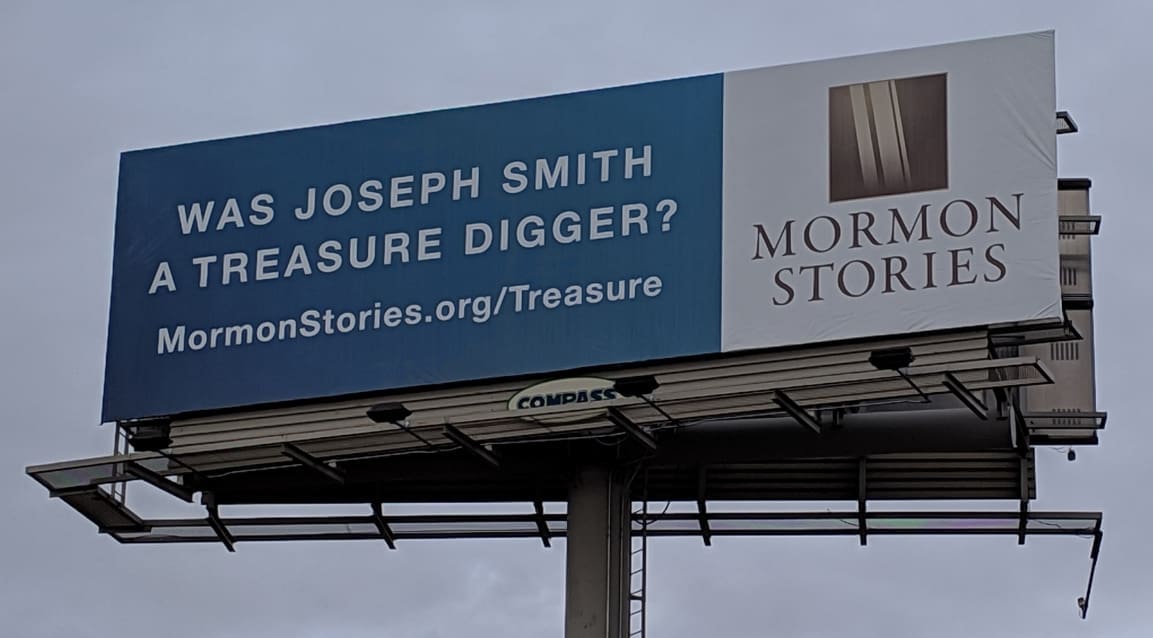
7 Responses
John, please stop leading the witness. Just interview the guy, ask open-ended questions, and stop trying to prove your theories. I’m not saying your theories are right or wrong, just that this podcast is called “Mormon Stories”, not “John’s Agenda about Mormonism”. Otherwise a fascinating interview……….thank you both for this gift!
I have to concur with that. I feel like I’m listening more to John than the guest.
Thank you John and Dan for a wonderfully enlightening interview and for helping us all to better understand joseph smith and his history and all that brought him in to what he eventually became, a latter day Mormon prophet, hearing Dan is a breath of fresh air and l appreciate all your efforts to give a really good interview john. Many thanks both of you.
Hoping to be wrong, but I dare say that Dan’s book “The Making of a Prophet” isn’t available. I see two used copies on amazon starting at $700.
In our blog description, we link to a free online version of the book since it is no longer in print
Incredible insight! Often disturbing to hear naturally, if you are just learning about church coverups as I am. I appreciate the honesty and research taken.
I can’t believe you didn’t discuss The Late War as an inspiration for the Book of Mormon! Why? Dan, I have always admired your scholarship and objectivity. Hope to hear more from you!