🎧 This episode is part of The Joseph Smith Podcast. Listen to the whole series in order, with transcripts, chapters and search, at josephsmithpodcast.com.
Welcome to our final episode in our Joseph Smith: The Podcast series, where we cover John Turner’s new book “Joseph Smith: The Rise and Fall of an American Prophet.” In this episode, we explore the immediate aftermath of Joseph Smith’s assassination and the profound consequences that followed his family, plural wives, and the early Latter-day Saint movement.
The chapter we are covering today is the Epilogue.
We look at the chaotic hours and days after his death in Nauvoo, including how his body and Hyrum’s were handled, the conditions of their temporary burial, and the secrecy surrounding their remains. The episode also examines Emma Smith’s role in the aftermath –her grief, her control over Joseph’s body, and the difficult position she found herself in as both widow and critic of polygamy.
We also discuss how Joseph’s plural wives responded to his death, the emotional and political complexities of their mourning, and the uneasy reality of their realtionships with Brigham Young and other church leaders. From there, we move into the succession crisis that followed –how leadership shifted, why Brigham Young ultimately prevailed over Sidney Rigdon, and how competing visions of the church began to emerge.
Finally, we step back to consider Joseph Smith’s broader legacy, the scale of opposition he faced, and how his influence continued to shape American religious history long after his death.
If you’d like to help keep this project going, please consider donating to support this series. Your support makes long-form, in-depth historical discussion like this possible!
https://donorbox.org/josephsmith.
Purchase John Turner’s book here: https://yalebooks.yale.edu/book/97803…
Stay tuned for our upcoming series on John Turner’s book “Brigham Young: Pioneer Prophet”
Episode Transcript
Full text · 13,000 words · 10 chaptersHost: John Dehlin · Guest: John TurnerRead transcriptHide transcript
This transcript is machine-generated and lightly edited for readability. The audio is authoritative. Please excuse occasional errors in names and spelling.
Welcome and Series Farewell
John Dehlin [00:00:00] Hello, everyone, and welcome to another edition, the final episode of this iteration of the Joseph Smith podcast. It is May 12, 2026. I am John Dehlin. I am here with Dr. John G. Turner, and we are doing our final episode on the groundbreaking, earth shattering international bestseller, Joseph Smith, the Rise and Fall of an American Prophet. We have covered 31 chapters in 40 episodes on this podcast series. And we have one final chapter to go. It is the epilogue where we're going to be talking about the aftermath of Joseph Smith's assassination. And we're going to be wrapping up some final thoughts where maybe John Turner will turn the tables and ask me some questions about my reflections on this book and the series.
John Dehlin [00:01:00] And then we have some exciting news at the end about the Brigham Young Podcast. Thanks for joining us, everybody. And I'll just remind you, the Joseph Smith Podcast can be consumed in the Mormon Stories podcast feed on Spotify or YouTube or Apple Podcast. It also has its own playlist on YouTube and its own podcast on Spotify and on Apple Podcast. If you just want these 41 episodes, again, this podcast exists because of our amazing donors. Please like and subscribe. Share, Comment and without any further ado, John Turner.
John Dehlin [00:01:37] Is it with chagrin or with joy that we come to our 41st and final episode? Is it, is it, is it exaggeration to say this series has been epic?
John Turner [00:01:50] It is not an exaggeration. I'm trying to think who in the last year besides my wife and daughter has spent so much time talking to me? I don't know, my mom might be upset if I told her that John Dehlin spent more time talking to me than her. I hope that's not the case. I think my mom might have edged you out as well. But, yeah, now I have a welter of emotions. I mean, if Joseph Smith, if he had lived as long as Brigham Young, you know, we'd be, we'd be doing episode 82 right now or something, something like that. But it's been a blast and I'm excited to have one more opportunity to talk about Joseph Smith with you.
John Dehlin [00:02:34] Yeah, I'm gonna miss, I'm gonna miss this. I, I, I won't necessarily miss the constant preparation, but I'm gonna miss, yeah, I'm gonna miss all that I've learned and all the fun we've had. So let's do this final episode and then we'll announce something exciting at the end. How does that sound?
John Turner [00:02:53] You got it.
John Dehlin [00:02:54] Okay. So last we Left off, chapter 31, Joseph Smith and his brother Hyrum were Assassinated in Carthage jail by a mob. And what happens the next morning? JOHN Turner.
Grief, Mourning, and the Return of the Bodies
John Turner [00:03:15] So the, what happens next is the corpses are brought back in sort of cheap oak coffins to Nauvoo. Everyone really in Hancock county is on edge. The non Mormon residents of Carthage, they are fearful that the Saints are going to come and seek revenge. Mormons in Nauvoo are still worried about mob attacks, of course, but then the, the chief business, the chief task at hand is mourning. The bodies are laid out in the Nauvoo mansion and you know, it's just a grim, a grim and sad scene.
John Turner [00:04:17] So among the hundreds, probably thousands of people who come through to see the corpses is Emma Smith. And she collapsed when she entered the room to see her husband's body. And you know, she basically got herself up, steadied herself, placed her hand on Hyrum's forehead and then made her way to Joseph and sank down into an embrace of him.
John Turner [00:04:56] Joseph's mother is, is also there weeping. You know, she's just lost two sons. So it's just a really, it's a really gruesome scene. It's also hot, so it quickly becomes unpleasant. The, and I don't, I don't mean to be just too, too grim, but the, the bodies ooze and stink and the, you know, the people have to sort of take countermeasures to make the stench tolerable. So it's just a terrible, terribly doleful days in Nauvoo in the wake of the martyrdom.
John Dehlin [00:05:44] Yeah, you mentioned that there was not a procession like you could imagine in some science fiction world or whatever, a procession of polygamous wives of 30 or 35 or 40 wives lining up to all join Emma in grieving their mutual husband. But you mentioned there was not such a procession. How, how did the, the polygamous wives grieve Joseph? And what can we make of it?
John Turner [00:06:17] So we don't, we don't know a great deal. So Zina Huntington, she did come to the mansion to see the bodies of Joseph and Hyrum. She recorded that fact in her journal. And you know, she describes, you know, her heart as incredibly sorrowful. She also then spent time with some of Joseph's other plural widows like Louisa Beaman, Agnes Smith and others. And some of these women, they formed a very tight bond in the years ahead and in particular spent a lot of time together during the exodus to the west and the early years of Salt Lake Valley settlement.
John Dehlin [00:07:20] What do we make of the fact that I guess the Joseph Smith's Polygamous wives weren't really given any formal standing or recognized publicly, you know, after his death.
John Turner [00:07:37] Yeah. So the, the, the church does not publicly acknowledge the practice of polygamy for another eight years, until August of 1852. It does not begin to live polygamy openly until the saints make their exodus from Nauvoo. So this has been a secret, clandestine practice. It remains that way.
John Turner [00:08:07] Also, Joseph, as far as I can deduce from the sources, really didn't have much to do with at least most of his plural wives over the last six or eight months of his life. I do think that Emma had been able to at least put the brakes to some extent on Joseph's polygamy. And so it's not as if Joseph had been spending a lot of time with these women.
John Turner [00:08:45] They didn't live. They didn't live together. There wasn't a polygamous community. And it's quite possible that others of them. I'm sure it's the case that other, other plural widows came to pay their respects to the corpses. Very. You know, we're lucky to have a journal of somebody like Sina Huntington. Most, most of Joseph's wives didn't leave behind those sorts of contemporary records.
John Dehlin [00:09:20] Yeah. Do you think they were worried about the consequences of acknowledging polygamy? Like, once Joseph and Hyrum are dead, if they had acknowledged that polygamy was a thing, do you think they were worried about what additional consequences might come? Or were they just so busy grieving and thinking about how to manage things that it just wasn't a priority to even think about?
John Turner [00:09:47] I think it had just been hush hush from the start and so continue with that practice. We know from. I realize this is skipping ahead a little bit, but we know from Brigham Young's personal journal that, you know, within months he is sealed in marriage, as is Heber C. Kimball, as are other men to some of Joseph's widows. And the practice remains secret and clandestine. It's only really when the saints are in winter quarters that within the community, this begins to be acknowledged and to become more open.
John Dehlin [00:10:27] Did the wives get. Did Joseph Smith's plural wives get any consent if they wanted to get married, to get sealed, or Brigham Young and Heber. And it wasn't just sealed. I mean, they became plural wives indeed. With Brigham Young and Heber C. Kimball. I'm wondering if they were all just honored to be with Brigham and Heber or if they were like cattle and just got sold. Do you know?
John Turner [00:10:52] Yeah. Well, I could say this is a subject for the Young podcast. Okay, I'll just say quickly. I wouldn't, I wouldn't put it in quite those crass terms. I would say that especially for women who had been, who either had been previously single upon their ceiling to Joseph or who were not going to remain with prior husbands. One reason, there are multiple reasons why men like Brigham Young, Heber C. Kimball, were, let's just say, attractive options. I don't mean just in terms of their personal appearance. They had money, they had ecclesiastical power, which translated into eternal glory. So I think there were strong incentives for Joseph's widows to be sealed to high ranking church leaders.
John Dehlin [00:11:59] Okay, let's talk about Joseph and Hyrum's body and the tour that those bodies go on. They go on a tour? They go on a bit of a tour, yeah.
John Turner [00:12:13] And for me, this really symbolizes Joseph's contested legacy and the fact that no single institution has been able to control it. So in the immediate wake of the murders, there's concern that enemies of Joseph, enemies of the church would desecrate the corpses. So there's a desire to keep the location of the burial secret.
John Turner [00:12:50] So the first burial place is beneath the unfinished Nauvoo House, sort of this inn that Joseph had been building in Nauvoo. And at the same time, there's a bit of subterfuge. They bury bags of sand in cheap coffins in a cemetery.
John Turner [00:13:20] So that's what happens immediately. But then in the fall of 1844, Emma arranged for the corpses to be moved on to an older Smith family property near the banks of the river. And by that point, relations between Emma and Brigham Young are, well, they're both sort of frosty and sort of non existent at the same time.
John Turner [00:14:00] And there's so much mutual suspicion and ill will that when Emma arranges for the bodies to be moved, she did not even inform Hyrum's widow, Mary Fielding Smith. And you know Brigham Young, when the bodies were moved, he was irate. Um, one thing that was not, and this would sound strange to most of us in 2026, but it wasn't uncommon back in the early to mid 19th century for the bereaved to actually at least partly exhume course corpses of their loved ones and friends and gaze on them, especially in the early months after a death. And Brigham Young had visited Joseph's corpse on at least one occasion.
John Turner [00:15:07] And he was really upset that now he didn't know where Joseph was. But you could see Emma wanting to take control of her husband's legacy. Brigham Young and Others contesting that control. Because Emma took control of the corpses, they ultimately ended up in the custody of the Reorganized Church of Jesus Christ of Latter Day Saints.
John Turner [00:15:40] And listeners may know that what is now the Community of Christ sold a number of significant Nauvoo properties to the LDS Church a couple of years ago. That sale did not include the Smith family cemetery. So Community of Christ, to the best of my knowledge, still has custody of the remains of Joseph and Hyrum.
John Dehlin [00:16:14] And so right now, you can visit them. Where?
John Turner [00:16:17] You can visit them in Nauvoo, near the banks of the Mississippi River. It's not too far from the red brick store.
John Dehlin [00:16:25] And you mentioned that Emma ends up getting buried between. Is that right? Between Joseph and Hyrum.
John Turner [00:16:34] That is true. Ultimately, I don't know if they initially. I don't know if that was initially the case, but the remains were. Because of concern about the integrity of the land, the remains were disinterred in the 1920s. And Emma, least at that point, was laid to rest between Joseph and Hyrum.
John Dehlin [00:17:00] Yeah. And you mentioned that Emma hiding Joseph and Hyrum's bodies not only caused tension between her and Brigham Young. You mentioned that Hiram Smith's wife didn't even know where her husband.
John Turner [00:17:14] Yeah. Which is crazy.
John Dehlin [00:17:16] I should say wives. I guess I should say wives. Right.
John Turner [00:17:18] Well, I mean, so I think the attention at the time was really on Mary Fielding. Yes. His previously monogamous wife, Mary Fielding Smith. And yes, maybe the other ones didn't know either.
John Dehlin [00:17:36] Yeah. Why didn't violence break out? Like, why didn't that famed menacing, massive Nauvoo Legion coalesce and wreak havoc on the surrounding towns? And what kept the surrounding towns from descending upon Nauvoo and razing the whole thing with fire and havoc?
John Turner [00:18:03] Well, I think the simplest, and there's a couple parts of that. Number one, the Legion had surrendered its arms at the time that Joseph went to Carthage. So while I'm sure the Legion, or church members more generally, could have found a way to at least partly rearm themselves and seek vengeance, they had disarmed. And I just. I also think they're. They're. They're actually as angry and as angry as church members are, as much talk there is in future years about avenging the blood of the prophets, the immediate response in the wake of the murders is. Is to mourn, not to spoil for a fight.
John Turner [00:19:00] The, you know, church leaders also know they would be severely outnumbered. There are mobs that are still in a position to attack Nauvoo in terms of why, why do those mobs not attack? I would say two reasons. Number one, the mob has accomplished its chief objective.
John Turner [00:19:23] And one of the prominent men involved in the murder, newspaper editor Thomas Sharp, he defends it on the basis of, you know, killing these two men is going to solve the problem. So the immediate response is that the problem has been solved. And then also the response of the Saints is not to seek vengeance. And so I think that's the second reason why there's no mob attack on Nauvoo.
John Dehlin [00:20:00] Got it. Okay. Do you think it's likely people would have disinterred the bodies and desecrated them? Do you think that was a credible threat? I'm just curious.
Was Joseph Smith's Assassination Inevitable?
John Turner [00:20:17] I mean, I. I don't know. I don't have a great way of assessing that. I mean, in. In general, I think I. I don't think it's an unreasonable concern that somebody would have tried to do so. I don't know how likely it would have been.
John Dehlin [00:20:35] All right, okay. So Thomas Sharp wrote. And of course, he was the journalist who was not only anti Mormon as a journalist, but I think you wrote that he was part of the mob. He wrote that there was no alternative, that there was really no way out. Either that Joseph and Hyrum were going to be killed or they were going to endure as tyrants.
John Dehlin [00:21:08] Is that your reading that? Like, I mean, I mean, if I contemplate our 41 part series, starting from New York and then Ohio and then Missouri and then Far west, you know, or Liberty, and then finally Nauvoo, like, it really does feel like it was building and that the ARC feels like this was inevitable.
John Dehlin [00:21:34] And I know that we can't guess, but I can see Thomas Sharp's point that Joseph was getting so grandiose. And you could even argue, if you want to, empathetically so traumatized by all the adversity and pressure and stress and opposition, you could argue that this really was inevitable. Do you agree with Thomas Sharp that Joseph's assassination was inevitable?
John Turner [00:22:01] Well, so historians rarely like to embrace the idea of inevitability. Yeah, and I will push back on this point because I don't disagree with the point that, you know, just things seem to have been building and building toward this point.
John Turner [00:22:24] That's certainly true. But the pattern since the early 1830s is that when there. When there's a campaign of harassment and mob activity, things come to a head and eventually Joseph or other church leaders back down, go somewhere else and regroup in usually a more grandiose Way and a year and a half after Joseph's murder. That's precisely what Brigham Young chooses to do. When there's renewed mob activity and the burning of some Mormon homes and pressure against the Saints, he agrees to leave. I think Joseph, you know, Joseph, clearly in the first half of 1844, he's contemplating where he and the church might go. So I think if Joseph and Hyrum had not been assassinated, had the mob simply increased pressure, it's entirely likely that there could have been a more, a broader eruption of violence as happened in Missouri. But I think ultimately Joseph and other church leaders would have decided to leave.
John Dehlin [00:23:55] Yeah. And they would have gone maybe to Texas, maybe to Oregon, maybe to California, maybe to Utah. Something just tells me the ante just would have been upped and upped and upped. You know what I mean?
John Turner [00:24:07] Oh, well, in a, in a way it is. Right? It is. The ante is upped in the Utah Territory and we'll get to the Utah war of the 1850s when we talk about Brigham Young. So this basic dynamic is not resolved really until 1890 at least. But I do think it's a bit rich for Thomas Sharp to argue that, you know, we didn't have any alternative but to murder these two men. You know, it's basically saying we've done everybody a favor by committing this act of violence to avoid more violence. Well, you know, that's a very, very self serving justification and I would say not in line with the trajectory of this history.
John Dehlin [00:25:07] Yeah, it's a little bit self serving, but I, but I can't say he's 100 wrong. You know what I mean? Like I thought about David Koresh. Right. And how that ended. I think, I think it's just human nature that if you, if you're too flagrant in your power and in your management of power and if your neighborly relations and of your growth and of your rhetoric, you really do risk, you know, you sometimes reap the whirlwind, I guess.
John Turner [00:25:43] True. So here's one thing I would say, and I don't know how you would feel in general about trusting in legal justice right now, John de Lynn. But one thing that doesn't happen throughout this whole, you know, dozen or so years is particularly in parts of the country that are still quasi frontier, the sort of, the mechanisms of politics and law just don't function in a very forceful way. So keep in mind, when Joseph and Hyrum are murdered, they're in Carthage awaiting a hearing on charges of treason.
Legal Aftermath and the Succession Crisis
John Turner [00:26:32] Now, you know, the punishment for treason would be. Would be death. You know, it's a capital, capital charge. But Joseph's also, you know, he's, he's generally under legal duress. And Nauvoo has been claiming, or Nauvoo's leaders have been claiming also, you know, sort of expanding their own legal prerogatives. Ideally, some of these things could have been settled in court. You know, if Joseph has committed crimes, then he should be tried for them, maybe fined or jailed for them. I mean, one of the, one of the real problems of this time period is the courts don't function. They don't even function with partiality. They're just really not functioning to resolve any of the issues at hand.
John Dehlin [00:27:35] Yeah, Yeah. I thought it was a little bit ironic and interesting that Joseph Smith sort of begins the Book of Mormon by saying something to the effect of, it's better that one man perish than that a nation dwindle in unbelief. It's almost like Thomas Sharp employed that rhetoric. In the end, it's better that two brothers perish than that a region devolve into tyranny.
John Turner [00:28:06] That's exactly. I was thinking of this same quote, which is really actually both. Both from the Book of Mormon and from the Gospel of John, in the latter context, thinking about the execution of Jesus. Yeah, no, that is something else. So Sharp and a number of other men were indicted for the murder, but did not face any legal consequences. Again showing sort of the legal and political weakness of both western Missouri and western illinois in the 1830s and 1840s.
John Dehlin [00:28:55] So it was kind of mind blowing that no one was convicted. I think you write that nine stood trial. How in the world can two people be murdered in cold blood? They know who at least many of the participants were. They actually bother to have a trial, but. But nobody. There's not even a scapegoat. How in the world is that possible? Even in 19th century frontier America, how could nobody have any consequence for this?
John Turner [00:29:30] Yeah, so, I mean, that is. That is a tremendous question. So there are a few factors. One of them is that by the time that this select number of people are indicted, there's not a lot of appetite for pursuing justice from either side.
John Turner [00:29:58] So I think from the start, Governor Thomas Ford and other non Mormons, they are a little bit leery of bringing a vigorous case against these men. But also, as the months pass and particularly as mob activity against the Mormons is renewed, church leaders are also wary. So they're wary of providing witnesses, they're wary of what might happen if these men are convicted, and then, of course, getting.
John Turner [00:30:45] Ultimately getting a jury to convict, you know, that. That proves impossible. So there are. There are nine indicted. Five stand trial. A jury doesn't convict them. There's no appetite for further legal proceedings. It is in some ways a tricky case. There's, you know, there are scores of men involved.
John Turner [00:31:15] And so assigning. Assigning guilt in some respects is a little tricky. But, you know, some of the men who are clearly ringleaders of this operation are among those indicted. But it is a travesty, you know, to, you know, a mob. A mob murders two people, you know, clearly premeditated, and nobody faces any legal consequences in the end.
John Dehlin [00:31:51] And is that pretty unheard of in Frontier.
John Turner [00:31:56] I mean, sadly, it's not unheard of in this time period, because talking about the weakness of the legal weakness of American law and politics with respect to mob activity, that is a somewhat pervasive problem. So, for instance, back in the early 1830s, a mob in Boston burned down a convent. I forget if people were wounded in the incident, but they're at the very least destroying valuable property. Very similar situation. There's some attempt to prosecute the ringleaders and a jury won't convict.
John Dehlin [00:32:51] Yeah, that's kind of. It's kind of sad and tragic and mind blowing. Really quickly, I remember there being a book growing up that kind of went around Mormon circles, and it was called the Fate of the Persecutors of the Prophet Joseph Smith. And I don't think I ever read it, but I think I remember browsing it. And I think I remember the basic premise being all the different ways the men who contributed to Joseph's death or persecution died horrible deaths or had bad diseases or really horrible things happened to them. Have you heard of that book? And if so, is there merit to that idea that, like, they got bad diseases or died or terrible accidents happen to them or.
John Turner [00:33:48] Porter Rockwell got them?
John Dehlin [00:33:50] Yeah.
John Turner [00:33:51] I have to check it out, John. I don't know. I haven't researched what happened to the men. I don't know if we'd able to. If we would be able to clinch the argument for divine retribution against them, but I will look into it.
John Dehlin [00:34:14] Yeah. By our first Brigham Young series. I didn't mean to interrupt, but it surprises me. I'm looking at it now. It looks like John A. Widstow was one of the authors of. Was published in 1952. And what it says is the book presents various stories describing how many of those who played significant roles in the persecution of Joseph Smith met with unfortunate ends, often in unnatural and sometimes gruesome ways, underscoring a theme of divine justice and retribution. I think it's categorized as folklore.
John Turner [00:34:53] I think that sounds bracing. I mean, there's all sorts of. I mean, there's all sorts of similar folklore about what happens to people who fall away from the faith, leave the church, go down the wrong path.
John Dehlin [00:35:06] Yeah.
John Turner [00:35:08] Fortunately, I don't think that is borne out by empirical evidence.
John Dehlin [00:35:15] Oh, it's funny. It's also, though, worth mentioning. There was a hymn added to the hymn book that basically included a line, oh, there's a legacy of vengeance, a tie to Joseph Smith's martyrdom that I don't think faithful Mormons are ever taught about. But if you go back 50 or 80 years, it was still in the temple ceremony. And even the hymn Hail, Hail to the Prophet, you know, I remember reading one of the old hymn books, and it used to say, long will his blood, which was shed by assassins, stain Illinois while the earth loves its fame. Something like that. And even I think something in the temple ceremony about Joseph Smith's blood being avenged unto the third or fourth generation. If you know anything about the vengeance lore of Joseph's murder, that stuck with us, right?
John Turner [00:36:16] Well, yeah. I mean, I think that's not just lore. I'm not an expert on the history of temple oaths, but that was definitely part of it until, I'm guessing, the 1980s. I forget.
John Dehlin [00:36:34] Yeah.
John Turner [00:36:34] Could have been earlier. I might be off. And I am sure if we went back and looked at mid to late 19th century hymns, discourses, other, you know, other elements of Mormon culture, you know, anger. Anger at the martyrdom, you know, persisted. It did persist for generations, even.
John Dehlin [00:37:09] Yeah. Yeah. And I don't know if it was Marx or somebody else. No, I'm sorry. If it was Sharp or somebody else your book mentions, only Joe and Hyrum could hold together the community. And my thought there was. Boy, were they wrong. Who said that?
John Turner [00:37:27] The Salt Lake Tribune said something very similar in 1877 after the death of Brigham Young and should have known better by that point.
John Dehlin [00:37:41] Yeah. So let's talk about the succession crisis really briefly. Who was in the running? Who won out? What happened with Emma? Why did it. Why did Brigham Young hate Emma so bad? We've talked about that a bit.
John Turner [00:37:54] Yeah.
John Dehlin [00:37:55] And I guess we'll be talking about this at the beginning of our series with Brigham Young, too. So.
John Turner [00:38:00] Yeah. So there are a number of claimants to Joseph's prophetic mantle, Emma. So the main competitors really are Brigham Young on behalf of the quorum of the 12. And then Sidney Rigdon. Now, Sidney Rigdon was a member of the church's presidency, so that status put him in line to make a bid for leadership. I think Hyrum Smith, had he not died alongside his brother, he certainly would have been in a rather strong position had he wanted to assert leadership of the church.
John Turner [00:38:50] Emma Smith favored William Marx, someone who is not quite so famous. He was the Nauvoo stake president. He was a polygamy opponent. If. And we can talk more about this when we talk about Brother Brigham, it turns out there are also other men out there who have pretensions of leading the church.
John Turner [00:39:20] In the end, it really comes down to Sidney Rigdon and Brigham Young. Rigdon, I think it. It's fair to say he had not been at the center of Joseph's activity in recent years. As we've talked about in prior episodes. He actually was, for a good stretch of time, very much at odds with Joseph in 1842 and 1843. I think they were a bit more reconciled by Joseph's death.
John Turner [00:40:04] But Rigdon is really not. Not in as strong of a position as he might have been, despite his standing in the church presidency. To make a fairly complicated story short, Brigham Young, he argues that it's the 12 who possess the keys of priesthood authority.
John Turner [00:40:30] They are in a position to finish the Nauvoo Temple and to lead church members through long promised temple ordinances. He does not make an explicit assertion that Joseph had tasked the 12 with leading the church in his absence. But I think that it's Brigham Young's ritual priestly authority that persuades most church members in Nauvoo to support the 12 going forward.
John Dehlin [00:41:15] Did you ever make a determination as to who you felt Joseph Smith, if anyone, intended to be a successor? Because I've heard James Strang, I've heard his son, Joseph Smith iii, Sidney, you know, Brigham, I've heard a lot of different possible people or. And even that he promised it or alluded to many people that they would be a successor.
John Turner [00:41:42] Yeah, so that's a great question. And for starters, Joseph didn't expect to be killed. So he was not ready to die. He had not set any plan in motion for what would happen in the event of his death.
John Turner [00:42:05] So you mentioned James Strang. He's a relatively new church member. He comes forward, I think, later in 18, maybe by the late summer of 1844, with a purported letter from Joseph Smith, anointing or, you know, sort of giving a blessing to Strang as a Successor. The letter was a forgery.
John Turner [00:42:33] Listeners might recall that in the early 1980s, there was a Mark Hoffman forgery, which I think lent credibility to Joseph, more straightforwardly identifying Joseph III as his successor. So this was such a contested issue at the time and in some ways has remained so to the point that people forge documents, you know, about it.
John Turner [00:43:18] So I simply. You know, there's. There's some. There's some talk in The Council of 50 minutes, I believe, about an early spring 1844 statement of Joseph about the 12, but those are from later meetings of the Council of 50 that are a bit retrospective. There's no March or 1844 contemporary document along those lines. So I genuinely think Joseph had not really reckoned with his death, and therefore things were up for grabs.
John Dehlin [00:44:01] Okay, yeah, that makes a lot of sense. All right, Well, I was just. One last thing. I did not have it in my brain that Sidney Rigdon's consequence for opposing Brigham Young was excommunication. And also I think that William Marx was kind of demoted. Why in the heck did they thank you, Sidney Rigdon, for his decades, decade and a half of service, reward him by excommunicating him? Was he belligerent? Was he defiant? Was it just what tyrants do to, like, squelch any opposition? I mean, it felt like a Putin move almost, but I don't know. Well, that. It just bothered me. He's one of the three witnesses. He's one of the founders, you know.
John Turner [00:44:56] Yeah.
John Dehlin [00:44:57] It felt very ungracious.
John Turner [00:45:00] I guess it's important in the end to get all of the witnesses out of the church.
John Dehlin [00:45:05] That's so good.
John Turner [00:45:07] So. So I'll have to revisit some of the details, but I think the simple answer is after this August 1844 meeting at which both Brigham Young and Rigdon make their case cases, and Young has the preponderance of support. Rigdon doesn't simply fall in line. I don't think he. I don't think he persists in active public opposition, but I think he makes it pretty clear, you know, I don't support these guys. Had he totally fallen in line, I don't think he would have been excommunicated. He probably would have been demoted regardless. But he makes it pretty evident he doesn't support the 12 assuming leadership. And I think it's only a matter of weeks before he's excommunicated.
John Dehlin [00:46:07] So wild. We've talked about it a bit in the past. We've talked about how Joseph bequeathed, I believe, some property to Emma in possibly A result of some of her discomfort with his plural marriages. You know, you would assume ownership is 9, 10 of the law in terms of owning the Nauvoo mansion. But you mentioned she was pregnant when Joseph was killed and that she was worried about her livelihood. Why wasn't Emma set up for to be a millionaire, you know, millionaire widow by Joseph, or at least the equivalent of the 1844 equivalent of a millionaire's widow.
Emma Smith, Property, and the Estate
John Turner [00:46:55] Yeah, so it's actually a really complex financial and legal situation because Joseph has given or has deeded some property to Emma. But otherwise, Joseph's financial affairs were very much entangled with those of the church in ways that were not easy to resolve. So Joseph held most much of Joseph's property.
John Turner [00:47:32] He held as the church's trustee in trust. At the same time, Joseph had also accrued personal debts. And so there was just a lot of wrangling between Emma on the one hand, and church leaders, namely Brigham young and the 12 on the other.
John Turner [00:48:01] And this is fraught from the start. One thing that's very noteworthy to me is I think both Brigham Young and Emma, they know that their differences are irreconcilable, and so they don't ever meet to try to hash things out. So this is any negotiations about property or other matters, those are done through intermediaries like William Clayton.
John Turner [00:48:37] And, you know, people really hate each other when they won't even, you know, they won't even get in the same room to try to reach a reasonable conclusion. Now, I think in the end,
John Dehlin [00:48:55] the
John Turner [00:48:55] resolution is not entirely unsatisfactory to either side. The lawyers really take care of most things. Emma retains the Nauvoo mansion, for instance. She does remarry a couple of years later to someone outside the church. And as you mentioned, at the time of Joseph's death, she is pregnant with their final child, another son, David, who's born that December. She is understandably concerned about being able to take care of her reasonably large family.
John Dehlin [00:49:46] If there were a pie chart of the antipathy between Joseph, between Brigham Young and Emma, what percentage of the pie goes to just polygamy as being the source of antipathy between Brigham Young and Emma Smith, would you guess?
John Turner [00:50:04] It's a great question. So this is more me speculating and having a document to look at. But I think she very much associated Brigham Young's leadership with Joseph's polygamy, and I think that's what made it an irresolvable conflict.
John Dehlin [00:50:30] And was he mad that she wasn't eventually showing support for it, do you think?
John Turner [00:50:39] Very much so, because. So she doesn't go west. She doesn't go through the temple endowment when the temple is completed, I believe, you know, and in. In some respects, or I would say in a lot of respects, her opposition is well known and noteworthy. So Lucy Mack Smith, Joseph's Joseph and Hyrum's mother, she was not as implacably opposed to Brigham Young as Emma was. And as the years pass, and particularly once Joseph III and other family members become involved in the reorganization, you know, the. The hostility is, you know, 10 out of 10 from Brigham Young toward Emma. And he speaks about her in. In very forthright, hostile terms for the rest of his life.
John Dehlin [00:51:56] Yeah. And in the Mormon. The Mormonism that I grew up in, I felt like I was supposed to have antipathy for Emma, and I didn't even really know why, and she just really wasn't discussed much. Again, in the Mormonism I grew up with, I think the past decade or two, we've seen kind of a revival of love and respect for Emma, but that wasn't the Mormon Church I grew up in.
John Turner [00:52:20] Yeah. I mean, one of the things that stood out to me when I first visited Temple Square is there's that statue of Joseph and Emma. I forget exactly where it is. And, you know, looking at it, you see. You see a couple who's in love with each other, which I think they were. And then, of course, when you see that, you can't help but think about the issue that divided Joseph and Emma during the last several years of his life, but then also just this alienation and division in the wake of his death.
John Dehlin [00:53:05] Yeah, well, yeah. And obviously she goes on as late as the early 1860s to help bolster, I guess, the Reorganized Church of Jesus Christ of Latter Day Saints and her son Joseph Smith III ends up as prophet. And then they carry forward kind of a blood lineage succession which. Which continues to kind of plague the Utah Church as. As it's called, for many decades, if not a century. Is that right?
John Turner [00:53:41] It. Absolutely. I forget the exact date at which the RLDS finally abandoned the blood lineage, the Smith lineage of leadership, fairly late into the 20th century, if I recall. And yes, that was nettlesome, especially when RLDS missionaries began coming to Utah later in the 19th century.
John Dehlin [00:54:14] Yeah. And I don't remember if we mentioned this before the broadcast or during. But the Community of Christ or Reorganized Church, even though they've sold most of the ancient spiritual sites or like landmark sites, what do they keep?
John Turner [00:54:33] John Turner, the Smith family cemetery so
John Dehlin [00:54:37] that they own the remains of Joseph and Hyrum and Emma.
John Turner [00:54:41] Yeah.
John Dehlin [00:54:42] Yeah. Well, I really loved the way that you ended your epilogue, and I wasn't sure if you even just wanted to end by reading a paragraph or two of it. But I think as we're closing out the epilogue and going to kind of turning the tables a little bit where you asked me a couple questions. Do you want to go ahead and read a closing paragraph or two? Or how do you want to close out this actual chapter before we do a little bit of personal reflections?
Reading the Epilogue of the Biography
John Turner [00:55:16] Yeah, I'd love to read the final paragraph. No church archive or book has been able to constrain Joseph Smith. Whether it was religion, marriage, or politics, he burst through the conventions of his time. Brigham Young once said that when he encountered Mormonism, he couldn't let it go, in part because he couldn't put it in a box, couldn't fully figure it out. The same holds for Joseph Smith. He was a day laborer, visionary, seer, money, translator, revelator, prophet, elder, high priest, president, patriarch, merchant, banker, prisoner, wrestler, real estate speculator, polygamist, lieutenant general, master mason and mayor. He always had another plan, bigger than the last plan. With Joseph Smith, everything was subject to revision. From the Bible to the church's hierarchy, to its sacred rituals. He was never finished. And at least as long as his devotees and their detractors care about his legacy, we will never be finished with him.
John Dehlin [00:56:37] Yeah, and you mentioned many other popular Christian figures and preachers who actually had more converts, I think you write, than Joseph Smith in Joseph's lifetime, who are now forgotten.
John Turner [00:56:54] Yeah. And, yeah, so during Joseph's lifetime, you know, early in his lifetime, you know, a Methodist itinerant like Lorenzo Dow, incredibly famous and influential. Lots of Americans named sons after Lorenzo. Lorenzo Dow. There was a Lorenzo Dow Jung, for instance. Charles Finney was the most influential evangelist of Joseph's lifetime. Led enormous revivals, very much associated with the Second Great Awakening. Well, most Americans today have never heard of Lorenzo Dow or Charles Finney. You know, these people, you know, they, they really fade into obscurity. Now. I'm not. I'm not so sure most Americans could tell you who Joseph Smith was either, but there certainly are tens of millions of Americans who could. You know, he still has enough cachet and resonance that most historical religious figures just don't possess.
John Dehlin [00:58:15] Don't you write that the Book of Mormon is the most printed American book of all time?
John Turner [00:58:21] It is the most printed American book of all time.
John Dehlin [00:58:24] That's not small. And the church today boasts 18 million plus members and a net worth of somewhere between 300 and $500 billion with a B. And that's not. I mean, it's the largest and the richest and the most successful church ever founded in America. Is that true?
John Turner [00:58:52] I think that's fair.
John Dehlin [00:58:54] Yeah. So, I mean, that's monumental. That's massive.
John Turner [00:59:00] Yeah, no, it is pretty massive. And, you know, the church of 2026 is very different from the church of 1844. But a lot of what Joseph left behind does endure. I mean, whether we're talking about scripture or ritual or hierarchy, a lot of what he put into place has persisted.
John Dehlin [00:59:27] Absolutely. I'll read one other sentence. You write, Smith told the Nauvoo Female Relief Society that, quote, although he had everything bearing him down, standing in his way, and opposing, he would triumph in the end. He was continually rising. Perhaps he was right after all. And I thought, obviously, you know, Fawn Brody chose the. The quote. No man knows my history. And Richard Bushman chose the quote. Rough stone rolling, I think. I wonder if you were tempted to name this book Continually Rising. It certainly could also be an apt and appropriate pithy name for a Joseph Smith biography, don't you think?
John Turner [01:00:21] Well, could have been. I mean, titles are sort of the bane of my existence. So my Brigham Young biography is titled Pioneer Profit, which My editor and I spent a long time coming up with that title, and they bedevil me titles. So I tried really hard because of this precedent of having a pithy quote, I wanted to have one, too. And so I did think about continually writing Rising. I also thought about the Gift and Power. You know, Joseph said he translated the Book of Mormon by the gift and power of God. And I thought those are two themes in the biography. You know, other parties didn't really like either of those ideas, so I rooted around. I should have crowdsourced the title. That probably would have been a good idea.
John Dehlin [01:01:26] No, no, no. I think it's a perfect title.
John Turner [01:01:28] Okay.
John Dehlin [01:01:29] Joseph Smith, the Rise. Involve an American Prophet. We did it. We did 41 episodes, and it was amazing. Way better than I even thought it would be. And I was excited about it. I will say. I remember I was here in my office, and I'm like, I'm gonna ask John to do a podcast series on this book. And I had no idea how good the book was because I hadn't read it yet, but I thought, John Turner's brilliant and Yale and never Mormon and new biography. What could go wrong? And this series has exceeded my expectations on literally every possible front. This is my officially my favorite Joseph Smith biography.
John Dehlin [01:02:11] And I say that having recently read very extensively no Man Knows My History. I'll talk about that in maybe a future episode because there's more to come on that book as well. I've got a little. A fun little secret announcement that I'll make at some point, but we'll just call that a teaser. But this is it. This is the new heavyweight champion. My favorite Joseph Smith biography. And. And I love Dan Bogle, so no shade Dan Bogle at all.
John Turner [01:02:42] Or don't called mine one man Knows His History. But I've got. I do have a question or two for you, John Turner.
John Dehlin [01:02:50] Yeah, let's turn the tables. John Turner, what do you got for me?
John Turner Reflects on Writing the Book
John Turner [01:02:53] Okay, so you have, in a way, spent plenty of time in your life on Joseph Smith, and you learned a lot about him growing up. You've read lots of other biographies, and you've certainly spent lots of podcast episodes, Mormon stories episodes, talking in ways directly or indirectly about Joseph Smith. So I want to know what motivated you to spend 41 episodes, maybe 100 hours, you know, talking, talking about Joseph Smith at this stage of your life and career?
John Dehlin [01:03:36] Yeah, I, I would say, well, I was really interested in your perspective and in a never Mormon's perspective, obviously. Fawn Brody, you know, was a great historian and scholar, but could always be written off as biased as an ex Mormon. And also she didn't have access to a lot of the more recent sources.
John Dehlin [01:04:02] I found Brigham Young, I found Richard Bushman's book, for as much as I respect him, not only to be a slog, but to be just cringingly apologetic for my tastes. And so I was just, I was really, I've said it throughout this whole series.
John Dehlin [01:04:23] I was really interested in hearing an objective party with no ax to grind, no dog in the fight who was smart but diplomatic to call balls and strikes. And so that's how it started. But I just think your book, John Turner, and I've mentioned this before, it really threads the needle of giving us the important details, but the interesting details in a way to where I feel like reading Fawn Brody's book. There's a lot she doesn't cover. Not just because, you know, she didn't have access to sources, but she just doesn't go into as much detail.
John Dehlin [01:05:05] She. She spends, you know, time on analysis and interpretation. Her language is very flowery. And again, she's a legend. Her IQ has to have been 160, but I just got more detail and more interesting detail, and I just learned more about Joseph Smith. I'd say you increased my knowledge of Joseph Smith by 80% in your book, and it was super enjoyable all the way through. So there's my first answer to your question.
Joseph Smith's Most Compelling and Troubling Qualities
John Turner [01:05:37] Okay, so second question. So one of my goals was to at the same time be able to explain what made Joseph Smith so compelling to such a large number of people, but also explain what made him repel so many people. You know, that both of those things were true. And I think that if we only understand one of those things, then, you know, we're only getting half the story. And so I try to do that in the book. But I just want to ask you, I think a little bit more personally, is there something about Joseph Smith that after all of these years, or maybe after encountering him again through this book, is there something about him that you do find compelling? And then on the other hand, you know, what, what about him do you find either most repellent or troubling?
John Dehlin [01:06:58] So I've got. This will probably feel like a big old long rant. I'm going to keep the repellent part as a second part. But, you know, the, the, for me, the most, I think the, the characteristics that are most defining for Joseph Smith that really came through in your book that really struck me this time in ways like never before. One was how resilient he was. Like, always rising is a great way to characterize that. I wrote Resilient af and those of you who are more younger will know what AF means. The guy never quit. It didn't matter how far he was down, how far he was beat down, how many times he's sent to jail, how many of his own kids died, how many of his closest friends betrayed him, how horrible the rumors got.
John Dehlin [01:07:55] The, the amount of opposition that this man endured in his life is staggering. And the guy just, every single time he was down, he, he, he doubled, he, he, he tripled. He was all in and came back doubling or tripling down.
John Dehlin [01:08:16] And you know, I, early, early on in Mormon stories, in the first couple years I started Mormon stories, and then I quit. And I was struck with how many viewers and listeners I lost who never came back once I quit. And I just realized if I ever start Mormon stories up again, I'm not going to quit until I'm really ready to quit. Because when you quit, you know, that really says something to people. But when you don't quit and you just come back harder and stronger after every time you're down, that says something about your character. And Joseph Smith never quit.
John Dehlin [01:08:57] And I hate to say that that's a laudable trait. But it, you know, I thought of it again in modern times, I'm just. I'm not getting political. I'm just getting factual. Like, Donald Trump was so down in the dumps between his first election and his second. Like, that guy had major federal lawsuits.
John Dehlin [01:09:22] That guy had major sexual abuse allegations. It looked like he was going to be swallowed up in adversity between his first election and his second. And then I just watched him come back and double down and triple down, and I'm not saying anything about his results. Hate Donald Trump or love Donald Trump? I don't. That's not what these comments are about. You have to look at his resilience as remarkable.
John Dehlin [01:10:00] And it feels to me like. Like Donald Trump and Joseph Smith were in many ways cut out of the same cloth in terms of resilience. And it's. It's stunning. This is. We're talking about epic, legendary levels of resilience. And love them. Love them or hate them, it's remarkable their level of resilience. I also was. I've mentioned this already. I was stunned. You know, critics of Joseph Smith, now, one of the things they like to highlight are his character flaws and his failed prophecies.
John Dehlin [01:10:45] But guess what? His followers didn't care. They did not care about rumors of sexual impropriety. They didn't care about. Many of them didn't care about the bank failure. Many of them didn't care about, you know, the polygamy or. Or even that several of his prophecies not only didn't come true, but that dozens of people sometimes died as the result of his failed prophecies. And you have to ask yourself, why?
John Dehlin [01:11:19] Why? And I can think of at least two reasons. One is he always gave people hope. And what your book really drove home clear to me is that every time he was down, there was a new anointing, there was a new endowment of power from on high. And that that promise of. Of celestial power, of celestial glory, of divine connection was clearly so meaningful to so many people that they didn't care about all the other. All the other things. And it just goes to show you, people want hope.
John Dehlin [01:12:05] There's some movie. I'm forgetting what the movie was. But the, but the tagline of the movie was give them hope. And that's what Joseph Smith did. He gave people hope. And the other thing that he gave people was community.
John Dehlin [01:12:20] And I've even mentioned this before. I've tried to create secular community, and I have failed catastrophically. And until You've created a community that not only, you know, grows to 10 or 20 or 30 or 40 or 50,000 in your lifetime, but how about a community that sticks together across a couple centuries and now, now almost numbers in the tens of millions according to some counts.
John Dehlin [01:12:48] People need community. And Joseph Smith provided lasting, meaningful, enduring community. And in that sense, he was a prophet. He gave people hope. He formed community that was lasting and enduring along with identity. And people saw him as the reason that they had hope and community. And that's no small thing.
John Dehlin [01:13:16] So. So just to sort of then add your question about what was repelling. Obviously, obviously the most problematic parts of Joseph Smith that I've mentioned many, many times is what some would call sexual predation. The fact that he used, ultimately used his power and his influence on people, apparently for the means of sexual conquest.
John Dehlin [01:13:49] And that's deeply disturbing on the one hand. On the other hand, I think that that comes with money and power. All too often Scarface said, first you get the money, then you get the power. Once you get the money and the power, then you get the women.
John Dehlin [01:14:11] And unfortunately, whether it's Martin Luther King or pick your famous or powerful person, unfortunately, sexual predation too often comes with money and power. And so that's the most distasteful thing about Joseph Smith. And it's deeply troubling. And at the same time, I think that the. What your book helped me see is that the pressures of community leading and community building and the punishing consequences of religion building and community building, I believe, cause so much stress and tension that. That I guess there's a sense, a sense to which I gained empathy not for his actions, but for how much incredible stress and duress he was under.
John Dehlin [01:15:16] And he just goes down in the. In the history books as one of many, many men who became in some ways sexual. Who's. Whose legacies and accomplishments are unfortunately marred by. By succumbing to sexual predation. So it's a mixed legacy, for sure.
John Dehlin [01:15:41] And I don't know if we can say the good outweighs the bad, but I think we can safely say that for millions and millions and millions of people, for them, the good has outweighed the bad. And that's just a fact. All right. Any reactions to that, John Turner? That was a little bit long.
John Turner [01:16:00] No, no, I wanted you to engage those questions. Those are really important questions. I guess one reaction I have to that is it makes me think of Henry Kissinger's comment that power is the ultimate aphrodisiac. So for me, a Weakness that I see in Joseph is an attraction to power, which early in his life could be a bit understandable.
John Turner [01:16:39] You know, the Book of Mormon prophesies that Joseph Smith will be a choice seer. And for this downwardly mobile, impoverished, not formally educated man to bring that to fruit intuition, I do see that as, in a way just an impressive act of audacity.
John Turner [01:17:09] But then, and this is partly because of the events through which he lived, but could also be a character flaw. You know, 14 years later you have Joseph acclaimed as prophet, priest and king. And Joseph, I think, was pretty forthright about wanting the last five years of his life, wanting to get power and be able to exercise it, particularly in the wake of Missouri.
John Turner [01:17:41] But I do feel that, yes, that also led him astray and caused him to arrogate too much power to himself, for sure. And I agree with you that that is, that's not an unusual story, whether we're looking at religious founders, entrepreneurial founders, politicians.
John Turner [01:18:08] But I also don't want to just say, well, that's just, that's sort of what happens. You know, could think about someone like Billy Graham, who also had serious flaws, by the way. I'm not saying he was a saint, but was very circumspect in terms of personal sexual morality.
John Turner [01:18:35] You could say something similar about Martin Luther. To reach for an earlier example. There are certainly powerful politicians who, I don't think you could be a powerful politician without being too hot, a bit high on your own power, but not. You don't have to go off the rails either.
John Turner [01:18:57] Sometimes you can walk away. So maybe in a way I totally agree with you about Joseph's noteworthy resilience, but perhaps one of his shortcomings was, was that doubling and tripling down that definitely helped ensure his legacy, but it also prevented recalibration.
John Dehlin [01:19:26] Yeah, yeah. And for me, for me, honestly, it has served like, you know, I'm not, I'm not sometimes when I talk about Gandhi or Martin Luther King or whoever, I worry that people think that I would ever even come close to comparing anything I've done with them.
John Dehlin [01:19:49] The reason why I bring them up is because they were huge influences on me. I read multiple biographies on Martin Luther King Jr. On Gandhi and on Winston Churchill and others and on Malcolm X, just because I had a fascination with the civil rights movement in, you know, in my, in my 20s, in my early 30s, and I saw, you know, when I read about how Martin Luther King Jr. S life ended, how Gandhi's life ended, and, you know, is I even contemplated how Joseph Smith's life ended.
John Dehlin [01:20:26] I realized that while, like you just said, while there are, you know, while there, while there is some sort of virtue or admirability to infinite resilience and infinite tenacity and endurance, I think there's also wisdom sometimes in knowing when to quit.
John Dehlin [01:20:47] And, you know, I, I, I. While I respect Gandhi and Martin Luther King Jr. And even Joseph Smith in some ways, my prayer for myself is also that I know when to quit.
John Turner [01:21:05] Yeah. Hopefully not anytime soon. John Delenn, come on. We've still got Brigham Young.
John Dehlin [01:21:13] We do. We do. Let me ask you this. One of the most interesting comments I ever heard Richard Bushman make was that at some point when he started digging into Joseph Smith's life, I've heard him say that he started worrying about whether or not he would like Joseph Smith, not whether or not he would lose his faith in Joseph Smith. But I think there were points where Richard Bushman found Joseph Smith to be unlikable. Where did you come down on the likability end of Joseph Smith? Again, if there's a pie chart of mirth and affability and fun and charisma and impressiveness, and then there's a pie. There's a, there's a, there's a pie slice that's like, repel. Repulsed, offended. Do you have a. Do you have a percentage breakdown in your mind of, like, favorable impressions of Joseph over negative if you were forced to give those a percentage?
John Turner [01:22:20] I don't know. I don't even know at this point. So that, you know, there are some. What I'd say is there are some moments that stand out to me as instances of Joseph being callous and cruel. And I think they stand out to me in part because I don't think they actually were super customary for his personality. But one of them that we talked about in some length was Joseph's response to Orson and Sarah Pratt in the summer of 1842, particularly after there was a fear that Orson Pratt was going to commit suicide or had been contemplating suicide. For Joseph to have said some of the things he said publicly about Orson Pratt, I thought that was very cruel.
John Turner [01:23:18] Similarly, as things were falling apart in Kirtland, Joseph put the financial screws on Parley Pratt. I guess he had his moments with the Pratt brothers, and I thought that was just very callous as well. As I said, I don't think it's necessarily customary for Joseph, but some moments like that stood out to me. On the negative side, I think Joseph much of the time was very likable. He had A sense of humor.
John Turner [01:24:00] I have a soft spot for people who have senses of humor. I like to find pleasure and joy in life, and I think Joseph had an ability to do that, even under duress and stress. In a way, I find that admirable.
John Turner [01:24:27] So I guess it's sort of like sometimes in a close election, the New York Times will have its needle just going back and forth. That's kind of the way I feel about Joseph Smith.
John Dehlin [01:24:40] Yeah. Yeah. And, you know, I think the very big question, because I think the very big. The biggest question of all for me is how, you know, your book writes. If. If all your view, if all your perspective on Joseph Smith is negative, or if all your view on Joseph Smith is positive, you're missing a good chunk of the man.
John Dehlin [01:25:05] And I think that's true about any human. I think the big question for me always is how much does things like his sexual predation, things like his likely fraud, scriptural fraud, because I don't know how it's the Book of Mormon or Book of Abraham were created without him knowingly, at some level, defrauding people or the Kirtland bank, how he didn't knowingly defraud people.
John Dehlin [01:25:35] Can you. Can you be viewed as admirable? Net admirable if you've engaged in intentional fraud and. Or we'll say not just sexual predation, but let's just say sexual predation with teenagers or even children. Does that disqualify you from being admirable or can someone still be out? I guess I get, you know, you know what? You know what? You know, what just jumped to my mind is Michael Jackson. Like right now, Michael Jackson's in the news because obviously he dies under the. The. The shadow of.
John Dehlin [01:26:17] Of credible allegations of child sexual abuse. And yet his estate has managed to come out with a documentary that doesn't touch on the sexual predation. And that basically leaves people with a very favorable impression. And in some ways, that's how the Mormon Church has intentionally chosen to, much like the Michael Jackson estate, to sort of massage and whitewash Joseph Smith's legacy for not only the modern membership, but for the general public.
John Dehlin [01:26:53] And it's a story that on one level feels very good. You want to like the guy. You want to find the guy admirable. You want to feel inspired by this guy that did so much, who came with such adversity and accomplished so much that ended up meaning so much to so many people for a couple centuries and more.
John Dehlin [01:27:20] And yet there's this super dark cloud and legacy of likely intentional Fraud and child, you know, sexual predation and. Or child abuse. What do you say about how the church has handled Joseph Smith's image and legacy? If you can say anything about that.
Final Thoughts on a Complex Historical Figure
John Dehlin [01:27:43] And yeah, any final words? Because your book really sums it up well about having to view historical figures multi dimensionally. But is that enough or is there a special asterisk, Is there a special dark asterisk for someone like Joseph? That's my final question. Multi compound question for you, John Turner.
John Turner [01:28:10] Man, that's a tough one. And I don't think, I don't know that in the end I have that much wisdom because I think really that's a question that if Joseph Smith is a live issue for someone, that someone has to figure out a way to answer that question that works for them. Joseph Smith's never been a live issue for me in that sense.
John Turner [01:28:42] You know, it makes me think you've mentioned a few analogies. So for instance, you know, you might also think of someone like Thomas Jefferson who had children with a woman that he owned, you know, and owned a lot of other human beings, held them in bondage, nevertheless wrote and articulated ideals that not just Americans, but people around the world cherish.
John Turner [01:29:14] And Jefferson's own personal flaws of character don't invalidate those ideals. In a way, I want to. I know this doesn't necessarily work if you're in a religious community, but at least from the outside, I could see a way in which we might acknowledge at least the compelling aspects of Joseph's religious scriptural ritual, organizational leadership, while not being afraid to shine light on his missteps in terms of the way the Church has handled his legacy. I think the simplest thing to say is, of course the institution has wanted to articulate and defend and control particular narratives about the Mormon past and of course still tries to do that.
John Turner [01:30:28] But at the same time, in a way, I think there's a growing recognition that that's impossible. You know, the sources for understanding Joseph Smith that we have, they're out there, they're accessible. One of the great things is anyone can take a look at the documents that undergird my biography and the work of many other excellent historians and scholars working on this time period. And that is definitely a big step forward.
John Dehlin [01:31:04] Yeah, in some sense, in 2026, some would say the chickens are coming home to roost for the Church for whitewashing Joseph Smith's history. Because, you know, many, many people appear to be leaving the Church in modern times because they feel like the truth has been withheld from them and the church was complicit in that deception. On the other hand, I don't think that's uniquely LDS church trait to revere your founder and to whitewash their past, even if it's dark. And whether it's Julio Cesar Chavez or Martin Luther King Jr. Or Thomas Jefferson or Winston Churchill or Gandhi, they've all got their dark skeletons that have been whitewashed and withheld from the general public. So I don't know if that gives modern day LDS Church leaders a passion, but it is the reality of history, it seems.
John Turner [01:32:12] Yeah, I think. And the only good response to anything that's happened in the past is simply to be forthright and open about this history going forward. And I do think that's the best policy for everyone. And the reason this legacy is so contested is that smart, wise, well informed people can look at the same sources and come to really different conclusions about, about Joseph's life. And you know, that's, for me, that's what makes this topic. Of enduring attraction to me. That people care about it, that people argue about it, that people debate it. So I think, I think that's actually a really good and attractive thing about early Mormon history is that it is something that's a matter of controversy and ongoing debate.
John Dehlin [01:33:36] Yeah. And I think one thing that everyone can agree on, his life is fascinating. His life is interesting and it's controversial and it's epic. He had an epic life. And John Turner, I just want to again say thank you for this gift not just to the Mormon people, but to humanity. I don't know if this will end up being the favorite book you ever wrote, but it's, I'm sure it's going to be up there, but what a, what an amazing job you did. And more importantly, what a gift this series is. I, When I was walking around my office pitching to you the idea of a multi episode podcast series, I had no idea it was gonna reach 41 episodes, but I had no idea that you would be willing to do it, let alone do 41 episodes.
John Dehlin [01:34:30] And I think you've done a great service to our people, not just with the book, but with your willingness to provide this video, an oral history of your reflections on the book. So I've just loved it. It's been one of my favorite things I've ever done in my 21 years on Mormon Stories podcast. So thank you.
John Turner [01:34:50] Well, that's super kind. You're really welcome. And I'm going to return the thanks because if you write a book, your dream is that people are going to Pay attention to it. And for me, this is really a dream come true. And it means, it means a lot to me that you would have me for so many episodes to talk about my book and to talk about this history.
John Turner [01:35:21] And I'm so, I'm super grateful, John. Really heartfelt thanks. I'm also incredibly grateful to people, to all of you who've listened to these episodes, who've read the book, who've done both. I appreciate the comments. It makes my day.
John Turner [01:35:45] Don't everybody now try to make my day? But it makes my day if people feel moved sometimes to write me and say, I've just loved this podcast. It's meant a lot to me. You know, for an author, that's. That's just a dreamy, a dreamy thing.
John Turner [01:36:00] And so I will be enduringly grateful. And I guess we're not totally hanging it up because we've still got Brigham Young to deal with after him. Y' all are on your own. You're not really on your own because there's other great historians out there writing about everybody else.
John Dehlin [01:36:21] Is there any chance you'll write another Mormon themed biography or are you done, do you think?
John Turner [01:36:26] I don't think I'm going to write another biography, but I might write another Mormon history book. We'll see.
Closing Words and Looking Ahead
John Dehlin [01:36:34] Okay. All right. Fun. Well, I have some good news. And the good news is, is that we've received enough donations to fund 70% of a 10 part series on Brigham Young. So we are going to have a Brigham Young podcast and I'm announcing it here first. We are gonna need 3,000 more dollars at some point to finish off the series to make sure John gets paid and our staff gets paid for the work. But I'm very confident that our donors and listeners will come through. So let me thank all the donors.
John Dehlin [01:37:13] There's especially one donor. I'm not gonna mention his name cause I don't have his permission. But he donated multiple tens of thousands of dollars to this project. And I want to thank him. Not by name. And all the other hundreds and hundreds of donors that made the Joseph Smith podcast possible couldn't have done it without you. So thank you. And if you want to contribute to the Brigham Young podcast, we need to raise 3,000 more dollars. You can do that@donorbox.org Joseph Smith. Because all that money is going to go towards John Turner either way in terms of half of it.
John Dehlin [01:37:54] And so that's just an easy way if you want to contribute to finish paying off the Brigham Young series. Or I may create a separate link at some point, but thanks to all the donors that have made this possible and we're going to be covering your book. So, John Turner, tell us a tiny bit about the Brigham Young book before we close out today.
John Turner [01:38:14] So the first thing I should say is I wrote it quite a few years ago. So the book came out in 2012. It's called Pioneer Prophet. I went through a mountain of materials in the church history library while working on that book. There was no corresponding Brigham Young papers like there is with the Joseph Smith papers.
John Turner [01:38:42] I had a blast. I encountered so many amazing stories that other people had not previously published. So the, you know, Joseph Smith in a way that is a better plowed garden, if you will. Brigham Young, there was more unplowed soil to go through. So I'll tease it that way. And Brigham Young lived a much longer life than Joseph Smith.
John Turner [01:39:17] I think what we'll probably do is we'll spend most of our time on the years after 1844. But he led the church and the Mormon people for 33 years through, you know, in 33 pretty tumultuous. Pretty tumultuous years.
John Turner [01:39:40] And so we're going to have a lot to talk about. I can't wait. I'm grateful for the chance to talk about Brigham Young and grateful to everyone for supporting, for listening, for commenting. And so I'm going to be eager to be back.
John Dehlin [01:40:02] And me too. And yeah, this is the, like, Leonard Arrington is famous for having penned a biography of Brigham Young. Is yours kind of the next major biography that followed up Leonard Arrington's?
John Turner [01:40:22] I think that's fair. I think it's the next sort of full scholarly biography. I think there are probably a couple of shorter ones in between.
John Dehlin [01:40:31] And there's an audiobook. Correct.
John Turner [01:40:33] There's an audiobook. Now, I will say I cringe a little bit because I know they got some of the pronunciations wrong. Fortunately, when we got to Joseph Smith, I could insist. Let me give you some guidance on pronunciation. And so I was able to avoid some moronis from creeping into the Joseph Smith audiobook.
John Dehlin [01:41:01] Even Ben Park's book on Nauvoo had mispronunciations and his book on American Zion. Audiobooks are incredibly hard. That's all I can say. Here it is. Here's the book Brigham Young Pioneer Prophet. And there is an audiobook. And don't let the mispronunciations get you down. I know I'm going to be reading this one by audiobook because I won't have time to physically read it. So you'll have to forgive me for that, John Turner, but I still think we can have a great conversation.
John Turner [01:41:34] I am looking forward to it. And the paperback is still readily available. The paperback for Joseph Smith is coming out in June of 2026, so if you haven't bought the book, you can buy it for a little bit less very soon. And I just want to also put in a plug that if you find yourself in Las Vegas in early June of 2026, that's where the Mormon History association is having its annual meeting. And if I've never met you, I'd love to meet you. And if you've been enjoying this podcast or the book, love to meet you in person. If I've met you before, I'd love to meet you again. So we've got a lot to look forward to.
John Dehlin [01:42:31] I love it. All right, John Turner, I'm excited. Our days are not yet over. We will have done 51 episodes by the time it's all done, at least. So that's fun. Actually 52 because I had you on to talk about the Brigham Young biography a long time ago. Actually, 53 because I had you on. I lost the recording. Had you on again. And so that'll be 53 total recordings. Anyway, more cowbell. More. John Turner, thanks to everyone for again for joining us in the series. Thanks to all the donors that made it possible. Thanks to everyone who supports Mormon Stories and John Turner, I think all I can say to you is adieu. To quote one of the Book of Mormon prophets, I'm going to say adieu until next time. Until we meet again.
John Turner [01:43:18] Well, adieu to you as well. Thanks everyone. Thanks, John.
John Dehlin [01:43:22] All right, thanks everyone again for joining us today at the close of this Joseph Smith Podcast. We love your email@mormonstoriesgmail.com we love your comments on YouTube and elsewhere. Please subscribe and like and share this channel and these episodes. Again, this podcast series is best consumed chronologically and in sequence.
John Dehlin [01:43:45] And you can do that on Spotify or Apple Podcasts. There's a Joseph Smith podcast playlist on YouTube under Mormon Stories, or you could consume it integrated into the Mormon Stories Podcast Feedback. Yeah, we really loved having you. Thanks for joining us. We look forward to seeing you again, not just on the Brigham Young Podcast, but also on future Mormon Stories Podcast. Thanks to Julia and Brooklyn for all they do behind the scenes to make this possible, as well as the Open Stories Foundation Board. We are currently being sued by the Mormon Church.
John Dehlin [01:44:18] They claim it's for trademark and copyright reasons. I will say that I believe the motives appear to me to be more around silencing and bankrupting us. So, you know, please check out our episodes about that. And if you care to support us, there is A Legal Fund, MormonStories.org Legal A Legal Defense fund, to help us support ourselves against the desire that it seems like the church has, in my opinion, to silence and bankrupt us. I'd hate for this podcast to go away. And if you want to support us, we would appreciate it. All right. Be good to each other, be kind to each other, and take care.
John Dehlin [01:45:01] And we'll see you all again soon on another episode of Mormon Stories and on the inaugural episode of the Brigham Young Podcast. Take care, everybody.
Transcript © 2026 John P. Dehlin. All rights reserved. Brief quotations are welcome with attribution and a link to mormonstories.org; all other use requires written permission.
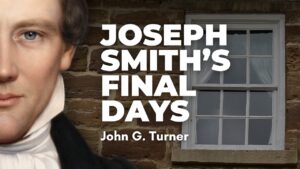
Thumbnail Credits: Main image of the death masks of Joseph and Hyrum by Kenneth R. Mays (wikimedia); Background image of the Smith Homestead in Nauvoo is from knudsengmission.blogspot