
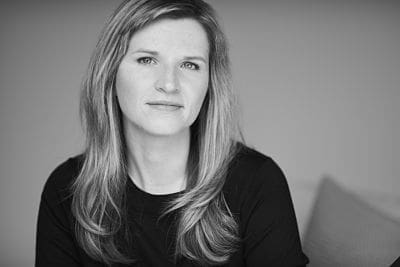
 We are excited to release our interview with Tara Westover, author of the New York Times bestseller “Educated.”
In addition, Mormon Stories Podcast is excited to announce that we will be hosting Tara Westover in Salt Lake City on 3/29/2018. We will host a public book signing and Q&A that evening in conjunction with the King’s English Book Store. (Now that this event has taken place, a recording of this event may be found here.)
Registration for the event can be found here: https://www.eventbrite.com/e/qa-and-boo…
More about “Educated”:
“[A] searing debut memoir… Westover recounts her upbringing with six siblings on an Idaho farm dominated by her father…who tried to live off the grid, kept four children (including the author) out of school…and stockpiled supplies and guns for the end-time…When she finally escaped the toxic atmosphere of dogma, suspicion, and patriarchy to attend college and then grad school at Cambridge, her identity crisis precipitated a heartbreaking rupture. Westover’s vivid prose makes this saga of the pressures of conformity and self-assertion that warp a family seem both terrifying and ordinary.”
Part 1: This transcript is machine-generated and lightly edited for readability. The audio is authoritative. Please excuse occasional errors in names and spelling. Tara Westover [00:00:00] We like to throw rocks at the people who don't see the world in the way we do. John Dehlin [00:00:11] Mormon Stories is a production of the Open Stories foundation and relies solely upon the support of people like you, its listeners. To help keep the podcast alive or to become a member of the community, please become a monthly subscriber by visiting MormonStories.org and clicking the donate button on the top right side of the page. All contributions to Mormon Stories are completely tax deductible and go towards producing the podcast and building communities and programs of support for Mormons like you. Thanks for your support. Hello, everyone, and welcome to another edition of Mormon Stories Podcast. I'm your host, John Dehlin. It is March 13, 2018, and we are so incredibly excited to be interviewing Dr. Tara Westover, author of this phenomenal book which is sweeping the nation by storm. The book is called Educated a memoir by Dr. Tara Westover. It is published by Random House, Penguin Random House, who is not an insignificant author or publisher. It's a very. A very big book. And Tara's been on all the big shows. She's been on, like 30 different podcasts. And we're not offended at all that we're number 31. We're honored. We're honored that you would join us. Tara Westover [00:01:53] Thanks for having me. John Dehlin [00:01:54] Yeah. Tara Westover. So where are you joining us from? Tara Westover [00:01:57] I'm in Cambridge in the uk. John Dehlin [00:01:59] Okay, so you're in your apartment. Excellent. Tara Westover [00:02:02] I'm in my house, yeah. John Dehlin [00:02:03] All right. Well, this book is an incredible book, and I've read a lot of books. I've read a lot of memoirs, especially written by Mormons. And this book was. Was a gut punch in many, many instances. And then in many instances, it was very inspirational and powerful and uplifting. So congratulations. Tara Westover [00:02:27] Oh, thank you. John Dehlin [00:02:29] Today we're going to be taking two hours and we are going to cover as much of your story as we can. We are excited to have listeners joining us. Live listeners, please share this interview right now on your Facebook wall, promote it, and we'll have as many people as tuning in. In addition, we just want to make a really quick announcement, let you know that Mormon Stories podcast has several cool events coming up. We do workshops and retreats all over the country. We're looking to do something in Boise very soon. Colorado Springs is also interested. If you're interested in a Boise or a Colorado Springs or Denver event, please Message us@mormonstoriesmail.com But we do have events coming up. We have a Mormon stories retreat June 8th through 10th in Salt Lake City. We have A retreat in Houston July 13th through 15th, and then in August we have Idaho Falls 10th and 11th, and then our cruise to the Bahamas October 24th through 28th. You can find all this information@mormonstories.org events and the only reason we mention it is because one of the main objectives of Mormon Stories Podcast and the Open Stories foundation is to support people who are going through a religious transition, who are struggling in their faith, struggling with their families, struggling in their marriage or in their significant relationships, raising kids, dealing with ward friends, et cetera, people that feel lonely. And we do these workshops and retreats to support people who need that help. So if you're interested in any of those events that I mentioned, they're always rated 4.9 out of 5. People love them and say they really help. Please check out mormonstories.org events and we'd love to have you join us. And if you want us to host a workshop or retreat in your area, just email us@mormonstoriesmail.com and we'll get something scheduled. And the only other thing I'll say is that Mormon Stories is brought to you by the people that donate to the podcast in if you enjoy these episodes, if they make a difference in your life. If you want to see more interviews like this, like with Tara, with Tova Mervis or others, please donate. You can go up to the top right of MormonStories.org, click on the donate button. Monthly donations allow us to plan, to hire staff and to make financial obligations that are more medium to long term. So Please sign up. 10, 20, 50, $100 a month, whatever you can afford. Allows us to keep our staff employed, allows us to pay our bills and to keep providing support for people who need it. So please check us out and also check out our new website. MormonStories.org has recently done a web redesign thanks to the support of Jeremy Cargill, and we would love to have you guys give us your feedback on if you like the site. We tried to add a few cool things like a top 25 most important, you know, most popular interviews. We have other lists like top 10 LGBT themed episodes, top 10 women or feminist themed episodes, top 25 faithful episodes, episodes on race, episodes on truth claims on church history. There's even a bucket for my favorite episodes. There really aren't any favorites, but there are a few that I've listed just to encourage people to check them out. So we've tried to make the website useful for you, so check it out. All right, without any further ado, Tara Westover, thanks so much for joining us again. Let's dive in, shall we? Tara Westover [00:06:11] By all means. John Dehlin [00:06:12] Okay, so we're going to get to why you wrote the book and what your motives were, but in typical Mormon stories fashion, what we want to start with is just your story. And we want to go as chronological as possible. And there will be times maybe when I take us out of the narrative. But as much as we can, I want to try and capture your life in about an hour, hour and a half, and then open it up to lots of questions from our live viewing audience. So if you don't mind, let's begin. Can you talk anything about your pioneer heritage and to what extent you are, like many of us, sort of hailing from Mormon pioneers of one stock or another, or do you even know? Tara Westover [00:06:55] I know a bit about it. I had a there's a story I do tell in the book about a great, great, I think three greats grandmother of mine who was from Norway and she was converted in Norway and converted her parents. And then they had dreamed to come to the United States and meet the prophet. But when they decided, when they were able to do that, they actually weren't able to take the whole family. So the parents went and she stayed behind with her fiance. And, well, what happened was the mother, her mother was so sick by the time that she made it to Salt Lake that she was dying effect. And it was one of her last wishes to see her daughter. So she was sent for immediately and didn't make it before her mother passed away. But of course, now she'd left her fiance in Norway. They were separated. He was too poor to come, and she was too poor to live in Zion without, you know, now she was just a burden to her father. And so she became a plural wife. And it was not a very happy story. The way it was told to me as a child was that she, you know, she was the second wife. The first wife was unable to have children, so she had, when she had become pregnant with twins, it had caused a lot of tensions to the point where she worried for her safety and the safety of her children. And so she had fled in the middle of the night. And one of her children didn't survive the winter because it was too cold. And it was just quite a brutal story, actually, of but also a beautiful story about faith and family. But but also, I think, presented a side of polygamy that was not ideal. It was told to me as a faith story as a child. My mother told it to me that way, but I Remember really being quite upset by it. John Dehlin [00:08:39] Sure, yeah. Those pioneer stories can be brutal. Any other pioneers worth mentioning or sort of Mormon ancestry? Tara Westover [00:08:48] I had a great. My great, great grandfather on my other side, Charles Westover, joined the handcarts and converted, I think, at winter quarters and came over, but I don't know a lot of details about. About him. John Dehlin [00:08:59] Okay, well, let's talk about. In, in the book, you talk a bit about, you know, your grandparents, maybe even your great grandparents. Let's, let's talk about that just a bit. Tara Westover [00:09:10] My grandparents, I mean, my. Both of my grandparents were pretty normal LDS people really. I mean, they were fairly mainstream. Very mainstream for Idaho. On my mother's side, they lived in the middle of town with a white picket fence and a yellow house, and they were just very typical Mormons. My grandmother had had a father who was an alcoholic, and I think she had felt a bit judged and isolated in the community. So for her own children, she did everything she could to create this kind of appearance and actuality of respectability. So they were very, very respectable, mainstream people. My father's side were a bit more wild, you know, kind of mountain farmer type people, but. But mainstream, I would say, in terms of theology. John Dehlin [00:09:57] Okay, so do you, you know, your dad and mom play so heavily in, in the book and in the narrative, talk about what, you know, what influences on both your dad and mom might have shaped the way that they end up. They ended up raising your family and parenting each of you. Because it was not a typical upbringing. Tara Westover [00:10:20] No, as a child, it seemed typical to me. I mean, there were a lot of things that I thought were really beautiful about my childhood. We grew up. I grew up on this beautiful mountain, Southern Idaho, and we had a farm that belonged to my grandfather, and we had a junkyard that belonged to my father full of crumpled up cars. And my mother was an herbalist and a midwife. We spent a lot of time walking on the mountain gathering rose hips and mullen flowers and yarrow that she could stew into tinctures. So there's a lot of beautiful things about it. And of course, it was the life that I had ever known. So it seemed completely normal to me. Now that I'm older, I can see that it wasn't exactly normal. There were. There were actually many aspects of it John Dehlin [00:11:01] that were pretty unusual, and that's an understatement. So what, what do you think shaped your dad's. You know, and you talk, we'll talk about mental health, but there's just sort of survivalist kind of off the Grid prepper kind of impulse with a lot of, you know, conspiracy theories, sort of New World Order, Illuminati, you know, framings that your dad brought. And I'm a relative of Ezra Jaff Benson, so I know that a Mormon who was raised in the 60s might have come by a lot of that New World Order conspiracy thinking, honestly. So do you have a sense for. For what made your dad kind of grab onto that? Was it his parents? Was it his. Tara Westover [00:11:48] It wasn't his parents. That's what's interesting about it. I know that in the 1960s there was a big emphasis on food storage and on the end of times and all of that, but I don't know, everyone else in our town had also lived through that same period. And yes, there was a certain conscientiousness about preparedness and food storage, but nobody was like my dad. So I don't know what it was exactly. I mean, he. When he married my mother, they had their children in hospital, they put them in school, their first three sons, they got birth certificates for them. Everything seemed to be going pretty normally. It was really only around the time that my fourth. My third and fourth brother came into the world that my dad started to get more radical. He really wanted. First he wanted to have a midwife because he started to develop a kind of suspicion or skepticism of the medical establishment. And then that suspicion spread to the public school system and he pulled the kids out of school. So that by the time I came along, I was the youngest of seven. You know, me and the last four, really, none of us, we never went to school. We never set foot in a classroom. We were all born at home, we were never taken to the doctor, no matter how seriously we were injured or if we were ill. Broken bones was the only exception to that that I can think of. And of course, we didn't have birth certificates. John Dehlin [00:13:05] Right. So. And just. I'm just touching back a bit like I. I do remember, and this may be stuff you haven't ever heard of, but there were these books that were written in the 60s, like, none dare Call It Conspiracy or the Naked Communist, that. That really did make their way around, and they were tied to the John Birch Society and. And it was stuff that Benson even got in trouble for promoting. So I. So much of what I heard from your dad, I got exposed to in the. In the 70s as a devout Mormon. So I guess I get a sense that you had. Have never been able to have a. Talk to him about what his influence is, whether it was books or general Authorities or friends or brother, siblings or associates. You don't know. And it sounds like what you're saying is that. That that increased over time, that he didn't maybe start out that way. Tara Westover [00:13:58] I think while other people moved away from it in the 70s, 80s, 90s, everyone else was moving away from it and he was moving toward it in a way. So I think that you're right in saying, you know, he. Yeah, he. He did get mailings from the John Birch Society. I do remember that. And he did take certain talks given by Ezra Taft, Benson, David O. McKay. He took them really seriously. But it's not as though there was no one else in his family that was doing this. I don't think he had other friends doing it. Other people in our ward were not. You know, it was kind of like, yeah, you had this period. I think America was gripped by fear, really, with cartheism and all the rest of it, anti communism. It wasn't just in the 60s. You had this period. But what was kind of interesting about my dad is, you know, he starts. I think that they were married in 74, and I don't think he began to radicalize until, you know, really into the late 70s. So it's kind of at the time when the rest of Mormonism is kind of starting to move away from this is when he really starts to double down on it and starts to. Starts to get these kind of ideas that if the Illuminati has. Has infiltrated the government, they might also have infiltrated the church. And so maybe even some of the brethren know. Know how wicked the public schools are. But they're not gonna. They're not gonna say because they're trying to test the faithfulness. Like, that's when he. He started to get more really conspiratorial about it at a time when most people were moving past that. John Dehlin [00:15:25] Did he. So I'm assuming he graduated from high school. Tara Westover [00:15:30] Yeah, he went to the. It's called Westside. It's a high school in Idaho near where my family lives. John Dehlin [00:15:36] What. What kind of basic major city was kind of near? Tara Westover [00:15:40] There's not really one. If you drive an hour, you can get to Logan. John Dehlin [00:15:43] Okay, so you're kind of an hour north of Logan, is that right? Tara Westover [00:15:46] Yeah, roughly. John Dehlin [00:15:47] So north of Franklin and Preston, kind of. That area. Tara Westover [00:15:50] Yeah, that area. John Dehlin [00:15:51] Okay. But south of, I guess, Idaho State, whatever that. Idaho Falls or whatever. Tara Westover [00:15:55] Definitely somewhere between Idaho Falls and Salt Lake. John Dehlin [00:15:58] Yeah, got it. Tara Westover [00:15:58] That's where we go. John Dehlin [00:16:00] Okay. So did your dad do any college at all? Tara Westover [00:16:03] I never knew that he did. But one of my brothers has told me recently that they think he did a semester or two of college. My mom definitely did. She. She actually, quite ironically, was going to be studying or was studying early childhood education before she met my dad. You know, I think she wanted to be a teacher, which, considering their views on public education, is kind of interesting. John Dehlin [00:16:24] Yeah. Yeah. And. And I'm going to ask you a ton of questions that the book answers, but I'm. I'm interviewing you as if I haven't read the book, even though I've read 90% of it. So if I. So forgive. If I ask you questions, expect questions that the book answers, if that's okay. So did your dad serve a mission? Tara Westover [00:16:42] He did serve a mission. He went to Florida. John Dehlin [00:16:44] And do you. Do you have any stories about what that might have been like for him? Tara Westover [00:16:47] I know that it was. I know he had a difficult time coming back. I think he's not someone who likes to travel. He's not someone who deals with change very well, even at the best of times. So I have heard stories that it was a really difficult time for him, but I haven't heard any other. He didn't tell. He wasn't one of those people who told a lot of stories about his mission. John Dehlin [00:17:06] Okay. And do you have a sense for how he was treated by his parents and what his childhood and adolescence might have been like? Tara Westover [00:17:14] My grandfather was a difficult man. He was a man with a temper, for sure. And we all saw that, and we all knew that it wasn't a secret, but it was one of those things. He didn't talk a lot about it. You know, I don't think that he was very close with his mother. I don't think he was terribly close to his siblings. And I. Yeah, I don't think he was close to his father. And yet they never moved away from each other, you know, so they. They lived at the base of this mountain. And then when he grew up, he put his house pretty much very close to theirs, and they just always lived together despite not particularly being close. John Dehlin [00:17:48] Okay. And so was it a farming upbringing for your dad? Did he work on a farm? Tara Westover [00:17:51] Definitely worked on a farm. Definitely. I think. I think a lot of his. I don't remember what they were farming. My grandfather had horses for a lot of the time that. And I think that they were running livestock and. But I think. I don't know exactly when that stopped, but there was a. A point probably when my. When my dad got older that they stopped doing that. John Dehlin [00:18:11] Okay. And so you're. But your dad did go to public schools. He did serve a mission, maybe a little bit of college. Tara Westover [00:18:18] Yeah. John Dehlin [00:18:19] And. And he had siblings. Tara Westover [00:18:22] He had two sisters. John Dehlin [00:18:23] Okay. All right. How about your. So your mom. It sounds like your mom might have been rebelling a bit by marrying your dad. Talk a bit about how that might have been true, or am I wrong? Tara Westover [00:18:34] I think. Well, it's My. It's been my speculation, based on the story she told me. So she had this very respectable upbringing in town with this kind of perfect house. My grandmother was, again, I think she felt like she had been judged quite a bit for not coming from the right kind of family, and she wanted to correct that for her own daughters. And I do think that my mother rebelled against that so that when she went. My. When she met my dad, who by that time was. I don't think he was a radical, but he was definitely a bit unorthodox. I think she was really drawn to that. John Dehlin [00:19:06] Okay. And did they ever talk about their courtship or anything like that? How he wooed her? Tara Westover [00:19:12] A little bit, mostly? When my mother would talk about it, yeah. She would talk about the contrast between how she had been raised and kind of taking care of nice clothes or just in general, not being rowdy, and then the kind of contrast of my dad kind of blazing in with jeans, which her mother never allowed her to wear jeans, apparently. And so she. She. I don't know. I think that this. That. That movement from a city to the country, from respectability to rowdiness, I think really just appealed to her. John Dehlin [00:19:45] So you got a sense that she kind of knew what she was signing up for? Tara Westover [00:19:48] Well, no, because I think he wasn't. I don't think he had any of the beliefs that he would later develop. You know, I think he was a slightly unorthodox, eccentric person, but I don't think he was saying, oh, doctors or doctors are dangerous, and if you. If you take a pharmaceutical, then you're compromising your spirituality. Like, I don't think he thought those things. John Dehlin [00:20:09] Yeah, because you. Because you did seek medical help and public schools at the beginning, your family. Tara Westover [00:20:14] Yeah, my first. My oldest brother was born in a hospital, and he went to school. My. My oldest three brothers went to school. John Dehlin [00:20:20] So do you have any sense for what changed your dad? What. What kind of. Is it fun? Did he become more fundamentalist? Do you ever call them fundamentalists? Just not in a polygamy way. Just. Tara Westover [00:20:30] I don't call them fundamentalists because with Mormonism, there's such a strong association with polygamy. If it weren't for that, then I probably would. But I. Yeah, I feel like that gives a slightly wrong impression just because that's how people have defined it. If you defined it, though, as having a radical interpretation of doctrine, then he certainly meets that criteria of doctrine. John Dehlin [00:20:52] Okay, now this. This. This hits me. Something you wrote at the intro of your book hit me like a ton of bricks, and it almost made me feel insecure. Author's note. Okay. And I've highlighted it. Author's note. This story is not about Mormonism, neither is it about any other form of religious belief. In it, there are many types of people, some believers, some not. Some kind, some not. The author disputes any correlation, positive or negative, between the two. Please explain that. Tara Westover [00:21:27] Well, I do not think that my father is representative of the Mormon faith. Like, I don't think that Mormonism is the reason that we were raised the way that we were. It's always been my position that, again, I think that my dad has a mental illness, bipolar disorder. This is something I would discover when I was in college, just the concept of mental illness and what that means. And it seems very clear to me that my dad was a. I think that the religious extremism was a vehicle for that. So I think that the bipolar disorder caused the religious extremism and not the other way around. That's just been my view of it. So it's not as though Mormonism has nothing to do with the story. There's a lot about Mormonism. I go to byu. I was raised Mormon in one sense, but I did think it would be unfair to say, especially to the wider world, you know, I mean, my book. I knew at the time I wrote that my book was being translated into 19 languages. I feel like it would be very easy for people to say, well, this is a Mormon upbringing, and her father is a. Is representative of your typical Mormon. I think it would be so easy to make that jump. And I really wanted to, as much as I could say, no, not really. My dad is not indicative of Mormonism. I think he's indicative of a lot of other things. But I don't think that you could say Mormonism. John Dehlin [00:22:55] Yeah. So I think I totally understand that. And one approach could have been to say, hey, this represents a more conservative or fundamentalist type of religion, so please don't judge all Mormons by this story. But you kind of went further and said, any correlation? And I'm just wondering if that was just to try and not turn readers off or protect Mormons or if you really believe there's no. I guess you've already said it. You do see that there were heavy religious influences in your upbringing, right? Tara Westover [00:23:32] I think that statement disputes the idea that religion makes people good or that religion makes people bad. I think people can use religion as an excuse for goodness or for badness. And I think certainly religion can introduce psychological elements into a culture that are great and also equally that are very bad. So I don't say that it's completely innocuous, and I don't say that it's completely impotent. But I do think that very specifically says there are good people and then there are less good people. And I don't think that the correlation should be those who believe and those who don't believe. Because I got to BYU and I had. I mean, I had wonderful experiences from. I had people at BYU who literally saved me. And it would seem ungrateful in a way to suggest that, well, they're just good people and has nothing to do with their belief, and then just blame the religion for everything else just seems slightly unfair. John Dehlin [00:24:25] Yeah. You didn't want to throw Mormonism under the bus. Tara Westover [00:24:28] No, I think it's an influence, but I don't think you can say it's any one kind of influence. John Dehlin [00:24:33] Yeah, got it. Okay. So do you have any idea of what made your dad start changing? Was there a head injury? Was there trauma? Was it just the progression of what you later described maybe as possibly bipolar disorder? Were there any factors that might have been an impetus to this transformation for him, this radicalization, as you call it? Tara Westover [00:24:58] Not that I'm aware of. I mean, it's been a speculation of mine that he has bipolar disorder, but I'm not a medical professional. I have no idea. I do know when I learned about bipolar disorder, that the age of onset did correlate with when he started to do things like hire a midwife to deliver his children or pull his kids out of school or just stop filing for birth certificates, other things that most people kind of do. So he. I've speculated that it probably was just. It just happens to people. You know, I mean, that there's an age where that happens, and he was that age. John Dehlin [00:25:33] And was he trying to pursue a certain career that went south or anything like that? Or. Tara Westover [00:25:39] You know, as far as I know, he was logging. I think it was physically demanding, but I don't think it was. You know, I don't think it was any kind of trauma. I know he had an illness and some kind of issue with his stomach and the Doctors were not able to figure out immediately what was wrong, which, again, I think is something that a lot of people go through. I don't think everyone would experience that and come to the conclusion that the doctors were not trying to help, that they were actually trying to harm you, and then from there, that they were part of this larger conspiracy. But that was what he did. John Dehlin [00:26:10] Right. Okay, so let's talk about your childhood. How, you know, what were the best and the worst parts of your. Of your childhood growing up? Tara Westover [00:26:20] Well, I think the best parts, a lot of them had to do with the mountain, with playing on the mountain, or we had horses. We broke horses, which was pretty adventurous. And also, it could be kind of fun. It could be kind of scary. I think it was a quality of my childhood that it had this kind of duality that things that were beautiful in one moment could be kind of terrifying the next. So the play, the. The junkyard could be this amazing, exotic playground, but it could also be pretty terrifying because my dad didn't really believe in safety equipment. And that, I think, was another product of. Of whatever mental irregularity he has. He just did not understand risk. He did not understand. I don't. John Dehlin [00:27:00] Yeah. Tara Westover [00:27:00] I just don't think he was able to comprehend the risks he was putting anyone in, including himself. And so the. That could be really terrifying. And then, of course, even after someone was injured, there was no. No, you couldn't go to the doctor or hospital because that was not allowed. So, yeah, there were. There was a sense of adventure and of beauty and of a lot of autonomy and independence. But then there was a lot of. Yeah, there was a lot of risk involved with that. John Dehlin [00:27:29] Did you. Did you have fun with your siblings growing up? Tara Westover [00:27:32] I did most. John Dehlin [00:27:33] Were you guys pretty close? Because it sounds like you didn't have a lot of friends outside of your family. Tara Westover [00:27:38] No, because, I mean, the kids. The kids at church, I very much thought of as public school kids. And in my mind, yeah, they. I don't know, I guess I thought we were living a better way than they were. And I think equally, they judged me quite a bit because. Because I didn't go to school. So they very much stayed together, and I was more on the outside of that, so I was never invited to their houses or anything like that. The adults in the community, though, were very. I think that they tried quite a bit to reach out to us. John Dehlin [00:28:11] Yeah. So, any your closest friends as a child and adolescent? Tara Westover [00:28:17] Definitely my siblings. John Dehlin [00:28:18] Were you closest to anyone in particular? Tara Westover [00:28:21] I was really close to my older brother, Sean, but Only when I was older. And of course, a lot of the book is taken up with him because he was, as I said, there's this kind of duality to my life where he could be really kind, he could be really sensitive. There was a time he even. He saved me, really. We were breaking horses and he was on a horse that had never had a rider on it before. And I was on another horse that just went completely berserk. And he really risked himself by whipping that horse into a frenzy to basically come save me on the other horse. So he could be really self sacrificing, but he could also be really controlling, really violent, really manipulative. John Dehlin [00:29:04] Yeah. I also felt like the scene, what was it called? The Claw or the Chopper? What did you call it? Tara Westover [00:29:11] The Shear. John Dehlin [00:29:12] I mean, that was a harrowing scene. Talk about that. If you don't mind. Tara Westover [00:29:17] My dad had this piece of equipment. We had a lot of angle iron, basically several hundred thousand pounds of it that needed to be cut in order to be sold. And my dad came up with the idea that the way we would cut it, he didn't want to use a cutting torch because he thought it would be too expensive. And again, this I think, just really shows how his mind works. So somewhere he found this thing that he called the shear. And it was essentially a two ton pair of scissors. Maybe it was only one ton. It was, it was heavy pair of scissors that just. It operated on a wheel. So it just chomped, chomp, chomp. And you'd feed the metal through it and it would buck like crazy and you would try to kind of not get thrown into the blades. And my brother Sean really sacrificed a lot to work that shear all summer because otherwise my dad was gonna have me do it. John Dehlin [00:30:11] Yeah. And there's a scene in the book where your dad's trying to force you to do it. And just like five minutes prior, talk about what happened to your brother. Tara Westover [00:30:22] Well, I had taken a big chunk of flesh out of his arm and he had had to run to the house, was kind of blood gushing. And I think these stories are difficult to tell in a way because I think people. I think people want to assume that my dad just didn't care about our safety, that he was just indifferent to it. And I don't think that's true because, you know, yeah, we all got hurt in the scrapyard because he took these reckless measures, but nobody got hurt really worse than he did. And so I really. I think it was a real tragedy of mental illness because I just. He was running the scrapyard. He didn't have the ability to evaluate risk even after someone was hurt. I don't think he was able to understand how serious injuries were. And so these just terrible things kept happening. And, you know, with him, he was removing. This was my senior year at byu. He was. There was a car he wanted to crush. And if you're going to sell a car to the car crusher, you have to take the tank off. They won't take it, otherwise, it's too dangerous. So what anyone would do is drain the fuel, puncture the tank, and drain the fuel out, and then you can take it off any way you want. You can get a cutting torch. You can. You can remove the belts. You can just take it off. But he didn't do that. He got a cutting torch and started removing the tank while it was still full of fuel. And of course, the spark made it into the tank, and the car exploded. And he was burned terribly from that. And my family, because of the way they are, because of the beliefs that they have, they made the decision to treat that burn at home. No iv, no morphine, just on the sofa with my mom, made a salve out of comfrey and lobelia, and that's how they treated it. John Dehlin [00:32:05] And when I've heard you in other podcasts kind of describe your dad and these sort of unsafe conditions, originally, I just thought it was lovely that you were trying to not throw him under the bus and also trying to contextualize it in a sense of mental illness. But in the book, there's such a heavy theme of abuse, honestly, especially as it relates to your brother Sean, and you having to work through this tendency to make excuses for people and deny and downplay and even question yourself. And I guess, as I hear you try to kind of give context for your dad, I wonder if that plays in a little bit even there, maybe. Tara Westover [00:32:58] But I don't think you have to let someone off the hook just because you question their mental integrity. Like, I don't think it's a fine. A very fine thing that we were all working in that scrapyard. Whether he was insane or not, whether he had a mental illness or not, I think that that shouldn't have happened. It shouldn't have been like that. So for me, I think. I think that I need that information that he. That he had some kind of mental issue, because it's the only thing that squares the circle for me. I'm pretty sure that my father loves me. I've always felt that he did. And yet we were Constantly getting hurt and he was constantly putting us in danger. And for me it makes sense to say, well, he just wasn't able to do this. And I really believe that that's true. I don't think it makes it not abuse. I think people can abuse other people and not mean to. I think you can abuse people. You. I think usually when there's abuse that takes place, it's between people where there's actual love. So I don't think it excuses it in any way to say mentally. I don't think he was able to. I don't believe he was in his right mind. So to me it's. I don't think it's an excuse. I don't think it excuses it in any way. I think it's just a fact. John Dehlin [00:34:14] Right. Some of the things I wrote down around safety that, you know, seat belts would be taken out of cars, seats in the van would be replaced with the mattress and the kids would just sleep. You know, there are two really heart wrenching scenes where you get in car crashes. Do you want to talk about those? Tara Westover [00:34:32] Yeah. We got into the first one, I think, because my dad insisted that we drive all night and no one else thought that was a very good idea. And then my older brother, who was, I think he was 16 at the time, was. Yeah. And he was driving and he fell asleep around six in the morning and we hit two telephone poles and then we only stopped when we hit a tractor and my mother's head hit the windshield and she was, she had a. She had a traumatic brain injury. There's no doubt. She had two giant swollen black eyes. And those eyes were black and swollen for weeks. Which of course, if you have two of them, they have a medical term for that. It's called raccoon eyes. And it's a sign of traumatic brain injury. And of course, of course by then my dad was very skeptical of doctors and so she was never taken for a CAT scan. She never saw a doctor. So it was, it was a, it was a stupid accident that shouldn't have happened. And then there wasn't proper medical care given after. John Dehlin [00:35:29] And then the second one was almost as scary or worse than the first. Tara Westover [00:35:34] The second one, the second one was just my dad driving 60 plus miles an hour through a snowstorm where everyone else had pulled off the road. And again, he's speeding up and he's John Dehlin [00:35:46] saying the angels can go faster than the. What did he say? Tara Westover [00:35:50] I think he said a half in jest, like, I never drive faster than the angels can fly. But he also really believed nothing. I think he really did believe nothing would happen that God didn't want to have happen. And this is not a rational thought. I don't think this is a Mormon thought. Not that people really do. I mean, people maybe say this, but they don't then play Russian roulette with it. So. But we did. And I think, again, I think it was. I don't think that he was mentally in his right mind when he made those decisions. I just don't think so. He was in that car as well. John Dehlin [00:36:24] Yeah. And how did it end up? Tara Westover [00:36:26] Well, we crashed. I know it's shocking for you to hear, but we crashed mostly. Everyone was okay. I think I was the only one. I was knocked unconscious for a few minutes and had a kind of whiplash injury for quite some time after that. John Dehlin [00:36:40] And it sounds like you woke up like they had left and you were kind of alone. Tara Westover [00:36:45] Well, they were looking for me. They thought I'd been thrown out of the van because they couldn't find me. And it had turned out I was just underneath the futon. The seats had been taken out and there was just a futon mattress in the back. And somehow everyone else had ended up on the top of it, and I was ended up. I ended up on the bottom. So they couldn't find me. They thought I'd been thrown out of the van. John Dehlin [00:37:05] Yeah. And something we forgot to mention is in the first wreck, you end up with power lines on the car. Is that right? Tara Westover [00:37:12] Like, yes, there was. There was. John Dehlin [00:37:14] You can't make this stuff up. This is crazy. Tara Westover [00:37:17] Well, because we smashed through two telephone poles. So, yeah, we were taking some of them with us. I guess they were bad accidents. They weren't casual accidents. They were really bad accidents, both of them. John Dehlin [00:37:29] And. And what was also super coincidental was that both happened when you made these trips to Arizona related to your dad's mental illness. Talk about why you would make these trips to Arizona. Tara Westover [00:37:42] Well, he would go to Arizona to see his mother because she would go to Arizona, my grandparents, for this, for the winter, because it was too cold for them in Idaho. So he wasn't that close to her. But he would go occasionally, and he would go. Another reason he would go is that I think he had pretty serious seasonal depression. So when the winter set in, he would find it really hard to even get out of bed for some weeks. And then my mother would say, right, let's go to Arizona. And I think that the downside of that is we would go and we would get there just Fine. And then the son would kind of restore him and it would send him into this kind of euphoric, manic phase where nothing bad could ever happen because he didn't believe anything bad could ever happen. And then he would make really poor safety to decisions that would end badly. John Dehlin [00:38:26] And because the cars weren't registered or insured, because he wanted to be off the grid, that, you know, made it extra. A safety concern. Because you don't want. Tell us why that made it more unsafe and complicated. Because what happens? The wreck happens. What's his reaction? Tara Westover [00:38:43] Well, he usually didn't want to get the police involved, but I mean, I don't think that's surprising. If you're not going to go to a hospital, you're not going to want the cops there. What are they gonna do except give you a ticket? And so, yeah, I sometimes wonder if the cars. I think the cars weren't insured as a way. As a way of protest or registered as a way of some kind of like government protest. I don't think he had a lot of. I don't think he thought that the government actually couldn't find us or something because, you know, we had a power. We had power. We had all these other things that you need to live. So I don't really know why he. Why he thought that not registering the car was an important step, an important line to hold. I don't know. John Dehlin [00:39:24] Let's talk about your mom. Let's talk about her participation in midwifery or midwifery and I guess alternative medicine. Tara Westover [00:39:35] Yeah. So I think that was something she got into very much in probably in response to the fact that my dad became so anti doctor. I think she looked into herbal supplements to help him sort out whatever was going on with his stomach. And that just progressed as he got more and more anti doctor. My mother developed more and more skills with. With herbalism, with homeopathy, with energy work, and ultimately with essential oils. And so, you know, I mean, I think sometimes it would happen. Someone would have an illness and we could. We didn't go to the doctor. Some mother would research what to do for it herbally. And pretty soon she was doing quite a lot of business with that on the side. John Dehlin [00:40:14] Talk about your dad's remedy for swollen tonsils. Tara Westover [00:40:19] So that did happen when I started singing. And my dad was really proud of the fact that I could sing. And he got pretty invested in giving me advice about singing and how to sing and what to sing and where to sing. And there was one winter where I kept getting Strep throats. I think I must have had tonsillitis or something. And I just kept getting them, kept getting them. And my tonsils were really swollen. My dad, discovering that they were really swollen for some reason, came up with this idea that sunlight was the perfect cure for tonsillitis. And that if you just stand outside literally with your mouth open, just hold it open so the sun could shine into it, that that would cure it. So I did that probably 30 minutes a day for a month, which in Idaho and January is actually not good for tonsillitis, I think we should be clear. Does not help. John Dehlin [00:41:12] Yeah. Tara Westover [00:41:13] And it also gives you a hell of a jaw ache. John Dehlin [00:41:15] Yeah, I'm just imagining a little girl standing with their mouth open in this Idaho winter sun. Tara Westover [00:41:21] Pretty great. John Dehlin [00:41:23] Talk about the rescue remedy. Tara Westover [00:41:25] This was a homeopathic that my mother said would treat shock. And my family really believes in this still. I've never seen it work the kind of miracles that they claim they've seen it work. But in my family, it. It's a. They really believe in it. So the idea is when someone would come in, you know, my brother lit his leg on fire once and he was in shock, and we gave it to him then, or I'm sure they gave a lot of it to my dad because he was. He was covered in a lot of kind of third and fourth degree burns, really bad burns starting from his waist and going up. And I'm sure that, you know, anytime anyone lost a lot of blood was going to shock, she would whip out this homeopathic. And in my family, it's very much believed that it brings you out of shock. I don't know if I think that, but they certainly do. John Dehlin [00:42:10] What's in it? Tara Westover [00:42:10] It's homeopathic. It's like it's mostly distilled water. And then there's a few drops of a mother homeopathic, which itself was mostly distilled water. So it's mostly water, I think. But some people really believe in homeopathy. I'm not one of them, so I'm probably not the person you should go to for a really good analysis of John Dehlin [00:42:30] how it works and what types of oils would be in this. Tara Westover [00:42:33] My mother didn't do essential oils until later, so she would start out with, you know, typical ones, lavender, chamomile. And then as. As she expanded outward, then. Then she would get into some much more obscure ones. But, and. John Dehlin [00:42:49] And talk about how these oils would be used to treat things that maybe a physician might not support. Tara Westover [00:42:57] I think you have something in mind, from the way you're asking that question. John Dehlin [00:43:00] No, no, no, no, no, no. I. I mean, I wrote down that it just. It seemed like sometimes they were used for things that. That maybe that didn't belong. So I don't have anything specific. Tara Westover [00:43:11] Well, they were treated. Well. I would say it was just that the herbalism and the natural healing was just used for everything. So there wasn't a line at which my parents would say, in almost any case, this is too serious. I can't think of hardly any cases where that would happen. And so even if my mother suspected she had cancer or something like that, she would not go and get that looked at. It would just be solved at home. John Dehlin [00:43:35] So pretty much with essential oils or something. Tara Westover [00:43:38] With essential oils or homeopathics or energy work. So it didn't, you know, if you were having trouble with your kidneys, if you had pneumonia, if you had, you know, whatever. There was a time when I got to BYU when I'd never been to a doctor before. But my second year at byu, I got really sick. I got really unlucky, and I got mono at the same time that I had a. That I had strep. And I had a boyfriend at the time who did not know that I was raised by radicals. And so he just assumed that I would go to the doctor. And I didn't. And I didn't. And I didn't because I was terrified of doctors. And finally he kind of made me go, and I was given penicillin, which I assume must have been for the strep, because I don't think they can do much for mono. But my mother, when she found out that I was taking penicillin, she sent me this little care package. But everything that she sent me there was clay. That you had to soak your feet in to draw toxins out of the body. I remember. But everything that she sent me was to fight the penicillin. So she sent me nothing for the actual mono or the strep. It was all for the penicillin. John Dehlin [00:44:46] Oh, man. Tara Westover [00:44:47] Because that's what they were worried about. They were very concerned that I was taking penicillin. That was terrifying. Whereas the illnesses were not terrifying, which John Dehlin [00:44:54] many see as a modern miracle. Penicillin, Right. Tara Westover [00:44:57] Yes, Certainly we don't. No, not usually. John Dehlin [00:45:01] Was it your grandma who was. Who was undertaking chemotherapy but was. But was also taking herbs as a. As a. As a supplement and then. Tara Westover [00:45:13] Yeah, so my dad's mother did very much believe in doctors. And then when she got cancer, she. She would do Some herbs, but she would also go to the doctor and get. Do whatever they told her to do. And my dad had a belief that if you went to the doctor, I think he thought that compromised you spiritually in some way so that the herbs wouldn't work. So you couldn't do both. You had to have the faith healing and trust the herbs, which he called God's pharmacy. Or you could. Or you could do the doctor route. But of course, he didn't think that would work. But definitely he was very skeptical of people who tried to do both. John Dehlin [00:45:48] Right. Yeah. And I guess I did write some other things that, you know, the concussions would be treated sometimes with. With some of these homeopathic or essential oil remedies. Tara Westover [00:45:59] Oh, definitely. Always. Yeah, always. John Dehlin [00:46:01] And I was always frustrated when you. When you had that pain in your neck or that pain in your toe. Tell us about Sean's remedy. Tara Westover [00:46:09] Oh, when he. I had a broken toe, which he had broken. And, yeah, he just. He just yanked on it and. And said it, basically, I think. John Dehlin [00:46:19] But also the neck. Tell the neck story. Oh, yeah. Tara Westover [00:46:21] So I. So from that second car accident, I did have a really serious injury, and I became kind of immobile, actually. I couldn't. I couldn't turn my neck for at all, almost. And so, yeah, I don't know how he had learned it, but he got in the habit of just coming up behind me and just snapping my neck. John Dehlin [00:46:41] But it's a lot more dramatic in the book. Tara Westover [00:46:43] Well, it was super dramatic. If you can't move at all and then someone snaps your neck, I mean, you'll be dizzy for 10, 20 minutes. John Dehlin [00:46:50] Did it help? Tara Westover [00:46:51] It did help a little bit. It helped a lot, actually. But he kept doing it even after that initial set had happened. And I think that was actually quite bad for my neck. He shouldn't, because he would just do it all the time. Right? Yeah. John Dehlin [00:47:09] And then just while we're on it, tell the story about washing your hands in the bathroom, because it's a good story. Tara Westover [00:47:17] My dad didn't have the most normal ideas of hygiene, so he very much thought that it was just a waste of time. So my mother's mother, who was this very proper woman again, she was the one with the white picket fence and the yellow house. And so she would get after him and say, well, don't you teach your kids to wash their hands after they go to the bathroom? And he would say to her, no, I don't. I teach them not to piss on their hands. So he wasn't a super big Believer in soap or anything like that. John Dehlin [00:47:48] And that followed you to BYU with your roommates, right? Tara Westover [00:47:51] It, Yes, I was corrected. I was put right. I would say, what happened? Well, they just noticed that I didn't. They were horrified and sat me down and said, this is disgusting. You have to do this. Like, this is not optional. John Dehlin [00:48:04] Right. Okay, let's jump into the religious and spiritual life of your family when you were a child and adolescent. So in what ways was your family religiously typical? Would you even know? Like, you know lots of people who were raised in sort of conservative or traditional or orthodox Mormon homes. What, what of your upbringing, Mormon upbringing, would people relate to? Tara Westover [00:48:35] So we went to a mainstream Mormon church John Dehlin [00:48:41] every Sunday. Tara Westover [00:48:41] Yeah, every Sunday. I got very mainstream Mormon education on Sundays and then my dad would always sort of augment that with a slightly more radical interpretation later. So I think I have a pretty decent grip on mainstream Mormonism. And that's kind of, I would say I kind of almost converted to mainstream Mormonism when I went to BYU because I had been raised in this much more extreme. John Dehlin [00:49:08] Yeah. So I want to thank all our listeners for tuning in. We have 180 people joining us. We want to invite all our listeners to please post comments or questions on the feed and we can check those things out and share them with Tara real time as much as possible. Do you remember? So did you go to primary every Sunday? Tara Westover [00:49:30] Yeah, absolutely. Sundays we were pretty naming Mormons. Sometimes dad would get up and kind of call everyone to repentance for not having food storage or for sending their kids to school or for whatever. John Dehlin [00:49:42] How did the kids treat you in primary? As the weird one or as a normal kid? Tara Westover [00:49:46] Mostly as the weird one. I don't. There was some bullying, I suppose, but mostly I think, I think they just ignored me. They didn't really know what to do with me, you know, But I mean, John Dehlin [00:49:57] you would have, you would have done 16 years in that ward before you went to BYU. 17 years almost. So, I mean, that's a long time. Three hours a week. Are you saying you were ignored for all those years? Tara Westover [00:50:13] I wasn't completely ignored. They would definitely talk to me, but I was never. And I don't really blame them for this because in a lot of ways I think we isolated ourselves. But you know, I was never invited to a girl's house who went to public school until I was early teens and even then almost never happened. So I was never, I never went to play at their house. They never came to mine. And you know, if you think about what Little kids, what they talk about. They were talking about cartoons. They were talking about teachers they had at the school. They were talking about. They were talking about school, and they were talking about tv and they were talking about people I didn't know because I only knew them. And they knew all the kids in the other wards because they went to school together. So I just don't think that they knew what to do with me. And it's not like I was ever gonna catch up. It's not like they could bring me into the circle and I would ever meet these people or know what they were saying, because I never would. So there was some teasing. There was a. There was a kid in the class who told people that because I was homeschool, I couldn't read. And so he would taunt me quite a bit for being different. But mostly I think that. I think that it was. It was not malicious. It just. We weren't included. And some of it was us. We were isolating ourselves. You know, like I said, I thought of them. When I say I thought of them as public school kids, that wasn't a compliment. I was judging them as well. John Dehlin [00:51:35] How does your family look at people who went to public schools? Tara Westover [00:51:38] Well, my dad would say that people sent their kids to schools because they were lazy, that they knew what God wanted them to do, but they were going to do the wrong thing because they weren't listening to the spirit and all these kinds of things. So I was very judgmental of them. I was not. It was not the case that I thought that I wanted. That I necessarily even wanted them to be friends with me because there were moments I did because I was lonely. But there was a whole other part of me that would have not wanted anything to do with them either. John Dehlin [00:52:08] Do you have. Do you remember any favorite primary songs? Tara Westover [00:52:12] I like Book of Mormon stories. John Dehlin [00:52:14] Really? Tara Westover [00:52:15] It's got such good rhythm. John Dehlin [00:52:17] Okay. What was your. So what was. What were your family spiritual and religious practices in the home? Tara Westover [00:52:25] We did. I think we always had Mormon. Sorry. We had family scripture study every morning. We had. We had family home evening. Absolutely religiously. That was just not optional. And on Sundays, we were not allowed to watch TV for most of the time I was growing up. Although most of the time I was growing up, we didn't really have a tv. We got that when I was much older. But, you know, we sort of had to read the scriptures on Sundays. And I think it was. Our religion was probably more about what you didn't do than what you did do. Although we were Definitely expected to pray and read the scriptures and all of that kind of thing. John Dehlin [00:52:59] What were the things you didn't do? Tara Westover [00:53:02] Well, like I said, doctors, hospitals. John Dehlin [00:53:05] Oh, I mean, religion, all of the. Tara Westover [00:53:08] Well, I think it was the same for my dad. You know, his. In some ways it was a conspiracy theory, but political paranoia, his fear of doctors. But it also had a really strong spiritual element. You know, I would have thought that people who were taking drugs, pharmaceuticals, were in a way, sinning, you know, and I would have thought it was sinful for me to do that, so. And same with schools. The moments that I did want to go to a public school, I always felt like I was making a Spiritually, like a mistake. Spiritually, it wasn't just that it was, you know, politically my dad was against it. It was. It was a spiritual thing as well. John Dehlin [00:53:48] You. You mentioned being shocked when a BYU roommate drank Diet Coke. So clearly Diet Coke was forbidden in your family. Tara Westover [00:53:54] Yeah, for sure. John Dehlin [00:53:55] Caffeinated. Just any caffeine. Tara Westover [00:53:57] Any time that there was a more extreme version of Mormonism that my dad could go for, he did that. John Dehlin [00:54:04] And that included Sabbath observance, not buying things on Sunday. Tara Westover [00:54:08] Absolutely. Yeah, definitely. John Dehlin [00:54:10] Any other. Any other kind of really harsh, strict, I guess, modesty. So let's talk about this. So I. I was kind of appalled at just the use of the word horror. Talk about that in your family. Tara Westover [00:54:23] That was a word my dad would use a lot when he was talking about doctors and hospitals and he would say that people were whoring after other gods. So it was a word he used quite a bit. And you know, if people send their kids to school, that was the way he conceived of it, that they. That they weren't being true faithful Mormons and that they were worshipping these other gods. So that was the way my dad used it, the way that my brother used it against me specifically. I think he meant it in the definitional version of it. And I think. I think it's hard in a way. I think it's a short step from demonizing sex to demonizing women. Because if you say women trigger sexual thoughts in men and those sexual thoughts are bad, I think it's kind of. It's a really easy jump to say, well, women are bad, and if the sexual thoughts are dirty and the women are causing them, then the women themselves are dirty. And I think that was very much behind when my brother used it against me. Yeah, that was where it was coming from. John Dehlin [00:55:22] So tell. Tell a story or two where that word was used against you. Tara Westover [00:55:27] So my brother, he liked he, like I said, he could be great, but he could also be really confronted. John Dehlin [00:55:33] This is Sean, right. Tara Westover [00:55:34] I call him Shaun in the book. And he could be really great, but then he would. Sometimes he would get in these kind of moods where he just seemed to need to test his power, to kind of test his control over you. And what he would do is he would tend to pick some random errand that you could run. So what I remember doing a lot was he would say, get me a glass of water. And then you would. And he would say, no, I want ice in it. So you'd go get ice in it, and then you'd bring it, and he'd say, no, take the ice out. What is this shit? I don't want this. And. And you do this back and forth and back and forth, and not only with him making you do it again, but acting like you were somehow stupid for not having done it the way he wanted, even though he told you the other way. So it was this kind of game. And eventually, when you got tired of playing the game, he would. Sometimes he would go straight from that to angry and violent. But more often, he would start engaging with you physically in some way that he was pretending was a game, as if you were all having fun. And he would be laughing. But while he was doing this, he wouldn't be doing fun things. You know, he would sometimes choke you, and then it would escalate at some point. It would almost always escalate to him grabbing me by my hair, hauling me down the hallway, and shoving my head in the toilet. And that is usually when the word made its appearance. John Dehlin [00:56:52] But it was also when you started liking a boy, right? Tara Westover [00:56:55] Yeah. None of the violent behavior from him occurred until I was, you know, probably 14, 15, maybe. Yeah. So. John Dehlin [00:57:04] And I. I think I remember in the book, you just talking to a boy who actually liked someone else, maybe even your brother's girlfriend. But the point was, he saw you talking to a boy, and didn't that lead to a very violent interaction? Just. Tara Westover [00:57:17] Yeah. And I don't. And I haven't psychologized him as much because I. For some reason, I'm less interested in why he is the way he is. But I do think there was something controlling about. There was a sense of ownership and control and hostility to the idea that I would like someone. And I think he liked me much better as a child. He was okay with me as a child, and I don't think he was okay with me as I got older, John Dehlin [00:57:42] because there's this part of the book Where I'm just reading along and then all of a sudden you're, like, woken up and assaulted. And it came right on the heels of him, if I'm remembering right, seeing you talk to somebody or maybe trying mascara. And it was a really jarring part of the book because I had no idea why he was pummeling you. Right. Tara Westover [00:58:01] Yeah. And I don't. Again, I don't know exactly either. John Dehlin [00:58:05] You just woke up with him pummeling you? Tara Westover [00:58:07] Woke up that way. John Dehlin [00:58:07] Well, what did he do? So you, like the night before, what happened? And then how'd you wake up? Tara Westover [00:58:11] He was. Nothing happened. That was what was so odd about it. John Dehlin [00:58:14] Like he saw you talking to someone or. Tara Westover [00:58:16] Yeah, I think he saw me putting on lip gloss. And then I had been. I had been kind of flirting with this guy. We were in a play together in town, and I had been talking to this guy. Boy. And he didn't like it. And he told me he didn't like it. And I don't know if that's what upset him or. I don't know. I think with him, he would. One of his girlfriends once said to me that what was remarkable about. What was remarkable about him is that he had this amazing ability to make other people hate themselves as much as he hated himself. And in those moments, that's exactly what it felt like. I think that was such insight on her part because it never felt like it was about you. It always felt like it was. Was about him. John Dehlin [00:58:55] But what did he do? Tara Westover [00:58:56] Well, that particular morning, he was. He was choking me. And he was shaking. He was shaking me. So my brain was kind of. I don't know if you've ever had your brain shaken, but you really can't think when your brain is being shaken. You can't really. You can't talk. You can't really even perceive things. It's just. Because your brain is. It's literally smacking into. Within your skull, you know? I mean, it's not completely tight. Your brain, it turns out, and it can. If you shake it, it really can't function. John Dehlin [00:59:24] Yeah. Do you mind? Do you have your book with you Tara Westover [00:59:29] in another room? I'm a bit embarrassed. No, no, I do have one here. Yeah. But it's British, so I'll have to. It'll take me a second to find whatever page. John Dehlin [00:59:37] Okay, so chapter 23. I'm from Idaho. I just kind of want to have you read what you wrote about the word horror because it was really powerful. And it made me write a frowny face. If you look at the margins. I've got some frowny faces there. That's what I write when I read something sad. Tara Westover [00:59:59] So what's the paragraph? John Dehlin [01:00:00] So start by reading. My body felt heavy as I walked to my apartment. Tara Westover [01:00:05] And how far do you want me to go? John Dehlin [01:00:08] Maybe go to just two paragraphs. Maybe three. Tara Westover [01:00:13] Okay. My body felt heavy as I walked to my apartment. All my life I had been taught that marriage was God's will, that to refuse it was a kind of sin. I was in defiance of God, and yet I didn't want to be. I wanted children, my own family. But even as I longed for it, I knew I would never have it. I was not capable. I could not be near any man without despising myself. I had always scoffed at the word whore. It sounded guttural and outmoded even to me. But even though I silently mocked Sean for using it, I had come to identify with it. That it was old fashioned only strengthened the association because it meant I usually heard the word in connection with myself. Once, when I was 15, after I had started wearing mascara and lip gloss, Sean had told dad that he'd heard rumors about me in town, that I had a reputation. Immediately, dad thought I was pregnant. He should never have allowed all those plays in town. He screamed at Mother. Mother said I was trustworthy, modest. Shawn said no teenage girl was trustworthy and that in his experience, those who seemed pious were sometimes the worst of all. John Dehlin [01:01:21] Keep going, please. Couple more. Tara Westover [01:01:24] I sat on my bed, knees pressed to my chest, and listened to them shout. Was I pregnant? I wasn't sure. I considered every interaction I'd had with a boy. Every glance, every touch. I walked to the mirror and raised my shirt, then ran my fingers across my abdomen, examining an inch by inch, and thought maybe I had never kissed a boy. I had witnessed birth, but I had been given none of the facts of conception. While my father and brothers shouted, ignorance kept me silent. I couldn't defend myself because I didn't understand the accusation. Days later. Days later, when it was confirmed that I was not pregnant, I evolved a new understanding of the word whore, one that was less about actions and more about essence. It was not that I had done something wrong so much as that I existed in the wrong way. There was something impure in the fact of my being. It's strange how you give the people you love so much power over you, I had written in my journal. But Sean had more power over me than I could possibly have imagined. He had defined me to myself. And there's no greater power than that. John Dehlin [01:02:32] Thank you. That was really powerful for me, this association. You only heard the word whore in association with. You talk about the scene where you rolling up your sleeves while you're working for your dad. Tara Westover [01:02:45] My dad had really strong ideas about modesty. And I think in some ways it's interesting because I don't necessarily oppose the idea of modesty in a general sense. Like, I don't know, as though it's great if people turn up naked to work. But I feel like it's incredibly difficult to teach modesty without placing responsibility for sex on women. And I think that in some ways my father's hyper vigilance about modesty made me vulnerable to my. To my brother putting that responsibility on me. So my dad had. He was constantly lecturing about what women in the town were wearing or even speculating that they were intentionally trying to get attention from him based on what they wore. And I worked construction for him when I was starting, when I was 15, 16 years old. And I would wear these T shirts, and if it was a hot day, I would roll the sleeves up just so, just to hear, you know, nothing scandalous. And they were tight T shirt, so it's not like you could see anything. It was literally just the top of my arm. And he would just come round and just yank it down and say, this ain't a whorehouse, and keep walking. John Dehlin [01:03:53] And then you'd roll him back up and he'd yank him down kind of thing. Right. Tara Westover [01:03:56] That was probably one of our first big standoffs where he clearly wanted me to do one thing and I did the other. John Dehlin [01:04:03] And then there's a really beautiful part of the book where you talk about how confused you were because he would criticize both tight fitting clothes and loose fitting clothes. No, but that was powerful for me because I'm thinking how confusing. Talk about that, how confusing that might have been. Tara Westover [01:04:17] I think for women, this is probably such a familiar thing because I think women are so used to being told, oh, if you only did this one thing, it would be fine. And then someone else coming along and saying, no, don't do that. If you only did this, it would be fine, or, no, don't do that. So you know when women are told to smile more and then people at work don't take them seriously because they're smiling all the time. I think it's so typical. And this is just another example of that, because my father, if you wore anything tight and form fitting, he would say, that was whorish. But if you wore something really loose and then you Bent over and it came forward and you could see down the top. Then that was obviously really bad, too. So there just wasn't. I think for most women, there's not a clothing you can wear that you will not at some point, look like a woman. It's just not possible. It's not an achievable goal. John Dehlin [01:05:11] Yeah. And so these two phrases at the end of this, you know, little part I had you read that you just. You walked around feeling like you were existing in the wrong way. The word whore you associated with yourself even though you had not even kissed a boy yet. And then you write, it's strange how you give the people you love so much power over you. Sean had defined you to yourself. And there's no greater power than that. Tara Westover [01:05:38] Yeah, I think so. And I think, you know, part of that scene is they very nearly convinced me that I was pregnant because I didn't know what that involved. I had no sex education. I'd never been to school. My parents certainly never taught me anything. I had no knowledge myself. So I knew it would be very bad thing if I were pregnant, but I actually didn't, you know, really. They. They had me half convinced. I wasn't even defending myself because part of me thought, well, I don't know, maybe I am. I mean, now I can see that's. I. What? Bloody ridiculous. But at the time, I didn't have the information I needed to even know what I was being accused of. John Dehlin [01:06:17] Thank you for joining us today on Mormon Stories. If you enjoyed this episode, please help us make more like it by becoming a monthly subscriber@mormonstories.org. Rocks is a featured single on Angela Soph's upcoming album Second Wind, Inspired by her struggle with the faith journey out of Orthodox religion. You can find and follow her on social media as Angela Sof Band. That's S O F F E on Spotify or AngelAsof.com. Tara Westover [01:06:59] To let them down so judge me Cast me your stones I will lay them back at your feet Take my hand let's walk among we like to throw rocks at the the people who don't see the world in the way we do I don't know why we all stand in a circle and point a finger or two Tell me how can you see what is buried beneath a mountain of smiles we're all thrown in the same blue the water of the unknown so leave your rocks at home. The truth is not what it seems we are told to just be believing the story has never been told John Dehlin [01:08:21] and Tara Westover [01:08:21] we all need someone to listen to hold our hearts is there beating with. Tara Westover [00:00:00] We like to throw rocks at the people who don't see the world in the way we do. John Dehlin [00:00:11] Mormon Stories is a production of the Open Stories foundation and relies solely upon the support of people like you, its listeners to help keep the podcast alive or to become a member of the community. Please become a monthly subscriber by visiting MormonStories.org and clicking the donate button on the top right side of the page. All contributions to Mormon Stories are completely tax deductible and go towards producing the podcast and building communities and programs of support for Mormons like you. Thanks for your support. So what was going on in your personal spiritual life? You know, I remember as a teen having these seminary teachers. Did you go to early morning seminary? Did you go to seminary? Tara Westover [00:01:10] When I was right, before I went to college, I went to a few almost in rebellion. My dad didn't want us doing anything that was at the high school, so I went maybe four or five times. John Dehlin [00:01:19] But you didn't go to four years of seminary? Tara Westover [00:01:21] No, I went to, like a couple, and then my dad freaked out and I stopped. John Dehlin [00:01:25] Okay, so. But you did get religious instruction from your ward and from all those female meetings and scripture studies, right? Tara Westover [00:01:33] Exactly. John Dehlin [00:01:34] So what was. You know, I remember as a. As a kid and a teen really wanting a testimony, really wanting to know if it was true, really absorbing the doctrines and the theology and the beliefs and thinking about the second coming and when was it, and. And my patriarchal blessing and, you know, am I gonna make the morning of the first resurrection? And what about the 12 tribes and signs of the times and, you know, just very Bruce Armaconkie Mormon doctrine sort of upbringing for me. What was your spiritual and doctrinal and theological life for you as a teenager? And to what extent were you internalizing this stuff and what did it mean to you? Tara Westover [00:02:14] I think I had all of that, but I also had all of the other things where my dad was really concerned with worldliness, with being a people apart, with remaining a peculiar people, and not just Mormons remaining a peculiar people, but us remaining peculiar within Mormonism. So a lot of times when dad would talk about Gentiles, he was talking about other Mormons, you know, because they were going to the doctor. They were. They were sending their kids to school. So for me, righteousness meant living in this way that my dad wanted us to live, not going to school, having our children at home, not going to the doctor. And I would have thought any departure from that would be. Would be sinful. John Dehlin [00:03:00] So what was your relationship with your Heavenly Father? Then. And what was it about? Tara Westover [00:03:06] I think it had all those normal mainstream Mormon elements of paying tithing and of going to church and of trying not to have impure thoughts and of trying to do good deeds. And then just on top of that, there were, there was just a kind of sense that all of these other institutions that people participated in, that we couldn't, that we shouldn't do that. That was just isolating, really. John Dehlin [00:03:28] But what about your personal spiritual life? So were you praying? Were you pleading with Heavenly Father? Tara Westover [00:03:33] Oh, yeah, I read. So I read the Book of Mormon from COVID to cover, I think the first time when I was nine, and then immediately read it again and then read the Bible. So I was very devoted kid, I would say. I started journal keeping when I was 10 because I believed that that was something that we were commanded to do. And no, I prayed every morning, every night. I went to. Definitely went to church. I never snuck out of church. I never made an excuse not to go because, yeah, I very much lived, you know, I ate, breathed and slept. That religion, I would say. John Dehlin [00:04:10] So did you. Did. Was God an anthropomorphic male to you? Did you think about heavenly parents? Tara Westover [00:04:17] Mostly I thought of. I definitely thought of God as a man. And a kind of Old Testament version was definitely the one my father was explaining to us on a regular basis. And he lived in my mind that way, for sure. I think I had a much more Old Testament experience with God, I would imagine, than the other kids in my town who probably had a much more genteel New Testament Book of Mormon conception of God. My father, when he got us together and read from the scriptures, you know, usually Isaiah, so. John Dehlin [00:04:49] So were you trying to communicate with Heavenly Father? Did you feel like he spoke to you? Did you feel like he, you know, directed you and guided you? Tara Westover [00:04:58] I did. I felt like. I mean, I would regularly, when my father would initially, when I was younger, and I would occasionally say to my dad that I wanted to go to school. He would say, well, pray about it and God will tell you that it's, that it's wrong, that you shouldn't. And I would, and I would almost. And I would always come to that conclusion. I would always agree with him. That's what God wanted me to do, is not go to school. When I got a little older, I prayed once and felt like I was supposed to. I think I really wanted to go and I still wasn't allowed to go. But there was the idea in my family that if you prayed, God would tell you not to go and then of course you could go if you really wanted to, but you couldn't really, because God would never tell you to. So it was all this kind of weird. You were supposed to technically be allowed to go. Some of my older siblings were allowed, but I think by the time I came along, there was no possibility of that. John Dehlin [00:05:51] What did Jesus mean to you? Growing up, Tara Westover [00:05:56] I think I thought a lot more about God than Jesus, honestly, because he was a much bigger part of. I was much more afraid, I think. But I think I had an idea of Jesus as a loving kind of figure. So there was both parts of that. Absolutely. John Dehlin [00:06:12] What about Joseph Smith? How was Joseph Smith talked about in your home, and what did you feel about Joseph Smith? Tara Westover [00:06:16] My family was very open and about polygamy. I mean, I've heard that there were a lot of LDs people who were very shocked by the. By the church's essays on polygamy. And I. You know, I grew up with that doctrine, was very present in my family. And the belief that in the afterlife you would be a. That you might be one wife among many, that was just something I grew up believing and hearing. John Dehlin [00:06:39] So your dad and mom believed in polygamy? They just didn't practice it that you know of? Tara Westover [00:06:43] I think, like, a lot like. Like, like what? I think a lot of Mormons, you know, they're aware of that it's a doctrine, and they believe in the doctrine, but they don't practice it. So they were like that was there John Dehlin [00:06:52] this deep respect for Joseph Smith as, like, a man of God and. Tara Westover [00:06:55] Oh, absolutely. Joseph Smith and Brigham Young were read in my household probably more frequently than. Than the current prophets. John Dehlin [00:07:02] Okay. And how were the current prophets talked about? It would have been Hinckley and Monson, I'm guessing. Tara Westover [00:07:11] Yeah. I think my dad always had respect for the actual prophet, but there was always some suspicion around the brethren in. I think my dad really believed that they knew that the medical establishment was corrupt, that they knew that God didn't want people sending their kids to public school. And I think he always felt quite a bit of frustration and doubt about why they weren't telling the membership that. And sometimes I think he thought maybe they were corrupt, but probably more often he thought maybe the members just weren't worthy of that revelation. John Dehlin [00:07:43] A lot of the members today, you know, who are more orthodox or fundamentalist, are gravitating towards the Denver Snuffer kind of movement where they're trying to get their own personal witnesses of Christ, and they're viewing the modern church as sort of fallen into Apostasy and trying to take the church back to kind of Kirtland era Mormonism. Did your parents have any influences in that regard? Tara Westover [00:08:08] I'm not aware that they did. I know that in the last couple of years my dad has found some blogs with specific dates where he has thought the world was going to end on those specific dates. But I don't know who they are and I don't know how he came across them, but it would be very much in character for him to now, having discovered the Internet in the last 10 years, find a bunch of people watching signs and get really involved in John Dehlin [00:08:31] that kind of the modern prepper movement. Tara Westover [00:08:35] Yeah, he's the original prepper. He was doing it before. It was so cool. John Dehlin [00:08:40] Was there a point where you ever, let's just say in your adolescence prior to byu, where you ever were unsure the church was true or doubted it or questioned it? Tara Westover [00:08:49] I had moments when I was a teenager. I remember once at girls camp really doubting. And always, though, I would pray and come to the conclusion that it was true. I don't think those faith crises were ever very. I don't think they were ever very deep. I remember when I was very, very young in primary, I refused to sing the song. I belong to the Church of Jesus Christ, I think, because there's a line in it where you have to say, I believe. Yeah, I believe in the Savior, Jesus Christ. I honor his name. I know who I am. You have to say that you believe. And I didn't. And I remember refusing to sing it for a primary program. And because I was a good singer, this was causing distress. And I remember I was actually taken out to the hall and they said, you just have to sing this. It's not a big deal. And I said, well, I don't know if I believe this. And she said, well, do you know that your parents believe it? And I said, yeah, I know they. I know they have a testimony. And she said, well, you can just sing their testimony. And I guess that persuaded me because I did. John Dehlin [00:09:49] You ended up. So did you ever kind of do that Moroni 10:4 moment where you prayed to know it was true? Tara Westover [00:09:58] Oh, I had a lot of those as a teenager especially. I think you would have said, and I did them. I did them then. I did them at byu. I did them all through. And then there was a point where even when I. I think it would have been my. In between my junior. Would have been my junior year. At the end of my junior year is when I started seriously thinking that I didn't know if I believed in Mormonism anymore, and not my dad's Mormonism, which I'd moved on from, but actual mainstream Mormonism that I'd been living in for three years really happily. And I read the entire Book of Mormon that week, which was finals week. It was not a good week. John Dehlin [00:10:33] This is your junior year at byu? Tara Westover [00:10:35] Yeah. So I had a year to go. John Dehlin [00:10:37] Okay. Tara Westover [00:10:39] And I thought for sure it would work. I thought, oh, you read the Book of Mormon cover to cover. At the end of it, you get a testimony. That's what you get. And I didn't. John Dehlin [00:10:47] You didn't get the testimony? Tara Westover [00:10:49] No. And then I felt pretty good about the church, and then I. And then I made the mistake of reading the DNC after that, and that did not help at all. John Dehlin [00:10:56] The dnc? Tara Westover [00:10:58] No. John Dehlin [00:10:59] Okay, so let's talk about your. Your enlightenment and awakening. And I want to come back to Mormonism. But as I was reading the book, it almost seemed like you had to lose. You. You had to kind of have an awakening and maybe a transition, not just about religion, but also about your family. It's almost like your family, maybe your dad's teachings and your mom's were sort of your first. First belief system, right? Tara Westover [00:11:27] Oh, absolutely. John Dehlin [00:11:28] So you had to kind of. So talk. So let me just say this, Terry. Obviously, your book is harrowing. It's. It's. In many ways, it feels extreme. The safety stories, the homeopathy, the isolation, the religiosity, the shaming, the sexuality, the violence. You know, no one read this book, everybody. Because nothing that we're saying really comes close to what you're going to feel when you read is epic and powerful and tragic and brutal and sad and inspiring. But even though it's such an atypical story, there's still so much that people can draw inspiration from. Because even if someone, you know doesn't have the slut shaming that you had, there are still tons of women and men that are shamed around sexuality. And even though, you know, we're not going to have the same level of a patriarchal experience that you had with your dad that may have been very abusive, so many of us did grow up in a patriarchy. Right. And even though your family culture was super intense and binding in ways that none of us could imagine, many of us grow up in a binding family culture that feels very compelling. Right. Tara Westover [00:12:50] I think all families are cults on some level. Yeah, in a way. John Dehlin [00:12:54] So talk about your awakening. Because, I mean, obviously you go from homeschool, barely educated to getting a PhD in Cambridge. And that's a phenomenal story of transcendence. Talk about how you slowly gained your awakening and your power. Talk us through that story of your awakening and gaining power. Tara Westover [00:13:19] Well, when I first got to byu, I mean, I would say the thing is, as a child, I did not have access to other perspectives except for my dad's perspective. I didn't go to school. I went to church. But that was kind of limited in what people teach you in church. So his view of the world was pretty much my view of the world. And I didn't have other ideas about history or philosophy or anything. I just had his ideas. And I think the biggest thing that changed when I got to byu. I mean, that was the biggest thing that changed. Suddenly I had access to different historical perspectives, different political perspectives. And one of my first lectures at byu, just to give you some idea how little I knew, I raised my hand and asked what the Holocaust was, because I hadn't ever heard of it. And I think people thought I was being anti Semitic. I think they thought I was denying it. I wasn't. I just didn't know what it was. But after I did learn what it was, I took an entire course in Jewish history. And a lot of things would happen like that. I would learn different historical accounts, or I took Psych 101 and I learned about the concept of mental illness. You know, not before that point. I think I thought you could be insane or you could be sane. I didn't realize that there were categories in between. And I think what that gave me over the long run was the ability to have my own ideas about things, my own perspective, my own perceptions, which I hadn't had before. So when my father visited me my senior year and started in on this lecture about how the Jews were trying to start World War 3 in order to consist of. Consolidate their power, I had this kind of light go off in my brain. I thought I'd read this before because I'd taken this Jewish history class. And I recognized that he was kind of quoting from the Protocols of the Elders of Zion. And I'd read the history of that text. I knew that it had been completely discredited as a forgery. And I knew that that hadn't stopped Hitler from quoting it in Mein Kampf. And I also knew that my dad would have been horrified to be quoting Adolf Hitler. So it was kind of the first time in our relationship, really, where he was saying something. And I knew what he was saying, and he didn't really. And that was a real reversal of the parent child relationship. Because I think parents have that experience all the time. A child comes wandering into a room babbling a word and they don't know what it means. But this was. This was that happening the other way around? He was saying something and I knew the whole history of it and I knew what it meant and he didn't. So I think that there was a skill that I began to develop that would be important to breaking away from my dad in having my own ideas about history. John Dehlin [00:15:49] Sarah, real quick, keep that train of thought. Was the Y2K moment where you guys are watching TV together, December 31, 1999, was that an early chink in the armor as well? Talk about that story really quick. Tara Westover [00:16:01] I think it might have been conceptually, because my dad was so sure the world would end. And then we weighed it up and it didn't. And he seemed so diminished after. John Dehlin [00:16:10] But I don't know if he expected the power to go out right. Tara Westover [00:16:12] He expected that this would be it. But I don't know if it really did because I don't know if I thought that he should know when you. This was one time it could have been and it wasn't. John Dehlin [00:16:20] Okay. Tara Westover [00:16:20] I don't know as though that dented my conviction that it was going to happen, but it probably did a little bit. You know, he'd seemed so powerful that morning and then that evening, not, you know, the next morning, he was so diminished. John Dehlin [00:16:32] Okay, keep going in your prayer train of thought. I just wanted to make. Tara Westover [00:16:35] No, no. And I think it was. Yeah, he did seem almost childlike that night in a way that he seemed almost childlike when he was kind of doing this anti Semitic rant to me was the first time he wasn't this kind of all knowing prophetic figure. He was someone with a. Who just hadn't read enough in a way. And that was different. And I think that that ability to have your own perception, to have your own ideas in the face of other people who are claiming absolute certainty was something that would really help me with my brother. Because a part of our relationship was that same thing where some scene of violence, something would take place and I would experience it one way and then he would immediately afterwards get. Convince me either that it hadn't happened or that I'd misunderstood or that it had all been a game. And here's a huge aspect of our whole relationship was my experiences being completely overwritten by his in a way and his interpretation and just my life being narrated for me by him where he John Dehlin [00:17:38] Would beat you or throw you, put your head in the toilet or pummel you or tackle you or pin you down, and then later, in a sense, gaslight you to make you think it was you or that you were having fun or that sort of thing. Right? Tara Westover [00:17:53] Yeah. I mean, one of those examples was the Thanksgiving. And I had a friend there. My friend Charles was there. This is when I was at byu and I'd come home and he. He did attack me. He grabbed me by my hair. He hauled me down the hallway, head went in the toilet. And after it was over, he tried to convince me that it had just been a game, that we'd been having a lovely time, that it was really fun, and that I just misunderstood it. And I took his perspective 100%. So much so that I tried to convince my friend Charles, who'd been there, John Dehlin [00:18:24] who was kind of a boyfriend of a sort, right? Tara Westover [00:18:26] Yeah, he was kind of of a sort. Absolutely. Tara Westover [00:18:30] And he. Tara Westover [00:18:30] Of course, I had no luck with that. I mean, he knew what he had seen, but he also didn't really try to convince me, because I think he could just see I was so deeply under my brother's power at that point. And it was so much more pleasant to believe that version that he was offering me than to face the actual reality. But a few months later, I did start to find the conviction to hold on to my own experiences. And so it wasn't much. It wasn't very long after that that my brother attacked me in a parking lot. And it was. It was the same thing happened where he was attacking me. And I started screaming and people started looking, and. And immediately I began to laugh. And the reason I began to laugh, I think, is I wanted other people to believe it was a game, but I also wanted to believe it was a game. And I guess what was different about that episode is when I got back to my house that night, I wrote a journal entry about that. And I think it's one of the first times I just wrote what had happened. I wrote that I'd been terrified. I wrote that I'd been afraid. I wrote that I'd been in pain. I wrote that if I'd been able to, I would have ripped my brother apart for what he was doing. And while I was writing it, he knocked on the door and came in and said the same things he said before. That it was just a game and that we'd been having so much fun. And the next time we were having fun, I should really be sure to tell him if he was hurting me. And then he left. And I didn't really know whose version to believe, but I did know that there were two versions. I knew that whatever he'd experienced, I had not experienced it that way. It had not been a game. I had not been having fun. And I think it was probably the first time when my brother tried to dominate me in that way that at the end of that process, there were still two minds present, two distinct minds, and he hadn't. It just, you know, not one mind having gained control over another. John Dehlin [00:20:24] And it sounds like coming to this awareness through BYU and through learning different points of view, that there are multiple points of view in and of itself became an intervention to help move you. Tara Westover [00:20:37] I think being able to, you know, I think this happens to women a lot, but I think it happens to children. I think it happens. I think that there are people who are trained to look to other people to interpret what's happening and what's happened. And I think you're in a really vulnerable position if you're in that position. If you don't have the conviction of your own perspective, it's not to say that you say your perspective is the only perspective, but you have to be entitled to hold onto your own perceptions of what's happening to you. And I think I have a theory that I think all abuse, no matter what kind of abuse it is, is foremost an assault on the mind. And I think if you can abuse someone, you have to invade their reality in order to distort it. You have to convince them of two things. One thing you have to convince them of is that they deserve what's happening. And the second thing is you have to normalize what's happening. You have to act like it's. You have to convince them that it, that it isn't a big deal. You have to justify it in some way. And I think the, the whole culture of sexual guilt can really make the first one very easy to convince people that they deserve it somehow, because there's so much guilt there anyway. But I think the second one is, is really helped along by just the general passivity training. I think that a lot of women undergo in the church, where I think in some ways they're just so trained to give way and to accept other people's interpretations of what's happening to them. John Dehlin [00:22:03] Yeah. Patriarchy has to be a breeding ground for abuse. Not always from the patriarch, right? No. Tara Westover [00:22:09] And I think it can be really well intentioned in the sense that. What worries me, I guess I wish that bishops received abuse training and how to respond to it, because I think for a lot of families, the. The bishop is the first responder. He's the first person that people go to when they are reporting something happening to them. And a lot of times you have people who don't even know what's happening to them. And I don't think it's the bishop's fault, because I think every person, myself included, we want to believe victims in the abstract, but in the specific, we never believe them if they're accusing someone that we know. Our experience hasn't been their experience. So we are going to think that they're lying or we're going to think that they're exaggerating. I mean, if you think about what happened with Lena Dunham, you know, when they accused one of her writers, she said, oh, we should always listen to victims. And then they accused a writer, and she was like, no, no, no, he would never. And I have no idea if he was guilty or not. But my point is, her experience of him was as his boss, so she could say he would never assault a woman who is his boss. That's pretty much what she could say. And I think for a lot of men, especially for bishops, they know the perpetrators, they know the abusers. They've never seen that side of them. Of course they haven't. So they have a bias that we're all subject to, which is your own experience bias. And I think it's so easy then, for a bishop or any other priesthood leader to downplay what someone is trying to say is happening to them, and that's what the abuser is already doing. And if you have people who are systematically used to following or to having other people interpret their lives for them, as I think is often the case, I think it's the case for a lot of women in the church. I think it can be, I don't know very many women who would push back against a bishop who said, oh, I'm sure it's not that bad, or I'm sure it's not that serious. I don't know very many women who would say, no, it really is, and it has to be. I've heard a lot of stories of people going to bishops with cases of abuse and having the bishops try to kind of smooth it over and basically just say, well, marriages are forever, and, you know, it's an eternal marriage, and you just have to keep working away at it. And I don't think it's malicious. I think the bishops don't realize it's abuse because maybe even the person talking to them doesn't realize it's abuse. And everyone's tendency is to rationalize. And I think it's. I wish that bishops got better training so that they could recognize and intervene. John Dehlin [00:24:45] And many of our listeners are asking, where were your parents when Shawn was so abusive? Tara Westover [00:24:50] Well, often they weren't that far away, and that was a hard reality to deal with. I mean, I think a lot of the times I said that in order to abuse someone, you have to distort their reality. But I don't think it's just the victim's reality that gets distorted. I think it's everybody's reality, anyone who's living in proximity to that relationship. And there was one time when my brother attacked me where he kind of dragged me into the living room and my family was eating in the kitchen, so we were out of eye shot, but we weren't out of earshot. And he was just saying the stream of things as if he were saying them to me, but he wasn't saying them to me. He was saying them for them. Things like, if you're gonna act like a child, I'm gonna treat you like one, or, I can't let you up until you stop being so crazy, until you calm down. And what he was doing while he was saying this, I mean, he was on top of me, and he was joking me. I couldn't breathe. I was spitting. I was going crazy. I think anyone who walked by might have even thought he was right. It probably looked like I was having a fit in some way. I was trying to get him off me. I couldn't breathe. But he was feeding everyone this narrative of, well, she's being crazy, she's out of control. I have to hold her down in this way because she's being so crazy. And I think it can just be so much easier for people to believe that version, you know, and think, well, yeah, why is she kicking and screaming? Yeah, we should hold her down. What if she's gonna kick him and not realize, well, she is kicking like that because he's on top of her. And I think. I just think that these narratives. He's in such a better position to interpret for everyone what's happening than I am in that moment, because I literally couldn't speak. John Dehlin [00:26:25] But that became a real, ultimate wedge between you and your parents. Is you feeling like you should have been protected? True. Tara Westover [00:26:34] Well, it was a great irony, because all the other stuff, you know, I was becoming more mainstream, and not even mainstream Mormon, but just mainstream mainstream. And they were becoming More radical. And that was really difficult to navigate. It was difficult for me when my dad was burned horribly and they didn't take him to the hospital. And it was difficult for them when I went away to Harvard and Cambridge. They didn't want me to do that, but I. You know what would ultimately break us apart would be my brother. Because when I was at Cambridge, I would confront them about him, and I would demand that. That change. I wasn't so interested in the past or why they hadn't put a stop to it before, but it needed to stop now. That had to. Had to be done. And my dad decided that I was lying. He decided I was trying to destroy the family. And ultimately he would tell my brother what I'd said, and my brother would disown me, and my parents would support that decision. So the first stage of my estrangement from my family was not my choice. John Dehlin [00:27:29] Your brother estranged you? Tara Westover [00:27:33] He disowned me because my parents told him what I'd said about him. John Dehlin [00:27:37] Okay, so they weren't a safe place for you? Tara Westover [00:27:41] No. Tara Westover [00:27:41] No, they were not. John Dehlin [00:27:43] They denied it or gaslit you or whatever? Tara Westover [00:27:47] Yeah, they. Tara Westover [00:27:47] They said my. My dad. I think it just lit his paranoia bulb, you know, and he decided I was trying to destroy the family for some reason. And I just got moved into that category of people. The Illuminati, doctors, government, all those things that he thought were somehow coming for him. I got moved into that category, and I think there was probably a good deal of sexism involved. The idea that a woman shouldn't be able to destroy a man's reputation and all this kind of thing that contributed to why he was so fearful of that. But he was more fearful of me to talking about what happened with my brother than I had seen him on any other subject. And this is a man full of fear and less. John Dehlin [00:28:28] And not empathetic or caring about the problems or the trouble or the pain or the abuse. Tara Westover [00:28:35] No, I don't think he even could. I think he just went into such a crazy fear response, I don't even think he could listen. I don't even think he was capable of that. John Dehlin [00:28:43] Yeah, and abuse victims want to hear above all else. I'm so sorry this happened. Are you okay? I believe you. Tara Westover [00:28:50] Yeah, there wasn't. There wasn't any of that. My mother did until my father didn't, and then she claimed she never had either. John Dehlin [00:28:58] Yeah, there. There. There are points where your mom. Where your dad's trying to get you not to go to college, but your mom kind of Nudges you to. To not give up the hope. And you. You. The book leaves you to wonder how much your mom really was acting authentically versus just playing a role to keep the piece and how much she was really on board with that behavior versus just, you know, being muted in a patriarchy. Do you know what I'm saying? No. Tara Westover [00:29:26] And I don't know which version of her is the real one. You know, I've always felt like there's two versions of my mother. There's the version of her when she's with you, and there's the version of her when she's with my dad. And what worries me about my mother is that there might be a hundred other versions of her when she's with other people. And I don't know. I don't know which is the real one. I'm always going to want to believe that the real her is the one who believed me and said, oh, I'm so sorry. This should never have happened. I have seen this. I don't know why I didn't protect you. I wish I'd protected you. I'm always gonna wanna believe that's the version of my mother that is real. But there is this whole other version of her that came into being when my father decided that I was lying. And, you know, that version of her told people. She went so far as to tell people I was possessed in order to discredit me, to keep. To keep people from taking me seriously when I said these things about my brother. John Dehlin [00:30:20] So talk about. Just give us like a couple minutes of, like, how you gained your power. It starts so it's almost like Rocky. I don't know if you've ever seen the movie Rocky where he's, you know, dun, dun, dun, dun, dun, dun, dun. What? You start studying for the ACT having never taken kind of math classes, basic math class. Tara Westover [00:30:39] That's the first exam I ever took, which I don't recommend. John Dehlin [00:30:42] And you're like 16, right? And you didn't even know what the bubble like. Talk about the bubbles. Tara Westover [00:30:46] Yeah. I'd never taken a test before, so I didn't know how the bubble sheet worked. And I didn't know if you were supposed to put an X through it or fill it in or what have you. And I had to ask the administrator of the act, and I think she thought I was being. I think she thought I was joking, you know, just being a dumb teenager and messing with her. And that happened to me a lot. John Dehlin [00:31:05] And so talk about how you studied, how you made up for the education you would like. Tara Westover [00:31:09] I just bought an ACT study guide and worked my way through it. I mean, I didn't do stellar on the test, but I did well enough. John Dehlin [00:31:15] And you took it twice, right? First time. Tara Westover [00:31:18] I think I write about taking it twice, but I actually took it four times. I mean, there's a certain amount of things in a book you don't want to be like. And then I took it again. John Dehlin [00:31:25] Right, right, right, right. Tara Westover [00:31:26] I think I took it four times. John Dehlin [00:31:28] And eventually you got. Tara Westover [00:31:30] Eventually. I can't remember if I got 28. John Dehlin [00:31:32] I think I saw 28. Tara Westover [00:31:33] Yeah, it must have been a 28. I have it in a journal somewhere, and I'm sure I checked it when I wrote the book. Which kind of scraping to byu and. John Dehlin [00:31:42] And your parents. Your dad did not want you to go, right? Tara Westover [00:31:45] No, he. He wanted me to stay home and be a herbalist, a midwife, and get married and do what you're supposed to do. And so he was. John Dehlin [00:31:52] Stay on the mountain. Right. And help him with the junkyard. Tara Westover [00:31:55] He was a little bit reconciled to it. When I said I was going to go and study music and then I'd come back and be a choir teacher. He thought that would be okay, maybe. But he wasn't. No, he wasn't crazy about it. He was worried that I would get brainwashed and become worldly and go to a doctor or something. John Dehlin [00:32:08] And so how do you survive BYU and then get the confidence to go to graduate school? Like, how did that. How did you get your power? If there are other people stuck, let's just assume there are other men or women stuck in situations where they feel powerless and feel hopeless and feel trapped. Talk us through how you gained your power and escaped. Tara Westover [00:32:29] Well, I think it's a slow, halting process, and it doesn't happen all in one go. I mean, there were moments where I learned about something and then would, you know. Even my dad had this terrible burn my senior year, and I didn't know what I thought about that. I didn't know it was months of recovery. He nearly died because he was so burned, and they didn't take him to hospital. And I didn't know that whole time. I didn't know if they were crazy and they were torturing him for no reason or if they were right and this is what God really wanted them to do. So it's a very halting process. But I do think it had a lot to do with getting access to all of those different perspectives, getting access to other information, other ways of looking at Things. And sometimes that fed in immediately, and sometimes it didn't. I mean, I remember I was at Cambridge when a friend of mine, I went to this lecture about Isaiah Berlin, the concepts of negative and positive liberty. And it really blew my mind. I knew that there were things, obstacles to action. If you wanted to do something, you could be stopped from doing it by external factors. Someone could tie you up or something. But positive liberty says that sometimes the things that are maybe the biggest obstacles to you, they might be in your own mind. It might be that your beliefs are the things that hold you back. If you believe that there's an axe murderer on the other side of a door, you can't go outside. And that. That can be as important as a restraint, as if you were tied up. You know, it can be just as effective at really restraining you. And that really blew my mind. And it was that same week a friend of mine sent me that song lyric from Bob Marley that was, Emancipate yourselves from mental slavery. None but ourselves can free our mind. And I started Googling him. I'd never heard of Bob Marley. And I read about the cancer he had on his toe where he. Yeah, he had. He was young and he had gotten cancer on his toe. And the doctors had said to him, you have to amputate this toe. And he, of course, had a Rastafarian belief in the whole body, so he didn't amputate it. And what happened was he died. And he was young. And I was reading about this, thinking how foolish he was that he wouldn't trust these nice doctors who were trying to save his life. And even while I was reading it, I remembered I never went to the doctor. I never had had my vaccinations in my own personal life. I had said I'd renounced my father' beliefs, but I was still living the exact same way. And I did, at that point, make an appointment and go get my vaccinations all in one go. I left the GP looking like pin, like a porcupine. But, like, I had a really bad encounter with a porcupine. And so it was slow and it was halting. I encountered feminism for the first time of all the wonderful things that I encountered at byu. And there were a lot of wonderful things I didn't encounter. Feminism at byu. I never heard a serious defense of feminism at byu. Tara Westover [00:35:04] And. Tara Westover [00:35:05] And I learned all about it. And I read, you know, a line in John Stuart Mill on. What's it called, on the subjugation of women. There's a line in John Stuart Mill, where he says, on the nature of women, nothing final can be known. And of course, I'd grow up in a world and a culture and a religion where it was assumed that everything about women was known, that we knew exactly what they were, and we had a list of attributes that they were supposed to be. They were supposed to be nurturing, they were supposed to be caring. And here was John Stuart Mill saying, we don't know anything because women have been forced into a fake, contorted position for so long, we actually have no idea what they're capable of. And so I was reading about feminism and I was learning about all these things, but it's a slow. It's a slow trickle into the way you behave. Because I went home that Christmas and I witnessed a scene of violence between my brother Sean and his wife, who was my age. And I did nothing. What I did actually was I. I just allowed my father to sort it out because in my mind, he was the patriarch, and it would have been completely inappropriate for me as a woman, to challenge his authority. So there was no lecture on women's rights or human rights. I didn't. All of these things I was learning about. It took, I think, a long time for me to begin to interpret their relevance to my own life and to really bring them into. Bring them to bear. But I think eventually that that did happen. And I did get to a place where my father saying, this isn't that bad, or this is acceptable, or even this didn't happen. I was in a much stronger place to say, it did happen. It's not all right. And I mean. And I know. I know what happened. I'm not vulnerable any longer to having other people come in and say. And interpreting what was going on. I know what was going on, and it just. It took years. John Dehlin [00:36:56] Let's talk about your faith crisis in Mormonism. And you know where that has led you in terms of your own beliefs now and your relationship with the church and with religion. Tara Westover [00:37:09] Yeah. John Dehlin [00:37:10] So did it change? And if so, what changed and how? Tara Westover [00:37:13] I was mainstream. I moved into the mainstream Mormon religion, I would say probably between my sophomore year and I was pretty mainstream for a couple of years. And towards the end of my time at byu, I began to struggle with women in the church. I was developing these stronger ideas about what I was like and what kind of life I wanted, and it was just uncomfortable for me. I didn't. Now, I guess I just feel like people need to have beliefs, especially religious beliefs, that allow them to live their lives in A genuine way. And I was not able to live my life in a genuine way as a Mormon woman. I wasn't able to do that. John Dehlin [00:37:54] Why not? Tara Westover [00:37:56] I. I felt like I had the wrong personality. You know, I think Mormonism is a wonderful place if you fit the mold. And I really mean that sincerely. I think it's a good life. There's wonderful community and. But if you're. You can't just announce at a dinner party. I don't know if I want to get married or. I don't know if I want to have children or. I don't know, maybe I'll want my husband to stay home and all work. And these are things that at the time, I didn't. I still don't know the answers to those questions. Maybe I do want children. Maybe I do want to get married. But I. I felt like someone who probably wouldn't, who just wasn't drawn to. I wasn't going to tick all the boxes. And I knew that for sure. I knew I didn't want to get married at 22. I knew I didn't want to just have kids and stay at home. I knew that for sure. I just felt it. And so trying to force myself into it made me really panicked. And the men that I was dating, I felt a tremendous. I felt like I was lying to them because I knew what they expected. And I just worried that if we got married, I would ruin their lives because I wouldn't want what they wanted or in 15 years, I would have some kind of crisis and just realize, I can't do this. This isn't me. This isn't what I do. This is what I'm like. So I just felt like there wasn't enough space for me to be a different kind of version of what it meant to be female, which is why I think John Stuart Mill was so powerful. For me, just that single line of the nature of Women. Nothing final can be known because for me, what was difficult about Mormonism is it is assumed that so much is known and that so much of your life path is meant to be known. Even when you're born, you get baptized at 8, and you get your young Woman's recognition award at this age. And then you go on a mission at this age and you get married at this age, and this is the age you should have your first child. It's all planned out in a way that I. I felt like I was cramming myself into a shape that I. It wasn't natural to me. John Dehlin [00:39:57] Now there are. There are People of color, there are women, there are even LGBT Mormons that, that definitely say, well, there's this major component of my life in which I, I don't feel compatible with orthodox Mormonism. And yet their faith or their religious conviction or the spiritual experiences they've had are so compelling that it just, it binds them to it anyway. And they just find a way to be a working mom or a person of color in the church or even a gay person who's celibate or in a mixed orientation marriage. So what can you, can you tell us a little bit more about what, you know, what kept you from just trying to shove your square peg into the round? Tara Westover [00:40:38] I think I did for a while. There was a long period of my life where I considered just pretending to believe. Because the thing is, I didn't have that conviction. Remember, I spent the whole week trying to get it. Read the Book of Mormon, read the Doctrine Covenants, read the Pearl of Great Price, and then prayed. This was the finals week of my junior year. And I didn't get it. I did not get it. I had been, I think that I had too fundamental a disagreement. Again, I read a lot of John Stuart Mill, possibly too much John Stuart Mill at this period of my life, but he had this wonderful argument that he made where he said, I don't think the religion that God has created that I am seeing. And John Stuart Mill would have meant different religions, but I meant Mormonism isn't compatible to me with the loving God, with a good God. There are parts of it that are. There's so many parts of it that are. But there were parts of it that I thought really weren't. And the theological response to that is often, well, God has a different idea of good than we do. And John Struitmill, I thought, had the best response to a higher sense of good. And John Strip Mill's response was, God can have a quantitatively different notion of good, but he can't have a qualitatively different notion of good. He can't come in and tell me, well, actually, murder is righteous and love is unrighteous. Like, it has to be qualitatively the same. Because if I'm worshipping a being that has, that has a sense of good that I think is actually bad, really, I'm just worshipping power and I'm just worshiping out of fear. And I have to worship a being because I believe that being is good. And I looked at a lot of elements of the church that I thought were really great, but there were Elements of it, the role of women in the church, the sexual guilt aspect that I thought. I don't think a loving God would organize the world this way. And at that point, I'd begun to have a lot of sympathy for LBGT people. I didn't. I'd never met any. But it was 2008, it was Prop 8. These ideas were much. Were being debated a lot. I mean, I sure had met them, but I'd never met anyone who was openly gay. And I just couldn't see that it was consistent with a loving being. So I had to assume it was a human institution. And then you have to decide, is this a human institution I want to support or not? And I think that they're really good arguments for people to stay in and reform from the inside. I respect the hell out of people who do that. But for myself, I just felt like I had spent so much, so much of my life trying to force myself into a shape that was unnatural to me, that I found it just a great relief eventually to stop doing that and to just, you know, I don't know when I want to get married. I don't know when I want to have kids. I don't know if I want to be the timid person in my relationship or the aggressive person in the relationship. I want to figure all that out, and I don't want any of it to be known from the outset. John Dehlin [00:43:45] Did you get into Book of Mormon historicity, Book of Abraham historicity, sort of the polyandry stuff? Tara Westover [00:43:51] No, not at all. It was completely like, do I think these ideas are healthy? Do I think that it produces a good marriage to have a man go to work and have a woman stay at home? And I didn't think that. I thought what I was seeing a lot with my friends was that they were living completely different lives and they found it hard to talk to each other, and the women were finding it really hard to just be mothers. And I didn't think that it produced. I didn't think it produced good marriages. I thought it produced some good marriages. But as a general bit of advice, you know, did I think that sexual guilt left women vulnerable to violence? Absolutely, I did. Did I think that women not having an equal voice in the church left them vulnerable to violence? Absolutely, I did. So for me, it was purely qualitative. It wasn't historical. It was very much about the present. It wasn't so much about the past. John Dehlin [00:44:44] Have you studied any of the historical stuff since? Tara Westover [00:44:47] I wrote a chapter of my PhD on Mormonism and polygamy because I was interested in it. And I think that's something that, for me, if the church had dealt with in a modern sense, if they stopped believing in spiritual polygamy, they stopped sealing men to multiple women in the present, I don't mind about the past. I can let go of the history in a lot of ways, and I could still want to be a part of the community, but I think it's much harder for me to participate in it if I feel like, you know, like, I would be nervous if I had a son. I would be nervous about raising him in the church, and I would be nervous if I had a daughter. And I would be nervous that they were gay. And I would just be nervous about a lot of the things that I would worry about hurting them with what they were being taught. And so ultimately, for me, it was thinking about my kids, kids I don't have. I didn't have then, and I don't have them now. But it was thinking about these historical children that I just thought, I have to decide whether I think a God would have built it this way. And I didn't think he would. And I didn't think that a God, a loving God, would have put me through the upbringing that he did not. And I don't mean the specific things that went wrong. I mean the ideology of what a woman is and what she's supposed to be like. I didn't feel like a loving God would have arranged that because I thought it was false, because it was false for me. And I had to assume that I wasn't completely sick because I didn't think I was. There was a lot of times in my life where I did think I was. I thought there's something wrong with me because I didn't fit this idea of what a woman is supposed to be. But once I got over that, there was just no way I was gonna subject my daughter to that. John Dehlin [00:46:29] So where does that leave you now? With your religious beliefs or with religion in general or secularism? So do you. Do you still believe in a God? Tara Westover [00:46:40] Not really. I don't not believe either. I don't find it to be the most relevant. John Dehlin [00:46:45] It's not interesting, right? It's just not interesting anymore. Tara Westover [00:46:47] It doesn't bother me. Yeah, it just doesn't bother me. I mean, I have a lot of respect for Mormonism. My whole immediate family is Mormon. My entire extended family is Mormon. And I see it bring them a lot of joy. I see it, in some cases, bring them some pain. But maybe they would dispute that, but I have a lot of respect for it. But for myself, I just feel like I was reading this essay the other day by Milan Kudera, who says the ideology in religion derive from man's innate and irrepressible need to judge before he understands. And for me, I think that is kind of how religion has felt to me at various phases of my life, where you're given an entire belief system about everything. And I just don't crave that. I crave ambiguity more. I mean, that's what's great about literature, is ambiguity is working out the differences. I don't necessarily want to be a part of a. You know, it takes something really complicated, like pornography. I don't want to be a part of a religious society that says pornography is completely bad or part of a secular society that says pornography is completely great because I think it's complicated. Certain kinds of pornography, like, they're quite bad, actually. And what are they teaching? Are they teaching healthy ideas about sexuality? Are they teaching healthy ideas about relationships, about women? And in most cases, they're really not. So I would say I just don't like bringing an entire set of judgments to a question. I think every question you need the ambiguity. I mean, that's what makes it interesting. That's what makes books interesting, and that's what makes the whole human experience interesting, is the complication. And I don't necessarily like coming to any question with. With. With a whole set of beliefs already in place, so. John Dehlin [00:48:40] So even identifying as a Christian, how do you stand there? Tara Westover [00:48:45] I don't really identify as that either. I just don't identify as any. I guess I'm agnostic. John Dehlin [00:48:50] Right. Okay. I'm. I'm assuming, you know, we've got eight minutes left. That's. That's your schedule, right? Tara Westover [00:49:00] Yeah. No, that's great. John Dehlin [00:49:03] So what. What are the most powerful parts of the book for me as a psychologist? Was you talking about the damage that was done to you by trying to pretend that you were invincible and by disconnecting from your emotions. And so talk about the damage that was done from all the abuse. And then how in the world you possibly. What the impact that was on you? Because, I mean, at some point, physically, you got safe, right? But then you had to deal with the ptsd, so to speak. And I'm just wondering, what was the impact of all that abuse on you? And then how have you approached healing from that? Tara Westover [00:49:50] I think the invincibility thing, it was very difficult to write about. And I don't mean emotionally difficult. I Mean, it was difficult to get it. I couldn't get it right. I couldn't figure it out. I wrote those chapters over and over, and I just wasn't capturing it. And. And then I finally did kind of, I think, reading my journals, remember that feeling and remember what a. What a big part of me it had been. And I think that there was a. There was a big part of me. When something violent would happen with my brother, I would want to protect myself. And one of the ways I would do that is by trying to convince myself that he. That it didn't affect me at all, that nothing that he did affected me or that I was somehow unique among people and I could have these things happen, it wouldn't have any effect. So it was fine that it was happening to me because I was. Because I was really strong. And I think it's a natural way to want to feel. To feel like nothing can hurt you, especially when things are hurting you. But what ended up happening, and I think it happened really quickly, is I just became completely disconnected with myself and with my feelings. And I found it impossible to be soft with people. I found it impossible to be vulnerable with people in any meaningful way. And it's something I was quite proud of. I thought it was a good thing. And I've heard a lot of people since then say. Say that. Say the same things that I used to say in the same place. Proud voice. And my heart just kind of breaks for them. And for me, what happened is I went to BYU and I had these housemates, these roommates, and I knew that they were healthier than I was because I had all these issues with men. I was terrified of men. I hated them. I had all these issues, and I knew I did, but I still thought, well, I'm invincible, and that's a good thing. And eventually, I remember asking myself. One night, one of my roommates had come home crying because she'd had a really bad date. And some guy had called her a name. I don't even know what name he called her, but he called her a name. And she came home crying. And I remember just sitting there with her while she cried, thinking and realizing in that moment the biggest difference between her and me. And I thought, well, she's healthier than I am. I know that. And I'm not very healthy. What's the difference here? And I realized the biggest difference was that if someone called her a whore, she would cry. And I was sure of that. And I wouldn't. And I knew I wouldn't. I wouldn't feel anything at all. And I kind of finally dawned on me that that was the biggest difference. That I was so proud of myself that I could be called a whore and not have any response. And that was actually what was wrong. I'd been so obsessed with making myself into something so that nothing my brother did affected me. Nothing affects me. Nothing affects me, but it's not affecting me. That was the effect. That was the effect it had, and it didn't. In cutting myself off that way, yes, I made it so that in the individual moment, it didn't affect me. But the larger change that took place was almost a change in my DNA. I became made of a completely different substance than I would have been if I just allowed myself to be upset and be hurt and feel those feelings. And I actually feel like now that would have been a far lesser change and effect for that to have on me. I think the way I handled it is a very natural way to handle it. But once you get out of that situation, I think that the thing you really have to win back for yourself is your ability to be hurt. I think it's an important. Because your ability to be hurt is right in that same pot with your ability to feel and your ability to love and your ability to trust. And if you throw out the ability to be hurt, you have to throw all of that out. John Dehlin [00:53:30] I like to say that vulnerability is the gasoline in the engine of intimacy. You can't have true emotional intimacy and love without vulnerability. Right, Right. And vulnerability implies risk. Tara Westover [00:53:45] Yeah. And I think you can just get people who've had verbal violence and actual violence coming at them from so many directions that they've had to just harden themselves. And to them, I would say, get yourself out of the situation where you need that. Where you need that shell, and then force yourself to dismantle the shell. Step one, step two, which has meant John Dehlin [00:54:09] for you, becoming more vulnerable. Tara Westover [00:54:10] And for me, it meant becoming more vulnerable. I found people I trusted, one at first that I could be. I could try to be like that with. And then now. Now I go on the Internet and tell everybody. So it's a process. You know, I had to go on cbs, which I don't know how many million people watch that, and talk about becoming estranged from my family, which is not something in a hardened state I could have done at all. Or if I had done it, I would have had to do very dissociatively in a way that would have alarmed people. Frankly, the way that I talked about my family at BYU was not the way A healthy person talks about their family. Either I was rationalizing or I would laugh when I talked about difficult things because that was a coping mechanism to kind of giggle about really upsetting things, to kind of put that barrier up. I'm okay. This doesn't bother me. I think it's funny. Yeah, it's a process. It takes a lot of time, but John Dehlin [00:55:09] it's worth the journey so far. All right. I have bad news and good news, listeners. The bad news is we are out of time for questions, but the good news is we are bringing Tara, Dr. Tara Westover, to Salt Lake City on March 29th. First of all, there have been a few generous donors that have helped pay for her airfare and her lodging. We still need a little bit of support for that. So please, if you want to contribute to us bringing her out, please email us@staffopenstories foundation.org and we'll give you a link on how to support that trip. We will be having on March 29, a lunch with those who helped support Tara's flight and lodging. We'll do a little private, intimate lunch where we can have lunch and enjoy and meet Tara in a more private setting. And then I think she's going to appear on Radio west that morning. Is that right, Tara? Tara Westover [00:56:09] Or I am at some point when you appear. I don't know when. John Dehlin [00:56:14] We hope that happens and then for. Tara Westover [00:56:16] But I think it is that same day. John Dehlin [00:56:17] Yeah, we hope that happens. We love Radio West. We're big fans. And then finally that night, seven o' clock at the First Unitarian Church in Salt Lake City, we will be having a reader meet author book signing. We're going to have a mountain of her wonderful books there. You're going to be able to come and ask questions and meet her and get to know her and have her sign your book. I'm going to give you all a goal that when we leave that building the night of March 29, that there's not one book left on the book table and not one question that hasn't been asked and answered. No, that may be a little bit too ambitious. But the book is a memoir by Dr. Tara Westover. Please go buy it immediately. Buy it for your friends, buy it for your family, buy it for your children, buy it for your siblings, buy it for your ward members or your Facebook community. It's a powerful book. It's an inspiring book. It's a wise book. It's a gripping read. I read almost the whole thing in a single day. She's such a fabulous author. Tara, you're a gift to Mormonism, post Mormonism to women. You're a gift to abuse victims. And frankly, you're a gift. This book in your writing is a gift to humanity. Am I going over the top when I say that? Tara Westover [00:57:38] I won't comment, but thank you. John Dehlin [00:57:40] What's next for you? Tara Westover [00:57:42] I don't know. Currently. The book takes up a fair bit of time and then after that I don't have any idea. Do you have any advice? John Dehlin [00:57:49] I'll think about that. We'll talk about that when we meet. Is that okay? Tara Westover [00:57:53] Perfect. John Dehlin [00:57:53] I'll take you to breakfast that morning. Tara Westover [00:57:55] Perfect. John Dehlin [00:57:56] Well, Tara, thank you so much. Really, what an incredible gift you've given to us all. This has been a very powerful interview and we look forward to meeting you face to face in Salt Lake City. Tara Westover [00:58:08] My pleasure. I'll see you soon. John Dehlin [00:58:10] Any final things you want to say to our listening audience or do you feel like you've said it all? Tara Westover [00:58:16] I would say hope that they can make it on the 29th. Yeah. John Dehlin [00:58:20] All right. Tara Westover [00:58:20] No parting words. John Dehlin [00:58:22] Okay. Tara Westover, thank you for joining us. Take care. See you soon. And I just want to thank all our listeners on Mormon Stories podcast who have joined us today. I'll try and write down as many questions as you posted and include them in my interview with her. We'll have a couple hour interview on the 29th, but thanks to everyone who supports us financially. We could not keep the Open Stories foundation or Mormon Stories Podcast alive without your donation. So if you value this sort of programming, please go to mormonstories.org there's a donate button at the top, right. Please give 10, 20, 50, 100 bucks a month, whatever you can afford. You can also make one time donations. Please like us like the Mormon Stories podcast page on Facebook. Please give us a positive review, please follow us on Instagram and on Twitter and please give us a positive review on iTunes. Those iTunes reviews really make a difference. Shout out to Cody Layton who produces these episodes, to Amy Grubbs, who's the director of operations for the Open Stories foundation who makes all this possible, Sharon Price, who plans our events and our Open Storage foundation board that keeps our train on the tracks. Thanks to everyone who supports us. Thanks to our listeners. Please share this interview and this book with everyone you can. And let's do many, many more hundreds of interviews on Mormon Stories in the future. Love you guys and thanks again, Terry. You take care. All right. Tara Westover [00:59:46] Thank you. John Dehlin [00:59:46] All right, talk soon. Thank you for joining us today on Mormon Stories. If you enjoyed this episode, please help us make more like it by becoming a monthly subscriber@mormonstories.org. Rocks is a featured single on Angela Sof's upcoming album Second Wind, inspired by her struggle with the faith journey out of Orthodox religion. You can find and follow her on the social media as AngelAsofBam. That's S O F F E on Spotify or AngelAsoaf.com. Tara Westover [01:00:45] Back at your feet Take my hand let's walk among we like to throw rocks at the people who don't see the world in the way we do I don't know why we all stand in a circle and point a finger or two Tell me how can you see what is buried beneath a mountain of smiles we're all thrown in the same blue water of the unknown so leave your rocks at home. The truth is not what it seems we are told to just be believing the story has never been told and we all need someone to listen to Tara Westover [01:02:03] Hearts is there beating with so much more than we see. Transcript © 2026 John P. Dehlin. All rights reserved. Brief quotations are welcome with attribution and a link to mormonstories.org; all other use requires written permission.
Episode Transcript
Host: John Dehlin · Guest: Tara WestoverIntroduction and Welcome
Part 1 of 2 · Ep. 881
Tara Westover's Background and the Book
Understanding Her Parents' Influences and Beliefs
Good Memories and the Dangers of Growing Up
Her Father's Survivalism and Distrust of Authority
Her Mother's Midwifery and Alternative Medicine
Religious Life and Extremism in the Family Home
Reading From the Book and Family Language of Shame
Part Two: Faith, Doubt, and Early Spiritual Life
Part 2 of 2 · Ep. 882
Awakening Through Education and Leaving for BYU
A Brother's Abuse and Her Parents' Response
Freeing Herself From Family Narratives
Faith Crisis and Leaving Mormonism
Current Beliefs and Relationship With Religion
Psychological Reflections on Trauma and Identity
Closing Remarks and Upcoming Events
Part 2:
Part 1
Part 2

21 Responses
Thank you for another lovely interview tara, so beautifully spoken with such sincere genuine and heartfelt feeling, it was very touching and inspiring to listen to and l thoroughly enjoyed it, thanks Jon.
I enjoyed your story here, Tara, and on NPR. You definitely lived in the heart of Mormon country whereas my wife and I lived on the edge even though Idaho is 24% LDS. You mentioned that in the 60’s and 70’s, the survivalist mentality was being replaced slowly by mainstream Mormon ideas. Maybe where you lived, but not where I live. Our county had several families who lived off the grid, worked their kids rather than home schooled them, never went to doctors. Even in the early 2000’s I home taught a couple, with a wife who had taken correspondence courses in abundance on natural healing so her cancer-infested husband slowly died even though she treated him and prayed for him. But when we arrived in our super-patriotic community in the early 90’s, Mormons and non-Mormons were in survival mode.
Our ward was split between main-streamers and survivalists who talked about the Illuminati, the Bilderbergers, and the Tri-lateralists. Survivalists believed that they had come to this region because it was to be a gathering place for the remnant talked about in the Book of Mormon. And people had come because of the Spirit testifying to them to come and gather. Many, including me, thought that John the Revelator would soon take the righteous into the wilderness preparing to eventually build the temple in New Jerusalem while the other righteous would be housed in tent cities avoiding the “coming” tribulation. But this gathering by the spirit was not a welcomed thought by our stake president. In one priesthood meeting, I will never forget, our visiting stake president asked a question to the men, “Why did you come to this area?”, and a member who was a Shoshone-Piute member stood and said that the Spirit had told him to come and the stake president told him that he was wrong in saying that and that he should have said something to the effect that he had moved here for employment. Then a recently returned missionary stood up and questioned the stake president on his words and was told to sit down and be quiet. Then another outspoken member of the ward stood up and strongly criticized the stake president saying that he was not a lawyer and had no right to badger these good members. He was told, “You sir, sit down and shut-up”. “I will not sit down and shut-up”, was the reply. From then on until the ward was split, there would be a continuing battle between the main-streamers and the patriotic survivalists.
Over the years the survivalist mentality did change into mainstream, but with the election of Donald Trump, it is on the rise again but this time it is even stronger with non-Momrons. Evangelical Christians seem to be even stronger along these lines and women are put down, some due to the supposed teachings of Paul in the New Testament. It seems that no matter what transpires, women have the worst times, just like you did.
Thanks, again, for the words you have provided especially for women of the church and the world.
John can I get her book online ?
What an amazing strong good hearted woman .
This is such a hopeful experience she has shared . This restores my faith in humanity and the human spirit .
Her ability to climb out of the crab bucket and give a rebirth to her gentle loving heart .
This is true honest to goodness power of the human spirit .
There is a link to her book in the body of this blog post~
I found Tara and her story fascinating. Every now and then I’ll be listening to a story like this and think to myself that what I thought was Mormon,is actually just plain mental illness, and worry if I also have a mental illness. And I begin to wonder if and when Mormonism became a home for the mentally ill? I absolutely loved how Tara described Mormonism as simply an influence, without judgment or prejudice, and of course I loved and resonated with how she felt she felt she just didn’t fit the mold, despite seeing the good in it because that’s how I often feel. Excellent introspective opportunity here, and I may actually buy the book! Thanks Tara for coming to Mormon Stories!
Hmm, I can’t download the MP3 for the latest 2 podcasts. Help?
We show that we are able to download, and can confirm through our reporting statistics that others are as well. Perhaps try another browser or platform.
Okay, thanks for checking. I still can’t download using Chrome or IE, but I suspect my company has it filtered out. I can still download the older episodes. I’ll try from home.
We believe we fixed the issue. Please try again and let us know if you continue to have issues. Thank you!
It works now!! Thank you!!
I can’t download the MP3s either. I’m on android/chrome.
We believe we fixed the issue. Please try again and let us know if you continue to have issues. Thank you!
I am part way through the first interview and over half-way through the audio book, and have found both to be thought provoking and sad (although it appears that it will ultimately be triumphant for Tara). I too grew up during the eighties and nineties and believed I would be walking back to Jackson County Missouri at some point with my family. My father had stock-piled guns, and we lived on a small self-sufficiency farm where food storage, 72 hr back pack kits, home health, and anti-socialism were woven into the fabric of my up-bringing. I believe my step-mom was bi-polar and ADD, and my father an OCD rager. Fortunately they had limits, which I believe were in-part imposed by our close proximity to neighbors, and I went to school and was allowed to have a softer version of dooms-day prepping than others like Tara.
I think Tara’s thoughts about mental health and Mormonism are accurate in that mental health disorders exist independent of Mormonism. However at the same time, I believe religious systems in general are woefully unprepared to address the intersectionality of mental health and doctrine, and have done very little to address the intended and unintended harmful consequences of their doctrine. I know it would be asking a lot for the church to provide informed consent, but I believe it would be the first ethical step in the right direction. Although beliefs are mostly ignored by science, which is fine, the way in which the beliefs are operationalized cannot be. It is my experience that sanctioned religions provide space to aberrant social behavior that is also exempt from scrutiny, even when it is destructive and harmful. All the while the moderate individuals within the religious system claim that such individuals “took things too far.”
I suppose when I hear these sad stories, I’m left wondering, who’s to say how much, is too much? And, are religious systems complicit when they do little to nothing to inform, or protect their most vulnerable, or disabuse their members of harmful practices?
The download worked this time. Thanks for fixing it!
Okay folks, I haven’t read the book yet, but I’ve just got to know. Where is Shawn today? Please tell me he is locked up somewhere and not roaming around southern Idaho free to abuse women. I don’t know if I can handle reading the book just yet. Maybe it would be therapeutic. I’m married to a beautiful woman from southern Idaho that was abused by her temple going, active mormon father. Our marriage of 30 years has been extremely difficult as a result. I am the father of four daughters, two of which are married, and two are still single. My stress level is on the high end right now. Tara I want to get in my car right now, leave happy valley and drive up to Idaho to avenge for you for all of your pain. Even in my mid 50’s I am a big scary looking guy. As long as I have unmarried daughters I will be a big scary looking guy. On the inside I feel pain. My eyes are teared up so that I am having difficulty typing this. Please know Tara that there is one father in the world that believes you and believes in you.
Tara’s father was right. His comments about losing his daughter to education became true. Tara’s education cost her relationships, belief in the LDS church and who knows how many hours of anguish. Remaining uneducated would have sustained her path to what was viewed as “her place” on the mountain. I wonder if there was no abuse in her family if she would have left. It seemed the abuse was the motivator for her and some siblings to leave. There are probably many members in similar situations that have no motivation to leave and accept the path they are put on.
This book is about mental health. However, combining the crazy of the LDS doctrine and the crazy of “an unhinged” father will lead to bad things. It takes a strong person to break a cycle of a family they are born into. Tara is one of these people.
Saw this on Canada news:
https://www.cbc.ca/radio/thecurrent/from-isolated-homeschooling-to-a-phd-from-cambridge-how-tara-westover-was-saved-by-her-education-1.4665025
Haven’t listened to this podcast yet.
I have read the book & listened to the podcast…I was very moved & enjoyed the book tremendously. My interest is has Tara been able to form relationships & have the children that she wanted….. is she working & if so what is she doing….is she still distanced from her mother & father…. r they still alive?! I hop e that she has formed the relationship & had the children that she wanted…. thanks for sharing this incredible story!
I just finished reading your memoir, and I was hooked! While reading it, I felt so many emotions, and wondered how someones life could be like that, and thankful how Tara got out. I brought happiness, sadness, elation, anger, fear for her, frustration, and many more emotions. But by the end of the book, it brought me peace. I thank you so much Tara for the experience of a lifetime to read your memoir.
This episode uses a pretty broad brush. I hear sarcasm against any skepticism regarding government or allopathic medicine or just an old uneducated farmer tying to find a way to make money being in poor circumstances. To think that modern public education is not without significant problems belies an unawareness of the history or current situation. The thing lacking from this episode is information to refute the approach that the father took. To label him as mentally ill without a specific diagnosis is less than scientific. What has brought people out of the LDS mindset but skepticism? After reading The Decline and Fall of the Roman Empire book set by Gibbons, on finds that there was one political conspiracy after another. Reading the Federalist Papers, one finds that the founding fathers tried to structure a government that would protect individual rights against conspiring groups. Nazi Germany was a conspiracy based on the philosophical social engineering concepts of Plato, enhanced by Kant and pretty well completed by Hegel. If one would like to understand the modern Outcome Based Education model, read The Leipzig Connection as a starter. I would suggest that, even though her father was an imperfect individual …even dysfunctional…it does not mean that all of his understandings were incorrect. Just recommending that concepts need to lead to judgments based on evidence and reason and not just an overall assessment that reaches too broadly.
I read Tara’s book recently and was pleased to find this interview so as to hear her voice and learn more about her. I was struck by her intellect but more so by her determination and perseverance. Few have these qualities to the degree Tara has displayed.
Her statement ,” Mormonism can work well for those people that fit the mold “ struck me as important. Indeed, and therein lies the ‘ rub’ doesn’t it? Many do not fit and they have little recourse other than to leave the faith entirely ( or be shown the door) . I had many questions growing up in Logan and on my mission to France. There was never one single person I knew that I could dive into gospel subjects with. The doubts grew and as I gained lifes experiences and a better understanding away from Utah I could see the inconsistencies and falsehoods of what I had been taught. Just as Tara has done , and so many others. To keep people ‘ in line ‘ you have to keep them uneducated. That has been a truism throughout human history. Education is power and John you did a great job bringing that out in your interview. Plato’s dialogue in The Republic entitled “ The Cave “ is a great illustration of this concept. When I crawled out of my LDS ‘ cave ‘ to the entrance and saw the daylight and it’s possibilities my life really opened up . Peace is the result . Thank you Tara. You are such a gift . And thank you John .