
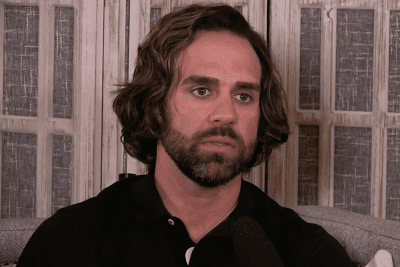
 In February of this year, the Truth & Transparency Foundation released an audio recording made by Sean Escobar as he confronted his abuser as a child, Sterling Van Wagenen—co-founder of the Sundance Film Festival and director of many LDS Church-produced films, including the films shown in LDS temples. The story of the abuse and its impact has now made national news, spurred by the continuing coverage of The Truth and Transparency Foundation as it was revealed that even though the abuse was reported to LDS Church authorities, Sterling was not excommunicated, but went on to work as a professor at Brigham Young University and produce many LDS Church films.
Since the release of the audio recording by TTF, Sterling has since pled guilty to separate charges of child sex abuse in Utah and is currently awaiting sentencing.
In this interview, we share the complete audio recording of Sean’s confrontation with Sterling, and then we process how the abuse affected Sean’s life, including the fallout related to sharing the audio recording with The Truth and Transparency Foundation and the discovery of more victims.
Part 1 – A full audio recording of Sean’s confrontation with Sterling Van Wagenen: This transcript is machine-generated and lightly edited for readability. The audio is authoritative. Please excuse occasional errors in names and spelling. Sterling Van Wagenen [00:00:00] Sa. Sean Escobar [00:00:35] Hi. Sterling Van Wagenen [00:00:35] Hi. Sean Escobar [00:00:36] How are you? Sterling Van Wagenen [00:00:37] How are you? Good. Sean Escobar [00:00:38] This is Crystal. Sterling Van Wagenen [00:00:39] Crystal, Sterling. Sean Escobar [00:00:40] Nice to meet you. Sterling Van Wagenen [00:00:41] Nice to see you. Yeah. Sean Escobar [00:00:42] Come on in. Sterling. Sterling Van Wagenen [00:00:43] Thank you. I found you. Your directions were great. Sean Escobar [00:00:46] Yeah. Without the directions. Good luck. Sterling Van Wagenen [00:00:49] Yeah, it's a little tricky. Sean Escobar [00:00:50] Good luck finding it. Well, Crystal's just gonna go downstairs and watch some tv. Sterling Van Wagenen [00:00:56] Yeah. Sean Escobar [00:00:57] And you and I can. Sterling Van Wagenen [00:01:00] We can. That's why we're here. Sean Escobar [00:01:02] Yeah. Unless you had any. I mean. Yeah. I think. Be better if you're not here, I guess, which. Sterling Van Wagenen [00:01:08] Actually, whichever you prefer. If you'd rather. Sean Escobar [00:01:10] Yeah, no, that's fine. Sterling Van Wagenen [00:01:11] I'll just be around. Okay. Sean Escobar [00:01:12] Yeah, just go. Just go watch TV downstairs, baby. Sterling Van Wagenen [00:01:16] But. Sean Escobar [00:01:17] Yeah, I got that for you. Sterling Van Wagenen [00:01:18] Hey. Sean Escobar [00:01:18] Thirsty. Sterling Van Wagenen [00:01:19] Appreciate that. Sean Escobar [00:01:19] Yeah. Not the funnest circumstances to meet under. Sterling Van Wagenen [00:01:23] No. But you know what? I so admire your courage in doing this. I can't tell you how brave I think you are to follow through on this. Sean Escobar [00:01:34] Yeah. I haven't wanted to. Sterling Van Wagenen [00:01:36] I understand that. Sean Escobar [00:01:38] All weekend I keep feeling like, yeah, let's just bag it, you know what I mean? Every day of the weekend and all weekend I just felt sick. Like, you know, like, why am I doing this to myself? You know, is it really necessary to do this to myself? But it just keeps resurfacing for me. Sterling Van Wagenen [00:02:02] Sure. Sean Escobar [00:02:03] And I don't like to be one of those people that dwells on things. I don't like to be one of those people that I wouldn't want my past to define me. But at the same time, my whole life, you know, I've wondered. There's a lot of things I've wondered. Sterling Van Wagenen [00:02:24] Sure. Sean Escobar [00:02:25] And. Yeah. So anyway, I have some notes here. Sterling Van Wagenen [00:02:33] Good. Sure. Sean Escobar [00:02:34] Yeah. Because what I did was this morning I woke up and I thought, gosh, you know, I'm probably gonna get all panicky and nervous and not remember what it is that's weighing on me. Your kids and Marilee, they might have passed on to you. Kind of the effect that this has had on me over the years. Sterling Van Wagenen [00:02:55] Yeah. I talked to. I know she saw you and spent some time with you, and Merrily's had some exchange. And so. Yeah, I've heard. Especially from. Sean Escobar [00:03:05] Yeah. Yeah. Cause it kind of. In one sense, it kind of. You know, it kind of made my childhood, you know, from that point forward just changed. Changed everything for me. You know what I mean? It's not so blissful anymore, but I just wrote down some. And they probably passed some of this on to you. As far as, you know, from that point forward, I started sleeping with a knife at my Side. Sean Escobar [00:03:37] Yeah. A hunting knife. Lots of nightmares. I was always afraid of the dark. I've always been afraid of men, especially men. I've always been really suspicious of men in the church for some reason. I don't know if that would make sense. But with you, you know, with what I knew about you being a professor and being a filmmaker, you know, and having like that kind of notoriety in the church, it always just made me real suspicious of. And not just you. I've heard lots of stories of other people, you know. Sterling Van Wagenen [00:04:20] So have I. Yeah. Sean Escobar [00:04:21] So understand that. It's just very suspicious for my own kids. Anxiety when it comes to my own kids. Like, for my kids to be away from me, I will have, like a Sterling Van Wagenen [00:04:35] full blown anxiety attack. Yeah. Sean Escobar [00:04:38] Like, my daughter went on. My daughter went on the young women's overnighter. And like, I had to talk to every single leader and I had to know who's going to be there. And. And I even had to tell the bishopric, I don't want them spending the night up there. And. Sean Escobar [00:04:59] And then I can't sleep. You know what I mean? Because when they're away from me, you can imagine. And then the emotions range from anger, resentment, anxiety, of course. So that's kind of like. And it's just been an ongoing thing for me, and I think it's amplified with my own children. Sean Escobar [00:05:20] I think in my 20s, you know, or my early 20s, before I had kids. I don't. I don't think that I was. But since I've had my own kids, it just keeps resurfacing. And my kids keep asking, why are you the only dad that's so paranoid and so suspicious of other people? And you can imagine. Sterling Van Wagenen [00:05:39] I can't imagine. I'm so sorry. I'm so sorry I did that damage to you. Sean Escobar [00:05:44] Yeah. Sterling Van Wagenen [00:05:45] Gosh. Sean Escobar [00:05:47] Yeah. I've always wanted to ask you what was going through your mind that night? What was going on with you? Sterling Van Wagenen [00:05:57] Well, it was obviously a really dark time for me. I was struggling in my business at the time. I had a film production company with a partner in Texas, and we just had a project go south on us and didn't know where the next paycheck was coming from. Marilee and I were having a hard time. In fact, that night before I came downstairs, I said to her, you know, I want a divorce. Sean Escobar [00:06:27] Oh. Sterling Van Wagenen [00:06:28] And this may sound odd to you, but I expected her to say, no, we're not going to go there. But instead she said, okay. And that just. That just pushed me into a. Into a dark place. And I Remember getting out of bed that night, and I remember saying just a very quick prayer, oh, God, please, not this. Sterling Van Wagenen [00:07:02] And then I came downstairs, and so that's what was going on. There were problems in the business. You know, Merrily had said, yes, okay, let's get a divorce. And I've always struggled with depression. I've had a problem with depression since I was in elementary school. I didn't know what it was then. Sterling Van Wagenen [00:07:22] And so, you know, I've tried a lot of different ways to stop the pain of the depression. And that night, I was acting out sexually, and that's what was going on with me because. Because the pain was just so great. Sterling Van Wagenen [00:07:38] I was just trying to find a way to make a connection, a way to stop the pain. And you were the victim. I'm so sorry for that. Sean Escobar [00:07:50] Yeah. Okay. Sterling Van Wagenen [00:07:51] So that's what was going on with me. Does that help? Does that make some kind of sense to you? Sean Escobar [00:07:57] Can I ask you a question? So Bat and I, when you were doing that, I was. I was almost certain that you were doing the same to your own kid on the other couch. Sterling Van Wagenen [00:08:15] Yeah, I wasn't. Sean Escobar [00:08:16] Okay. Sterling Van Wagenen [00:08:17] No, I wasn't. Sean Escobar [00:08:18] Okay. Yeah. Sterling Van Wagenen [00:08:19] In fact, again, I don't know if this helps, but this is the only time in my life I have ever done this. Only time. And I know said to me, Marilee, too, that you were. You were concerned that maybe there was a pattern of this abuse that had gone on with my own kids or grandkids or with other people, and it's the only time that's happened. Sean Escobar [00:08:42] Okay. And were you sexually abused as a kid? Sterling Van Wagenen [00:08:48] I was. Actually, I was. Sean Escobar [00:08:51] And do you remember the pain that caused you? Sterling Van Wagenen [00:08:58] Well, I'm not sure how to put it. The sexual abuse came from my mother. And in fact, I talked to a therapist about this at pretty great length in an attempt to get a hold of that. And frankly, forgive my mother, who's dead now, but frankly, forgive her, because I have some sense now of what she was going through at the time. And so I think that was part of the reason for the depression and the anxiety I felt as a child and I felt all my adult life. So, yeah, I have some understanding of what that pain is about. Sean Escobar [00:09:44] Yeah, I understand. I. In all honesty, I have a hard time believing. And I should tell you there's been times in the past where I've gone on Facebook and just venting about different things that I've read about or, you know, social, cultural events and stuff. Social events and matters, and I've gone on Facebook and I said that I was molested or sexually abused by my best friend's dad at a sleepover. And then. Sean Escobar [00:10:26] And I did at one point say that it was a BYU professor and an LDS filmmaker without using your name. But I'm aware. I just want to get this over with, and I want to get it. Want to just be honest with each other. And so someone did contact me and share some information that, you know, that was concerning. And so with that said, I just. Sean Escobar [00:11:02] I just want you to know that, you know, that I'd really appreciate you just to be honest with me, because I do find it hard to believe when someone says that, you know, it only happened the one time and only time and that I did get caught. Sean Escobar [00:11:24] I'm not the only one that finds that very hard to believe. And so that's what I want to make sure that, you know from you. Sterling Van Wagenen [00:11:42] Yeah, I understand where you're going with that, and maybe it would be helpful to understand that I have acted out sexually in other ways. Sean Escobar [00:11:48] Okay. You know, what's that look like? What do you mean? Sterling Van Wagenen [00:11:53] Well, there was a period of time when I was visiting prostitutes. Sean Escobar [00:11:59] Okay. Sterling Van Wagenen [00:12:00] And I've had two or three affairs with other women. Sean Escobar [00:12:06] Okay. Sterling Van Wagenen [00:12:07] And so with. Again, with the depression and the anxiety. Yeah, there were. There were periods. There were periods when I was acting out in other ways. Okay. So it's not like this was the only time I ever acted out, and then I just totally stopped and I never acted out again. That's not. That's not accurate. Sean Escobar [00:12:27] Okay. So that helps me a lot that you would say that. Sterling Van Wagenen [00:12:32] But that's the only time I had ever done anything like I did to you. Sean Escobar [00:12:36] To a child. Sterling Van Wagenen [00:12:37] To a child. Sean Escobar [00:12:39] Okay. Sterling Van Wagenen [00:12:40] Yeah. Yeah. That's the only time. Sean Escobar [00:12:41] What do you think about when. And I'm probably skipping ahead. I'll just skip ahead in my question. What do you think about when people say that a child attraction is, like. And I've read so much on the subject. What do you say when someone says that's, you know, very unique, pedophilia is a very unique attraction and that it's not curable and that it's, like, really addictive? Like, what would. What do you say to that? Because that's always been my struggle is how can I be the only one knowing what I've read about pedophilia, knowing how powerful of a thing that is? And so what would you say? Sterling Van Wagenen [00:13:40] Well, you've obviously done more research on this than I have, because after this happened with you, I mean, you know, I was Just horrified at what I'd done. I was just horrified because I'd never done anything like that before. Sterling Van Wagenen [00:13:58] And so I guess, you know, again, being as honest as I can, I've never considered myself a pedophile. That one instance was so horrifying to me. And I've carried the awareness of that, but not to the degree that you have for sure, but I've carried the awareness of that. Sterling Van Wagenen [00:14:24] And so I've always had some anxiety about it. Anxiety and question in my own mind. Is that something that's deeply rooted in me? And so I've always been, I've always been cautious about it. I mean, I've probably been cautious with my own kids and cautious with my grandkids because I just don't want anything like that to happen again. Video Clip 1 [00:14:53] But would I consider myself a pedophile? I mean, I've never thought of myself in that way. I certainly thought of myself as being sexually addicted, for sure. Video Clip 1 [00:15:04] Have you ever thought, wasn't, haven't you ever thought like the affairs that you had, was any of them with men? Video Clip 1 [00:15:12] Uh huh. Couple were. Video Clip 1 [00:15:14] So then that makes a little more sense. Video Clip 1 [00:15:15] Yeah, a couple were. Video Clip 1 [00:15:16] Okay. But again, no, what I'm saying is I'm trying to understand your honesty. It's helping me a lot because I'm trying to understand why me a boy. And now what you're saying makes a little bit more sense. And, and by the way, what you said about the affairs, that that was what that was related to. Video Clip 1 [00:15:49] Okay. Video Clip 1 [00:15:51] And so it just, it just makes me feel good to know that, that you're being honest with me. Video Clip 1 [00:15:57] You know, if I had to put, if I had to put a label on it, I guess the label I would put on it is bisexual. Video Clip 1 [00:16:04] Yeah. Video Clip 1 [00:16:05] Rather than pedophile. Okay. Video Clip 1 [00:16:08] Yeah. So. And I was 10, I think. But, and I don't, I mean, I don't proclaim to be. You're just basically saying it was a deep, dark moment for you. And. Well, and I need to get to this other question because the other question is something that's really been on my heart for as long as I can remember. Let me just, I don't want to skip ahead here too much. Video Clip 1 [00:16:33] Sure. Video Clip 1 [00:16:38] Okay. So what counseling have you received? Like how, how much counseling? And, and is, is it an ongoing thing like sexual counseling or is it more like counseling just for depression? Like what's, what's your status around all that? Video Clip 1 [00:16:56] I've worked with over the years, over the last, what, 25 years? Yeah, yeah. I've worked with a number of counselors okay. And I've worked with two specifically about the sexual addiction. One when we were living in Florida and one back here. Video Clip 1 [00:17:17] Yeah. Video Clip 1 [00:17:17] And the others have largely been about the roots of the depression and the anxiety. But yes, I worked specifically with two counselors. Video Clip 1 [00:17:26] Did any of them think it was. Did any of them classify a 10 year old boy as different than just like a male attraction? Did any of them classify that as more like a pedophilia attraction? Video Clip 1 [00:17:39] Not that I remember. Video Clip 1 [00:17:41] Okay. Video Clip 1 [00:17:41] Not that I remember. I remember the counselor in Florida asked me a couple of the same questions that you're asking, like do you still feel an attraction to boys or, you know, to younger kids or okay, whatever. And no, I know. Okay. No. What, Video Clip 1 [00:18:05] so the counseling, is that something you have to keep doing throughout your whole life or is that something you kind of graduate from? I'm just curious. Video Clip 1 [00:18:16] Well, this is, this is just opinion, but, you know, I still struggle with the depression. Yeah, I'm still wrestling with that. In fact, I just went through a drug treatment here in July that was not very helpful. And so the conclusion I've sort of come to is that it's going to be with me the rest of my life and it's going to be about managing the depression and managing the pain. Video Clip 1 [00:18:40] So when I say that the sexual stuff. Are you. Is the sexual stuff associated with the depression? Video Clip 1 [00:18:48] Is that it was. Yeah, it was. But I've been in the last, oh, I don't know, maybe five or six years, I've been able to sever that connection. So it no longer, when I get depressed, I no longer look for ways to act out either through pornography or, you know, or attraction to women or to mother men. So that connection, I think has been broken. Do I still worry about that? Yes, I still worry about that. Video Clip 1 [00:19:21] Okay. Video Clip 1 [00:19:21] You know, Marilee and I talk about that a lot and she's been amazing through all of this. I mean, she's really. Video Clip 1 [00:19:28] Does she know about the affairs? Video Clip 1 [00:19:31] She does, yeah. Video Clip 1 [00:19:32] Okay. Video Clip 1 [00:19:32] Yep. Yeah, she knows about that. We've through with counseling again. We've wrestled through that, struggled through that. We love each other deeply and, you know, it's frankly as a miracle that she stayed with me through all this. Video Clip 1 [00:19:46] Yeah, she's an angel. I know that about her. Let's see. Did you. Video Clip 1 [00:19:53] Okay. Video Clip 1 [00:19:54] Do you remember, did you and Marilee have. Allow other kids to sleep at your house after I, after that happened to me, did you guys kind of draw a hard line and say, no friends are allowed to sleep over? Video Clip 1 [00:20:07] You know, I don't remember specifically. I don't remember any sleepovers after that. I think Marilee may have drawn the line and said, we're just not going to go there. Video Clip 1 [00:20:17] Okay. Video Clip 1 [00:20:17] It's not going to risk it. Video Clip 1 [00:20:20] My understanding is that the sexual abuse was reported to your stake president by. My dad had called and told him what had happened and then. And then basically said he had a relationship with the state. State president and that he would. That he would report it to the state president. So when you got called into the stake president, Did you just. You just basically told him what. What you'd done to me? What. Obviously you told him what had you done to me. And then what was the punishment? Marilee had said you. What was it? Two years of disfellowship? Video Clip 1 [00:21:15] I was disfellowshipped for two years, yeah. Video Clip 1 [00:21:17] Okay. Video Clip 1 [00:21:18] Yeah. Video Clip 1 [00:21:19] Do you think that that was lenient on you, or do you. Video Clip 1 [00:21:25] Well, I have no way to. I have no way to judge that. I just don't know how to judge that. I mean, I told the stick president that I was, you know, I was prepared to go through whatever he thought was necessary, and I just sort of let the process take its own. Video Clip 1 [00:21:41] Do you. Do you. Why do you think that my parents were never. Because you went through, like, one of those church courts. Why do you think my parents were never contacted to. To hear their side of the story? Video Clip 1 [00:21:59] You know, I don't know. That's a good question. I don't know. I just don't know what the process of the church court was. I don't. Video Clip 1 [00:22:09] Because they never talked to my parents, and they never talked to me. Let me see. Video Clip 1 [00:22:17] Well, that surprises me a little bit. I didn't know that. Video Clip 1 [00:22:19] Yeah, no, I just. Video Clip 1 [00:22:20] And that surprises me a little. I don't know if you may know, but I also, after talking to the stake president, you know, he said, look, this. This has got to be reported to the police. And I said, well, all right, I'll go down and report it to the police. And so I went. I called and got a detective and went down to the Salt Lake City Police Department and reported it to a detective. And he took notes. Really? Yeah. Video Clip 1 [00:22:43] See? And then where did he go with that? From there. What's weird about that is my mom and dad, because I, you know, I've always. Back then, I was 10, I didn't really have a voice. I didn't really have. I wasn't really involved in any of it. But you always wonder, like, what came of that. And my parents said that. They said that the police never contacted Them never talked to any police. And they said the church never contacted them. And they said. And then they said if Sterling had done what you just said you'd done that, that they would have just arrested you on the spot for child sex abuse. Video Clip 1 [00:23:25] Like, because they don't need, like, approval to charge that. If someone goes to the police and says, I did such and such to a child, according to my parents, they just arrest you on the spot. Bang. And even if my parents said, no, no, no, no, no, don't press charges, it doesn't matter, because once they know that, that by law, they have to. Video Clip 1 [00:23:48] Yeah, I don't know. I don't know if the laws were the same 25 years ago as they are now. Okay, I understand that now. Video Clip 1 [00:23:54] Okay. Video Clip 1 [00:23:54] What came back to me, and I don't remember how it came back to me, but was that your parents had said, we're not going to press charges. So I assumed, maybe wrongly, but I assumed from that that they had been contacted by the police detective and had said, you know, we're not going to pursue this. But again, I don't know that for sure. Video Clip 1 [00:24:13] I just don't know that I talked because I wanted to know, you know, why was. I see, I was curious. All these years, you know, it's interesting. I assumed that the church had given you lots of counseling and lots of support. And then I was wondering all these years why they didn't give you lots of counseling and support. No. Video Clip 1 [00:24:36] Well, no, I certainly didn't. No, I didn't get any counseling from the church. I mean, it was all about the disciplinary counseling. Video Clip 1 [00:24:43] Oh, crap. Video Clip 1 [00:24:45] So, no, I didn't get any counseling from the church. And, you know, we figured out that I was gonna have to go to an outside counselor to work through this. Video Clip 1 [00:24:54] Which you did on your own. Video Clip 1 [00:24:55] Which we did on my own. So, no, I didn't get any counseling or. Video Clip 1 [00:24:59] Yeah, because I was. I've been wondering all these years, like. Cause, you know, you grow up with these issues, and then I'm wondering. And my parents are like. They're like, gosh, you know, we'd never been anything through anything like that. We didn't know what to do. And they're like, you know, and now it's become so prevalent and out in the open that, you know, you need counseling. And I'm always. I've always thought, like, if the church knew that you'd done that to me and you did tell them that you'd done that to me, then why would the church not have reached out to me and Then come to find out from that, the stake president, his name was Harold Brown and he said that he was the. A psychologist and head of the entire church's social service program. So I'm sitting there thinking to myself like, why did they not. Video Clip 1 [00:25:52] It's kind of a no brainer, isn't it? Video Clip 1 [00:25:54] Why didn't they offer support for me? Like why was there absolutely no concern for my welfare when you told them what you'd done? Why was there no, zero concern for a 10 year old boy, you know? Video Clip 1 [00:26:08] Well, I'd like to know the answer to that question as well. I mean he was. I know, but you were forthright when Video Clip 1 [00:26:15] you talked to in that court. You told him. Video Clip 1 [00:26:17] Oh, totally. Video Clip 1 [00:26:18] Yeah, okay. Video Clip 1 [00:26:19] Totally. Video Clip 1 [00:26:19] Okay. Because that's what made me wonder, was he forthright? Because nobody ever reached out to me or my parents. Video Clip 1 [00:26:26] I don't, I don't lie very well. Video Clip 1 [00:26:28] Okay. Video Clip 1 [00:26:29] You know, I don't. And I remember that church court vividly and I was totally candid about it and said, look, I'm willing to take whatever punishment you want me to have on this because I, you know, I Video Clip 1 [00:26:44] sense that about you. You've been very accommodating for me. I appreciate it. Video Clip 1 [00:26:52] I would so like to see you get beyond this or get as far past it as you can. Video Clip 1 [00:26:59] You already answered that question I had about the police. You already answered that. Video Clip 1 [00:27:04] How come? Video Clip 1 [00:27:05] Why were you. This one's bothered me too, because I've wondered all these years, you know, do the kids know now? You know, the kids are grown up. Kids are all grown up. I'm sorry about that, by the way. Sterling Van Wagenen [00:27:19] Thanks. Sean Escobar [00:27:21] Cause that was horrible. But I've always wondered why have the kids not been told about this so that, you know, that they could have preventative measures around the grandchildren and sleepovers and stuff like that. Sterling Van Wagenen [00:27:42] Yeah, well, to be honest with you, it never occurred to me or to Merily that we should bring the kids into this and talk with them about this because, you know, I wasn't feeling any attraction or pull to the grandkids or to my own kids. And so in terms of, you know, I said I worried about this, you know, because I carry this with me. But it just frankly never occurred to us that it was important to bring the kids in. It just never occurred to us. How wonderful. And obviously I'd like to leave this as far behind. Sean Escobar [00:28:24] I wonder if it occurred to Marilee. But it was just too hard, too hard to go there. Sterling Van Wagenen [00:28:30] Yeah, you'd have to ask her. I mean, that's possible. Sean Escobar [00:28:33] I mean, yeah. But I can. It is a hard thing. It is a hard thing. Have you had the grandkids over to sleep over? Sterling Van Wagenen [00:28:40] Oh, yeah. Oh yeah, they've been fine. Yeah. Sean Escobar [00:28:49] That's one of the questions I've always wondered. I'm just gonna ask how would you have felt if the same had happened to your 10 year old son at a sleepover? Sterling Van Wagenen [00:29:00] Well, we actually had an instance in family. I don't know if she talked to you about this where one of her actually one of her children molested. Sean Escobar [00:29:11] Okay. Sterling Van Wagenen [00:29:12] And so, you know, we with, we worked through that with. But I, you know, I would have felt, I would have felt awful about. Of course I would have felt terrible. But the first concern I have to tell you from my point of view would have been on that child. That would have been the first concern. Sean Escobar [00:29:35] Yeah. And also concern that it could be happening to other people. Sterling Van Wagenen [00:29:40] Sure. Sean Escobar [00:29:40] Okay. Sterling Van Wagenen [00:29:41] Yeah, we've wondered that about. Wondered if, you know, if there are other instances he's in and we've wondered the same thing that you've wondered. Sean Escobar [00:29:49] Yeah, you've wondered like I've wondered. Sterling Van Wagenen [00:29:51] Yeah, we have. Yeah, we've wondered if that's still a problem with him. And so, yeah, of course in a situation like that you wonder about the perpetrator and you really worry about the victim. For sure. Sean Escobar [00:30:09] This is a hard one. I've got a son that's my age now. My age when this happened to me. My son's about the same age that I was when that happened to me. So it just causes a lot of emotion when I think about him. And when I look at him, he looks like me. So when I look at him, it's like looking at a 10 year picture. 10 year old picture of myself. Sterling Van Wagenen [00:30:40] That's gotta be a confusing experience too, given what you're carrying. Sean Escobar [00:30:45] Yeah, this is a hard one. Had I not gotten up and gone and rushed to the bathroom and locked myself in the bathroom. What was your intention for me? Do you remember where your mind was going? Sterling Van Wagenen [00:31:02] Yeah, I do. I actually don't remember you getting up and going into the bathroom. Remember that? Because I remember specifically being. So I sort of came to myself, I came to my senses and I remember being so horrified at what I was doing that I just left and went back upstairs. I mean, I didn't actually know that you'd gone into the bathroom and told Merrily that you'd spent the night there. Just, you know, that's just horrendous to me. Sean Escobar [00:31:33] Let me tell you what I remember. I remember you coming over and Doing that to me. And then. And then I. I woke up and saw you doing that to me. And then I. I could see what you were doing. And I was frozen, and. And you were reaching up over the top of me. And so then I started to stir. Almost like, you know, okay, you know, I'm gonna pretend like I'm waking up. So I started to stir, and then you stopped. And then. Sean Escobar [00:32:05] And then I just laid there, frozen. And then you came back again. And if I remember correctly, it was the third time that you came over and started doing that. And then I jumped up and looked at you, and you froze. And you were standing in the back of the room, and you had a remote controller in one of your hands, and you were looking at a TV with, like, a black and white movie, and there was no sound on at all. So you almost, like, just stood there, froze, and kind of pretended like you was watching a movie with no sound on. And then I ran to the bathroom. When I was in the bathroom, you came to the door probably three or four different times. Sterling Van Wagenen [00:32:50] Oh, my gosh. I don't remember that. Sean Escobar [00:32:51] Yeah. And were trying to coax me out of the bathroom. And you were saying, are you okay? Come on out. And I wouldn't come out. I just kept saying that I felt really sick and that I. And then after probably three or four different times, you tried to coax me out. And then I think once you realized I wasn't coming out is when you finally maybe went back upstairs, whatever it was. So that's the way that I recall. That's what I recall to see. Sterling Van Wagenen [00:33:23] I'm sure your memory is more accurate on that than mine is. Sean Escobar [00:33:27] Okay? Sterling Van Wagenen [00:33:28] So I'm sure that. I'm sure. Sean Escobar [00:33:29] I've always thought my whole life, if I don't jump up and go to the bathroom, where's that? Like, where are we going with that? Like, you know what I mean? Like, where's that headed? Because the reason I wonder that, Sterling, is because I feel like. I feel like that was a smart thing for me to do was to run and lock myself in that bathroom. And I think, you know, what if I was a lesser person? What if I was a more timid person? You know? Where was that going? You follow my logic. Sterling Van Wagenen [00:33:59] Yeah, I follow your logic. And I've never followed that through in my own head. Sean Escobar [00:34:04] Yeah, I mean, I just haven't if I want to. Yeah. Sterling Van Wagenen [00:34:07] Yeah. I just haven't. Sean Escobar [00:34:08] Sorry. I am sorry. I'm sorry to make you go there. Sterling Van Wagenen [00:34:13] You have nothing to be sorry for, Sean. You have nothing to apologize for. Sean Escobar [00:34:17] I feel bad because I don't. I don't want to make you feel like. I don't want to make you say, this is what I was gonna do to you. But as a victim, I don't know if it's normal. But I've always wondered, like, where were we ultimately going? Like, where was this headed? How bad would this have progressed to if I hadn't gotten out of there? Yeah. So, okay. And then you've already answered a lot of these questions that I. That I have. So when you say that sometimes the depression leads to sexual things, and that was the only time it ever led towards sexual attraction to children. Have you ever viewed child pornography? Sterling Van Wagenen [00:35:08] No. I viewed male pornography and female pornography, but not child pornography. Sean Escobar [00:35:14] Okay. Sterling Van Wagenen [00:35:14] No, it just hasn't been a. Hasn't been a thing for me. Sean Escobar [00:35:17] Okay. Again, I wrote here. How can I know you are telling the truth? You got caught. You were required to report to the church authorities. You didn't just voluntarily report yourself. My parents asked to report it directly to the stake president who he had a relationship with. You were called in by the stake president. Right. So there's a big difference to me between turning oneself in and confession, so to speak, and being caught. And so the basis of that question again, is. Sterling Van Wagenen [00:36:07] Well, I actually think. I actually think my memory's fuzzy on this, but I think I'd had a conversation with. I think he called me at some point, could be fuzzy about this, and just told me that he was going to tell the stake president that your dad had talked to him and he was going to talk to the stake president. And so I thought, okay, there it is. And this happened. This happened very quickly. I mean, this is within a day or two of what I did. So it happened very quickly. I mean, I didn't have a long time to ruminate about this or think about it. It happened pretty fast. Sean Escobar [00:36:45] I see. You already answered that one. You already answered that one. Did you report your affairs to the church authorities? Sterling Van Wagenen [00:36:59] I did. You mean subsequently? You mean later, after that, like affairs that you've had? Sean Escobar [00:37:06] Have you always. You've always gone and reported those? Sterling Van Wagenen [00:37:09] Oh, no, no, I haven't always. Sean Escobar [00:37:11] Oh, I see. Sterling Van Wagenen [00:37:12] I haven't always. I've been past the acting out, as I said, for. For a while now. And I had a long conversation with the bishop. Oh, this has been, I don't know, six or seven years ago, you know, And I told him I was in counseling and Marilee was there, and we were getting past it. So no church Action was taken. Sean Escobar [00:37:40] So you didn't have to go through Sterling Van Wagenen [00:37:42] a court or anything for the affairs. Yeah. Sean Escobar [00:37:48] How did they do that? Do they. Because I would think that if you report an affair, they would. Again, church court discipline, Sterling Van Wagenen [00:38:01] again, I'm not entirely sure how all that works, but I know. I'm just not sure how decisions get made or why they get made the way they do. Okay. I mean, I know there is. I do know this for sure, that there is a push to see church courts not as courts of punishment, but rather, as they call them, disciplinary councils now, not church courts. And the idea is not just to punish a perpetrator unless it's illegal, and it's totally illegal. They have to report it to the police. I mean, they do that. But beyond that, it's more of an attempt to be helpful to bring somebody in line with the covenants. I understand. Sean Escobar [00:38:51] Okay. Sterling Van Wagenen [00:38:52] Yeah. Retried. To get away with the idea that it's so mine. Sean Escobar [00:38:57] The only church court you ever had to. Sterling Van Wagenen [00:38:58] It's the only one. Sean Escobar [00:38:59] Okay. Sterling Van Wagenen [00:39:00] Yeah. Sean Escobar [00:39:00] And how many affairs do you think you had? Sterling Van Wagenen [00:39:03] Oh, gosh, I don't know. Maybe three or four. Sean Escobar [00:39:07] Okay. Sterling Van Wagenen [00:39:08] But those, Those were a long time ago. Sean Escobar [00:39:11] I see. Sterling Van Wagenen [00:39:12] Those were a long time ago. Sean Escobar [00:39:14] You said something was as recent as five, six years ago. Sterling Van Wagenen [00:39:18] The last time I had an affair with anybody was. It was when we were living in Florida, which would have been about 2004. Okay. Yeah. So it's been a long time. Okay. Sean Escobar [00:39:34] You must have said something else about five, six years ago. Sterling Van Wagenen [00:39:39] Five or six years ago is when I felt like with the therapy I was in, that I was able to make a break. Oh. Sean Escobar [00:39:46] From the, between. Sterling Van Wagenen [00:39:47] Between the depression and anxiety. Sean Escobar [00:39:49] Thank you. Sterling Van Wagenen [00:39:50] Sexual acting out. Sean Escobar [00:39:52] Is it? I. I heard from someone that you're currently filming the temple videos. Endowment videos. Sterling Van Wagenen [00:40:02] No. Sean Escobar [00:40:03] Oh, you're not. Okay. Because I thought that that was. But then again, I mean, which is fine. Unless there'd been stuff that, you know, you hadn't reported. Then I wonder why, why would he be doing that if. If there's things that had gone unreported or. Sterling Van Wagenen [00:40:23] Sure, yeah. It's a fair question. Sean Escobar [00:40:25] Yeah. Did you ever have any sexual interactions with any of the college age students that you've had as a teacher and professor? Sterling Van Wagenen [00:40:35] No. Sean Escobar [00:40:36] Okay. No, never have. So this question kind of was answered for me too. Yeah, it really was. It was when, you know, there was an interview where you were asked about Harvey Weinstein and then you said, oh, you know, about his first accusers and you said, oh, I guarantee it's Only the tip of the iceberg. And that kind of stuff is very. Sexual abuse is, like, commonplace in the film. Sterling Van Wagenen [00:41:05] Film industry in Hollywood particularly. Sean Escobar [00:41:07] Okay. Sterling Van Wagenen [00:41:08] Yeah. I was asked that question in Interview in South Korea last year. Sean Escobar [00:41:12] Yeah. And then when I read that research. Sterling Van Wagenen [00:41:15] For sure. Sean Escobar [00:41:15] Well, yeah, because I read that, and I was like. Because I just want to know who Sterling Van Wagenen is. You know, and then I read that, and I was like. It's just. Because, again, as a victim, you can't help but wonder if there's other people out there that are hiding and they're quiet and they're too scared or they think people won't believe them. So I've always wondered that same thing. Sterling Van Wagenen [00:41:39] Well, there's certainly a lot of instances in the last year or two where that's been the case. Sean Escobar [00:41:44] That's what I mean. Sterling Van Wagenen [00:41:45] People have come forward and have been silent for decades in some cases. Sean Escobar [00:41:49] Sterling, when something like this has happened to you, and I don't know if you can relate to this on another level, but when something like this has happened to you, you form a very strong emotional connection with it. So for whatever reason, I got a lot of people come to me and tell me they were sexually abused as children, and then I have that commonality with them, and. Because it's just a very prevalent problem. Sterling Van Wagenen [00:42:15] Yeah. Sean Escobar [00:42:18] And then also, like, news media, every time I see it, but I don't think I read it like a normal person. I don't. I read it, and then I think it makes me wonder. It makes me stir and wonder, like. Sterling Van Wagenen [00:42:34] Well, it makes me stir and wonder, too, because again, I still carry, you know, I still carry the memory of that with me. And so when I read it, you know, I think, boy, you know what? I did that. You know, I just, you know, and I still feel the prick of that. Yeah, for sure. Yeah. Sean Escobar [00:42:57] So then I've always wondered if I was just the, you know, the tip of the iceberg. If I was just the tip of the iceberg. Right. Sterling Van Wagenen [00:43:06] No, you're not. Sean Escobar [00:43:08] Yeah. Those are. Got through that pretty fast. Yeah. Those are all the questions that have been on my mind and. And, you know, really in my mind all these years. That's it. Sterling Van Wagenen [00:43:27] What else can I do to help you. Help you through this? I don't know. Told me that you and Crystal decided to leave the church a while back. Sean Escobar [00:43:39] Yeah. Four or five months ago. Sterling Van Wagenen [00:43:40] I wonder how much this had to do with that decision. Sean Escobar [00:43:50] And I don't know that I could answer that, because I don't know what part that might have played. But ultimately, I mean, I wouldn't put that on you, if that's what you're kind of wondering. I wouldn't put that on you in terms of, you know, like, I have been very suspicious of priesthood leaders my whole life, ever since that happened to me. Only because I was told that you were this, you know, BYU professor, LDS filmmaker, gospel doctrine teacher. And so for me, you know, it just kind of killed my trust in the priesthood. Sterling Van Wagenen [00:44:38] Sure. Understandably. Sean Escobar [00:44:39] So. Is that the main reason that we. I mean, we've decided to leave the church? Because we no longer believe in it? For a while there, for probably the last five, six years, I haven't felt right in it. I read the CES letter, which you're probably familiar. Familiar with. I read that in 2013 when it came out. Just kind of at the time, I felt like my conversion was so strong. I just read it and then I kind of thought, yeah, I'll just kind of shelf all of that. It's okay. I still have a testimony. But then for the, you know, for five, six years there, I felt mentally checked out. And a lot of the social and administrative issues that I've seen church mishandle. Sterling Van Wagenen [00:45:41] Social, Sean Escobar [00:45:44] cultural issues that I see in the church. And I would say that none of that really has anything to do with you other than. Other than I am. I have been very suspicious. You know, when people talk about a bishop, I can't help but say that bishop's a man. Just a man. Just a man. When people talk about those quorum of the 12 and those general authorities, I can't help but say they're just men and they have all the same weaknesses as any other man. And we put them up on these immortal platforms. So I've always felt like that. And I think that that is in large part because of what happened to me as a kid. Sean Escobar [00:46:24] But with that all said, Crystal came to me and she just said, sean, I feel like I haven't. And she was very, very loyal, very staunch lds, always studying them scriptures, always just on the bulb kind of person that would go beg for callings and listen to general conference talks every day, all day. And she came to me and just said, shawn, I feel like I haven't been progressing within, spiritually within the Mormon Church for a very long time, which was a shock to me. And then she said, I've been listening to Mormon stories. Sean Escobar [00:47:09] John De Lynn, John Dehlin. And she said, I started listening to those because I. I was kind of intrigued by it because there was a lot of a Lot of these people that were having struggles with the church, they also still believed it. Sean Escobar [00:47:33] So she thought it was, like, safe territory because she's like, you know, I was listening to people. They have issues, they have concerns, but they're still very faithful. They're not just antagonistic people against the church. And she says. Then I started listening to those stories, and she just comes to me, she says, I don't believe it anymore. And then I said. I just. I didn't even respond. Sterling Van Wagenen [00:47:58] I was just, like, surprised, Shocked. You? Sean Escobar [00:48:00] Absolute shock. Like I said, I've been meant. I was mentally checked out for probably five or six years, but I just kind of came to the determination on my own privately that I'm just gonna have to suck it up and I'm just gonna have to keep going. And I'm. And so when she said, I don't believe it anymore, and I don't want to be Mormon anymore, and Crystal's just kind of that way. Like, she's cool that way. So if she decides to do something, even if everybody could say, that's not a good idea, or you're crazy, or like, she. Pretty true to her own colors. And so then I started looking more seriously at some of the concerns. And for me, it was just. If you've ever seen. You're a movie guy. So if you've ever seen the Truman movie. Sterling Van Wagenen [00:48:53] Yeah. Sean Escobar [00:48:54] Truman show, is it? Sterling Van Wagenen [00:48:55] Sure, the Truman Show. Sean Escobar [00:48:56] Yeah. And, you know, he's running around like. He's like, am I crazy? You know what I mean? He's running around all over town, and he's kind of, like, starting to pick up on little things. Like, wait a minute, I saw something there. What's everybody not telling me? And then at the end of the movie, you'll see when he goes out on that boat, and then he hits. And they try to hit him with a storm. He hits that wall, and then he's like. You just kind of see that look in his eyes, like, son of a gun. And that's how I feel. That's my whole family still active. Sterling Van Wagenen [00:49:38] Yeah. Sean Escobar [00:49:38] And I'm the only one. But that's how I feel is like, I felt like, wait a minute. Like, not that everybody else knows, because I think my parents believe it still, but just kind of like, wait a minute. Like, there's a whole lot of stuff people haven't been telling me. Lot of stuff hidden, a lot of stuff twisted. And I was just like. And that's how you feel when you're in my position. I don't know if You've ever talked, you probably talked to a lot of other people that have left the church, or, I don't know if you've had kids that have left the church, but once you get on that side, then you look back at it and then you, of course, you still acknowledge it. Like, the majority of Mormon people are good people. Sterling Van Wagenen [00:50:27] They are. Sean Escobar [00:50:28] Yes. But then you go, like my dad said to me, sean, there's some geniuses in the church. You know, you got genius professors and doctors and surgeons. And he goes, sean, you know, surely if everything that you're learning and reading that was accurate, surely these geniuses, you know, they would concur with you. They would root it out. And I sit there and I says, dad, not a fair statement. I said, how many geniuses are there outside of the Mormon Church? You know, because if there's only like three and a half million active true blue Mormons, how many really smart people are there outside of the church? Looking at all the church members just going, are you guys crazy? Like, none of it lines up archaeologically, scientifically, and historically. So I just want to tell you, for me, I told this for me to tell my family that I'm not going to be Mormon anymore. Sterling Van Wagenen [00:51:40] That was a tough deal. I bet. Sean Escobar [00:51:44] I'm just telling you it like, major, because my dad's most favorite thing to say, and I think I've probably heard him say this on probably a thousand occasions, is, you know, and you know, he's a successful guy, he's a smart guy. Sterling Van Wagenen [00:52:00] Yeah. Sean Escobar [00:52:01] And he said on thousands of occasions, I mean, look, there's Joseph and Jesus, you know, he said, my most proud accomplishment is that all my kids and my grandkids, that they're all in white, they all have temple recommends, they all, they're all sealed, they're all active. Sean Escobar [00:52:25] And so for me to hear that, to know that that's not been told once or twice, that's painful. He didn't say it to hurt me or to prevent me from leaving. He really meant it sincerely. That's his most proud accomplishment. For me to be the demise of that. Sean Escobar [00:52:45] And I would say me, maybe more so than even most of my brothers and sisters, I want to please my mom and dad. I want to please them. This is like one of the. This is probably the first time in my life I've ever just gone against the grain. Sean Escobar [00:53:06] This is significant. And so usually I do what they want of me. I want to be that good son. So I told that part of this for me is mom and dad have continually told Me that, you know, the church handled it and back then it was. That's what was appropriate. They, you know, was appropriate to turn it to the Church. That's kind of what you did. Sean Escobar [00:53:39] I know because I've done a lot of reading and so forth, and with Sam Young and all these testimonials of bishops, abusing little kids and all that stuff, I know that back in that day and age, you were actually encouraged not to go to the police because go to the bishop. Bishop is the one that handles everything. So culturally, then that was really wrong. Sterling Van Wagenen [00:54:06] Yeah. Sean Escobar [00:54:06] In my opinion. Sterling Van Wagenen [00:54:07] Oh, for sure. Sean Escobar [00:54:09] Yeah. Sterling Van Wagenen [00:54:09] I mean, I obviously, I didn't feel like I could, you know, reach out to you, obviously. Sean Escobar [00:54:14] 10. Sterling Van Wagenen [00:54:15] And I just. I just assumed that somehow, you know, you were going to be taken care of. Sean Escobar [00:54:22] Yeah. Sterling Van Wagenen [00:54:22] And that obviously that didn't happen. Sean Escobar [00:54:25] I don't put that on you. But, you know, the things I've learned about the church, things they have hidden, it's made me question everything, and it's made me wonder, wait a minute. Wait a gosh darn minute here. You know, did they take proper measures? Sterling Van Wagenen [00:54:45] Well, let me say this to you, too. You know, given the fact that I've had this over here in my emotional and psychological life, and the church has been over here, you know, I've struggled all my life to try and get those two sides together for me. Sterling Van Wagenen [00:55:06] And, you know, as I sit here in 2018, it's a mystery to me. But the gospel has never worked for me, okay. It's never worked for me in terms of getting those sides together. And the only thing I hold on to is the atonement, is the belief that somewhere, somehow, this is all going to be healed. It's all going to be right. I don't necessarily believe it's going to happen in this life. Sterling Van Wagenen [00:55:37] I wish it would for your sake and for my saying both. But that's the thing I hold on to. That's the only thing I really hold on to, is the atonement and the church. Sometimes it works, sometimes it doesn't work, but it's never really worked for me. And I sure have tried to make it work for sure. Sean Escobar [00:55:57] What do you mean it hasn't worked? What does that mean? And I know what you mean. I know what you're saying about me, Ton, and I get that. Sterling Van Wagenen [00:56:04] Yeah. What I mean is I've never been healed in the sense that, you know, never been healed from the depression, from the anxiety. You know, I've struggled with that, like I said, since I was in elementary school. You know, it's the thing that's just taken my life off track, created the kind of problems that I've made for you. Sterling Van Wagenen [00:56:26] And, you know, Marilee and I have gone through this so many times and I prayed and I prayed and I said, how long do I have to endure this? How long does this go on? I mean, I prayed to die so many times, I can't even tell you. Sterling Van Wagenen [00:56:45] And you know, I look at other people in the church and, you know, they seem to be doing just fine. I know everybody has problems and everybody has struggles, and it's just a mystery to me that somehow those promises that the gospel will work for you, will heal you. Sterling Van Wagenen [00:57:03] It's just a mystery to me that it's never worked for me. It's just never worked. And that's why the only thing I really can hold onto is the atonement. That's the only thing that keeps me safe. Sean Escobar [00:57:14] I think I know what you mean by saying it never really worked. I. Even as a kid, maybe it's something inside you inherent. Because something inside me inherently. I just always thought like, why do we have to go to a church? And then I would think I'd say it to my brother and then he would say, oh, Shawn, you know, you're just rough and you want to just go out and play on the outside all the time. You need to give that time to God. You need to give that time to God. That's God's time. And they would kind of hush me that way. But even like in my early teens, I'd just be like, why do we have to like report to men? They're just men, you know what I mean? Sterling Van Wagenen [00:57:59] Why do they have to get between us and God? Sean Escobar [00:58:01] Yes. And so it's funny because when I left the faith, first person I could only think to call a mentor of mine, close friend in my business, couldn't tell my parents at that time. And I called him and he was raised Mormon, but he stopped going to the Mormon church when he was like 12, on his own. Sterling Van Wagenen [00:58:23] Really? Sean Escobar [00:58:23] Yeah. And I just know he's a very spiritual person. And I always said that even as a kid, there's a difference between religion and spirituality. There's got to be a difference because there's too many two faced people. So then I called him and I told him and then he goes, oh, okay. He said, well, Sean, he goes, you know, when I was 12 years old, I decided that I no longer had to report to a man in order to understand that, to get to God. And then I said, you're 12? And he goes, yep. And he goes, not only that, he said, I also decided that I didn't need to go to a building in order to worship God. Sean Escobar [00:59:16] I could worship God anywhere I was, anytime I wanted. And when he said this to me, because he's a very, I respect him. He's a very spiritual person. He's just a wonderful. He's the most generous person I've ever met in my life. Sean Escobar [00:59:32] And I just, when he said that, I thought, man, my heart just sank. I thought, that's the most easy thing to say. You don't have to report to a man. You don't have to report to a building. But that is two things that a church does not want anyone saying that. You know what I mean? Like fundamentally, that just rules out religion altogether, you know, but for me, it's like my heart just sang. And then when you leave the church, Sterling, you pretty much everything tumbles. Sean Escobar [01:00:10] Like when you talk about the Atonement, when you don't believe in Joseph Smith anymore and you don't believe in this modern day prophets and apostles, then everything starts to crumble. And so my wife had a full blown anxiety attack. I've never seen her like this. She couldn't function for like three or four days. She couldn't breathe. Sean Escobar [01:00:34] She was just begging me to take her to the hospital. And she, because she said, if none of that's true, then how do I know that there's a God? And if there's not a God, how can I go on living? Oh, boy. Sterling Van Wagenen [01:00:51] It got really basic. Sean Escobar [01:00:52] But it was crazy because this same person that I called, the same person that told me that Crystal said, well, do you believe in God? And then he said, oh yeah. And she said, you do? And he says, oh, yeah, absolutely. He says, I study science and research and history. He's really a genius. And he's probably about. I bet he's 60, 67 now, but. And he goes, oh, man. He goes, yes. He goes, I know there's a God. And then Crystal, just big smile on her face, she said, oh, as if he has, you know, there's permission. Crystal, you can. But really she just needed to hear that from someone that she loves and admires and respects. When you talk about the atonement, Sterling Van Wagenen [01:01:52] The atonement is not unique to the Roman church. Sean Escobar [01:01:54] Absolutely not. No, no, absolutely not. And so right now I would say that I'm a mixed bag. I've been turned upside down and inside out and shook all up. And so. But I always wondered how when People. Sterling, just being honest with you, I always wondered how when people would get up and cry and say, you know, Christ atonement, and they're bawling and then they would say, I know. Sean Escobar [01:02:28] And then I would look at them with, you know, not that I'm like a cynic, but I would kind of sit there and think, listen. And how I feel now is I really didn't know Joseph Smith. And truth be told, nobody in the church knows him. They don't know him. Sean Escobar [01:02:45] They don't know him. They think they do. We make movies about him and we think we know him. We don't know him. And there's a lot written about him and a lot in journals and there's a lot of things he did that nobody's aware of. Sean Escobar [01:03:04] And part of the reason is because the Mormon Church has hidden it and they disallow us from seeing that information. But they want us to see him as they wanted us to see him. I know so much about him now. Sterling Van Wagenen [01:03:14] The Mormon Church has mythologized him. Sean Escobar [01:03:16] Yes. And truth be told, Brigham Young is more so responsible for the success of the church, for the proliferation and what it's become, far more than Joseph. People that know Joseph's character and how he was and how destructive, self destructive he could be, they've often said, had he not been martyred, that he would have run the church into the ground. Sterling Van Wagenen [01:03:45] Probably true. Sean Escobar [01:03:46] Yeah. But I sit there when I, when I hear, I hear people say that about Jesus. And then I would sit there and think, they don't know Jesus. I didn't even know Joseph Smith. And yet that was only, what, 200 years ago for me to say, I know Joseph and I know what they mean, you know, intrinsically what they're referring to. But, but there again, it just. I'm starting to learn to be more of an objective thinker because we know about Jesus, what they want us to know, what the Roman Catholic Church wanted us to know, the governing bodies wanted us to know. There's so. Sean Escobar [01:04:28] I'm even just coming to learn that there's so much we don't know, but I understand, like, that's a good place to be in terms of the atonement. I understand what the atonement is supposed to mean. I understand, you know, I understand all of that. And I can see how people would want to connect so badly with that, especially if they felt like they're not whole. Yeah, I get it. Sterling Van Wagenen [01:04:54] Yeah. Sean Escobar [01:04:54] You know, at one minute I get all of that. But I'm just, I'm just I'm just talking. I'm just talking to you because I don't get to talk a lot about Sterling Van Wagenen [01:05:05] this, Sean Escobar [01:05:08] because Mormon people. I can't talk to my mom and dad like this. I can't. Because then they view you as apostate. They view you as someone that is just. It's gonna try to drag them down. You can't just be honest about any doubt. Doubts like, I believe in Jesus. I still do. I do, but I just have all these questions now. But it felt like before I was not allowed to have questions. Sterling Van Wagenen [01:05:42] That's a good thing. You know, I had. I was working on a film a few years ago, working with a Baptist minister, and he was killed in an automobile accident. And we talked to several people who were witnesses to this. And, you know, he was pronounced dead in the car. And he wrote a book called 90 Minutes in Heaven. Because he went to the other side, and then they pulled him out and they were able to revive him. But he's got this detailed account of what he saw in the other side, believe it or not. But he said something to me that was really meaningful because I asked him, I said, okay, look, you were a minister before you were killed in this accident, and you believed in God. Sean Escobar [01:06:25] Yeah. Sterling Van Wagenen [01:06:25] And. And you were brought back after spending this time in what Mormons would call the spirit world. What's the difference between your idea of God before and after? And he said, I can just tell you one word, and that is bigger. And I've never forgotten that. And I thought, you know, we just try to shrink things down to the point where we're comfortable with them. And I just think the universe is so much more complex, so much bigger. Sean Escobar [01:06:55] Yeah. Sterling Van Wagenen [01:06:56] I think it's wonderful that you're asking these hard questions. I mean, my gosh, this is. Sean Escobar [01:07:00] They're hard questions. Oh, I forgot a question I wanted to ask you. What church callings have you had over the years? I've wondered that, too. Sterling Van Wagenen [01:07:09] Gospel doctrine teacher, I've had. When we were in Florida, I was on high council for three years. I'm currently the ward employment specialist. Video Clip 2 [01:07:25] Helping people get jobs? Video Clip 2 [01:07:26] Yeah, helping people get jobs. But I've never had a, you know, like a big calling, like a bishop or a counselor. Video Clip 2 [01:07:36] Oh, a council's a big calling. Video Clip 2 [01:07:38] Yeah. I think they were desperate in Florida for people. But that's the most I've ever had. And I haven't had a desire to be, you know, to be seen as somebody who has a big church policy. That's just never been important to me. Video Clip 2 [01:07:54] The notoriety around that. Video Clip 2 [01:07:55] No notoriety around. It still isn't. Video Clip 2 [01:07:57] And so obviously, what you're telling me about, you've never been attracted to children. One of my questions was always, if you have callings around children. Video Clip 2 [01:08:08] No, I've never had a calling around children. Video Clip 2 [01:08:12] I was gonna ask you one more thing about. I think, yeah, it was just the callings. And then I think that was it. And said that you were doing the temple videos. Video Clip 2 [01:08:35] Really? Video Clip 2 [01:08:36] Yeah. When I talked to. He said that you were working on the temple videos. Video Clip 2 [01:08:43] How long ago did you talk to him? Video Clip 2 [01:08:45] Two days ago. I just wanted to ask him because I was unclear about how that happened with the stake president getting involved. And so I said, like, my parents were never contacted by the church. We never got to share their side of the story. And just in passing, it said that you were working on the temple videos. Video Clip 2 [01:09:13] Did he respond to your point about the church never contacting your parents? Video Clip 2 [01:09:19] He just kept saying, I had full faith in Harold Brown. He said, I had full faith in Harold Brown. And I turned it over to Harold, reported it, and that's what he said. And he said, I don't know what came of it. He said, I don't know what came of it. He said, I. Video Clip 2 [01:09:51] I wasn't involved in the church court. And so he just kind of made it seem like, you know, he just got the information from my dad, was told to turn to report it, which. Which he did to Harold Brown, and. Video Clip 2 [01:10:12] And that was pretty much it. But then he did say in passing that. Because I said, I want to make sure that there's no other victims and that Sterling isn't hurting anybody. And then he said, well, I would sure hope not, because he's working right now. He's doing the temple videos for the church. Video Clip 2 [01:10:39] He said that on two different occasions. And he said that he's. So. I don't know if that's like, classified information that you're not allowed to tell people and he shouldn't be telling people, but that's what he told me. Video Clip 2 [01:10:53] Yeah. Video Clip 2 [01:10:54] And I don't know where he would. Video Clip 2 [01:10:56] It's interesting. I saw. Oh, it was right around the time. And I remember us both saying to each other. I can't remember who said it first, but, you know, he said, you know, he said, I hope we're both different men than we were back then. Video Clip 2 [01:11:14] Oh. Video Clip 2 [01:11:14] You know, he said he talked about regretting divorcing. He did. Video Clip 2 [01:11:20] I'm surprised to hear that. Wow. Video Clip 2 [01:11:22] Yeah. He said he regretted divorcing. He said if he had to do it over again, he Wouldn't do that. And he said. And he turned to me and he said, I hope you're a different man than you were. And I said, yeah, I am. I'm a different man than I was back then. And we had kind of a nice moment there for. For just a second or two, right? Yeah. Yeah. Video Clip 2 [01:11:42] Yeah. Well, that's nice to hear. I love. I'm crazy about. I'm crazy about the whole family, you know, Crazy about that family, and I don't know everything that went down while I was so young, you know, but it doesn't really matter now. But it seems like they. It seems like they have all grown, stepped into their new reality. Based on what I see. It just, you know, it just seems as though those kids are so great, you know? Video Clip 2 [01:12:09] Yeah. Video Clip 2 [01:12:10] They're doing good, your kids. I've talked to your kids and, like, you know, Andrew's so sweet, you know, Van Wagening kids have a hard, hard time communicating about things, you know, I don't. Like I wouldn't label that. I wouldn't say that that's exclusive to the Van Wagenen kids. Video Clip 2 [01:12:36] Hardly. Hardly. Video Clip 2 [01:12:37] Yeah, I mean, I would say there's a lot of people like that. But he just. He was just kind of saying, like, it's hard to talk about things. It's hard to talk about different things. And that's. Video Clip 2 [01:12:51] Well, we've sure talked about this situation recently. In the last. Yeah, the last week. In the last week or 10 days. Yeah, I've had long conversations. Not with everybody yet, because. Video Clip 2 [01:13:03] In Europe. Yeah. Video Clip 2 [01:13:04] But I've talked about it at great length. Not so much because he's been busy. Video Clip 2 [01:13:11] Good kids, though. Video Clip 2 [01:13:13] I think they are good kids. Good people. Video Clip 2 [01:13:15] I mean, when I say kids, they're adults now, but good people, really. I mean, I just think the world of all of them checked in with me today just to see. Just, you know, hey, I hope it goes well. Video Clip 2 [01:13:28] Yeah, I told them we were gonna get together tonight. Video Clip 2 [01:13:30] Just nice, thoughtful people. You know what I mean? Really thoughtful. Video Clip 2 [01:13:35] Well, I know they sure have an investment in your healing, in this. Video Clip 2 [01:13:39] You know how I'm feeling? Part of me is feeling like that I asked myself, why did this happen to me? Like, wrote back was like, what? He's like, no way. Like, and then he says, you know that dad said, this only happened to you, Sean. And then he said, why you? Why Sean Escobar? Why the one time, why Sean Escobar? And then I'm saying to myself, yeah, because I'm a faith filled person. Why. Why me? Why am I that one person, see, And I don't know, like, I'm just struggling with that, Honestly, I wish I Video Clip 2 [01:14:33] had an answer for that one. I really do, but I sure don't know either. Video Clip 2 [01:14:37] Part of me says, and this is what part of me's been saying all along, is that there's probably other victims out there and I need to be that strong person that makes it okay to come forward. See, sure. That's part of me that's saying that, Video Clip 2 [01:14:55] well, it helps you to make sense of why this happened. Yeah. Video Clip 2 [01:14:59] And then the other part of me is saying maybe. Well, I do think the church really, really probably didn't handle it properly, in my opinion. And maybe I'm supposed to be a voice for that change, too. I don't know. I mean, I'm out of the church, but my whole family's still in the church. All my friends are in the church. So these are two of the things that I'm grappling with the most, is making sense of, you know, of why that happened to me. Video Clip 2 [01:15:35] Sure. Understandably. Video Clip 2 [01:15:37] Yeah. Video Clip 2 [01:15:38] Yeah. I've got a couple of things I'm still trying to make sense of, too, that happened in my childhood and don't have any easy answers. So. Video Clip 2 [01:15:46] Yeah. Video Clip 2 [01:15:47] Look, if I'm happy to talk with you anytime, if there are questions that come up and you feel like you need to talk again. Video Clip 2 [01:15:56] Yeah, I appreciate it. I feel like you've been forthright, which I appreciate. Just the only thing I still am struggling with is I get the affairs. I get the. You know, I get the what you're telling me, and I get the porn, and I get all of that, and I still struggle with the me being the one and only kid ever, and that being the only time you even had feelings or affection or an attraction towards, you know. Video Clip 2 [01:16:34] Sure. I can understand why you continue to be concerned about that. Video Clip 2 [01:16:39] Yeah. Video Clip 2 [01:16:40] Yeah. I just. I wish I knew what I could say that would give you some comfort in that, on that front. Video Clip 2 [01:16:45] Yeah. Yeah, felt. Well, I appreciate you being honest with me, though. I do. I appreciate you taking the time. Video Clip 2 [01:16:53] Oh, for heaven's sakes. You know, I really do. Yeah. And again, I appreciate your courage and being willing to sit down and go through all of this and ask the hard questions. Video Clip 2 [01:17:07] Yeah, they are hard. Video Clip 2 [01:17:08] I appreciate your. Video Clip 2 [01:17:09] Okay, Sterling. Video Clip 2 [01:17:10] Appreciate your doing that. Video Clip 2 [01:17:12] I'll let you run. You need to use the restroom or anything? Video Clip 2 [01:17:15] No, I'm good. Okay. Video Clip 2 [01:17:17] All right, my friend. Well, thanks again. Video Clip 2 [01:17:20] Sounds like you've got a good wife, too. Video Clip 2 [01:17:22] Oh, yeah. She's been through a lot and her side of the family, she's sure been through a lot. Yeah. Video Clip 2 [01:17:29] Well, tell her goodbye for me. Video Clip 2 [01:17:31] I will, Sterling. Thanks, you guys. Video Clip 2 [01:17:33] Thank you. If you ever feel like you need to talk again or communicate, please feel free to do that. Video Clip 2 [01:17:37] Okay? Thank you. John Dehlin [00:00:31] Hello everyone, and welcome back to another episode of Mormon Stories podcast. I'm your host, John Dehlin. It's May 4, 2019 again. May the fourth be with you. We're in part two of our interview with Sean and Crystal Escobar. John Dehlin [00:00:46] We just did a good three to four hours with Sean and Crystal about their faith journey, about their lives as teenagers, the sexual shame that they dealt with as kind of semi active Mormons, them both serving missions and turning their lives around from a church's perspective, getting married ultimately in the temple, and then the joys and the sadness of trying to live this orthodox life on what we call the, the, you know, hustling for worthiness sort of cycle. And ultimately how that led to a faith crisis for both Sean and then Crystal and what, how, how they've made sense of their faith journey now. John Dehlin [00:01:34] And it was just a beautiful, powerful, vulnerable and important session. So I'm very happy that we, we spent that time going deep in the long format. Part two of this interview is now definitely equally as important in so many ways. John Dehlin [00:01:52] Some of you may have already heard the news and I'm going to tell the high level story before we get into it, but you just need to know how important this story is. When Sean was a boy, he was sleeping over at a friend's house. John Dehlin [00:02:08] His friend was the son of Sterling Van Wagenen and Sterling Van Wagenen, for those of you who don't know, is he's one of the most famous Mormon filmmakers of all time. He produced a film that ended up winning an Academy Award, which is rare for a Mormon filmmaker. But he's also taught at byu, he's taught at the University of Utah as a filmmaker and perhaps most importantly, he is responsible for producing and directing the Mormon Temple Ceremony films. And he's just been a legend within Mormonism as a filmmaker for so many years. And he's also produced films for the Mormon subsidiary, the LDS Church's subsidiary that produced as recently as last year a Mormon film about Jane Manning, James and Joseph Smith. John Dehlin [00:03:01] But the point is, he abused Sean when Sean was a young boy, sexually abused him. And the church knew about it and the church covered it up and neglected to give Sean any resources or support. And he wasn't excommunicated, this Sterling Van Wagenen person. And he went on to serve as a gospel doctrine teacher, as a Stake High counselor, and again he ended up both teaching at BYU and University of Utah and eventually was asked to help co produce these, these Mormon movies. And the, the fact that the church did not excommunicate him, that they allowed him to remain a member in good standing and then gave him continued positions of influence and support, allowed Sterling Von Wagner to sexually abuse other victims. John Dehlin [00:03:58] And we're going to get into that, and we're going to get into, again, not as a reason to pile on Sterling Von Wagner, who now is about to go to prison, but the bigger problem we have is with the system, the systematic cover up of sexual abuse. We've covered it with the Chris Swallow interview that I did on Mormon Stories podcast where he experienced abuse at the hands of Lowell Robinson, who is no longer with us. John Dehlin [00:04:31] And we also have covered it with McKenna Denson and Joseph Bishop. And we've talked about how the church covered up Joseph Bishop's abuse and continued to give him callings and didn't punish him and how McKenna Denson suffered as a result. We've talked about Sam Young who simply just tried to call attention to the abuse that's been perpetrated and he was excommunicated immediately for just. For calling the church to accountability for its protection of abusers at the expense of the abused. And, and it's just mind boggling. And this is going to be yet another testimony of how the church has cared more about its reputation and its legal risks and whatever financial concerns might come about as a result of broad awareness of these abuses and how victims suffer as a result. John Dehlin [00:05:24] And so that's just a setup for Sean's story. And even though you've already heard his whole faith journey, it's now time to kind of focus like lasers on this story. Sean. So let's go back. Sean and Crystal, welcome back to Mormon Stories. Sean Escobar [00:05:41] Thank you. John Dehlin [00:05:42] Thank you for joining us. And if it's okay, let's go back, Sean, and tell us, you know, whatever you want to, about the events leading up to that awful night of abuse that you experienced. Sean Escobar [00:05:58] Sure. I was best friends with two of Sterling Van Wagenen's youngest sons. We lived about three doors down and that's how we got to know them. And we did everything together, all day, every day we played together. And these were like my little brothers. I didn't have little brothers or little sisters, but these were my little brothers. We were really close. And I was sleeping over at their house in the basement. Sean Escobar [00:06:26] And I was sleeping on the couch. And one of the, one of his sons was on one couch. One was, one was on the floor. And in the middle of the night, I. I woke up to a hand outstretched over me and it was down my pants. Sean Escobar [00:06:47] I was laying on the couch. And my head was up against one of the armrests. And the hand was kind of coming up over the top of my face and my chest, but it was down my pants. And I woke up and was alarmed and I froze. Sean Escobar [00:07:08] And then I didn't know what to do. My head was like this, so I could look down and see what was happening, but I couldn't see who was doing it. And so I began to stir like I was going to wake up, hoping that that would make it stop. And he. Sean Escobar [00:07:28] He retreated. He pulled his hand out and. And then about a few moments later, maybe a couple minutes later, it was back and his hand was again down. And I froze. I was frozen, didn't know what to do. Sean Escobar [00:07:49] He was stroking my. My genitals. And so then I stirred again and he retreated again. A few moments later, he came again. It was the third time. And he put his hand down my pants. And I mustered the courage to sit up. I sat up really fast and I looked at him and he stepped back. And he was standing kind of behind the end of the couch there. And he looked like he was in a daze. And he was looking at the tv. The TV had a black and white movie on and he had a remote controller in his hand, but there was no sound on the TV at all. Sean Escobar [00:08:35] And I looked at him and I just made a run for the bathroom. I ran out, around the couch, out the room, up the stairs. And there was a bathroom on the mid level there. And I locked myself in the bathroom. Sean Escobar [00:08:48] And. He came repeatedly to the door, asking me to come out, whispering that I needed to come out now. And he must have come back to the door three or four times over this span of maybe 30 minutes. And then he never came back again. And I just kept telling him that I'm sick. I'm really sick. I think he recognized that I wasn't coming out and that I knew what he'd done. Sean Escobar [00:09:22] There was a cat in there. A big orange cat. Got locked in the bathroom with me. And I just pet the cat all night. And I didn't sleep a wink. It was very uncomfortable. I had to just sit on the tile floor, linoleum, whatever it was. I just sat there. Sean Escobar [00:09:37] In the morning, I started. It was a long night, but I started to hear people waking up in the morning, big family. I heard everybody moving around, and I thought, okay, it was probably safe to come out now. I came out, went straight to the phone, called my mom and asked her to come get me as quickly as she possibly could. Sean Escobar [00:09:56] My mom Came and got me and we were going to drive home, I guess, and we were in a drive through. She was going to get me a breakfast sandwich. And I just, right there in the drive through, I just told her what had happened to me. And she said. She didn't say anything. She just turned white. She just. Pale white. She was obviously very, very upset. John Dehlin [00:10:20] Let me just ask you, how old were you at the time? Sean Escobar [00:10:22] 13. John Dehlin [00:10:23] 13 years old. Sean Escobar [00:10:26] I just turned 13. John Dehlin [00:10:27] So that's kind of like pubescent, Prepubescent, like right around that time. What was Sterling Van Wagner's reputation in the community? Did you. Sean Escobar [00:10:37] He had a lot of esteem. Everybody knew that, you know, he was the co founder of the Sundance Film Festival and they knew that he was like, you know, he was a BYU professor guy. He was the, like you said, the gospel doctrine teacher, the filmmaker. So he actually had a lot of esteem. Even my parents looked up to him a lot because of the things that he'd accomplished and, and who he was. John Dehlin [00:11:01] Okay, so a very influential person. Sean Escobar [00:11:04] Yeah. There was never any grooming. I never talked to him really. He was very reclusive. He. He would. You just see him come and go every now and then, but never talk to you. I don't know if he ever even said two words to me hardly before that. John Dehlin [00:11:24] And I'm just going to break in and say that. The Truth and Transparency Commission has released previously an audio of Sean's confrontation with Sternly Van Wagenen. We're going to be releasing our own edited version of that on the Mormon Stories podcast Feedback. So you can, you'll be able to not only hear Sean telling the story right now, but you will be able to go and actually listen to Sean's confrontation of Sterling and how he admits to everything that's going on. And we're going to be referencing that audio recording in this discussion because this is our way to discuss not only what happened, but also Sean's confrontation of Sterling. John Dehlin [00:12:05] Okay, so you, you have this thing happen to you and just. Is there any way for you to express just that night what you're, you're. And this is kind of before you had really activated right around the time you were starting to activate in the church. Sean Escobar [00:12:18] That's right. John Dehlin [00:12:19] What, what, what goes through a kid's mind when some adult at night is groping them and then afterwards when you're in that, in there, in that bathroom, terrified. How can you express what goes through a kid's mind and what they're feeling? Sean Escobar [00:12:36] I just remember feeling scared. I wasn't Able to assign any meaning to it. I just remember being afraid and not wanting to come out of the bathroom for fear that he'd take me somewhere or do something else to me. I was scared. John Dehlin [00:12:54] Okay, so the next day you're riding with your mom in the car and you tell her. Sean Escobar [00:12:59] Yeah, yeah. And she just. She just said okay. I mean, she was horrified. She's always been horrified by it. But she took me to my dad's office, and we went there and to tell my dad. And I remember my dad was very angry. John Dehlin [00:13:29] And this would have been right around the time they were really reactivating and getting. Sean Escobar [00:13:32] That's absolutely right. John Dehlin [00:13:33] So here they are, like, just starting to get more active in the church again, and then this happens to their son. Sean Escobar [00:13:38] Yeah, yeah, yeah. I was there in the office, and I was sitting in the reception where. Where the secretary desk was. And then. And then all of a sudden, it was in the morning. My dad had just found out. And then in walks Sterling. Crystal Escobar [00:13:52] He. Sean Escobar [00:13:52] I was right there by myself. He walks in and. And I just. I was scared again. And he said, where are your parents? And I pointed to the warehouse and then the warehouse room. And then I ran and hid under a desk. And I just. I knew that he knew. I. I knew at that point that he was aware that I'd. That I caught him kind of thing that. John Dehlin [00:14:27] Is there a fear of telling on the perpetrator? Sean Escobar [00:14:34] I wasn't afraid then. Well, I guess I was. I went. Hid under a desk. John Dehlin [00:14:38] Yeah. Sean Escobar [00:14:39] Like, that's hard to believe. John Dehlin [00:14:40] Yeah. Sean Escobar [00:14:41] Like, I. I'm almost embarrassed to admit that. John Dehlin [00:14:44] Yeah. Sean Escobar [00:14:46] Yeah, there's fear. John Dehlin [00:14:47] And what do you know about that conversation between Sterling and your parents? Sean Escobar [00:14:51] I don't know. I think he told them that I did it kind of thing. And I think he. I don't know. I don't know exactly what he told them. All I know is that from that point, my parents contacted a local bishop that also was in the neighborhood and told them that. Told that bishop what had happened to me. Sean Escobar [00:15:17] And that bishop said, I'm in close touch with president Harold Brown, the stake president, Harold Brown, who happened to be a psychologist, and he happened to be the head of church social services at the time. And he said, don't worry. I'll handle it. I'll turn this over to Harold Brown and we'll get this all taken care of. Sean Escobar [00:15:42] And that was pretty much the extent of it. My parents felt this was a friend of ours and, you know, and they felt confident that he would go and report that, which he Did. And then Harold Brown called Sterling in. John Dehlin [00:16:01] Okay, and what do we know about what happened there? Sean Escobar [00:16:03] We don't know. Don't know what happened in that church quarter council don't have any indication of what he told them because the church never verified anything with my parents and they never verified. They never checked in on me. We have not the slightest clue. We don't know what he told them. John Dehlin [00:16:24] So did the bishop, your actual bishop or stake president ever speak to your parents or you about the abuse? Sean Escobar [00:16:33] I can't answer that. I don't know. As far as I know, relative to the church court, the church council that Sterling had to go through, we were never part of that process. They never confirmed anything with us. They never corroborated the stories that never took place. I never had a bishop or a stake president show up on my doorstep checking in on me and seeing how I was. I'll call you into their office or nothing. John Dehlin [00:16:58] Okay? Sean Escobar [00:16:59] No. John Dehlin [00:17:00] And do you think they contacted your parents and, I don't know, let them know if there was any disciplinary stuff or. Sean Escobar [00:17:09] I think my parents were just assured repeatedly that the church will handle it. The church will do the right thing. The church will handle it. He, you know, he. John Dehlin [00:17:17] Were any. Were any counseling services offered to you or your parents? Sean Escobar [00:17:22] No. John Dehlin [00:17:22] In terms of therapy or trauma, you know, or any therapy of any kind. Mental health services for you or your parents or your family? Sean Escobar [00:17:33] Not only, not only were we not offered any of that, Sterling wasn't either. John Dehlin [00:17:37] Okay. But let's worry about the victim. Like here you are having been sexually abused in. In a. In a church context. And the church knew. Sean Escobar [00:17:50] Yeah. I don't know if he'd been employed by BYU at that point or if he was employed by BYU right after the abuse, but he was. I mean, he'd done work for the church. He'd done mov church. So. Yeah, I would have thought that being that it was church related and that he was, you know, under that umbrella, I would have thought that they would have offered some. Some kind of support or something. John Dehlin [00:18:13] Okay. Okay. So you're told that this will be taken care of. You're not offered services then you've heard that there may have been a disciplinary council. I don't even know that we have a way to really confirm that, but talk about that. What we know about that, according to Sean Escobar [00:18:30] Sterling, because I did meet with him. He said that he was disfellowshipped for two years. And, you know, that's all I know about that. In terms of what was handed down, was A disfellowshipment of two years, according to him. John Dehlin [00:18:49] So again, not an excommunication of a pedophile. Sean Escobar [00:18:53] Yeah. John Dehlin [00:18:53] Even though he admitted it. Sean Escobar [00:18:55] Right. John Dehlin [00:18:57] And when you think about Sam Young or others being excommunicated, it's, you know, kind of mind boggling that somehow Lee and Cody Young create a support group for post Mormons that are excommunicated. Sam Young calls the church out saying protect children. Excommunicated. An actual pedophile is not excommunicated, but is simply disfellowshipped. Sean Escobar [00:19:24] Yeah, not only that, I mean he went on to, according to his bio, he went on to work for the church, you know, and BYU is a church owned school. And he went on to work at BYU from the time that he abused me for another six years he was employed there. John Dehlin [00:19:43] So they hire him. Sean Escobar [00:19:44] Yeah. John Dehlin [00:19:48] And then he goes on to serve as a gospel doctrine teacher. To go on and serve and stake high council and then to work on the temple videos. And you know, clearly members weren't informed about his actions, which leaves members vulnerable to thinking, well, this man is being hired by the church, he works for the church, he's doing temple videos, he's clearly safe. And tell us how that leaves other victims vulnerable. Potential victims vulnerable. Sean Escobar [00:20:23] Yeah. And that's what I always wondered. In fact, even at 13, there was some very sincere concern for his children. I was worried about his kids. John Dehlin [00:20:35] Yeah. So talk about the aftermath for you personally. So what's it like to then walk through the world in the church knowing that this happened and that this man maybe wasn't punished? So you're, you go into adolescence in early adulthood, how does that affect you? Sean Escobar [00:21:04] You become very guarded. You become very skeptical of people, especially people in authority. You start to wonder, you believe in real life monsters from that point moving forward, really my innocence was gone. I began to sleep with a 10 inch hunting knife at my side or under my pillow at all times, just in case someone was to try to harm me while I was sleeping. I was afraid of the dark. Had a lot of anger problems. Very suspicious of men. Yeah, it just goes on and on. It's very pervasive. It kind of affects all areas of your life. Um, yeah. John Dehlin [00:22:02] Talk about the extent to which the police were or weren't involved in. In Sterling's behavior. Sean Escobar [00:22:10] Um, I didn't know there was a police report and I tried to pull that and then I couldn't find. Was actually Ryan McKnight that found it through truth and transparency. Um, he dug it up and when he called Me, I never knew there was one. And he called me and he said, there's a police report. And I. You gotta be kidding me. What does it say? Sterling had gone to the police and he said that his therapist, not mistake present, but his therapist had required of him that he go report this to the police. He also said that he patted my genitals over the pants for two minutes is what he claimed. John Dehlin [00:22:51] That's what Sterling told the police in the police report? Sean Escobar [00:22:54] Yeah. Also said that my parents were contacted and that my dad had said, we're not going to be pursuing charges at this time and we support Sterling in rehabilitating. And, you know, and that was pretty much the extent of it. My parents, I've spoken to him at great length about this. And back then there was a lot of victim shaming. It was even far worse than it is today. And my parents were worried about me. They were worried about my identity being leaked. They were worried about me being interrogated, they were worried about me being labeled and teased and bullied at school. And so they didn't want me to run me, drag me through that. They just, they were trying their darndest to protect me. And again, they just assumed that the church would handle all of that. John Dehlin [00:23:52] But I also just have to note that part of the church's culture around abuse is to pressure members not to take these matters to legal authorities, not to take these matters into the judicial process. Because while a perpetrator may deserve punishment, it's the church's good name that gets soiled. And the church becomes liable for financial or legal risk when these things come out. So I can't say what was said to your dad or what your parents may have been feeling. But what I can say time and time again is that when parents of abuse victims start interacting with church leaders, it's very clear that the pressure is, is to, quote, believe in the repentance process, have faith in the atonement, don't take this through the legal process because it'll hurt everyone involved. John Dehlin [00:24:48] And you have to feel like the main motives of the church in encouraging and fostering that sort of culture is the church is wanting to self protect. It's wanting to keep its reputation intact. And so my guess is, like so many other victims in the family of victims, your parents would have been pressured to not pursue legal action back then. Sean Escobar [00:25:13] It was, I'm aware of so many other cases and the norm was to let the church handle it, right? John Dehlin [00:25:21] Yeah. So a police report was filed and the police were told that your Parents didn't want to press charges, so it was dropped. Right? Sean Escobar [00:25:31] Yeah. John Dehlin [00:25:32] Okay. Sean Escobar [00:25:32] Yeah. John Dehlin [00:25:33] Okay. So you're, you're terrified at night, afraid of the dark, sleeping with a knife, distrusting male authority. Distrusting authority. You did talk last episode about, you know, sexually acting out in your teen years. And again, you're, you know, you're seeing all these shining examples of priesthood leadership and what it's like to be a true Mormon. You're not living up to it. Looking back now, how do you make sense of your teenage years and even your young adult years and your shame and your guilt and your worthiness and, you know, your meetings with priesthood leaders about your unworthiness, how do you make sense of that now in terms of, you know, what, what you went through? Sean Escobar [00:26:14] I don't, I have to be honest about what I feel and I don't. Me having sex as a 17 year old with a girlfriend, a steady girlfriend, I don't, I don't put any stock into that. So were a lot of my Mormon friends, they were doing the same thing, but they just didn't go confess like I did. So I don't think I had an unhealthy sexual life. I don't think I had that. John Dehlin [00:26:42] Okay. Sean Escobar [00:26:43] Yeah. John Dehlin [00:26:43] All right. So any other effects of the abuse on you and your adolescence or adulthood? Sean Escobar [00:26:55] Adulthood. Yeah. I mean, you know how I am as a dad. John Dehlin [00:27:00] So talk about it. Sean Escobar [00:27:01] I'm ultra protective. I mean, painfully protective. I don't trust people, I don't trust men. And I make it very clear. And I've offended quite a few people because, see, the thought of my daughter, for instance, having a teacher, and I've already ensured that it's a woman because you've seen me, I've gone to the school and if my little girls are assigned a male teacher, I will go and remove them. I will ensure that they get a woman teacher because predominantly it's men that are the culprits, predominantly. So I'm just playing the odds there. Sean Escobar [00:27:38] But the thought of, I usually contact my kids, teachers and I tell them if there's ever a male substitute, I want to know beforehand. That's how I operate. And that kind of prevention, that kind of awareness, it's every fabric, I mean, it's part of everything I do in life. Sean Escobar [00:28:01] If my little daughter, who's, let's say she's four or five, if she goes to a friend's house, I actually make sure, I actually call ahead and I'll make sure that the husband will not be there. If he is There the wife has to be present. The wife can't go to the grocery store and leave the kids home with the husband. Sean Escobar [00:28:18] It's painstaking. And I've even had one person go so far as to say, are you accusing my husband of being a pedophile? And I'll say no, but that's not a risk I'm willing to take. I even had to go to one of my neighbors because nicest guy in the world, but, you know, works from home. Do I trust him? I don't trust anybody. Sean Escobar [00:28:44] I don't. Not with my kids. I know the catastrophic effect that sexual abuse has on children. I know the lifelong effect that it has. And I'll do whatever it takes. All the hard, painful things order to ensure that they get to 18. If I can get them to 18 years old unscathed around sex, child sex abuse, then I will have given them a gift. John Dehlin [00:29:08] I'm trying to decide if it's a blessing or a curse that you had this happen to you. Because on the one hand it sounds like you protected your children. Sean Escobar [00:29:15] Yeah. John Dehlin [00:29:16] And that's because you experienced abuse yourself. But I also hear you saying there's a bit of a downside to that level of protection. Sean Escobar [00:29:24] Yeah, the downside is I worry, I Crystal Escobar [00:29:27] stress, I absolutely worry. Yeah. Sean Escobar [00:29:28] Yeah. And that's hard. Yeah. It's a lot of. It's a lot of burden. It's a lot of stress. And I can't. I would never take a hundred dollar bill and put it on the ground. So I sure as hell am never going to put my kids in a position ever. And I see the negligence of my neighbors and my kids, friends and it kills me. Even within my own family. It literally kills me. Because you wouldn't put $100 on the ground, would you? You wouldn't, but you'll let your kids go sleep over at some guy's house. And it's hard for me to witness that. And so, yeah, I've become very fanatical in terms of. I've become fanatical in terms of prevention. It's everything to me. John Dehlin [00:30:19] There's a really important movie that's come out on Netflix over the past year called Abducted in Plain Sight. And it's this story of these Mormon families. And it ends up that the, the parents give this pedophile access to their daughter and, and even after there's abuse, they keep giving him access. And you watch this movie and everyone should watch it, and you just wonder how in the world could these parents have given access to, to their daughter with this pedophile. And it's a scary, powerful story. But you guys continued living in the neighborhood and you continued being friends with this family. Sean Escobar [00:30:58] We moved. John Dehlin [00:30:59] Okay. You moved? Sean Escobar [00:31:00] Yeah, we moved from holiday to Sandy. John Dehlin [00:31:04] Okay. Sean Escobar [00:31:04] Yeah, we had moved so I didn't have to see him on an ongoing basis. And unfortunately I love those kids, but we weren't friends anymore. John Dehlin [00:31:13] So you didn't remain friends with Sterling's? Sean Escobar [00:31:16] No, that friendship's only recently being rekindled. John Dehlin [00:31:18] Okay. But I'm aware personally of other families that lived in that same neighborhood, friends of mine whose parents knew about this abuse and allowed their children to keep going over and even spend the night at the Van Wagenen's house. And it just. It blew my mind. The fact that even when, unlike you, even in the 80s and 90s, and even modern day parents can know about abuse that's going on in certain homes, but somehow still let their kids be exposed to the risks of that abuse, there's something really weird about that. Sean Escobar [00:32:00] That's what happened to her family. John Dehlin [00:32:02] Talk about that. Crystal Escobar [00:32:03] Yeah, it's just. Sean Escobar [00:32:06] I mean, I'm sorry if you didn't want to talk about that, but it's John Dehlin [00:32:09] only whatever you're comfortable sharing. Crystal Escobar [00:32:10] Okay. I guess it's just hard for me to. I've never really talked. I've never been public about. Sean Escobar [00:32:19] You don't have to. Yeah, just don't. It's okay. John Dehlin [00:32:23] Whatever you want. Crystal Escobar [00:32:23] Okay. John Dehlin [00:32:26] Even if you just summarize or just. Crystal Escobar [00:32:28] It is hard to know that, you know, a lot of people knew what was going on and it just continued to happen repeatedly. And as far as I know, not. Not much was done about it, otherwise it wouldn't have continued. So. Yeah, I think that's about all I want to say because it's not really my story to share. Sean Escobar [00:32:53] That's fair. Yeah. John Dehlin [00:32:54] Silence. Silence is the killer, right? Crystal Escobar [00:32:56] Yeah. John Dehlin [00:32:57] Really quickly, Crystal, did you know about this abuse when you guys got married, early years of your marriage, and if so, could you tell there was something wrong? Crystal Escobar [00:33:06] Yeah, Sean always told me about that and I knew right away how protective he was. He. He told my dad when I. I think I was pregnant with Lily, my first. And he called my dad and said, you know what? I'm sorry, but you will never see our kids. And they had a big fight. And. Yeah, so he never. I think he saw them one time we all went to eat and that was the only time he's ever seen our kids in 13 years. And, yeah, it's been. I don't really talk much with my dad. Just maybe every few months, I'll get together with him a couple times a year to go to lunch or dinner or something with my sisters. Sean Escobar [00:33:52] But I would like to say that my opinion of abusers has evolved greatly. Even just since I've gone through this with Sterling, my opinion around all of that has changed dramatically. I used to be cut and dry. I used to say castrate them. I used to say stick them all on an island. I used to say stick them in a room and give the parents a knife, lock them in there. I used to be really, really bad about it. But I think I. I was looking at it all wrong. John Dehlin [00:34:23] Why? Sean Escobar [00:34:27] Because they're people. They're people and they're human and they have hearts. And every now and then, there's a monster, a legitimate monster. But through a friend of mine, recently, I've learned that a friend of mine is also a pedophile. And he got arrested, he went to prison, and he did everything that they asked of him. He did his time, he did his rehabilitation, he did his therapy. It's ongoing therapy. And I see now, as long as it's not secret and as long as it's addressed, it can be controlled and these guys can rehabilitate. And so that's been eye opening for me. And I stopped taking such a hard stance as I used to. I used to be very angry. Crystal Escobar [00:35:19] Yeah. And that has always been really difficult for me because I still love my dad, you know, and so it is hard to know how you're supposed to respond to somebody like that. You, you know, like, you feel like, are you supposed to love them? Are you like, are you supposed to trust them? Like, where do you draw the line? Like, how do you still show compassion for somebody, you know, but still protect yourself and your kids at the same time? So, yeah, I like that. Sean has kind of evolved into this new way of seeing things because it's always been a struggle for him to know that I would go to lunch with my dad. He couldn't understand why I'd even continue a relationship with him. John Dehlin [00:36:03] Right. So it's complicated. Crystal Escobar [00:36:05] Yeah. John Dehlin [00:36:07] So you guys have to listen to the Sterling Von Wagner interview where Sean confronts Sterling. And I'm just stunned that he admits all the things that he admits in there. But he goes on to admit multiple affairs, you know, during his time as an active, devout Mormon. Right. Multiple affairs with women and with men. John Dehlin [00:36:31] Prostitution. Right. And, you know, all during the time that he is perceived as an active, faithful, devout member, that he's working for byu, that he's Producing films for the church that he's producing the temple video. Like he admits this, this life. John Dehlin [00:36:52] However, he denies ever abusing another child in the interview. We'll talk about that in a bit. But the point that I wanted to call out is, you know, I don't believe religions want there to be abuse. I don't believe the church is hoping that there's abuse. I think the church wants all abuse to stop. I know that they condemn it, but I just want to sort of call out my concerns about religion and abuse, which is that religions provide community, but by providing community, they provide access of perpetrators to victims. Vulnerable people, like whether it's Boy Scouts or the church, people who are predators really like religions because you can get access to children and to vulnerable people. John Dehlin [00:37:39] But what compounds that is in Mormonism, we're taught that leaders are called of God, which means that whether it's a leader who's now put in a position of power over us, that can make us more, more vulnerable to abuse, or after an abuse happens, the way however the leaders decide to handle it, we're in a power down position as well because we're supposed to respect and obey and honor our leaders. So if a leader says be quiet about this trust, the repentance process, don't take this to the legal authorities. John Dehlin [00:38:13] Either way, that hierarchy, that patriarchy, that structure of authority and obedience is going to make members more vulnerable to abuses. And then we're taught that our leaders have the spirit of discernment. So if our leaders as Mormons call someone to a position of authority, they must be righteous, they must be worthy. Because certainly Sterling Van Wagenen couldn't be making temple videos for the church or working at BYU if he's abusing children. Right? Sean Escobar [00:38:42] Right. John Dehlin [00:38:42] So this teaching that, that leaders are inspired, these teachings that leaders speak for God, these teachings that leaders have the power, the gift of discernment, all foster a culture that makes victims more vulnerable and that gives power to perpetrators. Go beyond that. John Dehlin [00:39:03] Unfortunately, we know now that the way that the church has handled these abuse situations over the years is motivated in part by the church's need to protect its reputation and to protect itself against lawsuits. And this was brought out again just this week with the HBO Vice story on the West Virginia case where again, the church covered up abuse, protected perpetrators at the expense of victims. We find out that the church put together a, a 1, 800 number, but not for the victims. It's a 1, 800 number that goes to Curtin McConkie, the law firm. And the way that that 1, 800, number has been used. John Dehlin [00:39:47] It's for bishops to call Curtin McConkie as a law firm, not to get support for the victims, but for the law firm Curtin McConkie to coach the church leaders in ways that would minimize the exposure of the church to lawsuits. John Dehlin [00:40:03] And that's why for decades, Mormon bishops don't report abuse. They don't report it to law officials. In many instances, these things are kept under wraps. They're kept quiet. And victims are often just told to trust again in the repentance process, trust in the atonement. And again, ward members and stake members are not notified that there are perpetrators out there in their ranks, which leaves the church open, just like with the Boy Scouts, to multiple instances of repeated abuse because the members aren't informed. Sean Escobar [00:40:43] The other issue is the sealed cases. You know, a church that brings in $10 billion a year in annual tithing revenue, you know, 50, 60 million a year in settlements, legal settlements for, you know, sexual abuse, that's nothing to them. But once they settle with these victims, the cases are sealed and nobody knows what happened, right? John Dehlin [00:41:06] So they're paying people to stay silent so that they. So that it can't be made known and that silence becomes deadly because it allows these, these abusers to go to their wards, to go to their stakes, to stay in the same warden stakes, and then to abuse more and more people. John Dehlin [00:41:23] Because we do know that pedophiles are almost always repeat offenders. They don't just offend one time. Again, the church has been terrible about providing mental health services to victims. So victims are often neglected, and then by giving them continued callings and positions of influence, gives them status and continued access. So here we, you know, with the Joseph Bishop case, we know that he was put in the primary over children after the church had discovered that he was a sexual abuser. Why in the world would they, you know, and that he was in, even up until last year, he was in the Sunday school presidency. So they're putting a known sex abuser over youth or over children in the church. John Dehlin [00:42:10] How in the world could that happen? So for so many reasons, this is just deeply problematic. And then, of course, the church, through its influence in the legislative process in the state of Utah, has made it so there's a clergy exemption. So, you know, a school teacher or school district member or any, you know, adult in Utah, when they find out a child has been sexually abused, it's mandatory that they report it to the officials. But the church has worked through the legislature to create an exemption so that the clergy do not have to ever report any of this to law officials. So why in the world would. John Dehlin [00:42:53] Would bishops and stake presidents be given that exemption when they're usually the first people to find out? And so, so many, including the Truth and Transparency Commission, have been calling on the Utah State legislature to remove that clergy exemption because it's essential that everyone be a mandatory reporter when a child has been sexually abused, right? Sean Escobar [00:43:14] Absolutely. John Dehlin [00:43:16] Okay. And then, not to mention, just finally, this sin culture of, like, trust in the atonement, trust in repentance, that's often used as a way to pressure parents of victims and victims to rush to forgiveness in a way that does. Does not protect other people from abuse, and that doesn't always meet the level of severity of the offense or in some cases, the crime. It's a twisted teaching. Sean Escobar [00:43:45] In my case. I don't know what it is in the law that prohibits me from seeing that court, but that church court, but I feel legislation should be in place so that if a crime, a crime, not a transgression, not a sin, a crime is committed on a child. Absolutely. All of that information, the details of that court should be public knowledge. John Dehlin [00:44:12] You mean the disciplinary court? Sean Escobar [00:44:13] Yes. Yeah, yeah. They shouldn't have the right to keep that private. John Dehlin [00:44:16] But it's a crime, right? Sean Escobar [00:44:18] It's not a transgression, it's a crime. John Dehlin [00:44:20] Right? Yeah. Okay, so back to your story. So. So Sterling Van Wagen goes on again to work for byu, to do the temple videos, to be a Stake High Councilman. And, you know the question in your mind. So let's fast forward. At some point, you start thinking about, maybe I want to tell the story. So take us to how you started wondering and considering coming clean. Why would you ever do that? Sean Escobar [00:44:46] My whole life I wondered if he'd done it to other people. My whole life I wondered if he'd done it to his own kids. My whole life I wondered if there was prevention in place, provisions to protect the children and protect neighbor kids. And I always felt like I was powerless and my hands were tied because I couldn't do anything to ensure that that was in place, those kinds of things. Sean Escobar [00:45:12] I would always ask my mom about him. What's the story there? You think he's being good? Do you think he's hurting other people? And the understanding was that his wife was keeping him accountable, that his wife was keeping a close eye on him, and she was making sure that nothing of anything of the sort could even come close to potentially happening. And so we just, you know, that's where the trust level was. Around that January 2018, I had had enough. I was so sick of wondering if he'd done it to other people and if I wanted to know if his adult children knew what he'd done to me. Sean Escobar [00:45:52] I wanted to make sure, because I knew he had a lot of grandkids. I wanted to make sure that none of these grandkids were ever allowed to be alone with him and certainly never have sleepovers. And it was just. I gotta tell you, it was just haunting me, haunting me my whole life. It haunted me, but started to get heavier. And I finally, through another interview, I was able to identify why that was. My two oldest children have hit that age that I was. Sean Escobar [00:46:18] My oldest is 13. And I. Excuse me. I sent his wife a message. A message. And I said. I kind of wrote a letter and I said, I'm sorry to bring this up, to dig this up, because for all I knew, they had it under control, but something didn't feel right about it. And I said, I'm sorry, but I need to make sure that there's provisions in place that protect the kids. And I need to make sure that your adult children are aware of what happened. And I promise, if you'll just tell me, assure me that that's the case, I'll just let this go. Go on living. Sean Escobar [00:47:09] And I never got a response. So seven. Seven months later, I didn't know what to do. I just began to contact each of his children independently, one by one. John Dehlin [00:47:25] They had been close friends, right? Sean Escobar [00:47:28] I love those people. I always have. But no, we hadn't stayed close friends. John Dehlin [00:47:33] No. At some point, you had been close friends. Sean Escobar [00:47:36] The two younger children were like my younger siblings. All the older children could never have been better to me. The best, wonderful people. And I had to contact each of them. And I told them, I said, I put it out there. This is what your father did to me. And they were all shocked. They had no idea. John Dehlin [00:47:55] They had no idea. So it had been kept from them? Sean Escobar [00:47:58] Not a clue. Telling them was one of the hardest things I've ever done in my life. It wouldn't have been so hard had they known, but because they didn't know, it was. I gotta tell you, I broke down. Sean Escobar [00:48:16] I don't think I've ever cried that hard in my life just because I knew what I was doing to their world. And they don't deserve that. Like, what did they do? Nothing. They've never hurt me. In fact, they couldn't have been more gracious. Sean Escobar [00:48:32] They were upset, but their concern Was for me. They were so worried about me. I met with one of them in person and we had a really great conversation. I laid it all out. And she. The wife. The wife of Sterling had repeatedly. Sean Escobar [00:49:05] She's some kind of a social worker or something, but she repeatedly said I should meet with him and didn't want to. Wasn't open to it. And then one of the children, when I met with that child, that child of his also, they were very insistent that I need to meet with him, that he'll give you that assurance. And you obviously need closure around this, and so you should meet with him and he'll tell you. He'll give you that assurance that there's never been any other victims before or after. You were the only one ever. John Dehlin [00:49:41] Which is what Sterling tells you in the interview. No other victims. Sean Escobar [00:49:44] Yeah, yeah, yeah. And his kids believed him too. And so did my wife and so did my parents. And I even started to believe him after that interview. John Dehlin [00:49:55] So you. So they encourage you to meet with them? Sean Escobar [00:49:58] Yeah. So I finally thought, well, okay, I'm just. I'm gonna do it. And I planned it through his wife. And then for probably three or four days beforehand, I was in bad shape. I couldn't function, Couldn't hardly eat, couldn't sleep. I was getting really sick, Pale, weak. And every day I thought, I just gotta cancel this. In fact, I remember my sweet wife saying to me, what are you doing? What are you doing? You have every reason to be happy, fulfilled. You've got so much going for you. Why dig this up? And the next day would come and same thing, just miserable. The day came, and by that point, I felt numb and just going through the motions and went. I wanted to record it because I was afraid that he might try to harm me or. Or threaten me or I might learn about another crime. So that's why I recorded it. John Dehlin [00:51:07] It must be terrifying to confront your perpetrator. Sean Escobar [00:51:10] The only way I could explain it is what I told you. I felt like I was a little kid again. John Dehlin [00:51:17] Meaning what? Sean Escobar [00:51:18] I was scared. Look at me. I'm a full grown man. Why was I scared? John Dehlin [00:51:25] Right. Sean Escobar [00:51:26] Well, not scared of anybody else. Crystal Escobar [00:51:27] You didn't seem scared in the interview. Sean Escobar [00:51:30] You know what? Crystal Escobar [00:51:31] I sat and listened to the whole Sean Escobar [00:51:32] thing after that interview, before we talk about that. John Dehlin [00:51:36] Okay, so. So it's at your house, Is that right? The interview. He comes to your house. Sean Escobar [00:51:43] We met at a friend's house. Mutual location. Yeah. John Dehlin [00:51:46] Okay, you met at a friend's house. Okay. And in the beginning of the interview, he meets you he meets Crystal. Crystal goes downstairs, and you start talking. What do you want to say about all the stuff that happened in that interview, all the things he said? Sean Escobar [00:51:59] And it was alarming. It was really alarming because he told me some things that I didn't expect. John Dehlin [00:52:08] I was just surprised that he would even meet with you. And the same thing with Joseph Bishop. Like, I'm so glad, Joseph Bishop, that this recording exists of Joseph Bishop, and. Because so often just abuse victims are just never believed. Sean Escobar [00:52:21] Yeah. John Dehlin [00:52:22] So the fact that there are recordings of these men admitting their. Their guilt is gold. Right. But then I'm thinking, why would he ever agree to meet with you, let alone be honest? Sean Escobar [00:52:34] Like, I mean, I. I think the only reason he agreed to meet with me because. Because his children were so concerned for my welfare. And I think they were advocating that he help me. I think that's why he was. John Dehlin [00:52:46] They were demanding it. So he was kind of forced. Crystal Escobar [00:52:49] And I believed him. I believed him because not only did he seem like a very nice person with his voice, and he was very friendly when I met him, I believed him because he had divulged all of that other stuff. I'm like, why would he tell you that he had prostitutes and even men prostitutes if he had anything to hide? Like, he didn't have to tell you those things. So he got me there because he. He shared so much, and that made me believe that, well, he's being honest. Like, those are some, you know, kind of embarrassing things to share. John Dehlin [00:53:23] Right. So what was shocking? And you'd even said to me, Sean, that maybe that disclosure on the part of a perpetrator is a way to control people. Right. Is an act of control and manipulation. Is that possible? Didn't you share? Sean Escobar [00:53:38] I think it's a negotiation tactic. I do. I think I'll give you a little. Then I don't have to give you what you. What you're really after. John Dehlin [00:53:45] It's a way to keep you from going to the authorities. Right. Maybe. Or to going public in a way that could be embarrassing to him. Sean Escobar [00:53:54] By telling me those things? John Dehlin [00:53:55] Yeah, by. By meeting with you at all. I mean, other than to please his Sean Escobar [00:54:00] kids, you know, that's the only reason I can think he would meet with me. And why did he give me that? Why did he give me those things, those transgressions? I don't know. Maybe he felt he could trust me. I don't know. John Dehlin [00:54:13] You also thought that maybe it's a way for him to confess and to really open up atonement, right? Sean Escobar [00:54:20] Maybe. John Dehlin [00:54:20] So what was shocking? Sean Escobar [00:54:21] He seemed like a great person. That's what I thought too. John Dehlin [00:54:24] And you listen to it. He's got kind of that Mormon priesthood patriarchy voice. It's like this could be any general authority, Right. The way he talks, with the tone. Crystal Escobar [00:54:33] Yeah. John Dehlin [00:54:33] It's just this is like every. He's obviously bishop or stake president I've ever met. Sean Escobar [00:54:38] He's obviously unbelievably intelligent. John Dehlin [00:54:41] Yeah. Sean Escobar [00:54:42] Carries himself well. What else would surprise me about that interview? John Dehlin [00:54:50] I've already mentioned it, but say the shocking things that he admitted to you, just, you know, in case someone's jumped to this point. Sean Escobar [00:54:56] He said there was many affairs. He said that he was sexually promiscuous. And because he had depression and anxiety, his particular way of making a connection when he was feeling those emotions was it was sexually related. He called it a connection. He said that the only way to stop the pain and make a connection was through a sexual outlet. This led to sexual promiscuity was the way basically. Yeah. John Dehlin [00:55:20] He basically says that night that he abused you, he and his wife had had some big fight and he was so depressed and scared that the marriage might be over. And so his acting out sexually was a way to manage his own depression, Right? Sean Escobar [00:55:32] That's right, yeah. That's what he said. Yeah. He said he'd had affairs. I asked him, are some of them with men? And he said yes. I asked him if he was a pedophile and he said no, he would classify it as bisexual. Sean Escobar [00:55:50] I asked him if he'd ever looked at child pornography. He said no, that he looked at pornography and male pornography. I asked if he'd if there was ever provisions in place to avoid being around children. And he said he thinks his wife put provisions in place, but he wasn't absolutely sure. But it doesn't matter because there was never a reoccurrence. He said that my story or my event there, whatever you call it, brought an awareness about in him of what he was capable of and it changed his life. And he basically, the awareness ensured that he would never do anything like that ever again. And that's what he told me. Sean Escobar [00:56:42] And I said, have you been around your grandchildren? He said, oh, yeah, yeah. Never had a problem. He said, I don't lie very well. John Dehlin [00:56:49] That was chilling. When he says to you, I'm not a very good liar. Sean Escobar [00:56:55] Yeah. John. There were so many things that was mind boggling for me. Crystal, to your point, I did this whole interview and then afterwards, I don't know if you noticed how depleted I was, but I was just. And I even said, I can't even process this. John Dehlin [00:57:14] Before we jump there. He also admits that he was disfellowshipped but not excommunicated. So here we, you know, here we, we, we know that even though the church excommunicates Leah and Cody Young, Sam Young, Kate Kelly, me, Jeremy Runnels, people who are truth tellers, people who are trying to get the church to be more honest, people who are trying to protect women or trying to protect children. Lavina Fielding Anderson. Let's not forget one of the September Six. What was Lavina Fielding Anderson's offense in 1993? Ironically. Sean Escobar [00:57:45] What, same year. John Dehlin [00:57:46] Same year you were being sexually abused. Lavina Fielding Anderson was making a list of abusive Mormon priesthood leaders. Yeah, she was excommunicated before Sam Young for making a list of abusive Mormon priesthood leaders. They're excommunicating whistleblowers and truth tellers, and they're not excommunicating pedophiles. Sean Escobar [00:58:08] Yeah. John Dehlin [00:58:08] So he admits he wasn't. He was not excommunicated. Sean Escobar [00:58:11] Two more things. He admitted that he'd never confessed any of his affairs, is what I gathered. Said he would never had any other subsequent church courts or church councils or John Dehlin [00:58:23] discipline, which calls into question this notion of, of spirit of discernment. We all think that our leaders have some special power and we trust in that. And, and it's pretty clear that wasn't in effect, just like with Mark Hoffman and all the other issues, because he's being called to Stake High Councils while he's having multiple affairs with men and women and prostitutes. Right. So, like, where's the spirit of discernment? Sean Escobar [00:58:50] Well, where's the spirit of discernment using him to make those temple videos? Now, I asked him repeatedly in, in the interview if he had done the temple videos, and I asked him two times very point blank, and he denied having any involvement in the temple videos, which he actually did in 2000, I think it was 13. He produced the three most recent sets of temple videos, directed them, and I'm John Dehlin [00:59:16] sure he had to sign some non disclosure, just like with the people who take the second anointing. You just don't talk about temple stuff. And so I'm sure his unwillingness to Sean Escobar [00:59:25] respond to that question was coincidentally, that was also the year of one of the occurrences for this second victim. John Dehlin [00:59:35] Right. So let's talk. So, okay, so anything else you want to say about the. What he did or didn't disclose in that interview before we talk about the aftermath of the interview? Oh, there was something. For me, one of the most powerful parts of the entire interview is the very end, where you guys are talking more informally. And he says, in effect, you start talking about your faith crisis and, you know, your views on God and Jesus and the atonement and the things you've struggled with. John Dehlin [01:00:08] He admits, the gospel and the church have never really worked for me. So here he is again, helping with the temple ceremony, serving as a high councilman, and he says, the gospel and the church have never really worked for me. And what I interpreted that to mean is he had tried to stop the sexually acting out, tried to heal, tried to stop the abuse, and he'd never been able to stop. John Dehlin [01:00:35] And the atonement didn't work. Why? Because the atonement doesn't fix sexual abuse. It doesn't cure a pedophile. And he was being vulnerable and just saying this. This gospel thing never worked for me. And then he goes on to say, I hold on to the atonement with hopes that everything will be made right in the afterlife. And again, there's a bright side to the atonement, but there's a dark side of the atonement because we. Sean Escobar [01:01:01] It's a mulligan. John Dehlin [01:01:02] Yeah, it's a mulligan. Right. Talk about that. Sean Escobar [01:01:04] What do you mean, it's a mulligan? It's. It's. I can't control myself here in this life, but thank goodness there's an atonement and I'll get it right in the next. So another thing that he said to me that I've got to. I've never said this publicly. You know, when he said that, he. He said I was fighting with my wife and business was bad, and. And we got in a big fight, and she said she wanted a divorce. And at that point, I got up out of bed, I said a quick prayer, and then he says. And I said, oh, God, not this. And then I came downstairs and abused you. Now, when he said, oh, God, not this, it gave me an indication that this has happened before. Yeah, yeah, yeah, I picked up on that. Crystal Escobar [01:01:58] I never really thought of that. John Dehlin [01:02:03] So you said you were drained after the interview, but you also believed him, right? Sean Escobar [01:02:08] Not then. I didn't think anything then. I was so emotionally exhausted, I didn't think anything of it. I didn't even know what really happened. Crystal said that I didn't seem scared. I think some power greater than me took over. I don't even know how I asked those questions. In fact, when I listened back to the interview, I sit There. And I go, holy crap. Like, who is that? Because I asked some very. I'm almost a little bit proud of myself. I asked some very direct questions, and I dug deeper, and I dug deeper, and when he tried to evade me, I would revisit it. And I don't have those skills. I've never done this before. John Dehlin [01:02:42] Yeah, I was impressed. Crystal Escobar [01:02:47] I was shaking. I was shaking, sweating and crying the whole time. And he's just all composed, and that didn't even happen. Sean Escobar [01:02:58] Yeah. I got a message from a good friend of mine, and he basically. I won't tell you the whole extent of his message, but it's the nicest thing anybody's ever said about me. And he basically said, how in the hell did you do that? John Dehlin [01:03:08] Yeah, that was super brave. Unbelievable. Sean Escobar [01:03:11] It's not the courage. I must have had some help, because I just. I don't know how I did it. But, yes, as I continued to listen to the interview, the recording that thereafter, I started to believe him that there was no other victims. I didn't pick up on that. Oh, God, not this again. I didn't pick up on that again till probably January. So that was about four months after I made the recording. John Dehlin [01:03:41] Okay. Sean Escobar [01:03:41] And that was. I remember. I think it might even have been Ryan McKnight with Truth and transparency. He might have even made me aware of that. To be truthful. He might have made. Have said, did you pick up on that? And I. Whoa. Like, that's freaky. Ryan's been so great to me. I want. I want to make sure everybody. We can talk about the recording and how I launched it. I owe it to him to. To thank him. He's the only one I had. I had no one else. John Dehlin [01:04:08] So how'd you go from there? You had the recording? Sean Escobar [01:04:10] I'm sorry to say that. Crystal Escobar [01:04:11] Well, yeah, I was. Sean Escobar [01:04:13] We can talk about that. My wife's been very supportive, but I had this recording, and I think that my. My parents and my wife just felt that that should be sufficient. Crystal Escobar [01:04:24] Yeah. And I believed him, and I didn't want to. John Dehlin [01:04:27] You believe Sterling. Crystal Escobar [01:04:28] Sterling. John Dehlin [01:04:28] That what? Crystal Escobar [01:04:29] That he didn't. There was. There were no other victims. John Dehlin [01:04:31] No other victims because he denounces. He says no other children. No other. Crystal Escobar [01:04:35] So I didn't see a purpose to release the recording. Sean Escobar [01:04:40] I'd like to go back and see how many times I asked him if there was other victims, because I asked repeatedly. John Dehlin [01:04:45] Yeah. He was very direct and clear. You felt like from your wife and parents, you should let it go. Sean Escobar [01:04:53] They were very adamant that it was Time to let this go. You did what you needed to do for closure and now let it go. And I couldn't stop thinking about it non stop. I just kept thinking about it. We went on a trip. We went on a trip to Hawaii in January for two weeks. And I remember feeling like I thought this should be fun, I should be happy. And all I could think about was that recording the whole time. And I think at that point in time I kind of decided to myself that this is going to happen. I'm going to put this out there to the world in hopes that there's at least one other victim. And if there isn't, then I'm an idiot. That's what I thought. I didn't feel like I need justice. I just felt like if there's one other victim, then this will have all been worth it Crystal Escobar [01:05:53] and it will all make sense to you. Why you keep. Sean Escobar [01:05:55] Why I couldn't stop something kept telling me to do something about this and, and so I went ahead and released the recording on February 4th through Truth and Transparency, right? Yeah. This year. John Dehlin [01:06:09] And at the time you didn't know for sure if there were other victims, right? Sean Escobar [01:06:14] No. And that's, I did it under a pseudonym, David and I, I hit, I redacted all the other names in the recording that, that I was trying to be sensitive to other people. And my biggest fear around that recording and the main reason that I was a pseudonym, John, is because I have about the best parents. I have about the best parents in the world. And I couldn't tolerate, in fact, even as a pseudonym, there was people coming after my parents and they don't know the whole story. They don't know what my parents were told. And that's for my parents to tell. John Dehlin [01:06:58] Right. Sean Escobar [01:06:59] They don't know what my parents were told and they don't know how my parents were trying so hard to protect me. And they don't understand. It was a different climate then than it is now. Very much different. And so I was a pseudonym because I wasn't going to allow my parents to get thrown under the bus. I love them too much. I went through three or four weeks of pure hell. Four weeks. Exactly after it was four weeks. John Dehlin [01:07:24] Exactly after you released it? Sean Escobar [01:07:26] Yeah. John Dehlin [01:07:26] Why? Sean Escobar [01:07:28] I began second guessing myself. I, I, I remember having a conversation. My parents came over to the house the day I launched it. I never told them I was going to do it. They came over and I said, I launch, I published that recording. Sean Escobar [01:07:43] And I just remember my mom looking at me like she didn't Understand? And I remember saying. I just remember being angry. And I was angry for some reason at the time. And I remember my mom saying, you need to forgive. Sean Escobar [01:08:05] And I said, nope, God can forgive him or Jesus can forgive him. I don't have to. I remember she looked at me and I've never seen. I've never had my mom look at me like that before, like she didn't recognize me. And I. And from that point forward, I began to feel very confused about what I'd done. Sean Escobar [01:08:26] I felt like I was second guessing my intentions. I thought maybe I was just out for revenge. I don't know what. I didn't know what I was to feel. And. And at that point, it was almost. After about three weeks, I had a change of heart. I believed him. Sean Escobar [01:08:51] And I thought I'd done something horrible. And I began to devise a plan that I could make it up to him and offer him redemption. I had a whole plan in place to offer him redemption and. But it was predicated upon. Upon there not being any other victims. And then a week later, a victim came forward. John Dehlin [01:09:20] A victim came forward a week later there. Without wanting to identify anyone who doesn't want to be identified. What can you tell us about that victim or the circumstances? Sean Escobar [01:09:29] Court documents say it was a family member. She was nine, I think. Nine and 10 or 11. Seven and nine. Maybe seven the first time, nine the second. And it even says that. It says what he did to her. These are the court documents. This is public stuff. It's not sealed or anything. And. And says what he did to her. John Dehlin [01:09:52] He rubbed her. Sean Escobar [01:09:53] Rubbed her genitals under the clothing is what I believe it says. And it even says that he went so far as to take her. Take her privately to lunch. And he tried to minimize what he'd done, and he basically tried to manipulate her around what he'd done. John Dehlin [01:10:15] And weirdly, he tells her, this is what I do to my wife. Sean Escobar [01:10:19] This is how I show love. This is how I love your grandmother. Excuse me, but it's. It's all in. It's all out there now, right? It's all out there as a family member, as a young child. You know, connect the dots. John Dehlin [01:10:32] So, yeah. And so. So that's the second victim. Sean Escobar [01:10:37] Yes. John Dehlin [01:10:40] And he had promised you that there were no other victims? Very explicitly, yes. So that. So a family member must have kind of heard your story, maybe asked around to the children of. Any of you. Ever been mistreated by grandpa? You know, and then. And then it came out. Sean Escobar [01:11:02] Yeah, I got a text and it Said. I was shopping in Harmon's and I got a text, and it said, you were right. You were right. There is another victim. Thank you. Thank you. And I just. I just wept. It all made sense to me now. I just wept and wept and wept. It all made sense. Why I felt so compelled. And I couldn't let this go, even though I was all alone in this. And you're such a supportive person. I don't. I would never mean that. And I started to believe him, too. So I don't put that on you. But otherwise, you've been. You and my parents have been very supportive. And since another victim came forward, even my own mom, I told her on the phone, and we wept. And she said, God is with you. It was God speaking to you all along. John Dehlin [01:12:17] And am I right to say a few more victims have come out since then, That there's more than two? Sean Escobar [01:12:33] No. No, not yet. John Dehlin [01:12:36] Okay. Sean Escobar [01:12:38] Not yet. John Dehlin [01:12:39] Okay. So that it must have been alleviating for you to. To feel vindicated. Right? Sean Escobar [01:12:51] Validated. John Dehlin [01:12:52] Yeah. Sean Escobar [01:12:53] I keep getting those two words. John Dehlin [01:12:54] Right, right, right. No, that's better. That's better. So what. What happened? Tell, for those who haven't been following what happened with Sterling. In terms of the law. Sean Escobar [01:13:05] Oh, sure. Yeah. So then the victim, they pressed charges, and he was charged in two different John Dehlin [01:13:18] counties by his own family. Sean Escobar [01:13:20] That's right. That's right. And that family, those. Those Van Wagner children, as far as I'm concerned, they're. They're rock solid gold. And nothing their father did or. Or has done has any bearing on them whatsoever. And I want them to know how much I love them and appreciate them and thank them for being so concerned for my welfare and being so gracious. Yeah. So Sterling got charged on Tuesday, Last Tuesday, again on Thursday. He's going to serve six years to life, and his sentencing's on July, I think. 17th. John Dehlin [01:13:58] Yeah. Sean Escobar [01:13:59] Yeah. John Dehlin [01:14:02] And as awful as that is, our goal is not to shame him. You know, it's what. What enrages me is. Is the system that neglected you, that facilitated silence, that facilitated protection of him, and the system that enabled him to be continually put in positions of power and influence to be able to impact other victims. And I'm not. It's not even that I'm mad at the church, like, it's just. We have to do better. Systems have to do better. And. And speaking out publicly is the only way that enough awareness gets brought to it so the changes get made. You know, you're right. Sean Escobar [01:14:54] Yeah. And I. I'm. That's my Passion. I've always been so passionate. John, if. If you know someone that's ever been sexually abused, it doesn't matter to what extent. It becomes very meaningful in your life, and you start to find. You find yourself being a magnet for other victims. Other victims find you and they tell you things, and you go, what? Crystal Escobar [01:15:19] What? Sean Escobar [01:15:19] Me too? So that's amazing. But you also become very passionate about following all kinds of sex abuse cases and supporting other survivors. And it's just part of. You know. And I know that's part of the reason this happened to me. John, I've spent my. I said, crystal taught me, my wife taught me that when you can assign meaning to something tragic that's happened to you in your life, then that tragedy no longer has any power over you. And that day that I read there was another victim, all of a sudden, the burden was gone. I understood perfectly why this happened to me in the first place. I understood why I had to come forward, and I understood that my role was to protect other people. I spent a lifetime wondering, why did this happen to me? Why me and why him? And now it all makes sense. John Dehlin [01:16:31] Crystal, anything you want to share about all this? Crystal Escobar [01:16:37] It really has been amazing to watch this all unfold and to see how much it's done for Sean, you know, to finally be released of that and to have found the meaning and purpose around that and to. To know why all these years he could not let it go, and he's felt so compelled to do what he has done. And so I'm just really happy for him to have. For this all to have come together the way it has so that he can continue to help other people and to bring awareness around this and to cause change. Because he is a brave soul. He's a. He's just. I just think that there's not a lot of people like him that could do what he did, you know, so he's doing it for a lot of people. Sean Escobar [01:17:40] Yeah. We have to address. We have to address sexual abuse. We have to do the hard things. It's hard. Look how long I avoided it. 25 years. I avoided it because it's just too hard. But I want to thank that little girl, the other victim. I just. Every opportunity I get, I want to thank her, and I want to. I want to. She's the real hero because. I just love her for that. Thank you for that. That. I mean, I. I feel like she. I did something for her, and she certainly gave. She's removed my burden and giving me renewed purpose and meaning and understanding in my life. And I think, I think she's the real hero. John Dehlin [01:18:42] Yeah, that's. That can't be easy to do within your own family. Right. Crystal Escobar [01:18:47] And at a younger age. Sean Escobar [01:18:50] Yeah. John Dehlin [01:18:52] Yeah, that's powerful. And I guess we have to mention Ryan McKnight and the truth and Transparency foundation because I, I've gone through their website, you know, truth and Transparency. And it's, it's not just Ryan. He has help with Ethan Dodge and they really have done a professional job. John Dehlin [01:19:19] You know, just to be fully honest, I knew about this story a year ago because you had shared some things with me and because of what happened with the Sterling Swallow story and the aftermath of that, which I haven't talked about publicly. I, I just. Because this can end really tragically, you know, So I was just. How much do I want to get back into this again? And, you know, I was just. John Dehlin [01:19:42] It was just hard for me. But when I look at how professional the Truth and Transparency foundation was about this, how detailed they were, how meticulous, searching courts, documents all over the country, you know, chronicling all this, getting the evidence, refusing to jump at. At. At rabbits that might not be sure. Sticking with the facts, and then how it landed as a New York Times story. Yeah, that's a lot of professionalism and a lot of behind the scenes work that went into this. And so support the Truth and Transparency foundation because they, I'm sure they're not getting paid a lot of money for Sean Escobar [01:20:25] this and I haven't paid him a dime. And, you know, I. I just can't thank him enough. I mean, they really believe in the mission and the cause of it. And believe me, I've taken a lot of his time. John Dehlin [01:20:37] A lot. Yeah. And I know Ryan's been a personal friend and support to you. So shout out to Ryan and Ethan, you guys did great work and you do great work and you deserve credit for that, you know? Sean Escobar [01:20:49] Yeah. John Dehlin [01:20:52] So our heart goes out to the Van Wagenen family. I hope Sterling is safe. You know, I hope everybody finds healing and meaning other victims. I hope if you're out there, you can find a way to get healing and peace. And let's just be clear, this is just one of tens of thousands, if not hundreds of thousands of abuse cases in Mormonism that has been covered up like this. John Dehlin [01:21:23] It's no mystery that the church has jettisoned the Boy Scout program. We just found out that there's been tens of thousands of abuse cases in the Boy Scouts. Mormons make up half the Boy Scout troops in the nation or Something like that. That's just one example. But decades and decades and decades of abuse coverups in the Mormon Church were where victims have been scared, haven't had the privilege or the opportunity to come out. John Dehlin [01:21:50] This is just the surface and the HBO vice. I recommend everybody check that out. The story was released a couple days ago. There are many more stories that have been in the works. This is just the tip of the iceberg. Sean Escobar [01:22:03] Yeah. Friend of mine said you've given Sterling a gift. Said that to me. Because you've given him an opportunity to overcome this and to address it out in the open. And hopefully he accepts that gift and it can be a very positive thing for him. And I changed the way I see this. I think he's a good person. John Dehlin [01:22:35] Sterling. Sean Escobar [01:22:36] I actually do the honor recording. John Dehlin [01:22:38] So disorienting because he seems so agreeable and thoughtful and supportive of you and honest. I'm like, how can this man sound so thoughtful and wise and abuse children Sean Escobar [01:22:50] like I, you know what? The only thing I can say is that we all have our stuff. John Dehlin [01:22:55] Yeah. Sean Escobar [01:22:56] We all have our propensities. We all have our crosses to bear. And his is very unsightly. I sincerely hope there's no other victims. And I hope that Sterling can turn his life around for his sake and, and for that of his family. If there are other victims, I, I, my goal is to make it feel safe to come forward. That's the only reason I didn't want any of this. John Dehlin [01:23:29] Somebody says you do this for attention or for, you know. Sean Escobar [01:23:33] No. John Dehlin [01:23:34] Or an axe to grind against the church. Sean Escobar [01:23:36] This is not the kind of attention that I, Yeah. That I want. I've, I've had enough. I've got enough acclaim in my personal and my professional life. I don't need this. But I want to make it safer. And I feel that. I can go first. And that's what I've seen with the climate, you know, the whole MeToo movement. Someone goes first and it gives others courage. John Dehlin [01:24:12] So we hope other victims will see their day of visibility because the silence kills. And it's what enables these things to happen. And most importantly, it's what enables the system to stay dysfunctional. The silence allows the system to stay dysfunctional and not to improve. John Dehlin [01:24:35] Right. So I'm, I'm going to just do my quick little plea to, to the Mormon Church, to the LDS Church. Stop. Stop having any scenario where children are ever alone with leaders one on one in any way. Stop that. John Dehlin [01:25:01] Do everything you can to do background checks so that known. You know, we know that in the case of the West Virginia kid, he had abused several families, and then by moving, he's able to abuse more. You can just do simple background checks on leaders and ward members to know who is a. Is a. Is a perpetrator. Right. Or at least who's been convicted. John Dehlin [01:25:23] So, you know, do more to do background checks and. And to set up structures where vulnerable people and children are never left alone with leaders. Figure out how to identify who the perpetrators are and to carry forward a history and a record. John Dehlin [01:25:40] Someone told me that because Sterling Van Wagen had only been disfellowshipped and not excommunicated, there was nothing on his record so that future stake presidents would know that he had ever been a perpetrator. Right. So have a record system in place where these pedophiles and rapists, you know, that that record can carry with them wherever they go so that that information can be known. John Dehlin [01:26:06] Back off. This notion of a spirit of discernment, it does not exist. There is no spirit of discernment with Mormon leaders. It's a fraud. It's an inspired leadership. These leaders are not called of God. There are men calling other men and women to positions of leadership based on their best gut, their best information, their emotions, their relationships. There is no inspired callings. There are no inspired callings. Or Joseph Bishop would have never been called as the MTC president. Right? Sean Escobar [01:26:40] Yeah. John Dehlin [01:26:40] Or, you know, sternly Valagna would have never been called as, you know, the director of the Mormon Temple videos by top church leadership. There is no spirit of discernment. There is no leaders being called by God. They're just men calling men. And. And the extent to which you just teach everybody that. Right. Then people know. Oh, my gosh. We need to be more careful. We need to have suspicions. We need to have healthy skepticism so that we can protect ourselves. And I have more, but you wanted to jump in. Sean Escobar [01:27:14] No, you covered it. Thank you. John Dehlin [01:27:15] You sure? Okay. Get rid of this culture of obedience to authority. Get rid of the patriarchy. I had. I was talking to Julia de Azevedo Hanks the other day, and she said, if. If. If six women and six men would have been in that room. That disciplinary council was Sterling Van Wagenen. He would not have been disfellowshipped. He would have been excommunicated. Right. We need to have women in places of leadership so that we have better wisdom and better decisions made. Right. But also get rid of this culture of obedience to authority. We have a culture where. Where members are taught to obey their priesthood leadership. John Dehlin [01:27:51] And to do what they say. No, we don't need a culture of obedience. We need a culture of empowerment and transparency. Right. And openness and of people standing against abuses of power and authority. Mormon Church Stop prioritizing protection of perpetrators at the expense of the victims. Provide victims resources, mental health services for people that are abused in a Mormon context and stop fighting to protect perpetrators. John Dehlin [01:28:24] Report them to police immediately in every instance. Like you said, it's a crime. It's not a transgression. It's a transgression and a crime. But stop protecting the perpetrators. Stop that, you know, disclose. Ward members and stake members should know who the perpetrators are in their midst. John Dehlin [01:28:49] Stop giving callings to perpetrators in the future. I don't care if, if you believe they've repented. I don't care if you believe in the atonement. Never put a pedophile in primary. Never put a pedophile in young women's. Never put a pedophile or a rapist or an abuse abuser in any position or calling where they could have access again to children or vulnerable people. Stop that. You can do it. Stop it. It doesn't matter if they've been forgiven. Just they're disqualified from future service in any way that would make them vulnerable or make other people vulnerable. John Dehlin [01:29:26] Because when you give these people access and status believing that they've repented, you just leave other people open to being victims of later. Have a hotline purely for victims. Right? Not, not, not. That goes to Curtin of McConkey, but that goes to mental health professionals that then not only make sure that there's mandatory reporting, but that also provides victims with the help and support that they need. The church, you have hundreds of billions of dollars in assets. You can provide mental health services to victims, right? Sean Escobar [01:30:01] Yeah. John Dehlin [01:30:01] And you don't need Curtin McConkey the mediator discouraging people from going to the police. Discouraging people from, from holding perpetrators accountable and protecting the church's image and its financial position and the perpetrators again at the expense of the victims. Utah state legislatures Mormon Church Stop protecting the. The clergy exemption in Utah. Make it so clergy are mandatory reporters in Utah so that these cases always get. A schoolteacher has to Mandatory, mandatory report. Everybody has to report except for church clergy. Stop that. You can change the laws Utah. Make it so everyone has to report there should not be a clergy exemption. And figure out some sort of theology around the atonement and forgiveness and repentance so that we don't have this pressure on victims and the family of Victims to forgive because the atonement washes it clean. Victims and family victims should not be pressured to forgive. Right. Sean Escobar [01:31:12] You're right. John Dehlin [01:31:12] They should not be pressured to let down their guard because this person has been forgiven. But there should be a separation between whatever forgiveness people may or may not do, whatever beliefs you have about the atonement and people being made safe. Right. You know, that's a few of my rants. Anything you guys want to add? Sean Escobar [01:31:35] I think you about covered. Yeah, Very good. Crystal Escobar [01:31:39] Yeah. John Dehlin [01:31:40] Yeah. Sorry. Sean Escobar [01:31:42] Thank you. No, that's what. That's what we're all about, too. John Dehlin [01:31:47] So how do we go forward? Yeah, we need to just talk about this more. Right. There needs to be a culture of openness and talking about it. Sean Escobar [01:31:55] That's right. John Dehlin [01:31:56] Not silence and keep it quiet and don't air the dirty laundry. And it's going to hurt the church's reputation. We talk about abuse, we talk about abusers, we come clean as victims. How is it healing for you to finally be able to talk about this for the first time? Is it healing? Sean Escobar [01:32:13] It is. Crystal Escobar [01:32:14] Yeah. Sean Escobar [01:32:15] It really is. It's had a dramatic impact upon my life. I think it's helped my kids understand why I've been as protective as I have been. I think it's even helped, like, my kids, friends, parents understand why I am the way I am. So vigilant, fanatical. But in terms of my heart, my feelings, my emotions, being able to help other people is what this is all. We need each other as people. And there's an awakening happening universally amongst people relative to religion. And I think that it's the same with sexual abuse, child sex abuse. I think we're going to stop it. I think. I think we're going to make a difference. I think that the future's bright. We just have, like you said, we have to just start taking it a little bit more serious. Put a little energy there. A lot of energy there. Crystal Escobar [01:33:15] Yeah. John Dehlin [01:33:17] Yeah. And I have to add one last thing, Church. Stop excommunicating people like Sam Young and you know, Levina Fielding Anderson and you know Jeremy Runnels and Kate Kelly and you know, Leah and Cody Young. All these people are your prophet seers and revelators. They're your truth tellers. They're the ones who are trying to save you and other victims. So stop punishing the critics and the whistleblowers that actually are standing on the right side of history. Sam Young and the Protect LDS Children movement. And now it's the Protect All Children movement. Mormon Church. Stop punishing These people, forgive them. Apologize. Get rid of this culture that we don't seek or offer apologies. Apologize to these victims and apologize to the people like Levina, Fielding Anderson and Sam Young and others who you've punished for trying to get you to do the right thing. Yeah, Right. Sean Escobar [01:34:17] Yeah, absolutely. John Dehlin [01:34:19] Yeah. Are you guys wiped out? Crystal Escobar [01:34:23] We're just as passionate about it as you are. Sean Escobar [01:34:25] Yeah, we are. John Dehlin [01:34:26] Yeah. Sean Escobar [01:34:27] We both are. Crystal Escobar [01:34:28] Yeah. John Dehlin [01:34:28] Well, you guys are. I mean, you guys are heroes for your willingness to. To. To talk about this openly. This has to be exhausting and excruciating. And I'm so sorry. And I'm so grateful. And we're all so grateful. Crystal Escobar [01:34:43] Yeah, it is exhausting. But it's also. It just feels good to be able to feel like we're doing our part in anything that we can, you know, like, we're just so grateful for you and Margi, for what you're doing, what you've done for us to help us through this process. So it feels good to know that we, too, can do our part to help John. Sean Escobar [01:35:12] My. Thank you, Crystal. It does feel good. Crystal Escobar [01:35:15] Yeah. Sean Escobar [01:35:15] It's our little. It's our little piece. Crystal Escobar [01:35:17] Yeah. Sean Escobar [01:35:18] And I think part of the reason this all happened to me and this story is been as big as it has been is because there's a tsunami coming of child sexual abuse victims. They're coming forward now, and it's coming. The Mormon Church will have their spotlight moment. I feel it, I sense it. And my story is just a small part of it. It's coming now. Crystal Escobar [01:35:49] I agree. John Dehlin [01:35:51] Yeah. So do the right thing, church. And thank you, Escobar's Shawna, Crystal, for doing the right thing. And I know this is going to empower others to come forward and this is going to. To educate so many people and advance the discussion on how we can protect people in the future. So thank you. Sean Escobar [01:36:12] Thank you. John Dehlin [01:36:14] Huge thanks to everyone who's joined us on Facebook Live. Again, so many wonderful comments and perspectives. Huge thanks to Cody Layton for producing this episode and for spending his Saturday with us. Huge thanks to the Mormon Stories donors and the donors to the Open Stories for Foundation. We couldn't do this without you. If you continue to value this programming, please give us your Support. Go to MoreMoreStories.org and donate. You know, any monthly donation, big or small, helps to keep us alive and to support all our operational costs and support the Truth and Transparency Foundation, Ryan McKnight, Ethan Dodge, they deserve your support. I'm sure they've got other good things in the works and. John Dehlin [01:36:54] And they're doing good work. So please support them as well. Support Sunstone and Zelf on the Shelf and all the different organizations, Bill Real and Marriage on a Tightrope and Radio Free Mormon and Year of Polygamy and all these different organizations have played roles in all of these different, different improvements. So, you know, for those of you who don't pay tithing to the church anymore, please continue supporting all these organizations that need your support. John Dehlin [01:37:32] And we are going to still be doing an interview with Crystal. I'm not sure if it'll be today or another day. Please don't forget about this wonderful book, My Life is a wannabe balanced Mom. We're gonna be interviewing Crystal as well, so stay tuned about that. John Dehlin [01:37:47] Come to Thrive. Thrive Beyond Mormonism is a wonderful conference for people who are trying to heal and grow after orthodox Mormonism. We've got amazing speaker lineup, 75 bucks a person. Nobody's making any money. It's not part of the Open Stories foundation, but it's a non for profit event. This will cost more money than it'll bring in. But we just want to help people improve their marriages, improve their parenting, improve their lives, improve their marriage mental health. So consider coming to Thrive Beyond Mormonism Conference in Salt Lake, June 7th through 9th. We'd love to have you. There's only like a couple dozen tickets left. We're almost sold out. John Dehlin [01:38:23] But if you want to join us, you can. We'll sell it either way, but grab your tickets now if you want to come. That's going to be amazing. And just please reach out if you have other stories that need to be told. Mormonstoriesmail.com you can reach out to us and we'll do our best to have these stories be told. Anything we're forgetting. Time to wrap up. Sean Escobar [01:38:48] Thank you, John. Thanks for, thanks for everything you do. You've helped us a lot. John Dehlin [01:38:52] Likewise. All right, everybody, take care now. You can enjoy your Saturdays. Have a great day. Thanks again everybody. Transcript © 2026 John P. Dehlin. All rights reserved. Brief quotations are welcome with attribution and a link to mormonstories.org; all other use requires written permission.
Episode Transcript
Host: John Dehlin · Guests: Crystal Escobar, Sean EscobarIntroducing Sean Escobar and His Story
Part 1 of 2 · Ep. 1110
Sean's Struggles Before Confronting the Abuse
Understanding How Abuse Occurs and Its Grooming Dynamics
Abuse Reported to Church Leadership and the Response
Long-Term Effects of Childhood Sexual Abuse
Sterling Van Wagenen Discusses His Actions
The Role of Atonement and Church Belonging
Other Victims and the Broader Pattern of Abuse
Part Two Begins: Sean and Crystal Escobar
Part 2 of 2 · Ep. 1111
How Sean Came to Know Van Wagenen
Sean Recounts the Night of the Abuse
Impact on Faith, Identity, and Relationships
Crystal Reflects on the Abuse and Breaking the Silence
Church Policy on Sexual Abuse and Institutional Failures
Sean Confronts Van Wagenen and Obtains Admissions
Additional Victims Come Forward and Legal Consequences
Distinguishing Inspired Leadership from Institutional Failure
Closing Reflections and Moving Forward
Part 2 – Sean describes how the abuse affected his life:
Part 1
Part 2



18 Responses
How was Sterling able to get an ecclesiastical endorsement from his Bishop or stake president to work at BYU if he was disfellowshiped for 2 years following the abuse? The headline would have been “BYU professor abuses young boy at sleepover”. Cover up, protect the image of the church.
The abuse topic is horrifying, and was a very educating experience. On top of that I so enjoyed Swan and Crystals expression of freedom and love found in leaving organized religion. As a person (& husband) who have left the reorganized LDS ( community of Christ) I totally get it. You just can’t see things clearly until you get out. There is nothing like it for gifting yourself with good mental health and real happiness.
Thank you….your sharing is So much appreciated!,,,
Every parent should hear this. Parenting 101.
Thank you for your story. Thanks to everyone that helps bring these stories to light.
I love you all.
My donation is on its way. However I would love to see a billboard about this. But even more so my billboard would say something about the Y and brother Brigham. I can’t believe that a school is named after him.
Nothing but love.
I am so sorry this happened to you or anyone for that matter. When I was in 7th grade a history teacher was accused of abuse. The church came out in absolute support of him, literally saying that had prayed about it an new he was innocent. The 2nd girl that accuses him of abuse the church was still supportive, but not as strong. The 3rd girl that accused him, he finally admitted his guilt. Funny thing every kid in that school new the truth. Every 7th grade girl new to stay away from him unless the wanted to be felt up.
I hope that some day you will come to know this is man’s weakness, man’s inability to recognize and admit their own darkness. It in no way reflects the love the divine has for you. You are loved so much more than this by the divine.
Thank you for telling your story. I hope some day the sadness in your eyes returns to love and joy and the light that shined from them when you were a child.
I send you love and joy.
xo
kindred soul
Wow this is so horrible and sad. Please help this go viral and further into the LDS communities so hopefully members will start to look further into their own religion. Knowledge is power and the church encourages its members to not look beyond their tightly knit circle. If members only knew the real truth of their religion. Being ex-mormon is so wonderful and relieving.
This entire thing is tragic. There is no excuse for abuse regardless of any mental problems of the perpetrator. I think however the finger pointing is in the wrong direction. The reason for this is a true logical analysis of this situation makes those involved feel uncomfortable. On an emotional level finger pointing at a rich corporate empire like the LDS church is easier. Sterling is first and foremost the most responsible for this crime, that nothing was done about it the responsibility is solely with the parents. The parents level of responsibility is far higher than the church. Parents are the ones obligated to protect their own children, this was a monumental failure on their part. If there is any awareness to be made is when crimes are committed it is law enforcement that is to be contacted, I thought that was common knowledge but I was completely wrong. To say you called a Bishop and “assumed the church would take care of it” is completely naive. If an employee or stock holder of Walmart assaulted my child I wouldn’t call Walmart and assume they would take care of it. That’s absurd. The church doesn’t have the authority to handle a crime anymore than Walmart. Giving the perpetrator a “spanking” by excommunication is not taking care of it anyway. Logically speaking this was a case of parental neglect, not a corporate cover up.
Scott Brady, shame on you. You show a tremendous lack of understanding and compassion in blaming parents. It has a devastating impact on parents to find out their child has been sexually abused by a trusted family member, friend, neighbor, or respected priesthood holder. Parents are shocked and thrown into an emotional turmoil which can be paralyzing. They have no idea what to do or what would be best for their child. Unless someone they love or they themselves have previously been molested as a child, they will know nothing about recognizing a pedophile or helping a victim. When a trusted church leader is reassuring and says he will handle it all for them, it is a lifeline they gladly grab.
Surely, the church has a responsibility to protect its children. Surely the church should give parents the information they need that will make them aware of a clear and present danger to their children. If there were a rattlesnake loose in your house, wouldn’t you warn anyone coming into the house about the danger? Wouldn’t you see to it that the snake was caught and caged?
Sean’s parents were trying to protect him from further damage that could be done by the justice system, the media, the public, and from the derision, name calling, or bullying he would face in the neighborhood, at school, and by faithful church members who would refuse to believe him over a trusted adult. Today It may be safer to report molestation to the police than it was years ago, especially in states where victim’s names are kept confidential by the courts, and because there is so much more awareness of the pervasiveness of sex offenders, and more understanding and support available for victims and their families now. Parents in the church should take their child to a non-LDS psychologist/family therapist experienced in helping child victims, rather than accepting the free services of LDS Social Services, which could have a conflict of interest. If the church was already aware that a person was a molester before additional children were molested, surely the church should pay for any services needed to help them heal, and should allow the parents to choose their own professionals.
Scott, you make a very good point, however, in defense of Sean’s parents, if they truly believed that Jesus Christ is the literal head of the only true and living church on the face of the earth and that leaders are called by God, it’s understandable that they could feel that it was safe to leave it to the leaders. The Walmart analogy is not a good one, in my opinion, because very few people believe that Jesus Christ leads and guides the store’s business affairs.
I found this to be a riveting story and so glad it had a happy ending for Sean. I was surprised though, that in the discussion about the recording, it was never mentioned that Sterling was molested as a child by his mother! While this is absolutely no excuse, it does bring understanding of why Sterling has the problems that he has. It is clear evidence of the vicious cycle that begins with sex abuse and underscores why it is so important to bring these cases out in the open so that there is a chance to break that cycle.
When Van Wagenen denied that there were other victims, denied that he produced temple films, and left out so many details of the night of the abuse, I think it revealed that he is still a deceitful, self-serving man. I have no doubt that there were many more victims. I think his willingness to make admissions about other things was in the hopes of gaining credibility with Sean. I think he wanted yet another “pass” and wanted to continue to avoid paying for his crimes. Saying that the atonement never worked for him and giving positive responses to Sean’s reasons for leaving the church was an effort to establish a rapport over the failings of the church. Offering to speak again with Sean and help him in any way that he could was a desperate attempt to move into the role of a concerned helper, and away from the role of the destroyer of Sean’s peace of mind. Van Wagenen’s imitation of an old, wise, understanding man of the church did not work for me. It felt disingenuous. His sad story of abuse by his mother and lifelong depression and anxiety was an attempt to humanize himself and excuse something that is really inexcusable.
Van Wagenen’s tone seemed very flat and unemotional to me.. I think that a truly penitent person who really understood the nature of what he had done and the impact it had on a young boy for the rest of his life, would be in tears as he spoke of it and apologized for it face to face with his victim. Instead he spoke without choking up, without his voice cracking once. I would expect him to be sobbing as he listened to Sean describe that night, and his shock, his fear, his panic. How could anyone who is a caring or “nice” person keep from welling up with tears when he has the image in his head of himself molesting a young, innocent, vulnerable, boy sleeping on a couch only feet away from his own two sons. Sean is shedding many, many tears when speaking of this. Why isn’t Van Wagenen? Sorry, but I am not buying it. I don’t think he showed genuine remorse. It was obvious that he was afraid that Sean might publicly expose him, and he was trying to do everything he could to win Sean’s forgiveness. Child molesters care about no on but themselves. They are predatory. The are manipulative. I could hear that in his voice as he smoothly tried to curry some favor and pity. My gut churns when I think of extending a hand of forgiveness to someone who is capable of victimizing innocent children. It is a bridge too far.
Wandering Wanderer,
You have great ideas and you say it very well. Thank you very much for making things so clear.
Sterling is not a nice person or a good person. It is all a false image he creates
Sorry Sean
The basic requirement to be a good person is treating others with respect.
He is like the whited sepulchral that has death within
He is an expert At Giving an outward appearance that looks and sounds good. But inwardly he is rotten. Don’t be fooled
It is evil to abuse innocent children who are affected for life
Please don’t say he is a good person
He is a bad person who did bad bings to you
It was his choice
Sterling is not a good person. He is a bad person
He is s master actor who creates an outward appearance to hide his evil heart and mind
You don’t need to forgive him or try to see the good in him
What is the definition of The worst person? One who abuses innocent children
Amen!!! I used to be one of those women that thought it was ok to let the men have the authority. I didn’t think there was a need for women to be in charge because the men were the protectors. WOW! Was I brainwashed. I truly feel that women need to be able to be in positions of authority in the LDS church to help give better wisdom and help make better decisions!!!
This speaks a truth all of its own. https://www.sltrib.com/news/2019/07/09/child-sex-abuse-case-ends/ “For the second time this month, Latter-day Saint filmmaker Sterling Van Wagenen was given a prison sentence for sexually assaulting a young girl.” July 9, 2019
It’s surprising Sean seems to genuinely believe this man. I bet dozens of pedophilia victims of this cunning liar
Homosexuality and bisexuality are not precursors for sexual abuse of children.
Can someone please tell me what site this documentary is on?