
Episode Transcript
Host: John Dehlin · Guests: Cynthia Phillips, Kristy Donahoo, Willy Donahoo
This transcript is machine-generated and lightly edited for readability. The audio is authoritative. Please excuse occasional errors in names and spelling.
Introducing the Sandy, Utah Rainbow Flag Story
John Dehlin [00:00:02] Hello everyone, and welcome to another edition of Mormon Stories Podcast. I'm your host, John Dehlin. It's October 18, 2020 and today we have, as usual, a super important and inspiring interview for Mormon Stories Podcast. Today we are interviewing Christy and Willie Donahue and Cynthia Phillips. And I'm calling this episode the Sandy Utah Rainbow Revolution.
John Dehlin [00:00:29] And for those who don't know what I'm talking about, more and more over the past year or two, we're seeing these rainbow flags flying across the state of Utah in neighborhoods as Mormons and non Mormons alike show their solidarity for LGBTQ people in the state of Utah. And a lot of you may not know this, but there is actually an official organization called Project Rainbow Utah. You can find them@projectrainbowutah.org and this organization helps support the flying of rainbow flags during important times of the year and specifically during Pride Week or Pride Month. We'll talk more about that in a second.
John Dehlin [00:01:14] So there's this super cool couple in this super cool neighborhood in Sandy, Utah that really started taking this program to heart. It's the Donahues. And they flew, they got their neighborhood to fly something like 80 rainbow flags over the past couple years and to post these other signs, up to 50 or 55 signs, all to show support for LGBTQ Mormons and non Mormons. So just imagine in, I'll just say in Boyd K. Packers backyard in, in a part of Sandy that you would not necessarily expect to be flooded with rainbows.
John Dehlin [00:01:57] You'll drive through this neighborhood in southeast Sandy and just see rainbow flag, rainbow flag, rainbow flag, rainbow flag. And it's really inspiring. And that's the good news. And so motivation one, sort of goal number one for this podcast is to teach everyone in Utah and in Idaho and in Arizona and, and wherever you live, that you too, like the Donahue's and their collaborators can start an initiative where rainbow flags get flown all across your neighborhood during strategic days, weeks and months. So that's goal number one. Wanna let you know about a cool initiative and encourage you to start your own. Goal number two is, unfortunately, and this sort of erupted on Facebook and on Reddit, the members of the neighborhood that the Donahoo live in received in, I believe, their mailboxes, an anonymous letter from a well intended Mormon ward member.
A Divisive Letter Arrives in the Neighborhood
John Dehlin [00:03:04] We believe that basically called into question the legitimacy of the membership or the worthiness of the Mormons in the local ward who were flying their rainbow flags. It was a real bummer. It's not a fun letter to read. We're going to Read it and we're going to talk about the letter. But more good news, we also have with us Cynthia Phillips, who is an active, faithful believing Mormon and member of her local ward, the ward that encompasses the neighborhood that Christy and Willie Donahue live in. She wrote this beautiful, amazing response to that really awful letter. And we're going to have Cynthia read her response and we're going to talk about why.
John Dehlin [00:03:50] Why are faithful, active believing Mormons all across Utah flying rainbow flags in solidarity for their LGBTQ brothers and sisters? And how that is not only not inconsistent with their understanding of the gospel of Jesus Christ and of Mormon theology and faithfulness, but why they feel like it's a. Is a real sign of faithfulness in the teachings of Jesus Christ and in their version of Mormonism.
John Dehlin [00:04:21] And as a final sort of rallying call, I'm going to be sharing with you some other letters that have not been released yet that have been sent to other people in other areas of Utah about LGBT issues that are also very disturbing as a rallying call so that we can all start the practice of flying rainbow flags across Utah with the ultimate goal of turning Utah rainbow colored. That's our goal. We want every home in Utah, Mormon and non Mormon, to be flying rainbow flags during the important weeks and months of the year. So that's what today's about. It's not going to be a 6 hour Mormon stories interview or a 15 hour Mormon stories interview.
John Dehlin [00:05:06] I think we can do this in an hour or hour and a half at the most. That's my goal. Thanks for joining us on a Sunday evening. We welcome all those who are joining us on Facebook or on YouTube. We will be incorporating your comments and questions into this interview. So thanks for joining us. And without any further ado, let me welcome our guests today and ask them to introduce themselves. And we'll start with Christy and Willie Donahue. Welcome, guys. Welcome to Mormon Stories podcast.
Meet the Guests: Willy, Kristy, and Cynthia
Kristy Donahoo [00:05:37] Thank you very much. I'm Christy Donahue. I'm an Autumn Ridge resident.
John Dehlin [00:05:43] Okay, so Autumn Ridge is like a street in Southeast Sandy, is that right?
Kristy Donahoo [00:05:48] Yeah, it's a street and it's also a community. So there are. There are a few cul de sacs that are part of our Autumn Ridge community as well.
John Dehlin [00:05:57] Okay. So I didn't mean to interrupt you, but I just wanted to. Okay. Autumn Ridge is a little several street community in Southeast Sandy. Okay.
Kristy Donahoo [00:06:07] Yes. And just real quickly, born and raised in California and moved here a little over 20 years ago.
John Dehlin [00:06:16] Welcome. Well, thank you. Thanks for joining us. It's so great to have you, Christy.
Kristy Donahoo [00:06:20] Thank you.
Willy Donahoo [00:06:22] My name is Willie Donahue and I'm also a Sandy, Utah resident. We live here in Otto Bridge together and just happy to be here. I grew up in Southern California. I actually attended BYU and got a couple degrees from there and have lived and worked in and outside of Utah my whole life. And I actually have. My great, great grandfather was one of the early pioneers in Salt Lake City.
John Dehlin [00:06:50] I love it. Well, thanks for joining us, guys. I can't wait to hear your story. We also have in the house Cynthia Phillips. Cynthia, would you mind introducing yourself to us?
Cynthia Phillips [00:07:01] Thank you, John. I am a Utah native, born in Salt Lake City. I've lived in Boston and New York, but I have lived in this Sandy, Utah neighborhood actually for the last 26 years. And I am neighbors with Christy and Willie and love them very much. And I am part of the Autumn Ridge neighborhood and also at times called the Mountain Oaks neighborhood that received the letter. But that has also been the recipient of this wonderful initiative by the Donahues to unite our community in love.
John Dehlin [00:07:36] I love it.
Cynthia Phillips [00:07:37] Thanks for having me today.
John Dehlin [00:07:38] My pleasure. Welcome. Thanks for joining us, Cynthia. And here I'm just going to send a photo to inspire everyone who's watching. This is a photo of several volunteers within this Autumn Ridge neighborhood. You can see the flags that they're flying. You can see signs that we'll be talking about. You know, why do they have signs in addition to flags? There's actually a really good reason for that. And you can just see how this is just this beautiful neighborhood effort to get people to fly flags to support their LGBTQ brothers and sisters. I also want to say that we're also going to be talking about how initiatives like this can turn communities, can make communities in Utah more vibrant.
John Dehlin [00:08:26] As we know, there's this tendency to have sort of these Mormon communities or these non Mormon communities, and oftentimes the Mormons and the non Mormons don't really interact. And there's some beautiful side effects to this entire initiative that have blossomed in this neighborhood that we're also going to be talking about as well, because we want you to benefit from the types of things that Christy and Willie and Cynthia have been involved in because it doesn't just help the Mormons, the non Mormons, the LGBTQ people. It kind of helps everybody. When you start spreading love, it spreads in ways you wouldn't even imagine.
John Dehlin [00:09:04] So without any further ado, other than to say we've got some fun people joining us live, I just want to give a shout out To Lisa. Lisa Evans, Dame. She's awesome. She's a mama dragon. And we're glad you're joining us, Lisa. And we have Claire, who's joining us from England, from West Yorkshire, and lots of other people are joining us. Andy Phillips is joining us. That should be a name that's familiar to you, Cynthia, I believe. Is that right?
John Dehlin [00:09:35] And welcome Andy and everyone else who's joining us. So without any further ado, why don't we go ahead and begin with you guys, Christy and Willie, and tell us how this initiative got started.
Background: LGBTQ Inclusion Efforts in the Community
Willy Donahoo [00:09:50] Okay, well, thanks a lot, John, and it's great to, again, be here and to be able to share some of our experiences. I guess just real quick, back in 2015 16, we noticed that the Utah youth community had a high rate of suicide. I think Utah was number one in youth suicide at the time, and it kind of surprised me. And Kristen and I were talking about it, and we thought Utah could really be better, and we are better than this. It kind of seemed like the cobbler's kids who had no shoes. You know, I mean, what's going on here? And so we started looking for ways to get involved and maybe to send a stronger message to our youth of how they're accepted and loved and got involved in the LGBTQ community, looking for a way to reach out to youth.
Willy Donahoo [00:10:40] And we couldn't find anything that was really on point, per se. But then, I don't know, was it 2017? Encircle happened, and that's an LGBTQ resource center that started up and was really focused on making sure that people and families are encircled in love, and that if there is a LGBTQ youth in their family, that it's an opportunity for the families to love and accept their children and each other.
Kristy Donahoo [00:11:14] Oh. I just wanted to add, what was amazing about the Encircle initiative is that it started with a home and a place for people to gather and for these LGBTQ kids and their families to gather and feel supported. And I loved that real community perspective of what Encircle brought to the table.
John Dehlin [00:11:39] Yeah. And just if I can just give a shout out to Stephanie Larsen. She's the founder of Encircle House in Provo, and she's expanded to the point where now there's a. And Encircle House in Salt Lake City that I think you two are on the board of. Is that right?
Kristy Donahoo [00:11:54] Yeah. Interesting.
John Dehlin [00:11:54] Willie. And there's one in St. George, and I think they're trying to get one in Logan, Utah. So, like, Encircle is amazing. It's it's been sort of a behind the scenes. No, it's been an official sponsor of Love Loud. Love Loud would not have happened all three Love Louds without the support of Stephanie Larsen and Encircle and all the great people. So Encircle is an amazing resource if you're in Utah county, if you're in Salt Lake, or If you're in St. George and you have a loved one, an LGBTQ youth that could use some extra support, check out the local Encircle house there.
Willy Donahoo [00:12:29] So we got involved in Encircle as soon as we heard about it and really liked it. We felt it was doing a good thing, and the feedback was great. And then what we learned is how important it is for LGBTQ youth to. To be loved and accepted, particularly by their families and people close to them. And that's really important as we address suicide and depression and anxiety. And as great as that love and support is, it's actually, like, exponentially detrimental if you don't have that. If you're rejected by your caregivers or your. Your mother or your father or your brothers or your sisters or people close to you, that's really, really harming to individuals. And so knowing that and experiencing that, we thought, well, we've got to get this message out louder and stronger.
Kristy Donahoo [00:13:27] Well, and also, statistically, we learned that if an LGBTQ youth feels like they have maybe just one person in their corner somehow, even if it's not a family member, but it's somebod else, it can make the difference in their life. And so we, you know, hearing the stories of the kids and talking to them and talking to the parents through our support of Encircle, I felt like in our own neighborhood, I just thought, well, also, statistically, there has to be somebody in our neighborhood that's lgbtq. And I'm not sure, but statistically, there has to be. So if we can be that one, that one family that helps a child to know that they're loved and they're accepted and that there is a safe place, it's going to be worth it.
Willy Donahoo [00:14:27] So armed with that information, Christy was on Facebook one day and saw an opportunity from Project Rainbow that said, hey, if for $15, I'll put a flag in your yard during Pride Week, and if you do 10, it's only $10. So Christy put a note out.
Kristy Donahoo [00:14:48] I originally thought, well, I'll get 10.
Willy Donahoo [00:14:51] So she put a note out on Facebook and said, hey, neighbors, I'm in. I'm down for 10. Who wants to join me? And I Think two people.
Kristy Donahoo [00:14:59] I had two people that responded initially,
Willy Donahoo [00:15:03] and we knew there was more people than two that would put a flag up. And so I was driving out of the neighborhood one day, and I asked a couple of my neighbors, and they were like, oh, absolutely. Love a flag. And so that was two more. And so I came back to Christy and I said, you know what? It's going to take something besides casual Facebook posts to ask our neighbors to put a flag up. Because obviously that didn't get the response. And so I told Christy, I'm going to send all of our neighbors a letter. And at first she thought, okay, well, that's ambitious and bold and good luck with that. But I wrote a letter, and, yeah,
Kristy Donahoo [00:15:42] I just have to say that Willie's really good at things like this. And I was nervous at first because I thought, well, this is really. This is really going out there, and this means that we're really putting ourselves out there and we're personally asking people. And, you know, but then I thought, we have to. We have to. This is about love and inclusivity, and this, quite honestly, could help save some lives.
John Dehlin [00:16:11] Is this. Is this the April 15, 2019 letter?
Kristy Donahoo [00:16:14] Yeah. Yeah.
Willy Donahoo [00:16:15] Okay. And just kind of prior to that, I had heard this quote by Mr. Rogers.
John Dehlin [00:16:21] Oh, yeah, let me show that I've got that. I've got that here. Go ahead.
Willy Donahoo [00:16:25] So, and I'm just going to read that third paragraph. It says, as human beings, our job, that's each of our jobs in life, is to help people realize how rare and valuable each one of us really is. That each of us has something that no one else has or ever will have, something inside us that is unique to all time.
Willy Donahoo [00:16:49] And then it says, it is our job to encourage each other to discover that uniqueness and to provide ways of developing its expression. I just thought that is so cool to help each of us individually know how unique and special we are. That never before, never after, will there be somebody like you. And that our job is to help that person, as well as ourselves, know how unique and special each of us are. So with that perspective, I wrote this letter and sent it out, and we called it a neighbor to neighbor ask, because it really was a personal ask for our neighbors. And, you know, we talked about the flags, and then we said, I'm reading from the letter now. That.
John Dehlin [00:17:38] And by the way, I'm just going to say that I'm going to include. I'm going to include copies of these letters so that any. On my website@mormonstories.org, so that if anybody wants to copy and paste the text, change it, morph it, because we want people to. We want Donahue's in every three, you know, in every sort of three block radius in all of Utah, all of Idaho, and all of Arizona and anywhere else where there's a lot of Mormons and everywhere else. And so if we can share these resources with you, we want to do whatever we can to make it easy for you to get 1,000 flags flying in your neighborhood. So sorry to interrupt. Keep going.
Organizing the Autumn Ridge Rainbow Flag Campaign
Willy Donahoo [00:18:19] So in the third paragraph, I said, we thought it would be just amazing if our Autumn Ridge neighborhood would send a message loud and clear to our LGBTQ family members, neighbors, and friends that this neighborhood is safe, that love, peace, and hope is here for everyone, and that each and every person is accepted unconditionally. That was our goal. And then we said, you know, it's an important message for us to send in Utah as people are struggling. And then we said, the message that we are sending is that our neighborhood is safe and that all people, all people, regardless of race, color, gender, religion, or sexual identity, are welcome and treated equally with love, compassion, and respect.
Willy Donahoo [00:19:10] And then we said, if we, as a collective neighborhood, send this message with rainbow flags in front of each home and only one person sees it as a beacon of love, acceptance, and a message of hope, it's worth it.
Willy Donahoo [00:19:26] If other neighborhoods see it as an example and choose to send similar messages of love and inclusion to their family, friends, and neighbors, then even better, that was our goal. And that was written almost two years ago now, and that was what it was about, and it hasn't changed at all. And it's. People, amazingly, see many different ways. But that's the message we sent to the name.
Kristy Donahoo [00:19:52] That was the message that we sent, and we started getting some responses.
John Dehlin [00:19:56] And also, if I could just say you mentioned in the letter that, you know, you guys will cover the cost of the flags if. If people just want to fly a flag but don't want to have to have money involved. Right, but then you also offered that if they want to contribute, they can contribute 10 bucks. Yes, but you kind of. You kind of pre ordered a bunch of flags.
Willy Donahoo [00:20:18] Well, we got. We got as many as we could from Project Rainbow because we were late to the party, and we. We paid for them all. And then we said, that's 600 bucks, right? 10 bucks for 60 flags. And you know how much our neighborhood raised that year for Project Rainbow? Including the 600 bucks we contributed? 17. 50 bucks.
John Dehlin [00:20:38] So what does that Money go to. When money goes to Project Rainbow, what is it? What is it? More bucks.
Willy Donahoo [00:20:43] More bucks.
Kristy Donahoo [00:20:44] Yeah.
John Dehlin [00:20:44] Yeah.
Kristy Donahoo [00:20:45] And it was amazing because we had great response. We had people, you know, no problem with the $10. And then sometimes I would get a note saying, look under your doormat. I left you something. And it was $100. And so we were so happy that we were able to pay all that money forward as well.
Willy Donahoo [00:21:08] But I think to the letter, to the point, after we sent the letter, people responded and texted us and emailed us, but not everybody. And we didn't know. We've lived in the neighborhood a long time. We knew a lot of the people here, and we didn't know everyone, but we knew people well enough, some of them, that we can go and just say, hey, did you get our letter? Are you down for a flag?
Kristy Donahoo [00:21:31] And just have a conversation with them.
Willy Donahoo [00:21:33] And so we started doing that.
John Dehlin [00:21:35] And just really quickly, we've got it. We've got a note in from Josh. Josh writes Josh Harrison. Please note there's no political or anti LDS message in their letter. Very important. Do you guys want to speak to why Josh feels like that's an important thing to mention?
Kristy Donahoo [00:21:51] Yeah, I'll. I'll speak to that. And then Willie can. This is not a religious or political issue. Loving people is not political, and it's not religious. I mean, I think this is. This is something. I think showing compassion for people, inclusivity and acceptance for everybody is a humanity issue.
Willy Donahoo [00:22:14] And, yeah, it's. It's love. You know, we all know that love is a human condition. It's a human emotion that we have when we're born, and it makes us. I mean, we needed to survive as humans, and so to give and receive love is awesome. But as we get older, it gets complicated and we get triggered. We have trauma and everything like that. So love is just core in how we get along.
John Dehlin [00:22:39] And I think what Josh is also getting at was that Josh, who. I shared his comment. I think what he's getting at is if you don't make it political or religious, if you keep that out of. Doesn't turn people off, and it makes people potentially more. More willing or interested in engaging.
Willy Donahoo [00:22:56] Right, right. And. And it's tricky with, you know, the LGBTQ message, because what we found is accepting people who are different than yourself. I mean, you know, this is the story of the Good Samaritan. We see it throughout all kinds of stories. It's difficult sometimes to accept people unconditionally who are different than us. And certainly as Our communities evolve and our society evolves, and our ability to not judge people for who or how people love is a real, real new thing for us. And we're learning that as a people. And the LGBTQ acceptance is just like a racial acceptance or cultural acceptance.
Kristy Donahoo [00:23:45] And I think the LGBTQ community is really helping us all understand that premise of accepting everybody for all of our differences because we all have uniquenesses.
John Dehlin [00:23:59] Absolutely.
Willy Donahoo [00:24:00] So we went as. We tried to get that first, you know, in 2019, we tried to get everybody in, and we had these 60 flags bought. We went door to door, and one of the things we shared with some of our neighbors that maybe hadn't been involved more in the LGBTQ community or hadn't given it much thought, Encircle that had put together a book, just a really nice, beautiful book of all these stories of the youth and. And coming out and sharing their sexual orientation or where they are with their families and loved ones. And it's a very touching book. So we actually, I remember it was a weekend the Encircle was closed, and we called to get a box of books and had someone meet us down there and open up the house. Open up the house. Paid 100, $200 for a bunch of books, and we went door to door with a book.
Kristy Donahoo [00:24:52] And he's done this before in his life. I haven't.
Willy Donahoo [00:24:57] We were going door to door. We're knocking on our neighbor's door. Chrissy was very nervous, and we were going to share this book and this story to somebody that we didn't know if they would take a flag or not. And. And Christy was really nervous. I said, what? You haven't gone door to door and shared a book before? And I had done that on my mission with a Book of Mormon. And so I said, just follow my lead.
Kristy Donahoo [00:25:17] Right, but, but, but let me tell you, we were invited in, and we had a lovely conversation for about an hour, and in the living room of this house, and that person decided not. Not to put up a flag yet. We were able to have this great conversation. And I think Willie and I understood their perspective, maybe that we hadn't understood before. And I think they understand a little bit more about where we're coming from, and they certainly understand a little bit more now maybe about the LGBTQ community and acceptance for them as well.
John Dehlin [00:26:01] So I think what I'm hearing you say is even if you're afraid to approach people and to get a no, even nos can lead to positive outcomes. So don't be afraid. The worst thing that can happen is you can help build some awareness and maybe make a new friend.
Kristy Donahoo [00:26:16] Right? And make a new friend. And we're still friends with them, and we say hi to them in the neighborhood and everything. They don't want to put up a pride flag, and it's okay, but there's really. There's a dialogue and there's a conversation that's going on that would not have occurred otherwise.
Willy Donahoo [00:26:34] And also, what we learned is a lot about these people, about other people, and about their feelings and their thoughts and their concerns and why they don't. I mean, and one person told me that, you know, they feel like the American flag and the Pledge of Allegiance and our Constitution gives these rights to everybody, and that's what they like to celebrate. And that's awesome. And I appreciate them even more for their loyalty to the founding principles of our society, you know, and equality there. So it was a great experience. But overall, we got enormous support that first year, and we got the 60 flags, and then we put the word out to a lot of these neighbors that many of them we met by going door to door that we didn't know before. I remember the day we got a text from Tim and Raquel.
Kristy Donahoo [00:27:28] Yes.
Willy Donahoo [00:27:29] Because we had said in our letter, if we just help one person. And I got a text from a neighbor who I didn't know, and it said, we got your letter. We have a gay son, and we would love to have a flag. And I screenshotted that. I sent it to Christy. I said, we got the text. We got the text.
Kristy Donahoo [00:27:53] And I came home that day from work, and I was driving up the neighborhood, and I saw Willie talking to someone in our front yard, and it was Raquel. And so I was pulling in, and I rolled down my window, and I started talking to her, and she is.
Kristy Donahoo [00:28:11] She's just darling. And we connected immediately on a number of different things. And she's my neighbor that has lived down just a few doors down from my house. And I had been here for 20 years, and I did not know her, and I just. I mean. And she's amazing, and we are such good friends now, and we are in contact with each other all the time. And it. It. That's. That's the community aspect of this. That was a great.
Kristy Donahoo [00:28:47] It was a great bonus that I just didn't expect. And I thought, how can I have lived in this neighborhood for 20 years? And I didn't. I didn't know these people, and they're wonderful. And at least on this level. And I feel like I have so many more new, authentic, real friendships now that I. That I didn't have. And that was a tremendous bonus to me personally.
Willy Donahoo [00:29:13] And we. And we did. We did get two more texts from our street. So we. We. We knew there was some LGBTQ members on our street. And. And at the end of the Friday the first Pride flag project, four families on our street have LGBTQ children. And they're all. Most of them were grown and out of the house, and we didn't even know that.
Kristy Donahoo [00:29:38] Yeah, we didn't know that. We've been here this whole time, and they were raising their kids, and when
Willy Donahoo [00:29:42] they saw all these flags out, they just thought, this neighborhood is a safe neighborhood for me as a parent. For us as a family, they felt more comfortable. And as a community, it was just amazing.
Kristy Donahoo [00:29:54] Yeah.
Willy Donahoo [00:29:55] And so we put the flags up, and then a woman from Mama Dragons, and I know John, you're familiar with them, they came through.
John Dehlin [00:30:05] Tell our listeners what. Mama Dragons are really quick for those who don't know.
Kristy Donahoo [00:30:08] Yeah. So Mama Dragons was an organization that was started. I can't say exactly when, but it was started with some LDS mothers who have LGBTQ children to be a resource and a community for them to have support. And as Willie always likes to say, you know, we know about. We've heard about Mama Bears, but Mama Dragons take it all up to a whole nother level in terms of being fiercely protective of their. Of their children and advocating on their children's behalf. A great organization, and anyone who wants
John Dehlin [00:30:52] to check it out, you could just Google Mama Dragons and Mormon stories, and we have a whole episode dedicated to the Mama Dragons. I'll share it here in the link to the live stream, and then you can go to mamadragons.org to learn more about the Mama Dragons.
The Rainbow Project and Neighborhood Response
Kristy Donahoo [00:31:08] Yes. Yes. So one of the Mama Dragons that I actually know from our association with Encircle, when we. We did this, and we had so much success with it, she posted it on their. On their website, and it went. It. It struck a chord with everybody, mostly, you know, a couple. A couple ways that people responded. One was, boy, I wish I had this in my neighborhood when I was going through this when my kids were teenagers, so that they could have felt that this kind of love and support, it would have made so much of a difference to our family. And then, secondly, it was, wait, I want to do this in my neighborhood as well.
John Dehlin [00:31:58] Absolutely. Yeah. That's great.
Willy Donahoo [00:32:01] So that. I mean, that was really great. Mama Dragons went viral. The Flag program was successful. We got all 60 out and then KSL called, and they wanted to do a story about this neighborhood that has unconditional love for everybody. And they posted a really nice story. They came and did some interviews. They interviewed our neighbors. They interviewed us, and they posted a story that says, sandy neighborhood shows unconditional love. And I'll just tell you, we were over the moon with how the neighborhood showed up.
Willy Donahoo [00:32:34] Everything that we wrote in the letter in April, you know, fast forward now to June, and it just came true. We made a difference. Other neighborhoods were looking at our neighborhood and wanted to emulate that. And we really saw the needle moving as far as loving and accepting and trying to address that initial issue, which is helping people feel more accepted and included. And one really, really endearing text I got on Facebook. I used to work a lot with the youth in the neighborhood, and they grow up as they do. And I got a text from one of them who came home to see his parents and saw the flags, and he just could not believe it.
Willy Donahoo [00:33:20] He said in his text, hey, Willie, this is so and so. And I just want you to know I'm tearing up when I see these flags. He said, this is so awesome. He's not LGBTQ or, you know, he's just. He's just a person that was happy to see and felt more accepted and felt better coming into the neighborhood. And I thought that was awesome. We improved.
Willy Donahoo [00:33:47] Sometimes we make bad good, and other times we make good better. I think this is a case of making good better. But it turned out really super well. We had the KSL article, we had the mama dragons, and we had 60 flags.
John Dehlin [00:34:01] I love it. So that was last year.
Willy Donahoo [00:34:07] So then Christy, she's awesome. When it came to just how can we keep this message going? And she said, we need to find a way to programize or to really make it so that other neighborhoods can do this more easily.
Kristy Donahoo [00:34:25] Yeah. Which was my way of kind of addressing what I was hearing on the Mama Dragons website. And so we got together with Lucas Horns, who's the one that started the Rainbow Project Utah that provides all the flags. And we met with him, I think it was last Christmas. And I said, lucas, you are doing this with just one flag at a time.
Kristy Donahoo [00:34:52] Let's help you find a way to make this a neighborhood to neighborhood thing across the state of Utah. And I said, well, so then I gathered a few people together to try to help support Lucas. And we had a meeting one day with Lucas and several other people as well that were supportive of this to kind of help support him and give him some ideas, ideas of, and, and. And enthusiasm, if you will, to make this go big for neighborhood to neighborhood. So on the website now at Rainbow Project Utah, you can find these resources. You can find our letter and anything else that, you know, we, we have made available to Rainbow Project Utah.
Willy Donahoo [00:35:44] And then Lucas, he created this neat thing where you can go up and sign up as a neighborhood liaison, and then he'll give you a little like QR code, a little barcode that you can give to all your neighbors. And all they have to do is go to the. On their phone, they go to the website or whatever, and they can sign up to have a flag in your neighborhood. And then he prints off a list of all the neighbors that signed up for you, you know, for your neighborhood. And, and he'll give you all the flags and good way to collect the $10 and everything like that. So it really became a neat program. But then, you know, as we were
John Dehlin [00:36:17] getting that, and if I could just drive this home, what we're saying is that you can be the Donahoo in your neighborhood. You can go to projectrainbowutah.org sign up, find out all the information, send out letters in your neighborhood, get the flags going, recruit people, and you can bring the rainbow flags to wherever you live.
Kristy Donahoo [00:36:40] Yes. Thank you, John. So I was nervous, and I just want to tell everyone out there that you don't need to be nervous. Because, you know, again, though, I think the one commonality that we have as humans is that perspective of, of loving everybody. And, you know, we. And it's been, it's been. It's been successful. There was a woman named Bonnie, I'll give a shout out to that, did this in her neighborhood, and she had been communicating with Willie all year, and she was nervous about it, but she went ahead and she did it. And she did, I think, like 50 flags in her neighborhood.
Kristy Donahoo [00:37:23] And she did go door to door and she talked with people and she had lots of different conversations. But I feel like the conversation part of this that occurs as you personally ask people to put a rainbow flag up in their yard is part of the whole process that brings our humanity together and communities and neighborhoods together in a way that maybe you couldn't otherwise.
John Dehlin [00:37:51] Absolutely. Absolutely. Okay, so what's next in the story?
Willy Donahoo [00:37:58] Well, so Covid hit and pride didn't happen in June. So we reached out to Lucas and said, hey, what are we doing this year? He said, you know, I'm going to do a little bit. I'm going to do a few flags in June, but we're probably going to have to push Pride out to September. So with that information, we sent a note out to our neighborhood, kind of the 2020 letter, which I think I gave you a copy of.
John Dehlin [00:38:25] Yep, I'll show that. I'll show that right now.
Willy Donahoo [00:38:29] And that was just.
John Dehlin [00:38:30] This was bordered with rainbows.
Willy Donahoo [00:38:32] Yeah. So now we're getting a little snazzier here.
Kristy Donahoo [00:38:34] We're getting a little more official.
Willy Donahoo [00:38:36] And in here, I tried to, you know, highlight Covid's coming, but we used the Project Rainbow link now, which is the neighborhood Liaison program, and that was a link that our neighbors can go to, and we put that up on the. On our little private neighborhood website. And we also put that in a letter and sent that out to everyone reminding them of how successful it was last year and telling them that we're going to do a few flags in June, but we're going to go big because we're not going home in September and in June.
Kristy Donahoo [00:39:07] We really wanted to be sensitive to the issue that we kind of have. We have a national huge issue going on right now with COVID So we did want to be sensitive to that. So we didn't want to, you know, do do too much.
Willy Donahoo [00:39:25] There's a lot of, you know, people were dealing with a lot of things in. There was a lot going on May and June. So anyway, you know, in September or late August, early September, Lucas sent out a note and said, this year, just with the crazy year, we're going to celebrate Pride Week in Utah, anchored by October 11, national coming out Day, and for the week before that will put up flags. And so we said, great. We sent a little flat, a little. Another little letter out to our neighbors. And the neighborhood we're talking about, the Autumn Ridge kind of neighborhood is about 70 homes in it.
Willy Donahoo [00:40:08] And so we, you know, when you send a letter to 80 Homes, that's 150 bucks or something like that in stamps and stuff. But it's a good way to communicate because not everyone's on social media. So we sent a letter out saying, hey, it's going to be in October the first week. And we told Lucas, we'll take 80 flags. And we started ramping up for that. But then about two weeks before that, and this is kind of an important thing that I think was really helpful this year. I was driving, I was on a road trip, and I thought was thinking about the flags. I'm nervous because it's such a political environment now.
Willy Donahoo [00:40:46] Everyone's polarized about every. Polarized about everything. And I thought, how can we make this flag project stay about love and not about conservative or liberals or left or right or gay or straight? You know, we just want this thing to be about love.
Willy Donahoo [00:41:07] So we came up, Chris and I, with this idea of adding yard signs with love themes on them. And so we came up with 11 sayings. You know, love always wins and love wins.
Kristy Donahoo [00:41:22] Love thy neighbor. What was the Beatles.
Willy Donahoo [00:41:24] Yeah. All you need is love.
Kristy Donahoo [00:41:26] All you need is love.
Willy Donahoo [00:41:28] And then we had, you know, we. We took songs. Love Wins by Carrie Underwood, and we had.
Kristy Donahoo [00:41:36] There they are. Love all serval. I just. I love you. Something from the Mr. Rogers quote.
Willy Donahoo [00:41:43] Love yourself.
Kristy Donahoo [00:41:44] Yeah, this is just a small sampling of them.
Willy Donahoo [00:41:48] We had a real popular one from Led Zeppelin. You know, a whole lot of love.
Kristy Donahoo [00:41:51] A whole lot of love.
John Dehlin [00:41:53] Somebody show. Somebody's showing their age a little bit.
Kristy Donahoo [00:41:55] Yeah.
John Dehlin [00:41:57] Can I. Can I just ask a kind of a. A direct question that's a little bit direct? I. I'm guessing that there might be some members of the LDS church who might, for whatever reason, not feel comfortable displaying a rainbow flag. Is there a degree to which you created these extra signs for those who wanted to show their support but felt like the rainbow flag, for whatever reason, was too politicized?
Willy Donahoo [00:42:22] So absolutely, that was the thinking is actually, how can we two things keep this focused on love, not be political and get more people to participate because it's a community participation. And great quote by Ruth Bader Ginsburg who said, fight for something you care about, but do it in a way that will lead others to support you. And we thought the signs with the flags was a great way to do that. So we went back on our door to door visits and we said, we're putting up flags. Would you like a flag? If they didn't want a flag? We said, would you like a sign? And we showed them the 11 different signs. We printed five of each. So we had 55 signs to put up. And people who didn't feel comfortable with a flag chose signs. And sometimes they chose a Jesus sign, Sometimes they chose a Beatle sign or Led Zeppelin sign.
Kristy Donahoo [00:43:18] We had some people fighting over the Led Zeppelin signs.
Willy Donahoo [00:43:21] Yeah, they were like, I want Led Zeppelin.
John Dehlin [00:43:23] Absolutely.
Kristy Donahoo [00:43:24] I fight for that one, you know, but it was. It was really fun because it added a whole new element to this for people that weren't comfortable putting up a flag, but. But really resonated with the message of love. And they said, you know what, this I can do. I want to put up a. One of these signs. And I'll take one of those.
Willy Donahoo [00:43:45] So.
John Dehlin [00:43:45] Right.
Willy Donahoo [00:43:46] Yeah.
John Dehlin [00:43:46] That's awesome. So great.
Willy Donahoo [00:43:48] So that worked. So we. We print up the flags and we. We printed up the signs that got those ready to go, and we got 80 flags, and then we went out just like we did before. We went and put them all up. And sometimes. Sometimes we'll put more than one flag in front of a house. So if the house is on a corner, there might be two or three flags in their property. And so really, it's. It's not just one flag per address. It's. The goal is to put flags throughout the neighborhood to make the neighborhood look safe and inclusive.
Kristy Donahoo [00:44:18] And.
Willy Donahoo [00:44:18] And if there's a neighbor that didn't want to have a flag for whatever reason or didn't want to sign for whatever reason, you know, we would not put something on their property. But you probably driving up and down the street may not necessarily realize that because there's so many flags and so many signs.
John Dehlin [00:44:35] That's awesome.
Willy Donahoo [00:44:37] And so it went great. And I'll just say that this year, the one thing that was kind of unique, every year there's something. But somebody posted on social media a video of going through our neighborhood, and it was a person that we're now friends with that was outside of the neighborhood. Yeah, that's not exactly sure where they live, but they're not in this neighborhood at all. They were going to go look at the fall colors and came up the canyon, stopped and turned on our street, and they said, oh, my gosh, I can't believe this. And they were on a motorcycle with a camera, and
Willy Donahoo [00:45:10] they took a video of the neighborhood, and then they posted that on social media, and they found out about the KSL article from last year and posted that as well. And they had 2.3 to 2,300 views of that video. And everyone, again, the comments were, I wish my neighborhood would do this.
Kristy Donahoo [00:45:28] We have neighborhood envy going on here. It's neighborhood envy. And I feel like if we can all understand the message of, you know, let's step out of ourselves a little bit and get to know our neighbors on the basis of what we do have in common and really look out for each other and create this kind of neighborhood from that perspective, that you too can have this in your neighborhood.
Willy Donahoo [00:45:58] It's not about the size of a house or the zip code. It's just a $10 flag and a message.
Kristy Donahoo [00:46:04] So it's about a message? Yeah, absolutely. Of inclusivity and loving us, loving everybody and accepting everybody on that level.
Willy Donahoo [00:46:15] And I'll Say another thing that happened this year is because, you know, there is a little bit more polarization. We saw more American flags. Sometimes we saw signs with American flags. And Christy came up with this great way to explain it. She said, some neighbors have flags, some people have signs, some people have both, and some people have none of them, but they all love one another, and that's just been an awesome experience.
Willy Donahoo [00:46:40] We actually had some really good conversations with people. I had one person who said, you know, I'm okay with a flag for one day. I don't want to put up for a week. And I said, well, you know, the Salt Lake Pride Week is. They're going to do it for a week. He goes, you know what? I think we don't even fly our American flags for a week in front of our houses. So I feel uncomfortable with a pride flag for more than, you know, a day or two. But I'd love to have one for a day or two. I said, do you want it the first day or the last day?
Willy Donahoo [00:47:08] He said, the last day. So I put it up there for the last two days. We went and put the flag in his yard.
Kristy Donahoo [00:47:13] So.
Willy Donahoo [00:47:14] But that was really interesting, and it made me think, am I flying the American flag enough? And I'm. I'll put it up for the week of the vote. But that was good feedback and a good opportunity. We also heard, and this is really precious, about how some of my friends and neighbors have had a lot of experiences in their childhood with their siblings. Maybe they had a brother that was gay and maybe passed away from AIDS or something, and they see the flags, and that takes them back to a time in their life that was tough. And it wasn't fun fun in the 80s to know people who are getting beat up for a lifestyle or for an orientation that they didn't choose. And so there was a lot of sharing and a lot of understanding and a lot of empathy.
Kristy Donahoo [00:48:14] A lot of empathy and understanding and having conversations like that now it's not too late. So for that person that wasn't able to find perhaps some compassion, humanity, some understanding for what they were going through with their support, with their family member years ago, they're getting it now. And that is what will heal pain in our country for these communities that are marginalized, that kind of listening and that kind of compassion. And so I'm so appreciative of the conversations that we've been able to have with neighbors and their willingness to open up to us because we became a safe place for them. And I know that Lots of these homes are safe and that they are loving. And this just gave us an opportunity to really show that and demonstrate that.
John Dehlin [00:49:23] Beautiful.
Willy Donahoo [00:49:24] And one last thing we did, you know, we, we did the book we told you about, the Encircle book last year. This year we have a good friend who's awesome. I'll give a shout out to him, Richard Ostler, who's an active LDS gentleman. He was a, a young, single, adult bishop and he's really reached out to the LGBTQ community and he's, he's been on, on in this area for a lot. But he, he wrote a book about, you know, kind of an LDS oriented LGBTQ book and talks about the pride flag and showing love and tries to help people learn. It's called it. He, he talks a lot about.
Willy Donahoo [00:50:05] His stuff is listen, learn and love. So we got, he gave us a dozen of his books. He signed them for us and we took those around to some of our neighbors that we know might have, might struggle with, you know, a rainbow flag and stuff like that. And we gave those out and had again, another dozen really good conversations with our neighbors and shared that book with them.
John Dehlin [00:50:29] I love it. Okay, well, I'm loving the story so far. This is so wonderful. And I want to now go ahead and move to a less fun part of the story, maybe where some of the unfortunate drama comes in that kind of alerted many of us to this. But it's also an opportunity. So it's drama with an opportunity, but it turns out that this week or the week prior to you guys had a really negative sort of thing happen. Who wants to kind of tell the story of the letter and then maybe I'll read the letter.
Kristy Donahoo [00:51:06] Yeah.
John Dehlin [00:51:06] And then we can bring Cynthia in.
Kristy Donahoo [00:51:08] Yeah. I actually think perhaps this might be a great segue to Cynthia, because I actually heard about the letter through something that Cynthia did.
John Dehlin [00:51:23] Okay. Okay. So, Cynthia, let's bring you on and let's. This is where kind of things get a little bit rough. And so maybe a little bit of trigger warning. There's going to be some homophobia, some religious based homophobia that's about to be discussed. We think it's important, but we want to just let you know, for those of you who are sensitive to that, we're going to be talking about some tough stuff right now, but it's important stuff and it's going to lead to good things because I think it's going to motivate many of you to join Project Rainbow and to bring Project Rainbow to your neighborhood. So, Cynthia, let's tell us how this story gets a little bit sad for a moment maybe.
An Anti-LGBTQ Letter Circulates the Neighborhood
Cynthia Phillips [00:52:05] Thank you, John. Basically, those of us it well, we we received My husband and I received a letter in the mail through through snail mail in which that appeared to be in fact it was addressed to Autumn Ridge neighbors and ward members. I happen to be a member of the LDS ward that is in this neighborhood, an active member and I also happen to have had a rainbow flag in my yard and proudly and I received this letter. My husband and I read it came, you know, with the mail and it was a letter which essentially called into question whether or not one could be
Cynthia Phillips [00:52:52] an active LDS member true to his or her covenants understanding of the doctrine and practices of the LDS Church temple worthy, which is a big deal in the LDS Church and still fly a rainbow flag or as they put it, affiliate with groups that did not choose a lifestyle of the LDS Church. And in fact one of the things that was quoted in the letter was a temple recommend question that is asked of members.
John Dehlin [00:53:23] Hey Cynthia, do you mind if I do you mind if I read the letter really quick? Is that okay?
Cynthia Phillips [00:53:27] Please do that. Yes.
John Dehlin [00:53:28] Okay. So here's the letter. We'll be putting this up on the Internet. It's, it's been all over Reddit and Facebook, but here goes. I'm going to be the I'm going to represent the voice of the the author of this letter. Dear Autumn Ridge neighbor and ward member, hopefully you will read the following in the spirit that it is offered. It is not intended to be contentious or to cause bad feelings.
John Dehlin [00:53:56] Recently, flags of the LGBT community were flown in our neighborhood, which is concerning to many of us. Therefore, please ask yourself the following questions. So here's a litany of questions. Now. Is choosing to fly the colors of the LGBT community consistent with the covenants you made with God? As a member of the Church of Jesus Christ of Latter Day Saints, have you considered the message that you are sending to your non member neighbors?
John Dehlin [00:54:33] Willy a casual observer know or appreciate that you are trying to draw attention to gay teen suicide? Can you love and support your neighbor and others without flying a flag that actively promotes a lifestyle that is out of alignment with God's plan for the family?
John Dehlin [00:54:56] Are you aware of what the quote gay pride close quote flag stands for? Are there values your values? I think they meant there with an apostrophe. Re if you are unsure about any of these questions, please conduct a prayerful search to obtain your answers.
John Dehlin [00:55:21] Also ask yourself, do I demonstrate the values of the church? And do and I'm sure he means the LDS Church there. And do I honor the covenants that I made to follow the teachings of the church and Christ?
John Dehlin [00:55:37] Take notice of the ward members who did not agree to have flags placed in their yards, including our bishop and his counselors who are setting the example that we all should follow. If you decide that temple attendance is an important part of your worship, and if you decide to receive or renew a temple recommend, try to truthfully answer the following question. And this is question number seven.
John Dehlin [00:56:09] Do you support or promote any teachings, practices or doctrine contrary to those of the Church of Jesus Christ of Latter Day Saints? Can you truthfully say that you do not support or promote a contrary doctrine when you fly the colors of an organization that is clearly inconsistent with these practices?
John Dehlin [00:56:33] These are the observations of concerned neighbors and fellow members who desire to share our point of view. You are blessed with moral agency and you are obviously free to act in a manner consistent with your agency. Just consider if highlighting your agency in such a public way is how you want to be known or remembered. Sincerely, your Autumn Ridge neighbors and ward members. Okay, now, really quickly, how many people do you think were sent this letter? Any idea?
Cynthia Phillips [00:57:14] Yes, I have an idea of that. About how many it would, it would have been. And so Christy and Willie can help me here. It would have been every, at first we, we thought, those of us who received it, that it had gone to the entire neighborhood, because we didn't. Why would we know otherwise? We hadn't sent it. And so we later learned, as we sort of talked among ourselves, that it had gone to the active LDS members of the neighborhood who had flown a pride flag, with a few exceptions.
John Dehlin [00:57:47] And so they probably, they probably would have gotten the addresses from the War directory. Is that fair to say that somebody probably used LDS tools to get the addresses of the members of the ward and state directory, and then, and then they were sent through US Postal mail into their.
Cynthia Phillips [00:58:06] That's correct.
John Dehlin [00:58:07] Than to their mailboxes.
Cynthia Phillips [00:58:09] I'm gonna say, Christy, it was probably maybe 50.
Kristy Donahoo [00:58:12] You know, I, I, I don't know, actually, because I, I honestly, I'm not keeping track of.
Cynthia Phillips [00:58:20] No.
Kristy Donahoo [00:58:20] And I'm just guessing, you know, I probably could be, maybe.
John Dehlin [00:58:24] It's okay. It's fine. It's fine.
Cynthia Phillips [00:58:26] It was, it was definitely, it was definitely targeted, though, to a group of people who were LDs and who had flown the flag. It was not given to members of our neighborhood who are not members of that faith. And then there were a few members of that faith who were in fact left out of that, of that contact list.
Cynthia's Perspective as an Active Latter-day Saint
John Dehlin [00:58:43] And so, Cynthia, as a devout, active, believing member of the LDS Church, but as also someone who participated in this campaign, can you share with us what your thoughts and feelings were, what your reaction was and, and what you chose to do with those feelings?
Cynthia Phillips [00:59:03] Yes, I can, John. What some people don't know about me is that I've been a teacher for 35 years. That means I started teaching in the 1980s. And what that means is that I have had scores of students seek me out as a teacher who is a safe person, not their parents and not maybe even one of their peers to reveal to me for the first time to anyone that they in fact are gay or they are lesbian or they feel as though their biological gender was male. They feel as though they've always been a female or some other thing that they dare not say to anyone else.
Cynthia Phillips [00:59:41] And I've also been very, very active in bringing the Family Acceptance Project into the schools where I've worked and into the community communities where I have also had students. And the night before that, I got this letter Wednesday night, because we got this letter last Thursday.
Cynthia Phillips [01:00:00] I had been at an Encircle meeting where I was discussing with Stephanie Larsen and others who had been invited how we could get the mission of Encircle out to particularly teachers, counselors in schools and communities so that the we could have a greater impact on helping youth who, particularly youth who had been dispossessed in coming out as part of the queer community in some way.
Cynthia Phillips [01:00:29] And so my, my feelings when I saw that letter were the first feeling I had thinking it had gone to the entire community was that I could not have my non member neighbors believe that this was the Christianity that I practiced.
Cynthia Phillips [01:00:49] And I could also not there, there were several. I could not also stay silent and become part of what I felt like was the targeted oppression of those people who had flown flags. Later I found out it was very targeted to just LDS members and not being one to really keep silent on an issue of what I felt was injustice. Anyway, I went ahead and wrote a letter and I wanted to write a letter that would resonate with the letter writer who clearly had not already internalized the idea and the doctrines which the LDS Church espouses to love one another and that we are all God's children and that that that doctrine even trumps any practices that the church may have.
Cynthia Phillips [01:01:41] And so I decided to address my letter to that audience which was an LDS person who found it appropriate to judge his or her neighbors or their neighbors on the basis that they had chosen to demonstrate their love of humanity in this manner of flowing, of flying the flags. So that's what I did. I wrote a letter in, in response that was very much targeted to, at that particular individual or group.
John Dehlin [01:02:13] Did you, do you want to read it, Cynthia?
Cynthia Phillips [01:02:16] Sure.
John Dehlin [01:02:16] And what's hard is you don't know, you don't know who to give this letter to, because the person, and you'll, you'll address this in your letter. But the person wasn't even courageous enough the person or people weren't even courageous enough to sign their actual names to the letter. So I'm wondering who you gave this letter to, but you can talk about that a second.
Cynthia Phillips [01:02:34] Okay, so first of all, just as context, not only didn't the person sign his or her name or their name as a group, but that person also appropriated the names and actions of the bishop and his counselors. Those are church officials in the LDS Church in a ward, and also appropriated, in essence, my name as a member of the ward and neighbors, because it essentially was written to neighbors and ward members from neighbors and ward members. And I found all of those things to be highly inappropriate in the first place.
Cynthia Phillips [01:03:08] So what I decided to do, since I had no individual I could, I could just go and talk to. That would have been my preference, as Willie and Christy have done so beautifully with members of our ward and neighborhood. But also I also worried that because it had reached so many, it needed then to be to also reach. My response needed to reach many. So we have a lovely and primarily just loving informational Mountain Oaks Facebook page. And it's called Mountain Oaks because that's sort of another name for our neighborhood. And Autumn Ridge is one of the streets in the Mountain Oaks neighborhood. And so this letter was addressed to Autumn Ridge neighbors, this original sort of public shaming letter.
Cynthia Phillips [01:03:56] And I so I posted my response on the Mountain Oaks neighborhood Facebook page, which does reach about 210 individual Facebook addresses. And that probably represents about 300 people.
John Dehlin [01:04:12] Excellent. Do you want, do you feel comfortable reading that letter?
Cynthia Phillips [01:04:15] I do.
John Dehlin [01:04:16] Okay. I've got it up here on the screen too.
Cynthia Phillips [01:04:19] Okay. I'm going to bring it a little closer with my computer. Dear Autumn Ridge neighbors, I received a letter today addressed to all our Autumn Ridge neighbors that was full of misinformation and self righteous pretension concerning the pride flags recently flown by some neighbors in their front yards. Besides its inaccuracies, the letter was cowardly in that it was sent anonymously. Those who expressed the opinions contained in the letter did not have the courage to own their viewpoints.
Crafting a Loving Response to the Opposition Letter
Cynthia Phillips [01:04:47] In response to that letter, I wish to state the following first, the Pride flag is most generally understood to be a symbol of peace and inclusion and a reminder of the LGBTQAI movements that seek to ensure equal rights and non discrimination for these often marginalized groups of people.
Cynthia Phillips [01:05:04] Additionally, the flag has come to be seen as a symbol of individuality and social equality. Second, the Church of Jesus Christ of Latter Day Saints or the Mormons, in other words, has repeatedly produced public statements that acknowledge the same sex attraction is a sensitive issue that requires kindness, compassion and understanding. The website MormonAndGay reinforces the reality that God loveth His children and seeks to help everyone better understand same sex attraction from a Gospel perspective.
Cynthia Phillips [01:05:36] That site also reflects the reality that a person doesn't need to choose between two identities, Mormon and gay. Another bullet point the Church does not take a position on the cause of same sex attraction. Quoting Elder Dallin H. Oaks, 2006 Feelings of same sex attraction are not a sin. The parent of a child who experiences same sex attraction or identifies as gay should choose to love and embrace that child. As a community of church members. Latter Day Saints should create a welcoming community.
Cynthia Phillips [01:06:07] And then I referenced the LDS Church's official resources and statements at a site called Same Sex Attraction, Kindness, Inclusion, and Respect for all of God's Children. Third, it is highly inappropriate for anyone but my Bishop to make a judgment on my temple worthiness or on my position on the Covenant Path based on whether or not I choose to demonstrate my civic and moral support for the LGBQA community's right for equal protection of the laws and nondiscrimination discrimination.
Cynthia Phillips [01:06:36] Fourth, if as a kind and interested neighbor, you wish to invite me to conduct a prayerful search to review my values, my understandings of the teachings, practices, and doctrines of the Church of Jesus Christ of Latter Day Saints or of the way I am exercising my moral agency, please do so to my face.
Cynthia Phillips [01:06:56] Finally, you may be interested to know that my father, the Honorable Dale A. Kimball, a federal judge in the District of Utah and a faithful lifelong member of the Church of Jesus Christ of Latter Day Saints, was the judge who confirmed the same sex marriages of individuals whose marriages occurred between the ruling of Judge Robert Shelby and the stay imposed by the State of Utah until the appeal on Judge Shelby's ruling could be heard before the 10th Circuit Court of Appeals. Shortly thereafter, both rulings were upheld.
Cynthia Phillips [01:07:28] His reasons for doing so were consistent with statute, equal protection of the laws, and non discrimination. I've always been proud of the way in which my father has refused to legislate from the bench, has exercised fairness and temperance in his judgments, and has always resisted the temptation to impose his own personal moral beliefs on others.
Cynthia Phillips [01:07:50] Please note the observations that I've made in this letter as your concern concerned neighbor, to which I've put my name, and also these unequivocal public statements for which I wish to be remembered. CYNTHIA K. Phillips, and I'm just going
John Dehlin [01:08:04] to add a comment from our listeners. Sarah writes, Dang. I'm going to edit Dang. Cynthia is slaying, so people love that. What a wonderful letter. CYNTHIA what a wonderful letter.
Cynthia Phillips [01:08:19] JOHN if I may make the comment that I really felt that it was important, very important, since this had clearly come from an LDS member who was disturbed by the flying of the flags. And I realize we're all on our own journey. We all learn things through our life's experiences. And I don't want to suggest that I I mean, this is probably someone in my ward whom I love, but I really felt that a response to this letter, this original anonymous letter needed to come from the very same people demographic, I don't know how you want to describe it, an old white lady who's lds, which is very much maybe the very same person who wrote the letter anonymously to counter this very misinformed and in my opinion, very unchristian letter that had gone out to our neighbors who had attempted to express love.
Cynthia Phillips [01:09:19] And as a person who has served in my ward in various positions in callings, I can tell you there are countless families in our ward and in our neighborhood who have members of their families who are part of the queer community.
Cynthia Phillips [01:09:37] And these lovely people need to be able to come home or to come to their sister's birthday party or to socialize and love their families and to feel as though they are welcome in in our homes and in our neighborhood and in our ward and by our ward members and by our neighborhood members. And one of the reasons that I felt like I needed to be the voice that said that is because I believe that I'm probably among the demographic of the voice who wrote that anonymous letter. In other words, I'm that same person just on the other side of that coin. And so I needed to make sure that there was a strong counter position and a strong argument for loving every single one of God's children in a very active and progressive way.
Cynthia Phillips [01:10:39] And I absolutely believe, in spite of what may have been said at times by LDS leaders, that the doctrines of the LDS church, which are Christ centered, absolutely support LDS and non LDS individuals demonstrating their love for mankind and particularly for the marginalized members of our queer communities in love and in respect and in inclusion. And that message needed to come from me. And so I gave it.
John Dehlin [01:11:16] I love it. Bravo, Cynthia. Bravo, Christine Willie I'm going to now read a few more letters and then Christy Cynthia, I just want to ask you some very direct questions about how you can support your letter. Does a great job, but I just want to drill down a tiny bit. But before I do, I want to just make sure everyone understands that this is not an isolated incident in Utah.
John Dehlin [01:11:46] As I read on Reddit and started poking around a little bit, I was able to find at least, well, I was able to find several neighborhoods where letters like this, not in Sandy and other parts of Utah, have been sent. And what I'd like to do now and again, I'm going to offer a trigger warning because the letters I'm about to read are far more homophobic and egregious than the one that that was received in the neighborhood we're talking about. So trigger warning.
John Dehlin [01:12:16] If you are sensitive to hate speech, then feel free to mute or turn off this interview or fast forward. But for the next couple minutes, I'm just going to read three letters that I've been sent from another listener.
Why This Moment Matters Across Mormonism
John Dehlin [01:12:34] And I just want you to understand why look, why I'm doing this episode and why this is a big problem all across Mormonism in Utah and in the US That I believe bishops and stake presidents in the LDS Church at the highest levels needs to address. Because this is not an isolated sentiment and it's not an isolated incident. And to demonstrate that, I'm now going to read to you three more letters that I've received.
John Dehlin [01:13:06] Here's one letter. Totally different neighborhood on the other side of the valley. It reads Dear neighbor, last Saturday my daughters and I drove by this home at and there's an actual address that we blocked out in the letter that was sent, right? They're including the address of the person and there were two lesbians in the driveway in a disgusting sexual embrace. The neighbors told this family is horrible people and they have no morals. Per Elder Dallin M. Oaks okay, they got the middle initial of down a jokes wrong. God made no plans for the gay and lesbians people and neither did our neighborhood. She drives.
John Dehlin [01:13:53] And then I blocked out the actual description of the automobile that the person includes in the letter. Beware of her. This is not slander. It is the truth. Please have your children spread the word. Someone will be by the By Blank with more information.
John Dehlin [01:14:14] Her ward members say this as a swear word family and spread the word. Spread the word from elder David Jones. So we don't know who Elder David Jones is, but since he was fine sharing this neighborhood, this letter publicly, we're sharing it too. I'm guessing it's a fake name. It's not a real name.
John Dehlin [01:14:34] A second letter. And again, I apologize for the graphic nature of these letters. Dear neighbors, per the first council of the Blank ward, they're including the name of the ward. We are informing everyone that Sister Blank and they included the name of the sister.
John Dehlin [01:14:56] Excommunication process has started for homosexual behavior she lives at. And then it's her address. She drives a. And then it includes her car. She has embarrassed the entire ward family. And we need to talk about what's embarrassing to the ward family in a moment.
John Dehlin [01:15:16] Please support the ward on this decision. Please help getting the word out to all the neighbors. And then it ends. This letter ends Blank is a lesbian. And it includes the letter of the woman. And then the final letter, which I, unfortunately, is the most disturbing of all.
John Dehlin [01:15:36] Dear neighbor, last Saturday, my daughters and I drove by this home at Blank South, Blank west, and there were two lesbians in the driveway in a disgusting sexual embrace. The neighbors told this family is horrible people and they have no morals. Per Elder Dallin M. Oaks, God made no plans for the gay and lesbians people, and neither did our neighborhood. She drives a blank. In other words, her car. Beware of her. This is not slander. It is the truth. Please have your children spread the word. Someone will be by with more information.
John Dehlin [01:16:13] Her ward members say this is a blank swear word family and spread the word. And. And this is in a West Valley neighborhood. And again, listeners, I so apologize for the graphic nature of what I just read, but I talked to the panel beforehand, and we feel, we all felt unanimously that if we don't read letters like this and actually read them, people will not understand the gravity of the situation, which is that orthodox believing Mormons all across Utah, Idaho, Arizona, and elsewhere believe that somehow it is not following Christ and the teachings of the church to show public support for LGBTQ Mormons by flying rainbow flags, by loving their neighbor, by being supportive, and they're even willing to write letters that really do qualify as hate speech and send those letters out to ward members.
John Dehlin [01:17:17] And so, Cynthia, if you don't mind, I would just like to ask you just a couple questions about how an orthodox believing Mormon can be supportive of. Of LGBTQ members. Is. Is that okay? Can I just ask you a few questions about that, John?
Cynthia Phillips [01:17:36] You can ask me anything.
John Dehlin [01:17:38] Okay, so somebody is going to say that there's something wrong with the gay lifestyle and that flying a rainbow flag means that you're condoning a lifestyle that is somehow counter to the church and counter to your covenants. Can you just say how is an active, faithful, believing member? You reject those assumptions?
Cynthia Phillips [01:18:06] Yes. Thank you, John, for the opportunity to do that. We are a church of sinners, John. The LDS Church. Is everybody sitting in the congregation or zooming in from home now that there are Covid times is a sinner? Some are adulterers, some are struggling other ways that are less maybe visible, some in ways that are more visible.
Cynthia Phillips [01:18:30] And there's a place for everybody who is striving or even who want to hope to strive to sit in that congregation. And so to, to suggest that whether or not a particular LDS member, because of course we're not all raised in the same LDS church, let's be honest about that. I mean, obviously you can tell from my father and from, and I'll say my mother as well, that my, my home was a home of inclusion.
Cynthia Phillips [01:19:05] But. And the doctrines that we chose to focus on as a family are in perfect alignment with, supporting and loving all my LGTB AIQ plus brothers and sisters. But I would say to anyone who struggles with that, that, that, that they have not internalized the true doctrines of Christ which not only say love one another, love thy neighbor as thyself, judge not that ye be not judged, but also say whatever ye have done unto one of the least of these my brethren, you have done unto me.
Cynthia Phillips [01:19:50] So regardless of whether you support literally a particular style or whether you believe that there is something immoral in same sex intimacy, it is quite clear that your job as a person, since you're not God and only God, should judge and at times the bishop in our, in our particular religion for specific things, it is not your job to judge, it is your job to love.
Cynthia Phillips [01:20:22] And if we learned two things from Christ in His ministry, the first is that he is here to save everybody, literally everybody. And we also learned in his from his ministry that the greatest evil he showed this by example is to, is to hurt those who are hurt, to disparage and further undermine the lives of those who are vulnerable. Christ always sought out the vulnerable, always lifted them up. And our lgt, the QAI plus brothers and sisters are extremely vulnerable right now, both from a civic standpoint and also at times, as we know from the statistics, literally in danger of their lives.
Cynthia Phillips [01:21:13] And I would say that the thing that will, will, I think, judge us the very most will put us in very poor standing when we stand before the judgment bar of God and our Savior will be if our LGTBQAI plus brothers and sisters who wanted to be affiliated with the LDS Church. And some of them don't, and I respect that fully. But the ones who raised Mormon who still want some affiliation and a place for them, a place for them in the congregation, if they say like Christ says that he will say, these are the wounds I was wounded with in the house of my friends, I won't be able to bear that.
Cynthia Phillips [01:22:02] I'm getting a little emotional. It's an emotional topic for me. When my former student walked into my congregation, she with her wife and the child that they were raising together,
Kristy Donahoo [01:22:23] I
Cynthia Phillips [01:22:23] was so grateful that she could come up and hug me and I could hug her family in my church house because she knew she was safe with me. That's the way all of our queered community in the LDS world should feel when they come into our neighborhood and when they come into the congregation. And if they don't, we've done something wrong and we aren't, they don't. And so we are doing something wrong. But you know what the LD Church has demonstrated over the years? Its capacity for change. And John, it probably won't be in your in my lifetime because I'm old. I don't know how old you are, but I'm a grandmother.
Staying in the Church to Advocate for Change
Cynthia Phillips [01:23:04] But if people like me leave the church, then the voice of that change also leaves the church. And so I'm, I'm in my church because I truly believe that the most important core values of this church do in fact support my actions. And I also think that the LDS Church has great capacity to embrace its brothers and sisters. As you know, one of the core doctrines is that we are all children of God. We need to stand more firmly on that.
Cynthia Phillips [01:23:38] And I believe that members like me need to stay in the church to make sure that LGTBQAI plus individuals who want to affiliate with the church find a greater and greater and safer and safer place to, to be able to do that.
John Dehlin [01:23:57] Beautiful. So, Cynthia, I'm going to, I'm going to do something a little bit uncomfortable. I'm going to try and channel the author of this letter and ask you some questions on their behalf. I could hear them saying, look, Cynthia, yes, love, blah, blah, blah, love. But like, you don't have to fly a flag. You can have love in your heart for them. You can quietly find ways to show support. But to be flying a flag out in public, number one, is activism. It's overt. It's a public sign. It's not what Latter Day Saints should be doing. And it sends the message that you're condoning an evil, pernicious lifestyle that is condemned by the church. So. So, yes, love and support them, blah, blah, blah, behind the scenes. But don't fly the flag out there in public making people think you condone evil. What, what would you say to that?
Cynthia Phillips [01:25:02] Well, I would say first of all that it's my. It's my choice. It's. It is. Mormons are activists. Mormons can be activists just as much as anyone else. I would say they are mistaken about the pride flag. The pride flag is most of all a symbol for social movement that, that, that has as its end goal the, the equality and equal protection of the laws for our queer community.
Cynthia Phillips [01:25:34] And that is something that every LDS person should embrace. I certainly there are those out there who probably would consider the pride flag a symbol of another kind. It is a wonderful symbol and I can choose which of its particular symbols I am embracing. I embrace them all, to be honest. But I can choose that as anyone can who flies the flag. And most of all, I'll tell you what, most of all it is, and I've talked with so many of my students about this. It is a flag. It is rainbow colored for a reason.
Cynthia Phillips [01:26:11] It is rainbow colored because it shows that we are celebrating our differences. We are not condemning and we are allowing room for all the colors. And that to me, is exactly what Christ did. And I would also suggest that my actions that I feel are correct and that I feel are morally correct and that I feel are politically moral are not other people's to judge. Least of all some anonymous writer claiming to have the authority of the church and my bishop.
John Dehlin [01:26:57] Right, but what if they say but, but the lifestyle. The lifestyle. Aren't you condoning the lifestyle?
Cynthia Phillips [01:27:04] Well, you know, I would suggest that I would, I would ask them a question if you'd want to know the truth. I would say that in our church there would be a propensity certainly for someone to remain celibate and be Mormon. That would be probably apparent active LDS members, first choice because of a lot of the moral laws that our church embraces for their child. Who said, mom, I'm gay. But how many of us as parents would wish upon our children a life of loneliness and without intimacy or would expect that of them, or would expect it of ourselves if there's one thing the LDS Church promotes. It's monogamy and families and making lifelong commitments.
John Dehlin [01:28:07] Committed love. Right. How about just committed love?
Cynthia Phillips [01:28:10] Exactly.
John Dehlin [01:28:11] Committed love.
Cynthia Phillips [01:28:11] And so I would say. I would say that this is an imperfect world and that what we do ourselves as individuals and what we expect of other people is to be moral individuals, to meet their obligations, to be Christlike in the way they treat each other, and leave the rest to God.
Cynthia Phillips [01:28:40] And that's something I preach. You know, obviously, I didn't feel in the least bit hesitant to write this letter to my entire warden neighborhood, where I live, where I go to church. My neighbors already know who I am. It's not a secret.
Cynthia Phillips [01:28:58] And they know how I feel about this issue. They've seen me with my students. They've seen me with my own children. They've seen me with members of the queer community. The reality is that I would say, wouldn't it be wonderful if we could all live an ideal life and always perhaps make the kinds of decisions that Christ himself made, but what we're left with is making the very best decisions we can to live as noble and as virtuous a life as we can.
Cynthia Phillips [01:29:32] Who we are with, what we have. That's all I can ask of anyone. And so I would just simply turn that question around to them and say, what do you ask of your. Of your queer brothers and sisters?
Cynthia Phillips [01:29:49] What is it that you want them to be that they aren't? And what is it that you would. How would you have them live? And maybe I could engage in a discussion with my neighbor if I had a chance to ask that question.
John Dehlin [01:30:04] Yeah. And of course, the answer often is that, oh, there's single people who never get married, and we ask them to obey the law of chastity. And so, you know, and. And this is where sometimes the comparisons get really problematic. They'll say, they'll. They'll compare being gay or lesbian to some sort of disease or. Or being trans as being some sort of illness or disease. And they'll say, there are alcoholics and there are people who steal, and they're gay people, and, you know, the Lord has commandments, and people have to live them. And some widows or single people have to go without intimacy or sex for their whole lives.
John Dehlin [01:30:47] And we ask nothing different of an LGBTQ person than we do of a single brother or sister. And, of course, you've already answered that. That. Well, I'll just say, as someone who studied this with a PhD in psychology and studied over 1612 LGBTQ Mormons, that celibacy and mixed orientation marriages are toxic on average, they're toxic lifestyles for anyone who's lived them. And if you don't believe me, try being celibate for a year and see how that goes. And so they're really not humane options for people.
Cynthia Phillips [01:31:23] And it's judgmental, John. It's a judgmental way to look at it too, because it kind of that question, well, oh, there are alcoholics. Oh, there are, oh, there are, you know, people who are single. They remain celibate. It, first of all, is a poor analogy for the reasons that you've already highlighted. But it also makes the, the most false assumption in the world, which is that somehow that, that any, anyone in, in a difficult category vis a vis, you know, Mormon sort of commandments has adhered to all of them. There's this sense that somehow, you know, every single person who, you know, that we've asked of to be celibate has somehow done that or that, you know, that the alcoholic hasn't needed, regardless of whether one even terms it his fault that he's an alcoholic.
Cynthia Phillips [01:32:19] Tons and tons of love and support just to, just to get through a weekend or a week. Why are we willing to give support as a community? Why are we more willing to give support to the alcoholic who's struggling with, with, you know, his addiction, or to an adulterer who has stepped out on his wife, you know, three or four times, leaving her devastated, than we are to an LGTBQAI couple striving to do their best in life? That just seems to me to be unchristian, to say unchristian.
John Dehlin [01:33:04] And if it's okay, I may add that there are plenty of active believing Latter Day Saints, and you may even be included in this rank, who don't believe that being in a committed same sex relationship or marriage is even a problem comparative to alcoholism or there are many who just believe that love is love and that having monogamous, committed love is a good thing, not a problem like adultery or alcoholism or diabetes or any type of illness. And I'm not asking you to come down on that, but I just want to make sure our listeners don't think, think that as a group here in this panel, we're necessarily comparing being LGBTQ to alcoholism or adultery or anything like that.
Cynthia Phillips [01:33:59] No, in fact, that's why I said the analogy is poor. I wanted to make sure that people understood that. And I would simply, I would simply say this. I want all of, I would want all of my children, regardless of their orientation, to have it Loving, committed relationships and to have an opportunity for companionship and for the kinds of experiences that you only learn in this life in a family setting.
Cynthia Phillips [01:34:22] And I believe and have seen that occurring with, with marriages in our, and relationships in our queer community. And, and, and I'm allowed to have that view. You know, John, I'm allowed to not, I'm allowed to not actually believe in every doctrine or practice in my church and still be a member. Do you know that?
Cynthia Phillips [01:34:49] I'm allowed that. And I can go as far as to say that if there are members of my congregation who think that they believe every single doctrine that is promoted by the LDS Church, that they either haven't done enough study or they're telling a little, a little bit of a narrative to themselves that isn't exactly true. There's not a single person sitting in my congregation, I would argue, who is completely comfortable with every single doctrine that is now being taught or has been taught by the LDS Church. And that's why I think that we extend a lot of deference and forgiveness and understanding to each other in a church or neighborhood community and we include in that deference and love and inclusion our queered members of our community. They are just members of our community.
John Dehlin [01:35:46] Love it. Let me ask you one final question and then I'm going to bring the Donahues back in this question about. Well, it's actually a two part question, Cynthia, maybe three. So he, you know, in this letter that was written to you, he basically pulls out that temple recommend question saying, do you support or promote any teachings, practices or doctrine contrary to those of the Church of Jesus Christ of Latter Day Saints? I think, number one, he's basically saying, are you violating your temple covenants by showing a rainbow flag? And then I just wonder if there's a question you'd return to him about his temple covenants in relation to how he's behaving. I just wanted to maybe give you that. And then I have a couple more questions.
Cynthia Phillips [01:36:35] Okay. Well, you know, John, that word affiliate is interesting. I have wonderful friends who are atheists. I mean, you can imagine I'm in an academic world, right. And so I have, and I'm in a professional world in, in my life and I have a very diverse group of individuals that I, that I associate with. I think that question really was, as I looked at the history of it, it was really fashioned in order to ensure that you weren't a member of the LDS Church and a member of another church so that there wasn't this sort of disloyalty perhaps, and particularly in the early days of the church.
Cynthia Phillips [01:37:13] So I've actually, just, just for your information, I've actually asked my bishop and I've asked my stake president that when I have my temple recommend interview and I have said to them I have wonderful friends who are atheists. I have excommunicated members of the church who are my friends, and one who's that I'm very close to.
Cynthia Phillips [01:37:33] I have I affiliate with Encircle, I affiliate with friends who are very supportive of Mormons building bridges. I affiliate with all kinds of organizations that are not necessarily part of the queer community. And is that a problem for you? I've asked these bishops and these state presidents, and they said, no, that is not the intent of the question.
Cynthia Phillips [01:38:03] And I give money to these causes. So it isn't even a matter of, well, as long as you don't give money to them. CINDY so I believe that the person who wrote this letter is has a misunderstanding about what that question means.
Cynthia Phillips [01:38:18] And I feel very comfortable with what I do and with what organizations I associate with and even support financially. As a member of my community, as a citizen who is very much for equal protection of laws and equal rights for all people in our society, there are lots of things that I do that other members of my ward may not like, but that does not disqualify me from answering that question in such a way that my bishop and my stake president have handed me a temple recommend.
Cynthia Phillips [01:38:55] Now, I don't know what my life will bring. I don't know if that there will come a time when maybe that question is interpreted differently, and I can't answer it in that way. But I believe that that person who wrote the letter is misguided in their understanding of the question. And then I would have to ask that individual, not necessarily on that particular question, as to whether or not he or she believes that perhaps the way that they are publicly shaming their members of their ward, who are attempting in their own way to create a loving community and to embrace marginalized groups of our brothers and sisters, is not, in fact, a violation of the second great commandment, which is to love thy neighbor as thyself.
Cynthia Phillips [01:39:44] And there's a way to do that. There's even a way to disagree with each other that's loving. And that letter, wasn't it, that letter violated the second great commandment, the first being to love the Lord thy God with all thy heart, as you know. So I believe that.
Cynthia Phillips [01:40:01] I believe that I'm learning and growing, and I'm certainly not perfect. And I believe that the writer of this letter has, if you will, probably had a little come to Jesus over the reaction that our neighbors have provided him or her or them, as well as how the larger community of queered individuals who are both affiliated and non affiliated with the LDS Church, as well as our non member neighbors and friends who have also been very sad to see this element of contention come into our neighborhood, which is otherwise one of the most loving neighborhoods I could imagine living in.
John Dehlin [01:40:38] Beautiful. Really quickly, when the when the neighbor when the neighbor included the bishop and members of the bishopric as not flying their flag, they were trying to send the message that they understood that the members of the bishopric were intentionally not flying a flag because they were not in support of this program. I don't want you to share anyone's personal opinions or positions if you're either not privy to or wanting to share. But I'm just curious if there has been any feedback from the bishopric, from the Stake Presidency, either explicitly supporting, explicitly saying we don't object to, or if the bishop or the Stake president have said this is a bad program. Has there been anyone who's spoken to the priesthood leadership that that has been able to determine how how the priesthood leadership feels about this program in your warden stake?
Cynthia Phillips [01:41:50] John I would say that I don't have any specific knowledge about
Kristy Donahoo [01:41:57] there there
Cynthia Phillips [01:41:58] has not been commentary from my bishopric on this program specifically and William and Willie and Christy might have some. But I will say this, the Bishop's message today in church was more one of please let's love our neighbors and please let's not take action that will stir contention that could be taken a lot of different ways. But in support of what I consider to be a very welcoming ward as well as neighborhood, I would suggest that that knowing my bishop as I do, and by the way, I've known him since he was an elementary school student in another in another area. We just happen to have grown up together, if you will.
Cynthia Phillips [01:42:37] This is a man whose own family is extremely diverse in in many ways and his own wife is a social worker who has a very broad view of the different needs that hu that humans need and how they are to be afforded those.
Cynthia Phillips [01:43:01] This is a this is a man who's opened his home up to children and has adopted numbers of children and has given them a home regardless of the circumstances from which they've come. You I would be he would have to say to my face that he had a problem with an initiative that engendered love and sought to give a message of unity and inclusion when that's the only message that his actions in his life have given.
Cynthia Phillips [01:43:35] So I did want to, I did want to give that. Nor has he approached me in any negative way about the letter that I sent. And so I do give you that feedback without in any way speaking for, for my bishop or his counselors.
John Dehlin [01:43:49] Beautiful. And if I can just restate it as I. What I just heard that. Well, number one, several people who know your ward and who know your bishop reached out to me and said, listen, the last thing we want is this ward or this community or this bishop to be painted as bigots or as bad people because that's not our community, that's not our ward, and that's not our bishop. And several people have communicated that to me. So they said, john, be careful. Please don't let anyone go after the bishop, the ward or the community. This is overwhelmingly a loving, supportive bishop, ward and community.
John Dehlin [01:44:29] That's the first thing. Second thing is what I heard you say, Cynthia, is that, no, that certainly your bishop and stake president by now, because this is statewide news by now they know about this rainbow flag initiative and the controversy. And you're saying that no one has said to anyone who flies a rainbow flag that they need to stop. Is that correct?
Cynthia Phillips [01:44:50] That is correct.
John Dehlin [01:44:52] And no one in power or position. And then finally, what I heard you say is that in your church services today, when your bishop had a chance to make his position known on the heels of this controversy that emerged last week, your loving, supportive bishop gave a gospel message of love and non contention and inclusion. And I'm guessing personally that that wasn't by mistake that he gave that message.
Cynthia Phillips [01:45:25] I would think so. And again, while, while he didn't address the flags or the letter that was anonymous, he definitely addressed a topic that is in the spirit of the kinds of things that our neighborhood embraces. And I think, I think of course in his position he's walking a very fine line. But under the circumstances, I think that he, he did a good job. He tried to, he tried not to aggravate any ward members and at the same time said, you know, that contention is not of the Lord and that, you know, we need to, to find different ways of basically, you know, I think airing our, our disagreements.
Cynthia Phillips [01:46:08] That's what I took out of it. It might not be exactly what other people took out of it. And some of us may have wanted an even stronger message, but I still thought it was a good message. And again, I don't want lost either. The fact that in his private life.
Cynthia Phillips [01:46:23] He is an inclusive and loving man. His wife is also inclusive and loving. And the actions of their life have been a great example of celebrating diversity and of welcoming diverse individuals into their actual family and. And adopting children of diversity.
John Dehlin [01:46:47] So I'm guessing there are people that feel like he went too far, and there are other people who feel like he didn't go far enough. And if anybody has actually been in a position of leadership, they'll know that if you've got people upset on both sides, you probably hit the right tone if you're. If you're trying to avoid a fracturing in your. In your organization or community. Christy and Willie, you guys have been so gracious to hang on with us. Obviously, I know you guys adore and appreciate Cynthia and her courage and her. The. The extent to which she's so articulate. Is there anything you guys want to add, having listened to Cynthia and be being a part of this community? Anything else you guys want to add or share?
Final Reflections and Messages to the Neighborhood
Willy Donahoo [01:47:33] I just wanted to say a couple things. First of all, how great is it to have a neighbor like Cindy?
Kristy Donahoo [01:47:38] Yes.
Willy Donahoo [01:47:39] I mean, wonderful.
Cynthia Phillips [01:47:40] You know, you guys, so much.
Willy Donahoo [01:47:42] Thank you for everything you've said and the way you say it. And, you know, I. I was one of Cindy's son's Scout masters, and so, you know, I have a lot of appreciation for her family, but I just so appreciate everything you've said today. So thank you for that.
Willy Donahoo [01:47:58] I also wanted to say two things. One is, when Cindy posted that message on the neighborhood Facebook page, I think I was one of the first people to comment and see it. And I thought, oh, my gosh, what is this? And I commented and went out to the mailbox. We actually was sent a copy of the letter. And I saw people in the neighborhood, as I was working from home, go out to their mailboxes about this time, as this. As her. Her message went up. And then for the next, you know, 12, 24 hours, you know, the neighborhood just dogpiled on support for what she had to say.
Willy Donahoo [01:48:40] Just reaffirming how supportive this neighborhood is and how on board they are with the message of love and inclusion. That was the first thing I wanted to make sure we highlight. And the second thing is the letter to me assumed perhaps that the people who were putting up a flag hadn't already given a thoughtful consideration to the expression they were showing, which Christy and I know because we met with everyone that they had.
Willy Donahoo [01:49:10] Some of the people took two or three days to get back to us. Some of the people had family Home evenings about it, read books about it, prayed about it, researched it, and came back thoughtfully with a yes or a no or I want a sign or I want a flag or I, I don't care for either. So the letters seem to kind of be a little bit naive on that point, that, hey, what are you doing? Have you thought of X, Y and Z? And yeah, of it all, they've thought it. Very thoughtful, very considered action. So I think we got to be careful when we see people do things that we wouldn't do.
Willy Donahoo [01:49:47] Just assuming they didn't think about it because they didn't come to the same conclusion that we did or they did. So that was. Those are the thoughts that I had. And again, you know, Cindy, and to all the Phillips, just great people, and I'm so glad I'm on the earth at the same time as them and lucky to live in the community they live in and in the neighborhood they live in.
Cynthia Phillips [01:50:08] Thank you. I feel the same way.
Kristy Donahoo [01:50:10] Yeah. And I appreciate everything that you have said and how you've said it, Cynthia. And this, again, it's just reaffirming the example of a neighborhood that's looking out for each other.
John Dehlin [01:50:26] I love it. So here's the deal, ladies and gentlemen. What if we had Project Rainbow in Draper and in Alpine and in Highland and in Provo and in Orem and in Spanish Fork and Pleasant Grove and Ogden and. And, you know, Davis county and Logan and Smithfield and St. George and Cedar City? What if we had Project Rainbow? And what if we had it in Boise and. And in Coeur d' Alene and in Preston and Franklin? And what if we had it in Mesa, in Chandler, In Tempe and Gilbert. Yes, Gilbert. Gilbert and Queen Creek.
Kristy Donahoo [01:51:19] Yeah.
John Dehlin [01:51:20] What if we had. What if we had Project Rainbow? What if. Those of you listening, anyone you want to share this with, share this podcast, share it with the world. Share it on social media. What if we had Project Rainbow in every major city with an LDS population in the United States? Imagine how many lives would be saved, how many hearts would be lifted, and how many communities would be brought together in love.
John Dehlin [01:51:52] And imagine this. Imagine how good it would look for the LDS churches reputation to be seen as the leaders, the national leaders in flying rainbow flags in support of their LGBTQ brothers and sisters. So PR people at the LDS Church headquarters, I'm doing you a favor.
John Dehlin [01:52:13] Jump on this. Become Seize it. Not as something that's this dark little secret that you're embarrassed about. Seize Project Rainbow. Run with it, church. Get out ahead of it. Promote this program. And what if. What if this program became a symbol of the LDS Church becoming world leaders in showing love and support for LGBTQ brothers and sisters everywhere? Wouldn't that be amazing?
Kristy Donahoo [01:52:45] I think that would be amazing. And I want to say that it just takes individuals. It takes individuals to affect change and to get out there. And so I think it would be wonderful if every church did this and every church spearheaded this. That, you know, everything, things that are good, that we're all about anyway don't have to be done under the umbrella of a religious organization. We just do. If we just follow our hearts and do what we're feeling and we. We can get it done. We can get it done. And I encourage everyone just takes. It just takes one or two people in a neighborhood just saying that, hey, we're going to do this and going out there. So I encourage anybody that this speaks to, if you're feeling like you'd love to see this in your neighborhood to please join us next year and you can do this.
John Dehlin [01:53:50] Absolutely. And that's why Christy and Willie Donahue, that's why we had you guys on. I know that number one. Well, I. I know that number one, you plugged into an existing program, which is Project Rainbow. And none of this probably could have happened in the. In the velocity that it did without Project Rainbow. None of this probably would have happened in the velocity that it did without the Encircle house and its various houses. So shout out to Stephanie Sorensen Larsen and all the wonderful people at Encircle. This wouldn't have happened without you, Christine Willie Donahue, stepping up and saying, we can make a local difference in our neighborhood and we'll even put our own money up and our time and our reputation and our efforts.
John Dehlin [01:54:36] And I'm guessing, Christine Willie, you have volunteers that have helped you. And. And as we show the photos, we know that there are volunteers and neighbors that support you as well.
Willy Donahoo [01:54:48] Yeah, they're not volunteers. They're not neighbors.
Kristy Donahoo [01:54:50] They're neighbors.
John Dehlin [01:54:50] They're just neighbors. That's beautiful.
Kristy Donahoo [01:54:52] Neighbors. They are not volunteers. Those are our neighbors.
Willy Donahoo [01:54:55] And we live in our neighborhood. We love the love all and serve all. That's what we are. We're loving each other and serving each other. So they're my neighbors and I'm their neighbor.
John Dehlin [01:55:05] Beautiful. And then, of course, none of this would have happened, Cynthia, without Courageous, because let's face it, in the past, it's been a little bit lds, active LDS church members have been a little bit scared. What if I march in a gay pride Parade. What if I do fly a flag? What if I, you know, speak out openly about my support for LGBTQ people? Could that affect my membership? And I think there have been times when the church maybe wasn't so sure how it felt about this. But it seems like more and more and more the church is allowing and even maybe in some instances encouraging its members to be outspoken LGBTQ allies. And none of this would have happened, Cynthia, without you and the dozens and dozens of other members of your local community that stepped up and flew the flags. So bless you all.
Kristy Donahoo [01:56:03] Thank you. And thank you for helping out.
Cynthia Phillips [01:56:05] The word out.
Kristy Donahoo [01:56:06] Yeah. For getting the word out and helping us to shift the conversation to what our neighborhood did. Everybody in the neighborhood, this is just not. This really isn't a Willie and Christy Donahue project. This is our neighborhood project. And without the neighborhoods. The neighborhood participation, it wouldn't have worked. And it's a wonderful thing and a shout out to everybody in my neighborhood for that. And it is a. It is a mate. An amazing. An amazing neighborhood.
Cynthia Phillips [01:56:38] John, I really appreciate. John, I just really appreciate, too, that. That you. That you made sure that. Because it would have been tragic for the real story to be lost in. In, you know, in. In kind of the recent hullabaloo. And. And the real story is that, you know, a largely conservative, white, affluent, Southeast Sandy neighborhood.
John Dehlin [01:57:03] Straight. Straight.
Cynthia Phillips [01:57:05] As straight as can be. I mean, not as straight as they think they are, let's be honest.
Kristy Donahoo [01:57:09] Right.
Cynthia Phillips [01:57:11] Basically, under the leadership and initiative of these two good neighbors, these Christy and Willie, could open their hearts and could expand what. What was already a really nice group of people to associate with. But to say that's not enough.
Cynthia Phillips [01:57:30] We need to make sure that everybody feels welcome. And. And I'm just. I'm so glad that in spite of that letter and even my response that I felt compelled to. To make that the real story here this afternoon, that you. That you've allowed it to be the really great work that has been done in our neighborhood in response to Willie and Christie's great, generous hearts.
Cynthia Phillips [01:57:54] And I love this neighborhood, in spite of this recent. It's a great place to live. And I just feel like, if anything, this will be a catalyst that will galvanize us to be even more unified in the end and to have more open conversations about why some people might feel threatened by this and to actually move forward through this challenge as a stronger, more unified neighborhood. I mean, that really is what I think will happen.
Kristy Donahoo [01:58:18] Yeah.
John Dehlin [01:58:19] And that's why I wasn't discouraged by the letter, because as soon as I read that letter, I'm like, you know what is going to happen is we're going to do a podcast episode about this. The news, you know, this is going to get on Reddit and Facebook. It's going to spread around, maybe the news will cover it.
John Dehlin [01:58:34] And because of this letter that your neighbor wrote, there are going to be other Project Rainbow initiatives, that's that that spring up all throughout the the state. And so I want to thank your neighbor for the letter they wrote because they actually did us all a favor. Yeah, sure. There are a few comments coming in I want to share really quickly. Taylor writes that I believe Taylor is an orthodox Mormon and he says it was that letter that was written was completely inappropriate even from an orthodox Mormon standpoint. So he's basically saying even orthodox Mormons normally wouldn't write a letter like that. I appreciate that perspective, Taylor.
John Dehlin [01:59:16] Cami writes, My 29 year old gay son really needed you all about 12 years ago. So much pain in the name of religion. Thank you for sharing, Kami. Hopefully we can make the future better for other people's kids and brothers and sisters. Shawna writes in in Idaho Falls. And what she means is that we need a project Rainbow in Idaho Falls.
John Dehlin [01:59:42] Raya writes, rainbow flags are nice, but if they're still excommunicating people for transitioning and what she's talking about there is our transgender brothers and sisters. Isn't that kind of a giant lie? And I would just have to say to Raya, the, the church and the broader world and, and country needs to understand trans rights and trans health and the issues surrounding our transgender.
John Dehlin [02:00:13] I won't just say brothers and sisters, but the transgender members of our community. And they deserve their own attention and love. And we have a long way to go. They're way too invisible in our communities. Raya, thank you for mentioning transgender individuals and yes, the church. I think we would all agree on this panel that the Mormon Church has a long way to go, but it starts with courageous people speaking up like you, Raya, and like the people on this podcast.
John Dehlin [02:00:47] So let's see. Yeah, I think that's all I'm going to share in, in terms of the comments today. Any final words, Cynthia? Any final words you want to share with our audience before we, before we sign off today?
Cynthia Phillips [02:01:02] Just thank you for the love and the unity that you've helped us to extend through your podcast. And so I appreciate you, John. I appreciate the Donahues and I appreciate my loving neighbors who are kind of making a difference. One person At a time.
John Dehlin [02:01:16] Beautiful. Thank you, Cynthia. You inspired so many people with your letter. Thank you. And Christine, Willie, final words from. From both of you.
Kristy Donahoo [02:01:29] Go ahead.
Willy Donahoo [02:01:30] Well, I just again, tell my neighbors how much I appreciate them and I appreciate what they've taught me and how they help me to grow and evolve and to be more loving and less judgmental. You know, I'm, I just really appreciate what Cindy talked about is that any one of us may have and could have in the past written a letter, something like that. And, you know, but we're maybe had an experience that helped us see more clearly the opportunity there is to get to know people and to know someone is to love someone. And so this helps me get to know them.
Kristy Donahoo [02:02:09] And I just want to say to all the. All people that are unique and different, LGBTQIA that we just love and we accept you, and you have many, many safe places in the state of Utah.
John Dehlin [02:02:27] Beautiful, beautiful couple. Final comments coming in that I want to share. Rick writes, as a gay kid growing up in a rural Utah town during the 60s and 70s, nothing like this discussion would have ever happened. But slowly, people in churches are changing. A small flag speaks volumes. I love that.
Kristy Donahoo [02:02:49] Yeah.
John Dehlin [02:02:50] John writes, you3 are fantastic and making a real difference. Thank you, John. And thank you also to Mama Dragons and Circle House, Project Rainbow Equality Utah.
Kristy Donahoo [02:03:02] Yes.
John Dehlin [02:03:03] You know, there's so many great, the Pride center, so many important organizations throughout Utah that are making a difference. And then, of course, I love this message from Shane. Yes. Let's get going in Idaho Falls and
Kristy Donahoo [02:03:17] elsewhere, you guys, let's do it. Next year, every neighborhood.
John Dehlin [02:03:23] Next year, we're going to turn Utah Rainbow.
Kristy Donahoo [02:03:26] Yes.
Cynthia Phillips [02:03:27] I love that so much.
John Dehlin [02:03:29] And I personally will promise any. Any couples or individuals who start a Project Rainbow initiative in their area. I commit next year after, after Pride Week to host a pizza party where all the leaders of Project Rainbow initiatives across. Across Utah and elsewhere, I'll host a party. I'll pay for the pizza and the root beer, and we'll all get together and celebrate and you guys can hold me to it. That's my promise. That's my commitment. We'll have a party.
Kristy Donahoo [02:04:03] Thank you.
Willy Donahoo [02:04:04] We're coming if Idaho Falls is there.
Kristy Donahoo [02:04:06] Yeah.
John Dehlin [02:04:06] Okay. So Chris, Christine, Willie and Cynthia, you're all invited, of course.
Kristy Donahoo [02:04:12] All right. Thank you.
Cynthia Phillips [02:04:13] Thank you.
John Dehlin [02:04:14] All right, well, you guys are amazing. Thanks for spending your Sunday with us. Keep up the great work. Okay?
Kristy Donahoo [02:04:19] Thank you.
Cynthia Phillips [02:04:20] Thanks, John.
John Dehlin [02:04:21] You guys take care. And all of you listeners, thanks for joining us today on Mormon Stories Podcast and viewers, you guys are awesome. Please share this everywhere. Please start a Project Rainbow initiative in your area. The website is projectrainbowutah.org you can contact them. I we can give you the contact information for the Donahues for Cynthia. There will be lots of support as necessary for you to do this in your local neighborhoods. Even if you're outside of Utah, we'll still support you. We'll be sharing all this content on the website@mormonstories.org things you can do Comment on our post when we make it. Comment on Facebook or on YouTube.
John Dehlin [02:05:03] Share this episode everywhere on social media. If you feel safe to do so, share privately. If you don't feel safe safe sharing it publicly. And of course, I always have to say that this programming exists because of the generous support of our listeners. So if you are donating to the Open Stories foundation or Mormon Stories, thank you. You made this episode possible.
John Dehlin [02:05:29] You saved lives through your donations. And if you are not supporting Mormon Stories financially, less than one out of a thousand listeners donate. So if we just had 2%, 1%, or 2% of our listeners donate, we would never have to ask each year, are we going to be able to continue next year?
John Dehlin [02:05:51] So if you want to see programming like, programming like this continue, if you value what we do, just go up to mormonstores.org click on the donate button. Whatever you can afford. 10 bucks a month, 100 bucks a month. Whatever you can afford. I can assure you that 100% of our, our contributions are tax deductible in the US and they go towards programming like this. And we'll continue supporting initiatives like this for as long as you allow us to. So please, please do support us. You guys are awesome. Have a great Sunday. Take care. And again, thanks to you guys, the Donahues, for joining us. We love you guys.
Kristy Donahoo [02:06:27] Thank you.
John Dehlin [02:06:30] Let's hang out. Let's. Let's go to lunch or dinner sometime soon. All right, guys? All right.
Kristy Donahoo [02:06:35] All right.
John Dehlin [02:06:36] Okay, take care, everybody. Talk to you guys soon.
Transcript © 2026 John P. Dehlin. All rights reserved. Brief quotations are welcome with attribution and a link to mormonstories.org; all other use requires written permission.
For the past two years a predominantly LDS neighborhood in southeastern Sandy, Utah (known as “Autumn Ridge”) has been flying an unusually large number of rainbow flags during PRIDE week to show their support for fellow LGBTQ community members. Last week, a faithful, non-LGBTQ-affirming Latter-day Saint neighbor in this community sent a somewhat self-righteous, pretentious, and cowardly letter to his/her fellow LDS neighbors, questioning their faithfulness to the LDS Church due to their flying of these rainbow flags. In response, a wonderful, faithful LDS Church member and neighbor named Cynthia K. Phillips penned a courageous, thoughtful response to this letter, which can be accessed here.
Today we interview the two founders of the “Project Rainbow” initiative in the Autumn Ridge section of Sandy, Utah: Kristy and Willy Donahoo. We also interview Cynthia Phillips, who is an active, believing member of her local LDS ward, and who fervently supports this initiative.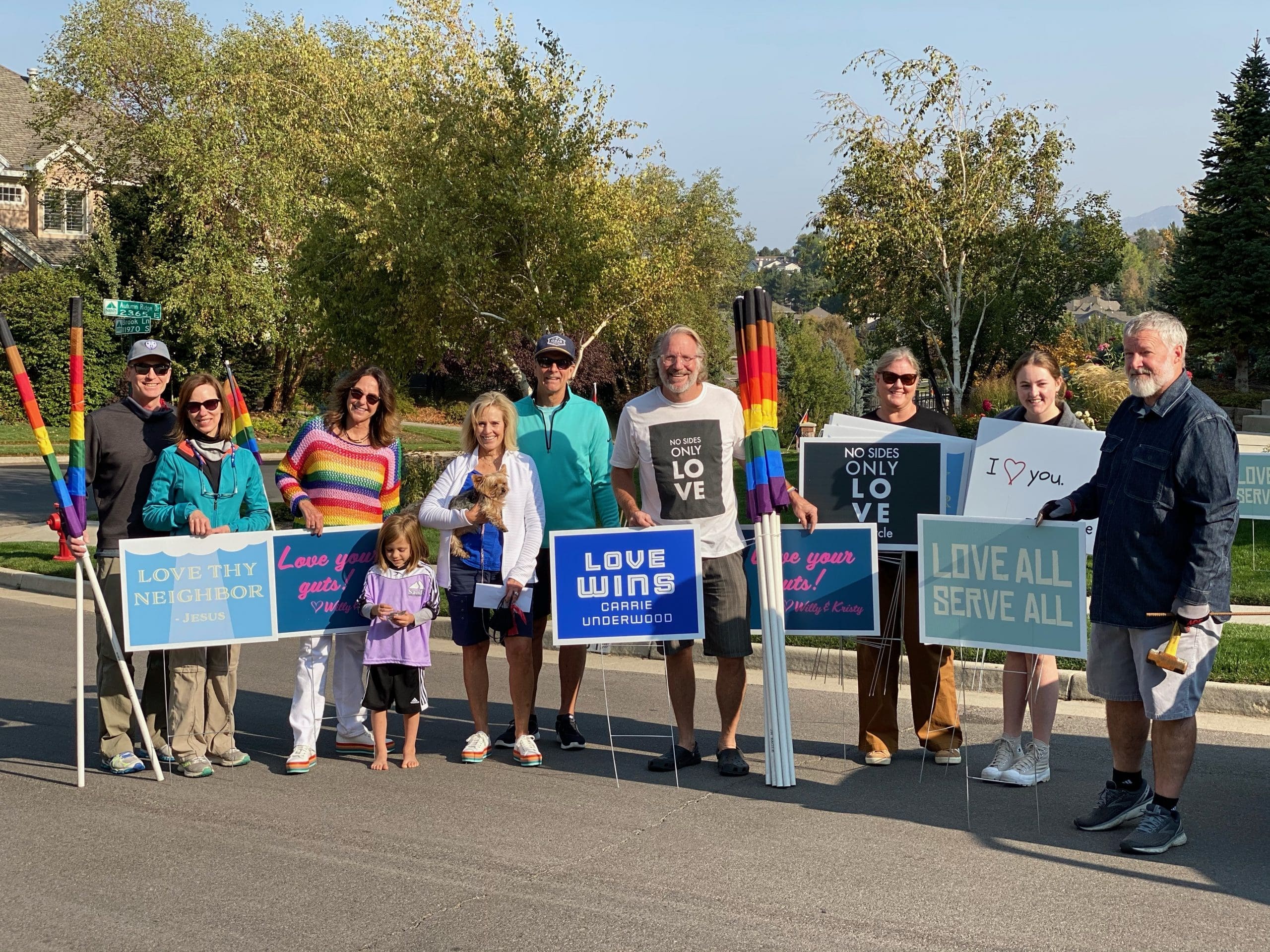
Our goals with this episode are:
- To spotlight good people doing good things.
- To inspire YOU to sponsor a Project Rainbow initiative in your neighborhood. Our hope is to turn Utah, Idaho, and Arizona RAINBOW-COLORED!
Please join us with your comments and questions!
Resources:
- Project Rainbow Utah
- Donahoo 2019 Neighborhood Letter
- Donahoo 2020 Neighborhood Letter
- Antagonistic Letter-to-Neighbors (October-15-2020) – Anonymous
- Response to Antagonistic Letter to Neighbors – Cynthia K. Phillips
- The deeply homophobic West Valley letters read towards the end of the episode.
- A newly published homophobic letter sent in Layton, Utah.
Bios:
- Kristy Donahoo is a financial advisor and partner with Ray LeVitre CFP at Net Worth Advisory Group. Much of Kristy’s career spanned over 20 years in executive management positions in Northern California/Silicon Valley with high tech and early internet companies. When she relocated to Utah, she was personally recruited by Utah’s Governor Michael O. Leavitt to lead the state’s hosting and business development programs for the 2002 Olympics. She later went on to teach in a highly regarded private Utah school prior to becoming a financial advisor. Kristy and her husband moved to Utah from California about 20 years ago. They enjoy Utah for its people, the four seasons and proximity to their four adult children. She and her family enjoy beach time in California and Hawaii during summers and snow sports during Utah winters. Kristy serves on the Advisory Board of the John Williams Encircle Home in Salt Lake City, a resource center for at-risk LGBTQ+ youth and their families.
- William Donahoo is an attorney with Donahoo & Associates, PC representing clients in civil litigation matters including labor and employment, class actions and complex litigation. Prior to working in the legal sector, William has over 20 years of senior executive experience in the software, technology and internet sectors. William holds a bachelor’s degree in computer science, a Master of Business Administration and was admitted to the California Bar after successfully completing California’s Legal Apprenticeship program and passing the California Bar in 2018. He is admitted to practice in California State courts and various United States Federal courts. In addition to being a member of the Orange County Trial Lawyers Association, the Consumer Attorneys Association of Los Angeles and the California employment Lawyers Association, William serves with his wife Kristy on the Advisory Board of the John Williams Encircle Home in Salt Lake City, Utah, a resource center for at-risk LGBTQ+ youth and their families. William lives in Utah with his wife and four children.
- Cynthia Phillips has been a teacher and administrator in secondary schools for the past 35 years during which she has taught Latin, History, English Language Arts, and Ancient Greek. Cindy is currently a secondary teacher at the Weilenmann School of Discovery, a public charter school located in Park City, UT, where she also served as the Executive Director for many years. During her career, she has never allowed administrative assignments take her fully out of the classroom because teaching and students are her love and passion. Prior to her administrative and teaching positions at the Weilenmann School, Cindy was an administrator and teacher at the Waterford School, a private school located in Sandy, UT. Cindy is currently a member of the governor-appointed Utah State Charter School Board, a member of the Utah Professional Practices Advisory Commission, a member of the Lone Peak Hospital Board in Draper, UT, and a former member of the Northeastern Utah Educational Services Board. Cindy holds a BA in Latin from Brigham Young University, an MA in Classics from Tufts University, an MA in History from the University of Utah, and she is currently a PhD candidate in Comparative Languages and Cultural Studies at the University of Utah. Cindy and her husband, Greg, reside in Sandy, UT and Heber, UT. They have five children and fourteen grandchildren.
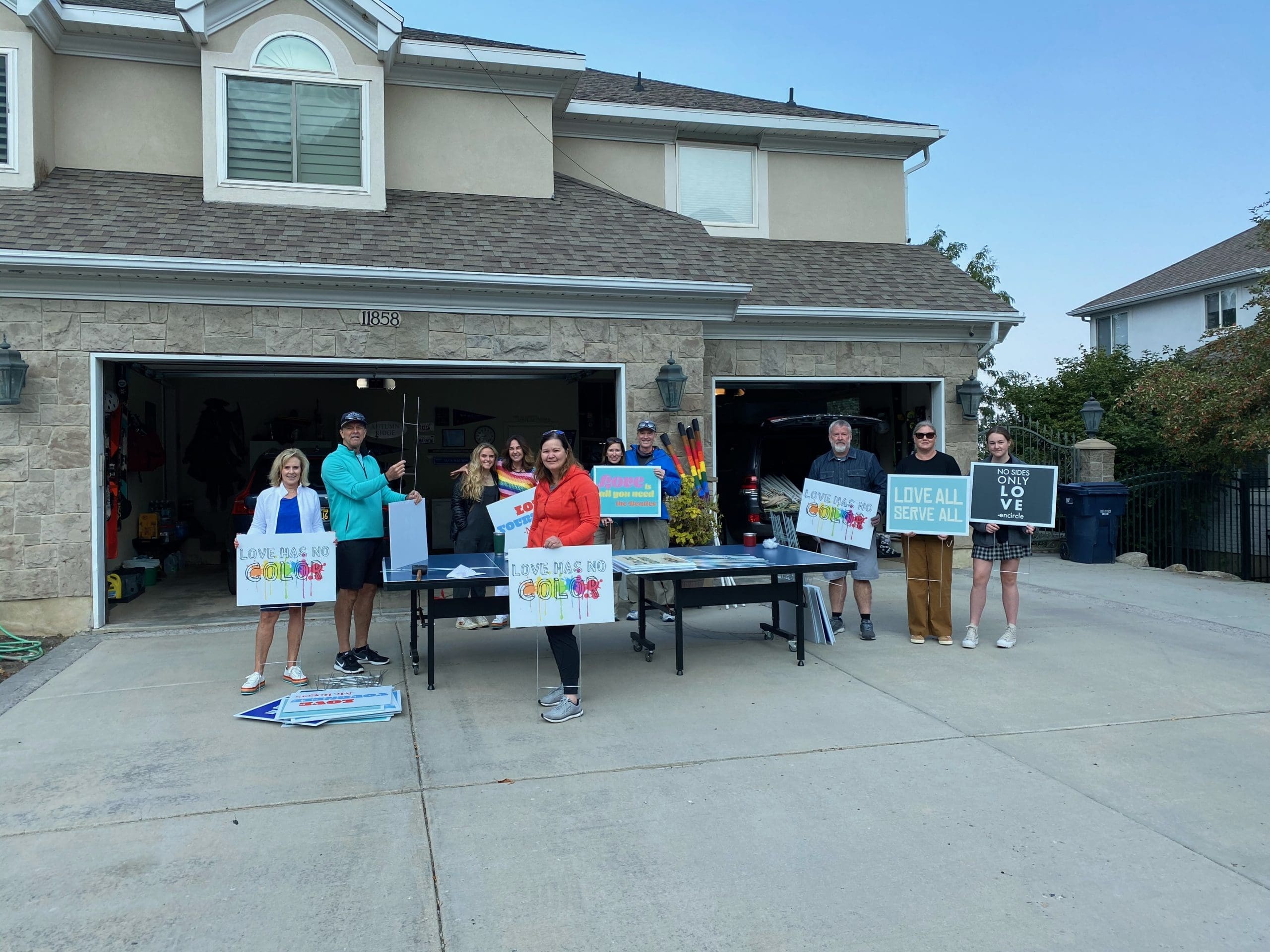
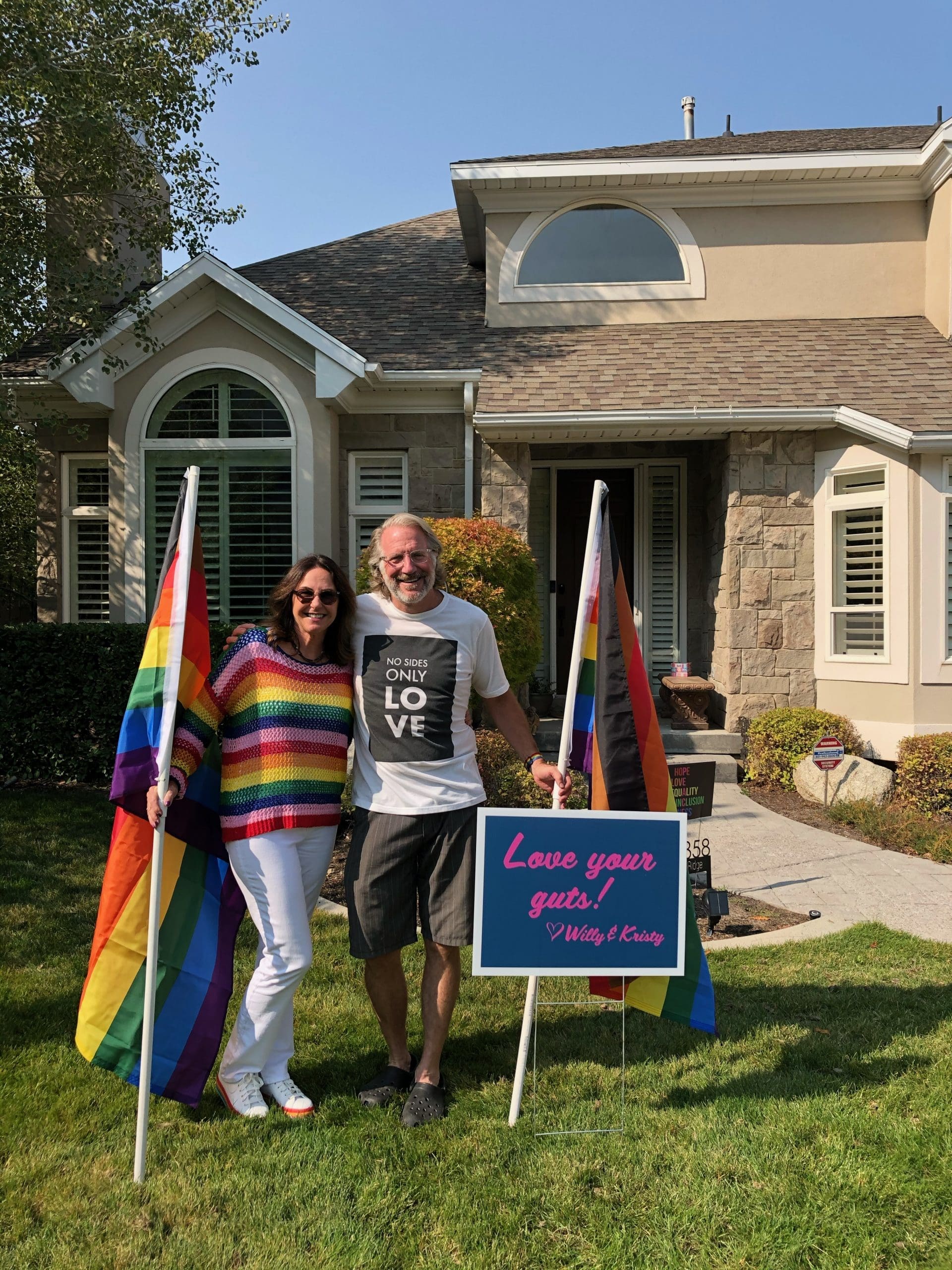
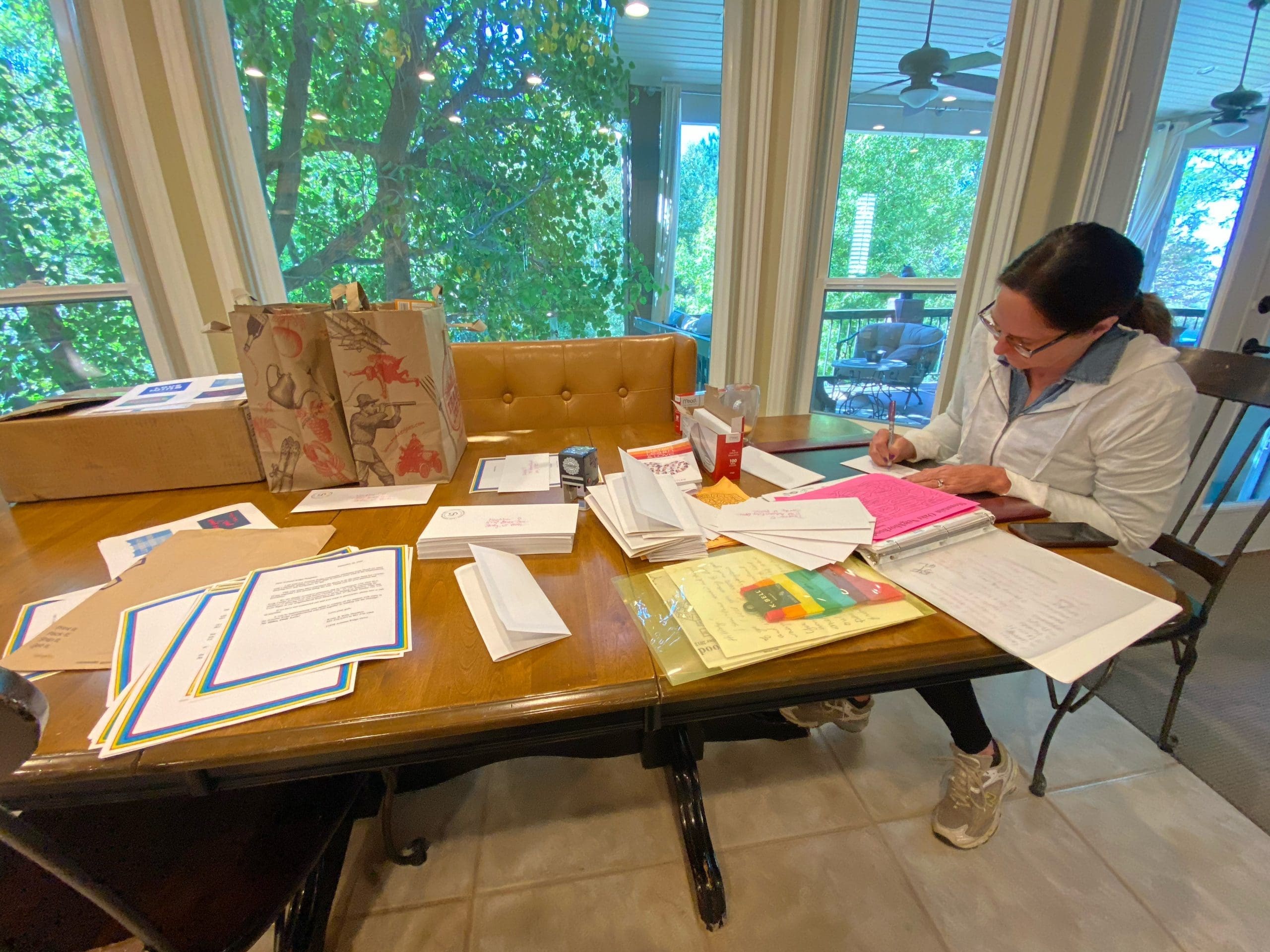
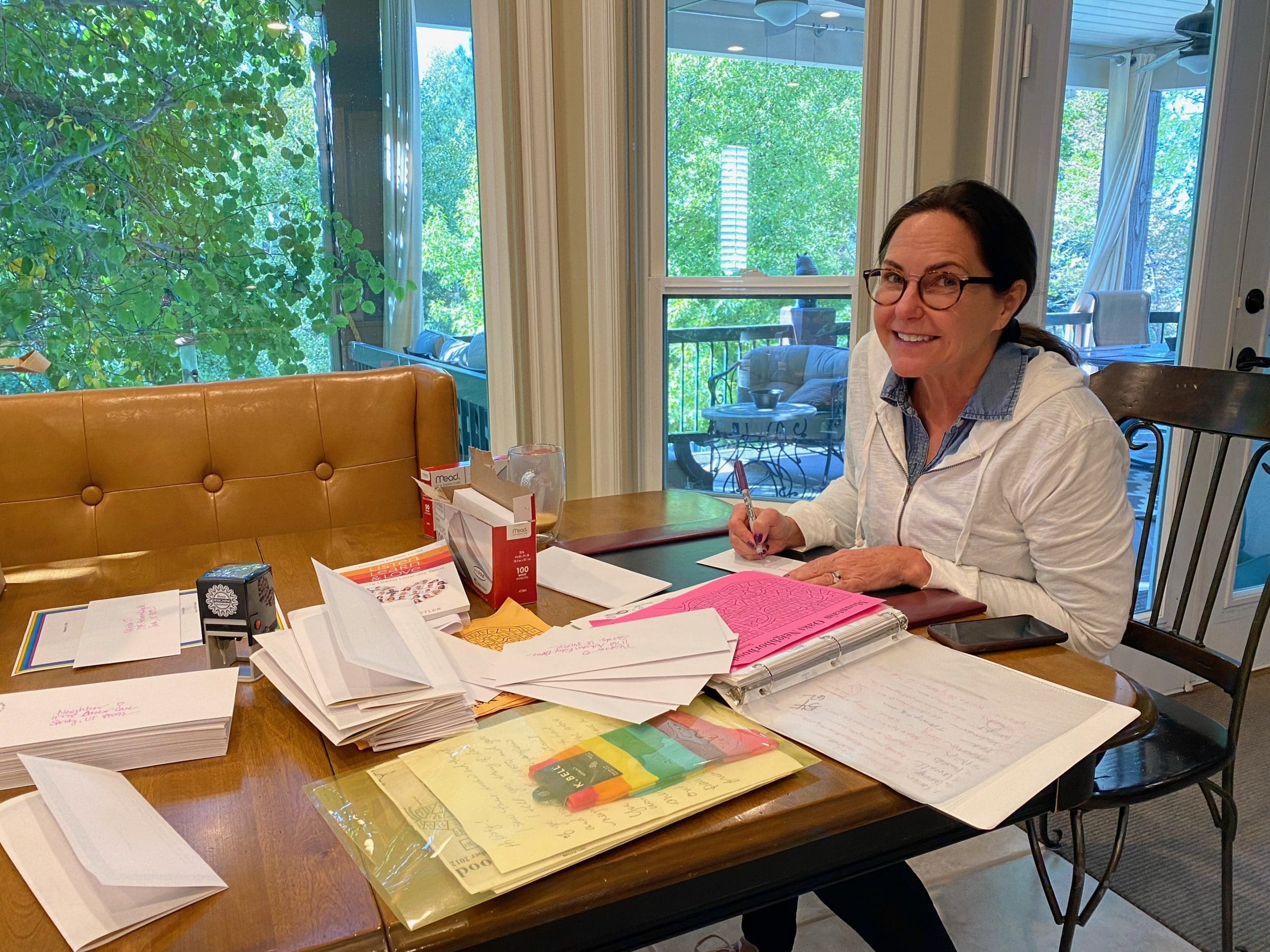
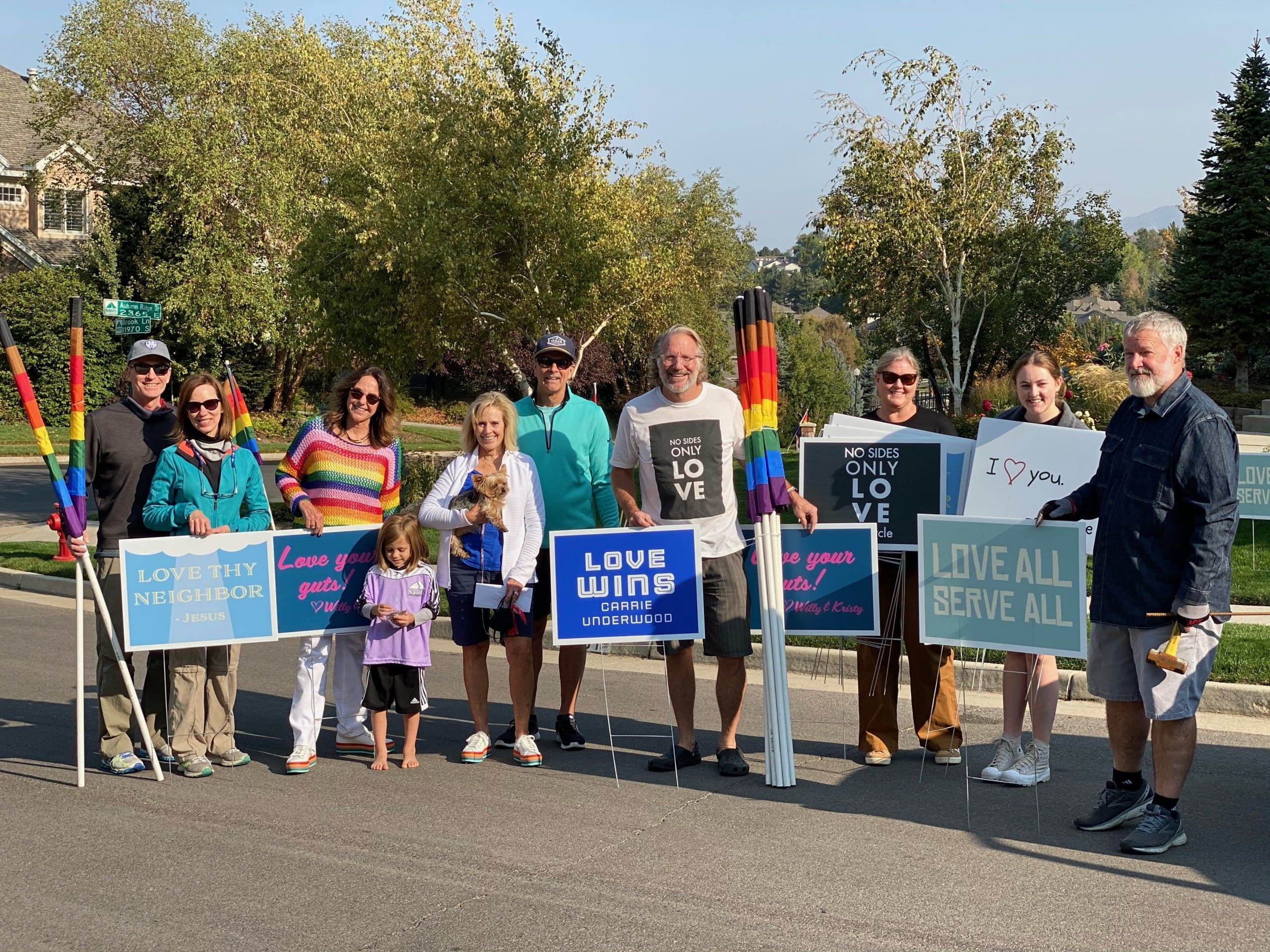
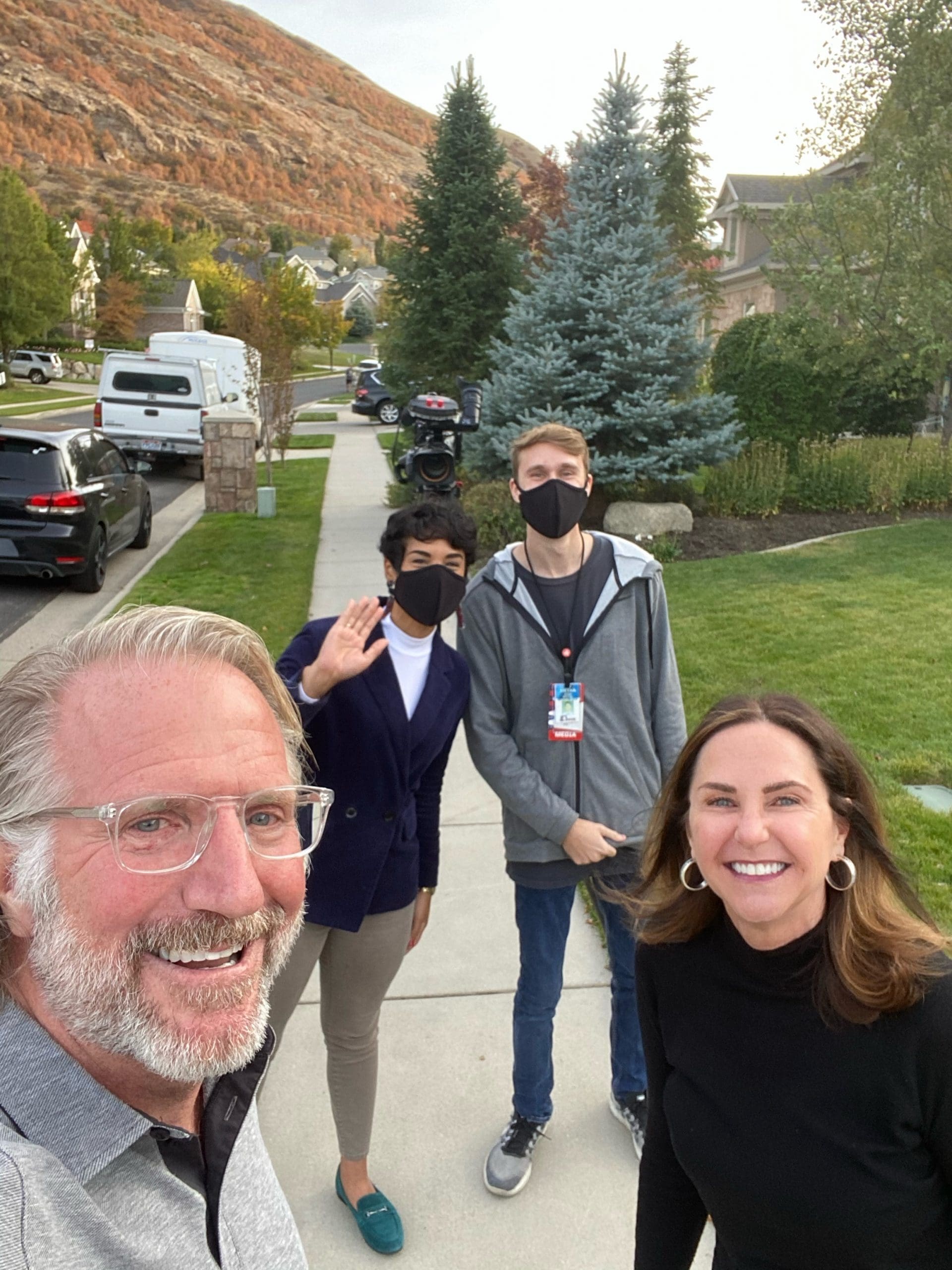
4 Responses
Hey, you guys forgot “Love Will Find a Way” by Pablo Cruise (1979) … outstanding!
https://youtu.be/QJLICOHTBTU
What a great thing! In my neighborhood in Boise, Idaho, our newest neighbor called us the “gayborhood” to her realtor! Our flags and rainbow mailboxes were a huge selling point to her when she was looking for her new home!
Wow i loved hearing Cynthia’s thoughtful and intelligent to response to John about how she chooses to view Jesus’s ministry and how she should lead her life by his example. I LOOOOOVED listening to her.
This episode is a great reminder that the best things about Mormonism emanate from the laity upward while the worst things about the faith waft in the opposite direction and acucmulates within the underground hallways where the insecure wander in lonely anonymity. Thanks to the Donahoos and Ms. Phillips for standing up.