
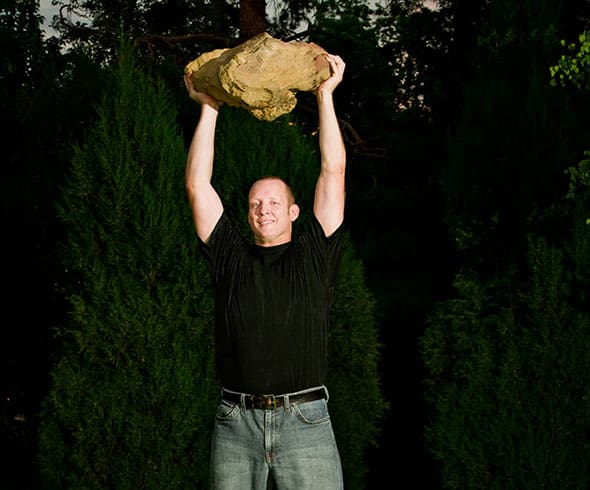
 Josh Hanagarne is a father, husband, avid reader, librarian, weight lifter extraordinaire, and the author of the amazing book The World’s Strongest Librarian: A Memoir of Tourette’s, Faith, Strength, and the Power of Family.
In this podcast, Heather Olson Beal and John Dehlin interview Josh about his childhood and adolescence, his Tourette’s diagnosis and treatment, his LDS mission experience, his marriage and family, his educational and work experiences, his body building experiences, and his faith/spirituality. Josh is open, honest, and frank about all of the above.
The book is delightful and thought-provoking and full of humanity and beauty. We can’t rave about it enough.
To read more about Josh, click on his website. To join his virtual book club, click here.
Please support Josh and Mormon Stories by purchasing the book through this link.
Episode Transcript
Host: John Dehlin · Guests: Heather Olson Beal, Josh Hanagarne
This transcript is machine-generated and lightly edited for readability. The audio is authoritative. Please excuse occasional errors in names and spelling.
Introduction and Book Reading
Heather Olson Beal [00:00:00] One.
Josh Hanagarne [00:00:21] Come, come, you saints. No toil nor labor fear.
Heather Olson Beal [00:00:29] Hello, everybody, and welcome to another edition of Mormon Stories Book Club. This is Heather Beale, and I'm happy to be here tonight with another really cool book and with John Dehlin, who you all know and love. You want to say hi, John?
John Dehlin [00:00:43] Hey, Heather.
Heather Olson Beal [00:00:45] I'm just trying to pretend that you're like a guest on your own podcast.
John Dehlin [00:00:48] That's awesome. I'm a guest.
Heather Olson Beal [00:00:50] Yeah, that's right.
John Dehlin [00:00:51] I'm honored to be here with you today, Heather.
Heather Olson Beal [00:00:53] And we're here with Josh Hanagarne. Did I get it, Josh?
Josh Hanagarne [00:00:57] You got it. First time anybody's nailed it. Good work.
Heather Olson Beal [00:01:01] And Josh is the author of the World's Strongest A Memoir of Tourette's Faith, Strength, and the Power of Family. And I just, I'll say it many times, I guess. I just finished the book last week and I loved it so much that I could probably, like, embarrass myself on this podcast by, like, just oohing and ahhing. Yeah, I just loved it. And I've been telling everybody I just read the coolest book that just has everything. It talks about religion, it talks about being Mormon, but I think it appeals to a much wider audience than just Mormons. It talks about a mission, Tourette syndrome, marriage, faith crisis, fertility problems, post secondary education, weightlifting. I mean, yeah, it's. It's just, it's an amazing book. So I love it and I'm excited to be here tonight and get to know a little bit more about you, Josh.
Josh Hanagarne [00:01:54] Okay, my pleasure. And if you want to embarrass yourself going on and on about it, feel free.
Heather Olson Beal [00:02:01] Okay, I will. For real. I put a comment on a couple of Facebook groups a couple hours ago and said, hey, John and I are getting ready to do this podcast. Has anybody read it and have any questions? And a few people had some questions and hopefully some of those. But someone also said, well, I think I read it and I really liked it. And said. And he, he said, I think this book really appeals to bibliophiles. And I thought, well, I'm a huge bibliophile then. And that is a big part of the reason why I loved it. I mean, all the stuff about books and libraries and the organization of the chapter with the Dewey decimal system, like subheadings, I guess. Is that what you call them?
Josh Hanagarne [00:02:43] Yeah, subject headings.
Heather Olson Beal [00:02:45] Yeah, subject headings. And actually, my favorite part of the whole book is when you tell about being at your wife's, your now wife's childhood home, and finding her strawberry shortcake yes. Homemade doll accessories. And finding the little tiny homemade books she had made. Oh, yeah.
Josh Hanagarne [00:03:04] If that is not the sweetest thing I've ever heard, I don't think I'd survive anything sweeter.
Heather Olson Beal [00:03:10] Okay, but so tell everybody quickly what that was. So I don't just.
Josh Hanagarne [00:03:14] Well, what happened briefly is I'd gone to my wife's. You know, we were not quite engaged yet, but we were on our way to the family reunion when we'd get engaged, and I was at her parents house sleeping there. And she was there that night as well, and she was showing me some of her old childhood toys. And she picked out this chest that had all of these old Strawberry Shortcake dolls. And I recognize these dolls because my sisters had had them as well. But then she said, no, look in their backpacks. And each doll had a little backpack. So when I looked inside of their backpacks, they each had two or three little handmade books of construction paper and she had sewn the bindings together. And when I opened each book up, it had little scrawled lines on it. And she said, I just, I wanted them to have something to read. And that was kind of the moment where I thought, you know what, Whatever the outcome later, this is going to happen. I just knew it.
Heather Olson Beal [00:04:10] And one of them said, moby Dick, right?
Josh Hanagarne [00:04:13] Yes, yes. Of all things.
Heather Olson Beal [00:04:17] I love that. But honestly, just so much of it resonated with me. I have made the joke more than once that if I've only done one thing right as a parent, and there may only be one thing, it's that I've loved reading with my kids. And so I just felt like there were things throughout where you talk about, like, libraries being sacred spaces, but yeah, so I was like, yes, yes, yes. Anyway, so why don't we just. Actually, why don't we just have you start out and read a little bit of the introduction like we talked about so we can kind of get a flavor for you for the book.
Josh Hanagarne [00:04:55] Okay. So what I'm going to read takes place in the gigantic main library in downtown Salt Lake, which is a pretty lively place. And not all the stories I tell about this library are good, but all the best stories are the bad ones. So that's what we're going to go with. Okay. Earlier today, a young woman asked me to help her find a book about how to knit lingerie. This is the sort of question library school recruiters should feature in their dreary PowerPoint presentations, not claptrap about how we are the stewards of democracy. They would definitely attract more males to the profession. When I arrived in my library department two years ago, the alpha male was a 66 year old woman on our way to the lingerie section. Yes, the official subject heading is Lingerie Call number 646.42. I tripped over another young woman who was lying on the floor beneath a blanket nestled between two rows of law books. I'm 35 years old, and it both relieves and elates me to know that I can still be surprised. I'm sleeping here. She yelled. I'm rarely at a loss for words outside the library, but within its walls I'm required to form sentences that no logical person should ever have to utter. For instance, you can't sleep on the floor at the library under your blanket. I don't snore, she said, gripping her blanket with both hands as if I might snatch it away. I'm sure you don't, I said. That's not the point. Well, there's no other point. This was an occasion when my need to be right didn't feel that important. I made a phone call. Security interrupted her derailed slumber and led her out of the building. And stay out. I pictured them yelling, tossing the blanket after her where it would be swept into traffic by a sudden gust of wind. I felt a twinge of envy. I couldn't remember the last time I'd taken a nap. I'll admit to often feeling sleepy in the library. Most of the time, in fact. The building was constructed with the ability to save power and warm itself, so the glass walls make it difficult to find an area that isn't bathed by sopor sunbeams. I briefly considered lying down on the floor between Black's Law Dictionary and the Morningstar Investment Guides. Someone would probably report me, but I might be imposing enough to buy myself a power nap. But then someone came to the desk for help and the plan ended before it began. I really want someone to ask me a question that is not hey, how many times can I fall asleep in here before I get kicked out? I really want this building to serve the purpose for which it was intended, as a breeding ground for curiosity. I work on level three. If you're on my floor, you're probably looking for information about Bigfoot or the healing powers of crystals, self help or psychology. You're trying to expunge something from your record and you need the law section. You need to lose weight. You heard that people make money on the Internet. You need to summon some pixies. You want to get into hat making you can't sight your rifle. You're sick of the Jews. You're sick of the people who won't shut up about being sick of the Jews. You're looking for a Bible. Maybe you're cramming for the sat. Unless you're just looking for a place to sleep, in which case I'd direct you to any of the comfortable chairs laid out around the perimeter, out of my direct line of sight. And if you're hooking up with your drug dealer, that's usually conducted in the restrooms. Later this morning, something actually happened that didn't require me to wake someone up or tell him to watch porn at home. An African American man asked me if the Hutu tribe in Rwanda had any Jewish ancestry. What a fascinating question. We started hunting through the library's incredibly expensive, under promoted and underused research databases. After an hour, we realized that the question was bigger than we could complete during one session. But he had enough leads to pursue on his own. We'd forgotten that the rest of the world existed as we leaned over my computer and hurried to and fro in the stacks, grabbing books. As always, many patrons wanted to research their genealogy. I always wonder why. Were they trying to discover whether they might have an inheritance coming to them, being kept from them, researching the people who led to their own genetic impairments? I have Tourette Syndrome because of some combination of my parents crazy innards. His genes met hers and said, hey, let's get stupid. I can't blame them for not knowing any better if there's a memo out there that says never cross a Navajo and a Mormon or you'll create a twitchy baby who will be a burden forever. They never got it. At lunch, many of the librarians lurched up to the staff room and fell onto chairs and couches with their books and magazines. Librarians, as a rule, move about as well as the Tin man did before Dorothy brought him the oil can. Their heads often sit so far forward on their necks that they look like woodpeckers frozen in mid peck. Their shoulders are rounded from answering the phone, typing, eating, and reading. Their hands, at rest, inevitably rotate into the typing position. They spend so much time looking down at computers and into books and talking down to people from their tall desks that it's become an unnatural effort to raise their eyes to make eye contact during conversation. I move quite well, partly because during my lunch break I go downstairs to the library's diminutive fitness room, wrap my hands in thin, well seasoned leather strips to protect them, and I bend Horseshoes. I'm also working on the goal of deadlifting 600 pounds, but I do that outside the library walls. The sound of 600 pounds hitting the ground is serious. Dropping that much weight in the basement of the library would echo up to the top floor and wake everyone up. When I hit a snag, I call my coach, a man named Adam. Adam is a former Air Force tech sergeant, an expert in hand to hand combat, and the sort of person who describes poor haircuts as a lack of personal excellence, even though his own hair is currently poofy and awful and makes him look like a Dragon Ball Z character. More on him later. Is that enough, Heather?
Heather Olson Beal [00:11:05] Yeah. Yeah, that was great. You even did a little impromptu censoring there, didn't you?
Josh Hanagarne [00:11:13] Yeah, I tried. I never. I never.
Heather Olson Beal [00:11:16] Yeah, no, that was good. That was good.
Josh Hanagarne [00:11:18] You know, and honestly, I'm not much of a cursor. Like, I can tell when it works, but I rarely do it if it's not. Like, just nothing else will do.
Heather Olson Beal [00:11:25] Yeah, yeah, no, that was great. Okay. That was a really good introduction. So let's, Let's. I kind of like you to go back and give us a little bit of. I kind of feel like I've listened to enough Mormon stories, interviews with John, that he likes to kind of ask people about their. About their childhood. Would you say, John, and about kind of growing up in your Mormon family?
Growing Up with Tourette's in the Mormon Church
John Dehlin [00:11:48] Yeah, yeah, absolutely. That's a great. That sounds like a. Sounds like a great place to start.
Josh Hanagarne [00:11:55] Okay, so just about childhood, growing up in the church.
Heather Olson Beal [00:11:58] Yeah, yeah, sure.
Josh Hanagarne [00:12:00] I was born in Moab, Utah. Pretty big Mormon influence there. And it was honestly, church. Church was just part of life on my mom's side of the family. I come from a long, long generation of Mormons. My dad was baptized when he was 19. It was actually on Halloween. And he basically got baptized just so he could marry my mom, because she knew what she wanted very much. And he, you know, and he just wanted to get married. So he did what he needed to, to get married. Now, of course not doing this for the greatest reasons would cause some problems later on, but they got married pretty young. And so I was raised in a very loving, fairly devout household. Well, I will say extremely devout on my mom's side, more or less. On my dad's side, he tried, but it definitely wasn't as important to him as it was to her. Church was really just part of life. You know, I never really had the chance to consider that it might. That it might not be the entire universe because we're all the products of some pretty deep training, one way or another. You can really tell a kid anything, and that's what they pick up. And this is one of the huge things I absorbed from my parents. But it wasn't weird, and I didn't think we were different. It was just, we go to church on Sunday. Here are the things we believe, here are the books we read. And this would carry me on through all of junior high and all of high school. And I had some fairly predictable moments where I'd say, oh, I don't know, I'm so sad. How could anything be true? But a lot of this was really just teenage melodrama. I didn't really have anything particular I was directing my angst at. And I hadn't really experienced any real pain yet either. So the first time I actually remember wondering whether I really wanted to be all in the church was honestly when I was trying to decide whether to go on a mission or not. And even with that, a huge part of my decision had to do with the fact that I had a girlfriend and I just didn't want to leave her. So looking back now, I have no idea what exactly my doubt was based on. I do know, but I started asking, and I was trying to figure out if I really believed things or not, outside of being raised in it, outside of the testimonies of my parents. And so I prayed when I was away at college for my one semester before my mission, and I felt that I'd received an answer, and that was pretty much it. And then I. Then I went on a mission. Some of the mission went great, some of it did not. That's when my Tourette's really went berserk, which makes me exceptional neurologically in some ways, as far as Tourette Syndrome. But that was pretty much it until I got to that point. Same stories. A lot of very happy Mormon kids didn't have anything to complain about. Never really considered the fact that there might be other options. And I knew that it made our family very happy.
Heather Olson Beal [00:14:57] Okay, John, do you want to interject,
John Dehlin [00:15:04] maybe tell us a bit about. I mean, as I read through the book, you know, you paint a picture of life being really rosy, but it wasn't always rosy with Tourette's, as I read through the book. So maybe we can start there and have you just describe what it is and how it emerged a little bit. And maybe give people a feel for what it's like and even talk a bit about how you might be experiencing it right now. Even Though we may or may not be able to hear it.
Josh Hanagarne [00:15:42] Yeah, absolutely. So for anybody listening, if you're not familiar with Tourette's syndrome, it's a neurological. It's a movement disorder. And when you see Tourette's on movies or on tv, it's generally somebody yelling obscenities uncontrollably. And I get it, this doesn't offend me. It's definitely what you can get the most comedic mileage out of. But that condition is very rare, even in extreme cases of Tourette's. And I myself have a very, very extreme case of Tourette's syndrome. But I have never shouted out the words like that.
John Dehlin [00:16:18] So you've never sworn as part of your Tourette's?
Josh Hanagarne [00:16:22] No, no, not at all. It's really interesting where people, when you see somebody who does the swearing, it's very startling and it seems so strange. But honestly, if I get the urge to make a noise and it's der instead of zur, you know, is that that much stranger or is that much more normal? Who knows? So no matter what you see or hear, Tourette's generally results in one or two things. It's involuntary movements and involuntary vocalizations. So you're either moving or you're making noises in ways you don't want to, that you can't completely control. And this started for me when I was six years old. According to my parents, the first time they saw my symptoms was when I was in a first grade play in Farmington, New Mexico. And when I came out onto the stage, it was a Thanksgiving play. They said you started doing things with your face. You were blinking your eyes too much, kind of curling your lips around and craning your head a little bit in ways that didn't make sense. And so when they asked me if I knew what I was doing, apparently I didn't. And from then on, the tics were always just kind of there. But it didn't seem to be on my mind at all, so they just let it be. The question kind of forced itself on us. When I was in junior high, and this was the first time it really became vocal. And I was taking a math class in seventh or eighth grade, and I started having this really terrible urge to go. Kind of like clearing my throat, but even more extreme. And this kid in front of me in the quiet, he turned around and he slammed his hand down on my desk and he screamed, shut up. In my face. And this was the first time I really remember thinking, oh, no. You know, something is seriously, seriously wrong. With me. And I can't pretend it's not there anymore because everybody else can hear it.
John Dehlin [00:18:22] So.
Josh Hanagarne [00:18:23] Made it through junior high.
John Dehlin [00:18:24] Okay, wait, can I jump in for a sec? Any.
Josh Hanagarne [00:18:27] Anytime, Please.
John Dehlin [00:18:28] Okay. So when you're. When you're experiencing. Should we call it a tic? What do we call it?
Understanding Tics and Daily Life with Tourette's
Josh Hanagarne [00:18:34] Yeah, the symptoms are called tics.
John Dehlin [00:18:36] So when you're experiencing a tic, it's outside of your awareness. You're not aware that you're feeling the urge or making the sound or the body motion, or are you aware.
Josh Hanagarne [00:18:47] You're 100% aware of it. And it comes with an incredible frustration most of the time. The best way I can describe what it feels like to need to have a tic is if you think of the worst you have ever had to sneeze. It's a lot. It's similar to that, but I'm talking about the point where you have to sneeze so badly that you're just going to go crazy if you don't let it out. But if it was life or death, you could hold that sneeze in if you absolutely had to. But when you hold a sneeze in for too long, it doesn't feel good. There's no resolution. You're left with that awful, aching, unresolved stress, that itch in your head. Well, the urge to have a tic, it's kind of like that, but it's everywhere. It's all the time, and it feels way worse. And it honestly takes a lot more energy to hold the ticks in than it does to have them, even the big ticks. So I can suppress it for a little while if I need to, but if I do, then it's worse when it comes out for having been stifled for a while. But that's kind of what it feels like. Does that help you get a better picture of it?
Heather Olson Beal [00:20:02] Yeah.
John Dehlin [00:20:02] And if I read the book right, you mentioned, like, coming home after a day of suppressing your tics and just, like, exploding. Is that. Did I read it right?
Josh Hanagarne [00:20:10] Yeah, you did. Usually. And like, Now I'm almost 36 now. I'm far worse than I've ever been, and it's getting worse every day. So now when I come home for work, I mean, these are the times where I'm most likely to break a bone or dislocate a finger or bite through my tongue. It's really bad. And it's getting worse every day.
John Dehlin [00:20:32] Why bite your tongue or break a finger?
Josh Hanagarne [00:20:35] Why make a noise? Why blink your eyes? Why curl your lip I mean, it's just irrelevant. The urge is the urge.
John Dehlin [00:20:42] Okay, so it's not that you're doing something to let it out and you risk breaking your finger trying to let it out? No.
Josh Hanagarne [00:20:52] The issue is because I work in a quiet environment, I really do just have to stifle it sometimes. And one of the challenges I've had now is now that I've gotten so strong, I'm simply capable of having more powerful tics than I had ever had. And my urges are very intense. I really am an outlier in the severity of my case. So if you and I are going to make the same movement, I can simply do it harder than you can. And when you do it enough, you know, you can really cause yourself some problems. Or if I hit myself, I'm a lot more likely to crack a bone than you are simply because I can generate more power.
John Dehlin [00:21:36] Does it happen in your sleep?
Josh Hanagarne [00:21:38] Nope. I have a hard time falling asleep because it's really hard to relax to the point where I can drop off. But if I can stay asleep, if I can fall asleep, I don't seem to have any more difficulty than anyone else.
John Dehlin [00:21:50] So it's not like you're twitching in bed or anything like that after you've fallen asleep?
Josh Hanagarne [00:21:54] Not that I know of. I have heard that that happens to some people, but it doesn't happen to me.
John Dehlin [00:21:59] Okay. Okay. So when you're so. Throughout school, it must have been pretty, Pretty terrible, right? To have people make fun of you and to be so self conscious, you
Josh Hanagarne [00:22:12] know, it wasn't as big of a deal as you might think. I don't want to make it sound like I had a harder time in school than anyone else. I was dealing with all the same insecurities and doubts as any high schooler. My only real challenge was that I couldn't help but call attention to myself. I couldn't hide. I couldn't blend in because I was making these noises and I was doing these things. So you were going to notice me if I was around, whether I wanted you to or not. But I had friends, I had my family. You know, I was. I was on the basketball team. I was popular enough through varsity.
John Dehlin [00:22:52] Varsity basketball? Yeah.
Josh Hanagarne [00:22:54] Yeah. I mean, it was a very small league, but I got to be the star of our little AA Nevada league. My dad actually said to me once, son, I'm sorry that you look like me. Men like us do not get to be devastatingly handsome. But I want you to know that the funny guy always has a shot. So you have to work on being funny. So, I mean, I was able to date. I worked on being funny. I felt safe enough in high school. And because the tics weren't hurting me yet. For most of the people who liked me, I think it was kind of an endearing thing. Just another eccentricity and a quirky person.
John Dehlin [00:23:34] I had no idea when you talked about working for Pizza Hut or for that place that shot the clay pigeons.
Josh Hanagarne [00:23:42] Yes.
John Dehlin [00:23:44] Talk about what your urges were, because I had no idea that impulses for self harm were a part of Tourette's.
Josh Hanagarne [00:23:50] Well. And I would be very careful about generalizing.
John Dehlin [00:23:54] Right.
Josh Hanagarne [00:23:55] I don't feel like I have the urge for self harm, as strange as that sounds, what I can tell you. So I was working for the trap and skeet club. And for anybody who doesn't know, that's basically just a range where you go shoot at clay. Pedro. Those little discs, a machine throws the disks out in the air. You shoot at them with a shotgun. But my job was to sit down in this little underground bunker about the size of an elevator. And I had to sit with this giant machine with a blade on it. And the machine sat between my legs. And this blade would revolve. And my job was to put a clay pigeon on it. And when somebody outside would push the button, the blade would whip around. The pigeon would be flung out of the bunker. I was down there once, and I would be down there for a long time sometimes. And I started having this urge to wrap my knuckles on the blade. And this was scary because I never knew when they were gonna push the button. And sometimes I was actually needing to dip my finger below the. Below the edge of the blade. And if the blade had gone off at that point, it wasn't sharp. I don't think it would have cut my fingers off, but it probably would have broken them. When I worked at Pizza Hut, after I quit that job, I had a similar problem being around all the hot pans and some of the knives. And it's really hard to explain because it's not a thing where, oh, I need to hurt myself. It's a. Every tick resolves a very specific stress. And if I get the urge to push on something sharp with my knuckle, it's more to feel the pressure of it than to put myself in danger. It sounds so weird. It never gets less weird the more I hear myself say it. But this is very much not any sort of thing of self loathing. And it's not comparable to people who cut themselves so they can choose a physical Pain that's more controllable than their emotional pain. But sometimes, for me, these were the situations I'd find myself in. I've heard some people who have stories like this who have Tourette's, and many others who've never experienced anything like it.
John Dehlin [00:26:07] Got it. Okay. So it's not to harm yourself. It's to experience some type of tactile pressure.
Josh Hanagarne [00:26:16] Even when I hit myself, it's not the urge to hit myself. Like when I blink my eyes, I know how hard I need to blink my eyes to get the stress to let go of me for a second when I hit myself. It's not about you need to hit yourself. It's about generating a certain amount of pressure in a certain spot. For instance, between my knuckles and my forehead. And it just all happens instantaneously. But I've done enough observing to know that that's what happens. You know, there's just a specific stress. It's got to be resolved. It happens with a movement, and sometimes that movement's worse than other times.
John Dehlin [00:26:52] Got it. Heather.
Heather Olson Beal [00:26:56] Wow. I'm just listening.
Josh Hanagarne [00:26:58] Isn't it weird?
Heather Olson Beal [00:27:00] It's amazing. Yeah. No, I learned so much reading it, which to you probably is not impressive since it's just one book and one experience, but I guess I knew almost nothing beyond, like, what you said.
Josh Hanagarne [00:27:14] Well, no, and that's. And that's the thing. You can line up 100 people with Tourette's. We're all gonna have different stories and each weirder than the last. And you know, it can be hard to tell the two people with Tourette's even have the same thing sometimes because it can look and sound so different.
John Dehlin [00:27:29] Right. Hey, Heather, I pass it to you now. I'm just gonna ask one quick question. Okay? Sorry. I'm sorry. So, Josh, it sounds from the book that there are things you can do that make the ticks kind of go away. If you get involved in the right activities. Just talk a little bit about when they're almost non existent and then when they're really awful and how you manage it.
Josh Hanagarne [00:27:58] Sometimes I can handle. Sometimes I can divert it, sometimes I can't. The things that work the most reliably, or if I'm doing something like talking or playing the guitar, or I'm asleep or I'm lifting weights, or sometimes if I'm playing a video game with my son, sometimes if I'm reading and I can get really absorbed. They're generally things that take a lot of mental capacity and a lot of physical focus.
John Dehlin [00:28:25] Basketball. Is basketball one of Them too?
Josh Hanagarne [00:28:28] Yeah, absolutely. But it's just because when you're trying really hard at something, it kind of takes you out of yourself. You just become the striving and the exertion. If I get out of breath, it tends to get worse almost instantly. So there's a cost to me lifting weights and getting to the point where I'm panting or playing basketball and getting out of breath. The times that it is most reliably the worst are when I'm around other people. That. That is kind of it. I can be walking down the street with nobody in sight and I feel real sassy and carefree because nothing's happening to me. And a person can walk around the corner and boom, there it is. If I know I'm in earshot, if I know I'm within, somebody can see me, it's there. And the bigger the crowd, the harder it is. And the more strangers there are in the crowd, the worse it is. I was at a bookseller lunch right before the book tour started, and Katherine Weller from Weller Book Works asked kind of the same question you did. She said, what makes it worse? And I was horrified to hear myself say, well, being in public, being the center of attention, bright lights, airplanes, fatigue, hotels. Being interviewed today, you're not hearing it much, I suspect, for a couple of reasons. I'm talking and that is one of the things that reliably drives it away. And however good of a speaker I am, that's part of it, because I need to talk and I practice a lot because it's a relief to me. And the other thing is that I got up at 5 in the morning this morning to prepare for this interview. And I did so many super heavy squats just hoping by the time I got here tonight I would just be. Be bone weary and not have the energy to have the tics. And it's working.
Heather Olson Beal [00:30:23] Wow. Hey, John, so have you ever had anyone say that they prepared for an interview by doing deadlifts or whatever?
John Dehlin [00:30:32] No, this is the first. It's the first time, Josh. First time on Mormon stories. You heard it first.
Josh Hanagarne [00:30:38] I'm all in.
Heather Olson Beal [00:30:41] Okay, Josh, so would you say that your parents like. It seemed like your parents approach was sort of like, this is just Josh and he's okay and he's managing it, so we're not going to worry about it too much.
Josh Hanagarne [00:30:56] In the beginning, yes.
Heather Olson Beal [00:30:57] Okay.
Josh Hanagarne [00:30:58] It was even less about Tourette's was known then than there is now. And so what they did was watch me. And once they were convinced I wasn't actually any danger from it. They didn't really see the point in me being self conscious about it and I didn't seem to be. So it's not like they were always saying, hey, this might be Tourette's. How's the Tourette's? Or hey, you're doing this weird thing. Is everybody making fun of you? It wasn't until I was a freshman in high school where I started getting very publicly mocked during a basketball game in another team's gym that I said, I need to go to a doctor. And once I brought this up, the question kind of forced the itself on us. And that's when we went and got the diagnosis. From then on, when it was hard, they did what they could. But every kid's kind of in their own little world and Tourette's in particular can be a very lonely thing. You are very much trapped in your body and it's such a strange thing. No one else can really offer you any comfort besides the comfort any parent might offer their child, regardless when he or she is struggling.
Medications, Missions, and Managing Symptoms
Heather Olson Beal [00:32:07] Okay, so can you kind of tell us what are some of the things that you tried, you know, you, you know, that your parents had you or that doctors tried with you to kind of help you manage it?
Josh Hanagarne [00:32:19] Sure. I wouldn't start really trying anything until I was 19 or 20. It really went berserk when I was a missionary. That's when I started hitting myself and really screaming and I was screaming.
John Dehlin [00:32:30] Where were you?
Josh Hanagarne [00:32:31] I was in Washington, D.C. spanish speaking mission.
John Dehlin [00:32:34] Got it.
Josh Hanagarne [00:32:36] And so this started this very long period of pills. I bet I've taken at least 20 different prescriptions of the pills you take to try to help with Tourette's. There's really no Tourette's drug. So it's generally a matter of, hey, there was a study and this blood pressure medication seemed to help this person or, or a nicotine patch or an antipsychotic or a weight loss pill and on and on and on. And none of these things would ever really work for me, although I know a lot of people have had great success with medication. So if you're a parent of someone with Tourette's or you have Tourette's, I mean, don't listen to me and say I'm not going to take any pills. It might be an answer for you, at least for a while. Other things were, we tried a lot of nutrition things, different diets from fairly normal, like, let's just eat healthier, fewer stimulants to super whacked out Stuff, all this New age crap that really never went anywhere. The thing that I probably had the most luck with in that period was getting Botox injections in my vocal cords. Now this was at the point where I was starting to down slow, scream so much I got a hernia just from screaming. And I started getting Botox injections in my vocal cords every five weeks. And it made it so I couldn't scream anymore, so I could be back out in public and I couldn't hurt myself in that specific way. But I couldn't really talk either. So these two and a half years went by of me speaking in just the faintest whisper, which was a very strange change in my identity with how much I liked talk and how much I like conversation with people. That was pretty much everything we tried besides, you know, physical activity. Get as much of your distractions as you can. Play the guitar more, talk more, read more, whatever.
John Dehlin [00:34:32] Was that post your mission? The Botox?
Josh Hanagarne [00:34:35] Yes. I got home in, oh, what was it, 1997 or 98. I didn't start getting the Botox until I was 20 and I was up at Ricks College, BYU, Idaho now.
John Dehlin [00:34:51] But you were you able to serve a full mission?
Josh Hanagarne [00:34:54] No, I was only out for a year and it was about month nine when I started hitting myself and screaming. And then everything just went crazy. And the reason I actually came home, my mission president talked me into it. Really, really wonderful man, President Graff. My body had started convulsing so badly so often that I couldn't keep food in my stomach. I just kind of forgot how to eat. And so I'm 67 and I weigh about 265 right now. But when I came home, I was 67 and I weighed 160 pounds. I mean, I had to come home and be sickly and learn how to eat again. And that was how that ended.
John Dehlin [00:35:36] So was it stress induced? Were there stressful things on the mission that you think exacerbated the Tourette's?
Josh Hanagarne [00:35:42] You know, I don't. I'm not real interested in causes anymore. But I'll say this. If you were to design the most stressful situation possible for someone with Tourette's, it might look like an LDS mission. Go meet as many strangers today as possible. Get invited in their homes. Be quiet. Don't seem weirder than you are. Be reverent, ask them to make these huge changes, don't call attention to anything but the message, and then do it again every day.
John Dehlin [00:36:15] Oh, and oh, don't forget that the stakes are people's Eternal salvation. Absolutely. And your own. And your own.
Josh Hanagarne [00:36:22] Yeah, yeah. And that was one of the really hard things was because when the stage went so bad, I, for the first time I knew I was doing everything right. I mean, I would say things like if I died right now as a missionary, I'd be totally at peace because I'm where I need to be. And this strangely, did not make it any less miserable once it all went bad while I was in the middle of this great service.
John Dehlin [00:36:48] That's hard. So it's a pressure cooker.
Josh Hanagarne [00:36:51] Yeah. So very predictable crisis followed, you know, but I got through it.
Heather Olson Beal [00:36:56] So you may not want to answer this. That's okay if you don't, but I'm curious as to how the other missionaries were with you because we're talking about 18 and 19 year old kids, right?
Josh Hanagarne [00:37:07] Yeah. You know, I'd be interested to hear what they have to say. I'm still in touch with most of them and most of the hardest stuff would not start until I went home. I know they were all worried about, about me. We were all very close. I was very lucky. I'd say out of a hundred odd missionaries I might have met, there were probably only one or two where I even had to try to tolerate them. I genuinely liked and loved 99% of the people I served with, so they were worried about me. Nobody knew what to do. It was really weird and it was kind of like the switch flip. So even the ones who knew I. Everybody knew I had Tourette's, but suddenly this was this new thing and it was bad. It was probably hardest on the companions I had in those last couple months where it was just kind of touch and go. What is Josh going to be able to do today? Therefore, what am I going to be able to do or not do today? But I'd love to hear what they would have to say about that.
John Dehlin [00:38:09] But you say you don't like to talk about causes, but was there some major event that that sort of precipitated the flipping of the switch?
Josh Hanagarne [00:38:17] Not that I know of. Like I say, lots of moving parts. It just is not a real useful thing to say. I wonder why, why this? You know, all I generally say is, here's the sequence. This happened, this is what happened next, this is what happened right before it. Which one of those things could I change so I can reevaluate the experiment?
John Dehlin [00:38:38] It could drive you crazy.
Josh Hanagarne [00:38:40] Yeah. I mean, with Tourette's, why is just never the right question. Why did this happen? Oh, because of my diet, because of My sleep because of the lighting in the room, because of how I'm moving right now. It's just hard to even pretend I can do it.
John Dehlin [00:38:52] Yeah.
Heather Olson Beal [00:38:55] Okay. So once you came home from your mission, tell us about what you did. You kind of went in and out of school for a good long while, right? Yeah.
Josh Hanagarne [00:39:06] I couldn't get a lot going. I could not stand to be out in public. I could not stand to have people look at me and to hear me. Did not have any hope. Had no reason to think things would get better. And so. But I didn't want to just lie around all the time and be a burden.
John Dehlin [00:39:27] Did you feel shame for coming home early from your mission?
Josh Hanagarne [00:39:30] I did. I did. It was really hard. I remember my companion at the time reminded me of this. But when we had our meeting with President Graff, when he. When he said, you need to go home, I remember just crying and saying, how do I know it was enough? How do I know I'm not just pussing out. I'm sure I didn't say pussing out the mission president, but he. I remember him squeezing my hand and saying, you have laid us sacrifice on the altar. It is accepted. You've done as much work in a year as some will do in two. And that was enough. And that was a huge relief. And still, when I got home, I wondered, you know, it was. I think anybody would. I certainly did so for the next couple of years, kind of to try to get something done, but also just to check the boxes so I wouldn't. Nobody could say I was completely lazy. I would try to enroll in school, but then it would either be too hard, or I would let it be too hard and I'd withdraw, or I'd work a job for a few months, and then it would either be too hard or I'd let myself get out of it. Doesn't matter which. The result was always the same. And a few years went by like that with not much going, just lots of false starts.
Heather Olson Beal [00:40:46] And it was during that time that your dad got you to go start weightlifting with him, right?
Josh Hanagarne [00:40:52] Yeah, that happened shortly after I got home, actually. And my memory of that is that he said, if nothing else, we can help you try to put some of the weight back on. Because I was pretty sickly, so it wasn't gonna be any. You know, there really wasn't any grand agenda. It was just like, let's go lift weights. Let's try to be a little healthier. And so he took me to this gym in Elko, Nevada, and I was only 20, just weak as a kitten. And some of the other guys at the gym kind of adopted me. And I was really interested to see how much I loved lifting. And keep in mind this was at a point where I really just didn't go out in public anymore. I couldn't. So it was a big deal for me to want to go into this gym every day just because it was outside and I could be seen and heard. And some of this I've only realized in hindsight. But what I suddenly had was a time every day where I felt like I was in control of my body. I could look at myself in the mirror and say, now you're going to do what I say. And it would usually make the tics worse afterwards. But I had some control, you know, and I started looking better, and I did start gaining some weight back. And it's fun to be strong. And in hindsight, I've also realized I suddenly had a type of progress I could measure. There's nothing abstract about strength, and that remains one of the biggest appeals to me is that strength is a number. You're either stronger today than yesterday or you're not. It's very different from trying to gauge emotional progress or spiritual progress. In some ways, it's a number.
Heather Olson Beal [00:42:28] That's it. Okay, very interesting. Um, let's. Let's. Let's move forward a little bit then. Can you tell us about meeting your now wife, how that kind of went down?
Marriage, College, and Finding Stability
Josh Hanagarne [00:42:45] Yeah, it's actually kind of a lame story. My mom came home from church one day and said, I found the perfect girl for you. Thirteen weeks later, I married her. So, I mean, I'd always made fun of people who got married quick. That'll never be me. But it was 13 weeks. Thirteen weeks. Yeah. But listen, my last week at Rick's college, a girl I had dated got engaged on the first date to somebody and married him like a week later.
John Dehlin [00:43:14] Oh. So yours was really long and patient.
Josh Hanagarne [00:43:18] It was nuts. It was more patient than first date. But honestly, once I knew, I just wasn't that worried about it. And we were definitely right for each other that summer and summer love. So, yeah, that's how it happened. We dated, we got married, we came over to Salt Lake so I could go to school, and that's pretty much that whole story.
John Dehlin [00:43:43] Okay, so you at some point were able to go to college and stay then had things stabilized by the time you met?
Josh Hanagarne [00:43:51] No, no, things were about to get worse. It took me 10 years to get through my bachelor's degree. I Wouldn't actually graduate from college till 2006 or 2007 and we got married in 2001.
John Dehlin [00:44:04] So she was willing to marry you knowing that you were still really, really struggling with just basic kind of life coping skills.
Josh Hanagarne [00:44:14] Yeah, for sure. And Jeanette would also be the first one to tell you she struggles with codependency. So I may have looked at like the primo fixer upper. You know, there's a possibility he'll never get it all together and I can just nurse him forever, who knows? But honestly, I probably also. I wanted someone so bad and I wanted to be normal so bad. I may not have let on that things were as bad as they were and I certainly wouldn't know how bad things would get. But yeah, she was willing to, I think mostly for the right reasons. She's a much better person than I am.
Heather Olson Beal [00:44:56] Okay, so you finished your degree from where? I can't remember.
Josh Hanagarne [00:45:00] I got an English degree from the University of Utah, and then I got a master's degree in library science, which is totally a fake degree from the University of North Texas in Denton. And I did most, most of that online.
Heather Olson Beal [00:45:13] Yeah, I've heard of that program because I work at a university just a couple hours south of that. I have to say that I cringed when I read your description of some of the professors because I thought, wow, if anybody from this program reads this book, they're probably really sad that this is out. Like someone always showing up late and never knowing what was going on. And yeah, it was Heather, I'm going
Josh Hanagarne [00:45:36] to tell you the greatest story about that. So. So for anybody out there, I don't really dig on library school and there was nothing wrong with the University of North Texas, but I also, I didn't take a class. I couldn't have passed as a bright eighth grader. It was not this amazing educational experience. And so the greatest memory I have was of this one very specific teacher coming in and just, you know, it doesn't even matter. But it was a very memorable lecture she gave. Read the book if you want to hear about that. And so that was pretty much the only story I told. And it was only about half a page long, but I worried, I thought, you know, I didn't worry. I don't really get nervous. But I thought, I bet North Texas they're gonna have something to say about this someday. This is a for profit school. They need students. How are they going to get back at me? And when the email finally came, it was from the president of the alumni association saying oh, we love the book. I don't understand why you're not on the front page of the college website. Can I put you on the front page of the college website? And so I called my publicist and I said, beth, here's what he's saying. I don't think he's read the book. What do I owe him? And she said, it's their job to know what's in the book. So I said, okay, whatever. And I never checked to see if they did any of that. But then I got a call or a message on Facebook, I think from Dr. Chandler, who was the head of their law program. Oh, no, here we go. And she said, josh, will you come speak at the Texas Library association thing next year? And, like, we've all been talking about all these reviews. And I again, I said, oh, she can't have read the book. She can't have read the book. And so I tentatively say, sure, let's set up this date for April. Sure, you can pay me. And then I finally said, Dr. Chandler, I've got to ask, have you read this? And she said, yeah, we just can't figure out who that teacher was because none of us drink Dr. Pepper anymore. And, like, there's a Dr. Pepper thing in the story. So she said, we all love it. We think it's hysterical. So I said, well, okay, I thought you'd all be mad or embarrassed. And she said, yeah, but you've got a write up in the New Yorker. The New Yorker trumps anything we have to say.
Heather Olson Beal [00:48:00] That's.
Josh Hanagarne [00:48:01] That's where we're at with that. As far as I know. I'm going out there in April.
Heather Olson Beal [00:48:05] Oh, wow. Okay.
Josh Hanagarne [00:48:06] Isn't that hilarious?
Heather Olson Beal [00:48:08] I guess. Yeah. I guess they weren't worried about it. Or maybe they just thought, hey, this is good, you know, we got our name out. Maybe some more people know about our program. Yeah.
Josh Hanagarne [00:48:18] Favorite son.
John Dehlin [00:48:20] Wow.
Heather Olson Beal [00:48:21] Okay. And so you have a son now, right? Yes.
Josh Hanagarne [00:48:25] Max is gonna turn six in February.
Heather Olson Beal [00:48:28] He's gonna turn six. Okay.
John Dehlin [00:48:31] Would you ever have ticks while you were holding him as a baby?
Josh Hanagarne [00:48:35] No. That's actually a really good question because I worried, but it just stops. And I actually. One of my best friends is this fat little baby who lives next door named Jonah, who I go hold him every chance I can. His parents are grateful for the break sometimes, but I just. I hold babies whenever I can because it's a break for me, you know?
Heather Olson Beal [00:48:57] That's interesting. My dad has a prosthetic arm, and he just has a hook on that on his left hand. And he took care of my daughter when she was an infant and my sister's two babies. And people would occasionally ask him, you know, how does that. Because he would be there with them for four, six hours, you know, for a long time. How does that work out? Like, how do you change their diapers? How can you manage holding them, you know? And he said, it's the craziest thing. And he said, and I know it sounds like made up, but all I can say is this is my experience. He said, they don't. They don't squawk and they don't squirm when I hold them. And he said, you know, I'll put her down to change her diaper. And this is the time. Like, this was astounding to me, too, because, like, babies squirm, they, you know, kick, and you can't keep them on the changing table. And, you know, and so here he is. He'd be trying to manage that with the hook for his left hand. Well, hook's not going to do a whole lot of good when you're trying to deal with an infant. And he said, they just don't. It's like they somehow know I can't do this, you know? So he just said that never. That never happened. So that's some family lore. Probably not based at all in reality.
Josh Hanagarne [00:50:04] Well, quickly and just something tangential. People always say, well, you know, can you drive, for example? And I used to worry about that, too. But it seems to want things to be as invasive and obnoxious and painful as possible without actually putting me or anyone else in danger. So if I'm walking across the parking lot to my truck, I'm probably having big physical tics. And once I start driving, the physical tics get stop. And the vocal tics get wild. I mean, I've just. I've never had the slightest bit of anxiety about driving because I just know it's not an issue. Kind of the same with babies.
Heather Olson Beal [00:50:43] Wow, Very interesting.
John Dehlin [00:50:46] What about. Okay, what about with sex? If you're comfortable talking about it.
Josh Hanagarne [00:50:50] Oh, I'm very comfortable. Do you want me to bring Jeanette down?
John Dehlin [00:50:56] No, it's.
Josh Hanagarne [00:50:56] It's fine. Actually, part of that is when my breathing gets out of control, my tics are more likely to get erratic. And if I'm doing it right, my breathing should get out of control. Let your imaginations run wild.
Heather Olson Beal [00:51:10] John. That question wasn't on the list.
John Dehlin [00:51:13] Sorry, sorry.
Josh Hanagarne [00:51:16] What list? I hope you guys don't have some lame list.
John Dehlin [00:51:18] Oh, no, we Don't. Of course not.
Heather Olson Beal [00:51:19] Right, Heather?
John Dehlin [00:51:21] No list?
Heather Olson Beal [00:51:22] No, I do have a list of questions, and that wasn't on it. John is going off script.
John Dehlin [00:51:27] Sorry.
Josh Hanagarne [00:51:27] Well, I'm glad you asked, John. I know how to bring it.
Faith Questions and Disaffection from Mormonism
Heather Olson Beal [00:51:32] I have some questions that are kind of bigger, bigger picture kind of questions that I wanted to ask about beyond just kind of your chronology. So I wanted to read a little part and then ask you a question related to it. It has to do with libraries and questioning.
Josh Hanagarne [00:51:48] Sure.
Heather Olson Beal [00:51:49] You'd say, I think it's at the beginning. Libraries have shaped and linked all the disparate threads of my life. The books, the weights, the tics, the harm I've caused myself and others, even the very fact that I'm alive. How I handle my Tourette's. Everything I know about my identity can be traced back to the boy whose parents took him to a library in New Mexico. Even before he was born. The library taught me that I could ask any questions I wanted and pursue them to their conclusions without judgment or embarrassment. And it's where I learned that not all questions have answers. So my question, I guess, and maybe this doesn't have an answer, but is just if you could speak for a minute about that idea of having questions and how that relates to your relationship to Mormonism. It's like I could talk about what I think about kind of the role of questioning in Mormonism. But I'd like to hear from you.
Josh Hanagarne [00:52:42] Let me give you just a little bit of background. The first time I remember having real questions was during the period after my mission where because I couldn't be out in public much, that included not being able to sit in a quiet chapel every Sunday. And this was the first prolonged break I had ever had from church meetings. And I noticed that questions were starting to pop into my head the less time I spent there. And it was interesting. It was just things like questions about evolution, for example, or questions like, what if this isn't the truth? The funny thing is, it's not like I hadn't been asking these questions because somebody said, don't ask those questions. Those are bad. That's dangerous. It was like they simply couldn't occur to me, or it wasn't even worth my time to wonder about before. And this seemed significant to me. Now I believe the best questions lead to answers that only lead to more questions. And so once you start down certain roads, curiosity is going to have a cost, and it's generally one I will happily pay. So what I can say about that time is I really prided myself on being an incredibly curious, inquisitive person. But I had much fewer questions available to me than I realized and I was uncomfortable with that. And I believe that the main purpose of a question for me is that by pursuing it I can make myself freer than I would be otherwise. Because questions give you chances to make more choices and you can't make a choice that can't occur to you. And that was kind of it. I, I feel like there were certain questions that simply couldn't occur to me. And so now my curiosity feels. I don't know if this is the best way to say it. It feels more, if not legitimate, more expansive, it feels more real because there's nothing I won't allow myself to ask. I believe every idea, including anything religious from any faith. It deserves a look, it deserves to be heard out. And I also believe that plenty of ideas, not necessarily the religious ones, can be discarded more quickly than others and take less scrutiny than others. So that was kind of what changed for me is I'm, I'm a lot more interested in how people think than in what they think. And I realized I was no longer very comfortable with how I thought. And I needed a break, a chance to, a time to step back, if nothing else. Does that help?
Heather Olson Beal [00:55:21] Yeah, yeah. I just, I find it curious because I don't really feel like Mormonism again. This is just maybe for me is a place that encourages questioning. Despite kind of the foundational story of Mormonism, which was Joseph Smith questioning. I find that, you know, ironic or the kind of the idea that you can question as long as the outcome of your questions is always the same.
Josh Hanagarne [00:55:52] Yeah, well, let me give you an example that's only about a week old. My parents have been really supportive, but this has really broken my mom's heart, you know, and I'm certainly not anti Mormon. I don't care enough to be anti anything as long as people will leave me alone. But my mom really prides herself on being open minded. And we were having this conversation and I said, and she said, you just seem so closed minded. And I said, mom, I will listen to anything you have to say for as long as you want to say it. And I will try anything you want to try. But keep in mind that I've tried this for decades at this point. And I said, I honestly feel like you're the one who's less open minded than you think you are. And she said, well, can you explain some of your ideas about this? And I started talking and she said, you know, What? I really don't want to hear your ideas about this. And she didn't mean. She didn't mean that to sound hurtful, but she said, I can't hear this stuff from you. I mean, I could no more hear you say even something you consider an objective historical fact that might cast some stain on the church's history. I can't hear that any more than you'd listen to me talk about how ugly your son is. So again, it's tough because if you can't find an appropriate starting point where we can both say, can't we at least agree that then it really just kind of becomes a situation where we need to find other things to enjoy in each other.
Heather Olson Beal [00:57:22] Okay, so at least for now, there's maybe some things, some conversations that you wouldn't have with your mom.
Josh Hanagarne [00:57:30] Oh, I'd have any conversation anyone wanted. There are plenty of conversations people don't want to have with me.
Heather Olson Beal [00:57:35] Well, yeah, that's what I mean. So might you avoid certain topics if you know that it's just hard for her?
Josh Hanagarne [00:57:41] Oh, yeah. I mean, I'm never delayed one to bring this stuff up, ever. This came up because she said, I feel like you're throwing yourself in front of a bus and I just can't figure out why.
John Dehlin [00:57:52] Meaning what? A bus? How?
Josh Hanagarne [00:57:54] Meaning? Meaning you're leaving the church and it's placing some strain on your family right now. I mean, have you gone crazy? Basically, this is an eternal sort of suicide. Basically. You know, when it comes from a good place, it's done out of love and bless her heart and everybody else, that's wonderful. But it also doesn't mean you can't do the wrong things for the right reasons.
John Dehlin [00:58:23] So Jeanette's still a believer?
Josh Hanagarne [00:58:25] Oh, yeah, yeah. And it's hard. It is. It sucks, you know, because now we got a child and we got to figure out how to deal with it.
John Dehlin [00:58:34] So you haven't been able to bring her along in your disaffection?
Josh Hanagarne [00:58:38] Oh, no. And it's not disaffection at all. I don't need anyone to think the way I do, to feel secure in it. And I certainly don't have. I'm not any interested in creating more skeptics than I am in creating more believers. And if we did not have a son, I mean, I love Jeanette and I just want her to be herself and, and this is who she is right now. You know, she is a God fearing church woman and I love her for it. But now we got to figure out we've got this empty vessel of a son. What are we going to fill him with? And we both have very different ideas, and that gets really complex.
Heather Olson Beal [00:59:19] Yeah, John and I both. John, we've got kids, too, so we're swimming in that.
John Dehlin [00:59:27] Yeah, it's brutal. Well, I didn't realize that she was still a believer. That makes things really hard. Yeah.
Josh Hanagarne [00:59:33] And I never try to change that, you know, but it's sadly, something we don't talk about much unless we're talking about Max. And just to give you a quick example, I mean, Mormonism is, you guys know, it has some very specific things. It's incredibly specific compared to some religions. And so we can say to each other, we're both allowed to tell him, here's what we each think. Here's how we arrived there. But Jeanette can look at it and say, I don't think we're teaching him anything bad, you know? And of course, we're not teaching anything bad. No, he's not being taught anything bad at church. But from my perspective, if I cannot say with certainty that I really do believe or know that there is someone watching us who knows all of our thoughts, this comes from a different place. And it seems almost cruel to me to teach this little boy that there is somebody listening and watching to everything he does and thinks. But again, very, very complex. And I wouldn't ever want to say it to him in a way that made it look like, you know what? I'm logical and your mom's crazy, or I'm smart and she's not, or everything you learned at church is insane. I mean, I just. It's complex. So we're gonna try.
John Dehlin [01:00:52] Yeah. This is something I want to alert the readers to. Heather and I have been exploring. Josh. I call the term disaffection, but it just means sort of an erosion of belief to me in sort of orthodox, traditional Mormonism. That's the term I use. But one of the things that I deeply love about your book is that from chapter one, you start laying out, even as a child, your awakening as it relates to starting to observe and then question some of the fundamental tenets of orthodox Mormon belief. And so an example is when you talk about how a kid was mean to you at school and then you prayed. I think he prayed that his face would be melted by the next day. And it wasn't melted. And so you started wondering whether God really answered your prayers. And another really important one, that I don't know how conscious this was of you, but a lot of people really struggle with differentiating between the spirit and emotion and really discerning when you're receiving. When you're receiving divine guidance versus not. And maybe to let you take over. Talk just briefly about the story of when your parents started questioning whether or not they needed to move and what happened between you and them on that.
Josh Hanagarne [01:02:28] Sure. My dad has worked in mining all of his adult life. And so the time came where we were going to leave Moab, where he was working at a uranium mine because he'd gotten a better job at a gold mine outside of Elko, Nevada. I was only in fourth grade, and I had my friends, and I just didn't want to move. The thought, terror, it just terrified me. Moving is traumatic for a kid. And so the only way out of. Out of this that I could find was I would pray. They said, we prayed and we feel good about this. And I knew what that meant, so I'm going to pray, too. And so I tried to pray really hard, and I strained as much as my fourth grade soul could. And I convinced myself I've got this calm, happy feeling. So when I went and said to them, we are not supposed to move. I have prayed. I've received an answer. And so I thought this would cause this great stalemate because all of our. Who were we to rank each other's spiritual insight side is above or below the others. But no, they were the parents, and we moved. And so I didn't know what to make of that.
John Dehlin [01:03:36] Yeah. And so each chapter you're sort of laying out, I don't know, could we say the erosions of various pillars of your faith just from childhood on maybe
Josh Hanagarne [01:03:49] if it was. I don't think it was that intentional. If I was writing an English paper on it, I could probably draw those lines. And it certainly. I think there's a lot more in there than I'm aware of.
John Dehlin [01:03:59] That's how I took it. Did you take it that way, Heather, or not?
Heather Olson Beal [01:04:04] I don't know if I saw that as intentional, but it was interesting to me to see kind of some early seeds of that. But, you know, again, that may be imposing my own experience or like, you know, Brent's my husband, Josh, and he has, you know, he's 44 now. He went back and found some old mission journals not long ago and was reading him and was like, oh, my gosh. Like, look at this stuff I was saying. Look at this. Like, I mean. I mean, he didn't remember feeling some of the doubts and stuff that he. It was kind of like he had them and then maybe he tucked them away, but he was like, you know, I was 19 years old and I was saying I was frustrated by this or I didn't understand this. And so it was kind of like, oh, maybe this isn't totally come from nowhere. Maybe this has longer legs.
Josh Hanagarne [01:04:52] Oh, wow.
John Dehlin [01:04:53] Yeah. Because when you said you didn't start doubting until after your mission. Wow. I started perceiving significant doubts very early in your childhood. But again, maybe Heather's right. Maybe I'm just projecting.
Josh Hanagarne [01:05:07] Could be. But the doubt of a child is going to be fleeting regardless. And I mean, this was more of a sustained. Sustained sort of doubt, you know, with more adult faculties behind it.
John Dehlin [01:05:19] Yeah. Okay.
Josh Hanagarne [01:05:21] But again, I mean, I wanted it to be true. That was always in the back of my mind. I was very scared to start asking questions, and I knew if it ever came time to get unstuck that it was really going to hurt me.
John Dehlin [01:05:32] Yeah.
Heather Olson Beal [01:05:36] Yeah. You talked in the book about the whole idea about having a testimony and knowing, quote, knowing that somebody. Something's true, and then that we use the language that someone has lost their testimony. And I think you said it makes it sound so simple to get it back, like, I lost it, and now I just need to find it. But that, at least in your experience, it's more complicated than that.
Josh Hanagarne [01:05:59] I think in anyone's experience, it's more complicated than that. Whether or not they know it or would say it in that way, it's too not as simple as making a choice. You can make the choice to act, but real change takes time, and you can reinforce something to the point where it becomes true for you. And I try to be very careful not to do that with myself or anything. And I believe, you know, I understand doing something because it makes you feel good. It's natural. I think the potential dangers only arise when you start treating something as if it's a fact or some sort of objective reality for everyone, simply because doing something makes you feel good. I don't want to generalize too much, but that does happen, and I see it happen. I want to make sure it doesn't happen with me. That's all I really have the right to say.
Heather Olson Beal [01:06:56] I was telling John right before I called him first, before I called you, just to make real sure we were all set and that I really liked the way you described that your. Your faith was kind of like a puzzle and that you could sort of, you know, kind of name each puzzle piece or remember this interesting experience or this beautiful memory or this thing that you liked but that when you tried now to put the puzzle pieces together that they no longer fit. I mean, was that a proper or a good enough summary of what you said?
Josh Hanagarne [01:07:29] I think so. Or, you know, the meaning you attribute to certain experiences I think can change with age and probably should as well. I mean, the most sacred experience I think I ever had was something that happened to me in a dream. And now I'm with so much distance. I mean, it just kind of looks like a dream to me. And at the time, I would have banked anything. I would have bet all the money in the world on this dream meaning something different. But I was much younger. And, you know, that's pretty much all I can say about it. I don't spend a whole lot of time wondering about it.
Advice for Those Affected by Tourette's and Treatment Options
Heather Olson Beal [01:08:09] Okay, let me see. I've got a couple of questions that people ask me to ask, so I'm going to throw some of those out. So someone asked in your story about Adam, who's the guy who helped you, I guess, kind of through physical fitness and weightlifting and mindfulness maybe, although I'm not sure mindfulness is the best word, but that he was a former military man and that you later found out that he had autism and that you kind of describe in the book that you felt like it took someone with a different kind of a brain to say things to you in a different way, which enabled you to understand it. Is that.
Josh Hanagarne [01:08:50] Yeah, sort of. That's close.
Heather Olson Beal [01:08:52] So do you feel like that could be applied to other kids or not only just kids, but just other people who have different kind of challenges that they have? Like, do you think it takes someone sometimes to really be, you know, kind of to come at a problem from a really unique perspective to help somebody in that kind of situation?
Josh Hanagarne [01:09:11] Oh, not necessarily. I think I could learn something from any other person on earth. You know, everybody has a different perspective simply for not being you. Adam's definitely a special case. We haven't talked about this at all, but briefly. Adam was the one who got me into more extreme strength training. And he was an Air Force tech sergeant at a base in Minot, North Dakota. Now he told me he is autistic. I worded it very careful in the book, saying Adam would later tell me he was autistic. I don't know much more about that. What I know for a fact is that during a prison riot where he was working in Baghdad during the war, Adam got a brain injury. Someone crushed his head with a tent stake. And in this moment, he said almost everything in his brain changed. And it's when his emotions kind of fell away and he started to have more of an interest in biomechanics and started being able to see certain things in the way people move. I've dealt with a lot of autistic people and if Adam is not somewhere very high on the spectrum, I'd be astonished and it would explain a lot of things about him. But what he would say to me was, everything in life is just a movement and your tics are simply unskilled movements. I just want you to figure out how to make them more skilled, skilled. And he wouldn't give me answers, but he would give me more questions. And the only thing I really need to reinforce there is Adam asked me some questions that nobody else ever had. And I do believe in his case that was because his brain sees things in a way that other people's brain do not. But I could probably get something similar from you on a different scale subject, just because you were raised where you were raised and you have read the books you've read. This is why I love people and I love conversation so much, because everyone can give you a different question to ask. At the time, Adam was the one who gave me the questions that would have the most significant influence in the
John Dehlin [01:11:16] next couple years in helping you control your Tourette's better or what?
Josh Hanagarne [01:11:21] Yeah, it's really hard to explain. Adam gave me some experiments to try. One of them involved breathing. But really what it came down to was tracking everything and starting to look for associations instead of causes. And that's what I meant earlier when I was talking about simply looking at sequences of events. I went up there with him for a week in September of 2009. And in December of 2009, for the first time in like 30 years, just doing this breathing stuff, I was able to sit still for the first time for one, one full minute. And this would eventually turn into a full year with no ticks. And when I sold this stupid book, it was a book about how I had cured myself, because I really thought that had happened and I was going to try to replicate it with other people. And at the end of a 10 year study with a geneticist at the University of Utah, I was one of what was shown to be two true remitters. Literally no symptoms of Tourette's related activity. I could not believe it. We had done it. And then while writing the book, it all roared back hellaciously. And again, now I'm far worse than I ever was. But it did start with Adam and give me some different things to try. But once I found a couple things that made me feel like maybe I can figure some things out on my own. Maybe not the answer, but an answer or answers. I just got crazed with trying everything and really trying to pay attention and quantifying what I could quantify on my own. Because once I had asked all the questions that doctors ask, and I do believe doctors are the only appropriate starting point ever, I had assumed that there were simply no more questions to ask. And that was a liberating thing I got from Adam, is, you know, I need to take some ownership of this. Maybe I'll figure something else out, maybe I won't. But I don't have to feel as stuck as I used to feel.
Heather Olson Beal [01:13:22] Wow. Yeah. So you didn't tell that part in the book or not? Just that perspective that you just shared with us about thinking that you had, you know, kind of conquered it?
Josh Hanagarne [01:13:32] No, I really did. Been very bittersweet because I also think so much of what's happening to me with the tics right now is because all of the good things that are happening to me. My brain does not know the difference between good stress and bad stress. But I wouldn't trade it. This has been the most fun year I've ever had.
Heather Olson Beal [01:13:54] Wow. Yeah. I mean, when I was reading that part, part of me was thinking, oh, my gosh, this is so amazing. And then I was thinking, oh, no, I hope nobody reads this and thinks that if they can't cure themselves, then it's their fault. You know what I mean?
Josh Hanagarne [01:14:07] No, no, I know. So I don't want to be. I don't want to be a downer, but I'm a lot more realistic than I was back then. And this goes back to what I was saying about how you think versus what you think. And in every aspect of my life, just to protect myself, I am done deciding that I have found the answer to anything. Because once you decide something is the answer, when it proves not to be, it hurts. Whereas if you're just looking for associations, and that was kind of interesting. I wonder if I could repeat that. Then once it stops working, you just try something else. There's no great unlearning process.
Heather Olson Beal [01:14:49] Yeah. You say in the book that you consider yourself to be a perpetual investigator, Right?
Josh Hanagarne [01:14:54] Yeah, I hope so. That's. I want very much for that to be true. I'm sure I'm not as open minded as I think I am, but I'm open minded. I am definitely open minded.
Heather Olson Beal [01:15:05] Wow. Okay. So could you. Someone. Someone asked if you had. If you could give any advice to either people that have Tourette's or to parents of kids that have Tourette's, either one, what might you share?
Josh Hanagarne [01:15:23] Sure, let's start with the parents. I get tons of emails and every time I go give a talk there are a lot of desperate parents there, kids with Tourette's. So for parents, what I would say is if I could go back to young Josh and say all the things I'm saying now, I don't know that it would have made a dent. You know, kids are kids. Sometimes it takes as long as it takes. What I know for a fact is that a kid with Tourette's needs the same things to start with that every kid needs. They need to feel safe, they need to feel loved, they need to have their home be a sanctuary. And they need to know that your love is unconditional and it's not dependent on their condition. And also, you have got to cut yourself some slack and do not let yourself and your own life and your own desires get consumed by this difficulty with your child, no matter how bad it gets. Easier said than done. What you can do as a parent, if you can buy into anything I've said about paying attention and tracking things and noticing when it gets worse and noticing when it gets better, you're not going to get your 10 year old son to do all that stuff on his own, but you can watch, you can create a pool of information. I think what you owe yourself is to try as many things as possible possible to make your toolbox as big as possible. When something works, keep looking just in case it stops working. Now for kids, what I would say is it's really interesting for me with Tourette's where you're kind of trapped in the moment when you're living tick to tick. I do not get to spend a lot of time thinking about yesterday or tomorrow because I am trapped with whatever is happening to me right now. So the only thing I can really choose is what am I going to put in front of me right now. We've talked about my distractions that reliably drive the ticks away. What I believe you can do always is to pick distractions that improve you. They're not simply distractions for me. If it's time for me to get some relief from the tics, I'm going to put play the guitar, I'm going to read a book, I'm going to talk with someone I love and I'm going to be better at the end of it. Maybe it's not what I want to be doing right now, but sometimes it's the best you can do. I believe that every situation can be improved. No situation is going to be improved without action unless it's pure dumb luck and chaos. So there's always something to try. Now, this is. Is not just for the kids anymore, but when I teach self defense courses or I've been through Adam's workshops, one thing we always say is, if you get attacked, one of the worst things you can think is, I can't believe this is happening to me. Because anytime you spend thinking, I can't believe this is happening is time you're not reacting. And if the stakes are high and your life's in danger, you know, might be too late for you already with Tourette's. I think the sooner you can just get to saying this is happening, the sooner you can get to saying, so what next? What can I do? There's nothing wrong with saying, this is so unfair. Life is obscenely unfair, and it hurts so bad sometimes, and it can be so sad. There's nothing wrong with any of this. Until this becomes the one only thing you say so for your kids, just pay attention. Do you say, I can't believe this is happening, or do you act as if you can't believe it's happening more than you spend times doing for yourself and just trying to try something else? Time's gonna go by whether or not you have Tourette's. You gotta decide who you want to be at the end of the day. The end. I hate giving advice because I'm very pro self improvement, obviously, but I despise the self improvement industry. And I love that people can be motivated by stories. But I don't like motivational speakers. And I definitely don't consider myself someone because I'm very leery of anyone that says, you know what? It's simple. Human life is a messy thing. And if you say you know the answer to everyone's business problems, I'm gonna give you a wide berth because you were trying to sell me something, you know, and my. And my product, you can get it for free at the library and it doesn't have any answers in it.
John Dehlin [01:19:53] Wow.
Heather Olson Beal [01:19:55] So I've got maybe. I've got maybe two more questions.
Josh Hanagarne [01:19:58] Sure.
Heather Olson Beal [01:19:59] Can you. Is it fair game to ask about your son? Because you talk about at the end of the book how you think he's. You're seeing some ticks. Yeah.
Josh Hanagarne [01:20:08] And Max was about two and a half when I saw what looked like the first ticks. And then the next couple of years went by with nothing. And that was wonderful. But about three weeks ago, it's here. It is definitely here. And it's hard. And again, he doesn't seem to be noticing, although I'm sure he's aware of it. We've talked a lot about my Tourette's. We haven't talked about his yet. So that's something I want to do, as my parents did, is I'm not gonna have this on his mind until it forces itself on us somehow. You know, and nobody knows better than I do that every case is different. There's no guarantee he'll have anything remotely like mine. But if you're a parent, you know how easy it is to rocket into worst case scenario mode. And in my head, not only is his case as bad as mine, you know, they're going to rename it after him because it's going to be that bad. But he's doing okay. He is a wonderful little five year old with all the craziness that comes with that.
Heather Olson Beal [01:21:13] Okay, good, that's good to hear. So my last question, unless John, I have a couple.
John Dehlin [01:21:19] I have a couple, but go ahead.
Heather Olson Beal [01:21:21] Okay. Somebody else asked what somebody, A friend said that she was at a restaurant with her husband and son and the person at the table sitting next to them started having really obvious, I guess, or loud tics.
Josh Hanagarne [01:21:35] Yeah.
Heather Olson Beal [01:21:35] And she said that they were trying not to look and her son was kind of looking even though he had a friend that has Tourette's. And she said that the person got up, had already ordered, and then got up and left. She said, now, she said, I have no way of knowing whether he left because of what we were doing, because she said we really weren't doing anything. But she just said she read the book too and said that she loved it. But she said, could you just ask him what he wishes people would do in response to them? Are there good things or are you Things where you think, I can't believe the person did that or said that or didn't do that. So for those of us who don't have Tourette's, are there. What do you wish? Yeah.
Josh Hanagarne [01:22:12] Well, you got a couple of options. If you're going to make it obvious that you're aware of it and you're going to look or something, you might just say, are you okay? That gives them a chance to explain and that takes some of this, the anxiety out of it. If I know, you know, I'm either gonna have tics and feel more Comfortable with them, or I'm at the very least gonna stop trying to suppress them so hard. Or if you can, if you're more comfortable ignoring it, you can ignore it. Now, from my perspective, I know you're trying to ignore me. I mean, there are situations where that there's simply no other option. I know you can hear me. I know you can see me, and bless your heart, you know. But if you want to know, I'd prefer that you ask, because awareness is going to play a big part in this going forward. The more people know, the more people can recognize that, and the greater the number of people who know, you know, the sooner it can become background noise for them as well. Now, on the part point of the guy leaving, there are times when I leave, too. Yeah, it's my right to be out and do whatever I want, but sometimes it's not worth it. I'm not gonna come sit behind you in the movie theater and yell in your ear and ruin the movie for you just because it's my right to be in a movie theater. But I would have felt differently about that as a kid. It would have mattered to me to lose that. And now I feel like I know I'm not just pussing out and I can wait for a movie, you know, for a less crowded showing. Something like that.
Heather Olson Beal [01:23:43] Okay. All right, John, what you got?
John Dehlin [01:23:46] So my wife, also. My wife is a huge bibliophile, and she loved your book, and she asked me to ask you a few questions. Is that okay?
Josh Hanagarne [01:23:55] Absolutely.
John Dehlin [01:23:56] All right, so she wants to know some of your favorite books. And I know that's an impossible question, but I'm going to ask it because my wife. My wife asked me to ask you, so I'm going to do it.
Josh Hanagarne [01:24:05] What would be impossible about that?
John Dehlin [01:24:07] Oh, you know, too many to choose, you know, too many loves.
Josh Hanagarne [01:24:10] No, I don't know what you're talking about.
John Dehlin [01:24:11] Okay.
Josh Hanagarne [01:24:12] I don't sleep much. So I read a book almost every day, or at least three or four hundred pages a day. My favorite author is Mark Twain, just bar none, you know, Mark Twain understood people better than anyone I think I've ever read. So it doesn't matter what I'm reading about his. I feel like I'm learning something about what it means to be human and how we should treat each other. When I read Mark Twain, my favorite books of Mark Twain's couldn't do without Huckleberry Finn. But most of my favorite pieces of writing by him are shorter. His short stories and some of his essays. He has Some wonderful political essays. He was good when he was funny, but I think he was better when he was being vicious and taking aim at corruption and greed and just the nasty things we can do to each other. I love Kurt Vonnegut. Kurt Vonnegut is another humorist who helped me realize that most humor comes from a sad place. And again, he was another one who had seen a lot of the worst of what humans can do to each other in the war and World War II, and kind of spent the rest of his life shrugging and trying to laugh and just trying to get people to be nicer to each other. I love Slaughterhouse 5, and that was a book about his experiences, World War II. But Curtis had basically, you can look at any man made catastrophe, and at its root, you can trace it back to a lack of courtesy and kindness at some level. I believe that. I love David Foster Wallace. My favorite book of his is Infinite Jest. I love just about everything Dorothy Parker ever wrote. I'm a huge Stephen King fan.
Heather Olson Beal [01:25:59] Oh, you met him, right?
Josh Hanagarne [01:26:01] I did. I got to work security at his event at Mark Twain's house, no less.
Heather Olson Beal [01:26:06] But you arm wrestled him, right?
Josh Hanagarne [01:26:09] Sort of. He was laughing about how my mom would never. I had to sneak his books into the house as a kid. And so he said, let's take a picture and send it to your mom. And you tell her I say hi. And so that wound up being an arm wrestling pitcher. And it was hilarious. He was a great man. Really cool person. I love Umberto Echo. Love the Name of the Rose. This all makes it sound like I'm super discerning. I also read tons of fun crap and don't apologize for it. I love the Jack Reacher thing. Thrillers that are just kind of like romances for men. Romances, yeah. Charlotte's Web is one of my very favorite books. Love just about anything Margaret Atwood writes. You know, I really could go on and on.
John Dehlin [01:26:59] Oh, that's good. That's good.
Josh Hanagarne [01:27:00] That's, you know, the one. No, no, no, it's not good because I actually haven't mentioned my favorite book, which I do know. It's my least favorite book as well. It's Blood Meridian by Cormac McCarthy. And I'll stop there.
John Dehlin [01:27:10] Okay.
Heather Olson Beal [01:27:11] Wow.
John Dehlin [01:27:14] Is part of your love for Charlotte's Web tied to how either your mother treated you or have anything to do with Jeanette?
Josh Hanagarne [01:27:27] I'm sure it's both those things and many more.
John Dehlin [01:27:30] Is Jeanette a lot like your mom?
Josh Hanagarne [01:27:32] Yeah, she definitely is. In all the best ways.
John Dehlin [01:27:37] Yeah. I mean, I just want to tell the listeners that if they want to hear about a loving family that has fun. I remember reading a part in the book where you said that a day that went by without it ending with the family laughing at dinner was a rare day. Didn't you write something like that?
Josh Hanagarne [01:27:57] Yes.
John Dehlin [01:27:58] And it just. Your mom just sounds. She's just so optimistic and positive and loving. It just almost sounded ideal, you know,
Josh Hanagarne [01:28:08] I think it was about as close as you can get. You can't take credit for your family, but I got way luckier, you know, I wouldn't trade them for anything. Don't know how I got them.
John Dehlin [01:28:19] And you're saying Jeanette's a lot like your mom?
Josh Hanagarne [01:28:22] Yes.
John Dehlin [01:28:23] Wow, that's amazing. Okay, we've talked a bit about your loss of faith, but I want to frame it a little bit differently. What were the truths that you were moving towards? When you felt like you had to start distancing yourselves from the church, what were you moving towards?
Spirituality, Acceptance, and Life After Belief
Josh Hanagarne [01:28:46] It wasn't anything specific. I just. I've reached a point, and this is kind of the only stand the book takes is that I'm not longer sure what I think it's possible to know. And my standards of what I believe knowledge actually is have changed or at the least are evolving. So I was just moving towards wanting to be able to ask more questions and wanting questioning itself not to seem like a dangerous thing, not to seem like touching the flame. I was moving towards rejecting offers of certainty, which I don't think people have the right to give to other people. And I think that those are the things that rob life of a lot of its exhilarations. Now, my mom looks at a statement like this as you're rolling the dice with your soul. And I don't feel that way. And in some ways, I think I was moving more towards appreciating the day to day of this life more than I was when the next life kind of felt like a safety net to me.
John Dehlin [01:29:57] And so I know how many of the people that I interact with, their distancing from the church came from sort of deconstructing the historicity of the Book of Mormon or learning about Joseph Smith's polygamy and saying, oh, he must have been a charlatan, you know, oh, the Book of Abraham, blah, blah, blah. How much of that was part of your distancing, where it was discovering disturbing facts and then saying, no, this can't be true, this can't be divine. Are you saying that was not really part of it?
Josh Hanagarne [01:30:34] No, not at the beginning. All of that stuff for me is probably only about a year old. And I've looked because I'm interested, but it's more because I'm interested in history and in America. And this is such a fantastic American story, no matter how you look at it or how you approach it. So I definitely think all that stuff matters. But if you start out, I mean, if you were trying to convince someone to leave the church and you're starting with these little details like this, I think it's going about it wrong. It reminds me of a conversation I had with some Jehovah's Witnesses once who were very, very kind, and then all of a sudden said, what do you think God's name is? I'm like, elohim. I think I said, like, no. And that was like the jumping off point for everything else. For me, it's just about how I want to think, and I want to be able to be led into as many things as I'm curious of curious about. And so, no, my loss of faith, or whatever we're gonna call it, it's not rooted in history. It's rooted in a love of just. I want to be able to study everything. I want to be able to ask whatever I want. And I got to believe if there's a personal God, it's a God that knows my heart. And I just. I just have to hope it's good enough because I believe in love and compassion and curiosity, and the world works better when we're nice to each other.
John Dehlin [01:32:06] What does spirituality look like for you now?
Josh Hanagarne [01:32:12] Not much. I definitely don't think I know everything or anything. That's kind of been one of the changes. I am all about action. That's what I need to deal with, the Tourette's. And so I generally just try to keep myself moving. And I am. I would probably classify myself as an agnostic, leaning towards atheism. I tend to look at everything when I think this way just in terms of probability. I don't spend a lot of time wringing my hands. But if we're trying to explain, you know, something like geology or archaeology or evolution, and I will look at any two scenarios and say, which one looks more probable to me? Is it the fossil record or is it this church that teaches about how the earth was organized in a specific way, and this and this and this, and the more details you add, the less probable it starts to look. Now, that doesn't mean I'm right, It doesn't mean they're wrong. But I do feel comfortable now saying, this looks more probable to me. And that is how I approach these sorts of questions. And spirituality doesn't really come into it there, but neither do I believe it is as simple as faith versus reason. I don't think science holds all the answers. And I have longings in me and feelings I don't quite understand that I could believe are something bigger than anything I can be aware of. Find out.
John Dehlin [01:33:46] So are you and Jeanette able to connect on any level where your new worldview and her religiosity and worldview can kind of intersect, where you can still connect in some way, or is it just now totally alienated and isolated in these areas?
Josh Hanagarne [01:34:06] It's hard, but I mean, the good things the church teaches, you know, you love each other, you treat people well, you help more people than you hurt. You know, there's honor in a life of quiet service. I believe all these things, too. I just don't think it requires any. Anything systematic or anything. I don't want this to sound bad. I don't think it requires anything supernatural, which is probably actually the most accurate way to describe it via the dictionary. That kind of stuff just doesn't play into it for me. So I feel like we're working towards. We live our lives in similar ways, but we call things by different names.
John Dehlin [01:34:49] Huh. Okay, Heather, I'm going to have you. I'm going to turn it over to you for the last question after I ask one more. Josh, I'm in the fifth year of a psychology PhD, so I have to just ask you if you've heard of acceptance and commitment therapy at all.
Josh Hanagarne [01:35:06] I haven't.
John Dehlin [01:35:06] Oh, you haven't?
Josh Hanagarne [01:35:07] Unless I've heard about it by a different name. No. Pretend I know nothing. Tell me no.
John Dehlin [01:35:12] And there's actually an expert in acceptance and commitment therapy, for if I understand it, it's tics and Tourette's at the University of Utah. But it basically is a form of mindfulness based cognitive behavioral therapy.
Josh Hanagarne [01:35:30] Oh, yes, yes.
John Dehlin [01:35:32] Where acceptance is more of the target and a focus on committed action. But where you're not trying to fight the tics, you're trying to learn to accept them and to learn to be okay with them being there. And that somehow, ironically, the acceptance of them makes them less pronounced.
Josh Hanagarne [01:35:55] That actually sounds a lot like a lot of the experiments I've done with Adam where I don't fight against ticks. I try to scale them towards something that is less injurious or more socially acceptable. I mean, I know we can train ourselves like, dogs and ticks are no different. So, yes, I've heard a lot of good things about cbt, and it also looks like a lot of what I've been doing without knowing it.
John Dehlin [01:36:20] Okay. Okay.
Josh Hanagarne [01:36:21] But I would be open to hearing more. Absolutely.
John Dehlin [01:36:24] I'll send you something afterwards.
Josh Hanagarne [01:36:26] Please. Please do.
John Dehlin [01:36:27] Okay, Heather, not that I have any answers. I just. It's because I'm studying it.
Josh Hanagarne [01:36:32] Well, no, like. Like I said, I just. It's all interesting to me. I mean, and maybe it does nothing for me. Maybe it does something for my son. Maybe it means I can just tip someone off to it later and it helps them.
John Dehlin [01:36:44] I have to say, that's such a beautiful perspective. Just. Just the openness and the willingness to try things, and I just find it really refreshing. So, thanks, Josh.
Josh Hanagarne [01:36:55] Well, good. Well, good. If you're bored, you need to get over it, because it's on you.
John Dehlin [01:37:01] All right, Heather, it's your close.
Heather Olson Beal [01:37:03] This is bad. I shouldn't do this because I just have a totally silly question that somebody asked, but it's from my best pals, and so I'll just ask. I'll just ask it anyway. So she wants to know if you have any kind of book organization system that you would implement instead of the Dewey Decimal System. This is from a friend who is a huge bibliophile and organizes her books by color. Do you have any weird or interesting system or a different way you'd like to do it?
Josh Hanagarne [01:37:34] You know, my own personal system? No, but I can tell you what my ideal library would be. It would be a library organized by thought.
Heather Olson Beal [01:37:43] And that's not what the Dewey Decimal System does.
Josh Hanagarne [01:37:47] Oh, no. I mean, like a library of infinite space with every thought that's ever been taken. And maybe it's in book form and maybe it's not, but that's how you look at it.
Heather Olson Beal [01:37:57] Wow.
Josh Hanagarne [01:37:58] Literally thoughts. The thoughts people have.
Heather Olson Beal [01:38:00] Okay. So, Josh, have you read Stephen Peck's book, A Short Stay in Hell? I haven't.
Josh Hanagarne [01:38:06] Let me write it down.
Heather Olson Beal [01:38:07] Okay. You need to read that. Speaking of. Speaking of libraries. Okay, that's. Yeah, I did a podcast with him, and it's a really short. It's like, maybe a hundred. It's a novella, but. Okay. Yeah, it's really interesting on libraries and. Hell. Anyway. Yeah, I don't have. Well, I could have more questions, but we should end this out. I feel. It sounds silly of me to say this, but I feel like I'm a better person for having read your book.
John Dehlin [01:38:36] Me, too. Me too.
Josh Hanagarne [01:38:38] Well, that. That makes me very Happy. And this is the thing, like when I say I don't like self improvement systems and stuff, I'm never comfortable being told, oh, this is so inspiring. I love it that you feel that way. And that makes me happier than anything else. I could just never bill myself that way because I know what a mess I am. But I'm so glad to hear. Hear that.
Heather Olson Beal [01:39:01] Yeah. I mean, of course it's on me now to actually act on it instead of just being like, in my head. I'm so much nicer now that I've read 300 pages. But I really, I mean, like I said, I feel like I learned a lot. And I feel like there's just a lot of wisdom and a lot of just humanity and just really good, just beautiful experiences that were addressed in the book. And so I'm just, you know, a
Josh Hanagarne [01:39:24] book is another as a way to touch someone else mind. It's a more intimate relationship than people who don't re realize. And the word inspiration, in its original sense, it had something to do with breathing. And it refers to this. This idea that you breathe into someone or something breathes into you and it leaves something behind. And that's how I like to look at it. And so I totally get what you're saying, and it makes me glad. I'm very happy you had that experience.
Heather Olson Beal [01:39:50] Yeah.
John Dehlin [01:39:51] Are you still working on the third floor of the Salt Lake City Library?
Josh Hanagarne [01:39:54] I am. I don't mean to brag, but I make $38,000 a year on level three.
John Dehlin [01:39:59] Do weirdos show up and like, look, seek you out now that they've read your book?
Josh Hanagarne [01:40:05] Not weirdos.
Heather Olson Beal [01:40:06] Not.
Josh Hanagarne [01:40:06] Well, I mean, the weirdos are already there, but I do not a day goes by where somebody doesn't come in and say hi. And a lot of people who come to Salt Lake have come to the library just to visit.
John Dehlin [01:40:18] It's like a tourist attraction.
Josh Hanagarne [01:40:20] It's kind of. Well, the libraries, like, if you're gonna see two things, go see Temple Square and then come see the library. I mean, there's nothing like it. But now I'm there too. More and more people are aware of that.
John Dehlin [01:40:30] And you're gonna stay there?
Josh Hanagarne [01:40:33] You know, the library is kind of my laboratory. So even if money was no object, it forces me to ask questions just because it is so physical, physically hard for me to be there. And so I have to keep trying to figure it out. And I wouldn't be doing that in the same desperate, panicky way if I was somewhere where I felt less exposed. But, you know, who knows? Like, I gave 24 talks in October alone all over the country, so we'll see what happens. I'm gonna do another book soon.
John Dehlin [01:41:06] What's that about? What's the book about?
Josh Hanagarne [01:41:09] Um, it's going to be about humor itself. It's called why Is This Funny? I've been asked so many times this year in my talks and interviews and stuff. So you're. You're so funny. Has it always been like this? Is that how you cope? I'd never put much thought into it until I started getting asked. And it is a rich, rich subject.
John Dehlin [01:41:32] Yeah, well, make something funny.
Josh Hanagarne [01:41:35] Yeah, absolutely. And, you know, your Mr. Psychology, I mean, once you know what makes something laugh, this was the question that started it for me. It was like, what do you actually know about that person? And so it's a. It's gonna be fun.
John Dehlin [01:41:47] All right. That's exciting.
Heather Olson Beal [01:41:49] Yeah. Cool. So we can have more. Josh.
John Dehlin [01:41:53] Hannah Garney.
Heather Olson Beal [01:41:55] Hannah Garney.
John Dehlin [01:41:56] I had to say it. I had to say it. I wanted to beat. I wanted to outdo Doug Fabrizio, who got it wrong.
Josh Hanagarne [01:42:01] Oh, you did. Doug turned it into one syllable. It was obscene. And I challenged him not to fix it in post production, and he chickened out.
John Dehlin [01:42:09] Oh, what a win.
Josh Hanagarne [01:42:10] He sounds immaculate on the recording.
John Dehlin [01:42:14] We don't edit Hero Mormon Stories. It's the raw deal.
Heather Olson Beal [01:42:18] Too funny. All right, well, Josh, huge thank you. We'll send you the link when it goes live.
Closing Reflections on the Book
John Dehlin [01:42:25] Please do.
Heather Olson Beal [01:42:26] Thank you to John for Mormon Stories.
John Dehlin [01:42:29] Thank you to Heather for making this happen.
Josh Hanagarne [01:42:32] Yeah, well, seriously, both of you, it was such a pleasure. And if anyone listening ever wants to talk to me or write to me, you can come see me at the library or contact me through the blog, which is called World's Strongest Librarian. I love to talk to people and meet people more than anything.
John Dehlin [01:42:47] Great.
Heather Olson Beal [01:42:47] Thank you, Josh.
Josh Hanagarne [01:42:49] Thank you. Take care, both of you.
Heather Olson Beal [01:42:50] All right, good night.
Josh Hanagarne [01:43:12] Come, come, ye saints.
John Dehlin [01:43:15] No toil nor labor,
Josh Hanagarne [01:43:19] but with joy.
Transcript © 2026 John P. Dehlin. All rights reserved. Brief quotations are welcome with attribution and a link to mormonstories.org; all other use requires written permission.



5 Responses
John and Heather and Josh – Thanks so very much for an exceptional discussion and interview. I know I too learned a great deal about the challenges of Tourette’s. Josh is an extremely intelligent and passionate individual about what he does and his varied interests in life besides being a great writer.
I thought the interview was great. It gave me a perspective of a person living with Tourette syndrome that I other wise did not have. For some sick reason I see a lot of humor in a Librarian with Tourette’s. It sounds like a bad joke. Thank you again for the interview. Josh comes across as a very intelligent and authentic person. He’s strong in more ways than just one.
So loved this. Thanks to Brother Hanagarne and M.S. for one of my favorite podcasts yet.
I really enjoyed the podcast so I read the book. Loved it! Now I’m recommending it to everyone I know. Please keep writing.