
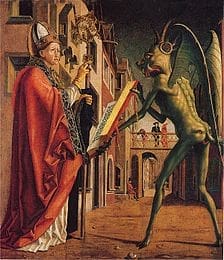
 As part of our ongoing series on claims of Satanic Ritual Abuse within the Mormon Church, today we interview Dr. Massimo Introvigne, an Italian sociologist and the author of some 70 books on religious pluralism and new religious movements.
Dr. Introvigne is author of the article: A Rumor of Devils: Allegations of Satanic Child Abuse and Mormonism, 1985-1994, a paper read at the Mormon History Association in Park City, Utah on May 21, 1994. In today’s episode we review the highlights of this article.
Dr. Introvigne was until 2016 professor of Sociology of Religions at Pontifical Salesian University in Torino, Italy. He has written articles inter alia for Dialogue and BYU Studies. In 2011, he served as the Representative for combating racism, xenophobia and religious intolerance of the OSCE, the Organization for Security and Co-operation in Europe, in which the USA and Canada are also participating states.
Episode Transcript
Host: John Dehlin · Guest: Massimo Introvigne
This transcript is machine-generated and lightly edited for readability. The audio is authoritative. Please excuse occasional errors in names and spelling.
Introducing Dr. Massimo Introvigne and the Topic
John Dehlin [00:00:00] Sam. Hello everyone, and welcome to another edition
John Dehlin [00:00:31] of Mormon Stories podcast. I'm your host, John Dehlin. It is May 26, 2020. We are still in the middle of the COVID 19 kind of global pandemic, but we're still going strong on Mormon Stories podcast, and we are smack dab in the middle of what I consider to be a really important series.
John Dehlin [00:00:59] The series is on the historical claims of satanic ritual abuse in Mormonism. And just for those who haven't been following the series, there was what some would call a satanic ritual abuse social panic that happened in the late 80s and the early 90s here in Utah.
John Dehlin [00:01:25] And it was basically a panic where people claimed that groups or covens of Mormons and Mormon leaders were engaging in satanic ritual abuse of children and teenagers, alleging some really horrific acts, including cannibalism and murder and really horrific sexual abuse. And we've been covering that. We've done several episodes on it.
John Dehlin [00:01:58] And we decided that it would be really valuable to bring in a historian, not just a historian that is familiar with the satanic ritual abuse claims, generally speaking, but one who has done actual historical work and sociological work within Mormonism. And so I was made very early on aware of an article called A Rumor of Allegations of Satanic Child abuse and Mormonism, 1985-1994, which was a paper that was read by Massimo Introvigne at the Annual Mormon Historical Association Conference in Park City in 1994.
John Dehlin [00:02:46] And so I decided to reach out to Massimo or Dr. Introvigne. And he, even though he's from Italy and he's currently in Lithuania, he was willing to appear on Mormon Stories podcast and talk about his article or his chapter.
John Dehlin [00:03:09] Let me go ahead and read a little bit of a bio of Massimo. Massimo Introvigne is an Italian sociologist and the author of some 70 books on religious pluralism and new religious movements. He was until 2016 professor of Sociology of Religions at Pontifical Silesian University in Torino, Italy. Torino. He can tell us how to pronounce that in just a second. He has written articles, inter alia, for Dialogue and BYU Studies, that's a journal of Mormon thought. In 2011, he served as the representative for Combating Racism, Xenophobia and Religious Intolerance of the osce, the Organization for Security and Cooperation in Europe, in which the United States and Canada are also participating states.
John Dehlin [00:04:01] He's also the author of a book called Satanism A Social History. And again, he's the author of this really important article that I just mentioned called A Rumor of Allegations of Satanic Child abuse and Mormonism 1985-1994. So without any further ado, Massimo, welcome to Mormon Stories podcast. Thank you so much for joining us.
Massimo Introvigne [00:04:28] Thanks, Luyun.
John Dehlin [00:04:31] So let's begin if we can just tell us a little bit about yourself,
John Dehlin [00:04:35] maybe just a tiny bit about your background and your academic history.
Massimo Introvigne [00:04:43] Yeah, I'm not really a historian, even if I been described as such many times because what I practice is social history. But I am by background a sociologist and a scholar of new religious movements with an interest in old new religious movements like the formats to what I devoted several books and the Jehovah's Witnesses and yeah, I visited Utah many times.
Massimo Introvigne [00:05:22] I was a friend of the late Leonard Arrington who is the origin of new Mormon history. I know many other Mormon scholars and have written, as you mention it, for Mormon periodicals. There was a long interview with me several years ago in dialogue.
Massimo Introvigne [00:05:49] So my interest I wrote what has been described more than once as the latest standard academic treatment of Satanism, that Satanism of Social History, which is a book of more than 600 pages published by Braille in the Netherlands, which is perhaps the second largest academic press in the world and has been reviewed many times now what the heck the Mormons have to do with Satanism? And I believe the ritual abuse care in Utah and more largely in the Intermountain west in the 80s is difficult to understand without a context which goes back much earlier.
Massimo Introvigne [00:06:47] I believe it goes back actually to the year 1854 and to important American literary figure Orestes Brownson. In 1854 Brown published the Spirit Wrapper Che's autobiography His Conversion from Spiritualism to Roman Catholicism and it has a chapter on Joseph Smith. He claimed he personally met Joseph Smith. We cannot verify this and the different of course at this stage Brownson wrote the Roman Catholic and the different hypothesis can Catholic and Protestant minister have about Joseph Smith that he was an imposter, a fraud, a plagiarist and he says he was nothing of the kind. He was a man discussing theology in a way that was impossible for a simple peasant as Joseph Smith was.
Massimo Introvigne [00:08:01] But since Joseph Smith theology was from the point of view of Brown's on the completely heterodox the only explanation he could come by is Smith was under knowingly or unknowingly was under the influence of the derry. So Brown's On Word was extremely influential. I found it quoted in Europe in different languages. Brownson was very popular by the 1850s and they started with this theory that Mormonism had something to do with Saddam in 1867, even a poem called the Devil in America was published by a certain Lacon and not been L a C O N. I have not been able to determine who Lacon was. It was published in Mobile in south of the United States, where the idea that new religions came from the devil was quite popular.
Massimo Introvigne [00:09:04] And again, this poem is a satirical poem about how the devil created Mormonism. But these stories, in a way, the idea that the devil was at work in creating theodox religions always had the public among fundamentalist Protestants, but went somewhat into disrepute and were regarded as truly marginal. I mean, you may have heard of the comics produced by one Jack Chick, who was quite controversial for his anti Catholic and anti Mormon comics. I once interviewed him in his headquarters of Czech publications in California. It was a very curious character. And he kept alive the idea that Mormons had something to do with the dengue. But to have the next development which went out of the small ultra fundamentalist niche, we have to make a jump and go to the year 1982. In 1982, Massimo, do you mind talking
John Dehlin [00:10:32] briefly about the cultural things happening in the 1960s and 70s that maybe set the stage for the book Michelle remembers that comes out in 1980? Yes.
The Pendulum Theory of Satanism in History
Massimo Introvigne [00:10:50] In my book Social History, I advance a theory which has been discussed by my colleagues. Not everybody agrees with it. I call the pendulum theory of Satanism, saying Satanism really exists, although it's a much smaller phenomenon than some media.
Massimo Introvigne [00:11:14] And it goes public, particularly when there is a bohemian or counterculture which has some followers. But when it goes public, since Satanism is by definition unacceptable and scandalous, there is a reaction and anti Satanism becomes more popular than Satanism and Satanism goes underground.
Massimo Introvigne [00:11:43] But anti Santanism in its history, which really dates back to the 17th century, is a lot about tall tales. So it becomes a victim of its own tall tales and it falls a little bit into disrepute, which makes Satanism go public again and the cycle is repeated. So what we have in 1966, in the 60s, in the counterculture, is the public emergence of Satanism. In 1966, Anton Lavey founded the Church of Satan in San Francisco, and it was regarded as just another California eccentric. The first media coverage of lavey was quite favorable and he had Hollywood celebrities among its followers.
Massimo Introvigne [00:12:40] But that didn't last for long. It created a strong reaction, particularly by evangelical Protestants. And in this climate, the tall tales, such as Michel remembers about satanic ritual abuse, remembered on the couch of a therapist, they became somewhat believable. Of course, the author of Michel Remembers was a Catholic rather than evangelical. But the audience.
Massimo Introvigne [00:13:12] The audience was more enthusiastic. Among evangelicals, it was a little bit less about the Catholics because the author of the book, Dr. Pazter, was married and Michel was his patient, and he left the wife to live with Michel, which made him Persona non grata among the otherwise potentially receptive audience of conservative Catholics.
Massimo Introvigne [00:13:43] It became more popular with evangelical Protestants. And the evangelical Protestants were normally anti Mormon. So I was coming to the year 1982 and the premiere in Salt Lake City of the movie the God Makers, yes, by Ed Decker and Bill Schnebellen. And this movie went one step ahead because for the first time we saw the theory promoted that in the secrecy of the Mormon Temple, Mormons really worship Satan. And here comes Nebulin, who is a very interesting guy. I have devoted to him two or three articles because Schnebellen claimed to be a Catholic priest who had converted to Mormonism. That was actually not true. He was never a Catholic priest.
Massimo Introvigne [00:14:42] But the Mormons took him seriously and they testified in Mormon gatherings. And then he went from Mormon to anti Mormon and claimed that he had evidence that the Mormons were actually worshipping Satan and that One of the 12 apostles, Faust, actually, in conversation with him, admitted this. And I always believe that, of course, Faust is how Dr. Faustus, who made the pact with the demi link. Goethe. Faustus, normally the English translation of Dr. Faustus of Goethe. And so the name of the unfortunate apostle was just very much appropriate for Schnebellen's claim. But Schnebellen, as I believe I demonstrated in my articles about him, is a pathological liar.
Massimo Introvigne [00:15:49] He created a number of tales about himself. So nothing that Schnebel and says should be believed. And surely I do not believe that in the secrecy of the temple, the apostles worship Satan or the devil. No, no.
John Dehlin [00:16:08] In fact, I interviewed Ed Decker just a week or two ago. He's 85 years old now, and I
John Dehlin [00:16:13] did a lengthy interview with him.
John Dehlin [00:16:15] And I also just strongly disagreed with his interpretation that the Mormon Temple is structured around Satanism. Let me go back really quickly to Michelle Remembers, if it's okay. Only because I believe it's such an important book. As you lay out in your article, you talk a lot about the cultural things in the United States that lead up to the book Michelle remembers. You talk about the movie the Exorcist, the movie Rosemary's Baby. You talk about Sybil and the movies that talked about multiple personalities and just the basic rise of religious fundamentalism in the 60s and 70s, that kind of.
Michelle Remembers and the Origins of Satanic Panic
John Dehlin [00:17:06] And you also talk really interestingly about
John Dehlin [00:17:09] feminism and the increase of women working outside the home and needing to go to daycare, needing to send their kids to daycare. All of these social factors culminated in preparing, let's just say, the soil of the United States for this book. Michelle remembers.
John Dehlin [00:17:31] Is there anything you want to add
John Dehlin [00:17:32] to sort of that quick overview of.
Massimo Introvigne [00:17:35] To make a complicated story more simple, we see two different traditions coming together. One, and I would insert this in my pendulum theory is the switch in the image of Satanism, let's say from Anton lavey to Charles Manson.
Massimo Introvigne [00:17:58] Satanism as something eccentric and fun, but not really dangerous, to Satanism as something criminal and scared. And also, of course, this is reflected in the popular culture, the movies, the novels, etc. And the other tradition is the tradition of the multiple personality disorder of this idea.
Massimo Introvigne [00:18:23] I mean, what was a fringe subsection of psychoanalysis which really took seriously? Something Freud that believed in. Because Freud, in the first part of his career, he started psychoanalyzing women. And these women, some of them told stories very similar to the satanic ritual abuse of Michel remembers. And he started writing letters to his friends. Perhaps these Satanists are real and there is a huge phenomenon of abuse of women by Satanists hidden in our society.
Massimo Introvigne [00:19:05] But when he progressed, that was important for his building the theory of psychoanalysis. He came to the conclusion that these stories were fictional. And came some feminist psychoanalysts saying oh, that's because Freud was a man and he was silencing this women. But his first interpretation was the good one, that the satanic abuse was really going on secretly in modern society. And the second Freud, the one that concluded that these were symbols and metaphors of things that didn't happen in reality. That's just the patriarchal misogynist Freud, the soft basically the feminist fringe, because it never was really. A majority of psychoanalysis went back from the mature Freud to the young Freud about the ritual abuse.
Massimo Introvigne [00:20:13] And the two traditions came together. The negative image of Satanism and this feminist trend in. In psychoanalysis. And of course, among the things I quote, for instance in my book, some strange doctoral dissertations which should never have been approved, but were about Satanism and Mormonism, which again led serious people to take seriously at Decker and to go back to Orestes brows.
John Dehlin [00:20:55] Yes, okay, that's very helpful. Now we did interview Dr. Frankfurter, who also is a historian, about claims of satanic ritual abuse. But just to get your opinion on this, the story that Michelle ends up telling and Michelle remembers becomes really important because it's basically the story that then gets repeated in the 80s and 90s by psychotherapists, by news media. And I just want to know, in your opinion, you know, Michelle wasn't the first to recount these sorts of claims. And so I just want to get maybe as a second testimony from your perspective, was Michelle the first to make claims like this? And if not these claims of women being enslaved, of women being forced to birth children, of the children being sacrificed, of people eating the children, all these sorts of claims, did they have potentially an origin prior to Michelle?
Massimo Introvigne [00:22:02] Oh, many centuries before. Because some of these stories you will find in the minutes of the Inquisition about the victims of witches. In the 17th century the witches were also accused of cannibalism, of rape. So these stories are very old, but I would say that there is something more recent in the 19th century, because in the 19th century there is an anti Masonic literature claiming that there are the normal Masonic lodges and then there are the secret Masonic lodges. And in the secret Masonic lodges they rape women and abuse children.
Massimo Introvigne [00:22:54] And I believe I should mention that in Europe, when people started learning about the Mormons, the Mormons were also involved in a famous book which was later revealed to be a hoax, the devil in the 20th century, published in installment, it started in 1892.
Massimo Introvigne [00:23:18] The story is that there is a satanic cult, the secret Freemasonry. And the high priestess of this cult doing all sorts of bad stuff and committing serious crimes is called Sophia Walder. And Sophia Walder is described as the daughter of a Mormon apostle which never existed. There is no Mormon apostle by the last name of Walder. And the Mormon president John Taylor is also involved as an affiliate of this secret Satanic Freemasonry. So the idea that there are secret Satanist cults behind Freemasonry, according to some anti Catholic, behind the Catholic Church or behind the Mormon Church, there are secret satanic cults, raping women and sacrificing children.
Massimo Introvigne [00:24:15] That's a very old idea, but it was a fringe religious idea advanced by religionists. And Michel Remembers is still a very important book because here we have a therapist. So it claims to be science, not fringe religion, something different. Here we say we have science through hypnosis proving that the existence of these secret satanic cults is not an invention of the Inquisition or of the anti freemason of the 19th century, or of the anti Mormons, anti Catholic, anti Jews. Jews were also accused of these abuses. But it's something real because the science with a Big S now is able to prove it. And of course I don't believe it.
Massimo Introvigne [00:25:08] I believe it was entirely fictional. That the fact that poor Michel had some problems was totally real. But what was fictional? What was. Her parents were high priest of a secret satanic cult that I believe to be totally fictional.
John Dehlin [00:25:29] So, you know, interestingly or tragically, depending on your perspective, we're not covering this on Mormon stories just because it's an odd, controversial moment in Mormon history where covering it because I have friends and close friends today that believe they were satanically ritually abused.
John Dehlin [00:25:54] I have run into many, many associates who believe that either they or their loved ones were satanically ritually abused. And we have now fringe Mormons or ex Mormons who also dabble in New age spirituality, such as Teal Swan, who now has over 700,000 YouTube followers, who not only encourages her followers to envision their own suicides, but she also claims herself to have been satanic, ritually abused, to be sewn into a corpse during her adolescence.
John Dehlin [00:26:31] Also, you know, to be forced to kill and eat things, babies, or to witness it, all sorts of really horrible things. And so there are a lot of people out there that want to believe or that do believe that SRA is real. And so let me just ask you something that for you may seem like a silly question, but I just want to ask it. People that believe that SRA is real and we'll get to the Mormon element in just a second. They'll say the reason why it's existed for centuries is because it's been happening for centuries and it's just people that are part of the conspiracy who, who shoot it down.
John Dehlin [00:27:08] But the reason why these stories exist for not just centuries, but maybe for millennia is because there are these ritualistic groups that are multi generational that are actually committing these atrocities. If somebody were to just say, Massimo, what evidence?
John Dehlin [00:27:31] How do you know that they haven't been happening? How can you say that these claims of SRA are not credible? What would your response be?
Massimo Introvigne [00:27:40] That's reversing the burden of proof. Because when you claim something of this magnitude, it's you that should supply the evidence. And that's true for many other beliefs who are widespread in history. Like beliefs in ghosts, beliefs in witches causing children to die through the evil eye. That's much more widespread than satanic ritual abuse.
Massimo Introvigne [00:28:19] So if the fact that many civilization have believed that witches kill children through their rituals and should be found and put to death, that will be supported by the argument of many civilizations having believed in it much More than ritual abuse, there have been governmental reports. I'm not talking of the Utah, I'm talking of national reports, the LaFontaine Report in United Kingdom, the National center of Child Abuse and Neglect report in the United States and several others. They have concluded that there is no evidence that generational satanic ritual abuse ever existed.
Massimo Introvigne [00:29:11] There is no evidence of widespread or even significant practice of ritual abuse by Satanists, even if you study Satanism. There have been Satanists guilty of child abuse, but I would say less than Catholic priests or evangelical pastors. So that doesn't. It's not satanic ritual abuse, some members of Satanist groups, just some Catholics, Mormons, Adventists, rabbis or high school teachers being found guilty of sexual abuse. That's surely true, but I would say that in percentage, there are no more Satanists guilty of sexual abuse than there are Catholics or Jews.
John Dehlin [00:30:07] And I think it's also important to distinguish between some sort of psychological, emotional or sexual abuse that may happen that's different than like enslaving women, forcing them to have babies, sacrificing their babies on an altar, forcing the victims to eat the babies, which are the types of claims you hear. And I'm just saying to you, prior to 1980, you've studied this history much more than me. Is there any. Were you ever able to find any credible evidence of any of those sorts of activities centuries prior to 1980?
Massimo Introvigne [00:30:44] No. Okay, there were accusations, but I don't believe there was a hard evidence. And I don't believe in the witch's trial, apart from extorted confessions under torture, there was any evidence that the witches were practicing. Practicing violent rituals or killing people. Some of the people accused of being witches may have been practicing heterodox rituals from the point of view of the Catholic Church or later of the Protestant establishment. But that's another matter. I would say there is no evidence that they were practicing violent ritual. The closest thing let me qualify this would there have been some rituals at the court of Louis XIV where allegedly runaway children were sacrificed to obtain a better sexual life for some person of the court of Louis xiv.
Massimo Introvigne [00:32:00] But here I would say the jury still are. I believe some of these marquises and princesses perhaps really engaged in some extreme form of black magic. But some of my colleagues don't believe in it. So the jury is still out. And I would say it's the exception rather than the rule.
Massimo Introvigne [00:32:23] It's really a very obscure 17th century episode. But surely here we're talking of five or six people. So it's nothing Similar to the large scale conspiracy those who believe in SRA believe.
Recovered Memory, Hypnotherapy, and False Narratives
John Dehlin [00:32:42] Okay, so we know that with the Michelle Remembers book that these were memories that were, as you say, obtained through hypnotherapy with a psychologist or psychiatrist, and that they were memories recovered much later. We'll talk about that method later. But it's important to stipulate that these weren't memories that she had all growing up and through her teen years and adult years, is that correct? These were memories that she that were extracted through hypnotherapy later in her life, correct?
John Dehlin [00:33:23] Yes.
Massimo Introvigne [00:33:24] And they are similar to other memories I have studied in other books. For instance, there are many more cases of people who recover memories of having being abducted by extraterrestrials and taken aboard UFOs. That's also, that's more common than satanic memories. So there are. If you, if you use hypnotherapy, you will find all sorts of strange memories which of course will lead us to other matters.
John Dehlin [00:34:02] So where do you think if Michelle just came up with these memories through hypnotherapy, but they match centuries long allegations and claims, where might Michelle have heard of these sorts of claims and patterns such that she then would relate them through hypnotherapy? What are some possible sources of her obtaining these legends or these myths and then incorporating them into her memory? Would she have had opportunities or sources to learn these practices?
Massimo Introvigne [00:34:42] Your question really assumes that Michel really told what Patter says he told him. But we don't know this for a fact. And I believe it's much more believable that it was a sort of therapeutic and literary cooperation. And of course Batster as a therapist will know of the literature of some psychologists believing in the early Freud's theory of widespread satanic or occult abuse. And he may have read several books telling these stories. So of course none of us was there when Michel was talking to. But you know, in several cases where these therapists were talking to children, in court cases, these were recorded and the courts didn't believe because it was very clear that this material came from the therapists and it was not. It didn't come from the memory of the children, told the therapy.
John Dehlin [00:36:05] Okay, okay. And we'll talk about McMartin in just a second. But it sounds like what you're saying is maybe Pazder read Freud, read about these claims of satanic ritual abuse and then in some sort of collaboration wrote the book. But he could have either just falsified the book and or implanted the memories in Michelle and just to be clear, the types of things alleged in Michelle Remembers includes torture, being locked in cages, being sexually assaulted, witnessing human sacrifices, being rubbed with the blood and body parts of various sacrificed infants and adults. And so you're saying that maybe it was Pasdor who either implanted those memories or fictionalized them, is that what you're saying?
Massimo Introvigne [00:36:58] It's a possibility. Or she could have read popular books, including novels about the Satanists.
John Dehlin [00:37:05] So there would have been novels prior.
Massimo Introvigne [00:37:07] Oh, yes, in the 50s, there were already novels about all this stuff by Satanists. There were even comics about it. If you look at the Warren comics story in the early 60s, you find a lot of story about Satan is normally torturing scantily clad women.
John Dehlin [00:37:32] Right. Okay. So the reason why. So for listeners, the reason why we're talking so much about Michelle Remembers is because after it gets released in 1980, it becomes. Is it fair to call the national bestseller?
Massimo Introvigne [00:37:48] No, it was a minor bestseller in a community of therapy. And it was very important because I was once expert witness in a case in Italy and the other side was telling me, you see here we have exactly the same phenomena as described in Michel Remembers which a certain social worker was taking as evidence that the same transgenerational, trans national networks of Satanists are at work in Canada and in Italy. But to me, it simply showed that therapists are reading the same books and mouth of the children what they find in books.
John Dehlin [00:38:43] Yeah.
John Dehlin [00:38:46] And so if you could imagine listeners in 1980, this book comes out in. It has the support. Was he a psy. He was a psychiatrist. So it has the support of a Canadian psychiatrist. And it becomes sort of a big deal within the mental health community. And so can you talk about. Massimo, can you talk about how that book ended up permeating the mental health profession in the United states in the 1980s?
Massimo Introvigne [00:39:18] Well, it was never unanimous. I mean, there were always opponents of the satanic ritual abuse care. But I believe these opponents were originally minority, which later became a majority when the hard evidence was not found. And also when the.
Massimo Introvigne [00:39:44] It's a feature of tall tales that to keep being interesting, they have to become more and more tall. So we had to believe that priests were involved, that politicians were involved. We had to believe that in some areas children were sacrificed, but were no missing children because some women were breeders, they gave birth to children, and these children were not registered in order to be sacrificed. And then we had to believe that doctors and morticians, many of them, were part of these cults to hide the body. So the claims become More and more preposterous. And in the end, while police authorities and governmental commissions and reports didn't find any hard evidence, it went from being a position taken seriously in the early 80s by a significant part, perhaps in some countries, even a majority of the mental health profession, to becoming a belief which is clearly from the late 80s or the 90s. Surely now it still exists, but it's not the majority.
John Dehlin [00:41:14] But talk about how it went from this book that gets published to becoming a common practice across the United States in the mental health profession. How did it make that transition? Weren't there, you write about some professional conferences where people, you know, professionals started giving speeches and training around hypnotists and recovered memory and spreading the awareness about the book Michelle remembers about the techniques of recovered memory and about the practice of satanic ritual abuse, Correct?
Massimo Introvigne [00:41:54] Yeah. I believe that here there is a lot to say for sociologists because there is little doubt that in the 20th century, our Western society, well, societies in general. But let's talk about the Western societies, they didn't take sexual abuse seriously enough.
Massimo Introvigne [00:42:19] And that's true for United States, it's true for Europe. And people who were telling very real stories of sexual abuse were not believed, including the victims of pedophile Catholic priests and other religious figures, and also, as we know, the victims of sexual abuse in the workplace, in schools and universities and many other places. So when slowly society started realizing that this was the case, there was a transnational outcry that we should believe the women and Believe the children. There was even a group called Believe the Children promoted them. So not believing the women and the children was very unpopular and also created the crisis of conscience for therapists, journalists and politicians.
Massimo Introvigne [00:43:26] It seemed you were on the side of the abusers. And so even the sexual, the satanic ritual abuse could ride on the waves on this crisis of conscience, where we all realize that we have been guilty of not taking seriously enough the claim of sexual abuse. But here we need to realize that there are two very different phenomena. One is hidden sexual abuse in our society, including churches and workplaces. And one, it is some speeches, the satanic ritual abuse. I believe sexual abuse is very much real, including in churches, even here. Of course, there are innocent people accused and they should be defended, but there are also guilty who have escaped the punishment.
Massimo Introvigne [00:44:24] But one thing is sexual abuse, which is a very real phenomenon, under evaluated for decades, if not for centuries, and the other is satanic ritual abuse, of which no evidence exists.
John Dehlin [00:44:41] Yes, that's super important. So in the early 80s, you would have Therapists, you would have sort of a rise of awareness around the deep problem of sexual abuse of children, of teens, and even of adults. And so you have therapists becoming more sensitive to claims of sexual abuse, which we all would say is a good thing, a super good thing, a crucial thing. But then how does Michelle remembers in addition ride that wave in how does again, the recovered memory techniques, the hypnosis, and then just the social panic around sra, how does it become such an interwoven part, even if controversial, of the US and international mental health community?
Massimo Introvigne [00:45:31] Yeah, I believe it was. I don't want to psychoanalyze the psychoanalysts and it's not my job. I not a psychologist nor a psychiatrist, but there was a lot of guilt for not having heard the voices of sexual abuse. And of course, in this cover up, the mental health profession was as guiltier than anybody else. And so everything, even if it looked strange, like Michel remembers, which would help dig deeper into the societal hidden secrets of sexual abuse, was in a way welcome. Or at least if you oppose this, you will become very unpopular. You are somebody who doesn't believe the victims, doesn't believe the women, doesn't believe the children.
Massimo Introvigne [00:46:37] And so it was originally very unpopular to oppose the SRA books and therapists until too much became too much. Of course, there were cases of obviously innocent men and women thrown to the media. And so among the victims, those unfairly accused of horrible crimes also started having their place.
John Dehlin [00:47:12] And so this is something I'll look to cover in maybe a future series of Mormon stories podcasts. But my understanding of the history is that there would be professional associations of mental health professionals, of psychotherapists, of hypnotists, et cetera, where at these annual conferences this topic would come up, Michelle remembers would come up. And the techniques that were used in Michelle's remember of recovered memory, of repaired memory would be taught and sort of evangelized. And then therapists would take this back into their home states.
John Dehlin [00:47:52] And whenever a presenting client would emerge, let's just say someone who was suicidal, somebody who is engaging in self harm, somebody who is deeply depressed or bipolar, there would sort of be this sort of situation where, wow, I've got a client who's in a really hard spot. Maybe they were satanically, ritually abused. Let's use this technique to see if we can figure this out. So they lie him down, they'd perform hypnosis, they'd ask them to go back into their childhood memories and they would say, do you have any memories? And that they would start to say, they would start to potentially implant the memories. Were there ritual abuse?
John Dehlin [00:48:31] Were you sexually abused? Were there objects? Were people wearing robes? Where was their chanting? And as you're engaging in this sort of hypnosis inquiry, inquisition, you're actually planting the stories from Michelle Remembers into their brain. And then as they're trying to go back and reflect on their childhood and then you've implanted the memories, then they start coming up with those memories and then the therapist would positively reinforce it. And in some instances, like Kim, who we interviewed on Mormon stories just a few weeks ago we released it, the therapist would almost insist that the satanic ritual abuse happened. And so there was actually pressure on the part of the therapist to pressure the client into believing the narratives that were never before remembered.
John Dehlin [00:49:30] But that came out during these hypnosis therapeutic techniques. Now, does your sense match what I just articulated in terms of what started happening in the therapists offices?
Massimo Introvigne [00:49:43] Yeah, that happened all over the world.
John Dehlin [00:49:46] All over the world.
Massimo Introvigne [00:49:47] I believe in the cases in the Mormon community of Dr. Barbara Snow, Dr. Noemi Mattis of the book Paper Null, there were some unique features because I believe either the therapist or the patients or the milieu where they operated, they should have been exposed to anti Mormon literature in some way as well. And of course the second element was, and I believe you have covered it in your podcast before, is the unique reaction of the Mormonshu, because I'm Italian. In Italy, during the satanic scale, some priests were accused of being actually part of multi generational satanism. And the reaction of the Catholic Church was to say that's just nonsense.
Massimo Introvigne [00:50:49] Yes, there are priests guilty of sexual abuse, but all this satanic stuff is just bs. They wouldn't use bs but worth to that amount. And what was unique in Utah is the famous Bishop Pei's memorandum and the presence of Mormons in the Utah Governors Commission.
Massimo Introvigne [00:51:18] And rather than dismissing the tales as fictional and recognizing that they were deeply influenced by one century and more of anti Mormonism, actually the Mormons were more scared of the devil than when were scared of the anti Mormons. And so perhaps the occult is at work in the intermountain west. And for a short period they were converted in true believers. The period was comparatively short because in 92 I believe we had the speech of Apostle Richard Scott, who was a healthy dose of skepticism in the existence of satanic ritual abuse, which certainly influenced the second report, the 95 report of the youth Attorney General and the youth Attorney General. He tried not to criticize his predecessors in the Governor's commission, but nonetheless end up saying he didn't find any evidence of sba.
The Emergence of Satanic Ritual Abuse Claims in Utah
John Dehlin [00:52:33] Massimo, if it's okay, I want to come back to the Pace memorandum and the Utah reports. What can you tell us about the emergence of SRA in Utah? Barbara Snow, that Lehigh case, you mentioned that in your article. I think just a brief history about what happened there would be really useful to our audience.
Massimo Introvigne [00:52:56] Yeah, I believe the first cases were in Lehigh, and they started when one of these therapists who attended conference and truly believe in SRA arrived in Lehigh in, I believe, early 1980s or mid-1980s, perhaps 85, if I remember correctly. And that was Dr. Barbara Snow, that started the case where one guy was convicted, but then they had second tooth. They never proclaimed him innocent, but tried to make life a little bit easier for him. And then there were other cases every time, arrests of people who had died or suicide cases. Everything was thrown in.
Massimo Introvigne [00:53:49] And what is socially more interesting is to see this network of therapists and survivors come together, organize rallies, pressuring the political authorities. And they found an articulated spokesperson in Dr. Noemi Mattis. She was not Mormon. She's actually defined herself as a secular Jew.
Massimo Introvigne [00:54:19] And she really became extremely influential, both on Bishop Pei's memorandum and on the Governor Commission's findings. And I believe Bishop Pei's memorandum is an extraordinary document. And remember, even Sandra Tanner didn't believe it was Genoine when she first received it and hesitated before publishing it because.
Massimo Introvigne [00:54:52] And then she obtained some evidence it was genuine and published it. And it was genuine. And I believe Bishop Pace inhabited a strange space because in part, it was influenced by therapists and such as Dr. Matiss. But on the other hand, he tried. He didn't recognize the anti Mormon features of his accounts, and he tried to fit them into a book of Mormon narrative of the great fight between God and Satan.
John Dehlin [00:55:32] Yeah.
John Dehlin [00:55:34] And we'll come back to the Pace memo, but as I read through your recounting of Barbara Snow's involvement in in Lehigh, it was the Lehigh 8th Ward. And what you write is that Barbara Snow ended up accusing, was it 40 adults in one ward of being part of satanic ritual abuse. Yeah.
Massimo Introvigne [00:55:58] I started these documents long ago, but I believe you are correct.
John Dehlin [00:56:03] Yeah. So, I mean, she learns this technique, she applies it to one ward, and she finds 40 people engaging in satanic ritual abuse. I need to confirm that number. I just found it and then I lost it again. What do you know about the trials and the court cases and what came out of Barbara Snow's antics in Lehigh?
Massimo Introvigne [00:56:32] Well, If I remember correctly, one person was convicted and it didn't help his case because he says, if I did these things, I don't remember. That was not unique. I know of other cases throughout the world and he was sentenced, but then when he was in jail, they tried to make life a little bit easier for him, even placing him probation earlier than it would have been normal. So he, he was never really pronounced not guilty. But there was some uneasiness because as time went by, people realized that all this recovered memory business was very suspicious. And even some therapists in Utah, saying, started disassociating themselves from the recovered memory satanic ritual abuse movement.
John Dehlin [00:57:32] And even this one person who was convicted of the 40 adults who Barbara Snow charged, was there evidence of actual satanic ritual abuse in any way that led to him being charged?
Massimo Introvigne [00:57:47] I don't believe it. And the case has been studied by other scholars who came to the same conclusion that there was no evidence.
John Dehlin [00:57:57] No evidence. And he actually. And this is the same with the book, a really important book I hope everyone reads is called Remembering Satan by Lawrence Wright. And in that book as well, there are some people that end up confessing. But, but, but they say, I don't actually remember it, but if my child is accusing me of this, it must have happened.
John Dehlin [00:58:20] Yes.
Massimo Introvigne [00:58:21] And the guy was in cell phone in Olympia. I believe he was police officer. Police officer. And when you read the transcript, you see the guy was a deeply committed evangelical Christian himself. So he also inhabited, in a way, the same narrative space. And he believes Satan could make him do things he will later not remember. When he tried to change this story, it was too late. He was already in jail.
John Dehlin [00:58:59] Yeah. And so a lot of people. So when I try and engage with people who are real believers in sra, they will point to a conviction or two. But what has to be understood is that first of all, the percentage of convictions for all the people charged with satanic ritual abuse, the percentage of convictions, as I understand it, is extremely small. And then because there's just no evidence,
Massimo Introvigne [00:59:27] you say between UK and us, there have been less than five convictions and the cases brought to trial were more than 6,000.
John Dehlin [00:59:42] So 6,000 cases brought to trial. That's not to mention how many investigations turned up no credible evidence.
Massimo Introvigne [00:59:50] Percentage is minimal. And I was an expert witness in some cases in Italy, and I believe it's very important to repeat once again the distinction between sexual abuse and satanic ritual abuse.
John Dehlin [01:00:08] Exactly.
Massimo Introvigne [01:00:09] In some cases where I was expert witness and they've been witnesses for the prosecution and for the defense in some cases, by dismissing the false stories about satanic ritual abuse, the courts were able to uncover real sexual abuse which had nothing to do with Satanism, but perhaps by the same defendant in some case perpetrated by those accused, the defendants. But the courts, once you. It's like Sherlock Holmes. Once you dismiss the impossible, perhaps the improbable will prove to be true. So once you dismiss the tall tales of satanic ritual abuse, in some of these cases, you uncover real sexual abuse.
John Dehlin [01:01:02] Right. And so Again, of the 6,000 cases you're aware of that came to trial, tell us again how many actual convictions there were.
Massimo Introvigne [01:01:12] Well, less than 5. And as they say, there were some dubious cases in where people were convicted for sexual abuse, but element was not proved.
John Dehlin [01:01:25] Yeah, I'm still waiting to find one case of actual ritualistic satanic abuse that had evidence that led to a prosecution or even that just had evidence. Again, even those few, very, very few convictions that we have, they all involve sort of pressure to confess, doubts about the memory and literally no evidence of babies being killed, of cannibalism, of human sacrifice, of any of the ritualistic stuff. And I think that's just important. I'm also going to read from your article. You Write that regarding Dr.
John Dehlin [01:02:06] Snow.
John Dehlin [01:02:07] You write that a colleague of Dr. Snow at the Intermountain Sexual Abuse Treatment center thought that Dr. Snow was coaching the children into admitting sexual and satanic abuses that they had initially denied. So there's this idea of believing the children in so many of These cases in McMartin, in the cases up in Canada that I've learned about, there's this mantra, believe the children. But as I understand it, most of the time, when they started interviewing these children, the children said at first they weren't abused, but then they were held for long periods of time.
John Dehlin [01:02:41] Memories were planted. They were. They were pressured, given questions over and over again. Did he touch you here? Did he touch you here? Did he touch you with an ax? Did he touch you on your penis? Did he touch you on your anus? And after.
John Dehlin [01:02:54] And then they would be positively rewarded if they gave a good answer and allowed to leave. And so there was this positive reinforcement, this holding them for long periods of time and then implanting with leading questions that all led to children eventually in these cases, admitting to all sorts of things but with no evidence, including things that were beyond possibility, like with the McMartin case, where they were, like, helicoptering or airplaning these kids out of the daycare onto some other foreign island during the time that the parents were at work.
John Dehlin [01:03:31] Just really impossible sort of claims, but I'll just finish. A ten year old girl testified that she had tried to persuade Dr. Snow that she had never been abused, but later had cracked under the pressure of the therapist, persuaded that Dr. Snow would not have let her go unless she agreed to accuse someone of ritual abuse.
John Dehlin [01:03:50] Hadfield's defense attorney, Dr. Stephen Golding, director of Clinical Psychology, University of Utah, is an expert witness who labeled Snow's techniques as subtly coercive and highly questionable. And again, a nervous and confused Hadfield. Who was the guy, I think you said, who was convicted, didn't help his case in court when he said if I did those things, I don't remember. So again, even the guy convicted said he didn't remember. So something that's interesting that you write is that it was kind of fortunate for Utah that the Lehigh case happened so early and so quickly because it sort of set a tone in the judicial system in the law enforcement community to where you didn't see a lot of these cases emerge after Lehigh in Utah. Am I right about that or wrong?
Massimo Introvigne [01:04:39] Yes. What I was mentioning before is also we should not confuse cases of satanic ritual abuse with other kind of violence which can be perpetrated by some fringe satanist groups. For instance, in the black metal music community, which is a huge community and it's normally law abiding. But there have been cases of musicians killing people or killing other musicians and perhaps even say they did this as an act of antisocial Satanism. But that's nothing to do with. In Italy we had a horrible case of some metal, not black metal, death metal musicians. They called their group the Beasts of Satan and they killed the four people claiming they were satanic sacrifices, adults, not children.
Massimo Introvigne [01:05:36] But this is more violence at some point, peripheral fringe of the dark metal movement. And it's not what we normally call satanic ritual abuse. And why do I mention this? Because sometimes this is used as evidence that satanic ritual abuse is real. But that's only evidence that in the milieu of the concepts of heavy metal, while the majority of groups and fans do not commit crimes, sometimes do. And in this concert, sometimes there is a lot of alcohol and drugs and things can go out of hand. But that's no evidence, I repeat, no evidence that satanic ritual abuse exists. And it's an entirely different phenomenon.
John Dehlin [01:06:37] Let me go ahead and ask you really quickly. A couple years ago when McKenna Denson and Sam Young and all the Protect LDS Children movement was happening, a lot of media descended on Utah. And one of the reasons why I felt so passionately that this case needed to be covered was because so many reporters wanted to investigate legitimate sexual abuse. But within Mormonism, the Mormons, the sources that the reporters would talk to, would keep interweaving claims of outlandish satanic ritual abuse and cannibalism and killing and eating babies into the narratives of legitimate sexual abuse to the point where so many reporters didn't feel like they could actually credibly report on many of these stories.
Massimo Introvigne [01:07:26] I believe in your question is hidden a very important point that actually one of the paradoxes and ironies of the satanic ritual abuse movement and the books like Paper dolls, is they damage the case of the real victims of sexual abuse.
Massimo Introvigne [01:07:50] Because when real victims of sexual abuse, not satanic abuse, just plain sexual abuse, when they told their stories, people would come to dismiss the satanic ritual abuse stories, put all of them together in the same category, but they are not in the same category. And I believe the satanic ritual abuse care was a destruction which prevented people from looking where the problem really was. And there was a very real problem of sexual abuse. But the satanic ritual abuse stories created a lot of confusion. And that of course is also true in the Mormon Church where there are instances of sexual abuses which I will not use as evidence that Mormonism is a bad religion.
Massimo Introvigne [01:08:46] Because there are cases in all religions. Religions create relations with children, create relations of male leaders with women subordinate, and so create milieu's where abuse cut up. And it's not unique to the Mormons who look at the Catholic Church, of course.
John Dehlin [01:09:09] So as you mentioned, we'll be covering this later, but Glenn L. Pace was asked at some point to conduct a study and he wrote up this Pace memorandum, which we'll cover in a later episode. And unbelievably, it was very clear that Glenn Pace believed everything, including the fact that satanic ritual abuse was happening in Mormon temples with stake presidents and temple workers involved and bishops. We'll cover that later.
The Glen Pace Memorandum and Church Response
John Dehlin [01:09:40] What I wanted to ask you about that is kind of something you alluded to when Pace makes his case to the strength in the church membership committee that the satanic ritual abuse claims are real and credible and should be believed and paid attention to.
John Dehlin [01:10:00] The way he ends, as you mentioned, was by quoting the Book of Mormon. And he quotes all these references from the Book of Mormon and elsewhere that basically say in the end times, evil people under the control of Satan will do evil things. And so in the mind of Glen Pace, it kind of makes sense. Of course they're satanic ritual abuse because the Book of Mormon prophesies. And so I guess I'm gonna ask you an obvious question and in some sense this is a softball.
John Dehlin [01:10:29] You know, can claims of SRA exist without religion? Or is it basically religion that creates the environment which leads to these claims of satanic ritual abuse?
Massimo Introvigne [01:10:42] No, originally it was not because it came from secular therapists like Freud himself in his early career, as we discussed before. But I believe the Pace document is an extraordinary document. I remember discussing it with Sandra Tadna was the first to publish it and she told me she didn't even know that the strengthening the member committee existed at that time. Yes, later she knew and it sounded very strange. But then you can make sense of it because the existence of secret combinations evil societies is in the Book of Mormon. And of course it entered the Book of Mormon because of the anti Masonism and the critic of Freemasonry at the time Book of Mormon was produced.
Massimo Introvigne [01:11:41] So these claims were largely reflected the influence of anti Masonic literature. Even if as we know Joseph Smith later promoted his own brand of Freemasonry Nauvoo. But at the time of the Book of Mormon it was after the Morgan incident where a prominent ex Freemason disappeared and was widely believed to have been killed. And so the existence of evil societies, perhaps killing people is hinted at in the Book of Mormon within the 1830 a climate of anti Freemasonry. And on the other end there is this idea that in the end times Satan will come and make disciples.
Massimo Introvigne [01:12:40] And so these tales were believed and were taken by Bishop Pace in this Book of Mormon framework, really a latter day framework, which I believe was not unbelievable. Because when you reflect on how the Book of Mormon interpret this becomes believable. But on the other end, what is totally strange is Bishop Pace didn't suspect probably the anti Mormon connection of these tales.
John Dehlin [01:13:27] Right. And so it's an extraordinary document. I'm going to actually read the whole thing on an upcoming episode of Mormon Stories and talk about it. Let's just quickly maybe end by talking about the state of Utah's reaction. So you mentioned that two reports came out, is that right?
Government Reports and the Collapse of SRA Claims
Massimo Introvigne [01:13:44] Yeah, first it was the Governor's report, perhaps 92, but you need to check in my article. And then there was the Attorney General report, which I believe again, but don't take my word for it because as I say, these are old stories for me was in 95 and the governor's report was done by laypeople. It was a commission with many well meaning ladies, but Dr. Mattis was surely very important in it. Some there were Mormon ladies. There were I believe the wife of the governor. And so they produced not a very scholarly document and one very much unbalanced on the side of the trio. Believe. What I believe I said in my article is that didn't you even say
John Dehlin [01:14:47] they quoted, didn't you say they quoted from the PACE memorandum in that first report?
Massimo Introvigne [01:14:52] I don't know if they quoted from the PACE memorandum, but there were parts similar to the PACE memorandum.
John Dehlin [01:14:59] Okay, very similar. Okay.
Massimo Introvigne [01:15:00] If it was quoted between brackets. But in a way it's a disturbing document. But in another way I believe it didn't generate any consequences or prosecution of innocent people. And in fact the governor quickly said well done, but now let's disband the commission
John Dehlin [01:15:26] really quick. What was disturbing about the governor's report
Massimo Introvigne [01:15:28] from your perspective that it uncritically accepted the point of view of the true believers. It didn't take by 92 there was a lot of scholarly criticism of satanic ritual abuse and that was not really considered. But there were pressures. I believe in my article I mentioned that when in the same year, I believe it was 92, a Mormon apostle criticized the easy acceptance claims. There were demonstrations in the streets in Salt Lake City against the apostle. So there was not very large but significant group of true believers willing to take to the street and even criticize Mormon apostle if he tried to propose some dose of skeptical.
John Dehlin [01:16:29] And so the, the attorney general report that came out later, what were what. How could you summarize its findings?
Massimo Introvigne [01:16:36] The findings is there was no hard evidence of satanic ritual abuse in Utah. And of course he tried not to criticize the previous governor task force report saying we will remain vigilant and law enforcement knows they should be vigilant. But at the same time it said there was no harm.
John Dehlin [01:17:02] There are both documents public.
Massimo Introvigne [01:17:05] I believe they are. Again, I should check my files because I studied this long ago.
John Dehlin [01:17:14] Okay. Okay. And so what did this do? What did this do to claims about SRA once this attorney general reports came out, once President Scott or Elder Scott gave his talk, what did that do to this social panic, this hysteria that emerged in Utah in the early 90s?
Massimo Introvigne [01:17:35] Well, I think it surely diffused the social panic, but it never went away. To some extent. There are still therapists believing in satanic ritual abuse working right now. And I believe there is a lot of talk these days of an organization called Satanic Temple, which I have studied too. And recently a nice book came out by my Colleague Joe Laycock called Speak of the Devil and the Origin of the Satanic Temple, which is a group of people in Salem, Massachusetts, which really don't believe that the devil really exists, but use the devil for happenings and provocations promoting the separation of church and state.
Massimo Introvigne [01:18:32] And one of the reasons they came together and eventually established the Satanic Temple is they discovered that, contrary to popular claims, that satanic ritual abuse care is thing of the past, actually, there are still therapists believing in it and occasionally trying to promote it before courts of law. So we can say a part of it went away, but the part of it is still with us.
John Dehlin [01:19:05] And what I'm disturbed most about is that my understanding is Barbara Snow is still practicing, still using these techniques. If I'm correct, the Teal Swan was influenced by Barbara Snow, a spiritual guru. Teal Swan has 700,000 followers. She encourages her followers to envision their own suicide. And she's practicing recovered memory on her followers and getting them to also manufacture memories of satanic ritual abuse. And so this practice that Barbara Snow helped spread along with others, however, well, intentional, throughout Utah, it's also dividing families. I have dear friends who families have become incredibly divided over, you know, a parent not having any memories of anything like what a child ends up recovering with memories through recovered memory.
John Dehlin [01:20:05] Hypnotherapist. And so parents and children that don't speak anymore. And it's not just one family or a couple families. I've had several people write into me telling me that they're estranged from their parents or their children because either the parents or the children believe SRA happened. And then the other parents or the children just can't imagine it being. Being possible with no evidence. And it's enough to completely fracture families today. And then the final thing that I just want to ask you to speak about is something that came out with the CBC podcast that I listened to.
John Dehlin [01:20:45] If it's true that these children did not ever experience satanic ritual abuse, but that they were pressured into believing it by parents and police and by psychotherapists, then it's almost as if we're implanting trauma in the minds of the children, that all sorts of horrific things happen to them. And after speaking with Barbara Lofton, a memory expert, she showed me a study that showed the clients that engaged in this satanic ritual abuse repaired recovered memory practices. The clients end up with really, really awful mental health outcomes later in their lives of depression, of anxiety, of ptsd. And so I guess what I want to say is, do you have Anything to conclude, Massimo? Just about how these stories have impacted the lives of the families and of the children who were a part of all this.
Massimo Introvigne [01:21:47] Well, the satanic ritual abuse care was a tragedy. And people who went to see the therapists, they had real problems, many of them had real problems. And so these problems should have been addressed in a normal way. But since the therapists really believe in satanic ritual abuse, that was the quick fix. Depression, satanic ritual abuse, alcoholics, satanic ritual abuse, you don't sleep well, Satanic ritual
John Dehlin [01:22:22] abuse, eating disorders, addictions, everything that was
Massimo Introvigne [01:22:27] the quick fix and that created real tragedy started with Michelle herself. Michelle became alienated from.
John Dehlin [01:22:35] From Michelle remembers, from her family.
Massimo Introvigne [01:22:38] Yeah, it started with Michelle herself. And that was a tragedy. But if we should have one last word is again, and I say, I'm afraid for the third time, let's fight the dangerous states about satanic ritual abuse, which I firmly believed after many years of studying Satanism, are not true. But on the other hand, let's take Satan seriously. The cry of distress of people who go to see therapists, because sometimes this distress may come from real sexual abuse or other forms of abuse. And these are very much real and also present in religious communities. And I believe the worst legacy of the years of the satanic ritual abuse scare is this confusion between plain, so to speak, sexual abuse and sra.
Distinguishing Fiction from Real Abuse and Closing Thoughts
Massimo Introvigne [01:23:45] And while I say that SRA is almost entirely fictional, on the other hand, of course, nothing that I said in this podcast should be constructed to deny that there is a very serious problem of hidden sexual abuse in our society which exists everywhere and also exists in organized religion.
John Dehlin [01:24:15] Amen. So let's fight legitimate sexual abuse. Let's not have legitimate sexual abuse and legitimate claims of sexual abuse with evidence be undermined by these fraudulent, unethical techniques of recovered repaired memory with hypnosis and these hysteria based claims of satanic ritual abuse that end up, you know, leading to false accusations, but also tainting credible accusations of sexual abuse and then finally harming the clients and the patients, preventing them from getting the real treatment that they need to heal by not only alienating them from their family members, but also providing them with treatments that don't end up making them well and in fact compound the trauma. So thank you so much, Massimo. The article is a rumor of allegations of satanic child abuse and Mormonism 1985-1994. If you want to read more from his book, the book is Satanism A Social History by Aries An Ari's book series and the press is tell us the press again.
Massimo Introvigne [01:25:34] Brill, Brill.
John Dehlin [01:25:35] And that's B R I L L Brill, Brill Press. Satanism of Social History. Massimo, thank you so much for being willing to share your expertise with us as an objective kind of third party. Your scholarship was crucial to helping me start to understand this issue. And just on behalf of Mormons, on behalf of my people, Utahns, just thank you so much for your work.
Massimo Introvigne [01:26:04] Thank you. Thanks to the audience who has been very patient.
John Dehlin [01:26:09] All right, Massimo, you take care and we hope to see you again soon on another episode of Mormon Stories. Maybe we'll have you back. Is that okay?
Massimo Introvigne [01:26:17] Yes, yes. Bye.
John Dehlin [01:26:19] Take care, Massimo. Thanks.
Massimo Introvigne [01:26:21] Bye.
John Dehlin [01:26:22] And listeners, I just want to thank you all so much for joining us today on Mormon Stories podcast. It's been so great to have you. We are still going to do a little bit more on this series. We hope to cover the Pace memo. We hope to cover the Utah state reaction to it in a little more depth. And then I want to make a call again. If there are any people with any claims of having been involved in or participated in satanic ritual abuse like I've done on every episode, I want to call you to please reach out to me.
John Dehlin [01:27:00] As skeptical and as evidence based as we've been on Mormon Stories podcast so far, if there are any cases where there's any credible evidence involving satanic ritual abuse, especially if there's no Barbara Snow involved, there's no recovered memory or hypnosis involved, but there's credible evidence and or investigations that uncovered credible evidence, we would love to be wrong about this. We would love to discover that at least some of these claims were legitimate.
John Dehlin [01:27:35] So please reach out to me. If you or anyone you know has any credible claims of satanic ritual abuse where there's evidence involved, where there hopefully were investigations where there was no recovered memory and preferably where someone has listened to this series or has read Mistakes Were Made, but not by me, who have read the Demon Haunted World by Carl Sagan, who's read Remembering Satan, any of those books, so that the person interviewed can speak to their legitimate claims of abuse within the context of all these specious and non credible claims, we still want to invite that. We also if any of you have ever been involved in recovered memory, if any of you have ever seen Barbara Snow or a therapist like Barbara Snow, if any of you were clients of Barbara Snow or other reparative therapists or recovered memory therapist or hypnotist and you want to tell your story, and even more importantly, if you've been harmed by these types of therapists, including Barbara Snow, or if your family has been harmed or experienced trauma, please email me@mormonstoriesmail.com and I'll find a way to either tell your story and protect your anonymity or bring you on Mormon Stories if you're willing.
John Dehlin [01:28:54] Because we want to do as thorough or at least as comprehensive as we can of this topic so we can put it to bed and never talk about it again. Also, if you are involved in law enforcement, we would love to bring on attorneys or police officers or social workers or people who are involved in cases regarding sexual abuse and these sorts of ritualistic claims of abuse. We would love to bring you on Mormon Stories Podcast to bring your professional expertise to this subject. So again, email me@mormonstoriesmail.com and we would love to have you on and to provide your input for this story. Thanks to everyone who supports Mormon Stories.
John Dehlin [01:29:37] Hope you guys are taking care of yourself during COVID 19 and the Coronavirus Panic. We hope to return to normal stuff as soon as possible. We thank everyone who donates to Mormon Stories and the OPA Stories Foundation. I'm not gonna lie, the Oba Stories foundation and Mormon Stories have taken a financial hit with COVID 19.
John Dehlin [01:29:57] Donations are down. That's to be expected as people experience a financial crunch. It's made me start to think about what I might do next if donations keep going down. If you want to see Mormon Stories continue if you wanna see me continue doing this, you can make a donation or increase your donations. You go to MormonStories.org, click on the donate button. Make a recurring donation that can keep Mormon Stories Podcast alive.
John Dehlin [01:30:27] If you want to see us do another 1700 episodes to support Mormons in Faith Crisis to bring shed a light on accurate Mormon history To bring truth to the Mormon experience To support Mormons in Faith Crisis to prevent divorces, to prevent depression and anxiety and suicide. To to create communities of support for progressive and post Mormons who need support. If you want to see all that continue, please do consider a donation to Mormon Stories Podcast or recurring donation. We are a 501 nonprofit. We have a board, we have a great accountant, we have solid accounting practices and we would love to do this work for as long as you can support it.
John Dehlin [01:31:10] So thanks so much everybody. Check us out@mormonstories.org, please email me with any questions, ideas or concerns. Mormonstoriesmail.com Feel free to send constructive comments to our blog at Mormon Stories and we hope to see you guys again really soon with more interesting stuff. Thanks, everybody, and take care.
Transcript © 2026 John P. Dehlin. All rights reserved. Brief quotations are welcome with attribution and a link to mormonstories.org; all other use requires written permission.
6 Responses
Now you know what it was like for people, mostly women, during the witch hunts and inquisitions, when torture was used to extract confessions of devil worship, baby sacrifices, sex with the Satan, etc. That nightmare fear of “the adversary” remains in the collective religious thought today, an enduring artifact. Ironically, the existence and the danger of that “adversary” continues to be reinforced, always with the potential to incite a new version of the old nightmare. A picture is never painted the same way twice, but the potential is still there.
Durning my experience with one Mormon therapist and his struggling clients in the late 80’s, the following BOM themes where often used to justify Satanic Ritualistic Abuse in Recovered Memories:
1) Gadianton robbers and how they infiltrated the ruling class.
2) Secret oaths.
3) Deceiving the very elect.
4) Denial of Satan as a literal “personage”.
5) The Holy Ghost will reveal the truth of all things, even “memories”.
6) God will not give you more hardship which you can’t endure, so trust the “memories”.
I believe he is confusing Godmakers 1 with Godmakers 2. I don’t believe Schnoebelen was involved in the first video. He was involved in the second.
Does the top-down authoritarian approach of the Mormon church, and the way it attempts to control the narrative of its own history and practices in the minds of its members, go some way to create a climate in which exaggerated complaints, such as have been discussed here, are made? If, for example, someone publishes an article drawing attention to the variations in the Joseph Smith story over time, or to his multiple wives, they can attract the attention of the Strengthening Church Members Committee, be referred to their local leaders, and subject to Church discipline. No one in the hierarchy seems interested in listening to them. And the authors’ own spiritual credentials are questioned. Does this simply produce in the more active and inquiring minds of the membership a frustration, which in extreme cases leads to false allegations of very serious wrongdoing? In the instance of the sixty complainants of RSA, the Church was at least forced to sit up and listen. Which, had the complaints been about the abuse of children in “worthiness interviews”, they would not have done.
Thank you John and all the others, (Tanners, Introvigne) for shining a light on this.
As a child, I spent many hours over several years “uncovering” memories and recovering “parts” of my personality that had apparently split due to abuse with my “therapists” Cindy Rasmussen and Bob Robinson. I even once met my Mom’s therapist and gateway to this weird world, the infamous Barbara Snow.
It was due to the work of the Tanners and others that helped me escape this way suffocating way of thinking, and terrifying way of living and growing up. I will be forever grateful. You have changed my life, and my children’s lives in ways they will never even know.
Richard – Beautiful story. Who has changed your life?