
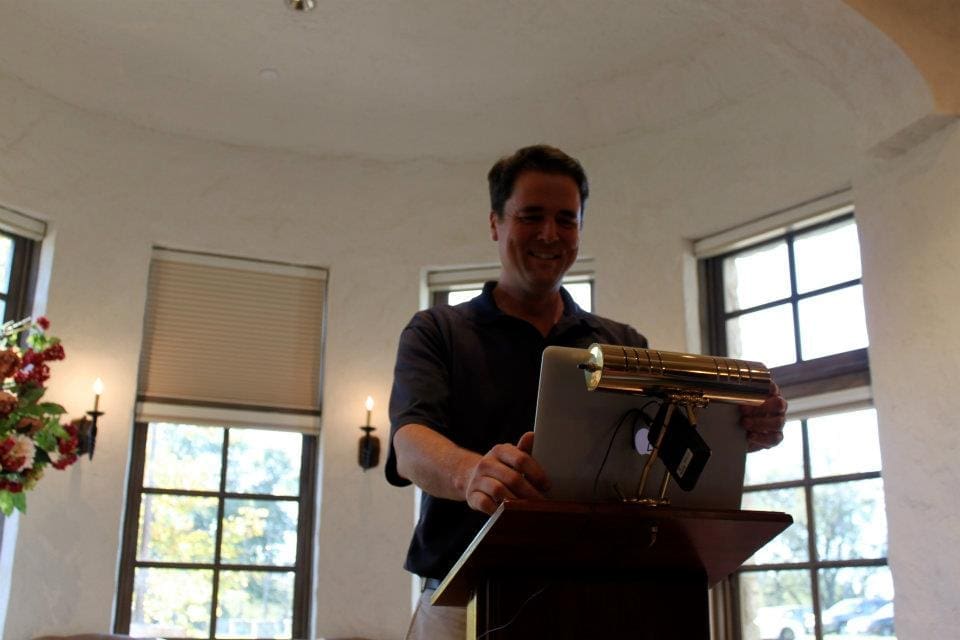
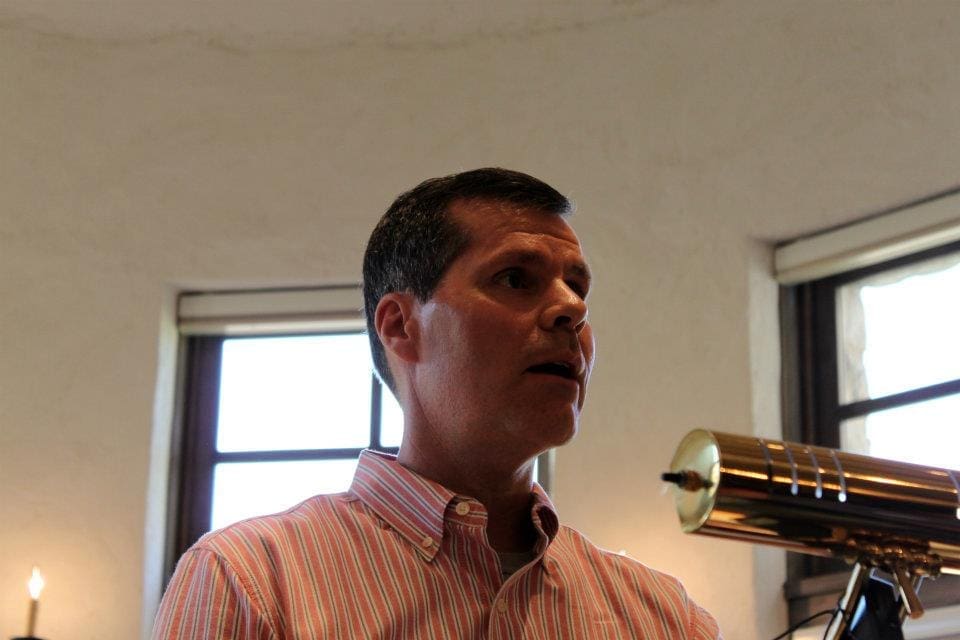
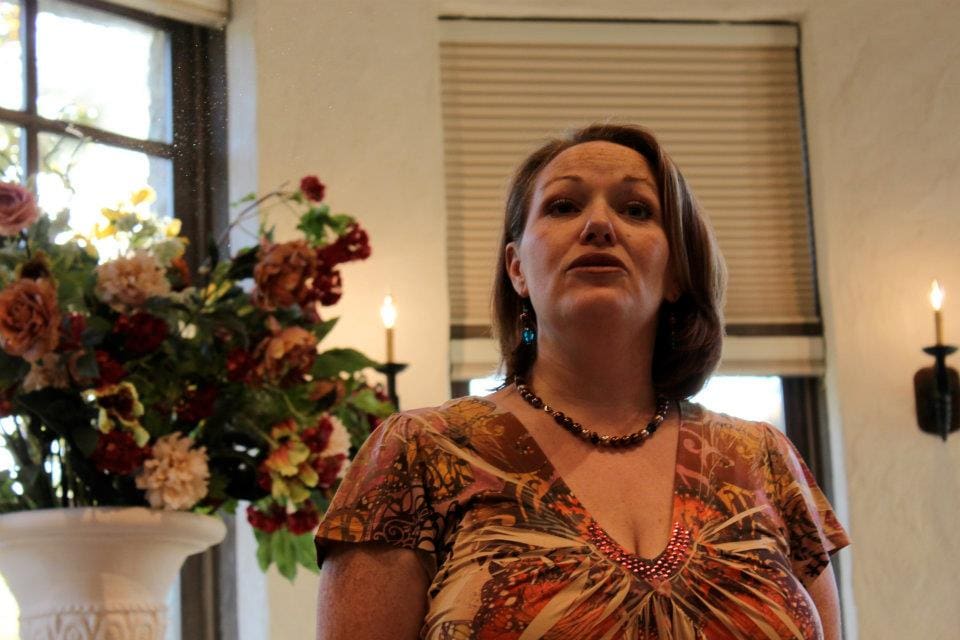
Recorded at the 2011 Washington, D.C. Mormon Stories Conference, held in the home of Greg and JaLynn Prince, this episode presents three short talks on why people build community around doubt, why they leave the LDS Church, and why they stay. John Dehlin opens with the personal story that shaped Mormon Stories: watching his parents’ marriage nearly end and his father’s church disciplinary court as a child, and the years that followed navigating what that meant for his own place in the church. Steve Kovalenko then describes growing up with a father who had been excommunicated, the shame and isolation that followed, and how he built an identity as “a good Mormon boy” through a mission, marriage, and strict observance before eventually choosing, in 2006, to have his name removed from church records.
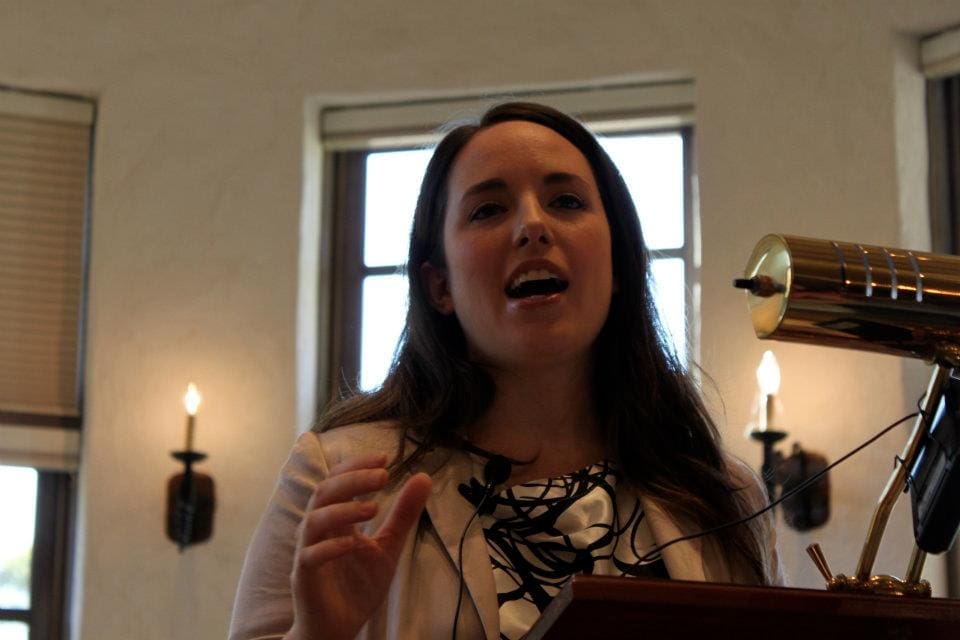
Chelsea Shields Strayer closes with a wry story about accidentally grabbing a stranger’s back pocket in a Chipotle line as her way into talking about building a life on the wrong foundations, then walks through the tragedies, feminist questions, and unanswered prayers that shook her traditional Mormon upbringing, and the reasons she has chosen to stay in the LDS Church despite them. Together the three talks offer contrasting, personal answers to the same set of questions about doubt, belonging, and what people do with a faith that no longer feels certain.
What’s covered
- 00:00 Introduction and purpose of Mormon Stories
- 01:17 Building a community for doubters and seekers (John Dehlin)
- 19:44 Why he left the church (Steve Kovalenko)
- 37:18 Why she chose to stay (Chelsea Shields Strayer)
Related episodes: 297: 2011 Washington D.C. Conference Testimony Meeting
Episode Transcript
Host: John Dehlin · Guests: Chelsea Shields Strayer, Steve Kovalenko
This transcript is machine-generated and lightly edited for readability. The audio is authoritative. Please excuse occasional errors in names and spelling.
Introduction and Purpose of Mormon Stories
John Dehlin [00:00:00] The following presentation was given at the 2011 Washington, D.C. mormon Stories Conference on October 15, 2011. To join or start a Mormon Stories support community in your area, click on the Support communities button@mormonstories.org to begin planning a Mormon Stories Conference in your area, shoot us an email@mormonstoriesmail.com Enjoy the show.
Guest [00:00:27] Thank you. Welcome back. I hope you had a great time conversing with each other and nibbling on more of the food. Thank you. We are now going to go to the portion of our conference where we're going to do the TED Style Talks. Our three speakers today we've asked to speak are on the you know program. So they are John De Lynn Yay Steve. And I'm sorry Steve, I meant to ask you how to pronounce your last name. Goblenko. All right. And Chelsea Chillstrayer. And thanks for thanks to our speakers for saying yes to those assignments. So we will begin now with John Dehlin. If you don't know who he is, you probably are in the wrong house.
Building a Community for Doubters and Seekers
John Dehlin [00:01:17] It's. Well, I'm used to asking questions, not talking, mostly because I tend to ramble. So to try and keep myself from rambling, I actually wrote out my talk. So forgive me for reading. I'll try and still make it interesting. Thank you for coming.
John Dehlin [00:02:10] It had to have been fifth or sixth grade. Something bad had happened between my parents and they were clearly just on the precipice of splitting up. One afternoon my mother was in tears. She had been fighting with my dad, which as I remember, was somewhat rare.
John Dehlin [00:02:28] And in a very uncharacteristic moment for my very practical, clear thinking, pioneer stock mother, she ran out of the house in tears, jumped in the car and raced down the street away from our home. It seems almost crazy to me now, but in my pre adolescent mind, somehow the idea came to me in a fit of almost panic.
John Dehlin [00:02:54] My mother is leaving. What if she doesn't come back? So I did what probably any kid would do in that situation. I raced out of the house in my white athletic tube socks and I ran after her, running down the middle of my Katy, Texas suburban street as fast as my long skinny legs could carry me, screaming at the top of my lungs without any shred of concern for the neighbors that might be watching. Mom, come back. Please come back. Please don't leave us.
John Dehlin [00:03:30] Fortunately, my mom did return. But it wasn't long after that episode that my father moved out and our eternal Mormon family was no more. Soon thereafter, my father went through a church disciplinary court. He was not excommunicated, but it was close.
John Dehlin [00:03:48] I must have been 12 by that point because my dad was not allowed to ordain me a deacon. Something that was very sad for me and for him during this time. I also remember being concerned about how all of this would affect my priesthood line of authority.
John Dehlin [00:04:03] Yeah, I was that kind of Mormon, but it was okay because the guy who ordained me had a shorter line back to Joseph Smith than my dad did. So at the time, I considered this to be a silver lining on an otherwise very dark cloud. Loud it's funny how Mormonism and religion in general can so often serve that purpose. To turn a curse into a blessing, lemon into lemonade, a swamp into a bulging metropolis. A farm boy's vision into a global movement and community.
John Dehlin [00:04:42] The LDS church, if it is anything, is a church of hope, a vision of resilience and of eternal optimism. And their secret sauce is community, community, community, community. And man, did I love the church back then more than anything else in the world. I think probably because it was that church that was there for me more than any single other factor to fill in the holes that were now developing in my life during those adolescent years, providing me with support and identity, purpose and meaning.
John Dehlin [00:05:20] God, I love this church and I still do. But I also remember the public humiliation, the isolation and the depression that my father experienced as a result of his church discipline. My father can do some crazy things at times, but he's a good man. His job kept him busy, but when I needed help with the science project, he was there for me. When a new family moved into the ward, he was the first to arrive and the last to leave. When he noticed a car broken down on the side of the road, he would stop to help, ignoring whatever dangers there might be around us.
John Dehlin [00:05:56] Always the missionary, very charismatic and very loving. And to my mind, he had given the church everything he had to give. Up to that point in his life, along with my mother, he had taught us to pray, to read the scriptures, to go to church.
John Dehlin [00:06:11] Most of all, to love the Savior and to respect our to spend our lives serving others. He wasn't perfect, but I never doubted his love for me, for the Savior, or his commitment to Christlike service. And yet, at that moment, when my father perhaps needed his church community the most, I saw him suffer a great deal of shame, isolation and judgment for his mistakes. Don't get me wrong, he did make some mistakes. And that Houston, Texas, LDS stake was filled with some of the greatest, most loving Mormons or people I've ever met. And yet, as well intentioned as I believe everyone was, I still struggle to believe that my father deserved the judgment, isolation and rejection that he experienced from the very same faith community to which he had dedicated so much of his life.
John Dehlin [00:06:59] The chance was theirs to embrace him, to console him, and to love him, and to make his burden light. And many fell short. Some came through, it is true, but the majority didn't. So what does any of this story have to do with us?
John Dehlin [00:07:16] Well, I'll try to explain. Greg Prince or Joanna Brooks or Ann Peffer or Brian Johnston will probably agree with me that you won't spend very much time engaged in this work of uncorrelated Mormonism before people start to question your motives.
John Dehlin [00:07:34] Is that true, Greg? Ann? Brian? You'd think I'd be used to it by now, but I'm not. Not a week goes by in my life where someone doesn't question my motives for the things I do and for the things we are trying to do at Mormon Stories Am I an anti Mormon? Am I an apologist for the Church?
John Dehlin [00:08:00] Can someone please tell me how in the world someone can simultaneously be an apologist and an anti Mormon? The anti Mormons call me apologists and the apologists call me an anti Mormon. It's a crazy, messed up Mormon world that we live in.
John Dehlin [00:08:17] You might imagine that being in the third year of my PhD in clinical and counseling psychology, I've had a little bit of time for introspection. I haven't had a lot of time for introspection, but I've had a little bit of time.
John Dehlin [00:08:29] So today I'm trying to distill just a little bit of the motivations behind our efforts with Mormon stories, both to build understanding and to let you know where we could use some help. So here are the four themes, probably rooted in my childhood psychology and in yours, that emerge.
John Dehlin [00:08:49] Number one, a recognition of the wonderful things that the church and its members can do and be when things go right. Number two, a recognition as well of the terrible damage that can be done in the lives of church members when things go wrong.
John Dehlin [00:09:09] A specific recognition of the difficulties involved in struggling with and in some cases leaving the church and the marginalization, isolation, and often rejection that accompanies this journey. And fourth, the role of community, our role, your role in making all this better for those who are struggling.
John Dehlin [00:09:32] Now, I know that most of you already get this, but I want to say it one more time on the record, very clearly and very publicly. We are not here to criticize the Church, though some of us have good cause to do so at times.
John Dehlin [00:09:48] We are not here to change the church. The change is clearly afoot. We are not here to lead people away from the church. That is happening and will continue to happen in many ways, regardless of what we do here.
John Dehlin [00:10:02] And we are not here to convince people to stay in the church, though I believe that we have been instrumental in helping hundreds, maybe thousands, find a way to hang on when it is their desire to do so. Thanks in part to Brian's great work with Stale DS So why are we here?
John Dehlin [00:10:18] In my view, we are here for four reasons. Reason number one. We are here because at some point in our lives, we either loved or continue to love the LDS Church and many of the core values of Mormonism with all our might, mind and strength.
John Dehlin [00:10:36] In my mind, this makes us Mormons. This is our tribe. It's in our bones. Call us unorthodox, call us liberals, call us apostates if you want to, but don't you dare say that we are not Mormons. We have forged this identity through a lifetime of commitment, blood, toil and tears. We have earned it. We boldly claim the title of Mormon and we're not letting go.
John Dehlin [00:11:16] Reason number two. We are here today because in spite of the amazing blessings that the Church has been to millions of people around the world, it is also responsible, directly or indirectly, for. For an incredible amount of pain, suffering and damage in the lives of those for whom the great plan of happiness didn't deliver.
John Dehlin [00:11:37] At present, the LDS highway is literally littered with human, psychological feminists, intellectuals, sexual minorities, lovers of science, and seekers of truth. Though they are often, in my opinion, somewhat sadly, choosing to leave the church that they once cherished.
John Dehlin [00:11:56] These beautiful, amazing people, and I've met many, now by the thousands, and I'm speaking of all of you here today are often the very embodiment of the Mormon values of following the inspiration of your hearts, seeking for truth, and doing what is right, regardless of the consequences that follow.
John Dehlin [00:12:19] Reason number three for so many of you beautiful, smart, honest and loving people, the familial and social reward for honoring these very Mormon values of seeking truth, of courage and of integrity has been the very thing my father had to endure so many years ago.
John Dehlin [00:12:41] Judgment, isolation and ultimately rejection. And as accusatory and as undiplomatic as this may sound. And Greg, I hope you'll forgive me, I'm going to say it anyway. It appears as though for now, the LDS Church has chosen, for whatever reason, to turn the blind eye to us, literally inverting Christ's Great parable of the lost sheep. As if they're so scared to leave the 99 behind, they have decided that the lost sheep must fend for themselves.
John Dehlin [00:13:17] After all, you can't risk losing the 99 to go after the 1. And thus the lost sheep must fend for themselves. While I can't judge their hearts, what their actions communicate is that we are expendable. Number four. That brings me to the final point. As a result of this very pragmatic calculus that the Church has clearly made, we do the only thing that we can do. We're Mormons. So we form a community, A hodgepodge.
John Dehlin [00:14:03] A hodgepodge of quirky, thinky, creative, modern day intellectual and social pioneers. This, in my mind, is why we are here today. This is why we are doing what we are doing in podcasts, in blogs, in forums, on Facebook, and in these conferences, these regional Facebook groups that Ann has created for you here in dc, in Atlanta, in Phoenix, Boise, Sweden, London, New York, Salt Lake city, San Diego. 50 groups by now are for this very purpose in a non churchy way.
John Dehlin [00:14:41] These are branches that have been created to allow you all to form friendships, meetups, book clubs, playgroups, dinner groups, conferences. But most of all, they have been created so that when another lost sheep is in need of a home, there is a community of support waiting for them to love them, to claim them and to embrace them.
John Dehlin [00:15:09] But these communities will only survive and those lost sheep will only find a home if some of you step up to create that home for them. Some of you may feel like you were too busy, that's fine. But I'll tell you this, this is a worthy cause that will bring you more joy than you ever thought possible.
John Dehlin [00:15:32] And for our detractors, I will say, in my experience, this work is as Mormon and as Christlike as any church related endeavor that I have ever experienced. We are here seeking truth. Tis the fairest gem. We are here truly trying to do what is right, let the consequence follow.
John Dehlin [00:15:55] We are here to bear each other's burdens that they may be made light. And if I believe anything, anything at all, I believe that we are honoring in the truest sense what it means to be both Mormon and Christian. And so I close, as Mormons do, with a call for missionary work,
Steve Kovalenko [00:16:19] but
John Dehlin [00:16:19] of a different sort. A joyous kind of missionary work. That didn't sound right. I loved my mission. And traditional missionary work is joyous. But this is different. There's no white Bible, there's no tracting, no slam doors, no annoying companions, no stern Mission presidents, no weekly stats to report.
John Dehlin [00:16:54] Just thousands of thinky, creative, courageous, but fearful and struggling and isolated Mormon souls just like yours, looking for a community to belong to once again. The field is white brothers and sisters all ready to harvest. The ranks are growing. These are people like us, all around us in your very wards that you don't even know yet, who are in pain, feeling rejection, suffering in silence or out loud. Some of them very loud.
John Dehlin [00:17:30] There are marriages and family relationships that are being stressed beyond their capacity. There are young LDs gay men and women right now who are contemplating whether or not their lives are worth continuing. And if I can just quote the Scriptures, please forgive it, but please try and listen carefully to the words because I think they're appropriate.
John Dehlin [00:17:54] And lo, she that thrusteth in her sickle with all her might the same layeth up in store that she perisheth not, but bringeth salvation to her soul and faith, hope, charity and love qualify her for the work. Remember, virtue, knowledge, temperance, patience, sisterly kindness, charity, humility and diligence.
John Dehlin [00:18:25] Ask and ye shall receive. Knock and it shall be opened unto you. I'll close with this. Being a part of this work and a small part of each of your lives has been for me, truly glorious to defy all description.
John Dehlin [00:18:45] Thank you from the bottom of my heart for letting me be a part of your lives. And I look forward to what you all will do together with us. Thank.
Chelsea Shields Strayer [00:18:59] You.
Steve Kovalenko [00:19:21] Good afternoon. Appreciate the opportunity to be here. I've been asked to address the topic of why I chose to leave the Church. And instead of why I left the Church, I prefer to call this a personal essay of why I retired from the church.
Why He Left the Church
Steve Kovalenko [00:19:44] And in 2006 I chose to retire from the LDS Church. The purpose of my presentation is to explain how I ultimately arrived at that life altering decision. My early background is that my father was excommunicated for the first time in 1966.
Steve Kovalenko [00:20:05] And at that time I was unaware of how and why this event occurred. Beyond feeling cheated by growing up without a father in the home, I was particularly hurt as a Mormon boy at my baptism performing formed by the local missionaries. I recall this as a source of embarrassment and shame since my dad wasn't able to perform that ordinance or even attend the event.
Steve Kovalenko [00:20:30] To me he had become the outsider, the source of our family's collective pain, suffering and humiliation both inside and out of the church. At an early age, I vowed never to be like him. Instead, I would be a good Mormon boy.
Steve Kovalenko [00:20:50] So the church formed a safe harbor for me. It was my compass. But the choices of my brothers had a profound impact on me throughout my life and my youth. They all rebelled during their teens and I began to appreciate and identify with Nephi and how he must have felt about Laman and Lemuel.
Steve Kovalenko [00:21:11] So I clung pretty close to the church and I became more committed to its general guidelines. It became my center, provided comfort, social interaction and inspired guidance, all the while keeping me out of serious trouble in my teens.
Steve Kovalenko [00:21:28] I was always a skeptic by nature. However, I was nevertheless able to convince myself that I had the truth and I pitied anyone deceived by lesser religious institutions made up of half truths. My ego relished the praise I often received from believing family members and fellow churchgoers.
Steve Kovalenko [00:21:46] I felt destined for success and blessings would be bestowed upon me as a result of living the Commandments. My course was set, I knew what I was to do, so I went through the typical LDS developmental milestones. After high school I attended byu, served a mission to New York City where I was mugged in the Bronx.
Steve Kovalenko [00:22:06] They stole my scriptures and didn't return them. So I hope that they, I always hope, fantasize that they would have read them and converted and joined the church. But I'm not aware that they did that. I returned to Mary in the temple.
Steve Kovalenko [00:22:21] My lovely wife Nicole is here. So three children later with a mortgage, two cars at that time, a basement apartment for my live in mother, and eventually a parakeet named Feather who says spongebob incessantly and that's yucky. I had done it all. At that time. The master plan was executed just as promised in all the blessings that I had been promised throughout my life. I had a great family, great health, great career and lots of friends. And life was grand. Everything was working.
Steve Kovalenko [00:22:57] Then a family tragedy took place in my life and I began a journey of self reflection. My brother's suicide in September of 1996 shook me to the core and exposed something deep and shameful in me. I had been sitting in permanent judgment of him for leaving the church in his teens.
Steve Kovalenko [00:23:16] Did I ever understand actually why he left? Did I want to? Was I even capable of it? I was pained at how I allowed myself to view him through the lens of disdain rather than the Church's teaching of unconditional love and forgiveness.
Steve Kovalenko [00:23:32] I was obviously far from a worthy practitioner and I began to wonder what other aspects of self deception I was blind to. How could I tell? Those and other questions began to gnaw at me for several years and an emerging cognitive dissonance began to torment me.
Steve Kovalenko [00:23:51] But given the demands of a young family and a demanding career, I conveniently pushed them and a growing number of other questions to my conveniently placed faith shelf. Eventually, this grinding head noise got louder and louder, especially after teaching gospel doctrine in Gospel Essentials classes.
Steve Kovalenko [00:24:09] Then the events of 911 and the subsequent invasion of Iraq also challenged a different part of my thinking. I was initially supportive of what at the time I saw as our decision to defend our liberties, especially in the presence of such overwhelming evidence that threatened our way of life.
Steve Kovalenko [00:24:28] By instinct, I found myself clinging to existing views despite emerging evidence to the contrary. Interestingly, this was exactly what I was doing with my faith, holding firm to previous emotional conclusions in the face of strong evidence suggesting a otherwise which led me to some reluctant navel gazing.
Steve Kovalenko [00:24:51] That's always a problem. Questioning church policies, practices and culture was always fair game in my world. However, I never doubted the fundamental truth claims of the Church. First Vision account, Book of Mormon priesthood, restoration plan of salvation, eternal marriage, temple work, prophet as the only authorized spokesman, person for God, et cetera.
Steve Kovalenko [00:25:15] Since I already knew these truths, I saw no need to delve into these things that challenge those core beliefs. The way I saw it, my apostate family members were angry anti Mormons who had too many issues. They just left the church. But they couldn't leave the church alone. I frequently thought to myself, build a bridge and just get over it.
Steve Kovalenko [00:25:34] Then my most belligerent anti Mormon brother called me. This time he was on a tirade about how he could disprove the Book of Mormon page by page using a New Age method from a book he had stumbled upon.
Steve Kovalenko [00:25:45] I was outraged and considered this to be one of the most offensive things he could say to me, even though he had challenged my beliefs in the past. I reacted with such extreme emotion, pacing back and forth as we talked on the phone. How dare he insult me and everything I held dear.
Steve Kovalenko [00:26:04] We eventually hung up and I was left fuming at how he had assaulted me. But I was left with a question that haunted me for days beyond the trauma of being attacked. Why did I feel so defensive when I had the truth on my side?
Steve Kovalenko [00:26:17] That night I had two very powerful dreams. The first had me standing on the street in front of my childhood home where I noticed fire and smoke coming from the attic of the home. I cried out to my wife and mother for help, but they were engaged in conversation and and didn't notice my distress or the looming devastation.
Steve Kovalenko [00:26:36] The second dream had me in a shopping center parking lot late at night where this same brother approached and stabbed me in the stomach and stole my car. There are a few psychologists here, so you can interpret those. Tell me what's going on in my head.
Steve Kovalenko [00:26:51] Before sharing the dreams with him, I waited for a day or so thinking he would feel remorse. He would feel remorse that my subconscious clearly pegged him as my assailant. When we spoke again, he offended me more by suggesting my first dream was somehow a self reflection, that my foundations were beginning to go up in smoke.
Steve Kovalenko [00:27:12] I was again furious and defensive and left with a similar question other than sibling button pushing. Why was I getting so defensive and unable to rationally examine these non religious and apolitical experiences? Next, several unthinkable questions stubbornly made the way into my consciousness.
Steve Kovalenko [00:27:30] How firm in fact was my testimony of the Book of Mormon? Was my defensiveness an involuntary admission that I actually didn't know what I claimed all these years? Did I ever get a distinct answer to my prayers about the Book of Mormon?
Steve Kovalenko [00:27:49] Did I ever really pray that hard in the first place? Or was I just conveniently going along with what I had already accepted as truth in order to fit in and not accept the happy life I had built for myself?
Steve Kovalenko [00:28:03] Was I capable of being brutally honest with myself given the possible consequences? Coming to terms with these difficult questions forced me to look through a different, more objective and critical lens which began the internal struggle. I began studying many credible sources on church history and quickly discovered there was much I didn't know.
Steve Kovalenko [00:28:27] The more I learned, the more I realized I didn't know. Over the years, sources like Sunstone and Dialogue had already inoculated me to a great extent and I credit staying in the Church as long as I did to those publications.
Steve Kovalenko [00:28:40] But the more I looked behind the curtain, the more I came to see the Church that the Church was not what it claimed to be, especially with its own history, development and changing storyline. Eventually my cognitive dissonance became so loud and constant that I would literally have splitting headaches and sometimes get physically ill after attending church on Sunday.
Steve Kovalenko [00:29:03] At this time or all this time, I was struggling to grasp the magnitude and implications of the questions about the historicity of the Book of Mormon, Native Americans and DNA evidence, Book of Abraham translation, polygamy the unvarnished version, priesthood ban, etc.
Steve Kovalenko [00:29:20] During my research I would ask friends, family and fellow Mormons what they thought about each of these issues, only to learn that most of them were not aware of them or literate enough to have a meaningful conversation. There are many eloquent and comprehensive treatments around these issues and my purpose is not to rehash them here because people who have argued these are a lot smarter than I am, but their combined weight is what eventually broke my metaphorical faith shelf.
Steve Kovalenko [00:29:50] I was particularly dismayed by the weak arguments from the apologetic side. I was embarrassed by what I saw as desperate attempts and leaps of logic to wriggle out of what seemed to be damning evidence challenging our story. The creative tactics employed, limited geography versus hemispheric geography in the Book of Mormon historicity debate of several years ago and or shooting the messenger seemed no different than how clever defense attorneys this is for all you lawyers in the room that I know how clever defense attorneys argue on behalf of guilty clients. They weren't interested in truth and justice, but finding technicalities to win their case on a reasonable doubt, which led me to a decision point during this period of turmoil.
Steve Kovalenko [00:30:35] My youngest son turned 8. I was feeling conflicted as to whether or not I should baptize him, given my challenging perspectives and increasing doubts. I visited with the bishop, who also sensed all things were not well in Zion, at least for me.
Steve Kovalenko [00:30:53] So when I admitted to him I was struggling with my belief in priesthood authority and baptism as an essential ordinance for salvation, he denied me the right to perform the ordinance. I wasn't surprised, fully understood, and didn't protest.
Steve Kovalenko [00:31:07] Later, when we talked about my other concerns, I came to realize he was unfamiliar with most of the issues and was ill equipped to discuss them. I also talked with my stake president, a wonderful man who years earlier had served as my bishop. I've always respected him and felt he was one of the most authentic leaders I've ever known.
Steve Kovalenko [00:31:29] He, unlike my current bishop, did not appear uncomfortable talking about these issues and was even interested in knowing more himself. As we talked, he counseled me not to abandon everything good I had learned, and he commended me for my integrity in wanting to live in harmony with gospel principles.
Steve Kovalenko [00:31:45] All the while, I was confronting the most critical questions of all as a matter of personal integrity. How could I stay committed to something when I didn't believe its central truth claims? Was there a place at the table for non believers like me?
Steve Kovalenko [00:32:01] Should I leave the church? Could I find a way to stay like many well informed members who do choose to stay? What would happen to my wife and family? What would all my LDS friends think? So what now?
Steve Kovalenko [00:32:18] I like the way filmmaker Richard Dutcher put it when discussing his departure from the church. He told of how the Buddha went on a journey and came upon a river. He stepped into a boat to cross the river, got out on the other side and continued along his way, grateful for the boat.
Steve Kovalenko [00:32:35] The boat represents the church to me. An important resource for crossing the same rivers of life. Without it, some who cannot swim may drown. Others who attempt to cross in frigid conditions may suffer from spiritual hypothermia, while others may get eaten by giant piranhas or even river sharks.
Steve Kovalenko [00:32:58] I stayed in the safety of the boat, going back and forth across the river, across that same river all my life, because it was what I knew. Besides, it had a great crew with lots of friendly passengers, a nice cabin and a fabulous all you can eat buffet.
Steve Kovalenko [00:33:14] Unless you suffer from motion sickness. Why would anyone ever want to get off? Do some fall off the gang plank before safely stepping ashore? Yes, but that has not been my experience. I do not understand why I should. I don't understand why I should self destruct. Because I have disembarked now, safely on the other side and well into my journey. I remain grateful to the boat and its crew for getting me safely across. Which is why I use the term retention. Retirement as opposed to abandoning.
Steve Kovalenko [00:33:47] I cannot undo, nor do I want to, all the experiences I've had as a member of the church. Attempting to do so would be to deny who I am. The fact that I made the painful decision to step beyond the safety of the boat will never change those formative experiences. However, I have a note to the boat and I've made this. I respectfully request that the boat not follow me around for the rest of my life trying to get me back on board.
Steve Kovalenko [00:34:21] But I love you all shipmates. Which brings me to the final phase, which was the calm. Once I fully admitted I didn't believe, it became obvious that it would be hypocritical for me to continue going through all the motions and in a dishonest way.
Steve Kovalenko [00:34:39] So I retired and I'm pleased to say the following happened. In my experience, the cognitive dissonance and the head noise immediately stopped and hasn't returned since. It's like a switch turned it off. It's amazing. Just turn it off like a light bulb. So, okay, everybody, I feel if you can get tickets, you're lucky. Now I felt free to become totally authentic to myself and everyone else.
Steve Kovalenko [00:35:11] An internal peace filled the space and has been utterly transformative. And I no longer fear God or divinity or what will happen to me after this life. I'm at complete total peace with that. What else? Many ancillary outcomes manifested themselves as a result. I have no agenda other than to be as loving as possible towards others.
Steve Kovalenko [00:35:36] I felt released from A huge burden of defending or rationalizing things that didn't make sense to me. I can relate instantly to people from all walks of life outside of Mormonism and Mormon culture that have experienced similar things, forming richer, deeper bonds than anything I had ever known before.
Steve Kovalenko [00:35:58] Instant community. I'm no longer codependent, just on the social network that the Mormon Church gave me. And I realize there is a lot of goodness outside the church. In conclusion, I often think about the views I adopted as an active member.
Steve Kovalenko [00:36:18] As such, I need to repent for my past bigotry, self righteous judgment, intolerance and homophobia, none of which ever came from a place of love. I believe our ability to understand why others leave or stay says more about us than it does about them. I simply retired to keep my integrity intact. Thank you.
Chelsea Shields Strayer [00:36:58] I just want to second everything that's been said from Greg, Steve and John. I'm going to start my story. I'm here to speak about why I stay. I want to start my story in kind of an unusual place at Chapter Chipotle. Actually it was after a long day.
Why He Chose to Stay
Chelsea Shields Strayer [00:37:18] I was not feeling well, my daughter wasn't feeling well. I'd been at home all day. My husband got home, there was no food. I said, let's just go to Chipotle. So he decided to walk, being the eco friendly person he is. And we trudged a mile there. I'm exhausted. We're standing in this long line and I just rest my head on my husband.
Chelsea Shields Strayer [00:37:38] And after a few minutes, I don't know why, don't ask me, I put my arm around him into the back corner pocket of his pants because, you know, I'm tired. And I went beyond that. I even did a little bit of a rub and a pat, kind of touching his back pocket a little bit, resting on his shoulder. And I hear this, ma', am, ma', am, you couldn't be talking to me, I'm tired, leave me alone. I just want my food.
Chelsea Shields Strayer [00:38:06] And I hear from three people back, Chelsea. And my husband is three people back and I am leaning and molesting another man's bum. And all he is saying is, ma', am, ma'. Am. And so my story begins here and it's kind of an analogy for my faith story about leaning on the wrong things. And I think we have, I want to liken that into the what we would, you know, a church analogy, which would be building your house upon the rock. The wise man who built his house upon the rock or the foolish man who built his house upon the sand. And I grew up building my foundation.
Chelsea Shields Strayer [00:38:52] I had very, very traditional parents. I was raised in a very traditional home. No two earrings for me. I read my script scriptures from the age of 12 on up, studied a half an hour a day. I mean, I built my foundation, I prayed, I went to the temple, I did all the things that you are supposed to do. But when my rains came and when my flood came, in the form of everything we've talked about today, from terrible tragedy, to questions as a feminist to questions about race, questions about cold culture, history, Prop 8, the treatment of women and minorities, unanswered prayers, following the path but not finding the peace.
Chelsea Shields Strayer [00:39:37] That foundation didn't hold still and my house washed away. And so these last couple years have been a journey for me to rebuild that foundation. Where does that stand on? And I'll just tell you a couple of things that that washed away and kind of how I'm going back to rebuilding.
Chelsea Shields Strayer [00:39:55] One of the things that really helped deteriorate my original foundation was my brother actually passed away in a really tragic death when he was 15 and I was 17. And we were there. And I remember being so pure in faith and saying, but dad, can't we just. We can just give a blessing, like that's what it says in the scriptures, like, we can just do that. You've taught me that my whole life. We can just hurry and give a blessing. But no, that's not how it works. And then going throughout senior seminary the rest of the year learning that I can pray to find my wallet, but that God couldn't have stopped that two second tragedy, but he can help me find my wallet.
Chelsea Shields Strayer [00:40:39] And these are all questions we've all had. I mean, then you delve into the I study and pray and I read and I study and whoa, what I'm reading is not what I was taught. And then as a president of Wave and a feminist, learning that in this kingdom I am second class, in this kingdom I will never, never be equal. And how do I believe in a mother who refuses to participate in my life and or is too weak?
Chelsea Shields Strayer [00:41:11] So these are some of the things that really riddled my foundation, including living outside of the country for a lot of my twenties and participating in different religions which our church has not even begun to grasp or be able to explain.
Chelsea Shields Strayer [00:41:28] How do we explain spirit possession? How do we explain indigenous healing? How do we explain we haven't even grasped over the step of that threshold yet? We're on this new horizon and no one's there, no one's able to tell us how and why? How do we incorporate the culture of Christ with real legitimate cultures without saying they're all just the culture of Christ?
Chelsea Shields Strayer [00:41:49] And so these last couple years I've been trying to build up that foundation. The question has to be asked, why stay? And I do feel like at times my integrity, I feel like my, at times my integrity is being chiseled away in my staying in my being a part of an organization which I would not join the person that I am today. And for me, one of the answers comes in changing those premises and kind of changing the way that I've looked at it. So for me, looking in the past, what I've discovered is while my actions have been very straightforward, my belief has always been undulating, even from an 8 year old child.
Chelsea Shields Strayer [00:42:31] I remember saying, but if I'm 100% pure, why don't I just get baptized right before I die? And my bishop and my dad laughing at me, but me thinking, but I swear that's a better option. I don't know, why do they think I'm crazy? I think that that's a smarter thing, right? So, I mean, from the youngest ages I have had questions about all of these things, even young, young ages about race and young, young ages about women. And just that my belief has never been a very solid thing.
Chelsea Shields Strayer [00:43:01] And so I decided a couple years ago that belief cannot be the foundation with which I built. When the waves come and the floods come, it won't stay. My belief undulates too much. And what I've come to discover is maybe that's not my spiritual gift, as we would say in Mormon parlance. Maybe my spiritual gift is not the gift of belief. I have never seen that in the past. Maybe my spiritual gift is something a little bit different and maybe I can build my foundation on that. And what I've discovered is kind of, I'm just going to relay a little quote from Emma Smith. When they were building the first meeting of the Release Society and they wanted to call it the Benevolent Society and Emma Smith raised her hand, it was voted in.
Chelsea Shields Strayer [00:43:44] And she comes back around and says, no, no, no, no, I know we just voted this in. Now I don't want to be the Benevolent Society. And I'm going to misread this quote, Greg, so I'll just give you the gist of it. She says, we don't want to just sit around being benevolent. We want to go out doing the work of relieving suffering. And it became the Relief Society. And I think that what I discovered in my past and my Patriarchal blessing. And my spiritual gift is the idea of relieving suffering, of doing good in the world of an action oriented religiosity. And that that foundation for me is something that I can lean on and have it be the right person, wholeheartedly lean on and feel like when the winds come that that's something I can hold still.
Chelsea Shields Strayer [00:44:32] And I'm gonna end just saying, getting back to the point of okay, well you can be a good person and you can have alleviate suffering and do good without being a member of the church. There's lots of different aspects of that. And I think this is where my premises had to switch from saying, is the church my bedrock and how do I make it my bedrock? How do I make it my foundation? To saying and asking myself, how does the church help or harm in my ability to alleviate suffering, in my ability to do good? Is it something that is useful and helpful and provides opportunities or is it something where the damage is too much?
Chelsea Shields Strayer [00:45:11] And for me in my life I've discovered that this gospel has stretched me and provided opportunities and put me in visiting teaching situations with people I would never associate with. And it's opened me up to people and places and things and opportunities and communities that I could have never been a part of had I not had this church, had I not been a part of this church. And I realized through my personal discovery of my foundations that this church provides the opportunity and the service and the love and the community I need to do that alleviating of suffering and to do my spiritual gift and my version of this gospel may not resemble everyone else's.
Chelsea Shields Strayer [00:45:58] I know that my family and friends think that I'm crazy going astray, I'm insane. But for me I feel like I'm leaning and building on the right foundation. And it may not ever have me picketing the political things that the prophet says. It may not have me ever espousing the types of things that my testimony meeting congregants espouse. But for me it provides a foundation upon which I can build and feel like that maybe this time it will be sturdy.
Guest [00:46:47] Awesome. That was so poignant and powerful and true. Thank you all three of you so much. Awesome. We are great on our time right now. Let's see. See, it's about 4:35 so let's do some more mingling and eating and being merry. And then about 5 o' clock we will come back here and we will do the share your story portion of the conference. Go get them.
Transcript © 2026 John P. Dehlin. All rights reserved. Brief quotations are welcome with attribution and a link to mormonstories.org; all other use requires written permission.


12 Responses
Chelsea’s “Why I Stay” talk has me fascinated by the idea of building my house on a foundation that is composed of my actual spiritual gifts, as opposed to the spiritual gifts of others, or the spiritual gifts I’m supposed to have. Just a great thought. :)
Whenever I post on ANY topic, religious or otherwise, I tend toward the negative. In my actual living of life, I think I’m pretty conservative, but more than ready to try something new. Boy, have I tried a lot of new things in life. At age 19, I tried Mormonism. Stuck with it for thirty years or so, then gave up in complete frustration over the hypocrisy, secrecy, lies, pompous self righteousness, superstition . . . . . Today, I’m way past caring about whether or not the Mormon Church is the true church. It isn’t. There is no such thing as “the true church.” Face it, people. All the energy spent on analysis, rationalization, logic (sic), historical studies, whatever, is nonsense and a total waste your time and society’s time.
So great! Thanks for posting the talks from these conferences so that everyone can enjoy them! I loved every message.
Thanks, Kayla!!!!
Again, I’m not an emotional person at all, but I cried during each of these three talks. You must be doing something right.
:) Thanks, Eric!
I want to echo John’s thoughts about rather than leave the 99, thinking of the 1 as expendable. Those were good thoughts, and I metaphorically was saying ‘amen’ to everything there.
Thanks….Elder. :)
Enjoyed this so much. It looks like these conferences are going from strength to strength. Can’t wait till we hold one here in the UK…
Amen, Jack!
Steve Kovalenko thank you so much for sharing the analogy of the boat! I too am grateful for the boat that got me across the river but I’m across the river and don’t need it any more. I’m not going to burn the boat for others that may need it, I’ll just leave it as I found it.
I absolutely loved your stories and would like to join your community.
My name is Addy Moreno and I live in Mesa Arizona.
My e-mail is addyrm@gmail.com