
At the end of the 2011 Washington D.C. Mormon Stories Conference, held October 15 in the home of Greg and JaLynn Prince, John Dehlin opened the floor for a testimony meeting, and for the next hour and a half members of the local community stood up one after another to say what they still believe, what they don’t, and how they got there.
John introduces the segment (he had thought about calling it “share your story”), and it opens with Karen singing “True Colors.” The speakers are not identified by name in the recording. A woman who grew up always first to the microphone on fast Sunday says she no longer knows what she believes and hasn’t felt able to bear testimony in church, but that this room felt like a place to start her spiritual journey again. A self-described right-wing, anarchist, punk-rock “self-made Mormon” tells a long and unexpected conversion story. A man in graduate school describes the pain of finding answers he didn’t want and of watching his wife struggle with his changed beliefs. Another man who baptized his own wife as a missionary says he has been flying beneath the radar for five or six years, still chooses a life of faith despite his questions about God and Christianity, and wants to stick his neck out more to help the church change.
A convert recalls finding a Book of Mormon lying on the street outside the Air and Space Museum as a teenager and says he doesn’t believe in coincidences. A woman reads from Mosiah 18 and points out what Alma didn’t ask before baptizing people: nothing about coffee, tithing, or being gay or straight, only whether they were willing to mourn with those that mourn. Another speaker returns to the theme of staying in the boat for his family and helping others, crediting a friend who pointed him to Mormon Stories with showing him a way to stay. The evening closes with a prayer thanking the Princes for opening their home.
What’s covered
- 00:00 Introduction and conference welcome
- 05:25 First testimony: growing up in the church
- 12:58 Second testimony: a conservative convert’s journey
- 32:17 Third testimony: doubts and graduate school
- 36:28 Fourth testimony: finding community after unraveling
- 44:59 Fifth and sixth testimonies: faith questions and personal history
- 57:11 Seventh and eighth testimonies: conversion and identity
- 1:06:11 Ninth and tenth testimonies: scripture, information, and belief
- 1:20:17 Final testimonies and closing reflections
- 1:32:51 Closing prayer and benediction
Related episodes: 295: Greg Prince on “Big Tent Mormonism” · 262: 2011 SLC Conference Pt. 4 – “Testimony” Meeting (aka Mormon Storytelling) · 329: Houston Mormon Stories Conference Open-Mic “Story Sharing” Time
Episode Transcript
Host: John Dehlin
This transcript is machine-generated and lightly edited for readability. The audio is authoritative. Please excuse occasional errors in names and spelling.
Introduction and Conference Welcome
John Dehlin [00:00:00] The following presentation was given at the 2011 Washington D.C. mormon Stories Conference on October 15, 2011. To join or start a Mormon Stories support community in your area, click on the Support communities button@mormonstories.org to begin planning a Mormon Stories conference in your area, shoot us an email@mormonstoriesmail.com Enjoy the show.
John Dehlin [00:00:27] All right, welcome back. Thank you. We have now come to the portion of our program where we are going to do our own little testimony meeting. We were going to call it share your story. Before we do that, Karen is going to sing True Colors for us. I think with her, this musical number will really set the tone for us in the next portion of our program. So we will go from there. Try to keep it close to 6 o', clock, as close to 6 o' clock as possible. And we consider others who might want to share as well. I know sometimes people get up here and they kind of go on and on and on. So just, just keep that in mind. I will have a few closing remarks and then we will have the closing prayer by Chelsea Watts. Okay. All right, Karen, you're up it. With the S.
Guest [00:01:48] Don't be discouraged Though I.
Guest 2 [00:02:09] See your true love shine I see your true love that's why we love you so don't be afraid. Sa.
John Dehlin [00:03:07] Pull me up.
Guest 2 [00:03:22] That's why I love you so don't be afraid to let that. Sam. So long since I last saw you laughing.
Guest [00:04:26] That's why we love you don't be afraid to.
Guest 2 [00:05:23] I'll try to be really quick.
First Testimony: Growing Up in the Church
Guest [00:05:25] Okay. So growing up, I even did this growing up.
Guest 2 [00:05:29] I would always be the first to
Guest [00:05:30] bear my testimony and stuff. You know, I burned my testimony a lot but just the past few years in thinking anyway I'm just new to this whole experience. I won't delve into my whole story but this is refreshing and been so nice and just recently heard about Mormon stories and I've wanted to go up in church to my testimony but I felt like I couldn't because I really didn't know what I believe. I really just don't know what to believe. So it's just felt so nice to be here and just some things that have been said. I feel like I can start on my spiritual journey once again because religion has been an important part of my life since a young girl. Like really, really important. Spent a lot of time and. And I feel like I had to
John Dehlin [00:06:21] give that all up.
Guest [00:06:23] But being here, I know that I can just go on my own spiritual journey and decide for myself what I want to Believe in what I want to learn and grow and everything. I'm sorry, it doesn't make a lot of sense. It makes sense in my head. But I just want to tell you guys thank you for this community. And for the first time in a long time I feel welcome and feel like I can really say what I believe and think and feel. And I don't have to lie to myself or be untruthful to others. So thank you very much for that. And yeah, so thank you.
Guest 3 [00:07:12] It.
John Dehlin [00:07:43] There's something about abhorring a vacuum. I was excommunicated 30 years ago and my wife had found out that she had a gay husband who wasn't going to change. And so I stood up in elders quorum and said, Joseph Smith is not a prophet and this is not the true church of Jesus Christ. And that afternoon, the elders delivered a summons. I was in a state court that evening, a court of love. And I started my journey. And I'm really happy about where I'm at because I'm finding a new place. I had four children during the time that they were growing up. I saw them twice. And my daughter and I, one of my daughters and I started getting in touch with each other about two years ago. Three weeks ago, she invited me out to Rexburg, Idaho to see my youngest grandchild. I have 20 of them and it's Oil of Olay.
Guest 4 [00:09:04] And
John Dehlin [00:09:07] I knew you'd get it. I knew you'd get it.
Guest 5 [00:09:12] And
John Dehlin [00:09:16] there was a really gentle, sweet connection with her getting to know my family again. I've never lost hope and this place has provided me a real sense of coming to again. It's ironic. I couldn't be a member of the church now if I wanted to. You know, there's no going back home again. But the home I am in now is a place of joy, a place of life and a place of adventure. And I'm happy that you're part of that with me.
Guest 4 [00:10:28] So I was in graduate school, living near my oldest sister. And this is the sister who taught me to value high attachment parenting, Taught me to value giving and being less of a consumer, and. Taught me to value science.
Guest 4 [00:11:05] She was studying zoology. I wanted to be a zoologist like her. I'm not. I'm another branch of science. But just from watching her, there are all these things that I valued. She made me as much of a feminist as I am.
Guest 4 [00:11:27] And a few years ago, out of the blue, she and her husband. Well, out of the blue to me, she and her husband said, we don't want to be part of the LDS Church. And that was a struggle for me.
Guest 4 [00:11:48] And I thanks to a lot of stories shared on the Mormon Stories podcasts, I think I understand now, several years later, a lot more of why she made her decision. I think I understand her better and I feel terrible that she felt she had to leave and had to leave her culture, which she values.
Guest 4 [00:12:21] And I'm glad that their community's forming that hopefully will let people like her stay part of her culture. I know she's found a good place now, but I'm still part of this culture and I wish I could share a little more with her. So thanks.
Second Testimony: A Conservative Convert's Journey
Guest 5 [00:12:58] So it's really great to finally meet a lot of you guys. Six months ago it wasn't my plan to be here. It's all a big accident. I'm the right winged conservative, anarchist punk rock guy and golly got a strange story.
Guest 5 [00:13:30] I remember I sent John an email about this during I was listening to one of the podcasts, I believe her, Theresa Edmonds, and she's talking about growing up in this abusive family and all that. And I wrote him and you can try and bleep this out, but I don't remember this chick living in my house because the story's the same and we had a lot of transients living there, but I don't remember this chick. But that's the same story.
Guest 5 [00:13:59] And during that time I call myself a self made Mormon and it's because when I was in high school I had hair down to he and nine earrings and trench coat and the works and I never went but I spent all my time studying on my own and having my own experience and without being at church I had a lot of other options put in front of me. And then I cut all my hair off and went on my mission and I got into the mtc and that was a culture shock because I was
Guest 6 [00:14:42] like,
Guest 5 [00:14:47] I had people telling me I shouldn't have been there because of my attitude, because of my past, because of all these things. But I stayed. And then out in the mission field I met up with Hugh Nibley's previous assistant and he's like, oh, you want to read some of this? Just unloaded all these great books on me and that took me down the path that I ended up accidentally at Harvard. And.
Guest 5 [00:15:20] I've to quote Roy Batty as he was dying, I have seen things you people wouldn't believe if anybody knows who Roy Batty was. And I liken my experience to that scene in that movie the Pirates of the Caribbean.
Guest 5 [00:15:42] When Johnny Depp's character is hanging out and he's this just this guy, he's out there and meets up with another pirate. Pirate draws his sword and jabs it at him. And as he does that, he looks down and he sees in the moonlight, there's no flesh on this guy's hand and it's just bones.
Guest 5 [00:16:03] Johnny Depp's character, Jack Sparrow, looks at him and says, interesting. And that's my experience. I can't deny what I have seen. I can't just say it never happened. I can't ignore what I know as much as. And I, oh, by the way, I love the fact we have the token gay guys and token black men and the token black men also happens to be gay. And I love this.
Guest 5 [00:16:40] I love how much love there is in this room. But I said, I would be really happy if I could just go out in the middle of the street and yell, this is all garbage and I don't believe in it.
Guest 5 [00:16:58] And I can't, as much as I don't like the standard culture of the church and how they do things. Just like John said, there's something that attaches all of us to stay for something. And I wouldn't call myself a tbm, but I believe in a lot of things that, you know, a lot of you might have put aside.
Guest 5 [00:17:25] But this was the first time finding Mormon stories and then going on to Mormon 2.0 and getting involved with a lot of these people that I finally was able to say, yeah, there are other people out there like me. We're misfits, we're outcasts, and we can still have this in our lives and we can still love each other.
Guest 5 [00:17:48] I finally felt accepted there because I've never felt accepted by the general body of the church. And I guess that's how most of you guys felt at some point or another. And. I mean, I remember being home from my mission once, met with my mission president, President Dahlquist, who's now a general authority. And I was in his office downtown one day in a different shirt, but same, you know, earrings and a leather jacket and leather works. And he says, I got to bring this up. I said, okay. He said, you know, I was going to lecture you about the earrings. I said, well, all right.
Guest 5 [00:18:36] He said to me, it sends the message that you're a non conformist. I am a non conformist. But, you know, all through all this time, it has never occurred to me to go and be culturally the cookie cutter Mormon.
Guest 5 [00:19:02] And I'm blessed to have a bishop in Salt Lake, who loves that about me and has entrusted the youth of the ward to me. When I am in Salt Lake, I'm teaching my Sunday school lessons in a kilt with my earrings. I'll pull in punk rock records. I've quoted all kinds of David Bowie and in my lessons. And, You know, it helps. It does something for those people and I hope that it plants a seed in their hearts to accept that it's alright, that you don't have to be whatever the paradigm says you need to be. But I'm glad that everybody's here and I am so appreciative of this feeling of love that's in this room. So thank you, everyone.
Guest 1 [00:20:26] I'm the one who feels a little out of place here because I may be one of the few people in the room who still classifies himself as a tbm. And I always get the question, so, what are you doing here?
Guest 1 [00:20:37] And it's a fair question. Our first little Mormon stories meet up for the D.C. area. Someone's like, do we allow TBMs here? Like, well, I hope so. I'll leave if you want me to. But it's become apparent to me in listening to the podcast that I discovered a couple years ago, I just went into itunes. I'm like, well, I like listening to podcasts. Let's type in the word Mormon and see what comes up. I started listening to John's work and I really have grown to love it, mostly because it's also one of the podcasts I can listen to while I go running and it doesn't make me laugh.
Guest 1 [00:21:13] And until Joanna Brooks was like, oh, no, Unitarians don't cry. I'm sitting there on the side of the road, just people are looking at me going, what is wrong with him? But I feel very much at home here in this room, as I do in my ward. The podcast begins every week now with, if you want to, you know, friend John on Facebook, if you'd like to find other Mormons who think like you. And I say, well, I can go to church and do that too. But it has become apparent to me that the institutional church, which I love and belong to, has done a pretty miserable job of helping people through faith crises.
Guest 1 [00:22:00] And people ask, well, what are you doing here? I'm here because I don't want to do a miserable job of helping people through faith crime crises. I'm here because, as our little program says, I love you, I support you, and I claim you.
Guest 1 [00:22:15] And even though I'm probably a little fish out of Water here in this room. In some ways, I hope you would do the same to me as well, because that is, I believe, what the body of Christ is supposed to be.
Guest 1 [00:22:27] Bad knees and tennis elbows and ocular vision implants and everything. That's what I see going on. It's what I see going on in John's work. And that's why I. That's what I'm doing here. So thank you.
Guest 2 [00:22:55] Boy, I really didn't plan this today before. Oh, yes.
Guest 2 [00:23:02] Thank you.
Guest 2 [00:23:04] That's all right. Just hold. Before I make a total fool of myself here, I'd just like to say
Guest 7 [00:23:10] a couple of things.
Guest 2 [00:23:12] First thing, John, thank you for the podcast. I mean, I know it may sound corny now, but I just want to say that I'm really. Just to give me a comparison. I know last week or the past couple weeks, we had conference and there were great messages over there. I mean, I still go to church and I find a lot of good in there.
Guest 2 [00:23:40] But even though I love some of the messages that were given there, I didn't cry the same way I cry today here. I really felt the spirit, not only by all the talks they were giving today, but really by the peaceful message they were giving to us here.
Guest 2 [00:24:05] I also had very difficult times in my journey through the church for the ones that heard. You know, me and my wife were from Brazil, and even though I don't have pioneer stock, my family, my ancestors really fought against slavery in Brazil, and that was tough back then.
Guest 2 [00:24:32] I have relatives that died trying to protect people's freedom, and it hurts me when I see those Things Today in 2011. You know, we still have racism. We still don't support our brothers and sisters that have. Our gay lesbians should have a place now.
Guest 2 [00:24:55] And I struggle through those things. If we really want to be disciples of Christ, that means we should love everybody, regardless of what they do. That's why I feel the spirit in here today, and I just would like to share that with you.
Guest 2 [00:25:14] And on another note, sorry, Greg, for inviting you. Probably didn't expect two Brazilian guys totally invading your home, right? And two guys. Two guys from the Netherlands as well. But I just want to like to thank you for providing the space for us here today.
Guest 2 [00:25:38] And finally, thank you for being here. As I see you guys, I see your smiles, I see your. You know, we all different from each other, but we all have this common thing about being Mormons, regardless if you go to church or not.
Guest 2 [00:25:53] So I really, really feel uplifted today by the songs, by the stories and for all the experience that we're able to share, we're still sharing with each other. Again, thank you for providing the tool for us to be here today. So, again, thank you.
Guest 2 [00:26:20] I serve my mission in Brazil, so I'm sorry, Wagner, if I helped to ruin your sweet country. No, I'm kidding. I was a very nice missionary. I love Brazil. Met my husband there. We were one of those missionary, my zone leader. We wouldn't shake hands. We'd.
Guest 2 [00:26:41] I think I had the most personal priesthood interviews in the entire mission. I'm kidding. Okay. No, he's a very nice man. I don't know how I got him, but. So my. I would say my journey began with my husband's journey when he started to ask questions that he could no longer keep on the shelf and started. He actually read Greg's book, David O. McKay and Rise of Modern Mormonism. And that inspired him in such a way that he felt like, okay, there's more to this, the church thing than what we see in our. In our church houses and our church buildings. There's a whole culture that transcends time.
Guest 2 [00:27:28] And he could see that as he continued to read the Latter Day Prophets biographies. And he was able to make it through most of them. And he got this overarching scope, kind of like the timeline Gar gave us today. And there was this one underlying principle of trying. They were trying.
Guest 2 [00:27:48] And I think we can. We can all try. And I remember every year in my New Year's resolution, since I was young and I'm a forever Mormon, my grandparents, great grandparents, we're back to Mariner Woodmerrill, and I'm one of 14 kids, and I'm the only one in my family who's disaffected.
Guest 2 [00:28:16] And that's been really tricky. But I see that as an opportunity to again be a pioneer and not to lead anyone along with me, but to hopefully forge a path of understanding for others who have difficulties with some things in the church.
Guest 2 [00:28:40] And so I remember writing down my New Year's resolutions every single year. I want more charity. I want more charity. I want more charity. And I never felt at the end of the year I'd reached that goal of having more charity.
Guest 2 [00:28:53] And then 24th of July was on a Sunday and our ward wasn't doing anything. And I was really sad. I thought, this is terrible. Why aren't we celebrating the 24th of July? Because we're not in Utah. I mean, come on.
Guest 2 [00:29:10] And Fred Bowers is the D.C. chapter of affirmation, which is a same sex attraction. Support group for families, Mormons and their families. And my husband suggested we go as a family for our 24th of July celebration. And it was the best Sunday I've had in a long time. And I think it was there that I got charity. I finally got my wish that I met people and I talked with people
John Dehlin [00:29:45] who
Guest 2 [00:29:47] were so good, who we as a church body throw out with the garbage or suggest don't belong because there's no place for them in the plan of salvation. Because gender is an eternal characteristic. And why would God do that?
Guest 2 [00:30:09] And suddenly I was meeting people and I would say, well, why wouldn't he? We wouldn't have good stake programs without the gay people. We wouldn't have some of the most fantastic Broadway musicals in the world without gay people. I mean, thank heavens he did that.
Guest 2 [00:30:28] As Carolyn Pearson said, oh, every mom should have a gay son. They remember birthdays and they wrap presents. That's totally stereotypical. And I don't mean to be that way, but I love the idea. I love the concept, and it made me.
Guest 2 [00:30:47] I have a son who's a middle. We don't know what he is, but he's wonderful and delightful. And we question, but we aren't scared of the answer. We love him. He is the most delightful part of our lives. And I don't care what he turns out to be. I can love him.
Guest 2 [00:31:06] And I learned that from not only this journey, but I think the process of trying to stop being Mormon and start being Christian and trying for that.
Guest 6 [00:31:29] It's probably been five years now since I started really questioning my belief in the church and wondering, is all these things that I was taught by my parents and friends and. And young men's leaders, is it actually not true?
Guest 6 [00:31:54] Is it part true, or is it all true? But I actually allowed myself to ask that question for the first time or for one of the first times in my life, to seriously consider it and to explore that answer that might come that I might not want to hear.
Third Testimony: Doubts and Graduate School
Guest 6 [00:32:17] When I first started considering that for the first time, it was one of the most painful experiences of my life. I just started graduate school and I had that pressure on me. And then I had this realization coming to me that that really the answer that I was receiving by going and reading more in depth and the answers that I was finding weren't things that I wanted to know or liked.
Guest 6 [00:32:54] And it was hard because I felt that I wanted to know, but it still was painful. And so I didn't want to know. And it was hard to tell my wife when I finally admitted to myself that things weren't as they seemed.
Guest 6 [00:33:17] And it pained me as I watched her struggle with the fact that I didn't believe the same way that I used to and watched her try to struggle with how to deal with that, how to deal with that when we just had our third child or were having our third child.
Guest 6 [00:33:38] And what was our family going to be like? What were our children going to be like? What was I going to be like in a few years? And it was really difficult. And I remember going to my bishop.
Guest 6 [00:33:54] And the funny thing is, about the same time, the same exact time, I was called into Elders Quorum presidency. And I was still very hesitant to talk to anybody about it. And I agreed to do it, even though, because I hadn't even told my wife yet at that point, that I didn't believe fully anymore. I didn't know what I believed anymore.
Guest 6 [00:34:18] And the sad thing for me is that when I eventually did go to my bishop and asked me released and explained to him that I was struggling with my testimony, it seemed like he didn't. I didn't feel like he really cared. He was just like, well, as long as you're working on it. And I never heard from him again.
Guest 6 [00:34:41] And it kind of left me in a place where I had to just go through this and find the answers for myself, which maybe isn't a bad thing. I don't know. I don't know if I would have been happy to have him calling me in every week and asking me questions.
Guest 6 [00:34:56] But that seemed to be a pattern. And pretty much to this day that as soon as I tell my bishop where I'm at, I pretty much get ignored. And I guess you could view that as a good thing. Some people have told me that's a good thing. But for some reason that also saddens me because I to feel like there really isn't a place for me at church.
Guest 6 [00:35:24] And I feel like I can't really speak what I am really feeling because it might challenge somebody else or might make them angry or upset. And I'm so grateful for these type of meetings. And this is the first time I've ever been able to come to something like this.
Guest 6 [00:35:49] Not being in Utah, where there's a lot more concentration of people that are like us. And I'm just grateful for these places where we can be open with who we are and what we think and that we can pray the way that we want to, even if it's not orthodox, that we can be who we want and open and Nobody's going to judge and nobody's going to tell us that we don't belong. And I'm grateful for that. And thank you all. Thank you.
Fourth Testimony: Finding Community After Unraveling
Guest 7 [00:36:28] Well, first of all, this is really, really great. I am just thrilled to be here. I've kind of had a lot of thoughts as I've been sitting listening to everything said today and wondering if I want to even get up and talk.
Guest 7 [00:36:45] This is kind of a big leap for me, really. I've really been kind of flying beneath the radar mostly with my journey, especially the past five or six years. A few people that are close to me knew of some of the concerns and I guess faith crisis, I guess that's what we can call it, that I've had my wife, who has been, I think, fairly difficult for.
Guest 7 [00:37:19] I baptized my wife as a missionary. Who said there was one. You were. What can I say? She was hot. What can I say? I can tell you we didn't have any inkling we liked each other till well after she joined the church anyway.
Guest 7 [00:37:42] And some very close friends. A stake president who I was serving as a bishop at the time of my unraveling. Very, very good man. Worked closely with me. Some very close friends. So I. But I've still flown beneath the radar on some of this. I'm still actively participating in the church. I serve on a high council, Greg, like you do.
Guest 7 [00:38:15] Is this going to be. This is being recorded. Are you going to put this out, John? Can I say who I am? Can I say my name? Because I want to take a little leap anyway, if you're going to put this out. Kevin Hill. My name is Kevin Hill, everybody.
Guest 7 [00:38:27] I'm from Palmyra, New York. I was serving as the bishop of the Palmyre Ward at the time I first contacted John. You know, I hate pollen and testimonies. I always criticize people who blubber anyway. And it was good he was there because he helped, too.
Guest 7 [00:38:55] Just to go back a little because I know we're limited on time. 10 years ago. I've been as active, as participating as probably so many of you down the line. Mormon. I grew up in an active home, but I gravitated towards the church because of my parents. Their marriage was falling apart as a teenager. Maybe John like what you talked about and. And decided to serve a mission and then just. That was it. From mission on.
Guest 7 [00:39:25] Struggled. I thought you had to perfect yourself. Tried to get my head around grace versus perfecting yourself and all that. And worked hard. Dug through the scriptures for years, was always into church history. Loved defending the faith. Always felt like the church needed to be defended and should be defended and could be defended. And I was pretty good at it. A lot of the issues that trouble many of us, I knew of for years and years and years and 10 years ago. I was solidly a hobby apologist and involved even with some of the some and knew fairly well some of the names that you would recognize in LDS apologetics throughout the Through FARMS and FAIR and those organizations, and didn't really have problems with any of it.
Guest 7 [00:40:19] But it just started to get to the point where I felt like I was defending something that was really not defensible. I think someone, maybe. Maybe Greg, in some of your comments, you talked about the apologetics or someone did today about sometimes the defenses were really bad and more legal. Like someone said something about a lawyer defending someone who is guilty.
Guest 7 [00:40:46] I don't think that was correct. Steve. Okay. Steve said that I was starting to feeling that. So I turned towards what I thought were some very good books to read. I read Mormon Enigma, and I read Rough Stone Rolling, and I read Greg's book, and I thought they were all excellent books. But it just was clear to me that things just weren't what I thought they were.
Guest 7 [00:41:13] And how could I reconcile that? And about six years ago, I was at a New Year's Eve party, and a friend of mine who was living in Palmyra temporarily, who was an institute instructor for byu, and I were talking that night, and he said when I shared with him about some of the books I'd been reading, he said, you know, if you're gonna be deep into church history, you better have a strong testimony.
Guest 7 [00:41:42] And I just thought. I'd thought about that the rest of the evening, and it really bothered me. I thought, why is that? And why are so many of these things not well known? And why do we have to dig?
Guest 7 [00:41:54] And that was kind of the starting point for me, that things really weren't what I thought they were. Even though I'd been dealing with a lot of these things, I couldn't defend things like polyandry and the way polygamy was done and some of what Brigham Young taught. And I couldn't say, well, it was an official doctrine or it wasn't, you know, they were speaking. As a man, I felt like, you know, if someone was teaching in their role as a leader of the church, to be. To be a prophet or an apostle was supposed to mean something. I didn't expect perfection, but I expected it to mean something.
Guest 7 [00:42:33] And that their words, especially when it was an idea taught repeatedly was more than a simple opinion. Anyway, so I continued to serve as a bishop and I finished serving as a bishop. And I'm glad I did. It was. It was still one of the most wonderful experiences I ever had.
Guest 7 [00:42:56] And I was able to teach and preach things I thought were critically important and battle some of the cultural things that I felt were damaging to people. And I've, since that point in time, continued to participate in the church.
Guest 7 [00:43:12] I thought six years ago that if everybody who still didn't think things were as they seemed left that we could never impact and make a change. But I don't feel like I've impacted anything or really made a change.
Guest 7 [00:43:29] And Greg encouraged me today to try to make a change. Maybe because I haven't stuck my neck out enough. I've tried to be subtle in my high council talks. I do throw out softballs, not hand grenades, but I will throw out softballs here and there and try to stir up things and focus on things and bring people.
Guest 7 [00:43:51] I sometimes feel like I'm a man without a country though, and in between things and a little bit hypocritical sometimes because most of the people I go to church with would view me as a down the line, not having any doubt at all, Latter Day Saint.
Guest 7 [00:44:08] And whether that's good or bad, I don't know. Again, people I'm close to, I talk to and I share with. But I want to make a change. And I've also started focusing on other things, culturally, things with same sex attraction and trying to be an advocate and a proponent for people who are struggling and trying to find their way there, as well as just some of, you know, some of the things we were so harsh on each other on and trying to preach mercy and love and all the good things. I call them the graduate course attributes that we need to focus on of grace and mercy and meekness and all the things that are good for me personally, I value faith.
Fifth and Sixth Testimonies: Faith Questions and Personal History
Guest 7 [00:44:59] I. I have a lot of questions, not only in regards to our own tradition, but in the tradition of Christianity and even the philosophical conflicts I find with whether or not there is a God. But I choose a life of faith still because it's important to me and enriches me personally. And I think it's good for my family still.
Guest 7 [00:45:24] Three of my four children are grown. I've shared some with them of where I'm at. We talk. I have a 16 year old in a subtle way. I don't think my wife wants me totally being, you know, expressing all my concerns to her. But I do Talk to her.
Guest 7 [00:45:40] So what can I do? I don't know. I've got to find something and a way to maybe stick my neck out a little bit more to help with change and instead of. Because some days I do want to
Guest 6 [00:45:53] leave,
Guest 7 [00:45:56] but I really don't. But, you know, maybe, John, I can start a Mormon stories group in my area. That'll be one step to stick my neck out a little bit. I noticed a friend of mine on Facebook, someone I helped, who was a member of my ward through some real struggles, who since moved out of our area, is your friend on Facebook. So it kind of surprised me when I saw her there. So there's probably people out there that I don't know about, that maybe if I do something like that, at least I can make a start to make a difference in a subtle way. But thank you very much. It's great to be here.
Guest 8 [00:46:42] I'm also very glad to be here. My Mormon story began back in 1975 when I was in high school in American history class. I grew up in the Williamsburg area of Virginia, and I had a great love for history. And we had about a page and a half in American history book in that particular area of high school about Joseph Smith, Brigham Young and the Mormons. I knew nothing about them other than that I had grown up driving home from the Methodist Church with my father and brothers, listening to the spoken word. And Richard Evans, who I always envisioned had a voice sort of like what God's would sound like.
Guest 8 [00:47:17] I still think so. But anyway, came across Joseph Smith, Brigham Young, the Mormon Story, the Settlement of Utah in American History, and was just fascinated because it seemed like such a bizarre. The claims were just so bizarre. And so I said, let me read more about this. So I went to the library that Saturday and being the nerd that I was at the time, checked out every book on Utah, Joseph Smith, Brigham Young, Mormonism, whatever, and started reading the first one, which is a biography of Joseph Smith, which I just was fascinated by. I ate it up. I read the thing in about two days.
Guest 8 [00:47:50] I came away thinking, this man was fantastic. The book was no Man Knows My History. And so. But I got a testimony of Joseph Smith from reading it. And the second book was a book called Latter Day Saints in the Modern Day World, written by a Catholic theologian in 1961.
Guest 8 [00:48:08] And it contained the entire endowment ceremony circa 1961. And so that was. I read that was the first chapter in that book that I read. It was under religious ceremonies. And since my grandfather was a Mason, I had no problems with that either. So my entry to Mormonism was unique, to say the least. And after about a year and a half, I decided I believed this and therefore I was Mormon. And so my Mormonism and my identity as a Mormon began quite before my contact with the LDS Church at the beginning of my senior year. Several years later, I wrote Salt Lake and said, I interested in learning more about your church.
Guest 8 [00:48:48] I think I want to join. They sent two missionaries who thought they found a golden contact. And I was baptized, became active, went to byu, where I got to study Mormon history, became fully aware of all the contradictions, controversies, left BYU, left activity in the church for almost 10 years, and came back in 1994.
Guest 8 [00:49:13] Jump ahead from all that to 2003. I'd been active in the church at that point for about seven or eight years. And it was a Sunday afternoon, and that's in January 2003, where I really had a powerful spiritual experience, the most powerful one of my life. I had a lot of little ones that I thought were powerful at the time. Growing up, I look back and I think a lot of it was just juvenile emotionalism and me repressing things and dealing with other issues. But I'd been inactive for about three months at that point. I was standing in a Barnes and Noble bookstore reading a book by a gay author that I just happened looked interesting.
Guest 8 [00:49:56] So I picked it up and he began this book talking about his experiences growing up gay in England and being a very devout Catholic. And as I read that, my own homosexuality, which I had been dealing with for decades, I just had this epiphany. I was like some sort of psychic dam broke.
Guest 8 [00:50:19] Up until that point. I decided early in my 30s that, yeah, I was gay. I didn't choose to be this way, but I could live celibate. And at this point I'm telling you about, I was in my early 40s and was at the loneliest stage of my life, terribly depressed. Had been for two or three years, had been active in the church still at that point had a pretty important calling in the church, but was just spiritually dead inside attending church on Sundays. The three hours of meetings I would drive to meetings, cussing out loud the entire time they had to go and then go into priesthood and teach because I was in the Helders Quorum presidency.
Guest 8 [00:51:03] But I was just spiritually dead inside. And even though I accepted the fact that I was gay and that I couldn't change it yet, I was still. There was still this emotional attachment to this idea that, okay, but if God made me Then why would he make me gay if it's wrong? And maybe, okay, maybe I can change this. And maybe it really is something that my parents did or didn't do in my development. And so I started thinking of my mind as like, a clump of threads that were all knotted up. And if I could just pull out the gay threads, you know, I could, like, reconstruct my mind and myself.
Guest 8 [00:51:36] Of course, when you have a ball thread that's knotted together, you pull a string out, the ball falls to pieces. And so what I really was doing was committing a sort of spiritual psychic suicide, trying to change what I was. And I had totally bought into the idea decades ago that there were homosexual actions and feelings, but people weren't homosexuals. That was the church line.
Guest 8 [00:52:00] And as I'm reading the first pages of this book by this fellow talking about growing up gay and knowing it from early in his childhood, suddenly I just had this epiphany. And all of these quotes from Joseph Smith's King Folly discourses came coming to mind. And I realized that my mind, that I'd been trying to deconstruct and rebuild that was an impossibility.
Guest 8 [00:52:25] And the idea that God created me this way, suddenly the quote from Joseph Smith, God never had the power to create the mind of man because God could not create himself, came to mind. And I realized what I had been engaged in, which was the destruction of myself, and that I couldn't change myself and my mind any more than God could change himself. And that God didn't make me gay. I just. The mind's eternal. And God loved me as I am before the foundations of the world. God saw me with all the other intelligences and said, there's, you know, there's potential here. You can have all I have.
Guest 8 [00:53:09] And so that Mormon theological paradigm of eternal progression suddenly just spoke to me in a way that the Christian paradigm of salvation and damnation, or getting to heaven or getting to the celestial kingdom as opposed to getting there, never had.
Guest 8 [00:53:21] And in that instant, I became sort of a born again gay man. This weight was lifted, a weight that I had been at that point carrying around for 43 years. And it was at the same time, the same instant that I accepted the fact that I was homosexual, that I truly felt Mormon for the first time. Because it was Joseph Smith's theology that caused me to break through all of the traditions that have surrounded sexuality and homosexuality for thousands of years.
Guest 8 [00:53:55] And so I walked out of the bookstore, I bought the book that I was reading that provoked all this. Of course, But I walked away feeling like I belonged on Earth, like I had the right to be here. There was nothing to be ashamed of.
Guest 8 [00:54:12] And again, that I was truly, for the first time, really Mormon. And also knowing that I was no longer lds, that I couldn't be lds, that the institutional church as it was could not accept this. And I was okay with that.
Guest 8 [00:54:28] But I really appreciate what you said earlier, John, that you can call us this, you can call us that, but don't you dare say that we're not Mormon. That really just spoke to me. I'm Mormon because of the way I see the world. I'm Mormon because of my relationship with my heavenly parents and the way I see them.
Guest 8 [00:54:46] I'm Mormon because I believe that. I do believe as we now are. God once was, which means that what we're experiencing now, human history, human nature, that's part of God's personal history. And that's a God that can speak to me and speak to me where I am and give me a goal to go towards. And it's not about overcoming my nature. My human nature is what I have in common with God. That's what links me to God. It's what links me to everyone else. It's what seals me to everyone else.
Guest 8 [00:55:17] And so, yes, I'm a Mormon, I'm a gay Mormon, but first of all, I'm a Mormon, and I know that's true, and that will always be true. That's part of who and what I am now, and I'm proud of it.
Guest 3 [00:55:45] I'm a convert to the church, so I'm that one out of 10. Oh, hold the mic up. Fantastic. So I'm that one out of ten. And I paid $29 to talk about Mormonism and bygone it. I'm going to do it. I have friends who don't know what General Conference means or if Thomas S. Monson sells cars or paper or whatever, but I'm from Massachusetts and I'm a Mormon, and I'm not voting for Mitt Romney. But during that time, I started examining the LDS Church, the faith of Mormonism, and I started with Mormon stories. So little pat on the back for you. I read Greg's book, Bushman Brody, lots of that. And I knew the good, the bad, and the Bruce R. McConkie. I have been waiting so long to tell that joke. It's not even funny. But I read it all. I read it all and
Seventh and Eighth Testimonies: Conversion and Identity
Guest 2 [00:57:11] I.
Guest 3 [00:57:11] One day I was in Washington D.C. at the Air and Space Museum, and we were looking at colleges. I was A junior in high school. And we come out of the Air and Space Museum, and I walk out, I believe it was Constitution Avenue, right on the Mall, and there's a Book of Mormon right on the street.
Guest 3 [00:57:29] And I know some of you might be thinking, oh, this is just a coincidence, but to go to the point of what you were talking about earlier, I. I happen to have faith, and I don't believe in coincidences.
Guest 3 [00:57:42] I believe in divine things and miracles and in a personal God who answers questions and talks to people. And I read the Book of Mormon. I've read everything except the Book of Mormon. And I wouldn't say I'm orthodox in the sense that it's the Native Americans came to, pardon me, the ancient Jews are Native Americans, and that it's a literal history, but I do believe it's the word of God.
Guest 3 [00:58:16] And I know that can't be proven in a judicial sense or a scientific sense. I understand that. And one day I drive. I'm driving from my doctor's office, doctor's appointment, and I. It's a Tuesday night, and I grew up in the Roman Catholic tradition. And I don't consider myself an ex Catholic, by the way. I consider myself a Catholic who's become a Mormon. Because saying you're an ex means like you hold disdain or hatred or abandonment towards a faith. And I wouldn't say that, because I still have great respect for the Catholic tradition and Catholic faith.
Guest 3 [00:58:58] But I didn't know that Mormon chapels, with the exception of one night on the weeknight and Sunday, were mostly closed. I had no clue. So I come in, knock on the door, and this guy comes out. I go, hello, I'm shaking. I go, I'd like to join your faith.
Guest 3 [00:59:19] I later learned that this is the second counselor in the Stake Presidency. And he is flabbergasted. He goes, okay, well, here's a true to the Faith and a pamphlet, and I'll call the missionaries. And the missionaries called on October 7, 2007. And I know that because that's the day the Red Sox swept the Colorado Rockies to win the World Series.
Guest 3 [00:59:47] And a week after my 18th birthday, on December 2nd, I was baptized by my bishop, confirmed. And holy crap, I'm a Mormon. And it's a marriage. There's good, there's bad. There's some things that orthodox Mormons, people who have grown up in the church, some doctrines that they treasure as man, as God once was, the traditional God was just like. Once like us. And he had a God who had a God who had a God who had a God of fidium and fidium. I don't hold on to that. And it feels really good to say that here, and I feel safe saying that. And I feel.
Guest 3 [01:00:32] I just want to thank you all for being open and for me to finally say these things because I either don't feel it's appropriate for church and nobody would know what. What I was talking about otherwise. So that feels really great.
Guest 3 [01:00:50] I apologize if I sound too orthodox or too tbm. I do believe in the church. I do believe it's really made me a better Christian. Things like volunteering at soup kitchens or doing kindly deeds. I was a real bastard in high school and I've grown up from that. Maybe it's growing up, it's going to college, living on your own, defining who you are. But the community and the doctrines and really helping me focus on Christ has made me a better Christian. I thank you all. Thank you.
Guest 3 [01:01:42] Well, first of all, I have to
John Dehlin [01:01:43] say
Guest 3 [01:01:47] I live at a very interesting intersection of life. I'm gay, I'm African American, I'm Mormon. But I will tell you, someone asked me the other other night, it says, well, how do you see that? And that must be difficult. And I explained to them it's sort of like I never really thought about it before. And I finally figured out how to put it very clearly. I think where most people understand, it's sort of like being a part of three countries that all are along the same border. So you have a passport for each, and you carry all three passports. And then you move among the three of them.
Guest 3 [01:02:27] The passport you carry from the other one may not be something the other two can understand. So it does create for an interesting thing of, as I move from one to the other to the other, of how to have a voice that speaks common to all.
Guest 3 [01:02:48] With that said, I never feel isolated. And either community, I feel pretty whole about that, no problem with that. But I think what I have to say is basically simply this. And as far as the church is concerned, one of the things I think that the church really doesn't concentrate on as much as I think it probably should is it said the greatest commandment is love.
Guest 3 [01:03:18] And to love someone doesn't necessarily mean for you to love them the way you think you should love them. The way you should love them is the way who they are, the way that their spirit has come to you, and the way they have their voice.
Guest 3 [01:03:36] So I would say I think and share my testimony about the church. I still believe in the church. I always have. And for the Most part, there are certain days that I get up and it's like there's grumbling. But for the most part, I do. I don't attend church, but I still keep my Mormon background in mind and have a slight story about that as well. I actually attend Dignity, which is the gay and lesbian Catholic group. So I go to that on Sunday. And so I don't go to church. But a lot of times what they do is they have us bring up the consecrated wine and all that stuff, which I never carry the wine.
Guest 3 [01:04:16] That's a whole different story. But anyway. But one of the things that really got me to the point that really made me think about being a Mormon was they wanted me to be the acolyte, which is the person that actually helps pray over the water and the wine. And I kept thinking about, well, okay. And then I thought about, they always say the neocene creed before they do that. And I kept thinking, thinking, thinking about it. Like, that's not really what I really feel comfortable saying. And the reason why is because that's something that I don't carry internally with me. So I sort of turned down that assignment, along with the fact that sometime I do get a slight dissonance when they're playing over both of those things.
Guest 3 [01:05:04] And you go in the back of your mind and you think about bread and water instead of wine. So it's sort of interesting, but I still do well there. And the other thing I wanted to say to speak to what Greg talked about is they had their convention this summer, and so it was really fun that I came out as a gay Mormon in a room of 300 to 400 gay Catholics.
Guest 5 [01:05:30] So that.
Guest 3 [01:05:32] So, but that. But I told them that goes to. And again, it's a thought. It's just a thought about. I told them, really, thank you all for being the Catholic part of Catholic, which is when I move around in dignity, I am welcomed anywhere in dignity. So again, I say, I think the biggest thing is that the greatest commandment is love, which means that every person on this earth should be able to move anywhere on the earth and be loved fully. Thank you.
Ninth and Tenth Testimonies: Scripture, Information, and Belief
Guest 4 [01:06:11] Wow, this is terrifying, but I woke up this morning with the Scripture running through my head, which was a little odd because I don't usually have anything running through my head before about 9:00am but the scripture was from Mosiah, chapter 18. And it's the part where Alma is inviting a group of people, people to baptism, and he goes through kind of qualifications for being ready to be baptized.
Guest 4 [01:06:35] And what struck me about this scripture was kind of more what he didn't say. He didn't ask them if they drank coffee. He didn't ask them if they were gay or straight. He didn't ask them if they paid tithing.
Guest 4 [01:06:49] What he asked them was if they were willing to mourn with those that mourn, comfort, those that stand in need of comfort and bear one another's burdens, that they may be light. To me, that that's the sum total of the gospel. And everything else just kind of fades into the background against that. And I've struggled.
Guest 4 [01:07:10] I hold onto that in the gospel sometimes by my fingernails. It feels like when I look at my manual and see that I'm supposed to teach another lesson on modesty in young women. But I've seen that happen in the church. I've seen comfort happen. I've seen amazing fellowship and opportunities to serve. But I've also seen the opposite happen where a lot of harm has been done.
Guest 4 [01:07:36] And so I really struggle with that. But I just want to let you know how grateful I am for this community, for John and for all of you for being so supportive and accepting. And you truly have helped make my burdens light. Thank you.
Guest 5 [01:08:03] So I'll try to be swift. I want to share a quick testimony about just information. And I work for the State Department and a large part of what I do is making sure information is distributed and information is still being. Is flowing.
Guest 5 [01:08:27] It's one of the first things that gets killed in a revolution. With the Arab Spring this year and the Arab revolution that's continuing on the Internet. There was people, there was a big list of things that a dictator would do as they started losing control.
Guest 5 [01:08:49] And one of them was shutting down the Internet and the control of information. Anything that's really true can withstand the openness and flow of information. And that was, I think, something that hit me the hardest was when I started realizing how much the information was being withheld from me growing up in the church.
Guest 5 [01:09:25] I'm going to recount a quick story that my brother told me. They go on an annual camping trip and my oldest sister who works for the church said that she recently came back from a training seminar in Salt Lake and was at the temple grounds and said, you know, as I was leaving, there was all these anti Mormons
Guest 7 [01:09:48] out there that were
Guest 5 [01:09:50] talking about how Joseph Smith had 32 wives and some of them were married to other men. And I asked him, so what did you do? And he, he said, well, I didn't say anything. You know, he kind of understands the more full story.
Guest 5 [01:10:08] And I said it was a good thing that I wasn't there because I don't think I could have shut up and kept my mouth quiet. And it's something that I had been struggling with for probably you know, near on five years with, you know, understanding more about what's happening with my church and what happened with my church.
Guest 5 [01:10:36] And I kind of understand where the leadership is because when I started losing my faith and I was about ready, my wife is here with me and I was seriously contemplating, well, I've got to leave this thing. But I know that my wife is going to divorce me if I. That's what I felt. And so it took me a while, but I finally was able to come clean with my wife that
Guest 2 [01:11:23] I don't
Guest 5 [01:11:23] necessarily believe everything that the church says anymore. At the time, there was a time where I couldn't believe anything that they said. I'm so grateful that she hasn't left me and that she came with me today. And one of the main reasons I decided that I. It was okay for me to not leave was because of Brother Dylan. So that's, that's what I had to say is open information, open communication is got to be paramount in all that we do. Otherwise we turn into something more closely related to a dictatorship than a fellowship and a brotherhood.
Guest 6 [01:12:34] Well, it's kind of scary. Yeah. What would make somebody fly all the way across the ocean to be here? And somebody spoke about the good and the bad, and it was basically the bad over the past seven or eight months in my life.
Guest 6 [01:13:00] And it's a bit scary to share and I'm not sure if I should. And perhaps I should not share it for myself. Perhaps somebody is in the audience or listening to the podcast that can relate. Earlier on, there was a talk about integrity.
Guest 6 [01:13:21] And at a time I felt I could no longer be. Have my integrity. And it started basically with getting to hear about Proposition 8. Now the church is not so open about this. And so it was about 2010 when the news came to Holland basically.
Guest 6 [01:13:49] And I could not reconcile that even though there were things in the past of the church history that was a long time ago, but now modern prophets were going against scripture, basically against the Doctrine and Covenants and the articles of faith to try and deny the civil rights of people that.
Guest 6 [01:14:17] That they had and that I could no longer at state conference, raise my hand and support the prophet and the 12 apostles. And so I raised my hand against. And it was only when they got to the apostles in the 70s that they noticed Somebody was voting the other way.
Guest 6 [01:14:40] And so a talk came with my stake president afterwards, and he basically said, yeah, I agree with you. I don't understand either. I think that's wrong as well. And he left it at that. And getting more and more into other things that I could not stand behind.
Guest 6 [01:15:00] I felt I could no longer be a member of the church. I felt I had to leave the boat. And this was really the only. The only credible option to me to stay true to myself. And the consequences to myself were maybe somewhat painful. But the things that pained me the most would be the consequences to my family, to my wife, who cherished an eternal family, my children to perhaps break their hearts or shatter their faith in God or Jesus Christ or. Or things. And I would see the pain and the suffering that it caused to them if I would leave.
Guest 6 [01:15:51] And I saw no possibility in the future to somehow have a life that was fulfilling and happy for all those involved. And so my mind started playing tricks on me. I was going crazy. I would get thoughts in my head telling me, not voices, but thoughts to do things to myself, to my family, to just leave the whole thing and hope that the light would just turn off and all the feelings of pain would just end.
Guest 6 [01:16:34] And I started to lose control. I started to not be able to hit the brake when the light turned red. I started to hit the gas on the car when there were parked cars in front of the red lights. And only at the last moment I could get myself to brake.
Guest 6 [01:17:00] And I was getting so scared of these thoughts and these things. One time I was in the car with my family, and again I had a hard time finding the brake. I just wanted to leave everything behind. And at this time I decided to get medical help at work. The work doctor and my own doctor.
Guest 6 [01:17:29] I was transferred to emergency mental health care. And they started speaking to me. And they were very capable of sort of dissecting thoughts which we learn in the Book of Mormon will condemn us. From who we really are and our real desires.
Guest 6 [01:17:54] And I came to understand. I have a desire to live. I have a desire to enjoy the beautiful things in life. I have a desire to be with my family and to experience their love. And they made me see that these thoughts are just thoughts.
Guest 6 [01:18:10] Thoughts are not really controllable. They just come and go. Don't worry about them, just let them come and go, no matter what they are really about, how negative or destructive they are and to just think of the things that you like to think and then no pressure.
Guest 6 [01:18:30] And this helped for the thoughts to subside and to live for the future. Just my family, just the love we have, irrespective of, of any religious paradigm. And so I couldn't leave the boat. I couldn't leave my family behind, basically. And it's not.
Guest 6 [01:18:59] You hear more and more talks in a general conference about that our life's not so easy as choosing between good and bad. It's choosing between good things. And I think leaving the boat is one good thing and staying in the boat is another good thing.
Guest 6 [01:19:15] Each what suits him. And about this time, my mother in law. Sent me a scripture which I would like to share with you. It's from the Bible, from Revelations. Just a second. The angel writes to the churches or to me or to you perhaps, and says, I know thy works and thy labor and thy patience, and how thou canst not bear them which are evil, and thou hast tried them which say they are apostles and are not, and hast found them liars, and hast borne and hast patience, and for my name's sake hast laboured and has not fainted.
Final Testimonies and Closing Reflections
Guest 6 [01:20:17] Nevertheless I have somewhat against thee because thou hast left thy first love. And I see this as basically the love we have is the love for the gospel, the love for doing what's right, which is to serve one another.
Guest 6 [01:20:34] The other lady said to bear one's burdens and to mourn with those that mourn. And I thought, okay, I want to stay in the boat with my family to be, to help others to do what's right. And then the Mormon stories thing came into my life.
Guest 6 [01:21:03] A friend of mine, Erwin, he pointed the website out to me and that reassured me that there is a way to stay in the church and to, even if you don't really believe some things of it, but just to be there to help other people.
Guest 6 [01:21:25] And so I hope I can do that. And I want to say I love you all. I love the diversity and I hope God is with us all.
Guest 7 [01:21:50] All right, okay. I'll try to be somewhat brief. I feel like I'm relating to so many different individuals, experiences and stories here. Mine actually started with some confusion actually from when I was five years old. I was, I remember just always thinking about the concept of, of eternity. And that used to scare me, you know, how do you live forever? I don't get it. So my mother sent me my life history a couple weeks ago and sure enough, like on the first page it says Lindsay always asks me about eternity. You know, how do you, how do you live forever? And so I guess from a young Age, I was apt to sort of question things and trying to figure a lot of different things out.
Guest 7 [01:22:34] And it was interesting. I think also growing up, we used to watch two shows during two shows, Saturday mornings, and then you had to do your jobs. And so my favorite was X Men. So I always watched X Men and I fought with my little sister that I was Jean Grey, because my middle name's Jean. And so for a long time it was this kind of like this battle to see who could. Which character we wanted to be the most like. And I remember having a dream when I was really young that I was watching one episode of X Men, and I think it was episode where Jean gets sucked into the sun because she becomes the phoenix.
Guest 7 [01:23:15] And if you've seen the second movie, she overtakes her. And it's been this interesting sort of journey, I feel like, throughout my life, to see truth and light and the necessity of both, and trying to discover things for ourselves, but also trying to see the light in what is around us. And if we're not, you know, I don't think God intends for any of us to have something overcome us in its entirety and to consume us. And I appreciate Mormon stories for allowing us to be able to vocalize these things. And I remember when I was. When I was 21 years old, Chelsea mentioned the twofold mission of the Relief Society.
Guest 7 [01:23:54] And it was, it's to provide relief and to save souls. And I remember hearing that. And I was new to the area, I was 21, and my friend and I decided to put on a production. We went to the temple and decided to do that. We wanted it to be Christian in nature. We wanted it to portray aspects of Christ's life, but also too on the other side, so saved souls. So we raised money for micro financing. And I had some of my first experiences building something.
Guest 7 [01:24:28] And as was mentioned, you get a backlash. I'd say that's one of the woes and the great parts about trying to do something and produce something. So we had about 60 performers. There's artists all over Boston, some from Juilliard, some from.
Guest 4 [01:24:46] From.
Guest 7 [01:24:46] We held this at mit, Massachusetts Institute of Technology. And there was some backlash, but there was so many people that came up and said, that is the strongest I felt the light of Christ in a long time, the presence of God. And it continued the second year after I left as well.
Guest 7 [01:25:06] And it was. I sort of questioned some of those, you know, the people that questioned your motives and some of the things that. That you're doing. And I sort of come to realize the frailties of 21 year olds trying to build something, put something on. And so although some of them were LDs, I don't feel like I attribute it necessarily to the church or anything like that, but more so our youth and our inexperience. And I think I'm constantly brought back to some of the things that matter most of my life, as you can often see, trying to build something, trying to produce something, you don't see the results of it sometimes until months or years down the road.
Guest 7 [01:25:48] And so I wondered a lot of times, why did I feel like I should have done that? Why did I feel that way? I had an academic dean a couple years later come and pull me aside and have largely been part of this production, kind of ushered me in as one of the candidates for a major scholarship. And a lot of the stories from that was one of the reasons why he selected myself and these other peers of mine. And just to see what can happen, to see MIT students say, you know, oh my gosh, I was consumed in educational and rigor and all of that.
Guest 7 [01:26:25] And just to go and to learn how to ballroom dance for, you know, short period of time, it's really kind of interesting and rather rewarding. And so I just, I guess the skinny of it is that I think there is light and there's truth. And I think both are essential elements. And even though I was prone to questioning a lot of truth from such a young age, I hear some of these stories and they really inspire me. And I see how alive, how we are supposed to feel alive in all that we do. And I would rather be alive for eternity than dead throughout eternity.
Guest 7 [01:27:04] And so I've finally sort of come to a conclusion on that. I've silenced my five year old ways of thinking. But I know that when I do not understand things, that's when I look to light. And for me, that's when I look to certain priest blessings that I received over the years or whatever it may be, and that has kept me afloat. I'm from the West, I'm trying to navigate and everyone always asks me, do you have family out here? I don't have family out here. I'm so grateful for the princes and for so many others and for
John Dehlin [01:27:36] this
Guest 7 [01:27:37] chance to come and discuss. And I appreciate all the comments made tonight.
Guest 2 [01:27:40] And I. That's it.
Guest 7 [01:27:42] I don't think that's it.
John Dehlin [01:28:03] Okay, just a few comments.
Guest 2 [01:28:10] All right, I'll just hold it.
John Dehlin [01:28:15] Who broke it? All right, just a few quick comments here. Mom and dad, if you made it to the end of this podcast. I hope you know this is why I'm doing this.
Guest [01:28:44] Okay.
John Dehlin [01:28:47] Wow. I hope you felt the same power that I felt in this room. It makes me want to grab a torch and a pitchfork and go on the temple, go streaming down and go. Go claim our temple back.
John Dehlin [01:29:07] But
John Dehlin [01:29:09] I hope that you have felt uplifted and loved. Just a few Housekeeping things. Real quick. We are on Facebook. If you're not on Facebook or we're on Facebook, get back on Facebook and come join Mormon Stories dc, our region. We. We love you. We want you on there.
John Dehlin [01:29:34] We want to do this more than just one conference a year. We want to get together, we want to have playgroups, we want to meet up, we want to eat and talk. And let's continue that throughout the year because we need it.
John Dehlin [01:29:51] And tomorrow, as you know, we are meeting at the zoo at 11 o'. Clock. There has been some murmuring and gnashing of teeth of those who want to go to the poetry gallery. And that's fine if you're interested in doing that instead. Something. If you don't have children, maybe that is more appealing to you. Please speak to Adam Fisher. Raise your hand, Adam, so people can come. Oh, Adam Ford. Sorry. Sorry. Adam Ford.
John Dehlin [01:30:21] And if you're interested in doing that, he's organizing it. Maybe you could do it a little bit earlier and we could all still meet at the zoo. Whatever. Just. We'll talk about it and we'll figure it out. Oh, it doesn't open till 10. Okay, cool. Thank you. Thank you very much.
John Dehlin [01:30:36] And again, a huge, huge, huge thanks to the Princes for opening up their really big tent. The really big tent. And even bigger hearts to us. Thank you so much. Also, my huge thanks to. Brian Johnson. Thank you so much. First, Chelsea, for doing your ted.
Guest 7 [01:31:17] Thank you.
John Dehlin [01:31:17] This is for you. Thanks to John, Ann, Brian, Carl, Karen and Joel. Thank you so much. This was such a success, I think. Thanks. And thank all of you. Thank you for taking the time off from your craft. Crazy busy. Washington, dc, Brazil, Holland, Palmyra lives. Thank you so much for coming. Each, each and every one of you matters and is important. Each one of you is helping hold up this big tent of Mormonism. And as John said, we need to be here to keep the tent flaps open for those who may feel lost and who are seeking peace and refuge so we can love them, so we can support them, and so they feel claimed. Thank you so much. We will now have a closing prayer. Chelsea has said that she would do it, so here we go. And then once we do that, chow down.
Closing Prayer and Benediction
Guest 4 [01:32:51] Our kind Heavenly Father, we're so grateful to be gathered together this evening. We're grateful for the spirit of friendship and love that we have felt, and so grateful for a beautiful location to meet in and for the princes for their hospitality and opening up their home to us. And we pray for a blessing upon the food that we're about to eat and upon the rest of our fellowship this evening. And we say this in the name of Jesus Christ, amen.
Transcript © 2026 John P. Dehlin. All rights reserved. Brief quotations are welcome with attribution and a link to mormonstories.org; all other use requires written permission.

10 Responses
Sweden Mormon Stories has its first conference 4-5 november. Great to see you guys meet, and hope ours will be just as warm and open.
Thanks, Christina! Me too!!!!
Just a quick thought, if possible. It would be great if people shared their names, if they felt comfortable doing so on the podcast, during these story-sharing sessions. Just because I am sure I have interacted with a lot of these voices online and would love to put a voice with an online persona. :).
I love listening to everyone’s story. Thank you all for sharing!
Great idea. Thanks, Michael!
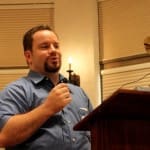
I’m Carl C., and I’m the one who speaks starting at about 20:30 or so. I’m in the blue shirt with the goatee above.
I’m Rob Lauer, and I’m the one who begins speaking around 46:35.
I was deeply touched by Kevin Hills’ story. I identified so much with his tone, his confusion, his desire to do the right thing and his heartbreak over what he once thought was worth living his life for but then discovered that he wasn’t sure about that anymore. I couldn’t help but think through his entire testimony that the church could do something about the broken hearts of good souls like this. It has been dishonest and it could change TODAY if it wanted to. But I guess that’s what we’re doing here, isn’t it…pushing for that change. Thanks Kevin, for your sincerity and for sharing it here. What a great conference that you all enjoyed! I thoroughly enjoyed listening to every minute of it!!
I so wish I knew about this! We live in the dc area…I have recently been watching several podcast interviews (Carol Lynn Pearson and Dr. Bradshaw). I need to meet more Mormons like this! Your podcasts will be part of our regular spiritual study as we are moving where the Church does not have an official prescribe (Dakar, Senegal)
Who were the guys from the Netherlands there??? That’s where I served my mission, and I’ve long thought that many Dutchies would totally relate to this community!
Marco Gunster is his name.