
Lindsay Hansen Park had just finished her Year of Polygamy podcast when she sat down with John Dehlin in front of a standing-room-only crowd at the Community of Christ chapel in Salt Lake City, and she is candid about how the project changed her: the first episode promised listeners “it’s gonna be okay,” and by episode 38 she was wondering what she had done.
Lindsay explains why LDS women sit in a strange spot with polygamy, raised in what she calls a “hyper monogamous” church while carrying a polygamous past nobody wants to talk about, and how that discomfort pushed her to study it seriously. John walks her through the arc of her series: Joseph Smith’s early plural marriages, the coercive tactics used on women and the polyandrous marriages, and the women who swore on their deathbeds that angels had commanded it. Lindsay refuses to explain away those spiritual experiences, but she is equally blunt that coercion is not okay and that the same tactics survive in fundamentalist groups today.
She tells the story of the 1890 Manifesto with obvious relish, with John Taylor hiding in the Gardo House and Wilford Woodruff “in a pickle,” and then follows polygamy into the fundamentalist offshoots, arguing that anywhere Mormonism goes, Mormon fundamentalism follows. She contrasts Colorado City under Warren Jeffs with Centennial Park and the Apostolic United Brethren, the group behind the family on Sister Wives.
Asked to make the best case for polygamy, she says you cannot do it without a penalty, which is why there is one. She talks about threats, people showing up at her house, and a harassment campaign from one group, and about what running the podcast did to her own faith. She takes on a few apologetic arguments, including the claim that “virgin” in D&C 132 means married, before describing the reactions from listeners, the download numbers, and the personal toll. The evening ends with audience questions, including one from a parent stepping back from the church, and Lindsay’s advice that it gets better.
What’s covered
- 00:00 Introduction and guest background
- 04:25 Growing up LDS and discovering polygamy
- 12:12 Joseph Smith’s early plural marriages
- 27:18 Coercive tactics and polyandry in early Mormonism
- 39:07 Women’s spiritual experiences and Brigham Young
- 45:23 The 1890 Manifesto and its aftermath
- 52:07 Rise of Mormon fundamentalism and splinter groups
- 1:06:49 Colorado City, Centennial Park, and Warren Jeffs
- 1:12:16 Takeaways on polygamy, harm, and legalization
- 1:20:40 Running the podcast: risks, faith, and personal impact
- 1:28:52 Common apologetic arguments examined
- 1:43:38 Listener reactions and the podcast’s personal toll
- 1:55:42 Audience Q&A and closing reflections
Related episodes: 503: Discussing the New LDS.org Polygamy Essays Part 1 · 564: Lindsay Hansen Park Interviews John Dehlin on the 10th Anniversary of Mormon Stories Podcast · Mormon Polygamy Under Joseph Smith w/ Lindsay Hansen Park and Bryan Buchanan | Ep. 1815
Episode Transcript
Host: John Dehlin · Guest: Lindsay Hansen Park
This transcript is machine-generated and lightly edited for readability. The audio is authoritative. Please excuse occasional errors in names and spelling.
Introduction and Welcome
John Dehlin [00:00:06] Mormon Stories Podcast is a production of the Open Stories Foundation. All donations to Mormon Stories are fully tax deductible and go directly towards keeping the podcast alive and towards building a community of support for Mormons like you.
Lindsay Hansen Park [00:00:19] Come, come, ye saints.
Guest [00:00:22] No toil nor labor fear, but with joy when you're.
John Dehlin [00:00:33] Hello, and welcome to another edition of Mormon Stories Podcast. I'm your host, John Dehlin. The date is July 8, 2015. We are here in the beautiful historic community of Christ Chapel in Salt Lake City, Utah. And we're here with a huge. Probably way bigger than John Larsen's podcast. Right, Lindsay?
Lindsay Hansen Park [00:00:53] Like three times.
John Dehlin [00:00:54] Three times bigger. Hundreds of people are here, standing room only for this interview with the. With the amazing Lindsay Hanson Park. Some of you may know Lindsay, some of you may not, but Lindsay. I came to know Lindsay when she was organizing a fun run for women in the Congo. Do you remember that? Yeah. So that's when I first met Lindsay. But she was an early a blogger on Feminist Mormon Housewives. Winter Buzz was her handle.
Lindsay Hansen Park [00:01:28] I believe that is my handle.
John Dehlin [00:01:29] Am I not supposed to tell people that?
Lindsay Hansen Park [00:01:30] Nope, you can. It's just embarrassing. It doesn't change.
John Dehlin [00:01:33] Okay. All right. So she blogged on Feminist Mormon Housewives for a while, and at some point, she began helping out with Sunstone. We definitely want to tell everyone that Sunstone is doing some amazing things. Come to Sunstone at the end of July.
John Dehlin [00:01:49] It's going to be fabulous. But Lindsay's helping to lead Sunstone, but also in her role with Feminist Mormon Housewives. She began Feminist Mormon Housewives Podcast with the help of the White Fields Educational foundation. And eventually she decided that she was going to actually do what she called a year of Polygamy. She started, and we'll talk about this, but she started interviewing, doing podcasts about the wives of Joseph Smith. And that turned into what she's called the Year of Polygamy, which was sort of 100 episodes deep dive into Mormon polygamy. And it's been a really important project for so many reasons.
John Dehlin [00:02:33] It's covering a really important part of our history. But one of the things that's been so important about it, it's been fun, it's been interesting, it's been very scholarly, and Lindsay's been able to garner the respect of, you know, Mormon historians and the Mormon historical community. So. And she's also been able to bridge that divide and gain the respect and trust of fundamentalist Mormons of current polygamy, people who practice polygamy. And so it's just been wonderful. And so we're here to celebrate her and her podcast@yearofpolygamy.com. so, Lindsay Hanson park, welcome to Mormon Stories again.
Lindsay Hansen Park [00:03:13] Thank you. This one is much more sweaty.
John Dehlin [00:03:16] Much more sweaty. That's because there's so many people here, which is a good thing. Come on in, guys. There's some seats up here in front. Okay, so we're going to dive right in. And for those of you who don't know, also, I did interview Lindsay at least one other time on Mormon Stories where she talked about her experience with eating disorders and. And bulimia. But it's just a brilliant, interesting episode.
John Dehlin [00:03:43] Just like it's like a barrel of laughs and bulimia, right? Yeah, no, it's really, really good. So we're having her back. She's also been on to talk about the church's essays as it relates to polygamy as well. But today we're going to talk about Year of Polygamy. And I guess I wanted to begin by just saying, you know, we've talked a little bit about your childhood and experiences in the church. This time, just talk about anything in your childhood or upbringing that you think might have informed your ultimate interest in wanting to do a podcast like this.
Growing Up LDS and Discovering Polygamy
Lindsay Hansen Park [00:04:19] Sure, yeah. This is a great question. So I grew up lds. I'm a Mormon woman, and I like to be pretty rigorous in using the term LDS instead of Mormon because there are a lot of people that identify as Mormon, turns out. So I grew up lds, and in the LDS tradition. I think LDS Mormon women have a really unique position with the polygamy issue. And that is because culturally and socially, we don't support the idea of polygamy. In fact, I think we are supported in monogamy. We have a really hyper monogamous church, especially right now.
Guest 2 [00:04:58] And.
Lindsay Hansen Park [00:04:58] And so I grew up with that kind of being really uncomfortable with polygamy, knowing about it, but not having a support system, whereas other Mormon fundamentals, it depends on the different groups, have a whole culture that supports polygamy. Some people will, you know, parents will start their children at a young age to be steered away from monogamy. Some people teach their kids not to watch Hollywood films because it, you know, supports a false love story of monogamy. That might be difficult. So as a Mormon woman, I grew up in a culture that polygamy was the weird thing that other people did, that they took too far, that the pioneers did, but it's over now. And so that's kind of how I grew up. I wasn't. Should I be looking at you anywhere. Super weird.
John Dehlin [00:05:45] You guys stare deeply into the camera if you want to weird the audience out.
Lindsay Hansen Park [00:05:50] Yeah, I'm normally in, like, my basement in my stained pajamas and kids, so this is weird. So I grew up really uncomfortable, I mean, comfortable with polygamy until I got married. And this, I think, is a pretty common thing. It's usually when people get married for the first time, not always, but this is very common. And I had a husband, and the thought of sharing him made me deeply, deeply uncomfortable. And he would joke about it, and other people would sometimes joke about it. And I. I was surprised at my reaction, how strong it was. Like, I could laugh on the surface because I didn't want to be the weird one that can't laugh at things like that. But I was deeply wounded by the jokes, and so I was always uncomfortable with it, and it wasn't.
John Dehlin [00:06:37] So at some point, we'll talk about your current beliefs now, but at some point, totally believing orthodox Mormon. And you knew. What did you think? You probably knew at some point that Joseph or Brigham had practiced polygamy. But how did you think that was relevant to you?
Lindsay Hansen Park [00:06:55] I actually didn't know Joseph practiced polygamy. I was under the assumption that Brigham Young was a polygamous prophet and that my ancestors did it. And that's about as far as I thought about it.
John Dehlin [00:07:05] But why did you feel threatened, did you think?
Lindsay Hansen Park [00:07:08] Because I knew somewhere, and I don't know that it was ever explicitly stated, but I've heard it explicitly stated to some people that. That I would have to live it eventually. Like, the good, good Mormons will have to live it someday. And of course, we're told with a caveat, like, oh, well, you'll get to choose. And you know, Heavenly Father will not make you unhappy, so if it makes you unhappy, you don't have to do it. And I just really found so many problems with that sort of rationale. For example, I began to fear it and loathe it so much that it became like I just knew it was a core part of my identity.
Lindsay Hansen Park [00:07:45] And so the idea of, like, you'll change and things are different in heaven, I thought, well, then I won't even be me, so what's the point? Right? So that was one of the issues that I had with it. And another issue was that, like, God won't make you do that. And I was like, well, cool. So God won't make me do that. So, like, I'm going to hell. Then, like, thanks, God. Really good, solid of you. You know, so it just. It never really sat well with me. And anytime I tried to ask people about it, you had a variation of answers, and it mostly ended up with, you know, that's not something you're supposed to worry about right now.
John Dehlin [00:08:27] Okay, so that was kind of how polygamy loomed like a dark cloud over you for a few years.
Lindsay Hansen Park [00:08:34] Yeah, for a long time. I've talked about this quite openly on other podcasts, but I actually was engaged to someone other than my husband when I got Marri. And so I did the dumb LDS thing where you marry really young and really fast. And so I married my husband, still in love with someone else. And so I felt like a sinner thinking about this other person who I hadn't. I had ended it really poorly, and he was really upset at me, and I never had time to heal from that. And so I felt like a sinner thinking about this other person. And so I'm struggling with this.
Lindsay Hansen Park [00:09:06] And whenever these jokes would come up, I just felt this, like, deep sense of unfairness that I would have to go through this. And it was very difficult for me. It was very, very hard for me that I would have to go through that. And yet, you know, my husband, who is super into me and not anyone else, will someday get to just do this quite easily, or at least that's what I thought. And so it wasn't until there was the Baptists that were sending the information around about the Mormon Church. They were going to expose us, and all of us in the ward were like, ooh, the Baptist care.
Lindsay Hansen Park [00:09:42] So they sent DVDs, and we got a DVD in our mail. And I knew not to watch it because I knew it was anti Mormon, but I saw something in an LDS newsletter saying, FairMormon.com will refute it. And so I went on FairMormon.com I told this story a lot, and there was all the stuff about the video, and on the corner, there's something about polygamy. And I was like, what is this click? And I clicked it, and it just, like, broke open my world like Joseph Smith did. What now what? You know, and that's what started it for me. And it wasn't until, you know, I've talked to Brian Hales and Laura Hales about this, that whenever they're having a Q and A, people get really defensive with them.
Lindsay Hansen Park [00:10:20] And I said, brian, I think that when people are defensive, when you're talking about history, what they're really saying to you is, but I don't have to be okay with this.
Guest 2 [00:10:28] Right?
Lindsay Hansen Park [00:10:29] And at least that's what I was thinking when I was reading this fair stuff. Like, this is fine, but I don't have to be okay with this. Right? But I thought that I did. And it wasn't until I met the feminist Mormons that they were the first ones that gave me permission to be like, yeah, this stuff is crazy. Yeah, this stuff sucks. Yeah, this stuff is wrong. And they were still Mormon that I was like, oh, my gosh, we can do that. We can say, like, no thank you to that and still be Mormon. And we did that. And so I started researching it, and it made me feel better. And so I thought that if I did a podcast and talked about it more, it would make people feel better. Turns out I was wrong about that.
John Dehlin [00:11:10] Yeah, that just always worked out. Turns out.
Lindsay Hansen Park [00:11:13] Yeah. You're welcome, everyone.
John Dehlin [00:11:18] You solved polygamy.
Lindsay Hansen Park [00:11:20] Yeah. Isn't it great? Now we're all okay with it. So, yeah, it just, like, opened up into this huge, like, swirling vortex of, like, aching need for Mormon fundamentalists and, like, this deep vortex of pain for Mormon women and this huge, like, controversial political thing with Mormon historians and, like, the church. And it's just, like. It's crazy. Amazingly fascinating. But it also is fantastic to say, no, thank you, you know?
John Dehlin [00:11:56] Excellent. Okay, so you decided to start a podcast, and what was your. Did you have a goal or a motive at first? Like, what were you hoping would result?
Lindsay Hansen Park [00:12:06] Yeah, I mean, I talk about this on my last episode. I naively. I make that. First of all, my first episode is ridiculously boring. Like, I feel bad when I see how many people download it. I'm like, oh, gosh, you guys. But in the podcast, in the first episode, I'm like, you guys, if we just all study and listen to this, it's gonna be okay. We're gonna do this together. And I really believe that. And then I got into, like, episode, like, 38, and I was like, what have I done? I'm a horrible person. I've lied to everybody. This is not okay. And then I got into the fundamentalist Mormon period, and I was like, not, what have I done? What are we all doing? What's going on? And it's just been, like, this roller coaster, and I think I've taken everybody with me as we've done it.
John Dehlin [00:12:53] Okay, so if it's all right, let's just do a quick overview of some of the history.
Guest 2 [00:13:01] Okay.
John Dehlin [00:13:03] And mostly it's to kind of to say, well, you've. You've done 100 episodes. You've really dug into this, and, you know, I'm really interested, and maybe people here also interested in those in the viewing audience or listening audience, are interested to see kind of what your take is. After reviewing all the evidence, after really thinking about this and considering it. So if you had to sort of give your best estimate as to how got started with Joseph, what do you think happened?
Lindsay Hansen Park [00:13:37] I don't often speculate because I don't want to steer people from. I try to not steer the audience as much as possible. But what I believe is I do believe Joseph was a brilliant person. And when I say brilliant, I know that people get defensive inside. Some people that doesn't mean he was always good, but he was. And I think that he was really experimenting with the theology and with someone brilliant. There's not really clear lines about like and boundaries, about what is okay and what's not and what goes over here and what goes over there. And so I think Joseph had a lot of guilt and shame.
Lindsay Hansen Park [00:14:16] He grew up a man in the Victorian age. I think he had a lot of sexual desire that he didn't know how to put it. There was no healthy avenue for him. There was no healthy way to do things. A lot of, you know, men and boys were encouraged to visit prostitutes and things like that and then keep it secret. And there was just a lot of weird sexual things going on. Just in the time period and then where he was living, there was all of that religious fervor. And I mean, there was just so many factors going on. And I think Joseph was explaining experimenting with reconciling his ideas with this theology.
Lindsay Hansen Park [00:14:54] And I think it's kind of like. I mean, you ask how I got involved in the podcast, it wasn't like this clear, deliberate thing. It's all of these factors that come into play, and you're trying to always work these out. So I do think that Joseph. This is my opinion, and I'm not suggesting that there's historical evidence to back this up, but I think that Joseph Smith had a lot of shame. And I only recognize that his patterns because I recognize it in myself. And so I think he had a lot of shame. And I think that he was trying to find ways that his desires would be okay with God.
John Dehlin [00:15:28] So it's like he's a charismatic person. He's in touch with a lot of people. He kind of has a following, and he feels normal attractions, has a strong libido. He finds himself wanting to be with other women or maybe even being with other women. And he feels like he's got to find a way to justify.
Lindsay Hansen Park [00:15:48] I don't think it's just about libido. I also think it's about power. I mean, there's a lot of sociological research and psychological research being done on this topic about people in power and how they have multiple sexual partners. And there's this idea of communalism and the sexual energy that happens there. And so as Joseph is building this church, there is this idea, this community communal idea. And that sexual energy has to be accounted for. And so I think that he was trying to invent ways to do that and like I said, still have it be right with God. So I think, like, it's not it really. I really have a difficult time when people call Joseph Smith a pedophile or when they say, you know, it was all about sex, because that not only diminishes, like the people that he was in relationship with, but I think that it's just really reductive.
John Dehlin [00:16:39] Okay, do you, you know, as I've read Farrer and other sites, they seem to want to put the date of his revelation maybe in 1830, 31 kind of timeframe. Is that how you read the evidence?
Lindsay Hansen Park [00:16:54] So I. This one's hilarious to me because oftentimes when we talk about the women, you know, there's this whole Joseph Smith bought polygamy thing which we'll talk about, but people will say, like, we can't trust Bennett or Marx or these women because they made these statements after the fact. I was like, well, then that has to apply to Joseph in 1831 as well, because a lot of that stuff is after the fact or it's secondhand. We have a W.W. phelps letter and all that kind of stuff. And so if we're going to do that, if we're going to say we can't prioritize history in this way, then it has to be consistent. And good historians are consistent and do that. And I know of good faithful historians that do that that are consistent across the board.
John Dehlin [00:17:41] So if I'm understanding what you're saying, you're saying that those reports of an early 1830, 31 kind of revelation are kind of after the fact, I would
Lindsay Hansen Park [00:17:52] say, where is the primary source?
John Dehlin [00:17:54] There's no primary source for you?
Lindsay Hansen Park [00:17:56] Not that I've seen, no.
John Dehlin [00:17:57] And if somebody says, well, it's too sacred or it wasn't the right time,
Lindsay Hansen Park [00:18:02] then that has to be consistent across the board.
John Dehlin [00:18:05] Okay, so when you think about Fanny Alger, Alger, is that, is that 1834,
Lindsay Hansen Park [00:18:11] 1835, 36, 37, 38.
John Dehlin [00:18:14] Okay.
Lindsay Hansen Park [00:18:15] And I should tell you, if I get my dates wrong, it's just because I have so much information in my head from the last year, so you can go fact check it and prove me wrong on the Internet later.
John Dehlin [00:18:24] And so your take on what happened there, do you think any evidence that in Joseph's mind that was really polygamous to him?
Lindsay Hansen Park [00:18:32] No, I don't think so. And I don't think, in my opinion, I don't think Joseph viewed it as such either. Until later.
John Dehlin [00:18:39] Yeah. And of course, people know that the doctor what did the Book of Commandments or Doctrine and Covenants say about polygamy?
Lindsay Hansen Park [00:18:44] Article of marriage. Yeah, it condemned it. And I think that that's a little bit different. I mean, I think that this starts a tradition that I actually think is one of the biggest legacies that Joseph Smith left is this idea of telling the public one thing and the private or privately doing something else. And we call it sacred versus secret, which, and some people, I guess the harsher term is lying for the Lord, I think. Was it Michael Quinn in my podcast that called it Theocratic Ethics?
Lindsay Hansen Park [00:19:15] Anyway, there are all these interesting ways to call it, but I see, I mean, when we talk about the modern fundamentalists, I'm going to talk about how this idea really plays out and it doesn't stop. It's a very Mormon idea that we tell the public one thing and we call it sacred. But that really makes me uncomfortable because sacred means secret. Secret. Sometimes it can justify secrecy and secrecy can be really tricky. A lot of things can happen when they're secret.
Deception, Secrecy, and the Church's Legacy
John Dehlin [00:19:48] So not a big fan of the COVID ups and the deceptions?
Lindsay Hansen Park [00:19:53] No, I mean, I think they're super interesting. I think that they really shape our church and tell us a lot about the early church. But yeah, I mean, I'm glad I'm not living it now. That's not to say that that's not going on now, because I absolutely think it is, but.
John Dehlin [00:20:09] So when you say you see polygamy in the church today, the LDS Church today, you're saying, at least in part, that the legacy of a public story versus a private different story. You see that in the LDS Church
Lindsay Hansen Park [00:20:21] today, we talk a lot about the remnants of polygamy, if you will. We like to say that it's in our temple ceilings. That's an easy one. Or in our temple practices or things like that. And it is. But I actually think that the LDS Church is a very polygamous church still today. I mean, we spent a lot of time talking about How a lot of the things that we do are reactions to polygamy or where a lot of the doctrines or ideas were formed out of polygamy. And, I mean, we talk about this on the podcast. It's complicated, and it's not, like, overt. It's not like you can say, hey, we sing that polygamous primary song. But it's. Everything around us is very much operating under a polygamy, communal sort of idea, I think.
John Dehlin [00:21:08] Okay, so why did it explode in 1840? Like, why did 1839. 1840.
Lindsay Hansen Park [00:21:16] I think everything was ramping up then. I mean, like, everything was escalating. I think that sometimes. And I think that this happened to Joseph. I think that fame can be heady, and I think that he started to believe his own personal, honestly, and I think that he had a lot of enemies at this point, and he had a lot of friends that he didn't know he could trust. When I think of the 1840s, I just think of chaos. I think of Joseph trying to hold together this vision and build on it, but he was not centered at this point. I mean, he now has put people in danger and put himself in danger and put his family in danger.
Lindsay Hansen Park [00:21:54] And I just think that it was a chaotic time, and. And how Joseph responded, in my view, was he really ramped up some of the things, and I don't know why, and I don't really think that I'm qualified to speculate on why, but it just seems like he was upping the ante.
Joseph Smith's Wives and Use of Coercion
John Dehlin [00:22:15] So, as you studied Joseph Smith's wives, are there any that stick out to you, obviously, starting with Emma, but, like, what are some of the stories or characters that you've learned about that really have stuck with you in kind of powerful ways?
Lindsay Hansen Park [00:22:34] That's a really hard question. Well, Emma is probably the one that I draw on the most, just because her story resonates the most with me, I think. You know, I think Emma. I grew up having sort of a warped idea about Emma, and some people still do, and I think we're moving away from that. But it was really nice to see Emma in a. And that's not to say Emma's perfect. And this is the other weird thing that, like, I try to tell my listeners not to do. Like, it's important. We don't make heroes or villains out of all these people. Like, they're complicated. Emma did some stuff that I was like, are you sure you want to be doing that?
Lindsay Hansen Park [00:23:10] But so do I. Right? So Emma is one. The Lawrence sisters are really interesting to me, me, just because I think that their situation. They were, in a sense, used with property rights and a lot of politics. And this would become the theme. I think that this is what I learned from learning about Joseph Smith's wives, that women. Women and their bodies really start becoming used as political pawns in a lot of the things, which should not be surprising if anyone talks about patriarchal systems and things like that. But to see women and the transition from Joseph to Brigham and how polygamy becomes practiced then and how women's bodies are controlled in that way.
Lindsay Hansen Park [00:23:54] I think the Lawrence sisters was the first time I was like, wow, it's not just about sex. It's being used for other things too,
John Dehlin [00:24:02] because they had assets or.
Lindsay Hansen Park [00:24:04] Yeah, Joseph, this was. He did this with. I mean, I think he was experimenting with a lot of things, but he had women that he married that he. It. I mean, I don't know, but it's somewhat clear that there was not, like, a sexual interest. He didn't have the, like, traditional wife type view. I think that he was. As he started doing this and realized that this could stick. I think he started exploring with other relationships. And the problem with that is when you're building. They call it dynastic marriages, when you're building dynasties, then you have to decide what you want in your little kingdom, right?
Lindsay Hansen Park [00:24:44] So do you need this in your kingdom? Do you need this? And Brigham Young, of course, is famous for this. He would. Sorry, am I being too loud? He would promise his wives. He would promise women that he would marry them and take care of them if they were widowed, and then he would sign all their property, and then they wouldn't see him again. And so that's the downside of these dynastic relationships,
John Dehlin [00:25:09] Some like to say. I think Brian and Laura Hales seem to want to make this argument that sex really wasn't much of a part of Joseph's relationships with his wives. Is that what people are arguing? And what's your take on that?
Lindsay Hansen Park [00:25:25] I actually agree with the Hales on a lot of things. I agree with him on this point. Like I said, I think that sex was part of the genesis of this. I could be wrong, but I don't think that all of his relationships became about that. I think just like everything else that you do, it can start out as one thing and change it to something else. And I can speculate on what I think that is. But I do think that said that sex was part of it. I think the historical record is pretty.
Lindsay Hansen Park [00:25:58] I wouldn't say Clear. Because none of it's clear. I would say it's pretty apparent to me that sex was definitely a huge part of that. And I say that because it is clear that even the women that he didn't have sex with, like, we'll give Hales. Helen Markimbell will say that he didn't sleep with her. Her sexuality was still being controlled quite heavily. She wasn't allowed to go to dances. She was considered, I guess, property.
Lindsay Hansen Park [00:26:21] She was considered a married woman. And so women's sexuality is being completely controlled. So to say it's not about sex is really reductive because it is about sex. That said, I don't think it's only about sex.
John Dehlin [00:26:32] Got it.
Lindsay Hansen Park [00:26:33] That's a long answer.
Guest 2 [00:26:34] Sorry.
John Dehlin [00:26:34] But to say that it's not about sex is what?
Lindsay Hansen Park [00:26:38] Naive?
John Dehlin [00:26:39] Naive?
Lindsay Hansen Park [00:26:40] Yeah, yeah. I mean, that's just. We have to allow these people their humanity. Like, in your own life, can you say honestly, in your own life that there is nothing, no decisions you make about sex, none of your relationships are based on sex?
Guest 2 [00:26:55] Come on.
Lindsay Hansen Park [00:26:57] Like, come on. Everybody makes decisions and does dumb things. It's part of our humanity. And when we say that, we make Joseph not a human. And that's super creepy. So
John Dehlin [00:27:12] this has been talked about online a little bit this week, and it's one of the common things that's talked about. What about the tactics used to approach these women about polygamy and to try and convince them to be a part of it? Do you have any reactions to it?
Lindsay Hansen Park [00:27:29] About it? It's terrible. Yeah. I mean, if anyone tries to deny it, that's just absurd. I think we can learn a lot from watching Mormon fundamentalists today. And as we know, a lot of these tactics are still used today. And in fact, a lot of these tactics are celebrated as like a ritual or an ordinance, depending on the group. These tactics that are coercive, I don't think that they're okay. They show up in patriarchal systems. We have similar ways of thinking in the LDS Church, so we're certainly not exempt from it, but it's not okay. And I think that this is what is the most damning thing to Joseph, for me, is the manipulative way and how he tried to engage in some of these relationships. Because without question, some of these, not all of these, but without question, some of it was coercive, and that's not okay.
John Dehlin [00:28:20] And what were the main coercive means used? Just for those who aren't as into the history.
Lindsay Hansen Park [00:28:25] He would often. I mean, Joseph had a pattern where he would find someone. People have called this grooming, and it sounds like grooming behavior. He would find someone close to this, you know, a woman, like maybe her brother. He would get him complicit in the practice somehow by either giving him a wife or having him marry, perform a marriage. So he was then breaking the law. And then they would bring in the young girl and find a way to coerce her into the situation.
Lindsay Hansen Park [00:28:54] There were threats attached to it. This is the most coercive thing that I think happened. If you said, no, Joseph, sometimes, as we talked about recently, there are cases where he did say, I will ruin you. Now, people like Hales do not believe those cases. They were printed in the Sangamo Journal by the women saying, joseph's study is going to ruin me. And I'm sorry, but I'm not going to side with Joseph on this one because of the pattern of behavior. And it's not that unlikely because we see it today. That's a very easy thing.
Lindsay Hansen Park [00:29:28] If a woman comes and says you've done something inappropriate to say, yeah, she's a slut, right? And this is. This is effectively what was happening sometimes to the women that went public about it, and it worked. Some of these women were outcasts in society. Some of them. One of them, I think, I believe it's Melissa Shindle, off the top of my head, was already had a bad reputation.
Lindsay Hansen Park [00:29:51] So that was one of the things. And if they didn't have the penalty of their Social Security stigma, they had the penalty of their God. And this is the thing that I want people to know. I'm not against polygamy. I don't have an issue with polygamy. I have an issue with polygamy with penalties. And Mormon polygamy is polygamy with penalties. And we have it right there in our Doctrine and covenants that 132, 132, and fundamentalists still use this today to control women in their groups from other parts of the scripture. But when, you know, like, I did, and I was not taught to be a polygamous woman, that I could choose it or I could not, but I would have to have a lesser degree that's still coercive, like.
Lindsay Hansen Park [00:30:35] And so, I mean, we just can't argue that it's not. And if we do argue that it's not, we are doing damage. We're doing damage to victims who are still abused by their church leadership and by their parents and their stepparents who try to say, this is what God wants. Like, we just need to Stop that. We need to stop making excuses and I guess make more room for humanity.
John Dehlin [00:30:59] It seems like Brian wants to say that if those women hadn't have spoken up, they would have never been slandered, so they should have just not spoken up.
Lindsay Hansen Park [00:31:07] Yeah, if you said that, that's something I strongly disagree with, you know, and I would like to rather, you know, talk about him. I would prefer to have Brian here. But yet you, you can't effectively slut shame a woman and say, yeah, it's your fault that you got called a bad word because you told someone about this course of behavior. That's ridiculous. We just can't. We can't live in that kind of society. We have to do better than that.
John Dehlin [00:31:41] When you say you don't like Joseph being called a pedophile, why is that?
Lindsay Hansen Park [00:31:47] I just think. I mean, this is kind of like a hokey answer. But as Mormons, at least in my Mormonism, I wasn't really taught nuance and to think everything was really black and white, that's the Mormonism I experienced. And so it really drives me crazy when I see that perpetrated outside of Mormonism. Like Mormons that are like, I'm so enlightened now.
Lindsay Hansen Park [00:32:10] I get it. I see the light and you don't. And then they still continue to think in ways that are really reductive. And I'm not saying that I don't, because I'm sure that I do. But I think when we're talking about this history and these women, I'm just asking people to be a little bit more rigorous because pedophilia to me is Joseph being attracted to children.
Lindsay Hansen Park [00:32:32] And I just don't see any evidence, like, prepubescent children. Prepubescent children, yes. Helen Marr, by her own account. And first of all, I'm not making excuses like, this just makes me uncomfortable to even have to argue this. But Helen Marr was not childlike. That is not to say it's an excuse, but when we call it that, when we call it pedophilia, it just turns off the actual, like, way to truth. And we handle everyone. All of the critics of this that want to defend Joseph Smith, everything, they need to dismiss us. I just feel like when we are more rigorous, then we can be more open and more transparent.
Lindsay Hansen Park [00:33:11] And it's impossible to do that completely with history, but we should be trying. And so if you're angry and you want to call him a pedophile, that's one thing. But don't state it as a fact, because Pedophilia is a modern term applied to something that doesn't fit Joseph Smith. That is not to say that him marrying 14 year old children is by any means okay, but it's just not pedophilia.
Polyandry, Brigham Young, and the 1890 Manifesto
John Dehlin [00:33:36] When you talk about polyandry, you know, William and Jane Law come to mind. And so it's interesting. It's interesting that Joseph apparently married women who are already married to other men. How do you make sense of that?
Lindsay Hansen Park [00:33:56] I think that Joseph's polygamy and plural marriage again started as something personal. And I truly believe that Joseph had a generous spirit. And so although he was struggling with his own demons, I think that instead of him internalizing them onto others like I think Brigham might have done, now I'm psychoanalyzing the prophets. I think that Joseph really wanted people to be happy. And so I think he was experimenting with all of these ideas. I think he really did want to build something. And I do think he started to believe his own press. And once you start doing that, it gets a little muddy according to the needs of other people. But that's what I think it was doing. I think he was experimenting and the
John Dehlin [00:34:42] idea that, that perhaps Emma was demanding that she could have an additional husband as a way to compensate for Joseph having additional wives and wanting William Law to potentially be one of those husbands. Do you buy that story or.
Lindsay Hansen Park [00:35:00] I don't think it's implausible. I think that I've had a similar reaction, like when I trying to think of a discussion that we once had in Relief Society about this. But this is a common discussion. I think a lot of LDS women would know this, that when they say, like, well, you have to live polygamy, someone will always say, yeah, well, I want more husbands too. I mean, it's human nature. And I see Emma in that period when that story was said to have happened, that she was really wounded and she had a lot of pride and standing in the community and she had a lot of balls in the air to juggle as well. I see her reacting in ways that are very human and very natural. And I think that's okay. I think we should give her that.
John Dehlin [00:35:54] If I kind of channel the personality of Joseph Smith, that I kind of absorbed even up until a year or two ago. It was this generous spirit, this just he wants, you know, some would say that polygamy wasn't him so much wanting to have sex with lots of people, but instead it was just him wanting us all to be one big family. And the ceilings. Yeah, there were women of all but there were also men being sealed to men. And what it really was was just this big hearted guy who really loved everybody and wanted everyone to be back heaven as one big happy family.
John Dehlin [00:36:30] Do you buy that as a possible sort of, you know, another way to ask this is what's the difference between Joseph Smith and Warren Jeffs? Because you could basically trace Warren Jeffs behavior to many of the things that Joseph did. When I asked Alex Beam this, he was like totally uncomfortable comparing Warren Jeffs to Joseph Smith. And I was surprised because when I read his book it was, I just, it was making me angry against Joseph. So what do you think about the spectrum of Joseph is just wanting us all to be one big happy family in heaven and polygamy is just his awkward way of doing that versus Joseph has warned Jeff's indistinguishable.
Lindsay Hansen Park [00:37:07] I think Joseph was all those things. I think that he did want those at times. And then I think when he felt his power threatened, he changed his mind. And then I think that when he was cornered, he acted in a different way. And I actually think, and I argue this in the podcast, that every single Mormon fundamentalist leader, every single one and every single group recreates the Mormon story in some way or another. Now Warren Jeffs brought to the Mormon story his own baggage, which we're starting to know a little bit more about, but we don't know a lot about. So I don't know that it's necessarily like Joseph acting like Warren.
Lindsay Hansen Park [00:37:42] I think it's Warren acting like Joseph or maybe Warren and Joseph acting like a lot of leaders who use women's sexuality as power and unchecked power. And I think the key element that both Warren Jeffs and Joseph have in common is secrecy. And I think that that's a big. That's why we see a lot of the behavior the same Warren Jeffs.
Lindsay Hansen Park [00:38:10] A lot of people don't actually know this, but Warren Jeffs wasn't always acting in the way that we see him now. I think he was building up to it. But his father acted different and their leader before them acted different. I just think every Mormon story is recreated over and over again. And I actually see that in the progressive Mormon community and I see that in the ex Mormon community. We all like recreate the Mormon story in some ways.
John Dehlin [00:38:33] So you do see a lot of similarities between war and justice.
Lindsay Hansen Park [00:38:36] Absolutely. I think anyone would be crazy, crazy to say that they don't like. It's just, they would be crazy. But that said, do I think that Joseph Smith Is Warren Jeffs? No. And do I think that Warren Jeffs is doing things that are different than Joseph? Yes. And there are some very serious distinctions that I think that need to be highlighted because they are not the same person at all.
John Dehlin [00:39:01] So how do you account for the women who are. Who said that angels came and told them to do this, that the Holy Ghost inspired them to do this, the ones that swore on their deathbed that it was wonderful and beautiful and it was the best thing that ever happened to them. How do you square that with, you know, you maybe not being in favor of all this stuff?
Lindsay Hansen Park [00:39:25] I think, I mean, that's a question that. Who knows the answer to that? Why does it. Why does anyone have a spiritual experience? And who am I to tell them that they didn't? And it's really compelling and, like, seductive to be like, oh, you know, maybe they ate bad dinner or they had a mushroom or something and they saw an angel. Like, why did your grandma have a testimony? Go ask your grandma. Like, who knows why people believe what they believe. They had this experience. I know in my own life that when I was under the most pressure and I was really distraught and I needed a hope of an answer, that an answer was given to me.
Lindsay Hansen Park [00:40:05] Now, that can mean that under duress, we believe what we want to believe and we see what we want to believe, and that's certainly an option, but that doesn't bother me. I think when I look at these women and their experiences, I want to give them that and I want to recognize the, I guess, the situation that they were in and the environment as best as I can. And it's not either or it's not they were coerced or they saw an angel. I think it's an and. And we need to do that a lot more. Just use the word and.
John Dehlin [00:40:42] In your discussions with women who practice polygamy today who are not LDS but are one of the branches, would you say that they have had. They would claim to have had similar witnesses as the wives of Joseph Smith?
Lindsay Hansen Park [00:40:57] Yeah, 100%. I think the most fascinating thing about doing my research is that I have been able to talk to fundamentalist women who tell me a story almost verbatim from a pioneer journal. I mean, it's very, very similar. So I think in some ways that they are different, obviously, and each group is different and there are different cultures. But I think the Mormon faith, it's very similar to how an LDS person experiences a spiritual experience. I think it's very same thing.
John Dehlin [00:41:30] Maybe claim that an angel or that God told them to tell you with tears in their eyes that they know
Lindsay Hansen Park [00:41:34] that it was inspired, warm, peace, or they went, you know, I talked to a woman who did the whole praying for three days and three nights thing, and then she came to a peace with it. Right. You know, the skeptic in me can make all kinds of excuses for that, but that's how she experienced it. And I think it's actually better for the women when they, in my experience knowing them, that when they have that experience and they go into it, like, with a determination than those who go in kicking and screaming. I say better, meaning that it works out better for them, usually because women that do go in kicking and screaming are not treated well, usually.
John Dehlin [00:42:19] Any quick thoughts about Brigham Young and any takeaways about his slant on polygamy versus just.
Lindsay Hansen Park [00:42:26] I have a lot of thoughts about Brigham Young. Brigham Young is a tough one. I'm not a huge fan of Brigham Young. Not to say that, you know, Joseph is perfect, but Brigham is the one that challenges me to give him nuance. Right. You know, like, I think he was a brilliant organizer, and I think that he was great at some things, but I also think he ruled with a lot of fear. And again, like I said, I struggle to give him the nuance. And so this is me, you know, trying to exercise what I'm preaching here. I think Brigham, it was not about sex for him, and it was not about building a kingdom, so much like as Joseph was in the spiritual realm, but I think it was about him building a kingdom on earth now.
Lindsay Hansen Park [00:43:12] And it was practical and it was political. And he really, in my opinion, used polygamy in a way that became really hardline and coercive. And a lot of his doctrines that he left through journal discourses, if you want to call them doctrines, what do we call doctrine? Have done a lot of damage that I've seen in the Mormon fundamentalist community.
John Dehlin [00:43:34] Like what?
Lindsay Hansen Park [00:43:36] Oh, blood atonement. Blood atonement was inspired by polygamy. In the discourse, he ties them together and talks about it. Blood atonement was really used. I mean, there's a history of blood atonement, but really it's becomes applied to women and their sexuality. By the way, I just have to say this to my listeners. Like, I realize when I edit myself that I say sexuality is really weird. So I'm so sorry. That's a weird thing about editing. I say I can't pronounce words. It's really embarrassing. But he used women's sexuality to say that they need to be punished in certain ways.
Guest 2 [00:44:15] And.
Lindsay Hansen Park [00:44:15] And if you read Quinn's research, he talks about finding skulls or heads or something. I can't remember the exact details. It feels like that's kind of important. On top of hills. And I have heard tell of modern practices using blood atonement for the same thing. So a lot of Mormon fundamentalists believe that when in the scriptures they say that if you. If you don't practice polygamy, you'll be destroyed. You know, that's Joseph's language, that it actually means blood atonement. And so that there are many women that actually believe today that when they're going to be destroyed from practicing it, it means that they will be slipped from ear to ear.
Lindsay Hansen Park [00:44:57] Now, that's not across the board. That just depends on the group. And I think just like with our LDS families, it depends on the family you grew up in and maybe the weird seminary teacher you had. But that is something that happens, and that's something that Brigham Youngster. I mean, that's just one of a handful of things.
John Dehlin [00:45:17] What do you make of the fact that in 1890, you know, we basically told the world we were going to stop, but that we kind of didn't stop? What do you make of that?
Lindsay Hansen Park [00:45:29] That is such a good story. I love that story. So this story is so good. It gets me excited. Wilford Woodruff was in a pickle. You have John Taylor, who is like this bad, a prophet that's going around, I always say, giving a middle finger to the government. He's like, hiding in the Gardo house. He's got all these secret passages. He's like, we're never gonna give this up. And everyone's like, yeah, hero. He would be like the action figure for the Mormon Van Malice.
Lindsay Hansen Park [00:46:00] Seriously, this guy, like, he was. He was. He was it. So he does that. And then Wilford Woodruff, who's like, like, oh, no, what do we do? You said those things and you're a nice guy, but I'm. I don't want to. I don't want to get into the same situations. And they were putting a lot of pressure. I mean, they were. They were threatening to take away the temple and their. And desecrate their temple. And then, you know, it's resurrecting all these ideas about, you know, being in Kirtland again. And all these guys are. Wilford Woodruff had a lot of pressure on him, and he has apostles telling him different things.
Lindsay Hansen Park [00:46:40] And Wilford Woodruff, I don't think it was a revelation. I think that's pretty clear from the behavior that it wasn't a revelation in the sense that God was like, yep, you need to stop it. I think it was a revelation in the sense and how they understood at the time, like, we have to do something. You got to preserve your temple. You have to preserve your money. A lot rides on this.
Lindsay Hansen Park [00:47:01] But he was in a bad position because you have all these people that are practicing it, a lot of people that are sacrificing. And for, you know, in the 1860s and 70s, if you were a fundamentalist. Sorry, if you were a polygamist, you were a little bit better than everyone else, right? And so those people got used to that. And then you have the people, like, in the colonies in Mexico who have to flee Mexico because of the politics down there. And they come up in the manifestos here, and it's like, oh, sorry, by the way, you guys are the weird ones now. And it was just this weird dynamic that they had to deal with.
Lindsay Hansen Park [00:47:35] And I think when we talk about the manifesto, we don't think about the hundreds and hundreds of families who were super affected by this. I mean, women who were pregnant by their polygamous husbands, tried to hide their pregnancies. You know, all this weird stuff starts cropping up because now, all of a sudden, instead of you being like the righteous ones, you are the weird ones. So that was a huge part of it. And Wilford had to deal with family members amongst his own family and amongst his own apostles. And we have his own apostles who are, you know, under Joseph F. Smith, who are, you know, marrying people saying that they got it from the Joseph F. Smith, and while his other half of his apostles are excommunicating the people he married, it's just crazy. And it's amazing.
John Dehlin [00:48:19] And so we kind of had to lie.
Lindsay Hansen Park [00:48:22] Yeah, it's sacred, right? The world doesn't understand this stuff. They don't understand it. We do. We have to do what it takes, just like we always do what it takes. And this is what we got to do. And I don't think that. I mean, okay, I do think that they think that they were lying. I mean, it's clear they were, like, hiding, going undercover, going underground. They knew that it was against the law. I just don't think they had any respect for the law until the pressure really started to get.
John Dehlin [00:48:53] They learned to respect the law.
Lindsay Hansen Park [00:48:54] They did.
Guest 2 [00:48:55] They did.
Lindsay Hansen Park [00:48:55] And, you know, with the Reed Smoot hearings and all of that, you know, to have their own members try to get recognized by the government and be treated in the way that they were, which was pretty badly. I mean, it's similar to the way that we treat Mormon fundamentalists now, I think. But it was without, I guess, such political power. But it was a hard time for them. I actually, I have a soft spot in my heart for Woodruff and Joseph F. Smith and John Taylor is kind of a bad a. In my opinion. Not so. Say that I like the direction he took it, but man, that would have been interesting to follow that guy.
John Dehlin [00:49:36] Agreed. So the fundamentalist narrative about how they got their origins with the letter John Taylor to his son.
Lindsay Hansen Park [00:49:46] 8 hour meeting.
John Dehlin [00:49:48] Do you believe that John Taylor wrote a letter to his son saying, carry on the practice and that within the minds of the leaders of the LDS Church in 1880, whatever this strain that keeps the practice alive while to the rest of the world? Or do you believe that that's something made up by those who just.
Lindsay Hansen Park [00:50:10] I believe crazier things have happened in our Mormon history and we have John Taylor allegedly in his own hand. I think that if I were John Taylor, I would have done that. So I'm not. I mean, there are some troubling things with the narrative of how it gets passed down and there's 20 years later and Lauren C. Willie and all of that kind of stuff. But I'm not, I'm not gonna say that it. That I think that it's impossible. I absolutely think that it's a probable narrative. And there are a lot of fundamentalist rumors that I think that there is some credence to that they decided amongst themselves as apostles that we have to keep this practice alive. As all of you have said before. And Brian Hales says that that didn't happen. But Ann Wilde has collected like a whole little booklet, stuff like that.
John Dehlin [00:51:09] Which says what?
Lindsay Hansen Park [00:51:11] That polygamy will never be taken from the earth and that it's essential to going to heaven. So I lost my train of thought. I just think that the guys that went and lived it, they believed that John Taylor was like, listen, we gotta keep it alive. So you guys have the keys and we'll just keep things running. And I'm sorry, but like, there's a compelling narrative for that, right? You know, everyone complains about the LDS Church now, like, where's the new revelation? Why don't we have the heavens open? You go down to fundamentalist communities and they're changing all kinds of things. I'm not saying that I want to be there, but there's a compelling narrative to say that the dudes down in Salt Lake City are just keeping the lights on. There's a compelling narrative. I'm not saying that I believe that, but that's a compelling narrative.
Fundamentalist Offshoots and Polygamy Today
John Dehlin [00:52:01] So there's a lot we could talk about the various shoot offs and how fundamentalism grew. What are some of the highlights that spoke to you in terms of being most relevant or most interesting as we trace sort of those split offs to what we have today?
Lindsay Hansen Park [00:52:21] I think the most shocking thing is to realize how prevalent polygamy is in Utah and in the Intermountain west. And anywhere. This is what I say, anywhere that Mormonism touches, anywhere you will find Mormon fundamentalists. And we see this now, we're hearing breaks and schisms from the LDS Church and of course they say they're not polygamists. But the sexual energy has to be accounted for and it always is. And usually Mormons like to play it out with polygamy for some weird reason.
John Dehlin [00:52:48] You mean maybe in the Denver snuffer type followers there's rumors of that or
Lindsay Hansen Park [00:52:52] I know that Denver's already halfing to deal with the issue of polygamy. It's coming up as a doctrinal thing, so it'll be interesting to watch. I don't think like it's. I mean there's, there's different groups in Arizona that have like taken off because they're really politically conservative. I don't know. But it has been my experience that every single group that I'm aware of has to account for this doctrine at some point or another. And they do. And some of them, like Chris, Christopher Nemelka's following, experiment with it for a while and then say, this is not for us. So I don't know. So that was my thing. It's everywhere, you guys, it's everywhere. I see it all the time. I see fundamentalists all the time now and we just don't realize it. They're everywhere.
John Dehlin [00:53:40] So that blew me away when I interviewed Ann Wild way back when that she was raised regular LDs, you know, was like secretary to Ernest Wilkinson, married in the temple, but then started reading the journal Discourses and realized she needed to start practicing. And so she like divorced her husband and married Ogden Kraut so that she could live the principal. But the craziest thing of all was that she presented herself to her. She stayed in her LDS ward right around here and everyone just thought she was divorced. And she raised her children in an LDS ward while she was practicing polygamy and no one knew. They just thought she was divorced. That blew my mind to what extent. Do you think there are polygamists in traditional LDS wards today, even getting married in the temple or going on missions?
Lindsay Hansen Park [00:54:36] I think it's very common. I think it's very common. It's not something anyone likes to admit, but I can tell you people that I've talked to, and I'm talking a fair amount of people who. Their kids are at BYU or their sons are on missions or. This is a great story. One of the women that I was recently interviewed by the BBC World News, and she wanted to find a family that would talk, and I said, okay, but this great family that are pretty open, and the woman told me, oh, now is a bad time to be on tv because my son is getting married in the LDS temple and he doesn't know yet that we're fundamentalists. And I was just like, oh, you guys, why are you doing that? How would the son not know his fiance. Sorry, his fiance.
John Dehlin [00:55:23] Oh, the fiance didn't know.
Lindsay Hansen Park [00:55:24] Yeah. That she was marrying to a plygon's family. So that happens. Sorry. It's not funny, but it's kind of funny. So, yeah, they're everywhere. Like, they. Some of the fundamentalists that I know that live out by me, they go to Mormon church, and they go to their church and they're baptized in Mormon church. And a lot of women that present themselves as single moms will baptize their children as a way to make sure that the ward can take care of their kids. It's very common. It's just very, very common.
John Dehlin [00:55:56] How common? Didn't you give a number of a certain number per ward?
Lindsay Hansen Park [00:55:59] John Larsen did that with. Not me. He said there. There was like an average of three Mormon fundamentalists in each ward. I don't. I. I have never seen that number. And I don't know how you would verify a number like that. I do know that there are a lot more than we think. And I would be willing to wager that every single person listening to this knows a lot Mormon fundamentalists, if they're involved in the Mormon community.
John Dehlin [00:56:27] Where geographically are the main concentrations of Mormon fundamentalists?
Lindsay Hansen Park [00:56:34] Well, historically, a lot of them gathered in southern Utah in the 20s, and then in the 30s, and then they kind of split from there. But really, they're everywhere. They're everywhere that Mormonism touches. You have Mormon fundamentalists in your ward and you don't even realize it. That that crazy guy that won't shut up at Sunday school that, like, says that the end is coming in September. That guy's a Mormon fundamentalist. Like this is how it happens. Mormon doctrine is such heady stuff. I say this all the time in the podcast. It is so compelling. If you follow some of these doctrines to their logical conclusion, it's gonna make people stockpile their weapons underground, right? Not all the time, but that's one way that it manifests itself. So I don't know what your question was. Sorry, no.
John Dehlin [00:57:22] So they're in. You're saying they're in Every word. They're prevalent.
Lindsay Hansen Park [00:57:25] Yeah. I don't know if there's, like, one in every. There's a geographical concentration as far as, like, polygamous goes, but yeah, I mean,
John Dehlin [00:57:31] so, like, there's a concentration In Colorado City, St. George, kind of area left out.
Lindsay Hansen Park [00:57:37] There's a group in. I mean, they're everywhere. There's one in Colorado. There's one in South Dakota.
John Dehlin [00:57:42] There's one in Ogden.
Lindsay Hansen Park [00:57:44] Ogden, The Davis County Co Op. Draper. Yeah. They're just everywhere.
John Dehlin [00:57:51] Okay.
Lindsay Hansen Park [00:57:51] Just like, wherever, like. And I'm treating it like they're a disease. Like, they're everywhere. Wash your hands. We're everywhere. They're everywhere. We're at. They're in Missouri. They're in Germany. They're in Sweden. Everywhere that we are. They are.
John Dehlin [00:58:05] I've heard, like, a 2020-40000 number is that.
Lindsay Hansen Park [00:58:09] Anna Wild says 38,000. I have seen estimates. I mean, it depends if you believe some of these groups. Some of these groups report, like, 100,000 members, which seems like a lot. Like, who would inflate their numbers like that? Right. Anyway, I don't know. I think it's much larger than 38,000. I think it's a hard thing to report. And like I said, you have people in your own wards that have fundamentalist ideas. They probably just are not practicing polygamy. So, like, how do we define Mormon fundamentalism?
John Dehlin [00:58:44] And it's almost like kind of Denver stuff or Rock. Watermen are kind of creating a funnel for people to kind of start moving in that direction. Is that fair to say?
Lindsay Hansen Park [00:58:54] Yeah, I mean, that's one way. I mean, I. I don't think it's just like it just all of a sudden happened. If you look, if, like, this is LDS Mormonism, it's always, like, shooting people off like this and these weird groups, and then sometimes they come back weird. I'm sorry, that was judgy groups that believe differently than I do. So all these people shoot off, and then those groups have schisms. And then those groups have schisms. And I've been thinking a lot about this, why there's so many schisms. And I think a large part of it has to do with authority. Mormons are, like, obsessed with authority.
Lindsay Hansen Park [00:59:27] Not to say that other faith traditions aren't, but I grew up thinking, like, we have the best system. It's like, we have a council, there's 12 people, and nothing could go wrong. Well, it turns out it goes wrong all the time. Like, people disagree, and then they break off. And, yeah, our lines of authority are super messy.
Visiting Colorado City and Centennial Park
John Dehlin [00:59:50] Why did you. What did you do over July 4th this past couple weeks back? Why were you in Colorado City? What were you trying to do? And what did you learn about the FLDS church while you were there?
Lindsay Hansen Park [01:00:01] Okay, well, so I've been involved since doing this. I've had a lot of Mormon fundamentalists contact me and reach out. I like to say, I hope you'll forgive me. I'm like the John Dehlin of Mormon fundamentalism. Like, everybody comes to me and they're like, I'm going through a faith crisis. What do I do? I'm like, stop reading Joseph Musser. No, I'm just kidding, Kidding. But there are so many people. I mean, what's happening in the LDS Church with the faith crisis is happening to all the groups everywhere, like, every single group.
John Dehlin [01:00:33] So they're losing members.
Lindsay Hansen Park [01:00:34] Absolutely. And they're breaking up, and there's schisms. And I think a large part has to do with the Internet and popular culture, like the mechanism of spreading population. Popular culture into groups more easily. But I was down in Colorado City because one of the things that's happening with FLDS is Warren continues to make demands. I mean, this is complicated, but he makes demands from prisons. He has revelations that he gives to his lawyers, and then it's carried out by his brother. So it's really difficult to tell if it comes from his brother or from him. But I have sources that have told me that it's coming from Warren directly.
Lindsay Hansen Park [01:01:14] So he'll make up all these new crazy rules. And one of the things he started doing in the last probably 20 years. Tell me if I get this wrong, 20 years is sending people away. And now before, when they would send you away, you would lose everything. Because they have what's called the uep, the United Effort Plan. So all of their property belongs to the uep.
Lindsay Hansen Park [01:01:35] And you're taught that the government is evil and outsiders are apostates. And I mean, they're literally taught that if you are a naughty child, they will drop your kids off at a gas station. And everyone, all of us are Just there waiting to rape and kill them. That is ingrained in so many of them. And so at first, when they were kicked out, they were just sent away. And there are stories of, like, they would literally just drop a woman at a gas station in like, you know, North Carolina or something, and she had to fend for herself. And the whole time she was, like, wanting to get back in favor of the church so she can come back to her family.
Lindsay Hansen Park [01:02:12] And usually I don't know what the number is of people that are reunited with their family, but I would say it's pretty bleak. It doesn't happen much, but eventually people started realizing that they had a claim to that property, so they started legally fighting it, which is such a good sign. And recently, in the past, I would say two years, women are starting to realize that they have a claim to their children. So when they are sent away, they have to leave their children. And often before they're sent away, their children are already separated. So if you go down to Colorado City, none of the homes that are there have the original owners there.
Lindsay Hansen Park [01:02:45] Well, very few of them do. And hardly anyone is living with their original spouse, their original siblings, or their original family. They're all separated because they've been split and divided and split and divided. I've talked to women and I said, you know, when did you get your daughter back? And she said, well, she's been. She was saved for Warren Jeffs, and she was, you know, separated from me for six times. So they sent him to someone else. And it just the way that that messes with people's minds down there, I don't think we can understand the things that they will do to stay in line, the things that they will do to protect their children.
Lindsay Hansen Park [01:03:20] So we've been, to answer your question, we've been down there watching as some mothers are reunited with their children. There's an attorney if you want to support him. He does all pro bono. His name is Roger Houle, and he's a hero. He's a hero. He goes and reunites these women with their children. And I was invited to go assist and watch some of this. And in it was just like an incredibly heart wrenching and frustrating process.
Lindsay Hansen Park [01:03:49] And while we were down there doing that, it was actually the 4th of July happened to be. And they were having this big Fourth of July party. And this is a huge deal because if you were to go on Colorado City, even 10 years ago, you would have been treated pretty poorly and you would have been not in danger. I don't think that Like, I never felt in danger when I was there, but it was pretty isolated. But as more people are getting sent away and as more people are starting to recognize their power, just like it's happening in all the groups, people are starting to say, wait a minute.
Lindsay Hansen Park [01:04:19] I don't have to. I don't have to believe this anymore. And it's really cute because I'll talk to a lot of people down there, and they're like, I'm independent. That's what they call themselves. And I'm like, oh, my gosh, so am I.
Lindsay Hansen Park [01:04:30] We're independent lds. Like, that's what. How would I. So that's how I identified myself to Mormon find mls, is that I'm independent. So they were down there. A lot of these independents were coming down to a park. Warren has outlawed all the toys. It's really sad. If you drive down, you see basketball hoops with all the nets gone, and the parks are all in just, you know, disrepair, and they're old. And they have this amazing park called Cottonwood park in Colorado City. And it's like one of those ones that I shouldn't say this because I don't want it to change, but, like, it should be illegal because the playground equipment is so awesome that it's dangerous.
Lindsay Hansen Park [01:05:07] They have a slide that goes down the mountain. It's amazing. It's amazing. And they have this train that goes around. And every year for years, they would have the Harvest festival, and they would have this 4th of July and 24th of July celebration. And every Mormon fundamentalist down there has amazing memories of this. They have amazing memories of this train and these playgrounds. Well, Warren banned all of that. Right. And this park just fell in disrepair.
Lindsay Hansen Park [01:05:34] So the day before the 4th of July, it was really cool to see all these independents come, and they were painting the playground equipment, and they were doing all of that to prepare because they wanted to have a big Fourth of July celebration. And they called it for the pursuit of life, liberty, and happiness. And the fact that they're even flying an American flag is a big deal down there. There. So they planned to do that. And there was like 2500 people that came to. Well, it was estimated. I don't know how many came. I'm sorry I keep looking at you.
Lindsay Hansen Park [01:06:04] But they. They had thousands of people there. And we got to go. I got to take my kids and celebrate the 4th of July with them. And it was fantastic. Like, it was just so incredibly empowering. And I felt like I was with my people, and I felt. I feel the Same way about them that I do with these people. I mean, it was the same thing, and their stories are the same, and they relate in the same way. And they were just saying, we're not going to do this anymore. Things are different now. And it was just great. So that's what we did for the fourth. I got to ride the Colorado City train with my kids.
John Dehlin [01:06:43] So across the way, I guess, from Colorado City is Centennial Park. Is that kind of. And I've heard that it's just like modern yuppie America there, that it's just nice homes and everybody's dressed like anyone here, and people are kind of thoughtful and progressive and educated and open, and it almost sort of. And I guess that's kind of the type of family that was depicted in Sister Wives. Is that right?
Lindsay Hansen Park [01:07:09] Well, they were auv, but, yeah, it's similar.
John Dehlin [01:07:11] Okay, so AUB Apostolic United Brethren is somewhat similar to Centennial park in lifestyle.
Lindsay Hansen Park [01:07:18] Yeah.
John Dehlin [01:07:19] And they would almost make polygamy seem kind of cool and fun.
Lindsay Hansen Park [01:07:23] Well, this is why I say if you want to be a polygamist, Centennial park is where you want to be. AUB is having some problems right now, so their group is splitting possibly, and they're going through a rough time. But Centennial park is great, and I. I love everybody there. That said, it's an endorsement. No, no, no, no.
Lindsay Hansen Park [01:07:42] Pump the brakes just a little bit there. It's still very patriarchal. I still heard of underage marriages when I was down there. I heard of a concerning story of a very wealthy man, very wealthy, who was. They took sort of the women's youth group. He took them to all these places, including Victoria's Secret, and had them train underwear for him and then did private interviews with him. So it's not perfect, but I would say that, like, lds, we got our own problems, too, so let's just settle down before we're like, they're the weirdos. So they have all these great houses. It's just like a Mormon suburb.
Lindsay Hansen Park [01:08:22] And their houses are huge. And what was interesting to me is I rode by, like, their apostles houses, and they're gigantic. Like, they don't even try to hide their wealth. They've got, like, Grecian art in their front yard down there in the desert. But they have really helped transform this town. So Centennial park broke off of FLDS when things. When Rulin Jess took over, and they kind of just moved over the mountain, and they've really transformed the place. And now they're the ones that run the Merry Wives Cafe. If you go down There. And this is what I'd say. Everybody go down there. Like, everybody go down there.
Lindsay Hansen Park [01:08:56] Go as much as you can. And be respectful and kind. And don't, don't look at these people as a tourist spot, but look at the park as a tourist spot. Look at their beautiful mountains as a tourist spot. Because Centennial park is really a lot of people and a lot of the independents there have worked hard to make this place open. They own a lot of the businesses there, and they are just fantastic at my experience.
Lindsay Hansen Park [01:09:17] This is a generalization, but they're just fantastic people. They're just good, good people. And I think that they are living Mormon polygamy in the most healthy way that I've seen.
John Dehlin [01:09:28] And the main tour stops. Like, Warren Jeffs has this huge mansion that he never lived in.
Lindsay Hansen Park [01:09:33] Right, right.
John Dehlin [01:09:34] And you can stay there. You can stay there as a hotel, like, as a hotel guest. Right?
Guest 2 [01:09:38] You can.
Lindsay Hansen Park [01:09:38] It's $84 a night and it's beautiful, right?
John Dehlin [01:09:42] No, it's not beautiful.
Guest [01:09:43] No.
Lindsay Hansen Park [01:09:44] Unless you want to camp out in a more Mormon church, because that's what it looks like inside. It's weird, you guys. So Warren allegedly, like, sent the instructions from prison because he was gonna get out, you guys. It was like just God was gonna like, burst open the walls, so he needed a place to go when that happened. And they built this big compound, and I think they built it in like an incredible amount of time. I want to say, like, this is probably wrong, but it was like two months or something. It was super fast. These guys can build, so they build. And it looks like a Mormon chapel inside.
Lindsay Hansen Park [01:10:14] It's got like the carpet on the walls and then the trim. It's blue. It's weird. And so he didn't. Turns out Warren never got out yet. And they like had Sunday school there for a while. And then the UEP has gone through some government takeovers, if you will. They have seized the property and then they've had to lease it out and there's been auctions and all this stuff. But there's a man who was Warren Jeffs, right hand man, who has turned a new leaf, I guess, and he has taken over this house and he rents it out as a hotel, which makes me, like, I'm just uncomfortable about it. Like, I'm.
John Dehlin [01:10:57] He didn't stay there?
Lindsay Hansen Park [01:10:58] No.
John Dehlin [01:10:59] Okay. I have a friend who did. He said he had a good stay.
Lindsay Hansen Park [01:11:01] That's great for your friend. I. I have a hard time with the way that the house is being set up. I mean, the man that Owns it has some problems. It said that he was accomplice to a lot of things. And I'm all for people that can change, but I'm also suspicious of people that act like a hero without acknowledging first maybe some of the damage they've done. And that's the feeling I get from Willie, who owns the house.
John Dehlin [01:11:30] So the Merry Wives Cafe is a nice place to stay.
Lindsay Hansen Park [01:11:32] Centennial Park. Really good sweet potato fries. Okay? Go down there, give them your business. They're fantastic. Young, young girls that, you know. Centennial Park. They wear the dresses, I think. I'm not quite sure on their garments, but most of the children are given a garment from a young age, so they all wear, like, long sleeve or dresses. They're just great. So generous and kind. That said, just like Mormon, lds. Mormons are generous and kind. We have our problems, so do they. So it's not like we're like, yay, they're the best. We should let them do things without question. No, that's not what I mean either.
Key Takeaways and the Question of Legalization
John Dehlin [01:12:10] Okay, let's shift gears a bit and talk about how your takeaways. As you've studied polygamy in all its different time periods and its different instantiations. This is a question from a listener, one of you out there. Maybe if you had to sell the audience on polygamy based on the good things you've seen, make that case and don't feel guilty, because then we'll ask you to make the counter case.
Lindsay Hansen Park [01:12:37] I mean, you can't without a penalty, in my opinion, which is why there is a penalty. If it was so great, we wouldn't need a penalty. Okay, I'm just gonna say that. And again, this is not to, like, say anything about polyamorous lysos. That's a different. Mormonism has a separate way of doing things where it becomes an ordinance.
Lindsay Hansen Park [01:12:57] When I was down there, I've heard this so many times. It's usually men. They're like, lindsay, wouldn't it be great if, like, have someone to clean your house for you and someone to take care of the kids? Wouldn't that be great?
Lindsay Hansen Park [01:13:10] And I'm like, yeah, that would be great. Except for the price that it comes with, which is how having sex with my husband while I'm, like, cleaning the house. And I will say this is not to be an insult.
Lindsay Hansen Park [01:13:26] I didn't find in my experience in fundamentalist houses ever that their houses were somehow miraculously more clean than, like, an LDS home. I don't know how that math works, but that's not the case. I Would hate to have my role be relegated to the house cleaner. We have a name for that. We call that a maid. And those people should get paid for that kind of work.
Lindsay Hansen Park [01:13:51] I have relationships, close relationships with my really good friends that would help take care of my house. That said, there is something about sister wives and children who are raised by lots of moms. I don't want to take that away. And just like. Just like there are bad things about lds, Mormonism, and there are good things. There's some really good things that they. That they have, you guys, They've spent decades investing in a culture to make these things good, to be rewarding. And there are those things. What are they having big families. I talked to someone who, she's recently been sent away down in Colorado City, which means she's an apostate.
Lindsay Hansen Park [01:14:31] And I said, are you having trouble finding friends because you still stayed here? And she said, no, I've got 300 cousins. Cousins are great. And I was just like, 300 cousins. I thought, like 32 was a lot. But big families. There is this sort of small town feel in some of these communities that I think some of us can relate to. I mean, a lot of kids can go barefoot and run from house to house. And there is a network of sister wives, I think Janet Bennion, she talked about this on my podcast. There's this idea, it's called compersion. It's this idea of practicing empathy and how Mormon fundamentalist women especially are really practiced in conversion.
Lindsay Hansen Park [01:15:14] And that means they have just a lot of practice with empathy. So I think that, like all hard things, that they're rewards. And so that's why I think that if people practice it without coercion, I'm fine with that. You know, that's the way you want to live your lifestyle. Monogamy has its challenges as well.
John Dehlin [01:15:33] So for you, it's possible to have a very healthy, happy, polygamous family.
Lindsay Hansen Park [01:15:38] Oh, yeah.
John Dehlin [01:15:39] And you've seen it?
Lindsay Hansen Park [01:15:40] Yeah. I mean, it depends on how you measure health. But there are people that say monogamy is not healthy because it restricts people to one sexual partner. I have seen people that are happy and fulfilled or seem to be. Who am I to say that they're not? And I think that there are kids that really appreciated their polygamous upbringings.
John Dehlin [01:16:02] So your takeaway from your polygamy is not to be summarily condemnatory of the practice of polygamy?
Lindsay Hansen Park [01:16:10] No, I think the biggest cancer in Mormonism, and I say Mormonism, meaning all the groups, is Obedience to one leader. I think if we see that, that is where the trouble starts. Every time. Every time.
John Dehlin [01:16:20] But consensual polygamy, you don't have a problem with.
Lindsay Hansen Park [01:16:23] No.
John Dehlin [01:16:23] Okay.
Lindsay Hansen Park [01:16:24] I'm. In fact. Well, we can talk about this later. I think we should legalize it, but that's all we'll.
John Dehlin [01:16:29] Oh, let's talk about it. So. So, yeah, same sex marriage just got legalized. Some say one of the reasons the brethren feared that is because the very next issue would be polygamy. And then, oh, no. And then they would be faced to potentially consist consider whether they wanted to bring it back.
Lindsay Hansen Park [01:16:44] I don't think they're ever going to do that. So Mormon women, you're off the hook. I don't think that they're gonna do that. That said, I still think they should legalize it.
John Dehlin [01:16:53] Should legalize it?
Guest 2 [01:16:54] Why?
Lindsay Hansen Park [01:16:54] Yeah, I'm the lone person in this and I said, I. Like, I'm a little bit uncomfortable going on record, but I already did it on my last podcast, so this could change. I don't know a lot about this. Like, I don't know all the legal implications, but from what I've seen seen so far, the problems in polygamy and polygamous communities have to do with secrecy and shame and the fact that it's been illegal. So we have decades and decades and decades. Basically almost two centuries of it being secretive, which turns into funky, weird things. As we know it's never healthy.
Lindsay Hansen Park [01:17:28] Warren Jeffs used that as a mechanism of control and still does with his group. If you go to an outsider, if you tell, you know, a policeman that you've been sexually abused by your father, your whole family's going to jail. Right. So if we can bring this out in the open. So it's been decriminalized and wild. She said on my last episode that she wants to decriminalize it but doesn't want to legalize it, which I think is telling. Now, I think, you know, why is that telling? Because she says, like, we just wanted people to live what they want to do. We don't think it's from the state.
Lindsay Hansen Park [01:18:00] We think that the state shouldn't have a say in who we marry. Great, fine. They're gonna do it anyway. But I want people to be held legally, financially accountable for their relationships. I feel like if more of that went into their family planning.
Lindsay Hansen Park [01:18:16] So think of what a mess this is gonna be when a man has to insure his five wives and, you know, 33 children. Do his employers do it? That's That's a complicated question, and I don't have an answer to it. But I want those children to be covered. I want them to be taken care of. And Ann Wild points out that that is being taken care of. They find ways to do that now, some of them, however, when a woman decides to leave that lifestyle, she has nothing. She has no insurance, no coverage, no alimony, nothing like that. And so I think.
John Dehlin [01:18:49] Because she's not legally married.
Lindsay Hansen Park [01:18:50] Because she's not legally married. Now, that said, I think legalization is a dream. I don't think it's going to happen. And even if it did, people are still going to have these secret ceilings and not be held accountable. But anything we can do to bring sunlight on this community, anything, I think is a good story.
John Dehlin [01:19:08] Do you think it will happen? Can you see legalization at some point?
Lindsay Hansen Park [01:19:13] I don't know enough about the legal system. Sure. I. I think it's going to be a messy situation, you know, with people trying to figure. I mean, it's a nightmare when you think about all of the legal implications.
John Dehlin [01:19:25] But it's hard because so much of the success of the LGBT movement, I think, has to do with the lobbying groups like the Human Rights Campaign and all the various organizations in the various states that fought so hard as savvy lobbyists to work with legislatures and the political process. And if the critical mass of polygamists don't actually want it legalized, who's going to be fighting for. May be a much more difficult, longer road.
Lindsay Hansen Park [01:19:56] Yeah, I think we'll see it more legalized when there's more polyamorous communities. You know, Janet Bunyan is doing a lot of research there, so she's fascinating and would be better to talk about this with. But, yeah, I think that we'll see it with that. But from what I understand, the majority of fundamentalist Mormons want it decriminalized, which I still think is a good step. I do know I have some very good friends that strongly disagree with me, that think it should be criminalized. But for me, that is how we got.
John Dehlin [01:20:22] It is decriminalized in Utah, right?
Lindsay Hansen Park [01:20:24] Yes. Ish. I mean, it's being appealed and there's. It hasn't gone far enough for some people, and it's still being worked out.
Running the Podcast and Personal Impact
John Dehlin [01:20:34] Okay, so let's change gears and just talk about what it's been like real quick to have run this podcast. So have you ever felt in danger?
Lindsay Hansen Park [01:20:45] Yeah, I have. I have felt in danger, but I think that it was a little bit misplaced. I Think that there's something that comes from.
John Dehlin [01:20:53] So my threats or, like, overt.
Lindsay Hansen Park [01:20:57] Yeah, I've had threats, but, like, I've been on the Internet for a while. People are mean on the Internet, you know, People are. People are mean. So that doesn't bother me. What bothered me was as I started to get into it, people started showing up to my house and calling. Calling my house and showing up at events that I was at and acting weird, and it really freaked me out. And I did get harassed by one of the groups for a while, like, a lot of their followers, which was to be expected considering the group. But that freaked me out. That was hard.
Lindsay Hansen Park [01:21:32] And then I stumbled upon something with the Kingston Group that made me worry that I was in danger because turns out the Kingston Group is still doing some really dangerous things. And so I was worried that just because I knew about this that I would be in trouble. But we have the right law enforcement involved now and things like that. That was scary for a while. And because, like, I'm just a mom, you know, I just sit on my computer and read books and I was. I was unprepared for that part of it. And actually it got to be a lot. And I'm going to see a therapist about this because it just, like, I started to have nightmares and I started to be paranoid.
Lindsay Hansen Park [01:22:17] And I've come to a place now that I realize that, and it's not dangerous. People just need help. There are so many people that need help, and because they live in such fear, they act out in ways that I think are weird, you know, that are concerning, like knocking at my house at night, showing up at my door that I'm like, don't do that to people. But they're just scared. There's a huge aching need of help. Huge.
John Dehlin [01:22:42] Have you ever been worried? So you're still a member of record of the church? Do you attend?
Lindsay Hansen Park [01:22:49] No. Well, sometimes. It depends.
John Dehlin [01:22:51] But you're not a regularly attending. Kind of have a calling in your ward kind of thing. So have you ever worried that the church might take action against you? Have you ever been called in by your bishop or stake president?
Lindsay Hansen Park [01:23:04] No, my stake president's cool. He used to be my bishop, and I think he likes me. We're friends. But no. And, you know, I thought about this, but it's so interesting to have this history. This is why I think history is so important.
Lindsay Hansen Park [01:23:18] Mormons excommunicate everybody all the time. Like, it's just what we do. And they say, too soon. Sorry, no. Like, no offense, honestly. But we're like, oh, my gosh, they're actually excommunicating. So you're in good company. They've been excluding people from, like, the. The beginning. Right? It's. For some weird reason we're into this. I'm not saying it's good. I'm not saying we should. But this is what I've learned from my fundamentalist friends. Like, oh, you excommunicate me. That makes me even more Mormon. That's what they do. They actually. They excommunicate you. And they're like, oh, yeah, well, now I'm really Mormon. Not only am I Mormon, I'm gonna take it up to 11 this time.
Lindsay Hansen Park [01:24:08] Like it to me. I mean, I sit here and joke about it. I think it would make me sad if it happened because I think it's meant to be sort of this violence, spiritual violence. It's meant to punish you. And I think that that's ridiculous that adults behave like this and that these men think that they have the power to behave like this to other people. And maybe they do. I don't know. I've never had to run an organization that large.
Lindsay Hansen Park [01:24:36] That said, it's inconsistent. It doesn't make sense to me. I think it's a very human practice. If it happened to me, I've learned from my Mormon fundamentals friends that it doesn't not make you Mormon. And if you don't want to be Mormon, great. But let that be your decision, not theirs.
Lindsay Hansen Park [01:24:57] I mean, they excommunicate people all the time. And you know what they do? They go start Colorado City. So you go down and tell them they're not Mormon. Good luck with that.
John Dehlin [01:25:07] So are you saying you're not worried if that happens?
Lindsay Hansen Park [01:25:10] I don't see why I would. I mean, I don't. I really am not interested in the leadership right now. I'm not interested in the decisions they make. To me now, having a little bit of history, it just seems like, well, of course they would act this way. Of course they would. They're doing what they do. This is their role. And not to say that that makes it good or, you know, makes excuses, but it just makes sense to me that they would act this way. They're. Listen, we are all in this system, all of us, even Warren Jeffs, right? And so to a degree, we're all going to behave how this has taught us to behave.
Lindsay Hansen Park [01:25:50] And that doesn't mean we get a pass for doing those things. That's why it's really inspiring when you have people that stand up against the system and say, I know I'm supposed to do this, but I'm not going to. Those are the people that we should be caring about. Those are the people that we should be paying attention to.
Lindsay Hansen Park [01:26:08] I feel bad for the leadership. I do. I've always felt bad for them. They're in a tough spot, trying to hold something together against a lot of odds. I wouldn't want to be in charge of that many people. And let me tell you, this Mormon doctrine is something about it makes people split off like crazy. So.
Effects on Testimony and Core Truth Claims
John Dehlin [01:26:29] So what has studying polygamy done to your testimony about the basic truth claims of the church? Whether it's Book of Mormon, Book of Abraham, priesthood, authority, exclusive church. Like, how much of that remains or doesn't for you, if any?
Lindsay Hansen Park [01:26:45] To be honest with you, I haven't spent a lot of time thinking about that because I've been researching other things, but it doesn't matter to me anymore. I think it matters to me so long as it makes me behave in a certain way. So if the Book of Abraham, if I needed it to be true to follow the church or not, then I think it would matter to me. But I don't need it to be because I have learned that, you know, the leaders make mistakes with polygamy. So I already know that they get things wrong. Like, that's not to say that people that understand that or research that don't, whatever sets you free to start to listen, to hear.
Lindsay Hansen Park [01:27:25] And instead of them, I think that's great. I think if you can listen here and, like, still appreciate these men, go, great. But the obedience to authority in every group is a problem, and that's where the sickness happens. And so if learning about the Book of Abraham helps you learn to be a little bit more obedient to your own voice, I think it's great.
John Dehlin [01:27:49] Are you able to accept those books
Lindsay Hansen Park [01:27:50] as historical in which way? Like, ancient? No, no, no, no. I mean, I don't think that makes them less important. I think that all faith has an origin story. I mean, you listen, it's. So you guys study fundamentalism. It will teach you so much about yourself. Like the way that they have origins and stories around some of their scripture, some of it's the same and some of it's not. It's just fascinating. And instead of, like, using it to condemn our own stuff, it's just like, oh, that's what we're doing. Interesting, you know, and so, yeah, no, but I don't know that I ever needed the Book of Mormon to be historically Accurate to be meaningful. What I needed was someone to tell me that it meant something. And now I don't need that anymore.
John Dehlin [01:28:46] Real quickly, a couple more of the arguments that are often made sometimes in DNC 132. Some people like to say that the word virgin means married. Any thoughts on that?
Lindsay Hansen Park [01:28:59] I just think that kind of arguing is, I don't know, I mean, so judgy. Why do we care about that stuff?
John Dehlin [01:29:07] Like, well, people are trying to defend it and make. And they're trying to rescue Joseph.
Lindsay Hansen Park [01:29:11] Right? Yeah.
John Dehlin [01:29:13] Because, I mean, that sounds ugly. Like, you can have the woman if she's a virgin. Like, that sounds awful, I think.
Lindsay Hansen Park [01:29:19] I just don't. One thing that I. You know, I'm down there with Sam Brower. He is a. He's a private investigator who's like a cowboy that helped bring down Warren Jeffs. And he's just very hard line. And the FLDS were making a big wall this weekend, right? It made the news. They were making this big wall and we didn't know and we had to go and watch them and we were taking pictures. And I felt really uncomfortable with that because there's a certain game that they're playing with us and Sam is kind of taunting them and taking pictures. And I was like, oh, this is so mean.
Lindsay Hansen Park [01:29:49] Why are you doing this? Like, this is voyeuristic. And I realized Sam has to do what he has to do. He has to draw those lines to be able to do what he has to do. And so I understand why people have to make those decisions to do what they have to do. But I don't have a lot of respect for people.
Lindsay Hansen Park [01:30:12] I don't know how to say this without it sounding offensive. I think what. Sam has become like that, like a cowboy, and I've become like this. This is my defense mechanism that I don't have a lot of respect for people that don't allow for complexity.
Lindsay Hansen Park [01:30:26] And hopefully that that can change. But if you have to defend something that's wrong and, like, say it's in the name of God, don't do that to me. Me, I can't stomach it. I've seen it used too many times. I just don't have patience for it. So if you need to do that to do whatever you're gonna do, fine. But don't do it so you can harm other people.
Lindsay Hansen Park [01:30:46] Don't do it so you can say, I know that gay marriage is bad and I'm not gonna let gay people, you know, be married. Don't do that. Don't do these things in God's name. Don't take harmful things and try to make them right. We gotta own this stuff. People are. It's when people own it like they were owning it. Down in Colorado City this weekend that that finally health starts to happen in the community.
John Dehlin [01:31:11] What do you make of the argument that some want to say that Joseph Smith never practiced polygamy? How do you. I know there's probably a podcast, a whole podcast about that.
Lindsay Hansen Park [01:31:19] We did. We did. John Hamer and I did an episode about this. I mean, like, it baffles me that it's happens, but I think what I try to remember is we all, we all have different diverse experiences that make us need certain things. And just like, maybe I need the complexity in this faith. Like, I need the complexity because in reality, what I'm really saying, when I'm saying allow other people the space to be complex, I'm really saying, like, allow me the space to be complex. Like, let me make mistakes. Right. That's what I'm saying.
Lindsay Hansen Park [01:31:51] I think the people that need that to be the way it is, it's not something I understand. I mean, the historical evidence is like, is mounting and mounting and will continue to mount. It's just, if you want to argue it, great. Don't do it on a historical basis because you're just. There's no. You're just not going to win.
Lindsay Hansen Park [01:32:13] It's like I was saying with using harm in God's name. If you need this, great. But don't try to tell me that that's what happened.
John Dehlin [01:32:23] So this may be the hardest question that I asked tonight, maybe. And it does go back to kind of Brian and Laura Hills, and I'll just say where it's coming from. I tried for many years to kind of walk this middle line so that I could be as objective as possible. Partly because I just wanted to be committed to objectivity and neutrality, but also because I wanted to make sure that Mormon stories could show both sides of issues. Right. And so it was important for me to be on good terms with people of all sides so that I could give all sides a fair shake.
Lindsay Hansen Park [01:33:01] Sure.
John Dehlin [01:33:02] But, you know, Brian Hales and Laura Hales make a lot of people really angry because it feels like they're doing harm by trying to excuse or water down or find finesse situations, but then sort of give Joseph Smith a pass and try and milk down and not own some of the messiness of what's going on.
John Dehlin [01:33:24] And you've been able to stay on good terms with Brian And Laura, but some have say you kind of stopped short of actually calling a spade a spade and saying what you guys are doing are inappropriate. You're. You're misleading people.
John Dehlin [01:33:42] You're making arguments that are not helpful, and it's kind of dishonest. Some say that what they're doing is kind of the way that they interpret and spin the evidence is dishonest. And I'm just curious how you see that. If you agree, if you don't, if you're just trying to be diplomatic because you feel that that serves the broader needs of what you want to do with the podcast or if that stuff really upsets you.
Lindsay Hansen Park [01:34:07] Do you think it's dishonest if they really believe it? I mean, do you think that. I don't think Brian Hales is dishonest. I think it's opposite. I think Brian Hales has tried really hard to. Brian Hales was troubled by polygamy. If you know his story, I'm not going to share it here because I don't know how publicly he shared it, but he was troubled with this. And what we're witnessing is his truth journey as well. And I'm going to allow him the space to be complex, just like I want him to allow to me. I could change. Like, I've said embarrassing things. You can go back and listen to me cry on podcasts and say ridiculous stuff.
Lindsay Hansen Park [01:34:42] Right. And I got eaten alive for the time. And when you know better, you do better. I'm not saying Brian Hales is going to change, but whatever happened, whatever reason, he needs to interpret it the way he does. That's fine, but I'm not going to interpret it that way. And this is what I told Brian, and this is what I. You told Lara. When people criticize you about this, when you say something and you say this is how the historical record looks, what they're saying to you is not this criticism or this criticism. I think what they're really saying is, yeah, but do I have to be okay with it?
Lindsay Hansen Park [01:35:15] Do I have to believe that? And what we need to start giving each other is permission to say yes or no. And we don't do that. We say, Brian Hales, you have to say it's wrong. Or Lindsay park, you have to say it's right or wrong or whatever.
Lindsay Hansen Park [01:35:32] Just let people work this out. And of course, Brian Hales does not always allow the space for people to work that out. And that's a problem for me, right?
John Dehlin [01:35:41] It is.
Lindsay Hansen Park [01:35:42] It is a problem. Yeah, you should. People should come to it. If People, here's the other thing I will say, and this is not meant to be be an insult to him or to anyone else. These Mormon historians are not authorities. They're not authorities on your own life. And this is what I keep saying on the podcast. Like, I can say, like, I know a lot about Mormon fundamentalism, and I do, and you should listen to me to an extent. But, like, I don't know everything. I haven't lived the life as a fundamentalist. I haven't read every journal. I don't know what it is. If something in you says, this is wrong, and Brian Hales is saying, yeah, but say thank you and walk away like, he's not the authority of your life.
Lindsay Hansen Park [01:36:21] If he's saying, yeah, but you're misunderstanding. If you know what's wrong, it's wrong, give yourself permission to let it be wrong. Give yourself permission. And I think that that is where I'm at with Brian. I don't need to argue with him. I'm not out to, like, I don't need him to be right or I don't need myself to be right. I know now no one can take I have a testimony of what I do with polygamy. I know that it's not for me, and it's not right, and I know that it's not of God. I'm not going to tell that to anyone else that they need to know that too. And once I stop doing that, I don't need to prove anything to Brian Hales.
John Dehlin [01:36:57] But what about worrying that they might be misleading other people?
Lindsay Hansen Park [01:37:01] I think he's doing the opposite. I think Brian Hales has done so much work to get the sources out there, and I think the sources are speak for themselves. Brian Hales said something different, but the sources speak for themselves. We need to applaud that. Like, Brian Hales is a Mormon. He's an LDS Mormon, and I look at him the same way I look at Mormon fundamentalists. Oh, that's what you believe. Interesting. That's how I look at my family members now that treat me differently. Oh, you're lds. Got it. You're different than me. You're a Mormon fundamentalist. I mean, I've just been so blessed to meet Mormon fundamentals because now I see my own people the same way. Oh, this is your thing. Cool. And that's just where I'm at with Brian House. Like, you need this to be this cool. Totally not what I'm seeing, but cool.
Decanonizing Section 132 and the Church's Essays
John Dehlin [01:37:49] I like that response. You guys like that response. Thank you. Okay, so as we're kind of winding down. Do you ever see the church decanonizing 132? I guess that's speculation, but I'm just.
Lindsay Hansen Park [01:38:07] Do you think they go back and forth on that? Did they ever say that polygamy was like, the church wasn't going to be a polygamous church. If you were to go in 1870 and be like, guess what? 20 years from now, they would be like, whatever, no.
Lindsay Hansen Park [01:38:20] So I'm not saying it could never happen, but I think enough. What they've done is they've raised generations of. Of Mormon women and men who are adverse to this practice. There's always, you know, the missionaries at the MTC that are like, dude, wouldn't it be so cool? But that's not what I'm talking about. I'm talking to like everybody else and I just don't see them. Like, there's not enough public opinion to bring it back that said they could do. And if they did do it, in my opinion, it would be in secret ordinances with higher leadership. It would be like an elite thing because we're super into that stuff. So that's just how I see it.
John Dehlin [01:38:54] So not decanonizing, removing it. It's hard to see.
Lindsay Hansen Park [01:39:01] No, because the LDS Church has done this incredible thing in the last century of like changing it from like a. From polygamous revelation to the celestial marriage revelation. And that's how we interpret it now.
John Dehlin [01:39:12] New and everlasting covenant.
Guest 2 [01:39:14] Sure.
Lindsay Hansen Park [01:39:14] I'm. You can go to lds.org and you can still see the three degrees in the kingdom, which is in the celestial kingdom, the three highest degrees. So there's three and then there's three, which is completely a Mormon fundamentalist doctrine. It's a polygamist doctrine. But we're trying to interpret it and it still troubles a lot of LDS women.
Lindsay Hansen Park [01:39:34] I think they should decanodize it. I think they should come out and say, and I will say this, this is where I get really preachy. These problems down in Colorado still, these problems in the Kingstons, which are huge and massive and we should all be involved in them because I think that they are part of our movement. Like, it drives me crazy how separated we all are.
Lindsay Hansen Park [01:39:53] They are our mess to clean up and we are their mess to clean up. But it's not going to get cleaned up until LDS people, and not just the church, but LDS people deal with this history. It is not getting cleaned up. The reason why you talk about polygamy to your neighbors and, and they give you Like a blank stare or they get quiet. It makes people uncomfortable, and we need to start talking about it all the time. You guys need to make trips to Colorado City. You need to reach out to your fundamentalist neighbors. We just need to start doing this work.
Lindsay Hansen Park [01:40:23] It's on us. It really is. Is Holly here? Holly was telling me about she had some neighbors who were Jewish that came to, like a. She was holding a service project for fundamentalist Mormons, and the Jewish people were like, this is really great, Holly. We like supporting you, but this seems like this is your mess to clean up, not our mess. Like, yes, it's our mess. We gotta be doing something about it
John Dehlin [01:40:49] real quick. Do you think the essays for the good that you care about, do you think that the church's essays on polygamy have done more harm or good or nothing at all for the values that you care about?
Lindsay Hansen Park [01:41:05] I mean, I think that's complicated. I don't know yet. I think it's early to tell. I think it's a good step to talk about them because Mormons need to deal with this. Like I said, you need to deal with it. So we should be talking about the way they framed it is super unhealthy and super groomy, if you will. And I hate to say that, but, I mean, that's the case. Like, you guys think that I'm kidding, but you research how these fundamentalist movements happen now. They happen with some dude reading the Journal of Discourses and, you know, maybe found out from that essay and then telling his stepdaughter, guess what? We get to go to heaven together. It's grooming. And the LDS Church has a lot of things to change before they're going to change that.
John Dehlin [01:41:47] So the way they're written, you are.
Lindsay Hansen Park [01:41:51] I mean, not across the board. I would take each essay. I mean, that could take its own podcast. But, yeah, I'm not happy. I'm not. Like, they're the best. I don't give them to my friends when I want to explain polygamy.
John Dehlin [01:42:02] Okay. And the way that it's been integrated into the curriculum. Seminary Institute, thoughts on that?
Lindsay Hansen Park [01:42:09] I think it's good we're teaching our kids that, but I don't think we should be teaching our kids. It's a principle of God. I think that's what we're trying to do, and I think that's a mistake.
John Dehlin [01:42:17] Some say that that's what the essays do. They blame God for polygamy.
Lindsay Hansen Park [01:42:21] Well, yeah, they do, but here, I mean, they're in a fix. It's a Mormon. It is a Mormon doctrine. Polygamy and Mormon go hand in hand. And if we get rid of polygamy, I think it's naive for us to think that we're going to get rid of polygamy, but if we do, we're going to get a lot rid of a lot more than we think we're going to get rid of.
John Dehlin [01:42:42] What do you mean by that?
Lindsay Hansen Park [01:42:43] We have to restructure heaven. It's kind of a big deal. We have to restructure some of our policies. We have to account for the past of how we've treated Mormon fundamentalists. I mean, there's just so much. There's so. It's so messy.
John Dehlin [01:42:59] Too much crow to eat.
Lindsay Hansen Park [01:43:01] It's not even just about eating crow. Like, I don't think. I wouldn't even know where to begin to clean up that mess. I think what they can do is just say, yeah, it's not of God, and let people. The fallout happen, because the fallout's happening anyway. It is. And usually the fallout is not good. It's journal discourses, you know, coercing three women in your ward. That's not better than people, you know, getting upset and leaving the church. It's not better.
Audience Reactions and Lives Touched
John Dehlin [01:43:32] So to kind of close and then I'd love to open up just to a few questions, but talk about the reactions to the podcast and were you surprised? What have the reactions been? Start there.
Lindsay Hansen Park [01:43:49] It's been really positive. I've had very positive feedback from all across the board, even my Mormon fundamentalist friends. I do have some Mormon fundamentalist friends that will say, like, actually, you got some stuff wrong. And I'm like, actually, you've got some stuff wrong because just like us Mormon fundamentals don't know their history. Like, it's just. It's a common problem. We're all dealing with the same. The same stuff. It's been really good. It's gone wildly popular. I get a lot of downloads.
John Dehlin [01:44:20] Do you know how many? About.
Lindsay Hansen Park [01:44:21] Yeah. At my peak, it was like 90,000. Right now it's 50 to 60. A month.
Guest 2 [01:44:26] Month.
Lindsay Hansen Park [01:44:27] So.
John Dehlin [01:44:28] So a month. 50 to 90,000 total downloads. Okay.
Lindsay Hansen Park [01:44:32] Yeah. Just a month. Yeah.
John Dehlin [01:44:33] Yeah. Nice.
Lindsay Hansen Park [01:44:34] Which is pretty good for a Mormon thing.
John Dehlin [01:44:37] It's fabulous. Yeah. And, you know, can you give us a sense for how it's touched people? Let more, you know, LDS church members, like, give us some stories about how the podcast has changed lives?
Lindsay Hansen Park [01:44:52] I think it's changed lives in that it gives people permission to start exploring things they couldn't explore before. Like if you know that your church leaders aren't as perfect as you thought you are, that's really freeing. That's really a gift, actually. And I think that that's the gift that Joseph Smith gives us. If you want to take something meaningful from Joseph Smith, be grateful that he was messed up, because if he wasn't, we would not be sitting in this building. We would be somewhere else. We would be down at the temple praying, because Joseph Smith had it all right. But he didn't, thank goodness. So I can't remember what you asked again.
John Dehlin [01:45:28] Lives that you've touched. So, for example, do you feel like you're a household name in the FLDS community, in the Centennial park community? No.
Lindsay Hansen Park [01:45:35] Heavens, no.
John Dehlin [01:45:36] Do they know about you yet?
Lindsay Hansen Park [01:45:37] They do. They do know about me. I don't know. The FLDS is very secretive. I've talked to people that smuggle my podcast in to Colorado City, which is great. They're smuggling. Come on. Like, don't they smuggle in Finding Nemo? It's not a big deal.
Lindsay Hansen Park [01:45:55] I hope I didn't get anyone in trouble. So, yeah, no, they know about me, and I hope that they know that I'm open to a dialogue. You know, I don't know that I'm a household name anywhere. This is what I always say on my podcast. Like, we are part of a fringe group of a fringe religion. We're really small, so whenever we're like, 90,000, it's not. I mean, I really, like, I'm in my basement. Like, this was surprising to me, honestly.
Lindsay Hansen Park [01:46:26] It's odd. But it's good, because as long as it cannot be about me, but about the work, and it can be about, like, the movement, because we don't need any more profits, you know, so. So, like, I don't want to be your prophet, but I do want us to all be engaged in this work together. And so I think that that's what it's inspired people to do. It's inspired women to say, given them permission to say no thanks, and it's given men permission to say no, thanks. And it's given a lot of Mormon fundamentalists a sort of voice in the darkness.
John Dehlin [01:46:59] Do you feel like some fundamentalists have stopped being. Being fundamentalist or stop believing in fundamentalism through, at least in part, your podcast?
Lindsay Hansen Park [01:47:09] I don't think I could ever take credit for that, but has anyone ever written you.
John Dehlin [01:47:12] I mean, your podcast made me open my eyes.
Lindsay Hansen Park [01:47:15] No, I think my podcast is a journey, and I think it's like a step in the journey, because it's just a story. And I don't think stories ever make us. Maybe they do, but it's never been my experience to be like, oh, my gosh, I'm going to change my whole life now because you told me this story. That's a very Mormon story, right? That's like the origin story of Mormonism. And an angel came, and now you have to sell me all your stuff and we're going to move to somewhere. I don't think that's how it usually happens. And I think a lot of people, it's just another step on their process. I think what the podcast is really good at is giving permission for people to think about this a little differently. And I'll take. I'll take credit for that. That's awesome.
John Dehlin [01:47:57] So what's. How has the podcast experience affected you personally in your personal life? Marriage?
Lindsay Hansen Park [01:48:03] Mental illness.
John Dehlin [01:48:05] It's created mental illness.
Lindsay Hansen Park [01:48:07] I've become more antisocial. I noticed. Yeah, it's made me weirder. Like, I tell people that I'm gonna Howard Hughes it and peeing in bottles and grow out my hand fingernails someday. Like, I really look at the world in a different place. It's really hard. It's been hard for me.
Lindsay Hansen Park [01:48:28] I wish that I could look at Utah as this, like, my beloved deseret. But beloved Deseret means something different now. It's still beloved to me, but it's really, really complicated. And here's the thing. Like, this mess is all around us, and the stuff that's happening, happening in the Kingston Group right now as we're talking is appalling. And, like, we should all be there. Like, we should be dealing with that, or we should be down helping these refugees from Colorado City. So that's the burden that I carry, is like, I know this. And, like, I just tried to publish an op ed in the Tribune telling some of the things happening in Colorado City.
Lindsay Hansen Park [01:49:05] And they were doing their job and they said, you know, we can't. We can't publish this because none of this has been report it. Like, you don't have a source that we can link to. And I'm like, that's because nobody's talking about it. Like, I can't wait until the dust settles and we have a DNA investigation to tell some of these stories. But that's the system that we're dealing with. We're dealing with a broken system. Nobody knows what to do. Even some of the people helping don't know what to do. It's a big, giant mess. And so I live with that. And I wanted that.
Lindsay Hansen Park [01:49:34] My personality is to fix it all, and. And I made some mistakes doing that. Like, going in, like, I'm just gonna help everybody. And that was a mistake. So that's the hardest thing for me is to realize that this is all around us. And I don't know why I feel like it's my problem, but I do.
John Dehlin [01:49:51] So some loss of innocence, and it's kind of soiled your community a little bit in terms of how you view it.
Guest 2 [01:49:58] Yeah.
Lindsay Hansen Park [01:49:58] But in such a freeing way. Like, it was really hard for. For a long time. But I talked about this in the last one. It's given me permission to even allow my ancestors to be more complex. I think I wanted to be complex, and I wanted everyone else to, but I didn't want to let my stories of my ancestors or my state be complex. But turns out we all are, so that sucks. But it is what it is, you know?
John Dehlin [01:50:28] Okay, so before we open up to questions, I guess we have to end the way we always do by having you share kind of. I don't know, you can't give a testimony of polygamy, but you can share whatever wisdom or truth you've gained from this experience with our audience. So if you had to leave some words of wisdom or some things you've gleaned or some truths that you stand by now, what would you leave with our audience?
Lindsay Hansen Park [01:50:59] I mean, I think I've been a little too preachy already. I think that the first thing is stop making profits. Like, we need less profits. We need more listening to ourselves. That's the big one. I'm always. Because that's the Mormon sickness is obedience to profit, in my opinion.
Lindsay Hansen Park [01:51:19] The other thing I would say is I love that I get to call myself an independent now. I love that. I just think that that is such good language. And I really think that we can learn a lot from how Mormon fundamentalists treat the LDS leadership to kind of reclaim our own power.
Lindsay Hansen Park [01:51:37] I don't like it when we use Mormon language for things like one mighty and strong. I want to call you out on that. He once called me the one mighty and strong, and I was like, don't do that. That's what fundamentalists do before they kill people.
Lindsay Hansen Park [01:51:51] So I would just be careful that we don't. Like. Like, if you can reclaim something in a meaningful way, that's great. And a lot of Mormons do that. But, like, try not to. Like, we need to deconstruct every single thing and then build it up with something that's Right and true for us. And I will say that I'm against fundamentalism of all stripes. Of all stripes. Like we're all fundamentalist thinkers in some way or another because we grew up Mormon. Right. And it's not just a Mormon thing, it's a human thing. But yeah, that's. I have a testimony and complexity. I just hope people allow me to have it and I hope that I continue to allow it for others and
John Dehlin [01:52:35] for those who want to actually do something and help be a part of the positive difference. What can people do?
Lindsay Hansen Park [01:52:41] So I do activism from time to time, depending on my resources, and we collect it through fmh. So you can always donate through there.
John Dehlin [01:52:46] But donate to fmh.
Lindsay Hansen Park [01:52:49] There's FMH scholarship and we have a button that we've donated that's for polygamists. Yeah, we're helping assist some families. But I would say that we're not set up in enough that I'm comfortable. Like we will take money free of us specific need. I'm not comfortable yet, like saying that that's set up yet because we're learning quite quickly that this is a really complicated process and helping and we don't want to recreate the same structures through our help that are, you know, oppressing people. So we're working all that up. So in the past we've been collecting money. We are smuggling food into Colorado City through a really cool method because some people are starving down there.
Lindsay Hansen Park [01:53:29] But I would tell everyone to go to Holding Out Help. There are a lot of organizations and Holding Out Help is Christian based. And I know that makes some Mormons feel uncomfortable because they don't think that religion should be involved, which is a valid concern. But there's no requirement to be Christian, which is a good thing. And Holding Out Help, as far as I can see, they're not perfect, but they are as good as it gets. I think Tanya, who runs it, is fantastic and dedicated.
Lindsay Hansen Park [01:54:00] She knows social services really well and they're doing really good work. So if you want to help financially, that is what you can do. Donate to holding out Help.
Guest 2 [01:54:09] That's.
Lindsay Hansen Park [01:54:09] That is what I would say. Or the safety net. The safety net is not perfect either, but they need things like if you can't donate money, donate beds and clothing to the safety net. If you want to donate your time, start hug a fundamentalist, Go down and meet some people. Like, we need to stop othering people. Stop that language. Stop talking about them like they're aliens. I mean, they're just us. I mean, they're us. There if you have a pioneer ancestor like me, they're all related to us, so they're us. And you can really help by sharing the history. Like, that's what I would say. Get people talking about it. Mormons need to deal with this, and. And if you can help with that, that's what you should do.
John Dehlin [01:54:51] Lindsay Hanson park, everybody. All right, it's late, but I really want to invite some people to come up and ask some questions for those who need to go. Totally understand. But we go. We go long on Mormon stories. You guys know that. So thanks for coming, guys. Take care. Okay, any questions for Lindsay, please, please make a line right here. And we'll have them just kind of rapid fire one after another. The cameras won't show you, so you can ask your question right there. Where.
Audience Q&A and Closing Thoughts
Lindsay Hansen Park [01:55:36] Hi, my question is kind of a personal question, so you can do if it's what you want. But what would your advice be for someone who's distancing themselves from the church with kids and family and all that from the LDS Church? Okay. Just feel like that's important here, I think.
Lindsay Hansen Park [01:56:00] I mean, there are so many ways that this could play out. Like, John knows this. I mean, all I know with me is I took it slow and I did what I had to do, what felt right. And sometimes that means sticking it out longer than you need to. Sometimes it means leaving sooner than is a good idea. But all I can say is it gets better. And as hard as it is, at least for me, like, I had a really, really hard transition and made some really big mistakes. And I'm so glad that I did, because the harder it was, the better it was for me.
Lindsay Hansen Park [01:56:36] I was someone who was a huge people pleaser and cared about everybody. And now, like, look at me. I'm wearing a tank top, talking about polygamy on camera. I'm not saying that that is what you should do, but it feels so great just to be who I am.
Lindsay Hansen Park [01:57:00] But it's harder. It's harder. So let it be hard and let it be okay. It doesn't have to be perfect. You know, bad things happen to LDS people and they call it a trial and it happens to us, and it's a punishment. Just let it be.
John Dehlin [01:57:13] You'll get it and it gets better.
Lindsay Hansen Park [01:57:17] It does. It really does, you guys. It really, really does.
Guest 2 [01:57:21] Hi, Lindsey. I just wanted to we address a little bit of les doctrines. I didn't quite catch that. There was some that I felt like probably were a little bit of that are a little bit inconsistent. We mentioned doctrine incompetence132 which I find very inconsistent and contradictory to the Book of Mormon.
Lindsay Hansen Park [01:57:41] Jacob, you're not the only one.
Guest 2 [01:57:43] So which to me seems a lot more explicit about a doctrine against polygamy plural blindery or against polygamy meaning plural marriages in general. So it's a very, very specific against. I mean that it's an abomination is actually how it's spoken. So anyway, I just felt like that was something that was kind of. I don't know if we found that that was mentioned. Is that something that a lot of any of the fundamentalist groups you find that they seem to. To have any inconsistencies with or they tend to overlook and neglect to recognize? Because I mean that's part of all Mormon doctrine.
Lindsay Hansen Park [01:58:24] Whereas I'm trying to remember was anybody here at my last episode and heard Ann Wild talk? Does anyone remember that? I think and we recorded this, but I think Ann Wilde talks about this and I could be wrong because I've talked to. So they do. To answer your question, yes, more fundamentals have dealt with this and
Guest 2 [01:58:42] I'm not
Lindsay Hansen Park [01:58:43] well versed enough to remember their excuse their explanations. So sorry, that was really unkind of me. I think that there's this idea that it's, you know, sometimes prohibited and sometimes not. And this idea that there is the true order of doing things in the not true order of doing things. And so that there's sort of that kind of justification. But I rarely found anyone that you can like show contradictions to in the scriptures and they're like, oh my gosh, you know. Instead it's like, I mean, Christopher Nimelka, he said he was Hyrum Smith. Then he published a book saying he's not Hyrum Smith. And here's how I lied to you.
Lindsay Hansen Park [01:59:27] And then he said Abinadi tricked me. And everybody follows them. Still, contradictions aren't going to do much. But I wish I could answer this better. But there are explanations for it. You just don't recall them. More specifically, is anyone here comfortable that's immoral fundamentals that would want to explain that to us? I don't want to put anyone on the spot. Okay.
Guest 2 [01:59:51] I personally have tried doing a lot of my own research when it comes to the history of polygamy because I just have at my course where I've never been comfortable with it and spent a lot of years praying and fasting. But the more I read scripture, it actually opened my eyes a lot more. And in Jacob 2 it talks about. Because they know not they understand not my scriptures and they're talking about those who have lived with multiple wives and concubines, whereas Abraham, Jacob.
Guest 2 [02:00:21] Abraham, Jacob and then King David and King Solomon, but they were specifically addressing Solomon and David anyway. So to me though, it was just very clear in that aspect. But a lot of. I find a lot of justifications that that's the reason why there is a history of polygny in the LDS culture. And it's because of the polygamy that was lit in the history of. Yeah, but yet none of those were actually seem to be sanctioned or.
Lindsay Hansen Park [02:00:50] Well, I think it's a really good mechanism in Mormonism where. Or convenient, whatever you want to call it, where they say, yeah, they didn't know the scriptures. Like those who know the scriptures can do certain things. It's a hierarchical permissions thing. Thank you very much.
John Dehlin [02:01:09] I would love it if anybody who has anybody who is a free fundamentalist, who is comfortable kind of sharing a reaction to Lindsay or dispelling myths or expressing appreciation or contempt or whatever. Is there anyone here who's comfortable doing that?
Lindsay Hansen Park [02:01:31] It's okay. You gotta remember these people are private.
John Dehlin [02:01:33] That's okay.
Lindsay Hansen Park [02:01:34] Very private.
John Dehlin [02:01:35] Okay, that's fine.
Lindsay Hansen Park [02:01:36] We've been kind of jerks to them for like centuries, so gotta earn back some of that love.
John Dehlin [02:01:42] Okay. All right. Any other questions for Lindsay?
Lindsay Hansen Park [02:01:46] I have a question.
John Dehlin [02:01:47] Yes, come on up. Speak loudly into the mic.
Lindsay Hansen Park [02:01:50] Okay,
Guest 2 [02:01:53] my question is, do you feel like the LDS church told the truth in Europe, you know, in the 1800s when they went there to convert people about polygamy? Or do you think that some of the practices were akin to sex trafficking?
Lindsay Hansen Park [02:02:11] You mean when they first started converting people? Uh huh, yeah.
Guest 2 [02:02:15] Especially women. I'm descended from somebody who Mormonism encouraged her to ditch her husband in England and bring her two children to the United States. And then she came to Utah. And in her history that I have at my house, it says that she was assigned to go live with a man in the avenues. And I've always thought that was perplexing. So did she know the truth about all this? That's what I want to know.
Lindsay Hansen Park [02:02:45] Okay, well that's a great question. And really quick, historian friends. I'm trying to place the date of the time the church arrived in England. Does anyone know off the top of their head? I need like the exact year. I think I know, but I'm not
John Dehlin [02:02:59] comfortable saying anyway, you can be wrong.
Lindsay Hansen Park [02:03:03] Early 1850s. So by this point the church was openly practicing polygamy. And so they would have known about it, but it was still a new doctrine for everybody. And so when the news broke England of polygamy, they actually told people. And it was really shocking to people. I mean, there's, there are really sad stories of people bursting into tears. And I think Hannah Tatfield King, we talk about her story, about finding out she cries the whole way home.
Lindsay Hansen Park [02:03:34] So I think it was probably like, I'm not comfortable. And I don't know enough to say like, no, they didn't tell them. I think that it was whispered about. It was like one of those rumors that the Mormons did, you know, And a lot of people were comfortable saying that's not true. But you got to remember that the missionaries would come and talk to some people, and then the conversion would happen when all these other people were talking, and then they would go to a meeting. So the people that are spreading Mormon doctrine are people that are like, that's a rumor, that's not true. So when they do find out, it is devastating.
Lindsay Hansen Park [02:04:03] But to answer your sex trafficking thing, I think that that's a legitimate criticism. I mean, the things that happen, like the perpetual immigration fund, the way that those women were exploited, it's not okay. I mean, it's common. It's still happening today.
Lindsay Hansen Park [02:04:21] So I think, I guess I could understand how human nature allows for that, but that doesn't make it okay. And women were often the victims of this. They were the most vulnerable, they had the most to lose, and they're the ones that, whose bodies were used for this. So think if that's how you frame your ancestors experience, then I think that that's a legitimate framing.
John Dehlin [02:04:47] According to Wikipedia, 1837.
Lindsay Hansen Park [02:04:50] Oh, okay. So to answer your question, then if they were there in 1837, they wouldn't have known about polygamy for a while.
John Dehlin [02:04:56] But haven't you heard that actually pamphlets were distributed denying, explicitly denying that polygamy was happening by people who are practicing polygamy.
Lindsay Hansen Park [02:05:04] They sent a pamphlet, apostles on missions to do that. But this is Mormon. This is a Mormon practice. I mean, we still do this now.
John Dehlin [02:05:14] So that means that they were saying there's no polygamy to these people who are eventually moving here.
Lindsay Hansen Park [02:05:18] Right?
John Dehlin [02:05:18] Well, so they were led to believe.
Lindsay Hansen Park [02:05:20] But again, I mean, when we say life, that's a complicated thing because we're like, that's a lie. But how Mormons frame it is. There's celestial marriage and there's plural marriage, and this is sacred and only certain people can know about it. So yeah, that polygamy thing that you guys are talking about that all those brown people in the global south do. That's wrong. That's not something we do. Ours is for white people, and it's special and it's different. And I think that that's how they framed it in their minds, I think. And that reminds me of something. Polygamy, I think, is inherently tied to the racism in our church.
Lindsay Hansen Park [02:05:58] I really, really think it is. And I think until we deal with that, we're not going to be a completely racist. How? Polygamy is exclusively for white people. It is like the church never had to work out where black people, people of color.
Lindsay Hansen Park [02:06:13] Well, black people fit into the polygamous doctrine because they repudiate. They had the manifestos before the ban or before the temple ban was lifted. So we never had to, like, figure out, like, so does that mean that you get to marry women of African descent as plural wives?
Lindsay Hansen Park [02:06:31] Fundamentalists are dealing with that. There's some ideas that they can be concubines to be saved, but still, I mean, it's for white women. Sometimes Lamanite women were married into at a lower level. But polygamy is a white doctrine. It's for white people.
Lindsay Hansen Park [02:06:49] And until, like, the church has never really had to have pressure to incorporate that. And so I'm sure a lot of people of color are like, thank you. But it's still couched in oppression.
John Dehlin [02:07:00] Yes. Come up here if you want to ask a question. Just kind of form a line so that we can ask them in succession, please.
Lindsay Hansen Park [02:07:11] First, thank you for coming. This has been amazing.
John Dehlin [02:07:14] Just wondering about the connection between polygamy and. I understand, right? Utah was the second state to give women the vote until. Until 1890 or so.
Guest [02:07:29] Like, if.
John Dehlin [02:07:30] If that was an effort to giving women the vote was an effort to, like, appease women, keep them happy, or maybe how. How privilege affected polygamy.
Lindsay Hansen Park [02:07:43] That's great. I actually did a podcast with Kate Kelly on this exact topic because polygamy did. Did affect the women's vote. It's fantastic. Complicated history, but with that caveat, like, that's great. It's great that women got the right to vote. But don't ever think for a second that these women, that these polygamous women were not used from both sides because they 100% were. Their bodies were used as pawns for different agendas set out by men in their lives around them. So whether that be the government or whether that be, you know, their polygamous husbands, they became the pawns in this. And different women acted out in different ways.
Lindsay Hansen Park [02:08:19] But, yes, Polygamy and suffrage is absolutely tied in America, 100% tight. And what they did is they thought that if they gave Mormon women the vote, that Mormon women would vote and set themselves free from polygamy. And actually the opposite happened. So they took the vote away. And it's really interesting because suffrage, suffragettes, famous suffragists on the east coast, had to come work with Mormon women. It was really difficult for them because they saw polygamy as abhorrent and oppressive. But they worked it out and they put some of that aside and got some really amazing things done. And I think it's a really fascinating thing, like that's what we should be teaching our girls in Relief Society is how women agitated for these things.
Lindsay Hansen Park [02:09:05] And sometimes it was against their best interest, in my opinion. But it was really powerful to have these women organized and do something they felt passionate about.
Guest [02:09:18] I just wanted to thank you for
John Dehlin [02:09:19] your series a little bit closer to
Guest [02:09:20] two months had some really big yes on. You've done a lot of great research. You mentioned that you just come back from Colorado City where you met with Sam Broward. A new movie's coming out that he based on his book Prophets Pray.
Guest [02:09:37] And I saw the movie and I thought that it really demonized Warren Jeffs, you know, an easy target. The statement you made about that prophets are the problem in fundamentalism or in religion in general, and even in the building we're in right now, they have prophets and they rely on prophecy. And so I applaud that statement.
Guest [02:10:06] And just to say that, How do you see the. That you pull the plug on something like this? Because in Texas, they gathered up the children, 200 children. They gathered them up in the 1950s. And they just said, well, you know, this is beyond our capacity to handle a sociological problem. Take care of your own children. And so I see society passing the ball. Like when also you interviewed Sanju Bhattachary.
Guest [02:10:40] He singled out the Kingstons, especially because, you know, he met with Ann Wilde, he met with all of the fundamentalists, but he ran into most of secrecy with the Kingstons. And so it's like, well, you can demonize all of the groups, but society. How does society finally pull the plug on it if it is?
Lindsay Hansen Park [02:11:00] I think the key word that you use was secrecy. I think that that's how. And you said, I think. I hope you didn't misquote me saying that I think profits are the problem. I think our worship of prophets is the problem.
Lindsay Hansen Park [02:11:16] Again, these men are just like products of the system, too. They just seem to feel like they got really lucky or something. I think that we take away secrecy. For too long, we've been segregated as groups. They're them and we're us. I think that's one thing my series has shown is like, no, this is all of us. We've got our own issues.
Lindsay Hansen Park [02:11:37] I would like to see LDS people fight up, stand up a lot more against sexual abuse in our own communities. It is rampant, you guys, and it has to do with this deference to authority. I mean, I can't even begin to tell you the stories that I've heard in doing this work in Mormon feminism. We have no right to go and tell the FLDS that they're messed up. We have so many problems. We need to deal with that. And I think if we start dealing with that in our own backyard, maybe we're going to see some more of that. I think pop culture is an amazing tool to sort of culturize everybody.
Lindsay Hansen Park [02:12:19] I can't pronounce words, I told you. But I also think that not that pop culture is necessarily a healthy tool, but any way that we can be more open and we can be more integrative, we need to be. So we need to start reaching out to our fundamentalist friends. And you guys, like I'm saying, thousands of them are going through faith crises like us, and they do not have the resources we need to be doing this work. As far as I'm concerned, it's the exact same work. Right. Their stories are just as diverse as our stories. And so I think that we need to be reaching out to them.
Lindsay Hansen Park [02:12:52] So if we start taking away the secrecy, reaching out more and looking at our own selves, looking in our own mirror and seeing what work we need to do, then I think we're gonna solve this problem. But everyone wants to say it's them. No one wants to say, oh my gosh, that's in me too.
John Dehlin [02:13:07] Two more questions.
Lindsay Hansen Park [02:13:12] Time. This is also a personal question, so as far as you feel comfortable, would you mind sharing a little more about how during this podcast has affected your relationship with immediate and extended families as well as within your community where you're living right now. And maybe a little follow up on ideas you have for raising your children in light of the this information and your discovery of yourself?
Guest 2 [02:13:41] Okay.
Lindsay Hansen Park [02:13:41] Yeah. First of all, I have to say my husband is like, uber supportive. Grace can attest to that. I've got a good husband who goes down to Colorado City with me even though he doesn't like people. So I'm really lucky in that regard. And we've kind of done this journey, like, not together, but I was just kind of, like, just really driven by this sense of right and justice. And, like, I just. I think I got really good at saying, no, this is what I have to do. And, like, if you can't support me in that, like, that breaks my heart, but I gotta do what I gotta do.
Lindsay Hansen Park [02:14:16] I'm not saying that's the right way, but it worked for us. My community, they. It's been an interesting transition. They think what they say is, like, Lindsay's into polygamy. That's true. But it's. I think it's just a practice. Honestly, you guys, the best thing you can do is meet more Mormon fundamentalists. They've been doing this work so much longer. Go down to Colorado City and see some of these people sent away who let their kids stay in the community. And I'm thinking, like, how can you do this? Like, they'll throw rocks at your kids. You know what I mean? And they do. And I just think, like, it just affirms my choice that, like, my kids are gonna be okay.
Lindsay Hansen Park [02:15:02] I'm seeing these people break the chain of oppression for them and how they're doing it for their kids. And it's hard, and they're getting punished for it. And we wanna cry about our families. And not to dismiss this, but, like, you'll lose your family, have your wife be given to another man. You'll be starved out, you'll be shamed, and you'll be dropped off in South Dakota. Like, I can handle my neighbors looking at me funny, right?
Lindsay Hansen Park [02:15:29] It's hard. And I'm not. You know, I'm not trying to say we're dismissing it, but, like, look at them and see how they deal with it. And they have to move forward, and we just have to move forward. And it's hard. But you know what? As long as we keep quiet and we stay because it's hard, or we let our neighbors think things because we don't want to push back, then in my opinion, we're helping further the system. I'm not saying that you're, like, guilty of anything. I'm not saying that that's not the right choice for you. But this is how systems work. The flds, for example, they work this way because people don't say, like, this wall we're building, why are we doing this?
Lindsay Hansen Park [02:16:08] I'm not doing this anymore. And lay down their brick because it's a car. Consequences. Lay down your bricks. Lay down your bricks. Sometimes you don't always have to lay down your bricks. Lay down your bricks. And I've laid and I. And I have done that in my own life. And it has sucked hard. It has really sucked. It's been really hard. Some of my neighbors can know I've cried. I've been a mess. It's been a hard few years. But when you come out of that other side where you can wear a tank top around your neighbors, it's the best feeling ever. Because you have a power that you.
Lindsay Hansen Park [02:16:36] You never had before in the system. And it might be that they're afraid of you. And that's the power you have. And it's not the ideal power, but it's a power because you know that you're going to make a decision now based on what's best for you and you don't need them to know it anymore. And that's the best thing ever.
John Dehlin [02:17:03] I think I kind of understand a lot of what you're going to say
Lindsay Hansen Park [02:17:06] about what I'm asking.
John Dehlin [02:17:07] I'm gay and was raised Mormon in a pretty hardcore sort of Mormon environment. Did you become aware at any time working with some of these people or studying them, how they dealt with children
Guest [02:17:20] that they perceived as either being LGBT
John Dehlin [02:17:23] or kids that eventually came out? Because I can guarantee you in those large families, there were kids
Lindsay Hansen Park [02:17:30] that had
John Dehlin [02:17:31] to be raised in that environment. I know from my own experience, it was really tough.
Lindsay Hansen Park [02:17:36] Suicide's a big. A big problem. The bottom line is, as far as society goes, they don't have gay kids. I mean, from the outlook, like, because the consequences are so steep and some. And again, like, I'm mostly. When I'm thinking about what your question, I'm thinking flds. This is diverse, right? Like in some groups like Centennial park, we've talked about this, they can openly say they're gay, but they have to be celibate. It's very lds, too, but it's a struggle. It's the same kind of stuff that we've done. I would say look at the LDS Church in the 70s, and that is kind of what I would compare it to. That makes sense. Yeah. It's a rough. Although polygamy works for women who identify, that does work on some cases. Yeah.
Guest 2 [02:18:25] Thank you. Back in the times of Joseph Smith, women did not participate in the Masonic lodges. And we understand Joseph Smith got the temple endowment, you know, from his experience.
Lindsay Hansen Park [02:18:41] His experience with Masonry.
Guest 2 [02:18:44] So in that context, when women were men, allowed LDS women to participate in
Lindsay Hansen Park [02:18:51] secret rights that had formerly and in
Guest 2 [02:18:55] their existing culture been accessible Only to men. How much of a factor do you think that could have been as kind
Lindsay Hansen Park [02:19:03] of a bargaining chip to entice women
Guest 2 [02:19:06] into polygamy Here suddenly their position is elevated above women in their community who are not lds.
Lindsay Hansen Park [02:19:14] Do you see what I'm saying?
Guest 2 [02:19:16] Who could participate in secret male rites and now they can.
Lindsay Hansen Park [02:19:21] So that really pushed them up in status.
Guest 2 [02:19:24] And so how much was that kind of trade off?
Lindsay Hansen Park [02:19:28] If I have this power that I
Guest 2 [02:19:30] can participate in a masonic like ritual, am I willing then to participate?
Lindsay Hansen Park [02:19:36] I think the trade offs were less important than the penalties for most women. Women. But I mean, Emma Smith was promised that and that was part of the rhetoric and still is part of the rhetoric. And we talk rhetoric and we still talk about this in the LDS Church about women being priestesses. But in a patriarchal system, I mean, this is Feminist Theory 101. Women have soft power and they will use what tools they have to gain some of that soft power. And very often it's their bodies.
Lindsay Hansen Park [02:20:03] And that doesn't mean just with sex, sex stuff. It just means women will do that. So if they can find an avenue through power through the male dominated system, they're going to do it. And that will turn out in being elite. But this is not specific to women in Mormonism.
Lindsay Hansen Park [02:20:22] Mormonism is built on a hierarchical structure. There's smaller and smaller and smaller kingdoms. And that's a really dangerous idea of heaven if you think about it, because it means heaven is really narrow and for the elite and it's really sort of a caste system type heaven. And if you talk to Mormon fundamentalists who have had to live with this doctrine of the three degrees of glory in the social kingdom, then it gets really tricky because there's more women, three, five and seven wives. And that really messes with their heads. So not to get off track, but I think it was part of that. But that is a patriarchal system.
Lindsay Hansen Park [02:20:58] That's just a product. Women will do what they need to do and often means stepping on other women because you can't step on the men in these systems. So they'll step on other women. And this is why I think LDS women are super jealous, super insecure when it comes to pornography and things like this. We are taught to fear other women because men are a mechanism through power. And so as long as we get our status and our standing and our validation through them, then we are going to have to step on other women to do it, even if it's as nice and sweet as we can do. That's just how it works. That's how the system sets us up to act.
John Dehlin [02:21:37] All right, everyone, let's give Lindsay a final round of applause. So thank you for the wonderful gift you've given to all of Mormonism. You've been amazing. I'll just go ahead and thank the community of Christ. I want to thank for allowing us to be here. Thank to you all for coming. Thanks to the listeners. Please join us@mormonstories.org for the conversation there. Thanks for all the support, and we look forward to seeing you again soon on Mormon Stories. Thanks again, everybody.
Transcript © 2026 John P. Dehlin. All rights reserved. Brief quotations are welcome with attribution and a link to mormonstories.org; all other use requires written permission.
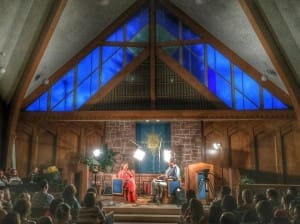
54 Responses
This ranks with the best of Mormon Stories and podcasts in general. Lindsay’s done a phenomenal job of historical reporting, always careful to explain her personal biases up front and willing to own the outcome.
Thanks, Lindsay and John!
I haven’t felt such genuine regard for Mormon fundamentalist polygamists since you interviewed Anne Wilde eight years ago, John. You also seemed to have regained some of your old objectivity in this interview as well which is welcome.
You drew me in again and again, Lindsay, with your love for these folks and the serious challenges facing them. Oh that the Church fathers wouldn’t be as foolish as to excommunicate a disciple of Christ called to understand and love these red-haired step children of the Brighamites. Good strength to you.
I didn’t have a lot of regard for fundamentalists either until I left Mormonism 12 years ago and finally realized that they (the fundamentalist Mormons) had been stuck in the same brainwashing situation that had kept me faithful in Mormonism for 49 years. I read several books on polygamy and after reading Kristyn Decker’s book “50 Years in Polygamy” I met her and we both admitted that we stayed in Mormonism, and for her, polygamy, because we truly thought we were doing the “right” thing. It takes a very, very long time (if ever) before the shackles finally fall from your eyes and it is bitterly painful to realize you’ve been living and hanging on to the lie.
Lindsay,
This collection has already become a invaluable educational resource that accurately offers a unique insight to the many aspects, elements and practices of Mormon polygamy. Heartfelt and done with amazing dedication the entire serious was a genuine labor of love. I know it has came with a great personal cost to you. Be assured this will absolutely offer comfort, ease the pain and suffering of those affected by the practice of polygamy. God bless you Lindsey.
G.R.
Loved this!
I have a question for Lindsay:
Please correct me if I am misreprenting your views. You said something to the effect that people should listen to their own inspiration rather than (simply) following their leaders. (I would agree) However, people can still be misled when seeking their own personal inspiration. How does one sort through those alternatives? Theoretically speaking, if/when we stand before God to be judged we will be judged more harshly for following our own flawed inspiration or for (simply) following flawed leaders as commanded? I’ve encountered many LDS people (and LDS leaders)who believe true obedience is to unquestioningly follow the leaders above them and that they will be rewarded for doing so.
There seems to be a general misunderstanding about the meaning of the word “complex”. If doctrine A is true and B is true then conclusion C is true. Another words C is dependent on A and B.
Seems like a large number of folks experiencing a faith crisis come to the understanding that A and B are not true but C or some parts of C remain true. This makes an individual contradictory, illogical, delusional, inconsistent and/or confused, definitely not an indication of how “complex” one may or may not be.
All people think and act irrationally; Ask any economist.
People holding irrational beliefs different from yours are not all deluded suckers and/or simpletons.
Maddy,
I personally believe that God & Christ would never want us to just blindly believe whatever person comes along claiming to be a ‘prophet’ or to have ‘seen God’ or have ‘new scripture’. Christ warned us over and over to beware of & test all prophets who come professing such things or Spirits who give us revelation, to see if they are of God or not, meaning if they teach the same commandments Christ did and if that prophet actually really keeps Christ’s commandments (which Joseph Smith did not).
So I believe God will hold us accountable for being deceived by man or spirit, for we all know right from wrong deep down and the Golden Rule, everyone knows polygamy is not fair and men would put up with it the other way around, so it doesn’t pass Christ’s Golden Rule, no matter how many prophets come preaching it.
If we are honest and sincere and really live the Golden Rule and have love & equal respect for others, all genders and races, and care for the needy we will not fall for too many falsehoods from false prophets or false revelation, and when we do we will catch ourselves and repent.
There is no passing the buck for our deeds, whether to blame man or Spirit. We have to just discern correctly ourselves, that’s the test of this life, to see who will have love & respect & concern for others so we can tell right from wrong. And those who choose right will gain the prize, Eternal Life. Were all on our own.
Did anyone else’s cut out around the 45 minute mark?
I am one of those people Lindsey was talking about who is stuck on whether Joseph Smith was a polygamist. It’s not that I think Joseph could do no wrong (e.g. I think the Book of Mormon was his own invention). I find it hard to dismiss Emma Smith’s statements which denied Joseph’s polygamy till the day she died. I also find the lack of any DNA evidence pointing to descendants from Joseph’s polygamous marriages to be a problem.
Yes, there are limitations to what the DNA testing can show, but the fact that not one single person has so far been proven as a descendant of Joseph is problematic. This is compounded by the fact that DNA testing has conclusively proven that some people who have claimed to be descendants of Joseph are definitely NOT related to him.
Every time one of the claimants to Joseph Smith parentage are conclusively disproven a deeper question is cast on other people with similar claims.
I know there is speculation that Joseph’s polygamous wives had abortions or that Joseph may have had a genetic defect leading to miscarriages, but all that is just guessing.
As an ex-Mormon, I admit that one of the reasons this line of inquiry fascinates me so much is because the entire legitimacy of the LDS church would go up in smoke if it was ever proven that Joseph was NOT a polygamist.
It’s ironic that the LDS church NEEDS Joseph to have been a polygamist in order to justify the entire chain of divine leadership they claim from Brigham Young onwards.
You make some very good, very interesting points. The things I wonder about, though, are 1) The affidavits signed in regard to the Temple Lot case by women claiming to be Joseph’s wives. Were those faked or coerced? 2) D&C 132 is pretty blatantly specific. Did Joseph not write that? Or was it meant for others and not him? The lines specifically referring to Emma make it sound like Joseph (or God) was talking about Joseph in particular as well as everyone else. 3) It seems to me that as much as the LDS church needed/needs Joseph to be a polygamist, the RLDS church needed him to NOT be a polygamist. If the RLDS crowd were to form a church based on the Book of Mormon and Joseph Smith’s claims of profit-hood AND eschew polygamy, they really couldn’t admit that he had been an instigator and practitioner himself.
The Temple Lot affidavits are the strongest evidence of Joseph’s polygamy, in my view. That said, these statements were made long after Joseph died and were made by Utah women who had reasons for saying things to support the Mormon leadership they were beholden to.
But who knows.
As far as D&C 132 goes, this wasn’t released until many years after Joseph died. We have zero evidence that Joseph himself was the author, other than the word of the people who made 132 public. It would make sense for someone fabricating something Joseph would have supposedly written to mention Emma in it for more authenticity. In fact, it was very smart to have God chastising Emma considering how she had become a thorn in the side of the Utah church by the time they made D&C 132 public.
I admit that Joseph very well may have been a practicing polygamist, even in the carnal sense. But there are still a lot of mysteries that muddy the waters as to what actually happened. The fact that DNA testing keeps disproving more and more claimants to Smith descent is the most troubling to me.
The reality is that there is SO much conflicting testimony that it is hard to know the truth of many of the events in Mormon history with an absolute certainty. Everyone seems to look at the historical record with their own prism of biases. How much weight should be given to what Emma says vs what other people say?
Still, it would sure make things interesting if we could somehow prove Joseph WASN’T a polygamist. For example, evidence showing D&C 132 was forged would be earth shattering.
It is just absolutely hilarious that the LDS church NEEDS Joseph to be a polygamist in order to justify their ecclesiastical authority.
To quote JSDefender from “Why is the Temple Lot Suit important?”: “The importance of the Temple Lot Suit in relation to Joseph’s character was that in a court of law, Joseph was found innocent of teaching and practicing polygamy. The Utah LDS Church brought forth their best witnesses that Joseph taught and practiced polygamy to prove they were the continuation of the original church. Yet, in an unbiased court of law, the Utah LDS Church could not prove that Joseph taught or practiced polygamy, even with two witnesses who claimed to be Joseph’s plural wives. In fact, the witnesses they produced—their best ones—were not credible witnesses according to Judge Philips.”
I don’t understand this. Why does the LDS church need Joseph to be a polygamist in order to justify its authority?
Levitical Rites and the Melchizedek Priesthood
Levite Priests were the only tribe to have multiple wives.
Beyond the sound of one hand clapping
there is the Melchizedek Priesthood,
the powers of which allows one to keep time
with no hands clapping.
With the sheckels gathered, babes are bonked, the meat is divied up and the hides sold the Levites of the Melchizedek Priesthood hung out in the coolness of their temple and entertained other powers to acquire. That’s why, the “church” is indemnified by this many wife idea.
And it came to pass, and so it goes –– hope it all gets sorted out in the end.
Ephima
I’ve never heard it put more believably.
Melchizedek Priesthood and Levitical Rites
As a restorationist, Joe was obliged to invoke arcane stuff, magic thinking and obedience the prophet.
And it came to pass the Mormon Prophet took Proto–Jewishness and turned arcane thought into Mormon Re-invention of Priestly Hijinx; if The Sister–Wife is good for The Chosen, low so many years ago, why not keep Levitical thinking as being the Lord’s Chosen Peoples’ commandments.
So Joe, gathered up some Masonic Stuff and invoked blessings to all through the Power of the Melchizedek Priesthood.
Inorder to clean up Mormondom, the Brother–Husband must enter into the fray to balance the Sister–Wife.
Restoration is not Rocket Science but it is genetically complicated with the Brother–Husband and the Sister–Wife making so many more babies and defusing Priestly authority for blessings and authority.
Ephima
If Joseph Smith wasn’t a polygamist then Brigham Young lied about the revelation for polygamy and D&C 132 is a forgery. Don’t forget that Brigham claimed that the practice of polygamy was a law which God had revealed to Joseph Smith who had passed it on to him (and others) in secret.
The LDS church needs Joseph to have been a polygamist or else the passing of authority from Joseph to Brigham is illegitimate.
The passing of authority from Joseph to Brigham is still illegitimate even if Joseph Smith secretly practiced polygamy, for then it means he constantly lied about it to the whole church and most importantly to his wife & children, totally leading everyone astray, and causing many if not most members to not later follow Brigham because of Joseph’s warnings against polygamy.
And Christ was very clear about lying and that it’s impossible for those who do it to be true prophets or maintain any authority, let alone trust.
Not to mention how Christ clearly condemned all polygamy too as adultery, and all the other countless things LDS leaders did and still do today that are contrary to Christ’s teachings.
So whether Joseph lied or Brigham lied it means the same for the Church today, it’s totally illegitimate. Lying is a worse sin then many want to believe, not even prophets can get away with it, for who would trust them anyway once found out they were lying?
And then there are even worse things that Christ condemned that the early leaders did, like adultery by polygamy, abuse of women & wives in polygamy, emotional & physical abandonment of wives and children in polygamy, inequality of women (Priesthood & position & power in church, home and society), allowance of divorce & remarriage, slavery, racism, paid prophets, asking for & using tithing for things other then the poor, etc etc.
Thus there are so many other even worse things done then just ‘lying’ (as bad as that is) by the leaders of the Church since the beginning that it’s absolutely impossible that the Church could be true or of God.
People have to ignore & excuse the breaking of most of 10 commandments to think any LDS leader was a true prophet.
With prophets like that who needs to beware of false prophets, for apparently true prophets and false prophets do the very same things.
The statement regarding DNA infers that Joseph’s plural marriages were never physically consummated. While that may have been true for some of Joseph’s wives, I don’t accept that being true for all of Joseph’s wives.
DC:132, which provides the framework for the practice of Plural Marriage, clearly states that the Lord sanctions this practice in part to “multiply and replenish the Earth” among other reasons. By this yardstick, Joseph should have been following his own revelation. Personally, I think he was following his own revelation to the greatest extent possible given the multiple distractions (such as running for President of the United States, Mayor and Nauvoo Legion duties, and the persecution etc..)
Regardless, we know that this certainly was not the case with Brigham Young and hundreds of other Senior Church leaders. There are descendants from multiple wives by them. This matters since the legacy and priesthood keys the currently leaders lay claim to – all pass through these polygamous / polyamorus individuals. This is exactly why the LDS church cannot completely divorce itself from polygamy.
This podcast did an excellent job explaining how fundamentally interwoven the concept of Plural Marriage is with the Mormon / LDS faith. This goes for fundamentalist faith as well as LDS ‘mainstream’ – all Mormon faiths. The core definitions of Heaven and full Exaltation are built upon Plural Marriage.
Very well done, Lindsay. It inspired me to want to focus on Mormonism for my senior project. I am so impressed with your research. You should do a dissertation on your findings.
Excellent podcast! I’m in full agreement that polygamy is NOT of God. It seems most thinkers and studiers of the matter come to this conclusion also. I feel sorry for those who need to believe Joseph was righteous in this, considering all of the evidence against him and the early leaders.
Good job, Lindsay!
Thanks for an “insiders view of polygamy.” Need more time to study it. Like to see it in print. Polygamy is “us,” our history, our belief, you say. Our Mormon ancestors are polygamists.
There is more than one kind of polygamy. Independent or I type polygamy, as in Arizona and Joseph Smith’s polygamy. The polygamy of the I type has advantages over the J type. For example, in AZ I polygamy, the developing youngsters have the advantage of cross-family mothering. In Joseph’s polygamy, since it was secret, there is no cross-family mothering, or cross-woman bonding and interaction. In AZ I polygamy, cross-marriage sex, with permission, is O.K. In J polygamy, a woman takes vows that she will be destroyed in the flesh if she touches another woman’s husband. (Though this rule does not apply to Joseph Smith.)
Still wonder what happens to the extra males. Are they dropped off in Wyoming or Florida?
Fascinating podcast, Lindsay. Brings more questions than answers.
Your podcast brings up a very real discussion as to what is the best pattern of marriage and community. Certainly not the celibacy of the New Testament,nor Joseph’s secret type of polygamy. Monogamy for most? Monogamy has its strong bonds, but it also has it’s satiation effect. And it is very lonely because it does not have the loving cross-family and cross-marriage interaction.
Perhaps responsible polyamory?
I definitely do not believe in the way marriage and family are lived today–isolated and alone in mass non-caring non-communities, as it is practiced today.
In fact, this is sick.
Perhaps, the answer is in our tribal past. We are tribal animals, and we need the cross-family, cross-marriage interaction of the tribe and the group bonding and love that this brings.
I would like to hear more about the loving emotional climate within the AZ groups you observed. WOW. Is there any way we could create that–in the ward grouping system, or, indeed, if need be, independent of the church. It seems that the AZ I groups are love-creating, love-driven people. Are they?
What are the underlying principles that create the loving community climate in the AZ communities? Tell us more about this, Lindsay, about that feeling and how we can create it.
Mormons, have the small community, the ward. And at least they pretend, or verbally say, they have the principle of “love.”
Is it possible that Mormons could realize the tribal advantages of the small community, the ward, or tribe, as you observed it in AZ? How?
Or, are Mormons too obsessed with repeating, brainwashing and keeping members lined up with the “one pattern of all.” Are they too
compelled by their knee-jerk obedience to the hierarchy, to actually develop their full exciting potential for the “love-driven communities” they could have? Frustrating.
Thanks John and Lindsay, for this idea-provoking podcast.
Love you all.
Wonderfull podcast !!!!!
Since I returned to mormonism feb.2014 [read: listening to Mormons Stories and FMH] I’m ringing like a bell. My insights are swaying from one side to the opposite and back, and it hits me hard each time an insight hits the wall, ringing like hell, completely convincing me and than doubt, doubt, doubt, doubt, doubt and hits the opposite meaning, with the same clearance, just to fall back into doubts again. I’m still going, but not as fast as it went. I’m starting to see things more clear now, and which way I am heading or finally am or getting ready for.
As a teenage mormongirl I had romantic ideas about polygamy: practical, help each other raise kids and have time to develop talents and have a job ! I had no idea of how it would be when you are truly married. I left the church and when I got married I learned how jealous I was, so, polygamy would never be an issue for me ! However: I lived a plural relationship, my ex had a woman with kids in his homeland on the other side of the world (South America) and we sent money for them and since I considered it also important for him to see his children regularly, he went home to be with (t)his woman and children. I grew up in a poor family, my mom raising her kids alone, and I was happy I was able to help a sister and her children who were facing a simular situation. On both sides there was no jealousy, just happiness ! But my ex was a singer in a band in my country and he got attention from many beautiful ladies, my gosh, was I ever jealous when they talked with him. Polygamy on the other side of the world is bearable, but close at home certainly not ! ;o)
Polygamous Joseph Smith was such a thing that swayed from one side to the other. I came to the church with the knowledge Joseph was polygamous. What a delightfull sound when Rock W. and Micheal S. shared a view Joseph had never been that way !!!!! Wow, that felt sooooo GOOD !!!!! But listening to FMH-Lindsay and hearing Brain Hales and John Hamer talk the opposite, people I consider sincere, having studied the material, and bringing up new ‘evidence’ as: D&C 132 is mentioned in a dairy written on a date around 1840, I geuss, I just have to assume Joseph Smith did. :o(
Still, I am not totally ready with it, and there is a lot of information to study, but my health is not so good, that I am able to get through it all. So, I have to rely on Lindsay, Brian and John, but in my heart I am more fan of the view from Rock W. and Micheal S. for the same reasons Micheal Surkan mentions ! There is no offspring, offcourse JC Bennett, a close friend, could have done abortions, but gossipping and slander are for me no real evidence that Joseph did it. I keep these things in mind, and probably time will tell how it really was. (At least: when you die you are able to know all things, so, my curiosity will be satisfied, it’s a matter of patience.)
I also got this for me new idea about the true church that Joseph Smith builded: I first thought it was all instructed by angels and authorities from the New Testament, but since a year I am learning a new insight. And I noticed it being mentioned aswell in the comments at Mormon Matters Podcast – that strengthened me: that Joseph Smith was creating a new true church by gathering and combining all the things that were going on in his days: the vision (was also seen by a woman), the Book of Mormon and other books, D&C combining other insights, Masonry and if the guys from Kinderhook had not told it was fake, he probably would have included that as well. Than he made the mistake of listening to several men around him who were involved with polygamy and unfortunately he included that, too. He didn’t live long enough to see or work out how it could, should and would be, didn’t see how damaging it is for women. Emma immediatly took distance after Joseph’s death, but Brigham Young and others carried it on, and clearly not in the light and insight as Joseph would have done. Maybe if Joseph would have lived long enough he would have seen that polygamy was a mistake ? I think Joseph had sincere ideas about building a new church as Lindsay say: to make people happy. When I came to be a member I never had the idea that Joseph was without faults. But after I had left the church a mormon friend showed me a movie about Joseph Smith, walking around healing people and it looked like they talked about him like he was Jesus Christ, which gave me a strange feeling. To me Jesus is way above Joseph Smith and Joseph was just pointing us into the direction of Jesus. It’s this last year I learned that the church has made this shift and made Joseph more holy than he was. Too bad, it doesn’t do him right. :o(
Since the excommunications keep on going and I really got sick and speechless when Rock Waterman was excommunicated too, I got to the point that I probably could do without the LDS-church. That insight rang as a bell and opened the door with a feeling of sweet fresh air ! Than dark clouds gathered and I wondered why the hack I fell in love with this church and wasted so much time on it ! Why were The Osmonds not Rdls ????? Than I would have fallen in love with a church that would fit me much better !!!!!
But this episode opened the sky wide and bright and brought a happy tune to me. The way Lindsay explains her sights on things, but especially ‘that is how we do’ … and also how things went with the mother who didn’t want to be on television, because her soon-2-b daughter-in-law didn’t know she was marrying into a polygamous family, made me sing: ‘shame and scandall in the family’. I guess Mormons come closest to Jews when it comes to painfull fun-making taboos !
A wide grin came up on my face and I want to share the song with you all:
Shame and Scandal in the Family by Shawn Elliot (with lyrics)
https://www.youtube.com/watch?v=PAkkLQr2Kjc
The nice thing at the end of the song is: everything turns out fine !
Let’s hope that will also work out for all those mormons,
within or outside the lds-church !
Afteral, this church allways made me happy and even now it still is able to make me laugh ! Somehow I am not yet able to get rid of it and have to deal with it a little longer ! Thanks to you John D and Lindsay and all the other podcasts that I can listen too, I still feel related to the Mormon church and it still feels great to be busy with it. And thanks to you all who comment ! I love to read it and learn from your insights. It feels like a warm family ! Like home ! :o)
Peace,
Adrie de Jong
The Netherlands
I just finished listening,a lot of it I knew because of my study from a year and a half ago into why I was a mormon and a Christian. What a long Strang trip it’s been, sometimes it’s like living in an alternate universe . I’m 54 and just now breaking out of my mormon shell. I’m crying as i listen to the question answer period because I’ve been so brain washed/indoctrinated and I grew up in a non active part member family. I feel so much compassion for those in polygamy. It’s so hard to free your self from indoctrination, almost impossible. Thank you to everyone that make these great podcasts possible and thank you Lindsay for being so engaged in What you love. You are helping me to have insights I might never have learned.
Love,
Happy and Free in Provo.
I was a little confused and conflicted by some parts of the interview. Maybe I’m the only one and I don’t get it but I thought LHP was a feminist that spoke up any time women were in a bad situation for them. Whether polygamy happened 200 years ago or now, I don’t see how it’s a good, healthy, free environment for ANY women. So I don’t get why the comparison with gay marriage and calls for decriminalization and/or legalization? did I hear right that perhaps it should be legalized? so that women can get health insurance? how about not allowing it so it’s not a concern from the get-go?
Lindsay, I totally don’t want to oversimplify your comments nor do I think it should take away from your call to understand fundamentalists instead of pointing at them as “the weird”. I was just like “uh?” when I heard you perhaps support polygamy (if consensual) and some of its possible benefits (like big families, etc). Totally took my by surprise.
Feminism means supporting women in their choices. I don’t think I said anywhere that I support coercive or abusive behavior.
As far as legalization, I think you’re missing the key part. Polygamy has been illegal and guess what? Polygamy not only didn’t stop, it thrived. It thrived because of the secrecy. Leaders like Warren Jeffs used the fact that it was illegal to control and scare his people. Legalization will take that fear away from folks and help them get the resources they need.
I believe the problem is not that polygamy is illegal, but that the law isn’t enforced with men like Warren Jeffs, who take advantage of innocent or naive women, even when the women were wiling, for most polygamous women are innocently raised in it & trapped, which the law should recognize.
If they legalize polygamy, and I believe they soon will (and I believe the LDS Church will then allow it again too, for it never stopped teaching it and sealing men to multiple living wives), but legalizing polygamy will only cause it to grow and become far more popular and many more women will become tragically and innocently entangled in it, and have to learn the hard way how abusive it is, when the old laws and morals already knew it was and tried to protect women.
For I believe polygamy is always abusive in every case (and also always ‘adultery’ according to Christ) no matter what prophet or culture tries to justify it, even if some women may like it. There have always been lots of women throughout time who are ok with abuse and control by men & being used by or submissive to men.
Many women fought against women getting the right to vote. Many LDS women today still believe the husband should have the last say in decisions and preside over the family instead of doing it equally. etc. Some women just don’t want the responsibility of equality, even if they are treated badly.
The biggest problem is the children who are raised in it, who aren’t allowed to think or talk critically about it, but who are pressured to believe in it and live it as young naive women, for no laws are there to protect those children.
By keeping polygamy illegal most women and children today are then protected from it, whereas if it was legal then far more women would get naively caught up in it and once involved in it, it’s hard to leave whether legal or not.
The answer is to help women & children get out of polygamy, not set things up so more fall for it.
I understand your passion and support for women but disagree with your approach. Having it illegal is partially what got us into this mess. Actually, it’s a large part. The history of my series talks a lot about this. It allows people to go underground and with underground comes a lot of harm and secrecy. Making it illegal only strengthens the power of leaders, not lessens it. It gives them a great persecution complex, greater fervor, greater fear to use, and more ability to abuse.
If it is legalized, then all of those things have to fall away and people will have more resources to realize that they aren’t as persecuted or chosen as they believe, they are just living an unhappy life.
I know it’s hard, because polygamy can be so damaging to so many and brings up emotional reactions. But if you are truly interested in rooting it out, it won’t come from making it illegal. That has done NOTHING in the past century and a half to stop or quell it.
Thank you for you response Lindsay.
But I don’t think we can say that making it illegal has done ‘nothing’, for laws against polygamy stopped the LDS from practicing it, which protected countless future women and children from it, and the Church was a one of the biggest, if not ‘the’ biggest, polygamous group in US history. Such laws also stopped many other smaller groups who tried to practice it, like the Cochranites.
While some LDS went off and secretly continued to practice it (FLDS) their numbers grew much slower because it remained illegal. If the law hadn’t stopped LDS polygamy then the Church would still be practicing it today, probably in very large numbers and the polygamy problem would be huge and effect thousands if not millions of women and children pressured to live it and put up with it.
If the law would not allow the FLDS & other poly groups to continue, like it didn’t allow the LDS to continue, then I believe that would take care of the vast majority of the problem.
For even if polygamy is legalized there will still be abuse associated with it and women will still be trapped in it, just like women are abused and often trapped in monogamous marriages, even though there is a way out. Abused women don’t usually leave abusive marriages, for many reasons, so it would still be the same with polygamy only worse.
For monogamy is not naturally abusive, only if the spouses don’t keep their vows & thus are abusive, but I believe polygamy is naturally abusive in every case, which only compounds the abuse likely to happen just because spouses are human. When if it was still illegal & the law actually applied, with mercy for the women so they would feel free to inform on the man, then far more women & children would not get trapped or born into it.
For again, shorty I believe we will see that once legal, polygamy will become far more popular, for it can be portrayed as a really good thing (just look at how all the LDS even still today believe in it) and unfortunately it usually takes time and experience living in polygamy to learn just how abusive it is, and by that time women are pretty entwined with it and it can be very hard to leave because they don’t want to be apart from their children, full or part time because of custody battles, even if polygamy was legal.
I think history has shown us how protective laws against polygamy have been, especially when it’s enforced. Just like laws against any other abuse or crime helps protect people.
I & most of my relatives & friends could easily have been raised by polygamous parents had the law not stepped in and forced the LDS to stop it.
Even now my active LDS parents & relatives & friends still believe in, excuse & praise polygamy. Convincing me that they will surely accept it when it’s legalized by Church and State, many even look forward to it.
Wow, what a great podcast. I wish it was longer! I could listen to Lindsay all day! An incredibly brilliant, thoughtful, compassionate soul. So happy to be ‘re’-acquainted with these type of Mormons at this point in my life. Thank you John, for Mormon Stories.
why is she still calling herself a historian without a phd in history . i have a masters degree in history and would not dare call myself a historian
A Degree weather a Masters or PhD doesn’t magically make a person a historian. Hard research, productive publishing, and innovative arguments makes a person a historian. To be an academic historian, sure, a phd or perhaps just a masters is needed. But there are plenty of independent historians. In Mormon Studies Dan Vogel and Will Bagley out produce about every PhD holder in the field.
Using this logic, I could become a sex therapist by reading lots of Cosmo.
How do you think sex therapists become sex therapists?
meh history is silly in that it is most noticed when someone is considered an expert and that expert offers his/her opinion about what happened. But they do best when they note that the things they are saying is just their subjective opinion. That’s basically all we heard from Lindsey/Hales and company.
and why is she chewing gum through out the interview. it makes her more reductive
551: Lindsay Hansen Park’s Year of Polygamy
I listened but did not watch the video. After watching a short snippet I was totally distracted by her tics, Hair-flipping and chewing gum.
As a Historian she does not exude confidence in the message.
As a historian, If she had begun with Mormon Philo-Semitism and explained the reasons for the subjugation of females and progressed from there the podcast would have more grounding for Mormon understanding. The use of females as chattel is historically based and needs understanding.
The Restoration of Judeophilia Mormons have much to apologize for in their apologetics.
Ephima
so lemme get this straight – to be a historian you have to:
-speak confidently (ever met the denizens of the history dept? i guess not)
-not flip hair
-not chew gum
-start talking about history when Ephima Morphew says the discussion should start.
this will come in handy someday if i ever decide to major in history. thanks.
oh wait, it won’t because none of that has absolutely anything to do with history, or the study of history, research, etc. credibility and scholarship is important. you’re stuck on the stupid stuff like looks. congrats, you’re shallow.
Ephima- Really? I absolutely think she exudes confidence. I would hardly call her hair flipping and gum chewing “tics”. She just isn’t pretentious. I love real people.
Well done, Lindsay. Thank you for all of your work.
Look around. She’s respected and visited by world class authorities on this topic. Have you listened to any of the series? What a silly little pot-shot.
As a public historian, I’m fairly certain that over a hundred 100 hours of polygamy research made available to others can’t be reduced by my gum chewing. If it does, that’s unfortunate for them. Perhaps if I ever give up this gig and get my Master’s in history, I’ll learn to curb my gum chewing. Not likely, but perhaps. I’m confident enough that I don’t worry about ridiculous/misogynistic expectations mentioned here, stop me from making killer content. It doesn’t work for you, but this series was pretty rad. (Yes, I sad rad! Will work on vernacular in the PhD program). Thx
I appreciated the interview and think Lindsay has a lot to offer. With that said. Not chewing gum would have been a courtesy to viewers and brought a higher level of professionalism. The gum chewing was a distraction for a bit but I was willing to look past it and realize none of those things i mentioned above where things she was going for.
Lyndsay, you have contributed valuable information. I’ve enjoyed your perspectives at FMH, and always respected your approach and opinion. Your comments on the essays held me and I gave you a big amen at the end. Two points here are relevant and instead of dismissing them out of hand I think you should give them some consideration.
First, the title of historian I take very seriously. When you applied that title to yourself I gave a little chuckle. Your weekly contributions regarding polygamy at FMH, and your year in polygamy although a great contribution, borrows heavily from research and work already assembled. At best I’d call you a researcher and organizer of information, and even then, your research is assembling “research”. So you can call yourself what you want, hell, you can even can even insist I call you a historian, but that would be hard for me to do.
Second. You can chew gum and flip your hair and say “like” all you want, and it doesn’t diminish you in the least to your talent. However if you want to refine another talent, the talent of public speaking, of being in front of the camera, or a high definition mic that does pick up everything that comes out of your mouth with perfect clarity then you have to take this skill seriously because it is a separate discipline. You are becoming a spokesperson for a cause, and in addition to your knowledge and your talent in representing those without a voice, your future in representing those without a voice through venues of mass media including cameras and mics deserves your attention to honing and refining a talent there, for your reach through these venues is valuable, and you are worthy of your hire. Showing up in front of the camera most people would not quibble that one ought have one’s hair combed and teeth brushed. However requesting one to spit out the gum and find connectors other than “like”, is about as misogynistic as asking a woman to keep her wrists straight and fingers rounded while beginning the piano.
Aaron, I am a historian (don’t worry, I do have a PhD), and I chew gum when I am giving lectures in the University at which I teach.
Your meritocratic preoccupation with little letters behind a name is the epitome of reductive. Not sure if you were going for irony, but there we are.
I checked this site for days and days waiting for the podcast to be posted, I was so excited. I listened to the audio first and when the video came out days later, I watched it too. I found the audio to be excellent and listened to it a few times. I noticed the gum chewing and hair flipping in the video too. I also felt that at times Lindsay seemed to be a little annoyed. I think it was probably that she was hot in there, like she said in the beginning of the podcast, and she was probably chewing gum to keep her mouth moist so she could speak, I never noticed her take a drink of water throughout the whole interview. Her insights and perspective though are really top notch. Her answers are answers, not non-answers that too many so called professionals give. She has researched and she has strong well- reasoned opinions. I suspect that if she was a Phd that we would get something a whole lot more watered-down. But Lindsay encourages us to have our opinions, and to give that space to others, and that’s valuable, to be told, that it’s ok to be where one is. That’s what I like about her work, that it has lead to answers, not more unanswered questions. Thanks Lindsay for helping me gain insight through your research, the freedom to use my own reason, and, the example you bring of your Mormon experience!
In France a woman with such a profile would be asked for firesides, just sayin’ :(
I would say a woman as pretty, as smart, as sensitive, as articulate and as real as she is, can tell it any way she wants to.
I enjoyed the fact that she didn’t make her remarks from a culturally or politically correct perspective. I enjoyed the way she was real. She told it like it is–the way she saw it, experienced it, felt it.
Love you Lindsay, love you all.
Remember, if polygamy were ever legalized in the U.S. then it would be legal for EVERYONE – not just Mormons and FLDS but Moslems, New Agers, swinging Atheists, etc. (However, it’s highly doubtful that Catholics or Fundamentalist Christians would hop on board. In the early third century, the Church Father Turtullion once quipped: Christians share all things in common except their wives whereas the Pagans share nothing but their wives!)
And, assuming sexual equality, then there really is no difference between Polygamy and Polyandry. One can argue as to whether or not society would be better but I think we can all agree that it would be a Lawyer’s Paradise. Think of the Divorce Court cases! He said and She said and She said and She said and Levi said and Asher said and Joseph (Daddy’s Favorite!) said……..
No. Before engaging in such a radical change in society I am inclined to agree with G.K. Chesterton who said that before one removes a fence, one should at least research and explain why the fence was put up in the first place.
Awesome!!! I’m going to start going through your podcasts.
Would love to hear someone like yourself talk to Dr Christopher Ryan (Sex at Dawn author), and get an outsiders perspective looking in, who has studied other cultural polygamy and polyandry groups.
Good work John and Lindsay! :-)
Matt
Anyone else notice the creepy demon hand appearing at the 40:11 mark behind Lindsay’s right shoulder?
I want to thank you Lindsay for your dedication, time, and research. I found the series so educational. Thank you also for being brave and vulnerable. Putting yourself and your work out in the open where some may choose to criticize is courageous. I don’t understand people who lower themselves to personal and cruel attacks and I hope you know these kinds of statements say more of their character than yours. Thank you again for countless hours of research. Love to you.
@Minute 53 Lindsay says that Polygamy fundamentalist are everywhere, and @54:30 says that is very common. That John Larsen said there were three members in each ward, that is nonsense.
Way over estimated, and I haven’t met a Mormon fundamentalist in 20 years of membership. Although, granted there is always a weird member here and there and I lived in 3 or 4 different wards.
But I guess Lindsay is more exposed and looking for this information.I’ll keep my eyes open, but I don’t think she is correct on this one. Makes me lose credibility on the rest of her statements.
Early deception of Joseph Smith on the issue of Polygamy and Polyandry not only tells us “something about the early Church” It tells us much more about the real character of Joseph Smith. Simply put, he lied and so did the Church. You can try to justify it all you might, but these lies destroy the credibility of the truth claims of Smith and the Churches that came out of his “restoration”.