
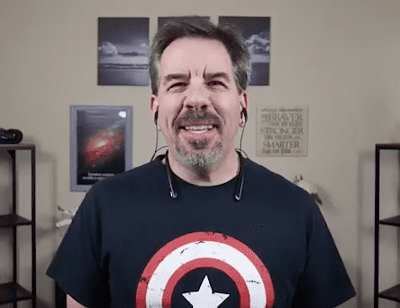
 Join us today as we continue our multi-part series on Scientology with Chris Shelton – Critical Thinker. Chris is a former Scientologist and Sea Org member and is now a writer, consultant podcaster, YouTuber and advocate for critical thinking.
In today’s episode of Mormon Stories Podcast we talk with Chris Shelton about the complexities of leaving Scientology, and how he became an ex-Scientology activist.
__________________
All of our interviews with Chris may be found here:
- 1189-1191: Scientology, L. Ron Hubbard, and the Parallels to the Beginnings of Mormonism – Chris Shelton
- 1192-1194: David Miscavige and the Rise of Modern Scientology – Chris Shelton
- 1195-1198: My Life as a Scientologist – Chris Shelton
- 1199-1202: Leaving Scientology and Becoming an Ex-Scientology Activist – Chris Shelton
__________________
Part 1: This transcript is machine-generated and lightly edited for readability. The audio is authoritative. Please excuse occasional errors in names and spelling. John Dehlin [00:00:00] Foreign. Guest [00:00:10] Stories is a production of the Open Stories foundation and relies solely upon the support of people like you, its listeners to help keep the podcast alive or to become a member of the community. Please become a monthly subscriber by visiting MormonStories.org and clicking on the Donate button on the right side of the page under support. All contributions to Mormon Stories are completely tax deductible in the United States and go towards producing the podcast and building communities and programs of support for Mormons like you. Thanks for your support. John Dehlin [00:00:53] Cry baby, cry. Chris Shelton [00:00:55] Everything is gonna be all right. You gotta. John Dehlin [00:01:09] Hello everyone and welcome to another edition of Mormon Stories podcast. I'm your host, John Dehlin. It is October 24, 2019 and we are super excited for yet another interview with Chris Shelton for former Sea Org member of Scientology, former Scientologist. He has become not only an ex Scientologist, but also an ex Scientologist activist, a writer, a YouTuber, an advocate for critical thinking. So far we have done, I want to say, ten and a half hours with Chris. We've talked about the history of Scientology with L. Ron Hubbard, the founding of, you know, L. Ron Hubbard before he started Scientology, his work with Dianetics, and his work as an author that led to the creation of Scientology and the founding of Scientology. That was our first chunk. Our second chunk was the rise of modern Scientology, which was when David Miscavige took over from L. Ron Hubbard and built Scientology into what it is today. That was part two. Part three was Chris's own life within Scientology from his parents joining Scientology, divorced and then coming back together. So how Scientology saved his parents, marriage, brought the family back together, and then Chris was raised as a Scientologist. How he became an active, you know, volunteer slash worker for Scientology as a teenager into early adulthood, leading to his becoming a member of the Sea Org, which is the elite sort of core management group of Scientology. And then we talked about how he experienced some marital issues which led to him, you know, breaking some of the rules of Scientology in terms of having relationship, you know, relationship outside of marriage, which led to him being put in, I want to say solitary confinement with the Sea Org, but sort of in Scientology Sea Org jail for three years until he was, he was reconditioned and his final sort of year or so with Scientology before he left. So that's where we, that's where we ended our last session together. What we hope to tackle today is what it was like for Chris to leave Scientology and then how he rebuilt his life after that to become an ex Scientology activist and what it's like to be an ex Scientology activist and just generally an ex cult activist, which is something that we've talked about with people like Lloyd Evans, Amber Skora, you know, Tova Mirvis, and many of our former interviewees on Mormon Stories, including Stephen Hasson, because we really love on Mormon Stories podcast. Understanding unhealthy organizations, understanding cults, learning how to make churches or cults healthier, but also learning how to help people become aware of what they are a part of and help them find health and healing either within the organization or outside. And that is what we love to do. I just want to remind everybody about the Thrive conference November 17th. It's going to be an amazing conference. Positive, healing, growth. We're going to be bringing a thousand plus post Mormons together to celebrate healing and growth beyond Mormonism. We've got an amazing speaker group lined up. Wayne Sermon from Imagine Dragons is coming. Amber Skora from Leaving the Witness, Natasha Ofer Parker, Christian Moore, myself, you know, David Bacavoy may be involved. Stephanie Sorensen Larsen from Encircle. We've got a lot of fantastic speakers lined up. Music and fun. Maybe there'll be karaoke, who knows? We've got over 800 people, 830 people now who have signed up. We're certainly going to break a thousand. Please tell everyone it's only 15 bucks a person. We're going to lose money on the event, but we want to do it to help creating community and growth and healing within and beyond Mormonism. And people who are in Mormonism are welcome to join because we're not going to be attacking the church or people. We're just going to be talking about healing and growth. So go to Thrive Beyond Mormonism to sign up. Please tell your friends. And right now, if you've enjoyed these conversations with Chris Shelton, what I want to ask people to do is please share this live stream right now on Facebook because in the previous episodes we've been focusing on Chris Story. It's going to be today, if we have time, where we actually allow for some Q and A, where you, the audience are allowed to ask Chris some questions. So we need a big of a live audience as we can. So please share this right now on your Facebook streams, in your groups, Twitter, Instagram, wherever, and we'll have a robust conversation. So without any further ado, Chris Shelton, welcome back to Mormon Stories podcast. Chris Shelton [00:06:22] Thank you very much, John. I'm really happy to be here and I actually want to stop and just take a moment to thank you for letting me do this. In this long form format, because I'm not. Ever told all of this in one go like this. And it's valuable to have it all in one compact sort of place, even if it is 10 hours of video. It's a lot easier to deal with that than 700 videos trying to sort all this stuff out, you know? So this has been a real experience for me too, and I really. I really appreciate it. John Dehlin [00:06:54] It's my pleasure. It's a real honor. And people. I have many, many people reaching out, including Wayne Sermon's wife, Alex, who texted me and just said, these Scientology conversations are just captivating. And so you're really reaching our audience both with your. Both with your level of depth of knowledge of Scientology, but also your. Your willingness to be vulnerable and to be just open and candid about your own journey. Chris Shelton [00:07:23] Cool. John Dehlin [00:07:23] So thank you. All right, so I have a question, something that I wanted to ask you. Every. Every single session I interviewed you but didn't. And it's one of the biggest questions facing Scientology right now. And this is going to be going back a little bit before we dive into your story, but the big question everyone asks is, where is David Miscavige, his wife? Chris Shelton [00:07:46] Right, right. John Dehlin [00:07:47] You were. You were incarcerated, so to speak. I'm using that term loosely. But you were in some ways sort of incarcerated as a Scientologist for at least two or three years. And that's what people say, you know, is possibly what's up with David Miscavige, his wife. So do you want to tell us that story really quick, clear up where people have it right or wrong, and then tell us your theories about what may have happened to her and where she might be, and then we'll launch into the rest of your story. Because I think that's something I wish I would have asked at the end of our last episode. Chris Shelton [00:08:23] No, no problem. Absolutely. Shelly Miscavige is David Miscavige's wife. They were married in the late 70s, early 80s, I think it was early 80s, and she has been his personal assistant, right hand man for most of that time until in the mid 2000s, I believe it was 2007 was the last time she's ever been seen publicly in any capacity. She was relegated earlier than that to some kind of. What do you. Exile. She basically got kicked out of David Miscavige's vicinity, and he never, ever wanted to have her around or be seen or heard from. So he had her sent off to a place that we call, or not that we call that the church. Calls the Church of Spiritual Technology, or cst. And we didn't talk about this at all. But CST is another organization within the labyrinth of organizations. There are a couple that are at the very top of the Scientology hierarchy. There is the Religious Technology center, which is what David Miscavige is the head of. There is the Church of Scientology International csi, and there is CST or the Church of Spiritual Technology. And probably the easiest way to describe what CST is about is that L. Ron Hubbard had a goal from very early on in his life when he actually wrote about this to his wife Polly. At the time, I think this was in the 30s, he wrote a letter saying how he wanted to slam his name into history. He wanted to, you know, sort of achieve immortality by name, you know, through name recognition or having his name always, always being talked about. And CST is sort of the ultimate realization of that goal. The Church of Spiritual Technology has basically one public function or one known function which is to preserve L. Ron Hubbard's works, all of his lectures, all of his books, all of his writings, everything he ever did, and to save it in a format that can be. That will last or endure forever. And this does relate to Shelley Miscavige. I am answering the question on this. So CST has various locations. It's a very, very super, super hush, hush, tiny little organization. I mean, there's literally just a handful of people who work at it, and it's at the very, very top echelons of Scientology. This Sea Org is. The. CST is run by Sea Org members. So ultimately it falls under David Miscavige's command. He runs CST just like he runs everything else. But. But CST is sort of a non public facing entity. Most Scientologists don't even know a whole lot about cst. It's not talked about, it's not known. Nobody knows who works there. It's not, you know, the board of directors is not known about like. Like you really don't know a whole lot about cst. The most we know about it came out of the IRS filings when they got tax exemption. So they're preserving all of Hubbard's works on titanium plates. They're literally etching his words into titanium plates and onto nickel coated records. Not vinyl records, but nickel coated records that can play on solar powered record players. So that in the case of a nuclear war, all of civilization is destroyed. There's hardly anybody left. But these vaults of Hubbard's materials will be available in various geographical locations. There's one in Tremencia, New Mexico. There's one in the Big Bear Lake, Arrowhead region up in the mountains of San Bernardino. That is where we believe Shelly is located. Bringing it back to Shelley now. And there's a couple other locations. They have another one out in California, another one. I think they were trying to build one up in Wyoming, but I don't know that that one actually got through permitting and all that. So it's kind of all super secret. We don't know a whole lot about it. I did a couple podcasts with a man who used to work there named Dylan Gill. So you can look those podcasts up on my channel if you're really interested in what CST is all about. But CST has the added benefit of being in remote locations and being super secret, even in the world of Scientology. So you really have to get to the highest, highest levels of the church before you're going to have anything approximating access to cst. And the whole time I was in the church, I only met one person when I was on the RPF who had been working at cst, who had been sent to the rpf. And of course, he was not at all forthcoming about his work at cst. Nobody talks about it. Even when you're in the prison of the rpf, you don't talk about the confidential stuff. So most of what I've learned about CST came from after I left the church. So Shelley, we believe, and we, being like Tony Ortega, who has reported on this and probably done more research and investigation on this matter than anybody else, has good reason to believe that she is being held or is located at the CST headquarters up in the mountains of near Lake Arrowhead. So what she. You can't really get up there. There's a road that goes past it, but it's very heavily secured. You go over to the gate, people are going to come out and start asking you sharp and pointed questions. They don't want you around there. There's cameras everywhere. There's no getting in. And so with her being there, she's effectively, you know, in a sort of, you know, super containment system. I mean, she's just kind of up there, and we don't really know a whole lot more than that for sure. You know, there was one reported public sighting of her in a little town near that location where she might have gone one day with a couple. And the report was that she was being watched. She was being escorted by a couple people. She didn't look that good. And that's the only Real report we have of this. Otherwise, we have that the LAPD did do a wellness check. We do not trust the LAPD when it comes to the Church of Scientology. They are bought off. They've been compromised for years when it comes to enforcing the law on the Church of Scientology. And the thing about Shelley, of course, is that she and Leah Remini were, you know, sort of had a relationship, were sort of friends, like Leah certainly considered her a friend. And Leah actually demanded that, you know, report. Filed a missing persons report on Shelly. And the LAPD said that they had done a wellness check. They did not offer any evidence or proof of having contacted Shelly in person. It could have been done by phone. And, you know, they didn't. They would not answer whether they even talked to her directly. So the LAPD has not been forthcoming on this at all. But that's what we have as where we think she is located. Basically exiled. And I have mixed feelings about Shelley as a person, but she does make a great demonstration or point of when you cross David Miscavige, there are not going to be good consequences. What she did to earn that, by the way, is David Miscavige set up a whole series of orders, impossible orders and directions that he wanted the Sea Org to do at the level of the international base in San Jacinto, California, outside Hemet. The gold base, we call it. That location is where David Miscavige would hang out, where Shelley lived, where the upper level scientologists were located. This is back in the early 2000s, in 1999. He wrote this long series of orders for the Gold base to get done. It was extensive. And one of those things, one of the orders was to reorganize the entire place so that it was more efficient and streamlined and was running better. So what she did wrong was she dared to comply with that order. I'm not even kidding. She got that reorganization and structure laid out and done and presented it to Miscavige as a solved problem. Order complied with. And he apparently was furious about this. There had been some earlier indications. Mike Rinder reported on hearing from Shelly that she was very concerned about Dave and her relationship. Just prior to this, was he wearing his wedding ring? She was wondering. So there was. There were marital issues or Scientology Sea Org issues. You know, they kind of mix when you're in the Sea Org already. And then he comes. And so, I guess whatever other trouble was brewing, the Org board thing, the reorganization thing, was sort of the final straw. And he kicked her off the base. And she has not been seen or heard from since. So that's about all we know. Definite. Of a definite nature with conjecture mixed in there, but that's pretty much all I can say about it. John Dehlin [00:18:10] Okay, so, I mean, do you think she's literally held against her will? Chris Shelton [00:18:16] That's the big question, and it is a tough question. You would normally think, well, yeah, of course. But Shelley Miscavige is another person who was raised under L. Ron Hubbard back on the boat. You know, she's been in Scientology her entire life. She has no other model of reality than the Scientology world. And that's a pretty scary place to be, I can tell you from personal experience. I mean, she was way more enmeshed than I was as a child. And then she was side by side working with David Miscavige through the entire couple, the entire takeover of Scientology. She was right there with him, helping him, aiding him, working with him. And afterwards, all through until the mid-2000s, through all of the beatings and abuses and policy changes and remaking the church and David Miscavige's image, she was right there helping him the whole time. And we know from other reports that, for example, he would beat up on somebody and she would come along afterwards with some bandages and, you know, sort of reassure the person that David was really a good guy and they really shouldn't have done whatever they did and sort of patched the thing up. So the person was still going to be okay with continuing to work in the Sea Org after David Miscavige had just beaten on him. So she was definitely an enabler, and this is why it's difficult to have tons and tons of sympathy for her or wonder about her state of mind. Is she being held against her will? I don't think that that would be the case. Has she been exiled and relegated to, you know, a not so great existence away from everybody that she knew and loved and wanted to be part of? Yeah, I think. I think that part is against her will. I don't think she enjoys where she's at, but she's still a hardcore Scientologist and Sea Org member, so it's a little hard to say. You know, there's still. There's so much conjecture around this that it's. That it's difficult for me to be able answer it with any level of certainty as to whether she is or isn't being held against her will. John Dehlin [00:20:30] And there's also the whole Patty Hearst kind of Stockholm syndrome sort of situation. Do you want to talk about that? Chris Shelton [00:20:37] Just so that we are I mean, that's the thing with all Sea Org members. And when you're at that level, you have fully. I mean, it's kind of hard to get this across to people. John Dehlin [00:20:48] Not to a Mormon. It's not to a Mormon. Chris Shelton [00:20:51] Okay, then maybe you guys will track with me on this, because I've run into difficulty trying to get this across to people. How. How fully you embrace the purpose of saving the world, of saving the universe. I mean, this is not. This is something that these people take very seriously and they dedicate their life to it. I mean, I did, you know, and I. So I know what that headspace looks like, and it's. It's a pretty delusional place to live, but it's where these guys are at. So that purpose, you know, that can override a tremendous level of physical and emotional and psychological abuse. I mean, 17 years I lasted until I finally had enough of it, but as a Sea Org member. But I didn't even have to endure the kind of levels of abuse or witness the kind of abuse that Shelley Miscavige has, you know, and she can. To keep doubling and tripling and quadrupling down on your belief system because you think this is the thing that is saving the universe and you and your work in it matters is important, is, you know, is valuable. You know, people can convince themselves of anything. And Scientology has, you know, something I didn't mention this whole time that's worth mentioning right now, scientists. Steve Hasson, I think, has actually said this. Scientology has more methods and techniques of control and manipulation and thought reform than almost any other cult out there. You know, most cults form up around one or two control mechanisms, one or two tricks they've got. And they just use it, use it, use it. And they kind of go. And then they. Then they putter out or they go and they kind of keep going just on the strength of one or two or three things that they do with people. Scientology has hundreds. So, you know, so if for that reason, not because of its size or its money, but because of that, we consider Scientology one of the more dangerous cults out there. And Shelley Miscavige is the poster child for why we think that. John Dehlin [00:23:06] Yeah. Yeah. Well, I guess our. To the extent that she's not complicit. Not complicit. You know, our hearts go out to her and everyone. She just represents, you know, many, many people that. That are kind of stuck in this thing on the inside. Chris Shelton [00:23:26] Yeah. To be clear, nobody deserves what's happening to them in the Church of Scientology, no one. None of those people asked for what they're getting. None of them deserve it. It's not, you know, it's not a fade or karma thing. It's an awful place to be. And Shelly was at the top of that heap, so. John Dehlin [00:23:46] And sometimes our worst prisons are the. Are the ones of our own making. Chris Shelton [00:23:52] They're always the ones that are of our own making that are the worst. Absolutely. Guest [00:23:57] Yeah. Chris Shelton [00:23:58] Yeah. John Dehlin [00:23:58] And that's why. And I think about this a lot because, you know, people always. And I've talked about this several times now just with you. There's always people that think that my goal is to get people out of Mormonism. And there's just. There's no truth to that. I want everybody to be fully aware of the historical background and context of what they're a part of. I want everybody to know the risks of being a part of any organization and the costs and benefits and the harm that the organization does. Because every organization does good and harm. As a coach or as a psychologist, I have the capacity to do good. I try to only do good, but sometimes I probably goof up and do harm. Doctors, medical doctors, try and only do good. They sign the Hippocratic oath, but sometimes they do harm. So it's not like anyone's claiming to be flawless or perfect, but everyone deserves to know what they're a part of, to have full consent of being a part of it. To know where their money's going, to know the costs and benefits and the risks, and to know how the organization's harming people. And then if they make the decision to stay with it, that's great, as long as it's fully consensual and, and with full awareness. But I had, you know, I met with Thomas McConkie before he really got into what he was doing. This is. McConkie is a big name in Mormonism. And he said to me, occult is any organization that will not allow you to leave the organization with your dignity intact. In other words, if it destroys your friendships, your marriage, your relationship with your kids, your. Your connection with your community, your mental health, your financial well being, to leave any organization, that organization is acting like a cult. Chris Shelton [00:25:59] Exactly. That's very true. And Mike Rinder has even pointed out correctly the difference between a religion and a cult is what happens when you try to leave. Getting in looks exactly the same, but what happens when you try to leave, you know, and that. And every single time, every time when you're dealing with a destructive cult, there are many, many methods of what's called departure deter. You know, try to stop you from leaving. And they'll guilt you, they will shame you, they will blame you, they will stalk you. They will. You know, there's a whole spectrum of awful behavior, but it's consistent from one of these groups to the next to the next that they do this. Whereas a real religion, you know, they're live and let live. Hey, you don't like it, move on, not a big deal. You know, no skin off our noses, off you go. You know, and I think that's always been a. If you needed a one stop test, I always thought that was one of the best ones. John Dehlin [00:27:02] Yeah. Okay, so let's jump back to your story now. Chris Shelton [00:27:06] Yeah. John Dehlin [00:27:06] So you are. You're living in the. Remind me you were in the kind of middle Minnesota, Wisconsin area. Chris Shelton [00:27:13] I was in Twin Cities. I was back in Minneapolis. John Dehlin [00:27:15] Okay, so you're in Minneapolis. You got out of the Sea Org, and let's just take it from there. So, like, help. Chris Shelton [00:27:23] Yeah, went down the rabbit hole. John Dehlin [00:27:25] Help people understand why it's not just like stopping the Presbyterian Church or the Episcopal Church or the Lutheran Church. People who aren't in a cult have no idea how devastating it is to have your worldview, your friendships, your relationships, your marriage, your source of spirituality, your source of morality, your whole reason for being to have all of that in a moment dropped to the floor. So help us understand what that's like for you. And then how in the world do you pick up pieces after that? Chris Shelton [00:28:03] Well, yeah, it's a rough go. And the, the way I thought about it at the time, which has still served as a, you know, as an adequate way to describe what was happening, is that I saw that I saw my. I saw my life, or life itself generally as a chessboard or, you know, this is how I sort of imagined it after, you know, that, that moment of, oh, that's what's been going on is I saw myself as a pawn on a chessboard, you know, a knocked over pawn, you know, and that David Miscavige, L. Ron Hubbard, they were the kings, you know, they were the ones who were running the show. And I was just moved around from place to place, told what I needed to be told, patted on the head, given the little rewards every now and again, little crumbs that they were feeding me, and told to go, you know, play my part and sacrifice myself as necessary for the good of the game. And to the degree that I thought the game was an honest game, that where the stakes actually mattered, I was willing to be in that position. But what changed was when I realized that the game was an awful game where only one person actually wins at the end of this whole thing, and that's the king and everybody else doesn't. Not only are they sacrificing themselves for a greater cause, there is no greater cause, and their sacrifice is therefore meaningless. All of the sacrifices of the thousands of people at this point, probably tens of thousands of people who have been in and out of the Sea Org, were meaningless. They literally meant nothing. And not when compared to the goal of what the whole thing is supposed to be about. Clearing the planet, saving the universe, saving mankind, restoring people's spiritual abilities and awareness. None of that was true. So you find out at the end of the day, what you're doing is I was basically being a slave for L. Ron Hubbard and then David Miscavige so they could have nice meals and wear John Loeb shoes and jet set around the world as though they are these amazing people. And they're not amazing people. They are horrible people. So that's what I realized. And like I mentioned before, you know, anger doesn't even begin to describe the sense of betrayal and anguish and loss of that moment. So I then needed to figure out for myself, well, now that I have all this new information, what am I going to do about it? John Dehlin [00:30:49] Can I. Can I test a theory on you? Chris Shelton [00:30:51] Yeah. John Dehlin [00:30:52] Okay. So I do these. I've been doing these faith crisis workshops and retreats for probably four or five years now where we spend a weekend. We get 40 to 80 Mormons in faith crisis together, couples and individuals, and try to help them understand where they've been, where they are, and help them figure out where to go. Right. And I've been making this argument for quite some time. It's so easy. It's so easy to. Once you realize the church isn't what you thought it was, to see it as evil, right? To see it as one of the most evil things on the planet and to hate it and hating the organization, the cult that you came from can ruin your life and consume you because the hatred can. Hatred is just not good. If you think about Star wars, you know, you love Star Wars. You think about how Darth Vader is trying to get Luke Skywalker to feed the hate. Right? Chris Shelton [00:31:58] Absolutely. John Dehlin [00:31:59] Consume you, Right? Chris Shelton [00:32:00] Yes. John Dehlin [00:32:00] And so I'm not just interested, you know, I think I should go away if my goal is only to just, you know, and my goal isn't to destroy the Mormon Church, but I think that if my goal were to Destroy the Mormon Church. If your goal were to just destroy Scientology, I would think that's not the optimum goal. Because I think for anybody who cares about people, their ultimate goal should be the health and well being of everyone. Right. In other words, my goal, your goal, should be that everyone who leaves Mormonism or Scientology lives the happiest and healthiest life possible afterwards. Are we in agreement on that? Chris Shelton [00:32:40] We are. John Dehlin [00:32:41] Okay. So to do that for me doesn't mean just seeing the organization that we come from is 100% evil. And if you. Have you ever heard about Alain Debuton at all? Chris Shelton [00:32:55] No. Who's that? John Dehlin [00:32:56] Okay, so Alain Debouton did a TED talk called Atheism 2.0. Chris Shelton [00:33:01] And. John Dehlin [00:33:02] And in that talk, he basically said Hitchens and Dawkins and Harris, and this was back right post 9 11, them just hating on religion. They're getting it wrong. Because what they need to do is learn from religion, the good and the bad, and then figure out how we can take the best plays from the playbook of religion, fix the things that are wrong, add the things that are good, and help people come up with alternatives to religion that are all the good about religion, and then all the best of secularism combined. And the reason why they're saying that is because it turns out that it's not just as simple as leave Scientology and leave Mormonism and your life is perfect. You still have to get your own mental health together. And that's back where L. Ron Hubbard was probably genuinely trying to help people along with Joseph Smith. You have to get your own mental health together. Then you have to learn how to have healthy relationships. Then you have to learn how to have healthy families. If you want a family, then you have to find a community. Then you have to find meaning and purpose in life. You have to find some sense of existence bigger than your own. You have to figure out some moral code so that you're not making your life worse. And then you have to figure out how you want to spend the rest of your life and who you want to spend it with. And guess what? That's how Scientology and Mormonism and Jehovah's Witness and Orthodox Judaism, that's how they all started. It's like, how do we help people find a sense of meaning and purpose? How do we help people find spirituality? How do we get people's mental health strong? How do we do all these things? And so when I look back at Mormonism, and I'm asking you, as you look back on Scientology, yes, it's true that it was a fraud. Yes, it's true that we were all part of something that wasn't what we were promised. What is also true is that we had some identity that we believed in. We had some sense of purpose, something to get us out of bed in the morning. We had something to build a life around. Something. It helped us find our mate, it helped us get married, it helped us start a family, and. And it helped give us a purpose for living, and it gave us a set of rules and morality and structure that kept us from ending up in the gutter. Now, you don't need a religion for that. That's not what I'm arguing. But I am arguing that you did derive some value from Scientology. And the evidence that you derived value from Scientology is that when you left it, your life was in shambles. And it's true for so many people that I work with. And so I want to jump back to your story, but I just want to see if you can at least acknowledge, as I try to acknowledge, and as I try and get the Mormons that I know who left the church to acknowledge, you need to look back and see the value that the religion offered you, because that's the only way to then figure out, how do I take. How do I fill those holes at a minimum, you know, how do I find spirituality? How do I find morality, Meaning, purpose, identity, community, family? How do I create that on my own? And then where do we go from here? So tell me how you feel about what I just said or if you think I'm crazy or insulting. Chris Shelton [00:36:30] No, I don't think you're crazy, and I don't think you're insulting. But I do understand why people in certain places, in certain frames of mind, I mean, might think that you are. And I'm curious. I want to ask you a question. How long have you been out of Mormonism? John Dehlin [00:36:47] I stopped believing that the Mormon Church was true in 2001. Chris Shelton [00:36:52] Okay, so this is 18 years of processing. John Dehlin [00:36:58] And then I stayed in the church until. For 14 more years, until they literally and was podcasting and being an activist, and until they kicked me out in 2015. So I've physically been no longer attending the church for five years, and I've no longer been a member of the church for four years. Chris Shelton [00:37:20] Okay, cool. So then let me ask you. Was there any period during this last 18 years after you realized the belief system and found out about Joseph Smith and the betrayal and. And violation of trust and all of that, was there a period, any period at all, where you were Angry. So angry that you thought structurally, this thing is just evil? John Dehlin [00:37:48] Yes. I mean, yes and no. One way that I differ is that I actually loved my experience as a Mormon. So, you know, I was student body president. I was captain of the varsity basketball team. It kept me off drugs. It kept me off alcohol. I ended up going to byu, had a great education, ended up working at Bain and Microsoft and Arthur Andersen. But in some ways, Mormonism was made for me. I wasn't a gay kid who was trying to do reparative therapy going crazy. I wasn't a woman being told that I wasn't as important as a man. It's almost like Mormonism was made for me. And so because I had such a. And if become very successful, and I don't mean to say I'm like, better than anybody, but, like, I live in a nice house. I have a good education. I have my financial and economic and social needs met. So in so many ways, I'm like, oh, my gosh, I've really benefited from this thing. I was never kept in prison. Like, I had things that hurt me, but in so many ways, I look back and say, wow, all these dances and leaders who cared about me, and, you know, yeah, the teachings weren't true, but I've had a great life. And so, yes, I've been angry about the church misleading me. Yes, I've wondered how I could have spent my time better. But I also think, wow, I'm actually doing pretty good at 50, and I've got my whole life ahead of me, and my kids are out. And so I probably don't have some of the anger that many people do because it didn't break up my marriage, it didn't get my kids. I have good relationships with my parents and siblings, and I don't feel like it harmed me in any super significant way other than some of the time could have been used better. But frankly, a lot of that time where I was in the church, I was trying to get people enlightened. Does that make sense? Chris Shelton [00:39:44] Oh, no, it totally makes sense. Completely. John Dehlin [00:39:46] So, yes, I've hated the church. Yes, I've been angry. Yes, they excommunicated me. Yes, they mistreated me. But there's also been so much good that I still love it. Chris Shelton [00:39:56] Totally understood. And obviously, we come from different places. Right. And I totally. And what you said actually is really helping me a little bit. So I'm really glad you said all of this in terms of when you just said it was made for me. In other words, you are the demographic for the Mormons. Right? Yeah. John Dehlin [00:40:17] White, straight, you know, that's right. Cisgender males. Chris Shelton [00:40:22] Exactly. And so, you know, to use this word, that is obviously a loaded word for a lot of people, but I think it actually exactly fits here. You were in a privileged position as a woman. For sure. Right, for sure. Okay, fair enough. Now, this is in no way a judgment of you, your experiences, your ideas. That's not my point. I was not the demographic for Scientology. I was the demographic for a worker bee in Scientology. Right. The demographic for Scientology is actually what we call the whales, the really rich folks, the celebrities, the people who come in with tons of money, the quote, unquote able. Right. So that they can make them more able. In other words, take all their damn money. So, yeah, so that's actually the demographic for Scientology. And when you go to Scientologists, would go to those people, they're the first ones to tell you what's the problem. I don't see any of this. I've been having nothing but a great time with all this. I get this nice auditing. I do these classes. L. Ron Hubbard tells me how life works, and I like what he says. So what's the problem here? Right? They have no concept of how bad it can actually get for some people, especially the people who are literally delivering their Scientology to them on a silver platter. So there is that level. There are levels to this stuff. But what I wanted to get back to, on what you're on, to directly address the point of it's all evil, is I believe from my years of recovery at this point and watching and talking to so many other people who have been through this, it's all anecdotal. I can't talk statistics on this, but I believe that it is a phase of recovery that you would first pendulum swing from ultimate faith and belief in something to whoop, this is the worst thing I've ever seen in my life. I can't believe this. How could they lie to me? Because there's all the betrayal and anger and stuff that you have to process. And of course, when you have been lied to at the level with the level of deceit of these groups, it's hard to describe. It's unbelievable. And when you start actually confronting what that is, and all those years of pushing those thoughts away, pushing down or suppressing those doubts, seeing things that didn't make sense, telling yourself it did make sense, you know, the motivated reasoning, all that stuff, all of that comes crashing down on the person when they realize and finally accept the deceptive you know, the deceit and the. And the betrayal and all of that. And they actually see it for what it really is. And they go, holy shit. And all the hindsight bias comes crashing in. I should have known, could have known, would have known, you know, all this, like, how could I have possibly been so stupid? Blah, blah, blah. There's a lot of self blame and stuff that goes on. So I think that's all perfectly natural. At the beginning of getting out, you're furious. You're furious for all of it, and you're furious at yourself for having let yourself be conned, be fooled, whatever. I think there's different levels of this for different people. Everybody has their own experience. I'm trying to talk broadly here, and I think that. That it's all evil view starts to taper off and be tempered with more reality as you go through the process of recovering and acclimating back into the real world with different ideas. And you can kind of. And you get more time and distance and space from that experience that you had. And you can look back on it, you know, without all the, you know, necessarily stress and trauma kicking in every single second of every single moment you're contemplating it. So I think that's part of the process of leaving, and I think it's actually a necessary part in a way. So I think in terms of guiding or helping people out of these situations, I think that might be, for me, if I was setting that up, that would be part of the explanation. You know, it's kind of like when you break up with a marital partner or girlfriend or boyfriend, right? It's like when you first break up. Your entire world is all about the grief and the loss and the trauma and the upset of it. But you give it time and it chills out, and then you can start looking back at the relationship and seeing the good times as well as the bad. And you can more objectively judge the person you were in a relationship with and go, well, they weren't totally evil. I mean, unless, of course, they were a malignant narcissist. And that's. That's a different matter, right? But, you know, you can start kind of seeing some of the gains and some of the benefits as well. And I. I tried from the beginning for myself to acknowledge that, yes, there is good in Scientology, otherwise why would I have stuck with it for 27 years? Of course I got something out of it. Of course there were good things in it. Of course I helped people. But I realized, and this was, for me, this was very Important. Maybe this isn't true for everybody else, but for me, I realized that a lot of the help I was giving over the years, a lot of the help I even received over the years was despite Scientology, not because of it. It's because the Scientologists I dealt with truly wanted to help people, like I wanted to help people. And when I would work with other Scientologists, they wanted to help me. And just that can get you farther than most methods and techniques of help is an honest desire to help somebody, because so much of help and assistance in interpersonal relationships is really just being there for the person and being willing to listen to them. You know, you get there. That's where you get most of the power from, I think. John Dehlin [00:46:28] Right. Chris Shelton [00:46:29] So I'm not saying methods and techniques are useless or don't count or don't matter. You know, I mean, you know, cbt, for example, is a great technique. It's wonderful. You know, but if the person who's administering it is not sitting there, you know, willing to talk to you, willing to listen to you, willing to really in there to help you, then the technique falls apart. It doesn't mean anything. So that's kind of how I approach it. It's a long answer to your question, oh, that's great. John Dehlin [00:46:58] That's great. And let me just circle back and show solidarity with you. I do think it's fundamentally evil to raise a child to think that Joseph talked. That God talked to Joseph Smith, that Joseph Smith is God's prophet on the earth, and that if you give your life to the church and serve it to your mission and give the church 10% of your income and get married in the temple and serve in the church. And like you said, none of that's actually true, but that's the reason why you're giving all your time and money and effort to the church. And you're unaware that all these gay LGBTQ people, these trans people, are killing themselves, and you're unaware that women are being. You know, it's not in your consciousness that women are being treated inferior, you know, on an inferior basis. You're unaware of the way that the church is using its money. And by the way, there is an elite class within Mormonism, because the general authorities of the church, it just turns out their family members become general authorities of the church. And then all the business contracts with all the billions of dollars that the church brings in is sustaining this elite class with business contracts and opportunities and money. It is the general membership that's being played and used as A resource, they're getting something out of it, but they're not aware always of what they're doing. And they're working under false pretenses. And while I'm not willing to say that that's all bad and evil and worthless to the average member, they are, at a minimum, working, many of them working under false pretenses. And they are being exploited. And there is harm being done to LGBTQ people, to feminists, to intellectuals, to people that don't agree. There are marriages and families being broken up over the lack of understanding and full consent and knowledge of what's going on. And all of that's evil. And so. Chris Shelton [00:49:03] Exactly. John Dehlin [00:49:04] I want to unite with you on condemning all of that. I'm just not the place where I'm willing to say it all should burn down. What we need to do is make everyone aware inside, minimize the damage inside, and then maximize the well being of those who leave. Chris Shelton [00:49:21] Fair enough. And I. And in terms of Mormonism, I will give you that. John Dehlin [00:49:27] Yeah. Chris Shelton [00:49:28] For the Church of Scientology, I look at Scientology a bit differently than I look at Mormonism. I look at, you know, because all of these cults are not the same as all these other cults. Right? Each one individually needs to be examined and judged on its merits and lack of merits and its intentions and objectives. And this particular group, the Church of Scientology, I am firmly go through every face of research, every single person I've talked to, and all of the experience that I had. I firmly believe that the Church of Scientology is not an actual valid religion. I do not believe that that is what it is about. I believe Scientology was put together specifically to make money for its founder and leader. And that was originally Hubbard and is now Miscavige and everything else around it is basically window dressing. That it happens to have the side effect that it sometimes helps people with, marriage, getting off drugs, et cetera, is to me, accidental side effect of Scientology more so than it is its actual purpose. And just because you have a bunch of people who are being conned and believe the con doesn't make the con valid. And for me, I'm not talking about Mormonism, I'm talking about Scientology specifically here. Right. I would have a different approach with Mormonism. It's been around a lot longer. There's many, many, many, many, many more believers. And the good that they do in the world can actually be seen. You can prove it. You can show it. You can show that there are charities where money goes, where people are benefiting. There are homeless people who are being helped there's this, there's that. Scientology doesn't have any of that. Right. The best they have is individual Scientologists spending their own money to go to disaster sites to help people out. And the only real help that they're offering is logistics help because Scientology's techniques are all a bunch of pseudo scientific nonsense. So running water around, running supplies around, creating supply chains at disaster sites, yeah, great, good work. But that's literally about the ultimate reach that Scientology has in a positive way into society. It's all about the Benjamins with Scientology. And so I would say that I would approach any destructive cult the way you're describing. I would look at the benefits and I would look at the, you know, the cons of it, the pros and cons. And I would have to make a contextual, individual judgment for that group. With the Church of Scientology, my judgment is this group is not a group that is honest or at all necessary to our society. John Dehlin [00:52:18] This is so fascinating and I apologize and I appreciate your indulgence as I reflect. The truth is, Mormonism can come up with like a, you know, the church is recently coming up with these presentations where they've spent a couple billion dollars over the past 30 or 40 years in charitable kind of things. The truth is, if you divide that per year, it's actually quite small for all the money that it's brought in. And again, it's often the sort of logistics kind of stuff or the kind of self serving wear a yellow bib that says Mormons helding hands. But there's a lot of PR value to that and it can often be seen as kind of superficial work. So I do think Mormonism. So there's the question of whether the leaders really believe it. It seems like our leaders really do believe the theology, but that's one of the big questions that ex Mormons always want to know. Mormonism certainly is heavily about the Benjamins. And Mormonism at this point is probably a half trillion dollar organization. In terms of his assets, we're talking about probably $500 billion in assets if you take real estate investments. So we are certainly about the Benjamins in Mormonism. And think about it, our leaders, our members are giving 10% of their income for their entire lives. That so we're certainly about the Benjamins. I would say the biggest good of Mormonism is creating, when it's doing a good job, creating healthy and happy people and families in Mormonism, that's where the vast majority of its resources are targeted. And then the harm of Mormonism is when Marriages break up, LGBT people kill themselves. And those things are real. When women are taught that they're less than their potential and just all the members feeding the beast, what's hard to do is to just really tease out the net benefit and the net harm of Mormonism compared to other organizations. And that's not the purpose of my interview with you, but that's just me being reflective. And I don't want to let Mormonism off the hook. We are certainly, you know, sincerely believing in the theology that our temple work saves the dead, that our temple work exalts our members and allows us to become gods in the afterlife. That's, you know, and it. And we're sincerely trying to make families heaven on earth here in our existence. We're not putting people in jails and prisons, you know, so it's complicated and we'll save that conversation for another time. But I just wanted to. I didn't want to let us totally off the hook because we are about the Benjamins. Chris Shelton [00:55:12] Exactly. John Dehlin [00:55:13] And we are mostly about helping ourselves, not others. Chris Shelton [00:55:17] Yeah. And I think I might have mentioned earlier, if I hadn't, then I will simply say, now, I consider Mormonism a late stage destructive cult that has gone mainstream in many ways, has shed a lot of its destructive policies over the years through its profits, recognizing that social values are changing and if Mormonism is going to survive, they need to change too. And I've seen that in its history. But it is still a destructive cult as far as I'm concerned. It's attitude and handling of children is a no brainer. John Dehlin [00:55:52] Yeah, yeah. All the sexual abuse. I haven't even mentioned that. All the children getting raped and abused in Boy Scout camp and by bishops and by church leaders and the huge massive cover up, that is a. I don't want to use the word like Holocaust, but that is an atrocity. And all the women and men who have been abused within the church context that the church covers up and tries to downplay and then refuse to make the changes to prevent that harm from occurring, that's completely unacceptable. And I don't want to minimize that. Chris Shelton [00:56:27] Yeah, exactly. So I think we're on the same page as far as seeing the destructive elements of it. It's a conversation as to whether it's got more pros than cons. It's one I'm not prepared to have because I don't know enough about it. But I do know enough about what Scientology is up to that I can say with certainty that my goal is not to destroy the Church of Scientology. However, I will say that I believe through what I'm doing and through what every other ex Scientology activist is doing, we will eventually see the Church of Scientology destroyed. But that's not because we're trying to destroy it. What we're trying to do is raise awareness of the abusive nature of Scientology. And once people have informed consent about this group, I don't see how anybody would join it if they really understood at every level what Scientology actually does and is really about. John Dehlin [00:57:27] Yeah, the transparency. Chris Shelton [00:57:28] Yeah, yeah, exactly. I think the transparency is what's going to result in its destruction. So, you know, so you might say, well, I'm kind of, you know, mincing words and maybe I am, but I don't wake up every day and think to myself, how can I destroy Scientology? That's, that's not where I'm coming from. I'm coming from a place of how many people can I reach with the truth about the abuses of this group and get their help to put pressure on Scientology through public and private means, through Scientologists, through government organizations, through law enforcement, through our courts? How do we get them to stop abusing people? And I think once the abusive nature of Scientology is dealt with, Scientology itself will dissolve, because that's pretty much what it's about, right? John Dehlin [00:58:20] Yeah. Chris Shelton [00:58:20] You know, so let me incorporate just John Dehlin [00:58:22] a couple comments from listeners. Now Rodney writes, Scientology was established exclusively to make money. And what about Mormonism? And Rodney's making a good point. Joseph Smith was poor. He was. It was all as. There was always a con involved in Joseph's early life with his treasure digging and his magic searching and his glass looking. And then the Book of Mormon. It's pretty much hard to argue that the Book of Mormon wasn't created to make money because Joseph tried to sell the copyright. We know the Book of Mormon was created to make money. And then we know the church gave Joseph a level of affluence that he would have never had as a poor farm boy. And then of course, we know the 10% and the way the church is now a half trillion dollar organization. So, Rodney, we acknowledge your point that, that Mormonism probably was in many ways created to make money. Cecilia writes, I get what you're saying, John, but you are speaking as a man. I tried to acknowledge that privilege. But she goes on to say, women in Mormonism have a completely different experience and the trauma is more in line with an abusive relationship. Men get cool stuff from Mormonism. Women are enslaved. And Cecilia, I want to voice your concerns and acknowledge them. It's weird because more Mormon men want women to have the priesthood than Mormon women. And so many Mormon women are like, I don't want the priesthood. I'm fine. And so it's really complex to tease out that situation when you have so many Mormon women saying, we're fine. Stop telling us we're mistreated. But of course, as a feminist, as someone who wants to be a good feminist, I can see if you're taught your job as a woman is to have babies and have, you know, marry a Mormon man, have babies. Don't worry about your career as much. Don't worry about fulfilling all your life's dreams that Mormonism could say is created on the back of the exploitation of women by teaching them that they are less than and need to be servants and that they should be happy and love that and that they're fine in that role. So, again, Cecilia, I hope you feel like I've, I've listened to you and validated what you're talking about. Guest [01:00:45] Thank you for joining us today on Mormon Stories. If you enjoyed this episode, please help us make more more like it by becoming a monthly subscriber@mormonstories.org. Rabbit Hole. An album chronicling the heartaches and rewarding discoveries of her Mormon faith crisis. You can purchase her album on itunes or by visiting mindygledhill.com. John Dehlin [01:01:16] Cry baby cry. Chris Shelton [01:01:18] Everything is going to be all right. You gotta live a little. John Dehlin [00:00:00] Foreign. John Dehlin [00:00:10] Stories is a production of the Open Stories foundation and relies solely upon the support of people like you, its listeners to help keep the podcast alive or to become a member of the community. Please become a monthly subscriber by visiting MormonStories.org and clicking on the donate button on the right side of the page under support. All contributions to Mormon Stories are completely tax deductible in the United States and go towards producing the podcast and building communities and programs of support for Mormons like you. Thanks for your support. Chris Shelton [00:00:53] Cry, baby, cry. Everything is gonna be all right. You gotta. John Dehlin [00:01:09] So, like, your. Your world is falling apart now, and you also have to deal with the church coming after you. We want to talk about that, but we also want to talk about what are the challenges of rebuilding a life when your whole life has been invested in Scientology. Talk about that. Chris Shelton [00:01:26] Yeah, that's the part that's most most important to me. I think, about all of this. Okay, so. So the. The immediate problem I was faced with in going down this rabbit hole and realizing everything I realized was that I still had every single friend, not family member, thank God. My parents were on the other side of the country, but they were at least out of Scientology. But my. My friends, all of them were Scientologists. I didn't have any non Scientology friends. So I was suddenly, like, left with the challenge of, okay, now what? Now what do I do? Right? And the woman that I was there for in Minnesota that I'd gone, you know, across the country to be with. Yeah, she's a Scientologist. In fact, she's second gen Scientologist whose family members are the ones paying for the Church of Scientology there in Twin Cities to have their big, beautiful building. So these are fully on board, fully committed people. She works at the church. I mean, this is not like I can just go, oh, okay, it's all bullshit. I'm just gonna walk away and it's not gonna be any big deal. No. I was fully entrenched in this life, so I had to figure out what to do about that. And I was not in any position to know a damn thing about what I was doing. I didn't know anything about cults. I didn't know anything about undue influence. I didn't know anything about critical thinking. I didn't know anything about anything. All I knew was that Scientology wasn't real anymore. John Dehlin [00:02:52] Yeah. Chris Shelton [00:02:53] What's that? John Dehlin [00:02:54] Yeah. And so. And so, just to tie this to our experience, your identity was gone, right? Chris Shelton [00:03:01] My identity as a Scientologist sure was. Yeah. John Dehlin [00:03:03] Yeah. So Your identity as a Scientologist, gone. Your marriage was in shambles, right? Chris Shelton [00:03:07] Well, my marriage had fallen apart and I was still figuring out the divorce part, and I was starting this new relationship with this other woman yet. John Dehlin [00:03:16] But your. Your ex wife or your wife was still in the church. Chris Shelton [00:03:19] Yeah. John Dehlin [00:03:20] Yeah. So your marriage fell apart because you left and she stayed, right? Chris Shelton [00:03:23] Yeah. Well, it fell apart before that because it fell apart while I was out and about all over the country. John Dehlin [00:03:29] Also while you were deconstructing, right? Chris Shelton [00:03:31] Oh, yeah. John Dehlin [00:03:32] But the Church didn't serve your marriage well. Chris Shelton [00:03:36] No, it did not. Your marriage in Scientology, especially in the Sea Org, is. Is always secondary to the needs of the Church. John Dehlin [00:03:44] And in some ways that can be true in Mormonism because you have these bishops say, hey, your husband isn't being a righteous priesthood holder. Maybe you want to leave him. And so the family is secondary to the well being of the Church. You said it. Great. But also like your morality. How do I behave, what's right and what's wrong. That was now in shambles, Right. Because the Church had given you your morality, Right. Chris Shelton [00:04:08] In a way, I never really had a crisis of morality. That's something I've only really been thinking about recently. But. But my life, more important for me was that the goals of my life were gone. John Dehlin [00:04:25] Meaning and purpose in life. Chris Shelton [00:04:27] Yeah, that's what was all gone. John Dehlin [00:04:28] And your career, Right. Because your whole career, your education, your career wasn't set up to keep your family strong. It was set up to serve the organization. So once you had left, what's your profession? What's your livelihood? And then, more importantly, like you said, what do I now? What am I going to do with my life? Why am I even here? And what is going to get me motivated? And how do I pick up the pieces now that that's all falling apart? Right? Chris Shelton [00:04:54] Well, to it, yes. And what I was trying to do was salvage the pieces I still had left in front of me. I hadn't. I hadn't given up on all of it yet. Right. I've given up on Scientology as a belief system, but I still wanted this relationship to work. I still wanted to have a family. And I thought, not knowing anything about what I was up against, that I had a chance. If I had known what I was up against, then I think even more of it would have been in shambles. But I was still ignorant of some things which I needed to learn, which the rest of 2013 taught me, and that was just how ruthless the Church of Scientology will be and how interwoven John Dehlin [00:05:37] and how interwoven your relationships can be with family and friends and social groups. Because. Because whether or not you lost your parents, we'll see whether or not you lost your Scientology friends, you lost your wife, but then you had a community, and now you no longer had a community. And those are the biggest things that Mormons struggle with. Does the marriage survive? Does my relationship with my parents survive? Does my relationship with my siblings survive? Does my relationship with my friends and my community survive? And if not, how do I pick up with my marriage? How do I pick up with friends? How do I pick up with community? And how do I live with compromised relationships with parents and siblings and all the people that are in my life that I care about? Chris Shelton [00:06:24] Well, exactly. And I was not aware yet of the full load that I was carrying. John Dehlin [00:06:31] Yeah. Chris Shelton [00:06:32] In this regard. Right. I was still. Like I said, I was trying to save the relationship. I had given up on Scientology, but I could not say that publicly. I could not say that openly to anybody except my parents. John Dehlin [00:06:46] Okay, why not me? Chris Shelton [00:06:47] I was on the phone with my mom a lot. John Dehlin [00:06:51] Why couldn't you be public about it? Because that's very Mormon. Chris Shelton [00:06:54] Oh. Because I would be declared a suppressive person, which would then mean. John Dehlin [00:06:58] What. What does that mean? Chris Shelton [00:07:00] Well, I get disconnected. John Dehlin [00:07:02] Which means what? Chris Shelton [00:07:04] That I'm disconnected? That I'm. That I'm shunned. I mean, we know what this means. I was in Minnesota to start my life over again. I had based all of my life on Scientology. So the life I was creating for myself in Minnesota was going to be centered around Scientology still. I was going to go up the bridge. I was going to get a job, preferably with a Scientologist. In fact, when I arrived in Minnesota, that was. Who I worked for, was a Scientologist. And I was going to have this relationship with a Scientologist. I was going to raise kids in Scientology. Like, my whole life was still built around the Church of Scientology, and now the middle had sort of fallen out, but all the structure was still there. And I was the only one who knew where my head was at. Nobody else knew yet. John Dehlin [00:07:56] Yeah. Chris Shelton [00:07:57] And so I'm sitting there going, what the hell am I going to do? Well, I want this relationship. I want this life that I am creating. I just don't want the Scientology component in it anymore. But I can't tell these people that, at least not right now, because they're all hardcore Scientologists. If I start talking to them about L. Ron Hubbard's war records or his college admission, you know, his college Grades or the fact that Dianetics was built on a lie. They're not gonna listen to what I have to say, Right. And they're gonna dump me, and it's gonna be very problematic, and the church is gonna hear about it, and I'm gonna get declared. Well, I don't want any of that to happen. John Dehlin [00:08:33] Tell us what happens when someone gets declared. Give us a. I'll get there. Chris Shelton [00:08:37] Because I did get declared, so I'll get it. John Dehlin [00:08:40] Okay. Mormons post. Mormons are a thousand percent tracking with you right now. So let's keep going. This is great. Chris Shelton [00:08:45] Okay. So I'm sitting there, stuck with this massive problem. The only person I can talk. Person I can talk to about all of this is my mom. Right? Because she's totally out. My dad still actually believes in some of this stuff. He's out of the church, but he still believes that Hubbard knew what he was talking about. In some respects, my mom is completely where I'm at. In fact, when I learned about the Xenu thing, I watched South Park. I read the materials, and I called my mom and I said, is this really what it is? Because she had done it. And she said, yeah, that's really what it is. I went, God damn, this is crazy. And she goes, yeah. I said, oh, my God. So, you know, so she was able to verify some of this stuff too, because she had gotten higher in Scientology than I had. So I'm downloading to her, like, so much stuff. She's basically taking on the role of a counselor or therapist for me. John Dehlin [00:09:38] What a blessing. You had your mom on the same page. Chris Shelton [00:09:42] I have been very, very lucky in certain key respects in regards to my experiences with all of this. And I fully recognize that having my parents around was priceless. And I recognize how rare that is and how fortunate I am to have that. I did lose everybody else, though. And here's how that happened. Okay. Is because I didn't really know what I was doing. I didn't know how to talk to them or not talk to them. And I wasn't really in a place where I was ready to carry this all out on my own. I didn't have an interventionist. I didn't have a psychologist. I didn't have a therapist. I didn't have a cult recovery expert. I had none of that stuff. And I didn't know where to even start looking because the word cult wasn't even really. I mean, it was there, it was around, people were talking about it, but I didn't totally get what it was Yet. So that's where all of that research actually started. And I don't remember the exact sequence of it all, but I do remember that I need the first thing I needed to do and let me just go in sequence of what I did, and we can sort of parse through how this all works in comparison to other people. Here's what I did. The first thing I did was I recognized if Hubbard was wrong about all of this stuff, if Dianetics was bullshit and Scientology was bullshit, then what about all the stuff he said about psychiatry? Was that true? And what about all the stuff he said about homosexuals? Was that true? Those were the two things that were actually first on my mind. Because at this time, summer of 2013, George Takei from Star Trek, right? Sulu on Star Trek, he was all over social media talking about being gay and what that means and why gay rights are important and all of this. And this was really big in social media at that time. And I had come out of Scientology where being gay was a mental perversion, a derangement. Right. A sickness. And I had believed that I had swallowed the whole thing. So I was seeing somebody I respected, George Takei. John Dehlin [00:11:56] Are you a Trekkie? Are you a. Yeah, I'm a total sci fi fan. Chris Shelton [00:11:59] Oh, yeah. Huge. John Dehlin [00:12:00] Okay. Chris Shelton [00:12:00] Huge. Right. So, I mean, you know, Star Wars, Batman, I mean. Yeah, I am a geek, man. John Dehlin [00:12:07] You're my guy, dude. I'm totally right there with you, man. Chris Shelton [00:12:10] Absolutely. John Dehlin [00:12:11] That's a Batmobile. That's a Batmobile right at the top of your. Chris Shelton [00:12:13] Yes, right over there. John Dehlin [00:12:14] Dark Knight, Right? Chris Shelton [00:12:15] That's right. That's right. John Dehlin [00:12:17] Iron Man. You've got one of the Iron Guy buster over here. Chris Shelton [00:12:21] I got my X wing down here. Yeah. John Dehlin [00:12:24] So I played with Star wars action figures as a kid. Chris Shelton [00:12:27] Yeah, big time. Me too. So, okay, so Star Trek, George Takei, you know, somebody I'm interested in hearing. And he is saying things that are making a lot of sense. And in fact. And I started reading up on it. I started reading about gay rights, about the LGBT community, about what this stuff actually is. What is transsexuality? What is. What does that mean? What are people thinking? What are they doing? And I was approaching it now from a. I need to learn about this without all the Scientology in the way and just see what's being said. So I did. And the thing that actually sort of turned me, you know, or deconverted me or whatever you want to call it, away from all of Hubbard's nonsense was when George said there was this big thing, you Know about how being gay was a choice. And George Takei had this brilliant thing, and they did this survey on the street or something where they started. They ran around asking people, so when did you decide to be straight? John Dehlin [00:13:30] Yeah. Chris Shelton [00:13:30] Right, right. And for whatever reason, I mean, it's a good question. And it hit me right where I lived in terms of this deciding it's a decision. Right. I needed to understand that that's not what this is. And once I got past that barrier, once that sort of really hit me, I went, oh, okay, I get what's going on here. Right. Of course, I never decided. Well, neither did they. And I went, oh. And that kind of did it for me. And then after that, I considered myself an ally and started working in that direction. Right. Of trying to be a good ally. So I didn't want to have any of that nonsense lingering in my head. And so I had to sort of deconstruct the Scientology ideas, Hubbard's ideas of what's wrong with being lgbt, and sort of break all that down for myself. So I could see reasonably that that's just nonsense. So that was the first thing. The second thing was tackling psychiatry. And on that note, you know, psychiatry has a long and bloody and disgusting history, and there's no denying that. And I knew all about it. I was well educated on how bad psychiatry's history was. John Dehlin [00:14:42] The lobotomies and the, you know, just electroconvulsive shock therapy to gain Chris Shelton [00:14:52] and the drugging and everything else. Right. I mean, it's got a pretty sordid past, and it's not something I'm going to apologize for. Psychiatry has had a bad history. So knowing all of that, I had to look at, though. Well, wait a second. Is that psychiatry now? That was Certainly Psychiatry in 1950. 1960. 1970. One Flew over the Cuckoo's Nest was not, you know, wildly movie exaggerated. Yeah, Right. So I needed to look at this, though, and go, well, wait a second. I mean, Hubbard takes it so far as to say psychiatrists are actually evil beings who have existed, who come from the planet Farcek and have existed for Trillania and have been trying to do this entire universe in. Right. And I went, trillania? Yes. John Dehlin [00:15:48] Millennia. You can't just go with millennia. He's got to go Trillania. Chris Shelton [00:15:53] Yeah, exactly. John Dehlin [00:15:54] Right. Chris Shelton [00:15:54] So I'm like, okay, enough, right? This is crazy town. And I dropped all the past life crap and all the psychiatry mumbo jumbo that. That science. That's. That Hubbard promotes and that CCHR promotes in Scientology and I thought I looked at, what are they doing? What are. What are their intentions? What's psychology really all about? I went through some books on the dsm. I went through some books on psychotherapy, and I realized that it's a much, much tougher, more nuanced conversation. When you talk about mental health and mental health professionals, there are plenty of instances where you can come down on these people for, you know, malpractice, abuse of power, etc. But there's also lots and lots and lots of instances where people are just trying to do honest good work. John Dehlin [00:16:40] Try treating schizophrenia without medication. Try treating bipolar without medication. Chris Shelton [00:16:46] Exactly. Exactly. And I had seen in Scientology people who did suffer from this. And I started realizing I had known and worked with Sea Org members who had undiagnosed ptsd, undiagnosed depression, undiagnosed ocd. And these were real things. These were real conditions that people suffered from. Scientology says it's all bunk. The whole thing is all nonsense. I started learning more about some neurobiology just a little bit at the beginning. Hardly anything compared to what I know now, but enough to see that I had been sold a bill of goods. And it was black and white thinking to paint with this broad brush that all of psychology and all of psychiatry were evil and must be destroyed. And that is what Scientology says about psychology and psychiatry, is that they are evil and they must be destroyed. John Dehlin [00:17:40] I remember when Tom Cruise said that in his Oprah time, where he's speaking out publicly and he really condemns mental health services. And by the way, Mormonism has a history of doing that as well, but we've softened on that in the past 10 or 20 years, and that's another difference between us. Yeah, but there's still a problem. We still advocate conversion therapy for gay people in an indirect way, so there's still problems. Chris Shelton [00:18:06] That's right. And Scientology engages, by the way, in its own method of conversion therapy, in its auditing processes. They claim that they can cure. John Dehlin [00:18:17] It's all about the people, right? Chris Shelton [00:18:19] Yeah. They actually bring it down to evil purposes. Remember, I was talking about taking things down to evil purposes and evil intentions and how I had been doing that on the rpf. Well, that's how they deal with people who are homosexuals. They think they have evil purposes against mankind, sex, their. Their gender, etc. And they will sec. Check a person, and they will do other kinds of Scientology auditing on a person to get down to the root cause, quote, unquote. I keep using air quotes here of where that home, those urges to be a homosexual come from, because clearly if you have a male body, it's only rational urges are to procreate with a female body and vice versa. And anything else is a perversion of the natural order. And the thing that somebody pointed out to me one day that blew away the entire pretense of Hubbard's nonsense about this is when they pointed out, well, wait a second, if a spiritual entity doesn't have a gender, then why is it so important that they align with the gender of the body that they're born in? How is this in any way such a. Why is this such a problem? And of course it wouldn't be a problem. You know, there is no logical, rational reason why it would be a problem. It was just Hubbard's nonsense and prejudice. John Dehlin [00:19:39] And that's it. That's a problem with Mormonism because our leaders right now are teaching that our spirits have gender. Gender is eternal. Chris Shelton [00:19:47] They don't. John Dehlin [00:19:48] That when you were. When heavenly father created you in the pre existence as a spiritual being, he assigned a gender in the pre existence before your spirit came to earth to incorporate a body. Chris Shelton [00:20:00] So. Wow. John Dehlin [00:20:00] That's why we're stuck. We're stuck in the gender wars. Chris Shelton [00:20:03] Wow. Yeah. No, that's not the. In Scientology. It just doesn't make any damn sense. So. So the point being, I could deconstruct these beliefs and those were the first two that I tackled because they were the most socially relevant and they were the most relevant to my own recovery. Because if I was going to get help, I was probably going to need some help from psychology and I needed to understand what this was going to do and what this was going to be about. And I needed. John Dehlin [00:20:26] Why did you care about gay. Why did you care about gay people? Chris Shelton [00:20:29] Because it was socially relevant at the time. It was a big topic of conversation. John Dehlin [00:20:32] Okay, because you like George Takei and you cared about humanity and. Chris Shelton [00:20:38] Exactly. And it was a raging social issue at the time, as it still is to some degree, but it was More so in 2013, I think. John Dehlin [00:20:45] Cool. Okay. Chris Shelton [00:20:46] Yeah. So those being the two first things I tackled. What that then led me to was I thought to myself, okay, my priority became, I don't want this to ever happen to me again. This is how I talked to myself right at the time was, okay, this was such a devastating blow to my ego, to my, you know, to my life, to my self image, to everything. I now I gotta make sure. And maybe I was assisted in this by a Scientology belief of. There's a particular little Scientology formula that do when you don't want to ever have something happen to you again. And maybe I was thinking with that a little bit, but I wasn't applying Scientology to the situation. I'm just pointing out that. That maybe. Why would I be thinking that way? Well, maybe it had something to do with that, but. But I was just naturally thinking that way, that I needed to somehow proof myself up against ever letting this happen again. And so I started Googling for how do you do? How do you protect yourself? Thought wise, right? What do you do? I don't recall what led me to this, but I'll never forget this. Coming up at the top of the Google search, Carl Sagan's Baloney Detection Kit. It was actually called the Bullshit Detection Kit. Somebody had posted it under the Bullshit Detection Kit. And I went, I want to know what that is, right? I want to know to be able to tell when I'm looking at bullshit or not. And what is it? It's a chapter from Carl Sagan's book from the Demon Haunted. The Demon Haunted World, and it's called the Baloney Detection Kit. And I went, I need to know about that. So I read that chapter, and then I went, I need this whole book. And I knew who Carl Sagan was from as a child. He was the guy who did Cosmos. And that was really all I knew about Carl Sagan. I didn't know anything about his critical thinking work. I didn't know anything about his science communication stuff beyond Cosmos. So I read his book and it was an epiphany. It was, you know, it was a. It was exactly, precisely what I needed at that moment. Because Carl Sagan's book, the Demon Haunted World, is basically a manual on critical thinking. And I had been. I was complete neophyte to the entire topic. Critical, the word. I have not said this through the whole thing. So let me highlight right now that the word critical, Scientology is a bad word. John Dehlin [00:23:27] And in Mormonism, yeah, if you're critical Chris Shelton [00:23:32] of L. Ron Hubbard, if you're critical of Scientology, if you're critical of David Miscavige, if critical the organization, if you're critical in general, that means you are a carping critic. You're just snipping and nipping and meh, meh, meh, meh, meh, meh, man. And that means you have overtime, you have moral sins, transgressions that you need to get off your conscience, because that's what's causing you to be critical. So being critical, bad word. I do not believe that that was done by accident. So critical thinking was a new topic for me and obviously. So I dived all in and I started looking up. From this came links to skeptic.com and then I saw Penn and Teller and I went, Penn and Teller. Because I had only seen them as magicians and funny magicians on late night TV shows and stuff. I had no idea they were atheists. I had no idea they were skeptics. I didn't know that they promoted skepticism. I didn't know who James Randi was. But suddenly I was learning about him because I was reading about him and I'm reading about Michael Shermer and I'm reading about Carl Sagan and I'm like, oh my God, there's a whole community of people here and they call themselves AT and skeptics and critical thinkers. And I'm like, huh, this is a world I think I need to become part of. Because these are not people who are following a guru. In fact, they eschew gurus, they hate gurus, right? These are people who want you to think for yourself. And they don't have some system that they're selling you. They're all winging it. They're figuring it out for themselves. And I went, that's, that's my group. That's the people I need to be talking to right now. And, and sure enough, this is where I discovered meetup.com same time, all in the same Google session, right? Because I'm in sid, I'm in Twin Cities. I sure as hell can't go talk to Scientologists about any of this. So who am I going to talk to? I have no other friends. I need to do something about this. And I hit up on meetup.com I didn't even know it existed. I knew nothing about social meetups or meeting people on the web or forums or I didn't know about any of that stuff. It was all too new to me. So I am crash courseing myself on all of this. And there is a local meetup of a skeptic group called Drinking Skeptically. And they meet once a month at this pub and I'm like, I want to go meet these people. So I go to it and I'm just sitting there quietly, minding my own business, watching these people show up. And I'm the stranger there and I'm kind of like, hi, I'm Chris and I'm not saying a whole lot about myself and I'm just kind of watching to see what's going on. And these people seem nice enough and they're kind of talking about religion, and they're talking about this and that. And the guy who heads it, this wonderful guy who I still am, Facebook friends, Travis, he comes up and sits down with me, and he says, hey, who are you? What's up? You know, what you doing here? How can I help you? And I start talking to him. And I said, well. And this was the first time I actually said these words out loud to anybody. I said, well, I used to be a Scientologist, and now I'm not. But I'm still kind of. I still know a lot of Scientologists, and I'm just kind of trying to figure things out. And he said, you're what? And a smile came on his face, right? He's like, you used to be a Scientologist? And I said, yeah. And he goes. And he looks over at somebody, he goes, he used to be a Scientologist. And he's not teasing me. He's honestly enthusiastic about getting the chance to talk to somebody who was involved in Scientology. And I'm like, not only am I being accepted, this is somebody who wants to talk to me because of this, right? And there's no judgment. All of these people who were there, every one of them, I think, had been involved in a religion before and had come out of it and had some concept of what that was like. So I actually felt almost immediately, once I started interacting with these people, that I was in the right place, that I was in the right. That I had found the people who were going to really understand something about what I had just experienced. Experienced. And you know what? I was right. And again, maybe it was luck. I consider it that I'm somewhat fortunate that I just landed in this place at the exact right time that I did. But I sat down there with Travis, and he just asked me all these questions, and I started downloading. And once I started, it was kind of hard to stop. And when I got to the time when I said, and then I joined the Sea Org, he said, his face drops again. He goes, what? You were in the Sea Org? He kind of had known something about this stuff, but he didn't really know a whole lot about it. And he was just so enthusiastic. So I'm telling him my story, and he's just loving every minute of it, and he's so thankful that I'm there, and people are kind of gathering around, and there's smiles and there's laughing, and there's people who are joking with me, and they're just accepting who I am and who I had been and the fact that I could change out of that and that there really is. Wow, I can't believe I'm actually like, John Dehlin [00:29:06] okay, you're getting emotional. Chris Shelton [00:29:10] I hadn't. Yeah, I haven't thought about this one in a while. That was priceless. That's what I was so lucky about, is that I landed at a place where people were accepting they weren't judgmental. And I, again, I just kind of lucked out that I. That I found the one skeptic meetup in Minnesota that, you know, Minneapolis that I could go to. And I went to it and the people there were just perfect, you know, and there was nobody giving me a hard time. There was nobody, like, asking me weird questions about Xenu and stuff. I was just telling them, you know, what I've told you. So. John Dehlin [00:29:49] Can I just pause you for a second? Chris Shelton [00:29:51] Yeah, go ahead. John Dehlin [00:29:52] It's so beautiful. I am so emotionally connected to what you're sharing. And just so you can see through our side of the window, the reason why I've done workshops and retreats every year for post Mormons and the reason why we're doing thrive and the reason why we've created these thrive local support groups where in Twin Cities, hopefully someday there'll be a. A thrive group for healing beyond Mormonism, where people questioning Mormonism and hopefully someday any religion can come to a little support group in whatever city they're in or whatever town they're in or suburb they're in and be able to find people that either are going through it or who have been through it, who can look at them in the eyes and say, you're not crazy, you're not alone, you're awesome. And then here you can make it through this and we'll be there to help you. I just want you to know, when you hear blah, blah, thrive you, blah, blah, workshops and retreats, that's what we've been trying to do on our end so that more people can have experiences like the one you had. Chris Shelton [00:30:58] And that is the best thing I think can possibly be done for people newly coming out of these groups. Sure as hell worked for me. And I wasn't even looking for therapy. I was just looking for people to talk to and make friends with. John Dehlin [00:31:12] I'm so glad you found that. Chris Shelton [00:31:14] Oh, God, me too. So again, perfect, right? Perfect conflation of circumstances. And so that started giving me the idea that there were people outside of the church that I could be friends with, people who were not going to be judgmental and People who were truly interested in and kind of just enjoyed having me around, because after I told my story, you know, I started interacting with them on a. On a human level and just like, oh, well, who are you and what have you? But. And we talked about nonsensical stuff, and it was fine. Current events, news, you know, religion in general. Everybody in the room was pretty down on religion in general. And that was kind of, you know, where I needed to be at that moment, because I needed, again, that polar opposite view, and I needed to enmesh myself in that for a while to kind of clear my head of all this stuff. Right. If you think this. This is like a pendulum swing kind of thing. And this is. This is the. What I needed. And it was exactly what I was getting. I continued to talk. John Dehlin [00:32:14] Oh, can I just say one more thing really quick? Isn't it. Wasn't it amazing if you were like us, you were. You talked about this in your last episode, that. How did you refer to non Scientologists? What was the term? Huh? Chris Shelton [00:32:29] Wogs. John Dehlin [00:32:30] And tell us again what that stands for. Chris Shelton [00:32:32] Well, it doesn't stand for anything. It's a British derogatory term. It's a racial epithet, actually, is what it is at this point. And yeah, that's. It's what Jews. John Dehlin [00:32:45] I think Jews call non Jews. Goyim. You know, Mormonism just says members and non members. But you always grow up with this exceptionalism that you and the people in the church are. Are God's chosen and everybody outside is inferior. Can you talk about what your awakening was like as you started seeing what wags were really like? Chris Shelton [00:33:09] Yeah, that was actually. That's what was so special and cool about this whole experience was I was. I was getting more compassion and understanding from these people, total strangers to start with, than I was from the people who were in the church who had known me for decades. And now we're. Now, you know, I was experiencing the cold shoulder, I guess you could say, from the Church of Scientology during this time. And it was. And there's some details I'm not going into because it just takes too long to explain, but there was. There was rockiness with the church. And I was trying to, you know, put up a good show, stay in good standing, keep this relationship going, but internally, it was a black and white situation for me, meaning Scientology was all this. And I was kind of not all that anymore, but I was still trying to put on this show of it. I had also, by the way, in order to start downloading and get some relief Kind of open the vent a little bit. The steam vent, I guess you could say. I had started posting in some forums. There was an ant. There was an ex Scientology message board, which was a forum group for people to just talk. John Dehlin [00:34:30] Right. Chris Shelton [00:34:30] I created a sock account on that, an anonymous account, and I called it I hate Duplicity. John Dehlin [00:34:38] What platform was it? Chris Shelton [00:34:40] Ex Scientology message board. It was. It was forum.x scientology.net or something. I don't know. It was a website. John Dehlin [00:34:48] Website? Chris Shelton [00:34:49] Yeah, it was a website for former Scientologists. John Dehlin [00:34:51] Hey, by the way, Julie just says that people in the UK use. Don't use the W word. She says it's like the N word, so. Okay. Chris Shelton [00:35:02] I try to not. John Dehlin [00:35:03] I did not know that, Julie. I apologize to all my UK and any other nationality. They've used that term as offensive. I apologize. We'll say W word from now on. Chris Shelton [00:35:14] Fair enough. Yeah. I have to say the word to get it across what the word is, because it's not generally thought of that way in the United States, but I do get that, and I try to minimize my use of it for that reason. John Dehlin [00:35:27] And thank you, Julie, for letting us know. I literally had no idea that was a bad word anywhere, so. Okay. Chris Shelton [00:35:34] Yeah, no, I said it's a racial epithet. John Dehlin [00:35:35] Yeah, yeah, yeah. But I didn't realize. Chris Shelton [00:35:38] I get it. John Dehlin [00:35:38] Yeah. Chris Shelton [00:35:39] Okay. So what was I saying? John Dehlin [00:35:43] So you are. You realize that people outside of the church were actually. Could be really amazing people. Chris Shelton [00:35:50] Oh, yeah, exactly. And so. And the church is giving me trouble of one kind or another. Like I said, they're giving me the cold shoulder trying to sort that out. And they're starting to be suspicious of you. John Dehlin [00:36:02] Right, yeah. Chris Shelton [00:36:02] Well, I'm posting. John Dehlin [00:36:04] I'm posting stuff on this. Yeah. Talking anonymously on these Scientology websites. Chris Shelton [00:36:11] Yes, Right. That's. John Dehlin [00:36:14] There was exmormon.com now it's the ex Mormon Reddit. There's Facebook groups, there's the Mormon Stories podcast community. But there are all these ways that ex religious members or questioning religious members have a way to communicate, to build community, to support each other, to disseminate information. Chris Shelton [00:36:30] Right, exactly. And. And that's what this message board was. I wasn't yet aware of the Facebook groups or that there were Facebook groups about this stuff. I just knew that there was the ex Scientology message board, and there was Tony Ortega's blog, which is called the Underground Bunker. And Tony Ortega is a journalist. He's never been a Scientologist, but he has been reporting on Scientology for years, and he's got a whole blog dedicated to it every day he's posting new stories. And I was just entranced by it at this, because it had been an incredible source of information for me. And one of the first things I'd found in my descent down the Internet rabbit hole of truth about Scientology. Tony Ortega's blog has a community, a discus forum of comments of regular contributors on his blog. So that itself was also kind of a community of people that I was talking to. But I was doing it anonymously. I was not letting anybody know anything about me or about my situation, or at least I was trying not to, because I was aware of the fact that the Church monitors these boards and watches them and watches to see who's popping up and who's saying what and where, and they try to figure out who you are based on what you're saying. And I did not really appreciate how much effort the Church of Scientology puts into that. They are very dedicated to knowing who their enemies are. So I was posting stuff, and I got bolder and bolder until finally there was a story that actually contained some information about somebody that I used to work with directly. And I basically said too much. I said, oh, I know this person. This person used to be my junior or something. Now, how I ever imagined that the Church wasn't going to connect two and two and get four, I don't know. But I was. Maybe. I'd maybe subconsciously didn't even care anymore, I don't know. But I do know that I said too much. And I was told later by somebody from the church that this is how they figured out who I was. And so I contributed to this thing with Tony on his article, with my comment, and they figured out who I was. Now, it took them a few months before I found out about that. So I'm still thinking that I'm, you know, flying under the radar, that they don't know that I'm out of the church, that I don't really want to do Scientology anymore. But I'm still maintaining these relationships. And what happened was my girlfriend went down to Clearwater to do some training. This is October now of 2013. She went down to flag because that's what they do with staff members from time to time as they get them all together to do this training that was going to be this great big release that was going to happen, and she needed to get trained for it. While she's down there, she tells me a little bit about what she's involved in. I then post some of that again anonymously. I'm not naming Her, I'm not naming me. I'm trying to keep it surreptitious. But I'm kind of an idiot because I'm just kind of not really thinking about how focused the Church is on leaks. And I'm giving them a leak. And so I then. So she. They tell her down in Florida that I am not a very good person. And she's confused about this. They know that we're friends. And she's like, okay. And so she calls me and says, have you been posting online? And I said, oh, busted. Yeah, yeah, I posted a couple things. And she's like, well, you need to stop. And I go, yeah, I guess I do. And so I swore that I wouldn't. And I wanted to make good with the Church, and I wanted to make up the damage that I had done by posting anonymously against the Church. Like, this is. They were now coming down on me. They had figured it out, and they were gonna. And they were coming after me now. And they took her phone, and I did not hear from her again until she came back, or actually until she wrote me a letter, which I'll get to. So all of October, all of November, it's radio silence. And what happened was they had taken her phone, and they had found all of our text messaging, and they had busted her for consorting with, you know, suppressive elements, because that's what the Church now thought of me as. John Dehlin [00:41:00] And you don't know when they declared that, right? Chris Shelton [00:41:03] No, I just know that they had been figuring things out behind the scenes, and they had not been telling me about it or contacting me or asking me for clarification. They had just been putting this file together of all of my postings and stuff. And this is what they do, is they monitor all the boards and they try to figure out who people are. John Dehlin [00:41:24] Yeah, I can just tell you. And Mormons need to understand. The Mormon Church has an organization called the Strengthening the Membership Committee or the Strengthening Members Committee. And they have people monitoring Facebook groups, chat rooms, Internet groups, private conversations. They're collecting files on people, and then they're sending files to bishops, encouraging excommunication as a way to track and control people's behavior. Mormons have that. And I now am aware that the Church is hiring social media experts who take that to the very next level, including spying on people, to be able to gather intelligence like a military organization would do, so that they can make sure and control and have influence on its members. And I've talked to people who. In church headquarters, their job was to monitor and track me as a podcaster. So. Chris Shelton [00:42:27] Yeah, well, that's. And that's just more destructive cult bullshit, you know, I mean, you know, when you're. When you're in above the boards operation, you just don't have to do crap like that. John Dehlin [00:42:36] Right? Chris Shelton [00:42:37] Since when is a church an intelligence organization? You know, and the Church of Scientology has an entire wing of their. Of the church at the sea org level called the Office of Special affairs, and that's all they do is this kind of crap, right. As well as the legal stuff and executing fair game operations where they do the stalking and the harassing, but they do the stalking and harassing based on all the spy work they're doing in their intelligence division. They literally have a whole division that is the intelligence division. John Dehlin [00:43:05] Unbelievable. Chris Shelton [00:43:06] And this is a church, right? So, you know. Yeah, so it's stuff like that that I just go, no, man, Mormons, they're still way, way behind the curve. Yeah, okay, so they know about me. They know about me. John Dehlin [00:43:19] Your friends been silenced. Chris Shelton [00:43:21] I now know that they know. Okay, this is. No, this is, I think late October or early November now. I figured out that they know and I know I'm in trouble. I've been trying to fly under the radar, but I've been too pissed. My posts have been pretty, you know, like I was really letting loose on a couple of them, but again, anonymously. I didn't know exactly what I had said that they had figured out was me, but I knew that I had screwed up. And so I contacted the local Minnesota church and I said, I'd like to come in and talk to somebody because I need to sort this out. And I wanted. All I wanted to do, all I wanted to do, right. I didn't want to lie to them anymore or put on a false front anymore, but I did want to get my questions addressed because I had many of them. After all this stuff that I had learned, and I wanted to avoid becoming. Being labeled as a suppressive person, that was only. That was the only goal I really had at this point. You know, I didn't want to continue being a Scientologist, really, but I didn't want to be labeled as suppressive because that meant all these people would have to disconnect from me. So I called them up in good faith and I said, I want to talk. You know, can we sort this out? And what they did, and this really surprised me is I show up, I get told, okay, come to the church on Sunday night. It's a Sunday evening. Nobody else will Be there. And I show up thinking, I'm going to talk to this local OSA representative. Her name was Karen, and she was there, but so were two Sea Org members that they had flown out from Los Angeles to deal with me that I did not see coming. And these were two people that I had known, that I had worked with, right? There was this ethics guy, and then there was this woman from the Office of Special Affairs. Her name was Pam. And I don't think I can be unbiased about talking about this. Right? This is all from my point of view. But these OSA people, man, these guys have shark eyes. I don't know how else to describe it. Like, they just don't have any feeling here. There's just nothing here. And so she's sitting down across from me at this table, and I say, okay, I've got a lot of questions I'd like to get answered. What about this? And I throw out this question. She completely ignores it. Completely ignores it and says, you know, you're. This, this, this, this, and this. You have to do this and this and this and this and this. And that's how it's going to be, right? And I'm like, no, I want my questions answered. Right. Pop up. And I'm nervous. My stomach is. Butterflies are practically flying out of my throat. I'm actually confronting a Scientologist Sea Org member who is in the Office of Special affairs. And I'm point blank saying, what about L. Ron Hubbard's war record? What about his, you know, failing out of college? Like, I. Like, how come I wasn't told these things? Right? And she is not having any of it. She will not address my questions. She just keeps repeating that I'm in. She used a lot of Scientology terminology, which I won't repeat here. She basically just said, I have. I'm a failed Scientologist. I'm paraphrasing here, but I'm a failed Scientologist who never really got it in the first place. And I got a lot of work to do, and I need to come crawling back to them so that they can sort this out or what? Well, that's what comes next, right? I actually get so mad. John Dehlin [00:47:11] Yeah. Chris Shelton [00:47:12] That she will not answer even one of my questions, that I stand up and I just go, fuck this. I'm fucking through with this. John Dehlin [00:47:20] I think she had the answers because the Mormon equivalent of this is when the bishop or the stake president calls you in to kind of threaten you with the disciplinary council or excommunication. But the stake presidents and the bishops don't know all the problems with the church oftentimes. Do you think these people were actually aware of the problems? Chris Shelton [00:47:40] Probably not. Probably not. I suspect to this day that she definitely had some idea of what I was talking about and could have addressed some of those questions had she so chosen. This was the woman who was personally involved in covering up the death of somebody who had died while they were doing the purification program in Scientology. That's the sauna detox program. She was the one who had ordered me to give her everything I had written and typed and whatever about that incident. She took everything, shredded it all, covered it all up. So this was a woman who was aware of the fact that there was destructive activity in the church and was on the side of people who were covering it up? Yeah, right. This was. That was this woman. So she had been the one who was flown out to deal with me. Right. John Dehlin [00:48:32] Every religion has its fixers, its hammers. It's people that are made to solve problems. And their money, their status, their reward is can they effectively solve problems, get rid of problems, without them becoming major stories or eruptions or embarrassments for the church. Chris Shelton [00:48:53] Exactly. She was a fixer, so she was there to fix me, and I wasn't having it. So I got up and walked out, and I was ready to just get out the door. I mean, I was mad, I was angry, I was sad. I was almost crying. Like I said, my stomach was just doing flippy floppies. It was very nerve wracking for me. Right. But I had done it. I had stood up to them. And then. So there's the salt and then there's the sweet. So this guy comes up, right, who I had also worked with. Now, he had. He had not. John Dehlin [00:49:29] Bad cop, right? Good cop, bad cop. Chris Shelton [00:49:30] Exactly, yeah. He had not been in the room. He had seen me walk out, and he came after me and he said, okay, let's talk. And he was really chill. And I said, you know, I said, okay, because I wanted to salvage the relationships. And I knew that if I walked out of that building, it was all over, and the woman that I loved would be out of my life forever. And this new family that I was trying to create with her parents and her siblings and all that, all of that was going to be gone. Like, every reason I was in Minnesota was going to be gone. I didn't want that to happen. I wanted to make this work. So I sat down with him and I said, what do you got, right? And he said, okay, well, you're gonna have to Basically, what he. What we came down to was he said, you know, look, you don't want this to go that direction. You know, you need to acknowledge that you've committed suppressive acts. That's what Scientology calls it when you buck the church and. And you need to, you know, and we need to sort this out. And I said, okay, well, I said, I don't want to get declared a suppressive. And he said, you don't. You don't have to. He said, but you're going to have to do these steps as though you were declared a suppressive. In Scientology, if you are declared a suppressive person, that's not necessarily the end of the line for you. There are a series of steps called the A to E steps. A, B, C, D, E. They are outlined in a policy letter that L. Ron Hubbard ostensibly wrote that tells you, you got to do this and this and this and this and this. And after you're done with all these steps, we will take away the declare order, and you will no longer be a suppressive person. In the 27 years that I was in Scientology, I saw two people do these steps and get back in the church's good graces. So I knew it was possible to do it, and I knew I was motivated enough to do it, and I knew I didn't care about Scientology as a belief system anymore, but I could still do these steps and get back in the church's good graces so that I could have these relationships. That was the only reason this was all happening. So I agreed to do them because that would make it. I thought that I would still be able to maintain my relationships, and I started doing these steps. John Dehlin [00:51:59] Yeah, in Mormonism, that's called being disfellowshipped or being on probation. And then they give you steps or conditions to be able to be. And it means you can't talk in church or you can't pray in church, and you can't. There are all these rules. You can still pay money, but there are all these sanctions and restrictions until the point where you've met this criteria, and then you're reinstated. Chris Shelton [00:52:21] Okay, so same same. The hoops you have to jump through to go through the A to E steps will probably take the average person a year or two. It involves a lot of money and time. Making amends to the church. Doing amends projects, they call them. Like, let's say I might have to go out and pass out, you know, a thousand way to happiness booklets, and I might have to do community service of some kind. And I might have to. You know, like, you can't really be associated with the church or with any Scientologists you see, because you're. You know, most of the people who are doing these A to E steps are declared suppressive people. So they're disconnected. They have to do it all outside of the church. Well, that would be the same for me. I couldn't go in the church and do this stuff, but I was gonna have to figure it out. And I was willing to do that until December 11th. 10th, I think it was December 10th. I'm at work and I've been doing the A to E steps. I finally got step A. I believe I got it approved, which was basically just a write up that I'm going to be a good chicken and I won't keep posting about Scientology on the Internet and I'll shut up and I'll be a good person and I'll do what you want. I had basically gotten that step approved and was going to move on to my next one. Or I was in the middle of that when a letter arrives to me, you know, the post, through the post, and it's a letter from this woman that I was with. She was still down in Clearwater. I had not heard from her in a month and a half. And it was a disconnection letter. It was basically telling me that we were over, you know, that she didn't want to hear from me or talk to me ever again. And that's how it was. And even if I got through, these steps wouldn't matter. We were done. And after I got finished crying my eyes out, I said, okay. So the one thing that I'd been doing all this for, really, in the John Dehlin [00:54:36] end, Chris Shelton [00:54:39] was taken away. And I had jumped through all these hoops. I had. I had. I'd stopped posting on the Internet for, you know, since they had told me to. And I was trying to honestly do this stuff to comply with what the Church of Scientology wanted from me. And they took everything away anyway while I was in the middle of that. So I didn't really see any reason to continue with any kind of anything with it. And I said, I wrote to the guy who, by the way, had sat down across from me and told me with a smiling face that if I do these steps, everything would be fine. That guy, right, was the one who I was now working with on these steps and that another guy, right? And I wrote him, and I. And I knew him being a Sea Org member, second generation, having grown up in Scientology, just like I had Being a total heart core believer, he was not going to listen to anything I had to say. So I didn't even try to, you know, give any zingers or one liners or try to hit him with any truth or anything. I just said by email to him, I'm not doing these 80 steps anymore. You've. You've. You know, you forced this disconnection to happen, and I no longer have any interest in Scientology. I'm done a week later. John Dehlin [00:56:03] Okay, so the disconnection again, meant that someone that you cared about was told they couldn't connect with you. Chris Shelton [00:56:09] Yeah, she was out of my life now. John Dehlin [00:56:11] And you felt. You felt like, hey, if I do these steps, they're not gonna disconnect people from me. So they kind of. Chris Shelton [00:56:18] No, because they said. He specifically said, you are not declared a suppressive person. You're not a suppressive person. We are not gonna treat you like a suppressive person, but you are gonna have to do these things. Steps that a suppressive person would do. Now, that's weird. John Dehlin [00:56:38] Yeah. Chris Shelton [00:56:38] And I knew that was weird because that's not how the church operated in the past, but now this is how they're operating. And what I came to learn is they don't like declaring people anymore with an actual official notice. Yeah, because people were posting them on the Internet and they. And it's libel. I mean, there's like, you know, what they write about you when they write up these declare orders is slanderous. It's bad. You know, they character assassinate you. And they post. They used to post it on a notice board where everybody could read it. Now they don't. Now they keep it on file secretly. And they don't. I've never seen my declare order, you know, so I was trying to prevent that from happening. And I was told, you are not suppressive. We're not declaring you. So I thought, because it's hardly an irrational or unreasonable assumption, that I would not be disconnected if I did these steps. And I was honestly playing ball with them, jumping through their hoops. Yeah, right. I didn't care about any of this stuff, but I did care about my relationships. And I was. I was like, okay, these guys will do Scientology and I will, you know, sort of, you know, we'll gradually work this out. But nope, the Church wasn't. Wasn't down with that. So I was an enemy and I needed to be dealt with. And so she needed to disconnect from me, and that's how it went down. And so she disconnected from me from Florida I was devastated again. John Dehlin [00:58:12] Yeah. Chris Shelton [00:58:13] You know, because everything I had been working for. For the. For, you know, we had been involved for, like, you know, two years at this point. I mean, all of 2012was basically me leaving the Sea Org and 2013 was me showing up in Minnesota, trying to create a new life with her. So she disconnects. I say, okay, I'm done. So a week later, I think it was the 17th or 18th of December, I get a phone call from that guy. His name was Lon. And he said, well, you're declared a suppressive person. And I said, thank you. I know. Got it. Thanks for confirming. I said, when am I ever going to get a copy of the declare order so I can see what it is you've declared me for? He said, no, it's on file here in hco, their offices. Right. And I said, okay, well, it's been nice knowing you. John Dehlin [00:59:10] Bye. Chris Shelton [00:59:11] And I hung up. And honestly, I felt pretty good. John Dehlin [00:59:20] This is the equivalent to Mormon excommunication, I think. Chris Shelton [00:59:24] Yeah. John Dehlin [00:59:25] What you're describing is what I experienced when they excommunicated me. Chris Shelton [00:59:28] I think, okay, well, what happened was I stood there in the snow in Minnesota. I think I was out playing D and D. I had started playing D and D again. I started meeting friends, making. You know, once I saw meetup.com, i was like, oh, my God, there's other groups. I'd actually started creating a social life for myself. I had the skeptics now, and I was starting to get into the gaming community again. I was an avid D and D player when I was a young kid before I'd gotten involved in Scientology and stuff. So I was kind of returning to my roots in a lot of ways in coming into the real life again. And I was kind of. I was all about critical thinking and learning about that stuff, but I was also into, what can I do to have fun? Oh, yeah, gaming. And I started doing that. So I think I was in a game when I got the phone call. So I went outside, took the call, and I'm standing outside, and I'm declared a suppressive person now. And I guess the thing about it that I found relieving was I literally, the exact thought that I had was, that monkey is off my back now. John Dehlin [01:00:37] Yeah. Chris Shelton [01:00:38] Like, it was. It was. You know, there was the awfulness of losing the relationships, but I'd had a week already to kind of process that. And I'm not saying at all that I was over it. That's not what I'm trying to say or Infer or imply. I was very far from over it. John Dehlin [01:00:55] Yeah. Chris Shelton [01:00:55] And I'll go into some more detail about that. What I mean is that this was a separate thing. This was the church on my head. John Dehlin [01:01:04] Yeah. Chris Shelton [01:01:05] And you know, for a while that had come off of my head for a bit, but it was always still present because I had to toe the line. I had to not say anything publicly in my own name. I had to, you know, play nice. I had to do all this stuff. And now all of that, all 28 years of it was over, permanently over. Like when you're declared, that's like, that's a big thing. It's not a small thing. Those A2E steps are not a hop, skip and a jump. And I knew I was never going to go back to do those A to E steps. And I knew that. I knew it was a con and it was. And I was done with it. So now I knew that they were done with me. You know, I didn't really think about the fair gaming and stuff that would happen because I didn't think about the fact that I was going to go be an Internet critic. That was not part of the picture yet. John Dehlin [01:01:57] Right. Chris Shelton [01:01:58] So I was just me trying to set my life up again, having hit the reset button. And now here I was basically hitting it again without any Scientology in my life. Like, there's like, I'm not a Scientologist anymore. It is totally official. John Dehlin [01:02:17] Yeah. And. Chris Shelton [01:02:19] And so, yeah, so it was like an albatross off my neck. You know, it was a monkey off my back. That's how I felt. And it was. And it felt good. I smiled, I laughed, I thought, damn, this is kind of cool. And I went back and played my game. And let me ask you, on with my life. John Dehlin [01:02:36] Let me ask you for a lot of Mormons, ex Mormons, you know, excommunication. I'm almost considering it a sacrament in a sort, in a bit of a tongue in cheek way. Because it's rare that the church actually excommunicates someone these days because we've made it so painful for the church to do it. We're now showing up with 100 people. We're live streaming it on Facebook live. Several of us have actually recorded the excommunication processes and then shared them on the Internet. Jeremy Runnels did that. And so, you know, Bill Real did that. And so we've made it really painful. So excommunication is quite rare. It happens, but it's rare. What's more common are for people to leave the church and then want to remove their name from the church, so they resign from the church and have their names taken off the records. Just curious. Is there a way for a Scientologist to resign from Scientology without having to be declared a subversive person? Chris Shelton [01:03:33] Well, they'll probably end up being declared anyway if they do it this way. But, yeah, you can just write a letter to the Church of Scientology. In fact, all ex members should, that says, I officially resigned from the Church of Scientology. I'm no longer a Scientologist. Right. John Dehlin [01:03:47] And then they'll declare you a subversive person. Chris Shelton [01:03:49] Well, that removes you from the legal obligation to have to consider yourself a Scientologist or be in any way, shape or form subject to the policies of the church Scientology, which I found kind of interesting. But anyway, that's a. That's a thing. But. But like they did with me, you know, they've now established a system where they don't have to declare you. And so they don't. They just tell everybody, you're not in good standing. You shouldn't be talking to that guy anymore. If you do, if you're connected with him in any way, then you will be declared as well. Right. According to church policies. And so not as well. Sorry, but you will be, like, shunned, basically. It's a bit more informal now. It's weird, right? The church policies are crystal clear about this, and because of all the bad priorities, the church has decided that Hubbard's policies on this matter are not. Don't need to be followed anymore. And instead, what they do is they informally declare you. Right. So. And then it's the same in effect, though. It's the same thing. And if you think it's any different, we'll just look at what happened to me and you'll see it's not any different. You know, so that's kind of how it goes now. And it's exactly for the same reason. You know, we've had recordings released of ethics officers in Scientology who are telling people that they're being declared and that sort of thing too. So it's all been exposed, and the church is always, you know, embarrassed by it, what it actually does to people. John Dehlin [01:05:40] Thank you for joining us today on Mormon Stories. If you enjoyed this episode, please help us make more like it by becoming a monthly subscriber@mormonstories.org. Rabbit Hole, an album chronicling the heartaches and rewarding discoveries of her Mormon faith crisis. You can purchase her album on itunes or by visiting mindy gledhill.com. John Dehlin [00:00:00] Foreign. John Dehlin [00:00:10] Stories is a production of the Open Stories foundation and relies solely upon the support of people like you, its listeners to help keep the podcast alive or to become a member of the community. Please become a monthly subscriber by visiting MormonStories.org and clicking on the donate button on the right side of the page under support. All contributions to Mormon Stories are completely tax deductible in the United States and go towards producing the podcast and building communities and programs of support for Mormons like you. Thanks for your support. Chris Shelton [00:00:53] Cry baby cry. Everything is gonna be all right. You gotta. Okay, so in terms of my story. So I had, during this time or around this time, I had posted a couple articles on Mike Rinder's blog under a pseudonym, I think I was calling myself Galactic Patrol or something from the Lensman series. And I posted a couple critical essays about the church Scientology, because I had given up on the whole get back in their good graces thing. And then I realized, okay, now I'm declared. Now there is no reason for me to hide what I'm doing or who I am or what this is all about. And how did this happen? I was in touch with a woman named Karen De la Carriere out in Los Angeles. She is an ex Sea Org member, worked directly under L1 Hubbard for many, many, many years. And. And she had a channel, a YouTube channel called Surviving Scientology. And she heard about what had happened and I can't remember exactly how. I think I got on forms or I got on the phone with her somehow, and she invited me out to LA to be on her channel. And I thought, okay, here we go. I can actually do this under my own name now. And I was eager to talk because as you have noticed, I, you know, don't have a problem talking. And I wanted to get the word out about this. And I thought, I've got things to say. I've got things people should know about in regards to what Scientology is actually up to. And so, so she flew me out to LA and I did some videos on her channel. She interviewed me and I came out and it was Chris Shelton Speaks, right? And I'd been around in the western United States all these years in org management stuff, so I had met probably thousands of Scientologists. I mean, people kind of knew who my name, my name in one way or another. I wasn't a Scientology celebrity or vip, but I had been around long enough in the western United States that all the staff and a lot of the public knew me. So when a video came out with my name Saying, chris Shelton speaks out against Scientology. You know, it got some views. And the most amazing thing, though, and I did not see this coming at all, was once those videos started posting, okay, now I was out. And I was out loud and proud under my own name. I had never done this up until now. And other former Scientologists who had known me during these years, including staff members from Santa Barbara who were no longer Scientologists, who had gotten out, started reaching out to me and contacting me, and I was blown away. I could not believe some of the people who had left that I had lost touch with over all the years. And so we were reconnecting. So in a funny way, I had all this disconnection happen. My ex wife, friends, I had in the Sea Org for, you know, decades. Of course, you know, that all the Scientologists in Minnesota, like, my Facebook friend list, went to nothing overnight. You know, like, it was. It went from zero, you know, 100 to zero, just like that. So I had to rebuild everything, right? So suddenly some of these people are reaching out to me, and we're. And I'm reestablishing connections with people that I had lost touch. I said, and I'm introduced to this whole world of, you know, this whole bigger world now of ex Scientologists and YouTube, ex Scientologists and Facebook groups that were about ex Scientology. I hadn't. I hadn't been connected with any of that stuff yet. So now I was getting connected into it, and I was seeing that there were actually a lot of people with this and a lot more than I had even known about before. And I felt, again, validated, reassured that I was not crazy or stupid and that I was doing the right thing, you know, and people were reacting with a lot of shock to some of the stuff that I was saying about what was going on behind the scenes, because there was, you know, there was some things I was talking about that other people hadn't been talking about yet. And so I did this series of videos with her, and then I went back home, and I thought, well, hell, I've got some things I wrote, and I sat down and I wrote a very long article, which I had hoped I would be able to get printed in a news media, maybe a local paper or something there in Minnesota, about why I thought Scientology was gonna be the author of its own undoing, right? How. And the way I constructed the thought process and put it all together was six or seven. I think there were, like, six books, basic points. And they all basically evolved or revolved around the idea that, that Scientology's destruction was literally built into its own DNA. That was how I put it, all right? Its destruction is in its own DNA. And I think that was the original title of the thing, and it was a pretty extensive article. I think it was about 3,500, 4,000 words or something too big to make as a blog post. And I think I had started a blog and I posted a few articles or something, or reprinted some articles that I had posted on Mike's blog. And I thought I would blog, you know, I thought that would be a way to get some things out there about what I was thinking. But I had this monster article and it was too big. And I thought, well, hell, what am I going to do here? I could try, could see if I could get it posted in the local paper. But that's only going to be local. That's not going to be international. Nobody else is going to see it. What am I gonna do? And I thought, well, hell, wait a minute, wait a minute, wait a minute. What about YouTube? People like watching videos a lot more than they like reading. I learned because I posted some articles and, you know, maybe a hundred people would read it, but this wasn't getting any big, big, you know, book. And I wanted to get the word out to people all over the place that Scientology was bad news. I was definitely motivated to do that. And I thought, YouTube, maybe I could do YouTube. Maybe I could make videos. And this was the germ that became my channel because I had this article and I went out and bought a $99 camera and I got some white butcher paper to hang on a thing behind me, and I got a couple of lights and I looked up on YouTube, how do you do lighting and how do you shoot stuff? Stuff? And I didn't know about it. I really had to do a whole lot of this stuff. I had done a little bit of video work when I was in the church and I had made a video, a recruitment video when I was in Twin Cities. And that was the first time I'd ever done anything with imovie or any of that. Other than that one experience, I hadn't ever done any video work. So I was kind of teaching myself how to do it with YouTube videos. What's three point lighting? What's this? What's that? And I. And I put these, and I. And I scripted out, I broke the article down into bite sized chunks and I scripted out a bunch of about, I think five or six videos. And I proceeded to start producing them. And I just Put myself in a black T shirt on a white background because I didn't want me to be the message. I just. I wanted the message to get across, not me. It wasn't about me. And so I didn't want to talk about me or my story or my thing. I didn't want to do a big emotional appeal. I wanted to talk about what was wrong with the church. And I was inspired by Carl Sagan. Because I thought, if I'm going to do this, I want the things I say to last. I want them to be what I learned. I wanted it to be evergreen content. I wanted it to always be relevant. And I knew things about the church that were always going to be true. No matter what the church said or did or what smoke and mirrors it tried to show people. I knew this would be the way to do this, would be to put this content out there that was just always going to be true about the church. So that's why I produced the videos the way that I did. It took me a while to figure it out. There were weeks in between videos. I wasn't trying to be a YouTuber. I didn't put ads on my videos. I wasn't monetizing anything. I was just trying to get the data out there. Lo and behold, I start posting them. And I contacted Tony Ortega. I can't remember how this happened, if he asked me or if I asked him, but I got him to post the videos on his blog. He had been the guy who had first introduced me to how horrible Scientology was through his daily articles about it. Excuse me. And I say, he's the one who first made me aware of how bad. He's not the one who made me first aware of how bad Scientology was. I figured that out for myself. He's the one who was out in the outside world talking about how bad it was. So I thought, well, he's got an audience that needs to hear what I have to say. Maybe he'll want to post my videos. And he loved them. And he posted them on his channel. And I started getting feedback on them, and people were watching them. And I'm getting hundreds. I'm getting thousands of views on these. And I'm like, God damn, this is what I want to be doing. This is the numbers. I want to be reaching these. I can reach X. I can reach Scientologists with this, you know, on YouTube, right? And it's a short thing. These videos are 10, 15 minutes long. So it's not any huge investment of time. As opposed to reading the Articles. People seem to have a real problem with that. So video it is. And for the rest of the year, this is now 2014, I produced the rest of these videos and a couple others, and that was the start of my YouTube channel. Now, obviously, because I had been. Well, actually earlier than that, I had lost the job in Minnesota with a Scientologist way before the disconnection thing happened. But I think it might have been related to it. I think it might have been, but I can't be sure. It could have been just. Just adverse circumstances, and she couldn't afford to pay me, or the Church might have leaned on her at that time. And I can't be sure one way or the other. But the point is, I lost the job with the Scientologist, and I had gotten another job with a couple doing property management. They were not Scientologists and never had anything to do with Scientology. And most important of all, they were willing to lend me a sympathetic ear. And I actually told them, as my employers, that I was going to start producing content about the Church of Scientology, and there might be some backlash. And I had no idea what was going to happen, but I thought, let's give it a. Let's. Let's. Let's see what happens, and maybe I'll get fair game. Maybe they'll come after me. Maybe they'll picket my apartment. Maybe they'll start following me around. I don't know. But I want to be ready if they do. And so I told my employers about it, and they were amazing. They were so wonderful. They both were like, you know, bring it on, you know, and they weren't afraid of the Church Scientology at all. That helped a lot. So, again, I'm lucky that way, you know? Like, I've just. I've had a series of very fortunate circumstances, all things considered. So I. So I was doing these videos, and nothing was really happening, which was kind of cool. I was okay with that as far as any backlash from the Church goes, but I was getting a lot of positive feedback and reinforcement. And what was also happening, sort of behind the scenes, was I was kind of trying to figure out how to come to terms with the loss of all of this stuff. All these people out of my life now, and my life totally changing and my life goals totally changing. Like, everything changing. And that was hard. That was the really hard part, because I wasn't emotionally mature enough to deal with it. You know, Scientology had created a system which was actively suppressing emotions, and I was not able to deal with the loss and the Trauma of what I was experiencing, you know, and I was all. And I was kind of. Again, I was kind of going at it by myself. I hadn't gone and gotten any counseling or therapy or anything. I couldn't afford it. I didn't have health insurance. I didn't have any ability to do anything like that. So instead, what I was doing is I was reading books, and I was reading a lot of articles on the Internet, and I was watching a lot of videos from people, and I was contacting people who'd been out of sight Scientology for a long, long time who had already been down these roads. John Atak comes to mind as somebody who I hooked up with, who was really, really helpful to me because he had deconstructed all of Scientology for himself, and he had gotten out back in the 80s, and he'd been involved in court cases and had been an expert witness or had been a consultant and not an expert witness, but he'd been a consultant, and he had helped out with these cases, and he had done a real championship job of deconstructing a lot of Scientology's nonsense. So his work was helping me and talking with him and talking with Tony and talking with other people through the forums and the chats and everything. And that was starting to open things up for me. And then let me just. John Dehlin [00:15:10] Let me break in, ask a couple of questions. So you're working. Doing what job while you're starting your YouTube channel? Chris Shelton [00:15:16] So I'm doing property management. John Dehlin [00:15:19] Okay. Chris Shelton [00:15:21] I'm working for a couple who own buildings in Minnesota and rent out the offices. John Dehlin [00:15:26] Okay. So you're single and you're working for property management, and you're doing a YouTube channel on the side. And then when you talk about, like, not coming to grips with the personal implications. So what are you struggling with? What does that look like in your life? How are the problems emerging in your life that, you know, you need to deal with? Are you saying you got addicted to something or you, like, can't sleep or you're depressed, like. Chris Shelton [00:15:54] Well, no. Oh, sorry. Yeah. Boy. There's just all these details to this stuff. John Dehlin [00:15:59] It's okay. I just. Chris Shelton [00:16:00] No, no, no, no. It's good. Yeah. Because I kind of. The stuff kind of all jumbles together a little bit in some ways. But, I mean, there. There were a lot of nightmares. I mean, there was PTSD symptoms all over the place. I didn't even know what PTSD was yet. I mean, I was kind of learning as I was going here, and I can't remember the exact date that I learned about ptsd. But it was, you know, it was in this time period. Right. 2014, going into 2015 is where I really started getting a grip on what I had been involved in and personally. And the emotional component was the hardest. And let me explain why. In Scientology, and especially in the Sea Org, as a staff member and as a Sea Org member, there's a guideline, there's a policy in the church that demands that you not show that any stress, trauma, mis. Emotion. As I described it earlier, you can't show any of that stuff when you're on the job and you go, okay. I mean, makes sense, right? You don't want to go to. And the analogy I've always made is you don't want to go to McDonald's and try to buy a hamburger from somebody who is crying because their mother died last night. Right. I mean, that would be wholly inappropriate. Right? But here's the thing. In McDonald's, at McDonald's, if your mom died last night, and you call in and say, my mom died last night, I'm not coming in, they'll understand. You know, they'll give you the day off. There's bereavement leave. There's all kinds of things that the society recognizes that there are emotional needs that people have. You know, there's companies that are dicks. But, you know, people understand this. Not in Scientology, they don't. If your mother died last night, it's shut up, buck up, stop crying, and, you know, get to work. Drown your sorrows in your work. You know, it's sort of the attitude and, oh, your girl left you last night. Drown your sorrows in your course work. You know, like, Scientologists just don't care. So there's a rule, and the rule is stated, no case on post. Okay? Which means case is all your bullshit. All your stuff, all your emotional trauma and stress and all that stuff. All the stuff you go into auditing to handle is your case. And when you're on the job, you have to act as though that case does not exist. Fine. Like I said, you go into McDonald's, you don't want to be served by somebody who's crying. I get it. I got a customer service level that makes sense. A lot of Scientology staff members and Sea Org members are public facing. They're dealing with the public all the time. They need to be putting on a happy face and doing the customer service job. Understood. But Scientology, like everything else, dials it up to 11. Where when you're living Scientology as a Staff member. When you're living as a Sea Org member, you're only on post all the time. John Dehlin [00:19:11] Yeah. Chris Shelton [00:19:12] The only time you're not on post is when you go home and go to bed at night. So no case on post stretched out over days, weeks, months, years. John Dehlin [00:19:23] Yeah, yeah. You're just always packing it down. You're packing it down. Chris Shelton [00:19:27] Exactly. Exactly. And after you pack it down for a couple of years, you forget how to not do that. John Dehlin [00:19:38] Yeah. Chris Shelton [00:19:39] You forget how to experience emotion in a healthy way. You are also being indoctrinated with information that tells you that your emotions are illusions, are meaningless, that you're the one who controls your emotions. 24, 7. Right. That you, that react, that emotions are not, you know, something that you need to dramatize. It all goes back to the reactive mind and all that stuff. So when you come out of a situation like that and emotions was not something I recognized. I had a problem with. Right. My psychology was still like, what? And I had had some major, major losses. Some major, you know, like, they're gone. People are out of my life now that lots of them. So I didn't know how to process that. It's kind of like, you know, if you had a breakup times 20. Right. Times 30. John Dehlin [00:20:38] Yeah. Chris Shelton [00:20:38] Like how do you process that? Well, I had no idea. And all I knew how to do was suppress it and suppress it and suppress it. And so for all of 2014 and most of pretty good chunk of 2015, that's what I was doing. John Dehlin [00:20:52] Yeah. Chris Shelton [00:20:54] It started dawning on me about. I think it was about halfway through 2015, maybe, maybe a little earlier, but I think it was about a good year or two before it started dawning on me that how I was dealing with my emotional life was unhealthy. Just avoiding emotions in a very significant way. John Dehlin [00:21:15] Avoiding your emotions? Chris Shelton [00:21:16] Yeah, like, well, clamping them down, denying that they exist. John Dehlin [00:21:21] Yeah. Chris Shelton [00:21:21] You know, avoiding is sort of recognizing they exist. I didn't even acknowledge, acknowledge that they existed. John Dehlin [00:21:26] Yeah. Chris Shelton [00:21:27] You know, and I slowly started learning that emotion, that your emotional health had something to do with your, you know, your physical health and your mental well being and stuff. And you know, it was a slow process, but I'll remember. I remember the moment. I don't remember exactly, precisely where I was located, but I do remember the moment where I thought to myself, for the time, first, first time, I'm not dealing with this well, I'm supposed to experience emotions, not avoid them or suppress them. Huh. You know, and then once I thought that, I had to think, okay, well, how do I do that? You know, that opened up a whole can of worms. And so I started dealing with that and started learning that emotions are not things to be avoided, and they're not bad things, and they're just things. They're just a component of your life. And that if you try to suppress them or deal with them in an unhealthy way, that that can have its own set of problems, and that perhaps some of the PTSD that I was just starting to learn about as a concept was coming from some of this emotional suppression. Maybe some of these nightmares had something to do with that, because I was having nightmares on a fairly regular basis about being trapped back in the Sea Org and back in Scientology and being stuck there. So that started kind of playing out, and I started reading about that and learning about it, and I'd been really studying a lot about critical thinking and logic and reason and logical fallacies. I'd been spending a lot of time on that. And now I started sliding more over to psychology, and that opened the door to sociology as well. And I think that's when I started talking in my videos more about psychology and sociology, and I started doing a Q and A. Because I had started. I'd been being asked all these questions all the time about my Scientology experiences online. I was willing to answer anybody about anything, and. But I was being inundated all the time with questions and stuff. In the comments section of my YouTube videos. People were asking me tons and tons of questions. And I thought, huh, maybe I could do a Q and A show on my YouTube channel. And I. And I could actually have a YouTube channel that doesn't just post irregularly. You know, I started kind of really liking YouTube experience as a creator. I'd really been enjoying creating these videos and making the graphics and putting all this stuff together. It really appealed to my creative side. And I thought, well, maybe I could make a go of this on YouTube and have a more regular channel. And I learned that if you want to build up a channel and talk about stuff and build up a community, that you have to post routinely, regularly, you know, every week. So I thought a Q and A show might be a great way to do that. So I started that up, and I started answering people's questions, and then they just kept coming and coming and coming. I can't believe I've had 230 plus episodes of Q and A since then. I don't repeat questions that often, so people just have a lot of questions about this stuff. And that opened the door to other videos and other things. And I think it was in2016. I moved to Denver. In late 2015, I think I left Minnesota. I had an opportunity to come here and I took it because there was no reason for me to stay in Minnesota anymore. You know, it was cold. I didn't like it there. I'd grown up in California. I appreciated having four seasons, but eight months of winter was a bit much. So Denver presented itself as a possibility. And I don't want to go back to California. So I thought Denver might be a good middle ground for a job. John Dehlin [00:25:12] For a job? Chris Shelton [00:25:14] What's that? John Dehlin [00:25:15] For a job? Chris Shelton [00:25:17] No, I actually just moved to get out of Minnesota, but there were some ex Scientologists here, like the Headley's live here and some other people live here. And they helped me get a job. John Dehlin [00:25:29] Okay. Chris Shelton [00:25:30] And it was a job doing video work, which I was ecstatic about because I wanted to do video work. I loved making YouTube videos. I loved the time and the effort of doing graphics and animation and stuff. It's just fun, you know, and it was a way to communicate better about what Scientology was all about and what I would have been experiencing. So they were. It was a real good fit for me as a person, as a creative person. I grew up wanting to be a writer, and I still consider myself primarily a writer. All my videos I wrote, you know, they're written. They were written articles first. I could. I could, you know, punish them that way. So. So it also. Everything that was happening was sort of growing me as a person and as a creative person. And it was all going towards sort of acclimating and rehabilitating who I am for real, you know, and when I was a Scientologist and a Sea Org member, I had to fit these things in as opportunities presented themselves. But it was always a round peg in a square hole kind of thing. I had to. I had sort of morph my environment to fit some of my interests and sort of make it happen. Now it's the exact opposite. Now my whole life is like, you know, built around the things that I really am good at and I enjoy doing. And that's again, I fully recognize a bit of a blessing, right? Or a bit of a fortunate circumstance. I don't, you know, give credit to any divine being blessing I use in a figurative sense, you know, but that's kind of the circumstances of my life. So. So I moved to Denver, got this video work. I still was not doing YouTube as a full time dedicated. Every week I'm, you know, gonna Post stuff kind of situation. But after doing some video work stuff and started started working on the channel more and more and decided, okay, it's time. Let's do this. Let's make this channel happen. And I started thinking that maybe that's how I could actually make a living. It slowly morphed into that, and I started posting more and more regular content and then weekly content. And then I started a podcast with a friend of mine and continuing to post videos. So I was posting stuff three times a week by the time 2016 was well in hand. And that went on for a few years that I was posting three times a week. And that's a lot of work. So then this last year, I cut it back to two times a week just to give myself more research time and recovery time, because I needed time in between to study all the stuff I wanted to talk about. And that's kind of been the progression of my channel. The PTSD symptoms, as I learned, as I got the emotional valves kind of opened up. That stuff started kind of resolving. I still have nightmares, but not as frequently. And I don't stress over things the same way that I used to when it comes to Scientology related stuff. In other words, I'm no longer afraid of the Church of Scientology. And for a long time I was. Now I'm really not. You know, I recognize that the Church of Scientology can be a formidable opponent. I'm not. I'm not brushing off what Scientology is capable of. I'm just saying that I'm not. Actually, when I think about Scientology now, I don't. Fear isn't what comes to mind. Right. And I no longer. I think it was sometime. What is it we're now in? I think it was sometime this year. I think it was about four or five months ago, guessing. But it was sometime around then, I think that it dawned on me that I had stopped thinking with Scientology words. And that was real important. But it took me six, seven years to get there. And I learned early on that the language is really important, that you got it. You got to get rid of the language. Got to get it out of your head. You know, I can still use the language, but I don't think with the language. And that's a big. There's a big. There's. That's a big difference. And that came from forcing myself to think of the English equivalence for the concepts that Scientology has and not using Hubbard's terminology, because there's a lot of baggage that comes with that terminology. And it's really, really important. I've learned to a recovery process to not do that. So. Okay. Anyway, so that's, that's part of the progress that I've made, you know, in this time. John Dehlin [00:30:15] So I have like a million questions now. So. Okay, so did the Church ever, you know, you see these videos or you know, with the Leah Remini, you know, A and E stuff you see, like the Church having spies follow you, harass you with cameras, like insult you, chase you, knock on your door. Just all the super hardcore hate tactics of Scientology or the suing you into oblivion tactics that you hear about. Have you received either of those treatments from Scientology for your activism work? Chris Shelton [00:30:53] I have not been sued by Scientology and I have not been overtly followed around. There has not been a noisy campaign against me. I when the day after I appeared on Leah Remini's show, a video appeared and a page, a hate page about me on the Leah Remini aftermath.com site that the Church of Scientology put together specifically to smear Leah and Mike and anybody connected with the show that features a video from my ex wife from the Sea Org trash talking me and character assassinating me. And that's not really fun to watch, but that's there. And there's a bunch of lies about me, you know, which I won't bother repeat here, but let's just say there's a lot of inaccuracies in that article. So. John Dehlin [00:31:41] So the Scientology interviewed your ex wife and, and has published untrue things about you to smear your reputation? Chris Shelton [00:31:49] Absolutely, yes. That's, that's happened. That's still up. That site is still there and they've paid money to get that at the top of Google searches. I know because I've done, you know, non logged in Google searches of my name and that's what comes up at the top of the string. Right. And that means it's paid for. So. So that's a thing. And I've gotten, I mean, you know, the Internet trolling and I've gotten some pretty bizarre and just sometimes disturbing emails from people, but it's impossible to know for sure whether that's from Scientology. But at the same time, who else would bother to send me stuff like that? You know, I'm not that big of a public figure, so. So I'm pretty sure that stuff comes from Scientology. They taunt me and they, they send me goofy stuff, but of course they don't sign it Church of Scientology. So, you know, you kind of wonder where some of this stuff comes from. I don't want to be one of those. John Dehlin [00:32:43] I'm looking at this video now. It's gotta be hurtful to have your ex. Wife speak unkindly about you publicly. Chris Shelton [00:32:51] It is one of the weirdest feelings. I haven't been able to put into words how it feels. It's very weird. You know, it's weird when you put yourself out as a public figure. It's weird that people start talking about you as though they know things about you that they don't. John Dehlin [00:33:11] Yeah. Chris Shelton [00:33:13] And it's really, really, really weird when somebody from your past like, that comes out and starts saying stuff about you that is absolutely not true. Anyway, it's weird. It's very strange. John Dehlin [00:33:26] Yeah. And I've been the subject. That's one of the things I wanted to ask you about. I've been the subject of people smearing really awful, you know, spreading rumors and allegations of super hurtful and atrocious things. And so I just wondered whether I was the only one. Chris Shelton [00:33:47] Oh, no, I'll tell you, it was weird. You know, it was so weird. Couple months ago, I was on. I think it was Reddit maybe, or it was somewhere, some forum where somebody definitely did not expect me to see what they were saying. And they were. They were saying lies about me. John Dehlin [00:34:08] Yeah. Chris Shelton [00:34:09] From that page, from the Scientology page to other people, you know, and they were. And they were embellishing on it. And I was watching this, and I'm like, this is such a weird feeling that total strangers are lying to other total strangers about me. John Dehlin [00:34:28] Yeah. Chris Shelton [00:34:29] Wow. That's just this very creepy, strange feeling. And I. And I got. Okay, that's what it means to be a public figure. I get it. You know, But. John Dehlin [00:34:38] Yeah, and I have that, too. I have these people that create fake Internet profiles or fake Facebook profiles, and then they just. Whoever I am friends with, wherever I comment, wherever I make a post, they're in there making the most horrible allegations that you could imagine. And it has caused people to decrease their support or take their support away or stop listening, because as soon as you associate somebody with certain allegations, it's like, oh, my gosh, that's so horrible. I don't want any part of this person. And it's a really effective way to really hijack and decrease the effectiveness of somebody speaking out, to try and speak truth, honestly. Chris Shelton [00:35:30] That's exactly right. And I've experienced the exact same thing. John Dehlin [00:35:33] Causes you to not be able to sleep at night. What if someone hurts me? What if they hurt my family? What if. What if everything that I've tried to build gets destroyed? And it makes It. So you want to do good, but you're always worrying about whether you're one rumor or one allegation, one false allegation away from complete annihilation. Chris Shelton [00:35:58] That's exactly right. Now, it's a bit of a reflection on the society we live in now, but with these groups, we have more reason than other people to be afraid of that, because there are people who are literally paid money to character assassinate us online without us ever being able to fight back or even know who those people are. And it is more than disturbing. I agree that it has definitely cost me support, time, effort, you know, people believing what I have to say because they believe what the Church says. And sometimes it's not, you know, the real scary stuff is when it's not obviously the church, but it is obviously the Church, but it's. But, you know, it's some. There's some other name. People who are not as familiar with what Scientology gets up to will give more credibility to, you know, some of this stuff than they should. So it is damaging, you know, it's damaging the reputation, it's damaging the income. It's, you know, it's just annoying as hell on top of it. And here's the thing about this. You know, I've gotten away with things that, as a church critic that, you know, say, Leah and Mike, they're on a bigger stage than I am, so they're gonna get more heat from the church, of course, than I am. But the thing about Scientology is they could change their mind about me tomorrow and I could have people camped out on my front door. You know, that's the. That's the scary thing about an organization like this is just because they haven't done it yesterday doesn't mean they're not going to do it tomorrow. And that's a reality I have to live with. You know, I've again considered myself very fortunate to have not gotten as much heat, pressure and stress and character assassination as Leah and Mike or Tony Ortega or some other critics. In a way, I've wondered about it and thought, well, that's, you know, interesting. I mean, considering the amount of content and stuff I've put up. But, okay, I'm not doing this to get fair gamed. I don't want that to happen to me. So I'm perfectly happy that it's not. But that doesn't mean it's not ever gonna. Or that they aren't doing a covert campaign. And that's why I stress overt versus covert when I talk about what the church has done against my. In my work. John Dehlin [00:38:03] Okay, so fair game is when they do again, it's when they do things Chris Shelton [00:38:07] like what, Stalking, harassment. I mean, any of this stuff is fair gaming. I have been fair gamed. I'm just not fair game to the level that, you know, Leah and Mike are. Fair game comes from 1967. There was a policy letter Hubbard wrote, which was later canceled, but the practice is still in full force. And fair game means that this individual who is labeled as fair game means Scientologists are authorized to do anything they want to that person and know nothing bad. There will be no bad consequences to them from Scientology based on Scientology's ethics and justice codes. And Scientology has extensive lists of rules and guidelines and codes as to what you can and can't do. And for example, you're not supposed to bad mouth fellow Scientologists in the public forum. You're not supposed to bring legal suit against Scientologists. You're not supposed to do this and this and this to them. Well, all that's canceled. When you're declared fair game now, Scientologists can do whatever they want to you, and the church will just go, yep, not a problem. We don't care. We're all good with that. And in the past, Hubbard actually recommended in writing, using violence against church critics. You know, he referred to. Sort of euphemistically referred to shooting them with a.45 pistol. And we know that there has been breaking and entering and stalking and harassment and private investigators sicced on people. There was one guy who had people camped outside of his house for months, just out there following him everywhere he went, following his wife everywhere he went. It was ridiculous. So this is the kind of stuff they can get up to when they really decide that they need to do something about you. John Dehlin [00:40:06] Wow. And this website, Leah Remini Aftermath, that's looks like that's a Scientology website. Chris Shelton [00:40:13] It's completely a Scientology. John Dehlin [00:40:15] To fair game. Leah Remini. Chris Shelton [00:40:17] Leah, Mike, and everybody who was ever on the show, they all get hate pages. It's like Oprah. Everybody gets a hate page. Everybody gets fair gamed. John Dehlin [00:40:27] You know, this is helping me understand what's happened to me, because I haven't been thinking about this in the way that you're describing, the way science. But. But I've been trying to make sense of the hate and the adversity that I've experienced, and thinking of it as coming from the church and from people in the church helps me think better about what's happened to me, because I haven't thought enough about how the church might be involved in the things that I've had to face. Chris Shelton [00:41:01] Oh, yeah, no, it's a thing. If you. I'm just gonna stretch my legs a little here. If you don't want to be paranoid. Right. This is the constant struggle for us as the Scientology critics. Right. Is you don't want to be paranoid. You don't want to think every single little criticism or troll comment is, you know, must be from the church or must be from osa. But you have to deal with the reality that these are people who monitor our Internet 24 7. These are people who have people dedicated to watching social media. These are people who are dedicated to and who hire private investigators to follow you and stalk and harass you. You know, the stalking can occur without you knowing anything about it. The Church of Scientology followed David Miscavige, had two private investigators follow a man for 25 years, and he never picked up that he was being followed. 25 years. They were monitoring this guy's communications, friendships, relationships, jobs. They were monitoring everything about his life and reporting every week back to David Miscavige on what he was doing, where he was living, who he was meeting with. And the guy never had any idea that was happening. So that's why you see me be a little circumspect about the fair gaming, because I could have been being followed around for the last seven years and have no clue that that's what was happening. There's a noisy and there's a covert way of doing this, and Scientology has engaged in both over the years. John Dehlin [00:42:37] Yeah. And I'm being told more and more that the Mormon church does this too, with people like me, Sam Young, Bill Real, you know, others. Chris Shelton [00:42:46] Yeah, it's a thing. And when you know that that's a reality, it's not paranoia to wonder, where are these comments coming from? Where's this vitriol coming from? Where's some of this anger coming from? Because some people, you wonder, like you, you know, you get these, like, way out of proportion responses to some of your work. What is this? You know, it's just kind of strange. Well, that's, you know, that's cults. John Dehlin [00:43:10] What about. What about other ex Scientologists making you an enemy and targeting you? Because that's been some of my worst, some of my worst. And I talked to Sam Young about this. He's the guy who's doing activism to help prevent child abuse and to help prevent these one on one interviews with church leaders where kids are getting raped and abused and shamed and all that pornography and masturbation, shame and LGBT reparative therapy stuff is coming out of these one on one interviews with bishops. And Sam talked to me about the friendly fire and how oftentimes his worst adversity is from other ex Mormons and other post Mormons. Have you had to deal with any of that? Ex Scientologists turf battles, envy, jealousy, and ex Scientologists making you a target? Chris Shelton [00:44:03] Yes, absolutely. John Dehlin [00:44:04] Tell me about that, because I get that. And it's probably the worst of the worst. Chris Shelton [00:44:09] I know. And that's the thing that I have to balance a lot of the Scientologists. John Dehlin [00:44:13] What has happened with you? What happened? Chris Shelton [00:44:15] Well, I'll tell you. I'll tell you. But first I want to say something about this because it's important that I say this as a precursor. Okay. I've experienced a lot of shellackings, a lot of nonsense, a lot of trolling from ex Scientologists. There are people who absolutely hate me and everything I stand for and call me a hypocrite and call me a liar and say I don't know what I'm talking about. And the motivations for this are legion. I mean, there is jealousy. There's no question there's jealousy because. Because I have a platform and it's a growing platform, and they don't. And they're jealous of that. That's definitely the case. There's also just people who disagree with what I have to say, and they see things differently. They like some problems, some aspects of Scientology that I've trashed or some experiences of Scientology that they've had that I didn't have or that I don't see it that way. And so therefore I don't know what I'm talking about or, you know, I never worked directly under David Miscavige like they did, so I can't understand. Blah, blah, blah. Right. It's like, okay, got it. My view is that we are all facing a common enemy. And the bickering and the nonsense and the drama and the feuding and stuff that goes on in this world, in the ex Scientology world, is frankly ridiculous to me. I really, I mean, I've dived into the dramas, I've dived into the personality clashes. I've had other exes fighting other exes. And I've tried to play peacemaker and almost routinely get egg on my face for it. And I, you know, I try to keep that kind of stuff behind the scenes, even not on the public front, because I'm aware that there's a Public perception from non former members of the community. And I would like to have it be as unified a message as possible. But I've come to learn that that is impossible. People are the way they are and not everybody is going to be on the same page. I would prefer that we all recognize and realize that we are not each other's enemies and that it's the cults that are the bad guys here, not each other. But again, I've had to give up on that rather optimistic view because there are some people who just will not be placated and they will not see reason. And I don't know what to say about them except I have to move on from that. So I have, you know, I've always tried to go back and give people a second or even third chance when they. When I block them or they block me or something. You know, about a year ago, I did a whole Facebook revamp and unblocked everybody and tried to make, you know, make good with people and stuff. And in a couple cases that worked and in some cases it didn't. And the people continued to be. John Dehlin [00:47:01] They continue to be. Have animosity, try and undermine what you're doing. And so you have to block them again. I've had to do that so much and I felt so alone because all these ex Mormons are like, john, you block people. You block too many people. And I'm like, but if somebody is trying to use your platform to destroy you and you're just trying to do good, and then all these people want to destroy you from your own platform, do you let them stay on your platform and destroy you or do you block them not just to keep them from destroying you, but to preserve your own sanity, mental health and well being. Because it's just toxic to be around people that want to destroy you. Chris Shelton [00:47:41] Exactly. And this is where you have to make a very clear statement about disconnection. Enforced shunning is bad because it's enforced, not because disconnecting from a toxic element in your life is a bad thing. There's nothing wrong with disconnecting from toxic elements in your life, including people who don't have your best interests at heart. And unfortunately, when you start uttering opinions on a public forum, there are going to be people who are going to disagree with you in the community or outside of the community, and they're going to somehow. There are a couple of these people who somehow feel that it's their mission to educate other people about the evils of you. John Dehlin [00:48:26] Yeah. John Dehlin [00:48:27] So I'm gonna Give you my life, Chris Shelton. Chris Shelton [00:48:31] Well, right. I mean, it's all of us. And I'm gonna give this person carte blanche to character. Assassinate me on my own Facebook page. Yeah, you know, no, I'm not gonna do that. I tend to block them and move on. You know, mute and ignore. It's been a hard won lesson. I've tried to reason with, I've tried to reach out, I've tried to apologize. I have liter publicly apologized for blocking people saying, okay, let's make this work. And it doesn't. And you realize that, you know, it's a harsh, but it's a harsh truth, but one that we have to acknowledge that not everybody who comes out of these groups comes out and gets themselves the psychological help that they need. And I am not trying to put myself on some pedestal or say that I've got all this figured out because believe me, I don't. If you've listened to everything I've said here, you know that I got that. I know that I got a long way to go with stuff and I am far from perfect. But you will not see me trashing other Scientology critics in the public forum. You will never see me do that. John Dehlin [00:49:39] Yeah, I have that. I have that belief too. But it's just so hard to be fighting. It's hard enough to fight on one front a multi billion, in my case, a multi hundred billion dollar organization. And again, when I say fighting them, it's not that I'm trying to take them down. I'm trying to promote truth and enlightenment within an organization that doesn't always want truth and enlightenment. Right. It's hard enough to battle that organization with hundreds of billions of dollars in assets. But I'm also fighting this two front war of all these disgruntled ex Mormons who want to destroy me and would rather focus all their time and energy and efforts on destroying me. And it's exhausting and it's extremely fraught and complicated and wonderful. Like it's wonderful and it's incredibly difficult. Chris Shelton [00:50:33] Exactly. I will throw one more thing into the mix on this just so people in the general public know that this can happen, because it definitely does. It's documented that this has happened. So I want people to know about this. Sometimes those ex members are being riled up against you by somebody else in the back that you don't know about and that somebody else is working for the church. And that is an overt. That's. Sorry, that's a covert operation that these organizations do absolutely do engage in. They Know who your connections are, because they literally. These guys in the OSA area, and I assuming in the Mormon Church, it would be similar. These guys don't have anything to do all day. But this kind of work, this is their job. And then when, in the case of the Sea org, they have 17, 18 hour work days. So these guys will figure out, they will literally map out on a piece of paper. I've seen this. They map out all your connections. Who are your friends, who are your best friends, who are their friends, who are their friends. These very complicated conspiracy theory kind of string charts of all your connections. Right, but it's not conspiracy theory. They're just mapping all the people you know, and then they find the guy who doesn't like you, and they'll make a sock account. They'll become friends with that guy and they'll start feeding him dirt or her about you. Dirt, right? And then that person starts repeating their lines, right? And I knew this was happening. When I see some of these critics of me who were former Scientologists, literally repeating what's on that webpage you looked up about me, they repeat those lines, right? I'm a deadbeat dad. I'm a this, I'm a that. Right? Where are they getting that from? Right. Who. In whose interest is it to say that kind of thing about me? Church, Scientology. Yeah, Right. So that's. I'm not saying that that is the case with every single critic. Not by any stretch of the imagination. People have their own opinions and they go off and they come up with their stuff. But we do have documented cases of these OSA people creating puppet accounts and riling up people in the community against other people in the community. This is literally a mission statement they have in their policies to do this to disrupt the activities of the enemy. So that's just something else to consider. It's impossible to prove. You don't even want to spend any time dealing with any of this crap. But it is one reason why this stuff happens. John Dehlin [00:53:36] Yeah. Okay. Thank you. I can't tell you how helpful this is for me to talk to somebody else in a similar position. And to hear you telling you're basically reflecting my life and your experience, and it's incredibly validating. And I felt similar things with Lloyd Evans. Chris Shelton [00:53:56] Oh, yeah, he's experienced it too. Yeah, yeah, we all do. Because there's a lot of jealousy in the community and stuff. You put yourself up there on a platform and you start, you know, you start getting people to notice. And, you know, some of these people tried to do that same thing and they didn't get noticed. John Dehlin [00:54:11] Yep. Chris Shelton [00:54:12] You know, and I don't, you know, some of these people are people that I would want to feature on my channel, whose stories I would want to tell. John Dehlin [00:54:21] In my case, they're people that I have in my case, they're people that I have featured on my, on my channel. They're former people that I supported, loved, nurtured, grew. And then they turn on you and try and destroy you. Chris Shelton [00:54:35] Yeah, unfortunately, I've seen that as well. I don't want I'm not going to name any names. No, I don't want you to. John Dehlin [00:54:40] I don't want you to. Chris Shelton [00:54:49] You think you're losing your religion. You second guess your own existence. John Dehlin [00:54:58] Thank you for joining us today on Mormon Stories. If you enjoyed this episode, please help us make more like it by becoming a monthly subscriber@mormonstories.org. Rabbit Hole an album chronicling the heartaches and rewarding discoveries of her Mormon faith crisis. You can purchase her album on itunes or by visiting mindygledhill.com. John Dehlin [00:55:40] Morning. John Dehlin [00:00:00] Foreign. John Dehlin [00:00:10] Stories is a production of the Open Stories foundation and relies solely upon the support of people like you, its listeners to help keep the podcast alive or to become a member of the community. Please become a monthly subscriber by visiting MormonStories.org and clicking on the donate button on the right side of the page under support. All contributions to Mormon Stories are completely tax deductible in the United States and go towards producing the podcast and building communities and programs of support for Mormons like you. Thanks for your support. John Dehlin [00:00:53] Cry baby cry. Chris Shelton [00:00:55] Everything is gonna be all right. You gotta. John Dehlin [00:01:10] Let me ask you this. How have you are. So are you financially supported now full time by your work with Scientology? Did you structure it as a nonprofit and how have you dealt with the financial aspects of becoming financially sustainable in what you do? Chris Shelton [00:01:26] No, I just have my own little company. It's called Graphics Works, and I do graphic work and video work and stuff for people. I've done that. John Dehlin [00:01:36] Not related. Not related to Scientology. Chris Shelton [00:01:38] Not related to Scientology. Okay. Locally here in Denver, I've done some video work for people, but for the most part, I mean, the vast bulk of how I'm making my living and making my life go these days is this is what I do here, and I want to do more of it. I love my job. I have found a job that is exactly what I want to be doing. So I've put everything into it and I put all my effort and all my time and effort and energy into this. I've had to do a side job here and there sometimes a little side hustle here, a little side hustle there. But for the most part, I've been able to make it go. I need to stress to anybody out there that if you want to make money, being an activist ain't how to do it. You know, this is no get rich quick scheme. This has been. Being on YouTube is a marathon, not a sprint. It has taken me years to build up my channel just to the little tiny thing that I have now. And I got, you know, I want to keep it going. And so far it's been going and that's been wonderful for me, but it's, you know, this is. This is barely keeping a roof over my head. John Dehlin [00:02:46] Oh, okay. So where, so where. If you could just say, I can't talk about it, so I'm going to ask questions, but you tell me. I don't. Where does your revenue come from? Chris Shelton [00:02:56] YouTube ad revenue? Patreon. Patreon has been amazing. There's no way I'd ever been able to do this without Patreon. YouTube ad money is the sort of thing that buys the groceries and stuff, but Patreon is actually what keeps the roof over my head. And the support from people has been mind blowing. It has been so wonderful so that I get individual donations. I have royalties, of course, from my book. I mean, this is all public knowledge and public records and stuff. Nothing hidden about any of this. I don't have hidden benefactors or donors or anything. It's all right there. You know, there's nobody paying me to do this. There's nobody, you know, big pharma. I'm still waiting for my check. The Church of Scientology loves to tell its critics that are its members that, you know, people like me are paid by big Pharma, you know, or. Or big Psych or something, you know. No, there's no checks coming in from those guys. So that's. John Dehlin [00:03:52] So it's mostly from YouTube ad revenue and your Patreon page. Chris Shelton [00:03:56] That's right. John Dehlin [00:03:58] Why did you not set up a nonprofit? I'm just curious. Chris Shelton [00:04:02] It didn't even occur to me to set up a nonprofit. Why would I? John Dehlin [00:04:08] Well, when I started Mormon Stories and I was getting my PhD in psychology, I had done Mormon stories for about four or five years. I was looking, I was staring at having to take a $15 an hour job as a grad student, and I had to support my family of four. My wife didn't work outside the home. And so I thought, I'll start a nonprofit and I'll ask people to donate to the nonprofit, and they'll get tax deductions if they donate. And what I'll do is it won't just be about me. It'll be about, let's have a cause which is to support people in their transition and to build resources and community and support for people who leave. And so by creating a mission that people could be part of and by allowing people to get a tax deduction from their donations, the thinking was that that would make it more sustainable. And that's how Mormon Stories works. Now, Mormon Stories works under a nonprofit called the Open Stories Foundation. We receive annual donations from donors. They get a tax deduction. They get to feel like they're part of making a difference. And the donations go towards supporting the podcast, the YouTube channel, and all the other efforts that we do. So that's why we did a nonprofit. Chris Shelton [00:05:20] Wow. I wish I had known about that kind of model setup, because it didn't even occur to me to do anything like that. I am about as far from business Savvy as you're going to find. I incorporated my little S Corp, and I have an accountant that I pay a little tiny bit to do all the tax work, because I don't know anything about that stuff. 27 years in Scientology. Well, you know, I didn't pay taxes that whole time I was, you know, filing a 99EZ. Right. I mean, when you're making $45 a week, you know, you're not in a high income tax bracket. But that means my Social Security is kind of screwed, too. So anybody who thinks I got off easy. Not quite right. I am not savvy in any of that stuff, and that's why I didn't do that. Well, I'm not either of biting off a chunk that big and having a company and a non. Yeah, it's kind of beyond my. John Dehlin [00:06:16] Yeah. So the downsides of doing a nonprofit have been number one. Well, you know, the complexities of a nonprofit are that you've got. It has to have a board of directors, and it has to be, you know, whoever's getting income, including myself. The decisions around income have to be made by an independent board or body that isn't personally benefiting. And so ultimately, I don't control the Open Stories Foundation. It's the board of directors that controls. Now I'm on the board of directors, but in theory, I could be kicked off of my own organization, and whatever I make is set by that independent board, and whatever income I make is a matic of public scrutiny, and it should be. And so I'm not ashamed of that. But, you know, there are complexities with the nonprofit because, again, if the church wanted to hurt me, they could support someone to become my close friend so that I put them on the board of directors. And all of a sudden, I see my board of directors destroying the nonprofit and kicking me off. And we've come close to that, not necessarily because of the church, but just because of how difficult it can be to manage a nonprofit and to manage personalities and a board and staff, etc. Chris Shelton [00:07:38] So, yeah, John Dehlin [00:07:41] you just go for profit and you avoid all that. Chris Shelton [00:07:44] Yeah, I do. And I. I was on the board of directors of a nonprofit here in town, the secular hub for the last two years. I just got off that this year a couple months ago. And yeah, it's work, man. It's a whole lot of work. And that was all volunteer. That was strictly volunteer work on my part. Yeah, I couldn't even imagine bringing all that into my own life. John Dehlin [00:08:04] Okay, so you don't make public what your annual income is. Is that right? Chris Shelton [00:08:08] No. John Dehlin [00:08:09] Okay. Chris Shelton [00:08:10] But I can tell you that I'm not in a great income bracket. I mean, I don't think it's anybody's business exactly how much I'm making, but I can tell you that I cannot afford health insurance. I cannot afford most of anything. And I'm just barely making it work here, but I'm making it work because this is work that is meaningful to me. It is work that I know is meaningful for other people and it's necessary and somebody needs to do this. John Dehlin [00:08:39] Well, listen, Chris Shelton, you and I at some point need to get together, have dinner, talk, because I'm not. This isn't me bragging, but I'm doing better than the way you describe. I have a YouTube channel. I compared my YouTube channel with yours and Lloyd Evans's. He's the king. You're second and I'm third. And there are other cults that. Other unhealthy organizations, ex church cult sort of things that there are other people out there. But if I can do anything to help you be more. I think this is the thing. There are a lot of wonderful donors and supporters that have. And of course, I've been doing this for 14 years. Right. So I have a little bit of a head start on you. But there are so many people who are willing to support me to the point where, yeah, for the first five or ten years, I was. No health insurance, sacrificing. But right now I'm in a decent position and I think the people in our position should be financially taken care of. For heaven's sakes. The Mormon prophet and apostles and general 40s, they're all pulling down six figures, two, $300,000 a year, plus with the lifelong pension. And that's what we're up against. Why should we be paupers without. You know, like, my kids got in a car wreck. They were driving such an unsafe car that they almost died in a car wreck because the airbag didn't deploy when they got in an accident. Like my kids needed. My kids needed mental health services for years, and I wasn't able to give it to them because I was volunteering my time to building Mormon stories, the Open Stories foundation, becoming a psychologist so my own family couldn't get mental health services. It is not right that people in our station should be living like poppers, depriving ourselves of just basic financial needs and mental health services needs when we're fighting organizations with billions of dollars and. And tens of thousands of staff members. And so I want you to be taken care of better. I want Lloyd Evans to be taken care of better. I want Tova Mirvis and Amber Skora to be taken care of better. And so listen, dude, if you want to come to Salt Lake or I'll come to freaking Denver if I can help you have a more successful organization so that you aren't living like a pauper and you could do this for longer. We all benefit from that. And ex Scientologists benefit from that. And effing ex Scientologists and ex Mormons need to stop torpedoing and harming fellow ex Mormons and ex Scientologists because people like us can go just as quick as we come. And then who's left to kind of help other people, Right? Chris Shelton [00:11:36] Well, exactly. I mean, amen, man. You know, I'll just say one other thing about this. Just since we are kind of, kind of talking about this right now. This is not something I never talk about, but since it came up, it's worth mentioning that there is a very, very strange idea in the public at large that activists are supposed to be paupers or supposed to be broke or supposed to live like Gandhi or something. We're taking, and like you said, we're taking on multi billion dollar corporations and we're supposed to live the life of an ascetic in order to have the moral high ground or something. It's very, very strange. I cannot afford health insurance and I have health issues. My wife has health issues. So it's not a joke. I mean, this is the sort of thing that you're trying to get through life and you're trying to do good work and you're trying to help people, but everybody, not everybody, actually, I'm going to not talk in generalities here, okay? Some people carpet you because you say, I've got a Patreon account. Would you be willing to help me out? My content is free. It's always been free. But if you want to help me out, that would be great. How dare you? How dare you ask for money? I mean, really, you know, I really don't get where these people get off. They think that this work is easy to do. They think it's no big deal to set up a studio, set up an account, set up cameras, set up lights, do all this work, write this stuff, produce it. You know that, oh, YouTubers just have a nothing job. I mean, man, you know, it's just, it's, it can sometimes be very trying dealing with some of that. John Dehlin [00:13:14] And don't. And don't also underestimate and again, I'm venting now, but I'm glad we're connecting on this. The emotional burden of trying to take on, you know, the harm of an organization that's harming so many people, and then you start hearing from all the people being harmed, and you're wearing all that in addition. And then you're basing your whole life and reputation down this road where you're making tens of thousands of enemies of people with power and influence, where it could really influence whether you're ever able to have a decent job again. Now that your public Persona is so out there in such a controversial way, you're carrying all of that. Chris Shelton [00:14:00] That's right. And that's affects your relationship with your John Dehlin [00:14:03] spouse, with your kids, if you have them. Dad, why are you. Why are you? You know, my friends don't like me. My friends don't want to be around me. I'm. I'm having a hard time in this or that way. Because you're a public figure, not to mention people noticing you. Like, there are all sorts of ways that this job is emotionally and psychologically sometimes excruciating and taxing. Chris Shelton [00:14:24] Very much so. Very much so. You know, I. I said, you know that, you know, when you get decl. Earlier that it was like a monkey off my back. Right. And that's all true. I mean, I'm not lying about that. That actually happened. But you don't really understand the monkey that lives on your back as an activist. I don't know. Like I said, I've never talked about this before because I didn't want to come across like I was some big plea for sympathy. But this is not an easy job. The. There's. It's taxing. It's taxing hearing about what we have to hear about. It's. I would not stop. I'm not gonna stop. But, you know, some of the emails that I get that people never see, you know, some of the communications I have, some of the phone calls I have with people just trying to help them out, I mean, that's kind of. The other thing is, you know, I'm not a professional. I'm not a licensed counselor. When people call me and ask for help, you know, I can't charge them for that. Or at least I could, I guess. But, you know, it's not like I've got. Anyway, it's just. There's a lot of. There's a lot of work that goes on in what we do that people don't see. Just put it that way. You Know, I don't. Like I said, I don't want to come across like it's, poor me, poor me. This is the life I chose. But this is a lot more work than I think most people think. John Dehlin [00:15:55] Yeah, yeah. And it's also beautiful work. And we do get positively recognized and people are grateful and we're. And again, we're. One of the things I hate about it is we're white, cis, heterosexual straight males. And everybody's like, you're repeating the patriarchy, you know, and, well, what am I supposed to do? Not help out because I just happen to be a white, straight, CIS male. Like, I wish other. I want other ex Mormon activists or post Mormon activists to be people of color, women, you know, non, heterosexual, non cisgender. Like, I want that. But do I need to go away to make room for that? Or is there a way for me to succeed and them succeed? Because in the end, it's not about any of that. It's just about how many people can be helped. Chris Shelton [00:16:45] Exactly. And that's why I don't even go there with all that stuff. I just like, look, man, you know, everybody's got a voice. Use it. You know, and if it. And if it's. And if you can put stuff out there that people want to know that they need to hear, that they need to be educated by, that will help them. They will listen to you. John Dehlin [00:17:02] Yeah. Chris Shelton [00:17:02] You know, I didn't enter into this with the idea that I was one day going to be full time doing this. That's not how this happened. This all grew organically. John Dehlin [00:17:11] Well, my dream is to have an annual summit for ex religious people that everyone can go to. I know. Freedom from Religion Foundation. But the thing is, it's not just about that. And that's what Thrive is about, by the way. It's not just about being ex religious. It's about finding a healthy, happy life. Not something to move away from, but something to move to. But wouldn't it be great if every year, me and you and Lloyd and Amber and Tova and Steven Hasson and all the people involved in this stuff, we could get together to share ideas, to support each other, to share tips and tricks on how we've all been able to make a difference within our respective organizations and with our people and where we can help all of our people find the best, most effective ways to heal and grow and thrive beyond the religious tradition that they're in or that they just left, Right? Chris Shelton [00:18:11] Absolutely. Absolutely. The closest thing I found to that in my own experience so far, has been working kind of. I've spoken once and I've gone to one meeting of the International Cultic Studies Association. You know, they're a group of people who are kind of working in that direction. But it's, it's, you know, it's been interesting. I've been also, I have to say one of the things but just so John Dehlin [00:18:42] I could say that, like the word cult is a turnoff, like, oh, no, I get that. Chris Shelton [00:18:46] No, I totally get that. John Dehlin [00:18:47] It's a negative identity. And I'm sure that group does good things. I've subscribed to their email list, but I just think you're gonna limit the ability you're able to reach people if you're using the word cults as part of your name or, or description or the things you do. And I'm not saying you're arguing that. I'm just giving my reaction to the problem with that organization being what I'm talking about. Chris Shelton [00:19:11] Totally. I totally get that. Totally get that. I'm just talking from my own experience. I'm more than happy to work with other folks too. But I wanted to comment on something relevant to the entire discussion we've had in terms of recovery, which is that I've also been a bit reticent to get involved with much of any other groups. And that's only something I came to realize in the last year or so has been something I've been gun shy about. I didn't realize consciously that I've been avoiding being part of groups again. John Dehlin [00:19:42] Yeah, yeah. Chris Shelton [00:19:44] Because there's trust issues, right? John Dehlin [00:19:45] Totally. Chris Shelton [00:19:48] Like not just a couple. And you know, being on this board of the local, you know, secular hub was an eye opening experience that way. You know, there were goods, there were good and bad. Right. There's like there is in any group perfectly happy to have put my time in there to have contributed to that. And I love that group. So I'm not badmouthing it in any way, but I had my own issues to get over. And I still find now that once that kind of came into my consciousness as, oh, that's what's happening. It's still been a struggle to want to associate myself with groups, you know. John Dehlin [00:20:26] Yeah, once bitten, twice shy. Chris Shelton [00:20:28] Right, yeah, that's exactly what I'm saying. And that I think is also something that you. If it's, if it's happening with me, I can't be the only person. Right. That that happens with. So. So I think that might be one of the other hurdles we have to climb with people or get People over for sure. John Dehlin [00:20:46] Because who wants to get out of one cult and then join some other personality cult where women are mistreated or children are abused or people being fleeced financially, you know, or you're just spending your time building up someone else's empire, like nobody wants that. Chris Shelton [00:21:04] Right, exactly, exactly. So that's been a struggle. John Dehlin [00:21:09] Yeah. And. Yeah. Well, my heart goes out to you for how hard it is and I'm sincere in my offer, Chris, if I can teach you what I've done to be able to be. I feel like I make a living commensurate with my education, experience and background now. And I wasn't doing bad before I left Microsoft. So now that I feel like I'm in that place, dude, if I can help you, that is a sincere, open invitation. All right. Chris Shelton [00:21:38] Awesome, man. I am sure we will be in touch. John Dehlin [00:21:41] Not that you need my help. Ok, so can you talk about how effective you have been? Have you helped people? Have. Do you know, have you helped people out of Scientology or. And. Or have you helped people not go to Scientology, not become members and. Or have you helped people who have left get to a healthy place? Talk a bit about what you've been able to tap into about the effectiveness of your work? Chris Shelton [00:22:07] Yes, absolutely, I have. I know this through emails and phone calls. So people tell me this. I'm not. I'm not asking them or soliciting them to tell me how I've helped them. I've had this happen many, many, many times at this point, probably hundreds of times. Family members of Scientologists have sought out advice from me or friends of Scientologists or friends and family of other cults. Actually, quite a few of them have reached out to me. I've advised people on how to engage in intervention type work or how to talk to people who are in these groups, how to help them when they get out to recover from it, what to do, how to do it. It's not like there's a. There's a basic roadmap. It's not a one size fits all sort of thing. It's very, very context specific in helping an individual out of one of these things. But, but I have been able to contribute to that. I was part of one intervention that was kind of fun and interesting. Very, very educational experience for me. John Dehlin [00:23:04] Mormons don't have interventions, so we don't even really know what that means. What does that mean? Chris Shelton [00:23:08] Oh, I'm talking about like a cult intervention where literally a family will reach out to a person to get them to help Intercede on their behalf with a person who's in a destructive cult to basically help talk them out of it. And by talking them out of it, what it really means is listening a lot and giving them information that they need at their level. Not giving them the information you want to give them, but giving them, you know, finding out where they're at, what their belief is based on and kind of deconstructing or breaking it down with the truth. It's not about, you know, forcing somebody or lying to them or, you know, throwing them in the back of a van or some kind of bullshit like that. That's the kind of crap that died in the 80s. That's why I don't use the word deprogram anymore, because it's too connected with all of that. It's not a good word to use for purposes of what it means to get somebody out of a cult situation. So anyway, I've done a lot of that work and according to what people have told me, you know, it's been very successful, you know, and I've been quite proud of that work. You know, former Sea Org members have reached out to me. I've met with them in person, I've talked on the phone with them about, you know, how to process what happened and how to help move on, re. Establish a life. There is, of course, you know, this wonderful thing we have in the ex Scientology world, which is the Aftermath foundation, which was established specifically, specifically to help former Scientologists who have just come out get themselves back on the, on the road, get their feet on the ground. I have referred people to them, I've worked with them. I'm not part of the Aftermath foundation, but I'm definitely an ally of that group. And so that's. Yeah, so it's been, it's been very. That's. That's been the reward part. That's been the satisfying part. That's the job satisfaction part, you know, is ah, my work is actually helping people, you know, and it really surprises me even now how many different groups will talk to me about that. Individuals will reach out and tell me how, you know, this group, that group, the other group, and then Mormons, Jehovah's Witnesses, Christian cults, the family 12 tribes, like all of these groups and other ones that don't even have any names because they're just some religious sections somewhere, some tiny little group, you know, from the big ones to the small ones. The help is the same. And yeah, that's what I've done. John Dehlin [00:25:38] So I'm just Looking at the AfterMath foundation, it's TheAfterMathFoundation.org Looks like Mike Rinder's on that board. And it's just an organization dedicated to helping what people leave Scientology? Chris Shelton [00:25:52] Well, it's about helping them get their feet on the ground once they have left. The Aftermath foundation does not do interventions. What they do is if somebody comes out or if they're afraid to come out and they're reaching for help because they don't know what to do. They don't know where they would go, they don't know what job they would have, their family would disconnect from them. You know, this is a reason why people stay in these groups. So the Aftermath foundation is there and has solicited donations to be able to grant them to people so that they can get a job, get a house, get a car, get a place to live, that stuff. John Dehlin [00:26:30] So one of our listeners, Allie, is asking, do interventions really work? Seems like their shelf would need to be cracking. And I have a second kind of question for Mormons. Would a Mormon intervention even make sense? And it's because I can say that as emotionally devastating as it is to leave Mormonism, Scientology, and I think Orthodox Judaism are next level devastation, because there is no. The worst thing we have, or kind of, let's just say a church employee or a church education system person, somebody who is an educator, professional educator for the church. If they want to leave and they're in their 30s and they have a young family, I could see that as being devastating. But it's curious to me that we have so much in common as churches. But I've literally never heard of intervention as being a thing in the Mormon context. Stephen Hassan talks about it, you know, the Moonies and Jehovah's Witness and Scientology, but in Mormonism, it's not even a thing. And so I'm just trying to wonder, should it be a thing or is Mormonism nice enough to where it really doesn't fit and would it work or would it. You know, my opinion would be if you try to do an intervention with a Mormon, you would just create backlash. And they would want to hold tighter to Mormonism because most of the time they've got a good job or a decent job and they're earning a good living. And there's. It's not like they're being held in a jail or like 40 years have been committed to the church, so they couldn't even get a job now. Chris Shelton [00:28:11] And that's. And that's all understandable. Usually interventions are started by family members and they're usually started with cause. Right. The person is too deep involved. They've gone extreme for some reason. Doesn't have to be that way. Sometimes families are also try to make interventions happen in situations where the person is literally perfectly happy not being abused and there's no problems. Hard to say that that would happen in Scientology because it's such a rapacious. You know, they just want to take all your money all the time. But, you know, I could see it happening with a Mormon. But it's, you know, an intervention is done, right. It really just looks like a conversation. I mean, it's, you know, you got to get the person's agreement to be there and be part of what's happening. It's not something you force on somebody. And that's part of the methodology of doing it is you got to, you know, there's a little bit of deception involved usually at the beginning in terms of getting them to agree to have it conversation because they don't, you know, because you're going to present them with information that at the beginning they don't want to hear. So you've got to gradually get them to it. So in that sense, there's a strategy to it. But the. But the tactic is really just to try to have a conversation with the person and present them with the information that they don't have. You know, and when you have a situation where a person is suffering from lack of informed consent about what they're actually involved in, and then they've gone into a cultic mindset where it's us versus them and they're actually like, if you dare criticize my group in any way, then, you know, down come the shields. Then there's need to be, you know, somewhat surreptitious about how you approach the conversation. But at the end of the day, that's really just a question conversation with them. So does it work? Yeah, it works. Doesn't work all the time. You know, it depends on the person who's doing it. It depends on the family and how much they cooperate with the whole thing. Because sometimes most of the time, families are the ones who derail it. So, you know, it's a. It's a. It's a mixed bag. But. But yes, they do work. John Dehlin [00:30:21] In Mormonism, we've got something a little bit different. We don't always have this hard shunning that Joe's witnesses and Scientologists do. Now we do have excommunication, but that's more and more rare. What we have is more of this soft situation where either you're too afraid to tell your parents and siblings or church leaders and so you just quietly disappear, or you go into yourself and you're just miserable and sad and depressed and dejected, or you just disappear and hide who you are, or you try and talk to your parents or siblings, and normally they just sort of become petrified about you and scared about you. They don't necessarily kick you out of the family, although that does happen. But it's more. They just, they'll take you out of the text string. They won't invite you to the same parties. They'll talk about you behind your back. They won't let their kids be alone with you. And you're still in the family. You're just kind of like that dangerous child or sibling or cousin that you want to keep your distance from socially and emotionally, and you just never want to ever talk to about religious stuff. And so that just is cut off. That's more. It's kind of more. Yeah. Ivana just called it passive aggressive shunning. And that's what Mormonism is like. Chris Shelton [00:31:47] And they, and there are Scientologists, make no mistake. That's. That happens in every one of these groups. Sometimes families know that the policy of the group is to disconnect, and they don't want to do that with their own family members. So instead they practice the passive aggressive version of the shunning and hope that that sort of tough love approach or something will be enough to shake the person, to get them back in the fold. But they don't want to do a full disconnect. So they won't, they won't do that or make a big, huge, you know, bigger issue out of it than that, you know? John Dehlin [00:32:22] Yeah, I love it. That's so fascinating. And that's where we are. Okay, so you feel like you've made, you feel like you've made a big difference. I mean, this is interesting because a lot of my listeners listen to you. And so for years, people have been telling me to kind of get you on Mormon stories. But I also have ex Jehovah's Witnesses, ex Scientologists, ex Baptists, ex Catholics, ex Muslims, ex Jews listening to Mormon stories. So part of the work we do is in helping people make sense of and leave other harmful religious traditions that aren't our own. Is that right? Chris Shelton [00:33:01] Absolutely. Because what's, you know, one of the best. I think we mentioned earlier in the show here that, you know, one of the best ways to get somebody out of a group is educate them about a different group. And so that's where that's come from. And it's been heartening for me, you know, when I get contacted by somebody who was a Jehovah's Witness. I had. I. Okay. This morning, a woman reached out to me on Twitter and said that through my work, I have educated her in how to talk about the fact that she was in a destructive relationship, an abusive relationship. And because she now has the words, she now has the ability to see it for what it was and get past that and recover from it. And I was like, God damn. That's the kind of stuff that makes my day. That's exactly what we're trying to do. I'm all about getting those kind of results. John Dehlin [00:34:01] Yeah. So that's a fun thing that we're kind of helping in the work that we do that Lloyd Shelton does, that you do, that others do. Leah Remini. We're helping across religious traditions, and I think that's really important. Chris Shelton [00:34:16] That's right. John Dehlin [00:34:17] Okay. Excellent. And one thing that's just mind blowing is that there's no real big YouTube presence within post Mormonism right now. Zelfontheshelf has done a great job. We love them. And Mormon Stories has a semi successful YouTube channel, but. Oh, and we have Brother Jake, who's ending what he's doing. And of course, we have Jonathan Streeter, who does great work as thinker of thoughts. But I think the YouTube world is still largely untapped in post Mormonism and is a real opportunity. Oh, and I don't want to forget my friends Sean and Crystal Escobar with Mormon enlightenment. They're trying to make a splash there, but that's an interesting opportunity that is yet to be uncovered. Chris Shelton [00:35:04] Cool. Yeah. John Dehlin [00:35:07] So what else can we talk about, Chris? Chris Shelton [00:35:12] I have definitely told my whole story here. Were there any other questions people had? John Dehlin [00:35:21] So I've been kind of. I mean, Audrey just wrote, I've thoroughly enjoyed this series of discussions between you two. I can ask listeners really quick to ask questions. Chris Shelton [00:35:31] Yeah, we might go toward wrapping up at this point if we don't have any other burning questions. John Dehlin [00:35:37] Yeah. So you have not. You haven't been doing mental health work or life coaching work, is that right? Chris Shelton [00:35:46] I have not. You mean on other people? John Dehlin [00:35:49] Yeah. Chris Shelton [00:35:49] Yeah. No, no, I have not. I have given advice. I have given some guidelines and direction out of the education that I have. But I do not pretend to be a psychotherapist or recovery expert, counselor or whatever. I avoid words like that in connection with Me, because I don't have any letters after my name. I had contemplated going back to school at one point, but it's ridiculously expensive and time consuming in the United States to try to do any of that. So I just figured my mission would best be served by continuing to do what I do here. So I'm. What's the word? When it's self taught, basically, right? John Dehlin [00:36:30] Yeah. But I mean, this is potentially opportunity. I went back and got my legit clinical counseling psychology Ph.D. because I just realized how many people needed my help. But it has become an option for me to support myself in my work. Right now my coaching practice is very small and I'm not looking to grow it right now because I think the biggest impact I can make is one to many, not one to one. Although I love the coaching work that I've done. But we need healers. Mormonism needs. That's why I partner with Natasha Alfer Parker and Symmetry Solutions and the Mormon Mental Health Association. There needs to be this host of experts in. You can call it religious ptsd, you can call it religious transitions, you can call it leaving religions, but just tens of thousands of Mormons every year in marriage therapy, sex therapy, mental health, LGBT coaching and therapy. There's this phenomenal need for those types of services when people are coming out of these religious traditions big time. Chris Shelton [00:37:39] Huge hell. I'm doing a podcast tonight about that livestream with a couple other former religious folks. So, yeah, it's a huge. There's a huge need for that. I, like I said, I do what I can. I just try to be careful to let people know that I'm not like a licensed, trained professional. John Dehlin [00:37:58] Right. Chris Shelton [00:37:58] I'm more than happy to advise and help people in any way I can. It's a little tricky because since I'm not a trained professional, I feel a little like, well, I'm investing a lot of my time in this too. And I, you know, so it's, it's a little bit tricky as to where are the draw lines, I guess, but I'm just trying to do the best I can. John Dehlin [00:38:19] That's awesome. So is there like an equivalent to the Mormon Mental Health association, the Ex Scientologists Mental Health association, where Ex Scientologists can go to find therapists that are competent, culturally therapists or coaches that are culturally competent in helping them find health and healing after Scientology? Chris Shelton [00:38:40] Well, that has been the toughest challenge, actually one of the biggest, hugest challenges for us because psychologists in general do not understand destructive cults and do not understand undue influence or coercive persuasion the way that they really need to in order to counsel people coming out of situations where they've experienced that to a level way beyond what your run of the mill regular person is going to encounter in their day to day life. This is being worked on very, very actively by a few key psychologists and cult recovery specialists who are psychologists or who are sociologists and can put the professional papers out there and do the talks and the briefings and stuff to when the psychiatrists and psychologists get together. There's a lot of work to do on this though. But this is where ICSA comes in as a useful component because at least they, they have resources listed on their site about people, cult psychologists or therapists who do know what they're talking about when it comes to cults. And so there are some resources out there. There's Rachel Bernstein out in la, there's Alexandra Stein out in uk. I think she's still practicing. There's Steve Hassan. You know, there's people around who do understand how this works. John Dehlin [00:40:03] And then is there some sort of annual ex Scientologist convention or meetup or you know, are there Facebook groups? How do ex Scientologists get. Get to know each other, connect with each other and support each other? Chris Shelton [00:40:15] Mainly through Facebook groups, online activity. We have had meetups in person. I went out to Philadelphia last year and met up with a bunch of former second gen Scientologists. We're a little sort of clique of people who get together so the groups sort of form up organically. There's a various face groups, Facebook groups for this. You know, of course sometimes we're on other social media platforms, but I think Facebook is where I've tended to congregate. And there is that ex Scientology message board. There's. Yeah, there's just ways people find one another online through this. There's not any one single best place to go, you know, I guess, guess if I were looking to land anywhere, I would look on one of the Leah Remini support pages at this point because those are the largest groups of people who are going to understand the Scientology experience. And there's mostly non Scientologists on those groups, but at least they understand the experience because they are supporters of Leah's show. John Dehlin [00:41:17] Well, what we did, we created this, this site called Mormonspect. What we did is we created like I did this with a colleague in 2011. We created like 100 Facebook groups. It's like Houston Mormon stories, you know, Salt Lake Mormon stories, Logan Mormon stories, London Mormon stories. Then we created and we encouraged everyone to find a local Facebook group in their area or a meetup group of progressive and post Mormons. And then we put together on a website called Mormon Spectrum, this global map where we registered each Facebook group with a geographic location. So wherever you lived, you could go to that global map@mormonspectrum.org map and you could find the local Facebook group that was there for where you were living. And we're doing that with Thrive now too. We've got these Thrive groups. You can go to thrivebeyondmormonism.com There's a map there and you can find a local Thrive support group to help you process leaving Mormonism or leaving Mormon orthodoxy. And so this idea of local Facebook groups or meetup groups combined with a global app and a global brand name that can drive people to the local communities has been a really important way that we've been able to grow our ecosystem. And it sounds like Scientology hasn't done that yet. Chris Shelton [00:42:42] Yeah, no, we haven't done anything like that. We do not have. Yeah, we don't have anything like that. John Dehlin [00:42:51] It's amazing. And I'm just saying, like, one of the things I'm proud about Mormonism is for, I think we're leaders in some ways on the Internet of, you know, ex religion or progressive religious activism. And I just really want, I want every secret that we've learned as ex Mormons, progressive Mormons, post Mormons to be shared with Scientologists, Jehovah's Witnesses, Jews, Orthodox Jews, Muslims, Baptists, Evangelicals, because there's a way to be super effective that really makes a huge difference. And the church. One of the things that's been so meaningful to me is to see just in the past year or five how much our church, Mormonism has changed from being a barbaric cult like organization to being more open with its information, more tolerant of LGBT people, more affirming of women, more honest about about its history and its past, more compassionate and tolerant towards thinkers and doubters and scientifically skeptically minded folks. And again, I just think if it's not this global annual summit for ex religious people, man, we should have a global or a semiannual think tank where those of us trying to make an impact in our respective communities can get together and share best practices so that this rising tide can lift all ships, not just the Mormonship. You know what I mean? Chris Shelton [00:44:26] Absolutely. I don't disagree with you at all. John Dehlin [00:44:30] So would you attend if I did a global summit for prominent activists in ex religious organizations? Would you attend? Chris Shelton [00:44:39] Yeah, of course I would. John Dehlin [00:44:40] All right, well, I know you're skeptic about joining things, so I get that. Chris Shelton [00:44:45] I didn't say I'd join. I said I'd attend. John Dehlin [00:44:47] Okay, that's cool. All right, let's see, other things that people are asking. Someone's asking if you've ever met, you know, Tom Cruise or, you know, John Travolta or any of the famous ex Scientologists. Chris Shelton [00:45:01] Yes, I have. I met John Travolta a couple times. I met his wife Kelly, when they were first meeting, actually, before they got married out in Santa Barbara. I never managed to meet Tom Cruise. I was within 100ft of the guy a couple times. John Dehlin [00:45:17] Oh, so you've been in the same room with him? Chris Shelton [00:45:20] What? John Dehlin [00:45:20] You've been in the same room with him? Chris Shelton [00:45:22] No, I wasn't in the same room. I was. I was outside the room. John Dehlin [00:45:25] Oh, got it. Chris Shelton [00:45:25] But I knew that he was there. Right, got it. But. And he gave a couple speeches a couple times, and I just was in the wrong place at the wrong time, you know? Yeah. I've met other Scientology celebrities. Some of the names you'd recognize, some you wouldn't. They're just people, you know, at the end of the day. John Dehlin [00:45:46] Interesting. Chris Shelton [00:45:47] Yeah. Tom Cruise is a complete narcissistic dick, though. I mean, just to be super, super, super clear, Tom Cruise is all about Tom Cruise, and he really doesn't care about anybody else. And he puts on probably, you know, his acting skills actually are utilized more off screen than they are on screen. John Dehlin [00:46:11] Wow. Chris Shelton [00:46:12] Yeah, he's a. He's. He is not a good person. John Travolta is a genuinely nice person. I've met him. He had no reason to be nice to me, and he was just. And he was totally nice. He. He's sincere. He truly believes in Scientology. So does Tom Cruise. But I believe John Travolta is still in because of his wife. Tom Cruise is a fanatic. He's never going to leave Scientology. John Dehlin [00:46:39] Okay. Chris Shelton [00:46:40] And I'd be more than happy, by the way, to be proven wrong about that. Okay. I'm not. You know, I'm not on some. Like, you know, I have to be right about that. If Tom Cruise left Scientology tomorrow, I'd be at the front of the line saying, good for you. But I don't see that ever happening. John Dehlin [00:47:00] Got it. What is the state of Scientology now? Like, when you watch the end of Going Clear, you get the sense that buildings are more and more empty. Membership is dwindling, but financial assets are growing in the Mormon Church. You get that same sense that the growth is tapering off. We're becoming flat. We're losing people in the United States in droves. And that in a very, very, very soon, the church is actually going to be declining in real membership with the only asterisks, with the exception of however many third world people in Africa and Latin America they can get to join. But in Europe and developed Asia and in the United States and Canada, the church is in a free fall and it's hemorrhaging, and so it's scrambling to make changes. What's the modern state of Scientology, by your best estimation? Chris Shelton [00:48:01] Similar, actually, in terms of the real estate valuation versus the membership. Right. Membership decreasing, real estate valuation growing alarmingly. They literally just bought out half of downtown Clearwater, for example. But, yeah, the membership is dwindling. Scientology is primarily an American religion, and it is trying to survive by getting members in from Taiwan and Russia and other countries, other third world countries. So that's a problem for them. But they don't have any shortage of money. And David Miscavige doesn't particularly care about getting new members in so long as he can maintain his lifestyle and keep the money coming in. And there are enough Scientology whales to make that happen. So, you know, so it's shrinking. It's, you know, we're talking about 30,000 people worldwide. That's how many Scientologists. There are roughly somewhere between 20 and 40,000 people. So I, you know, so I'll put it at 30. There's about 10,000 at most at this point. This is. These numbers were actually accurate like seven or eight years ago. I believe they are less now, but I still use them as a. As a. You know, because I'm being conservative. You know, it's about 30,000 Scientologists around the world. There's about 10,000 of them who work in the Sea Org or as staff members at the local churches. So that gives you about 20,000 public Scientologists. So this is not a big group. You know, it's never been a big group. And the membership is shrinking, John Dehlin [00:49:42] right? Yeah. Okay, but you just said they bought. This is huge. The parallels are Just continue to shock me. You just said they bought out a huge portion of Clearwater. The Mormon Church is buying up huge parts of Salt Lake City, but also they're massively investing in commercial malls. They built, like, a $2 billion mall. They're investing in high rise, you know, residential living sort of things, big subdivision developments. And they're becoming really a huge corporation. That's main job is to protect and enhance its financial assets. So is Scientology becoming more and more like a real estate wealth management corporation? Chris Shelton [00:50:33] That's exactly what it's doing. And one of the things behind I think, both of these moves is the decreasing membership. The people at the church leadership know more than any of us what their census figures are. Scientology keeps, you know, decent enough records that they're going to know where they're at in terms of membership numbers. And I believe that the. That part of the motivation for this, for this, both with Mormons and with Scientology, are to centralize bases that will never, ever close down, that cannot. That are unassailable. Right. When you. When you own Clearwater, Florida, which Scientology is well on its way to doing right now, and you. And you stack the board, the city, you know, they're trying to get. They've got the development. I think it's. The development board is almost all Scientologists and the city council. I'm really surprised that there are not any Scientologists there. I'm sure in the future there will be. And the effort has been to just own the place. And they will do that because that's a preservation move for them. And in addition to other. It's got, you know, there's other nefarious reasons to do that kind of thing. But the, but the main reason is a survival move because if you own that whole town and you own all that real estate property, like that retail property which Scientology now owns, they're the landlords on that, so they can bring in, you know, businesses, and they're just making pure profit off the existence of those companies or businesses that are operating there. And when they own a enough of enough territory that that can be its own income stream for the church, that replaces the donations that they're losing from their dwindling membership, you know, So I think that's part of the reason for that. And I think that's part of the reason for it with the Mormons too. Mormons don't just own a little town of Clearwater or a bunch of property in la. They got a whole state to play with. John Dehlin [00:52:32] Well, we have an entire state, but do you know we own 2% of the land in Florida? Chris Shelton [00:52:38] I did not know that. 2%. John Dehlin [00:52:41] The Mormon Church owns 2% of Florida. Chris Shelton [00:52:45] Damn, man. See, these guys are farther along on these agendas than I think most of us realize. I did not know that they own that much. The thing with Clearwater just came out this week. This was a bombshell report. This was investigative journalism that that that brought this out. This wasn't the Church of Scientology being at all transparent about what they're doing, you know, so we can only wonder what other properties Scientology owns that nobody has a clue about. We know that there's a good chunk of the Los Angeles area that is owned by Scientology, so who knows what other properties they're buying in other places around the world. John Dehlin [00:53:26] Yeah, yeah. And same with our church. That's why I say, you know, half a trillion dollars, that's what the Mormon Chris Shelton [00:53:34] church is worth, because, yeah, they're not going anywhere. John Dehlin [00:53:37] Yeah, they're not. Chris Shelton [00:53:38] Not with half a trillion dollars in assets. No way. John Dehlin [00:53:42] So one of my listeners asked, what advice do you give someone leaving a cult in terms of having a healthy, smooth as possible, a healthy, smooth transition, and how to end up in a healthy, happy place? Chris Shelton [00:53:59] Education. I cannot stress education enough. It has been my life saver. And I have talked to many, many counselors and therapists about this, and they all agree with me on this point that education is crucial. If you come out of one of these groups and you don't break down or deconstruct for yourself what happened to you and why and how it happened to you, you are 1000% susceptible to having it happen to you again. And education is the only way I know of to get on top of that. And by education, I mean education on cults, on undue influence, on thought reform. There's not tons and tons of literature you got to get through on this either. A few books and you'll understand how it all works. Hassan's work, Janja Lalich's work, you know, the seminal work. Of course. Where is it? John Dehlin [00:54:54] There. Chris Shelton [00:54:54] Yeah. Robert J. Lifton's work. Right. Thought Reform in the psychology of totalism. Kind of a hard name to keep in my head all the time, but that's the seminal work on this stuff. If you want to know how people are susceptible to thought reform and how this all works and how to proof yourself up against it in the future, this is the stuff to learn about as well as critical thinking. I'm just a total advocate for critical thinking because it's what allows me to see through what people are doing. I'm not into taking sides so much anymore. I'm a much more neutral, centrist kind of personality. Maybe too much so in some ways, but I'll take the devil's advocate position against almost any position these days. And I'll rather do that and have a friendly argument or discussion on issues than to just meekly submit to what somebody else tells me is how the world works or what I should think. And I think that's a good place to be. I think having a skeptical attitude is having a healthy attitude. I've come to learn that our brains are not as logical and reasonable as we would like to think they are. We are very susceptible to nonsense. And it takes an active. It takes what I call active thinking to be able to deal with receiving information and being able to discern whether you're receiving propaganda or factual information. You can't just tell because of this, you know, just because you can look at it and tell, it doesn't. Doesn't work that way. So educating yourself about that stuff is really, really helpful. And of course, before education is relationships, is having people to talk to, having a support system of some kind. I don't think anybody can do this alone. So finding a friendly voice, a friendly person to talk to, non judgmental, you know, that would be, that, that's, that's priceless for cult recovery. So those are, those are the two things I would say off the top of my head that are most important. John Dehlin [00:57:08] I love it. And there's, there's learning to not get in another cult and not to be harmed by organizations again. But then there's like, how do I deal with my believing family and friends? How do I deal with. With all my believing relatives? How do I fill the holes that leaving my religion created in my life? The spiritual holes, the moral holes, the identity holes, the holes around meaning and purpose? How do I build community again? How do I make new friends? How do I construct a new life where I want to get out of bed and feel like I'm contributing? And if I don't believe in God anymore, how do I resolve that issue so that I don't feel like life is meaningless? Do you have resources? I mean, this is what I do for a living. So I'm asking all these questions because that's all I think about. Do you have resources for helping people do that sort of growth after a cult? Chris Shelton [00:58:05] Well, yeah, one. Maybe I didn't frame it properly, but all of the things I just said are fully applicable to everything you just asked. So, you know, the thing about recovering from a cult is you have to recover yourself. And you know, I've done that mostly by myself. I've had a couple of sessions of counseling where I got to sort of talk. But mostly it's just been me talking to myself and working it out. And I think that that comes from. Again, from the education because you. The thing about recovering from A cult is being, is recovering to a place where you have. Where you trust yourself and you can make decisions for yourself and you are okay with that. And maybe that's a place you've never been in your life. You know, I'm a second gen. I know what it's like to grow up in these things. But it's still possible to come to that place and come to a place where you're the one who is determining what you do and don't want to think or believe. And dealing with other people who have belief is a skill. It is its own thing. It involves tolerance, right. And understanding and compassion. I think these things are learned from these materials also because you understand how people. When you understand what mechanisms are used on people to get them to that place, you know, in terms of behavior modification, thought reform, thought control, information control and stuff. When you understand how those structures work, then you can see them in other people's lives and you see what's influencing them and you go, okay, I'm going to be able to go this far with this person and I'm not going to take it any further because they're not ready for that yet, or I can't talk about it at all with this person. So I want to have a relationship with them. So we're going to talk about other stuff and it's going to be okay that we're going to do that for a while. You know, that kind of thing. That's where I've gotten to with this stuff. I'm not trying to project myself onto everybody else. I can only talk from my own experiences, though, and that's what's worked for me, you know, and being willing to make mistakes and own them, because I've made thousands of them. I've trusted people I shouldn't have trusted. Still, you know, I don't have a microscope or an X ray lens into their brain or their heart or anything like that. You know, you just kind of have to go with it. But I don't rely on other people to tell me what to do or what to think. I receive input from everybody else in my environment and I think about it and I come to my own conclusions. And that's what critical thinking has given me and skepticism has given me, which is why I'm such a proponent of those two things. Because I think a lot of things resolve when you get to a place where you trust yourself and I trust myself in terms of my judgment. I don't second guess myself all the time. I question myself all the Time. But I don't doubt myself. If you see the difference there, you know, John Dehlin [01:01:34] I can't hear you. Chris Shelton [01:01:35] These died? John Dehlin [01:01:38] No, I muted myself when I coughed. I'm sorry. That was me. Can you hear me now, Chris? Chris is trying to figure it out. Okay, so to our listeners, what I want to do now, as soon as Chris can see me and get back on, I want to make sure Chris can promote his various assets and websites. Put your earphones back on. Put your earphones back on. Chris Shelton [01:02:09] Oh. Oh. John Dehlin [01:02:13] I want to make sure that we can promote Chris's good work again. So definitely his YouTube channel is called Chris Shelton. That's an important way to get a hold of him. Also, his website, I'm pretty sure, is Mncritical Thinker. So let me pull that up. Mncriticalthinking.com that's another way to support Chris Shelton. And then, of course, Chris Shelton has a Patreon page that is also an important way to support him. Patreon.com Chris Shelton. So those are all ways that you can support Chris. Chris also has a book. The book is called Scientology A to Z New. That's a way to support Chris. And I just want to make a specific appeal to. To my listeners in that, you know, in Mormonism, we were trained to give 10% of our income to a church for eternity, and we were totally willing to do that. But then when we leave. Put your headset back on. I muted myself for a sec. So we were conditioned by the Mormon church to give 10% of our income in perpetuity forever. But at the same time, once we leave the church, even though we've really benefited from leaving the church and from those people who have helped us out, we sometimes. There are a lot of people who are being supportive of me, but we sometimes just totally don't think about what we might need to do to pay it forward and how critical these resources are. So, Chris, I muted myself for a Chris Shelton [01:04:23] second and I misunderstood what was happening because I didn't hear anything. John Dehlin [01:04:27] So what I've been doing is plugging you and trying to tell people. I told them about your Patreon page. I told them about your book. I told them about your. Your website. Chris Shelton [01:04:37] Awesome. John Dehlin [01:04:39] Thank you. John Dehlin [01:04:40] And your Patreon page. But I'm basically making an appeal for listeners to support you and me and Lloyd Evans and anyone, like, if you don't want to give 10%, give 5%, give 1%, but pay forward. Realize that these resources don't come cheap. Someone like Chris is literally not taking health insurance. Sometimes These activists are on food stamps. So give to these organizations, Give to Mormon stories, give to Chris Sheldon, give to Lloyd Evans. Give to all the people that need the support to be able to carry on this work. So now that I've. Chris, can you let people know any of your reactions to what I just said? Basically, no. Chris Shelton [01:05:29] Thank you very much. And I was just sitting here screwing around with headphones for a second, so thank you for plugging all of that. It's very true. And the work doesn't come free. Yeah, I'm not really sure what else to say at this point. We've covered so much territory. This has been one of the most amazing online interview experiences I've ever had. Thank you for everything you're doing here and for giving me this platform and opportunity. John Dehlin [01:06:00] So did we go four and a half hours today? Chris Shelton [01:06:02] Yes, we did. We have been on for a long time. John Dehlin [01:06:06] You've officially broken the record for one interview series with an individual that was held by Roger Hendricks, where we went ten and a half hours. But I am absolutely gonna have listeners who listen every hour of my interview with you, and I'm gonna make this offer right now. If any of my listeners who listen every hour of my interview with Chris Shelton, number one, I'm going to ask you to donate 10 bucks a month or more to Chris Shelton, at least for a year, to help him get by. But also what I'll do is I'll say this, that Chris Shelton, we need to bring you to Salt Lake City, and then we need to have a special private screening where we have dinner and a get together. And anyone who's listened every hour of my interview with Chris Shelton, you get first dibs on my evening dinner with Chris Shelton when we bring you here to Salt Lake City. How does that sound? Chris Shelton [01:07:01] That sounds awesome. I would love to do that. John Dehlin [01:07:05] All right, man. Well, Chris Shelton, we appreciate you. You take care and keep up the great work. And please take me up on my offer to help you make more money, because I want to help you make more money. Chris Shelton [01:07:16] We will definitely be in touch. Thank you, John. John Dehlin [01:07:19] All right, Chris. And all my listeners, thanks for your support. If you don't donate or support Mormon Stories, donations are tax deductible. We're transparent in our finances, and all your donations go to keeping this podcast alive and towards promoting good people like Chris and all the other people we promoted. So please also support us. Go to MormonStories.org, click on the Donate button. 10 bucks a month, 50 bucks a month, 100 bucks a month, whatever you can afford. We promise that we'll take that money and just continue to help awaken people who are within Mormonism to what the truth of Mormonism is for those who need to leave. We're going to help save marriages. We're going to help save lives. We're going to help continue providing tools to help people find health and happiness within or without Mormonism. And then of course, with the gift of the Mormon faith crisis with Thrive, which is a for profit. But we're in partnership and collaboration with Thrive, we're going to do all that we can to help people build happy and healthy lives afterwards. And again, if you're still listening and you want to come to Thrive Beyond Mormonism conference November 17, please register. Go to thrivebeyondmorminism.com it is $15 even though we're calling. I said it's for profit. Thrive is a loser event financially. You're going to call lose thousands of dollars putting on Thrive. But because we price it at 15 bucks a person, we're doing it in the salt palace. It's going to cost $20,000 to put on Thrive at a minimum. And it all depends on how much we market it between now and then. Please come to Thrive. Please meet other post Mormons. Please come hear some of the best speakers we can muster about how to build a healthy, happy life after Mormonism. And please consider starting a Thrive support group in your area where you can hold a little 10 person, 15 person support group for progressive and post Mormons in your area. All that you can do at thrivebeyondmormonism.com we have a marketing arrangement with thrivebeyondmormonism.Com they pay Mormon Stories and the Open Stories Foundation a marketing fee and then we help promote what they're doing. And our lawyers and accountants have said that's all legitimate, so. And Thrive is all money lost. Thrive is only lost money. It will only continue to lose money. But it's an LLC for the convenience of the people that are underwriting it. So thanks to everyone for your support. Keep supporting us, Chris, keep doing great work and we'll hope to see you back on Mormon Stories. And we'll hope to be in touch. Chris Shelton [01:09:58] Nation is on the brink of perforation. You think you're losing your religion, you second guess your own existence. John Dehlin [01:10:13] Thank you for joining us today on Mormon Stories. If you enjoyed this episode, please help us make more like it by becoming a monthly subscriber@mormonstories.org. Rabbit Hole an album chronicling the heartaches and rewarding discoveries of her Mormon faith crisis. You can purchase her album on itunes or by visiting Mindy Gledhill. John Dehlin [01:10:39] Do. Transcript © 2026 John P. Dehlin. All rights reserved. Brief quotations are welcome with attribution and a link to mormonstories.org; all other use requires written permission.
Episode Transcript
Host: John Dehlin · Guest: Chris SheltonIntroduction and Welcome
Part 1 of 4 · Ep. 1199
Chris Shelton's Background in Scientology
David Miscavige and His Missing Wife
How Fully Members Embrace Scientology's Purpose
Comparing Scientology and Mormonism
Losing Faith and Beginning to Question
Financial Exploitation in High-Control Groups
Part 2 of 4 · Ep. 1200
The Process of Leaving Scientology
Finding Support Outside the Church
Critical Thinking and Confronting Deception
Connecting with Ex-Scientologist Communities
Disconnection and the Suppressive Person Label
Part 3 of 4 · Ep. 1201
Starting a YouTube Channel as an Activist
Church Harassment and Character Assassination
Conflict Within the Ex-Scientology Community
Part 4 of 4 · Ep. 1202
Making a Living as a Full-Time Activist
Building Community for Ex-Religious People
Helping Others Leave Destructive Groups
Finding Qualified Therapists After Cult Involvement
The State of Scientology Today
Advice for People Leaving High-Control Groups
Closing Thoughts and Farewell
Part 2:
Part 3:
Part 4:
Part 1
Part 2
Part 3
Part 4


5 Responses
WOG stands for “Wise Old Gentleman”. Supposedly an old Chinese expression, referring to people who weren’t in Scientology because thought they were too wise to be taught.
Mormons refer to non-Mormons as “Gentiles”. But, they forget that Joseph Smith in D&C Section 109 said that the Mormon church was “identified with the Gentiles”.
I loved every single hour listing to this podcast with Chris Shelton. I’ve also watched all the Leah Remini episodes of Scientology and the Aftermath because apparently I can’t get enough. I had a friend that moved her family to Clearwater, FL years ago because her sister got her into Scientology and it breaks my heart that all of her 6 children are now part of this. I’ve not heard one word from her since, and we were very close, so close that we even built houses next door to each other so that goes to show you how immediately they shut the “outside” world off! Chris tells this story so in depth that it was honestly hard for me to turn it off, I could have listened to hours more :) It makes my heart happy that Chris was able to get out and finally start to live his life because coming from the other side of our religious tradition… life sure is amazing on the other side!
It’s great to see you two guy get together and see the energy, the synergism and the commonality.
I was a lifelong Mormon who joined Scientology in my late 30’s because they promised me that they could cure me from being gay, they promised to cure it or make it so that it was “no longer a problem”. I was a member of the public, never a staff member, and only in the missions, and a little bit in the Seattle org. I went Clear doing Class II Auditing. Scientologists will know that that means. Class II auditing is a level of auditing that deals with overts (harmful acts) you may have committed. I discovered that my major harmful act was invalidating myself and my abilities throughout my life. I lay this squarely at the feet of Mormonism, not my parents since they were inactive and non-members, at on the church. Scientology helped me take responsibility for my life. With that newfound responsibility, I walked away from both Mormonism and Scientology, and I take full responsibility for my former life.
Scientology didn’t cure me from being gay, but being gay is no longer a problem, so that problem is solved. Since I learned to take responsibility, I solved it myself. I don’t see it as a mistake, a liability, a handicap, or a reason for special treatment, other than equal treatment under the law. It’s just what I happen to be. I have been in a marriage/relationship for 34 years. Incidentally, back in the 80’s Scientology was a totally different organization that it is now. They were not homophobic back then. At least I never experienced it, and I felt safe being out to everybody.
Both cults carry with them the seeds of their own destruction, but both cults also carry with them the seeds of your liberation. Both cults teach the principle of a never-ending search for truth, and the value of knowledge, not mere belief. That’s what attracted me to Scientology in the first place. That, and the fact they Scientology could actually show you how to demonstrate for yourself that you are a spiritual being. But, I got what I wanted out of Scientology, and I wrung all the truth I was going to get out of Mormonism, so I walked away from both of them. I don’t need or want any support or sympathy.
Scientology should have taught you how to deal with suppressive people and organizations, and Mormonism should have taught you how to discern truth. I used the two in combination like a pair of scissors. Scientology helped me get out of Mormonism and Mormonism helped me get out of Scientology.
Like Chris, who was excellent, by the way, I have an aversion to groups of any kind — particularly religious groups. On Leah’s show, you saw people getting out of Scientology with no education and no tools to equip them to deal with the real world. Chris is a wonderful example of pulling yourself up by your bootstraps and making something of yourself.
Another thing Mormonism and Scientology have in common are what the Mormons would call “remnant groups”. They are people who hold fast to the fundamental philosophy and revelations of Joseph Smith and practice their religion in their own groups. Denver Snuffer and his followers are one example. There are others. There are similar offshoot groups in Scientology. They were experienced Scientology auditors who left or got kicked out and pursue their own research, which they claim is a continuation of Hubbard’s research. Scientology actively hunts these groups down and harasses them, so they are very difficult to find, so they only exist underground. Just like many Mormon remnant people who remain anonymous for fear of retribution from the Mormon church.
Both organizations have had an indelible impact on my thinking, for bad and good. I mentioned the unrelenting search for truth and knowledge — through revelation as a Mormon, and by thinking and intention and applying the technology as a Scientologist. Mormonism has a tendency to ruin your self-image, and Scientology tends to make a person cold and unsympathetic. Sympathy is anathema to a Scientologist. As a Mormon, I’m supposed to mourn with those who mourn and comfort those who stand in need of comfort. Scientology teaches me there is a fine line between help and harm. Something you need to watch.
All in all, both philosophies helped me a lot, but I more or less now define myself as a person with a high sense of personal ethics and personal responsibility. This was a hard-fought battle for me. (When I came out of this bigger closet, I was automatically out of the smaller closet.) And, I will never again submit my free agency or my ability to think and know for myself to another man. To know what you know is the definition of integrity, and knowing what you know is a principle I learned from both Joseph Smith and L Ron Hubbard.
I am a devoted follower of Jesus Christ, and have covenanted with Him to be His servant and disciple, come what may. He employs no gate-keeper, and I will not follow any gate-keeper. I can offer my all to Him, because I know I am actually responsible for the “all” that I offer. And I offer it of my own free will and choice because I am an free agent and I know I am free to act for myself. Nobody holds a mortgage on my life.
I had some Scientologists hit me up hard in the late 80’s I was reading through the book Dianetics where I came across a paragraph that said the pain women feel in childbirth was a learned endime and was passed on through generation by what a mother tells her daughter and also is ingrained in the genes because it is so deeply believed. I showed this to fellow who was pushing me, I was insistent that he either give me a good argument why this is true or to get honest with himself and leave the Scientology. I don’t know what happened to him but I was totally done with Scientology. Remi’s documentary was great Listened to the Author of “Going Clear” on book tv. That is quite a punch to find all those endless classes and auditing were not so necessary. I think what Going Clear means should be more announced up front so that people will see the fraud at the first look at Scientology
Thanks for the thorough coverage on the development, history, and inner-workings could have added stories of people who lost their life savings like Remi’s mother and the damage this “church” has had on people
Keller Tx 76244 St Elizabeth Catholic Church is actually a Scientology church. This is a community. David M lives at 2609 canyon wren lane 76244