
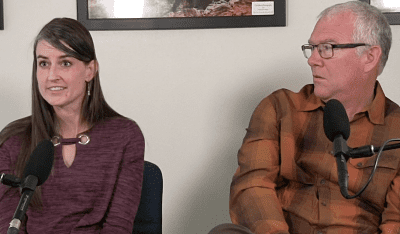
 In this gripping interview on Mormon Stories, we interview Jen and Todd who share their personal experiences when bringing issues of abuse to the attention of Mormon bishops. Throughout her life, Jen suffered through periods of abuse that greatly impacted her physical, emotional, and spiritual health, including severe bouts of anorexia. In this interview, we learn of the failures to deliver the help Jen needed from some Mormon bishops, but also the success of another Mormon bishop, Todd. We learn how Todd helped Jen during her darkest time, and what tools Jen used to begin living her best life.
__________________________
Part 1: Jen shares her abuse story and the impact it had on her life
Part 2: The abuse continues into her marriage, and Jen details her unsupportive experiences with Mormon bishops
Part 3: Jen finally has a positive experience with a Mormon bishop, Todd. We also explore Todd’s experience losing his faith
__________________________
Episode Transcript
Host: John Dehlin · Guests: Jen, Todd
This transcript is machine-generated and lightly edited for readability. The audio is authoritative. Please excuse occasional errors in names and spelling.
Introduction and Episode Overview
Part 1 of 3 · Ep. 916
Todd [00:00:00] We like to throw rocks at the people who don't see the world in the way we do.
John Dehlin [00:00:11] Mormon Stories is a production of the Open Stories foundation and relies solely upon the support of people like you, its listeners. To help keep the podcast alive or to become a member of the community, please become a monthly subscriber by visiting MormonStories.org and clicking the donate button on the top right side of the page. All contributions to Mormon Stories are completely tax deductible and go towards producing the podcast and building communities and programs of support for Mormons like you. Thanks for your support. Hello everyone, and welcome to another edition of Mormon Stories Podcast. I'm your host, Dr. John Dehlin. It is May 3, 2018, and I am so very excited to have you with us today. We're broadcasting live from our Mormon Stories studios in Salt Lake City, Utah, and we are going to be covering a very important topic today. The topic is how Mormon bishops handle ward members who report abuse. And to share in the story today, we have a really unique set of two interviewees. We have Jen and we have Todd. Jen, throughout her life, at least on two or three occasions, has been a victim of abuse within a Mormon context. And then Todd is her former bishop. And Jen is going to be talking to us about, number one, you know, her abuse experiences and what it was like to work with Todd as her bishop and kind of the things that he did right and maybe the things he didn't do right. We can get into that. And she's also going to talk about other, you know, experiences with at least one or two other bishops and how they handled the abuse. And the goal of this interview is to help us all learn more about abuse, about how to help victims of abuse better, and to help bishops and other people in authority or power, including other members of the ward, other leaders within kind of a stake setting. The idea is to help people, people in the LDS Church, outside the LDS Church and other churches, just to help us all learn about how to deal more effectively with abuse. So we're really excited for that today. I do have a few announcements that I'll just shout out just to kind of get them out of the way. And we use these to help pay the bills. We want to give your attention to the new MormonStories.org website. We've done a redesign of that website and we just want to make sure everyone takes. Takes a chance to check it out. One of the most important things about our redesign and a shout out to Jerry Cargill, who did the redesign for us if you go to the homepage, you'll find a big list of lists that you can check out. So, for example, we have the top 25 most important episodes. We have top 10 LGBT themed episodes. We have top 10 episodes related to women, to minorities and people of color. We have top 25 episodes for faithful Mormons. And the idea is there's now such a massive library of podcasts on Mormon stories. We want to make it very easy for someone coming to Mormon Stories for the first time, or someone who's relatively new, to jump to the episodes that are most relevant or interesting to them. We have stuff on navigating mixed orientation marriages, navigating marriages in general, on being transgender within a Mormon context. We have episodes on truth claims, on historicity, exit narratives, all that stuff. And we just want to make sure that you know about that. Great redesign. Another important part of that is that we have a newsletter that we send out once a month. Some of you don't hear about our events, or you don't hear about special events, or you want to kind of keep in the loop on what's going on within Mormon Stories and the Open Stories foundation. And you are able to sign up for that newsletter. If you go to mormonstories.org There's a little bar at the top. You can type in your name and email address, and we just wanted to give you a shout out. We release these newsletters monthly. The final thing we want to call your attention to are the events that are coming up. These are really important events. These events have been held for several years now. They're workshops and retreats. They're focused on helping people navigate a faith crisis, helping people rebuild a life after a faith crisis in or out of the church. They're on healthy relationships, communicating with believing family and friends, dealing with the mixed faith marriage, dealing with healthy, you know, marriages in general, and then even mental health and how to have positive mental health during and after a Mormon transition. These events are consistently rated 4.9 out of 5.0 by the people who attend. And. And so many people have told us that these events have saved their marriages, helped save their mental health, even in some cases, helped save their life. And they've been an important part of building community within people's local areas. And so we have events coming up. Well, we have Angela Soaf coming to Salt Lake City May 17, and she's a really exceptional singer, songwriter who's written an album about her faith crisis. We're really lucky to have her come and perform some of her songs and Talk about those songs. May 17th. Please come to that if you're in the area. We're coming to Boise, Idaho, May 18th and 19th. We would really love to have that event happen that evening. Separate from the workshop, we're having a social where people who aren't part of the workshop can still come and karaoke and have fun and get to meet everybody and Talk. So Boise, May 18th and 19th, including the Social. We're doing a retreat in Park City June 8th through 10th. That's going to be longer. So the difference between workshops and retreats. Workshops are about a day and a half. We cover the same sorts of topics, but maybe not in quite the depth that we do in the retreats. So the June 8th through 10th retreat is two and a half days. Be able to get more into your personal experiences, more personal attention to what you care about, and cover more topics. Natasha Helfer Parker and Margi Dehlin will be joining us for the retreat on June 8th through 10th. So we would love to have you come if you want to. Again, it's in Park City. We have discounted lodging for those who are interested, and we also have some scholarships that are available. So if you want to be a recipient. If you can't afford the registration fees, we have scholarships available. You can email staffopenstoragefoundation.org to request a scholarship. It'll be a discount or a free entrance, depending on your situation. If you've experienced good things from these workshops and retreats and you want to give back, you can also email staffopenstoriesfoundation.org and we'll give you information on how to actually donate to the scholarship fund to let others attend these workshops and retreats. And in that way, you can help save a marriage, help save a life, help someone who's struggling. You can go to these events and see the agendas now. So go to the Boise event or the Mormon Stories retreat in Park City and you can actually see the agenda. We're coming to Houston July 13th through 15th. We're really excited to be visiting Texas. And then we're doing Idaho Falls August 10th through 11th. And then finally again our Bahamas crews. We're going to have a blast October 24th through 28th. And that's going to be more just about having fun and getting to know each other. It's less about sort of coaching and, you know, heavier work. So those are the events. Please check us out again@mormonstories.org events. We would love to have you join us. All right, so without any further Ado. We are here to talk about Mormon bishops and the handling of abuse. And Jen and Todd, we want to welcome you both to Mormon Stories podcast. Thanks for coming on.
Jen [00:08:39] Thanks for having us.
Guest [00:08:40] Thanks for having us.
John Dehlin [00:08:42] I think it's probably fair to say that anytime we discuss abuse, it can be triggering for some people. So we just want to acknowledge that. We want to let you know that we probably won't be going into extreme depth in this podcast, but. But we will be going into some depth about the abuse that Jen experienced. And so we just want to make sure you practice self care and do whatever you need to do. Pause, come back, take this in chunks, avoid the interview. Whatever you need to do to manage your mental and physical health, we just want to let you know that that's part of this process. So thank you for coming on to talk about something so hard. Are there any disclaimers that either of you want to offer before we jump into the topics? Anything that I've forgotten to mention?
Guest [00:09:35] Not like it did go, no.
Jen [00:09:37] The trigger warning for abuse. I think that's good enough.
Jen and Todd's Mormon Backgrounds
John Dehlin [00:09:40] Okay, so why don't we begin as we always do, just giving a little bit of your respective Mormon backgrounds. Is that all right? Okay. So, Jen, let's start with you. Just, let's spend a couple minutes on your upbringing prior to the abuse, unless the abuse started immediately and then we can talk about that too.
Jen [00:10:02] Well, so I was born and raised in the church. I have three younger brothers and one younger sister. Grew up pretty. I was really close to all of my siblings. My mom really focused on that. We did all the Mormon things. Early morning scripture study and family home evening. My parents were both in Cub Scouts and Scouts and so just actively involved in the outdoors. So that was kind of basics.
John Dehlin [00:10:39] Were you raised in Utah?
Jen [00:10:40] Yeah.
John Dehlin [00:10:41] Okay.
Jen [00:10:41] Yeah.
John Dehlin [00:10:42] And how many siblings?
Jen [00:10:43] So there's five of us total.
John Dehlin [00:10:45] Okay. Okay. All right. Todd, how about you? Do you want to tell us a little bit about your Mormon upbringing?
Guest [00:10:52] Yeah. I was born and raised in Utah. My ancestors joined the church in England and immigrated to Nauvoo. I came out to Salt Lake and settled in Utah as they were signed by Brigham Young. And so I've been an active member of the church 50 plus years of my life, served in various callings from, well, obviously Bishop, but before that on the high council and elders quorum president, Scoutmaster, anything they asked me to do, I faithfully accepted the calling and fulfilled it.
John Dehlin [00:11:25] And maybe talk about kind of how you became bishop and what happened there.
Guest [00:11:31] I became bishop. I was serving on the high council. And it was a student ward for married students. So to qualify to attend the ward, first had to be a student somewhere. And that could be an online course or attending BYU or local university. And I was on the high council, and it was usually from the high council that the bishops were called. So I was called after sitting on the high council for three or four years, and I was called to be bishop of one of the wards that I was working with.
John Dehlin [00:12:05] Okay, excellent.
Guest [00:12:07] Yeah.
Childhood Abuse and Early Experiences with Bishops
John Dehlin [00:12:08] Well, I guess that takes us to your experiences with abuse. And I just want to say thank you so much for being willing to talk about something that I'm sure isn't very fun to talk about.
Jen [00:12:20] It's not very fun, but it's pretty important. So for me, abuse is kind of my whole life. I was abused sexually by family members when I was starting when I was about 5. And then from there I was assaulted while I was a student at BYU and then got married and dealt with marital rape, though I didn't know what that was yet. And also physical and emotional abuse while being married. So I have a whole lifetime of abuse stories that I don't think are important to tell all of them, but so I don't know quite where.
John Dehlin [00:13:07] Yeah, sure. Well, let's start with your. When did you first start interacting with bishops about the abuse?
Jen [00:13:15] You know, thinking about it, I didn't go to bishops for abuse necessarily until I was at BYU, but I started interacting with bishops as young as 12 because I was suicidal and struggling with depression. And by the time I was 14, I had a pretty serious eating disorder. And so I was interacting with bishops and sometimes abuse situations would come up, but they didn't really know how to handle it. The first time it really that I was pushed to go talk to a bishop was student at byu. I was assaulted. And one of my good friends said.
John Dehlin [00:13:55] Can I pause for just one second? So you mentioned things you struggle with in your early teen years.
Jen [00:14:01] Yeah.
John Dehlin [00:14:01] Do you associate those with the abuse that you experienced?
Jen [00:14:05] Yes.
John Dehlin [00:14:05] Talk about what, what it, what it's like to experience abuse and then how those things naturally flow from it. Can you kind of talk about how the, the impact of abuse in the life of a. Of a teenage girl, Mormon teenage girl, and how it manifests in some of these things. So. And whatever you need to tell us about that early abuse that would help us understand how it affected you?
Jen [00:14:36] Well, for me, I'd say the early abuse, I mean, and this sounds strange to say, but the abuse didn't affect me so much. It Wasn't until I got to church and started hearing about chastity lessons and chewed pieces of gum and licked cupcakes and all the things that, that we hear in Mormonism about being pure and clean. And I knew I wasn't. So with that like a deep belief that I was disgusting and horrible and I couldn't even at the time nail it down. Like I couldn't tell you why I believed I was disgusting. I just knew I was when I listened to these messages and I couldn't tell you what, why I hated myself. I just there was. I hated myself. And with the eating disorder, the hatred of my body, I mean that one I can link pretty closely to. As I matured and became more of an adult with a more adult body. I didn't want that. And eating disorder, starving myself prevented all the things that make you don't get boobs and you don't get all the things that make a womanly body. And that was a very, that felt safe. And there also I discovered that by I mean eating disorder and addiction. So by not eating I felt not as depressed and not as anxious and all of the background noise that came from the abuse that I'd never dealt with kind of subsided, if that makes sense.
John Dehlin [00:16:13] So for you, the eating disorder was a way to self medicate for from the pain and distress you were experiencing from being a victim of abuse. How does participating in eating disordered behaviors act as a form of self medication?
Jen [00:16:33] It's awfully hard to think clearly if you're starving. I mean, it's awfully hard to feel much when I mean, think of the days when you're fasting and you all you can think about is food. Everything else goes away. It's kind of like that. So. And with Mormonism too, there's the power of fasting. And I'm going to show that I'm more powerful, my spirit is stronger than my body by I don't need food kind of ideas were very. Played a big part for me. I don't know. Does that make sense?
John Dehlin [00:17:09] Yeah, I think when I was working with clients who cut, I never understood why someone would take a razor blade or a knife and actually cut. And then I realized that they do this as a way to numb the mental and emotional distress that they're experiencing. So they'd rather have the pain of the cutting than they would the emotional distress of what they've been through. And it sounds like having an eating disorder makes you so hungry that it can drown out everything. The rumination and the emotional Distress. And you do feel like the church's messages around purity and worthiness, sexual purity, were kind of at the core of your self loathing, is that right?
Jen [00:18:05] I think so. I mean, it's hard to say being that I was abused so young and Mormonism was so important to me, but it's possible that without Mormonism teachings on chastity and purity, I still would have gotten to that same self loathing place. But for me it's so central, I can't, I don't know. But because Mormonism was so much a part of me that it is a part of that self loathing.
John Dehlin [00:18:31] Got it. Okay, so as this develops in your teen years, does your bishop, you know, your bishop growing up, does he know you have an eating disorder? Does he know? Did you tell him about the abuse? Did you tell your bishops about the abuse as a teen?
Jen [00:18:53] Some, yeah. And looking back, I'd say they just didn't know how to deal with it. So it was kind of like talking about the importance of forgiveness, importance of family and kind of. And I have a habit of glossing over. So even talking about abuse, I might have mentioned it, but I quickly moved past it and talked about how I'm crazy and I'm disgusting and I need to repent because it was so internalized, even that young. So
John Dehlin [00:19:31] when you're a Mormon teenage girl as a victim of abuse, and you're going to church every Sunday and you're learning about how everyone's supposed to be righteous and eternal families, Are you comfortable saying whether, let's just say the abuser in your teen years was a family member?
Jen [00:19:55] Yes, it was.
John Dehlin [00:19:56] Okay, what's that like to be a Mormon girl hearing the plan of salvation, hearing about the gospel and to have it being an actual family member that's abusing you, what is that? How does that square with how you see yourself and how you see the gospel?
Jen [00:20:16] So, I mean, the gospel's always right. The eternal family is so important. So the fact that I am not okay with this eternal family and that I'm upset and I'm angry and I'm hurting, I'm the problem. There's something wrong with me. And so it's not. I mean, so that's where it's like there's nothing wrong with the abuser even, or the church. Of course it's all me. So if I just repent or try hard enough and I'm good enough, then I can, then I'll be okay with the way things are and I'll be happy with this eternal family. And it doesn't make sense as I say it, because it sounds so crazy, but that's really how I made it fit.
John Dehlin [00:21:08] What keeps. And for some, this is going to be an obvious or even an outrageous question. What, what keeps a young. What was it, 13, 12? What keeps a young Mormon girl from just telling everybody I've been abused? They're abusing me. Fix this. Help. Or is that what you did? I didn't know you would think that's what you do. You'd tell your mom, you'd tell your dad, whoever you would tell, the non abuser, your siblings, the bishop, everyone. And then the bad person would get in trouble and they'd be put in jail and then the abuse would be gone. What keeps that from happening with family?
Jen [00:21:45] I mean, it's family. I loved these people and I wanted to protect them and I didn't want to hurt them. And even sitting here now, I don't want to hurt anybody and I don't want anybody to. I mean, they had their own crap that they had to go through, which made them who they were. So it's like. So I did want to protect them. The other part is that it wasn't their fault, it was mine. And one of the things, I mean, victim blaming, we talk about it all the time as something else, but victim blaming, it's easy to take responsibility because then you have control. If it's all my fault, then I can stop it from happening. I have total control over it. If I'm just better, good or nicer, whatever, I mean. And so by the time I was. I was pretty little and it was all my fault. So why would I tell somebody about it? Because it's all my fault.
John Dehlin [00:22:48] So if someone's hurting you, how, as a teenage girl, do you translate that into it being your fault? I mean, if you. Let's just say you had a sibling that punched you, you'd know, well, he punched me. That that's bad. It's your fault. You'd cry, you'd get mad, you'd tell your parents, right? What is it about abuse that made it so that you. It wasn't very clear to you that it wasn't your fault, it was theirs. Do you even have a way to describe that? Or is it the power differential?
Jen [00:23:20] Maybe it's. I don't know. Honestly.
Todd [00:23:23] Yeah.
Jen [00:23:23] And I mean, like I said, started when I was pretty young. So it's kind of the foundation my life was built upon is kind of abuse. So with that being my foundation. No, I didn't look at my brother hit me. So I'm mad. It was. My brother hit me. I shouldn't be mad. I should be calm. And I. The fact that I'm mad shows that there's something wrong with me. Like, it was really a mess.
John Dehlin [00:23:52] Okay. And did the abuser ever sort of have a communication with you about the abuse where they would communicate to you as your fault or.
Jen [00:24:04] Not that I can remember.
John Dehlin [00:24:05] Okay, so it wasn't something that was discussed with the abuser. Like, this is because of you. I'm hurting you because you're bad. This is just something that you.
Jen [00:24:13] Yeah, possibly, but not that I can remember.
John Dehlin [00:24:15] Okay. Okay. So by the time you're a young teenager, you're internalizing all of this. It's your fault. You develop self loathing and an eating disorder. And so how does that progress through high school before you get to byu?
Eating Disorder, Treatment, and Church Response
Jen [00:24:34] At high school, I was known as the anorexic one.
John Dehlin [00:24:38] Like people would say that.
Jen [00:24:39] Oh, yeah. Then, I mean, I. And I kind of took that. Went with that identity. I was comfortable with it. For me, I mean, the self loathing and the hatred and the fear that I lived with all the time, it just. I don't know, it just made sense to me to be. To fall into that one little niche where I could be both seen and invisible. Eventually I was hospitalized
John Dehlin [00:25:15] in high school.
Jen [00:25:17] Just did that. I actually missed my high school graduation because I was in an inpatient facility. So I was forced to go and then ended up staying longer than I was forced to stay because I realized I could get some help for both me and my immediate family. Kind of learning how to communicate with each other and talk to each other and deal with stuff. I wasn't ready at that point to deal with any kind of sexual abuse. So I didn't. I just couldn't. I wasn't ready to talk about it. So it wasn't there in my memory to talk about while I was there, but could talk about family dynamics and things that I needed help with and learned to eat my dinner.
John Dehlin [00:26:04] Right. Did your bishop try and help you with your eating disorder at all?
Jen [00:26:09] He did. He.
John Dehlin [00:26:12] What was effective versus not effective?
Jen [00:26:17] Effective. He actually helped my parents pay for it, pay for me to stay longer. Insurance would have covered two weeks. I ended up staying almost five months and the bishop got money from the church to help pay for it. Not effective. Telling me to eat, telling me it was a sin, I needed to repent for starving myself, telling me I was being selfish because those things just. I already. They Just fed into the self loathing. So it didn't help. But. But he did get help. I mean, church paid for an inpatient facility, so that was. My parents couldn't have paid for the stay I had.
John Dehlin [00:27:14] Do you feel like that stay, that residential treatment saved your life? Possibly, yes. So in some sense the church saved your life. Mm, that's good.
Jen [00:27:25] Yes. I mean, and where I was at was very lds, so we. So a big focus of my treatment was coming back to my spirituality, my going back to church and finding a love for God and being a good Mormon girl. That was a big part of my treatment, but definitely taking where I was headed. I wouldn't have lived much longer. I just either because my body wouldn't have been able to handle it or suicide, I would have been done. I wouldn't have made it.
John Dehlin [00:28:05] And how did you get better at that point in your life? If somebody, let's say we have a listener who's struggling with an eating disorder. Other than residential treatment, what were the components of residential treatment or just of you getting better that were most effective?
Jen [00:28:25] If you can. I mean, finding a group of people who are recovery focused, that was really helpful. Other people that were recovery focused, a good therapist and a good dietitian at that point. What I call recovery then and what I call recovery now is very different. But recovery then was just, you just eat your food. If I figured out that learning boundary, healthy boundaries, and all the things that I've learned In the last 20 something years since then, I. Those are important. But I. So I just trying to think of what to do. Get help. And if you think you're not sick enough to need help, that's a sure sign you are sick and you need help.
John Dehlin [00:29:21] Okay. And when you say find a good therapist, how do you know if you found a good one?
Jen [00:29:28] Find somebody who specializes in eating disorders and who you feel comfortable with. I mean, that's. It's okay to fire a therapist. It's okay to say this isn't working and leave and find somebody else. And it's a process that sucks if you don't find that right away. But if you're not comfortable, don't stay. But so there's my.
John Dehlin [00:29:51] Okay. So you missed your high school graduation, but you made it out of high school alive.
Jen [00:29:58] I did, thanks.
John Dehlin [00:29:59] In parts of the church, the parts about you being selfish probably weren't healthy or repenting, but the other parts were right.
Jen [00:30:08] And I think, I mean, like I said, he's doing the best he could. He was trying to be helpful. But so I'm glad that he was willing to help find funding because there's no way my parents could have taken care of it and there was no way I could have paid for such a thing.
John Dehlin [00:30:24] So we're often hard on the LDS Church in this podcast because we're trying to explore ways the church can harm people sometimes and to give us suggestions on how to do better. But we have to acknowledge when the church does good and when the church pays for effective treatment. That's an amazing positive thing. The treatment isn't always effective, especially when it's LDS Family Services and they're not effective. But sometimes it is. So we'll give credit when credit is due. I'm going to. I'm going to just read a few comments. Rick says he's in tears at your story. Paul says, jen and Todd, we love you guys. Karen says, sending much love to Jen. Thank you for sharing your story. Rachel says, you're so brave, Jen, thank you for sharing. Zan. Hi Zan. Zan says, jen, you are so strong and powerful. Kevin says, this is heartbreaking. Not an easy one to listen to. So shout out to everyone who's weathering the difficulty of the story and sending their support to Jen. Also a comment from Tom. Tom says, this story is so sad. One major problem is the guilt the church puts on people that makes you feel that things happening to you are because of your lack of faith and lack of obedience to the commandments and it's your fault. The church needs to reach out to members to help them deal with these situations and offer professional legal help and stop making people feel that they can stop this by faith, hope and prayer. Any comments? Thanks, Todd. Any comments for Todd?
Jen [00:31:57] Exactly. Kind of like I said that I went to bishops and I rarely talked about abuse, but I did talk about like self loathing and all those things. And the way they took that was, well, then you need to repent because, I mean, that makes sense. So then it just piled it on more so. Exactly right, Exactly.
John Dehlin [00:32:22] Todd brings up the point that the church pays for the damages it causes. Is it fair to blame the church for the damages? Certainly not all.
Jen [00:32:32] Not all of it. Kind of the way I describe it is, you know, my foundation was built first on abuse, then the Mormon Church and then everything else. So I mean, without the abuse, and if it was just the Mormon Church as the foundation, it'd be different. But with abuse first and foremost, that takes. It's like now everything in Mormonism goes through the abuse lens. Like the lens of I've been used and abused and all the things that happen in your mind when you're abused. So all the teachings now go through that lens. So I don't think it's 100% their fault. But they didn't, a lot of the teachings didn't help.
John Dehlin [00:33:16] Right. So thanks to everyone for their comments. That was Jeff who made that comment. Okay, so you go to byu, is that right? And is that when you first started talking to your bishops more about the actual abuse?
Sexual Assault at BYU and Dissociation
Jen [00:33:35] I was actually assaulted on a date.
John Dehlin [00:33:39] Sexually assaulted.
Jen [00:33:40] Physically.
John Dehlin [00:33:40] Okay, Sexually. Can you talk about that in terms of like, how does that happen? So you're a freshman?
Jen [00:33:48] Uh huh. I was out on a date with my home teacher and we pulled up in front of the temple and it was a bucket seat in the front and he moved over to kind of start kissing me. And because of my past abuse, I dissociated, which is, and still to this day, from my experience of that, what happened? I'm sitting on the dashboard watching my body. It was an out of a body experience.
John Dehlin [00:34:21] So let's talk about that. So talk about how disassociation happened as a child and teenager.
Jen [00:34:28] I.
John Dehlin [00:34:29] What it is because people don't know what it is.
Jen [00:34:31] I know people don't know what it is.
John Dehlin [00:34:32] So I mean, so you're being abused and then how does that go from being abused to disassociate? And what happens emotionally or cognitively? If you can describe it, I can
Jen [00:34:43] tell you what it's like just as an experience. I mean really it's. Trauma makes us, we do whatever we can to survive when we're in a
John Dehlin [00:34:53] traumatic situation because it's so painful.
Jen [00:34:56] It's, it's either so physically painful, emotionally painful, violent, whatever. Yeah, whatever it is. And one of the ways our brain copes is to check out. So for me, my experience was it's an out of body experience. My perspective is I'm sitting on the dashboard watching him touch me and all the things that he was doing to me, I, I'm watching it happen completely out. My body's frozen and I can't control it is the way it happens for me. And a lot of people it's more just a fro. Frozen feeling that they don't have control over their body because they're just kind of out of it. Others it's, you can pass out, you can faint as part of dissociation that has happened to me where it's. You get overwhelmed so you pass out.
John Dehlin [00:35:46] And if somebody's being a jerk and they're Saying, I don't. You know, how can it be that you're watching this happen and you don't stop it? Right. What would you say, like, what you're experiencing when it happens?
Jen [00:35:58] I'm a bystander, a complete bystander with no body to stop it happen without a will.
John Dehlin [00:36:05] Are you thinking stops? Are you watching it saying, stop, stop? Are you just like.
Jen [00:36:09] Yeah, I mean, it's stop it. And for me, it was. I remember the thought of, who am I to say no? He's the priesthood holder and I'm a nobody. I'm a nothing. So I remember that thought, and of course I want it to stop. And how do I make him stop? And there's nothing I can do.
John Dehlin [00:36:32] But it's like a dream almost.
Jen [00:36:33] Yeah. But also, I mean, just understand because I didn't realize that other men didn't, like, get off on these things. I'm sitting there completely rigid, frozen and shaking. So any man that doesn't. That's not a normal. Like most men don't enjoy, I don't think that. And would get a pretty clear message I'm not there with them. So that was the. I mean, so it's like. So I'm. I can't stop it. My body is there rigid and almost like a seizure, shaking. But I can. From my perspective, I'm completely outside of my body.
John Dehlin [00:37:21] And is this like, as you think back, is this someone who would have given you signs that they were an abuser in this way? Were they super nice? Were they?
Jen [00:37:32] Yeah, he was super nice. He was my home teacher, and
Todd [00:37:37] I
Jen [00:37:37] think he was the Elders Quorum president. He was definitely in the Elders Quorum presidency of the little student ward we lived in. He lived down the hall. He came over all the time. Seemed like a nice guy.
John Dehlin [00:37:46] So there are no signs? There wasn't creepy vibes or anything like that?
Jen [00:37:50] No. You know, and my creepy vibe might not have been working effectively because of all of my life experience. So maybe other people thought he was creepy. I didn't. I thought he was a nice guy.
Patriarchy, Power, and Institutional Failures
John Dehlin [00:38:04] And then we have to sort of call out patriarchy. I would have to think that this underpinning infrastructure of men being in power and women having this sort of specific role would lend to a feeling of powerlessness as a victim. Do you want to talk about possibly the role of patriarchy in how as a BYU student, you might experience.
Jen [00:38:31] Well, I remember the thought, who am I to say, no? I'm a nothing, I'm a nobody. And at this point, although I've Been through eating disorder treatment. I'm still really struggling, so I'm not doing all the things I'm supposed to do. Right. I sometimes sleep in instead of going to church and miss some of my meetings. And I remember all of those things, so. And he's an elders quorum president, so he's good. So it's like, who am I to say no? And what right do I have in any. So again, it sounds so weird to say now, but that's how it felt then.
John Dehlin [00:39:10] Yeah. And if somebody were to say, but you knew the law of chastity, you knew that it's bad to be involved in any sexual activity. So even if you don't have a lot of self worth, you can be like, oh, well, this is bad things we're doing. Right. Even if he's. Even if the church has sent you messages that you're not worthy, and even if he is a male and thus privileged with more power, that. That didn't feel well.
Jen [00:39:39] And too, like I said, I was completely there. I had no.
John Dehlin [00:39:43] I mean, you're disassociated.
Jen [00:39:45] I'm gone.
John Dehlin [00:39:47] Right?
Jen [00:39:47] So. And I left the experience. I mean, because of law of chastity, I left the experience believing it was my fault and I should have done something better and I should have done something right. And that is like, you shouldn't have
John Dehlin [00:40:02] been in a car with him at all.
Jen [00:40:03] Right. I should have known that was coming. I should have said something. I should have done something. I should have. And I don't know, I mean, it's like I couldn't have told you even what I should have done. At where, at what point?
John Dehlin [00:40:17] Because it's not super logical even, right? No, it's super emotional.
Todd [00:40:21] Yeah.
Jen [00:40:22] So.
John Dehlin [00:40:22] So you left a sexual assault. Do you call it rape or sexual assault?
Jen [00:40:26] What do you call it?
John Dehlin [00:40:27] Okay.
Jen [00:40:28] All the way to rape.
John Dehlin [00:40:29] So you would leave a sexual assault experience feeling like it was at least part your fault. Okay.
Jen [00:40:37] Which is how friend prompted me, pushed me, cajoled me, held my hand. And we went to the bishop and told him what happened. And he told me it wasn't my fault. Which I think for a BYU bishop is pretty dang impressive because he did get that part. It's not your fault. He didn't do anything wrong. You couldn't have stopped it. So he understood me telling him that like I was frozen and I couldn't.
John Dehlin [00:41:08] Did you go to repent? How did the meeting happen?
Jen [00:41:11] My friend said, I think it was trying to deal with. I was emotional wreck. So my friend was like we are going. And I don't. Just because you go to bishops. That's who you go to when you're. I mean, especially an 18 year old kid at a BYU ward. Like, it's just. Who else would you go to?
John Dehlin [00:41:32] And I'll just say, I'll do these little timeouts. If you're a BYU student or a college student, go to the counseling center at your university. Even at byu, and maybe even especially at byu, those counselors are very well trained in dealing with sexual assault and rape generally, for the most part. I know several counselors at BYU Provo and they're phenomenal. So they're better probably than a bishop, right?
Jen [00:41:59] Yes. I would, me now would definitely agree with that and say go. The bishop doesn't know what he's. Don't go to the. You can go to your bishop as extra help and whatever, but that's not the place to go to.
John Dehlin [00:42:12] Right? Okay, so you go to the bishop. Your friend drags you to the bishop and you say what to the bishop?
Jen [00:42:18] I basically just told him the details of what happened that night, including the. I was frozen and I couldn't stop it. And I felt like I couldn't say no even if I could have. And his response was, it's not your fault. You didn't do anything wrong. You have nothing to repent.
John Dehlin [00:42:35] That's great.
Jen [00:42:35] I know.
John Dehlin [00:42:36] Okay, so that's something bishops should do. Believe. Start by believing, tell that it's not their fault. What else did the bishop do?
Jen [00:42:45] And then he talked about forgiveness.
John Dehlin [00:42:48] Ooh, okay, talk about that. That doesn't square with it's not your fault.
Jen [00:42:53] I know, but it's forgiving him for what he did, forgetting.
John Dehlin [00:42:57] Forgiving the abuser.
Jen [00:43:00] Yes. So he continued to be my home teacher and come to my house every month.
John Dehlin [00:43:06] Oh my gosh.
Jen [00:43:09] So he did so. I mean, he started so good. And I am so glad that he did that. Right. Because if he had tried to put it back on me, I don't think my poor little self could have handled it.
John Dehlin [00:43:24] Okay, so the bishop says it's not your fault, but then immediately turns to wanting to protect the abuser. Did he turn in the abuser? Did he notify the authorities? Did he, as far as report it to the police?
Jen [00:43:38] Not that I am aware of any of it.
John Dehlin [00:43:41] Did he tell you to report it to the police?
Jen [00:43:43] No, that was never crossed my mind. And he never mentioned it.
John Dehlin [00:43:46] You made your own teacher or even the honor program or, you know, the honor code office.
Jen [00:43:53] He remained my home teacher and for as long as he still lived in the complex, which was a few more months. So I'm thinking there was nothing.
John Dehlin [00:44:03] So that bishop was not oriented towards, I want to say justice. I don't know if there's a better word, but making sure that the abuser paid the price for what he did, it was more. The bishop was tuned to immediately go to you. Now, maybe he went to the abuser.
Guest [00:44:23] Right.
Jen [00:44:23] I have no idea what happened there. All I know is he remained my home teacher.
John Dehlin [00:44:29] And what would you rather the bishop done?
Jen [00:44:33] Removed him as my home teacher? Actually, I mean, there's part of the, you know, remove him from his calling. Doesn't have to do anything. Now, I really wish he would have said consider going to the police or let's get you into counseling or anything, but at least he didn't tell me. It was. At least he was firm. It wasn't my fault and there was nothing to repent for.
John Dehlin [00:44:59] So, okay, so what's it like continuing with this, this gentleman as your own. As your own teacher?
Jen [00:45:11] Uncomfortable.
John Dehlin [00:45:12] Yeah.
Jen [00:45:14] And I didn't talk about it with roommates much until he started asking another roommate out. And then I told her what had happened. And then she said, he's not coming back.
Todd [00:45:26] So
Jen [00:45:29] I think she said, he's not allowed in here anymore. I think she kind of stood up for that. I. If I remember right, but he moved pretty soon after that, too. So that kind. That was kind of fuzzy. But I do remember her like, no, we don't let people like that in here. Like, so she had a better grasp than I did.
John Dehlin [00:45:52] Eric writes in one of our listeners, the church is not required to report sexual abuse or any other criminal activity to the authorities by law, like other entities do. This has to change. And that's really interesting. I think what state laws try and do is balance religious leaders being a safe place for someone to spiritually work out their issues and even repent and be forgiven and work through their problems and become a better person. So on the one hand, you want people to feel comfortable going to their church leaders for support and healing and growth. On the other hand, you know, the LDS Church works very hard in Utah to make sure that the law makes it so. Bishops and church leaders are not mandatory reporters like a school teacher would be or, you know, someone that you know in another professional setting.
Jen [00:46:50] Right.
John Dehlin [00:46:50] Or even a family member. Right. And so what are your thoughts on that?
Jen [00:46:58] I mean, I do understand why they don't want to be mandatory reporters, but that just seems like. And I was, since I was 18 and an adult. I mean, there's nowhere, I think, that requires that anybody report adults. But by training, I mean, to me it's like training a bishop. This is abuse. And that by protecting abusers, we're not helping them. I actually think that would be a really great step.
John Dehlin [00:47:27] Yeah. Okay, so how did your life proceed after this experience at byu?
Early Marriage, Temple, and Marital Abuse
Jen [00:47:34] I became very, very, very, very Mormon at that point in an effort to earn a good life and got married in the temple of, I don't know, by the time I was 19, I was married in the Temple.
John Dehlin [00:47:54] How did these experiences affect your choice of a companion? And how was 19 as an age to get married? As a survivor of abuse?
Jen [00:48:07] I wanted to show my family and all the people that had supported me that all the money and time they'd spent saving my life was worth it. So the next step was you get
John Dehlin [00:48:18] married in the temple for them.
Jen [00:48:21] For them. So the man I picked to marry, I mean, I wasn't super, he was a good guy, that was nice enough, I guess, but he was willing to marry me.
John Dehlin [00:48:42] What, what were you thinking when you started getting emotional talking about that decision to get married? Why was that emotional to say that?
Jen [00:48:52] Two reasons. I feel really Sad for the 18 year old, 19 year old girl that was so lost. That's. I mean that I really believe that that was the only way to make my life worth something. Still, even, I mean, the other is recently having a conversation with my dad where he basically said, I'm sorry, I thought I was doing you a favor by teaching you all these things, but I did my best, but I was wrong. You're not loved based on what you do. You're loved based on I just love you. So both of those things make me emotional.
John Dehlin [00:49:36] Okay, so you married this guy and how did that go?
Jen [00:49:44] So from day one, and I don't know how much detail to give, but from day one, sex was, shut up, I'm almost done. I cried because it hurt. He didn't care. He'd yell and scream and put pillows over my face to keep me quiet while he did what he did. And that went on for the next two years at pretty much every night and sometimes more often than once a night. And I don't know how detailed to go there, but I didn't know what marital rape was. I thought you couldn't be raped if you were married. So I thought it was just normal and I just had to learn to deal with it.
John Dehlin [00:50:39] So this is obviously very sensitive and hard to talk about, so thank you. And I Acknowledge that. Let's just assume that in a healthy relationship, a couple says, okay, okay, now it's time for us to start having sex. We've been married, you know, Are you ready? Let's try. Okay. What feels good, what doesn't feel good? What's a frequency you'd like? And it's sort of this. Lots of communication, lots of negotiation, and it's something where you're both seeking mutual satisfaction. Why? What was it about your history and this marriage where that didn't happen? Well, how did it evolve? Your. How did you get into this pattern?
Jen [00:51:36] Minute one, there was. It was. It started that way. From minute one, there was no communication, like, between us before we were married. We talked about. We went to a counselor and talked about sex and that he expected to have it in his marriage. And I said, yeah, that makes sense. But I didn't have. I didn't have being raised Mormon. I didn't have a vocabulary to talk about sex. And I didn't understand that. I was one that. I mean, my reference point was you, as women, probably won't like sex, so it's your job to keep the men clean and pure. Which I know just went against my last. Like, who am I to say no? But that was my whole reference point, that women don't like it, so you just have to do it with your husbands because it makes them happy.
John Dehlin [00:52:40] Todd, do you want to jump in?
Guest [00:52:44] Just one comment as an observer. One of the things that she's leaving out is the wedding night where she dissociated. And that didn't stop her husband at all from raping her. In fact, I think it encouraged him. And I think that's important to understand what this experience was like. When she says rape, sometimes it's more sterile, but it was a violent.
John Dehlin [00:53:13] And she had dissociated.
Guest [00:53:14] She had. When her home teacher assaulted her, and that seemed to excite him. Is that. From what you've told me, that's the type, Bishop? When I discovered what had happened, I realized that she had married a rapist. That. That's with my perspective. So I think that's important to understand who she was dealing with.
Cycles of Harm and Unanswered Questions
John Dehlin [00:53:37] So I have, you know, the thought comes quickly in my mind. You've experienced assault multiple times from your early. From your childhood into adulthood. How does it happen that you then just marry a rapist? Was that just a really bad coincidence? Or would the history of abuse and being a victim, along with eating disorders and the church stuff, would that make you maybe more prone to be targeted by someone who Was also an abuser.
Jen [00:54:11] Well, definitely. I know eating disorder made him target me because he definitely appreciated how thin I was. He at one point had told my mom, said, I know she'll always be thin because she's had an eating disorder in the past. And. Also, I mean, anytime that I had moments or days of relapse where then he'd tell me I looked great, knowing that I wasn't doing well in my own recovery, then that's when he'd compliment me most on my appearance. So.
John Dehlin [00:54:49] So he was reinforcing the eating disorder.
Todd [00:54:51] Yeah.
John Dehlin [00:54:52] Okay, so with that, how then. So you. So he, in some ways was attracted to you because of the eating disorder, which positively reinforces your eating disorder. And then from there, you're dissociating the very first night of your sexual experience as someone who had never healed from the PTSD or the trauma of the earlier experiences. So without. And none of this, you would be able to know because you weren't able to be sexually active prior to marriage. So you're. So you're committing your life, not just your life, but your eternity, to someone that you only find out after you've made that commitment that they're an abuser, but you're locked in because it's an eternal marriage.
Jen [00:55:55] Right?
John Dehlin [00:55:56] Yeah. And you don't know what your response is going to be on that wedding night because you're unalad to have sex and you haven't healed from your ptsd. So it's just like so many. Not healing from your ptsd, being continually a victim in tough situations, and then not allowing to have a natural courtship where you're able to sexually experiment, discover what is good or not good for you, all that just perpetuates this cycle of abuse.
Jen [00:56:35] Right. And along with. I mean, because Mormon teaching is as long as you're both active and he's a good priesthood holder and you go to the temple, you can make it work. So he was willing to marry me. So therefore he's a good choice. Like it was not. So it's possible that he targeted me. It's possible that I had no idea who I was marrying. It's possible. I mean, there's all kinds of things that it's possible that we brought out the worst in each other, that I. So, I mean, all these things are possibilities, and I don't know which is. But definitely. I also think that being a victim in the past and having a total lack of healthy boundaries and knowing that it's okay to say no and it's okay to Take care of yourself. And any of that makes. Made me a good target.
John Dehlin [00:57:31] Right. So he. So you're saying on a daily basis he would. He would rape you and you would disassociate.
Jen [00:57:42] Is that not always dissociate? The. It's. In fact, generally I probably got to a point where it was like, I just laid there. I just. I was there with it and fine and played my part as the person that laid there while he did his thing.
John Dehlin [00:58:09] And what about, you know, what about just having. And I know that this is impossible in the situation, but, like, hey, you know what? I want to enjoy sex too, and this is working for me and this isn't. And let's have some different sort of pattern. And I don't like you putting pillows on my face or, you know, I want to. I want to consent. Like, what. Keep. What kept you guys from having those sorts of conversations throughout the process? I know it may sound insensitive, but.
Jen [00:58:40] No, I.
John Dehlin [00:58:41] We need people to understand how. How this environment, you know, kind of comes to exist. Right.
Jen [00:58:53] I didn't like it. I knew that part, but I didn't know that there was a better option. So, I mean, talk about it. But I didn't know there was a better option. So how could I even. Like, what could I say, I guess is how it. I mean, and I wasn't like, I wasn't interested in sex really at all with him. Which makes sense as I look back at it now. Like, the way he treated it and the way he did it. Like, of course not. But, you know, so how do I. I didn't know how to have that conversation at all.
John Dehlin [00:59:37] Thank you for joining us today on more Mormon Stories. If you enjoyed this episode, please help us make more like it by becoming a monthly subscriber@mormonstories.org. Rocks is a featured single on Angela Soph's upcoming album Second Wind. Inspired by her struggle with the faith journey out of orthodox religion. You can find and follow her on social media as Angel Angela Sof Band. That's S O F F E on Spotify or AngelAsof.com.
Todd [01:00:24] So judge me Cast me your stones I will lay them back at Let your feet take my hand let's walk among us we like to throw rocks at the people who don't see the world in the way we do I don't know why we all stand in a circle and point a finger or two Tell me how can you see what is buried beneath a mountain of smiles we're all thrown in the same blue water of the unknown so leave your rocks at home. The truth is not what it seems we are told to just be believing the story has never been told and we all need someone to listen to hold heart is there beating with so much more than we see.
Part 2 of 3 · Ep. 917
John Dehlin [00:00:00] We like to throw rocks at the people who don't see the world in the way we do.
John Dehlin [00:00:11] Mormon Stories is a production of the Open Stories foundation and relies solely upon the support of people like you, its listeners to help keep the podcast alive or to become a member of the community. Please become a monthly subscriber by visiting MormonStories.org and clicking the Donate button on the top right side of the page. All contributions to Mormon Stories are completely tax deductible and go towards producing the podcast and building communities and programs of support for Mormons like you. Thanks for your support.
Leaving the First Marriage and Ongoing Trauma
John Dehlin [00:00:55] Foreign
John Dehlin [00:00:58] We've talked about Mormon women just not ever considering themselves sexual beings. So all the messaging around sex within Mormonism as a young girl is don't wear this, don't wear that, behave. It's your job to keep the Mormon boy pure and healthy so there's nothing around. Sex is great. You can really enjoy sex someday. It can be a really important healing part of your life or a really nurturing part of your life. Get to know yourself. Get to know your body, masturbate, even if, if, if that helps you get in tune with enjoying sex and sexual satisfaction. Knowing what your arousal template is and then helping you come into a marriage. Know, knowing and believing that you're a sexual being. Knowing what, what does turn you on or, or work for you in terms of arousal. None of that is allowed. And so you're just stuck in this situation where you don't even think of yourself as supposed to be enjoying this. It's sort of your duty to allow your husband to pleasure himself. Is that right?
Jen [00:02:07] Exactly.
John Dehlin [00:02:07] Okay, so how did that. So two years of that talk about how that evolves and how that does it come to a breaking point?
Jen [00:02:18] And how the breaking point was
John Dehlin [00:02:23] he
Jen [00:02:24] stopped wearing his garments and told me he didn't want to go to church anymore, which gave me my out because I'd made a covenant in the temple with God and it wasn't even directly with him. So if he was breaking that covenant, I was out. So when people talk about how you shouldn't leave just because your spouse or you should stay, shouldn't divorce just because your spouse leaves, it's like that's 100% why I left. It's not because of the way you treated me at all, because I thought it was normal. It was. He left. He took off his garments and didn't want to go to church anymore.
John Dehlin [00:03:04] And that gets you out of the marriage, but it doesn't heal you.
Jen [00:03:09] No.
John Dehlin [00:03:09] Right?
Jen [00:03:10] No, it doesn't. It doesn't heal me, but at least I'm now out of the marriage. I'm out of the situation. And so, yeah, so it's. So I am still 100%. I don't know what healthy boundaries are. I don't know what healthy sexuality looks like. I don't know all kinds of things. I still don't know. But I am at least out of that marriage.
John Dehlin [00:03:35] Got it.
John Dehlin [00:03:35] Okay. And so how did that. How did that progress? What came next in your life?
Jen [00:03:43] I was. What came next in my life. I was still in college. I was now.
John Dehlin [00:03:54] So you divorced as a BYU student?
Jen [00:03:56] No, we'd actually moved down to southern Utah because he wanted to get away from Utah County. So he picked a place in southern Utah to get away from both my family and Utah County Mormons. And so we moved down there and I was still in college, so I was still going to college. Knew that I was supposed to get married in the temple again, but really hesitant this time. So dated quite a bit, eventually got married in the temple again a few years later.
John Dehlin [00:04:40] And
John Dehlin [00:04:43] so you got married again?
Jen [00:04:44] I did get married again.
John Dehlin [00:04:45] And were you able to go to any. Did you go to the bishop? Did you ever talk to your bishop about how your. Your first husband had treated you? Did you ever try and involve the bishop in that? And what was the bishop like?
Jen [00:05:01] Yeah, the bishop said it was my job to keep my. I mean, he just reinforced the. It was my job to keep my husband happy, and I was spending too much time out of the home. So his. He said there's five things that you're doing outside of the home. You have two jobs, you're going to school, you see your. Your family. And I was volunteering at that point for. To help with eating disorder recovery. I did speaking and stuff. So there's five things that are keeping you out of your home that are keeping you from not doing your duty as a wife. What of those are you willing to give up so that you can do your duty as a wife to keep your husband happy? So it wasn't. There was nowhere in there that was about. I mean, again, I didn't know rape was a thing, and I didn't. I just knew I was unhappy and he wasn't happy. So that was our. So it was. So it's. I didn't talk to him about abuse. I just talked to him about this marriage is unhappy, and this was his solution.
John Dehlin [00:06:04] So, you know, when you talk about pillows over your face, that to some of us, that's just like. Well, that's clearly abuse. Right. What would keep you from again saying, this guy Bishop, this guy's abusing me. He's raping me against my consent. Is it just a lack of education about what consent is and how healthy sexuality should be? Is it just a lack of sexual education?
Jen [00:06:30] Lack of sexual education and a lack of. I just had nowhere else to go if this marriage didn't work out. Like, remember, I got married because I was trying to prove my worth, so I had nowhere else to go. So what am I gonna do if I say this is. I mean, and it's my fault and there's something wrong with me, and I'm the one that couldn't make this marriage work? So. So, again, it was so deeply in me that it's my fault that I couldn't leave until he took off his garments, and then it's not my fault anymore.
John Dehlin [00:07:14] So you were kind of trapped in the marriage because to leave it would be disappointing everyone who had supported you through the eating disorder, is that right? Okay. So you were just trapped.
Jen [00:07:29] Yeah. And it. I just. And really, it just never crossed my mind to go anywhere for help.
John Dehlin [00:07:36] Right.
Jen [00:07:37] Didn't know that. I mean, he. And he did actively threaten, like, my sister, who was only 12 at the time. He did. He says, you've seen what I can do to you. Imagine what I can do to her. And so there was also pretty strong, like, threats if you talk about these things or if you make me mad. So there was that going on too.
John Dehlin [00:08:05] So just this fear of what could happen to you if you. If you turned him in, so to speak.
Jen [00:08:15] And I, you know, and I wouldn't have used the word rape. It took me probably seven or eight years after we. I divorced him to ever use that word.
John Dehlin [00:08:26] What's wrong with that word? What was wrong with that word at the time?
Jen [00:08:30] Because rape is something that happens by a stranger in a dark alley. It doesn't happen when you're married.
John Dehlin [00:08:37] That's what you thought.
Jen [00:08:39] Yeah.
John Dehlin [00:08:39] Of the word.
Jen [00:08:42] So I can't. And so the word describes this dark experience, not something that happens in your bedroom, and then you get up and go to work the next day and then come back and let it happen again.
John Dehlin [00:08:56] Right. Okay. So you. Did you seek help from a therapist to heal from these multiple experiences of trauma after your first divorce?
Jen [00:09:14] No, I did meet with. I did meet with a bishop, because, again, who else are you going to go to? I met with the bishop, and so he was worried about eating disorder relapse and then finding a better husband the next Time that stayed temple worthy so that I could have a good temple marriage. So that was the extent of any therapy.
John Dehlin [00:09:52] So it just seems like again, we keep making these timeouts because we're trying to help bishops do better. Bishops should know that when someone's been abused, there's a diagnosis for that is called post traumatic stress disorder. And trauma is a very significant form of a mental disorder. And it's something that requires an expert therapist, not just someone who's licensed as a marriage and family therapist or a social worker or even a psychologist. I have a PhD in psychology. I am not an expert on trauma. On ptsd, I would refer to another psychologist or therapist to treat PTSD as a PhD psychologist because it's not just, you know, moderate to mild depression or anxiety. It is. PTSD is on the level of an eating disorder or obsessive compulsive disorder, you know, in terms of severity. And you treat severe mental illness with an expert in that condition. So bishops need to not only just know that victims of post traumatic stress disorder need expert help, it's not good enough to just contact your local LDS family services therapist and refer. They need to have a list of well respected experts in post Traumatic stress disorder so that they can refer people to people who are actually going to help them, not just reinforce some of the messages like pray more, read your scriptures more, cling to the gospel, as I've heard some LDS family service therapists will do. They'll incorporate the gospel into their treatment in a way that actually reinforces the negative cycle. Anything you want to add to that?
Jen [00:11:53] Nope, that's.
John Dehlin [00:11:54] Does that reflect what you think is useful as well?
Jen [00:11:58] Yes.
John Dehlin [00:11:59] Okay, so you're back trying to find a new husband then after not having healed. So what happened?
Jen [00:12:09] I met a guy and we dated for two years and active in the church.
Todd [00:12:15] Both of you?
Jen [00:12:16] Yeah, both active in the church. In fact, we went to the temple once a week together while we were dating. And again, my focus was so strongly on I am going to earn a good life by my activity and involvement in the church. So we went to the temple once a week.
John Dehlin [00:12:35] I
Jen [00:12:38] became a service missionary, volunteer interpreter for sign language at the institute and at the mtc. So I was trying really hard
Todd [00:12:50] to
Jen [00:12:50] be a good righteous person and we dated for two years. We also went camping and stayed in the same hotel room and slept in the same bed and there was zero like chastity law breaking. So I felt very comfortable around him that way. So eventually we got married.
John Dehlin [00:13:11] So there are a couple comments I think that we want to bring in really quickly. There's a listener, J.D. angela, who's basically saying, this is, you know, this is not the norm. This is not, you know, she's. I guess he or she is a believer. And they're just basically constantly trying to say that this isn't how all Mormons are. This is how all Mormons are. What's your response to someone who's listening and saying, hey, hey, all you people who are judging Mormons right now, don't judge Mormons by this experience? What would you say?
Jen [00:13:49] I'd agree with her, but I didn't know that. I really, honestly believe that every woman I knew was being treated the same way. I'd agree with her, though. My experience is way outside the norm because most men aren't rapists and most women enjoy sex and most women don't have the experiences I had. I absolutely agree with her that. So the trouble is that there are people like me, and if one in four are being sexually abused, and once you're abused, you're more likely for it to happen again. This trauma is built. That trauma exists within the church. And if you don't have anywhere to go or anywhere to heal, it just builds on itself. And I was turning to bishops for help because I didn't know where else to go, because. And that's what I was taught. So at some point, a bishop could have pointed me over here and said, here, go to counseling. No, a really good one. That's what I. I'd agree with her. My experience is not normal.
John Dehlin [00:15:00] Yeah, but. But even if it's one in three. Right. That's not normal. In other words, less than half. It's experience. It. But I have thousands of people who have written me talking about date rape at byu, sexual abuse by their parents as a child or by priesthood leaders, home teachers, and then as adults. So abuse, you know, and Utah, as I understand it, leads the nation in certain forms of sexual abuse. So just because it only happens, let's just say one out of ten or one out of a hundred or one out of two hundred, it's still important, and it's still happening quite a bit and far too often.
Jen [00:15:40] Right. And there's no. I mean, I eventually got to a point where I'm trying to heal from this PTSD that I finally realize I have. I mean, it took me a few more years, but. And So I scoured lds.org for a woman's right to say no, where I found articles on women should not focus on their right to say no. But their opportunity to say yes, that was it. And on abuse, there's Richard Scott's talks. He's got the two of them. Those were out there.
John Dehlin [00:16:17] What do they say?
Jen [00:16:20] Well,
John Dehlin [00:16:22] one says, forgive your. It's like, forgive your ex and go to your.
Jen [00:16:27] That. Go to your bishop because your bishop will help you. I mean, that's really like. And I cl. Even that though his one, he gave another one actually when I was a little past this point. But he. His that talk. I clung to it even though. Because it was the only thing out there. And there was no information on lds.org on how to help people.
John Dehlin [00:16:53] Right. Did your bishop ever. Did any of your bishops up to this point ever try and get you to go to a therapist, a PTSD expert?
Jen [00:17:02] No.
John Dehlin [00:17:03] Okay. Yeah.
Jen [00:17:06] No. In fact, up to this point, the only one that even suggested therapy was the one that helped get treatment when I was still in high school.
John Dehlin [00:17:15] Right.
Jen [00:17:16] Everybody else was pray more, read the scriptures.
John Dehlin [00:17:20] Yeah. And I'll just do. I'll keep doing timeouts. But it's one thing to pursue religious devotion because you want to be religiously devout. As someone who has a PhD in psychology, it's a very different thing to be hyper religious as a way to self medicate or to cover up all these feelings of guilt and shame that you have from being victimized for so many years and not processing it effectively. So this stuff you were doing, two years of not, you know, attending the temple and serving the temple and being hyper religious, that's actually not helping. It's like building. It's like putting, you know, carpet over a dead body. You can carpet layers and layers and layers of carpet on top of a dead raccoon, but it's going to be a misshapen floor to walk on and it's going to ultimately really smell and be a disgusting experience. And I don't. I'm just coming up with that metaphor. But religiosity applied on top of trauma when the trauma hasn't been healed can actually not be a healthy thing. I don't mean to put that into you, but that's.
Jen [00:18:41] No, that is exactly my experience. Like, so. And here's where I'd say the church saved my life in helping me get treatment. They also be. I mean, church is not quite as deadly as an eating disorder. So I became hyper religious instead of starving myself. So it's not as deadly. And so it helped me like, cope with all of the crap. And it helped until all of a sudden it didn't. It's really like So I mean, I wouldn't take the church away because if you took the church away from the me that had just left my first husband and was broken and you took that away, I think I would have crumbled. And so it's like that hyper religiosity, I kind of needed it. Of course, I mean, so it's like, don't take it. If you've got somebody that's got the trauma and they're doing this, like, don't tell them it's all bullshit and they need to stop. Like, that's not helpful either.
John Dehlin [00:19:45] Right. And this is where it gets tricky because when a religion is doing really well, it gets you the help you need so that you can heal. And then your religious participation is really healthy. So that's when a religion is performing optimally, when a religion is causing a lot of the shame and the self loathing and the powerlessness, protecting the abusers and then keeping you in the cycle of repentance as a way to self medicate repentance and service in the church as a way to self medicate your lack of healing from the trauma, then it can turn into a bit of a sick cycle. Is that fair to say?
Jen [00:20:24] Yes.
John Dehlin [00:20:25] Yeah. So that's when a well intended religion can become toxic. Yeah. Okay, so you do two years of, of this, dating this boy and then what happens?
Domestic Violence in the Second Marriage
Jen [00:20:37] We get married again. We get married in the temple.
John Dehlin [00:20:39] So this is your second marriage? Temple marriage. This time it's going to be a good marriage.
Jen [00:20:43] Yes.
John Dehlin [00:20:44] And you dated a lot, so you didn't rush into it, right?
Jen [00:20:47] Didn't rush into it. Knew him pretty well and he wasn't a rapist. I mean that was so it was like, oh good, this is different. So I had that going for me. His only issue was that he would occasionally get really angry and then he'd get violent with me. So I am now all sorts of lost in this new like, place of occasional violence. But he wasn't. I sound like I'm justifying. I'm not. But he wasn't controlling in the way I'd experienced. He wasn't. He just lost his temper and was violent, which is a very different experience than the constant control and micromanagement. And you can't do anything without my say so that I'd experienced before.
John Dehlin [00:21:50] Okay, so it was, there was still abuse in the marriage. Just wasn't quite as bad.
Jen [00:21:57] Yes.
John Dehlin [00:21:58] Okay. Did you report that to your bishop?
Jen [00:22:02] Yes.
John Dehlin [00:22:03] The physical abuse?
Jen [00:22:04] Yes.
John Dehlin [00:22:04] Okay.
Jen [00:22:05] I went to my bishop and I said, I'm afraid for My life. He's told me he could kill me. And the bishop gave me a book on communication titled Marriage For Better or Worse. Told me to go read it and that that would help me.
John Dehlin [00:22:24] What was the gist of that book?
Jen [00:22:28] That basically there's struggles in marriage and you just need to talk to each other. And I can't remember, but it was basically, marriage is hard, so don't join the club.
John Dehlin [00:22:40] Yeah, stick it out. Man up, woman up. Marriage is hard.
Jen [00:22:46] Yeah. I mean, there may have been other good stuff in there, like.
John Dehlin [00:22:50] But that's what you got from it.
Jen [00:22:52] Yeah. And the my life is in danger part didn't seem to matter.
John Dehlin [00:23:00] So.
John Dehlin [00:23:01] To the bishop.
Jen [00:23:02] Yeah, I mean, I. So up to this point, talking to bishops, I've glossed over. I actually said I'm afraid for my life. He's told me he's. He could kill me. He has told me I'm lucky that he hasn't. And that was. All I got, was this book. So I walked away with a okey dokey. And kind of at that point gave up. That there was. I mean, at that point, I became incredibly suicidal. Not actively. It was like the way I'd comfort myself and go. I'd go to sleep at night and dream of tomorrow. Maybe I'll die in a car accident and this will all be over. Or maybe I'll fall down the stairs as I'm walking up the stairs at work and I'll break my neck and it'll all be over. That was kind of the. And that was like a comforting. The way I comforted myself every night. And then I got pregnant, and pregnancy was incredibly triggering for trauma to having another entity take over my body. And I pretty much lost my mind. So now the dissociation and the stuff that has kind of been distant for me is now a constant. I'm losing time at work. I'm losing time all over the place, and I'm. I'm just not okay. And I eventually miscarried and felt both guilt and relief over miscarrying, but.
John Dehlin [00:24:43] And you probably felt guilt for feeling relief, right?
Jen [00:24:46] Yes.
John Dehlin [00:24:46] Yeah.
Jen [00:24:47] Yes. But that's where I was. I also had this feeling that it's like, I gotta figure myself out. I gotta get in a healthier place. I am not in a good. I can't raise children. I don't want. I mean, I don't want my kids to know their dad's. Their anger. I don't know if I can protect them if he were to get angry. I gotta do something. But I Didn't know what. So I relapsed into eating disorder and roundabout. This time is when I suddenly had this bishop calling me into his office every single month, like, come sit down and talk to me. And I'd given up on all bishops being helpful, but he kept calling and saying, come sit down and talk to me really quick.
John Dehlin [00:25:44] We should have just noted that the bishop should have, you know, in an ideal world, what should the bishop have done when you said, I fear for my life, he's threatening to kill me. What would you have wanted the bishop to do?
Jen [00:25:58] Do you have someplace you can go? We need to get you out of there. And I mean to even say, I love you both, and we'll get him help and we'll get you help.
John Dehlin [00:26:18] And people should know again, people should know that there are shelters. So in Cache Valley, there's this amazing shelter called capsa, and they have these homes that are hid in secret. And abuse victims can call women or children or even men and say, hey, I need a place to stay. And they'll check you in, you'll have a room, it's protected. You'll be as protected as you can from your abuser. And these are really phenomenal resources, shelters for battered women and children and even men. And these are maybe that would have been helpful, along with possibly notifying the authorities about your abusive husband and. Or getting him help. What are you feeling and thinking right now?
Jen [00:27:11] Um, Just being in that situation, it was, it just felt so small and limited and to think, you know, and if I think about it now, if suddenly I was in an abusive situation, the person I am now is, I'm calling the police, I'm leaving. Don't ever, don't talk to me. And maybe we can show up in a therapy session at the same time. Like, the person I am now can stand up to that. But it was so small and so limited and so I had nowhere to go. And that feeling of having nowhere to go other than the bishop and the bishops didn't know what to do, but that was the best option. And it still sucked. Like, I had just that feeling of there's nowhere.
John Dehlin [00:28:07] Yeah. And Mormon culture is so interesting. It's got to come from our history or, you know, centuries of persecution. We really are isolated, distrusting and disconnected from external resources of support. So you can just go back to Joseph Fielding Smith and Bruce R. McConkie condemning psychology, condemning psychiatry, and then just the tendency of us to sort of be self sufficient, to rely on priesthood leaders makes it so we don't I didn't learn about what a woman's shelter was until, you know, until, you know, someone in my family needed it and it was there. And that was in the past, let's just say five years. And how is it that I got almost a PhD in psychology and didn't learn about what a, what a woman's shelter was? It's because I was in a religion that tended to be disconnected from resources in the community and tended to downplay or dismiss or even demonize professional resources that are available all around us. And so there's something just underlying Mormon culture where we've got to get out of ourselves. We've got to become humble to learn that there are other great resources out there, including non Mormon specialists in mental disorders and women's shelters and other sorts of things that can be really helpful. Right. Because we just tend to think we can do it all ourselves. And the priesthood doesn't fix ptsd. It doesn't fix eating disorders. Even experts in eating disorders have a hard time fixing eating disorders. The gospel's not going to fix it.
Jen [00:29:44] Right, yeah.
John Dehlin [00:29:47] So was it Todd that was this understanding bishop that kept calling?
Jen [00:29:54] Yeah, Kept having his executive secretary call me in like once a month. And he probably did that, I don't know, six or seven months before I finally was, like, trusted him enough to talk to him.
John Dehlin [00:30:10] So was, was, was Todd your bishop? Okay, so let's switch to Todd. So toddlers, tell us how you. So you're at this point a believer. Tell us, were you an orthodox believing member when you became bishop, or was your story a little bit more nuanced or complex than that?
Todd's Background and Calling as Bishop
Todd [00:30:32] I'm a pretty orthodox believer. I mean, there were some questions that
Todd [00:30:36] I had, but most of the questions about the church I'd been able to study and answer.
Todd [00:30:40] There may have been some that. There were some that remained, but
Todd [00:30:46] I
Todd [00:30:46] never wanted to be bishop.
Todd [00:30:48] It terrified me. The responsibility of being a representative for
Todd [00:30:52] Christ and for being responsible for the members of the ward and their lives and counseling them and knowing that they looked to me as Christ as a counselor, and I didn't want the responsibility. But when I was told I was going to be the bishop,
Todd [00:31:13] I put
Todd [00:31:14] any questions I had about the church and relied completely on the faith that I had and tried to do the best job that I could to be a good bishop, to help the people in my ward. Because it was a student ward, they had the option of attending my ward or a different ward. So they were extremely faithful congregation. Over 90% of them had temple recommends, paid Full tithing. Majority of them were BYU students, and the ones that weren't were taking institute classes. Jen and her husband, they came to my ward because Jen didn't mention this, but because her husband got into an altercation with a Sunday school president and an old man in the ward got disagreement, and I guess it got physical. And so they. I don't know, they got kicked out of the ward, but pretty much left.
Jen [00:32:10] We now made the choice to switch because we could.
Todd [00:32:13] Yeah.
Todd [00:32:13] So they made this choice to leave that ward and come over to mine. So I was set apart and took the position very seriously.
John Dehlin [00:32:27] So what mental health background did you have or pastoral training did you have prior to, you know, becoming bishop?
Todd [00:32:39] I was a father. That was it. My background is in business management, and so I run corporation, but I had no experience at all. And that's probably one of the reasons I didn't want the position. But when I was called to be the bishop, the question was from the stake president, is there anything in your life that would make you unworthy to be able to serve as the bishop of the ward? And I said, no. Congratulations, you've been approved by the first Presidency. Here's your certificate. You're now the bishop of the ward.
John Dehlin [00:33:14] And this, again, is something we just need to take a pause and note. In other churches, you study for years to become a pastor or a preacher. You get a master's in divinity, or you do that training and you get years of counseling as it relates to the basics of mental health and the basics of counseling and knowing your limits and how to refer and how to deal with issues like abuse and marital difficulties. And I think it's fun that the church. Well, it's not fun, but, you know, so the church likes to sort of brag or say, hey, our leaders are just carpenters or school teachers or businessmen. We don't pay them. And it's just people who volunteer their time. Yeah. And you sort of get what you pay for. And so if you just have these volunteer people who don't have a background in a training, then they're not equipped to handle these issues. And they come to every bishop. I don't think there's ever been a bishop who served five years who didn't have sexual abuse, physical abuse, severe marital problems, severe mental illness as a part of, you know, what they had to minister. And so did you feel, Todd, just unprepared and unequipped for the things that you imagine you'd be facing?
Todd [00:34:39] Yeah, I think that's a good way to express It. But from my point of view, the only thing that I had was prayer.
Todd [00:34:45] And I never prayed so hard in my life as I did as I was serving as bishop, to find the answers, because I didn't have them.
John Dehlin [00:34:55] So the best you have is prayer.
Todd [00:34:57] Absolutely.
John Dehlin [00:34:58] And overall, how effective was prayer in treating an eating disorder, Prayer as a bishop, in treating an eating disorder, in curing post traumatic stress disorder, in fixing an abusive marriage. How did prayer work?
Todd [00:35:16] Jen would be better to qualify, to answer the question. But it was all that I had, and I felt at times it was helpful not knowing an alternative.
John Dehlin [00:35:29] Sure.
Todd [00:35:30] Ultimately, fast forward a couple of years, I came to the conclusion that it didn't work.
John Dehlin [00:35:40] Yeah. Okay, so how did you. What signs did you get that Jen was in distress and needed help? How did you know?
Todd [00:35:51] Well,
Todd [00:35:53] the ward was really transient because it was student congregation. People were constantly moving in and moving out. And I wanted to make sure that I paid attention to the lost sheep, to those that were less active, to those that sat on the back row, to those that were quiet. And I wanted to. My counselors and I, we would regularly go out after bishopric meeting during the week and visit with new members. And Jen and her husband, or some that were, felt that category that I noticed, she was pretty quiet, and they seemed like a family that I needed to get to know better among the rest of them. And so, as Jen had said, I called them and I asked her to come in. I asked them both to come in and meet with me. And when they came in, I would ask her a question and her husband would answer. And she seemed to be pretty reticent. And I thought. I felt like there was something else that was going on there that needed to get to know more. I suspected, you know, because he seemed to be pretty dominant in the interview, that there was something else going on.
Todd [00:37:04] So
Todd [00:37:06] I just felt there was a problem that needed some investigation.
Todd's Role Supporting Jen as Her Bishop
John Dehlin [00:37:13] Okay, so tell us how you became a support to Jen during this difficult time.
Todd [00:37:23] Well, I guess after meeting with her and her husband, I asked her to
Todd [00:37:29] come in and talk with me by herself. And during the interview with her and her husband, he told me that she had had an eating disorder in the past, but that was no longer part of her. And this was after she'd had the miscarriage. So they came in. He told me that it wasn't an eating disorder. But when I met with her finally, individually, she told me that the interview. During the interview, that the eating disorder had returned and that she was struggling with not eating. And I didn't Know what to do. And so it's something that was out of my hands. I referred her to therapist at LDS Family Therapy Services.
John Dehlin [00:38:16] Okay.
Todd [00:38:17] So she started meeting with the therapist
John Dehlin [00:38:19] for the eating disorder.
Todd [00:38:20] For the eating disorder.
John Dehlin [00:38:22] And did you know which. Which ones you referred to were experts in eating disorders?
Todd [00:38:28] I had no idea. I just knew that I couldn't handle it. Yeah, I didn't know what to do. So I referred her to LDS Family Services.
John Dehlin [00:38:35] And you didn't know that. You didn't even know that she needed an expert in eating disorders, not just a general therapist?
Todd [00:38:43] Yeah, no, I had no experience at all with an eating disorder. So in addition to that, I scoured the Internet, I scoured conference talks, I scoured everything I could because Alias Family Services charged the war that came out of our fast offering funds. And they weren't done. There were money there to be spent, but I was still sacred obligation to make sure that those funds were spent carefully. And so in addition to her being with a therapist, I was trying to do the best that I could to help from an ecclesiastical standpoint.
John Dehlin [00:39:16] With the eating disorder?
Todd [00:39:18] With the eating disorder. With her life. With. I don't remember the timeline, but there was a point where I met with her husband to talk with him concerning him. Some things he had personally going on. And he got violent with me in my office and tried to get my desk and shove it against me and pin me against the wall. He was very violent and I didn't know what had provoked him. I thought it was asking him questions about his life. So I knew at that point that if he's violent with me, there's a high chance he's also violent with his wife. So I was concerned for. For her physical.
John Dehlin [00:39:57] And as a bishop, what kept you? You're a full grown man, right? You're a bishop. You have the priesthood. You have the authority. You're the leader of the congregation. What kept you from calling the police or turning this guy in?
Todd [00:40:09] I told him that I was going to call the police and that's why he backed off and didn't further his attack on me. But I didn't, you know, I'm not going to call the police on a member of the ward.
John Dehlin [00:40:19] Why? That's important. Why would a bishop not want to call the police on a member of the ward?
Todd [00:40:25] Well, because Jen didn't want me to and she didn't want her husband going to jail. And he was struggling to. They were struggling financially. I'm helping them with fast offerings funds to meet their obligations. And I didn't it didn't really occur to me and I didn't want the consequences of it. And I was the bishop, I wasn't the victim. I didn't think it was really my place to call the authorities.
John Dehlin [00:40:57] Yeah, because as a bishop, you're trying to heal things and make it better. You're not trying to put people in jail, make things harder.
Todd [00:41:04] Yeah, because it would have financially would have been difficult on them.
John Dehlin [00:41:09] Right. And what training did you get around police and when to notify the police and when not to?
Jen [00:41:17] None.
Todd [00:41:18] I mean, bishop training was consisting of the bishops and the stake getting together and talking about problems in the ward without divulging personal information, but discussing challenges and how to help people to go through the process of repentance and forgiveness and things of that nature. There wasn't anything, again, the only the counseling that I received, if there's something that was over my head, to refer them to a therapist at LDS Family Services. And that's what I'd done.
John Dehlin [00:41:47] Okay, so, Jen, there's a question that's coming for you. There are several people just wanting to know if your family knew about your, your abusive husband, your second abusive husband, or if you did not let them know, and if not, why My family did not know.
Jen [00:42:12] That was a big one. That was like the teachings of the church that you don't take problems of your marriage outside of your marriage. So, I mean, I didn't. You might think abuse is different, but it wasn't. For me, that's a problem within my marriage. I'm not going to take it outside my marriage. And so, and maybe there was a part of me that knew that he could go to jail or could get. And I didn't want to deal with that either. So, no, I hadn't talked to my family. I was protecting him.
John Dehlin [00:42:50] Okay. And was the person that Todd referred you to, Bishop Todd, was this therapist an expert in you disorders? And if so, how. How was, what was the treatment from LDS Family Services for your eating disorder?
Jen [00:43:06] She told me I didn't look like I had an eating disorder. I was probably fine. And I said, oh, good. And
John Dehlin [00:43:16] so she wasn't an expert.
Jen [00:43:18] She was not an expert because people that are experts don't say stuff like that.
John Dehlin [00:43:22] What do they say?
Jen [00:43:25] They'll ask about behavior, maybe, but it's. They understand that eating disorders are such a mental thing that, you know, I'm not quite sure how a therapist would start the probably asking about behaviors, but as far as treatment, it's trying to deal with emotions so that you don't use behaviors.
John Dehlin [00:43:46] Right. So was this person effective in your treatment? LDS Family Services?
Jen [00:43:52] No. And so I only went to her, I don't know, a few times and said, this isn't really helpful. It's not going anywhere. And besides, she says I don't have an eating disorder anyways.
John Dehlin [00:44:07] Right. Okay.
Jen [00:44:09] Though I did, I was aware enough of eating disorders to know that what she was saying was not true. But that also scares me because if I was aware enough, there's a whole bunch of people that are so deep in eating disorder land that they don't know that they're sick. And if someone said that to them, that would be the end. They would say, see, I'm not sick, I'm fine, and I don't deserve help.
John Dehlin [00:44:34] Right. So one of our listeners, Rachel, says that she has still hasn't told hers, so she gets it. So I'm assuming, I mean, I don't know. But is Rachel saying that she's a victim of abuse and hasn't told her parents? If so, Rachel, I do hope you'll get help. Melissa says, I didn't tell my family about the abuse in my marriage because I thought I deserved the abuse. Thank you, Melissa. And that goes back to Jen. What you had said earlier again about always placing the blame on you, Anne says, me too, Melissa. It had a lot to do with what I felt my worth was. So when people, and specifically women, are continually taught that they're lesser than, that the men have the authority, that the men are the leaders, and women aren't given careers and empowerment to sort of build up their own resources, then they're really subject to the power and the money and the influence of their male husband. And so women are very much disempowered in that case. Todd, Melissa is wondering what questions you were asking that would make Jen's husband get so mad at you and start pushing the tape, pushing the desk into you and being violent.
Todd [00:45:59] I don't remember.
Todd [00:46:01] I remember some other information from other things, details about the interview, but they're confidential that I couldn't reveal.
John Dehlin [00:46:07] Okay, you couldn't talk about it anyway?
Todd [00:46:09] No, but I don't remember specifically, but
Todd [00:46:11] he was confessing some things he'd done.
John Dehlin [00:46:15] Okay. So, Todd, how did you help Jen?
Todd [00:46:22] Well, at this time, the.
Jen [00:46:25] I want to answer that question.
John Dehlin [00:46:26] Yeah. Okay, go ahead.
Jen [00:46:27] Because the thing that he did that for me, the moment that was. It was almost life changing for me, was that he was giving. I mean, at this point, he's still trying to give me conference talks. He's he told me there's nothing for me to repent for, but I definitely need, you know, need help. And he's done all that. And I finally am. It's like I feel so frustrated that I said, you don't understand, and I don't have the time or the energy to help you. And his response was, I know I don't understand. I know I don't have a clue, but I want to, and I will do everything I can if you will explain it to me. I will give you 100% of my listening, and I will try to understand. And so, I mean, we're talking a lifetime of feeling like I am unimportant and unstable, seen, and I don't matter. And somehow in that one minute, he told me, I see you and I want to hear you, and I want to understand. And I'm sorry that I don't. And so I was like an apology. And I try to make it right. And he sees me. And from there, probably, I think we still talked about conference talks, and still we're trying, but
Todd [00:47:51] those were the resources that I had. And because the ward was paying for her therapy, Eldest Family Services, the therapist would report back to me, and Jen consented to it. So I knew what they were discussing. And at one point, the therapist did recognize that she wasn't prepared to help with the eating disorder. And she said that referred her to a different therapist that did specialize in eating disorders. So that did happen. And I don't remember how long it took, but a couple months probably, and she realized she was overhead, she referred her to a specialist.
John Dehlin [00:48:28] Okay.
Todd [00:48:29] Outside of LDS Family Services.
Limits of Bishop Counseling and Crisis Moments
John Dehlin [00:48:32] So, Jen, how long were you counseling with Todd as a member of a ward and a bishop?
Jen [00:48:42] Well, he was my bishop for three and a half years. And it was pretty soon after he was called that he started calling me in.
John Dehlin [00:48:52] So.
Jen [00:48:54] And because we came into the ward like a month before he was called to be the bishop, so it was okay.
John Dehlin [00:49:03] So for more than two years. And how did things progress? Then you have the abusive husband, you see the eating disorder, you know, you see the LDS Family Services therapist. How did things proceed? Talk to us about the course of change for you over those two and a half years. Did things get better? Did they not?
Jen [00:49:25] Well, yes, things got better.
John Dehlin [00:49:27] So we started by believing you and seeing you and empowering you. How did it advance? Did the violence go away Eventually?
Jen [00:49:41] I mean, we eventually got divorced, but he also. Eventually, the violence went away. I'm trying to think like Todd was very involved in keeping Me alive. I mean, so I told him I was struggling with an eating disorder, and. And he did what he'd done with other people struggling with other addictions, check in with me on a daily basis. So I was checking in with him on a daily basis, which then just created a relationship of trust, too. That it was. So I was checking in with him on a daily basis. I'd get a text from him every morning asking if I'd had breakfast. I mean, he was aware of me pretty much all the time, even if we weren't talking.
Todd [00:50:32] All.
Jen [00:50:32] I mean.
Todd [00:50:33] Yeah.
Jen [00:50:34] And I know I'm not the only member he did this for.
John Dehlin [00:50:37] Like.
Todd [00:50:40] Yeah.
Todd [00:50:40] There were a number of people in the ward who were dealing with various addictions, so I kept in contact with them. But at some. At some point, you remember better than I do the PTSD was being triggered by sleep. And so when she went in, she went into me with a therapist. And he was an LDS therapist, even though he wasn't through LDS Family therapy or family services that specialized in eating disorders. And Jen's physical health and mental health was very weak at that time. Not only because she wasn't eating, but she combined that with excessive exercise. And so she was very weak. And she'd come to my office, and sometimes she would pass out. And I took her to the emergency room, and they gave her apple juice and told her that she was. Hadn't had enough to drink. She was dehydrated. Dehydrated. I'm thinking dried out. So she was dehydrated. So they gave her some things and took her home. And they didn't have any health insurance, so they didn't have any resources to get the help that they needed. And at this point, she still was in denial of the problem. She still didn't recognize that what had happened to her before was traumatic from the first husband, let alone what she was dealing with the second husband. At that point, she's not dealing with any of those issues. The only explanation she has for the eating disorder is that she's crazy. So just eat. How many calories have you eaten? And she would tell me how many calories she'd eaten, but she worked it all off. And she was walking constantly. At work, there was an office building, and she would go to the fire stairs and go up and down the stairs all the time to burn off any calories that she ate. It took a physical and mental toll, which was what the eating disorder did. It benefited her because she was avoiding the painful emotions of dealing with the trauma. She'd had in the past and she wanted to die.
John Dehlin [00:52:59] And she was having at present, like with her current spouse as well.
Todd [00:53:03] Right, Right.
John Dehlin [00:53:04] Yeah, yeah.
Todd [00:53:06] So she starts dealing with the ptsd, which I say is triggered by sleep. So she was going for literally days with no sleep on top of the eating disorder, on top of the exercise, and she's just taking diet pills. And so I say she's passing out in the bishop's office. And so I'd have to get her and remember one of the other. Usually by the time I was meeting, there was somebody, somebody else on the stake or the ward would help me help her to her car. As long as she was sitting up, she wouldn't pass out. But if she stood up, she was so dizzy that she would just fall over. And she thought that was normal. She thought it was normal to not be able to stand. And it wasn't just when she went from sitting to standing position, but just standing there, she would get dizzy, she'd pass out of my office, she'd pass out of church. She was in tough position. And as she said before the suicide ideation, what that meant was she wanted to die all the time. She would hear of somebody who went up the canyon and they couldn't find them, and several days later, they found her body and she just wished that was her.
John Dehlin [00:54:19] Yeah.
John Dehlin [00:54:20] Couple quick things. I'm not an expert in eating disorders, but the little I know about them, anorexia is associated with restricting, you know, intake, restricting food. That's anorexia. Some of you may have heard of bulimia. Bulimia is associated with purging. And a lot of times when we think of purging, we think of. Of eating the food and then vomiting it back up. And that is a form of purging. But excessive exercise is also thought of as a form of purging. So instead of throwing up, you engage in excessive exercise. And that can qualify someone, as I understand it, for a bulimia diagnosis. That doesn't mean that was your diagnosis, but that's just letting people know that bulimia doesn't necessarily have to be purging through throwing up.
Todd [00:55:08] Right.
John Dehlin [00:55:09] It can also be purging through laxatives. So instead of throwing up, you just take laxatives that make the food just pass right through your system.
Jen [00:55:17] I'm a little bit worried that we're giving a whole bunch of lists of how to's right. I know there's a ton of pro eating pro Anna. They call them websites where people can find it, but I'm a little bit concerned.
John Dehlin [00:55:30] So talk about, talk about the risks there and, and what the better way to talk about it would be.
Jen [00:55:35] I don't know. Because I do know that talking about the behavior is kind of important for other people to understand. But those that are going through eating disorders or have the eating disorders are so mental. So I'll just really quick, like I didn't deserve food. And if I didn't and if I stopped moving, then the world felt like it was crashing in around me. So all the behaviors were things I used hearing. The list of behaviors is like, well, if you're in that mindset, it's like, haven't tried that one yet. Maybe I'll try that one. So that's part makes me, yeah, that's
Todd [00:56:13] not my intention to make that list. But for people to understand, you know, what, what she was dealing with.
Jen [00:56:21] Right.
John Dehlin [00:56:21] Yeah.
Jen [00:56:22] So I guess for me. So maybe it's a. If you're having those thoughts, get help or behaviors or behaviors, or you're thinking, if one of these thoughts is, huh, I haven't tried that, go get help. That's not.
John Dehlin [00:56:35] Yeah, right. So understood, understood. Another question for both of you. You know, when somebody is like passing out, not eating, suicidal. Those of us who are observers can easily go to that place of like, well, they have borderline personality disorder. They have some, this parasuicidal behavior. It's some sort of personality disorder. They're just kind of, maybe they're bipolar, but it's. We can jump to these sort of really severe labels and then sometimes say, I can't handle this. This is too much. This person's just beyond what I can do. I just can't imagine what it's like to be a bishop, to have a wife and kids, to have a full time job, and you have one or more members of your congregation that you're worrying about on a daily basis and Jen, you're getting emotional. What are you feeling?
Jen [00:57:36] Well, I mean, I know Todd's story. I know how much it nearly broke him to care about me, but he did. I mean, how easy would it have been to dismiss me? I mean, and a good portion of my passing out was eating disorder. A good portion was dissociation. It was, I was a mess. I mean, so how easy would it have been for him to say, this is too much and I'm done, and I wouldn't be sitting here because I, Todd, damn near saved my life with his tenacious stubbornness.
John Dehlin [00:58:29] It's beautiful. Todd, what was that like for you to have was this the only ward member that had this level of severity?
Todd [00:58:37] It was the only one that had
Todd [00:58:38] that level of severity. There was another member of the ward that was a veteran of war and he also was dealing with ptsd, but through the VA and he had independent help. So eventually Jen went into an inpatient facility through the therapist. And so my, again, I didn't have any experience. I didn't know what to expect from the treatment. And when she went in full time to this treatment center, I felt a lot of relief that, okay, she's going to get the help that she needs.
John Dehlin [00:59:17] But what was the burden on you and your family and your job to have a member of the ward in such a severe situation along with all the other ward responsibilities you had?
Todd [00:59:28] It was very, very strenuous at that point. I was pretty much self employed and so I was able to devote more time than I would have if I was still had a full time job. But it was very strenuous. It was strenuous on me. It was also strenuous on my family. And it got worse. I mean, as far as it got more intense. Gended, gended. I thought that the eating disorder center would help things be all better. But lo and behold, the path to healing, you have to deal with all the things that happened to you. You deal with those emotions. You talk about the things that happened, which she didn't up until that point. But after she was healthy enough, after going through the treatment, the treatment, then she started dealing with emotions and things got worse.
John Dehlin [01:00:32] Things got worse, yeah. So Jen, how were you dealing with
Jen [01:00:35] the emotions at that point? I did a lot of writing. And. I did a lot of not dealing. I mean I did have. So because of the inpatient I had, I went with some amazing women. Like they were so recovery focused and so I had a really good friend base that we'd all been through the trauma, we'd all been through like, and been willing to talk about it with each other and share the very real consequences of it. So I had them and so I talk with them. We were all over the country but hours a day talking with them, you know, talking with them and writing. And I was still in therapy and trying to find hobbies and things to do, but he started talking about sleep. And it wasn't until after I left being impatient that going to sleep because of what my first husband did was often either while I was asleep or just before I went to sleep. Going to sleep made it triggered all the PTSD symptoms. And so I'd that was when it was at the worst was when I was trying to sleep and trying to sleep next to my current husband. Having him there just made it worse. So I was I'd go days without sleeping and trying to still. And it's funny that it's like at this point I'm still showing up to work and I'm still, still like kind of being normal there while I'm broken in every other place in my life.
John Dehlin [01:02:46] Thank you for joining us today on Mormon Stories. If you enjoyed this episode, please help us make more like it by becoming a monthly subscriber@mormonstories.org. Rocks is a featured single on Angela Soph's upcoming album Second Wind, inspired by her struggle with the faith journey out of Orthodox religion. You can find and follow her on social media as Angela soph band that's s o f f e on Spotify or angelasof.com.
John Dehlin [01:03:28] To Let them down so judge me cast me your stones I will lay them back at your feet Take my
Jen [01:03:42] hand
John Dehlin [01:03:45] let's walk among we like to throw rocks at the people People who don't see the world in the way we do I don't know why we all stand in a circle and point a finger or two Tell me how can you see what is buried beneath a mountain of smiles we're all thrown in the same blue water of the unknown Slowly leave your rocks at home. The truth is not what it seems we are told to just be believing the story has never been told and we all need someone to listen to hold our hearts is there beating with so much more than we see but
Jen [01:05:06] we like to know.
Part 3 of 3 · Ep. 918
Jen [00:00:00] We like to throw rocks at the people who don't see the world in the way we do.
John Dehlin [00:00:11] Mormon Stories is a production of the Open Stories foundation and relies solely upon the support of people like you, its listeners to help keep the podcast alive or to become a member of the community. Please become a monthly subscriber by visiting MormonStories.org and clicking the donate button on the top right side of the page. All contributions to Mormon Stories are completely tax deductible and go towards producing the podcast and building communities and programs of support for Mormons like you. Thanks for your support. So talk to us about how things concluded with Todd's time as bishop.
Leaving Abusive Relationships and Faith Transition
Jen [00:01:03] How did things end up just before he was. Released from being bishop? My husband at the time threw me out of the house and told me that I'd be doing the world a favor if I threw myself in front of a semi. He then called Bishop Todd and told him what he'd done. So Todd came and picked me up and took me to his house and said, you'll stay with me. You can get away from him. You don't have to be near him. I'll give you a place to stay. And then I believe he was released from being the bishop a couple weeks later. And the new bishop, you can talk about sitting down with New bishop.
Todd [00:02:01] Yeah. Leading up to before that point, things had gotten so bad. The combination of the PTSD and the flashbacks, which is re experiencing the. The trauma that she'd had before, and because sleep wasn't happening, she was tired during the day, so she would lay
Todd [00:02:24] down during the day. She would also go into the flashbacks and re experience the trauma she'd had from her first marriage.
Todd [00:02:33] She was also
Todd [00:02:36] having hallucinations or she was being attacked again and she didn't know who was chasing her. And so she would call me on the telephone and I would talk to her and she would go through hallucinations and flashbacks and she didn't know where she was. And this is 10 o' clock at night in the middle of January, and she's freezing cold and she just wants to stay there and die. So I could pick her up and take her to her house and I don't know what's going on and I don't know that it's what's triggering it. Again, I'm not a professional. I'm trying to. Trying to do the best that I can. So when I was released, I sat down with the bishop and tried to explain to him the situation between Jenna and her husband. And three hours later, just talking about them, he kind of had an idea of what she'd been dealing with, but it had taken me years to understand the complexities. And talking with her therapist, the eating disorder therapist, and some of the things he said weren't really helpful. Some of the PTSD symptoms were attributed to demonic possessions,
Todd [00:03:57] so that wasn't helpful.
Todd [00:04:01] But I sat down with the new bishop and explained to him the best that I could on the situation that she was in and what she'd been dealing with. And he didn't understand it, but I don't think he could because he hadn't gone through the experience
Todd [00:04:17] that I had with her.
John Dehlin [00:04:18] Right. So in this era of Protect LDS Children, of the emphasis in 2018 on how too often bishops cover up abuse, Mormon bishops cover up abuse, protect abusers at the expense of the victims. It's easy to just think that all. And we also have evidence of bishops or stake presidents or mission presidents being the abusers. We have recent stories of bishops, stake presidents, mission presidents, stake presidents being the abusers. It's easy for us to just get caught in this trap of thinking that all bishops or predators. When I think back to your harrowing love and support of Jen, it was as a believing Mormon bishop.
Todd [00:05:10] Absolutely.
Todd [00:05:11] Yeah.
John Dehlin [00:05:12] And my guess is there are a lot, thousands, tens of thousands of believing Mormon bishops out there that aren't abusers. And like you, they're married, have children, holding down a difficult job, taking care of all the ward responsibilities, and. And they're providing this extraordinary level of service to their members. Like you did to Jen. Is it fair to do a shout out to Mormon bishops and the service, the positive service that they do perform?
Todd [00:05:42] I think so.
Todd [00:05:43] And I certainly like to think that there are a lot. The majority of bishops fit into that category. I think the majority of bishops are doing the best that they can, some under very difficult situation, very difficult situations. I think they're very committed. There's always bishops that don't fit that category, but I think by far most of the bishops, They're definitely doing the best that they can, but I had limited knowledge. I wasn't qualified to be a family therapist, let alone a eating disorder specialist. But I did the best that I could and used the resources of the church to help provide for her to go through the eating disorder treatment center again. And it was a lot of money,
Todd [00:06:40] so
Todd [00:06:42] there were resources that the church provided that allowed for her to get the treatment she needed.
John Dehlin [00:06:47] Got it. Okay. So, Jen, let's just talk about how you got better, and then we're going to end with a fun twist to the story. But, Jen, how did you get better?
Jen [00:07:04] Well,
Jen [00:07:07] I. So first basic steps were really like, accepting kind of the symptoms as. I mean, I don't know how to. They called them pseudo seizures, but it was hours and hours that looked like a seizure that I would lay there and I just. Would let it just happen. And for me, it was, I mean, reliving past traumas in my memories, but it was like letting my body shake it out and go through that. And Todd would often sit there with me. So as my bishop, as my friend, as my, you know, like, he would often sit there with me and just. There's nothing he could do. But he understood that just being there was helpful. At one point, I started reading books about abuse and what healthy relationships looked like. And I came to the conclusion that the most abusive relationship I had was the one I had with the church. And I was not going to recover from past abuses if as long as I stayed in that relationship. So I had to end the relationship I had with the church. And that helped. And then along with that, telling family members and friends that I was no longer doing things to keep them happy and becoming okay enough with myself that it didn't. If they didn't love me, I was okay. I just have to find new family. It didn't work out that way. When I told my family that I was leaving the church, they actually were. My dad said, I support you. I love you. You're happier. I see the light in your eyes, and I'd rather have you and have you be a member. So that your dad said that? Yeah.
John Dehlin [00:09:06] That's great.
Jen [00:09:07] Yeah, my dad. My dad responded exactly the way dad should respond.
John Dehlin [00:09:14] So I guess it. I guess it makes sense. And, you know, here at Mormon Stories, we want to always allow for legitimate belief that a Mormon experience, an active LDS experience, can be super healthy and positive for some people. So it isn't to say that for everyone, leaving Mormonism means you're going to be healthy and happy and healing.
Jen [00:09:38] For me, the relationship was abusive. That doesn't mean the relationship that everyone has is abusive. For me, that was. I could not find healing within the structure. And so.
John Dehlin [00:09:52] So if Mormonism meant to you that you are broken, that love is conditional, that you're to blame when bad things happen, that you're responsible for what other people do, that you are powerless, that you are weak, that you're lesser than, that you know that if you have anything other than perfect, idealized sexual experiences, that somehow you're Dirty and unclean and unworthy, that if you get divorced, that you're somehow defective, that if you're not in an eternal family, that somehow your salvation, the next life is in jeopardy.
Jen [00:10:37] If there's ever a problem, then your relationship with the church is always you. The church never takes responsibility for any problems. If you don't get the right answers to your prayers, the problem is you. They tell you. I mean, if you believe that when they tell you what to think and what to believe and what to do, and you can't have your own thoughts, that's all abusive. And I know that for some people, that they don't fit into that, and I know that. So that for me was a very big choice. That was healthier for me. And my. My family was super supportive, which also opened up so that I could talk to them, start telling them kind of what was happening. My family wasn't ready to hear the real, like, nitty gritty awfulness of even the not sleeping and the pseudo seizures and the flashbacks. They really. They weren't ready for a long. And I don't blame them. It's tough to deal with. With stuff to hear, so. But to start building a relationship with them.
John Dehlin [00:11:46] And then did you have to deconstruct your LDS beliefs to be able to feel comfortable leaving? Was that a part of it?
Jen [00:11:59] Yes.
John Dehlin [00:12:00] How did you do that?
Jen [00:12:01] I sent you an email.
John Dehlin [00:12:03] Oh, wow. That's not where I was leading.
Jen [00:12:07] I know, but I'm sure you don't remember because I wouldn't even use my real name back then, but. So this is actually. Todd's no longer the bishop. We're friends. He's in therapy, and his therapist gave him the video why People Leave the Mormon Church, which he sent to me. So white people leave. And so it's like, you didn't even have my reason. I sent the email. You didn't even have my reason. And you added me as a. This fake person that I created just so I could email you added me as a friend on Facebook and added me to the Mormon Stories community, which back then was like 100 people.
John Dehlin [00:12:46] Oh, wow.
Jen [00:12:46] It was teeny. So I eventually came in as myself, but that was where I. And as soon as I started talking to people that were kind of paying attention, then it was easy to deconstruct and be like, okay, I'll be fine.
John Dehlin [00:13:04] Why'd you reach out to me? Like, what?
Jen [00:13:06] The video. The big reason was that video, why people leave. And I was like, you don't even have, like, the emotional abuse that it was for me, like, why didn't you put that in there? That's a really good reason to leave.
John Dehlin [00:13:20] You thought about that. Why didn't I put.
Jen [00:13:22] Yeah, yeah.
John Dehlin [00:13:23] Non historical issues as reasons to leave.
Jen [00:13:26] Yeah. And this is back, like 2009.
John Dehlin [00:13:29] Yeah. And you wanted me to say, hey, there are other reasons people leave.
Jen [00:13:33] Yes.
John Dehlin [00:13:34] Besides polygamy, Book of Abraham, whatever the
Jen [00:13:37] five were back then, so. But by getting added to the Mormon Stories podcast community, I found people that helped me kind of deconstruct it and helped me kind of sort out what I believed and what I thought. And maybe it was 2010, I don't know. Anyway, back I was deconstructing.
John Dehlin [00:13:55] Yeah. It seems like that'd be an important part of breaking the chains of belief so that you could feel comfortable taking that big step to heal. Right, right.
Jen [00:14:05] Because.
John Dehlin [00:14:06] Because you have to stop drinking the poison before you can. Before you can heal. Right.
Jen [00:14:11] Yeah. So.
John Dehlin [00:14:13] And for you, the church was toxic for you?
Jen [00:14:15] For me.
John Dehlin [00:14:15] Yeah.
Jen [00:14:16] And I am careful. I know it's not for my family. They are happy there, and I love that they're happy there, and I support them in their membership. I even go play the piano once a year to go accompany somebody singing or something.
John Dehlin [00:14:33] So your family was actually supportive?
Jen [00:14:35] Super supportive. So that was a helpful place. I found horses, which riding horses kind of helped me trust another being in a way I never had before. It also helped, I think, just the movement and going through the mountains and to distract me from all the pain of the PTSD stuff at that point. Am I leaving things out?
John Dehlin [00:15:13] Oh, that's it. So you left the church, felt that love from your family, got the treatment you needed, found horses and other things, and wrote and communicated and was able to.
Healing, Therapy, and Life After the Church
Jen [00:15:28] Yeah. And I'm still in therapy. I'm currently doing equine assisted emdr.
John Dehlin [00:15:32] What is. What is equine assisted therapy?
Jen [00:15:34] Equine assisted therapy is. I think it's amazing, but. So there are different ways to do it. My therapist is actually a PhD. She specializes in trauma and she brings her horses, and it's kind of like magic. It's. The best example I have is that I was telling some story about getting pushed around. I wasn't using those words. Meanwhile, the horse is behind me with her head, keeps pushing me. And so until I finally get to this point, I'm so tired of being pushed around. At which point the horse walks around, puts her head in my chest, and I cried into the horse's fur, hair, whatever it's called. And the therapist is then Helps you process that. What just happened with this horse, that is amazing. So that's equine assisted. And then EMDR is the eye movement
John Dehlin [00:16:36] desensitization and reprocessing therapy. What is that
Jen [00:16:43] also seems really crazy. It's either moving so your eyes follow her hand, or she also has done tapping on my hands so she'll hold my hand and tap back and forth. So it uses both sides of the brain and there's not much talking and a whole lot of emotional processing.
John Dehlin [00:17:04] And believe me, as a trained psychologist learning about EMDR for the first time and even its reputation, it's easy to think that this is some sort of pseudoscience like foot zoning. Maybe some think of foot zoning or Reiki or other types of things, alternative medicines that maybe don't have empirical support. EMDR is actually one of the empirically supported evidence based treatments for ptsd. And it's even been approved by the Veterans Administration that deals with PTSD more than probably anywhere in the United States. And I don't think therapists or scientists even totally understand why this EMDR works where either you're following the eyes back and forth as you're talking and processing or there's a light that gets used where the light gets shown back and forth and your eyes follow the light. Or I've done EMDR and I've actually held these little sensors or nodes where vibration switches between the two nodes and so you're feeling these vibrations in each hand as it switches back and forth. There are different ways, but the way it kind of works is this bilateral stimulation of the brain. We tend to be left brained or right brained and somehow we can get stuck in our left brain, which is analytical or logical, and miss the emotional processing that often is essential to healing. And so somehow and walking can even serve this purpose. There's some people, there's some therapists that take people out on walks and do the therapy while they're walking. And just that left, right, left, right, movement of walking invokes this bilateral stimulation of the brain that somehow facilitates deeper emotional processing that can lead to the healing. That's my understanding of emdr. And it's different than hokey, non scientific, non empirically supported methods of treatment. Anything you want to add to that?
Jen [00:19:12] No, but I do think that the bilateral stimulation is also why horses were so helpful, that riding horses, because it's the same, the movement is the same as if you're walking. But it's. So there's also evidence to support that one. But it feels kind of hokey going through it, but it seems to be really helpful for me.
John Dehlin [00:19:36] It was for you.
Jen [00:19:37] Yeah.
John Dehlin [00:19:37] Yeah. That's brilliant. Okay, so you are much better. And you're still in the process of healing. Have you. Well, I'll ask you a couple questions at the end. Anything else you want to say about your journey before we turn back?
Jen [00:19:55] Nope.
John Dehlin [00:19:56] No? Okay.
Jen [00:19:57] I don't think so.
Todd's Faith Transition and Personal Losses
John Dehlin [00:19:58] So, Todd, you had your own journey after leaving the your position as bishop. Tell us what happened in your life, because you're not. You're not in the same place you were when you were a believing bishop. So tell us about your journey.
Todd [00:20:16] Wow.
John Dehlin [00:20:17] Well, that's probably its own story, right?
Todd [00:20:20] What's that?
John Dehlin [00:20:21] That's probably its own story.
Todd [00:20:22] It's its own story. Yeah. Because being involved in Jen's healing was very strenuous on me personally. Serving as a Scoutmaster, I remember hearing stories of Scouts being caught in a flood in Zion's Narrows and where a scoutmaster would jump in to save a Scout. And so my philosophy was, I would rather die myself and allow a member of my troop to die without me trying to help them. And that was kind of the attitude that I took in as bishop. So I did as much as I could to help Jen and other members of my ward. And it took a toll on me. And I ended up in therapy to try to deal with my own issues and at the same time came to my own realization about the truth claims of the church. And now that I had been released as bishop, I examined some of the issues that I placed on a shelf and ended up coming with a different point of view about the church and its claims to be true.
John Dehlin [00:21:38] So after serving as a Mormon bishop, you were exposed to issues around the church's truth claims?
Todd [00:21:45] Yeah, really. A lot of it began when Jen was going through the pseudo seizures, as she describes them, where she lay in a fetal position on the ground and just cry and cry and some of the positions as if she was being raped. Her hands would gnarl up in balls, and I would give her a blessing and it didn't work. And I'd give another blessing, and that didn't work. And I would pray and that didn't work. And this went on for a year and a half or two years.
John Dehlin [00:22:21] So you were trying to exercise the priesthood as you had been taught, and
Todd [00:22:26] I had all the faith in the world.
John Dehlin [00:22:32] Someone would say, apparently not enough. What would you say to that?
Todd [00:22:35] Well, at that time, at that time, I don't know that it's physically possible to have any more than I did.
John Dehlin [00:22:44] And you were noticing what effect of your priesthood power has exercised?
Todd [00:22:51] Nothing. She continued to have these pseudo seizures and she would dissociate and to help relieve. And again, I didn't know anything about this until I experienced it and studied it and discovered that the mind goes back into a place where the trauma had occurred. And it's very real, very real to her. And so to bring her back to the present, I would take a piece of ice and put it on her neck and shock her back to the present. Or I would ask her questions that required her to use the thinking part of her brain. I would ask her what her phone number was or what her Social Security number was to bring her back from these seizures that she was going through, to give her to stop them. But because they were being triggered by sleep and she was tired all constantly because she wasn't able to sleep. These seizures went on for, she said, hours, but they were days and months and she wanted to die. And it reached a point where I was like, death is better than what you're going through. And so those were things that I had to deal with.
John Dehlin [00:24:10] And that then started challenging your faith.
Todd [00:24:14] It started challenging my faith. And I examined the things that. Issues in the church's history and the doctrines that I saw as being conflicted. And the Book of Abraham was an issue for me, as well as issues with the Book of Mormon and elephants and tapirs and all the explanations that I then began to examine from a more independent perspective. Look at things that I had forbidden myself to look at before because they caused doubt. And then it all came tumbling down.
John Dehlin [00:24:52] So it was priesthood power not working. Plus challenges to the Book of Mormon's historicity like anachronisms, the. The Book of Abraham not being a translation as we had been taught. Those were the main things.
Todd [00:25:08] Those were. Those were the main things.
John Dehlin [00:25:10] What about Joseph Smith's polygamy?
Todd [00:25:12] That came. I learned about Latin later when I knew he was a polygamist. But I wasn't aware of all of the details until I read Compton's book and other various things that.
John Dehlin [00:25:28] So how did that affect your life, losing your faith?
Todd [00:25:33] It affected it quite a bit because of. My family is still very believing and very faithful at the same time. I went through a divorce while I left the church because.
John Dehlin [00:25:46] Partly because of that.
Todd [00:25:48] No, because I was in a relationship that I wasn't happy. Gotten married when I got off my mission because that was what I needed to do, was supposed to do, and just wasn't happy. So the therapist I was meeting with told me that I needed to live my life in an authentic way and be who I am and stop living my life to make other people happy. And. And was this after you lost your faith at the same time?
John Dehlin [00:26:22] So the divorce happened parallel to losing your faith?
Todd [00:26:26] Yeah.
John Dehlin [00:26:26] Okay.
Todd [00:26:27] Yeah. And I.
John Dehlin [00:26:29] What if somebody were to say, well, that's it. You study anti Mormon literature, then you get divorced.
Todd [00:26:34] They weren't related. Yeah, they weren't related at all. I mean, it was my decision to divorce. It wasn't my wife's decision to divorce. So if you want to know why I divorced, ask me. And it had nothing to do with me losing. She was willing to allow me to leave the church. She gave me permission that I could do that. And that was part of the problem was that she felt like I needed to ask her permission to live my life.
John Dehlin [00:27:02] So what if someone were to say, okay, well, then you lose your faith, and so now you don't value marriage and your spouse anymore.
Jen [00:27:08] You.
John Dehlin [00:27:09] You kind of throw away your family, you know, as you're throwing away all these other beliefs.
Todd [00:27:14] I'd say, don't put words in my mouth. Don't put thoughts into my head. You want to know? I'll tell you. Don't project your silly notions on me.
John Dehlin [00:27:24] Right. So again, what kept you from trying to make the marriage work?
Todd [00:27:31] I did. I did. I tried to make the marriage work. And eventually, initially, she wouldn't go to counseling with me when I told her I was going to leave the marriage if she didn't. She finally did go to counseling with me, but for reasons I don't want to get into, the marriage didn't work out. But it didn't. The issue with the church would have been an issue that she had and she didn't. That wasn't an issue for her with me leaving the church. So my issues of divorce were issues I had with her. It didn't have anything to do with the church.
John Dehlin [00:28:08] And as you're unpacking, in your experience, we've talked about gens, you know, is there an extent to which whatever Mormon wave you got swept up to that led to your marriage, maybe you didn't have the best setup that would have led to the type of marriage and the type of life you may be looking back, could have had if you had been able to make other choices at the time?
Todd [00:28:36] Yeah, that's looking back and projecting into the future is all hypothetical, but I'm sure that I would have had different results, you know, different life. But I didn't and those decisions that I made, and I don't regret them. Certainly it would have been a different path had I made different decisions.
John Dehlin [00:28:59] What I kind of mean is sometimes Mormons marry their best friend and they have a great marriage and, and whether the church falls away or not, they're best friends. And so the marriage is awesome. Other people get married. Oh, they like, serve their mission. The mission president says get married immediately. You get home, find the first breathing woman that thinks you're attractive and you think she's attractive. You certainly don't want to have sex, so you're hurting. Get married, and then you're in a marriage that may not be a good fit.
Todd [00:29:26] My situation was the latter. We had dated in high school and then I went on a mission and she dated while I was gone. And I came back and her current boyfriend had gone on a mission. And so it was kind of a Mormon Cinderella story. And so, you know, so the feelings I had for her before my mission were gone, but that's what I needed to do. That was the Mormon path. And it wasn't my decision, it was what the Lord wants me to do.
John Dehlin [00:29:57] How fast did you get married after your mission?
Todd [00:30:00] Oh, eight weeks, six weeks.
John Dehlin [00:30:03] Oh, my goodness.
Todd [00:30:04] Yeah.
John Dehlin [00:30:07] So less than two months after getting home, you're married.
Todd [00:30:10] Yep.
John Dehlin [00:30:10] At age 21?
Todd [00:30:11] 20. I had the 18 month option on my mission.
John Dehlin [00:30:14] Oh my goodness. And how old was she when you got married?
Todd [00:30:19] Let's see. 20.
John Dehlin [00:30:20] Yeah. And just one quick therapist will jump in. One of the, one of the things that science and evidence has shown is people who tend to get married later have a better chance of both a happy, fulfilling marriage and the marriage lasting. But there is an association between early marriage and an increased likelihood of both marital dissatisfaction and divorce.
Todd [00:30:47] Yeah. Yeah, it was tough.
Jen [00:30:52] Yeah.
John Dehlin [00:30:53] So some might say maybe this is a person you should have maybe never married.
Todd [00:30:59] And I would say, yeah, I shouldn't have, but I did. And I've got wonderful children and grandchildren as a result. And, you know, so I can't. I don't regret that. I wish that I would have had someone tell me there's another option.
John Dehlin [00:31:15] Like what?
Todd [00:31:16] Like why don't you think about this? You just got home from your mission. You know, why don't you go to school? Why don't you date other people? There's another option other than graduate high school, go on a mission, get married and have kids and serve in the church. Just a little detour in there, I think would have made a big difference.
John Dehlin [00:31:40] Right. So tell us about the Happy ending. Or at least as we stand today.
Jen and Todd's Relationship After His Bishopric
Todd [00:31:48] Oh, well, after I was released from the bishop as bishop, and Jen had two other bishops, and she mentioned horseback riding, and I have a love of horses, and we ended up stabling our horses at the same place. And she went through a divorce, and I went through a divorce, and then we got together and rode horses. And now we're best friends and
John Dehlin [00:32:11] live
Todd [00:32:11] together in great place.
John Dehlin [00:32:13] Maybe more than just best friends.
Todd [00:32:16] Maybe more.
John Dehlin [00:32:17] Partners, is it fair to say?
Jen [00:32:18] I like partners.
Todd [00:32:19] Yeah, I like partners. Life partners.
Jen [00:32:22] I have a lot of baggage with the word marriage, so I don't plan on ever going there again. So I really like best friends. I really like partners.
John Dehlin [00:32:31] Okay, so how does a bishop and a former member of the ward get together?
Todd [00:32:39] Well, I think that's a big question, but when. You know, there's a lot of truth that you love the people that you serve. And so there was. There was. You know, I did what I did because of a sense of obligation, but there was also love.
John Dehlin [00:32:57] So you grew to love Jen.
Todd [00:32:59] Grew to love Jen.
John Dehlin [00:33:01] Okay.
Todd [00:33:01] Yeah.
Todd [00:33:02] And, Yeah, I guess that's the biggest factor.
Jen [00:33:11] So I remember because for me, his daughter asked him the question, why don't you call Jen your girlfriend? Because she pretty much is like, you're spending all this time together, you're hanging out together, you're horseback riding. And by that time, I was working for him, and, I mean, so we're spending a lot of time together. And I had a panic attack because I didn't want to be anybody's girlfriend. But it was then I was like, well, I guess I pretty much am. So that. I mean, so it's kind of.
John Dehlin [00:33:41] So how did it go from former bishop to friend to companion for you? How did that.
Jen [00:33:48] Well, being in therapy together or not together, being in therapy at the same time, we were. I mean, he's doing kind of these same kind of assignments that I'm doing. So we'd either talk about it or email back and forth about it, or we'd be out with our horses and we planned a ride at the same time. And he sat down with. He's like, I have an assignment to define my boundaries. So we sat out there with our horses while he tried to define his boundaries. And I was like, boundaries? What are those? I guess we better figure that out. So it was kind of like going through that process for me, that it was. I don't know, we just. And I mean, for me, it was having somebody. I trusted him like, that I, you know, laid there having These shaking, pseudo seizures where I was completely incapacitated, and all he did was be there with me. That's. I mean, I trusted him that I was safe. He was not going to hurt me in any way. That's a pretty big deal. So mine. He was released as my bishop in 2008, I think. So this is a lot of time.
John Dehlin [00:35:08] And you started dating when or started realizing?
Jen [00:35:11] It was 2013 when his daughter said, she's pretty much your girlfriend. So that was like, so five years ago that his daughter was like, why don't you just claim this?
John Dehlin [00:35:25] And was that weird for you to fall in love with your former bishop?
Jen [00:35:29] Only if I think about it.
John Dehlin [00:35:30] Okay.
Todd [00:35:31] Yeah.
John Dehlin [00:35:31] It felt natural. Because you cared about each other.
Jen [00:35:34] Yeah. And I mean, by that point, it's kind of like we've been through a whole lot of life and friendship. So it wasn't. I admit it's a little bit strange running into old ward members that I have this moment of like, yeah, but
Todd [00:35:52] other than that, I don't think you can choose who you love.
Todd [00:35:57] You can choose who you spend time with, but you can't choose who you love any more than you can choose what kind of ice cream you like. So, yeah, I spent time with her, and I couldn't help but care for her and love her.
John Dehlin [00:36:18] Ann writes. Hey, Ann. Finding a feeling of safety in a spouse after abusive experiences is such a gift. Is that true, Jed?
Jen [00:36:27] Yes.
John Dehlin [00:36:28] How has this relationship been different than the other relationships?
Jen [00:36:37] Such a world of difference that it's hard to explain. But, I mean, I can. I can show my own emotions and show anger, and he just rolls with it, and he. We can talk about. We talk about everything. And because I'm dealing with PTSD stuff, like, I really am talking about everything. And so if. Because I still have some of those automatic reactions where if he gets slightly irritated, I suddenly am full of fear. And I can say I'm pretty afraid right now. And he can. I mean, and instead of getting upset himself, he listens and talk through it. Yep. Talks through it.
Todd [00:37:31] Yeah.
Jen [00:37:32] So I really. That's one. I like the word partners because I really feel like I have a partner in this life journey.
John Dehlin [00:37:42] How do you feel? How is it different from your previous marriage?
Todd [00:37:46] Yeah, it's not even the same. I mean.
Todd [00:37:52] Yeah, it's hard to compare. It was like two different existences, two different lives.
John Dehlin [00:38:00] What do you love about it? What do you love about this marriage or this relationship?
Todd [00:38:04] The freedom to be able to talk.
Todd [00:38:05] I mean, as Jen said, we can talk about anything. And I feel very safe and secure in discussing my issues or my frustrations and also being able to own my own mistakes. I hope that I'm open enough that if she's irritated by something that I've said or hurt by something that I've done that I can listen to, that I'm in a place where I can, you know, man up and take responsibility for things I do. That might be hurtful, I guess, but it's very caring.
Todd [00:38:43] I feel very,
Todd [00:38:47] very loved by Jen
Todd [00:38:49] and
Todd [00:38:53] get along really well together.
Todd [00:38:55] I guess that's the, you know, I'd
Todd [00:38:58] say there's, you know, in marriages talk about there's ups and downs. And I think that there are ups and downs in life, but that doesn't mean that you take somebody mistreating you. That's not an up and down. That's healthy. To be mistreated and to not be mistreated. That's not a healthy up and down in a marriage relationship. A healthy up and down is something that isn't caused by the relationship. Sickness and death and birth of children and financial problems. Those are ups and downs that a couple health can deal with. But if you're being hurt by your spouse and then he doesn't, or she yells at you and screams at you and throws things at you and then she doesn't, those aren't the ups and downs of a healthy relationship.
John Dehlin [00:39:47] That's abuse.
Todd [00:39:48] That's abuse. Yeah.
Jen [00:39:50] I've heard somebody say that life is hard. Marriage shouldn't be.
Todd [00:39:56] I like that.
Jen [00:39:57] And so it's. And I don't know how that works outside of. But it's like you're not hurting each other in the relationship. You're not. You're taking care of each other. And so life is hard outside of it, and the relationship should make life better.
Todd [00:40:17] Yeah.
John Dehlin [00:40:19] And yet marriage is hard and your partners will hurt you.
Todd [00:40:23] Yeah.
John Dehlin [00:40:23] But it's. I guess it's a matter of knowing the line between normal disagreement and ups and downs and frustrations, and knowing that there is a line that if it's crossed, needs to be dealt with, with professionals, with the law. Whatever it is, whatever it takes. Yeah. Yeah, that's whatever it takes. Jen, I'm gonna ask you a personal question. Feel free to not answer it or to answer it as little or as much as you want. Because sexuality is such an important part of life and because you experience so much sexual trauma, what are you comfortable sharing about healing in that regard? And, you know, finding going from where sex was associated with just trauma and sadness and anger and hurt and rape to, you know, can. Have you been able to heal from that where sex has meant something different for you? I know it's a personal question, and you can say you don't want to talk about it, or you can say I haven't healed yet, or whatever you want. I just want to make sure you feel fully comfortable.
Jen [00:41:35] I'm trying to think what I want to talk about because. So for. I can't remember Kendall's. What's this video? The Far Between.
John Dehlin [00:41:45] Kendall Wilcox.
Jen [00:41:45] Yeah, for Far between. I actually did a video four or five years ago coming out as asexual. And that. And almost to that one, saying, like, it's fine, like, I'm okay, that I don't need sexual experiences. But I can also say I have felt sexual attraction for one person and one person only. And so it's lucky that I'm in a relationship with him. So there's my. That's about all I want to say, though.
John Dehlin [00:42:21] Okay. So, like, you know, there is a place in life for. Not for sex, not being an important part of it, and that's what being asexual is, and that's fine. And for someone who has experienced trauma, there can be. You can. You can find. You know, you can find someone where that can become an enjoyable thing.
Jen [00:42:47] And so for me, like, I look at. I mean, when I came out as asexual, Todd and I were living in this. We were living together at that point. We were together as partners, and that was not a part of. That was a part of our agreement at the time was that that's what our relationship was. So I feel like. And I know there's a lot of people that wouldn't enter into a relationship knowing that's part of the agreement. So, again, party likes me. So that's. So I don't quite know what to say because it's. I guess it's. I'm still kind of learning, figuring out what I feel and what I want. So
John Dehlin [00:43:42] the journey continues.
Jen [00:43:44] Exactly.
Todd [00:43:45] Life goes on.
Final Reflections, Gratitude, and Closing Thoughts
John Dehlin [00:43:48] All right, well, I want to give each of you a chance. Well, first of all, I just. I want to thank everyone who's tuned in. We've had a lot of listeners tuning in, giving comments. We really appreciate the support. Please, you know, please share this interview with others. Please, like the Mormon Stories Podcast Facebook page. Please give us a positive review. You know, there are lots of ways you can help us, and we appreciate that support. So thanks to everyone for tuning in. If you want to be notified every time a Mormon Stories podcast Episode starts live. You can follow the Mormon Stories podcast page and actually ask it to update you to follow it. And if you like it and follow, you'll be notified. But thanks to everyone for joining us. What I want to give you both a chance to do, to close is, is to give just a little bit of final perspective, either wisdom you want to share or perspective you want to share. Because there are a lot of people, you know who are listening, who have been abused, who have been in tough marriages, who have been bishops, who have gone through faith crises. There's a lot, you know, that our listeners are dealing with, and that's why many of them tune in to the podcast. So for any of those constituencies, people in tough marriages, whatever it is, I want to give you each a final chance to kind of share some closing thoughts or encouragement or wisdom for our audience. Who wants to go first?
Todd [00:45:19] You want the last word, second the
John Dehlin [00:45:21] last word, penultimate word, or ultimate word?
Jen [00:45:23] I'm still thinking.
Todd [00:45:25] So, I mean, the journey that I went through, it was hell. It was full of anxiety and stress. And as I left the church, my kids didn't want to have anything to do with me or very little to do with me. They didn't want me to have much contact with my grandkids, and it was really, really hard. So the only thing I can say is it gets better. Things are a lot better. Got a great relationship with my children and my grandchildren, and. And they know where I stand with the church, and I know where they stand. And I'm glad that they're happy, and I think that they're glad that I'm happy, too. And I hope that people can find the same happiness in whatever journey that they're on. But it does get a lot better, you know, from wanting to seeing suicide as my only option out. And I had a great therapist. My home bishop advised me not to go to a therapist. I'm really glad that I did.
John Dehlin [00:46:43] Because you were suicidal.
Todd [00:46:44] I was suicidal. Losing my. What I saw. I was losing my family. I was losing my faith, and my kids didn't want anything to do with me, and I was suicidal. But my therapist saved my life in the way I credit it. And so see a therapist, see a professional. My bishop counseled me against that because the gospel was the answer to the gospel held the keys to happiness. So therapist very helpful. And, yeah, I got a lot better, and it's really good now. Yeah.
John Dehlin [00:47:31] So hold on, hold on.
Todd [00:47:33] Hang in there.
John Dehlin [00:47:33] Don't give up. See a professional.
Todd [00:47:36] Yep. I gave up on trying to keep Everybody happy and gave up on caring what other people thought about me. Do as much as I could so far. And, yeah, don't give up hanging there. It gets better.
John Dehlin [00:47:55] Love it.
Todd [00:47:56] It's a lot better.
John Dehlin [00:47:57] Thank you. Todd, before you answer, Jen, people are asking if any of your abusers ever, you know, were punished by the law or had any disciplinary action or anything that you know of in terms of, you know, their abuse.
Jen [00:48:15] Well, my husband. Well, Todd was the bishop, had ecclesiastical punishment and.
John Dehlin [00:48:23] For his abuse.
Jen [00:48:24] For his abuse. And he has worked so hard. I didn't stay married to him for lots. Lots of reasons, some of them being my own sexuality and my unneeded space, leaving the church and all of that, but. And also that I didn't know how to feel safe around him anymore. But he did a lot of work. He went through a true repentance process and is a different person today. And I'm really grateful for the work he's done. And I still. I'm still close friends with him because of the true, real, like, repentance and working through it that he did.
John Dehlin [00:49:04] This is the same guy who is violent. He has changed.
Jen [00:49:09] Wow,
John Dehlin [00:49:11] that's a great ending.
Jen [00:49:13] Yeah. And so I was thinking it's like, how do I put this in here? So I'm glad somebody asked because he. He did face those consequences. And I mean, as he's. He was close to engagement with a woman and wanted her to come sit down and talk to me and was honest with her and then wanted her to come sit down and talk to me. And he said, don't hold anything back. Any questions she has, be honest with her, because I want her to know what I've done and who I've been so that she can also trust that I'm working and that I will never be that again.
Jen [00:49:49] Wow.
Todd [00:49:50] Yeah.
John Dehlin [00:49:51] That's powerful.
Todd [00:49:52] Big change.
Jen [00:49:53] Yeah.
John Dehlin [00:49:53] What a great part to the story. What a great, happy part. Ending of the story.
Jen [00:49:59] Yeah, he's so. I mean, which again, like abuse. So people don't stay abusers. They can go through some change if they actually get help.
Todd [00:50:09] Help.
Todd [00:50:10] Yeah.
John Dehlin [00:50:10] I love it. All right, well, take us home, Jen. Give us any closing wisdom you want to give to victims of abuse, to people with ptsd, to people with eating disorders, to people who lose their faith, people in bad marriages. You've given us so much, but is there any final words you want to share?
Jen [00:50:33] I still. I guess I'm thinking about those moments of feeling totally worthless, which kind of. All those things that was the culmination was I felt Totally. Like I was worthless and. And I was wrong. And so if somebody else is feeling that way, you're wrong. You have worth not because of anything, just. Just who you are is worth so much. And when you realize that, you'll do amazing and great things. And also, Ming, I have a lifetime full of abuse, and I'm sitting here and I'm actually pretty happy. And I have a lifetime of pretty severe mental disorders from dissociation and ptsd. And I'm sitting here pretty okay. And so it's totally possible to not have that run your life forever. And it's a journey you can get through and get help.
John Dehlin [00:51:47] All right. I love it. I'm so happy you guys made it through, and I'm so happy you found each other.
Todd [00:51:55] So are we.
John Dehlin [00:51:57] I'm really grateful, honestly, that you would both be willing to share your stories with us because not only is this going to help abuse victims, it's going to help abusers. It's going to help people who are loved ones and supporters of abuse victims and abusers. And we hope that somewhere, a bishop or church leaders or relief society presidents or members of wards, wherever family members, anyone who's involved with loved ones with abuse will learn from this story and treat the abuse victims and abusers more effectively. And I think your story is going to help make that happen. So thank you.
Todd [00:52:40] Thanks for having us.
John Dehlin [00:52:42] All right, everyone, we want to thank you for tuning in. This has been so powerful. They're hugging each other. Shoot back to them. I want to get that hug on camera. That's the good stuff. It's so happy to see you guys smiling.
Todd [00:52:59] Thanks.
John Dehlin [00:53:00] Nice job. All right, we caught you.
Todd [00:53:05] I thought you were off camera. I was off camera.
John Dehlin [00:53:07] But you weren't. All right, thanks for joining us today. You know that we can't do this without your support, so if you're not a donor to Mormon stories, please consider going to MormonStories.org, clicking on the Donate button. $10 a month, $50 a month, $100 a month. Anything you can afford keeps us in business. We have three full time staff members now. Tim, Corey, Amy Grubbs, and myself. And we also have Cody Layton helping us with audio, video editing, and Sharon Price who helps with events. And this nonprofit can't exist without support. So please consider contributing today. Becoming a monthly donor. We are transparent in our finances. We release our financial reports every year. We release more than we need to to make sure you understand how your money is being spent. All the money that you give goes towards the mission of the foundation of the Open Source foundation, which is to provide resources, healing, community and support for people experiencing or impacted by religious transition. And we'll keep following up on this mission for as long as you guys are willing to support us. You can support us by liking our Facebook page Warm Search Podcast by leaving a positive review on the Mormon Stories Podcast page by going to itunes and giving us a positive rating on itunes on Mormon Stories Podcast you can like or follow us on Instagram, on Facebook, also on Twitter. Please sign up for our newsletter if you want to be notified of events and other cool opportunities as well. Please consider again if you are struggling or someone you love is struggling with their faith transition, in their marriage, with their mental health, whatever it is. Again, remember we're coming to Boise May 18th and 19th. We'd love to see you there for our workshop. We're doing a deep workshop, Park City June 8th through 10th. You can sign up there and then Houston is July 13th and 15th, Idaho falls August 10th and 11th and then the Bahamas cruise. You can go to mormonstories.org events, learn about these events and register. Now there are still some slots open so we would love to have you Please spread the word. Share Mormon Stories Podcast with family and friends. Anyone who thinks could benefit please share episodes. Please share this on your wall, tweet, Instagram, whatever you can. You know we don't pay for advertising right now. Maybe in the future we will, but right now we don't. So we rely on word of mouth advertising. So anything you can do to let other people know about these resources is great. Thanks again for tuning in. We're going to be doing much, much more, many more stories and episodes in the months and years ahead. So thanks for tuning in. Please email us@mormonstoriesmail.com Please go to mormonstories.org to comment on this episode and other episodes and we'll see you again soon on Mormon Stories Podcast. Thanks everybody. Have a great day. Thank you for joining us today on Mormon Stories. If you enjoyed this episode, please help us make more like it by becoming a monthly subscriber@mormonstories.org. Rocks is a featured single on Angela Soph's upcoming album Second Wind. Inspired by her struggle with the first faith journey out of Orthodox religion. You can find and follow her on social media as Angela Sofbam. That's S O F F E on Spotify or AngelAsof.com.
Jen [00:57:00] To let them down so judge me, cast me your stones I will lay them back at your feet Take my hand, let's walk among we like to throw rocks at the people who don't see the world in the way we do I don't know why we all stand in a circle and point a finger or two Tell me how can you see what is buried beneath a mountain of smiles? We're all thrown in the same blue water of the unknown so leave your rocks at home. The truth is not what it seems we are told to just be believing the story has never been told and we all need someone to listen to hold hearts is there beating with so much more than we see.
Transcript © 2026 John P. Dehlin. All rights reserved. Brief quotations are welcome with attribution and a link to mormonstories.org; all other use requires written permission.
Part 1:
Part 2:
Part 3:
Part 1
Part 2
Part 3


12 Responses
This is Jen. The one thing I wish I had done different was give a better list of what Todd did as my bishop that was helpful. I’m more accustomed to writing than talking, so here is the list that I came up with on the way home from the studio.
He believed me. He told me he didn’t understand, but he would listen to me as long as I wanted to talk, and he would do his best to understand.
He apologized when he said things that were uneducated or not helpful, and he didn’t say those things again.
He told me NOT to serve more, but instead to take care of myself. He told me I needed to do less to try to prove my worthiness and more to find true recovery.
He asked me if I wanted him to call the police (on abusive husband).
He helped me find a therapist that was outside LDS Family Services and specialized in Eating Disorders and a small specialty in trauma. (I think most eating disorder therapists work with trauma patients. They usually go hand in hand.) Eventually, I would find a more trauma specialized therapist, but I wasn’t ready for her quite yet back then.
He made me feel loved and seen and like I mattered. He never once told me I was crazy, instead he told me my behavior made sense with all that I had been through.
He studied PTSD and eating disorders and sexual abuse. He started with church sources and when those failed him, he scoured the internet.
He read about abuse and how to get out of abusive relationships. He read about how to support someone who is in an abusive relationship.
He shared some of his trials and struggles with me.
He told me to stop coming to church because it was too triggering for me. (I didn’t listen to him. I waited until the next bishop said the same thing, and listened to him.)
He sent me texts during general conference telling me, “That talk is not for you. Don’t listen to him.”
He gave me a place to stay when I couldn’t go home anymore.
He sat with me while I was in pain. He tried to fix it with priesthood blessings, but when that didn’t work, he just was there with me. His presence made me feel safer.
He helped me research different treatment options, and constantly told me he trusted me to tell him what I needed (instead of telling me what to do).
He didn’t stop caring just because he got released.
He spent three hours telling the next bishop about what I was struggling with, so I didn’t have to try to explain to him. He also talked to the next bishop a few more times when I was struggling to get new bishop to understand. (New bishop was worried about me breaking up the marriage, and wanted to get me to move back in with husband as quickly as possible. I couldn’t explain to him why I just couldn’t yet.)
Sounds like you both scored big time in the end. Cheers!!
May it all work out in the end, and if it hasn’t well it’s not the end.
#MeTooBishopsWife
After 30+years of marriage, I finally was at the point in Spring 2015 that I had to leave or die. I totally relate to fantasizing about the relief death would bring, while I was daily eating myself to an early grave. Left the Church a few months later, because that was also a toxic relationship. Life is so much better now! I am happy, getting healthier each day and healing from years of abuse. Jen and Todd, thank you so very much for sharing your stories. I wish you peace and a joyful life!!
Thank you , Jen. I really needed to hear that I matter and don’t need to prove my worthiness.
John, you are an amazing interviewer.
What a twist in the story where these two individuals ended up together. I’m not sure what to make of it.
Also, this was valuable as I can’t relate to abuse. I do wonder if in some cases, not saying this one, some are too focused on labels, and not just the reality that life has challenges and success often requires living in the present, rather than the past.
I’m many years out from my own recovery now, and it has been a while since another’s story triggered my own stuff. Jen’s story did that in one area (her abuse was far more severe than my own, but we do share some features). I consider this a good thing. Opportunity for more healing.
Thank you, Jen and Todd, for sharing your stories. I wasn’t surprised to learn of Jen’s great strength and resilience. I’ve encountered this a lot in females (because females are the majority of those I encountered in sexual abuse recovery). Todd’s story, though, amazed me. I don’t think I’ve encountered another male as steadfast and true. The word “abide” came to me as they related how, when he didn’t know what to do during her pseudo seizures, what he did was he stayed. Can’t tell you how deeply that touches me.
My best wishes to both of you. And thanks, John Dehlin, for another great interview.
Jen and Todd, thank you so much for the generosity in sharing your story. Fascinating. Jen, our stories are SO similar. I too am twice divorced because of abuse, and diagnosed with anorexia nervosa in 2015 and still struggle with the disease. I have 3 minor children to care for, as I get no child support whatsoever. My consistent experience with Bishops has been the exact opposite of the amazing person Todd is. I’ve walked into church with black eyes and weighing less than 100 lbs and not once has a Bishop shown concern for my welfare. They are always willing to offer callings to make sure i was doing my VT to make sure they had the names and phone numbers and temple recommends of the witnesses at my daughter’s baptism; however, no personal interest or concern for me. I am a full tithe payer, temple recommend holder, I fast and pray, never asked for any monetary or counseling supplement. But you’d think I had the plague. If you are willing I’d love your email. The loneliness is painful at times.
Mary,
I’m so sorry you’re going through all of that. That’s how I felt from bishops before Todd. I’d given up on getting any help from anyone.
You can email me at everettelyse @ gmail . com
I’d love to be a support.
Sending love,
Jen
Thank you for your openness and sincerity about your story, l wish you all the best in your spiritual and personal journey, god bless you for you integrity and honesty, Thanks John for a great interview.
Thank you, your story is helping my process my own trauma and abuse. Thank you for your courage, honesty, and vulnerability.
I wasn’t expecting it but it made me really happy that Todd and Jen ended up as partners! Made me smile!
J Dehlin, in part one of the podcast near the end asks Jen, “what prevented you from having a conversation with your husband about sex” as in how often, don’t like pillows on the face, etc. Jen struggles to explain it, “I didn’t know what the options were…” Basically, in addition to lacking the vocabulary to negotiate sex as Jen explains (because you’re a virgin, and also you’re not supposed to talk about it prior to marriage), WE DON’T KNOW WHAT FEELS GOOD BECAUSE WE DONT EVEN KNOW OUR OWN BODIES!!! As Mormons, you’re are forbidden to masterbate EVEN AFTER MARRIAGE (it’s a sin). How can you negotiate with someone when you lack basic knowledge about your own body? How do you give someone permission to your body when it’s not yours to give?