
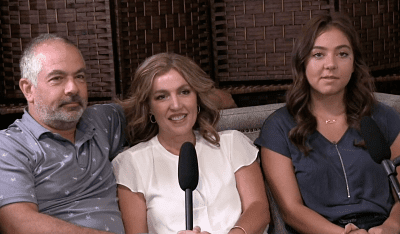
 Join us now on Mormon Stories Podcast as we interview Jared, Gwen, and Madison Lusk. This episode is a continuation in our series highlight former Mormon bishops and their families who have experienced a faith crisis. Jared is set to be excommunicated on June 30th, 2019 for apostasy.
The Lusks live in Farmington, New Mexico. Jared and Gwen were raised as devout Mormons, married in the Jordan River temple, had 6 children, and established a successful dental practice in Farmington, NM. Jared and Gwen devoted their lives to the Mormon church for 45+ years, including Jared serving as bishop from 2008-2013, and Gwen serving in multiple callings.
Jared’s faith crisis was triggered in 2015 when he began reading the LDS Gospel Topics Essays. Jared and Gwen experienced a mixed faith marriage for a few years. In April of 2018, while being released from a stake calling, Jared shared with his stake president and one of the counselors details regarding his faith crisis. The stake president immediately took Jared’s temple recommend away, and then released Gwen from her calling and took her temple recommend away a few weeks later. Madison (18) resigned from the church in April, 2019.
After Jared began expressing public support for Sam Young and the Protect LDS Children movement, along with expressing public feelings about the church’s truth claims, Jared was summoned to a disciplinary council. Jared faces excommunication on June 30th, 2019 at 6pm at the Farmington, NM stake center.
This is their story.
The result of the disciplinary council and our follow-up interview with the Lusks may be found here:
1143: The Lusk Family Disciplinary Council Verdict: Disfellowshipment for Unrepentant Apostasy?
Part 1 – Mormon Background: This transcript is machine-generated and lightly edited for readability. The audio is authoritative. Please excuse occasional errors in names and spelling. John Dehlin [00:00:04] Mormon Stories is a production of the Open Stories foundation and relies solely upon the support of people like you, its listeners to help keep the podcast alive or to become a member of the community. Please become a monthly subscriber by visiting MormonStories.org and clicking on the Donate button on the right side of the page under Support. All contributions to Mormon Stories are completely tax deductible in the United States and go towards producing the podcast and building communities and programs of support for Mormons like you. Thanks for your support. Hello everyone and welcome to another edition of Mormon Stories Podcast. I am your host, John Dehlin. It is June 21, 2019. We're broadcasting, recording and broadcasting live to you today from the Mormon Stories Podcast studios in Salt Lake City, Utah. And we are very, very excited, really honored and moved for today's interview. Today we are going to be continuing our series on former Mormon Bishops and their families. We just interviewed Scott and Joanna Purvis and their family for a wonderful interview. We've interviewed several other Mormon bishops and we're going to continue that series today. We are also going to be continuing our new tradition, semi new tradition of having children in a family be a part of the interview. And we are continuing our series on covering Mormon excommunication. So we're covering a lot today just to give you a little bit of background. So Jared and Gwen Lusk were raised orthodox Mormons and you know, were married in the temple, had six children, served in lots of callings in the church, basically gave their lives to the church. Jared ended up becoming bishop in their Farmington, New Mexico ward. Jared and his wife Gwen set up a successful dental practice there and again just gave 4550 years of their lives to the Mormon Church. In 2015, Jared discovered the LDS Church's gospel topics essays and started to question or learn more about Mormonism and and became a supporter of the Sam Young Protect LDS Children's Movement. And long story short, when the Stake president found out, he responded in a way that was that was quite challenging for the family. And again, long story short, Jared is facing excommunication this next weekend. So June 30th at the Farmington, New Mexico Steak Center, 6pm Jared and his family face excommunication from the Mormon Church for simply being affected by the LDS Gospel Topics essays that the Church itself released and for supporting Sam Young and his attempt to keep children from being sexually abused and for just speaking publicly about his concerns or questions around the Gospel Topics essays. So we think excommunications are barbaric and Medieval. And the Church needs to stop excommunicating people for having sincere doubts and questions about the Church, for supporting the protection of children, all while they refuse to excommunicate and even protect rapists, child sexual abusers, etc. It's such a weird and strange profound irony that in 2019, the church is excommunicating sincere former bishops and their families, people who have pure hearts and have worked really hard to serve the Church for decades while they continue to protect and defend rapists and child abusers at a large scale. So we're going to speak out about that for as long as we can. So, anyway, that's what we're in for today. We are broadcasting this live on Facebook Live. So we really do, number one, invite any of you who are tuning in today to please right now share this live interview on your Facebook profiles, in Instagram, on Reddit, wherever you engage in social media. Because we'd love to have as many live listeners as we can. If we can get 30 or 40 people to share this interview right now, I think we can have this domino effect of publicity that will help as many people as possible hear this important story and learn about it. And ultimately, we hope that the Church just learns to leave these families alone and let people grieve and process their Mormonism and their faith crisis in whatever way they want to without facing the scarlet letter and the public shaming that is excommunication. And we just want to profile amazing families and their courage. So please share this interview live wherever you can, and please encourage others to share it as well. We really appreciate that and we also welcome your questions and comments. Hopefully, we'll have some family members or friends or even ward members or stake members of the Lusk family who can bear testimony to their credibility and their integrity and express their concerns about these actions. So that's what we're in for today. Thanks for joining us. And without any further ado, Gwen and Jared and Madison Lusk, thank you for driving all the way from freaking Farmington, New Mexico to do this interview. Gwen Lusk [00:06:16] Thank you for having us. Jared Lusk [00:06:17] I'm glad to do it. John Dehlin [00:06:18] It's good to have you. All right, so anything I got wrong in the introduction? Gwen Lusk [00:06:26] No. John Dehlin [00:06:29] All right. Okay. Well, let's. Let's begin then. Let's just start with your story, I guess. Jared, you're older than Gwen, is that right? Jared Lusk [00:06:38] I'm five years older. Four and a half. John Dehlin [00:06:40] Okay, so let's begin and have you tell a bit about your Mormon story, and we'll kind of establish Your credibility as an orthodox Mormon and kind of what the church meant to you growing up. And then we'll have Gwen do the same thing, and then we'll talk about your story together. Is that okay? Jared Lusk [00:06:58] Okay, perfect. Madison Lusk [00:07:01] All right. Jared Lusk [00:07:01] I was born in American Falls, Idaho. Had a wonderful childhood. My early, early years. My mother passed away when I was three and a half, so obviously that was a little bit trying, but I was pretty young. I have one random memory of her, but my dad remarried when I was four and a half, I think, and we lived in Idaho, and my dad moved around a lot, so we lived in Idaho and Utah and Colorado and kind of moved around a lot. But we were 100% all in the church my whole entire life. Do you want me to just keep going and. John Dehlin [00:07:53] Yeah, yeah. So, like, what. What. How many kids again, in your family? Jared Lusk [00:07:58] In my family, there were from my dad and my mom. I have one brother and one sister. And then my dad remarried, and then we have four other sisters, so there's seven of us all together. John Dehlin [00:08:10] And again, how old were you and your mom? Jared Lusk [00:08:12] Three and a half. John Dehlin [00:08:12] Three and a half. Okay, so do you have memories of her at all? Jared Lusk [00:08:15] Just one couple little random memories. John Dehlin [00:08:17] Okay. So what. What. What was the role of the church in your family's life growing up? Jared Lusk [00:08:24] It was. It was the main focus and part of our life. You know, we. We always tried to read our scriptures, and we. We went to church every week. We. We were the normal Mormon family, I think you could say I was the oldest in my family, the oldest sibling. And like I say, we did move around a lot. I went to a different school every year for, like, the first eight or nine years of my life. So that was always difficult for me, I think. And it was. I've got to the point where I hate change, and it's super difficult for me, but I'm finally learning a little bit how to cope with that. But it has been a challenge for me. But throughout my life, the church was the. I think it was the major focus of our life. I did Scouts. I was an Eagle Scout when I was 13 years old. I was always super driven for everything I did, and I just more just kind of wanted to check off the boxes, if that makes sense. John Dehlin [00:09:23] Yeah. Jared Lusk [00:09:23] I didn't necessarily enjoy scouting, but I thought it was something that I had to do, so I did it right. John Dehlin [00:09:29] So you got your Eagle? Jared Lusk [00:09:30] I did. John Dehlin [00:09:30] Okay. And so as far as, like, the family home evening and scripture study and all that stuff, and your parents trying to encourage you all to be Spiritual and to follow the commandments. Was your family pretty committed that way? Jared Lusk [00:09:49] I mean, we were not perfect by any means, but more times than not, we always had family prayer and we always had family scripture study and family home evening. My dad served a mission in what was the Great Lakes Mission at the time. That would probably be the 50s, I would guess. And my mom, who he married second, served a mission in New Zealand. So the church was the priority for us in our life. John Dehlin [00:10:14] Okay. And do you remember, I always like to ask this. Did you have any favorite primary songs? Jared Lusk [00:10:22] Honestly, probably. I Am a Child of God was the. Was my favorite primary song. And families can be together forever. John Dehlin [00:10:32] How did you. How did your family. How did you and your dad think about your mom having passed and what role the church and its theology played in your beliefs and being able to see her again? Was that important to you? Jared Lusk [00:10:46] Yeah, that. Honestly, I think that was the main focus for me all the time. That was the biggest, what you could say. My strongest point of my testimony, I think, was the plan of salvation and families could be together forever and I would be able to see my mom again at some point. John Dehlin [00:11:01] Okay. Jared Lusk [00:11:02] So without a doubt, that was the strongest. And I have always wondered, as I think back on my life, and I kind of think the church is shifting focus a little bit, but to me anyway, and maybe it was just my circumstance, I kind of feel like the focus of the church was never Christ for me, but it was always eternal families and the plan of salvation and the Book of Mormon and not so much Christ. And so that. That's been a little bit of an issue for me growing up and getting older. John Dehlin [00:11:32] So do you remember, like, missing your mom and wanting to be with her and get to know her? Jared Lusk [00:11:38] And I do remember that. And I remember weird memories, but I remember every night when we would have family prayer and I would say the prayer that I would. We would ask Heavenly Father to bless mama up in heaven. And occasionally, I mean, it wasn't super often, but occasionally I would have really deep conversations with my dad, and those were always super special to me about my mom and just things like that. I wish, and we can talk about this later, my dad's passed, but I wish that I would have had more of those conversations and found out more details about his life and her life. John Dehlin [00:12:23] Do you. Do you know if your dad was sealed to both his first wife and his second? Jared Lusk [00:12:28] Absolutely, he was. He's a polygamist, so he was sealed to his first wife. They were married in the Idaho Falls Temple, and then she passed. And then my second mom, he was sealed to her in the Provo Temple. John Dehlin [00:12:43] Okay. And did you ever discuss that, like, growing up? Jared Lusk [00:12:47] Yeah, I remember. I mean, I don't remember exactly all of the conversations, but it was. It was brought up from time to time, and it was talked about. Not in depth, I don't think. I don't think that. I honestly don't think that was a comfortable conversation for my second mom to John Dehlin [00:13:02] have Kind of just avoided that. Jared Lusk [00:13:05] Yeah. John Dehlin [00:13:05] Okay. Okay. Do you remember in high school, like, any of the typical battles around getting a firm testimony, struggling with the church's standards, going to seminary? Were you, like, the Nephi of your ward or your high school? Jared Lusk [00:13:26] Honestly, I kind of think I was. I was. I mean, I was a good kid. I didn't do anything wrong. I never tried a taste of alcohol. I kept the law of chastity. I was a good kid. I mean, I don't want to brag, but I was a good kid. John Dehlin [00:13:43] Okay. Jared Lusk [00:13:45] I went to seminary. I didn't always enjoy seminary. When I was growing up, my biggest focus was baseball. That's all I cared about, was playing baseball. And I remember specifically having thoughts that if it comes down to me playing baseball or going on a mission, I will play baseball. John Dehlin [00:14:01] Okay, so you loved baseball. Any other. Any other hobbies that were really important to you? Jared Lusk [00:14:09] Pretty much. Baseball, was it. John Dehlin [00:14:10] Did you have. Favorite. Favorite team? There's no state team in New Mexico. Right. Jared Lusk [00:14:14] There's no, like, the Yankees because my dad liked the Dodgers. And so. John Dehlin [00:14:20] Okay, so there was a rivalry. Yeah, that. So you were a. So you. Your dad was a Dodger fan. Jared Lusk [00:14:29] And we. John Dehlin [00:14:30] We interviewed Scott Purvis, and he's a Giants fan, and he hates the Dodgers. So you and Scott Purvis were not only former bishops, you also share mutual hate for the Dodgers. Correct. But you're a Yankees fan. Jared Lusk [00:14:41] And now I'm not so much a Yankees fan. Guest [00:14:43] But. Jared Lusk [00:14:43] But growing up. More. More so just because I liked a little rivalry with my dad and kind of like the same thing with basketball. He would cheer for the Jazz, and I would cheer for the Bulls. John Dehlin [00:14:52] The Bulls. Okay. All right. When the Jazz and the Bulls were like. Right, right. Okay. Did you have a hero, A baseball hero? Jared Lusk [00:15:01] Yeah, probably Ted Williams. John Dehlin [00:15:03] Ted Williams, Yeah. That's old school. Jared Lusk [00:15:05] Yeah. Madison Lusk [00:15:06] Okay. Jared Lusk [00:15:06] When I was in high school and growing up, I read lots of biographies about baseball players and things like that. I graduated from Springville High School. I went to Durango High School the first few years, and then we moved to Springville High School my senior year, graduated in 1986, and we won the state championship that year. John Dehlin [00:15:23] Really? Jared Lusk [00:15:24] Yeah. John Dehlin [00:15:24] And you. What position you put? Jared Lusk [00:15:25] Second base. John Dehlin [00:15:26] You were second base. Were you a hitter? Were you a good hitter? Did you consider college ball? Did you play college? Jared Lusk [00:15:32] I went to snow college right after that and played that fall. But then I went on my mission and. John Dehlin [00:15:37] Okay. Jared Lusk [00:15:38] Didn't play after that. John Dehlin [00:15:39] Okay, and you served your mission where? Jared Lusk [00:15:42] Quito, Ecuador. John Dehlin [00:15:43] Okay, Ecuador. So did you ever have like a faith crisis or a crisis of faith in high school, or did you ever doubt or any reason? Jared Lusk [00:15:52] I would say there were some issues that I struggled with in high school, but it was not something that I really thought about a lot. When I went on my mission, I read the Book of Mormon the first time probably when I was 8 or 9 years old, and I read the Book of Mormon several times while I was growing up. I enjoyed reading the scriptures and I did it. But I remember when I went on my mission, my biggest struggle was my actual belief in God. And that's. To me, that's kind of weird, you know, that you can grow up religious and that have a difficulty with believing in God. And it wasn't that I didn't believe him. I just didn't know how to process that information because in my mind, I always struggled with the question, if there's a God and he created all of these things, then who created God? Guest [00:16:46] And. Jared Lusk [00:16:46] And where does that end? And I struggled with that. And I remember when I went into the mtc, I had that struggle, and I thought, how am I going to go on this mission with this struggle and this difficulty with my belief in God? And I. And I remember specifically one day going to the Provo Temple and thinking and fasting and praying that I had to have this answer to my question about God. Are you really there? Are you really, really there? And so I went to the temple that day in the MTC with that focus in mind. And honestly, I'm still waiting for that answer. John Dehlin [00:17:21] Okay, so what answer? Just to. Jared Lusk [00:17:27] And I'm okay with not knowing. Now I'm at peace with everything, but not really getting an answer that, yeah, God's there. John Dehlin [00:17:34] Okay, so you wanted to just kind of establish that personal connection with God and you never. But. But you just. How did you reconcile that? Jared Lusk [00:17:46] I kind of just put it on the back shelf and really try not to think about it and focus on it. John Dehlin [00:17:51] Yeah. What would you. Jared Lusk [00:17:52] What. John Dehlin [00:17:52] What type of thing. What type of response would you have liked to receive from God? Jared Lusk [00:17:57] I don't. I don't know. I just. I kind of wanted confirmation and some powerful spiritual experience that, yeah, he's there answering my prayers. And so basically, how I reconciled it my whole entire life was that I had a testimony of Joseph Smith, and Joseph Smith said that he saw God in Jesus. And so that's how I reconciled it, and that's how I dealt with my lack of testimony, I guess you could say, and my lack of knowledge that God is there because Joseph Smith did. And I really, truly had a testimony of Joseph Smith, but based on everything that I had been taught and learned my whole entire life. John Dehlin [00:18:35] What did you love most about Joseph Smith? What were your favorite parts of that story? Jared Lusk [00:18:43] I always thought the story was kind of miraculous. And I remember telling people all the time that if I wasn't born into the church and a missionary came and talked to me about that, I would never believe that. And so I don't know how I believed it, but I did. That doesn't make sense. I know, and I don't know, but I always admired Joseph Smith from the information that I had, that I thought that he was persecuted and he did these things, and courageous. And God really did appear to him, and Jesus appeared to him, and he established the church. And so that was the basis of my testimony and my faith my whole life was Joseph Smith. It was powerful and strong. I had good feelings, you know, when I'd see those movies that the church would put out, and when I would read the Book of Mormon or talk to people about the Book of Mormon, I would have those good, warm feelings. John Dehlin [00:19:36] Got it. Madison Lusk [00:19:37] Okay. John Dehlin [00:19:40] All right, so. And as you kind of decided to serve a mission, to what extent were you just hoping for kind of the Mormon dream? What life were you hoping to lead? What were the main pillars or benchmarks that you. Jared Lusk [00:19:57] You know, it's kind of weird when I look back and think about that time of my life. I kind of. I always had planned on serving a mission, but like I said, I. I told myself if it came between playing baseball or serving a mission, I would play baseball. But I. I moved up here to Utah, and all of my friends that I graduated with were serving missions. Everybody went on a mission. So it was just kind of the thing that everybody did. And so that's what I did. I just turned my papers in and I went on a mission. You know, I didn't. I didn't necessarily give a lot of thought to it as far as what I plan to experience or what, you know, if that makes sense. I just. I just did it. It's kind of one of those things to check off. And I was excited about doing it, but at the same time, I was scared to death to do it. John Dehlin [00:20:42] Right, but you did it. Jared Lusk [00:20:44] I did it. Going into the mtc, that was the most difficult time of my life. John Dehlin [00:20:49] Why? Jared Lusk [00:20:51] Well, like I said earlier that I had super difficult time with change. Anytime we would move, it would, like, I would have lots of anxiety and things like that. And I didn't realize at the time that it was anxiety. And, you know, it's a real thing. And so when I went to the mtc, it was a huge change. And, you know, the atmosphere in the MTC is, like, I always said it was like jail. You know, it's just like a completely different atmosphere in there that there's so much control over you. And so I just hated it. Seriously. It was the worst experience of my life. Going into the mtc, most two or three weeks, I just felt alone and sad and depressed and super anxious, and it was difficult. But I think that goes back to some of my upbringing and change all the time and, you know, being uprooted all the time. And I just. I didn't cope well with change. So I didn't have a hard time when I went to Ecuador, but the MTC was difficult. John Dehlin [00:21:53] One of our listeners, Penny, is asking what years you served in Ecuador? Jared Lusk [00:21:57] 1987-89. John Dehlin [00:21:59] Okay. And how was your mission overall for you? Jared Lusk [00:22:03] It was wonderful. I. I loved my mission. I have no regrets about serving my mission. I love the people there I served back in that time where there's not. Obviously there wasn't Internet or anything like that. And so I've had a hard time staying in touch with some of those people, although there's a couple of them that I have been able to stay in touch with. And I love those people. I know when I came home and I met Gwen, it was kind of irritating to her because I would say how much I love my mission all the time and the. But I could go back and live there and keep serving my mission. So I loved it. John Dehlin [00:22:38] Right. Okay. And did your mission president encourage you to get married as soon as you got home or. Jared Lusk [00:22:46] I don't. I don't. Honestly, I don't remember that being advice to him. I loved my mission president. I still do. He was. He's. Him and his wife are one of my favorite people, and I will always have great love for them. John Dehlin [00:22:59] Yeah. Okay. All right, well, Gwen, I think it's your turn. Tell us about your Mormon cred and your upbringing. Gwen Lusk [00:23:08] Okay. So I come From a long line of Mormons. Like, every one of my lines goes, like, clear back to Joseph Smith. So I'm at least six generations and one line. I'm the eighth generation of Mormon. I don't know if you want me to introduce myself to all of my 2 million cousins with dropping names of John Dehlin [00:23:29] yeah, ye famous people. That's important. Gwen Lusk [00:23:34] So there's Alexander McCrae, who was in Liberty Jail with Joseph Smith. He's the tall guy. There is Morton Mortensen. His family was in the Willie Handcart company and he stayed on a mission for. That's a story I've heard people tell over, you know, Pioneer Day a lot. Tarleton Lewis, Hans Mill, Massacre Lot Smith. He was a captain in the Mormon Battalion. And am I missing anybody? Oh, Christopher Layton. Yeah. He actually had the most children of any Mormon polygamist. He had like 63 or 64. He's Layton, Utah is actually named after him. So, yeah, I come from a long line of she's famous of polygamous Mormons. John Dehlin [00:24:29] So that's awesome. Madison Lusk [00:24:31] Okay. Gwen Lusk [00:24:32] Yeah. John Dehlin [00:24:32] So you got the pedigree. Where were you raised in the church? Gwen Lusk [00:24:37] So I was born in Safford, Arizona, and then my family moved to Colorado. Drink of Colorado when I was three years old. Jared Lusk [00:24:49] So. Gwen Lusk [00:24:49] And I grew up there. My parents still live there, so I had a lot of stability in my. In my family, so I didn't have to move around. John Dehlin [00:24:58] Okay, and so you're a Colorado girl? Gwen Lusk [00:25:01] I am, yes. John Dehlin [00:25:02] And what was that like growing up in the church in Colorado? Gwen Lusk [00:25:05] So there's not very many members there. Madison Lusk [00:25:08] The. Gwen Lusk [00:25:11] Yeah, there's just not a lot of members. So, you know, and in my high school, there's just a handful of members. So it's. It's a. It's completely different than growing up in. In. In Utah. But. Yeah, So I don't. I'm really bad at this. John Dehlin [00:25:31] What do you mean? Jared Lusk [00:25:32] I don't want to interrupt, but one thing I don't know whether it's cool or not about Colorado is we have to take early morning seminary. And so there's some good experience with early morning seminary and in Colorado. And she can talk about that, probably. John Dehlin [00:25:46] So. Okay. So again, and we're having just a couple technical difficulties, so forgive me if I'm asking questions that are repeat. So you're of how many kids I am. Gwen Lusk [00:25:56] There's seven. I have three brothers and three sisters. John Dehlin [00:25:58] And you are wearing the birth order. Gwen Lusk [00:26:00] I am the third. So I have an older sister, an older brother, and then two little sisters and two Little brothers. John Dehlin [00:26:05] Okay, and again, forgive me if I'm repeating. So your parents are marrying the table temple? Gwen Lusk [00:26:10] Yes, and my dad served as bishop twice when I was growing up. John Dehlin [00:26:14] Oh, wow. Gwen Lusk [00:26:14] So the first time was short. He had a heart attack and got released. John Dehlin [00:26:18] And in Durango? Gwen Lusk [00:26:20] Actually, we are. We lived outside of Durango RI. In Red Mesa, Colorado. Shout out to you people there. Okay, so he's. He served as a bishop to the Red Mesa Ward in the Durango, Colorado stake. John Dehlin [00:26:34] Okay, and so he was bishop twice when you were growing up. Gwen Lusk [00:26:38] Yes. John Dehlin [00:26:39] And what. What were the family traditions related to the church that were important to you? Gwen Lusk [00:26:45] Every morning my mom would make breakfast, and then while we ate, then she would read out of the Book of Mormon to us. John Dehlin [00:26:53] Okay. Gwen Lusk [00:26:53] And we had family prayer morning and night. We had family home evening. Every Monday. We went to Mutual every Wednesday. We. We did everything. You know, we were super devout, so. John Dehlin [00:27:07] Okay. And do you remember what the church meant to you as a kid? Gwen Lusk [00:27:11] Yeah, it was like, I never not remember not having a testimony. Like, it was just something, you know, like, I always thought when they tell you about the gifts of the spirit, you know, that that was one of my gifts, that I always had faith and I, like, I never doubted that the church was true. I just always knew that it was true. John Dehlin [00:27:31] You always knew? Gwen Lusk [00:27:31] Always knew. John Dehlin [00:27:32] Okay. Gwen Lusk [00:27:33] Yeah. John Dehlin [00:27:33] Did you have favorite things about the church growing up? Gwen Lusk [00:27:37] I, When I was, When I was little, I loved Primary. I loved the singing in Primary, so that was, that was fun. And you know, when you. John Dehlin [00:27:46] Did you have favorite songs? Gwen Lusk [00:27:48] I loved all of the songs. John Dehlin [00:27:50] Yeah. Okay. So, yeah, none stuck out as like. Gwen Lusk [00:27:53] Yeah, families can be together forever. I think everybody or. I love to see the temple, you know. John Dehlin [00:27:59] Yeah. Gwen Lusk [00:27:59] Songs like that. John Dehlin [00:28:00] Okay. Gwen Lusk [00:28:01] And you know, when you're little, Jesus wants me for a sunbeam and once there was a snowman. You know, you like all those action songs. John Dehlin [00:28:08] Yeah. Gwen Lusk [00:28:09] So. John Dehlin [00:28:10] Okay. Do you remember young men's, young women's and what that meant to you? Gwen Lusk [00:28:14] Yeah, that was. That was good. Madison Lusk [00:28:17] Our. Gwen Lusk [00:28:18] Our ward was. Was fairly. I don't know, I guess we were probably about medium sized. We had. I had lots of friends in. And we. We always had a really good time back in. When I was back in the day, because I'm getting really old. You know, there was. We used to play basketball and. And volleyball. We would have state tournaments, so we would, you know, have to go practice for those and. And we did a road show once or twice and you know, there was. There was a lot of fun things that we did, so it was good. John Dehlin [00:28:51] And theologically, what did the church mean to you? Just belief wise, especially in your teenage years. Gwen Lusk [00:28:56] So growing up in a place where it's not predominantly Mormon, it's a little bit harder because you're so different, you know, And Durango's are a really big. It's a. It's kind of a hippie town. It's probably normal town. I don't know anyway, that you're not partying you, you know, with people and I don't know, it's just. I forgot the question again. I'm really nervous. John Dehlin [00:29:24] Like your beliefs and the behaviors, like what. How did Mormonism influence your teen years both in terms of how you looked at life, the world, your future. Gwen Lusk [00:29:35] Yeah. So I don't know. John Dehlin [00:29:37] I think other kids. Gwen Lusk [00:29:38] Yeah. With that. So it was hard just to like keep your standards because there's so, you know, nobody lives their life like that and it's. Guest [00:29:47] It's hard. Gwen Lusk [00:29:48] I say I was definitely not a perfect child, unlike my husband, but. John Dehlin [00:29:53] You mean as a teen? Gwen Lusk [00:29:54] As a teen. John Dehlin [00:29:55] Okay. Madison Lusk [00:29:55] Yeah. Gwen Lusk [00:29:55] I mean I wasn't like terrible person or whatever. John Dehlin [00:29:58] I'm not digging for dirt. But just because many people are going to relate to this like law of chastity stuff or to wisdom stuff. Gwen Lusk [00:30:04] A little bit of both. John Dehlin [00:30:05] Okay. Gwen Lusk [00:30:05] So not to extreme on any of John Dehlin [00:30:07] those, but you just like a normal kid. Gwen Lusk [00:30:10] Like once or twice, you know, you tried some things. Yes. John Dehlin [00:30:13] You're a little mischievous. How did. Did you. Were you wracked with guilt? Were you just totally. What was that like? Gwen Lusk [00:30:18] It was horrible. Yeah. You feel like, like you let God down, you let your family down, you let yourself down. Like it's you. You just. Yeah, you feel awful. Awful, awful, awful. John Dehlin [00:30:31] But also. Sometimes that can torment you. And sometimes it can also though keep you from like getting out of control. So as you look back, is there a part of you that's great, you know, like. Gwen Lusk [00:30:48] Oh, I totally agree. John Dehlin [00:30:49] Grateful for the standards? Gwen Lusk [00:30:50] Yeah, I think so. Yeah. Because I don't think that people in high school have any business drinking or having sex. So I'm glad that you know that those are standards. John Dehlin [00:31:00] So even though you felt guilt, guilt and shame. Gwen Lusk [00:31:03] Right. John Dehlin [00:31:03] You also maybe put you out of trouble? Gwen Lusk [00:31:06] I think so. So there's definitely some place, some blessing there for sure was. John Dehlin [00:31:11] So would you say overall your Mormon experience growing up was. Was positive and productive? Gwen Lusk [00:31:17] Yes, I think so. John Dehlin [00:31:20] Were you pretty happy? Were you pretty. Gwen Lusk [00:31:21] Yeah, I'm a happy person. Yeah, I was very happy. John Dehlin [00:31:25] But your family you felt was happy and your life was happy yeah, we Gwen Lusk [00:31:29] had a good life. We were happy. We had a happy family. John Dehlin [00:31:33] And what were you looking forward to? Like, how, how did you want your life to go as like a teenage Mormon girl? Madison Lusk [00:31:39] Yeah. Gwen Lusk [00:31:39] I don't know. My family is really, I don't know, traditional orthodox. Like, being a stay at home parent was like super pushed for some reason in my, in my family. Like, that was like, because I. Maybe because that's what my mom did. I don't know. So I just like felt like that was the only career choice that I had, was that I would grow up, get married and be a mom. John Dehlin [00:32:06] Did you have interests in other things? Gwen Lusk [00:32:08] I did. Like, I have a, like a bright mind. Like, I'm, I'm not stupid. I don't know. I just. But to me, it was almost like I didn't, There wasn't really an option and I love babies. So, you know, it sounded good and it was. I don't know. Madison Lusk [00:32:25] Okay. John Dehlin [00:32:26] Okay. So you wanted to follow that typical Mormon route. Guest [00:32:29] Yes. John Dehlin [00:32:30] Marrying a returned missionary and getting married in the temple, having kids and being a stay at home mom and all that. And raising righteous kids. Gwen Lusk [00:32:37] That's right. John Dehlin [00:32:38] Sounds perfect. Gwen Lusk [00:32:39] It is. It's the Mormon dream. John Dehlin [00:32:41] Sounds like everything's on track. Gwen Lusk [00:32:43] Yeah. John Dehlin [00:32:43] Okay. All right. So how did you guys meet? Did you serve a mission or. Gwen Lusk [00:32:51] No, I did not. There's actually a little interesting story behind all of this. So Jared got home from his mission. He actually had to be released early for medical reasons. He fell off a building and broke his leg. John Dehlin [00:33:07] Oh, no. Gwen Lusk [00:33:07] Crushed his heel, broke his back. Almost died on your mission. John Dehlin [00:33:13] Okay, let's talk about that. So, like, missionary safety has been something that we've covered on Mormon stories in the past. How in the world did you get hurt on your mission? Jared Lusk [00:33:22] Well, I was screwing around, honestly. John Dehlin [00:33:24] Okay. Jared Lusk [00:33:24] Okay. John Dehlin [00:33:24] And, well, missionaries do that. Jared Lusk [00:33:26] Yeah, they do. John Dehlin [00:33:27] You're not the only one. We're kids. Jared Lusk [00:33:29] And I don't know if people are going to be familiar with this or not, but in Ecuador, at least in February, they have. At least when I was there, they had what they called carnival and it was just a big party. And so everybody's out messing around and stuff. And so the missionaries kind of got involved in that a little bit. And so we went to the. And this was kind of a common occurrence. We'd go to the top of our four story building apartment where we lived and that's where we did our clothes washing and things like that, but. And we would throw balloons at people. You know, we'd have water fights with people. And I honestly don't have any idea how it happened, but I threw a balloon at somebody and I fell off that building. I don't know how it happened. John Dehlin [00:34:10] Oh, man. Jared Lusk [00:34:12] And so I fell 40ft and landed on my. On my feet and crushed my heel and broke my back. And I was in the hospital in Ecuador for a couple weeks before they sent me home. John Dehlin [00:34:26] What's an Ecuadorian hospital? Jared Lusk [00:34:28] Like, where the actual accident took place was in a rural. No medical attention at all. And so they took me to the little clinic that was there and tried to stitch me up. And my. From my head that got cut, and it ended up getting infected. But kind of a cool story on that is they didn't have an ambulance or anything like that to take me to Quito, which was about three hours away. So they took me in a hearse, an old hearse that they transported me to the Quito hospital. And actually, the hospital in Quito was pretty good, and I'm grateful for that. And I think I was taken good care of, and I survived, but barely. I got what they call adult respiratory distress syndrome. And my lungs filled up with fluid, and I had to be intubated for 10 days, and I almost died. I was super close to dying. And it was kind of a spiritual experience for me at the time, honestly, because I felt like my mom was there with me, and so that always was. And I don't know how to explain that, but, you know, it was. It was an so Because I had. I had a broken leg. They sent me home two months early from my mission, and so I came home and. And she harassed me until I said yes. John Dehlin [00:35:53] So how did you guys. How'd you guys meet? Gwen Lusk [00:35:56] So his family was in the same ward as we. John Dehlin [00:36:00] Oh, okay. Gwen Lusk [00:36:01] So he. Yeah. So when he. John Dehlin [00:36:05] The first time you saw him was when he got home. Gwen Lusk [00:36:08] His family had lived in our ward years before, and then they moved back to Utah, and then while he was on his mission, his family moved back. And so when he was sent home from his mission or released from his mission, then he was in our. In our ward, so. And I was 16 years old. John Dehlin [00:36:26] You were 16? Gwen Lusk [00:36:27] Yes. John Dehlin [00:36:27] And you thought he was cute? Gwen Lusk [00:36:29] He was so cute. John Dehlin [00:36:30] Really? Gwen Lusk [00:36:31] Yes. What did you like about him, Honestly? Well, he's super cute. Madison Lusk [00:36:36] And. Gwen Lusk [00:36:38] And he has a super. Stop it. He has a super fun personality. And I loved how. I loved his spiritualness. Like, I could see that in him. And he seemed like the spiritual giant. And actually, that's one of the reasons why I wanted to put my Rebel ways behind me is just because I wanted somebody like that in my life. John Dehlin [00:37:01] He turned the bad girl good. You weren't a bad girl, and I Gwen Lusk [00:37:05] wasn't really a bad girl. But, you know, you know what I'm saying? And I was, I just wanted, like, I stopped saying bad words, you know, and I. It was the first time in my life where I told you that I always thought that I had a testimony, but I had never like got down on my knees and like asked, you know, like the Moroni promise. And so I did that and you know, I just, I just wanted to just be worthy of somebody like him. John Dehlin [00:37:32] Wow, Jared, you, you had a lot of power. Jared Lusk [00:37:37] I had no power at all. I was on crutches and I couldn't run very fast. John Dehlin [00:37:41] Well, you were. Gwen Lusk [00:37:42] That is, that is how I got him. John Dehlin [00:37:45] He couldn't run away. Gwen Lusk [00:37:46] He couldn't run away. He would have ran off to Utah and like married some Utah girl. Jared Lusk [00:37:51] So, yeah, yeah, I really didn't try hard to run at all. I thought she was cute, but I knew she was young and that was kind of scary for me, so I didn't run away, but I allowed her to pursue me, if that makes sense. John Dehlin [00:38:07] So what'd you like about Gwen, Jared? You know, the 16 year old girl? Kind of young. I know, kind of young for a 21 year old. Jared Lusk [00:38:15] We're probably going to get all kinds of comments now, but I. Obviously she was beautiful and her personality was amazing. She was always smiley and happy and she was just perfect. John Dehlin [00:38:27] So was it for you, was it like kind of love at first sight kind of thing or what? Jared Lusk [00:38:31] I would say so, yeah. John Dehlin [00:38:34] So you knew as soon as you saw her and you got home that she was the one? Jared Lusk [00:38:40] Yeah, I kind of, I kind of had that thought, yes. John Dehlin [00:38:42] Okay. And. Okay, go ahead. What were you gonna say? Jared Lusk [00:38:46] But I think that's how every missionary feels when they get home and the first girl they see, I. I've said a million times my whole life, I just got lucky. John Dehlin [00:38:55] Okay. Jared Lusk [00:38:56] I, I truly believe that because I see so many people that have those same thoughts and feelings and they're not as lucky where it worked out for us. And I was lucky and I'm grateful. John Dehlin [00:39:05] That's good. Okay. And so Gwen did same thing for you, Love at first sight? Gwen Lusk [00:39:10] Yeah, for sure. Yeah. John Dehlin [00:39:11] All right. So how did you guys handle falling in love when you're like underage and you could be put in jail? Like, what? Gwen Lusk [00:39:20] Yeah, it's crazy. My parents were actually supportive of it and my dad actually hired him And I actually worked for my dad in the summers. My dad is also a dentist. Like. Like, Jared and I assisted in the summertimes with him, and so we fell in love in a dental office. It's very romantic. John Dehlin [00:39:42] Okay, okay, wait, so your dad was a dentist? Madison Lusk [00:39:46] Yes. John Dehlin [00:39:47] Okay. And so he was kind of a mentor to you, is that right? Jared Lusk [00:39:50] Yes, definitely. John Dehlin [00:39:51] Definitely a mentor. Jared Lusk [00:39:52] I always looked up to him very much. John Dehlin [00:39:54] Okay, okay. So you were working there at the dental office with her, and dad's being sneaky, trying to get you guys to. Gwen Lusk [00:40:01] Well, I don't know that he would, like, you know, like, encourage the relationship, but once he saw that it was happening, like, they really loved him and respected him and. And, you know, he's a great person and they could see that. And like, I. I couldn't do better. So. Madison Lusk [00:40:18] Yeah. John Dehlin [00:40:20] Okay, so how did you guys handle the. The age difference and the timing of that and waiting? Or did you not wait? Gwen Lusk [00:40:27] So interesting. Like, we got married and it was a few months short of my 18th birthday. John Dehlin [00:40:38] A few months shy. Madison Lusk [00:40:39] Yes. John Dehlin [00:40:39] Yes. That's a reference to the gospel topic polygamy. Gwen Lusk [00:40:44] Right, Right. Yeah. John Dehlin [00:40:46] Yeah. So you were 17 when you got married? Gwen Lusk [00:40:48] I was, yes. John Dehlin [00:40:48] Was that legal? Gwen Lusk [00:40:50] So my mom signed I'm child bride. My mom, she came with us because we got married in the temple, and so we had to get a marriage license in Utah. So we drove to Monticello and she had to come with us and sign for me. John Dehlin [00:41:06] Did that feel early for you, 17 years old, or were you ready? Gwen Lusk [00:41:09] It did, but, like, I'm so proud of the 17 year old me. Madison Lusk [00:41:13] Like, good job, Way to go. Gwen Lusk [00:41:15] Like, I. I would never change it. Like, it's weird and I wouldn't like, recommend it for anybody, but it works for me. Like, no regrets. John Dehlin [00:41:23] What did you want to say, Jared? Jared Lusk [00:41:27] Honestly, it was that age difference and everything was difficult for me because I. I understood that it was not normal, you know, it was not a good thing. And I mean, I'm not gonna say it wasn't a good thing, but I was in love with her and I had pushback. I mean, there was pushback. My sisters did not like it. My. My parents weren't that in favor of me doing that. And there was lots of ward members and things that didn't think it was okay. So it was. It wasn't all easy from that standpoint, from my perspective, because obviously I'm the. I'm the predator, I guess. I don't know. So it was difficult a little bit, but I was. I knew it was the right thing. John Dehlin [00:42:11] Okay, so what was what? Anything about your temple wedding, the temple ceremony. Anything noteworthy there that you guys want to share? Gwen Lusk [00:42:22] I don't know. I guess the one piece of advice that I really like that he gave us is that he told Jared that he needed to keep his wedding ring shiny, and the best way to do that was washing dishes. John Dehlin [00:42:34] Okay, that's good advice. Yeah, that's good. Jared Lusk [00:42:39] I. I think. Okay. Like, when I went through the temple the first time before my mission, I. I thought it was weird. I wasn't. John Dehlin [00:42:46] And you were there pre. The. The changes. So you. The death oaths and the. Jared Lusk [00:42:50] Yeah, I had all the deaths and John Dehlin [00:42:51] disemboweling, all that stuff. And the weird shield with the washings and anointings where they're touching your naked body and putting oil on it. You. You went through like I did. Jared Lusk [00:43:01] Yes. And so I thought that was weird. And I remember specifically sitting in the temple that first time, and I think, oh, my gosh, I am so glad that all my friends cannot see me in here. And so I didn't really. It didn't damage me or anything like that, but I definitely thought it was strange. And then when Gwen went through, those penalties were gone. John Dehlin [00:43:23] Yeah, by 90. They removed them, so. Yeah. Yeah. Okay. You missed it. Gwen Lusk [00:43:29] I missed it. Madison Lusk [00:43:30] Barely. Guest [00:43:30] Yeah. John Dehlin [00:43:30] Okay. Jared Lusk [00:43:31] But I had kind of. I think I told you a little bit about the temple, and so I think it wasn't a super shock to her where I went. They didn't tell me anything, you know, and so it was kind of a little bit weird. And then when she went, it was. You know, she went and did her endowments, and then the next day we got married. And so I think when you go and do it that way, you're not really focused on the endowments or anything like that. You just want to get to the next thing. Guest [00:43:56] Mm. John Dehlin [00:43:56] How did you guys survive? Was it dating two years? One year. Gwen Lusk [00:44:02] One year. Jared Lusk [00:44:02] That's interesting. John Dehlin [00:44:03] How did you stay chaste and pure or. You know. And again, I'm not trying to dig for details, but, like, was that hard? Gwen Lusk [00:44:10] It wasn't, actually. Our wedding was pushed up a little bit, and my dad was our bishop, which is really fun. His. He actually. We were going because I was still in high school because I have a November birthday, so I was late. So I was going to graduate early in January, and then we were going to get married, but he said that his advice was, it's better to marry than to burn. And so we got married in July John Dehlin [00:44:42] while you were still in high School. Gwen Lusk [00:44:44] And so I. Oh, my gosh. John Dehlin [00:44:46] You were married in high school? Madison Lusk [00:44:49] Yes. Guest [00:44:50] Oh, wow. John Dehlin [00:44:51] I've never heard of that before. Jared Lusk [00:44:53] There you go. John Dehlin [00:44:55] What was that like? Like, all your kids are, like, super weird cheerleaders in high school and prom and homecoming and you're married. Gwen Lusk [00:45:03] And my name changed, you know. So weird. Yeah. John Dehlin [00:45:07] Did you bring your husband to the high school dance? Jared Lusk [00:45:10] Like, we never went to prom. Guest [00:45:12] I know. I missed out on prom because I Gwen Lusk [00:45:14] was married and he wouldn't go. John Dehlin [00:45:17] I've never heard of that before. That's so cool. And creepy and cool. Jared Lusk [00:45:25] Madison, I wouldn't recommend it. Gwen Lusk [00:45:27] Yeah, don't do it. Madison Lusk [00:45:28] We're already in the clear. I'm graduated. Gwen Lusk [00:45:33] Okay. John Dehlin [00:45:36] All right. So you're saying by moving it up, you were able to stay chased? Gwen Lusk [00:45:41] Yes. John Dehlin [00:45:42] Is that what you're saying? Gwen Lusk [00:45:43] Yes, that's what we're saying. John Dehlin [00:45:44] Okay. Gwen Lusk [00:45:44] Yeah. John Dehlin [00:45:44] Okay. Jared Lusk [00:45:45] Although I. If we're being honest, we weren't perfectly chaste to go to the temple, but any kind of. John Dehlin [00:45:52] You end up fibbing about that or. Or just. Gwen Lusk [00:45:55] I don't know, I think you just kind of just like. John Dehlin [00:45:59] I mean, it's all a blur. Gwen Lusk [00:46:01] Yeah. And, like, you don't do the actual deed, so you. You consider yourself worthy, I guess, is what it is. John Dehlin [00:46:09] As long as you don't actually have intercourse. Gwen Lusk [00:46:11] Yes, that's the word. John Dehlin [00:46:13] If you work around the edges. Gwen Lusk [00:46:15] Yes. John Dehlin [00:46:15] You justify it. Gwen Lusk [00:46:17] You're still a virgin. John Dehlin [00:46:19] I can relate to that a little bit. Guest [00:46:21] Right? John Dehlin [00:46:21] Yeah. Madison Lusk [00:46:22] Yeah. John Dehlin [00:46:22] Margi and I. Yeah. Did our best. Jared Lusk [00:46:25] Well, and. And here's the thing, too. And I don't remember with you, but I know it changed. And when I. The covenant I made in the temple was to not have sexual intercourse. John Dehlin [00:46:35] Yeah. Jared Lusk [00:46:36] They changed that now, but that's the covenant that I made, so. John Dehlin [00:46:39] So you were. You were letter of the law. You were obedient to the letter of the law. Good for you. Okay, cool. So you get married in the temple. And, like, was it kind of like a dream marriage? And, like, was it, like. How did it go? Gwen Lusk [00:46:58] It was good. I mean, just like, the weirdness of being in high school is, like, really weird. But it was good. It was fun. Like. Yeah, that first year playing house, and we just had a great time. It was wonderful. John Dehlin [00:47:11] So what did you guys end up doing, education wise? How did that go? College and everything? Jared Lusk [00:47:16] So the first I had was a year. It was one year of school before my mission, and then I went two years after my mission, so I had a year before we got married. And then I guess we had One year of school while we were married for me to get all my prerequisites and everything to get into dental school. I didn't get an undergraduate degree because I just did all my prerequisites. John Dehlin [00:47:40] And so dental school doesn't require a bachelor's. Jared Lusk [00:47:43] Not necessarily, but pretty much you. You need to have one. But I had super good gpa, and I did really good on the. On the DAT test, and I had all the prerequisites, so I was accepted to a few dental schools. John Dehlin [00:47:58] You went to Creighton, is that right? I went to Creighton University, which is in Nebraska. Okay. And that's a good school. That's a solid school. Jared Lusk [00:48:07] Yeah, it's a very good school. And we had a wonderful time. It was some of the greatest years of our lives, I think. John Dehlin [00:48:13] Were there a bunch of other Mormons in dental school? Jared Lusk [00:48:16] Creighton University is a Catholic school, but there's a lot of Mormons that go to Creighton. John Dehlin [00:48:20] Tell me if I'm wrong, but it seems like Mormons are overrepresented in the dental and orthodontist industries. Jared Lusk [00:48:26] I don't know why that is, but that's absolutely true. John Dehlin [00:48:29] So were there a bunch of Mormons. Mormon couples in dental school with you guys? Jared Lusk [00:48:32] Yes. John Dehlin [00:48:32] What was that like? Jared Lusk [00:48:33] It was great. Gwen Lusk [00:48:34] It was fun. John Dehlin [00:48:35] Yeah. Gwen Lusk [00:48:35] Yeah. John Dehlin [00:48:35] Do you have friends. Do you have friends from those years? Madison Lusk [00:48:38] Yeah. John Dehlin [00:48:39] That you still stay in touch with? Jared Lusk [00:48:41] Yep. John Dehlin [00:48:41] Okay. Okay. So anything noteworthy? So I imagine you started having kids pretty quickly. Gwen Lusk [00:48:50] Yeah, two years. Yeah. So our. I worked the first year he was in dental school, and then we had our baby, and then I. I stayed home after that. So. Yeah. Jared Lusk [00:49:02] So we had two kids when we graduated from dental school. John Dehlin [00:49:06] Okay. Wow. Yeah. And was dental school super hard? Is it really brutal or not that bad or. Jared Lusk [00:49:12] It's super hard and super intense and very time consuming. John Dehlin [00:49:15] And were you guys apart a lot? Jared Lusk [00:49:18] Yeah. Gwen Lusk [00:49:18] Yeah. A lot of studying, and it's eight hours of class. Eight hours of class and then, you know, eight hours a night of studying. John Dehlin [00:49:26] So, yeah, let's do this. Take that mic, and you guys just each have your own mic, and then you'll pass it to Madison when she's ready. Madison, you can just swivel that out of the shot. Gwen Lusk [00:49:38] Yeah. John Dehlin [00:49:38] Okay, go ahead. That way we won't have to pass the mic back and forth. Is that okay? Gwen Lusk [00:49:41] That's perfect. John Dehlin [00:49:42] Okay. So. So was it brutal, like, having kids while he's in dental school? Was it not that bad? Gwen Lusk [00:49:51] It wasn't that bad. Like, we lived in this Little townhouse where, like, there was a lot of other dental students that. And Mormons that did that with kids. And so we had a pretty good support system there. So it was good. John Dehlin [00:50:06] How do you guys remember those days overall? Gwen Lusk [00:50:09] Really fondly. Like, it was. Yeah, some of it was just fun. Like. John Dehlin [00:50:15] Yeah. Jared Lusk [00:50:15] I tell. I tell my kids and. And people all the time that those were some of the. My favorite times. Because even though it was hard and difficult, life was so simple and we didn't have really anything to worry about. And, you know, we were poor and didn't have any money, and so, I don't know, it's just simple. John Dehlin [00:50:32] But you're on the fast track to wealth, right? I mean, that's. I mean, it's kind of cool to. Madison Lusk [00:50:37] Yeah. John Dehlin [00:50:37] To. To be in one of those professions like medicine or dentistry where you know you're going to end up doing okay. Was that nice? Was that. Jared Lusk [00:50:46] Yeah. John Dehlin [00:50:47] Is that kind of cool to. Jared Lusk [00:50:48] Yeah. It was always good to have that in your head, that you knew you weren't always going to be like this and you're going to have to be a good future. John Dehlin [00:50:56] Let's see, Kyle wants to know what years were you or Creighton? Jared Lusk [00:51:00] I graduated in 95, so I was 91 to 95. John Dehlin [00:51:03] Okay. All right, Kyle, 91 to 95 is the answer. Okay. So we can fast forward or not. Like, is there from the. From the time you finished dental school setting up the practice to you becoming bishop? What do you want to tell about your story that you think is interesting? Did you guys do Family Evening? Did you do scripture study? Was the church a really important part of your life? Jared Lusk [00:51:27] I think from the time we were. Even while we were dating, we would read scriptures together and we would say prayers while we were dating. So it always has been. That's the priority that we always had. It was. That was the main priority. When I was in dental school, I had callings in church. I was in the Stake Young Men's Presidency in dental school. Madison Lusk [00:51:48] Yeah. Gwen Lusk [00:51:48] And I was in the primary presidency Jared Lusk [00:51:49] when I moved in Omaha. As busy as it is, I don't know how we did it, but we managed to do that. And then once we graduated, we continued those things, and still that was. Our focus, is to follow that track and be as faithful as we could. John Dehlin [00:52:04] Was marriage hard? Those early years, did you love it? Was it brutal? Gwen Lusk [00:52:08] We've never had struggles in our marriage. I mean, obviously we have fights or whatever, but we've always had, like, a good, solid marriage. Madison Lusk [00:52:17] Okay. Jared Lusk [00:52:18] I don't remember any Any major challenges or anything like that. I mean, I honestly, now I look back on it, I was a jerk and selfish and young and dumb and I. I could have treated her better, I'm sure. But we got along good and it was. It was wonderful. John Dehlin [00:52:35] Was he sometimes not a sensitive husband? Is that it's. Gwen Lusk [00:52:39] Well, when you're a stay at home mom and you're with the kids, like, you don't get a day off, you don't get a night off. Like it's 24 7, 365. And probably would have been nice to have a break now and then. Like when you have six kids, you're always pregnant, you always have a baby. It's just super challenging. And, you know, his. He developed new hobbies. Like he loves to hunt and he would go on hunts and leave me with the kids. And it was hard to, you know, not have any adults then to talk to. John Dehlin [00:53:09] So that's kind of. It's probably a modern problem. It's not just a Mormon problem. I think it's also a function of patriarchy. Gwen Lusk [00:53:16] It's just, I think. John Dehlin [00:53:17] So men go do manly things, sports and hunting and, you know, colleagues and women stay home. Gwen Lusk [00:53:25] Yep. And yeah. And he was always out doing church callings. He's had every calling in the book. So. Yeah. And, you know, Sunday mornings were a challenge, trying to get, you know, six kids ready for church all by myself. Jared Lusk [00:53:38] You know what's crazy about that is how we don't as men anyway. And I'm speaking for myself because, like, my boys are a lot better than I was. But when I look back on how I didn't realize that and how I didn't see that, I don't. I was just oblivious. It wasn't that I was doing anything like that on purpose and abandoning her and leaving there with the kids, but I just. I didn't know. I had no idea that it was so difficult for her. And this will sound crazy and maybe shed light on my lack of intelligence or something, but I didn't fully comprehend it until just recently when Gwen was home with our grandbaby for a couple months. A couple months. And she. It was. It was super hard. And I, for some reason, it clicked and I was able to see it then. But like I say, I think the new generation coming up is a lot better at that, at participating in that. John Dehlin [00:54:32] They're a lot better at a lot of things. We'll get to that. Don't fall asleep, Madison. We're coming to you. All right, so. All right. So living The Mormon dream. Anything else you want to talk about? Your story prior to. Sort of. We'll talk about Jerry becoming bishop, but anything. You ended up having four kids after dental school. Gwen Lusk [00:54:55] Yep. John Dehlin [00:54:56] And it was this. This was all you. You moved back to Durango. Gwen Lusk [00:55:00] Yeah. So Durango, Colorado, and Farmington. John Dehlin [00:55:03] Farmington, sorry. Gwen Lusk [00:55:04] Farmington, New Mexico. They're like 60 miles apart. John Dehlin [00:55:06] Okay. Gwen Lusk [00:55:07] So they're really close in proximity. John Dehlin [00:55:08] And you said. So you did. But you didn't set up dental practice in. In Durango or nearby. Why not go into partnership with their dad and. Well, her dad take over his practice. Jared Lusk [00:55:17] Her dad's practice was in Farmington, and I started with him. Guest [00:55:19] Oh. Jared Lusk [00:55:20] And I did work there for five years? Gwen Lusk [00:55:22] I think so. Jared Lusk [00:55:23] Yeah, about five years. And then it just wasn't working out as good as both of us had anticipated. And so I. I moved and started my own practice in the same town, but I just started my own. John Dehlin [00:55:35] That's nice to kind of break out on your own. Jared Lusk [00:55:36] Yeah. John Dehlin [00:55:37] And sometimes it worked out. Jared Lusk [00:55:38] It worked out better, I think. John Dehlin [00:55:40] Okay. And what's it like being a dentist? Like, I. Different things. Like, there's. Obviously, it's a good living. I hear that it can have a really good lifestyle where you can make it where you're working three or four days a week and get time off. Obviously, the money can be good. I've also heard there's a high depression and suicide rate because of the repetitiveness of it. What's it like? Jared Lusk [00:56:05] I think all of those things are true. I honestly love it. And there's things that I don't love so much about it, but it's been a wonderful career and I love doing the work. I love changing people's lives by changing their smiles and making them feel better. And it's satisfying, and I truly love it. And I've told people a lot of times, if I could do it for free, I would do it for free. So I do love it. I think the part that's difficult sometimes is. And this is, for me anyway, is you're in a solo practice all by yourself. And so there's. And this is changing a little bit because there's more corporate dentistry and more group practices and things like that, but when you're alone, you know, treating these things, and it's a stressful thing because it's so small. You're working in a super small, confined space, and, you know, it's stressful and people don't want to be there. And so that's kind of stressful sometimes. And that. That can wear on you a little bit because you don't have other people right there to talk with and, and things like that. So. Okay, that makes sense. John Dehlin [00:57:08] But you're still loving it. Jared Lusk [00:57:09] I do. John Dehlin [00:57:10] Okay. Jared Lusk [00:57:11] And it's true. I mean, I think the biggest thing is the flexibility with time. And it's. It's great to have three four day weekends all the time. And you know that. That is a. Is a big draw, I think. John Dehlin [00:57:24] Okay. So anything about your Mormon lives before Jerry did become bishop? Anything else you want to say? Jared Lusk [00:57:33] I think it was just the typical Mormon lifestyle. You know, our main focus and our main drive was that we get all of our kids in the temple and on missions, you know, and we served every calling and we just did the best that we could. John Dehlin [00:57:56] Yeah. Okay. Jared Lusk [00:57:57] I was in a bishopric. I was on the high council, elders quorum, president, young men's president forever. So honestly, most of those callings I enjoyed. I didn't enjoy being on the state high council at all. That was my least favorite calling ever. John Dehlin [00:58:12] Because you're not like, personality wise, you've told me you're not an extrovert. Jared Lusk [00:58:16] Correct. John Dehlin [00:58:16] Probably. Those talks. Jared Lusk [00:58:18] Yeah, I didn't enjoy giving those talks and I was super young at the time and I just felt awkward going into other bishops and counseling them and, you know, going into these meetings and it just was awkward. John Dehlin [00:58:31] Sure. Okay. And it's. It's a pretty hectic life, raising six kids and having all these callings in church. I also imagine you guys became a really important part of the church in Farmington. Is that right? Like one of those model families or like, tell me if I'm wrong. Gwen Lusk [00:58:53] I mean, I wouldn't want to like, brag about that. John Dehlin [00:58:56] Yeah. And I'm not asking for you to brag, but like, I'm just trying to think about how Mormon words work, especially in the mission field, which is anything outside of Utah, it's always a weird thing. But. But these. There'll be these families of prominence. Madison Lusk [00:59:10] Right. John Dehlin [00:59:10] And more affluent, larger family. The callings. And you just. Gwen Lusk [00:59:15] Well, in our. And we have amazing, great kids who like, everybody loves our kids and they, they're just, they're. They were leaders in the word themselves. And so I think just because I had such great kids that they made me look like I was a really great mom. And, you know, we just were a good, strong, solid family. John Dehlin [00:59:36] Yeah. So kind of like. Kind of like the. The ideal family for what the church would want. Gwen Lusk [00:59:42] Exactly. Yeah. We. And I mean, I've listened to a lot of Mormon stories, podcasts And a lot of people, they feel like they don't quite fit in, you know, socially. Like, there's a lot of issues with that. Like, I fit in in Mormon culture. Like, that was me. You know, it worked for me. I loved it. Yeah, I absolutely loved it. John Dehlin [01:00:02] Yeah, you too, Jerry. Jared Lusk [01:00:04] I, I. Certain things I loved about it, but I. I was burned out, honestly, on having to be the one in charge all the time. I didn't seek after callings. I didn't want them. I didn't want to be a bishop. I didn't want to be in the bishopric. I didn't want to be elders. Corporate. I didn't want to do any of those things because I like to sit on the back row and not say anything. But I was also taught to never say no to a calling. And so I was always a yes man, and I always said yes, and I always did what they asked me to do. Gwen Lusk [01:00:34] And he did it very well. He's a good leader. John Dehlin [01:00:37] Yeah. Gwen Lusk [01:00:37] He really is a good teacher. John Dehlin [01:00:39] It's got to be. Some of the best leaders are the ones who don't want to be there, but do it out of devotion or commitment. Right. Not because they aspire to it. Yeah. Jared Lusk [01:00:47] I truly love the people that I serve. I really did. I loved them, and I loved the youth more than anything. That was. That was my favorite thing. John Dehlin [01:00:55] Yeah. Jared Lusk [01:00:56] Whether I was in the Young Men's president or bishop, that was. That was my focus. John Dehlin [01:01:01] Right. Jared Lusk [01:01:02] I went to Relief Society as bishop maybe one time in five years. John Dehlin [01:01:07] Oh, yeah. Wait, you went to what? Jared Lusk [01:01:09] Well, I'm just saying, my focus when I was bishop was the youth. I didn't go to Relief Society. I went there one time, maybe because I had to. John Dehlin [01:01:18] Okay, just a few quick comments from the audience. Aubrey says their daughter is seriously so pretty. Madison Lusk [01:01:26] She is. John Dehlin [01:01:27] You're getting shout outs for your beauty, Madison. Well, I'm guessing she's also very wise and astute. So we'll get that. We'll get that part of. We'll get that part of Madison soon. And courageous. But thanks for that shout out. Aubrey diamond writes, seems like they had a great life. And she's basically saying, it seems like Gwen didn't miss anything getting married early. Gwen Lusk [01:01:53] No, I didn't. John Dehlin [01:01:55] For you, the Mormon. The Mormon life worked. Gwen Lusk [01:01:57] Yeah, it did for both of you guys. Yes. John Dehlin [01:02:00] Yeah. I mean, you were kind of living the Mormon dream. Gwen Lusk [01:02:02] Totally. John Dehlin [01:02:03] And, like, with all the people in Mormon stories who will tell the story that things didn't work out well, you guys were like white, upper middle class. Educated, you know, privileged in so many ways. The church was made for you and you were made for the church and it was smooth sailing. Gwen Lusk [01:02:23] Smooth sailing. Jared Lusk [01:02:25] It's true. I mean, we have no regrets about any of that. I mean, there might be a couple, but overall, no. John Dehlin [01:02:31] Yeah, yeah. You were living the Mormon dream. Really quickly, Madison, can you just share any memories you have or perspectives you have on your family's life prior to your dad becoming a bishop, and you can talk about your early years and what the church meant to you, all that. Madison Lusk [01:02:48] Yeah, I mean, the church was like, they talked about the main focus of our family. I always remember having family scripture study, having family prayer, and just wanting to be like a good Mormon kid. Honestly, like, when I turned 8 years old, I got baptized, got a Book of Mormon, and I like read it all the way through when I was eight years old, but. John Dehlin [01:03:10] Yeah, really, that's. That's pretty remarkable for an eight year old. Madison Lusk [01:03:13] Yeah. I mean, honestly, I don't know how much I got out of it. Like, I was, of course, my best to understand it, but yeah, that was a big part of, like, my life was just studying my scriptures, saying my prayers, and just trying to be a good Mormon kid, I guess. John Dehlin [01:03:29] Yeah. And again, tell us where you are in the birth order. Madison Lusk [01:03:32] I'm the fifth out of six kids. John Dehlin [01:03:34] Fifth out of six. So you were a younger sister? Madison Lusk [01:03:36] Yeah, definitely. John Dehlin [01:03:37] Did you look up to your older siblings? Were they like Righteous and Nephi and, you know, all that stuff? Madison Lusk [01:03:43] Yeah, for sure. And that's definitely, like, where I got. Part of my testimony was watching my parents and my older siblings be like good, devout Mormons. And I wanted to do that and live my life like that. John Dehlin [01:03:55] Okay. Did you have a favorite primary song? Madison Lusk [01:03:58] I like this song. Like the one about the rainbow. I like to look for rainbows. I don't remember. John Dehlin [01:04:03] Yeah, that's Carolyn Pearson. I. No, no, I don't think that is. But. But it's. What's it about? What did you like about it? Madison Lusk [01:04:09] Yeah, it's about baptism. I just thought it was a nice piece. John Dehlin [01:04:11] I like to look for rainbows whenever they. That's a newer. That's a newer one. Yeah. Madison Lusk [01:04:17] Huh. John Dehlin [01:04:18] Yeah. Okay. Madison Lusk [01:04:19] Yeah. John Dehlin [01:04:20] So you get baptized at 8 and so what were your teen. What were your teen years like? Like, prior to your dad becoming bishop, how old were you and your dad became bishop? Madison Lusk [01:04:29] I was younger. He got released when I was 13, maybe somewhere around there. John Dehlin [01:04:34] Oh, so he was bishop for your. Madison Lusk [01:04:36] Yeah, for my early years. John Dehlin [01:04:37] For those early years prior to, like right before you right up until you became a beehive? Basically, yeah. Madison Lusk [01:04:44] So I had, like, he interviewed me a few times for my temple recommends and stuff like that, but it was mostly, like, when I was in primary that he was bishop. John Dehlin [01:04:53] So what's it like having. Being a child and having your dad as bishop? What's that like? Madison Lusk [01:04:57] You know, honestly, like, I didn't really struggle with it. I kind of looked up to my dad for, like, being a leader and seeing what he was, like, doing for a ward and seeing him just, like, lead our ward, I guess. But, yeah, I didn't really struggle with him, like, being gone or, you know, that kind of thing. Just because I was so young, it didn't really faze me, I guess. John Dehlin [01:05:18] Did you feel pressure to be a good kid because your dad was bishop? Madison Lusk [01:05:22] Yeah, definitely. John Dehlin [01:05:23] Was that positive pressure or negative pressure? Like, did you get into that or were you overwhelmed by the pressure? Madison Lusk [01:05:28] I don't really think I was overwhelmed. I think it was mostly positive that I just wanted to live a good life like they did, I guess. John Dehlin [01:05:36] And no feelings of, like, unworthiness or any of that stuff? Madison Lusk [01:05:39] Not really when I was a kid. John Dehlin [01:05:41] Okay. Okay. Sometimes in Mormonism, there are these families that are kind of the model Mormon family in. In perception, but behind the scenes, there's all sorts of problems, and the parents are. Parents are pressuring the kids to live up to the image, but it's all sorts of brokenness on the inside. It sounds like that wasn't your family. Sounds like you guys. It was working for you. Can you attest to whether or not you guys were actually living what the image was behind the scenes? Madison Lusk [01:06:10] Yeah, I think for the most part, I mean, we weren't, like, perfect, you know, but I think for the most part, yes, definitely. We were doing our best and doing pretty good at it. John Dehlin [01:06:21] Okay. All right. And so. And so prior to your dad, you know, becoming bishop, and up until that time, you were just loving your Mormon experience, is that right? Anything else you want to tell before we. We kind of move to. To the next part of the story? Madison Lusk [01:06:40] No, I think that covers it. John Dehlin [01:06:42] Okay. Fun. All right, well, this is going to end part one of this interview. We're so glad everyone's joining us on Facebook Live. Aubrey says thanks for saying my name. Right. No one ever does. I wonder how they say it. All right. Oh. Heber writes, Jared and Gwen were the trek leaders for the surrounding four stakes. Boston Ann and I were supposed to have been MAs and PAs on that track, but Boston was pregnant, so we withdrew. It was A crazy trek with all kinds of rain and insanity. They were amazing. I went up there for Bishop's Night and met with the youth in our ward in each of their campsites. Now, would that have been after you were bishop? Okay, so we're going to get to that. But a huge shout out to Heber and Boston Henke. Is that how you pronounce it? They're awesome. We're going to be interviewing them hopefully soon, but they're friends of yours from Durango. And have they been important parts of your journey? Gwen Lusk [01:07:42] Oh yeah. They were first people that reached out to us. Yes, they were the first people that reached out to us and they've been super supportive and amazing. John Dehlin [01:07:49] So shout out to Heber and Boston. Also, Heber's a former bishop, so we'll be continuing the series with them. All right, so we're going to end this first part and thanks for everyone for comments and questions and we're going to pick right back up. Guest [01:08:08] Foreign. John Dehlin [01:08:13] Thank you for joining us today on Mormon Stories. If you enjoyed this episode, please help us make more like it by becoming a monthly subscriber@mormonstories.org. Alright To Be youe is a collaboration song by electronic musician Milo Craft and singer songwriter Angela Sof. In 2018, they founded the Be Moved Project to create music that helps people feel happy and connected. To hear more music or support the project by becoming a patron, please visit angelasof.com that's s o ffe.com. Guest [01:08:59] This is the life you're making There is a love for the taking it's alright these guys don't have to be you Baby, you're somebody new when the lions are drawn Friends a few you it's all right to be you. It's all right to be you Shame disbelief It says who you want to be but there is a one a part of you I know you feel it too. John Dehlin [00:00:04] Mormon Stories is a production of the Open Stories foundation and relies solely upon the support of people like you, its listeners to help keep the podcast alive or to become a member of the community. Please become a monthly subscriber by visiting MormonStories.org and clicking on the donate button on the right side of the page under support. All contributions to Mormon Stories are completely tax deductible in the United States and go towards producing the podcast and building communities and programs of support for Mormons like you. Thanks for your support. All right, welcome back, everyone, to part two of our interview with Jared, Gwen, and Madison Lusk. We are going to be talking about what it's like to be a Mormon bishop and the family of a Mormon bishop. We've already covered their upbringing and their dream years in dental school, and then living in Farmington, New Mexico, and building a successful dental practice, having six kids and raising them faithfully in the church and living the Mormon dream. All right, and now we're going to talk about what. What it was like to be bishop and then what happened after that. And we're so thrilled that, Madison, you're here to join us. All right, so what was it like being called? What year were you called as bishop? Jared Lusk [00:01:32] 2008. John Dehlin [00:01:33] 2008. And you. How old were you at the time? Gwen Lusk [00:01:40] You would have been. John Dehlin [00:01:42] What year were you born? Jared Lusk [00:01:43] 68. Gwen Lusk [00:01:44] So you'd have been 30. John Dehlin [00:01:45] So you were 40. Jared Lusk [00:01:45] 40. Gwen Lusk [00:01:46] 40. 40, yeah. Guest [00:01:47] Right. John Dehlin [00:01:47] Okay. Called as bishop at 40. And you didn't want to be bishop? Jared Lusk [00:01:54] Absolutely not. John Dehlin [00:01:54] Okay, so tell us. Gwen Lusk [00:01:56] There's actually a story behind that as well, too, because we knew that it was time for a new bishop in our ward, and so he did not want that calling, and he could see that it was coming, and so he kind of, like, did a little bit of rebelling, maybe a little bit, and did everything in his power to. John Dehlin [00:02:14] Blue shirts. Madison Lusk [00:02:15] Yes. Gwen Lusk [00:02:16] No tie. Yeah. John Dehlin [00:02:18] So you were, like, literally trying to avoid the calling. Madison Lusk [00:02:20] Yeah. Jared Lusk [00:02:20] You know. You know how it is in the church, and everybody knows who's going to be the next bishop, and the rumors start going, you know, about two years before the next bishop's supposed to be there. And so everybody. That's all they would talk about is, you know, Jared Lusk is going to be the new bishop and blah, blah, blah, and you kind of expect it. And so the closer I got, I just. It was. It was dreadful. It was horrible. Gwen Lusk [00:02:44] Yeah. And he didn't. He stopped even wanting to go to the temple. Like, I would. Jared Lusk [00:02:47] Yeah, we would go to the temple every month and we would be like, we haven't. Gwen Lusk [00:02:50] We didn't go to the temple. Temple last month. Like, we need to go. And you know, but he just like, he was trying to be unworthy and Jared Lusk [00:02:57] I would say a few cuss words every once in a while and, John Dehlin [00:03:02] and this is going to be a hard question, Gwen, but, you know, if your life is the church and you're a stay at home mom and it's raising the kids and you're starting to have the status in the ward, I imagine it could be very validating for a wife and a mother who's Mormon to have the husband chosen as bishop because that's like the priest that's like the big man on campus. Gwen Lusk [00:03:25] It's true. John Dehlin [00:03:26] Was there a part of you that was like, oh, that would be a nice validation if that happened? Gwen Lusk [00:03:30] I mean, I think so. To be honest. I think so. John Dehlin [00:03:34] Thanks for being honest because it's like, I imagine there can be few reinforcers at times as a mom. Gwen Lusk [00:03:41] Right. John Dehlin [00:03:42] But that's a nice validation, especially if Gwen Lusk [00:03:44] it's not like something that, like I sought after, you know, or anything. But. Yeah, definitely is. John Dehlin [00:03:49] So when the call came, you weren't as maybe bummed about it as he was? Gwen Lusk [00:03:53] Probably not. John Dehlin [00:03:54] What were you feeling? Gwen Lusk [00:03:56] Well, I was feeling. I was feeling nervous for him. Like when it actually, actually came, like, it's a huge, tremendous weight and I could feel it like being put on him and then I felt, I felt bad for him. So it was, it was hard, stressful and whatever. John Dehlin [00:04:14] So, yeah, Colt says they were definitely one of the model families. Do you know Colt Kalcich? Kalcich, yes. Okay, Colt. Colt's tuning in. Jared Lusk [00:04:23] Love Colt. John Dehlin [00:04:25] Okay, so you were, you were a little bit worried for him, but you were, you were excited and maybe felt validated. And there's status for the bishop's wife, right? Gwen Lusk [00:04:34] Definitely. Yeah, that's. Yeah, there definitely is. It's not as easy as it looks from the outside. So when you actually get in the trenches of it, there's. It's not just all the glory. So it's hard. It's hard to be the bishop's wife. John Dehlin [00:04:50] So what do you guys want to say about what it was like? Okay, I have to ask. So 2008, that's three years, right? 2008, that's three years, you know, after Mormon story started. So during those three years, you know, there would have been this, you know, the Internet was coming on. There was stuff on, on the Internet, you know, there was starting to be a building awareness of issues with the Church and concerns about the church. Prop 8 would have happened in 2008. So prior to becoming bishop and up until becoming bishop, had you been exposed to any questions about the church, doubts about the church, activist podcast website, CES Letter? Jared Lusk [00:05:34] Nothing at all. John Dehlin [00:05:35] Any of that? Jared Lusk [00:05:35] None of it. John Dehlin [00:05:36] Neither. Jared Lusk [00:05:37] I remember vaguely proposition 8 and things, but I didn't really even know any details about it. I mean, it was just like a passing thing. John Dehlin [00:05:45] So when Prop 8 happens, what was it like for you? Jared Lusk [00:05:47] It was nothing. Gwen Lusk [00:05:48] Yeah, because we're, we're not in Utah, we're not in California. Like, it was just kind of, you know, we heard about it, but it didn't affect our lives at all. John Dehlin [00:05:55] And had you had any reason to feel sympathies for the LGBT community or anything like that? Madison Lusk [00:06:00] No. Gwen Lusk [00:06:01] That's one great thing about my faith crisis is that it's, it's, it's helped me not be like that. John Dehlin [00:06:07] Yeah, yeah, yeah. And so even anti Mormon literature, had you ever been exposed to that or knew what it was, not on your mission or touched any of that stuff, or even heard about the Tanners or any of that stuff, or that there were even controversies? Jared Lusk [00:06:20] I, I, I knew that there was anti Mormon literature and people out there and things like that, but I didn't know anything about it. Guest [00:06:27] Okay. John Dehlin [00:06:29] And. Okay, so, so, so what's it like being a bishop and a bishop's wife? Like, what'd you love about it? Jared Lusk [00:06:44] Okay, well, from the very beginning. Let me just start with that. Like, it was, it was overwhelmingly emotional for me. It was like, I didn't think I could do it. I think, I didn't think I could handle it. I didn't know how I was going to possibly be the bishop of this big ward and, you know, and, and deal with these problems and there's, there's no training, there's nothing. They just throw you in there and say, listen to the spirit. And it, One thing that, my biggest regret, I mean, there's, we can talk about it for a while, but I remember, I don't know if it was the first week or it was one of the first weeks that I was bishop. And after sacrament meeting, like, I think, like you walked by me and I didn't say anything. I didn't say hi, I didn't give you a hug. It was like, I didn't even acknowledge that she was there and it broke her heart and I didn't even, I was in such. John Dehlin [00:07:38] How did you experience that? Gwen Lusk [00:07:40] Yeah, it was, it was, it was heartbreaking. It was, I don't know. Guest [00:07:45] It was just like. John Dehlin [00:07:46] How do you remember it? Gwen Lusk [00:07:47] I remember it clearly. John Dehlin [00:07:48] What happened? Like, tell it. Gwen Lusk [00:07:50] Like, I walked by him and I was gonna even come up to him and talk to him, and like, he turned around and went the other direction. John Dehlin [00:07:56] In the hal? Gwen Lusk [00:07:57] Yes. Or in the gym or. I don't remember exactly where it was, but yeah. And I just remember feeling so unimportant and, like, I was just like, what was going on? Jared Lusk [00:08:07] And it was. It was not. Obviously, it was not intentional. I was in. I was, like, zoned out. Gwen Lusk [00:08:12] He was so overwhelmed. Jared Lusk [00:08:14] All of the stressed out stress and everything. I didn't even. I didn't. I honestly probably didn't even see her. John Dehlin [00:08:20] Okay. Jared Lusk [00:08:20] And I don't know if that makes sense, but it's. It was. It was bad. John Dehlin [00:08:25] Okay. And so you felt what? Gwen Lusk [00:08:27] I just felt just like. Like forgotten and just, like, tossed aside, you know? John Dehlin [00:08:33] So did you have a conversation with them about that? Gwen Lusk [00:08:35] Oh, yeah. With lots of tears to really lay Guest [00:08:40] the guilt on thick, I guess. John Dehlin [00:08:42] Okay. Gwen Lusk [00:08:43] But it was. So when you think about your husband's the bishop, like, it all just sounds, oh, he's the father of the ward. It just sounds just, like, super glamorous and like, you know, everybody just gonna. But it's really hard. I remember, like, the first week, he would take these phone calls, and he would, like, the phone would ring and, you know, I'd be sitting right there, and then he would get up and he would walk and he'd go in another room and shut the door. And I just felt like, just so excluded from everything. And just like the first time in our marriage he ever kept secrets from John Dehlin [00:09:17] me, which he's supposed to. Gwen Lusk [00:09:19] He's supposed to. Like, I didn't need to know. I didn't want to know all that gossip, but it was just. I just felt. It was the way I described. It is. It was. It was like he had a mistress. But I needed to love her and I needed to support her, so I was like, actually, that kind of sounds like polygamy. It just. I don't know, it just was like he has this other life that I'm not a part of, and it just. Just, you know, there was just. And the thing with being a bishop's wife is that this is the counsel they give you is that he is super stressed out, so you need to pick up all the slack. And so not only is he gone all the time, but you need to, you know, take up any extra chores that he might have done and, you know, like, do those for him. And, you know, you just have to take on this extra supportive role, and it just, like, puts a lot of extra, you know, and our kids were little, and there were six of them, so it was. It was hard. So. But it got easier as he adjusted, and it became less stressful for him. Then things got back to normal, and it was good. John Dehlin [00:10:24] Really quick. Boston writes bishop mode. I know that mode well. So she. She describes it as Bishop mode. Jared Lusk [00:10:32] It's a real thing. Guest [00:10:33] Yeah. Gwen Lusk [00:10:33] And it's. And he's not my husband when he's bishop mode. You know, it's just. It's. It's. You can't really describe it, but. John Dehlin [00:10:42] Yeah. Jared Lusk [00:10:42] And at first, like, I think most bishops are probably like this. Maybe not. But at least with me, every problem becomes your problem, and you internalize every single problem that there is, and that's not healthy. And it's just. It's hard with. With time, that gets easier, and you get to. To where you can separate those and not make everybody's your pro, Everybody's problem, your problem. But at the. At the beginning, it's. It is definitely like that. John Dehlin [00:11:07] Okay. Gwen Lusk [00:11:08] And so. And you can feel that weight and that stress on them, and so you try to pick up the slack. And anyway, it's, It's. It. That first year was pretty difficult, but then it got easier, and it was good. John Dehlin [00:11:20] Okay, so how did it get easier? Jared Lusk [00:11:22] Like, I think you just learn how to cope with things and. And it just. Life. That's how life is. And you just get. We adapt and you get used to things. Gwen Lusk [00:11:32] Yeah, it becomes the new normal. Jared Lusk [00:11:34] While I was bishop, I think my biggest focus was the youth, and I just loved the youth, and I wanted to spend as much time with the youth as I could. My kids were in the youth programs at that time, so I would go on as many hikes and camp outs and things like that that we could do. And I would. As much as I could, I would bring the young women on these big hikes, and we would. We would have fun. And so I. I think that I was. I. I would call myself kind of a lax bishop as far as I didn't. I didn't worry super big about following every tiny little rule and going by the handbook, you know, and I tried to be relaxed and. And have fun and especially with the youth. John Dehlin [00:12:19] So you loved being with the youth. You loved camp, you loved camping. Anything else you loved about it? Jared Lusk [00:12:28] I enjoyed sometimes meeting one on one with people and trying to help them. Sometimes it was overwhelming because I felt like there were so many problems that were unfixable, and we were supposed to fix them, and I couldn't do it. I mean, I'm not a mental health expert. I'm not a financial expert. I'm not an expert on anything except for fixing teeth. And so it was overwhelming sometimes, some of the situations and some of the problems that. That you have to deal with with, I think people's mental health and. And welfare problems, money issues and things like that that are not fixable. So that was not fun. Guest [00:13:06] So. John Dehlin [00:13:06] Yeah. So what type of training do you get as a Mormon Bishop? Jared Lusk [00:13:10] Zero. John Dehlin [00:13:11] What? So, I mean, like, in other religious traditions, you go to theology school and you go to the ministry and you maybe spend years getting trained. Jared Lusk [00:13:22] You know, honestly, correct me if I'm wrong, but when we get. When I was made bishop, there was no training on anything except for how to handle the tithing funds. John Dehlin [00:13:35] Yeah. So they're worried about the money. Other than that, there's the handbook. Yeah, I guess they say read the handbook. Jared Lusk [00:13:43] Yeah, they say read the handbook and go by the handbook and follow the spirit. John Dehlin [00:13:47] Yeah. And what do you think about that now? Jared Lusk [00:13:51] I think there's a lot of things, if I was bishop now, that I would do differently and I wouldn't follow the handbook, and I would. John Dehlin [00:13:57] What are the areas where you wish you had gotten better training. Jared Lusk [00:14:06] Dealing with, John Dehlin [00:14:10] like, obviously, mental health stuff. Jared Lusk [00:14:13] Yeah, for sure. Mental health stuff. And I say this as. When people come and confess sins to you and things like that, that I wish I had better training, but that's not going to happen. Because, I mean, the whole doctrine of the church is to come and confess and repent and do all those things. But at this point, I think that is a harmful practice, and I don't think that that's necessary. And so does that make sense? John Dehlin [00:14:40] Yeah. Yeah. So let's talk about that for a second. And there are other people saying things. Boston says Heber had zero training. Jenna is stunned that the only training you get is training about the money. Scott Purvis has joined us. Bishop Purvis, who would brag about being called as a bishop at least 10 years prior to you. He and his friend have a running joke about how young they were when they were called as missions. From Scott's perspective, you were relatively older. You know, it's true. But he says you get training on how to hold meetings. Yeah, but not. Not kind of how to take care of the mental and the spiritual lives of your members. Jared Lusk [00:15:20] No money in the meetings and the welfare issues of the members is. Was One of the biggest challenges for me, because, you know, they have these, these financial problems and things like that, and we're supposed to determine if the church can pay for this or that and, and how we can. I don't know. I can't even explain how overwhelming some of those welfare issues were to try to deal with, you know, just impossible. John Dehlin [00:15:48] Okay. Yeah. Jared Lusk [00:15:50] And that weighs heavy on you because you're the one that's supposed to fix these problems. John Dehlin [00:15:54] The people's. People being poor, people being out of Jared Lusk [00:15:56] jobs, out of houses, you know, no home or, you know, or. Yeah, just different things. John Dehlin [00:16:02] And, yeah, as we've talked about, lots of challenges in the Mormon Church, always with the intent of making improvements in the church so that those who are still in it have better lives. Give bishops good training, like, prepare them, train them so that they can not only do a good job, but feel good about what they do, be prepared and meet the needs of the members. Right. What about the idea that you just learn as you go and that that's the best training? Jared Lusk [00:16:32] That's not. I mean, you learn as you go, but I don't think that's the best training. John Dehlin [00:16:36] Okay, let's talk about, you know, and Jared Lusk [00:16:38] then the other thing that is, I think, kind of a regret is according to the handbook and the, the instructions that you get, you can't give people certain advice and things like that. And I agree with that to an extent. Like. But I can think of a couple examples where people would come in and they would tell me they were going to get married to such and such a person, and I would know that that's a terrible idea. But I couldn't say, you know, no, you shouldn't do that. And I think that in some cases it's appropriate to warn people what they're getting into. John Dehlin [00:17:10] Sure, sure. Let's talk about those interviews with children and teens and adults about sexual matters, masturbation, pornography, you know, a lot of chastity stuff, premarital sex, infidelity, you know, even, even adultery. Talk about what dealing with those issues was like for you. Jared Lusk [00:17:35] Okay. Now, I will say that that is one thing that I think they give a little bit of training on, is that they expect you to ask questions about pornography and masturbation and things like that. So, And I, I 100% disagree with that now. But I, I do remember, I think I had a really good relationship with all of the youth and I think with all of the adults in the ward. And so people were comfortable talking to me, and I, I was loving, I think And I. I was not judgmental, but I. I would. I would never ask. I was super uncomfortable interviewing young women or any woman, and I would never ask any of those questions to them. John Dehlin [00:18:20] And I remember you didn't ask young girls if they masturbated. Jared Lusk [00:18:23] Never. John Dehlin [00:18:23] That's good. Never, never, never. Yay. Jared Lusk [00:18:25] That would have scared me to death. John Dehlin [00:18:26] Okay. Jared Lusk [00:18:27] And I was in a leadership training one time, and I remember asking that specific question, how am I supposed to deal with this? This is the most uncomfortable thing for me as a bishop to interview young women. And I felt a little bit betrayed because several people kind of, like, said that I shouldn't have a problem with that and that that's not a big deal to ask girls those questions. Well, to me, it was. And I never would. Some of the young men, I would ask them if they would look at pornography and things like that. And at this point, obviously, I don't think it was any of my business. And then when they get ready to go on their mission, you have. You're taught to drill them, and if you don't, then the stake president is going to. And so that is one of my biggest regrets. I remember working with certain young men, getting ready to go on a mission, and they would have difficulties with pornography or masturbation, and they had confessed, and then they would go to the stake president and confess those things, and the stake president would make them wait for three months or six months or whatever and completely abstain from those things. And it doesn't happen. You know, they try and try and try, and they keep failing. And so they either feel terrible or they end up lying about it to get on their mission, and then they do it again on their mission, and then they have to go confess to their mission president. And it's just a cycle of terrible guilt and shame. And I know personally very well people that's been very difficult for them. And so I think that's a horrible thing. John Dehlin [00:20:00] Did you ever have. Without betraying any confidences, did you ever have to deal with LGBTQ youth or adults? Jared Lusk [00:20:08] One time, and there, again, there was no training on that. And I think. I honestly think I felt I handled it well. And the person was loved and felt loved, and I think that she still does feel loved, but I had no perspective and no education. I was ignorant of all of that. John Dehlin [00:20:25] You didn't send her to reparative therapy or anything like that? No. That's good. I mean, some do. Yeah. What about. What about law of chastity stuff? Just kids fooling around, having premarital sex Jared Lusk [00:20:39] all the time, and adults, too. And. And there again, you have the training that we have as we go to the stake president. If we have a question and he tells us what to do and what he would tell me to do, I would do, unfortunately. And I had a lot of people read things out of Miracle of Forgiveness, and I regret that because I think that's a horrible book. John Dehlin [00:21:03] Did you ever participate in a disciplinary council? Jared Lusk [00:21:06] I did both when I was on the High Council and as a bishop, and those I regret. I mean, obviously, as a high councilman, I wasn't in charge of it, but as bishop, I was in charge of it. And I remember those experiences very well. John Dehlin [00:21:19] What do you regret about it? Jared Lusk [00:21:22] Just that I had to pretend like, really, I know what God wants done with this person, and I'm going to be this person's judge. And it makes no sense whatsoever. You know, I don't think God would never punish these people for committing a sin. You don't, you know, restrict their membership or tell them they can't partake of the sack. Christ would never do that. John Dehlin [00:21:48] But you felt like you were supposed to. Jared Lusk [00:21:49] Yeah, I felt like that's what I had to do, and so that's what I did. John Dehlin [00:21:52] And looking back, you regret that. Jared Lusk [00:21:55] And probably the one that I regret the most is. Is a young person that I. The counsel I got was that he couldn't graduate from seminary, although he had went through all four years of seminary and done all the work and done everything. But he wasn't worthy. And so I had to withhold his ecclesiastical endorsement for graduating from seminary. And that was not right. John Dehlin [00:22:17] Why not? Jared Lusk [00:22:18] Because I think. I think everybody is worthy. I honestly think every person is worthy. And for a church or an organization or a person to say that they're not worthy is ridiculous and unchristlike, and it's not true. And it's just damaging to people. John Dehlin [00:22:37] So would you feel those things while you're a bishop, or are you just projecting your current morality? Jared Lusk [00:22:42] I'm more so projecting my current reality. I think, you know, at that time, I was just doing what I was taught and what I felt was right. John Dehlin [00:22:51] Okay, let's address an issue that's really important to Mormons. Mormons sort of are taught to believe that every calling is inspired. Right? Jared Lusk [00:23:00] Yeah, I wanted to talk about that, too. John Dehlin [00:23:04] Well, talk about it. Jared Lusk [00:23:06] So obviously, you know, the bishop is an inspired calling. And, you know, everybody thinks that that's their cult of God and all of this. And I'm just a person. I'm just A man. And I have my flaws and I'm not perfect. And so I didn't feel like God wanted me to be bishop. I really didn't. You know, it was just convenience. And then as I served, and obviously I had seen this as I was in the bishopric and high council and things that, as you do callings, you know, the majority of those callings are out of convenience. You know, if this person works here, then that's who you call. And a lot of times you'll pray about it, but you're going to get the answer that you want, you know. And so when I would put serious thought and prayer and effort into some callings that. And this is going to sound horrible and people are going to think I'm a terrible person, probably. But for callings that I thought were really, really important, like young women's president or young men's president or counselors in the bishopric, I would do my best to pray and pray and pray and try to get answers. And I never felt like I could get an answer. I never felt like God said, okay, this person needs to do this. I felt like it was always, I'm just doing the best that I can, and I'm using my intelligence and my brain to figure these callings out and do what works. And that's how the majority of it is. I think obviously now that's how it all is. John Dehlin [00:24:37] And this goes back to those. That one big testimony question you had as a teen, which is praying to God, trying to get an answer, not getting the answer. I can imagine how either consciously or subconsciously, as a bishop, you're like, oh, my gosh, now I'm really supposed to have that communication with God. Can you remember, like, that first time you prayed after you were being made bishop, to be like, well, maybe God will talk to me now? Jared Lusk [00:25:02] Exactly. John Dehlin [00:25:03] Did you have that sort of thing? Jared Lusk [00:25:04] Of course I did. And it was always a struggle for me. It was always a struggle. John Dehlin [00:25:07] What happened when you tried to have that bishop prayer instead of a normal Jared Lusk [00:25:11] member prayer, I would have the same feelings and answers. This is my brain in my head telling me what to do. John Dehlin [00:25:17] So, no, no God, no. No divine intervention. Was that. Jared Lusk [00:25:21] Did you. John Dehlin [00:25:21] Did that ever cause you to feel sad or to doubt it? Jared Lusk [00:25:23] Did it? Did it always? I always struggled with that. And I remember sitting in sacrament meeting. I don't know if this was before I was bishop or after I was bishop and a stake president gave a talk about the temple recommend questions and that first question about believing in God, and you have a testimony of God and Jesus Christ. And I always. I always said, I always wondered if I did. You know, I was truly wondered if I had a testimony of God. And so that was always a struggle for me. It was always a struggle. John Dehlin [00:25:49] Jenna writes, when I was Relief Society president, I prayed to know who I should call, and nothing came. Scott Purvis writes, I can count on one hand how many times I felt clear direction as a bishop. And so other people are basically saying, Jared Lusk [00:26:06] and you will ask the primary president to give you names to be a teacher in the primary, and they'll pray about it, and they're diligent, and they have this feeling that this is the person who should do it. And then I tell them, no, you can't have that person. So they can pray. But if I don't agree with it, then, you know, well, I can tell Gwen Lusk [00:26:29] you as a counselor in the primary presidency, that's actually. We just got a list of names of people who needed callings, and we just went like, oh, she'd be good. He'd be good. And so everybody does it. John Dehlin [00:26:41] And the point of this isn't even to criticize or to be negative. It really ends up becoming relevant because of the amount of trust that we put in bishops and in our leaders at the. At the profit level, at the first presidency level, general authority level, all the way down to stakes, stake presidents and bishops, because we're trusting our children with these people. We're trusting our lives, our money, our safety. In many instances, you know, with. With Joseph Bishop and Sterling Van Wagner and all this protect LDS children stuff, we're finding out that that wards have sexual predators in them. Many wards. Most wards. Guest [00:27:23] And. John Dehlin [00:27:23] And the Church has this long history of covering up sexual abuse, not excommunicating or disfellowshipping rapists and pedophiles and abusers, and then just calling them to other callings, where they end up either in current or future wards, raping or abusing other children or teens or adults. And, you know, one fundamental change that needs to happen in the church is, is the church needs to back off this idea that all leaders are inspired, because the result of that is that members put trust in these decisions that make them vulnerable and make other victims, potential future victims, vulnerable to the decisions of. And it's not just that. It's just sometimes bishops and stake presidents aren't kind and they don't have good advice. And whether it's LGBTQ youth or a married couple, you know, a bishop telling a woman to divorce her husband because he's not a believer anymore. You know, disciplinary councils, all sorts of instances where bishops and stake presidents aren't nice or aren't kind or have awful training or personal problems that they project onto their members that can wreak havoc. But if the members are like, wait a minute, you're just a bishop, you don't have any better access to God than I do. So when you tell me something that goes against my conscience or my will, I'm going to tell you, sorry, you know, go do your thing, but I'm not paying attention. That's kind of where I'm getting at. It's about the protection of the members and their own empowerment to trust their own inner voice versus ever let some Mormon leader preempt and override their own internal conscience or voice. Jared Lusk [00:29:12] That's true, and that's very well said. And that's one of the reasons why we're doing what we're doing, because we're just people. We're no different than anybody else. You know, a bishop is no different than anybody else. We're no different than the prophets and apostles. You know, they don't speak to God any more than we did. John Dehlin [00:29:30] Yeah, that's an important implication. How could it be any different at the stake president level, at the GA level, at the first presidency level, they're probably not getting any of these answers to. Jared Lusk [00:29:39] And along with what you said. Not only that, but if all of the members can realize that, that we're just men doing the best that we can. If they realize that, I think that they wouldn't put as much pressure and stress on themselves to accept callings that they don't feel comfortable doing. They cause them all of this grief and anxiety in their families and things. They'll feel like, you say, empowered to live their life authentically and do what best for them rather than what's best for the church. Gwen Lusk [00:30:08] Yeah. John Dehlin [00:30:09] There's so many instances where a husband or a wife or young adults or kids should say no to a calling because it's physical health, financial situation, family dynamics, mental health, whatever it is. It would be better for them not to take the calling. But if you believe the calling comes from God, then you're racially turning down God. Exactly. And members need to be more empowered to say no. You're just filling a slide like that doesn't work for me. Gwen Lusk [00:30:40] Right. John Dehlin [00:30:41] Did you want to add anything, Gwen? Gwen Lusk [00:30:43] No. And actually, the last calling that I took, they called me to be Cub Scouts. And I'm over being in Cub Scouts. Like, I'm done and I Straight up asked him if he prayed about it because I didn't feel it was an inspired calling. I felt like it was just a calling of convenience and that this wasn't going to help my spiritual growth. And then I have been doing this for so long. Like I felt like I could have been used somewhere better. And he didn't say that he prayed about it and I didn't. John Dehlin [00:31:13] Your husband or. No, it was subsequent bishop. Gwen Lusk [00:31:17] So it was a, it was a member of the bishop prayer because you John Dehlin [00:31:19] guys were in a mixed faith marriage for a while. Gwen Lusk [00:31:21] Yes. And anyway, yeah, I almost said no, but in the end I said yes and I ended up actually really enjoying it and it was fine. But it was good. I love little nine year old boys. They're fun. Jared Lusk [00:31:35] I'll say one other thing about being bishop that I loved was the opportunity that I had to be with my kids and to interview them and send them on missions and things like that. It was great. John Dehlin [00:31:46] Yeah. Well, yeah, let's bring Madison in. So talk about. You talked about this a bit, but any, any insight on what it was like, watch your dad be a bishop, how it affected the family and then how it affected you and anything else you want to share about all that? Guest [00:32:06] I think for the most part it was good. We all just wanted to be behind him and support him and just be that good model Mormon family, I guess, just to be a good example. And yeah, I liked having him there to interview me for certain things like for, for my baptism. I remember him interviewing me and my first temple recommend, he interviewed me for. Jared Lusk [00:32:30] Did I ask you about masturbation ever? Guest [00:32:32] No, he didn't. Definitely not. John Dehlin [00:32:36] Did you date boys while he was bishop at all? You were too young, right? Yeah, I was young. Thirteen. Yeah. Guest [00:32:43] Okay. John Dehlin [00:32:44] Yeah. So part of it is you weren't an older teenager maybe. And part of it was you were a good, a good girl. And I'll put that in air quotes, but you didn't have things maybe you were as embarrassed about. Is that true or. Guest [00:32:56] Yeah, I think a big part of it just because I was so young. So I definitely have a bigger, a different perspective. But yeah, I think I did feel a little bit of pressure. I guess like I was talking to him about this the other day that my first temple recommend. I was so like nervous to go in there because I didn't really know if I was going to be worthy. I mean, I didn't. I wasn't really doing anything wrong from what I remember. But I was just like so worried. I wasn't gonna be worthy. And, like, when he told me I was worthy, I just, like, started crying. John Dehlin [00:33:28] And I don't know, because why. Guest [00:33:32] I was just like, oh, my gosh, I'm worthy to enter into the Lord's house. And it was kind of like a movie moment, I guess, for. John Dehlin [00:33:38] That's sweet. Because your dad or because God or both? Guest [00:33:43] I think both. John Dehlin [00:33:45] Yeah. If your dad says you're worthy, then maybe you're worthy. And if the Lord says you're worthy, then you're really worthy, right? Guest [00:33:53] Yeah, I guess so. Jared Lusk [00:33:55] My boys who were older than her weren't quite as perfect, though they might John Dehlin [00:33:59] have enjoyed those interviews less. Jared Lusk [00:34:01] Yeah. John Dehlin [00:34:04] Nassen, anything else you want to share about? You know that. That those five years. Was it five years when your. Your dad was bishop? Guest [00:34:10] You. John Dehlin [00:34:11] You said you weren't missing him. You know, you weren't. A lot of people say I didn't ever see my dad because he was always gone. I felt resentful that he wasn't able to be the dad I needed him to be. Guest [00:34:22] Yeah, I think that's like the case in a lot of times, but it really wasn't the case for me. Like, I really didn't mind it. I guess maybe that makes me not as good of a daughter, but. Yeah. John Dehlin [00:34:34] Okay. All right. Jared Lusk [00:34:36] We still tried as much as we can to have family time and do things together. And so we did as much of that as we could. And so I think that it worked out okay. John Dehlin [00:34:46] Thank you, Madison. Guest [00:34:47] Yeah. John Dehlin [00:34:48] So some comments from our listeners. Kristin Norton writes, thank you for your courage and sharing your story. It's a gift to hear it. Mark writes. And this is just Mark's perspective. The church is not just unhealthy, it's dangerous. Such a great point that members are not protected. I mean, in the best cases, bishops do a great job and members lives are blessed by their service. But thanks, Mark, for acknowledging the idea that trust put in the wrong hands can harm people. And certainly that happens as well. Jenna writes, I lived in a ward in Newport Beach, California, that had a sexual predator in it for years in the young men's program, which the church made a settlement. So, yeah, yeah, it's just crazy. Like, I, you know, we interviewed Chris Swallow, who talked about Lowell Robinson, who was sexually abusing boys before he became a mission president. When he gets called as a mission president, these three, at least three young men go to the church headquarters and say, this man you've just called as a mission president has been sexually abusing us. They ignored the three young men and let him serve a full three years as a mission president over young men and women. He gets home, gets called as a stake president again, as someone who had a serial history of abusing young men for years and years and years. Finally, someone stands up to him in the church, complains to Lowell Robinson and to the church about his sexual predation. When the church releases Lowell Robinson, sort of by legal gunpoint, they put him in the primary. And I don't mean to laugh, but, like, that's what this church is doing. It's sticking sexual predators in all these different places in young men's young women. We know that Joseph bishop, after raping McKenna Denson and abusing other people, his most recent calling, you know, decades after, who knows how many people he abused, he's in the Sunday school presidency over youth. Like, what is the church doing? Like church, you need to get a system for tracking rapists and sexual predators and pedophiles. And instead of tagging LGBTQ people who are as safe as any people in terms of what they're going to do to youth or children, there's no. It's heterosexual men that are often the predators, not gay men and women. Instead of flagging with asterisks, like in the Benji Schwimmer interview, we know, oh, they were gay or they had a gay relationship, let's put an asterisk by their name. How about putting asterisks by rapists and pedophiles and people who have a history of sexual abuse? Please update your member tracking records. So we're not putting sex offenders in youth programs. So anyway, that's a little rant, but Jenna, thank you for sharing your story. Thousands and thousands of times over, this continues to happen, and the church needs to fix that. Mark writes, my mother had issues for years with unkindness from male leaders. She resigned in 2000, but was out years before that. And sometimes sounds like you were a kind, loving bishop. But sometimes, as we learned from Scott Purvis's interview, he had a really vicious, mean stake president, and they can cause a lot of harm, a lot of damage. Jayden writes something interesting. Let's just address this while we're. While we're at it. No offense to any of the families or former bishops who have been called before, but I always wondered if there were better bishops, quote, God could have called through real revelation that weren't medical professionals, business owners, CFOs, accountants, et cetera. Jaden writes, it's sad that members are taught that God called these people when in reality they fit the Image and social status it requires to be this icon. I think it would be okay to pay or subsidize a bishop that can dedicate their time to the work. A huge shift in thinking and procedure. But I don't think paid clergy such as a bishop is all that bad. For some reason, the church tries to spin the whole unpaid clergy as the awesome thing and calls out other churches for being bad for doing so. Except for those retired dudes in Salt Lake City that are getting paid. So. Thanks, Jayden. So he's bringing up two points. One is that why is it always the lawyers, the doctors, the dentists, the orthodontists that are called as bishops? Why isn't it the school teacher? Why isn't it the janitor? Why isn't it the dude working at the 7 11? I mean, obviously more educated, maybe more seasoned at administration. Any thoughts on that as being one of those dentists? Jared Lusk [00:39:51] I think overall that's very valid comment and it's true. John Dehlin [00:39:55] Were there, were there middle to lower class members of your ward that you think would have been great bishops? Jared Lusk [00:40:01] I think so. I think vast majority of the time that's true. I will say that my dad was called as bishop before he died and it was kind of a surprise to me for those very reasons because he was never. John Dehlin [00:40:16] He was a dentist. No, that was her dentist. Okay. Jared Lusk [00:40:19] What was his. He was poor and he, he. Oh, he was never, you know, very up there socioeconomically or anything like that. And he wasn't very educated. He went from job to job. So he doesn't fit that, that mold. But I, I guarantee you he was probably the. One of the best bishops that that ward had because he was caring and loving and, and he was a real person. John Dehlin [00:40:42] Yeah. Jared Lusk [00:40:43] So I agree with that. 100. I think. And this would be. I don't see this ever happening. But I think so many of these problems could be fixed in the church if they would just come clean about their history and just tell everybody that it's really not God's church, it's just a church like anybody else and it's ran by man. And I think the whole premise that everything is all of these callings and all of these leaders get all of this inspiration from God is dangerous and harmful to people. John Dehlin [00:41:12] Yeah. And let's just try and go both sides. Like, aren't there a bunch of amazing bishops that do amazing things, that serve people that are kind and loving and Jared Lusk [00:41:24] really, I think, I think the majority of them are. John Dehlin [00:41:27] Yeah. Jared Lusk [00:41:28] I have no problem with the majority of the bishops and stake presidents and leader. I think they're all genuinely good people. I think a lot of times they're, they're. I don't know, how do I say it? They're just doing what they've been taught, you know, and what they've learned their whole life. And they're just, they're a yes man and they're doing. Following the handbooks and doing what they think the church wants them to do. I do think there are some harmful ones out there, though, and some of them that have personalities that are harmful to people and things like that. John Dehlin [00:42:00] To play devil's advocate for a second to this plague, the second point that Jayden was making was the paid clergy thing. On the one hand, having professionally trained, studying for multiple years, compensated clergy might have its benefits. On the other hand, all those Catholic priests that were pedophiles were paid clergy. So, I mean, and they had lots of training, so I assume so. I mean, years in the seminary or whatever that is. Jared Lusk [00:42:27] So I think it just goes to the normal, everyday members of churches need to be more vigilant and more aware. Protect yourself and protect yourself. Yeah, but don't put all this trust in these people. John Dehlin [00:42:39] But some would say the bishop program works because by and large, great men do great service. They don't have all the training in the world. Yeah, there's some bad apples. Yeah, they make a few mistakes. But overall, what if someone were to say, hey, the bishop's program is pretty Jared Lusk [00:42:53] good, because I know, and people say that, but they're not the ones that have been affected negatively by the bad ones. John Dehlin [00:42:58] Right, right, right. Yeah, that's a good point. Did you want to add anything to that? Gwen Lusk [00:43:05] No, I think we've covered that. John Dehlin [00:43:07] Okay, good. Pam writes, sad that you have to have a temple recommend to go into the Lord's house. So she's just talking about worthiness culture. Right. And again, this point that you made that you get to determine someone's worthiness as a man. Jared Lusk [00:43:21] Yeah, it's not right. John Dehlin [00:43:22] Yeah, that's not right. Shandy writes, I turned down Cub Scouts when my husband was working 70 plus hours a day. Also at that time, we were trying to find what was medically wrong with my son. I was just struggling to breathe and couldn't handle much more. I felt so guilty. So we're sad, Shandy, that you had experienced guilt for doing what was healthy for you. Jared Lusk [00:43:44] Yeah, good for turning it down. John Dehlin [00:43:45] Yeah, good for you. Chris writes, we had a missionary called to be branch president for a while when I was a Kid, Yeah. I served as a branch president twice on my mission. Not 20 year old kid. Like that's interesting. Yeah, I think I did a good job, but I had no business telling married couples and families what to do with their lives. Madison Lusk [00:44:08] Right. John Dehlin [00:44:09] Emily writes, my mom was counseled by both her bishop and her stake president, the state, in her abusive marriage. Now there's an example, very common where women experience abuse or children experience abuse and the bishop is like, stay in the abuse of marriage. Don't go to the authorities, don't report the abuse to the police. Can you talk about that sort of training, about how the church and Curt McConkie taught you or didn't teach you to handle abuse cases? Jared Lusk [00:44:37] I didn't have a lot of exposure to that a little bit. And it's what you're saying is true. And for the most, I mean, abuse can be defined in so many different ways. And a lot of times we think of abuse as physical abuse. And I think most times, at least in my mind, if there was physical abuse, I would encourage him to. I never had that. I never had to deal with physical abuse. But if they, if they did, I would have encouraged them to get out and to seek, you know, go to the authorities. But there's also abuse, other types of abuse that can happen in marriages and things that emotional abuse. And I think that's just as damaging. And. But as leaders, I don't think that we're encouraged at all to encourage them to get out or anything like that. And there's a couple cases I regret of that, that I pushed them to staying longer than I should have and they ended up getting out anyway and it was the right thing. John Dehlin [00:45:31] Yeah. Emily goes on to write this bishop and stake president who encouraged her to stay in her abusive marriage, said they were inspired by God to tell her so. So again, this is the idea that God's going to tell some bishop and stake president what to do with your life and then we believe it and we give them that power and we know they're not having any better access to God than any of us. And so it's trumping your own personal awareness of your life, your own moral authority, your own conscience, your own sense for right and wrong, giving that to these dudes. Jared Lusk [00:46:10] And I think that's where leaders cross the line. Me personally, I would have never said that God told me to tell you this. But I think when leaders do say that, that's wrong. John Dehlin [00:46:21] Yeah. And most members really do have that level of trust. I'm not exaggerating. We all have that level of trust in our bishops and stake presidents, as Mormons, or most of us do. Bambi writes, maybe the church calls a successful businessman to be bishop so that they will be less likely to steal from the church. So she's basically saying financial motives. I don't think that's true because there's a lot of fraud and embezzlement with bishops and stake presidents. But, you know, that's fun. Jared Lusk [00:46:54] I think my opinion on that is it's. That is their way to get these men to work up the ranks and to, you know, they can test them and see they're going to be more prone to get somebody in the seventy or the apostles or whatever that has worked up through the ranks. And it's those type of people that they're looking for. And so if you can be a bishop and you toe the line, and then you're a stake president and you toe the line, then it just works its way up. And I think that's why they do that. John Dehlin [00:47:22] I mean, let's face it, it's an administrative calling. And the farther up you go, the more you're becoming an administrator. And if you've managed a successful dental practice, you've gone to graduate school, you manage an office with lots of employees, you learn leadership and you learn management techniques. And why wouldn't they want those types of people ascending up the ranks? What's sad about that is it's not necessarily about your ability to spiritually and mentally and physically meet the needs of your members. Sort of the pastoral care. It's more about. It seems like it might be more about bureaucratic leadership than pastoral spiritual care of your members. Is that fair to say? Jared Lusk [00:48:04] I think so, yeah. John Dehlin [00:48:06] Even though you may have done a great job, and I'm sure there are lots of bishops that do do a Jared Lusk [00:48:10] great job, but even though you do a great job of that pastoral part, it's the majority of your time is dealt with administrative things. John Dehlin [00:48:17] Is that true? Yeah, yeah. Ryan writes, my hunch is that the successful men are called into leadership and he has successful in air quotes because they're less likely to experience financial strain when working less and also have a lot of sunk cost tithing to make them loyal. So you would have been more loyal and you would have had more disposable time to serve more resources. Jared Lusk [00:48:48] I agree with that. Other than probably the tithing statement, I don't think that. I mean, I paid a lot of money in tithing, but it didn't make. I don't feel like that made Me more loyal to him or anything like that. I don't think that influenced anything that I did. John Dehlin [00:49:04] Chris writes, my mom was counseled to stay in an abusive relationship. Priesthood is paramount in the church. Mark writes, good. Yes. Men still perpetuate, which is that worthiness is happiness. And this is the greatest untruth of Mormonism, that worthiness is happiness. Sadie writes, I hate that I feel far more worthy to be in the temple now because I'm a lot less judgmental now that I was back then when I was a TBM and my Mormon standards, I am no longer permitted in the presence of the Lord. I'm going to read that again. I hate that I feel far more worthy to be in the temple now. Okay. Because she's basically saying, I'm a judgmental now. Guest [00:49:49] Yeah. John Dehlin [00:49:49] I'm a more kind and compassionate person. And yet now I wouldn't be viewed as being temple worthy. But back then I was. When I was kind of a jerk. Jared Lusk [00:49:57] Exactly. John Dehlin [00:49:58] And that's a good point. The church, if it's like, oh, tea and coffee and whatever, you can't go. But, you know, but if you're a hypocrite and a liar and a judgmental jerk or whatever, you can. And that sometimes the standards are a little bit. Jared Lusk [00:50:17] I know, I know people who struggled their whole life with word of wisdom things, and they were the best people in the world, but they couldn't go to the temple because of that, and it was very damaging to them. John Dehlin [00:50:26] Yeah. Penny writes, I got called to be a dead mother when expecting my 11th child. I was having problems with the pregnancy and my husband was out of town for months at a time. The bishopric member came to my house to call me. I told him that I could not do it. But it was emotional, right? Yeah. If there was any inspiration, that calling would have never happened. All right, well, lots of really cool comments from listeners. So, anyway, during your time as bishop, did you ever have people have a faith crisis and. Or were you ever exposed to any, you know, questions or doubts about the church podcast CES letter. Because you would have served up until 2013. 13. So certainly by then that, you know, I had been Kate Kelly and I had been, you know, threatened with excommunication in 2011. Kate was excommunicated 2011. I was excommunicated 2012. The Gospel Topics essay started coming out in 2013. Did you have any exposure to any of that Mormon Internet stuff at all? Jared Lusk [00:51:42] Zero. John Dehlin [00:51:42] Isn't that weird? It is. Jared Lusk [00:51:44] It's crazy how well we're in that's John Dehlin [00:51:47] eight years into Mormon stories. Gwen Lusk [00:51:49] I had heard of Kate Kelly, but not John Dehlin. John Dehlin [00:51:51] Okay. And I'm not saying I'm a big deal. I'm just saying, like, talk about the bubble. Like that's kind of bizarre, right? Yeah. Jared Lusk [00:51:58] And I never had anybody come to me with faith crisis issues. Obviously people went inactive for whatever reasons and, you know, people stopped believing, but I never had to deal with that specifically. And I too had heard of Kate Kelly, but I didn't. I knew she. I knew what her cause was, but I didn't really think about it. John Dehlin [00:52:15] How does the church control people's awareness of issues? Gwen Lusk [00:52:20] I'm so. Yeah. It's just baffling. Yeah. It's amazing. I don't know how they. It's confusing. Jared Lusk [00:52:28] It's frustrating. John Dehlin [00:52:30] Talk about that. Like, why is it confusing? Why is it frustrating? Gwen Lusk [00:52:33] I don't know. It's just like now that we've been through our faith crisis and we're in our faith transition and like we're a part of the ex Mormon community and I feel like I know so much more about what goes on in the church than any of my family. That is still completely 100% active. John Dehlin [00:52:51] Isn't that weird? Gwen Lusk [00:52:52] It's just crazy. Like they didn't know anything about Joseph Bishop. You know, they. Or they've never heard of Sam Young. You know, I just, I just don't know how I can. Jared Lusk [00:53:04] A lot, a lot of them don't know about the essays and if they do, they won't read them. John Dehlin [00:53:09] Yeah, yeah. The, the. Somehow the lock the church has on its members awareness to its history, to the news, to the problems is profound. Gwen Lusk [00:53:22] Yeah. And maybe it's because we're just so busy. Jared Lusk [00:53:24] That's what I was gonna say. Gwen Lusk [00:53:25] We have to read our script scriptures. Like we don't have time to be like reading. You know, we're so busy and we have all these callings that we're doing and Mormonism in the grand scheme of the world is small, so it's not making national news. So even if you are watching the news, you're not hearing these stories. So I mean, I don't really know. So busy. You know, we have. Jared Lusk [00:53:44] So I think that's one of the biggest things is they keep you so busy doing, whether it's reading your scriptures and praying and doing genealogy work and doing indexing and going to the temple and writing in your journal and serving in your callings, and it just never ends. And so you don't have time for anything. John Dehlin [00:53:59] Yeah. But it's also just the bite model. You know, we've had Stephen Hasson on Mormon Stories, one of the world's experts in cults. And we don't call Mormonism a cult on Mormon Stories podcast because we know that's offensive and it's actually not effective and it's insulting and rude and mean. But high demand religions oftentimes resemble cults in many ways. But we know through the bite model that what cults do is they control members behavior through things like sexual standards, dietary standards, clothing standards. That's an essential part of what cults do to control their members. They control the information that members receive by warning them. Anti Mormon literature. It's dangerous, it's scary. Stay away from anything that is in church approved. That's the information part. They control the members thoughts by limiting the information they have and telling them. Doubt your doubts. Don't have doubts. Doubts bad. Contention's bad. And then of course, the E in bite is emotion. Through emotion, we're kept, number one believing by all the positive emotions that we experience in church. And the, the hymns and the music and the choirs and, and the testimony meetings all make us feel positive emotion. And we're taught that positive emotion means the church is true. Guest [00:55:23] Right. John Dehlin [00:55:23] And then through fear and shame, we're made to feel guilty and indebted to God and the Lord and the church. And through that negative and positive emotion, we're sort of just yoked to orthodoxy and it just, it takes over our lives. And it's that bubble, right? Gwen Lusk [00:55:40] Yes. Guest [00:55:41] Yes. John Dehlin [00:55:41] Yeah. So check out the Stephen Hasson interview if you haven't yet. Gwen Lusk [00:55:44] It's a good one. John Dehlin [00:55:45] It's awesome. Gwen Lusk [00:55:46] Yeah. John Dehlin [00:55:46] Really quickly, Madison, do you want to share any? You know, we've been talking about all this stuff. Anything you want to add just about the bubble and about, you know, any of this stuff prior to your dad, you know, being released and all that stuff. Guest [00:56:01] Yeah, I agree. Like, I was just incredibly sheltered, I think. And there's like a huge cognitive dissonance in my head of like things that I would hear. And yeah, there's definitely a Mormon bubble that I was in. John Dehlin [00:56:19] But, but, but you were happy. And that's part of what's hard about this is that weren't you happy? Yeah, it's fun being in the bubble, right? Guest [00:56:28] Yeah, it's a beautiful story. I mean, and it is a beautiful life that I wanted for myself and yeah, I was happy in the bubble. John Dehlin [00:56:37] Yeah, happy in the bubble. And that's. That's hard, right? I mean, that's really what it comes down to people, they'd pop the bubble if they weren't happy, but so many people are loving it. Guest [00:56:48] Yeah. John Dehlin [00:56:49] And that was you, right? Guest [00:56:50] Definitely. John Dehlin [00:56:51] Yeah. Yeah, yeah. I can't wait to hear your story. Okay. Anything else? You guys, this is going to end part two, where we kind of go up to the point where you. You are released as bishop. Jared Lusk [00:57:03] So all I would say is that my time as bishop and my time. We. We've been in this ward for 24 years. And so I love the long time John Dehlin [00:57:15] to be in one ward. Jared Lusk [00:57:16] Yeah. I. I have nothing but respect and love and admiration for the members of that ward. I. I love them. Gwen Lusk [00:57:23] I do, too. Jared Lusk [00:57:23] And I. I feel like they love us. I think they're disappointed in us and they're confused, but I feel like they love us. And my time as bishop, I loved the majority of it. There's things that I didn't like about it, but overall, I loved the members of the ward and especially the youth. The youth were the best. Gwen Lusk [00:57:42] We really do have a great ward, and to this day, I love Farmington 2nd Ward. Shout out to them some of the world's greatest people. John Dehlin [00:57:51] Yeah. Yeah. Well, that's great. That's great. A great testimony and what a great, like, what a great, positive, happy story, you know, up through 2013. Right? Jared Lusk [00:58:03] Take a break for two seconds. John Dehlin [00:58:04] Yeah. Okay, so what we're going to do is we're going to let them take a break. Go ahead and take a break. Camera back on me. And I'm going to maybe just share a couple more comments from the listeners. Juliet. We're a huge fan of Juliet Burke and her family. We hope. We hope to have the Burke family on Mormon stories soon. They're in Oklahoma. She writes happy like a child. So she's basically saying that in the bubble, you're happy, but you're happy like a child in the sense that you're naive and kind of true. You don't have all the info, so it's kind of keeping you in a perpetual state of immaturity and kind of ignorance. So you're happy, but you're. But you're uninformed and you're. You're not as developed as you could be. Madison Lusk [00:58:48] True. John Dehlin [00:58:48] And so that's Julia's comment. Russell says, I'm way more happy now. I would never doubt my worth. That's good. Lisa writes, I. I wish I was happy in the bubble, but at the same time, I don't. It's. It's weird. So she's basically saying, sounds like Lisa's saying, I would love to go back to the bubble, but I can't. So I'm glad I'm out. But I also miss a lot of people, just miss the naivete and the innocence. Gwen Lusk [00:59:14] And you do you really come to love the people in your ward and you know, and when you're not a part of that anymore, there is a. That is a loss. Definitely is a loss. John Dehlin [00:59:23] Yeah, for sure. So for sure. And we'll get to that. We'll talk all about that in the next episode. Russell writes, I defended the church and myself against the accusation of, quote the Rock in the hat in awful ways. Now we know south park was more correct than anything the church ever taught. Of course I'm angry. So Russell heard about the problems of the church's truth claims in south park and he defended the church at the expense of truth. And now he's a little bit angry about that. Yeah. Let's see. Shandy writes, yes, when I mentioned the essays in Sam Young to my believing sister, she asked me to please not talk about it to her. If she has questions, she will ask me. So basically, Shandi's talking about the very natural defense. Mormons almost have, like these antibodies against evidence and information. They're like, we don't want to know, we don't want to talk about it. Don't tell me, I don't want to hear it. I'll let you know if I ever want to hear it. And of course, the most common reaction to people leaving the church is silence because nobody wants to know why you left. Because it can become like a cancer virus that's spreads to their faith as well. And who wants to have their entire life turned upside down? I do, but it was painful. Lisa writes, I only started to realize how many people were leaving until about 10 months ago when we started to research things. How huge the ex Mormon community is was so shocking to me. And that's. Gwen Lusk [01:00:54] It's true. John Dehlin [01:00:54] Yeah, like, yeah, like with Lee and Cody Young, they started their faith crisis in like early, early 2018. And it's just like by that time, Reddit had 100,000 ex Mormons. Like, there were several podcasts, Mormon stories had 900 plus episodes. Like, again, how someone reaches 2017, 2018, 2019, oblivious of the past 10, 15, 20, 30 years of progressive and post Mormonism is mind boggling and it's the norm. And it's just kind of, it's just kind of really crazy and kind of scary. Jared Lusk [01:01:31] Yeah, it is. John Dehlin [01:01:32] Welcome back, Jared, glad you're with us all Right. Yeah. Shandy writes, I didn't hear about anything of this until three to four months after leaving the church. That's also crazy when people leave. When people leave the church and then learn all this stuff and they kind of left of their own inner conscience, but then just discovered all this stuff afterwards. And I'll just have to say I don't think more than 1 to 5% of the current active believing membership in the church in the United States has heard of any of this stuff. To this day, with all the progress we've made, New York Times, national international News, and all the people leaving, I still think 95% of active Mormons in any US ward have never heard of Kate Kelly, never heard of Sam Young, never heard of Mormon Stories, never heard of CES Letter, never heard of Sunstone. Isn't that kind of mind blowing? Gwen Lusk [01:02:28] It's mind blowing, yeah. Jared Lusk [01:02:30] I think maybe part of that is because a lot of the members of the church, I feel, are not 100% invested in it. They're kind of, it's kind of a social membership for a lot of people. And it's, it's, it's just their, it's their life and their social circle more than it is, you know, this super, super, super deep spiritual testimony and things. John Dehlin [01:02:53] Yeah. Emily writes, my aunt and uncle live in Farmington, New Mexico. Kevin and Tammy Eddy. Kevin served as a bishop. So we've got people with connections. So shout out to Emily for joining us. Okay, so this ends part two of our interview with the amazing Lusk family. Hope you guys have enjoyed it. And we're going to come right back for part three where we talk about the, the Mormon dream unraveling for the Lusks and how that happened and, and what led to Madison resigning and, and then most troublingly, if that's an adverb, what led to Jared being called by his stake President for Disciplinary council. And then we're going to talk about that. So don't go away. We are. We're going to come right back with more. Thank you for joining us today on Mormon Stories. If you enjoyed this episode, please help us make more like it by becoming a monthly subscriber@mormonstories.org. Alright to Be youe is a collaboration song by electronic musician Milo Craft and singer songwriter Angela Soph. In 2018, they founded the Be Moved Project to create music that helps people feel happy and connected. To hear more music or support the project by becoming a patron, please visit angelasoaf.com that's sf.com There is a light Madison Lusk [01:04:34] beyond the shore Calling to you once more this is the life you're making There is a love for the taking it's all right this guy's don't have to be you Baby, you're somebody new when the lines are drawn in Friends of you it's all right to be you. It's all right to be you Shame, disbelief It says who you want to be There is a wise part of you I know you feel it too. John Dehlin [00:00:04] Mormon Stories is a production of the Open Stories foundation and relies solely upon the support of people like you, its listeners to help keep the podcast alive or to become a member of the community. Please become a monthly subscriber by visiting MormonStories.org and clicking on the donate button on the right side of the page under support. All contributions to Mormon Stories are completely tax deductible in the United States and go towards producing the podcast and building communities and programs of support for Mormons like you. Thanks for your support. All right, everyone. Welcome back to our interview with Jared Gwynne and Madison Lusk. We're talking about what it's like to be the model Mormon family in Farmington, New Mexico, to do all the things right. Temple, marriage, six kids, eventually being called as bishop. And we just spent two good hours talking about their lives as orthodox Mormons, their service as bishop. We talked a lot about what it's like to be a Mormon bishop and the good and the bad of Mormon culture around bishops and bishopric and leadership and external authority versus internal authority. And up until 2013, the Lusk family was really living the Mormon dream. Not perfect, but happy and serving. And you guys served for over two decades in the same award, which is amazing. So what was it like to be released for both of you? Jared Lusk [00:01:40] Well, for me, it was sad. I'll be honest with you. Sad. It was happy at the same time because I had that weight lifted off of me and I knew I was going to have all kinds of free time, but I. It was sad. John Dehlin [00:01:53] Now, that's weird. You didn't want the calling. So why were you sad to give it up? Jared Lusk [00:01:56] Well, it was just. I think you get used to it and the love and appreciation that you have for all of the members, it. It deepens. And, you know, they have a respect for you and you have a love for them. And it's just. John Dehlin [00:02:07] Is. Gwen Lusk [00:02:07] It. John Dehlin [00:02:07] Is it is part of that status or part of it is you love serving or just. Okay, human connection? Jared Lusk [00:02:12] I think it's. For me, it's just a human conduction. I don't. I don't. I'll be honest with you. I'm not a service kind of guy, so I'm not going to say I love service. I'm just being honest. And it definitely is not a status thing for. Madison Lusk [00:02:24] At all. Jared Lusk [00:02:25] Definitely not. John Dehlin [00:02:26] Okay, so it's just the people you like, the emotional intimacy, basically. Is that right? Jared Lusk [00:02:30] I think so. John Dehlin [00:02:30] And the youth and all that. So you were sad. Jared Lusk [00:02:33] Yeah, I was sad, but at the same time, I was relieved. And happy, if that makes sense. John Dehlin [00:02:37] Okay. What was it like for you? Gwen Lusk [00:02:38] Yeah, same kind of emotions. Like it was just like reflecting back on those five years and. I don't know. Yeah, just, I think we just felt so much love from our ward that they, you know, they had really loved us and supported us through all of that and it was, it was emotional. Definitely. John Dehlin [00:02:55] Yeah. Yeah. Okay, so by this time it's 2013, the essays are starting to come out. But you don't know anything about that yet. Jared Lusk [00:03:06] Not yet. As soon as we got released from bishop, the state called us to be in charge of a 5 stake trek. Gwen Lusk [00:03:12] So we were the trail boss. Jared Lusk [00:03:14] So we were in charge of Mon John Dehlin [00:03:15] pa. That's more than mom pa. Yeah. Gwen Lusk [00:03:18] So yeah, we were, we were the coordinators of the entire trek. So we had 600 youth and like 120 like adult leaders that we had to organize. Madison Lusk [00:03:28] All of us. John Dehlin [00:03:28] Was it one trek or multiple tracks? Gwen Lusk [00:03:29] It was one trek. John Dehlin [00:03:30] One trek with all those. How long did you prepare for that? Jared Lusk [00:03:33] About a year and a half. Gwen Lusk [00:03:34] Yeah. John Dehlin [00:03:35] That's a lot of work. Gwen Lusk [00:03:36] It was a lot of work. Madison Lusk [00:03:37] Yeah. John Dehlin [00:03:38] Tell, tell our non Mormon listeners what trek is and, and what goes into preparing it. Gwen Lusk [00:03:42] Okay. So it's a throwback to Mormon pioneers and particularly the handcart companies where they tried to save money and they, they didn't have enough money for horse and wagons or oxen and wagons. And so they just built these little carts that they pulled themselves. And so we have our. John Dehlin [00:03:59] Across the plains. Right across the plains from Iowa to Utah, basically. Gwen Lusk [00:04:03] Yeah, to Utah. And so we reenact that and we do it in our local area and we dress up in pioneer clothes and we, we build handcarts. I mean, they're already built. Like that's not part of the trek. And we just pile. They put all their stuff in buckets and they throw it in the back of the hand cart and they just trek it out and spend what, like four days? It's four days. John Dehlin [00:04:25] Four days. Sleeping in what? Tents? Gwen Lusk [00:04:27] Not tents. It's like you build shelters like, like with the tarps and stuff. Yeah, because you don't have, you can't carry that much gear. So. John Dehlin [00:04:36] And you're carrying your food and your water and in a bucket. Jared Lusk [00:04:40] In a five gallon bucket. Gwen Lusk [00:04:41] Yep. Jared Lusk [00:04:43] So you need to tell them about the experience with our trek and wait really quick. John Dehlin [00:04:47] Why would the church. What are the positive from the church's perspective, from the members perspective, why would they do trek and what's awesome about it? What's the idea behind doing it. Gwen Lusk [00:04:57] Okay, so I actually loved Trek, and then maybe I'm super weird, I don't know. But I love my pioneer ancestors. Like, I feel a connection to them, and I think that that's part of what Trek is to do, is to help you feel connected to your ancestors and everything that they sacrificed so that you could have the gospel in your life today. Jared Lusk [00:05:16] I agree with that. But I also think that the church likes to do these things, these super activities, because it makes an impression on the youth, and it can kind of have a lifelong lasting impression on the youth to make them think that this is the true church and then they're dedicated. John Dehlin [00:05:32] Yeah. If you go through, like, four days of bonding with youth, bonding with adults, starving, getting exhausted, physical exertion, eating, even sometimes danger, but then you get through it, you do a really hard thing, and you all bear your testimony, and it's. It can be a memory that lasts your whole life. Because when do you ever get something like that, ever? Jared Lusk [00:05:56] You were on that track, weren't you? Madison? Gwen Lusk [00:05:58] Yeah, Madison went on that trek, and John Dehlin [00:06:00] we're going to ask you about it. But I mean, just like the. The positive feelings can be so overwhelming, and then if. If the church can get you to interpret those positive feelings as the Holy Ghost bearing witness that the church is true, they can lock you in. Gwen Lusk [00:06:13] Yep. John Dehlin [00:06:14] Right. Gwen Lusk [00:06:14] For sure. John Dehlin [00:06:15] Exactly. Yeah. So what was it. What was it like preparing and doing a year and a half worth of work? Gwen Lusk [00:06:21] Yeah. So we had it so worked out. And you. We have had to get all these different committees with the food and, you know, just. It was. It was tremendous. We had. We had a couple from every stake, so all five of the stakes, and then us that we worked closely with and, you know, to organize this, and. And we had it all mapped out to every last minute of every day, and it was completely planned. And then we show up and it is pouring buckets of rain. Jared Lusk [00:06:53] And it has been for a week. Gwen Lusk [00:06:55] It has been pouring buckets of rain. John Dehlin [00:06:57] Now where's Heavenly Father? Or maybe Heavenly Father's giving you a challenge. Which is it? Gwen Lusk [00:07:01] Yeah, which is it? And there is no way we can proceed with the trek as planned. There's no way. There's no way we can do it. Oh, so we are scrambling. We have 600 kids, 120 other people. They're looking at us and saying 720 John Dehlin [00:07:19] people are supposed to be on track. Gwen Lusk [00:07:21] What are. What are you gonna do? We're sitting in mud puddles. What are we gonna do? John Dehlin [00:07:25] So the day everyone shows up yeah, it's. You were hoping the Lord would stop the rain in time or. Gwen Lusk [00:07:31] Yes. John Dehlin [00:07:31] Okay. Jared Lusk [00:07:32] And it was just. It was impossible to get things where they needed to be because it was in the mountains and it was. It was impossible. John Dehlin [00:07:38] I've never heard this. This version of Trek, so. Gwen Lusk [00:07:40] No, this is completely unique of Trek. John Dehlin [00:07:43] So what happened? What'd you do? Gwen Lusk [00:07:46] So this is what we did, and this is. We were like, okay, we cannot. We can't get to where the base camp is set up. It was impossible. There was no way we could get. John Dehlin [00:07:59] Because of mud. Because. Madison Lusk [00:08:00] Yes. Gwen Lusk [00:08:01] Safety, all of those things. And so Jared and I took a hike up this little hill, and we were like, hey, what are we going to do? And we just decided that we would hold Trek right where we were at. And so we just said, what? Orange company will be here? And green and red. And we just. We just had to fly by the seat of our pants. John Dehlin [00:08:23] So, like stationary Trek, basically. Gwen Lusk [00:08:26] Yes. And then the rain cleared, and so we had the kids grab the handcarts and Jared trekked him out I don't know how many miles. Jared Lusk [00:08:34] I knew. I knew the country pretty good because those areas where I had hunted and things. And so we still had a long Trek of about 10, 12, 15 miles. I don't remember. But it was in the mud and the rain and everything. Gwen Lusk [00:08:44] They didn't have any of their gear. But, you know, the tender mercy was that it didn't rain while we were actually trekking. So it. The rain cleared for what, like six hours or something? They trekked through the dark and, you know, so they ended up doing a lot of trekking, but then the rain came back and it rained and rained and rained, and it was unsafe for the kids, and everybody was huddled under these tarps and the. Jared Lusk [00:09:12] It was dangerous. Gwen Lusk [00:09:13] The moral. And the moral feeling of it all, like the morale. That's the word I'm looking for, was going down. John Dehlin [00:09:19] Keep the mic with you even when we turn, just so that it doesn't go in and out. Gwen Lusk [00:09:22] Okay. John Dehlin [00:09:23] But keep going. Gwen Lusk [00:09:24] Yeah, the morale was. Was going because there we weren't able to do anything. We were hiding out from the rain under tarps, and there was trees that were falling because it was so saturated. So we planned a rescue. John Dehlin [00:09:38] A rescue? Gwen Lusk [00:09:39] Yeah, we had to. John Dehlin [00:09:40] So you guys are being super creative here, like, on the spot. Madison Lusk [00:09:43] Yeah. Gwen Lusk [00:09:43] And that was actually a beautiful thing, that there was, like, hundreds of cars lined up to come pick up these muddy, muddy, muddy kids in their cars and take them to safety. John Dehlin [00:09:57] Oh, a real rescue. Gwen Lusk [00:09:59] Yeah, it Was a real rescue. We had. We had. We had to leave. We had to leave. It was unsafe. John Dehlin [00:10:05] Wow. Are you getting emotional? Yeah. Jared Lusk [00:10:07] I don't know. Why? Just because I'm getting old, I guess. John Dehlin [00:10:09] No, no. Talk about what you're feeling and what you're thinking. Gwen Lusk [00:10:11] It was. Jared Lusk [00:10:12] I just. It just brings back those feelings of. I don't know. It was. To me, at that time, it was a spiritual experience, you know, to have all of these kids and all these people, and they were relying on us to figure this out. It was a mess. It was a huge mess. Madison Lusk [00:10:30] Yeah. Gwen Lusk [00:10:31] And it was. It was all on. Well, and the thing of it is, is that we didn't have any sleep the night before because it was. The one day it was muddy, and then we took him on this long trek and then we came back and it rained and rained and rained, and we slept in the back of our truck and it filled up with water anyway. It was. Madison Lusk [00:10:52] It was awful. Gwen Lusk [00:10:53] So we didn't have any sleep, and I took a little nap because I was exhausted. And he stayed up just worried. Worried, worried, worried. Jared Lusk [00:11:03] Yeah. And so I just. I just thought, we have to. We have to get out of here. It's not safe, you know? And so we got the other leaders together and we told them we need to figure out how to get everybody out of here. And I guess the part that makes me emotional, like I'm old, I guess, is that just to see all of those good people come. Just come and get everybody. Gwen Lusk [00:11:28] It was. It was. It was really a beautiful sight to just look up this dirt road that's so filthy muddy, and everybody around us is so filthy muddy. Like, you have no idea how, like, we're talking mud up to our knees and we're wearing these long dresses. It was disgusting. Jared Lusk [00:11:48] And so we took everybody to this. He's now the stake president of the Durango Stake. We took him. He had a really nice, big place, and we took him down to his place and we got in these barns and we just spent the next day at his. His ranch that was there. And so we finished the track early, but it ended up being a really good experience. Gwen Lusk [00:12:07] It was beautiful. And it was just all about the rescue. And it was. Jared Lusk [00:12:11] Yeah, it was a completely different track. I've been on several tracks throughout my years because of the callings that I was in and stuff, but it was. It was a amazing experience. John Dehlin [00:12:22] So that. So a couple things just pop out at me. Number one is I wasn't sure which way this was going to go because it could have gone, like you said, which was all this adversity made us all feel like it was a miracle. And all these hard memories end up being really rewarding because you do something hard together and everyone. Gwen Lusk [00:12:45] Yes. John Dehlin [00:12:46] Something works out in the end. And so much love. Or it could have gone. Like, we prayed and why did God. We did all this work and why did God send rain? And why didn't he fix it? But I was kind of almost rooting for the former because. And isn't that weird that you can have number one, that it can be so much adversity, but that. That adversity actually made it more special. Gwen Lusk [00:13:12] Yes. John Dehlin [00:13:12] And then. Then what a wonderful thing to have experienced. And you're crying about it. Like, that's what's so perplexing about this faith crisis thing. Gwen Lusk [00:13:20] And our stake. Right, Our stake. Our stake is on track today. Like, they left this week. John Dehlin [00:13:25] They're doing it right. Yeah. Gwen Lusk [00:13:27] So. John Dehlin [00:13:27] But, like, what a crazy thing this Mormonism is, because some of the best memories you'll ever have in your life were in this Mormon bubble. Gwen Lusk [00:13:34] For sure. For sure. Jared Lusk [00:13:36] And to go back to what you're saying right there, and part of the. Obviously all of the preparation that we did and everything. We prayed a lot. Okay. But when we got stuck in that situation, and this is going to seem weird to people, when we were there on that mountain and it was pouring rain and we had to figure out what we were doing, we. We never said a prayer. Gwen Lusk [00:13:54] The two of us, when we were thinking. John Dehlin [00:13:57] You knew nothing was going to come. Gwen Lusk [00:13:59] Yeah. Jared Lusk [00:14:00] And we just. Gwen Lusk [00:14:00] I think we're just so stressed out. Like, we. Prayer didn't even cross our minds. Maybe we're. Maybe people are going, oh, that's why they had their faith crisis. John Dehlin [00:14:10] Yeah. If you would have prayed, the rain would have stopped. It would have dried up. Gwen Lusk [00:14:14] No, no. But we did. We did pray with. With the company commanders, and we. There was a lot of prayer going on, but when we made those initial decisions, we just used the brains in our heads. John Dehlin [00:14:26] Yeah. Madison, were you at that truck? Madison Lusk [00:14:28] Yeah. John Dehlin [00:14:29] Tell us your memories. Madison Lusk [00:14:31] I like. It was kind of the same as them. It was amazing to see just all those cars lined up. We're like, what are all those cars here for? And then we just realized, oh, they're here for us, and they're here to, like, help us get to the barn or whatever. And, yeah, it was definitely a different experience. John Dehlin [00:14:46] What about all the cold and rain before and all the changes of plans? What was that like as a kid, Madison Lusk [00:14:52] A lot of my, like, trek Siblings, as we call it, were kind of annoyed with it, I guess. I mean, I tried to stay supportive because it was like my parents in charge of the whole thing. John Dehlin [00:15:02] Yeah. Madison Lusk [00:15:03] But yeah, it was definitely different because we were hiking through mud the whole time and it was cold and I remember getting back from like the first trek that they were talking about, like the long one, and we got to like eat this really good soup and crackers and it tasted so good. And then we had it again in the morning and it was not as good. And it was actually her sister was like, oh, you get one cracker. And we're like, oh haha. Like go to grab a handful. And she's like, no, really, you can have one cracker. That's it. We're like, okay, why even give us the crackers? So like from that perspective. Yeah, like as kids we were definitely kind of grumpy about it, I guess. But overall it was a good experience and it was like spiritual, I guess, to see all those people here for us and yeah. John Dehlin [00:15:52] Talk about how it feels spiritual, how as a kid that becomes an important spiritual event for you or did it? Madison Lusk [00:15:59] Yeah, well, like how my mom was talking with the pioneers, like what they did for us and that's the reason that we have the gospel in our lives today. And I was told you can be your own pioneer of like modern day and just be a good Mormon and keep the gospel in your family line. Like she said, one line is eight generations. I'm a ninth generation Mormon and I didn't want to be the person to screw that up. Like I wanted to do what I could for my like future family and be a good Mormon because of it. And yeah. John Dehlin [00:16:33] So tying, having a physical activity multi day that really ties you and connects you emotionally back to your eight generation, nine generation line of Mormons really kind of locks you in a little bit. Madison Lusk [00:16:47] Yeah. John Dehlin [00:16:48] Is that right? Madison Lusk [00:16:49] Yeah. John Dehlin [00:16:49] And what about just the, you know, testimony meeting, kind of spiritual experiences, connections with the youth and the leaders? I mean just for me, youth conference, temple trip, dance festival, roadshow, missionary weekends, any of those stake activities or regional activities. Youth conference where there were deep youth emotions and fun, but also spirituality. Just locked. And still to this day are some of my best memories ever. Was that the way it was for you? Madison Lusk [00:17:18] Yeah, Trek definitely was. And I went to EFY one year and that was definitely a huge experience for me. John Dehlin [00:17:25] Why? Madison Lusk [00:17:26] I just remember one day specifically we were just sitting in a circle with our company or whatever you call. John Dehlin [00:17:33] I don't even remember EFY groups. Madison Lusk [00:17:36] Yeah. And I just watched. They showed us a video about the Savior and like his atoning sacrifice. And then the group leader told like this analogy of how we're just all God's children. And he sent us off to school and he wants to see us come back and he wants to see us grow. And I just like felt this overwhelming feeling of what Christ did for me and that I want to see Heavenly Father again and that that was my main goal. And I could just feel God's love in my heart, I guess. And I just. From then on, I just wanted to see God again and do what I had to do to do that. John Dehlin [00:18:14] And as we talk about the bite model and kind of like high demand religions or cults and the e. That emotion part, it's. That's what we're talking about here is, you know, the negative is the shame and the fear and the guilt, porn, masturbation, modesty. But the positive emotion are these phenomenal activities that you never forget. Right. Yeah. So that was important to you. That's. That's why, that's why we have efy. That's why we do Trek. That's why we have. Because. Because it locks people in emotionally with all these positive emotions. Yeah. All right. Anything else you want to say about Trek? Madison Lusk [00:18:54] No, I think they covered it good. John Dehlin [00:18:56] One more thing is like, what a beautiful. From the church's formula perspective, what a great thing it is to have the mud and the storms. Because the psychology, I imagine, isn't, oh my gosh, what a disaster. This is terrible. It's like, yes, adversity. That's what the pioneer experience was. So we get to all rally around and do something super hard. Is that right? Madison Lusk [00:19:24] Yeah, yeah, definitely. Jared Lusk [00:19:25] I think that's a super good point and that's true. But I think that they do that at the expense sometimes of safety and things because. John Dehlin [00:19:33] And there have been people get hurt. Jared Lusk [00:19:34] Yeah. What if. What if it didn't turn out like that? And it could have very well, like a. John Dehlin [00:19:38] A wagon slides down the mud or Jared Lusk [00:19:40] a tree fall over somebody. John Dehlin [00:19:42] I mean, lightning strikes or someone gets a cold or a flu. Right. It can go bad. Yeah. Like on your mission, you fall off a house. Right. Like, yeah. Jared Lusk [00:19:53] And I don't blame the church for that, but it's. That's true. John Dehlin [00:19:56] Yeah. Yeah. I mean, so sometimes Trek. Well, one, some. So I guess the crit. What are the potential criticisms of activities like Trek or efy? Sometimes youth or adults, safety can be endangered. Jared Lusk [00:20:09] I. I think it's a little bit of a risk. I Wouldn't say it's a risk enough to not do them and things like that, because I think everything we do in life has a risk. And whether we're river rafting or whatever we do, I think that those are all good, fun experiences and. And I think we need to do it. But I think sometimes that. I don't know, I don't think they. I think they try to make things as safe as possible. Gwen Lusk [00:20:32] I think so. John Dehlin [00:20:33] Carrie writes, a member died on Trek a couple years ago. So sad. I mean, it. Obviously it's going to happen. Kids are going to get injured. Let's see. I. I would just say that also. Let's see. Lisa writes, husband couldn't walk. The next morning after the hike, he hurt his knee. I climbed up that awful hill with two bowls of soup. I cried all the way up. Is Lisa Black? Is that. Gwen Lusk [00:21:02] Yes, she's a. They were, Mom. John Dehlin [00:21:04] So Lisa and Alan Black were. Gwen Lusk [00:21:05] Yeah. John Dehlin [00:21:05] So it sounds like Lisa and Alan didn't have the best experience. Let's see. Heber writes, the first time I ever heard about Jared and Gwen was this trek. There were so many testimonies shared in all the wards of the miracles that happened. Gwen Lusk [00:21:21] It was amazing. And like, people like, it's the trek to be a part of. Just because it was so authentic with all of the rain and the struggles and the rescue. You know, people like to remember the William Martin. John Dehlin [00:21:36] Yeah, people dying, right? Gwen Lusk [00:21:38] Yeah, people dying. And most of the trek, the handcart companies made it safely across and. But we like to reflect on the. The William Martin. We like. We like Mormons. We like our adversity. Madison Lusk [00:21:48] Right. John Dehlin [00:21:49] We dig it. We love it. We thrive in adversity. This is becoming its own Trek episode. What they named this episode, the episode about Trek. Brock writes, I went on one of the first treks in Arizona in the 90s. Imagine heat exhaustion. Gwen Lusk [00:22:05] Oh, wow. John Dehlin [00:22:05] Yeah, right? He said we had to kill our own chickens. Gwen Lusk [00:22:08] Oh, gosh. John Dehlin [00:22:10] It was traumatic. I'm a vegetarian now. That's what Brock says. Boston writes, it was so beautiful, but created such a martyr syndrome. Jared Lusk [00:22:20] That's true. John Dehlin [00:22:21] It's kind of manipulative a little bit, right? Yeah, yeah. And everybody's like, oh. And I think what she's saying is all the adversity that the pioneers experienced, like, oh, aren't we special people? We endured all this adversity. I think that's what she's saying. See, is there anything else sub are saying how Trek feels a little bit emotionally manipulative, a little bit contrived? Yeah. Lisa Writes, it was the hardest thing I've ever done, trekking through that mud. Gwen Lusk [00:22:54] It was tough. John Dehlin [00:22:55] Physically. Gwen Lusk [00:22:56] It was difficult. Madison Lusk [00:22:56] Yeah. John Dehlin [00:22:57] And then Allison writes, new Mexico can be pretty fierce. New Mexico rain can be pretty fierce. Gwen Lusk [00:23:03] So. John Dehlin [00:23:04] All right, enough. Oh, and then Taylor Lusk. Who is that? Gwen Lusk [00:23:07] She's our daughter. John Dehlin [00:23:08] Taylor Lusk wish says, I wish I could be there with you guys. So shout out to Taylor and all the other four other Lusk children. Wish you guys could be here. Your family's lovely. Kristen's asking what the bite model is. Check out Stephen Hasson. Just Google it. You'll find it. All right, so enough about Trek. So your epic Trek journey. And that was what year? Gwen Lusk [00:23:34] Oh, gosh. When was that? John Dehlin [00:23:35] Did that end? 2015, because. Madison Lusk [00:23:37] So four years ago. John Dehlin [00:23:39] Yeah. So that would have been 2015. Gwen Lusk [00:23:42] Yeah. John Dehlin [00:23:43] So that's the year that you find out about the essays. So anything else you want to talk about between being released as bishop and Trek, that's important in your story? Jared Lusk [00:23:52] I think just in passing, is after we got released from that calling, they called us to be the in charge of the mission prep for our stake. And so we. John Dehlin [00:24:04] Oh, wait, wait, wait. Let me just say. Heber Hanke writes, it was this track that I credit for a huge portion of going down the rabbit hole while preparing to speak to the youth and studying about the handcart companies. It was like lightning hitting me with parallels to leaders within church today. You had these men with missions to be accomplished. I started seeing it as exactly that, men with mission as exactly that, men with missions. Just like those church leaders back then, they decided no matter what they needed to get the Saints to Salt Lake. We had leaders in the church today ramroding their programs, no matter the cost on the family. So Heber's basically saying for him. And was he in a stake presidency? Gwen Lusk [00:24:46] He was at the time, left. John Dehlin [00:24:48] Former bishop, got into a stake presidency, and this Trek experience for him was kind of the beginning of the rabbit hole. So that's a preview to the hinky interview that we're going to have. As soon as you finish your dang house. Hinkies. Finish your house, Heber, so we can interview you in Boston. Did you guys know that that was the impetus to Heber's faith crisis? Gwen Lusk [00:25:09] A little bit, yeah. We've had a lot of chats with the hinkies. John Dehlin [00:25:13] Okay. All right. So from Trek Mom, PA or leader to trail boss, we gotta get for trail boss to what calling? Jared Lusk [00:25:21] You said we're in charge of the mission prep class for our state. John Dehlin [00:25:24] Okay, so how was that? Jared Lusk [00:25:27] That was what sent me down the rabbit hole kind of that. Gwen Lusk [00:25:31] And the seminary teacher. Jared Lusk [00:25:34] Well, yeah, well he was, yeah. So I don't know how long we were doing that calling until anyway, the end of the, approximately the end of 2015 is when our kids, a seminary teacher had just surfacely talked about the essays. And I don't remember exact scenario or what happened. Gwen Lusk [00:25:58] I think he had one of the kids to read them. Like he gave them a specific assignment of reading Heavenly Mother and to discuss it with their families. John Dehlin [00:26:09] And so the essay on Heavenly Mother. Gwen Lusk [00:26:11] Yes. And so we did that as a family. And so. Jared Lusk [00:26:16] And then I started looking at the other essays. And the first essay that I read was about the multiple accounts of the first vision. And when I read that it was John Dehlin [00:26:26] like, so what made you like, oh, there are other essays. How did that. I'm curious. So many members don't know the essays even exist. And you were, you, you served as bishop and you still. Jared Lusk [00:26:37] I didn't know. And I didn't know until this seminary teacher brought it to my kids attention John Dehlin [00:26:42] because the church intentionally didn't tell members or bishops. It was almost like it was a legal defense where they could have a defense against claims that the church was misleading people. So they had to put the essays out there, but they didn't want bishops and members to actually know they were there because then they'd read them and have a faith crisis. Jared Lusk [00:26:59] So again, and they, they were hard to find. It's not, you couldn't just go on LDS dot, Oregon and they popped up there. You had to actually look for them. Intentionally, Intentionally look for them. John Dehlin [00:27:09] And we have Stephen Snow, who became church historian, admitting that the church intentionally made these gospel topics essays hard to find. And they didn't advertise them because they didn't want members to know about them, ironically. So you hear about this Mother in Heaven essay. How did it make you want to learn more? Do you remember? Jared Lusk [00:27:31] I don't remember other than the fact that I'm curious and I like to read and I like to know the truth and I like to know facts about things. And so I just wanted to, I just wanted to learn and I wanted to know. And so I, I looked at them and the first one I looked at was the first vision. John Dehlin [00:27:49] Okay. Jared Lusk [00:27:50] And that, that did me in right there. I was done. John Dehlin [00:27:53] Okay, wait, so you had never heard that Joseph Smith had told lots of different versions of the first vision? Jared Lusk [00:27:59] You know, actually I had heard it, but I didn't pursue it at all. I mean, so I Remember once I saw that, I remember that I had heard that at some point in my life that there were other accounts, but I had never searched it. I never even thought about it. And so when I read those. John Dehlin [00:28:16] Okay, wait, I want to slow down on this part. And by the way, Judy, Jody's asking, can you find them? Now I'm going to ask listeners right now who are listening to Facebook Live, go try and find the gospel topics essays. And I'm curious how easy or hard it is. Maybe, you know, church history essays. I don't know how a member might without knowing that they exist, find them. But let's do a little goose chase. For those of you who are listening on Facebook Live, go try and find the gospel topics essays and then report back in the livestream how hard it is in June of, or easy it is in June of 2019 to find them. Jared Lusk [00:28:51] For one thing, the topic, the title of that is kind of a little bit weird to me. You know, gospel topics essays is. That's not something that anybody is going to come up on their own and think, okay, I need to Google or I need to search for Gospel topics essays, right? John Dehlin [00:29:09] Yeah, very vague. Gwen Lusk [00:29:10] And it doesn't sound interesting. Jared Lusk [00:29:12] Like, yeah, who wants to read that? Gwen Lusk [00:29:14] Like, it sounds more like, like the Bible dictionary or something, you know, like topics in the back of the Bible, whatever. I don't know. John Dehlin [00:29:23] Right. So the name's kind of weird. Gwen Lusk [00:29:25] Yeah. John Dehlin [00:29:25] Okay, what else? Okay, so, so I want to kind of slow down a little bit on this. So you, you like find out there's a first vision essay and so you, you start reading it. Now I just want to make the point that they're intentionally crafted to have leave information out or to contextualize it in a way to where you won't have a faith crisis when you read. Jared Lusk [00:29:50] Didn't work for me. John Dehlin [00:29:50] Okay, so for you it didn't work. So tell us. So you're starting to read it. You're like, huh, essay about first vision stuff, huh? So talk us through kind of your emotional experience as you're, as you're starting to read this essay. Jared Lusk [00:30:09] Okay, so you're going, okay, I read the essay and I obviously it was shocking to me and the two emotions that I remember vividly having. First is that the, like you say, the language that is in there and the specific quote where they say in there that historians agree that when a person tells a story to different people and in different circumstances, the details are going to vary on that story. John Dehlin [00:30:42] Now, that's true. Jared Lusk [00:30:43] I had an issue with that, because I agree with that. But most people don't have a story to tell where they see God and Jesus Christ. In my mind, if I was to see God and Jesus Christ, those details and that story would never change. It would be exactly what I saw and there would be no ambiguity and there would be no reason to change any details or any story of that at all. I had a super hard time with that. I didn't believe that. And I thought it was very deceptive language when I read it. John Dehlin [00:31:16] And so for those who aren't familiar with this issue or haven't read, or who are just orthodox Mormons or true believers stumbling on this episode of Mormon Stories, talk about the main discrepancies in the different accounts that Joseph ended up telling that were significant. In terms of the discrepancies, significant for Jared Lusk [00:31:35] me were the fact that in one of them in the 1832, there's one person that appears to him, and then John Dehlin [00:31:41] so the lore in the 1832 version of the first vision, and there are whole Mormon stories episodes dedicated to the first vision. You can also go to Bill Riehl's podcast or, you know, John Larsen's or others Mormon expression. But in the 1832 version, the first written account of Joseph Smith's account of the first vision, the Lord appears to him, not the Father and the Son as distinct beings. He just says the Lord appeared. Jared Lusk [00:32:06] Exactly. John Dehlin [00:32:06] And that for you, what were you thinking? Jared Lusk [00:32:09] I was thinking, this is not right. And the reason that it affected me so much is because, like I told you very early on is that the whole strength and basis of my testimony of the church and my belief that it was God's only one true church on earth was based completely 100%. Gwen Lusk [00:32:27] Yeah. John Dehlin [00:32:27] You said at the beginning it was all Joseph Smith, right? Jared Lusk [00:32:29] 100% on Joseph Smith and the first vision. And as I grew up, all my entire life, I can't tell you how many times I've seen the videos that the church puts out of Joseph Smith going to the grove and praying and seeing God and Jesus. And I taught that, and I recited that on my mission millions of times. And so that was the scene that I had in my head. And that when I read those essays, that is not what the scene that I was brought up to believe and to see my whole entire life, because John Dehlin [00:33:00] we watched that film, we grew up on that movie or that film strip of Joseph Smith's first vision. And it's very clear. Joseph Smith looking up in the grove of trees and the two personages coming Jared Lusk [00:33:10] down and so the two emotions that I had were, first, that Joseph Smith is not telling the truth about this and that this really didn't happen. And two, that the church is being intentionally deceptive with me. And they have lied to me and deceived me my whole entire life, and it made me angry. And so I was done immediately at that time. John Dehlin [00:33:33] Okay, really quickly. Jared Lusk [00:33:34] And when I say done, I mean that I didn't believe that the church was true. John Dehlin [00:33:37] Right. Now, this is interesting for a couple reasons to me. One is we could look at the church coming out with the essays as a really good thing. It's like, oh, my gosh, they're coming clean. They're being honest. Right. And they're coming clean about their history. And the only reason you're learning about it is because the church told you so. Like, that could be interpreted as a really good thing. Right. Like, the church is doing the noble, the honorable, the honest and courageous thing. Jared Lusk [00:34:04] Now, now here's the part where I. I could get angry and. And show sometimes my anger that I have on this whole situation. But that's an argument. But in my mind, the only reason they're doing it and the only reason they've come out with this is to cover their behinds and to not look as bad. And they're, you know, they. I think they have no choice but to do it. They didn't do it on their own free will, of goodwill. John Dehlin [00:34:29] Yeah. Because really, for decades, they excommunicated anyone who talked openly about this, hid it for members. And by the way, even when they were making the Joseph Smith First Vision movie, they knew there were multiple accounts because, you know, Joseph Fielding Smith knew this back in the 50s and 60s and hid the. When he found the diary of Joseph Smith's first account, he literally rips it out of the. Of the journal and hides it until the Tanners come around in the 60s, find out that he had done this, have ripped out the first version of the first vision out of a journal and shame him into putting it back and taping it back into the journal that he'd ripped it out of. And. And it was basically, you know, Mormon, you know, Dialogue, and then Sunstone and the Mormon History association, and then years of podcasts and the CES Letter, Mormon Stories and others that just kept beating the church over the head from 2005 to 2013, calling the church deceptive and lying and misleading and fraudulent. That forced, like you said, the church to make these changes. But anyway. But the other thing is, they're causing your faith crisis. How Weird is that. That you're a former bishop and the church is causing your faith crisis by releasing this information. Jared Lusk [00:35:56] Yeah. If that wouldn't have been there, our faith crisis would have never happened. John Dehlin [00:35:59] You'd probably still be members. Jared Lusk [00:36:00] Probably. John Dehlin [00:36:02] So was it smart or dumb for them to come out with the gospel topics essays? Jared Lusk [00:36:07] I think it was dumb, but I'm grateful that they did. Madison Lusk [00:36:10] Well. Gwen Lusk [00:36:11] And then another interesting point is that he's being a faithful member. He's taking his personal scripture study serious, and he's trying to learn as much as he can about the gospel, you know, and so to me, that shows. Jared Lusk [00:36:24] Yeah, I didn't read the Gospel topics essays with the idea that this was going to cause me to leave the church. John Dehlin [00:36:29] Why did you read them? Why didn't you just say, I know it's true. I don't need to read the essays? Jared Lusk [00:36:33] Honestly, I had no idea that the essays had this negative material in it. Gwen Lusk [00:36:38] Yeah, we didn't know they were controversial at all. We thought it was just more church material just to study. John Dehlin [00:36:45] Yeah. And that's what's just so ironic, is that the church. You're being excommunicated in 2000. We'll get back to this. But you are being excommunicated in 2019 for a problem the church started. Like they hid the information from you, but then they published the essay, then you read it, and now you're having a faith crisis, and now you're being blamed for the crisis they started. Jared Lusk [00:37:10] Exactly. John Dehlin [00:37:11] And we'll get back to that. Okay, so you're reading this essay. You've served for now 50 years or however many years, given your life to the church, and all of a sudden, in one essay. Tell us emotionally. Well, it's not just. I didn't believe anymore. Tell us emotionally what you're experiencing in late 2015 as your world starts to crumble. How can it happen that fast? Jared Lusk [00:37:35] I don't know how it could happen that fast. Let me backtrack and just go over one conversation that Gwen and I had one time, because this kind of contributes to the anxiety and the emotional difficulty that I had once I found this out. And I hate to say things like this because it might sound like I'm trying to put myself higher than I really am, and that's not what I'm trying to do. But my stake president, I love him, and he was always telling me, and he was telling Gwen that he was gonna turn my name in to be a mission president. And obviously I didn't want that. That was not what I Wanted. And Gwen can testify that he told her that. Gwen Lusk [00:38:14] Yeah, he told me that. Jared Lusk [00:38:15] And so one day I remember telling Gwen, if that actually happens, I'll say no. And just in joking. John Dehlin [00:38:26] And you meant it, though. Jared Lusk [00:38:27] I did. John Dehlin [00:38:28] You didn't want to go on a mission? Serve a mission. Jared Lusk [00:38:30] I didn't want as a mission president, no. Because that was just way too much for me. Way no. John Dehlin [00:38:37] Okay. Jared Lusk [00:38:38] And so. And I told her that, and she said, well, I'll divorce you then if you did that. She was joking but didn't mean it. I mean, she had never said those words in her whole entire life. And so I didn't believe her. But it's still. Those words had come out and so John Dehlin [00:38:52] they all divorce you words. Jared Lusk [00:38:53] Yeah. Gwen Lusk [00:38:54] And I don't know why I said them. I mean, I didn't really truly mean them, but more, it was like I thought he was kidding me because that's not who he is. He had never turned down a calling. And so I'm just throwing it back in his face. Well, if you're gonna not be, not be me and I'll divorce you. John Dehlin [00:39:10] But sometimes those things we say in jest can stick in our minds. Right? Gwen Lusk [00:39:15] Right. Jared Lusk [00:39:16] And so when I was confused when that happened, and I didn't know what to do, and I was scared because I knew my faith was gone and that I didn't believe in the truth claims of the church. Now, obviously from that point, I started digging and I'll go into that. But it was hard because I knew it was going to break Gwen's heart. And I knew that that was going to be the hardest thing. And I want to do that. You know, I wasn't sad for myself. John Dehlin [00:39:45] You weren't? Jared Lusk [00:39:46] No. John Dehlin [00:39:46] You didn't go to like, oh, my Gosh, I gave 50 years to this. Jared Lusk [00:39:49] I was angry because of that, but I wasn't sad. I. It didn't, like, break my heart that the church wasn't true so much. John Dehlin [00:39:55] It didn't. Jared Lusk [00:39:57] No, it really. It really did. John Dehlin [00:39:58] You were giving your whole life to it, and it based everything on it. Jared Lusk [00:40:02] And like I say, initially, I think I was more angry than anything. John Dehlin [00:40:05] Okay. Jared Lusk [00:40:06] Because I felt deceived and lied to by the church. John Dehlin [00:40:08] Okay. Jared Lusk [00:40:09] And that I gave up my whole life for that. John Dehlin [00:40:11] So you did feel those things because that's super normal. Jared Lusk [00:40:14] Yeah. John Dehlin [00:40:14] Yeah. But that wasn't. Jared Lusk [00:40:16] But I wasn't. John Dehlin [00:40:17] I wasn't. Jared Lusk [00:40:18] I wasn't sad because the church wasn't true. I mean, can you. Does that make sense? That different there I was sad for what I had given up. And mostly for how Gwen's reaction was going to be. And I didn't know what that was going to be like. I didn't have doubts that she would stop loving me or leave me or anything like that. I wasn't worried about that, but I was, I didn't know how to handle that. John Dehlin [00:40:39] Okay. Yeah. So how what did you do? Jared Lusk [00:40:43] I, I spent two years, obviously from there, I, the next s I read was about polygamy. And I had, I didn't know what the word polyandry meant. I'd never heard that word in my life. But when I looked at that and I read that Joseph Smith had married other men's wives, I wasn't okay with that at all. And that he had married somebody that was 14. And there again, I noticed that wording in that essay. And right off the bat and where they said that she was just several months shy of her 15th birthday, I felt like that was intentionally deceptive. And I, I, I was angry about that because why? I mean, it's one thing to put out these essays, but why do you have to put them out and make the wording in such a way that, you know, kind of hides the truth a little bit? And so I wasn't okay. So I just, I just went on a crusade and I just started reading and reading and reading and listening to podcasts and just getting as it was addicting. I couldn't, I couldn't get away from it. John Dehlin [00:41:48] How did you discover the podcast existed? Because the essays don't refer to the podcast. Jared Lusk [00:41:52] No. And honestly, I don't know how the first thing, once I had read those two essays of, of the first vision and polygamy, I just went to the Internet and I googled. I already knew Joseph Smith was not a prophet, but for some reason I googled, was Joseph Smith really a prophet? And that took me what, what I went to from there was Mormon think. And I just read everything on there. John Dehlin [00:42:16] Great website. Jared Lusk [00:42:17] Yeah, it's wonderful. And then I went to. Now my mind just went blank. John Dehlin [00:42:24] Yes. Jared Lusk [00:42:24] Letter Fair Mormon. John Dehlin [00:42:26] Okay. Jared Lusk [00:42:26] I read everything from Fair Mormon and I, I wasn't okay with the things. John Dehlin [00:42:30] Yeah. Talk about fair Mormon. Why it did or didn't. Jared Lusk [00:42:33] Because they admitted everything that I was having a problem with. Guest [00:42:36] Right. Jared Lusk [00:42:37] And then they just tried to make, put a good spin on it. John Dehlin [00:42:40] And so the reason why the church needs to stop supporting fair honestly, if they care about doing good in the world, is it doesn't, it's not effective. It validates all the problems from an external third Party source. And then it gives really lame. Jared Lusk [00:42:56] Exactly. John Dehlin [00:42:57] Answers. And those lame answers were what, for you? Jared Lusk [00:43:00] I don't remember specifically the lame answers. I just know that my problems were, did Joseph Smith really have multiple accounts of the first vision? And they verified that. Was Joseph Smith really marrying other men's wives? And they verified that. I don't care what the answers are or what the reasons are. It's facts and it's true. And so I don't care what spin anybody can give on it. It's out there. And so from there, somehow I got put onto Mormon stories. I don't know where it came, but I started listening to podcasts, and it was just fascinating to. And I would read a few books like I read Rough Stone Rolling and different pieces of different books and things, and just to more educate myself of more of the history that was going on and all of the details behind everything and everything that is on the first vision, on the essay is so superficial. And there's so much more details and so much more information out there involved to just solidify, you know, that that really didn't happen. John Dehlin [00:44:03] Okay, what. Why were podcasts useful or helpful to you in. During this free fall? Jared Lusk [00:44:09] For me, because it just made me aware that there was other people going through the same thing and. And they were having the same experiences that I was having, and I wasn't alone. John Dehlin [00:44:18] What did that make you feel? Not alone. What else? Anything else. Jared Lusk [00:44:22] It made me feel validated that I'm not crazy and that really there are these issues out there. John Dehlin [00:44:26] And were there any podcast episodes, and not just to Mormon Stories, but any. Any podcast episodes that were particularly useful or meaningful to you during this time? Jared Lusk [00:44:36] The. The first ones that were really helpful to me that I listened to were. I wrote them down because I'm so terrible with names. John Dehlin [00:44:44] You can. You can. You can consult the Maclays. Yeah. Brooke and John McClay. Jared Lusk [00:44:50] Brooke and John McClay from Colorado Springs, John Dehlin [00:44:53] former CES director himself. Jared Lusk [00:44:55] Yes. John Dehlin [00:44:55] That was a. That was a classic. That's a classic. Jared Lusk [00:44:57] Kim Sanders. John Dehlin [00:44:58] Kim Sandberg. Madison Lusk [00:45:00] Turner. Jared Lusk [00:45:01] Sandberg. John Dehlin [00:45:01] Turner Walker and her own journey. Jared Lusk [00:45:04] Hers was amazing. And Tom Phillips. John Dehlin [00:45:07] Tom Phillips and Jared Lusk [00:45:11] Tom Kristofferson. John Dehlin [00:45:13] Oh, wow. What was important about that? Jared Lusk [00:45:15] You know, both. One of the first things that I became acutely aware of when I left immediately was the LGBTQ Stan. I had no. Obviously, I was raised in the church, and I had these biases toward there, and I didn't. I didn't understand it, but those completely changed my life and my feelings towards those issues and gave me a Love for those people and acceptance of those people that I'd never had. John Dehlin [00:45:43] The Tom Kristofferson interview. Jared Lusk [00:45:45] Yeah. And Kim Sandberg. John Dehlin [00:45:49] Kim Sandberg Turner. Jared Lusk [00:45:50] Yeah. John Dehlin [00:45:51] She talked about having an LGBT child. Yeah. Jared Lusk [00:45:53] And so those. Those issues really brought to my attention how harmful the church is and how judgmental we all are towards those. Those people who are just like we are. I mean, no different. And so it was super enlightening and awakening to me, and I just liked them. And then obviously, the. All of the truth claims podcasts and just people's stories, and they were all so similar, falling on the gospel topics essays and finding this information and losing their testimonies, and it was just comforting. John Dehlin [00:46:25] Okay. Jared Lusk [00:46:25] And so I would go through this and spend hours and hours on these things, and I would say little things to Gwen and to my family, and they were starting to see things that weren't okay with them. John Dehlin [00:46:41] Okay, so how many months did you study without telling Gwen that you were going down the rabbit hole? Jared Lusk [00:46:46] I think it was pretty soon after the first vision thing that I started talking about the first vision, but it didn't affect them. You know, I have kids that were returned missionaries, and I talked to them a little bit about it, and it didn't bother them. It didn't bother them that there was multiple accounts, and I didn't understand that. I couldn't grasp it. And I still can't understand that, how the first vision is the basis foundation of our religion. If that didn't happen, everything else is a fraud. And Gordon B. Hinckley said that, you know, and so I did not. I still don't to this day understand how when there's variation in those stories and how if that's not true, that you can ignore that. John Dehlin [00:47:25] Right? Yeah. Jared Lusk [00:47:27] And then I just started dropping little bits and pieces from time to time. Gwen and I would go on walks and hikes all the time, and sitting in the hot tub at night, and we would. Gwen can talk about this and say some of the things that I would bring up. And. John Dehlin [00:47:39] Well, I just want to say one last thing for this part is it's got to be incredibly hard. You're 49, 50 years old. You've been a bishop for five years. You know, in Mormonism, for better, for worse than a patriarchy, you're viewed as the spiritual leader and the spiritual authority in the home. And this comes from my dear friend Jarrett, who is a bishop. When he lost his faith and what it was like to tell his family he had lost his faith. It is a major, significant thing to sort of like contemplate falling from grace in their eyes. Right? Jared Lusk [00:48:13] Yeah. And not only that, I mean, status. Exactly that. Not only that, but also the members of your ward who you've been with for 24 years. I mean, I dreaded that. That was one of the hardest things to know, that I was going to have to come out at some point and disappoint all of these people and. And that was hard. John Dehlin [00:48:33] Yeah. Thank you for joining us today on Mormon Stories. If you enjoyed this episode, please help us make more like it by becoming a monthly subscriber@mormonstories.org. All right to Be youe is a collaboration song by electronic musician Milo Craft and singer songwriter Angela Sof. In 2018, they founded the Be Moved Project to create music that helps people feel happy and connected. To hear more music or support the project by becoming a patron, please visit angelasoaf.com that's S-F-F e.com There is a Guest [00:49:24] light beyond the shore Calling to you once more this is the life you're making There is a love for the taking it's alright these guys don't have to be you, you Baby, you're somebody new when the lions are drawn in Friends of you? It's all right to be you? It's all right to be you? Shame deceive, believe it says who you want to be? There is a wise part of you I know you feel it too. John Dehlin [00:00:04] Mormon Stories is a production of the Open Stories foundation and relies solely upon the support of people like you, its listeners to help keep the podcast alive or to become a member of the community. Please become a monthly subscriber by visiting MormonStories.org and clicking on the donate button on the right side of the page under support. All contributions to Mormon Stories are completely tax deductible in the United States and go towards producing the podcast and building communities and programs of support for Mormons like you. Thanks for your support. So, Gwen, what was this like for you? What's your perspective on how did you first kind of get aware of this and then talk to us about what it was like for you to kind of be a part of this experience? Gwen Lusk [00:01:02] So he was pretty vague. Like, I didn't know he lost all of his faith. Like, I just knew he had issues. And so I. John Dehlin [00:01:10] So talk about when you first start. What. How did it happen when you first started? Gwen Lusk [00:01:13] Well, he said, did you know there's multiple accounts of the first vision? And I said, I think I heard something about that. And he said, does that bother you? I Knight. And I couldn't really give him an answer. Like, I didn't. I didn't know if it bothered me or not. John Dehlin [00:01:29] Right. Gwen Lusk [00:01:30] I guess it didn't, since I couldn't, you know, give him an answer. So. John Dehlin [00:01:35] Okay. And so then how did it proceed from there? As the believing spouse? Gwen Lusk [00:01:40] Yeah, so he was like, he continued to fulfill his calling. Like, we were going to mission prep every single week. They stand up and they. Their purpose as a missionary and the first vision. And so, you know, we were hearing that every week, like, he. He didn't really let on to the depth that. That he was struggling. And so I just started praying for him, like, please, God, help him get past this. Help him find his faith again. You know, there's. We can fix this. This isn't. This isn't a big deal. John Dehlin [00:02:13] So you weren't super worried at first? Gwen Lusk [00:02:16] Not at first, because I didn't know to the extent. And I just figured, oh, this is kind of like what happened before he got made a bishop. He's just having a rebel stage because he's afraid of what calling is coming next. He's in the sweet spot right now where his calling is easy and he's John Dehlin [00:02:34] trying to avoid stake president or mission president calling. Okay. Gwen Lusk [00:02:38] So that was kind of my feelings about it and that we would just get. John Dehlin [00:02:42] We would just get through this, and so did it. So how long did that go? That. That sort of. It's just a phase. Gwen Lusk [00:02:50] He's probably about a year. John Dehlin [00:02:51] A whole year? Gwen Lusk [00:02:52] Yeah. But during that year, it's. I started to realize that there was more issues than just the first vision. And he would. He was asking all kinds of questions. He's a deep thinker, and we've always had deep conversations, and particularly around gospel topics and that kind of thing. And so, you know, he would just say stuff like, do you believe all those stories in the Old Testament? Guest [00:03:20] Yeah. Madison Lusk [00:03:22] Really? Gwen Lusk [00:03:22] You think Noah could build an ark and gather up all those animals? Yeah. God can help you do anything. And he would be like, you think they could all fit in a boat? And what about all the food and all the poop? You know, just, you know, he just. Madison Lusk [00:03:36] All kinds of. Gwen Lusk [00:03:37] Just, you know, and don't you think they should find archaeological evidence about all those wars that happened in the Book of Mormon? You know, he just asking us all kinds of questions to just really make us try and think. And we got to the point where we were like, okay, you can say that, but now you have to say something faith promoting. John Dehlin [00:04:01] I try to balance it out. Madison Lusk [00:04:02] Yeah. Gwen Lusk [00:04:03] So we would make him say something faithful, and he would come up with things like, this is a beautiful world, Madison Lusk [00:04:10] or, John Dehlin [00:04:13] well, it sounds like you weren't, like, super worried yet. You weren't, like, traumatized or afraid or angry yet. Is that right? Gwen Lusk [00:04:22] For the most part, sometimes when it was just he and I and we were having a conversation, it would get to the point where he would start to scare me, and I would start to cry, and I would. I would be. I would be really worried about it. And I remember the one time when he first told me this had been going on probably at least a year, he told me that he didn't think that Joseph Smith was a prophet. And I was absolutely devastated when he told me that. John Dehlin [00:04:53] You remember that? Madison Lusk [00:04:54] Oh, clearly. Gwen Lusk [00:04:54] We were sitting in the hot tub, and I remember in the hot tub getting out and just, like, bawling, and he. He came and he's like, I'm sorry, I'm sorry. And I just remember testifying to him that Joseph Smith is a prophet. You know, come on. Like, like, like, lean on my faith, you know, I can. I can just lean on me. And then when I realized, like, to what. To the extent, like, I don't know, we had. I would tell him things like, well, don't worry about that old church history. It doesn't matter. We just got to look at the church today. The church today is good. Like, look at our beautiful life. Just, let's Just focus on that. If you can't have faith in Joseph Smith, then don't worry about that. Let's have faith in Christ. Let's just worry about. About the church today. John Dehlin [00:05:48] And that's, you know, we. In a long time ago. One of the very early Mormon stories episodes with Dr. Dave Christian. He talks about validity Mormons and utility Mormons. Validity Mormons are Mormons that care if it's true. Utility Mormons are Mormons that just care if it's good. And it's very common for women to be more utility Mormons on average and men to be more validity Mormons. Where men. If it's not true, game over. For women. As long as it's good, it helps you be a good husband, a good father. It helps our marriage, it helps our kids. It's a good social group. It's a good way to live. Kind of. Women don't care about the history. Sometimes. Sometimes. Or men. But I mean, is that what you're saying? You were just like at that point, who cares if it's true? Who cares about the history? Gwen Lusk [00:06:34] I, I still believe with all my heart that it was true and that eventually if he just could focus on what was good and on, you know, it's the whole doubt your doubt, not your faith kind of comments that, that I was. And I would quote that to him too. Oh, my goodness. I was not a very supportive wife. But just, you know, if you could just remember your testimony. Come on. Just remember. John Dehlin [00:06:59] Yeah. Gwen Lusk [00:07:00] That, you know, that we, we can get past this. Like, focus on what you do know. And then your, your old faith, it can come back. Like, we can fix this. John Dehlin [00:07:08] Yeah. Gwen Lusk [00:07:08] Because it's true. You. You remember because it's true. John Dehlin [00:07:12] Right. So you were kind of bargaining. Gwen Lusk [00:07:14] Yeah. Oh, totally bargaining. And then when it came to the point where I realized that, and I don't think that I truly, truly know that he was done done. But he's. He would talk about. My temple recommend will be expiring in a year or so and I won't be able to answer those questions. And I needed to be in the temple and I needed him to be with me in the temple. And I just, I told him, well, all you have to do is you just have to think of it. A new definition for prophet. You just think, in my head, prophet means president of a church. Joseph Smith was that. You can admit that. So you, you won't have to lie. You can, you can still have your recommend. And he said, I can't do that. And it was, it Was hard. It was hard. John Dehlin [00:08:13] That's a natural step to go to. Redefining words, to be able to stay in. What are you feeling right now, Jared? Jared Lusk [00:08:19] I just remember how hard that was for me to see how difficult it was for her, and it was hard. John Dehlin [00:08:27] Yeah. And when she's pleading for you to just change how you think of words so that you can take her to the temple still, what was that like? Jared Lusk [00:08:36] I knew I couldn't. I couldn't. John Dehlin [00:08:37] Why couldn't you? Jared Lusk [00:08:38] Because it just isn't authentic to me. And I can't. I've never been one. And anybody who knows me knows that I can't fake anything, ever. And so to me, I would just be completely living a lie, and I couldn't do that. John Dehlin [00:08:51] Mormonism taught you too well, like, to. The truth mattered, right? And that honesty mattered. Is that right? Jared Lusk [00:08:58] Yeah. John Dehlin [00:08:59] And you guys might not be able to see this if you're not watching, but they're both crying, so they're being touched, and so are you. So, Madison, what. What are you feeling right now as you hear your parents talk about this? Madison Lusk [00:09:11] They've actually never told me the story of the temple recommend, so. John Dehlin [00:09:15] Oh, yeah, that. Madison Lusk [00:09:16] Yeah, that's pretty sad to me. And that was one of the hardest things, was just seeing what my parents went through and how much it broke their hearts. Like, I mean, they've gone through hell and back with this, and that was definitely hard. John Dehlin [00:09:29] So. What. What, What. What was hard about it for you? What were you worrying about? What were you thinking about? What were you feeling? Madison Lusk [00:09:36] My dad never really, like, talked to his kids to the extent that he talked to my mom about those things. But with those questions that he would bring up and those concerns, like, I would honestly be the kid to kind of egg it on just because I like to have those deep conversations and I enjoyed them. And I would talk to my dad for hours and hours about him, but I just had, like, so much cognitive dissonance that they never really bothered me, I guess. And I never just went near the idea that the church wasn't true, and I never went near the idea that my dad didn't think it was true. But, like, as time went on, he would quit going to. Like, he would always go to sacrament with us, but he would quit going to, like, priesthood meetings, and he would come back to church and, like, pick us up at the end, and that would, like, really bother me. And I just did not. Like, I got really worried about that and why he would, like, not go to his meetings, which seems like Such a simple thing. But to me, like, I just couldn't believe that he was doing that. John Dehlin [00:10:32] Yeah. So what were you starting to feel? Scared, angry, sad? What were you feeling? Madison Lusk [00:10:37] I was feeling scared and just like worried about him and. John Dehlin [00:10:42] Scared of what? Madison Lusk [00:10:44] You know, honestly, I don't even like, John Dehlin [00:10:46] because I just like that the family would break up, that he'd get depressed, that you wouldn't have your eternal salvation. Can you even put into words? Madison Lusk [00:10:54] I think just that, like, we might be going down this path of not being as good of Mormons as we were before. Not being as devoted. John Dehlin [00:11:02] Yeah. Yeah. So you're getting worried. Madison Lusk [00:11:06] Yeah, definitely. John Dehlin [00:11:07] Okay, that's not fun. How old were you about this time? Madison Lusk [00:11:12] 17, 16. Around there. John Dehlin [00:11:14] Okay, so by this time you're dating and. Madison Lusk [00:11:17] Yeah. John Dehlin [00:11:17] So how's Mormonism for you when you're 16 and 17? Are you loving it? Are you in seminary? Like, how did your relationship with the church progress into your 15, 16, 17 year old? Madison Lusk [00:11:28] I think as I got older, like, well, my testimony was always rooted in Christ and his atonement and like God's love. And I always felt that super strongly in my life and had big experiences with that. And so I always held on to those things. But definitely, like, through those couple years that my dad kind of like, I could see him getting less lenient or more lenient with the church and like, the standards of it. I guess I probably did a little bit as well. I mean, nothing that extreme. Kind of like my mom talked about, like, you know, I'd say a few cuss words, I wouldn't read my scriptures, things like that, but I definitely still had a very strong testimony and that's what I wanted with my life. I wanted to get married in the temple and I wanted a Mormon family. John Dehlin [00:12:17] Right. Okay. So this is kind of the family starting to get stressed out and you're starting to feel it as a kid. Madison Lusk [00:12:25] Yeah. John Dehlin [00:12:25] Did you talk to your siblings about it? Do you remember any reactions from them? Madison Lusk [00:12:30] Honestly, it was like a super taboo subject in my family. John Dehlin [00:12:35] Okay, so talk about that. Like, you'd think we. We would all sit down immediately and I'll talk about it. But how did it end up? Madison Lusk [00:12:40] I think we were all just so worried, like, we didn't want to talk about it. We wanted to act like nothing was John Dehlin [00:12:44] happening, See that everyone's acting like nothing is going on. Yeah. This is the most significant event to the whole family. The marriage, the. The thoughts about eternity, the belief, existential, everything is all wrapped into Mormonism that's falling apart. And the Reaction is to not talk about it. Isn't that weird? Madison Lusk [00:13:08] It's crazy. Jared Lusk [00:13:08] And with your eternal spouse, you can't talk about this thing. John Dehlin [00:13:11] Right. Jared Lusk [00:13:12] How is that possible? John Dehlin [00:13:14] Because you went a full year, just kind of, like, not wanting to go there. Right. Okay, so you and your siblings just didn't want to talk about it. Madison Lusk [00:13:21] Yeah. John Dehlin [00:13:22] How weird is that? Madison Lusk [00:13:23] Yeah, it's crazy. John Dehlin [00:13:24] What's that like to know there's a big problem and nobody's talking about it? Madison Lusk [00:13:28] It's crazy. And it would cross my mind, like, maybe I should talk to my dad and be like, why aren't you going to your meetings? Like, you need to not be doing this. Like, it's so ridiculous. But, yeah, I. I was always too scared, too. John Dehlin [00:13:43] Yeah. Okay. Too scared. So what did you do with all those fears and concerns as a kid? What'd you do with it all? Madison Lusk [00:13:50] Just shoved them in, I guess. Just shelved them. John Dehlin [00:13:53] Was that good for you, bad for you? Did it matter? Was it okay? Madison Lusk [00:13:57] I definitely wasn't healthy. John Dehlin [00:13:59] Yeah. Madison Lusk [00:13:59] Yeah. John Dehlin [00:14:00] Okay. What did it do to your own testimony at the time? Did it make it stronger? Did you cling more to the church because he was struggling? Madison Lusk [00:14:07] Yeah, I think I was definitely, like, digging my heels in just because, like, I could, like, kind of see him slipping away, but I didn't want to accept that. I didn't want to accept that there would ever be any changes in our family or in the church. And so I was just clinging on to, like, those experiences I've had and my relationship that I believed I had with Jesus Christ. John Dehlin [00:14:28] Right. What about. Did it affect your relationship? Like, I. I talked to a father just a couple weeks ago who had a great relationship with his daughters. And then he has the faith crisis and the daughters pull away, and they don't respect him anymore, and they don't trust him and they. They won't talk to him. And it's. It was devastating for this one father to have it just immediately devastate the father daughter relationship. Jared Lusk [00:14:55] Did. John Dehlin [00:14:56] Did you feel like. Like you wanted to pull away? Did it make you less connected with him? Madison Lusk [00:15:02] Definitely. On spiritual matters. Well, like I talked about, I would have these deep conversations with him, and I really like them. But, like, as time went on, I was kind of realizing, like, that he had nothing like faith promoting, as we said, to say. And I just want so badly for him to just say something faith promoting and just, like, tell me that he still had a testimony. Because even though I didn't ever tell myself, no, he doesn't have a testimony, I Just wanted that validation, and I didn't get that. And so for, like, at least for spirit, like a spiritual side, I definitely felt, like less connected to him. John Dehlin [00:15:37] Okay, Jared or Gwen, do either of you feel like the kids were noticing? Did either of you start worrying about the kids? Did either of you feel the relationship between Jared and the kids change? Gwen Lusk [00:15:55] Not necessarily. There was a time when we were visiting our oldest son in his home, and he said, when's dad gonna get over this whole faith crisis? And so, you know, there was. There was that. But like Madison said, for the most part, we just didn't. We just didn't talk about it. And we just tried to live in the now and. And not worry about it too much. So it was definitely very difficult for everybody involved. Jared Lusk [00:16:28] And at that time, were three of our kids already married or just two? Gwen Lusk [00:16:33] I think three. Jared Lusk [00:16:35] So they were not living in the house, but they still would notice things and. And they would comment to you every once in a while? Gwen Lusk [00:16:40] Yeah, they would. Yeah, the ones that. They would mention it. So. John Dehlin [00:16:46] So did you notice things fraying, Jared, how did it. How did you start feeling about your relationship with your kids? Jared Lusk [00:16:53] I didn't really notice that at all. I still felt like everything was good. And we've always had a great family relationship and a family dynamic that I thought was special and good. So I didn't. I didn't notice that. I didn't feel that. I talked to him about some issues a lot of times, and so they definitely knew that I was struggling with things, but I didn't feel like there was any lack of respect or lack of love or anything like that. John Dehlin [00:17:19] Okay, good. Okay, so that wasn't a problem. Okay, so how did things progress? Like, that's technically a mixed faith marriage. By the time a year's in and, you know, he doesn't believe anymore, you're in mixed faith marriage land. Madison Lusk [00:17:36] Right, Right. John Dehlin [00:17:37] And we're going to be doing a whole series. I'm really excited. We're going to be doing a whole series on Mormon stories on mixed faith marriages. Not just interviewing couples that were in a mixed faith marriage. We're going to be interviewing couples who are in a mixed faith marriage, and we're going to do maybe five or six of those. So we're really excited about that. More to come. But how did you guys navigate that? Gwen Lusk [00:17:58] So I'm really good about living in the now. I don't worry about the past. I don't worry about the future. I just like to live right now. So that's really healthy. In this circumstance, that, that definitely worked in our favor. But Sundays were a trial for me because I, in the beginning, I tried to make him go to Sunday school and, and he, he would go just because I, I don't know, he loved me and so he would go with me and then he would, he wouldn't go to priesthood. And then it got to just be so much work that I finally, I don't know, I guess I just had to accept it that I'm not his boss, I'm not his mom, I'm not that he can choose what he wants to do. And I'm okay with that. And I got okay with that. That him not wanting to go to Sunday school. John Dehlin [00:18:55] Okay, that seems too glib. Like, oh, I'm okay with this 50 year former Bishop not going to church anymore. I'm okay with that. Or not going to Sunday school. Gwen Lusk [00:19:03] I think as long as he was willing to go to sacrament meeting with me, that was kind of a bargain that we made. John Dehlin [00:19:09] Okay, so you were willing to bargain. So really quickly. There are. And by the way, Alan Mount is listening to Mormon stories right now. He and his wife Katie run Marriage on a Tightrope podcast which is dedicated to mixed faith marriages. We're going to be having them be our first interviews. So just a shout out to Alan and Katie and their great work with Marriage on a Tightrope. There are spouses that stay rigid. In other words, it's just like we made a deal when we got married, full orthodoxy, and it's like church way or the highway. No compromise. And you're now a huge disappointment. And I'm not even sure I love you anymore and I may want to divorce you. So it sounds like you went pretty quickly to flexibility. And I'm just wondering, is that your personality? Gwen Lusk [00:19:57] That's my personality, yeah. Jared Lusk [00:19:58] She's super caring and easygoing and she's. That's her personality. John Dehlin [00:20:05] 100% to be flexible. Jared Lusk [00:20:06] Yeah. Gwen Lusk [00:20:06] Yes. John Dehlin [00:20:07] Even though you were really orthodox. Gwen Lusk [00:20:09] Yes. So what I figured is that we're taught agency in the church, like that's a fundamental principle of Mormonism, and that he could make his own choices. But I didn't want him to try to influence my choices. Like, if you don't want to go to Sunday school, don't try to make me ditch with you because I want to keep going to Sunday school. So I guess that was kind of our compromise is you come to sacrament meeting with me and don't try and talk me out of Sunday school, because Jared Lusk [00:20:39] I would try to talk her to going with me somewhere, every time. Gwen Lusk [00:20:41] Yeah, he would. John Dehlin [00:20:43] So you put up some boundaries. Gwen Lusk [00:20:44] Yes. John Dehlin [00:20:45] For him and for you and for your communication with each other. What about him sharing historical problems and doctrinal problems with you? Did you say, I don't want to hear that? Gwen Lusk [00:20:53] Pretty much. John Dehlin [00:20:54] You just said, don't talk to me about it. Gwen Lusk [00:20:56] Yeah. Jared Lusk [00:20:56] And she told me to. Not to stop reading that stuff. John Dehlin [00:20:59] Okay, what was that like to be. It was. Jared Lusk [00:21:02] It was hard because I. I don't know if I actually agreed to not, but I didn't. I kept reading them. John Dehlin [00:21:07] It's almost like that porn thing where it's just like, you're not allowed to look at that, but that makes you want to look at it more, and how can you not? Jared Lusk [00:21:14] So I felt bad because I knew that she didn't want me to do it, but it was like an addiction and I couldn't not. John Dehlin [00:21:21] You have to process well. Gwen Lusk [00:21:22] And I wanted him to. Like, that was feeding his doubts, and I wanted him to feed his faith. I'm like, well, if you don't really want to read the Book of Mormon, there's the New Testament. Like, I know you don't believe the Old Testament, but there's the New Testament. You know, I just, like, I just wanted him to just focus on something faithful, faith promoting and not. Not worry about. So there was. There's definitely lots of tears and not lots, but four or five times. Yeah, we just. It was just heartbreaking to me because I could see the road that we were on, and I was going to be going to the temple by myself. I was. I. I didn't like it. John Dehlin [00:22:04] So really quick, I'll get back to that. What was it like being told, just have faith or just read the scriptures or don't talk to me about it, or. What was it like, her. Her responses? What was that like for you? Jared Lusk [00:22:17] It was frustrating, but at the same time, I. I could understand her and I didn't ever want to push anything. And I was never gonna. I was just. I was gonna kind of go along. I was. I. I never like to fight with her, and we never hardly do. And so I just want to keep peace between me and her. And so it was. It was difficult because, I mean, I want to just, you know, shake somebody and say, look, this is the facts. Just listen and you'll see. But at the same time, I wasn't going to push it or force it John Dehlin [00:22:47] because you valued what our relationship and. Jared Lusk [00:22:50] And her. Her being as a person and, you know, her own. Her own thoughts and. John Dehlin [00:22:58] Right. So there are a couple common reactions to that. One is, like, desperation. Like, I don't want any family member to be in a cult, and I've got to save them all from, like, being harmed by the occult. You know that. That's one really common but very strong answer. Or just not even using the cult word. It's just like, it's not true and it's a fraud. And so I. So wanting to save the family member, did you feel that? There's another one, which is I. This is my lover. This is my life partner number one. They sh. I need someone to talk to about this stuff. Gwen Lusk [00:23:40] We had those conversations. John Dehlin [00:23:41] And then there's also, like, they should think I'm smart. Of all people in the world that they should believe and trust it's me. Not only do I need someone to talk to, but they should care enough about me to want to learn and understand what's happened. What are they doing? Can you talk about any of those feelings? Jared Lusk [00:24:03] Every one of them. Every one of them. John Dehlin [00:24:05] And what's that like? Jared Lusk [00:24:06] It's hard because it's just like you say. And I still go through these feelings today that, you know, you. One day, you are the bishop, and everybody loves you, and everybody looks up to you, and they say how spiritual you are, and same in your family. And then the next day you're deceived and you've read the stuff and you believed it, and you're just not very smart, and you've lost the spirit and all of those things. It's. And then at the same time, I want to save them, you know, and I want to keep my love for all of them. So it's. It's an impossible thing to do. All of them? John Dehlin [00:24:39] Yeah. Did you feel betrayed by her? Abandoned? Did you feel angry? Jared Lusk [00:24:43] I never. I never felt betrayed or abandoned or angry. I just. I honestly felt like eventually that she would come around, and so I was just gonna let it happen when it happened. John Dehlin [00:24:54] So you took the patient route, and it didn't really affect your emotional intimacy too much? Jared Lusk [00:25:01] No, I don't think so. John Dehlin [00:25:03] That's a huge. That's rare. I'm just telling you that's rare. I think. I think that's rare. Jared Lusk [00:25:10] No, I think our relationship was exactly the same. Gwen Lusk [00:25:12] And, yeah, we. I mean, we had those deep discussions about church, and I would always say, can we not talk about this? Jared Lusk [00:25:20] Because I'd go a week or two Gwen Lusk [00:25:21] and not talk about it because it just. I don't like contention. Like, I'm a peacemaker. That's. I've I've been that way since I was. I mean, my mom talks about me being a peacemaker at 2 years old. That's just who I am. So I just didn't want to talk about stuff that, that we didn't agree on. And we have so much other things that we could talk about that didn't make me cry, that why would we want to. So, and then, you know, and then he would tell me, but I need somebody to talk about these things with. You're the only, you're my only person I can talk to about these things. And then I would, I would feel bad and. Yeah, it was, it was awful. John Dehlin [00:25:58] Okay, so you're a peacemaker and you're flexible and you value, did you, did you value him over the church at Guest [00:26:04] the end of the day? Gwen Lusk [00:26:04] Oh, definitely. John Dehlin [00:26:05] See, that's RA prayer. A lot of Mormon couples, church first, partner second. Gwen Lusk [00:26:11] No, I realized, and I, that was part of the acceptance with the whole attending our meetings thing was that I, it, I loved him, bottom line, and he's my partner. John Dehlin [00:26:23] What did you love about him? Gwen Lusk [00:26:25] I love him as a person. I mean, I can't do life without him. Like he's, he's my best friend. You know, we do everything together. I'm not me without him. You know, we've, I've been with him since I was literally a child. So, you know, I just, I. John Dehlin [00:26:42] And so the, the idea of choosing the church over him was not even a question. Gwen Lusk [00:26:47] Like if he, if he chose, if he was going to not choose the church, I could live with that as long as I had him. Jared Lusk [00:26:56] And I, honestly, as much as I, I was resigned to the fact I would continue to go to church for the rest of my life. If she wanted me to do that, I would go with her. Madison Lusk [00:27:07] Yeah. Gwen Lusk [00:27:07] And so we came to that compromise that he would, that I would never have to go to sacrament meeting without him. John Dehlin [00:27:14] So a couple things then. Back to you, Jared. Number one is having to kind of stay in a box and not have your partner come with you and then having to kind of keep it to yourself. That can cause a lot of anger and rage and pent up emotional distress that you stuff through self medication or eating or distraction or however it is that people self medicate. So that's something I'm guessing you were having to cope with and then not lashing out because there's so many people go through the faith crisis and they're so angry that they want to, they can't help but lash out. Keep digging, keep poking, keep trying to force, you know, her or your kids to follow or to listen or to believe, not just because you want to save them, but because you don't want to lose their respect. So how did you cope with, number one, internalizing everything and staying quiet, and two, avoiding the very common tendency to keep poking and keep prodding your wife and kids? Jared Lusk [00:28:19] I think. I don't know that I ever did or ever have really coped with internalizing everything and just keeping everything inside. I've kind of been like that my whole life where I just put things inside, and I think I just do that. It has caught up with me a little bit the last few years, but. And then as far as. There's nothing that I value more than my relationship with my wife and my kids. And so I wasn't gonna do anything to jeopardize that and force them or, you know, coerce them or anything. It was gonna be totally up to them. Gwen Lusk [00:28:51] He was just inviting conversations about issues that he had, and normally we kind of just blew him off and didn't want to talk about him. John Dehlin [00:29:00] So a very common human and Mormon tactic is just avoidance. Yeah. Jared Lusk [00:29:05] And that's how our family members are today. Still. John Dehlin [00:29:08] Some of them. Jared Lusk [00:29:09] Yeah. John Dehlin [00:29:10] Not all of them. Okay. So in addition to stuffing and avoiding, it is. It is hard on non believers to keep attending church. Like, over time, it starts to either impact your mental health or cause you to want to get more angry or outbursts or. Or it makes the Sunday experience really negative because you're having to hear people lie or say things that aren't true or say anti LGBT things or harmful things. You just have to sit there and be quiet or you're a disruption. So for some people, staying and attending church becomes unhealthy. How was that for you? Jared Lusk [00:29:52] I felt that I felt super uncomfortable at church. I felt like I was being a fraud being there because I didn't believe any of the things that were being taught. And it was super difficult to sit there and listen to all that and to know that all of the church members in our wardrobe looked up to me and they respected me. And I kind of had to keep quiet because I didn't want to say anything to ruin everybody else's testimony at church. So that's one of the reasons why I honestly stopped going to Sunday school and priesthood, because I didn't want to have conversations. And people would always ask me to put input and answer questions and things like that in those classes, and I couldn't do it anymore. Gwen Lusk [00:30:35] And that's honestly the reason why I got okay with him not going is because I could see that it was unhealthy for him. I could. I could see that, like it became like a physical, literally physical thing that I could see that it was unhealthy for him. And so I. John Dehlin [00:30:51] So at some point, what happened, he Gwen Lusk [00:30:54] just like the anxiety that it caused him, like, I could just his and the way that it affected his mood or whatever, it just was not worth it. Like, it did more harm than good. And so that's why I came to that compromise. Yeah. I'm not even going to attempt to try to coerce him into going to Sunday school with me. John Dehlin [00:31:13] Okay. But sacrament meeting. Yes. Gwen Lusk [00:31:15] Sacrament meeting, yes. That was not negotiable. John Dehlin [00:31:18] And part of what's hard from your perspective, from the non believer perspective, is you feel like you're perpetuating a lie because to go there and just stay silent, everyone else has the impression you're still good with everything, but you're not good with everything but. Jared Lusk [00:31:33] Exactly. John Dehlin [00:31:34] But people can feel like. You can feel like you're living a lie just by being silent. Is that right? Jared Lusk [00:31:39] Yeah. John Dehlin [00:31:39] Without even lying. And you can feel like you're. Jared Lusk [00:31:42] Because part of. Part of me wants to get up there and tell the whole ward that this is how it is. John Dehlin [00:31:47] Yeah. Jared Lusk [00:31:47] And. But I know that's not healthy or probably appropriate, but that's something I'd like to do. John Dehlin [00:31:53] Did you try to talk to anyone in the ward, Bishop? You know, Bishop, I have one good Jared Lusk [00:31:59] friend in the ward who I talk to a little bit. John Dehlin [00:32:01] Okay. Jared Lusk [00:32:02] About it. I didn't get into details, but he knew I was struggling. And. John Dehlin [00:32:06] And then how did you hook up with the hinkies and others in the community did. When did. Jared Lusk [00:32:10] That was after we officially let everybody know. John Dehlin [00:32:13] Okay. Okay. Okay. So what else about your story do you want to share? And by the way, let's come back to you for. For a second and tell us anything else you want to share. Just kind of up to this point in the process, medicine, I think, just Madison Lusk [00:32:32] more as time went on. Like, you could kind of see that there's a problem that all us kids were just avoiding. And like, I could see my mom softening and not being on my dad's butt to, like, go to every meeting. And like, that bothered me too. John Dehlin [00:32:45] That bothered you? Madison Lusk [00:32:46] Yeah. John Dehlin [00:32:47] You're like, come on, Mom. Gwen Lusk [00:32:48] Yeah. John Dehlin [00:32:49] Keep the heat up. Madison Lusk [00:32:50] Yeah. Really? Because, like, I was like, she's okay with this? Like, why is she okay? Okay with this? Like, I don't know. I guess I could just see more and more changes happening. John Dehlin [00:33:00] Okay. So were you mad at your mom? Madison Lusk [00:33:03] I mean, I never voiced it, but I was. Yeah, I was annoyed. John Dehlin [00:33:07] I just hate the fact that teens are going through distress and they can't talk to their parents about it. I hate that. So how did you deal with that? Madison Lusk [00:33:17] Just shelved it like I talked about before. Yeah. John Dehlin [00:33:21] Did any of this start affecting your personal life, your private life? Like, just your behavior, your internal distress, Was it starting to wear on you or not? Madison Lusk [00:33:31] I don't think it was, like, too bad. Like, okay, he talked about. He had so much anxiety. I was just upset and just wanted to, I guess, not accept that something was happening. John Dehlin [00:33:42] Right, right. So you just stayed in denial and avoidance? Madison Lusk [00:33:47] Yeah, pretty much. John Dehlin [00:33:48] Okay. Anything else you want to share about this dynamic? Madison Lusk [00:33:51] So far, no, I think everything's covered. John Dehlin [00:33:54] Okay. So when did things. When was the next change? That was kind of significant. Jared Lusk [00:33:59] So was April. John Dehlin [00:34:00] You're going to. You're going to soccer meeting. You're not talking to her. You're not telling people, and, you know. And you're just, you know, loving him. But why. Why aren't you still there today? Gwen Lusk [00:34:14] Well, I guess, as you know, I realized how much it was hurting him, and, like, he would tell me, like, I have no one. You don't understand how hard this is for me. That I realized that if. If I. If I'm going to be a. A good best friend, I'm going to be there for him, you know? And so I started letting him tell me stuff without having a negative reaction and just to listen and not have to try to fix it and not have to, like, you know, bring him back to the faith, but just let him be him and just tell me stuff. John Dehlin [00:34:51] So in your mind, it's like, hey, I'm gonna stay a believer. I don't want you to try and change my mind. Gwen Lusk [00:34:57] Yes, but I'm gonna listen to you and I'm gonna let you get this out, because I could see, like, his mental health wasn't really very good. Like, all the. John Dehlin [00:35:05] What was. How are you starting to know? How was he? What were you noticing? Gwen Lusk [00:35:08] Just. I don't know. He just not happy. He's not his happy self. John Dehlin [00:35:14] So he changed. Gwen Lusk [00:35:16] Yeah. And. And the anxiety, like, he. His anxiety becomes physical where he can't breathe, like he can't catch his breath, John Dehlin [00:35:23] you know, panic attacks, almost. Gwen Lusk [00:35:25] Yeah, he'll. He'll be like that for days at a time where he's just constantly just trying to catch his breath. And, you know, it's just like, I could See that in him. John Dehlin [00:35:36] Yeah. And he had been pretty emotionally healthy the whole marriage. Gwen Lusk [00:35:40] Yeah. John Dehlin [00:35:40] So it's starting to. Gwen Lusk [00:35:41] Yeah, it was starting to really, really, really wear on him. And so I. I needed to be there for him. I needed to hear him and I needed to listen. John Dehlin [00:35:51] And that's interesting. It's a little bit complicated because if I'm counseling a mixed faith couple, I do sort of put out this ideal that the believer can learn to this idea of differentiation, that ideally, the believer can let the non believer. The non believer doesn't necessarily have to have the believer come around, but the non believer wants to feel understood and validated by their best friend. Gwen Lusk [00:36:17] Yes. John Dehlin [00:36:18] And to let them make sure that they understand that it wasn't because they wanted a beer, it wasn't because they were weak, it wasn't because they were offended, that they just wanted to be understood by the person that they care about most. And if they could just be listened to and validated, even. Even if the person doesn't come around to their view that that is what most really want. And then if the person wants to keep believing, to keep attending, well, that's just differentiation and balance. And so on the one hand, you did exactly what I sort of hold out as the ideal for a believer to do, which is just to listen without feeling like you have to believe or change your beliefs. Madison Lusk [00:36:59] Right. John Dehlin [00:37:00] And the only problem is, I think it affected you. It did? Gwen Lusk [00:37:02] Yes. John Dehlin [00:37:03] Because. Gwen Lusk [00:37:04] Yeah, it definitely. John Dehlin [00:37:04] So what happened? So what happened? Gwen Lusk [00:37:06] Well, it just got to be that, like, I value his opinion and his intelligence, and I. And I knew that he believed this stuff, you know, and I don't know. And it got to be hard for me. And I told him, I said, you know, we've had six kids and we've put him on this path, we've led him by the hand, and we've put him on this path. How can we both just leave this path? How can we abandon our kids on this path that we put them on? Like, that's not fair. Like, I gotta. I gotta hold my faith. That's what I would tell them. I gotta keep my faith for our family. Like, they need. If you're out, they gotta have me. They need me to keep my faith. And so I felt. John Dehlin [00:37:49] Because you're feeling like, if you guys aren't Mormon, what happens? What's the conditioning? Gwen Lusk [00:37:54] Well, we're not us. John Dehlin [00:37:56] You're not you. Madison Lusk [00:37:57] Yeah. John Dehlin [00:37:57] Your identity. Right. You cease to be who you are. Gwen Lusk [00:38:00] Exactly. John Dehlin [00:38:00] Because your identity is so interwoven in Mormonism. Gwen Lusk [00:38:03] Yes. John Dehlin [00:38:04] Okay. Gwen Lusk [00:38:04] And who Was going to be there at, you know, at the temple with our kids. You know, we have two that weren't. Had never been married. You know, we. Somebody's got to be in the temple with them. Like, we can't. We can't not do that. And so it was. Madison Lusk [00:38:19] Yeah. Gwen Lusk [00:38:20] So as I listened and was starting to have my own doubts, I was trying to cling to my faith. John Dehlin [00:38:28] So what doubts did you start to have? What things struck you as being significant? Because it's not always the same things. Gwen Lusk [00:38:37] I don't know. I guess that the fact that there was multiple accounts of the first vision like that did. That did trouble me. Not enough to cause a faith crisis or whatever. But then all the other details around that, like, you know, his own mother had never heard of the first vision. Jared Lusk [00:38:56] But you didn't know those things until after. Guest [00:38:58] No, you. You. Gwen Lusk [00:38:59] These are some of the things that we started talking about, you know, and she only heard of the angel Nephi. I don't know, there's just so much the. John Dehlin [00:39:09] Lucy. Yeah, Lucy only heard Joseph talk about Nephi, not Moroni. Guest [00:39:13] Yes. Gwen Lusk [00:39:14] Just, you know, just little things like that. And that started to bother me. And then, honestly, it was like modern church. That. That really kicked it in for me because I just kept thinking, well, there could be a lot of problems with that, but, you know, this church is really good. And then the Joseph Bishop thing came out, and I just thought that that was handled really poorly by the church. And then the Sam Young thing, what about that? Well, when he first told me, he said, have you ever heard of Sam Young? This is, you know, these are his tactics to get people to engage in conversation with him. And of course, I had never heard of Sam Young. I didn't know who he was. And so he started telling me about him and about some of the stories. And he said, some of these stories I wouldn't even want you to read. They're just horrendous. They're just so heartbreaking. And I thought about that and I thought, you know what? Because he had been a bishop, and I thought, this is absolutely heartbreaking. Either these stories are true and I have no reason to not believe that they're true, or somebody's lying and they're hurting their bishop. So either way, it's a lose, lose situation. And so, I don't know, I just started opening myself up to the possibility that it might not be perfect, a perfect church. And then there was problems with the church history. And honestly, the crazy thing that actually caused the emotional break that let Me actually say to myself, this might not be true. It was the meme that he showed me. John Dehlin [00:40:51] A meme. Gwen Lusk [00:40:52] A meme. John Dehlin [00:40:54] Was this from Missed in Sunday school or was it some other. Some Reddit memes meme? Gwen Lusk [00:40:59] It was on Reddit or Mormon stories, podcast community, something like that. It was a picture of an angel with a. With a flaming sword. And it said an angel with. I don't remember. I actually just found the meme last, like, this week, I found it again. Something about how an angel with a flaming sword could do so much good, like protect sisters and the missionary in. In the MTC from being raped. But instead it. It forces Joseph to have sex with. With women. And. And he showed girls. Yes, with girls. He showed that to me. And I said. And he was. He was kind of laughing, like, this is so crazy. And I said, that's not funny. And he said, no. Joseph Smith said that. He said that an angel came to him with the flaming sword, threatening him distraction if he didn't, you know, engage in polygamy. And I guess I. Then I remembered hearing that, but then putting it in that context, to me, it screamed sexual predator. And then Joseph Smith fell from my eyes as the perfect. John Dehlin [00:42:07] You're like, he made that up to manipulate Emma. Gwen Lusk [00:42:09] Yes. John Dehlin [00:42:10] Right? Gwen Lusk [00:42:10] Yes. And it was. Yeah, but. John Dehlin [00:42:12] But even if it were true, I can think of a billion other better reasons for God to send an angel and a flaming sword. A kid's getting raped. Gwen Lusk [00:42:21] Right. John Dehlin [00:42:22] Someone's gonna die. There's a hu. There's a tornado. The again, sexual predators or abusive husbands. Like, there's a million better reasons for God to use an angel and a flaming sword. Where's the angel of the flaming sword when we really need it? Gwen Lusk [00:42:36] Right? Madison Lusk [00:42:37] Yes, exactly. Gwen Lusk [00:42:37] And so. Yeah, but like, Joseph Smith fell in my eyes. I. I started. I opened myself up to the possibility that he might not be a prophet after all. John Dehlin [00:42:48] And how long ago was that? Gwen Lusk [00:42:50] That happened in April of 2018. John Dehlin [00:42:53] Okay, so we're talking about a year ago. Yeah. So a year ago you start saying maybe it's not true. Madison Lusk [00:43:00] Yeah. John Dehlin [00:43:01] Okay. Gwen Lusk [00:43:02] Yeah. And then we got. John Dehlin [00:43:04] Did you tell him, or were you scared to tell him or. Gwen Lusk [00:43:06] No, we were having open conversations about this. John Dehlin [00:43:09] Okay. Guest [00:43:09] Yeah. Gwen Lusk [00:43:10] Like, he showed me that meme and then. Yeah. John Dehlin [00:43:13] And how were you starting to feel when she started to come around? Jared Lusk [00:43:16] It was very comforting that I could talk to her and she would listen and engage in conversation. John Dehlin [00:43:21] Were you torn at all? Because a very common reaction by non believers is I don't want to take their faith away the faith means a lot to them. I don't want to hurt their faith Jared Lusk [00:43:30] a little bit, but not as much as I wanted her to know what I was feeling and see that and see the truth and be able to. John Dehlin [00:43:36] And just be on the same page. Jared Lusk [00:43:38] Exactly. John Dehlin [00:43:38] You just want to be on the same page. Sometimes when it's. When the stakes are this high and it's your lover, it's your soulmate, it's your partner, you just want to be on the same page. Jared Lusk [00:43:48] Exactly. John Dehlin [00:43:49] So you were kind of giddy and excited or cautiously optimistic. Gwen Lusk [00:43:53] Yeah. John Dehlin [00:43:54] Okay. Okay. So what happened from there? Gwen Lusk [00:43:57] So I didn't want to read any of his anti stuff. John Dehlin [00:44:00] Okay. Yeah, of course. Whatever that means. Gwen Lusk [00:44:04] So I started with the gospel topics essays, and then he said, go to Mormon, think. Well, but there was also fair. And I thought, well, I should go to fair because, you know, they would. That was. That's not anti. At all. You know, but they just verified all of the questions that I had. It was the same thing all over again. That I wanted them to tell me that this isn't true, that people are lying and this really is anti Mormon and that somebody's making this up. John Dehlin [00:44:32] Yeah. Gwen Lusk [00:44:32] And they. And they just admitted that it was true. John Dehlin [00:44:36] Right. And so then what happened? Jared Lusk [00:44:39] Then we went into the state. Gwen Lusk [00:44:40] Yeah. Jared Lusk [00:44:41] Then we. Gwen Lusk [00:44:41] We got. We had a. We got called into the stake presidency to be released from our mission prep calling. John Dehlin [00:44:46] Okay, when was that. Gwen Lusk [00:44:47] That. Madison Lusk [00:44:48] To us before that. Gwen Lusk [00:44:51] Oh, yeah, we did. John Dehlin [00:44:52] Okay. Talk about that. Madison, do you want to take over? Madison Lusk [00:44:55] Yeah, sure. John Dehlin [00:44:55] Okay. Yeah. So. Jared Lusk [00:44:56] Because we went to Arizona, too. John Dehlin [00:44:58] So as your mom. So, Madison, as your mom starts losing your faith, are you getting a sense for this? And how did the news get broken to you now? The virus spread to your mom? Madison Lusk [00:45:10] Well, it happened so quickly for my mom. Like, that was within a week that she went through all of that. And we really did not get a sense that she was losing her faith at all. Like my dad said, we went to Arizona and he talked a little bit about his concerns to my brother and his wife. And then, like, on the way home, he started talking about the book of Abraham, and we read through that gospel topics essay. But, like, I still just had so much cognitive dissonance. Like, it's crazy to me. And I just, like, listened to the flowery language that the church puts on it, and I just, like, didn't let it bother me at all. John Dehlin [00:45:49] In the essay. Madison Lusk [00:45:50] Yeah, that essay. Like, we read through the whole thing John Dehlin [00:45:53] as a family in the car. Madison Lusk [00:45:54] Yeah. John Dehlin [00:45:55] On the way to Arizona on The way. On the way home. Madison Lusk [00:45:58] So it was us, me and my little brother. Right. That was it. Jared Lusk [00:46:01] Taylor was there, too. Madison Lusk [00:46:04] I don't think she went to Arizona. John Dehlin [00:46:06] And so. And so, as parents, what's that conversation like? Do we talk to the kids? Do we not? How do we talk about them? Did you guys have to talk about that, or did it just come out, that drive home like. Madison Lusk [00:46:17] It was. Guest [00:46:18] It was. Gwen Lusk [00:46:19] It was general conference weekend, so we also had general conference playing as well. John Dehlin [00:46:25] Okay, so this is spring or fall of 2018. Gwen Lusk [00:46:28] It's. It's spring. It's April. John Dehlin [00:46:30] Okay. Okay. Okay. So general conference is playing. Gwen Lusk [00:46:33] Yeah. John Dehlin [00:46:34] And how do you go from general conference to talking about Book of Abraham? Jared Lusk [00:46:37] That would be me. John Dehlin [00:46:40] So you're just like, I want some. You got to talk to the microphone, Jared Lusk [00:46:43] But I want some fair and balance to this. John Dehlin [00:46:45] Okay, so you're wanting to balance. You're saying this is a Joe conference. And he's like, let's have some balance. Okay. Madison Lusk [00:46:52] Yeah. Jared Lusk [00:46:53] But in all fairness, at that time, that general conference, you were not very comfortable with that. Gwen Lusk [00:46:57] Yeah, I was really having some serious doubts, and I was actually doing more sleeping than listening to general conference. John Dehlin [00:47:03] Okay, okay. Madison Lusk [00:47:04] So. John Dehlin [00:47:04] So it comes up in the car. You're looking at Book of Abraham. Madison Lusk [00:47:08] That was honestly just like another casual, like, gospel topic conversation that we had, just like he'd been having with us forever. And I still had no idea that my mom was losing her faith as well. John Dehlin [00:47:20] Right. Oh, you didn't know. And the essay didn't really penetrate you because you're just like. Madison Lusk [00:47:25] Yeah. And we'd, like, talked a lot about the essays in seminary. Our teacher would, like, read through some of them, like, once a month or something. And I just listened to that spin that the church puts on it and those essays, and I just, like, didn't let them bother me, I guess. John Dehlin [00:47:41] Okay, so that's super important. So the concern or the fear around the gospel topics essays for those who don't believe anymore. The pro side is that the gospel topics essays in the case of your parents, might cause them to have doubts and to leave. The concern people have about the gospel topics essays, especially as they've been taught to the youth, is that by introducing these controversial topics in their early teen years, seeding them with Book of Abraham issue, peepstone issue, polygamy issue, first vision issues, but wrapped in this very flowery, affirming context, that they would inoculate the youth. And I think that's the church's strategy. Inoculate the youth in a context that they wouldn't lose their faith. So that they could just when they're 20 or 25 or 30, go, oh, I learned about that in seminary. No big deal. It sounds like it kind of worked for a while. Madison Lusk [00:48:35] Yeah, it really did. And, like, after I'd lost my faith as well, like, I heard that quote that one of, like, the apostles, I don't remember who it was, said that. Yes. We're, like, giving these gospel topics essays to the youth. John Dehlin [00:48:49] That was Stephen Snow, the church historian, Madison Lusk [00:48:51] to inoculate the youth. And I was just so offended because it worked for me. John Dehlin [00:48:55] So how did it work? Like, why didn't. Why didn't you go, oh, my gosh, Book of Abraham. Oh, my gosh, first vision, how did it work? Like, you're smart. Madison Lusk [00:49:03] They just glossed over it and they just said, oh, well, it could be because this or this. And so I just said, okay. And I didn't give it a second thought. John Dehlin [00:49:11] Looking back, what. How does that make you feel? Or what do you think about that? Madison Lusk [00:49:14] It makes me feel stupid. Like, I couldn't believe I didn't give it a second thought. John Dehlin [00:49:18] Right. Madison Lusk [00:49:19] Didn't think these things through. John Dehlin [00:49:21] Right. Okay. So even when your mom joins the bandwagon, you're kind of impervious. Madison Lusk [00:49:27] Yeah. John Dehlin [00:49:28] Okay. Gwen Lusk [00:49:29] In all fairness, though, she didn't know I had joined the bandwagon. John Dehlin [00:49:32] Okay. So you didn't tell your kids? Madison Lusk [00:49:34] I. Gwen Lusk [00:49:34] Not at that point. John Dehlin [00:49:35] And again, why? Just to keep stability. Gwen Lusk [00:49:39] No, it was because I hadn't decided anything. John Dehlin [00:49:42] You were unsure? Gwen Lusk [00:49:43] Yeah, I was investigating. I was, you know, I was just looking into stuff. John Dehlin [00:50:02] Thank you for joining us today on Mormon Stories. If you enjoyed this episode, please help us make more like it by becoming a monthly subscriber@mormonstories.org. Alright To Be youe is a collaboration song by electronic musician Milo Craft and singer songwriter Angela Soaf. In 2018, they founded the Be Moved Project to create music that helps people feel happy and connected. To hear more music or support the project by becoming a patron, please visit angelasoff.com that's s o f f e. Guest [00:50:41] On the shore calling to you once more this is the life you're making There is a love for the taking it's all right these girls don't have to be you Baby, you're so somebody new when the lions are drawn in front of you it's all right to be you. It's all right to be you Shame, disbelief It says who you want to be but there is a wiser part of you I know you feel it too. John Dehlin [00:00:04] Mormon Stories is a production of the Open Stories foundation and relies solely upon the support of people like you, its listeners to help keep the podcast alive or to become a member of the community. Please become a monthly subscriber by visiting MormonStories.org and clicking on the donate button on the right side of the page under support. All contributions to Mormon Stories are completely tax deductible in the United States and go towards producing the podcast and building communities and programs of support for Mormons like you. Thanks for your support. Okay, so how did it proceed from the Arizona trip? Was there anything else about the Arizona trip that was important? Like, I don't. Okay, so. Jared Lusk [00:00:59] So did we have the conversation that night in the living room with you guys before or after we went to the Stake Presidency? Madison Lusk [00:01:06] Before. Jared Lusk [00:01:06] That's what I thought. John Dehlin [00:01:07] So talk about that. Madison Lusk [00:01:10] Did you guys want to. Remy. John Dehlin [00:01:11] Both. Both. Go ahead, Madison. Madison Lusk [00:01:15] I was just, like, completely shocked because they said, what happened? John Dehlin [00:01:18] Yeah. Madison Lusk [00:01:19] Oh, we're having family home evening. John Dehlin [00:01:22] So you're still doing family evening all this time? Madison Lusk [00:01:26] Evening. We're doing everything. John Dehlin [00:01:28] I love it. Okay. Madison Lusk [00:01:30] And they sit us down, and they just, like, spring this question on us, like, what would you guys think if we quit going to church? And it was just, like, casually that they said it, and I was like, oh, my gosh. Like, that's a super big deal. And my mom's like, yeah, it is a big deal. And then we just started talking about it, and my dad said, like, yeah, I don't believe Joseph Smith is a prophet. And, like, it was, like, relieving almost to finally just hear him say it, but it also hurt. But then my mom said, I don't believe Joseph Smith was a prophet. And I was just, like, completely shocked because I did not see that coming. Like, my dad had always been faithful, but in these last two years, like, he definitely was. Could see that he was becoming less faithful. But my mom was, like, the strong one. She was the one that still had her testimony. And when I heard that she didn't believe that Joseph Smith was a prophet, that, I guess, was my emotional break, because I realized, like, there's some real issues here, and not one, but two of my parents have, like, lost their faith. John Dehlin [00:02:37] Yeah. Okay, what was that like for you Madison Lusk [00:02:41] to see them lose their faith? John Dehlin [00:02:42] Yeah, to. To have your mom validate it. Was it sad? Was it hard? Was it relieving? What did you feel when you kind of faced that reality? Madison Lusk [00:02:54] It was definitely a hard night. Like, I was bawling my eyes out just because. Yeah, so is my Little brother Hunter, that we were just faced with this choice, I guess, and they said, it's up to you. Like, you can read whatever you want. We'll go to church if you. If you want. If not, we don't have to go to church. And I'd never had that choice before. And in a way, it felt freeing to be able to have that choice. But it was also really scary that my whole life might change and go in a different direction. And that was never even, like, a topic in my head. John Dehlin [00:03:31] Okay. Madison Lusk [00:03:32] That. That I did have a choice, I guess. John Dehlin [00:03:34] Interesting. So when was this meeting? This was. Gwen Lusk [00:03:37] This was in April of 2018. John Dehlin [00:03:40] This is all still right up in Arizona a year ago. Gwen Lusk [00:03:43] Yeah. John Dehlin [00:03:43] Okay. Okay. Okay. Gwen Lusk [00:03:45] My faith crisis is super condensed. John Dehlin [00:03:48] Okay. So how'd your family. How'd your family handle this going forward after the parents broke the news? Madison Lusk [00:03:55] Well, I was kind of like my mom. Like, I didn't want them to tell me anything that was anti Mormon. Like, they talked about the CES letter, and I was like, well, how do you know that that's really true? And they're like, it's definitely true. Like, it's well supported and all this, but I still. I felt like it was a sin to look at anything that was anti. And so I would only let them tell me stuff that the church put out. And a lot of it was stuff that I'd already heard in seminary and things. But I was just hearing it in a different light because, like, I had that emotional break, and I was, like, finally willing to listen to it in a logical sense, I guess, with the idea that the church might not be true, because that was never an idea in my head before. And so these different things were just piling on. Like, yeah, the Book of Mormon or the Book of Abraham is translated completely wrong, and there's multiple first visions accounts and stuff like that. And just, like, those different things were piling on my shelf, I guess. And then they told me about the hat and the peep stone, and I just thought that was completely ridiculous. Like, if there was the gold plates, and what was even the point of them if he didn't even use them? And it just. The whole visual in my head of him just putting his head in a hat, like, why didn't he just go in a dark room or something? Like, it just seemed completely ridiculous to me. And at that point, I just, like, admitted to myself that the church wasn't true after all these things have been piling on. John Dehlin [00:05:27] Okay, so you. Once you were open to considering the evidence Fairly, yeah. Became obvious to you what? Madison Lusk [00:05:39] That it wasn't true. John Dehlin [00:05:41] And. Well, what did you think about, like, how long it took you to, like the fact that you couldn't see that before and then all of a sudden you could see it. Madison Lusk [00:05:49] Oh, it's just crazy to me. Like, I just realized the bubble like we're talking about that I was in and how I just didn't see any of it my whole life and then one week and I listened to these things and then I'm on board with them and I don't believe it anymore. John Dehlin [00:06:06] Yeah. Okay. And that took how long from the, that meeting until it was probably like Madison Lusk [00:06:13] a week or two. Not long. John Dehlin [00:06:15] Couple weeks. Madison Lusk [00:06:16] Yeah. John Dehlin [00:06:17] And you were 17 by that point. Madison Lusk [00:06:19] Yeah. John Dehlin [00:06:20] So what's that like as a 17 year old to have your entire spiritual, moral, existential framework evaporate in two weeks? Madison Lusk [00:06:30] It was scary. Especially like 17 years old, you're about to go off on your own and make all these choices and I was. John Dehlin [00:06:39] It's the year, it's the age your mom got married. Madison Lusk [00:06:41] Yeah. John Dehlin [00:06:42] In the temple. Yeah. Madison Lusk [00:06:45] And I was planning on making all those choices. John Dehlin [00:06:48] Were you going to byu? Were you going to go on a mission? Madison Lusk [00:06:52] BYU is never really my thing. I thought about like a mission a while, but I decided not to go on a mission and. John Dehlin [00:07:00] But you weren't planning on a mission to be where you before then? Gwen Lusk [00:07:03] No. John Dehlin [00:07:04] Okay. Madison Lusk [00:07:04] Wasn't okay. But yeah, like, I wanted to go to a place that had a lot of Mormons in it so I could find like a good Mormon boy to marry. John Dehlin [00:07:12] So you did want to do the Mormon marriage thing? Madison Lusk [00:07:14] Yeah, I definitely did. I wanted to get married in the temple. And that was one of those things. Like when they first told me that they really came out and said, we don't believe. That was one of the things that I thought about, like, oh, I'm not going to have my parents in my wedding. And that was really hard because that's what I was thinking that I was going to go on. I was going to have a Mormon wedding and have a Mormon family and do all that. John Dehlin [00:07:37] So you have that dream evaporate? Yeah, yeah. What about, like, all the standards you would. I, I, you know, I'm, I'm guessing the law of chastity and the word of wisdom. If you were in this, if you follow what I assume those things were super important to you and all of a sudden you could question those things and you did or didn't have to follow them. Right. Like, yeah. Was that weird to have those really strict rules, all of a sudden, be in play or in question. Madison Lusk [00:08:06] It was definitely weird because I always followed everything that I could to the best of my ability. And, like, I had all these high standards, and I did my best to keep them, but honestly, I think there's always part of me that kind of had, like, a wild heart and wanted to do those things. And when I was faced with that choice, like, I could do those things, it was scary, but it was also an option to me, I guess. John Dehlin [00:08:30] Of course. Yeah. Because it's. It's normal. It's normal stuff. But you. But yeah. So I'm just guessing that must have been really crazy or hard or scary or exciting and all those things, right? Madison Lusk [00:08:44] Yeah, definitely. I was the first one in my family to start drinking coffee. John Dehlin [00:08:49] And that's, like, edgy. Madison Lusk [00:08:53] It was edgy. Gwen Lusk [00:08:54] And iced tea. Madison Lusk [00:08:56] Yeah, she's wild. John Dehlin [00:08:57] Iced tea? What? What? Actually, it was iced tea. Madison Lusk [00:09:00] Yeah. One of his employees was like, try this coffee. And they're like, it's really good. I was like, okay. And my dad's like, I'm not trying that. My mom, she was craz crazy. She was like, oh, I'm not gonna do anything. I'm gonna keep my standards. Why? Like, why do I need to drink tea and coffee? And I'm like, what's the point of not drinking tea and coffee, Mom? John Dehlin [00:09:21] Yeah. Yeah. The wiring runs thick. Madison Lusk [00:09:24] Yeah. John Dehlin [00:09:25] Okay, so. Oh, keep going. Anything else you want to say about kind of that crack for you? What about your siblings? Did any of them proceed or follow you or. Madison Lusk [00:09:36] Yeah. John Dehlin [00:09:36] Did you try and talk to them about this as you were going through it? Madison Lusk [00:09:39] Well, my little brother Hunter was even faster than I was because, like, he kind of read about, like, the first vision and those things in, like, a better light than I did before. They talked to him about it, and he had those things on his shelf. And so when they came out to him and told him that they didn't believe, it was just validating to him, and he was, like, on board right away, a little faster than me. John Dehlin [00:10:06] Did he tell you? Madison Lusk [00:10:08] No. Hunter does not talk. John Dehlin [00:10:10] Okay, so it's not like he came to you and said, hey, you know, Madison, I don't believe anymore. Madison Lusk [00:10:15] Not really. I mean, we were all just having, like. We talked about it night and day for, like, that whole two weeks. John Dehlin [00:10:23] Like, the whole family. Madison Lusk [00:10:25] The ones at home. John Dehlin [00:10:26] Okay, how many. How many were at home? Madison Lusk [00:10:29] Me, Hunter, and then my older sister Taylor that commented. John Dehlin [00:10:32] Okay, so you and Taylor talked about it. Madison Lusk [00:10:35] How was Taylor all just talking about it together? John Dehlin [00:10:37] So how are you? How were you and Taylor experiencing this as siblings? Madison Lusk [00:10:41] Well, honestly, Taylor was kind of going through a hard place in her life, and she wasn't really talking either. Gwen Lusk [00:10:47] Yeah, Taylor was in. She had just found out she was pregnant and decided to get divorced. John Dehlin [00:10:54] Oh, wow, that's interesting. Gwen Lusk [00:10:55] And so she was in some pretty severe depression at the time. John Dehlin [00:10:58] So was she a temple marriage, too? Gwen Lusk [00:10:59] Yes. John Dehlin [00:11:00] Oh, yes. Divorce of a temple marriage. And was pregnant. Jared Lusk [00:11:03] Yeah. Gwen Lusk [00:11:03] And being a single mom. John Dehlin [00:11:04] And was faith crisis part of that divorce or any of that? No, totally separate. Gwen Lusk [00:11:08] Totally separate. John Dehlin [00:11:09] Okay. Gwen Lusk [00:11:10] Yeah. John Dehlin [00:11:10] So she was in a hard spot. So you didn't really have her to talk to, like, empathize with or anything. Madison Lusk [00:11:15] Yeah, we really just talked together, like, as a family. We were just talking about all these issues. And, like, during those two weeks, I was. It was just so heavy, like, all these issues, and I was like, oh, my gosh. Like, this is like, I have a real choice to make right now. And. Yeah. John Dehlin [00:11:33] So how did the two weeks end? Madison Lusk [00:11:37] It was really with, like, what I was talking about with the hat and the rock. Like, it just sounded so ridiculous to me. And then the. It just started clicking in my head, like, all these things aren't making sense. All these things don't add up because the church isn't true. And it just, like. Like a light went off in my head. John Dehlin [00:11:53] And. Was the CES letter something you read yourself or did you listen to podcasts or. Madison Lusk [00:11:58] They were just telling, like, we would read parts of the Gospel topics essay because I didn't want anything that wasn't, okay, church approved. John Dehlin [00:12:04] So it was the essays themselves. Madison Lusk [00:12:06] Yeah. And so then after that, like, after I had that light in my head that the church wasn't true, just from that, then I would, like, start listening to other stuff and started reading, like, the CES letter. John Dehlin [00:12:17] Okay. I mean, if I'm trying to be objective for a second, it's like, well, you believed when your parents believed, and then you stopped believing when your parents stopped believing. Like, how do we know what's you and what's really your parents? Like, what if you're just following your parents? Madison Lusk [00:12:32] That's something I've really struggled with, honestly, because I feel like that's how everybody sees me, is I'm just this poor law soul that her parents drug out of the church and she can't think for herself or whatever. John Dehlin [00:12:45] So if you were to make the case that it's not that, what would you say? Madison Lusk [00:12:50] So that is why I removed my name, actually, because I wanted to show people Like I waited till I was 18 so they didn't have their names on it. Like, and I wanted to show people that it was my decision and that I learned for myself and this was something that was important to me and that I thought about. John Dehlin [00:13:07] So you don't think you did it because your parents wanted you to do it. I mean a good argument for that is that you have other siblings, you have other children that still believe, right? Gwen Lusk [00:13:16] Yes, we have three siblings. John Dehlin [00:13:17] So I mean obviously you could have followed your other siblings who are still believers. Madison Lusk [00:13:21] Yeah, I mean obviously, like none of this would have happened if they didn't leave the church. And you can make that argument. But they were very like, we will go to church with you if you want. Like, you don't have to read any of this. And so I guess they just like gave me the option and I chose this option. John Dehlin [00:13:40] Okay. And if someone were to say, okay, put your parents aside, why do you think the church isn't true? Why do you think or feel the church isn't true? What would your, what are your conclusions or your high level points or arguments or, or sort of conclusions around that if you had to make your case not, not to convince others to express why it's real and authentic to you? Madison Lusk [00:14:07] Yeah, basically just because like of the things that I've heard about Joseph Smith, like the rotten, the Rock in the Hat and like the different First Vision is First Vision accounts and like how the Book of Mormon is translated and like all the problems with that, I mean we're taught our whole lives like the Book of Mormon is the keystone of our religion and if we don't have that, it all falls apart. If Joseph Smith isn't a prophet, it all falls apart. And it all fell apart for me because of those things. John Dehlin [00:14:38] So for you, the Book of Mormon, Madison Lusk [00:14:39] what, it wasn't translated by God. John Dehlin [00:14:45] It's not credible. Madison Lusk [00:14:46] Yeah, it's not credible. John Dehlin [00:14:47] And Joseph's character for you, his integrity, Madison Lusk [00:14:50] his life is what is not something that I look up to. Definitely. Like the whole story of just like the different First Vision accounts just show to me that like it, the story isn't something that I can believe in. And then it was just validating to hear the other stuff that, you know, he was like marrying other men's wives and he was marrying like this 14 year old girl and that type of thing just to hear just like his John Dehlin [00:15:21] character, what does that mean to you that he did those things? Madison Lusk [00:15:24] Well, like I've always been taught to view Joseph Smith as this role model and I Cannot do that anymore. Like, it just made me sick to my stomach to hear those things. And why? Well, polygamy was, like, always a big part of my shelf that I had growing up. And no matter, like, what justifications people try to make for it, I can never justify in my head of why God would do that. And so I just had to go with, we don't have all the answers, and we'll figure out in the next life. And then I was. After. I was just told all these things that made the church, like, not credible and the story of the. Like, the restoration not credible, then those. All those things just started making sense of why these terrible things were happening in the church. Why there's polygamy and all the persecution. Yeah. All the persecution, like, blacks in the priesthood, all those other problems. John Dehlin [00:16:19] And, yeah, in some sense, it all. As soon as. As soon as it's not true, it all makes sense. Madison Lusk [00:16:24] Yeah. It all just, like, the wheels start turning. John Dehlin [00:16:26] It's crazy. Yeah. Yeah. It's like everything's really hard to fit, and then as soon as it's not true, it's like, everything makes perfect sense. Yeah. So ultimately, your conclusion about Joseph Smith's character was what it was a poor character? Not. Not someone that you'd want to follow or. Madison Lusk [00:16:45] Yeah. John Dehlin [00:16:45] Yeah. Okay. Madison Lusk [00:16:46] That was another reason that I left the churches or removed my name from the church was just because it wasn't an organization that I wanted to support. Like, these issues have been happening since the beginning of time, and there's still issues in the church, and I don't want my number and my name supporting that. John Dehlin [00:17:03] So there's truth claims and historicity stuff, but then there's also social justice issues, like feminism and women's issues and LGBT issues and race issues. Were any of those part of your decision? Jared Lusk [00:17:18] Did you. John Dehlin [00:17:20] Did you? Or do you have sympathies for the LGBT community, for feminism, and equal rights for women? Did any of that or has any of that played into your decisions at all? Madison Lusk [00:17:30] Ultimate. Ultimately, my decision was through the truth claims, but everything else was just validating to me. John Dehlin [00:17:36] Okay, so at some point, I mean, because they say millennials just love gay people. That's just how they are. Did you. You know, gay, lesbian people, they just accept and love LGBT people, period. Is that true for you and your generation? Madison Lusk [00:17:49] Honestly, like, I'm ashamed to say this, but it wasn't in my. What was to love LGBTQ people? John Dehlin [00:17:54] How did you think of LGBTQ people before your faith crisis? Madison Lusk [00:17:57] I come from a very, very conservative family, and so for You. John Dehlin [00:18:02] If. If when you were 16, somebody said, oh, so and so's gay, what would you have thought or said? Madison Lusk [00:18:07] I would have looked down on them and, like, you know, we were taught family is man and a woman, and that's how it's supposed to be. John Dehlin [00:18:13] Okay, so you weren't like a typical millennial. Madison Lusk [00:18:16] No, definitely not. John Dehlin [00:18:17] Okay. Madison Lusk [00:18:17] Yeah. John Dehlin [00:18:18] So what was it like? Oh, keep going. Madison Lusk [00:18:21] So I guess it was just once I could let go of those beliefs, then I could see all the other issues. John Dehlin [00:18:29] So how did your views on LGBTQ people change? Madison Lusk [00:18:32] I just had more sympathy, more love and acceptance for them. John Dehlin [00:18:35] And that's how you feel now? Madison Lusk [00:18:37] Yeah. John Dehlin [00:18:37] And what about the role of women in the church and men versus women and feminism and that kind of stuff? Have you had an awakening in that area or not or a little bit? Madison Lusk [00:18:47] Not as much as, like, my mom and my sister. John Dehlin [00:18:49] Like, they're raging feminists. Madison Lusk [00:18:51] Yeah. John Dehlin [00:18:52] Whereas you're just kind of like, meh, Madison Lusk [00:18:53] yeah, you're a mini feminist woman in the priesthood. Like, I guess it just never really bothered me. And. John Dehlin [00:19:00] Well, who wants that? Right? Who wants the priesthood? Guest [00:19:03] Right. Madison Lusk [00:19:03] Yeah, I guess. I mean, I think a lot of people probably look down on me in this area just because, like, I think in our country, women have a lot of rights that we need to be grateful for, and I guess I'm just kind of grateful for those rights. And, you know, a lot of people see different injustices, and, I mean, if there are injustices, those definitely need to be fixed. But I guess I'm just not like a raging feminist like my mom and my sister. John Dehlin [00:19:33] You're basically saying women and all people have a lot to be grateful for. So you don't see, I guess, yeah. Big injustices now or you see you have more to be grateful for as a woman than to complain about. Is that what you're saying? Madison Lusk [00:19:47] Yeah, I'm definitely in the church. There are. John Dehlin [00:19:51] But do you want a career? Do you want to be a housewife? Do you want to be a mom? Madison Lusk [00:19:56] Like, I definitely want a career. Yeah. I'm going down to NMSU this fall to become a nurse. John Dehlin [00:20:02] Okay, so you want to be a nurse? Madison Lusk [00:20:04] Yeah. John Dehlin [00:20:04] You want to. Do you want to be a mom? Do you want to have kids? Madison Lusk [00:20:08] Probably. John Dehlin [00:20:09] You think so? Madison Lusk [00:20:10] Yeah, I definitely want to get married. And I mean, kids has always been a part of what I was planning on. That hasn't really changed. John Dehlin [00:20:17] But really quick, did. Did you ever try and talk about this stuff with your older believing siblings? And was there ever any conflict and. Or pressure from Them for you to stay believing. Madison Lusk [00:20:29] Oh, my gosh. I tried. John Dehlin [00:20:30] And if this is uncomfortable, I don't want to cause family conflict, so feel free to say, I don't want to talk about it. That's all. Madison Lusk [00:20:37] I'll talk about it. John Dehlin [00:20:38] Okay. Madison Lusk [00:20:39] Well, I'll start by saying that they've definitely, like, come around, and I've been so impressed with how they've been acting now, and they've, like, show nothing but love and compassion now. But at first, it was definitely really hard that I would try to talk to them, and they would kind of just shut me down and not want to talk about it. And that was really hard because I really wanted to talk to them about it. And then we did. Like, I had another conversation with my brother and that he was just so worried for me that I was just, like, going off the deep end and just making all these changes and that it wasn't good. And that was, like, really hard to hear. But it's definitely gotten better. John Dehlin [00:21:23] Your relationship with them. Madison Lusk [00:21:25] Yeah. John Dehlin [00:21:26] How have you navigated faith differences with your older siblings now? Madison Lusk [00:21:31] Just with tender loving care, I guess. Like, I think we've all kind of recognized some boundaries, and it's been very hard for, like, them to accept that we don't believe anymore. And I guess we just have to go about it in a loving way and not try to persuade them, because that never goes well. John Dehlin [00:21:52] Right. So is it. Is it. Is it four and four? What's the kind. What's the body count? Gwen Lusk [00:21:57] Three and three. Madison Lusk [00:21:57] Three kids. John Dehlin [00:21:58] No. So it's. So it's. So it'S three kids. Madison Lusk [00:22:02] So five. John Dehlin [00:22:03] So it's five and three. Madison Lusk [00:22:04] Yeah. Yeah. John Dehlin [00:22:05] So there's five non believers. Gwen Lusk [00:22:06] Well. John Dehlin [00:22:07] And three believers. Gwen Lusk [00:22:08] Those three believers have wives. So there's six. John Dehlin [00:22:12] Okay. Okay. So of all the children, parents and in laws, total number? Jared Lusk [00:22:19] 15. Gwen Lusk [00:22:20] Yeah. Counting babies, we have four babies. John Dehlin [00:22:22] Okay. So. Okay, let's not count the babies. Gwen Lusk [00:22:25] Okay. John Dehlin [00:22:25] How many are 11. 11 adults and. Or, you know. Gwen Lusk [00:22:30] Yeah. Hunter will count Hunter as an adult. John Dehlin [00:22:31] And of the 11 adults, how many believe and how many don't? Gwen Lusk [00:22:35] Six. Six believe and five don't. John Dehlin [00:22:39] So the believers still outnumber the non believers, the adults in your family, but it's about split. Gwen Lusk [00:22:45] Yeah. John Dehlin [00:22:45] Okay. Gwen Lusk [00:22:46] And for the most part, I think some of us have a harder time than others of us dealing with it, but for the most part, we're getting to be in a really good place. Like, for a while it was pretty rough, but I feel. John Dehlin [00:23:02] Did you have any family vacations or dinners where everyone's together? And it comes up or, like, it's awkward or, like, have you had to deal with those kind of moments? Gwen Lusk [00:23:13] We've had some awkward moments, definitely. Yeah. But we just went on vacation. We went to Mexico, and it was beautiful. Like, we didn't have any awkwardness. And it was just. John Dehlin [00:23:23] So how do you, how do you settle? Are there rules? Are there guidelines, boundaries? How do you get to a healthy place as a mixed faith, broader family? You know what I mean? Gwen Lusk [00:23:36] Right. So the main thing for them to know is that my love is absolutely unconditional. Like, they know that. That there's nothing that I still wouldn't do for them, that I'm still the same person. I just don'. I just don't believe that Joseph Smith is a prophet. Like, that doesn't change who I am. And I think that over the year that they've come to see that, that I'm still Mom, you know, I still love you. And that's like, love has been the key in our family. John Dehlin [00:24:08] So they feel your unconditional love. That's huge. Gwen Lusk [00:24:11] And they're, and they're, they're reciprocating it back. At first it was, it was, it was. It's difficult. And I was talking to my mom this week about that, is that, you know, when you go through a faith crisis, you grieve your faith, but the people around you grieve your loss of faith as well, you know, and you have to give space for people to grieve, to grieve that and to let them be angry, let them feel what they're going to feel and just, just, just give them love in return. John Dehlin [00:24:38] So, okay, so a base of unconditional love. How. How about how you rules around talking or not talking about the church? Gwen Lusk [00:24:54] It just gets awkward. Like if, if Jared, he's usually the one that likes to be more aggressive about stuff like that. I like peace. So I'm not gonna bring anything up that people don't want to talk about. They just get quiet and they don't talk about it. And then we know that that conversation was quick and short, and probably Jared was the only one that participated in it. John Dehlin [00:25:18] And I mean, on the one hand, I want to think not talking about things is always dangerous and harmful, but the truth is that's probably good, right? Gwen Lusk [00:25:25] Yeah. Because here's the bottom line is we're not going to change their, their mind about that. And that's not our. That's. That's not a goal that we have anyway, you know? John Dehlin [00:25:35] Okay, so that's interesting. So As a non believer, you don't have the goal to take away the belief of your believing children? Gwen Lusk [00:25:42] No, absolutely not. John Dehlin [00:25:44] Like, these parents come to be frantic, my kids are in a cult, or my kids are being brainwashed and they're going to be destroyed if they stay Mormon. And I always try and say, stop that. Like, there are way worse. There are a billion worse things in the world than being Mormon. Gwen Lusk [00:25:59] Oh, for sure. Yeah. They love their lives. They're in the Mormon bubble. They love their lives and it's. John Dehlin [00:26:06] They may be offended to hear you refer to it as a bubble. From their perspective, it's. Gwen Lusk [00:26:10] Well, they. Yeah, but I was, I was right there with them and so, like. And I loved my life, so I can. John Dehlin [00:26:15] You're saying they love their Mormon love lives? I'm just hoping you. Gwen Lusk [00:26:17] Okay, thank you. John Dehlin [00:26:18] They love their Mormon lives. Gwen Lusk [00:26:20] Yes. John Dehlin [00:26:20] Okay. Gwen Lusk [00:26:21] They do. And I don't know if. If and when they get ready, I'll be here for them. And they know that. John Dehlin [00:26:27] But you're not worried that they or your grandbabies will be raised Mormon? Gwen Lusk [00:26:32] Nope. Because I guess bottom line is I'm all, I'll always be Mormon. You know, you can't really ever get that out of you, so. John Dehlin [00:26:40] And you like yourself, right? Gwen Lusk [00:26:42] Oh, yeah. I like me. So it's all. Madison Lusk [00:26:44] It'll. It'll work out. Jared Lusk [00:26:47] I think I'm a little bit more confrontational than she is. And so they've had a more difficult time with me, for one. I'm the one that started this whole train wreck. John Dehlin [00:26:55] Yeah, it's your fault, you know, and Jared Lusk [00:26:57] so I drug everybody out. And I. I mean, I'm completely honest and I, I'm fine with them staying in the church if it makes them happy, but kind of my perspective is, and this is with everybody, if, if the Mormon lifestyle makes you happy and everything, then do it. But I just feel like people deserve to know the truth. And then once you know the truth, then make a decision. And if that's what you decide, then good. And so I tend to be a little bit more, you could say confrontational, but I'm not really confrontational, but I want to have discussions with people. And so I can only deal with silence for so long, and then I'll bring things up and I'll make our family have the awkward conversation if we have to. John Dehlin [00:27:39] Okay. So how do you feel about. So overall, you at peace with your older children and grandchildren being in the church? Jared Lusk [00:27:49] I am, because I know. John Dehlin [00:27:51] How have you dealt with that? Jared Lusk [00:27:52] I. I am. Obviously, I wish that they were all with me, obviously, you know, if I'm being truthful, that would be my wish. John Dehlin [00:27:59] Why? Jared Lusk [00:27:59] Just because I think I'm right. I mean, here I'm being honest. John Dehlin [00:28:05] Yeah. Jared Lusk [00:28:05] You know, and I like to be right, but at the same time, they think they're right. And so I can respect that and I can respect their beliefs, and I do. And so I'm not gonna, I'm not gonna force anybody to do anything. And I'm. I'm happy for them if they're happy. That's all that I care about. At some point in their life, if things get difficult and they might have a change of heart, then I'll be for them. I'll be there for them or I'll be here for them. John Dehlin [00:28:29] So what about like, oh, they'll be taught sexual shaming or, oh, they'll be taught to loathe self loathing with masturbation. Or, oh, they'll be taught that it's the one true church and they're going to be taught to hate me or look down on me because I've lost my faith, or I'll be excluded from ordinances, or they'll be taught that LGBT people are bad. Like, non believing Mormons will go through this big list of all the toxic, damaging, awful things that your children and grandchildren will be exposed to, including disrespecting half their family. How do you get over that and not have that? Like, I know you may share a little bit of those concerns, but not enough to like, be militant. Jared Lusk [00:29:08] Exactly. And that's the problem, is that for 50 years of my life, I lived that life and it wasn't necessarily damaging to me, you know, and so I think they can do the same thing. And I think a lot of members of the church can do that. I think that they need to be aware of things. And I do my very best to make them aware. And I tell them my feelings about LGBTQ and about interviews with youth and I tell them that I. So I give them my feelings and, and then allow them to live their life and I can't be in control of them. So. John Dehlin [00:29:41] So you accept that you don't have full control, you keep the connection? Jared Lusk [00:29:47] Yeah. Because ultimately our connection and our love is more important than any belief that we have or any. And that's what we've come to the conclusion that is, I'm not going to lose our relationship with our kids over religion. That's more important to me. John Dehlin [00:30:01] It's just so important. Have you found that love has the quality of love in your Family has improved when it's on this explicit foundation of unconditional love. Jared Lusk [00:30:12] I think we're still working on that. I mean, I think we're still. Some of our kids are, I feel like, are completely there, and they're completely accepting of us unconditionally. And. And then I think others are still struggling a little bit, but I think John Dehlin [00:30:26] they'll get some of the believers, or. Yeah, maybe they're a little more distant or a little bit sad. Gwen Lusk [00:30:31] So I think so. But I think that, like, there's no. There's no proper time frame. You can't tell people you have so many months to. To get it together and to start loving me unconditionally. Like, some people can get there in a week, and some people, it might take them 10 years. And that's okay. Gonna let you, you know, take all the time that you need to process it and feel all of those emotions, and hopefully at some point we can. We can get there. John Dehlin [00:30:57] Okay. Jared Lusk [00:30:57] But by and large, I think that we're doing very well, and we can spend time together, and we love each other, and we have. We have good times, and I think it's good. John Dehlin [00:31:07] And there's not too much of a sense of believers versus non believers. It doesn't feel like a very thick bifurcation. No. Gwen Lusk [00:31:15] I mean, there's definitely a little bit of that feel to it, but not. It's. It's not like the dominant feeling, for sure. John Dehlin [00:31:23] Well, that's good. Madison Lusk [00:31:24] It used to be a strong. Wait, say that it used to be a strong feeling. In my opinion, it was. John Dehlin [00:31:31] It was more kind of split. Madison Lusk [00:31:33] Yeah. John Dehlin [00:31:34] What changed? How did it change? Madison Lusk [00:31:36] I think just over time, we all kind of softened and we all kind of became more accepting of each other's beliefs. John Dehlin [00:31:44] So sometimes time heals. Madison Lusk [00:31:46] Yeah, I think time definitely healed in our case. John Dehlin [00:31:48] Well, that's great. Jared Lusk [00:31:50] I think sometimes that the non believers don't fully understand the difficulty and the trauma that the believers have. And the believers obviously don't understand the trauma that we have. So we just have to understand that we don't completely understand each other. John Dehlin [00:32:06] That's a really good point. Like, on the one hand, believers don't know what it's like to lose your faith. And so that's hard to feel understood, misunderstood, because the non believers know what it's like to believe, but the believers don't know what it's like to lose your faith. On the other hand, the non believers may not know what it's like to have believing members that you really looked up to. Lose their faith. Like, there's a mourning and a grieving there that you probably didn't have to deal with, Jared. Right. You didn't have to have your dad lose his faith, who is your idol and your bishop. Jared Lusk [00:32:46] Exactly. John Dehlin [00:32:47] And you're traumatic. You have no idea how hard that probably is for your believing children. Jared Lusk [00:32:53] I'm sure it's kind of a betrayal because we've taught them this certain way their whole entire life, and then all of a sudden, we're completely different with that belief. Madison Lusk [00:33:02] Right. Gwen Lusk [00:33:02] Yeah, they. And they definitely. I think they're getting over it, but felt the huge betrayal in the beginning. And I get that. Like, I felt that, too. I remember telling him that, like, in tears, like, I feel like you've betrayed me. John Dehlin [00:33:17] Right. So they're dealing with. They're dealing with that feeling of betrayal, that grief, disillusionment. It's got to be hard. But it sounds like things are going okay. Gwen Lusk [00:33:29] They are pretty good time and love, I think. John Dehlin [00:33:32] And they know you're. They know you're doing this interview, right? Jared Lusk [00:33:35] Yes, I think most of them. John Dehlin [00:33:36] I think so. And some people asked if you think you're believing children will watch this full video or not. Gwen Lusk [00:33:45] We've invited them to. John Dehlin [00:33:47] Right. Gwen Lusk [00:33:47] So we'll see. John Dehlin [00:33:48] But, I mean, there's live and then there's, like, watching it after. Gwen Lusk [00:33:51] Yes. John Dehlin [00:33:52] Do you think they will or not, or. Jared Lusk [00:33:55] I think they will. Gwen Lusk [00:33:56] I think they will. John Dehlin [00:33:57] Yeah. Gwen Lusk [00:33:58] I hope they will. John Dehlin [00:33:59] Okay. All right, Well, I think this. This is going to conclude parts three and four of the interview. Is there anything else you want to say about this? I think the next. The final section will be the disciplinary council and thoughts around that and everything and kind of the future. Go ahead. Madison Lusk [00:34:19] I would like to talk about something, please. So, honestly, like, when I was leaving, I was mostly just struggling with, like, the changes that I was going through. And, like, leaving my tribe was also hard. Just knowing, like, I was disappointing them and I wasn't going to be a part of that anymore. That was hard. But honestly, it wasn't until recently that, like, I realized how sad I was that, like, I did lose my testimony. And I just kind of wanted to give, like, a shout out to the Youngs because it was their podcast that made me realize that. John Dehlin [00:34:48] So Leah and Brinley and Cody Young. Madison Lusk [00:34:50] Yeah, just their whole story I related to. And just listening to Brinley talk about how much she loved the Mormon Church, I just realized, like, how much I loved it and how much I loved my. My relationship with God and with Jesus Christ. And I Like, I really felt like that was a personal relationship, and I just started bawling when I was listening to that podcast, and I just, like, was really struggling with that, and I guess I'm still kind of coping, like, with that loss and making sense of that, but it was definitely listening to that podcast that I was able to, like, grieve that loss, I guess, that I never really done before. John Dehlin [00:35:30] And that was this year, right? That was. Madison Lusk [00:35:33] Yeah, it was recently that we listened to it. When did. It was, like, on the way home from a rugby game, actually. Yeah, I think so. Gwen Lusk [00:35:41] I felt like. Like our children. Like, I felt like Jared and I have really processed it and grieved and whatever, and I feel like our kids were just like, oh, I'm just not Mormon anymore. And just like, it was no big deal. And then I think it's. It's caught up. It's caught up to him and our son. We've had to put him in counseling and everything because. Yes, because it's a. There's a lot of trauma there, and if you don't. If you just pretend like that didn't happen, that's not really very healthy. So. But we're dealing with it now, and. And, you know, it's good. John Dehlin [00:36:13] Okay, so you're saying. You're basically saying, Madison, that you thought you were just over it, but that it was. It's actually been quite hard for you. Madison Lusk [00:36:22] Yeah, I really just. I wanted to put Mormonism in my past just because everything just, like, sickened me, I guess that I heard about some of the issues that I had with it, and I just wanted to put it in my past and just move on to this next life that I was having, I guess. And then I, like, really realized how hard it was on me. John Dehlin [00:36:44] Yeah. What's been the. What have been the hardest things? Madison Lusk [00:36:48] Well, like, at the beginning, like, I talked about, it was really just hard, like leaving the tribe and having to deal with my siblings and feeling that distance between us, that was definitely really hard. But as far as my testimony goes, just losing that relationship with Christ and, like, not knowing how to have a sure faith in any religion anymore, that is definitely something that's hard to grasp for me. John Dehlin [00:37:15] Yeah. I'm so sorry. That's super hard. Madison Lusk [00:37:18] That's okay. John Dehlin [00:37:19] We'll come back to it at the end. But I think your. I think your point is that you're really grateful that the Youngs were willing to. To tell their story. Madison Lusk [00:37:30] Yeah, definitely. John Dehlin [00:37:31] Because it did what for you, helped Madison Lusk [00:37:33] you feel and just helped me Grieve. It. John Dehlin [00:37:37] Help you grieve. Help you process it. Madison Lusk [00:37:39] Yeah. John Dehlin [00:37:39] Is that part of why you wanted to come on today? Madison Lusk [00:37:42] Yeah. John Dehlin [00:37:43] To be. To be that first from other people? Maybe. Madison Lusk [00:37:45] Yeah. That's what my mom told me. And so I said, okay. John Dehlin [00:37:48] So she twisted your arm. It's like, Brinley did it. Brinley did it. So, Madison. Jared Lusk [00:37:53] Yeah. John Dehlin [00:37:54] The apple doesn't fall far from the Mormon tree. The Mormon guilt. Gwen Lusk [00:37:57] I know. And it didn't. John Dehlin [00:37:59] You've kept that. Madison Lusk [00:38:00] I know. John Dehlin [00:38:01] That's part of the buffet. You've kept. Madison Lusk [00:38:02] It's one thing. Gwen Lusk [00:38:03] True story. Madison Lusk [00:38:04] That's one thing. I told her, though, because Brinley was just so, like. She was so sweet and well spoken and so innocent, and I was like, I don't know if I'm going to be as good of an example as her, but I'll do my best. Maybe somebody can relate to me. Gwen Lusk [00:38:17] Madison's pretty sassy. John Dehlin [00:38:20] No, you're lovely. And every single person, every adult, every youth, every family makes a contribution that no one else can make and reaches people that others can't reach. There will never be an end to these family transition stories. There'll never be an end to the need for them. Guest [00:38:42] That's true. John Dehlin [00:38:42] Now, whether I'm always around to do them or other people pick up the mantle is a different question. But every story ends up finding its audience of people who need it. And you, Madison, will touch people, just like Brinley did, just in different ways and different people. Gwen Lusk [00:38:57] And I. I couldn't guilt Hunter into doing it, so. John Dehlin [00:39:00] Hunter, you're a slacker, but it's okay. We forgive you. Cool. Anything else you wanted to say? Madison Lusk [00:39:09] No, I think I said everything. John Dehlin [00:39:11] Okay. Well, we're coming back, but. Madison Lusk [00:39:13] Okay. John Dehlin [00:39:14] All right, well, this concludes part four, three and four of our interview. And we're going to come right back and talk about the disciplinary council. But a huge thanks to the Lusks and all of you who've tuned in so far. And don't go away. We'll come right back for part five. Hello, everyone, and welcome to part five of our Interview with Mormon Stories podcast and the Jared Gwynn and Madison Lusk family. We have five Lusks, five Lusk children who weren't able to join us, and some in laws as well. But we're grateful you have joined us. And we've spent this time learning about the Lusks and their upbringing. Jared serving as bishop, how Jared lost his faith, how Jared and Gwen endured a mixed faith marriage, how Madison and the other kids found out and how they've come to a pretty healthy and solid place as the Lusk family, dealing with a mixed faith family and the erosion and evaporation of their faith, which is the basis of their lives and how they're rebuilding. So thank you guys so much so far. Thanks to everyone who's been joining us on Facebook Live. It's been great to have your comments and questions. Let's jump to the disciplinary council and kind of how it all started, because I'm just going to reiterate what we've already said. Like, it's not your fault. It's not your fault, Jared, that the Church hid this information from you. And you also, Gwen. It's not your fault that the Church hid this information. It's not your fault that whatever Joseph Smith did or didn't do or lied or deceived, the polygamy, the scriptures, the truth claims, none of this is your fault. You didn't know this stuff. And to put a double edge to it, you learn about this stuff through the Church's own essays that they put out. And you've given your whole lives to the church. 45, 50 years you've given in church service. So for me, that just. You do that math and it's like these people just deserve to be left alone. They deserve to be supported, respected, and given space and love and compassion and the ultimate farthings of kindness and patience by people who call themselves servants of Jesus, like followers of Jesus. Like, if ever there was a place for Christlike love and patience and forbearance, it should be priesthood leaders of the Lusk family and just saying, do what you have to do to grieve. We love you, we're here for you, we'll serve you, we'll respect you, but we're certainly not going to harass and try and come after you. Right? I mean, that's my editorializing. Maybe that's what's happened, maybe not. So how have you guys gotten to where you are? Take us through the story of what's led to a disciplinary council. We can start with the bishop that followed you and. Or your stake president or anything else. Jared Lusk [00:42:25] Okay. We got called In April of 2018, our stake president and his first counselor. John Dehlin [00:42:31] Same year, same month you lost your faith. Jared Lusk [00:42:34] Yeah. So this is all happening at that John Dehlin [00:42:35] time a year ago, basically. Jared Lusk [00:42:37] And they just called us in to release us from our calling as mission prep people. And so at that time, I told Gwen, okay, this is. This is the opportunity that I have. I'm going to tell them about my Faith crisis. I'm going to spill the beans so that they know. Because at this point, everybody was wondering what's going on with Bishop Lusk, because he was skipping Sunday school and priesthood, and we'd go on vacations and we wouldn't come back for church. We'd make sure we travel on Sunday so we didn't have to go to church. So everybody was talking about us and worried about us. So they called us in to release us from that. And that's when I told them. I told them to begin with that I've always had a little bit of a struggle with my testimony of God, and that was difficult for me. And then I've studied the gospel topics essays, and I've come to the conclusion that Joseph Smith is not a prophet. And that's really, really bothered me. John Dehlin [00:43:30] And so you're telling your stake president this. Jared Lusk [00:43:33] Yes. John Dehlin [00:43:34] In your interview to be released. Jared Lusk [00:43:36] Yes. John Dehlin [00:43:37] Now, sorry. And you just said this. But I just. I was typing something. So you. This was like you. You asked them for an interview because you wanted to be released? Jared Lusk [00:43:48] No, no. They called us in because they were going to release us from the calling. John Dehlin [00:43:52] Okay, so they didn't have any clue? Jared Lusk [00:43:54] I don't think so. John Dehlin [00:43:55] Okay, so April 2018, they're just calling you in to release you, and you decide then that you want to have this conversation? Jared Lusk [00:44:03] Yes. John Dehlin [00:44:04] How did you. Did you decide beforehand you were going to have this conversation? Jared Lusk [00:44:07] I did. As soon as they sent me a text and said they wanted to meet with us. Then I told Gwen that I'm going to do it today. I'm going to tell him my testimony, lack of. And my faith crisis, and I'm going to tell him everything. And. John Dehlin [00:44:20] And Gwen, when he said he was going to do this, were you like, oh, great, that's awesome, or were you like, no, don't do it, don't do. Gwen Lusk [00:44:28] I was panicked. Yeah. Because I still hadn't completely come to the conclusion that you weren't sure. I wasn't sure. I was still. I was still in doubt. Like, I had serious doubts, but I hadn't. I didn't have my assurity. John Dehlin [00:44:41] And I. We just have to pause here because this is like one of the huge things I deal with, with. With couples who've lost their faith. It's like, do I want to become a project? Do I want to be viewed as a threat by the bishop and stake? Do I want to be talked about in Bishop's council? Could this impact my career? I'm a dentist. Could we lose clients over this? Could my kids be affected? Will they lose friends? Do we want to view it as pariahs in the war? Do we want to be viewed. Do we want to potentially face disciplinary council like, there's so much going into the implications for coming clean, being open and honest and vulnerable with your bishop and stake president, that I caution couples to be very careful and that they don't have to feel an obligation to ever be honest and open at all. That it's frankly nobody's business. It's not an act of dishonesty to just keep things private. And there's so much potentially at risk that I. The general advice I give couples is not to tell your priesthood leadership anything, to just say something very vague like, hey, we're going through some stuff, everything's fine. You know, we just need some space. And if you don't see us or if you see a distancing, we're great. We love the church and we just ask you to respect us, not make us a project, to kind of leave us alone. And we will let you know as soon as we're feeling ready to reengage. That's. I just gave like the one minute version of what I spend hours counseling couples to do in our coaching. So that was kind of a coaching moment. So having said all that, you know, did you think about any of that before you decided, or was it just like, I gotta be honest, I gotta be truthful, gotta tell them everything? Jared Lusk [00:46:27] Some of those thoughts did cross my mind, but honestly, that I didn't feel like I had a choice because the position that I was in, in the stake and, you know, they looked up to me and I knew I was on their radar for other callings and I was never gonna get out of it. I felt. And so I felt like I had to just let them know because I'm sure some other calling was coming. And so I, I couldn't just keep burying this and, and hiding it from people. I had to come clean. I felt. Gwen Lusk [00:46:54] Yeah, because I. I tried all that, tried to get him not to come clean. John Dehlin [00:46:57] You did? You did? Oh, yeah, yeah, yeah. I think that was wise. Okay, one. One more thing. There. There's something in between these two positions because there's just saying, hey, I, you know, I know that you may be inclined to want to give me other callings. I just want to let you know right now we just kind of are needing a break. So if you, if you have me or her in mind for other callings, I'm just going to tell you that we need to Kind of take ourselves off the list for callings, but not because we hate anyone or don't love the church, but just because right now that's not something we can do in our lives. But there's no problems. I'm not into porn. I'm not cheating on anyone. Like, we just need space. So there is. You can still do that without telling them you think Joseph Smith's a liar and a fraud, but did you even consider that? Jared Lusk [00:47:47] No. John Dehlin [00:47:47] Okay. Jared Lusk [00:47:48] And I don't know. I think I had been to the point because it had been two years that I had, and so I was 100% completely done. I couldn't do it anymore. I couldn't do even. I couldn't even do a little tiny bit of faking or anything. I just wanted it out there. John Dehlin [00:48:02] To know you just wanted it out there. So it's authenticity over everything. Guest [00:48:06] Mm. John Dehlin [00:48:06] And we could talk about whether that's smart or wise or necessary. But that's what you chose to do. Jared Lusk [00:48:12] That's what I chose. John Dehlin [00:48:13] Okay. So you. Jared Lusk [00:48:13] And I knew it. I knew it was gonna be hard. It was. It was super, super hard. I didn't. I mean, because. John Dehlin [00:48:18] Because this is the stake president. Jared Lusk [00:48:19] Yeah. I, I, I visited with him one on one for a long time in lots of interviews while I was bishop, and so it was a shot. I know it was a huge shock to him. I honestly feel like he has a great deal of love for me, and I did for him too, and I do for him. John Dehlin [00:48:34] Which makes it harder for him, not easier. Exactly. Loves you. Jared Lusk [00:48:37] Exactly. And so. So I told him all of the struggles that I had and why I didn't. John Dehlin [00:48:44] And were you in the room, Gwen, or. Gwen Lusk [00:48:45] Yes. John Dehlin [00:48:45] So you were both there? Gwen Lusk [00:48:46] Yes. John Dehlin [00:48:47] And you just start, like, going down the CES letter list. Is that right? How did that. Gwen Lusk [00:48:52] Not too much. He mentioned just his struggles with God and then also Jared Lusk [00:48:58] with Joseph Smith and the Book of Mormon and. And the book Abraham. And so I. I didn't talk a lot about it, but I. I felt like they didn't know how to handle it, and I can understand that a little bit. So I have some sympathy for him. John Dehlin [00:49:12] But was it multiple people or it was him and. Jared Lusk [00:49:15] And her brother in law or my brother in law, however you want to say it. Who was the first counselor in that state presidency? John Dehlin [00:49:20] So why was there two? Normally it's just the state president. Jared Lusk [00:49:22] I don't know. That's just. They kind of do it like that. John Dehlin [00:49:24] I don't know. Gwen Lusk [00:49:24] Yeah, they're. Jared Lusk [00:49:25] They're at least with us they are always together. Gwen Lusk [00:49:28] Yeah. Jared Lusk [00:49:28] With us, they're always together. John Dehlin [00:49:30] So it was the stake president and the counselor who happens to be your brother in law. Gwen Lusk [00:49:34] Yes. John Dehlin [00:49:35] Your sister's husband? Gwen Lusk [00:49:36] Yes. John Dehlin [00:49:36] Oh, that's awkward. Jared Lusk [00:49:37] It's hard. John Dehlin [00:49:38] And did they have a heads up at all? Gwen Lusk [00:49:40] No. John Dehlin [00:49:40] Oh my gosh. Gwen Lusk [00:49:41] They were blindsided. John Dehlin [00:49:42] So there's family in the room. Gwen Lusk [00:49:43] Yes. John Dehlin [00:49:44] And you're telling the stake president, so you're listing things off. How, how was that received? What did they say? Jared Lusk [00:49:50] They were in shock. And, and he just kept pleading for me, can you please come in and work with me and I'll visit with you as much as, as and we can make this work. And it was never going to happen. John Dehlin [00:49:59] I did that. I spent a year. Jared Lusk [00:50:00] Yeah. John Dehlin [00:50:00] And weekly with my stake president. Jared Lusk [00:50:02] I knew that he tried to rehabilitate me. They didn't have the answers and they never would. And it was like helping me believe in Santa Claus again once I decided that Santa Claus. And so I knew it was not going to work. So I told him, no, you're just John Dehlin [00:50:16] like, I don't want to waste anyone's time. Jared Lusk [00:50:17] Exactly. And he asked me at that point, do you believe that I was called of God? And I know what he was trying to get and everything because I had said that before and I had, you know, so he wanted me to say yes, but I said no because obviously if I didn't believe in Joseph Smith and the whole restoration, then it just goes, I mean, nothing else, nothing else is going to. By extension, by extension, I don't believe that you were called of God. John Dehlin [00:50:45] That's really direct. Jared Lusk [00:50:46] And that's how I am. And he knows that's how I am. That's how I always have been with him. And so at that point he told me that he read me the interview questions for the temple and said I'm going to have to take your recommend. And I didn't have it with me. It was out in the car. So I had to leave to go out to the car and get my temple recommend and give it to him. And that was hard. John Dehlin [00:51:06] Okay. So on the one hand, having the temple recommend interviews and having those questions and asking them to you and making sure that you're worthy of to go to the temple. That's reasonable. That's like, yeah, you don't want unworthy people to be in there. If you don't believe it, you shouldn't go in there. On the other hand, I imagine that might have felt really offensive and hard. And you didn't believe. So why would you even want it. So I sense that that was really hard for you, even though you didn't necessarily. You didn't believe in the church anymore. Talk about that. Jared Lusk [00:51:39] Yeah. It was hard for me for two. Two reasons. One is that in my mind, I was ever bit as worthy as I ever had been. I was. John Dehlin [00:51:46] You didn't like the worthiness? Jared Lusk [00:51:47] Yeah. I mean, that's not. And I didn't believe certain things, and that's fine. I honestly feel with all of my heart, and I still will say this every time, that had I only not believed or had a struggle with my belief in God, that I would have gotten my temple recommend and it would have been fine. But since I didn't have a belief in Joseph Smith and the priesthood, then that's where they draw the line. And I think that's wrong. I think in my mind. And I could be wrong, but I think the church reverences, and it's more important that you have a testimony of Joseph Smith than of God. John Dehlin [00:52:23] Yeah. Jared Lusk [00:52:24] And so then the other difficult thing is I knew it was hard on Gwen. Gwen Lusk [00:52:28] Yeah. Because that was my fear. And I watched it play out before my eyes. John Dehlin [00:52:31] What was your fear? Gwen Lusk [00:52:32] That I would be at the temple without him. Because they asked me those questions and I said, do you know? Do you believe that Joseph restored whatever. He can quote it word for word. And I said, I don't know. I hope right now I don't know. And so they let me keep mine. So I had mine and he didn't have his. And when he laid it on the table, it broke me. It was incredibly sad. Incredibly sad. John Dehlin [00:53:01] He had to go to the car to get it. Gwen Lusk [00:53:03] Yeah. John Dehlin [00:53:03] And then he brings it back and lays it on the table. Gwen Lusk [00:53:06] Yeah. John Dehlin [00:53:07] And that was what, for you. Gwen Lusk [00:53:08] It was heartbreaking. Like, it just. Like all my worst fears were coming to pass. Like it was happening right before my eyes. John Dehlin [00:53:16] It's almost like a spiritual wedge. Like at that moment, they just stuck. A spiritual wedge between you two. Gwen Lusk [00:53:21] Yes. Jared Lusk [00:53:23] And between us and them. John Dehlin [00:53:26] Right. Jared Lusk [00:53:27] And so we left that. Gwen Lusk [00:53:29] No, tell him what else he said. Jared Lusk [00:53:30] Oh. John Dehlin [00:53:31] And so after Armor ran so that. The other arm around it so that the mics. Gwen Lusk [00:53:36] Yeah. Jared Lusk [00:53:38] After that conversation right before we left, his parting words were, you can get closer to God by reading the Book of Mormon than any other thing. So I encourage you to read the Book of Mormon. Well, I had just told him that I don't believe in the Book of Mormon and Joseph Smith. And that was the advice that he gives me, is to read the Book of Mormon and Something that Joseph Smith. So I felt like he was not even listening to me, really. And they. And he could. And I don't totally blame him, but. Because that's all he knows. But I think that there's other ways to deal with people who have faith crisis. If they don't believe in the Book of Mormon, don't tell them to read the Book of Mormon. You know, there's other ways, I think, that you can accept people. And because once you don't believe those things, I feel like you're kind of ostracized from the church and there's no place for you at all. John Dehlin [00:54:27] In other mainstream Christian churches. Believe or don't believe. Believe in some or all or none. And they're very flexible. Jared Lusk [00:54:35] There's not room for that in the church at this point. And that's part of the reason I want to be so vocal is because I think there's a lot of people in that situation and there needs to be room and acceptance for these people. John Dehlin [00:54:45] Well, that's what's hard. Part of what's hard about this is the ecclesiastical roulette element, because there are Mormon bishops and stake presidents who will let you have a temple recommend. If you're an atheist, they'll let you have a temple recommend if you don't believe in polygamy, or if you don't believe in the Book of Mormon being historical, or if you don't believe that Joseph Smith. This is the one true church. You can find lots of bishops and stake presidents who would. And so part of it is you just got a bishop that was more literal. But I think part of it was. And this is with Cody and Leah Young and others. It's when somebody deeply well respected in the ward and the stake lose their faith. You're not just an average member. You're like more. Doesn't matter how much you've given. It's almost like all that you've given now counts against you. And you're perceived as, like, dangerous. Jared Lusk [00:55:34] Exactly. John Dehlin [00:55:35] Because of the level of respect that you have. And so it's like we got to cut them off. We got to brand them. We have to deface or demean them in front of the rest of the community or this may really spread. So, I mean, they must have been terrified. Jared Lusk [00:55:52] And I think that's true. And I didn't visit with my bishop at all about this one time after all this. I did, but I just went straight to the stake president and I dealt directly with him. So we left that meeting and then we wrote an Email to all of our family members and sent that to all of our family members explaining our faith crisis and everything. John Dehlin [00:56:15] Okay, wait, so did you. How did you leave? Was it combative? How did you leave? Did you tell them you're mad? Were they nice to you? Were they mean? The brother in law? What was the emotional parting that, you know, was it like, were they threatening you? Was to plea. Did you. Jared Lusk [00:56:32] I didn't feel good when I left. I don't. I didn't feel loved, really. Gwen Lusk [00:56:35] No, I didn't either. I felt like it took a turn when he said that. No, he didn't believe he was called of God. That, that the, the emotion in the room turned at that point. John Dehlin [00:56:46] It's like your force are against us. Hope you're no longer with us. So what? Gwen Lusk [00:56:50] Yeah, so. And so I was devastated and I was sad. But then by the time I got to the car, then I started to get angry and I decided, you know, because what, because they took his temple recommend? Like that's your answer to helping him is to take his temple recommend. How about you send him to the celestial room to pray about this? I mean, it just didn't make any sense to me. John Dehlin [00:57:11] To me, why take if from a believing perspective? Why take away one of the most important spiritual resources a Mormon might have? Gwen Lusk [00:57:18] Yes. John Dehlin [00:57:19] Like, you want them in the temple more than ever. Gwen Lusk [00:57:20] Yeah, like that. That's what I didn't get. Why he didn't like encourage him to go to the temple and to pray and to like, remember the covenants he's made or like anything. Like, to me that just seemed like the, the completely wrong answer to give him. John Dehlin [00:57:33] And then something punitive. Gwen Lusk [00:57:34] Yeah. And then it was. Yeah, he was. John Dehlin [00:57:36] Especially on the first meeting. Guest [00:57:38] Yes. John Dehlin [00:57:38] He was being the first hour. Gwen Lusk [00:57:40] Yeah. He's being disciplined and he's giving terrible advice. Like he didn't hear us at all. John Dehlin [00:57:46] So they, they didn't listen. Very punishing. Gwen Lusk [00:57:49] Yeah. And I just. So I was angry. So I was like, I'm done with fair. And I opened up the CES letter and I. And I started reading it and it was devastating to me because I wanted it to be true. I wanted to keep my life. And I was so sad, so incredibly sad. Like, I literally couldn't get off the couch for like two weeks. I was just like, it completely broke me. It was awful. And then I wrote the email to my family. Well, I came out to my sister and my mom and I just could not take that emotional trauma anymore. So I just sent the rest of my family an Email. John Dehlin [00:58:39] So, ironically, their severe reaction to your husband was what pushed you to jump into the brink of no longer believing? Gwen Lusk [00:58:48] Yes. John Dehlin [00:58:49] If they had been more compassionate, more flexible, they might have kept you as a believer. Gwen Lusk [00:58:54] Yes. John Dehlin [00:58:55] Maybe. Gwen Lusk [00:58:55] Maybe I was. I was on pretty. I. I think I told them that I was on rocky ground when they asked. John Dehlin [00:59:01] They're just, like, throwing. They threw a couple. They had a couple rocks, so they Gwen Lusk [00:59:05] just, like, scooped all the rocks out from underneath me. Madison Lusk [00:59:08] So I fell. John Dehlin [00:59:09] Oh. Gwen Lusk [00:59:09] So. Yeah. John Dehlin [00:59:10] Oh. And so that was hard. So that's when you really. Gwen Lusk [00:59:15] Yeah, that's when I. That's when I just dug deep and went down the rabbit hole. And. Yeah, when I was dark for you, it was so dark. Like, I would. I couldn't eat, I couldn't sleep. I would wake up in the night when I could finally go to sleep, like, in a panic, just like, oh, my gosh, it's not true. Like, I've lived my whole life, and it's not true. Like, it was. Yeah, it was the worst. Worst part of my life. Worst thing I've ever been through. John Dehlin [00:59:41] How long was it that hard? Gwen Lusk [00:59:44] It was probably that hard until I. Until I told my parents. John Dehlin [00:59:48] So April 2018 to what? Gwen Lusk [00:59:52] It was probably like, that's, like, only a month. John Dehlin [00:59:54] So it was a really, really hard month. Gwen Lusk [00:59:56] Really hard month. John Dehlin [00:59:57] Yeah. Gwen Lusk [00:59:58] Yeah. Like, I lost 10 pounds. Like, I want to lose those 10 pounds back again, but, you know. Yeah, it was. It was devastating. John Dehlin [01:00:07] It's no fun to lose 10 pounds that way. Gwen Lusk [01:00:09] No, it's not. John Dehlin [01:00:10] And it comes back. Gwen Lusk [01:00:11] Yeah, it comes back. John Dehlin [01:00:14] I'm so sorry. Gwen Lusk [01:00:15] So, yeah. John Dehlin [01:00:16] What was it like, Jared, to watch her go through that? Jared Lusk [01:00:19] It was super hard. And then because of that email, I John Dehlin [01:00:22] mean, you got to be torn because on the one hand, she's joining you. Jared Lusk [01:00:25] Right. John Dehlin [01:00:25] On the other hand, her world's falling apart. You care about her, Right? Jared Lusk [01:00:28] Exactly. Gwen Lusk [01:00:29] And he didn't get dinner for a long time. John Dehlin [01:00:33] Order it out again. It's Domino's again. Jared Lusk [01:00:38] So she got called in because of that email because they were worried about her testimony. John Dehlin [01:00:42] Okay, wait, so sorry. So you wrote an email to who? Gwen Lusk [01:00:45] To all my family. So it went to my sister, and John Dehlin [01:00:47] they're all in Durango. Like, Farmington area. Like, where. Are they around? Madison Lusk [01:00:51] No. Gwen Lusk [01:00:52] So all of my sisters live within probably 30 miles of me. John Dehlin [01:00:57] So that's an existential threat to the warden stake. It's that. Gwen Lusk [01:01:00] Yes. John Dehlin [01:01:01] Right. So they're all Mormons. Gwen Lusk [01:01:03] They are. My sister is the only one in my state. John Dehlin [01:01:06] Okay, okay. Gwen Lusk [01:01:07] But that. So the two surrounding stakes around me. John Dehlin [01:01:09] Okay. Gwen Lusk [01:01:10] And my brothers, they one lives in Colorado Springs and the other two live here in Utah. John Dehlin [01:01:16] Okay. Madison Lusk [01:01:17] So. John Dehlin [01:01:17] Okay, so you send that letter. What does that do with your leaders though? So you send the email or whatever. Gwen Lusk [01:01:22] So because my brother in law is in the state then he got it. John Dehlin [01:01:27] Okay. Gwen Lusk [01:01:28] I sent it to my sister and of course, you know, she shared it with him. John Dehlin [01:01:31] And again I tell people when they ask me do I write the email, I just say no, just say, keeping it very vague. It's just like, hey, our relationship with the church is changing. We love the church, we love you. We'll never do anything to ever harm anyone's faith. So we're great. Not talking about why, please don't ask us why. But no, we'll never challenge your faith. Gwen Lusk [01:01:53] Yeah. So that would have been really great advice. John Dehlin [01:01:56] Do you wish, do you now wish the email had said something like that or are you at peace with what you wrote? Gwen Lusk [01:02:01] I'm at peace. I feel like it was, I feel like it was good. I mean, I feel like it caused a lot of trauma. John Dehlin [01:02:06] What did you say? What did you say in the email? Gwen Lusk [01:02:08] I just said something like, I no longer believe that Joseph Smith is a prophet. John Dehlin [01:02:13] Yeah. Gwen Lusk [01:02:15] And you know, this is just the beginning of my faith journey and I don't know where it's going to take me. Maybe it'll bring me full circle, but please don't think that it's because, you know, I've sinned or I've liked for the easy way out or I was because I wasn't faithful enough because I said that. That feels dismissive to me of the way I've lived my life the last 45 years to blame it on these things. John Dehlin [01:02:38] Like this trivial things. Gwen Lusk [01:02:39] Yes. John Dehlin [01:02:40] Insulting, demeaning things. Gwen Lusk [01:02:41] Yeah. And so that's basically what I said. That and that this was the most devastating thing in my life. John Dehlin [01:02:47] And, and so what was the response? Gwen Lusk [01:02:52] So a couple of my brothers had no response. John Dehlin [01:02:56] That's called the crickets response. And that's the most common response to these emails. Gwen Lusk [01:03:01] And it was sad. John Dehlin [01:03:02] But why was it sad? Gwen Lusk [01:03:04] Just because like I'm pouring my heart out and you can't even say, hey, Gwen, I'm sorry you're going through this, I love you. Like, was that really hard to say? I mean, I hope that's how you John Dehlin [01:03:17] feel or I love you no matter what? Gwen Lusk [01:03:19] Yeah, something like that. Yeah. But everybody else reached out in love and said those things. Okay, so I appreciated that. John Dehlin [01:03:26] Okay, so there was some positive response. Madison Lusk [01:03:28] Yes. Gwen Lusk [01:03:28] And my parents were absolutely Phenomenal. Amazing. John Dehlin [01:03:31] They were on that email thread. Gwen Lusk [01:03:33] Well, I had told them in person through lots of tears and heartache. John Dehlin [01:03:38] So what was their response? Gwen Lusk [01:03:39] They. The crazy thing is, is that the rumors had already gone around. So I've in my faith crisis like one month and they had already heard, so. John Dehlin [01:03:49] Meaning your brother in law told them? Gwen Lusk [01:03:51] Not him. But it was. Somebody told somebody told somebody told somebody. John Dehlin [01:03:57] Telephone. Gwen Lusk [01:03:58] Yes. John Dehlin [01:03:58] Network. Madison Lusk [01:03:59] Yes. Gwen Lusk [01:04:00] No, I. He did not tell. He did not divulge my confidence. John Dehlin [01:04:03] Okay, so your parents knew before you told them. Yeah, but you told them and. Yeah, and they were lovely. Gwen Lusk [01:04:10] They were lovely. They said that there's, you know, that they, they. Well, they could see how devastated I was and how sad I was. And so they just wanted me to know that they loved me no matter what, that their love was unconditional. John Dehlin [01:04:22] And so what an amazing. And you didn't expect that response? Gwen Lusk [01:04:28] I don't know what you expect. You're just so afraid like to disappoint somebody, you know. Yeah, it's just I. John Dehlin [01:04:36] And they were how old at that point? Gwen Lusk [01:04:39] My dad would have been 73 and my mom's like 70, 74, 70, something like that. John Dehlin [01:04:48] Yeah, yeah. It's just hard to disappoint your parents. And you were probably used to being like the apple of their eye, right? Yes. The daughter. That was inspiring. And the bishop's daughter. Guest [01:04:58] Yes. John Dehlin [01:04:58] I mean six kids. Gwen Lusk [01:05:00] Yeah, well. And all of my siblings are super fabulous like that. Like we all are like one of those, we're one of those families. So. Yeah, but it's. Yeah, it was hard to, to let them down and, and they're. And I had to have the conversation about the excommunication this week and they were still just as lovely and they, they don't understand, but they said that they'll. There's nothing I can do that you know, will make them stop loving me. So they're amazing. I really got blessed with good parents. John Dehlin [01:05:30] Okay, so when you, when you sent out that email, you said there were ecclesiastical implications then. Gwen Lusk [01:05:36] Well, because my brother in law saw that and I was supposed to go to girls camp and so he called me in to release me from that. They did not want me to go to girls camp. And then he said something that you said in that email really bothered me. You said you didn't believe Joseph Smith was a prophet before. When we talked to you, you said that you were trying to believe. So you don't believe now? And I said, no, I, I don't. And so he took my recommend in John Dehlin [01:06:07] a, in A meeting? Gwen Lusk [01:06:08] Yeah. John Dehlin [01:06:09] It was you and your brother in law alone? Gwen Lusk [01:06:12] No. He was there as well. John Dehlin [01:06:13] Jared was there? Gwen Lusk [01:06:14] Yes. John Dehlin [01:06:14] But no stake president? Gwen Lusk [01:06:15] No. John Dehlin [01:06:16] That's kind of weird to have the brother in law interrogating you like a family member. Gwen Lusk [01:06:21] No, I, I think that he was asked to, to do that by the stake president. That's a little weird to release. John Dehlin [01:06:26] He's saying, like, separate the family. Gwen Lusk [01:06:28] Yeah. John Dehlin [01:06:29] You know, dual relationships. Gwen Lusk [01:06:31] Yeah. I feel like they put him in a, in a difficult position because that's John Dehlin [01:06:34] not good for family, right? Gwen Lusk [01:06:35] No, it's not. John Dehlin [01:06:37] Yeah. Gwen Lusk [01:06:37] And I try to be understanding about it just because, you know, I know what it's like to watch somebody lose their, their faith and, but it's, it still hurts. John Dehlin [01:06:48] So that I'm guessing that can't be good for your relationship with your brother in law. Gwen Lusk [01:06:53] I try to. Like, I mean, everybody has to live their life so that they can sleep at night. And so if his number one loyalty is to the church and that's how he's gonna sleep at night, then he needs to do what he needs to do. Do I agree with his moral code? Probably not. But is, Is it. Do I want to be his best friend right now? Probably not. But is that going to be permanent? It's not going to be. You know, time will heal everything and it'll. It'll be okay. John Dehlin [01:07:22] So he took your temple recommend and were you like, I don't want it, or were you like, no, I was angry. Why did you still want to go? Gwen Lusk [01:07:30] No, John Dehlin [01:07:34] go ahead, Madison, take the. Madison Lusk [01:07:36] Well, like I was saying before, she was like, oh, I'm still gonna try to like, not drink tea or coffee. And she was like, we can still go to church every now and then. We can still like, like we were still gonna go to stuff. John Dehlin [01:07:49] You know what I stayed Mormon for? I mean, I stayed Mormon for 13 years after I stopped believing, and I still tried to get a temple recommend and tried to go to the temple as much as I could. Like, wore my garments forever. Like, I get it. I would have had those feelings. Gwen Lusk [01:08:05] Yeah. So Madison is right. John Dehlin [01:08:07] Thanks, Madison. Thanks. Gwen Lusk [01:08:09] That's right. John Dehlin [01:08:09] Keeping her honest. Gwen Lusk [01:08:10] That's exactly what I was planning to do. Because I didn't want, ever. I didn't ever want my kids to like, have, have a temple wedding that I couldn't be at. And so I was just gonna keep, Keep wearing my garments, keep, Keep living my life exactly how I always had. John Dehlin [01:08:24] And that should be okay in Mormonism, right? Like, if somebody doesn't believe a lick of it, but they Want to follow it. Guest [01:08:31] Right. John Dehlin [01:08:32] Why would the church ever do anything to keep anyone out? Right. It doesn't make sense to me. Gwen Lusk [01:08:40] Yeah. So he, he didn't, Jared didn't feel like he could, you know, live his life like that. Like he was, he wouldn't have tried to keep a temple recommend, but I would have tried. John Dehlin [01:08:50] Yeah. Okay. So when he. So not only is. Is a leader taking that away from you, it's your brother in law taking that away from you takes the temple recommend away. You feel gutted. Gwen Lusk [01:09:01] Totally. Madison Lusk [01:09:02] Yeah. Gwen Lusk [01:09:02] I was angry. John Dehlin [01:09:03] Did you tell him that or did you just leave? Kind of stupid. Gwen Lusk [01:09:06] I think that it was a little bit slow, like, because when I was in there talking to him, I was like, well, I guess you do what you need to do. John Dehlin [01:09:14] You don't really want to be confrontational. Gwen Lusk [01:09:15] No. And that, and that's not my personality. But then as, you know, as I was processing it, I was like, really? He's protecting the temple from me? Like, why? John Dehlin [01:09:26] Like, you're Mike Norton, right? Gwen Lusk [01:09:28] Yeah. Madison Lusk [01:09:30] Yeah. Gwen Lusk [01:09:31] No offense. John Dehlin [01:09:32] No offense. Madison Lusk [01:09:34] Yeah. Gwen Lusk [01:09:34] I didn't, I just didn't understand it. And it just, it just hurts. It was painful. John Dehlin [01:09:39] Yeah, yeah. Every other place in Christianity, if you're there, you're welcome. Like if you want to be there, you're welcome. There isn't this inquisition around belief and we're just immature that way, right? Yeah, yeah. And your position is just. I'm sure they viewed it as threatening. I'm sure you were. Madison Lusk [01:09:58] Well. Gwen Lusk [01:09:58] And I argued with him a little bit. I said, but I'm living my life worthy. And he said, but you can't answer these questions. And so I just, I don't know, I just felt like that I deserved a temple recommend. I didn't feel like I was unworthy of one. Yeah. John Dehlin [01:10:17] And so Mormon Church as your unpaid consultant, treat people who lose their faith differently because you radicalize them as enemies. Not that you're an enemy, but when you mistreat people who otherwise have good feelings for the church and would even want to stay engaged. When you create an inquisition and then punish them and you just, you create enemies when you otherwise would have friends. And why would you want to create enemies? Like, it's bad. So stop it. It's dumb, it's not good for you, and it hurts others. So. Thank you for joining us today on Mormon Stories. If you enjoyed this episode, please help us make more like it by becoming a monthly subscriber@mormonstories.org. Alright to Be you is a collaboration song by electronic electronic musician Milo Craft and singer songwriter Angela Soaf. In 2018, they founded the Be Moved Project to create music that helps people feel happy and connected. To hear more music or support the project by becoming a patron, please visit angelasof.com that's S-O-F-F e.com. Guest [01:11:45] Calling to you once more this is the life you're making There is a love for the taking it's all right these girls don't have to be you Baby, you're somebody new when the light into after all in friends of you it's all right to be you. It's all right to be you Shame, disbelief It says who you want to be There is a wise part of you I know you feel it too. John Dehlin [00:00:04] Mormon Stories is a production of the Open Stories foundation and relies solely upon the support of people like you, its listeners to help keep the podcast alive or to become a member of the community. Please become a monthly subscriber by visiting MormonStories.org and clicking on the donate button on the right side of the page under support. All contributions to Mormon Stories are completely tax deductible in the United States and go towards producing the podcast and building communities and programs of support for Mormons like you. Thanks for your support. So you left that meeting. Gwen Lusk [00:00:50] What, Just angry. And I. Then I was just. I was. I was mostly done. Well, I did. Still wanted. I still wanted to go to church. And so the next time we went to church, I think maybe we had a vacation in between or something, but it was ward conference, and so we had our stake president and. And, you know, the whole full stake presidency and all the stake leaders there. And the two songs that they chose were Praise to the man and oh, How Lovely Was the Morning First Vision John Dehlin [00:01:21] and Joseph Smith Worship. Right. Gwen Lusk [00:01:24] And we all sat on the back row and we could not sing those songs. And then they had us sustain, you know, starting with Russell Nelson all the way down to our ward leaders, and we couldn't sustain anybody. And it was at that point that I felt that I was other and that I. That was the first time in my life that I never. Madison Lusk [00:01:45] That I didn't feel like I belonged Gwen Lusk [00:01:46] and they were my tribe and it was. It was all done. I've never been back voluntarily. I mean, I've been back, but just to support family. John Dehlin [00:01:58] So that was May of 2018, like a year ago. Probably May or June. Gwen Lusk [00:02:03] End of May, Maybe part. First part of June, something like that. John Dehlin [00:02:06] A year ago. You haven't really attended since other than. Gwen Lusk [00:02:10] Yeah, I've been to Baby Blessings for my. My sweet little grandbabies, but that's about it. John Dehlin [00:02:16] That's like 45 to 50 years of devotion just ending. Madison Lusk [00:02:20] Mm. John Dehlin [00:02:22] That's a thing, man. Whatever that is. That's a thing. Gwen Lusk [00:02:25] Yeah, it's a thing. Jared Lusk [00:02:29] So about. About that time is when I put the first public post on Facebook and came out. And. John Dehlin [00:02:36] And why. Why post to Facebook at all? Like, what are you thinking? Jared Lusk [00:02:39] Well, I wanted everybody to know where we were at and our. Madison Lusk [00:02:42] Our. Jared Lusk [00:02:43] No, I didn't really explain our beliefs or anything, but kind of why we had left the church. And. And I wanted to tell the world about Sam Young and his deal that was going on. And it was a pretty long public email and. And. Madison Lusk [00:02:59] Or post. Jared Lusk [00:03:00] Or post. Gwen Lusk [00:03:01] Yeah. Jared Lusk [00:03:01] Sorry. And then over the course of the John Dehlin [00:03:04] next year, this year, by the way, I. I just. In your defense, I kind of like I'm playing devil's advocate because I want help. I want to help people avoid pain, unnecessary pain or contention or conflict or negative consequences. When you do post, like in your position, though, I could just imagine everybody's known you for so long as the bishop and as. And everyone's going to be wondering and everybody's going to be gossiping and everybody's going to be making up their stories. There's just got to be this really strong impulse to just tell everybody, get it all out and be able to tell your own story and not leave it subjected to the gossip of other people. Jared Lusk [00:03:45] Exactly. John Dehlin [00:03:46] Was that a bunch of it? Jared Lusk [00:03:47] Exactly. And. And I mean. I mean, I'll be honest, there's a little bit of anger. And I honestly want to expose the church to some of the things that I don't think are good, so. John Dehlin [00:03:56] Like missionary zeal. Anti missionary zeal. Jared Lusk [00:03:59] Yeah. John Dehlin [00:04:00] Take people out while you're going. Is that. Jared Lusk [00:04:02] I mean, I don't. I don't like. It's kind of a weird thing to explain. I don't know if I even understand it in my own head, but I want to expose the church for what I think they are, but I don't. At the same time, I don't want to bring people out. Does that make sense? John Dehlin [00:04:17] Yeah. Jared Lusk [00:04:17] I mean, I don't want to hurt people. I don't want to damage their testimonies, but I want people to know the truth. John Dehlin [00:04:23] It's a natural impulse. You wanted to know the truth when you were in as a believer, and you want to know the truth when you bless your faith. Because we're taught the truth matters. Right. Jared Lusk [00:04:36] And so over the course of this past year, I've shared a few things on Facebook. Not very many. John Dehlin [00:04:40] We went like, the church is a cult or Joseph's a fraud. Jared Lusk [00:04:43] I've never said that. John Dehlin [00:04:45] What are the types? Just so. Because people are going to be like, oh, you're excommunicated. Like, you must have been being anti Mormon. Jared Lusk [00:04:50] Some of them were things that I would share that other people had posted. You know, maybe some comments about doctrine and covenants 132 or some discrepancies about the first vision in Joseph Smith. I've posted things about polygamy. John Dehlin [00:05:04] The irony is the church publishes this type of information. Jared Lusk [00:05:08] Exactly. John Dehlin [00:05:09] So why, why can they. They publish about first vision, polygamy, Book of Abraham. They can talk about it publicly. But you are going to get excommunicated for it. And they're talking about it publicly caused you to have your faith crisis. Like I'm just calling that out. Mormon Church. That's not consistent or fair. Right? Jared Lusk [00:05:29] It's not. And I would post things that had really nothing technically to do about the church, like definitions of cognitive dissonance or different things like that. And just for the most part, I think they're pretty benign. I mean, one post that I did share the title was a little bit offensive to people that it, it said Joseph Smith was a sexual predator. But then the article itself has a whole bunch of things that are backed up by the church and the. If you read the article, it's all true. John Dehlin [00:06:00] You know, I shied away from that language for a long time and it is very abrasive language. But there is no other conclusion. As hard as it is for how much we've been taught to revere Joseph Smith. Who else grooms 14 year olds and sleeps with other men's wives? What else do you call that? Exactly. And uses their power. Gwen Lusk [00:06:22] Yeah, an angel with the flaming sword, John Dehlin [00:06:25] like blames it on God and an angel on a flaming sword, like that's. If anybody did that behavior today, they'd be killed or imprisoned. Jared Lusk [00:06:34] Exactly. John Dehlin [00:06:35] You know, but, but for Joseph, we can't call it, call it what it is like, so I mean, that's harsh, but it's factual. Jared Lusk [00:06:42] Yes, it's true. And so the majority of the things that I put on Facebook, most people didn't really comment, but a few times people would comment and they would call me out or want to argue with me. And so I would engage in their conversations. And I was always as respectful and loving as I could be. And I think I was, I honestly think that I was. And so my stake president in April called me in of this year. This year. John Dehlin [00:07:07] So he waited, he gave you a year to like hang yourself with things that you posted on Facebook? Jared Lusk [00:07:14] Yeah. John Dehlin [00:07:14] Right. Jared Lusk [00:07:15] And so he had texted me a couple times and wanted to meet with me and I told him, no, I don't need to meet with you. So he texted me again and I said, okay, I'll meet with you tonight at 8:30. And so he did. John Dehlin [00:07:25] So he kind of wouldn't leave you alone. Jared Lusk [00:07:26] Yeah. John Dehlin [00:07:27] And by that point, do you think after a year of these sorts of posts, he's just like, you're, do you think he was concerned you were starting to cause members to doubt or. Jared Lusk [00:07:36] Well, that's, that's what he's. When he called me in and, and talked to me. He said that you are bringing people out of the church. And I tried to ask him who, and he wouldn't. He says, well, besides your family, there's at least two other people, which I don't know who that is, but. And you have publicly come out in support of Sam Young and he's an apostate. John Dehlin [00:07:58] Sam Young was protecting children from sexual abuse. Jared Lusk [00:08:01] Exactly. John Dehlin [00:08:02] That was his crime. Gwen Lusk [00:08:04] Right. John Dehlin [00:08:04] So somehow Joseph Bishop and Sterling Van Wagner, as sexual predators, get to stay in the church. You supporting Sam Young, who's trying to keep abuse from happening, is an act of apostasy. That is something I will never understand in Mormonism. Jared Lusk [00:08:20] I don't understand it either. And so he told me because of those things and that I keep posting anti things against the church, that if I don't stop that he's going to have to hold a disciplinary council on me. And so he asked me, will you stop doing that so I don't have to hold a disciplinary council? And I said, no, I can't agree to that because if I see something or I feel something that I want to share publicly, I'm going to do it. So he said, well, I'll just have to see what happens then. And he gave it. And so right after that, I was angry, obviously, because I don't think that it's appropriate to censor people. I mean, I guess they can do whatever they want. If they don't want me to post something, they can kick me out, but I don't think it's right. And so immediately that week, I posted a few more things on Facebook. And then we went on vacation and I didn't do anything for a couple weeks. And. And then when I got back, I posted two more benign things, like last week. And so then I got the letter saying that. John Dehlin [00:09:20] And what were they about? Jared Lusk [00:09:22] Oh, it was one about doctrine and covenants 132 and one about the first vision. John Dehlin [00:09:27] And, you know, you would think the church would just be okay with people's free expression of thought or feeling. Like they don't need to be a gestapo. Let you have your process. Jared Lusk [00:09:38] Exactly. John Dehlin [00:09:38] You'll. You'll work through it. And then, you know, they don't have to, like, be policing people's public statements, like the kgb, like the FBI, and then, like thought police. If you don't communicate the right thing, we either silence you or punish you. That's medieval. Like, that's not even 21st century behavior. Jared Lusk [00:10:01] Yeah. And every time I would post something, other members of the church would come on and Bear their testimony and things like that. So they. They have their right to do that. And they. The church has always got that. Those people to back them up. So. John Dehlin [00:10:13] Yeah. So just be confident. Jared Lusk [00:10:15] Exactly. John Dehlin [00:10:15] Let people have their process. But it said they're acting like the kgb. Okay. And what do you think about all this when. When he's being told to be quiet or we're going to punish you. Gwen Lusk [00:10:27] Yeah, I. When he said that they told him, you know, that they were going to hold a disciplinary if he didn't stop. I said, don't stop. Like, don't let. I don't think that that's appropriate for somebody to try to silence you. Like, that's not. That's not okay. Jared Lusk [00:10:44] Another reason why I tend to be a little bit public with things is because so many people have reached out to me and they're hurting and they're suffering through faith crisis and they don't know what to do or who to talk to. And so I've always felt with me being public, there's somebody to talk to and I'm willing to do that. John Dehlin [00:11:05] That's huge. That saves lives. Literally saves lives. Somebody also wrote leadership roulette because there are bishops and stake presidents that support Sam Young or that don't mind that their members supported Sam Young. So again, church get consistent on what is an excommunicable offense. Because it makes no sense that some bishops to stake presidents are either lenient or even supportive of Sam Young. But that for your president, it was your state president, is an excommunicable offense. Right? Jared Lusk [00:11:37] Yeah. It makes no sense. Madison Lusk [00:11:38] Yeah. John Dehlin [00:11:39] Yeah. It's totally inconsistent. Now, some would say, well, that proves the church at church headquarters isn't orchestrating this, that it must be a local decision because there's not a standard. What do you say to that? I don't know why that matters. Jared Lusk [00:11:52] I don't. John Dehlin [00:11:53] People really care about that. Jared Lusk [00:11:55] Yeah. I don't know whether. Whether they do or not. I can't imagine that they do. Because in my little world, I'm pretty insignificant, really. I mean, it's not like I'm super intelligent with history like Bill Real or some of those people and. John Dehlin [00:12:06] Right. Jared Lusk [00:12:06] And you're not a public figure. No, I'm not. I'm not a public figure at all. So it's my little tiny Facebook area. Gwen Lusk [00:12:13] Yeah. Like 500 friends, like, you know, really. John Dehlin [00:12:16] But it could, you know, just like the Swedish rescue, it could affect Farmington maybe. Jared Lusk [00:12:21] Yeah, I don't. I haven't seen that. Gwen Lusk [00:12:22] But yeah, I don't think that it is. I mean, how many stakes in Farmington? Jared Lusk [00:12:26] Again, there's one stake in Farmington, one in Aztec, one in Kirtland. So there's three stakes in the US Gwen Lusk [00:12:30] and then one in Durango. John Dehlin [00:12:31] Yeah, I mean, the bubble's so fierce that even in Farmington or Durango, maybe a few people are going to hear about this. But to most Mormons, you're just gone and erased. Gwen Lusk [00:12:43] Right? Right, Right. Yes. John Dehlin [00:12:46] Yeah. Jared Lusk [00:12:46] So we've lost our way because we've been deceived. John Dehlin [00:12:49] And so they just forget about you. Which is hard, right, to be forgotten about. Is that hard? How many. Once you. When you guys stopped attending church for that year, how many ward members reached out to you to say, are you okay? Can we help you? What's wrong? Like, all these people you'd served for decades, how many of them reached out to show you love and support? Jared Lusk [00:13:11] Two people. Gwen Lusk [00:13:14] I've had a few, too. John Dehlin [00:13:16] So what do you think? What do you think about that number? Jared Lusk [00:13:20] I think it's crazy. And I think. Honestly, and I have no idea if this is true or not, but I don't think that they want, you know, ward auxiliaries coming to try to teach us and things like that, or missionaries. I don't think they want to send them to our house because it spreads the virus. John Dehlin [00:13:36] Yes, well, that makes sense. But just individuals like I, when I was excommunicated, these people, I. I had helped, you know, lay sod. I had babysat their kids. Like, I had done, like. Come on. Like, at least four or five people come say, john, at least just tell me what happened. And it was nothing. Jared Lusk [00:13:55] Yeah. John Dehlin [00:13:56] Yeah, nothing. That's weird, right? It's a little bit hurtful. Jared Lusk [00:14:01] It's super hurtful. And it's. It's. John Dehlin [00:14:03] It must be way worse as a bishop. Jared Lusk [00:14:05] Well, that's the thing is because like I was saying is you. You can go from being this idolized person one day to the next day that you're deceived and just stupid, you know? But nobody wants to talk to you and find out why you got deceived. John Dehlin [00:14:19] Yeah. It's because there's nothing more dangerous than an apostate. Gwen Lusk [00:14:25] Yes. And so I get that. And like, I, I'm a. Like, I, I'm. I give them space to, like, give us a wide berth and not, you know, come around if they're, you know, it's okay. And I did. I had a baby shower for our daughter, and we had a lot of ward members come and attend that. John Dehlin [00:14:44] Oh, good. Gwen Lusk [00:14:45] So they've. Jared Lusk [00:14:45] They've really, they're not. Everybody's nice. Nobody's really rude to us or anything like that, but it's just the silent treatment about these issues that's difficult. John Dehlin [00:14:55] So Stephen Eliason writes, I saw those Facebook posts. I'm still a member. To me, they were not even close to warrant any kind of discipline. I wish there was more I could do. So. All right, so those little conversations you did have with those two people, like, what was that like? When the few members did reach out, Jared Lusk [00:15:20] one person who I think is really the only person that wanted to know details, it was good to talk to him and tell him the reasons why I left. And he was secure enough in his own faith and beliefs, I guess, that it hasn't bothered him. And he's still active in the church. So that's my point, is that I think people can talk to us and can listen to us and find out what our problems are, and they can still have their belief in Mormonism. John Dehlin [00:15:46] Yeah. Like, belief should be strong, shouldn't be threatened. Gwen Lusk [00:15:49] Right? John Dehlin [00:15:50] Right. Gwen Lusk [00:15:50] Yeah. John Dehlin [00:15:51] Yeah. Diamond writes, you find out who your friends really are, or you find out that your friends maybe really weren't friends. Isn't that kind of true? What did you learn about the Mormon community, at least in your experience? Gwen Lusk [00:16:07] I think that they're really great people. I think that, you know, we were put in these wards and we wouldn't maybe necessarily be friends with these people except for where we see them every week. And. And now that we don't see them every week, then there's not a connection. John Dehlin [00:16:22] Yeah. I'm not trying to say they're bad people, but. But you learn that the relationships are a little bit thin. Jared Lusk [00:16:29] Exactly. Gwen Lusk [00:16:30] Yeah. That's what's connecting you to them, is that you share a belief and that you share. You. Jared Lusk [00:16:35] You know, that's one of the greatest things since we've come out is that I think that we're able to see people more authentically and. And love people better. And we have some great relationships now that are outside of the church that we never had before. And it's. It's amazing to have those friendships and that are wonderful. Gwen Lusk [00:16:56] Yeah, like. Like the hinkies, like, they reached out to us. Like, I was like, in the depths of despair, you know, the first time I met them. John Dehlin [00:17:04] And, like, how'd they find out about you? Jared Lusk [00:17:06] Post I put on Facebook. Gwen Lusk [00:17:08] It was actually on. It was in a private ex Mormon group that he posted. And. And then they realized that. John Dehlin [00:17:14] And so what did Boston and Heber. How they. What. What happened? Gwen Lusk [00:17:17] They Just said, oh, I'm so sorry. We've been right there through this like a year ago. Let's go to dinner, we can talk about it. John Dehlin [00:17:24] And what was that like? Well, how was dinner? Jared Lusk [00:17:26] It was wonderful. Gwen Lusk [00:17:27] Yeah. It was a little traumatic to me, but it was all good. John Dehlin [00:17:30] Were they some of the first people to reach out? Gwen Lusk [00:17:32] They were the very first people to reach out. Jared Lusk [00:17:34] Oh, really? Gwen Lusk [00:17:34] Yes. John Dehlin [00:17:35] Good for you. Hebrew and Boston, you guys are awesome. Gwen Lusk [00:17:39] And so they've continued to be, you know, it's amazing, you know, the connection that we feel to them. So it's, it's a good thing. John Dehlin [00:17:48] Yeah. So you lose a thousand kind of thin and superficial relationships, but maybe you gain 5 or 10. What? Gwen Lusk [00:17:57] Yeah, like true friends and. Yeah. And the outpour of. Outpouring of love and support that we've had from the ex Mormon community has been fabulous. Jared Lusk [00:18:07] And just to go back to that point that, you know, we have superficial relationships, I think a lot of times in the Mormon church and that causes us to also have superficial relationships with members or people who are not members of the church. But since leaving, those relationships have gotten much, much, much better. Like people that I've known for a long, long time are great friends now. John Dehlin [00:18:31] Yeah. Yeah. So, like, it's a trade up. Gwen Lusk [00:18:35] It is. John Dehlin [00:18:36] It's kind of a trade up. Is there like a Farmington or, or Durango, like a Mormon spectrum community or post Mormon community or the Facebook group? Gwen Lusk [00:18:47] There's not, it's not official, but yeah, we, we tried to have get togethers and we have, you know, group chats and whatever that we have going. John Dehlin [00:18:55] So there's no Mormon spectrum group that people can register and kind of not official? Jared Lusk [00:18:59] I don't think so. John Dehlin [00:19:00] We should get that going on the ball. Gwen Lusk [00:19:02] Yeah, we should. John Dehlin [00:19:03] There are other people. I. There have to be other people. Jared Lusk [00:19:05] There's a lot of people that were in three stakes. John Dehlin [00:19:07] I would est made 120 people that are struggling at least. Gwen Lusk [00:19:11] Right? Yeah, we should do that. John Dehlin [00:19:12] I'm not telling you what to do, but yeah, at least you want to worry about getting excommunicated for creating a Gwen Lusk [00:19:18] support group already taken place. John Dehlin [00:19:22] So, okay, so he threatens you with church discipline, then you say no, as you've seen other people get excommunicated in the past. Did that factor in what role or what importance they played in your life? Did any of that factor into your decision to not go, not be silent and to face a disciplinary council like Sam Young, Bill Reed? Any others? Jared Lusk [00:19:49] I think all of them. John Dehlin [00:19:50] Jeremy Reynolds, Like, I think all of them did you think about past excommunications when you were contemplating your own? Jared Lusk [00:19:56] Okay, honestly, it's. It goes back to the fact that I think that a light needs to be shown on the church, and I think the world needs to be made aware of certain things that I think are not good and not true or whatever. And if I'm just silent, and if everybody is silent, then the status quo will just continue and no changes will ever be made. And so I admired those people who stood, came forward and were public and suffered those ordeals. John Dehlin [00:20:24] So you do it out of a care for honesty and transparency. You. You do it to help inform other people so that the ignorance and the silence doesn't continue. And. Gwen Lusk [00:20:40] And to be a support to those people that are going through the same John Dehlin [00:20:42] thing, that we're going to offer yourself up as a support for others who may also. Jared Lusk [00:20:46] Yeah, because if everybody is silent, those people who don't know that were out there, they don't have any place to go. And so those people who are beginning these faith crisis and suffering alone, they don't have to do that. John Dehlin [00:21:03] So you kind of want to be there for others and pay it forward, is that right? Jared Lusk [00:21:07] Yeah, for sure. John Dehlin [00:21:09] Or, you know, but it's also like a real public. Okay, so one of the main things they always try and do is get you to resign. Jared Lusk [00:21:19] They tried that, yes. John Dehlin [00:21:20] They try and say, well, if you don't believe, just resign. Right. Why not resign? Did you think about that? Jared Lusk [00:21:27] Because that's just being quiet and nobody would know, and then that would be too easy on the church. And I know that sounds angry and hurtful and everything, and it probably comes off worse than what I really feel, but I just. I don't want to do the easy thing. Gwen Lusk [00:21:42] Well, and for me, I'm not at that point in my life right now, like, I don't want to not be a member of the Mormon Church. Like my whole family has been and always, you know, and they still are. And that, like, alienates me, you know, cuts me off from my ancestors. It cuts me off from my parents, from my brothers and sisters, my cousins, my aunts, my uncles. Like, we're supposed to be a tribe. We're all together in this. And. And I'm not at that point where I feel like I want to resign. Jared Lusk [00:22:12] Yeah. And I'm saying I have no intentions of resigning or anything. I was never going to do that because my kids. Because I know how hurtful it is for my kids, for their parents to not be a member of the church, even though we're not active. I'm sure that, you know, this is a next step. This is an actual nail in the coffin kind of thing. John Dehlin [00:22:31] Yeah. Because if they. If the church leaves you guys alone, your believing family can still feel like there's still hope. Jared Lusk [00:22:37] Exactly. John Dehlin [00:22:38] Possibility. Gwen Lusk [00:22:39] Yes. John Dehlin [00:22:39] It's like unnecessarily inflicting pain on the believing family members. Gwen Lusk [00:22:44] Yes. Yes. And like, when Madison chose to resign, like, I support her in that, but I told her, I said, I'm. I have no plans to. To do that. So, you know, that is her showing her autonomy and that this really is about her. And so. Jared Lusk [00:23:00] But the hardest thing is for our believing kids. And that's. That was the hardest decision in this whole process for me to make, whether I wanted to come public or not. It was because of them, because I don't want to hurt them. And I know that this hurts them, and it hurts me because of that. John Dehlin [00:23:15] Yeah. So the church is hurting people when it does this, because they'll always make the case. Well, you don't believe anymore, so why stay a member? Like, why doesn't matter. Jared Lusk [00:23:24] But that shouldn't be the church's decision to. That should be up to us. Gwen Lusk [00:23:28] Yeah. And one of our sons said, dad, I just want to ask you one thing. Please, please, please, if there's anything you can do, just don't try not to get excommunicated. When we told him that we had received the letter, like, it's. It breaks his heart to have his dad be excommunicated. John Dehlin [00:23:45] He doesn't want that because that's the other thing. It's. It's a. It's an act of public shaming. It's stamping a big scarlet letter. It's branding you as dangerous. Jared Lusk [00:23:56] And so as it. As it does that, it. It puts a kind of a scarlet letter on your kids, too, because they have a dad who is an apostate now. John Dehlin [00:24:08] Go ahead. Madison Lusk [00:24:10] Well, it also takes away those saving ordinances that, like our true believing members believe is what gets them to heaven. John Dehlin [00:24:17] So you're going to hell? Madison Lusk [00:24:19] Yeah. John Dehlin [00:24:19] It's condemning their parent to hell, basically. Jared Lusk [00:24:22] Well. And that we're not going to be together as a family, and it breaks up the family. John Dehlin [00:24:27] Yeah, yeah. But I just don't want to lose sight of the fact that they are. They are signaling to Mormons everywhere that you're bad and dangerous and scary and spiritually evil. And that is a violent act. Gwen Lusk [00:24:46] Yes. John Dehlin [00:24:46] Isn't it? Jared Lusk [00:24:47] Yes, it is. And like. Like, it hurts for the whole world for. But it's Only for my kids that I really, truly care about. That hurt, if that makes sense. I mean, that's where it is the most difficult for me. John Dehlin [00:25:03] And I'm guessing your kids don't share that view, that you're bad or evil? Jared Lusk [00:25:06] No, I hope not. John Dehlin [00:25:09] Hopefully. Yeah. Jared Lusk [00:25:11] But if they're listening, maybe they can chime in. John Dehlin [00:25:13] I just. I hate it when people say, well, you don't believe anymore. So. And it's there. It's the churches. They're in charge. It's their rules, so they can do what they want. Jared Lusk [00:25:22] And, yeah, we hear that all the time. John Dehlin [00:25:24] But you. You don't buy that. You don't like that. I don't either. And that's why we make a big deal about these excommunications. We're going to rub this in their noses until they stop. Because it's hurtful, it's violent, it's. You know why? It hurts everyone and it hurts the church. Like, it's like they're literally shooting themselves in the face every time they do this because they're bringing more attention to it. These families are so beautiful and smart and kind. It causes a whole other generation of people to question and doubt, and it makes the church look Antichrist. It may. It's literally anti Christian what they're doing. It's violent and barbaric and medieval and mean and hurtful. And the only thing we can do is just keep shining a light on it. Which is why we're going to hold a vigil for you guys. Why we're going to drive a busload of people down, why we're calling on everyone within a 500 mile radius of Farmington, New Mexico, to come to the Farmington Stake center in Farmington, New Mexico at 6 o' clock on June 30, 2019, and show up, maybe come at 5:30, and show your love and support for this family and let the church know that you hate and are not going to stand for this sort of behavior to continue. Jared Lusk [00:26:47] Amen. John Dehlin [00:26:48] And we're going to have a little social. Is that right? Guest [00:26:50] Yes. John Dehlin [00:26:51] Yeah. We're going to get together with some people and I want to turn these things into celebration. Like, it's almost like being excommunicated in 2019 means you stood on the right side of history. It means you stood up for truth. It means you stood up for integrity. It means you stand up for LGBT rights. It means you stand for women, you stand for people of color. You stand for honesty and integrity. And you stand for children and against rapists and against, you know, pedophiles. Like, what's not to love about standing for those things? Jared Lusk [00:27:28] Exactly, Exactly. John Dehlin [00:27:29] It's almost a badge of honor. Is it a badge of honor? I don't mean to be flippant about it. Jared Lusk [00:27:35] No, I think so. It's hard. Gwen Lusk [00:27:37] Yeah, it's hard. But I think that it's better to do that than to, like, you know, for us personally, that now that we're in this situation. Well, I'm not, but Jared, is that, you know, don't let them just hand in your resignation. That's, like, at this point, that's not even an option. John Dehlin [00:27:56] You know, let's address the fact that you're not. Because I. I usually say that the couple or the family's being excommunicated, even when sometimes it's just the spouse. I mean, in Leah's case, she was excommunicated, and in some of the other cases, I don't know, the Maloose or the Calderwoods. It was both. Margi was almost offended that they just ignored her. Like you'd think, oh, leaving. Leaving the woman out somehow is respectful or kind, but there's also a sense that you're just. What do you think? You're just kind of being ignored. Gwen Lusk [00:28:28] It's true. And. And, I mean, if it's all about the Facebook post, then, yeah, I'm not vocal on Facebook because we discussed how I'm a peacemaker and whatever, but I am definitely an apostasy, if that's. What. John Dehlin [00:28:39] What are you share. 100%. Gwen Lusk [00:28:41] 100%. John Dehlin [00:28:42] And you're here on the podcast. Maybe they'll rush you in and ask you for this, for this podcast. Right? Gwen Lusk [00:28:48] But, yeah, I mean, women are not important in the church. That's what I've come to see. So. John Dehlin [00:28:53] So it's just like, regular, every normal. Gwen Lusk [00:28:56] Yeah, I'm not. I'm not a priesthood holder, so it doesn't matter what I say, I guess. John Dehlin [00:29:02] Well, you may get a letter. We'll see. Or you may not be important enough to get a letter. Gwen Lusk [00:29:07] We'll see. I doubt that I get one. John Dehlin [00:29:09] Yeah. So, okay, so a lot of people are like, why even show up? A lot of people are like, don't show up to the Dismay Council. It's degrading, it's violent, and you're complicit in their abuse. If you play into it by even showing up, what are your thoughts about that? Jared Lusk [00:29:26] My thoughts about that are it's going to be difficult because all of those men on the High council I've served with And I know and I love and. But I know there's all kinds of rumors out in Farmington about why we left. And I want to kind of set those rumors straight about why we really did leave and give everybody something to think about. And if I just walk away, then those rumors will just persist and people will have their own perceptions and they won't really know why we left and what our feelings and views are. John Dehlin [00:29:55] And that's a real thing. Intentionally, unintentionally, directly or indirectly, consciously or subconsciously, there's always this push to define your disaffection on untruthful and unfavorable terms. Gwen Lusk [00:30:11] Yes. John Dehlin [00:30:12] They want people to think you were weak or wanted to sin or were swingers or were drug addicts or prostitutes or gay or had an affair or we were lazy or you were lazy. Scriptures, anything but, like, standing for truth and standing for what's right and an act of integrity. They want rumor, the rumor mill to swirl that you were evil or perverted or, you know, sinful in some way. And the only way to counter that is to speak your truth, right? Gwen Lusk [00:30:44] Yes. That's why we appreciate you taking the time to talk to us about this, because, you know. John Dehlin [00:30:51] Because why? Gwen Lusk [00:30:51] Because we can speak our truth. This is a perfect opportunity for anybody who's looked at the lusts and said, oh, my gosh, how can a bishop lose his faith? Well, this is exactly how it can happen. John Dehlin [00:31:01] And so was it porn? Is that what happened? No. Are you having. Did you have an affair? Guest [00:31:06] No. John Dehlin [00:31:07] No affair, no beer. Jared Lusk [00:31:09] None of that. John Dehlin [00:31:09] No beer. Gwen Lusk [00:31:11] Not even coffee, I mean. John Dehlin [00:31:13] Well, you're saying you haven't tried beer yet? Jared Lusk [00:31:14] No, I have. John Dehlin [00:31:15] Okay. Jared Lusk [00:31:15] But up until that point, I had never. Okay, I had never. John Dehlin [00:31:18] So the faith crisis wasn't no beer, porn, adultery, wanted to sin. Were you offended? I mean, maybe you're offended. Jared Lusk [00:31:27] I don't get off. John Dehlin [00:31:30] Well, what stereotype can we pin on you? Jared Lusk [00:31:32] Well, I have heard those rumors that I was. I haven't heard all the rumors, but, you know, I was offended. And we're lazy and we just stopped going to church and we stopped reading our scriptures and we started reading anti Mormon stuff, and how about that? John Dehlin [00:31:43] Okay, that's it. You read anti Mormon literature, but it was the church's essays. Jared Lusk [00:31:48] Right, Exactly. Gwen Lusk [00:31:50] Yes. Jared Lusk [00:31:52] Rumors that I wanted certain big callings that I didn't get, so I was mad and. John Dehlin [00:31:55] Oh, you didn't get Stake president? You didn't get your mission president calling Madison, please. Madison Lusk [00:32:00] Oh, well, I was gonna say, he said that was my favorite rumor that he wanted high callings because that's. John Dehlin [00:32:05] Because why that he left because he Madison Lusk [00:32:07] wanted high callings that he wasn't. John Dehlin [00:32:09] That's your favorite why? Madison Lusk [00:32:10] Yeah. Oh, it's my favorite because it's just, like, so far from the truth. I mean, he spent like, half this interview saying how he didn't like his high callings and stuff. John Dehlin [00:32:20] Right, right, right. Madison Lusk [00:32:21] Yeah. John Dehlin [00:32:22] Okay. How do you. How do you feel about the disciplinary council communication, Madison? Madison Lusk [00:32:29] I just, like, I've seen how hard this whole thing is on them and just how they react just from, like, a few Facebook posts, like, amazes me. And I guess they have their right to do whatever they want in their religion, but you would think that they would, like, save, like, the basic human rights of, like, free speech and letting them voice their opinion about this. It's just crazy to me that this would cause them to excommunicate them and take away those ordinances, which they believe is what gets them to heaven. John Dehlin [00:33:01] Right. How do you feel about your parents and what. What they've done and what they've sacrificed and how they've handled this whole situation? Madison Lusk [00:33:14] I think they've handled it good. And I. I'm proud of them for not just walking away quietly and for continuing to speak their truth. John Dehlin [00:33:24] You're. You're. You're proud of them? Madison Lusk [00:33:26] Yeah. John Dehlin [00:33:28] Yeah. You're proud of them even though it's been very disruptive for you and your life and kind of turn everything upside down? Madison Lusk [00:33:36] Yeah. But I mean, it's been for the better. Like, I'm grateful for where I'm at in my life. John Dehlin [00:33:43] Okay. Yeah. Okay. I want to talk about that next. But, but overall, you feel what towards your parents for. For the excommunication, for their speaking out, for them leaving the church? You feel what? Madison Lusk [00:33:56] I feel good. I feel proud of them. I think it's what they feel is right and I want them to do that. John Dehlin [00:34:03] Having 18 to 21 to 23 year old kids. Can I just tell you how hard it is to get a teenager to say they're proud of their parents? How does it feel to hear that from your daughter? Jared Lusk [00:34:15] Yeah, we love our kid. Gwen Lusk [00:34:16] It means everything. Oh, yeah. It means everything. Yeah. John Dehlin [00:34:21] Yeah. Gwen Lusk [00:34:22] I just hope that I want my John Dehlin [00:34:24] 18 year old to be. My 18 year old is in that other room. Okay. I hope she's proud of me. Gwen Lusk [00:34:28] I want my three sons that are still believing to still be proud of me too, though. So hopefully we can be there. Madison Lusk [00:34:35] Yeah. John Dehlin [00:34:35] And maybe I bet you're proud of your believing kids. I'm so proud of standing for their truth. Gwen Lusk [00:34:39] That's what I. That's what I tell them. I said, you've done everything I've taught you to do. Why, I. I'm so proud of you. John Dehlin [00:34:46] Yeah. We should just all be proud of each other. Madison Lusk [00:34:48] Yeah. John Dehlin [00:34:48] I love it. Okay, so you're going to go to the disciplinary council. You're going to attend, you're going to speak your truth. Are you going to call witnesses? Jared Lusk [00:34:59] Gwen will be there. John Dehlin [00:35:00] Because you're an active member in good standing or you're a member in good standing? Gwen Lusk [00:35:03] Yes. John Dehlin [00:35:04] Oh, you're going to be there just because you're the spouse. Gwen Lusk [00:35:06] I'm. John Dehlin [00:35:07] But will you be able to speak? Are you going to speak? Gwen Lusk [00:35:09] I'm hope. I'm planning to speak. John Dehlin [00:35:10] Okay, well, you get to. You get to allocate your time. You'll get one hour, ideally, and you'll get to allocate it. Do you know how you're going to divide the time up? Jared Lusk [00:35:17] I haven't thought. That's what I'm going to spend this next week thinking about. John Dehlin [00:35:21] Okay. You'll probably write a talk. Jared Lusk [00:35:22] Yeah. John Dehlin [00:35:23] And you'll write a talk? Gwen Lusk [00:35:25] Yes. John Dehlin [00:35:25] Okay. And you can invite some other believing witnesses. Jared Lusk [00:35:28] I'm thinking about it. John Dehlin [00:35:30] Okay. Jared Lusk [00:35:31] I'll probably prepare some pamphlets to canda John Dehlin [00:35:33] everybody, little literature to hand out. What do you expect the verdict will be? Jared Lusk [00:35:38] Excommunication. John Dehlin [00:35:39] Okay. Jared Lusk [00:35:39] I don't think they have any other choice at this point from what they've said. John Dehlin [00:35:43] And how do you feel about that? Jared Lusk [00:35:46] Like, I say it makes me sad because I know it doesn't make me sad personally other than from the fact that it's going to hurt my kids and my family members, you know, her parents, her siblings. My parents, my siblings. It's gonna. It hurts everybody, and especially our kids that believe. That's the hardest thing for me. John Dehlin [00:36:05] What about your dental practice? Jared Lusk [00:36:06] I don't. It could hurt it a little bit, but I don't think it will be super detrimental. John Dehlin [00:36:12] How do you feel? Gwen Lusk [00:36:15] It actually kind of hurts me personally. Yeah. I don't like it, so. Yeah, it's ugly. John Dehlin [00:36:26] It's ugly. You're. You're. You're a peacemaker. You're. Gwen Lusk [00:36:29] I am, yes. And this is just brutal. It's just violent and wrong. It's just not. Okay. John Dehlin [00:36:35] Yeah. So would Christ excommunicate people for what you've done, in your view? Gwen Lusk [00:36:41] I don't think so. No. Jared Lusk [00:36:44] No. John Dehlin [00:36:46] No. Madison Lusk [00:36:46] No. John Dehlin [00:36:47] No. That's a no? Gwen Lusk [00:36:48] No. John Dehlin [00:36:49] Okay. Do you want. Do you. Do you wish you were being excommunicated? Too, or are you glad you're kind of out of the conflict? Gwen Lusk [00:36:58] I guess I don't. I guess I feel like what they do to him, they do to me. And so I'm feeling the pain of it for. For both of us, because if they don't want him, then they can't have me. I will resign. So, I mean, that's painful to me because like I said, I'm. I'm not at that point in my life. But if they're gonna do something that violent that I can't. I can't be a part of them anymore, if they don't want him, then they. Then I can't be a part of them. John Dehlin [00:37:26] And that was Margi's reaction. She resigned the next day. And. And it was incredible, if you'll experience this, but it was incredibly cold and impersonal and detached. That was the most eerie. They weren't yelling, they weren't, you know, but they were just cold and businesslike and apathetic and distant and disconnected emotionally. There was no emotion in that room. And it was so gross. Jared Lusk [00:37:53] Yeah, that's sad. John Dehlin [00:37:53] Yeah. Gwen Lusk [00:37:54] Yeah. I'm not prepared for that. That's. Yeah, that would. That would be the worst feeling in the room. John Dehlin [00:37:58] I think I almost want. I'd rather them be angry. Gwen Lusk [00:38:00] Yeah. John Dehlin [00:38:01] And just like, can we move on here? You know what I mean? It was just like we're cutting you off from salvation. Can we move it along? You know, I've got dinner. You know what I mean? It's just. It was awful. Yeah. I'm sorry. And I'm really, really respect you guys for doing this, and I know you're going to help a lot of people. Jared Lusk [00:38:22] I guess the only other thing I would say is as hard as everything is, and people who are in the church don't relate to this at all. And I don't understand it. But the feeling that I have of the freedom to be able to truly think and truly live my life, you know, authentically, for however that happens to be, is just absolutely amazing. It's the most freeing feeling that I've ever had in my whole entire life. John Dehlin [00:38:49] Now I just want to talk about kind of like life after. So I'm going to start with you, Madison. Like, the church would have us believe that our youth will become prostitutes, drug dealers, you know, just immoral. You can't be healthy, moral 18 year old without Mormonism. So how are you doing? Madison Lusk [00:39:11] I'm doing okay. I mean, I think, in all honesty, I think it is something that, like youth that leave the church struggle with is because you're just like, faced with so many different choices you didn't have before. And you want to, like, experience a lot of those things that most, most teenagers do experience in their youth. And you want to, you know, be a little rebellious sometimes. And if that's part of it, like, I think that's okay. Honestly. John Dehlin [00:39:38] I mean, the weird thing is Mormon kids are having sex and doing drugs all over Utah. Like, yeah, I have kids in high school. Like, it's happening anyway, but. Anyway. Madison Lusk [00:39:46] Yeah, exactly. John Dehlin [00:39:47] But, you know, but you're saying you felt some of those, those ideas anyway. You had those ideas. Madison Lusk [00:39:53] Yeah, but I definitely don't feel like I've gone off the deep end. I mean, I feel like it's made me a more loving person that can love people unconditionally and can, you know, think for herself. And I think it's like, made me develop as a person more. And I mean, if people want to say I've gone off the deep end, I guess, okay then. But I wouldn't contribute that to, you know, losing the light of Christ or anything like that. Jared Lusk [00:40:19] She wears a bikini at the beach now instead. John Dehlin [00:40:22] Instead of her bikini, instead of tankini. And have any angels died or lost their wings or like. Madison Lusk [00:40:31] No. John Dehlin [00:40:33] So, so how, how? Like, we can joke about it, but like, on the worst end, it's like, lose your belief in God or in Jesus potentially, or like, lose your sense of meaning and purpose and have no reason to be moral or good. That's like one extreme. And careen into evil. On the other extreme, it's like happier, healthier, better than ever. Like, where are you? Where do you feel like you are? If you could even make an objective assessment. Madison Lusk [00:41:00] Honestly, like, I'm still kind of struggling with, like, losing my belief in God and like, still kind of working through that. But I'm happy about where I'm at and that, you know, I'm free to think for myself and like, make any choices that I want to make. And yeah, I feel like I'm in a better spot. John Dehlin [00:41:20] What if you screw up your life? Madison Lusk [00:41:22] Well. Oh, well. John Dehlin [00:41:24] Do you still have a desire to be healthy and moral? Like, talk about that for a second. Like, why. Why would any 18 year old stay physically and mentally healthy and moral without God or, you know, hell or guilt or bishops or shame to motivate you? What would motivate you to. Are you motivated to be healthy and moral? And if so, why? Madison Lusk [00:41:47] Yeah, why? Well, I want to, like, have a successful life. I want to go on and, you know, Become a nurse and have a family of my own. I can't do that if I'm not in that place. And I don't want to do anything to harm anyone else. John Dehlin [00:42:03] Wow, that seems just so simple. Madison Lusk [00:42:06] Yeah, it is pretty simple. John Dehlin [00:42:10] Okay. All right. Have you gotten a tattoo yet? Madison Lusk [00:42:13] No, I haven't. John Dehlin [00:42:14] Do you want a tattoo? Madison Lusk [00:42:15] Yeah, I'm thinking about it. John Dehlin [00:42:16] You are? Madison Lusk [00:42:17] Yeah. John Dehlin [00:42:17] Did I see a tattoo on your arm? Jared Lusk [00:42:19] Yeah. John Dehlin [00:42:20] Bishop, can you show us your tattoo? Jared Lusk [00:42:22] I'll have to flex my arm. John Dehlin [00:42:24] Or is it a secret? You got a tattoo now? That's. Now you've. Now you've clearly fallen into darkness. Oh, my gosh. She's got one, too. Jared Lusk [00:42:34] It's a chain. And then it says, the truth will set you free. John Dehlin [00:42:38] Hold it up again. Hold it up again. Okay, what does it say? Jared Lusk [00:42:41] The truth will set you free. Gwen Lusk [00:42:43] John. Three, six. John Dehlin [00:42:44] Wait. Choose. Happy. The truth will set you free, John. Madison Lusk [00:42:49] He added. John Dehlin [00:42:50] You even did. You even threw in a biblical verse there. John. What? John 8. Jared Lusk [00:42:56] 8. 32. John Dehlin [00:42:56] Okay. And then what does it say underneath? Jared Lusk [00:42:58] It's just a chain. John Dehlin [00:42:59] Look at that bicep, everybody. That's what. That's sin right there. Look at that bicep. And I got. Jared Lusk [00:43:06] Got matching tattoos. It's mountains and ocean waves and our anniversary date because we love to hike. We hike peaks all the time, and we love the ocean. John Dehlin [00:43:15] All right, Gwen, pull out your. Pull out your gun. Gwen Lusk [00:43:18] I don't have good guns. John Dehlin [00:43:20] Sit back. Sit back. You got a great gun. Sit back. So what does it say? Same thing? Gwen Lusk [00:43:24] Yeah, same thing. Madison Lusk [00:43:25] That's like. Gwen Lusk [00:43:25] It's the exact tattoo. They're matching tattoos. John Dehlin [00:43:27] Oh, you got. You got a tattoo. Jared Lusk [00:43:31] We're off the deep end. John Dehlin [00:43:32] Tattoos. Gwen Lusk [00:43:33] I know. John Dehlin [00:43:34] What made you do that? Were you just feeling rebellious, or was it a symbol of liberation? What was it for you? Gwen Lusk [00:43:40] It was. Yeah, maybe a symbol of, like, I'm taking my life back, and I get to choose for myself what I do with my body, so. And I don't think that there's anything wrong with the tattoo. And it symbolizes our. Our love for each other. Like, he's. He's my person. And, you know, we climb every mountain, swim every ocean, that kind of thing, forever, so. John Dehlin [00:44:03] Okay, I'm asking the same question for you. Why not go sleep with other men if the church isn't true? Like, why? Gwen Lusk [00:44:09] Because I still have a moral code, and I still get to decide what's it rooted in. John Dehlin [00:44:13] If it's not rooted in hell and heaven and celestial kingdom. Gwen Lusk [00:44:17] Yeah. John Dehlin [00:44:18] What's it rooted in? Gwen Lusk [00:44:19] It's like what I feel like in my own heart. What is wrong and what is right. And what would be wrong would be going and sleeping with other people. That would hurt him. You know, it's not something I want to do either, but, you know, it's just. Yeah, I want to still be a good person. Not because I'm afraid that I'm going to go to hell or that I'm trying to earn my way into the celestial kingdom, but that's just. It's who I am. I'm just going to keep being me. My parents taught me to be a good person, so. John Dehlin [00:44:48] So some would say that's not strong enough. Like when. When the rubber meets the road, when some cute guy propositions you, you're not going to have the same level of fortitude that a religious person was because, like, it's not strong enough. Okay, well, religious, honestly, what do you think about that? Gwen Lusk [00:45:05] I don't think that that's true at all. Like, there's. There's nothing that. I mean, I have a strong moral code that you don't do things that hurt other people. Like, you don't steal from people. You don't cheat on other people. I mean, I try to live my life with love and, you know, and be decent and kind to everyone. Like, I don't ever feel like it's okay to be rude to somebody. You know, I. That's just not who I am. So I. I just. I. I don't know. I. I don't. I don't feel any different than I did when I was Mormon about these things. You know, it's just like, I don't feel like Mormonism made me be a good person. John Dehlin [00:45:46] Right. Gwen Lusk [00:45:47] I don't know if that makes sense. Jared Lusk [00:45:48] Yeah. John Dehlin [00:45:48] Yeah. I feel more. I feel like. I feel. I feel more committed to my wife, more committed to faithfulness, and more honest than I've ever felt. Gwen Lusk [00:45:58] Yes. John Dehlin [00:45:59] Because it's me. It's not some external authority. Gwen Lusk [00:46:03] Exactly. John Dehlin [00:46:04] Telling me how to behave. I'm doing it because I believe in it and want to. For no other reason. Gwen Lusk [00:46:09] Exactly. And I feel so much less judgment of other people. And my. I feel like I am more accepting and loving of everyone. Like, there's not conditions of, oh, I really like them. They would make such a good Mormon. They need to stop. You know, there's. There's nothing that's. I don't know. I just. All the judgment is gone, and I'm just free to love people for who they are right now. Not if they make these changes, but I can love you right now. John Dehlin [00:46:37] And ironically, to me, that feels more Christ. Like. Gwen Lusk [00:46:40] Yes, it does to me. John Dehlin [00:46:41] Unconditional love versus judgment feels more Christ, like, every day of the week. Gwen Lusk [00:46:45] Yes, for sure. For sure. John Dehlin [00:46:48] So that's weird. Gwen Lusk [00:46:49] Yeah, it's super weird. Yeah, yeah, yeah. Definitely feel more love for the whole human race than I ever did. John Dehlin [00:46:55] Yeah. Gwen Lusk [00:46:56] So. John Dehlin [00:46:57] All right, how about you? How about you, Jared? Like, what's keeping you from having the wheels fall off your wagon? Jared Lusk [00:47:05] I kind of the same thing. I think people are good. I don't think. I think in a lot of ways, religion sometimes make makes people worse, but not always. But I think sometimes it can. But I think that people are good, and I think that generally people are going to make choices that are good. Sometimes we're all going to make choices that are bad. But just because we make a bad choice, and I don't care what that choice is, I don't think that makes somebody unworthy or unacceptable to God, if there's a God. I think that we make choices and some are good and some are bad, and we're going to learn from those choices. But I'm not going to judge somebody harshly or I'm going to try not to love somebody less if they make a mistake or screw up. And so I honestly think that inside, most people are good, and I don't think that the Mormon Church is what makes people good. I think they're good and regardless of it. John Dehlin [00:48:02] Right. So for each of you, starting with you, Madison, what's the purpose of life? What's the meaning and purpose of life? If it's not to go to Celestial Kingdom and become a God someday? What's the. What's the point? Why even get up in the morning? Madison Lusk [00:48:15] I think you can find happiness in every day, and you can just, you know, find a way to find that happiness and make other people happy and just, I guess, leave your mark on the world. John Dehlin [00:48:27] Do you feel happy and optimistic about your life? Are you excited for your life? Madison Lusk [00:48:31] Yes, I'm very excited. John Dehlin [00:48:33] Even without church? Madison Lusk [00:48:35] Yeah. Imagine that, huh? John Dehlin [00:48:37] Are you. Are you going to college or are you. Gwen Lusk [00:48:39] Yeah. John Dehlin [00:48:40] In the fall or this fall? Do you know where you're going? Madison Lusk [00:48:43] NMSU in Las Cruces. John Dehlin [00:48:45] New Mexico State University. And you're gonna study nursing? Madison Lusk [00:48:48] Yeah. John Dehlin [00:48:48] Are you gonna date boys? Madison Lusk [00:48:49] Yeah. John Dehlin [00:48:50] Yeah. Is it scary or weird to date without the law of chastity and without kind of Mormonism? Like, it's a whole different world, right? Madison Lusk [00:48:59] Yeah, definitely. John Dehlin [00:49:00] Because, like, boys might want to have sex on the first date or, like, how Is that scary? Is it weird? Like. And by the way, one of the things that's always bothered me is I can't mentor my adult children on, like, how to navigate sex and drugs and life because I haven't tried any of that stuff outside of, like. Yeah, you know, so, like, that's weird. Is that weird? Madison Lusk [00:49:21] Definitely Scary for my parents. Like, they lecture me every day about going down there alone, like, wearing bikinis John Dehlin [00:49:27] and things like that. Madison Lusk [00:49:28] Yeah, he makes me sound way better than I actually am. But, yeah, I think you just have to be smart about it and, like, make a plan for what your morals really are so that you can be safe with those things. John Dehlin [00:49:41] And you'll probably. Honestly, you'll probably make some mistakes along the way. Right. But you learn from them and. But you're. You're. You're excited? Madison Lusk [00:49:49] Yeah, I am. John Dehlin [00:49:50] Yeah. Okay. And. And so the. The purpose of life for you is to be happy and to make others happy? Is that what you're saying? Madison Lusk [00:49:58] Yeah. John Dehlin [00:49:58] That's too simple. There's, you know, that just sounds too simple. Madison Lusk [00:50:03] Simple is good, though. Yeah, it is what I've learned. John Dehlin [00:50:07] All right, for you, Gwen, what's the purpose and meaning of life? Gwen Lusk [00:50:11] I don't know. I still think that maybe the scriptures kind of have it right. That men are. That they might have joy. John Dehlin [00:50:18] Men and women are. Guest [00:50:19] Yeah. Gwen Lusk [00:50:19] That, you know, we should figure out what makes us happy in this life and. John Dehlin [00:50:25] But some would say wickedness never was happiness. Leaving the church is clearly wicked. So there's no way you can be happy or find joy because you've left God's one true path. Gwen Lusk [00:50:33] I guess that part was wrong. No, I really. I don't feel wicked. I don't feel wicked at all. John Dehlin [00:50:41] Darker. Gwen Lusk [00:50:42] I don't feel darker. John Dehlin [00:50:43] You don't? Gwen Lusk [00:50:44] No. Okay, so. John Dehlin [00:50:45] So you are having joy. Gwen Lusk [00:50:47] I am having joy. And I. I just feel like that, you know, just to, like, spread kindness and. And goodness in the world. And that's, you know. John Dehlin [00:50:57] And that's enough for you? Gwen Lusk [00:50:58] That's enough? John Dehlin [00:50:59] Really? Gwen Lusk [00:50:59] That's good enough. John Dehlin [00:51:00] What about all those checklists and everything? Gwen Lusk [00:51:02] I know those are really fun, but, you know, maybe not necessary. John Dehlin [00:51:06] Okay, so do you feel like. Do you feel like your marriage is stronger now? Gwen Lusk [00:51:12] I. For sure it is. And some of that is just we've been through such a horrible, terrible, tragic thing, experience together, and that's brought us really close together, but I feel like, I don't know, we just. I don't know, we're just solid and. Yeah, definitely. John Dehlin [00:51:30] I mean, you were before, right? Gwen Lusk [00:51:32] We were. John Dehlin [00:51:33] But when that layer is removed and it's like there's no Jesus or church between us, it's either you choose each other or not. Gwen Lusk [00:51:41] It's right. John Dehlin [00:51:42] It's kind of pure, right? Gwen Lusk [00:51:43] It is pure. Yeah. It definitely. John Dehlin [00:51:46] Because it's not conditional. Gwen Lusk [00:51:47] It's not conditional at all. John Dehlin [00:51:49] So that theme keeps returning. Gwen Lusk [00:51:51] Yes. John Dehlin [00:51:51] Okay. How about for you, Jared? Jared Lusk [00:51:55] Same thing. There's a lot of things I'm still trying to learn, but I think the. For me, anyway, is I need to learn how to be present in the moment and. And enjoy the moment. And my whole life, I've been so focused on tomorrow and the next day and the future and the afterlife. And the afterlife and all of that. And so it's been hard to deal with that, but I'm slowly coming around to that. But I think that. I mean, I don't know what's going to happen in the next life. I'm going to die. And all I know for sure. John Dehlin [00:52:28] So there might not be a God, there might not be an afterlife. Is that your view? Jared Lusk [00:52:32] My view is, yeah. I mean, I don't know. And I'm okay with that. John Dehlin [00:52:36] You're okay not knowing? Jared Lusk [00:52:37] Exactly. I'm okay. John Dehlin [00:52:38] Somebody say that's an inferior state. Like, they know. So you don't know. That must be unsettling and awful to, like, not know. Jared Lusk [00:52:45] Yeah, I don't. Because I used to want to know, but I still didn't know. But I had to fake it. Like I knew, but now. John Dehlin [00:52:54] False certainty. Jared Lusk [00:52:55] Yeah. And so now I don't feel. No. John Dehlin [00:52:58] Yeah. Jared Lusk [00:52:59] And now I don't. I don't really know. I. As far as God and all that, I. I don't know. I have. I honestly have no idea. I hope there is something, but I have a hard time believing that. I have a hard time with that. John Dehlin [00:53:12] So why get up in the morning if you don't know if there's an afterlife or a God? Jared Lusk [00:53:16] Because I'm here on this earth and I. There's a lot of good on this earth. There's amazing people and there's amazing things to see. And so I'm going to experience it as much as I can and have as much joy as I can and help people as much as I can and enjoy other people. John Dehlin [00:53:33] Again, that sounds way too simple. Jared Lusk [00:53:37] I think that's one of the beauties of stepping away from the church at some point is that it's not as complicated as the church wants to make it seem. John Dehlin [00:53:46] Right. What about service? Why ever bother serving anyone again if there's no kudos up in heaven. Do you guys. Have you found ways to serve others yet? Is that something you're still trying to figure out how to do? Jared Lusk [00:54:00] I think it's important. I think. I don't know. Within the church, obviously, service is a big thing, but so much of it is just in my mind, so fake and contrived, and you come up with these things that are not really beneficial. And so in my mind, the way that I can show service is in my little tiny world, and it happens to be in dentistry. And so I. I will do free dentistry for a lot of people every year, and I'll spend thousands of dollars on people fixing their mouth and not charging them. And that's how I find joy and can serve other people. John Dehlin [00:54:34] That's real. Jared Lusk [00:54:35] Like, I think that's real. John Dehlin [00:54:36] Smile, you change their bite, you change. Take away pain, you strengthen their dental structure. I mean, isn't. Isn't dental decay connected to heart disease and all sorts of, like, all of that? Jared Lusk [00:54:47] Yes, yes. John Dehlin [00:54:48] Health problems, like changing someone's mouth can transform their life. So that's how you serve. How about you, Gwen? Anything? Gwen Lusk [00:54:57] So I've. John Dehlin [00:54:57] And it's okay to say I'm not there? Gwen Lusk [00:54:59] Yeah, I'm not. I'm. I guess I need to look for ways to serve, but I mostly just serve my food. Family. So. John Dehlin [00:55:05] Wait, what? Your family? Gwen Lusk [00:55:08] I'm lame. John Dehlin [00:55:08] How is that enough? Gwen Lusk [00:55:10] It's probably not, but I'll figure it out. John Dehlin [00:55:12] No, your husband, your kids, your grandkids, like, that's. That's legit, right? Gwen Lusk [00:55:16] Yeah. That's a lot of people, too. Let me tell you. It's hard to keep up. John Dehlin [00:55:19] That's a lot of service. Yeah. So have you found any sort of individual awakening? Like, sometimes women are like, who am I if I'm not Mormon? But others get really empowered and excited that, like, I've been this subjugated woman inferior in a patriarchy, and they get sort of an empowerment. Gwen Lusk [00:55:39] And, like, if I felt this way when I was, you know, 20 years old, my life wouldn't look like it does now. But I can't. You can't. It's not healthy to look at life like that, you know, like, looking back and looking at regrets, I'd like to look back with, like, gratitude, because I do love my life now. But, yeah, I feel that. Like, how can I? Yeah. So I have a lot to figure out in my life. Who. Who do I want to be? Who am I? Kind of thing. John Dehlin [00:56:06] Does it feel empowering? Gwen Lusk [00:56:07] It does definitely feel empowering to Shed the patriarchy. I love that. Like, and I didn't realize that it was like suppressing me. Like, I was not a feminist, but like, I, I feel that now, you know, to, to want to just like tell the whole world. Like he, he. Yeah, I'm, you know, I can do whatever I want, so. John Dehlin [00:56:30] And Jared, is it scary to go from kind of a one up relationship to where you're now equal and instead of her kind of being a step down, she's feeling more empowered? Some men are scared by that or threatened. Jared Lusk [00:56:43] No, I'm not scared at all. I, I appreciate that in her and I hope she just keeps going forward and exploring and figuring out who she is. Gwen Lusk [00:56:51] And he's never been one that's like, I'm, I'm presiding over, over you. I'm the head of the house. Like, he's nev. That's never been the way. John Dehlin [00:57:00] Yeah. Madison Lusk [00:57:01] So. John Dehlin [00:57:03] All right, well, I think we've covered a lot of it. What do you guys think? Gwen Lusk [00:57:08] I think people are probably sick of hearing. John Dehlin [00:57:11] Let's do this. Let's give each of you a chance to give just your final perspective on what's going on. On, on advice for people like Madison. There's a lot. I, I hope a lot of parents have their kids watch this. Maybe there's 12 year olds or 15 year olds or 18 year olds or 21 year olds out there that are like really scared. They're right at the beginning of this. Their parents are going through it or they're going through it. I would love each of you to give advice to whatever advice or perspective or encouragement to whatever population you feel kind of your heart tied to. Last words of advice, perspective. What would you want to say to that 15 year old girl or 16 year old girl or 18 year old boy or whatever. You know, when if they're like really in that scared, dark place right now, Madison Lusk [00:58:01] I just like to say, like, you know, I feel for them and that they are really going through something hard. Like a lot of the time I would just look at my parents and just like see how hard it was for them and not, I guess, focus on me and how it was hard for me too and just. Yeah, it is a hard thing to go through, but it's a good thing and you can come out a better person and come out just living the life that you really want to live. And that is a scary thing to have to figure out, but it's also a beautiful thing that you can just figure out exactly what you want to do with your life. And make the best of it. John Dehlin [00:58:37] So hang in there. And, yeah, it gets better. It gets awesome. Madison Lusk [00:58:41] Yeah, it gets awesome. John Dehlin [00:58:43] Okay. Well, I'm so grateful, Madison, that you're willing to. Jared Lusk [00:58:48] It's. John Dehlin [00:58:49] It's beautiful with just the parents, but it's like five times better when there's a kid. Madison Lusk [00:58:54] I'm glad I could come. John Dehlin [00:58:55] Yeah. You're a huge, bright, shining light of joy and beauty, beauty and encouragement and strength and wisdom. So thank you so much for adding your perspective to the Mormon Stories library. Madison Lusk [00:59:09] Of course. Thanks for having me. John Dehlin [00:59:10] Stay in touch. Madison Lusk [00:59:11] I will. John Dehlin [00:59:12] All right, Gwen, what do you want to say now? Let's give you the last word. Jared, what do you want to say to who? Jared Lusk [00:59:19] I guess two people or two groups. First is those group. Those people who are experiencing a faith crisis. To know that it's difficult, but it's amazing. And there's so many amazing people out there that love you and that can help you and support you and. And it's a wonderful, wonderful place. John Dehlin [00:59:37] It can be a gift. Right? It is exaggerating that it's a gift. Jared Lusk [00:59:40] It is so much a gift. And I. I can't even explain how wonderful it is to, like I've said before, just have that your mind completely open to think whatever it is to think however you want and not have, you know, the church telling you every movement and every thought that you could. You should have. So it's amazing. And there's so many resources and so many people out there to help you through it. John Dehlin [01:00:03] Some of the most important resources. Jared Lusk [01:00:05] Mormon Stories podcast. John Dehlin [01:00:06] Okay. Jared Lusk [01:00:08] I. I think Bill real. I think, you know, all, all. There's just so many. John Dehlin [01:00:15] The gospel topics, essays, Mormon think, CES letter. Jared Lusk [01:00:19] Yeah. You know. John Dehlin [01:00:21] Okay. Just been meaningful to you. I want to make sure people hear about it. Jared Lusk [01:00:25] Yeah. John Dehlin [01:00:25] Marriage on a tightrope for people who are. Jared Lusk [01:00:28] Lindsay Hansen Park, I think is amazing. So there's so much information out there and just know that you don't have to do it alone. John Dehlin [01:00:37] What about support communities? You mentioned the Mormon Stories podcast group on Facebook. Anyone can join that anytime. Gwen Lusk [01:00:45] Yeah. John Dehlin [01:00:46] What else? Any other groups? Gwen Lusk [01:00:47] There's. Well, there's Reddit. We're not members. John Dehlin [01:00:49] The ex Mormon Reddit. Gwen Lusk [01:00:50] Yeah. John Dehlin [01:00:51] It's a great. Gwen Lusk [01:00:51] There's thoughtful transitions. Jared Lusk [01:00:53] Mormon enlightenment. Gwen Lusk [01:00:54] Mormon enlightenment. Those are the ones. John Dehlin [01:00:58] We're great. Okay, good, good. Jared Lusk [01:01:00] The other group, I would like to say, is just the actual active members of the church to. Somehow I wish that the culture in the church could change a little bit to where. When people do have faith crisis and when family members Leave. And people that you love leave the church and lose their testimonies of the church, that you can still figure out a way to love them and completely accept them unconditionally and talk to them and be comfortable discussing hard issues with them. And that doesn't mean that you're going to be persuaded one way or another, but have the confidence and the love that you can do that and just accept us for who we are because we're no different than we were before. John Dehlin [01:01:42] What about to the non believing family member that's got all these believing family members and they're feeling alone or misunderstood or. Jared Lusk [01:01:50] I think, I think to just have patience and not try to force things and just love. I think it's just, you have to love and you can't, you can't make it a contentious place in a contentious environment because that will never work. You have to show love and respect for both sides. And if you do that, then both sides will come together quicker. John Dehlin [01:02:11] And that's the irony, is this is a little coaching moment. Love gets you what you want in the end, or at least gives you a better shot at getting what you want in the end, which is love. And even unity, you're going to get that not through anger, not through bitterness, not through pushing, not through tension. You're going to get it through compassion and love faster than any other way. So love is not only the right thing, it's the smart thing. So be that. Be loving anything else. All right. You're awesome, Jared. All right, Gwen, you're the woman. You get the last word because we're feminists here. We're empowered. Gwen Lusk [01:02:48] That's right, we are empowered. Empowered. Now, tell people all the time, I'm a strong, independent woman. Jared Lusk [01:02:54] So I give her a hard time with that. And I tell her that she's a strong, independent woman and when I want her to do something, then that's what I use on her. Gwen Lusk [01:03:02] No, I just think that life is beautiful. It is very freeing to be able to figure out, like, who you are and what's really important to you in your life, what you really believe. And just to. I don't know, there's just no restrictions. Simple things like, do you want a tattoo on your body? Do you want a third or fourth or fifth earring? I mean, there's just little things that it's just. I don't know, it's just been. Been beautiful and we've. Yeah, I don't know what else to say. I feel like I've. John Dehlin [01:03:38] Are you happier? Are you happier? Gwen Lusk [01:03:41] I Was. I was always happy. I was happy being a Mormon. But I feel like this life is happier. It is a happier life or joy. John Dehlin [01:03:49] More joyful. Gwen Lusk [01:03:50] Ye. It's just more. I don't know, there's just not the checklist of things and there's no more guilt. And, you know, every week as I partake of the sacrament sitting, reflecting on my life of, you know, what, how did I fall short? How can I become better? You know, there's. There's no more of that. There's just, like, living in the moment and just, you know, just. I don't know, it's just good. It's just beautiful and free. John Dehlin [01:04:17] Do you feel like you're a better parent now? Gwen Lusk [01:04:20] I think so. Because before, like, we had a son who didn't want to go on a mission, and that was devastating to me, and I was so disappointed in him. And I just felt. I feel like now if I could go backwards, I would be a lot more kind to him and a lot more loving and, and, and really listen to him and what he was feeling and, and what he was experiencing. And so instead of just demanding that he just change his mind and, and he did change his mind, and he did go. John Dehlin [01:04:49] But it's, you know, Is he still a believer now? Gwen Lusk [01:04:52] He is. John Dehlin [01:04:53] Oh, wow. Yeah. Gwen Lusk [01:04:54] Okay, so he's a good boy. John Dehlin [01:04:56] Yeah. Gwen Lusk [01:04:56] But, yeah, it's. I. I do because I feel like I can. I love without expectations. You know, you don't have to. You don't have to be a return missionary. You don't have to go to the temple every week. There's just, you know, there's just no expectations. You just be you, and I'm going to love you for who you are. John Dehlin [01:05:14] And that's my definition of a great parent, is it begins with unconditional love. So we come back to that again really quick. Your advice to the believing spouse, slash wife, slash family member who. Because you live that for. For a long time, for a couple years. How do you want to summarize? Just your advice or your plea? Because some are going to discredit you because you no longer believe that's true. But you've been there. Gwen Lusk [01:05:40] Yes. John Dehlin [01:05:41] And if you really put yourself in wanting the best for these believers, what's your plea to them for their own best interests? What would you say to them? Gwen Lusk [01:05:52] I would say, I don't know. I guess it depends on your relationship. But, like, for me, my relationship was good and it was solid, and it was the most important thing to me in my life. And so that came that came first. And once I got the security and maybe just even the awakening of how much like, his faith crisis was hurting him and to actually, like, I, I promised to be there with him, like, through thick and thin, and I felt like, like I was falling short of that. And so if you can, I mean, you do need some boundaries, but you also need to support, to be loving and supporting, and you can do that without. Without changing yourself. Let them make their own choices. We don't need to control them. I guess that's probably the biggest thing is let them have their journey and not try to control them and still be able to love them no matter what. John Dehlin [01:06:48] It's hard to put people over religion sometimes though, right? Gwen Lusk [01:06:51] It is hard. And, and especially when it's, you know, tied to your, Your afterlife. Like, what happens if, like, he never comes back and I get to the celestial kingdom and he's not there? You know? John Dehlin [01:07:04] Yeah. What about that? Gwen Lusk [01:07:05] It's so. There's so much fear in that, and I don't. And that's, that's, that's where it gets really hard and, and where you want to control them and, and make them get to the celestial kingdom with you, you know, but it doesn't work that way, so. And that's not even God's plan, right, that we taught that. That's Satan's plan, so. John Dehlin [01:07:24] Right. Gwen Lusk [01:07:24] I don't know. It's just a tricky place to get to that part where you're okay with them making a choice and, and I guess just get to the ground where, I don't know, you let them live their life and you keep your covenants as, you know, however you can, and you just have to be able to live your life to where you sleep at night, you know, that you don't feel. Feel guilty for, for what you're doing or whatever. Madison Lusk [01:07:50] So. John Dehlin [01:07:51] For the fort. Did you ever reach the point as a believer where you developed a different idea about the afterlife, that maybe it wasn't going to be as punitive or as dividing as, as we thought. Did you ever, as a believer, kind of become more flexible in your theology? Kind of like God's going to. God's not going to keep us apart. Gwen Lusk [01:08:12] I kind of did. I just felt like, you know, what if he was deceived by the Internet? Like, God's going to be. He's going to be kind. Like, he's, he's perfect. He's loving God. God, yeah, yeah. And so he's gonna, like, you know, he's gonna cut him some slack and I Mean, I don't know. We. Mormonism is kind of weird where there's this thought of progression, you know, and so maybe there's something that he'll have to do when we get to the other side, but eventually he'll. He'll get there. I don't know. Yeah, you kind of. I think you have to do the Play those gymnastics to kind of like to be able to sleep and to not be so sad about, you know, thinking about your afterlife without your. John Dehlin [01:08:54] It's the famous Mormon catch all. Every God will make it right in the end. Gwen Lusk [01:08:57] Yes. And so that's what. That's what you have to. That's the. That's how you can have. Guest [01:09:02] Yeah. John Dehlin [01:09:02] That's good. Right? Gwen Lusk [01:09:03] We need peace in our lives. John Dehlin [01:09:04] No loving. No loving. This is what I concluded. No loving God is going to keep a loving family apart. Gwen Lusk [01:09:10] Yes. John Dehlin [01:09:10] Period. Gwen Lusk [01:09:10] And I still believe that. What kind of God would even as, you know, an ex Mormon, like, do I believe that you need a temple ceiling to keep a family together? Probably not. But, you know, if God really loves John Dehlin [01:09:22] us, God's like, nope, sorry. This family's. Break it up. They didn't make the right level. Gwen Lusk [01:09:27] Yeah. John Dehlin [01:09:27] They didn't have the right little ordinance thingy. The paperwork wasn't. Wasn't certified. You guys are in different corners of heaven and you can't see each other. Gwen Lusk [01:09:37] Yeah. John Dehlin [01:09:37] I don't anymore. No families together. Madison Lusk [01:09:40] Yeah. Gwen Lusk [01:09:40] I don't believe that. That's how. If God really. He is, you know, who Mormon teaches. He is, then that's not a God. Madison Lusk [01:09:47] Yeah. John Dehlin [01:09:48] Yeah. Gwen Lusk [01:09:48] So. John Dehlin [01:09:50] All right. Anything else you guys want to say? You guys are lovely. Jared Lusk [01:09:56] Thank you. John Dehlin [01:09:56] Courageous and fun and wise and positive. And I just see light shining in all your eyes. Gwen Lusk [01:10:03] Not the dark. John Dehlin [01:10:03] I think that's the. But it still looks real. Looks real. No. You guys are lovely. Thanks for taking the drive. Thanks for standing for truth. Thanks for taking a hit. Thanks for paying it forward. And we're gonna be there for you and with you next week. Gwen Lusk [01:10:22] Thank you. We appreciate this opportunity to tell our story and. Jared Lusk [01:10:26] Yeah, I appreciate all the work you do and all of the people you've interviewed, because all of those people are different, but they're the same. And I've. I love every one of them and it's helped me so much. Gwen Lusk [01:10:36] It did. That's really what helped me through the, like, the depths of despair, seeing these people that had been there with me and. And they're okay and they're happy. John Dehlin [01:10:43] Yeah. Gwen Lusk [01:10:44] Gives you hope. John Dehlin [01:10:45] They sure are. So please email them and if this. If this episode meant a lot to you, I know that with the Youngs and with the, you know, the hackings and all the other couples, just hearing from people when these episodes mean a lot to them, please let you know Madison. And if she's touched you in some way, please communicate to these good people how much their stories meant to you. I know that means a lot. Let them know how grateful you are. And thanks to everyone who joined us today and tuned in on Facebook Live. It was great to have your comments and feedback and suggestions. Thanks to the Hankies and Boston and Heber. We're coming after you next. And thanks to all. If you have an amazing story, if you're a former church leader or human, if you're being threatened with the disciplinary council or if you're a wonderful 16 or 18 year old, or if you've got a story that you want to share, we'd love to have you on Mormon stories if we can. We just want to keep highlighting this stuff. If you're a Mormon church leader, stop excommunicating wonderful families. Stop protecting sexual predators at the expense of victims. Stop these barbaric disciplinary councils. I've heard actually that the church is in the process of altering the disciplinary council process. Of course they'll just call that revelation, but we know that we're making them hurt for doing this. But we hope they stop and just start loving and accepting people and allowing free speech and free thought and free expression. You'll come off less as a jerk. You'll be doing the right thing and you'll be causing less self inflicted pain. Thanks to everyone who supports the Open Stories foundation and Mormon Stories podcast. We couldn't do it without your donations. If you don't support us, please consider a monthly donation. 10, 50, 100 bucks a month, whatever you can afford. Your donations are tax deductible, we're transparent in our finances and it'll all go towards helping other people. Huge thanks to Jeffrey Spock for doing the audio video for today's live production and of course always to Cody Layton who's going to do the post production. And thanks to everyone who is encouraging. And again, just thanks to you guys. You're awesome. And should we have some. Should we go to the bathroom? Gwen Lusk [01:12:55] Do it. Jared Lusk [01:12:55] Yeah. John Dehlin [01:12:56] Should we have lunch now that it's 4:08pm you guys? Are you hungry? Jared Lusk [01:13:00] A little. John Dehlin [01:13:01] Do you want some food? All right. We love you guys. Thank you so much. Take care, everybody. Jared Lusk [01:13:06] Thanks. Gwen Lusk [01:13:06] Thanks. John Dehlin [01:13:06] We'll see you again soon for another episode of Mormon Stories Podcast. Thank you for joining us today on Mormon Stories. If you enjoyed this episode, please help us make more like it by becoming a monthly subscriber@mormonstories.org. Alright to Be youe is a collaboration song by electronic musician Milo Craft and singer songwriter Angela Soph. In 2018, they founded the Be Moved Brunch to create music that helps people feel happy and connected. To hear more music or support the project by becoming a patron, please visit angelasoff.com that's s o f f e.com Guest [01:13:58] There is a light beyond the shore Calling to you once more this is the life you're making There is a love for the taking it's alright Gwen Lusk [01:14:21] these Guest [01:14:21] guys don't have to be you Baby you're somebody new when the lions are drawn in front of you it's alright to be you. It's all right to be you Shame, disbelief It says who you want to be but there is a wiser part of you I know you feel it too. Transcript © 2026 John P. Dehlin. All rights reserved. Brief quotations are welcome with attribution and a link to mormonstories.org; all other use requires written permission.
Episode Transcript
Host: John Dehlin · Guests: Gwen Lusk, Jared Lusk, Madison LuskIntroduction and Episode Overview
Part 1 of 6 · Ep. 1131
Jared's Early Life and Family Background
Gwen's Mormon Heritage and Upbringing
Meeting, Marriage, and Early Life Together
Jared's Career as a Dentist and Early Church Service
Madison's Childhood in a Bishop's Family
Jared's Experience Serving as Bishop
Part 2 of 6 · Ep. 1132
Challenges of Unpaid Clergy and Church Discipline
Being Released as Bishop and Pioneer Trek Experience
Part 3 of 6 · Ep. 1133
Discovering the Gospel Topics Essays and Faith Crisis Begins
Jared's Faith Crisis and Its Impact on the Family
Part 4 of 6 · Ep. 1134
Gwen's Growing Doubts and Mixed-Faith Marriage Struggles
Madison and the Children Navigate Their Own Faith Transitions
Part 5 of 6 · Ep. 1135
LGBTQ Issues and Family Conversations About the Church
Meeting With Stake Leadership and Loss of Temple Recommends
Going Public and Facing Excommunication Proceedings
Part 6 of 6 · Ep. 1136
Preparing for the Disciplinary Council
Life After Leaving the Church and Reflections on Meaning
Closing Thoughts and Messages to Latter-day Saints
Part 2 – Calling as Bishop:
Part 3 – Cracks in the Faith:
Part 4 – Impact on Family Dynamics:
Part 5 – Church Community Reaction:
Part 6 – Facing Discipline:
Part 1
Part 2
Part 3
Part 4
Part 5
Part 6

37 Responses
Not everyone wants to spend so muc of their day listening to many details. Why can you not make these shorter and more to the point?
I appreciate the details as the personal story is what makes it interesting. I have taken to listening to the podcasts on 2x speed. It doesn’t take long to get used to the speed, both Youtube and VLC player adjust the tone/pitch so it sounds the same just faster.
Thank you for that tip on the speed. Darn, I did not read your tip till I was done listening. I was also thinking that the podcasts needed to be more concise without leaving anybody out or cutting them off. I realize this is a hard thing to accomplish. I think it is good that they are organized from background until present day and that the kids are included. I may have to decide what parts to listen to because the podcasts are very time consuming. I will try it on a faster speed.
I am speaking about the podcasts in general. People’s feelings are important. In a therapy session those feelings might be extended a bit longer. In an interview, when the person has expressed their feelings, and they are asked again how they feel, they will politely tell you again, maybe using different words. Most of us got it the first time. For those that didn’t, they can move the slider back and listen again. I keep expecting someone to say, I told you already how I felt or feel about that. They are always polite and will repeat themselves as many times as you ask them with rare exception. Seems to me that I may have heard a few comments like, “I think that they have heard enough about that.” or “we have covered that.”
I worry that the long interviews may be hard on the people being interviewed sometimes.
It is very late and I am tired so I hope this makes sense. I do agree that this interview could be more concise.
Still
I LOVE HAVING MORMON STORIES IN MY LIFE for reasons I won’t mention here.
THANKS FOR SHARING!
The written introduction gives a short, to the point, summary. Or does that take too long to read?
Really?? I think the details are important
No don’t shorten it. Let them go and talk. It is healing to them and me. I love the longer ones!
I do.
I guess you can do a podcast, then you could make them as long or as short as you wanted to. I’m sure that you’re right when you say “not everyone”, but until it is hosted by Tom Lewis I guess you’ll just have to deal with it big guy…….Nothing blows my mind more than entitlement, like “hey I want to listen to YOUR podcast, but can you cater them to ME please” lol.
I totally agree with Wondering Wanderer! If you want the short version, read the summary and be done. If you want to get to know these people and actually feel a connection and feel that you’re not alone, let them tell their story with all the details. It takes time to develop relationship. Thank you, Mormon Stories and guests for giving those of us that need community a real community!
I also agree. It’s nice to get to know their story.
I love seeing people find truth and act upon it with integrity. Thanks, John, for providing access to such wonderful people. All the best to the Lusk family.
That was so awesome and so validating for me!! Thank you for sharing your life with us!
That was so awesome and so validating for me!! Thank you for sharing your life with us!
I appreciate the Lusk family sharing their story. Thank you to each of them. It is heartening to hear them confirm the freedom of thought they now experience.
If they are excommunicated, I would dearly love them to ask for a refund from the Mormon Church for all the money and service they have paid for their “ticket into Mormon heaven” which the Church will have cancelled. I have never heard of anyone who has been excommunicated asking for a refund. If those who have had their ticket into Mormon heaven cancelled by excommunication were to ask for refunds of what they’ve paid toward that ticket, what do you think the impact on excommunications might be?
I got my education from BYU at a highly subsidized rate thanks to the bulk of tithing go towards funding the church university system. That’s how I get over the lifetime tithe I paid up until a few years after college. I get the last laugh because none of my real earnings potential has since gone to the church, which is exactly what they hoped and why so much goes to higher ed. They realize what a return on investment it is to help create more income earners and future tithing streams. Luckily I’m the one who got my investment return from them instead. Found out the truth before my career really got going. Thanks BYU and LDS leadership! You made a bad investment on me!
My kids were not good enough students to get into BYU so they packed up to the University of Idaho. One of the biggest party schools in the country they did very well there one went on to Washington state and earned his doctorate in vet med they were excellent missionaries. And they married faithful and very religious spouses in the temple of course. At the same time I had close friends with high callings in the church who were able to get their children in no questions asked. And paid nearly in full those are the kids listening and watching these podcasts. BYU today is a breeding ground for doubters it is in fact the very best place to send your kids if you want them to come home questioning. No place is safe anymore with this john DeLin character running around kinda like that William law guy you know that infernal lier we were taught to hate growing up BYU is a great place to learn to apologize and study business and law and elementary education of course but don’t go there to learn ethics it is a few years away on that subject
Thank you so much. I am in the exact same situation with my mixed faith children after reading the Church Essays and the CES letter. I learned a lot from all of you and loved John’s 1 minute counsel on backing away quietly being okay too.
Can you send me a link to this essay and CES letter. TIA
Mark Twain said be good and you will be lonesome be lonesome and you will be free jimmy buffet took it a bit further and made it into a song live a lie and you will live to regret it that’s what living is to me remember When a prophet quotes a prophet you can count on it to be the gospel truth Joseph Smith was not the person most of us think God is love God is inclusive and very soon the church will stop excommunicating people The answer to truth is more truth lashing out on the part of leadership is what brought about the death of Jesus Christ and yet it was he who provoked the entire ordeal and he did it with a well thought out or an eternal plan if you will living this lie is not good for those of us born into this faith we long for ownership we long for relevance and most of all we wish we didn’t know what we have learned but we know it and the message needs to be moved forward to every person reading this pray the the lord s. Prayer pray for his hope his guidance and his direction he is the good shepherd he will find you you will find hope and trust and you will see that excommunication is and will be a curse to the church bye and bye
I just found you and will be praying for you all.I lived in FMN all my life until moving to TX. My real estate office was at 503 N. Auburn. It’s so exciting to see you learning the truth.It is an answer to prayer
I turned down a call to be Stake Primary President, and I thought I could see smoke coming out of the Stake President’s ears. After that he either turned away or glared at me whenever we crossed paths. I quit going to interviews to renew my temple recommend after that. I had three different chronic medical conditions for years and they were worsening. It was a struggle 24/7 jto just cope with daily living and raise three children. I knew that man was not only not inspired but didnt do his homework either and didnt have a heart. He did not accept my explanation that I could not possibly handle the job, which included organizing and running a weeklong Cubscout daycamp for hundreds of boys in the area which was coming up in a few weeks. My husband was a bishop and I know that often callings are made out of desperation rather than inspiration.
I just found you and will be praying for you all.I lived in FMN all my life until moving to TX. My real estate office was at 503 N. Auburn. It’s so exciting to see you learning the truth.It is an answer to prayer. Hope all goes well at the excommunication hearing. It is really a chance to tell them of the true Jesus, the one by whom are things were made. John:1. KJV Authorized
Thank you for sharing your story. Gwen – when you said you are so sad because you felt you had a personal relationship with God and you Savior, it just broke my heart. Me and my wife and 3 children have a very similar story to yours and we can relate in so many ways. This is my personal witness after going through my own faith transition over the last 10 years, and I hope you can turn toward God and your Savior for the peace, love and relationship your soul is desiring and know that your family can turn towards Cod. Just because the Mormon doctrine and church is wrong, it doesn’t mean that God does not exist. There is so much peace and happiness and unconditional love outside of Mormonism as you continue that relationship with God. Our family would be love to share with your family how our journey away from Mormonism allowed us to develop a profound and amazing relationship with Christ that is far beyond anything we ever imagined when we were Mormon. Jared – I love hunting, the outdoors and the mountains. Let’s go hunting and talk. I mean this sincerely. With Love.
Thanks so much for taking time to do this interview. It takes bravery to put yourselves out there. And you guys are brave and smart. Jared’s comment about the freedom to think for one’s self and live authentically and the amazing way it makes you feel deserves its own podcast. The “brethren” in SLC have a proven track record of being dead wrong on almost every important social issue, yet mormonism insists on conformity with them. Jared nailed it, life is amazing outside…
I just realized I am typing this while you are enduring your court of “love”. They are taking their last shot at humiliating you for speaking the truth. Shame on them. You have integrity they can only dream of.
Thanks again for a great podcast and for sharing your journey, “I desire all to recieve it…” 😎
Thank you so much the three of you for being so open and sharing your journey to finding truth about the church….having the courage to leave. it’s really good to see people who were happy and strong and faithful that found the truth about the church….were able to leave It shows you can be a good person and a happy person without the church. your thoughts about being free and being able to make your own choices is the Key to seeing the cult as it is Although you never use the word cult….(probably bec it would offend your family and friends )
But all of us were in a cult which is actually very scary. we were so unaware of it The cornerstone of the cult is manipulation and control. The fear shame and guilt is what you leave behind when you leave the cult. no one should have to live that way .
This is the biggest message I would like to get out to the tbms in the church— that they are living in the cult which is causing them to be blind to the reality around them. It teaches them obedience above everything else . It takes away their freedom to think for themselves
This religion was based on the lies of Joseph Smith which people need to know .
Good luck to you. It is devastating to see the truth but freeing at the same time. 💕
Excommunication is brutal. But by going thru this you may touch some hearts of leaders and TBM’s when they see how this church is nothing like Christ. It never was his church.
It will be sad to be rejected by those you thought were your friends— and sad to realize they were never really your friends
I have commented in the past I have another comment that has always puzzled me why why why do you ex Mormons think when they leave the church they have to drink, have to smoke, have to get tattoos, have to act so ungodly! A lot of Christians that have never been mormon don’t drink don’t smoke don’t get tattoos….etc. that’s always puzzled me as to why they think all non-Mormons are drinkers and smokers and coffee drinkers get real Mormons dang!
Thank you for a thoughtful touching interview and for sharing your experience. I have listened to the entire group twice. The most wonderful thing to me is that Jared’s accent. It sounded just like my father’s who passed away many years ago. My Dad grew up on a ranch in Grand County. Thank you for giving me hours and hours of hearing the voice of my Dad once again.
What a beautiful and inspiring family and interview! It had me laughing, it had me crying. I enjoyed every minute! Keep the long interviews coming! I love hearing all the details and can relate every step of the way. Thank you, Lusk family, for sharing your wonderful story!
Jared, Gwen, & Madison,
Thank you so much!!! This podcast has brought up almost every one of the serious issues that I have struggled with on my journey. Jared, I too have been a bishop and your words certainly resonated with me. Gwen, my wife is firm in her testimony of the Church and so it was good to be reminded of healthy ways for me to respond. And Madison, what a wonderful example of being so wise and thoughtful while in your youth! Again, thank you all! It brought a lot of peace to this 65 year old guy in Alaska.
Jared and Gwen,
Regarding your believing children, this is the way I always think of that issue:
Your children are Mormon because you were Mormon. They believe because you were taught to believe; that’s how you were raised and that’s how you raised them. If they listened to you about Mormonism then, why won’t they listen to you about Mormonism now? You’re still you. And they got their Mormonism from you. So why not listen to you now that you have greater light and knowledge? I never understand believing kids of apostate parents not wanting to learn what their parents have learned.
Besides, it’s literally only chance that they were raised Mormon. How does being raised in a religion make that religion true? They could have been raised Muslim or Catholic or Baptist. Would that have made that religion true, because that’s the one they were raised in? How sure would they have been that the Watchtower Society is of God if they were raised Jehovah’s Witness? Non believing JW parents (and Catholic, and Protestant, etc., etc.) deal with that too. Kids, you’re no more special than are those others….you may as well accept that sooner rather than later.
Children, your parents taught you what they taught you because that’s the best information they had at the time. If you could learn from them before, you can learn from them now. Get over yourselves and deal with the reality that is staring you in the face.
Hey Fat Finger,
The essence of what you say is certainly true but some of the Lusk children are married to believing members and have presumably made vows to raise children within the faith. Once the church has gotten members to the temple to make those “sacred” vows with a partner it is infinitely more difficult and complicated to back your way out. Having children under those conditions further complicates the matter. It’s rather easy to imagine that in the interest of keeping a happy partnership together or, of even more consequence, keeping a family together one might be reluctant to learn anything that could upset the balance. It is, of course, by design and it is one of the many insidious methods ld$ inc. employs to retain membership. That being said, it is a trait of all humanity that most of us will choose to reside in some form of blissful ignorance when the alternative is certain death.
Congratulaitons to the Lusk family for coming through that harrowing labyrinth that leads out of Mormonism mostly in tact. So many families never find their way out togother which, I believe, is exactly what the organization is hoping for. Truth be told these types of family crises have been taking place ever since the earliest days and more than a few families have been torn apart. My mother picked up our whole family and left my father in 1963 on advice of her Bishop because my father had lost his faith. That kind of advice coming from Mormon leadership was commonplace back in the 50’s and 60’s although I’m sure the ld$ Inc. will lie and deny about that too. Needless to say it changed all of our lives permanently, and not for the better.
It took me two weeks to listen to the entire podcast and a number of things were said that sparked thoughts or memories of my own experiences in leaving the church 45 years ago. Concerning the so called, “plan of salvation”, I was reminded of the “Family’s Are Forever” bumper sticker and the missing caveat. It should read “Family’s Are Forever” *provided all the proper paperwork has been completed and turned in. Of course that would represent full disclosure and we all know that has never been the modus operandi of Mormondom.
During the final few minutes when John asked what the meaning of our existance is if we don’t have the certainty Mormonism provides and Mr. Lusk stated that he didn’t know but that he was okay with not knowing I was reminded of something my father wrote down in his journal nearly 60 years ago. It reads, “Education, a wise man said, is the process whereby we go from cock-sure ignorance to thoughtful uncertainty.” Leaving Mormonism is a lot like that. Thanks to John and the Lusk’s for another thought provoking podcast.
CL_Rand,
It is very disheartening to hear about the advice and action your mother took from the bishop way back when. I believe it though, on the website missedinsunday there is a 1940’s handbook that says something similar about temple recommends. It all fits in very well with the JS BrigY philosophy that the women would ‘naturally’ want a priesthood holder with more authority (power). So BrigY would collect these women and boost his Godability.
Where were you in 1963?
Thanks.
Huge bucket of courage to the Lusks, to replace what it takes to come out like they have. Thanks, very informative. It’s super to see them together as a couple. What a great way they support each other, different personalities and all.
Amazing that this happens to a super active family. With no disrespect to Jared, it shows how superficial the role of a bishop / ‘father of the ward’ is, indeed how shallow the whole mormon doctrine is. There must be hundreds if not a thousand of people who are on the edge of taking the same course as the Lusks, but don’t for a few reasons, even when truth is presented a) it’s easier to stay in the comfort of bubble/culture b) related, don’t want to lose their ‘friends’ c) the fear of disfellowship/ex. d) the awkwardness of relationships with family members. All of this is of course a world away from the Gospel of Jesus Christ.
If there is one thing I could say to Jared and Gwen – don’t give up continuing to develop a real relationship with Jesus Christ. Even with all the recent emphasis, He doesn’t play much of a role in ld$ inc.
Not all the way through, but interesting and important story.
My in-laws lived in Farmington for a long time, the McPheeters. In fact, I know they had a bishop who was a dentist, but Lusk doesn’t ring a bell. Any chance you know them?
143 years ago today – on the date of this podcast, June 25th (but in 1876) – my great great uncle took 265 men and rode them into battle against 5,000 Sioux, Cheyenne, and Arapaho warriors to the total annihilation of him and his men.
I think this family is up against similar odds…but…..this time…..to victory.
From part 2 both of my younger siblings were on that treck. They were so sad to come home! They wanted to stay so bad. I don’t think they got to do anything after probably because we’re from a different stake. The pics i got sent of them before and after were ridiculous!