
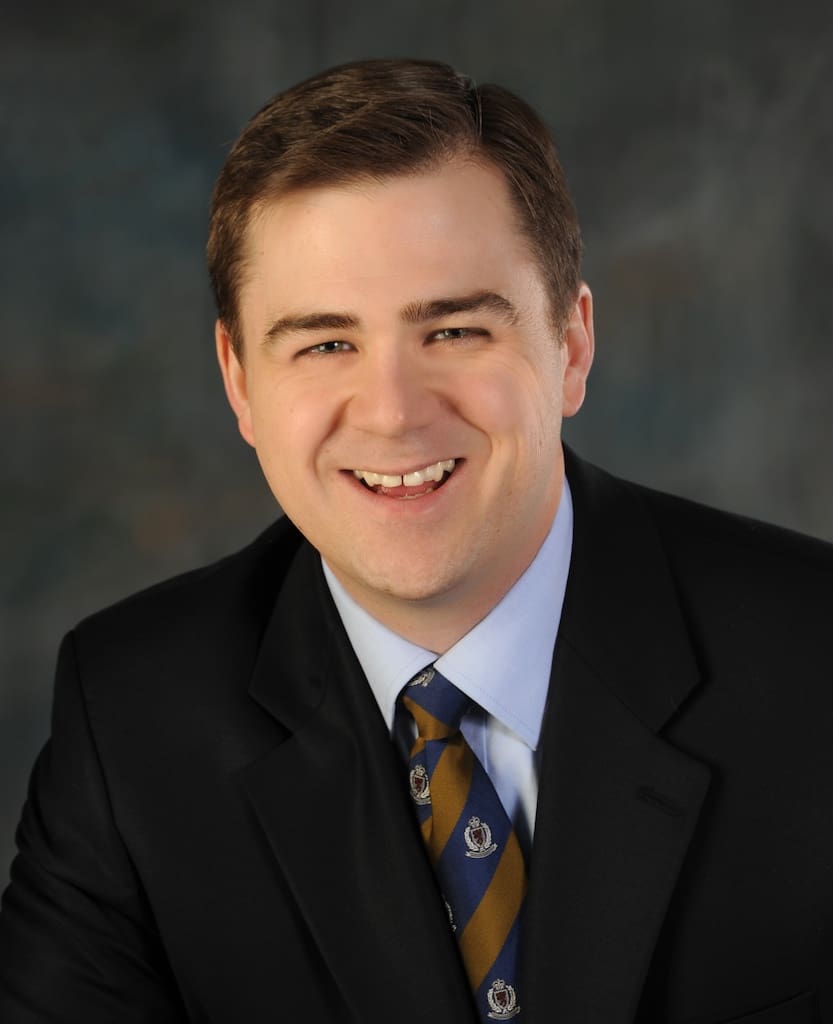
 In this episode of Mormon Stories, J. Nelson-Seawright interviews David Campbell, Professor of Political Science at the University of Notre Dame and the founding director of the Rooney Center for the Study of American Democracy, about his celebrated research on religion and politics in America. Professor Campbell argues that the current partisan environment, in which religious people mostly support the Republican Party and less religious people the Democratic Party, is a recent development — and he explains how this pattern can help explain America’s recent rise in irreligiosity.
Campbell also discusses his work on Mormonism and politics. He explains his research about how Mormon identity is different in American context: stronger, more collective, more integrated, and with stricter boundaries. He discusses implications for how Mormonism interacts with politics, and also for the identity and religious options of liberal and disaffected Mormons.
Episode Transcript
Guests: David Campbell, J. Nelson-Seawright
This transcript is machine-generated and lightly edited for readability. The audio is authoritative. Please excuse occasional errors in names and spelling.
Introduction and Episode Overview
J. Nelson-Seawright [00:00:00] Mormon Stories is a production of the Open Stories foundation and relies solely upon the support of people like you, its
David Campbell [00:00:06] listeners to help keep the podcast alive
J. Nelson-Seawright [00:00:09] or to become a member of the community. Please become a monthly subscriber by visiting MormonStories.org and clicking on the Donate button on the right side of the page under support. All contributions to Mormon Stories are completely tax deductible and go towards producing the podcast and building communities and programs of support for Mormons like you.
David Campbell [00:00:28] Thanks for your support. The kindly light amid th encircling gloom Lead thou me on the night is dark and I am far from home.
J. Nelson-Seawright [00:00:55] Hello and welcome to Mormon Stories. I'm Jay Nelson Sirai, your guest host for today. And with me is David Campbell, professor of Political Science at Notre Dame, director of the Rooney center for the Study of American Democracy. For our purposes, he's most notable as one of the leading scholars of religion and politics in America, two books he's written that are relevant for us. With Robert Putnam, he wrote American How Religion Divides and Unites Us, and with John Green and Quinn Monson, Seeking the Promised Mormons in American Politics. David, welcome to Mormon Stories.
David Campbell [00:01:27] Well, thank you. I'm looking forward to this.
Religion and Politics in America
J. Nelson-Seawright [00:01:30] So I wanted to talk with you today about these questions of how religion fits in politics in America, how Mormonism fits in politics, and also how politics plays inside Mormonism. And you've written about all three of these dimensions. So let's start out in the most general way, looking at the American political religious landscape, and I'm going to do a little bit of political science inside baseball. One of the things we all know and most people don't is is that American politics changes all the time. If we go back 30 or 40 years, there were such a thing as liberal Republicans and conservative Democrats, and people overlapped in all kinds of complicated ways. One of the stories you tell us with Robert Putnam is that the religious landscape in politics also has changed. Could you tell us a little bit about that?
David Campbell [00:02:16] Well, one of the most interesting developments that we've seen over the last generation or so in American politics is that today, whether or not you are religious, however that's measured how frequently you attend church, how strongly you believe in God, any of those sorts of measures has become a very powerful predictor of voting Republican. Now, in today's environment, that seems very natural. My students at Notre Dame, that's the only world they've ever known. So being religious, being Republican, those two things seem synonymous. But it really wasn't all that long ago. In fact, within the lifetime of most Americans today that how frequently you attended religious services or any other measure of your religious commitment had absolutely nothing to do with how you voted. You found lots of secular Republicans and lots of highly religious Democrats. And that shift is due to all sorts of complicated reasons, some of which has to do with the decline of the Democratic Party in the south. And much of it has to do with the rise of social issues on the agenda. Abortion and gay rights and that sort of thing. But whatever the explanation, the very fact that there's been a shift has been huge significant in understanding how religion affects American politics. You know, the fact that it affects it, that's not new. It's how it affects it that's the new thing or the relatively new thing.
J. Nelson-Seawright [00:03:36] So, I mean, most people would imagine, they think back to maybe the New Deal era, and they think, well, you know, these people were kind of a little bit socialist. They must have been atheists, right?
David Campbell [00:03:49] To the contrary. Actually, what's really interesting, over the course of American history, and now I'm speaking the long arc of American history, so not just post World War II, but even really all the way back to the founding, it's really hard to identify any social reform movement, whether on the left or the right, that did not have its roots in religion in some way, shape or form. And that includes the very progressive movements that today we sort of forget had religious roots, like women's suffrage, for example, and the movement to unionize and the anti child labor laws. All of that sort of stuff really came out of religious impulses. And it reminds us that there is no iron law that links religion in any part of the political spectrum or any political ideology. You find religion, again, over the course of American history, all over the political map, both the right and the left.
J. Nelson-Seawright [00:04:47] Now, the other thing is sort of thinking about things today, we now have this image that the Democrats are irreligious and the Republicans are religious, but we also know that most Americans are religious. So why, how does that play out? I mean, Republicans should be a huge majority, right?
David Campbell [00:05:03] Well, there are a couple of things going on there. First of all, it is actually true that to the extent that there is a population of the irreligious or secularists or whatever term you want to use, and the very language is contested, you are more likely to find those folks not necessarily identifying as Democrats, but certainly voting Democratic, and that share of the population is increasing. In fact, it's increasing quite dramatically. And so that's a relevant part of the story here. But you're right that notwithstanding that Growth in the irreligious, if you will, or people who say they have no religious affiliation. Most Americans do identify with a religion. They think of themselves as religious. They believe in God. A smaller percentage, but still a sizable number attend religious services frequently. So why haven't the Republicans taken a stranglehold over the entire country? Well, part of that has to do with how people connect their religion and their politics. And so those religious traditions, Mormons being one, but evangelical Christians being another, who believe that their religion should influence their politics. They're the ones who vote Republican, with the notable exception of African Americans. But, you know, there's a wide swath of the public who don't necessarily look at religion as something that should affect their politics. In the same way they don't think of religion as something that should affect their consumer choices. And those folks are much less likely to vote Republican because they generally compartmentalize religion. It's important in their life, but it's only one part of their life. It doesn't pervade every aspect of their life.
J. Nelson-Seawright [00:06:42] Right. So, I mean, at Notre Dame, you know, a thing or two about Catholics, right. We have this image of Catholics as actually, they're very divided on party lines, aren't they?
David Campbell [00:06:50] They are today. Now, if you think about this over the last, let's say, generation or so, that's actually a net win for the Republicans because it wasn't all that long ago that Catholics were almost monolithically Democratic. And so today, what we find among Catholics when it comes to religion, which is actually true for so many things, is that Catholics just resemble the rest of the country, so that those Catholics who attend religious services more frequently, the Mass attending Catholics, they're the ones who lean Republican. And those who don't attend Mass so frequently or in other ways don't express their Catholicism in a behavioral way, they're the ones who are more likely to lean Democratic.
J. Nelson-Seawright [00:07:31] So the way we're telling this story right now, it's sort of like, you know, politics changed and now people have an opportunity to link religion into it. But the way you tell the story, there's also, I guess, a reverse causal flow where this increasing link between religion and politics also changes people's orientation towards religion.
David Campbell [00:07:49] That's right. So the way we normally think of the connection between religion and politics is that the religion comes first. Right. So what religious tradition you are, how frequently you attend religious services or, you know, any measure we might have of someone's religion, that's what we assume affects people's politics. And in fact, Every time we utter a sentence like the percentage of evangelical Protestants who voted for Mitt Romney is X, we are assuming that the religion comes first.
J. Nelson-Seawright [00:08:16] Right.
David Campbell [00:08:17] We don't say it the other way around. Well, what we've seen increasingly in the data and we've pummeled this hard to make sure this is a real relationship, because it seems almost unbelievable is that increasingly, increasingly, people's politics will shape their religion. And where that's most dramatically seen is in that trend that I mentioned earlier, the growth in those people who say they have no religion at all. We call them the nuns. I want to make sure. I'm Notre Dame. So we want to make sure you know what kind of nun I'm talking about. It's not an N u, N kind of nun. We have some of those, but we have N o, N E kind of none, meaning somebody who, when asked, well, what's your religion? Or do you have a religion? Will say, well, no, I don't have one. I'm none. So we call them the nun.
J. Nelson-Seawright [00:09:04] This would include, like, people who say they're seekers or spiritual, but not religious or right.
David Campbell [00:09:09] It's a very disparate category. And that's actually important to keep in mind whenever we talk about this group because they are now roughly 20% of the entire population. One in five Americans now says they have no religion. And among millennials, people under 30, it's closer to 1. This is a huge growth. Just 25 years ago, that percentage would have been somewhere around 5%. Maybe some polls had it as high as 7, but we're up to, as I said, 20, and it just keeps growing. Now, why is that? Well, one explanation, the one that Putnam and I definitely endorse, but we're not alone. Others have looked at other data and come to the same conclusion, is that the people who now say they have no religion, in many cases, they are reacting to this mixture of religion and conservative politics. So the reasoning here is that these are people who are themselves politically liberal, or maybe not even all that liberal. They just might be centrist, but they're certainly not conservatives and they're not Republicans. And as they look out on the social and political landscape, to them, somewhat accurately, actually, religion equals Republican. Those two things go together, at least in public discourse. And so when they're asked on a survey or just in conversation, well, what religion are you? They think, well, if I say I'm religious, well, that must mean that I'm a conservative or that I'm a Republican and I endorse all these things. That the Republican Party stands for anti gay rights in particular. That's not me. I'm pro gay marriage and I'm not one of those people. So I'm not religious. I don't have a religion. You know, that's what seems to be going on. And there's all sorts of evidence that that is the connection. And so to bring us back to where this thread started, what that means is people's politics, their liberal leanings or even their centrist position, that's what stays fixed. And it's their religious identity that shifts. So they shift from maybe having a nominal affiliation. They thought of themselves as a Methodist or a Presbyterian or something, but now that they look at what's going on in politics, they say, no, no, no, none of that's for me. I'm not anything. I'm none.
J. Nelson-Seawright [00:11:19] So you say that there's evidence on this and I've read the book. But for listeners who haven't, how could you possibly figure something like this out? I mean, it seems really complicated, doesn't it? These are big things moving all the time. And how do you tell which causes which?
David Campbell [00:11:34] Well, the way Putnam and I tease this out is we actually interview the same people at multiple points in time. Now in American Grace, we only had a one year gap, so we interviewed people once and then we interviewed them roughly a year later. But that enables us to see who's shifting. And there's actually more movement than you might think, even over a single year. And we can see that it's people's politics that's more likely to stay fixed and their religious identity that's more likely to shift. And it's most likely to shift if they're a liberal or again even a centrist. It's more likely to shift from having a religious affiliation to not having a religious affiliation. And that's a more common change than the other way around that is looking to see whether or not people who say have no religious affiliation do, they change their political views. So in other words, we see in the data as people are sort of moving around in these different categories, we see that it's the politics that's more likely to stay fixed and the religious identity that's more likely to change. Now we actually did that same survey not just one year later, but five years later. And we see the same thing only in greater numbers because now more time has passed. And since the publication of that book, some other co authors of mine, one John Green, who is a co author in this book on Mormonism, and Jeff Layman who's a colleague of mine at Notre Dame, we've actually even done experiments where we show people newspaper stories that describe congressional campaigns where the candidates are talking about religion. And even in a very artificial way, we're just showing people these newspaper stories and asking them about their religious affiliation. We can actually get movement. We can actually get people to move from saying they have a religious affiliation to saying that they don't have one just by simply reminding them that, oh yeah, there are a bunch of congressional candidates out there who run around talking about God and it makes them uncomfortable.
Americans Drifting Away from Religion
J. Nelson-Seawright [00:13:37] So I mean, basically then there's a, you know, good evidence, both from looking at how people move and looking at what happens when you show people different messages, that politics really is changing people's religious self conception. That's kind of amazing, isn't it?
David Campbell [00:13:51] It is so amazing that we went back and kicked the tires on this many times, as my co author Putnam likes to put it, because we just could not believe that people would hazard their eternal soul on whether or not they like George W. Bush, you know. But that's basically what we see and it's so clear. And again, we're not the only ones to find this. In fact, it was two sociologists, Michael Haut and Claude Fisher, who really deserve credit for being the originators of this idea. But when they first came up with it, they really didn't have a lot of evidence for it. It was sort of, they ruled out everything else. And this seemed to be the explanation for the rise of the nuns. And now we've got a lot more data and analysis to kind of fill in those gaps. It's really exciting actually. This is one of the biggest developments on the American social landscape really in the last 20, 30, maybe even 50 years.
J. Nelson-Seawright [00:14:43] I mean, it's not just like intuitively surprising. I think most people think of religion as kind of a bedrock of your self concept. But also in social science, I mean, this is, you know, we can go back to classics like, you know, Max Weber takes religion as sort of a given and then goes causally forward from that. I mean, this is a huge transformation in how we think about this, right?
David Campbell [00:15:03] It is. Now I want to qualify that because when I think talk about this finding with colleagues of mine who maybe are more historically minded or who study other parts of the world, they actually say, well, it's perfectly natural that politics and religion would be so closely linked and that religion itself would be kind of a product of a political environment. And that's all true. But what we're Seeing in the US is actually a very different phenomenon because, remember, while we're here talking about a religious identity, what's really going on is people shifting out of religion. And that, I think is actually a new development that people would shift out of this religious identity because of politics. I mean, lots of countries have high rates of secularism, but we generally don't credit that to the political environment. We look at all sorts of other causes. Right. Not what's going on with the political parties.
J. Nelson-Seawright [00:15:57] Yeah, we usually think it's because they're rich, basically. The US has for a long time been this exception of sort of the one rich country with lots of religious people. And so in a way, what we're seeing is the US falling in line with the other countries, maybe.
David Campbell [00:16:11] Well, yes and no. And the reason I say that is, while superficially it does look like the US is on its way to becoming France or something, we've actually been down this road before. Not all that long ago. In the 1960s, there was also an increase in various measures of irreligion, not necessarily the growth of the nuns, but church attendance, for example, dropped. And there were lots of other ways that people sort of seem to be pulling away from religion. But then it rebounded in the 70s and 80s. And I mention that because it is actually a cautionary tale toward anyone who just has a declensionist story that, oh, you know, America's just going to hell in a hand basket and we're totally secular in another 30 years. Because American religion as a force in society is very entrepreneurial, very dynamic, very fluid. And. But it's not outside the realm of possibility that there would actually be a course correction and something in religion would change and bring a lot of those nuns back. Because again, most of them are not atheists. They don't necessarily say they don't believe in God. And so that suggests that the right kind of religion, religion stripped to the politics, stripped to some of the rhetoric that you find over the pulpits today, might actually win them back. It's happened before.
J. Nelson-Seawright [00:17:28] Yeah, right. I mean, American religion has, I guess at this point, you could say, a centuries long history of cyclical rebounding and declining.
David Campbell [00:17:36] Right, right. And that is again, a very important dynamic to keep in mind whenever we talk about American religion. Because, you know, there's this myth that Americans are highly religious at the time of the founding and it's just been downhill ever since. And that is sort of woven into the narrative. Certainly you find a lot of it on the political right. I mean, the Glenn Beck types, you know, they love to talk about that sort of stuff, and. And certainly a lot of Mormons generally sort of adopt that rhetoric, but the data are just not consistent with that story at all. Actually, Americans were not terribly religious at the time of the founding, but they became more religious through the 19th century, and then it dropped off again, and then it boomed, and then it busted, and now, you know, and then we went through a boom period just recently, and now we're in another bust period. So, you know, who's to say?
J. Nelson-Seawright [00:18:23] So we may not be France in another 50 years, for better or worse. All right, so I want to transition from talking about America in general to talking about Mormons in particular, because, I mean, that's what we're all interested in, after all. I mean, who isn't interested in Mormons? Right?
What Makes Mormons Distinctive
David Campbell [00:18:39] That's what I'm hoping. That's why I wrote a book about them. Right, Exactly.
J. Nelson-Seawright [00:18:42] Well, no, we were definitely your people then. So what is different about Mormons? This is the big question I want to ask you here, is compared to everyone else, we want to be different. Mormons want to be different from everyone else. Right. It's really important to us. So how are we different in terms of the way that we think of ourselves and the way we relate to politics?
David Campbell [00:19:05] Well, here's how I would describe it. Not all that long ago, maybe up until roughly 50 years ago, the way we thought of religious groups in the United States is, as the historians would say, they were ethno religious groups. So religion and ethnicity were tied closely together. This was perhaps clearest in the case of Catholics. You might still find it among Jews to some extent, but even among many Protestant groups. There was just a tight connection between your ethnicity and your religion. And so American religion was divided into all of these different camps. You know, you had the Dutch Reform and the Scotch Irish, and you had the. The various flavors of Catholicism, the Italians and the Poles and the Irish, you know, whatever.
J. Nelson-Seawright [00:19:56] We still have that.
David Campbell [00:19:57] I live in Chicago, but today those groups all get along. I mean, I see it in Notre Dame, where our student body is predominantly but not exclusively Catholic and the non Catholics, and the Catholics get along and, you know, everybody can root for Notre Dame, Catholic or not, but one group that stands out for retaining that ethno religious flavor are the Mormons. Not because Mormonism is itself rooted in a particular ethnicity, but because the internal levels of religious commitment and distinctiveness among Mormons are so intensive and set Mormons so apart from not only secular society, but other religious groups. As well, that the religiousness of Mormons has actually begun to look and feel a lot like these old ethnic ties. So we actually describe Mormonism as a vestige of this previous time where ethno religious politics is kind of what dominated the way we understood American religion. Another way to put that is that when Mormons say to themselves that we are a peculiar people, it's really true. And my of the three co authors on this book, two of us have an LDS background and the third, John Green, does not. And he was actually a little surprised when we would use the term peculiar people. We actually put it on a survey and asked Mormons, you know, that is not the rest of the population, but Mormons themselves. Are Mormons a peculiar people? An overwhelming majority said, well, yes. And he just thought that was really interesting and frankly, kind of peculiar. Willingly take on that label. And we said, oh yeah, yeah. It's a mark of pride among Mormons that they're weird and they like being weird.
J. Nelson-Seawright [00:21:51] That would be an insult, right? Exactly. But yeah. So I want to push on this a little bit. I mean, when you talk about this, it's partly the degree of religious commitment, but there are an awful lot of Mormons who aren't that religiously committed. And, you know, a lot of the things we think of as Mormon culture, you know, I mean, so John Locke Larson, host of another podcast, always says that there's no such thing as Mormon culture. It's just Utah culture or Western culture. And so I wonder what would be the content of this ethnicity or ethno religious identity.
David Campbell [00:22:24] Actually, I would disagree. There is a Mormon culture and it is not exclusive to the Mountain West. But one of the things we find in this book is that there are very few differences between Utah Mormons and Mormons in the rest of the country. And we looked hard, we looked at sort of every possible thing that you could come up with that might distinguish the groups. And there are some differences, but not very many. So one of the ways that Mormons are distinctive is whatever your measure of religiousness might be, frequency of religious attendance, or whether you believe in an afterlife or strength of your belief in God, all of those sorts of things that are not exclusive to Mormonism. Mormons are just more likely to endorse them than anyone else. Mormon rates of self reported church attendance are phenomenally high. Giving to the church is phenomenally high when compared to really any other religious group. But what is perhaps even more distinctive is not just the ways that Mormons sort of top these other groups in the common things that all religions do. But how almost universally that Mormons subscribe to, or at least tell us in these surveys, the fundamental tenets of the faith. So, you know, we asked, do you believe the Book of Mormon is truly scripture? Do you believe that Joseph Smith is prophet of God? Do you believe in temple rites and all these things that are sort of core to Mormonism? And when I speak to Mormon audiences, this may not sound surprising, like, well, what else would it mean to be a Mormon if you didn't believe in the, you know, the Joseph Smith story and in the Book of Mormon and such. But if you look at other faiths, I mean, trust me, I teach at Notre Dame. Right. I'm surrounded by these Catholic students. Pretty small percentage of these Catholic students might actually endorse the fundamental tenets of Catholicism. It's very different among Mormonism. So you've got these distinctive beliefs fueled by this intense religiosity that in turn leads to very tight knit social networks. Mormons are the group most likely in the country to marry within the faith. They're the most likely to have friends within the same religion that is itself, again, the marker of a quasi ethnic group. All of those things feed the distinctiveness, the peculiarity, the weirdness, if you will. Right, right.
J. Nelson-Seawright [00:24:40] Well, you know, to speak of, I guess, weirdness within weirdness, you may right now be talking to the world's largest audience of Mormons who don't believe that Joseph Smith. Actually, that's a sort of side note in a way. No, really, that isn't a side note, is it? Because, I mean, there is a weird politics of identity here where Mormons overwhelmingly believe these things and the people who don't and still want to be Mormon have, because of what you're saying, actually a little bit of a hard time claiming that identity.
David Campbell [00:25:09] Right, True. Now, I want to be careful in how I talk about these results that we have that come from a survey of Mormons, because some of what is going on no doubt, is a Mormon is hearing these questions asked, you know, online or over the phone. And clearly some of this is Mormons feel like they are presenting themselves to the rest of the world. Right. In a way that other religious groups may not feel like they need to put their best face forward when answering questions about their religion. So that's one thing that's undoubtedly driving these results. Another. And this is also really interesting and I suspect is relevant to a thread of conversation that we'll get into, and that is we have to, in order to do a survey of Mormons we have to find Mormons. And so these are people who have self identified as lds. And what seems to be clear to me in the data anyway is that, but simply by acknowledging that you are lds, that kind of puts you over a threshold for most people and means that you're likely to endorse the fundamental tenets of the faith. Because if you didn't believe those things, then, well, I wouldn't identify as Mormon in a way that if you're Catholic and you don't necessarily endorse all of the beliefs of Catholicism, in my experience, Catholics are very comfortable with that identity, whatever they believe, Right. It's not a matter of what they believe, it's a matter of what their family is. And it's, you know, this large community where, yeah, lots of people disagree, even the priests disagree. So I can be a part of that team. But Mormonism doesn't work that way. It's much more you're in or you're out.
J. Nelson-Seawright [00:26:57] So there's some possibility that there are people around the margins who have Mormon ness but kind of excluded themselves from your sample. Right.
David Campbell [00:27:05] And, and one way we see that is a few years ago, the Pew Research center, which is a non partisan group, they call themselves a fact tank as compared to a think tank, they did a massive study where they interviewed more Americans than anybody ever has about their religion by a factor of 10. Just an enormous study, which means that they can really get into what's going on with small groups like the Jehovah's Witnesses and the Christian Scientists and these very small groups, even smaller than Mormons. And what that has enabled us to do is look not just at Mormons but at former Mormons because one of the questions they asked was what religion were you raised in? So we can see who said they were raised as a Mormon but do not now identify as a Mormon. This is a very, very interesting group. One of the ways that they're interesting, if you compare ex Mormons, as I'll call them say, to ex Catholics or exist Baptists, there's a much wider divide between what a Mormon believes and what an ex Mormon believes than say what a Catholic and an ex Catholic believe, right. The gap is just much, much wider.
J. Nelson-Seawright [00:28:20] I want to sort of put a flag on that and come back to that in just a minute, if you would. Before we get to that, there's another thing about sort of, I guess, Mormons, the non ex Mormons that you found that I think is really interesting and worth, worth talking about, which is this question. I mean, you mentioned this earlier that you know, for Catholics there's disagreement among the priests. I mean, even Baptists, you know, there are different points of view. Right. You know, there are evangelical Christians who are leftists on right and whatever. But for Mormons there's this sense that you kind of fall in line or you're not. And so you have this evidence that Mormons actually do this. Right. Do fall in line.
Mormon Political Views and Church Authority
David Campbell [00:28:58] They do. In fact, it's really quite striking actually, the adherence to the leadership, the hierarchy within Mormonism. And that's true not just when it comes to religious questions, which is probably what you'd expect, but also on political questions. And the way we tested this is we actually gave people on our survey, we gave them real statements from church leaders. We made nothing up. But these statements were in two cases in what you might call kind of a leftward or a liberal direction, one on immigration and the other on anti discrimination laws for the protection of gays and lesbians, which at least in Salt Lake City, the church has actually endorsed. That is they endorsed anti laws that would prohibit discrimination against gays and lesbians just in order to have a balance. We also had a conservative leaning issue. We didn't use gay marriage because that one was sort of too obvious and in the air. So we actually used gambling, which interestingly, over the course of the 20th century, that's the issue where the church has actually gotten involved the most.
J. Nelson-Seawright [00:30:12] Sure, absolutely. I think most of us can remember at least a couple instances of that anyway.
David Campbell [00:30:16] What we find is even when the church, by which we mean the first presidency, when you can attribute a statement from the church in a leftward direction, you can actually shift Mormons attitudes to the left. And that includes the most orthodox of Mormons, who are actually the most politically conservative. And this is really interesting because it shows us that within Mormonism, when given a choice between your politics and your religion or your church and your party, among believing Mormons, orthodox Mormons, it's actually their religion that wins out, even though you might have thought it would go the other way. But it's pretty clear that it doesn't.
J. Nelson-Seawright [00:31:02] So in contrast to the story we were telling a minute ago here, religion is just stronger, basically.
David Campbell [00:31:08] That's right. And undoubtedly this is due to the emphasis placed on following the prophet and following the brethren and that sort of thing within Mormonism. But it wasn't clear to us, looking at the contemporary political landscape, that that's the way it would shake out. One little twist that I should mention that we did in this study is we not only tested how Mormons react to statements that could be attributed to the First Presidency, we actually also tested more generic statements issued by the Public affairs office and attributed in the little vignette that we gave people to read to the Public affairs office. That is not the First Presidency. And you don't get as much movement. Mormons are clearly distinguishing between statements that come from church headquarters and are endorsed by, if not the prophet, but certainly the First Presidency. They're drawing a distinction between that and the PR wing of the Church. And the reason that's relevant is you might remember a few years ago when immigration was flaring up as an issue in Utah and the Church had made some statements sort of trying to moderate the debate on immigration and kind of tamp down the tensions and remind Utahns that the Church actually is in favor of immigration and doesn't want to send illegal immigrants back. They want to keep families together. That's generally the emphasis. One of the leaders of the anti immigrant movement in Utah who was LDS said, well, you know, the president of the Church has never said this. It's always just been the public affairs people. So who knows what President Monson thinks. And so we thought, well, that's an interesting thing to test. What if there's a difference between. And it turns out there is a difference. Mormons respond to the First Presidency. They don't respond as much to public affairs.
J. Nelson-Seawright [00:32:53] No, that's interesting. I mean, I hope that they hear that because, you know, they do that a lot. Right. I mean, this summer, the messaging about ordained women mostly came through the Public affairs office. So there's this distance that makes people uncertain.
David Campbell [00:33:07] I think another historic example where we've seen this is when the Church opposed the placement of MX missiles in Utah. This goes back a ways to the Kimball administration.
J. Nelson-Seawright [00:33:19] The Reagan era.
David Campbell [00:33:20] Yes, it was in the early days of the Reagan era. And at the time, Republicans, and of course, that was most of the state of Utah, they were perfectly fine with MX missiles being placed in Utah, which would mean, of course, that Utah would become a prime target should there be a Soviet missile strike. The Church, however, was against this. But what we see in the data, this is just very interesting, is public opinion among Mormons in Utah on this issue didn't move until the First Presidency made it very clear that it was the First Presidency, President Kimball himself, who opposed the placement of the MX missiles in Utah. And, and the way the Church or the First Presidency chose to communicate this message is fascinating. It was actually in an Easter message. So you normally think of the Easter message as being pretty anodyne. Right. Let's celebrate the resurrection of Jesus. Well, they included that, as they always do, but then they also added, oh, and by the way, we don't want these missiles.
J. Nelson-Seawright [00:34:23] That's wonderful.
David Campbell [00:34:25] And opinion shifted. It was very clear at that point that church members said, oh, yeah, actually, we don't want missiles here. And, of course, President Kimball was probably a pacifist. He said a lot of things over his tenure that suggested that he was very uncomfortable with war.
J. Nelson-Seawright [00:34:40] Right. And with hunting and with just generally killing. Right, right. But it's also a nice example of the whole spiritual and temporal things are the same idea. Right. If Easter. Easter can be partly a political sermon, and that's just fine. Okay, so I want to take the picture we've just had and cause trouble a little bit here, because one of the things we know is going on in Mormonism right now is that we're going through a heightened period of, you know, disaffection and disaffiliation, especially with young people, but also more broadly. Right. I mean, you know, the church leaders have said that this is the greatest period of apostasy we've seen since Kirtland, and some statements along these lines. And there seems to be some. Some evidence. It's sketchy, but there's some evidence that this is. That there is a trend of disaffiliation. And this is, you know, in some sense, not that surprising, because, as you said, this is kind of going on everywhere. But then, on the other hand, the story you just told us is one where, for Mormons, you know, these political forces that drive other people to disaffiliate should be trumped by religion because the religious identity and commitment is so strong. So how do we make sense of this fact that Mormons are disaffiliating like everyone else, but maybe not for the same reason. Or is it for the same reason?
Why Members Leave the Church
David Campbell [00:36:01] Well, you know, what was Tolstoy's line, that every happy family is alike and every unhappy family is unhappy in its own way. So every active church member is alike, and every disaffected Mormon is unhappy in his own way. So there are probably as many stories for explaining disaffection from the church as there are people who are disaffected,
J. Nelson-Seawright [00:36:29] what
David Campbell [00:36:29] we see in the data is, I would agree, not quite the same trend as what you find among the rest of the population. So while there is undoubtedly some movement away from Mormonism because of the political activity of the church, and I suspect if you were to find that anywhere it would have been in California in the wake of Proposition 8. I certainly know anecdotally, I bet many of your listeners have heard the same, or maybe they've experienced it themselves of people who were living in California during the Prop 8 campaign and were just totally turned off by the church's very active involvement in that campaign. So that's undoubtedly part of it, but we actually don't see that much of that sort of shift away from Mormonism within Mormons as a group. It seems to be more a matter of young people drifting away because they're perhaps not willing to buy into the whole package. That's what we were saying earlier, that Mormonism, you're either all the way in or you're not really in at all. And we do see that. That there are Mormons who are, for example, not as devout or frankly, they don't identify as Republicans or the Democrats. And these are the ones who don't seem to be as connected to Mormonism as a subculture in sort of any way that you can think of. The metaphor we use in the book is we talk about Mormons as being grouped under what we call the Sacred Tabernacle, which is a play on a term that Peter Berger, a famous sociologist, used describing the sacred canopy that religious groups would cluster under. And then a colleague of mine at Notre Dame refers to evangelicals carrying their own little sacred umbrellas around because their religion is very individualized. And so we wanted a metaphor that was kind of in between a canopy that would cover an entire society and an umbrella that would be for an individual. And so we settled on the tabernacle. It's portable. You can move it around, but it's for a community.
J. Nelson-Seawright [00:38:37] And it has walls.
David Campbell [00:38:38] And it has walls when you're in or you're out. Yeah. But the idea is that it's portable. You can set it up anywhere. And so if you sort of think of that as the metaphor, you're either in the tabernacle or you're not in the tabernacle. And if you're not in the tabernacle, it means that you've really cut yourself off from not just one or two things in Mormonism, but the whole bundle. And we see that pretty clearly. You don't find many Mormons who are what we might think of as cafeteria Mormons. They're generally all the way in or all the way out, right?
J. Nelson-Seawright [00:39:08] No, I think this is something that, you know, in a lot of different data sets, we see. So, I mean, there are, you know, I've seen I'm not going to give citations here, but there's a few different data sets where, you know, for most young, you want to say secular or nones or whatever, they're not very secular, Right?
David Campbell [00:39:26] Correct.
J. Nelson-Seawright [00:39:29] They're not out there buying Dawkins books and ranting about the evils of religion. They just kind of don't.
David Campbell [00:39:36] The term that Putnam and I use is most nuns, or many nuns anyway, I would say are what we call liminals. A liminal is someone who is half in one world and half in another. So my favorite example is Mr. Spock from Star Trek is a liminal. He's half Vulcan and half human. Well, most nuns, or again, many nuns, are actually half in the world of nunism, where they don't have a religious affiliation and half in a world where they do kind of have a nominal. And the reason we know this is because, again, we interview people more than once. Right. And sometimes they say they have a religion and sometimes they don't. And it's not that they're lying and it's not that they go through any kind of conversion. It's that, well, on Tuesday, when you ask them what religion are you, you get them at a moment where they've just read in the paper about some crazy thing that some Tea Party Republican has done and, you know, some mixture of religion and politics that they don't like. And so they say, I'm not anything. But then you ask them on another day and. And their mind isn't on politics. Their mind is on the vacation Bible school they attended when they were nine years old. And it was a Methodist church. And so, well, I guess I'm a Methodist. Right. So they're kind of flitting back and forth like a light bulb that kind of turns on and off because it's not quite screwed in tightly. Mormons aren't like that. The light bulb is either on or it's off. It's not flickering.
J. Nelson-Seawright [00:40:55] And when it goes off, it goes. I mean, seriously off. Like in one survey, 60% about of former Mormons describe themselves as atheists or agnostics, which is an astonishing percentage for Americans.
David Campbell [00:41:09] Yeah, that is. That's very high.
J. Nelson-Seawright [00:41:11] That's huge.
David Campbell [00:41:12] Right?
J. Nelson-Seawright [00:41:12] I mean, that's not a random sample, let's just say. So there's something about leaving Mormonism that's a bigger break than leaving, say, Lutheranism.
David Campbell [00:41:23] Yes. Yeah. It's interesting. While Putnam and I, and of course Bob Putnam is not lds, most of what he knows from Mormonism, interestingly enough, comes from people he's known in Cambridge, Massachusetts, who are themselves connected to Harvard, who happen to be. So he doesn't even really know a representative sample of Mormons, as I would
J. Nelson-Seawright [00:41:45] remind him who they are.
David Campbell [00:41:49] Anyway, while we were working on the book, we had a research assistant who also was not lds, do a literature review on the sociology of Mormonism. And she made an interesting observation in which she said, you know, the thing about Mormonism is that there's so much to do that when you stop doing it, it's just such a sharp break in your life that it leads to a real shift in a way that if you sort of stop being Catholic or Presbyterian or Lutheran, you're not really stopping that much in your life. So it's not as big a change. And that I thought was a very profound insight. And understanding what happens when people leave Mormonism, or leaving isn't even always the right term. Become disaffected from it and then, you know, go inactive to use the inside baseball term.
J. Nelson-Seawright [00:42:36] Well, no. So I mean, I kind of, you know, I always like to. So I have this theory, this kind of descriptive causal mess of a theory about this, that there are kind of three ways people stop being, you know, active Mormons. They become disaffected, ex Mormon, bad Mormon, and one of those sorts of things. One is that they don't like the activity of being a faithful, compliant Mormon. It's just too much or there are parts of it that they just don't want to put up with and so they give up because it's just a lot of work. Right. And this is something that's been with us forever. You call these Jack Mormons maybe? Right. These are people who think of themselves as Mormon and someday they're going to go back, but they just can't be bothered yet. Then the second one is the, I guess current stereotype is someone finds out about Joseph Smith translating the Book of Mormon with a rock and a hat or that he married a lot of women or you know, you know, those things and get this affected and leave. Right. And this is, I think, our current vision of what mostly is going on. And then the third, and I know this happens because I can give you case studies, is people who are disaffected because of, because of religious, sort of the religious politics of Mormonism. Right, the politics. So I actually have an example from today on the ex Mormon Reddit. This is kind of a nice coincidence. Salty Shores says I'm a 56 year old lifelong member of the church, returned missionary, primary president, young women leader, bishopric wife, et cetera, who resigned her membership almost exactly five years ago. This nearly led to divorce, but my husband and all four children eventually followed me. I have a message for the lds. If you had not lied to the membership about gay marriage, I would still be one of your most faithful members. It was not the gay agenda or some kind of anti Christian persecution. These are all excuses you concocted in the aftermath of your disastrous decision. I'd known about polygamy and the hat thing, but this was simply too much. I could not continue answering the questions in the temple recommend interview, knowing that my leaders were lying to me about politics, while at the same time requiring me to be honest in all things. So this is that third kind that in your data is not that common.
David Campbell [00:44:48] Right, Right. Although again, I want to qualify that because I suspect that if we had a large sample of Mormons, especially In California post Prop 8, I imagine actually that we would find a fair number of that. But yes, generally speaking, nationwide, there seem to be a myriad of factors explaining why Mormons are. Are disaffected or going inactive or leaving the church, whatever term you want to use.
J. Nelson-Seawright [00:45:14] Right. So, I mean, I wonder. I'm going to sort of float a hunch here about why we see much more, I guess, theologically driven disaffiliation than politically, in contrast to everyone else. Right. Which is because Mormonism is so deep an identity and the boundaries are so sharp. Just being unhappy about the politics isn't enough, Right. That if you're unhappy about the politics, but you still feel religiously connected, there's nowhere else to go. If you're an evangelical and you don't like the politics of your congregation, you can just do something else, or you can stop going to church and just feel happy and be an evangelical at home or whatever you want. There's lots of options. But if you're a Mormon who doesn't like the politics of the church, I mean, there's no other brand of Mormonism you can try, really. I mean, okay, a couple of my friends are going to say, yes, you can go do Community of Christ, but for most people that's not really.
David Campbell [00:46:12] Or you can move to Cambridge or Evanston or Hyde park or the Bay
J. Nelson-Seawright [00:46:17] Area, you can find the four wards that are mostly Democratic or socialist, or you can play local leadership roulette, but for the most part, you don't really have a lot of movement options. And so what you're stuck with is a source of discontent that you can't resolve. Right. And that you can't resolve that until you find a way out of the theological commitments. So I have this hunch that there may be a sequence where for political and social reasons people become dissatisfied, but they don't become disaffected until they've found a theological exit. Could be.
David Campbell [00:46:56] I think it's also important to note that within Mormonism, people who really know their Mormonism, know their Mormon history, and frankly, even just know their Mormon theology. I have found that many political liberals are able to carve out a niche for themselves in the church and not just because they live in Evanston or gamp. I'm not sure.
J. Nelson-Seawright [00:47:21] Evanston related.
David Campbell [00:47:22] Okay, maybe not Evanston, Berkeley, Cambridge, Hyde park, whatever.
J. Nelson-Seawright [00:47:29] Because
David Campbell [00:47:31] they understand that for one thing, there was once a time actually when Mormons were predominantly Democrats, not Republicans. And then there was a long stretch where Mormons were actually pretty bipartisan. And of course, even if you put aside the way Mormons were casting their ballots, if you just search of read LDS scripture and you can't read the Book of Mormon without being struck by the fact that, wow, they really talk about poor people a lot. Seems to be something about rich people giving money to poor people. There's a lot of that. I have just found it interesting having known a number of folks who would identify very openly as progressives and Democrats and being on the left side of the Democratic Party, who actually are able to, within Mormonism, find enough to kind of cling to that they can tune out the conservative rhetoric around them and just sort of focus on what they see as consistent with their political beliefs within Mormonism. Now that may take quite a bit of intellectual resilience in order to do
J. Nelson-Seawright [00:48:37] that, because it may.
David Campbell [00:48:39] Yeah, Mormonism is, you know, I don't need to belabor this point. I know is an overwhelmingly Republican culture, but it's not an entirely Republican culture. And it's not only Harry Reid. I mean, it is about 25% of Mormons who actually do not identify as Republicans and instead identify as Democrats. And you know, 25%, that's a non trivial number. It's going to be a minority in most places, but still perhaps enough to pull together a critical mass. So I don't want to say that everybody who can't sign on to the Republican platform is necessarily inevitably going to leave Mormonism. But the scenario you described might very well, one way might very well come to pass. The way to think about it is if you begin to question or pull at, maybe that's the right metaphor, you begin to pull at one thread within Mormonism, it might lead to the whole thing unraveling.
J. Nelson-Seawright [00:49:35] Right.
David Campbell [00:49:35] That's, I think, what you're describing. Yeah. You become uncomfortable with what seems to be the political views of the church, and then you tug a little bit, and all of a sudden I'm not so comfortable with some of the history, and then I'm not so comfortable with things that I used to kind of tune out. They bothered me, but now they don't just bother me, but they actually sort of eat at me and drive me away.
J. Nelson-Seawright [00:49:54] Yeah. But I mean, the thing that I think we. So I mean, a couple of things. First of all, what you're saying for sure is that when parents, when your kids become Democrats or liberal, don't panic, they're not going to leave the church. Right.
David Campbell [00:50:08] Although actually, what we see, this is interesting, what we find in the data is that it's actually older Mormons who are more likely to be Democrats than younger Mormons. Right. Because those older Mormons were raised at a time when, well, you could be a Mormon and a Democrat. Those two things actually went together. Hugh B. Brown was in the first presidency. He was a Democrat. Everybody knew it. It wasn't a big deal, you know.
J. Nelson-Seawright [00:50:27] Okay, well, let me put this in a more contemporary note then. It's not that when they become Democrats, when they become advocates of marriage equality, that they're not going to leave the church just because of that.
David Campbell [00:50:39] Well, we'll see.
J. Nelson-Seawright [00:50:42] I guess that's a little bit up in the air. Okay, but so they might not.
David Campbell [00:50:45] Right, Right.
J. Nelson-Seawright [00:50:47] What we can say, I think a little bit more definitely, is that to get there, you have to do a lot of work that you can't just take one dimension and go with it in the way that you could in some other religious traditions.
David Campbell [00:50:59] That's true. This sort of goes back to the idea. Idea that Mormonism is not a cafeteria religion. It's a big bundle of things that all go together, and some of them are theological, but not all of them. There's a lot of stuff in Mormonism that's not theological but is still part of the fabric of the way Mormons live their lives. Right. It's not written anywhere. You can't have a beard and be a bishop, but everybody knows bishops don't have beards, you know.
J. Nelson-Seawright [00:51:23] Are you sure that isn't written anywhere?
David Campbell [00:51:25] I can tell you stories about that.
J. Nelson-Seawright [00:51:29] I do remember on my mission, we had a new mission president called kind of an emergency replacement. So he was a couples missionary that was down there. And as a couple missionary, he could have a beard, but when he was called as a mission president, he was instructed to shave. So right before he was set apart, he did this big shaving in front of the office elders ritual. So I mean, whether that's cultural or written, I don't know how you draw that line, but that is definitely strong. Right. In addition to this idea that people won't necessarily leave just because they're politically uncomfortable, that they're much more likely to try to find an accommodation maybe than in other traditions, I think there are a couple of other things we can take from this that really sort of, from this conversation that really apply broadly to things people worry about. One is, I mean, everybody's heard the saying, you can leave the church, but you can't leave it alone. Right. And I think what you're telling us, the story, you're telling us that kind of sacred tabernacle story says a lot about that. Right. If you're talking about this total identity, this top to bottom way of being, to walk away from that isn't going to be something you just do right in one day and then you're done.
The Social Cost of Leaving Mormonism
David Campbell [00:52:38] Right. And you know, I'm sure many listeners here, certainly many members of the church, are aware of stories where people do finally make a break. And it's usually not a sudden thing. And it is not like just stopping the attendance of an evangelical megachurch or a Catholic parish. It's really much more like leaving a tight knit community, because that's really what it is. And it can of course be very painful when that happens, especially if those who are still in the sacred tabernacle turn their backs on those who have left. And we all know that those stories are all too common.
J. Nelson-Seawright [00:53:17] That does happen. Yeah. Well, I mean, it's not just the community, but also, and I think this is important, it's a fundamental part of how you see yourself that dies when you do that.
David Campbell [00:53:29] Yeah. And it's interesting. One of our measures of what we loosely and tongue in cheek, cheekily call Mormonness is actually a set of questions we have that are meant to tap into Mormon's sense of identity, how much their Mormonism defines who they are. And it's really remarkable actually, the extent to which most Mormons really do put their Mormonism first as an identity ahead of almost anything else.
J. Nelson-Seawright [00:53:57] Yeah, I'm looking at the chart in the book right now and I mean, you just don't see distributions like this very often. I mean, I'd almost call it a staircase, but it's more like a sort of a cliff. Right. Like you get Halfway over and everyone's on the other side.
David Campbell [00:54:10] Yeah, it's very striking.
J. Nelson-Seawright [00:54:12] Yeah. So, I mean, Mormons really are being Mormon. If you're a Mormon, that's at the core of who you are. And to stop doing that is this sort of deep redefinition. And I think. So that's something that's sort of worth understanding whether you're going through that process or whether you're sort of. Of supporting or relating to people who are going through that process. That what's at stake here is big and challenging for that person as well as for the people connected to them, certainly.
David Campbell [00:54:44] And again, that is one thing that is very different about people who might be transitioning to nonism, if you will, among the Mormon community than you find in almost any other religious tradition. Really. It's hard for me to think of a parallel. It's hard to stop being Jewish, but.
J. Nelson-Seawright [00:55:05] No, you can be Jewish without even knowing it.
David Campbell [00:55:07] Exactly.
J. Nelson-Seawright [00:55:08] Trust me, it turns out that I am. I didn't know this until just a year ago, but yeah, I'm Jewish.
David Campbell [00:55:15] But certainly when it comes to the Christian traditions, Catholicism, the various flavors of Protestantism, is generally not the same. I mean, you might be able to point to particular sub communities where maybe there is a parallel, but probably not one that's quite as all inclusive as Mormonism is.
J. Nelson-Seawright [00:55:37] I mean, maybe like the Amish.
David Campbell [00:55:38] Yeah, that'd be one example. Even that's not quite the same because there you've got a different kind of separation than what Mormons go through. The kind of separation that Mormons have from secular society is a very internal way of forming boundaries. You know, it's the clothing you wear that it's. Because it's subtly different. And it's that you don't drink coffee. It's not that you hived yourself off in a community and, you know, you're only going to use a horse and buggy and not use electronics. You know, like you. You embrace much of modern culture, but then pull back from just a few things. The way we put it in the book is that Mormons are sort of. They're fighting a two franchise war, on the one hand against secularism, on the other hand against other religions. Not that they're fighting them, but that's a line of tension. And LDS leaders generally pick their battles. Right. They're very selective about the points of distinction that they emphasize among Mormons. And over time, those things change. And that's also important to keep in mind about Mormonism. It's more dynamic, I think, than Many people recognize, even within the church.
J. Nelson-Seawright [00:56:44] But then I guess. So if we were to think strategically from the point of view of church leaders, I guess one of the things you're telling us, in a way, is that drawing lines of distinction in political domains is relatively safe for Mormons.
David Campbell [00:56:58] Well, I mean, safe in the sense that certainly the leadership of the church seems to be comfortable in forming alliances with evangelical Christians and the conservative side of Catholicism. I'm not sure that it's safe, actually, if you want to use that term, or maybe a wise path for the larger project of Mormonism that I think it's pretty clear from historical precedents to what we see in the contemporary environment that when religions, and I don't just mean Mormonism, but religions in general are too mixed up in partisan politics, they find that their religious message is diluted. You know, a prophetic voice is much more profound. It's more likely to have an impact when it can rise above the partisan fray and not be just considered part of the partisan fray. And this is a debate that has actually been going on within the evangelical community now for quite a few years, given the very tight connections between so many evangelicals, evangelicals and the Republican Party. You know, there are many who are devout evangelical Christians. You say, wait a second, maybe we're actually harming our religious message here because we're so tied to one side of the political spectrum.
J. Nelson-Seawright [00:58:14] So what Mormons would say is that they don't do that. Right. That they don't do partisan things, that they focus on issues that are moral, and so they fight on questions of marriage, but they don't endorse a presidential candidate.
David Campbell [00:58:26] That's true. I mean, there's, of course, a bit of circular reasoning that goes on here because the church's line is always that the church only gets involved in moral issues, not political issues or partisan issues. But of course, the definition of what's moral versus what's partisan or political seems to be somewhat subjective. I mean, it's hard to suggest today that opposition to gay marriage is not a partisan issue. There's one part party that's against gay marriage and one party that's for gay marriage.
J. Nelson-Seawright [00:58:56] And in fact, there are very few Democrats left at this point who aren't in favor. I mean, there's been a great deal of sorting. This is very aligned with parties at this point.
David Campbell [00:59:04] Yeah. I mean, the one exception to that would be within the African American community, where even with the president's endorsement of gay marriage, there's still some resistance to gay marriage within some Black Protestant circles. Now, it's. We should be fair here that the church itself, while its most high profile political positions would be associated with the right and same sex marriage and sort of opposition to gay rights in general would be part and parcel of that. The church has been somewhat vocal on immigration, certainly not to the extent that it has on marriage, but it has been vocal on immigration. And on immigration, the church actually does lean to the left, not to the right, or at least it's in the center. And Mormons actually fall in line. Mormons are quite moderate in immigration, much more so than you'd expect given their Republican leanings. And that's actually a very interesting thing to remember that goes back to our earlier point that when church leaders do speak in ways that would shift people toward the left side of the spectrum, Mormons generally follow, which sort of brings up this interesting thought experience. Well, what if the church was more vocal on immigration or other issues that were not so closely associated with the Republican Party?
Mormonism, Politics, and Same-Sex Marriage
J. Nelson-Seawright [01:00:23] What if they had a one left, one right rule where every time someone gives a general conference talk about family, they also have to give a talk about immigration?
David Campbell [01:00:31] Right. Well, it's sort of like the old days when. Well, certainly when the debate over prohibition was going on and you would have BH Roberts on the one hand and Heba J. Grand, or more recently in the 60s when you'd have Ezra Taft, civil rights. Yeah. Or Ezra Taftaf Benson would stand up.
J. Nelson-Seawright [01:00:45] Right.
David Campbell [01:00:45] And give an anti civil rights talk and then Hugh B. Brown would stand up and give a talk pro civil rights.
J. Nelson-Seawright [01:00:50] Exactly right. Hugh B. Brown even managed to get a church statement out. His position, which is kind of wonderful.
David Campbell [01:00:56] In those days, I think General Conference was way more interesting.
J. Nelson-Seawright [01:00:59] Yeah, I know, right. I mean, you go back and read those transcripts, my goodness, there were actual debates going on for better or worse, I guess. Right. Okay. So I guess I'm going to say in a way I feel a little bit muddled on this because on the one hand we have the idea that Democrats are a little bit more likely to distance themselves from Mormon identity. But on the other hand, they're probably not doing it mainly for political reasons. Is that right? Right.
David Campbell [01:01:28] Or at least not exclusively for political reasons. It's very difficult to unravel all this stuff precisely because when the church is implicated in politics. So let's say that you are a Mormon, but you're comfortable with gay marriage and you begin to be a little uneasy with the Church because of that. Well, are you uneasy with the politics of the church or the theology of the church. Well, those two things have kind of become fused within Mormonism. Right? So it's kind of hard to untangle that.
J. Nelson-Seawright [01:01:59] No, if a prophet of God says something about politics as a prophet, you know, if there's an official statement like the proclamation on the family, and you want to disagree with that, you can't just disagree with that. Right. You have to disagree with the theology behind it in some way.
David Campbell [01:02:17] Right. Or as I was saying, and certainly I've met lots of Mormons who do this, and I imagine they're well represented among the Mormon stories listening audience. People who have a cognitive dissonance in the way you're describing, but somehow manage to reconcile it. Either they sort of choose to maybe ignore or de. Emphasize some parts of Mormonism that they don't like, or they find sort of ways to explain it away in their own mind so that it's not quite what it appears to everyone else. You know, that's an interesting thing that.
J. Nelson-Seawright [01:02:56] So I guess ideally what we'd like to do, right, is take a bunch of people in, say, southern Utah and randomly assign them to be pro marriage equality and then see what happens to their Mormon ness.
David Campbell [01:03:07] One of my favorite stories that I so wanted to include in our book, but we just could not source it. In the words of Stephen Colbert, even if it's not true, it has a certain truthiness to. Was told to us. It was told to us by a friend. And again, we tried, but we could just not track. We could not track down the ward where this happened. So maybe it never did, but I'll tell the story as though it did. The story goes that there was an older woman sitting in a Relief Society meeting somewhere in the Salt Lake City area. And she learns that the church had actually come out in favor of this anti discrimination statute in Salt Lake City. And she's listening to this and she's trying to make sense out of it because this wasn't all that long after Proposition 8. And so she just blurts out, wait a second, are we for the gays or against the gays?
J. Nelson-Seawright [01:04:01] Awesome. I love it. Of course we know the answer is that we're for the gays, but against their gayness. I think that's the official line, isn't it? Okay, so just really quickly, you also have some really interesting stuff in the book about how outsiders see Mormons in national politics. And you know, Mitt Romney's sort of what Mormon ness did for him and what he did for Mormon ness. And I wonder if you could give us I guess the 3 minute spiel on that.
Romney's Mormonism in the 2012 Election
David Campbell [01:04:31] Okay, the short version of the story is that for most Americans, mix, Mormonism didn't really matter much at all. But there was a very small fraction of Americans for which mixed Mormonism mattered a lot. But as near as we can tell, it was not enough to sway the election. Not in 2012. His Mormonism mattered in more subtle ways. It certainly mattered in 2008 when he was running for the Republican nomination and Mike Huckabee raised issues about Romney's Mormonism. And it undoubtedly constrained him in ways that maybe other candidates would not have been constrained. In talking about this very important part of his life that he, for the most part, was very uncomfortable with, he didn't really talk about his Mormonism, with one very notable exception. And this is a very important thing to keep in mind when we think about the impact of both Mormonism on MIT and Mitt on Mormonism. There actually was a moment in the 2012 presidential campaign where Romney invoked his religion and did so in order to frame himself in a positive way. So rather than just sort of defend his religion or run away from it or explain why Mormonism isn't really as weird as you think it is, which is what he was trying to do in 2008, we have this one very interesting case, and it came in the second of the three presidential debates. This is the one that had a town hall format. So in town hall format, you have an audience of quote, unquote, normal Americans who pose their questions at the candidates. We get to the very end of the debate and one of the questioners stands and asks a question that is, this is right over the plate, the sort of pitch that every candidate wants, because it's going to be the home run. And it was essentially President Obama, Governor Romney, could you tell us something about yourselves that you think the American people should know that they do not yet know or know enough about? Like, this is an opportunity for them to say anything they want. Romney uses it as his opportunity to try to rebut the charge that he was elitist that was coming out of the whole gaffe over his comments about the 47% that, that debate, that controversy was raging at the time in the campaign. So he begins by saying, I just want to say I'm for 100% of the American people. The question wasn't about that, but that's where he decides to go with it. And then he begins to talk about his Mormonism. He says, you know, I was a pastor in my church translating the Mormon vernacular. To what you find in the rest of the population. So I was a pastor in my church, and as a pastor, I sat across the table from people who were in need. I understand what they were going through. And then he also invokes his religion to say, I believe that we are all children of God. It was a fascinating moment, and it just sort of struck me as a reminder that MIT's Mormonism didn't have to be a negative. And in fact, we see in the data, and we did a whole bunch of polling on this, while on balance, it was more of a negative than a positive, it wasn't completely a negative. For some people, it was a positive. There are some positive stereotypes to Mormon. So all of that sort of balanced out in the end in such that his Mormonism in the end didn't matter all that much. You know, the fact that he was running against Barack Obama, who was, of course, for his own reasons, not going to bring religion into the campaign. Sort of mutually assured destruction. Right. If Obama brings up Mormonism, then the Republicans are going to bring up Obama's either ties to Jeremiah Wright or his alleged Muslim background, whatever. You know, religion was just going to
J. Nelson-Seawright [01:08:12] be an absence of, like, religious activity over the last several years. Whatever. He's weak on that dimension. So it was mutually reinforcing, maybe.
David Campbell [01:08:21] So all of that sort of builds up to our conclusion that in the end, Mitt's Mormonism probably didn't really affect him very much in the general election. However, and this is the big story to come out of 2012, Mitt appears to have affected perceptions of Mormonism. Now, Mormonism as a. As a religion is actually viewed not as the most negative of all religious groups in America, but it's one of the bottom three. Right. So if you're a Mormon. Exactly. If you're a Mormon, thank God for the atheists and the Muslims, because they're the ones that rank below Mormons in these measures we use of how people regard other religious groups. Now, if you look at what's happened to the trend on that over time, the line is flat. It looks like, well, nothing changed.
J. Nelson-Seawright [01:09:08] Right.
David Campbell [01:09:10] The Book of Mormon, the musical becomes this smash hit. Romney runs for president.
J. Nelson-Seawright [01:09:14] We've got. We have the entire Mormon moment.
David Campbell [01:09:16] Yeah, we've got Big Love on hbo. I mean, all these things are happening and nothing's moving in terms of attitudes toward Mormonism. But then if you scratch below the surface, actually, there's a lot of movement and the movement is toward partisan polarization. So back in, just in 2006, so not that long ago, but pretty pre Prop 8 and pre Mitt Romney back in 2006. Whether you are a Republican, Democrat, independent didn't matter. Everybody had the same negative view, if you will.
J. Nelson-Seawright [01:09:43] Right.
David Campbell [01:09:45] Fast forward to certainly the 2012 campaign. But actually we did this a year after the campaign and found basically the same thing. Republicans came more positive towards Mormons. Their regard for Mormons went up. Democrats regard for Mormons went down. Independents stayed exactly the same. And that all balances out to make it look as though there was no change. When actually what we see is yet another example of that partisan polarization or the political sorting that we see in so many other aspects of American life. Now, will that polarization on attitudes toward Mormonism stick? Hard to say. We've seen a little closing since the 2012 election. My best guess as a social scientist who spends a lot of time with this sort of data is that it's not going to close unless there's some other big thing happens, some prominent Mormon runs for the Democratic presidential nomination or something. But barring that, which seems pretty unlikely, I suspect that those attitudes that are now polarized along partisan lines toward Mormonism, those are going to stick. And that is actually, I think, a very dangerous thing for the church as an institution. It's not a healthy place to be to be sort of implicated in the partisan warfare that we have in the country.
J. Nelson-Seawright [01:11:05] Right. Well, for all the reasons we talked about earlier, in fact. Yeah. Well, so listen, I want to thank you so much for this conversation, for the audience. If you're listening to this interview, there's really no excuse. You need to read David Campbell's books. I mean, there's just you obviously care about religion in America and Mormonism or you wouldn't be here. So go out today and get American Grace and Seeking the Promised Land. I hope this conversation has whetted your interest and we'll be with you soon for another episode. Thank you very much.
David Campbell [01:11:36] Yes, thank you. I've enjoyed this very much.
J. Nelson-Seawright [01:11:43] Thanks for joining us today on Mormon Stories. If you enjoyed this episode, please help us make more life it by becoming a monthly subscriber@mormonstories.org music for this episode
David Campbell [01:11:53] was provided by the Lower Lights. When with a wounded heart, anger or madness, I draw myself apart, searching my soul.
Transcript © 2026 John P. Dehlin. All rights reserved. Brief quotations are welcome with attribution and a link to mormonstories.org; all other use requires written permission.
14 Responses
I agree with his point at around 10:00-11:00. People (myself included) are afraid of being seen as a “political-religious” and therefore are more likely inclined to say we are not religious at all.
Super interesting discussion! Much thanks to James and Prof. Campbell.
I have been saying (and lamenting) for many years that the use of religion as a political tool and the insertion of politics in religion would be detrimental to both institutions.
Some random questions/thoughts:
Campbell mentioned the uniformity of Mormons across the U.S., and I wonder if they looked at how many of those Mormons had either originated from UT/inter-mountain west OR had attended school–BYU Provo/Idaho? Having lived in different states I’ve found that a large percentage of members were ex-pats from UT or the inter-mountain west.
I am one of those who has grappled with the historical issues for several years but it was the negative/misleading/dishonest campaign on Prop 8, the church involvement with the Hobby Lobby case, the church ownership of decidedly right-wing Deseret News that has caused me to change my involvement with the church in significant ways. I wonder if there has been any examination of the power/influence of Deseret News as a de facto Church voice among UT LDS members or LDS members in general. I find it difficult to square the church position of “political neutrality” while the paper it owns heavily endorses, in a one-sided way, Republican positions and candidates.
The Mormon Church is anything but politically “neutral”. I you want to know what the Mormon “Brethren” think about any political issue, just read the DMN. And, if you want confirmation, just make a critical comment and watch how fast it the DMN Editor’s find a basis to censure it.
I am not attending church and one of the reasons is that proposition 8 and because the church gets too involved in politics lately. Some people don’t care about what the church does and supports the church no matter what. But for me, this issue of church becoming more and more like a political party is a big deal. If I wanted to attend a republican country club, I could joint the party myself without going to church. I am sick of the the way the leaders are handling church affairs lately. I rather stay home away from all of this stuff.
Just reading this. Super interesting because people in Utah and Idaho call the Deseret News liberal now (which is silly).
That’s hilarious!!!!
I take issue with the part where Campbell says, “it seems strange that people are changing their religion because of their politics, when their entire eternal salvation depends upon their religion.” I disagree that people are changing their religious affiliation because of something as “frivolous” and “temporal” as political views, rather, because of people’s personal experiences and a broader global consciousness, they are realizing that their once cherished and age-old religious beliefs are actually evidence of their falseness, which in turn allows them to let go of them as an authority over their lives and instead listen to their inner moral compass which points them to a particular political view.
For example, there was once a time when women didn’t have the right to vote, go to school, work certain jobs, or own property, and this cultural practice was reinforced by scripture (women are to be submissive to men and not lead in any way). Today, from personal experience and a new global perspective, we see these scriptural passages as evidence of their misguidedness, so they can be abandoned as an authority over our lives. The same with slavery, or anti-miscegenation laws, they were once defended by biblical passages, but today we recognize them as wrong, another reason to dismiss their source. Now, the same thing is happening with gay rights. The Bible says one thing, but more and more people are realizing the Biblical interpretation is narrow, unmerciful, and “wrong”, so that becomes further evidence of the unreliability of religion over our lives. I think people are simply waking up and using their brains to guide their lives instead of holding on to outdated, religious world views.
I smile every time I read the words “Social” and “Science” in the same sentence. They pay people to tell us what we already know! To quote Yakov Smirnoff, “What a country!”
The elephant in the room of this discussion is the global church, which now outnumbers American Mormons. I appreciate the discussion was focused on the United States, but that didn’t stop all the generalizations about Mormons or the presumption that American Mormonism is Mormonism. I can’t speak for the global church, but admonishments like ‘get out of your insulated communities and more involved with people who are non-LDS’ are a given in most countries, and the trend towards ‘assimilation’ and ‘building Zion where you are’ obviously will not play out in an American way, if the country you are assimilating into is, say, the Netherlands or Australia. The wards I grew up in (in New Zealand) were ‘pioneering’, first-generation inner-city working-class multicultural migrant wards. My wife and I vote centre-left for pragmatic reasons (we would vote further left if the parties were viable) and consider ourselves socialists. Political positions cover the spectrum in my country but notably generally don’t define the nature of one’s church affiliation. There are LDS politicians in left and right parties, but the political culture is very different from the US – religion is generally not a factor at all, and Dallin Oaks made many members in NZ uncomfortable when he tried twice – in NZ and to NZ from a special stake broadcast – to introduce the marriage equality issue, where it was a done deal. Indeed, many of us are aghast and embarrassed at the ultra conservatism of the Mormon church in the United States. American Mormonism has its own political character, but it cannot stand in for Mormonism in general when most Mormons do not live in the United States. The political character of Mormonism is a lot more complicated.
What an awesome discussion! The Monday following Obama’s inauguration, I sat in my BYU Book of Mormon class and listened to my professor lead a discussion on how Obama must be the antiChrist. Students quoted from the Book of Mormon to back up these claims…. all because a Mormon lost the election. Parties aside, it was a very disturbing experience.
This was a fascinating interview. In fact, I listened to this one and the RadioWest interview that David Campbell was also on, and I thought this one was better by a fair margin! J. Nelson Seawright, you really asked some insightful questions and allowed Dr. Campbell to go deep with his answers. Well done.
I didn’t think I would find this podcast interesting. However it exceeded my expectations! Lots of good info here. I will refer it to friends as one of my favorites. Thanks!!!
I want to leave the following thoughts about my affiliation with Mormonism and the Democratic Party. I am hoping some will read it and let me know if and where I am mislead.
God said, “Be ye therefore perfect, even as your Father in Heaven is perfect.” My goal, as well for all of us, is to become perfect. An environment to let me try my hand at doing the right thing, of my own free will, is the more sure route to perfection, provided I choose the right.
Compulsion, the use of authority, influence, or other power to force (compel) me and you to act, as apposed to complete freedom to chose how to act, is the environment that will slow our progress to become perfect. Complete freedom then also becomes our goal. Obviously we can’t accomplish either, complete freedom or perfection, in mortal life. But, to let us attempt the task is God’s plan of salvation. He who is compelled in all things is a slothful servant. Therefore, he who is compelled in anything is, likewise not given the full credit for doing the right thing. Our eternal progression is therefore hampered by any man made law that compels us to perform. The fewer the number of laws the better the environment for eternal progression.
I submit that the Republican political agenda is more restrictive to freedom than is the Democratic agenda. That is why I am a Democrat and a Mormon. The Democrat allows me to make more choices and maybe mistakes. Have an abortion, be immoral, marry a same gender person, join a wrong religious group that teaches the wrong principles, and on and on, are all choices. By the way, the gay marriage itself can’t be immoral, it is only the participation in sex that must be immoral.
Total freedom, remember, is the goal, but societal disruption may increase unless most people can manage themselves to do the right thing. Some law is necessary until we all approach perfection.
Mormon doctrine provides the correct principles. Joseph Smith said, “teach them correct principles and let them govern themselves”. To experience complete freedom requires no laws and at the same time involves us all at once. We need to help each other. The more equal we are in our environment the more likely we are to both succeed together. We need to give each other equal advantage. We need to be temporally equal to keep the playing field as level for me as for you.
Poverty creates an environment of desperation which leads to discouragement and lost hope. Actions that satisfy the immediate need to survive, often prompts us to make choices that are not right, given limited resources. The law of consecration, if we can get our minds in a place to all agree to live it, would eliminate poverty. The Democratic Party platform is the better of the platforms to move us toward living the law of consecration. After all, the Democrats platform and the “law of consecration” both are accused, falsely, of Socialism. Opening our borders to immigration is more inclusive to temporal equality, ideally all living the law of consecration, thence less rich and less poor amount us, thence the closer all of us move to our goal of eternal life. That is why I am a Democrat and Mormon.
“In the view of Joseph’s revelations, inequality poisoned society. “Wo unto you rich men, that will not give your substance to the poor, for your riches will canker your souls,” declared one, and then immediately continued “wo unto you poor men . . . whose bellies are not satisfied, and whose hands are not stayed from laying hold upon other men’s goods, whose eyes are full of greediness, and who will not labor with their own hands!” Wealth itself was not the evil; in the Book of Mormon, righteousness brought prosperity. The evil was the social distance separating rich and poor. The rich “despise the poor, and they persecute the meek.” In their pride, men adorn themselves “with that which hath no life, and yet suffer the hungry, and the needy, and the naked, and the sick, and the afflicted to pass by . . . and notice them not.” 50 Unequal property prevented people from being “of one heart and one mind,” the ideal of Enoch’s city.” From Rough Stone Rolling pg 3518 ebook.
So, Harry Reid and the Democrat Mormon just may be answering the temple recommend question more honestly than a Republican Mormon, heaven forbid. ” Do you support, affiliate with, or agree with any group or individual whose teachings or practices are contrary to or oppose those accepted by the Church of Jesus Christ of Latter-day Saints?”
The organization I affiliate with teaches that Americans should have the right to chose. Remember, the platform is intended to allow all Americans to chose abortion, gay marriage, etc. It does not teach to practice it. The sin, if it is a sin, is not committed until you actually do it.