
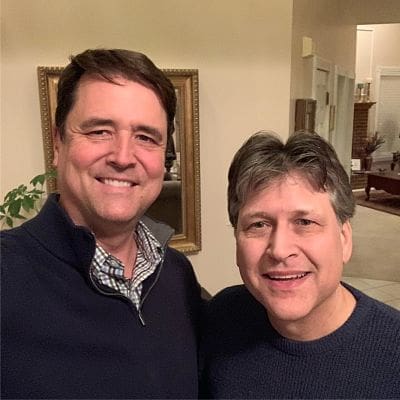
 We are excited to welcome back preeminent Joseph Smith historian Dan Vogel to Mormon Stories Podcast. In these episodes, we continue our deep dive into explaining the authorship of the Book of Mormon including these topics:
- The Solomon Spaulding manuscript theory of Book of Mormon authorship
- The Dartmouth university connections to The Book of Mormon
- The View of the Hebrews theory of Book of Mormon authorship
- The Sidney Rigdon theory of Book of Mormon authorship.
- Timeline and mechanics for dictating The Book of Mormon
_____________________________________
- 1068-1069: Dan Vogel – The Book of Mormon as “Revelation” Instead of “Translation”
- 1070-1071: Dan Vogel – The Book of Mormon Witnesses and the Magical Worldview
_____________________________________
Links mentioned during our interview:
- Naked Mormonism Podcast on Joseph Smith’s Plagiarism
- Naked Mormonism Podcast on Book of Mormon Versus Reality
- 268-270: Dr. Michael Coe – An Outsider’s View of Book of Mormon Archaeology
- Joseph Smith, Captain Kidd Lore, and Treasure-Seeking in New York and New England during the Early Republic – by Noel Carmack
- Joseph Smith, Captain Kidd, Cumorah, and Moroni – by Grant Palmer
- The Telephone Game: Evolving Misinformation Connecting Joseph Smith, Captain Kidd, and the Comoro Islands – by Mary Ann
- New Approaches to The Book of Mormon – by Brent Metcalfe
- CES Letter Discussion on Maps
- Anti-Universalist Rhetoric and the Book of Mormon – by Dan Vogel
- Dan Vogel’s Youtube Channel
- Joseph Smith – The Making of a Prophet – by Dan Vogel
- MormonThink’s Discussion of Book of Mormon Anachronisms
- MormonThink’s Discussion on the Kinderhook Plates
- Mark Twain’s Thoughts on The Book of Mormon
_______________________________________
Part 1 – We discuss the Spaulding Theory of authorship and Dartmouth University Connection to The Book of Mormon: This transcript is machine-generated and lightly edited for readability. The audio is authoritative. Please excuse occasional errors in names and spelling. Guest [00:00:01] One. Guest 2 [00:00:09] Mormon Stories is a production of the Open Stories foundation and relies solely upon the support of people like you, its listeners to help keep the podcast alive or to become a member of the community. Please become a monthly subscriber by visiting MormonStories.org and clicking on the Donate button on the right side of the page under support. All contributions to Mormon Stories are completely tax deductible in the United States and go towards producing the podcast and building communities and programs of support for Mormons like you. Thanks for your support. Guest [00:00:42] One Life to Live Mind the time. John Dehlin [00:00:55] Hello everyone and welcome to another edition of Mormon Stories Podcast. I'm your host, John Dehlin. It is February 6, 2019 and as usual, we could not be more excited for today's interview. Just to give you a little bit of background, recently I had a donor and a listener come to me who donated a bunch of his writings to mormonstories.org he is an amateur historian and he wrote up a bunch of essays on Mormonism that helped him process his own crisis of faith and the aftermath. And so if you go to mormonstories.org Truth claims you can see this text that's been up and what this donation did is it jump started a new interest, a renewed interest in Mormon Stories podcast on issues around the truth claims. John Dehlin [00:01:58] So what we've done is this donor also donated $20,000 to a billboard campaign for 2019. And so what we are doing is one of the major emphases for Mormon Stories over the next year or two will be the truth claims. And and we've got a billboard campaign going where each month we're putting up a new billboard that makes a statement or asks a question about Mormon truth claims. And the current billboard that's up says something to the effect of was Joseph Smith the treasure Digger? And last month, of course on Mormon Stories podcast, you will be able to review several episodes that we did on on the issue of treasure digging. John Dehlin [00:02:42] This includes our interview with Kathleen Malonakis, our interview with John Hamer, and our interview with historian Dan Bogle, all of them being about treasure digging. So that by the end of the month we will have had a billboard, an edited curated essay, and a series of interviews on the topic of treasure digging. And we're gonna try and rinse and repeat every month. So this upcoming month is going to be on the Book of Mormon and the Book of Mormon's authorship. And for those who have been following Mormon stories very closely, we have already interviewed preeminent Joseph Smith scholar Dan Vogel on the Book of Mormon We've also interviewed John Hamer on the cultural context that informs the Book of Mormon. John Dehlin [00:03:29] And today we are continuing our discussion on the Book of Mormon again with preeminent Joseph Smith scholar Dan Vogel. He's joining us from his home in Ohio. And I'm broadcasting live from Mormon Stories studios in Salt Lake City, Utah. John Dehlin [00:03:49] So even though we've already interviewed Dan Vogel on the Book of Mormon and we did a good three hours on that, I think there still remains a lot of questions about the Book of Mormon and topics to discuss. John Dehlin [00:04:01] So today for the next three to four hours, we're going to be interviewing Dan Vogel, more about the Book of Mormon. But what's exciting is I'm back. I'm not in Ohio anymore. I'm back in my office and I'm going to be able to take your live questions about the Book of Mormon as live viewers join us. And we've got some live viewers already joining us. Shout out to Rodney, to Margo, to Stephen and everyone else who's joined us already live on our Facebook stream. We hope others, Jennifer and Pete and others, we hope others will join us as the day progresses as we dig in. John Dehlin [00:04:35] And we welcome your questions and comments during the interview. And so that's what today's going to be about. I have a couple really quick announcements just to make and then I'll introduce our guests. Reintroduce our guest. As far as the billboard goes, we do need support to continue the billboard campaign. We don't need to continue the billboard campaign. John Dehlin [00:04:57] We want next week's billboard to be next month's billboard to say something to the effect of did Joseph Smith write the Book of Mormon question mark or how was the Book of Mormon created question mark? It's going to be a billboard that sort of says something like that along with the book with the Mormon Stories logo. If you guys want this billboard campaign to continue, we're going to need donations to make that happen. John Dehlin [00:05:23] Want to make sure everyone understands that 100% of your billboard donations go to the billboard. There'll be no overhead, nothing taken out. It's a direct one to one donation ratio. It costs $5,800 a month to put a billboard up where we're putting it in Salt Lake City on 3200 south facing South on the right hand side. So if you're driving north around 3200 south on the right hand side, you'll see this billboard again around 3200 South. So if you guys want to see this billboard campaign continue, go to MormonStories.org Billboard make your donation. It's tax deductible. We're transparent in our finances, and 100% of your billboard donations go to the billboard. John Dehlin [00:06:05] That's just the plea for that. The other thing I just want to mention is we are super excited to be relaunching our workshops and retreats, our Mormon Faith Crisis workshops and retreats for 2019. And we now have dates for several locations. John Dehlin [00:06:21] So I just want to announce those really quick. For those of you who don't know, obviously going through a Mormon faith crisis can be very traumatic. It can affect your marriage, it can affect your family relationships, it can affect your children, it can affect your friendships, your community, your job, your mental health. And so, based on your demand and your interest, for several years we've been hosting these workshops and retreats to support people in the faith crisis. It's the main reason I pursued my PhD so that I could be qualified and so that I could study in depth what it is to go through a faith crisis from a mental health perspective and then to counsel people and support people on that journey. John Dehlin [00:07:00] Well, we're excited to announce some new workshop and retreat dates and locations, and I'm going to just tell you those right now. I'll give you a quick disclaimer. These events are not put on by the Open Stories Foundation. They are put on separately in a joint partnership between my wife, Margi and Natasha Helfer Parker, who many of you know. John Dehlin [00:07:23] So it's just important that we mention that this isn't an Open Stories or Mormon Stories thing. However, I have permission from the board to discuss these as long as I make it clear that it's not an Open Stories foundation or Mormon Stories venture. So these are the dates. If you're in Salt Lake City, February 13th at 7:00pm at Community of Christ. I will be giving a free lecture on navigating a faith crisis from 7 to 10pm we would love you guys to attend if you can. Again, that's 7 to 10pm Community of Christ building in Salt Lake City. Free lecture on navigating a faith crisis. John Dehlin [00:07:54] We're going to be doing a workshop in Orem, Utah, February 15th and 16th. We're coming to Vegas. February 22nd to 23rd. We're coming to Ogden. March 8th and 9th. We're going to do a mixed faith marriage retreat in April 12th to 14th in Salt Lake City. We're coming to Gilbert, Arizona, May 3rd through 5th. We're going to do a retreat in park city for everyone June 7th to 9th. We're doing a Faith Crisis Europe retreat in Switzerland. It's going to be a beautiful event. There's going to be childcare for your kids. There's going to be food, room and board, super cheap excursions in a beautiful part of Switzerland. John Dehlin [00:08:38] This is something that the people in Europe and the people in Switzerland organized June 21st, 23rd. We would love to have you there. You can check the mormonfaithcrisis.com events webpage for more details on that. We're coming to Colorado August 9th 11th, Southern California, September 20th, 22nd, and we're going to do another mixed faith retreat in November 1st through 3rd. John Dehlin [00:09:03] All of these events you can check the details out on@mormonfaithcrisis.com events. Right now we're finishing that calendar. It should be up in the next day or two. And you can register, you can already register now for the Orem event February 15th and 16th. If you're in town for that, you can go there now and register for that. But within the next day or two, you'll be able to register for all these events. These events are always rated 4.9 out of 5. We keep the cost super low. John Dehlin [00:09:33] It's usually the cost of one hour of therapy for a day and a half of support and community. And we don't do this with monetary motives. We do this purely to support people in their faith crisis, to prevent divorces, to prevent familial strife, to increase mental health and awareness. So again, it's not part of the Open Stories foundation, But go to mormonfaithcrisis.com events for registration for these events. And that's all the announcements that I have for today. John Dehlin [00:10:08] Without any further ado, we want to welcome all the people that are joining us live on Facebook. Paul writes, I love that you do these retreat speeches, John. Thanks, Paul. Let's see. Eric writes, I attended a retreat in Fort Collins, Colorado, and it was well worth the time. I have new friends that I keep in contact with. Thanks, Eric, for the endorsement. John Dehlin [00:10:32] Penny's excited about our discussion of the Book of Mormon. Beth says good morning, et cetera, et cetera. All right. Oh, and Cody Layton, my production manager, is a surprise that I made it into the office. There was this huge snowstorm last night and the roads were treacherous, but yes, I made it in. Shout out to Cody and thanks to Cody for checking in and Emily and everyone else who's joining us live. All right, so without any further ado, thanks for your patience. We have back with us today on Mormon Stories podcast, preeminent Joseph Smith scholar Dan Vogel. Dan, I would just want to quickly ask you how you're feeling about that first interview. John Dehlin [00:11:16] I just want to say that I've had several people reach out and say it's one of the most important interviews I've ever done on Mormon stories. We saw the resale value of your book since your book, Joseph the Making of a Profit, I think it's called. John Dehlin [00:11:34] It's no longer in print, but we saw the used version selling for somewhere up to 8 or 900 or 1000 bucks apiece after we did the interview. I don't know if that settled down. There is a free version of Dan Vogel's book on the Signature website. So if you just write Dan Bogle Signature books, Joseph Smith, you'll be able to get to that free version, online version of the book. I'm guessing it was Tom Kimball that made that happen way back in the day, but. John Dehlin [00:12:02] Yeah, but the demand for your book has skyrocketed, and I think the interest in your scholarship, I can probably safely say has skyrocketed. Dan, quickly share with us what. What you've seen is the reaction to your amazing interview with us. Dan Vogel [00:12:19] Well, I'm shocked that the book is worth that much. I mean, I don't know how they determine that, but I had no idea that it would be that high, and I don't know why. So I guess that's a good thing, I think. I hope maybe people can access the online version. It's not quite the same. I like the idea of maybe putting out a Kindle version. I like that idea a lot. John Dehlin [00:12:54] And by the way, I talked to the Signature books folks. I think it was Ron who responded very graciously, and he said, they're definitely working on an audiobook for your book and any book as well. Those are both things that they're working on in the next year, as I understand it. Is that your understanding? Dan Vogel [00:13:12] They don't consult with me on those kinds of things. So, yeah, I'm just mostly deep into my next project, really, which is. John Dehlin [00:13:24] Tell us really quickly what that is. Dan Vogel [00:13:26] The biography of Joseph Smith after he leaves New York in Ohio and Missouri up to 1839. And that will be in the series, Smith Pettit foundation series, where Richard Van Wagener wrote the first part on New York. And Margaret. What did she go by now? Anyway, she did Margaret Toscano. Who? No, here, hold on a second. Martha Bradley. John Dehlin [00:14:04] Martha Bradley Evans. Oh, okay. She's great. Dan Vogel [00:14:10] Yeah. Professor at BYU and feminist historian. And she did the Nauvoo Period Glorious in persecution. So mine will be in the middle. John Dehlin [00:14:29] Okay. And does that mean you'll eventually do a book on Nauvoo as well? Possibly. Dan Vogel [00:14:38] Well, that would be my next natural thing to do, I think. John Dehlin [00:14:42] Awesome. Okay. Dan Vogel [00:14:43] I can only think of what I'm doing. I have two years left on my contract to produce the book. I'm in the midst of writing it right now. I spent two years of researching, preparing for it, including reading all of the Joseph Smith papers and keeping notes. So that's where I'm at right now. I'm busily writing the first parts of it. So I'm excited. John Dehlin [00:15:12] You anticipate that book has a chance of being released when? Dan Vogel [00:15:16] Oh, probably two to three years. John Dehlin [00:15:19] Okay, cool. Well, that'll be super exciting. Dan Vogel [00:15:23] So what was I supposed to answer? John Dehlin [00:15:26] Yeah, what's the response been? Has anybody reached out and said anything nice or kind? Dan Vogel [00:15:34] I'm kind of overwhelmed by some of the kind comments that people have made. I'm glad that I can help and share my passion with so many people all at once. So I'm pretty happy. I'm pretty happy that people want to hear what I have to say. I'll do my best. John Dehlin [00:15:59] You know, I didn't really know you super well before I hung out in your house for a day. One of the clear impressions I got just from a personal perspective is just how intrinsically motivated you are as a historian, because, you know, I felt a lot of guilt and shame that I hadn't had you on Mormon stories earlier, that I had talked all about rough stone rolling, but not about your amazing biography. John Dehlin [00:16:28] And I kind of tried to explore a little bit whether you were kind of sad about that or upset about that, or you were feeling as if Bushman got way too much attention and you didn't. And I was impressed with how unconcerned you were about all that and how you were just. John Dehlin [00:16:45] You had kind of a very long view in the sense of feeling like you knew that truth would win out at the end of the day, and you were committed to doing the basic research over the long haul just because you loved it and believed in it and cared about it, and you didn't spend a whole lot of time worrying about popularity or attention. And that was impressive to me. John Dehlin [00:17:14] And it basically explains why you've been able to be such a successful and dogged researcher for so long and published. Didn't we say 18 books so far? Dan Vogel [00:17:25] Something like that? John Dehlin [00:17:26] Yeah. But that's kind of you, isn't it? Dan Vogel [00:17:33] Yeah, I'm pretty happy being behind the scenes and just researching and writing. So one thing I did get from my father was when I was very young and I was more into Mormon apologetics really and I would be describing these arguments from a believer point of view. My dad said you shouldn't worry about whether being a pro or a con, you should just worry about finding the truth and just find it and write about that. Dan Vogel [00:18:07] And so that's sort of my point of view on things. I get the reward when I'm researching and writing and I discover things to my satisfaction and in writing them is a way of organizing my thoughts and motivating myself to push forward and to keep going forward and discovering new things. So discovery is what, you know, I might, you might say I'm addicted to discovery and the rush you get and though by those kinds of things. So it's a very day. That's how I get my daily reward that because if you're looking for a reward as a writer, you're gonna be waiting a long time to get to get a book out and you get praise or whatever happens because it's a mixed thing, praise and criticism. Dan Vogel [00:19:06] But you have to be open to criticism too. A legitimate criticism. You should not fear so and I don't because you know, I have everything to gain and nothing to lose by this whole, whole proposition. John Dehlin [00:19:27] And something I don't think we covered in our interview is what kind of what your, what your other part time job is. So part time, you know, you've been, you know, receiving some support for writing these books probably from the Smith. What this, the Smith Pettit. Dan Vogel [00:19:46] What is the Smith Pettit foundation foundation signature books. Sometimes it's been royalties mostly early on and then I got asked to do it by where I get paid up front instead of by royalties. So I bet I've managed over the years to balance, you know, my writing at which I feel very fortunate that I've been able to write and sustain myself and work a part time job and make it all work and tell John Dehlin [00:20:29] everyone what your other part time job is if you're comfortable sharing. Dan Vogel [00:20:33] Well, I just work in a grocery store as a regular clerk. John Dehlin [00:20:40] That's awesome. Well, that's amazing. And in our private discussions you told me that it's kind of important for you to have, I don't know, I'll call it just a brain dead job where you're not super intellectually rigorously challenged. Talk about that. Dan Vogel [00:20:57] Well, I was trying to become a teacher actually in the university. I took courses so that I could teach social studies in High school, which, you know, I can. I took psychology, sociology, geography, you know, economics, US History was my major, Guest [00:21:24] so. Dan Vogel [00:21:24] And then I got. I did enough courses to minor in psychology, except I never did the part requirement on statistics because I hate math, so. But I took enough courses to qualify for a minor if I had completed the statistics course, which I didn't want to take. Dan Vogel [00:21:53] And all the time I was researching or writing on Mormon history. And I published my first book when I was a senior in the university. The Indian origin book. Yeah, when I was a senior. So I changed my mind on teaching mostly because it seemed like a very brain drain. Dan Vogel [00:22:20] A brain drain. So I didn't want to do that because I wanted to research and write really. And while I was going through college, I worked several different jobs, but part of, part of the way I worked or most of the way probably I worked in the grocery store. Dan Vogel [00:22:38] And when my wife and I got married, when we moved off, well, we took off to Chicago. She had a job opportunity there and. And then we were there for 10 months and then we came to Columbus. And in Columbus, Ohio, we only had one car, so I had to walk to work and the closest thing was a grocery store. And I knew I could get that job easy, so that's what I did. I got that job and I stuck with it part time and writing. John Dehlin [00:23:14] That's awesome. Well, there's so much we could talk about, but what we've decided is we're going to try and have you on at least a few hours a month for the next several months as we talk about the first vision, as you talk about the Book of Abraham, as we talk about the priesthood restoration, any of the topics where we need a deep dive from a top notch Joseph Smith historian. We're going to bring you back. So we're not going to try and boil the ocean. In today's interview. We're going to focus on questions we didn't ask about the Book of Mormon. Is that okay? Dan Vogel [00:23:54] Great. Sounds fun. John Dehlin [00:23:56] All right, well, what I want to do is back up. We've already done three hours on the Book of Mormon. Well, I want to warn everybody that there's going to be some overlap between what we talked about then and now. But this topic is so rich that I don't think it hurts to kind of come at this topic from different angles, even if there's some, some overlap. And what we're going to try and do is incorporate a lot of your questions as well. So bear with us, listeners. And we think you're gonna have A great experience. John Dehlin [00:24:35] So let's begin. And this is going to be a bit of a recap, but let's begin from a slightly different angle. What kicked off the idea in Joseph Smith's mind to create the Book of Mormon? Let's start there. John Dehlin [00:24:58] What were the main influences that you think came together that sort of put a light bulb in his head to say, I know what I'm going to do. I'm going to write a book. And did it start in 1820? You know, we know that in 1823 he came up with the story that in a nearby hill there was these buried golden, you know, golden plates. John Dehlin [00:25:23] Is that when the idea in his mind first formed? Let's start there. What, when and what were the main contributing factors in your mind to Joseph Smith coming up with the idea to write a book? Dan Vogel [00:25:41] Well, okay, so there's many things in his environment that suggest such a thing. There is that Ethan Smith mentioning if Hebrew writing was discovered, it would prove the Hebrew origin of the Indian. John Dehlin [00:26:04] Okay, so that's the Hebrews, right? Dan Vogel [00:26:08] Yes. 1823 book, though. John Dehlin [00:26:12] Okay, so, yeah, so one of the main forces is 1823 view of the Hebrews comes out by Ethan Smith. Now, we know that Oliver Cowdery talk about Oliver Cowdery's relationship to Ethan Smith or how he would have known about him? Dan Vogel [00:26:26] Well, Oliver Cowdery's not in the picture, so I hope. John Dehlin [00:26:29] No, no, no. Well, but Oliver Cowdery is a member of each of his congregation at the time, right? Dan Vogel [00:26:36] Yeah. Oliver Cowdery's mother was a member of his congregation in Vermont. And so there is that. There is that connection. It's a small world in the, you know, early history of the United States. There's a lot of connections, as Mike Quinn showed with his in his magic book, all sorts of familial connections between people that you never thought would be. But I don't really think that that's all that crucial. I don't think Joe Smith was introduced to Ethan Smith's book by Oliver Cowdery. Oliver Cowdery says they met in April. April 5th is the first time he laid eyes on Joseph Smith. Guest 2 [00:27:28] What year? Dan Vogel [00:27:30] Oh, April 5th, 1829. John Dehlin [00:27:33] Okay. Dan Vogel [00:27:33] Oliver Cowdery left Manchester. He met the Smiths when he went to Manchester to teach school. John Dehlin [00:27:39] And you believe that that was the first time Oliver met Joseph. Okay, so let's go back a tiny bit then. You mentioned Ethan Smith and the release of the View of the Hebrews as a main influencer. If we trace Ethan Smith back a little bit there's that Dartmouth relationship that also we know that Joseph Smith's brother Hyrum had. Is it worth going back a bit pre Ethan Smith to talk about the Dartmouth influence on Ethan Smith. Just to kind of set the stage. When we read through Kathleen Malonakis book on counterfeiting and interviewed her, she made a lot of that Dartmouth connection. And so I just wonder whether it makes sense to talk about that to set the stage for Ethan Smith in the view of the Hebrews or not. Dan Vogel [00:28:41] Well, you know, Dartmouth was the university that had schools for Indians and educating Indians, but. And ministers who went to preach to the Indians like Ethan Smith. But Barons, I forget his first name right now. John Dehlin [00:29:01] That's B E H R E N S. Right. Dan Vogel [00:29:04] He has published an article, I believe it was in the John Whitmer Historical Society Journal where he tried to link the teachings of a certain professor at Dartmouth with influencing Hyrum Smith, who then influenced Joseph Smith. But in the. I haven't seen any real evidence for this in the article, Barron's article, he never quoted any sources, any notes of this professor, only general things that Joseph Smith could have gotten anywhere else. And some of the parallels I suspect, but I can't check because I have no document evidence of anything. Dan Vogel [00:29:58] Some of the parallels he lists like a belief in the pre existence. Well, I don't know what this professor was teaching, but he could have been teaching that from scriptures like out of Jeremiah, I knew thee before thou wast in the womb. Which has nothing to do with the pre existence. Even though Mormon missionaries might use it as a proof text. It's really about in God's foreknowledge. The passage is about God's foreknowledge, not about human pre existence. Dan Vogel [00:30:32] So if the professor had used that and Barron's could have misinterpreted it like most Mormon missionaries today as oh, that professor believes in pre existence. And that could have been one of his parallels. So there's a lot of things in that list that theologically you need to explore in more depth than just list them in a list. So I'm suspect until I see any evidence, I don't really accept this. But okay, reasoning. John Dehlin [00:31:07] Yes. But let me just, let me just see if I can. If I if you agree with kind of the understanding I'm getting. I listened to an episode of Bryce blakenegel's podcast Naked Mormonism, which has a lot of swear words, but also he reads a lot of really interesting history. I really recommend that podcast. John Dehlin [00:31:29] But what he does is he reads he reads off, like, 30 books that were written, you know, within 10 to. Within 5 to 10 to 100 years of the Book of Mormon, which are all books fascinated with the Native Americans, connecting the Native Americans to Israel, trying to explain Hebrew origins, claiming to find Hebrew artifacts or Israeli artifacts embedded within Native American language or culture. John Dehlin [00:32:01] And there's even, you know, there's even statements about we really need a book that. That ties this all together. And so that. And again, that, you know, the Spalding manuscript is one that gets mentioned there, along with View of the Hebrews, along with like, 28 other books that combined with, you know, you do the reading of the things that the Professor Smith at Dartmouth was teaching. John Dehlin [00:32:33] And a lot of that content ends up either in the Book of Mormon or in Joseph Smith's later theology. What I'm trying to establish is there was just this. Really, it was Almost like in 1820, New England and civilized, educated, religious America was begging for a type of book that Joseph Smith ended up producing. And can you just tell me whether I have that right and whether you see it similarly or not? Dan Vogel [00:33:11] Yes, I would say yes. It fit right into. Like, I was watching your interview or podcast with John Hamer. That's what he was pointing out was the milieu of Justice Smith's time, that the history in the Book of Mormon, like I said before, was invisible because most of the people already accepted the theological explanation that the Indians were from the ten tribes of Israel and that they made parallels with Hebrew. Dan Vogel [00:33:50] Whenever they found pictographs on stones and other places, they would compare them to Hebrew or their work, their spoken language, they would compare them with Hebrew words and. But when. So I did the Indian origin book. I tried to find every book written about the Indian before 1830 to see what was in the air. And that's the key. In the air, the zeitgeist or whatever. Dan Vogel [00:34:30] What the cultural assumptions of Joseph Smith's day were not define plagiarism. So many people want to go out there and find Joseph Smith plagiarizing some specific book and then say, ha, ha, the Book of Mormons a fraud. And that, you know, make their job really easy. But it's not going to be that easy. It's going to be a lot of hard work, a lot of digging. John Dehlin [00:34:55] Plagiarism is almost a straw man that apologists maybe unintentionally use as a way to throw people off the scent of the trail. Isn't that right? Dan Vogel [00:35:05] Well, what the apologists try to do is to say, oh, Justice Smith, some big scholar was with a big library just sitting there writing this Book of Mormon. And they try to make the task as difficult as possible to show that it's a miracle, you know, or to laugh at critics. Dan Vogel [00:35:27] But the sources are not being used to show that Joseph Smith read this or read that. If you want to prove plagiarism, you have to have the same level of evidence that we have for the King James version or, you know, where most of the critics will look at the evidence and say, well, there's no disputing that Joseph Smith is copying this certain sentence, paragraph or whatever. More than four words, hopefully. But. Dan Vogel [00:36:00] So what we're doing is we're mining the culture. It's sort of like what archaeologists do. They don't, like all at once dig up a whole city. They put test pits down to see what that culture was like and make inferences about the whole culture based on what they find in these certain pits. Well, it's sort of like what we're doing. We're mining the literature. Now, everything in Joseph Smith's culture wasn't, like, written down in a book for the most part. A lot of things that they assumed, they just didn't think about writing because it was the assumptions of the time. Dan Vogel [00:36:39] So we're using the sources to reconstruct the mindset and say, Solomon Spalding. I don't believe Solomon Spalding is the author of the Book of Mormon, but he is an example of how someone in Joseph Smith's culture thought. So at the beginning of his book, he digs down and, you know, finds a record, and it's written in Latin, and he translates it because he knows how. He knows Latin, and he translates it. And it's this, you know, romance or a story of Romans coming to America, and they discover the Mound Builders and the Indians here, and they write about it, about the tribes. And Spaulding's story is much closer to what was actually believed, you know, about the Mound Builders and. Right there, the Kentuckians and. John Dehlin [00:37:46] Okay, so is this a book that Spaulding published? Dan Vogel [00:37:50] No, it's his manuscript. Manuscript story. John Dehlin [00:37:56] And does that manuscript exist today? The Spalding manuscript you just spoke of Dan Vogel [00:38:02] here in Ohio at Oberlin College? I believe it's still there up north. John Dehlin [00:38:08] Okay, so Spalding wrote a manuscript that talks about Romans coming to ancient America and discovering the Mound builders. Is that right? Dan Vogel [00:38:18] Yeah. John Dehlin [00:38:18] And he would have written that manuscript around when? Dan Vogel [00:38:21] Oh, I think it was about 1816, I think it was. Or that's when he died. Anyway. John Dehlin [00:38:28] Okay, so that's important because around you know, so we're talking about seven years before maybe Joseph Smith comes up with the idea to write the Book of Mormon seven years before View of the Hebrews is published. Solomon Spalding represents. It's not that we're claiming the Book of Mormon is a plagiarism of Solomon Spalding's manuscript. The value of understanding the Solomon Spaulding story is he's one of like 30 examples or more of people that tried to write the book that ties the old. Guest [00:39:05] What. John Dehlin [00:39:05] What everyone thought anyway. They try to fill in the pieces of explaining the tie between the ancient world and all these mound builders that the New Englanders were running into as, as they settled northeastern United States. Is that right? Did I get that right? Dan Vogel [00:39:22] Right. So he didn't follow the Hebrew origin theory. He, he had a different theory that no one else I know would talk about Romans getting off course and landing in America, but he wanted it to be Latin so it could be translated, you know, so anyway, that's an example. Where did Spalding get the idea of finding a record that was buried? You know, because that's the way you solve the mystery of who the mound builders are, who are the mound builder. That was the mystery. Who are the mound builders? And how would you go about proving it? So if you can't prove it, you might imagine a way that it could be proved. Dan Vogel [00:40:15] This was Solomon Spalding's theory of how to solve the mystery of the mound builders and, and their disappearance. And it's. He provides an example of how an author might write and solve that problem. He also has horses in his romance because most people assumed the horse began, you know, was here, indigenous to America when the Spaniards came. But we know that the Spaniards brought the horse. John Dehlin [00:40:55] Right? Right. Okay. So he's got some of the same anachronisms that Joseph Smith ends up putting into the Book of Mormon. What do you make of the Solomon Spalding theory? That there was this other manuscript, and I'm just using a vague memory. Do you want to tell people the theory about the other manuscript and why that theory exists? Because I know at least Bryce Blakenegel leans towards the Solomon Spalding theory. So give us your best explanation of the Solomon Spalding theory regarding the origins of the Book of Mormon. And after you've given your best explanation of the theory, tell us why you're not a big fan of it. Dan Vogel [00:41:44] Well, the theory was started when Mormon missionaries went and started preaching around Conneaut, Ohio. And then some of Spalding's former friends, acquaintances, one guy especially said, oh, I know where that Book of Mormon came from? And he said it was Solomon Spalding. He wrote about it and. Dan Vogel [00:42:11] And this would have been like 15 years previous to the Mormon missionaries preaching the Book of Mormon. So that got word back to Ohio and Kirtland and some of Joseph Smith's critics, wealthy critics in Kirtland area, hired Philestus Hurlbut to go search out this manuscript. And he went earnestly looking for it. Dan Vogel [00:42:52] And he came upon the relatives of Spalding in Pennsylvania and Ohio and he interviewed them and made these affidavits published in 1834 in Edie Howe's Mormonism Unveiled. He also got in contact with the widow of Spalding, of Spalding, Martha Spalding, and interviewed them. Dan Vogel [00:43:27] So, and he got a hold of this manuscript eventually, but never published it because it wasn't anything like the Book of Mormon. And his affidavits were much more powerful without publishing the manuscript. And so they. When the manuscript didn't match. So Hurlbut is sincere about finding the manuscript. He found the manuscript, it didn't match. So they start, you know, trying to reconcile the memories of his neighbors and family with the manuscript and they invent an explanation for. To reconcile those two conflict, conflicting information, which was, there must be another manuscript. And then people start saying, oh yeah, there must be another manuscript. If my memory says it was about the 10 tribes, really. Dan Vogel [00:44:42] And that's how it kind of started. When you look at the testimony of the families and friends, their earliest testimony is based on their reading of the Book of Mormon. They didn't interview them before they read the Book of Mormon. Say, what do you remember about this manuscript? Dan Vogel [00:45:05] They have vague memories of this manuscript being read to them by Spalding. And some of them read it themselves. I guess these vague memories start being triggered by their reading of the Book of Mormon, which taints those memories. Dan Vogel [00:45:26] And they start constructing new memories. And right now, this is where I'm alluding to research by psychologists like Elizabeth Loftus who did experiments with people that. And implanted memories in people during interviews. They would interview people and say, we, you know, talk to your family. And they said, you at one time when you were young, you got lost in a mall. And they would say, I'm not so sure about that. I don't really remember that, but I have a vague, maybe there's a vague, you know, memory of that. And then later they would re interview these people and they would say, well, remember that time when you were lost in the mall? Dan Vogel [00:46:22] And they would say, oh yeah, I think I remember. It now I've been thinking about it, and I remember that, well, these and other Elizabeth Loftus was doing this kind of research for testimony in courts and seeing how reliable eyewitness testimony can be in certain situations. Dan Vogel [00:46:47] But I think it teaches us here about how these vague memories with these Spaulding witnesses in the very beginning are implanted and reshaped and they think they actually remember. And when you look at their testimonies really carefully, line for line, you'll find that there is a lot of discrepancies and a lot of problems with that testimony. Dan Vogel [00:47:16] This testimony is relied on and other people start remembering things. And mostly the research throughout the 19th century on the Spalding thing is done by religiously motivated researchers who some of them, I believe, out and out lied, and they provided evidence that was missing. Dan Vogel [00:47:39] And I think it's gotten terribly out of hand on the Internet, actually. So I don't believe there's anything like that happened. Another problem is trying to say that how did the manuscript get to Joseph Smith? And they tried to do it through Signe Rigdon. Dan Vogel [00:48:07] And what happens is Signe Rigdon's over here in Ohio and Joseph Smith's over here in New York. How does the manuscript get to Ohio or to New York? From Ohio to New York. And when Sidney Rigdon hadn't heard of the Book of Mormon, he was preaching something that sounded like the Book of Mormon. But when you study Sidney Rigdon's area and that he was a Campbellite and believed in restorationism and that he had left kambalism for a more radical version of not just a restoration of the form, but the power thereof. Dan Vogel [00:48:49] He wanted the restoration of spiritual gifts. And he was basically a seeker, much like Joseph Smith's uncle. Jason Mack was a seeker, and Joseph Smith's father was a seeker. And this is where Joseph Smith gets his version of seeker ism from his own family. He didn't have to go to Signor Rigdon to get it. If Sidney Rigdon wrote the Book of Mormon, it would have been much better. But. Dan Vogel [00:49:19] It would probably be more learned, though, instead of more artistic, I would say poetic. But Senior Ritter was very eloquent, but he was also very learned. And the learned part would have probably got interfered. It would have been totally different. It would have been anything like the Book of Mormon. John Dehlin [00:49:40] And Dan Vogel [00:49:43] so why does Signe Rigdon. Why would he be impressed with Spalding's thing, I mean, and think that, oh, he had to, like, take that to Joseph Smith instead of revealing it himself? And how did he know about Joseph Smith. There's no connection. And so what happens? It's very fortuitous that Parley P. Pratt leaves Ohio and goes to New York and accidentally hears about the Book of Mormon as he's traveling western New York on a preaching tour. Dan Vogel [00:50:22] And he goes to Manchester and talks to Hyrum, and Hyrum takes him to Fayette to meet Joseph Smith. Pratt is converted. Then he's. Then he's assigned to go on the Lamanite Mission with Oliver Cowdery as the leader, Peter Whitmer Jr. And Ziba Peterson. And there these four missionaries are taken off in October and they're going to Missouri, But. Dan Vogel [00:50:54] But they decide to stop by Ohio on the way. And Pratt introduces the missionary, other missionaries, to Sidney Rigdon. So for this all to work, you have to have a conspiracy, a massive conspiracy. Not only does Sidney Rigdon have to be in the conspiracy, but Pratt has to be in the conspiracy. Dan Vogel [00:51:25] And the conspiracy widens as you keep on going with, trying to explain how all these things take place. So anyway, I do not support the Spalding theory as Joseph Smith's source. I don't think he has, like a manuscript, a complete manuscript that he's reading from in his hat or out in the woods or anywhere. He could have things out in the woods, but not the Spalding manuscript. John Dehlin [00:52:03] Okay. And again, Rob writes Spalding's second work, written after 1812, called Manuscript Found, is missing, and supposedly has all this Book of Mormon connections. Are you saying that there wasn't a second manuscript at all? I think that's what John Hamer actually. Dan Vogel [00:52:22] Right. No, that we. I mean, that we can really demonstrate. All we have was people after the fact trying to save a theory that is not working. John Dehlin [00:52:37] Okay. And so for it. So when we have all those witnesses saying they remember Spalding's manuscript having a Nephi or a Lehigh or a Layman or Lemuel or whatever the names are that they remember in Spalding's manuscript. You're saying that's the. That's the product of implanted memories or, you know, recreated memories? Dan Vogel [00:52:58] Well, the one giveaway. The giveaway is that they never name a name without first being prompted by the Book of Mormon. They don't go, oh, yeah, I remember this other name in a place that they haven't read. They only read it, and they have these vague memories, and it sort of sounds like the name that they remember. So they're not asked, tell us what Spaulding's manuscript said before they read the Book of Mormon or in a part of the Book of Mormon they haven't read. So it's always being prompted, vague memories being prompted by the Book of Mormon itself. So they haven't been really. It's the interviewer. Horrible. He's not a professional interviewer. He isn't worried about trying to verify it. He doesn't know what he's doing. He's not doing it intentionally. He's doing it out of ignorance. And he's implanting memories as he's going. And it's just being reflected back. John Dehlin [00:54:08] Got it. Okay. And so, but again, just to summarize the Spalding point, the importance of the Spalding manuscript isn't. And when. I mean that, I mean, the one that actually does exist and still exist today is it's an example of how common it was for early 19th century American historians, or people who were religious or whatever you want to call them, to attempt to write a book explaining the origins of the mound builders that they were finding and to tie them to the old world. Because everything comes out of the Tower of Babel and the last 12 tribes. And there has to be a way to tie these mound builders to the worldview, the biblical worldview that necessitated a 6,000 year earth and everyone coming from Adam and Eve and the Tower of babel and the 12 tribes of Israel. Correct. Dan Vogel [00:55:12] Mm. John Dehlin [00:55:13] Now that's the value of the Solomon Spalding manuscript. Dan Vogel [00:55:17] That's the value of the Solomon Spalding manuscript. In my opinion, that it doesn't matter. I mean, that value exists no matter what you think about the theory of the Book of Mormon origin. It's there. And Spalding somehow wanted to solve the mound builder myth and he did it with. Through Latin. Joseph Smith did it through, you know, reformed Egyptian, which is. Is another thing. Dan Vogel [00:55:46] Whenever the early 19th century writers talked about the Indians, they said that they spoke Hebrew, that their language was Hebrew sounding, and they would make these long name lists. But whenever they talked about Indian writing, it would always be compared to Egyptian. Dan Vogel [00:56:11] And I shouldn't say always. I mean, it could be compared to Chinese, but they would compare the Mayan writings and pictographs on stones to Egyptian writing. And so this is what I think inspired the first part of the Book of Mormon, that it was written in the language of my father, Hebrew, but in the script, you know, the reformed Egyptian writing. That's where you get the mixture of using Egyptian script to write Hebrew words. John Dehlin [00:56:52] Right. And so we all think, wow, it must come from God that Joseph Smith claims that the plates were written in Egyptian, because who else, where else would that idea come from? But we have other people prior to 1823 theorizing that the native American language was some form of Egyptian or Hebrew or reformed Egyptian. And that's what lots of people are writing about. So Joseph. That's another idea that we can trace from Joseph Smith to previous authors. Correct. Dan Vogel [00:57:31] Well, nobody knows what Egyptian sounds like, so that would be a dead end. But they know what Hebrew sounds like. Now, Ethan Smith was theorizing, what if a book, an Indian book, was discovered written in Hebrew, that would prove the Hebrew origin of the Indians. And he kind of got this from that. There was rumor of the Pittsfield Parchments, which was in Pittsfield, Massachusetts, claimed that they had found a phylactery with the Hebrew writings of Deuteronomy and Leviticus. John Dehlin [00:58:13] Talk about what a phylactery is. That's an important thing. Dan Vogel [00:58:15] Phylactery from the New Testament is that Jesus, remember Jesus saying they enlarged their phylacteries, you know, well, the phylactery was a little box that they wore on the forehead that had certain passages from the books of Moses written on them. And they were commanded to keep the Guest [00:58:38] law Dan Vogel [00:58:41] constantly before them. And so this was a little tradition that the Jewish community devised to follow that command. So it could have been a real phylactery that they found because a lot of times they found steel in the mounds. They found swords or rusted out swords in the mounds. Dan Vogel [00:59:08] And they speculated that the mound builders were a high civilization that had knowledge of iron and steel, steel swords. And they would name steel bows. So like Nephi had a steel bow, which actually probably was taken from the Old Testament, where describes David that in his Psalms talks about a bow that was broken steel. Bow that was broken steel in. In the Old Testament was the King James Version. King James translators translation for brass. Dan Vogel [00:59:51] So it was really a brass bow, but they translated as steel. So just. Smith probably assumed that the knowledge of steel was take taken across the ocean to America and they had steel. And the psalm says that the bow is broken in my hands. That's what happens to Nephi. He breaks his steel bow. So I think that's a source for Joseph Smith in writing that. John Dehlin [01:00:22] Yeah. And just to kind of. And again, I put a couple links up to the Naked mormonism podcast, episode 16 and 17, and there are others as well, but. And I think he just gets his work right from Sandra and Gerald Tanner. John Dehlin [01:00:37] If you go back and read all the books that attempt to explain the mound builders, you're gonna find so much in common with the Book of Mormon, including trying to Tie the mound builders to the 12 tribes, calling them the pure blood of Israel, trying to find Hebrew or Egyptian in their writings and in the archaeology of the Native Americans, a transcontinental navigation, the dark and the light race sort of theory. Just so. And again, you mentioned steel and swords and helmets and all of that stuff. John Dehlin [01:01:23] So much of what we think is original to Joseph Smith's Book of Mormon can be found in 30 other books that were written again within seven to 50 years prior to the Book of Mormon's publishing. Is that fair to say? Dan Vogel [01:01:43] Right. And the important part is that we are not saying he read any of these books, that we are tapping into that culture. John Dehlin [01:01:51] Or plagiarized. Or plagiarized. Dan Vogel [01:01:53] Plagiarized those books. I don't know what. Where he got the idea. It's impossible to trace where he got the idea. Unless you can show plagiarism. Then, you know, oh, that's the book that he borrowed from or read. John Dehlin [01:02:07] But you're not finding long passages directly inserted other than from the Bible. Right, right. Dan Vogel [01:02:15] The Bible is. John Dehlin [01:02:17] Nobody can dispute the plagiarism from the Bible. Dan Vogel [01:02:20] The Bible, yeah. So I'm looking for evidence along those same lines where at least the critics, you know, the publicists probably will never agree, but at least the critics look at the evidence and say, oh, there's no way to question that Joe Smith is plagiarizing this book. Dan Vogel [01:02:41] The evidence that I've seen, like on the Great War and other books, even Ethan Smith's book, I don't find any indisputable evidence that it's being plagiarized. I see lots of similar phraseology. But you can go through the Book of Mormon and show similar phraseology from the revivals and the sermons that were delivered at the revivals. The phraseology is the same. You find similar phrases to the revivals that aren't in the Bible. Dan Vogel [01:03:19] Infinite Atonement, I think, is one of them, if I remember correctly. So Mark Thomas did a lot of early work on that. And, you know, if you look at the sermons of the time, which I have unpublished ones in my library here by Charles Marford, who lived pretty close to Joe Smith, and he was a Methodist exhorter, and you read his sermons and he wrote his down, even though he was a Methodist, he actually wrote his down. And you read the language and the type of sermon and the thought patterns, they are very similar to the sermons in the Book of Mormon. Dan Vogel [01:04:09] So we're not saying that Joseph plagiarized any source. The apologists want to Push it that way to make it an impossible. Yeah, right. He read all these sources, but that's not what we're claiming. We're just reconstructing the mindset. And you can do this not with just the Book of Mormon, but with Joseph Smith's Revelations and the doctrines he's talking about. Dan Vogel [01:04:40] For example, when Joseph Smith and Oliver Cowdery are like arguing about the translation of Alma, this older. And the Moses being translated also, before he gets to the third Nephi and talks about the three Nephites being translated, Joseph Smith and Oliver Cowdery have a debate about this. And, well, Oliver Cowdery loses the debate, but it's very. And at the same time, he dictates from the stone The D&C 7, which talks about a manuscript being hidden by John the Beloved. Dan Vogel [01:05:29] And it's about the Peter. You know, if I say. And Peter saying, what can, you know, what do you want me to do? What should I do? Jesus says, follow me. And he goes, well, what about this other disciple? And he goes, what if I want him to live until the end? Dan Vogel [01:05:50] You know, your job is to follow me. Right. So Joseph Smith misinterprets that whole exchange in a bizarre way and makes it. The whole doctrine of translation comes from this misinterpretation of what Jesus is saying at the end of the Gospel of John when he's telling Peter, you're gonna follow me, more or less, he's going to be martyred for the truth. And John, what is it to you? Dan Vogel [01:06:24] John lives until I return, which in early Christianity was supposed to be like right away. And, you know, before all those hearing Jesus words died, before this generation pass away, they shall see the Son of Man coming in the clouds, glory of his Father. So. And that didn't happen. But still, you know, even Paul thought he was going to be alive before Jesus returned. Those of us who are alive when Jesus returns will be caught up to meet him in the air. It didn't happen. So Joseph Smith misinterprets this exchange between Peter and Jesus and makes a whole doctrine of translation out of it, which is, you know, bizarre. Dan Vogel [01:07:16] It's a bar. One of the bizarre things about the Book of Mormon about there. Yeah, sure. There's three Nephites walking around that never taste of death, you know. So at any rate, okay, so this is great. John Dehlin [01:07:33] So again, we're probably missing. We're probably off. If we're trying to figure out how the Book of Mormon was authored, we're probably straying from the trail. If we're trying to pin plagiarism on Joseph Smith. It's more about understanding the general cultural understandings and myths and theories that were prevalent everywhere. That influenced the Solomon Spalding manuscript, that influenced the late War, that influenced the view of the Hebrews, that influenced the Dartmouth scholars, that influenced everyone that they were swimming in these theories and desires to explain. And that central source of common folklore and understanding is the most reliable from your perspective, source of inspiration for what becomes the Book of Mormon along with the Bible plagiarisms directly from the Bible. Dan Vogel [01:08:40] 1 Guest [01:08:44] here's this song. Guest 2 [01:08:46] Thank you for joining us today on Mormon Stories. If you enjoyed this episode, please help us make more like it by becoming a monthly subscriber@mormonstories.org. One is a song by singer songwriter Mindy Gledhill off of her new album Rabbit Hole, an album chronicling the heartaches and rewarding discoveries of her Mormon faith crisis. You can purchase her album on itunes or by visiting mindygledhill.com Guest [01:09:21] but they're all the same to me when we worship love and though we may speak in different tones May our hearts be sewn together when our hearts feel so undone to our peace become. John Dehlin [01:09:55] One Guest [01:09:58] life to live Mind the time while it takes we are here in this moment let's unwrap it like it's the most beautiful. Transcript © 2026 John P. Dehlin. All rights reserved. Brief quotations are welcome with attribution and a link to mormonstories.org; all other use requires written permission.
Episode Transcript
Host: John Dehlin · Guest: Dan VogelIntroduction and Episode Overview
Dan Vogel Returns and Personal Background
Joseph Smith's Influences and Book of Mormon Origins
Evaluating the Solomon Spalding Theory
Textual Analysis and Conclusions on Authorship
Part 2 – We discus the ‘View of the Hebrews Theory’, ‘Sidney Rigdon Theory’, and discuss timelines in the dictation of The Book of Mormon:
Part 1
Part 2
8 Responses
Thank you for posting more talks with Dan Vogel! I can’t wait to listen to these.
My main purpose to leave a comment is as reminder to myself that I already listened in on this episode.
Otherwise I make a mistake of listening again.
Thank you, John and Dan for this. Particularly interesting to me was Joseph Smith’s being intolerant of religious controversy, that that was a loss of the spirit in his mind. You stated, Dan, that, where some people would think that controversy is vibrant and that debate is a good thing, Joseph Smith couldn’t stand conflict and wanted to stop it. And today, Mormons do not like it if you bring up anything that doesn’t support a positive direction for the Church; they will cut you off, and that is because they can’t tolerate religious controversy. I remember my father was the same way. He would not allow any kind of debate or even discussion about the Church (or anything); he would say that contention (as he called it) was of the devil. So I grew up in a home where we had no discussion, no debate, really no conversation at all about religion; the only thing that was allowed was my father’s preaching, which was ad nauseam. You also said that Joseph Smith couldn’t stand it if somebody criticized him. My father was the same. Now, it’s amazing and interesting to me how much like Joseph Smith Mormons are even today.
I really appreciate all of the podcasts with Dan Vogel. I have listened to all of them, and now have a much better understanding of Joseph Smith. Thanks to you both. These have been great!
Lois, thank you for your comments and for listening. I think your story is very much like most Mormon families. In a healthy family everyone is allowed to be authentic. I know what it’s like to be judged by a parent who only sees the world through a warped system of rules and expectations. Consequently, my father never knew me, and I never knew him because he was too busy trying to play the role of a patriarch while at the same time being wracked with guilt for his obvious inability to live up to that ideal himself.
Thank you so much for these discussions. My husband and I both get so much from listening to Mormon Stories, and your interviews with Dan Vogel in particular.
Nice interviews as expected from Mormon Stories.I’m not a mormon, I am 24 years old, from Brazil and i found mormon history very interesting and since 2016 i’ve been reading several books.Really loved Dan Vogel on Mormon Stories.
Interesting story and perspective. I am a believer and, after hearing these episodes, had some good new perspectives (I like to keep an open mind and hear all possible angles). In fact, I decided to re-read the Book of Mormon from start to finish after finishing these episodes, with a more thoughtful and critical approach of what I’m reading (constantly asking myself, “could Joseph really have done this, as Dan suggests”). Halfway through Alma, I still believe in the Book of Mormon as inspired scripture, historically accurate. I would be very curious to hear Dan’s (and/or others’) perspective on Tad Callister’s book “A Case For the Book of Mormon”, which I also just finished. Have enjoyed hearing Bro. Callister make the rounds on some other podcasts recently.
How does Dan explain the fact that we’ve found the valley with the “river of water” running through it and emptying into the Red Sea? How does he explain the fact that we’ve found NHM (Nahom), and Bountiful? What hasn’t been discussed very much is that there are the remains of a large ancient campsite found in the valley. Pottery shards there were found there dating to 500-600 B.C. (according to the Saudi Department of Antiquities).
And Bountiful is just as described in the Book of Mormon. It was tropical, had an abundance of trees, ore for making tools, a mountain Nephi could commune with the Lord on, very large bees, honey, various types of grain, and inland harbors where Nephi could build a ship. Also, if one looks at a map of the family’s journey in the Arabian Peninsula, one sees that they very carefully avoid the desert, which they skirt.
And how did Smith manage to include very complex chiasms and other Hebraisms in his text and memorize them in such detail? If he slipped up on a single one, it would have thrown the rest of the text out of kilter. Yet there they are on the printer’s copy, written word for word as dictated from Joseph Smith.
I’d like to see Dan duplicate that. He’s educated, so it should be easy, peasy for him to knock out just one book of scripture, deceive family members, cause even one person to think he showed them some plates and an angel and have them swear enthusiastically to it the rest of their days.
Years ago, I saw the Amazing Kreskin hypnotize three people and cause them to see flying saucers. The people were carefully chosen beforehand and Kreskin later said that the people would quickly forget seeing what they saw, and that it would become like a dream and fade away. But this isn’t what happened with the Book of Mormon witnesses. Their experiences caused them to withstand angry mobs, testifying to what they saw, even when faced with imminent death.
The theories Dan offers just doesn’t hold up. The text of the Book of Mormon, especially 3 Nephi 11, describing Jesus Christ coming to the Western Hemisphere, is astounding. How could an uneducated farm boy have written it?
I find Joseph Smith’s story to be far more credible.