
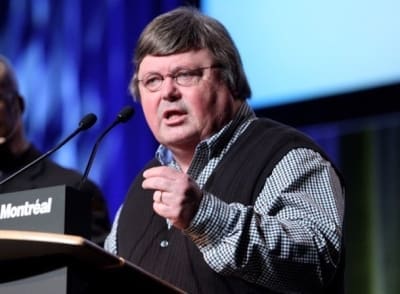
 On today’s episodes of Mormon Stories, we interview Dr. Chris Thomas as we discuss his book “A Pentecostal Reads The Book of Mormon.” We begin by discovering Dr. Thomas’ religious background and perspective, then delve into how and why Dr. Thomas decided to apply his perspective to the Mormon faith.
Episode Transcript
Host: John Dehlin · Guest: Chris Thomas
This transcript is machine-generated and lightly edited for readability. The audio is authoritative. Please excuse occasional errors in names and spelling.
Introduction and Welcome
Part 1 of 3 · Ep. 1257
John Dehlin [00:00:06] Mormon Stories is a production of the Open Stories foundation and relies solely upon the support of people like you, its listeners to help keep the podcast alive or to become a member of the community. Please become a monthly subscriber by visiting MormonStories.org and clicking the Donate button on the top right side of the page. All contributions to Mormon Stories are completely tax deductible and go towards producing the podcast and and building communities and programs of support for Mormons like you. Thanks for your support. Hello everyone and welcome to another edition of Mormon Stories Podcast. I'm your host, John Dehlin. It is January 29, 2020 and we are so super excited to have a very special guest with us today in the Mormon Stories Podcast studios here in Holiday, Utah. Today we have with us Dr. Chris Thomas. Say hi to our audience, Chris.
Chris Thomas [00:01:05] Hello. It's great to be with you, John.
John Dehlin [00:01:09] Chris will be known, at a minimum, very well amongst the Mormon studies community. Dr. Chris Thomas. I should say we'll probably just call him Chris in this interview. He's written a really interesting book, fascinating, important book called A Pentecostal Reads the Book of Mormon. Is that right? But this interview is much, is that, and much, much more. I'm going to say something that Chris is probably going to take umbrage with. Of all the guests I've ever had on Mormon Stories, I'm not sure if I've ever had someone on Mormon Stories who knows the Book of Mormon better than Chris. Now, maybe Brent Metcalf. Definitely better than Michael Quinn, in my opinion. Definitely. Probably better than Grant Palmer. Maybe there's a tie there. Rest in peace. God rest his soul, Grant Palmer. But this guy knows the Book of Mormon very, very well. But he also knows Mormon history as well as or better than most of the historians we've had on Mormon Stories. But it's more than that. He is witty, he's charming, he's super intelligent, he's diplomatic and tactful. And something that's super interesting about him is that even though he hails from a tradition that maybe historically hasn't been super kind to Mormons, we'll see if that's true. I'm just assuming that he has found a way to ingratiate himself and to earn the trust of byu, of the Maxwell Institute, of Phil Barlow, of Patrick Mason, and of the entire sort of faithful Mormon studies crowd, such that I think he was here for two weeks as a guest of the Maxwell Institute in byu and they had him lecture at BYU in multiple classes. Patrick Mason had him up to Utah State University, and he's able to be a Pentecostal, have his beliefs, know more about Mormonism in the Book of Mormon than most Mormons and most of those in Mormon studies. But still. But still, be welcome as a respectful, thoughtful, interesting, compelling voice. And I've known about Chris for a few years. We tried for several years to get together for lunch, and we finally were able to get together for lunch last year, thanks to a mutual friend who will go nameless today. And so we had lunch a while back, and then he was in town this week, and I decided to jump on him like a duck on a June bug, as they say in his neck of the woods, and spend a few hours talking to him about what it's like to grow up as a Pentecostal, what the Pentecostal Church believes and how they practice. What got him interested in Mormon studies, what got him interested in the Book of Mormon, his views on the Book of Mormon. And then we're going to even. We'll probably talk about the politics of navigating Mormon studies as a human and as an outsider. And then we'll probably end by talking about his beliefs in God, his beliefs in Jesus and the Bible. And maybe he'll make a plea, or I'll ask him to make a plea for someone who is open to, or still considering Christianity, even Mormonism, maybe another form of Christianity. We'll talk about how belief is belief, or can belief, Christian belief kind of still be relevant and compelling and valuable in 2020. How's that, Chris, for an introduction?
Chris Thomas [00:04:51] Man, my head's spinning.
John Dehlin [00:04:53] Anything you want to correct or fix or add?
Chris Thomas [00:04:56] Well, just to say to whoever's watching not to believe anything you're saying about me.
John Dehlin [00:05:00] What the. You just undermined. You just undermined my entire.
Chris Thomas [00:05:05] No, every. Every room I'm in, I usually know less about the Book of Mormon than anybody in the room. So don't.
John Dehlin [00:05:13] I'm telling you guys now, don't believe a word. He just said don't believe a word. Okay, so really quickly, just for housekeeping, this will be 20 seconds. Phoenix Thrive is this weekend, February 1st. Go to thrivebeyondmormonism.com to register. It's a great event. We're doing Thrive Time for Women, an event for post Mormon Women. March 28. We just announced that there's still a February event. That's skipping my mind. And then April is Thrive in Chicago. Oh, at the end of February, Natasha Alver Parker and I are doing one of our Mormon Faith crisis retreats here in Salt Lake City. You can go to mormonstories.org events to register for that. It saves marriages, it saves lives, and it supports people in a transition. And of course, we'll do more cool stuff in the weeks and months ahead. So those are our announcements. Super brief. And without any further ado, Dr. Chris Thomas. Welcome to Mormon Stories.
Chris Thomas [00:06:15] Thank you. Dr. John Dehlin.
John Dehlin [00:06:18] This is like the only time anyone ever calls me doctor and it's super rare, so I'll take it. Thank. Okay. So Chris, let's start by having you talk to us about your childhood and what it was like to grow up a Pentecostal kid, assuming you did well.
Dr. Chris Thomas Introduces Himself
Chris Thomas [00:06:36] Yeah, I'm happy to. It's really good to be with you. Let me say, first of all, been an avid watcher of Mormon stories.
John Dehlin [00:06:45] Oh, you know what? You reminded me of something. I'm going to interrupt you for just a second.
Chris Thomas [00:06:48] Sure.
John Dehlin [00:06:48] For you to establish. You don't need to establish credibility, but I want to, I want to put an extra thumb on the scale of adding credibility to you for my listeners because I want them to freaking listen to this interview even though you are a man of God or a Christian or believer and all that. So I want you to talk to them about some of your favorite Mormon stories interviews and why you've liked them not to be self ingratiating, not for any other reason than for them just to understand that you kind of understand a lot about their worldview and what we all care about. Is that. Okay, sure. Does that put you on the spot?
Chris Thomas [00:07:22] Sure. I'm 60, so you know, my memory slips now and again, but I'm happy to reflect some on that. Well, I think my favorite, as most people would probably guess, was your extended interviews with Sandra Tanner. I thought those were just delightful and I really, really enjoyed those and have watched those multiple times actually. Really liked the Grant Palmer stuff,
John Dehlin [00:07:50] the
Chris Thomas [00:07:50] Dan Vogel interviews, like to the Prince interview about Leonard Arrington in particular. I mean, there's a whole swath of them that I've learned a lot about Mormonism, more extensive than that. Yeah. So just so you're kind of jumping off here.
John Dehlin [00:08:13] You're kind of a geek. You're kind of a Mormonism geek, like apparently. All right, so. All right, so let's begin. What's it like to grow up. Sorry I interrupted. What's it like to grow up Pentecostal?
Growing Up Pentecostal in East Tennessee
Chris Thomas [00:08:28] Well, I grew up in East Tennessee and my first memory was as a child lying on a pew in the back of the church, looking up through the slats in the back of the pew in front of me and seeing in the floor a mason jar of water that my grandparents had brought to church to get me through those long hot summer services. Grew up Pentecostal, kind of second, third generation Pentecostal. Both sets of my grandparents grew up in the church there in Maryville, Tennessee, Alcoa. And so I spent my formative years there. Remember my conversion, remember my spirit baptism, Remember what it was like to go to church just about every day it seemed, of the week. We had services on Sunday morning and Sunday evening, Tuesday night, Wednesday night and sometimes Saturday nights. So we went to church a lot.
John Dehlin [00:09:29] Paint a picture of Pentecostal beliefs and practices. Just high level.
Chris Thomas [00:09:34] Yeah. Well, the heart of Pentecostal theology is what we call the fivefold gospel, the full gospel, that Jesus is our savior, that he's our sanctifier, that he's our spirit baptizer, that he's our healer and that he's our soon coming king. And it's possible for individuals to know him in each of those ways. Pentecostal worship is very lively. It's really full bodied kind of worship. It's not cerebral though. There are things that speak to you mentally. There's a place for motor responses as well as verbal and intellectual responses. It's very communal. In sermons, the congregation responds to the minister as they preach. You'll often hear Amen or, well, if you were waiting to hear more of what's being said to determine whether you agree with it or not. Lots of singing young people put up at an early age to participate in all manner of things. Lots of testimony, services where individuals would testify. I've been a lot of services where everybody in the congregation testified before the service was over. And they could range from, you know, 30 seconds to a few minutes in that regard. So very intense. I grew up with a real love for those on the margins. My dad became a pastor, planted a church among the poor, mainly in our little town. And so, you know, had a lot of things modeled for me. Grew up in the part of the civil rights movement. I remember when African American kids showed up in my class for the first time. And in the middle of all that there in East Tennessee, my dad as a pastor is having African American choirs come and sing in our church and worship with us. So I had a lot of things
John Dehlin [00:11:43] controversial for him to do at the time.
Chris Thomas [00:11:45] You know, as I look back, I think about that, but at the time it just seemed like these people know the Lord, we know the Lord. Why shouldn't we be able to worship together as his Children.
John Dehlin [00:11:59] But you're in the south, right? So it must have been more complex than that.
Chris Thomas [00:12:04] Well, yeah. The buckle of the Bible belt, I suppose you could say. Yeah, it's really interesting. I mean, I remember when African American kids showed up in class in the seventh grade, and I was like, where have you been all this time? I wasn't connecting all the dots as such.
John Dehlin [00:12:27] So.
Chris Thomas [00:12:28] Had some really good role models in terms of navigating all that tumultuous sea. You might think so.
Pentecostal Distinctives and Speaking in Tongues
John Dehlin [00:12:42] You know, there are all the stereotypes about Mormons. They're polygamists, you know, whatever it is. I'm sure this comes up every single time the word Pentecostal is mentioned to you. When I think about Pentecostals, I think of speaking in tongues, which, ironically, was at the beginning of the Mormon tradition as well. But Mormons, if I'm being just totally honest, Mormons are sort of taught these days, or at least in the 80s, when I was kind of going to seminary, that that's quackery. That that's, like, fake, that that's kind of low brown and not really credible. And it's kind of crazy and weird. And I don't mean to be trotting on your sacred experiences. I'm sure you get this all the time. Talk about, is that as important to Pentecostalism as one might assume? Is that a tired stereotype for you? And then talk about just what that means and also any observations you have about what that used to mean to us.
Chris Thomas [00:13:46] Sure. Well, that's great. One of the things that really captured me was John Turner's magnificent biography of Brigham Young. And he had lots of stuff about Brigham Young speaking in tongues. Right. Eventually I Learned that in 1920, the LDS Church around there formally made a pronouncement that what the Pentecostals are doing is not what we believe. I was at BYU when I found it out, and I was giving a talk, and I said, so let me get this straight. Here's a group that will withstand the ire of the nation over polygamy, but you don't want to be compared to Pentecostals. I knew we were low on the food chain. I just didn't know how low. One of the things, you know, there's this interview with George Harrison, the Beatles, you know, and he says when he first picked up an Indian sitar, he said it just felt familiar to him. And when I read some of the things in the Book of Mormon, the worship service, for example, described by Moroni, it sounded very much like a Lot of Pentecostal churches I'd been in and services I'd been in then. The other thing that struck me is in the Book of Mormon there is talk about the spirit of fire, the baptism of fire and spirit. And in many of the occasions where that's talked about, it connects it to tongue speech. Now this is 1830 when the thing's published, right? And the Azusa street revival will take place where a lot of people mark as the real beginning of Pentecostalism in 1906. One of the hallmarks of Pentecostalism is that the experience of spirit baptism is to be accompanied by speaking in tongues. And so when I saw that in the book of Mormon 70 years before, my eyes kind of popped out of my head like one of those cartoon characters that you used to watch on Saturday mornings, right? And the eyes just kind of come right out. And so I was quite surprised by the fact that in much of the restoration, tongue speech has not continued in that way. How I've had it explained to me by certain LDS folk is that it is a linguistic facility at the missionary training center that was a reframing. That's right. And so of course it didn't sound much like the Book of Mormon to me or what Joseph had to say about it early on. But there are places in the tradition, like the Church of Jesus Christ, the so called Bickertonites, that tongue speech continues in their worship services. So for Pentecostals, spirit baptism, an expectation would be that somebody speaks in tongues when they are fully immersed in the Spirit. There would be in local worship services people who are gifted in speaking in tongues to the whole community and they would be interpreted by another spiritual gift. And then many Pentecostals would, in their time of private prayer, often pray in tongues. So yeah, Pentecostalism in tongues, that's tight connection. I was at this society, this New Testament Theological Society in Durham, England once and a guy was saying, one of the scholars there was saying he wanted to talk to me about speaking in tongues. And one of my friends there kind of threw himself in as a human shield and I said, I really appreciate what you're doing, but a Pentecostal that can't talk about speaking in tongues is not worth much. So yeah, Pentecostalism, it's very, very identifiable practice for Pentecostals.
John Dehlin [00:17:57] So that summary and particularly the comparison between, you know, Pentecostalism and Mormonism's early use of the speaking in tongues, but also the church's evolution on that front is fascinating. Let me Just ask you directly, like, what does. What does that add to a service? How is it an important part? And then when people ask, sort of like, what if people are just acting or making it up? Is it real? You know, talk just a bit about the practice itself and what it means.
Chris Thomas [00:18:38] Sure. You know, in the Roman Catholic services, the Mass is the visible sign of the presence of God. And in Protestant services, often the sermon is the visible sign of the presence of God. In Pentecostal services, you can experience God's spirit in lots of ways, but nothing quite rivals Glossolalia. Speaking in tongues. One of the things that happens in tongue speech is often these are very spontaneous interruptions to services. And many Pentecostals would interpret that as the divine presence in a kind of audible form that is there. In a recent service that I was in at our church in Athens, Tennessee, there was a prophetic utterance and a message in tongues at the beginning of the service and one near the end of the service. And so it's, you know, it gets at that. It's kind of a way in which Pentecostals interpret God speaking directly to the congregation. It often doesn't come from the leaders. It often comes from the community, somebody in the community. Often people who have been baptized in the Spirit are never used in that way in a service. And then there seem to be particular people who have the gift of tongues for public worship. And usually the congregation, when someone speaks in tongues, begins to pray for an interpretation that would be in accord with Paul's directives and guidelines in 1 Corinthians.
John Dehlin [00:20:28] Does that mean someone else will speak up and provide an interpretation?
Chris Thomas [00:20:31] Often, often. Sometimes the person who speaks in tongues will interpret, but that's not the majority of the time, in my experience, at any rate. And can people not be genuine in terms of tongue speech? Well, of course. But for Pentecostals, we wouldn't just have the two categories of divine and diabolical. We would have a category for sometimes people just get overly worked up, overly excited. We would call that phenomenon being in the flesh. The whole congregation is instructed to discern what's being said during those moments. And I've been in services where I suspected that's been the case. And I've been in services where people have given a message in tongues and interpretation, and there's been very little response at all. And on one occasion, a guy came to me and said afterwards, why didn't you rebuke me for that? Because it seems that I was not speaking faithfully. And I said, well, what was the response? And he said, nothing. I said, well, you know, not every violation requires a nuclear option. Right. So the community would do their best to discern that. Yeah, I mean, there are a lot of people that can act in the Pentecostal and Charismatic movement in ways that are, you know, kind of filled with smoke and mirrors, you might say. But that doesn't mean there isn't the real deal, which I've seen and experienced and has been part of my formation.
John Dehlin [00:22:18] Can you give an example of, like, a few of those experiences that have been meaningful to you? Can you even describe it? Because it probably doesn't do it justice. It's all about feeling, right?
Chris Thomas [00:22:29] Well, it's. It's feeling, but it's, you know, it's what. It's what you take in as well. I'll give you an example. You know, my biological father was killed in a car crash when I was 2. And I remember in my teenage years beginning to feel a sense of a call of God on my life. I wasn't quite sure what that meant. And I remember one night we were all standing and I was over in a certain part of the church with my eyes closed, my hands raised, praying. And the sister who played the piano in our services, who was a bit of a prophetess, unbeknownst to me, had made her way across the front of the church and was standing over me giving a prophetic utterance about what God had saved me from the hands of death, if I recall precisely, and what he had called me to. Right? So, you know, that's why I say it's full bodied, because it wasn't just, you know, emotionalism. There's something that happened in that moment that I took in and reflected on. And then I began to try to discern what God was calling me to. And I remember one day I had helped my elderly French teacher carry things out to her car. And I asked her, I said, Ms. Buckner, do you like teaching? And she said, oh, it's wonderful profession, and you would be a good teacher. And I remember thinking, yeah, but I don't have that option because as far as I knew, if you were called to ministry, you either preached or you sang, right? I didn't realize there was really a ministry of teaching, but that's when it first started to. Some of the seeds kind of got planted. And that's a whole story in itself. Sometimes I have seen ministers of the gospel, when praying for people, reveal things about the person that the minister had no way of knowing. A good friend from Brown University area, did a master's in sociology there. And he was a pastor, African American guy who came down to our church and was preaching that morning. And in the altar service as we were praying, I heard what he was saying to people and I knew he didn't know those people and he was speaking directly to them. Right. So when the spirit moves, I myself, I was baptizing a young man once and I can't go into the details, but there was no reason for me to say what came out of my mouth. But I said, you know that the Lord is going to use you mightily. And it turns out the kid's genius level, but was in this real difficult home situation. And when I said it, I kind of thought, what are you saying? This is not how this looks. So we are, you know, we're really open to the Lord being able to speak in those ways. Sometimes that's the corporate service, sometimes it's more on an individual basis.
Entering Ministry and Academic Life
John Dehlin [00:25:49] Tell us about, did you go into the ministry and talk about how that happened and what your role has been with the church?
Chris Thomas [00:25:58] Well, it kind of started, I think when that prophetic word was given over me and then they would ask me to speak as a teenager here and there. I remember when I went to college, I thought that I would go to college so I would have something to say when I spoke. Right. But never really took ministry credentials with the church until pretty far down the road, actually. I mean, I would teach and I would preach in the local church, but it was only after I was asked to, to teach for a year at the college I had attended that I actually took credentials with the church. My ministry has mainly been in the classroom, but I've been a part time associate pastor FOR oh goodness, since 81 maybe. And I preach weekly and every week, every service we have, we'll have a time of prayer for the sick, among other things. So yeah, I have a Sunday school class that we read scripture together and it's composed of people who have gone to seminary down all the way over to people who work in a factory or run a radiator shop. So briefly put, that's kind of the experiences that, that I've had.
John Dehlin [00:27:28] So what? You know, Mormons are often known by the fact that they don't drink alcohol or smoke or you know, coffee or tea and the kind of the things they don't do. And then some of the things they do do like missionary service and big families are there behavioral sort of do's and don'ts that Pentecostals are Kind of known for.
Chris Thomas [00:27:50] Well, my branch of the Pentecostal tradition was holiness, which meant we didn't do a lot of stuff. And you could. For instance, a big difference for Mormonism is we didn't go to dances. Right. We wouldn't go to movies. Women, for a long time, had to always wear dresses or skirts. There were teachings against jewelry and unnecessary jewelry. So we had a rather rigid kind of code in terms of how to try to live out the holiness of God in this society. My parents, though, were really wise and discerning in always taking me back to scripture. Well, what does the Bible say about this? Even when the church would condemn certain things and I was struggling with that, they wouldn't leave it there. It would be, well, what does scripture say? And sometimes I would make decisions that were contrary to the church's decision, but I felt was in accord with scripture. And so, of course, you know, a lot of things were going on at that time in the local church. The question might be, how long is your hair? Right. And so you'd sometimes have to get a haircut for Jesus. But, you know, what the questions at school were is, are you smoking pot? Right. And so, you know, my life was one where I had to try to learn to. And I couldn't have put it in this language then, but was I had to learn to try to learn to navigate a really interesting cultural moment in the 60s and early 70s in a way that I could integrate my faith in the culture without losing my identity, if you will. And so, you know, you learn to have certain boundaries. And I had a lot of friends that got drunk or smoked or smoked up, and, you know, those were pretty clearly outside for me.
John Dehlin [00:30:08] You stayed away from that stuff generally.
Chris Thomas [00:30:10] Yeah, yeah, yeah.
John Dehlin [00:30:11] And I'm, you know, for Mormons messing around with girls or guys, you know, like, yeah.
Chris Thomas [00:30:16] Sexual purity was important in our tradition that was, you know, sexual sin was addressed rather clearly, and they weren't embarrassed to talk about that in the sermons and in the classes. It was pretty ground level in that regard.
John Dehlin [00:30:35] Was there a punishment if you messed up?
Chris Thomas [00:30:38] Well, I guess it depended on the home you were in. I mean, the church generally was a pretty welcoming kind of environment. I remember a young woman, this would have been early 70s, late 60s, who was pregnant out of wedlock. And I remember seeing that whole thing play out. And she was never ostracized from the church, despite the fact that the church was committed to certain holiness principles. Right. And wound out that one of the young men in the congregation, not the father of the child married her and they had a long and prosperous marriage. So, yeah, I mean, what would often happen is if people sinned, as we would say, there would be time in worship to go to the altar, to pray, to confess sin, to experience the forgiveness of the Lord. So. Yeah.
John Dehlin [00:31:51] Was there confession to a leader? Did you have the equivalent of that? Or do you now where you go to the bishop or you go to the priest and say, hey, I sinned?
Chris Thomas [00:32:00] Not in the sense that it is in the LDS traditions. I would say it's more spontaneous and not as prescribed for that. But you could.
John Dehlin [00:32:10] Okay.
Chris Thomas [00:32:10] I mean, I've had people.
John Dehlin [00:32:11] It wasn't ritualized. Institutionalized.
Chris Thomas [00:32:13] No, no.
John Dehlin [00:32:14] Okay. And like in the Mormon Church lately, maybe, you know, there have been a lot of controversy over these meetings where bishops are alone in a room with a 12 year old and asking them really sensitive sexual questions. Would that be a scenario that would be allowed in your tradition or not?
Chris Thomas [00:32:34] Oh, goodness. I'm sure something like that's happened in
John Dehlin [00:32:36] the tradition, but it's normal.
Chris Thomas [00:32:38] It wasn't. I had no recollection of those kinds of things. They were more kind of group things, youth group, you know.
John Dehlin [00:32:46] So a group pastor might talk to you about that.
Chris Thomas [00:32:48] Yeah, but in the group, not one on one. Yeah. And not. Have you been messing around? Have you been doing this or that? It's more broad, communi. Communal.
John Dehlin [00:32:58] And then maybe the parents would be the ones that might have that conversation.
Chris Thomas [00:33:02] Yeah, okay. Yeah, yeah. It's hard for me. You know, parents are so all over the road, you don't know.
John Dehlin [00:33:11] Right. It just depends. Yes. Yeah. What about. So Bible, word of God, word for word, inerrant Bible.
Scripture, Inerrancy, and Evangelical Worldviews
Chris Thomas [00:33:17] Well, inerrant is a problematic term because it's. It's moving from a modernist worldview to try to speak about an ancient text with that kind of scientific precision. I never heard the word inerrancy until I got into theological training. The statement of faith for our church early on was we believe in the whole Bible rightly divided.
John Dehlin [00:33:48] What does that mean?
Chris Thomas [00:33:50] That means we believe the word is, is authoritative, but it has to be rightly discerned. And so the inerrancy stuff became much more of a hallmark of evangelicalism as such. And Pentecostals can be considered evangelical sometimes in certain statements of faith. But going back to that kind of fivefold gospel, if you compare various evangelical folk, very few of them believe all five of those elements. You might have people that believe in salvation and the return of Jesus, but don't believe in healing or don't believe in spirit baptism or don't believe in sanctification of life. So in some ways, Pentecostals have more in common with the holiness tradition or even in some ways with the Eastern Orthodox tradition, and in some kind of odd ways with Roman Catholicism. Worldview wise, I would say Pentecostals and LDS folk share a worldview, a supernatural worldview. I think some of my evangelical friends, if an LDS friend of theirs said an angel appeared to me last night, well, they might be mortified by that. The Pentecostal would say, what did he say? So I think worldview wise, there's other things going on. And so that's kind of how I would think about such things. The scripture is authoritative, right? Whether we want to say inerrant, I don't use that language. I think our statement of faith is maybe infallible, which is more trustworthy, authentic, etc.
John Dehlin [00:35:38] Okay. Maybe the most important question of the day. Did you listen to rock music growing up and was that allowed? And if so, who are your favorite musicians?
Chris Thomas [00:35:46] Oh, yeah. Oh, yeah, the lads from Liverpool. Right. I mean, the Beatles were.
John Dehlin [00:35:53] Yeah, they weren't Satan's. Satan's minions.
Chris Thomas [00:35:56] They may have been.
John Dehlin [00:35:57] There was the Bible, there was the Beatles burn.
Chris Thomas [00:35:59] There was. There was, yeah. And I really regretted that. I mean, I wasn't participating. But our local radio station stopped playing Beatles and I'd call in and request things and.
John Dehlin [00:36:09] Was that being a bad boy, though? Was that being a bad Pentecostal?
Chris Thomas [00:36:12] I don't know. I mean, I guess some people would have thought. I mean, my parents, again, going back to what I said earlier, they wanted us to discern our way forward. So love the Beatles. Still love them. Saw Paul in Atlanta. My daughter, when she was in junior high, he played for over three hours straight. And when we went to a John Mayer concert later, he played an hour and a half and my daughter said, well, that was a short concert. I said, honey, Paul really, you know, he really spoiled you. James Taylor. Love James Taylor. Clapton, of course, just kind of King. Yeah. So, yeah, listen. Listen to what might be called secular music. Love it.
John Dehlin [00:37:04] That's just to establish your credibility. I'm trying to.
Chris Thomas [00:37:06] I actually wrote a friend of mine, and I actually wrote a Christmas cantata. And we borrowed the first song I ever wrote. I borrowed the music while my guitar gently weeps and wrote lyrics to the angel saying to Mary, a sword will pass through your soul.
John Dehlin [00:37:28] That's great.
Chris Thomas [00:37:29] Do you want to sing it for us? Oh, no, no. It would be terrible. And then Mother Nature's Son wrote words to the shepherd.
John Dehlin [00:37:39] So that's so great. Yeah, that's so great. So Allison is joining us. She asks, whoa. She says, whoa. Holiness, Pentecostal. Were you signs following? I don't even. I can guess what she means by that, but do you know what she means by that?
Baptism, Ritual, and Pentecostal Practice
Chris Thomas [00:37:55] No, Allison. We would say signs were following us.
John Dehlin [00:37:59] What does she mean? And what do you mean?
Chris Thomas [00:38:01] Well, you know, Mark 16, and the signs will follow believers, and you get several things listed there. Healing, speaking in tongues, taking up serpents, drinking deadly poison in the proclamation.
John Dehlin [00:38:16] So snake handling is part of your tradition? Well, is that an appropriate way to say that? Is that.
Chris Thomas [00:38:22] Yeah. No, actually. You're not going to offend me, John, however you say it. I would say this snake handling was part of the church, the denomination I belonged to early on, and we had a presiding bishop who denied that that ever happened, but there's evidence in our earliest periodical literature that it did. Now, I have to confess with my phobia of snakes that if it was God's will for us to handle snakes, John, I would backslide.
John Dehlin [00:39:02] Mm.
Chris Thomas [00:39:04] But, yeah.
John Dehlin [00:39:04] Meaning what?
Chris Thomas [00:39:06] Oh, I wouldn't be able to. You know, I just. I'm. I do have a phobia. Maybe we could talk about that after we finish the interview, and you could
John Dehlin [00:39:14] help me some, because I'm a psychologist.
Chris Thomas [00:39:17] You got it.
John Dehlin [00:39:19] Somebody is writing, and this isn't. This isn't at all a gotcha thing. And everyone knows that I'm. That I'll be the first to say that Mormons have. Have had a problem with sort of abuse kind of stuff happening in our tradition. But somebody is saying that they're familiar with an association between molestation and Pentecostalism. I'm not meaning that as some sort of, like, gotcha, but is that. I imagine that's in every religious tradition.
Chris Thomas [00:39:48] So that would be my impression.
John Dehlin [00:39:50] Okay. Not. But. But nothing more or less problematic, I wouldn't think.
Chris Thomas [00:39:56] I mean, I would think we would be glad to bear that sin for the whole of Christendom, but I don't think we can.
John Dehlin [00:40:03] I get it. Okay. You're so eloquent. Okay. Did you have to earn your faith? Is there, like, an altar call where you're saved? Like that moment where you accept Jesus and you're saved, like in other traditions? Is that part of it?
Chris Thomas [00:40:18] Yeah. Yeah.
John Dehlin [00:40:20] And then also talk about baptism, confirmation, stuff like, all that, like the rites of passage.
Chris Thomas [00:40:25] Yeah. Maybe one of the ways to talk about it is just to tell how it happened to me. I was five years old. And my mom was pregnant with my brother, who's five years my junior. And dad had taken me to a Saturday night young people's meeting. And they showed this film about the crucifixion of Jesus. And it was more than my young heart could take. So I didn't say anything. But I went home and I told mom what had happened. And she said, did you kind of feel responsible for that? And part of me was saying no, and part of me was saying, well, I guess so. And she kind of helped me understand what the Spirit was saying to me that night. And that's when I confessed Jesus. That's when I experienced being born from above. I would say we often would go on to try to pursue the Lord in terms of spirit baptism. And I would be in the altars all the time seeking baptism of the Spirit. Pentecostals would say that when you come to the Lord, you're indwelt with the Spirit. But there's this distinct work of the Spirit when you are actually immersed in the Spirit. And that's when you speak in tongues. It's kind of like, to use a terrible analogy, but if you put water in a kettle and you start turning it up, at some point the whistle sounds, right? I was a young kid when that happened with me. I think I was seven. And I distinctly remember being baptized in the Spirit and speaking in tongues that I didn't know. And so there's also this whole notion of sanctifying yourself and experience sanctification. Pentecostals would see sanctification as wholehearted devotion to God where there are no holdouts in our lives. And I would liken it to. Some people say, well, you're never more a Christian than when you get saved. And I'm like, well, yeah, but you're never more of a human than you're born, but you do go through. Through puberty. Are you the same? Is that the same person? Sometimes it seems it's not. And so I've seen in my experience, a lot of people delivered from life controlling addictions. I've seen people who've come in off the streets, basically, and give their heart to the Lord and are delivered from drugs and alcohol, and their whole lives change. That's part of the tradition. Spirit baptism is part of the tradition. Praying for the sick. In our tradition, a lot of people pray for the sick. Even children can pray for the sick. And that happens in our context. Every service, in fact, we'll have people call from other congregations that don't necessarily believe in healing, but if they get sick, they call us and they want prayer. And my attitude is I'm praying for them. Right. Because those are the mandates of Scripture. So those would be some of those kind of moments. Some churches have what they call an ordo salutis, the order of salvation. We would have more of a via salutis, the way of salvation, and we would see salvation as a journey. It's very narrative you often hear in testimonies. I thank God that I'm saved, sanctified, filled with the Holy Ghost, on my way to heaven, and a member of the great church of God in the old days. So, yeah, that's how I would talk about that and how I would convey what I understand about Pentecost.
John Dehlin [00:44:31] Did you mention baptism by water?
Chris Thomas [00:44:33] Baptism by water is usually not long after one's conversion. And I would understand water baptism to convey several things. One is kind of a sign, not just a symbol, but it's a sign of complete cleansing. It's a sign of our identification with the death, burial, and resurrection of Jesus. Right. The water you go in the watery grave. It's a sign of our incorporation into the body of Christ. And John's Gospel kind of brings out that it is a proclamation of Jesus as Messiah, kind of public proclamation. And you often see that in context where somebody that converts is cut off, lose their family, etc. So, yeah, water baptism is important.
John Dehlin [00:45:27] Is it a requirement for heaven, so to speak?
Chris Thomas [00:45:30] Well, people would debate that. People would see it more as being obedient to the command of Jesus and following his example.
John Dehlin [00:45:40] But in theory, if somebody died before
Chris Thomas [00:45:41] their water baptism, they would talk about the thief on the cross.
John Dehlin [00:45:45] Okay, but what about dying without being. Convert your conversion or what do you.
Chris Thomas [00:45:52] Yeah, yeah.
John Dehlin [00:45:53] What do you call that? The.
Chris Thomas [00:45:55] Yeah, conversion. Fine. Yeah.
John Dehlin [00:45:58] Do you have a answer for that or is it unknown?
Chris Thomas [00:46:01] Well, yeah. I mean, what. You know, I think there's a wideness in God's mercy. Okay. And I'm not God and I'm happy with however he adjudicates it.
John Dehlin [00:46:13] Okay.
Chris Thomas [00:46:14] But, yeah, I mean, salvation is salvation because in some ways is. Because it is. You are experiencing wholeness, especially with sanctification and that sort of thing. And so, yeah, salvation would be essential for that is how Pentecostals would view that.
John Dehlin [00:46:39] Is it a burning hell? Hell with flames? Literal Satan?
Chris Thomas [00:46:45] Well, I think Literal Satan, certainly. I think people have tried to think about eternal punishment and how that makes sense. The thing often folk will come back to is whenever Jesus speaks of it, that's how he talks about it. And whenever you see it in the Apocalypse, I've written a couple of commentaries on the Book of Revelation. That's how it gets conveyed. So whatever that is, whatever that equivalent is.
Authority, Ordination, and Graduate Faith Crises
John Dehlin [00:47:16] Okay, how would you answer the Mormon claim that authority is necessary? That we trace our authority through the laying out of hands back to Peter and then to Jesus? So for us, authority is important, and for us, you guys don't have it, but we do. How do you view authority or does it matter?
Chris Thomas [00:47:39] Well, you know, it seems that it's kind of tied into kind of apostolic succession and authority for. I mean, you get that view in Roman Catholic Catholicism, right. In the orthodox tradition, I think for Pentecostals, the authority comes from the anointing with the Spirit.
John Dehlin [00:47:58] Okay, yeah, makes sense. Something happens in the Book of Mormon where somebody gets authority without laying out of hands. So we probably saw it that way at one point too. Right, well, maybe we'll talk about that. Okay. So at some point you go to grad school and start pursuing your PhD in Mormonism. That's tantamount to danger, basically. In Mormonism, the stereotype is you go to grad school, unless it's like law or accounting, anything humanities or theological, you go to grad school. History, you go to grad school to lose your testimony, basically. Did you at any point in your life have what I would call a crisis of faith, where you learned about the flood, or you learned about the age of the earth or Adam and Eve, or science or evolution or historical criticism or whatever? Did your graduate studies or undergraduate studies ever cause you to have what we would call an intellectual crisis of faith?
Chris Thomas [00:48:59] Well, I think you always have intellectual crises of faith, don't you? Or you're not ever learning anything. Right. One of the interesting things about Pentecostalism is it's often caricatured as anti intellectual. But the first thing all these early Pentecostals did was to start Bible colleges, which I've always kind of chuckled at. Right. I remember my old uncle, Tommy Reimer, who had no formal education aside from public school, telling me once when I was at the college, he said, you know, son, I did these correspondence courses that were kind of popular in that era, the 30s and 40s. He said, but he said, I got all I can. But he said, you need to get all you can get. So on the one hand there was this. I mean, my family. I remember the woman who was leading our youth choir and working with young people in this church my dad started that was kind of amongst the poor. She finished a master's degree. And I remember my dad, who at that point had not had anything past high school in terms of training, how much he celebrated that in our little church, right. So you get that on the one hand, growing up Pentecostal, even though I couldn't have said it in these ways, then I kind of developed a hermeneutics of suspicion, right. Because I rather soon found out that often people in authority didn't always tell you the whole story, Right. And so I had questions as to the validity of certain methods that would get employed. And part of my own training, I mean, I came up in the heyday of historical criticism was seeing those cracks in the method and the fact that we were to pursue this objectivity. But the people who were the objective researchers never told you where they were coming from. There was a guy named Rudolf Bultmann, pretty famous New Testament theologian scholar, who wrote a book called Jesus Christ and Mythology. And he said, we all have presuppositions. The difference in me and you is I'll tell you what mine are, and you'll act like you don't have any. Right. So as I made my way through. Yeah, I mean, there are dimensions of historical criticism that are challenging if that's the only game in town. But I soon discovered that part of the rationale of it, you know, I'll give you one example. There's this criterion used to determine whether the words go back to Jesus or not called the criterion of dissimilarity. And it operates this. If the words are such that any Jew of the era could have said them, you can't assume they go back to Jesus. If the words are such that the early church paid attention to and are recorded in the early church, you can't assume they go back to Jesus. But if they're not like anything a Jewish person of the first century said or the early church was interested in, then you can know it goes back to Jesus. Well, if you did that to Pentecostalism, the only thing you'd wind up with is snake handling. Now, that's pretty important. But is that all you want to know about Pentecostalism? And so you know, that to me, not only did it not make a whole lot of sense, but sometimes critiques weren't even allowed. And I was in this seminar, graduate school, and our professor was talking about the crucifixion, and he painted a great picture. He wasn't particularly a religious person, but he did a great job. And I was in the back of the seminar room, and I said, and Then the mass hallucination set in, and everybody in the class burst out into laughter. And he said, well, I have to admit, I think maybe there's a little bit more to the resurrection than mass hallucinations. Right. I mean, so, yeah, there would be times when I would have questions and times that I continue to have questions. But I think that, I think being taught to discern, you know, when we'd hear testimonies as kids, we hear testimonies in the church, and I would sometimes think, man, that's nuts what they said. But I wouldn't say that because I don't want to be disrespectful. Right. But then I'd hear a couple of adults saying, did you hear what, brother? So and so said, that's nuts. Well, I started to learn to discern. Right. And I would say that's part of what has happened in my own kind of educational journey and formation. Look to kind of presuppositions, look to the cracks that are there. What's most appropriate. You know, my rabbinics teacher used to say, you need to use the right tool for the job. Right.
John Dehlin [00:54:18] Yeah. I think something that listeners would be interested in is our listeners would have listened to my Bart Ehrman interview. They would have listened to my David Bacavoi interview. And those are two instances where historical criticism is applied to the point where many maybe progressive or post Mormons would just say, well, we know the Bible's not true. Time to move on. And you're someone who would be aware of all that scholarship, that approach very well, but maintains belief in spite of all that. True. Yeah.
Chris Thomas [00:54:53] There are so many extraordinary biblical scholars that look at the evidence and come out differently on that. For example, a guy named James Donne in England, Richard Baucom in England, who's also worked on the Jesus tradition, a guy named Craig Keener. I mean, you know, there's a great deal of diversity in the guild in terms of how you can gauge historical reliability on New Testament and Old Testament documents, for that matter. But, you know, I'm more a New Testament guy.
John Dehlin [00:55:26] But just to make the point, you can know all that stuff and in your case, still believe.
Chris Thomas [00:55:31] Oh, yeah, yeah. Certainly. Yeah.
John Dehlin [00:55:33] But be informed and intelligent and thoughtful.
Chris Thomas [00:55:36] Well, yeah, I mean, as best you can.
John Dehlin [00:55:38] Yeah, yeah. That's great.
Chris Thomas [00:55:40] Foreign.
John Dehlin [00:55:46] Thank you for joining us today on Mormon Stories. If you enjoyed this episode, please help us make more like it by becoming a monthly subscriber@mormonstories.org.
How Pentecostals View Mormons
Part 2 of 3 · Ep. 1258
John Dehlin [00:00:06] Mormon Stories is a production of the Open Stories foundation and relies solely upon the support of people like you, its listeners to help keep the podcast alive or to become a member of the community. Please become a monthly subscriber by visiting MormonStories.org and clicking the Donate button on the top right side of the page. All contributions to Mormon Stories are completely tax deductible and go towards producing the podcast and, and building communities and programs of support for Mormons like you. Thanks for your support. Okay, so let's talk about how would the average. There's probably no such thing as an average Pentecostal, but how would the average Pentecostal view a Mormon? Or what would be. I know how Baptists viewed us in Katy, Texas, growing up. They basically would have annual seminar called Mormons and Other Cults. They would show the God makers and, you know, girls that I would date or that would want to date me. In high school, when their parents found out they were dating a Mormon, they couldn't date me anymore. You know, how, how, how historically have Mormons been viewed by Pentecostals? And had you even heard of them, you know, up through the 70s or whenever, before you started actually paying attention to Mormons?
Chris Thomas [00:01:21] Yeah, that's a great question. I mean, I would, I would assume that a lot of Pentecostals looked at Mormons like Mormons looked at Pentecostals. You know, they're not part of the true church. Right. My first recollection of mormonism, I was 14. It was probably about 1968. George Romney had thrown his hat in the ring to be president. I was watching the Republican National Convention on one of our three channels that we got. And I asked my mom and dad, I said, why, why isn't Romney getting more support? I kind of like him. And they said, there's something about his church that people don't like. And they didn't seem to know much about that, and I didn't know about it. And about that time, we were in the Smoky Mountains and we picked up this woman who was camping and she was making her way up to a campsite and she had her backpack and all her equipment with her. So we stopped and gave her a ride. Turns out she was LDS and said that at that time, I think it was, she was having to not just tithe, but make extra contribution because the Washington temple was being built. And I remember being really wowed about somebody tithing. And so when she got out, I said that to dad and he said, son, he said, we tithe. They're not the only ones in the world that tithe. And so those were my first kind of encounters until 1974. I was in a choir that toured the nation and we were coming or going from California and stopped in Salt Lake and had the great acoustic demonstration there in the tabernacle where they dropped the pin and as musicians were all wowed by that. And I got that iconic blue cover with the gold Moroni on the front. Book of Mormon in the visitor center,
John Dehlin [00:03:28] the cloudy blue sky.
Chris Thomas [00:03:30] That's exactly right. That's exactly right. I still have it.
John Dehlin [00:03:33] This is in the 70s, this is
Chris Thomas [00:03:35] 74, January of 74.
John Dehlin [00:03:37] God makers wouldn't have been out by then, would you? Or all these kind of anti cult books. So would you have thought of Mormonism in that sort of dangerous, scary way or just this peculiar?
Chris Thomas [00:03:48] I don't think I knew anything about Mormonism really at that point. And what would happen is a guy would come along to my college who, who had a ministry to Mormons, though Mormons wouldn't have felt like it was a ministry to them. Who had written lots of pamphlets and booklets in which he shows from his vantage point the shortcomings of the church. And I was fascinated with that. Then I became friends with a couple of elders in our area. Now I was so naive. I didn't realize how much those missionaries owed me because here we are in Athens, Tennessee. They had a place to go every week for a couple of hours and they sometimes got fed, right? But they would ask me anything they wanted to about the Bible and I'd ask them anything they wanted to about the Book of Mormon. We'd take a week, do our research and come back together. Well, apparently the questions got too challenging and their mission president or somebody told them that they couldn't see me anymore. And I said, well, I understand, I'm sorry for that. He said, but you know, we get Mondays off and we can kind of do what we want to do on Monday. So we kept meeting and in fact we were remodeling our church. And they actually one Monday were up on the porch with me, tearing off the front porch because we were expanding. And I told them after dinner that night I said, now lads, when you go home tonight, you can write in your proselyting manual to tore down one Church of God. Kind of. After that I wanted to learn the story from the LDS perspective. So I took a correspondence course at Brigham Young University and read a book by Ivan K. Barrett called Joseph Smith and the Restoration. And my seminary professor at Ashland used It as the basis of an independent study. So I actually early on had three hours of graduate credit in Mormon history.
John Dehlin [00:05:48] So around what year was that?
Chris Thomas [00:05:49] That was 77ish. Yeah.
John Dehlin [00:05:55] And then did you just immediately keep pursuing it or was there a lull and then some point that really brought you in?
Chris Thomas [00:06:01] Yeah, there was. I mean, there were. Oh, let me just go back to the missionaries. When I finally started rummaging around in this kind of more intentionally, I tried to look them up, and unfortunately, they had both passed. One within five years. A guy named Norman Levitt in la, who was Norman the Mormon in the south, and a guy named Steve Christensen.
John Dehlin [00:06:26] The Steve Christensen?
Chris Thomas [00:06:27] No. Well, for his family, he's the Christiansen. Died at 50 from diabetes, I think. Lovely lads.
John Dehlin [00:06:35] This would have been 30 years later.
Chris Thomas [00:06:37] Well, for Steve. But Norman died, like, within five.
John Dehlin [00:06:40] No, when you were looking.
Chris Thomas [00:06:43] Yeah. Oh, yeah, yeah. So I would read off and on, stuff, you know, read. I remember reading kind of a sampling of the Joseph Smith stuff. Brody Bushman, of course, the Joseph Smith and the Restoration. I would read things as they came along. I kind of got put out with a couple of things I was reading that were just kind of hagiography. And then.
John Dehlin [00:07:10] John, tell our listeners what that word means.
Chris Thomas [00:07:13] Hagiography was kind of the study of the Saints. It's used often in Roman Catholicism, where you tell these exalted stories about the Saints.
John Dehlin [00:07:22] We would call it whitewashed history. Right.
Chris Thomas [00:07:25] That would be a way to describe it. And I'll tell you who it was, which I had to repent of many times over. It was Arrington's biography of Brigham Young, and I was kind of done with it.
John Dehlin [00:07:38] American Moses, right?
Chris Thomas [00:07:39] Yeah. It just felt. It didn't feel critical. It didn't feel like he was asking the right questions.
John Dehlin [00:07:45] And that's weird because we think of him as, like, the preeminent Mormon historian.
Chris Thomas [00:07:49] And the more I learned about Arrington, I had to repent of my terrible disappointment in it. Yeah. Okay. But when John Turner's magnificent biography came out, he had moved to Washington. I was up visiting my daughter. We met at the National Airport and talked about his book. And of course, one of the things that was interesting to me, it had so much tongue. Speech in it. Yeah, right. And from there, was that the beginning
John Dehlin [00:08:17] of your real academic pursuit of Mormonism?
Chris Thomas [00:08:20] Close.
John Dehlin [00:08:20] Because that would have just been like, what, 10 years ago?
Chris Thomas [00:08:22] It wasn't long ago. It wasn't long ago. In fact, I had a Sabbatic coming. I think it was about 2013, 2012. And I've kind of lived my life in many ways like a lot of people do for other people. If I get sky miles, they go to my family, right? And I thought, you know, I think I'm going to close the loop on whatever this is. So I decided to do a graduate level reading course on the Book of Mormon. Now, BYU wasn't set up to quite handle that, and so I wound up doing it with Dale Luffman at the Community of Christ Seminary. I've met him, yeah, lovely guy, an apostle. And so sometime between setting up the course and my week in independence, I knew what I was supposed to do. I was supposed to write a book. And I felt the Spirit lead me to that, as I have with all my major research projects. Now, when I tell my LDS friends the Spirit led me to do it, they get that look in their eye like Aslan is on the move, right. I tell my Pentecostal friends and they say, God told you what. So it was going to start out as a short introduction, 150 pages, wound up being close to five. And when I got out to independence, I'd already started working on reception of the Book of Mormon. Dale got me in to see the printer's manuscript. I got to examine it. The archivists brought out artifacts like Emma's wedding band and Joseph's Bible and Aesir stone. So it was quite interesting. And I visited a lot of the historic sites eventually and, and so that's kind of what happened.
Motives for Interfaith Engagement
John Dehlin [00:10:18] Let's talk, and this is always a tricky subject. Let's talk about motives. So when I think about being a Mormon missionary or any time where I've ever even contemplated speaking to an evangelical minister, it would be to what we call Bible bash. To argue to see who can outdo the other. Or if you're really ambitious, to try and convert the pastor, because maybe old Mormon missionaries would have been successful converting a pastor here or there. And then if I thought about it in the reverse, if a pastor was engaged in talking to a Mormon missionary or a Mormon, it would be to deconvert them, to take them out of the faith, to show them that their faith is dangerous because it will keep them from salvation. And even if you're just pure hearted, you want everyone to go to heaven and so you want to save the Mormons from improper beliefs or practices that will keep them out of heaven. It's actually an act of love, you could argue. So there's this sort of bashing disbelief of the other's position and attempt to persuade. So, you know, my old Self would just say, if any evangelical preacher was studying Mormonism, whether they were explicit or hidden about it, the motive would be, you know, maybe even a wolf in sheep's clothing. It would be to ultimately convert as many Mormons as they could to true faith. Now, if you really were such, you wouldn't even admit that now. But what can you say about motives and what can you say about whether any of those suspicions would have any truth from your perspective, from your motivations?
Chris Thomas [00:11:53] That's a great question, John. You've done this before, haven't you? Yeah, right. Well, if that's my motive, I failed miserably because I have no converts. To show.
John Dehlin [00:12:05] You don't know of any Mormons that have joined Pentecostalism?
Chris Thomas [00:12:09] Well, not through me anyway. Well, that's a great question because to tell you the truth, when I say I felt the spirit lead me to do that, I really didn't know why. And in the book I do this afterward where I kind of raise that question. So what has this been about, aside from me learning more about the Book of Mormon than I knew? And you know, where I come down is, well, several things, but one is I just think conversations are very important and they go, you know, they take place very infrequently these days because everybody's wanting to manipulate everybody else and nobody actually wants to hear anybody else. I know people that when you're talking, they're not listening, they're thinking of what they're going to say next. I didn't know if there would be anybody interested in talking to me about the Book of Mormon. I didn't know if people would welcome me or shun me. And I have made some, not just a number of good acquaintances, but a few really close friends. I mean really close friends in the sense that I can be painfully honest with them and talk about things confidentially, that I would, I guess you could say, expose myself. Right. My heart about things. So I'm not altogether sure. I have learned as a Pentecostal that when the Lord burdens you in a way, you better do it. And you don't have to understand it all to do it. So at every point, John, when I thought this has run its course, another door opens, another invitation comes. I do think what I have brought is kind of a biblical scholar's at least hope to be narrative insights into the Book of Mormon, which has largely been under represented in the conversations because most LDS folk have felt the task to defend the book right. Without really reading it, and vice versa. You know, who was It o'. Day. The. Was it. The Roman Catholic scholar in the 50s said, the book of Mormon is the one thing you don't have to have read to have opinion about. And so, I mean, I think a lot of.
John Dehlin [00:15:02] And that's not fair. A lot of Mormons read the Book of Mormon.
Chris Thomas [00:15:04] Yeah, yeah.
John Dehlin [00:15:05] Maybe they don't always fully understand it.
Chris Thomas [00:15:07] No, no. Although one person I'll keep nameless when they found out, you know, the version I read was the 1830 version. Okay. And when I went to talk with these two folk about my research, she said, well, congratulations. And I said, for what? She said, you've done something most Mormons have never done. Read the whole Book of Mormon, meaning the 1830 version.
John Dehlin [00:15:31] I think she now was that before the editors will have fixed all the grammar problems and the.
Chris Thomas [00:15:38] What I wanted to do was punctuation, what hit the public. Right. The original version as it appeared.
John Dehlin [00:15:46] Okay.
Chris Thomas [00:15:47] I thought that kind of, you know, and I like the fact that it hadn't been versified, you know, that you didn't have the versifications run on sentences. Right, yeah.
John Dehlin [00:15:55] Was it hard to read at times?
Chris Thomas [00:15:59] I mean, I got tired of all the bloody wars. Right, right. But at times it was. It's kind of wordy. Right. But, you know, when you feel called to do something, then you. You get on with it, don't you? And just on this topic, usually when I would tell people, I mean, I went to all these different sites, you know, Palmyra, et cetera. And usually when I would get at a site, I would talk to the people in charge and I would tell them what I was up to, and they would immediately come off script and they would talk to me about what I wanted to know. So, I mean, I remember this guy up in Palmyra, we went to the print shop there, right. That publishes the book. And it was a rainy day, nobody there. I'm one of the few people in the building. This old guy's upstairs on his senior mission, and when he finds out what I'm wanting to do, he says, well, come back here behind the counter and let me show you this stuff. And he's saying, you see that pedestal over there? He said, there used to be an 1830 edition there. I said, really? He said, yeah, but Salt Lake needed it, and when it goes to Salt Lake, it never comes back. So, I mean, I had a lot of delightful conversations and very few people try to convert me.
John Dehlin [00:17:23] So this will probably be confusing for a lot of my listeners or viewers. And I'm mindful That the answer is just going to be, God told me to do this. And it reminds me of my interview with Joe Tippetts just a few weeks ago. Because when God, if you believe God's speaking to you and he tells you to do something, you do it. But for a lot of us, we have so most. I'd say most of my listeners at one point loved and adored the Book of Mormon, saw it as perfect, saw it as the most important book on the planet. Read it multiple times. I'm sure I read it at least seven times in my life. But then once we discovered its origins, its scientific problems, the historicity problems, once we learned about Joseph Smith and the problems with his past, and then we learned about what many would perceive to be plagiarisms or borrowings from different things, we would devalue the book in our minds to the point where it's not worth any consideration at all. In fact, it's worth negative consideration. It's something to mock. It's something to ignore or mock, but certainly nothing to take seriously and certainly nothing for a really thoughtful, bright, caring PhD level Pentecostal to dedicate years of his precious time studying. So I'm worried that your answer is going to be, I did it because God told me. But is there anything else you can say about how a book that many of us have come to see no value in? And I, I'm sure I'm overstating that case. I'm sure both for myself and for many others, if we were open and honest, we would still be able to name the stories and the passages that maybe to this day still inform and touch our hearts and inform how we live. But you know, it's fraught in post Mormonism, to say the least. And so I ask you, is there anything that about the Book of Mormon itself, its own merits, its own place in the world that called to you other than sort of God just telling you to do it. You know what I mean?
First Impressions of Reading the Book of Mormon
Chris Thomas [00:19:36] Yeah, well, I've had that same question, I suppose, John, that I would, in whatever I read about the Book of Mormon. It was like I was speaking at the Church History Library once here in Salt Lake, and. And I said it was like you guys had a meeting here in Salt Lake and said, whoever writes the book, we're only going to tell these seven stories in terms of content. And I said, and if I hear about the 2000 Stripling Warriors 1 more time, I'm going to pull my hair out.
John Dehlin [00:20:12] You're saying Mormons, when they talk about the Book of Mormon.
Chris Thomas [00:20:15] Well, if you look at what's written on it and they're trying to convey something about the content, it's a small number of stories. And I actually had, you know, an imaginative interest in what's actually in the book. I wasn't getting much of that. So it's like a lot of the books.
John Dehlin [00:20:32] It's like Lehi's Dream, King Benjamin, Ammon and the sword and the Arms. It's the stripling warriors, Jesus coming third. Nephi. Did I hit six of the seven?
Chris Thomas [00:20:47] You hit a lot of them. I mean, and so I did have a real interest in actually what's in the book. Right. And if you think about it just purely academically, right. I'm just Joe Blow, who has no religious inclinations, and you're just John Blow, who has no religious inclinations. The fact that this piece, let's just say it this way without prejudicing it, this is a long piece of American literature that has never had the kind of study that I, as a biblical scholar, am interested in those issues. I wish I could have read the kind of book that I wrote and I wouldn't have written it because it was the kind of issues that I was interested in. And I certainly don't feel qualified in any way to speak to people who have. Who have real critiques of the book and have given up on the book or don't understand this or that. I think that part of what I've meager contributions have done is to do some things that people haven't quite noticed about the book yet. And for example, I was reading the text about the Anti Nephi Lehis, right? And I'm in my study at the house, and I got my 1830 edition, and I'm looking at it and I'm thinking, man, that story looks like it's right in the middle of the book. So I called a friend of mine at BYU and said, has anybody ever done a word count on the Book of Mormon? And he said, of course, we count everything. And I said, could you send me the data? He did. So I did. The word count. That story is dead in the center of the book. Now, as a historical critic, somebody might say, well, isn't that an interesting coincidence? Well, why? Well, because it just got placed there. That just happens to be where it landed. But for a narrative analysis, that's not a coincidence. That's the heart of the book. That may be one of the most compelling stories in the whole book. It was very moving.
John Dehlin [00:23:21] What was moving to that about you?
Chris Thomas [00:23:23] Well, that You've got these folk who have, as a result of their conversion, adopt pacifism and are willing to lay down their lives.
John Dehlin [00:23:31] That's Martin Luther King, Gandhi stuff. Right.
Chris Thomas [00:23:33] You got it. It's Jesus stuff. And despite everything that's going on, you know, it's a great story. I had never heard that story maybe once. Right.
John Dehlin [00:23:47] Because we tend to sometimes be okay with war and Republicanism. Sometimes.
Chris Thomas [00:23:51] That's right.
John Dehlin [00:23:52] Modern Mormonism.
Chris Thomas [00:23:53] Yeah. And what I found was, if that's the center of the book, and then Mormon is kind of wore out by the end of the book with war. And then you got all those words of Jesus in the sermon, or he's very clear. In what ways did those things subvert this sort of dominant war narrative? I mean, I would read the book and I would say at times, oh, not another bloody war. And I found out I'm not the only one that has experienced that as a reader. So, I mean, I saw things that nobody was talking about, that nobody was seeing because I was looking. I was trying to look at it. I was trying to read with the grain. And as far as I was concerned, I had bracketed out all the historical stuff. All that may very well be true. Right. Or not. But in terms of the world created by the narrative, what can we. What does that reveal about the book?
John Dehlin [00:24:54] So talk about. I don't want to reduce it to four or five, but, like, what are seven? Seven.
Chris Thomas [00:25:01] Now I'm playing this.
John Dehlin [00:25:02] Seven other seven new ones. What? So there's major observations and then there's things that actually were compelling or interesting for you personally. Let's just give you some time to talk about some of your major observations about the Book of Mormon, both just looking at it critically. I want to hear that, but I also want to hear times where you were moved or turned off or annoyed or thrilled. So just let's have you talk about the Book of Mormon.
Chris Thomas [00:25:33] Okay.
John Dehlin [00:25:34] And you can frame it. Borrow from your framing in the book if you want. Tell them the name of the book again.
Chris Thomas [00:25:40] Pentecostal reads the Book of Mormon. And if I were a better promoter, I would have a copy with me. Don't think about such things. I'm interested.
John Dehlin [00:25:50] We just decided to do this interview, like two hours ago.
Chris Thomas [00:25:52] Well, there we go. That too. I'm interested in the structure of the book, the literary structure. And so when I began to read one Nephi, I noticed there were these three phrases that appear at strategic places in the book. And the phrase is, and thus it is. Amen. Now, as somebody that Pays attention to narrative stuff that looked like narrative structural markers to me. One occurs at the end of 9, one occurs at the end of 14, one occurs at the end of the book. When I started to look at the book in that light, the first division seems to deal with Lehi and his sons. The middle division is the division in which Nephi becomes a spirit inspired spokesperson. He's never called prophet. Right. So that's rather a mouthful. So I'm trying to stay with how the text talks about it. And then the third section, Nephi is leading his people. Well, it's pretty clear that structure and they all hang together. But there have been a couple of people who have noted two of those three occurrences and built a structure around it, but ignored one of them. Right. And so I'm reading that and I'm like, man, this thing's going to be a snap, right? I mean, if you've got those kind of structural markers. Well, they didn't all quite turn out that way. But if you look at something like 3rd Nephi, Mormon's words punctuate these various sections, you can see the structure of the book on its own terms that way. Right. And kind of theologically, I couldn't figure
Literary and Structural Analysis of the Book of Mormon
John Dehlin [00:27:46] out
Chris Thomas [00:27:49] what to do with ether. Right, Because. Or ether according to the 1920 pronunciation guide. Because it seems out of place chronologically. Right. It seems like it's the whole thing in miniature in some ways, some have said. But what struck me when I got there narratively was it was kind of the death knell in the whole warmongering theme that you see. I always chuckle about Mark Twain's quote about when the 3 million people are killed and Corey Anthemer begins to be troubled. Twain says, undoubtedly it was time. You know, I mean, it's just a mess. It's a disaster. And that's what Moroni, you know, as the narrative editor in terms of the narrative world, that's what's located before his own final book. The worship scenes that Moroni talks about in the book look a lot like Pentecostal worship scenes.
John Dehlin [00:29:01] Like with tongues or.
Chris Thomas [00:29:03] Yeah, and the prophetic kinds of things and different. You know, it's very spontaneous.
John Dehlin [00:29:09] People passing out.
Chris Thomas [00:29:09] Yeah, it's very spontaneous. It looks, you know, there is that, as I mentioned earlier, that connection between baptism of fire and spirit and speaking in tongues that you see scattered through the book. Well, anticipating the Pentecostal doctrine, you might say, by 70 years. I mean, that's kind of an interesting thing to me.
John Dehlin [00:29:32] So Pentecostalism doesn't emerge until 1980 turn
Chris Thomas [00:29:36] of the century, 100 1906. Yeah.
John Dehlin [00:29:38] And it kind of.
Chris Thomas [00:29:40] This occurs 70 years before.
John Dehlin [00:29:42] He must have got it from somewhere, though.
Chris Thomas [00:29:44] Well, you wonder, weren't there tongues speaking in other traditions? Well, yeah, tongue speaking, but nobody had actually connected. Nobody connects this baptism with tongues in the way the Book of Mormon does. And then what will happen?
John Dehlin [00:30:00] Interesting.
Chris Thomas [00:30:01] Yeah. I mean, you can go through history and find tongue speakers in every century, but nobody really is connecting that in a doctrinal way. And of course, most LDS folk don't seem to know that exists or are surprised to find out about tongue speech in the book. So obviously that's of interest to me.
John Dehlin [00:30:28] So most of us who kind of look at Joseph Smith with a secular view just feel like he was this cultural Spaniard that just experienced all sorts of stuff and learned all sorts of stuff, whether it's folk magic or whatever. And then he's just kind of munging all that into whatever scripture he ends up writing. If you looked at early his New York experiences and all the churches and the burned over district and all that, he would have been exposed. But he wouldn't have been exposed to Pentecostalism because you're saying it didn't exist yet.
Chris Thomas [00:30:58] Pentecostalism.
John Dehlin [00:30:59] Where would he have heard of the term, the gift of tongues?
Chris Thomas [00:31:02] Well, it's in First Corinthians. Okay, but he's not.
John Dehlin [00:31:06] I understand what you said earlier, but
Chris Thomas [00:31:08] nobody's connected those kind of doctrinally now, you know, so churches that he would
John Dehlin [00:31:14] have attended, there would have been people practicing tongues.
Chris Thomas [00:31:17] There might have been. I mean, it wasn't all that frequent as far as I know. He does get a visit from an irvingite pastor in 35ish or something who proposes a. Yes, proposes an amalgamation of the Irvingites and Smith's movement. But again, that's after the book's been published. So I don't know. I mean, I'm interested in that. Yeah, I'm sure, I'm sure. Where might that come from? In fact, somebody recently asked me that very question because I focus on things from the product end rather than the production end. I don't always think of those issues. It's there. That's enough for me in terms of the analysis.
John Dehlin [00:32:16] Sure.
Chris Thomas [00:32:16] Right.
John Dehlin [00:32:18] So I want to hear other observations, but it occurs to me to kind of just ask you a few structural questions as you did an analysis. And I'm not really coming at this from a truth claims historicity point of view because we're going to bracket that just like you did in the book. But this idea, what did you make of this idea that Israelites came to America? Did that offend your biblical sensitivities? Did you think it was curious?
Chris Thomas [00:32:49] Well, it's ambitious. Right. I mean, I think what you have to do as an outsider in entering the narrative of the Book of Mormon is a lot like what you have to do when you watch science fiction. You know, you have to suspend your disbelief, otherwise at every point in the film you're going to say, well, that makes no sense. Well, that's impossible. Well, you know, this or that is to be ruled out. And so the thing that got in the way the most for me early on was all the appearances of Jesus hundreds of years before.
John Dehlin [00:33:29] Right, right.
Chris Thomas [00:33:29] And it did put me off as a reader.
John Dehlin [00:33:32] You noticed that?
Chris Thomas [00:33:34] Yeah. You know, even a blind hog finds an acorn every once in a while. Right. So I was trying to figure out how to think about that theologically, the phenomenon. And there's a guy named Nick Frederick down at BYU who had a great suggestion in John's Gospel, most scholars believe John's eschatology, his belief of the end, is what gets called a realized eschatology, that the effects of the end are already experienced in the present. Already you are saved, already you have eternal life, or already you're condemned. Well, Nick coined this term realized messianism, that the Messianism is so powerful that it breaks in early. Now, I think most Christian traditions would see that there are some pre incarnate visitations of the Son of God before he becomes flesh. But in the Book of Mormon, it's like to the tenth power, right?
John Dehlin [00:34:44] Yeah. Because Nephites and Lamanites know the name of Jesus before even the Jews do. They're baptizing before even Jesus is born. And they're preaching about all sorts of just basic Christ doctrine. Resurrection, atonement, all that stuff. Faith, hope, repentance, baptism. When Jews are still doing whatever Jews did, you know, hundreds of years before Jesus. Right. I mean, it doesn't make sense.
Chris Thomas [00:35:14] Yeah. To be honest, that whole thing about these appearances of Jesus kind of distracted me more than some of the things that are often called anachronistic, appearing in other ways, various kinds of metals, et cetera, et cetera. I really didn't pay much attention to that. I was kind of wowed by that. I've recently been working on a project, John, to kind of, again, this is a literary move to construct the readers implied by the text. What is it that they know about the Bible? And in one Nephi, you get a lot it seems, of the Old Testament written on the plates. Then you get a fair amount of the New Testament described by Nephi in his visions. And so by the end of the first book, you almost have the whole of the canon, either in plate form or prophetic form. You even get the Book of Revelation named. Right. Well, that's quite interesting to me as a reader. You've got this part of it this way, part of it that way. And then as I make my way through two Nephi, which I've been working on this time, and you get to 29. A Bible. A Bible, right. I mean, you get the Bible name ten times in that nine verse chapter.
John Dehlin [00:36:58] And I guess the Bible didn't exist
Chris Thomas [00:37:00] as well in the narrative. He's seeing it prophetically. It's the book that he had seen. Now we know what it's named. Right. And so as a literary person, I'm asking, okay, since the book gets named, what does that mean about what they know about the contents? And I haven't figured that out quite enough. Another thing I would just say quickly is I was looking at 2 Nephi, 2 Lehi is making some final kinds of observations, and he says he spoken according to the words of the prophet. So I'm looking back to see which prophet it is. And there's no prophet cited. So I'm puzzling on this. And I look up in a concordance the phrase words of the prophet, not words of the prophets, but words of the prophet. Apparently it appears one time in one Nephi, and it has reference to the five books of Moses and Moses as the prophet. So then I'll look at the content of what's being said in chapter two of two Nephi. And it's talking about Adam and Eve. Is the prophet there? Moses? See, so the narrative can kind of fill in gaps, gives you a different assessment of how a theme is being carried forward, et cetera. So, you know, I'm forever kind of trying to read with the grain in terms of the narrative part of the study. And I think that part of the book's like 180 pages.
John Dehlin [00:38:39] Yeah, it's been a while since I've read the Book of Mormon. Admittedly, it seems like the Book of Mormon tries to put some doctrinal stakes in the ground. Interestingly, maybe different than the Nauvoo doctrine, the kind of the New York Kirtland doctrine was different, but it seems like it really wants to say things like there needs to be baptism by immersion, is that right? That you know something about infants and that sort of thing, you know, obviously it goes against. It says polygamy is bad, but it wants to talk about Jesus and kind of lay out stuff about the atonement and the resurrection and faith and hope and all that stuff. What were some observations you made about? Just its approaches to Christianity? Anything totally traditional. Is it leaning in any particular discipline way? Does it get things wrong? Does it get things right? Is there any interesting slants on Christianity? Talk about its Christian doctrine. And what struck you as you read about that? Does that make sense?
Chris Thomas [00:39:44] Yeah, it does. I didn't necessarily look at it that way because I was wanting to know how the book itself defines its doctrine.
John Dehlin [00:39:55] You just want to describe it. Summarize, summarize it.
Chris Thomas [00:39:57] Yeah. And to connect all the dots. But Alexander Campbell rather famously said that Smith settles all the theological controversies in the Book of Mormon of that time of the 1820s.
John Dehlin [00:40:11] Yeah.
Chris Thomas [00:40:12] And I think that that's true enough. I mean, I think the book does do that.
John Dehlin [00:40:15] Give some examples.
Chris Thomas [00:40:16] Well, you know, some of what you've just said about infant baptism not being an option, which reminds me of a great Old Testament scholar, Walter Brueggemann, once said, believe in infant baptism. I've seen it done. So you get that condemned, you get the baptism by immersion, you get words about the sacrament. Right. You do get some interesting things. For example, I think the Book of Mormon is basically Protestant. Right.
John Dehlin [00:40:49] What branch of Protestantism?
Chris Thomas [00:40:51] Well, just kind of. Let me just talk more generically at this point. So when you look at what the book says about God, it's basically trinitarian with some modalistic fuzziness around it.
John Dehlin [00:41:04] And tell our listeners what you mean by that.
Chris Thomas [00:41:06] Trinitarian views would be that there are three persons in one God, not three gods, but three persons and one God. Modalists would tend to say God can be father or son or Spirit, but not all three at the same time. He's in one mode, like H2O can be liquid steam and ice, but it's
John Dehlin [00:41:28] not likely to be all Clark Kent or Superman. It's not both, kind of.
Chris Thomas [00:41:33] And so it seems to me that it's trinitarian with modalistic fuzziness around the edges. Well, I know a lot of Pentecostals that are basically trinitarians with modalistic fuzziness around the edges. I'm sure there were in Christianity at the time the book appears. Right. You don't have. On the other hand, you don't have anything, as far as I know, like the fortunate fall in the Book of Mormon. It treats the fall of Adam and Eve as being a fortunate event, not just a negative event. But it's not wholly that. I mean, there's a tension there because it does speak of some of the negative implications of the fall as well as the fortunate fall. That would be an area that's quite different. In one part of the book, I take the Five Fold Gospel of Pentecostalism, and I put it into conversation with the Book of Mormon. And there are places in which there are a lot of similarities and then there are places that just really diverge. And so one of the things about the Book of Mormon is, and I think various people have made this point, is a lot of the theological distinctiveness of Mormonism comes later from later kind of sacred texts like Doctrines of Covenants,
John Dehlin [00:43:05] Pearl of Great Price.
Chris Thomas [00:43:06] Pearl of Great Price. And that, you know, the Book of Mormon, you got the phenomenon of additional scripture, but it's not quite as out there from, I'd say, an 1800s view of Christianity. I mean, you got all kind of sectarian interpretations, but, I mean, there's a lot that would be recognizable, it seems to me.
John Dehlin [00:43:32] Okay, so was there anything like heretical that maybe offended your Christian sensibilities? I know, again, you weren't thinking of it that way.
Chris Thomas [00:43:45] Well, I don't. What I wound up doing on my section on the Holy Spirit was apparently that had never been done before, kind of extracting the Book of Mormon's teaching about the Holy Spirit. In fact, that chapter got published earlier in the Journal of Book of Mormon Studies, because it's not, you know, people have. Because of the continuing revelation, it seems to me the Book of Mormon has not gotten a lot of theological attention because it gets, pardon my language, trumped by what's coming down the pike. Right. So, I mean, there's a lot in the Book of Mormon about hell, but pretty quickly we find, well, you know, Hell's not really hell, it's something else. Right.
John Dehlin [00:44:38] In Nauvoo. By Nauvoo, you mean.
Chris Thomas [00:44:39] Yeah, yeah. And so I mean, one of the great things about Charlie Herald's this is my doctrine is he's rigorous in looking at just what's in the Book of Mormon and then how it goes forward as the revelations continue to come. So, you know, there are kinds of things that diverge. But. But because I was reading with the grain and trying to do the kind of job with those doctrinal statements that anybody who's a student of the Book would hopefully be able to agree with, I wasn't reading it in terms of how to be Offended by it? Sure, yeah.
John Dehlin [00:45:26] Were there. So I think about Grant Hardy or Terrell Givens or maybe some other folks at the Maxwell Institute that want to make the case that the Book of Mormon isn't just another witness of the Bible, that it makes its own distinctive, important contributions to Christianity as a whole. I've never been able to tease out any meaningful, significant contributions that sort of justified the book's existence doctrinally, let's just say, especially since we moved on from so much of the Book of Mormon doctrine and evolved it. Are you able to identify sort of, and I know this has put you in a sensitive position, but are you able to identify like a few groundbreaking sort of like novel doctrinal teachings or theological introductions in the Book of Mormon that it helped to advance Christianity, or is that not your business?
Chris Thomas [00:46:30] Well, it's probably not my business. I think Terrill, whom I recently met Noah's work, of course, I think one of the things that stood out to me about some of his work on the Book of Mormon was it seems for him that it primarily functions as a standing sign.
John Dehlin [00:46:53] What do you mean?
Chris Thomas [00:46:54] That ness of the Book of Mormon means that Joseph is a prophet, etc. Right. Are we? And so I don't think Terrell has said a lot about the theological significance of the book. I think for him there's a lot of significant things, but I don't think that's how he sees it. And I've been reading his new thing on the Pearl of Greatest Prize, and I think when you see what he says at the beginning there, that becomes even clearer that he sees that document as really pushing forward Mormon doctrine. I think Grant, on the other hand, whom I know, I think his masterstroke, was trying to pay attention to the literary dimensions of the book. I think Grant's approach is a little bit more redactional than my approach. And by that I mean he kind of front loads everything about Mormon in his book. Right. So we know everything that's coming. In a narrative approach, you're kind of making all the moves with Mormon. And so by the time you get to that last scene where he's just war slap out, you're kind of wiping your own brow and saying, oh, it's terrible, everything's in despair. I think Grant would see more kind of theological significance perhaps than Terrell. I mean, I'm not in a position to speak authoritatively on that. I do know in one of Jim Faulkner's books, he made the point that I made earlier about the provisional nature of the Revelations because of the continuing revelation. I mean, I'm not that smart and I'd have to follow Jim on something like that. So I have been surprised that there wasn't a whole lot done on theological content. Now, I know some people would hear that and say, oh, no, you're missing all these other things. But in terms of how I was. And of course, there are a lot of ways to do theology, and my somewhat simplistic approach at the beginning there is not intended to suggest that other folk can't engage it better. I did this little section on women in the Book of Mormon, and somebody like Joe Spencer has just done a lot of really interesting work since the book came out. And I chide him every once in a while and said, why didn't you write that earlier so I could have been informed better. So I think the audacity of the Book of Mormon is that it's more scripture. Right. That's offensive to that Jesus came to America. Right. And then everything else to a certain extent is kind of sort of variations. Right. I mean, it is a bloody document in some ways, but, you know, you got a fair amount of gore in the Old Testament. What was it Carl and Sling Blade said? I read the Bible once. Mm. Wasn't exactly what I expected. So, you know, I've been kind of focusing most on reading with the grain in trying to get that right before. The conversations have mainly been between my tradition then and those particular things in the Book of Mormon.
John Dehlin [00:50:51] So I guess I have in my mind, my old Mormon fantasy would be that you would read the book and go, well, it would have been that you would have read the book and become converted. But short of conversion, that you would have read the book and at least said, whoa, this advances my understanding about Jesus or Christianity. And in these three ways, are you able to speak to whether that happened at all and not to condemn the book just to.
Chris Thomas [00:51:16] You know, I haven't thought about it a lot. John, that's fine.
John Dehlin [00:51:20] Okay, that's good.
Chris Thomas [00:51:21] I can tell you one of my favorite verses.
John Dehlin [00:51:23] Okay, yeah, that was. The next question is like, were there any parts that, like, moved you or inspired you that you liked?
Favorite Passages and Theological Themes
Chris Thomas [00:51:29] Well, that anti Nephi Lehi stuff, of course, but my favorite verse, and this is just kind of a one off, is there's a passage that says something like, we shouldn't run faster than we're able. Well, that just strikes me as being exactly right in many ways. There are things that are fascinating about the book, and every time I work through it, obviously I'm Learning things that I didn't know earlier. Usually in any crowd of people for whom the book functions, the scripture, I. I'm the person that knows the least about the book. I know certain things about it, no more than I did, but I continue to learn. Right now I'm trying to figure out what the readers implied by the text know about the Bible. Right. Well, that's not how that's been talked about previously. Has simply been around the issue of the KJV and is it plagiarism or not? And how can they know the KJV at this time? And I'm trying to bracket that out and figure out how the readers implied by the text are making sense, say, of the Isaiah quotes, what does that do to them? This massive amount of narrative space spent on this document, what does that say to the readers? How does it form them? Right. So. And nobody's done much of anything on implied readers on the book.
John Dehlin [00:53:01] Yeah.
Chris Thomas [00:53:02] And sorry to make people's eyes roll back up in their heads when I talk about that, but no, that's what I've been working on.
John Dehlin [00:53:09] I mean, there's a degree to which academia is about finding something that hasn't been studied and making a meaningful contribution in an area where there's been no study. And that was a huge opportunity that I think you jumped upon. And there's a geekiness to that, that it's just like whether it's history for history's sake, even if it's Peruvian shoveling techniques in the 14th century, like, if no one's done it, you're breaking new ground. So there's some of that I hear in what you're doing.
Chris Thomas [00:53:41] And then there's a lot that I can just kind of scratch the surface on. One of the compliments I got was from a guy down at BYU that said, oh, he said, we really love your book. He said, we talk about it all the time. And we always say, why didn't one of us write that book? So I was quite affirmed by that.
John Dehlin [00:53:59] That's nice.
Chris Thomas [00:54:00] Yeah.
John Dehlin [00:54:01] So anything else you can say about parts you loved or did we cover it?
Chris Thomas [00:54:05] Well, my memory fails me. Let me kind of work back through. There's surprising things. I mean, I was surprised by Jacob's condemnation of polygamy. I mean, it was a full takedown. Right. I've been surprised at how much is paralleled in the Book of Mormon with the Book of Revelation. I mean, when you read about the twelve apostles of the Lamb, that only occurs in the Book of Revelation in the New Testament. That's not just a phrase that gets pulled out of nowhere. So you've got those kinds of parallels. So, you know, I suppose I might hope that one day when other people start turning their attention more fully to literary kind of analyses of the book, that. That my work might have pushed things forward a little bit. But you do have some really great scholars starting to do more and more of that. I mean, Jared Hickman's work is just, in my estimation, superb. Liz Fenton has done a lot of interesting things on the literary approaches. Joe Spencer has done really groundbreaking work. So, yeah, yeah. I mean, I don't know that that's the reason I was called to it. I don't know that I'm that smart to have figured that out, but I do think it has. I have had some LDS folks say, you know, I was reading your section on X, Y or Z and say, you know, that really helped me understand the book better.
John Dehlin [00:56:05] That's got to feel nice.
Chris Thomas [00:56:06] Yeah. I'm not offended by that.
John Dehlin [00:56:11] Kristen. We love you, Kristen. Kristen asks, what did you think of the prophecy of Joseph Smith and the Book of Mormon coming forth within the book itself? Did you notice that?
Chris Thomas [00:56:23] Oh, yeah, yeah.
John Dehlin [00:56:25] What did you think about that?
Chris Thomas [00:56:26] Well, part of the thing I've done more recently is to try to figure out who are the readers intended by the text. And it looks like the readers intended by the text are the readers at the time of the books coming forth. And in that light, then that literary stream makes sense. Right. So, yeah, I mean, you got that one text where you got all those Josephs. Right. And that's kind of interesting. But, you know, as an outsider, one of the great things is everything I read is a new discovery. I mean, I don't know this stuff. I mean, I know a little bit now, but. So in my current project, I really don't know what I'm going to find around the bend. And so there's kind of a niceness to that. I think a lot of the questions that get raised are sometimes, what do you think's going on when this gets done? But I'm, again, a bit more interested in the product end than the production end.
John Dehlin [00:57:42] Right, okay.
Chris Thomas [00:57:43] And part of that's because that's how I come at the New Testament as well.
John Dehlin [00:57:46] Sure. Okay. Maybe the last question about the Book of Mormon. Anything else you want to say about the Book of Mormon to let people know why they might want to check out the book?
Reception History and the Book's Cultural Impact
Chris Thomas [00:57:57] Well, I do a fair amount on the reception of the book. The art that gets generated found. The first Extant piece by David Hyrum Smith, Joseph's son, with whom Emma's pregnant. When he dies, we know exactly when it was or the year. It's on the back of the canvas, 1872. It hangs in the Nauvoo Community of Christ Visitor Center. It's of Lehi's vision. And there are other LDS pieces of art that predate it, but nothing on the Book of Mormon. There was a guy named Kirkham who had a big panorama of Book of Mormon scenes that he would travel around with. And I have a picture of one of the panels. None of it exists now. This was in the 1880s, Reuben Kirkham. That is an early piece. And then I just fell in love with Minerva Teichert,
John Dehlin [00:59:04] who's that.
Chris Thomas [00:59:05] And she's an LDS artist who did tons of Book of Mormon things. They hang, replicas, hang in the Joseph Smith Building at byu. And I've had a chance to examine all of them at the Museum of Modern Art there on the BYU campus. And one of her images is on the front cover of the book. I love the color that she does and I love the fact that she has women in all these scenes, which is kind of a nice critique, I think. So the art style, because the Book
John Dehlin [00:59:45] of Mormon doesn't mention a lot of women.
Chris Thomas [00:59:48] I did some things on music, the early hymnal that Emma had a hand in putting together, and then the musical, which actually doesn't have much to do with the Book of Mormon as reception. Do something on disastrous interpretations of the Book of Mormon, the Lafferty murders and the Lundgren murders. You know, look at some of what Twain said about it, which is just so funny if you can laugh at yourself. Twain's a great thing to read, I often say. My one regret is that he didn't live long enough to witness the Pentecostal revival, because to be lampooned by Mark Twain seems to me to be quite a badge of honor. And so I think the reception history stuff to me is quite interesting. And that's probably the place that I, if I were going to continue to do stuff, I would be at my greatest deficit because I just don't know the tradition that, well, somebody's grown up. I've often thought, man, what a great project to do a reception history of the three Nephi's. Can you imagine what all has been said about them? Or that terrible text with Laban? His murder for Pentecostals, you asked was something offensive. Well, as a Pentecostal, I think that's the first act attributed to The Spirit. That doesn't feel good, but it's a troubling text, and I think that would be interesting to see how that gets interpreted through the years. Right. So, yeah, I mean, and then I do kind of a little orientation to the issue of origins, but that's not what the book really is about. It's just at the end. And I wrote it primarily because people who are reading the manuscript said, well, you got to say something about origins. And I said, okay. So what I envisioned there was to try to treat it like I would have treated a discussion of the pastoral epistles, which are disputed by a number of folk, and kind of talk about what the sort of straightforward reading is, and then talk about the complications to Pauline authorship and then talk about the numerous ways in which people have responded to those.
John Dehlin [01:02:16] Okay, all right. So the book is called A Pentecostal Reads the Book of Mormon. I'll ask this as the last part of this segment, then we're going to move to a new segment. Did you follow Moroni's promise? Did you pray to know if the book was true?
Chris Thomas [01:02:36] Well, that's a good question. I'm sure there have been prayers offered on my behalf during the writing of the book. I guess I'm always split on that because my dad, who was a pastor, once said to some of the leaders in the church, there are certain things you don't have to pray about. So maybe it's that I say in the end, in the afterword in the book, that I am still that disappointingly to some of my LDS friends, I'm still not among those who consider the book to be scripture for myself. And so I guess that's how I would kind of respond to that, John.
John Dehlin [01:03:23] So it didn't win you over personally?
Chris Thomas [01:03:27] Correct.
John Dehlin [01:03:28] Okay. All right. But was fun? Was it interesting?
Chris Thomas [01:03:35] Yeah. I mean, some stuff more than others. Of course, it's a long narrative, and you start to, you know, you start to pick up on the differences in different sections. And yet you get this sense that, I mean, the book claims, for example, that it's put together as a single narrative by Mormon and Moroni, which is quite different from the Bible. You got a collection of books there. And so it seems to me you should expect a certain kind of uniformity in some ways, even if you get different emphases in different parts of the book.
John Dehlin [01:04:21] Thank you for joining us today on Mormon Stories. If you enjoyed this episode, please help us make more like it by becoming a monthly subscriber@mormonstories.org.
Situating the Book Within Mormon Studies
Part 3 of 3 · Ep. 1259
John Dehlin [00:00:06] Mormon Stories is a production of the Open Stories foundation and relies solely upon the support of people like you, its listeners to help keep the podcast alive or to become a member of the community. Please become a monthly subscriber by visiting MormonStories.org and clicking the Donate button on the top right side of the page. All contributions to Mormon Stories are completely tax deductible and go towards producing the podcast and and building communities and programs of support for Mormons like you. Thanks for your support. All right, everyone. Hello. We're back with part three of our interview with our fascinating, insightful, entertaining interview with Dr. Chris Thomas, who is the author of the book A Pentecostal Reads the Book of Mormon. We've covered his early years, some of it lightly. We've talked about what it's like to be a Pentecostal, what some of their beliefs and practices are. And then that was kind of the first hour and we talked a little bit about Chris journey into taking an interest in Mormonism. And then for part two, we talked about his analysis of the Book of Mormon and what an important contribution that is to our people. So thank you, Chris, Dr. Thomas, for that. Part three. It's going to be just kind of a scattering of a lot of different topics. So let's see, let's start with this. I am probably not considered to be part of the Mormon studies community. I do have a PhD. I have published 10 or 12 journal articles on social science and Mormonism. But usually the Mormon studies crowd is more historians and maybe some philosophers and again, some theological religious studies kind of people. But I'm aware of kind of some of the political sensitivities, the controversies. And of course I'm very familiar with the tension between apologists and more orthodox believers in the Mormon studies community and those who might be described as more progressive or liberal in that tradition and some of the tensions there. So I can't imagine, I guess I can imagine that to some degree it would be really refreshing and welcome to have a gentile who, especially an evangelical, that takes an interest and takes. I mean, I would think orthodox scholars would love you just because you're a thoughtful evangelical that takes the Book of Mormon seriously.
Chris Thomas [00:02:59] Well, I wouldn't necessarily classify myself as an evangelical.
John Dehlin [00:03:04] Okay. Why not? What's the difference?
Chris Thomas [00:03:07] Teach us what that means, worldview stuff. There are a lot of evangelicals, if you lay down the five fold gospel, where you do and don't have uniformity on that. And again, I kind of think worldview, the whole thing of gifts, spiritual gifts and such, I mean, it's a worldview issue. And so evangelicalism, I mean, I probably could sign certain statements of faith, but that doesn't capture what Pentecostals are as such. So that's why I didn't call it an evangelical reasonable form.
John Dehlin [00:03:46] So Pentecostals don't consider themselves part of the Evangelical.
Chris Thomas [00:03:49] Some do and some don't.
John Dehlin [00:03:50] But you don't. Okay.
Chris Thomas [00:03:52] I just don't identify first with that.
John Dehlin [00:03:54] Okay.
Chris Thomas [00:03:55] Yeah.
John Dehlin [00:03:56] Well, still, I think the point that I was trying to make kind of stands because.
Chris Thomas [00:04:00] Fair enough.
John Dehlin [00:04:02] Any non Mormon Christian, you know, scholar taking the Book of Mormon seriously, I imagine, would be just very welcome, which contributes probably at least in part to why BYU and the Maxwell Institute likes to have you around, I'm guessing. But it still can be a complicated landscape to navigate. Is there anything you want to talk about what it's like to navigate the Mormon studies kind of community?
Chris Thomas [00:04:30] Yeah, I mean, being an outsider is you can talk to everybody, so you don't have to pick and choose. You don't have to only talk with certain people. Right. So I've had dinner with Dan Peterson and dinner with Sandra Tanner. Not at the same time, mind you, but with both. I have had conversations with Jack Welch and Ed Wonderly. I'm friends with a couple of apostles in the Community of Christ Church, and I've recently had a lovely time with Marlon Jensen. I'm able. I think part of it comes from my New Testament training. When I'm looking at a text I read everybody, I don't just read more conservative people or I don't X out Roman Catholic scholars. So I'm used to that. In terms of reading, I was struck by the fact that having studied a little with Community of Christ scholarship that often LDS Book of Mormon scholars and Comedius, Christ's Book of Mormon scholars didn't necessarily know one another and didn't necessarily work closely together. And I'm thinking, man, this thing's way too small to not. I mean, how many Book of Mormon scholars are there? Right? And so that was one of the things that I think that's come out of this new kind of academic group called the Book of Mormon Studies association to try to forward sort of an academic engagement across the board on the Book of Mormon, which has had some promise. And yeah, I think the people that. I think my advantage, John, is that I do read with the text. If I were a historical, critical oriented New Testament scholar, then I would have to figure out the zitze leben of the Book and most historical Critical New Testament scholars are going to say 19th century. Now we got to figure out how Joseph does this, right? And because that's not my starting point, there are a lot of things that I can talk to a lot of people about and receive help because of the approach that I'm taking. So I think it's kind of almost perfect Storm. What was it in Field of Dreams? All the cosmic tumblers have clicked into place. And so I think there are some people that are more interested in talking to me than others. I think there are a group of people who study the Book of Mormon, whether they would be considered Book of Mormon scholars or not, that are so focused on historical issues that that's the only game in town and they're not interested in some of the others. I've been struck by some of the divisions in terms of how the lay of the land is, but I've also been struck by how many people seem to have a genuine interest in engagement. And I always try to keep in mind what it's like in the Society for Pentecostal Studies when we have somebody from the outside come in. What do I appreciate about their etiquette, so to speak, their decorum, right. And I don't say this to feign humility. One of my colleagues once said, oh, don't feign humility. I said, well, when you don't have any, that's all you can do is feign it. But you know, usually when I engage people about the Book of Mormon, everybody in the room knows more than I do about the Book of Mormon. So I don't have any sense of superiority in any way. I do think in the field of Mormon studies that we're starting to see a shift, not unlike what we've seen in the Society for Pentecostal Studies, from mainly history based things to other sorts of examinations. And so there's a pretty thriving group of psychology folk in Pentecostalism who explore the dimensions of what is that like in terms of a Pentecostal practice, et cetera. And I think some of the really creative stuff that's going on these days, creative in a good sense, not fanciful, are some of the readings of the text and some of the theological constructions of the text. I think the history will continue to be done, and I don't just mean origins history, I mean, you know, Mormon history. And there's lots of fascinating stuff. And I'm happy to see a lot that's being done with reception history. And I've said, what is that? It's how a Text is received by, you know, it's not just history of interpretation, but how a text is received in art and literature and in, you know, everyday practice. Often said to my biblical studies colleagues who are lds, one of the great contributions you can make to the academy is to do those kinds of reception pieces on the Book of Revelation, on the gospel of John, etc. Tell us what Mormon interpreters have said about this, even at the popular level, because reception is really hot right now in the discipline. And if you go to a Society of Biblical Literature meeting, for example, lots of reception history pieces, well, an outsider is more challenged to dig into that because we don't really know where to go than an insider is. And so I do think you're starting to see that. And I think that, for example, I was elected the inaugural president of the Book of Mormon Studies association. And I think that in part was kind of optics that this group has a different kind of identity and feel and scope. We've had people from Community of Christ be present. We've had people from the Church of Jesus Christ, the Bickerton Group, Daniel Stone, lots of. I should say lots of similarities in worship between the Church of Jesus Christ and Pentecostal worship. We've had some really interesting chats together about what all that is about. He wrote this nice biography of Bickerton, and I counted up, there were like 40 references to speaking in tongues. And I said, man, Daniel, I was amazed by it. He said, I had to take out a lot. The editor took a lot out. I'm like, there were more. He said, yeah, there were more. So I do think that it's an emerging that there are these shifts that are going on in the discipline. Part of the difference in being a Pentecostal scholar and being a Mormon scholar is there are little Pentecostal schools all over creation and all over the world. And for LDS folk, there's what, three BYU campuses and Southern Virginia University. And I think in some ways it's more difficult for the critical mass of Mormon studies folk to be able to just kind of land in jobs sometimes. Sure, yeah. So
John Dehlin [00:13:04] there's this sort of tension oftentimes between those who, you know, the Mormon position on the Book of Mormon is it's such a phenomenal work that no uneducated schoolboy like Joseph Smith could have ever created it, that it's got so many voices and so much complexity, so much narrative complexity, that certainly no human could have ever written that book, and certainly not in the time frame that. That we understand it to have been written. In. Do you have any. Are you even in a position where you're able to comment on that question, or do you avoid that kind of.
Chris Thomas [00:13:43] Well, I didn't talk any about that in the book. I think looking at the original manuscript and the printer's manuscript kind of demythologizes that a bit, you know, because it's using the vernacular, it looks rough. You know, it hasn't taken the form of scripture that it's taken. It will take later, I think Joseph, from all indications, was an incredibly bright individual and a great storyteller and somebody who's very charismatic in that sense. And so, I mean, I think you can explain things in lots of different ways. I've sometimes gotten. I was out at some Eccles group study in Los Angeles. Miller Eccles. Yes. Right, right. In conjunction with going out to Claremont, and one of the people ask me, well, why don't you believe this is Scripture, having spent all this time with the book? And I said, well, you know, there are different ways of reading. There are different ways of thinking about how this comes to be. One of the things that's going on right now with me in this most recent project is just how much biblical language is in the book and at the reading level, in what way. The Bible is the linguistic lexicon for the readers. Now, if you flip that around and then talk about authorship and all that, you can do that. But I've kind of been stunned by the extent of that in this last.
John Dehlin [00:15:43] In this last project, by the amount of King James version of the Bible.
Chris Thomas [00:15:47] Yeah. And it's not the long quotes, it's the little snippets. I once saw an interview with Ted Koppel when Jim and Tammy ran into their problems. Right.
John Dehlin [00:16:01] Fay Baker.
Chris Thomas [00:16:01] Yeah. And at one point, Koppel says something like, please don't speak to me in Bible ease. And I'm thinking to myself, boy, you don't know this guy. That's his vocabulary. And I get that sense, at least for the readers, that I'm constructing out of the book similarly. I mean, It's thick in the book and it's much more complex than did somebody copy something? Right. There is this kind of formative stuff, at least we can say about the reader, whatever we say about whoever writes it.
John Dehlin [00:16:47] Right?
Chris Thomas [00:16:47] Yeah.
John Dehlin [00:16:49] What do you make of my sense is you've got a taste for the war between apologists and critics. Does your tradition have a version of apologists like the Dan Petersons, like the Lewis Midgleys, like the Bill Hamlin's? Do you have a tradition of Kind of hard knuckled apologists. And whether you do or not, do you have a commentary on the fruitfulness or the lack of fruitfulness of the battle between Mormon apologists and critics over the years, or do you even have exposure to that or interest in it?
Chris Thomas [00:17:25] Well, I'm sure in a tradition as vast as Pentecostalism, I mean, they say there's like 600 million Pentecostal globally.
John Dehlin [00:17:34] That's a lot.
Chris Thomas [00:17:36] And that the majority are in the Southern hemisphere, the majority are young, the majority are people of color, the majority are women or female, and the majority are illiterate. Okay. So to try to speak for that, I can't. In a correlated way you might say, sure. And I'm sure somewhere you got that kind of stuff going on. I mean, obviously you've always had, in any religious tradition, people who function as apologists. Right. You're kind of studying the people inside and hoping to make points with the people outside. Right. So I think that, you know, my dad used to say, a dog that won't bark in his own yard ain't worth having. Right. And so I would not be opposed to being an apologist for Pentecostalism. But I think that there's a point at which certain apologetic approaches reach a point of diminishing returns. And you know, I certainly don't think, without getting into details, I certainly don't think that in academic conversations there's any need for vitriol or ad hominem attacks or I don't think you got a testimony or that sort of thing. I mean, I just think that, I just don't find that helpful. And I don't mean that just about the LDS community, I mean that generally. Right. I did have a professor, old guy named John Bright up at Princeton one summer he wrote the anchor Bible commentary on Jeremiah and he said now when you and he had a Bear Bryant kind of voice, he spoke very deeply and he said, now folk, when you have much to back up your point, you bang the pulpit and speak loudly. Well, sometimes when people make a lot of noise, they're either covering or my assessment of human nature is, or they're insecure or they're defensive or something's going on that that's a sign of. And, and I've run into people like that, not just in LDS circles. And so you learn human nature a little bit. Not nearly as much as your exposure has been, but you can often see what the issue is and isn't. Is that?
John Dehlin [00:20:33] Sure, yeah, yeah. So regarding, let's see. So regarding Your place in kind of the landscape. I'm just trying to think about what part I want to tackle next. So
Chris Thomas [00:21:00] let me go back for a second. I am not naive to the fact that. Of what an outsider means in these conversations. Okay. But I think that that kind of works both ways.
John Dehlin [00:21:19] Well, my instinct is that you're celebrated because you're an outsider.
Chris Thomas [00:21:22] Yeah. And I think that that comes with it. But I think there has to be, and I think there has been and continues to be kind of an honest kind of engagement. I don't feel compelled not to talk to certain people. Okay. I mean, I think we all have to have our integrity and our independence. And I know what it. You know, I have a friend who was at the U for about 20 years, education department, Pentecostal guy, and he always raved about byu, just about across the board. Extraordinary reputation in various ways. And I think the history, in terms of, say, something like Book of Mormon Studies, I think there's a real desire to reach out and to have outsiders engaged. I think this becomes an opportunity for the university to do that in a way that is part of the larger conversation. And I do think that for Mormon studies to take the next step. And I may not be qualified to say this, but as we say in Pentecost, if you got the microphone, you got the service. Right. I think in. In Mormon studies, I think there needs to be a more significant engagement by outsiders for the discipline to prosper. And I say that in part as somebody who knows what it's like to work within Pentecostal circles and be very committed to drinking from our own wells and. And from constructing for our people. I don't mean that in that sense, but I know how enriching it is to engage people from outside the tradition in a variety of ways. I'll give you two examples. There's not a day in my life when I wake up in the morning that I'm not aware that globally
John Dehlin [00:23:45] there
Chris Thomas [00:23:45] are better people than me, in my tradition, that are better Christians than I am, that are better Pentecostals than I am, that are brighter than I am, that never get this opportunity. And I won the lottery ticket.
John Dehlin [00:24:01] You love it that much, is that what you're saying?
Chris Thomas [00:24:04] As a Pentecostal. That's right. I feel a real stewardship for that for them. Right. So I'm not.
John Dehlin [00:24:14] Do you see this work as a privilege?
Chris Thomas [00:24:16] Yeah. To do the work I do as a Pentecostal scholar. Yeah. I feel it's a calling not just
John Dehlin [00:24:22] to step with Mormonism.
Chris Thomas [00:24:23] Yeah. That's right. Generally, yeah. And I don't see this as, you know, when I started this project, I talked to my presiding bishop and my president and said, look, I'm going to do some research that might prove controversial and I wanted you to have the heads up on it. And they both blessed it and they both said, okay, so what's the controversial part? I said, you know what the controversial part is. So, I mean, I think there is a sense in which we all have to be responsible for that. Right. For our people, especially when the demographics are so extraordinary and the challenges are so many. The other thing I would say is that when we started the Journal of Pentecostal theology back about 1992, this press in England, academic press there, in every issue, we decided to have an outside dialogue partner. And so at the same time, I believe that dialogue for myself, I believe dialogue is important. Right. I do think there has been a dearth of people from the outside interested in the Book of Mormon, or I should say it this way, in anything other than the historical issues. So I think it's kind of an interesting time in Mormon studies. I mean, that's just kind of my outside observations.
Reflections on Mormon Stories and LDS Leadership
John Dehlin [00:25:52] I don't mean to be self serving in this question, but I'm just curious. Maybe you've met Michael Quinn or know of his work. Maybe you've met Brett Metcalf or know of his work. You obviously follow my stuff. I'm sure you know about the September Six and Lavina and some of the other people. What do you make of, what do you have to say about trying to understand or grapple with the way the Church has handled people in the past who have tried to look at scripture critically? Even David Wright, you know, or David Bachavoy. How do you make sense of the struggle between an institution fighting for its life, but also the way it's handling people that are trying to look at it critically? Do you have sympathy for the church? Do you have, you know, criticism for the church?
Chris Thomas [00:26:46] Like it's, it's really not my place to, to say, but I think that tension, you feel that tension in larger places. It's not just an LDS issue. I think there are boundaries, communal boundaries to different communities of faith. There are occasionally Pentecostal scholars who step outside the boundaries. Sometimes I would concur with those assessments, sometimes I wouldn't. What has struck me about many LDS scholars that have either been disciplined or are in some kind of trouble is how few of them. Well, let me say it differently. I don't think I know of any of them who haven't really loved the church and loved truth and are trying to navigate their way in all that. One of the surprising things to me about Mormonism kind of moving from the front porch into the back porch conversations is just how diverse Mormon thought is. From the outside, it looked all monolithic. Right. But I've just been amazed at how diverse it is and the different layers and levels of diversity. And I can't quite get my head around it. Why certain people can say certain things and be disciplined and other people say the same things and not be disciplined.
John Dehlin [00:28:37] Like Fonberti versus Richard Bushman, Right?
Chris Thomas [00:28:39] Yeah, yeah, yeah.
John Dehlin [00:28:42] Well, it's just. Do you come down on the side of faith or not? I think it might be that simple. Yeah. You can get away with a lot if you're okay with faith. If you're not okay with faith, then you're kind of toast.
Chris Thomas [00:28:53] Yeah. And who, you know, who's the arbiter of a faith? Right. I mean, I find those kinds of. I find that I don't want to be the person that makes that call.
John Dehlin [00:29:10] Sure.
Chris Thomas [00:29:12] But if I'm paid to teach at, say, the Church of God Theological Seminary, and I have great differences with that, with the statement of faith that I sign every year, then I might ought to go somewhere else, you know, and I'm not speaking for anybody else but myself there. I do think there's a certain logic there. Right. If I'm being entrusted with the formation of members and ministers, then I knew what I signed up for. That doesn't mean that I don't have the kind of freedom to. To figure out the faith and the best forms of the faith. I mean, we are people who look at foot washing as a sacrament. Well, I didn't take credentials in the church until I knew where I was going in my thesis because I didn't want to be saying, well, I believe this, but I don't really believe this. Right. And I'm not speaking for others on that or telling other people how they need to do their stuff. I do think there needs to be a lot more generally across the board, not just lds. I think there needs to be a lot more sympathy with people in what they are engaging. We're all going to have struggles before this life's over and we all need help. And I'm the kind of personality that if you love me, you can say anything to me and if you don't, I'm not going to hear a word you say. Right. Because I know where it's coming from. And I think to have those kind of hearts is needed kind of across the board. Right. In the Church of God, just to speak of my own denomination, we've had relatively few biblical and theological scholars, and
John Dehlin [00:31:27] so
Chris Thomas [00:31:31] it's kind of a different world. But I know recently of a scholar or two that have been let go of other Pentecostal schools over what seemed to me to be. Something they shouldn't have been let go for sure. Yeah.
John Dehlin [00:31:53] What about Mormon Stories Podcast has been interesting to you then? Knowing that I'm kind of more in the dissident sort of, or at least I'm framed that way. Why have you been interested? I'm just curious.
Chris Thomas [00:32:05] Well, you're a great interviewer. The one thing, right. And I like it when you get embarrassed when I brag on you like that. Dr. Dehlin. And you have such interesting guests. And of course, I've just learned tons about Mormon history, the LDS world. You know, I came in not being bilingual at all.
John Dehlin [00:32:31] So cultural stuff?
Chris Thomas [00:32:32] Well, cultural, historical, kind of theological. I mean, it's hard to kind of pull the threads out, isn't it? And so, yeah, I mean, you ask great questions. You live your life out in public in full view of everybody. I'm not that person. I'm not even on social media. My daughter said, I want to start a fan page for you, dad. And I said, no, no, no, don't do that. And I really admire that. That's hard to do. And you've been quite upfront about the wear and tear of all that and your own searching and struggling on where we go with this now we find our place in this thing. I mean, I think you were a bit hard on your mom, but she seemed to be able to take it. She seems to really love you. And so, no, I mean, you know, there's so many of them. And my problem with your podcast, the Mormon Story Podcast, is I'll start one at night at like 10 or 11, and it's like an eight parter, and, you know, about three. I'm saying I got to go to bed. I got to turn this off. I can pick up with this tomorrow. But to me, it's a great resource. I've probably watched 100 hours of it.
John Dehlin [00:33:59] That's a lot.
Chris Thomas [00:33:59] Yeah.
John Dehlin [00:34:00] Thank you.
Chris Thomas [00:34:01] Oh, you're very welcome. Thank you.
John Dehlin [00:34:03] Do you make anything. Do you follow kind of Russell M. Nelson, what he's doing to kind of evolve the church? Do you. Do you even have thoughts or observations about that? Or do you just, again, not think about that that much or try and Stay away from that because, I mean, I'm sure Pentecostalism has had to confront modernity and make changes.
Chris Thomas [00:34:24] Well, it's all interesting to me. I don't understand a number of things, so I'm not always picking up on the significance in real time necessarily. I did ask a friend of mine to give President Nelson a message for me, and that was that. I've come to the conclusion that women in the LDS Church should be given temple recommends, whether they tithe or not, whether they do any callings or not, just for bringing their kids to church on Sunday morning, every Sunday. So if it happens, you'll know where it came from.
John Dehlin [00:35:17] So you've been. You've attended some LDs. Are you just saying their meetings are boring? Is that kind of what you're saying?
Chris Thomas [00:35:22] Oh, I'm saying in the last sacrament meeting I was in, I was just struck, I mean, for one thing, with all the young children. Right.
John Dehlin [00:35:34] Yeah.
Chris Thomas [00:35:35] And how relatively quiet they all are, but how kind of multitasking the moms are, you know, so it's a. It was a statement of admiration in that regard.
John Dehlin [00:35:51] Sure. So let's talk about faith. Is that okay?
Faith, Theodicy, and the Problem of Unanswered Prayer
Chris Thomas [00:36:00] Yep.
John Dehlin [00:36:01] So this is where, you know, this is where it gets kind of personal for me and complicated. And so I just want to talk to you just about faith and its relevance in the 21st century and your faith, and then just to kind of get a new perspective on the value of Christian belief in these days. Is that okay?
Chris Thomas [00:36:31] Yep. Yep.
John Dehlin [00:36:32] Okay.
Chris Thomas [00:36:32] Sure.
John Dehlin [00:36:34] So have you ever questioned whether God is there? Have you ever had kind of the Mother Teresa, like, moments of real doubt and questioning in that regard?
Chris Thomas [00:36:47] Well, I think my guess would be everybody has. Right. And there would be times when you feel that more intently than others, you know, the perennial problems of suffering. In my tradition, we do believe the Lord heals physically. And I pray for the sick every week. And sometimes people will come back and tell me they experienced a healing when I didn't feel anything going on in the prayer. And then there would be times when it was like heaven came down and nothing happens or God heals somebody. And I've said this to the Lord. I wouldn't have healed him, Lord. He's a sorry guy. And then some saint is left in their suffering. Right. I mean, those are hard things. I remember this young woman. She was about 8. On a Sunday night, I'm leaving the church. Her parents are still up around the altar. She's in the second row. And I patted her on the head. And I think I may have Kissed her on the head, and two days later she had died. And you're there with the parents who want to pray that she's resurrected. You know, sure, those are tough. I mean, I understand people who struggle with there being a God, with all the evil and negative stuff. I kind of think it's almost impossible to think about that there's no God because of the good stuff.
John Dehlin [00:38:48] Like what?
Chris Thomas [00:38:51] The love people have for other folk. The way in which you have people who show in unselfish ways, concern for other people. Where does that come from? Is it just the roll of the dice? I was coming back from a meeting at Princeton and I was on the plane. It was one of those nights. I was just worn out. I didn't want to talk to anybody. And this woman sat down beside me and she was the one to talk. Turns out she was a church secretary somewhere. But she didn't believe in the devil. And I said, you know why I believe in the devil? She said, why is that? I said, adolf Hitler? I said, you explain Adolf Hitler to me in any other way, that's evil, right? So, yeah, I mean, I think there are lots of things that. That challenge you. But I love my girls. I have two daughters and I have two grandchildren. I love them, I believe, more than my own life. And you want them to be what God's called them to be. You want them to be everything he's created them to be. I don't want them to be clones of me. I don't want them to be co dependent on me. I want them to be who they are. But you don't want them to get hurt. I'm writing this commentary on Revelation and there's this text about the two witnesses. When they get opposed fire, they can call down fire from heaven. They can do all these things in defense of their self. But when their testimony is complete,
John Dehlin [00:40:47] the
Chris Thomas [00:40:47] beast from the abyss comes and overcomes them and kills them. But it's not till their testimony is complete. It's not a triumphalism, but it's kind of. It's kind of a comfort to me to know that God will protect them until their testimony is complete. Of course, I want that to be a ripe old age kind of testimony. There's another scene in the Apocalypse where the souls under the altar cry out, how long, O God? How long till you will avenge our death? You go all the way through the Apocalypse. And in chapter 16, the altar speaks and says, faithful and true are your judgments. It's almost as though those who have cried out for vindication are saying it's enough, good enough, we see that. And if they can see that, then it gives me hope that maybe I can see that one day. I feel those tensions. I mean, I feel those tensions. If you work in pastoral ministry, unless you harden your heart, you can't avoid that. So do I have questions? Yes. Have there been dark nights of the soul? Of course. Have there been times when you think, God, you really better be up there? You know, I'm reminded of C.S. lewis's wife Joy, when she's dying and she says to him, jack, you better be right about all this. So, yeah, yeah, yeah, of course.
John Dehlin [00:42:47] Because it goes beyond a blessing not coming true. It's. It's war and pestilence and famine and abuse and just all poverty, all the horrific things about humanity. There's no quick answer to the theodicy problem. But do you have a brief way that you've kind of made sense for all the pain and suffering in the world yourself and the idea of an all powerful or an all loving God?
Chris Thomas [00:43:20] Well, what I talked about would be my steps. I mean, I just don't think, for example, that anybody who is not. Well, I've sometimes said it this way. I don't believe anybody who's not Jewish has a right to say anything about the Holocaust. It's too sacred, I guess. I remember what Elie Wiesel said about this young kid who was. Had had enough in the concentration camp and he tries to make a run for it and he doesn't make it. And they basically crucify the kid on the wall, the wire fence. And they asked Wiesel, where is your God now? And he said, he's on that fence with that boy. You know, there's a form of my tradition and kind of the prosperity gospel. You know, you got to be wealthy and healthy and wise. And I wish it were true. But you know, sometimes where I find God is. Is it those real moments of despair and loss and he's, you know, it reminds me of Corrie Ten Boone's words. As she thinks, as she's going to, what she thinks is her death. She said, there's no pit so deep that he's not deeper still. That's, you know, despite all the contradictions and all the tensions, that's kind of where I am.
John Dehlin [00:45:11] And this is me. Just to be very, very clear, I don't believe in trying to mess with people's faith. So my questions come from someone who had faith and lost it. And as someone who works with a lot of people who have lost their faith. So just let's start there. This conversation is just to explore, right?
Chris Thomas [00:45:34] Sure.
John Dehlin [00:45:35] Not the challenge, because you're already. Your faith is very beautiful to me, and I know to my listeners. So I give you my respect for that. And then I hope and I know you're resilient enough, you've been around the block enough to have this conversation.
Chris Thomas [00:45:49] Yeah, sure.
John Dehlin [00:45:50] So let me just ask you a question about what you just said. There's sort of God as comforter in times of trouble, and then there's the idea of God as just a hope when there would otherwise be no hope, or a sense of reason or meaning or purpose, when otherwise this pain and suffering would just be meaningless. So those are two different things, I imagine. At least God as comforter is an important thing for you. Or you probably would say you experience God's comfort. So I'm curious about that. And then also just the idea of God as hope just in an otherwise senseless, violent world. Are both of those at play for you or just.
Chris Thomas [00:46:41] Oh, yeah. When you work and live with people on the margins, working poor immigrants, and you come into church on a Wednesday night, just kind of depleted yourself, and you see people who have no right to be happy and joyous, being happy and joyous, it affects me. Right. Who in some regards, have much more to be happy and joyous about than they. And I think coupled with that, John is just seeing people who've come in. When my girls went off to university, I said, look, there are going to be a lot of people who are going to challenge your faith. There are going to be a lot of people who don't believe in God. I said, I don't want you to ever forget. And I named the people what you saw God do in their lives. There's this one guy, notorious sinner in the community. We're having this revival. He comes in, gets saved, baptized in the Spirit. His whole life changes. And my dad would get stopped on the street and say, preacher Fritz, we don't know what happened to Jerry, but he's a different person. Those are, to use Paul's language, are kind of living epistles. Right. Where you see the power of God. I mean, I've seen healings. My dad had a stroke, and I'm there, and I'm shifting into pastoral care mode. Left side's basically paralyzed. So they're taking him down to have a CAT scan or MRI or something. They said, now, pastor Fritz, you need to lay still here. And so dad told me later, he said, and so I was praying and I said, lord, if you'll just touch my leg. You don't have to touch my arm. Just let me be able to walk. Bring him back a few minutes. They come back after him. They said, pastor Fritz, you were moving your leg around too much. And that we couldn't get a good picture. Can you come back down? Got the wheelchair there. And he says to my mom, betty, do you want to see a miracle? He walked down for the procedure. Well, explain it however you want to. We took that as the hand of God right there. He could die tomorrow, but I know that. And I've seen too much. I've seen, you know, here's the tension of Pentecostalism. We had a brother in the church who was dying of cancer, and we prayed for him. Had a young boy, wife. Gary doesn't get healed. He dies. And I was talking to Gary about before he died. I said, you know, Gary, I said, my dad died when I was two. He was killed in that wreck. And I said, but God was faithful to me, and he'll be faithful to your boy. Well, I think the week was. The funeral was the week before that. Next Wednesday night. A sister in the congregation said, I've just been diagnosed with breast cancer. She comes for prayer. You know who's with her? Gary's wife. Is that tension? Right? Is that already. Not yet tension? It's all of that. So, yes, hope. My gosh. Yeah, it is hope. It is the hope that he's there, that he's coming for us, that it's the same Jesus we know as Savior who is returning. It's not a different one. It's not a. You know, my girls had been to the youth group once, and they watched one of these scary Christian movies, you know, about the return of Jesus. They wanted to talk to me about it. They're kind of tore up. And I said, well, I said, think of it this way. When dad goes off. And I was going to England a good bit in those days, I said, when I'm coming back from England, are you afraid when I come back? Well, no. We love you. We want you to come back. Well, it's the same. It's the same Jesus we believe that is coming. So, yeah, hope. Yeah, certainly for some.
John Dehlin [00:51:29] And I love hearing that you understand that the problem with believing in miracles is making sense of the times when God doesn't intervene.
Chris Thomas [00:51:40] Yes, that's the pastoral problem.
John Dehlin [00:51:42] And my guess is you don't have an answer for that, because how would you know the mind and will of God. And that at Isaiah 55, that my ways are higher than your ways kind of thing. Is that kind of where you have to go with that?
Chris Thomas [00:51:53] Yeah. I wrote a book called the Devil, Disease and Deliverance. And what I wanted to look at was Origins of Illness according to the New Testament. What I found was about 10% were attributed to the devil or demons. About 10% were attributed to God as kind of pedagogical devices. 80% was just kind of part of the woodwork. Right. There are times when I pray for people. James says, if they've committed sin. Right. I don't start there, but sometimes people will confess. Sometimes people are battling God, Sometimes they're just sick. And I don't think I have to diagnose it all to try to figure out what's going on. But I do think I'm called to be faithful in praying for people. I don't heal them. Let me tell you one more story. There was a woman, you'll always remember her name, named Betty Davis. Betty was about 6 foot tall. She was like me. She's stocky, puffy. As my youngest daughter said at one point. She was really gruff. And when I would say, what do you want me to pray for Betty? She would always just say, diabetes. That's how she responded. She had diabetes.
John Dehlin [00:53:19] Oh, pray for her. Diabetes. Yeah.
Chris Thomas [00:53:22] Well, I probably prayed for Betty 200 times. So how do you have an expectancy for healing when you see Betty coming down the aisle? So my old friend the devil, when I'd seen her coming, he'd say, so you gonna pray for her again, are you? And you know what? I always remembered that my grandmother was healed from diabetes, went off insulin for years because she was healed. So that's how I kind of live in that tension. John. I wish I could say Betty got healed on that 201st time, but she didn't. So, yeah, it's. It's a pastoral issue. There are ways to think through it and to try, but it is so beyond me to make sense of all that.
John Dehlin [00:54:17] Okay. Yeah, it is. This is a long shot, but have you ever heard of the book the Demon Haunted World by Carl Sagan?
Chris Thomas [00:54:27] I know of Sagan. Of course, I do not know that book.
John Dehlin [00:54:31] So this is, again, not in the spirit of challenging, but just in conversation. And I'm sure you've heard about these arguments in different ways. He and others have made the point that when. Well, there's the point that, number one, maybe something you're not doing, but maybe many Christians would, is acknowledge that a lot of times, prayers aren't successful. So there's the failure rate that maybe less honest or straightforward Christians would kind of just ignore or forget. Not intentionally. There are known charlatans. If you. If you. If you see the movie. Of course, if you see the movie, an honest liar with the work of the amazing James Randi, he would go and. And film these faith healers that would have little wires in their ear and they would have some lady who would have gotten prior knowledge about the people, and then he would act like he was conjuring up information about the people he shouldn't know, or he would plant someone in a wheelchair and then heal them miraculously. I mean, you acknowledge that.
Chris Thomas [00:55:43] Oh, yeah.
John Dehlin [00:55:44] That the history of Christianity maybe has some of that, if not a lot of it.
Chris Thomas [00:55:47] Fletch lives, right?
John Dehlin [00:55:49] Yeah. Yep. Yeah. Chevy Chase. That's good. So there's that, and then there's, I think, what science would call spontaneous remission or whatever. Just a lot of. Well, doctors will misdiagnose, so say there's a stroke or cancer when they just got it wrong. And so what ends up just being a bad diagnosis could get interpreted as a healing. And then there's also spontaneous remission. A certain amount of cancer is going to go into remission and a certain amount of heart disease or whatever is going to. Whether or not there's a prayer involved. Right. And then the most. Maybe the most. And I acknowledge that this is a little bit. I don't want to say contentious, but it's, you know, skeptical. The. Maybe the. The thing that's most often cited is just this idea that somehow God never heals a severed spinal cord or he never heals, you know, a severed limb. There are certain types of things that just never experience remission. They never, you know, there's no instance of a healing of an arm being put back on or a certain level of a spinal cord severance. You know, so, you know, I don't expense. I don't expect that you can really have an answer for all that, but I. I'm aware of that kind of stuff. And so I'm just wondering if you have thoughts around all that kind of stuff or not, and it's okay if you just say no. I don't.
Chris Thomas [00:57:22] Oh, sure. I mean, are there charlatans? Yeah, I've known them.
John Dehlin [00:57:26] Really?
Chris Thomas [00:57:27] Yeah.
John Dehlin [00:57:28] Even in your tradition?
Chris Thomas [00:57:30] Yeah.
John Dehlin [00:57:30] Oh, wow.
Chris Thomas [00:57:31] Kind of on the fringe of the tradition, but still, I mean, you know. You know, I sometimes say about Pentecostalism that don't be confused by the mutations on TV you know, go to one of the places I went in Provo. There's this little Hispanic Pentecostal church. And you talk about earnest in worship and earnest in living their lives for the Lord. And my Spanish is terrible, but I went and felt the presence of the Lord. And, you know, I usually say, go to a storefront. Go somewhere where you see the real deal. You know, there are people that fake a lot of things. It's smoke and mirrors, right. And I say to our congregation, don't. You know, I'll say, how many of you have been healed? Not smoke and mirrors. You know, God touched you at a certain point. Various hands go up. There was a guy named Walter Hollenberger who was sort of the. The dean of Pentecostal studies. He had grown up Pentecostal, joined the Swiss Reformed Church, began to do all kinds of PhD supervisions at the University of Birmingham in England. And he told me for a fact that he was asked to translate for an evangelist named William Brannan in Switzerland. And he knew Branham did not have any information on people, and he said he revealed amazing details about them. Now, Walter felt like that was just some people are clairvoyant. He didn't necessarily attribute that to the spirit, but I have seen some of that where I knew the inside on it. Right. So, yeah, despite all of the foolishness. I guess the way I work through that, John, is despite the foolishness, I've seen the real deal. And I don't know every person who's had the different kinds of infirmities you described as. Nobody ever been healed by that. But my sense is that in any case, God is gracious with those spontaneous healings or however we want to attribute it. We recently had a woman in our congregation who was diagnosed with a massive growth, and she was having to go to Emory University to have it removed. And they take her in and do a final X ray, and it's gone. Well. Okay. I mean, I'm not telling people they have to attribute it to this or that, but that fits with the worldview that I know from my walk with the Lord.
Healing, Miracles, and Honest Belief
John Dehlin [01:00:43] This is the last question I'll ask about this. I've heard the argument that if somebody has the power to heal, they should go directly to a hospital full time and just heal everybody in the hospital all day long. Do you even have a thought? Have you thought about that type of.
Chris Thomas [01:00:59] And I would start with the children's ward.
John Dehlin [01:01:02] Yeah.
Chris Thomas [01:01:05] Yeah. I mean, all I know to do is to walk through life with people, and I don't have all those answers. I live in that tension. I mean, if I could heal people, I'd do it. And there are people that I'd hill that apparently God has chosen not to at this point. Right. So, no, those are, you know, I have no answer. There's no secret button to press. I do sometimes wonder, in terms of the charlatan thing, if there's more truth to the Leap of faith movie than a lot of people allow. Steve Martin, he's the healing evangelist. It's all rigged. And then this kid gets healed and he takes off. You know, I've thought about teaching a course on Pentecostalism in film. Elmer Gantry, Leap of Faith. Yeah.
John Dehlin [01:02:04] Elmer Gantry is a classic.
Chris Thomas [01:02:06] The Apostle.
John Dehlin [01:02:07] That's great.
Chris Thomas [01:02:07] Yeah.
John Dehlin [01:02:08] Robert Duvall.
Chris Thomas [01:02:09] Oh, yeah.
John Dehlin [01:02:10] So good.
Chris Thomas [01:02:10] I love that film, man. I love that film.
Closing Reflections on Faith, Doubt, and Goodwill
John Dehlin [01:02:15] Okay, so last time we had, the first time we ate together, you shared with me, you know, a beautiful sentiment about how, and I won't say it as elegantly as you did, but how you hope that I, you know, won't have completely given up on faith at some level. And I do have a lot of Christians, a lot of born again Christians like Mormon stories because they feel like it deconstructs Mormonism, but they don't like. Or they get concerned if they perceive
Chris Thomas [01:02:48] that I've deconstructed Christianity.
John Dehlin [01:02:50] Yeah. And I even get. Yeah, exactly. And I even get people who think I identify as atheist, which I don't, or they think I identify as agnostic, which I don't. So I don't even think people really get where I stand with all this. But you, you in a very beautiful way encouraged me not to give up on faith. And I'll restate kind of what my answer was. And it's going to be a narrative that my listeners are familiar with. Maybe you've heard me talk about this, but this idea that God would create us and we're all flawed and we all have proclivities to sin, but that somehow we should be sad or beat ourselves up that we sin, that seems like kind of problem number one of my understanding of the atonement. It's like, man, if we were created, if we all sin and we were created that way, then what, you know. Yeah, do as good as you can, but don't beat yourself up about the fact that you make mistakes. That's just. We were designed that way so we don't owe anyone some big favor for rescuing us from how we were designed. But then you add to that kind of. I don't know if Christology is the right word, but kind of just this, this idea that because we all sin even though we were made to sin, then God has to pick an innocent person, his own son, to suffer to be able to make up for that. That's problem number two, that God's like inflicting pain on someone innocent and that that sacrifice is even necessary to then make it right. I mean, if God can create us, God can make it right that we sin without having to punish someone in the meantime. Not to mention sort of the supernatural kind of superhero like nature of Jesus and how he's God but human and somehow we're supposed to be in reverence that he's divine, but also be super remorseful that he had to suffer pain. But we don't know what it's like for a divine being to suffer pain. Just, you know, it's very easy to get wrapped around the intellectual axle and to, to make sense of all this. But I almost get a little bit angry with the idea that an atonement is even necessary, that Jesus suffering is even necessary. And don't get me wrong, I'm not saying that I think people should sin. Like I literally live every day. How can I do the most good in the world and the least harm to myself and to my family? That's how I live every single day. So this isn't. I mean, we're all sinners. I can see that point of view. We all make mistakes. But like you're talking to someone that literally wakes up every day saying how to do the least harm and the most good. So this is not me trying to excuse bad behavior. This is someone who tries to live as most of a Christian life as I can, not even knowing what I believe about Christ. But having said all that, I almost get angry and a little bit resentful at the idea that an atonement, as we call it, is even necessary, let alone that I'm supposed to feel all grateful that it happened and all worshiping of God and Jesus when it feels like a setup, you know what I mean? But then you even. I'll even take it one step further of my outrage. I loved. It was beautiful how you expressed such love and concern for me. On the other hand, just this idea that like, if I don't believe in Christ in just the right way or join just the right church, whether it's Pentecostals or Evangelicals or Catholic or Mormon or Muslim or whatever, like just this idea that life is this game where you've got to Pick the right religion and obey it in just the right way. Or like, eternal suffering is your fate. Like, all of that stuff. It's not that I don't want to do good. It's not that I don't want to believe. It's just that, like, none of that feels. I'm not loving. Like, if that God were actually a person, I tend to feel like he was more of a jerk than, like, some amazing being. I'm like, this is a bad setup. There's too many people that don't make it. It's too hard to know what's true. We're all broken. So it's almost like we're set up to fail unless we kneel. And then why do we have a being that wants us to kneel to them? You know, like, they're just. And I don't mean any of this with disrespect. These are, like, genuine. This is just how I've. These are the questions that have come from me really trying to engage with. With this story and take it seriously. And so I know that I just threw a thousand things at you. I'm guessing very little of that is new, either about me or about your engagement with Christianity in general. But I'm guessing I have listeners that feel sympathies with a lot of what I've just expressed. How do you make sense of or respond to those types of concerns if you do? Or do you think I'm just being blasphemous and disrespectful? Because I don't. I actually don't mean disrespect.
Chris Thomas [01:07:59] Is that an either or? Maybe a both? And. Well, no, thanks, John. I appreciate that you entrusting that to me and everyone else that's listening in. I mean, you know, those are. Those are real questions. And you get to be my age and there's no point in pretending, you know, you need to try to speak the truth. I would understand that the human being was not created sinful, but fell. And I would understand that God loves each of us the way we are, but he loves us too much to leave us that way. I would understand that there is, to quote C.S. lewis, a deeper magic than we can understand about the death of Jesus and his resurrection. I don't envision God as in heaven with his notepad catching us in every bad thing. Let me tell you how I envision God. I heard the story of a little boy who was tragically struck with a fatal illness, and his dad's talking to him shortly before his Death. And he says, are you afraid to die, son? And the boy said, not if God's anything like you, Dad. I don't understand God's essential nature to be mean spirited or to unjustly punish. I do believe there's a wideness in God's mercy. I think when the Apocalypse shows us, you know, these unbelievable multitudes from everywhere, that that's a good indicator of how salvation is going to turn out. I suppose for me to think about bowing before God. I think what I've experienced from the Lord has just given me such gratitude that it's not something he demands. It's not the way I experience it. There have been people who have done wonderful things for me and I'm just so full of gratitude for that. And I want other people to know about that. I want them to know this essential nature, this loving nature that he would give his unique son to make possible our salvation. Why was that necessary? I think it's the deep magic. I don't understand it. It's complex, isn't it? It's not, you know, it's not three easy steps too. Those are deep things. And all I can do, I think John, in response, is to tell you what I've experienced and what I know. I saw this wonderful interview that I sent you a note about once with Stephen Colbert and Anderson Cooper. And Cooper says to him, you're a person of faith. And he said, yes, I'm a Catholic. He said, but you don't proselytize, you don't evangelize. And he said, well, no more Jesus for me. Right? I think in this day and age it's the testimonies that make sense. It's the self authenticating nature of life and belief and experience. I don't see myself as, you know, the example. As one preacher I heard say once, I'm just one beggar telling another beggar where he found bread. Right?
John Dehlin [01:12:30] You're not making a case, you're not trying to persuade anybody.
Chris Thomas [01:12:32] That's right. I'm not an apologist in that regard because. And people are at different phases in their life. We tend to be very joyous in our worship and very demonstrative in our worship. And when I've had some LDS friends come along to our church, I said now the decibel level is pretty good, pretty high here. We got a lot of good guitar players and so it's full bodied. But what if you've suffered loss in that? Well, not every. There's a place for lament and the difference in whining and lament is pretty clear sometimes as we make our way through that. So, yeah, it's complex and I'm trying to remember all the details of it. To me, the atonement is an extraordinary act and gift and it creates gratitude in me. And I don't, you know, I don't have a personal need for everybody to agree with me or to mimic me or mirror me. You know, I think if God has created us all, then we have not just the right, but sort of the obligation to discern our way forward. And so, you know, one of the things I've been happy about is that our paths crossed because you. The thing I noticed before we met, you know, I knew you and you had no idea who I was, but I'd watched so much of Mormon stories and you have been so honest and explicit at times that I knew something of your pain and your journey. And I knew you were not a person who was being frivolous, who was just trying to stir up trouble, but that you were honestly trying to figure this thing out. And I admire that. And I'm not here to convert you. I mean, it'd be great tv. Would it? But I'm, you know, so I am honored that we could have this kind of in depth conversation. It occurs very rarely, I think.
John Dehlin [01:15:14] Yeah. I love it. Yeah. Thank you. One sort of. Thank you for that. And one more trailing question on this theme. And then we'll go to others. There's this idea about who gets to heaven, and we talked about this at lunch today. But you know, some people are asking, do Baptists go to heaven? Do Lutherans go to heaven? Do Catholics go to heaven? Do Mormons go to heaven? I remember you saying that it's kind of above your pay grade to kind of make that decision. But generally traditions.
Chris Thomas [01:15:46] And every one of your listeners should be glad for that.
John Dehlin [01:15:49] Yeah. But there are general traditions that will condemn certain. Even if it's non Christians, they'll just say, well, yeah, that's what the Bible says. Some are going to heaven and some aren't. And the gate is narrow and Mormons are out or Catholics are out or non Christians are out. Do you have anything you can add other than that? That's up to God. Because there are lines. Right. Your church, your doctrine does have lines.
Chris Thomas [01:16:16] Yeah. I think for me, my understanding is anybody that knows Jesus as savior, regardless of their affiliations, If I get there, I'll see in heaven. Right. I also think that anybody. There's this little piece tucked away in one of the psalms that Says the one who seeks me with all his heart will find me. I do think. Repeat this again. I do think there's a wideness in God's mercy. And I have the sense that if people are insincere in their seeking God, that God won't let them down.
John Dehlin [01:17:03] So a Buddhist or a Muslim or
Chris Thomas [01:17:05] an atheist, if they find him, they find him. And I'm not second guessing them. I think the biblical texts indicate that Jesus is essential for salvation. In terms of the wideness in his mercy. There are texts that talk about the law of God kind of being in deep, sort of structural human ways. Obviously that's one of the questions that you think of often, isn't it? Or I certainly have. So, yeah, it is above my pay grade. But I am optimistic. From the hints we get in the apocalypse, maybe that sounds odd to people in terms of who's going to be there. I got a call once from our presiding bishop a few years back and he said, I need to talk to you. And I said, okay. He says, I'm in trouble with this organization that he led. And I said, what did you do? He said, well, I told him that I thought there'd be more people in heaven than in hell. I said, well, the book of Revelation is anything to go on, I think you got pretty good biblical evidence there. So, you know, I think we just try to discern our way through and I think we try to live in ways that point people to God. And I think the reality of life. Does a lot to our theology. You know, when I got out of Bible college, I had a great understanding of marriage and divorce and all that until people in my family started getting divorced.
John Dehlin [01:19:19] Right.
Chris Thomas [01:19:20] And so, I mean, I just think there are so many complexities that I think, I guess I would say the best way I know is this way. Right. And I'm happy to leave to God everything else.
John Dehlin [01:19:38] So I'm sensing you at least some epistemic humility that you don't feel like you know everything.
Chris Thomas [01:19:43] Oh, no, that's not just epistemic. That's empirical fact. I gave up a long time time ago on thinking I knew everything. Right.
John Dehlin [01:19:57] Okay. I have to ask this question just about kind of secular worldviews for a second. So there's a way of being, let's just say atheist or agnostic, which again, I don't use those titles for myself, but instead of saying it's the majesty of God, just saying it's the majesty of nature. That nature, whether or not there's a God, nature is complex and beautiful. And you don't have to attribute it to some sort of divine being to just thrill in the beauty and the power and the majesty of nature, right? There's being kind and moral just because you believe in being kind and moral, not because there's a God, not because you were taught it. Some even argue that there might be more virtue in being good, not because of some expected reward or because of some imposed doctrinal, theological kind of set of beliefs, but just being honest or faithful because you want to be honest or faithful. None of that necessitates necessarily a belief in God or a belief in religion. I remember my son and daughter and my wife and I were driving down the road and we saw that 1-800-believe in God kind of thing. And my son was like, let's call him. So we called him. And. And part of the guy's argument is you need to believe in God because you'll cheat on your wife if you don't believe in God. And I'm like, well, I think I know a lot of secular people that believe in being honest and faithful and moral, maybe even more highly moral.
Chris Thomas [01:21:32] And some people who do believe in God that cheat on their wife.
John Dehlin [01:21:35] Right, right, right. And so sometimes, sometimes I wonder, is it necessary? You can believe in good things, you can believe, you can love nature, you can do good without needing to have God beliefs or religious beliefs. And so that's part of the question. And the other part of the question is just like, you know, when Christians say to me, I really hope you'll believe in Jesus or believe in God, I'm like, well, what does that mean? Does that mean I have to believe that a human being was born of a virgin and was crucified and died and resurrected after three days? Is that what it means to believe in Jesus or. Because I don't know if that bridge will ever be. Because I just don't know. I don't know that that's knowable. Right. It's just not. I've gotten to this place where I'm like, lots of people feel things and lots of people believe lots of things based on their feelings. And a lot of those things are irreconcilable. So are feelings even a reliable way of knowing anything? So I've gotten myself into this kind of epistemological mire where I just don't know that feelings are a way to discern truth beyond what's physical. It's not that I worship science or empiricism or materialism. It's Just that I've lost confidence in basing beliefs on feelings because my feelings got, you know, betrayed me. And I know a lot of other people whose feelings have betrayed them. And it gets to the point where you wonder whether feelings are a great way to know anything. But if your wishes for me and if other Christians wishes for me can just be Christ, being a Christian means trying to do good in the world, trying to be kind, trying to fight for the disadvantaged. Try to spend your life doing good, minimizing your harm. If that can be what it means to be Christian, or the way you describe being Christian, and I don't maybe describe it that way, but like, I'm trying to live that way, then is there even a chasm that needs to be bridged? What if I'm whatever that is, Call it Christian, call it Christian, call it Unitarian Universalist, call it humanistic, but we're both working towards the same end to alleviate suffering, to fight for the disenfranchised, to do good, to. Like, does it matter if we call it Christian or not? Or if we put a historical figure named Jesus into the equation? Or if I'm just following those principles that were actually inspired by my teaching, you know, my upbringing, my Christian upbringing. But I don't frame it that way anymore. But in essence, I'm still trying to live that way. What if it doesn't matter how we call it or what. What heroes or people or names we give to it? It's just trying to do good. Can that be enough? Can that bridge the divide? Can that obviate a divide? Do you understand what I'm asking?
Chris Thomas [01:24:49] Yeah. I mean, it's great questions, and you've got me confused with somebody that knows answers to all that. I would say it's not that you have to believe in a creator. In some ways, you could say you get to believe in one. In the Christian tradition, there has been this understanding that creation itself points to the glory of God and that you can revel in the creation. And it's a wonderful creation. I've spent most of my life in East Tennessee. It's very beautiful. But Utah has its own beauty. And this is the first time I've seen all the mountains covered in snow. And it looks kind of arctic to me. It's just gorgeous. But if that is creation, is it enough just to revel in it?
John Dehlin [01:26:02] Right.
Chris Thomas [01:26:03] You know, and as far as getting rewards, I mean, I don't do things for my wife and my daughters and especially my grandchildren, because I'm trying to get a reward that's a. I do that because I love them. I love them more than anything else. I would have failed Abraham's test. I'm not that good of a man.
John Dehlin [01:26:31] Some say that wasn't a good test.
Chris Thomas [01:26:33] Yeah, well, I tend to side there. But the sacrifice required. He's. He's better than I in that. I just love them and I don't do what I do for them to earn anything. I don't even do what I do for them to earn their love. Right. So my understanding of God and Jesus is much more relational than transactional, I would say, and that the experience of being brought into him is transformative. And I think one of the differences I've learned in some of my conversations, my LDS friends, is for the LDS tradition, there's this understanding of exaltation that you work for. And I don't mean work is a bad word. And that there is this kind of becoming God or godlike or however you want to nuance it. In the Christian tradition, the Book of Revelation, for example, there is kind of a theosis going on, but you're being drawn into God, right? You're sitting on the throne with the Son, the Lamb, who's sitting on the throne with the Father, you know, so for me, it's much more relational than all of that. And there are lots of ways of interpreting the data and the evidence. Right. And my understanding is how that points to him. And I want to be duly. I want him to know how much I appreciate it. I mean, when somebody does something for you that is selfless, I'm overwhelmed by it. And so. What explains the altruism? What explains all that? Is it just in our DNA? Because if it is, it certainly missed a whole swath of people. Right. So I think my understanding is that as we draw nearer to that, that we are drawn into him. And I, for one, need all the purifying I can get. You know, it's like being drawn into fire and everything, but the purest stuff gets burned up. Right? So, I mean, that's how I would conceive of it, that whole kind of engagement. You know, Cicero had written something arguing, basically, the reason we know the gods exist is because of creation. And he wasn't Christian. He was just, you know, he was Cicero. And of course, you get all of that. So, yeah, I mean, it is possible, I would assume, to worship the creation rather than the Creator. And it's possible to say, well, we don't have enough evidence to know if it's the Creator, who the creator is. Yeah, that May be. I mean, I'm comfortable with my own understanding of that. So then what becomes the common denominator for. Are we all doing the same thing for the same end? I mean, it's a great question, and I think it's. One of my favorite Beatles songs on the White Album was Savoy Truffle. You are what you eat. Right. And you can tell. Put that into practice. John, the epistles. But John basically says, you are what you do. Right. And so I think that there are these reflections, certainly of the divine image in us, as I would see it, that can account for that kind of altruism and that kind of empathy. I think evolutionary theory kind of argues against all that. Right. So something's going on in this equation that kind of transcends, you know, you got a lot of good people. Well, thank God for it, because we desperately need it these days, especially. So that's kind of how I would think about it.
John Dehlin [01:31:29] Yeah. I mean, I certainly like the idea of Christ in the sense of, like, to have someone to try and be like to have someone to aspire to be like. It's someone who's always good, who's always kind, who's always patient, who's always forgiving. I know there's examples where he gets mad, but just in general, I. I do like the idea of, like a. An idea of an image of a person that we could all strive to be like. And that Christ's central message was kindness and forgiveness and charity and. And love. That's all I can. I. I see a lot of utility in that, and I hate to reduce it to utilitarianism, but I. I do see the value in that. I think if I had to summarize, maybe how Christianity got polluted for me, whether it's Mormonism or Protestantism or whatever, there was so much exclusivity talk. And in some ways, Christ poisoned me for Christianity, or at least a certain type of Christianity, by making me care about the marginalized and then being taught that so many people are going to be on the outskirts. Those two things just don't jive. If Christ is all about the marginalized, then why was a plan put together where not even half of all of his children end up as Christian? Like, why was the plan marginalizing so many? So I think the great bridge for that that I've heard from you is sort of just a more universalistic, Unitarian kind of streak where you just say, God's loving, and there's a lot more mercy and grace than we know about, and there's a lot of that in Mormonism, which is God will make it all right in the end. God's fair, God's loving. And that can allow us to have some boundaries that make us feel like we're doing good and that help us strive for something better, but still kind of leave this remainder where a bunch of people aren't left out. Because if a bunch of people are left out, then God wasn't a very good designer. Does that make sense?
Chris Thomas [01:33:35] Yeah.
John Dehlin [01:33:36] And God isn't a very good Christian.
Chris Thomas [01:33:37] Yeah. And I think, you know, I think we're digging deep in that. You know, there are. There are individuals that disqualify themselves, you
John Dehlin [01:33:52] know, but even then, there's. There's a more charitable interpretation, which is they've got a broken brain. They've got. They literally. We don't know. We don't know if they're a sociopath, if they're. If they were born without a conscience. And that's a chemical thing. We know so much about the brain and how it can be manipulated and damaged.
Chris Thomas [01:34:08] You know, I was at this conference in. People were troubled by what they perceived to be the violence in the book of Revelation and that they could not believe in a God that was portrayed in this way. And at the time, I was reading the Wiesenthal files, and in particular, I'd been reading a chapter on Josef Mengele, and I thought about doing a paper entitled the Apocalypse Meets the Wiesenthal Files. Mingele dies on a beach after these horrid experiments on these twins and these children. I think there's a bottom to the pool somewhere.
John Dehlin [01:34:57] Sure.
Chris Thomas [01:34:58] And so I don't fit in the. In the Apocalypse, you get this vision of the doors being open, the gates being open, that the kings of the nations bring in the glories of the nations. And up till that point, the kings have all been in opposition to the lamb. And yet you get this list twice of those who are outside. So in my kind of grappling with that, it seems to me that there are lines, but I'm quite content. And I think that the biblical text, from my vantage point, gives us
John Dehlin [01:35:41] the
Chris Thomas [01:35:42] best advice I know of in answering that. But I'm quite happy to leave those final decisions with God.
John Dehlin [01:35:51] Right. Yeah. So there are people who do bad things, but there's also a lot we don't understand. The only type of Christianity I can embrace is one that has a really wide net of mercy and love and justice.
Chris Thomas [01:36:04] There's a guy named Clark Pinnock. Clark went on to be with the Lord, a few years back, brilliant guy, honest guy, and he wrote a book called A Wideness in God's Mercy. You might ought to have a look at that sometime. Clark was about your height, and he just wanted to know the truth. He just wanted to know about God. And it led him to that text in Revelation, and he tried to think through it on that basis. And he's not a universalist, but he's optimistic. And I would say that I'm optimistic, and it's important to share the good news. But, you know, one theologian in the early church said, we need to preach the gospel and when necessary, use words.
John Dehlin [01:37:07] Right. Yeah. Yeah. Well, Dr. Chris Thomas, there's so much more we could talk about, but I got to go pick my daughter up.
Chris Thomas [01:37:14] Well, you're choosing a better portion.
John Dehlin [01:37:18] Yeah, I gotta go pick them up. So you're a gentleman and a scholar and a lovely human. And is there anything else you want to leave us with to close tonight?
Chris Thomas [01:37:31] Well, it's an honor to be here. I've enjoyed the conversation. I appreciate the depth of the conversation. I appreciate how seriously you've taken it. Not that you don't ever, but, I mean, you know, and so I'm honored by that. I don't. I don't expect that everybody agrees with my various readings of the Book of Mormon or biblical texts, but, you know, I do it with a good heart. I do believe that it's possible to know Jesus as your savior, as a sanctifier who is the way forward out of desperation that you can know him in such a powerful way that you're immersed with his spirit. I do believe it's possible to be healed physically, emotionally, spiritually. And I do believe he's returning. I know that's not au courant, but I do believe that. And so, you know, it's been wonderful to be with you. I suppose the other thing I would just say is, as I got to know you without you knowing me, I just felt burdened to pray for you. And I was, you know, very open to how I needed to pray for you. And so, you know, that comes from a good place. And you received it.
John Dehlin [01:39:03] Absolutely. I'm honored.
Chris Thomas [01:39:04] Thank you.
John Dehlin [01:39:05] Thank you. All right. Chris Thomas, will you join us again sometime?
Chris Thomas [01:39:09] It would be my pleasure.
John Dehlin [01:39:11] All right. The book is a Pentecostal, reads the Book of Mormon. Check it out.
Chris Thomas [01:39:17] Published by CPT Press.
John Dehlin [01:39:20] Okay. Available on Amazon. I'm assuming any future works we can expect from you or you.
Chris Thomas [01:39:27] Well, I'm working on this implied reader thing, and I've been doing a paper for a conference on the mother of Jesus in the Johannine tradition. You know, Mary, his mom shows up, but she's never named. What's going on there? So I've been exploring that.
John Dehlin [01:39:43] Isn't it Mary Magdalene? Isn't that what some people assume?
Chris Thomas [01:39:45] Well, the mother of Jesus? No, not the mother, but. Oh, right, right, right. Why is the mother not Mary?
John Dehlin [01:39:52] Right, right, right, right, right. Okay.
Chris Thomas [01:39:54] And she goes. She's entrusted to the beloved disciple who's never named. It's very intriguing stuff.
John Dehlin [01:39:59] Okay, Beautiful. All right, Chris, have a good night. Come again. Thanks for all your work. Thanks for your contributions to our people.
Chris Thomas [01:40:07] Thank you.
John Dehlin [01:40:08] You're a good man. Let's stay in touch.
Chris Thomas [01:40:10] All righty.
John Dehlin [01:40:11] All right, listeners, thanks for joining us today on Mormon Stories. Support us if you can@mormonstories.org thanks to everyone who makes this possible. And we'll be coming at you again in the weeks and months ahead with more episodes. So stay in touch and we'll see you guys all again soon. Take. Thank you for joining us today on Mormon Stories. If you enjoyed this episode, please help us make more like it by becoming a monthly subscriber@mormonstories.org.
Transcript © 2026 John P. Dehlin. All rights reserved. Brief quotations are welcome with attribution and a link to mormonstories.org; all other use requires written permission.
Part 1 – Dr. Thomas provides his religious background:
Part 2 – Dr. Thomas shares how his life intersected with Mormonism:
Part 3 – Dr. Thomas shares his experience as an “outsider” in the Mormon Studies community:
Part 1
Part 2
Part 3
12 Responses
What a sweet interview, fascinating to get a glimpse at Dr. Thomas’s perspectives, thought process, feelings, experiences. Sweet man. Thanks for sharing, Dr. Thomas. I so appreciate inter-faith dialogue. John, thanks for asking great questions.
P.S. John, have you read the book, “A Good Heart,” by the HH Dalai Lama? I’d be interested to hear your thoughts on that view of Jesus. I still feel connection to the Jesus I learned about and worshiped when I was LDS, and I find this Buddhist view of Christ useful to consider for people who are open to Buddhist teachings and have questions/concerns/feelings similar to what you expressed to Dr. Thomas near the end of the last segment of this interview.
A very thoughtful conversation with a lot of respect. Thank you to both of you. Excellent questions in Part 3. I no longer believe in the Mormon God I was taught about (much too small) nor in the need for a sacrificial atonement. But I sense there is something divine and pure that manifests physically, that we are all a part of. I believe Love is the undercurrent, the Source, God. I can no longer embrace anything but an infinite mercy for all. My inner authority is my heart and I can’t accept anything less than Love always wins in the end, however that plays out, without being naive to the tragedies and terrors of this experience. The writings of Richard Rohr, and many Christian mystics, have resonated deeply with me as I know they have with many nuanced/ex-Mormons. He talks of living in a Christ-soaked world that is inclusive and full of mercy. I love, John, how you say you get up everyday with the intent to do no harm and to do all the good you can. I wish more people were concerned with that than with preoccupation of correct ritual, doctrine or group.
Loving this…especially episode #3. Kind of a testament to me that so many religions have such loving, humble human beings that are just as receptive to God as any priesthood. Thank you for introducing a “same Jesus”.
I want to read this book. My dad was raised in Utah and baptized LDS but never attended and was irreligious until he joined the Army in 1960. There he was “born again” and was a Pentecostal. Some years later he read the Book of Mormon and was impressed by it and returned to his Mormon routes. But his way of speaking and thinking remained very Pentecostal. His testimony bearing and sacrament meeting talks never really sounded Mormon. He watched Billy Graham more faithfully than General Conference. He de-emphasized aspects of Mormonism such as the Word of Wisdom (not that he broke it) and never thought confessing sins to a Bishop was necessary. After learning more on my mission about non-LDS Christianity I labeled him a “Born Again Mormon”. Years later I felted ripped off when Shawn McCraney used that title for his book, lol.
Great interview!
“I’m here to testify in the name of Jesus Christ that mormons are not one bit crazier than we are.”
I cringe when I hear or read the word “Pentecostal.” They were the nemesis to us Mormon missionaries in Great Britain. I never felt such an annoyance and almost hatred towards any religion as I did the Pentecostals and/or born-agains (which included the Baptists). They were rude, arrogant, insulting and loved to trash Mormon beliefs and doctrines. The members from other faiths: Church of England, Islam, Hindu, Catholic, Buddhist, and even Jehovah Witness, were all cordial, polite, and give us minimal problems. Actually, I feel the only other group that gave us more crap for being Mormon where drunken British football hooligans! Born-agains would freak me out when they spoke in tongues during their prayer or in one situation, to cast us off their doorstep. Okay, admittedly, if we would have just left after the Pentecostal preacher’s first request, there would have been no tongues spoken. But my companion wanted to defy him and prove he had no authority to cast us off in the name of Jesus! Anyway, I digress. I braced myself before the interview with Dr. Thomas. I was planning on hating everything he had to say. I have to admit that I was amazed that he turned out to be this humble and Christ-like member of a church that I had despised since the late 1980’s. Dr. Thomas is nothing like the Pentecostal members I had met in England and Wales is truly a man of his faith.
It never ceases to astonish me how someone who is as obviously intelligent and humorous and open as Dr. Thomas is, absolutely believes in what I can only call a magical god. To retreat to the same defenses when his faith doesn’t explain the unexplainable- that his god’s ways are mysterious ways and therefore beyond the ability of men (and women, I assume) to understand. When John questioned him about the fact that prayerful healings never include reattaching a limb or reconnecting a severed spinal cord, there was a great deal of rationalization which didn’t really answer the question. And to John’s point about a god who would create man to sin and then require him to believe in a sacrificial lamb in order to transcend that sin he again went back to the it’s-a-mystery-to-me explanation. This seems to me to be such a clever religious device. The religions create a problem and then offer you the only way out of it. With yes, of course, a few exceptions. Even as a child this made no sense to me. First of all- why did God have only ONE begotten son? He’s God, right? Couldn’t He have millions? If you can’t buy in to that one, the rest of it can never make sense. At least to me. I do absolutely believe that Dr. Thomas is very spirit-filled and because he was raised in his particular religion, he attributes that spirit to the god of his religion. If he had been born into a Buddhist family, I think he would be a monk. If in a Catholic family, possibly a priest. If his parents were of one of the indigenous faiths of the Amazon, say, he may well have become a shaman. Nature AND nurture, if you will, determine so much.
In episode 2, Dr. Thomas talks about speaking in tongues and wonders where JS may have got the idea, beyond the reference in Corinthians.
Perhaps it was due to the Methodist. We know his family and for a time Joseph himself were members of the Methodist movement. In the Palmyra timeframe of JS, Methodism had two factions, one that looked very much like the Pentecostalism of the early 1900s and one that was more reserved and conservative.
I’m afraid that Dr. Thomas doesn’t come across very Pentecostal to me. He’s more Mormon than Pentecostal.
The 1830 Book of Mormon had punctuation, paragraphs and chapter divisions, but no verse divisions. The chapter divisions were different from the ones used by LDS and Bickertonite today. Community of Christ and Temple Lot both use the original chapter divisions. It was the original and printer’s manuscripts that had no punctuation. Just clarifying. Thanks for an awesome interview. I have purchased the interviewee’s book and look forward to reading it.
‘Inerrant’ means there are no errors; ‘infallible’ means there can be no errors.” ok, i’m confused. Evangelical should be the umbrella for every sect in christiandome, evangelical means if you believe in christ as your savior your saved. all the accessory beliefs is what distinguish the sects. In regards to faith crisis and why is there so much bad in the world if there is a God. Answer: Because God gives us voilition to choose. He’s not going to eliminate Good or Bad. He let’s people be people.