
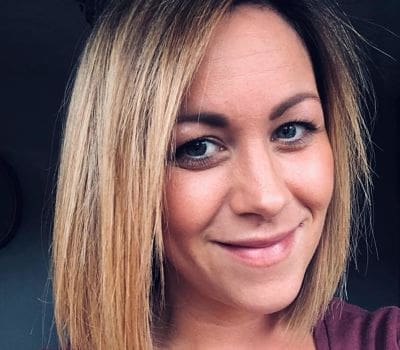
 For today’s Mormon Stories Podcast interview we will speak with Sian Wall Coombs. Sian is a mother of 5 who lives in Wales (U.K.). We will be discussing:
- Her life as the 7th of 9 children in a Welsh Mormon family,
- Her parents’ very public divorce,
- Dealing with the difficulties of teenage pregnancy and church discipline,
- Her marriage to a church convert and life as an orthodox Mormon,
- Her faith crisis, and
- Her process of navigating life after Mormonism.
Part 1 – Sian shares her Mormon background, up until her unplanned pregnancy and marriage to a convert: This transcript is machine-generated and lightly edited for readability. The audio is authoritative. Please excuse occasional errors in names and spelling. John Dehlin [00:00:06] Mormon Stories is a production of the Open Stories foundation and relies solely upon the support of people like you, its listeners to help keep the podcast alive or to become a member of the community. Please become a monthly subscriber by visiting MormonStories.org and clicking the donate button on the top right side of the page. All contributions to Mormon Stories are completely tax deductible and go towards producing the podcast and and building communities and programs of support for Mormons like you. Thanks for your support. Hello everyone, and welcome to another edition of Mormon Stories Podcast. I'm your host, John Dehlin. It is January 15, 2020. We are so super excited to have a new year and to be kicking off a New Year of Mormon Stories podcast episodes. And today we are so thrilled to be continuing our series of interviewing Mormons or post Mormons from around the world to get sort of that international perspective. And that's what we're going to be doing today. And today we are interviewing Sean Wall Coombs. Sean is from Wales, which is within the United Kingdom, of course, and Sean has a super interesting and compelling and important a story to tell about her Mormon experience, which includes growing up in the Mormon Church in Wales, which includes probably a lot of fond memories within the church, but also some complexities including navigating teen pregnancy and church discipline as a Mormon in Wales, but then also marrying a convert and having five kids and doing the orthodox Mormon thing, and then of course, having a faith crisis and then sort of trying to survive the aftermath of that. And so that's what we're going to be digging into. We just want to warn everyone in advance that we're going to be doing this interview in a couple parts. We're going to do a couple hours now and a couple hours later, so we'll ask your forgiveness about that. We won't be able to do this kind of straight through, but we'll get a good couple hours in and then we'll come back with Sean later. So thanks everyone, joining us on Facebook Live. And without any further ado, Sean Wall Coombs, welcome to Mormon Stories Podcast. Sian Wall Coombs [00:02:35] Hello. John Dehlin [00:02:37] We finally made this happen. Sian Wall Coombs [00:02:40] It's been a while. Yeah. John Dehlin [00:02:42] Well, thanks so much for joining us and we're just really excited to hear your story. Sian Wall Coombs [00:02:47] Thank you. Thanks for having me. John Dehlin [00:02:49] Okay, so tell us a bit about how the UK structured and what is Wales and where is Wales? I know that's an insulting question from an ugly American, but I just know unless you're a Monty Python fan like me and you live in the United States, you probably don't even know the main sort of sub countries or however you would refer to them that make up the United Kingdom. So tell us about Wales really quickly. Sian Wall Coombs [00:03:15] Okay, so Wales is part of the United Kingdom, but it's not part of England. That's one thing that people seem to get mixed up. So obviously the United Kingdom is made up of England, Wales, Scotland, and Northern Ireland, because Southern Ireland, or just Ireland as it's known as its own thing. So there's the four kind of countries that make up the United Kingdom. So Wales is just to the north west of England. So I literally live maybe three miles from England. So we live right on the. On the border. John Dehlin [00:03:48] And so this is going to sound awful, but Wales is considered its own country. Sian Wall Coombs [00:03:53] It is, yeah. John Dehlin [00:03:54] So it's got its own flag. Does it compete in the Olympics under its own flag or does it compete under the. What's that? Sian Wall Coombs [00:04:01] The Great Britain in the Olympics. John Dehlin [00:04:03] Okay, okay. But as far as the United nations goes, it's. It. You know, would it operate in the. Under the United nations, again, under its own country, or is it sort of its own country? But it. But for all intents and purposes, the UK operates as a country on behalf of all four of the countries within the United Kingdom. Sian Wall Coombs [00:04:24] Yeah. To be honest, I don't even know how it works. John Dehlin [00:04:26] That's fine. Sian Wall Coombs [00:04:28] It has its own government, but it kind of falls under England too, so. John Dehlin [00:04:34] Yeah. Well, this is my political science geek coming out, so please ignore me. Are there any things about Wales that are unique or stereotypes about the Welsh versus people from other parts of the uk? Anything you could do to sort of color or characterize what Wales and the Welsh are, how they're known or how they're experienced within the United Kingdom? Sian Wall Coombs [00:05:02] Oh, that's tricky. The Welsh are Celts, so I think they're kind of brave and strong and passionate. And music's a big thing. Rugby's a big thing. The Welsh are definitely very patriotic, but my family's kind of mixed, so I consider myself British as opposed to Welsh or English, because I have. I was actually born in England, actually, but I have kind of ancestry on both sides, so. And kind of fall between. Between the two. John Dehlin [00:05:36] Do you have a typical Welsh accent or not? Sian Wall Coombs [00:05:39] Probably not, no. John Dehlin [00:05:42] So it is a distinct. It is a distinct kind of dialect or pronunciation from what I've heard. Sian Wall Coombs [00:05:49] Yeah. I mean, there's a big difference as well between the north and the South. So I'm in the North, South, Wales have. Have a completely different accent. The language even differs a little Bit down there. So I think the north are the real Welsh, I think. John Dehlin [00:06:04] Okay. And does the, does the, does the Mormon Church have any unique history as it relates to Wales that's worth mentioning that you know of or not really? Sian Wall Coombs [00:06:18] Yeah, I think everyone knows Dan Jones, don't they? I think that comes up all the time. John Dehlin [00:06:22] Sure. Sian Wall Coombs [00:06:23] And the Mormont have knocked a choir, I think stem from Wales. John Dehlin [00:06:27] Okay. Sian Wall Coombs [00:06:28] So. Yeah, but I don't. It's not something that's really. I don't think it's like taught that much or pushed that much or. Yeah, I don't know. John Dehlin [00:06:38] Okay, well, let's begin with your, with your Mormon background, like we always do. So were your, were you a convert? Were your parents converts? Let's start there. Sian Wall Coombs [00:06:47] Okay. My parents were converts in the 70s. My dad first and then when he met my. I think my dad had just joined the church when he met my mum. So my dad has quite a good, if you want to call it good conversion story. A powerful. That's the right word, a powerful conversion story. So my dad had some really hard times and he lost his mum quite young as a teenager. He then got married and had a child and he lost his first child. He then had two more children and then he lost his wife. So by the time he was kind of in his mid-20s, he'd gone through a lot and so he was praying. He wasn't a religious person, I don't think particularly, but he was praying and wanted some help and lo and behold, Mormon missionaries knocked on his door and so it was a done deal. I think from there on in he joined the church and then he. I think he just joined the church in the September and I think he also met my mum in September and they were married in the December and I think she joined the church just before they got married. And the rest is all history, really. So, yeah, like strong. I think converts in those days were strong and committed and that's kind of the upbringing that I had. So I was born in the church. I'm child number seven of nine. John Dehlin [00:08:22] That's a big family and that's totally. Is that pretty atypical for people in the UK to have that many kids? Sian Wall Coombs [00:08:30] Mormons in the UK or people in the uk? John Dehlin [00:08:32] Yeah, people, people. Sian Wall Coombs [00:08:33] Definitely not. No, the uk, I think, has probably got the normal kind of average two child kind of thing. But no, we were a big family and that's definitely more a Mormon thing, I think. John Dehlin [00:08:48] And you're, I mean, having some sort of significant tragedy in your life like your dad Had. Doesn't the. Doesn't that just make you ripe for the plan of salvation where it's talking about eternal families and how to have a happy, healthy family? It just. That's so normal for people who have endured real hardship to find the Mormon missionaries and the. In the message about Mormonism just so very compelling. Right? Sian Wall Coombs [00:09:18] Yeah, definitely. And I think it has an effect on. On the family thereafter. Like, we've grown up with this story and we absolutely, you know, it was faith promoting for us as much as it was for him that, you know, we felt like we were all part of this plan that, you know, that he was in need and he was, you know, he found the gospel and that helped him and. And that then, you know, we were all part of the bigger picture that was to follow, I suppose. John Dehlin [00:09:44] Yeah. I should say. Now, is it Carys Entwistle? How do you pronounce that? Sian Wall Coombs [00:09:50] Yep. Kerris. John Dehlin [00:09:51] So Charis has joined us on Facebook Live. She says Wales is the best country in the uk. She wants to make sure we understand that. Sian Wall Coombs [00:10:00] Sorry if I didn't sound like. John Dehlin [00:10:02] And that they have their own language called Welsh, that they have their own devolved. She says government, which doesn't have a lot of powers. So, anyway, thanks. Shout out to Karis for joining us. For another fellow. Did you say Welshian? Is that what you said? Sian Wall Coombs [00:10:22] Did I say. John Dehlin [00:10:22] What's the term for someone from Wales? Sian Wall Coombs [00:10:25] I don't know. Welshy is like, not a real word, but, like in daring. John Dehlin [00:10:31] Well, anyway, shout out to Karis. Okay, so you were raised the seventh of nine kids, right? And what. How did the Mormon experience sort of permeate your family's life? Sian Wall Coombs [00:10:46] I would say it was. It was everything. I think, you know, everyone would have known that we were members of the church and the church was our whole lives. Like, I think what the UK lacks in numbers, in terms of membership in the church, it certainly doesn't lack in faith. I think the members of the church here are really strong and really committed. They need to be for it to survive. And I think that was definitely how it was for me growing up. You know, we. We felt like we were strong stock. You know, we. The church needed us, and as a result, we. You know, you may have two or three callings and you don't ever say no to a calling, and you're doing everything and it's just. It becomes everything. And although obviously I had friends at school and obviously nobody at school were members of the church, the church was life. I would say everything else is kind of second to it. And you know, we had activities and things like that were a big thing. I remember as a child we would spend every Friday night at the chapel just playing games and having chilli and chips and like kind of fairly informal activities. But you know, we just, people got together and we did. It's like a big family, I think it'd be fair to say. John Dehlin [00:12:19] Yeah. And I've experienced, I experienced that on my mission in Guatemala and when I, when I visited the uk, particularly England. I've never been to Scotland or Ireland or Wales yet. But it's just so obvious that a well functioning Mormon family and a well functioning Mormon ward in a place like Wales or the uk, it's kind of this idyllic. It can be experienced as this idyllic tight knit community where people are striving to do good and to love each other and support each other and connect and have fun and forge deep relationships. It's so inspiring. And that's how it was for me growing up in Katy, Texas. Like, I don't know if you experienced this, but when the church is working well even outside of Utah, it can work phenomenally well for everyone involved. Sian Wall Coombs [00:13:13] Yeah, definitely. John Dehlin [00:13:16] One thing I've noticed, no matter where you are outside of Utah, there are always kind of these families that are pillars in the Mormon community within any specific geographic boundaries. And you know, every, every stake has those families that are kind of multi generational, patriarchal, kind of like spiritual, prominent families. Was your family one of those families or not? Sian Wall Coombs [00:13:44] I would say when we were earlier on, I think in our ward, we were definitely one of the prominent families in our ward. I mean my ward was small, it was very rural. I don't currently live where I used to live growing up. So back then it was a very rural area. The ward boundaries were huge and people had to travel quite far and the numbers were low. I think we only had maybe 60 or 70 in our ward made up of, you know, two or three big families and then kind of old people and bits and but you know, smaller units. But yeah, my family was like one of the biggest big families in the ward. And that kind of changed when my parents separated. And once, you know, once they got divorced, you kind of, you kind of fall from grace a little bit, I think. John Dehlin [00:14:34] And so, you know, divorce is hard under any circumstances to get divorced. As a Mormon with nine kids, I can't even imagine. Sian Wall Coombs [00:14:44] Yeah, no, it's a big deal. Maybe even more so back then. It just, it's not something that, that happened in the church. John Dehlin [00:14:54] Do you remember what year it was about? Sian Wall Coombs [00:14:57] I. Let me think. Yeah. 90, 94. John Dehlin [00:15:02] Okay. And do you want to talk. Is there anything you. No pressure. Is there anything you want to share about the circumstances surrounding the divorce or do you want to not talk about that? Sian Wall Coombs [00:15:12] I can say, I'm sure I can shed a bit of a light. Obviously, my parents divorce is kind of their story, but I kind of come into it a little bit and it definitely affected me. My parents divorce was by no means a secret. It wasn't a quiet, private thing, which is why I feel like it's no secret in me kind of sharing that element of things, that it was very messy, very public, very, you know, fights in sacrament meeting. Kind of like it was. Yeah, just totally. So it's kind of like a Mormon John Dehlin [00:15:55] dream can be amazing when it's working well and that dream turns into a nightmare when things fall apart. Is that fair? My parents got divorced when I was in a entrenched Mormon ward. Same kind of thing. Keep going. Sian Wall Coombs [00:16:09] Yeah. So my mum was excommunicated. I hope she doesn't mind me saying that. I'm sure she doesn't mind saying it because it's not a secret. It was well known back in those days. I think it was, you know, it was something that was, I don't know, almost public thing. I don't know. John Dehlin [00:16:31] They are public in Mormonism, Sian Wall Coombs [00:16:35] so. What I didn't realise, what I didn't appreciate back then as a child is just how much the stigma and the negativity from that affected our family. So, like, it's only now as an adult that I can see how poorly treated my mum was. Obviously, you know, she made mistakes, without a doubt, but it affected our whole family. You know, like, I moved out of my mum's and I went to live with my dad. Now, had it not been such a big, you know, if my parents had separated and their business was kept their business, I don't think it would have been that way. But because it was so, you know, we were so involved in it, we knew all the details of everything that had gone on. I made my stand and I, you know, did what I thought was right, which was choosing my dad over my John Dehlin [00:17:31] mum and because he had been more righteous by the church's standards. Sian Wall Coombs [00:17:34] Yeah, because it wasn't his fault. You know, as far as the. As far as I was concerned, it wasn't. None of this was his fault. And my. Yeah, it just. It was. It was messy. And it's only now as an adult that I can kind of. Actually, I think it was yesterday or maybe the day before. I sent my mum a message and said, I'm sorry for treating. Not that I treated her badly, I didn't treat her badly, but it harmed relationships, without a doubt, you know, all of us. I mean, I'm one of the younger ones. It harmed relationships with the older ones potentially even more. So it just. Yeah, it just wasn't. It wasn't good. And church at that time wasn't good. I remember feeling awkward and uncomfortable and just. It wasn't like a safe, happy, comfortable place to be because it was kind of the stage where things got played out, you know, where the mess happened, I guess, because it's where my mum and dad both were. And it just. It was. Yeah, a crazy, crazy time. John Dehlin [00:18:43] So what else do you want to share about kind of your teen years? How old were you when that happened? Sian Wall Coombs [00:18:50] So I was. I was nine when my parents. Yeah, nine when my parents separated. Divorced. Like, I don't know when the divorce came through, but yeah, nine or ten. My dad then remarried within a year of them separating. My dad was remarried and so his wife was in the ward with her children. And so it just. It just. Obviously now everything's good. Now my parents are good. They have a good relationship. They're both in the same ward that they were back then, and. And they get on and everything's fine. But back then it was a completely different story. John Dehlin [00:19:23] Sure. So what talk about your relationship to the church in those teen years after kind of things fell apart with your family. Sian Wall Coombs [00:19:33] Okay. So I would say that church became like, maybe it became even a bigger thing to our family after that happened. Certainly my older brothers and sisters, they were teenagers and they kind of felt like they needed to hold it all for younger children. And so we became probably more kind of devout than maybe we would have been without. I don't know. But it became. No, just. I would say my testimony probably is what it is or was what it was based on the brothers and sisters that I had and their commitment and their, you know, they absolutely fortified themselves again. All the bad that was going on in the world, in our lives, in our family, in everything else. They became super, super devout and committed, and they were. So. I remember, like, being a child and sitting there watching my older brothers and sisters learning all their seminary scripture masteries and playing kind of the seminary CDs, and they definitely worked hard to make sure that we were as kind of good in the church as we could be. And I think it maybe made us stronger. But Certainly for me, as a teenager, I didn't have issues with the church. I, you know, I loved the church. It was everything. Like the kind of Stake youth program and all that sort of stuff is such a big, big thing. Particular. I say particularly, I don't know. I don't know what it's like anywhere else. But for us here, you kind of live week to week, month to month, from activity to activity when you'd be back with your friends. Because although I had friends in school, I kind of always kept. Kind of kept people at a distance because I was different and I was. I kind of was never that open and myself in a school setting. But, you know, it's kind of church and with my church friends is where I was able to be more comfortable and more myself. And so it was just. It was. It was good times. I loved seminary and all the activities and all that side of things. John Dehlin [00:22:01] So. And I still relate to everything you've said, including the divorce and the church becoming even more important after the divorce. So I connect with all that. So I think your teenage pregnancy is a really important part. I should say pregnancies is a really important part of your story. And of course, we both would have grown up with this really orthodox, conservative, kind of law of chastity, sexual purity kind of discourse. So share whatever you're comfortable sharing about how that. How that happened within a very conservative Mormon context. Sian Wall Coombs [00:22:42] Okay. So I think there's a big difference between here in the UK and maybe how things are done in America in the sense that here you, you know, you're literally, you're waiting till you turn 16. And then kind of. Most people I know, by the time they're turning 16, the boyfriend or girlfriend is already lined up. They know who it's going to be. You wait till you turn 16, and then they start a relationship with. And it becomes kind of in America, it seems that they kind of date more and it's kind of more kind of going out on group dates and whatever. But I think here people become exclusive from the day dot, you know, from the second they turn 16. And it becomes serious very quickly. So because our stake was over a large area, the same had happened with all my brothers and sisters before me. You would get your boyfriend or your girlfriend, and then on Friday after school, you'd get on a train, go to their house, and you'd stay there for the weekend until the Sunday. And then Sunday night, you'd come home again every night. Then you'd be on the phone for a couple of hours. And then the same would happen. And that's kind of how life was. So I guess things get serious. I think the difference for me is that. John Dehlin [00:23:53] Is that a Mormon boyfriend? Sian Wall Coombs [00:23:56] Yes. So yes, my boyfriend was, he was in my stake and he was at the other, he was from the other end of the stake. So we were 70 miles apart. John Dehlin [00:24:05] And that's the thing, it's so intense in these countries like the UK because you've got to marry a Mormon and competition can be really stiff or it can be really hard to find someone who's available, let alone you're compatible with. And so it's not a, it's, it's probably a non trivial thing. If you're 15 or 16 and you find someone you really connect with, you really want, you probably really want to latch onto that relationship because otherwise like how are you gonna find somebody? And I remember talking to folks in Norway or Sweden or Denmark that were really stressed growing up about being able to find someone Mormon to marry. Is that all true? Sian Wall Coombs [00:24:45] I don't know because my older brothers and sisters had all found people in and I don't know whether I ever had that kind of concern. I kind of, I don't know, maybe John Dehlin [00:24:55] I got that wrong. That's fine. Sian Wall Coombs [00:24:57] No, but it just, yeah, it just becomes a big thing and you're spending like I've got a 15 year old son, I wouldn't be happy with him in a year's time. Kind of spending all weekend, every weekend at a girlfriend's house. And yeah, it just becomes very kind of. Because it, because of the distance you have to travel and you spend the whole weekend together and so. John Dehlin [00:25:20] But you're saying that was a Mormon customer? Sian Wall Coombs [00:25:23] I would say it was the norm. I would say that that's kind of what all my brothers and sisters before me had done. I mean sometimes I'd go with friends, like I had a couple of friends in the stake and sometimes they'd come with me for the weekend. But certainly kind of from my experience that seems to be fairly typical that that's what you would do. John Dehlin [00:25:43] Well, if you're spending the weekend with your boyfriend or girlfriend, things are going to happen. Right. Sian Wall Coombs [00:25:48] For me it was also I had always family. I was, I was very kind of myself and comfortable with family. But I think what the divorce did to me was it closed me off from people. So I became quite, I think naturally I'm quite extroverted, but I became very introverted and I kind of, I definitely felt a lot of shame about my parents divorce. I was Embarrassed one, because we were Mormons, and I didn't want anyone to know. I didn't want anyone to know the details of what happened. And so I became very kind of. Kind of closed with friends, both in school, in church, everywhere. When I then got into this relationship, for the first time in my life, I opened up. I remember sitting one night for hours telling him everything about my parents, the divorce, everything, you know, hours, crying, kind of. And it was the first time I'd ever spoken to anybody outside my family about. About what had happened and how I felt about it. And so, yeah, that became, like. I think it was a big thing to me. I all of a sudden had a person that wasn't in my family that I was close enough to that I could open up and be myself. So, yeah, so I would say I was good. I tried to be good. I had a testimony, and I wanted to do what was right. When things happened, I would always say, we need to break up. That can't ever happen again. And that was always the plan. But we'd always say, well, we'll give it one more go. And I'm not talking like sex. Things happen, just other things. So eventually we decided, oh, I'm getting, like, a delay on my. On my. On my sound. John Dehlin [00:27:48] I'm sorry. I just figured it out. Sorry about that. Sian Wall Coombs [00:27:52] It's gone. It's fine. John Dehlin [00:27:53] Okay, so you're saying you tried to be good, but it was just hard? Sian Wall Coombs [00:27:59] Yeah, like, I definitely. One thing now that I realize is I got pregnant because I tried to be good. I never, ever planned on doing anything. If I'd have planned on doing it, precautions would have been taken. I wouldn't have got pregnant. But that's not how it happened. And that's essentially how I got pregnant. But before that, yeah, I tried to be good. It was never, like, a complete disregard for commandments, ever. And, John Dehlin [00:28:27] yeah, I relate to that. Sian Wall Coombs [00:28:29] So, yeah, like, I, you know, I had a testimony and I wanted to do what was right, but I didn't always. You know, I wasn't perfect and I slipped up. John Dehlin [00:28:39] I mean, the truth is we're biologically wired to mate at that age. Right? I mean, that's just how we're wired. So it's always a battle to fight that, because our biology is telling us one thing, but our church is telling us another. Sian Wall Coombs [00:28:53] I know. And I read that. Read one of the quotes the other day from one of the prophets about how, like, if somebody loved you, they would never, ever expect that of you. And I was thinking, okay, yeah, like that is. Yeah, it's kind of how we're made. So, yeah. So before I found out I was pregnant, we had already gone to see our bishops. We'd already both decided that we'd either have to break up or we'd have to sort this out. So we decided that we didn't want to break up, so we'd sort it out. So he went to his bishop first, and then I went to my bishop, and we both kind of dealt with that, or we thought we dealt with it, or we were in the process of dealing with it. We'd confessed to our bishops, and, you know, a plan was in place as to what needed to happen thereafter. I found out I was pregnant. So I found out I was pregnant, and I didn't. Even though I was meeting with my bishop, I didn't tell him because I wasn't yet ready to tell my parents. So my plan was would run away. That's all I could think. I didn't think I had any other option. I was convinced I would have to run away. And then I knew eventually I'd come home. But I kind of thought maybe the drama of me running away would kind of make that easier, that they might forgive me because maybe they'd missed me and I'd be. You know, I might kind of be okay if. If. But initially, that was kind of my plan. So I was going to keep it a secret for as long as I could until I couldn't keep it secret anymore, and then I would just run away. John Dehlin [00:30:22] So, I mean, that sounds so dramatic and shocking and yet totally understandable. If you just think about how much pressure and stress we kind of put on our youth, you know, and how bad we are at talking about sex, that there's so much shame and there's so much fear around sex, that a child would literally think about running away as the only option. Sian Wall Coombs [00:30:51] Absolutely. Like, my parents never like that word. They would never say that word. You know, we just didn't talk about anything like that. It just wasn't. And, yeah, even now, I don't think we talk about things like that. You know, it just. Yeah. Very, very kind of. So different to how I talk now with my own children. But, yeah, like, just. Yeah, we didn't talk. John Dehlin [00:31:14] Yeah. So you're gonna run away? Sian Wall Coombs [00:31:15] Oh, I was going to run away John Dehlin [00:31:17] at the time you least need to run away. Right. Sian Wall Coombs [00:31:20] Absolutely. The only thing I will say is, in all this, I had, from the moment I found out I was pregnant, I wasn't scared about being pregnant. I wasn't scared about being a mum. I wasn't scared about having a baby. That was never, ever my concern. My concern was always my parents or my family. I kind of already come to terms with the fact that, I mean, at the time I was in school during my A levels and I kind of knew I wasn't ever going to finish school and get my A levels. I thought maybe I'd have to go back to it when I was older and do it again, but I was okay with that. And I kind of thought that baby was wanted. That's what I'm trying to say. Like, from the moment I found out I was pregnant, I was okay with it and I was ready to deal with that. You know, we just thought, we're going to just become a family. That's what's going to happen. We will just get married, raise our baby. You know, it wasn't going to kind of, as far as I saw it, for my life beyond the church, it wasn't going to ruin my life. John Dehlin [00:32:15] Good. That's great. You had that perspective. Sian Wall Coombs [00:32:18] Yeah, we. So, you know, we had names picked out and, yeah, we kind of. We'd come to terms with it, we'd accepted it. We knew that this was gonna happen and kind of telling my family was the only. Was the only kind of problem in it all. So. I haven't said I was 17. That was the thing. Like, I don't think I've said my age, So I was 17 at this time. So anyway, it wasn't to be. I miscarried. I was quite far. Well, quite far along for a miscarriage. I was literally about 12 weeks. So I'd known about this for, you know, a good kind of maybe eight weeks, which doesn't seem that long now. But at the time, it felt like I'd known about it for a long time and I'd made plans and all the rest of it. So the miscarriage was hard. Like, probably still. I mean, this happened. This is over 18 years ago, and I'm still. I say all the time, like, to my husband, it still feels like the defining thing that happened in my life, even, you know, all this time on. So. John Dehlin [00:33:30] I'm so sorry. Sian Wall Coombs [00:33:35] So my parents found out when I was at the hospital, so they didn't know anything. I'd started bleeding the night before, and so I kind of thought, well, people bleed. It might, you know, it might not. It might not mean anything. That night I was having a lot of pain and I kind of thought, that's not good. But I decided I'D go to school in the morning, then my boyfriend would get the train up to meet me. I would go to get dropped off at school so nobody would know there was anything wrong. Then I could leave school, go to the doctor and find out what was happening. But I got to school and. I was bleeding. I needed to get home and get changed because I couldn't possibly go to the doctors like that. So I had to pop home and my mum was kind of like, you know, alarmed that I'd gone home. And I said, oh, I've forgotten a folder. I mean, I lived three miles from school. There was no way I'd pop home for a folder that I'd forgotten. I'd have phoned her and she'd have dropped it off. So I kind of raised the alarm there with her. I got changed and I went to meet my boyfriend at the train station and we went to the doctors and then we needed to wait for the whole day to go to hospital and have a scan. By this point, we get to the hospital and I get a phone call from my sister and she's beside herself and she's saying, mum and dad are trying to get in touch with you. They know there's something wrong. You need to phone them. So I phoned them and they were like, you know, where are you? What's going on? And I said, I'm at the hospital. And I actually think my mum had read a letter. I think I'd written a letter, my running away letter. I think I'd written it and she'd found it because she was worried and she's gone looking in my room. So she'd read this letter that I was pregnant and gonna run away. So she was like, what's going on? I said, I'm at the hospital. And she was, you know, she must have said, are you pregnant? And I was like, I don't think I am anymore. So my parents arrived at the hospital and from that moment on, everything changed. Like, I was sat in a waiting room with my boyfriend and he was kind of pushed to one side. My parents came into the appointment with me. He was one of. My mum came in with me for the scan. He was left outside with my dad. I. Then they confirmed that I'd lost the baby, which I actually had already known. I'd already actually seen the baby come out, but I hadn't told anybody. I don't know why. I don't know why. I think I was ashamed. I was ashamed that. That I flushed it away. It came out and I'D flushed it and I was. I felt guilty and I still feel guilty. I feel like I shouldn't have flushed it. I should have fished it out and I should have buried it. That's what. John Dehlin [00:36:07] That's so traumatic. That's so traumatic for a teenage girl. For anyone. Sian Wall Coombs [00:36:14] Yes, it's okay. So picture the scene. We sat in a hospital room. My mum and my dad and my boyfriend all sat in a room. No one's talking, no one's saying anything. We're waiting for me to go down to theatre to have a dnc. I'm passing notes backwards and forwards to my boyfriend so that we can talk. Like, it was crazy. Totally crazy. So the hospital tried to talk, you know, about going forward. Contraception, all those sorts of things that hospital would talk about. My parents were like, no, slam them down. This isn't going to happen again. I actually passed notes to my boyfriend saying that I'd seen the baby and this sort of stuff written on a notepad in a hospital. So that night I went into theater John Dehlin [00:37:04] late, by the way. By the way, just. Mormons have this. I've talked about this with Natasha Helfer Parker before. Mormons are so petrified of sex. They believe that if you don't talk about sex, then you're less likely to have sex or get pregnant. But oftentimes research shows the opposite is true, that the more education youth get about sex, the less likely they are to have sex and certainly the less likely they are to have a pregnancy. So it makes no sense that Mormons don't talk all the time about sex and contraception because it's very likely that that would actually lead to a decrease in sexuality. But more importantly, certainly it's better to have sex with contraception as a 17 year old than to go through what you went through. And so someday the Mormon Church will learn that it's actually in their best interests, even for the outcomes they desire to get good about. Talking about sex and contraception. Sorry, I just had to throw that in there. Sian Wall Coombs [00:38:14] Okay, keep going. So that night I went into theatre to have my dnc. My parents were gone. When I came round, it was middle of the night and they were gone. And so the next morning, I remember phoning. I think my boyfriend phoned me or he messaged me and he said, I'm gonna be gone by the time you get out. They're sending me home. My parents are on their way. They're gonna send me home. So I phoned my sister and I was like, you've got to help Me, they're like, they've gone crazy. They're. They're sending him home. And, you know, we hadn't even had a conversation, a vocal conversation since finding out that we'd miscarried our baby. You know, all conversation had been written on it, written on a notepad with them sat there watching us. So I begged my sister, I'm like, please help me. They're like, they're sending him home. And she said, I support them. They're doing what's right. This is what needs to happen. And in that moment, everything, every hope, my whole. If I couldn't have been any. If I wasn't already low, like, it was just. It was. That was it the end. I felt like there was not going to be any hope, there was not going to be any good, anything positive to come from this. It was just. I kind of realized I was on my own. This was going to be it. So he was sent home and I was told I could see him next week. That's what I was told, you'll see him next week. And so that's kind of what happened. For the next year. We kind of weren't allowed to see each other. We weren't allowed to speak to each other. We did, we did see each other, we did speak to each other, but it wasn't. It wasn't open. And it was just horrific. Like the worst, the worst time. If I thought my parents divorce was bad, this was like a whole new level. It was just. Just the worst. Then I had to go through the disciplinary again. I was told that because I'd got pregnant, it now needed to be a formal disciplinary. So although I'd already seen the bishop and nothing had happened in between the two, I had to kind of go through it all again. John Dehlin [00:40:34] So. So just to be clear, you. You confessed to the bishop about having sex. It felt resolved to you, but for some reason, because then it was discovered there had been a pregnancy. You had to kind of re. Experience that. That trauma. Sian Wall Coombs [00:40:50] It wasn't resolved as in like, all finished. I'm sure we were still probably not taking the sacrament and it was still, you know, we were still in the process, but then it had to become an official thing. So obviously we had to have the actual. The disciplinary with the state presidency members there. And I can't remember if. Yeah, we had to kind of go through. We had to do it again. And it didn't ever make sense to me. I knew the answer was the church has to be seen to be dealing with these things. And now that I'd got pregnant. People might find out and they needed to be seen to be dealing with it. But as far as I was concerned, nothing had changed. Like I hadn't done anything. I. The act was the same. John Dehlin [00:41:28] Right, right. Sian Wall Coombs [00:41:29] So, yeah, that was like traumatic. It's traumatic to go through. John Dehlin [00:41:37] Just so normally when it's a woman who doesn't have the priest, you know, and women don't have the priesthood, it's the ward, it's the bishopric that convenes, the disciplinary council. Is there a chance that that's what happened with you? Sian Wall Coombs [00:41:51] I've heard the bishop did. The bishop held it, but the people there with him were, they weren't from my ward. They may have been high councilmen, but basically the people that I remember being on there are people that I know served on state presidency, not the state president himself, but on the presidency. But I don't know, maybe it was before they were on the state presidency. Maybe it was. They were on the high council or maybe there was someone missing and they were drafted in to replace someone. Trying to think whether my dad was on the bishopric and so maybe they needed to draft in, I'm not sure. But there were definitely people not in my ward. John Dehlin [00:42:27] And what's that? Can you give people a sense for what that's like to be a 17 year old girl and you've got all these men questioning you and holding a court on you and judging you and punishing you. What was anything you want to share about that experience? Sian Wall Coombs [00:42:45] I mean, beyond being 17? And it's embarrassing. Like you don't want to talk to these people about these things. It's so, so shameful. So like now as an adult, I kind of. Oh, I just. As an adult, you're not as embarrassed about sex, but as a teenager, you really, really are. And especially when it's, when it's, you know, you've been told this is second to murder. You are like, you are bad. You know, there's no. Like, I remember thinking, I'm not bad, I'm not a bad person. But I kind of did start to feel bad thereafter. I kind of felt like I wasn't the same as other people. I wasn't like my friends, like, why were they good? And I wasn't. And although I was in the church and I was committed and I was kind of, you know, I was on the state youth committee and I was, I did all my seminary and scripture excellence and I, you know, I went above and beyond. I wasn't just like, kind of. And yet I still felt like I just, I was just obviously bad. Yeah, it just so hard. It's. Oh, I don't know. Just like looking back, it's crazy because I can't imagine putting my child in front of a panel to be judged like that. Just. It just seems crazy to me now as an adult. But, but I kind of at the time accepted it, you know, I did, I did as I was told. I remember getting to a point as an adult where I thought, why didn't I just tell them to get lost? Why didn't I just say no? But even, you know, I wanted to be good and I wanted to be obedient and I wanted to, to return to how I was. I wanted people to kind of think I was good again. So I was willing to go through it. And yeah, so that year was like a long, lengthy, drawn out as far as I was concerned. I was riding it out until I turned 18 and then I was, I was going to go, I was going to be out of there. Even though I was good and obedient and did as I was told, my plan was to. And to be honest, my bishop changed during this time. I had a new bishop. I remember the bishop saying to me, you just ride this out and you'll be 18 soon and you can go and do what you want to do. Not in terms of go and have sex, but in terms of my parents, the way they were dealing with me, the way that like, I wasn't allowed to see my boyfriend, we weren't allowed to have any contact. You know, it was because we did, we stayed together through all that. And he was just like, you know, when you're going to be 18 soon, you're going to leave home, go to university and then you can do what you want. So for now, just do what you need to do to get by. And that's what I did. John Dehlin [00:45:42] So, yeah, and it's just, so, it's just so unnecessary for you to feel like you're a bad person. Like there's, even if, even if we, you know, we're probably. I think reasonable minds can disagree about whether or not it's bad for a 17 year old to have sex. There's just. No, there's always a difference between doing something that might not be healthy and being a bad person. And that's where shame comes in. And it's so unfortunate when we confuse those things. And number one, when we call something healthy, unhealthy, and sometimes like. Natasha Helfer Parker gave a great Mormon Stories episode about how she had sex with the boyfriend from high school and it was actually a really healing, healthy thing for her until all the shame got heaped on it. But putting aside whether it's healthy or not, it's really important that we learn to distinguish between an unhealthy thing that we may do, us being bad. And that's the difference between kind of guilt and shame. Guilt is feeling bad for doing something that maybe wasn't healthy or good. Shame is when you take it on as you being bad. And as soon as you start feeling like you're a bad broken person, number one, that that isn't good for your self esteem and how you exist in the world, but maybe more perniciously, it makes you either hate the church and want nothing to do with it, or feel dependent on the church like you're nothing without the church because you've got all the shame that you're wrapped in. So how did it proceed for you? I think once you broke away? Sian Wall Coombs [00:47:26] Yes. So when I first left home, I kind of, I wasn't sure. I was kind of for the first time. I mean, I was 8, I just turned 18 in the August and I left home. I moved away to university in September. So I was, you know, young and I had every intention that I would go to church and that I would continue. But as soon as I got there, it kind of your perspective changes. And I was thinking, okay, hang on a minute. What do, what do I want to do? Like for the first time in my life, I kind of thought going forward, what do I want to do? Do I want to stay with church or not? The boyfriend at the time was planning a mission and so he was potentially going to go on a mission even though he'd been told previously that he couldn't go on a mission because of this. He'd then been told maybe he could go on a mission. And so that was kind of up in the air. And I wasn't sure like what, what I wanted to do. So I didn't go to church when I first went to university for a good few weeks. But my intention was always to go. So I fully intended that I was going to stay with just meant getting two buses. And I just didn't ever get around to doing it in the first few weeks. But for the first time I kind of questioned my testimony and I decided no, I do believe this is the only thing that makes sense to me. So I didn't question it too deeply. I didn't think too much about it. But there was no, like I couldn't even think beyond that. It was true. So, yeah, I definitely wanted to. To get back on track and to be, you know, back. Back in favour. Looking back, maybe it was more about being accepted again by my family. I think if I actually think about maybe my behaviour at the time and the things that, you know, I. I kind of feel like it was more about being accepted again by my family than it was about, about a strong testimony. Like, I knew the church was true because I knew it. Like there was no doubt, there was no other, there was no other option. But I don't know that I was particularly kind of spiritual or, you know, I don't know. John Dehlin [00:49:32] Yeah, so, I mean, you're young, right? Sian Wall Coombs [00:49:35] One thing I should have said earlier, which my parents, like, they're good people. Like I had a horrific time and, and that year was awful. But I absolutely know they did what they did because they thought that was what was best. Like they weren't trying to punish me, they weren't trying to be horrible to me. They genuinely thought that was what was best for me. Like, I mean, yeah, like they were scared and they, they thought that this is how, you know, you save your daughter. So they acted within. Within what they thought was best for me. Of course, that time thinking, I am never going to treat my children like this. Like that was. And that's kind of, maybe kind of led to where I am today. Is that. That, that feeling of I will never ever do that to my children because it was horrific and it just. So, yeah, but they did what they thought was best because that's kind of, yeah, what the church teaches. You know, this relationship could never ever be okay. Like no amount of repentance could make bad relationship good. Like that was the bottom line. John Dehlin [00:50:43] So, yeah, so what happened? Sian Wall Coombs [00:50:47] So I went to university in September John Dehlin [00:50:51] and what university was it? Sian Wall Coombs [00:50:53] Lancaster. John Dehlin [00:50:55] That's in England, right? Sian Wall Coombs [00:50:57] Yep. So, yeah, North England. Yeah. So I met my now husband. But. So by relationship with that then boyfriend lasted till the December. We broke up in the December because ultimately I knew I had a decision to make. It was either going to be him or my family. Like that is the bottom line. Like at the time I broke up with him for two reasons. One, I was not getting over that miscarriage. I was still in just complete turmoil, still every day crying. And I just felt like if I could move on from the relationship, I could move from that. So that was the first reason. And the second reason was they were not going to accept him. It was not going to happen. They knew we were still together, but I was still getting phone calls saying, where have you been? Have you seen him? And those sorts of things. And ultimately I decided I just wanted. I just wanted them to think I was good again, and I just wanted to return. Relationships had been harmed, and they were not gonna. They were not gonna get better. So, yeah, so the relationship ended in December. So I met my now husband. We met the first day that we moved to university. We actually shared our corridor. We were on the same corridor. So his bedroom was across the hallway from my bedroom. So we met on the first day. We became best friends from that very first day. So obviously I had a boyfriend at the time, and that was fine, you know. So the day I met Paul, I said two things. I was in a relationship and had been for nearly three years, and I'm Mormon. He learned about me that day. He'd never heard of a Mormon before. He'd never heard the name Sian before, and he'd never heard of a Mormon before. But that's how I was like back then when I met people, I told them I was a Mormon. To me, that was the easiest thing in the world to tell people. And then it was done. Like, it was a lot easier than telling people afterwards. And I made that decision that when I got to university, I was going to tell people straight away that I was a Mormon. So it was no secret he knew I was a Mormon. So we became best friends and we did everything together. And when my boyfriend came up to visit me at university, the three of us would do things together. So we were just really, really close. And, you know, Paul. I opened up to Paul about all the miscarriage and all that sort of stuff. And so he was there for me when I was struggling. The relationship ended in the December. Then Paul asked me out, and I was like, oh, it's too soon. I can't go out with you yet. You know, I need to have a time between one relationship and the other. So I decided the reasonable time was one month. So one month to the day, I broke up with one boyfriend. I started going out with Paul. Initially, I was convinced it wouldn't work. I just said to him, we can't be together. We're just too different. One, he was too posh. I said, you're too posh. I'm not posh. Like, I'm normal and you're not. So I was convinced it wouldn't work. But secondly, I said to him, we can't go out because I need to get married in the temple. He was like, okay, how do we do that? So like, we weren't even going out and he already said, okay, just tell me what I need to do. So from the day we started going out, I guess the intention was how could we get married in the temple? Which is crazy. So at that point, I still hadn't been to church in Lancaster at all. So for the first semester term, as we call it, I hadn't been to church. So when we got back to university in the January after Christmas, Paul had said he would come with me because I had to get two buses. And I was a bit scared of going to this new ward on my own. So he was like, I'll come with you, it's fine. And so he started coming to church with me. Me one, to be my friend and help me two, to find out how we could get married in the temple. I guess. I don't know. So he started coming to church with me and he started investigating the church and he did. He got baptized a year later. So let me think. We got engaged in the October. So we started going out in the January. We got engaged in October, and Paul got baptized in December. His baptism date was set. So before we were engaged, the baptism date was set. That was kind of the way it had to be, you know, I couldn't marry him if he wasn't a member. I never said that. I never said that. If his parents ever hear. I never said that. But that was kind of, you know, that's the way it works. The problem is I got pregnant again. So it's crazy to me now looking back, because I must have got pregnant around the same sort of time as he got baptized. But I think we thought, he can get baptized and we'll have like this new. We'll have this fresh start. He'll be all. He'll be all clean and perfect. I'll have to obviously go and do some. But. But we were going. So that was the plan. You get baptized, then we would get married. So we would manage to not have sex between then and marriage, you know, we'd be okay. That was the plan. So we found out I was pregnant. This time was so, so different to the first time. The first time I found out I was pregnant, I was at peace with being pregnant. I was okay with becoming a mum. This time I was terrified, absolutely terrified. I mean, I was. I was now 19. I shouldn't have been, you know, I was older and it shouldn't have been maybe so scary. I was 18. I wasn't 19. I don't know how old I was. Okay. Yeah. I must have been 19. So I was petrified. Absolutely. John Dehlin [00:57:01] Let me ask you really quickly. Did you, having been through that trauma before, did you consider birth control this time? And if not, why not? If you remember, and it may just be the silly follies of youth. Right. Sian Wall Coombs [00:57:18] The reason being is we were not. We were so. Okay. I'd be lying if I said we never did other. We'd never done it before. We had. And we had used contraception and I hadn't got pregnant. We had decided we were going to be good. We were going to be good. Like we weren't going to do it. So again, this is why it happened spur of the moment. My dad warned me, once you get baptized, Satan is going to be out for you. So he warned me, like we needed to be super, super good and careful because as soon as Paul got baptized, we were going to be like the target. John Dehlin [00:57:49] Satan's going to be after you. Sian Wall Coombs [00:57:51] And he did. He got us. So. Yeah. So that's the answer. Like, I got pregnant because I was. I was trying to be good and it was never, ever planned. John Dehlin [00:58:01] Yeah. If you just say, you know, we may have sex, so I'll get on the. Get on the pill because that happens, then at a minimum, you hopefully avoid that really bad thing that you don't want to happen, which is early or unwanted or teenage pregnancy. But because we have this sort of Pollyannish, naive, shame based, avoidant view, we increase the likelihood of the worst possible thing happening. It's sad. Sian Wall Coombs [00:58:31] Yeah. So of course this time not only am I embarrassed I got pregnant again. Like I've not learned I'm here again. I was just terrified. I was absolutely convinced that the same was going to happen again. That my parents were going to go crazy, that they were going to. They'd either force us apart or I'd have to choose. I'd have to choose. It was either Paul or them. And so that's what we were faced with. So I was, I was really, really scared. Like, it was, it was a traumatic time. So we went, we went to the doctor and I sat in a doctor's office and I said, I can't. I can't have a baby like this. This is gonna, this is. My parents are just not gonna be okay with this. And so we talked about abortion. And luckily I had a doctor who saw the pain in my face. I mean, I was in tears. It was awful. And she said, I don't think I can authorize an abortion for you because I can see that you don't want an abortion. She said, but go away, talk about it, have a think and come back and speak to me. So Paul had always said, I'll support you no matter what. I mean he had no kind of strong feelings for or against abortion. He had no real, you know, he was like, whatever you decide, it's your decision. So then I was faced with what do I do? Do I have an abortion? Which I knew if my parents found out they would disown me and kill me anyway. Like it was going to be that be the worst thing. But I could keep it secret from them. They would never, never need to know and I could marry Paul and we could be okay or I could tell them I'm pregnant and we could have this baby. But I was absolutely sure that would be the end of my relationship with my family. So we talked about it a lot and it was a no brainer. There was no way on earth I was going to have that abortion. So I said to Paul, no, we're going to face the music, we're going to deal with this. And from that moment, from the second I told him that we were going to have the baby, the peace that came over me, I was absolutely. And it gave me the conviction to face whatever came. Like I could do this because I'd made the decision I was going to keep my baby and everything was going to be okay. So we still, we decided we'd keep it a secret for a while because I wanted to have a scan and I wanted to know everything was going to be okay because I thought maybe I would lose it again. But no, we, we told, told our parents and that now baby is my 15 year old son. John Dehlin [01:01:10] So are you glad he's, are you glad he's there? It's a silly question, but I'm gonna ask anyway. Sian Wall Coombs [01:01:15] Like yeah, I'm sure. I think Thomas might already know this story anyway, but if not then I guess he's going to hear it. But absolutely like without a doubt. Like yeah, it's just of course he's special and we adore him and he was, yeah like absolutely nothing. From the moment I decided that we were not going to have the abortion, I felt peace and I was happy and there was no, there was no, like, there was no worry. Like I was still a bit scared but, but I felt fine, you know. Once that decision was made, John Dehlin [01:01:51] what was the family in the church response and the repercussions? Sian Wall Coombs [01:01:57] Okay. Totally different this time around. So my family were fine, everything was fine because I Hadn't lost the baby, so they had to be fine. Like, I think that's what made the difference. Like, they liked Paul. We were already engaged. I think they thought I'd landed on my feet, you know, the other. The previous boyfriend was a bit kind of, you know, a bit more wild and a bit more like we were opposites. Like, we were not, like, just totally opposites. Whereas Paul was, you know, he was from a good family and he was. He'd been joined the church and we were at university. He was going to have a good career and everything was going to be good. So it was just a different. It was a totally different experience. I'm not saying that they were happy. They were. Obviously they were not happy. I'm sure they were upset and they were disappointed, but I didn't get the negativity that I got the first time round. John Dehlin [01:02:45] What about the church discipline? Sian Wall Coombs [01:02:48] Yeah, so we went through a church discipline. We were at Lancaster at the time, so it was our university ward. So we didn't really know the people involved. And so it was kind of more like going through the motions. Like, in terms of. There wasn't the same kind of feelings of shame. And I think we were older and so I felt more kind of. I wasn't. And I'd been through it. I knew what to expect and I didn't know whether they knew my history or not. So I didn't feel like that was. It just. It was. It was easier, I would say, because I didn't know these people and I didn't really care the same what they thought. So I didn't have. I'm sure it was still a bit, you know, there was still a little bit of shame and embarrassment, I'm sure, but not catastrophic. John Dehlin [01:03:32] I have to read a comment from a viewer. Dan writes, my daughter is only 17. I really appreciate Sean's openness because it makes me realize how much I need to teach her when I was still a good member just a month ago. Wow. Welcome, Dan. I could not imagine approaching her about this subject. Now I know I couldn't live with myself if my poor girl thought I'd mistreat her for just being a real human being. So that sounds like you're going in the right direction. Dan and Sean, kudos to you for providing inspiration and education for other parents so some of the shame cycle won't continue. Sian Wall Coombs [01:04:12] That's why we're here. John Dehlin [01:04:13] Good job, Dan. Thank you for joining us today on Mormon Stories. If you enjoyed this episode, please help us make more like it by becoming a monthly subscriber@mormonstories.org. John Dehlin [00:00:06] Mormon Stories is a production of the Open Stories foundation and relies solely upon the support of people like you, its listeners to help keep the podcast alive or to become a member of the community. Please become a monthly subscriber by visiting MormonStories.org and clicking the donate button on the top right side of the page. All contributions to Mormon Stories are completely tax deductible and go towards producing the podcast and. And building communities and programs of support for Mormons like you. Thanks for your support. Okay, so you marry a convert. You've brought in. I mean, a happy result of your sin is that you brought someone to the gospel. Right? That's got to be good in some ways. Sian Wall Coombs [00:00:50] Yeah. John Dehlin [00:00:51] And see you get married. Sian Wall Coombs [00:00:54] We got married. So that's the one thing. So me and Paul had decided our baby was due in August and our wedding was booked for August. We booked our wedding. And so I think there was like a 10 day difference. And I was like, we can't get married on that date because the baby might come first. I'd be nine months pregnant. So we'd planned in our heads that we would postpone the wedding by a year because who wants to be nine months pregnant getting married? Like, I wanted a nice dress. And so that was in our head what we were going to do. But when we told my parents, they were like, can we just ask one thing of you? Can you please get married before the baby comes? So, yeah, that's. That seems like. I don't even know why it didn't cross our mind. I think because we were at university and it's hard to schedule in a wedding, but we told them, I guess around anyway, it meant that we had to plan the wedding in four weeks because Easter was coming, we had an Easter break and we could get married in Easter break and then we would be straight back to university, back to exams and whatever, and then the baby would be coming. So we planned the wedding super, super quick and got married. We didn't get married in the church. That is like one thing that hurt me. My parents, I don't know why they didn't want. They kind of. They never said, you can't get married in the church, but it was like, go get it. Go back to a registry office and get it done. That's kind of what I was told. John Dehlin [00:02:09] You know, I'm thinking that one of the reasons maybe what might have charged the original pregnancy was you're pregnant in your hometown, in your home ward, where everyone you know can find out. It seems like it would seem like getting Pregnant at the university, you're away from everyone. It doesn't have to be everyone's business. But that would also make sense why they didn't want to do it in the ward. You're a pregnant bride. They don't want people asking questions. And it just makes total sense why they would go. Just go off and get married. We don't want to bring any dishonor or, you know, judgment back home to where we live. Does that make sense? I'm projecting, I'm filling in the blanks. Sian Wall Coombs [00:02:50] But it was a case of go and get it done. John Dehlin [00:02:53] Like it wasn't, you know, let's have a wonderful experience. Sian Wall Coombs [00:02:58] Yeah, let's just get the. Get it done, get you married. At the time, I think I thought I wasn't allowed to get married in the church. Like, you know, I was pregnant, I wasn't allowed to, so that wasn't an option. But since I've learned, obviously that of course you're allowed to. Non members get married in the church. I've seen pregnant people get married in the church. Lots of people get married. But at the time I didn't know that that was an option for me, so. John Dehlin [00:03:18] Oh, that's. I mean, yeah, you've hung it hung in there. But that's a sad that that's maybe a suboptimal way to start the marriage. Maybe go get it done. That's not quite a celebration. Sian Wall Coombs [00:03:31] No, it wasn't. John Dehlin [00:03:33] But then, although weddings can be awful anyway, so maybe you. Maybe you saved yourself some expense and stress too. Sian Wall Coombs [00:03:41] Yeah, I mean, we got married. That was the important thing. And I'm not going to worry too much about the wedding day. But. Yeah, so we got married and then we had our baby. But we were still at university because we were still only in our second year of university. So we had another year of university to do with our baby. And in that year we kind of went to church, but we were never really, really like in it still go you kind of here and there and everywhere in university anyway. You're like there for a few weeks, then you're home. We were obviously visiting family, so when we were with family, we'd go. But I wouldn't say that we were like really that kind of. Yeah. In church at that time. John Dehlin [00:04:23] So did you later become more orthodox? Sian Wall Coombs [00:04:26] Yeah, absolutely. So we graduated from university and then we moved to where we are now and we've been here ever since. John Dehlin [00:04:34] So where's that? Sian Wall Coombs [00:04:35] So we are. We're in. We're in the Chester Ward, which is actually Chester is England but we live in North Wales so we're like on the Welsh Wales England border. John Dehlin [00:04:45] Got it. Sian Wall Coombs [00:04:48] So we. Yes. So Paul, we graduated university, I still carried on with university. That was one of my parents concern is what you know, when you have this baby, how are you going to manage them? And we just did. We decided Paul picked all his modules and then I picked mine with what would fit around his. His was the priority of course because he was going to get the job afterwards. So he got to pick all the modules he wanted to do. This wasn't his decision. He might think that I'm making out like he kind of railroaded. That wasn't the case. It was just the sensible. That was always the way it was going to be. So that was what was sensible. He picked what he wanted to do and I just picked whatever fitted in around his timetable so that we could manage looking after our baby because I didn't want to put him in any kind of crash or daycare. So we returned to university when he was three weeks old and lived on university campus. So yeah, like a totally crazy time. But looking back like that is one of my life's achievements. Like I was at university is away from family with my new husband, my new baby, getting my degree, like carrying on. Yeah. And I think it was good. We did good. And it was, it was good. I'm glad we did it. So we graduated from university and then Paul went to law school. So he chose law school in Chester, which is back in my home state because I wanted to be back near family. And the plan was I was going to do what I was always going to do. There was no other option. I was going to be at home with children and Paul was going to go to law school. And so as soon as we moved back to the ward where we are now, our bishop was fantastic. He, you know, he looked after us, he sorted us out. Paul got the priesthood, we went to the temple and got sealed. You know, everything just started happening like it should have happened and we were kind of back on track fully, you know, callings just kind of fully into it. This must have been like the beginning of Paul's experience of Mormon life. So yeah, things, things were good. John Dehlin [00:06:50] And would Paul, would Paul admit now that he, he got baptized for you? Sian Wall Coombs [00:06:55] Obviously he said something the other week about that. Yeah, so that's the first time he's ever said that to me. But yeah, like I think I've always known that. I've always known that ultimately Paul's kind of very. So he didn't get baptized. Like, I remember the missionary discussion. So the first discussion. Missionaries, you know, they teach the first discussion, and they say, so can we. Can we get you to commit to baptism? And he was like, whoa, what's going on? And I didn't expect that. He didn't expect that. And he was like, no, no, no, I'm not getting baptized. So his plan was never like, I'm gonna definitely get baptized and do this. But the reality is that's kind of the way it was. So although he took a long time to get baptized, I wouldn't say that's because he needed to be fully converted, because I don't think he ever, in all honesty, was ever absolutely fully converted. John Dehlin [00:07:49] That was gonna be my next question. Did he eventually reach a point of full conversion and orthodoxy? Sian Wall Coombs [00:07:56] So I would say he was fully involved. Like, he's been an elders quorum president. He's been a young men's president. You know, he's had fallings and he's done it all. And he saw the good in the church. And I would say that he always used to say to me, it's good, so what harm can it do? Like, I don't think he ever absolutely knew it. I knew it was true. I think he thought he had faith it was true, maybe, and kind of believed it was true. But he never was fully, fully convicted, and he never. Like, I believed everything. You know, the prophet could tell me anything, and if he said it, I would believe it because he said so. Whereas Paul was more like, I'm not sure about that. And obviously, as a result, there were things that kind of bothered him more about church than Maybe than me, but he was, you know, we. We were fully in church. Like, there was no. You know, our children were all blessed and baptized and. And all that sort of stuff. And he. He did have a period of inactivity for I don't even know how long where things got on top of him, and he kind of got a bit fed up and he needed a break, and he had that. But I told him at that time, like, you need to baptize our son, so you do whatever you need to do now, but you make sure you're back here by the time he's eight. And that's what happened. He did. John Dehlin [00:09:15] You gave him a sabbatical? Sian Wall Coombs [00:09:18] Yeah. That may not have been, like, fair or right, but, yeah, he got. Things used to bother him at church. Like, you know, people get up and they bear their testimony and they know it's true. I think that would make him cringe and things. Like, people would talk about the world, how bad the world is, and how the people in the world. And that used to grate on him because he' his family are in the world, his parents are in the world. And, you know, like, he's like, they're good people. Why do they talk? You know, he just didn't like the way that we talk and the way that we are so sure of everything and the way, you know, so things were great on him. And he used to get fed up of people, you know, people that would, you know, thought they were so amazing. And so, yeah, he needed a break. He wasn't happy at church. And I found it wearing that. He'd come and he'd be miserable. And so in the end, I was like, you know what? Just, like, don't come for a bit. And so he didn't, and he stopped coming. And that was healthy for us, I would say, at that time. Because it was hard. Like, I'd sit in church and cry. I'm not saying it wasn't hard. It was really hard. And I would still get kind of the people kind of saying, well, you know, does he not care about your eternal family? What's going on? And I'd get those sorts of questions from people and the judgment from people. But for him, it was good. But I did say to him, you know, I expected him to be there to baptize our son, and that's what happened. He came back within maybe a year of. You know, he gave himself plenty of time to start coming back into activity. And that was. I mean, let me think. That was eight years ago that he came back and has been active since. Until now. John Dehlin [00:10:55] So for how many years after marriage were you guys active and, you know, in the church? Sian Wall Coombs [00:11:02] Okay, so we've been married nearly 16 years. So. Yeah, so like, 15 years of, like, fully, you know, every single week at church and doing all the callings and. Yeah, like, totally. Obviously, we went to the temple and got sealed and all that sort of stuff, so. John Dehlin [00:11:23] And you had four more kids after that first one. And that's a lot of kids still. It's not nine, but it's still a lot. Sian Wall Coombs [00:11:29] It is. We. We were gonna have two. We were happy we were having two, and we were absolutely done. Like, I love my big family, but I didn't want one. I was like, I want to be normal. I want to be different. I used to joke and say, I don't want Mormon written on my forehead, or I don't want Mormon written across my vehicle that I drive. You know, it's a big vehicle that everyone knows you're a Mormon because it's a big bus. And I didn't want that. I wanted, like. I wanted more for, like, a normal kind of, you know, still in the church. Like, we were still in the church, but I just didn't want that kind of big family sort of. Sort of thing. So we had two children and then we had a big gap, and then I think I must have become, like, more Mormon. I actually remember, like, hearing a talk at church from a lady who had 13 children, not someone I knew. I think it was like a. I don't know if she was a mission president's wife or she was some. She was American and she had 13 children. I remember listening to her talk and thinking, like, who am I kidding to think two kids is enough? And I used to get that kind of, you know, there are spirits waiting to come and, you know, all that kind of thing. Like, my dad used to say things like that to me. And so we decided that we would have more. Like, I'm not saying that was totally a church decision. We may have had more anyway, but I definitely think the church played a part in our decision to go on and have more children. Because I felt like my life with two children was easy and life shouldn't be easy. You're supposed to be kind of tried and tested and stretched. I felt like I needed to be stretched in order to become, you know, like, better. So, yeah, we went on to have another three. John Dehlin [00:13:10] Yeah, that's awesome. Any other thing you want to share about your story before we talk about when the faith crisis starts? Sian Wall Coombs [00:13:19] The only thing I'd say is that I probably didn't realise it at the time, but, like, the part the church played on my role as a mum, like, the way I was brought up to believe that this is absolutely why I'm here. My job is to get married, have children, rear children. And I suffered, without a doubt, for years and years and years. I suffered with kind of low self esteem, confidence issues, mental health, definitely. Like, at the time, I wouldn't have admitted it, but, like, looking back, I really, really struggled with being at home, kind of looking after kids. My husband carried on like we were at the same spot. We were at university together, we were at the same place. And then I had a baby and he carried on and I stayed. And I think that was. It was really damaging to me at that time. I don't. I don't regret. I don't regret Being at home with my children. But I kind of now think I could have done something, there is something I could have done to continue to develop myself and that would have made me a healthier person, made me a better mum. John Dehlin [00:14:33] Yeah, and that's, that's tricky because some of that's just motherhood. Motherhood is, and I don't mean this to be sort of like falsely truthful, but I just think being a mother of many young kids is just one of the hardest things in the world. And so part of it is, you know, were you able to really make that decision of your own free will and choice about how many kids would you have had? It's hard to know, like you said. And it's likely that the church influences that because they do encourage it, you know, especially they did back then. But then also the way Mormonism teaches about motherhood, which is the mom's role, the woman's role, is to have kids, as many as possible and to stay home. And that it's evil or bad to work outside the home by choice sometimes deprives mothers of what they need to be healthy and be a good mom. And so it can work out for some, but it can be just really excruciating for others, I think. And depression within Mormon mothers, at least in Utah, is very high. So you wouldn't be alone in that regard. Sian Wall Coombs [00:15:56] There's a stigma attached to that as well, isn't there? Like there's a stigma attached in the church to depression. I think like you, you know, if, John Dehlin [00:16:04] if you're depressed, then you're not doing it right. Sian Wall Coombs [00:16:08] Well, you need to kind of, you've got your priorities all wrong. You need to focus on the savior. You need to, you know, like, if you had faith, then you wouldn't be depressed. And you know, if depression is kind of linked to unrighteousness, not kind of. And I think I remember Paul saying to me that, you know, I would, maybe I should, if I had a part time job, I would be better, I'd feel better. I remember always like saying, you didn't understand. I wouldn't be better because I knew this was my job. So how could I feel better if I'm not doing what I need to do? Even if it makes me better because I'm getting out the house and I'm meeting people and yeah, yeah, it might make me better, but because I know this is what I'm supposed to do. I mean, I'm like a double failure. I'm like, if I, I go out and work, then I'm failing at the one thing I'm supposed to do. So how is that going to help my self esteem? That's all I remember saying to him. Like, how can I ever feel better failing at the one thing I'm supposed to do? Like, this is what, this is what I'm supposed to do. John Dehlin [00:17:06] Yeah, absolutely. It's tricky. Sian Wall Coombs [00:17:11] Yeah. John Dehlin [00:17:11] So I'm so sorry you dealt with that depression. That's just not fun. Sian Wall Coombs [00:17:17] No. John Dehlin [00:17:19] Yeah. So, okay, so you went 16 or 17 years, you know, struggling but doing, doing your best, is that right? Sian Wall Coombs [00:17:34] Yeah, yeah. John Dehlin [00:17:36] Is it, is it time to talk about when the wheels started coming off the wagon? Sian Wall Coombs [00:17:42] Yeah, we could do that. John Dehlin [00:17:43] Is there anything else you want to talk about? Sian Wall Coombs [00:17:47] No, I don't think so. Nothing. John Dehlin [00:17:49] Okay. So it's relatively recent, right? Sian Wall Coombs [00:17:54] Yeah, very recent. So this has all happened like starting maybe May, June last year. John Dehlin [00:18:03] So we're in January, so we're just talking seven months ago. Sian Wall Coombs [00:18:07] Yeah, yeah. It's all happened really, really quickly for us. So I would say, like, everyone has their issues, don't they? Everyone has their shelf, so to speak. So I always have had issues with, you know, the obvious things. Polygamy, I've never been okay and comfortable with that. I've never been okay with, with the blacks in the priesthood and I've had issues with priesthood leaders that have made me kind of question things. But ultimately I knew the church was true. So all those things were just things that I didn't yet understand because I don't have enough, you know, knowledge and understanding to. But I kind of just trusted that I'd get answers to those at some point. So although I wasn't okay with those things, I accepted them because I absolutely knew the church was true. So then I started to notice, like little shifts, little things here and there that kind of started changing. I think, you know, everything's so black and white, you know, in the church, isn't it? And as you grow up, you start seeing a bit more colour in things and you start seeing gray areas. And I think this is what started to happen to me. I kind of started to grow up and kind of see things a little bit differently. So I started to have like, little issues that were only little things. Like I used to think, you know, why is the church so like caught up on appearance? Why, why can't men have beards? Like, our state president was big on telling men they had to shave their beards. And it used to bother me. I was like, why do they have to shave their beards? And I used to ask them, when did you last shave? You know, if they had a bit of stubble? And I used to think, oh, why do they even care? Like, to me, that didn't make any sense. Like, that, to me is kind of the opposite of the Savior. The Saviour doesn't look at outward appearances. So why. So these are things that I didn't really care about in terms of. They weren't big deals, but they just made me kind of question a little bit. And I started reading things on Facebook. People would post the odd things about, like, Brigham Young quotes. And I'd be like, ugh, I don't know about that. And I kind of started to feel like, huh, that's. Yeah, I don't know. Like, I just started to kind of feel uncomfortable about certain things that I'd read. Then we watched a program called Bride and Prejudice. You've probably not heard this program. So this is an Australian program. So in this program, it's couples who are getting married and they need to tell their families that they're getting married, but the families are going to be against the marriage. And so it's like they're going to talk to the parents. It's like, will they turn up on the wedding day? So in this program, there was a gay couple and. And they were Jehovah's Witnesses, and they were absolutely adamant the parents were not going to attend the wedding. Now, watching this documentary absolutely, like, broke my heart. I was so, so sad that this family would not attend this wedding because they were Jehovah Witnesses and they didn't agree with the great gay wedding. Now, a few months earlier, my own brother, who is gay, had told me that he was going to get married. And he'd asked, you know, would we attend? And I said, I don't know. Now, before he'd asked me, I had always said. I'd always said, if a friend gets married, you know, if I get any gay friends get married or my brother gets married, I'll definitely be there. I can support that. But. But in the spur of the moment, when he told me, I hesitated and I was like, oh, I don't know. I don't know if I can support that. I don't know if it's going against my beliefs. I'm not sure. And so I said I didn't know. And I watched this program and I saw how devastating it was to this couple that the family couldn't be there. And I felt like this was so wrong. I felt like, really, I couldn't believe this family were not going to go to the wedding. And I was like, wait a minute. That was what I've done. And I hadn't really seen it. I mean, I hadn't told him I wouldn't go. And I hope that I since had got in touch and said I would, but I can't remember. But I remember just thinking, oh, my word. Like, it just felt so, so wrong. My beliefs, my testimony had made me do that. And that's not kind of. It didn't feel right. That's not how I felt. That's not my true feelings. But I felt like in order to be good, that's what I had to kind of say. And it made me just kind of feel like maybe I was getting things a bit wrong. Maybe something wasn't quite right here. So then like, so these are all, like, little things. It sounds daft. Then I made a comment on Facebook about. There was a Facebook post about abortion. And I made a comment basically saying I was once a teenage girl who didn't know what to do and was faced with that decision and I didn't have one. But it was kind of. I was trying to basically say, like, people go through hard things. You don't know. Like, people are judging and they don't know what's what. But I made this comment on a member of the church's post and I exposed myself having I said that I was once a teenager who was pregnant and blah, blah, blah, blah. Now I'd never, ever been open to anybody about, like, my past. Like, in church, I kind of felt. Always felt like this secret that I was carrying. But I realized that when I told. When I told them I put this post out, how much I was desperate to be open, how much I was desperate to, like, be myself, how much, like, just it was so liberating. And I realized how much I craved authenticity. I realized how much I was never ever myself. Like, I always thought that in church, that's where I was myself. That's where I was comfortable. And then I realized that I wasn't. Like, I was saying things that I didn't necessarily think and feel because that was the right thing to say. And especially within my family, like with family that were active, strong members of the church, I wasn't myself. And it kind of like, that kind of hit me because growing up, my family was the place that I was always myself. And I was like, I can't believe that I'm no longer kind of speaking out and able to be who I am. Like, I always needed to give the Right answer rather than the real answer that I felt. So then I started realizing how much I'd never formed real friendships, how much, like, I had friends that weren't in the church. I had friends that were in the church, but I was never really able to be, like, really myself with any of them because the friends out of church wouldn't understand the Mormon part of me, and the friends in church wouldn't understand the bits of me that didn't quite, like, agree with everything and fit in with everything. And I kind of realized that I was 34 years old and had never, ever liked. Been able to form meaningful, real friendships because I was always having to put on a front and kind of be a person that I felt I should be rather than be myself. So then I realized that I needed to, like, sort this out. I needed to, like, realize who I was, like, think about what I thought and kind of try and find a way to become the real me. So I decided that I was gonna. John Dehlin [00:25:20] Can I just say how much I love the idea of an innate desire for authenticity driving a faith crisis? So often it's like, I got the CES letter or, you know, my son came out as gay. No, I know that's coming, but I'm just saying, for so many, it's just. It hits them out of the blue because of some dramatic thing that happens. I love the idea that at least a big part of this was just you feeling like you wanted to be a more authentic, vulnerable, open human being. I love that. Sian Wall Coombs [00:25:56] Yeah. So, like, at the time, I wasn't telling Paul that this was what was going on in my head, because, of course. John Dehlin [00:26:02] Yeah, you got him into all this. Sian Wall Coombs [00:26:05] He was having problems in church because he was your men's president. So there's a pattern with Paul. Last time he joined inactive was when he was Elders Quorum president, and this time he was struggling and he was Young Men's president. So ward council was his problem. Like, attending ward council was. Was like, what caused issues. So he was kind of, like, struggling with church a little bit. So I was like, I can't tell him how I'm feeling. Because I knew the second I tell him, he's like, woohoo, I'm out of here. Like, that's what I knew would happen. I knew that it would enable him to leave. So I was like, I need to kind of, you know, kind of figure things out in my head a little bit. But that only lasted a few days. I, like, I did tell him I was open with him, and I kind of said. And he actually reread these messages that I sent him the other day where I first said it. And he was like, no way. So I kind of just decided that I needed to just, like, I kind of realized that I've done this my whole life because it's. I was born in it. And I like that. I've had no other kind of real choice in the matter. Although I could have chosen to leave, I never really thought about leaving. And I kind of used to think if. If I wasn't born in it, would I have accepted it? And there's no way, like, I knew that there's no way I would have kind of been a member if I hadn't been born into it. And I always saw that as a blessing. I always felt like I was so lucky that I was born in it because I was not going to be good enough to join. I kind of thought that was like a good, you know, But I kind of started thinking, like, maybe this isn't kind of what I want to do. So I thought, I'm going to open my mind. I'm just going to take a step back and I'm going to kind of start looking at things from a more neutral perspective and start to kind of see what happens. So in that, I saw a Facebook post, and I've got a print out of it here because I want to read it. So this Facebook post was one of these nice little quotes that people share on Facebook. So the quote said, I never want my kids to mess up and think my mother is going to kill me. I want their first thought to be, I need to call my mother. So I read that, and it hit me because I was like, it reminded me. It took me back to myself as a child, as a teenager, and I was like, oh, what kind of parent am I? Like, am I the parent that my children run away from, or am I the parent that my children turn to? And I realized that I might not be the parent I want to be. That maybe my conviction to doing the right thing, you know, was to kind of be harsh and critical and, like, not the. Not the way I want to be with my children and my teeth. I now have teenagers. I've got two teenagers. And I started to think, like, are they. Are they able to be themselves? Are they able to think? Are they able to do what they, you know, like, do I teach them and give them any space to think, or do I just tell them the way it is and they do it? Now, my son was. Was doing early morning Seminary at the time. And he's a good boy. Like, he got up every morning and did his seminary, but I don't think he loved it. He just did as he was told. Like. And I started to think, like, how much space am I giving my children to really develop and become their own people? And this kind of started to play on my mind a little bit, and I kind of felt like the more. The more convicted I was with church, the more I knew it was true, the harsher I was. Like, the more critical and judgmental. And I was like, that doesn't. It just doesn't make sense to me because that, to me, isn't the right way. That isn't the Savior's way. That's not. Like. So, yeah, all this started to play on my mind. John Dehlin [00:29:53] So. And again, I love the idea, and this is rare, of somebody's faith crisis being triggered in part by. By a concern of wanting to be the best parent possible and being concerned that maybe the Mormon path or the orthodox Mormon path may not be the best approach to parenting. Like, I love this because I've been Sian Wall Coombs [00:30:21] asked so many times since leaving, people have asked me, like, if anyone that wants to talk to me, that's one of the questions. They're like, should you not worry about your children? And what they don't understand is, this is driven by my children. Like, this has come about because of my children. I've not thought, to heck with that. I'm going to leave and to hell with the children. I've, like, this is. I'm doing what I'm doing because I believe it's what's best for my children. And people, obviously, people don't understand that. And I can appreciate that, because a year ago, I would have been saying the same sorts of things. So, yeah, like, I started to think. So we told our children really early on. Like, really early on. Like, we sat them down, the older two, and we told them, we're not sure about this anymore. John Dehlin [00:31:05] This is last year. 2019. Sian Wall Coombs [00:31:08] Yeah. Yeah. John Dehlin [00:31:09] Wow. Sian Wall Coombs [00:31:11] So from the moment I told Paul that I was not really sure, he was like, let me tell you, I'm out. He was like, I don't really want to do this anymore. So he kind of decided that he was gonna not come. So I kept going to church for a few weeks with the children. Not my eldest. When Paul said he wasn't coming, the eldest was like, I'm not coming either. John Dehlin [00:31:32] The dominoes start to fall. Sian Wall Coombs [00:31:35] Like, it was crazy. So we sat our children down. We sat our older two down. And we said, like, we've got a few issues that we're not really sure about, and we're gonna kind of start thinking about things. So my daughter cried. She got really upset. My son was like, cool, I'm done. Like, he just. He was so happy. He was like, great. We can be normal. They were like, his words, we can be normal. So I decided that I was going to go to church and that I was going to maybe not just do what I'd done before, which is say yes to everything and buy into everything, but I was going to start being more thoughtful and thinking about things and trying to, like, find my own way. So once you start kind of thinking, things start changing really, really quickly. As soon as you open your mind to the possibility that there might be more out there or there might be something more to all this. Like, things changed quickly for me. So I started to question things like the temple. I'd never really liked the temple anyway, but it started to. I started to, like, allow myself to say that. That I didn't really like it before then. I always just went along with it. Everyone thought it was wonderful, so I thought it was wonderful and we did it. But inside I didn't love it. And so I kind of allowed myself to acknowledge that I didn't love it, that it didn't make sense to me, that I don't really get the point of learning what you learn in the temple. I kind of thought just like, then tithing started to bother me. I started to think, well, you know, like, the whole plan of salvation is that we have agency, but, oh, do we have agency? Or, you know, we have to pay? Like, there's no agency. You obviously could not. You could not pay your tithing. But then, you know, there's all sorts of repercussions. So I kind of started to feel like, wouldn't it be better to have, like, things that were, like, advised, you know, things that the church asked you to do but that weren't compelled, that you didn't have to do, and then you'd get a real measure of a person. That's kind of how I started to feel like if tithing wasn't compulsory, then you would really see, you know, how somebody's heart know. You'd really see kind of how committed they were and how charitable they were. And rather than it being like, you've got to pay it or you don't go to the temple and everyone knows you, you know. So I started to see, like, problems with things. And then I looked into these things a little bit. And I looked into the temple, I looked into the tithing, and I kind of saw how things had changed. Tithing had changed over time, and the word of wisdom had changed over time. And I didn't really realize this. And I started thinking, huh, so general authorities change things. So I started to feel like, well, if they change things, like, how do we ever know what's right? How do we ever know? Like. So I kind of thought maybe, maybe something went wrong somewhere, maybe. I was sure Joseph Smith was a prophet. I was sure he'd seen the first vision. And I was sure the Book of Mormon was true, positive. Like, that was absolutely. I knew it. But I thought, what if. What if Joseph Smith was killed because he was bumped off by God, because he was going on wrong, or what if he wasn't wrong, but Brigham Young took things wrong, you know, and all these things that we've had in the church since are not really what's required of us. So I thought maybe I could strip things back, I could go back to the Book of Mormon, do what it tells me to do in the Book of Mormon. But those things maybe weren't required of me. So I would go to church. There was only a few weeks. This, like. I'm talking, like, this was really thoughtful. Over ages, it wasn't. It happened really quickly. But I thought, maybe I can go to church and I can just, you know, I don't know. So I went to church one week and I was being. I was being mithered for a. What's it called, a ministering interview. And then I was being the member of the bishopric, wanted to speak to me because he knew something wasn't right. And then somebody asked where Paul was and they were like, oh, he's not coming. Like, I started to realise there was no option, like, to kind of pick and choose. What you wanted to do in the church was not an option. Not if you've lived it. Not if you've gone from, like, being fully orthodox to being like. You couldn't just all of a sudden say, no, I'm not gonna do that anymore. Because people would be like, they judge you. And they'd say, you've gone weird. And I kind of thought, it's kind John Dehlin [00:36:03] of all or nothing. Sometimes. Sian Wall Coombs [00:36:05] It absolutely is. And our state president, like, that is his talk that he shares from the. From when he was called to. Like, it's the one he reminds us of. Like, you've got to be fully immersed in it. Unless you're fully immersed in it, you're not you're never going to be happy. You're never going to be. You have to, like. And I've made judgments on people who aren't, who are like, wishy washy and, you know, don't accept callings or don't do this, don't do that. So I was like, you have to be pretty thick skinned to keep going and kind of do it differently. But I was scared. Like, super, super scared. The fear started setting in and I started thinking about the kind of person I would be. Could I really leave? Like, what kind of person would I be without the church? I was convinced. I remember saying to Paul, like, I don't know, like, if my goodness comes from the church, like, I felt like it did. And without it, I was like, sure, like, I could stop going, but over time, like, what would become of me? You know, would I kind of start drifting? Because that's what we're kind of taught. That's what we thought was going to happen. I started to worry about my marriage. Like, as far as I was concerned, we had a faithful marriage because we were in the church. Not that I thought I was gonna leave and start cheating, but I thought he might. Like, I thought, without the church, what's gonna stop him running off as someone else? So I had all these kind of this fear, like, what was gonna happen and eternity. I kept thinking, I was thinking, you know, if there's a chance it's real, I best stick with it. Because if I don't, like, this is huge. I'm gonna lose my family forever based on, you know, John Dehlin [00:37:45] so that's the Pascal's wager that you may. Even if it's not true, you'll be better off having lived it. So you may as well live it because, you know, if you. If you leave, things could go wrong. And if you stay, does it really hurt? And of course it can really hurt or it can be great. But yeah, that's kind of Pascal's wager. Sian Wall Coombs [00:38:07] At the time, I'd been living it and I was happy with it. And like, these questions kind of, they felt like they'd come out of the blue a little bit. And I was like, what's happening to me? Like, what on earth? What's going on? So Paul must have told his friend. He must have told his friend about these issues. And his friend had already left the church years beforehand and had already discovered the CES letter. So Paul had. Exactly. So Paul had been sent the CES letter from his friend, and he'd like, he'd sent it to me, I was like, no, I wasn't going to read it. John Dehlin [00:38:40] Had you heard of it before? Sian Wall Coombs [00:38:42] Never heard of it again. John Dehlin [00:38:44] 2019, what, six years after the CES letters released? Five or six years. And the Mormon bubble is so strong, especially in Wales, that you had never heard of it? Sian Wall Coombs [00:38:57] No. And I have friends that have left over it, but I'd never heard of it. John Dehlin [00:39:00] That's so crazy because. Sian Wall Coombs [00:39:04] Because it's all anti Mormon literature, isn't it? So whatever people leave over, it's all anti Mormon and you just steer clear. You don't, you don't go near that stuff. So I was like, so Paul had read this and he'd started telling me stuff and I was like, nah, that's wrong. He told me that the different things. And I was like, no, no, they've got that wrong. So I was like, I'm going to read it. And I was like, I'm going to read it and I'm going to read all the footnotes, I'm going to cross reference everything. And I was like. So I started off going down the kind of apologetic route. So the first thing that hit me was the accounts of the first vision. And I was like, yeah, but, you know, and I kind of did what the apologetics do. So. Yeah, but you know, he might have said this. Just because he didn't say it all doesn't mean that it wasn't there. So that in itself was like, I could excuse that away and then I'd hear the next thing and I'd hear the next thing and I kind of, I could excuse every one thing. Thing on its own, but together I was like, like crazy. Because up until that point, even though I'd considered my testimony, Joseph Smith was true, the first vision absolutely had happened. I've been to the Sacred Grove, I felt the spirit there. Like, I know this happened. The Book of Mormon is obviously true. Like, I know it's true. So this was like, just like, yeah, completely. Like my questions and my doubts that led up to this didn't prepare me for this. Like, I think people might think that I was looking like for some reason, like looking for an excuse to leave or looking for something that would like, justify leaving. That's not what this, that's not what this was like. I didn't come across it and think, woohoo, this is my ticket, I can go. I was still every bit as devastated when I read that CES letter and the penny dropped and I started to realize I felt like I'd woke up in the Truman Show. Have you seen the film the Truman Show? John Dehlin [00:41:06] Oh, yeah, it's a classic. It's a faith crisis classic. Sian Wall Coombs [00:41:10] I was like, oh, my God, could this be? Like, could this really be? Like, could it all, like, yeah, like, just completely, Completely. John Dehlin [00:41:24] Could it all what? Could it all what? Sian Wall Coombs [00:41:27] Could it all have been made up? Could it all be fake? Could it all be lies? Could it all be. I just, like, it's. I'd wake up every morning, I'm like, did that really happen? Did I really read that? Did I really learn those things? Like, and I believe, like, I believed what I was reading because they'd come from, like, good sources. Like, I'd. It was from the church sources. I like, I'd gone back and I'd cross reference things and I just. To me, like, I could, I could excuse any of the things. Like, for example, so Paul was like showing me pictures of Joseph Smith with his head in the hat. And I was like, it's not a big deal, though. Like, I don't care if that's how he translated it. I was like, why haven't I seen it before? Like, I don't care if that's how he translated the Book of Mormon. Like, I can, I can come to terms with that. But why weren't we just told? That's how it was. And so I started to realize, like, there's. I've been deceived. Like, without a doubt there's lies here. Like, why. There's no reason to lie about something if it's true. So. Oh, just. And then obviously the things I had issues with before, like polygamy and blacks in the priesthood, I started reading more about them and I realized that they weren't what I thought they were. Like, I'd made up some good excuses for why the blacks couldn't have the priesthood. And then I was reading stuff like that just didn't make sense. And it became apparent that, yeah, they were just racist. Like, that's the truth. That, you know, I kind of thought America wasn't ready for blacks to have the priesthood. You know, the church would never have been able to grow. John Dehlin [00:43:11] Yeah, those Yankees, those, whatever they call those Americans were the reason. That's our fault. Sian Wall Coombs [00:43:16] I remember, like, deciding that the blacks and the priesthood was a trial of our faith. Like, the blacks couldn't have the priesthood so that people today could really be like, tried how faithful they were. And then I started to realize that's crazy. Like, God isn't trying to trick us. He's not trying to catch us out. He's not trying to find reasons for us to fall away. So why would he, like, create something to make it hard for us to believe in him? But, like, that's the sort of. Kind of things that I kind of told myself that that's. That might be why, or, you know, people always say, we don't know why. You know, the answers will come. So, yeah, like, I. In all honesty, from the moment I kind of realized the CS letter, there was, like, there was no going back. Like, I was out. There was no way, because I was not in it for a club. I was not in the church for a club. It wasn't about that for me. I was in it because I absolutely knew it was true. And the second that was gone, there was not really anything left for me there. So I made the decision that I was going to leave. So we went on a family holiday to Egypt. And whilst I was away, I sent an email to my bishop and I said, I'm done. I'm out. You need to release me from my calling, and we're not coming back. John Dehlin [00:44:41] And when was that? Sian Wall Coombs [00:44:43] July. John Dehlin [00:44:45] Wow. Sian Wall Coombs [00:44:49] Yeah. Really, really quick. And kind of from May, June having kind of little niggles, to July being, like, completely done. John Dehlin [00:45:02] Yeah, that's just six months ago. That's so fresh. Sian Wall Coombs [00:45:08] See, I thought. I thought at the time, I thought, like, telling my family would be, like, the hardest part. And I had no idea. Like, telling my family was a breeze in comparison to, like, the last six months. Kind of my own emotions of coming to terms with this. Like, I just thought. I don't know. Like, I think. I don't know. I think my brain protected me from, like, what was gonna come. Like, I think, like, when I found out the CES letter, I feel like I was kind of. It kind of maybe wasn't so real. Like, I didn't. I didn't. I don't know. Like, I think kind of maybe when you go through trauma, your mind protects you from it kind of thing. And so I. I kind of just thought. Well, I kind of was quite matter of fact, early on. Like, I kind of felt like, okay, so we're gonna leave. But the last six months have been really, really hard. Like, I told my family, and I thought once I told them that everything would be okay, that we'd, like, be able to move on. But, like, yeah, after I told, like, it's been so much harder. John Dehlin [00:46:16] And your husband, he was just done. You said that earlier. Right. And so, yeah, telling your parents is the terrifying thing. So how did that go? How did you Approach it. How long did it take? Sian Wall Coombs [00:46:30] So my whole family were kind of pretty much in the same state. So I knew that, like, I'd need. We're not in the same ward, but we're in the same state. So I knew that I would need to tell people because they would. They would all find out pretty quick. So I started talking to my sisters. I told two of my sisters who were like, you know, really, really actively hardcore in. They were like, why didn't you. Why didn't you come to us sooner? Why didn't you talk to us about these problems? Because I told them I was out rather than telling them that I was having doubts. And they were like, why didn't you come to us? I was like, there is no kind of coming to people with doubts. It's just like, not. You can't do that in the church. You can't speak to people about doubts. It's just. It's just not a thing. It's like. So I just told them. I decided that I was. It was not a face to face conversation. I messaged them. And so all this is going on John Dehlin [00:47:25] over messenger, like phone text or like Facebook messenger. Sian Wall Coombs [00:47:30] Like WhatsApp. John Dehlin [00:47:31] WhatsApp? Yeah. It's very European. Okay. Coming out, I didn't have an episode coming out to European family over WhatsApp. Sian Wall Coombs [00:47:41] Is that not an American thing? John Dehlin [00:47:44] WhatsApp is not an American thing. Yes, maybe it is. I don't use it that much. Sian Wall Coombs [00:47:51] No. Yeah. So I kind of. I'm trying to think who I told. I decided I would tell, like, a few friends. Like, I kind of think. You try to think, who do you tell? Like, you've got a whole ward of people. Who do you actually tell? And I decided that I would tell you, obviously my family and my four or five friends in church, that I wanted to maintain a relationship with the ones that I cared enough about that I wanted to maintain that relationship. So when I messaged my family, my sisters, I did kind of talk to a bit about it. And when I messaged my parents, I kind of messaged them and I just said, I'm letting you know I'm leaving the church. I don't really want to talk about it. Like, that's what I said. I didn't really want to talk about. Was too. Kind of. I couldn't go through. Was all too emotional and hard that I just couldn't face talking about it. And also, what's there to say? Like, I couldn't tell them about the CES letter. I couldn't tell them about the stuff that I found out. So I was like, well, there's nothing I can really. I can't explain to them why. So I just kind of said, I don't really want to talk about it, John Dehlin [00:49:05] but I'm just letting you know that's actually pretty smart. And it's actually very rare that people take that approach. They want to justify it, or they want to convert the others, or they, you know, they want to redeem themselves. And all that backfires usually, not always, but it often backfires and is super counterproductive and, you know, the opposite of just saying, keeping it simple. I'm leaving, and I don't want to talk about it. Ironically, that creates interest, but at a minimum, at least, it's still shocking, but it doesn't make them feel like they're under attack or under assault. So that's actually quite a creative and rare approach. So congratulations. Sian Wall Coombs [00:49:52] I since went back and said, I'm happy to talk now. So. So I told them initially I didn't want to talk about it, but then, obviously, then I'm hearing from people that they're all talking about me. They're all gossiping, they're all speculating. They're all saying, what happened? How did you know? And so I was like, they're all making up their own reasons why. And that started to bother me because obviously there's the reasons people think. I've obviously been offended. I obviously wanted to sin. I obviously didn't want to communicate, keep up with, you know, the commitment anymore. I never really believed it anyway. You know, like, all these things were going around, and it bothered me. It really bothered me that, like, people didn't know. I don't know. Why does it. Why did it bother me? I don't know why it bothered me, but it did. Like, it bothered me, the thought that people thought that this was about, like, going out drinking or that this was John Dehlin [00:50:53] about something superficial, like. Sian Wall Coombs [00:50:55] Like. Yeah. Like I was gonna throw away eternity with my family because I wanted to sin or because I had already sinned. Like, I didn't. I didn't want them to think that I'd already been doing things I shouldn't. Like. John Dehlin [00:51:05] Right. Sian Wall Coombs [00:51:06] I felt like I wanted them to know I was still me and I was still good. John Dehlin [00:51:12] Yeah. Still the same person, really. Like, maybe even a better person. Sian Wall Coombs [00:51:18] Totally the same person, but also, like, totally different. It's so weird. I can't even decide myself, like, where I fit with that. But, yeah, so I kind of heard that there was speculation about. About why I was Leaving. So I just sent another message to everyone and said, if you want to talk about it, rather than like, talking about it and speculating, just ask me and we can talk about it. But of course, no one did. Like, no one really wants to talk about it. John Dehlin [00:51:39] They don't want to know. Pablo writes, they never really want to know. And that's usually true. Sean, let's do this. Since we're coming up against the two hour mark, I'm gonna ask you just a couple questions, and then we'll keep people on the edge of their seats for the next half where we talk about life since then. Is that okay? Sian Wall Coombs [00:52:02] Yep. Yep. John Dehlin [00:52:03] So let me ask you really one quick question. Just not for any other reason than that it might be helpful for people. Was Mormon Stories at all a part of that journey? And if so, just in a couple minutes, how was it a part of that journey? Sian Wall Coombs [00:52:17] Okay. Are you talking about. You talk about the journey to leave John Dehlin [00:52:19] or the journey since up, up, up through where you've told in the story? Was Mormon Stories podcast a part of that? Sian Wall Coombs [00:52:28] I discovered the podcast in probably August. John Dehlin [00:52:30] Okay, so this is after. Sian Wall Coombs [00:52:32] Yeah, yeah. John Dehlin [00:52:34] Okay, so we'll. We'll talk about that next time. Is that okay? Sian Wall Coombs [00:52:37] Yeah. John Dehlin [00:52:38] And then let's end with maybe the most important thing, something we should have started with. Maybe you can point your family to this end. Before we start, you wanted to make sure and explain why you are even doing this interview at all and why you're not doing it. And I just. I apologize that I forgot to ask you that at the beginning. But let's start with that end, and why don't you just tell people now before we get into more of the details? Why did you even want to do this interview? What are your motives and what are you not trying to do with this interview? Sian Wall Coombs [00:53:11] Okay, so the first reason, the main reason I'm doing this podcast is because this, I value it. I really, really think it's so crucial in helping people. Like, without the podcast, I don't know how I'd have got through the last few months. And so I'm doing it because I believe there's value in sharing stories, sharing our experiences, and we can help each other. So that's like the first, you know, the main reason, but also because I kind of want a voice. Like, I've had no voice. No one wants to know. No one wants to hear. Maybe my voice isn't that important. Maybe they don't need to hear. But it's hard hearing, like, the assumptions people make and the judgments that People make. But no one wants to talk to you. No one wants to have a conversation about it. So I guess it's my opportunity to speak about what's happened and how it's happened and why it's happened and kind of, yeah, like, have my voice out there. But it's absolutely not about. It's not about persuading anyone else to leave. It's not about trying to, you know, win people over to my side. It's like, it's not. It's not a battle to kind of. To destroy faith and to ruin other people's beliefs. Like, that's just the last thing I want to do. I don't want to. I don't want to be responsible for anyone else's faith journey. And I don't want to hurt my family. Like, I love my family and I don't want to hurt them. And I know that maybe in doing this, I may have hurt people because as far as they're aware, this is an anti Mormon thing. I just want them to understand that that isn't what it is. John Dehlin [00:54:47] Like, if they've heard of it at Sian Wall Coombs [00:54:48] all, I think they may have heard about it. But to them, it's anti Mormon. Like, it's bad. And I, like, they need to understand that's not what it is. This isn't anti Mormon. It's not bad. It's actually helping people. And that's why I've done it. It's not to, like, it's not me going to the dark side. It's not me, you know, jumping off at the deep end. It's me, you know, trying. Trying to do what I've always been taught to do, which is to do what's right. Like, that's so deeply ingrained in us, to do what's right and to be honest. John Dehlin [00:55:26] Right. Sian Wall Coombs [00:55:27] Yeah. And then we deal with the consequences thereafter. So I know there may be consequences to this, but I'm doing what's right and. And I'll have to kind of deal with that afterwards. John Dehlin [00:55:36] And you're not trying to hurt the church or bring down the church or any of that stuff? Sian Wall Coombs [00:55:40] Absolutely not. I don't want to hurt the church. I do want the church to change. I'll say that much. I want things to change. John Dehlin [00:55:46] Everything. Sian Wall Coombs [00:55:46] Yeah. It's not about destroying the church. No. John Dehlin [00:55:52] Everyone needs to get better. Churches need to get better. Governments need to get better. Individually, we need to get better. Like, what's wrong with that? Right. And I'll just say my very last Mormon Stories interview was about someone leaving the church resigning and then getting rebaptized and coming back. Like, I just want to just say, just to reflect what you're saying. The purpose of Mormon stories isn't to destroy the church or get people out of it or take it down if, you know, we just want to explore Mormonism and have a place where people can talk openly about it, good and bad. And so, anyway, I'm loving this story, Sean. I feel super bad that I need to get home because dinner's ready and Margi's telling me to get home. So we're going to push pause on this interview. We're going to thank all our listeners who joined us on Facebook Live. Mostly, we're going to thank you, Sean, for an exquisitely thoughtful and powerful story. And we are going to over Facebook messenger because I have to run. We're going to schedule as soon as possible the concluding portion of this interview. How does that sound? Sian Wall Coombs [00:57:00] Perfect. Thank you very much. John Dehlin [00:57:02] Anything else you want to say before we end this episode? Sian Wall Coombs [00:57:04] No, wait. John Dehlin [00:57:06] All right. Shawn, you're awesome. What time is it there? Sian Wall Coombs [00:57:09] Oh, it is 20 to 1 in the morning. John Dehlin [00:57:14] Next time, let's at least start at 1 instead of 3 my time, because that's really late for you. All right. Well, Sean, at least it's quiet, right? Sian Wall Coombs [00:57:25] Yeah. John Dehlin [00:57:26] All right, Shawn, you're amazing, and I can't wait for part two. Thank you so much. All right, and thanks to all our listeners. We'll see you guys soon again for part two of this interview on Mormon Stories. Take care, everybody. Thank you for joining us today on Mormon Stories. If you enjoyed this episode, please help us make more like it by becoming a monthly subscriber. Subscriber@mormonstories.org. Sian Wall Coombs [00:59:59] Sam. John Dehlin [00:00:06] Mormon Stories is a production of the Open Stories foundation and relies solely upon the support of people like you, its listeners to help keep the podcast alive or to become a member of the community. Please become a monthly subscriber by visiting MormonStories.org and clicking the Donate button on the top right side of the page. All contributions to Mormon Stories are completely tax deductible and go towards producing the podcast and and building communities and programs of support for Mormons like you. Thanks for your support. Hello everyone and welcome to another edition of Mormon Stories Podcast. I'm your host, John Dehlin. It is January 23, 2020 and we are off to a great year so far on Mormon Stories Podcast with lots of really cool stories. And today we are going to be continuing our interview with Sean Coombs. I was so thrilled to interview Sean last week. Sean is Welsh, so she's from Wales in the UK and she had a particularly fascinating and compelling and wise and thoughtful interview last week that focused around a lot of really important topics, but what it's like to grow up Mormon in Wales. We talked about the Church's modesty and sexual standards, we talked about teen pregnancy in the church, talked about. Sean's life marrying a convert to the church, and then we talked about her life in the church, her faith crisis. And that's kind of where we ended, which included her included a discussion about her husband's faith journey as well. And so we're really excited to continue the interview today and what we are going to do is also kick off our first ever part in a series that I'm calling the Thrive Interviews. What I want to focus on for 2020 is this notion of thriving beyond Mormonism. So it's really important to learn factual church history. It's really important to understand the church, the truth about Mormonism, what it is, what it isn't. And it's important to process all the anger and sadness and pain that goes along with discovering that the Church isn't what it claims to be and even distancing yourself from the Church. All that is really important and what's probably even more important is the life that you build after leaving Mormonism if you leave it, or if you leave orthodox Mormonism. And so Thrive is simply an attempt to help Mormons heal and grow beyond Mormonism. And so we get feedback from time to time about the length of Mormon Stories interviews. I'm never going to stop doing the long form interviews, so you can just expect those to continue. But what we're going to experiment with is a new format where, when we get to the portion about kind of where the interviewees are now and how they think about and reflect upon their faith crisis and then where they're going, what we're going to do is we're going to ask a series of, I don't know, 18 or so questions and we're going to invite others to be a part of this series. And the entire goal of the whole thing is just to systematically provide people with lots of role models or examples of thriving beyond Mormonism. So that's what we're going to do now is we're going to conclude our interview with Shawn by asking her a series of questions. And we hope that those of you who are looking to heal and grow beyond Mormonism or to process your experience will find. Will find this series valuable. So really quickly, I'm just going to do 15 seconds of announcements. We are really excited to announce that Natasha, Alfred Parker and I are doing our next Mormon Stories retreat here in Salt Lake City February 21st and 22nd. It's going to be two full days of our standard Mormon Stories faith crisis retreats. And we would love to have you join us. If you are looking to heal and grow beyond Mormonism or in a faith crisis. So you can go to mormonstories.org events and you can register for that event, please tell your friends scholarships are available. So if you can't afford the registration fees, which we've priced really cheap, but if you can't afford them, please fill out a scholarship application and we would love to have you come. We also want to announce again we're having a Thrive Chicago event April 24th through 26th in Chicag. Amazing attendees are going to be there. We'll be announcing the program soon, but if you are in the Midwest or want to travel to Chicago in the spring for an amazing event, check that out as well. Okay. So thanks to everyone who's joining us for the livestream. We're really happy to have you here. And Sean, Sean Coombs, welcome back to Mormon Stories podcast, all the way from Wales. Sian Wall Coombs [00:06:06] Hi. John Dehlin [00:06:08] Thanks for joining us. Sian Wall Coombs [00:06:09] Thank you. John Dehlin [00:06:11] How's it been surviving in Wales? Doing a Mormon Stories podcast interview. Are you holding up? Sian Wall Coombs [00:06:17] Yeah, it's been okay. Yeah. I've had lots of people that I've not had any contact with for a while, get in touch that have seen it and things, so that's been nice. John Dehlin [00:06:29] And your husband is Paul, right? Sian Wall Coombs [00:06:33] Yeah. John Dehlin [00:06:34] How's Paul doing? Sian Wall Coombs [00:06:35] He's good. John Dehlin [00:06:37] Good. Well, we appreciate his support. So let's see let's begin with something we haven't done before, which is asking you a series of questions. And by the way, you mentioned previously kind of your intent for doing these interviews. Do you want to reiterate kind of today why you're doing these interviews, especially acknowledging that you have family that you care about who are still in the church and Orthodox? Sian Wall Coombs [00:07:10] Yeah. Okay. So I knew doing this interview that potentially I was going to upset and hurt people, and that's. That's not something I want to do. It's kind of the risk I've taken, but it's not. It's not something that I'm particularly comfortable or happy with. But I really, really feel like these podcasts are really valuable, and they really have. They've helped me in the last few months, and I know that by sharing our stories and sharing our experiences, that we can help each other through this difficult time. So that's kind of my main reason why I felt that I wanted to do this, just to be. To be a help to other people. And to be honest, I think it's been good for me to be able to speak and to share kind of how I feel about things, because there aren't too many people that kind of want to hear, that want to listen. But in this, you know, doing it in a podcast, you're hitting the people that want to hear it. If you've tuned in to listen, you've chosen to listen. So you're kind of speaking to the people that are happy to hear, rather than maybe speaking to people that. That might not want to hear your experience. That's kind of how I feel anyway. John Dehlin [00:08:28] And you're definitely not trying to take people out of the church. Is that fair to say? Sian Wall Coombs [00:08:32] Yeah, I would say so. I think. I think the way I've conducted myself since leaving church shows that I've not been shouting and I've not been, you know, I've not been trying to share everything I know with everybody that I've, you know, my friends, my family. I've kind of tried to keep things to myself. The people that tune in are the people that already potentially have issues. I'm not trying to kind of spread, you know, spread things around or. No, certainly not. Like when I first found out, the things that I found out that led to my faith crisis. It's one of the first things I said was that I wasn't going to damage other people's faith, certainly not intentionally. I wanted to keep things to myself as much as I could because I didn't want to Be that, that person. You know, it hurt me. Finding all that stuff out hurt me. And I kind of said, I'm not going to be telling anybody. So. Yeah. John Dehlin [00:09:27] So if you feel like your faith may be in jeopardy, turn this off now. Because our desire is not to hurt it. Right? Sian Wall Coombs [00:09:34] Yep. John Dehlin [00:09:36] And Sean, I just want to acknowledge, I just went back and read our text back and forth. You and Paul were kind enough to have Paul come on Mormon stories. I wasn't intentionally ignoring that. And I'd love to have Paul on another time. We can schedule that. But please know I wasn't ignoring that on personally, I'm sure it would be great to have Paul's perspective. Sian Wall Coombs [00:09:56] Okay. John Dehlin [00:09:57] All right. Okay. So when we pulled together these Thrive questions, the idea was just to provide people with the ability to reflect on their Mormon experience and allow them to ask maybe some of the more cogent, deep questions. And this not only lets us sort of segment people's responses in ways that we can maybe reuse through a book or through a video series or whatever, it allows people to jump to the parts that they're really interested in. And then finally it allows. That allows us to make sure that we're touching on some of the most important topics that affect people. And I've had many people actually share that. Just going through the process of asking themselves these questions and answering them really has been kind of therapeutic. So I really do encourage people to go to the post, the Thrive post on Mormon Stories where these questions are posted, to have people go through the process of writing out their answers to each of these questions and submitting them. And what we hope to do is create this entire library of dozens, if not hundreds of people sharing and answering these questions in a way that can be easily consumed by anyone who might be interested. So, listeners, see if you like this format today and we would love your feedback one way or another, but here we go. So we are now going to start with question number one for you, Sean. And we start kind of with the positive because it's really important for us to remember the positive about our Mormon experiences for no other reason than it helps us understand what our needs are after Mormonism, and it helps us make peace with our past and become kind of an integrated self. Because if we hate Mormonism, but Mormonism created us, then to some degree we're kind of self loathing. So it's important to kind of as part of the healing process, to make peace with and even have gratitude for our past when possible, and then integrate it into our future. So the Very first question I want to ask you, Sean, is what parts of the Mormon experience were most important or useful to you as you reflect back? Now, of course, we've already talked about this in our interview, but if you had to just kind of directly address that question, what would be the parts of Mormonism that are most important or useful? Sian Wall Coombs [00:12:40] Okay. This is actually one of the questions that I found most tricky because it's really hard to kind of pick point things out of. Out of your experience. I think when you grow up in the church, being Mormon, it's just your whole life, it's everything. And so you kind of. Everything within your character is kind of interwoven with that. I think that's kind of how it's designed to be. You know, we go through the youth program and callings, and all these things are designed to build our character a certain way, I guess. And so for me, it's kind of. I don't know if I'm making any sense. It's kind of the whole character that it's built within me and the whole community and everything that it's just kind of, Am I making sense? John Dehlin [00:13:29] It's kind of comprehensive, isn't it? And when you say character, do you just mean honesty and integrity and hard work and all those sort of values that you learned? Sian Wall Coombs [00:13:39] Yeah, I think growing up in the church and kind of. You kind of feel like when you do it properly, it really builds this kind of strong. We always said, you know, like, I remember talking to families saying, you know, we're made of strong stuff. You know, we don't say no to callings. We do everything. We do hard things. And it kind of really, like, yeah, builds this kind of. Yeah. Strong character. John Dehlin [00:14:08] Yeah, that's great. In that, you know, we nurture that through this pioneer legacy, right, that from the very start, Mormons were persecuted, and then we were pioneers and we crossed the plains and many people joined us from Europe. And Mormons can do hard things, and it kind of breeds in us some resilience, the ability to work hard, to endure, and that just serves you well in life. And then, like you said, if you couple that with community, then you've got this group of people around you that love you and care about you and want to support you, and what's not to love about that? Sian Wall Coombs [00:14:46] No, definitely. Yeah. There's like, there's so much good, isn't there? There's so much good in the church, and obviously sometimes, you know, we might be guilty of maybe focusing on the bad, but of course, the good there's plenty of good. Yeah. And I think another thing for me, in terms of kind of my moment experience is I've always felt like personal revelation has been a big part of kind of my life. That sort of praying for answers for things and kind of having your life guided, I think. And that's kind of how my life has always been felt. I felt like I've always had that kind of guide. Yeah. Through. Through good times, bad times, all sorts of things. John Dehlin [00:15:31] And we'll talk about that. I want to hear kind of what you still believe, whether you believe in God and the Holy Ghost or any of that kind of stuff. But. But, yeah, feeling like life has a sense of purpose and that we're being guided can give life a sense of meaning and help us kind of feel like there's a direction and a purpose. And so many people out there just are saying, what's the purpose of life? Why go through all this pain and suffering? What's the point? And it sounds like you're saying Mormonism answer those questions for you in an important way. Sian Wall Coombs [00:16:06] Yeah. John Dehlin [00:16:08] All right, let's go to question two. What doctrinal or theological parts of Mormonism did you believe that were most important to you? So here we're talking about kind of doctrine and theology, those teachings about God or heaven or the gospel or whatever. Sian Wall Coombs [00:16:28] Okay. So firstly, I'd say the plan of salvation, you know, knowing who we are, why we're here, where we're going, and how we get there. I think that's kind of a very fundamental, basic thing that we're taught in the church. That's like we just said, you know, answers all these questions that people. That people have about why we're here. And, you know, we had all those answers. We knew exactly why we're here, where we've come from, where we're going, all those sorts of things. Then after that, I think the atonement was definitely really important to me as I grew through the church. As I got older, I kind of developed a deeper understanding and testimony of that. When I was younger, the atonement was very much about sin and being forgiven of sin. And then as I got older, I started to understand that it's deeper than that and that it was about our weaknesses and our hardships and our, you know, pains and sorrows and all the bad things that happen to us that aren't necessarily sin, that the atonement could help us with those things. And that was really important to me. And then obviously, the big one that is unique to Mormonism, which is eternal families. That's kind of what we all want. We all want to be with our families who we love forever. And that's the ideal. That's kind of why we all do what we do, because we love our families and we want to be with them. So, yeah, that was kind of the next big thing that was always really important to me. John Dehlin [00:18:01] Yeah. Eternal families is such a compelling concept within Mormonism. Who doesn't want to be with their. Their family forever? And especially if you've had parents or children or siblings die, just the idea that you can be with them forever is just so beautiful. The atonement is also beautiful. If you feel like you make mistakes or made mistakes, that there's a way for you to be forgiven and to make that right, that can be so relieving for people. Right. Of course, it's a double edged sword. And you know, if people refer back to your interview and the teenage pregnancy sort of things, that's double edged sword. But it's interesting that even though you experience church discipline and some pain and suffering regarding kind of the church's enforcement of the law of chastity, it's interesting you still mention the atonement as one of your, you know, one of the most important parts of Mormon theology and doctrine. Sian Wall Coombs [00:19:06] Yeah, I think maybe it's as I've got older, I guess my kind of testimony in those things got deeper and so I guess maybe, you know, all those years back when I kind of. Yeah. Be able to put that in the past and maybe kind of move on from that, I guess. John Dehlin [00:19:25] Yeah, totally makes sense. All right, next question. What spiritual experiences did you have as a Mormon that sealed your orthodox commitment to the church? We talked about this as well last episode. But there are usually a few kind of foundational spiritual experiences that really seal people to Mormonism. What were those, if any. What were those for you? Sian Wall Coombs [00:19:52] Okay, so I think kind of being born in the church, I didn't ever have this like big experience where I really gained my testimony and knew it was true. And I didn't have, you know, a mission to prepare for. So it wasn't like I needed to kind of go through those things. To me, it was more kind of gradual where I just got to the point where it's the only thing that made sense to me. So I haven't got like a big kind of conversion story of such, but I definitely think that I kind of grew up feeling like I was, you know, the chosen generation, that I was special, that I was reserved for this time. And that kind of gives you this. This feeling that, oh, you kind of got. I can't explain. John Dehlin [00:20:38] Let me ask you this, and you can think about this as I'm asking. Sometimes when I wanted that kind of epiphany of an experience like that lightning bolt kind of thing, I would be told, you know, to wonder whether I've been receiving the Witness all along. That kind of the daily lived spiritual experiences were the testimony, not necessarily some huge lightning bolt of inspiration. Do you think that's. That's kind of what you're trying to say? I don't want to put words in your mouth. I'm just brainstorming here. Sian Wall Coombs [00:21:14] Yeah, I think I definitely haven't had that lightning bolt thing, but I definitely think that through life, kind of as you go through things and you might have questions or whatever, I kind of feel like I'd have little experiences which, you know, when you're going through them, can be kind of just as powerful in a way. Like, little scriptures might come to your mind, and that's like your answer to something, and they're kind of like your small little experiences that you have that. I mean, I did seminary for four years and kind of had. I was really big on learning my scriptures, so I had lots of scripture masteries. And in my. When you'd have kind of questions or troubles, you'd have this scripture that would pop into your head and that would feel like that was the spirit kind of reminding you of that, or. Yeah, like, I'm sure I've had experiences where, you know, I've had a question, and I felt like I've had the answer given through a talk or through singing a hymn and a line, and a hymn jumps out to me that I've not noticed before. And I feel like that's. That's my answer. Jeffrey R. Holland, I always felt, was absolutely speaking to me. You know, he always has a way of making you feel like what he's saying is just for you. And so I definitely had those spiritual experiences. And I definitely think music was also a big one for me growing up. I sang in, like, youth choirs and was part of kind of Easter musical things and different things. And I always felt like that really kind of built my testimony and kind of made it ingrained within me. So, yeah, that's what. John Dehlin [00:22:51] So moments of serendipity, it sounds like, and music were really big things. Yeah, I can relate to both of those. Music was really important for me. That's cool. Okay. All right, on to the next question. The next question being how Just in summary form, how did you lose your faith in Mormonism? What happened? How did the dream start to shatter? Sian Wall Coombs [00:23:21] Okay, so obviously I spoke about this quite a bit in my other one, so go back and watch. John Dehlin [00:23:25] People can refer back and watch, listen Sian Wall Coombs [00:23:26] to that whole thing, but I kind of say, in a nutshell, I'd say that I decided to allow myself to think, which I'd always just accepted everything the Church taught me. And I kind of decided that I was gonna just think for myself and listen to how I felt inside. Because some things didn't feel okay, and I kind of always just brushed them off and thought that God knows better than me, and I just accepted them. But I kind of decided that I would allow myself to just think. And as I started to think, things started to unravel a little bit, which then eventually led on to kind of the CES letter and all those sorts of things which kind of sealed the deal is what I'd probably say. Yeah, funnily enough, I didn't mention this in the last one, but this is kind of a little. Funny story, Ish. Is that I watched a documentary on Michael Jackson, and it was Leaving Neverland, so it was all about, you know, the abuse claims. And I watched the first episode, and I was a bit of a Michael Jackson fan, absolutely convinced he was absolutely innocent. So I thought I could watch it and nothing would kind of change that opinion. So I watched the first episode. Then I started. Maybe I didn't want to watch the second episode because maybe he wasn't innocent, and maybe my mind would be changed. And I think I've always been kind of one that doesn't want to think bad. I would rather believe. Believe good than bad. And so I kind of didn't want to know, but I decided that I would continue on with it and watch it, because I came to the realization that whether I watched it or didn't watch it wouldn't change whether he did or didn't do what he did. Like, me watching it wouldn't. Wouldn't alter the truth. And so that kind of flipped a little switch in my head, which made me realize that whether I kind of look into something or don't look into something doesn't actually change whether it's true or not. And I guess if you put that with the Church, like, if I read or study or look into things, if it's true, it's true, and nothing will harm that. And if it's not true, like, who am I protecting? And not like there's kind of no Point in kind of pretending that certain things didn't happen or I kind of just changed the way I saw things. Where once upon a time I only ever wanted to look for the good. I thought that was kind of a positive character trait of mine and I didn't want to know kind of the bad. But then I started to feel like, yeah, the truth was the way it was regardless of whether I knew it. And I kind of wanted to kind of be a bit more open minded. So yeah, that's kind of like there were lots of little things like that, little switches that kind of changed, which eventually changed the way I saw things and led me to allow myself to study. And I didn't study, you know, things anti Mormon terrible things that people assumed that I studied. You know, it starts with studying, you know, gospel essays and all these sorts of things and learning more about Joseph Smith and polygamy and all these different things. So yeah, that's kind of how it all started for me. John Dehlin [00:26:39] So it sounds like you started to apply logic and critical thinking skills and deciding that you shouldn't suspend Mormonism from the laws of evidence and critical thinking. And once you allowed yourself to start holding Mormonism in the Mormon Church up to true scrutiny, things started to fall apart. Is that fair to say? Sian Wall Coombs [00:27:04] Yeah, because before that point I never even allowed, every time that a doubt would come in my head, I would just think that, you know, I don't know best. It's best to not question God, you know, he's got his reasons for doing things, you know, things that I didn't feel comfortable with. He's got his reasons. Who am I to judge what those reasons might be? And so I just shut it down, didn't allow myself to think. But this time I kind of, I think, also allowed myself to kind of listen to how I felt about things, which before then I didn't really kind of, I just didn't think too deeply. But I started to allow myself to think and to go with my instinct of what feels okay. I kind of feel like all I've got is my kind of my own conscience and my own kind of feelings about things and I kind of allowed myself to follow that. John Dehlin [00:27:58] Yeah, I love it. That's super, super important. And honestly, as we interviewed Stephen Hassan, the author of Combating well, he's an expert on, let's just say, unhealthy organizations and he's developed this model to really detect an unhealthy organization. That behavior is controlled, the information that people receive is controlled, their thoughts are controlled, and Then they're kind of manipulated through emotion. And so many of us in the Mormon Church live in a bubble where we're impervious to facts and information and other people's experiences. And it sounds like you were just willing to take in information that wasn't necessarily formally approved and then have your own thoughts about it. And that allowed you to form kind of an independent, hopefully less biased or at least more personal set of conclusions about what the Church meant to you. Sian Wall Coombs [00:29:07] Yeah. John Dehlin [00:29:08] All right, this is great. So next question number five. What parts of Mormonism were harmful to you? So as you're looking back, you've been able to share what things you liked, what things were harmful? Sian Wall Coombs [00:29:24] Okay. So I'm kind of going to go through things kind of chronologically because that's kind of easier for me to work through. So I think, first of all, I think as amazing as eternal families are, once you come from a. A divorced, kind of broken home, that kind of ideal becomes not so amazing anymore, and it becomes really kind of. Yeah, it just becomes really tricky to kind of get your head round. It's. It's. I mean, I don't really know kind of how clear the Church is on these things, but I know for me, growing up, we didn't understand at all what. What, what meant. What was our eternal family, what that meant for us. Now, once my parents were separated, we had no idea. We kind of felt like that meant we had to choose one or the other, because how on earth, you know? Or it just became really kind of just a really difficult kind of thing for us to get our head around. And then particularly, obviously, my dad remarried, and so he got sealed in the temple. And so it felt to us, it felt to me, I'm not speaking for anyone else, it felt to me like my eternal family was gone. My parents were separated, so my eternal family was no more. My dad's now remarried. He goes to the temple with his new wife and her children. They all get sealed together and we're kind of left outside. That's kind of how it felt. Now, I'm not saying that is the actual true doctrine of it. Like, I'm sure that I'm still sealed to my dad, but as a child, and it's all very confusing and very sort of. Yeah. So I think that was kind of the first thing that's damaging thereafter. John Dehlin [00:31:04] I just have to say, yeah, the dream. The Mormon dreams become a nightmare. The Mormon dream becomes a nightmare if you don't live up to it. So a doctrine as beautiful as eternal families becomes a nightmare as soon as your family doesn't all make it, because then you're living without your family. And so in some ways the church creates a nightmare where in other religions it's just like, of course all our family stays together in heaven. That's just. But sometimes the Mormon dream can become a reality, a nightmare. Sian Wall Coombs [00:31:33] Yeah. And I feel like as I kind of reflected on my life, I've kind of come to the realization that all the hardships, all the really like, difficult things I've gone through in life seem to have been made worse by the church somehow. Like, and I know that sounds really negative and really bad, but I guess as I go through these things, it'll become kind of clear why that feels that way to me. So, yeah, the next one was kind of excommunication I said about my mum being excommunicated. And I think that really harmed our relationship with her and our respect for her. I think we kind of, yeah, like just lost respect for her. Didn't listen to kind of what she had to say. And it's definitely damaged relationships there. Not that we have a bad relationship with my mum now because we certainly don't have, you know, saw my mum today and I see my mum, you know, I got a good relationship with my mum, but I think it definitely harmed it at the time. Okay. The next one was bishop's interviews. That's kind of a big one for me. It's always been a big issue for me, kind of when I reflect back when I was younger and it's something that, I mean, I had no idea about Sam Young and all that sort of stuff until I left the church. But before I knew about any of that stuff, I'd already said, already decided my kids were not going to go through that. They were not going to go through one on one interviews with a bishop until they were old enough to be comfortable to decide that for themselves. You know, when my son was turning 12, we asked our bishop what he was going to be asked because we'd heard, you know, things that we were not happy with. So, yeah, Bishop's interviews, I think, and I kind of, I've gone through that and I defend my bishop in the sense that he was just doing what he thought was right. It was just the culture of, you know, the kind of, the explicit questioning and that sort of thing that goes on, which I experienced. I think, you know, my bishop probably experienced himself when he was younger and he was just continuing that culture of what he. He kind of knew because as we know Bishops receive limited training on these sorts of things. So, yeah, I think that's kind of always been a big kind of problem of mine. John Dehlin [00:33:59] Yeah, that whole. Just to combine those two a little bit, that whole church discipline thing, disfellowship meant excommunication is just so shaming and it's so humiliating. And these interviews just are such a deep. Can be lovely or they can become a deep, horrific problem. So you're not alone in that. Sian Wall Coombs [00:34:20] Yeah, I mean, my bishop was kind to me. I'm not, you know, he wasn't not kind. He was kind and I do feel like he did care for me, but I think being asked, like, explicit details was just not appropriate. And. And then the teaching that comes thereafter, you know, about how you've committed, you know, the second worst sin there is. And those sorts of things are just. I kind of. I think it's only now as an adult, I kind of can reflect and realize that these things have kind of continued with me. Kind of didn't really maybe appreciate how much those things affect you. You know, they affect you at the time, but they actually stay with you, I think, until you realise it and then maybe hopefully deal with those things. The next one. For me, I don't know if it's a fair thing to kind of say or not, but for me, having gone through a miscarriage, I always felt like there were no answers. The Church has so many answers for so many things that to me are not important, but it doesn't have answers for things that sometimes are important. So I was always really confused what it meant for me. Like, you know, you read in the scriptures about how mothers will get to raise their children in the next life, but I always felt like I didn't know whether that applied to me because I'd had a miscarriage. I didn't know if it applied to me because I wasn't, you know, married in a temple. And those kinds of things were always a struggle for me. Now, that's, you know, it's not necessarily a fault of the Church in terms of a blame issue, but I just always felt like we had answers to things. Every little detail of what we could or couldn't drink or do. But the bigger things I kind of didn't have answers to. And then also surrounding that time in my life, like, the shame and everything that comes with it, nobody talks like I didn't have any sort of help coming to terms with or dealing with that loss, which, again, I'm sure there are people in the Church who may go through that and do get the help and things. But I think, by and large, people don't talk. They don't talk about sex and relationships. And then when things go wrong, they continue to not talk. So I think, you know, I've definitely carried a lot of issues with that because we kind of bury things. When things go wrong, we just bury it and pretend it didn't happen. And that's a real problematic thing, I think, within the church and also surrounding that, again, kind of the adoption sort of policy that I was always very aware of. I was kind of told after I'd had my miscarriage that I'd had to have given it up for adoption anyway. And that kind of has always been just something that I just can't kind of reconcile or agree with. And I know the church, again, doesn't command that. That's what people do, but it's certainly encouraged. And I know of people that have given up babies for adoption on kind of the advice of leaders and family. And, you know, that's been a really hard, traumatic thing for them that they probably never, never get over. John Dehlin [00:37:43] So pressuring women to give up their young mothers, to give up their children is not. Wasn't great. Sian Wall Coombs [00:37:54] Then after I kind of dealt with my sort of, you know, I'd gone through my church disciplinary and all that sort of stuff, you're then faced with the rest of your kind of time in young women dealing with chastity, which the church has to teach. Chastity. I get that. But that kind of, you know, chewed sweet sort of analogy that you kind of taught about, you know, how you kind of. You kind of. Yeah. John Dehlin [00:38:20] Like, used kind of the licked cupcake. The. Sian Wall Coombs [00:38:25] Yeah. John Dehlin [00:38:26] It's also chewed gum. Sian Wall Coombs [00:38:28] Yeah. That was kind of. Yeah. A lesson I've heard. And also for me at that time, like, I wasn't allowed to be with my boyfriend. You know, we would. I was told that once we'd sinned, our relationship was bad and we couldn't be together. But I was also very aware that kind of returned missionaries weren't my kind of bag either, because I maybe wasn't up to scratch. So you kind of left with. It's just. Yeah. Not like, not an ideal sort of situation for a young girl to be in Again. I kind of know people will say I brought that on myself, but it's less than ideal John Dehlin [00:39:08] because it makes you question your worth. Right. It makes you wonder whether you're a good person. And no one should ever question that. There's mistakes, there's learning, but worth should never Be on the table, right? Sian Wall Coombs [00:39:21] No, definitely not. John Dehlin [00:39:22] And the idea of being stained or damaged just isn't super helpful. Sian Wall Coombs [00:39:28] It makes no sense. Like, the church teaches all about the atonement. That's what it's for, is to repent and, you know, to have your scarlet sins be made white as snow. And so this kind of notion that virtue can never be regained and you can't ever quite be kind of returned to purity after it just, to me, it goes against the fundamental teachings of the gospel. It's just. Yeah, it's crazy. It doesn't make any sense. I think kind of women's roles, it's not something I ever really kind of appreciate. Like, I would not have considered myself a feminist. I was always very happy to be a wife and a mother and that was my lot. And I was happy and content with that, or so I thought. And it's only now that I can look back at kind of how unhappy I was and how, you know, like, I could have. I graduated from university and I stayed at home with my baby, but I could have done something alongside that. I could have, you know, still been a good mum and stay at home with my baby and done something to further develop myself, which I didn't really do because I really felt that my role was to be at home. That's kind of led to lots of kind of self esteem and mental health issues over the years. And so I think that's another thing that's potentially harmful. And then kind of the final thing that I kind of reflected upon was sort of authenticity. I feel like I was never able to feel and be my real self. I always had to kind of be my best self and my perfect self for everyone to see. But in doing so, I think you really kind of limit your ability to form meaningful, real relationships. Like, I feel like I've not really ever been able to kind of make real deep friendships and connections with people because I've always been kind of holding back from, you know, to make those connections, you have to be open, you have to be authentic. We're just not very good at doing that. In the church, we kind of put on kind of perfect Sunday faces and we don't really let people see anything beyond. And I feel like that's one of the first things that kind of started my this kind of faith journey for me was kind of realizing that I'm 30. Well, I was 34, 34 years old and had limited, real, meaningful relationships with people. And I kind of attribute that. I'm not saying that everyone in the church doesn't make those. I'm sure there are people that do make those, but for me, that was kind of part of the kind of negativity surrounding kind of my time in the church. John Dehlin [00:42:29] Yeah. And if you don't really. If you can't really come to know who you are, and if you're always living a script kind of assigned to you, that doesn't encourage much depth, it really is hard to have relationships with others because the relationships are based on appearance, they're based on some role you're trying to play, and you're kind of afraid to go deep with anybody because everybody's trying to act perfect all the time. And so there is a real problem with inauthenticity in the church, an inability to really get to know yourself and to be intrinsically driven and then to have real, deep, meaningful relationships. It's just those. Those aren't a part of, I think, the average Mormon experience for so many. Sian Wall Coombs [00:43:19] No, the last of those points, I think. John Dehlin [00:43:25] Well, that was a long list. Sian Wall Coombs [00:43:28] There is still so much good. I feel bad. I feel like I need to kind of balance it out, because I'm not saying it's all bad, but for me, they're the kind of. They are the bad. John Dehlin [00:43:37] So does that mean that for you. And this is an impossible thing to really measure, but some people feel comfortable drawing a conclusion anyway. Do you feel like the church did more harm than good or more good than harm? Or can you even say, oh, to Sian Wall Coombs [00:43:55] me personally, I don't know. I think in the wider world, the church does more good than harm? I definitely do think that, but I think to those that it harms, the harm is significant enough that it kind of doesn't justify it in a way. Does that make sense? Like, I don't think. I think the harm could be. Could be fixed. There's no need for those. For that damage to be done. I guess that's what I think that, you know, subtle changes could do away with that harm, and then we'd just be left with the good. That's. John Dehlin [00:44:28] Yeah, it's kind of like when it goes well, it goes well, but when it goes wrong, it goes really wrong. And it does sometimes really severe damage to the point of sometimes people being suicidal or ruining families. And so it's always a tricky thing to try and draw a conclusion as to whether more harm or good is done. Sian Wall Coombs [00:44:48] I think also, like, we look at all the good that the church does, and it does do good, but there are people out the church that have the Same sort of values and good. So that's kind of where it's tricky is that the good in the church isn't exclusive to the church. So that kind of. Yeah, that kind of tips the balance a little bit, I think. But yeah, the church I still like. When I first decided that I was gonna leave the church, I kind of spoke still at that time, super, super positively. And I still am positive, but kind of, you know, I was very, very positive because that's, you know, my memories in the church on the whole. Good. And my time in the church, my life's been good still. John Dehlin [00:45:31] So, yeah, you've probably heard that saying that everything good in the church isn't unique and everything unique in the church isn't good. It's pithy and it's an unfair characterization. But so much of the good, which is like community and honesty and kindness and service, really isn't exclusive to Mormonism. It's just that that's part of many people's Mormon experience. And it's the exclusive truth claims and the claims of, you know, being the best that sometimes is the biggest problem. Right. Sian Wall Coombs [00:46:05] Yeah. And I think for me, like, the end justifies the means. So if this is the price to pay for exaltation, then that's something you kind of accept and you do it. But then when you kind of learn that maybe things aren't all as you thought they were, that's kind of where things change a little bit. You know, if all these things that you have to go through are just, you know, part and parcel to get. To get to where you're going, then that's. It's worth it, I guess. But then when you start to have those doubts and you have those other issues, then they kind of become a bit. Yeah. Like the damage seems bigger then, doesn't it? That's what I guess I'm trying to say. John Dehlin [00:46:52] Yeah. Yep, that's tough. Okay, next question. This is something a lot of people really struggle to make sense with. How do you now explain the spiritual experiences that you had as an orthodox Mormon? You didn't mention any big lightning bolt experiences, but so many people struggle to make sense now of things that they once thought proved the church was true. How do you make sense of those moments of serendipity that you mentioned? Sian Wall Coombs [00:47:26] Okay, I don't really have any problem with this one because people have experienced spiritual experiences in all faiths, in all religions. I kind of feel like, you know, that could be. You could. A psychologist could explain them away in no time. So I kind of don't have an issue with that. But also I kind of feel like I do have the faith in something. And so I kind of think anything that brings good, that leads you to good, potentially. So. For example, I kind of struggled with maybe how my, you know, my dad was converted, the church and kind of his conversion story. And I kind of thought, well, if it's not true, how did, how did that happen? But maybe my dad needed the church at that time. And so if there is, you know, a greater being, if there is a God and the church would be good for my dad, then why wouldn't, why wouldn't he be led to the church? I kind of, I guess in explaining this, I'm coming to other questions about what I believe now, I suppose, but I kind of feel like there's truth in lots of religions or there's goodness in a lot of religions. And so if there is something out there, you know, if there is a God, then why, then maybe he'll lead people to what's best for them. Or does that make sense? I don't know. John Dehlin [00:48:46] Yeah, so I hear what you're saying is that God can, if there's a God, God can inspire people in and out of Mormonism. And those, those inspirations can be true, but they don't necessarily have to mean that Mormonism is true for everyone or the one true church or better than anyone else or the path for everyone. It can just be what people need at the time when they receive the inspiration. Sian Wall Coombs [00:49:11] Yeah, and also, like, if I think about kind of my spiritual experiences, you know, singing in choirs, well, the feeling that I, that I would get that kind of, that kind of feeling of the spirit you get through all sorts of other means that are not church related. You know, we get them when you might get it in a nice film that you watch, or you might get it when you're singing non hymns or you might get it, you know, by. There's all sorts of ways that people feel that, that aren't necessarily, you know, church kind of experiences. And then I also think that kind of some of my spiritual experiences will be things like scriptures that come to my mind. But those scriptures in that moment did help me. And so if there is something else, then that seems perfectly logical to me that I will receive the help I need in the way that I know how to receive it. If that makes sense. John Dehlin [00:50:10] Yeah, makes sense. So for you, they can still be divine, those spiritual experiences? Sian Wall Coombs [00:50:17] I definitely think they can be. And I definitely also think that that, that can just be, you know, My own. My own mind as well. John Dehlin [00:50:26] Just neurochemicals in the brain, Natural brain stuff. Yeah, yeah. The brain certainly is powerful. Then we know that if you stimulate electronically the right parts of your brain, you'll have spiritual experiences or seizures or dreams or visions. And that's what. That's what makes this complicated. Trying to figure out what really is from God, if any. Okay, next question. What was transitioning out of Mormonism like for you? What was most painful and what was most healing or good about it? So just the transition process itself for people who are maybe going to be experiencing this transition, what was it like for you? Sian Wall Coombs [00:51:14] Okay, so it's obviously really, really hard when that kind of penny drops and you kind of feel like, you know, you've woken up and everything's not as you thought it was. It can be really, really, really hard. Initially, you kind of feel like you're completely losing your whole identity and your whole self, and it can be really hard to kind of make sense of everything. It's. It's hard for me now almost to kind of reflect on kind of how that was for me, because I think you kind of. It's up and down and all over the place. You know, sometimes you're really sad, and other times you really cross, and other times you feel really disappointed, and you kind of go through so many. Just such a range of emotions. But I definitely felt like I was really confused as to who I would be without the church. I had no idea kind of what would become of me, like, what kind of person would I be? What would I do if I had hard times? What would I do if. You know, I used to think, what if one of my children dies and I don't believe in this anymore? What on earth. How on earth will I cope? How will I come to terms with that? And I really felt really, really frightened, really scared of kind of letting go of that faith, because I was just. I just didn't know how on earth my. My head would. Would cope without it. And I kind of thought maybe that over time I would kind of lose goodness, that I would kind of. Which I think is what we're kind of taught in church, that without the church, without the Holy Ghost, like, little by little, will kind of slip away and that we'll. And I was kind of worried about that. I thought, you know, what if. I remember having that conversation with my husband, like, what will become of me? Like, what's gonna happen? Another really hard part is kind of dealing with how people are perceiving you now. Kind of people's perceptions are one of the hardest things, because people just believe the myths that they hear. Like, it's crazy. How many people literally ask you the exact same things? Or they don't ask you, but, you know, they're talking about it behind your back. You know, the kind of, you know, did you stop reading your scriptures and did you do something wrong and did you really ever believe it? And those kinds of things are really hard to deal with. I found that really, really hard to have people question whether I ever really believed it or whether I kind of slipped up or stopped doing what I should be doing. That kind of judgment that I guess people put on you that. That this must have happened because you've done something, it must be your fault. I really struggled with that, especially as nobody actually talks to you. So people don't. Very few people actually ask you if that is the truth. No one actually comes to you, really, and says, is this what's happened? So you can't really put people right. You can't explain. And even if. Even if you could, even if people did ask, what do you say? How do you tell them exactly what's happened? Because you kind of want to protect them from it. And so there's kind of no kind of good answer to give to people when they do ask that question, but they don't ask. So for me, that's kind of. It was really, really hard. Like, I thought telling my family would be the hardest bit. And I thought once I told them that I could move on and things would be okay. What I haven't kind of appreciated is that that was just the tip of the iceberg. Telling them was kind of such a small part of it. And actually I hadn't anticipated how mentally myself would be the biggest struggle kind of coming to terms with it myself in my own head, that kind of. I think I just thought, well, if it's not true, it's not true, and there we go. I thought I'd maybe just be able to move on, but it was far from simple and easy. It was really, really hard. And I don't know, kind of how long do you want me to take this, like, in terms of you talking very initial bit or kind of thereafter, because obviously for me, it's been like. It's been six months or so, so it's still kind of new anyway. But I kind of found, like, Christmas I found really, really hard. My first Christmas out the church I just found felt so traumatic, actually. And I think if I look back to December, I was Kind of quite on the verge of tears for the whole of December, like, just felt like. And I couldn't really make sense of why I was the way I was. I felt like I couldn't really talk to anybody without just crying. And that's not kind of the picture I wanted to paint. I wanted people to think I was happy and I kind of was. Inside I was happy to a certain extent, but there was still kind of tears were never very far away. Kind of. I was always felt very much on the edge over Christmas time because it was my first Christmas where kind of didn't kind of know quite what was. What was before that. Obviously, Christmas is so focused on baby Jesus and the Saviour and all, like the nice happy stuff. And for me it kind of was much more kind of confusing. So, yeah, December was a hard, hard time. John Dehlin [00:56:38] It's so hard. But yeah, the disorienting nature of it, the learned helplessness that you can't be happy or moral or healthy without it. The way that it affects relationships, the fact that people won't just ask you that they don't want to know, but then they talk behind your back and make assumptions and then just trying to pick up and rebuild as if you're kind of born again. I often refer to it as being born again and that can sound really good. But if anybody's been through an actual birth, it's messy and it's bloody and it's painful and it really is like being born again. And there's this beautiful potential of a new life, but there's also just all the blood and the pain in the meantime. It's just excruciating. Sian Wall Coombs [00:57:25] I think people in the church kind of really underestimate kind of that grieving process, kind of just how painful it is to lose what you always believed to be true. I think people expect that if you don't believe it anymore, what's your problem? Move on, kind of, you know, get on with life. But it was really, really hard for me. Like, kind of when I. When I first decided that I was going to leave, I felt like I would still go back to church. I was absolutely convinced I'd be at church for the carol service at Christmas. I thought that, know that's a place that I would definitely go, that I would be able to go to church for activities. I kind of felt like, yeah, that I would still be involved. You know, I wouldn't be there every Sunday, but that I still would kind of go here and there and I wouldn't feel uncomfortable to do so. But it didn't take long for me to realize that that just wasn't going to be the case, that I just did not feel at home there anymore, that I felt uncomfortable. And, you know, our bishop did invite us to the carol service and part of me kind of wanted to go and I just knew it would be too traumatic. I don't think I could have put myself through it. And then it's the little things, like the kind of primary nativity that the kids do before Christmas where they all kind of dress up and act out the nativity scene. Seeing my friends post photos of their children doing that was really, really hard for me to kind of realise that my kids weren't going to be a part of that anymore because they're kind of the good and the nice and the positive things in the church, the happy things, the happy times. And I felt really sad that my younger children have only had a very limited experience in that. And my youngest daughter, who's only still, she's only one, she'll never ever have that experience. And people have said to me, well, maybe you could, you know, why don't you just come back and do it? But I don't think they understand how painful it is to go back. And maybe one day it won't be. Maybe one day I'll be able to just kind of go and just do the happy, nice, good things. But certainly this year that was really hard. And my son's turning 8 this year and I know that, that I'm kind of hoping I'm going to be over it by the time he turns 8. But I know at the minute, if he was 8 next week, I'd find that really, really hard. People don't understand. I don't know why people don't understand why, but yeah, it's really, really. They're kind of painful things to come to terms with. It's definitely a real grieving process and John Dehlin [00:59:51] it just takes time. People just need to know. It takes years oftentimes to. And you never fully, you know, get over it. But with a few years under your belt, you can definitely make peace with it and start to find the friendships and the community and, and rebuild. And life's always going to have suffering. You're never going to escape the suffering of life. But the downside of staying is that if the church is truly stunting you, and I think it does stunt sometimes people's self development, their maturation and their ability to have healthier, happier marriages and healthier relationships, the analogy would be you know, birth may be messy, but staying in the womb is deadly. Right? Or, you know, the Garden of Eden may have been pleasant and safe, but there was no growth there. So it's definitely hard and messy and painful. But if you can stick with it and get tools, get help, get support, find community, and frankly, just give it time, it can turn into one of the biggest blessings of your life. Thank you for joining us today on Mormon Stories. If you enjoyed this episode, please help us make more like it by becoming a monthly subscriber@mormonstories.org. John Dehlin [00:00:06] Mormon Stories is a production of the Open Stories foundation and relies solely upon the support of people like you, its listeners to help keep the podcast alive or to become a member of the community. Please become a monthly subscriber by visiting MormonStories.org and clicking the donate button on the top right side of the page. All contributions to Mormon Stories are completely tax deductible and go towards producing the podcast and. And building communities and programs of support for Mormons like you. Thanks for your support. Really quickly, just to help those who. Let's just say there's some believers that are listening that want to make the journey more positive for their loved ones. In what ways did church leaders or members or even family members make your transition more difficult? What should people not do? In other words, based on your experience? Sian Wall Coombs [00:01:02] Okay, so for me, I probably did things a bit differently. I kind of kept everything to myself till my decision was made, and then I let people know. So I didn't kind of have that process of talking to the bishop and, you know, going through things and have questions answered and all that sort of stuff. I didn't really do that. I decided to. I told him when I was done, when I was all out, and then I declined to meet with him thereafter. So I haven't had any kind of negative experiences. Paul did. Paul did go in and meet with the bishop, but for me personally at that time, it was just too traumatic. There's just not. I couldn't have put myself through it. I kind of was dealing with talking to family, and that was emotionally draining as it was. And so when the bishop invited me in to talk to him, which I kind of decided for the first time in my life, I was going to say no to a church leader and I was going to say, respectfully decline that invitation. And the same, when this member of the state presidency invited me in, I said, I think he wanted to come to our house, actually. He asked if he could come round. And I just said, you know, in order for us, because these are people that are actually kind of my peers, they're people I've grown up with at my age, that I've known kind of my whole life. And so I kind of said, in order to maintain relationships with these people, as I say, friends, but obviously, I don't know kind of how deep those friendships, you know, are going to continue anyway, but kind of to maintain those relationships, I said that I would rather not, just because to me there was no point, there were no questions that I needed answering. And why put myself through the Trauma of speaking about those things. John Dehlin [00:02:51] So what I'm hearing you saying is you kind of put up some firm boundaries with church leaders and members right at the beginning, basically saying, I want space, I want distance. And that helped them maybe not make things harder for you in certain ways just by creating those boundaries up front. Sian Wall Coombs [00:03:10] Yeah. And we said from day one we didn't want to be, you know, subject of ward council meetings. We didn't want. We kind of said straight away we didn't want our home teachers coming round. We didn't want to become a project because our decision was made and it wasn't going to serve anybody. So we just. Yeah, we just said that we didn't really feel the need for that. I think. It's not something we do in the church. We don't say no to things. We accept every calling, we accept every assignment. We do everything we're asked to do. And for the first time in my life, I kind of. I was going to do it kind of out of respect for him. I was going to say, okay, I'll go, which is what Paul did. Paul kind of said he felt like he owed it to him to go in and speak to him. And I kind of thought. I didn't feel like I owed it to anybody to kind of go through that. I kind of felt like if it, you know, if it wasn't going to. It wasn't going to do any good for anybody. So it was okay to actually say no, which is what I did. John Dehlin [00:04:09] So sometimes people complain about people not, you know, coming to ask you about what happened or not, you know, not showing interest. The way that people just disappear, that. That wasn't a problem for you. You kind of wanted the space, it sounds like. Sian Wall Coombs [00:04:27] Yeah, I mean, I can't. When I. When I decided that I was gonna, you know, that I was fat, final that I was going to leave, I kind of contacted my friends. I kind of chose. I kind of thought, who are the friends in church that I care that I want to have a relationship with? And I contacted them, but I didn't feel the need to kind of go beyond the wider network of membership. You know, I didn't feel the need to explain myself to them or. Yeah, I think it became pretty clear pretty quickly because, you know, one week we're always there, and the next we're not. I still bump into my home teacher out and about every now and then. He was my home teacher, and to be honest, the first time I bumped into him, I walked away in tears because he was. He Was so nice to me, and he was asking. He was saying, you know, Whitehall, when are you coming back? And I just felt like I wanted to say to him, if I could come back, I'd come. Like, that's kind of how I felt at the time. Like, if there was a space for me there, if I could go, then I'd love to be there. But anyway, there isn't. And so. Yeah, but no, I just. I kind of spoke to those that I cared enough about to maintain a relationship with and left it with everyone else. John Dehlin [00:05:38] Okay. So no requests of what not to do, other than what you've said so far, Sian Wall Coombs [00:05:46] what not to do. I've had one friend that asked me why I left, and she asked me and she asked me, and she asked me, and she. She really wanted the answer, and she said. And so I. I regret sending her what I told. Well, I. I said, I mean, what John Dehlin [00:06:05] not to do for other people? Sian Wall Coombs [00:06:07] Oh. Oh, right. So members of the church. John Dehlin [00:06:10] Yeah. Yeah. Sian Wall Coombs [00:06:13] I guess there's no harm in getting in touch with people. If your relationship's real and genuine and sincere, then it's okay to get in contact with people. But nobody wants a message from everybody in the ward. That's not really that. You know, if you've not messaged them and been in touch with them anyway, then, yeah, I don't think. Just be real. Just be real. If you've got a real relationship with somebody, then get in touch. And if you haven't, then maybe not. Like, I don't think anybody likes the sort of round robin messages that, you know, that have been kind of asked, you know, can everyone message this person because they're not with us this week. I don't think anybody. They don't do anything for anybody. And we know how it works. We know that's what happens. So they kind of serve no purpose. So I just think, like, just be real and do what? Like, I don't know. John Dehlin [00:07:05] No one wants to be a project. Sian Wall Coombs [00:07:07] No. And I've received, like, you know, talks from people, like, from members of the family have sent me talks and things. And I've got no problem with that because I've been where they've been and I understand where they are. And so I'm not offended when, you know, members of the family. I'm happy for members of the family to kind of try and speak to me and to kind of do their bit because I understand how they feel and where they're coming from, and provided they're happy for me to respond and be honest. In return. Ish. Then I'm okay with that. Does that make sense? John Dehlin [00:07:38] Sure. Okay, so the next question is, were there church leaders or members who were helpful to you? And if so, how were they helpful? Yeah, like since leaving or in the process of leaving? Sian Wall Coombs [00:07:59] I think, I think we were treated well. I think we were, you know, we were respected and what we asked for was done, I would say. John Dehlin [00:08:11] So they respected your boundaries, it sounds like. Sian Wall Coombs [00:08:14] I think. Yeah, I think so, because there's not been a whole world of contact. But I think there's a difference between people that are kind of teetering on the edge and those that have done the research that we've done and have made that decision. I kind of feel like they know. Yeah. That we're kind of a lost cause in that respect, maybe. And I think we then become dangerous. I suppose. So I guess they're kind of happy to let us go. I think that's the reality. I think there's been a little bit of gossip here and there. There's been a little bit of things that I think has come from bishoprics to family members to other family members. And that's not good, but it happens. John Dehlin [00:08:56] Yeah. Okay, next question. What resources were most helpful in your transition out of Mormonism for you? So what were, you know, if you had to tell people, here's some resources that really helped me, what would those resources be? Sian Wall Coombs [00:09:18] Okay, so are we. Do you want me to also go into kind of. So, like, obviously I've done a lot of studying and reading, so we talk about those things or just everything? John Dehlin [00:09:29] Everything. Like, so there's resources to learn, there's resources to cope, there's resources to find community, there's resources to learn tips and tricks, there's new forms of spirituality. Anything's fair game. But just like, if you think back on, wow, what really helped me through this? What were the things that really helped you through? You don't have to make it comprehensive. Just pick the big ones. Sian Wall Coombs [00:09:56] So in terms of. I kind of haven't really done all that much yet. It's still kind of early for me. So my main kind of resource has been the podcasts. I've probably listened to interviews every day for the last, you know, six, seven months, kind of non stop, like constant interviews kind of. Because I don't think people. John Dehlin [00:10:20] Which, which podcast real quick. Sian Wall Coombs [00:10:23] My favorite podcasts. Yeah. John Dehlin [00:10:24] Which ones? Sian Wall Coombs [00:10:26] Like, so just Mormon stories. John Dehlin [00:10:28] Okay, say that again. Mormon stories. What? Sian Wall Coombs [00:10:32] Yeah, no, Mormon stories. I was wondering whether you're asking me which actual interviews. John Dehlin [00:10:36] Oh, yeah, there are some big ones. You can mention those. Sian Wall Coombs [00:10:39] Oh, there are. Definitely. So for me, the first Donna Showalter was like, my kind of big one. My first that I just loved. And then thereafter, I listened to the John Dehlin [00:10:53] Youngs, Cody and Leah and Brynlee Young. Sian Wall Coombs [00:10:57] Yeah, they're obviously, like, huge. Huge. I'm sure everyone's kind of watched those. If you haven't, you need to. But thereafter, I've kind of gone through the top 25 and then asked people for recommendation. I've just gone. I've listened to all the kind of big, main ones, but I think they really help. They really help. Like, without them, I absolutely would have gone insane. I would have gone crazy. I would have thought that I was going crazy without listening to other people's experiences and hearing that other people have gone through this, too. I would have. Yeah, I would have gone mental, because it's just so hard to get your head round. But kind of. You listen to a podcast, you listen to an interview with somebody, and by the end of that interview, you feel like one. You feel like you know that person. You feel like they're your new friend, even though they don't know you, you've never met them, you feel like you know them. And it just really, really helps because. Yeah, it really helps to kind of. You can relate to something in everyone's story, I think. John Dehlin [00:12:02] So. Sian Wall Coombs [00:12:02] They've been really, really important, really, really helpful. And I kind of went through a phase where I thought I'd kind of give it a rest and move on, but, no, it kind of didn't happen, and I kind of got back into it again. So every now and then I think, oh, I might just kind of leave it now and move on to something. But, no, I kind of go back to it because I still really enjoy them. John Dehlin [00:12:25] Yeah. So listen to podcasts. Is your advice. Any other resources you mentioned CES letter to help you learn. Sian Wall Coombs [00:12:35] Yeah, it really helped me to kind of. I read the CES letter, then I read Letter for my wife. I listened to the Year of Polygamy. Kind of all those things just really helped me to kind of know that, you know what? I reaffirmed what I do know. I know I'm doing the right thing. Like, I know that because it's hard. Like, if you've been brought up in something your whole life, you really feel like, are you being deceived? Am I part of that prophecy of, you know, people falling away and am I being foolish? And, you know, we've. I've seen people fall away, and I know what I thought about kind of why they might have fallen away or what happened to them or so kind of to keep doing that study, pushing through, kind of doing. And I've read like, loads, you know, you read into all the kind of the details of Joseph Smith's life and on all that sort of stuff. And it kind of really helped me to feel that. Content with my decision, I suppose. John Dehlin [00:13:37] Were there books, big main books that were helpful? Sian Wall Coombs [00:13:40] Do you know? I've not read them. I've not read like I want to. I keep saying. And we keep meaning to order them. John Dehlin [00:13:46] No, that's fine. Sian Wall Coombs [00:13:47] I do want to read, like. Yeah, no man knows my history and John Dehlin [00:13:52] sure, all in due time. You're still in your first year. Sian Wall Coombs [00:13:59] Yeah. John Dehlin [00:14:00] Okay, next question is, what significant mistakes did you make in your transition? If you made any, what mistakes would you recommend people avoid? Sian Wall Coombs [00:14:14] So I decided early on that I wasn't going to share any of this stuff with anybody. And I kind of have stuck to that, I think, by and large, just keeping it private. Yeah, ish. Like the information's out there. So if people ask, you know, it's out there, go and look for it. I don't need to kind of be the one that gives it you. Is kind of the way I feel because, like, that's what I was going to say before. I did have one friend that asked and asked and asked and she said she doesn't have time to do all the research. She just wants me to, in a nutshell, tell her, tell her what it is. And I was like, I didn't feel comfortable with it. I certainly wasn't going to send her the CES letter. So I decided the letter for my wife was kind of a bit softer and a bit kind of gentler. More gentle. But I regretted it because she had a night of torment and then decided to put it away and ignore it and carry on as she was. And kind of in that night, broke her heart, broke my heart. Just. It was just horrific. And so I won't do that again. I kind of felt like she asked and asked, and so I felt kind of that I should, but I wouldn't do that again. The information is out there, and if people want to find it, then they can find it. I kind of don't want to be the one that sends it to them. John Dehlin [00:15:31] So don't be people's educator. Sian Wall Coombs [00:15:33] I mean, I don't necessarily feel like it's wrong to do. I don't know, I just decided that I didn't want that to be me. John Dehlin [00:15:40] I don't know, it's not. It's not about wrong. It's just about useful or helpful or valuable. Sian Wall Coombs [00:15:45] Yeah, I just didn't want to. I just don't want to be responsible for someone else's faith crisis, I suppose. Yeah. John Dehlin [00:15:54] That's good. That's your view. Sian Wall Coombs [00:15:57] Having said that, I would say that I'm not kind of. I'm quite vocal in some things, like, which people might disagree with. But if I see posts, I have been. You know, I've not. I've not put anything on Facebook of my own posts, but I will comment if I see things and on other people's posts. Not like, to me, I don't feel like it's kind of. It's more a case of telling people. You get a lot of posts about why people leave the church. And I kind of. That's the thing that. That's my bugbear. I can't bear people talking about why people leave and getting it wrong. That's kind of what I kind of feel like. I feel like I've been on the receiving end of that judgment. So when people kind of suppose they know why people might leave the church, I kind of like to maybe put them right and correct them. And I don't know whether that's right or okay or good to do or not, but I kind of feel like as much as I kind of try and censor what I say, I refuse to be completely silenced. I refuse to be completely voiceless in everything. And, yeah, like, that's kind of. I think that's kind of the sort of feeling of integrity in me that I kind of feel like some things I have to speak out about. But, yeah, I wouldn't go as far as to say I'm some, like, yeah, activist, but I kind of. There are some things that I feel like I should speak out about, and I kind of don't feel like that's wrong to do so. Even though some people aren't comfortable with it and don't like it. I probably wish that I wouldn't, but that's kind of how I feel. John Dehlin [00:17:38] Okay. Any other mistakes? Sian Wall Coombs [00:17:41] No, I don't think I'm kind of. I'm not saying that I got it all right, but I don't have any kind of regrets. John Dehlin [00:17:47] Regrets right now. Sian Wall Coombs [00:17:48] Initially, I felt like I did it all too quick. That was. Initially I felt like I should have slowed down, but now as I look back, I don't feel like I did that kind of. That wrong. Initially, I kind of thought maybe I should have just. You Know, kind of gone down the progressive route for a little while and kind of seen if I could have done that. But the reality is I don't think I could have done that. I've kind of done it in the only way that I feel like I healthily could do it. And so I don't have any real regrets with that. I wondered whether we told our children too soon, but again, I don't really regret that because we're an open, honest family. So as soon as we had doubts, we told our older children that we had doubts. And that's not necessarily easy. But I don't. Yeah, I don't particularly. I don't think you can go too far wrong with being honest, and that's kind of what we've tried to do. John Dehlin [00:18:44] I love it. Okay, next question. How has your leaving Mormonism affected your family relationships, friendships, job, neighbor relationships, social life, etc. So how has it affected the relationships with people in your life? Sian Wall Coombs [00:19:04] Okay, this is always going to be a tricky one, isn't it? Like, obviously in the uk it doesn't affect, kind of, you know, it doesn't affect your work and it doesn't affect, you know, all the wider things, but it certainly does affect your kind of your family. And it affects. I wouldn't say it's affected my friendships because my friends have been really, really good. The kind of, few friends that I chose to speak to have been really, really super, super loving, super accepting. Like, my friends are the best Mormons I know, like the kindest, nicest, just no judgment, no, you know, nothing like that. So I've been really, really lucky with the few friends that, that I have kind of. And I've not. They've. They've not. I've not been super open with them. I've not, like, told them lots, kind of. I respect that boundary, I suppose, and they're like really faithful and good and believing, and I'm happy for them to remain that way. So, so we don't, we don't talk. I mean, we talk about my personally, like, my kind of struggles with it, like how difficult it is, but we don't talk about the reasons why it hasn't affected that. Family is always going to be tricky. It's a work in progress. I knew leaving the church would come at a high price and we try and minimise that as much as we possibly can. And I will continue to try and maintain relationships with my family that are active in the church. But it's tricky because I know that it's hard for Them to kind of accept, kind of how I've gone from being fully active endowed in the temple. Kind of a year or so ago I was primary president. How have I gone from that to this? And it's hard for them to come to terms with. So I guess I'm trying to be patient with them and I'll try and. But yeah, it's tricky to say it's not affected. Affected relationships would be inaccurate. But I would say that I know my family love me and I know that they are trying their best on the by and large most, you know. John Dehlin [00:21:26] But it's, but it's strained really. It's strained relationships with family members. Sian Wall Coombs [00:21:32] I'd say it's just put a little bit of a distance, to be honest. I wouldn't necessarily say it's strained yet because no one's talking to me. Maybe if we had conversations then there might be a strain, but at the moment we've not had those conversations. So all there is potentially is a bit of distance here and there. Yeah. And I do, I feel a little bit on the edge. I feel a little bit kind of uncomfortable. Not sure whether, I don't know, maybe this isn't fair, but I kind of feel like I don't know how welcome I am at all. Family things or kind of. Yeah. And maybe that's just. Maybe they haven't done anything for that. Maybe that's my kind of, you know, just how I feel. It'd be unfair to say that they've made me feel that way. But I guess unless people talk to you, it's hard to feel okay. Like if people talk to you, then you'd know things are okay. But if people don't talk to you and you know that people are talking behind your back, it kind of doesn't give that kind of comfortable feeling. It's just tricky. John Dehlin [00:22:35] But do you mean they don't talk to you at all or they don't talk to you about this stuff? Sian Wall Coombs [00:22:40] They, they, yeah, they do. No one's cut me off. No one's outrightly like cut me off or anything, but they just don't talk about these issues. So obviously, you know, some have, some have, some have said we love you no matter what, we're okay. It won't change anything. But I just, I guess I just talk to them less maybe than I did before. Kind of don't feel maybe quite in the same circles, I guess like in the family you've got the active and you've got the inactive. And I kind of feel like I'VE jumped from one ship to the other. So, you know, my relationships with those that are inactive may have improved. I may be closer to them now. But it's kind of come at the price of kind of. I don't want it to be that way, really. I know it's kind of inevitable, but I'm hoping in time that that will kind of repair itself a bit. And, yeah, it's tricky and it's just. John Dehlin [00:23:34] And it's so hard to know how much of it's they're doing versus just what we do in our own minds with insecurities and conditioning and that sort of thing, isn't it? Sian Wall Coombs [00:23:44] Yeah, I think the problem is it's not just that you leave the church. It's like you leave and you become anti. That's what it's seen as. So, you know, doing a podcast that's seen as anti Mormon. So now I'm viewed as, you know, anti Mormon. And we are. We're so. We're warned so much against anti Mormon that it's kind of such a. It's a hard kind of label to carry. It's a hard. There's such a stigma attached to. To anything that's perceived as anti Mormon. And I've, you know, tried to say that doing a John de Lynn interview doesn't make you anti Mormon, but I don't know who you are. But they know that, you know, I mean, like, no one. Like, it's not that they're kind of familiar with it, but this is the problem. If they familiarize themselves with it, they would understand that it's not. It's not what they think it is. Yeah, maybe John Dehlin [00:24:38] that's hard. It's harder than it should be. But everyone's doing their best. That's what's complicated. Okay, so you've talked about this a bit, but how have you navigated communication and relationships with believing family and friends? Any tips on keeping those people in your life? You've kind of talked about this already. Any tips for people that are like, how do I handle my family and friends who are believers? Sian Wall Coombs [00:25:05] I mean, last time. So I said in the last. One last interview, I think I said that initially, I kind of said I didn't really want to talk about it too much just because I didn't know how to talk. I didn't know how to kind of. How can you explain why you've left without dropping a bombshell on people? So it's a really, really tricky kind of conversation to have. So I kind of said I didn't really want to talk about it. And then a few months down the line, I kind of realized that people were making assumptions. And so I said, you know, just. Just ask me if you want to talk about it. I'm ready to talk. And a couple did message me a little bit here and there, but on the whole, there hasn't been any kind of real conversations. But we, you know, I still see my family and I still try and continue to try. I haven't really got any great tips on that one. John Dehlin [00:25:57] Yeah, and it's tricky because the universal advice I give people is don't try and convert them. Don't try and mess with their faith. Make them feel safe, because otherwise you either drive them away or you create the backfire effect where they cling to their beliefs more. And you don't want to be proselyted to, so why would you want to be proselyting to others? So that's the general advice I give people. Sian Wall Coombs [00:26:22] It's just so. Because you want to burst. You found out all this stuff and you think you know it. Do they not know this? And you kind of. It's so hard to keep a lid on that. John Dehlin [00:26:32] Yeah. Sian Wall Coombs [00:26:34] Because you just want to say, do you know this? Like, did you know about this? Because some people do. They know a lot more than I knew. I knew nothing. But it turns out, you know, I've got family members that have read Rough Stone Rolling and that sort of thing. So some of them know more than I knew. But you kind of just. You just want to know, like. John Dehlin [00:26:53] But there's a lot who don't know anything. And you feel like, I wish I'd known this stuff earlier. So if I'm glad I know it now, they should want to know it too, right? Sian Wall Coombs [00:27:04] Yeah. It's a really hard balance because who knows? Who does and doesn't want to know? So I think for me personally, I felt like. I feel like I found out at the right time for me, like, I don't have any regrets being in the church for 34 years. I feel like those 34 years kind of, you know, made me who I am now to the point where I'm ready to leave and move on. So for me, I kind of feel like it happened at the right time. So, yeah, whether they do or don't hear things or read things, hopefully it'll happen at the right time for them if it happens at all. But, yeah, on the whole, I don't want to drag people away from the church if the church is good for people. Like, this is Kind of what I want to say to people, if the church makes you a better person and makes you happy, I'm absolutely fine with that. If, if it doesn't, then, you know, that's when they need to maybe start looking and thinking about things. But, you know, if it makes them happy and makes them their best selves, then. Then I'm fine with that. John Dehlin [00:28:01] Right. That's important. All right. Which, if any, of your former Mormon beliefs or behaviors have you retained after your faith crisis? So in your beliefs or behaviors and in what ways are you still kind of Mormon versus Not? We'll talk about the not later. But how are you still. How are you still Mormon and belief or behavior? Sian Wall Coombs [00:28:25] I mean, I think, you know, we are. I am Mormon to my core. I am Mormon. Like, that's how I feel like inside everything that I am kind of is a result of my Mormon upbringing, I guess. So the kind of core values that I had then, I still have now still believe in honesty and integrity and, you know, service and being kind and all those sorts of things I still have. In terms of beliefs, it's always changing. I feel like whatever I say now may not be the case in a couple of weeks time because it keeps evolving. But I would say that I still regard myself as Christian. I still kind of believe that there is a God. And I hope, I'd say it's now more of a hope and a faith than it was like back then. I knew things, and now I realize that I know so little. I know nothing about these things. But I hope there's a God and I hope that Jesus is who I've always been led to believe he is. But I don't know. It's kind of more of a hope and a faith. And the way I see it is that if you kind of follow that example, if you follow the Savior's example and his teachings, that you can't go far wrong. So I'm quite happy to kind of continue to be, I guess, a kind of like a cultural Christian, I suppose. Like, that's kind of my core values. And that's. That's what I believe now. I don't believe that things are exactly as we've been taught. I don't necessarily believe. I don't necessarily know or believe that God is kind of who we've been taught he is, that he's. Yeah, I don't know. But I definitely believe that there is something. We're here for a purpose. And I feel like continuing to be good Christians, a good thing to do. So that's kind of what I'm gonna continue for the now. That's what I believe in, and that's how I'll continue to live. John Dehlin [00:30:44] What about behaviors? Sian Wall Coombs [00:30:46] Behaviors? What kind of behaviors are we talking about? John Dehlin [00:30:50] Are you. In what ways are you the same? Sian Wall Coombs [00:30:55] Most ways I would say I'm the same. I still. Oh, that's. I just changed. So, yeah, I feel like I'm still the same. If you're asking about, like, word of wisdom and those sorts of things, those things aren't important to me anymore. I don't believe in that. That's what we have to do. So I. You know, I'm hard. Yeah. So I have drunk alcohol and I have drunk coffee because I don't see that there's any reason why I shouldn't. But they've not, like, become a big part of my life. I'm still ultimately the same person. A drink here or there doesn't alter kind of that much about me. It's not the scary, frightening thing that people in the church kind of maybe think or believe, and it's not. Kind of dragged me into some alcoholic mess. John Dehlin [00:31:49] Right. Yeah. Most people are able to navigate that stuff just normally, like most people. Sian Wall Coombs [00:31:57] I got a tattoo. John Dehlin [00:31:59] What? Sian Wall Coombs [00:32:01] Yeah, I was watching. So I was watching the. I was listening to the Lusk family interview the other day, and so they both talked about getting their tattoos. I thought, I'm gonna get that in there. I did. Now, the reason I have never wanted a tattoo, never in my life, never liked tattoos, never wanted a tattoo, never considered a tattoo. Like, to me, not having tattoos as a Mormon was not a problem. However, within about two weeks of leaving the church, I got a tattoo. So. But for me, they have a meaning. I got them for a reason. And I would say it's been like, a really positive kind of therapeutic thing for me, if that makes any sort of sense. So it kind of. I got. It's hard for me to explain, so it's referencing my miscarriage. So I felt like after years of kind of having this sort of shameful, secret thing that kind of. I had to keep as a secret, I kind of wanted something outward to kind of break that, if that makes any sense. So I think, yeah, when you have a miscarriage, it's hard. You have no photos, you have no memories, you have no gravestone. You have nothing. So I kind of really felt like. Wanted to have something that would recognize that and mark it. And so, yeah, I got a tattoo. John Dehlin [00:33:23] Is it in a place that's visible to the public? Or private, not visible on my foot. Sian Wall Coombs [00:33:31] But can people in the comments share photos? Because I can do it that way. John Dehlin [00:33:37] Sure, sure, we can share photo. We can share that later. Sian Wall Coombs [00:33:41] So if anybody I know is watching has got a photo, you can share it. So it's a little heart with like a little branch. It's got five little birds on it, which are my five children. And then above those five birds, there's a little flying bird which is my miscarriage child. So like it's, it's really. And it's not like me kind of going crazy and going off the rails and rebelling. It's just way for me to kind of so a funny. Another funny story. So my son, my eldest son listened to my previous podcast the other night and he obviously, I got this tattoo over the summer, so he always assumed that the flying bird was me watching over him because he didn't know about the miscarriage. He didn't know anything about that. So he has since listening to the podcast, learned about the miscarriage and then understood the meaning of the tattoo. Um, and he really likes it now. Like he liked it before, but he kind of keeps coming in and asking to see it again and he, he really likes the significance of it. So that's been nice. It's been really nice for my son to listen to the podcast and kind of learn a little bit more about his mum. And it's like opened conversations for us and that's been like a really positive good thing for us, I'd say. John Dehlin [00:34:55] That's great. That's great. All right, in what ways have your beliefs or behaviors changed after your faith crisis? I think we've covered a little bit of that. Is there anything you want to add about new beliefs or things you've stopped believing or any of that sort of thing? Sian Wall Coombs [00:35:19] I think I've covered all I can think of to say for that one. John Dehlin [00:35:22] Okay, next question is what aspects of your life are better after Mormonism? So how is life better now than before? Sian Wall Coombs [00:35:35] Okay, so I definitely think through all the hard and the pain and all the hard stuff that's come with it, there's been like, alongside that there's been so much positive. I really feel like before Christmas I went out with my sister in law for an evening and we kind of sat, we were talking and I was pretty much crying the whole time. And yet I wanted to say to her, but I'm actually happy. Like, I know it doesn't look like it. I know I'm emotional and I know that, like, it looks like I'M a depressed mess, but actually inside I'm happy. Like, it's hard for people. I can't really explain or make sense of that. That as hard as it is and as sad as it has been, that actually still inside I feel happier despite all this. Like, it's. I feel kind of. I feel like I'm more myself now. I'm able to be. I'm able to develop myself. And kind of. It's crazy. I didn't realize before how kind of suppressed I was as myself, how little I was living kind of my true self. And so I know that people in the church might listen to this and it kind of won't make sense to them because you feel like you are yourself. But I just feel. There's just something really different. Like, I feel kind of more. All the things that I was worried about leaving the church, just not true. Like, I was worried about that I would kind of, you know, that I'd not be a good person anymore. And actually, I feel more at peace with the person that I am now than I was before. Before I felt like I always needed to do more, try harder, be better. And now I feel like I'm a good person. I feel really, like, you know, comfortable and content with that. That I know that I'm a good person and that I know that I try my best and do good things and have good values. And so it actually has, like, been kind of freeing for me in that respect. I feel. It's hard to explain and I'm sure, like, it's still early days and that will continue to kind of happen. But, yeah, like, I feel happy. It's also been really positive for me to be able to kind of let go of things that, you know, some of the damaging things in the church that you can't make sense of. It's been easy for me to go. It's easier to just think they were wrong, those things were not. Were not right. And it's been easier to move on from them in that respect. You know, kind of. It's kind of hard to think of an example, in a way. But, yeah, I don't need to kind of. It's. You think you're happy in the church, and I guess you don't realise maybe, how. That there's happiness outside, beyond what you're experiencing inside, because it's not what we're taught. We're taught that, like, true happiness can only be found in the church. And I'm finding that actually I feel just. Just much happier, but it's still like, I still got a long way to go in terms of like, what direction my life's taking in terms of building community and how I want to develop myself and all those things. I'm not there yet, but I am working towards them. And I think when I first read these questions and it was all like the thrive, I kind of was like, oh, I don't think I'm thriving yet. I think I've realized that thriving is not what I thought it was. It wasn't like some end result that it just means that you're kind of, you know, on the path and continually kind of progressing and through things. And I definitely feel like I'm doing those. And we're only enduring in the church anyway. Like, we're always taught we're enduring. So I kind of feel like I'm no longer just enduring, but I'm now kind of striving and kind of, yeah, thriving, I would say. And I think it's definitely improved our. Definitely improved my relationship with Paul. Our marriage is definitely better now. I used to worry about that was one of my worries, like without the church, kind of what would happen to our marriage. But what's been really, really amazing is how now we're both free to be our own individuals and I no longer need to try and work on. I kind of always felt like I was trying to bring him onto my way of thinking because I had better understanding of things. I knew the gospel more than he did and I was always trying to persuade him to see things as I saw things. And now it's okay for us to both think different things. Like it's okay for him to have his own opinions and his own beliefs. It's not a threat to me that he has those. Whereas before I always saw it as like a bad thing and a threatening thing. And now we're both kind of free as individuals and in doing that, it's kind of strengthened our marriage. It's. Yeah, we're just kind of a lot more ourselves and a lot more open and brought us closer together, I think. And our relationship with our children has definitely improved. Like, we are much more open as a family. Much more kind of just open dialogue, chatting with them, kind of just. I don't know, it's kind of broken down barriers that maybe before we were kind of more like their teachers and they, you know, like now the relationships just a bit more kind of now we're more like mentors than teachers, I guess, if that makes sense. Like we're more kind of. It's Just definitely I am looking forward to kind of the future and progressing through their teenage years and kind of. It's. Yeah, it's all. It's all been positive in that respect, I would say. John Dehlin [00:41:23] Well, those are really important things like authenticity, healthy marriage, healthy parenting. Those are pretty much three of the most important things that people value. Sian Wall Coombs [00:41:34] So, like, I want my children to, like, think for themselves. I want them to have their own opinions and their own beliefs and their own way of looking at things. And I don't want them to just be kind of an extension me. I want them to kind of grow into themselves. And I'm absolutely okay with them disagreeing with me with certain things and having different opinions about things. And that's what I want for them. I want them to kind of be their own people. And I think that can happen easier now. John Dehlin [00:42:08] That's great. Congratulations. Okay, two more questions. What is your life still missing? In what ways could your life still be improved, you know, now that you're out of Mormonism? So what's lacking? What's still hard, or what would you like to make better? Sian Wall Coombs [00:42:30] It's still early days. I'm kind of very, you know, we're a long way off, kind of if we ever get to the kind of end result of this. But we, you know, it's still really early days. We are still kind of trying to build our community and our network, and that's tricky. It's going to take time. I've not gone to any great lengths to kind of do that just yet, but I know that that's something that going forward we kind of will need to do or will be beneficial to us. And. Sorry, what was the next part of the question? John Dehlin [00:43:11] What's missing? Is there anything that you feel like is missing or that's not good that you would want to make better? Sian Wall Coombs [00:43:20] No, I just think since leaving, I'm kind of looking more at myself and kind of what I want to do with my life. And, you know, I still got a baby at home, but once, you know, she's a little bit older, I've looked at master's courses and different things that I can do. And, you know, Paul's trying to move to Australia, so we're trying to kind of emigrate if we can, or we're just trying to do different things that we maybe we've kind of held back before, I think, a little bit. Whereas now I kind of feel like we're a bit more open and looking for kind of change, whereas before we weren't. So, yeah, We've still got a way to go to kind of build that community that the church once was for us. But it's early days, so. John Dehlin [00:44:03] So right now you're not feeling some big gaping hole. You're feeling kind of at peace? Sian Wall Coombs [00:44:09] I think I'm up and down, so sometimes I might feel that a bit more, you know, like, you know, Facebook. I'm going to see posts all the time of everyone getting together for Relief Society activities. And even if I didn't particularly even want to go to them before, I'm going to feel it a little bit when I see all my friends together. It's. It's hard, but I guess I just have to make the effort to, you know, make the effort with the relationships that I do care about. Yeah, it's up and down. Sometimes I do feel that kind of a little bit lost and a little bit like, you know, I used to be busy before, and I had so much going on. But, yeah, I'm happy to. At the moment. I'm. Okay. John Dehlin [00:44:49] Good. I love it. Okay, last question. You've been great. Last question. What final advice would you give folks who are transitioning? Is there anything left you want to kind of share or say you've shared a lot, but is there any final wisdom you would like to impart to anyone who's going through a hard time? Sian Wall Coombs [00:45:10] Especially because I think I've covered a lot of it. I think just. Just be patient. Like, it takes time, it's hard, it's up and down, it's all over the place, but just kind of. Yeah, like, I guess, push through it. Like it gets better. Like, it's hard and it can be scary, but actually, once you push through that, it actually, it just does. It does get better and just kind of. I guess you can only go by what you feel inside, so you have to kind of follow your instinct of what feels right. Because what else have we got? Like, I don't really think there kind of is anything else to go by, but just kind of. Yeah, just be patient and just. I don't know, it's kind of a work in progress. John Dehlin [00:46:08] That's phenomenal advice. Patience is so key. It's so critical. So that's good stuff. Sian Wall Coombs [00:46:17] Yeah. John Dehlin [00:46:18] Well, Sean, you're delightful. I'm so happy we finally got around to interviewing you in 2020. We've been wanting to do this for a while, and you did not disappoint at all. What a lovely person you are and what a wise. What a bunch of wisdom that you've been able to Share with us through your journey. I know it's going to help a lot of people. Sian Wall Coombs [00:46:41] I hope so. That's kind of. Yeah, that's what it's about. John Dehlin [00:46:45] And I wish you luck with your family. I hope those relationships can heal and strengthen. And I'd love to have Paul on. So let's just put a pin in that. And I really appreciated that offer. And I think our listeners would love to hear a convert's perspective, like he joins the church and then leaves and what's that like? So let's figure out how to do that in the future. And tell Paul thanks for keep holding down the fort. While you've been so generous in your Sian Wall Coombs [00:47:18] time with us, our baby sleeps pretty well. But last time I did an interview, she woke up, and she woke up just like tonight. She's woken up a couple of times. And, yeah, I don't know why she's doing that, but Paul's over there. John Dehlin [00:47:32] Well, we're setting you free. Sian Wall Coombs [00:47:34] Thank you. John Dehlin [00:47:35] And let's meet someday. Sean, that'd be fun for me to come to Wales and check it out or to have you guys come here. So let's find a way to meet in person. Sian Wall Coombs [00:47:45] Cool. John Dehlin [00:47:47] Oh, and to end the most important part, a listener last time or a viewer mentioned the name of the longest city, the longest word, which is the. The city with the longest name in the. In the world, which happens to be in Wales. Do you want to go ahead and tell us the name of that city and pronounce it for us? Sian Wall Coombs [00:48:11] Not a city. This is like a tiny little village. And this village is like. It's the neighboring village to where I grew up, funnily enough, on Anglesey. John Dehlin [00:48:18] So you actually know it by memory, do you know, by heart? Sian Wall Coombs [00:48:22] Yeah, of course. Yeah. It's like. Yeah, it's literally two minutes away from where I grew up. John Dehlin [00:48:28] Okay, tell us the name of the city or the town. Sian Wall Coombs [00:48:32] It's not really known by this. The full name is Llanvard Post Gwyn Gischego Gerrishnceljagog, Just known as Llanvaire or Llanvyr PG for short. John Dehlin [00:48:44] And I asked you this at the beginning, but Welsh is its own language, right? Sian Wall Coombs [00:48:49] Yeah. I did all my schooling through Welsh. So all my. All my education was done through Welsh. John Dehlin [00:48:56] So people in Wales talk to each other in Welsh? Sian Wall Coombs [00:49:00] Well, where we live is not. It's not very Welsh. So my children don't speak fluent Welsh. But where I grew up, which is further along the coast, I did. I was in the main street kind of fluent main language Welsh. So I had to do, like, this is one thing that always baffles people. So I had to learn German and French through Welsh, which people can't get their head round. But yeah, I did all my schooling through Welsh. So to the point where when I went to university and met Paul, like, there are terms that I didn't know in English, so like mathematical terms or scientific terms that people learn in school growing up, I only know the Welsh words for those because my education was through Welsh. John Dehlin [00:49:41] That's so cool. All right, Sean, you've been awesome. It's so nice. Thanks for joining us. Thanks for sharing. We hope to see you again soon. All right. Sian Wall Coombs [00:49:53] Thank you very much. John Dehlin [00:49:54] All right. Give our best to your family. Sian Wall Coombs [00:49:57] Thanks. John Dehlin [00:49:58] Thanks, everyone for joining us on Mormon Stories. It's been great. This has been a great interview. Really quickly, for those who are still tuned in, we do have our next Mormon Stories Faith Crisis retreat with me and Natasha Alfer Parker. February 21st and 22nd. You can go to MormonStories.org events to register. Scholarships are available if you can't afford the registration fee. And then, of course, we have the Thrive Chicago event April 21st and 22nd. You can go to mormonfaithcrisis.com events, especially the 24th through the 26th. So Chicago Thrive, April 24th through 26th. If you're in the Midwest or want to experience another Thrive event, come meet us in Chicago, April 24th through 26th. And thanks to everyone for all your support. You guys are awesome. And Karis says to come to Wales. All right, Karis, I'm coming to Wales. And thanks to everyone who's joined us today on Facebook Live. We sure love having you guys there. So take care, everybody. Take care, Sean. And we'll see you guys all again soon on another episode of Mormon Stories podcast. Take care. Thank you for joining us today on Mormon Stories. If you enjoyed this episode, please help us make more like it by becoming a monthly subscriber@mormonstories.org. Transcript © 2026 John P. Dehlin. All rights reserved. Brief quotations are welcome with attribution and a link to mormonstories.org; all other use requires written permission.
Episode Transcript
Host: John Dehlin · Guest: Sian Wall CoombsIntroduction and Welcome
Part 1 of 4 · Ep. 1253
Wales, the UK, and Welsh Identity
Growing Up Mormon in Wales
A Prominent Mormon Family in the Community
Teen Years, Family Changes, and the Church
Early Relationships and Navigating Church Standards
Pregnancy, Miscarriage, and Church Discipline
Leaving Home and Finding Her Way Back
A Second Pregnancy and Wedding Plans
Part 2 of 4 · Ep. 1254
Marriage, Conversion, and Family Life
Cracks Begin to Form in Her Faith
Husband's Faith Crisis and Desire for Authenticity
Researching Church History and Deciding to Leave
Reasons for Doing This Interview
Part Three Introduction and Thrive Questions
Part 3 of 4 · Ep. 1255
What Mormonism Meant and Spiritual Experiences
Harmful Aspects of Mormonism Looking Back
The Emotional Reality of Leaving the Church
Part 4 of 4 · Ep. 1256
Managing the Transition and Key Resources
Mistakes Made and Relationships Affected
Mormon Identity, New Behaviors, and Life After
Final Advice, Reflections, and a Welsh Sign-Off
Part 2 – Sian reflects on how cracks developed in her faith:
Part 3 – John begins asking Sian THRIVE questions:
Part 4 – John continues asking Sian THRIVE questions:
Part 1
Part 2
Part 3
Part 4

11 Responses
Thank you for mentioning Denmark :) and thank you for your page here
I may make a comment later also…but just had to say…the way disciplinary councils are held for women…are the worst. Uncalled for and barbaric in every way.
John did you remodel your basement furniture between episodes ?
What a pleasant surprise listening to Sian and her story, I thoroughly enjoyed your perspective on growing up in an LDS community in one of the smaller areas of the world.
I grew up in SA, Johannesburg and experienced a very similar way of life within the church there, so can totally relate to how important it was to be shining examples, global ambassadors for Salt Lake and “The Brethren”…massive pressure!
What made this episode so cool for me is that I served a mission in North Wales, Anglesey for 6 months, second half of 1985…Sian probably just an infant at that time.
I have fond memories of the Welsh people and was lucky enough to serve there for a big chunk of my mission, living in Llangefni. As missionaries it was always cool and a competition to pronounce the longest name of the village referenced at the end of part 4.
All the best with your new found journey with Paul and family. Listening to you has brought back so many amazing memories. I really need to visit North Wales again soon.
Sincerely, Neal ( I now live in California, post TBM 😉 )
I’m from Anglesey, so you likely served in my ward (there’s only one ward in Anglesey- Gaerwen) but my family lived elsewhere in 1985, returning to Anglesey in 1988 so we would have missed each other. I was born in 1984 so would have been a baby then. We likely know some of the same people though. Glad you enjoyed listening.
What an amazing lady! Her experiences were similar to mine and she reacted with such grace and optimism. Thankyou so much for this interview. I could relate to her on so many levels. I especially appreciated how her goal was to , “ FIRST DO NO HARM”.
Reacting in anger never works.
What an amazing lady! Her experiences were similar to mine and she reacted with such grace and optimism. Thankyou so much for this interview. I could relate to her on so many levels. I especially appreciated how her goal was to , “ FIRST DO NO HARM”.
Reacting in anger never works.
Well done
What an amazing lady! Her experiences were similar to mine and she reacted with such grace and optimism. Thankyou so much for this interview. I could relate to her on so many levels. I especially appreciated how her goal was to , “ FIRST DO NO HARM”.
Reacting in anger never works.
Well done
I sent this one to my mom, she’s from the UK and also left the church. One of my favorite episodes thus far…
I served my mission in England and Northern Wales (where my ancestors are from, Eglwyseirw/Denbigh) in 1993-1995, and remember coming through the wall in Chester and fell in love with Wales. (Most of my time was in Colwyn Bay and Denbigh.) After visiting the CofE and Church in Wales while there, and realizing that’s what my family was before one of the brother’s converted and moved to Utah (over a century ago), after some searching (Unitarian, RC, Greek Orthodox) I joined the Episcopal Church. The comments around Christmas remind me of part of what I missed leaving Mormonism and found again in the Anglican Communion, which has allowed questions and growth without judgement.
I started having issues with what I thought was a strong testimony when I saw how my teen was being treated by leaders and members when she was just going through normal teen things-like pushing boundaries (doing her own multiple ear piercings, wearing mini skirts, having boyfriends). She was completely marked by the girls she grew up with as a “bad girl” and began internalizing their treatment and coping by getting into drugs-which was a shock to find out about.
Our family had never been a ‘normal’ faithful family since my husband and I had never been sealed (he grew up in a non religious home in UT)-I spent SO many of of years together ruminating about the decision I made to marry outside of the temple. I’d been mostly active for the good part of a 20 year marriage when I began seeing how I was treating my beautiful daughter too, because I was desperate to be the ideal LDS family. Once I could see that I was hurting my child I began to look why and how I came to be doing that. I came to mormonstories to try and find help to my questions.
What I’ve come to believe:
I believe the church sets our families up to become emotionally abusive towards one another because we are taught to look and act in certain ways because righteousness is suppose to produce a perfect product, we are taught that God wants us to be “this way” and if you’re not something is wrong and you are shamed. I KNOW that because of the harm done through the generations of my mothers family being in the church, families ripped apart through polygamy and abandonment because of that era and families too large to give enough time for proper child rearing, that my mom suffers from borderline personality disorder. This was not helped out by a truly rotten bishop blaming child abuse onto her children instead of the abuser.
There are too many Narcissistic personalities because of what is being taught at church and I do not feel there is much left of Christianity at my local church house.
I’m SO grateful for the support I find through Mormonstories. I’m still trying to navigate this journey and I am so glad I have a good husband who never put blinders on!
I’m hoping that my children who are teens will understand why I left activity and that they each can find companionship as they grow up, and find someone who looks beyond what a church tells them is a good person. I’m really hoping (birthday candle wish) we will move out of the mighty bubble of LDS elites in Utah.