
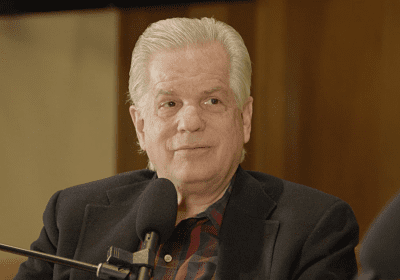
 These Mormon Stories episodes include our interactive Q&A with Dr. Greg Prince held at the Salt Lake City Community of Christ on March 17, 2018.
Gregory A. Prince earned his graduate degrees in dentistry (DDS) and pathology (PhD) at UCLA. He then pursued a four-decade career in pediatric infectious disease research. His love of history led him to write three books, including the award-winning David O. McKay and the Rise of Modern Mormonism. Most recently, he has published Leonard Arrington and the Writing of Mormon History. Greg also has a new book that he is working on called “Intended Actions, Unintended Consequences: The Mormon Church’s responses to Homosexuality.”
We hope you enjoy these episodes as we celebrate Greg’s contributions to Mormon history!
Our most recent interview with Greg may be found at:
https://www.mormonstories.org/podcast/leonard-arrington/
_______________________________________
Part 1: Greg and John discuss contemporary Mormonism, including suggested improvements
Part 2: Greg fields questions from our live audience
Part 3: To end the evening, John asks Greg some final questions about truth claims of the Mormon Church
_______________________________________
Episode Transcript
Host: John Dehlin · Guest: Greg Prince
This transcript is machine-generated and lightly edited for readability. The audio is authoritative. Please excuse occasional errors in names and spelling.
Welcome and Introduction to the Evening
Part 1 of 3 · Ep. 892
Guest [00:00:00] We like to throw rocks at the people who don't see the world in the way we do.
John Dehlin [00:00:11] Mormon Stories is a production of the Open Stories foundation and relies solely upon the support of people like you, its listeners to help keep the podcast alive or to become a member of the community. Please become a monthly subscriber by visiting MormonStories.org and clicking the donate button on the top right side of the page. All contributions to Mormon Stories are completely tax deductible and go towards producing the podcast and building communities and programs of support for Mormons like you. Thanks for your support. Hello everyone and welcome to another edition of Mormon Stories Podcast. I'm your host, Shawn Dehlin. It's March 17, 2018. We are recording this episode of Mormon Stories in front of a live audience at Community of Christ Building in Holiday, Utah in Salt Lake City. We are so happy to have have a over capacity crowd to be celebrating someone who is very important to Mormonism and specifically to liberal and progressive Mormons, post Mormons and also the Mormon historical community. And that is Dr. Gregory Prince. Can we give Dr. Prince a warm, hearty Mormon Stories welcome? I'm so thrilled that you showed up and packed the house on a snowy Saturday evening. I don't know what else you'd have to do on a St. Patrick's Day than this, but we're so delighted that you're here. This is something that we've started to do, actually. We have a bit of a history of doing this in terms of bringing people together and celebrating people that are really important to us all. I think the first time we did this was with Michael Quinn way back in 2011, 2012. But since then we've held special events to honor Grant Paul Palmer, Carolyn Pearson and who else? Anyone else I'm missing? Tova. Yeah. So the idea behind this, and we want to do many more, is that there are so many people who really have paved the way. There's so much going on right now in Mormonism. The church is changing in sort of an accelerated pace, somewhat slow, say, light speed given the rate of change that they've made in the past 150 years. And the truth is, while blogs and podcasts and Facebook and Twitter are all really cool, so much of the work that's going on today, including Sunstone, is standing on the shoulders of giants. And certainly there are many important people who have made so much of what we do today possible. And the reason why we're holding this event tonight is to honor one of those people. And his name is Dr. Greg Prince, we've had him on Mormon Stories several times. In fact, as most of you know, he's the very first person I ever interviewed for Mormon Stories podcast. I have a few books of his here. His very first book is called Power from on High, the Development of Mormon Priesthood. Those of you who haven't studied Mormon history will be interested to learn that the priesthood didn't just sort of evolve in a monolithic, simplified, easy to understand way. There's lots of bumps and confusion and muddling along the way in terms of how the Aaronic and Melchizedek priesthood developed. And that's what this book tackles. Greg, how many years did you spend writing this book?
Greg Prince [00:03:57] Eight.
John Dehlin [00:03:58] Eight years, Right. So it's a labor of love. Greg, of course, followed up Power from on High with the book that many of you have read. How many of you have read David O. McKay and the Rise of Modern Mormonism? Right. At least half of you. This is definitely one of the most important books in 20th, 21st century Mormonism, and it's about the prophet David O. McKay, and it's an excellent read. And it's the reason we brought Greg on to Mormon Stories to begin with. And then those of you who really follow us will know that yesterday on Mormon Stories podcast, we interviewed Greg about his third book, Leonard Arrington, and the writing of Mormon History. We did a good four hours yesterday covering this book, and it's a really important book chronicling sort of those Camelot years of Mormon history from 1972 to 1982. And again, so much of what we have today in terms of new Mormon history scholarship, CES letter, Mormon think, all the blogs and podcasts definitely comes out of the great history that sprang out of the Leonard Arrington years. So these are three wonderful books. And if that weren't enough, and Greg tells us he spent eight years on each of those three books. That's 24 years just between the three books. And then he's about to publish his fourth and final book. Tell us about that book really briefly, Greg.
Greg Prince [00:05:14] Title of that is Intended Actions, Unintended Consequences, the Mormon Church's Responses to Homosexuality. That is in press now.
John Dehlin [00:05:25] It's in press now. I'm going to move that mic a little closer to your mouth. And it's in press now, and it's going to. It's going to make a big difference in the LGBT community and within Mormonism. So, Greg, we're so honored to have you here. We're so grateful for your work and thank you. And let's give him One last final welcome to Marvel Stories podcast. So tonight we're going to do a combination of. I'm going to ask Greg some questions, but also we're going to have questions from the audience. I want to cover at least sort of a couple areas. One area is sort of Greg's observations of Mormonism in the church today, kind of where we are. Also want to reflect on his own personal faith and his perspectives. And then we want to be able to take questions from you, from the audience. And so I want to begin, you know, with this question. Greg, I don't know if you know this, but a lot of progressive and especially post Mormons are frustrated and confused by you. Did you know that?
Greg Prince [00:06:39] No.
John Dehlin [00:06:40] No, you didn't know that? Raise your hand if you've ever been frustrated by Greg Prince in my interviews with him. Raise your hands high.
Greg Prince [00:06:46] All right.
John Dehlin [00:06:47] There's a few of you out there, and I think it's rooted in just sort of this standard question that I always get, which is, how can someone. How can someone know all the history and remain engaged in the church? And we'll be covering that a little bit during our time together tonight. But I thought I'd begin by just asking you, do you have some maybe of your fondest church memories, your fondest church experiences? What are those? Because I'm guessing that in many instances, it's the emotion that ties us to the church. And I'm just wondering if you have, you know, some fond memories of your church engagement that might be somewhat of what anchors you to the church.
Greg Prince's Missionary Journal and Faith Anchor
Greg Prince [00:07:29] Over the past year, I've gone back and reread my missionary diary. I started a diary when I got my mission call and still am keeping one. I wrote about 1400 pages when I was in Brazil and didn't go back and look at it for a long time. That was really a transformational experience. Over a period of two years, I went. Well, I think a metaphor for what that mission did in a major way to me is that I took a copy of Bruce McConkey's Mormon Doctrine to Brazil and came home without it.
John Dehlin [00:08:11] Why'd you leave it behind?
Greg Prince [00:08:14] Because it no longer resonated with me. I don't know that it resonated very strongly when I went down, but that was 1967, and it just seemed like an interesting book to take along.
John Dehlin [00:08:28] But by the time you were done.
Greg Prince [00:08:30] By the time I was done, I was done.
John Dehlin [00:08:32] And can you articulate what about. Can you remember anything about what you read or your observations about the book that made you want to leave it behind.
Greg Prince [00:08:40] I think I may have been wired from birth to become a scientist. That certainly is what attracted me even from a time that I was in elementary school. And the approach of saying, we have all the answers, they are in concise form. Form, just memorize this and you'll be fine did not resonate with me. And I found that book really to be a counterproductive book for me. And I've subsequently found it to be counterproductive for other people because you cannot reduce religion just to a series of one liners. I think Bruce McConaughey's intentions were noble, but I think that's an errand that can't be succeeded at in the long run.
Questioning Authority and Thinking Independently
John Dehlin [00:09:22] What made you feel like you were allowed to discard the book written by an apostle? Like, I think about many of us being just really orthodox as missionaries and feeling like it's not our job to decide what we're going to discard or not discard. It's our job to kind of obey and follow. What made you think you could do that?
Greg Prince [00:09:41] Because he wasn't an apostle at the
John Dehlin [00:09:44] time, in the late 60s. That was until the early 70s.
Greg Prince [00:09:49] He wrote it in the late 50s. No. I think that you have to evaluate writings and even speeches on the basis of what's being written and said, not who is writing or saying it. Lester Bush has been one of my dearest friends for over 40 years. We used to be in the same ward. We now live only about 10 minutes apart. And when I was Elders Quorum president. Reach to go with your original question was my most cherished experience. Four years as being an Elders Quorum president. That's where I really saw how the Church can function in a way that makes a real and lasting difference in people's lives. But, Lester, when I was that in.
John Dehlin [00:10:34] Was that in Maryland?
Greg Prince [00:10:35] Yeah.
John Dehlin [00:10:36] Where you were Elders Quorum president.
Greg Prince [00:10:39] When I was the president, I had Lester teaching the class for a while, and he did one exercise where he took five quotations and then mixed up the authorship so that half of the Quorum unknowingly got the right authors and the other half got the wrong authors. Some of the authors were LDs, and some of the authors were recognizable historical figures within the United States, but not lds, but the same quotations. And when we tabulated them at the end of the lesson, it fell out about the way that you would expect, that they agreed overwhelmingly with what they thought was written by a Mormon and were very tepid about the same quotations if they thought they had been written by A non Mormon. And I think that speaks to
Guest [00:11:39] a
Greg Prince [00:11:40] hazard that we have that we tend to give too much leeway on the basis of the title a person has rather than what they're really saying and how pertinent to our world that is.
John Dehlin [00:11:54] Tell everyone. For those who don't know, what was Lester Bush's maybe crowning achievement in Mormon
Greg Prince [00:11:59] history and in life. Lester is a physician. He had no training in historiography. We had our relationship really by fluke because when Gillen and I moved to Maryland, we bought a house in Gaithersburg Ward, having no idea that Lester and Yvonne had moved into that ward a year earlier. But when he was in his residency at LDS Hospital Hospital, he pursued a longtime interest in trying to figure out what was the historical basis of the church's policy on non ordination of males of black African ancestry. And he dug where nobody had dug before, is a brilliant intellect and wrote a seminal article for dialogue published in 1973 that outlined the history of the policy and showed in fact that it was a policy policy, that it was never certified as revelation and that it came in late in the game that in Joseph Smith's lifetime there had been several African American men ordained to the priesthood. That was published in 1973. In 1978, something happened and there was a direct line between the two of those that we had assumed for many years, but we had confirmed in in 2009. A friend of mine, Brent Rushforth, who was on the board of editors of Dialogue when Lester's book article was published in 1973, had house guests, one of them being a grandson of Spencer Kimball who was married to a daughter of Jean England. And he just was talking during dinner while they were back there for the Obama inauguration, said we have always wondered if Lester's article had any influence on your grandfather. And he said, you don't need to wonder because not long after my grandfather died, I was in my father's basement and found my grandfather's copy of that issue of Dialogue. He said my grandfather had a habit of having a red pencil in his hand whenever he read and he would underline and make notations. And he said virtually that entire article was underlined. So it was a very important article, the most important article I think that Dialogue has ever produced. I would argue it's the most important article on Mormonism published in the 20th century. And there was a direct line between that article and what happened in 1978. There were a lot of other things that happened in the intervening years as well. But there's no question that Lester has had a permanent and benign effect on the course of the Mormon Church.
John Dehlin [00:14:51] So your mission experiences serving as Elder Quorum, any other fundamental emotional experiences that tether you to Mormonism?
Greg Prince [00:15:00] Brent Rushford, the same one I just referred to, told me that he used to chat with Rex Lee when Rex was was the President of byu. And he said Rex was on the High Council one time and told Brent that he had calculated that the most favorable glory to work ratio of the church was the High Council.
John Dehlin [00:15:19] Most glory to the least amount of work. Yeah, yeah.
Greg Prince [00:15:24] They always assume you're somewhere, so you don't really need to be anywhere. And my three stints on the High Council were really quite enjoyable, mostly because of the opportunity to visit wards and try to keep people awake during sacrament meeting. I always asked the bishop if there was a topic that he wanted me to address and I always did so if he had a favorite. But very often he'd say just whatever you feel inclined to do.
John Dehlin [00:15:57] Now this was in the the 2000s that you were in the Stake High Council, right?
Greg Prince [00:16:02] Yeah, it was on three, three times that I was on the High Council,
John Dehlin [00:16:06] but during kind of for a total
Greg Prince [00:16:07] of probably 10, 12 years.
John Dehlin [00:16:11] Yeah. And while you were working on a couple of these books, so at least you were considered sort of welcome enough or the church considered you a friend enough to allow you to have a Stake High Council call while working on these books.
Greg Prince [00:16:25] Yeah, that's super cool. All right.
Personal Experiences With the Church
John Dehlin [00:16:28] So have you had any really bad experiences with the church personally? And if so, what are some of your worst church memories?
Greg Prince [00:16:37] Well, anybody who is going to publish objective interpretive history is likely not to have a real warm reception in some quarters. And I could say, well, I've been treated poorly along the way, but having lived through what Lester lived through, where he was really shunned for years and
John Dehlin [00:17:02] years, what happened to Lester?
Greg Prince [00:17:04] There was never any disciplinary action, but he was just marginalized. At a time when the office of 70 was removed from the local church and became the General of Office. Then all of the stake 70s were ordained high priests at the same time. Virtually anybody who had reached the mid-30s and was still walking was ordained a high priest. Lester wasn't. And that was a very strong signal. I talked to the stake president who was a next door neighbor of mine and said, you got to fix this because this is not going to end well. And he kind of of mumbled and said yeah, he'd do something about it, but he didn't. And I think he was probably under directed not To. I also lived next door to Juanita Brooks when I was a student at Dixie College. And Will Brooks, in his 80s, was our home teacher. Lived with my grandparents. I later learned a lot about Juanita that I hadn't understood at that time. So in comparison to what Lester had got through, what Juanita had gone through, I don't have any complaints.
John Dehlin [00:18:12] Why do you think it is that the church punishes the very people who help instigate change within it?
Greg Prince [00:18:22] I don't think you need to point the finger just at the church. I think this is an institutional problem, and not just within organized religion, that those who push the envelope are not likely to be welcomed in the short term. It can be in government, it can be in business, it can be in education. We like to think that we are a progressive society, but there's a lot of inertia that pushes back against that. I've seen this a lot in science, to my own surprise, that the nature of science should be that they are the most progressive people on earth. But many, many scientists that I have dealt with will spend the first couple of years of their career staking out turf and the rest of their career defending it and pushing back against others who are going in a direction that casts doubt on their earlier work.
John Dehlin [00:19:18] So you're saying that's just a human phenomenon?
Greg Prince [00:19:20] It is a human phenomenon, yeah.
John Dehlin [00:19:21] But there are organizations that are graceful and respectful to those who help promote change. I mean, the Dialogue foundation would. Would honor those who helped do positive achievements in dialogue.
Greg Prince [00:19:33] Look at what the Roman Catholic Church has done to its scholars over the centuries. It's the same thing. Generally, they have not been welcomed, and sometimes they've been treated very rudely. Yeah, much more rudely than our people have been.
John Dehlin [00:19:46] Right. So you mentioned the treatment of Lester Bush and Juanita Brooks, and you just talk a little bit. You make reference to how you've been mistreated. There's no stories you want to tell. Or is that. Do you generally prefer not to ever talk about negative things or sad things?
Church Leaders' Reception of Greg's Books
Greg Prince [00:20:03] It's not. It just hasn't risen to the level of significance compared to what they have been through.
John Dehlin [00:20:10] So for you, would you characterize your experience as a Mormon to generally been very positive?
Greg Prince [00:20:15] Oh, yeah.
John Dehlin [00:20:17] Okay. What feedback have you received? Positive, positive and negative. Let's start with the negative. A lot of people want to know if you've ever had any negative feedback from the Brethren or official Church sources about your books.
Greg Prince [00:20:33] Nope. None?
John Dehlin [00:20:36] Never?
Greg Prince [00:20:36] Never.
John Dehlin [00:20:37] Okay. What about hearsay of what different church leaders may have thought or felt about your.
Guest [00:20:44] Well,
Greg Prince [00:20:49] When I was working on the McKay book, my co author, Bob Wright called me and he said such and such general authority, who was a neighbor of his, had happened to walk by his house one day when he was out gardening and mentioned the priesthood book and said, bob, it's off center. And Bob said, did you read the book? And the gentleman got a little bit huffy and said, well, no. Twice I was told that the McKay book had been on the agenda of the Strengthening the Members committee. And the church historian at the time told, told me that one of the members of the committee had seen him in the hallway and said, marlon, I read that book. It's a good book. That's really about it.
John Dehlin [00:21:54] How about the Arrington book? In some ways, this book made me most mad of all the books that made me angry because for me, yes, it's a beautiful story, Spotlight on Leonard Arrington. But it's sort of a scathing critique, although I don't think you intend it to be that way, on the extent to which the Quorum of the twelve and the First Presidency were willing to hide the history of the church and punish anyone who spoke openly about it. So in that sense, it felt like a real condemnation. Have you received that, Any sort of feedback on this book yet? No.
Greg Prince [00:22:36] Okay,
John Dehlin [00:22:38] how about positive.
Greg Prince [00:22:40] Positive feedback?
John Dehlin [00:22:41] Yeah.
Greg Prince [00:22:41] Yeah.
John Dehlin [00:22:41] So let's go back and just tell us positive feedback both from church members, church leaders, and just people. What types of feedback do you get about these books that maybe has helped keep you going over the past 24 to 32 years?
Greg Prince [00:22:57] Well, some. Some strangely encouraging feedback on the priesthood book was that about a year after it was published, there was, as far as I can tell, the longest article that the Ensign ever published. It was written by Larry Porter, and it was on the restoration of priesthood. December 1996. I think anybody wants to look it up. And I read that and I thought, this is really strange because it seems like it's saying in a loud voice that my book doesn't exist without ever mentioning my book. And not long after that, I was with one of the 70s and I said, that thing seems to me like this is what has happened. And he laughed and he said, you're a lot closer to the truth than you might think. And then decades later, I had a visitor, one of the BYU faculty who was in the same ward as Larry Porter. He came and had dinner in our home. And I mentioned this and he said, I spoke to Larry Porter and asked him, and he said, yes, they asked me to do exactly what you just described.
John Dehlin [00:24:17] So I thought, okay, which is basically say many of the same things you said in your book, but not give you credit.
Greg Prince [00:24:24] No, just the opposite.
John Dehlin [00:24:25] Say the opposite.
Greg Prince [00:24:27] Restating the orthodoxy in a loud voice without ever mentioning that there was any challenge to the orthodox view. So I thought, okay, at least it registered. Now, between those three books, I don't know how many thousands of footnotes I have, but I have yet to have a single fact challenged in any of those three books. And there are a lot of facts, and a lot of them, particularly in the priesthood book, that are not the traditional story. There are multiple paradigms that are overturned in that priesthood book, and yet nobody has challenged the overturning of those paradigms. So I think maybe in subsequent decades will find that some of the insights in that might seep into general church curriculum.
John Dehlin [00:25:18] Let's cross our fingers but not hold our breath. How's that? What are the five most important books on Mormon history in your view? Not including these books. We'll put you off the hook.
Most Important Books in Mormon History
Greg Prince [00:25:32] Now, I only have to say two, right?
John Dehlin [00:25:34] Yeah. No,
Greg Prince [00:25:40] I still think that Fawn Brody's no Man Knows My History is one of the most important books. You can filter her bias, the chip that she carried into that, that's easy to filter. It is still a remarkable book, written with remarkably good prose. It's an easy read. She wrote that, published that in 1945. It has never been out of print, and I think still today is just a remarkable biography of Joseph Smith that is willing to take him on in three dimensions. I think that Juanita Brooks Mountain Meadows Massacre is an extremely important book, not only because of the depth to which she went in getting the story right without any help from the church archives, but also because it was one of the first books in the Mormon study genre that really attempted to be objective in its telling of history. I think that Leonard Arrington's Great Basin Kingdom, which was published eight years after Juanita's. Juanita's was in 1950, deserves to be on that list because even more so than Juanita's, he took a data based approach to history. His PhD was not in history, it was in economics, but his specialty was economic history. And so that book is the result of assembling a lot of data points and then saying, what's the story? That's the approach that I took with all three of these books. So other ones, interestingly, the book that turned me on to Mormon history was Nightfall at Nauvoo, written by Sam Taylor. It is not Wedded to the truth throughout. But I felt that it was a very compelling story by a very compelling storyteller of the Nauvoo era of the Church. Gee, what would another one be? That's four out of five. Okay, since you didn't give any advance notice, sorry.
Is the Church Worthy of Its Members?
John Dehlin [00:28:01] Is the LDS Church worthy of its members? And if so, how?
Greg Prince [00:28:06] The LDS Church is its members. It's no better than its members are all the way up.
John Dehlin [00:28:12] Are the LDS Church leadership worthy of its members?
Greg Prince [00:28:16] I think the LDS leadership consists of men mostly. I'd like to see more women in that hierarchy who are good men, who are well intentioned men. They bring to the job what they had when they came into the job. And I think we often forget that we do not have a professional clergy that can cut both directions. There are some very good things about having a professional clergy. I'm getting to understand that now in my role as a governor of Wesley theological seminary in D.C. the only Mormon they've ever had as a governor. But that's giving me a lot of close association with professional ministers and I can see a lot of things that make me very envious. But that said, we have gone the opposite direction of having a lay clergy. So when you get to any level in the church, you have what your professional life and your personal life have equipped you with, but you don't have any specific training in the ministry. That can be a plus if you've had good training in other fields, but it can be a minus because you may just lack those simple fundamental tools that make the ministry work within other traditions. So we sometimes think, well, why don't they understand some of these issues to a depth that we would like to have them understand them? And the answer is they likely were not called to that position because of their depth of knowledge in Mormon history and theology. And once they get in that position, they don't have the time to dig deeply. So you wind up with, well, I'll give you an anecdote that we talked about yesterday. Not long after the McKay book was published, I got a phone call from Bob Bennett, who then was one of the two US Senators from Utah. Bob was a good friend. He also married one of David O. McKay's granddaughters. But he said, I loved your book. I appreciate your candor, your willingness to tell the story as it is. And he said, let me tell you about an incident that happened to me. Said, I was in the Hotel Utah years earlier and Harold B. Lee was in the lobby. And it was just the two of us. So we Sat down and started to chat. He said, bob, how's your brother? And Bob said, one of my brothers had been on the general correlation Committee and got too close to power, didn't like what he saw, and walked away from the church. Bob said I had to be diplomatic. But I said, well, he's left the church. Why did he leave? Well, he got too close to power. He said. Presently, he said, oh, I can think of much better reasons for leaving the church. He said, doesn't he realize that we're just mortals doing the best that we can? And on a good day when they're doing the best that they can, then very good things can happen? But it's not an automatic. And they work with the tools that they brought to the job. I think we often don't cut them enough slack, understanding that that's what they're dealing with. It was the McKay biography that really gave me that kind of understanding. I remember at one time my mentor in pathology from UCLA was working in our laboratory in Maryland. He came back for a month and was working with our junior scientist. He didn't have anything to do in the evenings, so I said, here, why don't you take a few of these? And I gave him several of the notebooks that contained the McKay diaries. He'd had a little bit of association with Mormons because he'd done a collaborative project with professor at the University of Utah. But other than that, he didn't know much about it. So he read several of these volumes, several hundred pages, and I said, what do you think? Well, you take the proper names and change them. He said, this is just corporate politics.
Heroes Outside Mormonism and Church Leadership
John Dehlin [00:32:26] So outside of Mormonism, like in the history, world history, do you have a few heroes, like people you really think moved humanity forward, who were extra courageous? You don't even have to tell us why. Just, like, list. Do you have any historical heroes?
Greg Prince [00:32:42] Oh, I. I think one of the great heroes in all history would be Abraham Lincoln.
John Dehlin [00:32:46] Okay, Abraham Lincoln. Who else?
Greg Prince [00:32:49] Jesus is pretty good.
John Dehlin [00:32:50] Jesus. Okay, who else? Any others? Couple more. Jesus is all right. We're cool Jesus here. Some of us.
Greg Prince [00:32:56] I think there are a few scientists who deserve to be on that. Einstein.
John Dehlin [00:33:00] Einstein, Darwin. Okay. And what do you. What is it about these men that you respect most? Just generally, if you had to list four or five characteristics of great men, what are the women? What are the. What are the characteristics?
Greg Prince [00:33:16] What they did lifted either an organization or a society or the entire human civilization. And often they did it in the face of substantial resistance.
John Dehlin [00:33:30] So why don't we have any Mormon apostles doing that in the modern time? Why, why don't we have any of those people? Every time I try and talk to you about frustrations with the leaders and honestly your books do a really good job of showing the human side of them. But I want to just ask you, why don't we have more heroes coming, coming out of the quorum of the 12 and the First Presidency?
Greg Prince [00:33:59] I don't know how to answer that question. I wish we did have those who rose higher. I know that in the non Mormon world that I travel in there is respect towards Mormonism, there's respect towards me as a Mormon. But we on our side bemoan the fact that that were not taken seriously. And yet when I talk with these people, I understand why we're not and that is that what we produce doesn't resonate beyond the walls of Zion. It is our responsibility to produce something that catches the attention of the world. If we do that, then we will get that attention. I just don't see that outside, outside of Mormonism, what's done within Mormonism has had much effect on the world.
John Dehlin [00:34:54] Because wouldn't it be wonderful? I mean, we all look for example to Uchtdorf and say, oh, he's the great hope of progressive liberal Mormonism. Wouldn't it be great if he could find a way to go rogue or speak out or stand up and be courageous?
Guest [00:35:10] Right?
John Dehlin [00:35:11] Or Holland, you know, what do you think keeps them from being able to truly do something courageous and noble?
Greg Prince [00:35:19] There was a brief moment in time when President Uchtdorf in fact was on the world stage. My daughter had been a White House intern in the first Obama administration and at the time she was the highest ranking Mormon in the White House as an UN unpaid intern. Which tells you part of our problem. But I got to know one of the officials in the Office of Public Engagement and in talking to him I said, what's your back channel to Salt Lake? He said, we don't have one, we need one. So I mentioned President Dukedorf's name and just by coincidence, a few weeks after that, President Dukedorf was in D.C. and spoke at the banquet of the BYU Management Society. JoLynn and I were out of town, so we didn't go to that. But Paul was invited and thought, well just go see what's happening. And they seated him next to President Uchtdorf. By the end of the banquet and his speech, Paul was converted to President Uchtdorf. And for the next couple of years the White House was trying to figure out how do we get this man in front of the President. Because they could see that there was the potential of a relationship there that would be very beneficial. They were contemplating doing it during the state visit of Angela Merkel, but they decided not to because they said, that'll give him 30 seconds with the President. I need more than that. So eventually they did did it. For a White House meeting on immigration, they invited 14 religious figures, including President Uchtdorf. Paul was the one who set the meeting up. And he said, I set up the seating assignment. They were in the Cabinet Room and there's the long rectangular table. The President sits in the middle, and President Uchtdorf was directly across from him. And then Paul was seated against the wall behind him. I saw one of the photographs from the White House later, But of the 14 religious figures, 13 were wallpaper. The whole point of the meeting was to introduce these two men to each other. And Paul said there was electricity between the two of them. A year later, I was invited to the prayer breakfast, the Easter prayer breakfast in the White House that was in the East Room. And I didn't know in advance that one of the other invitees was Dieter Uchtdorf. He was seated a couple of tables away from me. And at the conclusion, the announcer said, please remain at your tables because the President will come around to each table and pose for pictures and greet everybody. He came to our table first and the announcement, and I watched as he went over to the table where President Uchtdorf was. I was only probably 20ft away. And it was absolutely clear that there was genuine affection between those two men, that there was an enormous amount of respect that dissipated, but it was not because of the administration. There was a subsequent invitation that came from the State Department
John Dehlin [00:38:43] that was declined by church headquarters.
Greg Prince [00:38:49] And I knew it was in the invitation because they asked me to write it.
John Dehlin [00:38:52] Do you have any theories on what happened or why?
Greg Prince [00:38:57] I think that perhaps he was getting too much recognition. That was a time, though, when the LDS Church was poised, I think, at potentially a very beneficial position, that I think that had that relationship been allowed to flourish a little bit more, it would have put the church in a very, very good light.
John Dehlin [00:39:27] You almost get the sense that for a few years Uchtdorf was sort of out in front taking that courageous role, and then he sort of got muted. Do you think that the events with Obama and the subsequent sort of closing the curtain on that by others who may not have liked that association was also part of his sort of maybe
Greg Prince [00:39:50] silencing it's speculation, but yeah, that's where I am. And I saw it from a fairly close vantage point from the Washington end of things.
John Dehlin [00:39:58] Yeah. Because I remember talking to you years before the recent demotion of Dieter Ruechtdorf where you maybe had expressed that you were concerned that he was being silenced. Is that.
Greg Prince [00:40:10] Did I remember that? I wasn't the only one who was feeling that way.
John Dehlin [00:40:13] Right. Can you tell us what you think about the change in the First Presidency, recent change where Uchtdorf was demoted? Did you anticipate that?
Greg Prince [00:40:25] Yes.
John Dehlin [00:40:26] And where Oaks was elevated. Talk about what you think happened there and how you feel about it, what
Greg Prince [00:40:31] it means in defense of the status quo that we now have. It is the prerogative of the President to choose his counselors. It's the prerogative of a state president, of a bishop. What happened though was that subsequent to the death of Brigham Young in 1877, only on two occasions was was a sitting counselor in the first presidency not retained by the succeeding president. One of Those was in 1970 when President McKay died and Hugh Brown was released from the first presidency and resumed his position in the quorum of the
John Dehlin [00:41:07] 12th, likely for his advocacy in favor of blacks receiving the priesthood.
Greg Prince [00:41:12] Well, that's according to his grandson who told me exactly that. He said my grandfather told me that he was released from the first Presidency because of his attempt to reverse that policy on ordination. The second was when Spencer Kimball died and Marion Romney, who had been in very poor health, really non functional intellectually for some years, was quietly released from the First Presidency. Those were the only two since the death of Brigham Young. So it, even though it's the prerogative of the new president to choose whomever he wants, there was also a strong precedent for not releasing the sitting councilors. And that's what made it unusual going back to when David O. McKay became the president in 1951. Reuben Clark, who had been the first counselor, was demoted to second counsel and Stephen Richards was the first counselor. That was very unsettling to Clark and it was devastating to a lot of the people who felt that Clark was their hero. But again, it's the prerogative of the president. If you look at the relationship between President Nelson and now President Hoax, there has been a very close working relationship between those two for a long time. And so I don't think it's really surprising that President Nelson would want Dallin Oaks as one of his counselors. The question then would be who goes?
John Dehlin [00:42:42] How did it make you feel? And what do you think it means for the modern church to have Lukedorf demoted and Oaks promoted.
Greg Prince [00:42:49] I think it disappointed a lot of people who love President Uchtdorf. I don't know if they have ratings on whose General Conference talk talks are the most favored, but I would guess that his is at or near the top. He's a remarkable person. I have not had any contact with him since he returned to the quorum of the 12, but people I have talked to say he's fine where he is. He loves his assignment in being the supervisor of the European areas, which is a natural for him. Him. And I think there's the potential of irony here because he is only a couple of heartbeats away from being the President of the quorum of the 12th. And you have, aside from the first presidency, you have Russell Ballard, then Jeff Holland, then Dieter Uchtdorf. And it's possible not only that Uchtdorf could be the president of the quorum of the 12, which would make him the Prime Minister of the Church. Understand that transition happened.
John Dehlin [00:44:01] This is when Holland becomes prophet. Uchtdorf becomes president of the quorum of the 12. Is that what you're saying?
Greg Prince [00:44:08] Or even if Holland became a counselor, if President Nelson were to die and then President Oaks were to then pick him, you've got Russell Ballard in there as well. What I'm saying is that he's only a couple of steps away from being the prime minister, the head of Church government, and he's only three months older than Jeff Holland with nobody else in between. So it's entirely possible that Dieter Uchtdorf could one day be the president of the Church as well. Wouldn't that be a twist of irony?
John Dehlin [00:44:44] What did it mean for you as an active Mormon? How. How did it feel to see Uchtdorf demoted? And what do you think it means
Greg Prince [00:44:51] for the Church in the long run? I don't think that it's going to be more than a ripple. Again, this is the order of Church government. It may be disappointing to people, but to you.
John Dehlin [00:45:06] Is it disappointing to you?
Greg Prince [00:45:07] It was disappointing to me, but it was not unexpected. There was speculation for a long time that if President Monson had died prior to Boyd Packer, that Boyd Packer would have sent Dieter Uchtdorf back to the Quorum of the Trail simply because they saw the world much differently.
John Dehlin [00:45:26] So you had been anticipating this.
Greg Prince [00:45:28] Yeah.
John Dehlin [00:45:29] What keeps you from criticizing the Brethren just directly and saying they're disappointing? There's too many suicides there. They haven't been honest about the history. They're not being courageous. They're not being sensitive enough. They need to do More you seem to really want to avoid just direct criticisms of them.
Greg Prince [00:45:49] I got better things to do than criticize them. It's not something that interests me. If you want to change the church, it's possible to do that at the grassroots level. And if you look historically, many of the most important things that have happened in this church happened because somebody at the grassroots got a good idea and did it, and it worked, and then it became church wide. So that certainly what I call trickle up revelation is a very potent force, maybe one of the most potent forces in the church. But you also have to be politically established. And the one thing that you can absolutely guarantee is that a frontal assault on the brethren, or even the perception of that will cause them to dig in. And whatever you thought you were gaining, you're actually setting back. So that's part of why I wouldn't do it. Even if I were inclined to speak up publicly. It's counterproductive. If you want to change, you have to use different tactics.
How Change Happens in the Church
John Dehlin [00:47:03] So some would say that some of the biggest changes we've seen in the past 10 or 20 years have come as a result of sort of frontal attacks. We talked about this in my interview with you a year ago. But Ordained Women is an example where we saw a very direct attack occur. And we saw several significant changes happen as a result. Not the changes that many wanted, but we certainly saw women put more at the center. We saw changes in female missionary leadership. We saw the general men's priesthood session being broadcasted. I think we could list a lot of areas. We've seen changes in how the church talks about women, curriculum around women. And then you look at things like CES letter or, you know, podcasts or Mormonthink or all the ways that the Internet sort of really brought to light problems with Mormon history. And then we see things like the essays come out. So what would you say to someone who said, actually external direct action can really. And often in the cases of, like, polygamy, can often be the deciding factor for significant change?
Greg Prince [00:48:18] I would say they're not in command of the facts.
John Dehlin [00:48:21] Why is that?
Greg Prince [00:48:22] There were a lot of things that were going on before ordained women came on the scene. And if you were to track what the eventual changes were, you would find that the antecedents had nothing to do with ordained women and that, in fact, ordained women probably set things back. I talked to Kate on three occasions over a period of one year, had lengthy conversations over dinner, and tried to say, look, we've been through this in the seventies with feminist movement in the church. It had nothing to do with the righteousness of their cause. It had everything to do with their politics. And things were set back because of the militancy in the 70s. I was in favor of their agenda, but it turned out that their politics worked against them. And I think the same thing has happened with ordained women. I told Kate, there will be a time when women will be asked to be at the table for important discussions on where the church needs to go. If you go the direction that you're going, I can guarantee you that you and anybody with ordained women will not be at that table. Now, that's a prediction, and we'll see how that plays out. But this is what has happened in the past. The same thing you talk about the.
John Dehlin [00:49:43] Just really quickly regarding ordained women, I think there's a lot of people that I know and respect would say that the church has made, you know, within the years following ordained women, several important changes regarding women. And that's my opinion as well. I think what I hear you saying is those had nothing to do with ordained women. They had to do with other things that were already in motion.
Greg Prince [00:50:06] I think if you could see the larger picture and knew all of the pieces of the puzzle, you may find the agenda may have advanced farther in the absence of that frontal assault than it did in the present.
John Dehlin [00:50:18] But that's speculation, right?
Greg Prince [00:50:19] That's speculation.
Guest [00:50:20] Yeah.
John Dehlin [00:50:20] Okay. Okay. All right, keep going with the other.
Greg Prince [00:50:24] You mentioned the church history essays. Those, in fact, started from within. I met. This was in 2008, I think the Mormon History association meeting was in Sacramento. Marlon Jensen was the church historian and hadn't been in that job for very long. I'd gotten to know him when I was working on the McKay book. And so we were just sitting in the hotel lobby chatting, and he said, I'm getting a lot of. Of phone calls from parents who said, my child went to the Internet and read something about Mormonism, and now he or she is gone.
John Dehlin [00:51:06] Which is the external pressure I was mentioning.
Greg Prince [00:51:09] Well, that was not external pressure. That was an internal person seeing a reality and responding from within.
John Dehlin [00:51:18] No, all I'm saying is it was probably Mormon think or podcasts or websites or blogs that was providing this uncorrelated
Greg Prince [00:51:27] information or a lot of websites that were antithetical to Mormonism.
John Dehlin [00:51:33] Sure.
Greg Prince [00:51:34] Yeah, sure. And we didn't have a response. We were late to the game. So it was his initiative to go to the first presidency in the 12 and say, we have to be proactive on this. We have to write and post on our website, essays on these thorny issues of our history and our theology, because our silence right now is working against us. And so that was a movement from within that spanned several years. But it was not pressure from outside groups saying, you've got to do this. It was. It was a realization from the inside that, hey, Houston, we got a problem. And the response came from the inside.
John Dehlin [00:52:20] That's true. But I do think it was people who started speaking up and publishing things externally that got the members attention, that then made the people inside paying attention.
Greg Prince [00:52:31] It was response to an external stimulus, right? Yeah.
John Dehlin [00:52:35] So you're saying external internal pressure is important, but direct assaults on telling the brethren what to do, how to respond to those sorts of forces, is often counterproductive.
Greg Prince [00:52:49] I haven't seen an instance where it's productive. It's not to say that we are not in need of change. It's not to say that members don't have perhaps even an obligation to do something about it. But it's to say that you got to be politically savvy so that you are able to move the ball forward instead of having it move backwards.
John Dehlin [00:53:16] One of the most common questions I get is, is it possible that some of the members of the Quorum of the twelve or the First Presidency no longer believe that the church is really. Are you aware of that ever happening in the history of sort of the Quorum of the twelve or First Presidency, where someone that high has lost their faith?
Greg Prince [00:53:37] I'm not aware of it, but I haven't had those discussions. I don't know very many of those. Men really don't. It's a small handful, but I have gotten to know that small handful reasonably well. And on occasion, we've had some really enlightening discussions that have been very helpful for me, and perhaps they've been helpful to them.
Assessing the Current State of the Church
John Dehlin [00:54:04] What is your assessment of the state of the church right now? How's it doing? Give it a grade in terms of health.
Greg Prince [00:54:11] You want a letter grade or 1 to 10 letter grade?
John Dehlin [00:54:15] Health. Health of the church. C. Okay, where is it ailing?
Greg Prince [00:54:20] I think the biggest challenge we face right now is a challenge that other religious institutions, particularly Judeo Christian religions, are experiencing, and that is the youth. Nobody is winning this battle. And I say this largely by sitting with the Wesley people. Now, Wesley is the largest Methodist seminary in the country, but half of its seminarians are not Methodist. So they cut broad swath. They have a large grant from the Lilly foundation for the purpose of trying to figure out why are millennials not engaging institutional religion and how can we reverse that trend? So it's not like Mormonism is experiencing a crisis that nobody else is. Everybody is experiencing this. I think it's heightened for us. And I hear figures from enough directions to give them credibility, even though they're not published figures. Figures such as we lose 50% of our returned missionaries within five years of their return. I'm hearing recently from several directions that we may have as many as a third of our missionaries returning home early. If you triangulate to the retained membership, not the raw number of convert baptisms, but try to figure out how many of those stay, my best estimate is that it's between 10 and 15%. And I think that may relate directly to the extraordinary attrition that we have in our returned missionaries. If you're going out and spending two years and 90% of your converts aren't sticking around for a year, what is that saying to validate the time that you spent out there? I think we have been slow to respond to the challenges that the Internet has posed to us. The Internet is agnostic. It's just a highway. It's the traffic that's on the highway that can be the challenge. And we have been late to the game there. We still have not really laid out our history and our theology in a manner that I think stands up to critical scrutiny. I think that we have allowed our curriculum to become moribund. That by recycling an adult curriculum for what, 40 years now, that you not only run the risk of boring your people, you're boring them, but I even hear this among the youth. If they say my church experience is boring, we've lost. We've got to be able to figure out how do we rekindle that enthusiasm in the church that was there when I grew up in the McKay years, we can do it. When I was on the High Council one time, Bill Marriott was the stake president and he came to our ward conference one time and he spoke about his great grandfather, Elijah Sheets. I think it's safe to say that Sheets will forever hold the record of longest tenured bishop. 48 years. I don't think that's in danger of being broken now. But I went up to him afterwards and said, I have been encountering the name of an Elijah Sheets. At the time, I was working on the priesthood book. And I said, if you ever go out to Salt Lake, you may just want to ask in the historical department to see the ward minutes, because there will be a lot in there about your great grandfather. A few months later, after High Council, he Says, come out to the car. I got to show you something. There is a machine, and I'd seen one at the National Institutes of Health, where I used to work, that will convert a hundred foot roll of microfilm into a really long roll of paper. It's just a continual printout of that. And he had four of these rolls in his trunk. I didn't ask for these, but they sent them to me. It was the historical record of the 8th Ward, where his great grandfather had been the bishop. He said, I don't know what to do with these. So I volunteered to do something with them. And I went through and I extra all of the interesting things about Sheets. But in the process, I thought, my gosh, this is the compelling history of the Church. It's not the great men and the great events at the top. It's the grunts in the trenches who, week after week are making this thing work and showing extraordinary faith in the process. I told Marlon one time, you could have a curriculum that would not repeat itself for decades, that could draw only on the 19th century ward histories, and everybody would be on the edge of their seats for those lessons because this is such compelling material. So it's not for lack of the material there. It's that we have lacked the imagination to dig into that and to re energize the Church by showing them what this thing really can do and what it did in its formative years.
Recommendations for Reforming the Church
John Dehlin [00:59:43] So if the Church were to come to you and say, greg, we're losing people, Help us fix it. Do you have any idea what you would. What you would recommend or suggest? You think spicing up the curriculum is going to get people out?
Greg Prince [00:59:59] I would say, if you're really serious about this, let's Convene Salt Lake 1.
John Dehlin [01:00:05] What does that mean?
Greg Prince [01:00:06] That's a reference to Vatican I and Vatican ii.
John Dehlin [01:00:08] Okay, and what would that look like?
Greg Prince [01:00:11] That would look like having a real discussion with broad representation that would be willing to put everything on the table, everything. And say what stays, what goes, what's not here, that needs to be here. And reinvent the Church.
John Dehlin [01:00:29] Are there some things you would. You would want to put on the table?
Greg Prince [01:00:33] Yeah, I'd brighten up the curriculum, among others.
John Dehlin [01:00:36] Okay, brighten up the curriculum. Give us four more.
Greg Prince [01:00:40] No, I'm not going to go down that road with you.
John Dehlin [01:00:42] Why not? No, seriously.
Greg Prince [01:00:44] I don't want to preempt the prerogatives of the people who will be at the table when that happens. No. I think, though, if you want to make a substantive change You've got to be willing to take the entire church program, lay it out on the table, and say, what's working? What's not working? I'll give you an example. When I was doing the priesthood research, I found an unpublished book in the church archives that I copied, and it was a report by the Correlation Research Committee. That's an exciting title. In 1961, President McKay appointed Harold B. Lee as the head of the new correlation movement. The Church had been trying to correlate itself since 1908, and there had been several committees. Some of them even called correlation committees over the ensuing decades, and they had always fallen short. So this time they wanted to make it work. Lee turned to Antone Romney, who was a professor at byu. He was also the brother of Marion Romney of the quorum of the 12. And he said, I want you to. To put together a committee that will look at all of the records and lay out what has been the history of the Church's attempts to correlate itself and then make recommendations for what we should do. So these guys went, and guys, I know, but that. That's the way things were and still are to a large extent. But they spent six or eight months and they produced a report about an inch thick, went through all of the history, and then said, none of the auxiliary organizations as currently constituted in the Church are functioning the way they should be functioning. We recommend that they all be dissolved and that in their place there be three new organizations. One for the children, one for the youth, and one for the adults. And here's why. It was a very well thought out plan. It would have worked. It certainly addressed the current issues. This is 1961. So they were having problems with boredom then as well. They presented this to the subcommittee of the 12, and it's right in this report what the response was. And the response was, thank you, brethren, and now go back and do it again. And this time don't get rid of anything. There's your problem. We have been very good at adding. We have been very poor at subtracting. And sometimes to move ahead, you have to get rid of some of the things that you got now.
John Dehlin [01:03:26] So I have, and I think most people here have a lot of respect for the work of historians and for your work. Okay. And I'm just gonna say that when you think about the. You take all the people that have made all the Mormons in the 21st century that have made significant changes to their lives with respect to their relationship to the Church, I'm gonna posit and I don't mean this in any way to sort of be insulting because I obviously have you here and not other people because of my respect for you. But if you think about the ways that a history book has moved people over the past 10 or 20 years, I think they've definitely had important contributions to make. But if you look at what certain podcasts have made over the past 10 years, let's say, if you, you know, let's just say Mormon Stories, Year of Polygamy, Infants on Thrones, Mormon Expression Podcast, if you look at what certain website, the impact that certain websites have made, like MormonThink or letter to a CES director, those are having what I would call massive and significant impacts on the day to day lives of Mormons. Even the essays themselves are causing a lot of people to change their relationship with the church. And I guess I want to ask you, you, you know, if we're trying to move the needle, why is it that websites and blogs and podcasts and ebooks that are just summaries of church history are seeming to have such a profound impact on people? And how does that make you feel as a historian when you do the eight, eight years per book slog to write a book like this? And they're having an important impact, but it seems like some of these other things are having a bigger impact. What are your thoughts on that?
Greg Prince [01:05:30] Oh, I think, I think it's a natural relationship tension between content and media. And some of the content is going to be much more difficult to put together. And as a historian or as a scientist, you have to be willing to say, my work is to get the content right. And it may not be that I ever get the credit for it or that what I produce will directly affect the discussion, but it's going to feed into that. And it may be the media people then that really get the message out so that it starts to have the broad effect. I'm fine with that and I applaud you and so many others who have harnessed the power of the Internet to get that message out there. I don't have that capability. I can provide some of the grist for the mill. But you are the mill.
John Dehlin [01:06:34] Well, I mean, I have deep respect for you, for Michael Quinn, for Carolyn Pearson, for Leonard Arrington, Little Ben, and just all these amazing giants that we stand on. I'm just thinking about how to move the needle more. And what you're representing tonight and what you've always represented is sort of this very diplomatic, strategic, kind of a deliberate approach that is really statesmanlike but at the same time, in the 21st century, things just kind of step in and really move tens or hundreds of thousands of people at a very fast pace. And so it just makes me sort of ask you, do you ever feel like activities kind of passing things by? I mean, you look at the. Where dialogue is now, where Mormon history is now. You know, it's got to be weird to see all this scholarship that's been built up over decades in some ways to be viewed as less important now as sort of all this online stuff.
Greg Prince [01:07:51] And I'm not at all concerned about who gets the credit. I'm concerned about what gets done. And if the primary movers, if you go back to the first cause, are bypassed in the credits at the end of the movie, that's okay with me as long as the movie is reaching the audience that it needs to. And I think it's the cumulative effect of a lot of scholarship, but a lot of thought that is peripheral to the scholarship that eventually gets us moving. I think that there is movement in the right direction amongst the laity. The one thing that I would wish for, for the laity, for the people in the pews, is that they would own their religion. You've heard me talk about this before. It's not a concept that I thought up. It came to my attention when I was working with Helen Whitney on the PBS documentary on the Mormons that was broadcast now 11 years ago. Towards the end of her pre production work, she said, I've interviewed hundreds of Mormons. You have a very good religion, but your people need to own it. They're borrowing it. And she was right. We have gotten very lazy, and we have been aided and abetted in our laziness at all levels, going right to the top. I'll give you an example of the flip side of that. When I interviewed Hugh nibley for the McKay article, he said that he had been asked to write a priesthood manual. This was in, I think, 1957. Those of you who have as many miles on you as I do may remember that it was an Orange Melchizedek priesthood handbook, and I think it was called An Approach to the Book of Mormon. He said, I finished the manuscript, I turned it in. He said, said, the reading committee just savaged it. They changed everything. And I went to President McKay and said, this is what they've done. McKay told the committee, put it back. And they said, this is over people's heads. He said, then let them reach. That's where we should be. We have flipped that and we have taken things to such a low common denominator that maybe we're reaching some people at that level, but from that level on up, we're just boring people. And that's lethal. So if you're not going to get it through the church curriculum, then get it some other way. And you don't have any excuse now because you all have access to the Internet, but you don't own your religion just by showing up on Sundays. Your history, your theology, your sociology, theology are complex, they are nuanced. And you don't own that by just showing up. This is what really bothers me about the laity, particularly when I hear them complaining. I just want to shake them and say, go out and do your homework first and then let's talk.
John Dehlin [01:10:50] And I just, I just wonder. So many of us, so many people are leaving the church and so many feel like this is a really critical time. And for someone who still, I know, really wants people to not abandon the faith and to stay within it, I just wonder how you restrain yourself from things that might be more direct and more bold. Because some would say, I think I've heard you say this, that the ship is sinking, the good ship Zion is sinking and the Brethren are rearranging the chairs on the deck.
Greg Prince [01:11:25] You haven't heard me use that metaphor. You may have heard me use another marine metaphor. And that is, we have enough barnacles on the hull of the ship that it is slowing in the water. We need to chip off those barnacles, in other words, to subtract the things that are no longer working and get this ship moving forward again.
John Dehlin [01:11:44] So you don't think the ship is sinking?
Greg Prince [01:11:45] I've never said that it was sinking.
John Dehlin [01:11:46] Okay, no. But even now you don't think it's sinking?
Greg Prince [01:11:49] No, I don't think it's sinking. It's a large enough, endurable enough institution. It's not in danger of extinction. It is in danger of being marginalized, particularly as I see the flood of youth that are walking away from it. That's your seed corn. You don't eat your seed corn and prosper into the future. We've got to fix that as well as other levels. But I think that our greatest concern should be on the younger generation within this church. Again, though, this is not a unique problem within Mormonism. This is society wide. And not a single denomination that I'm aware of has figured out the answer to it yet.
Guest [01:13:24] Cast me your stones I will lay them back at your feet Take my head Lets walk among us we like to throw rocks at the people who don't see the world in the way we do I don't know why we all stand in a circle and point a finger or two Tell me how can you see what is buried beneath Beneath a mountain of smiles we're all thrown in the same blue water of the unknown so leave your rocks at home. The truth is not what it seems we are told to just be believing the story has never been told and we all need someone to listen to hold our hearts is there. More than we see but we like to throw.
Part 2 of 3 · Ep. 893
Guest [00:00:00] We like to throw rocks at the people who don't see the world in the way we do.
John Dehlin [00:00:11] Mormon Stories is a production of the Open Stories foundation and relies solely upon the support of people like you, its listeners to help keep the podcast alive or to become a member of the community. Please become a monthly subscriber by visiting MormonStories.org and clicking the donate button on the top right side of the page. All contributions to Mormon Stories are completely tax deductible and go towards producing the podcast and building communities and programs of support for Mormons like you. Thanks for your support. So Greg, what I hear you saying is that the brethren are slow to make changes. What I hear you saying is that is that there's a real concern about losing youth. Do you, you know, what can people do to help the church make positive change? Is there any. If there's people out in the audience or in the listening audience who want to make things better, what could they do?
Audience Q&A: Faith, Family, and Church Culture
Greg Prince [00:01:27] I think they can act locally with the possibility of that having a global impact. In other words, that you try to resuscitate the church that you show up to every week, that somehow you make your congregation come alive again, that there is enthusiasm there, there's an esprit there that we used to have that I think largely is gone now. That is going to happen at the congregational level. That's not going to be top down and if enough of that starts to happen, then that energy will start to rise. Yes, changes from the top can make a difference as well, but I think recapturing that spirit is a local initiative and that puts it right in the laps of the individual members.
John Dehlin [00:02:16] Can't you imagine individual members getting beat down as they try and raise their voice or make a difference and the patriarchy kind of responds as they so often have?
Greg Prince [00:02:26] It's not a job for the timid. Risk it. What are they going to do you?
John Dehlin [00:02:36] I don't know. What do they do when people try
Greg Prince [00:02:41] and make a difference and does life end?
Guest 2 [00:02:43] No.
John Dehlin [00:02:44] No.
Guest [00:02:45] Yeah.
John Dehlin [00:02:46] And some don't give up. So make a difference at the local level. What else?
Greg Prince [00:02:52] I think as part of that, what I was talking about earlier, own your religion, really get in there and understand what it is and make it a vital force in your own life. Too much of it is taken for granted and we assume that by showing up everything will work out and that's just the first step. We really do need to take hold on an individual level and make it work and then that is going to have a leavening effect at the congregational level and then a leavening effect at, I think, the all church level. It's possible. We've got a great tradition, we've got good content. We just need to make that equation work again in a way that it hasn't been working for a while.
John Dehlin [00:03:40] All right, our first question.
Guest 3 [00:03:42] So this touches on what you're talking about right now about owning your religion. I think that I love that idea of owning your religion, but I just feel like sometimes we're not allowed. If you think about the temple recommend questions, it doesn't seem like we're allowed to really own our religion and show that we are owning it. Does that make sense? Could you touch more on that?
Greg Prince [00:04:06] I don't think there's anything about the temple recommend interview that would block you from owning it. That's a very personal thing. It's your encounter with the religion in your own study, in your own reading, in your own daily life, in your prayer life. That's where it's going to happen. And then it will flow out from there. I don't see how that temple recommend interview would have any dampening effect on it.
John Dehlin [00:04:34] Next question.
Guest 4 [00:04:37] Okay, so I've been thinking about.
Guest 5 [00:04:41] I live in Provo.
Guest 4 [00:04:42] There's the Freedom Festival, and there's been a lot of places that a lot of encircles this year hasn't been able to be a part of that parade. And I've just been reading a couple of things. I read. I was reading your book and I. And I study American history. And I started thinking, okay, so the Freedom Festival kind of started like the beginnings of it in the 1940s, about the same time that President Benson and communism and everything. And it was to protect, you know, kind of a response to protect traditional families. And the board of the Freedom Festival is saying they don't want an issue parade, but this is the family's issue right now. And how do you communicate that when on the other hand, I'm reading all these stories about plural marriage and clearly, like our Mormon vision of heaven has a little trouble with how this works, you know, for our homosexual family. I mean, you know, the family members that, like, how does that fit? So how would you talk about the family knowing that what you do about our biology and about our history and how we make that work again, like recognize what a family really is. It never was traditional, not really.
John Dehlin [00:06:30] Thank you.
Greg Prince [00:06:31] I was in on a discussion at the White House about families, and the Mormon Church came into the discussion. And the feeling in the Obama administration was that it would be a Non starter to have the Mormon Church involved because of their narrow definition of family. And my response was yes, I think that the appropriate slogan would be the family. You define it, we support it. And I think that's where we will head eventually. It's going to be a bit of a slog within the Mormon tradition because there is such inertia in the opposite direction. I would like to say that I chuckle when people talk about traditional marriage, but it's not a laughing matter. I would urge any of you to go back and you can do it through the Internet and read the arguments in. In the Prop 8 trial in Judge Walker's court. Hollingsworth, what was the other? It was. I'm trying to remember the name of the case, but it was the case that was brought to challenge Prop 8 and it lost in Walker's court and then it also lost at the ninth Circuit. And it was the case where the Supreme Court said, we're going to remand this back to the district court because you don't have standing argument. That trial laid open this notion of traditional marriage and decimated it. That if you look over history, in fact, marriage has been a very dynamic, changing concept with their trajectory as you move forward, being that women gradually were treated as human beings because for centuries they weren't within marriage. So the idea that traditional marriage is any fixed entity in the first place is a misnomer. And you need to go back and look at your history. And then the idea that the nuclear family is either the most prevalent in society or even the only preferred one doesn't hold up to scrutiny either. Even within the church. This was about 35 years ago. There was a big demographic survey done. We had an in with one of the guys who was doing the survey. And so that's how we found out about some of the results. One half of the households in the church at that time were single. Now, that meant that one third of the adults were single because every married household was two adults. So the idea that there was a nuclear family that represented the class average within Mormonism wasn't even true 35 or so years ago. I am confident that it would be less true today. Think of all of the single parents. Think of all of the grandparents that are raising grandkids because somehow the intervening generation botched it. We've got to be more open to the idea that the family indeed is the central unit within society. But don't try to define that so narrowly, because a family exists in function, not in name.
John Dehlin [00:10:08] Thank you.
Guest 6 [00:10:13] Hello.
Guest 7 [00:10:15] I heard you interviewed, and I've heard you give the Murray lecture, and I heard you interviewed on the Radio west program when you talked about the gerontocracy within Mormonism and what could be done about it. So tonight you've said that we should have a Salt Lake convention or something like akin to Vatican I or Vatican ii. And you've also mentioned that millennials are leaving the church and that it's not unique to Mormonism. One of the favorite videos I've seen is with Bishop John Shelby's spong. I don't know if you know him,
Greg Prince [00:10:54] but I haven't seen the video, but
Guest 3 [00:10:56] I know the name.
Guest 7 [00:10:57] So he said he has a video entitled why the Atonement Theology Will Destroy Christianity. And it doesn't resonate with people. Mormonism has more problems on top of that, be it the historicity of the Book of Mormon or living prophets. So my question to you is,
Guest 8 [00:11:21] why
Guest 7 [00:11:21] isn't a liberal theology like, as represented in this building the community of Christ, where a lot of the issues that feminism, LGBT issues, why isn't that more resonant or a recommendation people should leave Mormonism and find. Find an institution that resonates with their values?
Greg Prince [00:11:47] Yeah, let me try to answer that with some historical perspective. Why did Mormonism work initially? And I think it's a crucial question, but it doesn't necessarily give the answer that you might think. What Joseph Smith did that resonated in my mind at least, was not the content of the canon that he produced. It was not even the essential message that he preached. It was a combination of two things. One is that he had the vision writ large. And the second was that he was able to make that vision accessible to a community of believers. Restated. He allowed them to touch the face of God, and it worked for them. I think that's the basis of organized religion of any flavor. And at various times, a particular faith tradition will have greater or lesser success in enabling the community of believers to touch that faith. So that, to me, is the essence of what religion should be all about. Is liberal religion or conservative religion better equipped to bring about that effect? That is the essential question. And the answer is stay tuned, because it's variable. But I don't think that we should be thinking narrowly. I think we need to think broadly about what is the purpose of organized religion. It is. Is to enable the person in the pews to have that encounter with God. How do you get there? How do you connect those dots is where the details get really bogged down. But that's the challenge for us. And so I don't see it as a liberal versus conservative, because right now, I don't think any of them are doing very well. And I think that the attendance figures would tend to show you that, particularly among the youth. That's why in this broad section that I sit with at Wesley, everybody is scratching their heads saying, how are we going to make this work for the younger generation? I got to know Paul Dunn really well the last three years of his life, and just a few weeks before he died, he and Gene came back and stayed with us in Maryland for a week. We had a ball. But I asked him one time, said, all right, my generation benefited from you, and the effect has been lasting. How have you been so successful in your ministry? And he said, well, I learned early in my career as seminary and institute teacher, if I spoke to the children, the parents would listen, and if I spoke to the parents, nobody was listen. He made it interesting and relevant to the kids, and then the others came along, so maybe that's part of what we need to do in looking for a solution.
John Dehlin [00:14:56] But he did that by not always being truthful.
Greg Prince [00:15:00] I would take his faults to a lot of other people's virtues, hands down.
John Dehlin [00:15:08] Thank you. Here's next. And stay here. Greg's talking to people and they sit down and his mouth's not going to the mic. So stay there until he finishes your question, if that's okay.
Guest 9 [00:15:19] I'm. I'm a big fan of yours, really enjoyed all.
Greg Prince [00:15:22] You're the one. Yeah, that's me. Thank you.
Guest 9 [00:15:27] But I. I wanted to ask you, I know in. In a lot of the. The interviews I've heard you've mentioned the importance of modern biblical scholarship and how you found that lacking in the LDS Church. I wanted to ask you, in your experience working with the theological seminary and mostly mainline Christians, how you think we can make inroads into making more collaborative efforts with that group instead of the evangelical group that we seem to be desperately trying to appease, that they keep kind of turning their backs on us.
Greg Prince [00:16:04] To answer the second part of that question, the president of the seminary told me a couple of years ago, he said, one of your people is trying to make nice with the evangelicals. He said, that's doomed. He said he's on a fool's errand. They just, they will never accept Mormonism for what it really is. He said, we do. We see the value there. We want them at the time. Now, in terms of biblical scholarship, we
Guest 10 [00:16:32] had
Greg Prince [00:16:34] a professor of Hebrew Bible from Wesley teach our study group. This is 15 years ago. She came one night every month and kept people on the edge of their seats talking about the Old Testament. It was the same year that the Old Testament was the gospel doctrine class. And so I gave her the thick gospel doctrine instructor supplement, whatever and said, look at this and we'll talk next month. Next month. She came back and was trying to be polite and I said, tell me what you really think. She said, this is the worst I've ever seen. And I've seen bad ones because it really amounts to, here are the behaviors we want to teach you and we'll cherry pick the scriptures that get us that there. It completely ignores what the Bible is all about. I asked her one time, I said, let me give you an example. If I were practicing medicine today using the knowledge and the techniques of 150 years ago, I would be locked up. I said, is that analogous to how far biblical studies have come in the past 150 years? And she said, no, it's not a good analogy because biblical studies have come further than medicine has in that amount of time. We still have our head stuck in the 19th century in terms of biblical scholarship, and I want to even call it scholarship. I don't know why we're so scared of it, but we are. We got to get into the 21st century or we're not going to go anywhere in terms of understanding the richness of what the Bible has to teach us. And it has a lot to teach us.
John Dehlin [00:18:29] Thank you. But couldn't you argue that the churches that really embraced biblical scholarship, modern biblical scholarship, are dying as a result?
Greg Prince [00:18:39] I don't think those Protestant churches, like
John Dehlin [00:18:41] Methodism, they're not doing great, right?
Greg Prince [00:18:43] Nobody's doing great right now, except perhaps the Pentecostals. Even the mega churches that were in Voga a generation ago are in trouble because what appealed to the parents, the religious country club, is not appealing to the children. Think of religion as having two parts. One is the essence of it. That's the important stuff. The other is the form that that essence takes. You're trying to take something that is infinite and reduce that to finite terms so that we can try to grasp what it is all about. And that is at best a very tricky process. But what does happen is the symbols that you use to try to give people access to that infinite are going to become outdated. And so you constantly have to search for newer symbols. Some people would say, no, that's, that's prostituting religion. It's just the opposite. It's keeping religion Alive. If the power of the symbol becomes outdated, you scrap the symbol and you start with something else else. The modern understanding of the Bible is going to be the lifeblood that allows religious institutions to put the new symbology together to make that more accessible than it has been in the past. So no, I don't say that that's not the cause that these traditions are seeing. Waning membership, it may be part of the solution, but it's certainly not the culture.
Religious Decline and the Quest for Inspiration
John Dehlin [00:20:21] Aren't the most orthodox fundamentalist religions still thriving and the ones who become liberal are the ones that are dying?
Greg Prince [00:20:27] Well, let me show you an example. Within Mormonism as I am seeing it. This is mostly anecdotal, but it's a lot of anecdotes. The people who are at greatest risk now in the Internet age are not the liberals in Mormonism, it's the orthodox because they thought they knew exist the way things were. And when it turns out they're not that way, they don't have any place to go, they don't have safe ground. And so in the short term, maybe the hyper orthodox traditions are seeming to appear sounder. I think in the long term they are the ones that most are at risk.
John Dehlin [00:21:10] Doctor, this is my cousin, Brett Parkinson. Dr. Brett Parkinson. Welcome, cousin. I love you.
Guest 11 [00:21:16] I love you too. And love you too. It's good to be here. During the interview, you referenced the halcyon days of the McKay era when you were growing up. What was so magical about that time and what made it exciting for the youth and how could we replicate it now for our kids and our grandkids?
Greg Prince [00:21:35] The first part of that is easier to answer than the second part, the how to. There was a and enthusiasm throughout the church. We felt that we were on a divine mission and that McKay was the captain of the ship. And that energized the entire laity and it really did. I think that it's hard to pin down why that started to wane. Personality is part of it. When you have a charismatic leader, it makes it difference. It really does. One leader can make the difference for an entire organization or an entire country or for the whole world, for the light or the dark. How to regain that again? I get back to the idea of Assault Lake, one that you've got to be willing to put everything on the table and say, why is this not working now when it used to? And it may be that you're using the same things that you used, but they're not working anymore. I have an imaginary conversation with Bill Marriott since I've known him for 40 years. And my imaginary conversation is, so, Bill, what does your company do? Well, we rent a lot of hotel rooms. What'd you do 40 years ago? We rented hotel rooms. Why do you keep changing your advertising and doing the same thing? And he would say something like, shows how much you know. Even though we're doing the same thing, we have to package it differently in order to keep it fresh and attractive to our clientele. That's where institutional religion tends to fall short. They get into a rut and say, not only do we not want to change, it becomes perverse and say we can't change because to change would indicate we are not inspired. I don't like the word inspired, because once it's applied to something that tends to give it permanence that it does not deserve, and everybody is afraid to get rid of it because at one point it was inspired.
Guest 11 [00:23:47] Thank you.
John Dehlin [00:23:48] Thanks, cousin. Is it possible that David O. McKay administration represented sort of a vision of what we can be about and where we want to go, whereas more modern administrations, if you can call them that, are about what we're going to be against? We're against the gays, we're against the intellectuals, we're against the feminists. And you can't really inspire and mobilize people. I mean, you can create an enemy and mobilize people against it, but it doesn't carry the same sort of energy and potential that a vision about where we're going to go can.
Greg Prince [00:24:22] Can inspire. Yeah, I think there is a lot of merit in that, John, that if you look at the 50s and the 60s, the one of the three great social issues that our entire society and a Mormon society are grappling with now, only one of them was really emerging, and that was the civil rights movement, and that was into the late 60s. So it affected the McKay. And it was not one of his finest moments. He was very regressive on civil rights, and I regret that because he was trying to be progressive on blacks and priesthood at the same time. I was amazed that those things were dissonant. And yet that was the reality. But women's rights and gay rights didn't come into play until after his death.
Guest 8 [00:25:14] Death.
Greg Prince [00:25:14] And those three now, civil rights, women's rights, gay rights are paramount in our society. We've got to get those right or we run a huge risk of driving off the road permanently. We have not done well in American society on any of the three of those. Yes, there is measurable progress, but if you look at where we should be Compared to where we are now, we. We don't get a very good grade within Mormonism. We haven't done well on any of the three of them as well. And people might say, well, there was 1978 revelation. Yeah. And look where we are now. I think we are a more racist church now than we were before 2012. I think when Barack Obama defeated Mitt
John Dehlin [00:26:01] Romney, there are people wanting to clap.
Greg Prince [00:26:07] I think that there was a substantial group within the Mormon Church that felt that this was an inexcusable offense that this black guy beat the Lord's anointed Mitt Romney. Yeah, yeah. And I think it's measurable that there is more racism within Utah now than there was before 1978. Particularly if you talk, for instance, to white parents who have adopted black children. Listen to the stories that they tell. I gave a High Council talk and the bishop said, I want you to talk about staying the course in hard times. I thought, okay, I can work with that one. But one of the things that I said was, we cannot tolerate the racism that is in existence in this church. Afterwards, a lovely black lady, probably from the Caribbean based on her accent, came up to me and said, thank you. And she said, if anybody thinks there is not racism in this church, try dating a white guy and see what happens. So we haven't gone very far on any of those three areas. We need to for the help of the church and for the help of society.
Guest 10 [00:27:26] Yes.
Guest 12 [00:27:26] Okay. I guess I hope I can say what I'm feeling. My question is, do you think that religion is supposed to fail? Because let me just explain my spiritual journey. You know, as I came to feel hungry at church, like I was not being nourished, I was not being fed those deep spiritual truths that I was hungering for. And, you know, my journey has taken me to a place where I kind of. I feel like religion is not
Guest 13 [00:28:07] the
Guest 12 [00:28:08] instrument or the vehicle to get me to God anymore. And I guess I think I see this a lot with my kids in the younger generation. I feel like they experience God much bigger than what religion can provide them. All of these little boxes or these absolutes. I think they see past them, but they experience God beyond that. And so for me, I think, well, maybe. Maybe the purpose of all of this is to try to help us get to the place where we say, I don't need another person. I don't need to look to another organization outside of myself, and that my relationship with God is what I'm supposed to come to understand and to grow in that and so I know you mentioned something earlier about seeing the face of the God through religion, and I would just like your thoughts on that. Do you really think that a person can only see the face of God through religion? Or do you think that part of the scriptures, you know, Jesus mission and the Bible stories are not pointing us back to ourselves, where we ourselves seek
Guest 5 [00:29:30] God on our own?
Guest 2 [00:29:34] Stay there so I can.
Guest 12 [00:29:37] Okay.
Greg Prince [00:29:40] I don't think that the fault is in religion. I think the fault is in churches. Can somebody find God outside of institutional religions? Yes. Is that experience going to be complete? In my view, no. Because the essence, particularly of Christianity, is an acted out religion. It can be practiced in isolation, but it can't be practiced as well. It lives its best life within a community of faith, an active community where there's that interaction. You tend not to get that if you're not part of institutional religion. There are substitutes out there. I'm not yet convinced that any of them is as adequate as is a well functioning religious tradition.
Guest 12 [00:30:37] So are you referring more to the, the community where, you know, we're interacting, we're connecting, or are you referring to the doctrine in religion?
Greg Prince [00:30:46] Because I think it's two different. No, I'm talking about the former, talking about that interaction. It's the functional religious community that I think is the greatest strength that organized religion brings to the table. Now, my reductionist view of the religious world is that any religion can play only three cards. Card number one, truth claims. Forget that for the millennials, for sure. They'll walk away if you do.
Guest 12 [00:31:16] And I think for a lot of us, I think we're not liking those truth claims.
Greg Prince [00:31:21] Card number two is the most important, particularly for millennials. That is moral authority. And that's a combination of does my church walk the walk, I don't care what the talk is, and are they a force in making this a better world? Card number three is community. Even if the first two are deficient or totally lacking, a well functioning religious community is sufficient to hold people in. And I think if you were to take an honest poll of members in the pews of Mormon churches, you'd find out a lot of them are there because of community and they may not even know the doctrine or care or believe it. But if the community is functioning, that's a very good thing and that's going to assist them in their encounter with God as well. And then on the individual basis, if you find God through whatever means, if you then affiliate with a functioning religious community, you will add value to that community. But it kind of in the, you know, the Buddhist, the Zen concept, it's the sound of one hand clapping. If you don't have both of those, that authentic individual religious experience combined with a vibrant faith community. If we had those two functioning, this would be a different church.
Guest 12 [00:32:50] Thank you.
Guest 2 [00:32:51] Thank you. Thanks, Sid.
Guest 5 [00:32:56] It's nice to meet both of you. My name is Christy Snyder, and I am a woman in science. Which is. Doesn't fit in in the church is an understatement. Pretty much. Specifically biology and health science.
LGBTQ Members and the Future of the Church
John Dehlin [00:33:08] You just need to be gay. And you've got them all covered.
Guest 5 [00:33:09] I've got them all covered. Well, I have a child that is. So I do have it all covered.
Greg Prince [00:33:12] Okay, what branch of science. We gotta talk geek biology.
Guest [00:33:15] Keep going.
Guest 5 [00:33:16] That doesn't tell me science.
Greg Prince [00:33:17] Keep going.
Guest 5 [00:33:18] Health science. I teach health, nutrition, environmental health, public health.
Greg Prince [00:33:21] All right, good.
Guest 5 [00:33:22] I was an epidemiologist, but now I teach college. And so some of the classes I teach, I really try to reach those students from a biology perspective, especially when we talk about lgbtq, some of the science behind it, the emotional, the social part of it, and I feel like I'm just, like, beating it in their brains. And then I'll get a student come up after me, like, you know, we're okay with that. I think it's the generations older than you that are not okay with it. And so I start to think, you know, and there are some that are a little bit more conservative even at that age, but I think so are the reasons that they're leaving the church. Mostly the societal reasons, like feminism. Like, for me, my whole life, I thought, where do I fit in in this? I've been silenced many times in the church. Is it the lgbtq? Is it theology? What is it that is driving them
Greg Prince [00:34:10] away from my informal polling and talking to parents as well? The single most important is for the millennials. Lgbt.
Guest 5 [00:34:22] Lgbt, Yeah.
Greg Prince [00:34:23] I believe that that is decisive for them. If my church gets that right, I may stay. If my church gets that wrong, I'm gone.
Guest 8 [00:34:31] Right.
Greg Prince [00:34:32] And if we lose them, we don't get them back. That's a fallacy to think that they're ever going to come back in.
Guest 12 [00:34:38] Right.
Guest 5 [00:34:38] I have a ninth grade daughter that we went back and forth. We're gonna put her in seminary or not. We did the second semester, and she comes home angry a lot because they talk about it almost every week. And the message is that be kind and be nice, of course, but that they're not doing God's will. And that's really upsetting to her, especially where we may have a family member that is. So that is the message at that level that they're still getting, obviously not for women. And I was speaking to a lesbian student just a week ago face to face after class and had a great connection and just let her know that there are people within the church that love and support them. She has to leave byu, come to a different college because of some of those messages still directly being given. And my other question was along the lines. You mentioned how you felt like ordained women was not an effective way to make change, but it should be on a ground level. So what is an effective way? Because I know I've tried. And some, you know, welcomed sometimes with open arms and other times very marginalized. Because, you know, I just gave a talk recently in Sacrament, which I was surprised. They asked me speak, and I mentioned how my daughter said she had a transgender friend. And I was so proud that she said it without judgment, and he was upset in the office. I said, who is that? Because I asked her every junior high kid if she knows him or not, and she said, you know, that's so and so. And that's my friend. And I was so proud of her because it wasn't, like, judgmental, but it wasn't just, he's a transgender. That's my friend. And I thought, she's got it right. They got it right in ninth grade, where half my words probably like, oh, great, great. Shut off. You know, at that moment.
Greg Prince [00:36:05] This is generational. And if. If enough of these kids are left.
Guest 5 [00:36:10] Yeah.
Greg Prince [00:36:10] By the time they get up to this age, then you're going to see change from the bottom up. My fear is the thoughtful ones are going to bail out before that happens. I hope that doesn't occur, but it could now let me shift a little bit and address the LGBT issue instead of the feminism issue within the church, because I've been more involved in that. I think that there are two major thrusts that are happening, and they need to continue. They are not storming the Bastille. One is what Stephanie is doing and others are doing with Encircle. Right, which is.
Guest 5 [00:36:52] I agree.
Greg Prince [00:36:55] I refer students all the time, which is to extend unconditional love and support and to allow these kids, particularly, to shine and show what they really are, that they are a gift. And then we will start to benefit from that gift. The other prong, and that's what Bill Bradshaw is doing, and it's. What I'm trying to do, is to get home the message. This is. Is biology. It is you are born this way, so get over it right now. Neither one of those is going to be a short term victory.
Guest 5 [00:37:29] No.
Greg Prince [00:37:31] The Pew Research center did a survey about six years ago and it found that Mormons were second only to Jehovah's Witnesses in evolution denial.
Guest 5 [00:37:43] Right, right.
Greg Prince [00:37:44] That about 3, 3ths of the Mormons that they pulled denied organic evolution. Aren't we proud?
Guest 5 [00:37:51] Oh, right. I went to byu, Hawaii, where the biology class, evolution came up like people were crying, leaving the class. It was crazy. We're like, what? What do you mean? We all changed. Part of biology.
Greg Prince [00:38:00] Science got that one right decades ago and look how long it has taken. And we're not even halfway there yet. So to say sexuality is biological from top to bottom, from side to side. Yeah. Science is continually informing that at a more sophisticated level, it's not a monolith, it is a grid that is very complex, a multi dimensional array. And so you're not going to find biology informing everything. With the theory of everything, each flavor is going to have different ideologies. But nonetheless, it's biology. It's not choice. It's a permanent imprint that is immutable. Now we have to continue both of those messages at the same time. Neither one of those is a direct storming of the Bastille. On this side, it's allow these kids to shine and show what they really are and shame those who would try to put them down. And on the other, it's. There's science here that's informing, so let's let it.
Guest 5 [00:39:14] I mean, I could go on and on.
Greg Prince [00:39:15] Thank you, Groundwork.
John Dehlin [00:39:16] Thank you for your question.
Guest 5 [00:39:16] Okay, there's one more question just as far as, like in church. If I was going to talk about that kind of issue in church, I think it's difficult because how do you portray that message that they're not so cave. They're fabulous. I love when people say that when the church teaches otherwise.
Greg Prince [00:39:33] Yeah. During the, during the 2012 campaign, I got to know Michelle Boorstein, who's a religion writer for the Washington Post. And she was just trying to get up to speed on Mormonism. So we had several lengthy discussions about it. At one point she says, okay, so I'm Jewish within the Mormon tradition, what is the mechanism, the forum where you can get together and discuss controversial issues?
John Dehlin [00:40:00] Podcast is the answer.
Greg Prince [00:40:03] And I said, michelle, not only is there not such a forum, if you try to establish one, you will probably be beaten down. She was incredulous. She says that's where it happens within Judaism and So maybe that's part of the lifeblood that we have to reinject. Maybe that informs some of these other questions, is we have to enable our laity to get together and talk about what concerns them, because right now, we shut that down, and if you shut that down long enough, you're killing the animal.
John Dehlin [00:40:40] Thank you. Thank you so much. All right, I'm gonna ask you a favor. We've got. We've got six people who want to ask questions, and then I've got a few questions I want to end with. So I'm going to ask a favor that the questions be very brief. They be questions, not statements. Make them very brief, and we'll go for briefer responses, if that's okay. Is that all right? All right, come on up. This is the lightning round.
Lightning Round Questions
Greg Prince [00:41:02] You have to ask me a true false question.
Guest 6 [00:41:07] I think we're getting to the real point and one that I brought myself up here for, and it's elevated as I've come along, which is you say, take it there. Take it to your ward. Take it to your. I have trouble in Sunday school because I do this, and I want to talk about how Christ is love rather than rules. And Sunday school teachers reread
Guest 5 [00:41:36] whatever they
Guest 6 [00:41:37] were reading and make it clear that I'm through. I'm trying to figure out what to do differently, but I think that's the issue is how do we get that into Mormonism? How do we get an exchange about any. About. Here we are, we're outside, you know, we're where we are, and that's where that is. And how do you cross the valley?
Greg Prince [00:41:59] It's not. It's not an easy formula, but I think within any congregation, you're going to find several kindred souls. You have to get together and at least have some strength in numbers and keep showing up. Yogi Berra, the great American philosopher,
John Dehlin [00:42:20] said,
Greg Prince [00:42:20] if people don't want to go to the ballparks anymore, how are you going to stop them? So if you don't want to leave your ward, how are they going to stop?
Guest 10 [00:42:29] Stop.
Greg Prince [00:42:29] You keep showing up.
John Dehlin [00:42:33] Thank you for the question.
Guest 13 [00:42:34] Do you think the problem with Mormonism and specifically all institutional religions, in terms of keeping and retaining members and retaining youth members, isn't just a problem with methodology, about making, let's say, lessons less boring or how they teach it, but also a problem with content in terms of what is actually being taught and specific doctrines?
Greg Prince [00:42:53] Oh, yeah, yeah.
Guest 13 [00:42:55] People just don't find, like, satisfactory.
Greg Prince [00:42:57] There have been two things that have guided both my scientific research and my writing. And they came from two mentors. The first mentor was my pathology mentor at ucla. When I showed up in his lab, I knew nothing about research. He said, you were going to work on rsv. I didn't even know what it meant at that point. He said, it's the most important virus in pediatrics. Said I have spent my career working on elution disease of mink. He said it was interesting, but it wasn't important. He said, you're going to work on something important because if you do anything, it may make a difference. Doesn't matter how well you do something that's not important. It won't make a difference. So that was teaching number one. Teaching number two came from Paul Dunn. He said, make it interesting.
John Dehlin [00:43:48] Thank you for the question.
Guest 8 [00:43:50] So my question deals with your lecture you gave back in downtown Salt Lake about science versus dogma.
Guest 4 [00:43:55] Yep.
Guest 8 [00:43:56] LGBT issues. And with that, I was just curious about the feedback you got, because right around that time, just a few weeks later, we had Elder Oaks, you know, give this talk that was very more like enclosing of the thought of that issue.
Greg Prince [00:44:07] No, you are incorrect. It was three days later.
Guest 8 [00:44:10] Oh, was it three days? I don't remember the time frame. I just remember I shared it with my family and it was really good. Then that happened, and then it was very, like, defeating almost to me because I felt it was what you did was a way for me to communicate with my family to help them understand more the science went. So I was just curious, how was your feedback on that other than three days later too, you know? And also, how do we go forward with that type of communication, the church, about the science?
Greg Prince [00:44:35] I have had a lot of feelings feedback on that lecture. I have not had one negative comment from any source. Now, that doesn't mean that everybody was delighted with it, but they got my phone number if they want to call.
Guest 8 [00:44:51] And then how do you think we should go forward now, like, discussing that, the science behind it? Because still, I feel like some members,
Greg Prince [00:44:57] I think we need to keep discussing it and the science will get stronger. This is a very complex area. People thought, as I said in the lecture, that maybe there was going to be a gay gene and that would solve everything. No, but that. That was a temporary, empty victory for the behaviorist.
Guest 6 [00:45:17] Right.
Greg Prince [00:45:18] It turns out it's biological, but it's very complex. And so the farther forward we move, the stronger the case of biology will become. So just keep up the message in the interim and be patient and keep shining.
Guest 10 [00:45:32] Thanks.
John Dehlin [00:45:33] Thank you.
Guest 2 [00:45:38] My question's on Psychology, But I'm not going to ask it. I just want you read one verse. I'm not a member of any church. I was excommunicated from mine. But I am reading the scriptures of the place we're meeting in here. So maybe it's a plug for the local congregation. Section 116 of the Doctrine and Covenants. Revelation given through Joseph Smith III, May 4th. Get the date. 1865. Council, the First Presidency of the Queen of the Twelve is a session at the home of Israel Rogers, May 65. Among other things, the council was concerned about the ordination of men of the Negro race. Joseph Smith was asked to seek divine guidance in this connection. Revelation was received in response to the fasting prayers. This should be kept in the context of the Civil War, etc. I'll just read one verse. Accepted by the conference. Semiannual conference in 1878 authorized in the inclusion of the Doctrine Covenants. Verse 1. Hearken, Ye elders of my church. I am him who called you friends concerning the matter you have asked me. Lo. It is my will that my gospel shall be preached to all nations in every land, and that men of every tongue shall be shall minister before me. Therefore, it is expedient in me that you ordain priests unto me of every race who receive the teachings of my law and become heirs according to the promise.
John Dehlin [00:47:03] So what's the question?
Guest 2 [00:47:04] The question is the psychology, I guess, for both of you. And maybe I'd like to hear your comments on the psychology of clinging to. To. I myself am a believer of Joseph Smith, the Book of Mormon. I know that doesn't jive with everybody here, but why hang to a church of Brigham Young? If you look what Brigham is saying in these years, there's other traditions. There are dozens of LDS or Mormon traditions that. I mean, here's one 100 years before what. I like to hear your comments.
Greg Prince [00:47:35] Edmund Woolley was a bishop.
Guest 11 [00:47:36] Thank you.
Greg Prince [00:47:37] In Salt Lake. It's at the time of Brigham Young. He did a business deal with Brigham that went south. And not long after that, Brigham was walking down the street and encountered Woolley and said, brother Woolley, I assume you're going to apostatize over this. And he said, if it were your church, I would, but it's my church as much as it is yours. And I think that's the answer. It's not the church of any man, no matter who he is or what position he occupies. There's something that's far more important and far deeper than that. But the church, in a sense is the sum total of its people. It's no better than the people who are in the church. When we act well, then we can do great things. If we don't act as well, then we don't do so great. We got ourselves into a pit on non ordination of blacks in the 1840s and we didn't dig out of that for 130 years. Shame on us. But we, we don't seem to have a God who is willing to pull us out of a pit that we jumped into ourselves until we figure out how to get out of it. I don't condone that policy at all. I think it was a huge mistake and it hurt a lot of people for a long time. We have gotten past that. We haven't gotten past the racism yet. So we've still got work to do.
Truth Claims, Doctrine, and Joseph Smith
Guest 10 [00:48:54] So I thought this question would come up, but it hasn't yet. So President Nelson is the new president of the church. General conference is in two weeks. He seems to have invigorated the leadership at this point. There have been reports of members of the quorum of the 12 sort of appearing at state conferences almost unannounced and exhorting the members to watch conference because there will be big announcement, make big changes. One that apparently has been pretty much confirmed and you're talking about getting rid of the barnacles, is that home teaching and visiting teaching are going away to be replaced by ministering, which doesn't sound much different from home teaching and visiting teaching. So there is one very scary thing that could happen at this conference if it is as big as is rumored. But then iPads were big for missionaries, so who knows? That may be oversold. So what do you. What would be big enough to actually be. I mean, one is scary. It's the proclamation, the family proclamation being voted on.
Greg Prince [00:50:26] I don't know. I'm. I am eager to find out. I don't have any conduit to any privileged information on this Sometimes, in fact, most of the time, there's a real advantage in living 2,000 miles away from, from the epicenter that a lot of the things that trouble people here never reach that far. I would welcome substantive change, but I have no idea what might be in the books. One thing that I would really, really welcome, and I think that is long overdue. We got two vacancies in the quorum of the 12. We have no men of color in the quorum of the 12. It's time to fix that. It's past time to fix that. And if we put. If we have two new apostles who are white men from the east bench, that's not a reassuring signal to half of the church. So maybe that will be part of that.
Guest 8 [00:51:31] I don't know.
Greg Prince [00:51:32] I would love it if that were to happen. Happening.
John Dehlin [00:51:39] Thank you for joining us today on Mormon Stories. If you enjoyed this episode, please help us make more like it by becoming a monthly subscriber@mormonstories.org. Rocks is a featured single on Angela Soph's upcoming album Second Wind, inspired by her struggle with the faith journey out of Orthodox religion. You can find and follow her on social media as Angela Sofbam. That's s o f f e on Spotify or angelasof.com.
Guest [00:52:25] So judge me cast me your stones I will lay them back at your feet Take my hand let's walk among we like to throw rocks at the people who don't see the world in the way we do I don't know why we all stand in a circle and point a finger or two Tell me how can you see what is buried beneath a mountain of smiles we're all thrown in the same blue water of the unknown so leave your rocks at home. The truth is not what it seems we are told to just be believing the story has never been told and we own need someone to listen to hold our heart is there beating with so much more than we see but
Greg Prince [00:53:58] we like to throw.
Part 3 of 3 · Ep. 894
Greg Prince [00:00:00] We like to throw rocks at the people who don't see the world in the way we do.
John Dehlin [00:00:11] Mormon Stories is a production of the Open Stories foundation and relies solely upon the support of people like you, its listeners to help keep the podcast alive or to become a member of the community. Please become a monthly subscriber by visiting MormonStories.org and clicking the donate button on the top right side of the page. All contributions to Mormon Stories are completely tax deductible and go towards producing the podcast and building communities and programs of support for Mormons like you. Thanks for your support. All right, so there are a lot of people here that have been knocked out of the church because of concerns around the truth claims. There probably aren't many people in the world who are as familiar with the truth claims as you. And so I want to do just a little bit of a lightning round where I'm going to bring up, let's just say, six or eight of the biggest issues that people have with the Church of Truth Claims.
Greg Prince [00:01:22] And.
John Dehlin [00:01:22] And have you just give us a brief response to each as to how you stay in spite of the problems with the truth claims. Does that make sense as a way to give others maybe, a guide to staying as well?
Greg Prince [00:01:33] So is this, like, jury selection where I have some peremptory challenges?
John Dehlin [00:01:37] No. No. Okay. So the belief in anthropomorphic God, there are a lot of people that are just like, there's too much suffering and pain in the world. I just can't buy the idea of an anthropomorphic God. How do you stay in spite of that being a central Mormon doctrine?
Greg Prince [00:01:56] To me, that makes very little difference in my faith. In fact, it makes no difference at all.
John Dehlin [00:02:00] Why?
Greg Prince [00:02:02] Because God is not an approachable entity for me. And so what form he or it takes really makes no difference.
John Dehlin [00:02:11] But to Mormonism, it is an anthropomorphic God.
Greg Prince [00:02:14] Yeah.
John Dehlin [00:02:14] And.
Greg Prince [00:02:15] And so when I go back to the earliest years of Mormonism, I see that that was a rapidly evolving doctrine. It started out as, basically, I think, what is called modalism, where there was only one God who could appear in different forms. And that's what you see in the first vision accounts. And that gradually, over a period of about half a dozen years, moves to the point where he says, well, now the Trinity has three people, and God the Father is a personage of flesh, and the Son a personage of flesh, and the Holy Ghost is a personage of spirit. But that's not where we started. And there was an interim where in the lectures of faith it said, how many are in the Godhead? And it says, two. The Father is a personage of Spirit and the Son is a personage of flesh. And that was canonized. That was scripture until 1921. The Doctrine and Covenants had two parts. The Doctrine was the Lectures on Faith. Covenants and Commandments were the revelations. In, I think, 1921, we cut the first part out and uncanonized it. But that, in fact, for a century had been the doctrine of the Church. But Joseph moved past that. What that says to me is that's representational of where he was at the time. Is that the actual status of things? I don't know, but I don't care.
John Dehlin [00:03:43] So you don't feel bound by where the Church is now On a doctrine of God, you can go to whichever you feel most comfortable.
Greg Prince [00:03:50] Gillen gave me a book for Christmas, God, I think it's called. The subtitle is Social History. Ray Zaslan. I would recommend people read that because it walks you through and I think a very credible fashion how the concept of God has evolved over the millennia in various faith traditions. It's very eye opening.
John Dehlin [00:04:09] What about people who say, I'm not sure I buy that number one Jesus ever really lived on the earth was a historical figure. And if Jesus was a historical figure, I can't buy that he really rose from the dead.
Greg Prince [00:04:22] I think that there are two elements that you have to look at when you look at the life of Jesus. One is the teachings. Those teachings have held up quite well and I think are still the yardstick for people, whether they're people of faith or not. Those are teachings, principles that still are durable and are probably at least as true today as they were then. The other, the more ethereal concept is, okay, what about the atonement? How does that deal with sin? That's just not been an issue that has been of significance to me. I'll figure it out later. I'm content to try to live the good life. And we'll see later on how that plays. I know a lot of people spend a lot of time fretting over that. It just hasn't risen to that level of significance for me.
John Dehlin [00:05:11] What about the fact that the first vision story just kept. Kept changing over time, kept evolving, kept adding things?
Greg Prince [00:05:18] Sure.
John Dehlin [00:05:18] What's kept you from just saying, well, Joseph was just kind of making it up, and the big fish grew bigger over time?
Greg Prince [00:05:25] Because I looked at the data points and saw how it happened.
John Dehlin [00:05:27] Well, why isn't that a problem for you?
Greg Prince [00:05:29] Not a problem for me at all because I view religion as evolutionary. And that was the evolution of his theology. And so when he retold the story to his current stage of theological evolution, he told it in a different fashion. If you line up the versions of the first version vision in a vertical column, then line up in a second vertical column everything else that he said about the nature of God or wrote about it, and then put them chronologically, both of them evolve. And if you read across, they always match. So in 1835, his account of the first vision match what he was preaching then, 1838, both changed.
John Dehlin [00:06:14] So why doesn't that undermine his credibility in your eyes?
Greg Prince [00:06:16] Why should it? How do you reduce the infinite to finite terminology? I can't do that. And so I'm willing to extend to him that same flexibility, whatever he had as a first vision. How do you reduce that even to words? And is that going to remain constant, or is it going to be in flux as your own sophisticated education and your own experience in life changes?
John Dehlin [00:06:42] But some would say there's enough. There's enough concrete things. How many beings were there, what being showed up, what happened that.
Greg Prince [00:06:48] That, you know, it's all consistent with the evolution in his theology.
John Dehlin [00:06:53] Which of those say, what it should have been is sort of this is what happened, and he sticks with it.
Greg Prince [00:06:59] They can say that that doesn't grasp what reality is.
John Dehlin [00:07:02] What do you mean? Reality is in what sense?
Greg Prince [00:07:04] How do you reduce the. The infinite into any capsule that you can say, this is the way it is and it will never change?
John Dehlin [00:07:11] You tell the story about how it happened and you kind of stick with that original story.
Greg Prince [00:07:15] But Joseph didn't understand the concept of God in its complexity.
John Dehlin [00:07:19] But he could remember what really happened.
Greg Prince [00:07:22] Could he? How? How do you have an experience? I have never had an experience like that. I can't imagine that you could take that experience and convert that into something concrete. A mundane example. We have a monthly testimony meeting in a microcosm. We are replicating his experience there in that we have people who walk to the front, stand in front of the microphone, and try to put into words experiences that they have had that aren't readily translated into words. It tends to work because there are enough people in the congregation who have had similar experiences that they kind of say, okay, yeah, I can connect with that because I felt the same type of thing. Whereas somebody reading the text of that testimony probably scratch his head and say, I don't know where this person's going. I think that is analogous several fold, reduced in complexity to the task that Joseph Smith had. How do you tell. Take that out of body, out of consciousness, experience, and reduce that to a single written statement that doesn't change. I have no problem. In fact, I would have a greater problem if it didn't change because that would say we're kind of stuck in a rut. If we truly believe that we are on an upward path of understanding and knowledge and continuing revelation, then why do we fret that things change? You can go in any Mormon congregation and say, everybody in favor of continuing revelation, all the hands would shoot up. And then you can say, all of you who are comfortable with change, you would see people looking around nervously and wondering whether they should raise their hand. How do you have that paradox there? If you're going to have revelation, you're going to have change.
John Dehlin [00:09:11] I don't think people have a problem with change. They have a question about Joseph's integrity.
Greg Prince [00:09:17] If they, if they feel that that represents a lack of integrity on his part, I can't help him. It doesn't to me. That's your question. It's not a problem for me. It never has been. Okay, what about. And I dug deeply on that. And my article in the journal Mormon History on the first division accounts lays out exactly where I went with that and why. I think this is not only defensible, but it's the Aha. Yeah, how would you expect it to be any other way?
John Dehlin [00:09:47] What about they say the Book of Mormon is clearly not an ancient record of Native Americans. It's not historical at all. The plates weren't even used. It's plagiarized from all these different sources. It's just not a credible set of scripture because it was fiction and made up by Joseph.
Greg Prince [00:10:05] We can say that several of the books, books in the Bible are fictional as well. And they are.
John Dehlin [00:10:10] So throw those out too, because. Okay, why not for you?
Greg Prince [00:10:14] The greatest books in the history of the world tend to be fiction. Why? Because they are conveying truths that are best conveyed by a writer who is able to capture that essence and put that into words that don't necessarily represent an actual occurrence of events. The great books tend to be fiction, but fiction is not evil. Myth is not evil. Myth is one of the greatest vehicles for conveying truth. So if you look at the Book of Mormon and say, all right, over on this extreme, it's a word for word translation of an ancient record. And over on this extreme, it's a 19th century document produced by Joseph Smith, and then you've got various alternatives in between. I'm over here and I have no problem with that. The same lady that I talked about from Wesley who came and talked to our study group read the Book of Mormon in preparing her lessons for our study group. And she said, I respect the Book of Mormon as authentic American canon, but she said my view of it is that it is a book length midrash on the King James Bible. Midrash being the product of the interaction of a scholar with a text that results in another text. Think of the Talmud as being a very lengthy midrash on the Hebrew Bible. And I think she nailed it. If you judge the Book of Mormon on the basis of its fidelity to whatever historical narrative you choose, then it may come up wanting. If you say, does this book have a different effect than other books? Then it's a no brainer because for going on two centuries now, that book, for whatever it is, does things that no other book does. And you don't explain that away easily. I talk to a lot of people about this and I can ask three questions and I know how they're going to go. I know the answers to the first two. Did you read it from COVID to cover? No. It's kind of boring. What do you remember about what you read? Well, there are a lot of wars in there. What did you experience when you read it? Oh, well. And then they'll tell you. And it had nothing to do with the actual content. It was the encounter that became a touchstone. And so whatever criticism you want to level at it for how it came into being, or even what Joseph thought he was producing. And if you think of the role or the process of a mystic, Joseph was a mystic. That some things happened through him that he didn't understand himself. What he produced as a fairly young man achieved something that no subsequent book has achieved. And those who get all upset about arguing historicity, anachronisms in it, I think miss the real point and they throw the baby out with the water, work it backwards, say what is the effect? Then you reverse engineer that and you come up saying it really doesn't matter so much how it came into being. It's what is that doing? What is the life that that book has taken on that it still has today? And I see that missing from most of the discussion, from both of the polls. The BYUP are willing to die on the hill of historicity. And I just look at it and say, good luck. And then there are others who want to throw the whole thing out.
John Dehlin [00:14:15] Did you point at me? Did you just point at me? I'M just kidding.
Greg Prince [00:14:18] I'm kidding. And others who are ready to trash the whole thing because, well, we can show that it's not authentically ancient. And my, my comment to both of them is, grow up. You're missing the point.
John Dehlin [00:14:31] How about the fact that Joseph claimed to be translating plates and with the Book of Abraham claimed to be translating the papyrus. Why isn't that an impeachment of his integrity? Because he clearly wasn't translating as he claimed to have been.
Greg Prince [00:14:46] Yeah, there are two possibilities there, particularly with the Book of Abraham, because we don't need to speculate about gold plates. We don't have the gold plates. We do have the papyrus. And the papyrus has been translated by Egyptologists. Had nothing to do with the Book of Abraham. It is a funerary text about that it was buried with a mummy. Now, Joseph thought differently. And you can come down one of two ways on that. You can say either he was consciously trying to perpetrate a fraud. I don't think that's the case. Brody was there in her first edition edition of no Man Knows My History, but she pulled back from that in the second edition and at least said, I don't believe he was a prophet, but I think he authentically felt that he was. That he was not just trying to perpetrate a conscious fraud on people. I think the other possibility is that he looked at that papyrus and he genuinely thought that was the signature of Father Abraham. And that's what he told people who visited the Nauvoo House as he would show them the mummy and show them the papyrus. See, that's the signature. Well, that papyrus isn't within a thousand years of when it needed to be, if that could even have happened. So was he deceiving everybody? I don't think he was consciously doing so. Was he self deceiving? Maybe, but I think that he was in that milieu where he really thought this is what was happening. And yet it's not the direct relationship between the ancient artifact and the modern text. It's the process through which that flowed through a human and produced a text. Now, he was better at it earlier on because the effect of the Book of Mormon is much more profound and durable than the effect of the Book of Abraham. The Book of Abraham is just kind of this anachronism and this faith tradition never accepted the Book of Abraham, never canonized it. They did the Book of Mormon,
John Dehlin [00:16:58] so that's cool. But you're a scientist. And if in 2018, you know, I claimed that an angel gave me Plates. And then you said, well, let me see him. And I go, oh, the angel took him back. You wouldn't go, wow, John was a prophet and you know, we should give him the benefit of the doubt. You would say, John's a fraud. And if I claim to translate a language that we didn't have sort of the sources for, and then scientists later figured out the sources for it and said, yeah, well, John didn't translate anything because he got it all wrong. You as a scientist would say, John's a charlatan. You would.
Greg Prince [00:17:34] Well, there were non scientists in 1830 who said that of Joseph Smith for that very reason.
John Dehlin [00:17:39] I'm just saying, why are you giving Joseph a pass in terms of his integrity?
Greg Prince [00:17:44] I don't need to give him a pass because I'm looking at the effect, not the cause. I'm looking at a book that has been around for two centuries that has changed people's lives into the millions. More than any other element of Mormonism, it has been the book of Moral Mormon that has brought people to that different level of living and of spirituality. To me, that speaks the conclusion of it. How it got there is not of much concern to me.
John Dehlin [00:18:15] How have you gotten over Joseph marrying other men's wives, 14, 15 year old girls, and sort of the way that he used his power in some sense to be very predatory sexually?
Greg Prince [00:18:27] Oh, I think it was wretched. I haven't gotten over it. You expect perfection.
John Dehlin [00:18:32] So how do you like it?
Greg Prince [00:18:33] It's sausage making.
John Dehlin [00:18:34] But no, it's sausage. It's.
Greg Prince [00:18:38] But why doesn't you think religion is clean?
John Dehlin [00:18:41] No. But why doesn't that spoil the enterprise for you? Because that's pretty, that's a pretty egregious and predatory and vile set of behaviors.
Greg Prince [00:18:50] Yep.
John Dehlin [00:18:51] How could you build a spirit, spirituality and religious participation on a founder that. That was so vile? If I, if I, if I did what Joseph Smith did, you wouldn't do this interview with me today, let alone base your life on whatever theology that I purported.
Greg Prince [00:19:10] Are you, are you going to confess something now?
John Dehlin [00:19:12] No, no, no, no, I haven't. For all my weaknesses, I wouldn't believe
Greg Prince [00:19:17] even if you did. At some point, and I can't remember when or why, and I think it was more a process than an event. The men, the personalities came to mean much less than the essence of what this is all about. And particularly as I got into the McKay diaries then I saw in graphic detail, detail, yeah, these are men. And sometimes they're doing things that I didn't approve of and eventually Came to the conclusion, yeah, what do you expect? Why would you think it would be any different? The challenge to us is to look past their foibles and say, all right, in spite of those, in some cases, what has happened, what is available to us, does that have value to us? And as long as the answer to that still is yes, then I think people will stay and will be enriched by the experience. Lester used to joke that he knew people who would say, I have a firm testimony of Hugh Nibley. And we would chuckle about that, and that that turned out that wouldn't have been a good basis for one's testimony. But I don't think you should say, I have a firm testimony of such and such. I don't think it's necessary to say, I have a firm testimony of Joseph Smith, because certainly he had flaws and he had deep flaws, and we're only now coming to grips with acknowledging the depth of some of those flaws. But it was in spite of that that he did something. There was a statement that Brigham Young made. It was in the 1850s, and it was in a General Conference address, and he was talking about a detractor in the earlier days who was not Mormon, who kept picking away at Joseph Smith. And Brigham said, I told him it wouldn't matter to me if he had done this or this, or slept with his neighbor's wife or done this. And I read that the first time I encountered and thought, that's interesting. You wouldn't hear that in General Conference today. But I wonder if he was talking in hyperbole or if he was actually acknowledging the rather deep flaws that Joseph Smith did have. But then he said, it's the doctrine that he produced that will save you and me.
The Temple's Personal Meaning
John Dehlin [00:21:56] What does the temple mean to you right now in your Mormonism? What does your Temple participation mean to you?
Greg Prince [00:22:03] My Temple participation is very scant, almost nil. It's not a centerpiece of my religious life at this point, nor my wife's. I respect it. We were married in the Temple. I have great hope that what we were taught. Taught there and the ordinances that were performed there will lead to the end that we were told they would. I treasure the idea that our family will be cohesive in the next life as well as this. Although I will confess I don't have a clue what that means, and I don't think anybody else does either. And if they think they do, I'll ask them two questions. Whose house are you going to go to for Thanksgiving? And how many turkeys do you order? And you'll figure out right then we don't have a clue about the details. So we have hope and we cling to that hope.
John Dehlin [00:22:58] Why? You know, there are churches these days that are. That allow women full leadership participation, that don't have sort of the racist baggage that we have and continue to have, and that don't have LGBT policies that are, you know, tripling the suicide rates amongst our home base. Why aren't. Why isn't contemporary Mormon racism, sexism and homophobia enough to take you out of the church and to take you somewhere like Community of Christ or Unitarians or other progressive Protestant churches? Why aren't those a problem enough for you to. To eliminate your affiliation?
Greg Prince [00:23:47] You're asking me, in essence, to prove a negative, and I can't do that.
John Dehlin [00:23:50] What do you mean?
Greg Prince [00:23:50] If I were driven away by that, I could tell you why I was driven away. If I'm not driven away, I don't know how to answer. Why is that not capable of driving me away?
John Dehlin [00:24:00] Why can't you answer that? I think that's a fair question. Why aren't those things big enough problem for you to drive you away?
Greg Prince [00:24:07] Perhaps because in the midst of doing all of this, I came to the conclusion that, look, this church is the sum total of the people in it, and we strive for greater things. Sometimes we get there, sometimes we get in our own way. What do you expect? And I look at other traditions, and if you think we've got problems, move across the street and you'll see they got problems too.
John Dehlin [00:24:31] What if someone were to say, you're a white, you know, affluent male, so dripping with privilege, of course you stay in this church. It was made for you. I mean, is it a possibility that part of why you're able to stay is because of the privilege?
Greg Prince [00:24:53] I don't know.
John Dehlin [00:24:55] Have you thought about that? No. It's kind of utilitarian. It's kind of the good that it is and does for you outweighs everything else. Is that fair to say?
Greg Prince [00:25:07] It works? It still works. And I think this is really going to be the key, particularly for the millennials, whether it's this church or some other church. I think that you can reduce it to two statements, and I don't think it'll be an oversimplification. If it works, I stay. If it doesn't work, I leave. And I think that really captures a lot of the essence of what institutional religion is all about. If it works, in other words, is it making my life more understandable, more purpose filled? Is it connecting me With a higher power that I sense is there, even if I don't understand what that is, is it connected, connecting me to a community of believers that even if we're not like minded, we are like believing and that group is stronger than the sum of its parts. If it's doing all of those things, it's working. And I will stay. I think there are some people who might stay out of a sense of duty, even if they can't answer that question. I don't know how to say, what would that do to me if I were in that position? I don't know. Hypothetical question I can't answer.
John Dehlin [00:26:19] What would you say if someone came to you and said, if I stay in this church, give the church my name, give the church my reputation, give the church my money, give the church my time. I am actually aiding and abetting and being complicit in the harm that's being done to women, to youth, to adults, to people of color, to the perpetuating the racism and to the damage being done to our LGBT youth. And so I in good conscience can't give my time, name and money to an organization causing so much harm.
Greg Prince [00:26:50] Well, you could say the same thing about being a citizen of the United States, particularly under the current administration. Does my maintaining my US Citizenship and paying my income taxes mean that I am consciously aiding and abetting what's going on in the White House today? I think it's the same question, do I resign my United States citizenship and move to a different country? I guess I could, but I'm not inclined to do that. Neither am I inclined to leave Mormonism, even if it may be loaded with flaws. Am I perpetuating the downside of it by staying in it? Gee, that would probably be flattering to think that I had that kind of effect. I don't have that kind of effect. If anything, by staying in, I have the chance of making a little bit better. But I don't think for an instant that I am helping to perpetuate something that is less than noble. It may not be reaching its potential, but it won't be for lack of my having been there and trying to make it better.
John Dehlin [00:28:14] What if someone were just to say the current leadership are not acting in a way that's worthy of my participation, the leaders just aren't worthy of our
Greg Prince [00:28:26] engagement, then they've got a decision to make. I'm not going to make that for them.
John Dehlin [00:28:30] Would you agree that there's some people who would probably be better off leaving? And if so, who might those Types
Greg Prince [00:28:36] of people be well. When Dialogue celebrated its 50th anniversary a year and a half ago, we had a small a two man panel at the end of the symposium prior to the banquet. And one of the Q and A questions was addressed to the other person who was a retired general authority. And he had said in response to a prior question, sometimes you have to lean in and try to make it work. And this young gentleman said, what if you've leaned in and it doesn't work? And the response was, I can't ask you to stay if it's not working for you, because you have to try to find something that will work for you. And that would be my response. I would not want people to stay in something that's not helping them. If they can find a better way in some other venue, I think that's going to help them. Maybe they'll come back later and enrich it, maybe they won't. But I don't think that it's morally responsible for us to say, even though something, whatever that something is, is damaging you, you are duty bound to stay in there and continue to be damaged.
Church Safety for LGBT Youth
John Dehlin [00:30:00] Do you think the church is safe for LGBT youth right now?
Greg Prince [00:30:04] That's a broad generalization. I think that there are LGBT youth that are safe in the now to a large extent because of people like Stephanie and others and other organizations who are making it safe. I think that there are more and more families in the church that feeling compelled to make a choice between the church and their gay child, are saying, I will stay with my gay child either in the church or we will go out of the church together. And I applaud them for making that decision. There's been too much pain, too many kids literally thrown out of the houses in the past. But I see that that's changing now. I can't put numbers on it, but there are more and more families that are accepting. There are more and more congregations that are accepting of LGBT youth and adults. And I think it's going to be at that level that the LGBT climate in the church will change. It's going to be the trickle up revelation. It's going to be the people in the pews who will, in essence, obey in the breach and say, we will love and honor and support these individuals and their families, no matter what those compositions of families look like, and how are you going to stop them? And I see that as happening now. I see an affirmation which is kind of the grandfather, grandmother, if you will, of LGBT support groups in the church that since about 2005, this is where John Gustav Raffel, the current president of it, says it started for him. He said, I had an overwhelmingly strong spiritual urge to return to the church. He said it made no sense intellectually, but it wouldn't go away. And he said, as I have talked to other LGBT people who have come back, they all made their journey back into Mormonism after that time at about 2005. There's a spirit brooding out there that is bringing a lot of these people back. Not all of them, but enough that you have to shake your head and say, well, what's going. Going on here? And I don't know what the answer to that is, but I see a much higher level of acceptance among the laity, and I see an increasing understanding among the hierarchy. I don't think it's a secret to anybody that this is a deeply divisive issue at the top. That's why we get mixed messages. And it's going to take a while for that to sort out how long it will take and how. How it happens. I don't know.
John Dehlin [00:32:53] Is the church a worthy and safe place for women, for especially our young women to be sort of have to sit and witness an entire gender being marginalized as second class, being left out of leadership positions, and being very limited in sort of the role that they're encouraged to play in their lives?
Greg Prince [00:33:13] It's not where it needs to be to. To say that it's unworthy and unsafe, I think is a stretch, and I don't buy into that as a generalization. I think that a lot of young women are figuring out how to make it work for them, even though they aspire to a different Mormon world, and maybe we'll get there. I talked to Paul Edwards years ago, before the. What then was the RLDS Church decided to ordain women. Paul is a second great grandson of Joseph Smith and at the time was a general authority in the RLDS Church. I said, if you had it your way, would you ordain women? And this was a couple of years before they moved in that direction. He said, if I had it where I wade, I wouldn't ordain anybody. He said, if it's the community or if it's. If it's the priesthood of all believers says, do you need to ordain anyone? But then they went the direction of ordaining women, and that's turned out, I think, pretty well for them. Should we ordain women? I have absolutely no basis to say that. That can't be done. I don't see it scripturally, I don't see it historically, and I've dug rather deeply. There's a short chapter in the priesthood book about women. Lavina Fielding Anderson was one of the reviewers for it and she called me afterwards. She said, I wish you had gone further in that chapter, but I understand why you didn't. And what that chapter says is that if you look at the entire record of Joseph Smith, he never said women will receive the male priesthood, but he never said they could. And so it's in limbo.
John Dehlin [00:35:03] Do you ever get discouraged about Mormonism?
Greg Prince [00:35:05] Sure.
John Dehlin [00:35:05] What things discourage you most?
Greg Prince [00:35:08] The pace of change, the fact that we're not where we need to be.
John Dehlin [00:35:13] We have a clapper here. Have you ever gotten really down about it?
Greg Prince [00:35:22] No, I don't think so. Helen Whitney asked me that question. She said, okay, everybody I've talked to, everybody I've interviewed has had a faith crisis. What's yours? I thought. And I said, helen, I guess I'm kind of boring because I can't remember any. I probably just grumbled all the way through.
John Dehlin [00:35:40] What gives you hope? What keeps you kind of hopeful?
Greg Prince [00:35:45] That I see signs of progress, that I see an enormous amount of strength and faith in the part of the people in the pews. That's the future of the church, but it was the past of the church as well. I told you about Elijah Sheets. If you go back and you read the week to week record of those 19th century pioneers, you figure out why they made it work. And that's where the strength of the church always has been. That's where it is today.
Closing Thoughts and Appeal to All Members
John Dehlin [00:36:16] So if you were to close tonight with sort of your testimony and you can even add to it an appeal to those who have either left or are thinking about leaving, what you might say to them to consider giving the Church another try or to stick with it, what final words would you offer, both as a testimony and as words of encouragement to stay if people are able to?
Greg Prince [00:36:44] I don't have a simple formula that I can state. I hope that people will stay in long enough and give enough of themselves to see if they can make it better and see if it will work better for them as a result. And if they can, then I hope they will stay and we'll get this thing moving forward at a faster clip. It's going to be bottom up. I have no question about that. That's where the strength is. That's where the force for positive change is going to come from. It won't be from a frontal assault on the hierarchy. It'll be from the people in the pews doing what they need to do. And that will radiate outwards. And that's enough to keep me in.
John Dehlin [00:37:29] So your testimony, if you were to stand up and bear your testimony, what would you say?
Greg Prince [00:37:33] It works. And I stay.
John Dehlin [00:37:37] That's works. Very pragmatic. Well, Greg Prince, there are many giants in our history that we owe a huge debt of gratitude to. And the reason why I and we brought you here is to learn from you and to hear from you and to most importantly, give you our thanks for all that you've toiled and worked for over 32 years writing books for us, one still to come out. You have made an enormous difference in so many of our lives in so many ways. You're a giant and you've meant the world to us. And we just want to conclude tonight by thanking you for all that you've done and all that you are. And we really appreciate and love you. So would you guys join me in giving Greg our thanks? Thank you for joining us today on Mormon Stories. If you enjoyed this episode, please help us make more like it by becoming a monthly subscriber@mormonstories.org. Rocks is a featured single on Angela Soph's upcoming album Second Wind. Inspired by her struggle with the faith, journey out of orthodox religion. You can find and follow her on social media as angelasof sof band that's s o f f e on Spotify or angelasof.com.
Greg Prince [00:39:33] So judge me Cast me your stones I will lay them back at your feet Take my hand let's walk among us we like to throw rocks at the people who don't see the world in the way we do I don't know why we all stand in a circle and point a finger or two Tell me how can you see what is buried beneath a mountain of smiles? We're all thrown in the same blue water of the unknown so leave your rocks at home. The truth is not what it seems we are told to just be believing the story has never been told and we all need someone to listen to hold our hearts as they we're breeding with so much more than we see.
Transcript © 2026 John P. Dehlin. All rights reserved. Brief quotations are welcome with attribution and a link to mormonstories.org; all other use requires written permission.
Part 1:
Part 2:
Part 3:
Part 1
Part 2
Part 3

19 Responses
Interesting that they consider Utchdorf “demoted” but make no mention of Eyring, who was ‘demoted’ from 1st to 2nd counselor.
It’s only the second time in church history that this has happened. First was Clarke who was 1st counselor to two church presidents but then became 2nd when McKay called Richards as first. Note that Mckay had resented and thought incorrect that he being the senior apostle was 2nd counselor to Smith with Clarke, a junior apostle, first.
However another way to look at the Utchdorf situation is to say: well Nelson obviously is very close to Oaks, they have sat side by side for 33 odd years and were sustain together, only age made Nelson senior and hence now president. So he calls Oaks as ‘a’ counselor. Then, who does he call as second? Utchdorf and leave the more senior Erying in the twelve? this after Eyring was second and first counselor to Hinkley and first to Monson? No, off course not. He calls Erying as second and then there is no room for now for the carismatic Utchdorf in the first presidency.
I would suggest that this is a demotion for Utchdorf only if one of the counselors dies soon and then instead of calling Utchdorf as second counselor, Nelson calls someone else, like say Quentin L. Cook. Then yes, all the theories and suggestions made here during this conversation would be correct. If Uchtdorf is called again as second couselor, then it was only a question of no room in the first presidency because Nelson wanted his close friend and confidant Oaks there.
Fascinating analysis, Carlos! Thank you!!!
Hi John, Thanks for another Q and A with Greg prince, but l have to say sadly that there is so much being tied up in knots going on here with Greg and his audience and for all of us listeners. l think that there are far better places where you can go to be uplifted and councelled for good loved and appreciated, than to try to search for it in the lds church, when soo much is expected of each member and if the truth claims are not true, why pay your tithe, give so much of your time and energy, listen to the prophets, it does matter how joseph conducted himself within his marriage to emma and his so-called marital adventures do matter to us members, these are not good examples to each of us trying to make sense of it all, to hear the whole truth of what can be known is of the utmost importance and then rightly so each person can make up their own minds from then on. thanks jon, look forward to more interviews especially about the historic truth claims of the church the first vision and the book of Mormon and all lds scripture.
Beth, I agree that many people can find goodness, appreciation, happiness and love in places outside of the LDS church. However, there are also many people that find all of those things within the church, regardless of the truth claims or history. I would sincerely hope that those who choose to leave the LDS church can be respected for the choice to leave and just as importantly, those that stay are also respected for the choice to stay.
John
Part 3, Your question to Greg about him being a white guy “dripping” with privilidge.
Do you think that was an insulting question?
How the Atonement deals with sin isn’t something that has really mattered to Greg? Really? As an exMormon Christian, I find this utterly depressing. But not suprising, because in Mormonism, Jesus is only the mascot that is brought out on the field in the 7th inning to rally the fans. Then, he is shoved back in the dugout so the owner and manager can get back to work buying real estate.
Greg says that Joseph’s ever-evolving doctrine about the nature of God expresses some sort of an upward trend? Why not a downward trend? Greg chooses to cast it in this positive light, but why? Smith could’ve been slipping further and further into error, but Greg sees it all as some grand spiritual journey to greater light and knowledge?
The fact remains: As Joseph Smith became more and more interested in women apart from Emma, God the Father became more and more like a man, until finally God himself has genitalia, and became God by learning to wield it properly. Mormon doctrine today is the offspring of Joseph’s twisted mingling of spirituality and sexuality. We don’t need to subject anybody to DNA tests. The doctrine itself is evidence of his adulterous life.
Mormonism is a sexual reproduction cult. Greg Prince would be wise to wake up and stop making excuses for his inability to get out of it.
People used to join the church—and members stayed within the church—because they were taught, and believed, the official history and narrative that the church put out. The internet has destroyed that history and narrative. The internet is where religions go to die, and the LDS church is in a death spiral that will only accelerate as time goes on.
I have read and loved both of Greg’s unvarnished biographies of McKay and Arrington. I also greatly enjoyed listening to this and last week’s podcasts. Greg is an intellectual giant who has contributed so much to our understanding of the modern-day church. I was with him until the very end of the last podcast episode during John’s Q&A. There, Greg’s reasoning and apologetics fell apart for me. His stretching to arrive at answers to each of John’s questions seemed twisted and convoluted and much like the rationale of other historian apologetics such as Bushman. For me, the cumulative evidence set forth in sources, such as Grant Palmer’s body of work, are compelling. Joseph may have come to believe himself a prophet and there can little doubt of his creative imagination and genius; however, taken as a whole, the actual historicity proves fatal in its foundation. Although there is much to be said about the value of community and the church’s methodology of establishing community, that is a byproduct of an organization that understands the value in rule-based worthiness considerations. That same community can also be terribly destructive, as we now see among those who do not conform to the rules, such as LGBT members. Greg did not persuade me that the serious foundational flaws are something that can be overlooked by mere evolution.
Within the last week, I was speaking to a friend of mine in the Philippines. She is 39 years old. When I brought up the fact that Joseph had multiple wives, she became extremely defensive. I was told that I obviously had very little in the way of accurate information. She went on to say that Joseph was commanded to marry other women only to care for them; that all of them were widows and the commandment was that they should be gathered in one place and not left to suffer alone. I was subsequently lectured for blaming and falsely accusing brother Joseph. This isn’t unusual. I have other friends in the Philippines as well as Guatemala, Ecuador, Brazil, and others. As a whole, they remind me of where American church members were in the 70’s in terms of their awareness of the issues and their defensive natures.
I have another friend, also from the Philippines who is a returned missionary of 23 years of age. She’s an extremely attractive woman. After having a number of conversations with her about church history, which caused her to grow increasingly angry with me, she subsequently married a man nearly 70 years old and the caption of her wedding picture read, “Without eternal marriage, there can be no exaltation.” I offered no further comments but genuinely wished them both the best in my heart. About a year later (6 weeks ago), she reached out to me and told me her marriage was horrible. He married her and returned to the US a couple of weeks later and it was the biggest mistake of her life. A combination of financial and personal reasons prevented her from joining him here in the states. Many people are probably unaware that divorce in the Philippines is basically illegal. If you have thousands of dollars, you can apply for an annulment. It’s a very costly and time-consuming process. This being a product and power of the Catholic church. Don’t get me wrong. I hate divorce. I also hate sham marriages.
The church may contain many eternal truths. But it shouldn’t contain eternal secrets that alter the choices of people under its influence. At the very least, my hope is that people come to a place where knowledge is widely available and are able to make informed decisions. Dr. Price has done that and I have immense respect for him. Grant Palmer did that and I had immense respect for him. May others gain this knowledge also.
Who else but Jon could ask those poignant questions in part 3, spot on. Let’s face it Greg’s mind has and will re-calculate any scenario past, present or future to achieve the desired outcome… to be a Mormon. Good for Greg! Greg can make a crooked line straight. I was in the church 40 years (went on a mission, graduated from BYU) before I knew Joseph Smith had a single plural wife. I don’t think my brain works like Greg’s; however, I appreciate listening to him because he gives me the road map on how to stay. It was so much easier being a naive Mormon (studying only church approved material), wish sometimes I could go back. Now I spend my days trying to figure out someway to re-calculate, just haven’t found the right equation yet.
Lee I am curious if in your 40 years in the church you were aware that Brigham Young, John Taylor and hundreds of other Mormon men practiced the church’s doctrine of polygamy, while not being aware of Joseph Smith’s polygamy. If the answer is yes, then why was Joseph’s practice of polygamy so difficult to accept if the Polygamy in the rest of the church was not?
David, really good question! The answer is simply disclosure. My question to you… How is it that I was in the church for 40 years, went on a two year mission (studied every morning at 6 a.m.), had a college level BYU religion class every semester for four years and never once was taught or read church approved material on this matter? Why does the church teach that Brigham Young, John Taylor and hundreds of other Mormon men practiced the church’s doctrine of polygamy but not a mention about Joseph’s polygamy? It might not have been difficult to accept if I had heard it in year 1 instead of year 40.
I’m trying to find the episode and min:sec in which he talked about hotel marketing. I liked the analogy. Any help?
Awesome! No one does a better job confirming that my choice to leave “the only true church” was the right choice for me and my family (worlds without end) than Dr Prince . He both confirms that all the evidence that corroborates the church is based on carefully crafted lies; he also confirms that no matter how different your beliefs are from the correlated version (e.g., he doesn’t believe in a literal atonement,”) the Church will not discipline you unless you somehow put them in a bad light which he carefully avoids each time he respectfully trashes the “correlates truth,” as is the case when he explains his non-testimony of the “most correct” book 📚 I
Grant palmer is certainly a wonderful extremely well respected, honest, a reliable source of information, grant is and was totally sincere, loving kindly and he brought out three wonderful books, which l personally feel are deserving of a tremendously good report, l just feel that grant should be put up out there as someone whose book’s, especially his first and last books should be put on the list as most important and vital honest and sincere information and news of joseph smith and the church’s truth claims and the reality of all of this is essential for any one who is at all interested to be told that grant should be up there on the top of the list of brilliant and worthwhile, honest thoughtful, insightful work, putting things out there for everyone to read books, he tells it how it is, along with such authers as fawn Brodie.
Grant palmer, books are; An insiders view of Mormon origins, The incomparable Jesus and Restoring Christ, leaving the Mormon Jesus for the gospels Jesus, these are all excellent books, l strongly recommend them to anyone who is seriously keen and interested in learning and understanding more clearing what the truth claims of the church are and how grant with his insightful approach, being a true reliable source explains just how these truth claims cannot be true, have a read.
I love Greg when he discusses data points.
I become angry when he addresses his personal relationship with the church and its issues. I get the feeling his way of dealing with things is a huge and dismissive, “I don’t care.” That feels like a slap in the face to all of us who dedicated our lives to the church on the stength of its truth claims. I didn’t remain a Mormon because “it works.” I didn’t remain because it was a nice community. I didn’t remain with the hope that I could trickle up revelation to make it better.
I remained because I believed it was the true gospel of Jesus Christ, and in my many pre-Internet years came across little information that conflicted with that claim. I loved the church, I defended the church, I sacrificed for the church, I indoctrinated my children into the church, I built my whole life on the foundation of the church–for one reason only. Its truth claims.
Those truth claims fell by the wayside once I had access to enough information to finally do my due diligence of investigating the church–something nonmembers are given the courtesy of being able to do, but I as a born-in-the-covenant was not allowed to do. If I ever gave the appearance of questioning, I could feel the heavy weight of the shunning factory gearing up for action.
The disingenuous of the church is hands down the biggest betrayal of my life. One does not easily recover from that. One does not give a pass to anyone who holds massive power over millions of people and uses it to harm and deceive so they can protect their monolithic power structure. The foibles of human nature do not cut it as an excuse. Sincerity does not cut it as an excuse. Too busy to understand the issues does not cut it as an excuse. Not when the very lives of millions of people are in your hands.
And “I don’t care” does not cut it as a reason to dismiss all the issues of the church. It’s an insult to those of us who did care with every fiber of our beings, only to find out we were betrayed.
I was looking forward to this podcast and came away feeling very disappointed.
It surprises me that Greg considers himself a scientist and uses terms like data points. An objective scientist, assuming that exists, would look at the whole Mormon narrative and come to the conclusion JS made it up as he went along.
It is disappointing to hear Greg say or imply the church has a problem with systemic racism, yet he doesn’t have a “data points” to back up this insincere, misinformed, and disrespectful claim. Calling a person or institution a racist is a serious claim and should be defended with “data points”. Because someone doesn’t want to date a person of color doesn’t make them a racist and I have yet to meet a Mormon who saw Mitt Romney as the “lord’s anointed”. Lastly, Greg suggested the church is more racist now than anytime in his lifetime. The only thing that has changed in the last 20 years is the so called millenials have become adults. Are the societal, self appointed generational saviors of the world the racist?
Least anyone misunderstand me. I’m not a fan of the Mormon Church; however, the members of the church should be given a degree of respect. It seems tolerance on Mormon Stories has limits and respect doesn’t apply to those who still find value in their faith and conservative beliefs. This podcast confirmed why I stopped listening to Mormon Stories. I’m no longer a Mormon. I’m also not someone who hates those that find enjoyment in religion. Most importantly, I’m not a person that makes claims about someone/something without sufficient “data points”.
I enjoyed this latest interview with Dr. Greg Prince. His insights on how change occurs in the church were helpful. I was very disappointed when John referred to him as “a privileged white male.” I have listened to many of John’s podcasts, and I can never recall John being so disrespectful toward a guest. Hopefully this is a one time outburst. I enjoy listening to Mormon Stories and I hope respect for others will always be upheld.